A comprehensive Teacher Guide for the Magnetic Forces lesson, including learning targets, discussion prompts, instructional sequence, and a hands-on extension activity. Updated with improved layout and 3rd-grade specific guidance.
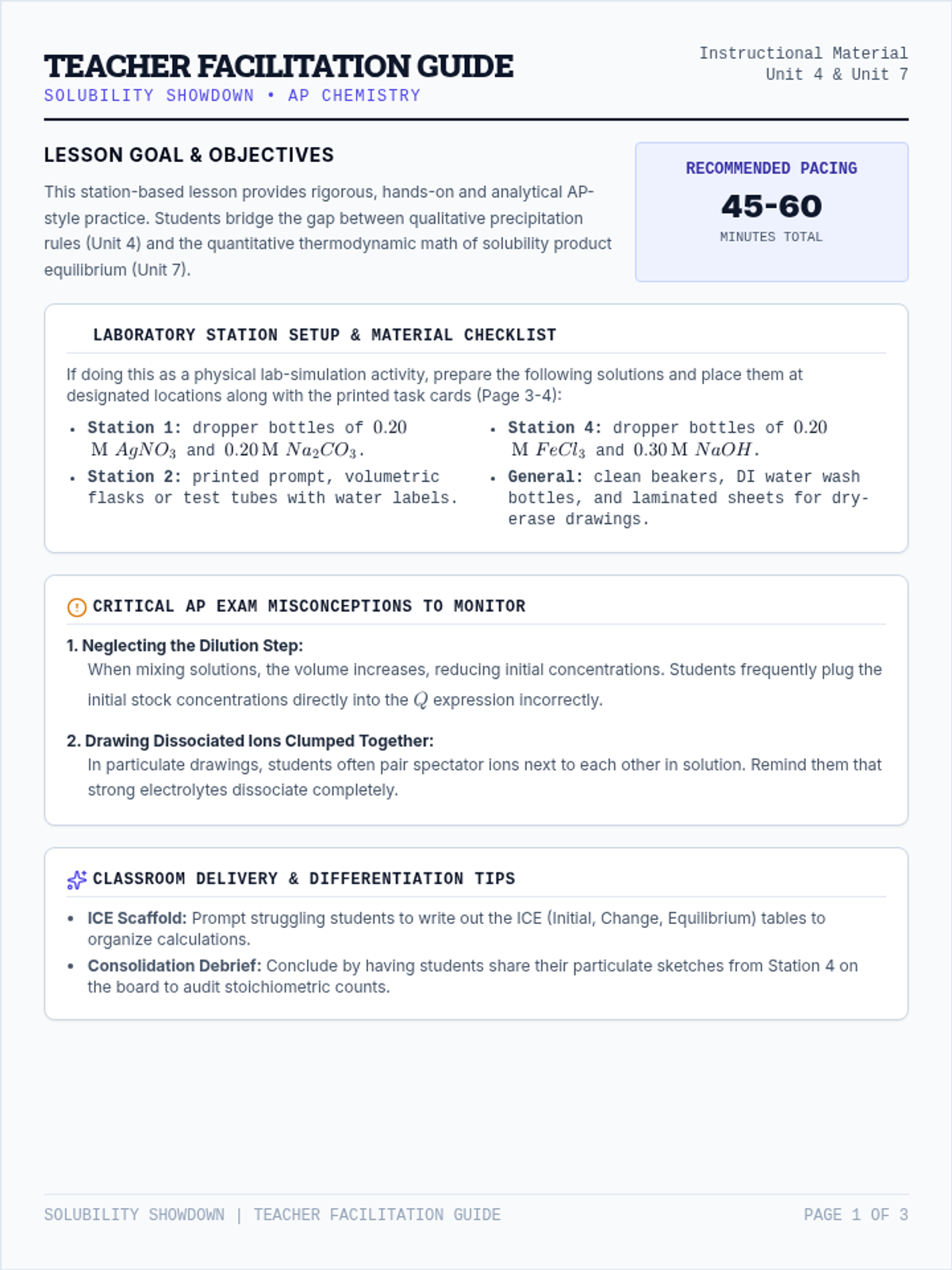
A comprehensive 3-page teacher facilitation guide, materials preparation checklist, common student misconceptions log, and detailed analytical answer key split across multiple pages to avoid overflow.
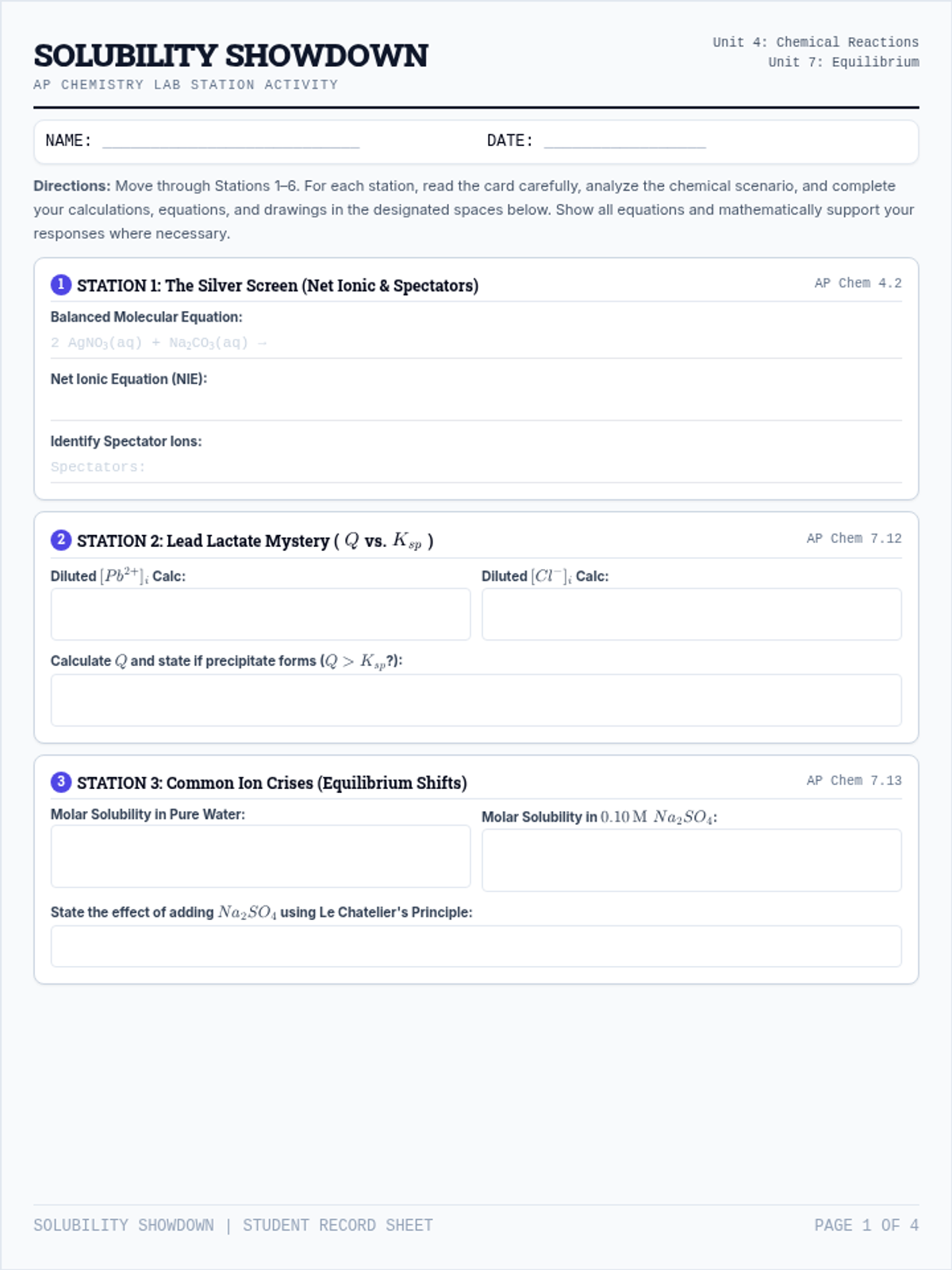
A high-rigor student-facing station activity worksheet and printable task cards. Integrates AP Chemistry Net Ionic writing, particulate drawings, Q vs Ksp math, common ion effect, pH dissolution, and gravimetric stoichiometry.
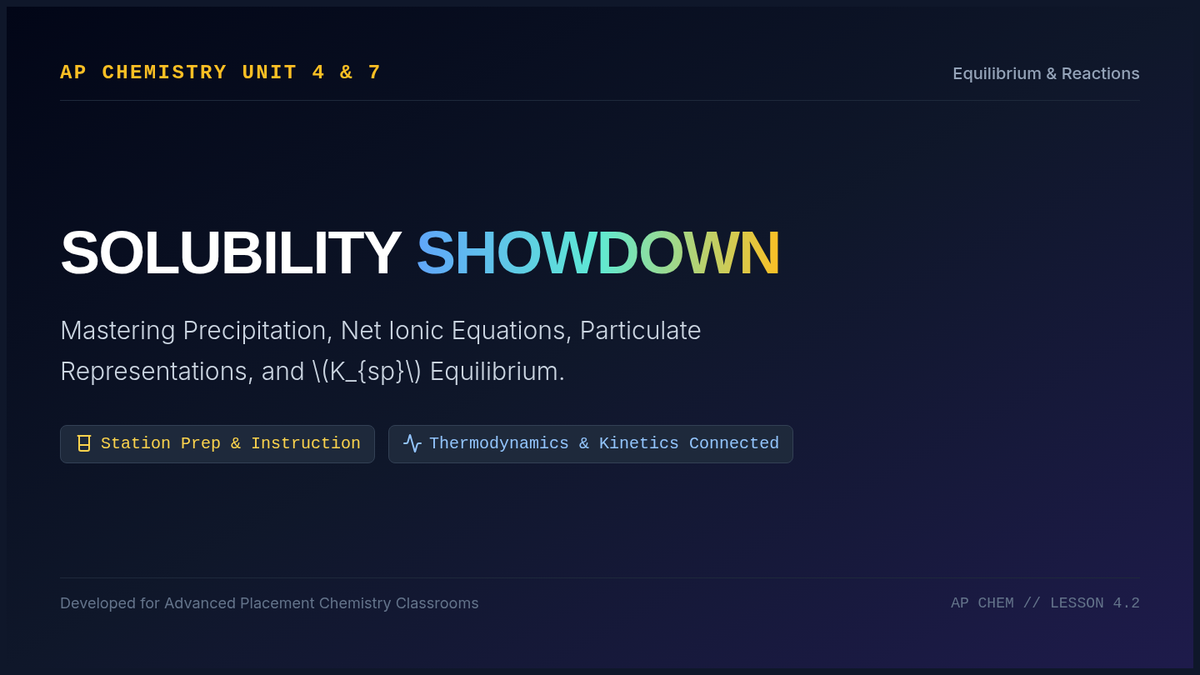
A premium AP Chemistry presentation deck introducing solubility rules, net ionic equations, particulate diagrams, and Ksp connections. Features a professional dark analytical-lab theme optimized for classrooms.
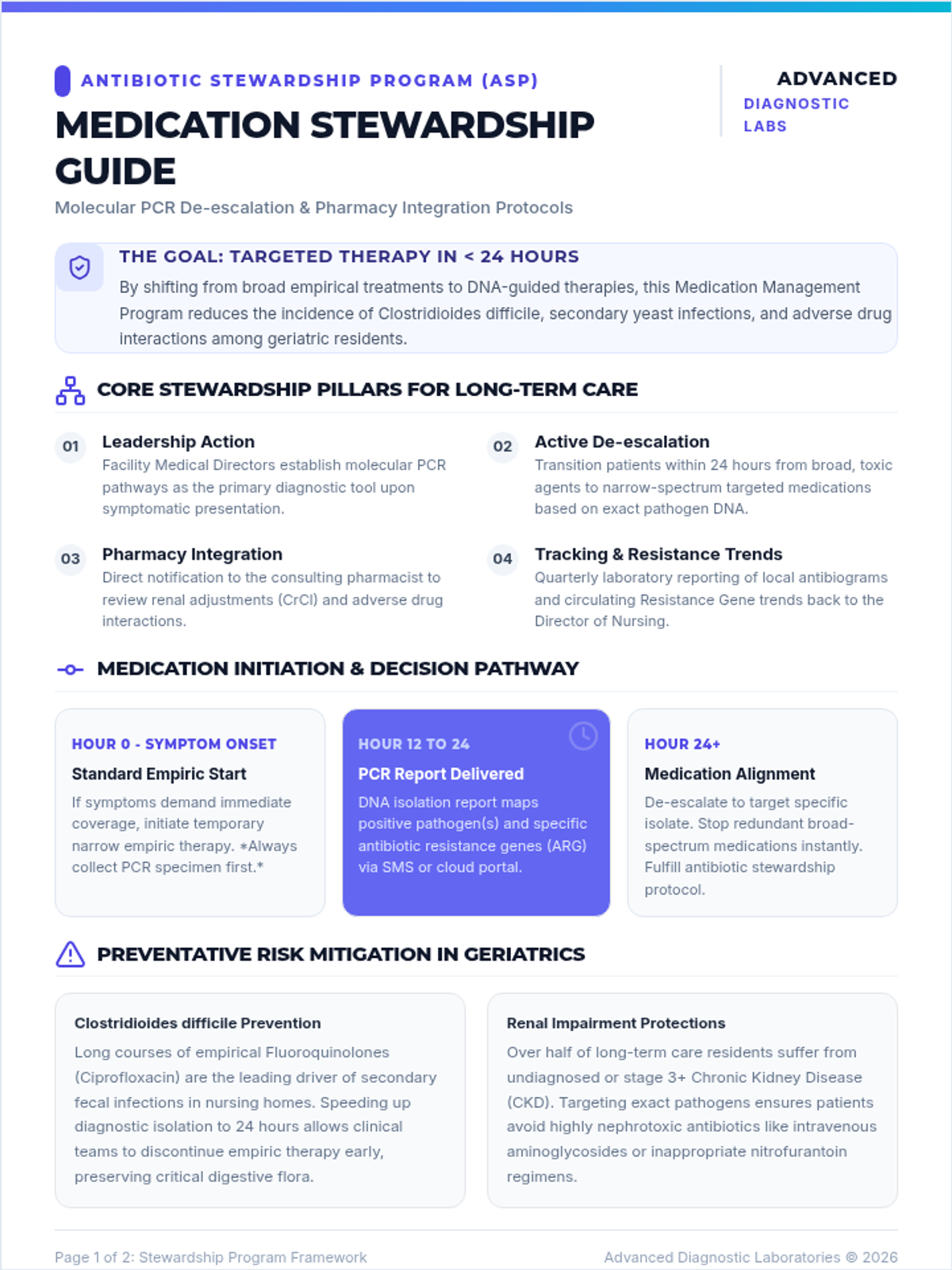
A high-impact 2-page clinical guide outlining the Molecular-Guided Antibiotic Stewardship Program (ASP), designed for medical directors and nursing staff to manage UTI treatments and de-escalation protocols.
A high-end 2-page clinical leave-behind handout for nursing home directors and medical officers, summarizing molecular PCR capabilities, comparative technology advantages, and step-by-step staff implementation protocols.
An elite, high-impact clinical sales presentation tailored for nursing home and long-term care directors, demonstrating how molecular PCR diagnostics reduce hospitalizations, optimize CAUTI protocols, and deliver same-day results.
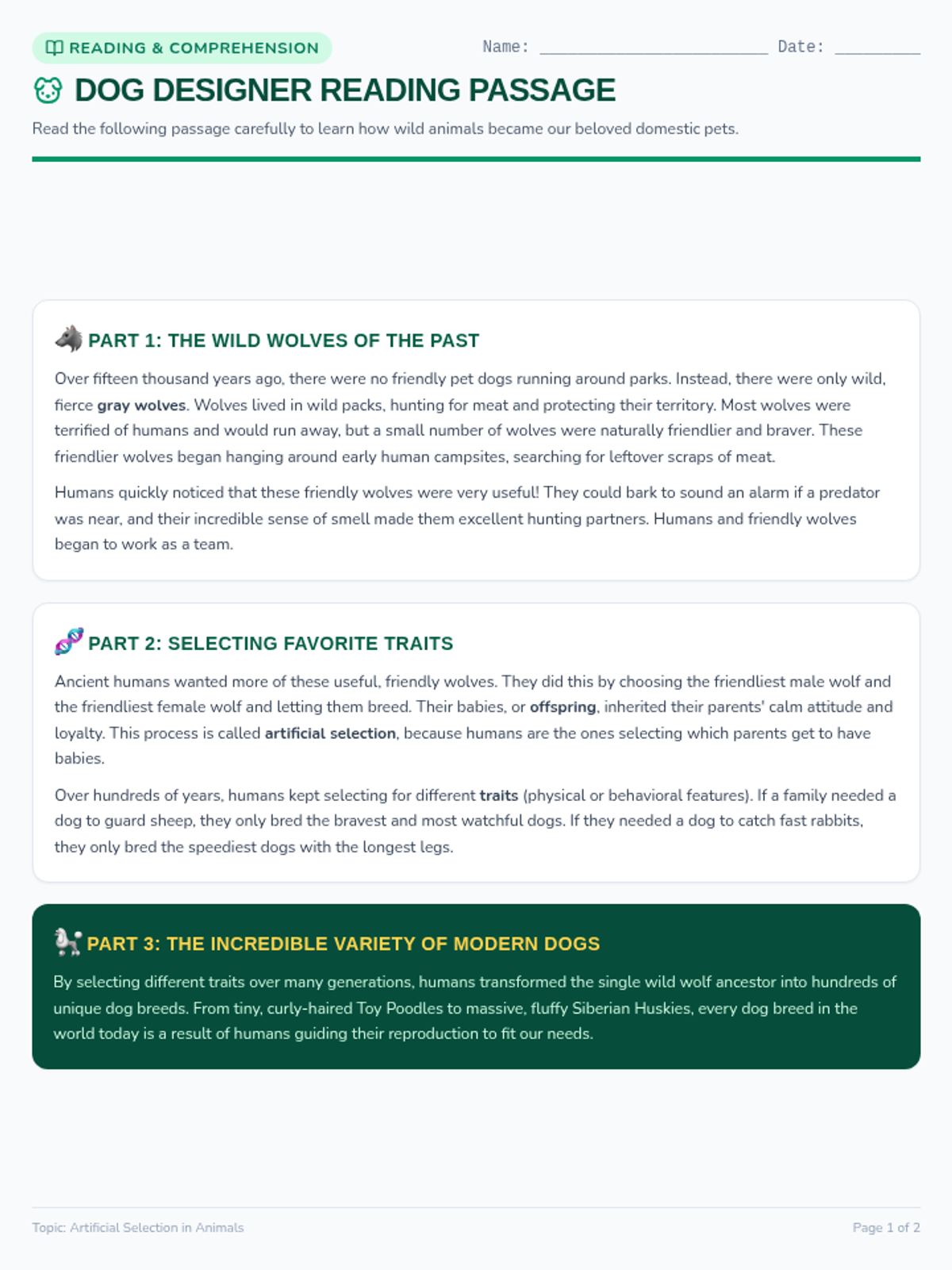
An expanded 2-page reading comprehension document. Page 1 contains a detailed, student-friendly reading passage comparing wild wolves to domesticated dogs, and Page 2 contains 5 structured, multiple-choice questions with identical answer styling.
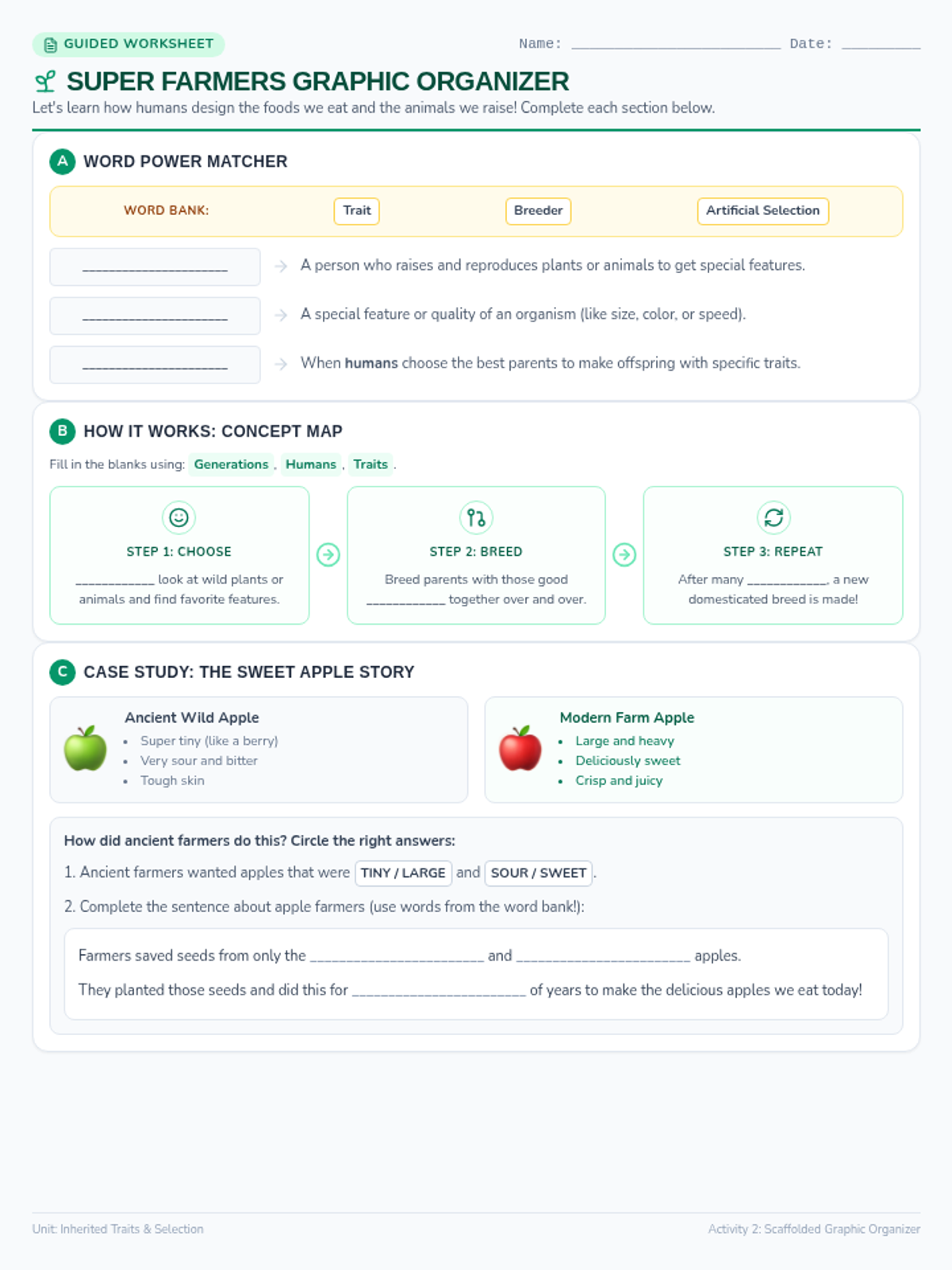
A highly visual, scaffolded graphic organizer worksheet. It features a simplified definition matcher, an illustrated flowchart of artificial selection, and a guided 'Sweet Apple' case study with trace-and-match elements and sentence starters.
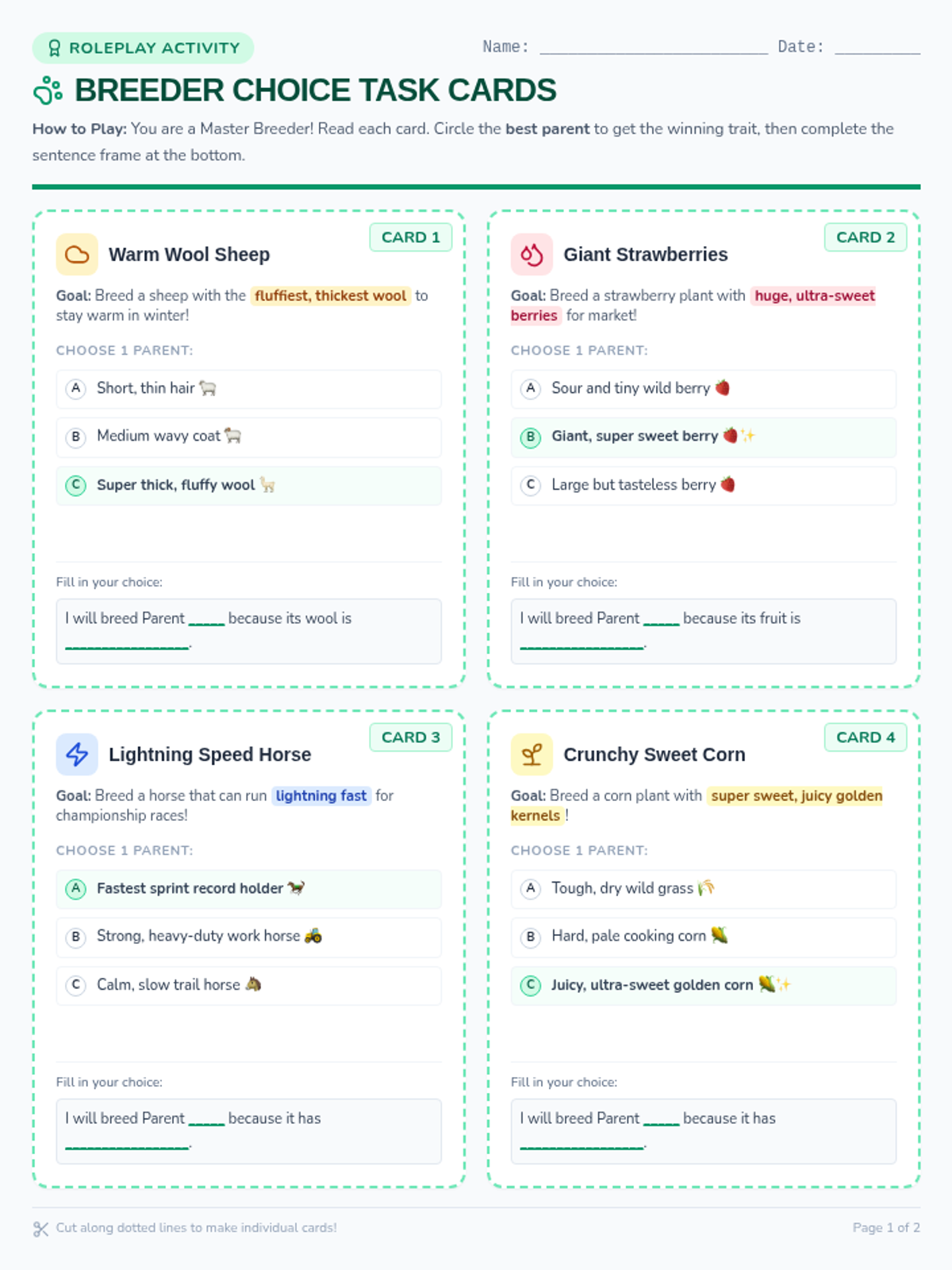
A 2-page printable set of 8 visual task cards where students roleplay as breeders. Students must select parent organisms with specific traits to produce offspring with desired characteristics, featuring structured sentence frames and simple text.
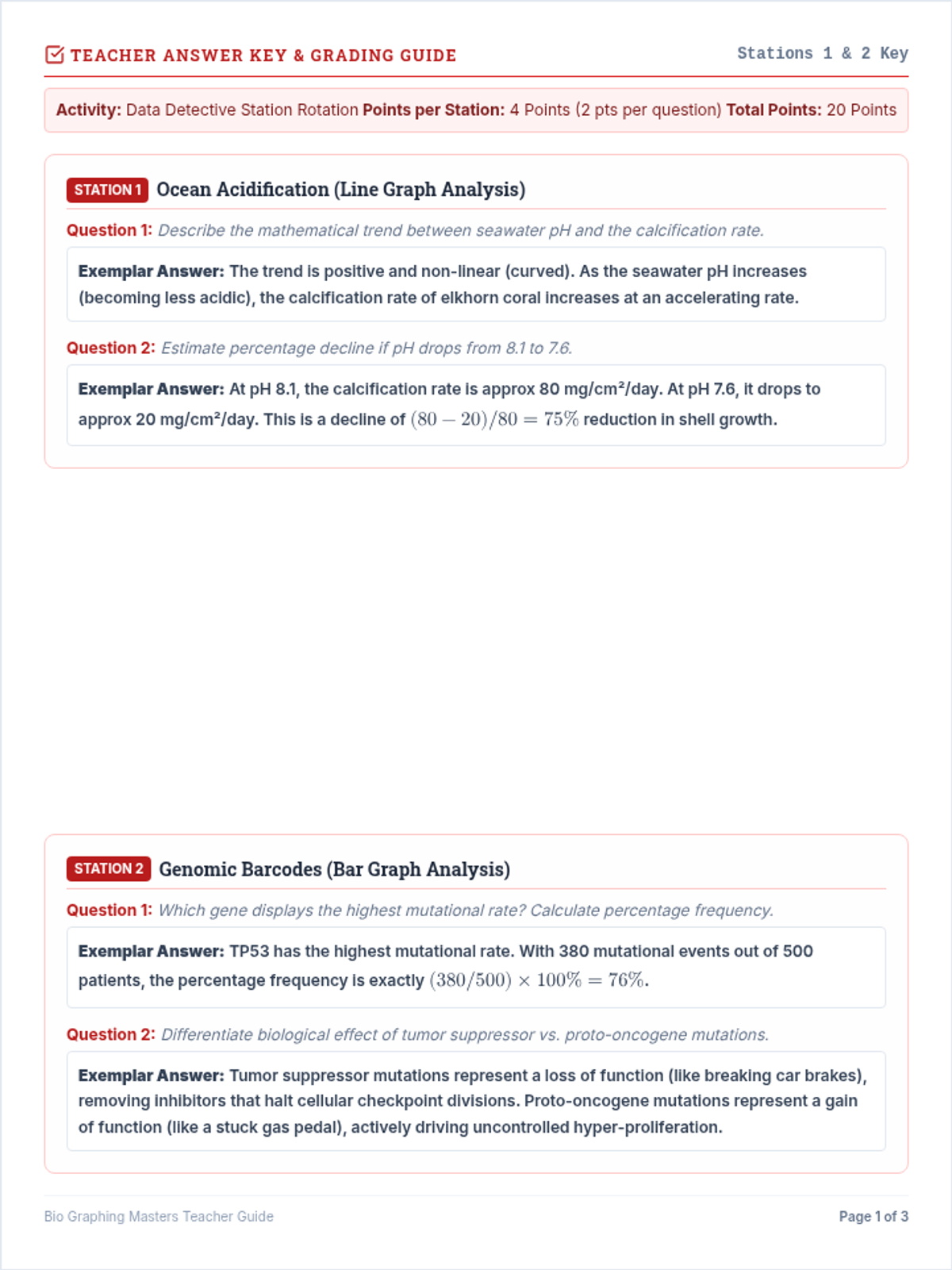
The complete teacher answer key and grading guide for the Bio Graphing Stations rotation activity. Contains exemplar student answers and specific point breakdowns for grading.
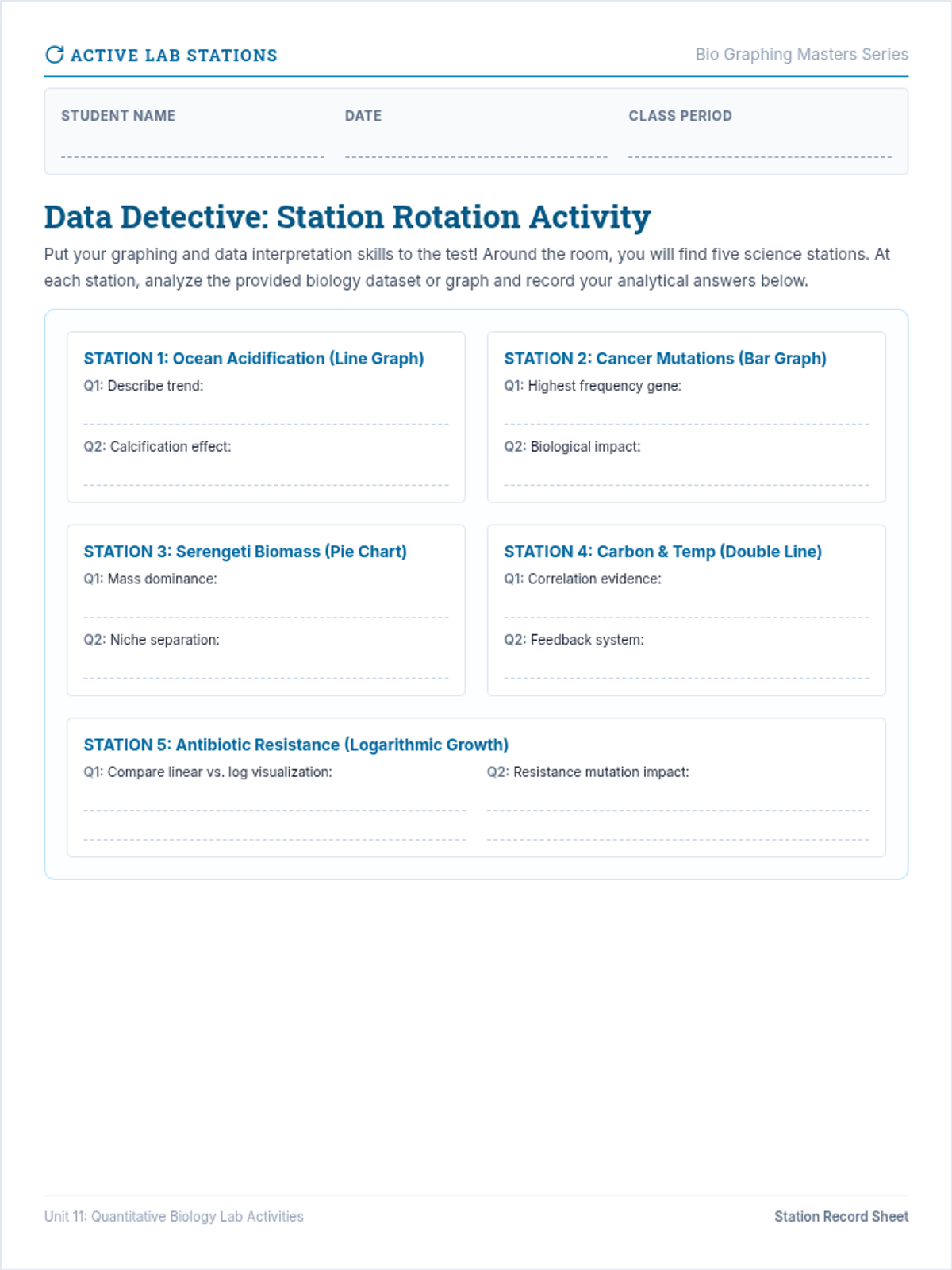
A comprehensive six-page science station rotation activity featuring five unique biology dataset cards (acid oceans, genomic barcodes, Serengeti biomass, greenhouse traps, and antibiotic battles) and a front-page student recording sheet.
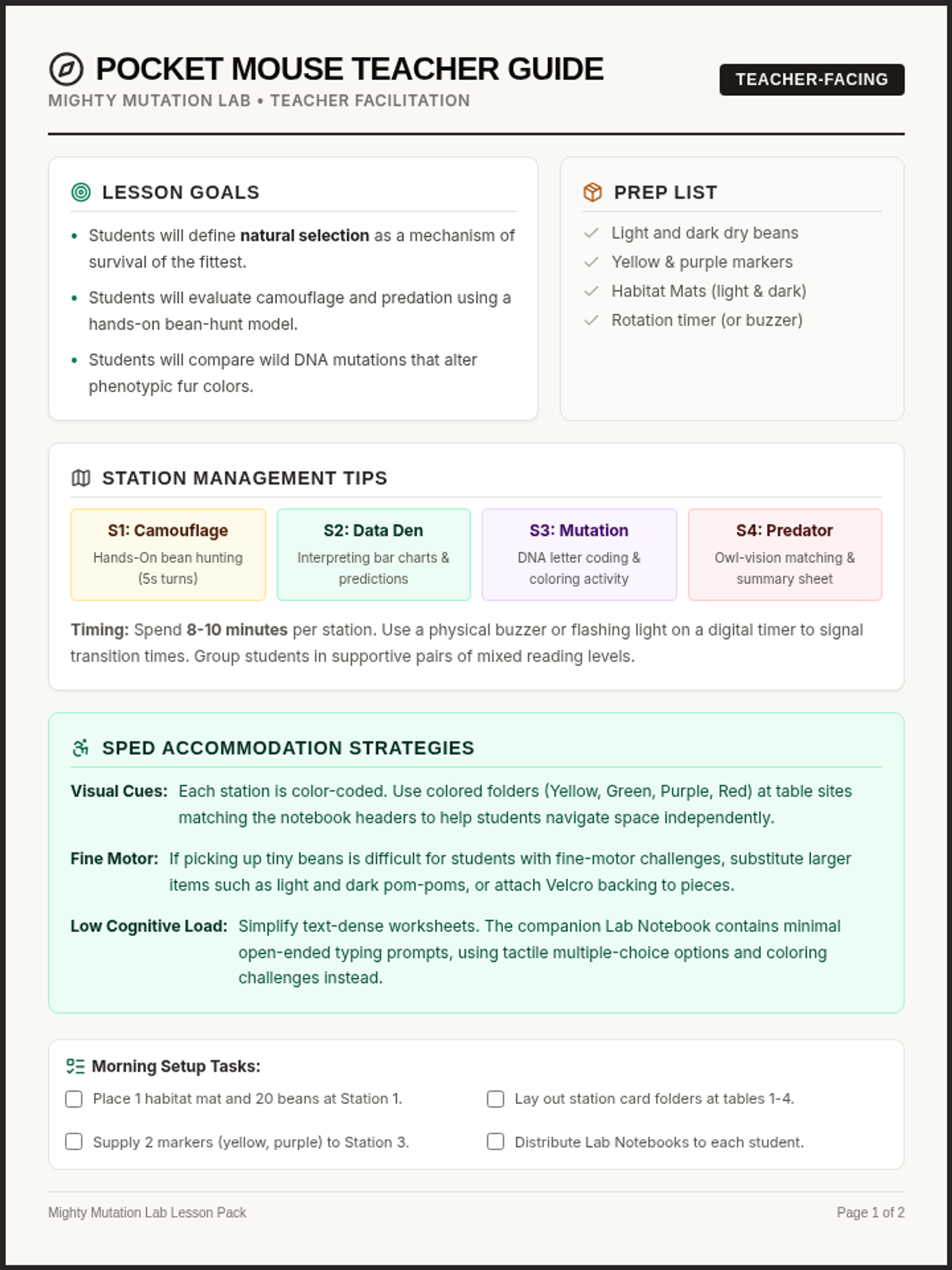
A comprehensive Teacher Guide containing lesson objectives, high school special education differentiation tips, station setup instructions, and a complete answer key for the Student Lab Notebook.
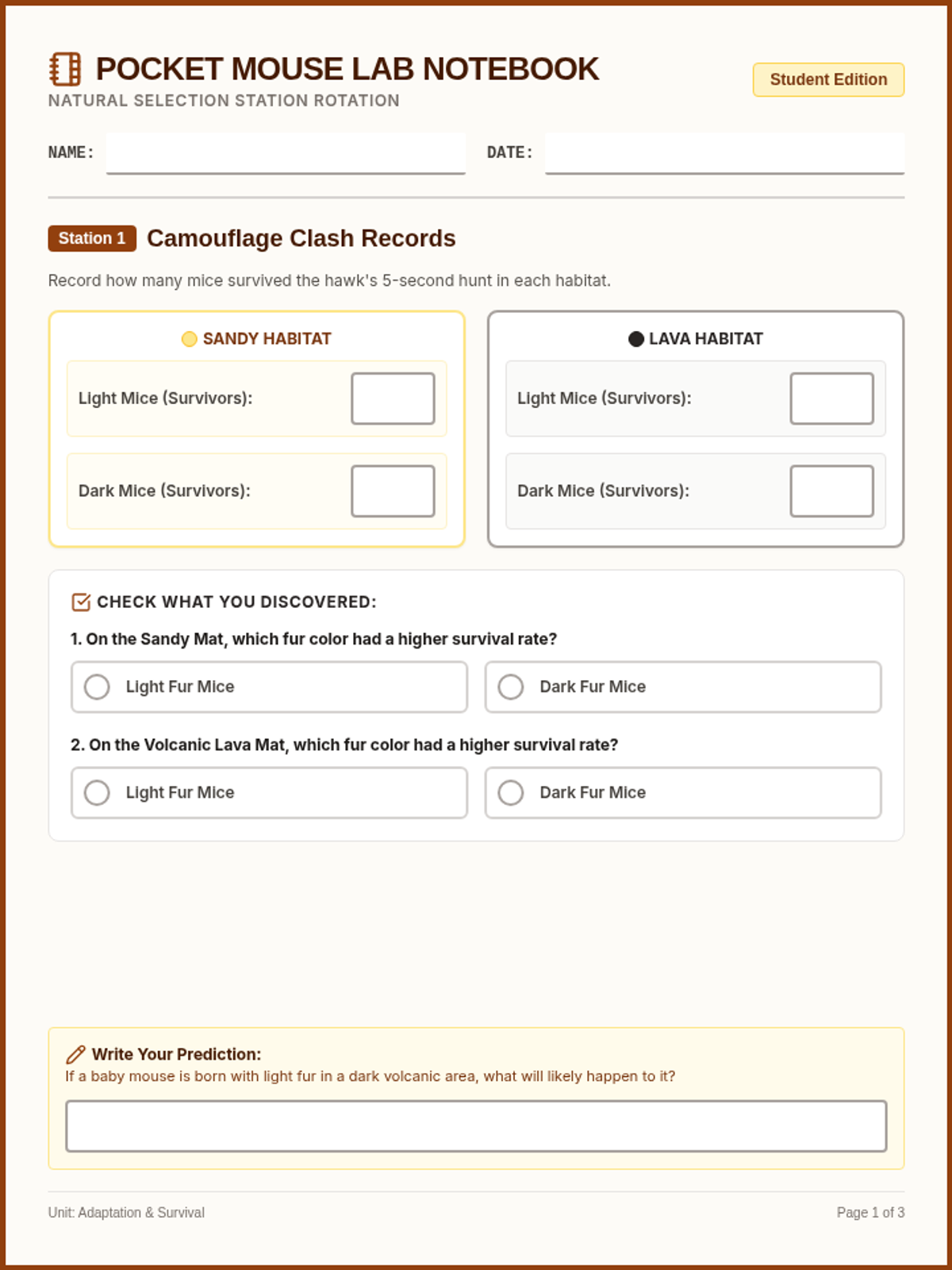
A guided, scaffolded, and highly visual printable Student Lab Notebook for the Rock Pocket Mouse Station Rotation Lab. Designed with plenty of clean writing space, clear directions, and simplified vocabulary supports.
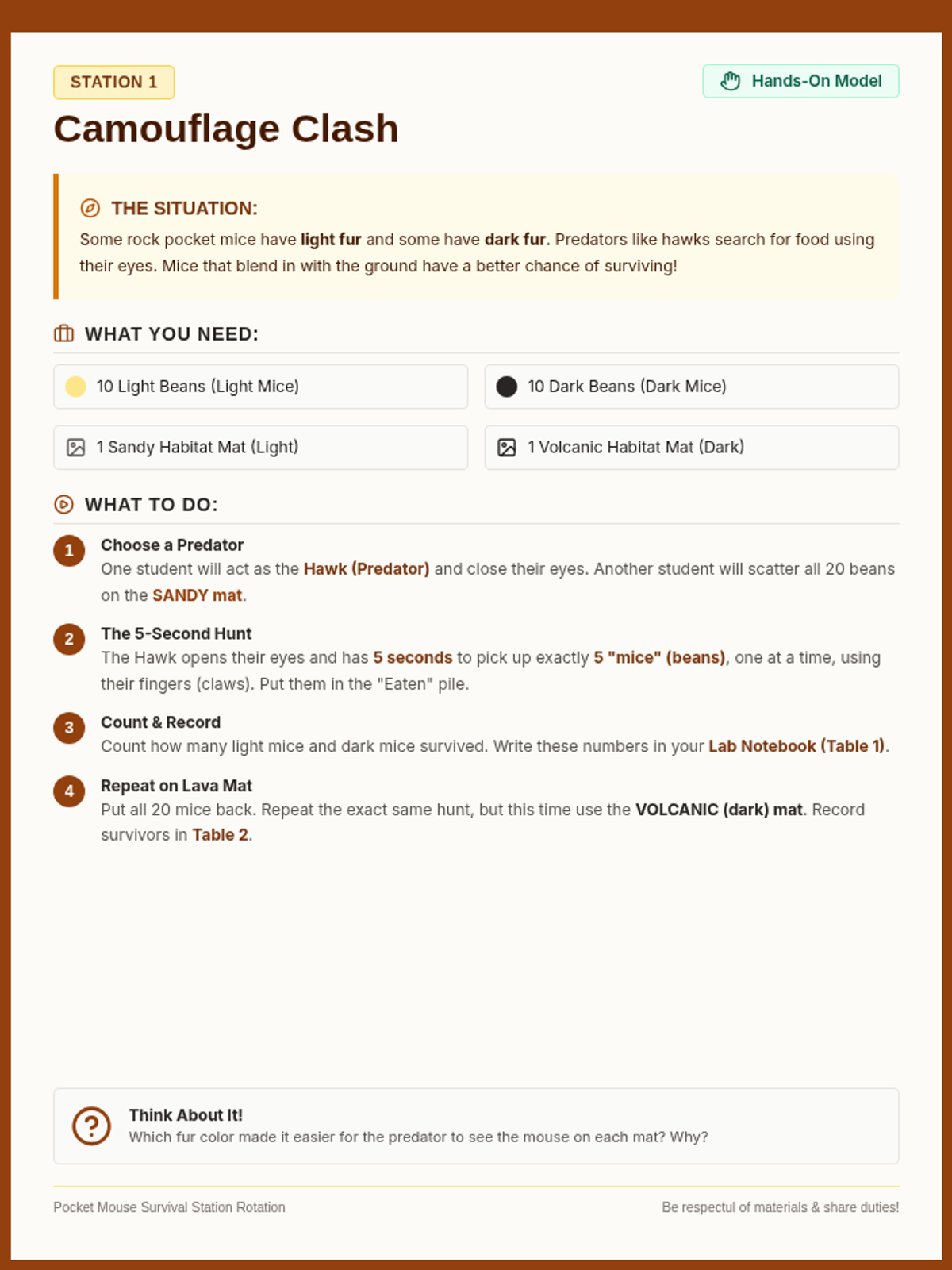
Printable station instruction cards for the Rock Pocket Mouse Station Rotation Lab. Each card represents a unique station with clear visual steps, simplified instructions, and scaffolded tasks designed for high school special education classrooms.
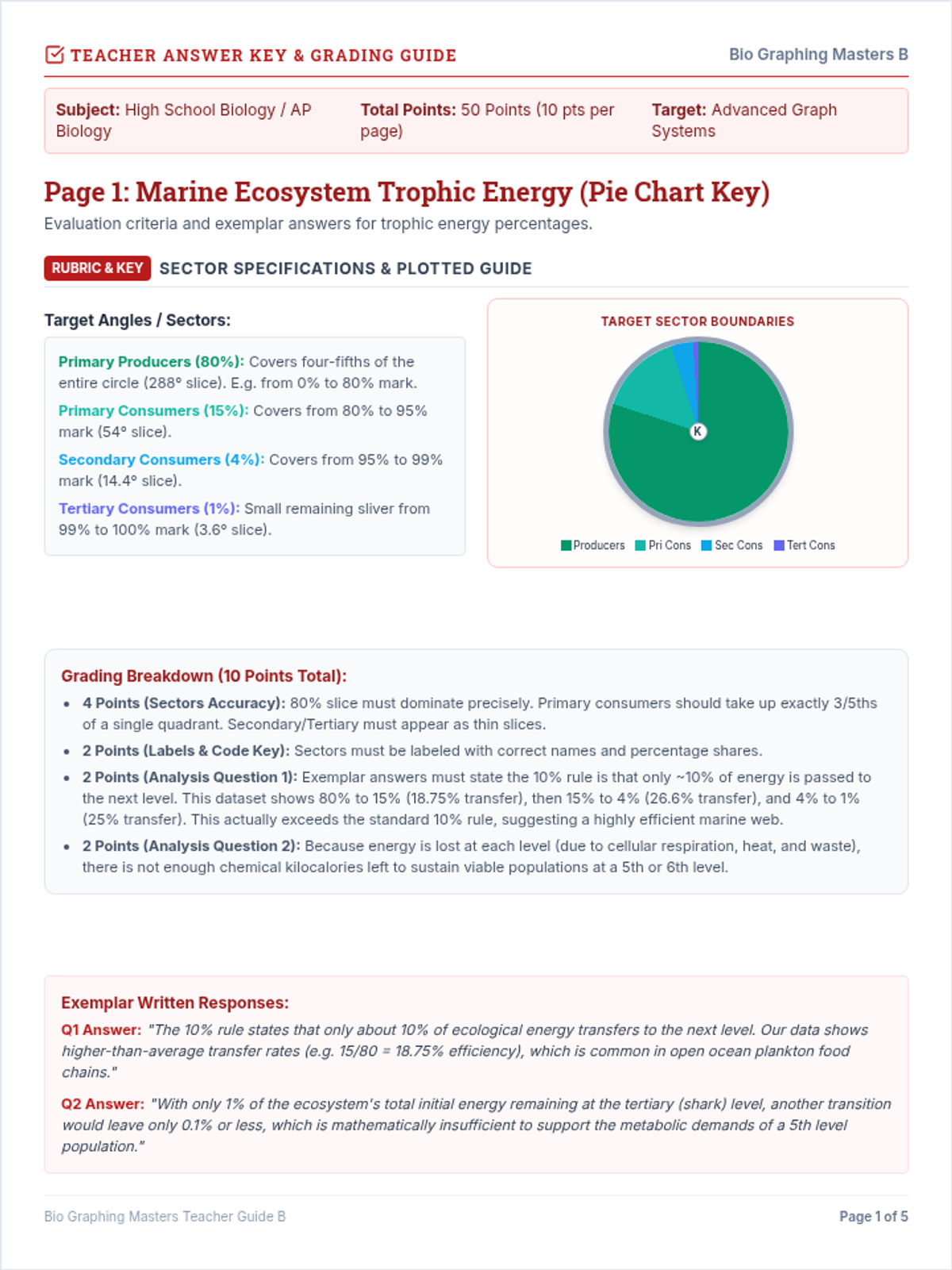
The complete teacher answer key and grading guide for the Bio Graphing Masters Practice Packet B. Contains fully worked data calculations, pre-plotted reference curves, and complete grading rubrics.
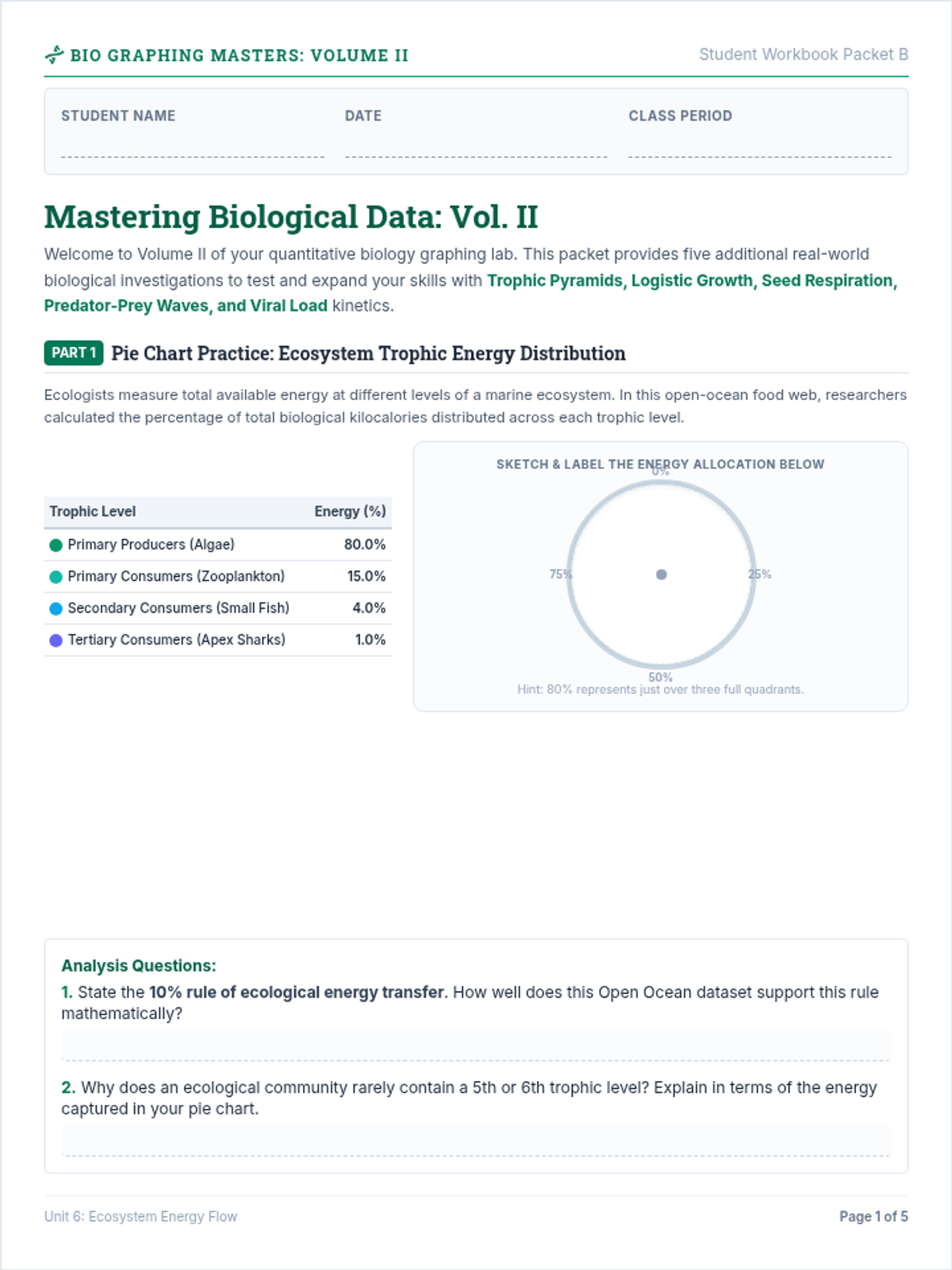
The second volume of the biology graphing masters student packet. Features five new graphing tasks including marine energy pie charts, logistic population lines, cellular seed bar graphs, predator-prey double lines, and viral load log curves.
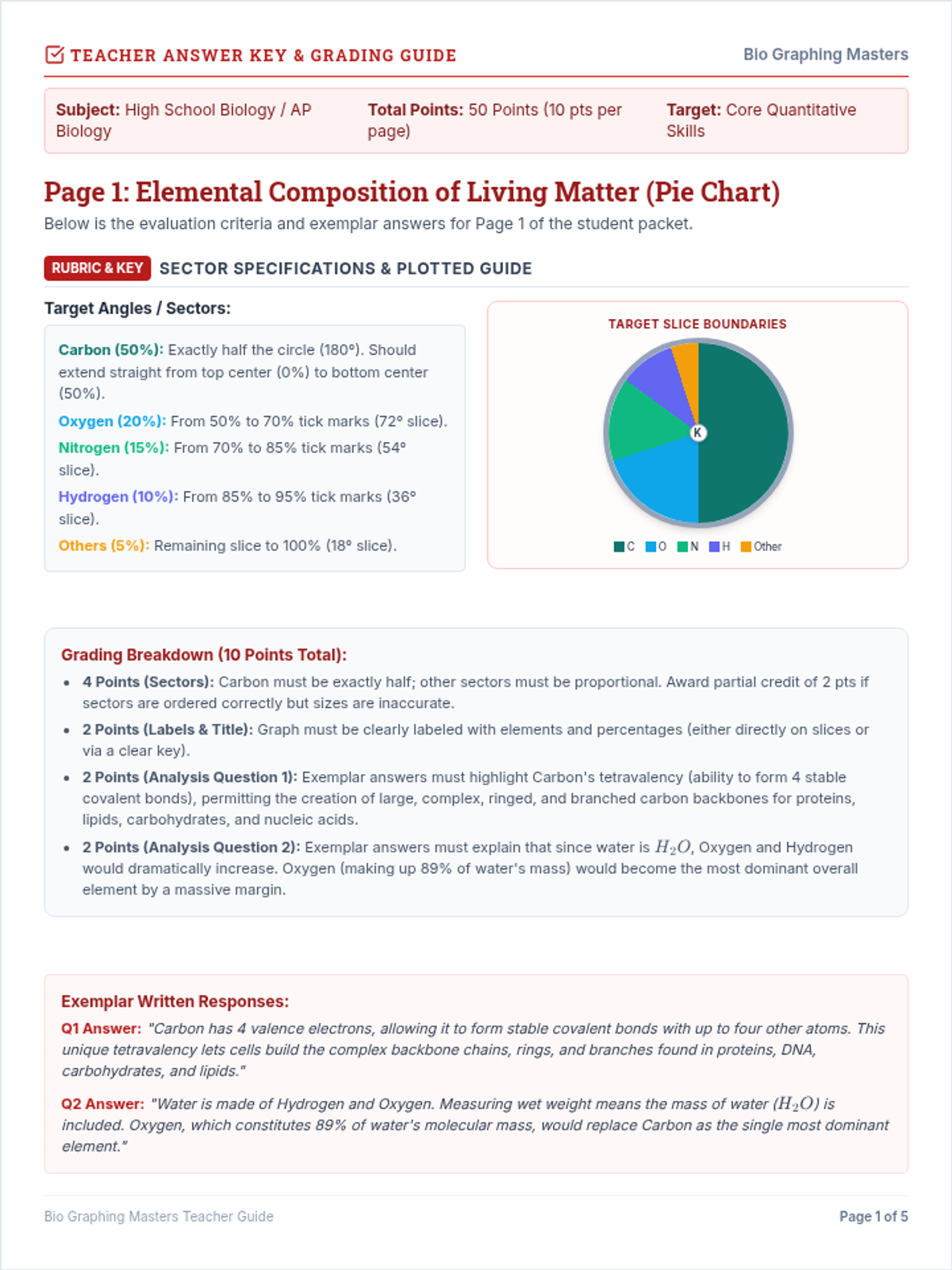
The complete teacher answer key and grading guide for the Bio Graphing Masters packet. Includes fully completed sample graphs, exemplar written responses, and point-by-point grading rubrics for teachers.
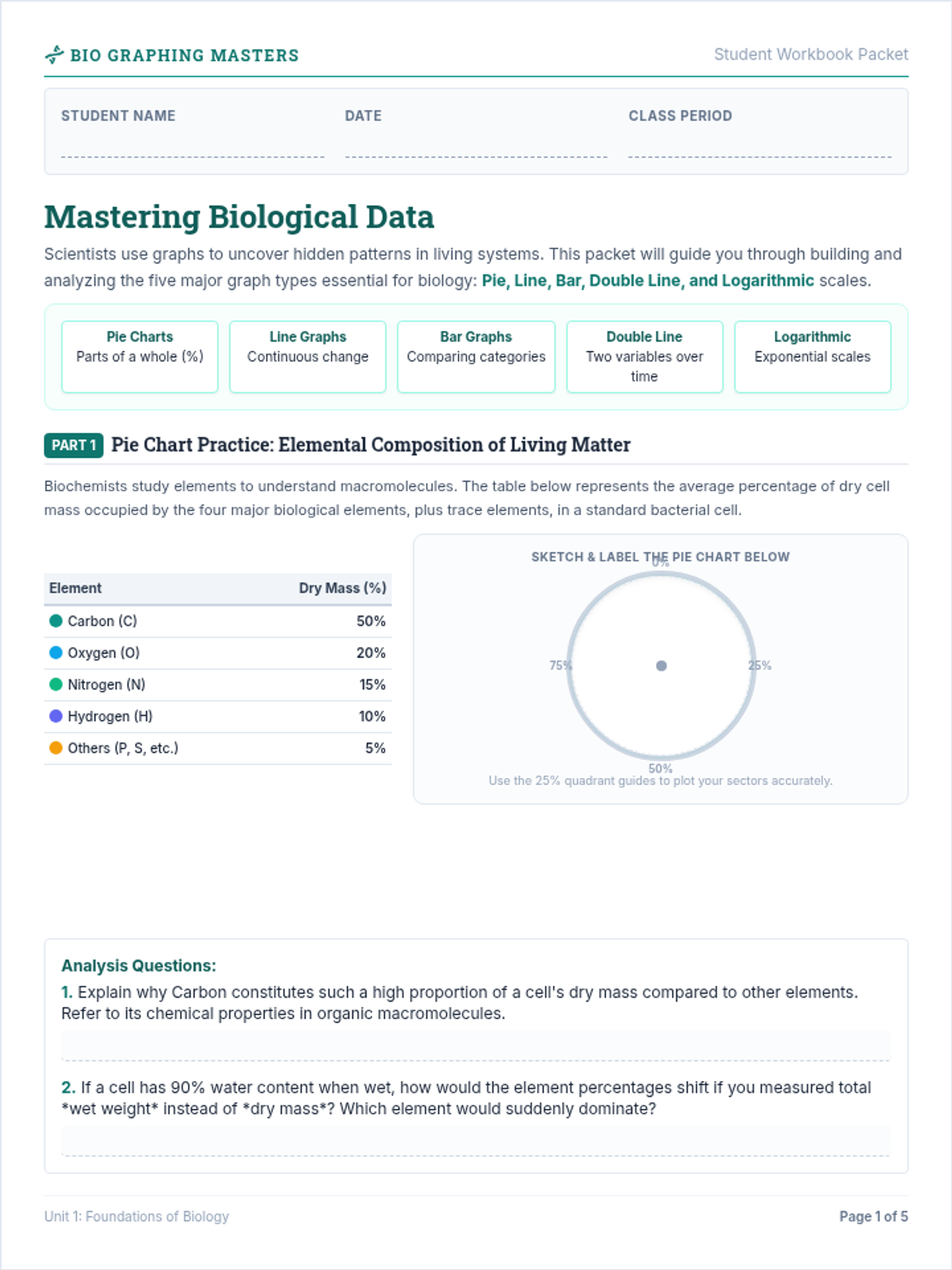
A comprehensive five-page biology graphing skills student worksheet packet covering pie, line, bar, double line, and logarithmic graphs using authentic biological data from ecology, genetics, and biochemistry. Includes beautiful grids and dedicated analysis spaces.
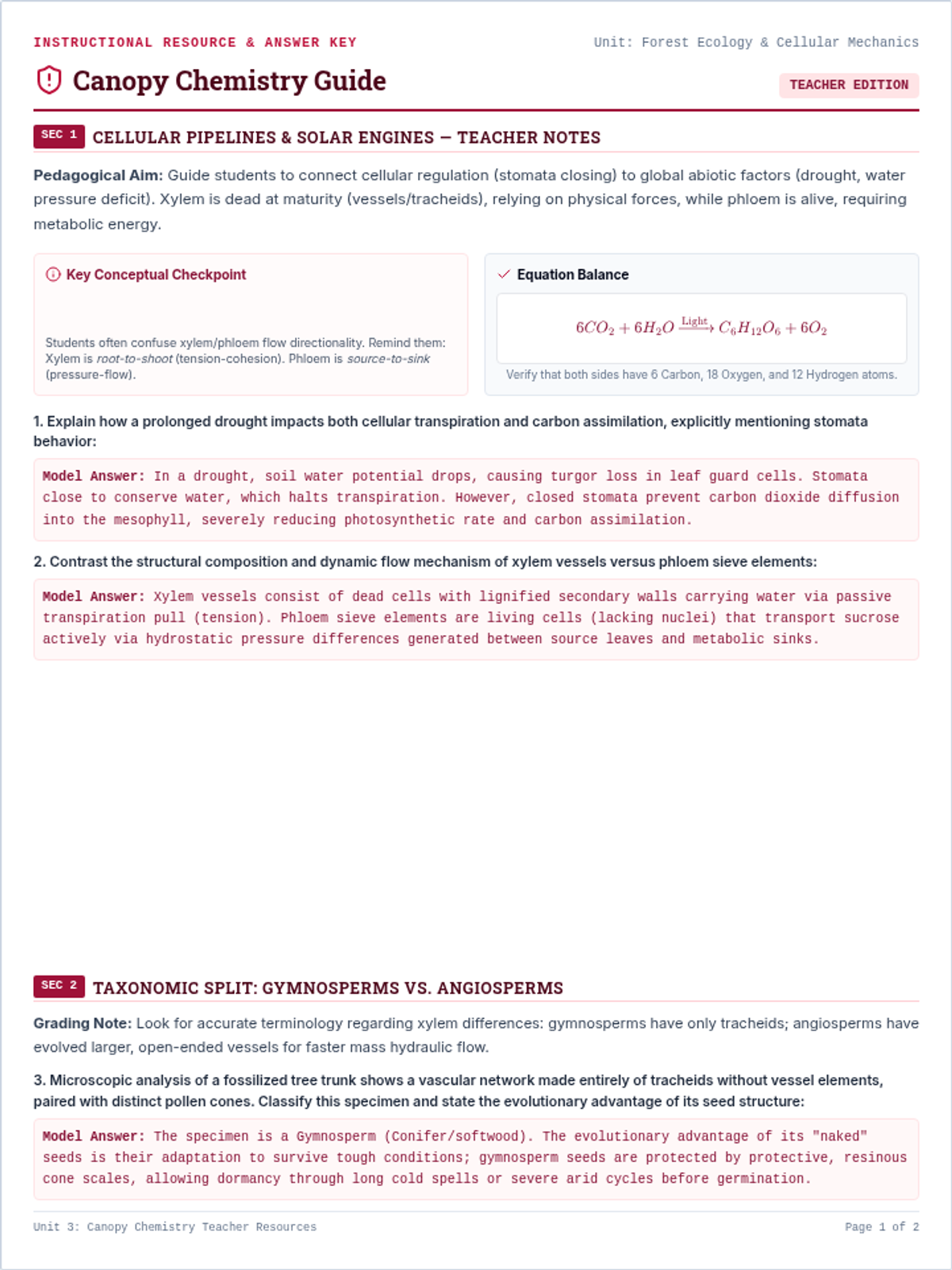
A 2-page teacher-facing instructional guide and complete answer key for the Canopy Chemistry worksheet, containing filled solutions, step-by-step carbon math conversions, and discussion rubrics.
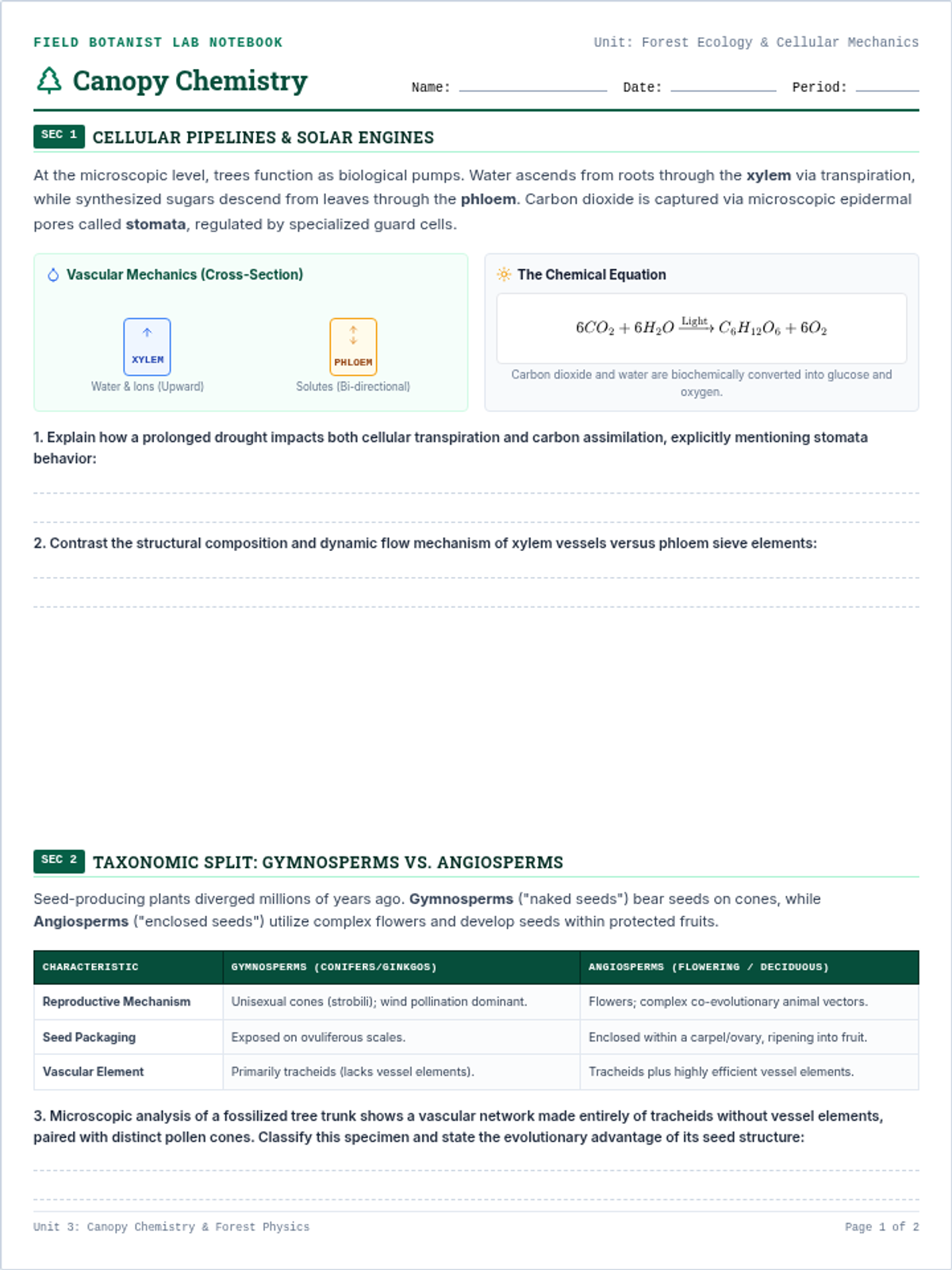
A compact, high-density 2-page student worksheet guiding students through cellular structures (xylem/phloem, stomata), angiosperm vs. gymnosperm taxonomy, quantitative carbon sequestration problems, and forest conservation strategies.
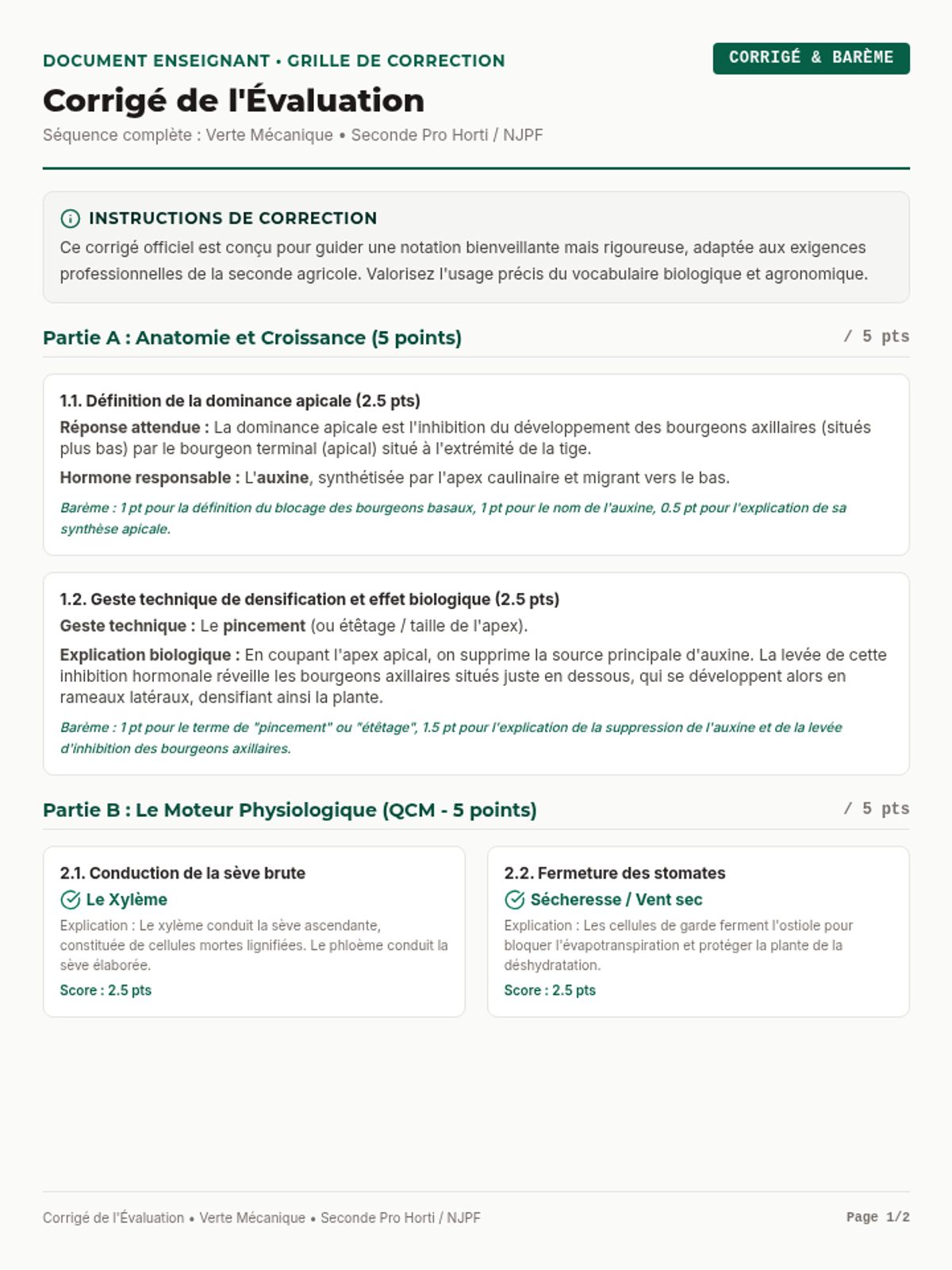
Guide de correction détaillé et barème d'évaluation pour le devoir surveillé final de biologie végétale, comprenant les réponses attendues et les critères d'attribution des points pour chaque exercice.
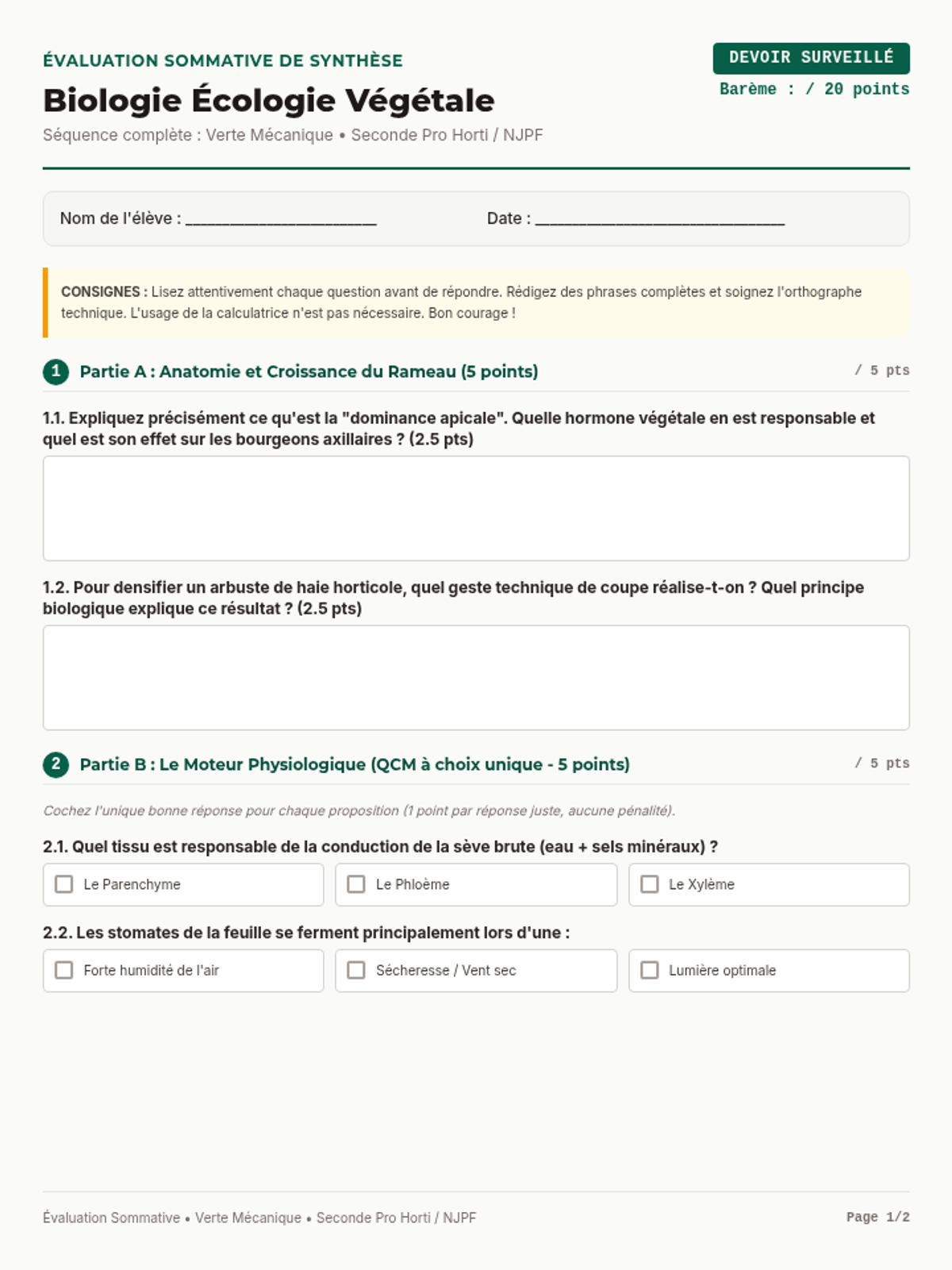
Devoir surveillé de synthèse sur l'ensemble de la séquence de biologie végétale (anatomie, physiologie, reproduction et adaptations écophysiologiques) destiné aux élèves de seconde agricole.
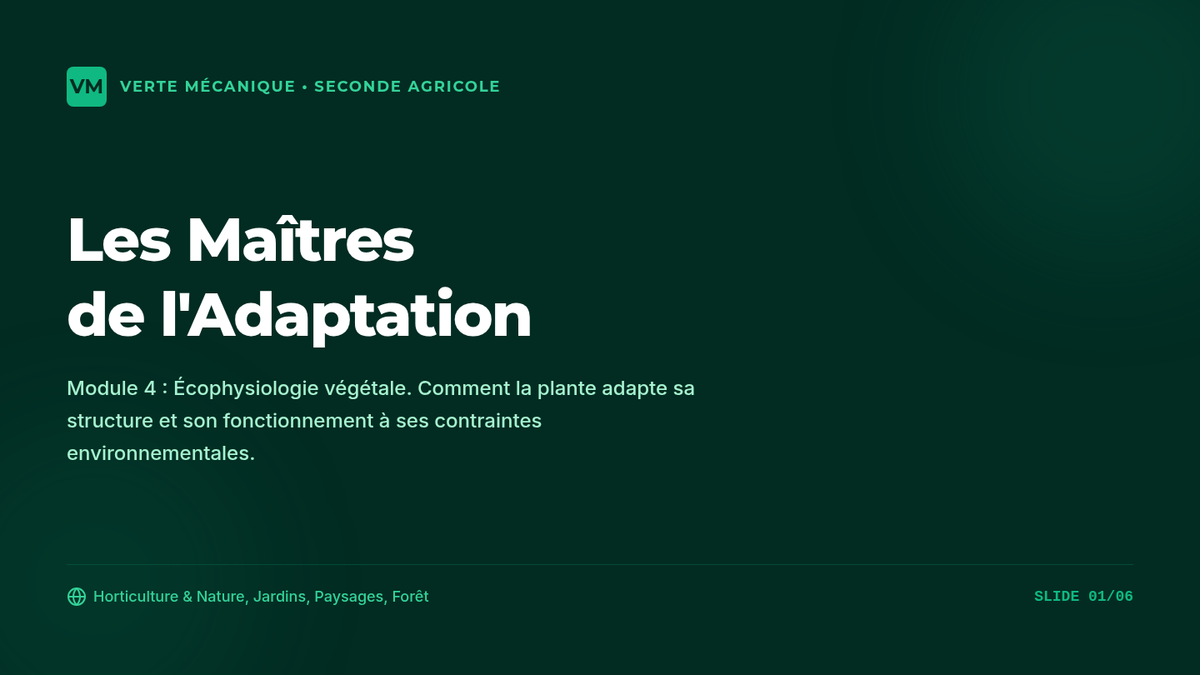
Diaporama de cours visuel pour expliquer les adaptations écophysiologiques des plantes aux contraintes environnementales (stress hydrique, sol, lumière).
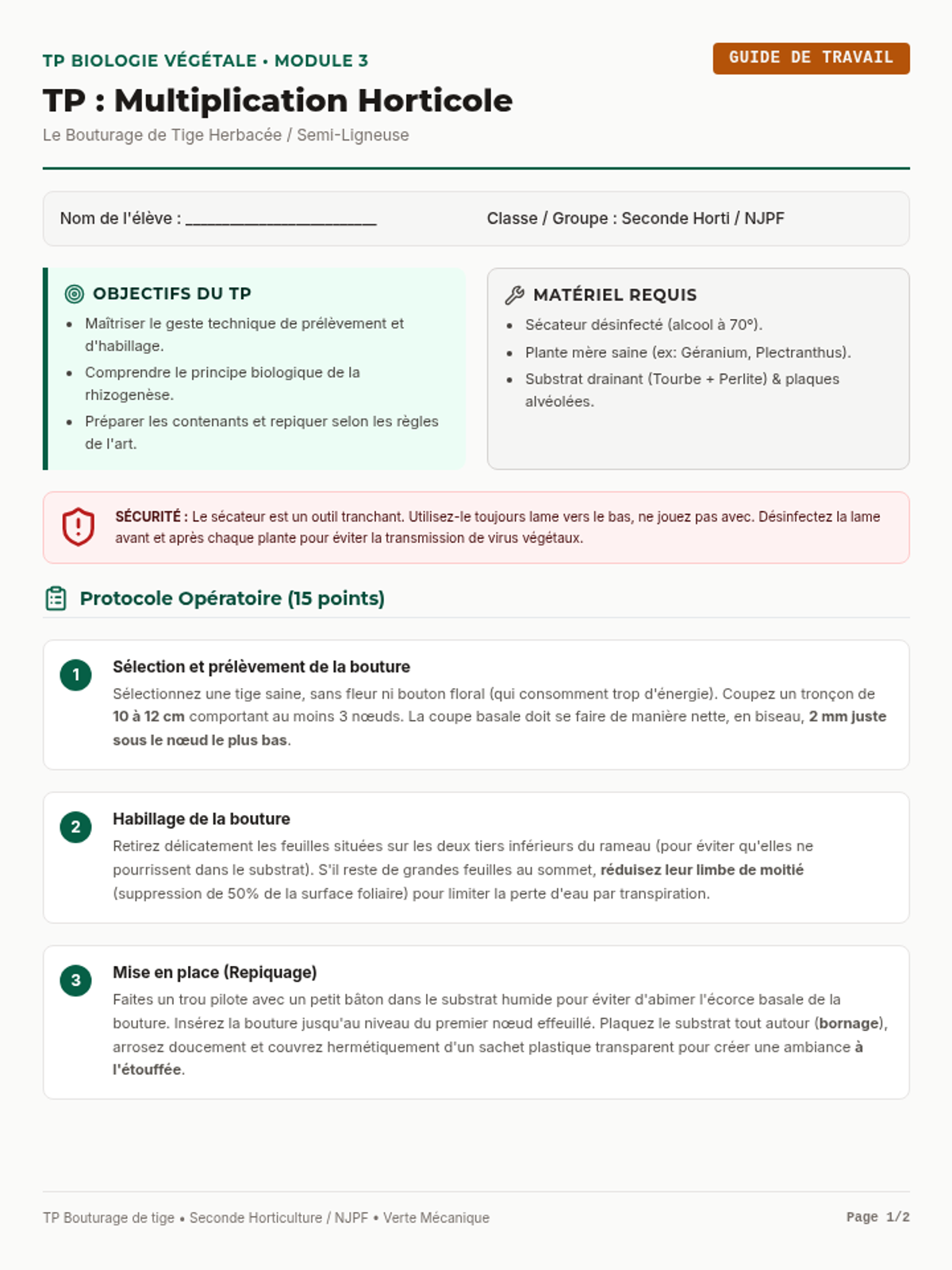
Guide méthodologique de Travaux Pratiques (TP) sur la technique du bouturage de tige, comprenant des fiches de suivi de l'enracinement et une grille d'évaluation technique.
Diaporama de cours visuel pour expliquer le cycle de développement des plantes à fleurs (reproduction sexuée) et les grands principes du bouturage horticole (reproduction asexuée).
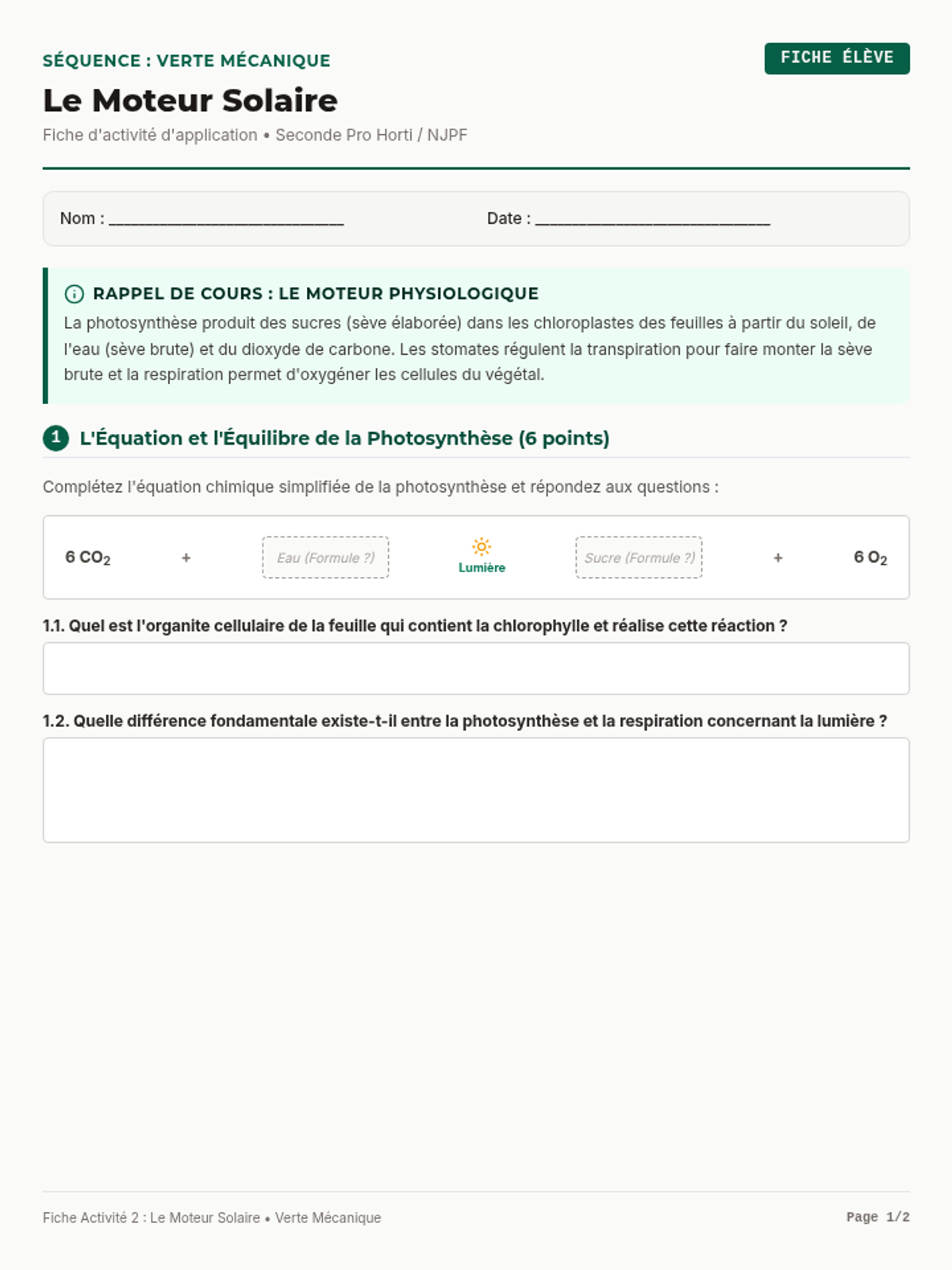
Fiche d'activité élève sur le moteur physiologique de la plante (photosynthèse, respiration, sèves) comprenant un exercice pratique sur l'interprétation des engrais N-P-K.
Diaporama de cours visuel pour expliquer le moteur physiologique de la plante : photosynthèse, respiration, transpiration, absorption racinaire et sèves.
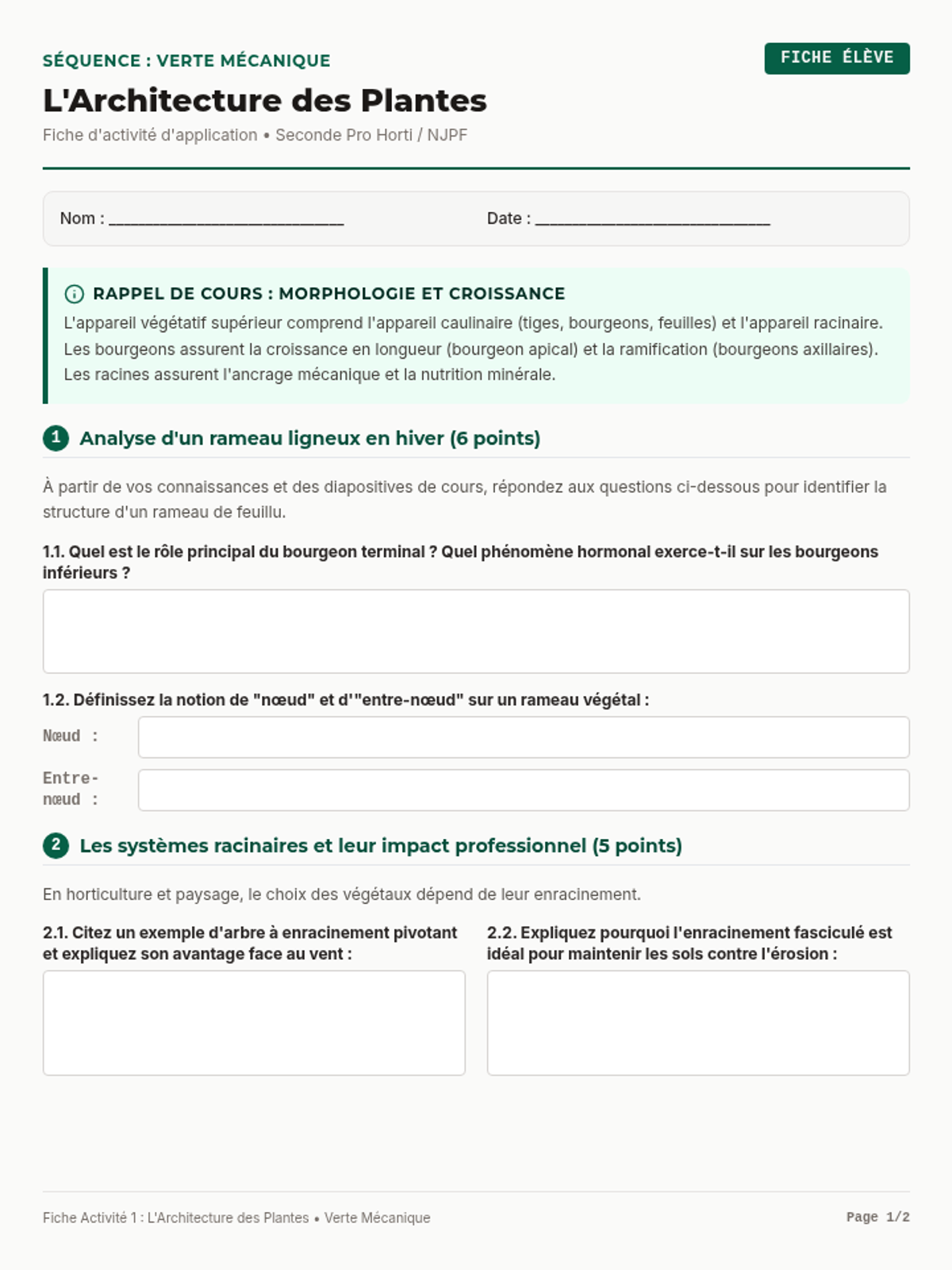
Fiche d'activité élève sur l'anatomie et la morphologie végétale, comprenant des exercices sur l'appareil caulinaire, racinaire, la dominance apicale, ainsi qu'un espace de croquis d'observation de terrain.
Diaporama de cours visuel pour introduire les concepts clés d'anatomie et de morphologie végétale (racines, tiges, feuilles, bourgeons, tissus) auprès d'élèves de seconde agricole.
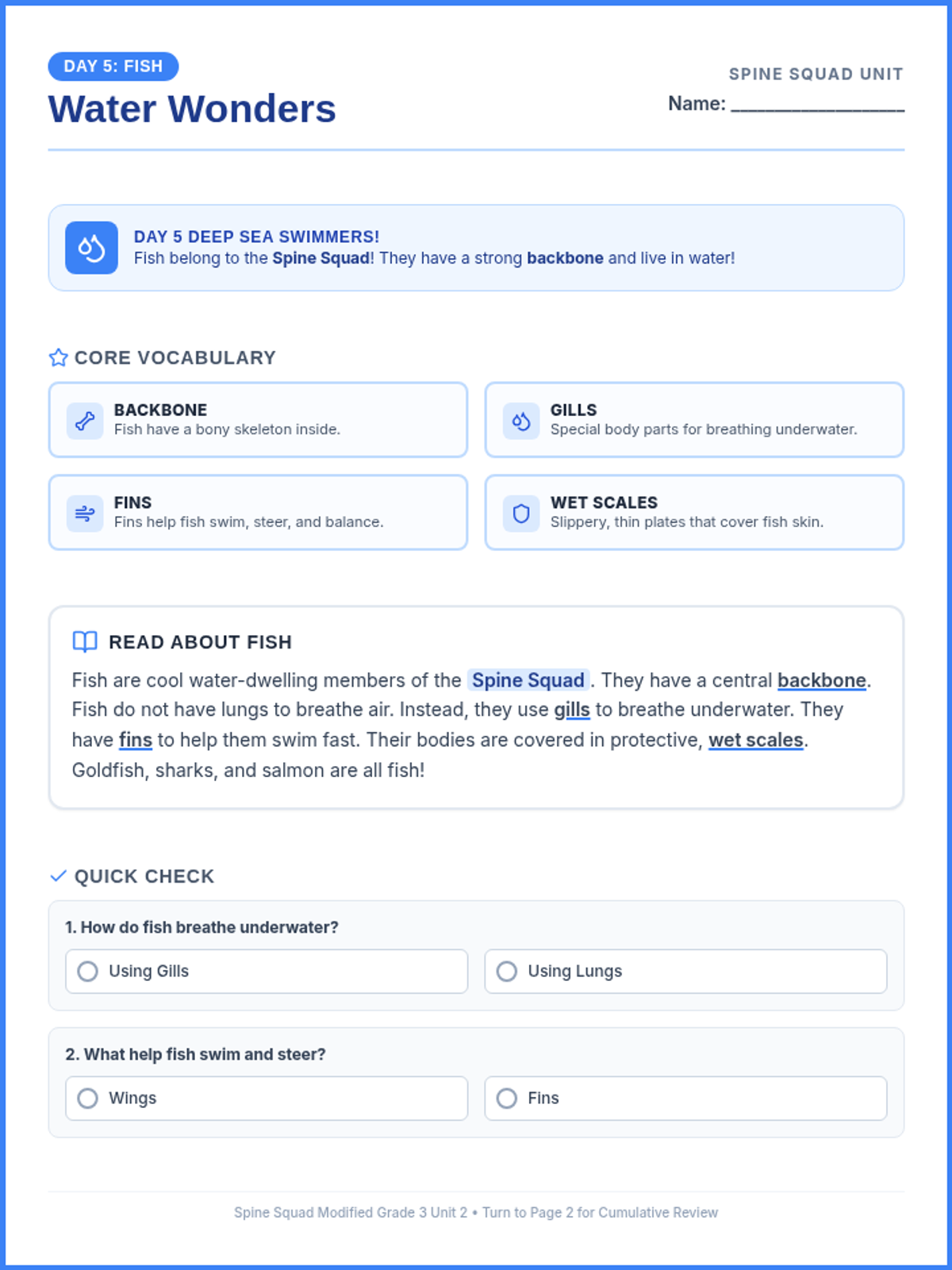
Student workbook for Day 5 of the Spine Squad unit. Features a highly visual reading passage about fish, core vocabulary with icon cards (gills, fins, wet scales, backbone), word-tracing exercises, and a five-group cumulative graduation review.
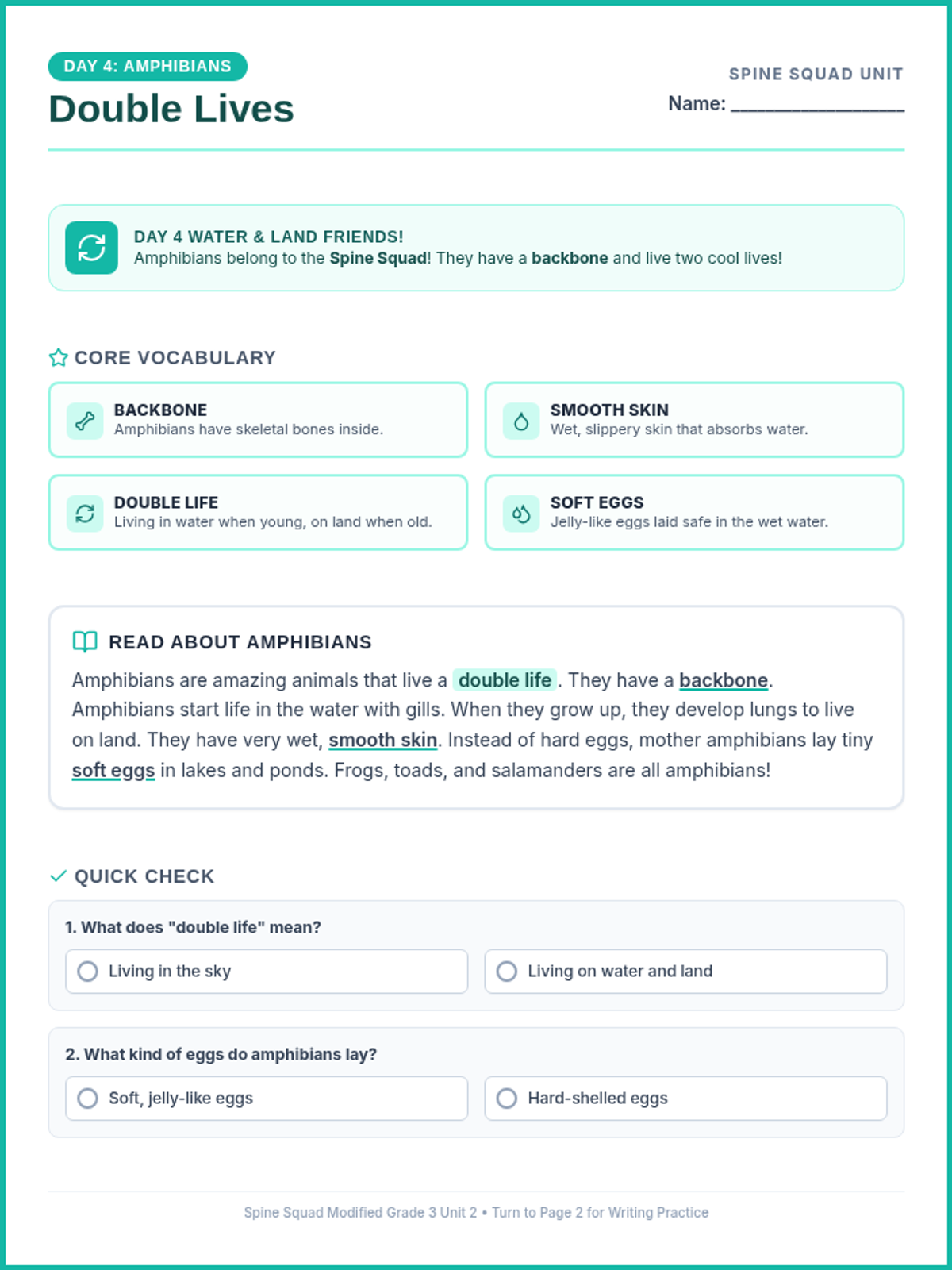
Student workbook for Day 4 of the Spine Squad unit. Features a highly visual reading passage about amphibians, core vocabulary with icon cards (double life, smooth skin, soft eggs, backbone), word-tracing exercises, and sentence-building frames.
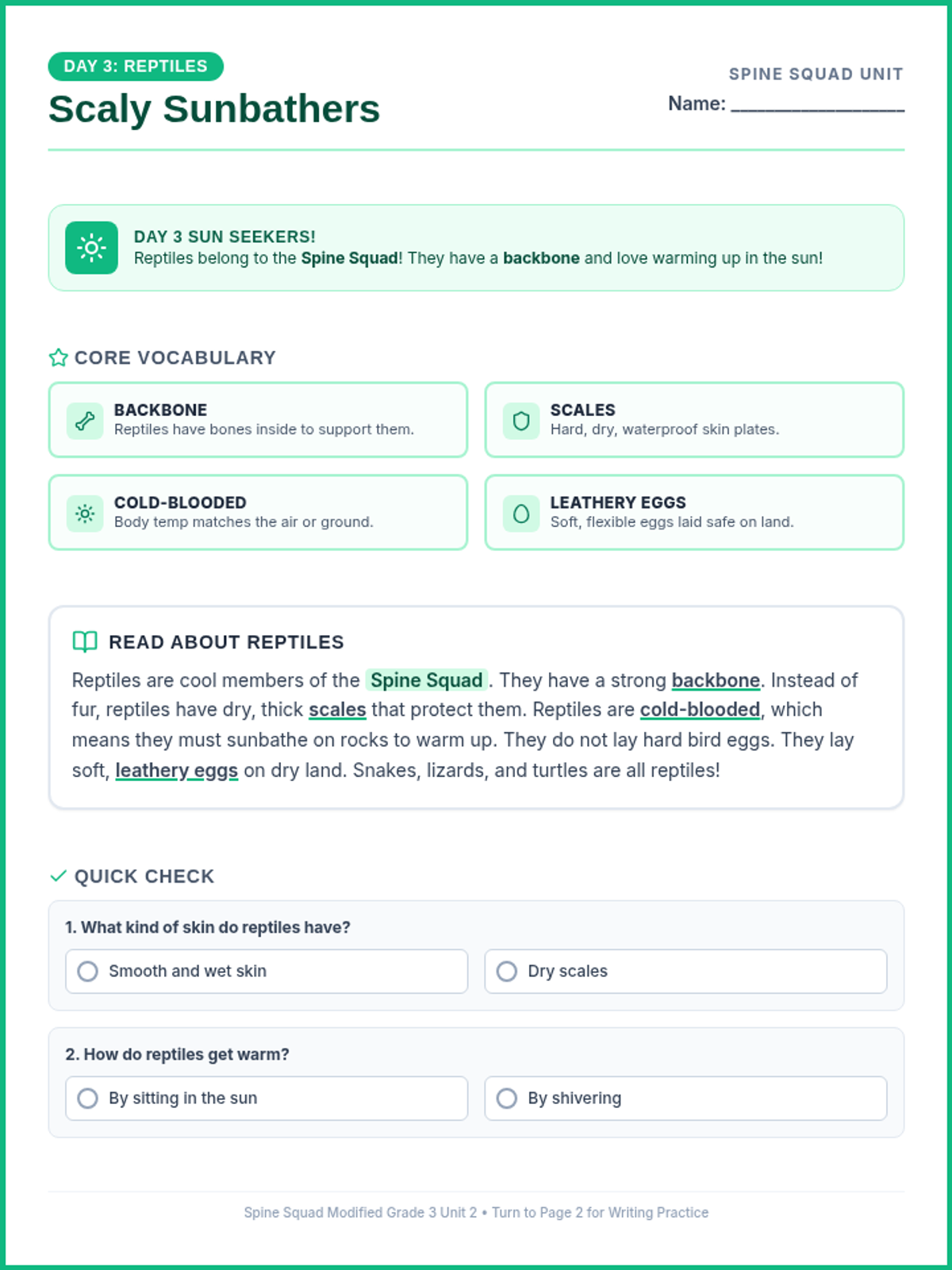
Student workbook for Day 3 of the Spine Squad unit. Features a highly visual reading passage about reptiles, core vocabulary with icon cards (scales, cold-blooded, leathery eggs, backbone), word-tracing exercises, and sentence-building frames.
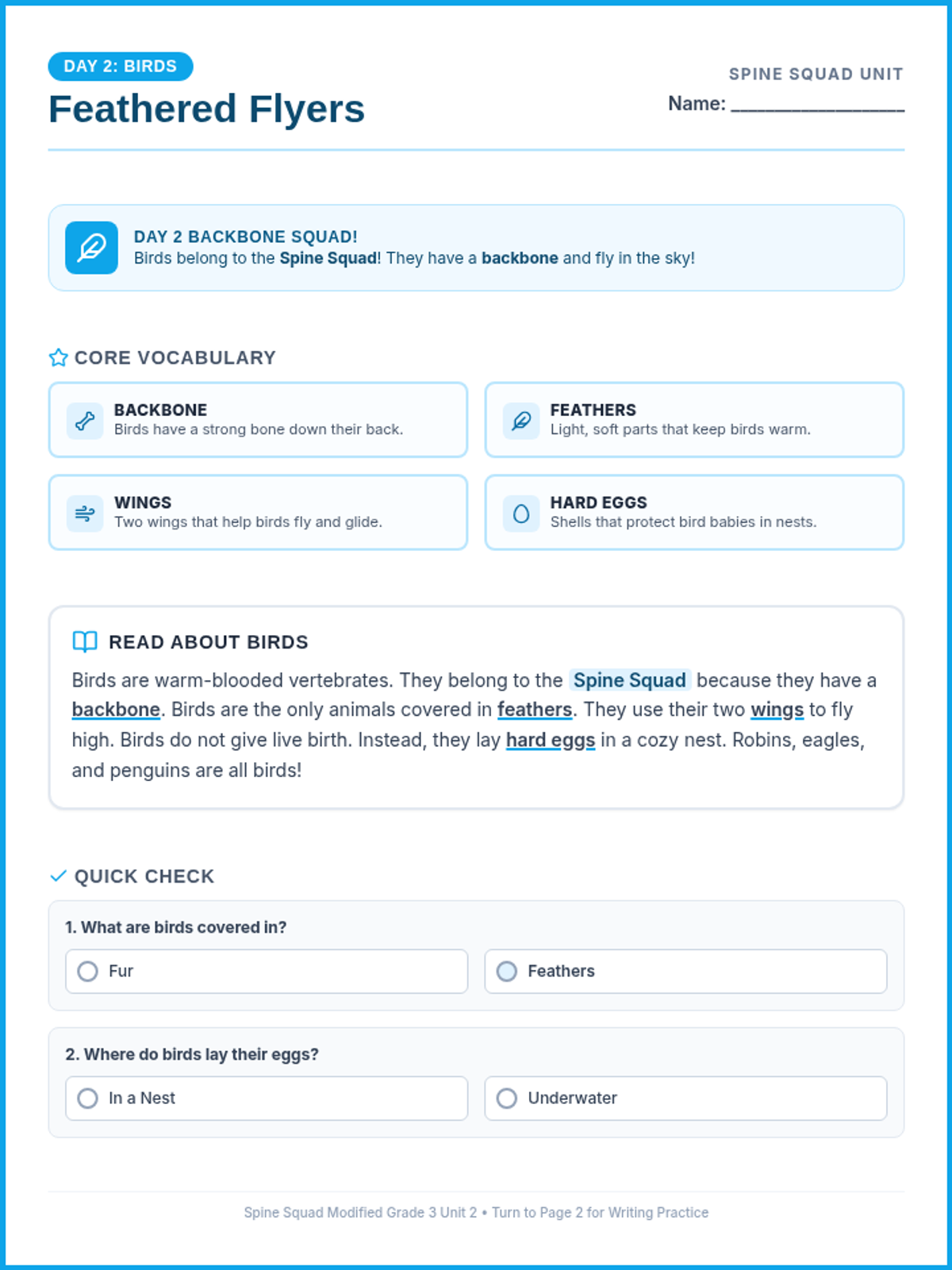
Student workbook for Day 2 of the Spine Squad unit. Features a highly visual reading passage about birds, core vocabulary with icon cards (feathers, wings, hard eggs, backbone), word-tracing exercises, and sentence-building frames.
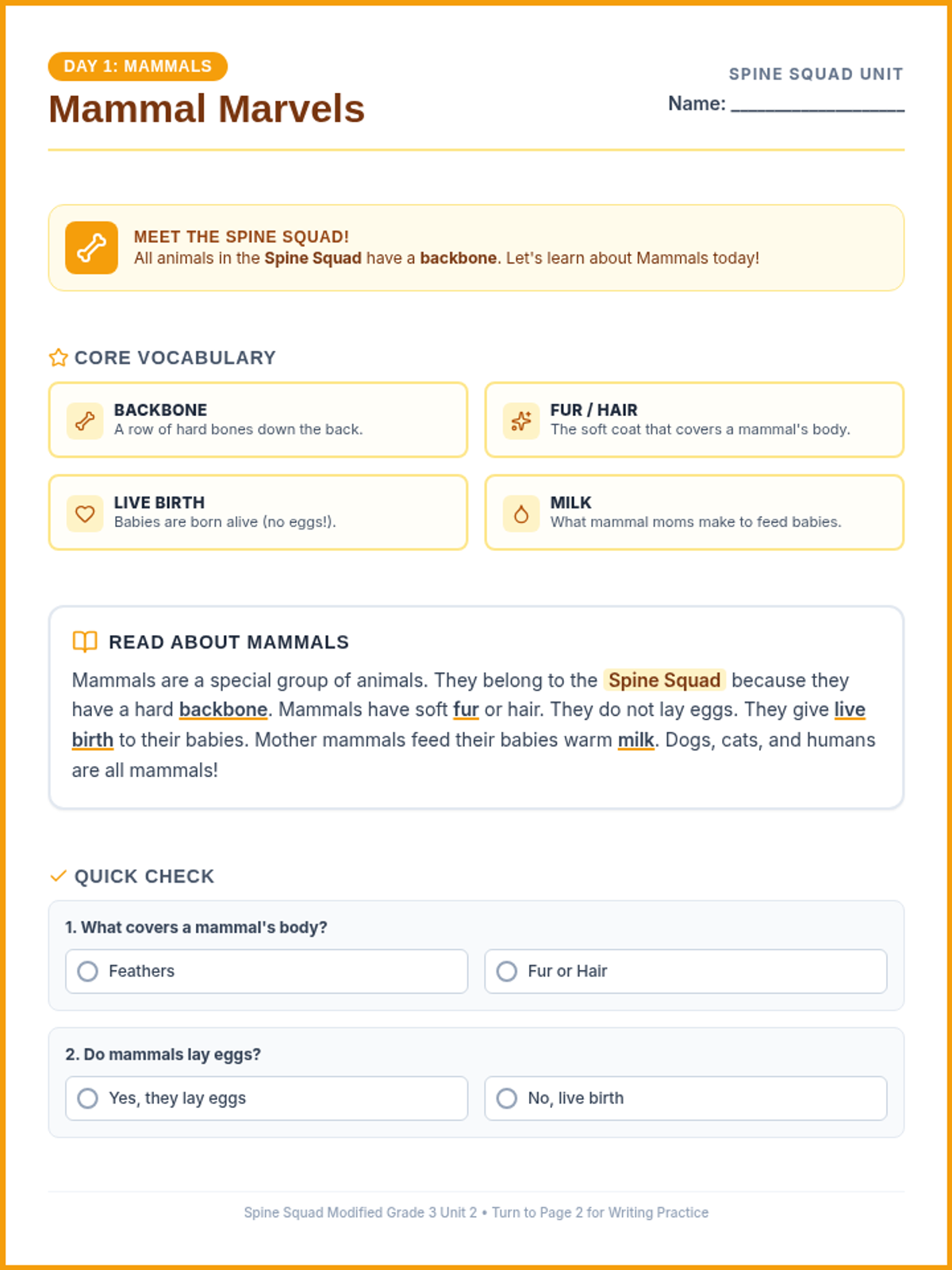
Student workbook for Day 1 of the Spine Squad unit. Features a highly visual reading passage about mammals, core vocabulary with icon cards, word-tracing exercises, and sentence frames with light-grey tracing guides.
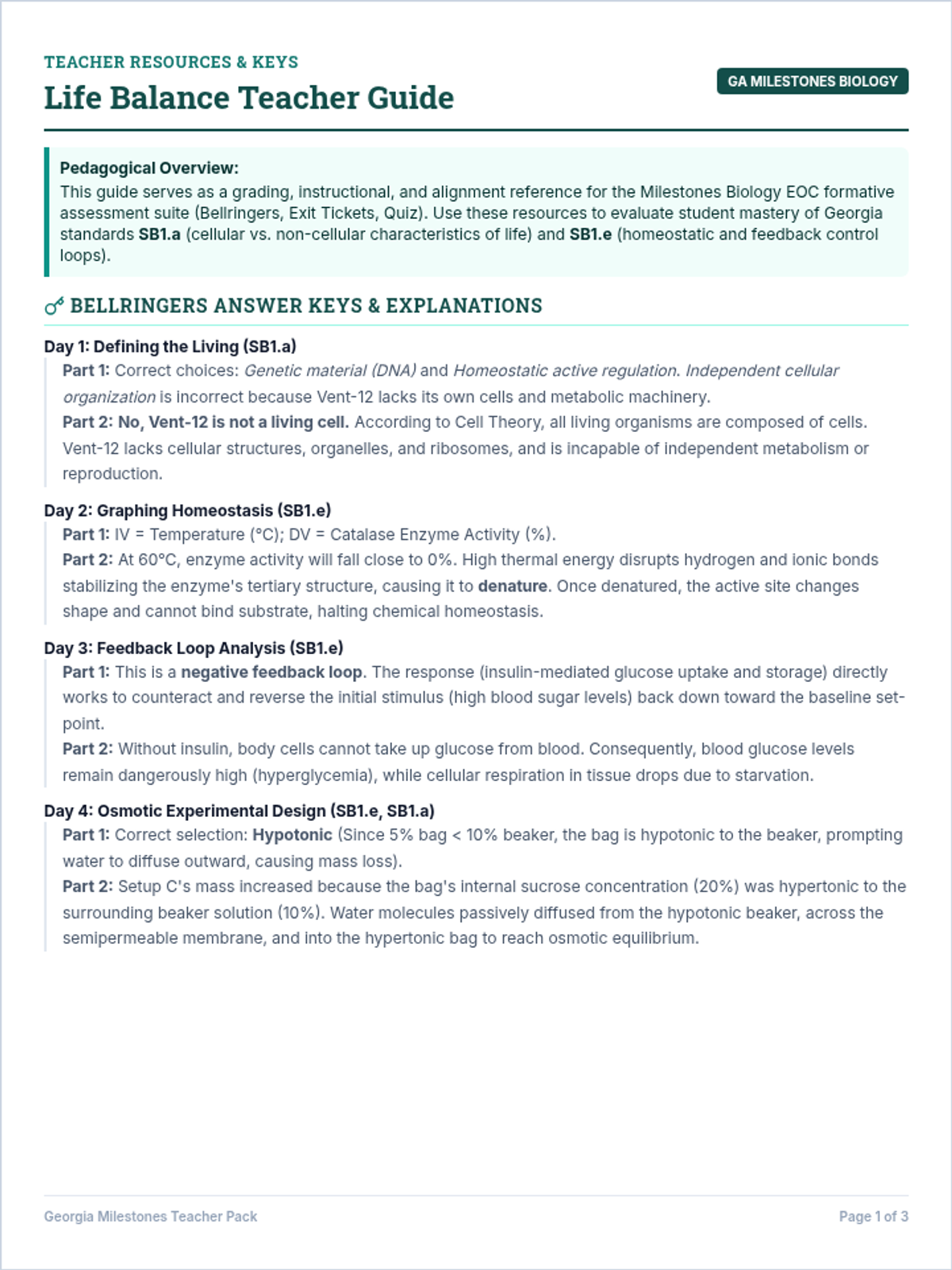
A comprehensive teacher resource containing detailed answer keys, standard alignments, grading rubrics, and pedagogical guides to address common student misconceptions on life characteristics and homeostasis.
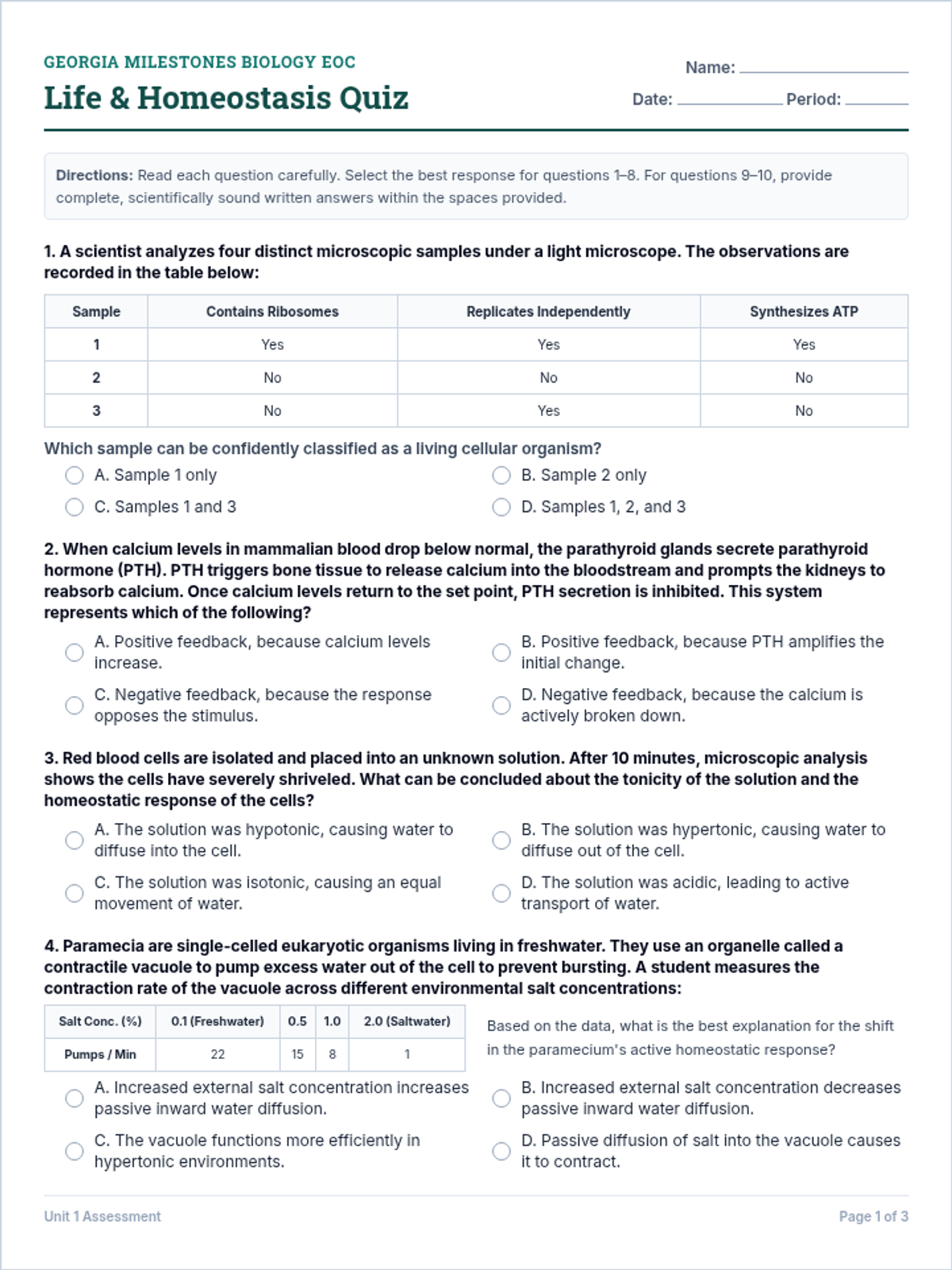
A 10-question EOC-aligned diagnostic quiz. Includes 8 multiple-choice/multi-select questions and 2 free-response data analysis questions covering characteristics of life and feedback systems.
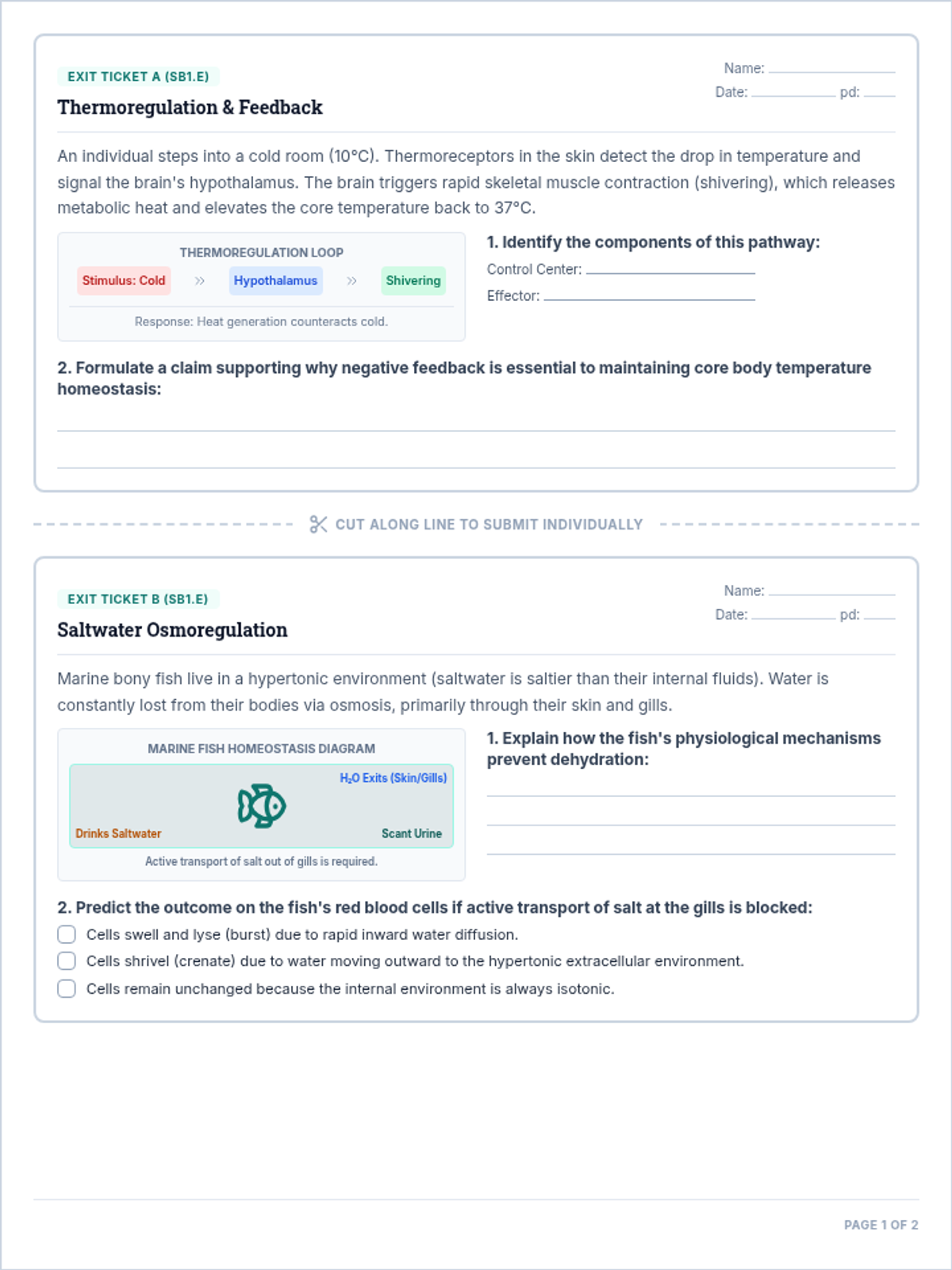
Four daily biology EOC-aligned exit tickets focused on characteristics of life and homeostasis. Covers thermoregulation, fish osmoregulation, biological status of viruses, and transpiration experimental variables.
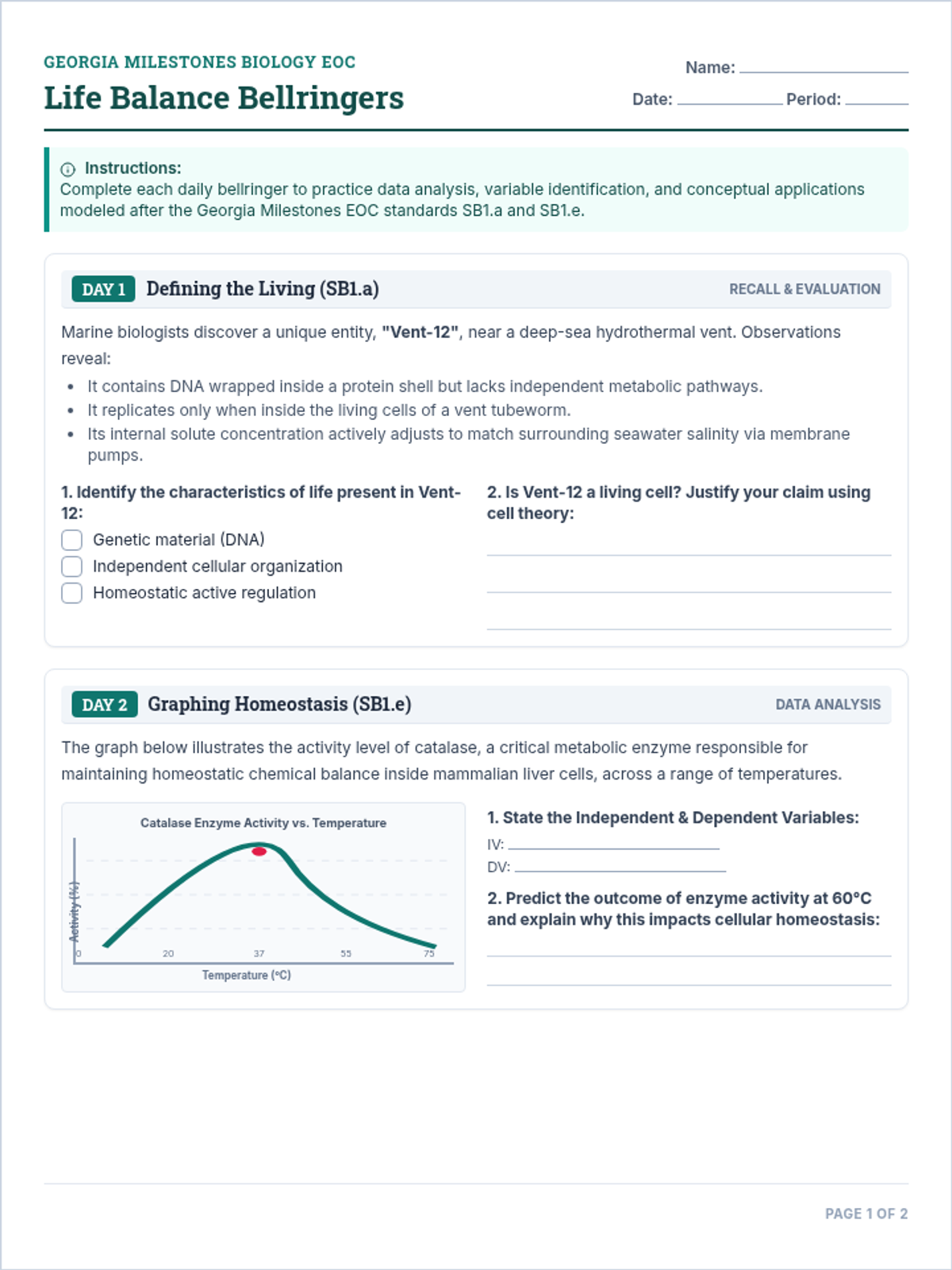
A set of four daily EOC-aligned bellringers for Georgia Milestones Biology. Includes scenarios on characteristics of life, enzyme temperature curves, negative feedback loop labeling, and dialysis tubing diffusion data.
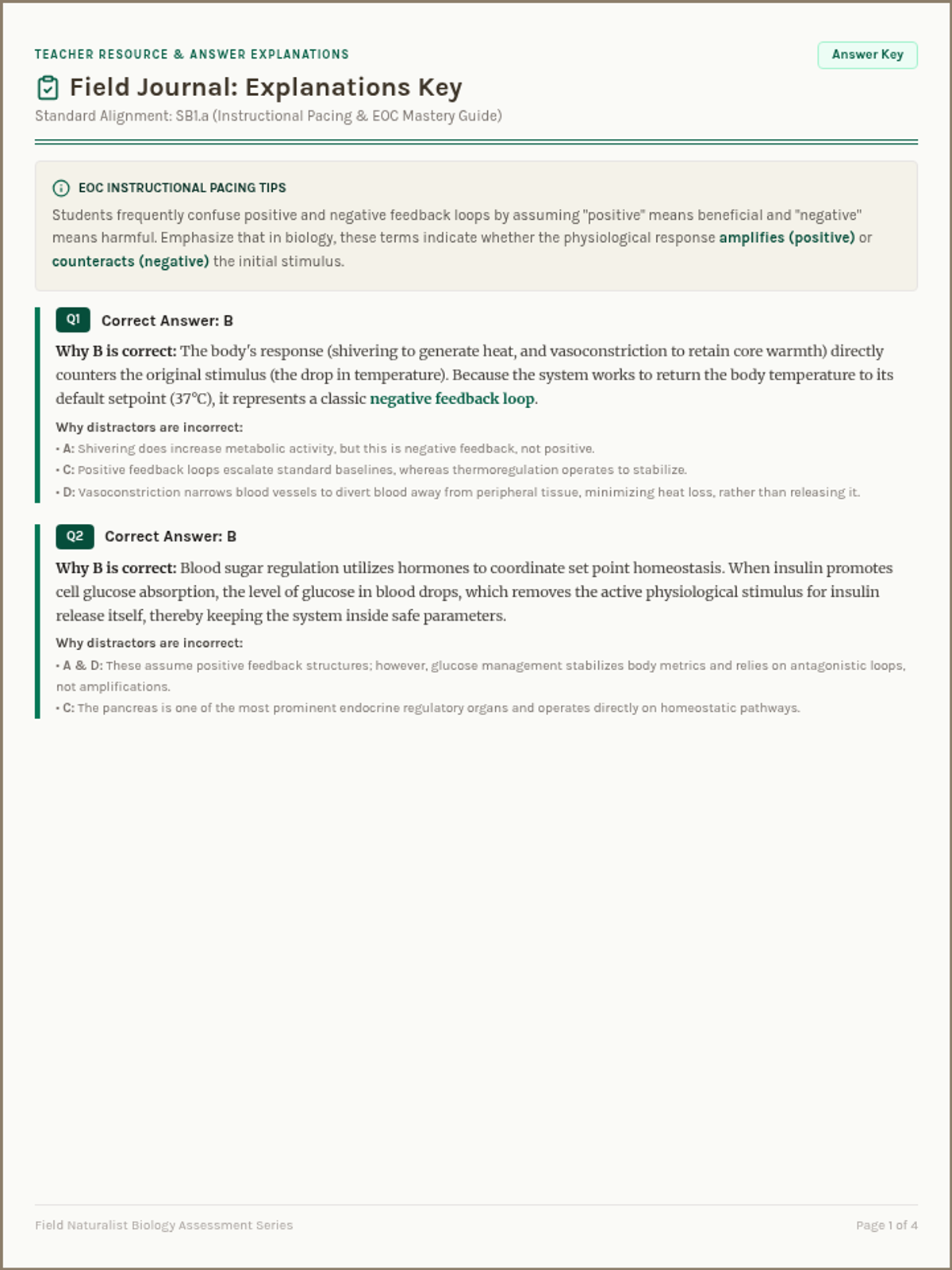
Teacher Guide & Answer Key for the Feedback Loops Practice Worksheet. Contains standard alignments, exhaustive explanations of correct and incorrect responses, EOC testing tips, and exemplar student responses for the free-response item. Consistent 4-page pagination. Designed with the Scientist's Field Journal theme.
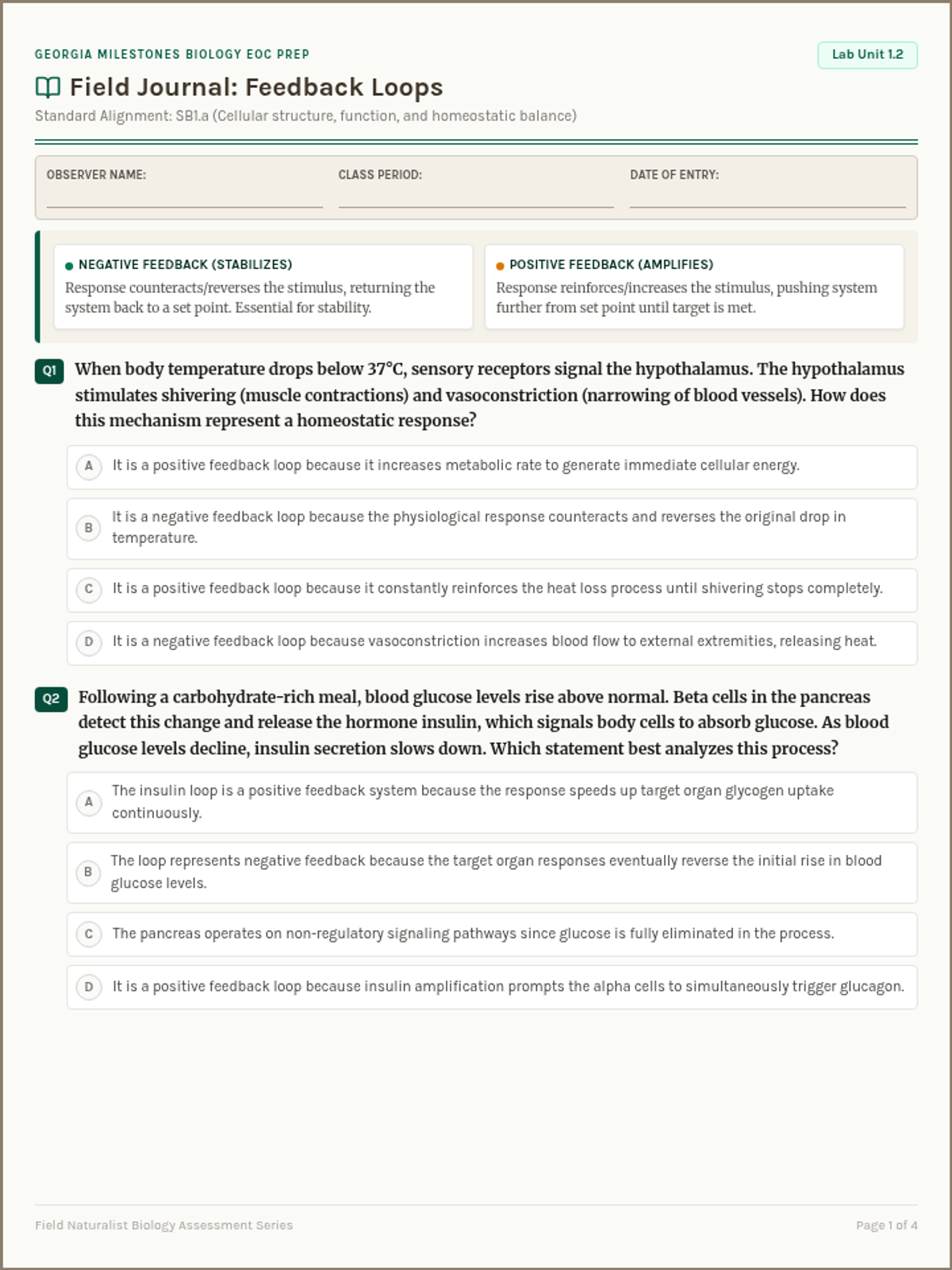
A highly rigorous, standards-aligned multiple choice, multi-select, and data-analysis practice question bank for biology students preparing for the Georgia Milestones EOC. Designed with a gorgeous "Scientist's Field Journal / Lab Notebook" theme featuring forest green accents, warm parchment backgrounds, and elegant Merriweather typography. Consistent 4-page pagination.
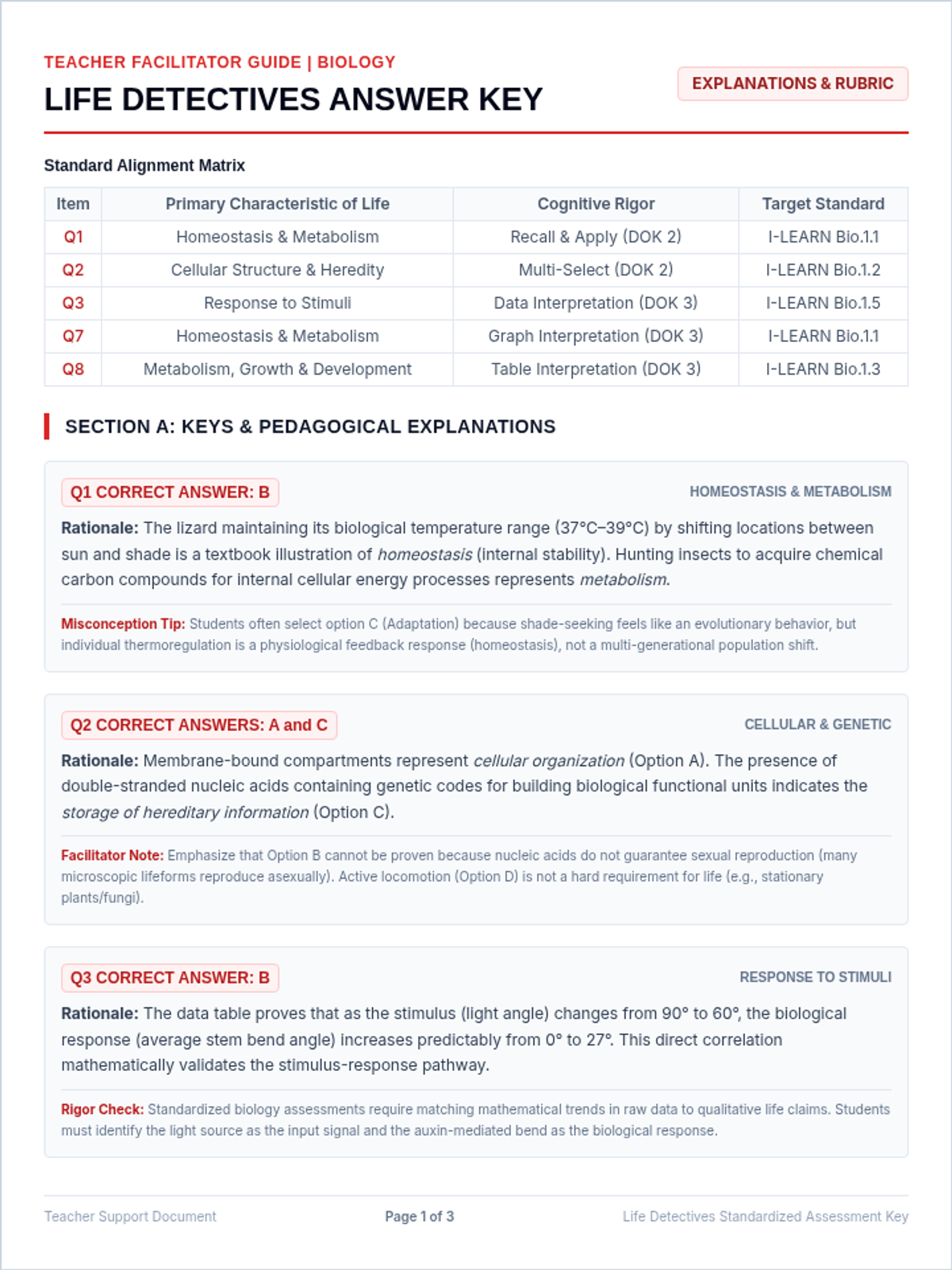
A teacher-facing facilitator guide and complete answer key for the Life Detectives Question Bank. Features pedagogical tips, standard alignment, common misconceptions, and detailed scientific rationales for each item.
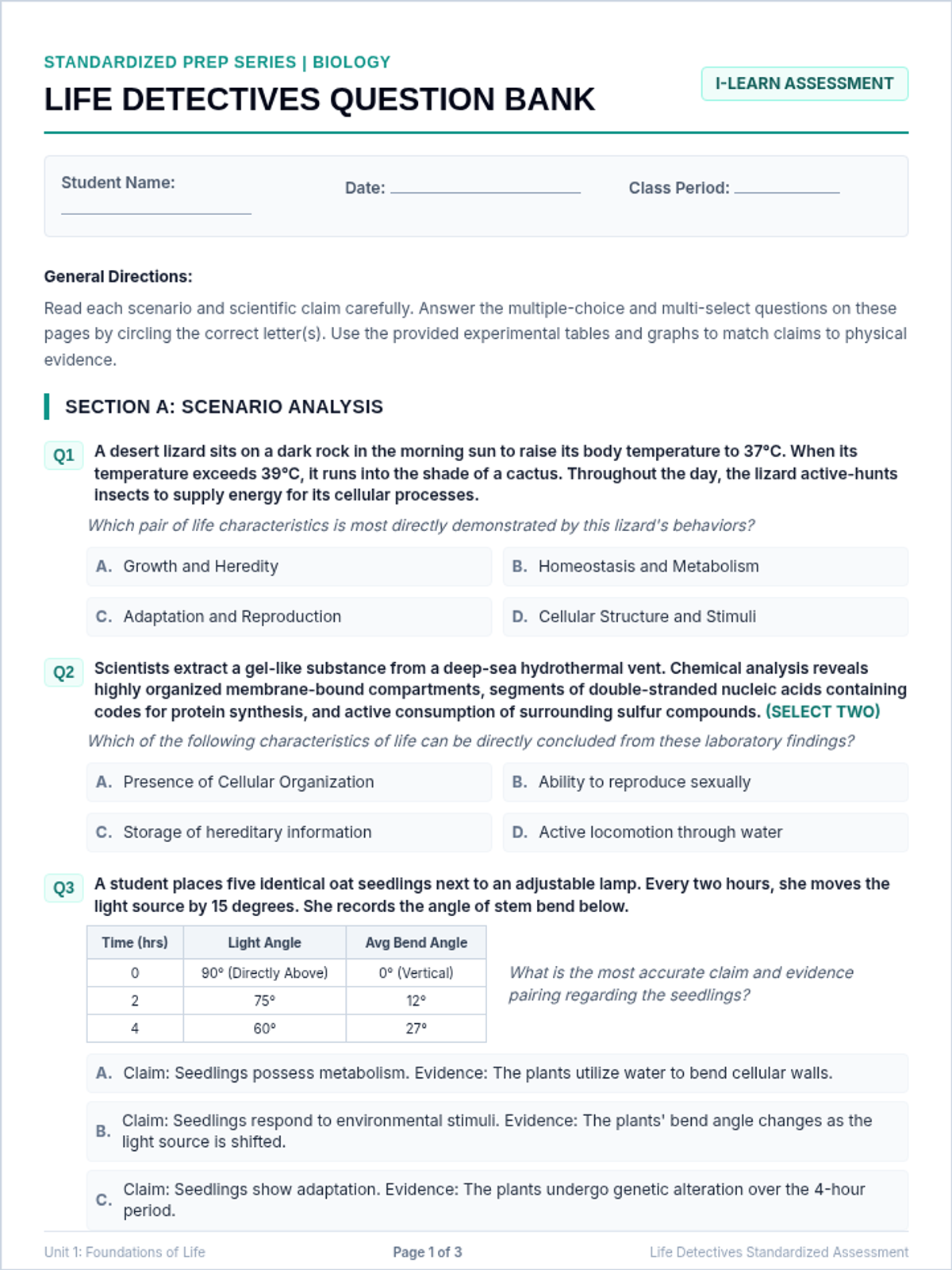
A printable I-LEARN style biology question bank focusing on the characteristics of life. Includes rigorous multiple-choice, multi-select, and experimental data-matching questions with scenario-based science contexts.
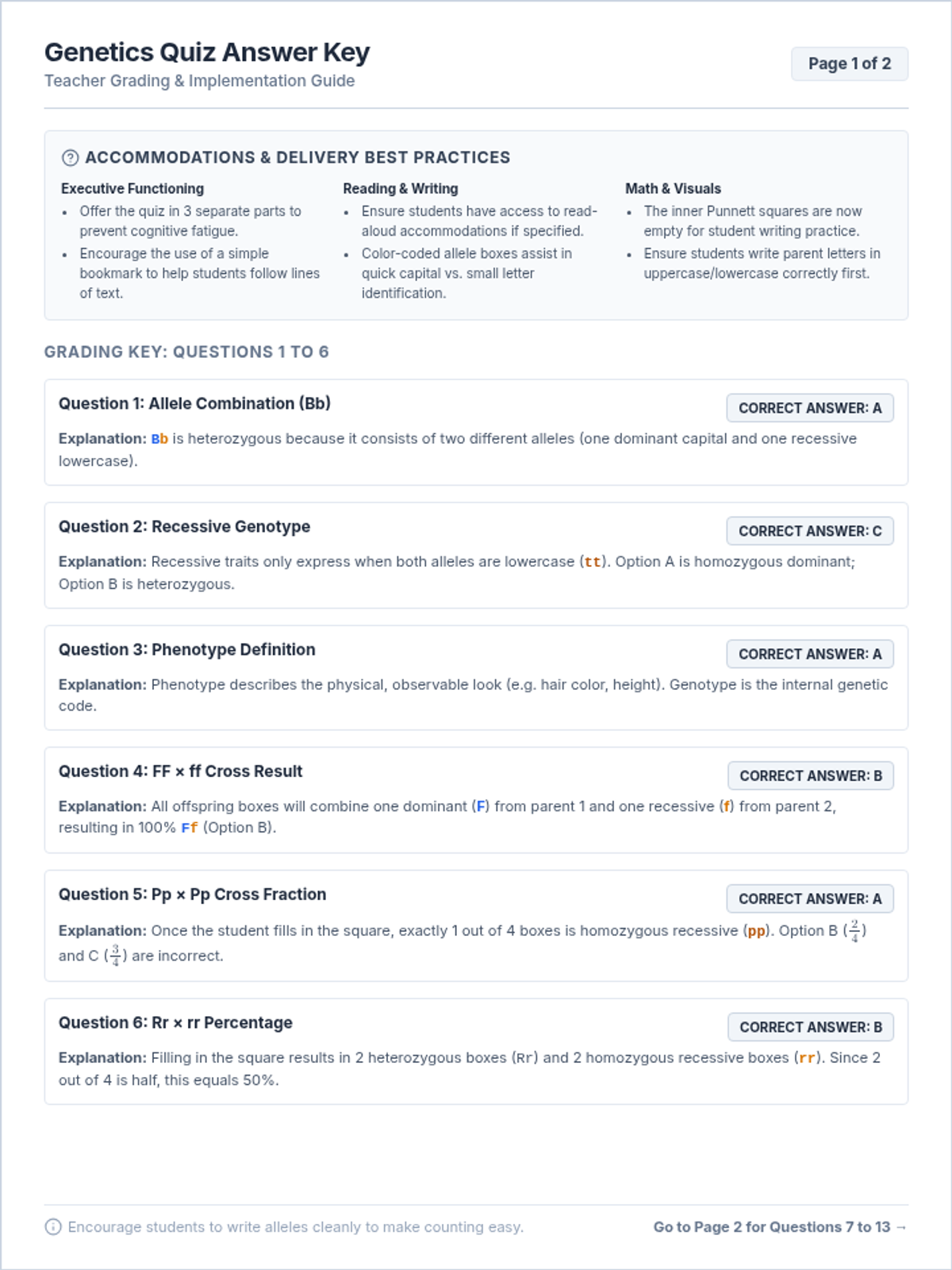
A comprehensive teacher guide and answer key for the Genetics Quiz. Includes clear answers and detailed explanations for all 13 scaffolded questions. All hints and accommodation tips have been removed.
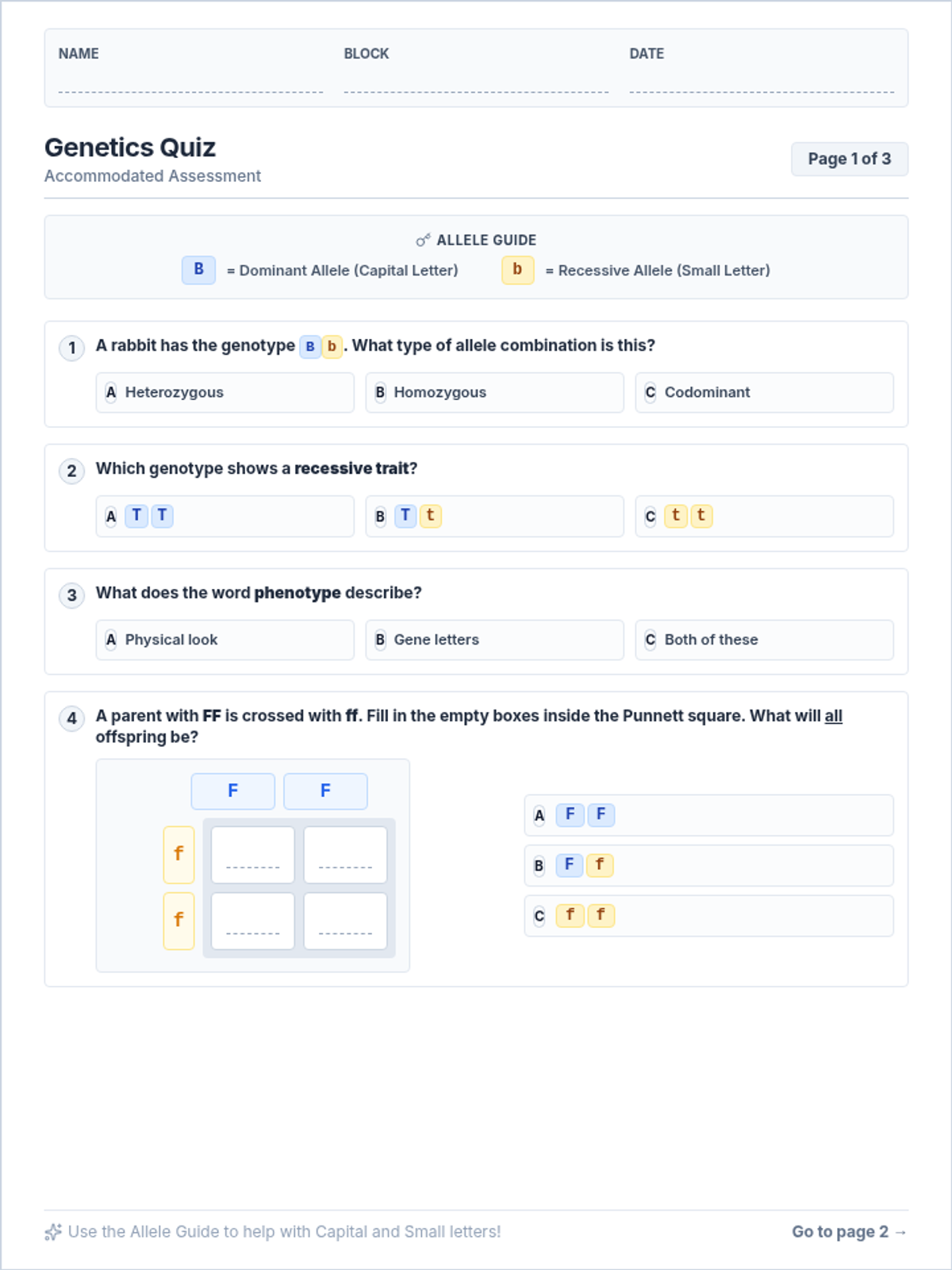
A 13-question genetics quiz with a neutral design, featuring empty Punnett squares with parent labels on the outside, three answer choices for Page 1 & Page 2 questions, a hint on Question 12, simple blood type allele notation (A/B/O instead of superscripts), an AO option on Question 12, clean fraction formatting on Question 5, and a 3-sentence open response question with ample writing space on Page 3.
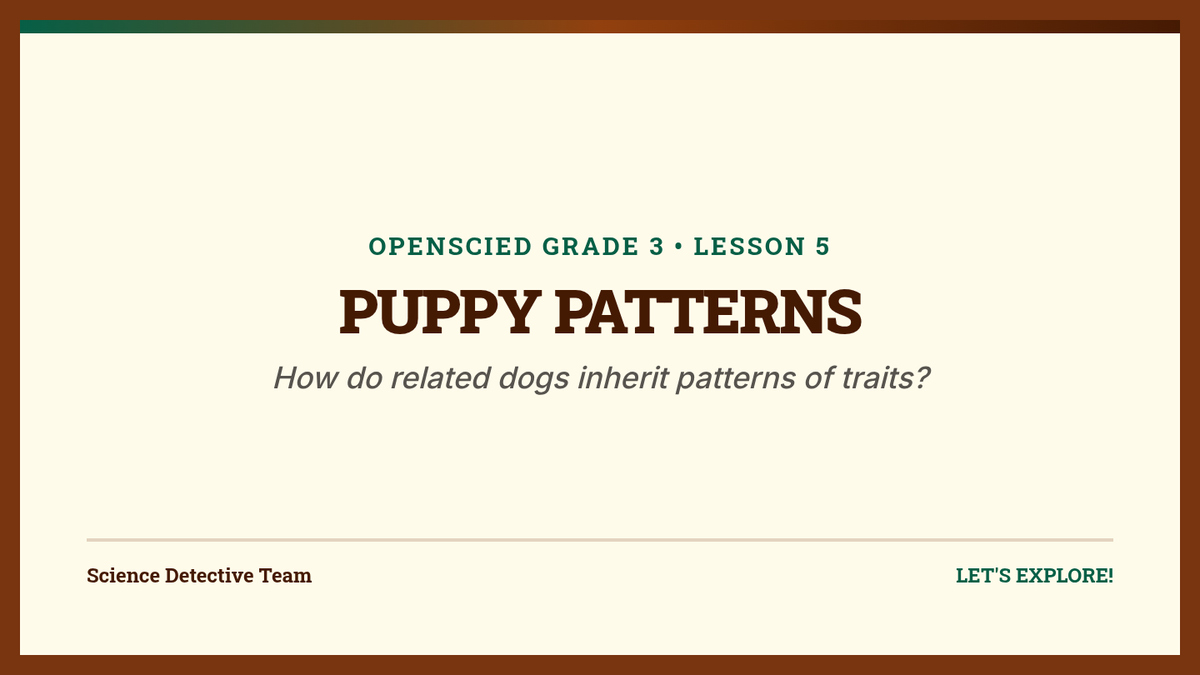
An interactive 7-slide presentation deck designed for OpenSciEd Grade 3 Lesson 5. Features high-visibility text (minimum 24px), clear diagrams, data walkthroughs, and teacher discussion prompts for inheritance.
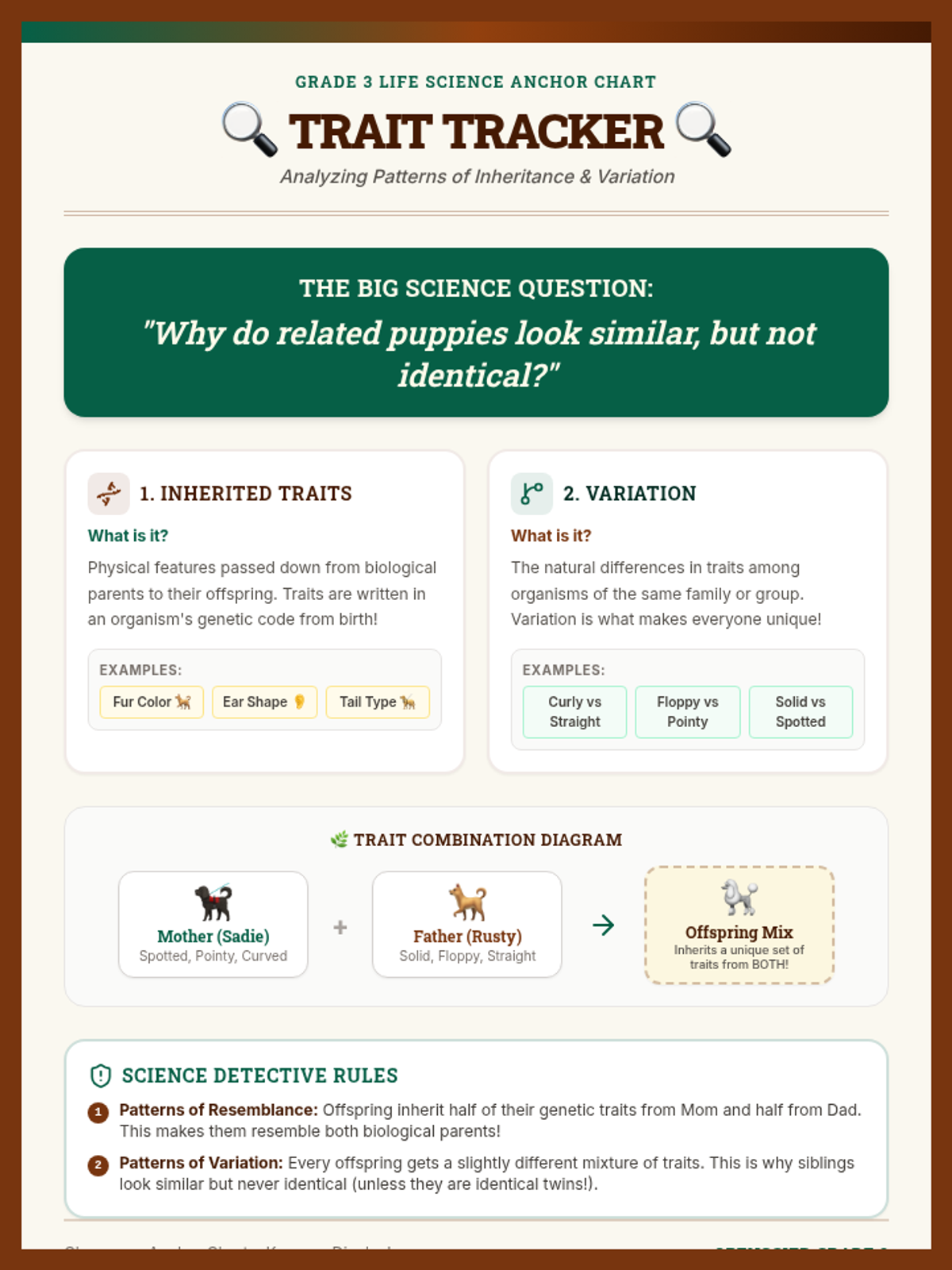
A print-ready science anchor chart summarizing trait inheritance patterns, resemblance, and variation. Designed with clear diagrams, simple child-friendly definitions, and "Science Detective Rules" for classroom display.
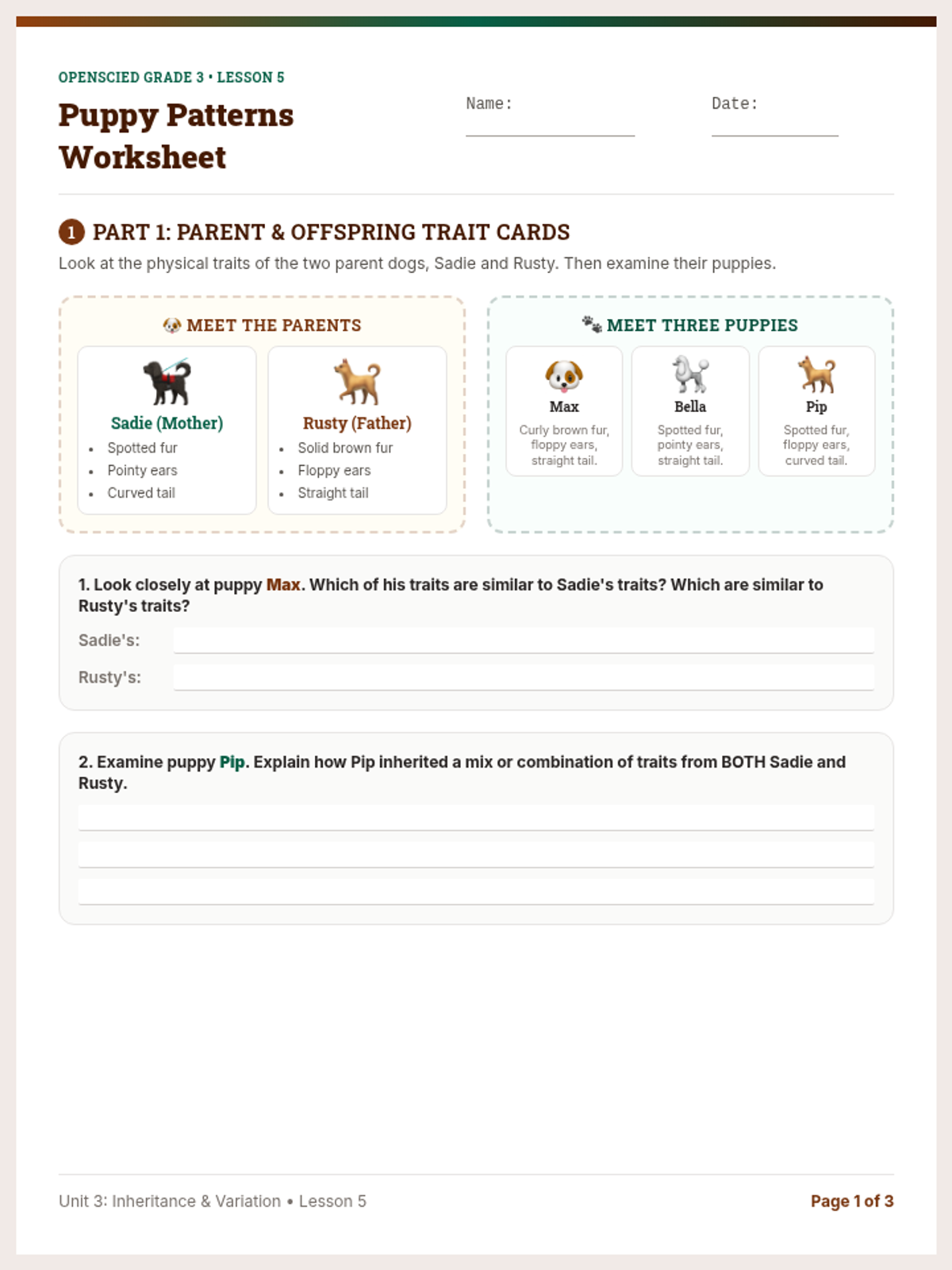
A 3-page, print-ready student data worksheet for OpenSciEd Grade 3 Lesson 5. Includes side-by-side parent and puppy trait cards, a visual trait checklist matrix, a tally chart, and a bar graphing activity.
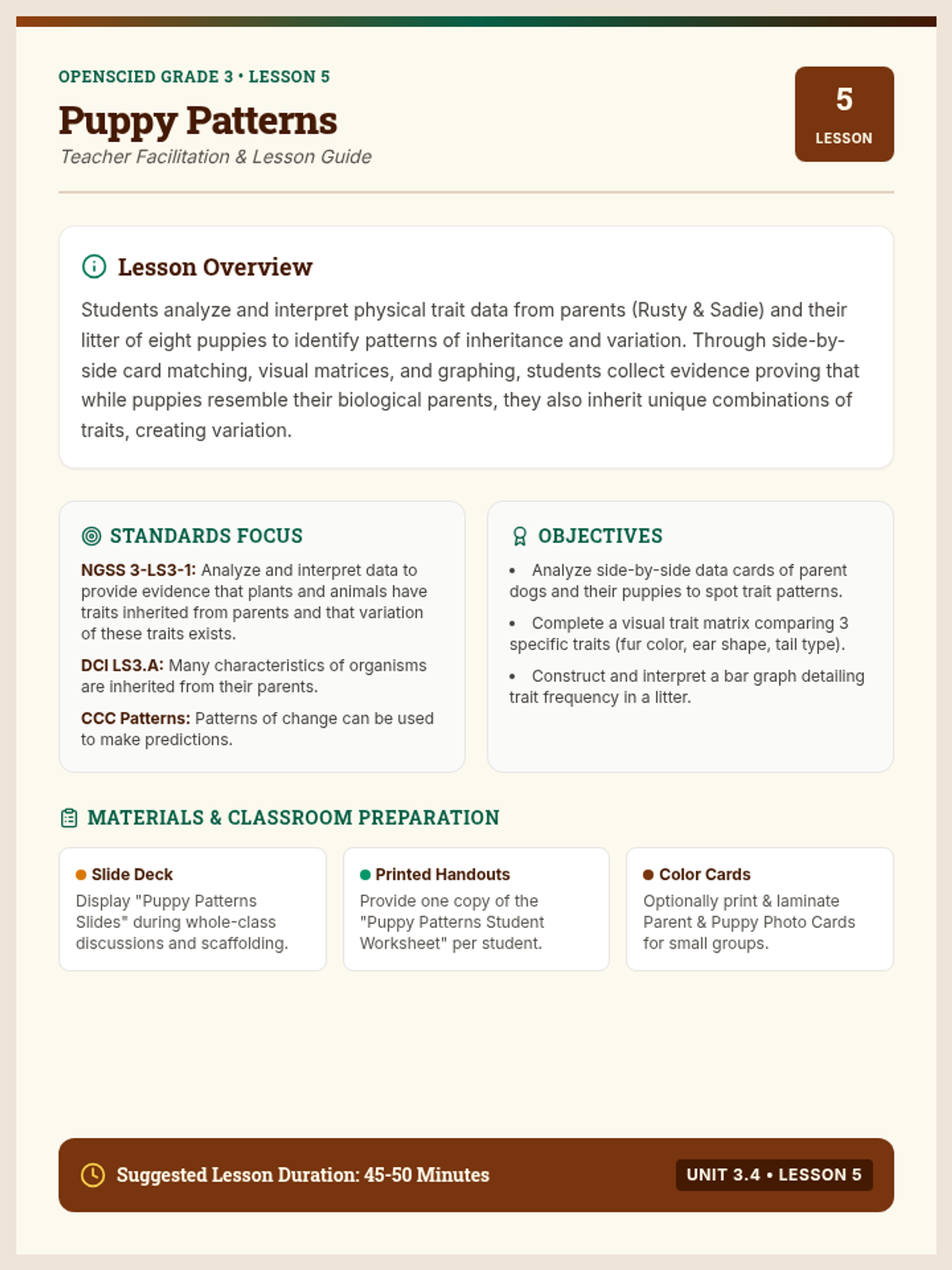
A comprehensive 2-page teacher facilitation guide for OpenSciEd Grade 3 Lesson 5. Includes lesson objectives, NGSS alignment, step-by-step facilitation instructions, discussion questions, common misconceptions, and an answer key.
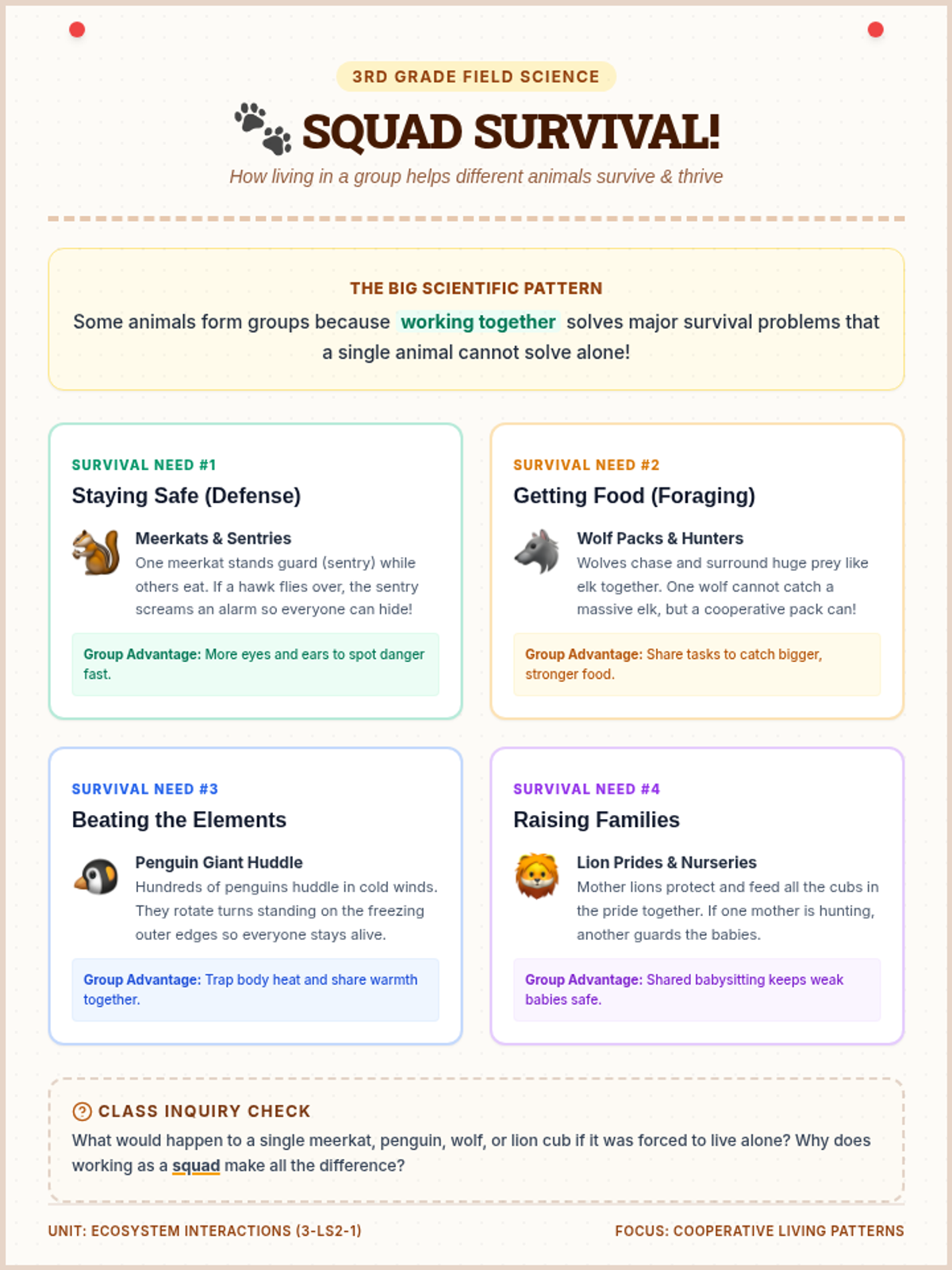
A high-impact 1-page visual classroom anchor chart summarizing the four major survival advantages of group living with memorable animal patterns.
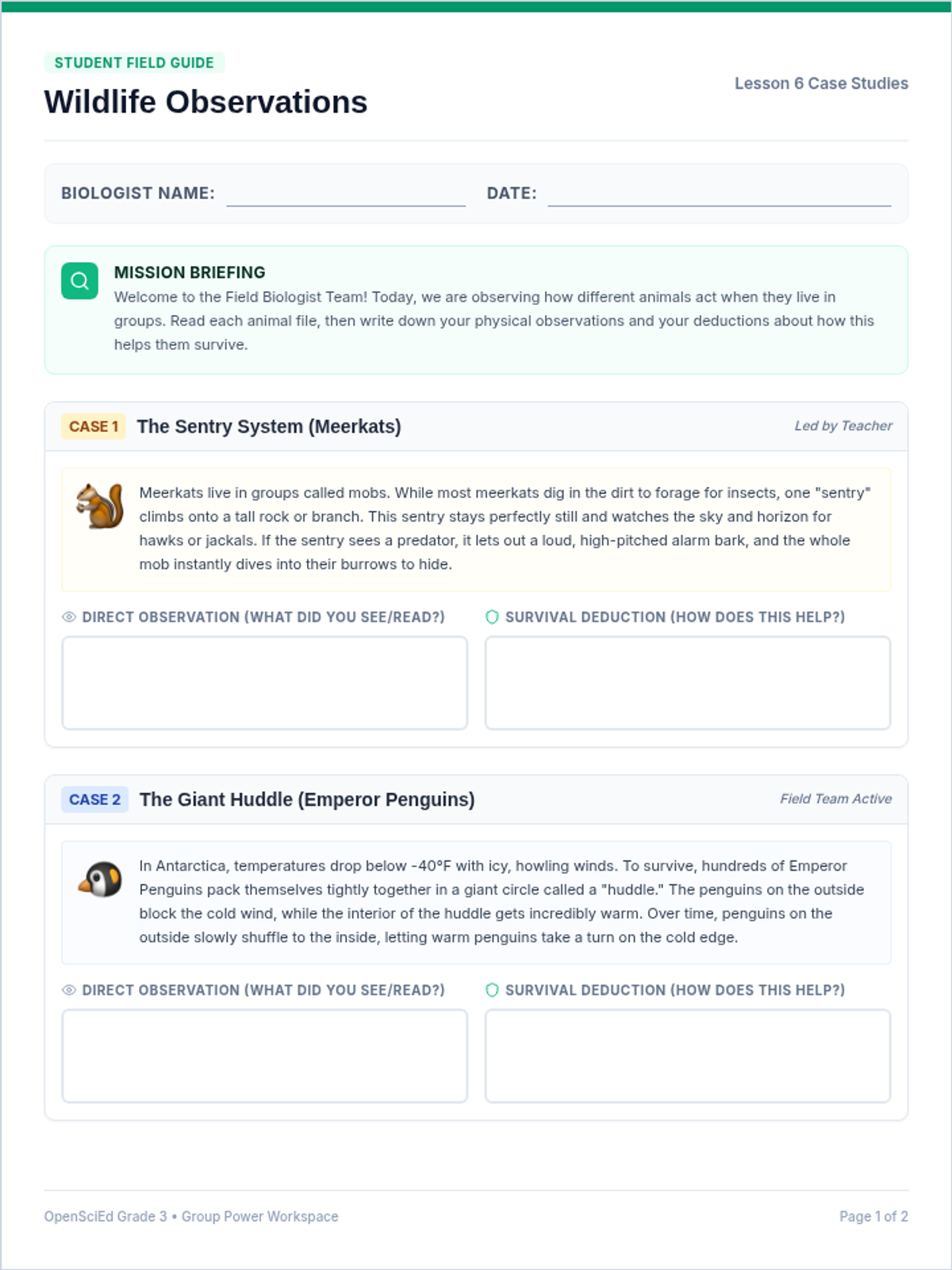
An interactive 2-page student observation worksheet where 3rd-grade field biologists record and synthesize observations of cooperative group behaviors across three animal case studies.