A visual presentation deck for the Logic Lab lesson, including video embeds, key philosopher definitions, and discussion prompts for inductive vs. deductive reasoning.
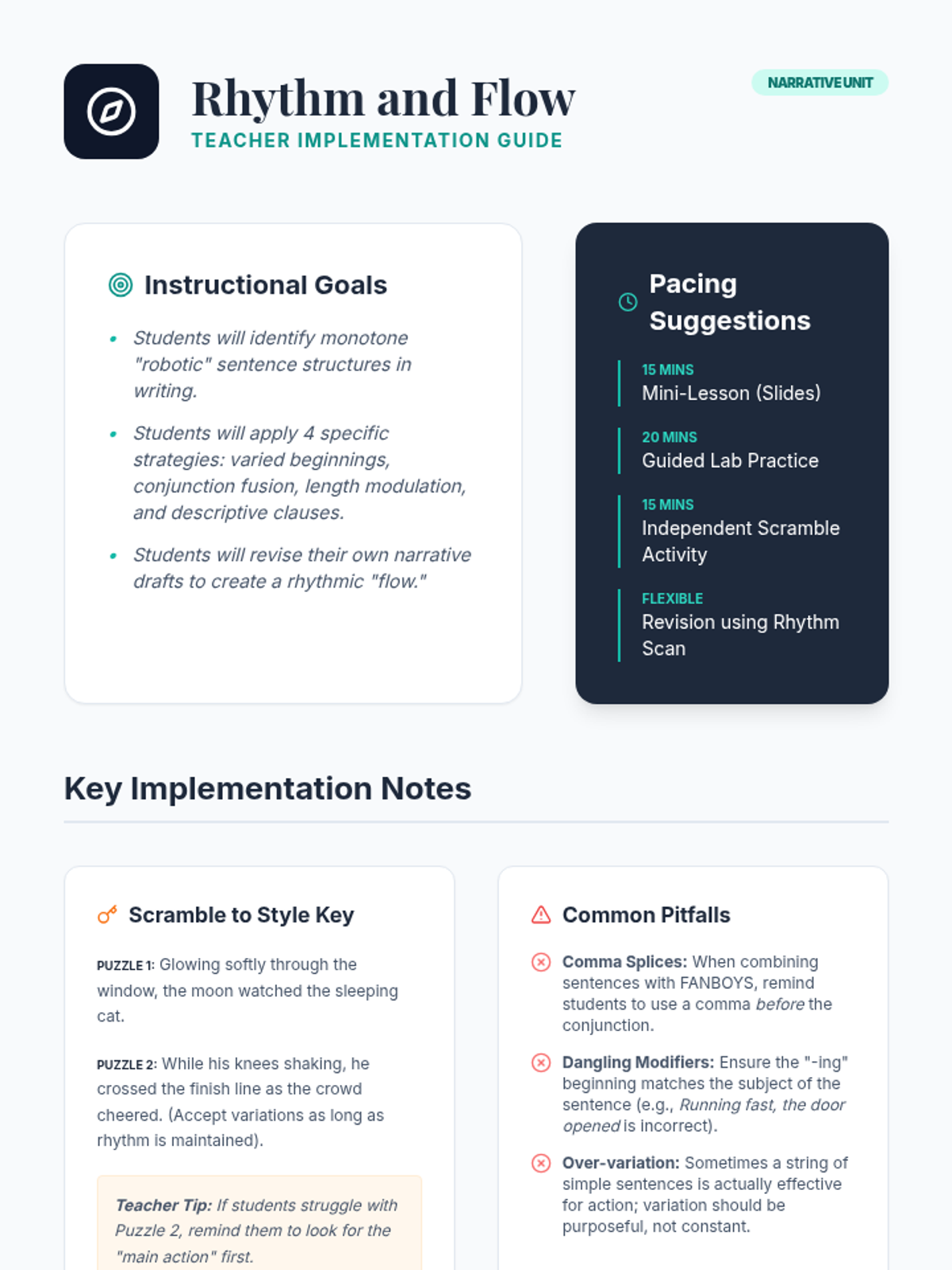
A professional instructional guide for teachers, including lesson objectives, pacing suggestions, answer keys for student activities, and differentiation strategies.
A revision checklist and visual mapping tool to help students analyze and improve the sentence rhythm and variation in their own narrative writing drafts.
A sentence-building worksheet where students unscramble sophisticated examples and construct their own varied sentences using specific structural requirements.
A graphic organizer for sentence combining practice, structured as a "lab" where students fuse basic sentences into complex, rhythmic prose using specific strategies.
A vibrant 7-slide presentation introducing the "Robot Problem" (monotone writing) and offering four specific strategies for sentence variation: varied beginnings, conjunction usage, length modulation, and descriptive clauses.
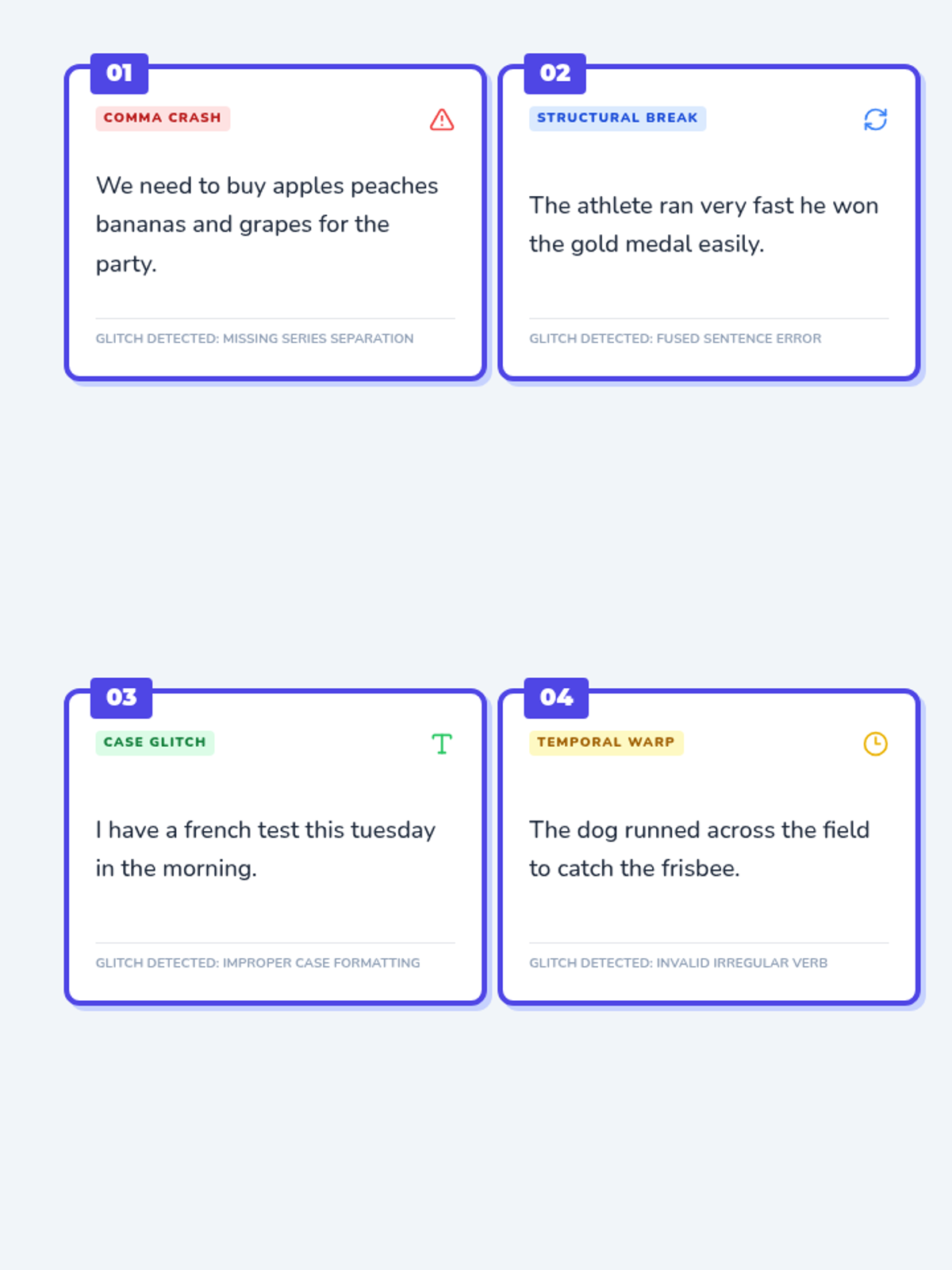
A set of 24 grammar task cards styled as 'Glitch Zones' in a computer system. Includes challenges on commas, sentence errors, capitalization, and verb tense with a unique cyberpunk aesthetic. Updated with print-safe page breaks.
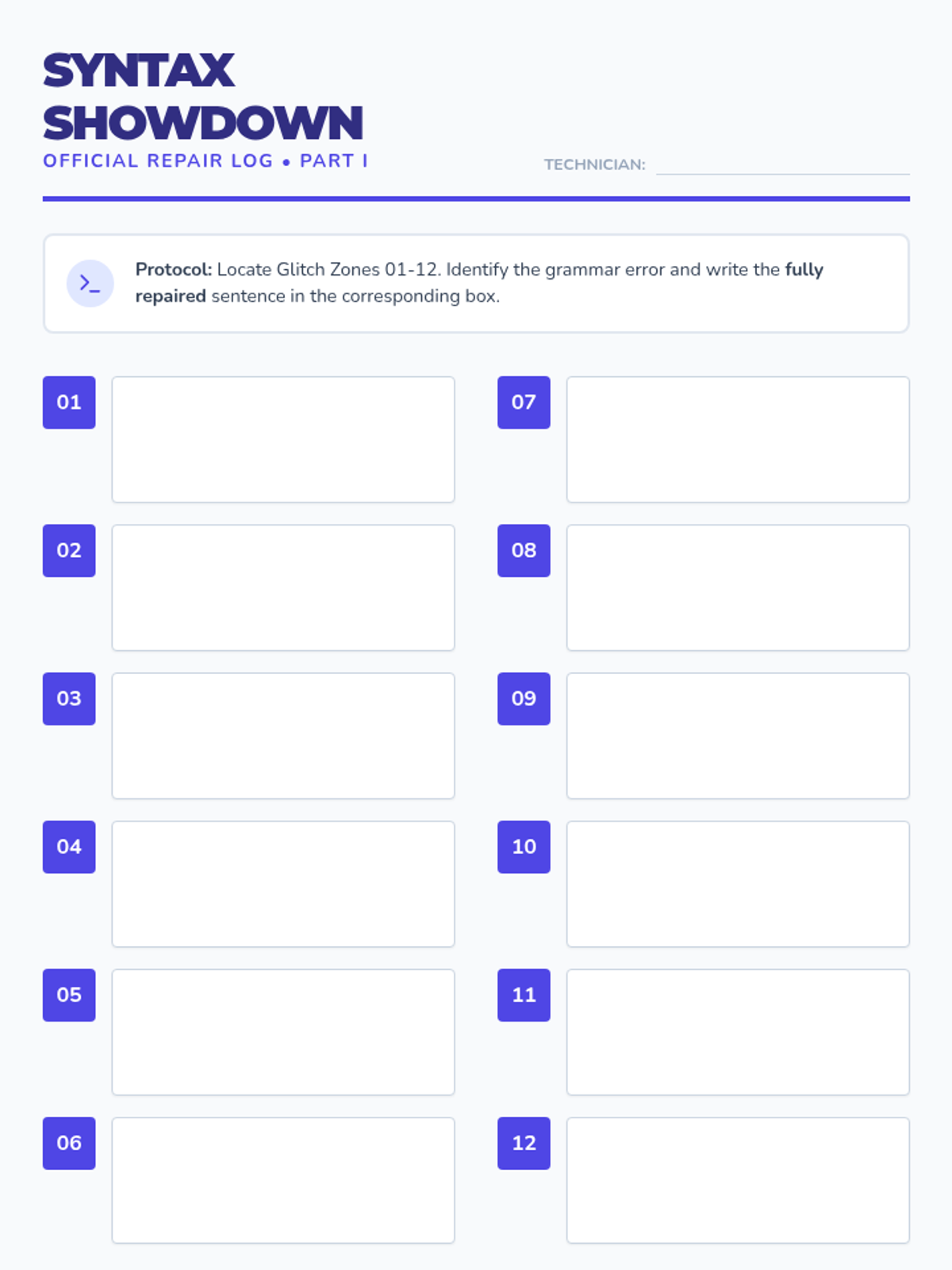
A specialized two-page recording sheet for the Syntax Showdown game. Boxes 01-12 are on page 1 and 13-24 are on page 2, ensuring no boxes are split across pages and providing ample writing space.
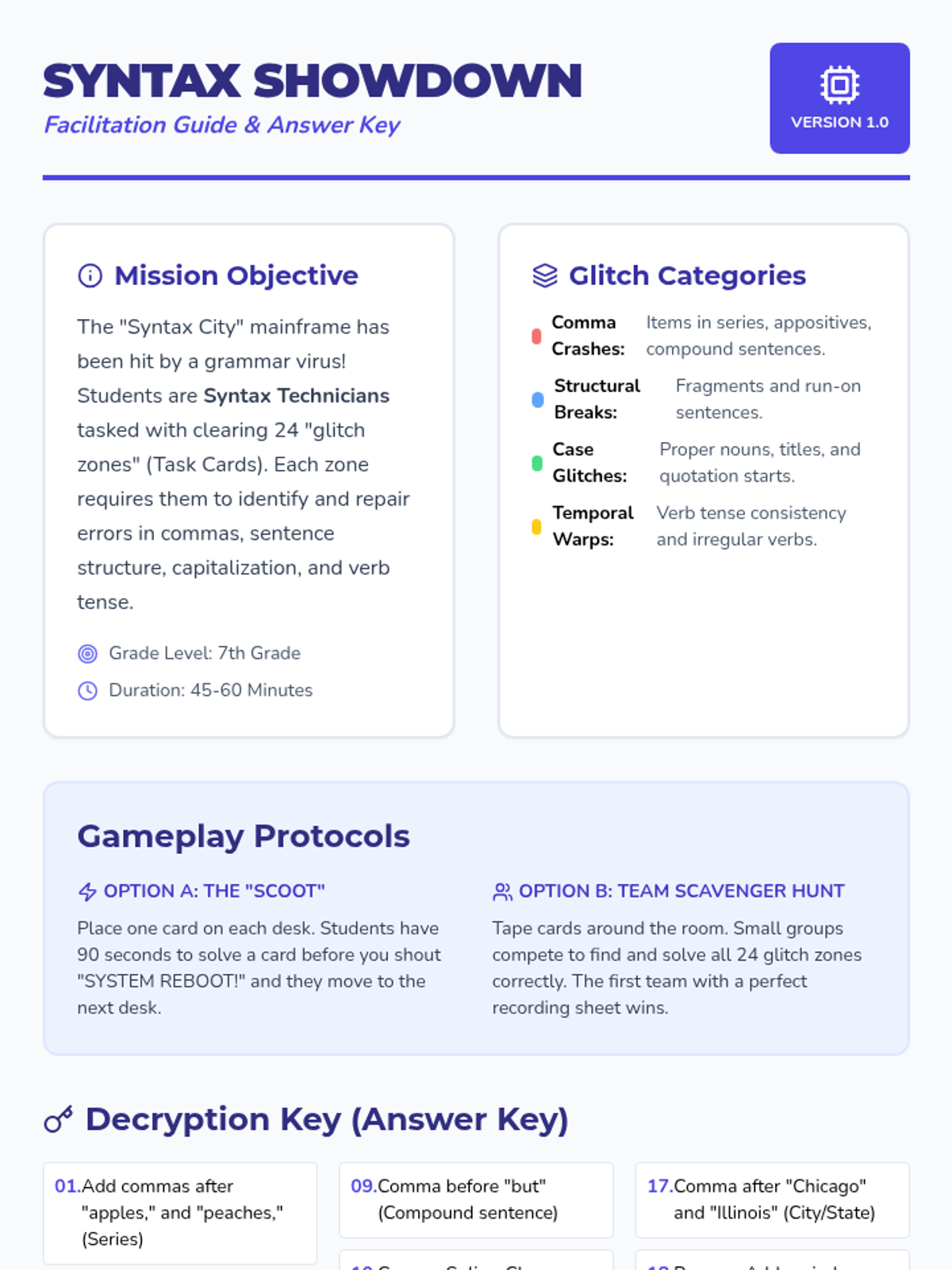
Teacher guidance and answer key for the Syntax Showdown task card game. Includes gameplay options like 'Scoot' and 'Scavenger Hunt', along with a detailed decryption key for all 24 challenges.
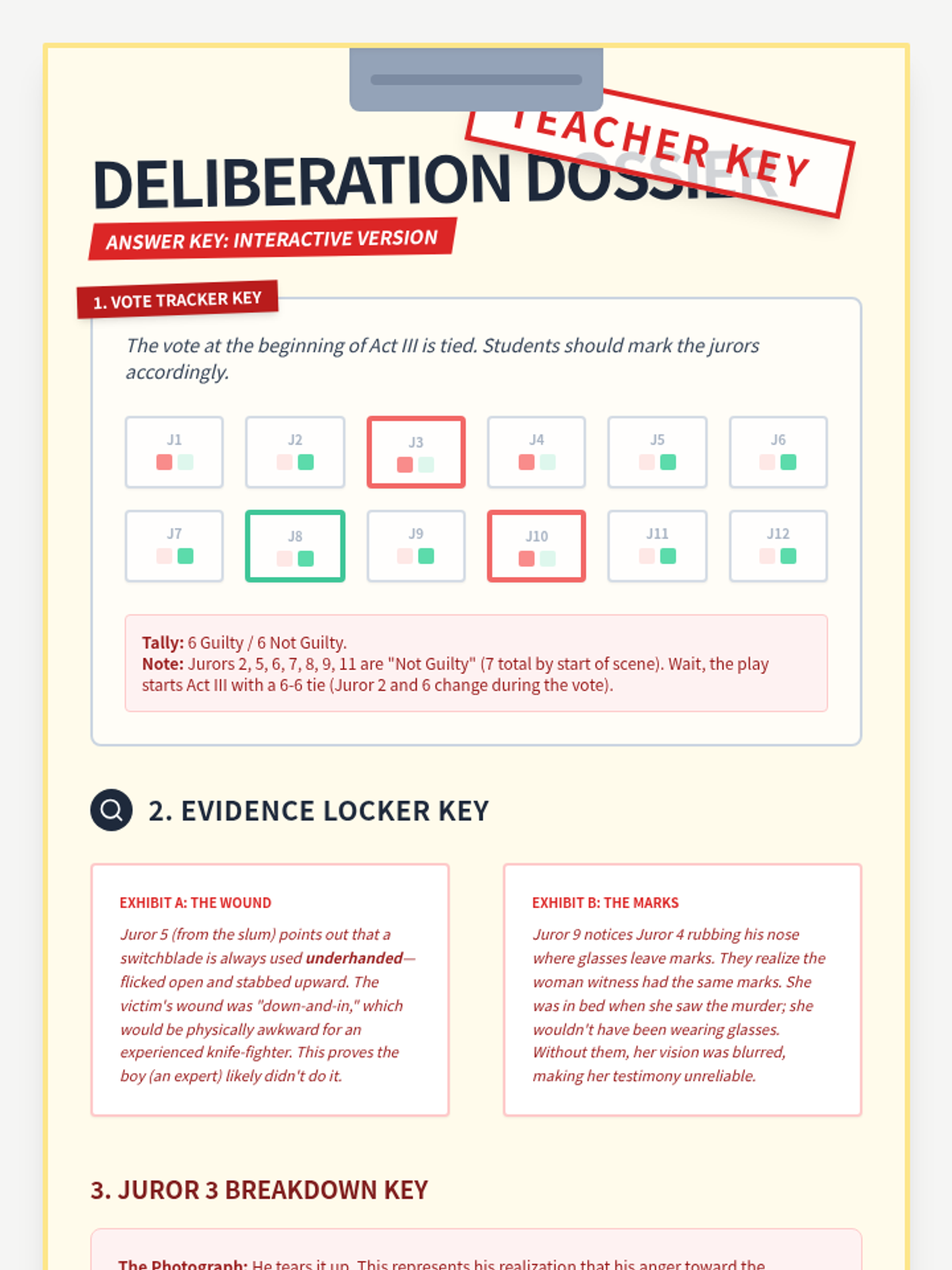
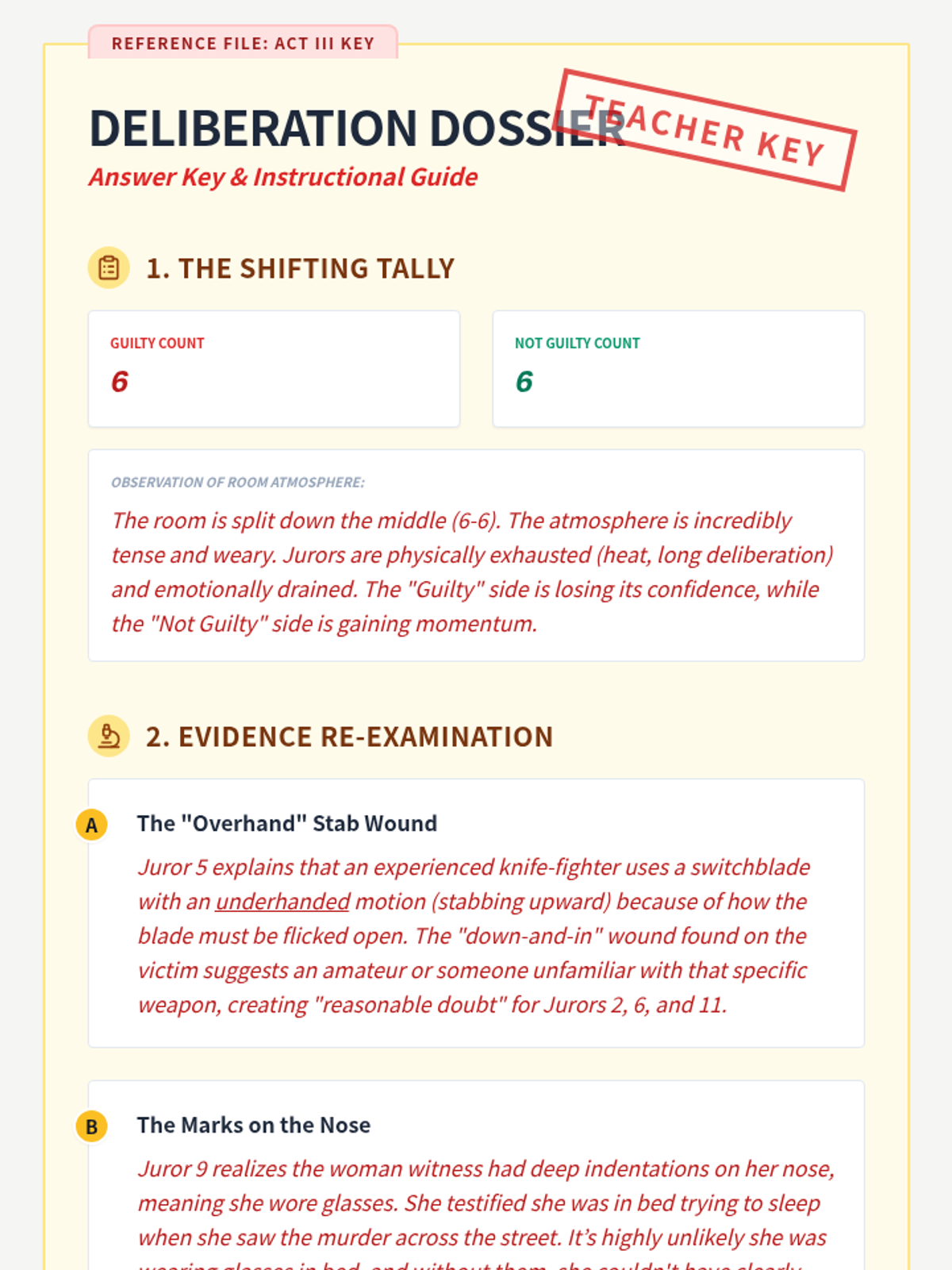
A comprehensive answer key and teacher guide for the interactive Act III 'Deliberation Dossier' worksheet. It provides specific plot points, vote tallies, and character analysis keys.
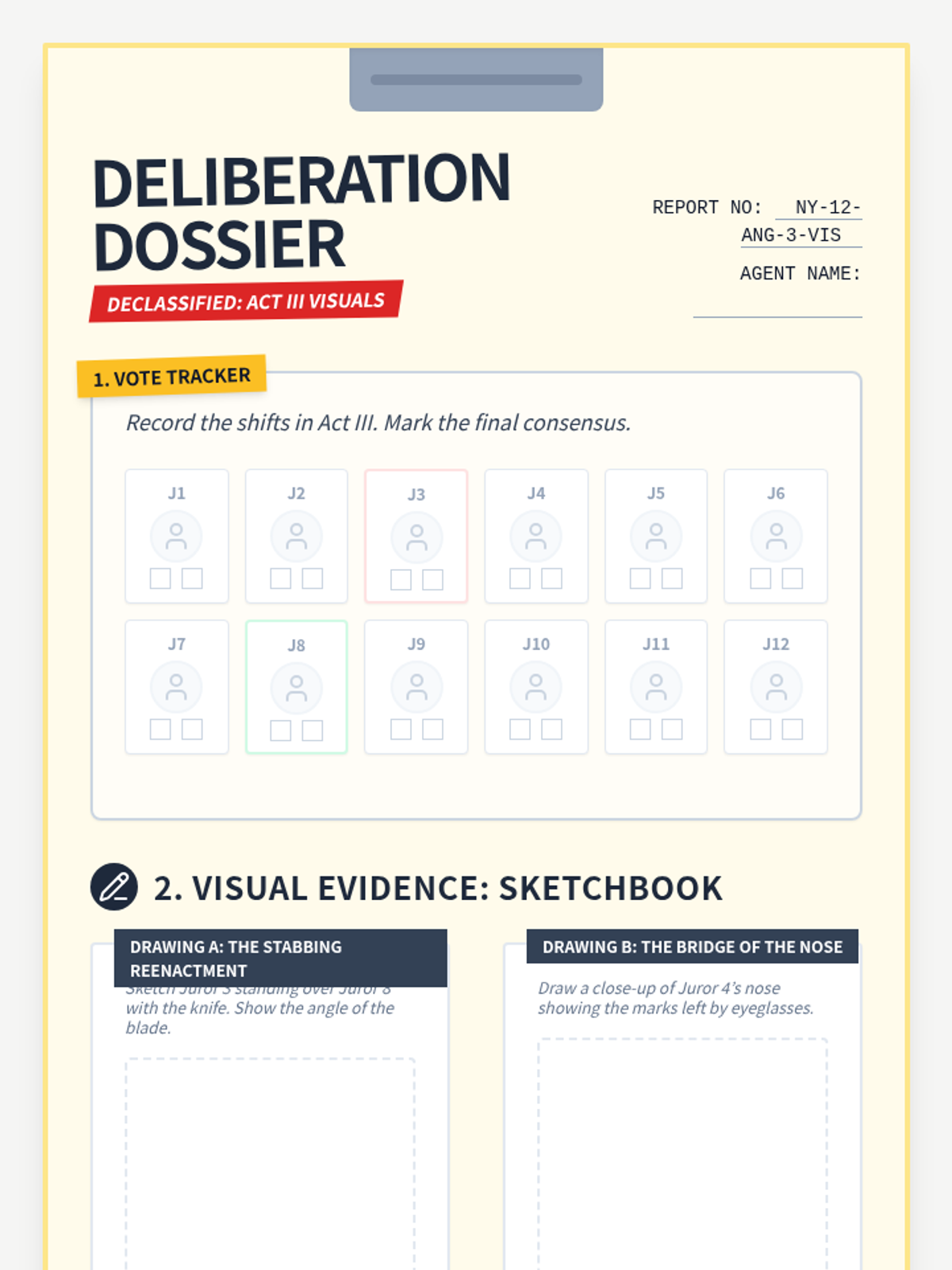
An interactive Act III summary worksheet that prioritizes visual expression. Students are tasked with drawing the knife reenactment, the eyeglass marks on the nose, the shredded photograph of Juror 3's son, and a final snapshot of the play's resolution.
A comprehensive answer key and teacher guide for the Act III 'Deliberation Dossier' worksheet. It provides specific plot points, character analysis for Juror 3, and instructional notes on the theme of 'reasonable doubt'.
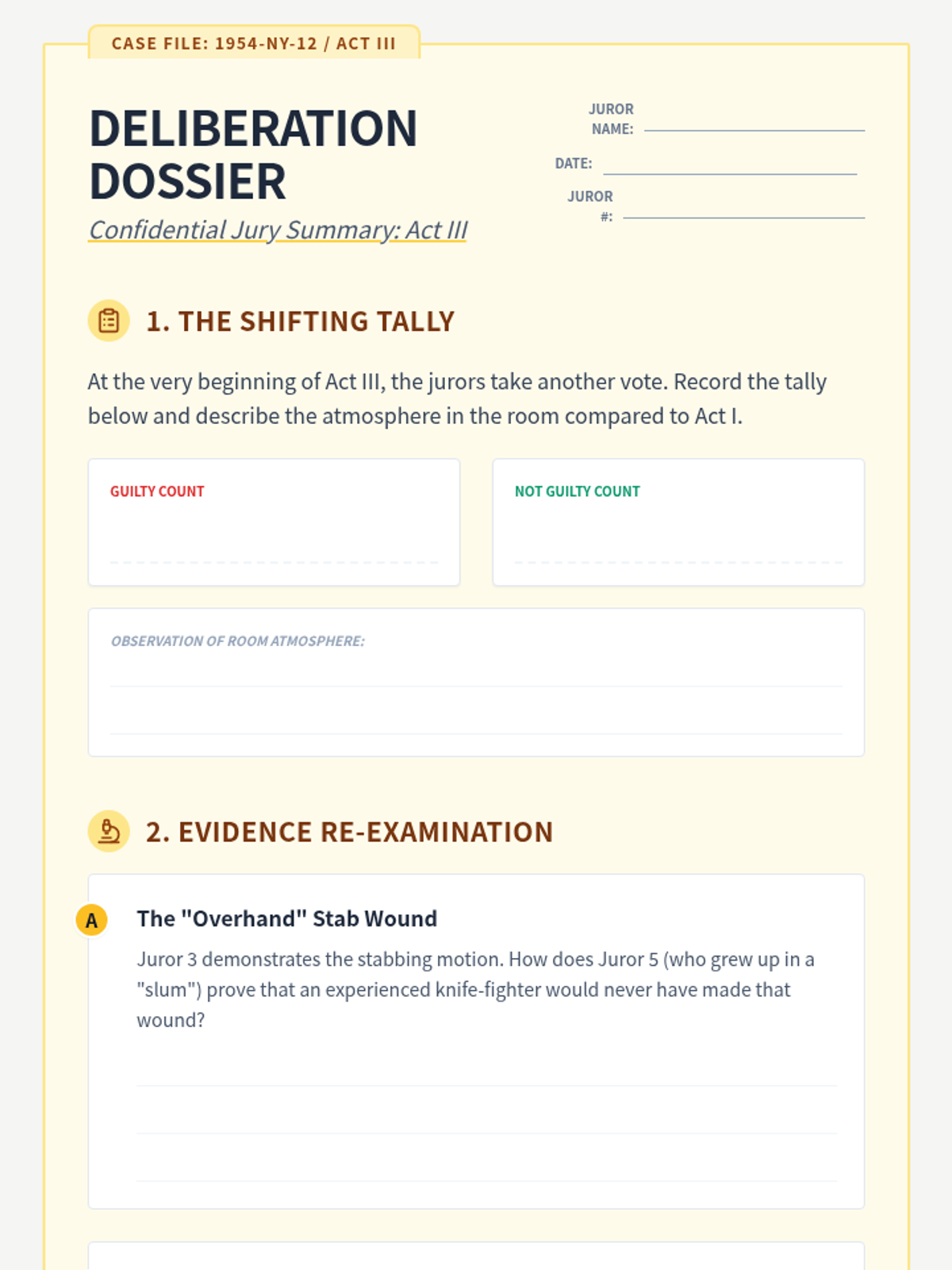
A specialized Act III summary worksheet for '12 Angry Men', themed as a legal dossier. It includes sections for tracking vote shifts, analyzing evidence re-examinations, and exploring the character arc of Juror 3.
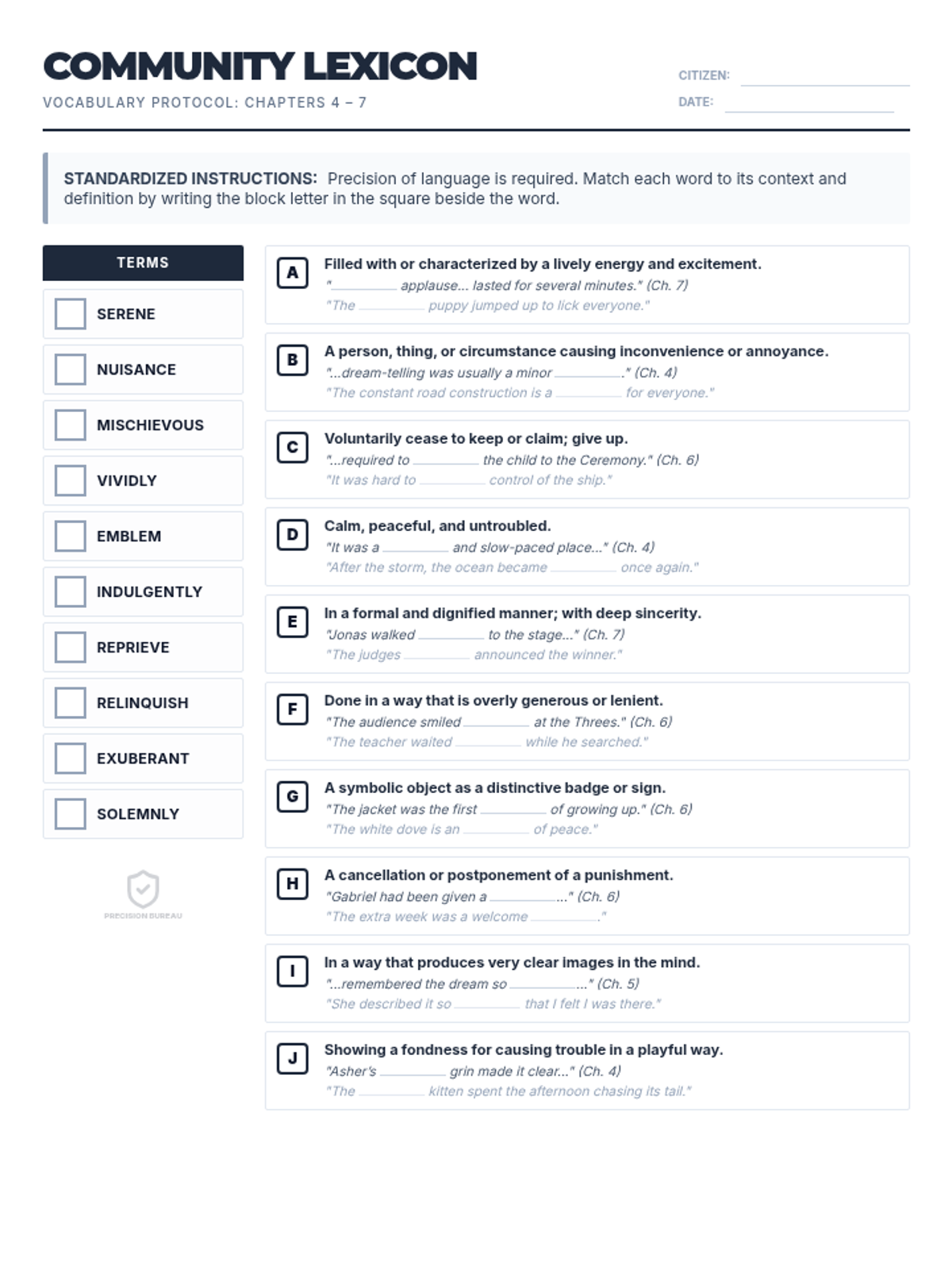
A compressed, one-page student worksheet for matching vocabulary words from Chapters 4-7 of The Giver, featuring both textual and modern context sentences.
A visual presentation for introducing and discussing vocabulary from Chapters 4-7 of The Giver, featuring definitions, textual context, and discussion prompts.
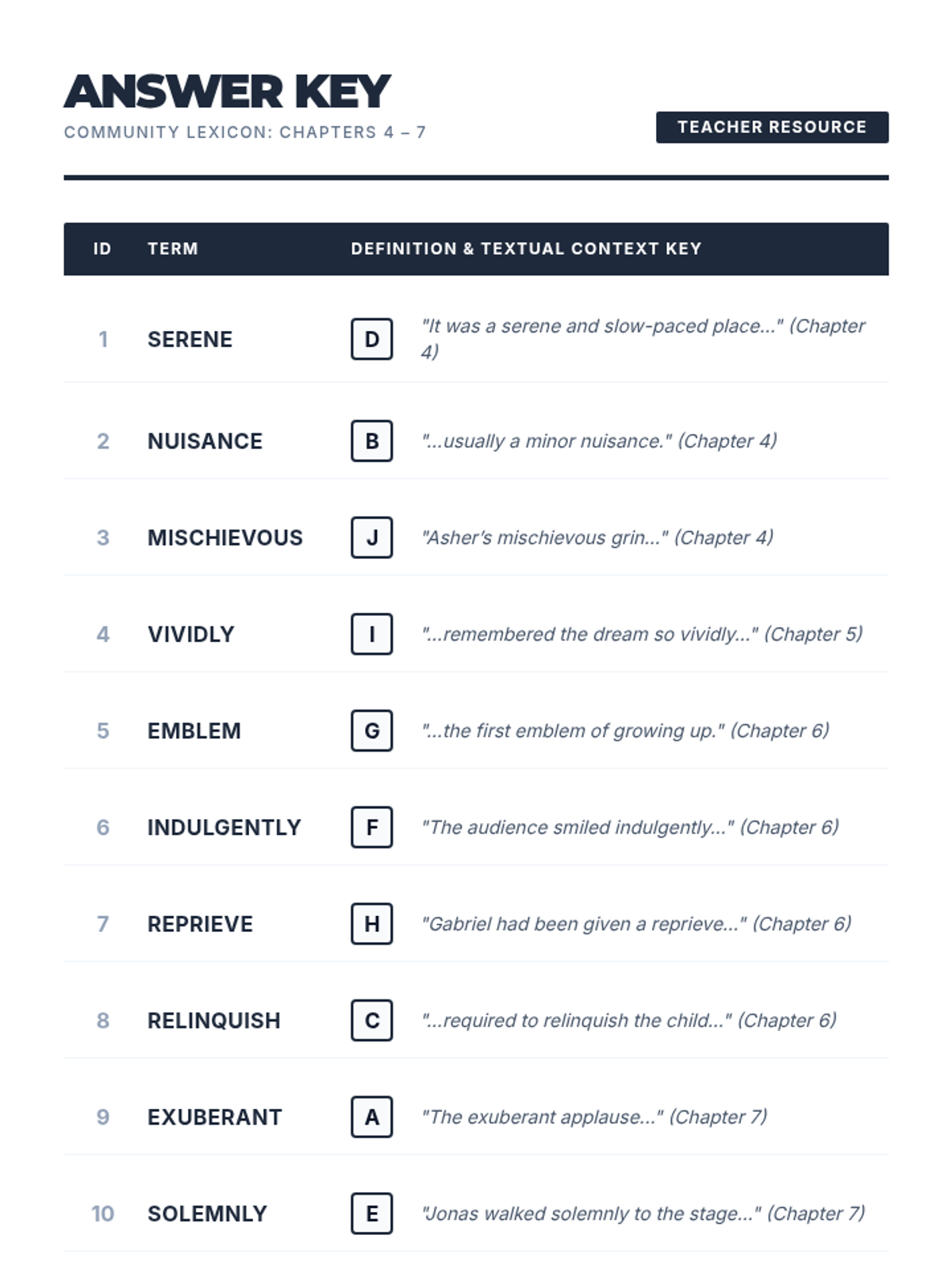
A teacher's answer key for the Community Lexicon matching worksheet, featuring correct pairings and the corresponding textual quotes.
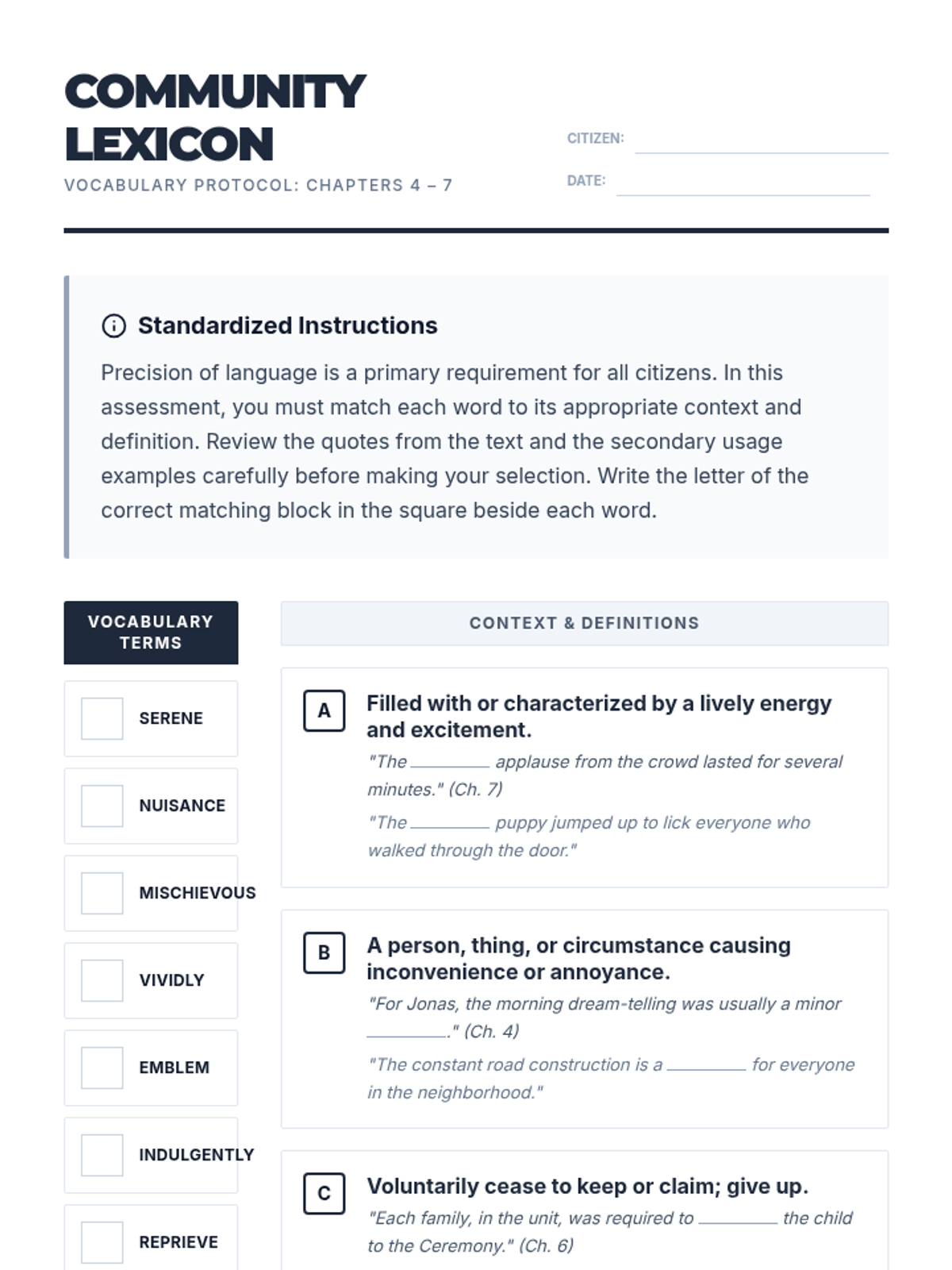
A student worksheet for matching vocabulary words from Chapters 4-7 of The Giver with their definitions and usage in context. It features a clean, official Community-themed design.
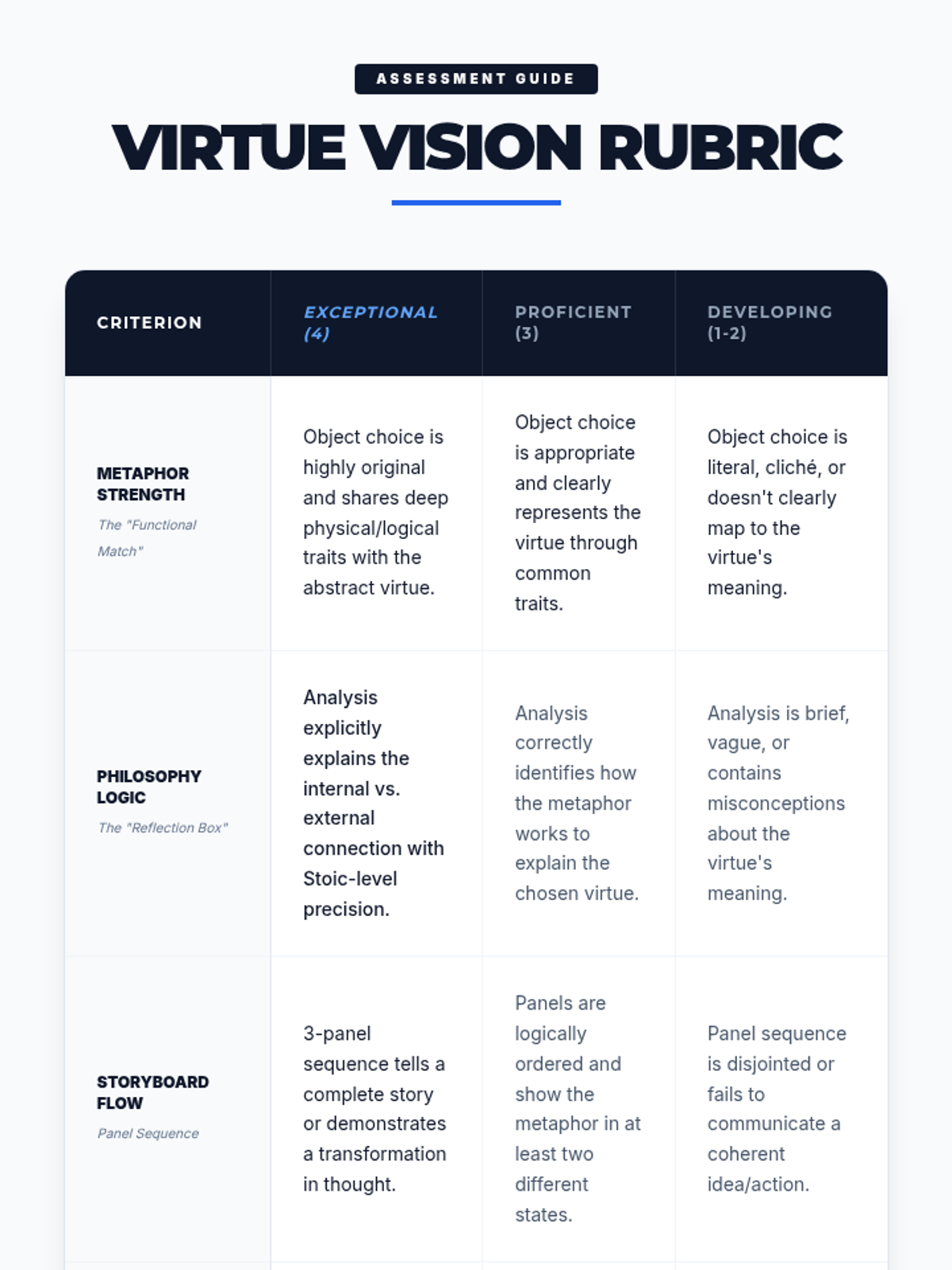
A formal assessment rubric for the Stoic Sketchbook project. Evaluates students on metaphor strength, philosophical logic, storyboard flow, and visual impact using a 4-point scale.
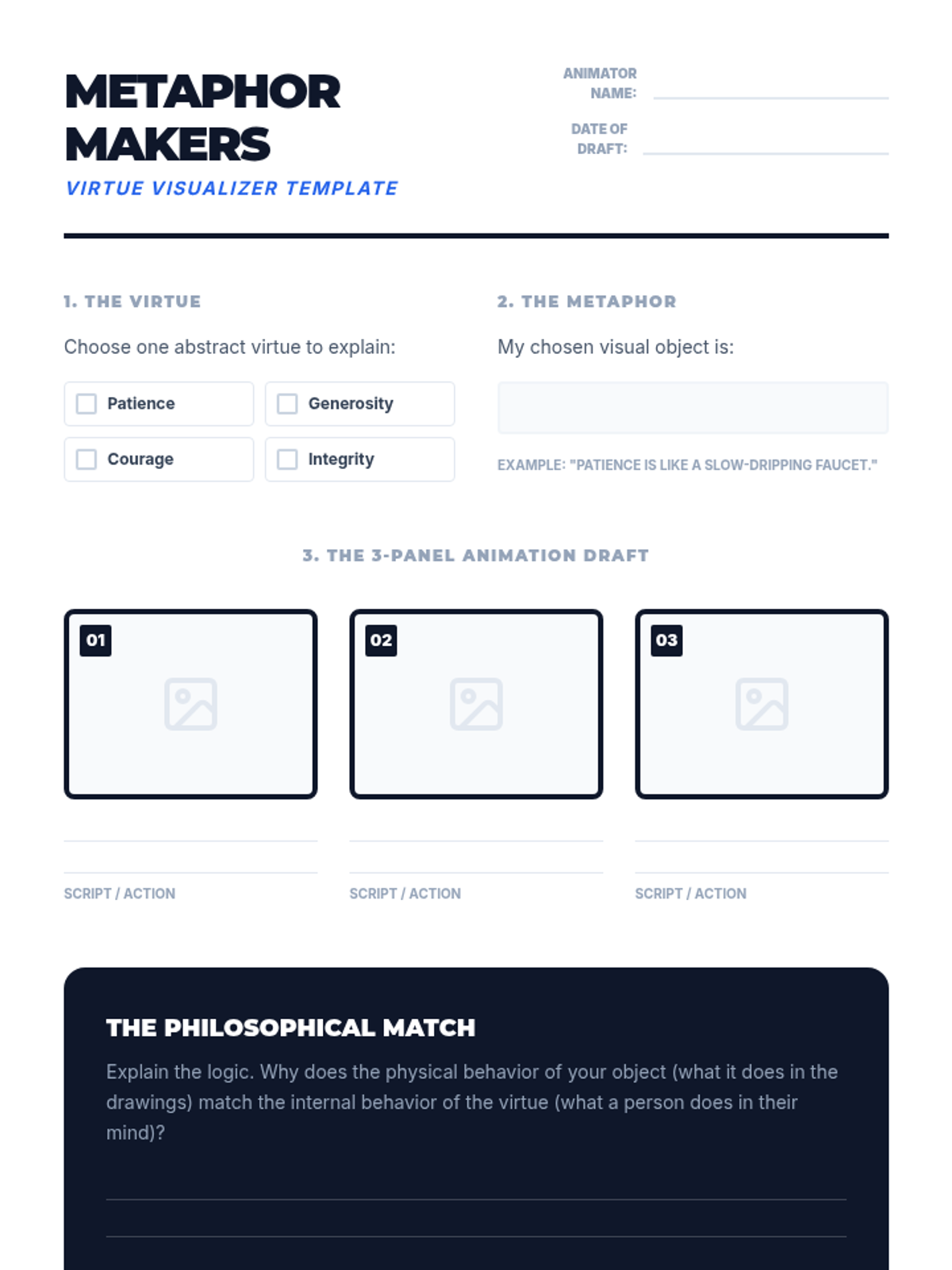
A 3-panel storyboard template for the Metaphor Makers activity. Includes sections for selecting a virtue, defining a visual metaphor, drawing animation panels, and writing a philosophical reflection.
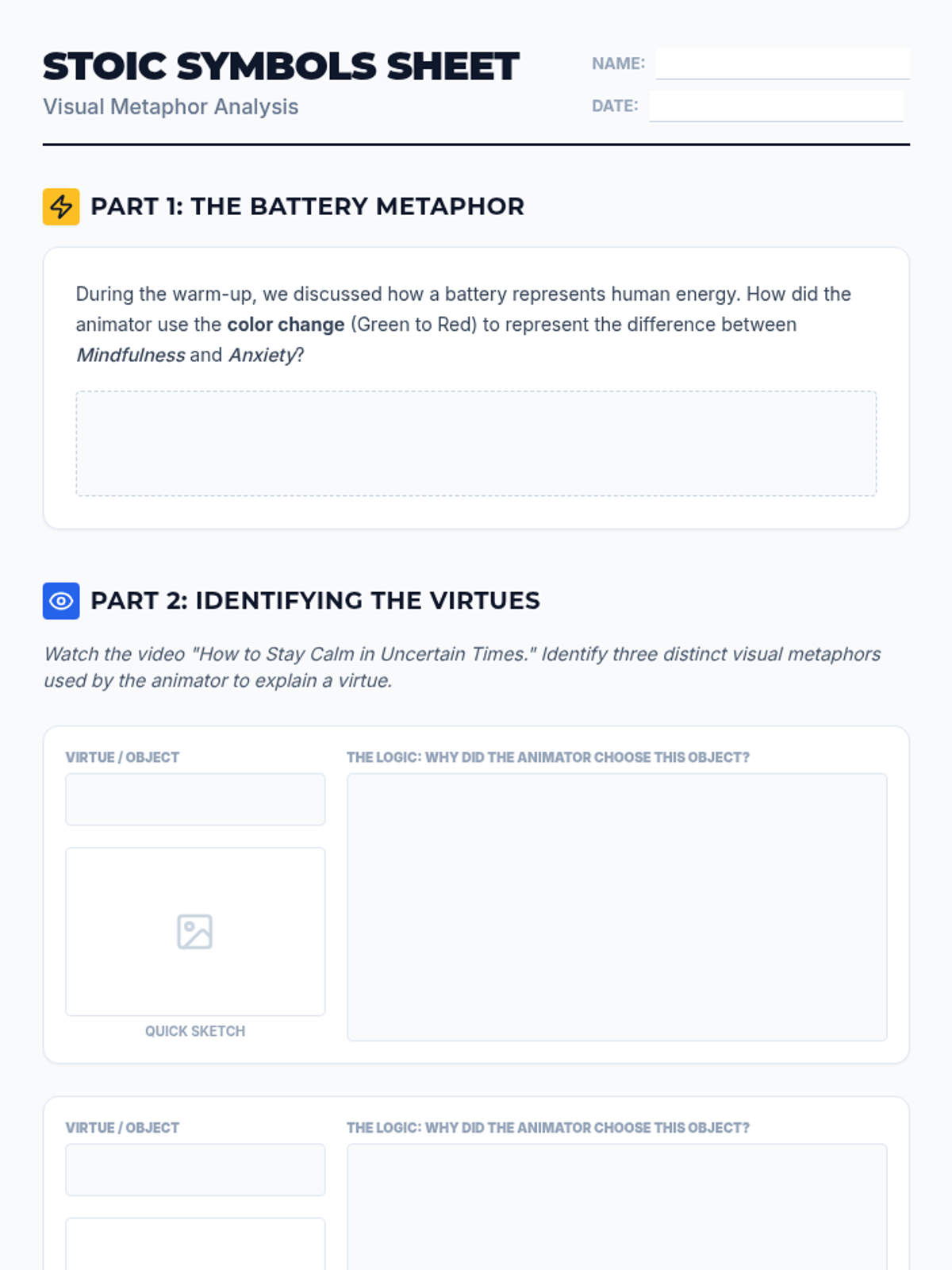
A viewing guide for students to use while watching the Marcus Aurelius video. It includes a warm-up reflection and a table to identify and analyze three visual metaphors used in the animation.
A presentation designed for 8th-10th grade ELA instruction, featuring a warm-up, video embed, analysis of Stoic visual metaphors, and instructions for the Metaphor Makers storyboard activity.
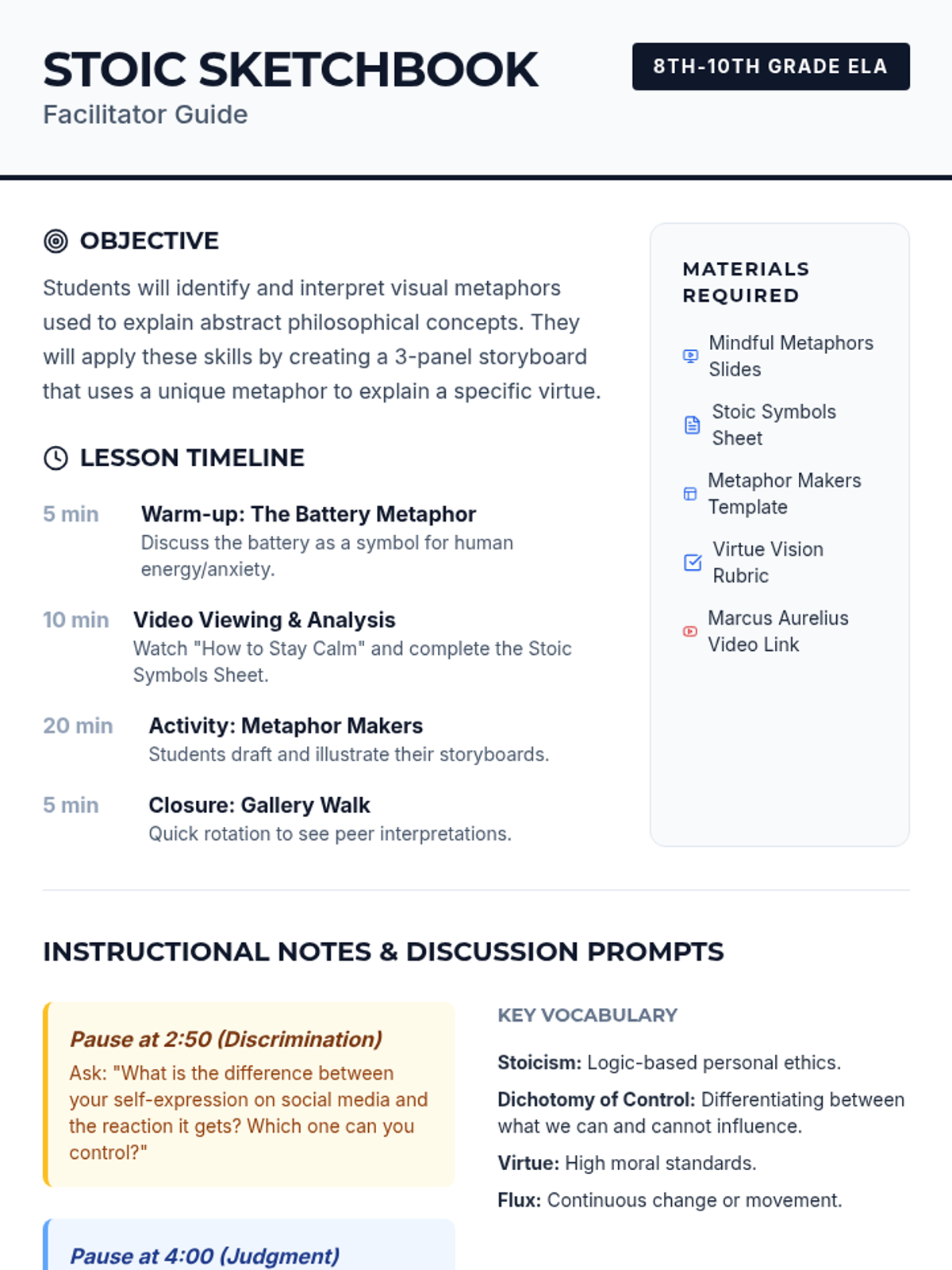
A comprehensive teacher guide for the Stoic Sketchbook lesson, including a timeline, materials checklist, discussion prompts for key video moments, and a breakdown of the visual metaphors used in the instruction.
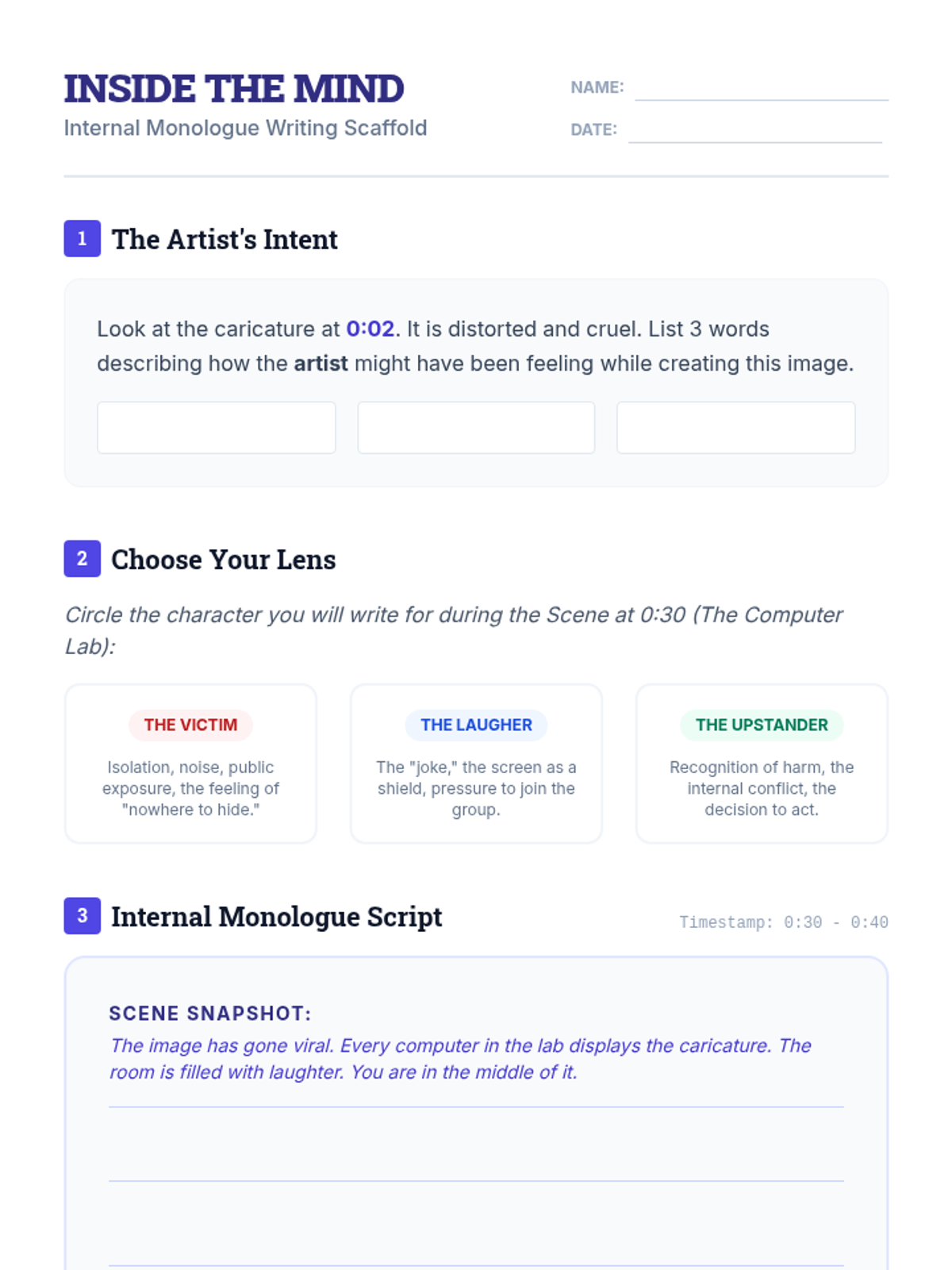
A student-facing worksheet designed to scaffold the internal monologue writing process. Includes sections for the warm-up, character selection, a dedicated space for creative writing with a scene anchor, and a sensory depth checklist to encourage descriptive detail.
A visual presentation deck for the "Inside the Mind" lesson. Features embedded video, structured discussion prompts for specific timestamps, key vocabulary definitions, and clear instructions for the creative writing monologue activity.
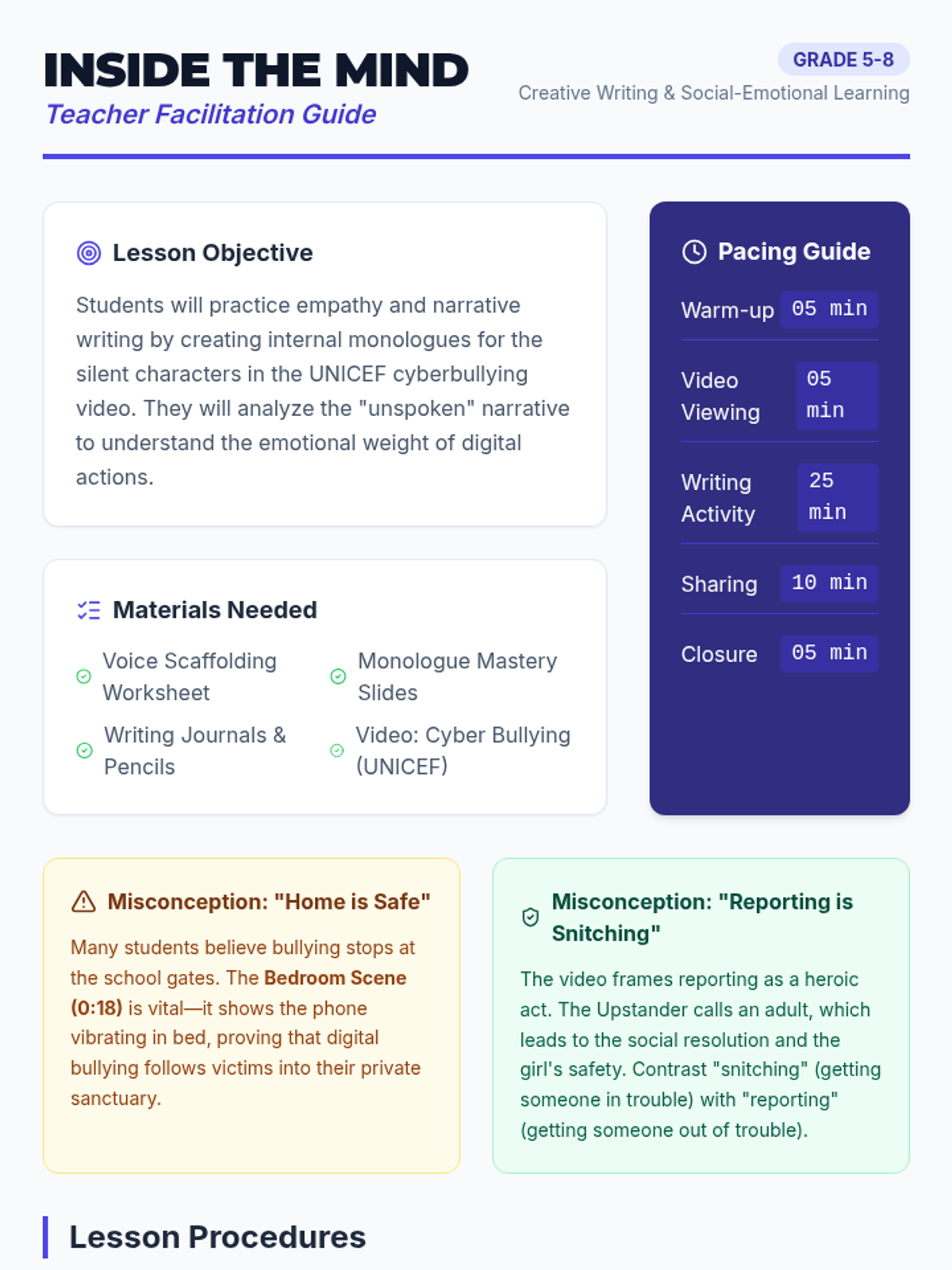
A comprehensive teacher guide for the "Inside the Mind" creative writing lesson. Includes lesson objectives, a detailed pacing guide, key vocabulary, and step-by-step procedures for the warm-up, video analysis, and internal monologue writing activity.
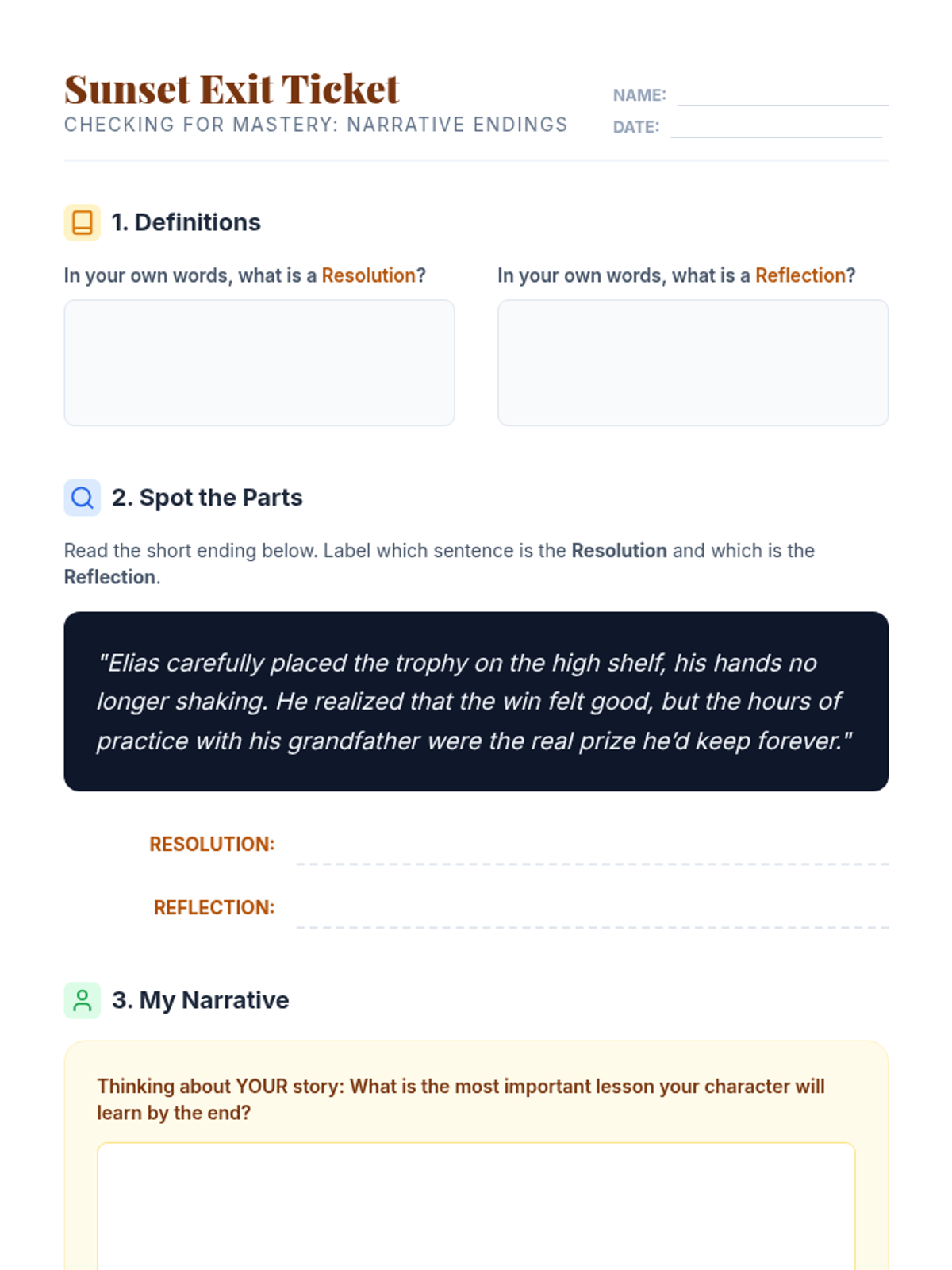
A concise assessment tool for the end of the lesson. It asks students to define resolution and reflection, identify them in a short text example, and apply the concept of a character lesson to their own writing.
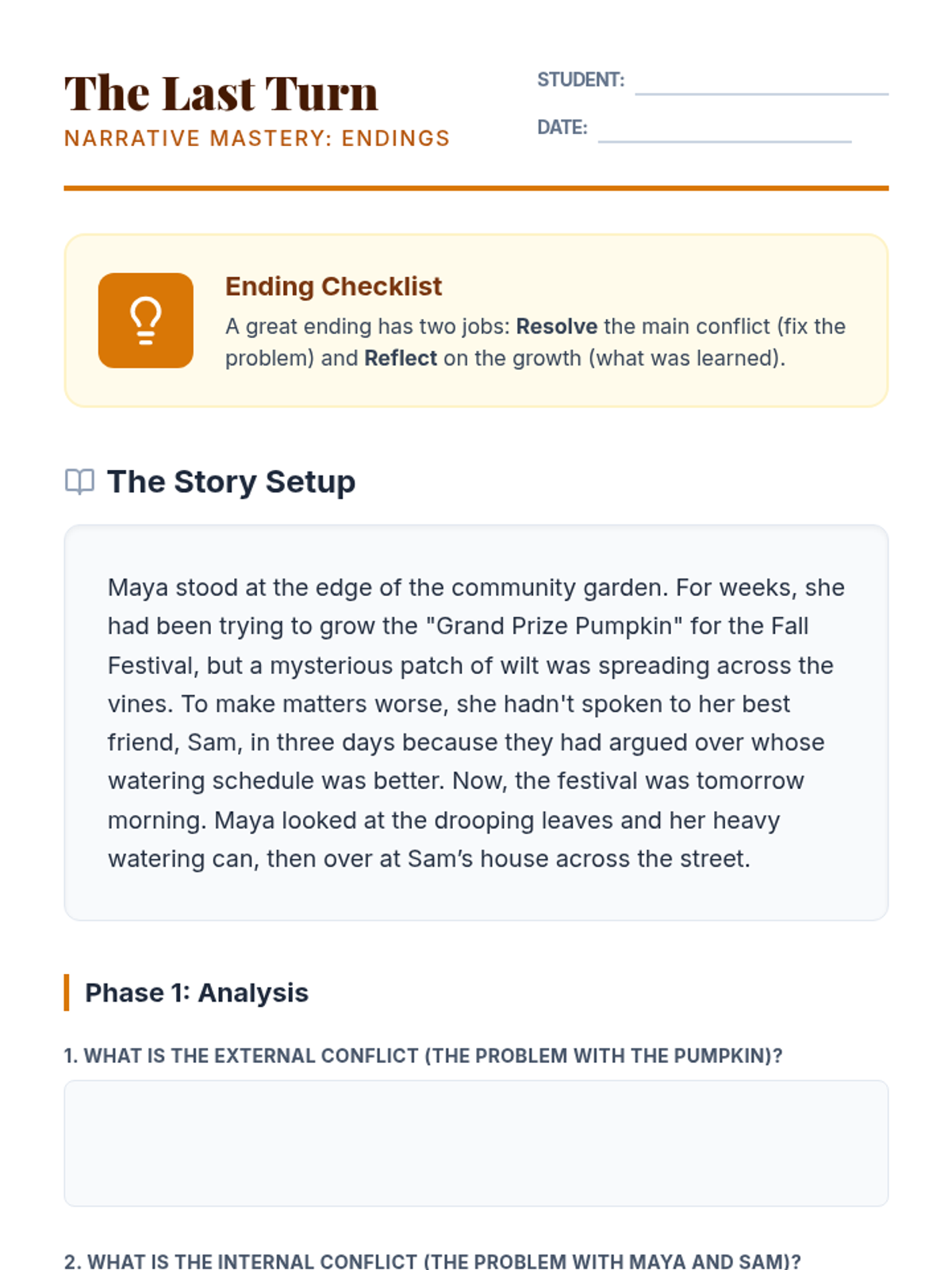
A 2-page student worksheet featuring a story prompt about Maya and a dying pumpkin. Students analyze the external and internal conflicts before writing a complete ending that incorporates both resolution and character reflection.
A 5-slide instructional presentation that defines the two key components of a narrative ending: resolution and reflection. It includes clear definitions, visual cues for character growth, and a practice passage for group analysis.
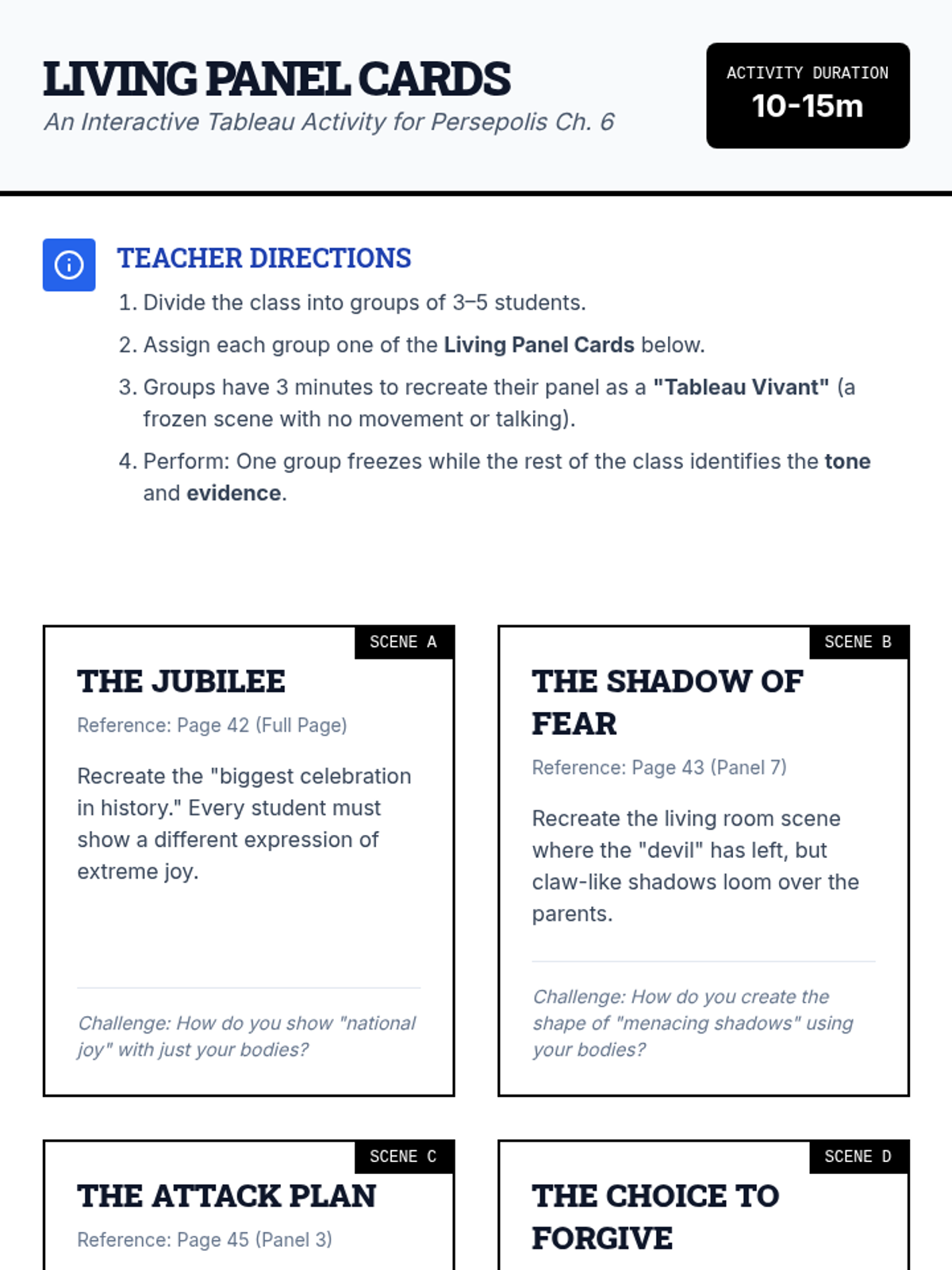
A set of interactive "Tableau Vivant" activity cards for Persepolis Chapter 6. Groups of students recreate key panels as "frozen pictures" to explore tonal shifts, visual composition, and the physical manifestations of themes like joy, fear, and forgiveness.
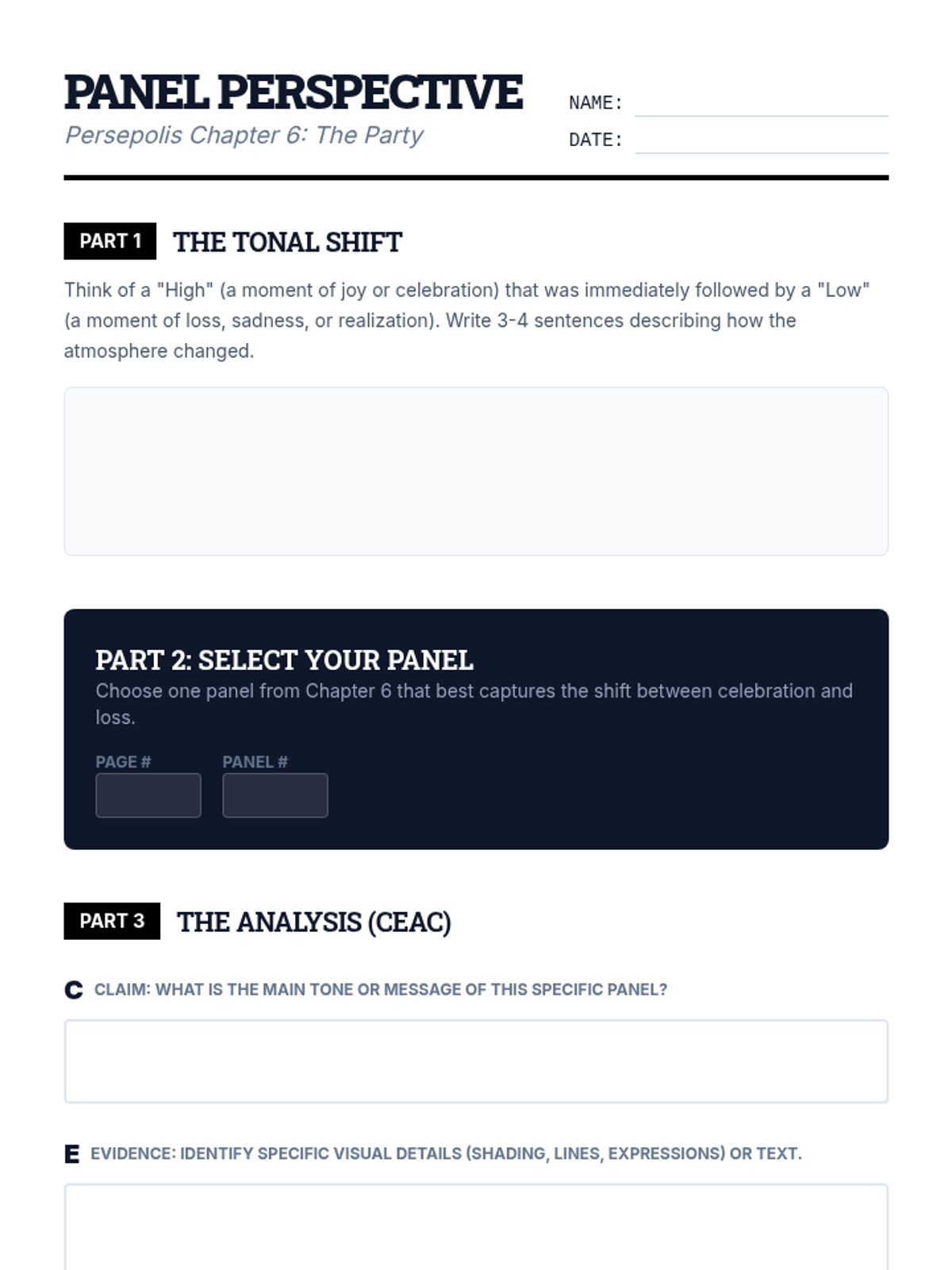
A structured student worksheet for analyzing Chapter 6 of Persepolis. It includes sections for a personal warm-up reflection, a CEAC (Claim, Evidence, Analysis, Conclusion) graphic organizer for panel analysis, and a one-word exit ticket.
A 6-slide visual presentation for Chapter 6 of Persepolis, featuring a high-contrast graphic novel aesthetic. Includes a title slide, lesson introduction, warm-up prompt, interactive Living Panel activity instructions, CEAC activity instructions, and a cool-down reflection.
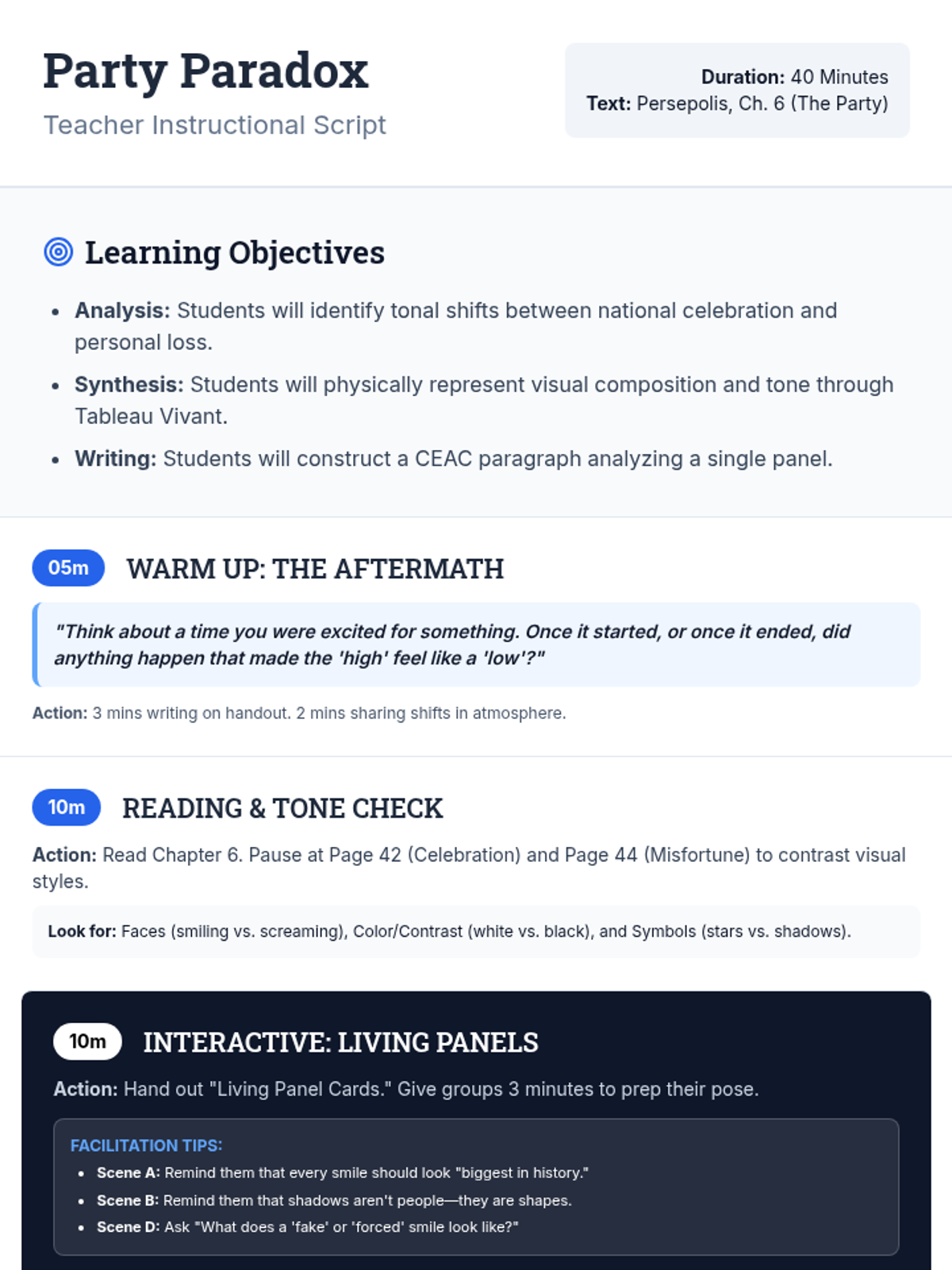
A comprehensive teacher script for Chapter 6 of Persepolis, outlining the 40-minute lesson flow, key discussion prompts, and instructional transitions from warm-up to final analysis.
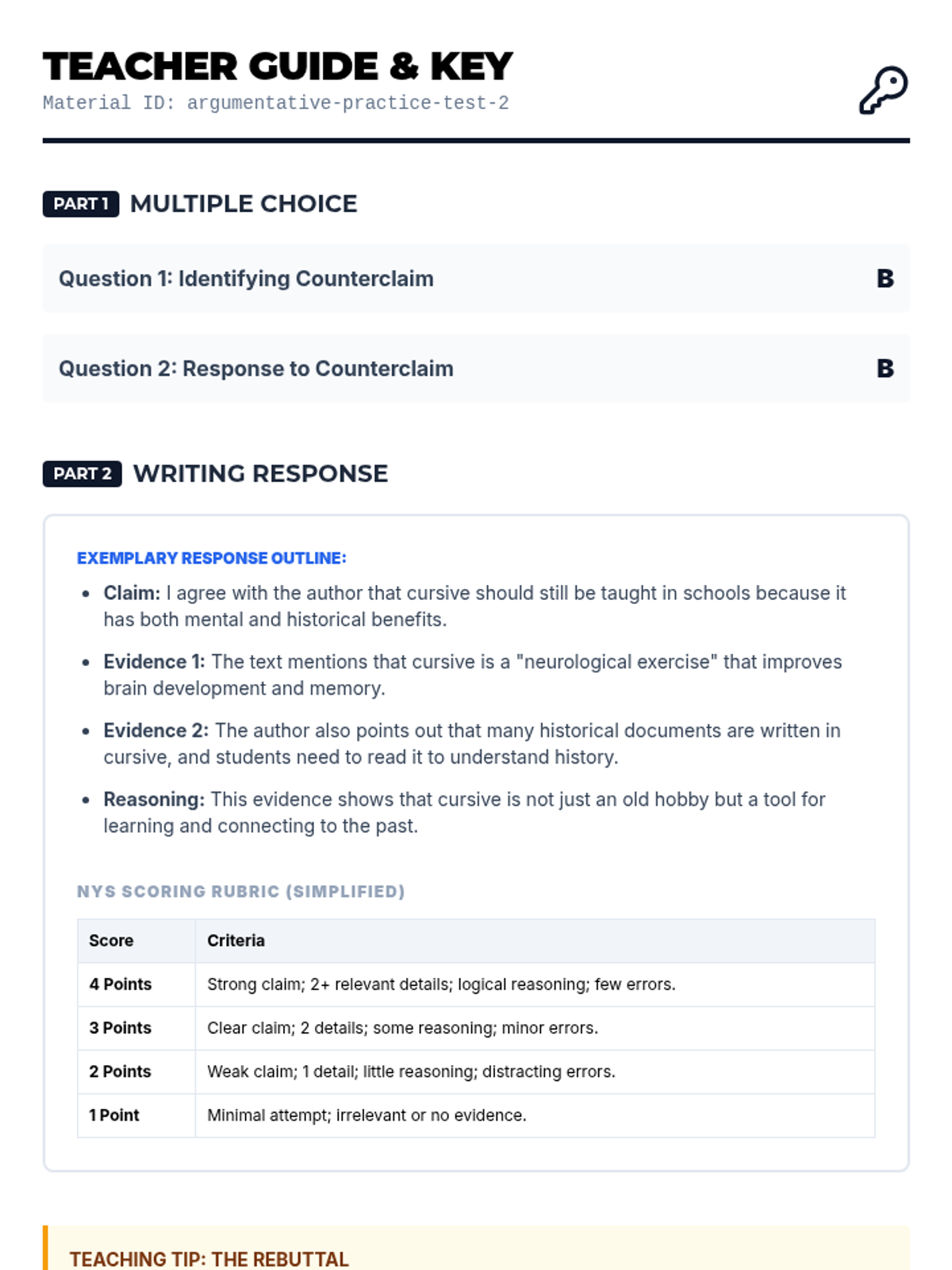
Answer key and teacher guide for 'The Final Brief: Argument' practice test, featuring scoring rubrics and exemplary response outlines for middle school argumentative writing.
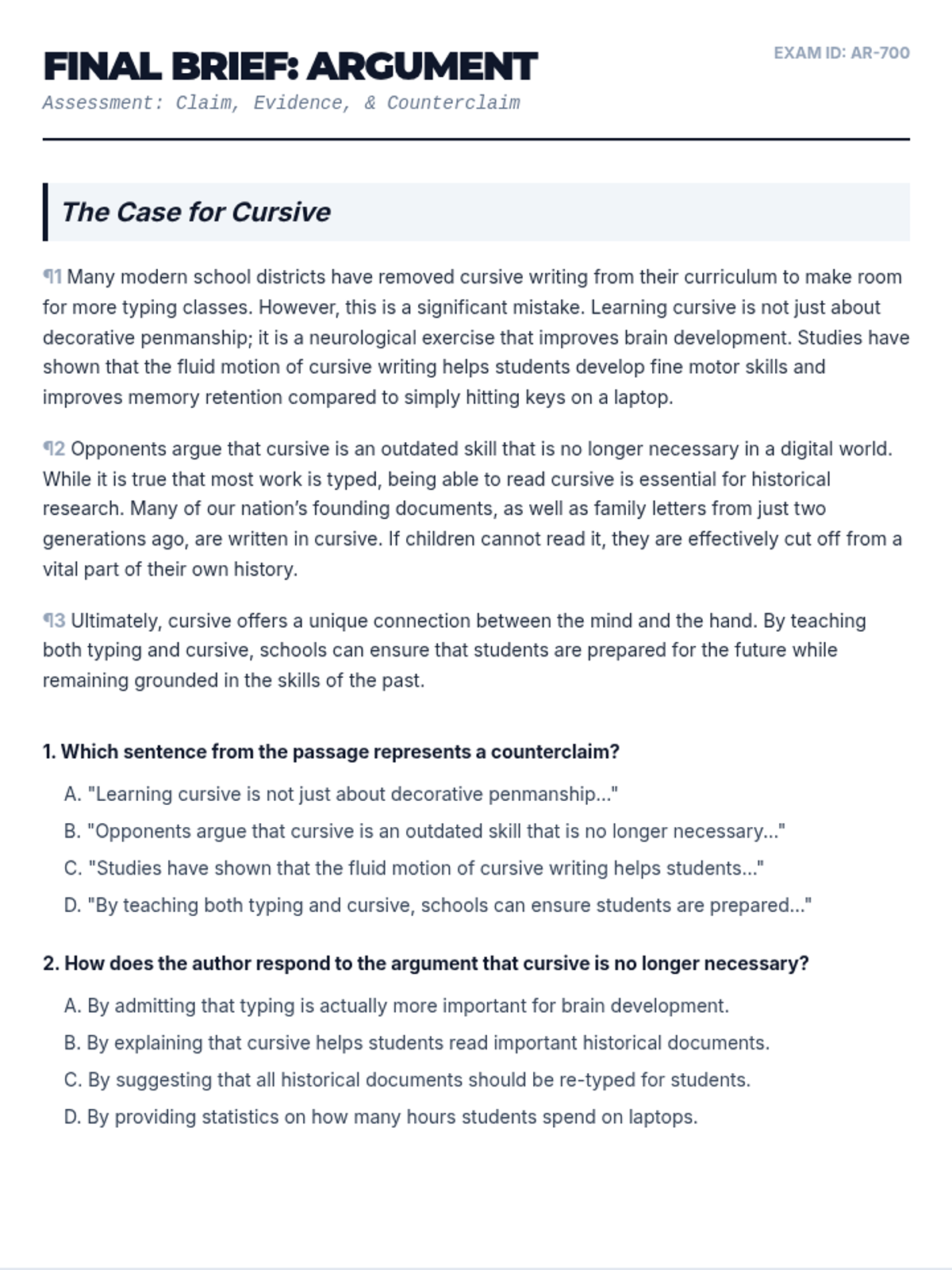
An argumentative writing practice test for grades 6-8, featuring a persuasive text about cursive writing, multiple-choice questions on structure/counterclaim, and a writing prompt.