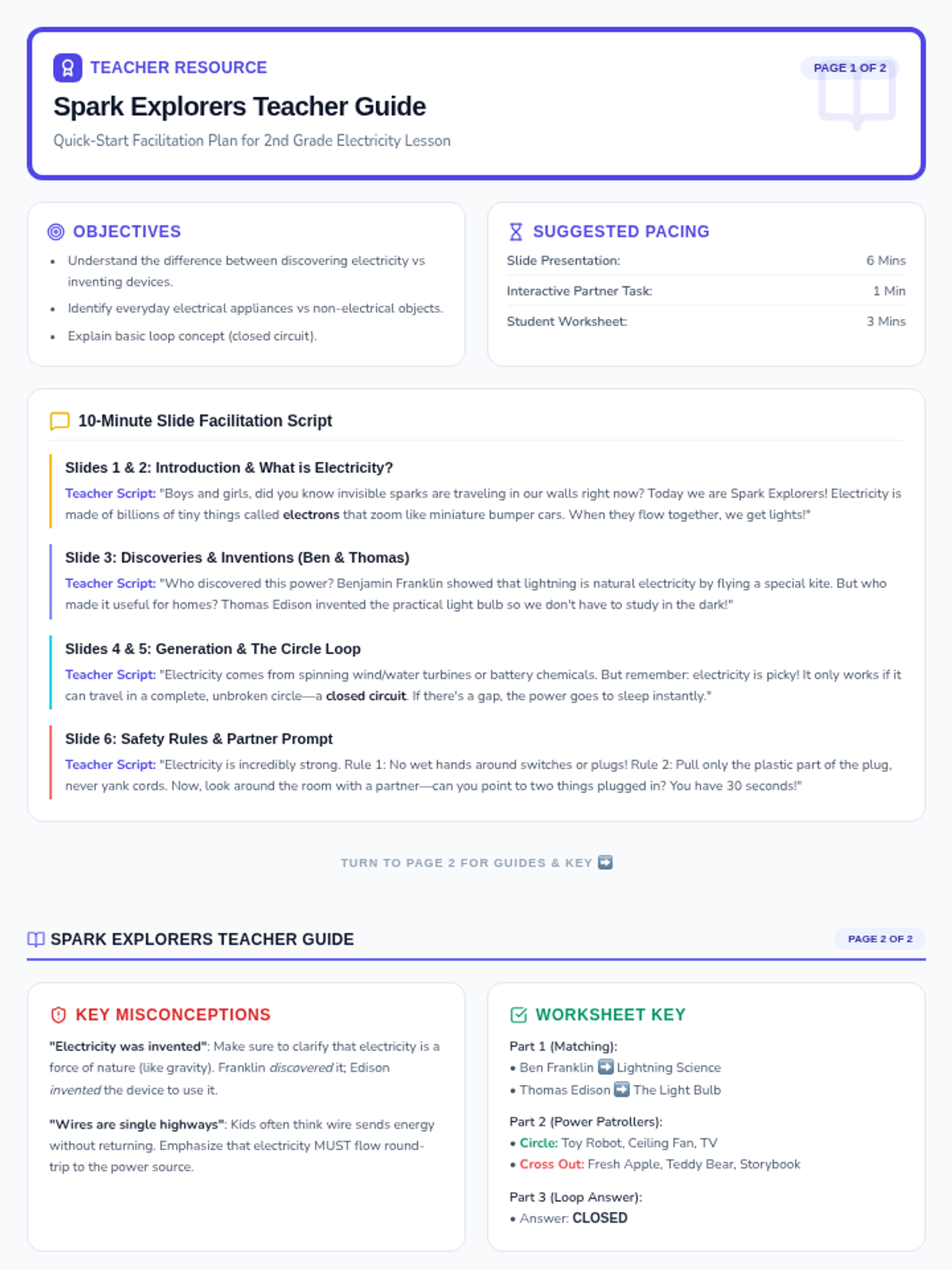
A comprehensive teacher facilitation guide for the Light Lab Discovery lesson, providing step-by-step instructions, discussion prompts, and differentiation strategies for 2nd-grade educators.
An answer key for the Bone Zone worksheet, providing correct matches, labels, and acceptable reflection answers. Updated to match the latest worksheet structure.
A student worksheet for identifying skeletal functions, labeling major bones, and reflecting on bone health. Updated with elongated limbs and precisely placed indicators for better instructional clarity.
An engaging slide deck for the Bone Zone lesson, featuring bright visuals, key vocabulary, and interactive prompts to teach skeletal functions and major bones.
A concise teacher facilitation guide for the 30-minute Bone Zone lesson, including a detailed timeline, materials list, and helpful teaching tips.
Teacher answer key for the Tree Tenant Worksheet, including expected animal names, habitat descriptions, and sample reflection responses.
A visual presentation introducing 8 tree-dwelling animals, their specific habitats (nests, hollows, branches), and why trees are essential for their survival.
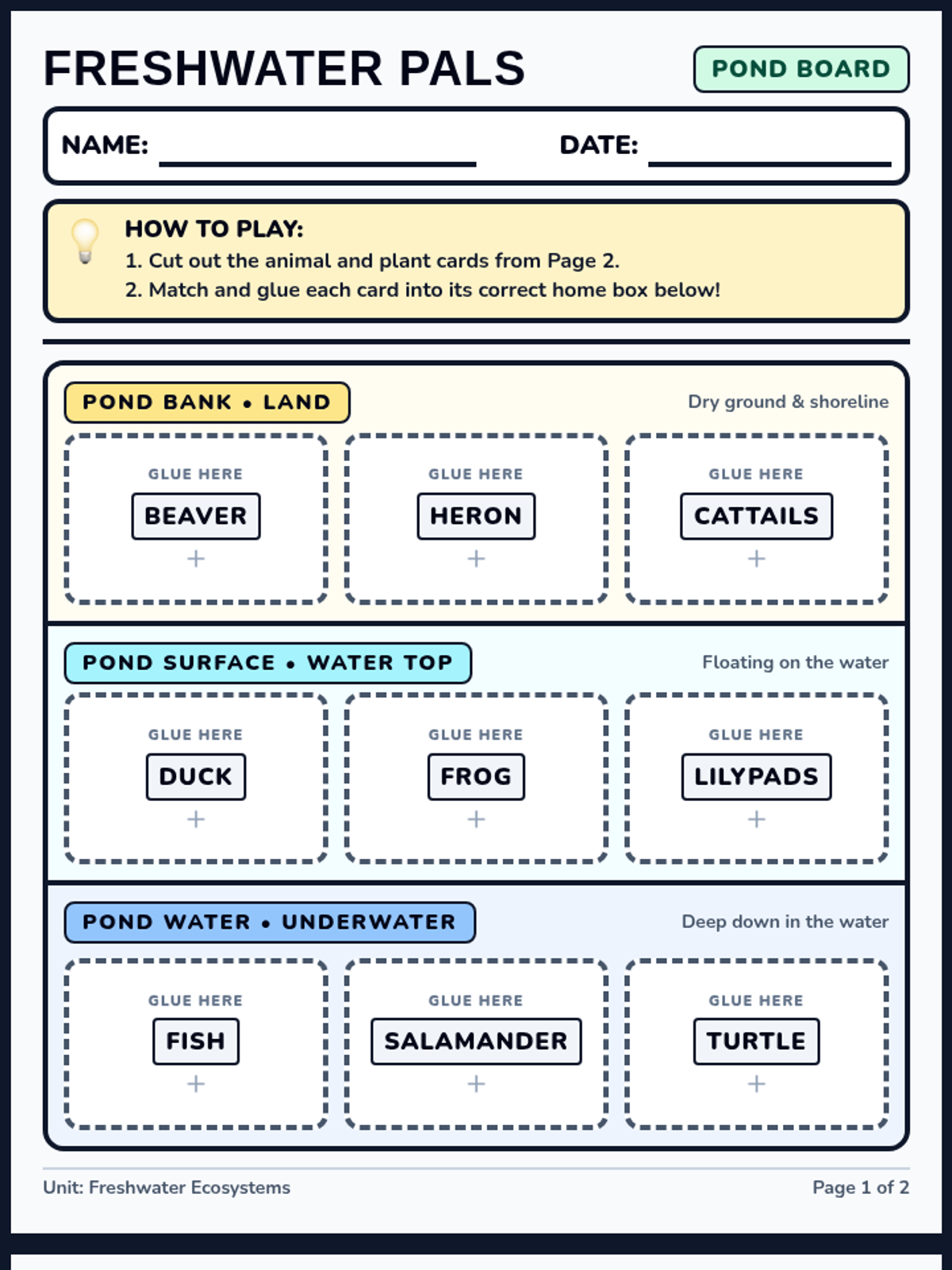
A student worksheet for identifying 8 tree-dwelling animals and describing their specific habitats within the tree.
A detailed two-page field guide featuring "notebook-style" observations of 12 subterranean animals, focusing on their scientific observations and underground nesting habits.
A coloring sheet featuring the 12 subterranean animals in a grid format with large labels for coloring and literacy practice.
Updated page of 12 animal cards for cutting out, now including larger den-dwelling and nesting animals like foxes, badgers, and rabbits.
Updated landscape worksheet with 12 spots for animals that live in tunnels, dens, or nests beneath the soil.
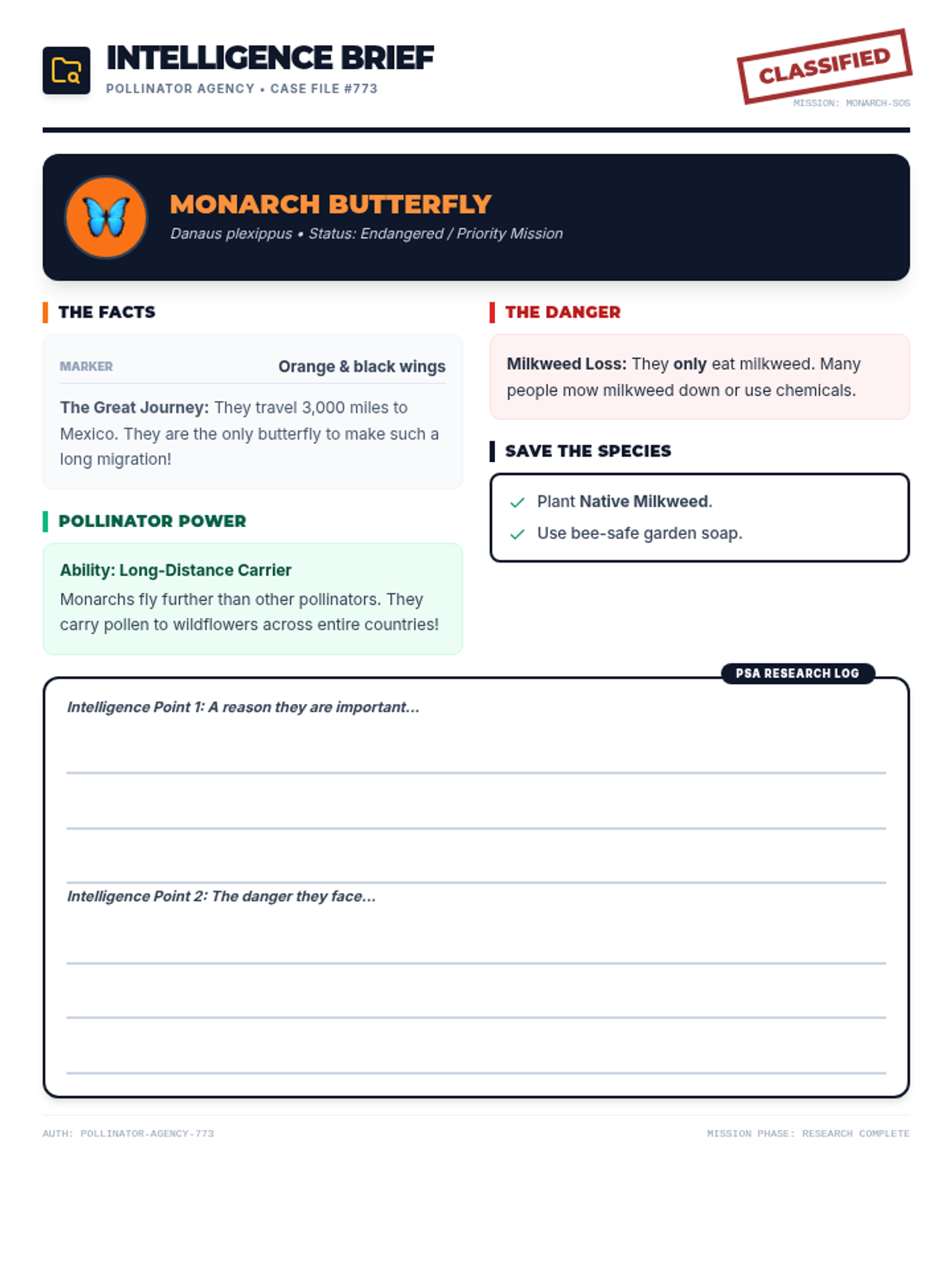
A facilitation guide for teachers to deliver the 30-minute pollinator lesson, including objectives, pacing, and differentiation strategies.
A writing activity for 2nd graders to imagine themselves as pollinators, featuring a word bank, creative writing lines, and a drawing space.
A visual presentation for 2nd graders explaining what pollinators are, how they move pollen, and why they are important for our food system.
Engaging slides to introduce 2nd grade students to pollinators, pollen, and why they are important for our food.
An answer key for the Garden Helpers Worksheet including grading criteria for the drawing activity and teaching notes.
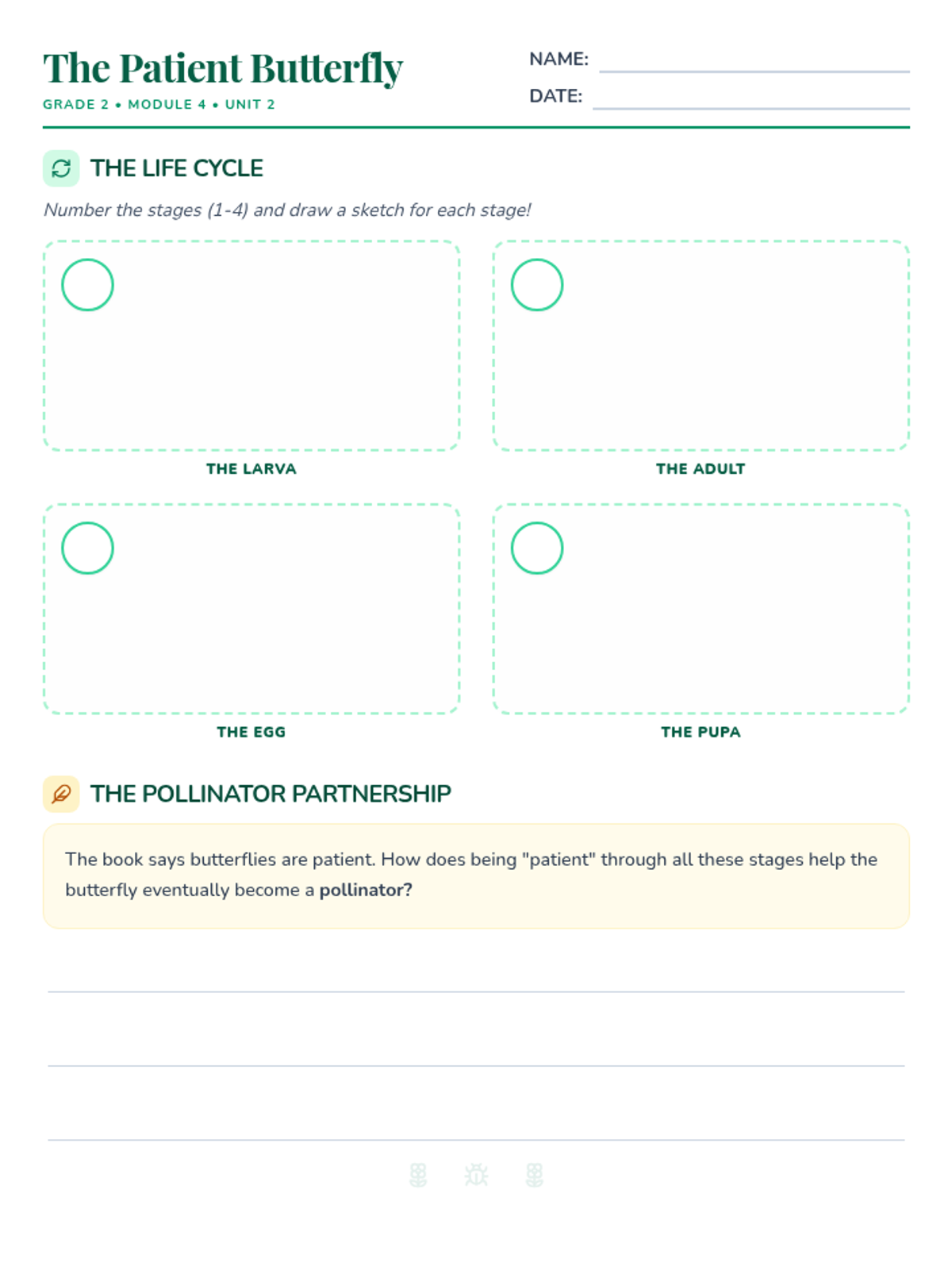
A short reading passage about pollinators with comprehension questions and a drawing activity designed for 2nd grade students. Updated with more writing space and a cleaner drawing area.
A teacher resource for the Ecosystem Explorers lesson, including instructional pacing, differentiation strategies, and a full answer key for the Detective Worksheet. Designed with a clean, professional layout for easy reference.
A field-journal styled worksheet for students to apply their knowledge of ecosystems. Includes identification matching, component categorization, a habitat sketching area, and a reflective writing prompt on biodiversity.
A visual presentation introducing the concept of ecosystems, focusing on forest, desert, and ocean biomes. Includes key vocabulary, characteristics of different ecosystems, and the importance of biodiversity.
A set of 12 printable vocabulary cards featuring key ecosystem terms and definitions. Each card includes a clear definition, a thematic icon, and a specific ecosystem category, designed with a clean field guide aesthetic.
A comprehensive teacher guide for facilitating an outdoor nature walk, including discussion prompts, vocabulary, and preparation tips.
A student observation worksheet designed for an outdoor nature walk to record sightings of plant and animal babies.
A visual presentation introducing the concept of life cycles in humans, animals, and plants, preparing students for an outdoor discovery mission.
A set of 12 printable task cards featuring sensory scenarios and questions to encourage discussion and critical thinking about the five senses.
A comprehensive teacher rubric for evaluating student performance on the Sensory Superpowers informational text and quiz, featuring clear criteria and scoring levels.
A comprehensive answer key for both the Sense Explorer Text questions and the Sense Superpowers Quiz, designed for teacher reference.
A visual presentation to introduce the five senses, their corresponding organs, and real-world examples of how they function.
A short assessment featuring matching and open-ended questions to evaluate students' understanding of the five sense organs and their functions.
An informational text for primary students explaining the five sense organs and their functions, accompanied by an expanded set of 8 reading comprehension questions.
Teacher answer key for the Skeleton Sketch Worksheet, providing correct labels and matching connections.
A student worksheet for K-2 students featuring a skeletal labeling activity with a word bank and a matching section for the functions of the skull, ribs, and spine.
An updated teacher facilitation guide for the Bone Zone lesson, now streamlined to a 30-minute session by removing the movement activity and focusing on direct instruction and labeling.
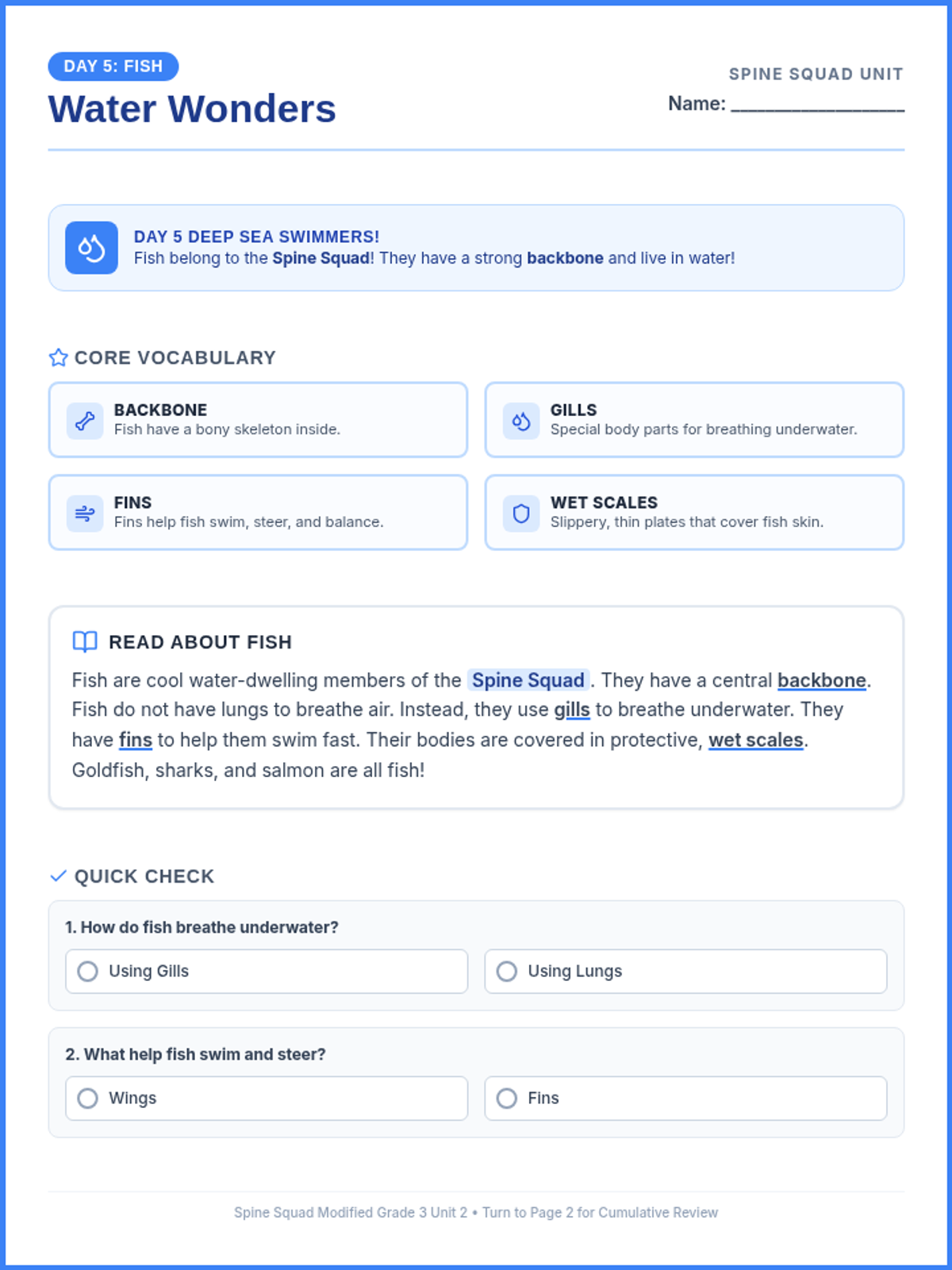
A bright, high-contrast slide deck for K-2 students introducing the skeletal system, focusing on major bones like the skull, ribs, and spine, and their functions of protection, support, and movement.
An MCAS-Alt observation log and data sheet for tracking student accuracy and independence during plant life cycle activities, designed for portfolio documentation.
A set of cut-out components for the plant life cycle model, including illustrations and descriptions for the birth, growth, reproduction, and death stages.
A base poster for building a plant life cycle model, featuring spaces for the four main stages: birth, growth, reproduction, and death. It includes circular arrows to represent the cycle's continuity.
A sequencing worksheet for the sunflower life cycle, featuring cut-and-paste images and descriptions for the four main stages: birth, growth, reproduction, and death.
A teacher guide for the MCAS-Alt Garden Lab lesson, providing learning objectives, key vocabulary, and an instructional sequence for teaching the plant life cycle.
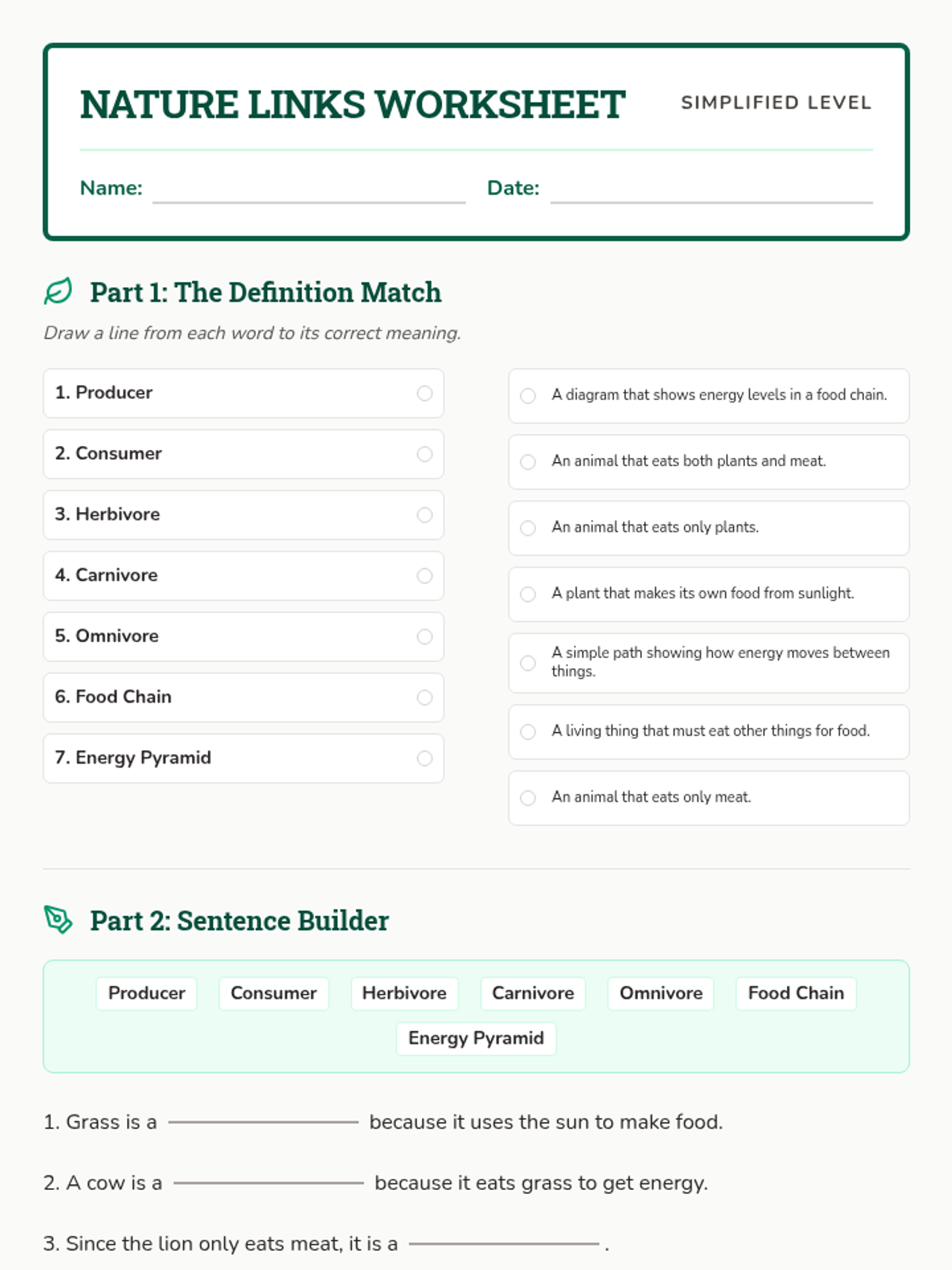
A worksheet where students build a three-step food chain model (Producer -> Consumer -> Decomposer) to demonstrate energy flow. Includes MCAS-Alt data collection area.
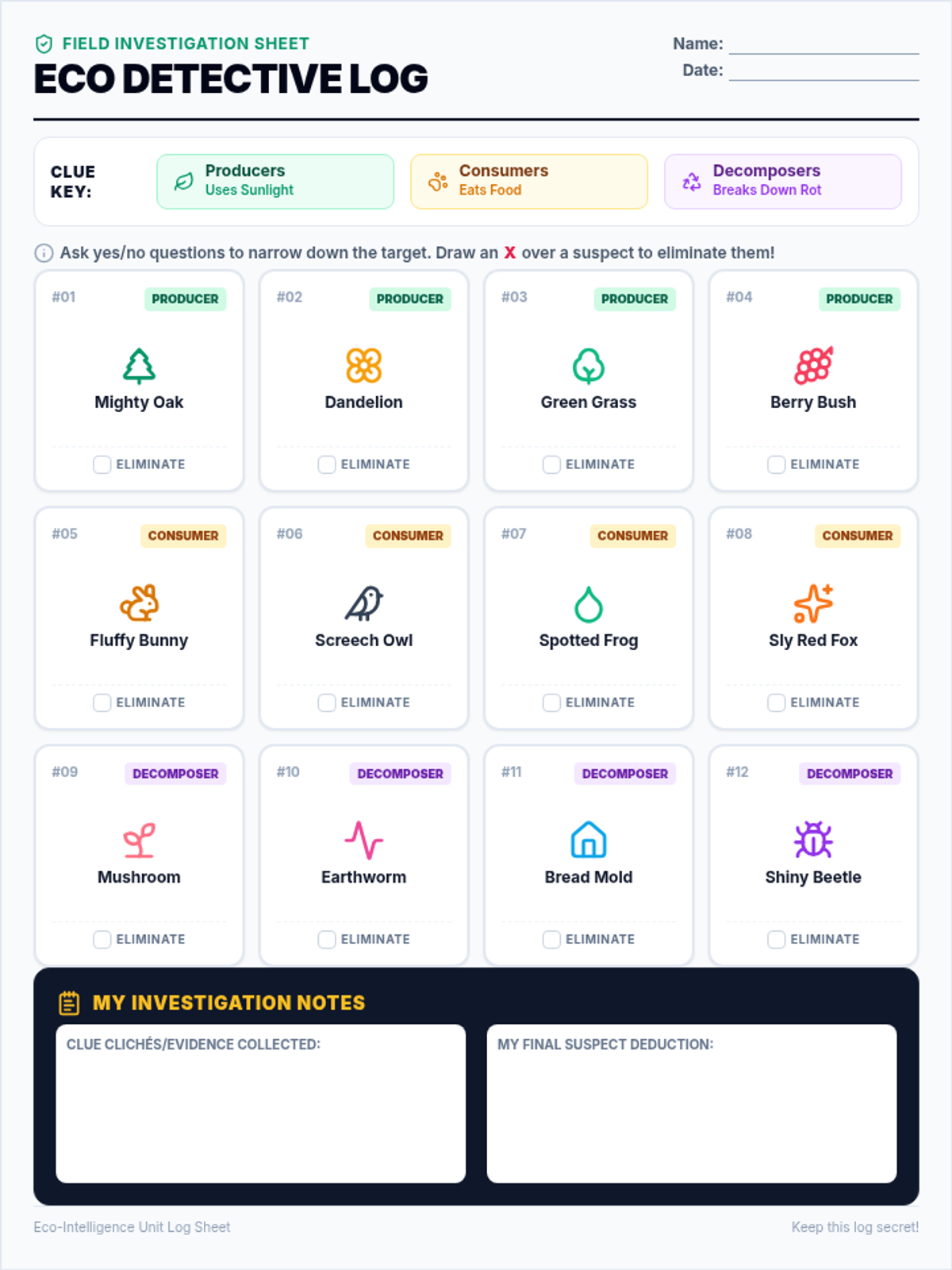
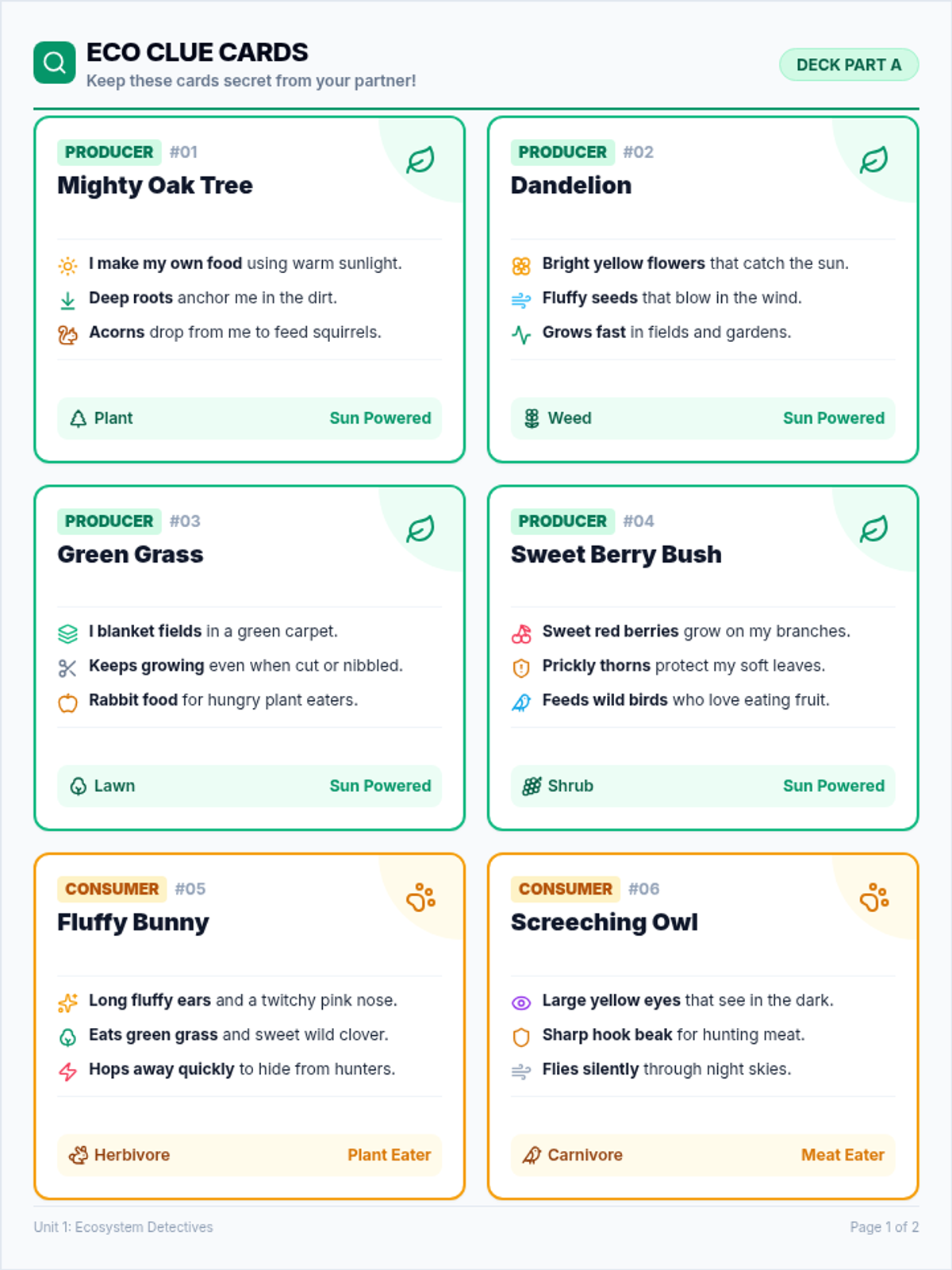
A set of 12 organism cards (producers, consumers, and decomposers) with clear icons and labels, designed for cutting and pasting.
A sorting worksheet where students categorize organisms into Producers, Consumers, and Decomposers. Includes a dedicated section for MCAS-Alt teacher documentation.
Updated comprehension quiz with specific facts about ostrich weight, defense mechanisms, and New Zealand species.
Updated answer key for the Takeoff Trivia quiz including specific facts about ostrich weight, defense mechanisms, and New Zealand species.
A structured worksheet for students to record facts about flightless birds, including a new section on the Dodo bird and the record-breaking Elephant Bird.
Updated slide deck exploring flightless birds, now including the extinct Elephant Bird of Madagascar, the heaviest bird of all time, alongside the history of the Dodo bird.
A hands-on project guide where students explore their own inherited traits and learned talents. Includes a project overview and a detailed investigation report worksheet.
A worksheet focusing on literal versus implied meaning. Students analyze character feelings and infer meaning from the text using specific examples from Kamal's story.
Instructional slide deck for Lesson 1, introducing the definitions of inherited traits and learned talents with visual examples and discussion prompts.
A graphic organizer designed for students to identify the main idea and key supporting details from Chapter 3 of the Kamal story, structured with beginning, middle, and end sections.