A worksheet focusing on literal versus implied meaning. Students analyze character feelings and infer meaning from the text using specific examples from Kamal's story.
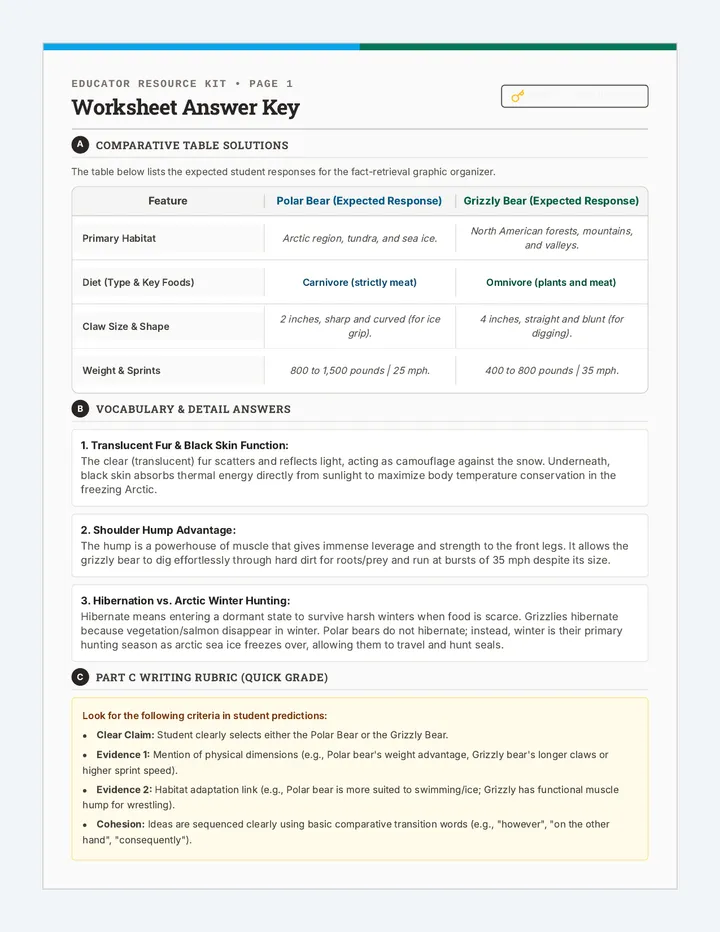
A two-page sorting activity where students match organisms from the Arctic, Desert, and Coral Reef to their correct ecosystems and identify producers.
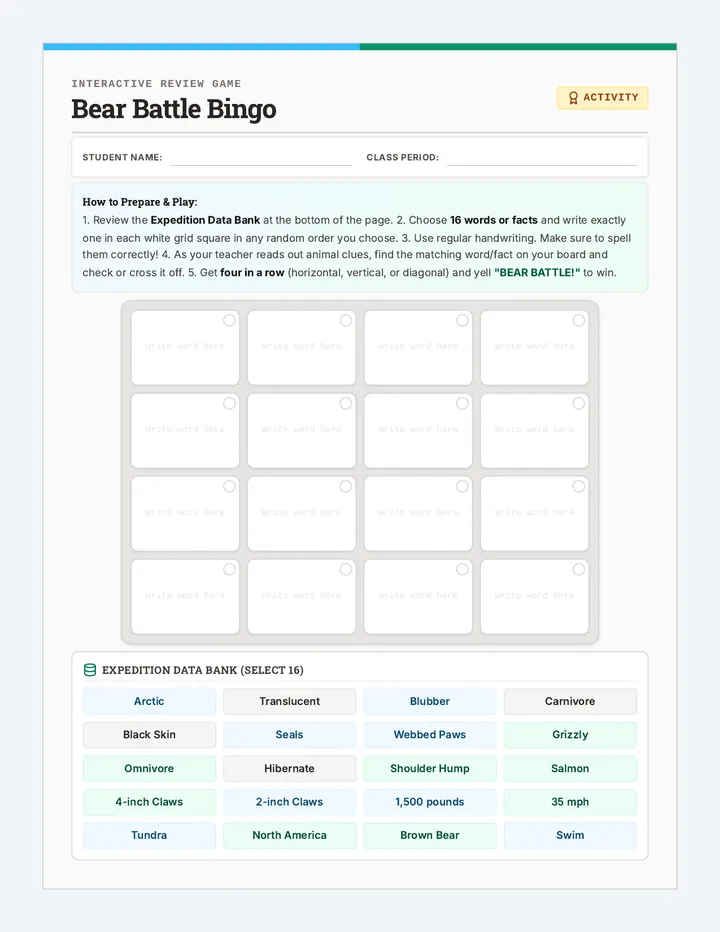
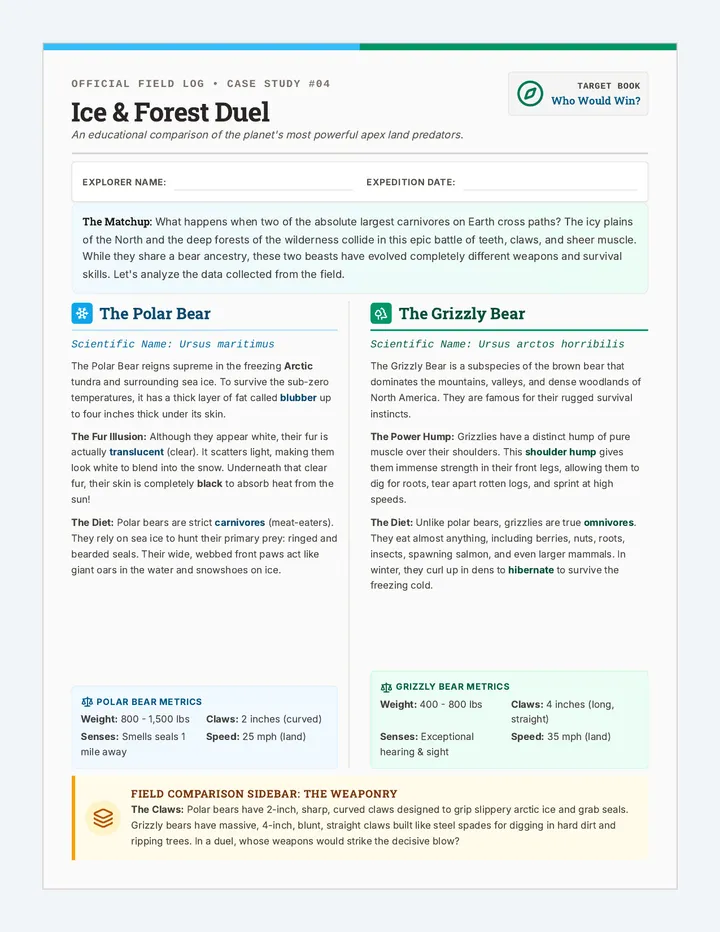
A visual slide deck exploring energy flow in extreme ecosystems (Arctic, Desert, Reef) and introducing the concept of wildlife crossings.
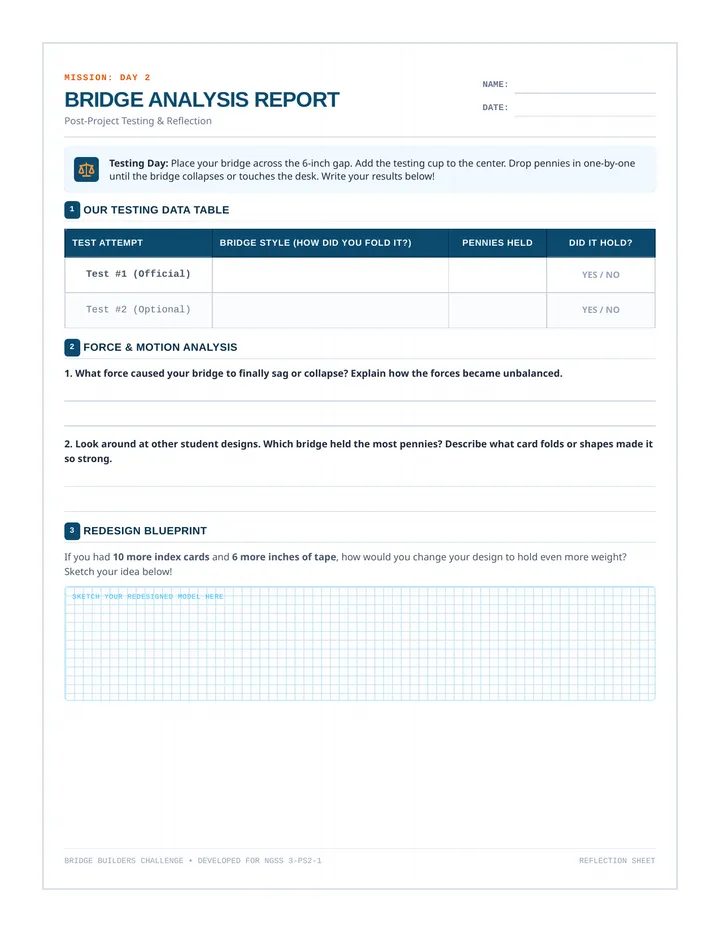
A creative two-page design activity where students draft a wildlife bridge to solve habitat fragmentation and analyze its impact on energy flow.
An aquatic food web worksheet where students identify producers/consumers and draw energy flow arrows for a pond ecosystem.
A two-page cut-and-paste activity where students build a terrestrial food web for a forest ecosystem and draw energy flow arrows.
A visual slide deck introducing food webs, the difference between food chains and webs, and contrasting terrestrial and aquatic energy foundations.
A one-page reading passage about energy flow and trophic levels, followed by four multiple-choice comprehension questions.
A comprehensive single-page teacher-facing resource providing the answer key for all student activities, including the new wildlife bridge design project and the habitat hike.
A comprehensive matching and identification worksheet focusing on trophic level vocabulary, including a fixed 4-level diagram lab for color-coding.
A colorful two-page cut-and-paste activity where students assemble an energy pyramid using trophic labels and specific prairie organisms.
A visual slide deck introducing energy pyramids, trophic levels (producers to tertiary consumers), and the 10% energy transfer rule.
A participant handout for Lesson 2 (Decomposition) with a Rally Coach section for low-lift tasks, a Professional Blueprint for classroom application, and a reflective Coach's Corner connecting early exposure to long-term CS success.
A 5-slide presentation for Lesson 2 (Decomposition) featuring the Allison Cuttler quote, the video intro, Rally Coach instructions, and professional application examples across storytelling, standards, and math.
Updated facilitation guide for Lesson 2 (Decomposition), featuring quotes from Krauss & Prottsman and Allison Cuttler, a Rally Coach instructional strategy, and cross-curricular connections from literacy to industrial tech.
A comprehensive answer key for the Food Chain Builder Activity and the Chain Reaction Worksheet, including all eight ecosystem chains and vocabulary definitions.
A teacher-facing facilitation guide providing lesson objectives, a pacing guide, discussion prompts, and notes on common student misconceptions regarding food chains.
A worksheet featuring vocabulary matching, a food chain diagram analysis (Corn -> Mouse -> Owl), and a creative section for students to draw their own food chain. Designed for 3rd-grade assessment.
A hands-on activity where students cut out organism cards and paste them into the correct ecosystem food chains. Covers all eight requested ecosystems: Grassland, Backyard, Rainforest, Tundra, Ocean, Desert, Forest, and Pond.
A set of interactive slides that introduce the concept of food chains, define producers and consumers, and showcase example chains from eight diverse ecosystems. Includes clear visuals and directional arrows to illustrate energy flow.