A comprehensive scoring rubric for the Life Lab PBL projects, evaluating psychological theory application, creative execution, evidence, and communication for 10th-grade psychology students.
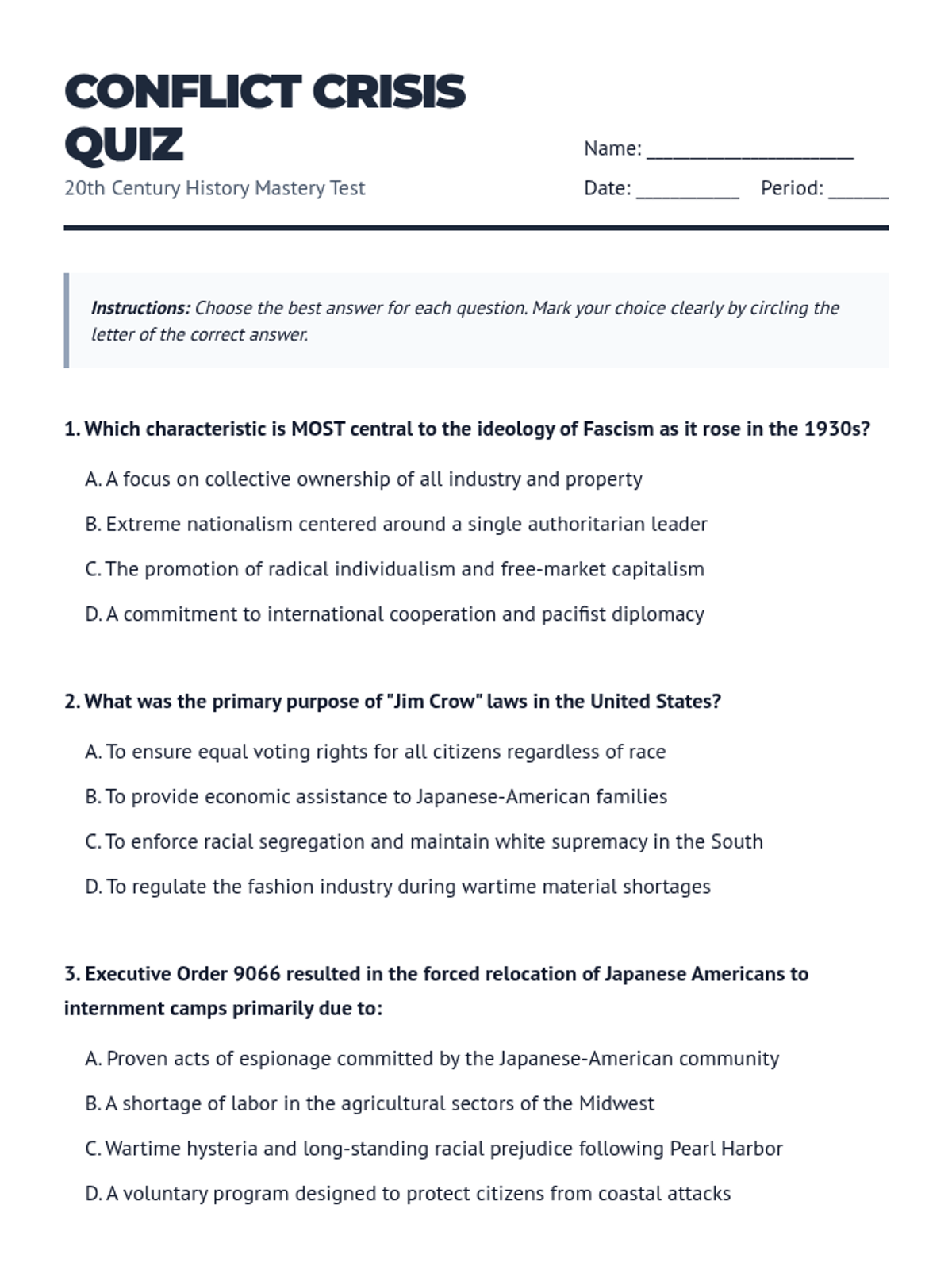
A 15-question multiple choice test covering key topics from WWII to the Civil Rights era. Focuses on vocabulary, cause-and-effect, and synthesis questions. Professional layout with fixed page breaks to keep questions together.
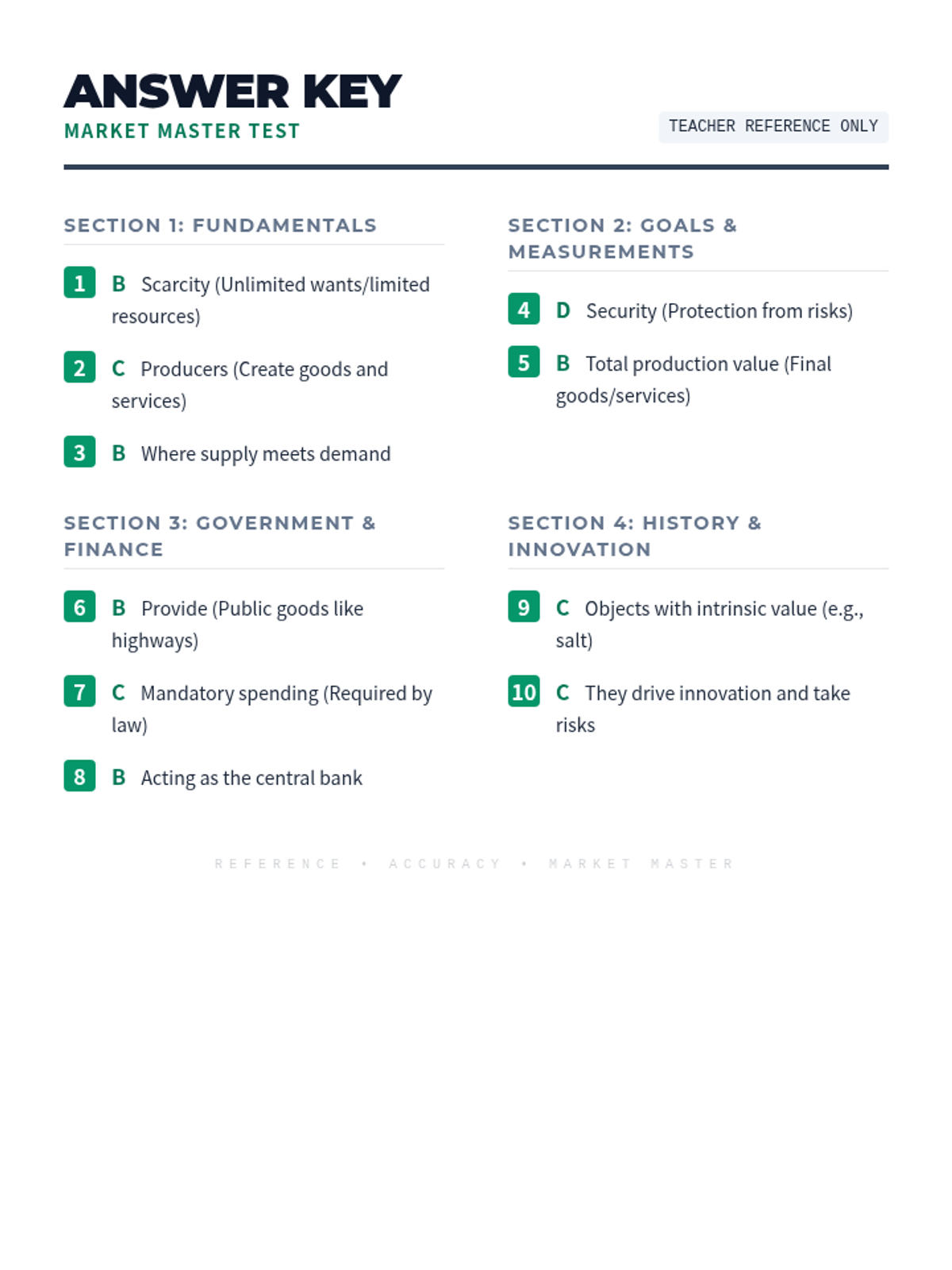
The teacher's answer key for the Market Master Test, providing the correct letter responses and brief rationale for each question.
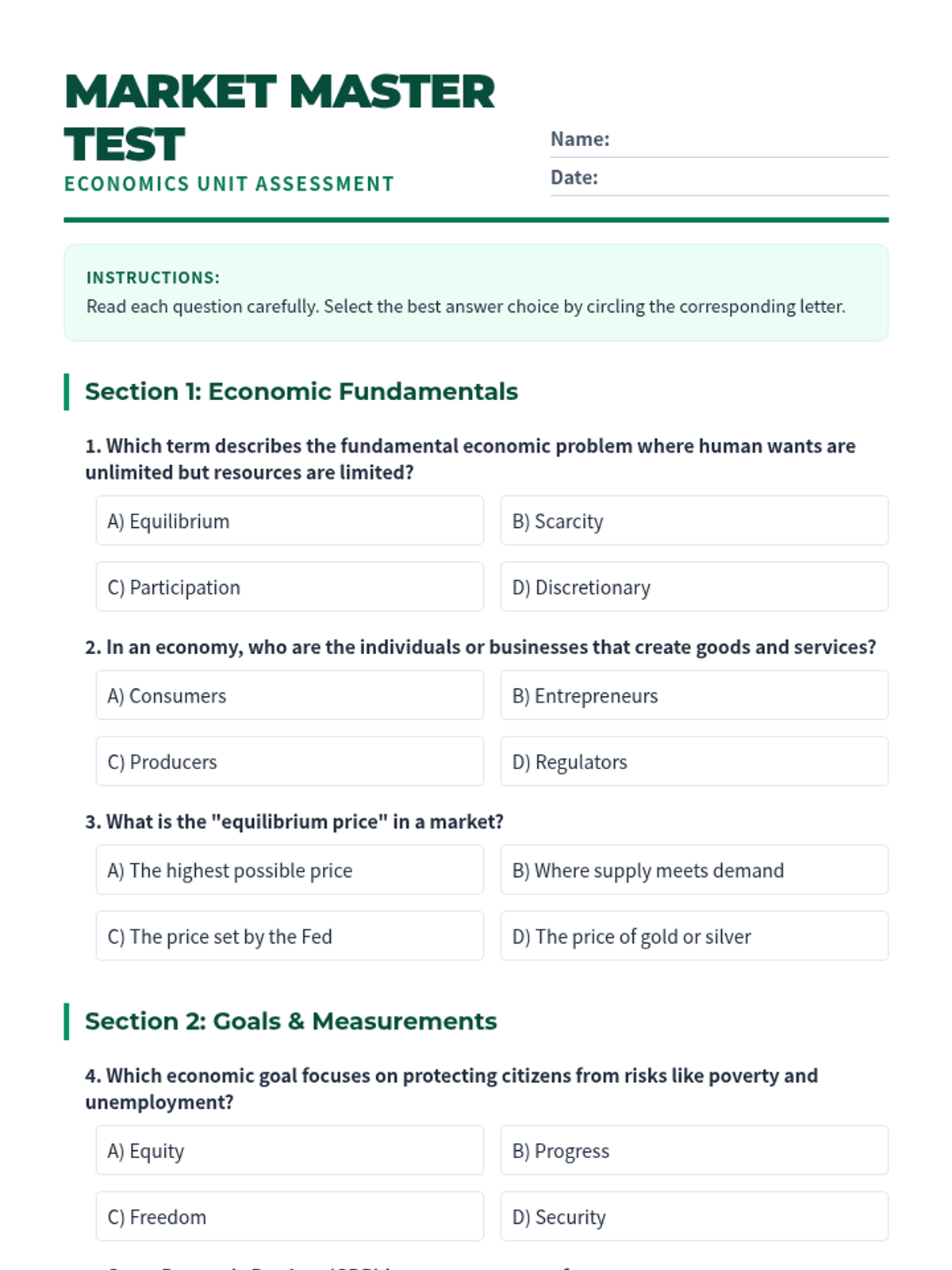
A 10-question multiple-choice test covering economic fundamentals, government roles, the Federal Reserve, and money history. All answer choices feature uniform styling for fair assessment. Layout updated for better page flow.
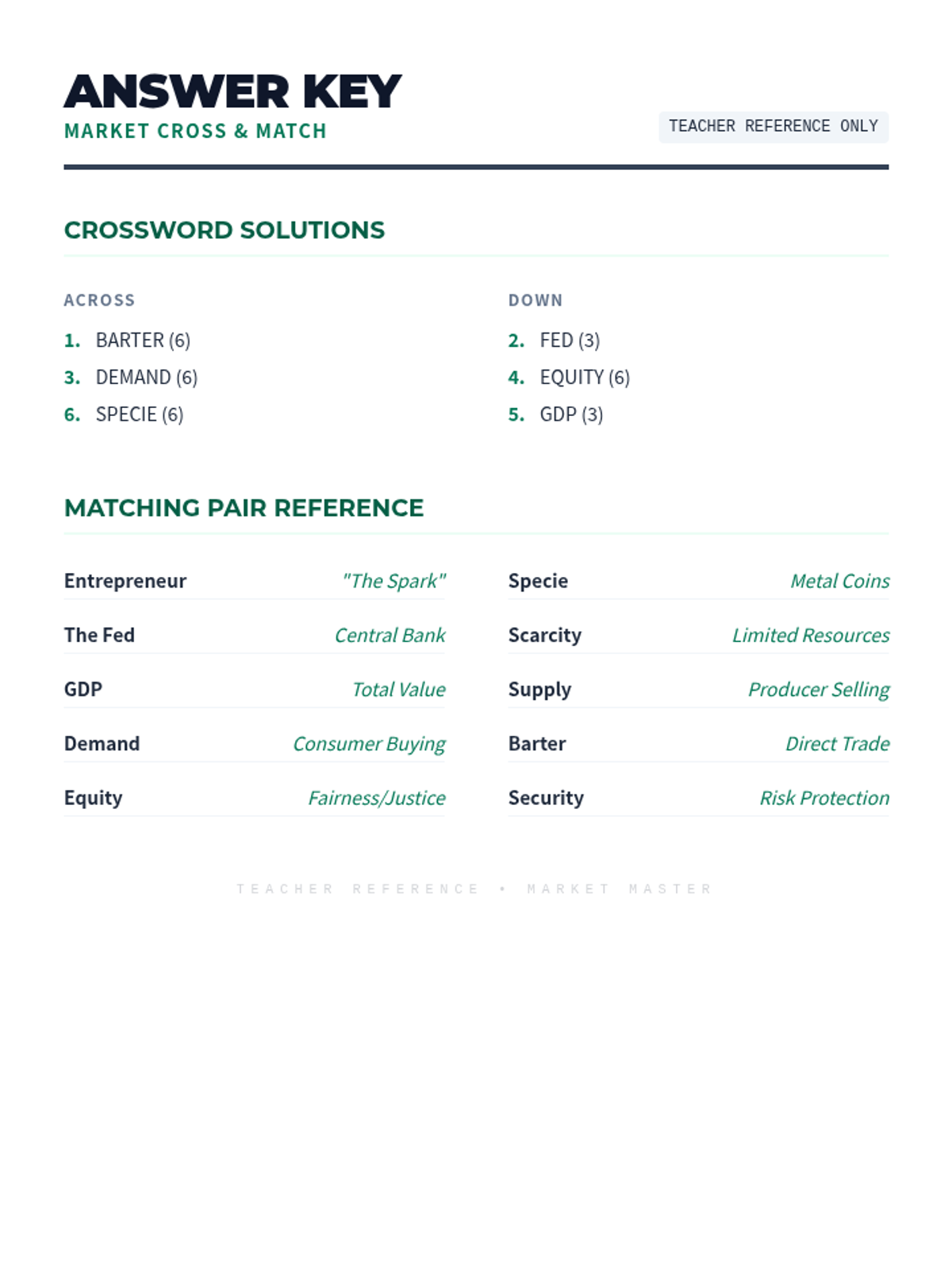
The combined answer key for the Market Cross crossword and the Market Match game, updated with the correct crossword solutions.
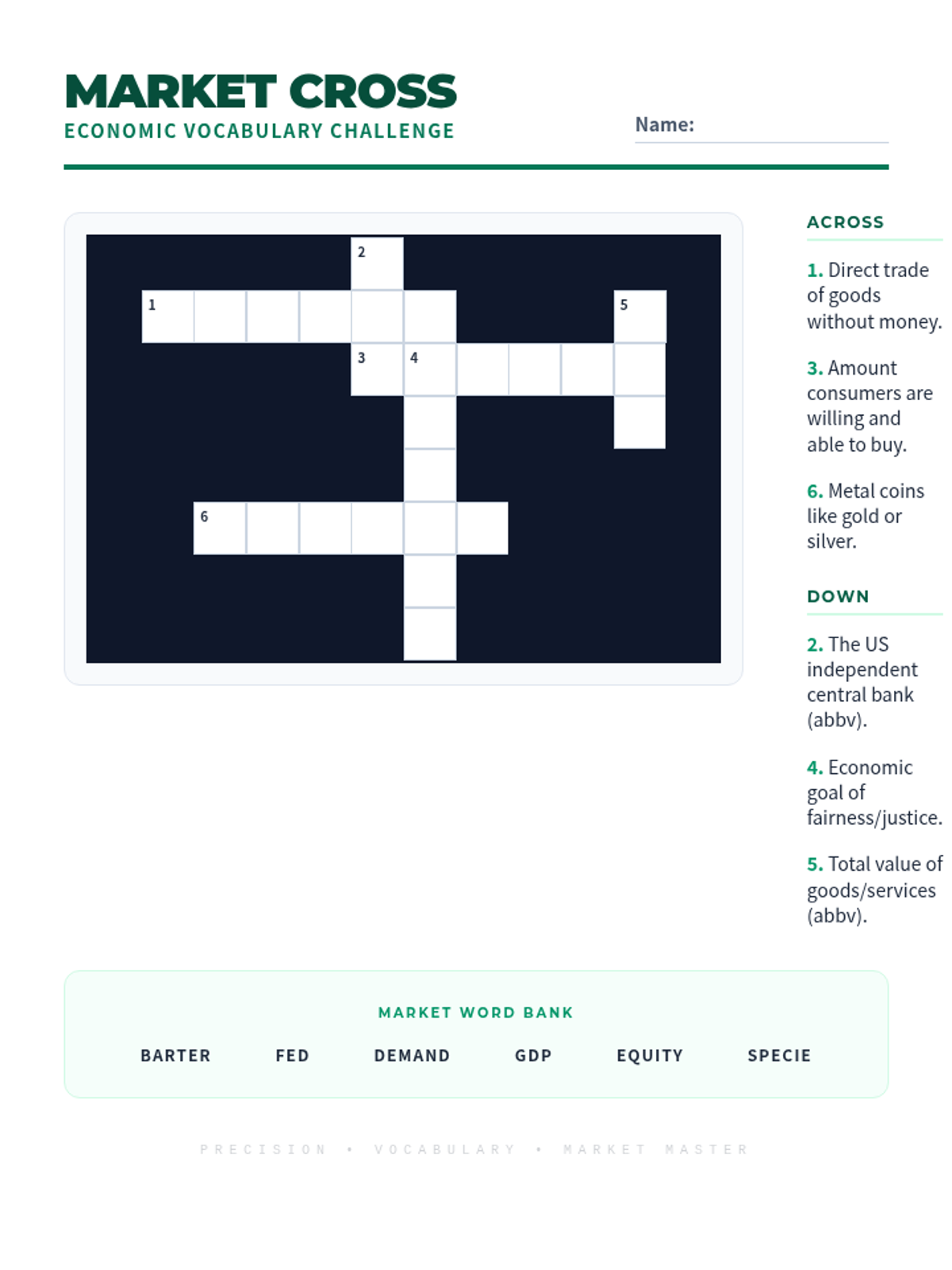
A vocabulary-building crossword puzzle featuring key economic terms like GDP, Barter, and Specie. The grid has been structurally redesigned for accurate letter intersections.
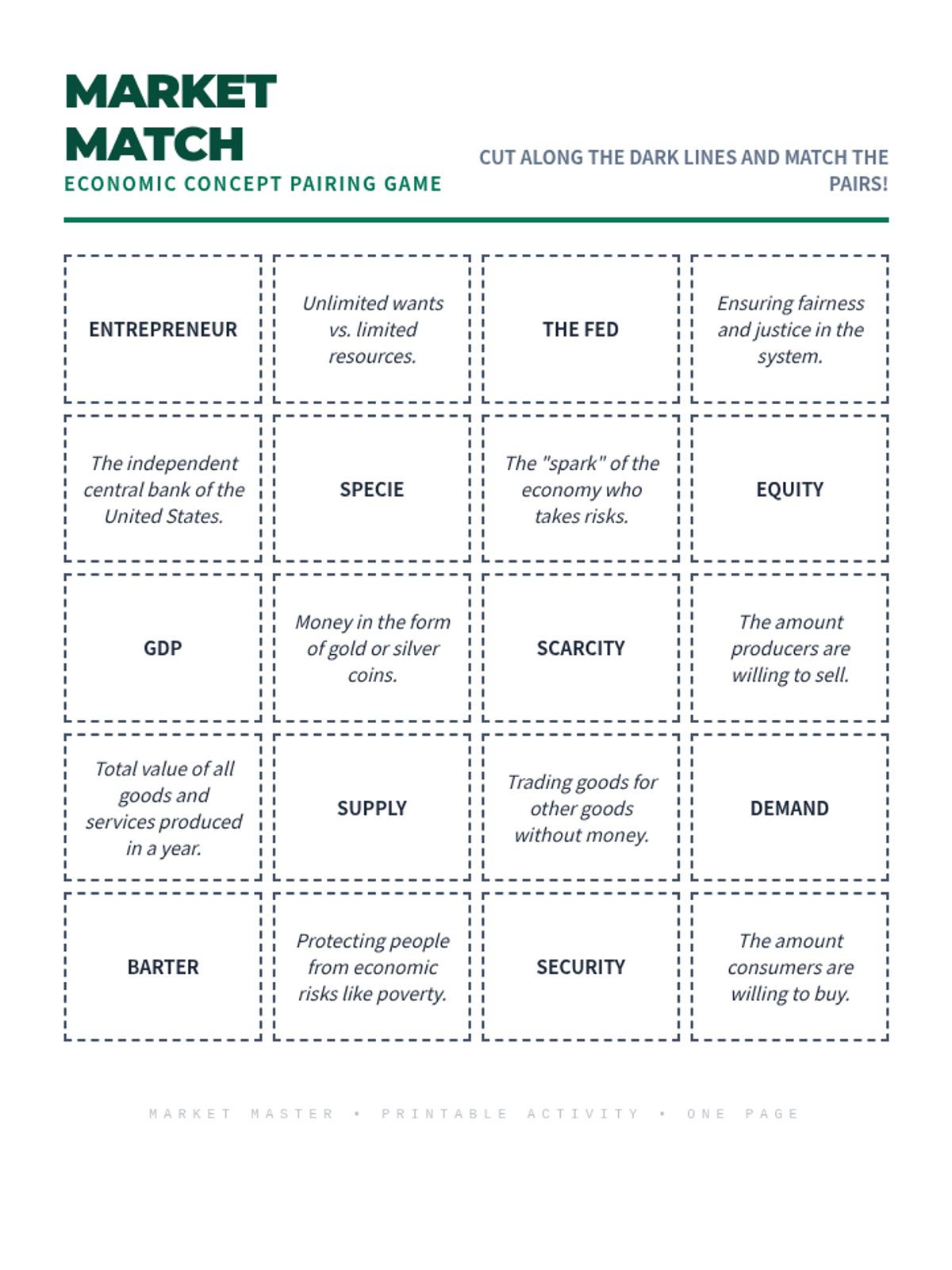
A set of printable matching cards for students to pair economic terms with their definitions, reinforcing vocabulary through hands-on play. All pairs now fit on one page with darkened cut-lines.
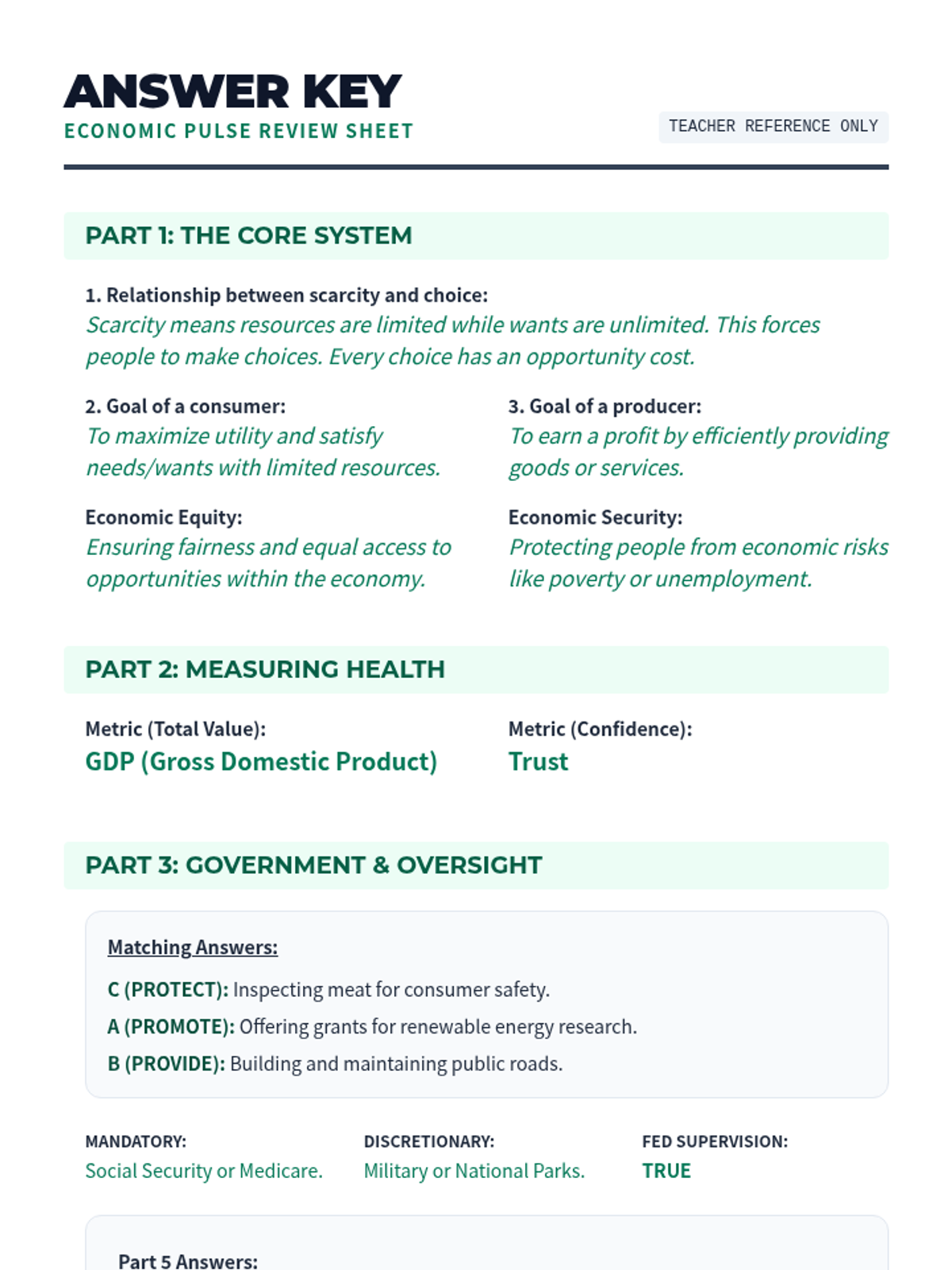
The answer key for the Economic Pulse review sheet, providing sample responses and factual corrections for the teacher.
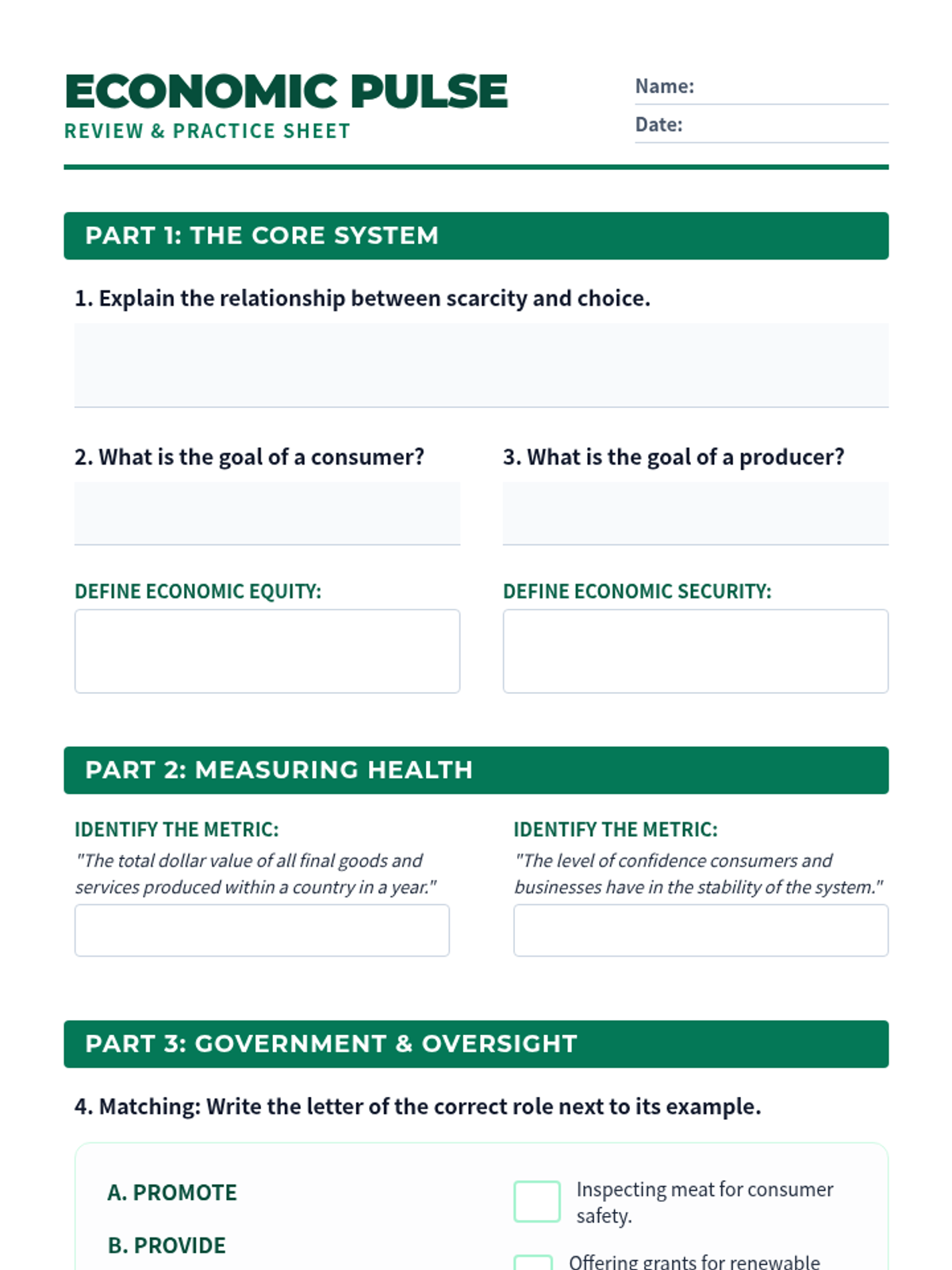
A comprehensive review sheet with matching, true/false, and open-ended questions covering the core topics of the economics unit.
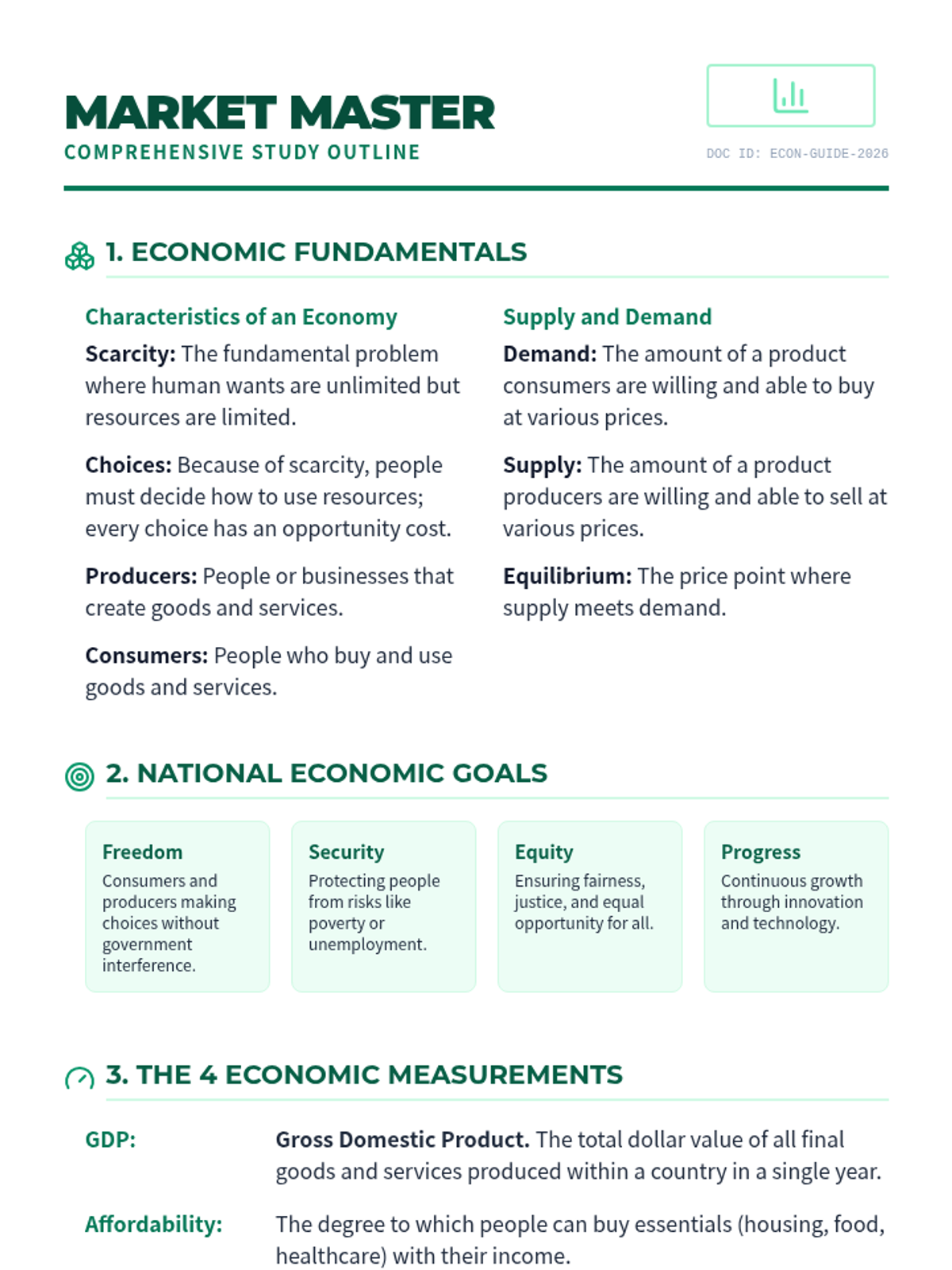
A detailed, structured outline of core economic concepts including definitions, government roles, and the history of currency.
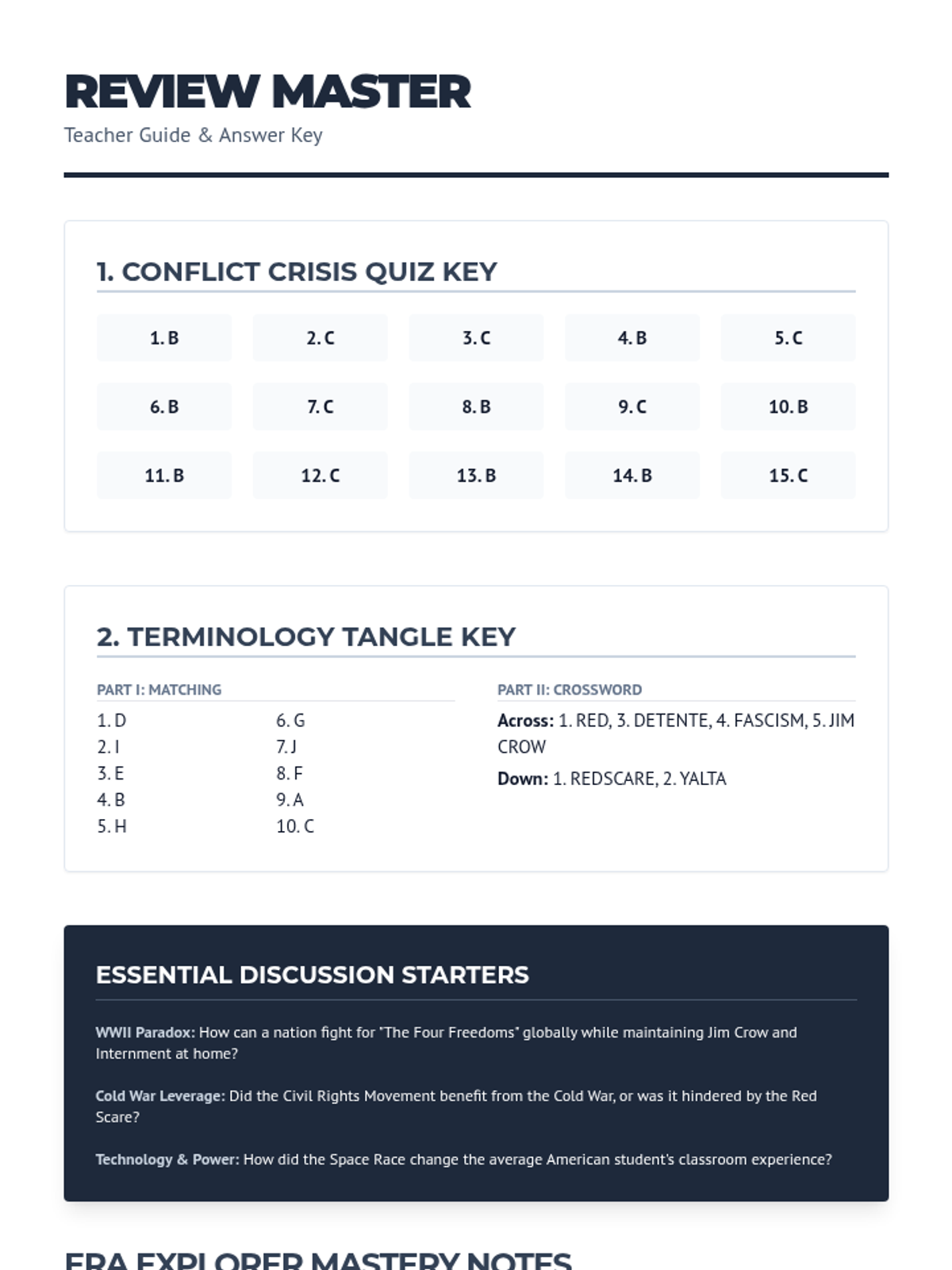
A comprehensive teacher guide and answer key covering the multiple-choice quiz, matching worksheet, and guided study guide. Includes instructional strategies, discussion prompts, and notes on common student misconceptions.
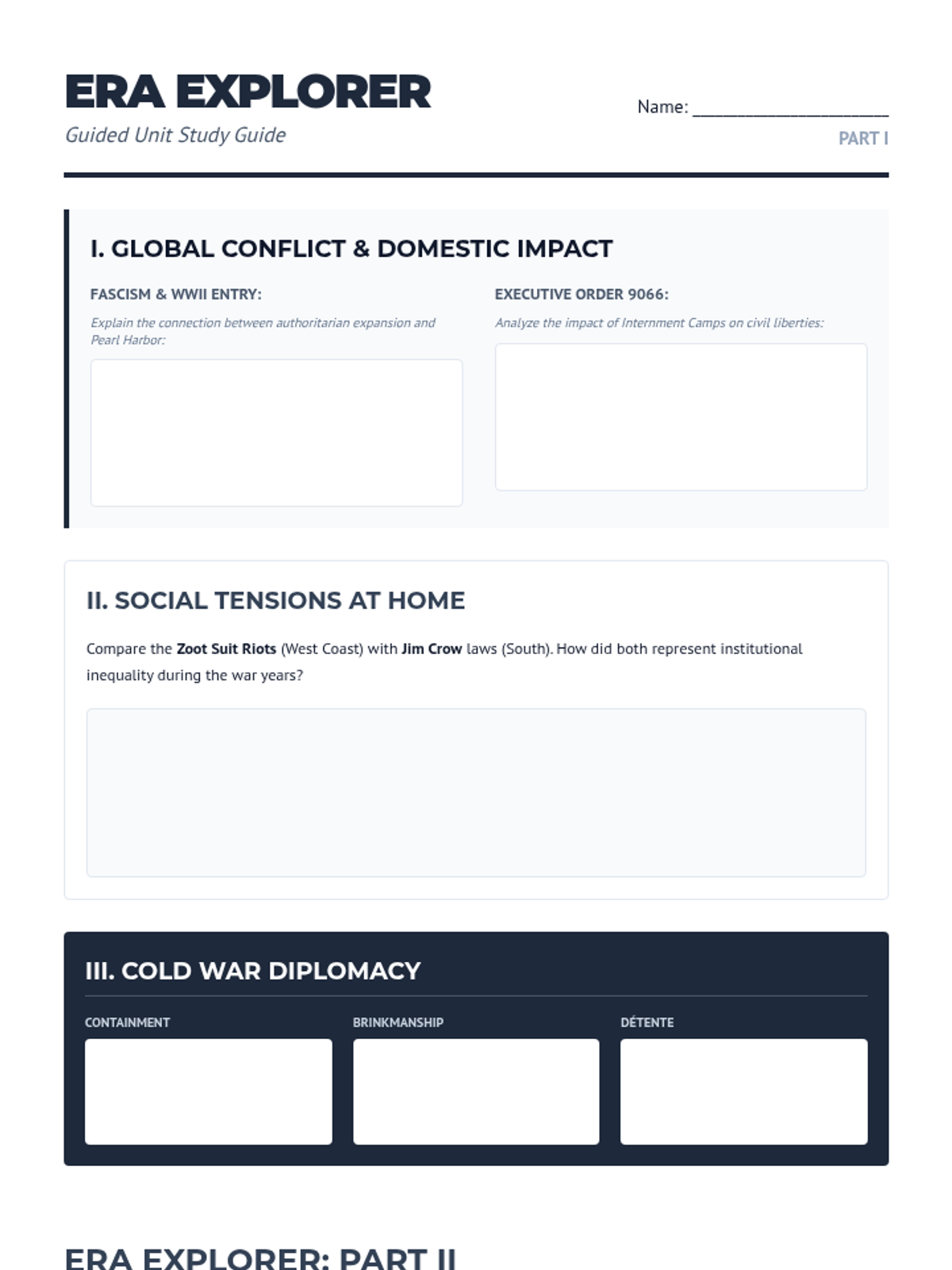
A two-page guided study guide exploring cause-and-effect relationships and key historical themes. Includes sections for WWII, the Cold War, social movements, and cultural diplomacy. Fixed page breaks and optimized work areas.
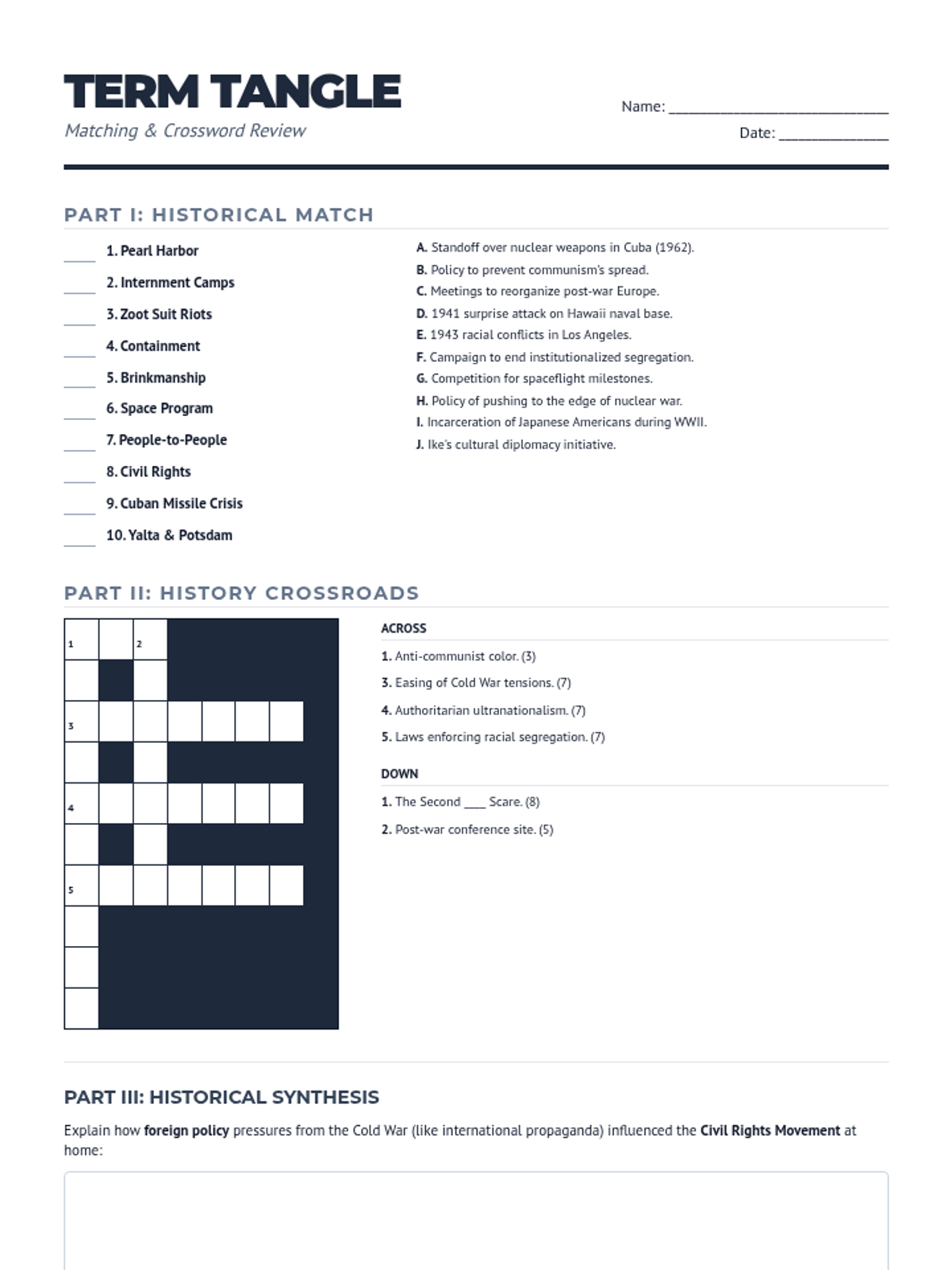
A matching and crossword worksheet focusing on vocabulary and key facts from WWII through the Cold War and Civil Rights era. Now condensed to a single page.
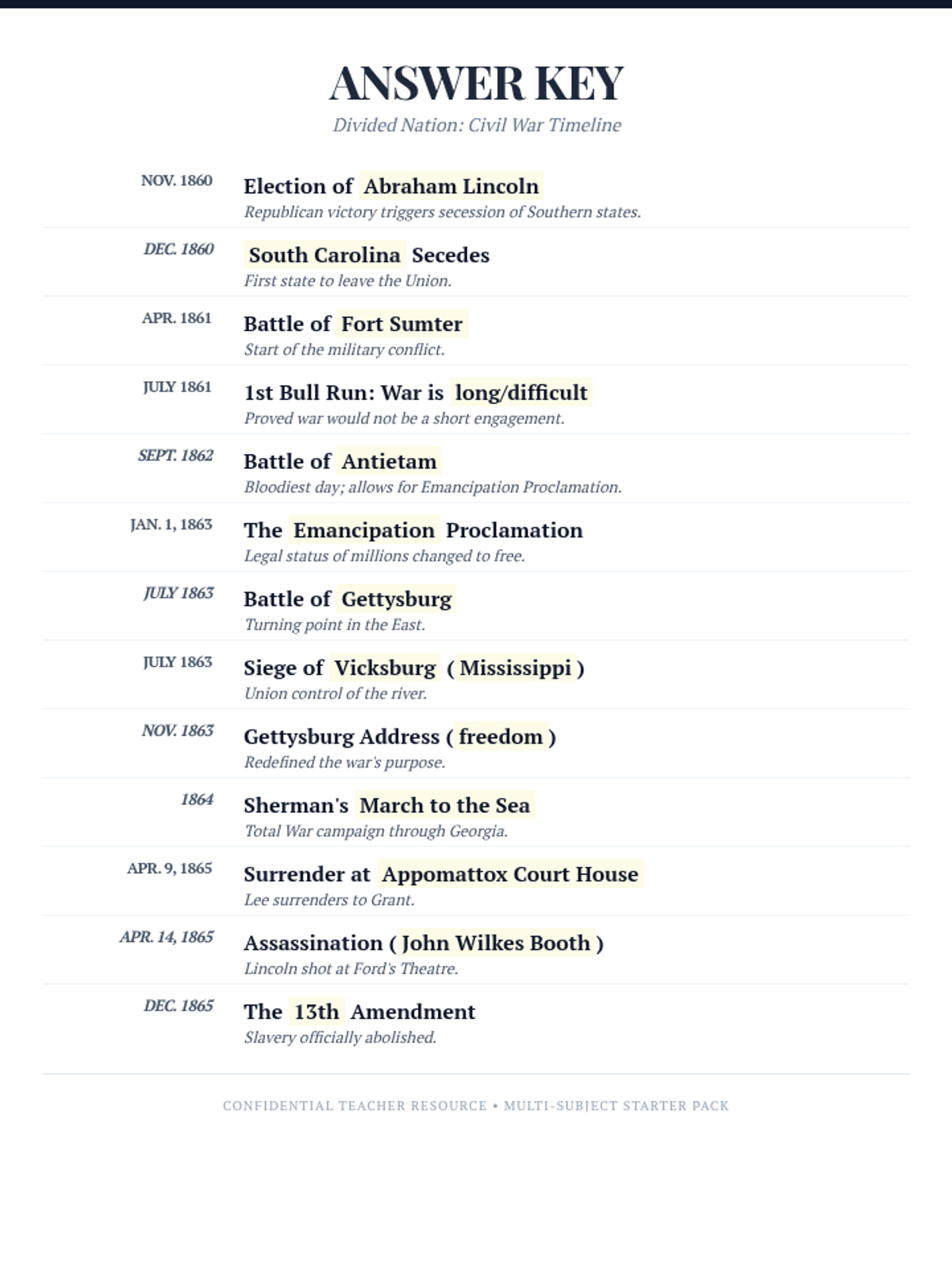
A concise 1-page teacher's answer key for the Divided Nation Civil War timeline worksheet.
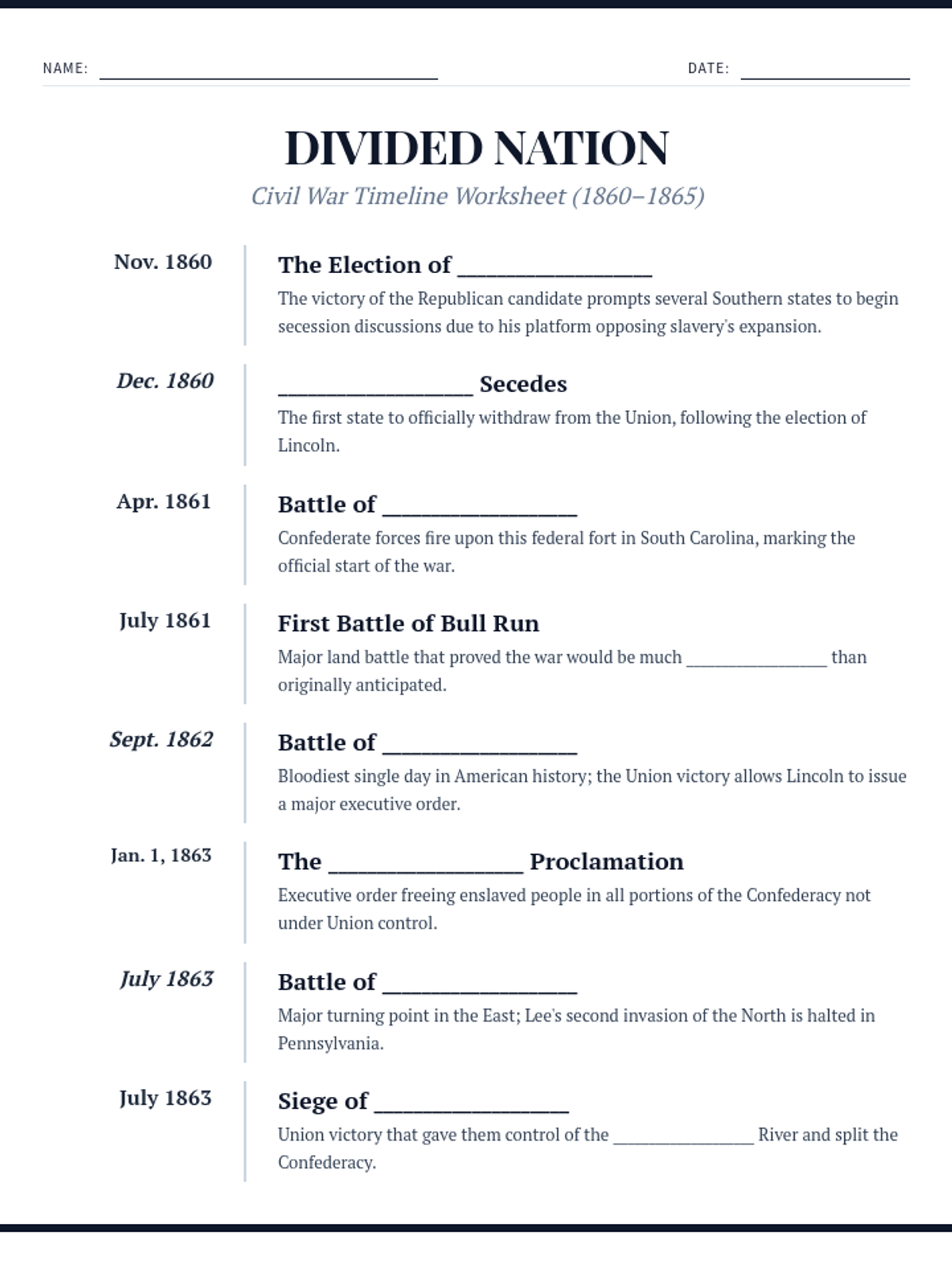
A condensed 2-page high school timeline worksheet for the American Civil War, featuring 13 key events with optimized spacing and page breaks.
A polished 10-slide presentation for 7th-grade science students explaining photosynthesis, featuring MathJax for chemical formulas and improved organelle diagrams.
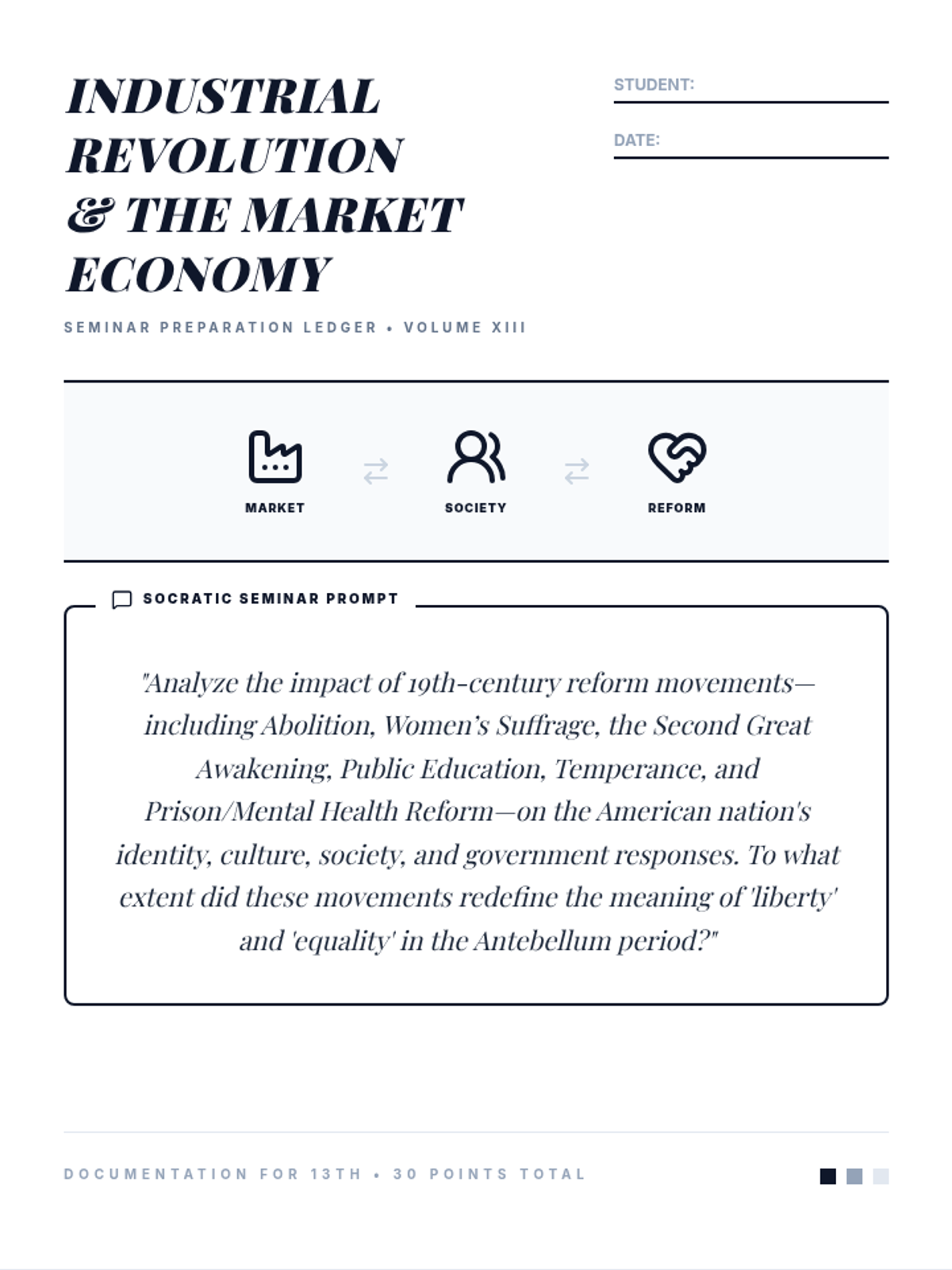
A detailed 5-page seminar preparation ledger for the Industrial Revolution and Market Economy lesson. Features a dedicated cover page with relevant historical icons and a prominent Socratic prompt, three separate article analysis pages, and a final synthesis evaluation. Writing lines are darkened for optimal print quality.
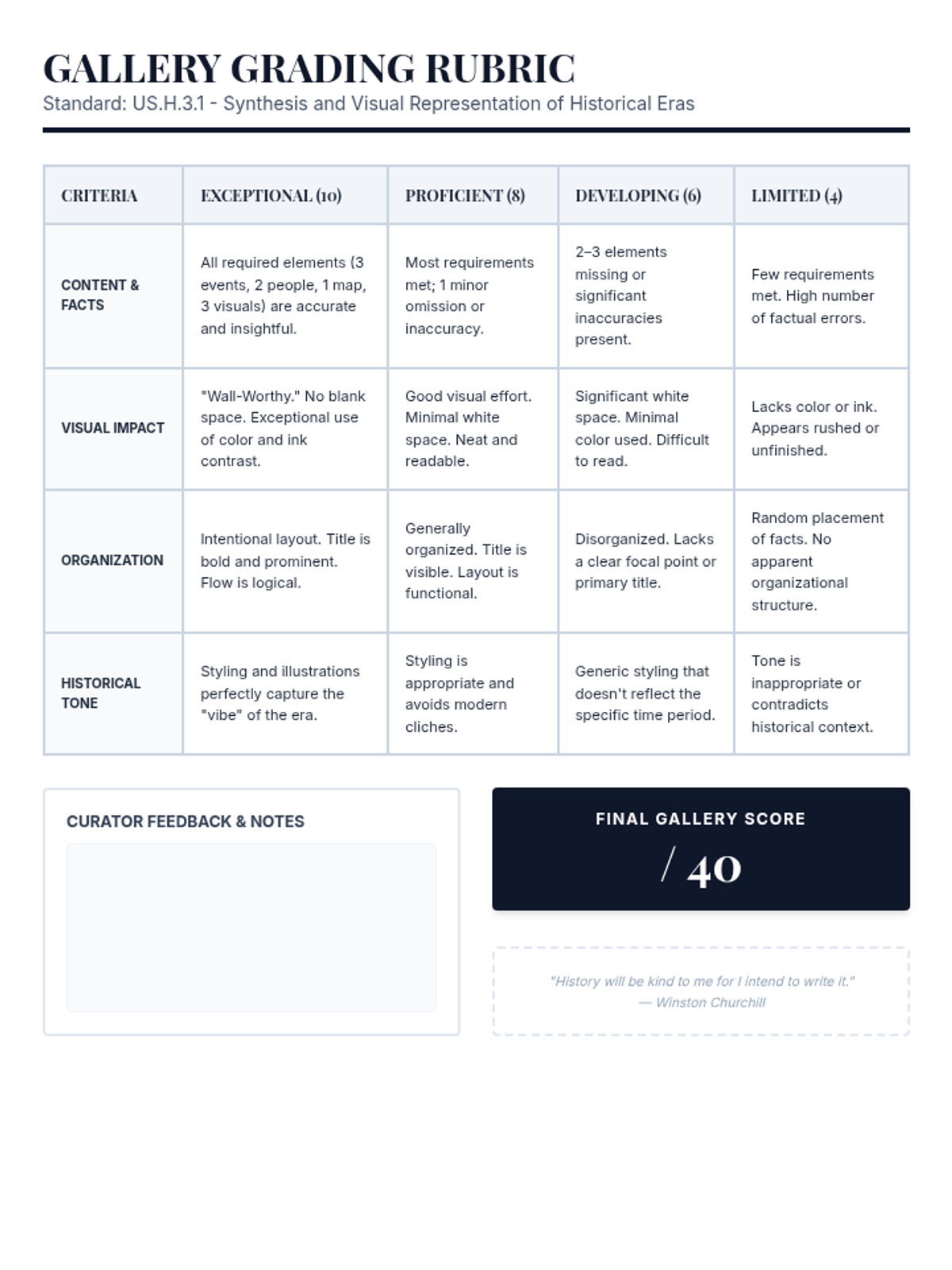
A grayscale, high-contrast rubric for evaluating student historical one-pagers, optimized for budget-friendly printing.
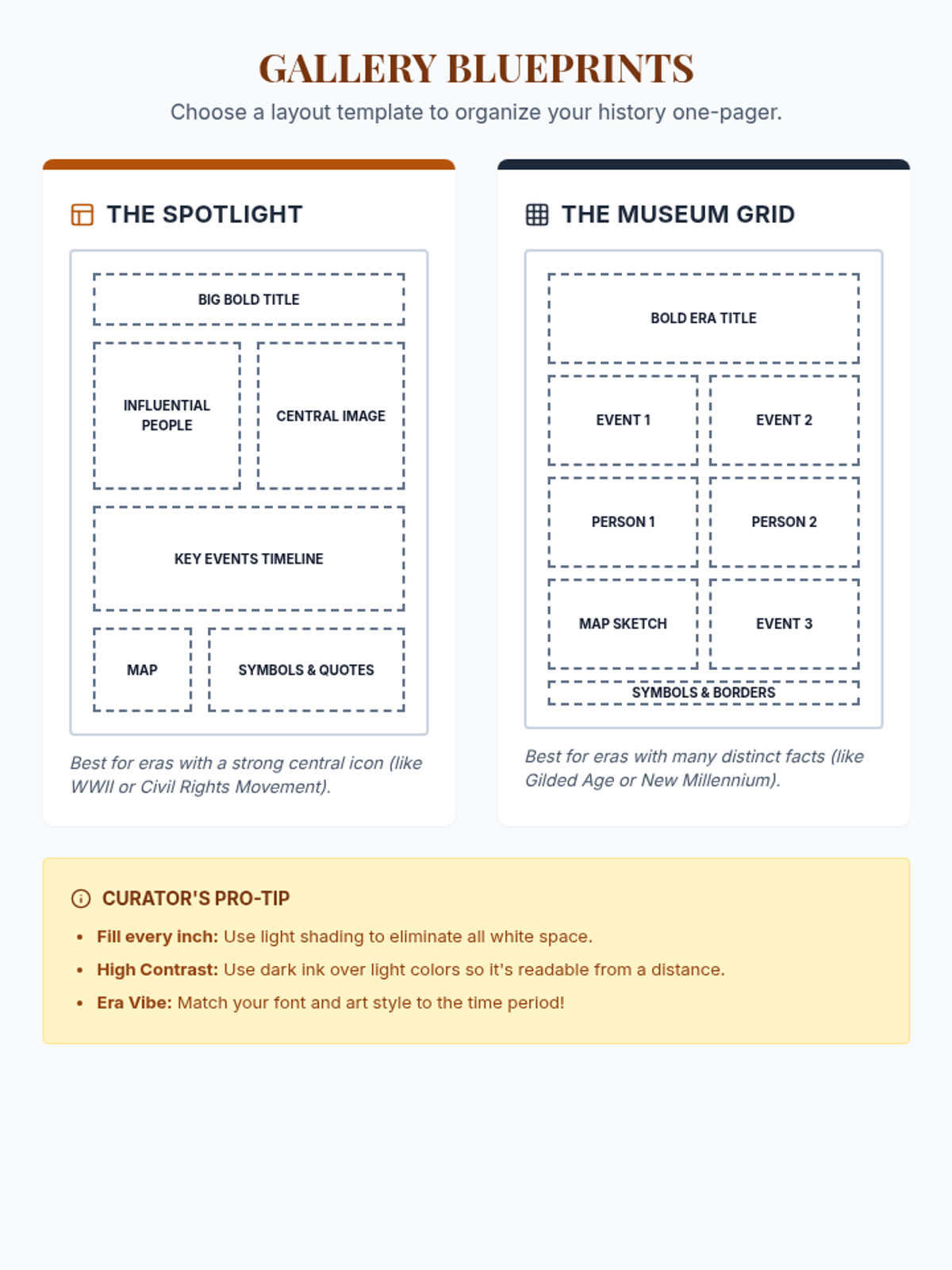
A grayscale visual layout guide providing two template options to help students organize their historical one-pager posters.
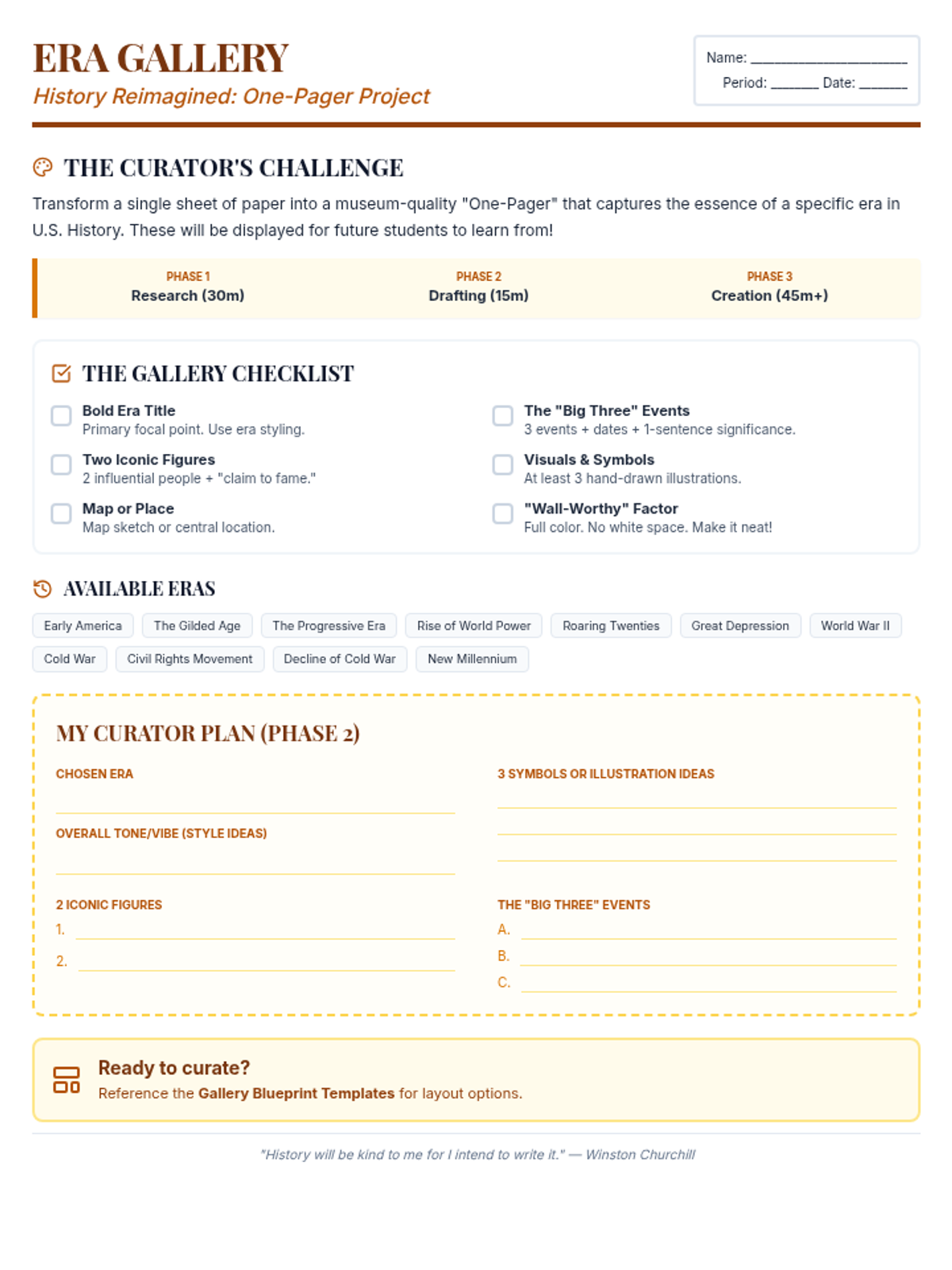
A grayscale, high-contrast project guide for US History students that outlines the requirements for creating a high-quality historical one-pager.
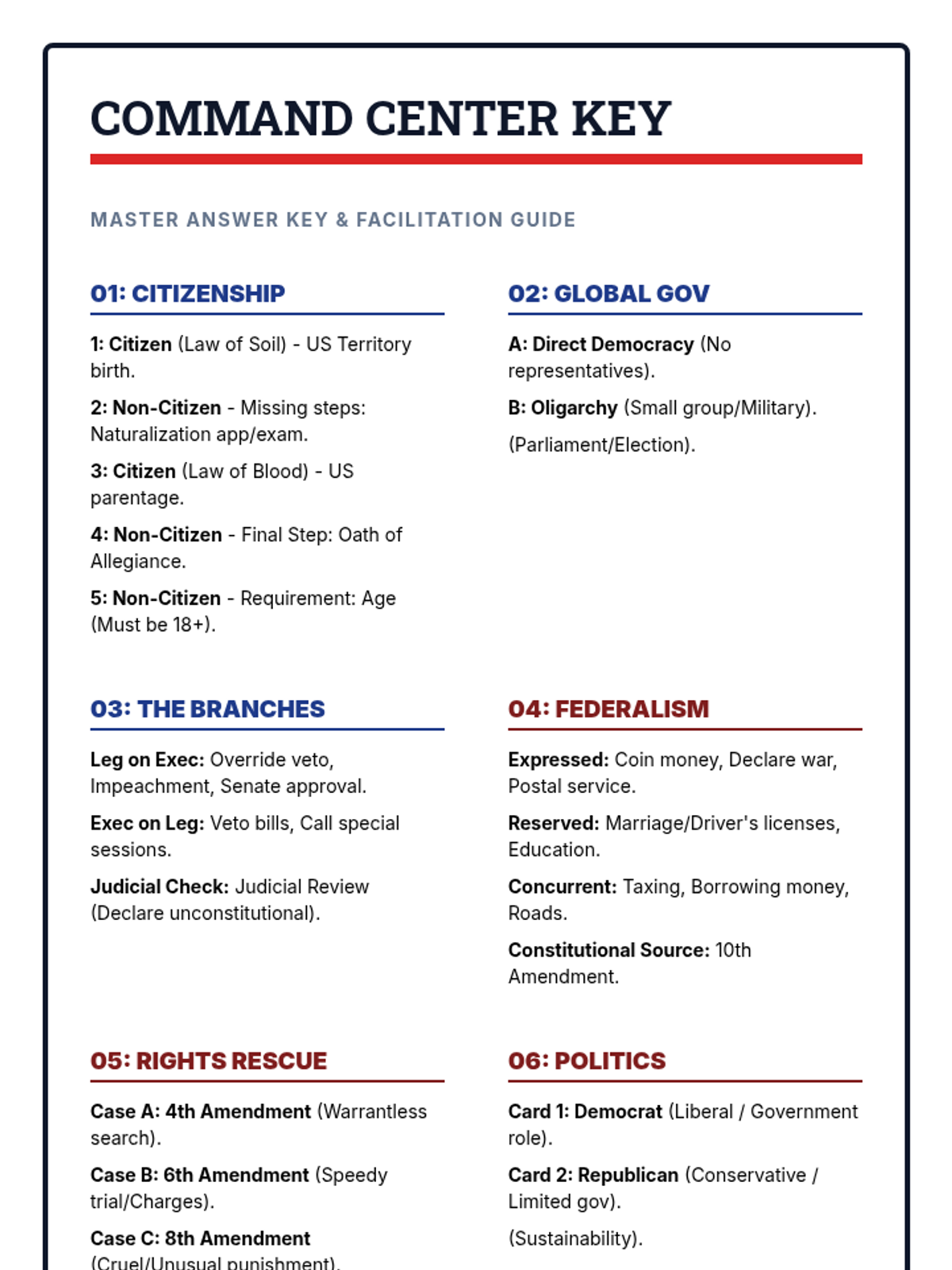
The master answer key for all 6 stations, optimized for single-page printing with high ink efficiency and clear section grouping.
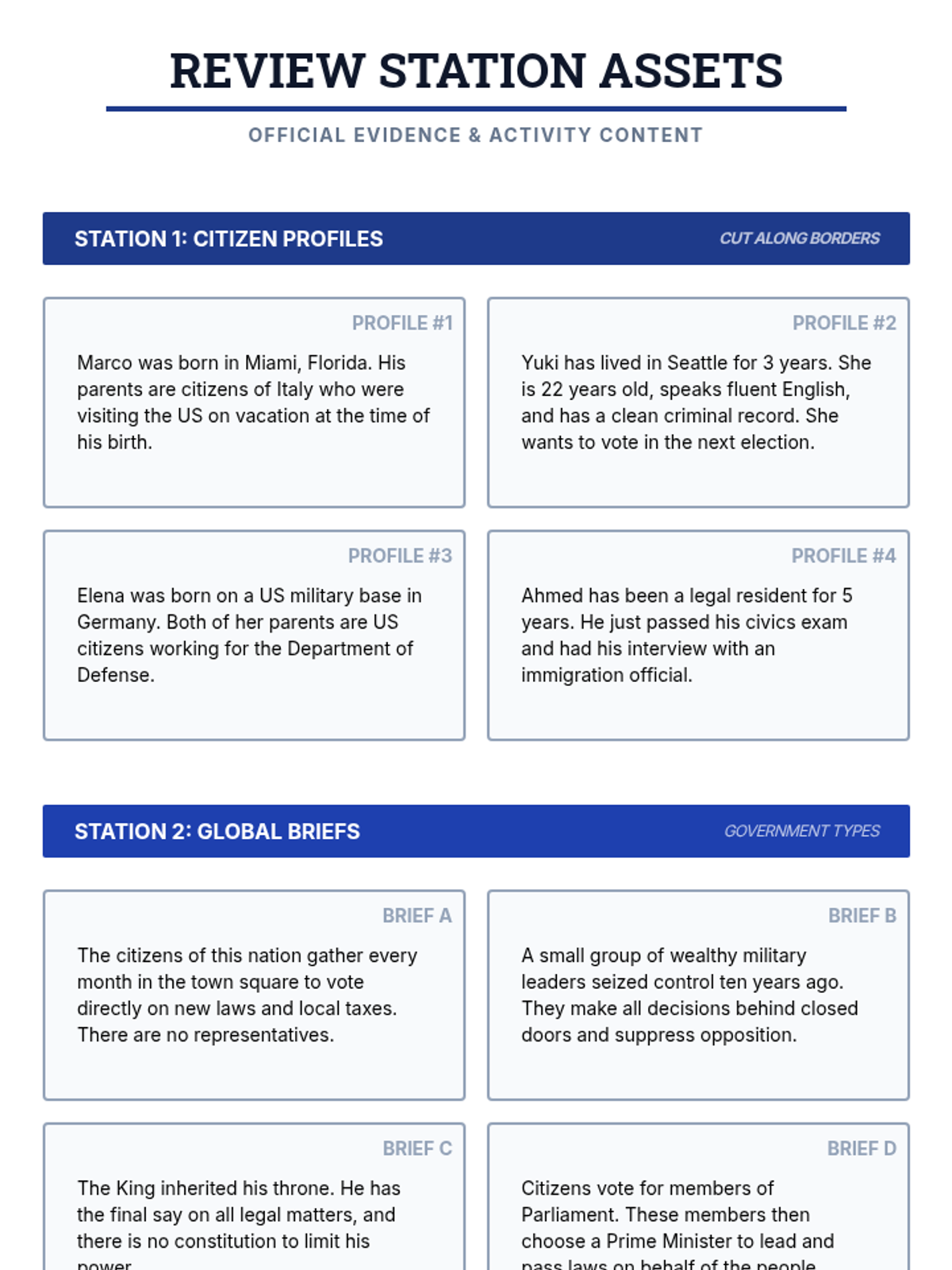
A collection of scenario cards, case files, and profile descriptions for all 6 review stations. Includes content for Citizenship, Government Types, The Three Branches, Federalism, Rights of the Accused, and Political Platforms.
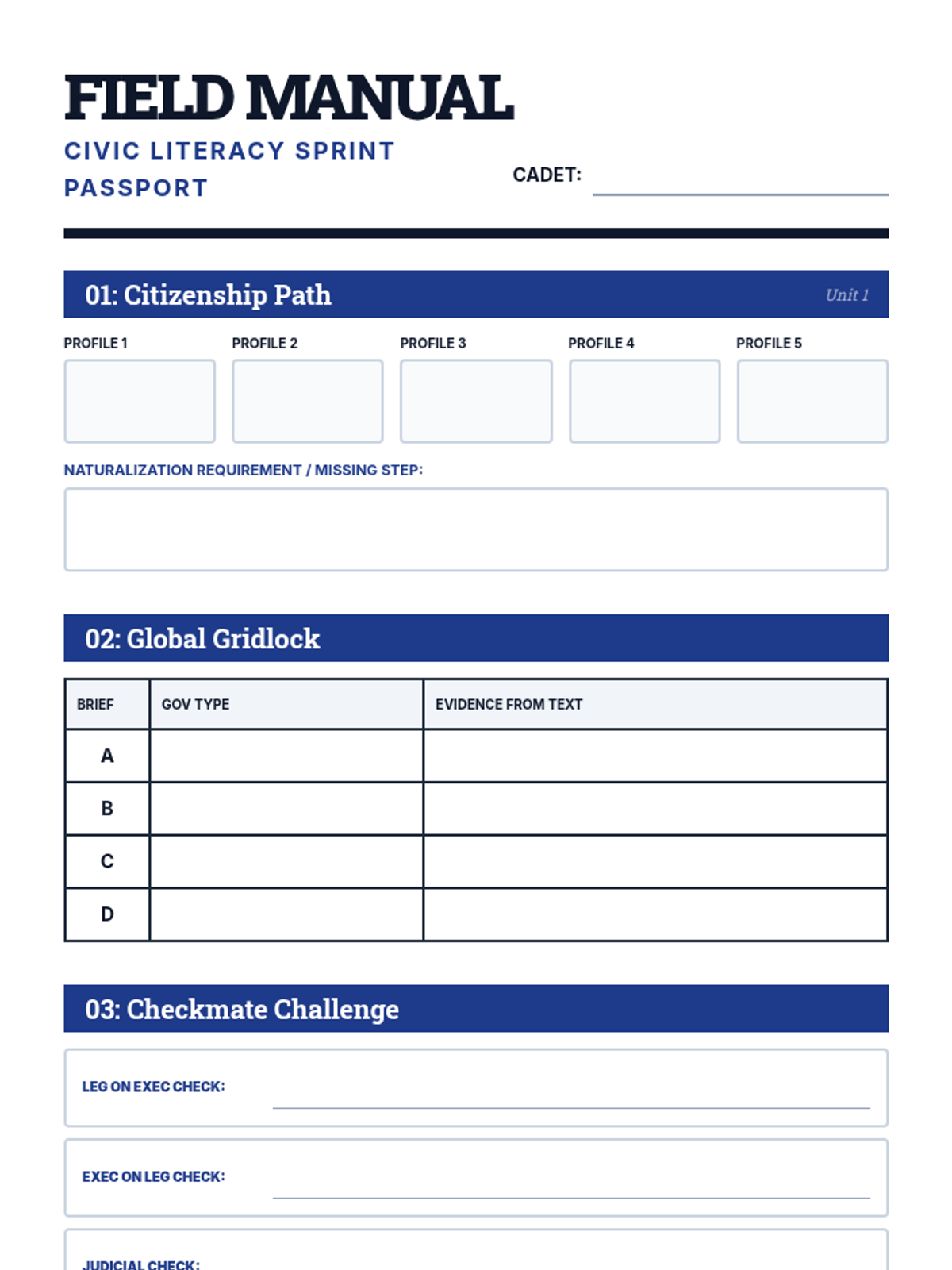
The student recording sheet (Passport) with optimized spacing for handwriting, clear station headers, and logical page breaks to ensure all 6 units are covered across 2 printable pages.
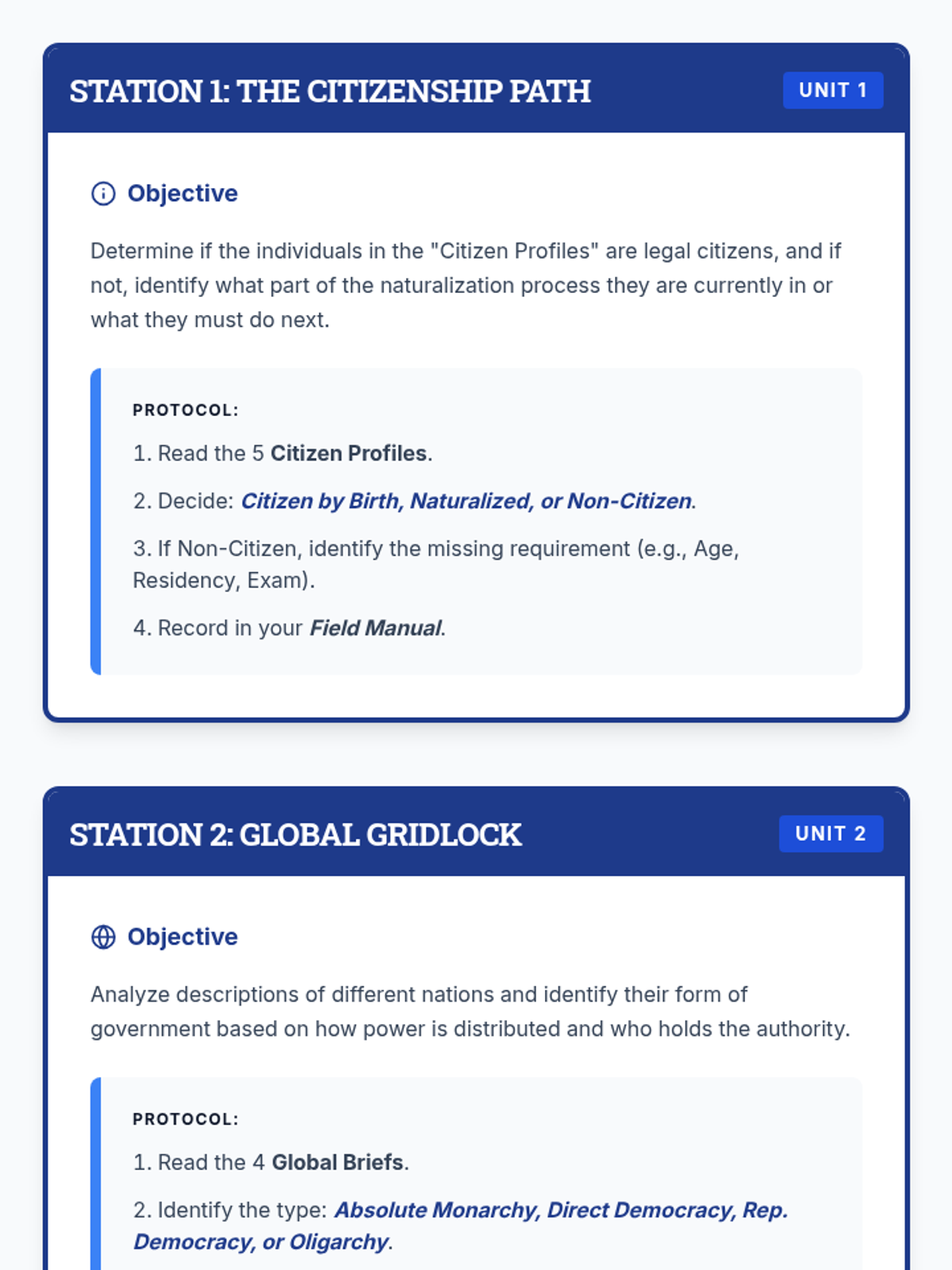
Printable protocol cards for each station with corrected page breaks, improved spacing, and clear step-by-step instructions for 10th-grade students.
A visual presentation to introduce the 6 review stations, set expectations for timing, and provide a roadmap for the activity.
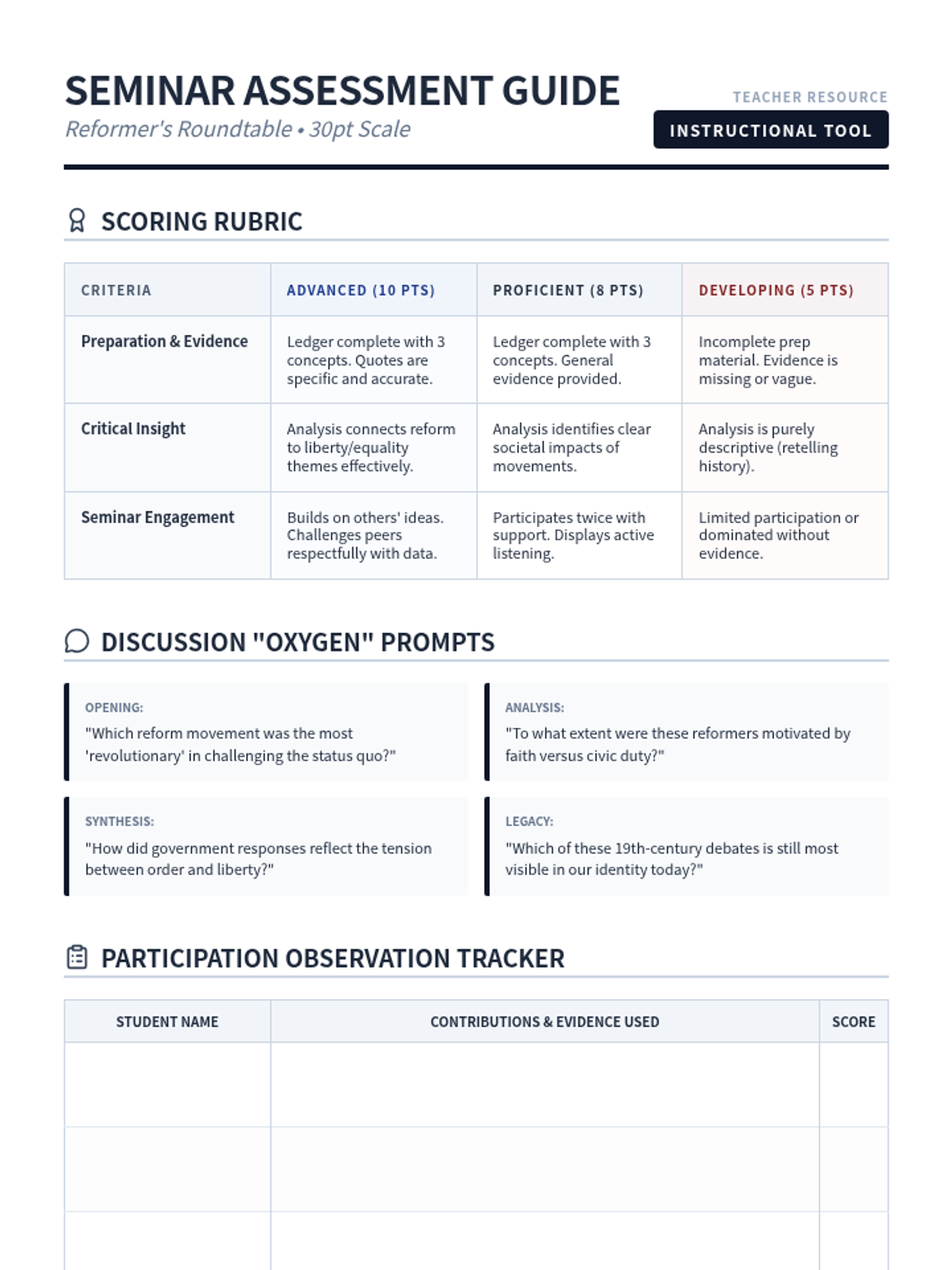
A teacher-facing guide for evaluating the Socratic Seminar, featuring a 30-point rubric, discussion prompts to guide student conversation, and an observation tracker.
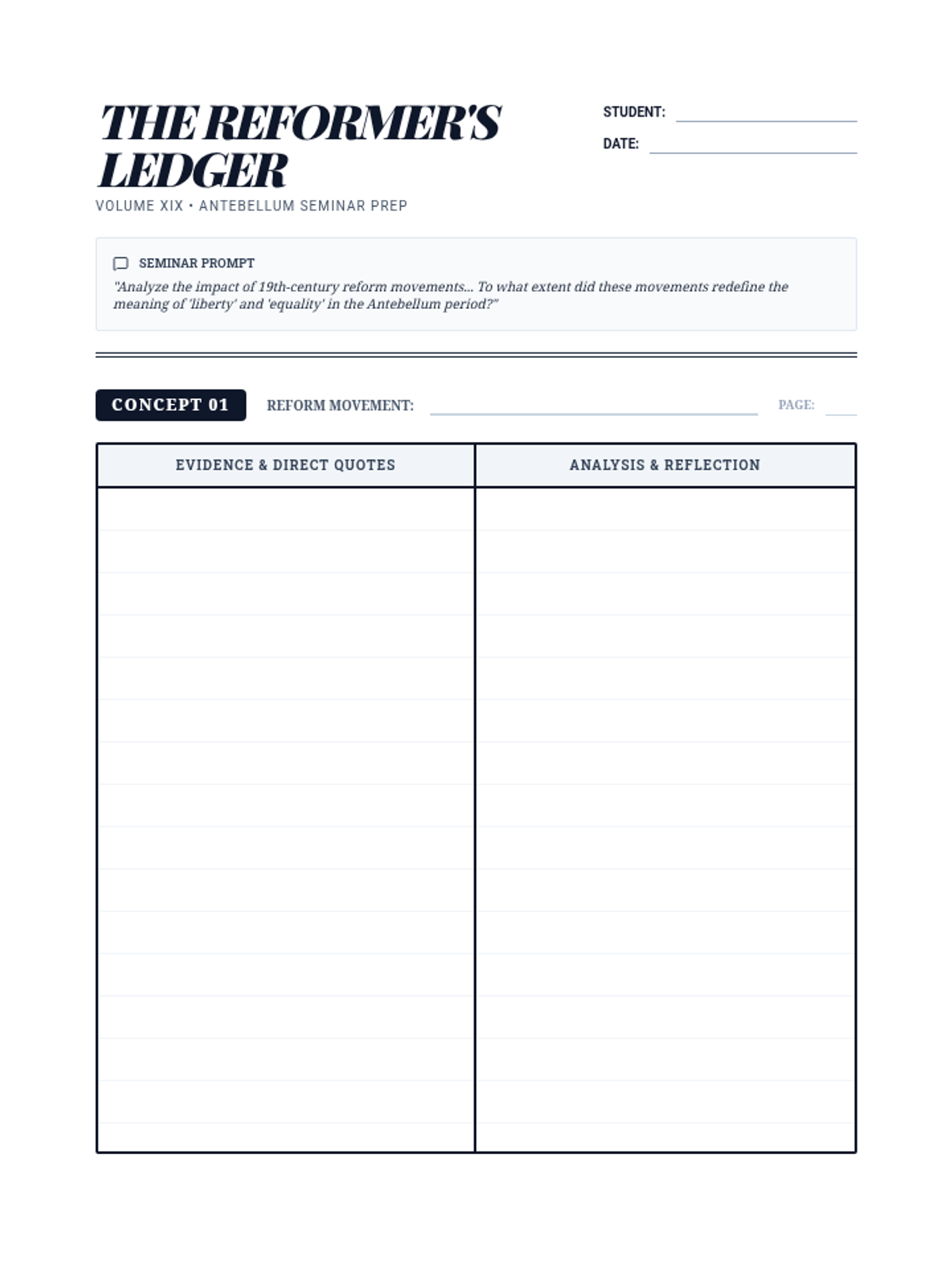
A visual presentation to introduce the Socratic Seminar prompt, the concept of 19th-century reform movements, and the double-entry journal preparation method. Includes discussion norms and expectations.
A multi-page double-entry journal for Socratic Seminar preparation. Each of the three reform movements has its own dedicated full-page ledger with guided columns for evidence and reflection, followed by a final synthesis page.
A comprehensive large-print resource containing the "Impact of Digital Technologies" report and a student analysis page. Features 26px (~20pt) text, bolded key terms, and high-contrast writing lines for accessibility. Layout is optimized for readability and ample response space.
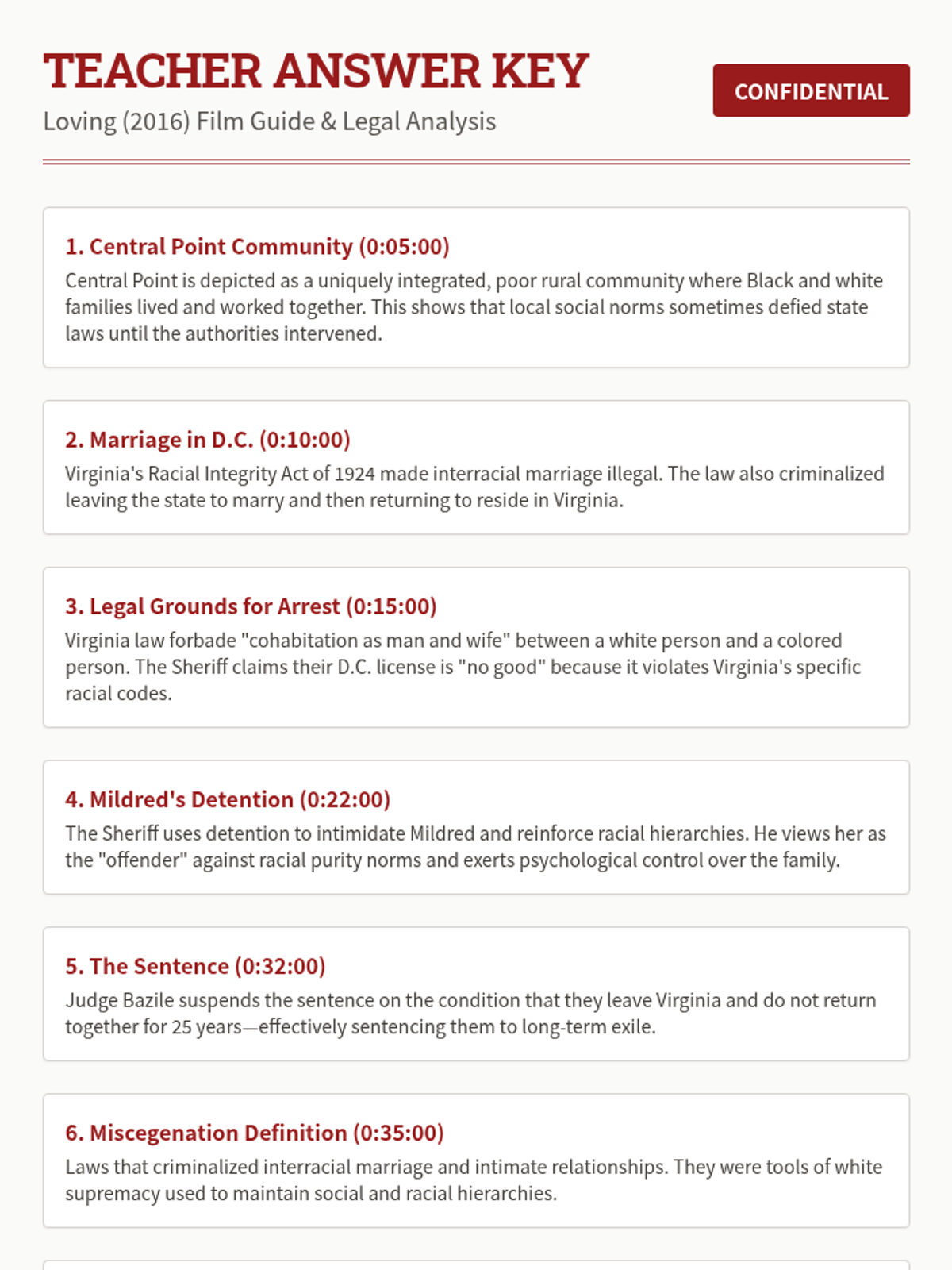
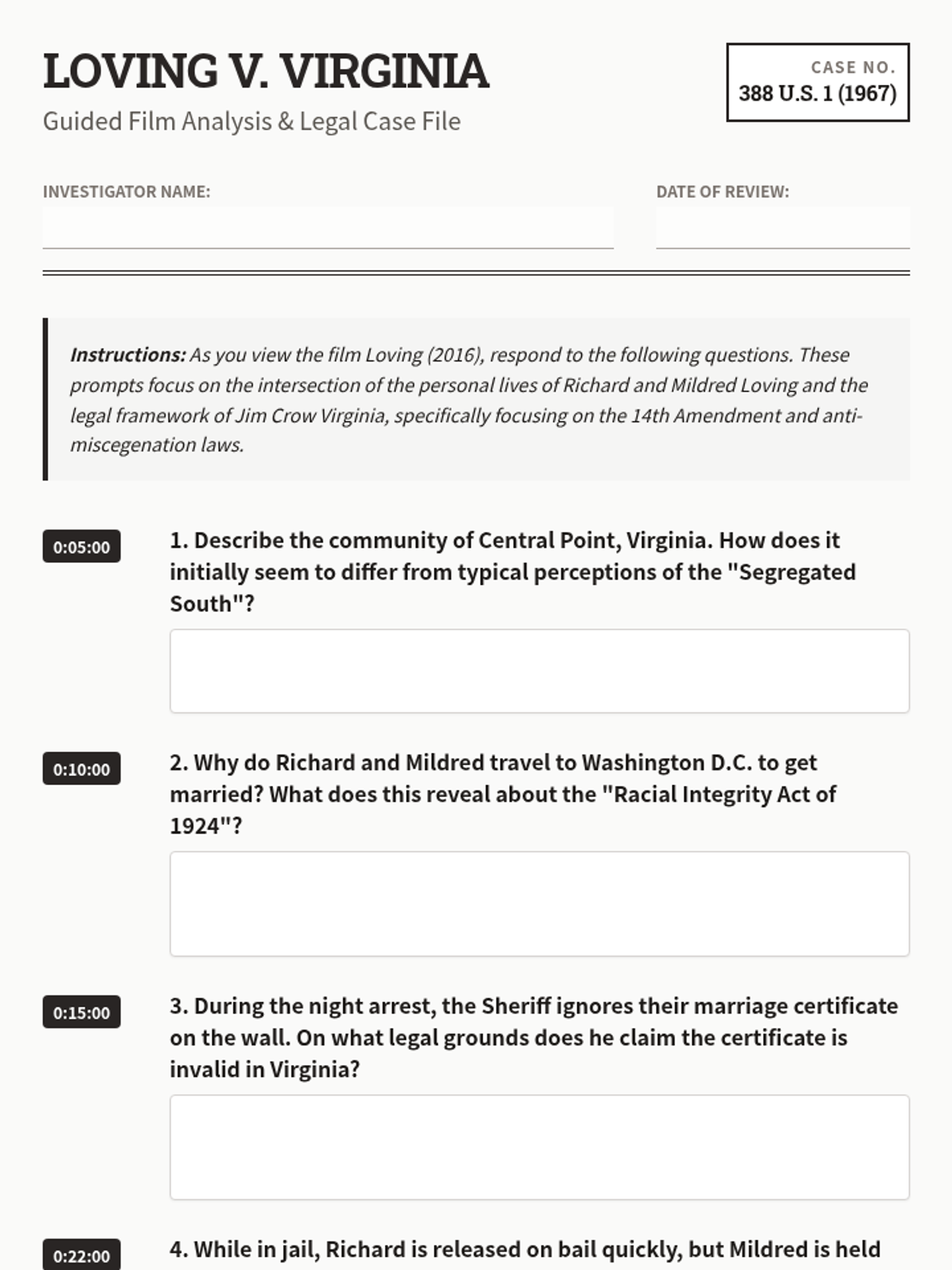
Teacher answer key for the Loving film worksheet, providing 17 detailed responses, legal context regarding the 14th Amendment, and instructional tips for high school educators.
A 17-question film guide for the movie Loving (2016), featuring timestamps and focusing on legal themes like the 14th Amendment and Jim Crow laws. Includes a large critical reflection section for high school students.
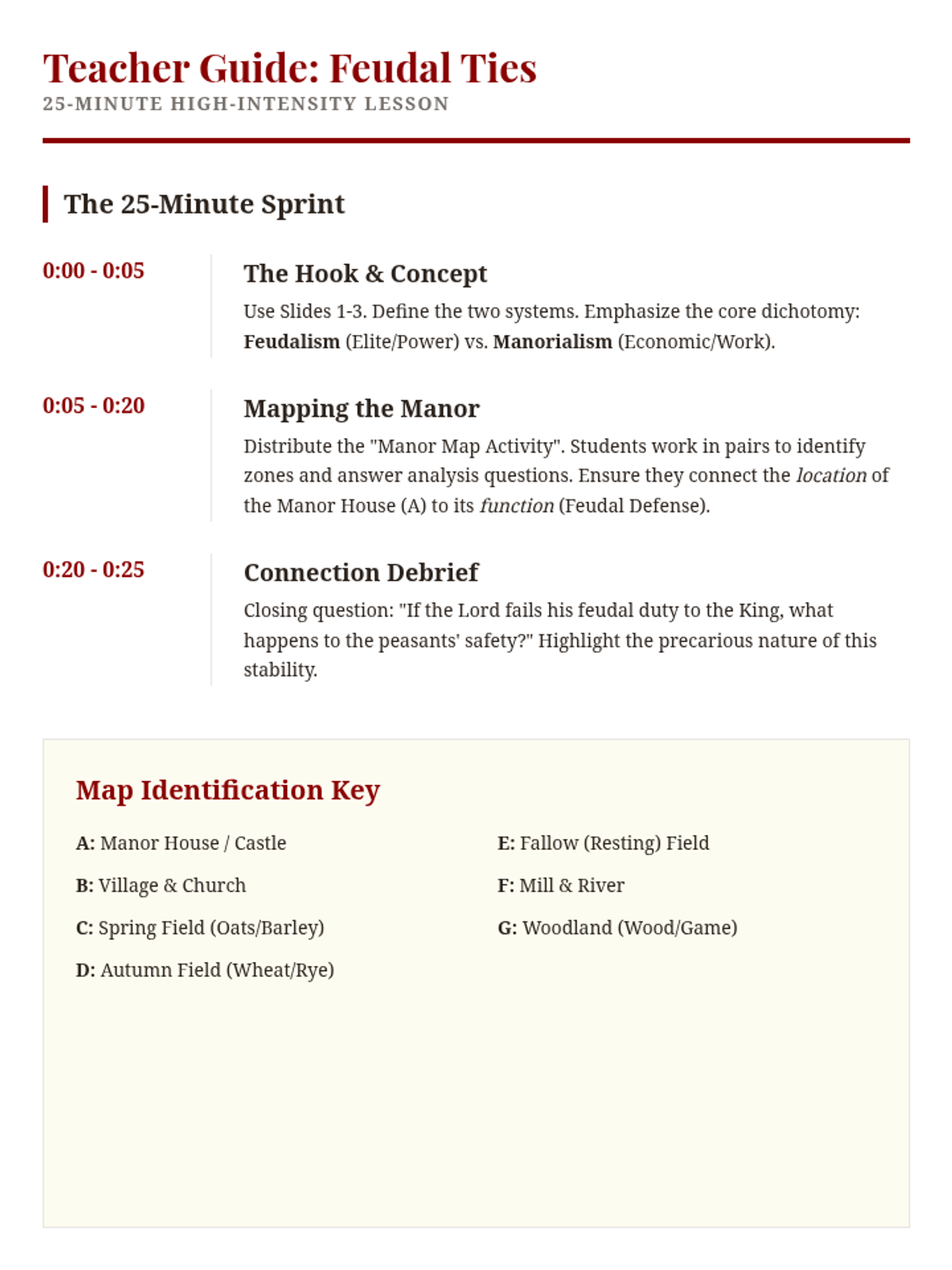
A teacher facilitation guide for the 25-minute Feudal Ties lesson, including a timeline, answer key, and discussion prompts.
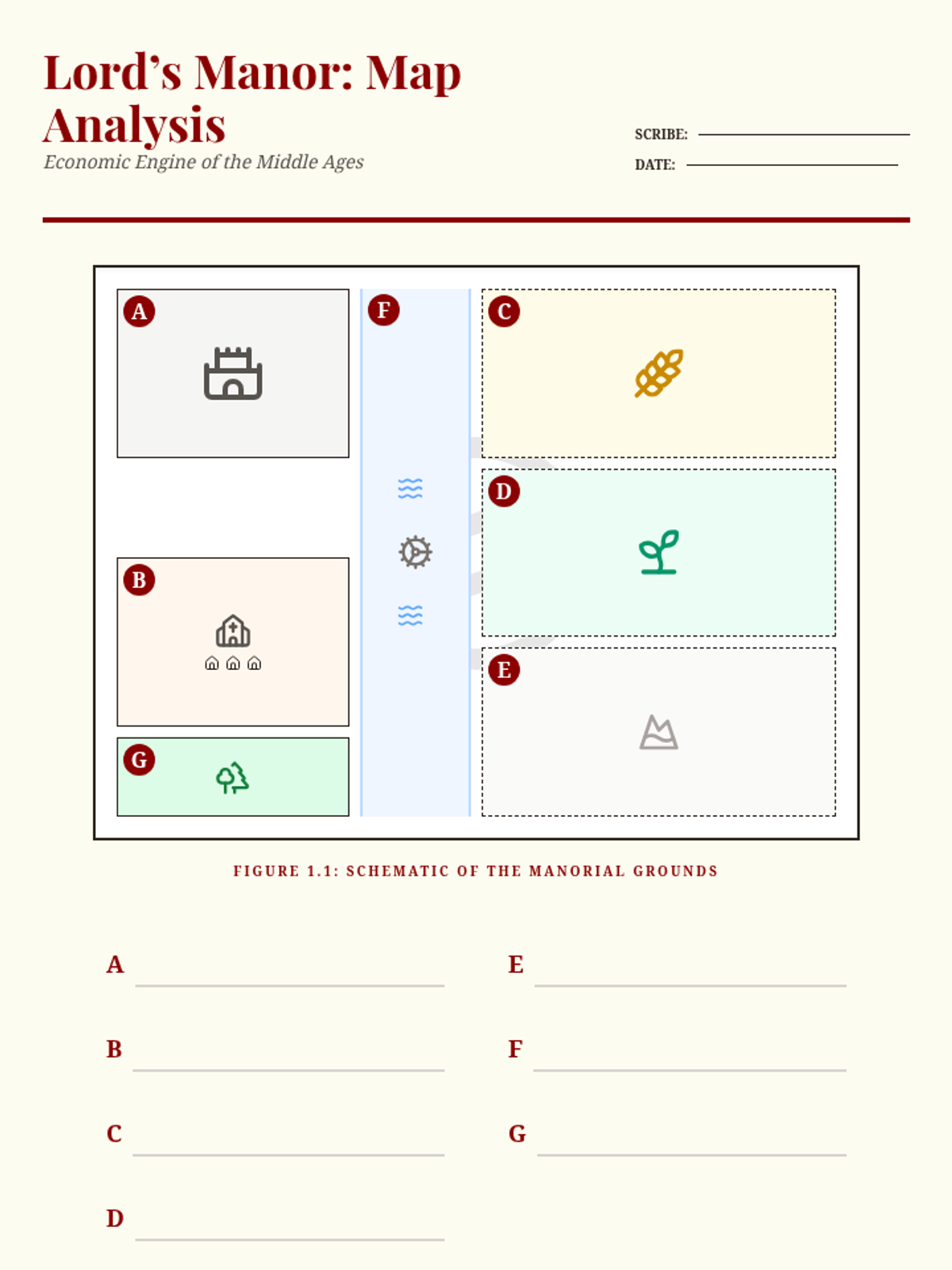
A mapping and analysis worksheet where students identify the parts of a medieval manor and explain the roles of Feudalism and Manorialism in its daily operation.
A 5-slide visual presentation contrasting the political system of Feudalism with the economic system of Manorialism. Includes diagrams of the feudal and manorial exchanges.
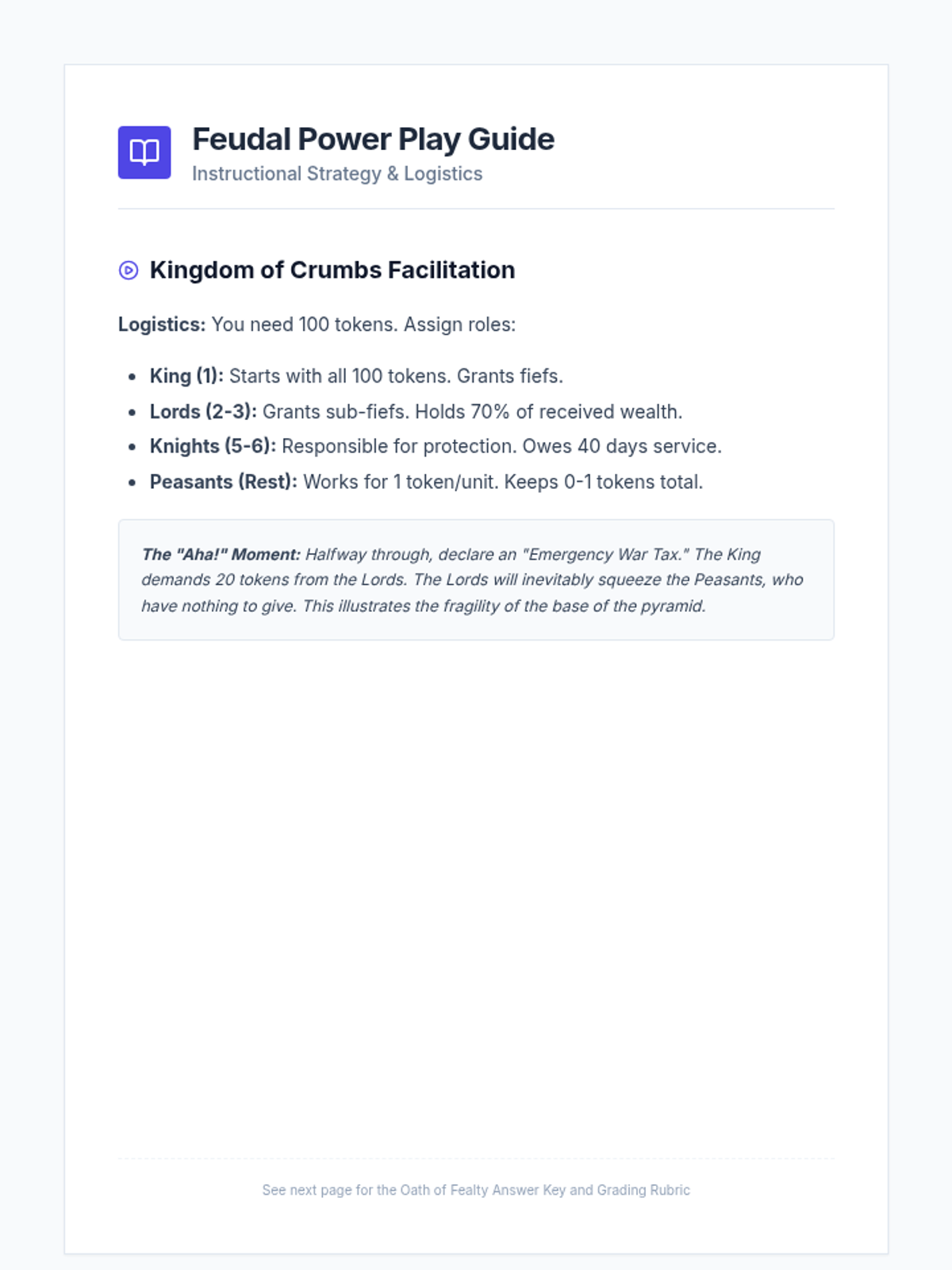
A comprehensive teacher guide for the Feudal Power Play lesson, including simulation facilitation instructions, answer keys for primary source analysis, and a grading rubric for the student contracts.
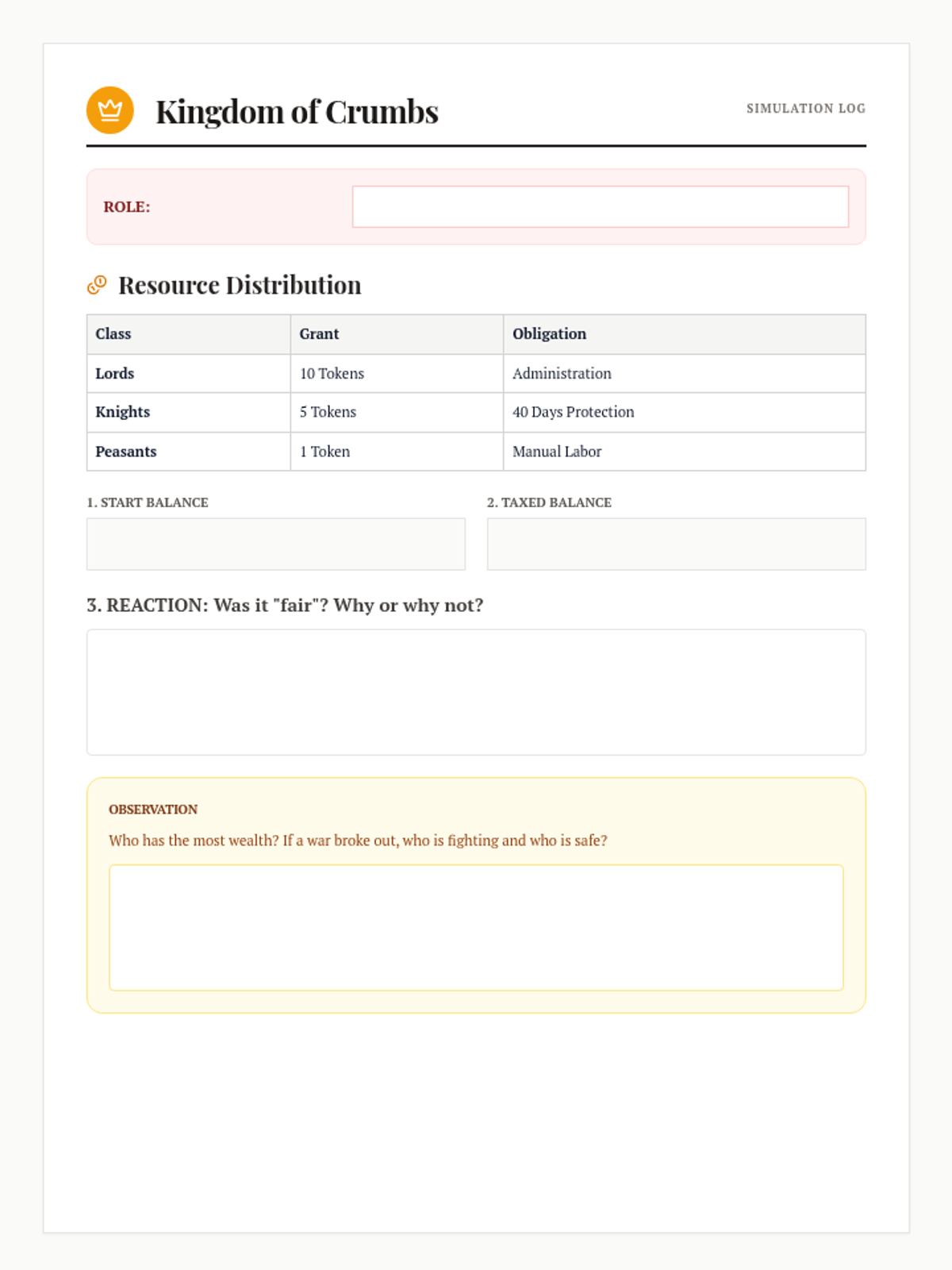
A student log and reflection guide for a classroom simulation where students assume roles in the feudal hierarchy and experience the flow of resources and obligations.
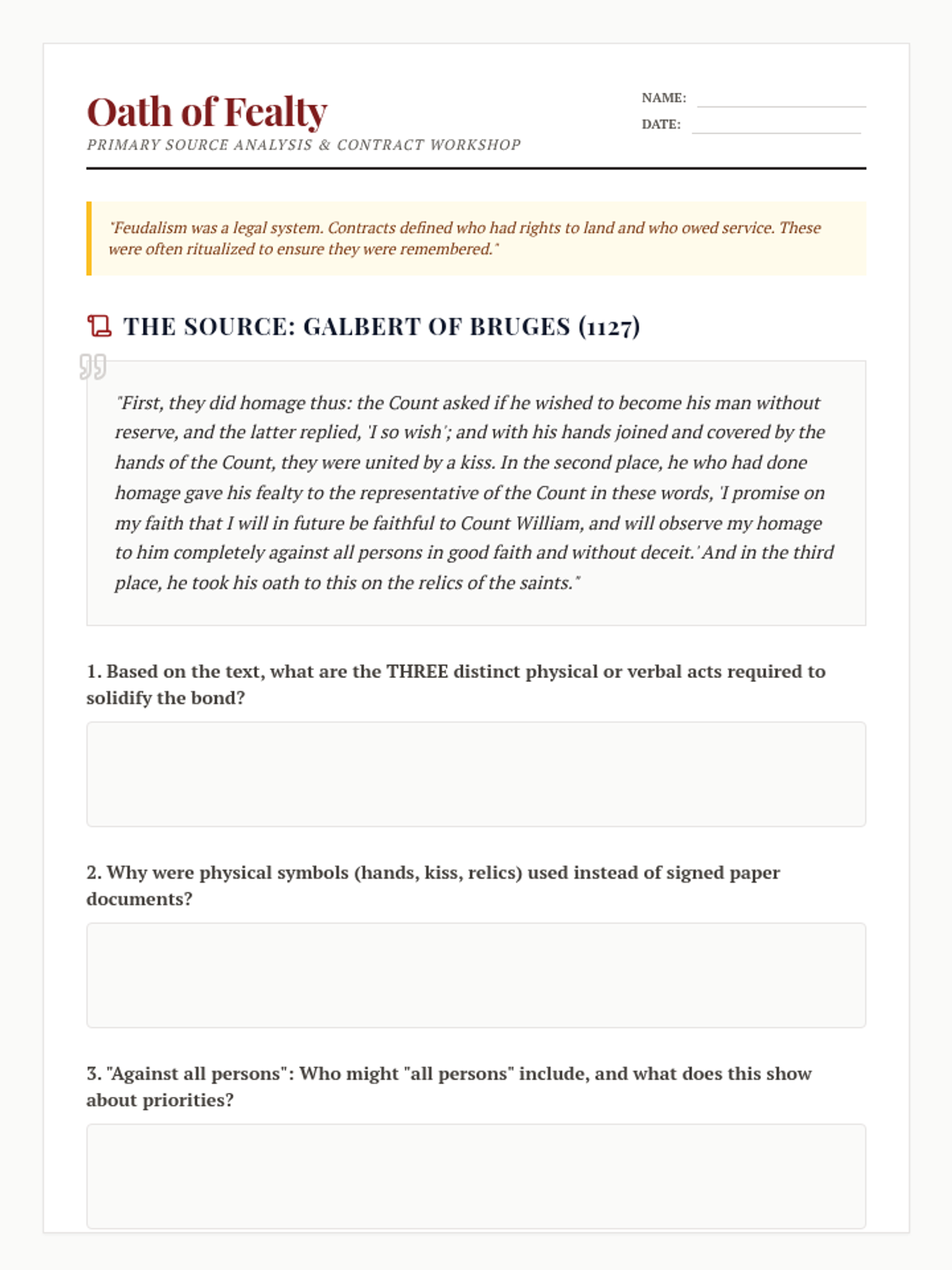
A two-page worksheet featuring a primary source analysis of an 1127 feudal oath and a creative 'Charter of Obligation' activity where students draft their own feudal contracts.
A visually rich slide deck for 10th-grade students exploring the social, economic, and political structures of Feudalism and the Manorial System. Focuses on reciprocal obligations and the 'Three Orders' of medieval society.
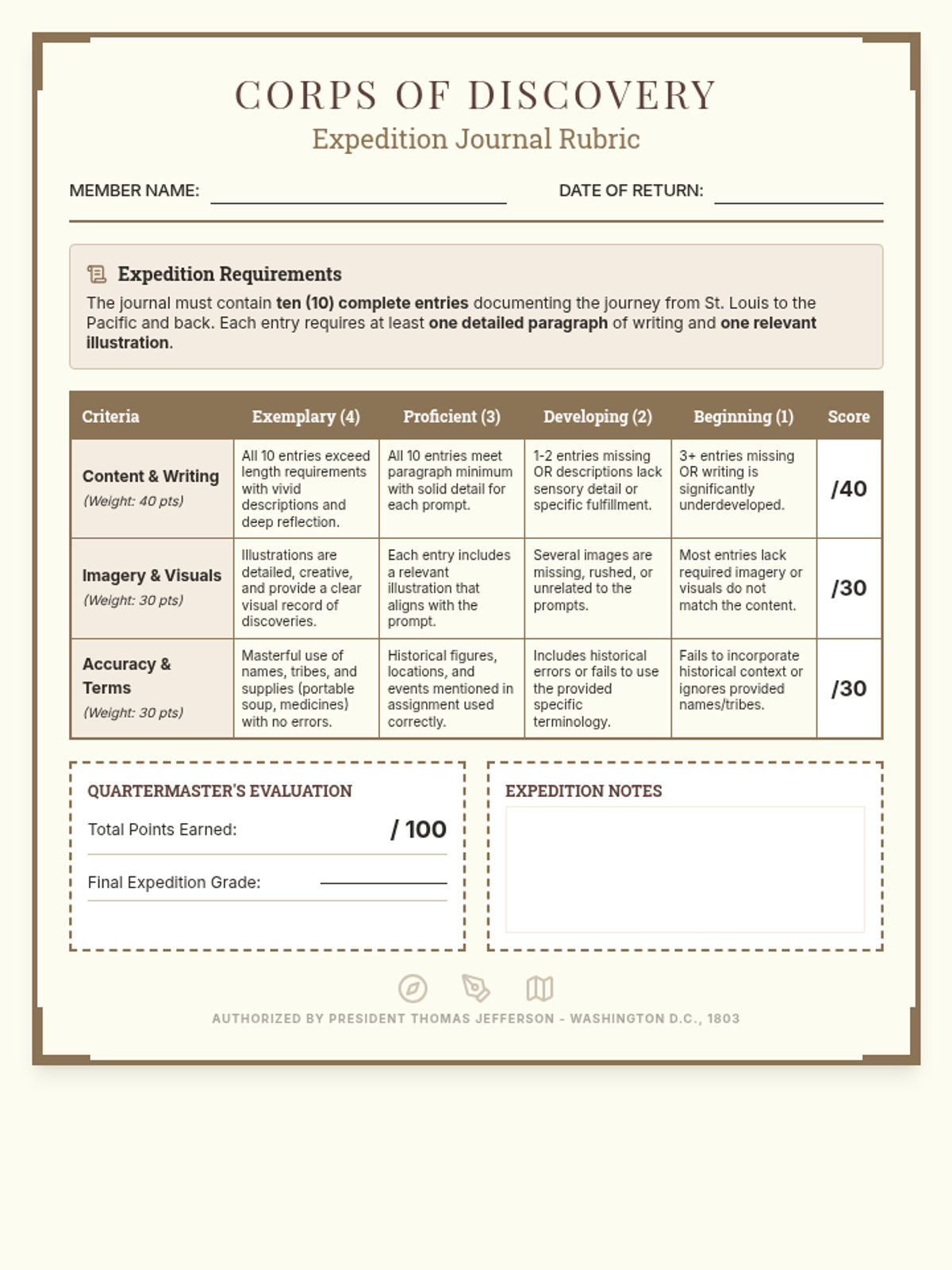
An analytic rubric for the Corps of Discovery journal assignment, featuring categories for content detail, imagery, and historical accuracy with a 100-point total. Revised to fit on a single page with improved teacher work areas and white background for legibility.
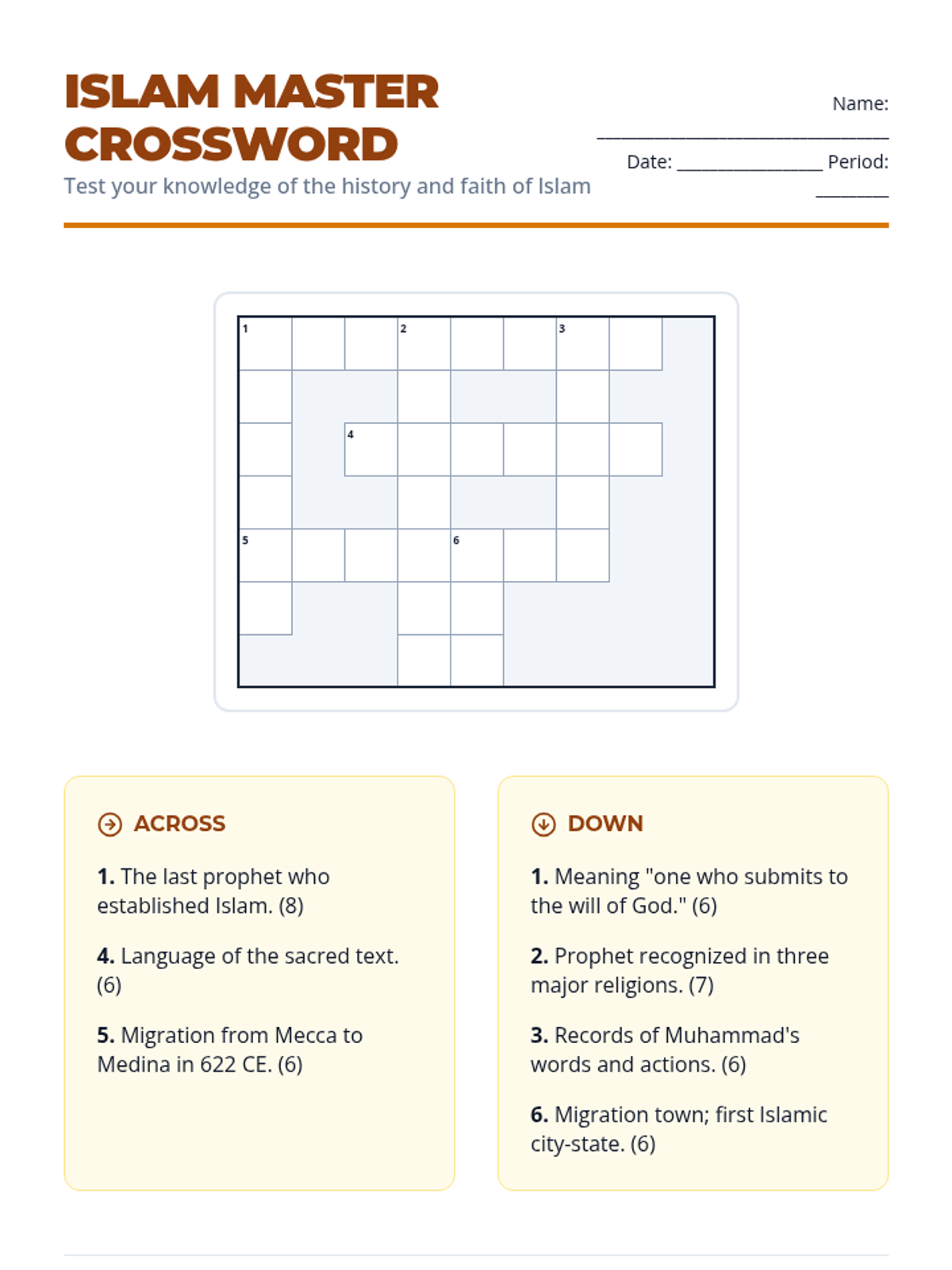
An expanded crossword puzzle featuring 11 key terms from the Islamic Origins reading, designed to challenge student recall of terminology and history.
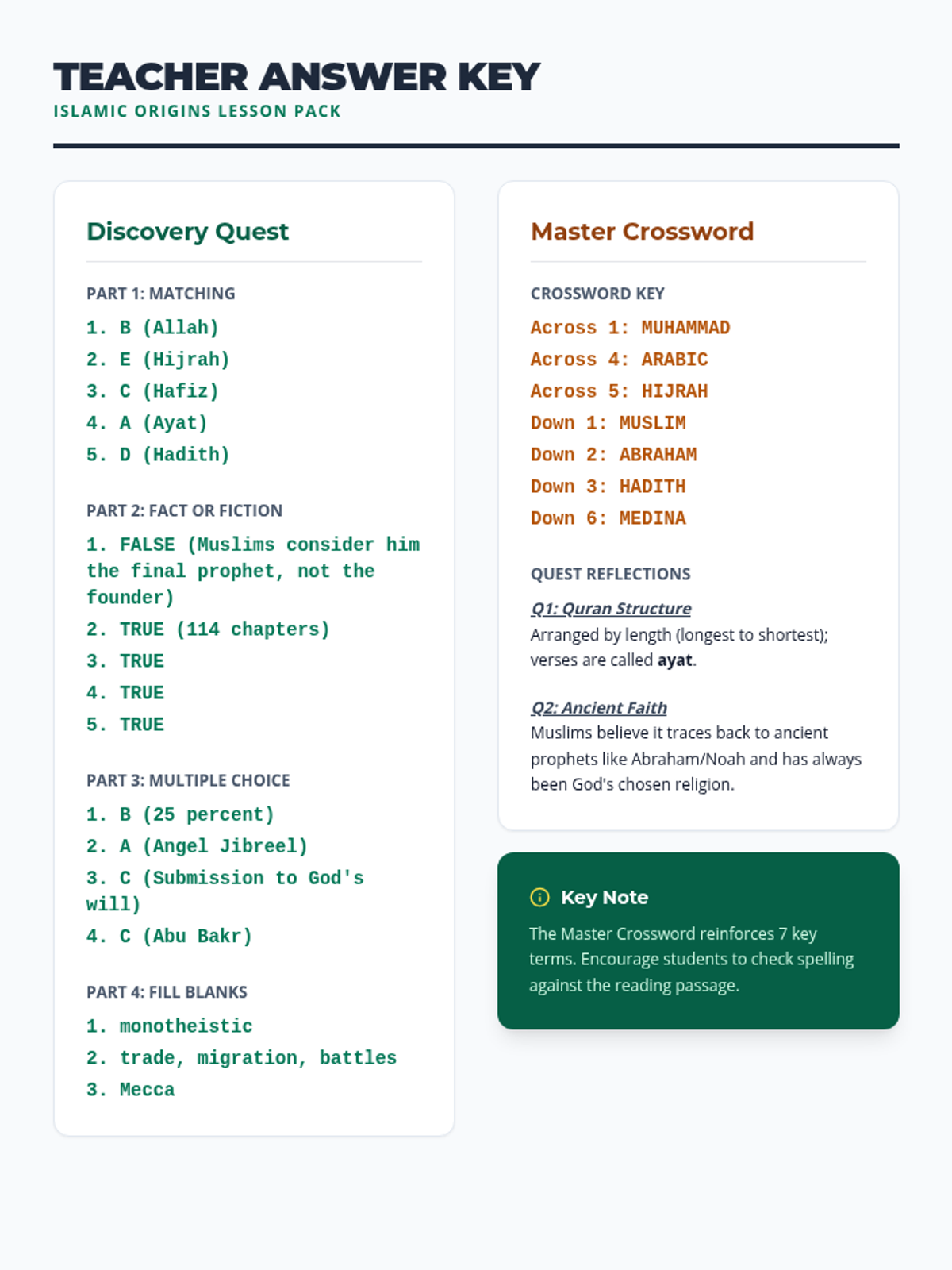
Comprehensive teacher answer key for both the Islam Discovery Quest and the Master Crossword puzzle.
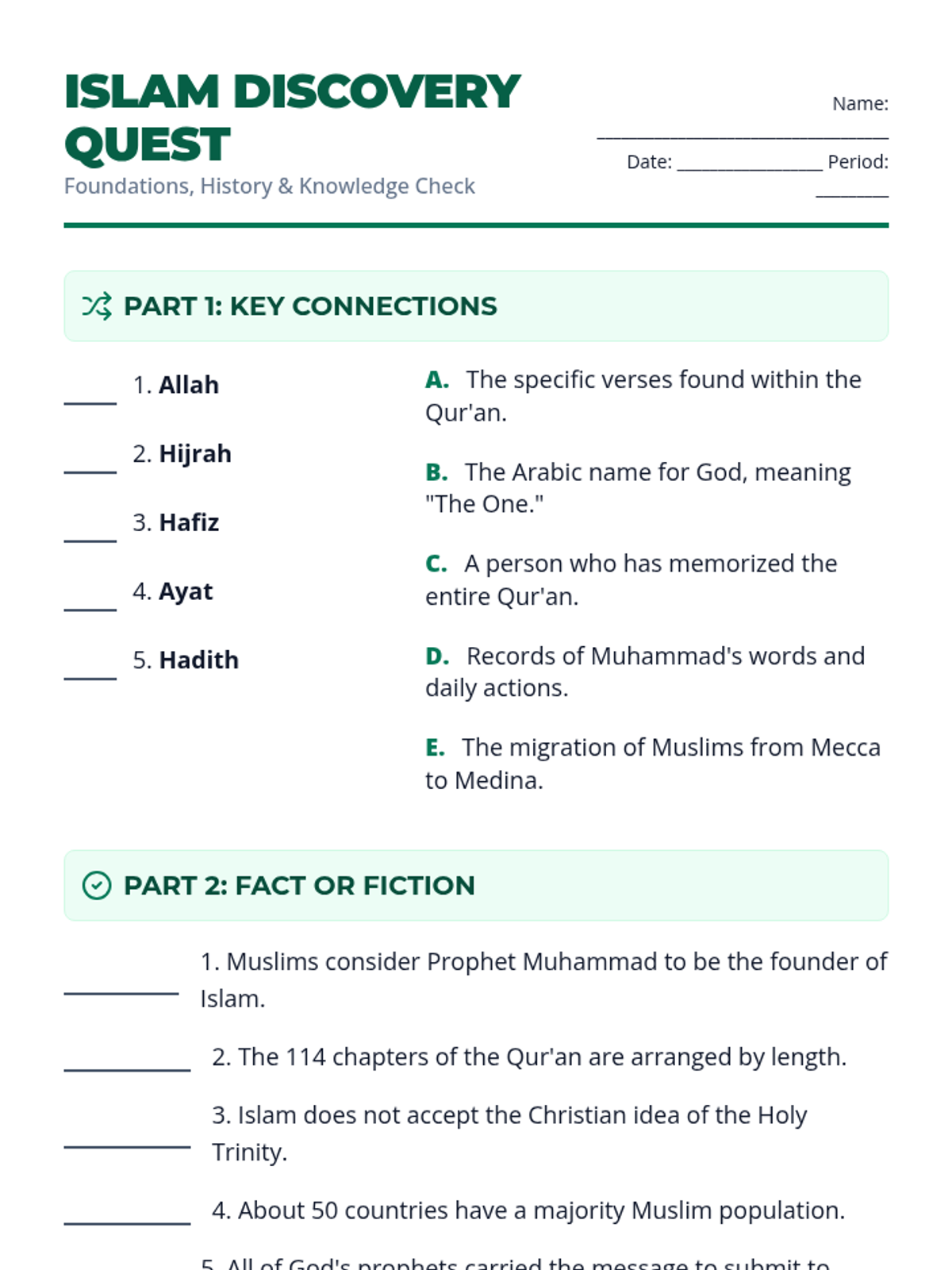
A comprehensive activity pack for grade 6 including matching, true/false, multiple choice, fill in the blank, and short answer questions about Islam. (Crossword now moved to a dedicated Master Puzzle sheet)
A visually engaging slide deck introducing the core concepts, history, and sacred texts of Islam. Includes details on Prophet Muhammad's life, the Qur'an, and global demographics.
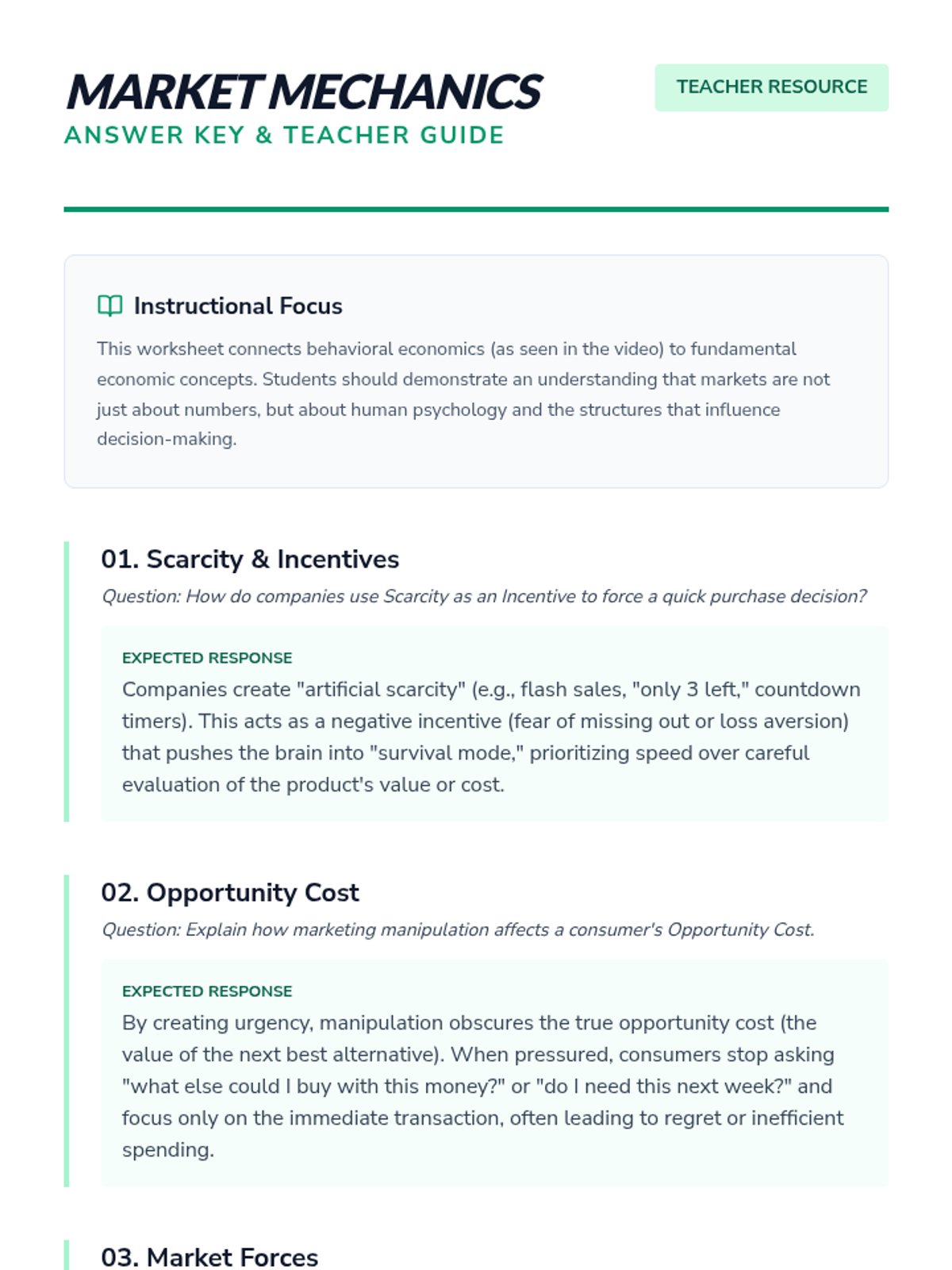
A teacher's answer key for the Market Mechanics Worksheet, providing detailed explanations and expected student responses based on economic theory.
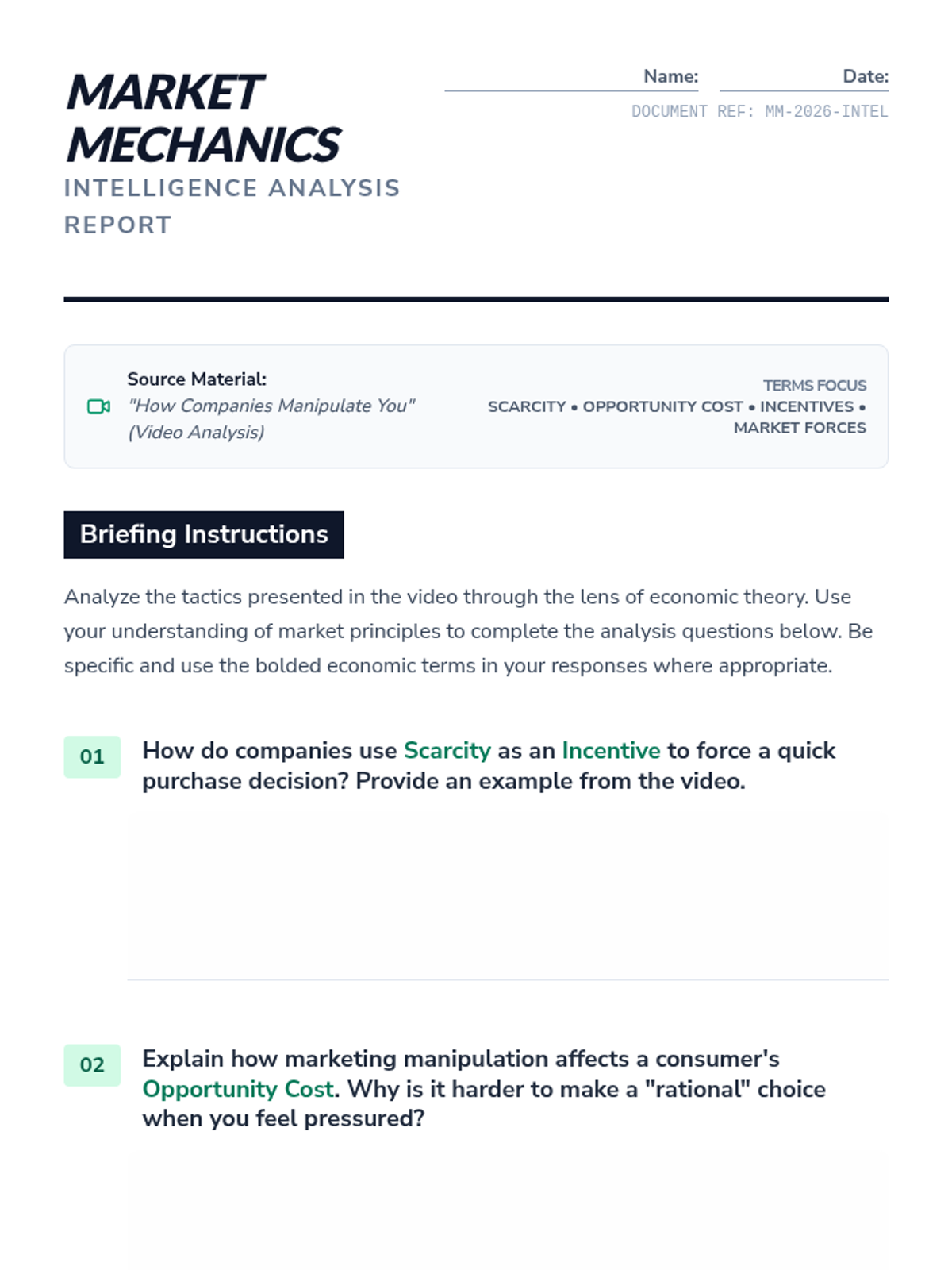
A five-question comprehension worksheet that asks students to apply economic principles like scarcity, opportunity cost, and market forces to the video content on market manipulation.
A slide deck introducing market manipulation through the lens of economic principles like scarcity, incentives, and market forces, including the provided video embed.
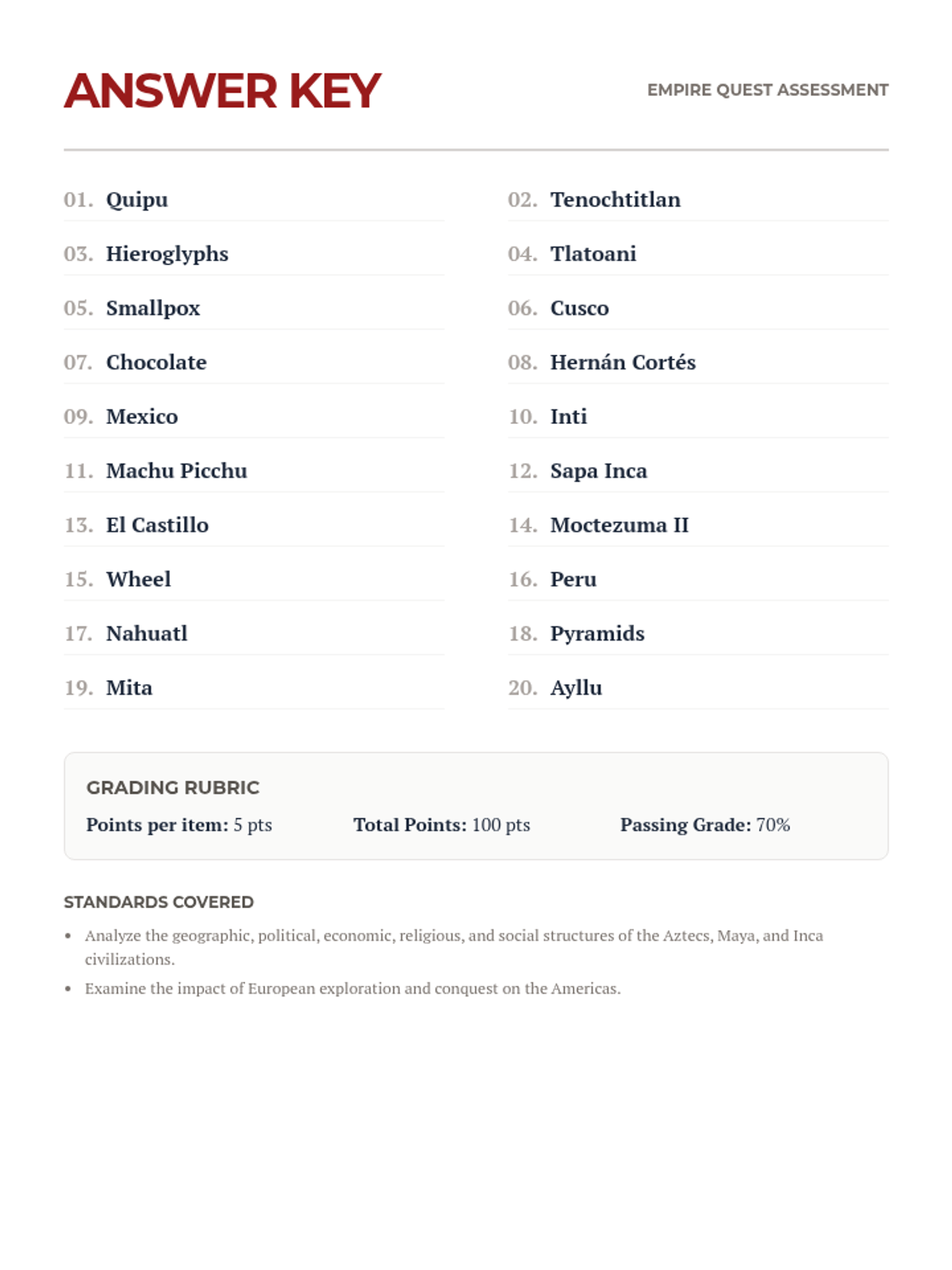
A clear and concise answer key for the Empire Quest Quiz, including a grading rubric and standards reference for educators.
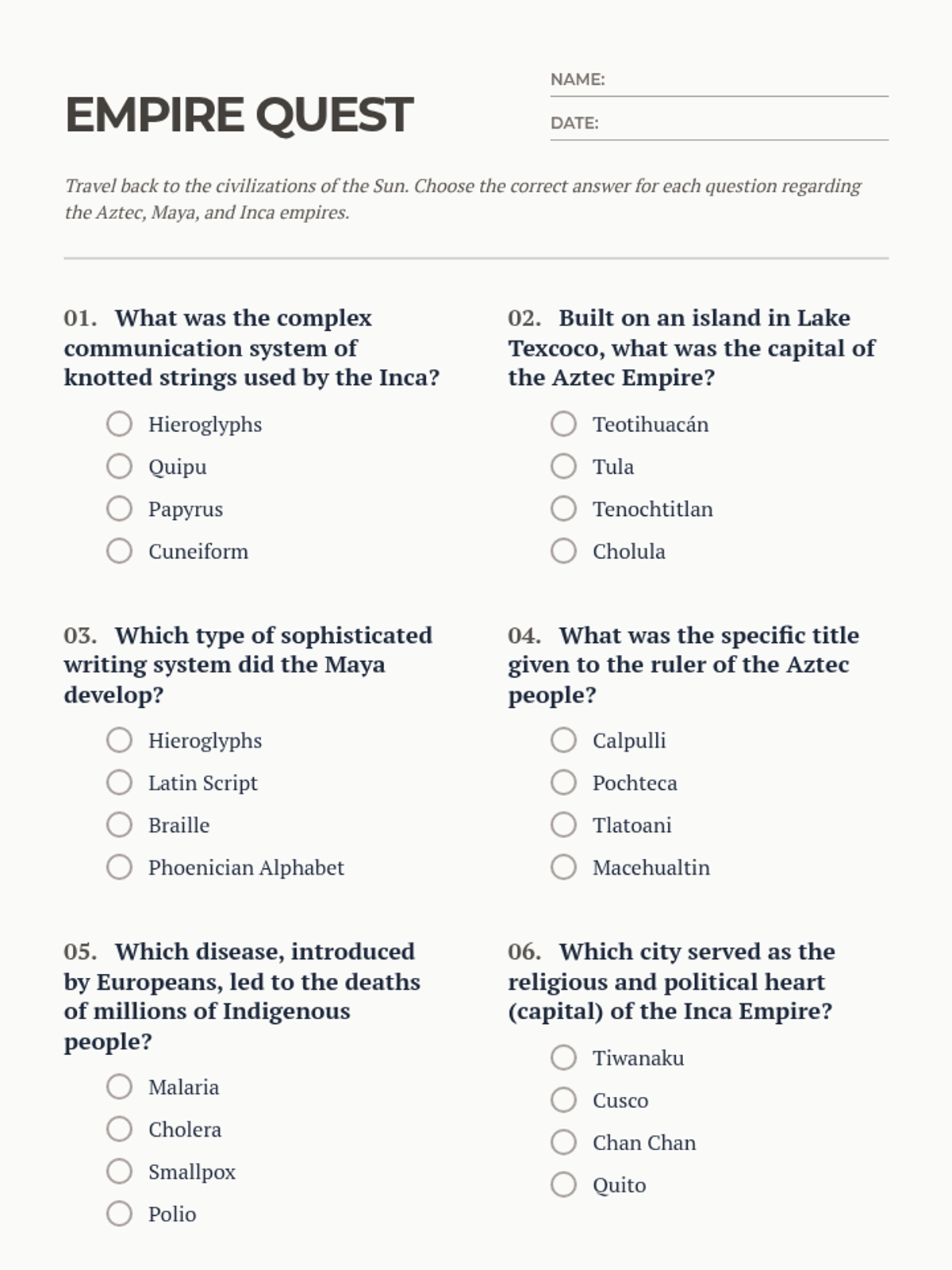
A 20-question multiple-choice assessment covering the geography, culture, and key figures of the Aztec, Maya, and Inca civilizations. The questions are randomized and feature updated distractors from the original version.