Three primary source analysis stations focused on the 13th, 14th, and 15th Amendments, featuring text analysis and critical thinking questions. Revised for better layout and spacing to prevent overlapping.
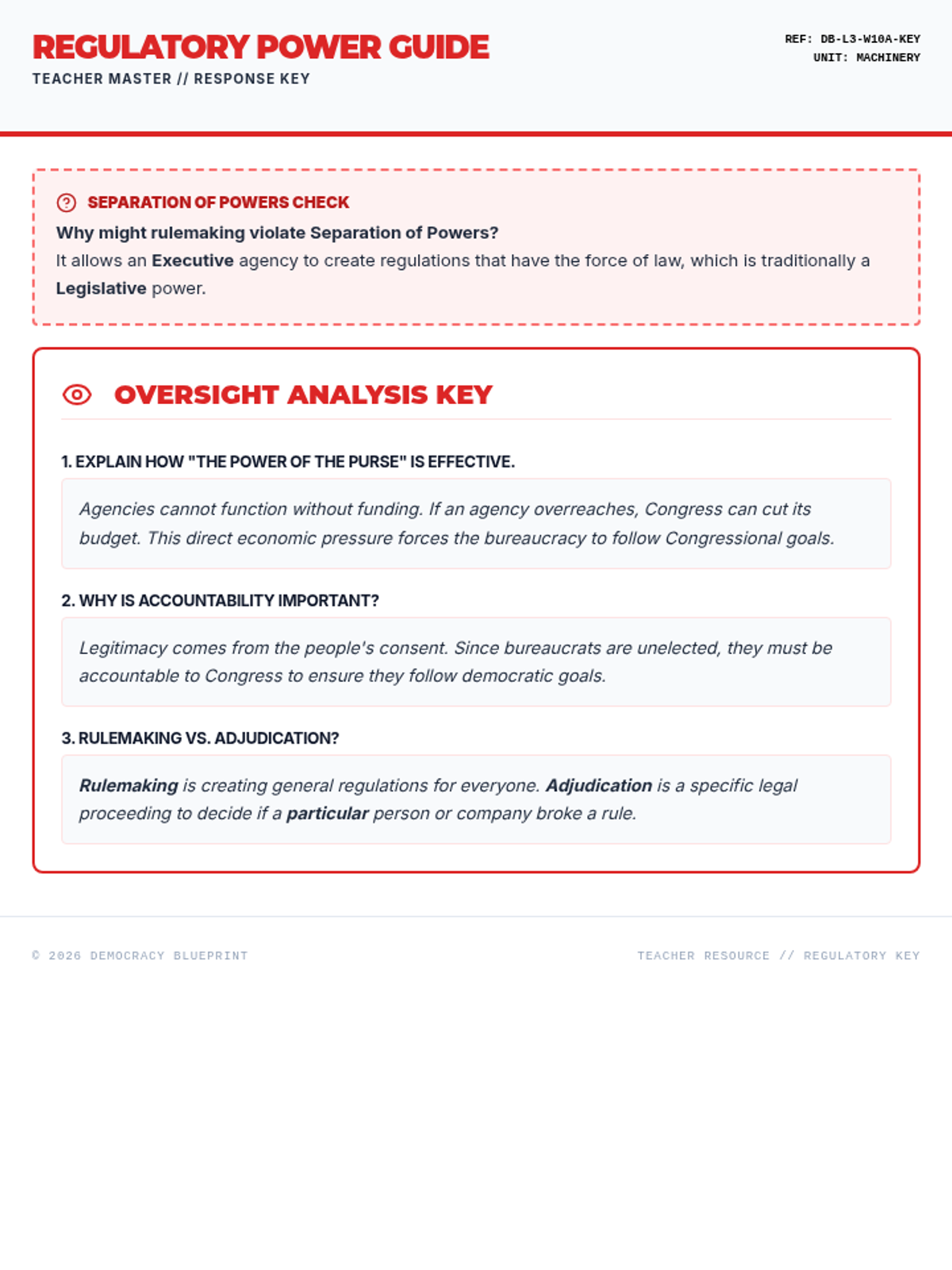
Response guide for the Regulatory Power instructional reader, identifying the difference between rulemaking and adjudication and explaining the importance of congressional oversight. Revised for single-page fit and better text contrast.
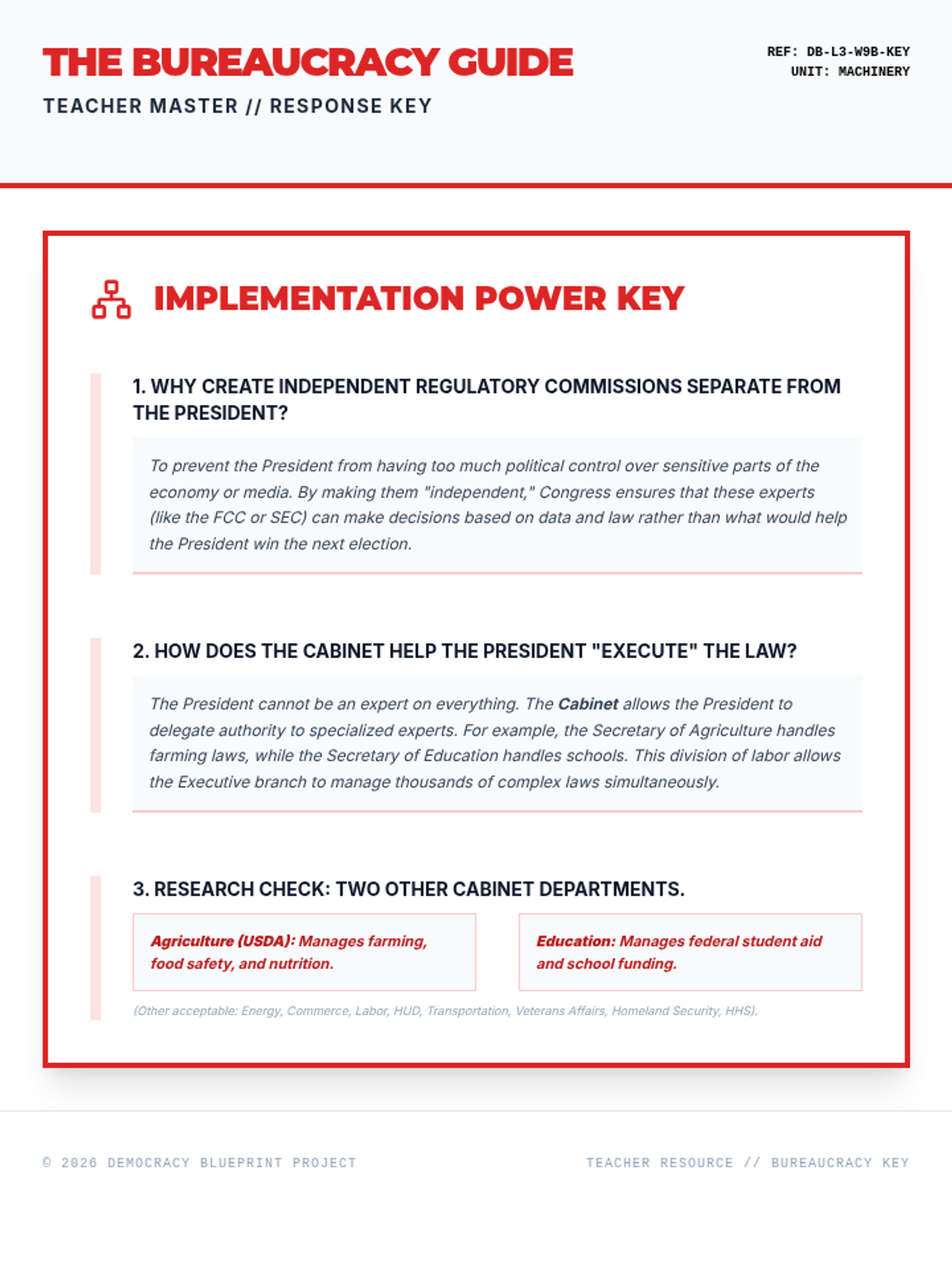
Response guide for the Executive Bureaucracy instructional reader, providing explanations for the independence of regulatory commissions and the function of the Cabinet.
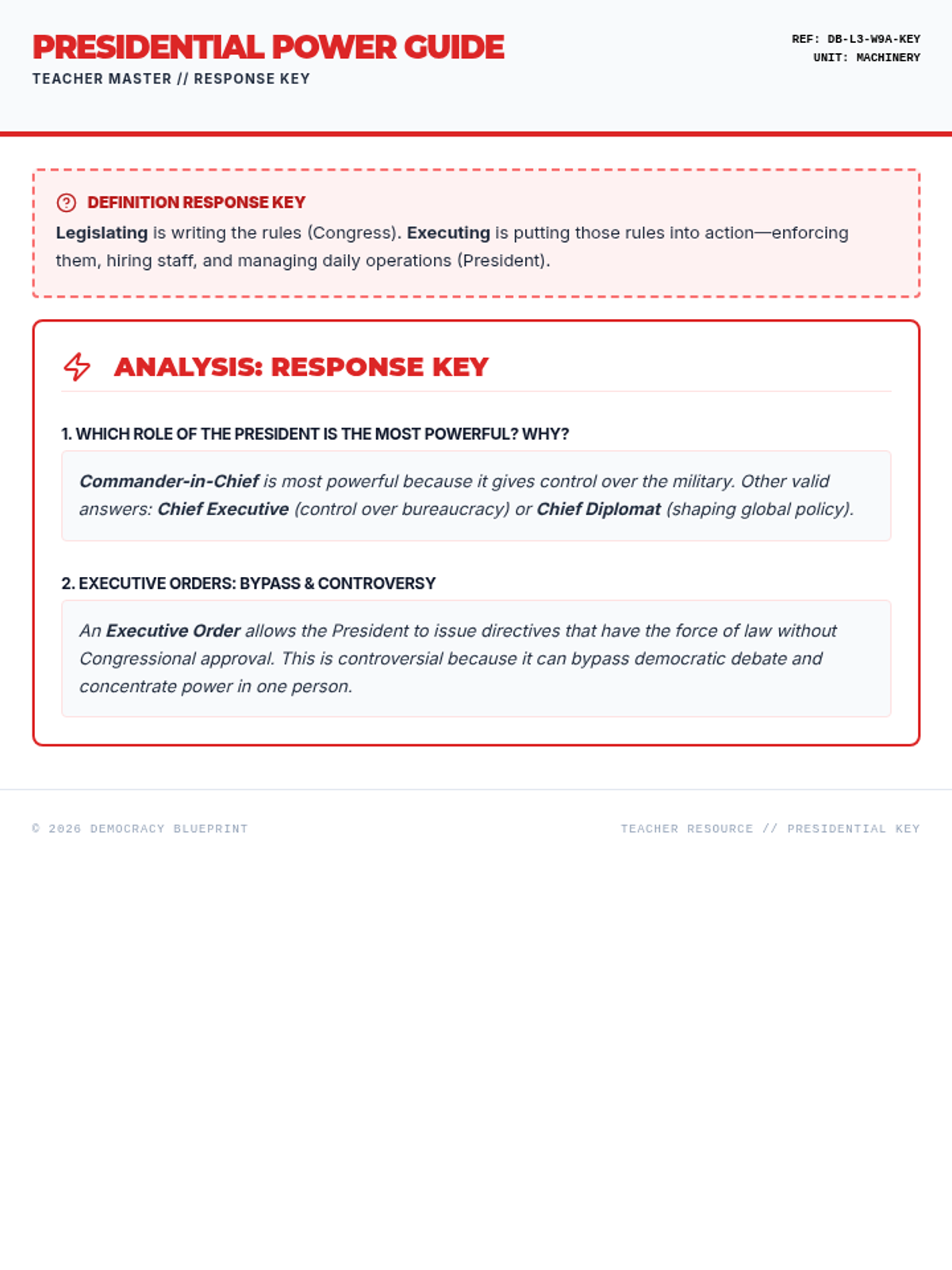
Response guide for the Presidential Power instructional reader, providing a conceptual breakdown of executive vs. legislative action and an analysis of presidential roles and executive orders. Revised for single-page fit and better styling.
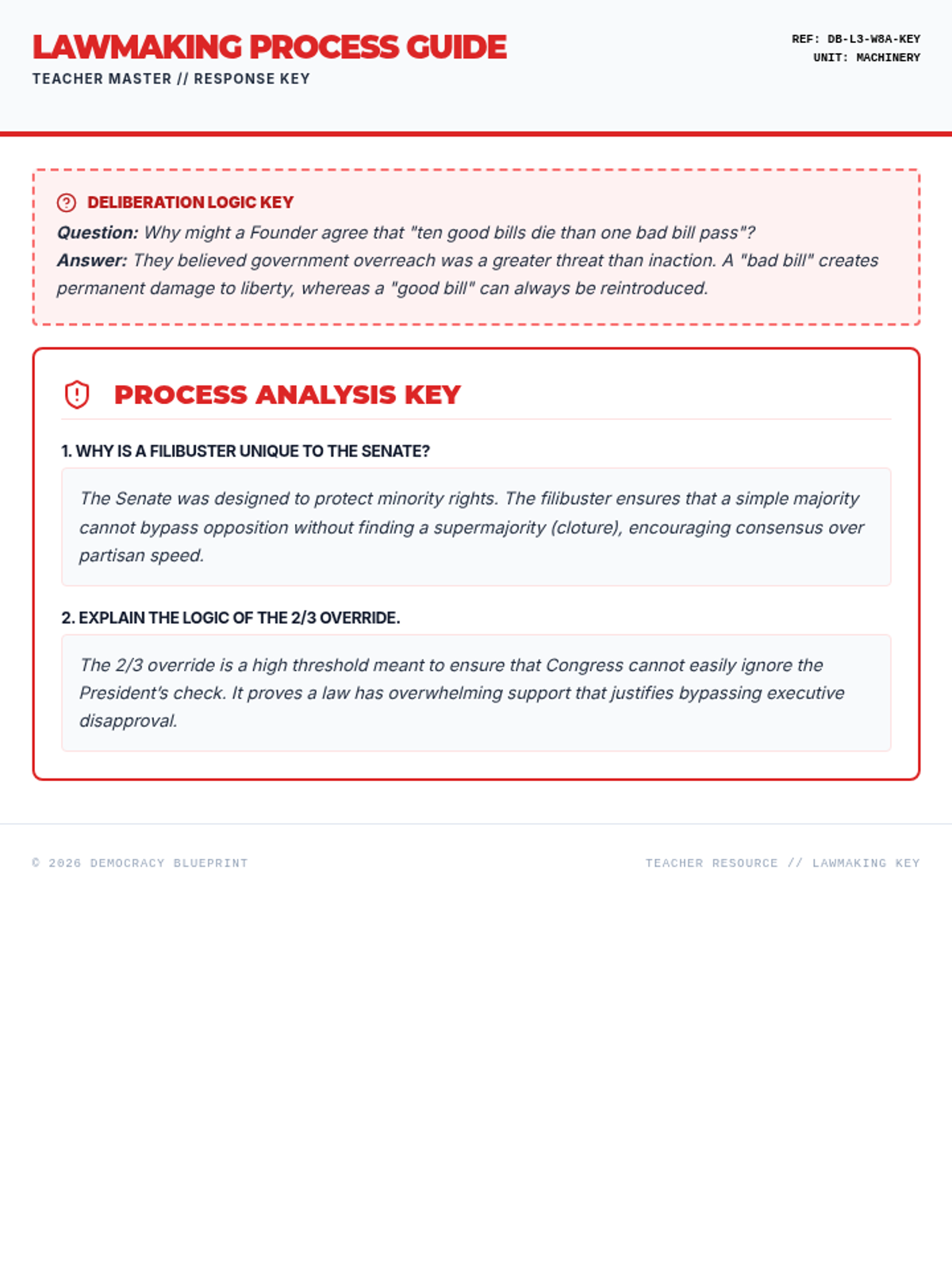
Response guide for the Lawmaking Process instructional reader, explaining the logic of deliberation and the hurdles of the filibuster and veto override. Revised for single-page fit and better text sizing.
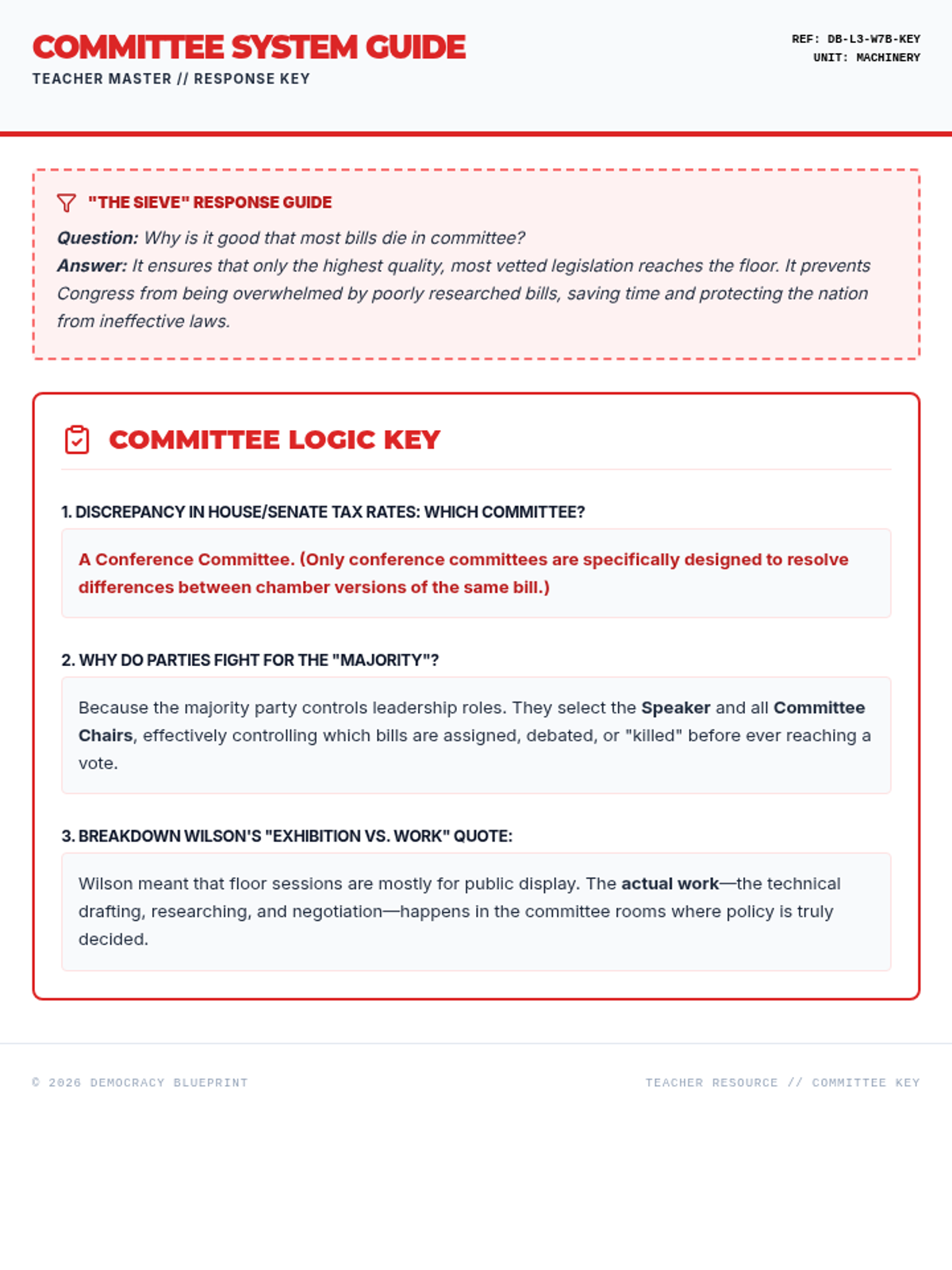
Response guide for the Committee System instructional reader, providing solutions for the committee type scenarios and leadership role impact. Revised for single-page fit and better punctuation.
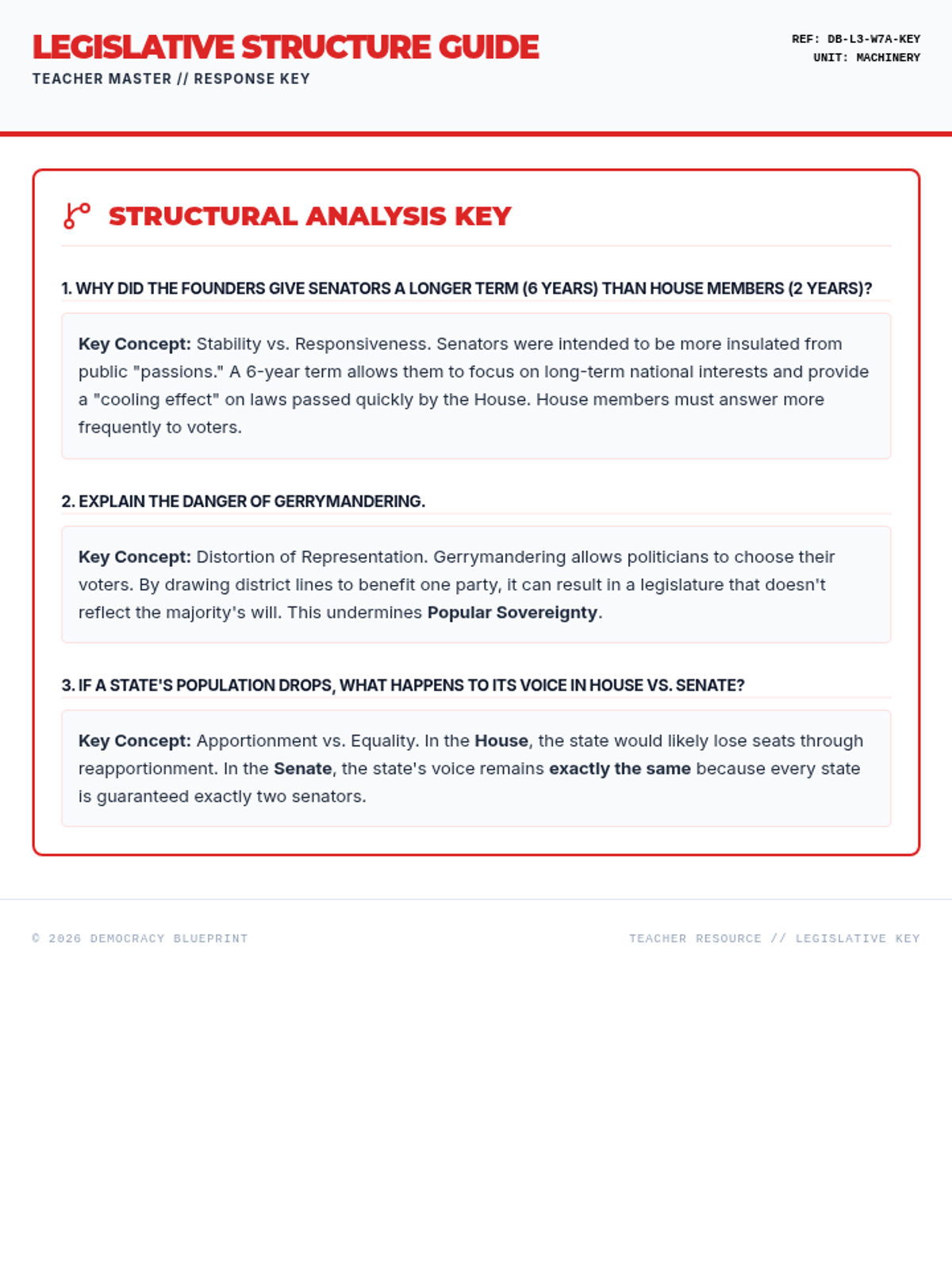
Response guide for the Legislative Structure instructional reader, identifying the logic behind term lengths, the impact of gerrymandering, and the difference between apportionment and equal representation. Revised for single-page fit.
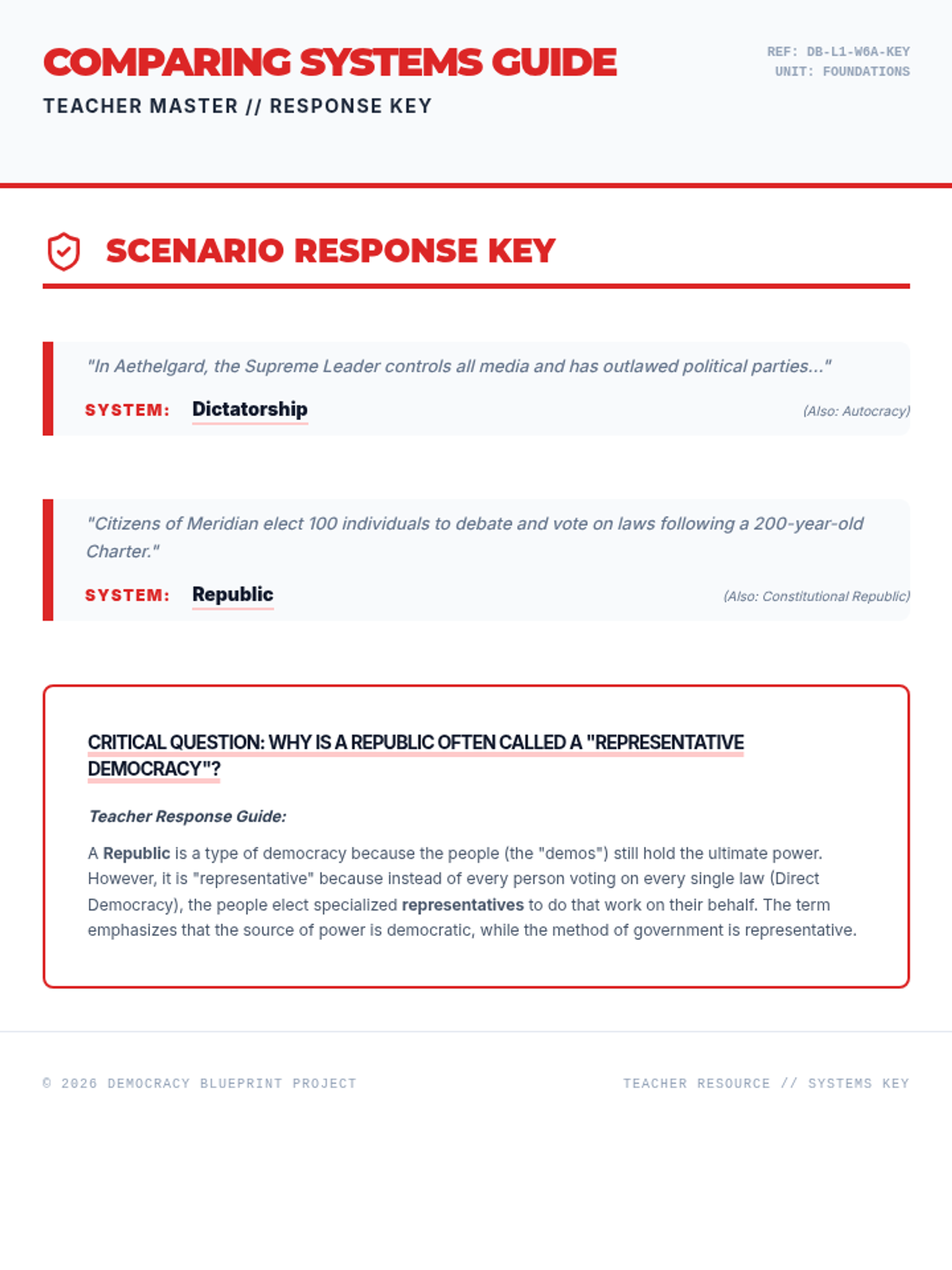
Response guide for the Comparing Systems instructional reader, providing identification keys for government scenarios and an explanation of the link between republics and representative democracy.
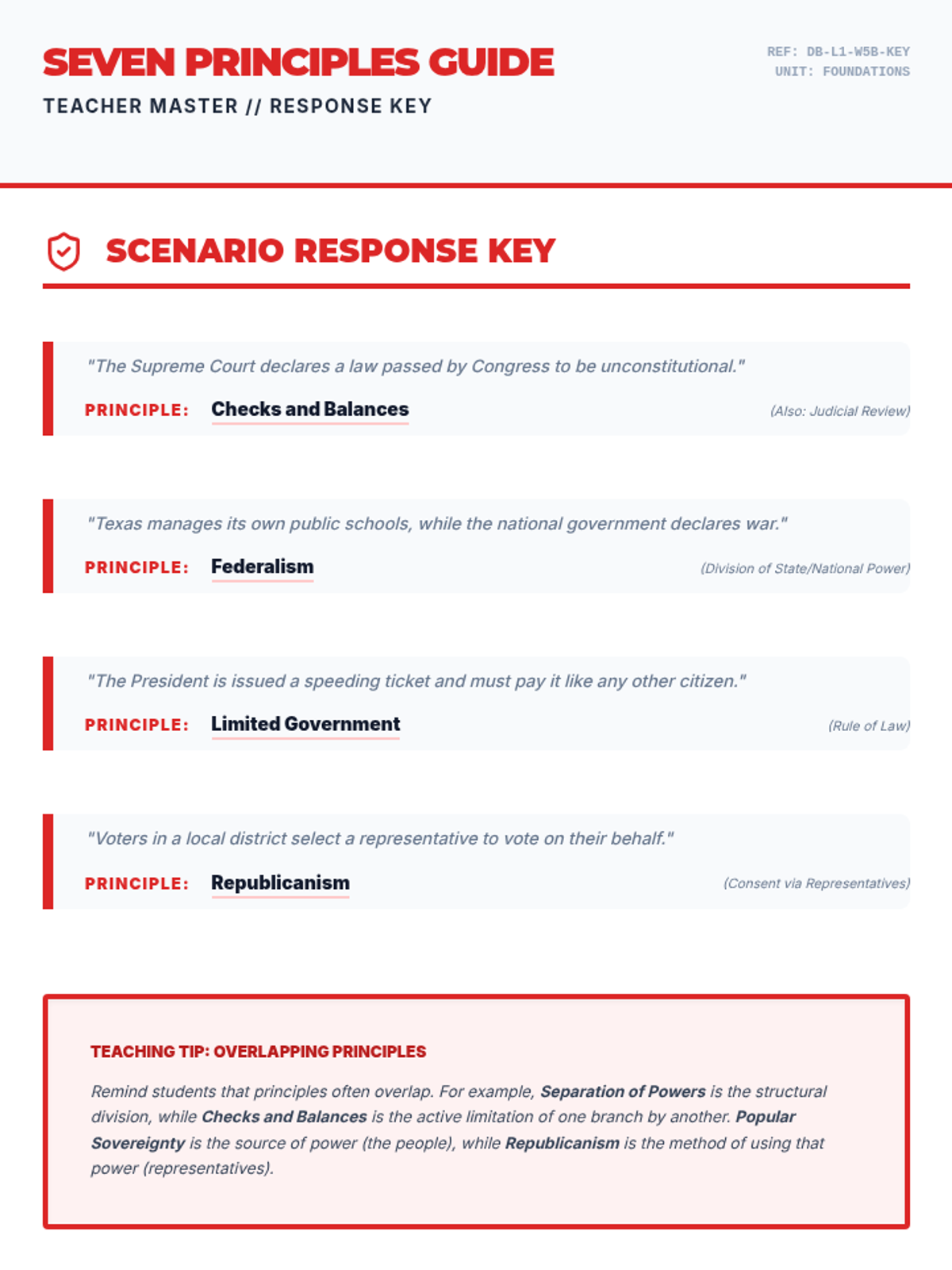
Response guide for the Seven Principles instructional reader, correctly identifying the specific constitutional principle illustrated by various real-world scenarios.
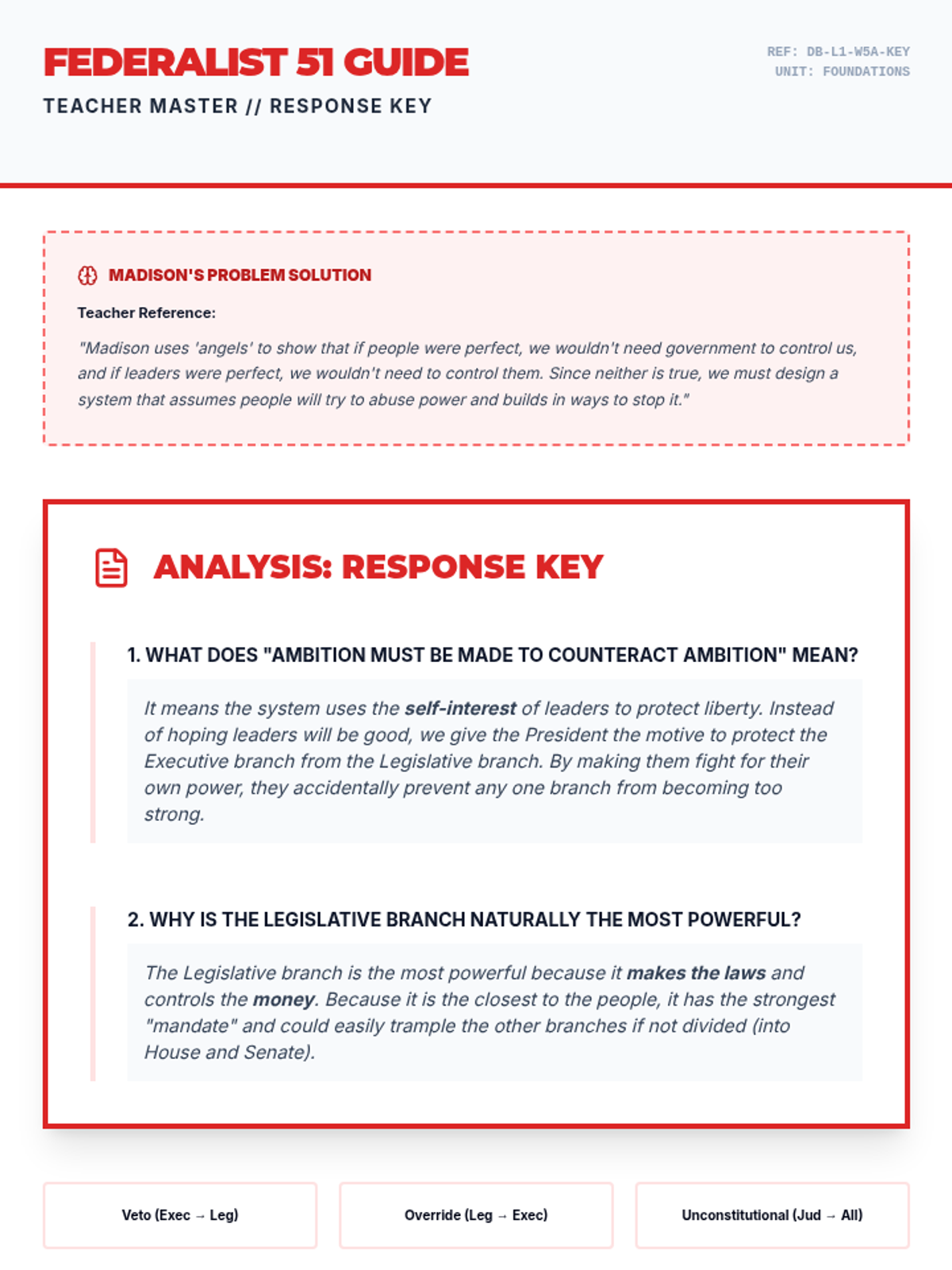
Response guide for the Federalist No. 51 instructional reader, explaining Madison's view on human nature and the mechanism of "counteracting ambition" in the checks and balances system.