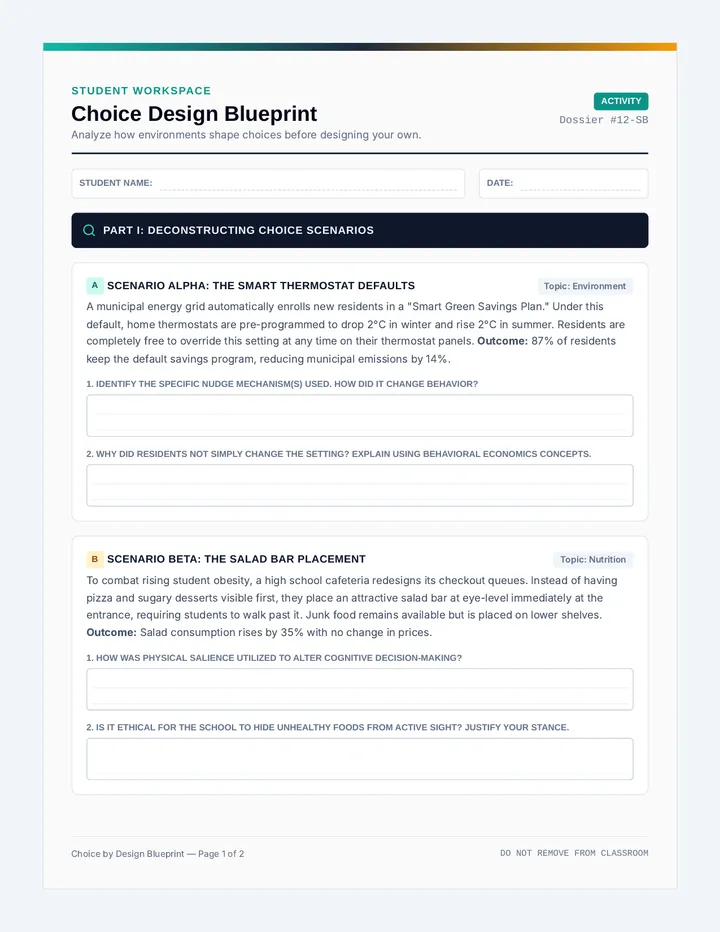
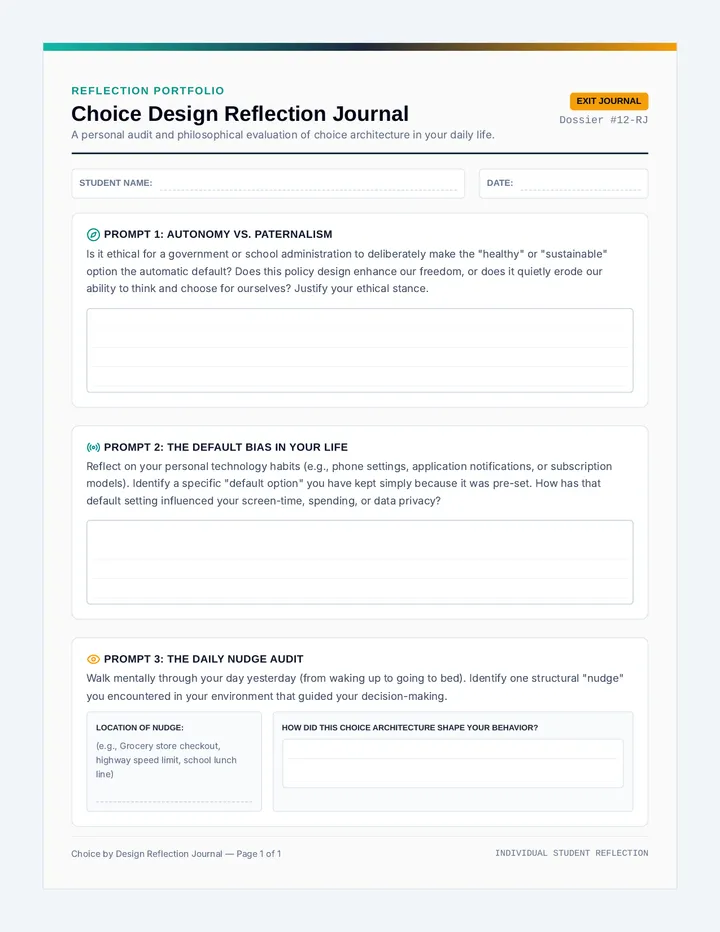
A comprehensive exit ticket for the end of the sequence, prompting students to synthesize concepts from all five lessons, including collective bargaining, automation, and labor market efficiency.
A condensed study guide for Lesson 2, covering the major figures, vocabulary, and events of the Civil Rights Movement from 1963-1968 for student assessment preparation.
A two-page visual archive for Lesson 2, featuring 20 names, dates, and links to iconic imagery from the Civil Rights Movement's peak years (1963-1968). Revised for improved title spacing, larger URL font, and better page breaks. Added a reflection section for student engagement.
A curated list of primary sources for Lesson 2, featuring key speeches and letters from the 1963-1968 period with dates and links.
Instructor speaker notes for Lesson 2, providing narrative context and discussion questions for the climactic years of the Civil Rights Movement.
Answer key for Lesson 2, providing the expected responses for the guided notes and the "Soapbox & Ink" primary source analysis activity.
Primary source activity for Lesson 2, featuring a comparative analysis of speeches by Malcolm X and George Wallace, and a visual analysis of a voting rights political cartoon.
Guided notes for Lesson 2, covering the high-profile events of the 1960s civil rights struggle from Birmingham to Memphis, with an emphasis on key advocates and political opponents.
Slide deck for Lesson 2 (1963-1968), focusing on the Birmingham campaign, the March on Washington, the Voting Rights Act, Malcolm X, and the Memphis Sanitation Strike.
Teacher guide for Lesson 2 (1963-1968), including pacing, background on figures like George Wallace and Strom Thurmond, and guidance on comparing King and Malcolm X's strategies.
A condensed study guide for Lesson 1, summarizing key vocabulary, figures (advocates vs opponents), and significant events for student review and test preparation.
A two-page visual archive for Lesson 1, containing 20 curated names, dates, and links to historical images and political cartoons relevant to the Civil Rights Movement from 1954-1961. Revised for improved title spacing, larger URL font, and better page breaks. Added a reflection section for student engagement.
A curated list of primary sources for Lesson 1, including newspaper editorials, speeches, and interviews with names, dates, and resource links.
Detailed speaker notes for the Lesson 1 slide deck, providing instructional scripts, discussion prompts, and deeper historical context for each major slide.
Comprehensive answer key for Lesson 1, covering both the guided notes and the primary source analysis activity.
A primary source analysis activity for Lesson 1 where students analyze a newspaper editorial regarding the Montgomery Bus Boycott and a description of a political cartoon featuring Governor Orval Faubus.
Guided notes for Lesson 1 to accompany the slide deck, designed with a clean editorial layout and specific fill-in-the-blank sections covering key events and figures from 1954-1961.
A dynamic slide deck for Lesson 1 (1954-1961), featuring high-contrast layouts, key advocates like Diane Nash and John Lewis, and pivotal events from the Montgomery Bus Boycott to the Freedom Riders. Revised for better title legibility and date contrast.
A comprehensive teacher guide for Lesson 1, including pacing, learning objectives, background information on key Tennessee events like Tent City, and differentiation strategies.
A unit-wide study guide consolidating TN standards US.76 and US.77. Revised to fit on one page with expanded work areas and all required figures.
A curated two-page visual archive with 20 historical links, strictly chronological and formatted for print/digital reference. All sources include names and dates. Revised for consistency.
A unit-wide primary source index providing names, specific dates, descriptions, and verified links for key documents from 1954 to 1968. Revised to include all required US.77 events.
Detailed instructional speaker notes specifically for Lesson 2, guiding teachers through the legislative triumphs and philosophical shifts. Revised to include all slides and fix layout.
Detailed instructional speaker notes specifically for Lesson 1, providing context for Tennessee's unique contributions. Revised to include all slides and fix page breaks.
A dedicated teacher facilitation guide for Lesson 2, detailing the instructional flow, standards, and philosophical debates. Revised to include US.77 and fix header spacing.
A dedicated teacher facilitation guide for Lesson 1, providing specific pacing, discussion prompts, and standard alignment for the early Civil Rights Movement.
An answer key for the Tennessee Resistance Sorting Activity, providing correct categorizations and quote analysis for Lesson 1.
A sorting activity for Lesson 1 where students categorize key advocates, opponents, and events from the early Civil Rights Movement. Revised to fix page breaks and bank inclusions.
A comprehensive study guide summarizing key terminology, figures, and a timeline of the Civil Rights Movement. Revised to include all required Tennessee figures and events on a single page with student workspace.
A curated list of 20 historical visual resources, revised for strict chronological order, link readability, and to ensure all 20 items fit within two pages.
An indexed list of key primary source documents for the Civil Rights Movement, revised for chronological order and link readability.
Detailed speaker notes for both lessons, providing instructional cues and historical context. Revised to include cues for Freedom Riders and the March on Selma.
A comprehensive teacher facilitation guide covering the two-lesson sequence, revised for optimal layout and page flow.
An answer key and grading guide for the 'Philosophical Duel DBQ' activity, providing sample responses and key points for evaluation.
A Document-Based Inquiry (DBQ) activity comparing the philosophies of Dr. Martin Luther King, Jr. and Malcolm X. Revised for optimal page breaking and expanded writing space.
Guided notes for Lesson 2, covering the high-stakes period of the Civil Rights Movement (1963-1968) including Birmingham, Selma, and the assassination of MLK in Memphis. Revised for better page flow and writing space.
Visual presentation for Lesson 2 covering the peak of the Civil Rights Movement (1963-1968), including Birmingham, Selma, and the assassination of Dr. King in Memphis.
Guided notes for Lesson 1, designed to help students track key concepts, figures, and events from the early Civil Rights Movement while watching the presentation. Revised to prevent awkward page breaks and fit comfortably on two pages.
Visual presentation for Lesson 1 covering the early American Civil Rights Movement (1954-1961), featuring Tennessee-specific events like the Nashville sit-ins and the Highlander Folk School. Revised for vertical balance and clarity.
A study guide for students covering key vocabulary, important figures, and review questions. Revised to fix page breaks, Markdown rendering, and added a practice area.
A two-page list of 20 historical visuals, descriptions, and links. Revised for strict 2-page layout, link contrast, and improved spacing.
A reference list of primary sources including legal opinions and executive orders. Revised for link readability and contrast.
A detailed teacher guide for the Brown v. Board and Tennessee integration lesson. Revised to fix page breaks and table alignment.
Detailed speaker notes for the Justice Journey lesson, providing teachers with slide-by-slide narratives, instructions, and transition cues. Revised to include Slide 9 and fix page breaks.
A comprehensive answer key for the Justice Journey guided notes and the Integration Impact activity. Revised to improve layout and prevent page-break issues.
A comparison activity where students analyze the integration of the Scarboro 85, Clinton 12, and Little Rock 9 through a matrix and critical thinking questions. Revised to fix page breaks and row height.
A guided notes document designed to accompany the Justice Journey slides, providing structured support for high school students. Revised for better layout and page fitting.
A 10-slide presentation for a high school history lesson on Brown v. Board of Education, including local Tennessee integration efforts and the Little Rock Nine. Revised with descriptive visual text and improved contrast.
A comprehensive study guide for the Great Society lesson, summarizing key programs (Medicare, urban renewal, War on Poverty), key figures, and essential vocabulary for student review.