A comprehensive teacher's guide for the Kindness Cartographers lesson, detailing objectives, materials, and a step-by-step procedure for students to map kindness in their school community.
A visually engaging slide deck for presenting the key concepts of Ancient Mesopotamia, including geography, irrigation, the rise of city-states, cuneiform writing, Hammurabi's Code, and early empires. It features high-contrast visuals, clear hierarchy, and discussion prompts.
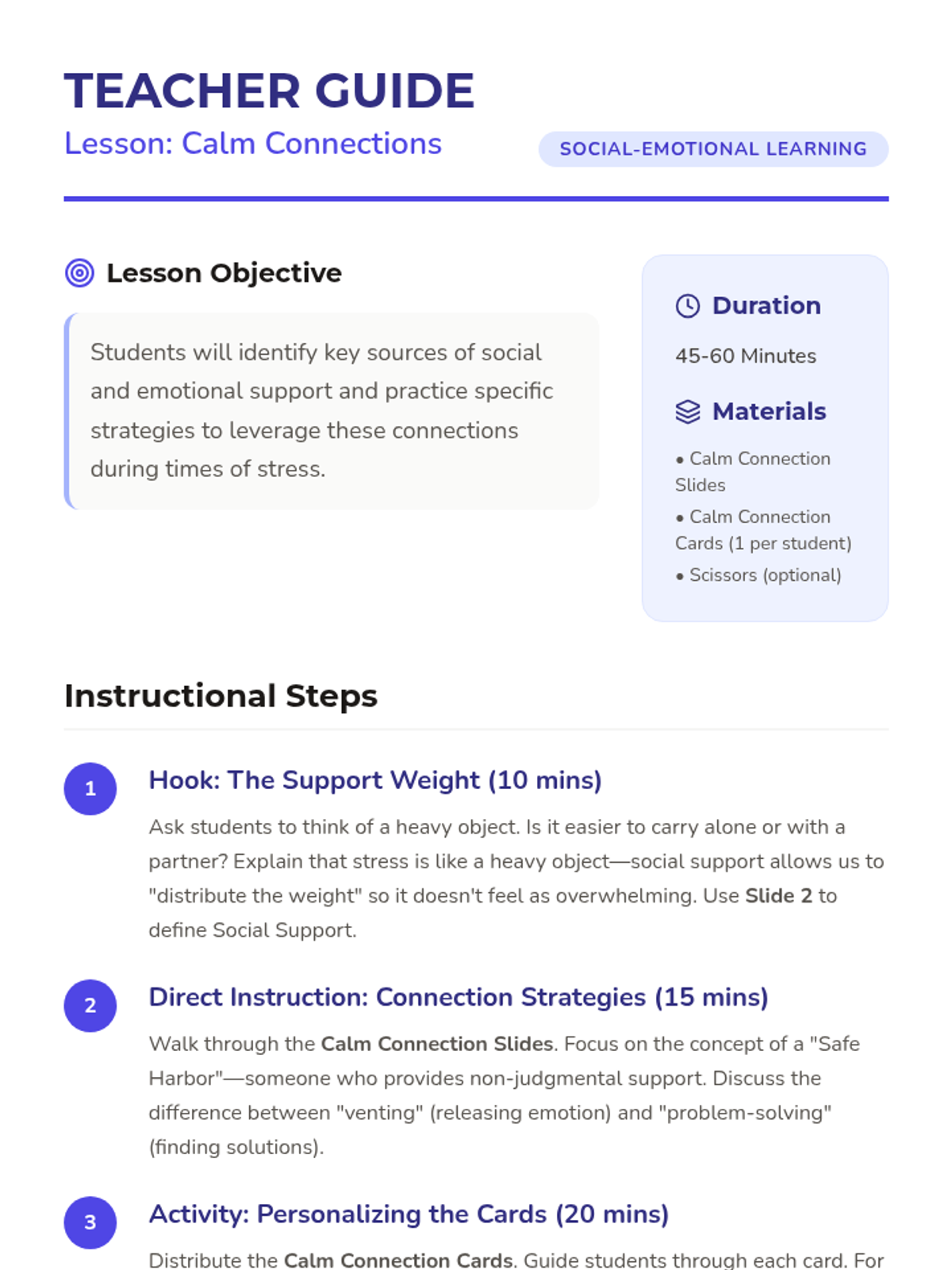
A comprehensive teacher facilitation guide for the Calm Connections lesson, including objective, duration, step-by-step instructional sequence, and discussion prompts.
A visual presentation to introduce the concepts of social and emotional support, explain the value of vulnerability, and guide students through using the Calm Connection Cards.
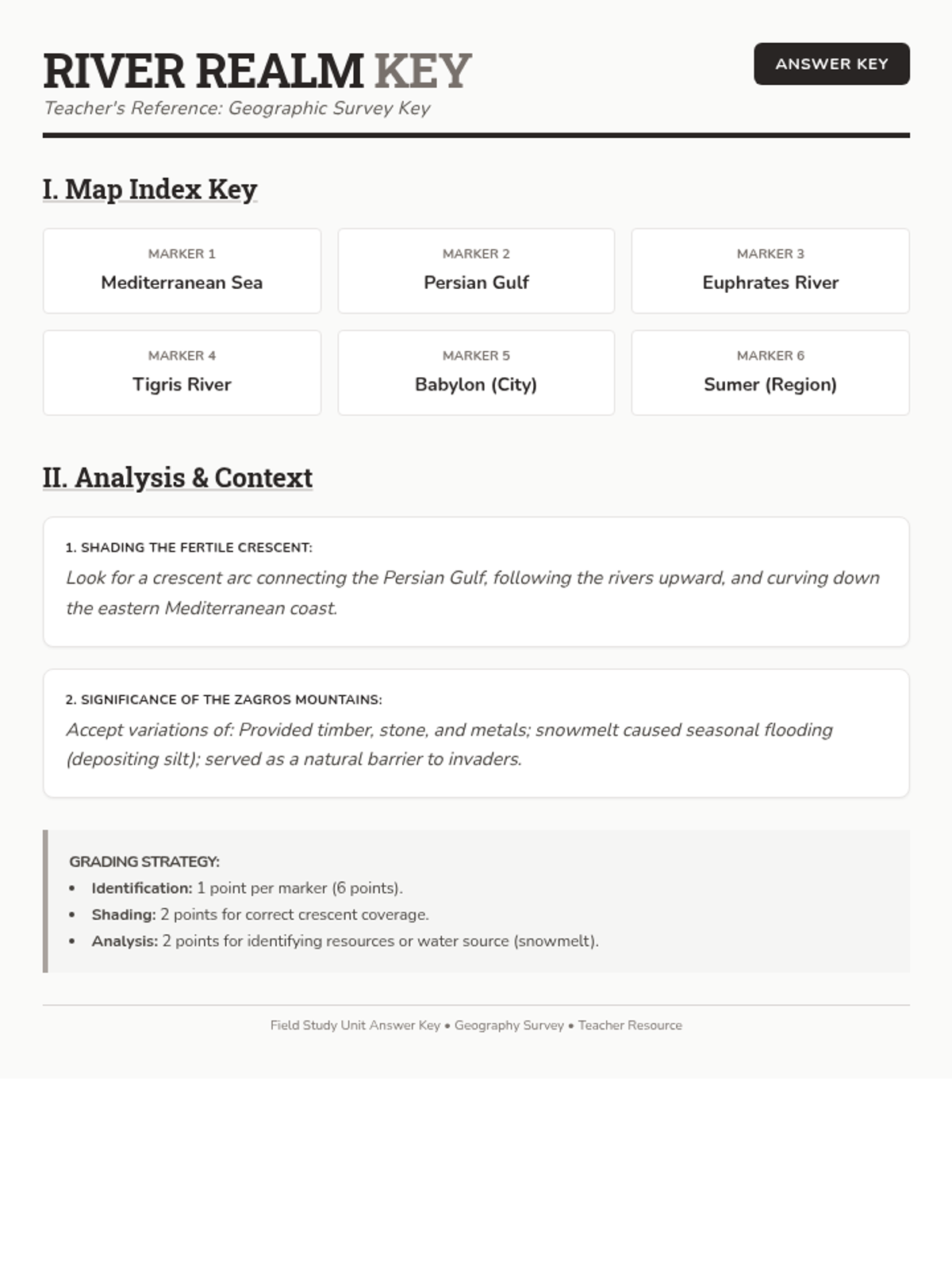
A concise answer key for the River Realm Map Activity, providing the correct numeric matches for geographic features and grading criteria for the shading and analysis portions.
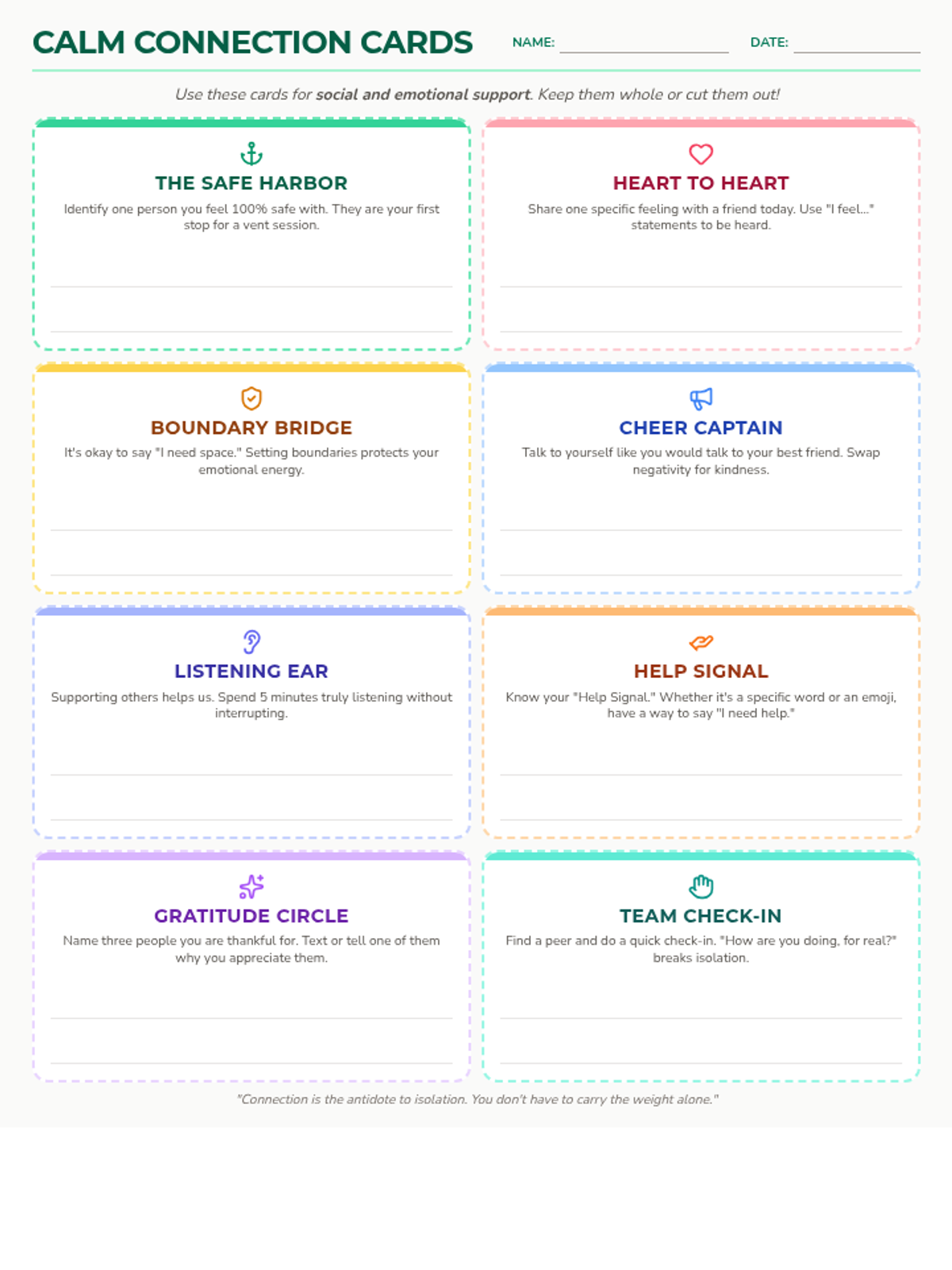
A single-page reference sheet featuring eight illustrated coping skill cards focused on social and emotional support strategies. Each card includes a specific action step and space for students to personalize their plan.
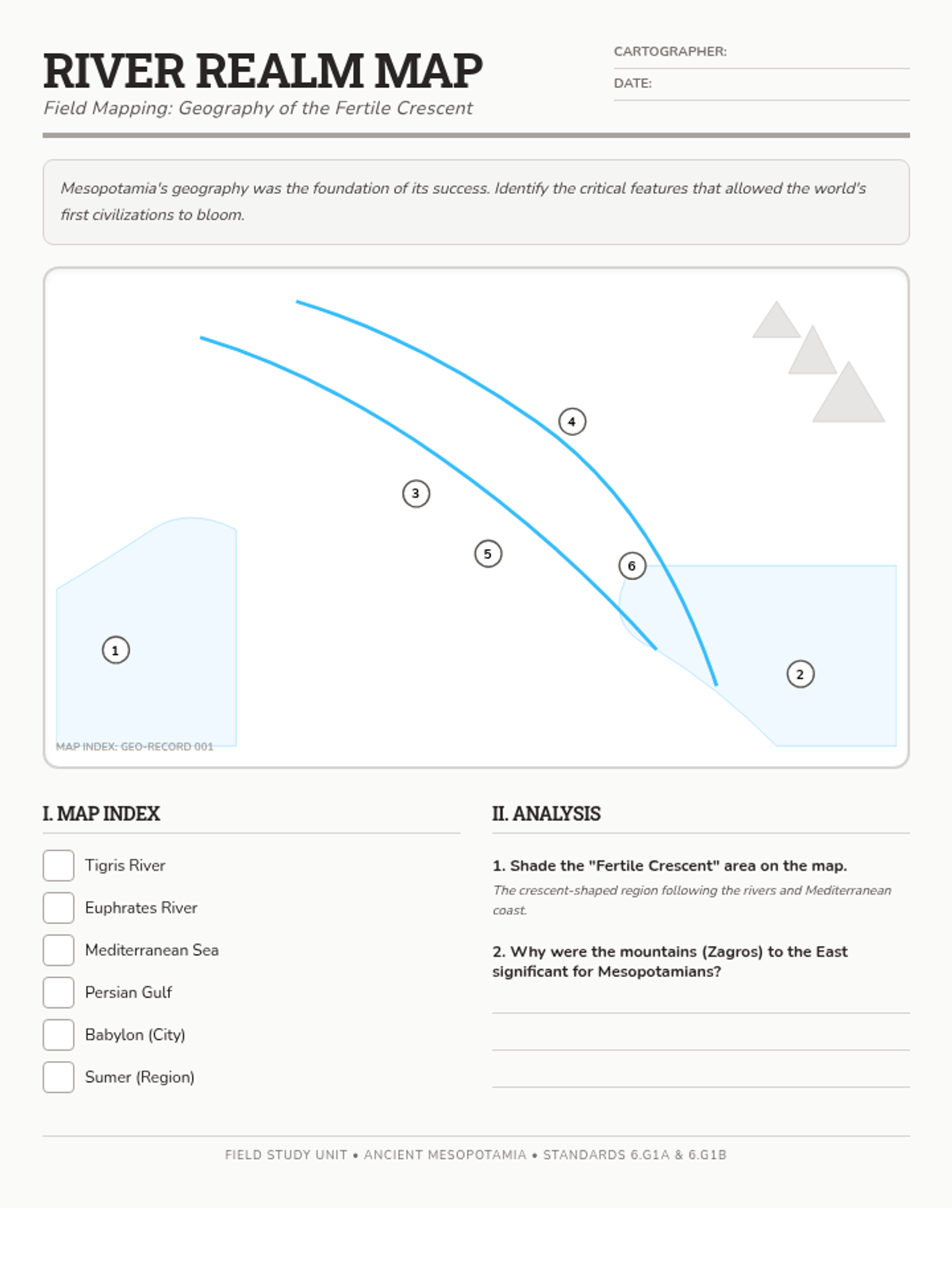
A map-based activity for students to identify key geographic features of Ancient Mesopotamia, including the Tigris and Euphrates rivers, the Fertile Crescent, and surrounding regions. It includes a stylized map for labeling and a short-answer section for geographic analysis.
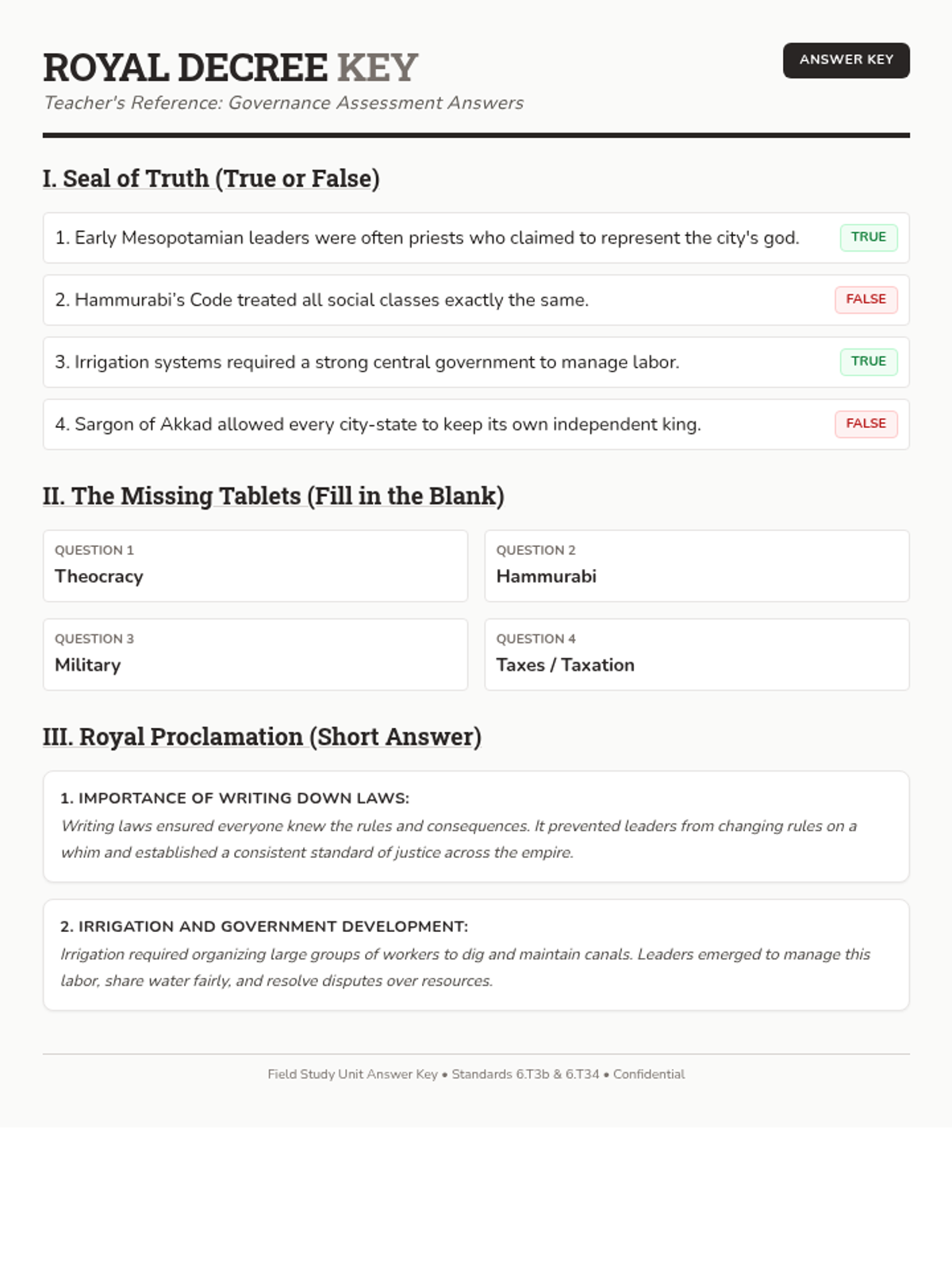
A comprehensive answer key for the Royal Decree Assessment, providing correct answers for the true/false and fill-in-the-blank sections, along with sample responses and grading criteria for the short-answer questions.
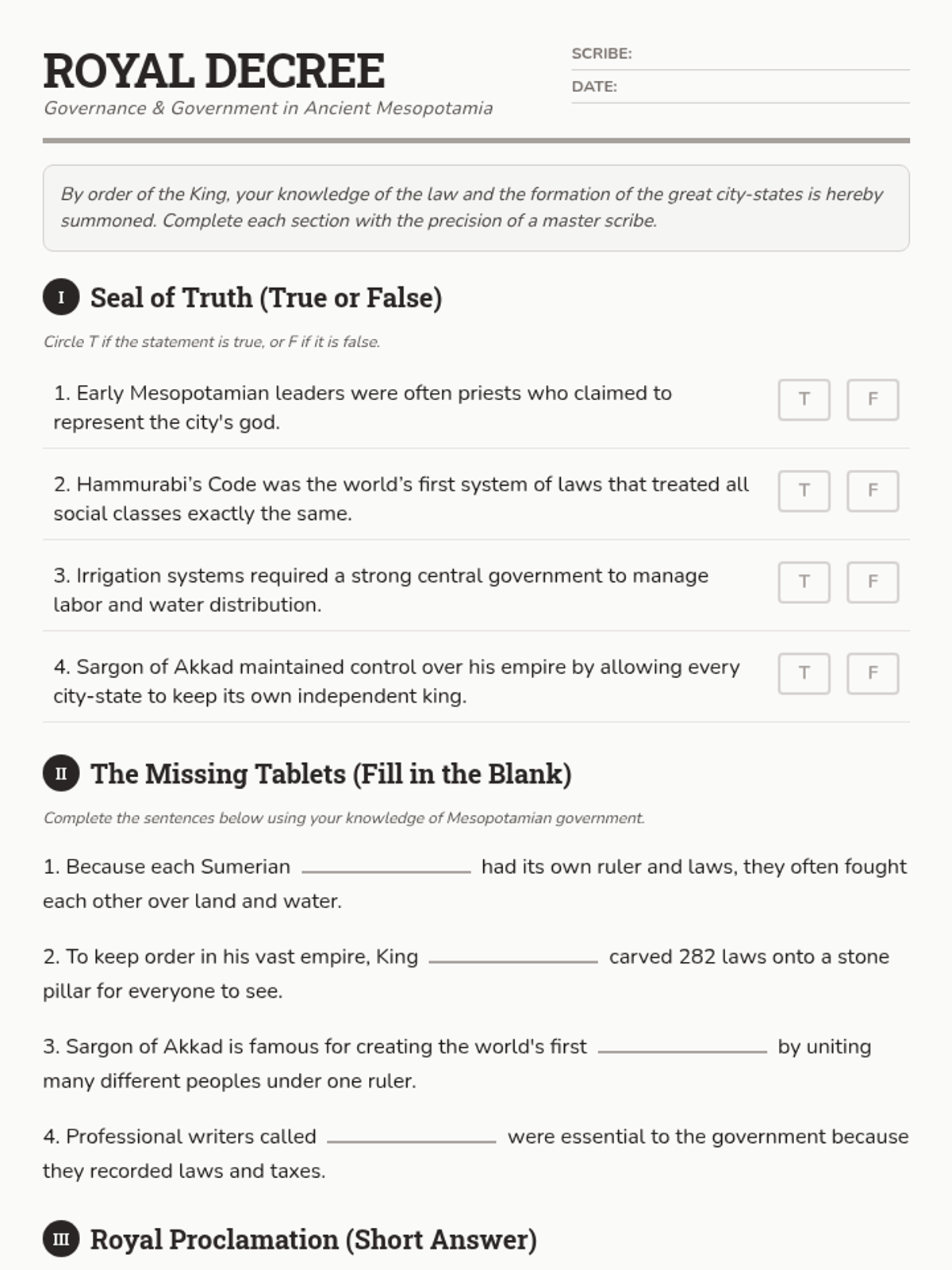
A formal assessment covering Mesopotamian governance, featuring true/false, fill-in-the-blank, and short-answer questions. It focuses on Hammurabi's Code, theocratic rule, and the administrative needs of early city-states.
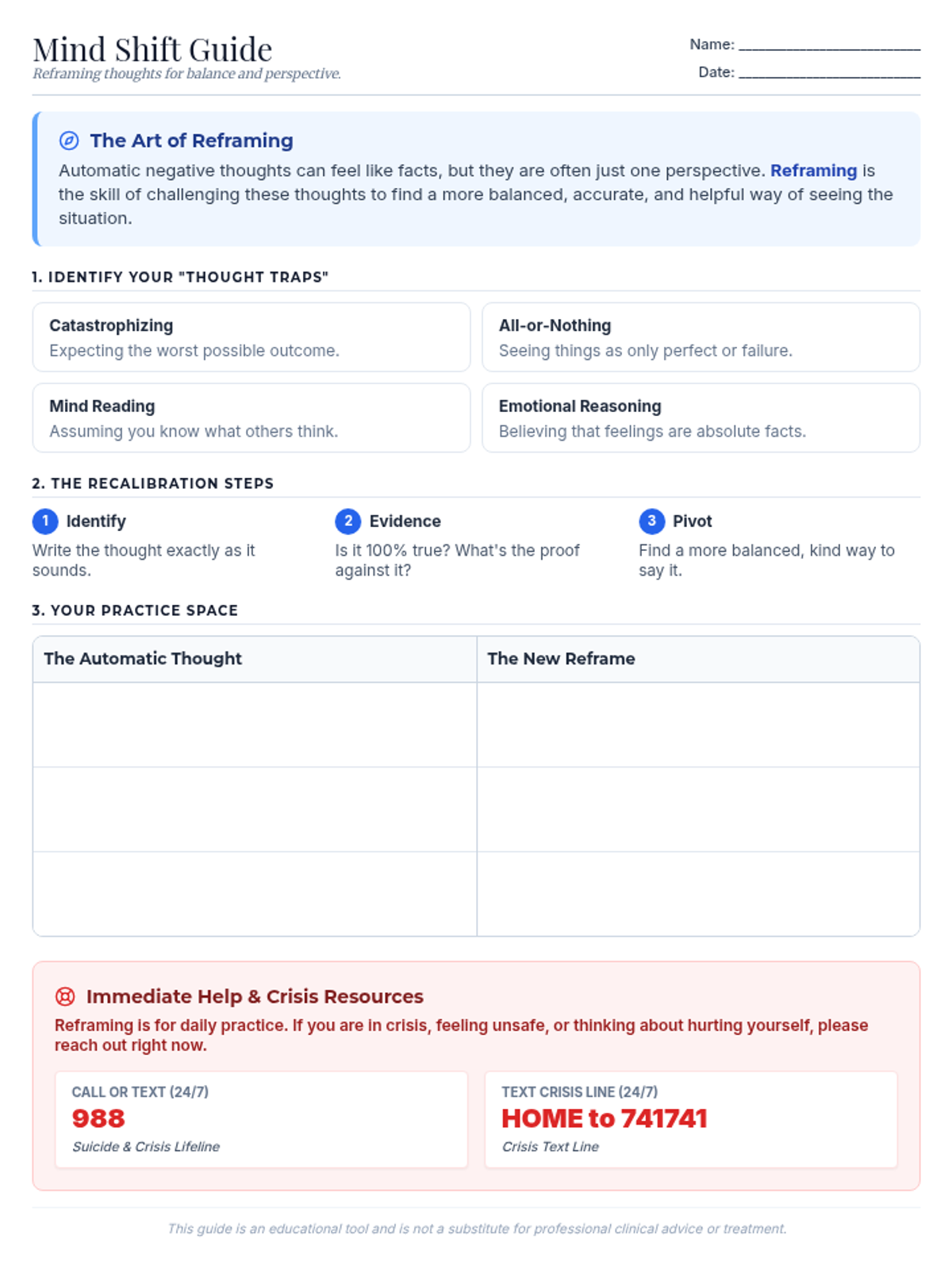
A 'Mind Shift Guide' designed for students, focusing on the cognitive behavioral technique of reframing negative thoughts. It includes identification of common thought traps, a step-by-step reframing process, and a dedicated space for practice, alongside prominent emergency crisis resources.