A modeling worksheet where students practice the principle of superposition by drafting resultant waves on a grid. Includes scenarios for constructive, destructive, and complex mixed interference. Revised for better page breaks and SVG clarity.
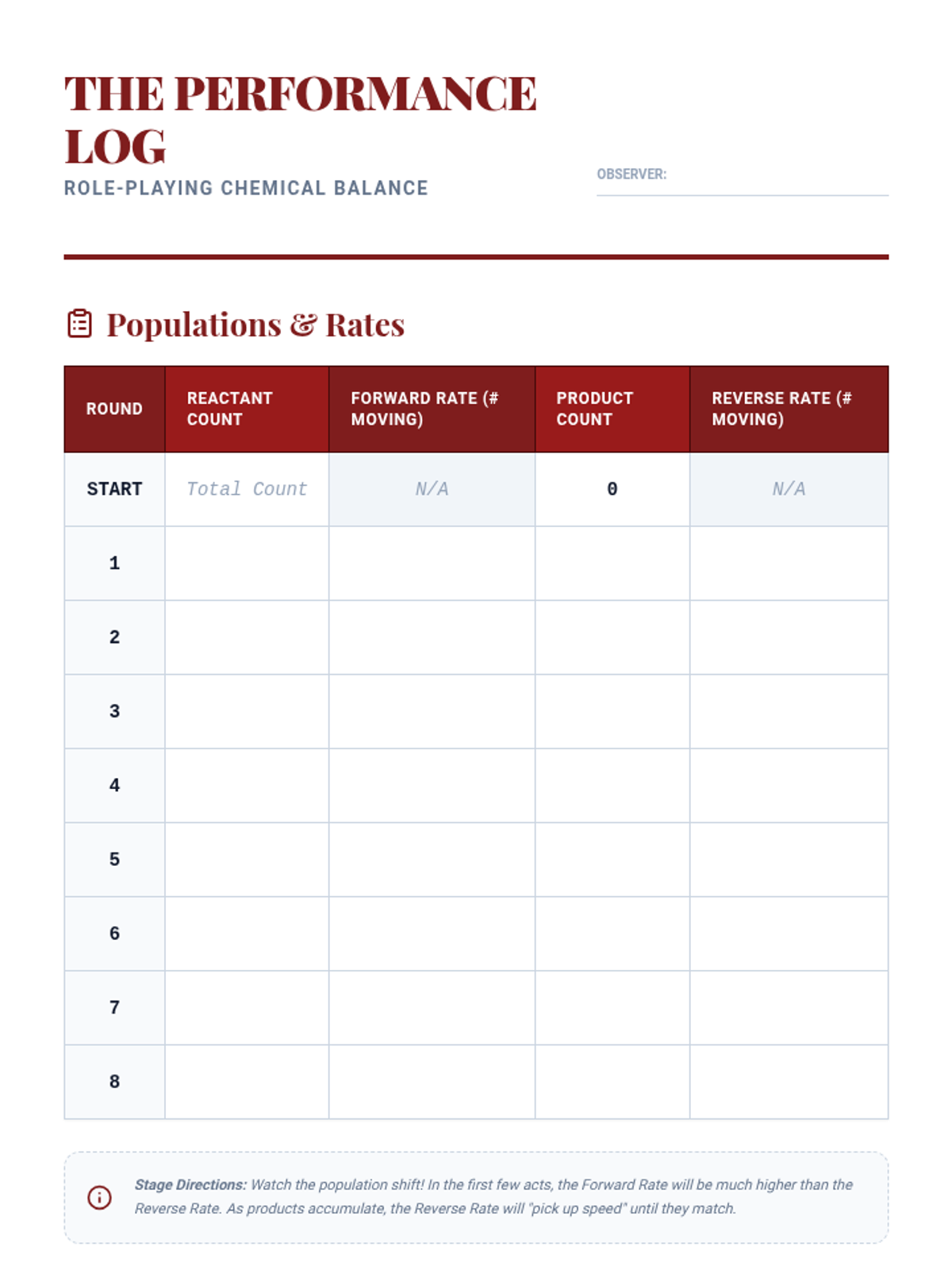
A student recording sheet for the equilibrium role-playing simulation. Students track particle counts and reaction rates over several rounds to identify when and how a system reaches balance. Revised for better header layout and spacing.
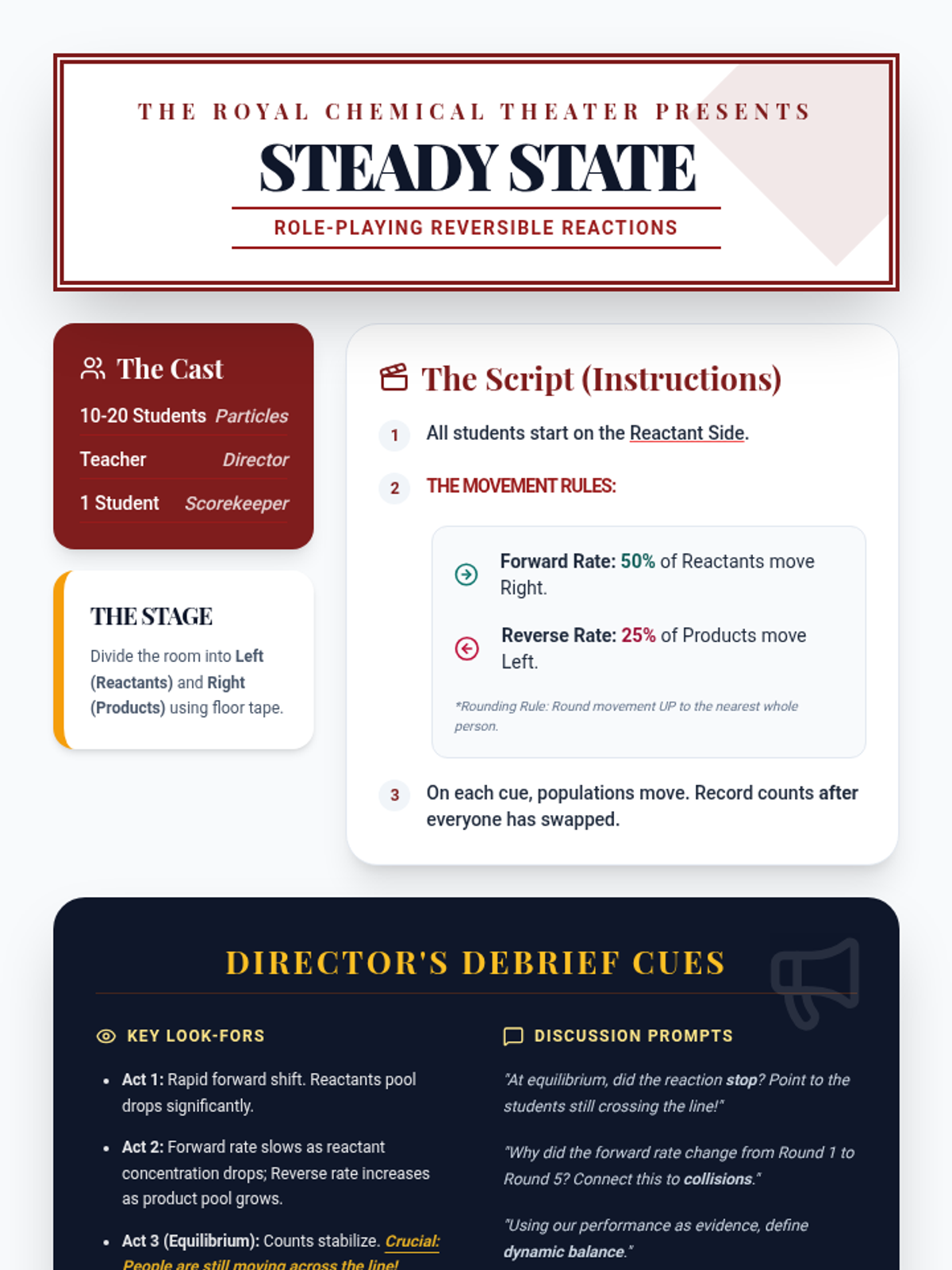
A teacher-facing facilitation guide for a role-playing simulation where students act as particles to model dynamic equilibrium. Includes clear movement rules, setup instructions, and discussion prompts. Revised for layout and contrast.
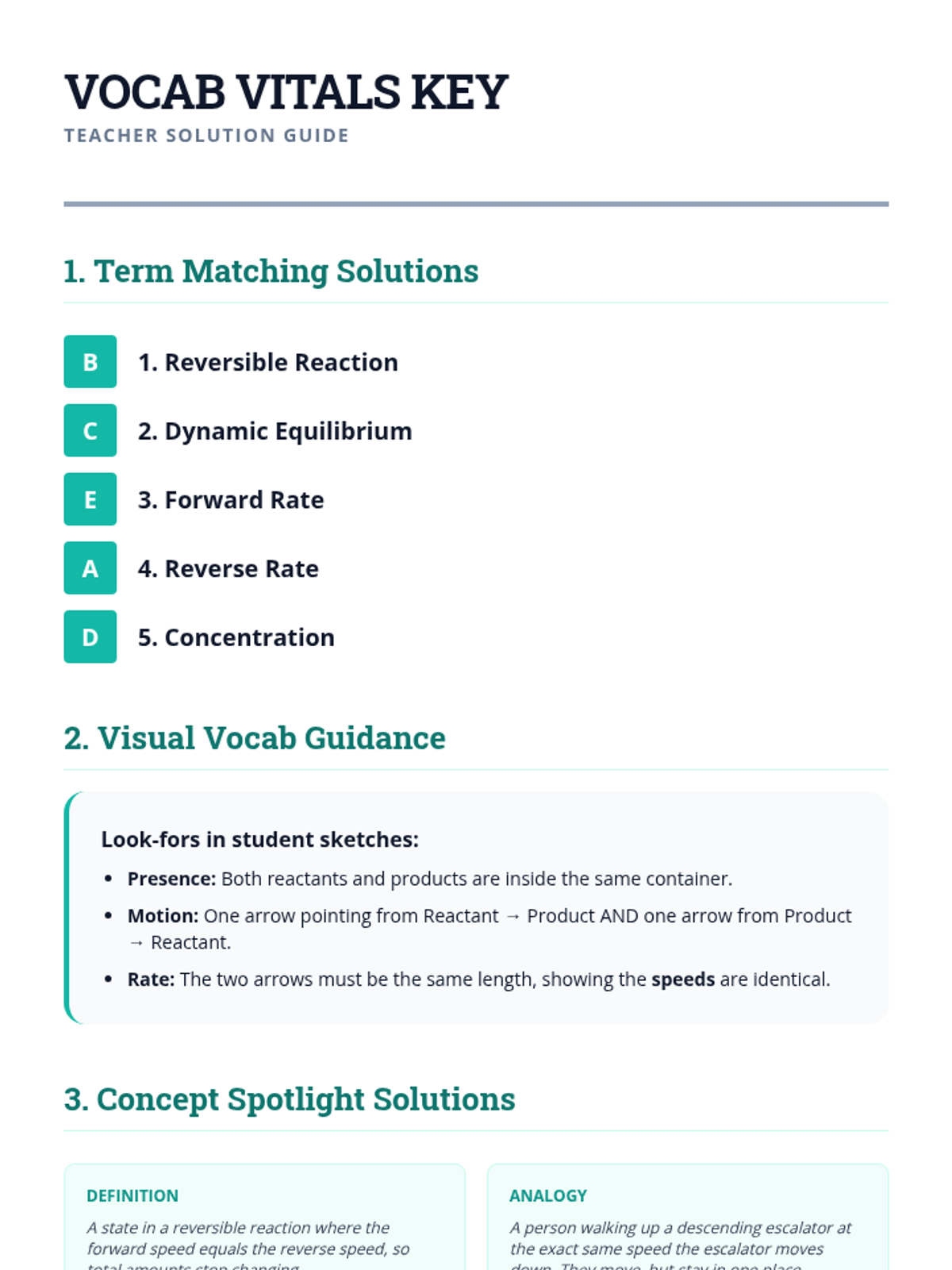
Teacher answer key for the Vocab Vitals activity, providing matching solutions, particle model look-fors, and sample conceptual responses.
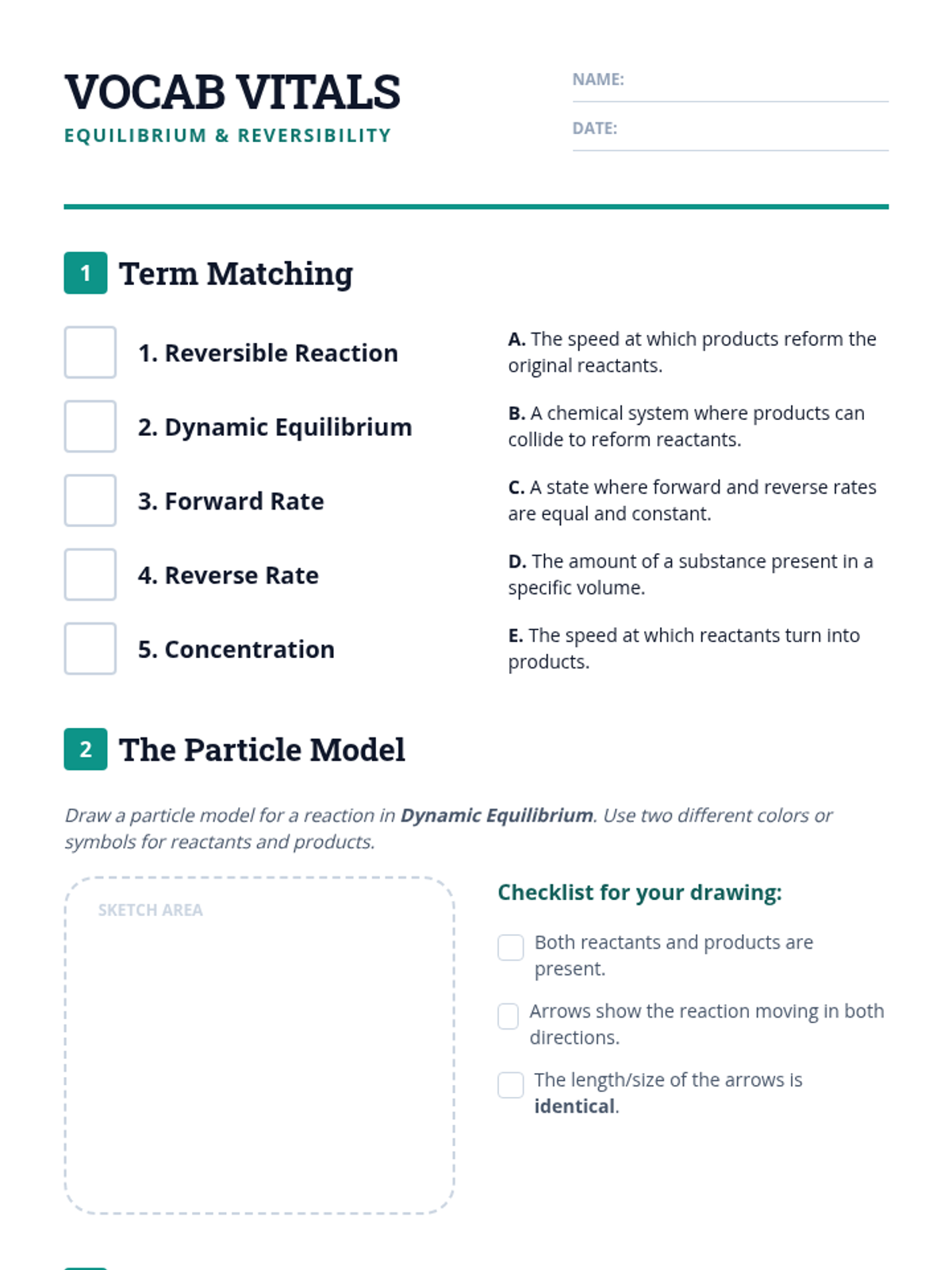
A vocabulary activity focusing on equilibrium terms, featuring matching, particle modeling, and a Frayer-style concept map for dynamic equilibrium.
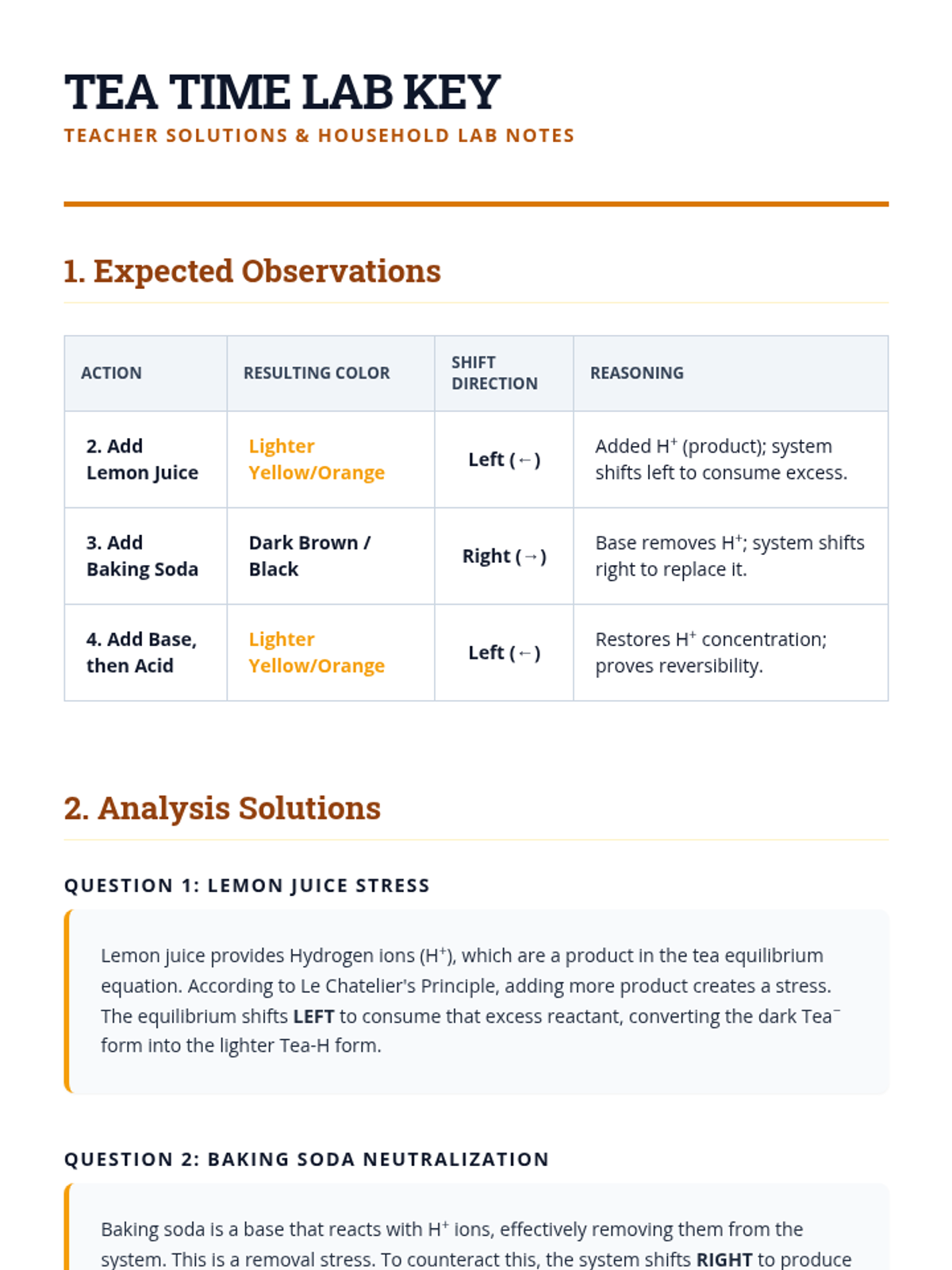
A detailed teacher answer key for the Color Shift Lab. Includes expected data, sample analysis responses, and instructional tips for success. Revised for better page breaks and math rendering.
A visual presentation covering Le Chatelier's Principle, including concentration and temperature stresses, the collision theory reasoning behind shifts, and a case study using a household black tea equilibrium system. Revised for better label positioning and legibility.
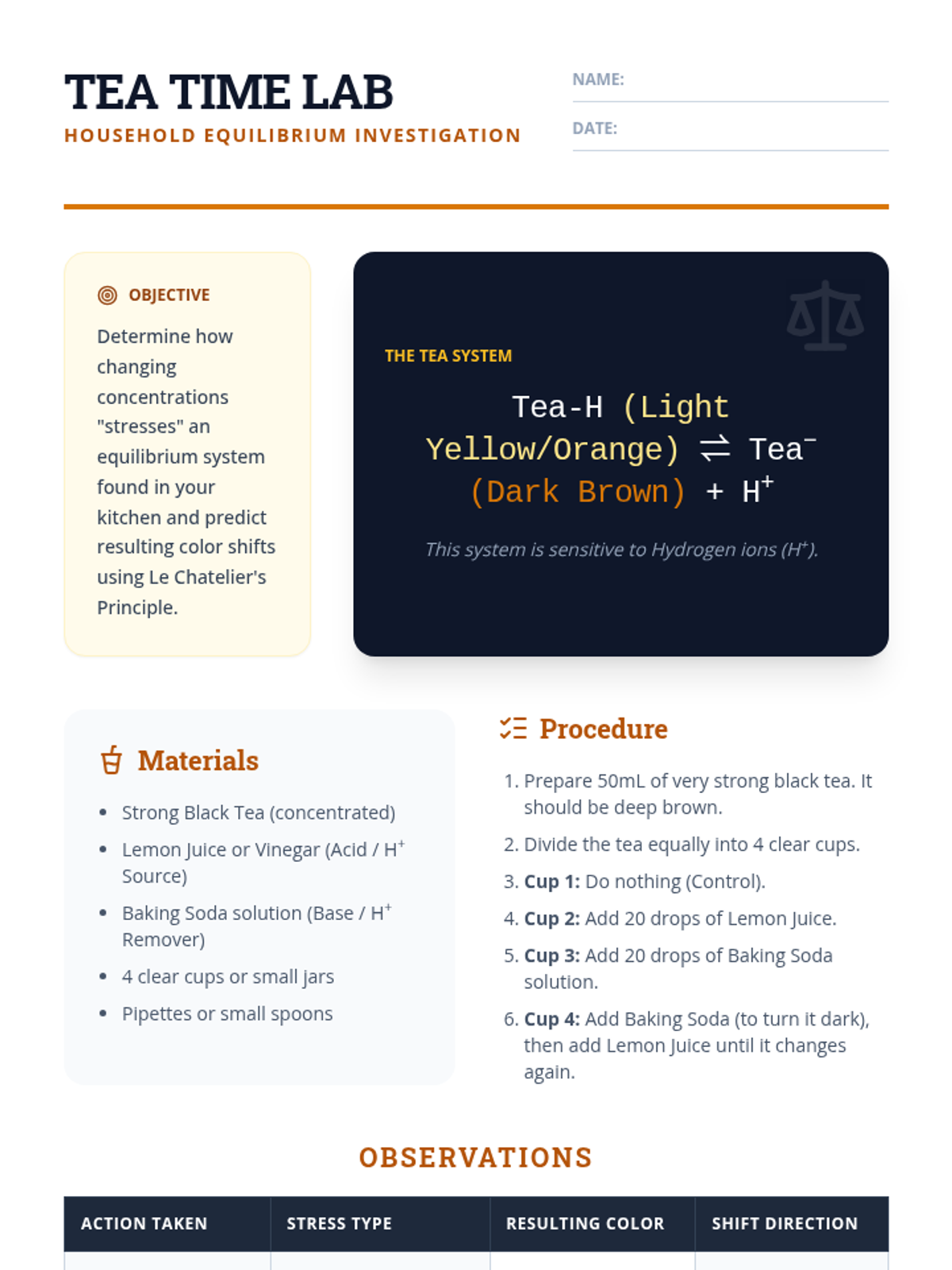
A household-friendly lab guide using black tea, lemon juice, and baking soda to investigate Le Chatelier's Principle. Includes clear procedures for concentration shifts and a formal CER assessment with sentence stems.
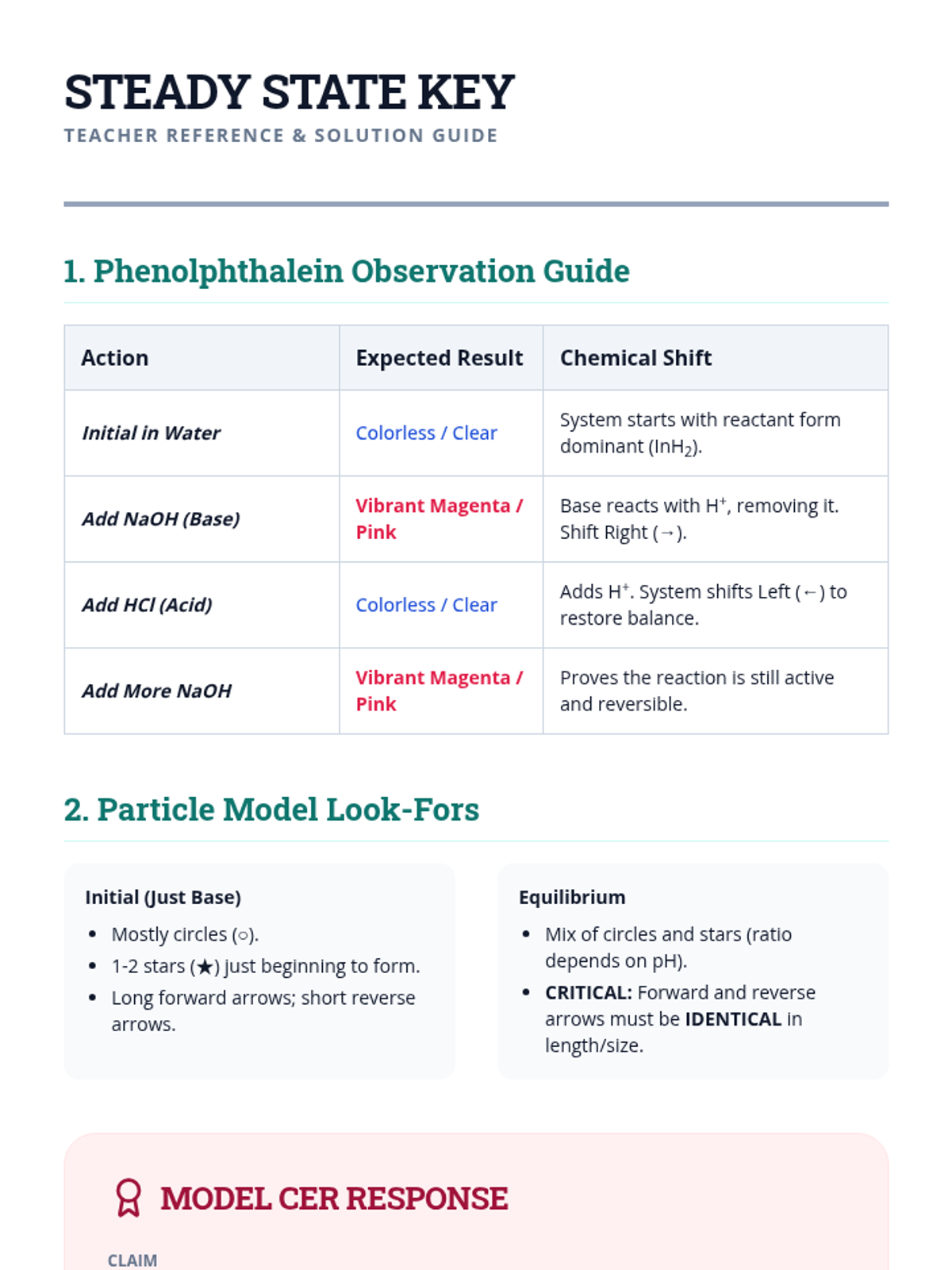
A comprehensive answer key and teacher guide for the Steady State lesson. Includes expected lab results, particle modeling "look-fors", a high-quality sample CER response, and notes on common student misconceptions. Revised for better page breaks and math rendering.
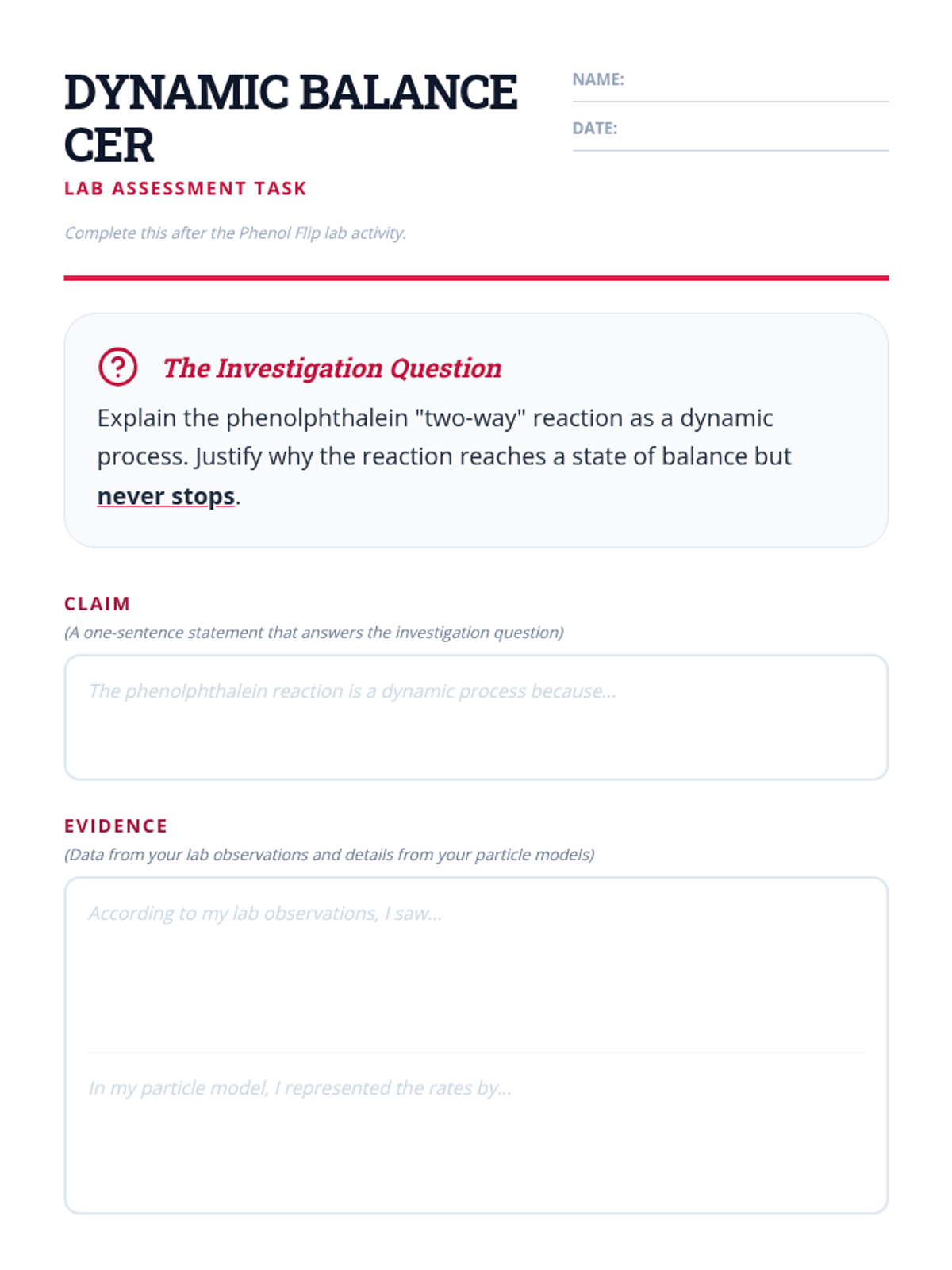
A CER assessment focused on the phenolphthalein equilibrium lab. Includes sections for claim, evidence, and reasoning with a teacher-facing rubric. Students must justify why equilibrium is a dynamic process using both macroscopic and microscopic evidence. Revised to include sentence stems for scaffolding.
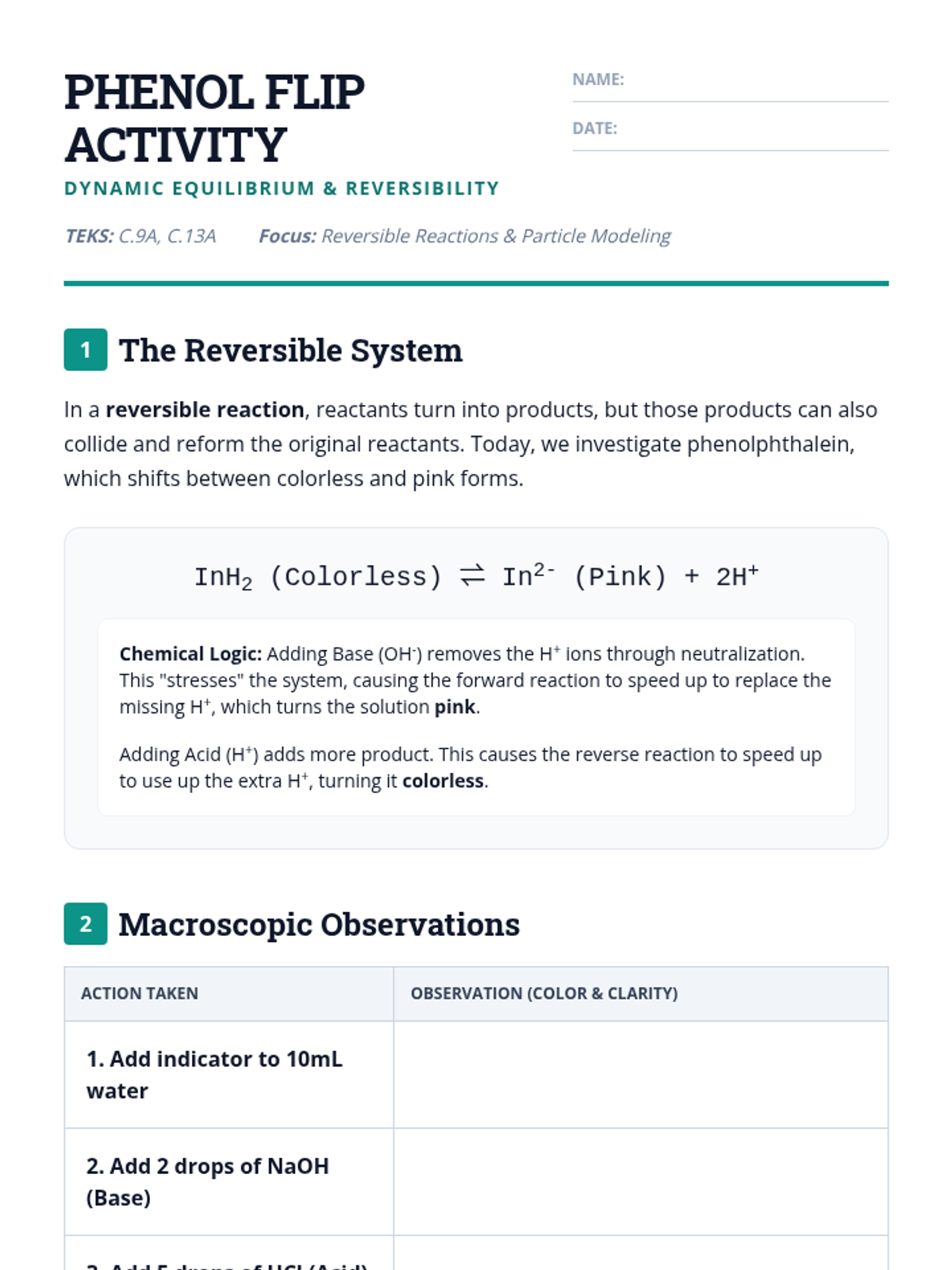
A 3-page student activity investigating reversible reactions using phenolphthalein. Includes data tables for macroscopic observations, a particle modeling section for visualizing rates, and synthesis questions connecting kinetics to equilibrium. Revised for better page breaks and math rendering.
A visual presentation covering reversible reactions, the definition of dynamic equilibrium, and the phenolphthalein system. Includes rate-vs-time graphs, particle-level modeling, and conceptual analogies like the escalator. Revised for better label positioning and legibility.
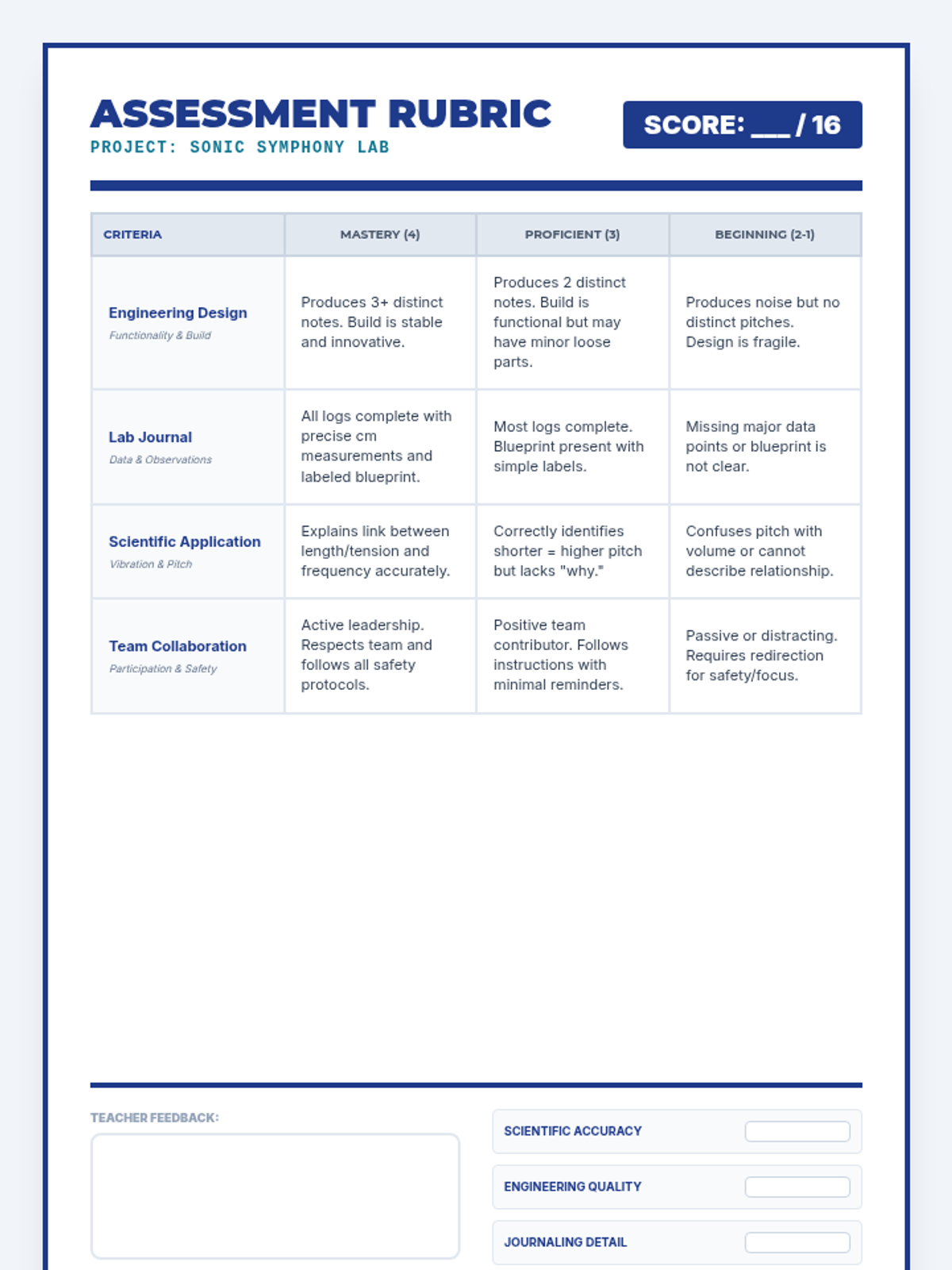
A comprehensive assessment rubric for the Sonic Symphony Lab. Revised to fit onto a single page with improved layout, professional feedback areas, and clear criteria for engineering and physics.
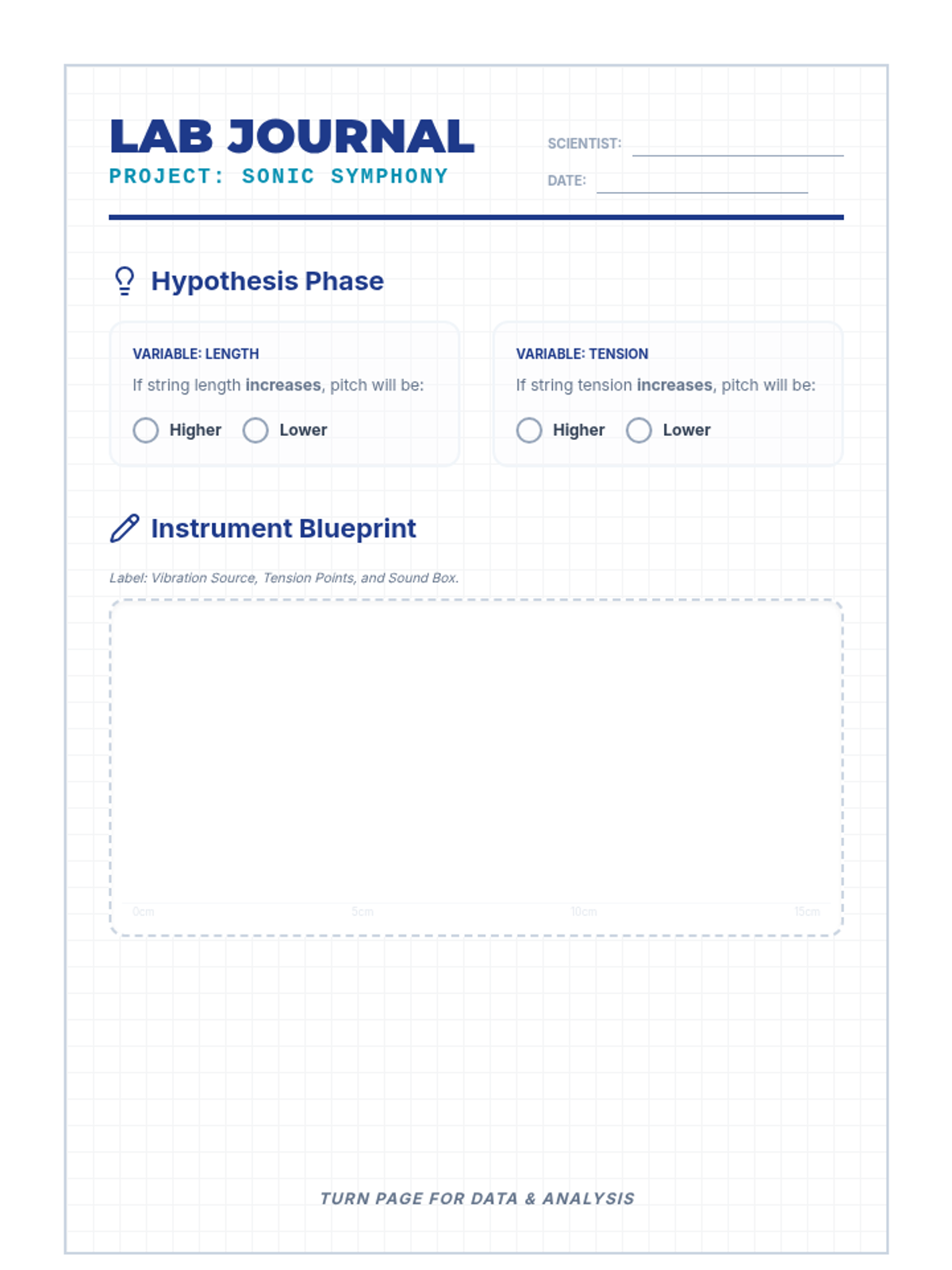
A student lab journal for the Sonic Symphony investigation. Revised with improved page breaks, white student work areas, and complete analysis sections to ensure a professional lab experience.
A visually engaging presentation for the Sonic Symphony Lab, introducing vibration, pitch, and engineering analysis. Revised to include a concrete wave visual and an advanced acoustic engineering slide for middle school students.
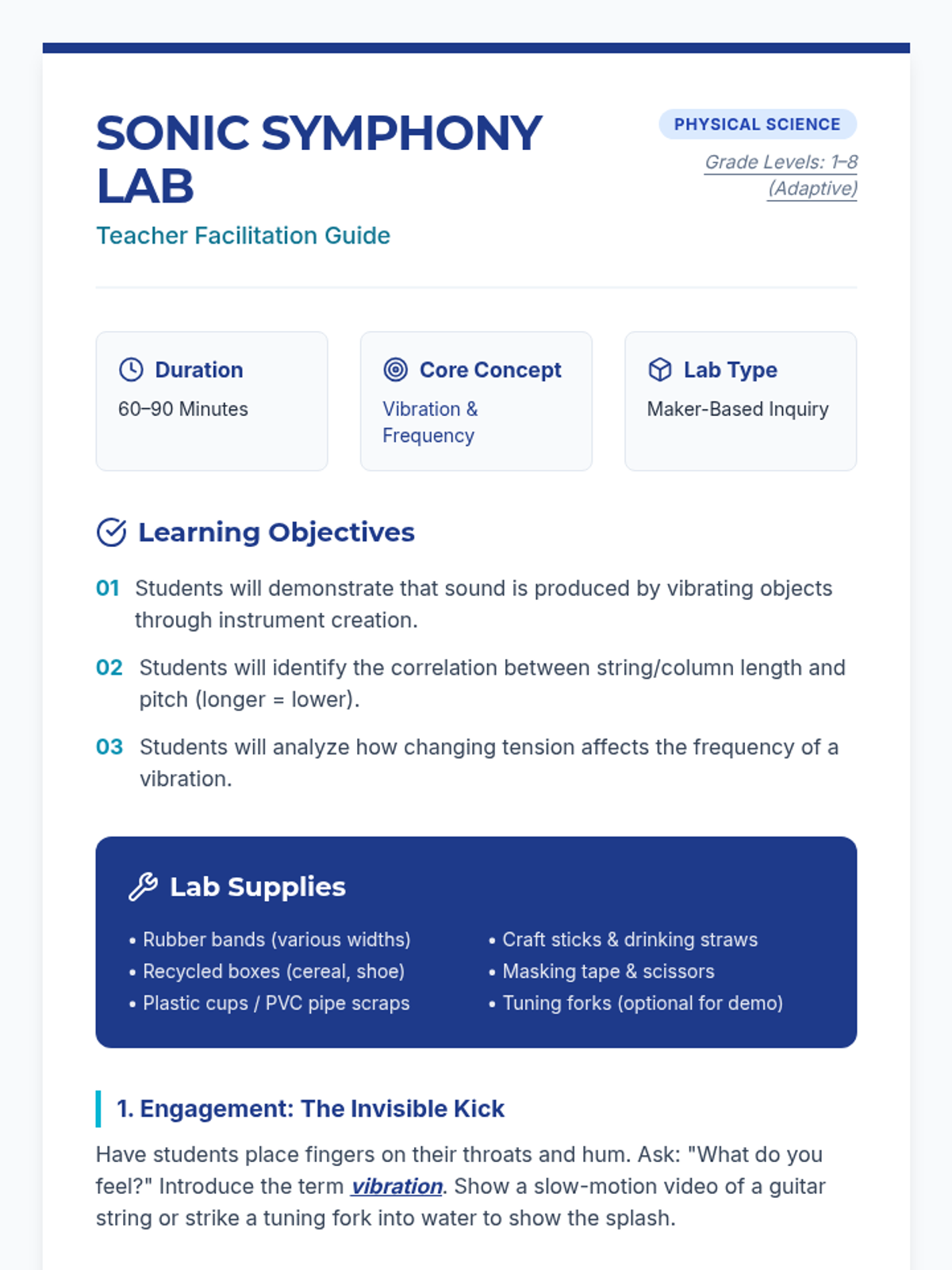
A comprehensive teacher facilitation guide for the Sonic Symphony Lab, featuring learning objectives, materials list, step-by-step procedures, and differentiation strategies for grades 1-8. Revised to include full grade-level scaling and professional formatting.
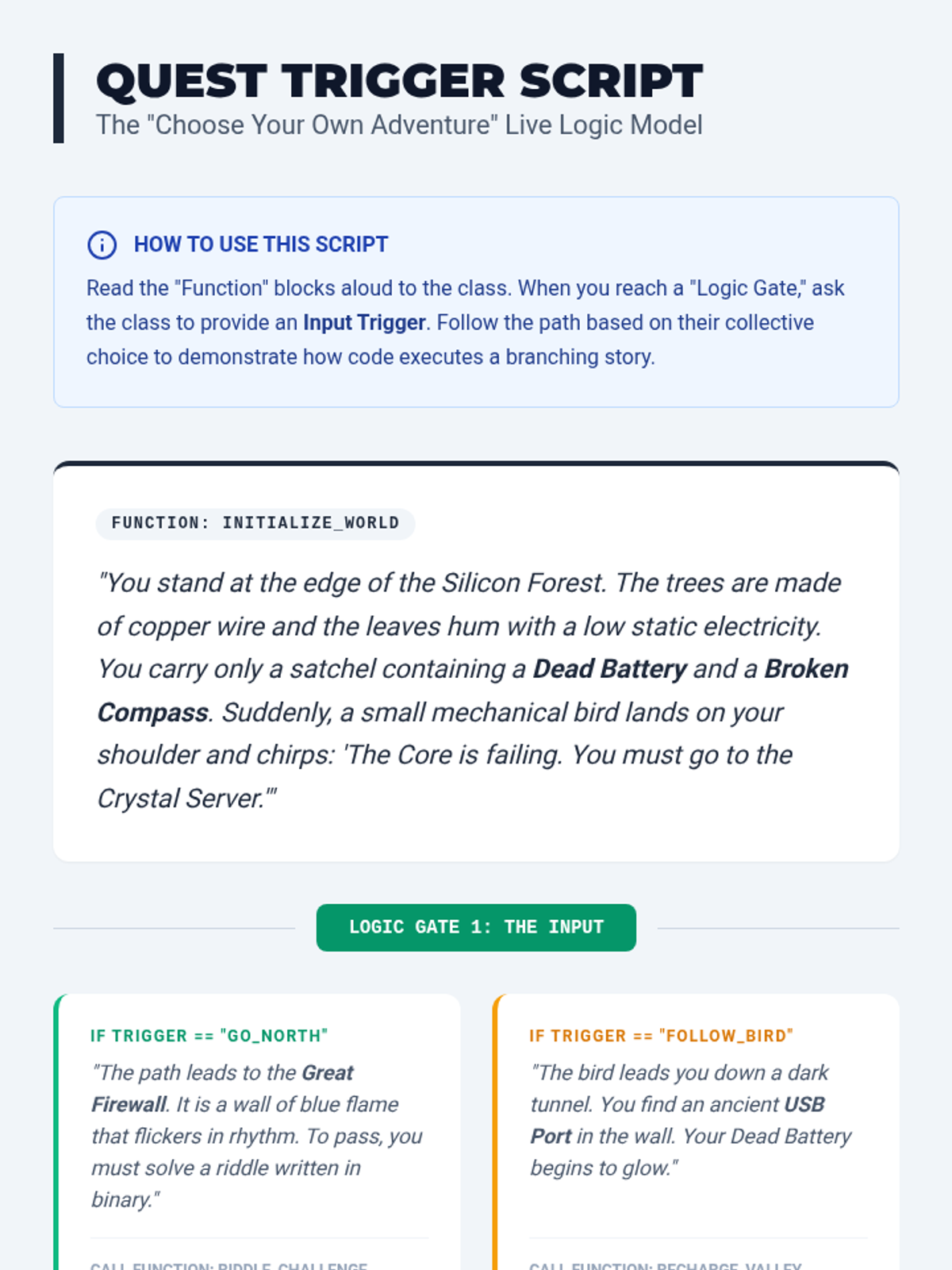
A teaching script that provides a narrative framework for a live classroom activity. It models how story functions and input triggers create a branching story, including a section on more complex "State Logic" using variables.
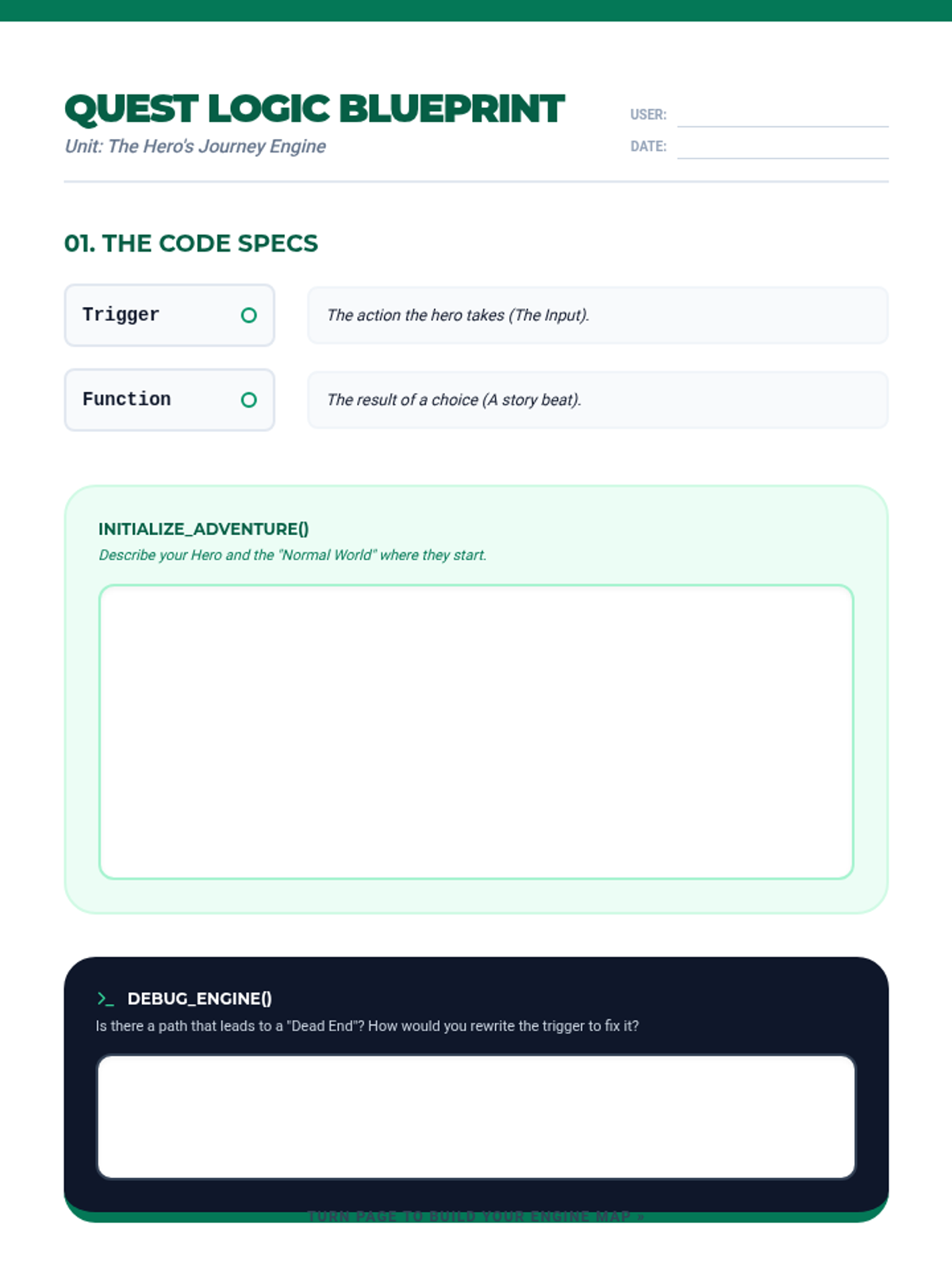
A structured student worksheet for designing a branching narrative logic map. It includes a coding vocabulary matching section, a visual flow-charting area for story triggers and functions, and a debugging reflection prompt.
An engaging slide presentation for 5th-6th graders that visualizes the connection between linear story structure and event-driven branching logic. Includes diagrams of triggers and functions within a Hero's Journey framework.
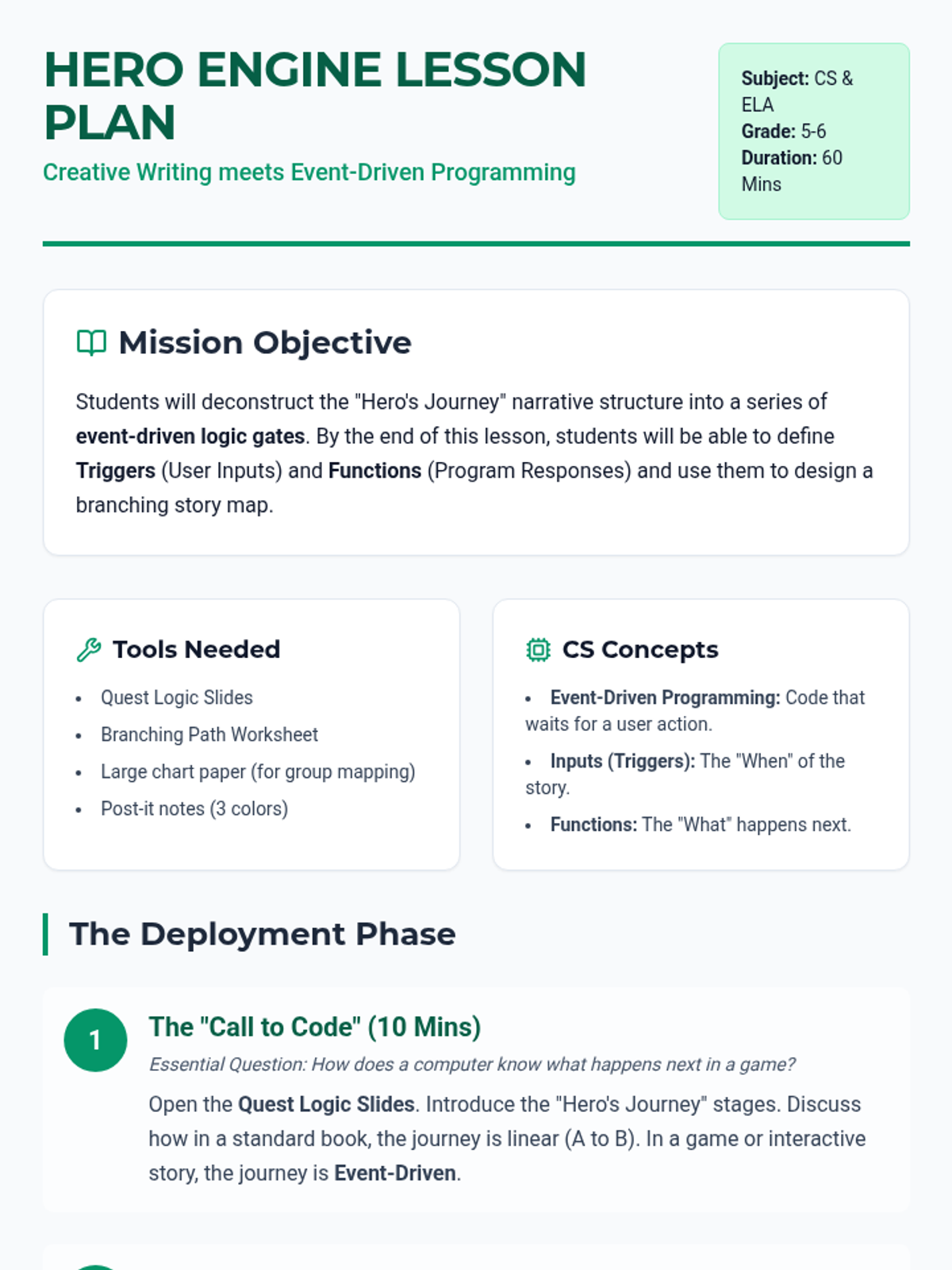
A comprehensive teacher guide for the Hero's Journey Engine lesson, detailing objectives, standard alignment, and a step-by-step instructional sequence for teaching event-driven programming through story mapping.
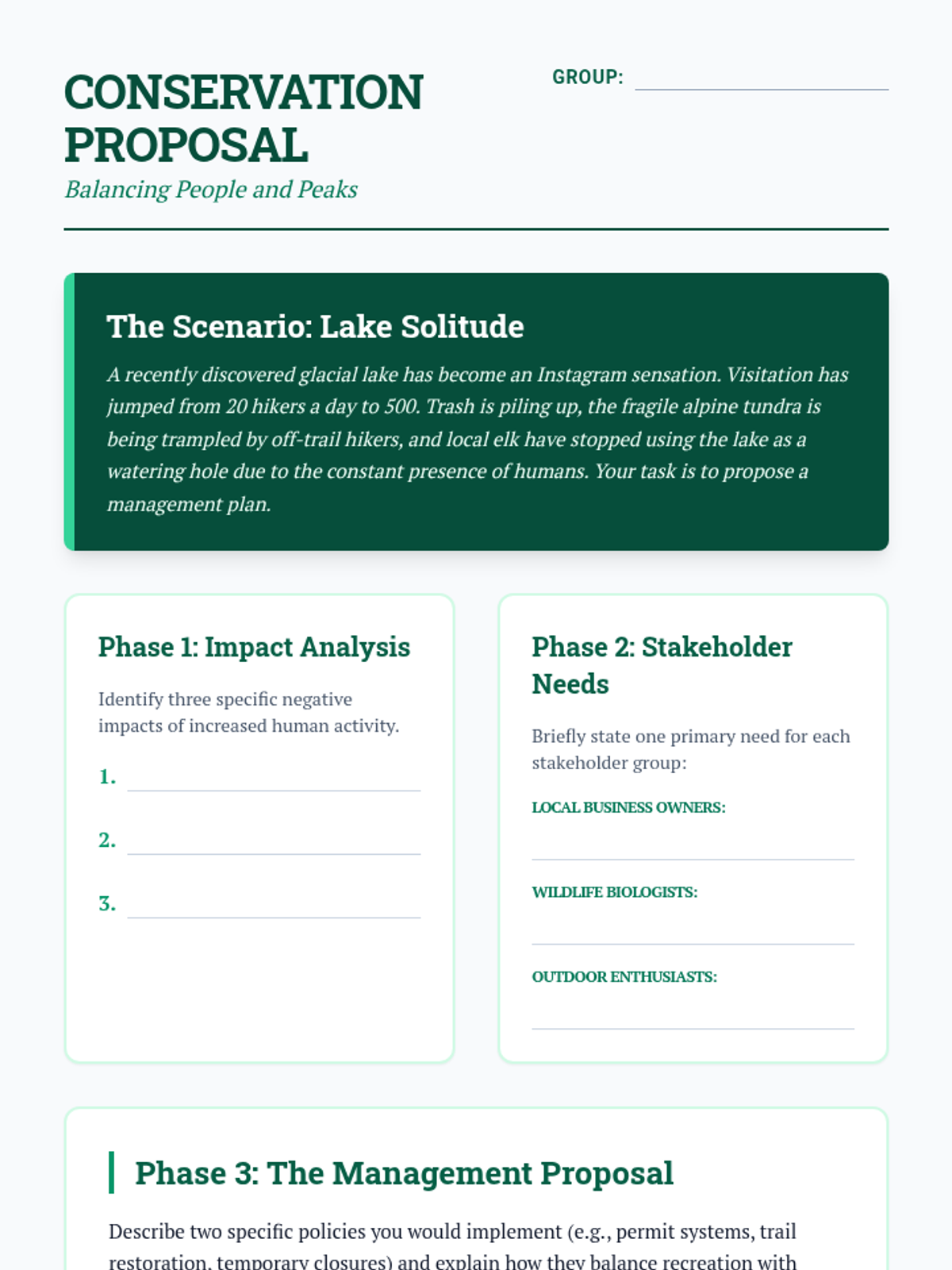
A group activity worksheet where students analyze a hypothetical conservation scenario and propose a management plan to balance tourism and environmental protection.
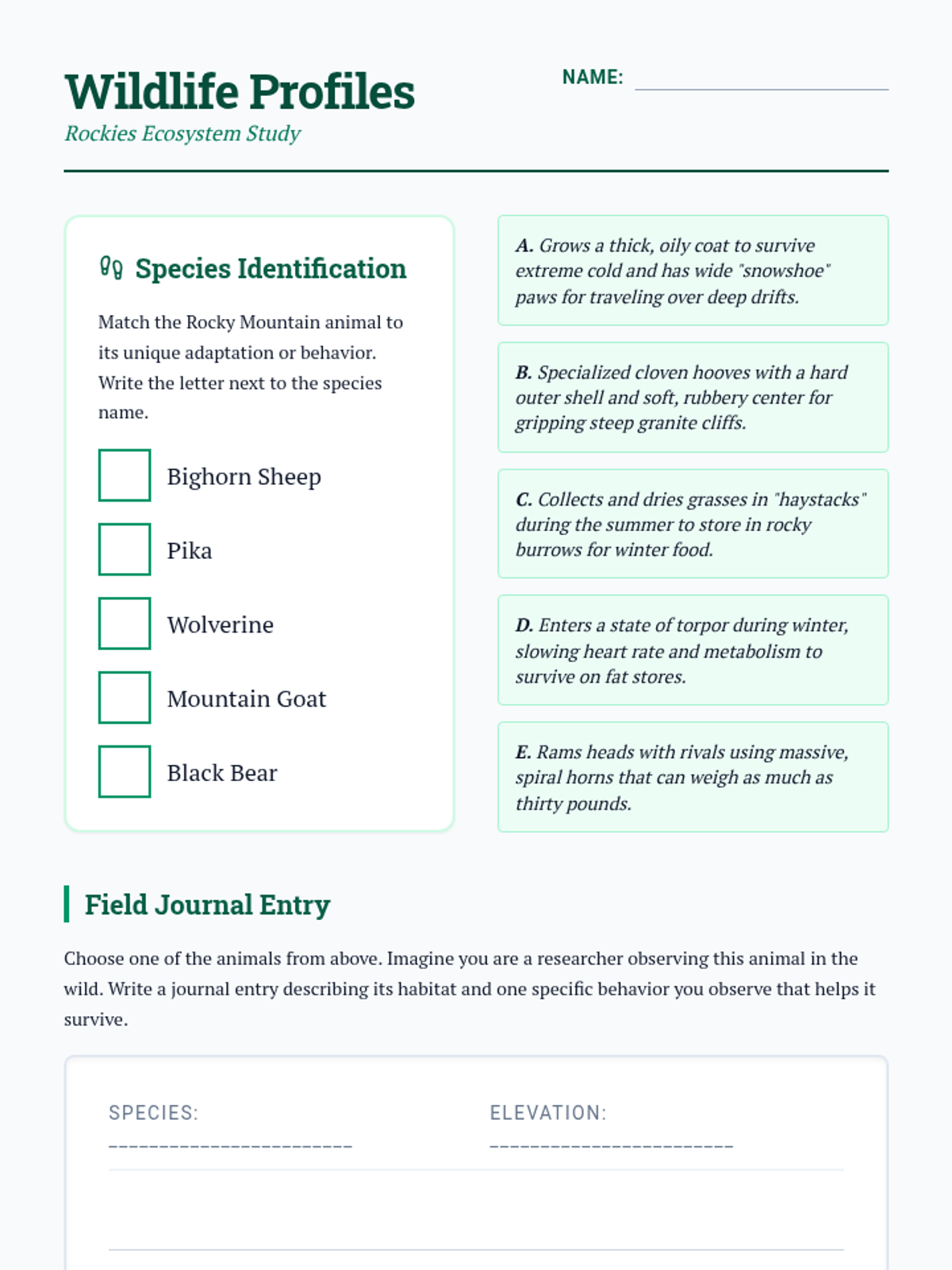
An activity sheet for identifying Rocky Mountain wildlife adaptations and writing a creative field journal entry from a researcher's perspective.
Instructional slides for the Colorado Nature Study lesson, focusing on geography, nature activities, and the reading skill of identifying supporting details.
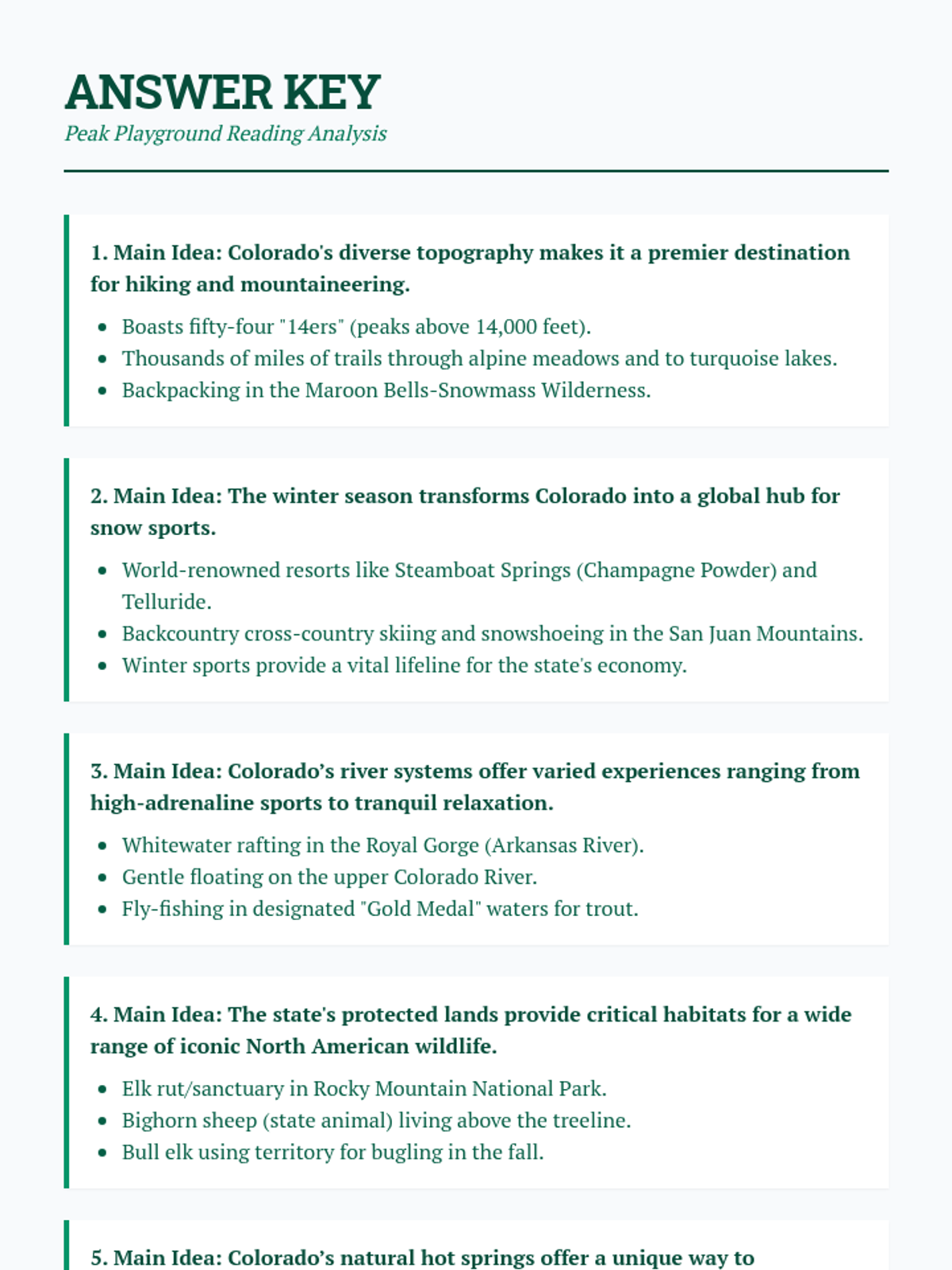
Teacher answer key for the Peak Playground Reading analysis questions, providing expected supporting details for each main idea.
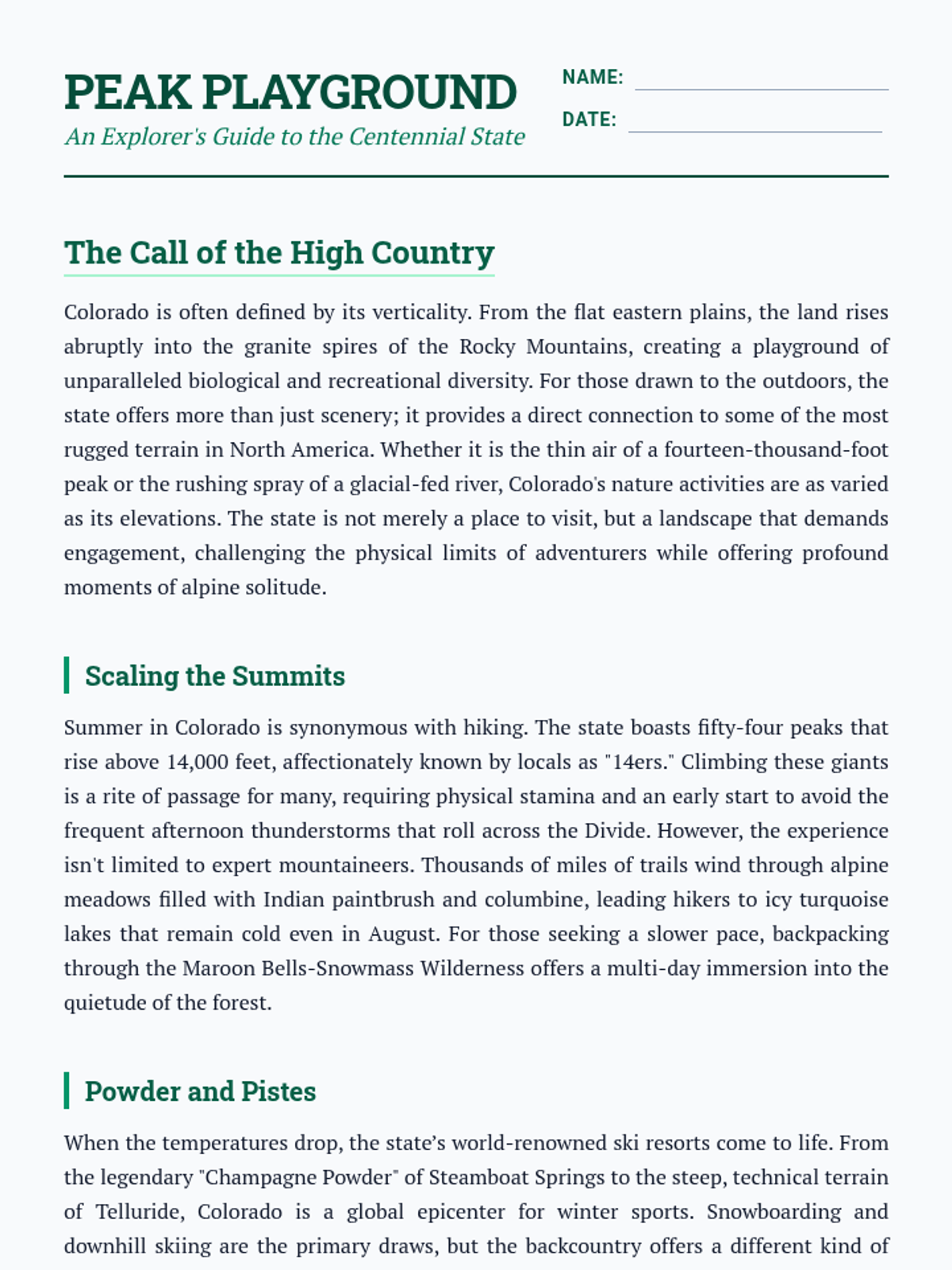
A four-page 9th-grade reading passage about nature activities in Colorado, followed by six open-ended analysis questions focused on identifying supporting details for given main ideas.
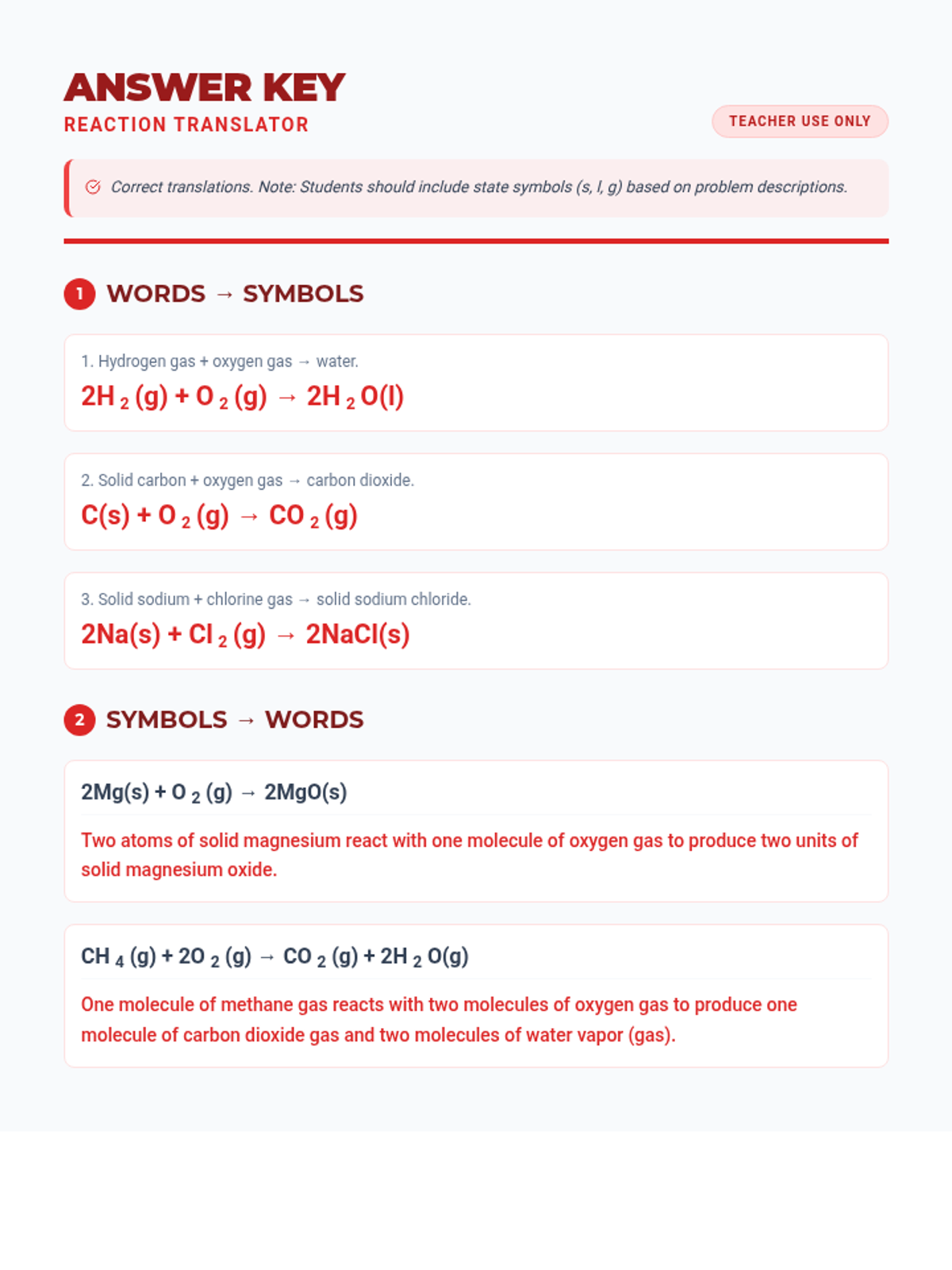
An answer key for the Reaction Translator Worksheet, providing balanced symbolic equations and descriptive word translations for all practice problems.
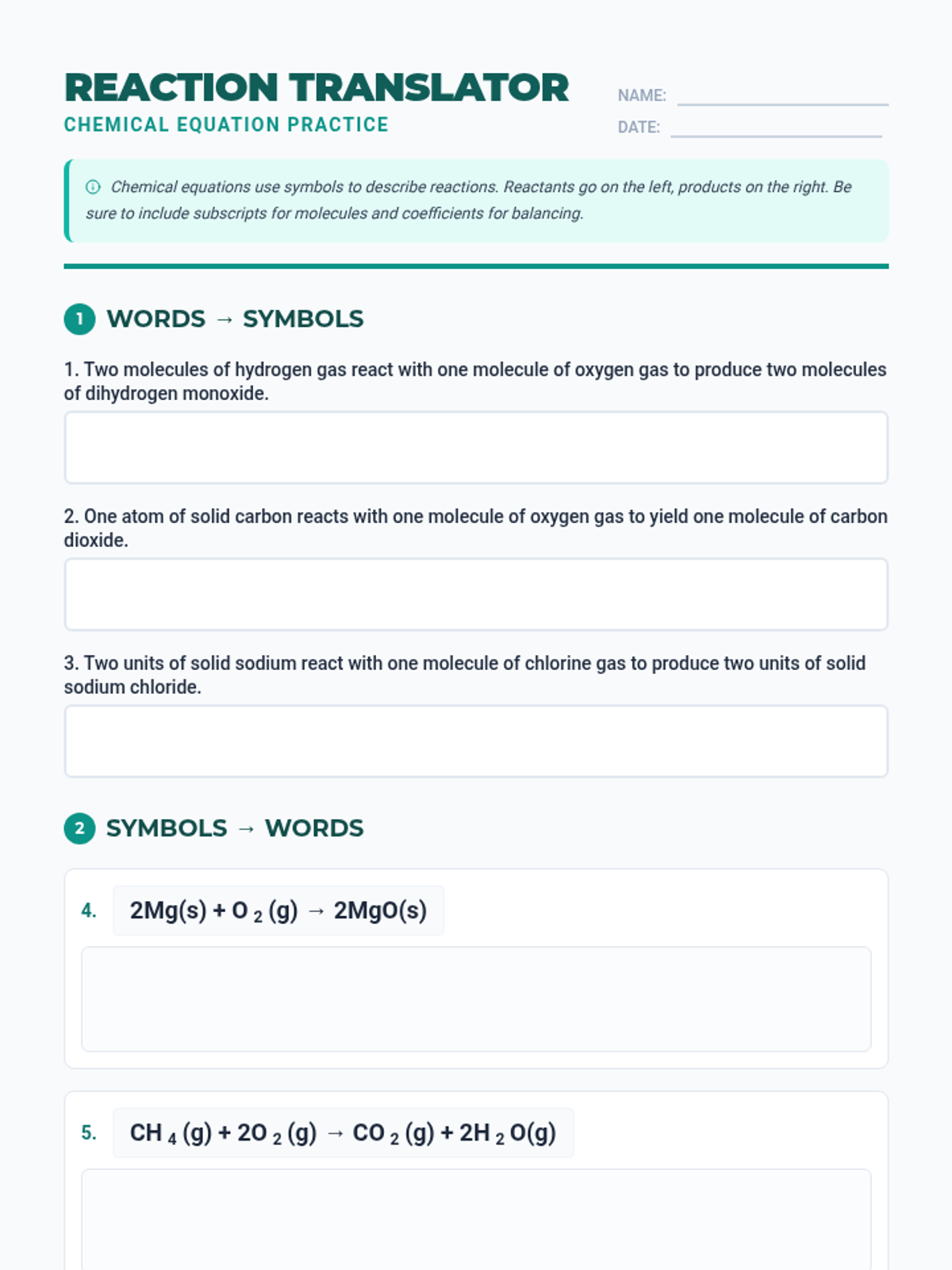
A student worksheet for practicing the translation between word descriptions and symbolic chemical equations, featuring five practice problems with dedicated writing spaces.