A practice worksheet for high school students focusing on Greek roots (mono, choreo, paleo, carto, graphy) through matching, visual association, and sentence application.
A comprehensive answer key revised to prevent awkward page breaks in answer blocks and improve the visual layout of matching results.
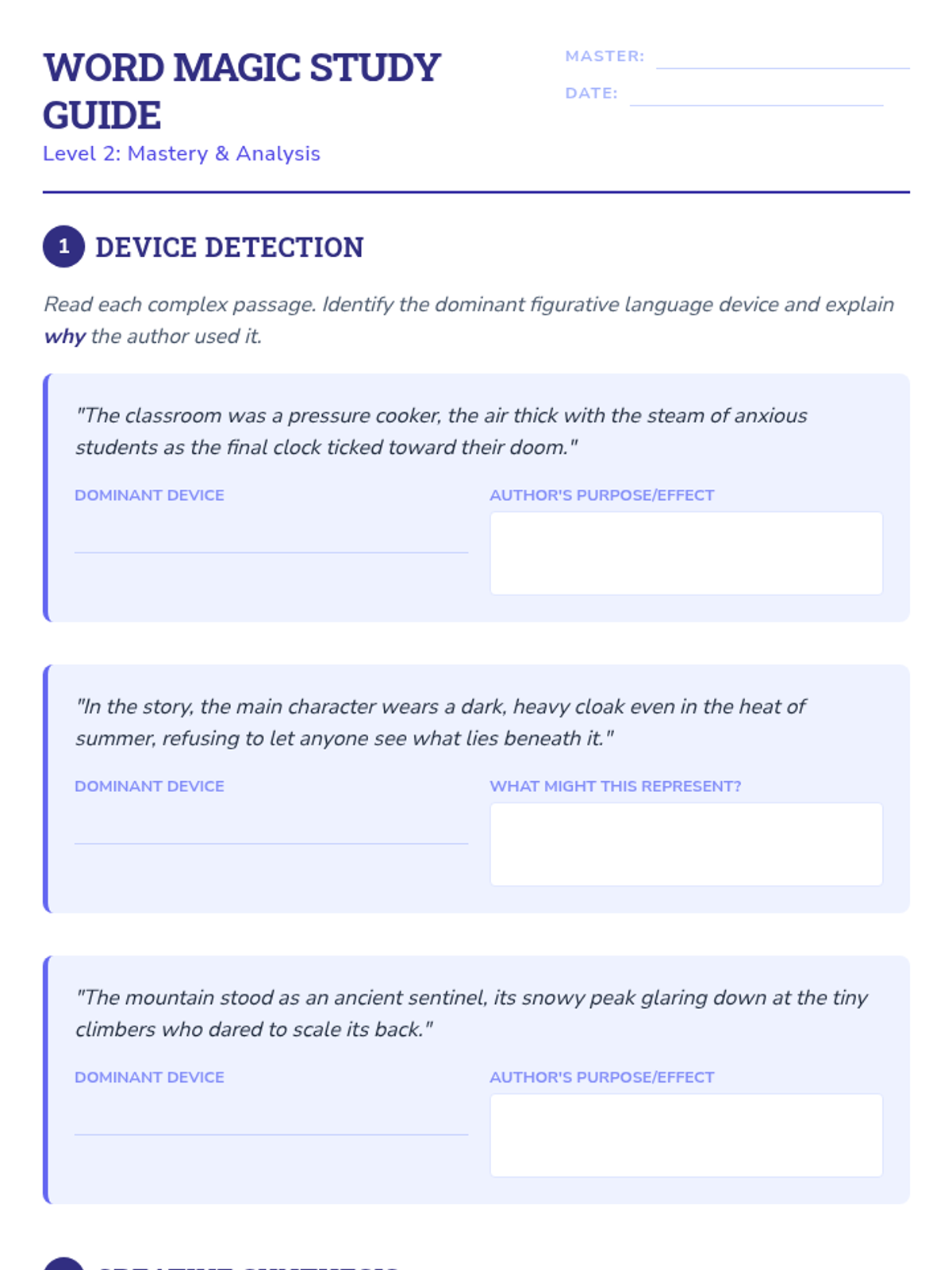
An advanced study guide for students to practice analyzing author's purpose and synthesizing multiple figurative language devices in complex writing tasks.
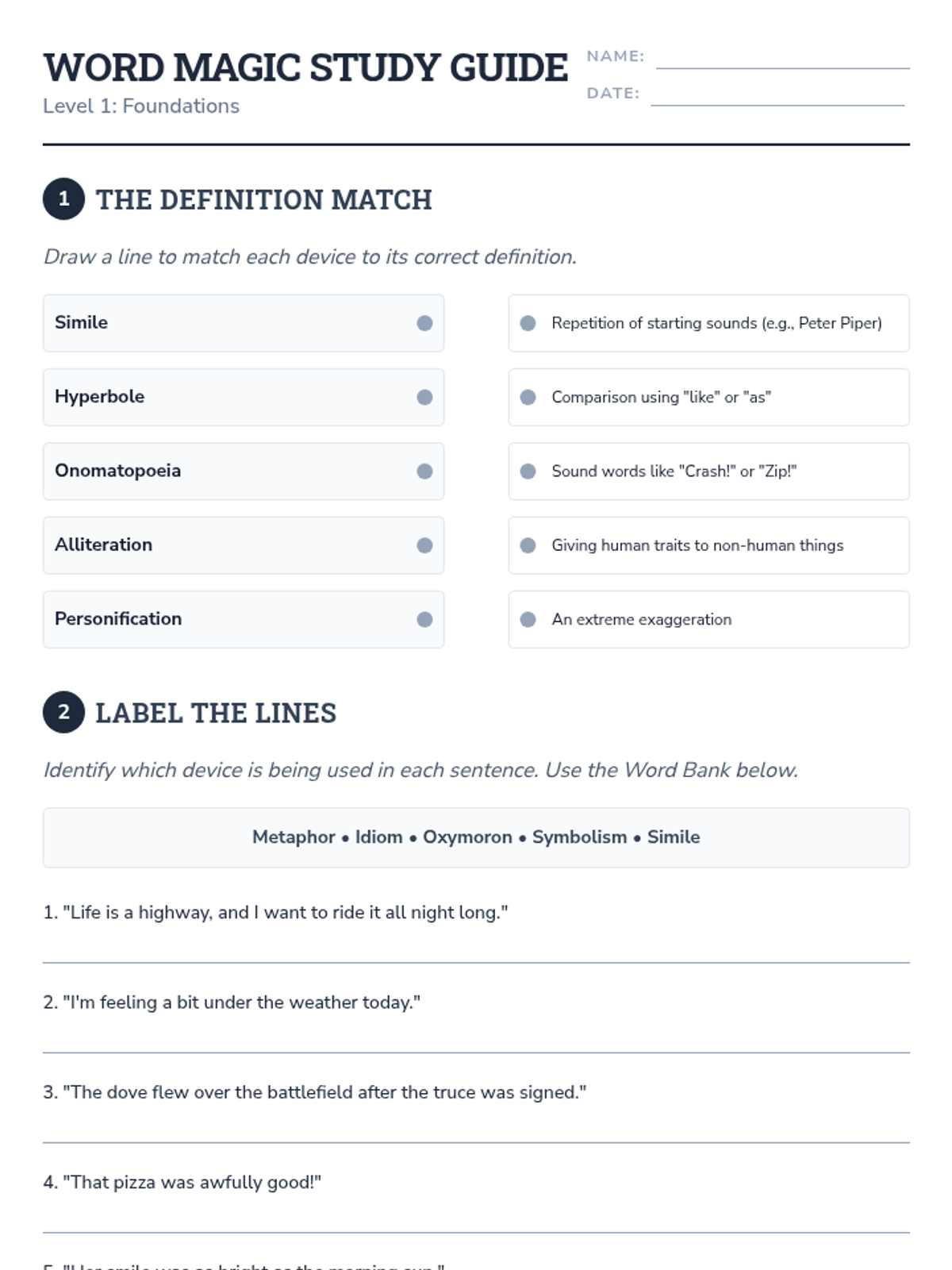
A foundational study guide revised for better vertical flow and space utilization. Includes darker writing lines for better legibility.
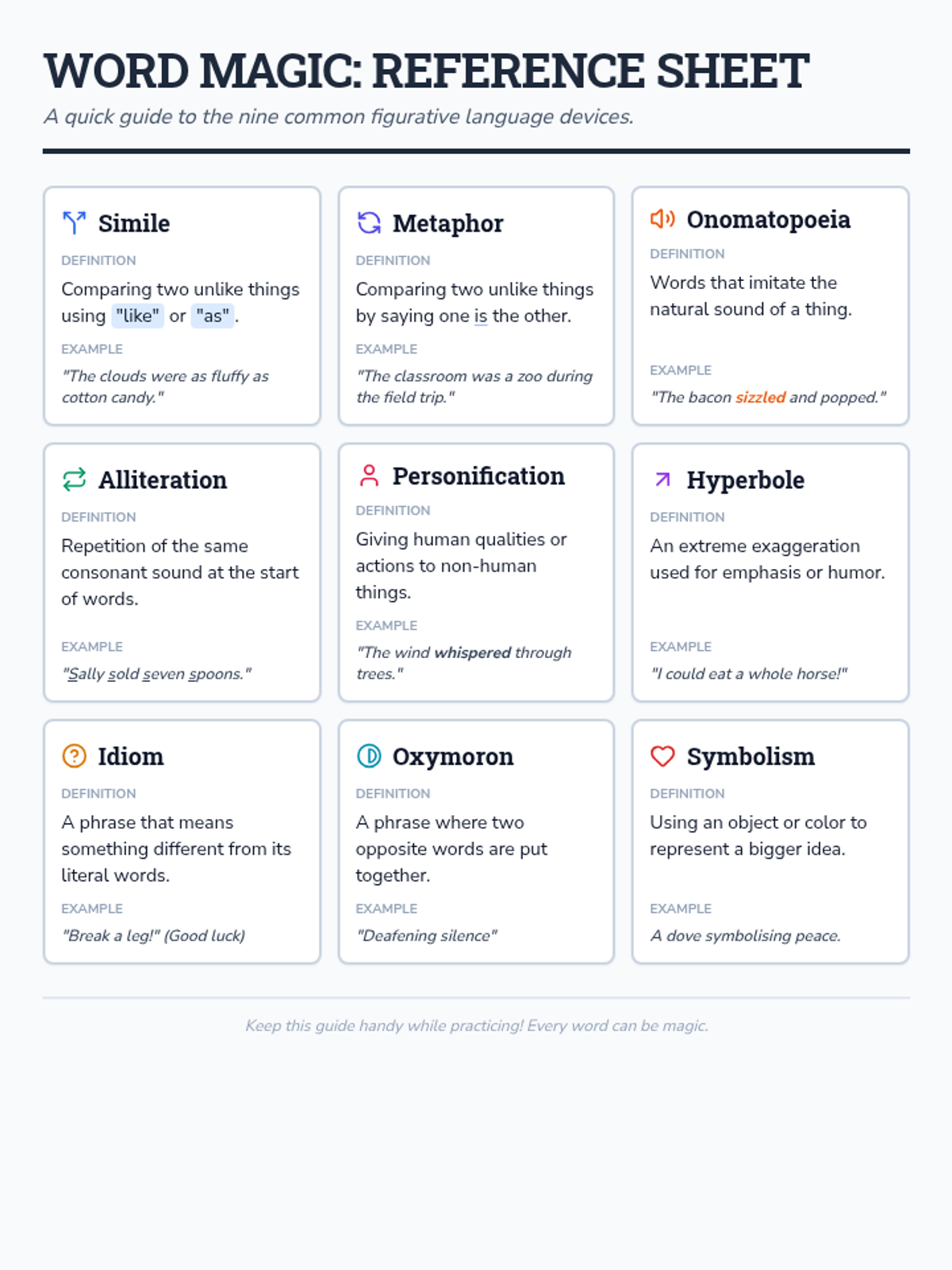
A visual reference sheet defining and providing examples for simile, metaphor, idiom, personification, hyperbole, onomatopoeia, oxymoron, symbolism, and alliteration. Revised to fit all content on one page with uniform styling.
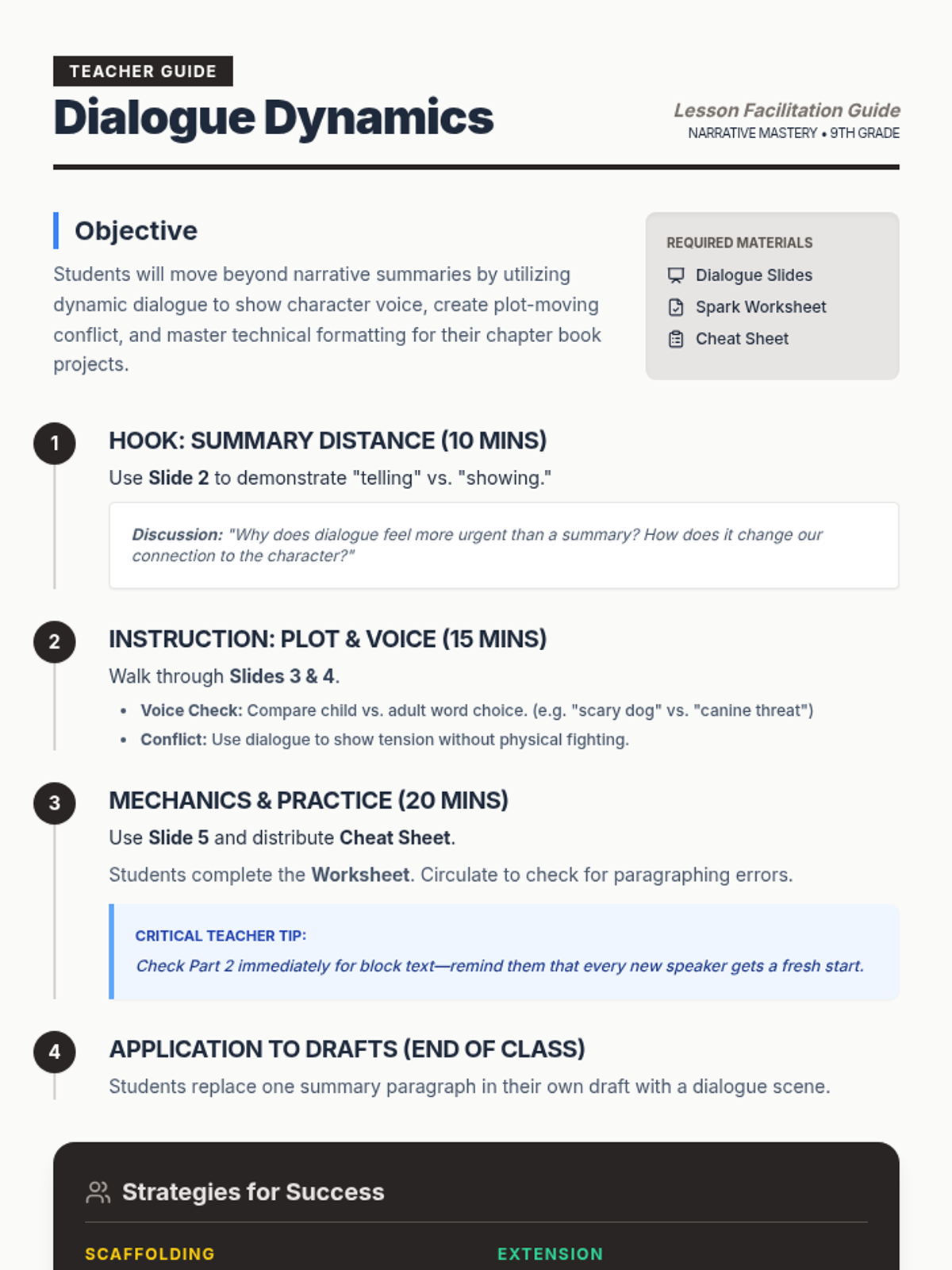
A comprehensive facilitation guide for teachers to deliver a high-impact lesson on dialogue. Includes discussion prompts, pacing suggestions, instructional tips, and differentiation strategies for 9th-grade classrooms.
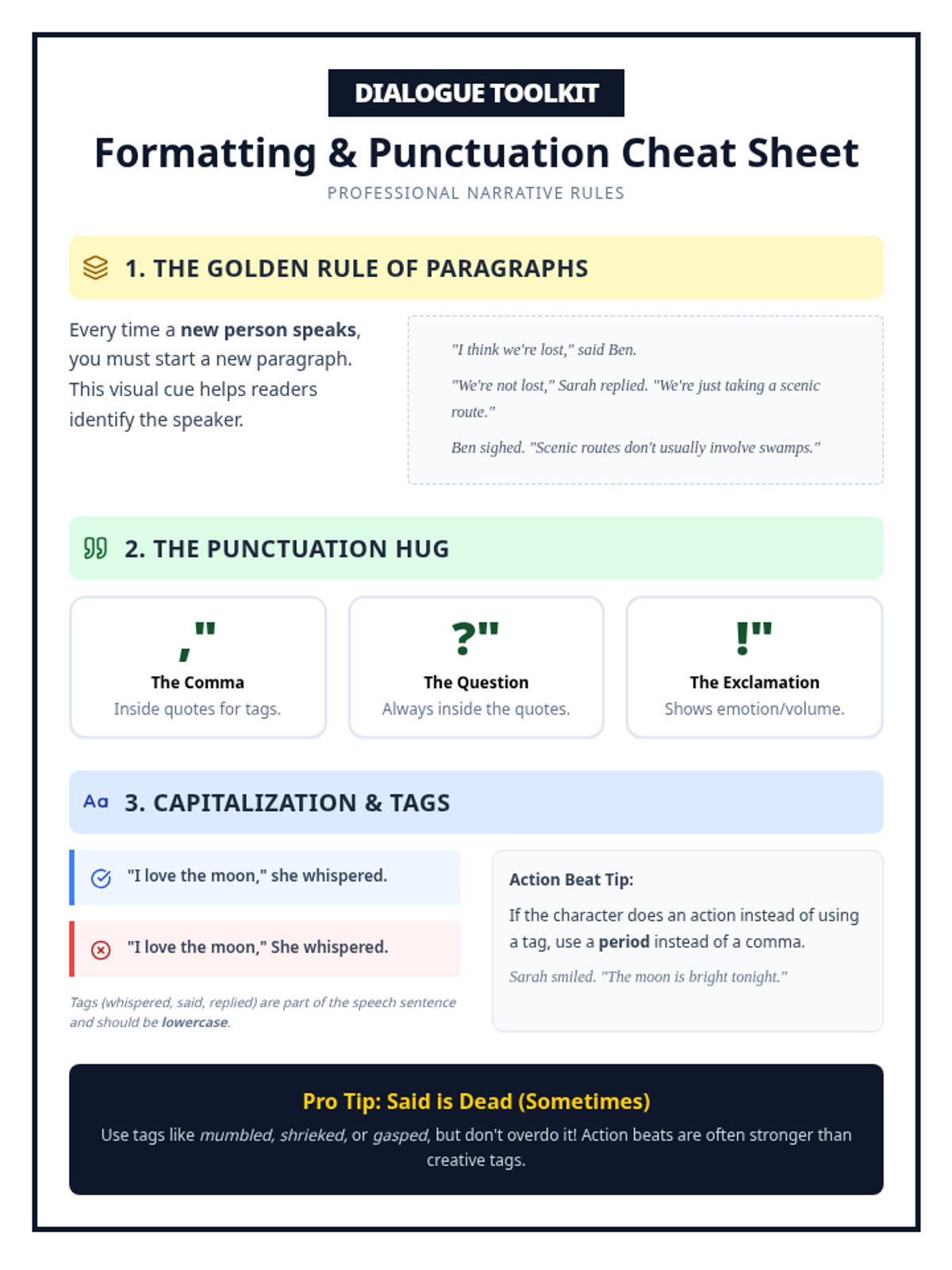
A concise reference guide for students outlining the essential rules for dialogue formatting, including paragraphing, punctuation placement, and capitalization conventions. Includes clear examples and common pitfalls to avoid.
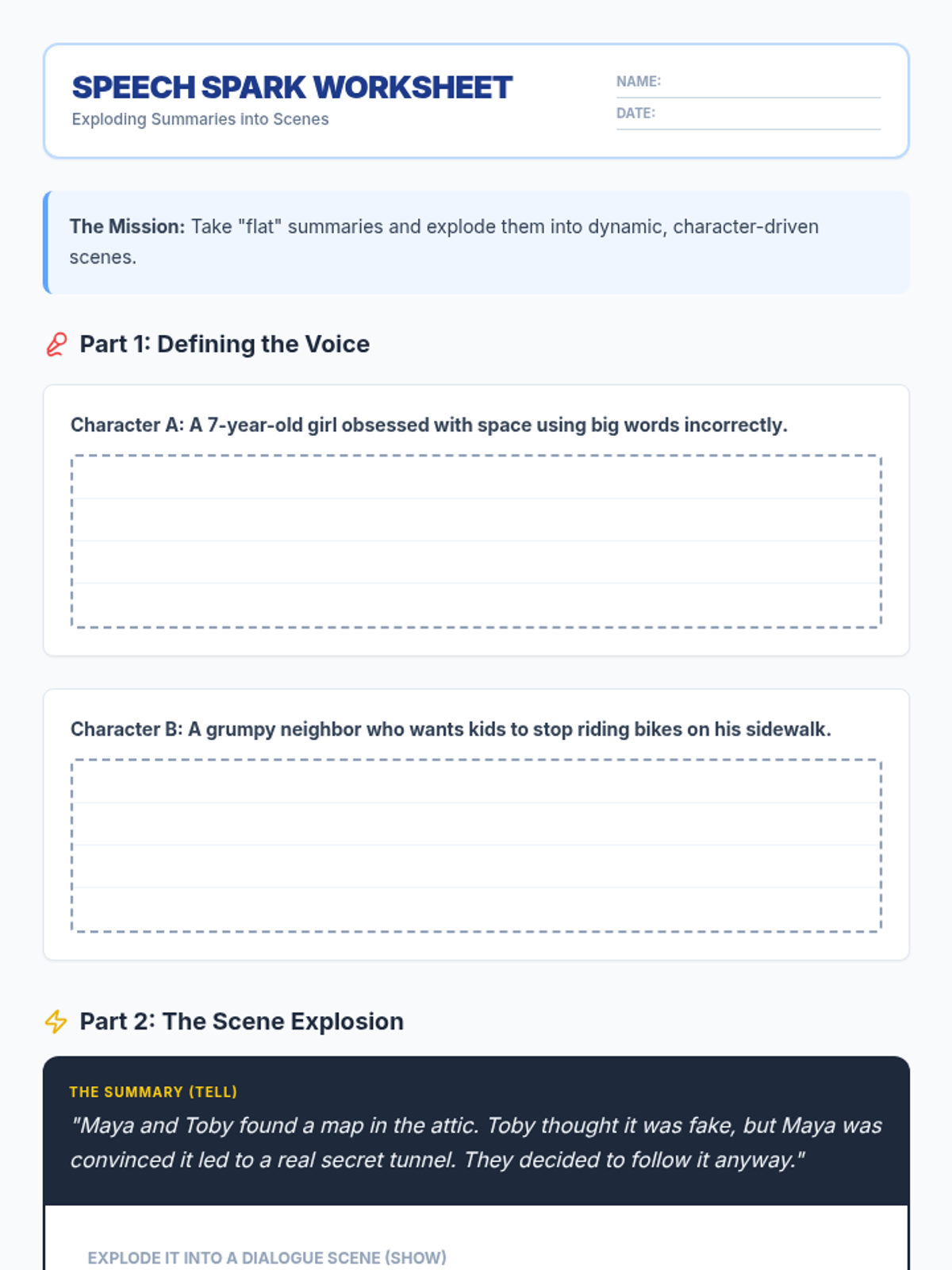
A student-facing worksheet where students practice converting summary paragraphs into active dialogue-driven scenes. It includes a character voice exercise and a designated work area for writing a structured scene.
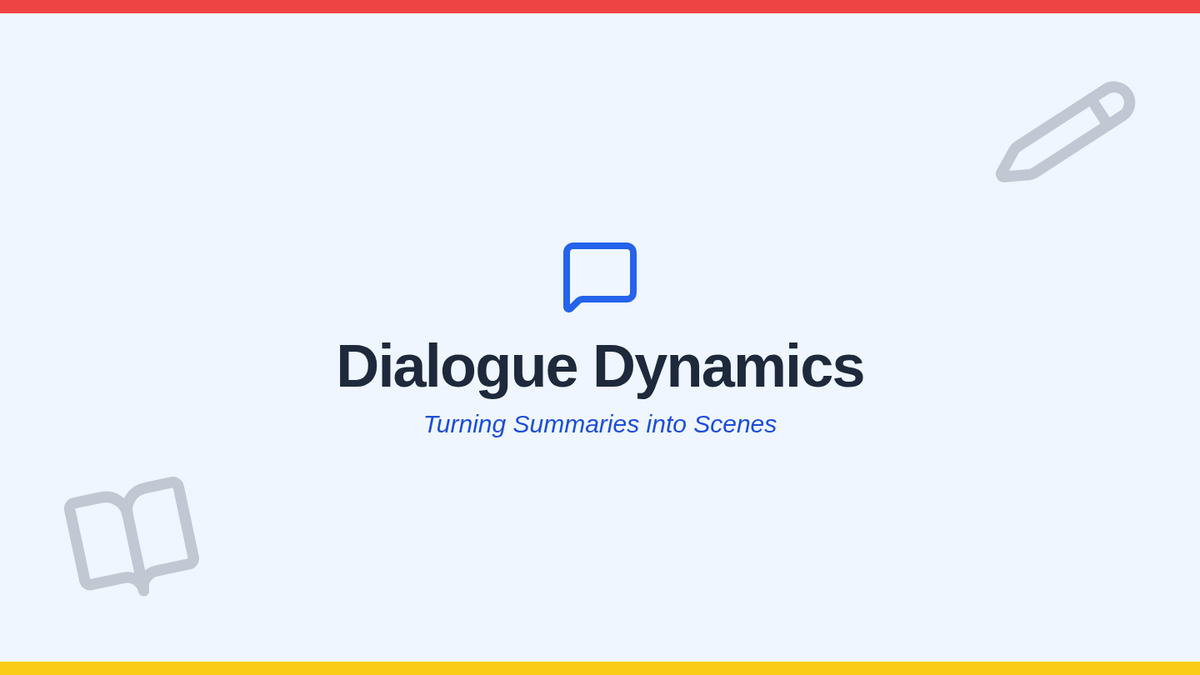
A visual slide deck designed for 9th-grade students to master dialogue techniques in narrative writing. It covers showing vs. telling, moving the plot, developing character voice, and technical formatting rules with clear examples.
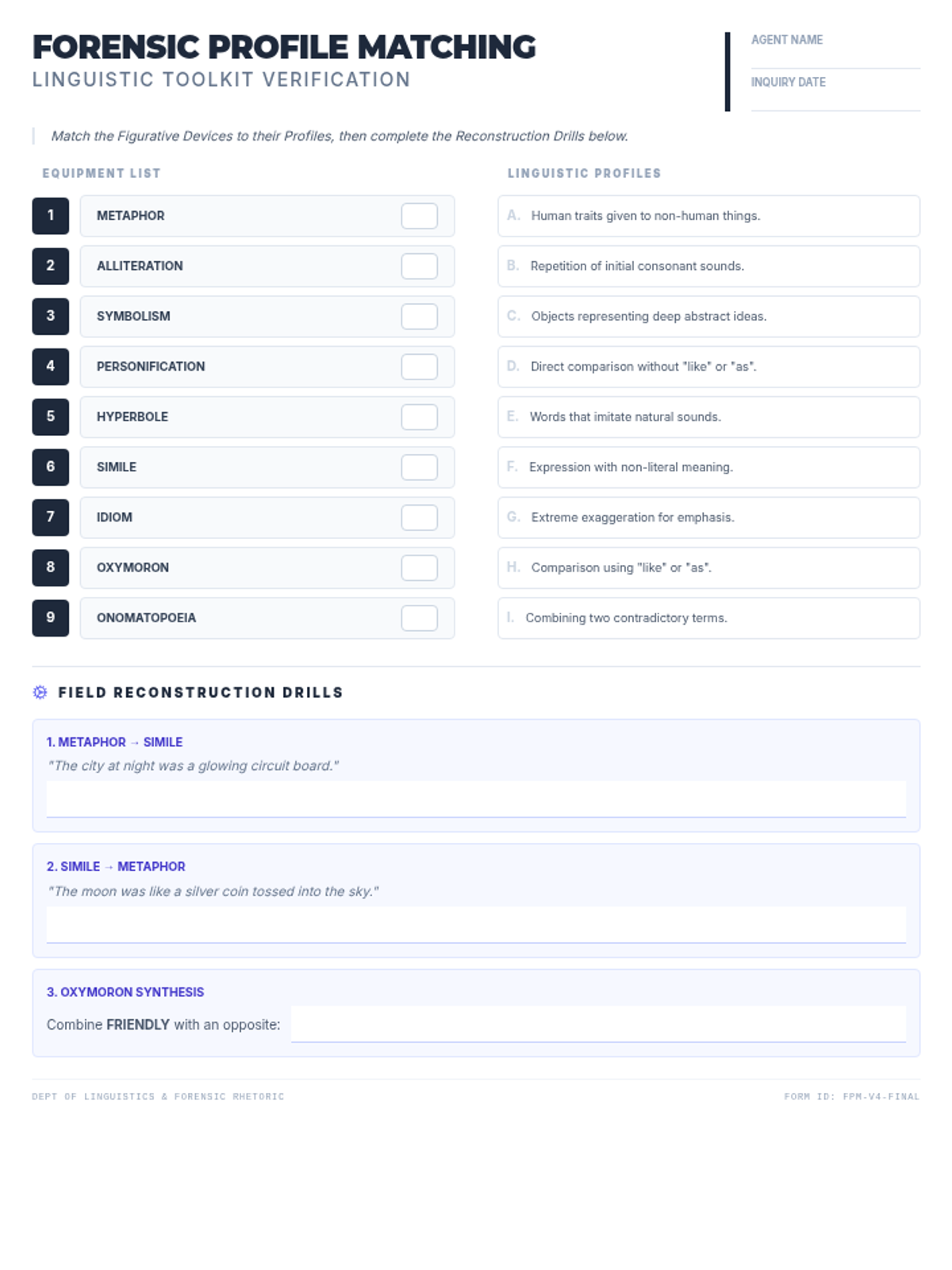
A detective-themed matching worksheet for students to pair nine figurative language devices with their correct definitions, plus three reconstruction drills. Optimized for one-page printing.
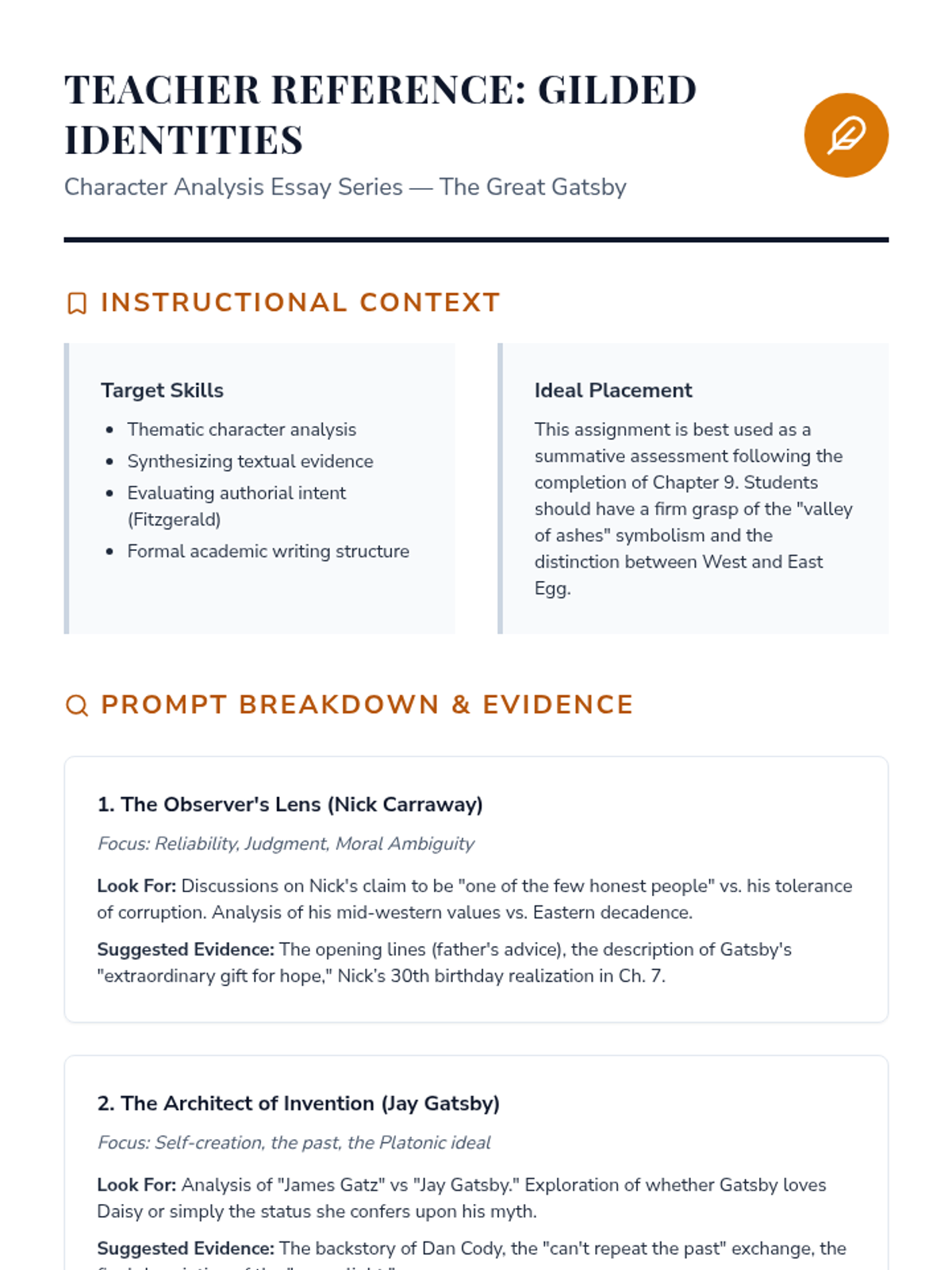
A comprehensive teacher's guide for 'The Great Gatsby' character analysis unit, providing instructional context, prompt breakdowns, evidence suggestions, and a grading rubric.
An elegant Art Deco-inspired slide deck to introduce character analysis essay prompts for 'The Great Gatsby', covering the protagonists, female characters, and the class conflict.
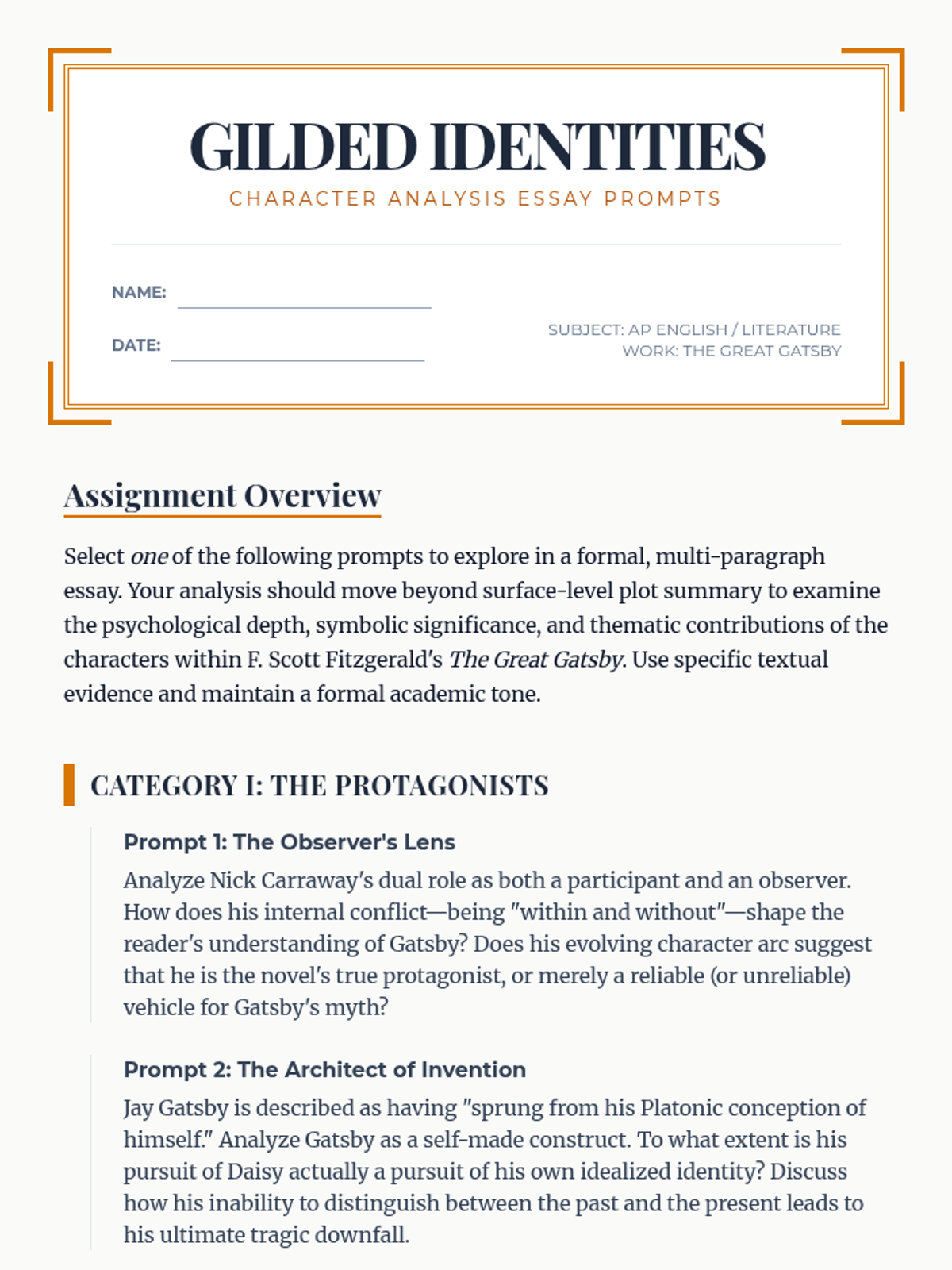
A formal student handout featuring five sophisticated essay prompts for 'The Great Gatsby', categorized by character focus and including formatting requirements.
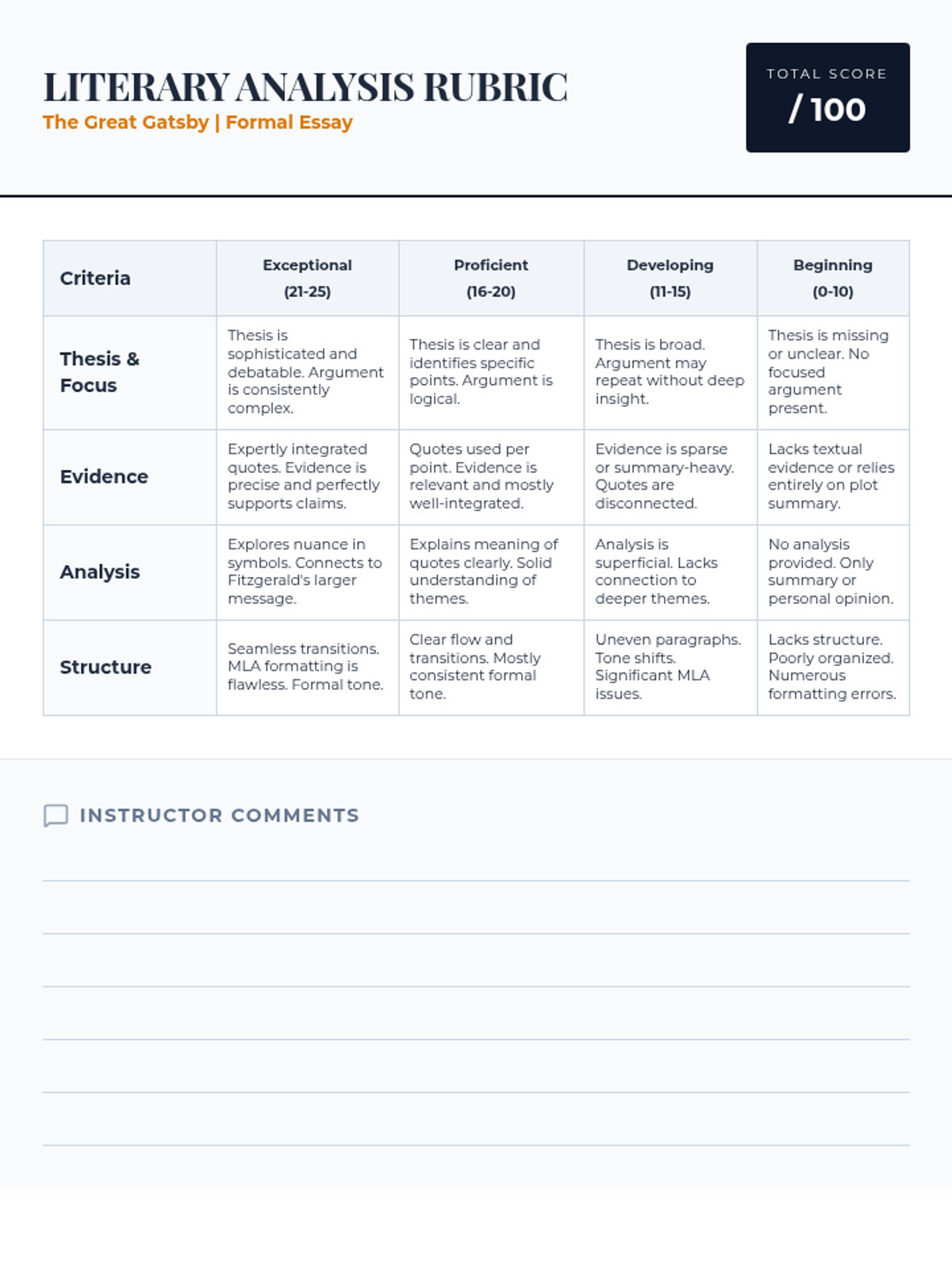
A formal grading rubric for the Gatsby analysis essay, covering thesis development, textual evidence, analysis, and organizational structure. Designed for teacher evaluation and student self-assessment.
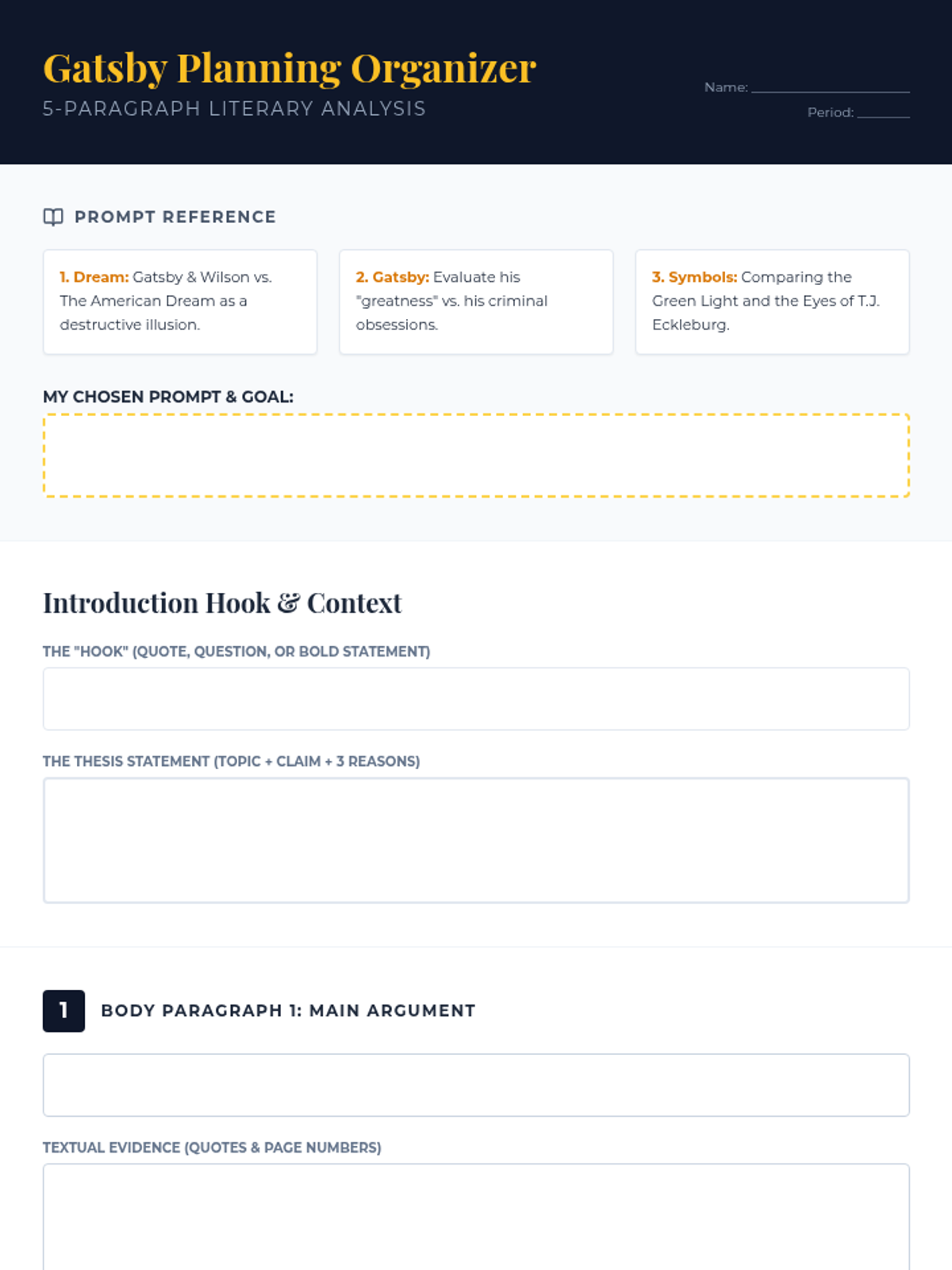
A detailed graphic organizer to help students outline their 5-paragraph analysis essay on 'The Great Gatsby', including sections for thesis development, body paragraph evidence, and concluding synthesis.
A visual presentation to introduce the key themes, symbols, and characters of 'The Great Gatsby' to help students prepare for their essay analysis. Includes slides on the American Dream, social class, and symbolism.
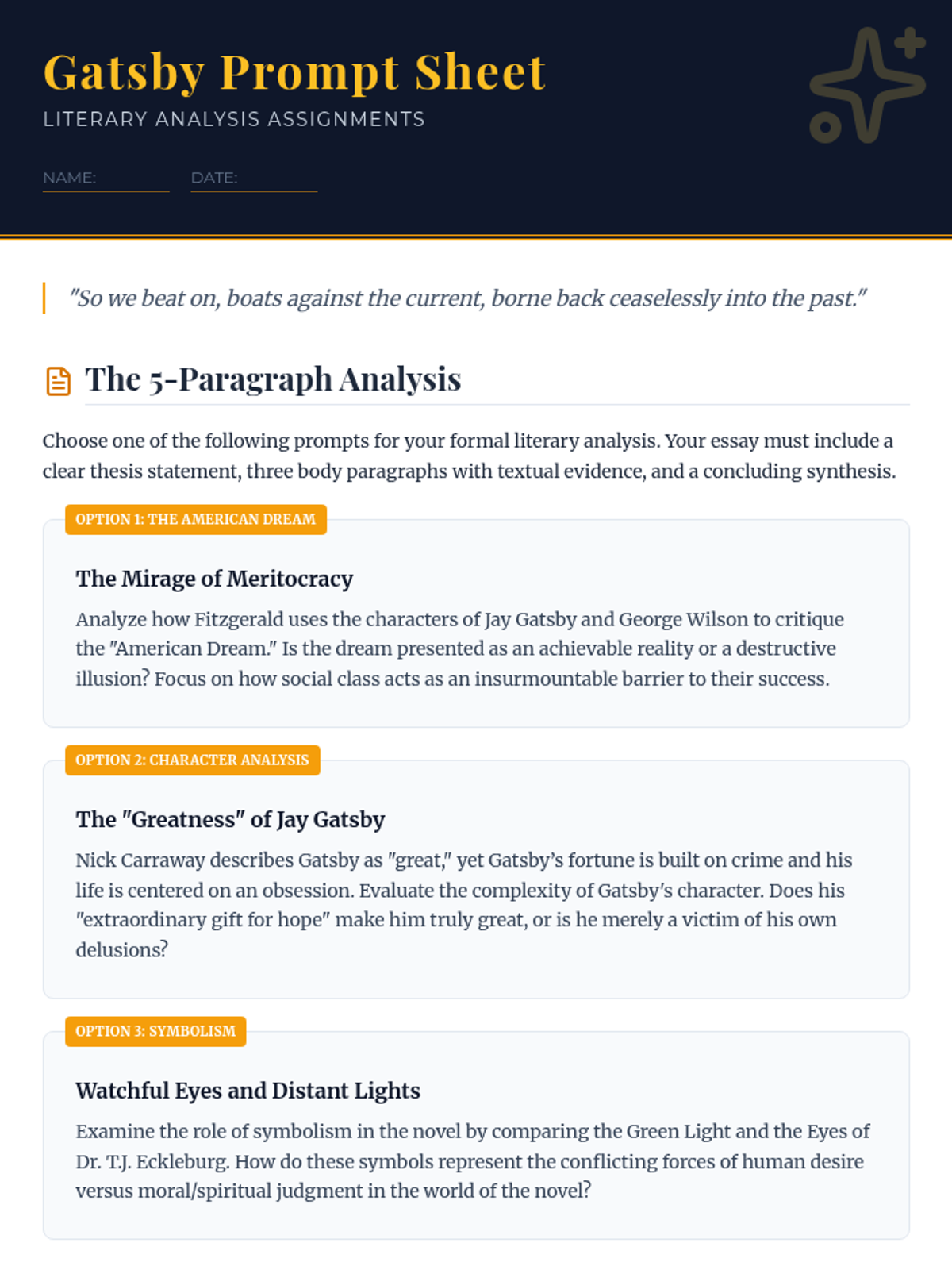
A structured document featuring analytical essay prompts for 'The Great Gatsby', organized into 5-paragraph formal analysis and 2-page response paper options. Includes specific prompts on the American Dream, symbolism, and character analysis.
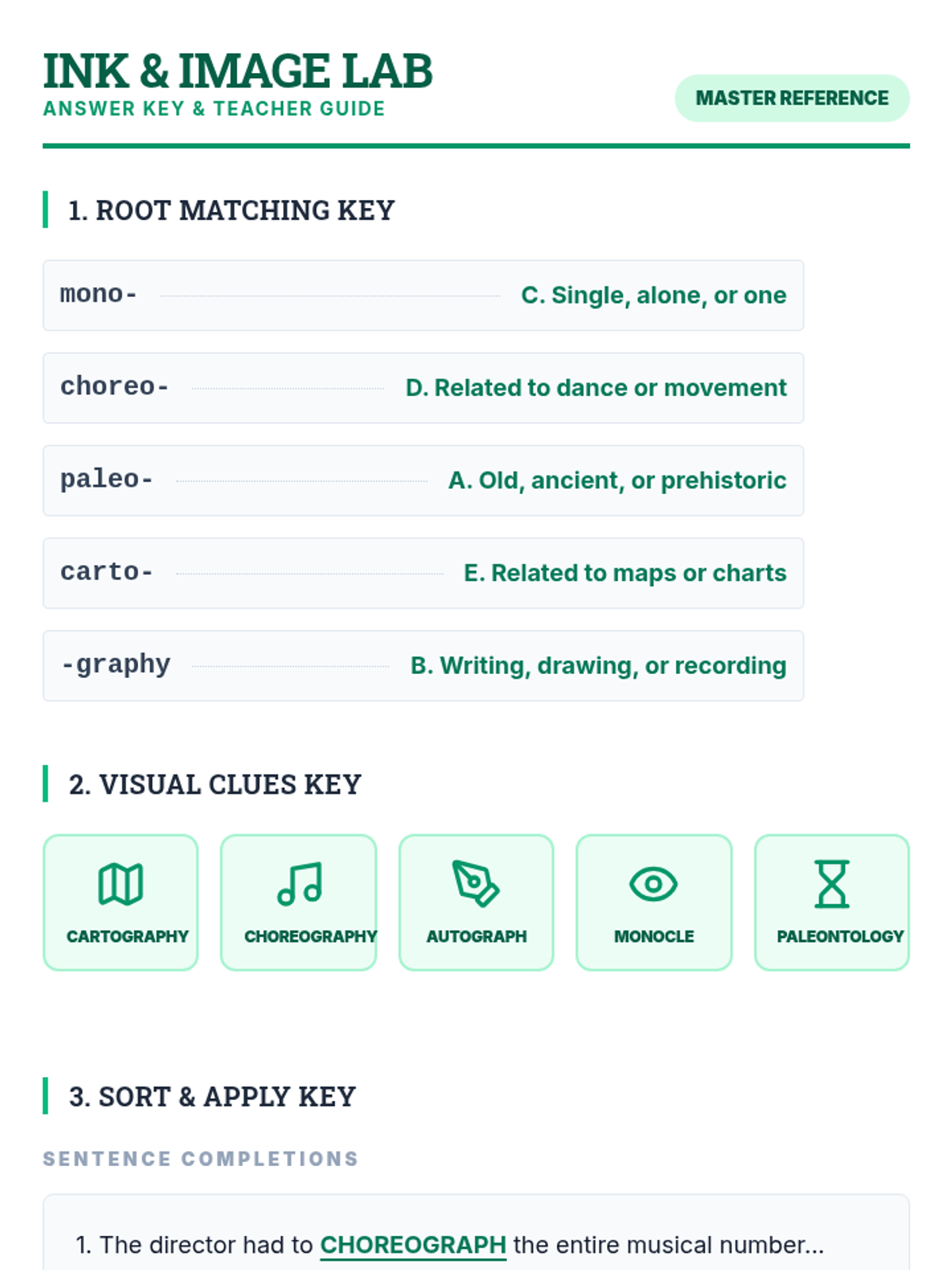
Complete answer key and teacher reference guide for the Ink & Image Lab root word worksheet.
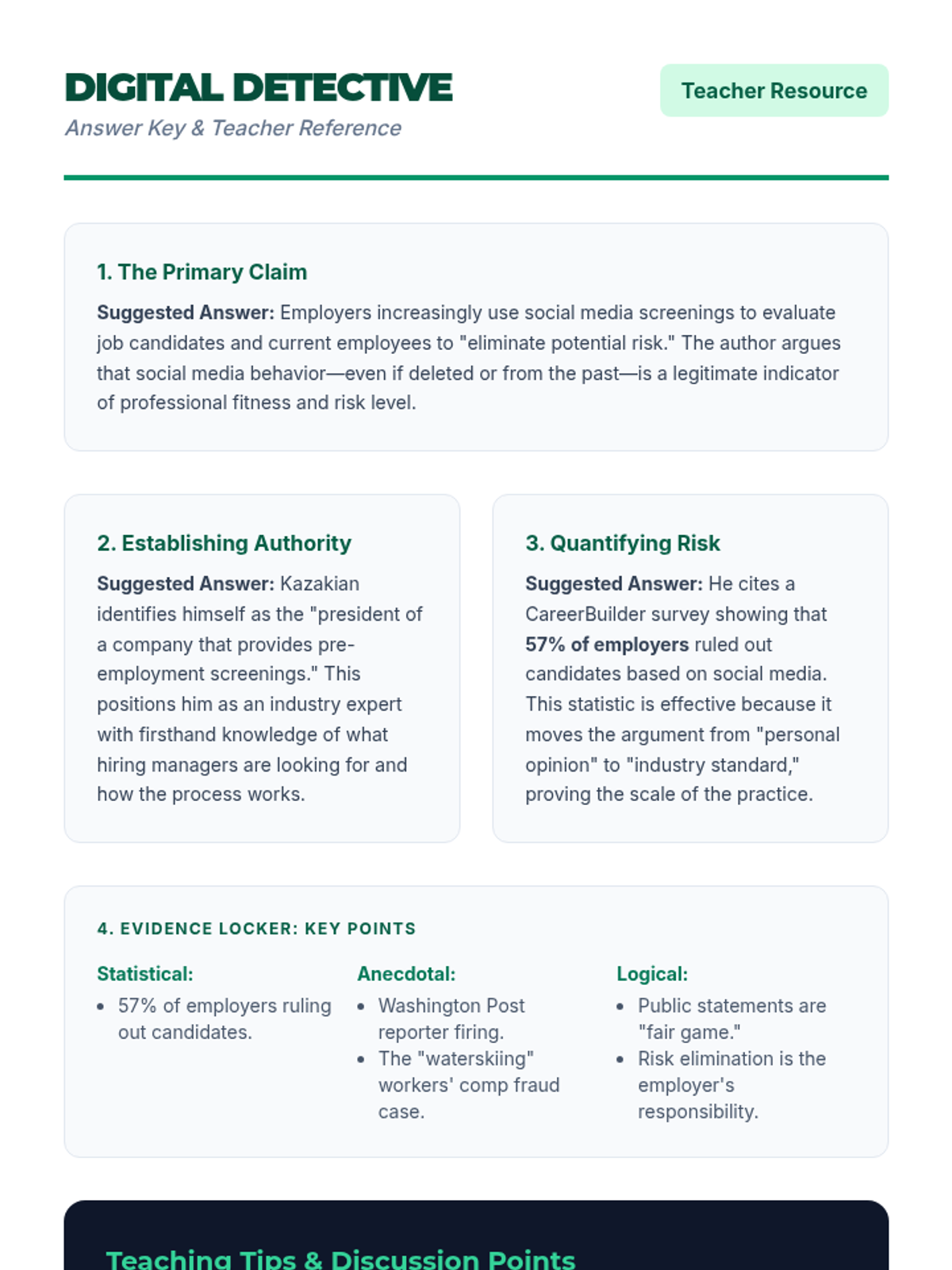
A comprehensive answer key and teacher reference for the Digital Detective worksheet, including suggested answers and discussion points.
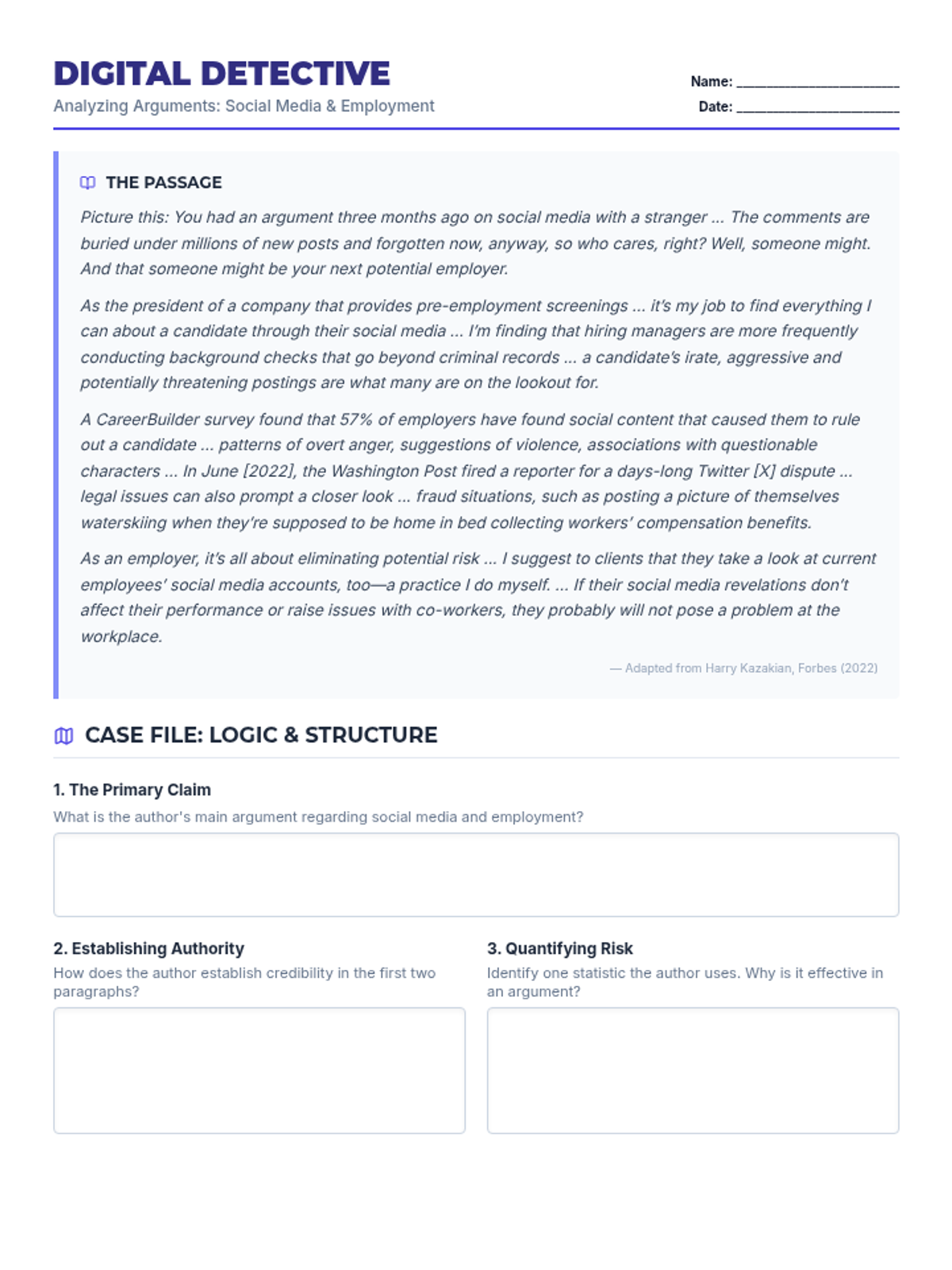
A highly optimized 2-page worksheet that strictly manages vertical space to prevent content orphaning and ensures all questions stay with their response areas.
A 5-slide presentation introducing the concept of professional social media screening, argument structure, and key vocabulary from the Harry Kazakian passage.
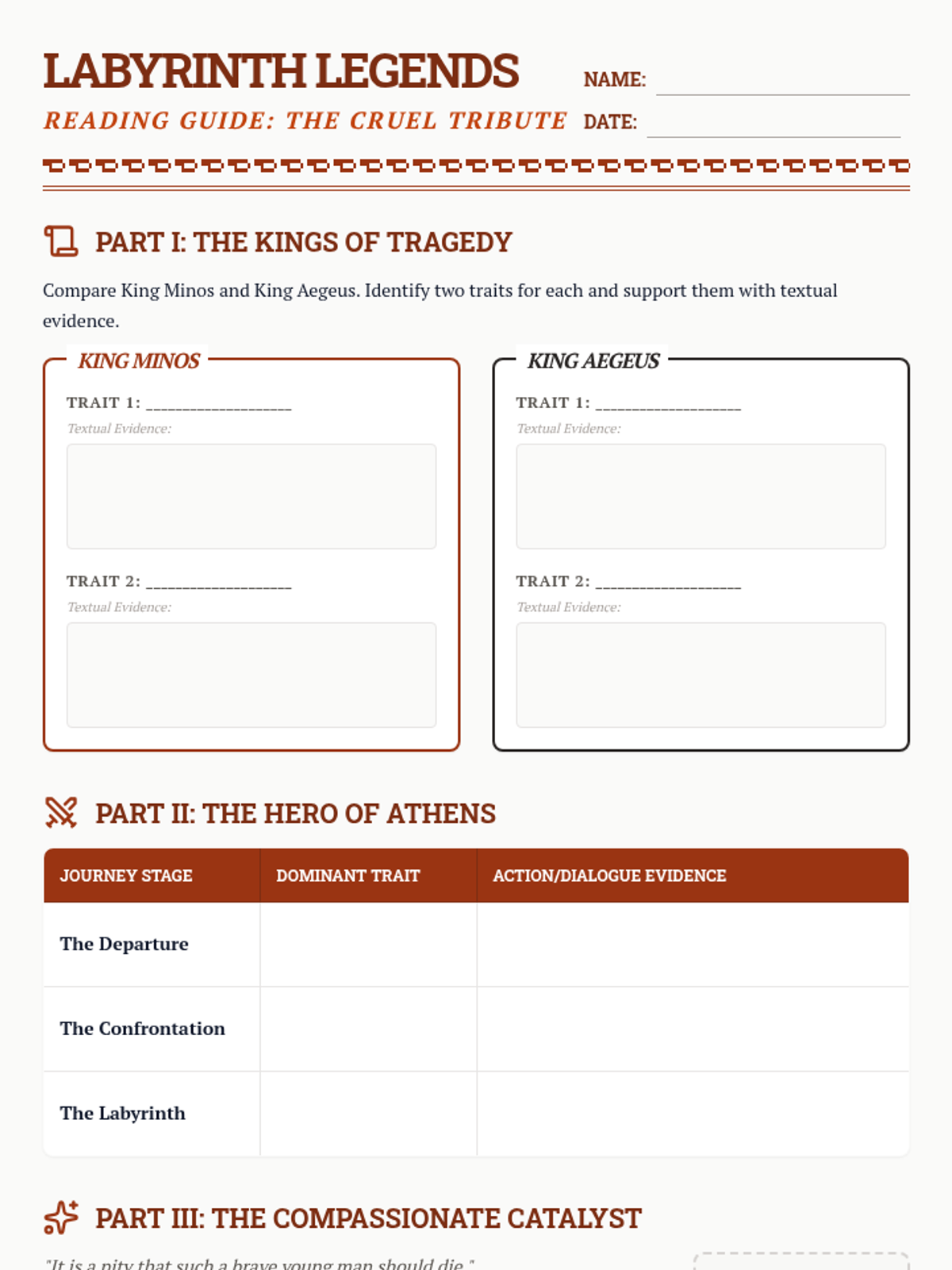
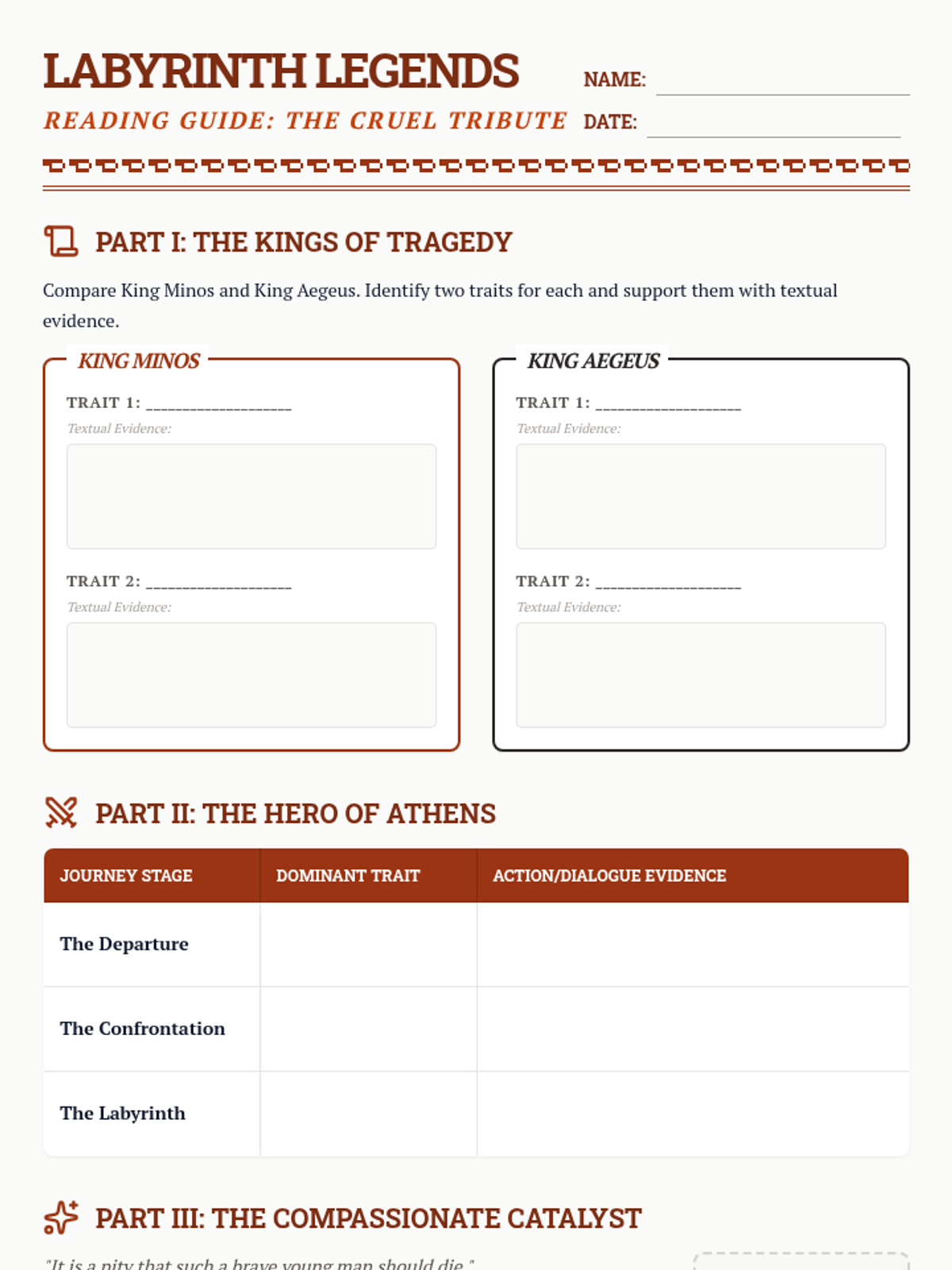
A character trait analysis guide for the myth 'The Cruel Tribute'. Students analyze the motivations and traits of King Minos, King Aegeus, Theseus, and Ariadne using textual evidence. Final polished version with improved iconography and layout.
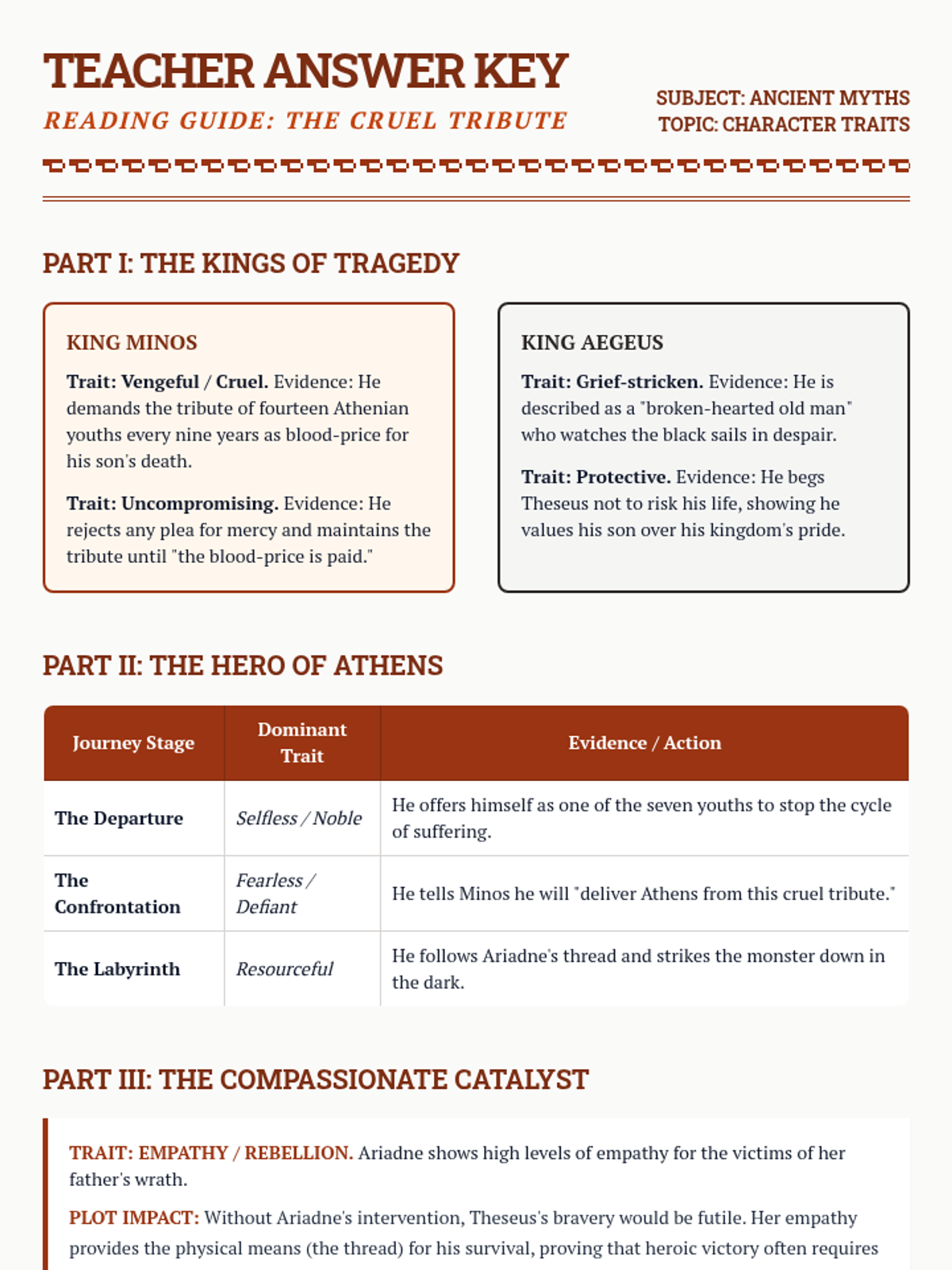
Teacher answer key for the 'Labyrinth Legends' reading guide. Updated with improved contrast for teacher notes, layout stability to prevent paragraph splitting, and crisper thematic bordering.
A character trait analysis guide for the myth 'The Cruel Tribute'. Students analyze the motivations and traits of King Minos, King Aegeus, Theseus, and Ariadne using textual evidence. Consolidated to a single efficient page with improved workspace layout.
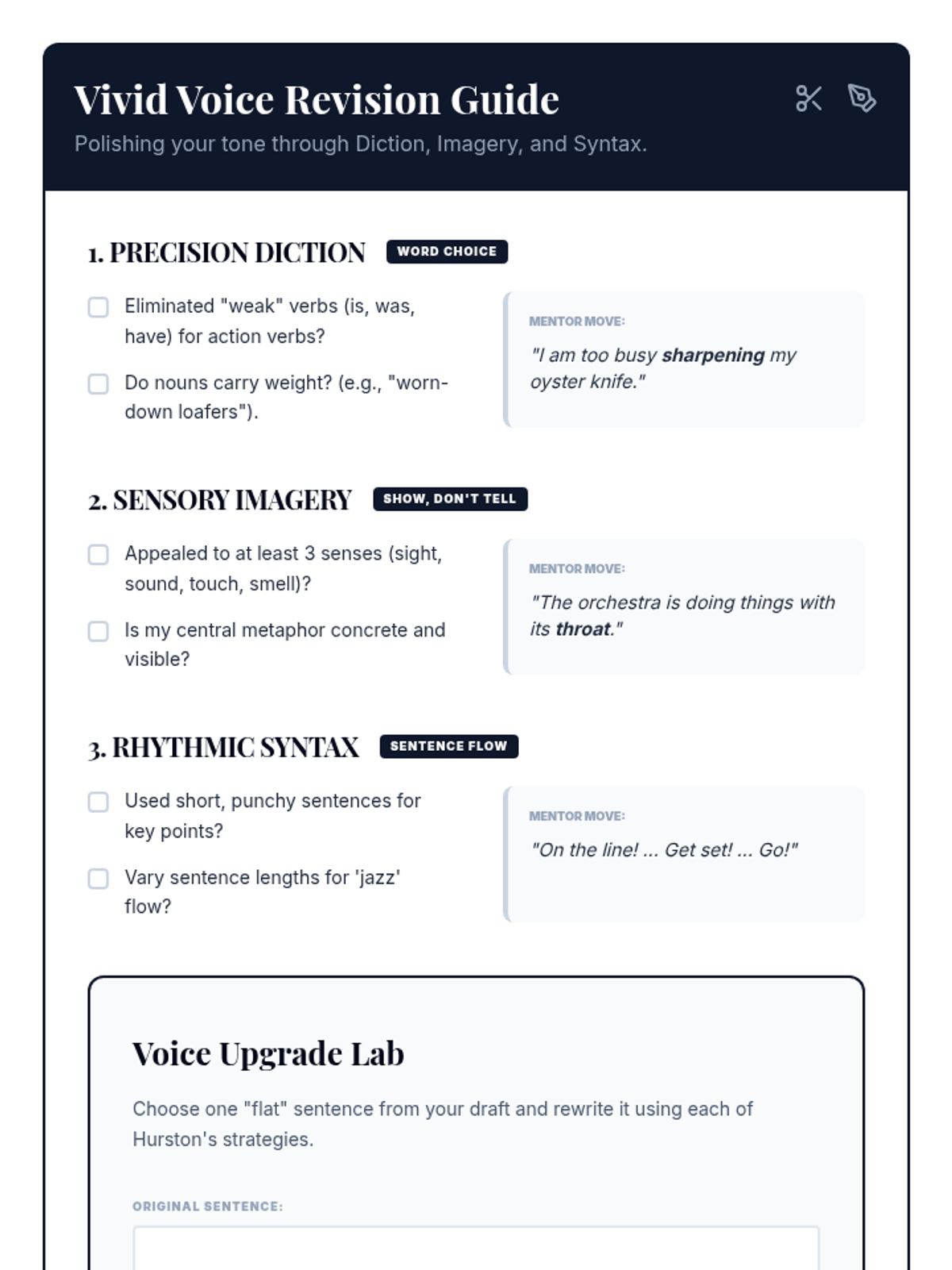
A tone-focused revision guide for students to refine their autobiographical essays using Hurston's mentor moves in diction, imagery, and syntax. Includes checklists and a 'voice upgrade' practice area.
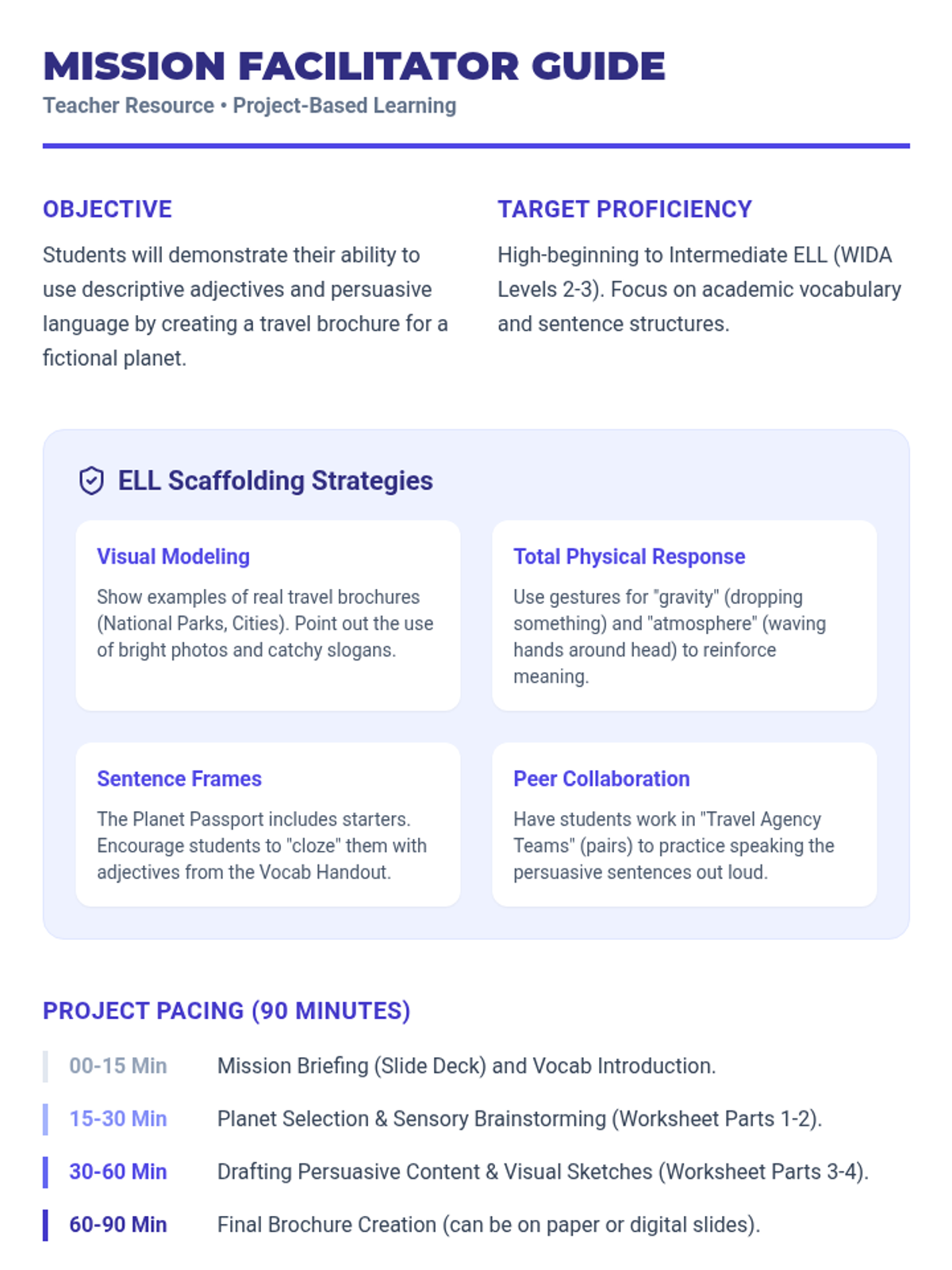
A comprehensive teacher facilitation guide for the Cosmic Voyager project. It includes ELL-specific instructional strategies, a 90-minute pacing guide, and a simple rubric focused on vocabulary and descriptive language.
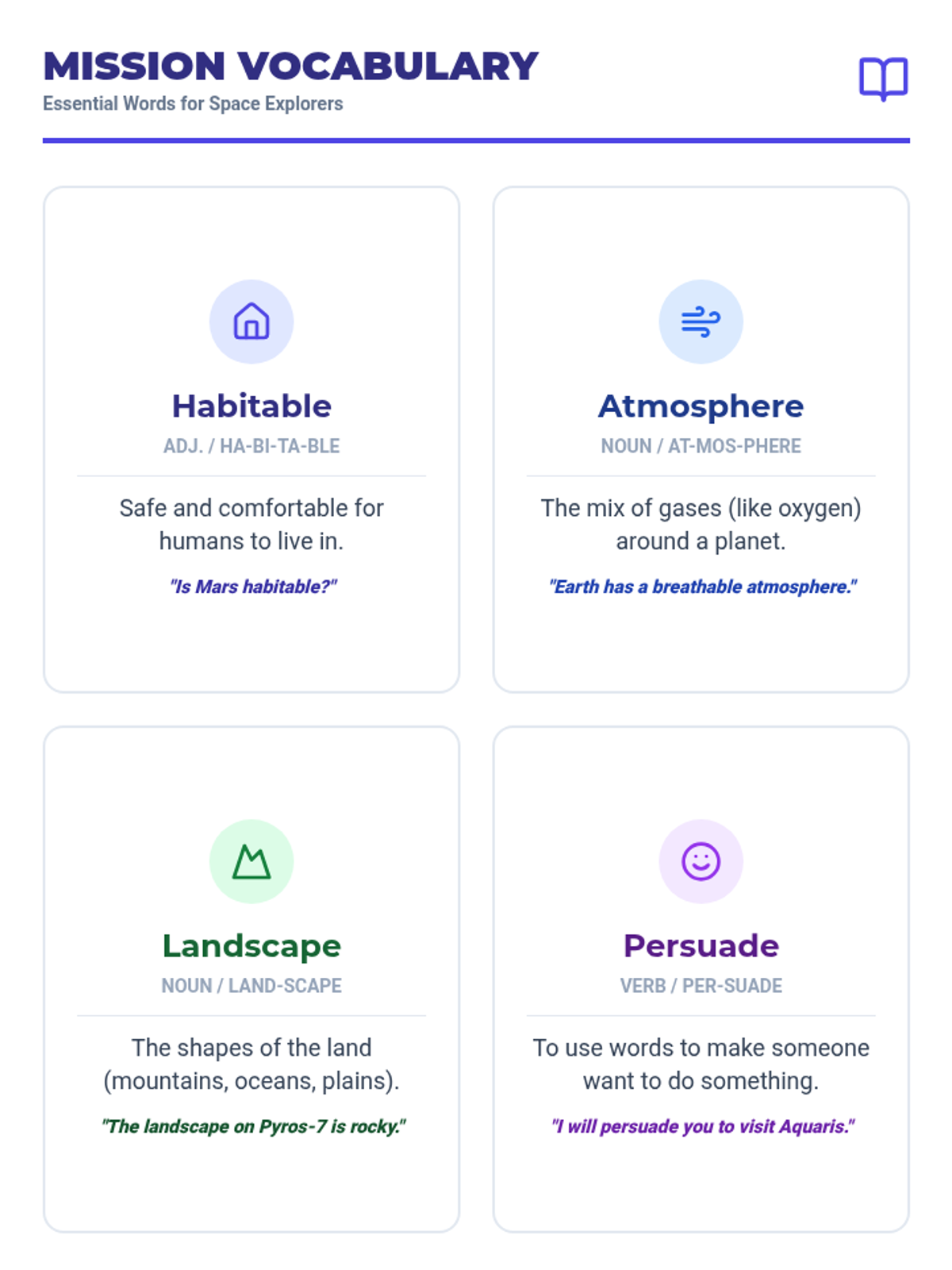
A visual vocabulary reference sheet designed for 9th grade ELL students. It features key space-related terms with definitions, pronunciation guides, icons, and example sentences. Revised with improved contrast and a new practice section.
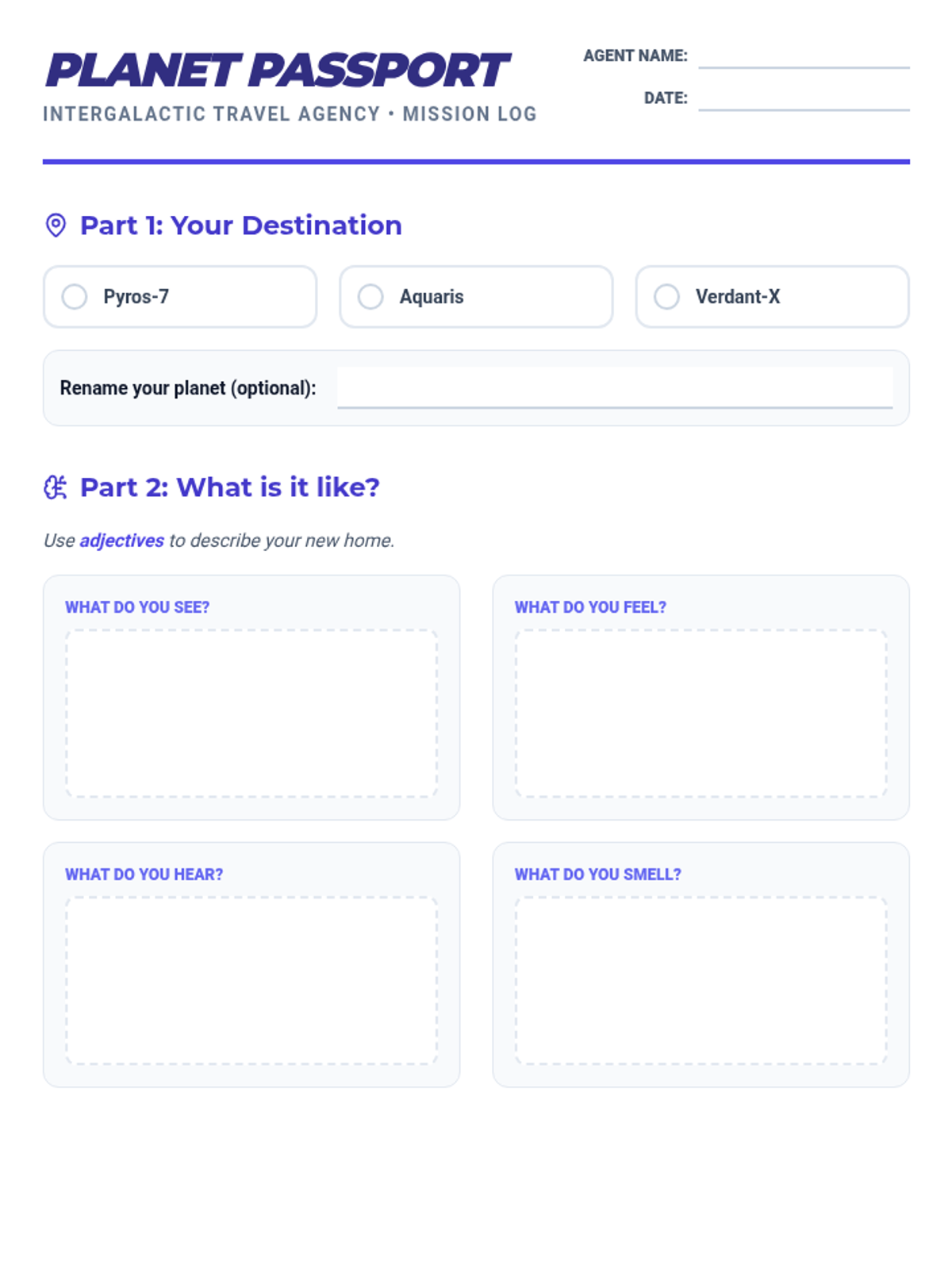
A student-facing planning worksheet for the Planet Passport project. It includes brainstorming sections for sensory details, persuasive writing prompts with ELL-friendly sentence starters, and space for visual sketching. Revised to fix page break and alignment issues.
A vibrant slide deck for 9th grade ELL students introducing a project-based lesson on space exploration and travel. It includes vocabulary support, planet options, and clear project goals using a retro-future aesthetic.
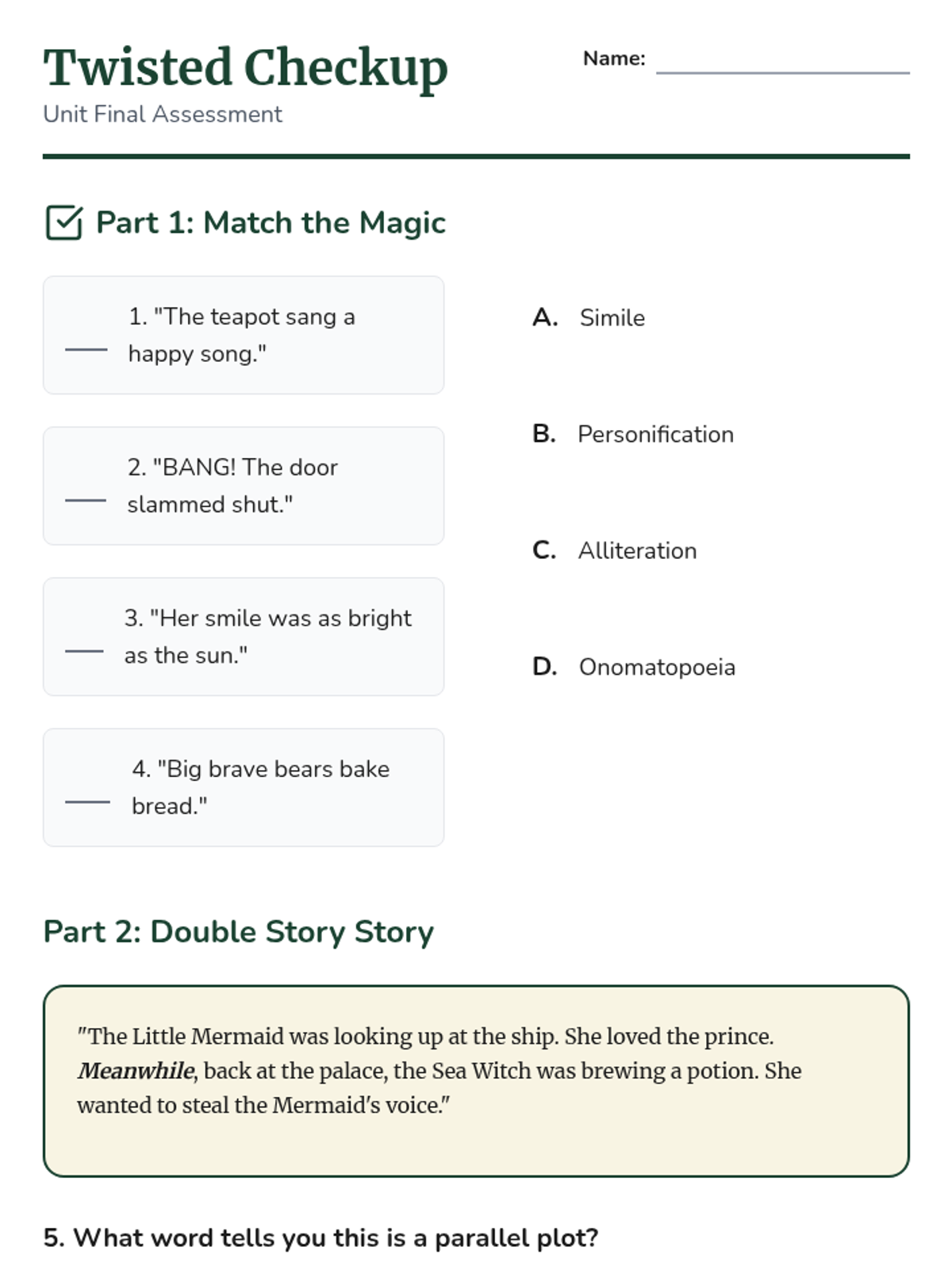
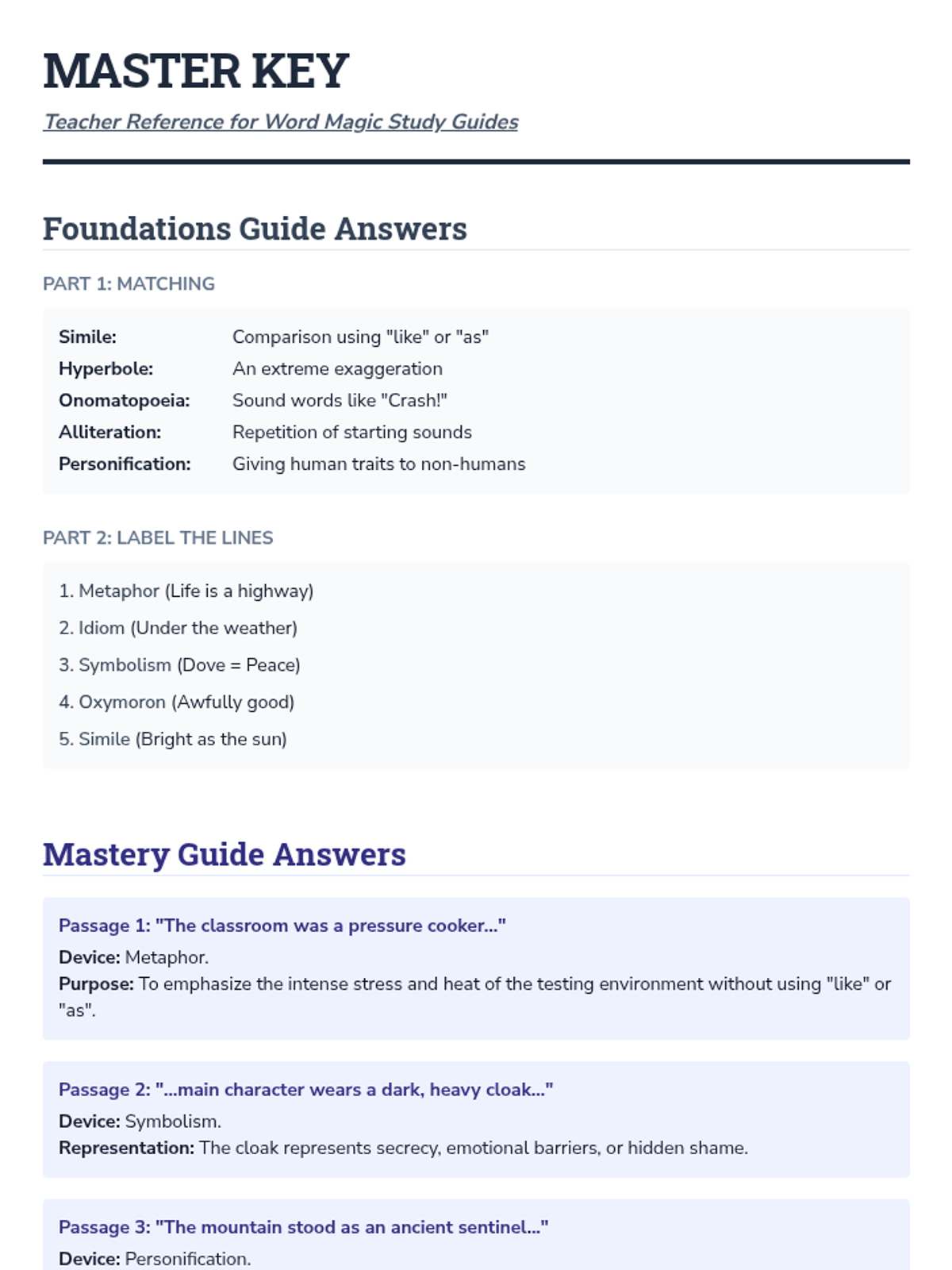
A final assessment for the Twisted Threads unit. Revised for improved page layout (avoiding split questions), matching line indicators, and question consistency.
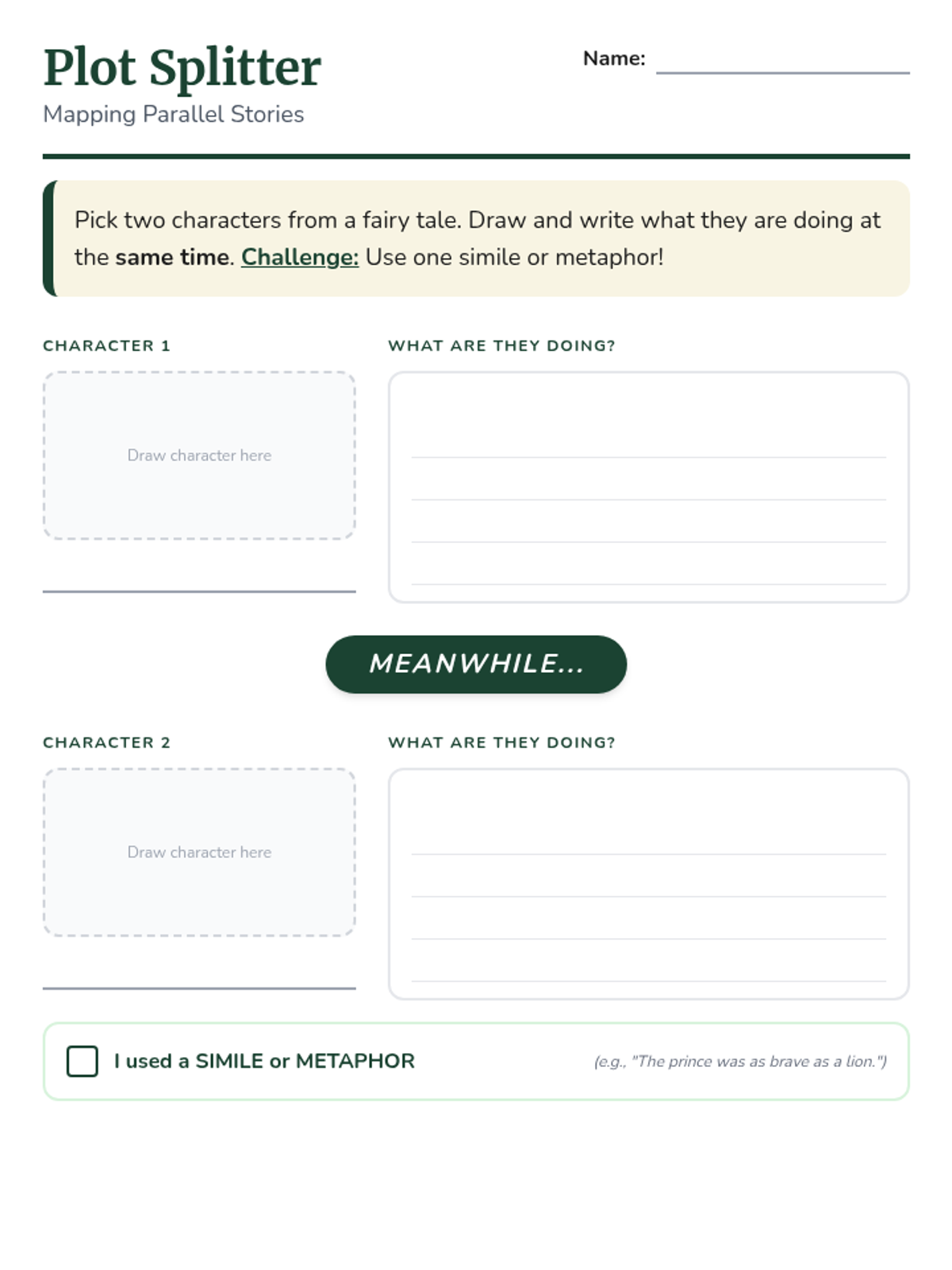
A graphic organizer for students to map out parallel plots. Revised to fit on a single page, include a figurative language challenge, and provide clean, ruled student work areas.
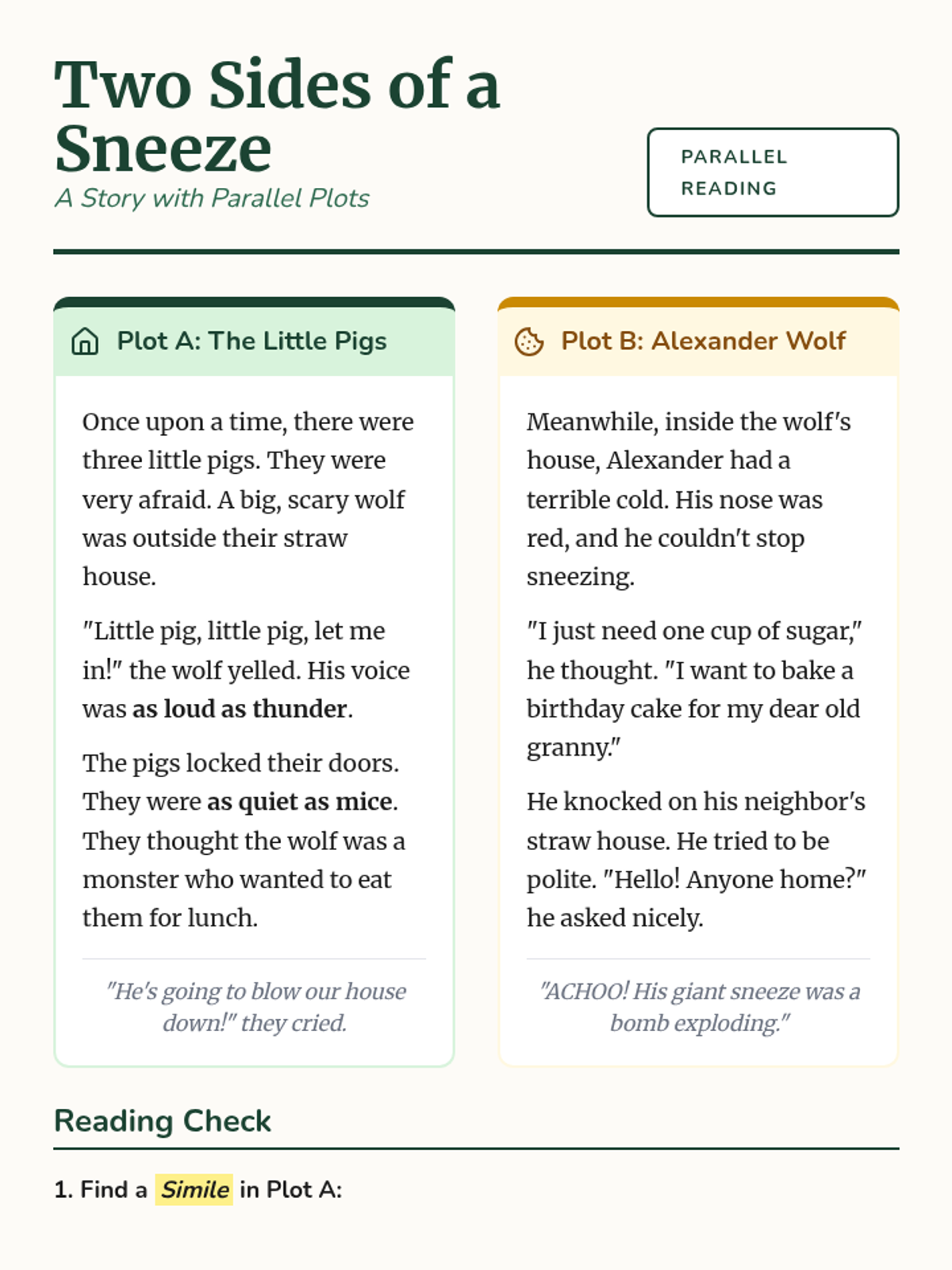
A reading passage featuring two parallel plots of the Three Little Pigs story. Revised for content accuracy (metaphor inclusion), improved page layout, and better handwriting lines. Now includes a question about onomatopoeia.
A presentation explaining parallel plots and perspectives using fairy tale examples. Revised for better text layout and to explicitly integrate figurative language concepts through a refresher slide.
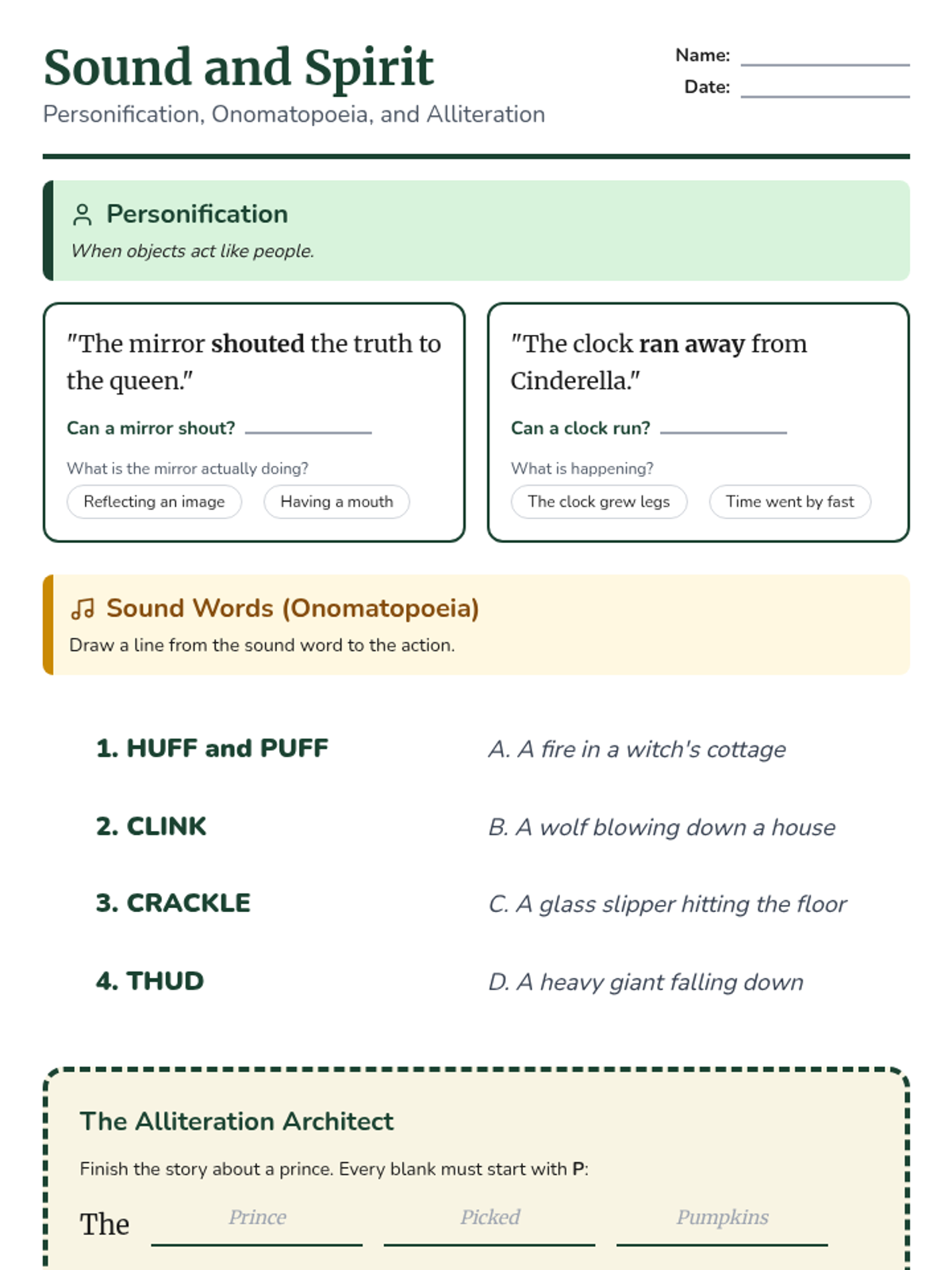
A worksheet focusing on personification, onomatopoeia, and alliteration. Revised for improved page layout, matching spacing, and clearer student input areas. Now fits on a single page.
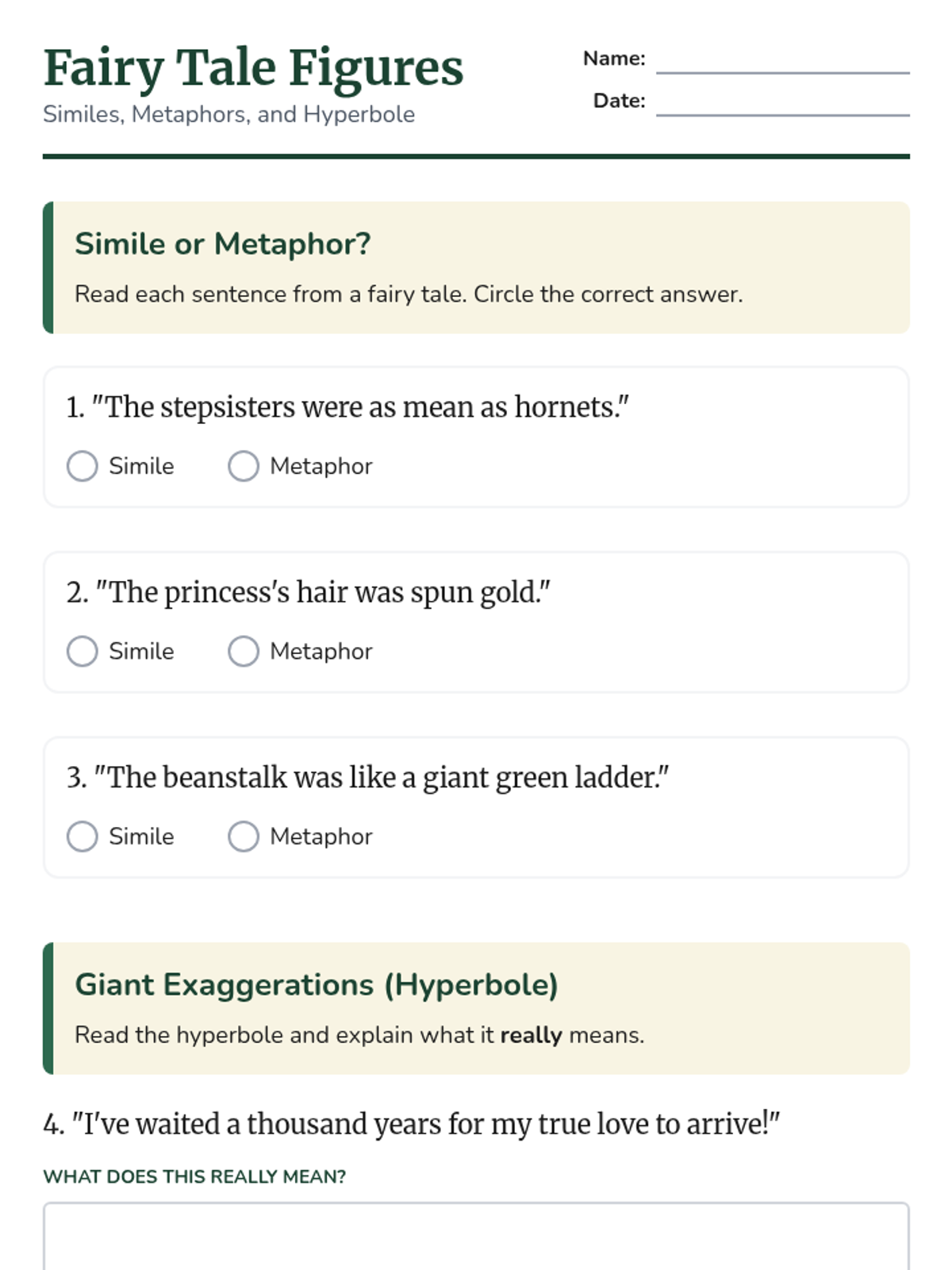
A worksheet for students to practice identifying similes, metaphors, and hyperboles using fairy tale themed sentences. Revised for answer choice uniformity and improved page flow.