Slides for the Inclusive Spaces lesson, introducing accessibility and universal design through interactive simulation challenges and visual examples of smart design solutions.

A visual presentation for 6th grade students connecting music genres to computer science concepts like data attributes, classification algorithms, and machine learning. Final version with increased font sizes for accessibility.
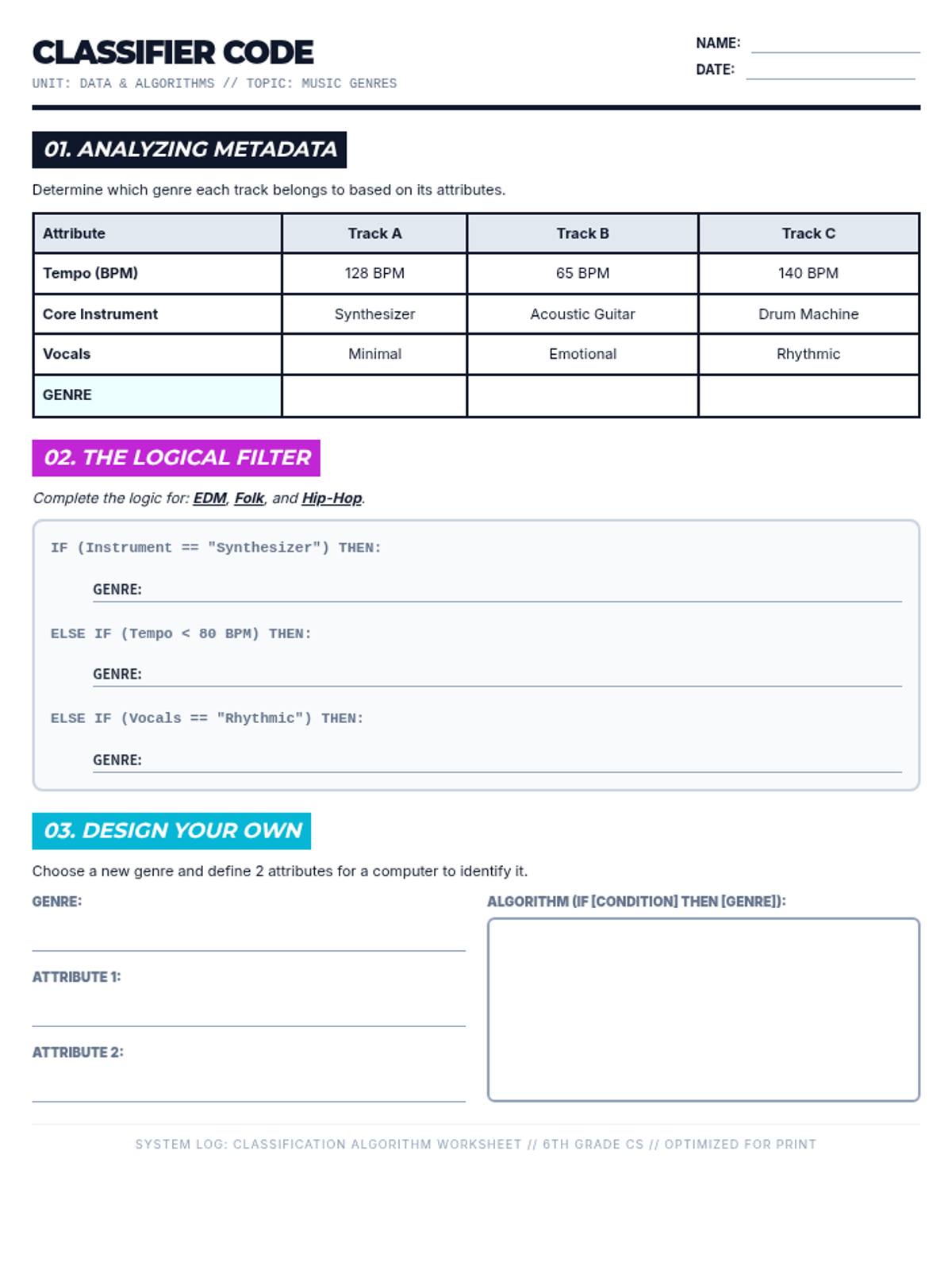
A revised single-page worksheet for 6th grade students to practice music genre classification with algorithmic logic. Fixes page breaks and optimizes work areas.
A comprehensive 15-slide presentation on photosynthesis for 7th-grade science, covering the chemical formula, energy flow, and chloroplast structure using a 'Botanical Blueprint' aesthetic.
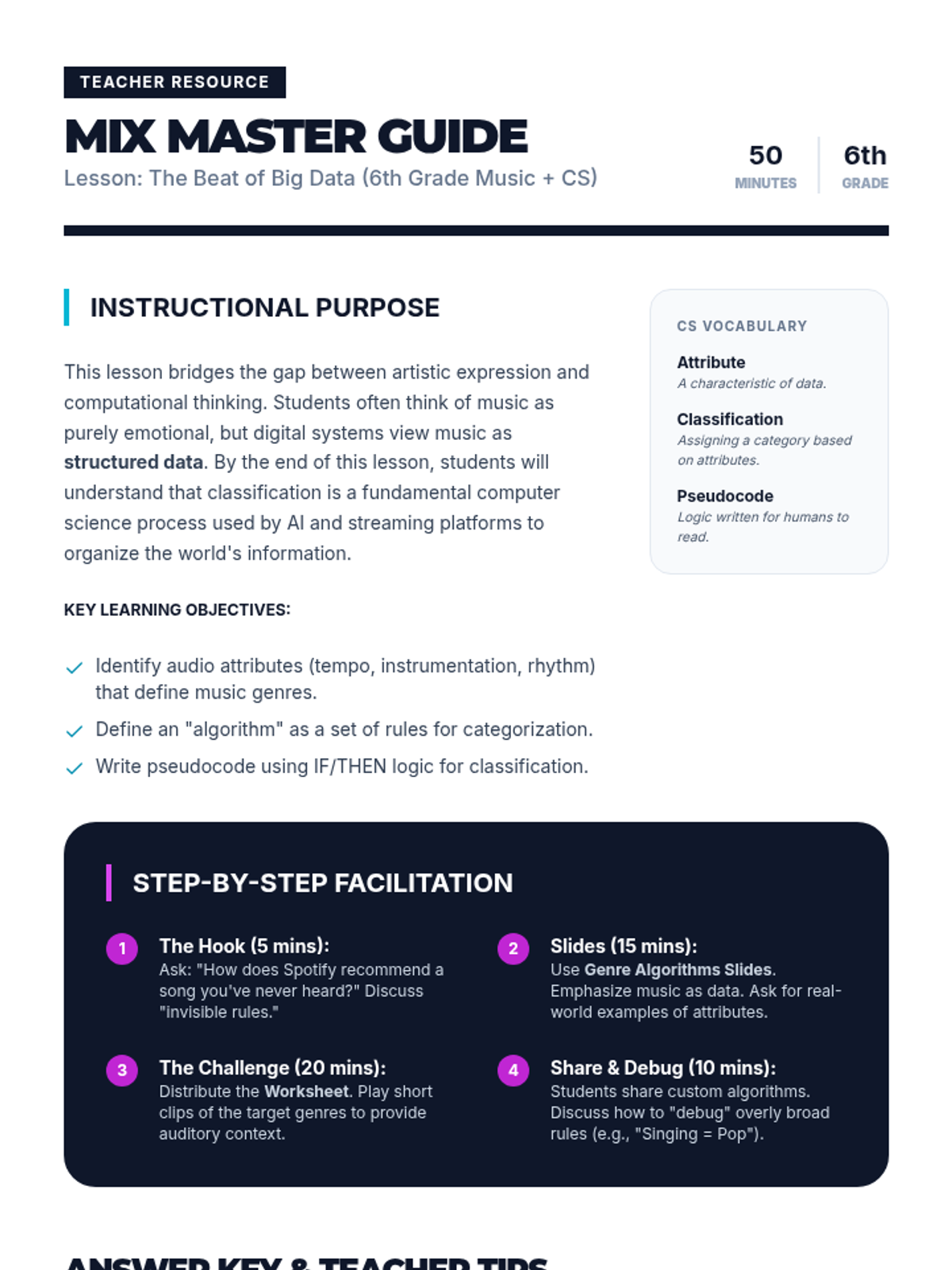
A comprehensive teacher's guide for facilitating the "Beat of Big Data" lesson, including learning objectives, pacing, and answer keys.
An 11-day series of class starters focused on forensic reasoning, case synthesis, and professional communication of findings.
A 10-day series of class starters covering biological evidence, blood patterns, DNA analysis, and ethics in genetics.
An 11-day slide deck of class starters for the Physical & Trace Evidence unit, focusing on fingerprints, soil, hair, fibers, and tool marks.
A collection of 10 daily class starters for the Foundations of Forensic Science unit, featuring a mix of trivia, discussion prompts, and observation challenges.
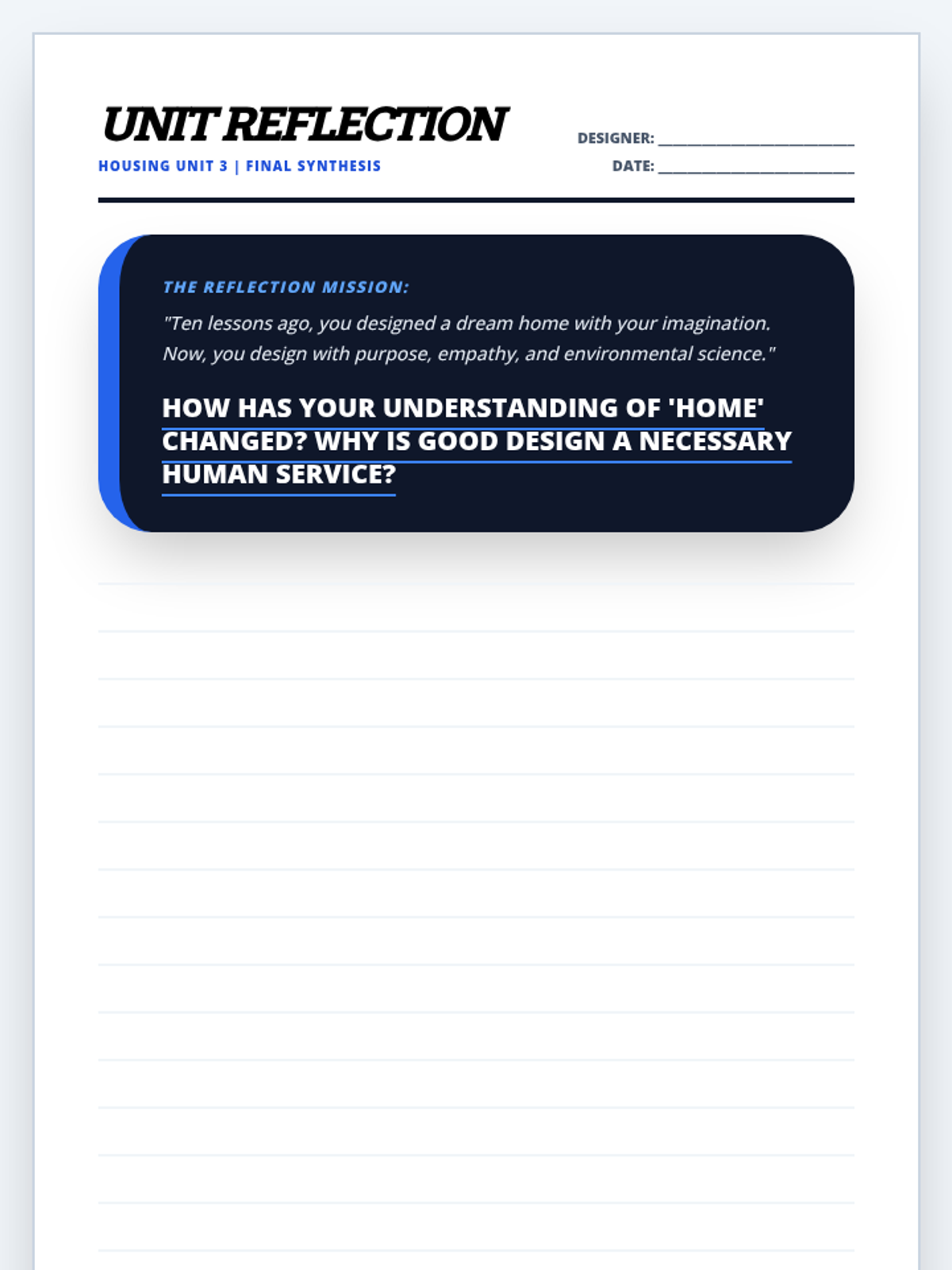
The final reflective essay prompt for the unit, asking students to synthesize their learning and explain the importance of intentional housing design in the human services field.
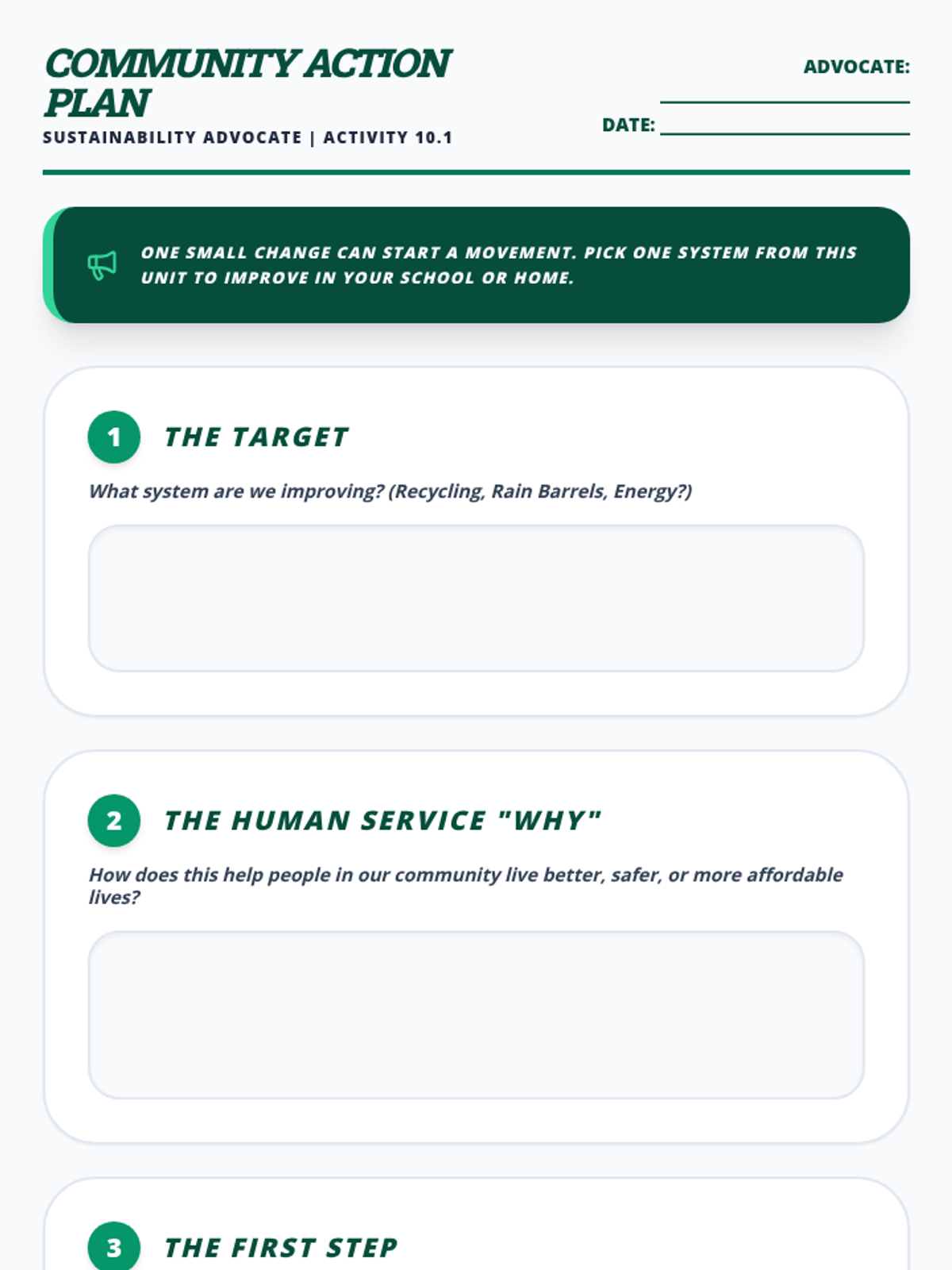
A student advocacy worksheet for creating a community action plan, encouraging students to apply their housing design knowledge to real-world school or home sustainability changes.
Slides for the Reflection and Connections lesson, focusing on local green building examples and guiding students toward community advocacy and final reflection.