A presentation for the Hypothesis Hero lesson. It guides students through the warm-up, video segment, hypothesis formula, and main activity instructions. Includes an embedded video segment focused on forming hypotheses.
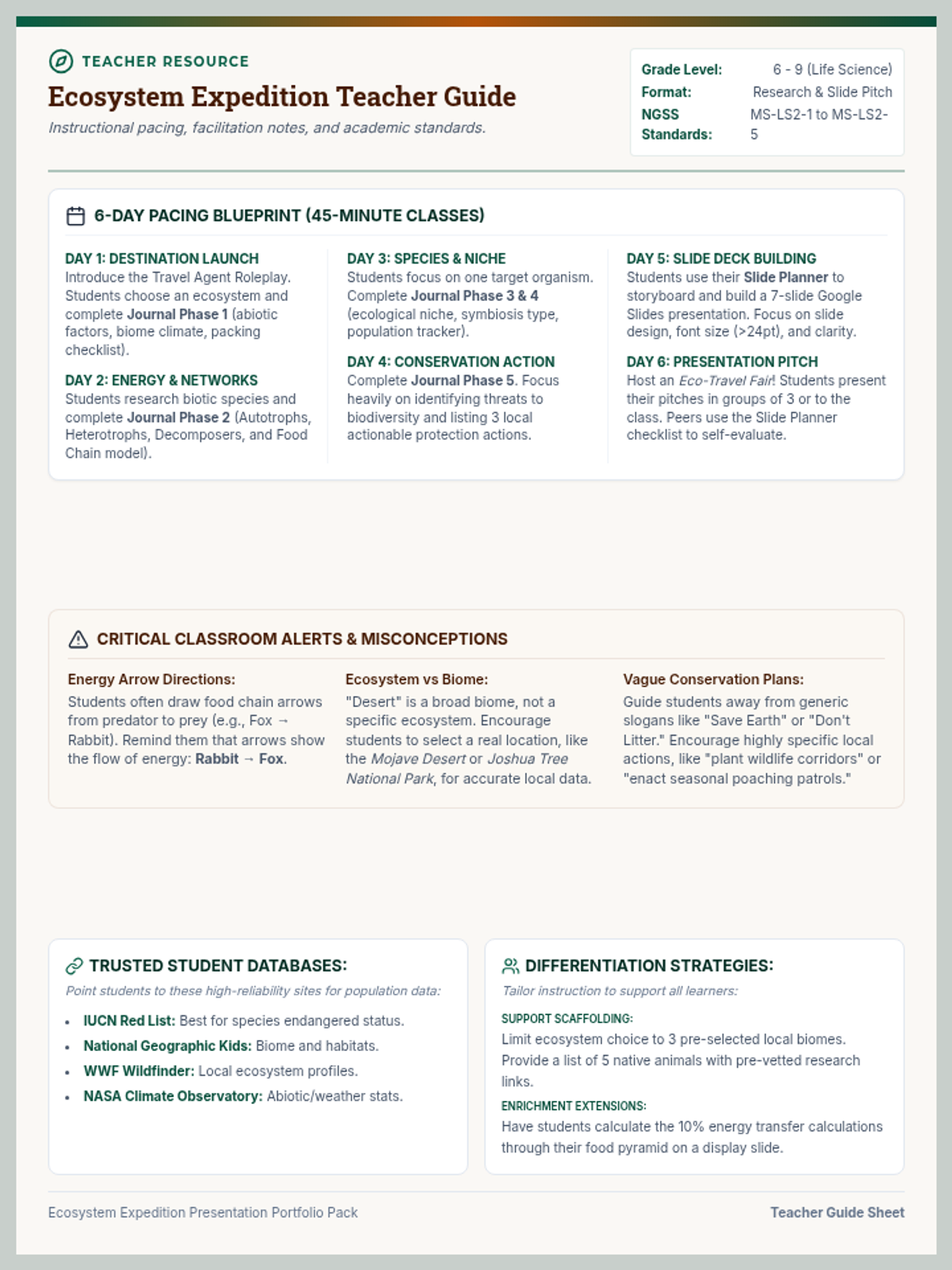
A detailed 1-page teacher facilitation guide outlining project pacing for 45-minute classes. Includes day-by-day lesson plans, common misconceptions (e.g., energy flow arrow direction), trusted research databases, and differentiation strategies.
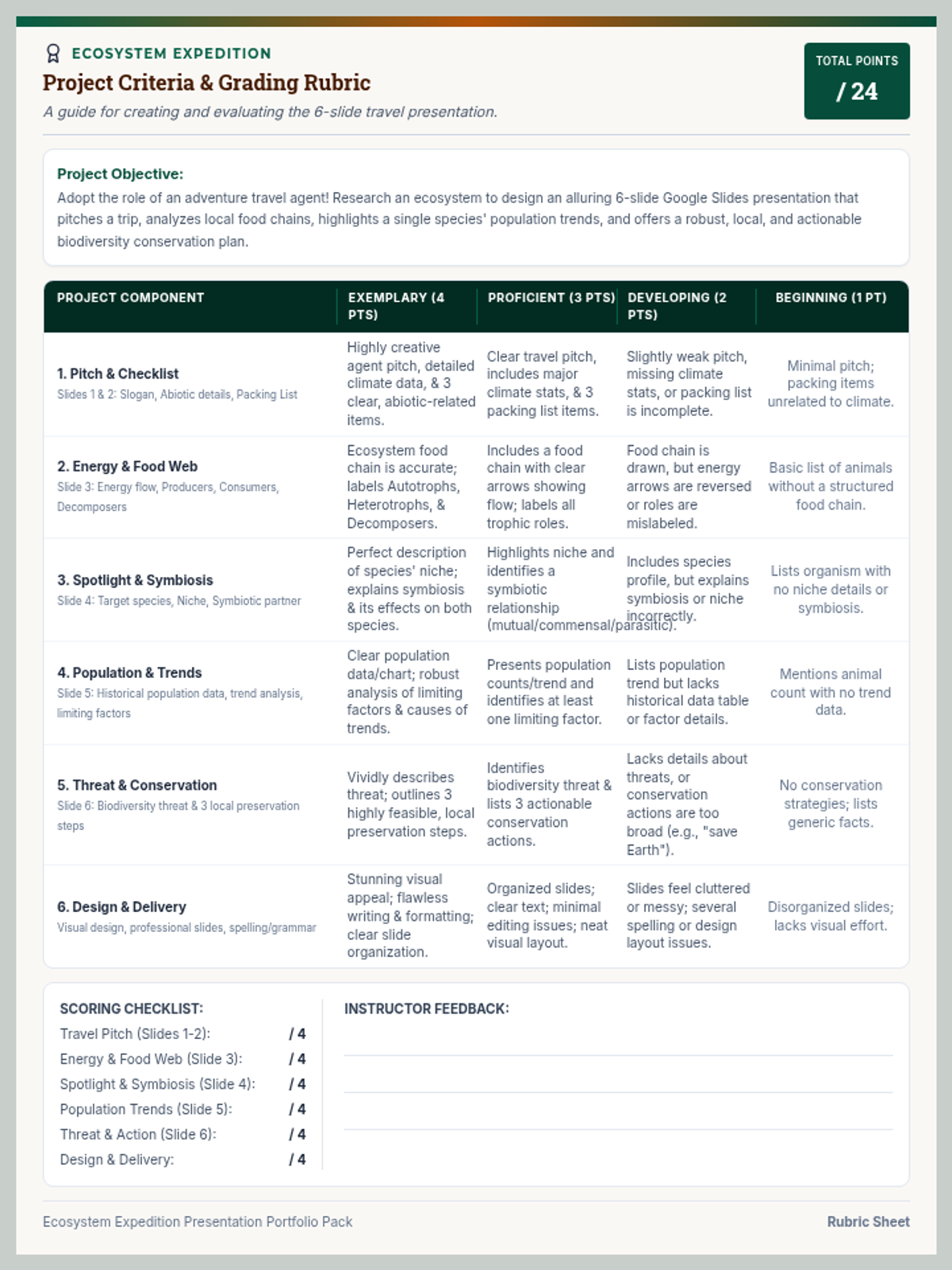
A print-ready 1-page grading rubric and project directions sheet. It outlines specific point distributions and descriptions for all 7 slides (travel pitch, climate, adventure itinerary, food webs, symbiosis, population trends, and conservation) on a 4-tier point scale with a feedback box.
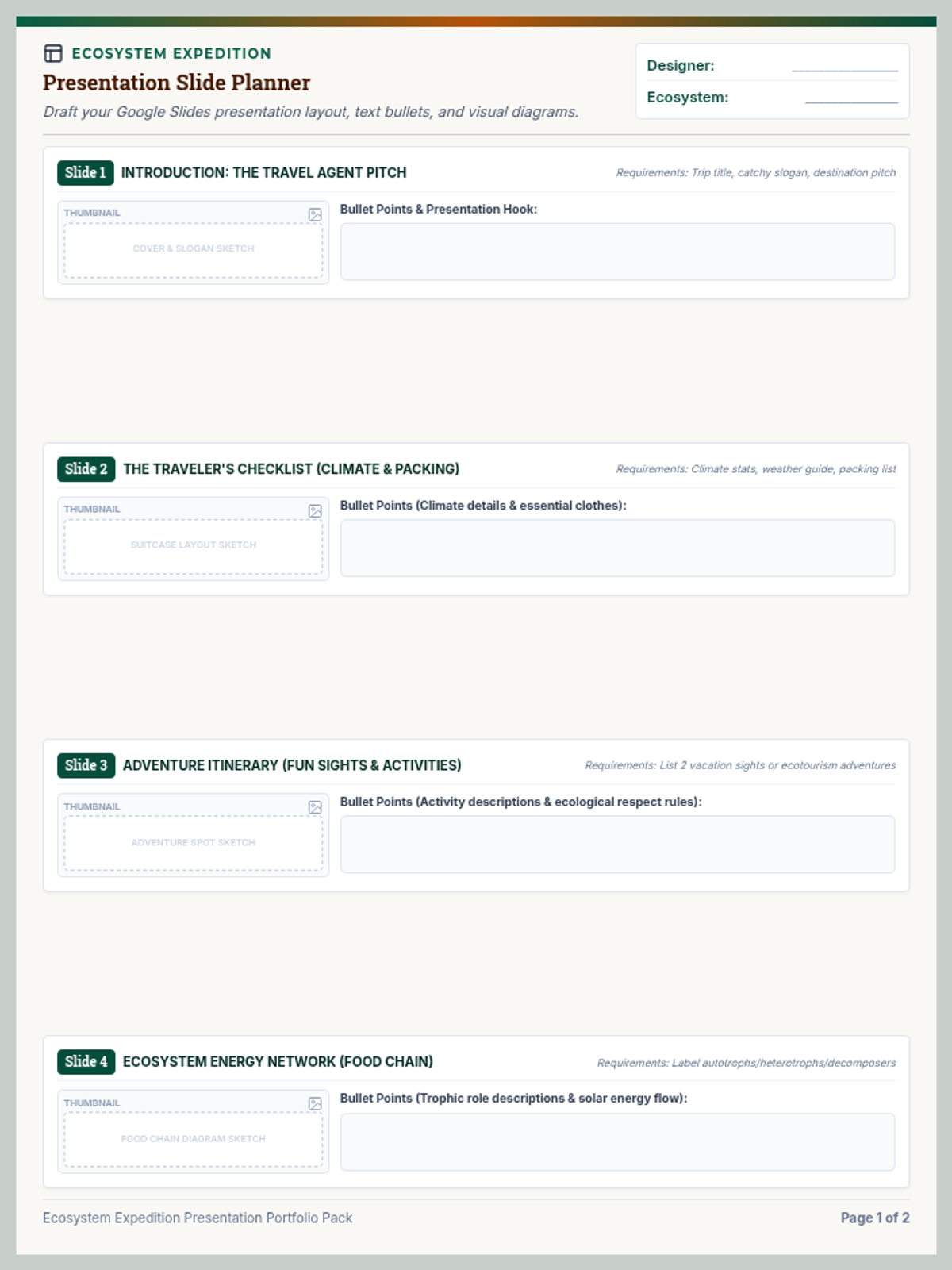
A 2-page student drafting organizer for planning a 7-slide Google Slides presentation. It provides storyboard templates for each slide (pitch, climate/packing list, adventure itinerary, food web, species profile, population trends, and conservation action) with distinct text and visual design boxes.
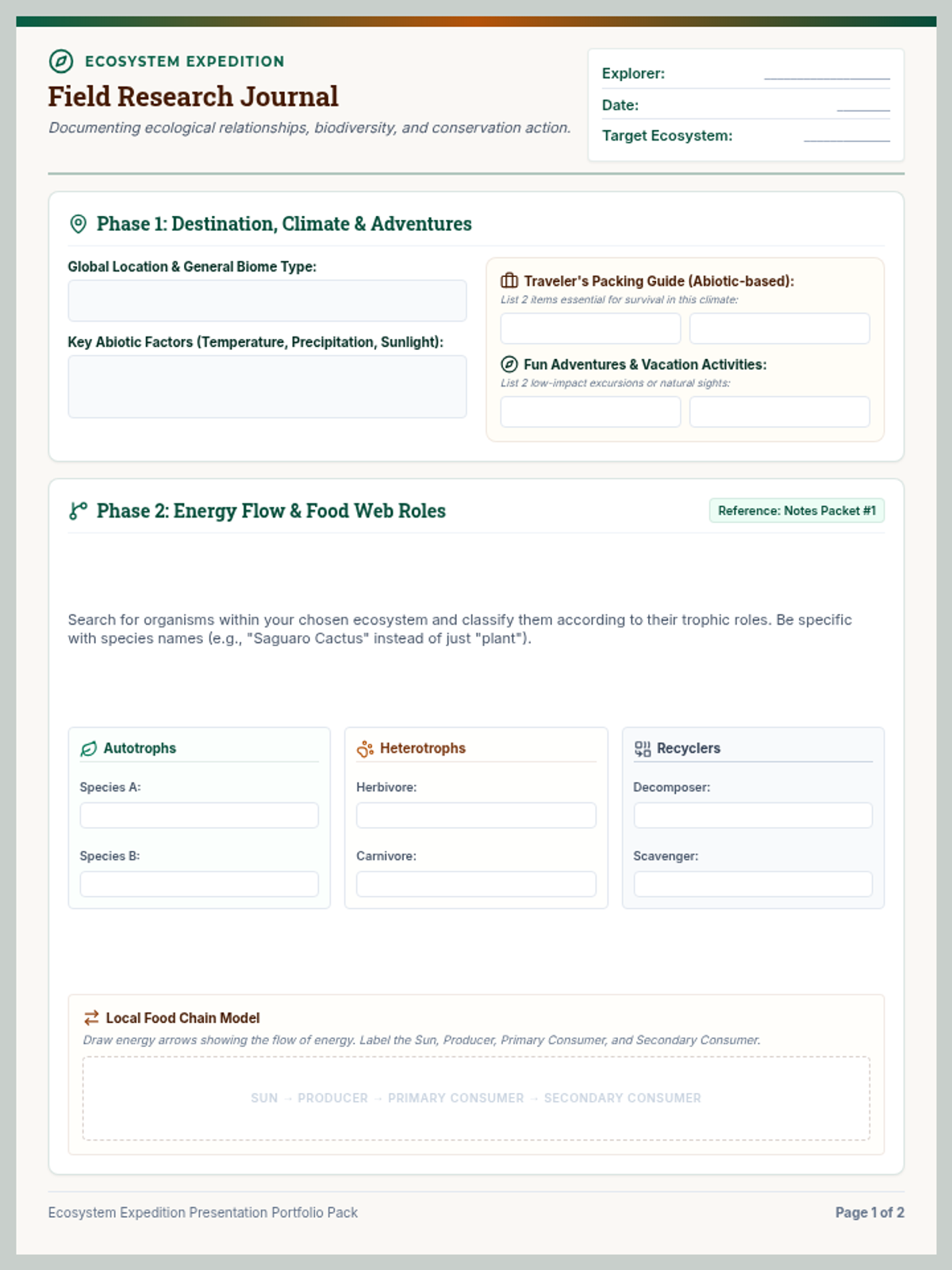
A 2-page print-ready student research journal modeled as a scientist's field log. It guides students to select an ecosystem, analyze its abiotic factors, document food web roles, profile a target species, examine population trends with explicit search directions, and craft an actionable conservation plan. Explains ecological resilience.
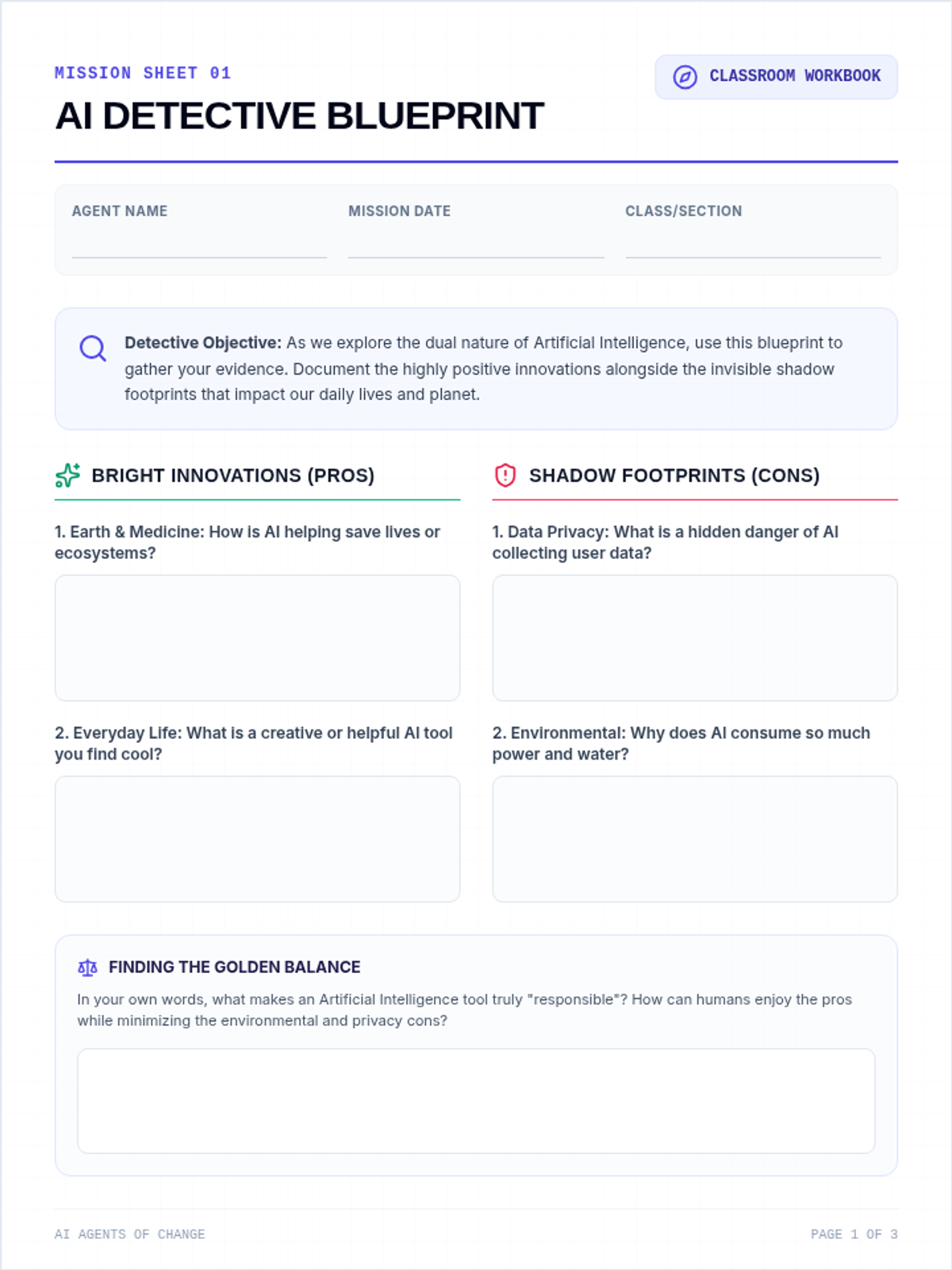
A complete, classroom-ready 3-page student document including a pros/cons graphic organizer (Detective Blueprint), a structured guide with roles and a note-taking grid for the classroom debate, and a personal AI code of ethics with reflection scenarios and action items.
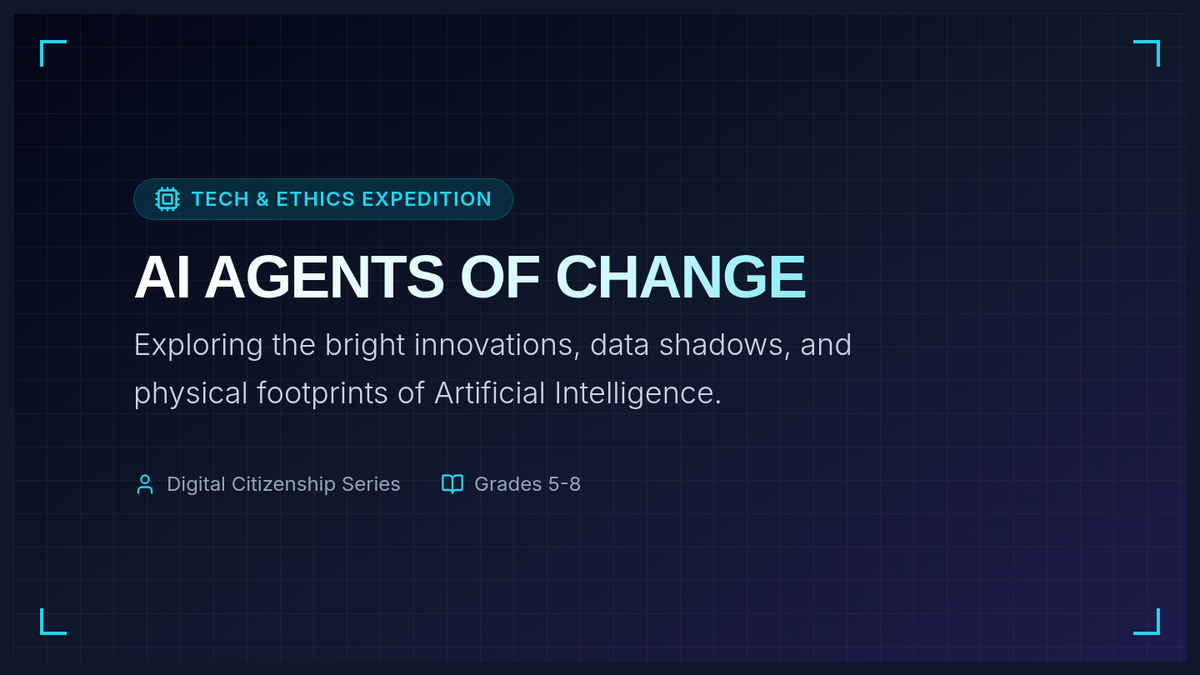
A visually stunning, high-contrast slide deck designed to guide students through the positive impacts, data privacy concerns, and environmental footprints of AI. Features large, readable text, clear discussion prompts, and structured visuals for middle school classrooms.
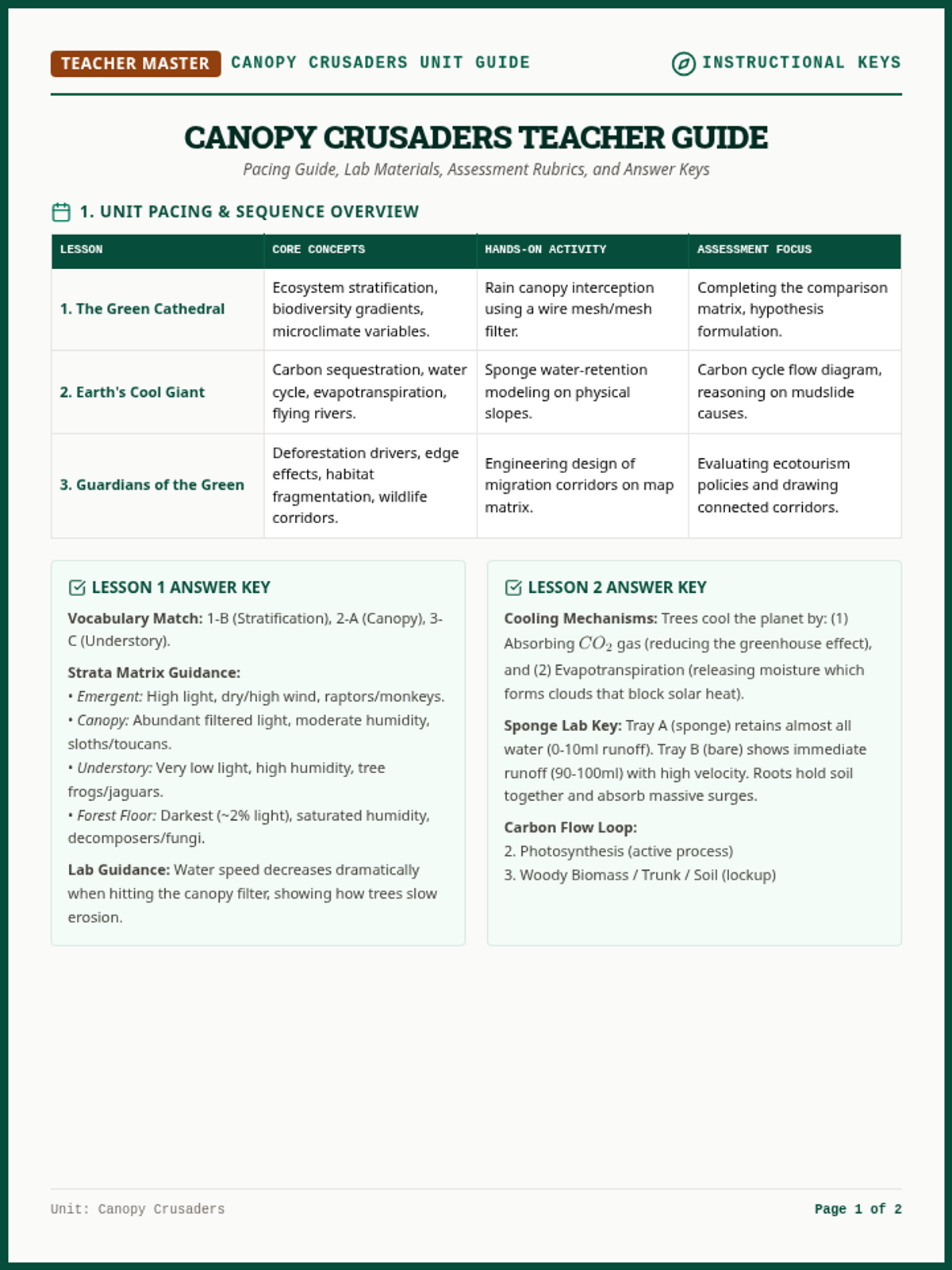
A comprehensive teacher-facing unit guide, providing unit-wide planning advice, hands-on lab setup instructions, grading rubrics, and detailed answer keys for all student worksheets.
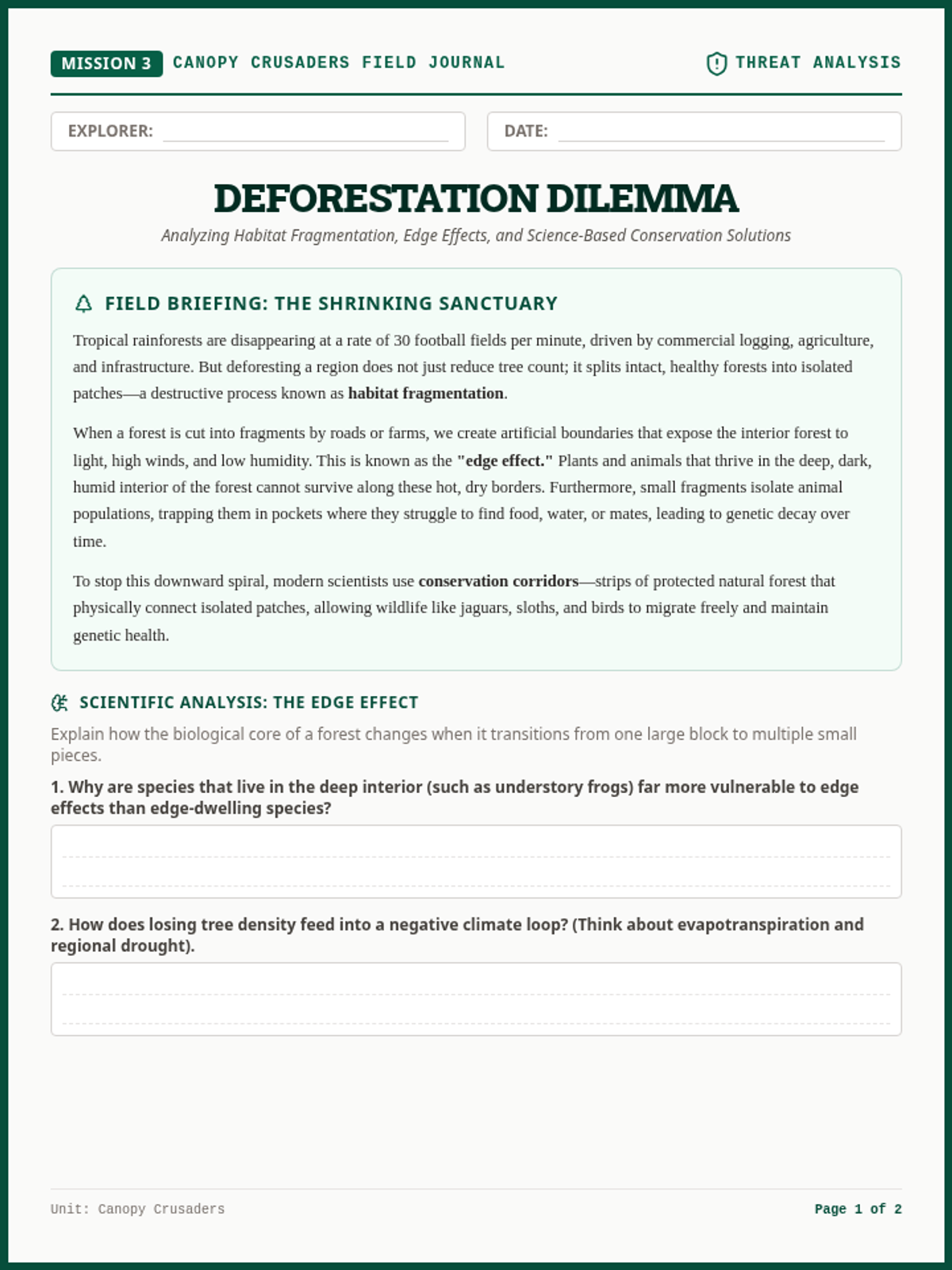
A two-page student activity packet for Lesson 3, focusing on the impacts of deforestation, habitat fragmentation, and edge effects. Includes a case study on ecosystem breakdown, a creative corridor-design science challenge, and a conservation policy evaluation matrix.
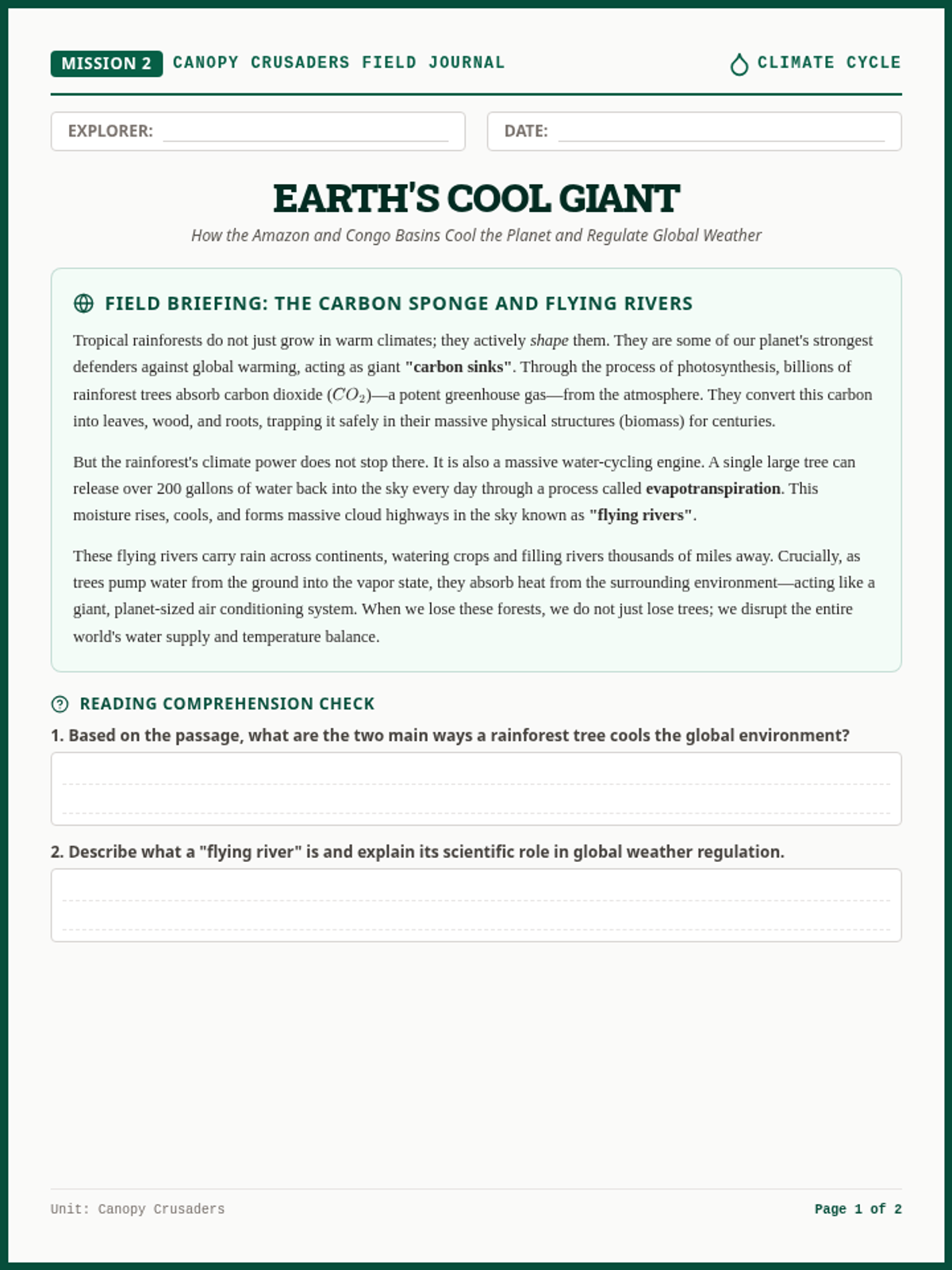
A two-page student activity packet for Lesson 2, focusing on the rainforest's role in global climate. Features a reading passage on carbon sequestration and evapotranspiration, a carbon cycle flow chart, and a hands-on lab simulating water retention using kitchen sponges.
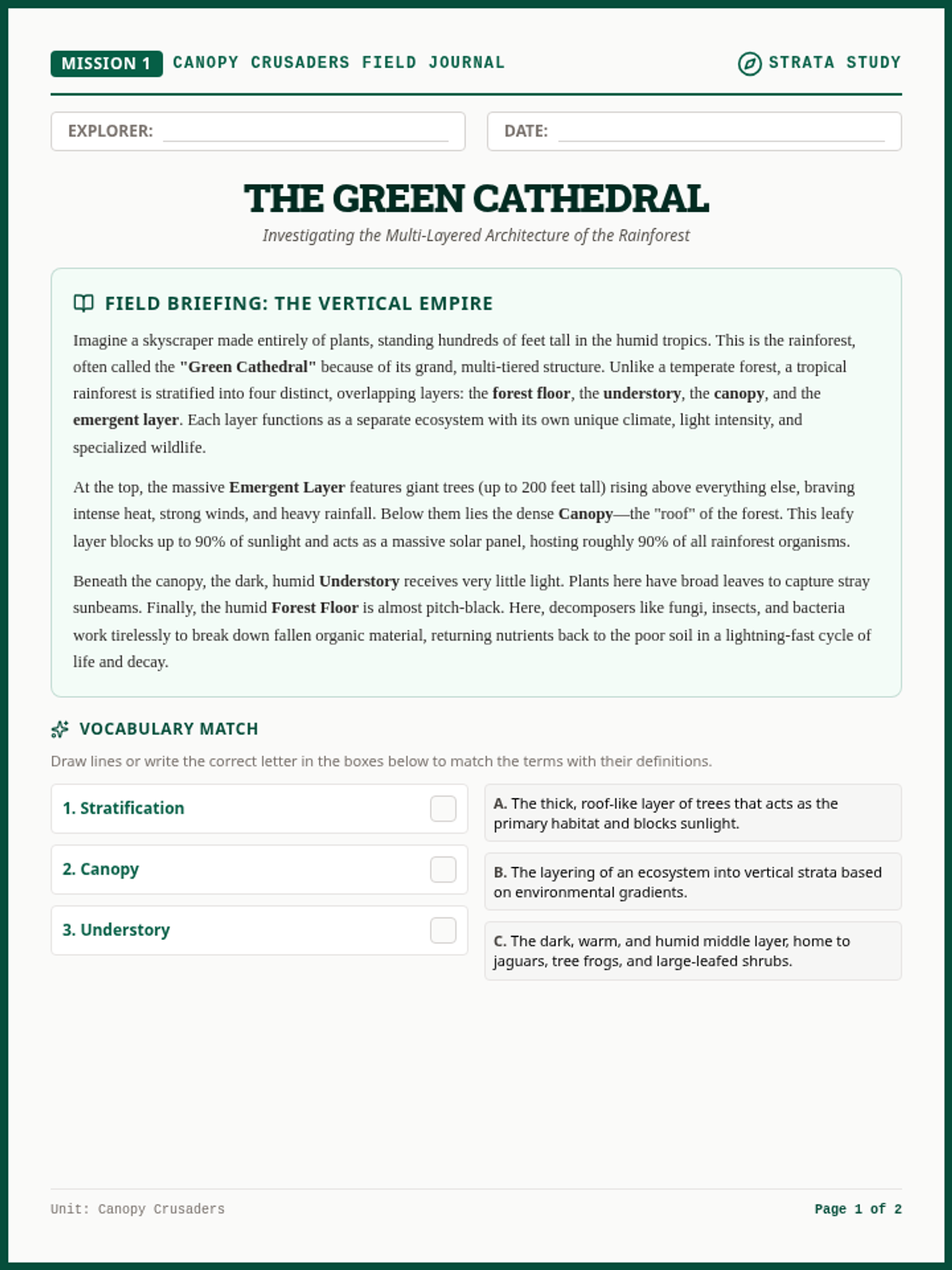
A two-page student activity packet for Lesson 1, featuring a detailed reading passage on the four structural layers of the rainforest, key vocabulary matching, a graphic organizer comparing strata, and a hands-on modeling lab on moisture gradients.
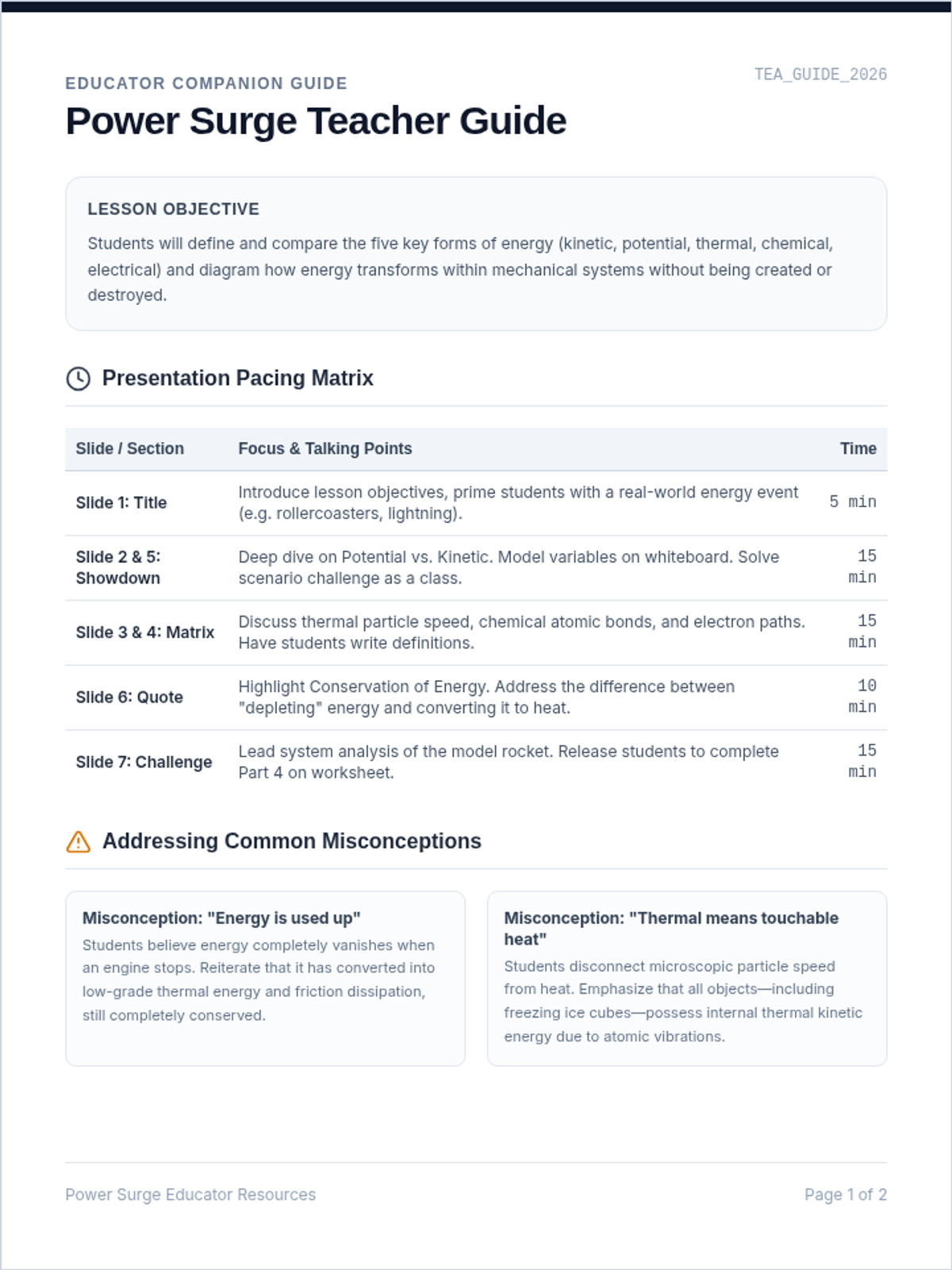
An educator-facing guide containing a structured slide-by-slide pacing layout, key discussion questions, direct strategies for addressing physical science misconceptions, and a comprehensive Answer Key for the Power Surge student worksheet.
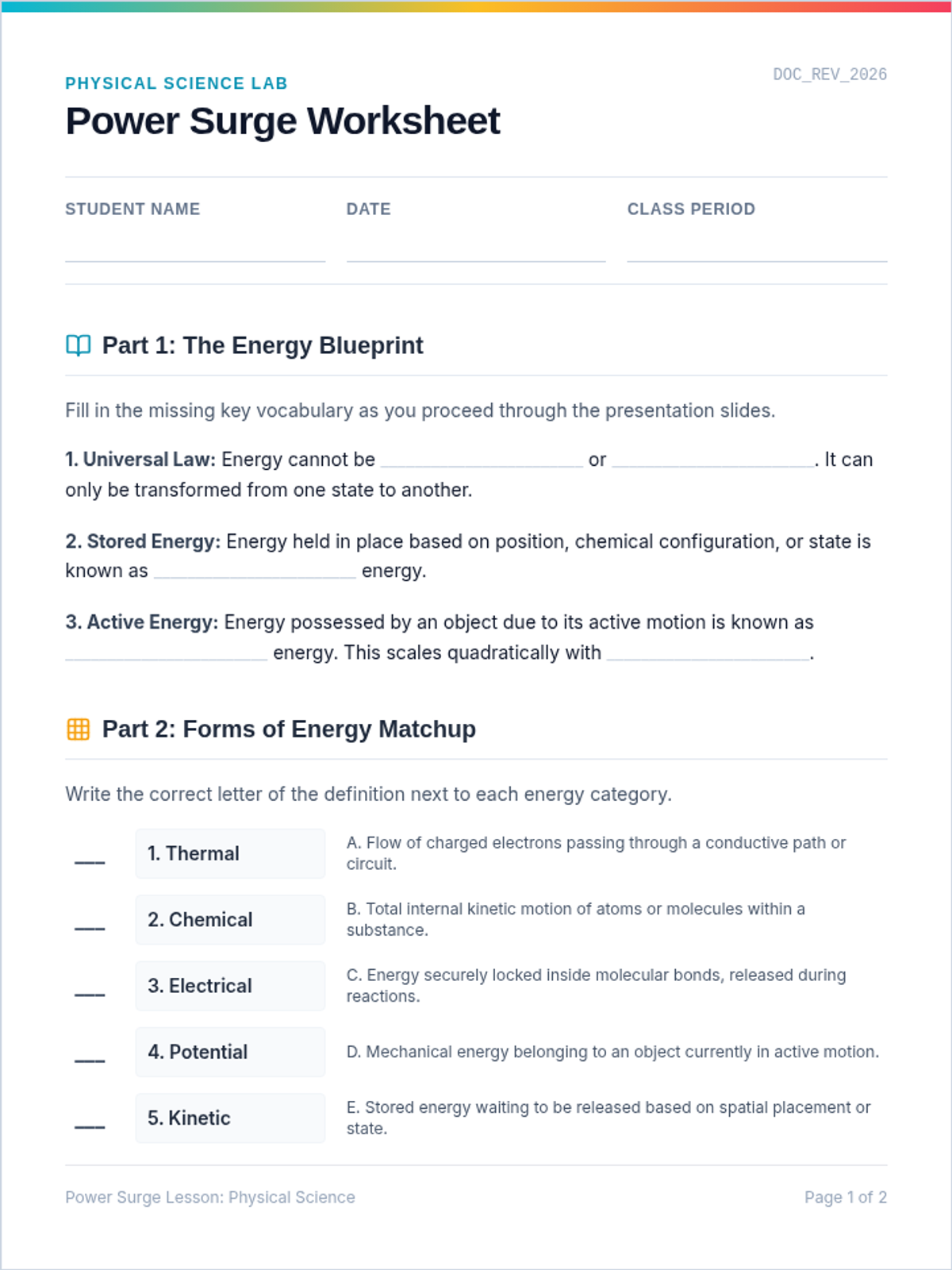
A high-impact student-facing activity sheet designed to accompany the Power Surge slides. Includes guided lecture notes, a vocabulary matching matrix for the five forms of energy, and a structured system analysis section for diagramming energy transformations during a model rocket launch.
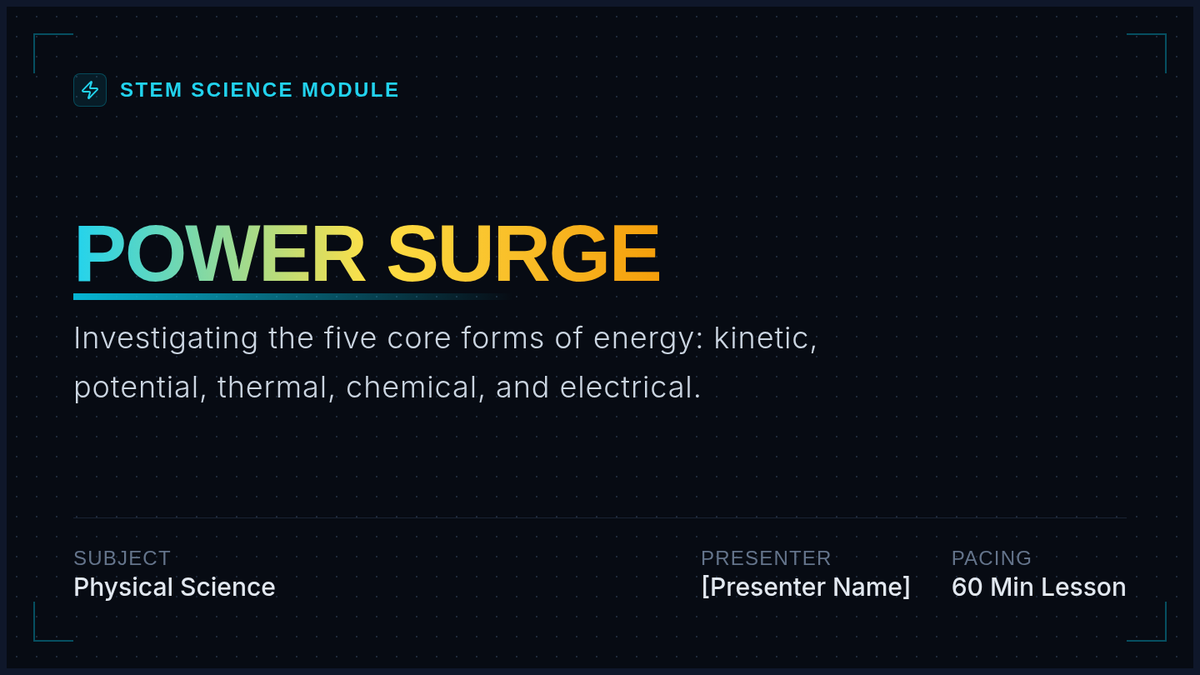
A highly customizable science slide deck template featuring 7 professional layouts themed around the Forms of Energy. Incorporates rich visual styling, strict readability metrics, tech-inspired blueprint grids, and structured content sections for kinetic, potential, thermal, chemical, and electrical energy.
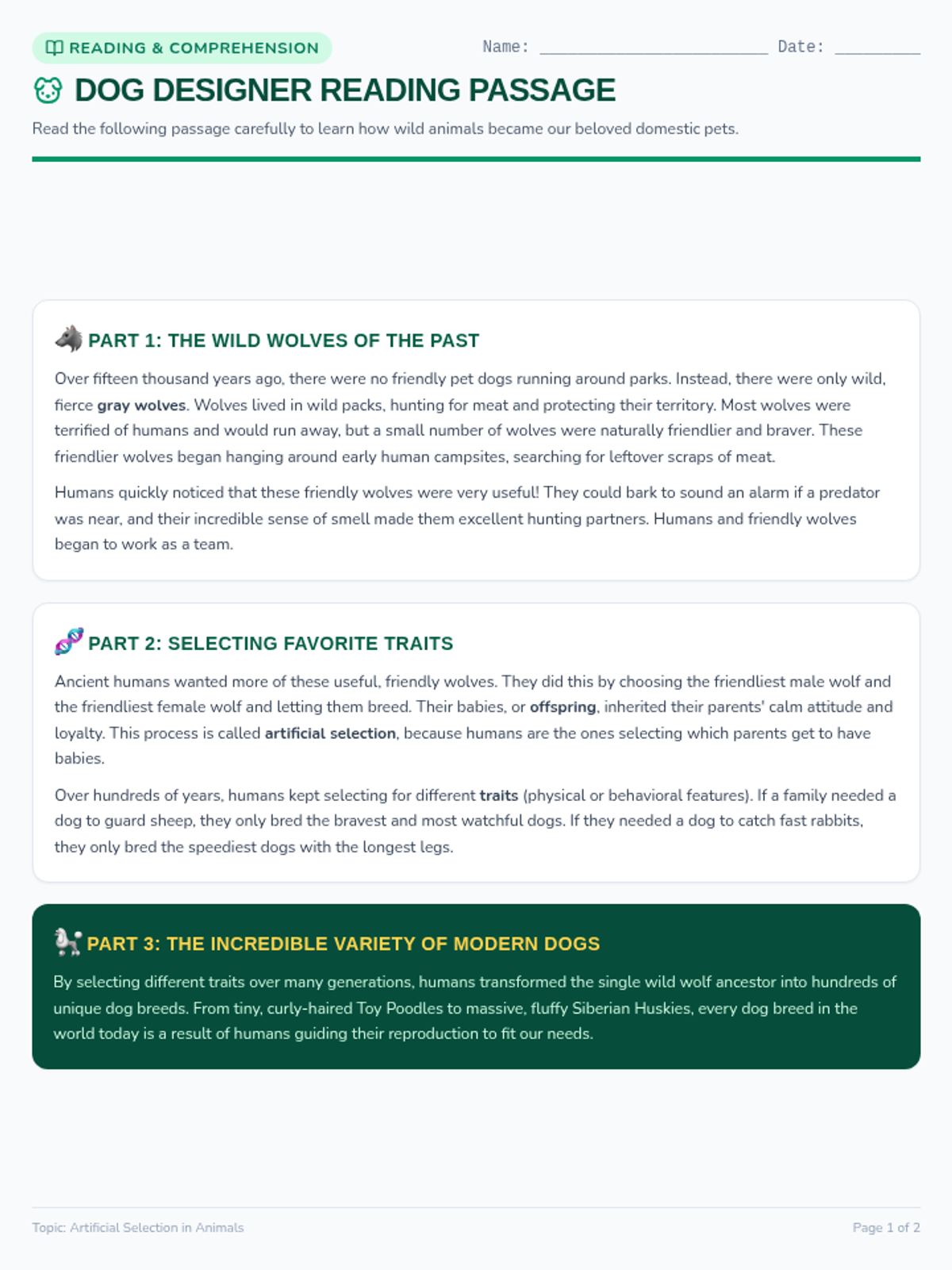
An expanded 2-page reading comprehension document. Page 1 contains a detailed, student-friendly reading passage comparing wild wolves to domesticated dogs, and Page 2 contains 5 structured, multiple-choice questions with identical answer styling.
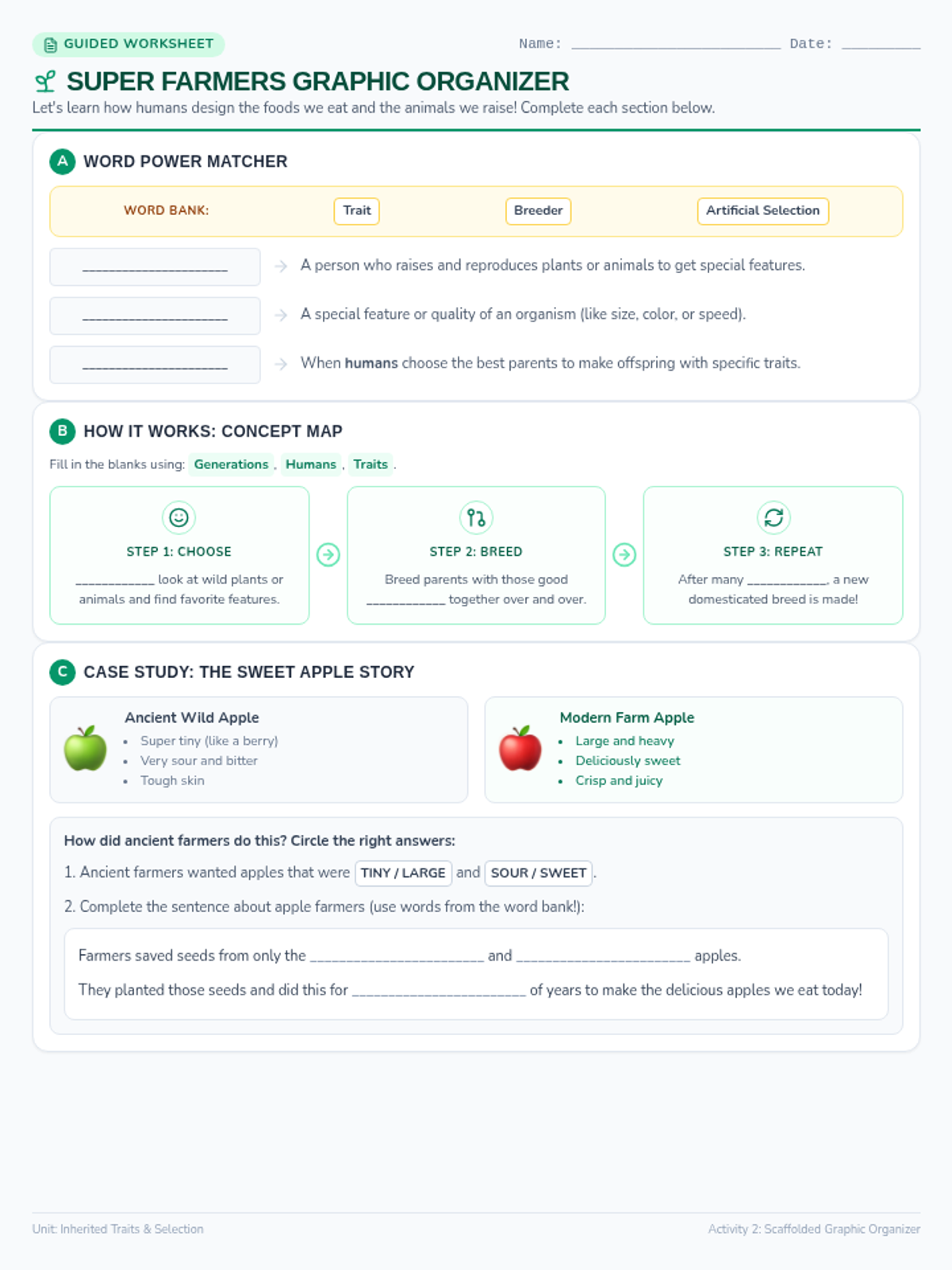
A highly visual, scaffolded graphic organizer worksheet. It features a simplified definition matcher, an illustrated flowchart of artificial selection, and a guided 'Sweet Apple' case study with trace-and-match elements and sentence starters.