A detailed 1-page teacher facilitation guide outlining project pacing for 45-minute classes. Includes day-by-day lesson plans, common misconceptions (e.g., energy flow arrow direction), trusted research databases, and differentiation strategies.
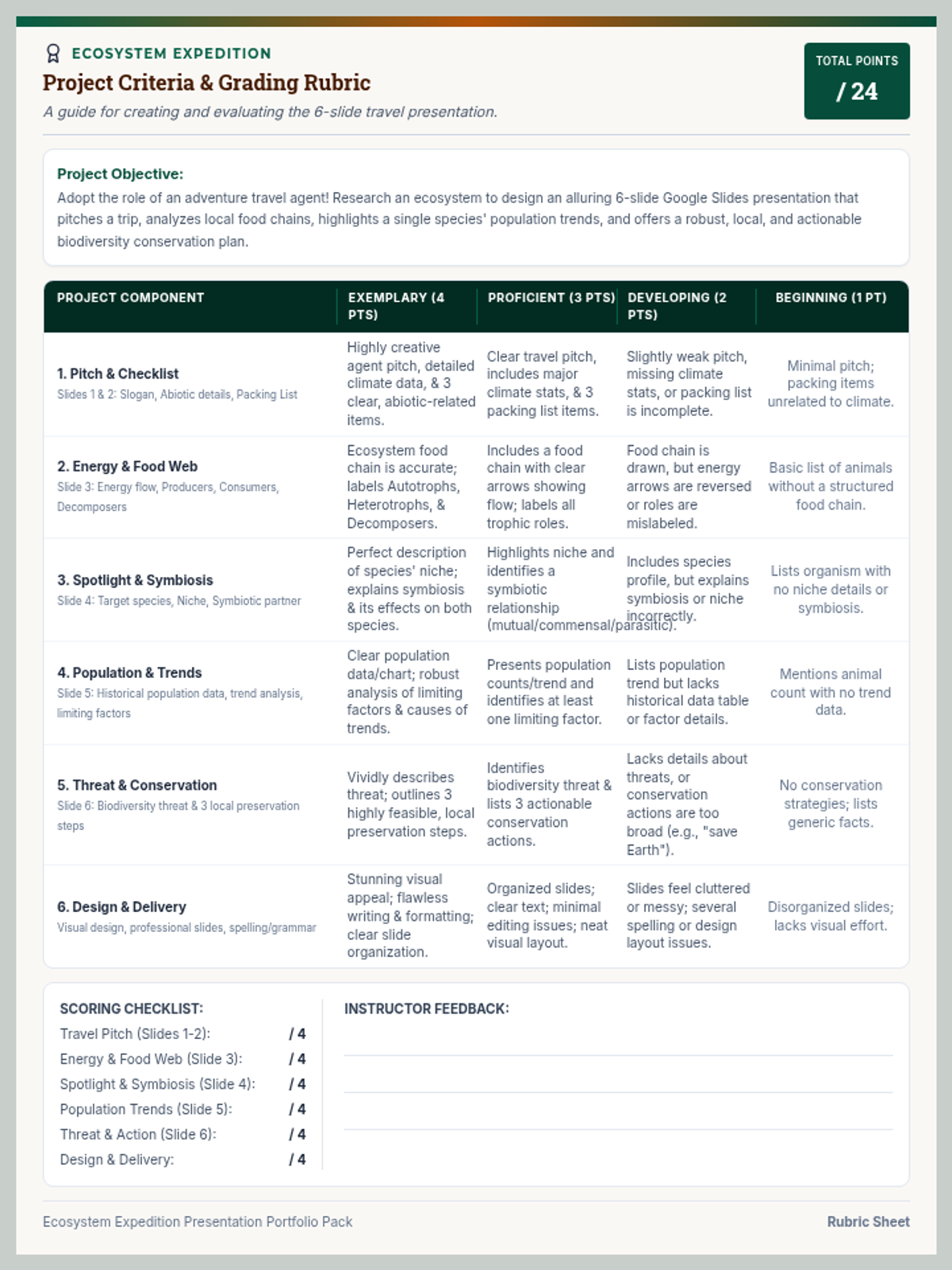
A print-ready 1-page grading rubric and project directions sheet. It outlines specific point distributions and descriptions for all 7 slides (travel pitch, climate, adventure itinerary, food webs, symbiosis, population trends, and conservation) on a 4-tier point scale with a feedback box.
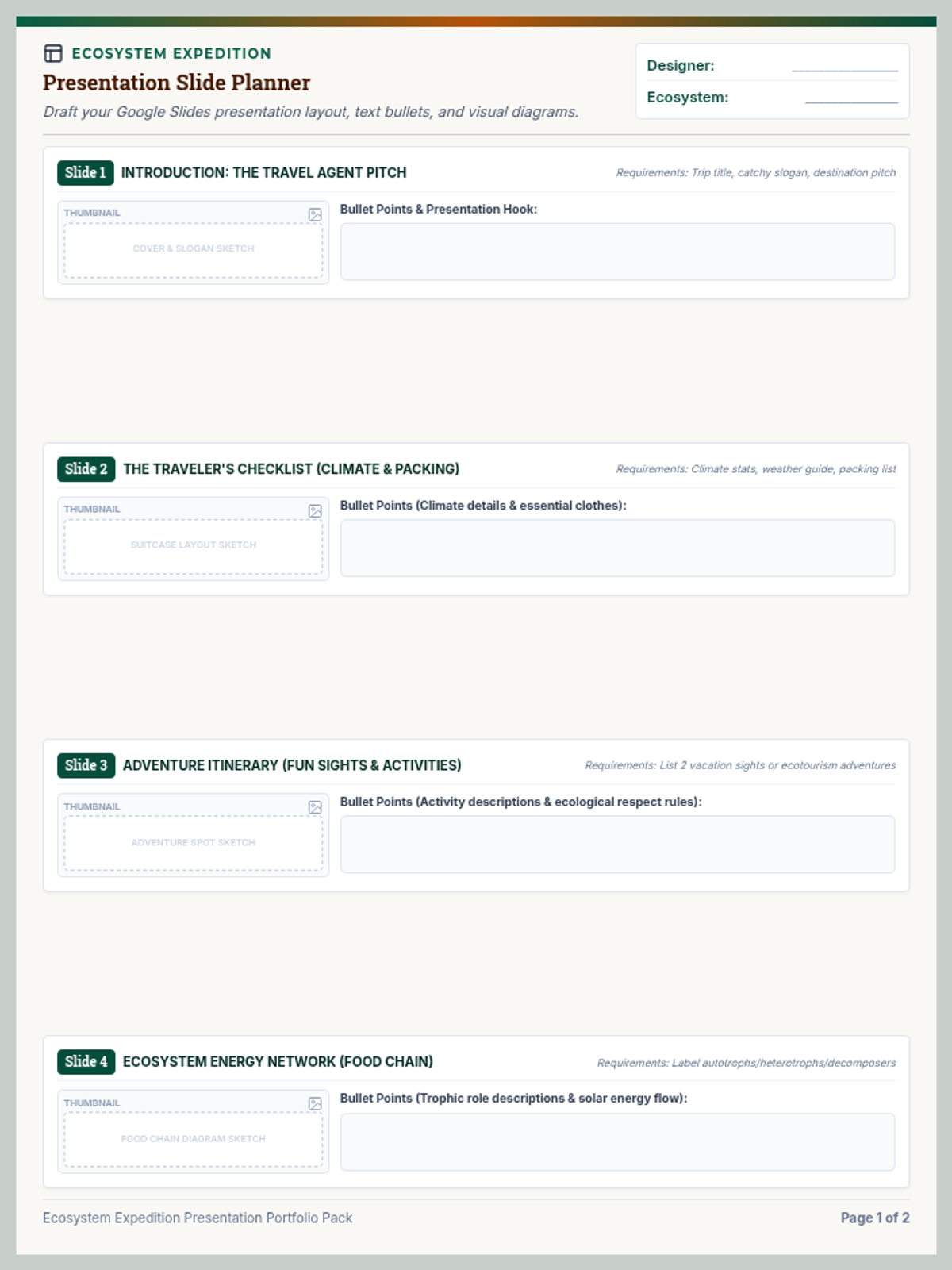
A 2-page student drafting organizer for planning a 7-slide Google Slides presentation. It provides storyboard templates for each slide (pitch, climate/packing list, adventure itinerary, food web, species profile, population trends, and conservation action) with distinct text and visual design boxes.
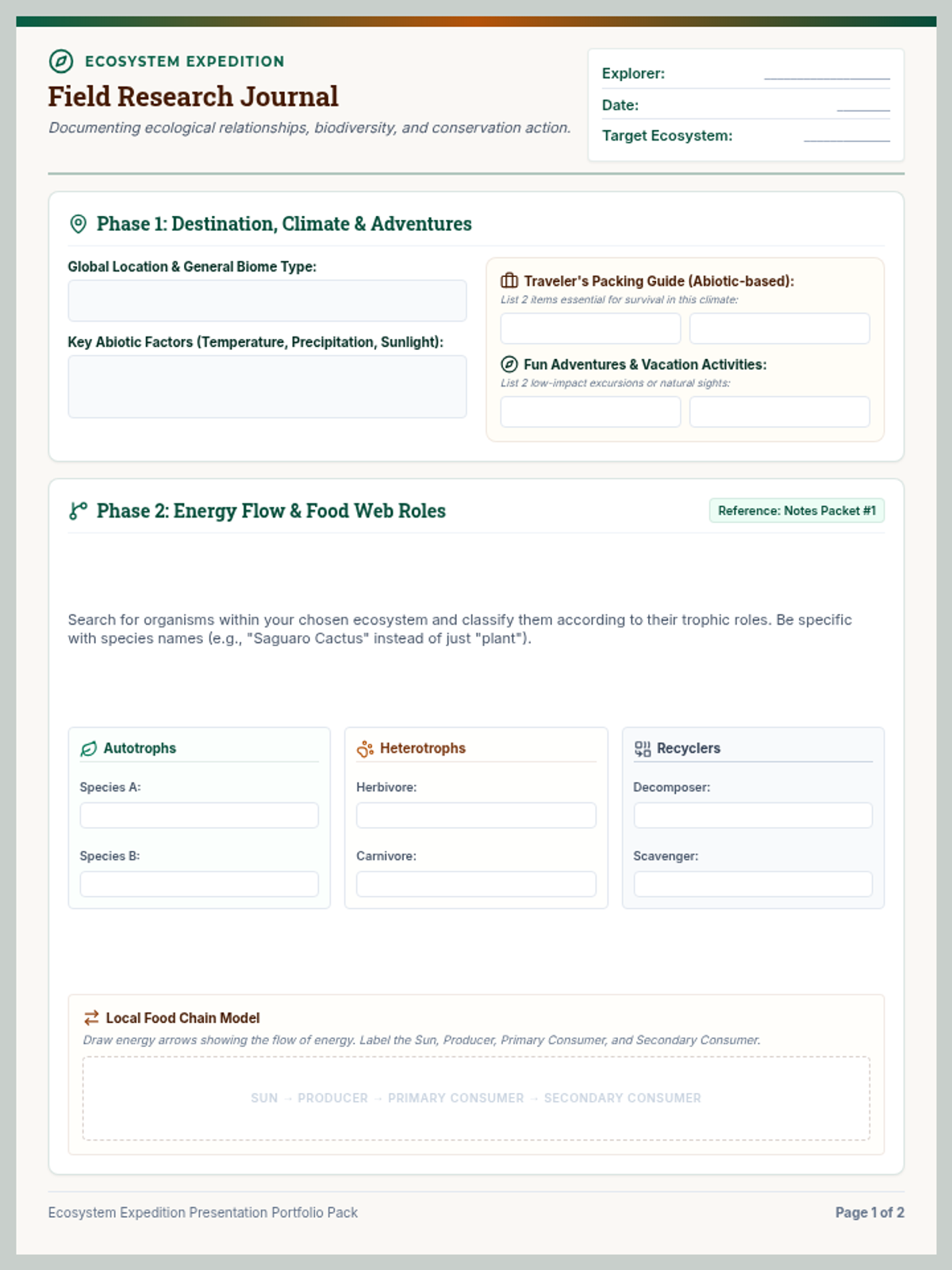
A 2-page print-ready student research journal modeled as a scientist's field log. It guides students to select an ecosystem, analyze its abiotic factors, document food web roles, profile a target species, examine population trends with explicit search directions, and craft an actionable conservation plan. Explains ecological resilience.
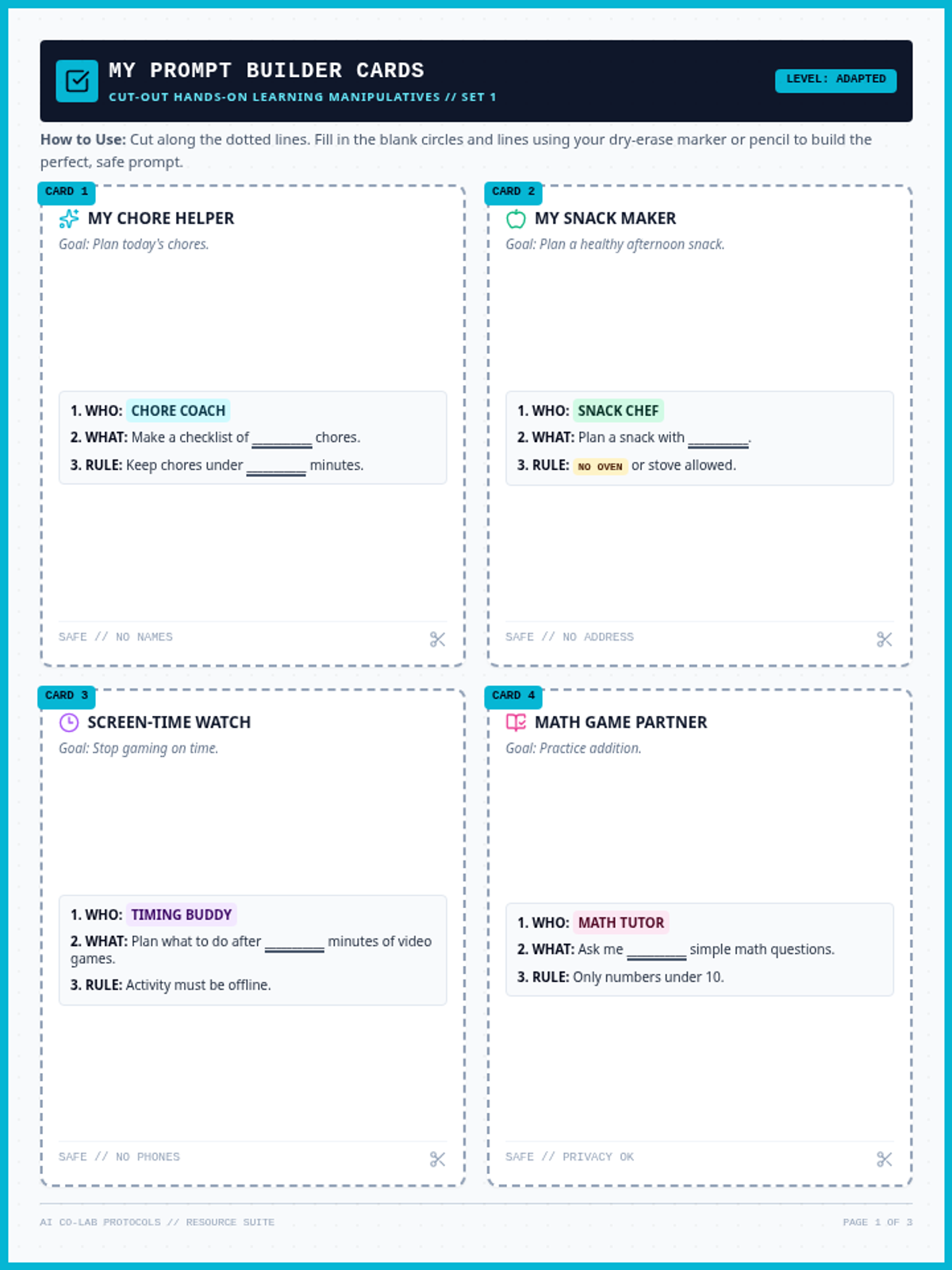
An expanded set of 12 high-contrast, simplified visual task cards to assist developmentally disabled students in building safe, basic prompts, designing healthy menus, and identifying digital privacy rules.
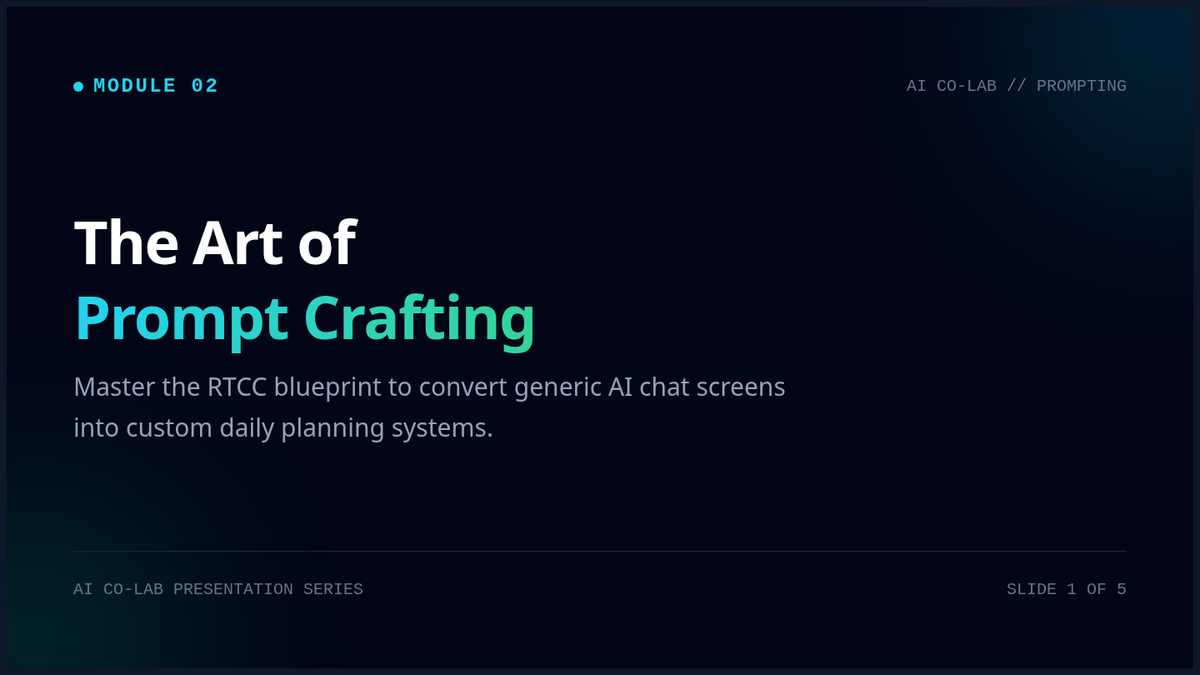
A sleek 5-slide presentation demonstrating the RTCC prompt engineering formula, practical life skills use-cases, and prompt iteration.
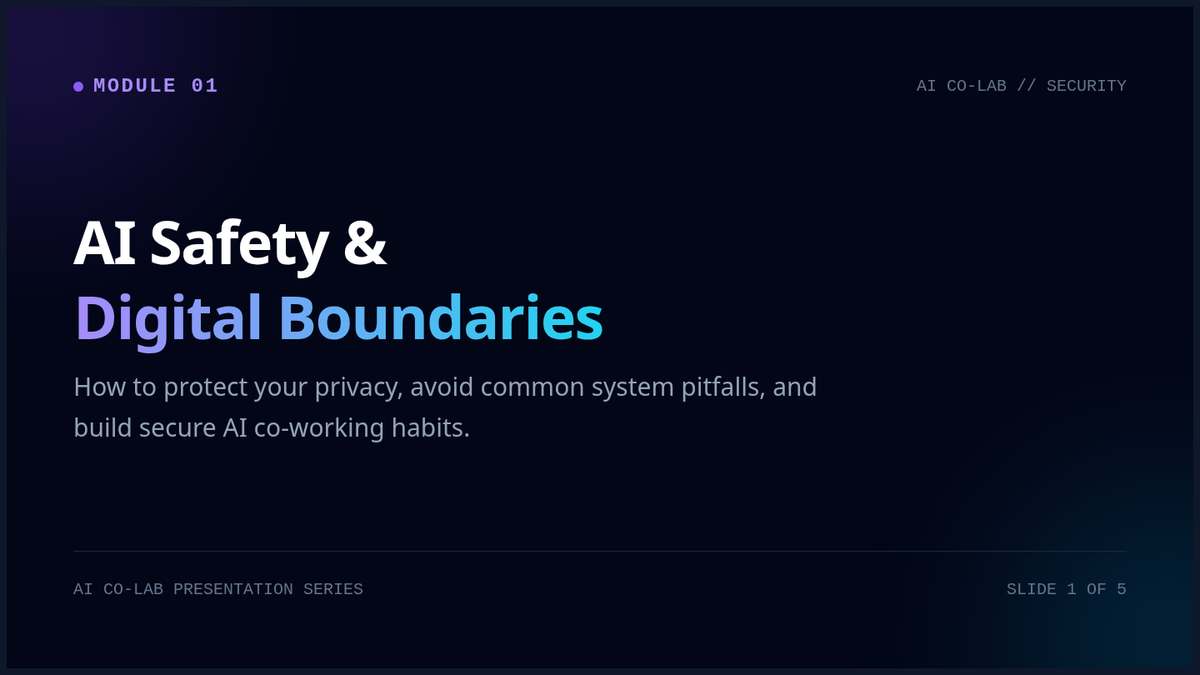
A visually polished 5-slide presentation on AI safety, digital privacy boundaries, and ethical habits for teenagers.
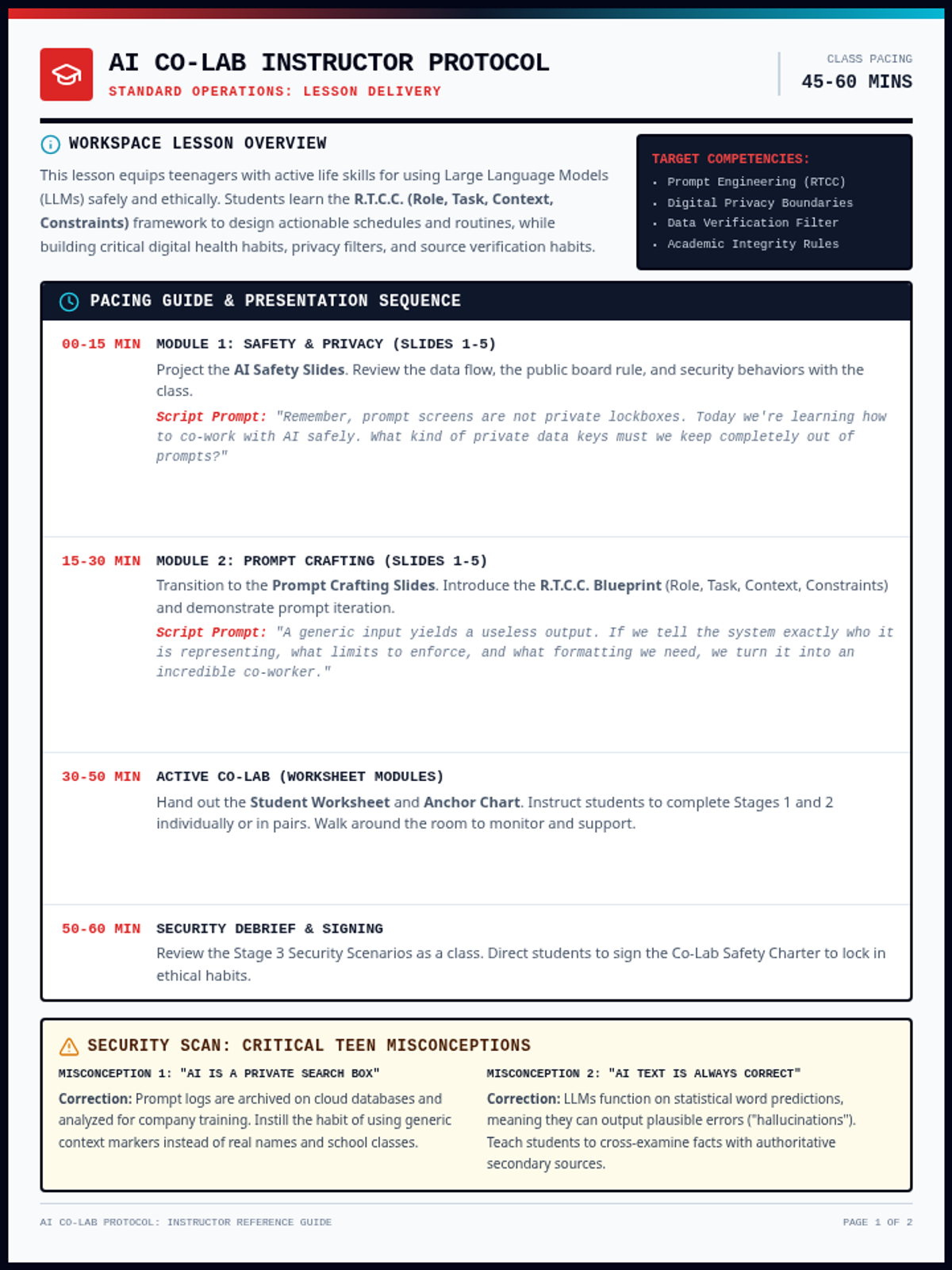
A detailed, 2-page step-by-step facilitation guide for teachers with lesson outlines, discussion prompts, student misconceptions, and complete answer keys for the student activities.
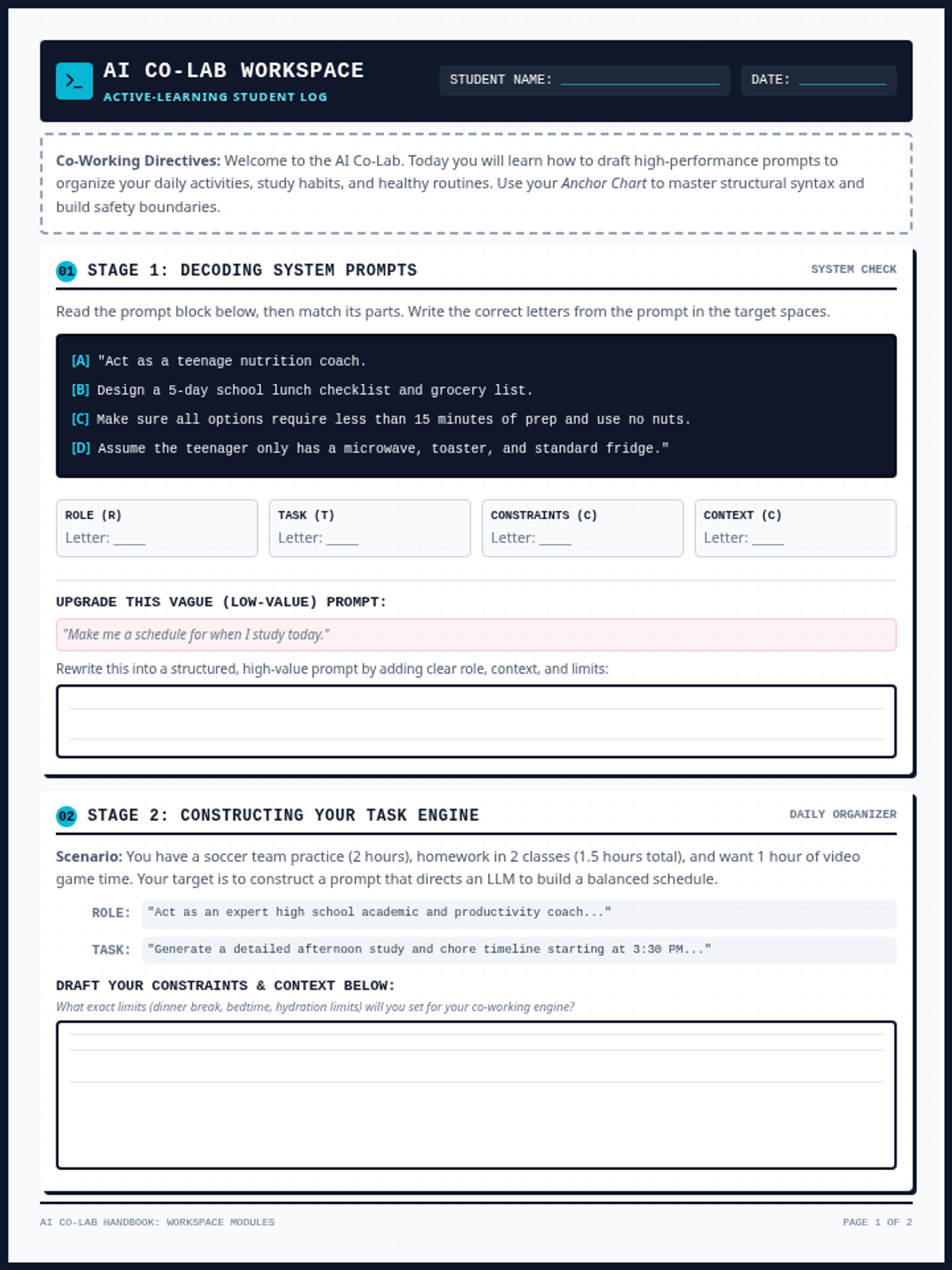
An engaging 2-page student activity pack with structured prompt-building templates, daily planning challenges, and safety scenario cards.
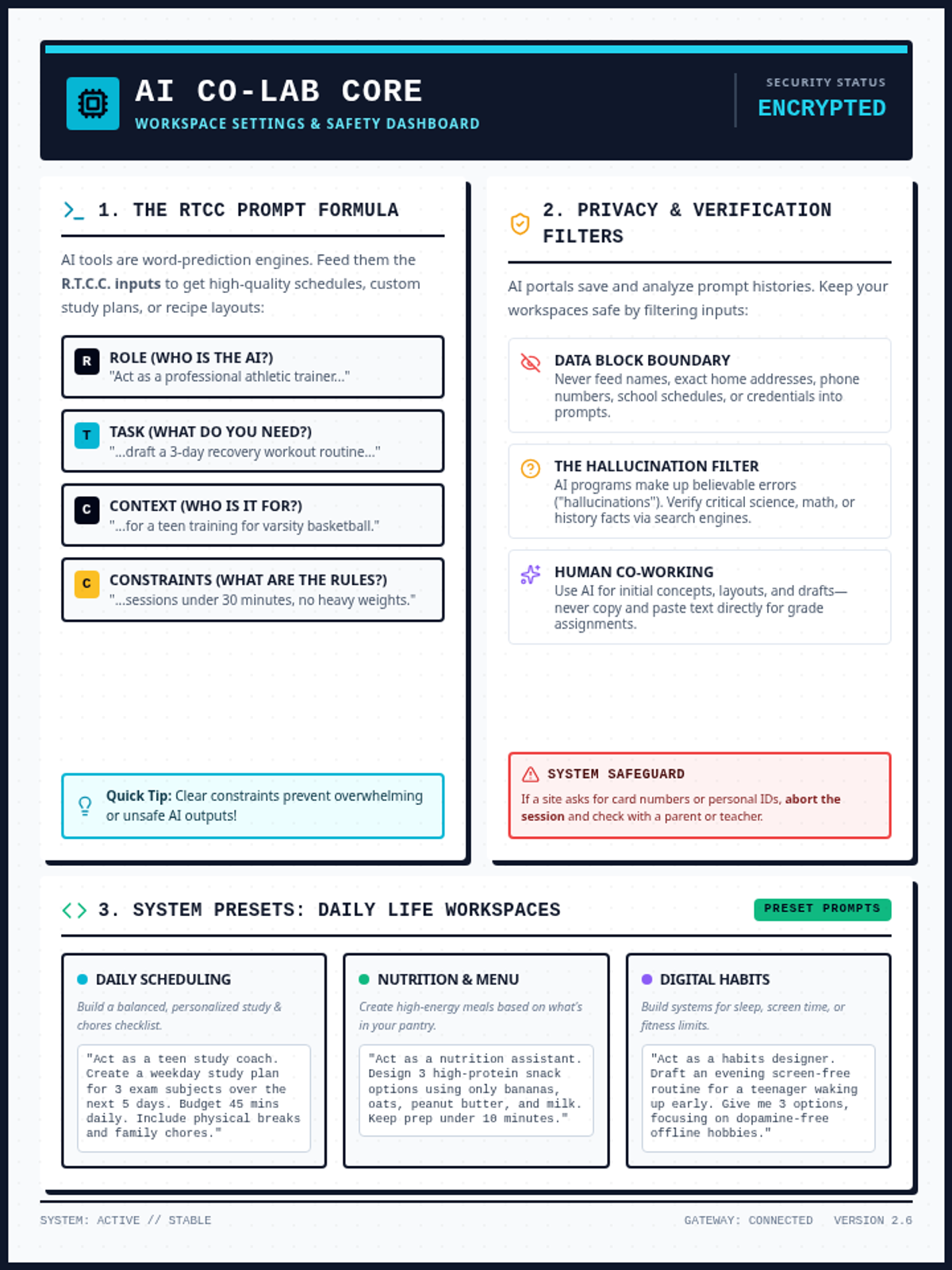
A visually rich, poster-style anchor chart highlighting the "Do's and Don'ts" of AI safety, the anatomy of a perfect prompt, and privacy rules.
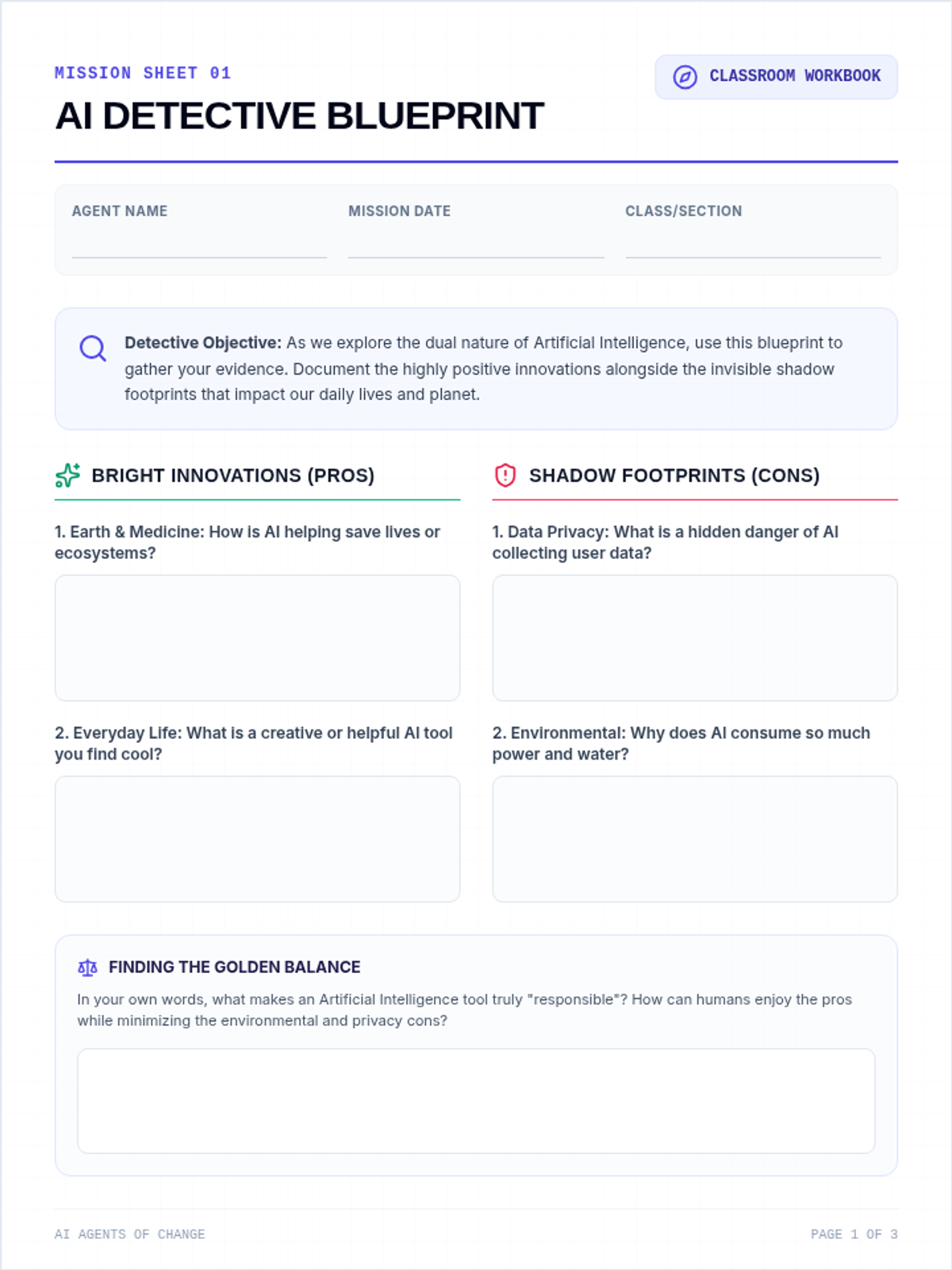
A complete, classroom-ready 3-page student document including a pros/cons graphic organizer (Detective Blueprint), a structured guide with roles and a note-taking grid for the classroom debate, and a personal AI code of ethics with reflection scenarios and action items.
A visually stunning, high-contrast slide deck designed to guide students through the positive impacts, data privacy concerns, and environmental footprints of AI. Features large, readable text, clear discussion prompts, and structured visuals for middle school classrooms.
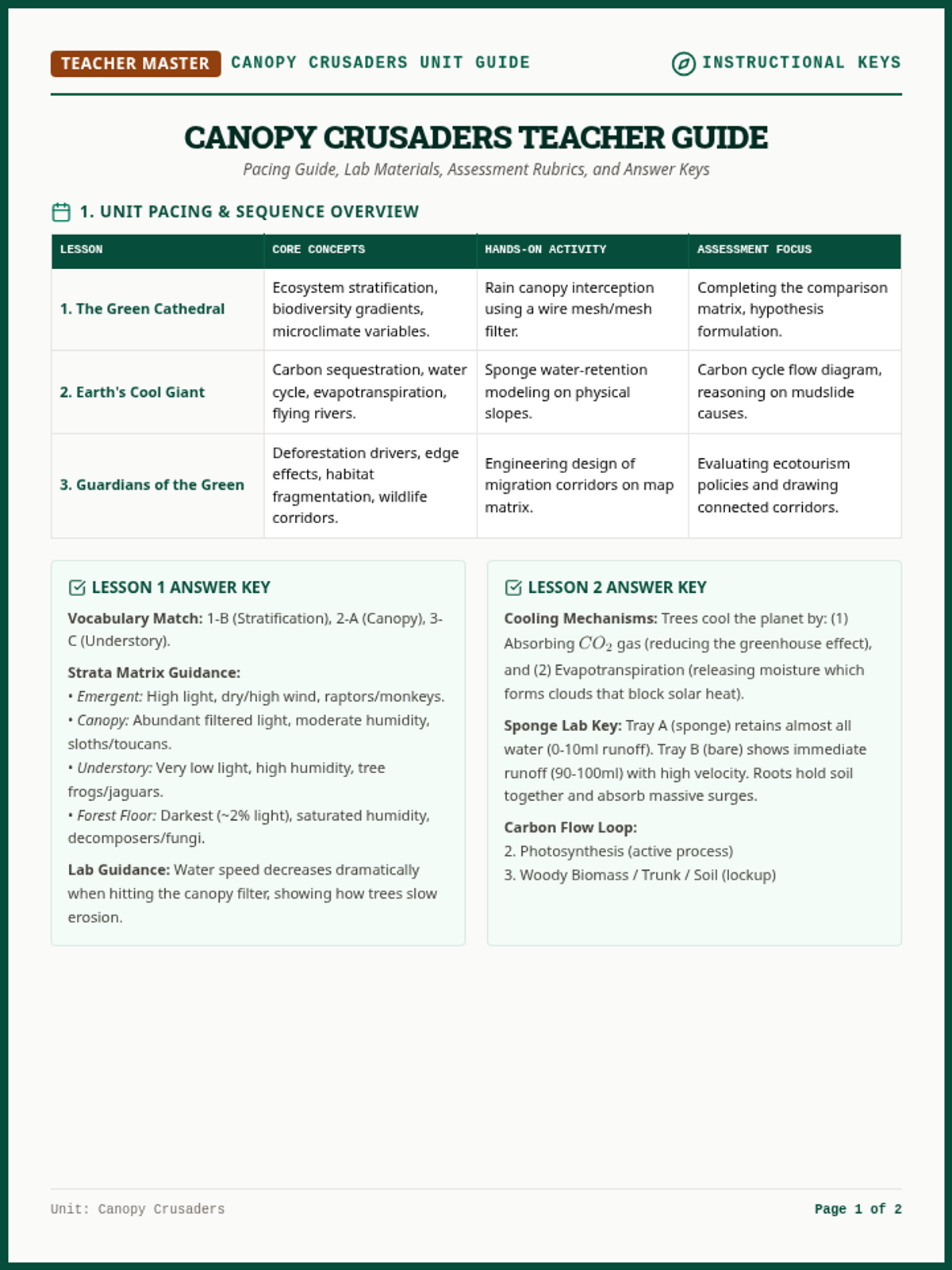
A comprehensive teacher-facing unit guide, providing unit-wide planning advice, hands-on lab setup instructions, grading rubrics, and detailed answer keys for all student worksheets.
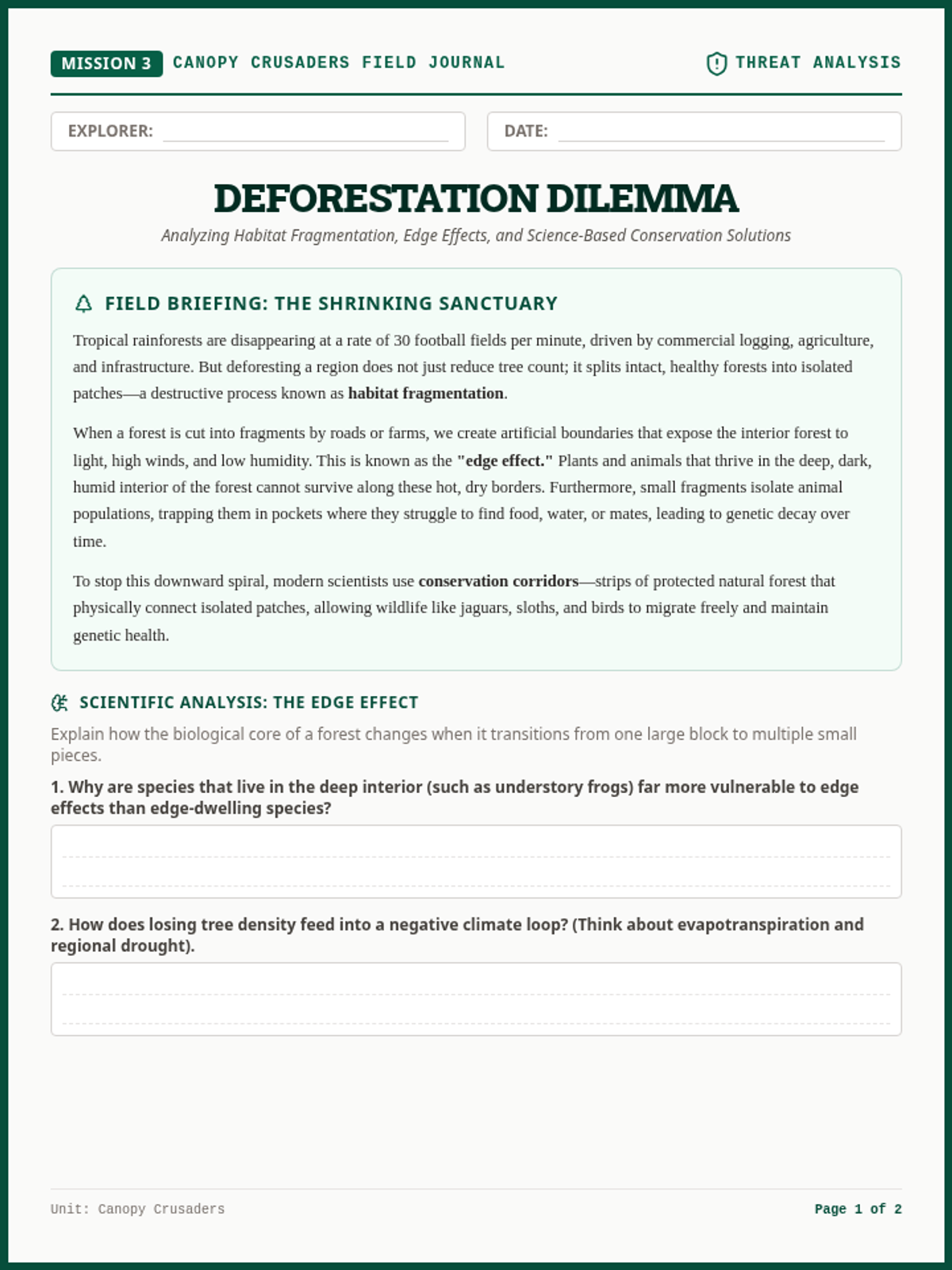
A two-page student activity packet for Lesson 3, focusing on the impacts of deforestation, habitat fragmentation, and edge effects. Includes a case study on ecosystem breakdown, a creative corridor-design science challenge, and a conservation policy evaluation matrix.