Teacher facilitation guide for Lesson 1, detailing the transition from discrete geometric growth to continuous compounding with lesson delivery steps and answer key highlights.
A collection of mathematical and physical problems ranging from early childhood addition to advanced network theory.
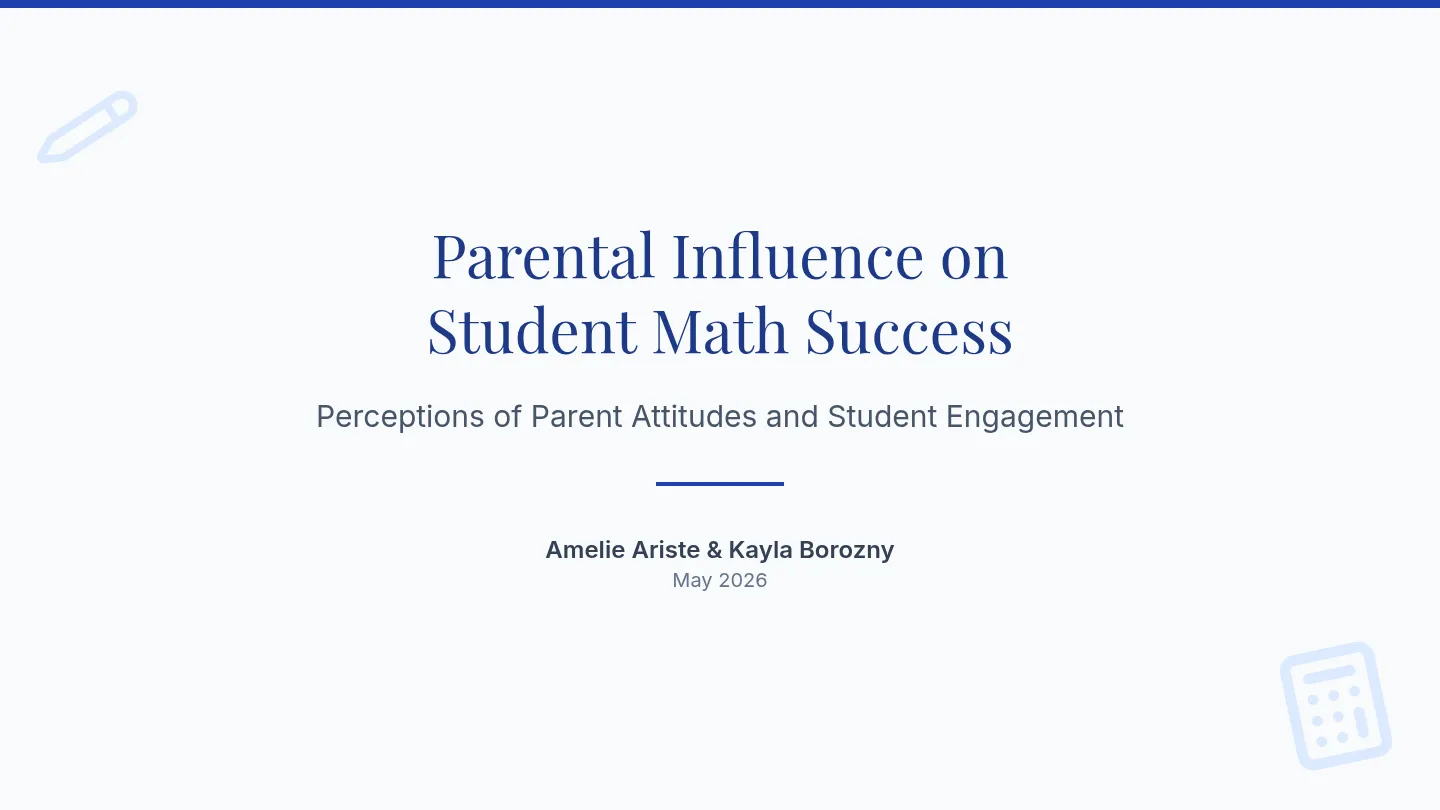
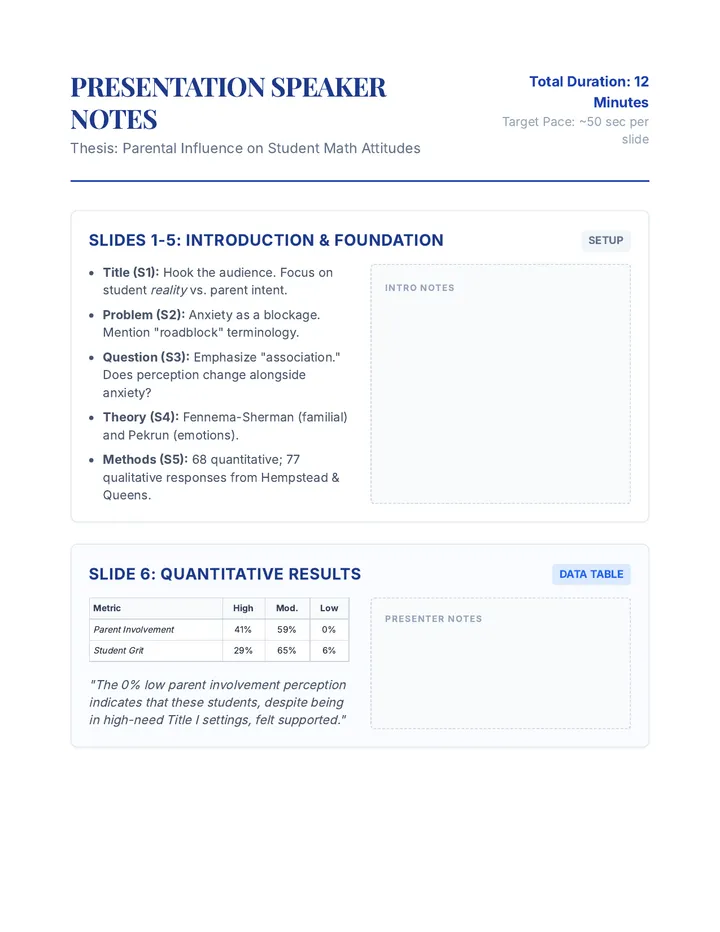
A comprehensive 12-minute presentation and speaker notes based on research investigating the link between parental attitudes and student math outcomes.
A formal narrative reflection essay meticulously aligned with the SEYS 776 rubric to achieve "Excellent" scores. It presents synthesized insights on research methodology, the research-practice loop, personal researcher growth, and pedagogical applications in cohesive paragraphs, incorporating specific examples and meaningful course feedback.
This mathematical physics sequence explores the coordinate systems necessary for solving problems involving complex shapes, moving beyond Cartesian coordinates to General Curvilinear systems. Students derive scale factors, volume elements, and differential operators, culminating in solving Laplace's equation and understanding metric tensors.
A vibrant, spring-themed 'Price is Right' game show featuring seasonal items, interactive rounds, and a high-stakes Showcase Showdown.
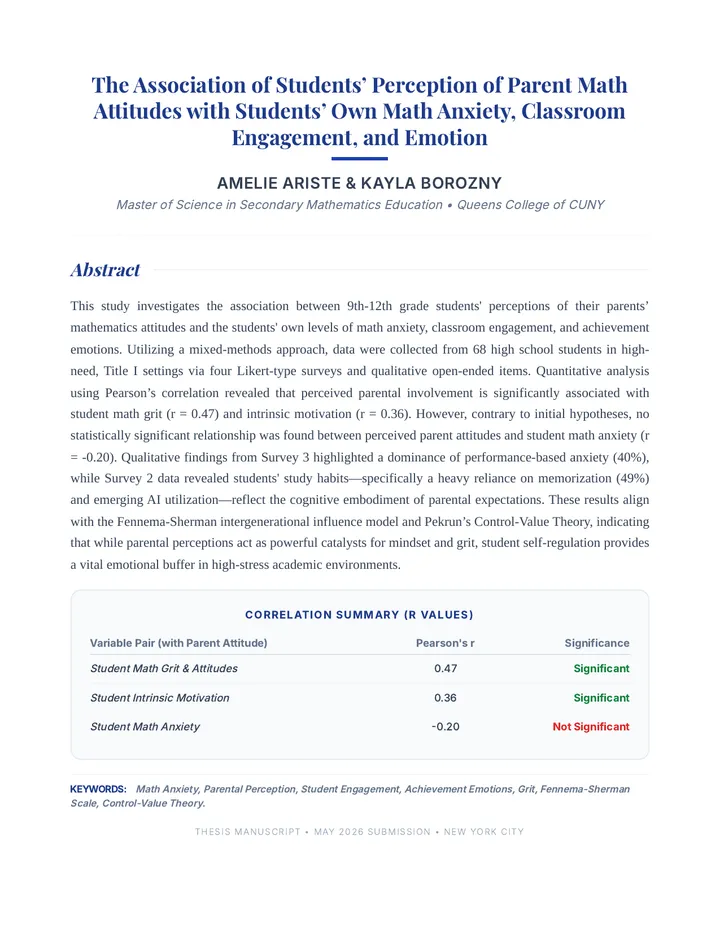
A formal academic abstract summarizing the purpose, methodology, results, and conclusions of the thesis study on parent math attitudes and student outcomes. Updated for page-break consistency and terminology matching.
A deep dive into the theoretical physics of infinite resistor networks, focusing on superposition and Green's functions to calculate equivalent resistance.
A updated presenter-facing document providing a slide-by-slide script, timing guide, and space for personal notes, with expanded sections for limitations, conclusions, and future research. Revised for handwriting legibility and visual consistency.
An introductory lesson on basic addition for early learners, using dinosaur-themed visuals to teach simple sums like 1+1.
A updated 14-slide presentation based on the user's thesis, with expanded qualitative data slides, revised terminology for correlation findings, and significantly deeper detail in limitations and conclusions. Revised for high contrast and label clarity.
A universal, landscape-oriented bidding tracker for any 'Price is Right' style game. Features generic rounds for bidding, slots for custom mini-games, a lucky number reveal section, and a grand Showcase Showdown finale. Optimized with larger text and clear handwriting areas.
An expanded, 25-slide 'Price is Right' game show for Spring. Includes 6 high-visibility bidding items with realistic pricing, reveal slides for every item, 2 interactive mini-games, a lucky number selection round (updated to 56), and a grand 'Showcase Showdown'. Optimized for 16:9 viewport.