Grammar Groove Packet Part 3: Sentence Structure and Conjunctions. Explains simple, compound, and complex sentences, as well as coordinating (FANBOYS) and subordinating conjunctions. Revised layout and punctuation instruction.
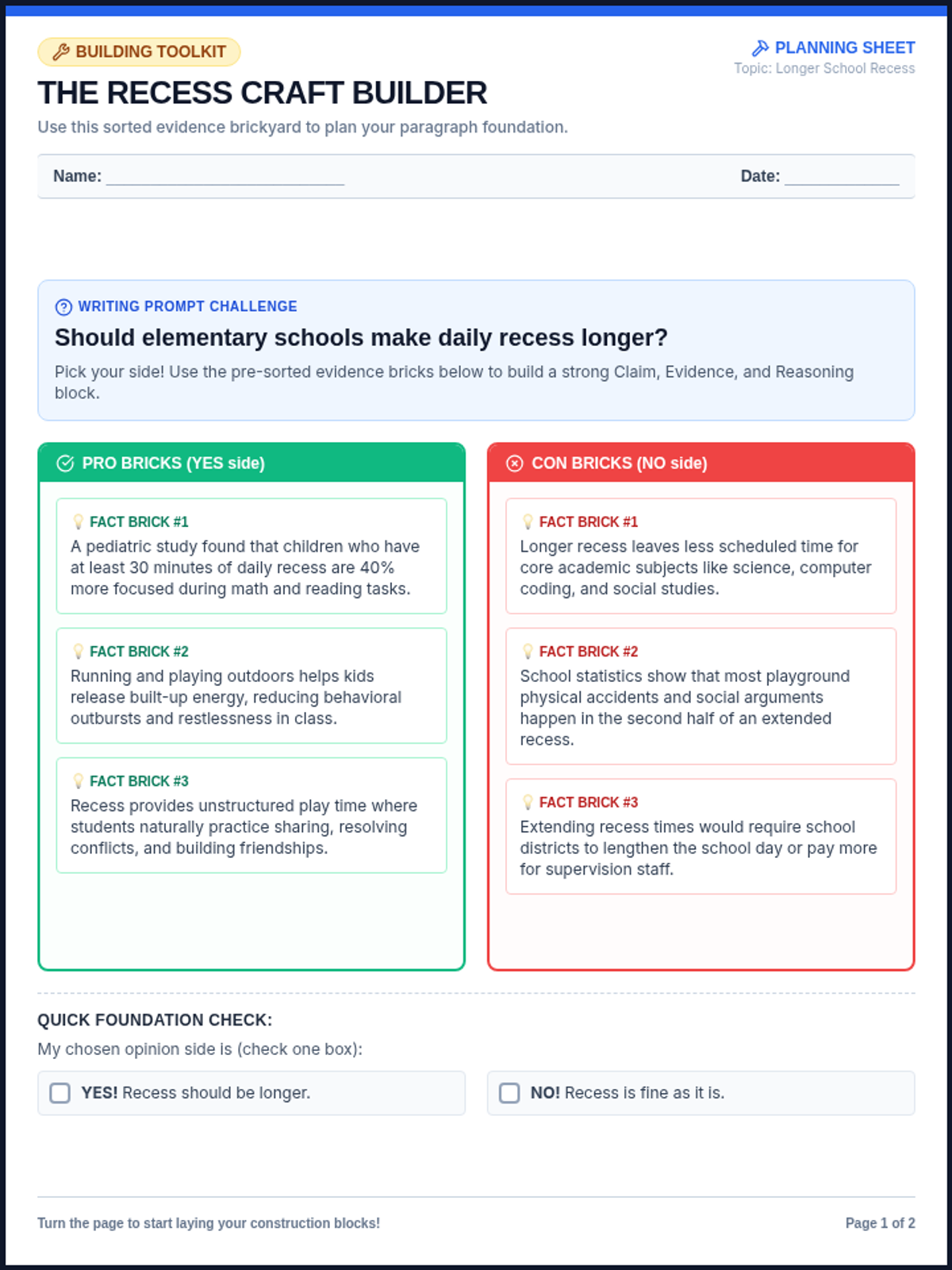
A secondary writing template and graphic organizer pack focusing on a high-interest topic (Should recess be longer?) to provide extra practice with pre-sorted pros and cons and structured writing frames.
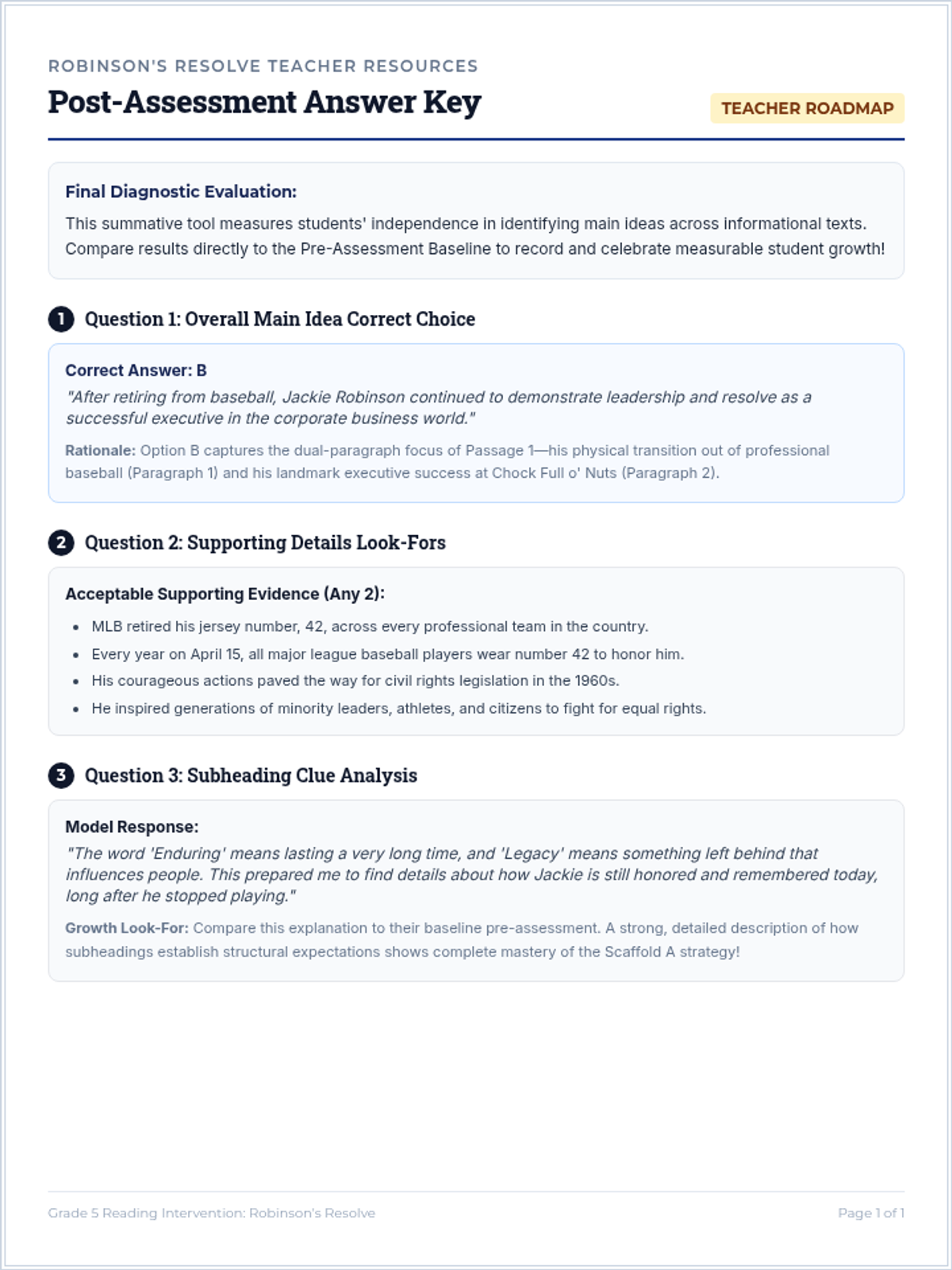
A teacher scoring guide and diagnostic answer key for the Robinson Post Assessment. It includes correct answers, model student responses, and progress criteria for celebrating growth.
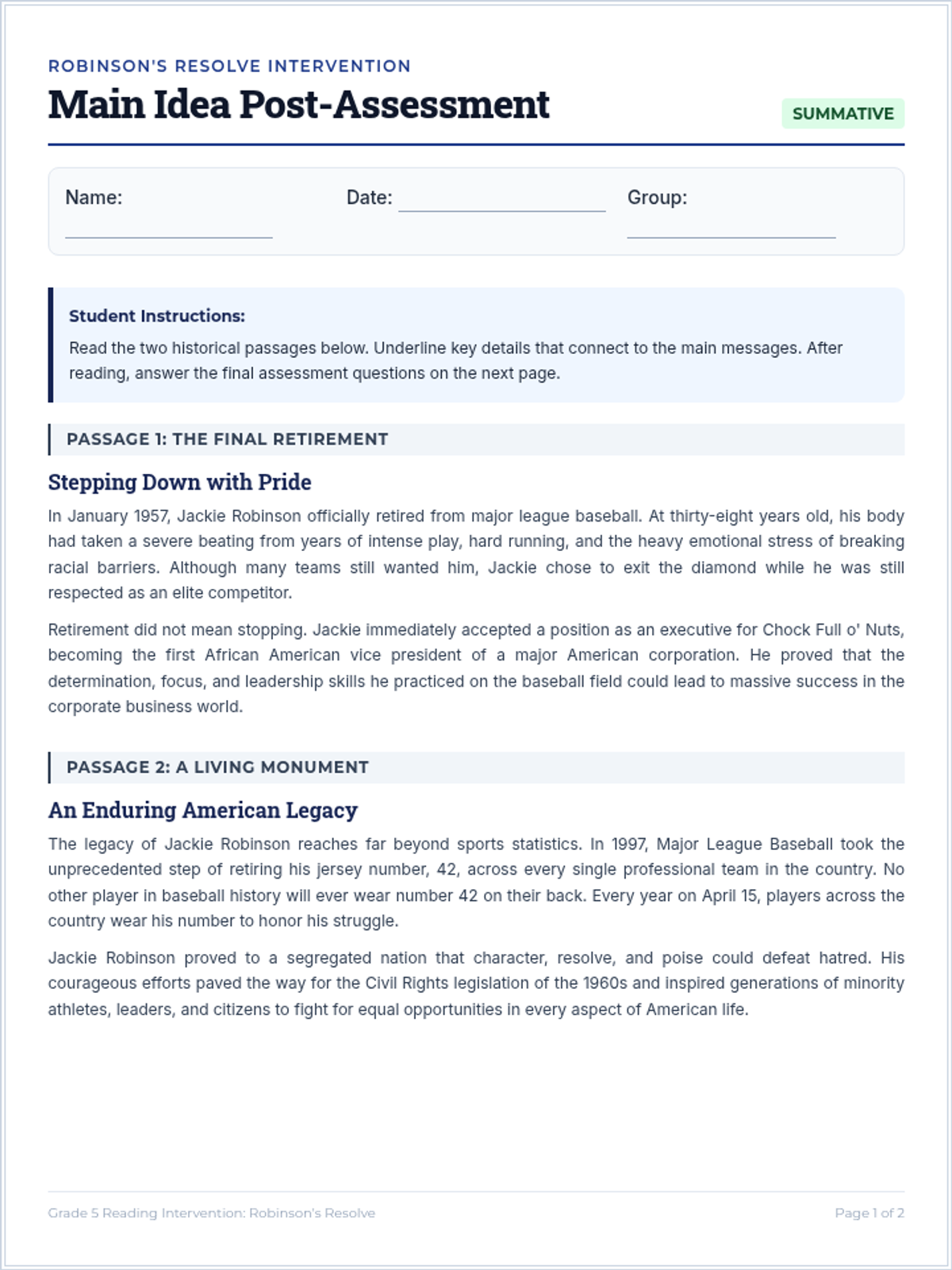
A student-facing post-assessment designed to evaluate progress at the end of the intervention. It features historical passages about Jackie Robinson's legacy and retirement, with multiple choice and short answer questions.
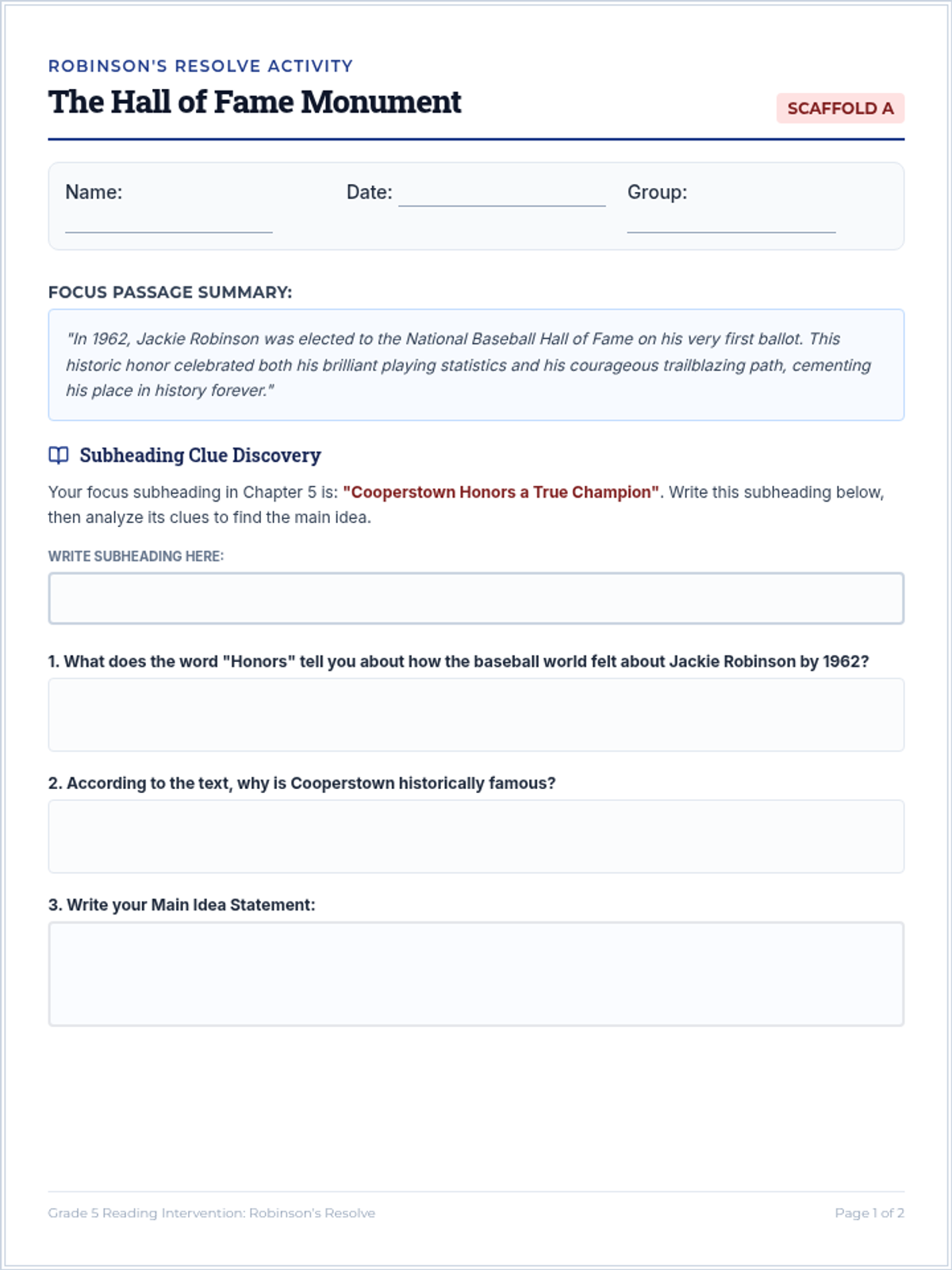
A 2-page student activity sheet for Lesson 11 (Champion of Change). Page 1 uses Scaffold A (Text Features) to identify main ideas from Jackie's Hall of Fame induction, and Page 2 uses Scaffold B (Connecting Key Details) to link his legacy to enduring cultural change.
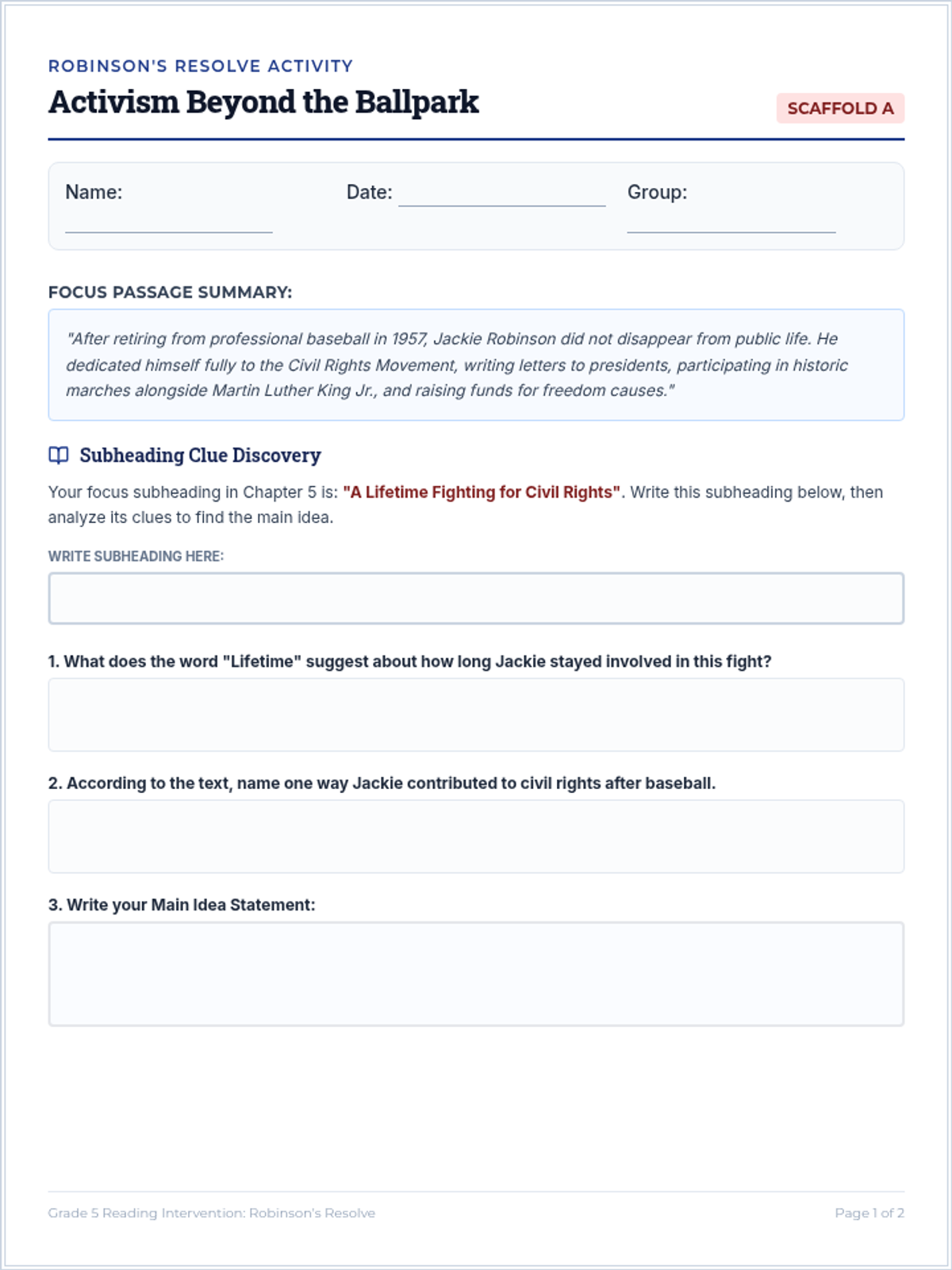
A 2-page student activity sheet for Lesson 10 (Off the Field). Page 1 uses Scaffold A (Text Features) to identify main ideas from Jackie's civil rights activism, and Page 2 uses Scaffold B (Connecting Key Details) to link his business leadership to his legacy.
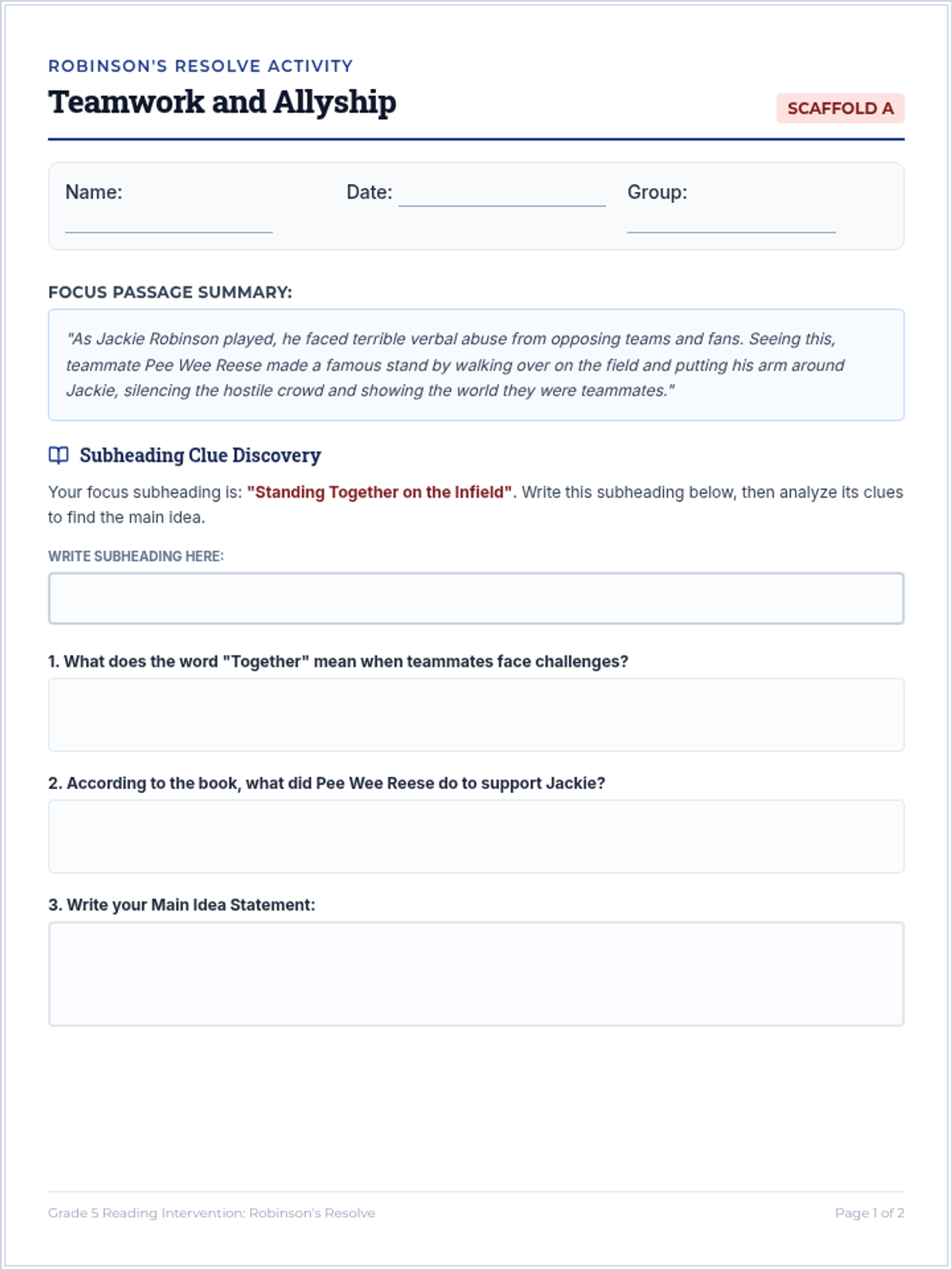
A 2-page student activity sheet for Lesson 9 (Finding Allies). Page 1 uses Scaffold A (Text Features) to identify main ideas from the Dodgers' team camaraderie, and Page 2 uses Scaffold B (Connecting Key Details) to link Reese's public support to Robinson's acceptance.
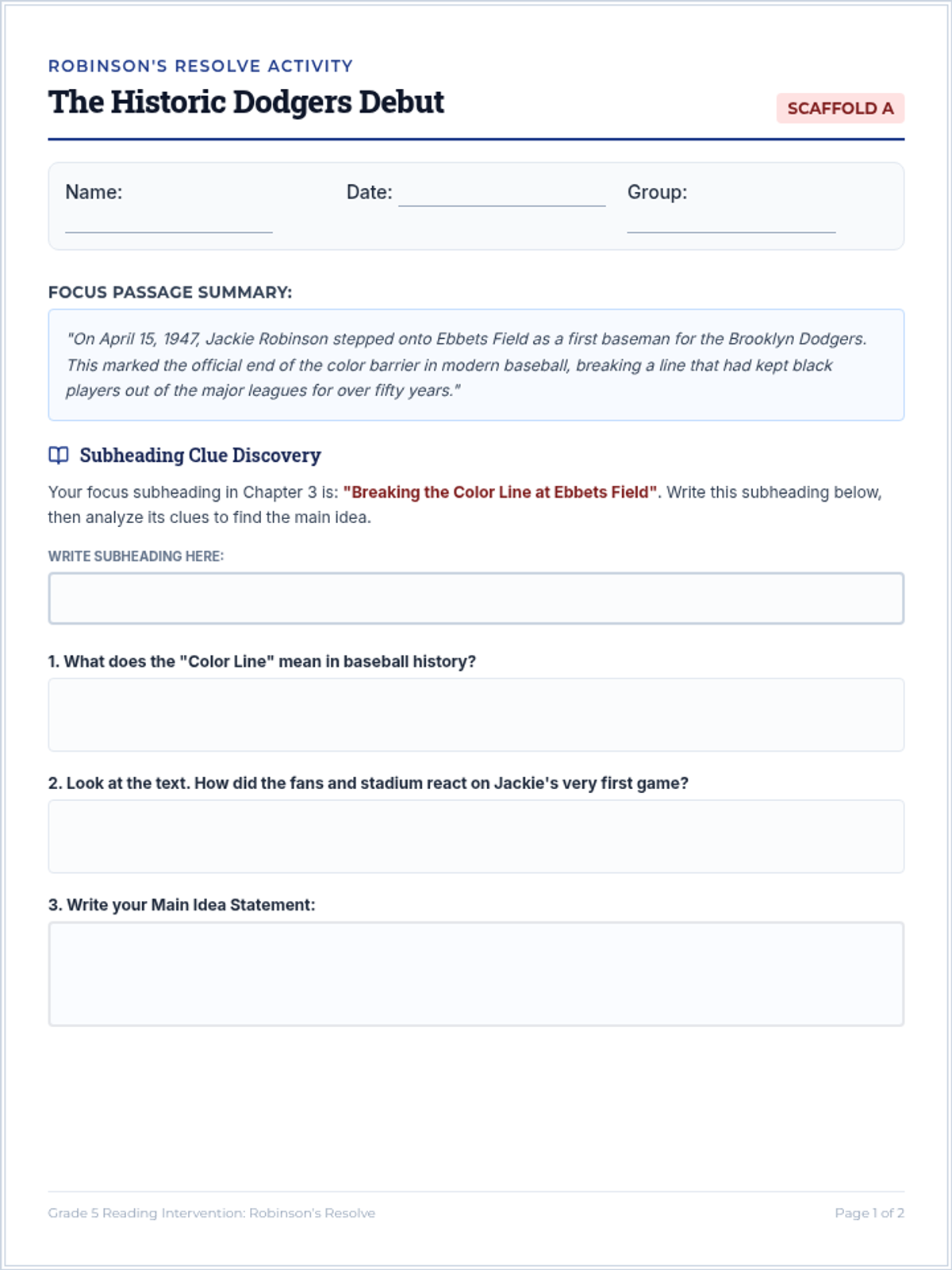
A 2-page student activity sheet for Lesson 8 (Breaking the Line). Page 1 uses Scaffold A (Text Features) to identify main ideas from Jackie's Dodgers debut, and Page 2 uses Scaffold B (Connecting Key Details) to link historical descriptions of April 15, 1947.
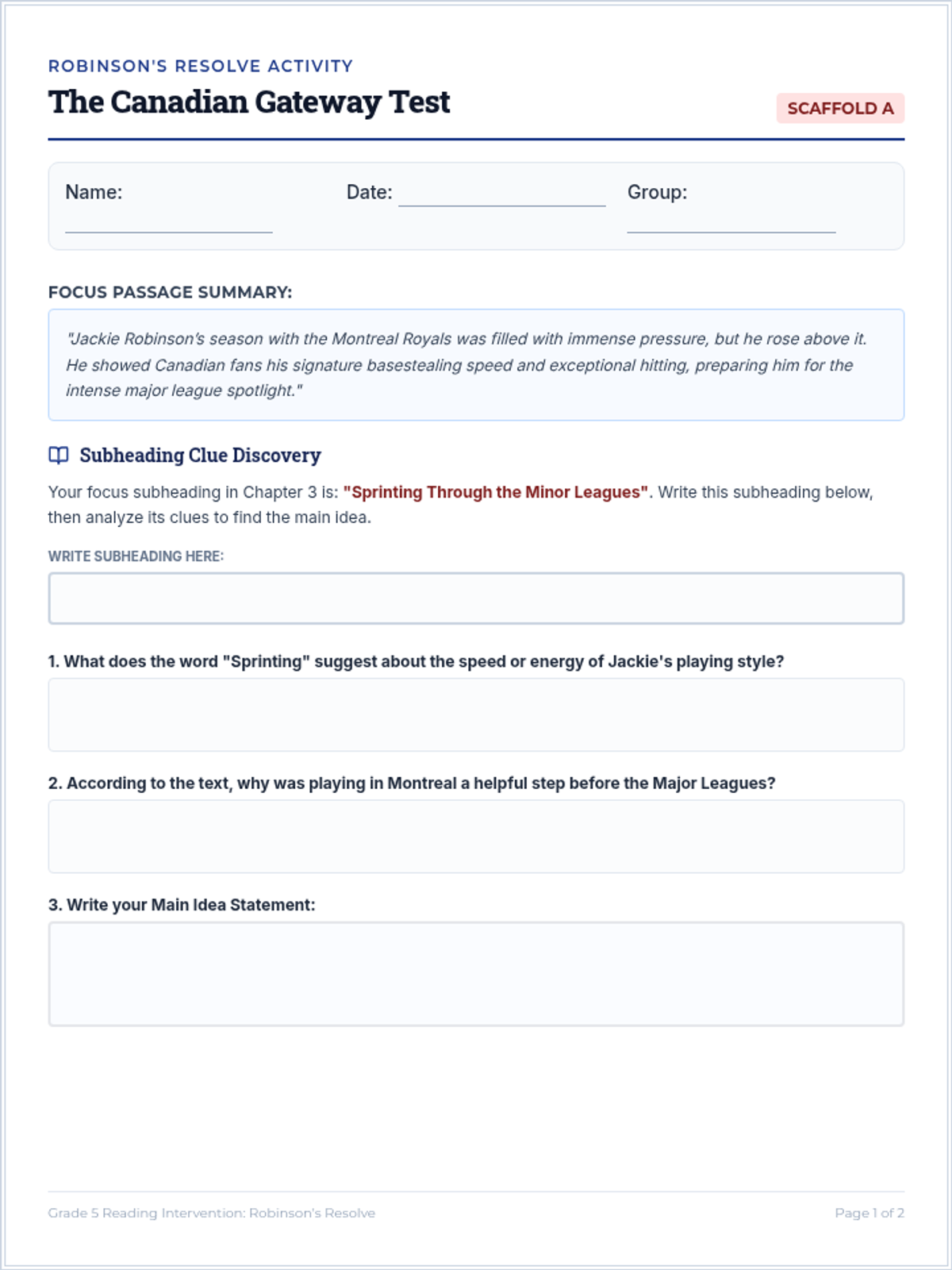
A 2-page student activity sheet for Lesson 7 (Montreal Trial). Page 1 uses Scaffold A (Text Features) to identify main ideas from Jackie's minor league performances, and Page 2 uses Scaffold B (Connecting Key Details) to link his MVP season to his readiness for major leagues.
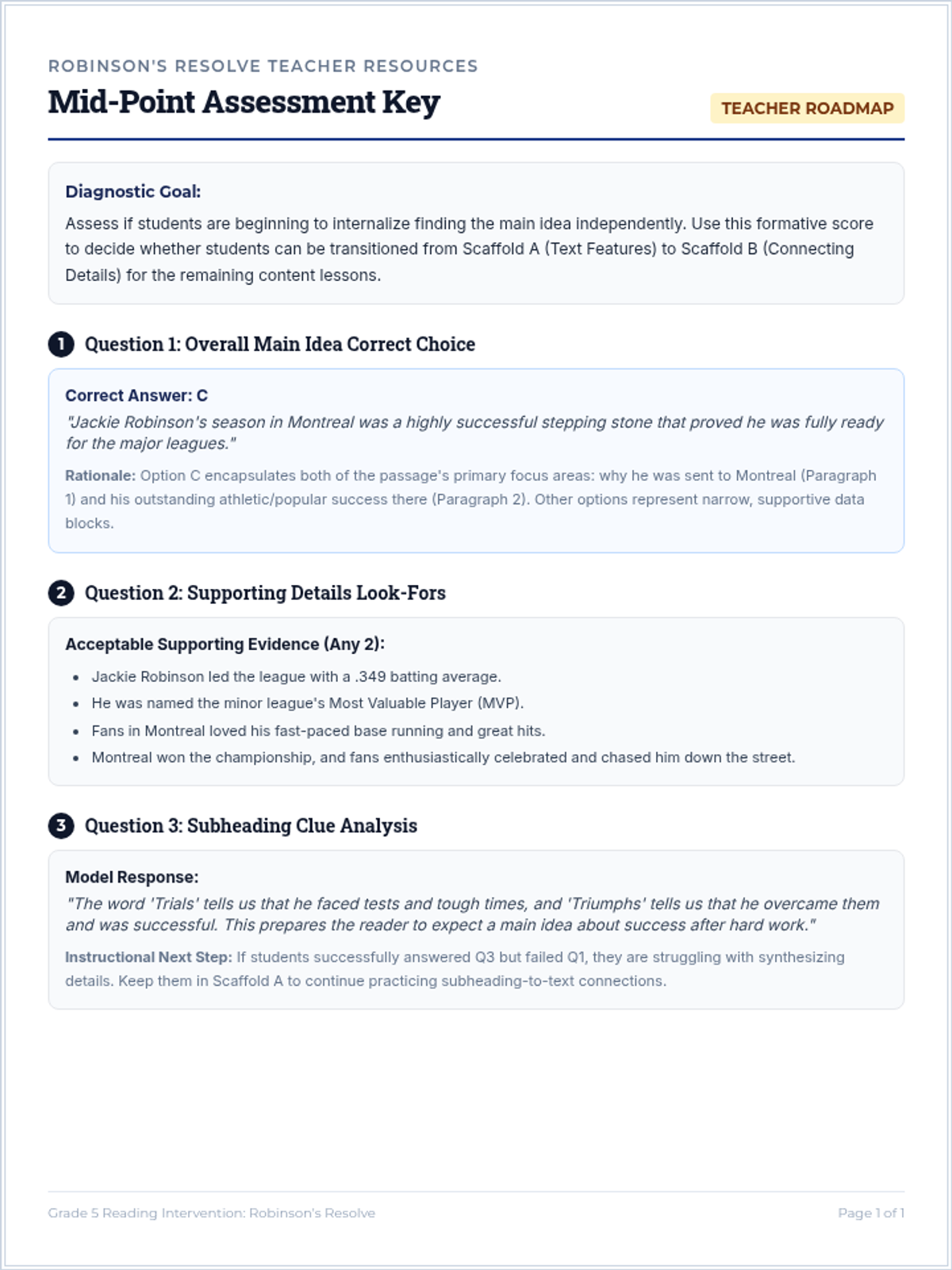
A teacher scoring guide and answer key for the Robinson Mid Point Assessment. It provides the correct multiple choice choice, acceptable supporting details, and grading criteria for diagnostic tracking.
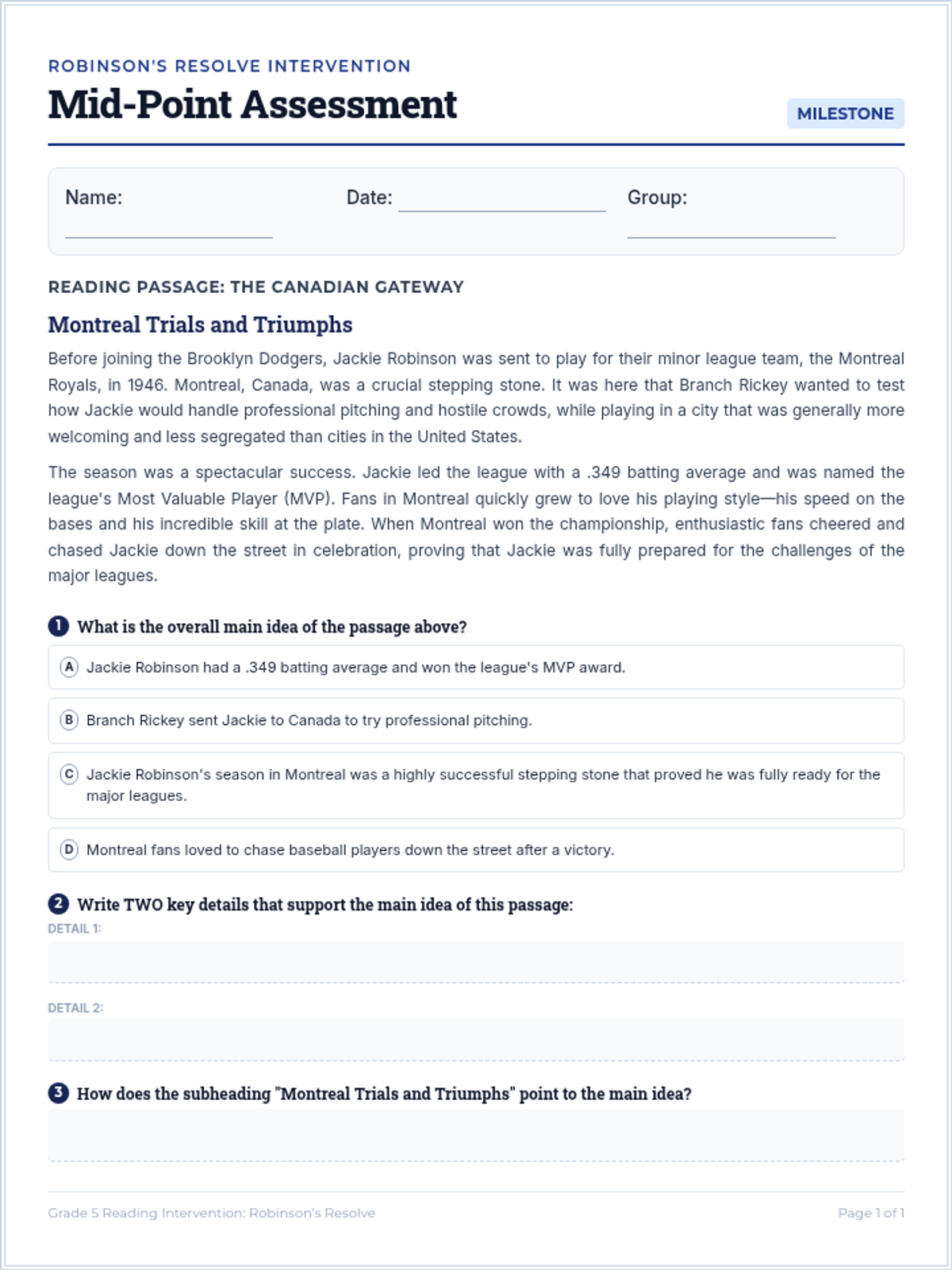
A student-facing mid-point assessment to evaluate progress in identifying main ideas. It features a historical passage about Jackie Robinson's minor league season with the Montreal Royals, followed by scaffolded multiple choice and short answer questions.
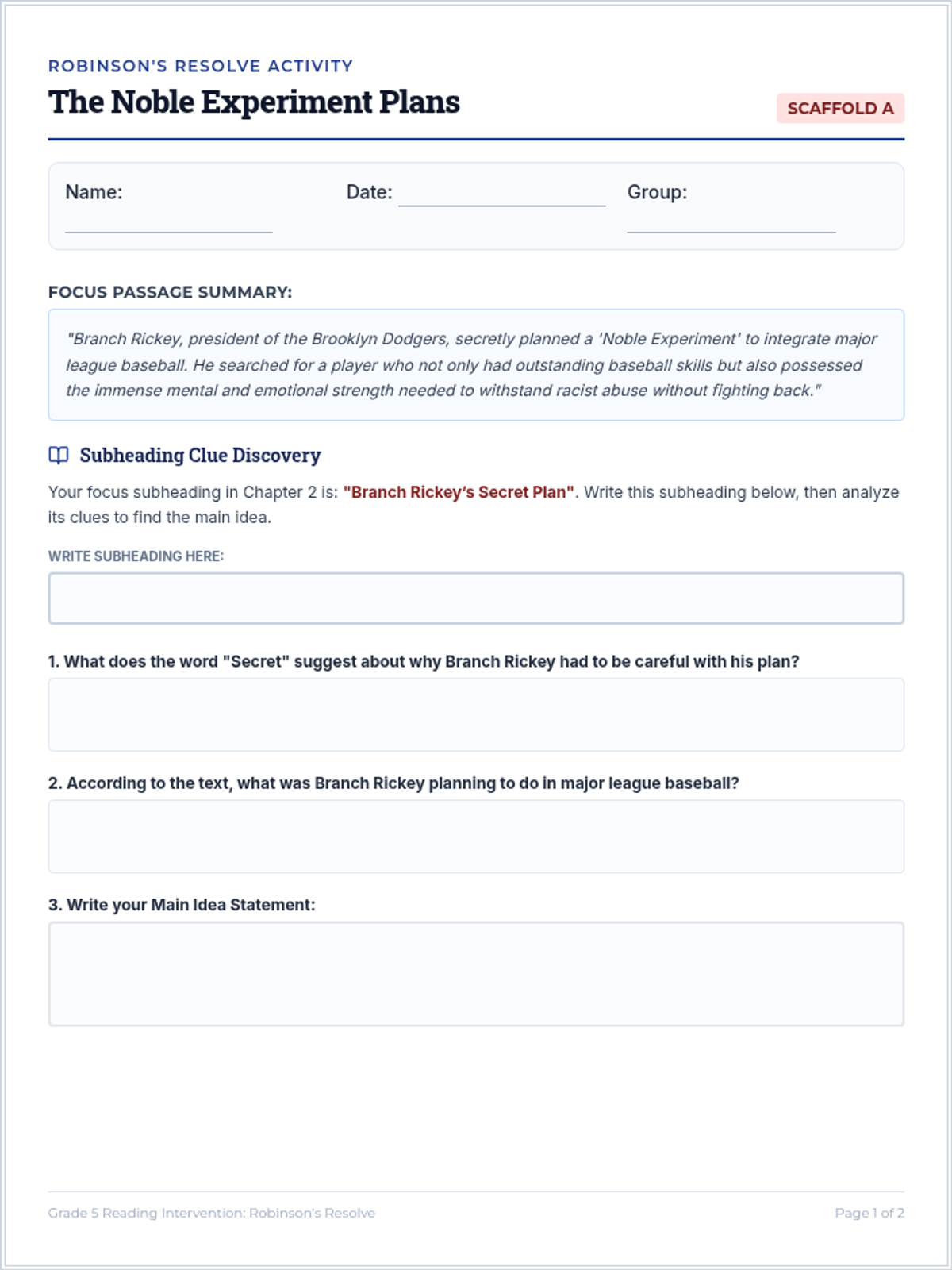
A 2-page student activity sheet for Lesson 5 (The Call). Page 1 uses Scaffold A (Text Features) to identify the main idea of the 'Noble Experiment', and Page 2 uses Scaffold B (Connecting Key Details) to link Branch Rickey's expectations of character to Jackie's commitment.
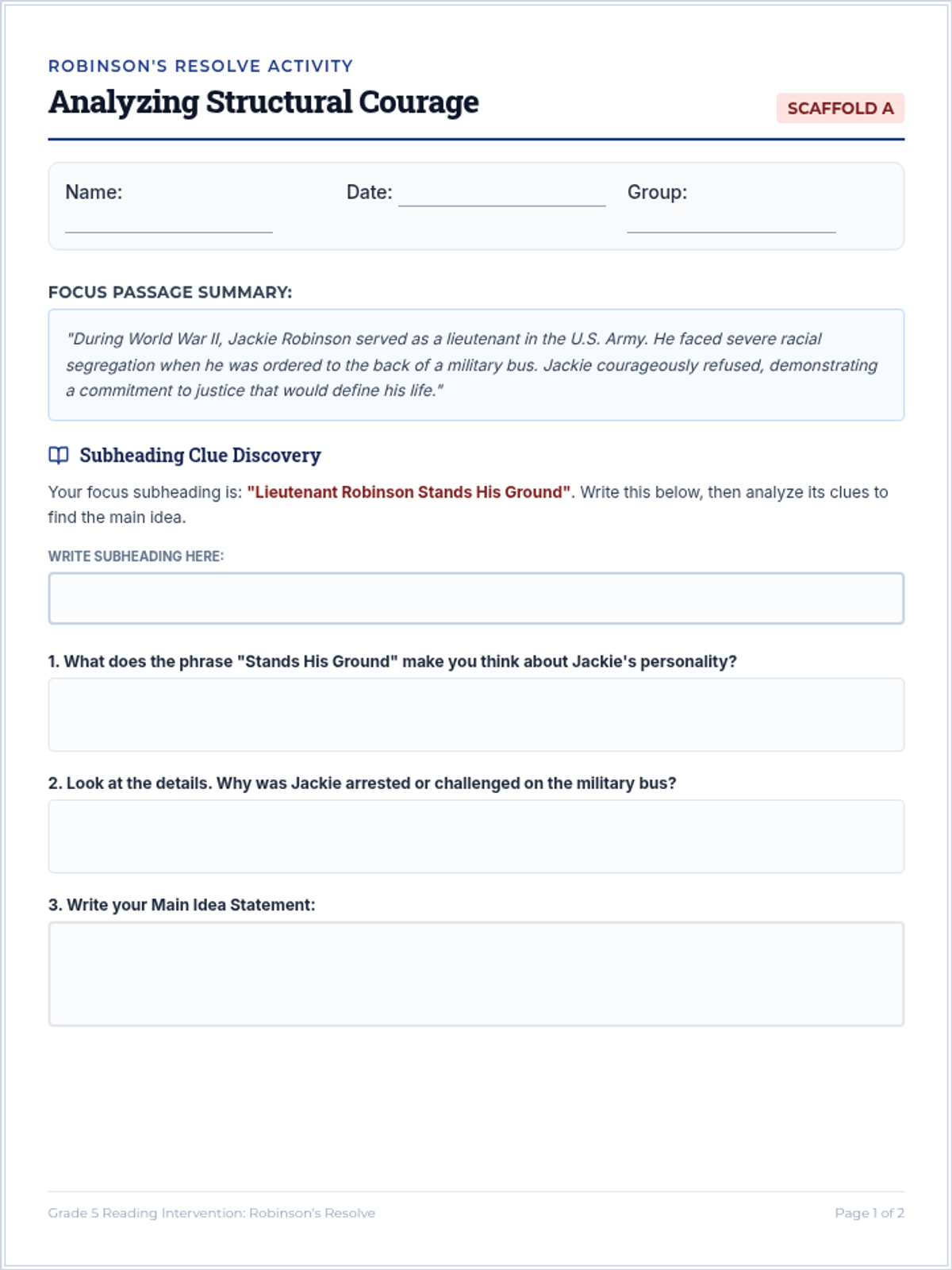
A 2-page student activity sheet for Lesson 4 (Soldier Robinson). Page 1 uses Scaffold A (Text Features) to identify main ideas from Jackie's military career, and Page 2 uses Scaffold B (Connecting Key Details) to link his stand against discrimination to his personal resolve.
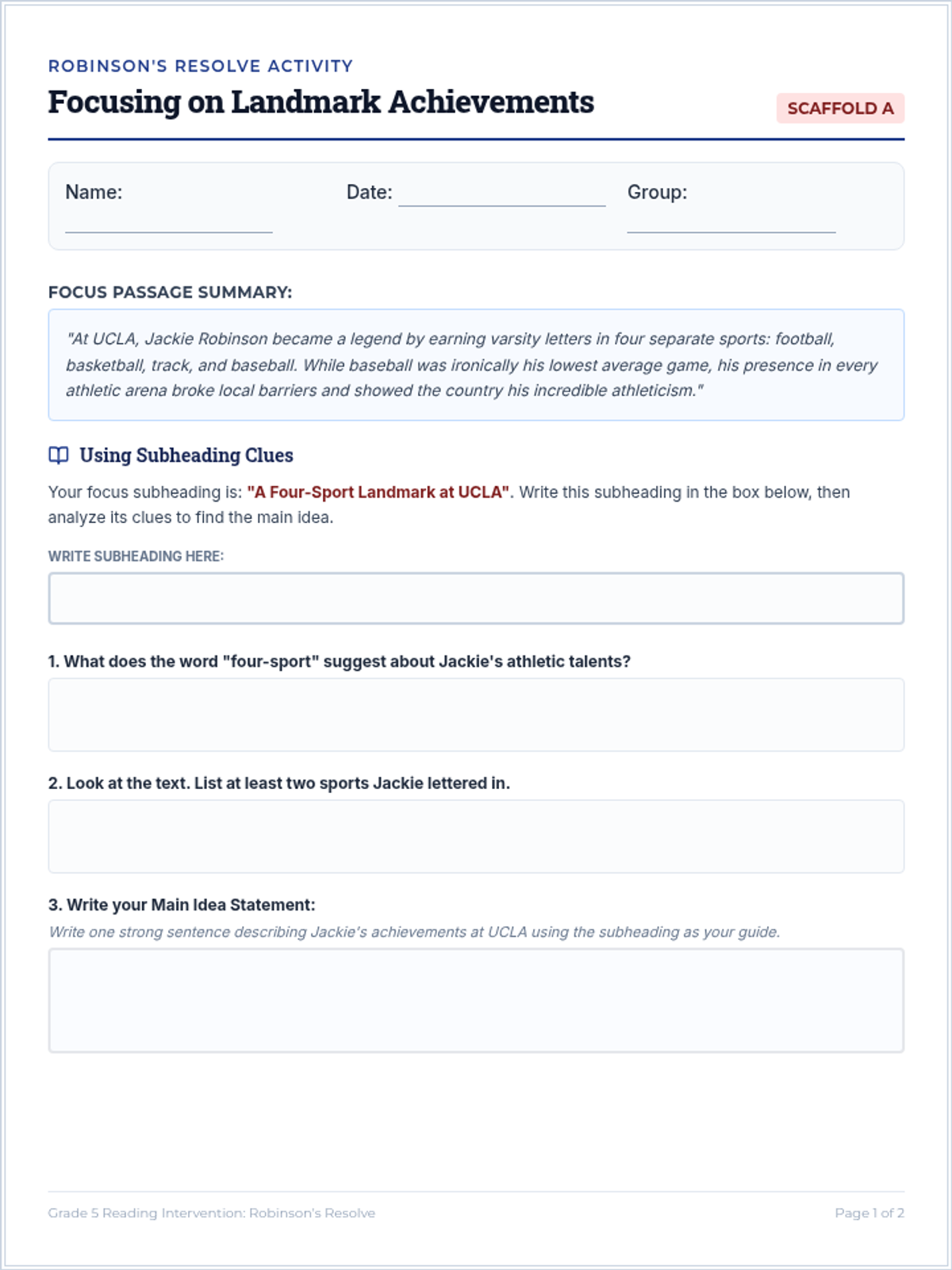
A 2-page student activity sheet for Lesson 3 (Multi Sport Star). Page 1 uses Scaffold A (Text Features) to identify main ideas from Jackie's UCLA days, and Page 2 uses Scaffold B (Connecting Key Details) to link his achievements across track, basketball, and football.
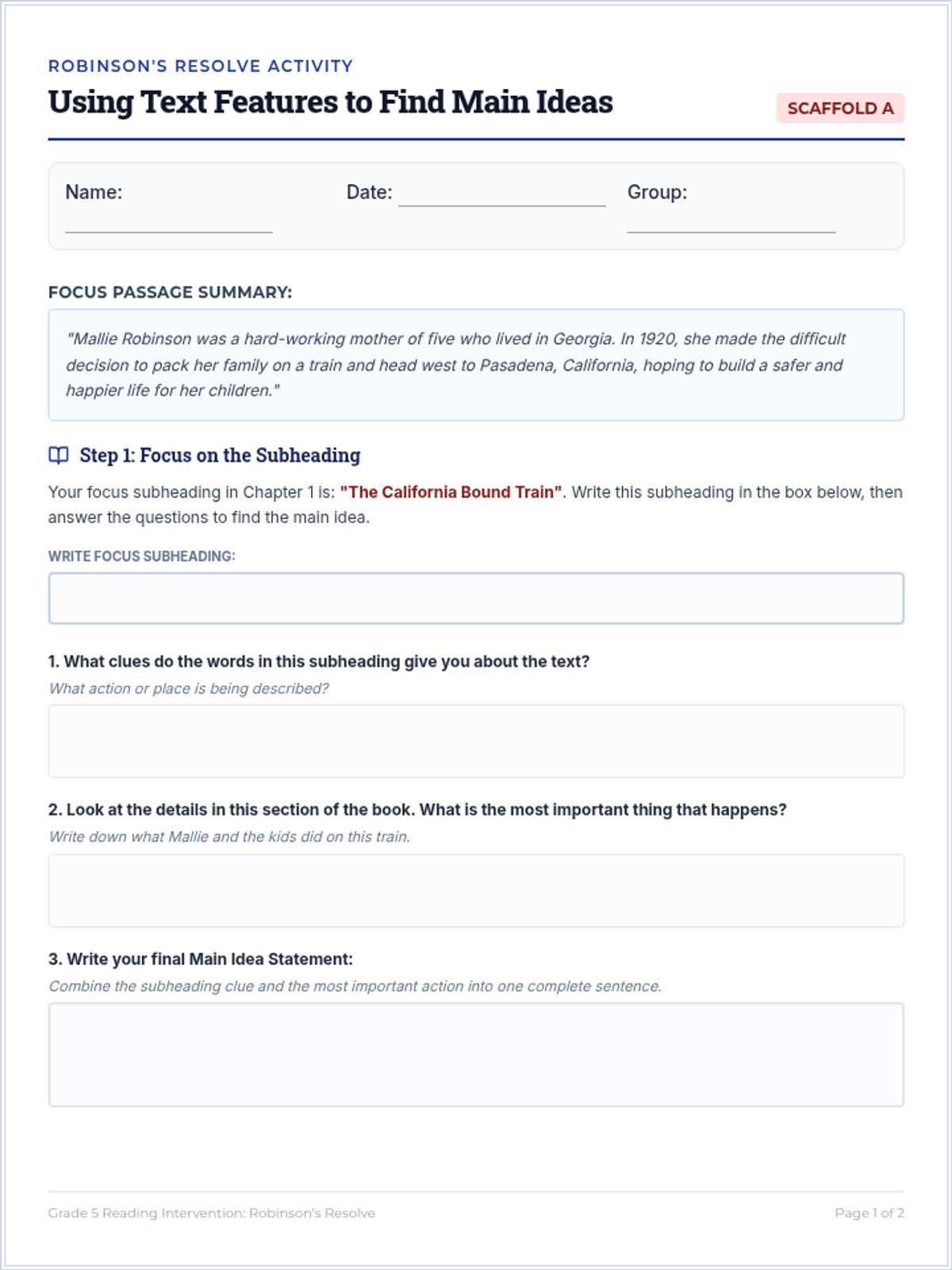
A 2-page dual-pathway student activity sheet for Lesson 2 (Moving West). Page 1 guides students using Scaffold A (Text Features), and Page 2 supports students using Scaffold B (Connecting Key Details).
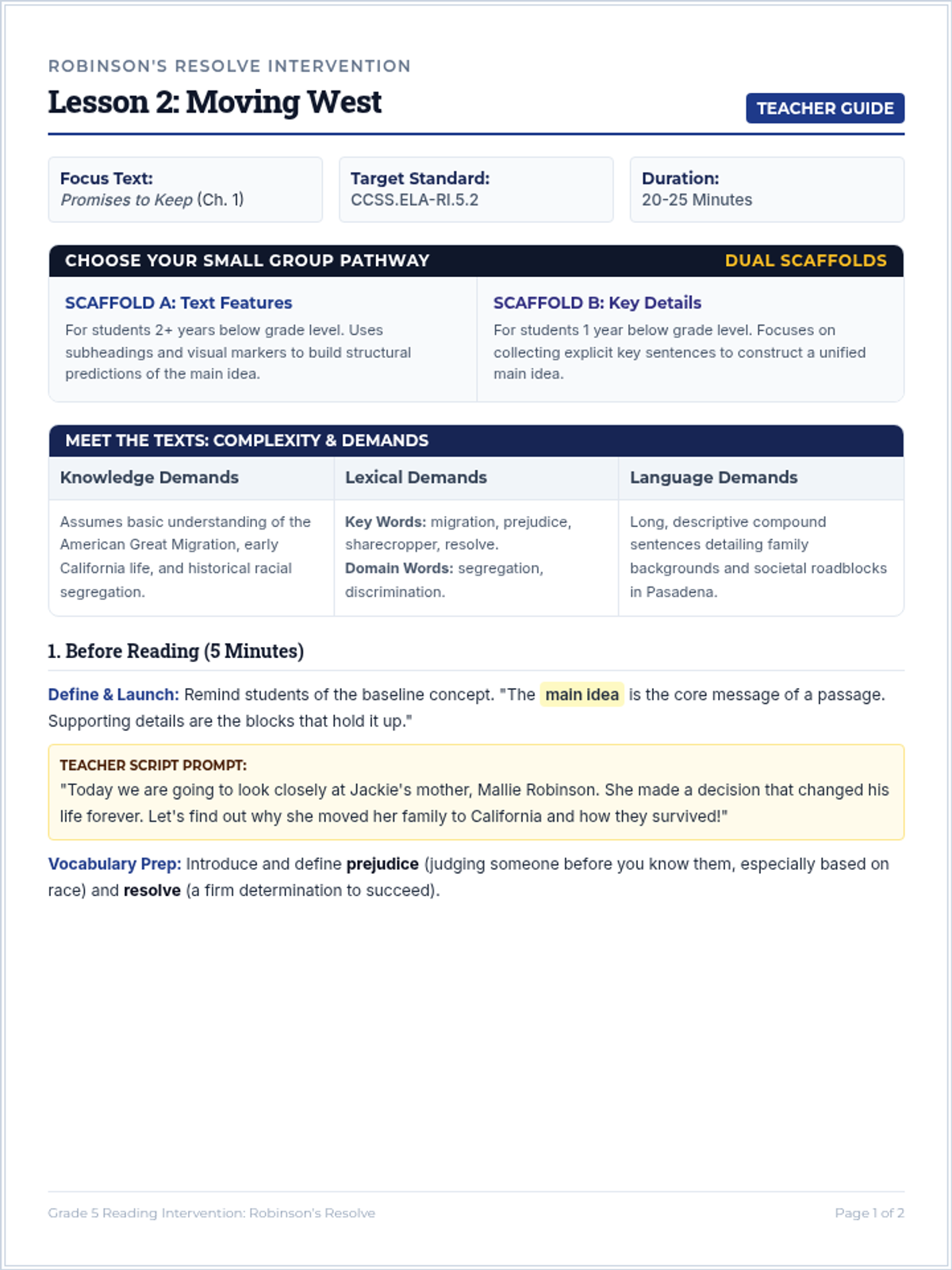
A comprehensive teacher lesson plan for Lesson 2 (Moving West). It details the dual-pathway scaffold approach (Scaffold A and Scaffold B) to help students identify the main idea of a text about the Robinson family's move to California.
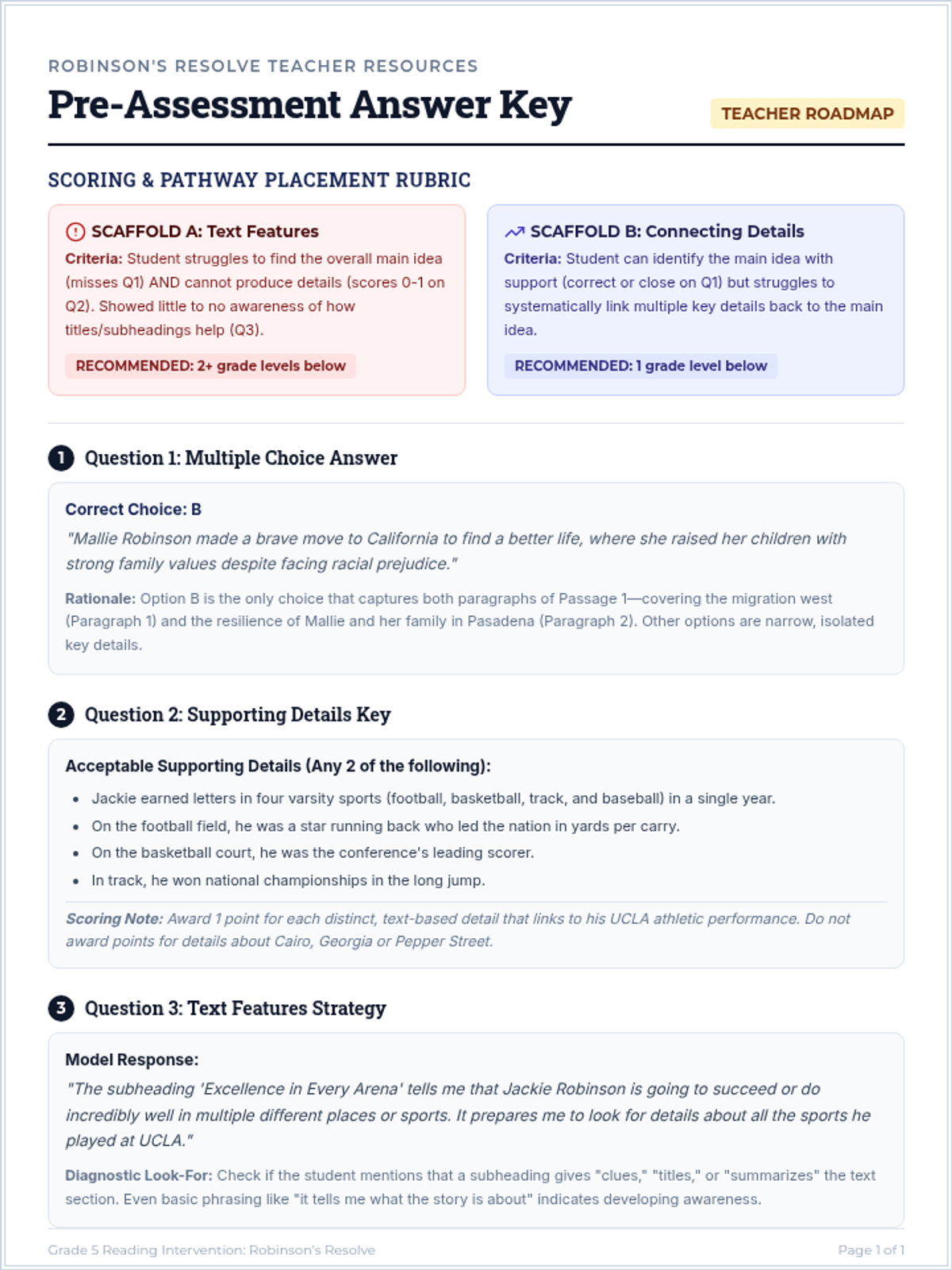
A teacher-facing scoring and diagnostic guide for the Robinson Pre-Assessment. It includes correct answers, model student responses, scoring rubrics, and explicit criteria for assigning students to either Scaffold A or Scaffold B pathways.
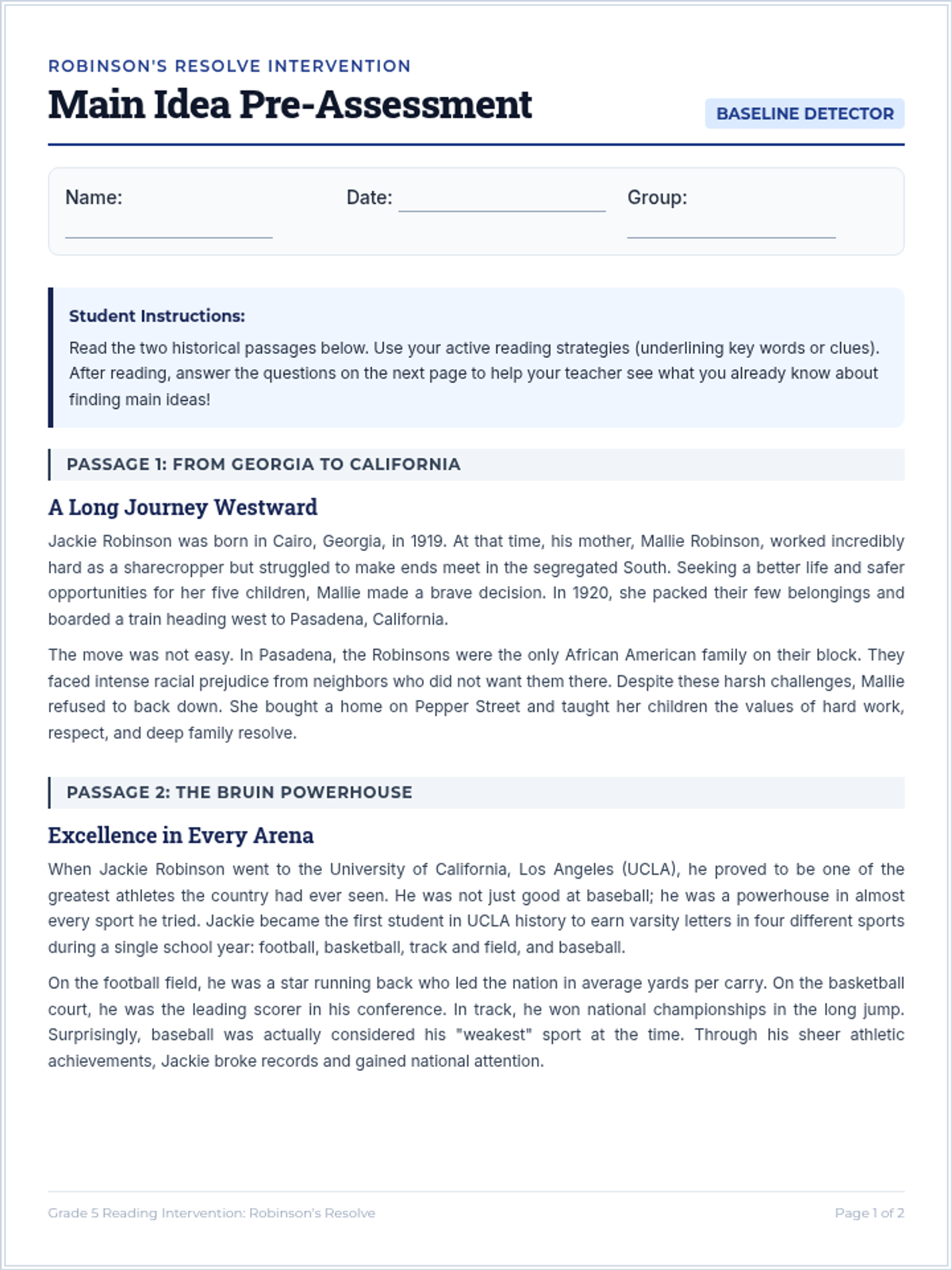
A student-facing pre-assessment designed to establish a baseline for identifying main ideas. It features two short historical passages about Jackie Robinson's childhood and sports career with multiple choice and short answer questions.
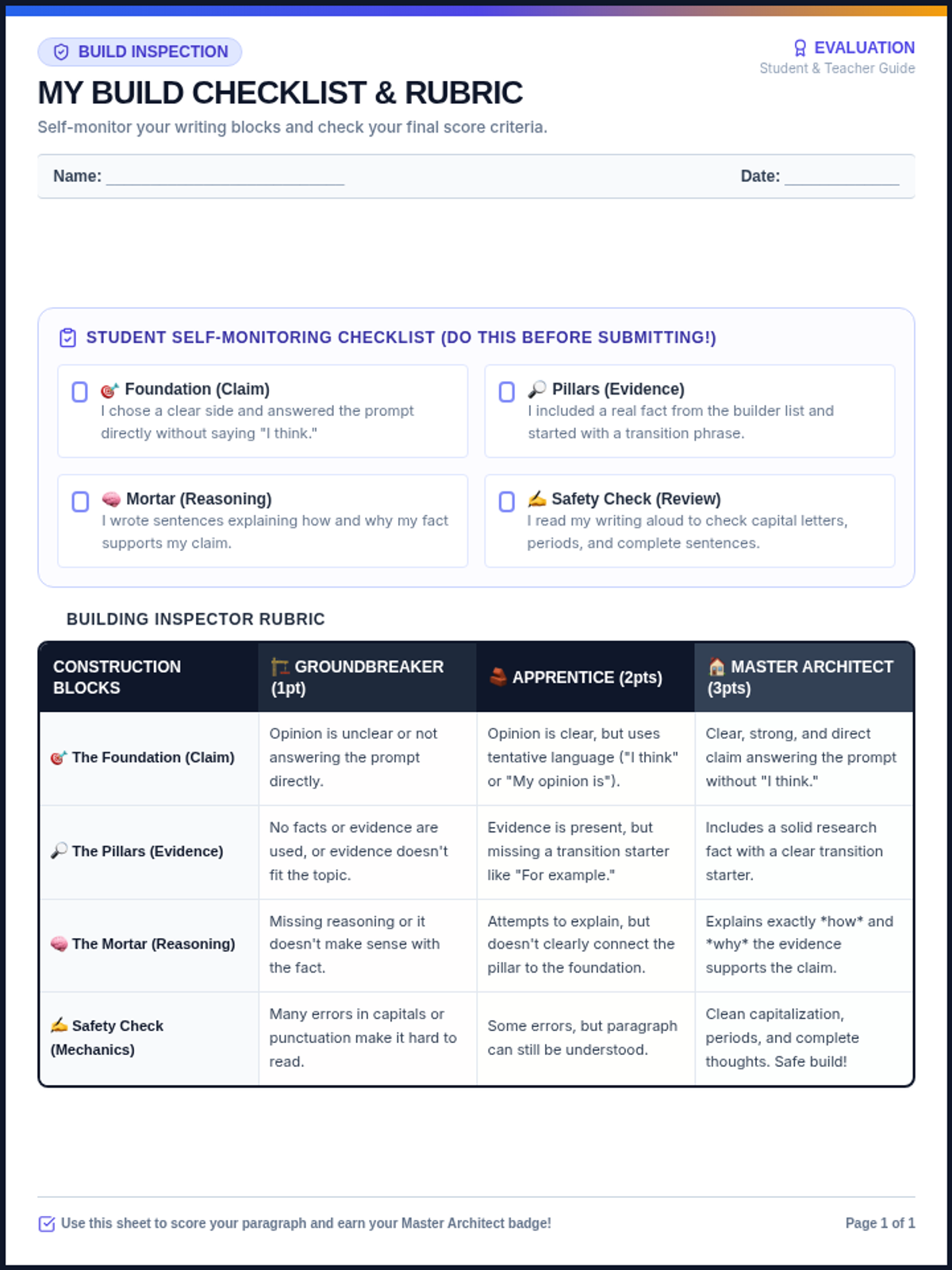
A student-facing self-monitoring checklist and a standards-aligned, visual modified rubric utilizing construction levels (Groundbreaker, Apprentice, Master Architect) for simplified, encouraging scoring.
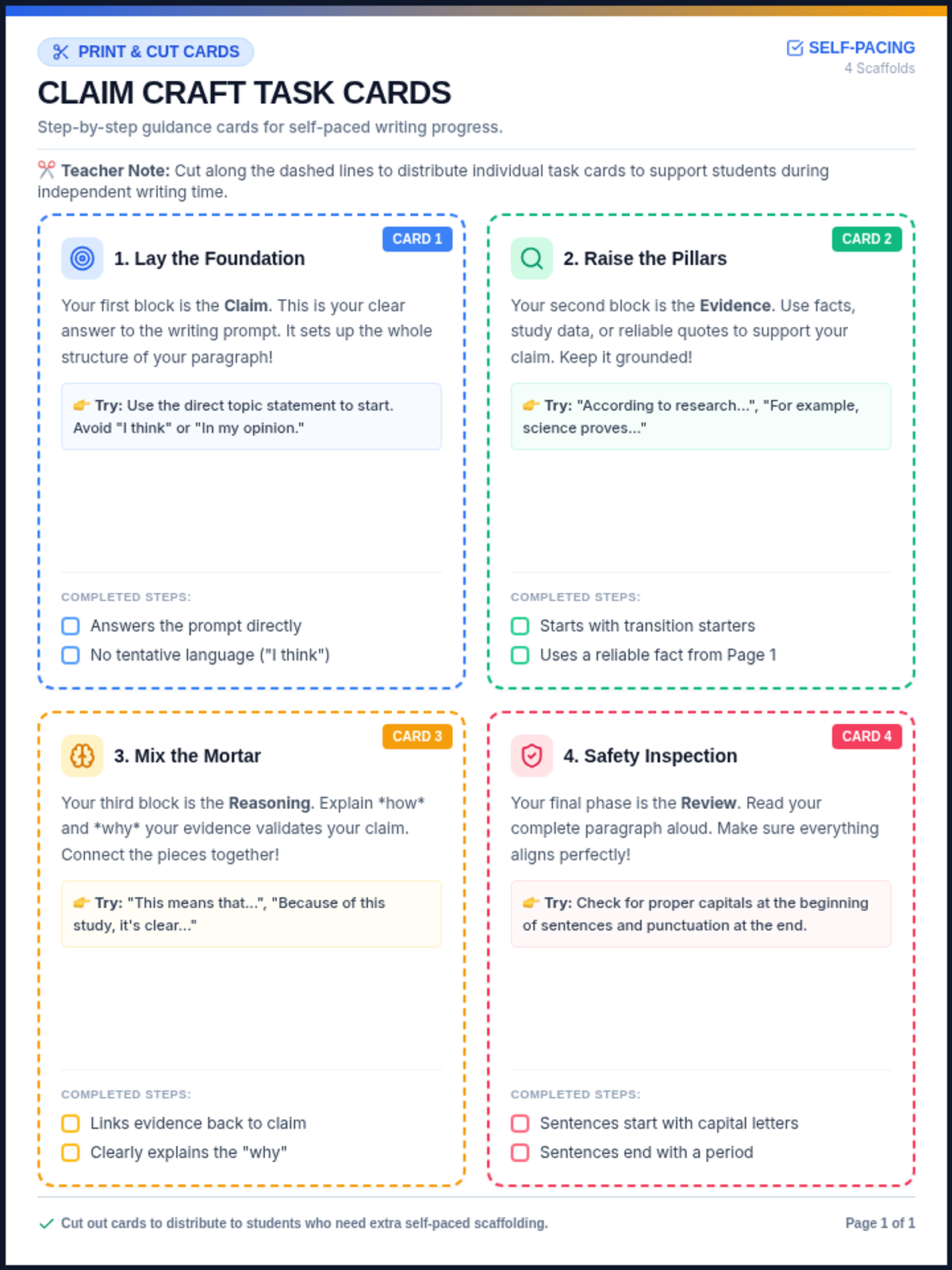
Four printable, step-by-step task cards with visual icons, sequential instructions, and progress checklists to help students self-pace through the paragraph construction process.
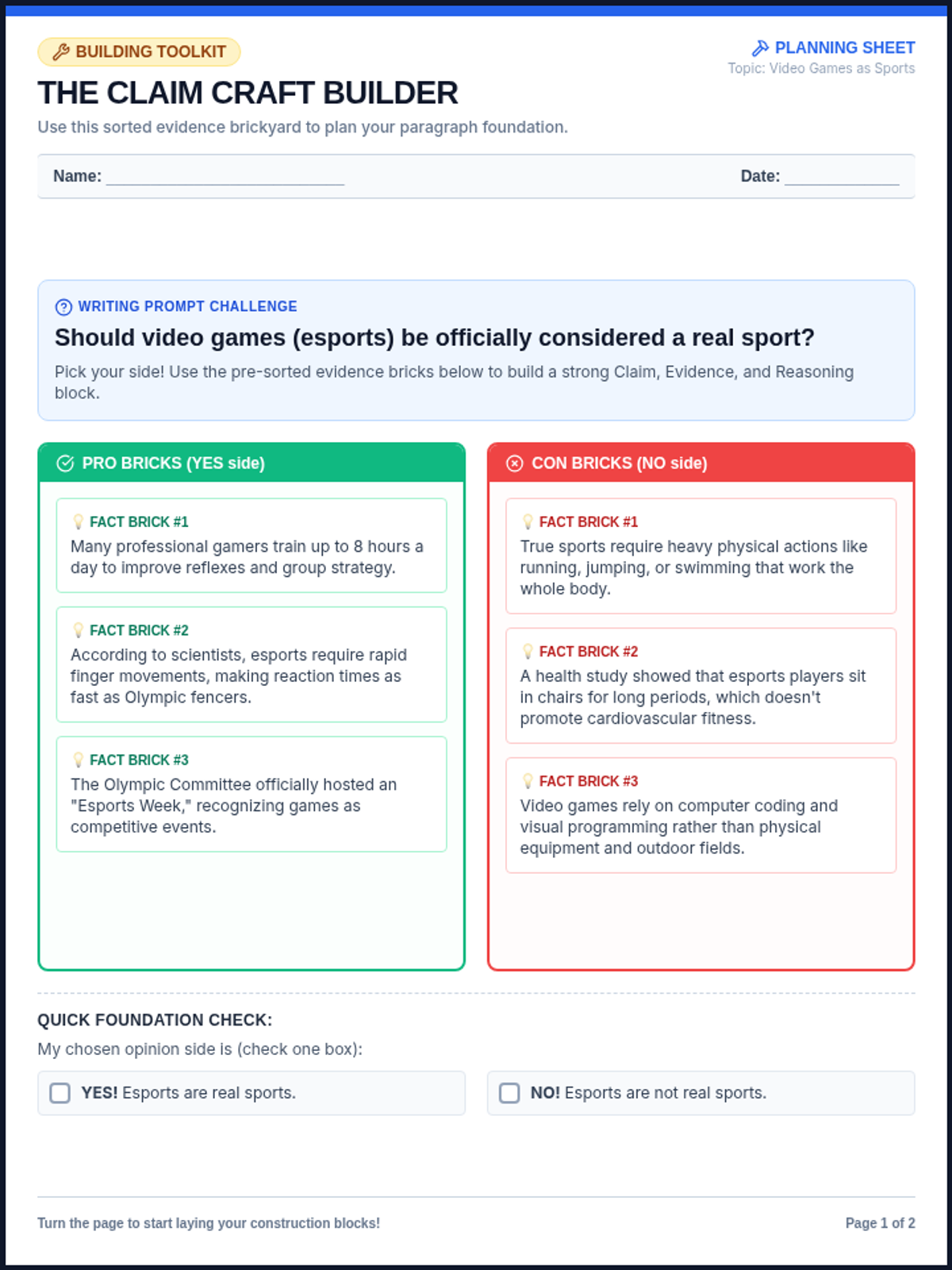
Highly structured writing templates and graphic organizers. Features a pre-sorted pros and cons list on a high-interest topic (Video Games as Sports) and scaffolded writing frames with sentence starters.
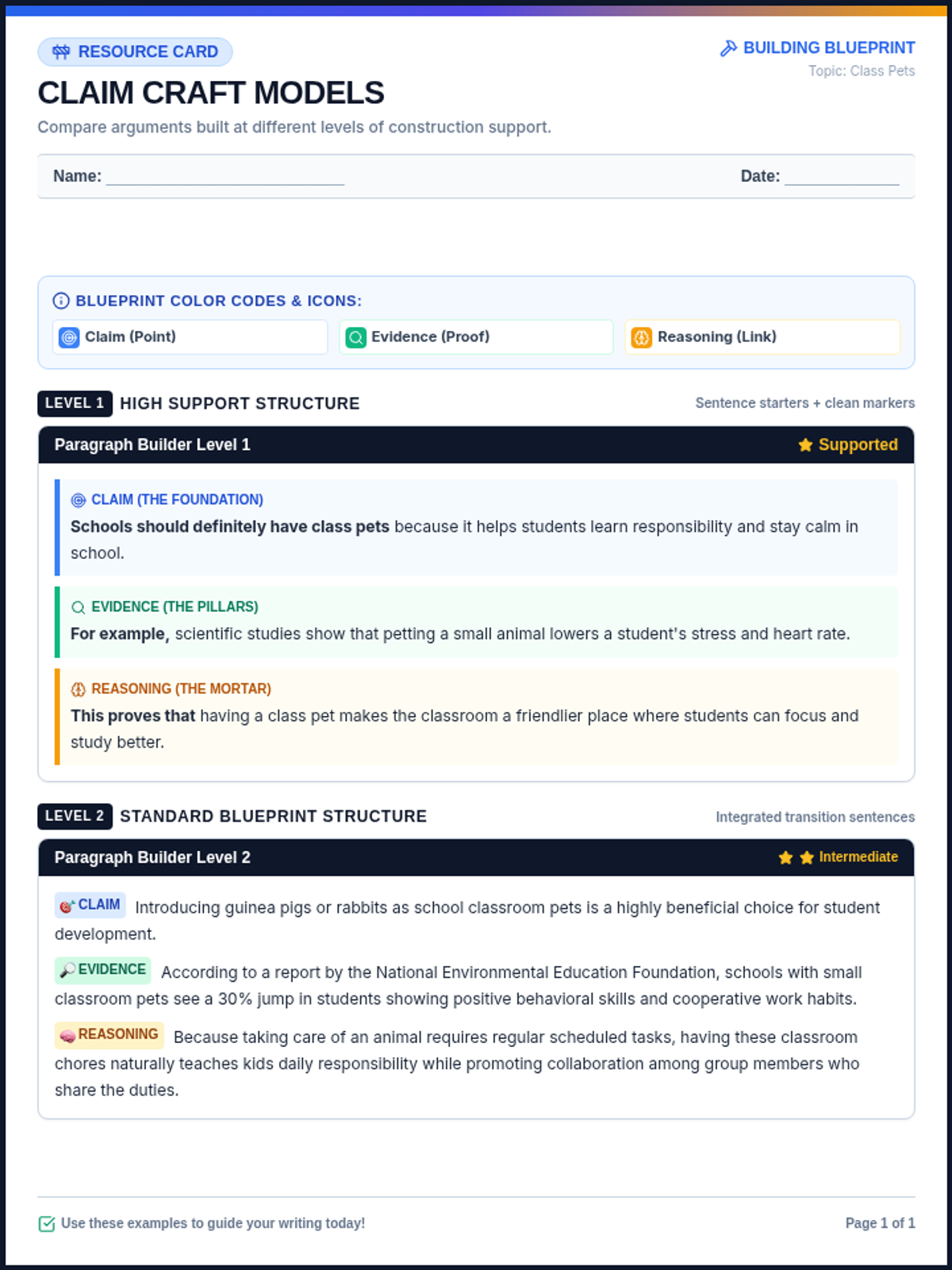
Leveled model argumentative texts demonstrating the Claim-Evidence-Reasoning (CER) framework on a high-interest topic (Class Pets) across multiple comprehension levels with clear visual scaffolding.
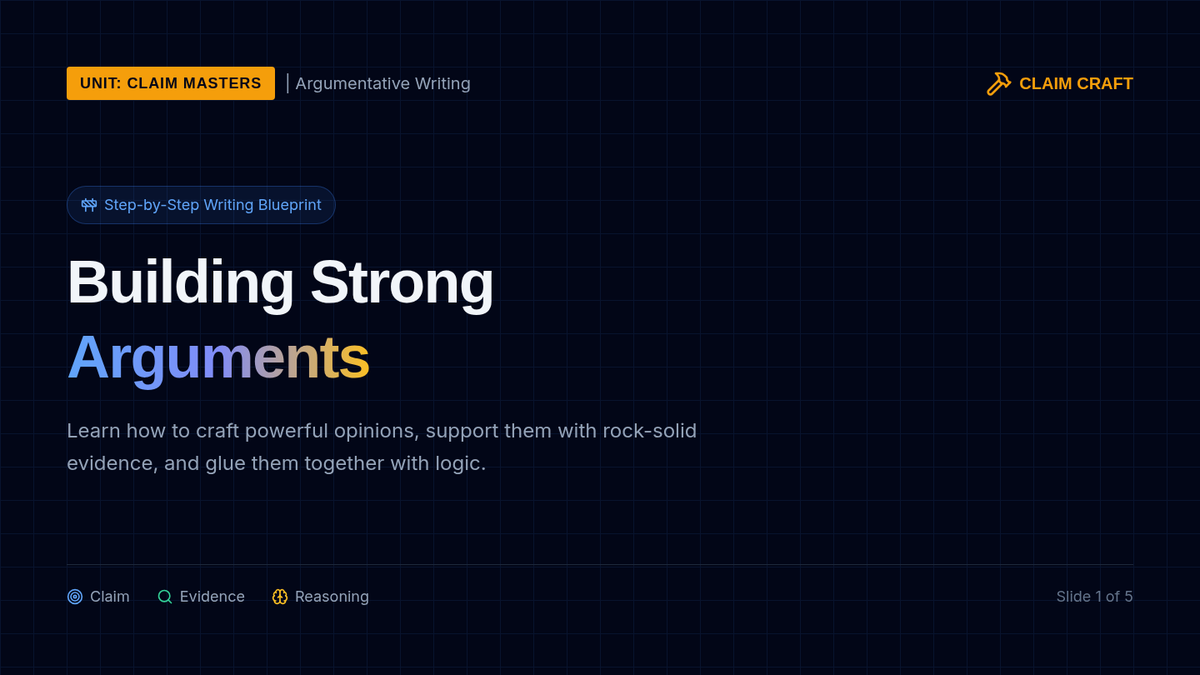
An instructional slide presentation breaking down claims, evidence, and reasoning (CER) step-by-step using a visual construction and building theme. Features bold typography, high-contrast visual cues, and visual icons for accessibility.
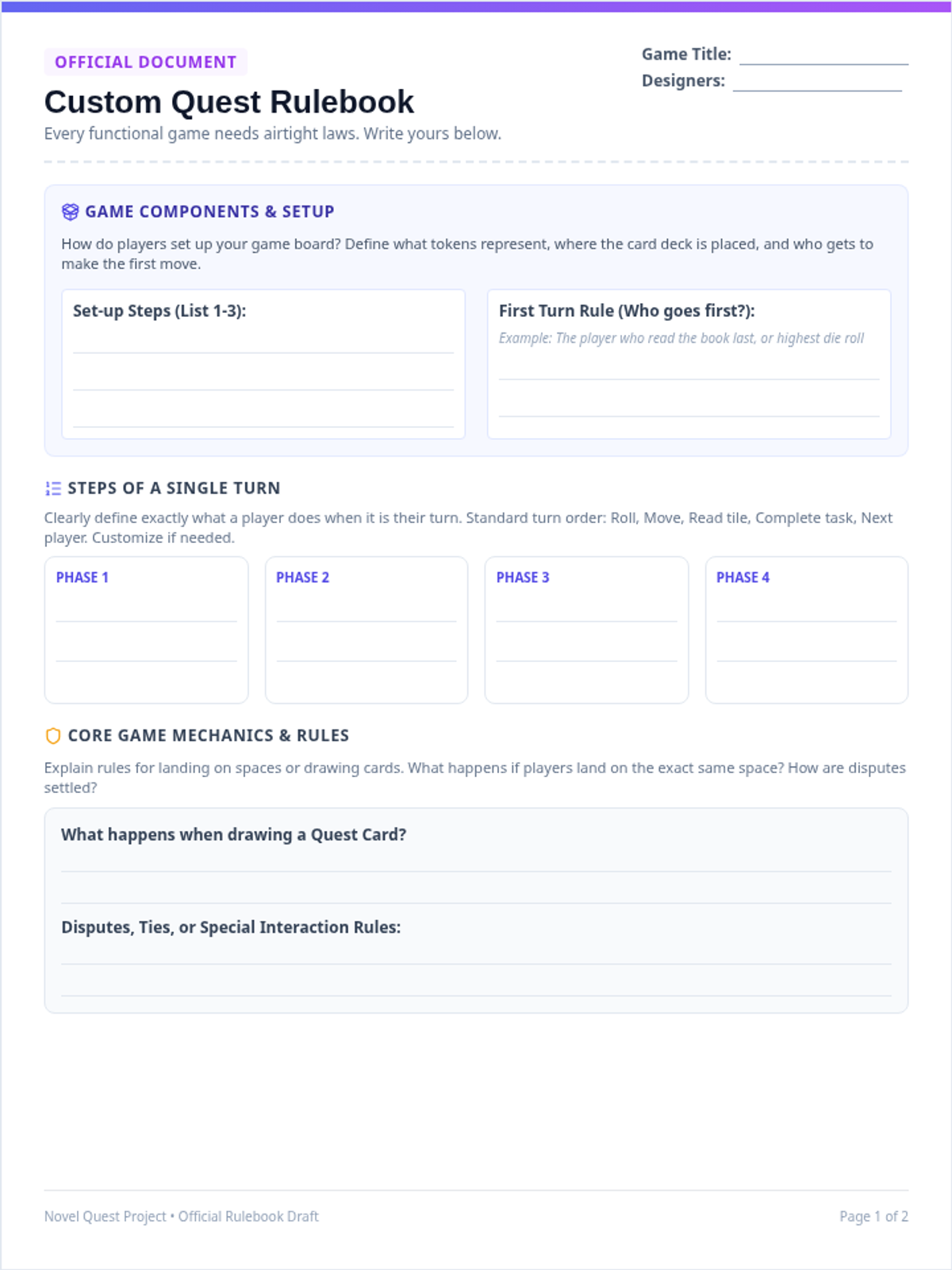
A 2-page print layout containing a custom Rulebook Draft template on page 1 and a structured Playtest Feedback Log on page 2.
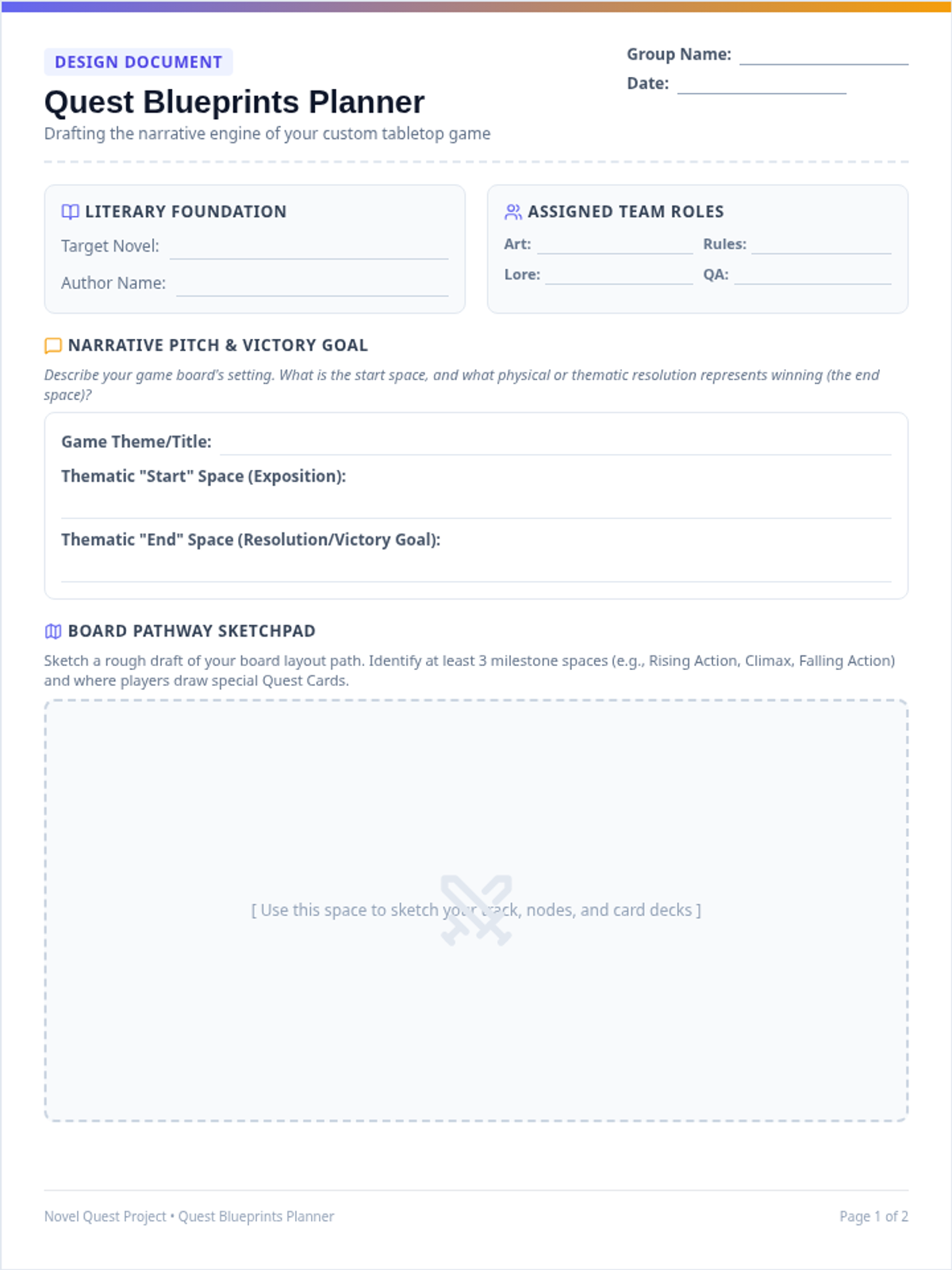
A 2-page printable planning booklet for students to design their board game theme, assign roles, outline mechanics, and draft specialized board squares based on the novel.
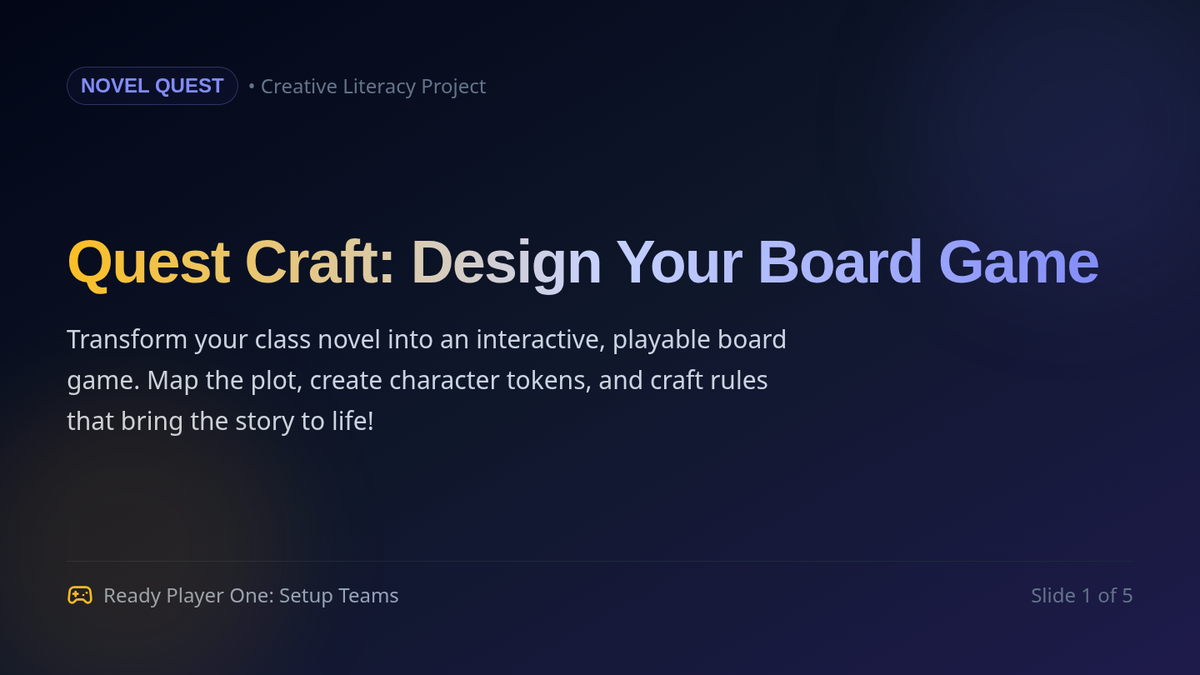
A 5-slide introductory presentation to guide teams through connecting story elements (plot, character, setting) to interactive board game mechanics, roles, and playtesting rules.
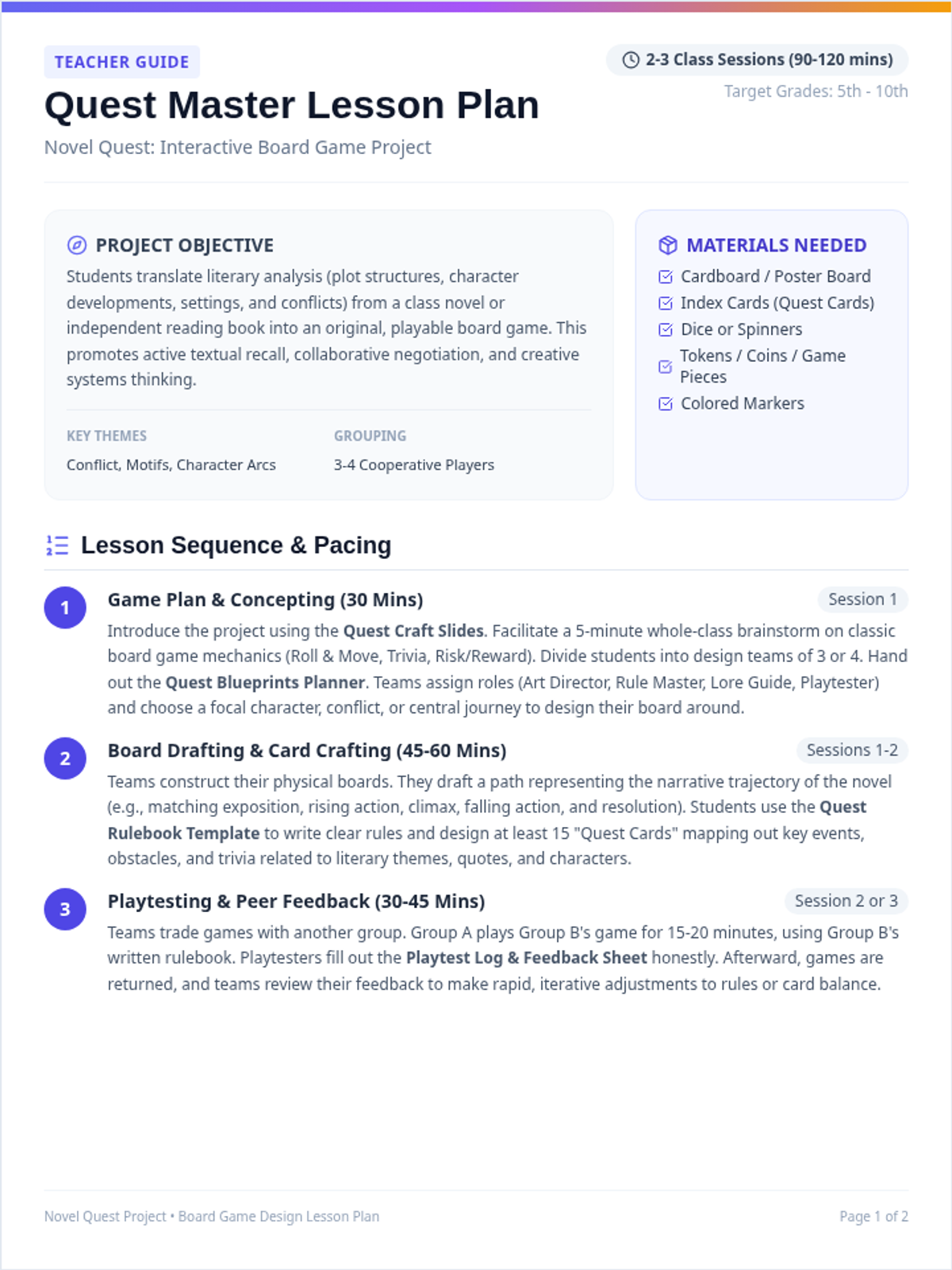
An instructional lesson plan and rubric for teachers to facilitate the Novel Quest board game design project. Includes pacing, group setup, materials, and a classroom assessment rubric.
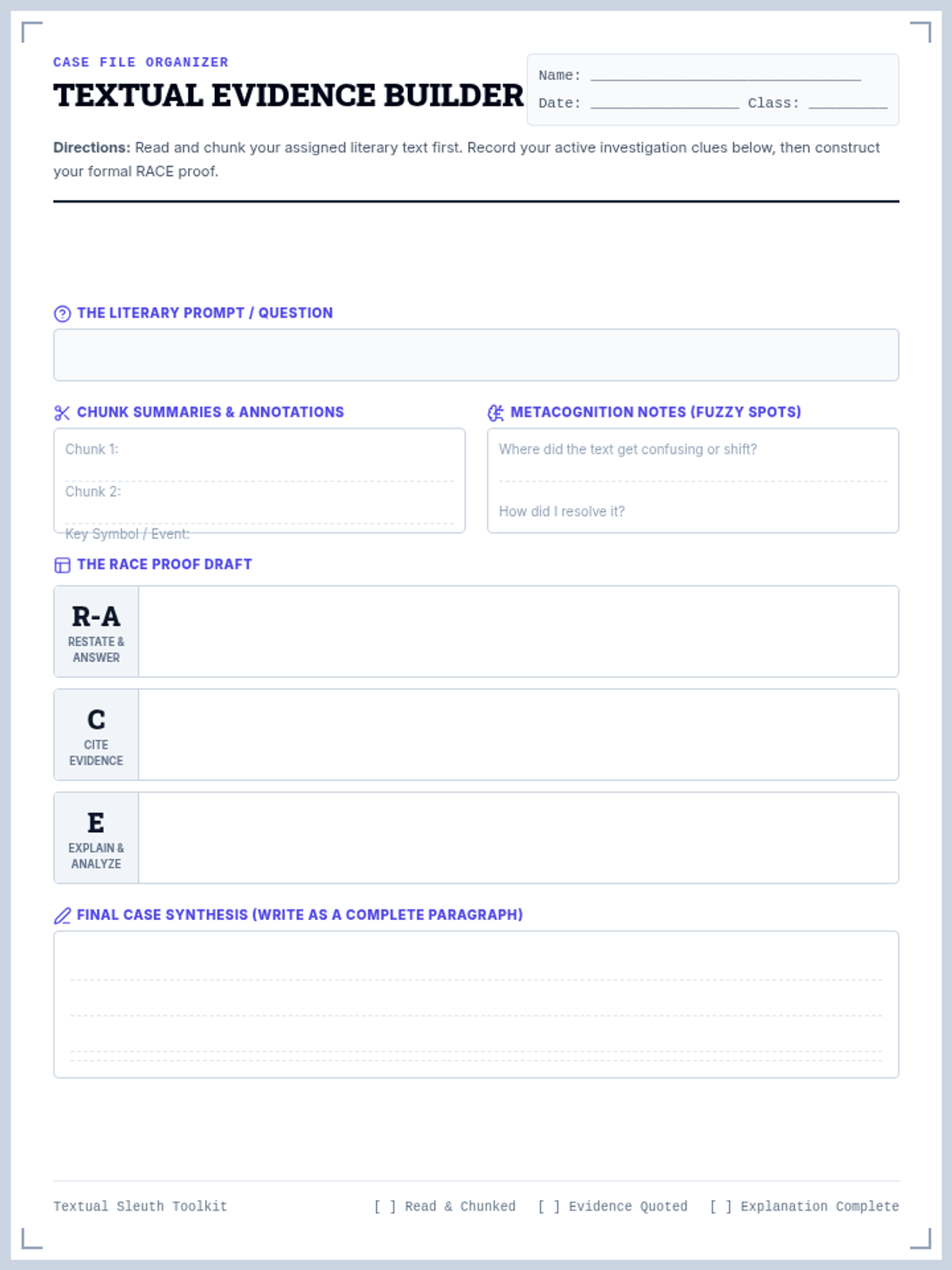
A cohesive printable student graphic organizer worksheet mapping the active reading chunk notes directly to a RACE paragraph-building workspace.
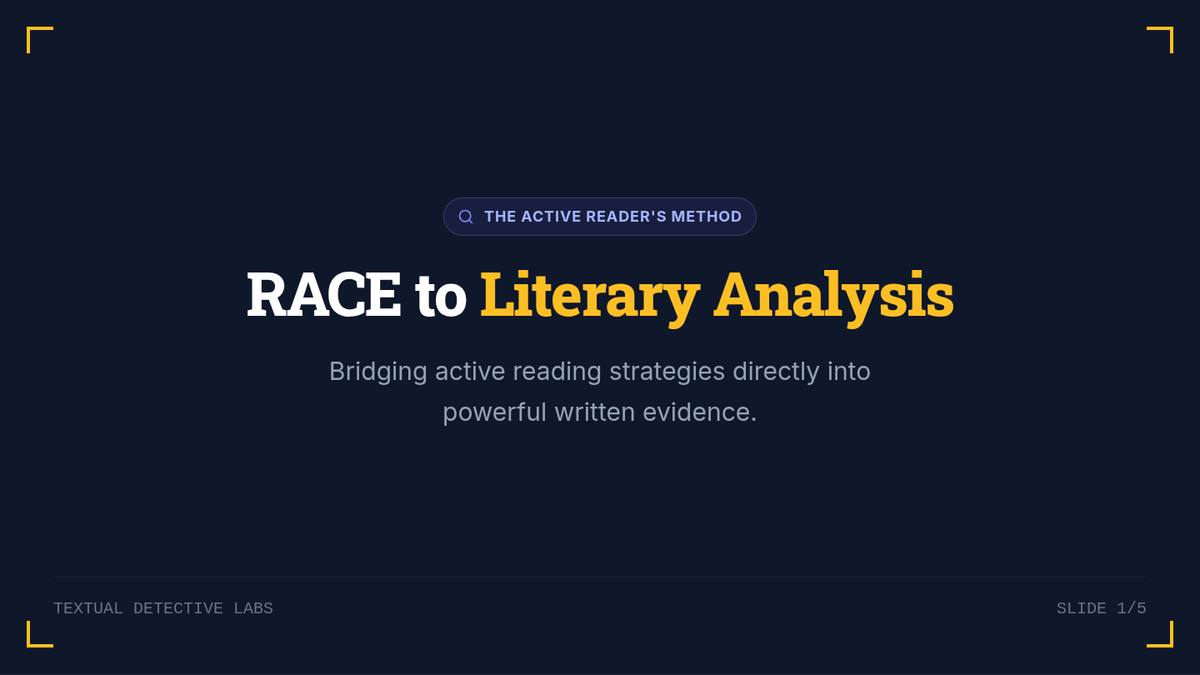
A step-by-step presentation deck introducing the active reading tools (Metacognition, Chunking, Annotating) and showing how they directly populate the RACE literary analysis framework.
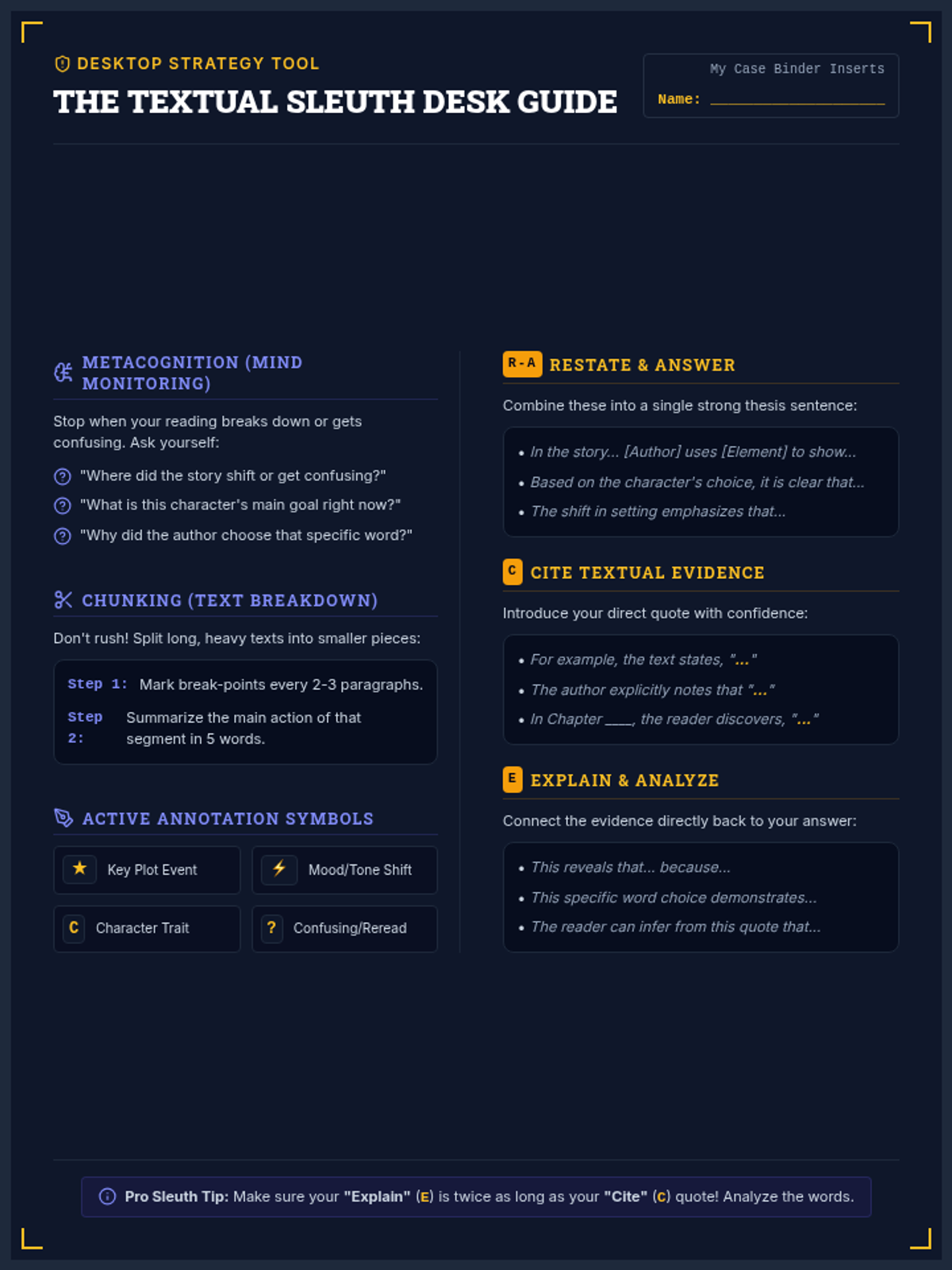
A desk-sized individual student reference guide and binder insert with handy annotation symbols, metacognitive monitoring questions, and specific RACE sentence starters.
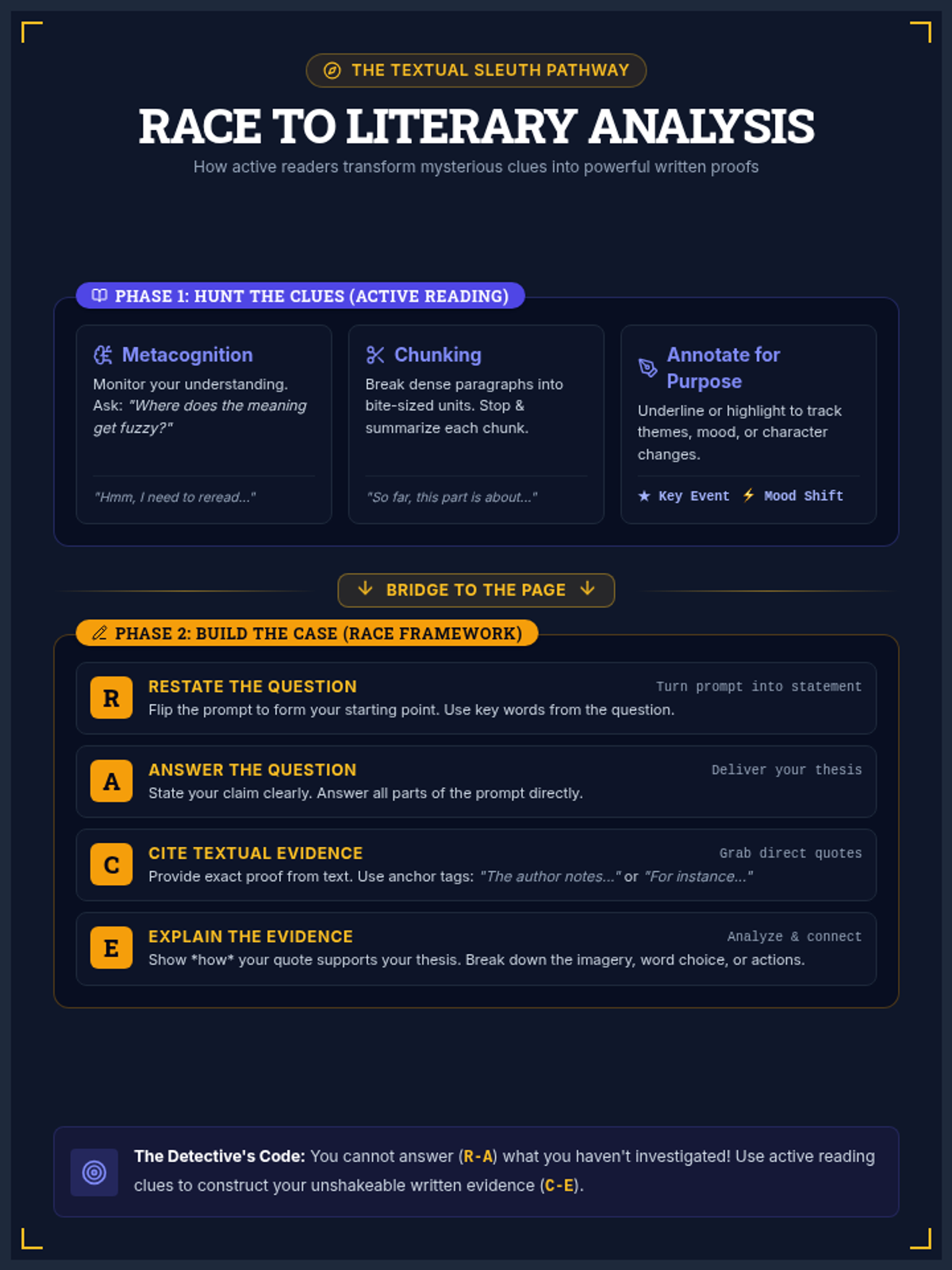
A high-visibility printable classroom anchor chart mapping the complete textual analysis workflow: bridging Active Reading strategies (Metacognition, Chunking, Annotating) directly into the RACE writing framework.
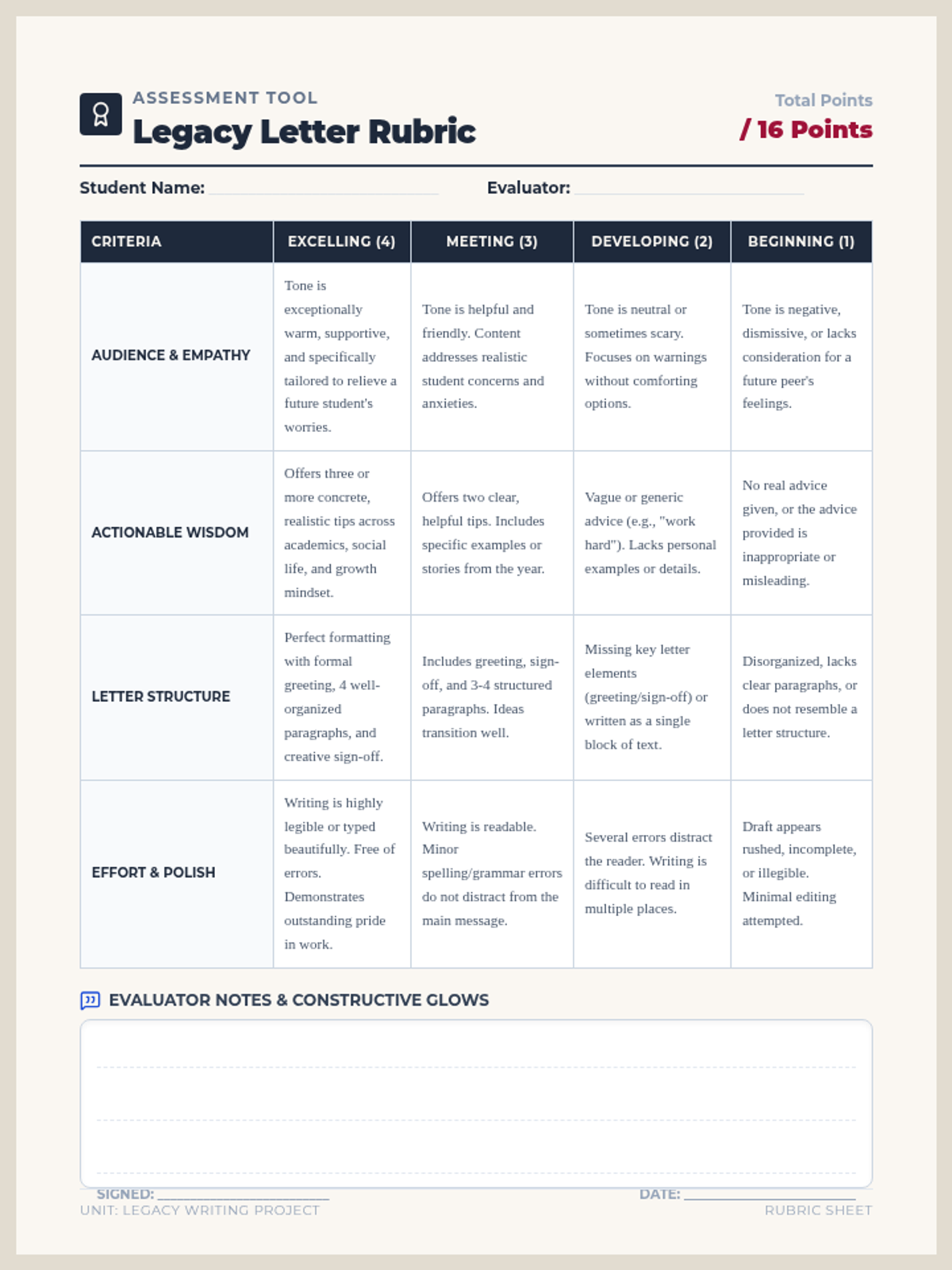
An easy-to-use 1-page analytical rubric and feedback checklist scoring students on empathy, tone, content depth, structure, and polish.
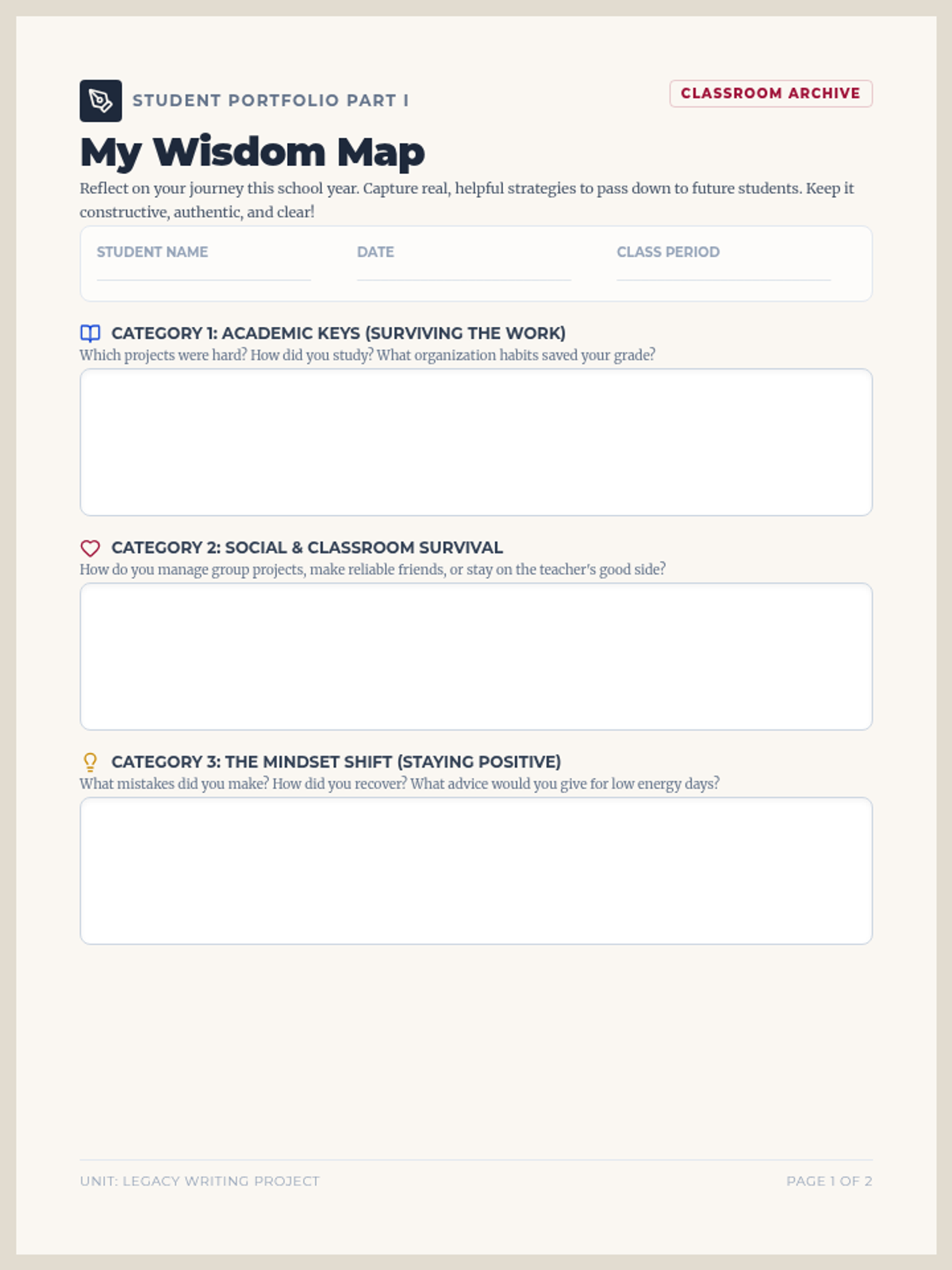
A structured 2-page brainstorming and drafting journal for students to map out memories, categorize critical advice, and organize their final letter draft.
A beautifully themed 6-slide presentation deck designed for whole-class instruction, guiding students through brainstorming, understanding their audience, and structuring their advice.
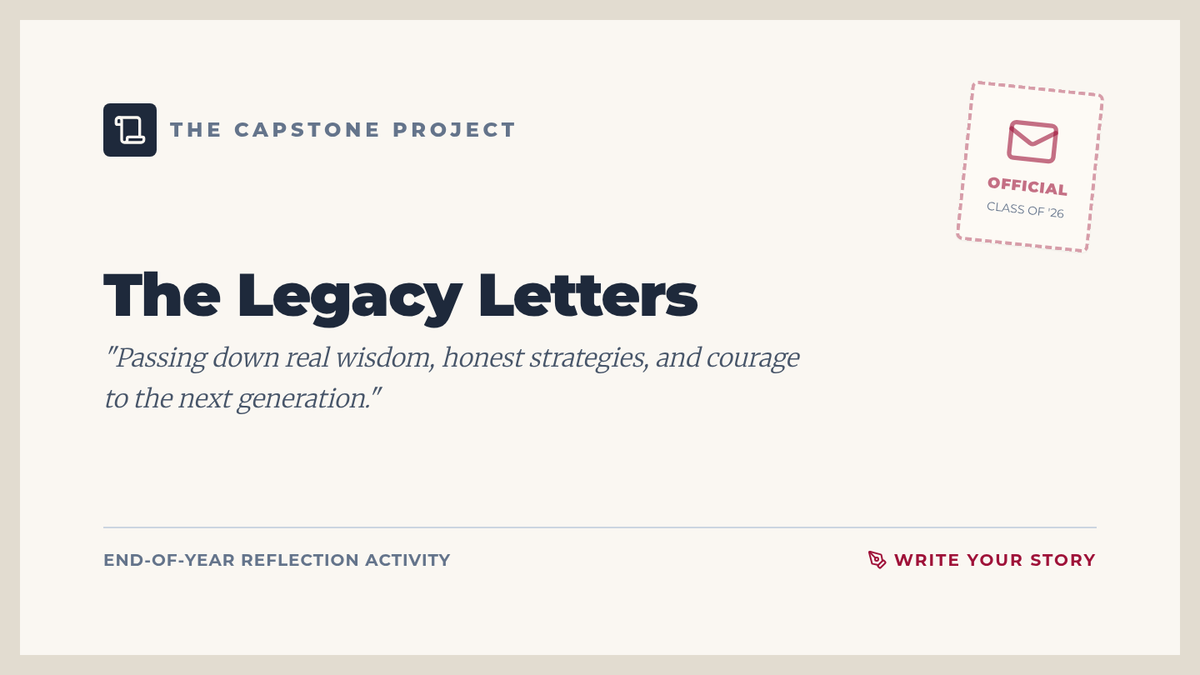
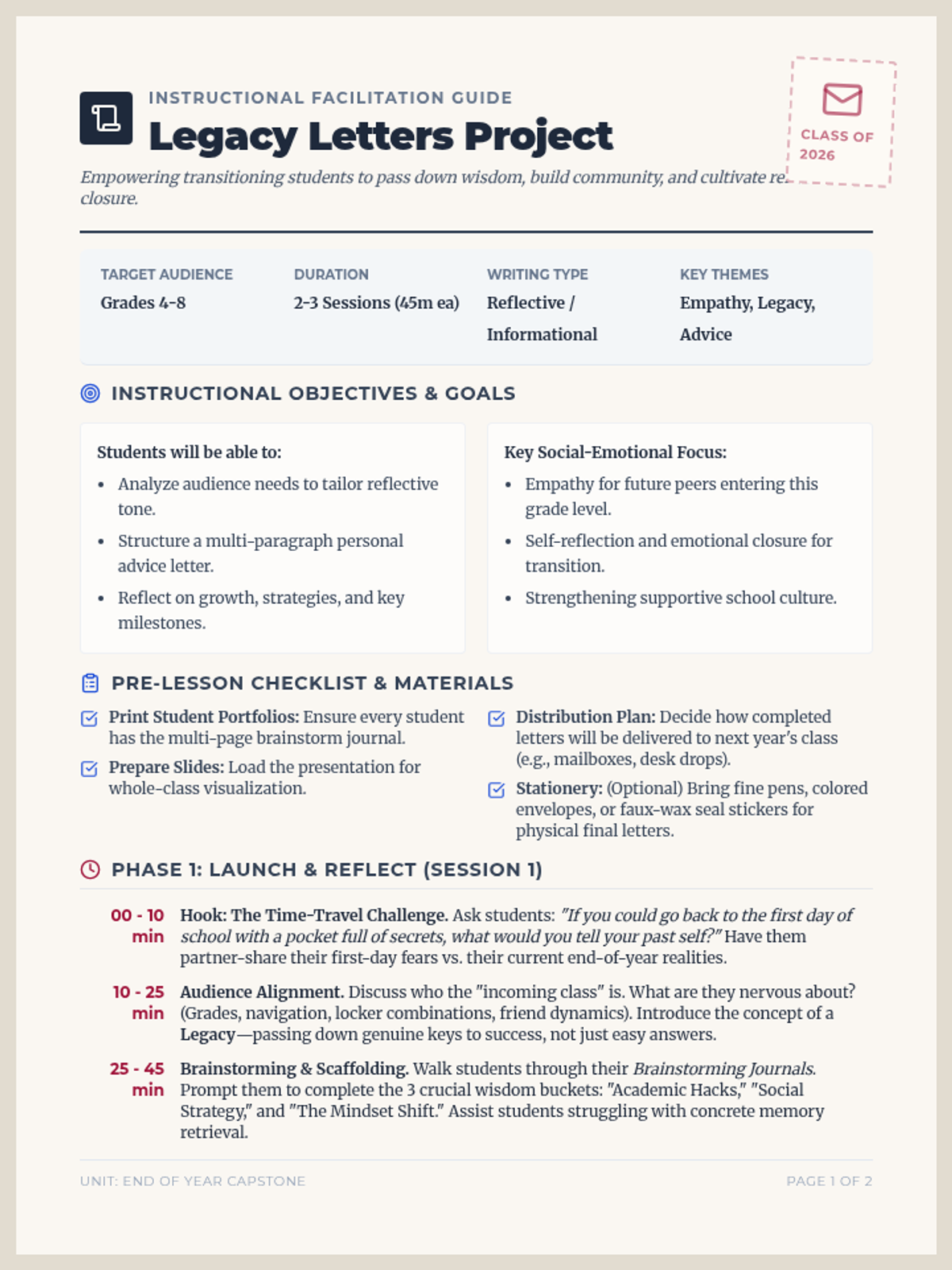
A comprehensive, 2-page teacher guide and lesson plan outlining the step-by-step facilitation, discussion prompts, pacing, and differentiation strategies for the Legacy Letters writing project.
A 2-page teacher facilitation guide containing detailed pacing, scripted discussion questions, grade-specific scaffolding, fine-motor accommodations, and a grading rubric.
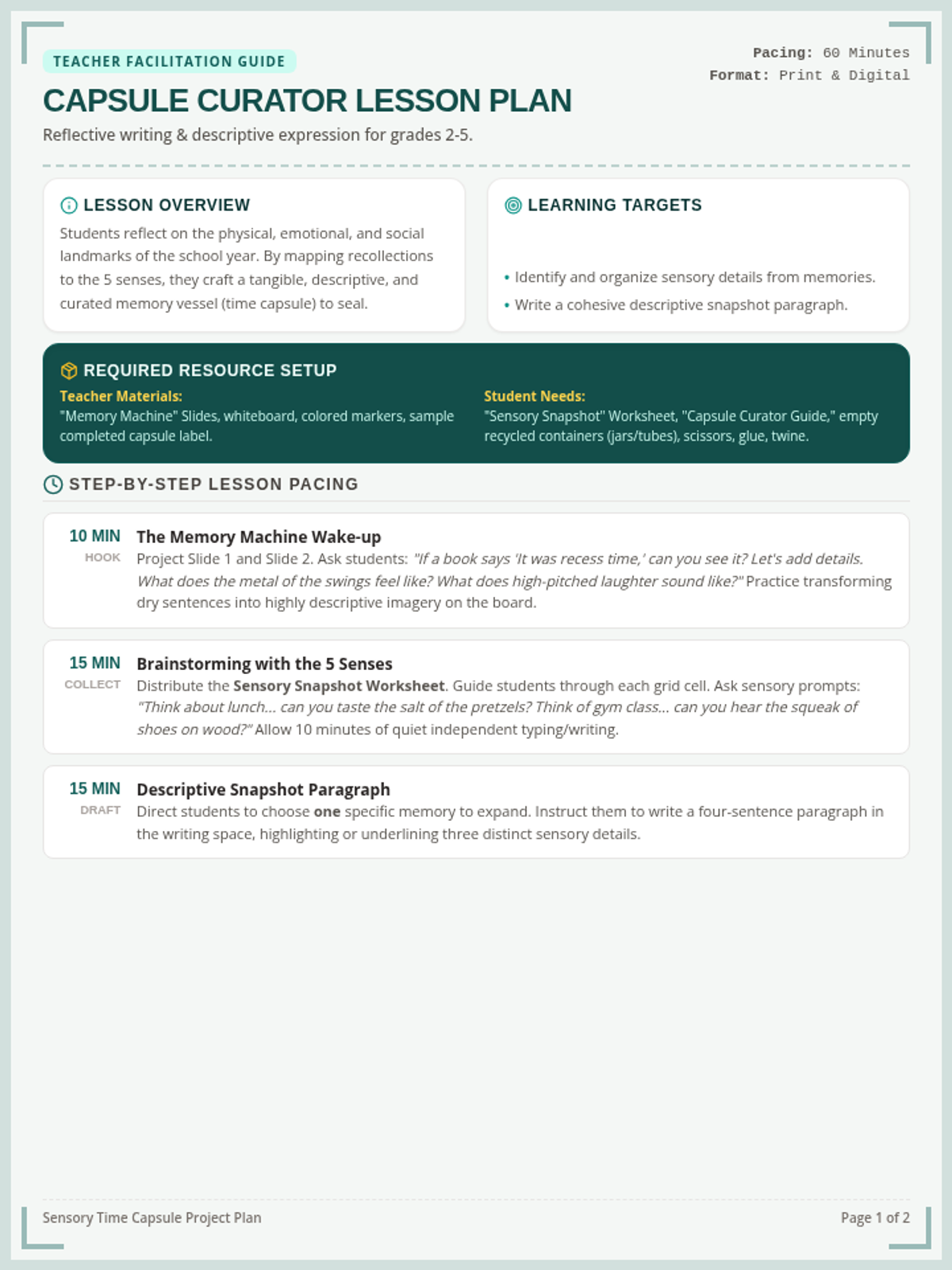
A 5-slide introductory presentation that guides teachers and students through the concept of sensory details, interactive memory brainstorming, and the capsule crafting project.
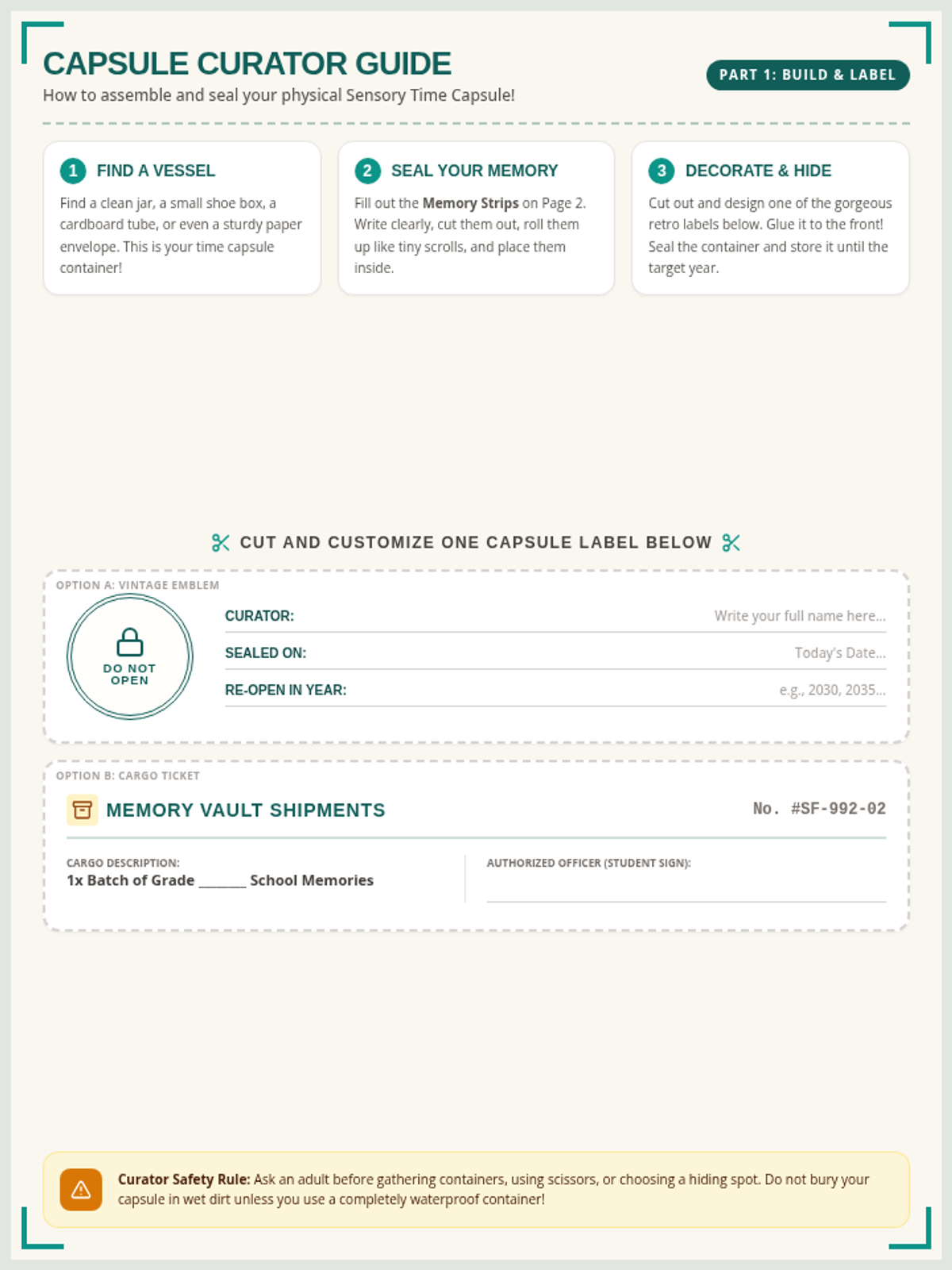
A student-facing crafting guide and template set. Page 1 provides step-by-step assembly instructions and printable decorative labels for their capsule. Page 2 provides themed memory strips to fill out, cut, and place inside.
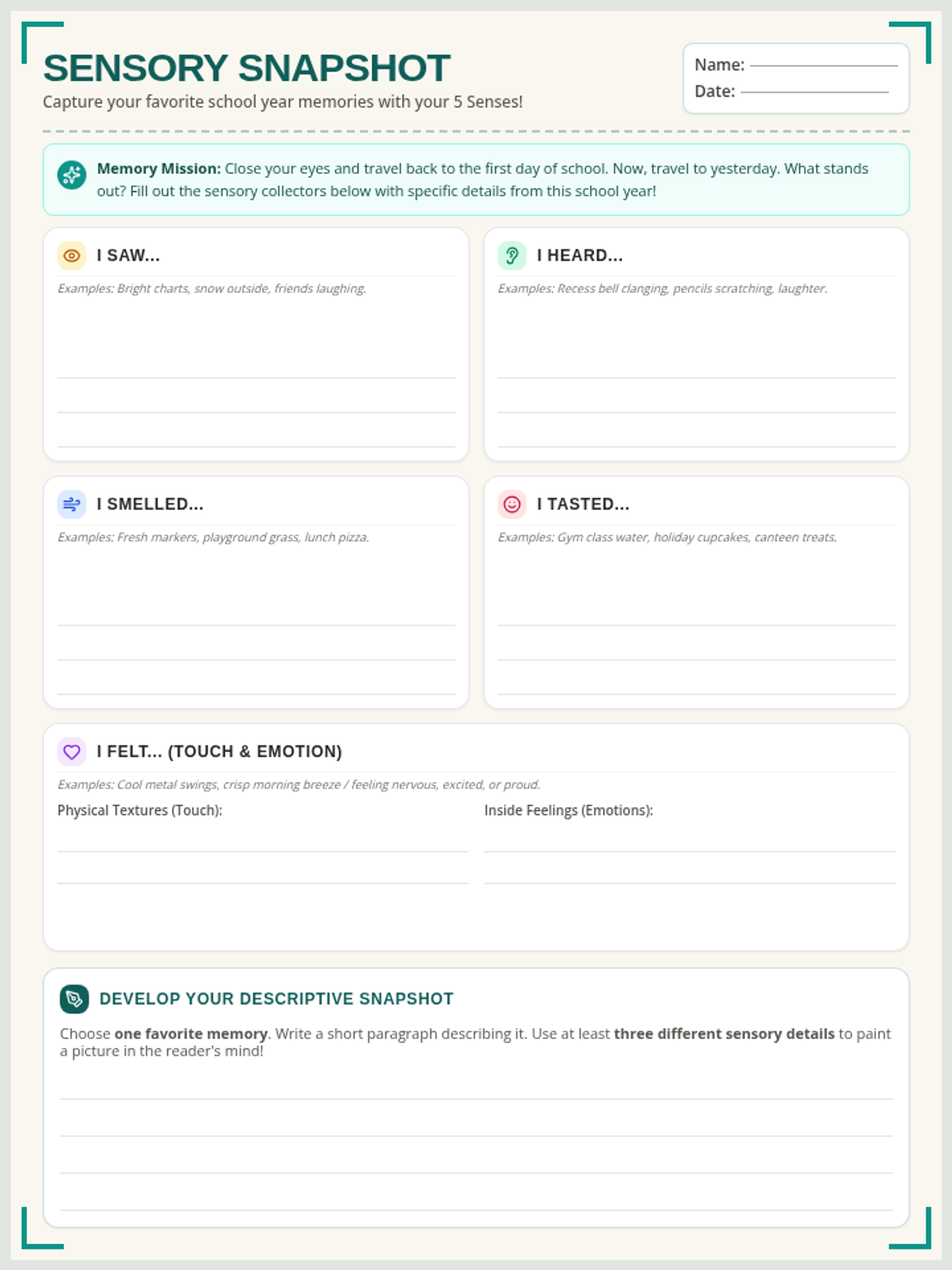
A student-facing graphic organizer where children use their five senses to brainstorm and write about their favorite school year memories. Includes a dedicated descriptive writing space.
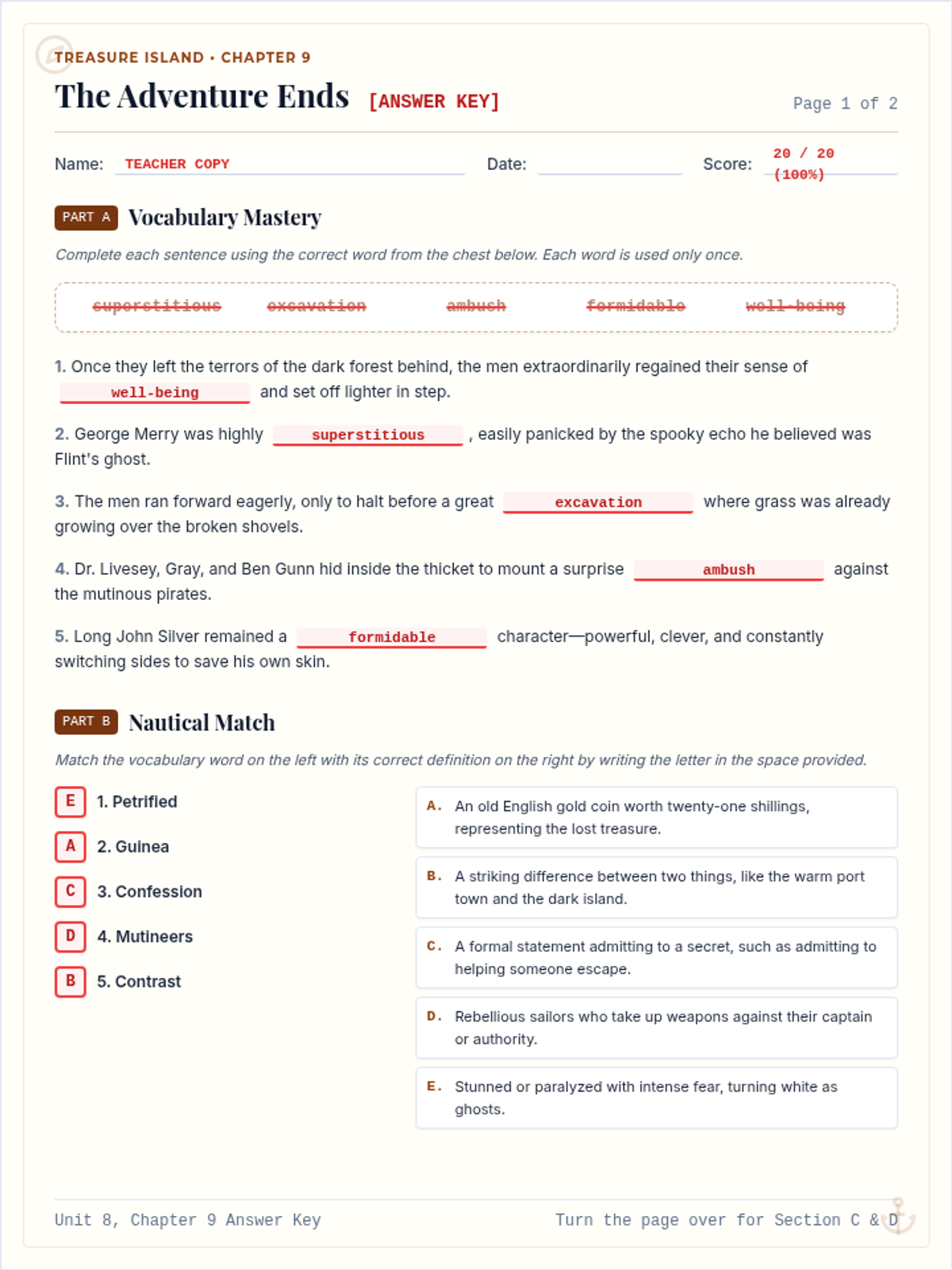
A two-page printable teacher answer key mirroring the layout of the student worksheet with all correct answers clearly marked and filled out.
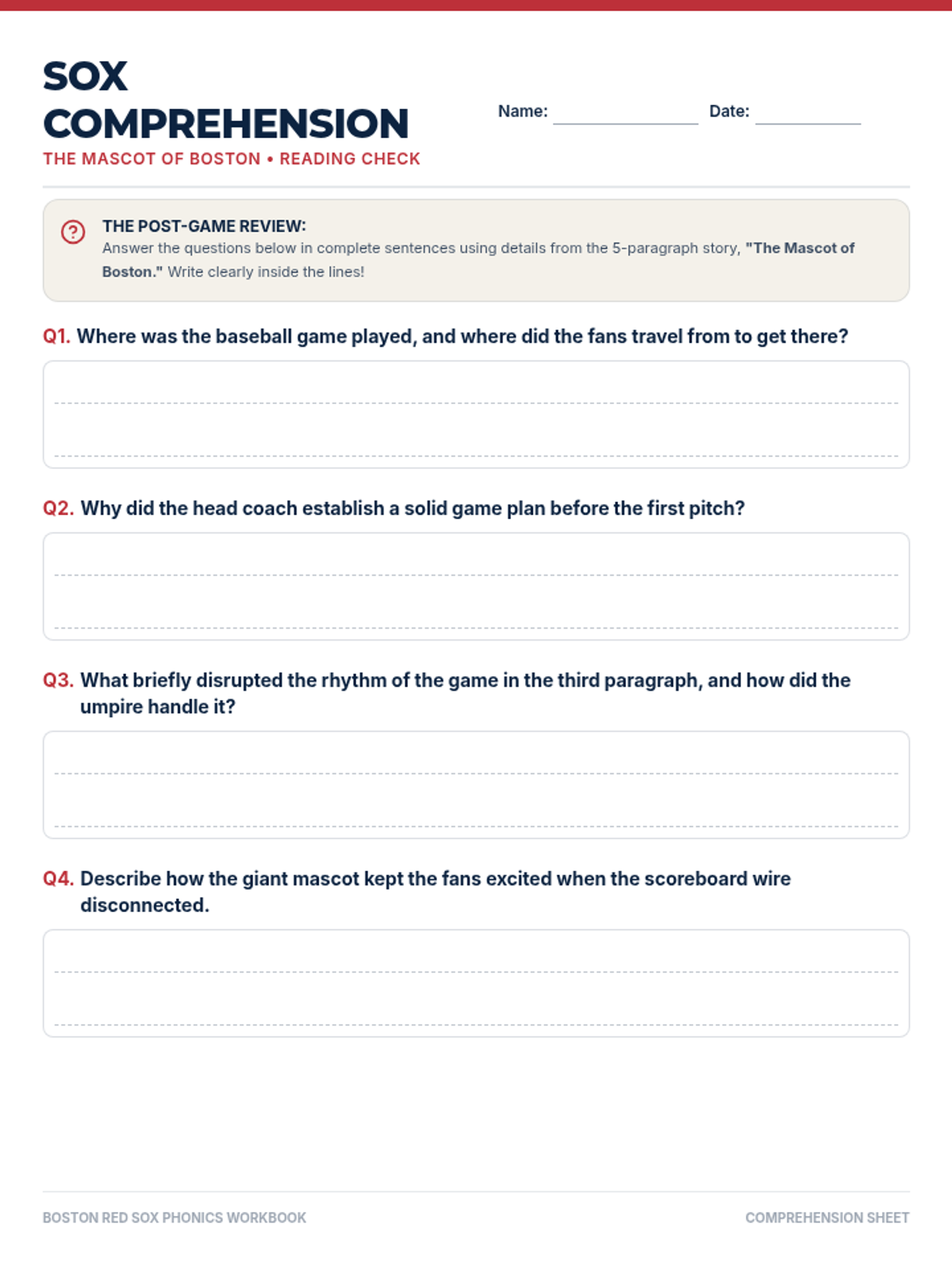
A student worksheet with open-ended reading comprehension questions based on the 5-paragraph Red Sox story, featuring clean lines for handwriting answers.
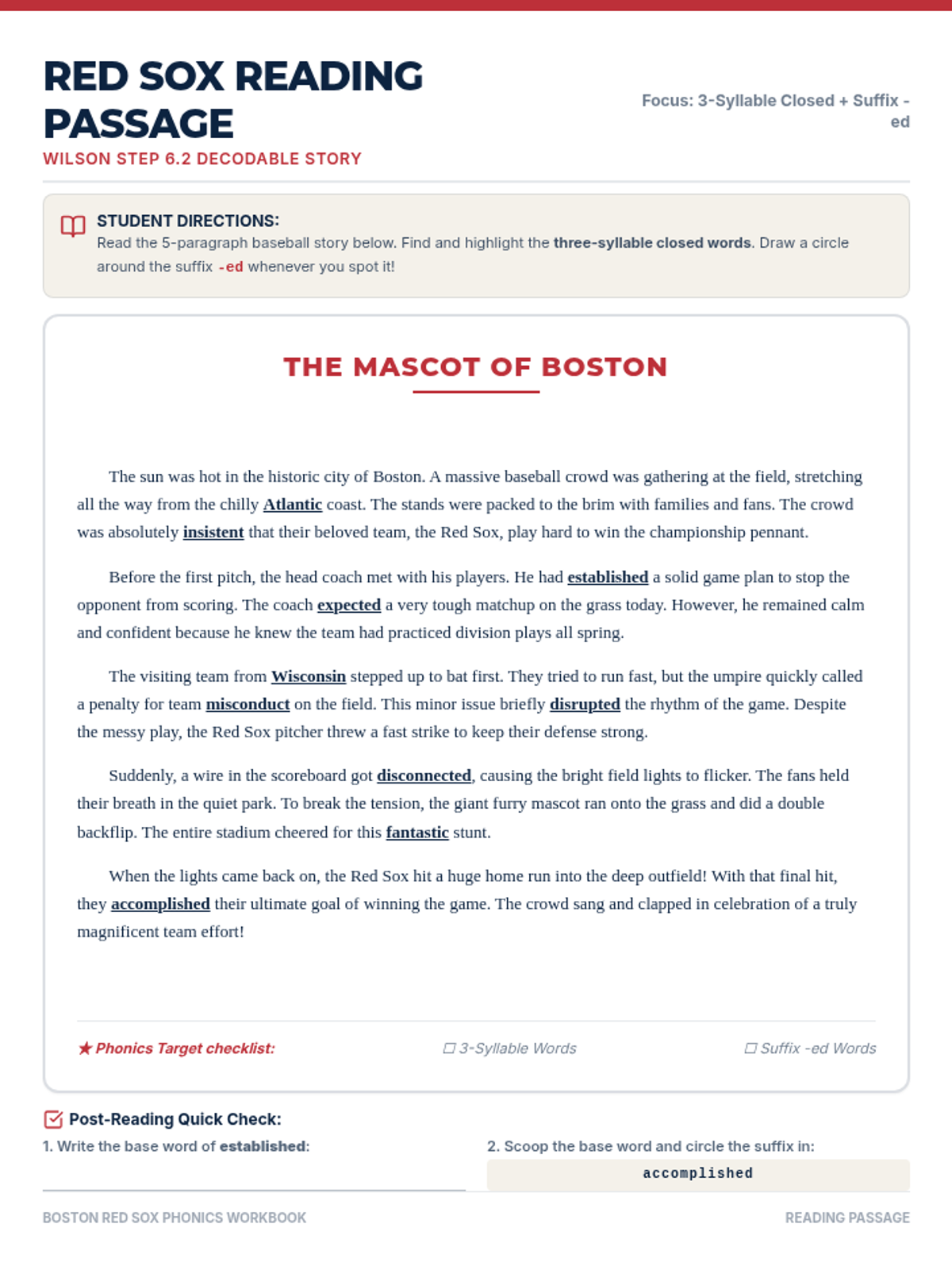
A 5-paragraph decodable reading passage about the Boston Red Sox for Wilson Step 6.2, focusing on 3-syllable closed words and suffix -ed.
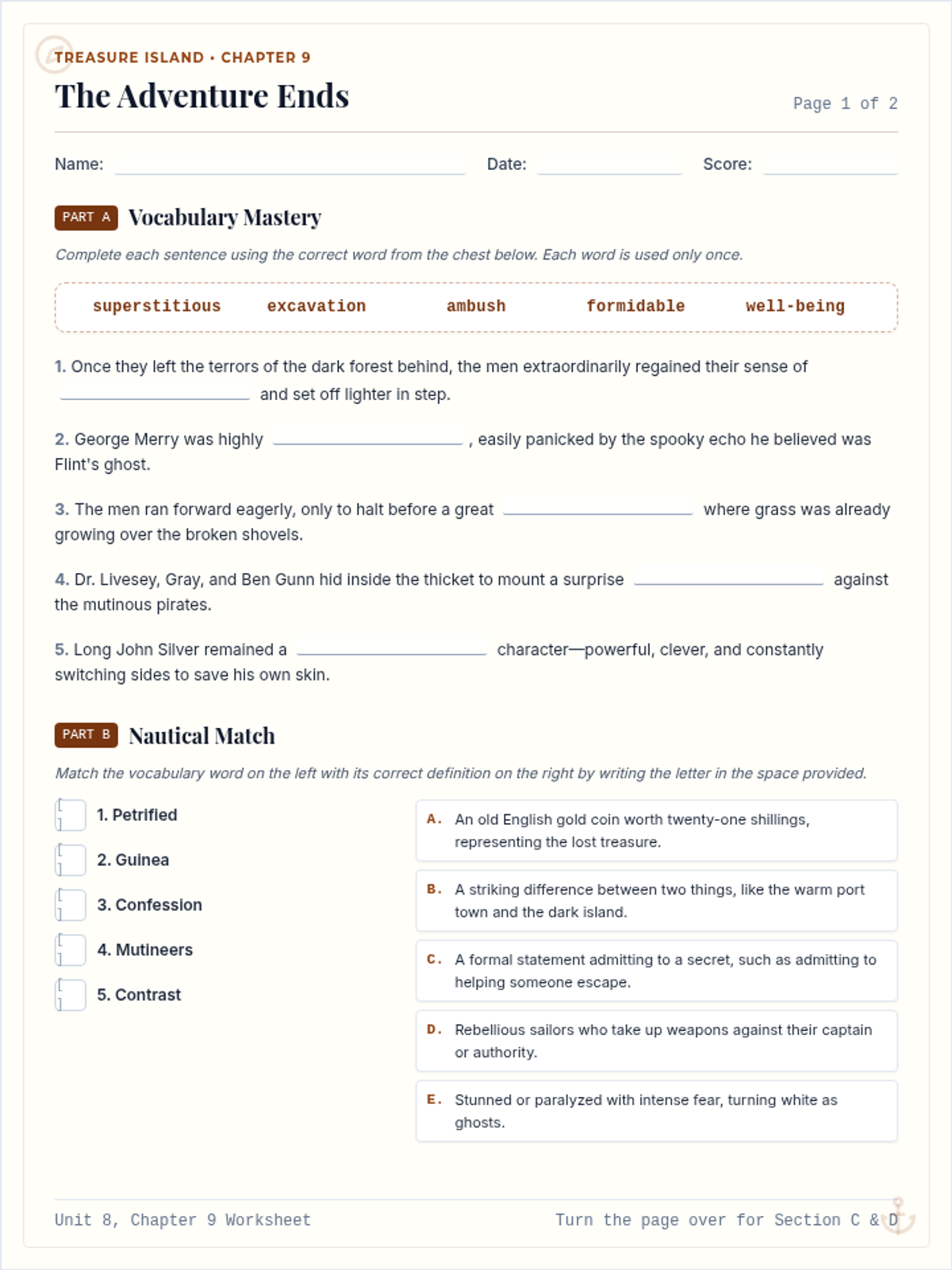
A two-page printable student worksheet featuring vocabulary fill-in-the-blank, word matching, multiple-choice reading comprehension, and true/false questions for the final chapter of Treasure Island.
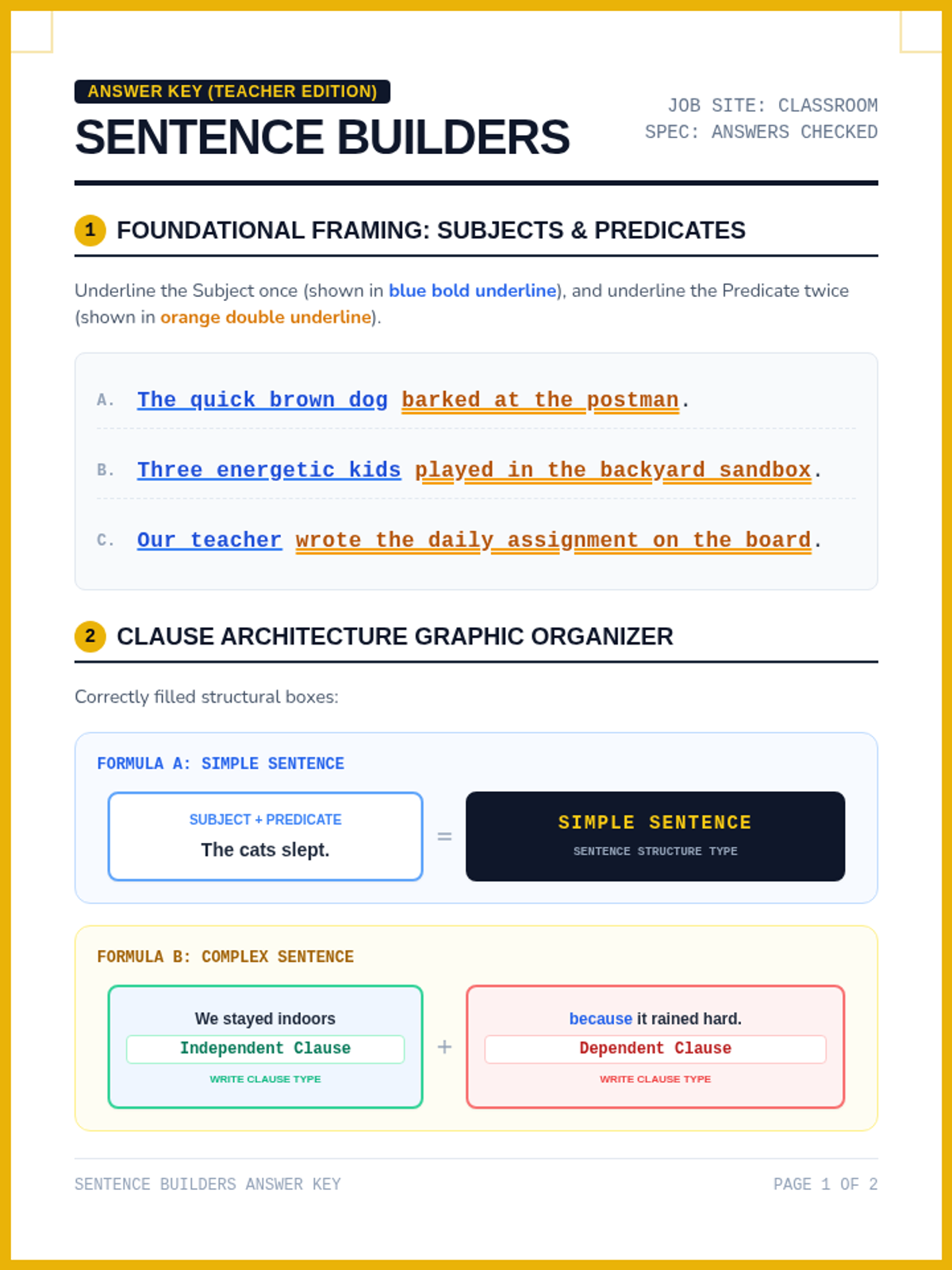
A printable minimalist answer key providing educators with the correct answers, markings, and solutions for the Sentence Structures student worksheet.