A high-energy, mechanical-themed slide deck presenting the 8 parts of speech through the lens of machine components and blueprints. Perfect for 6th and 7th grade direct instruction. Optimized for readability and contrast.
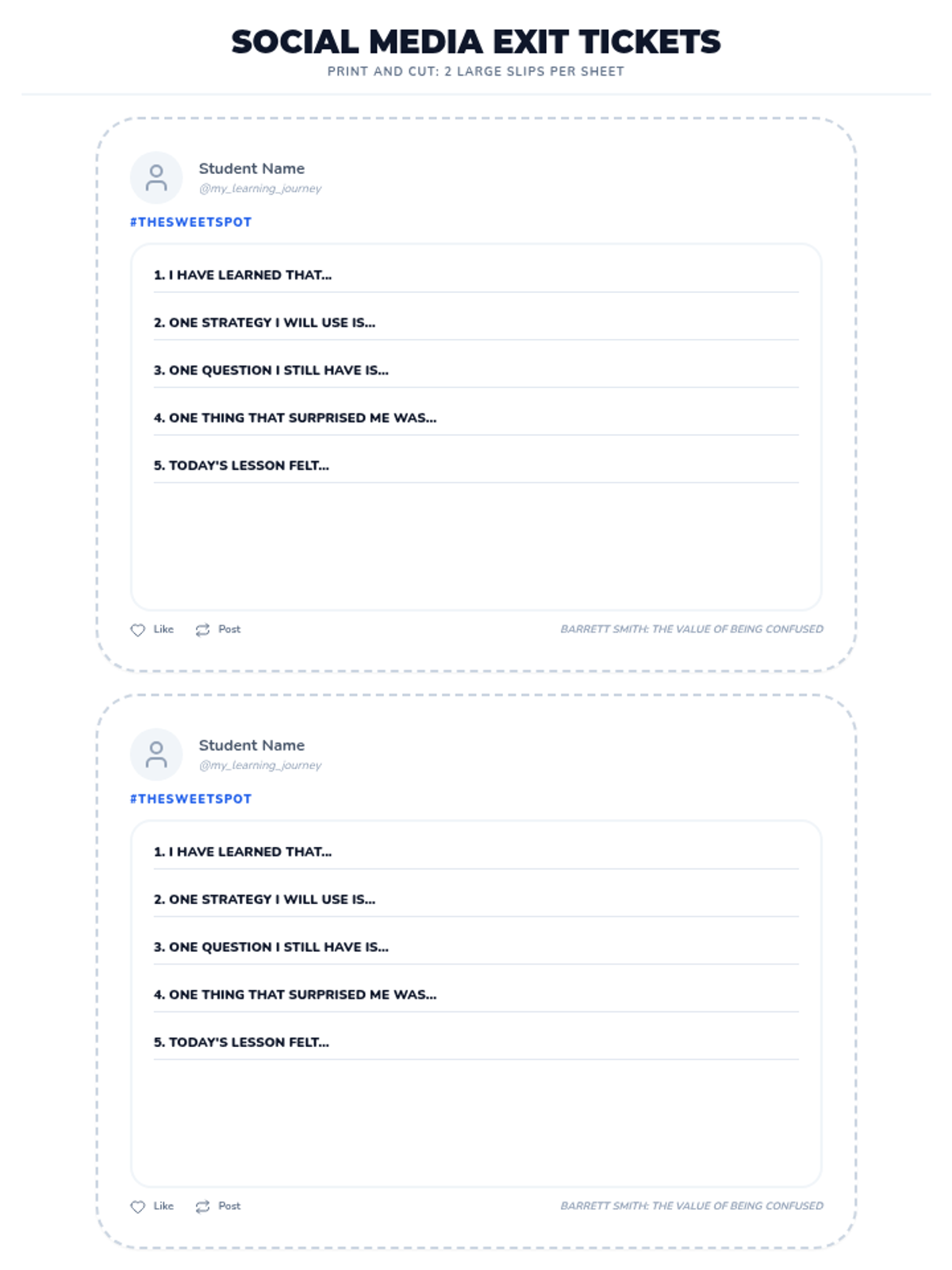
A set of printable exit ticket cut-outs. Revised to include the reflection prompt 'I have learned that...' as requested by the user. Includes four social media slips and two comprehensive 3-2-1 reflection slips. Backgrounds are optimized for pencil legibility with high-contrast lines.
A three-page choice board. Page 1 contains a menu of four analytical and creative tasks. Page 2 provides a dedicated, large-scale workspace for the Illustration Challenge, ensuring students have enough room for detailed metaphors and labels. Page 3 provides a lined workspace for the written paths. Darkened labels and footers for print visibility.
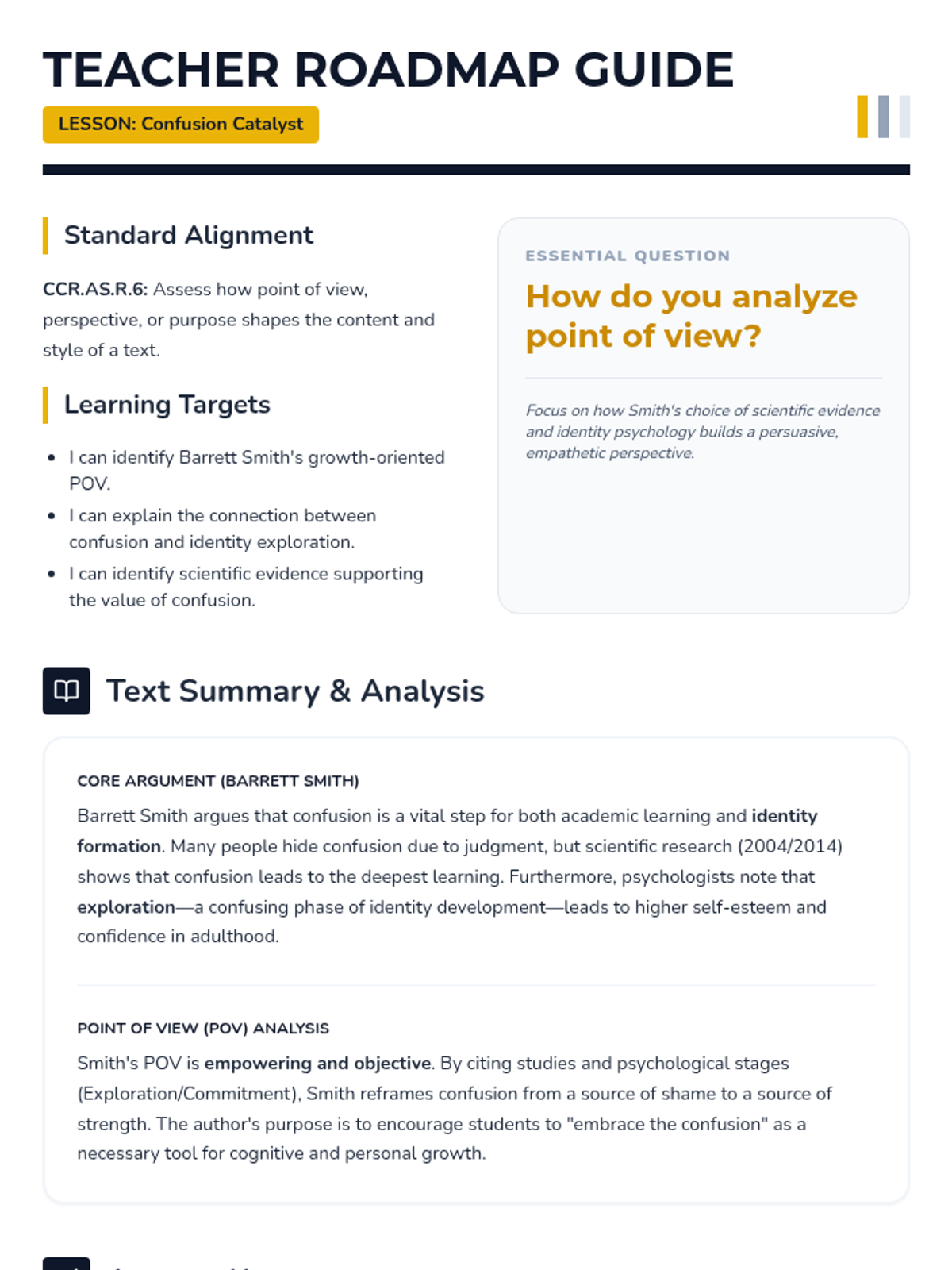
A comprehensive teacher's guide for Barrett Smith's 'The Value of Being Confused.' Features a detailed summary covering both academic and identity benefits, point-of-view analysis, answer keys for all student activities, and a structured instructional flow.
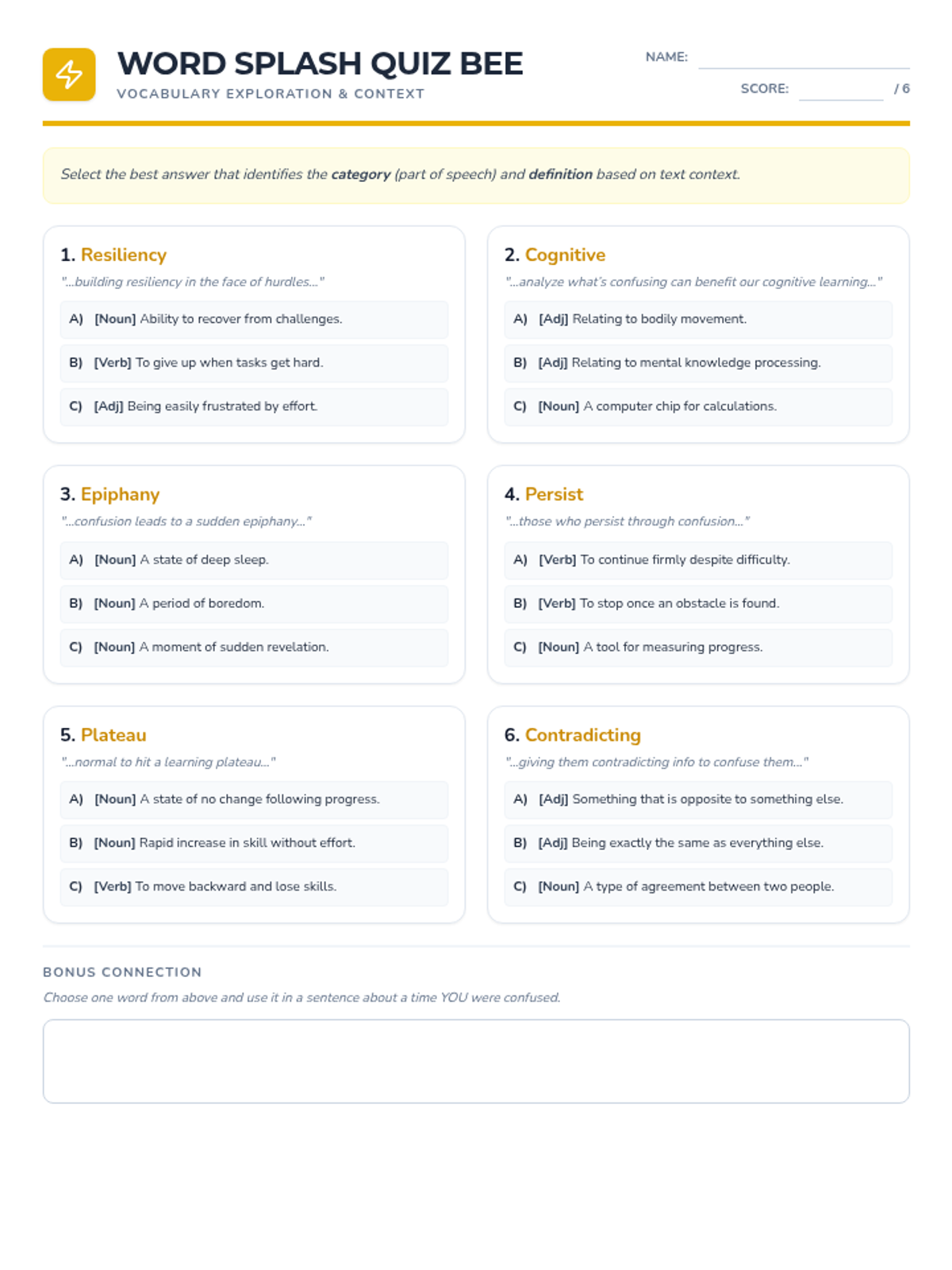
A 6-question multiple-choice vocabulary quiz focused on key terms from 'The Value of Being Confused' by Barrett Smith. Each question includes the word's category and a contextual sentence. Layout improved for consistency and condensed for better printing on a single page with larger text. Fixed question 6 layout and page break issues.
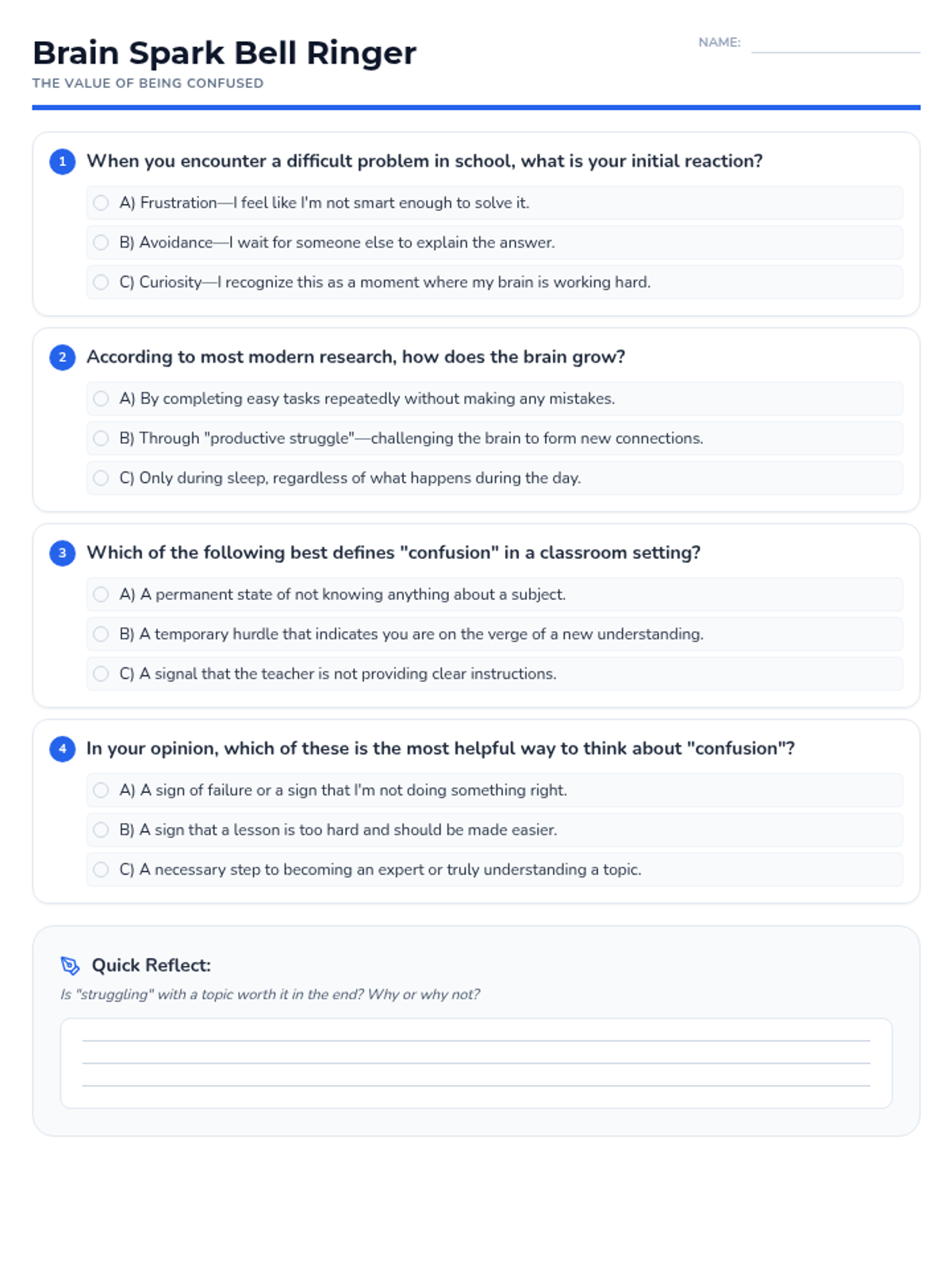
A 4-question multiple-choice bell ringer worksheet with 3 answer choices per question. Designed to activate prior knowledge about learning hurdles and the concept of 'productive struggle' before reading the text. Condensed to a single page for ease of use.
A visually engaging slide deck for 'The Value of Being Confused' lesson by Barrett Smith. Features updated summary content reflecting the text's focus on learning and identity exploration. Includes sections for the Bell Ringer, Word Splash Quiz Bee, and Choice Board instructions with a neural-network theme. Fixed contrast and answer choice uniformity.
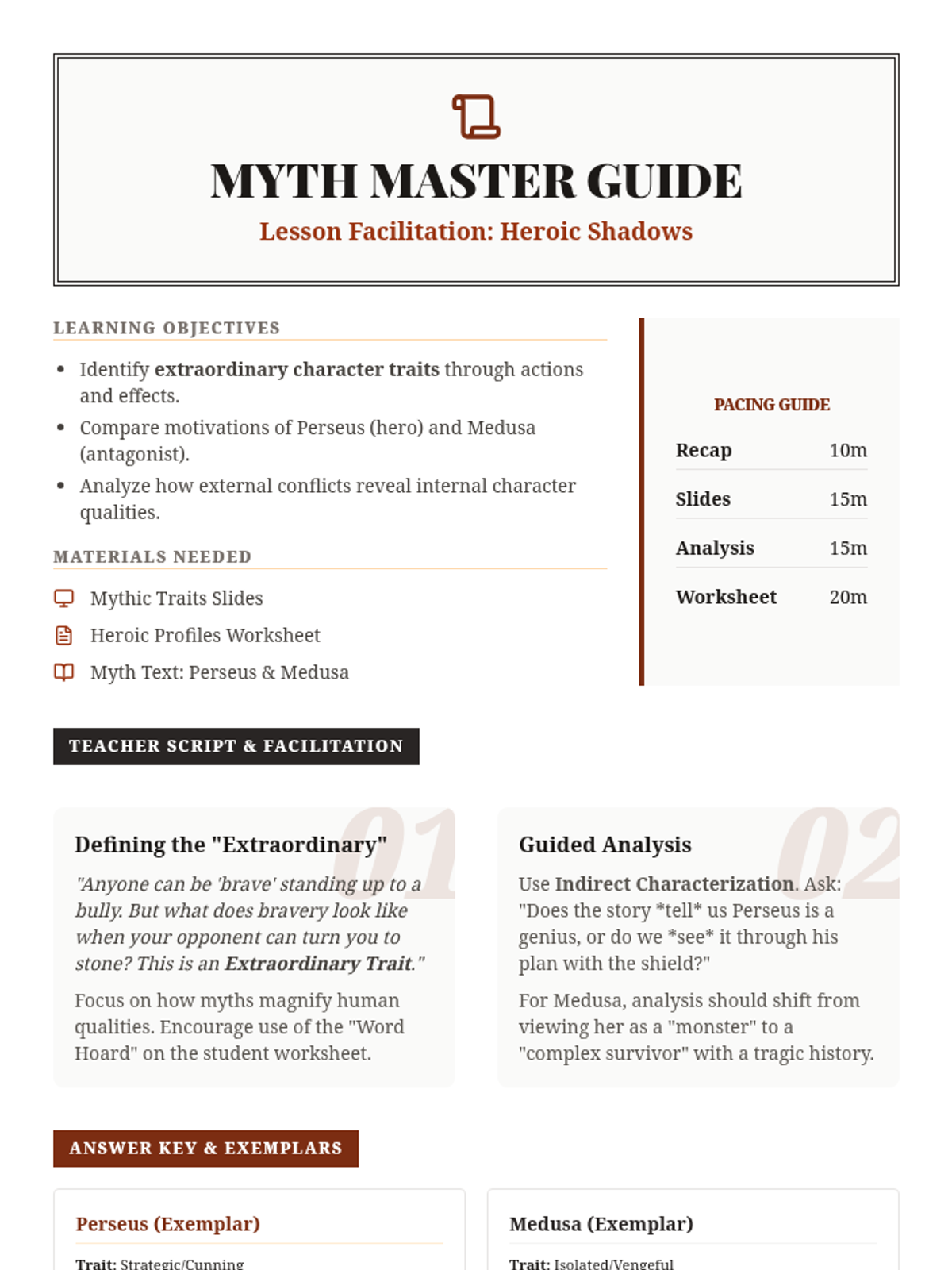
A teacher's guide for the Heroic Shadows lesson. Optimized layout to fit all content on two pages, fixed overlapping background numbers, and improved text contrast for the pacing guide.
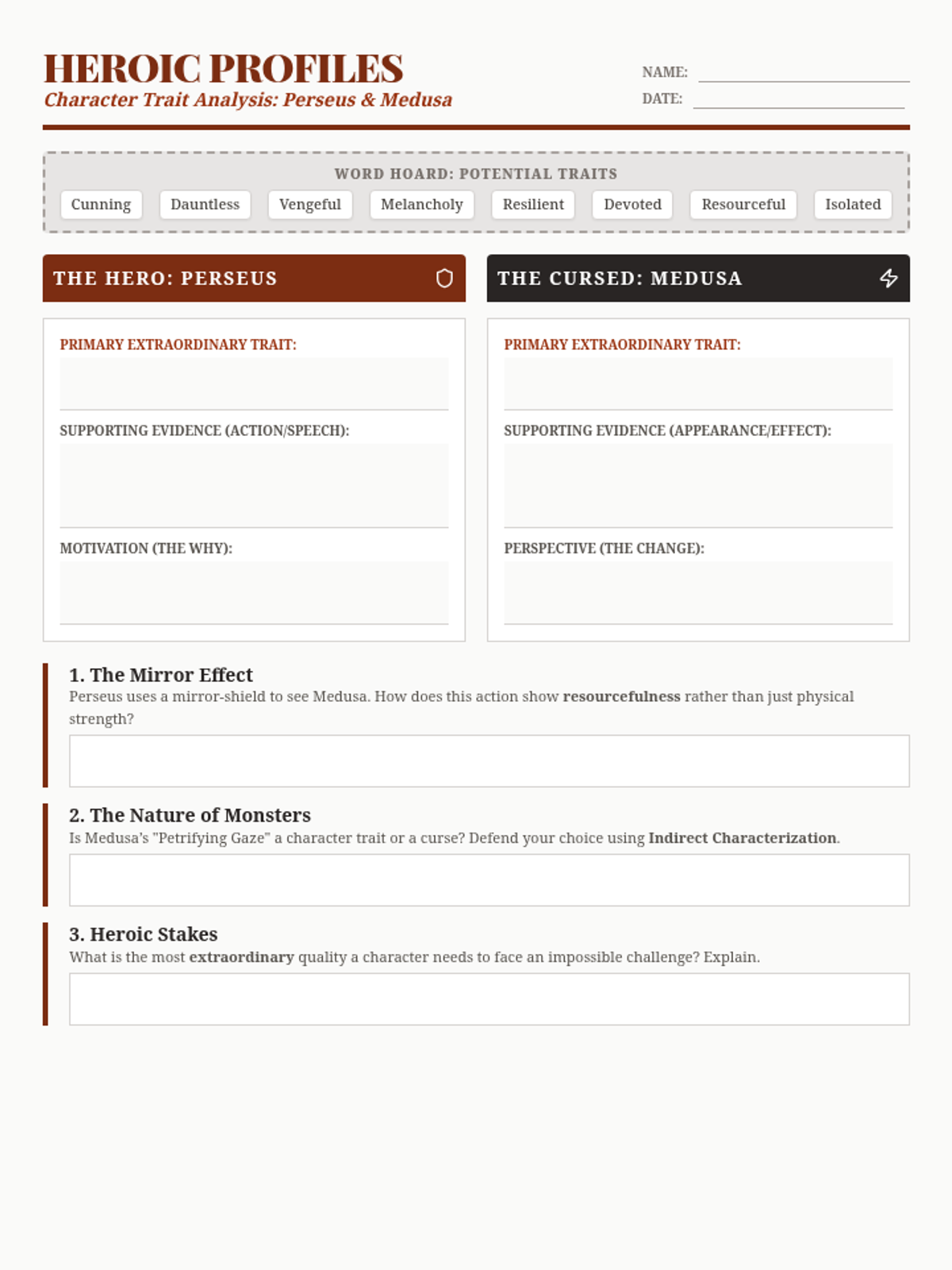
A student worksheet for identifying and providing evidence for character traits in Perseus and Medusa. Condensed to fit a single page with optimized writing areas and a trait bank. Adjusted font sizes for better legibility.
A presentation exploring character traits through the myth of Perseus and Medusa, focusing on extraordinary qualities revealed through heroic action and tragic transformation. Corrected spelling and standardized borders.
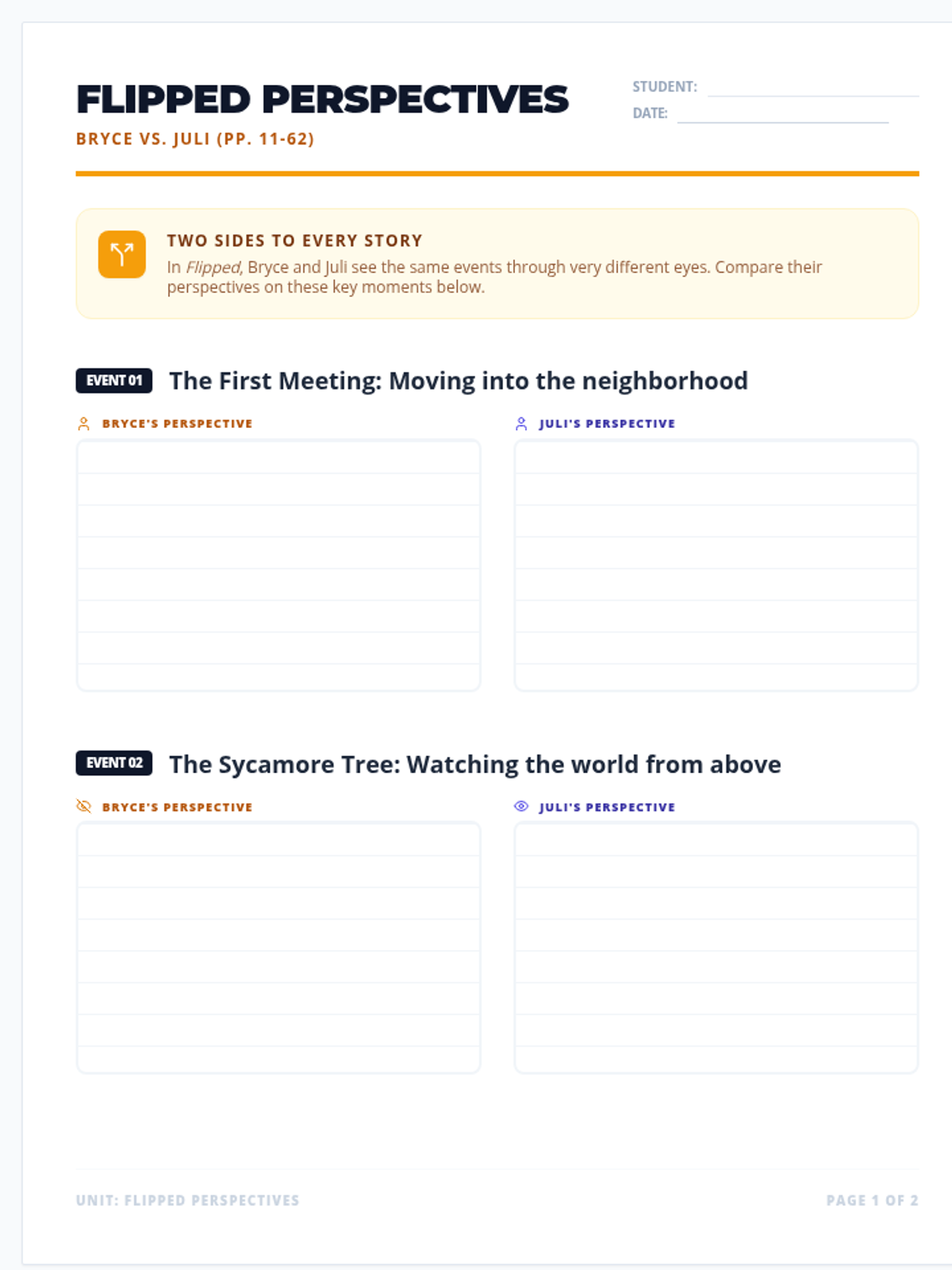
A 2-page graphic organizer for students to compare Bryce's and Juli's differing perspectives on key plot points from the first 60 pages of 'Flipped'. Features expanded writing areas with handwriting lines and a deep reflection section.
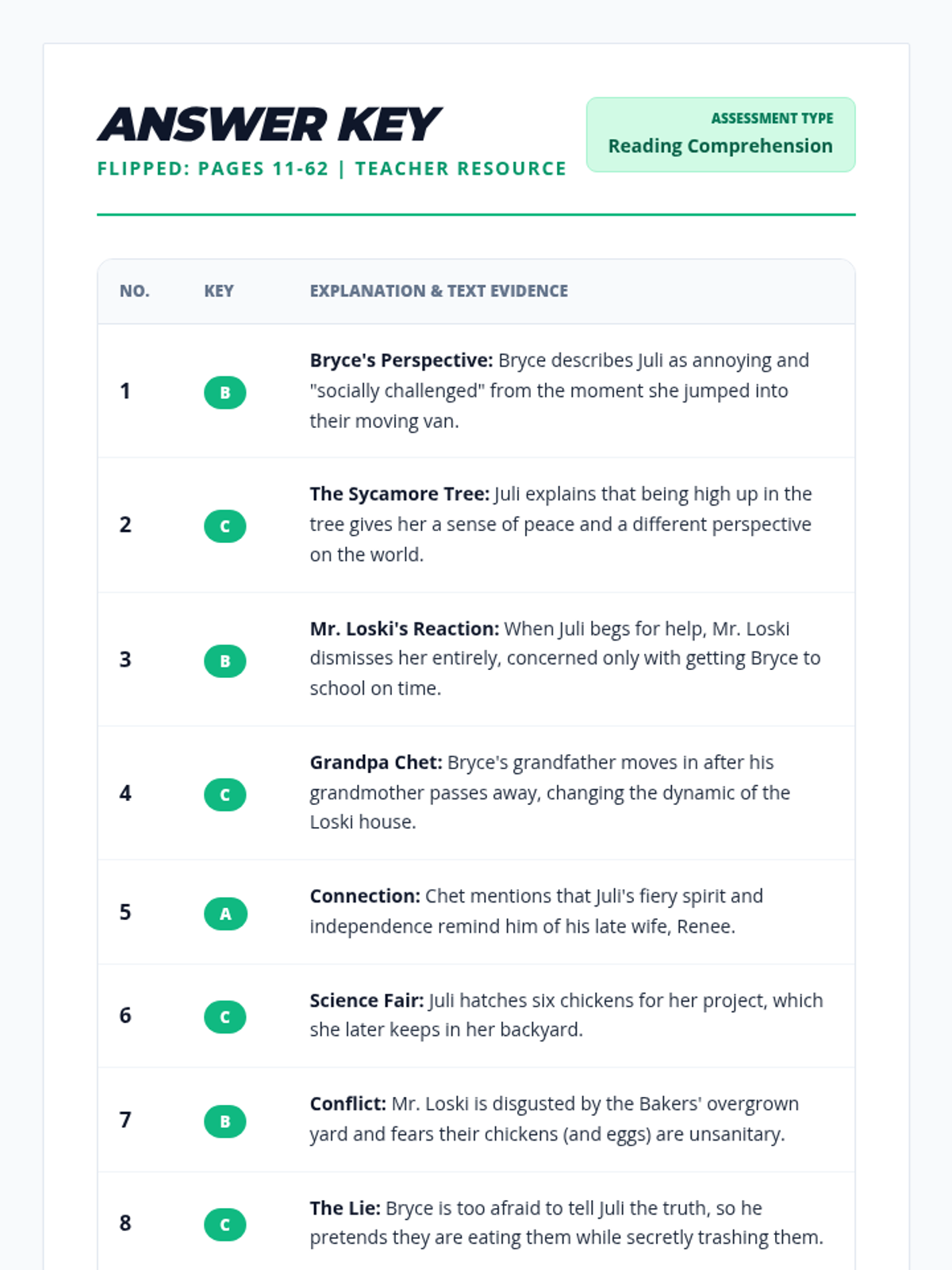
An answer key for the 'Flipped' pages 11-62 comprehension quiz. Includes correct answers (A, B, C, D) along with detailed explanations and text evidence for each question to support teacher review and student feedback.
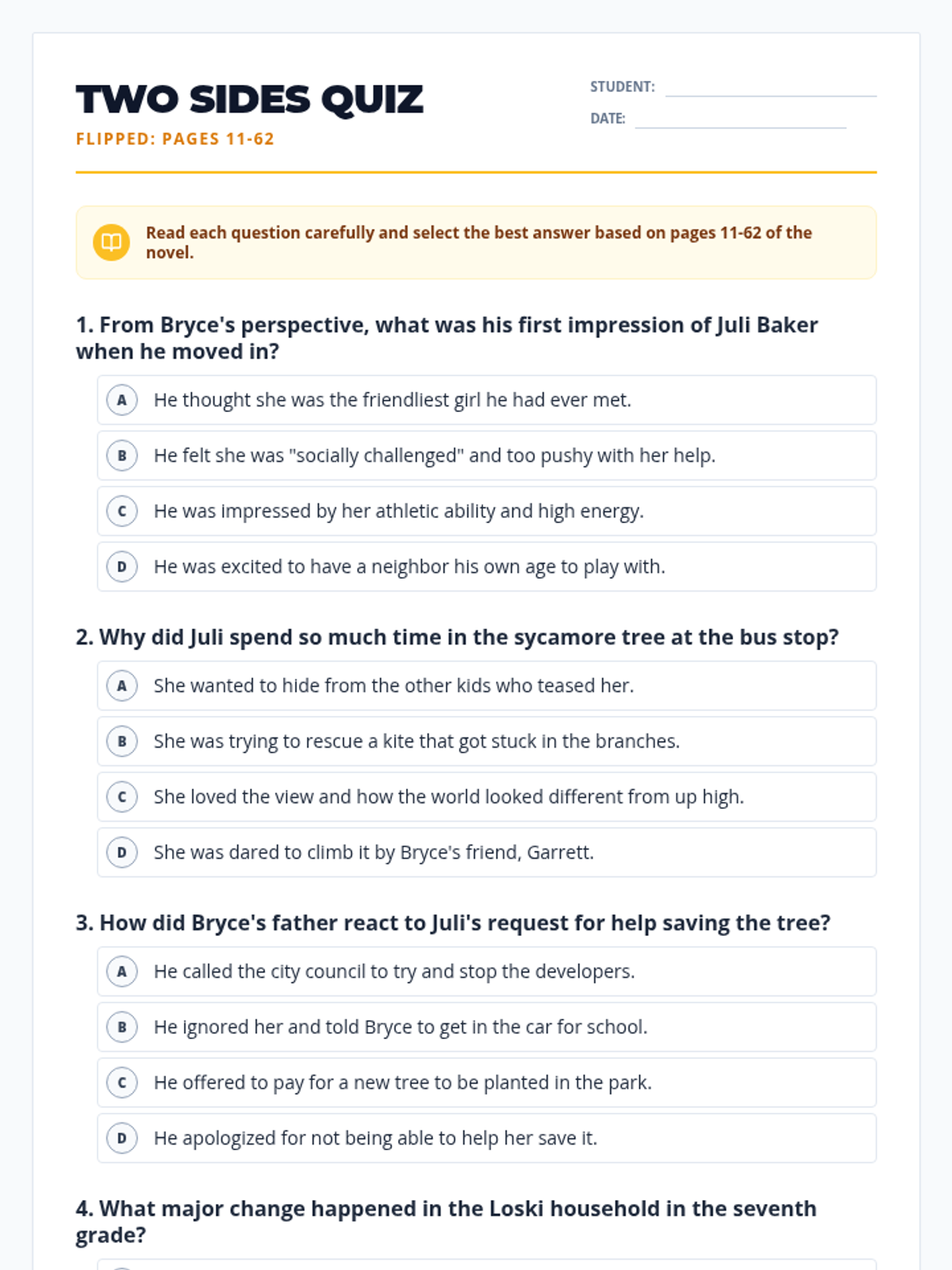
A 10-question multiple-choice comprehension quiz for 5th grade students covering pages 11-62 of the novel 'Flipped' by Wendelin Van Draanen. Includes questions on character perspectives, the sycamore tree, and the conflict surrounding Juli's eggs.
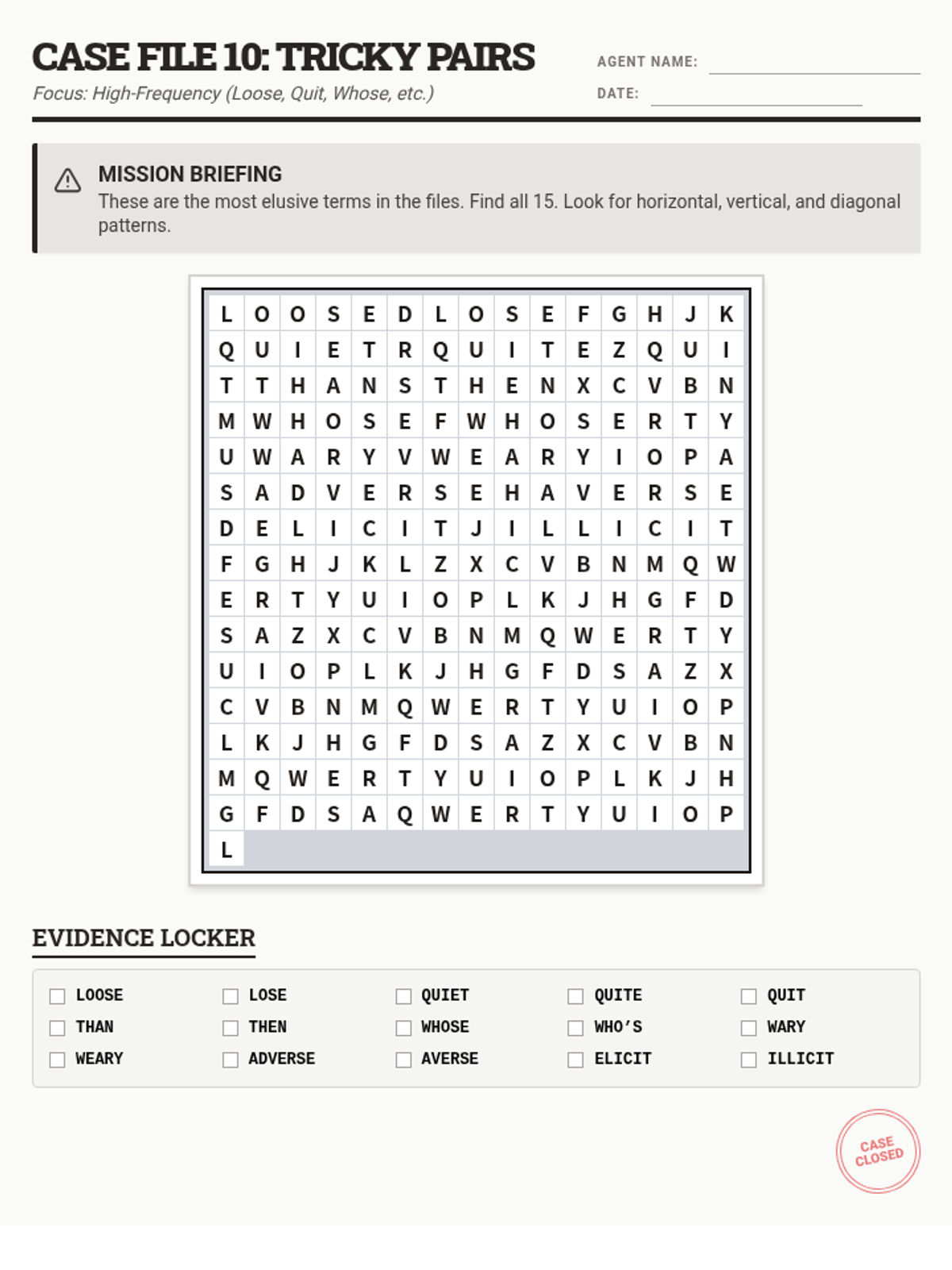
The final word search worksheet focusing on the most difficult commonly confused word pairs like loose/lose and than/then. Closes the detective case theme.
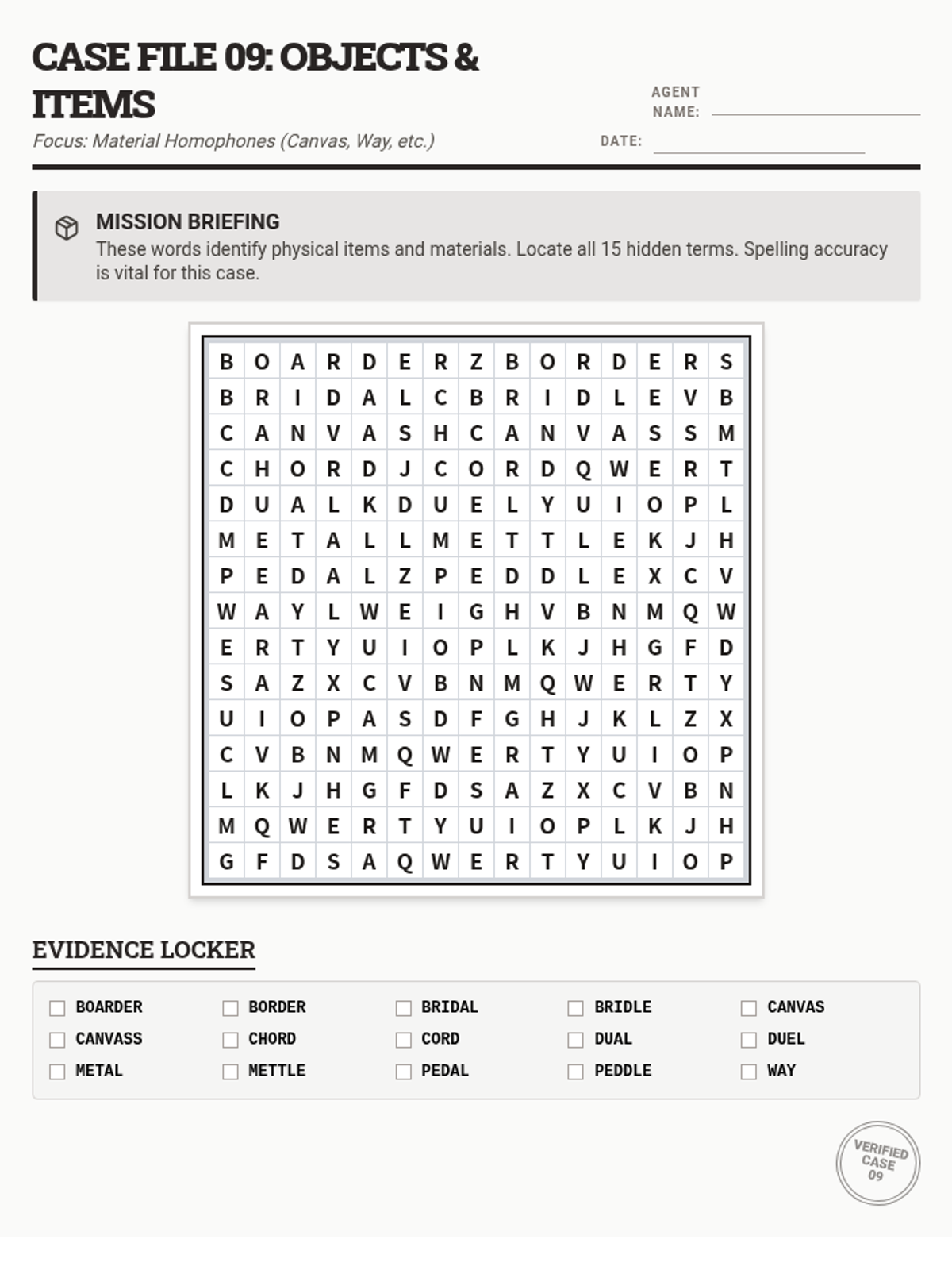
A word search focused on object-based homophones like metal/mettle and canvas/canvass. Features an industrial materials case theme.
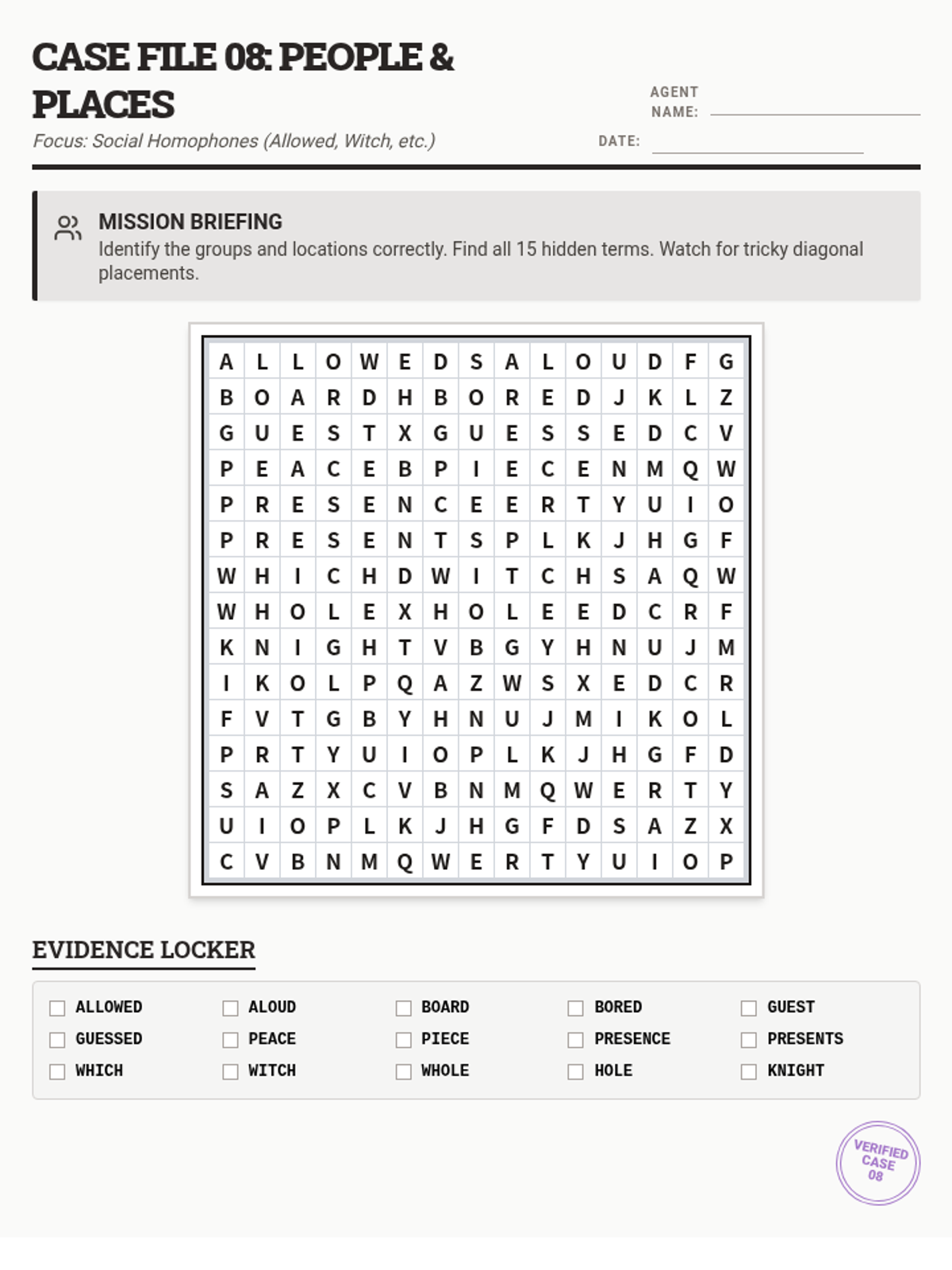
A word search worksheet covering social and location-based homophones like allowed/aloud and which/witch. Community case file theme.
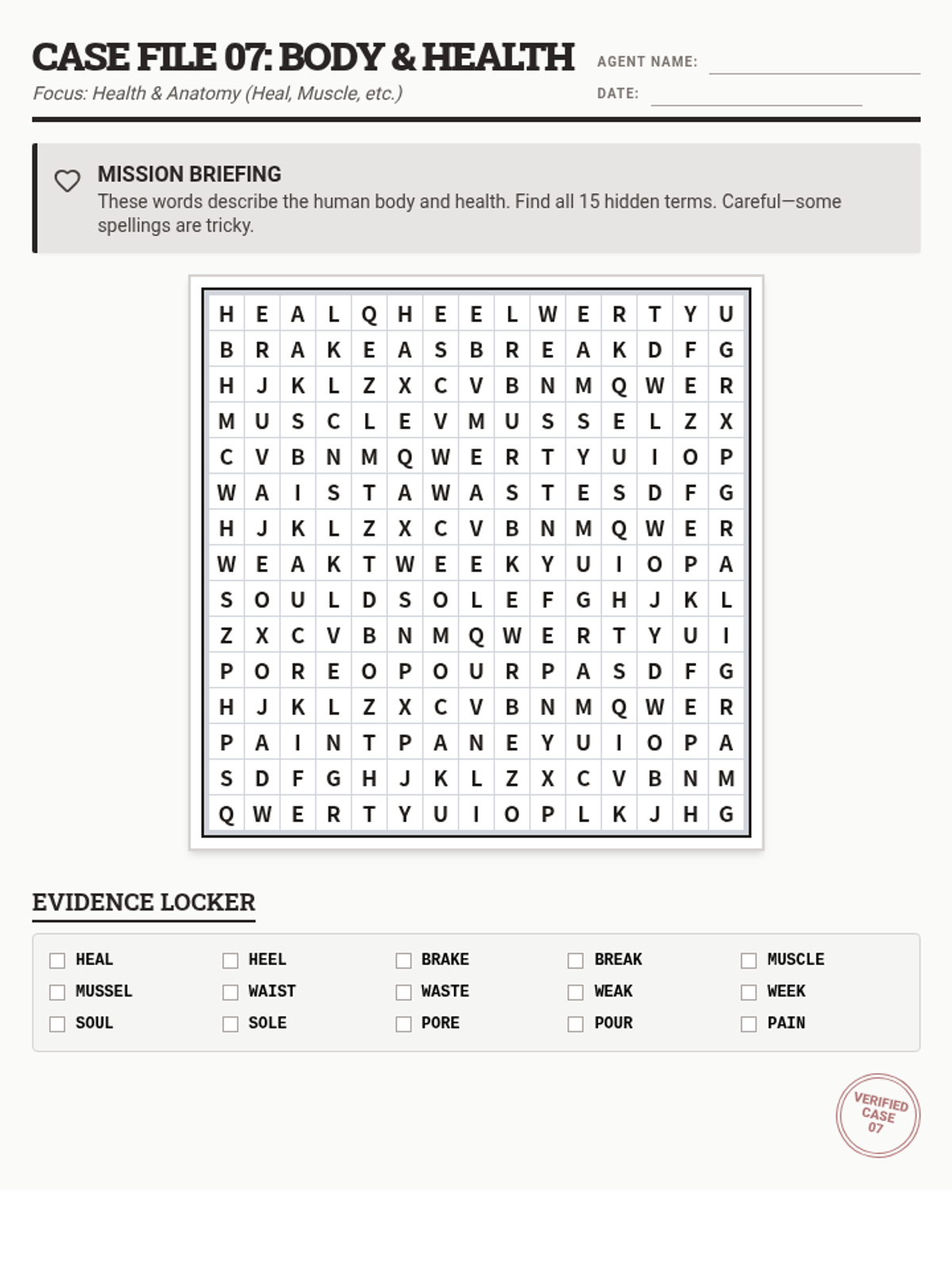
A word search worksheet exploring homophones related to health and anatomy, like heal/heel and muscle/mussel. Professional medical case theme.
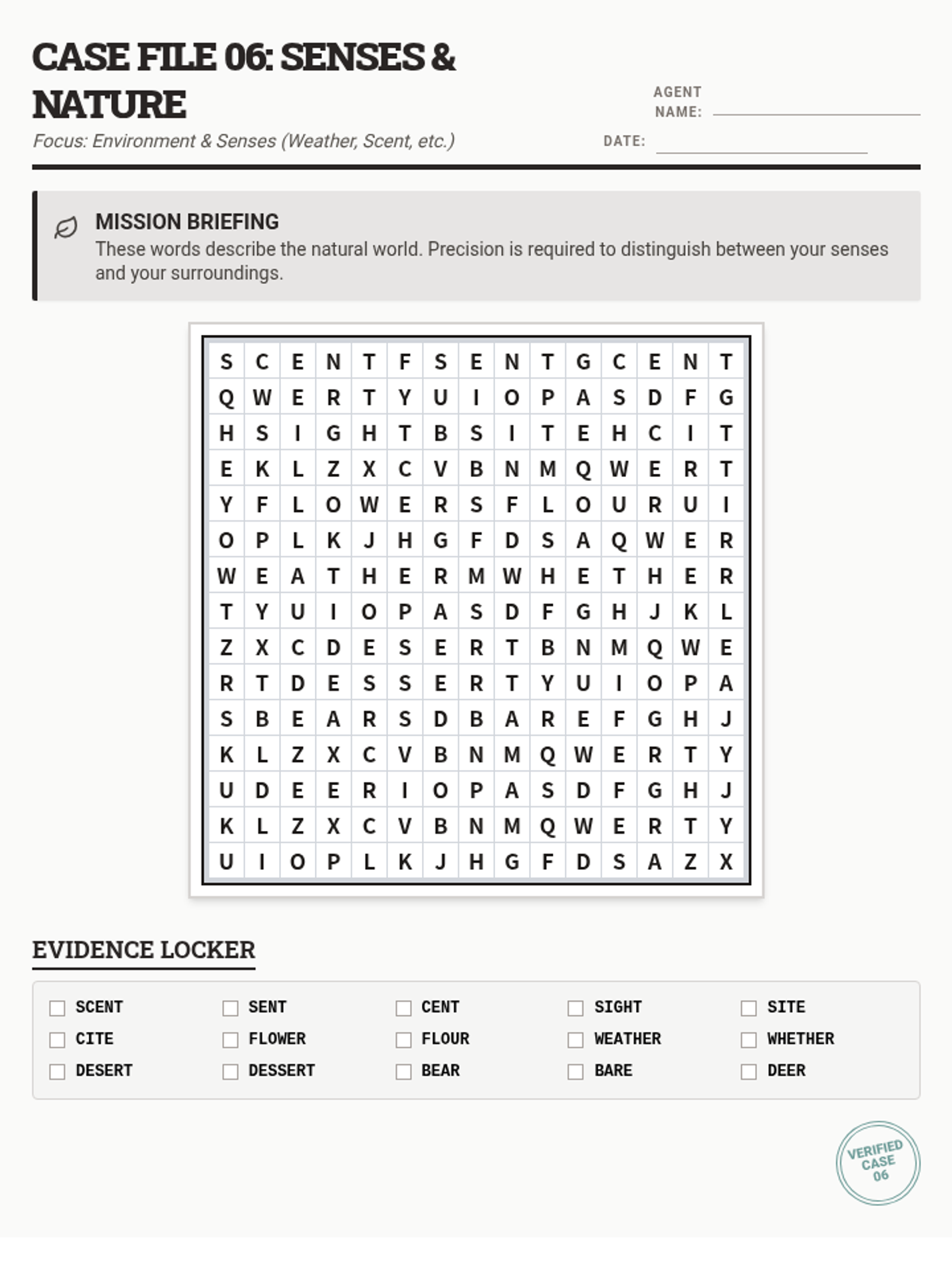
A word search targeting nature and sensory homophones like scent/sent/cent and desert/dessert. Designed with a natural science case theme.
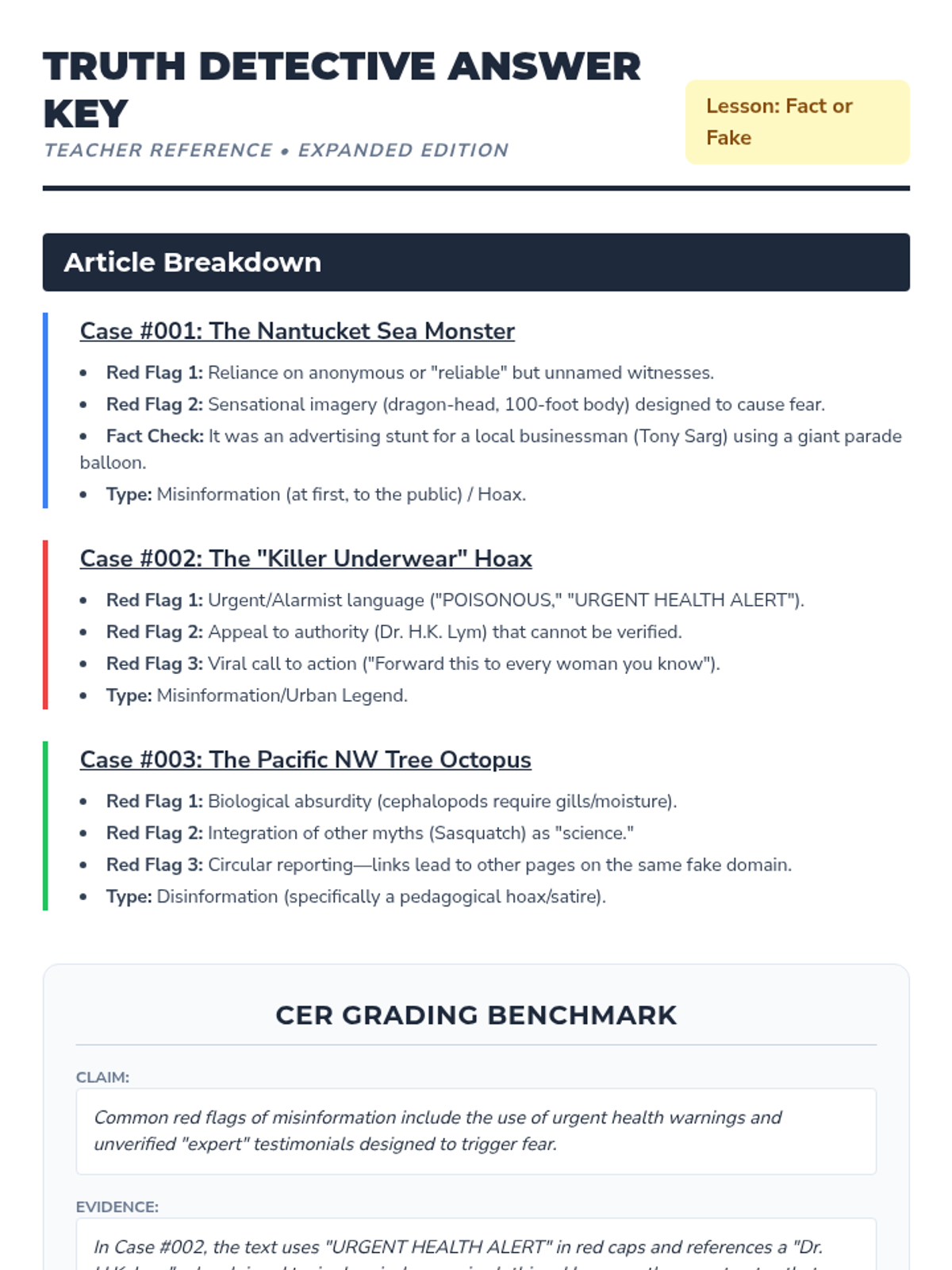
A teacher's answer key for the Truth Detective lesson, providing breakdown of the case studies and a sample CER response for grading and discussion.
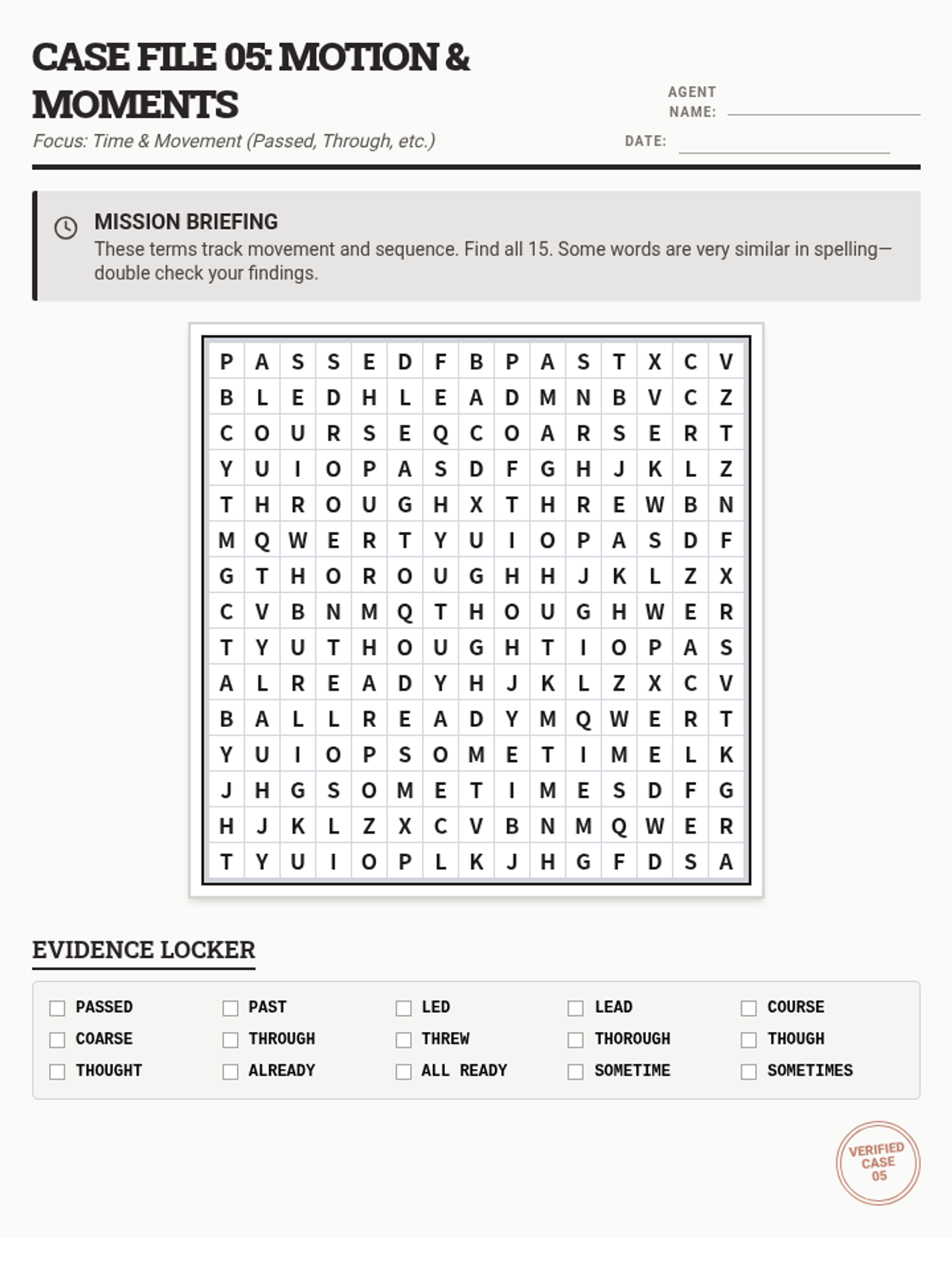
A word search focused on movement and time-related confusions such as passed/past and through/threw/thorough. Features a "case file" investigative design.
Visual presentation to accompany the Truth Detective lesson, explaining the difference between misinformation and disinformation and highlighting digital red flags.
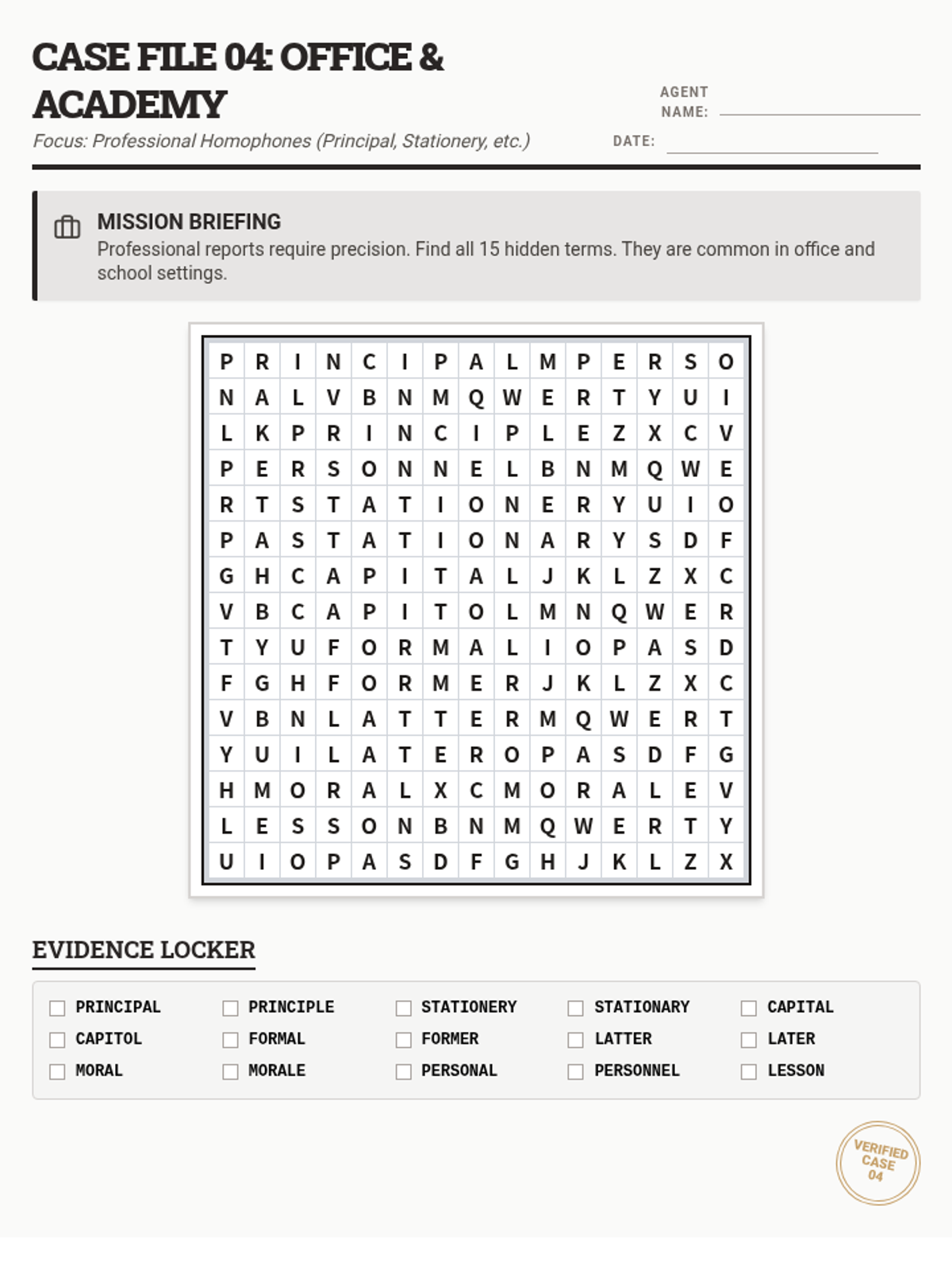
A word search worksheet covering professional and academic homophones like principal/principle and personnel/personal. Features a business case theme.
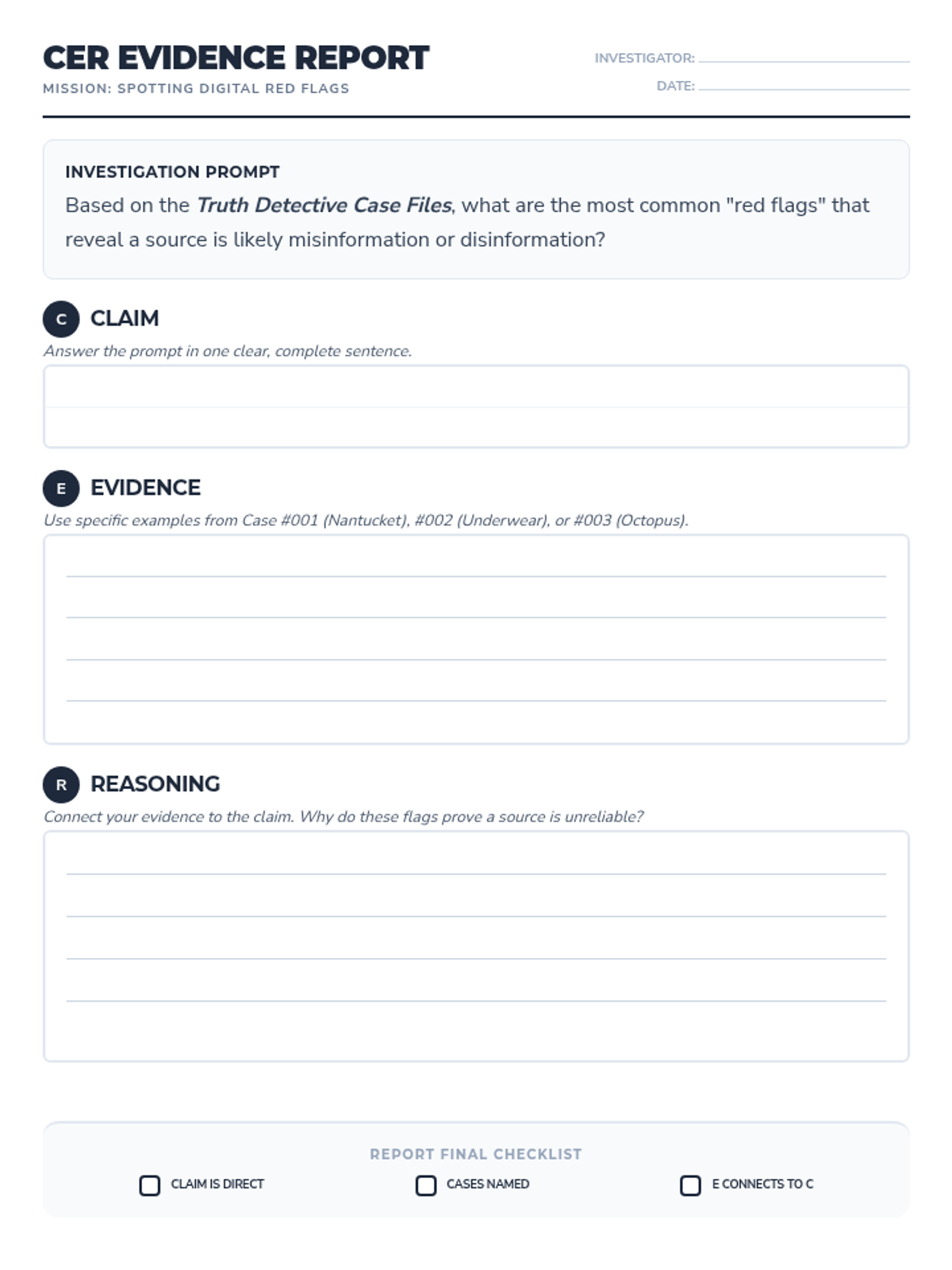
A graphic organizer for students to write a CER (Claim, Evidence, Reasoning) paragraph based on the Truth Detective Case Files, focusing on identifying red flags of fake information.
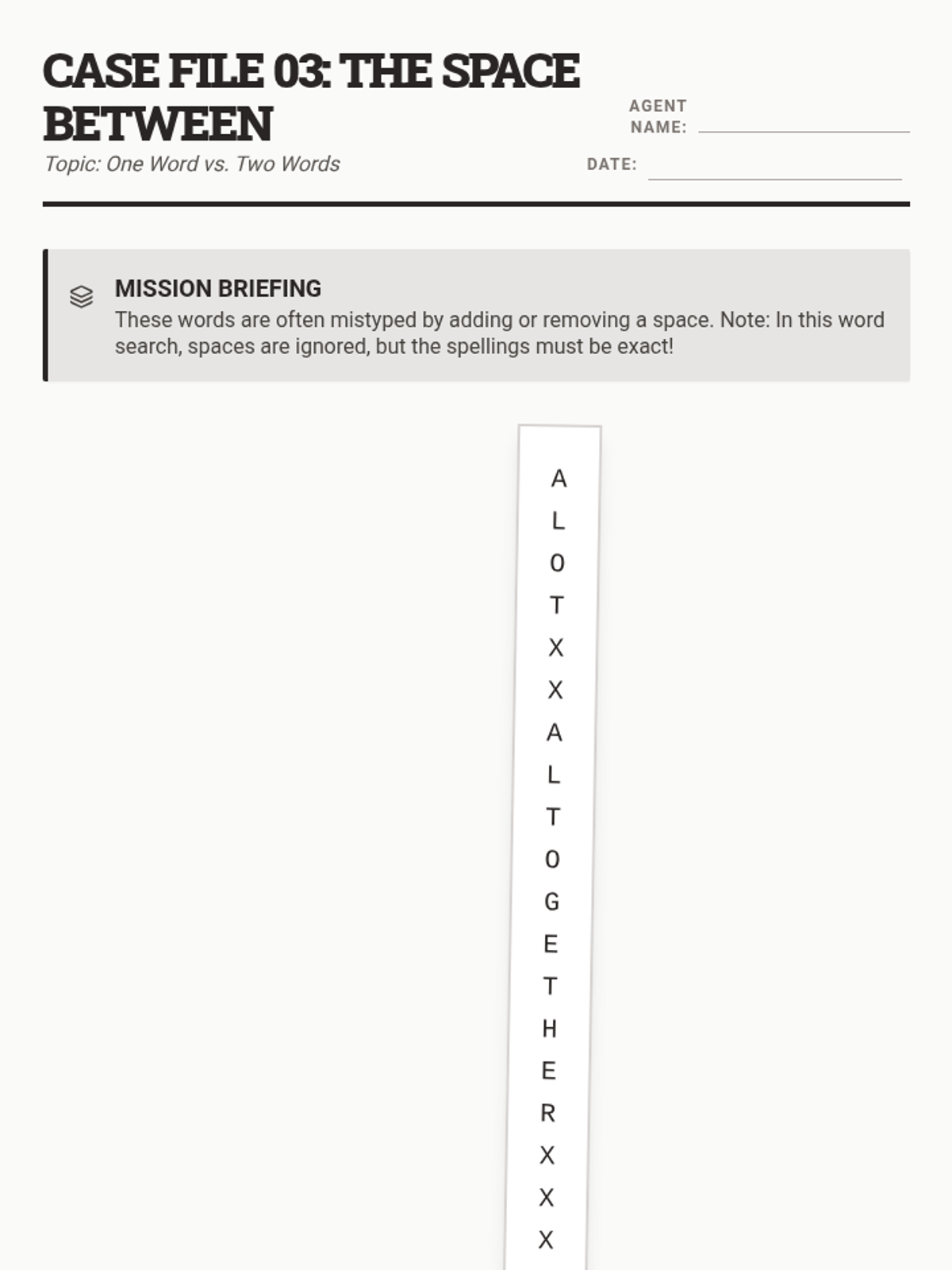
A word search focusing on one-word vs. two-word confusions like everyday/every day and into/in to. Encourages attention to spelling and usage.
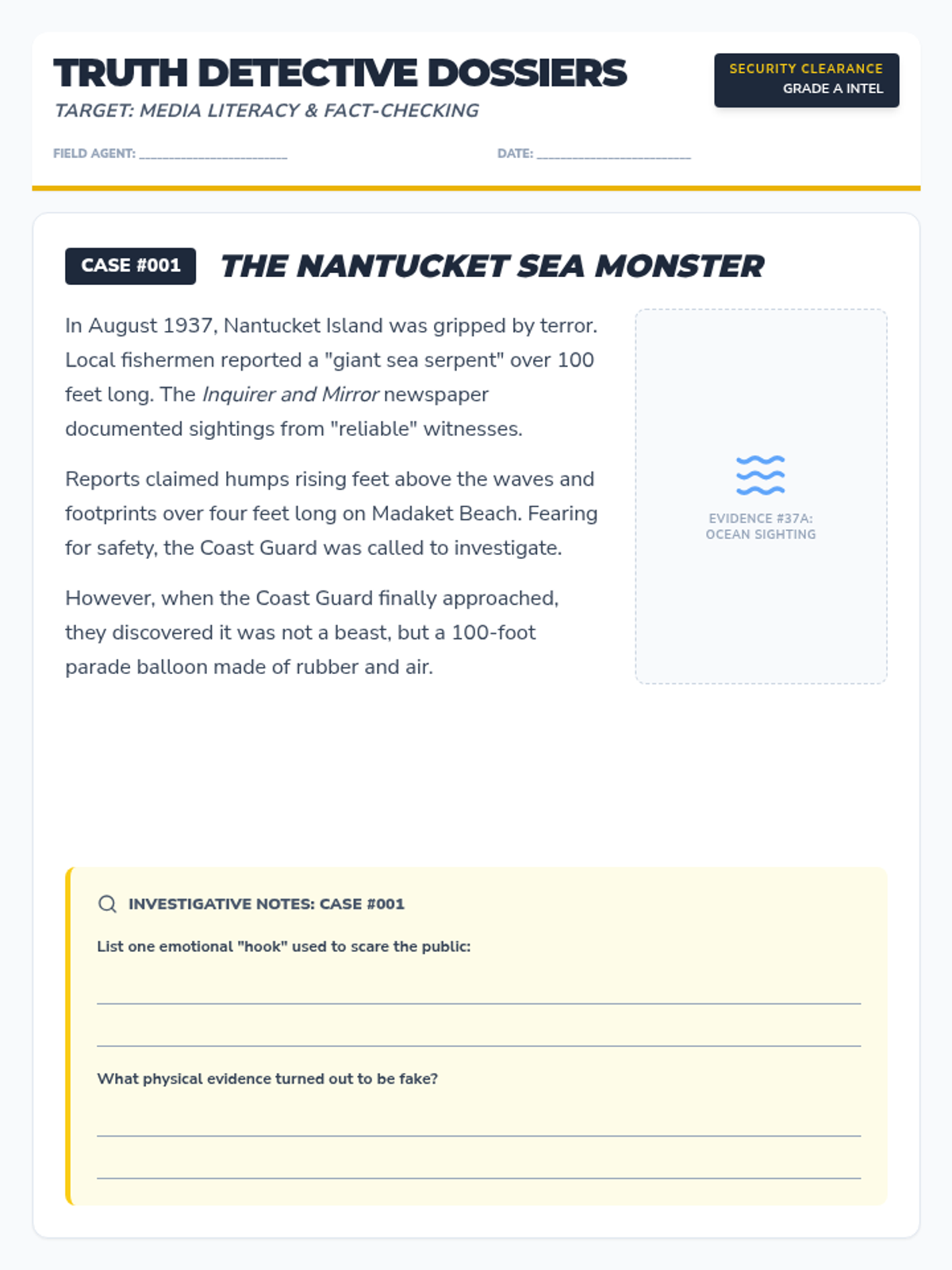
A collection of three short case studies—The Banana Shortage, The Tree Octopus, and Miracle Glow-Water—designed for students to practice identifying red flags of misinformation and disinformation.
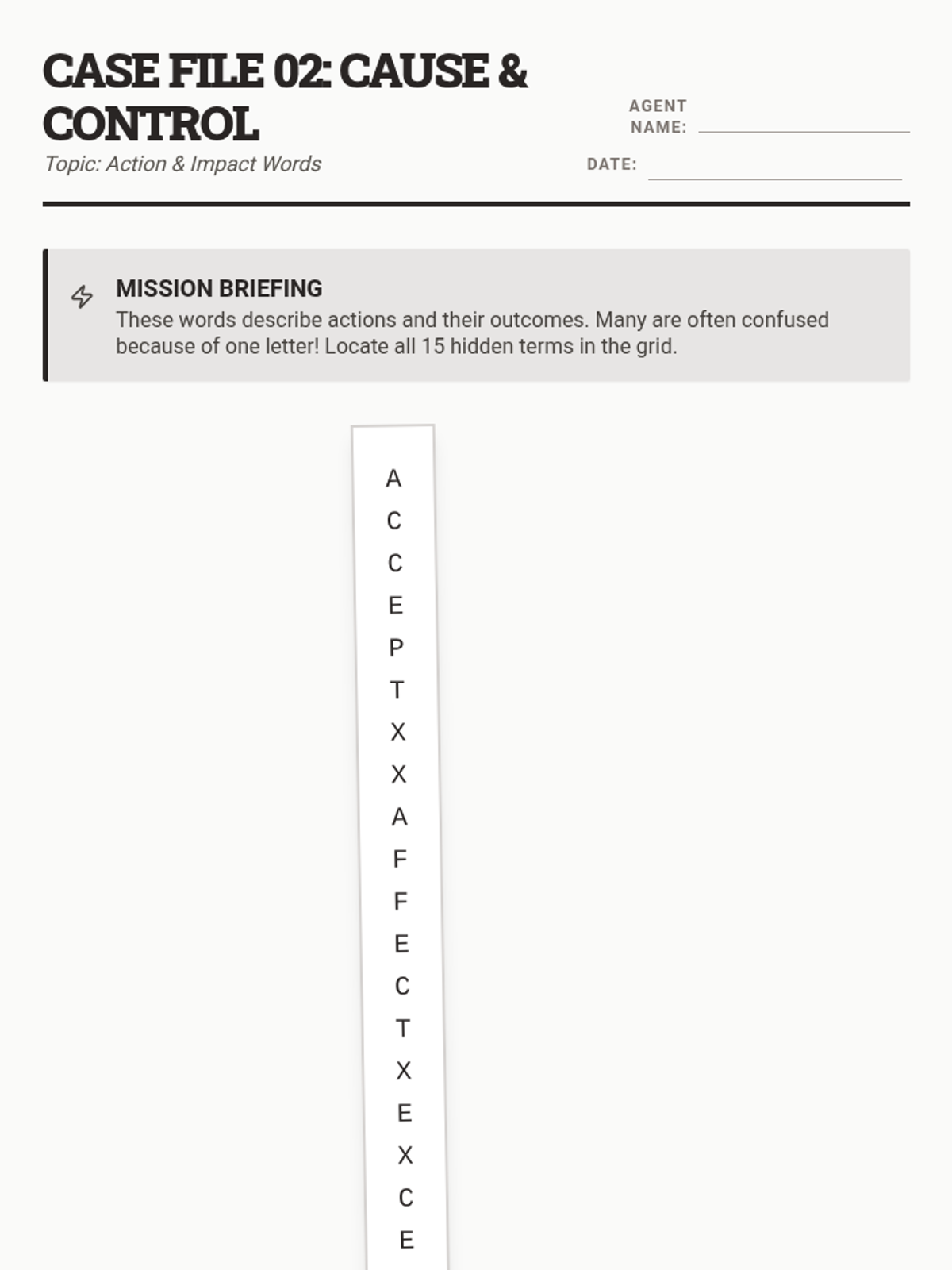
A second word search worksheet targeting verbs and nouns that are frequently confused, such as affect/effect and advice/advise. Uses a detective notebook style.
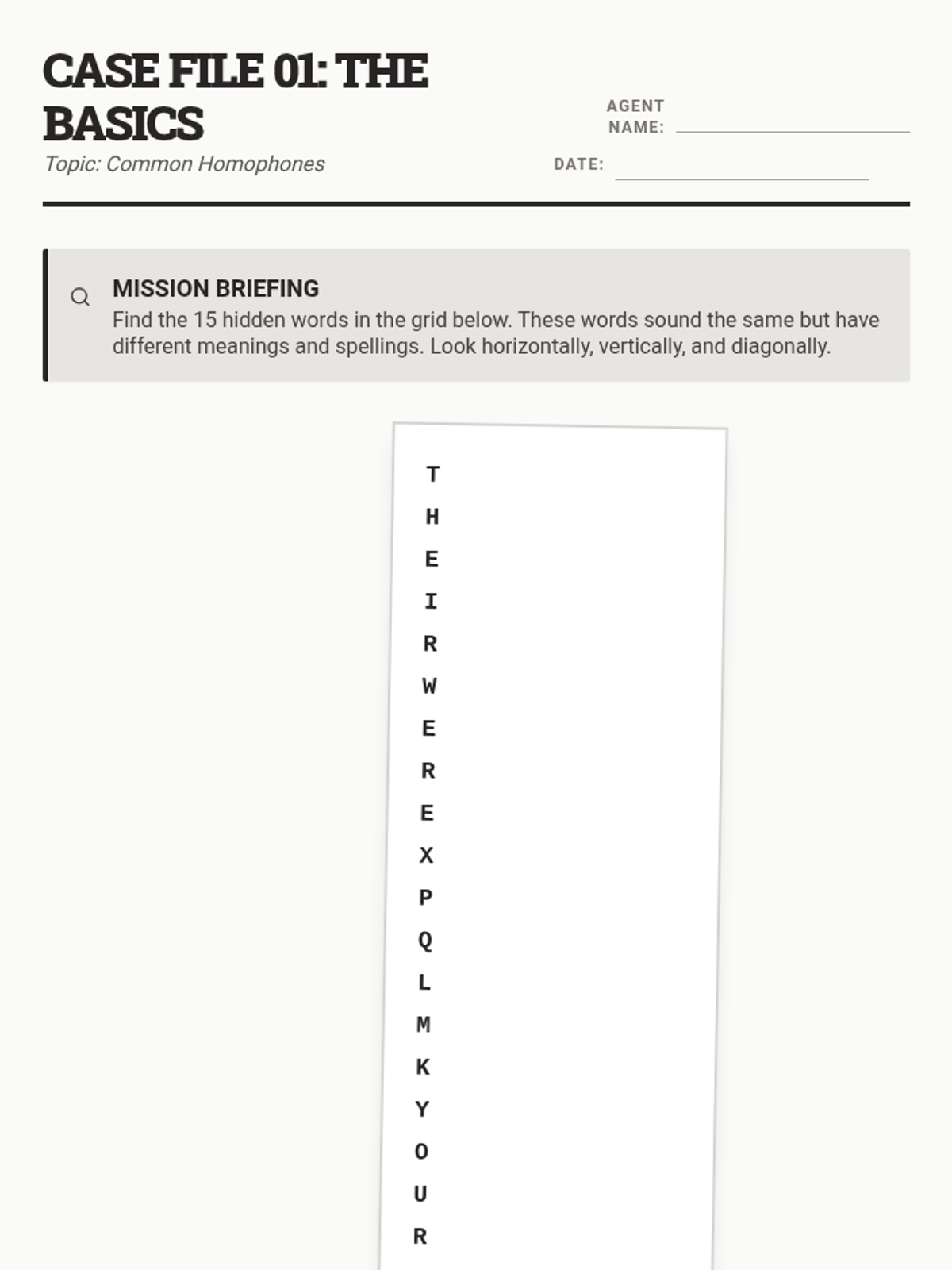
A word search worksheet focusing on basic homophones like to/too/two and their/there/they're. Features a detective case file theme with a 15x15 grid and word bank.
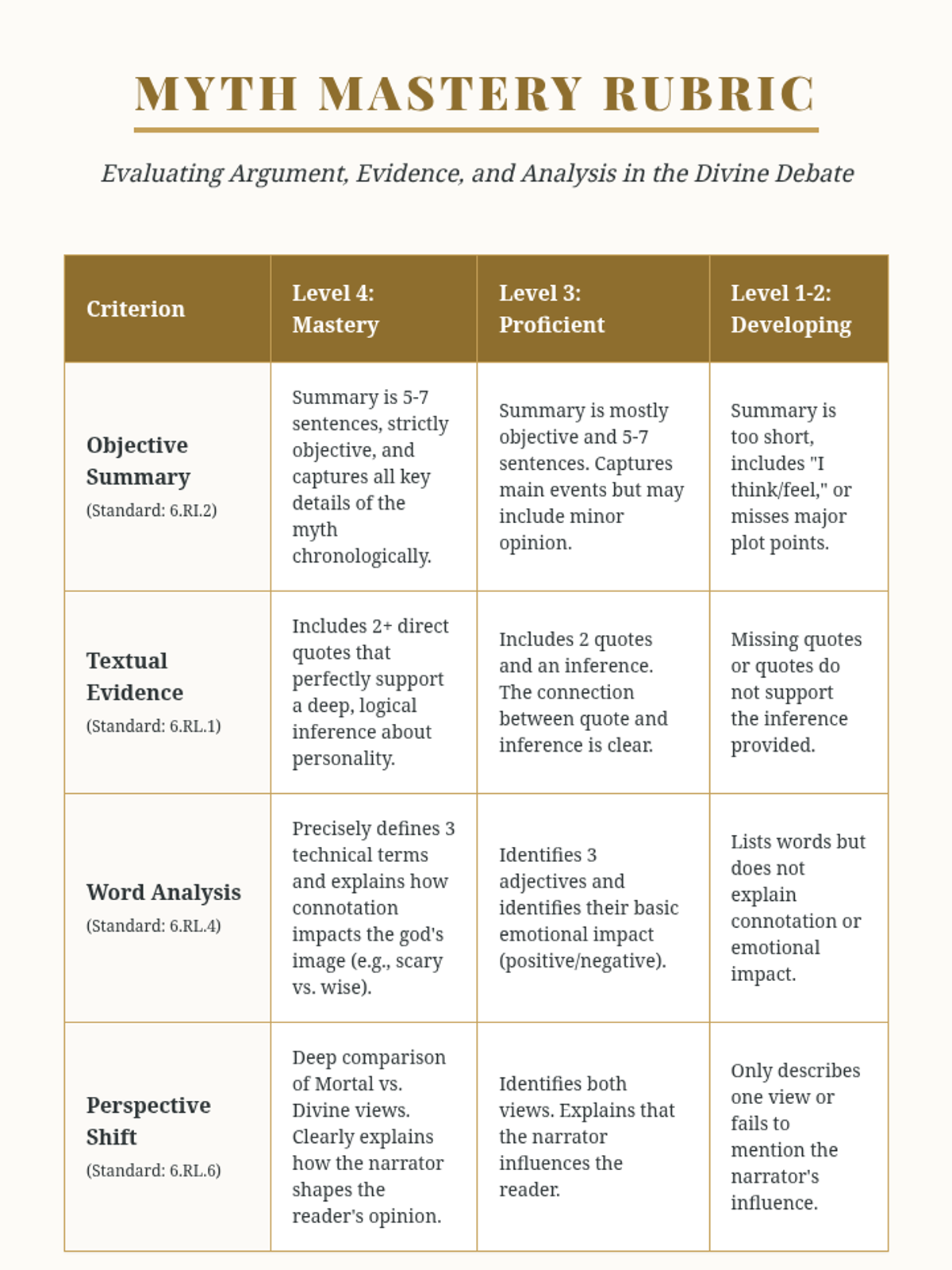
A teacher-facing rubric and instructional guide for the Divine Debate project. It provides specific look-fors for CCSS standards 6.RI.2, 6.RL.1, 6.RL.4, and 6.RL.6, along with scaffolding tips for educators.
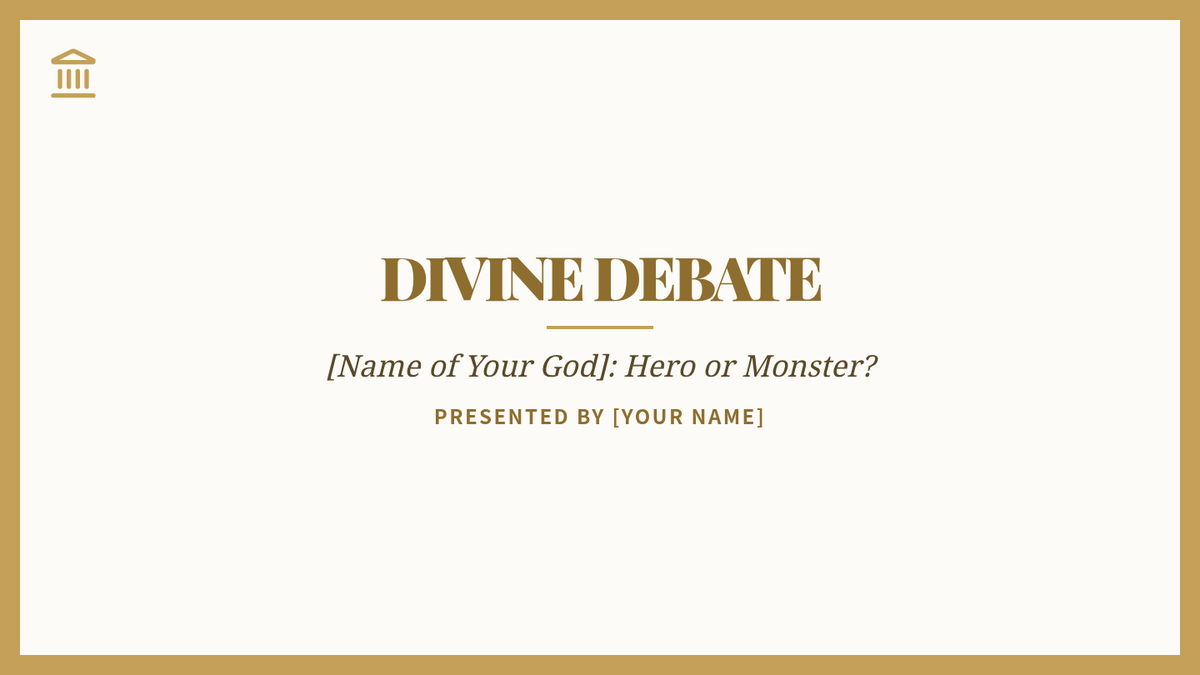
A five-slide presentation template for students to use as a model for their 'Hero or Monster' project. Each slide is structured to meet specific CCSS standards including objective summaries, evidence lockers, and perspective analysis.
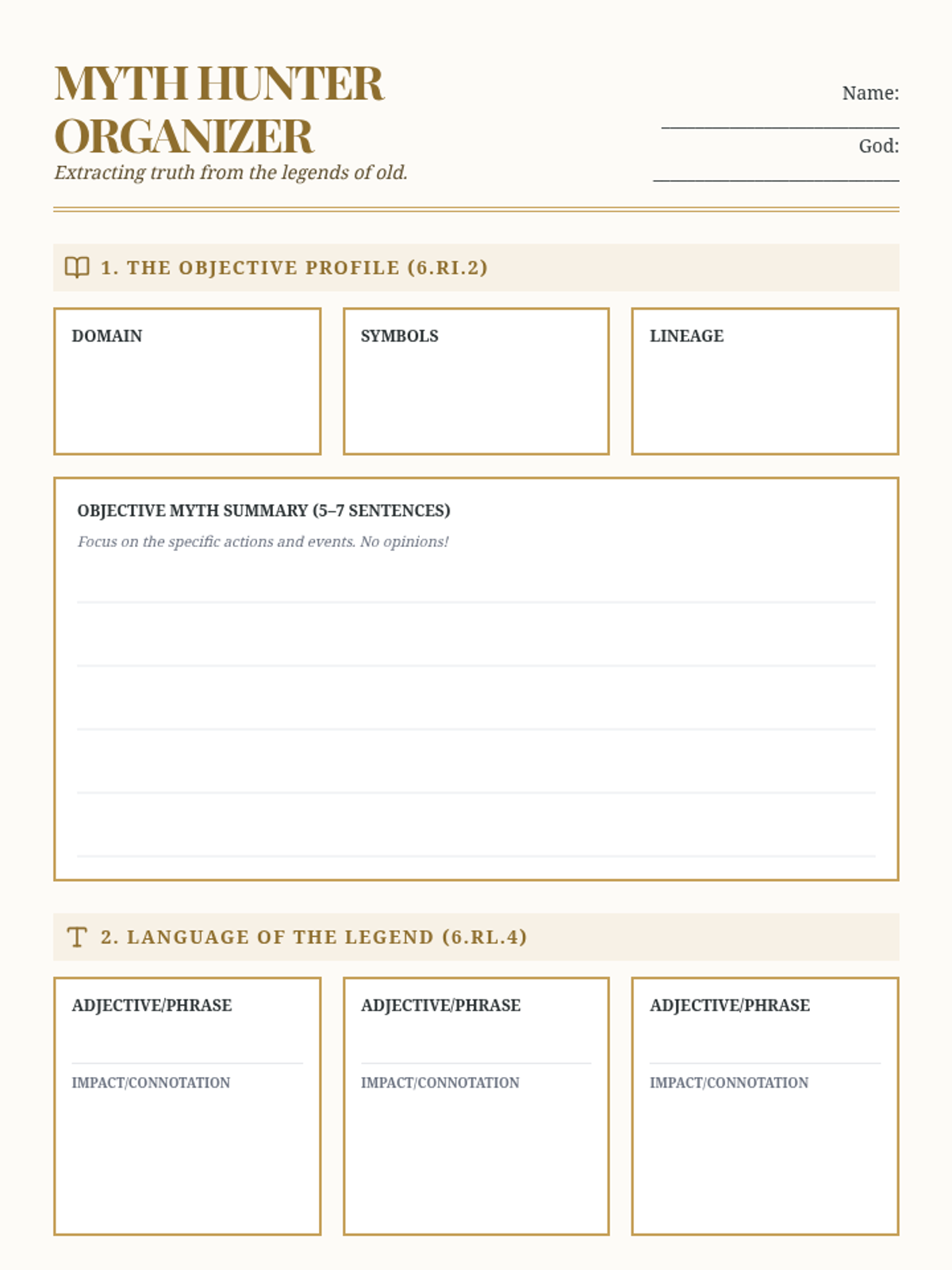
A structured graphic organizer for students to collect research on their chosen Greek deity. It includes specific workspaces for objective summaries, word connotation analysis, direct evidence, and perspective comparison.
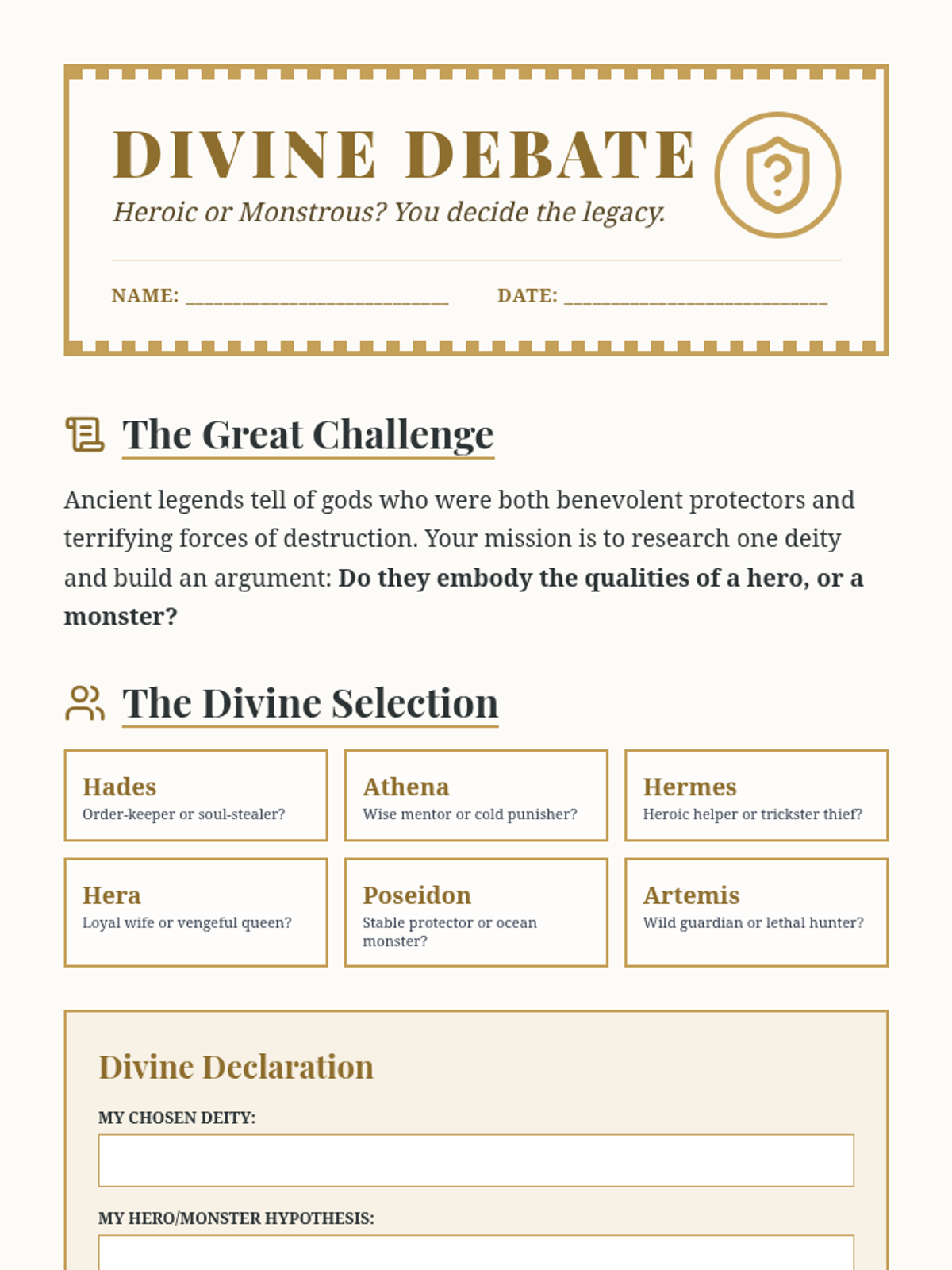
A comprehensive project guide for 6th-grade students outlining the 'Hero or Monster' Greek God presentation. It includes the choice board, slide-by-slide requirements aligned with CCSS standards, and a mastery checklist.
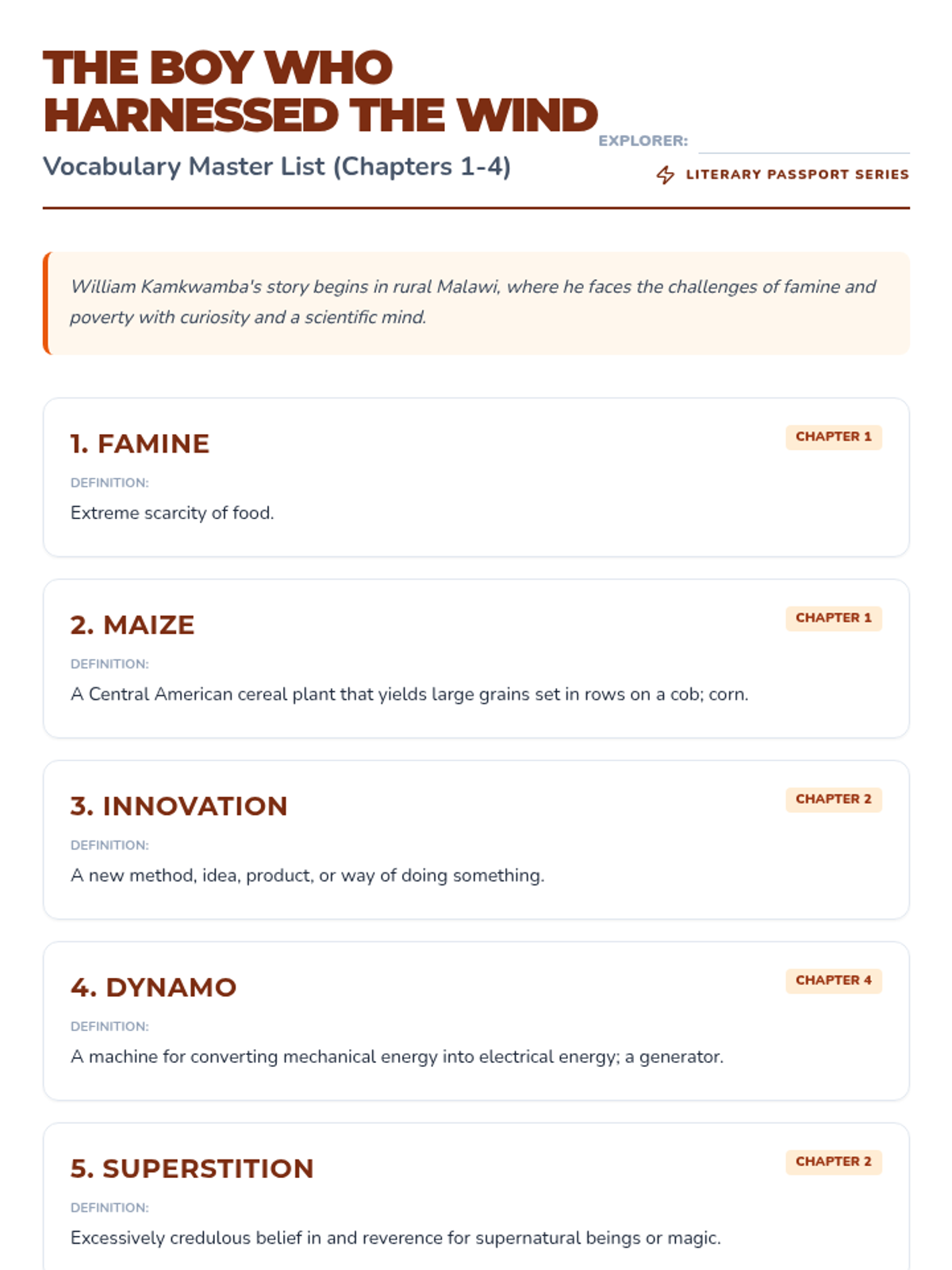
A vocabulary list for the first four chapters of The Boy Who Harnessed the Wind. Key terms include famine, dynamo, and innovation, reflecting the environmental and technical aspects of the memoir.
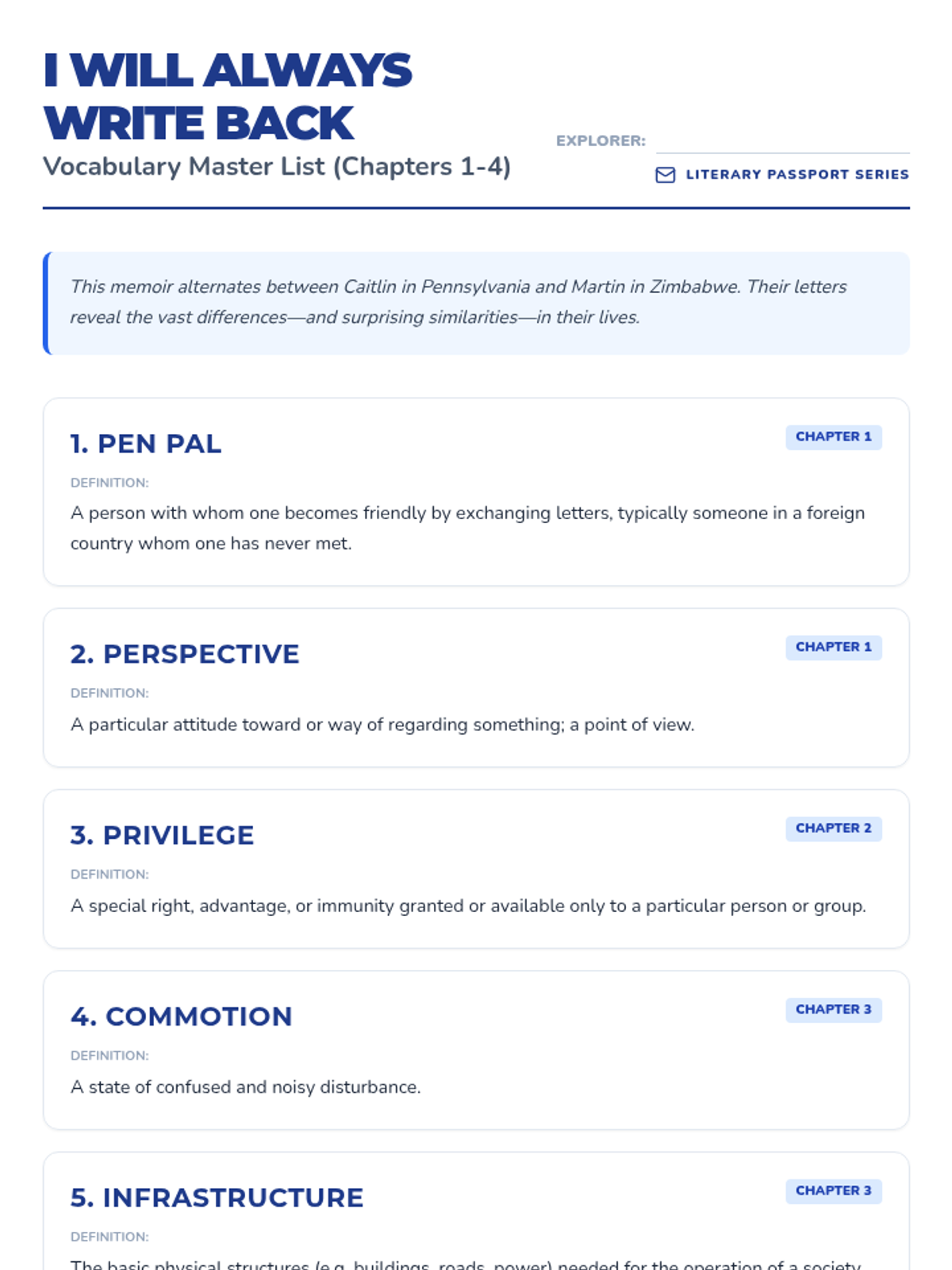
A vocabulary list for the first four chapters of I Will Always Write Back. Focuses on terms like perspective, privilege, and infrastructure to highlight the contrast between the two main characters' environments.
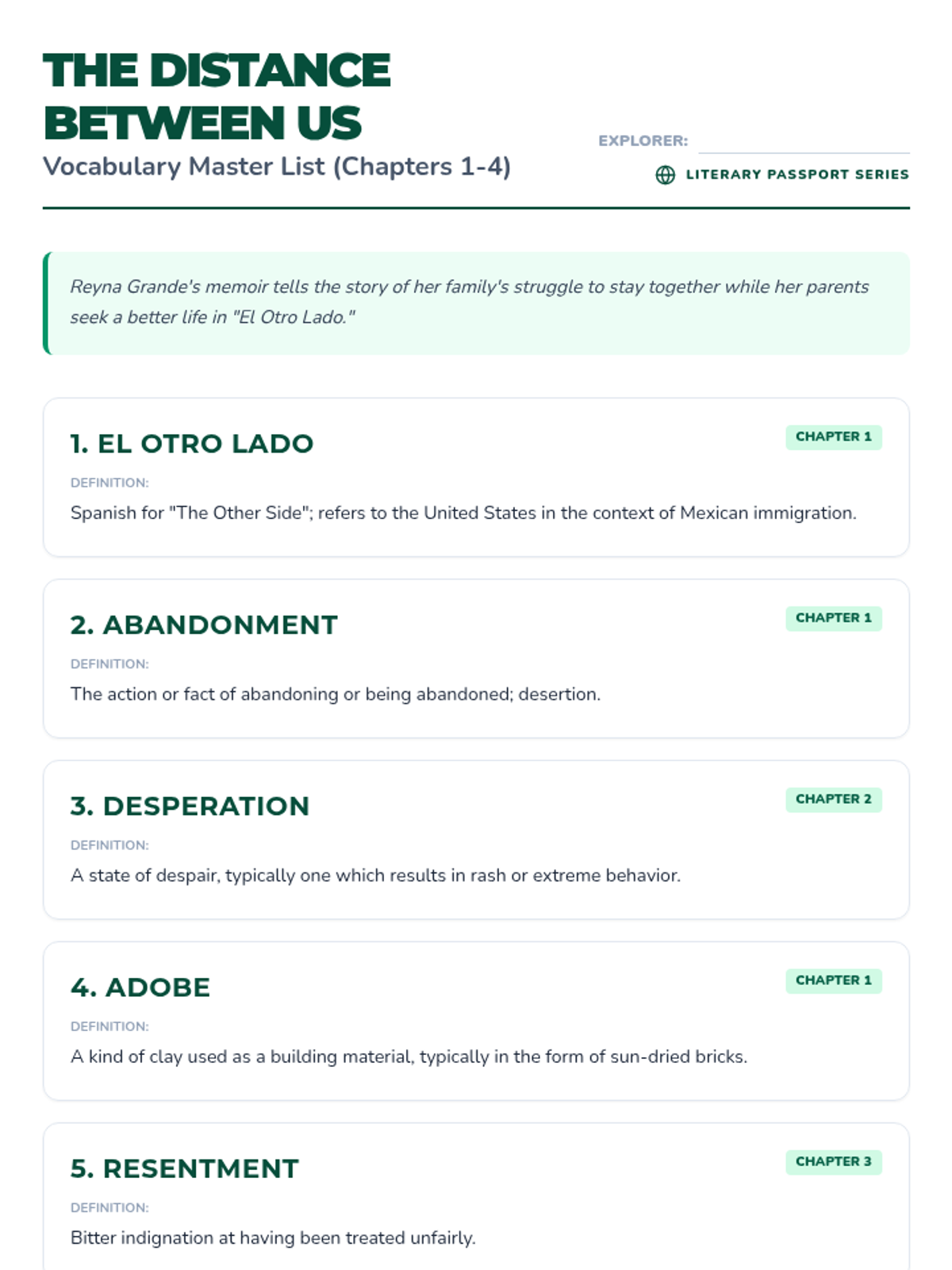
A vocabulary list for the first four chapters of The Distance Between Us. Includes cultural terms like El Otro Lado and adobe, as well as thematic words like resilience and abandonment.
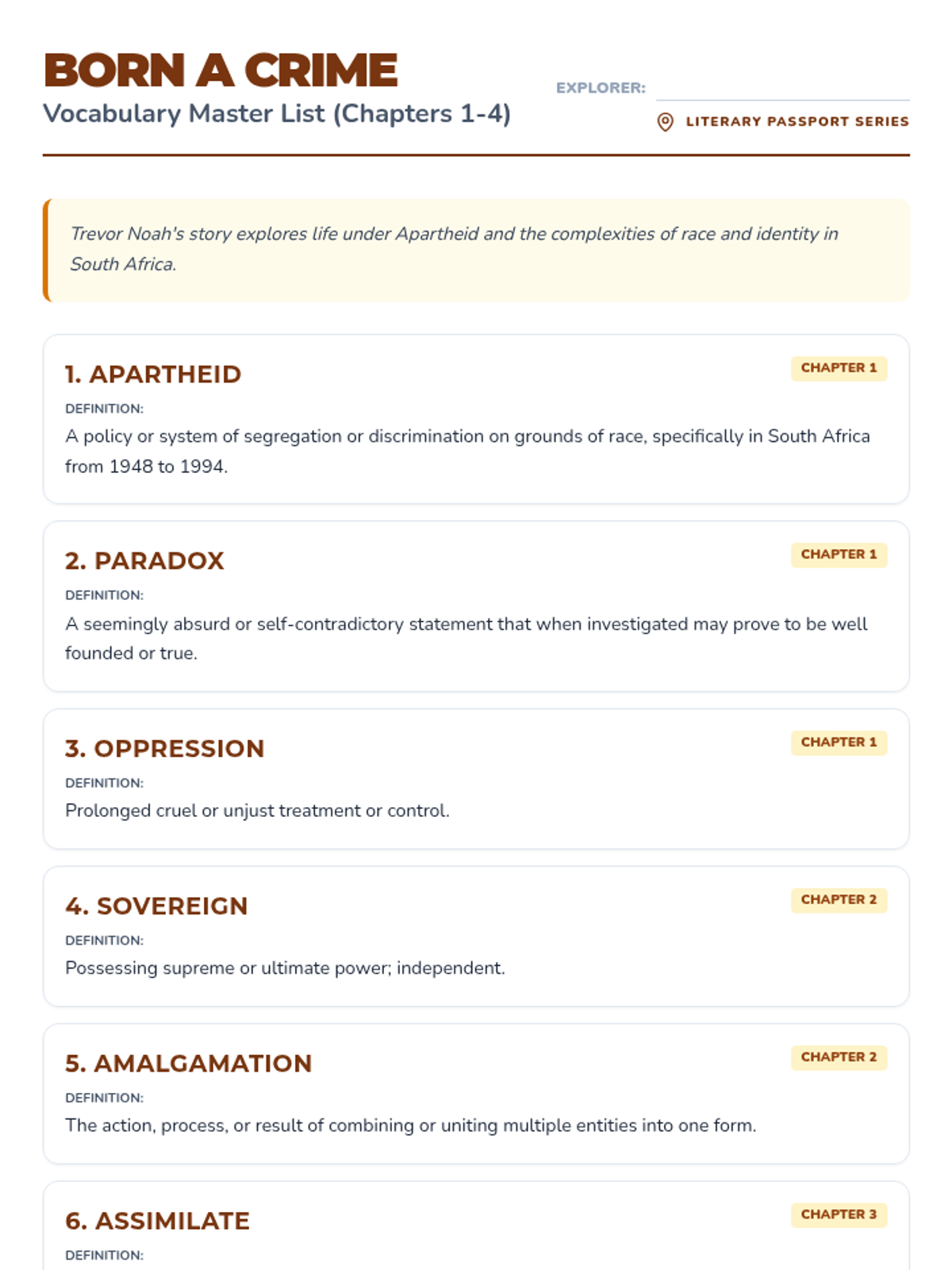
A vocabulary list for the first four chapters of Born a Crime by Trevor Noah. Key terms include apartheid, paradox, and sovereign, with a focus on South African history and identity.
A structured vocabulary list and brief student practice for the first four chapters of Red Scarf Girl. The material features definitions for key terms like bourgeois, da-zi-bao, and reactionary.
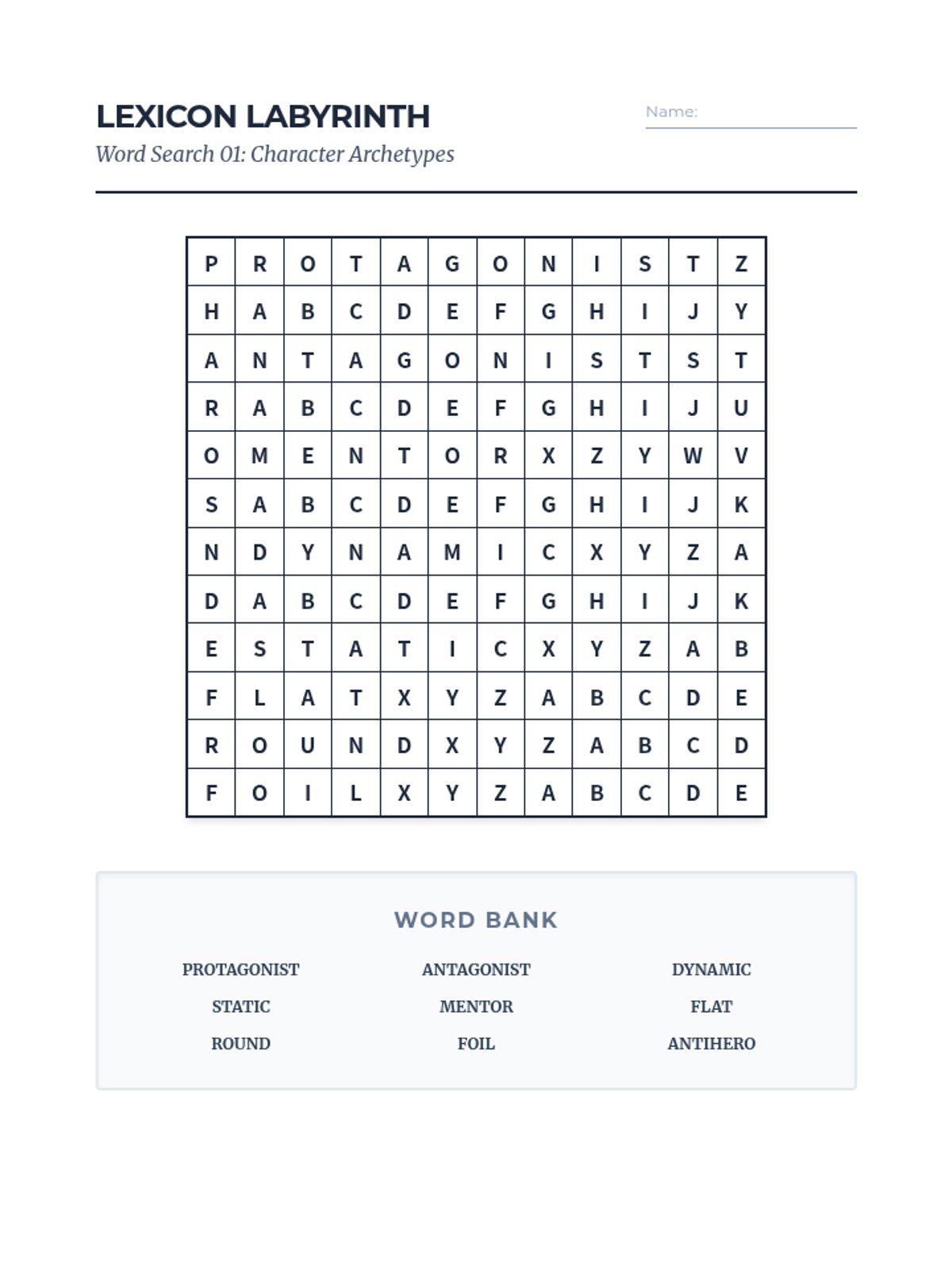
A comprehensive set of 8 unique word search puzzles focused on ELA academic terms, including character archetypes, literary genres, parts of speech, and more. Designed for print with clear layouts and student headers on every page.