A set of prompt cards for 1st-grade students to use in the Global Clock Chat lesson. Each card features two locations with different times and a sentence starter to encourage elaboration.
Instructional slides explaining the concept of theme, the difference between plot and theme, and setting up the student investigation activity.
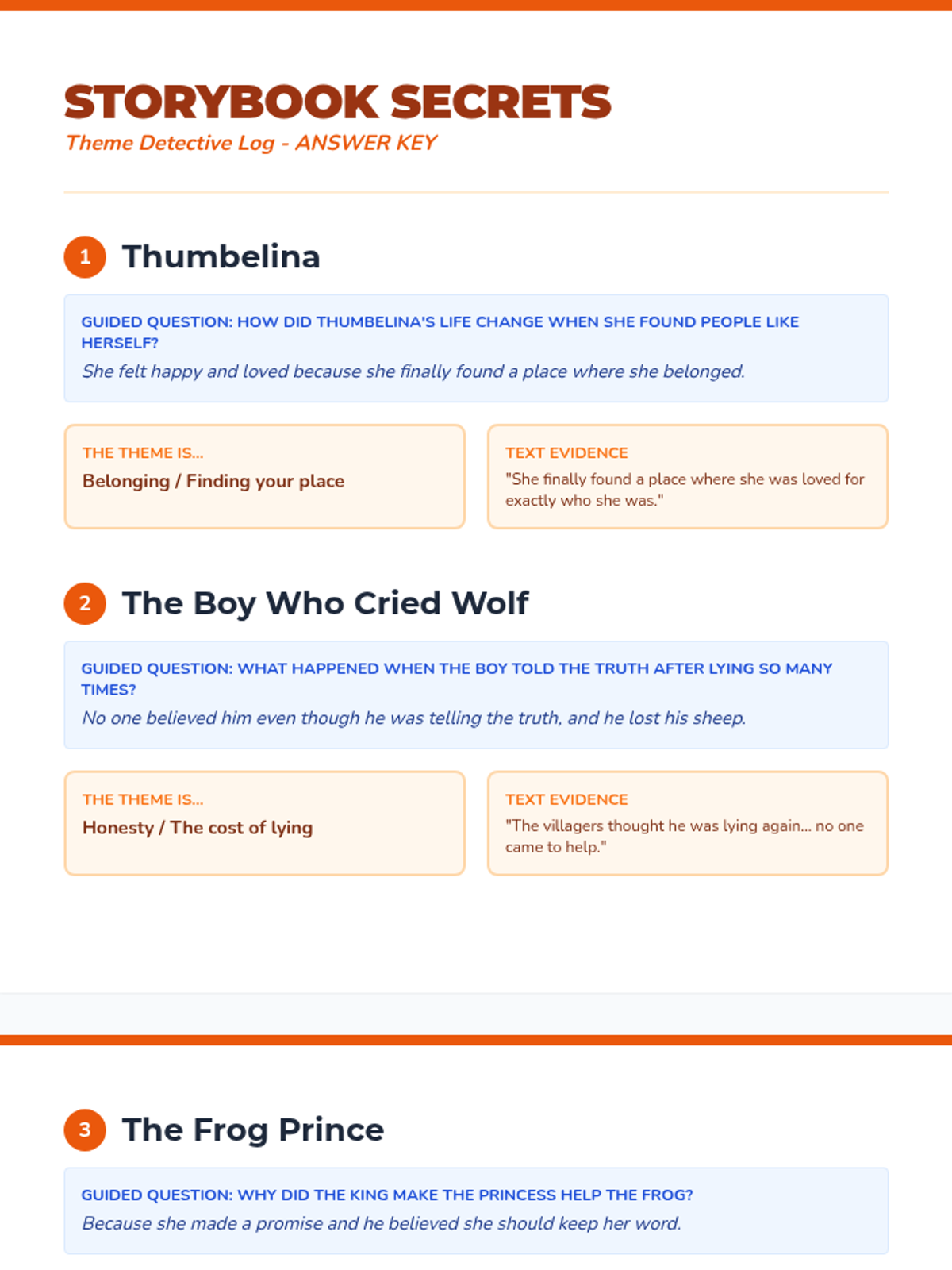
Teacher answer key for the Storybook Secrets worksheet, providing sample answers for themes and text evidence.
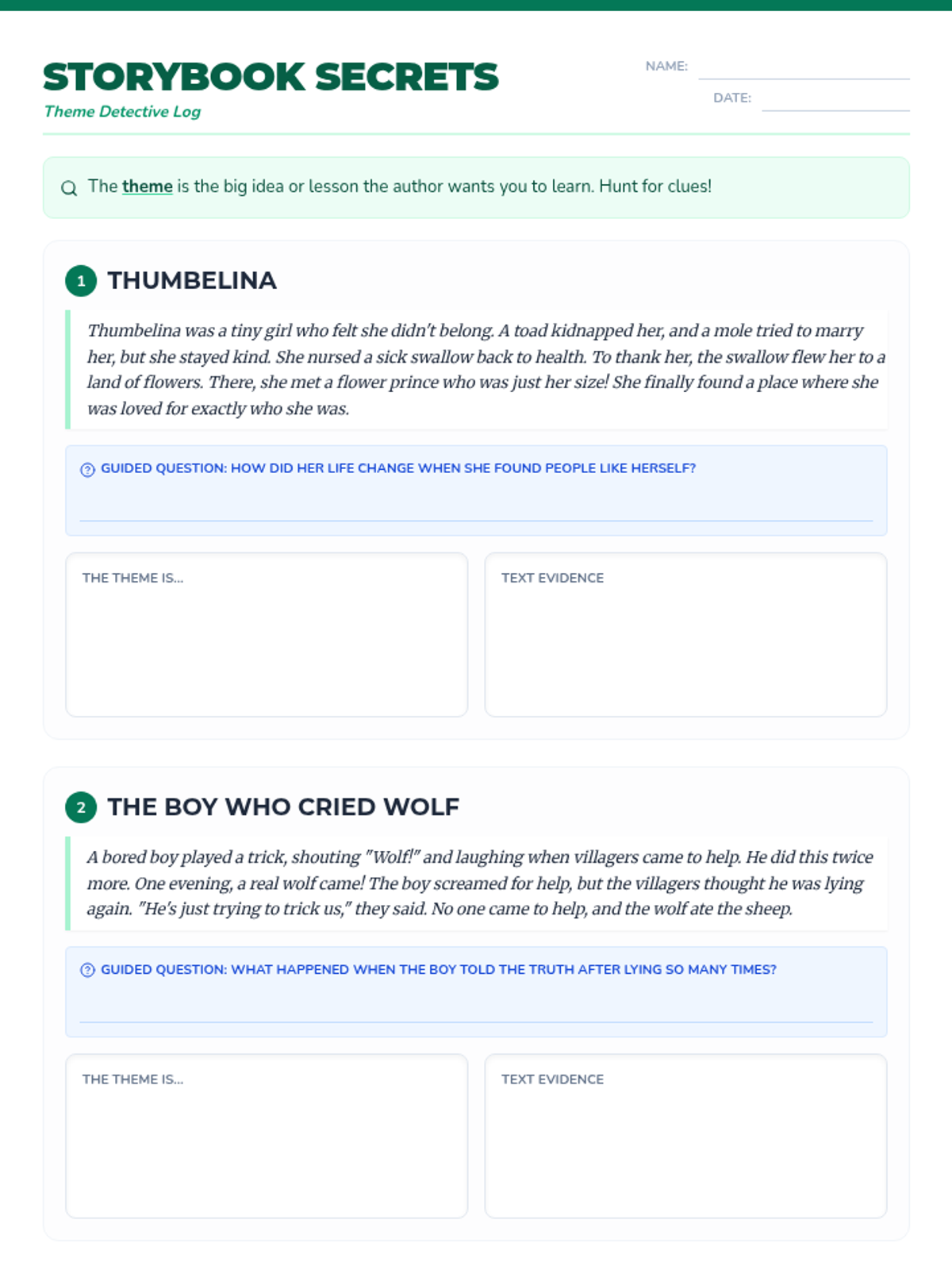
A two-page worksheet where students read four classic fairy tales and identify their themes using guided questions and text evidence. Spacing optimized for clear student work areas.
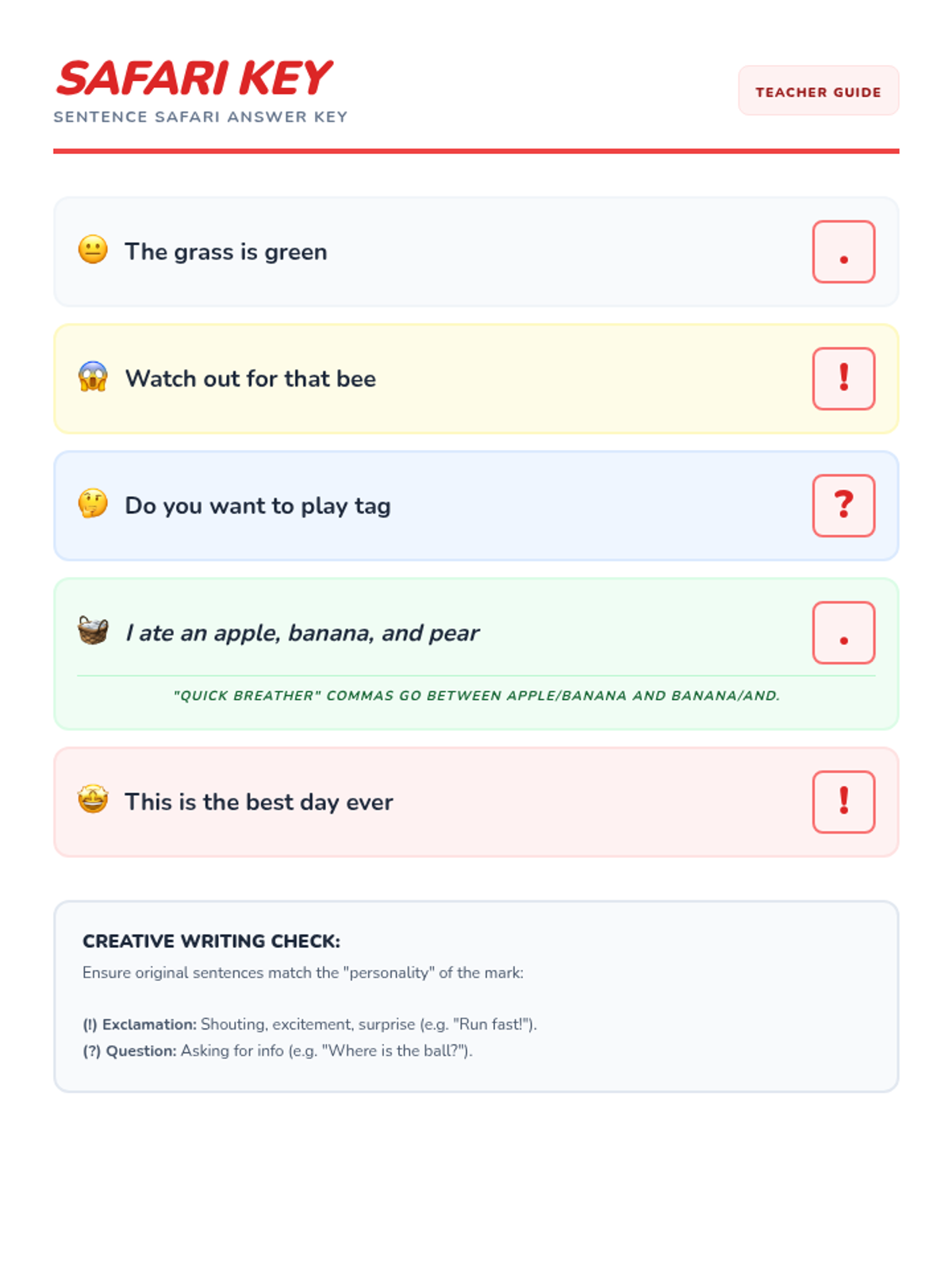
Teacher answer key for the Sentence Safari worksheet, providing correct punctuation placement for student activities.
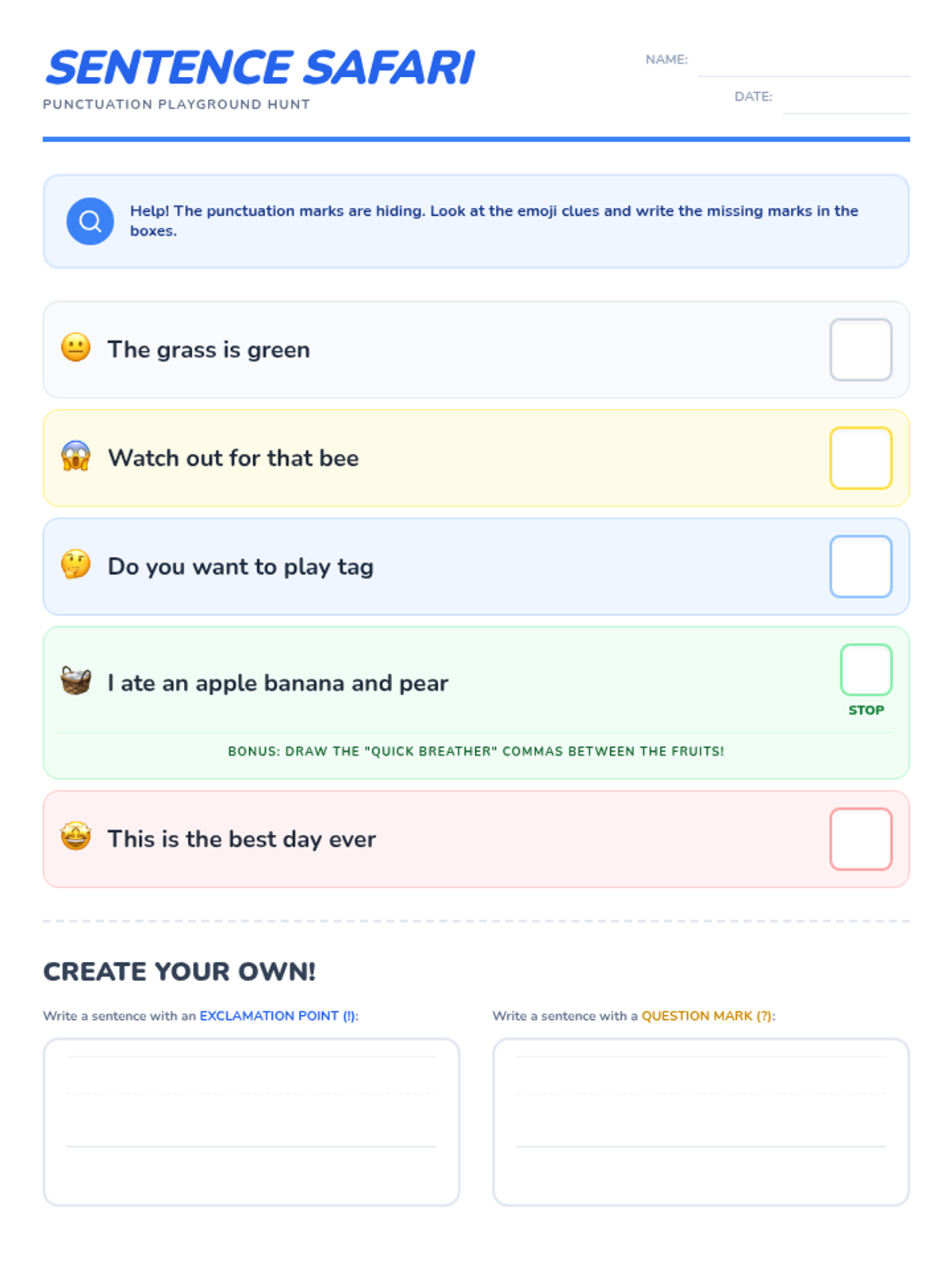
A student worksheet titled 'Sentence Safari' where children identify and apply punctuation marks based on emotional cues (emojis) and practice creative writing with specific ending marks.
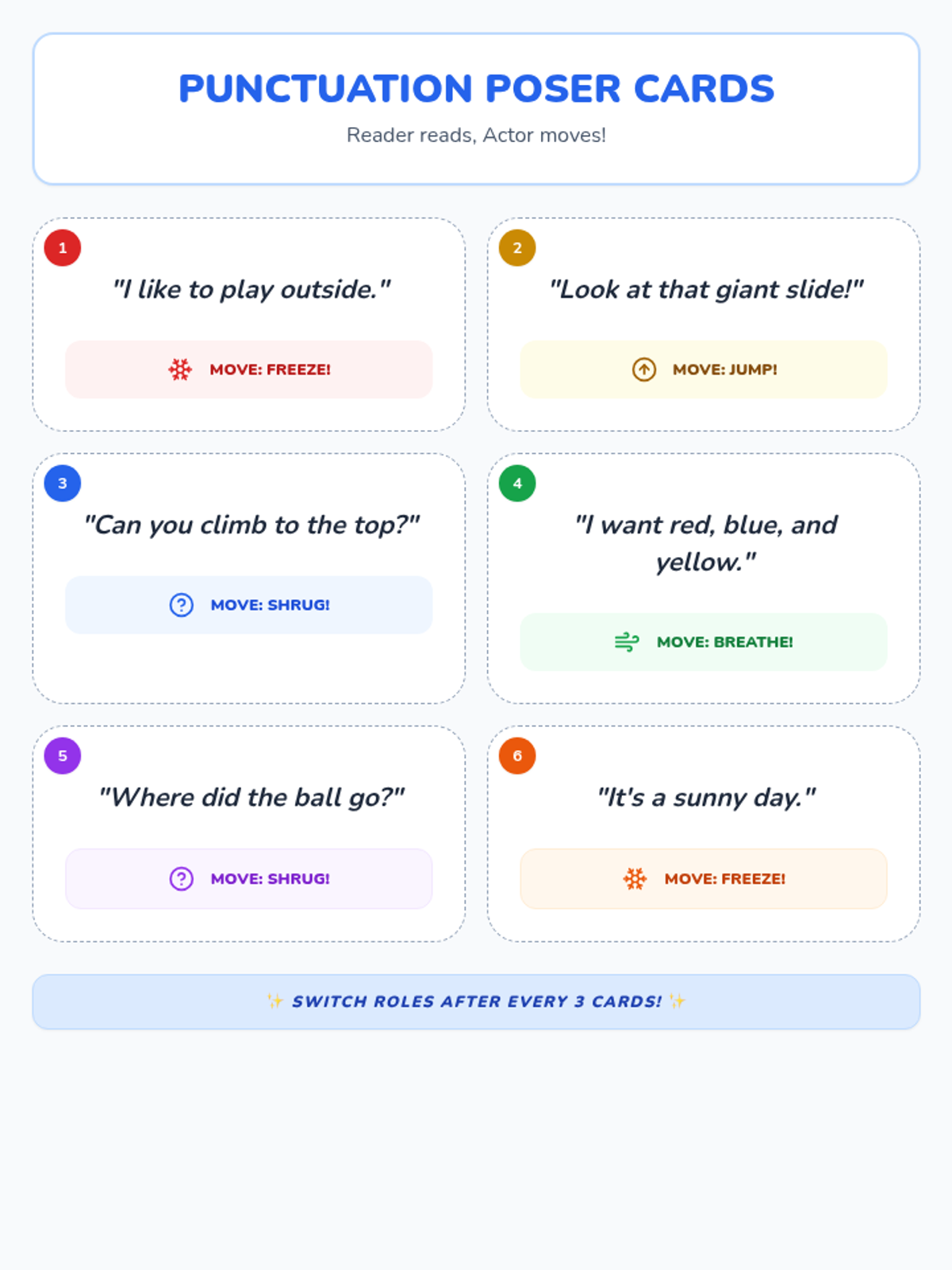
Printable task cards for a kinesthetic punctuation activity. Each card features a sentence and a specific physical movement tied to a punctuation mark to reinforce syntax and meaning.
A visually engaging slide deck introducing the 'personalities' of punctuation marks through character-based slides and movement-based practice exercises for young learners.
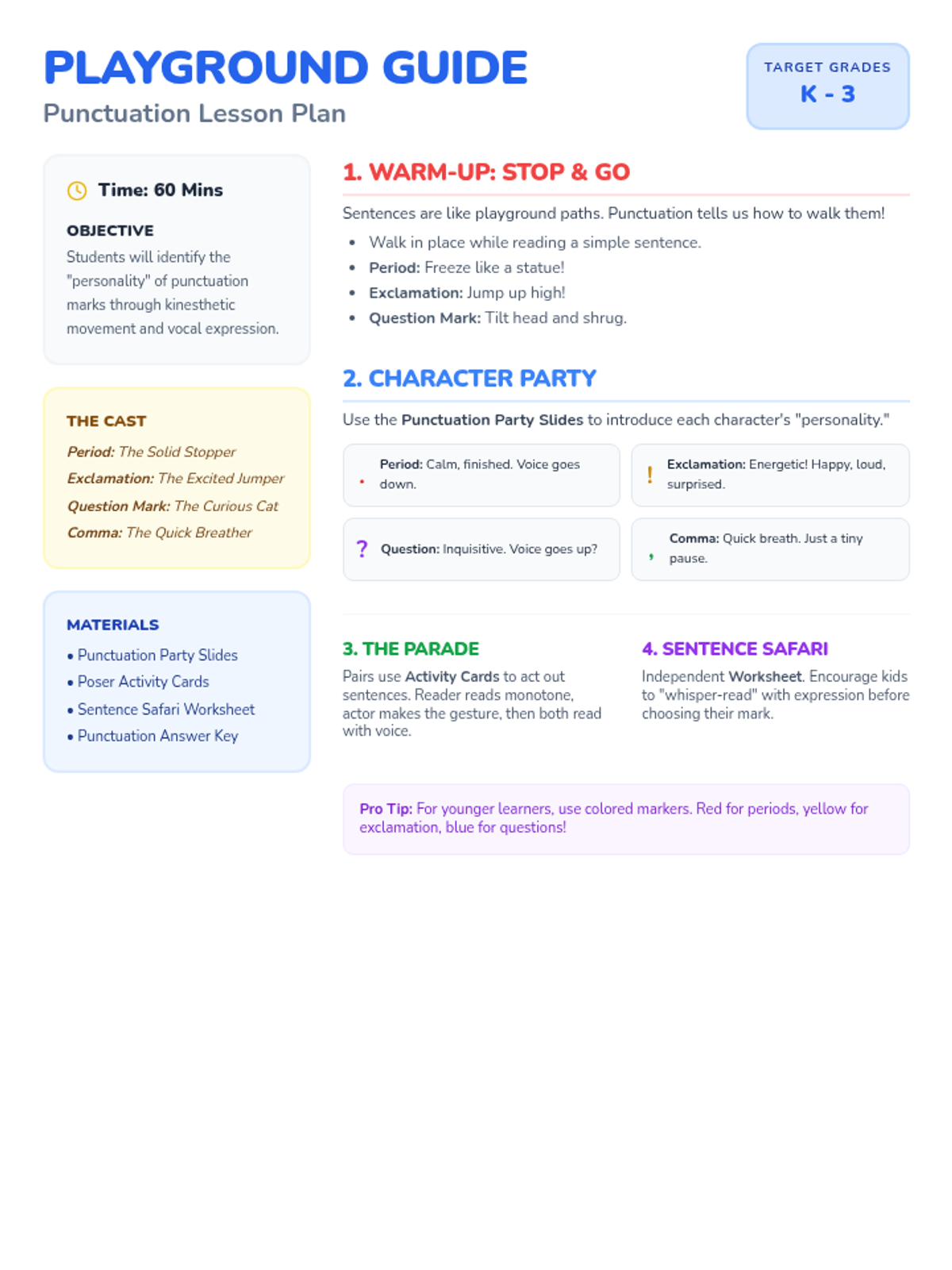
A comprehensive teacher's guide for the Punctuation Playground lesson, featuring a movement-based procedure, character-driven explanations, and instructional tips for K-3 learners.
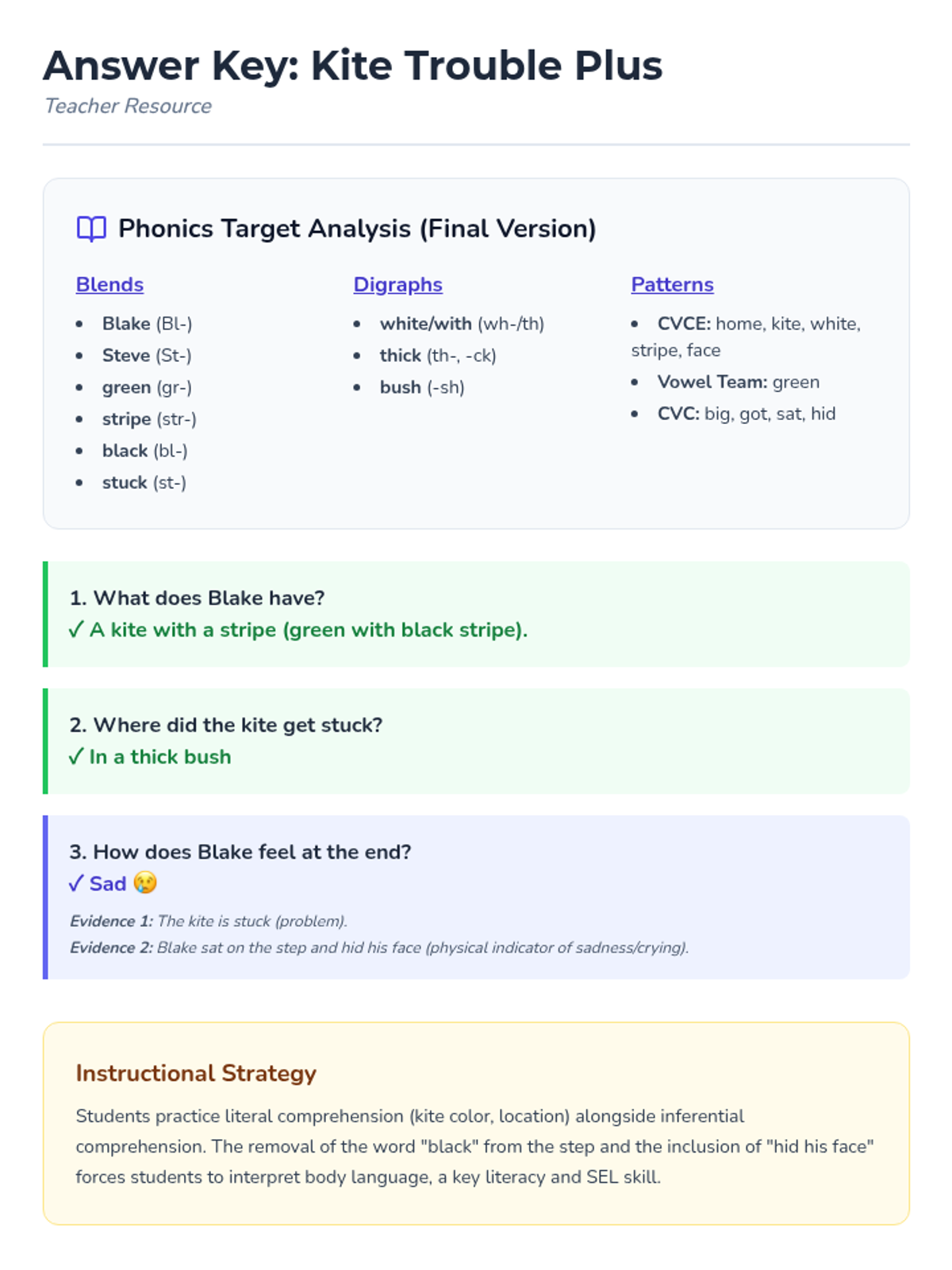
An advanced slide deck featuring a decodable paragraph focused on a kite story. It emphasizes blends and digraphs while guiding students through inferring character feelings based on situational and behavioral clues.
An answer key for the advanced Kite Trouble worksheet, providing phonics analysis for a decodable paragraph and evidence-based rationale for character feeling inferences.
An engaging slide deck designed to introduce Kindergarten students to CVC and CVCE patterns. It features a specific focus on the "Magic E" rule and prepares students to infer character feelings in the accompanying worksheet story.
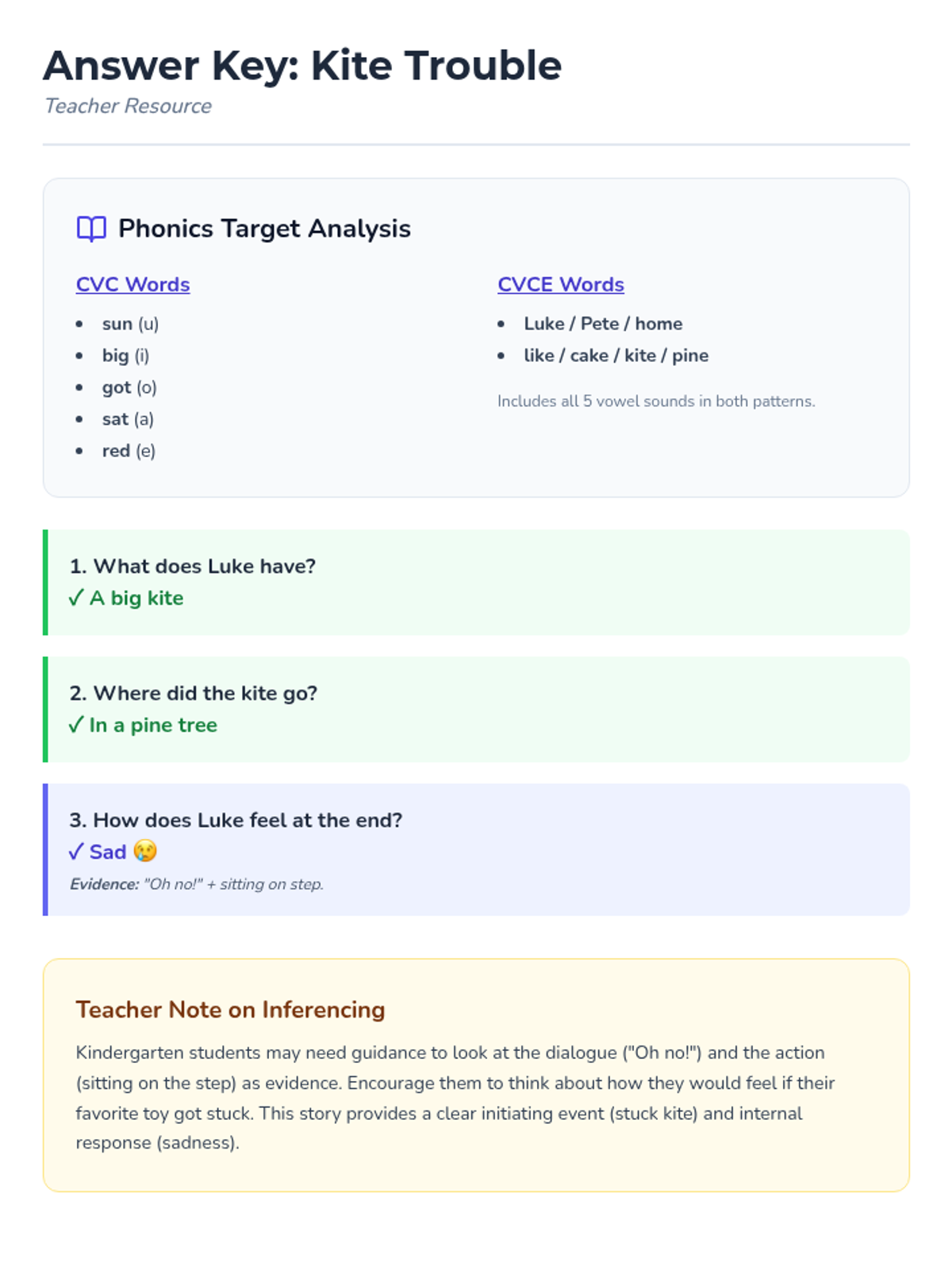
An answer key for the Kite Trouble worksheet, including a breakdown of the CVC and CVCE words used in the text and teacher notes on guiding students through the inferencing process.
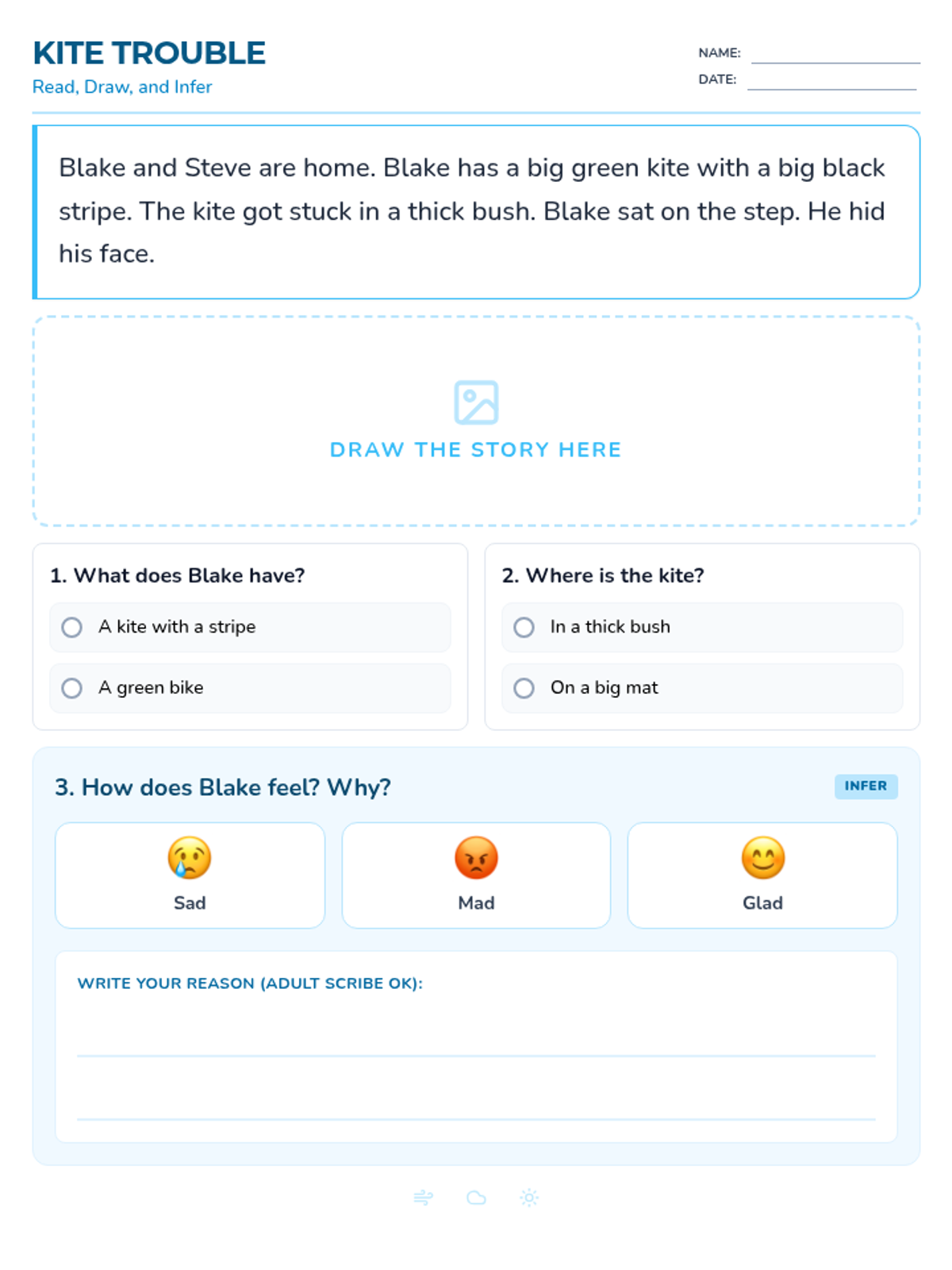
A student worksheet featuring a decodable paragraph focused on a kite story with blends and digraphs. It excludes explicit feeling words to encourage character inference and includes an illustration space and comprehension questions.
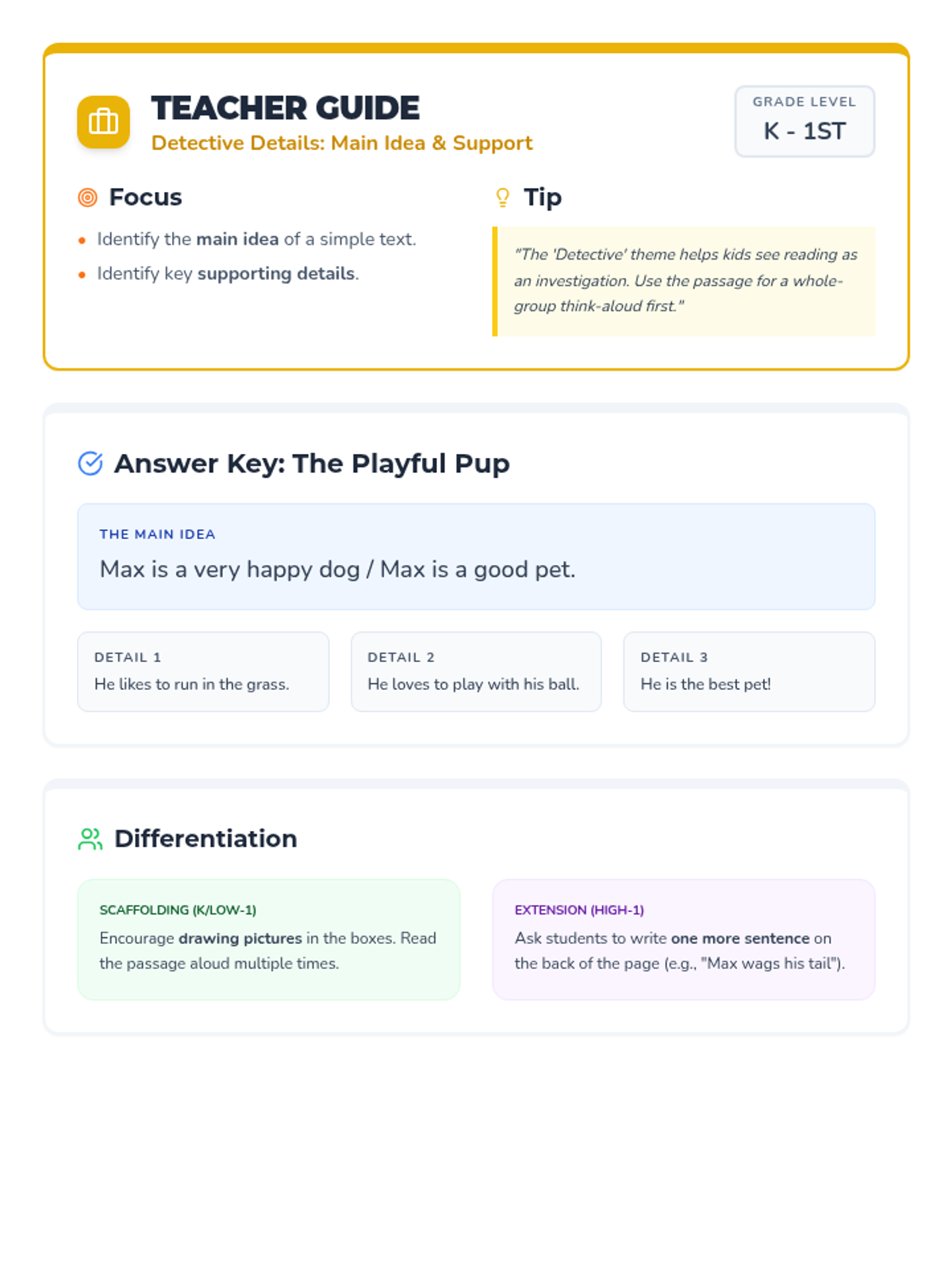
A professional teacher's guide and answer key for the 'Story Detective' lesson, providing instructional focus, facilitation tips, and differentiation strategies for K-1 literacy.
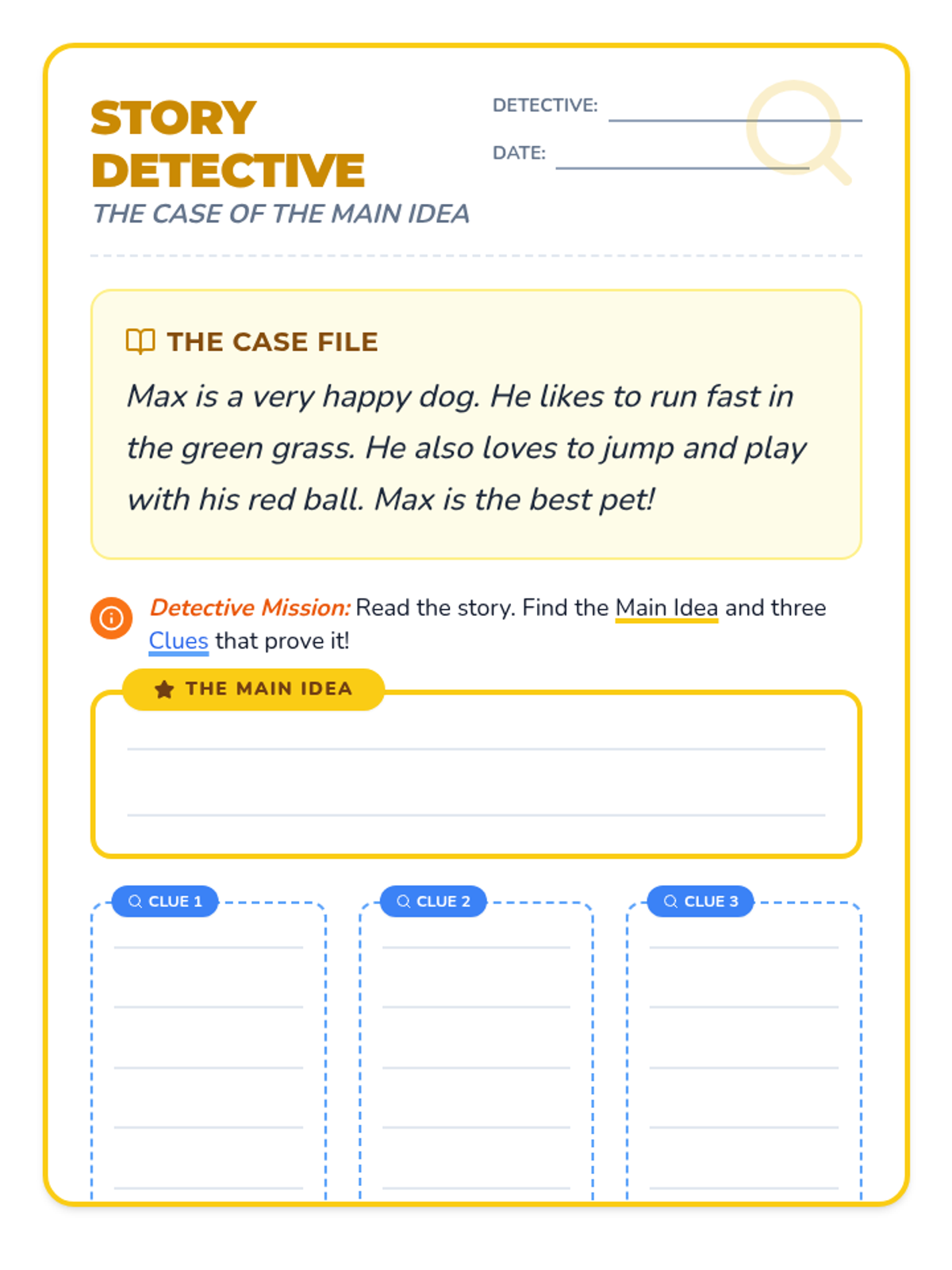
A friendly, 'Story Detective' themed graphic organizer for K-1 students to practice identifying the main idea and supporting details of a short, provided passage.
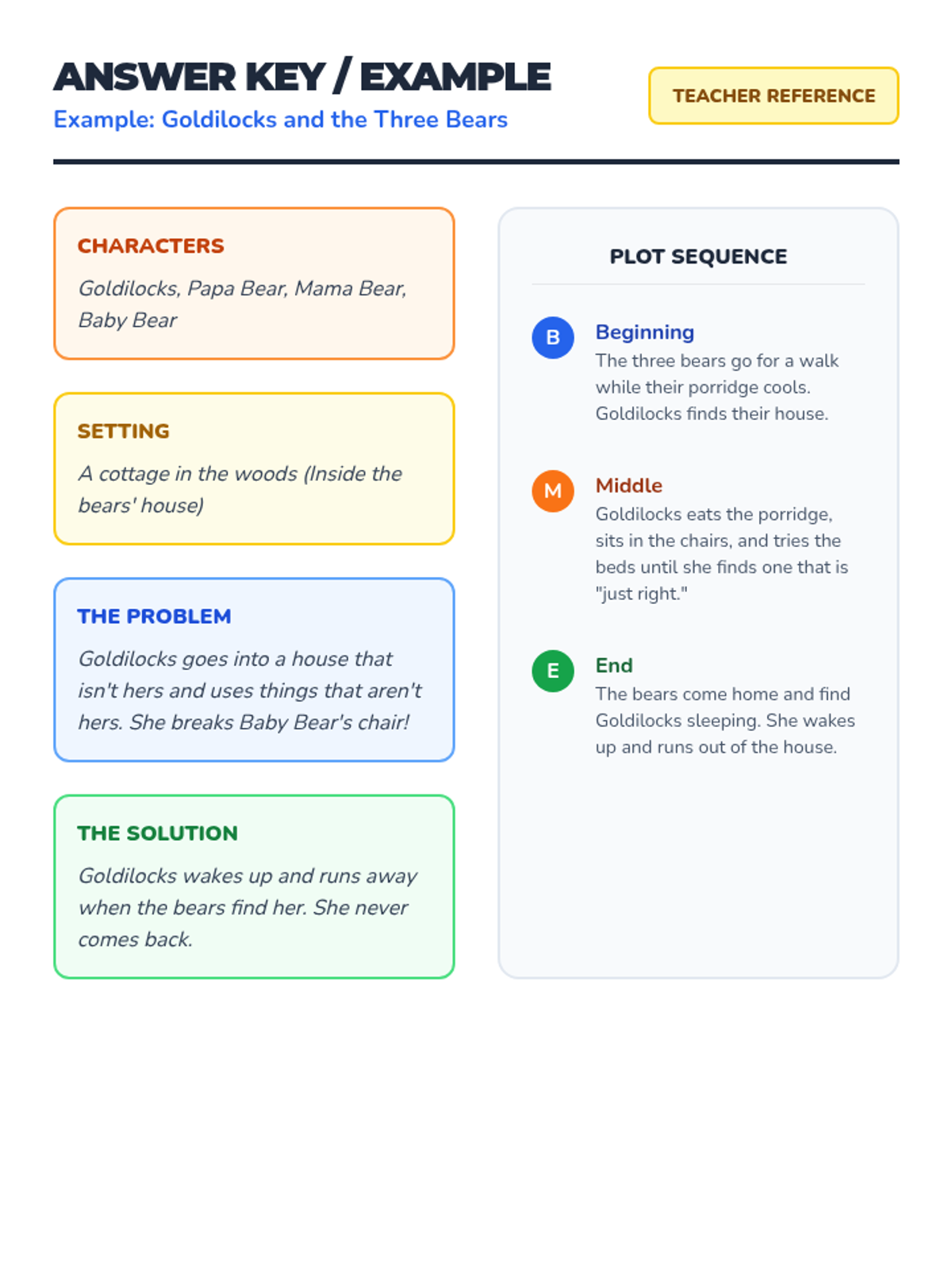
An example reference sheet for teachers showing how to fill out the graphic organizers using the classic story of Goldilocks and the Three Bears.
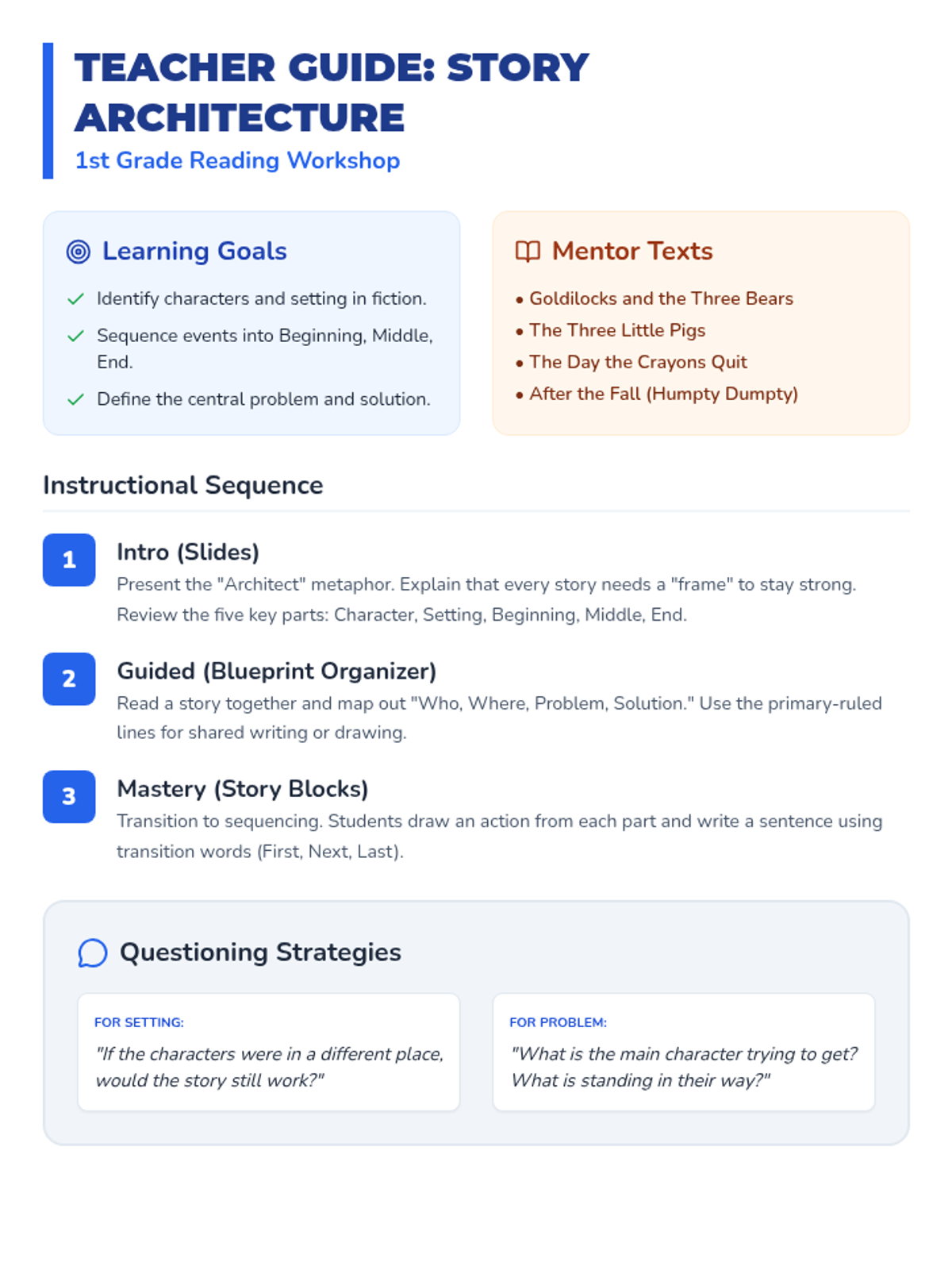
A detailed one-page instructional guide for teachers explaining how to use the Story Architecture materials, including learning objectives and scaffolding tips.
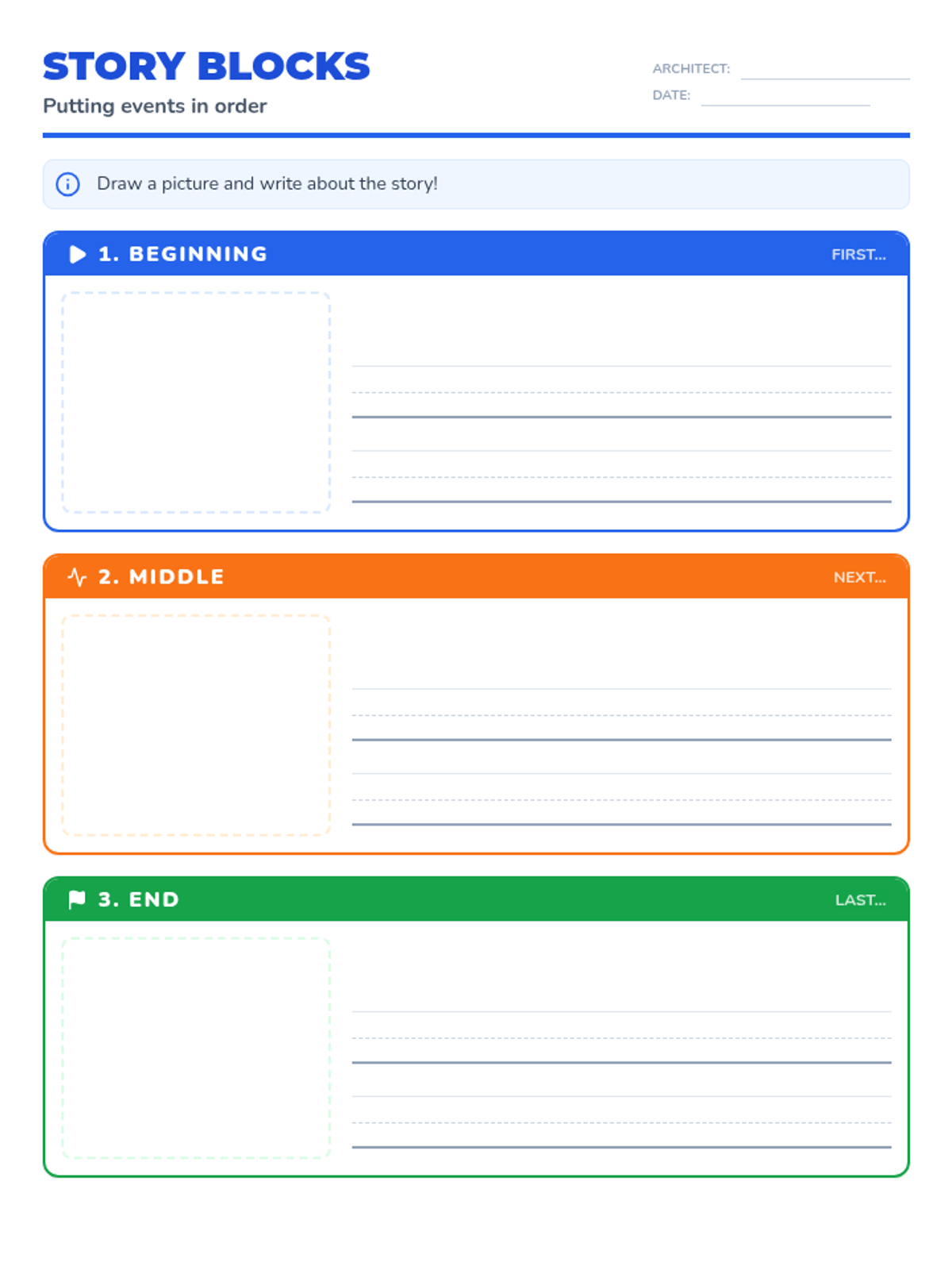
A sequential graphic organizer for 1st graders focusing on plot order (Beginning, Middle, End) with drawing boxes and primary-ruled lines for sentence writing, all on one page.
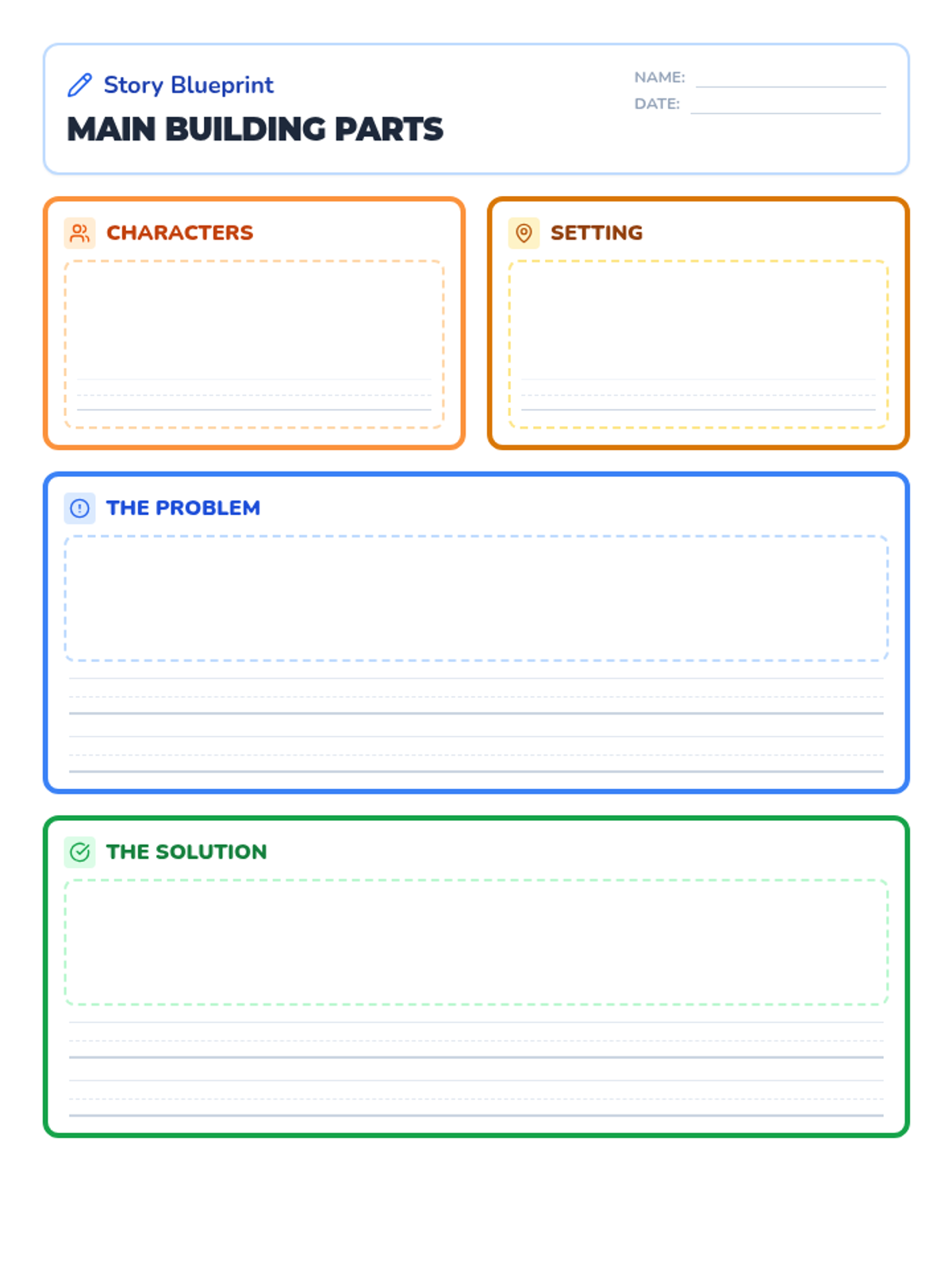
A guided graphic organizer for 1st graders to identify the four main components of a story: characters, setting, problem, and solution, featuring large work areas for drawing and primary-ruled writing lines.
An engaging introductory slide deck for 1st graders using a "Story Architect" theme to explain the components of story structure including characters, setting, and plot stages.
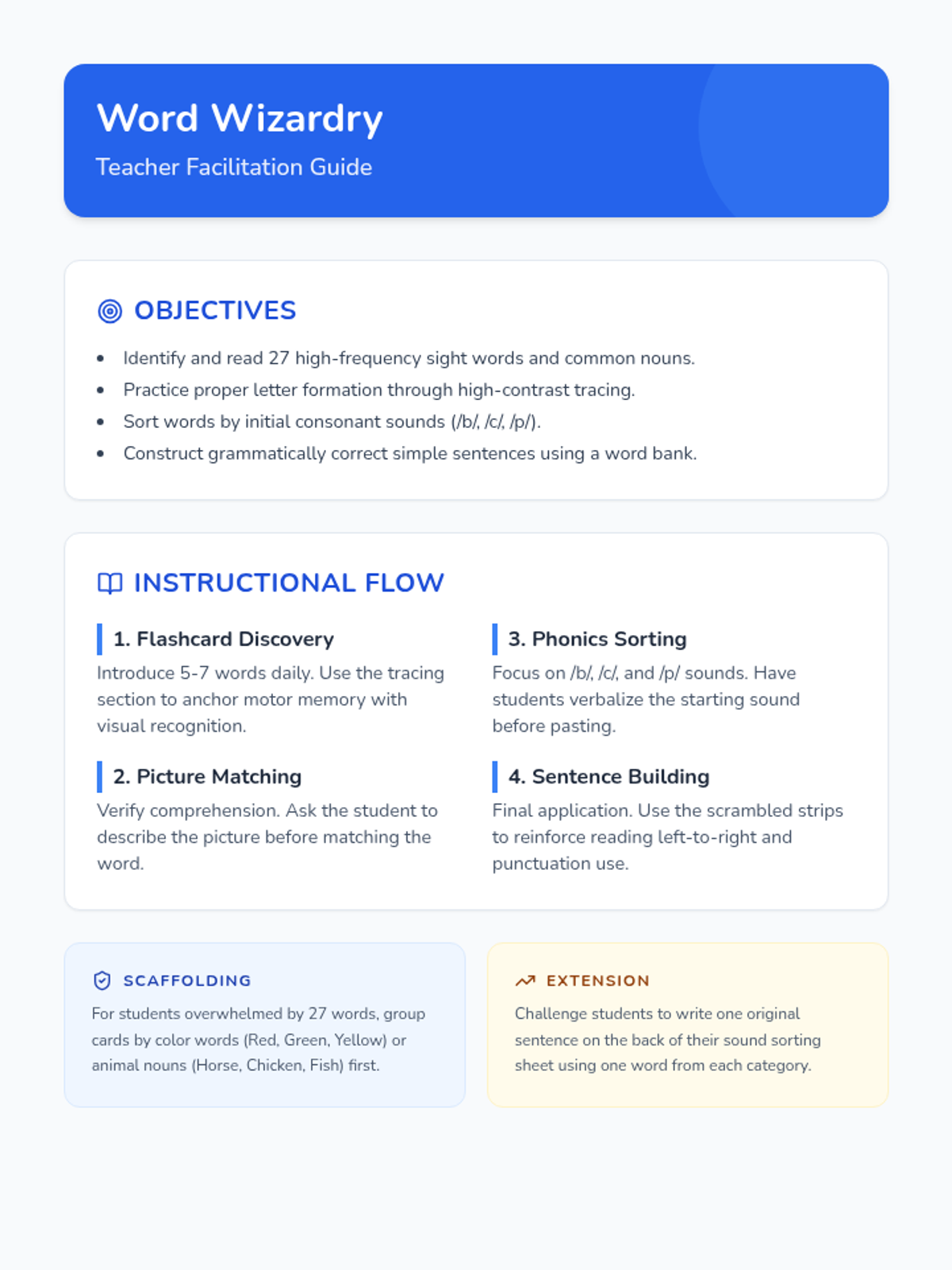
A condensed teacher guide for the Word Wizardry lesson set, featuring improved instructional flow and clear differentiation strategies.
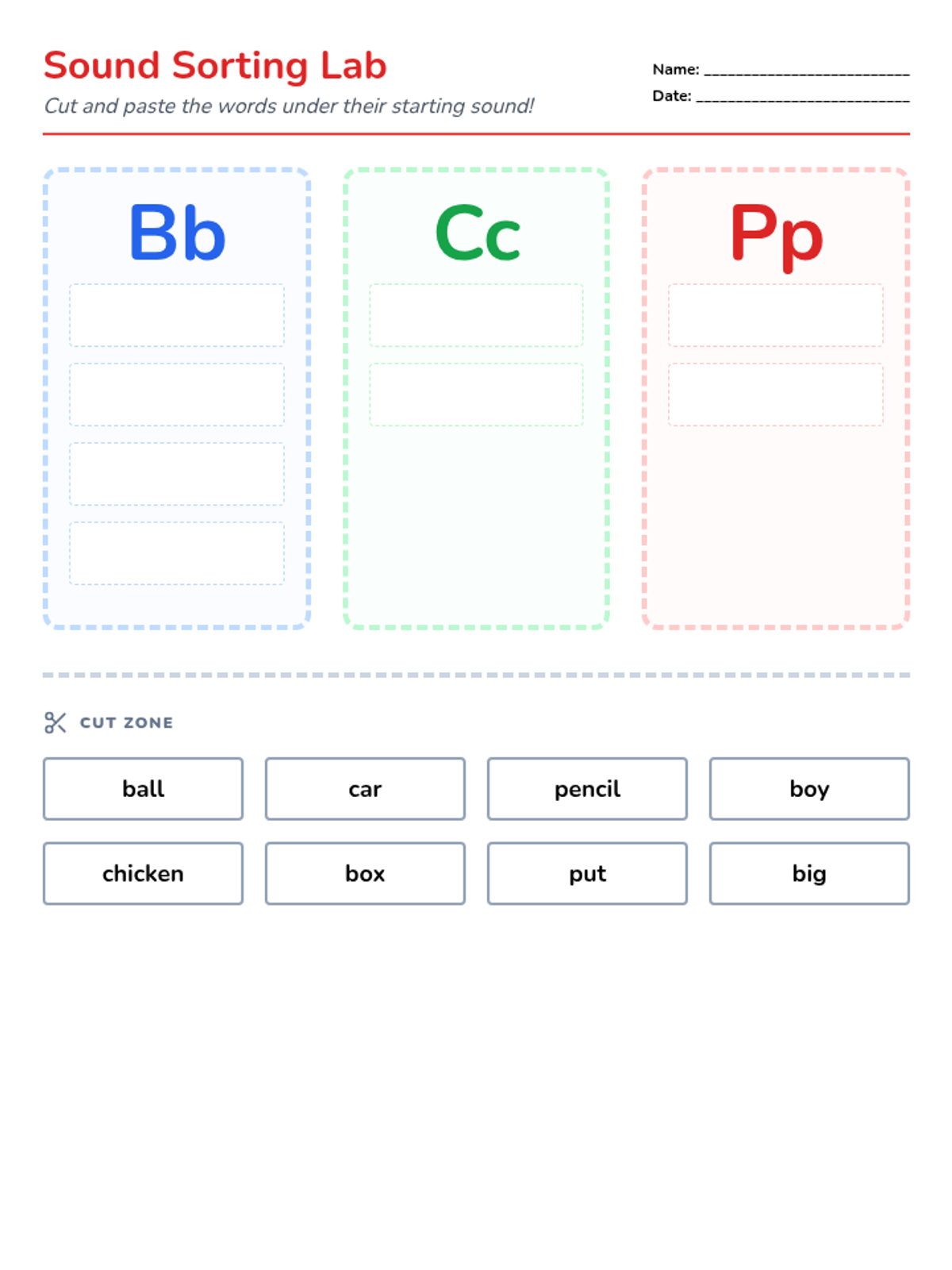
A cut-and-paste initial sound sorting activity. The answer key has been removed from the columns to preserve the challenge.
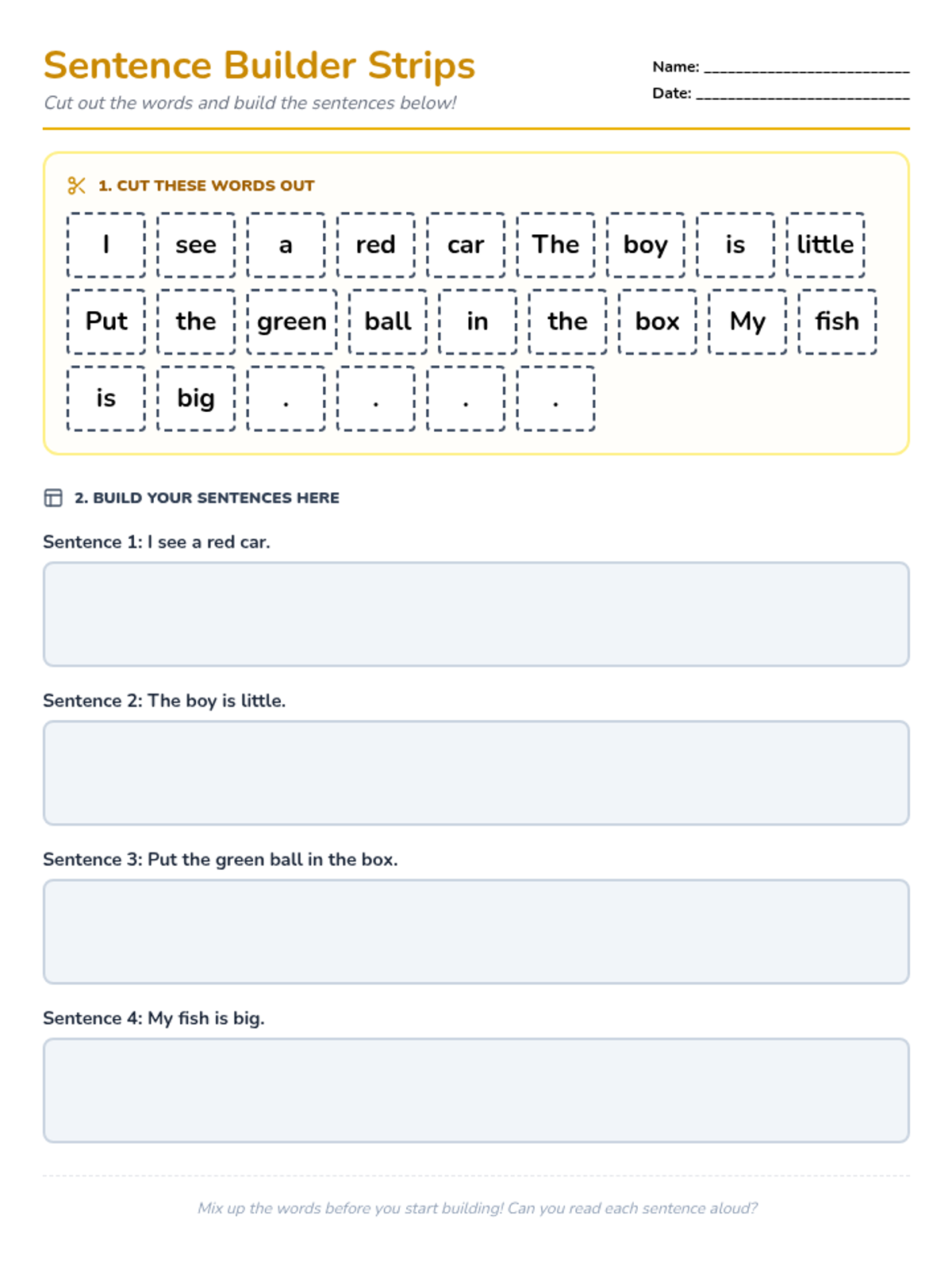
Printable strips featuring scrambled sentences using the target vocabulary, now with wrapping text and more sentence variations. Includes a dedicated glue zone for sentence construction.
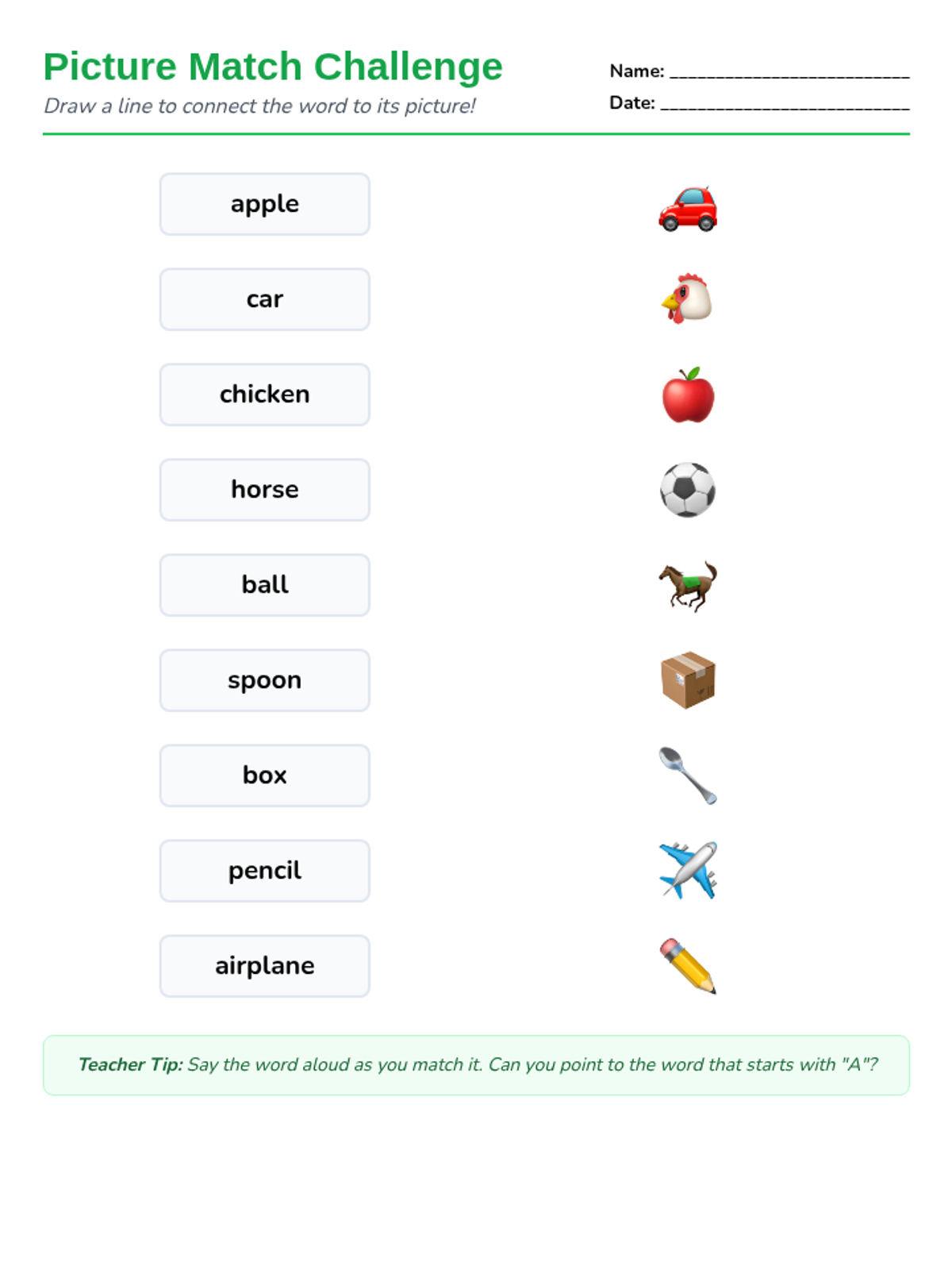
A matching worksheet where students connect sight words to their corresponding pictorial representations, optimized to fit a single page.