Teacher answer key for the 'Ghost Peaks' assessment with standard alignments and brief explanations for correct answers.
A visual presentation for teaching Chapters 14 and 15 of *The Watsons Go to Birmingham—1963*, focusing on sensory analysis, character motivation, and the R.A.C.E. strategy.
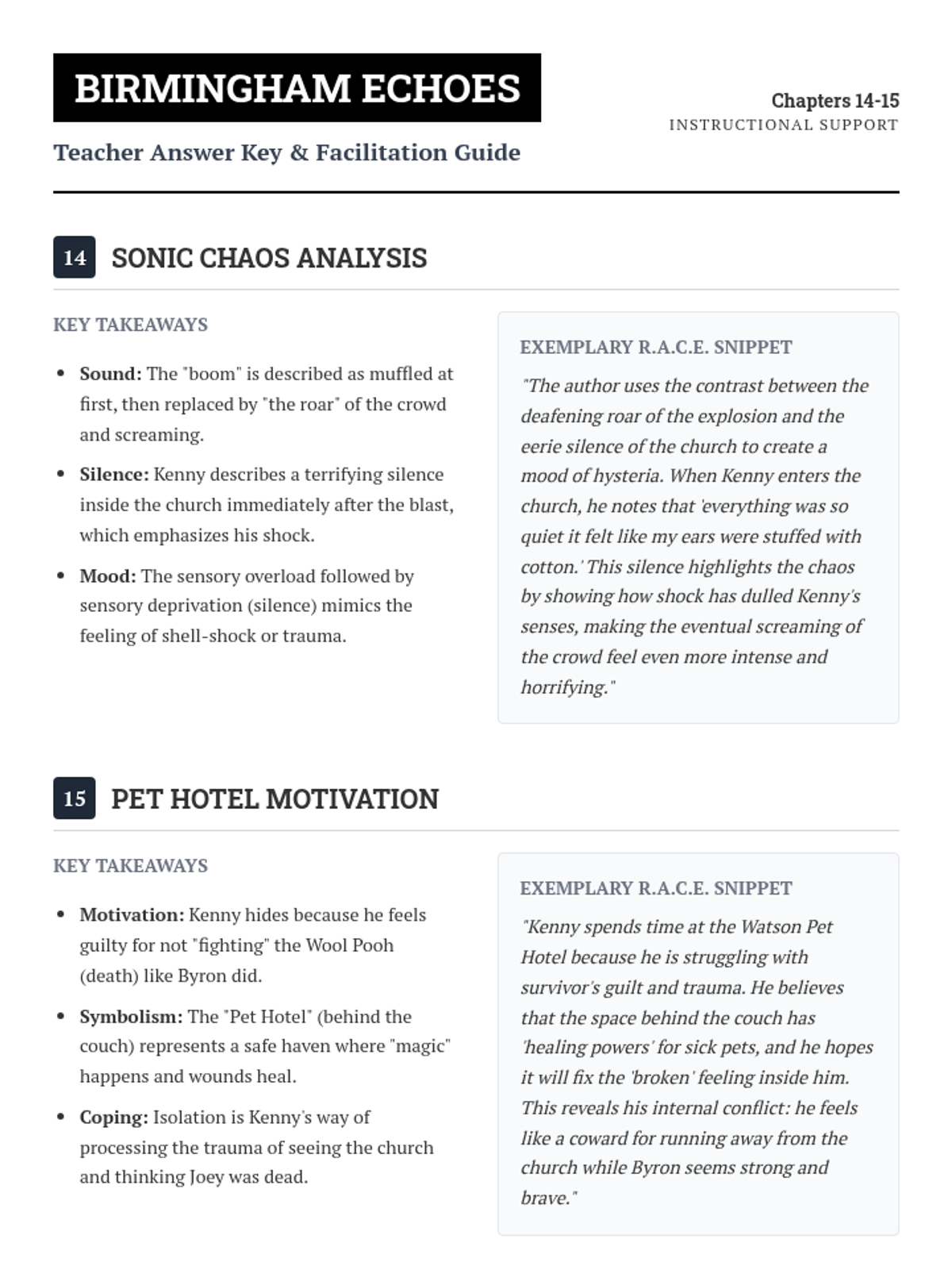
A teacher's answer key and guide for the Chapter 14 and 15 analysis of *The Watsons Go to Birmingham—1963*, featuring exemplary R.A.C.E. responses and discussion prompts.
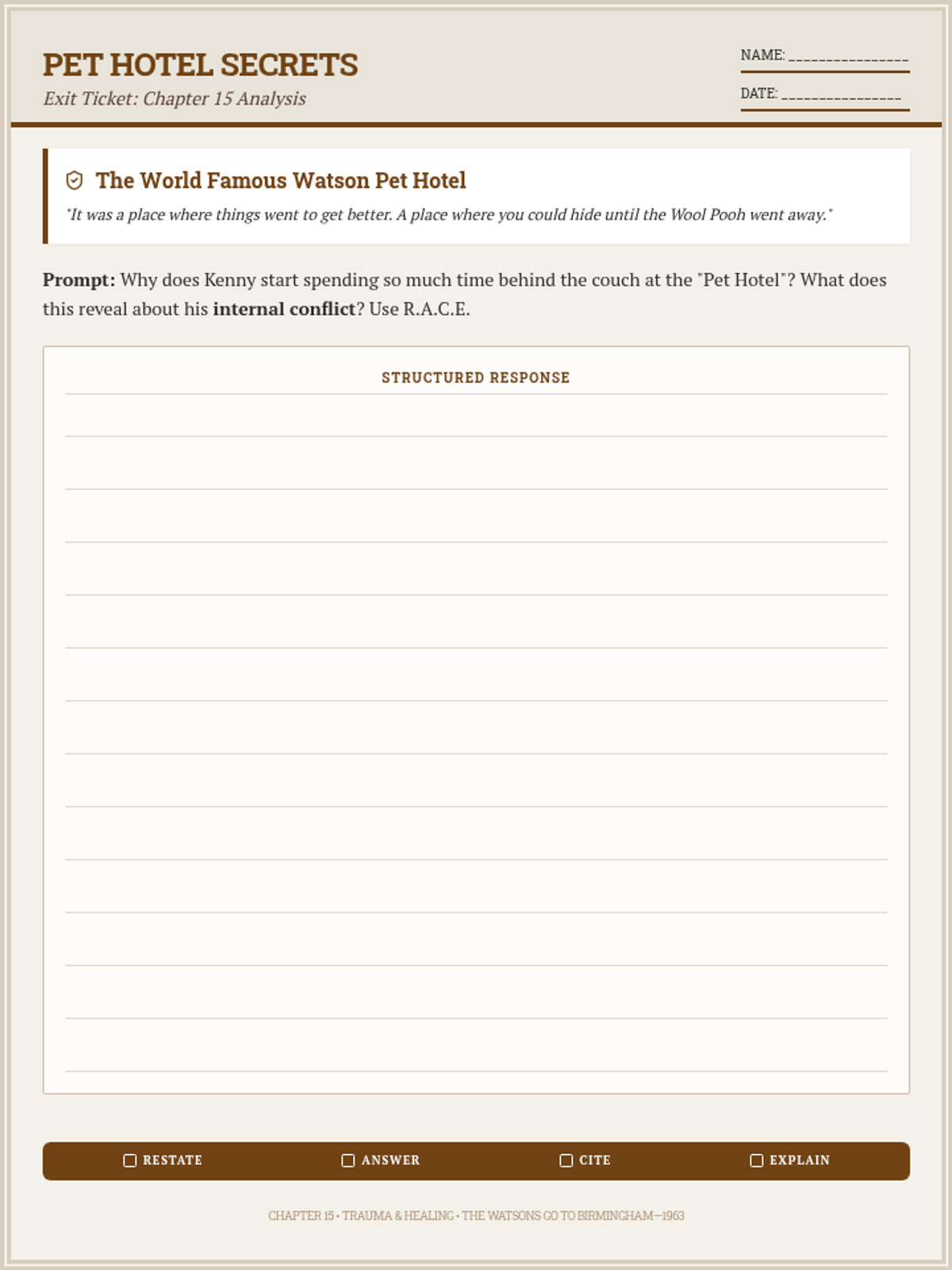
An exit ticket for Chapter 15 of *The Watsons Go to Birmingham—1963*, requiring students to explain Kenny's motivation for hiding in the Pet Hotel using the R.A.C.E. strategy.
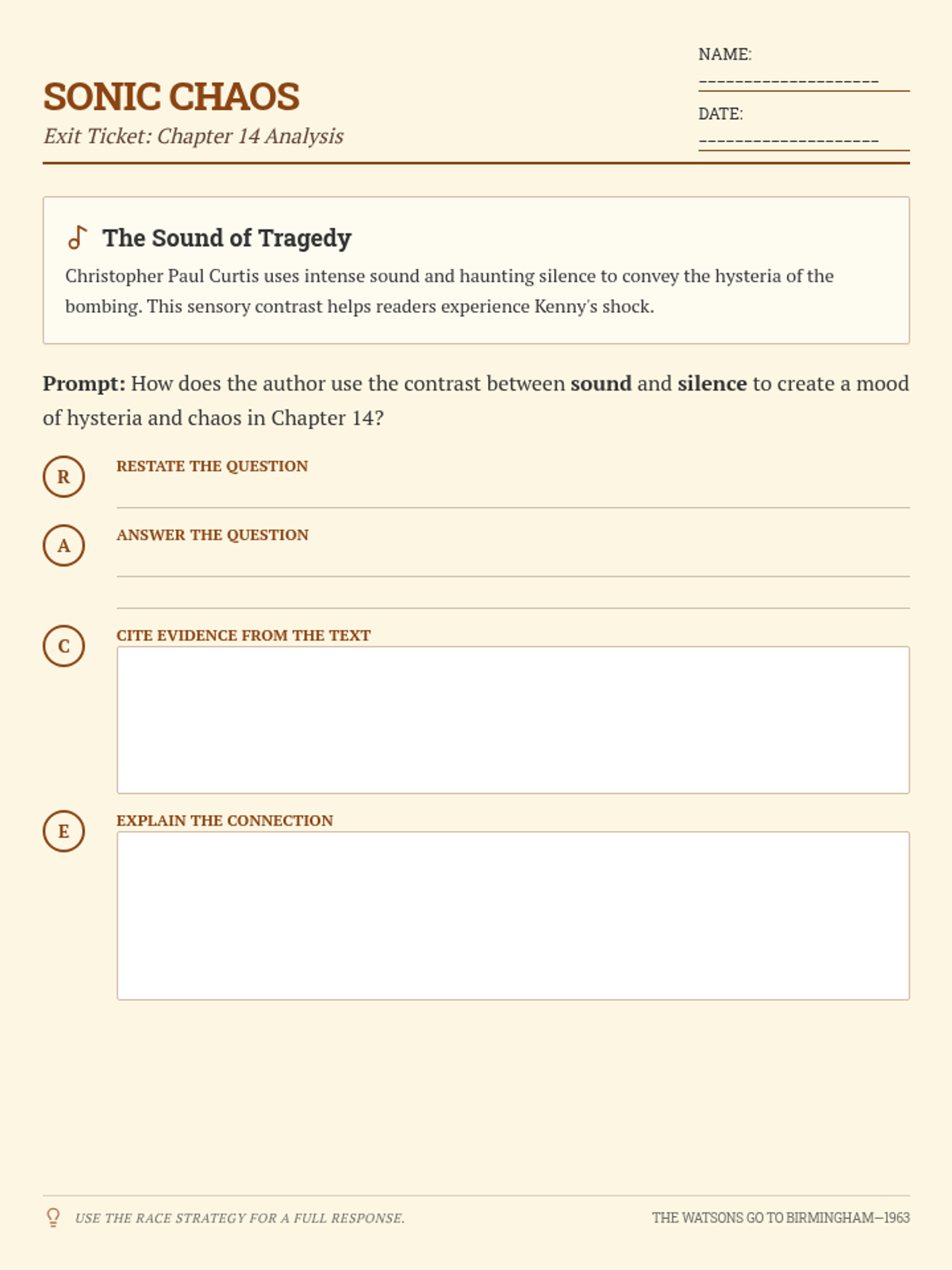
An exit ticket for Chapter 14 of *The Watsons Go to Birmingham—1963*, prompting students to analyze the use of sound and silence to create mood using the R.A.C.E. strategy.
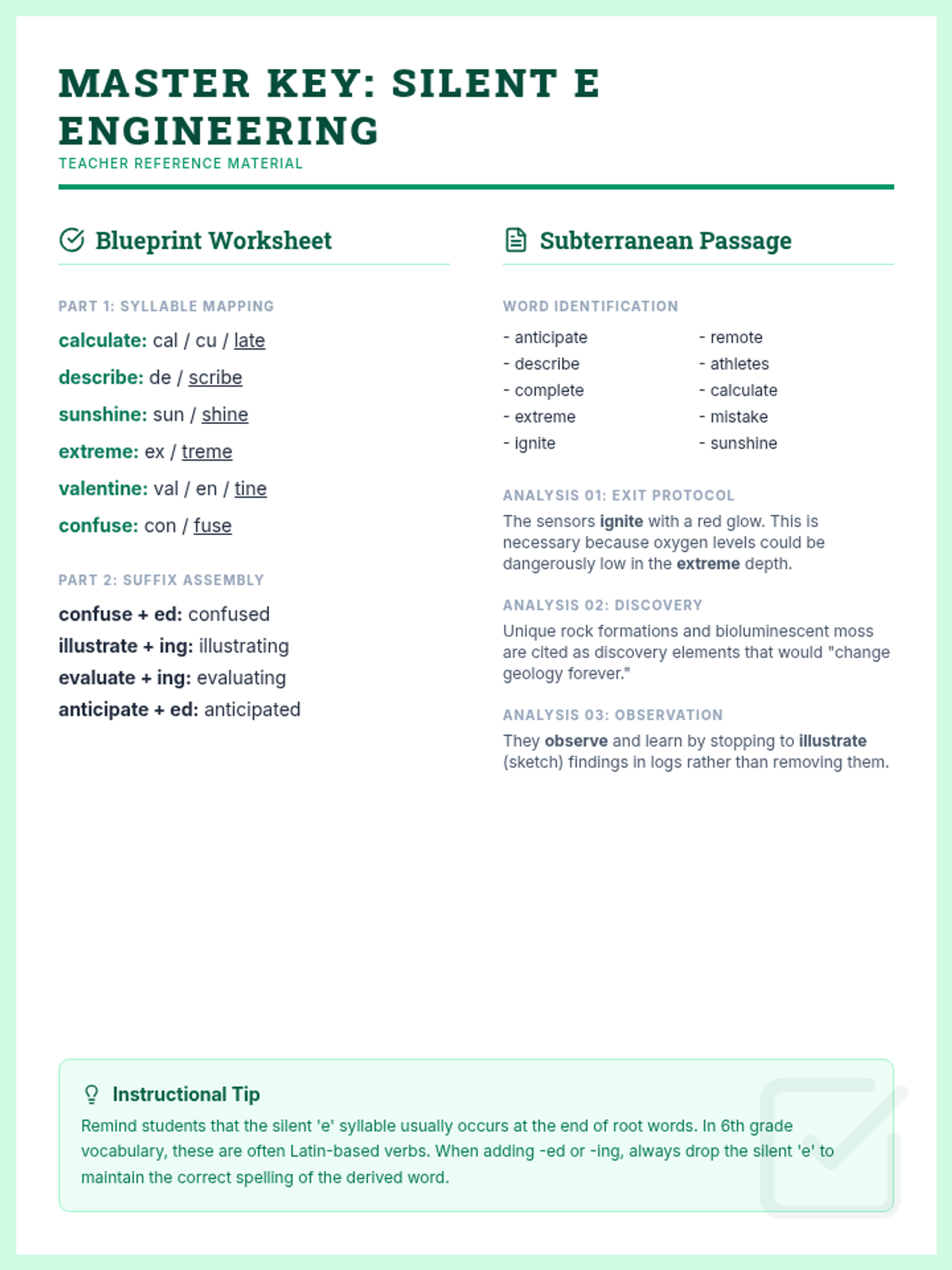
A comprehensive answer key for both the Vowel Power Blueprint Worksheet and the Subterranean Secret Passage, including syllable breakdowns and instructional tips. Optimized for a single-page layout.
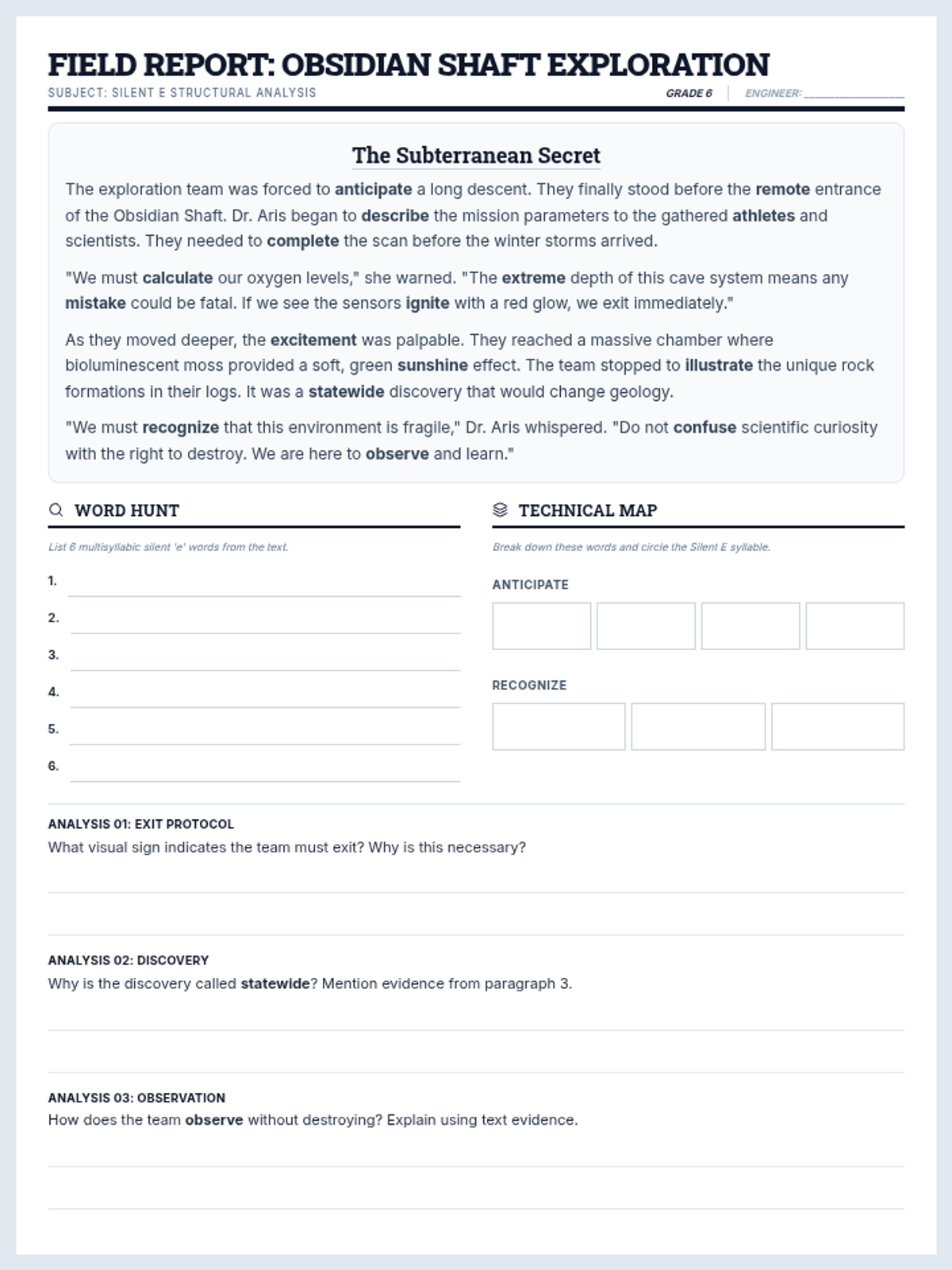
A narrative reading passage set in a mysterious cave system, embedded with high-frequency 6th-grade multisyllabic silent 'e' words. Includes syllable mapping and text-based comprehension questions. Optimized for a single-page layout.
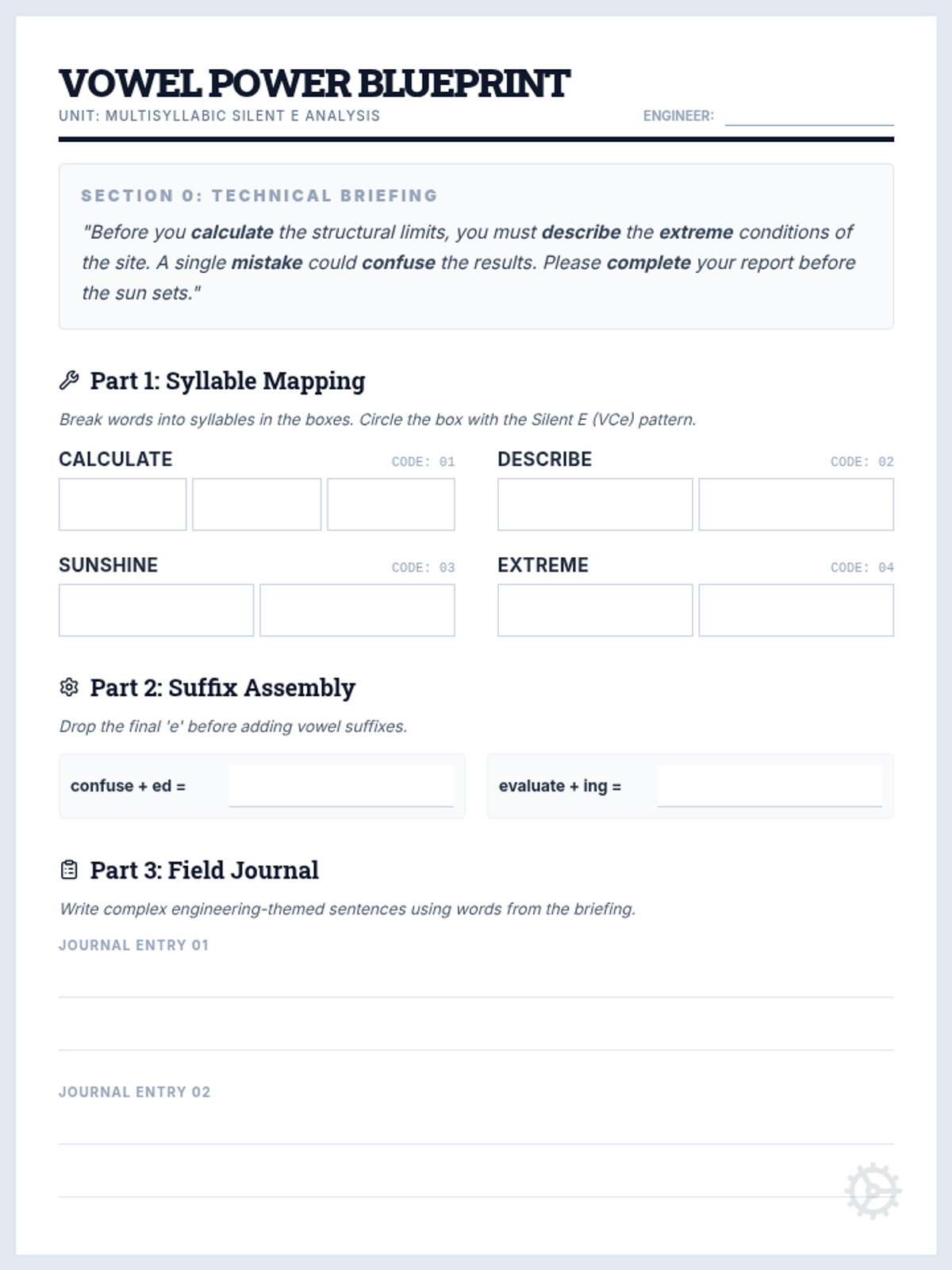
A structural analysis worksheet where students dismantle multisyllabic words into syllables, identifying the silent 'e' pattern and practicing suffix addition rules. Optimized for a single-page layout.
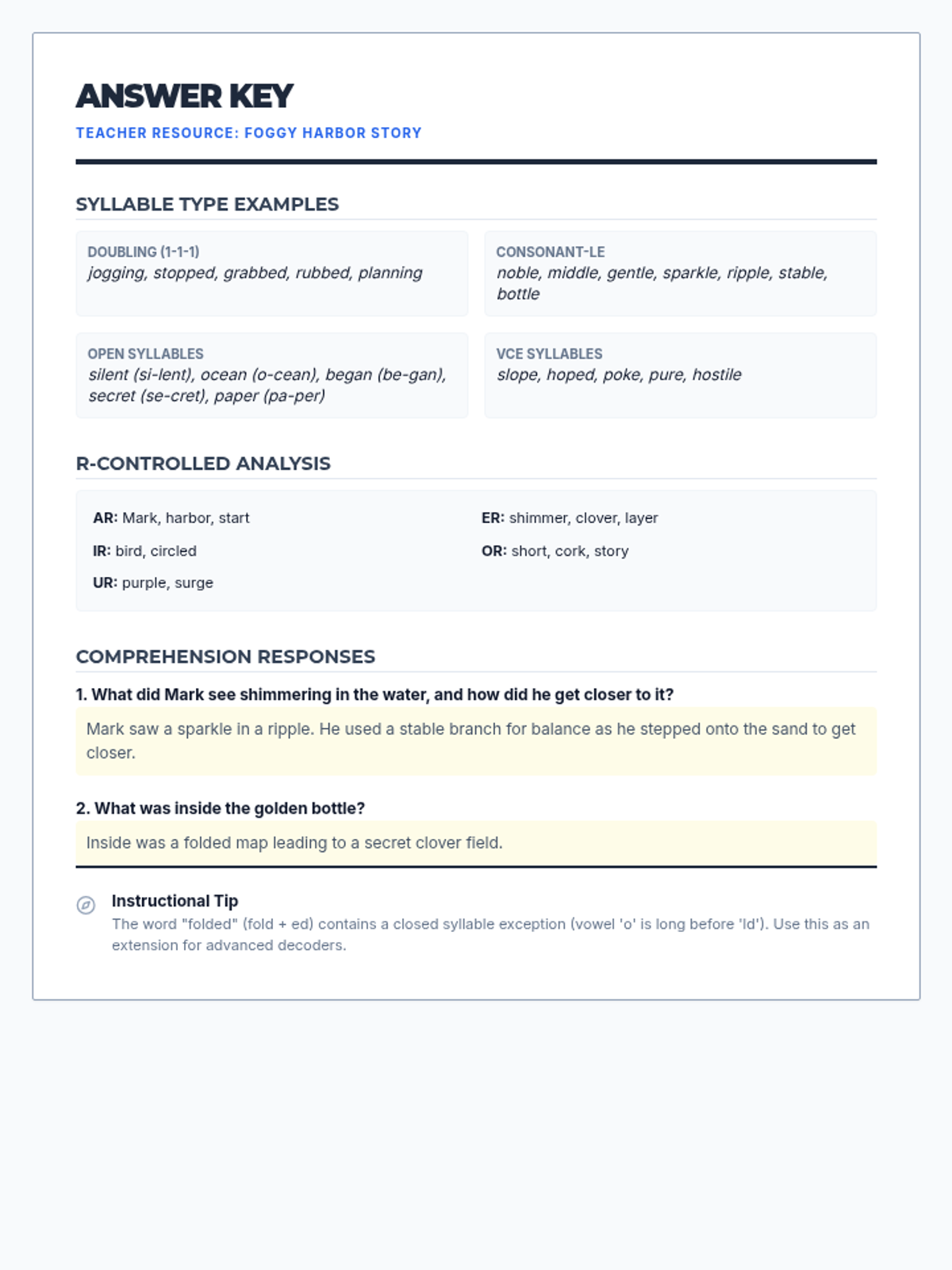
Answer key for the 'Foggy Harbor Story' featuring detailed examples for all five r-controlled vowel patterns and clear answer models.
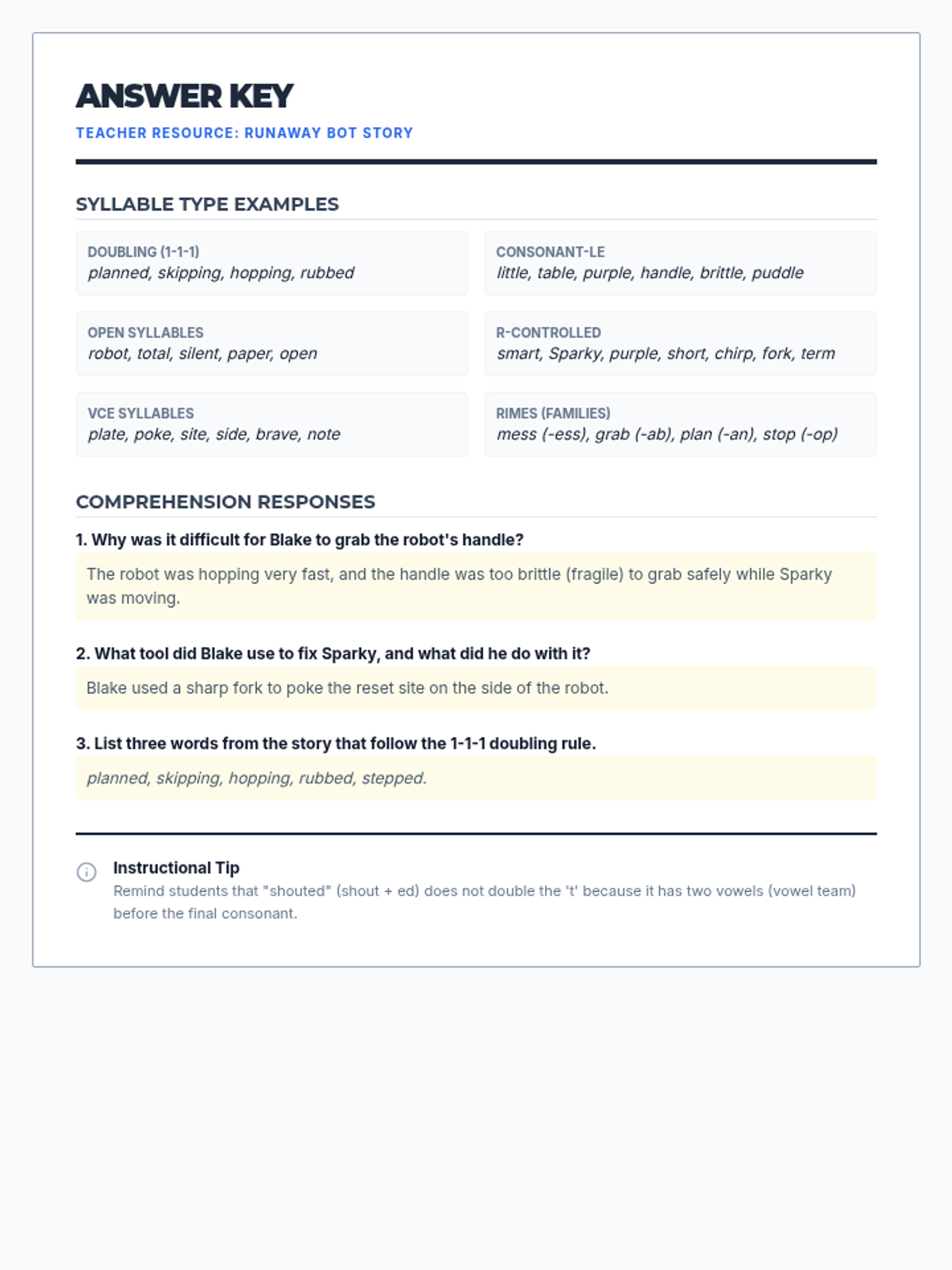
Answer key for the 'Runaway Bot Story' providing specific examples of syllable types and sample student responses for comprehension questions.
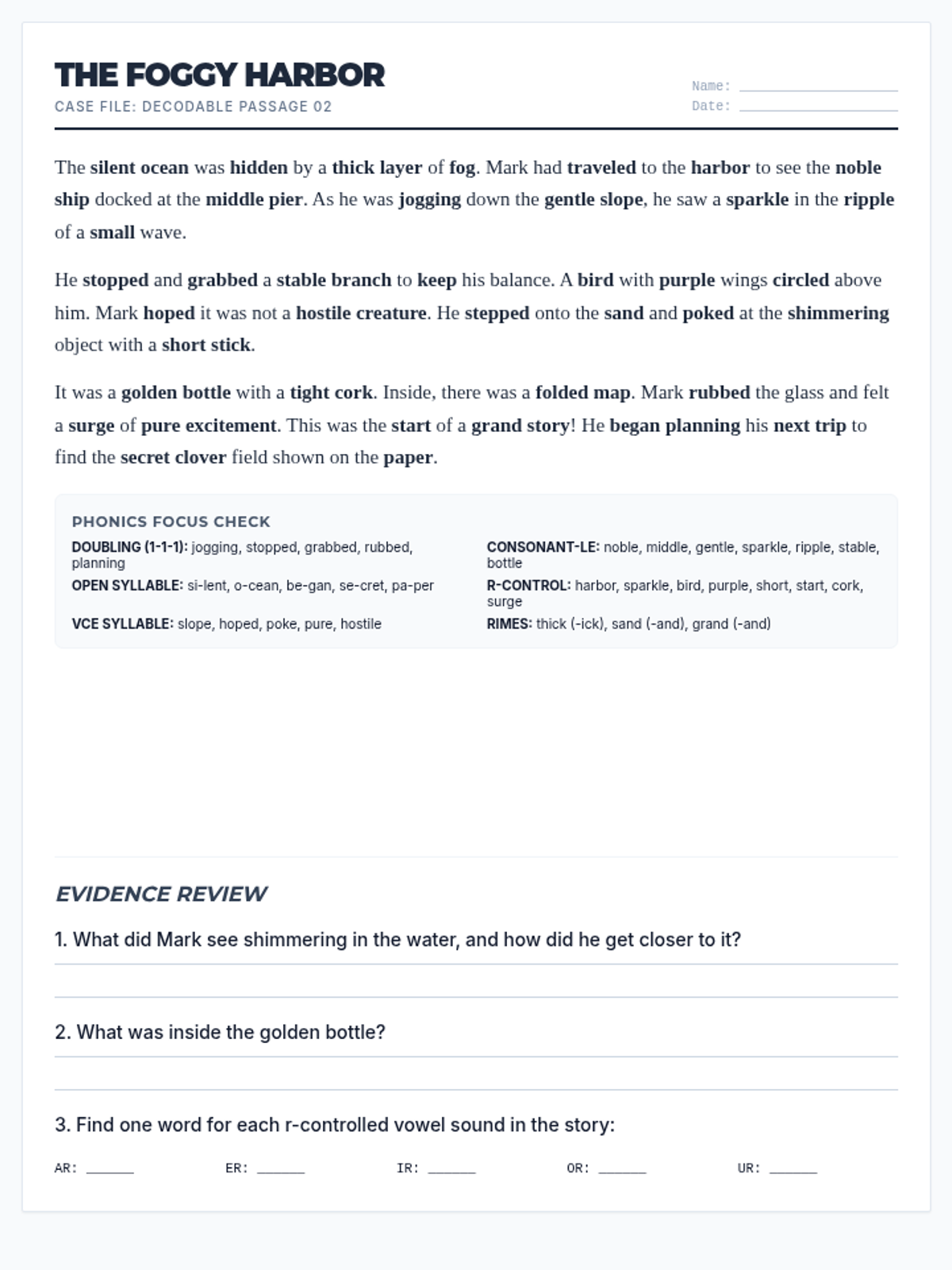
A decodable story titled 'The Foggy Harbor' focusing on doubling rules, consonant-le, open syllables, and all five r-controlled vowel patterns. Includes student response sections.
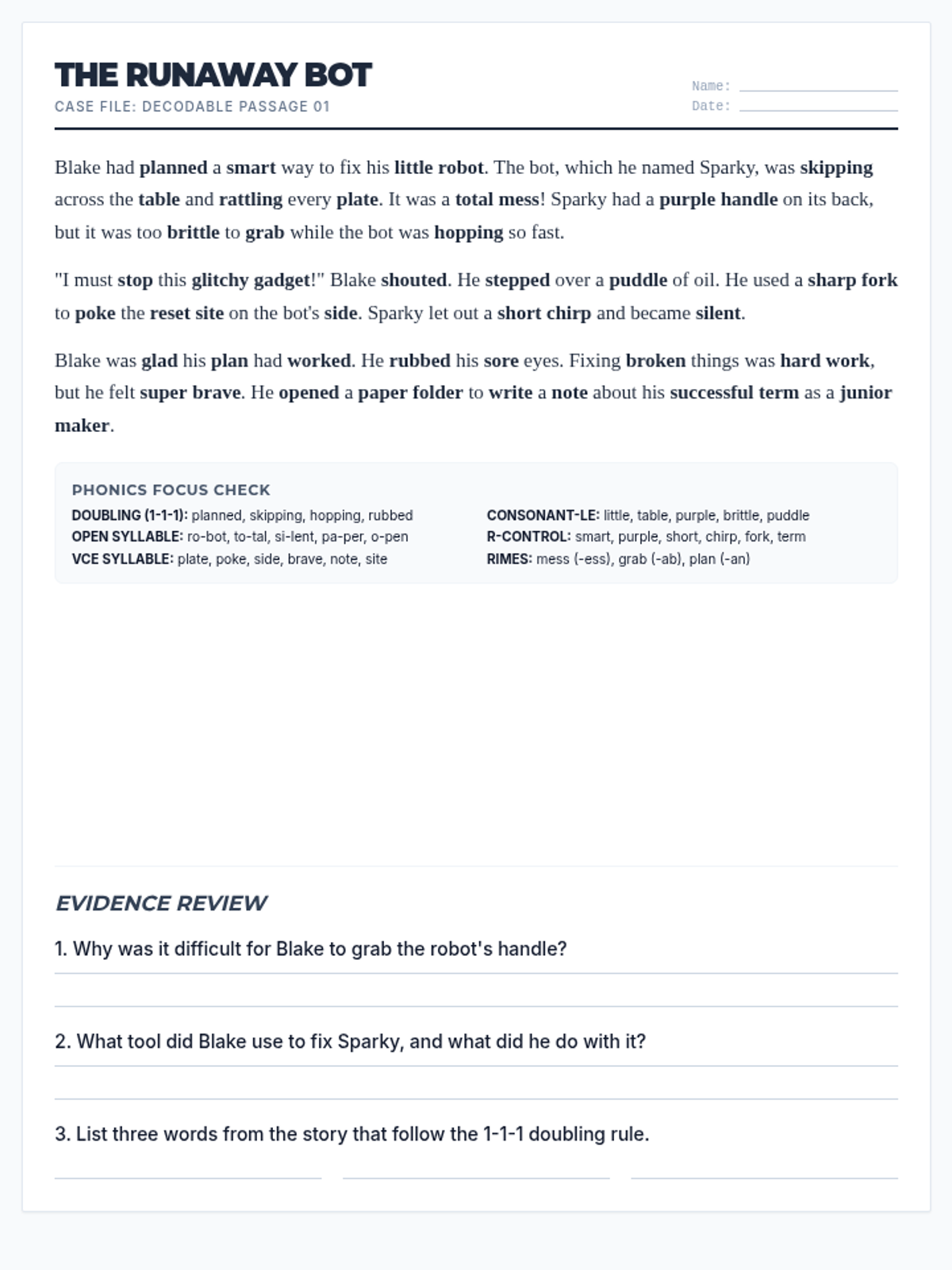
A decodable story titled 'The Runaway Bot' featuring words with doubling rules, consonant-le, open syllables, r-controlled vowels, and VCe patterns. Includes comprehension questions and a phonics focus guide.
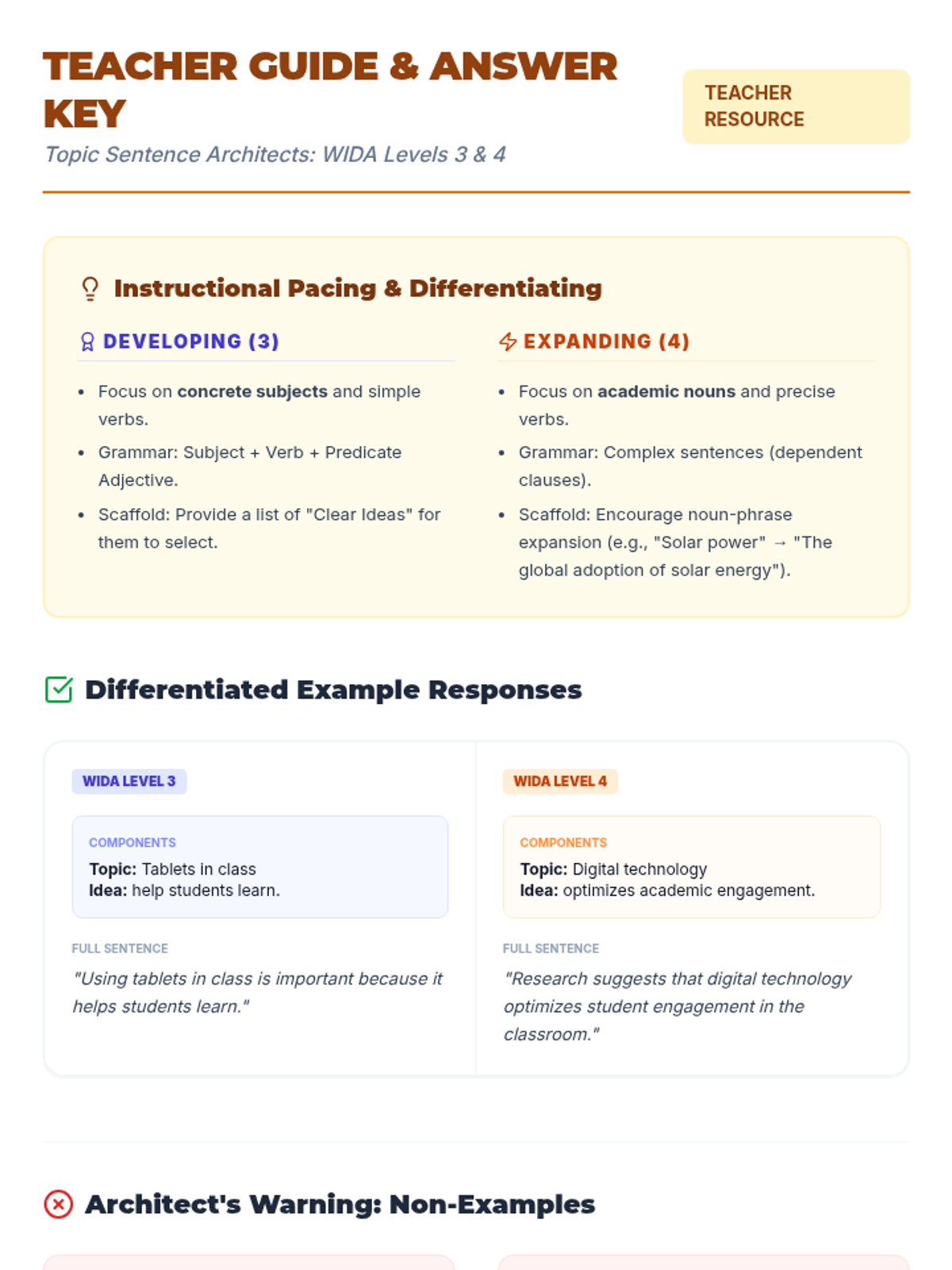
A facilitation guide and answer key for the Topic Sentence Architects lesson. It provides differentiated instructional focuses for WIDA level 3 and 4 students, sophisticated example responses, non-examples for teacher reference, and specific strategies for academic language growth.
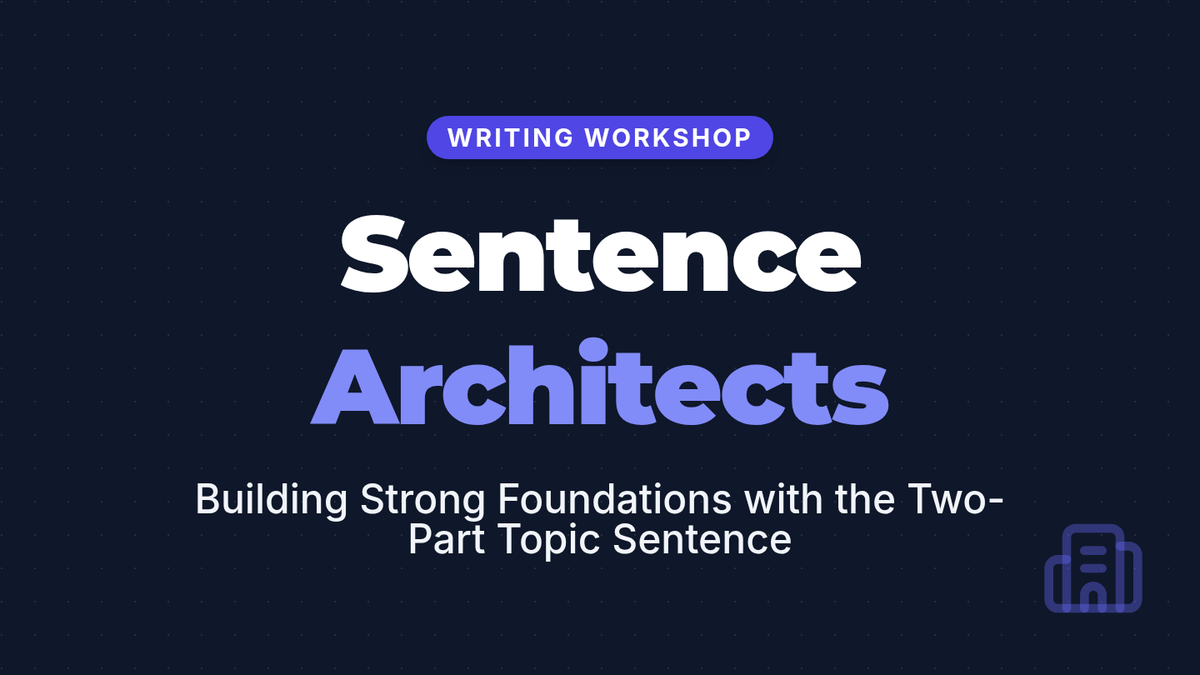
A slide deck for introducing the concept of a two-part topic sentence (Topic + Clear Idea). It includes visual analogies, differentiated examples for WIDA levels 3 and 4, and sentence starters for Developing and Expanding learners.
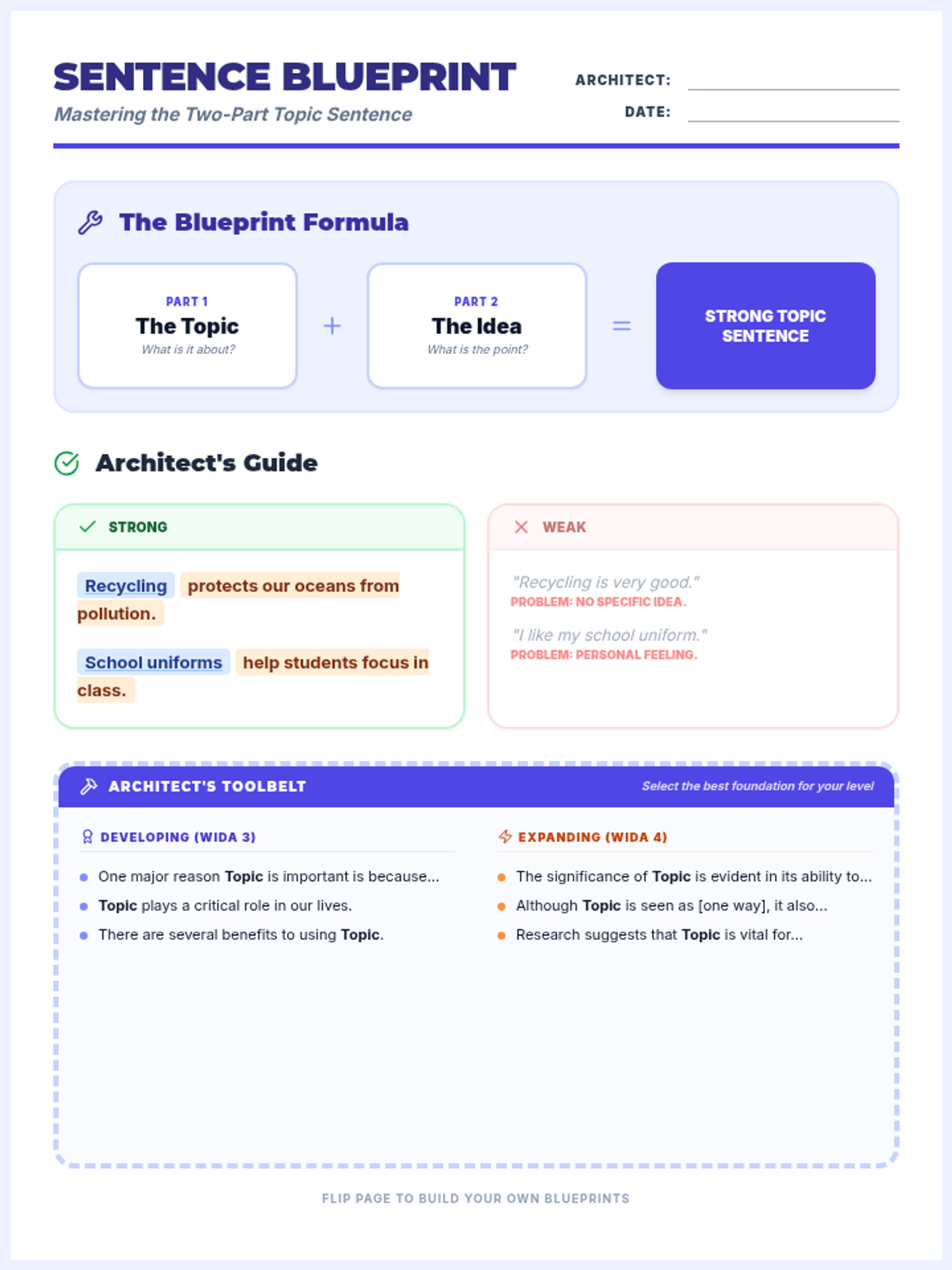
A worksheet for WIDA level 3-4 students to practice writing topic sentences. It includes a visual formula, differentiated sentence starters for Developing and Expanding levels, and a graphic organizer for guided practice.
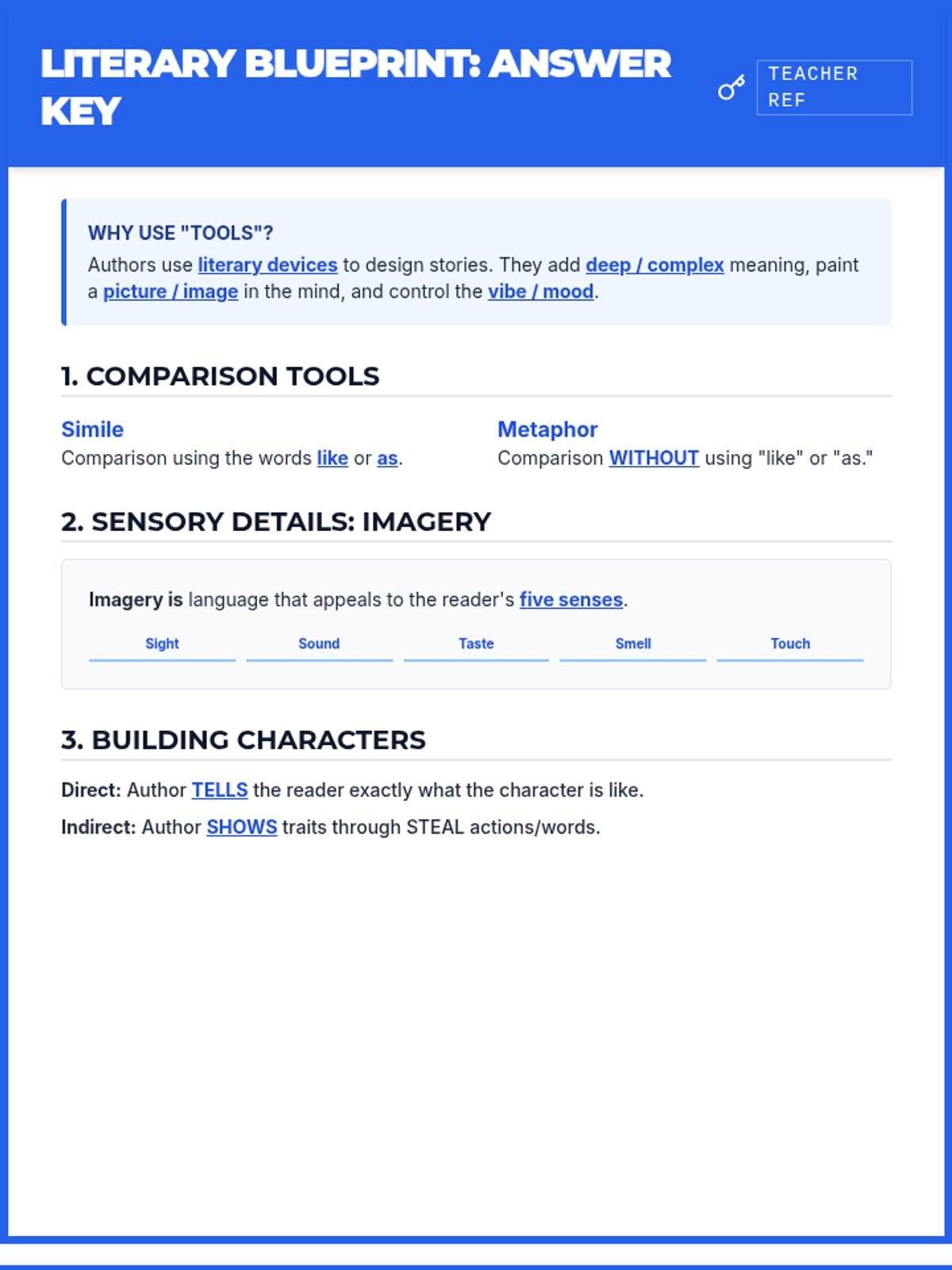
An answer key for the Literary Blueprint Guided Notes, providing the correct fill-in-the-blank responses for the teacher's reference.
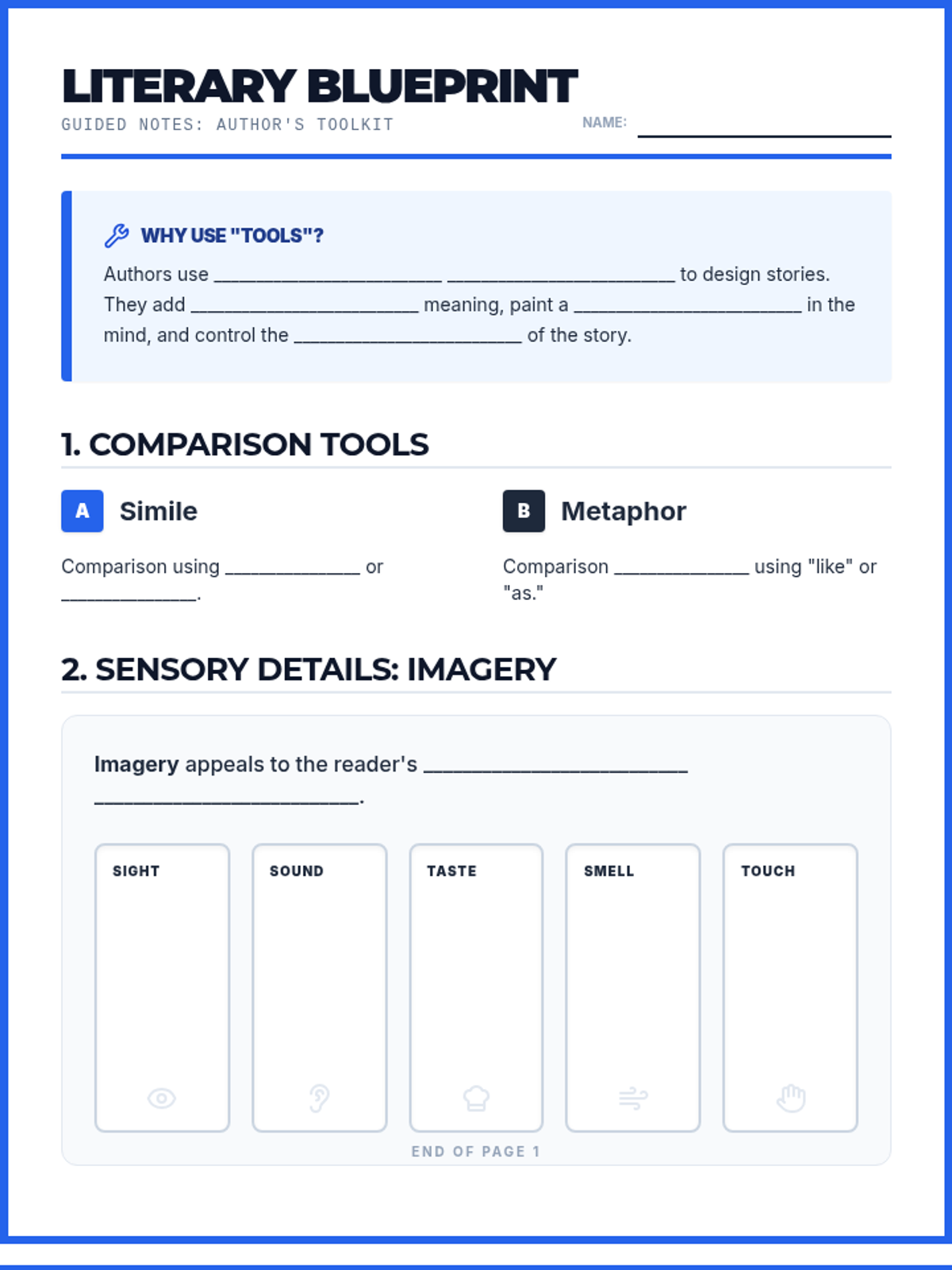
A 2-page fill-in-the-blank guided notes document for 7th-grade students, following the "Literary Blueprint" theme. Covers major literary devices with spaces for definitions, examples, and symbols.
A 10-slide presentation introducing 7th-grade literary devices with a "blueprint" theme. Includes visual definitions and examples for simile, metaphor, irony, imagery, characterization, point of view, and conflict.