A visual introduction to fractions using an architectural drafting metaphor, covering identifying parts and equivalent scaling with exclusively squared and rectangular models.
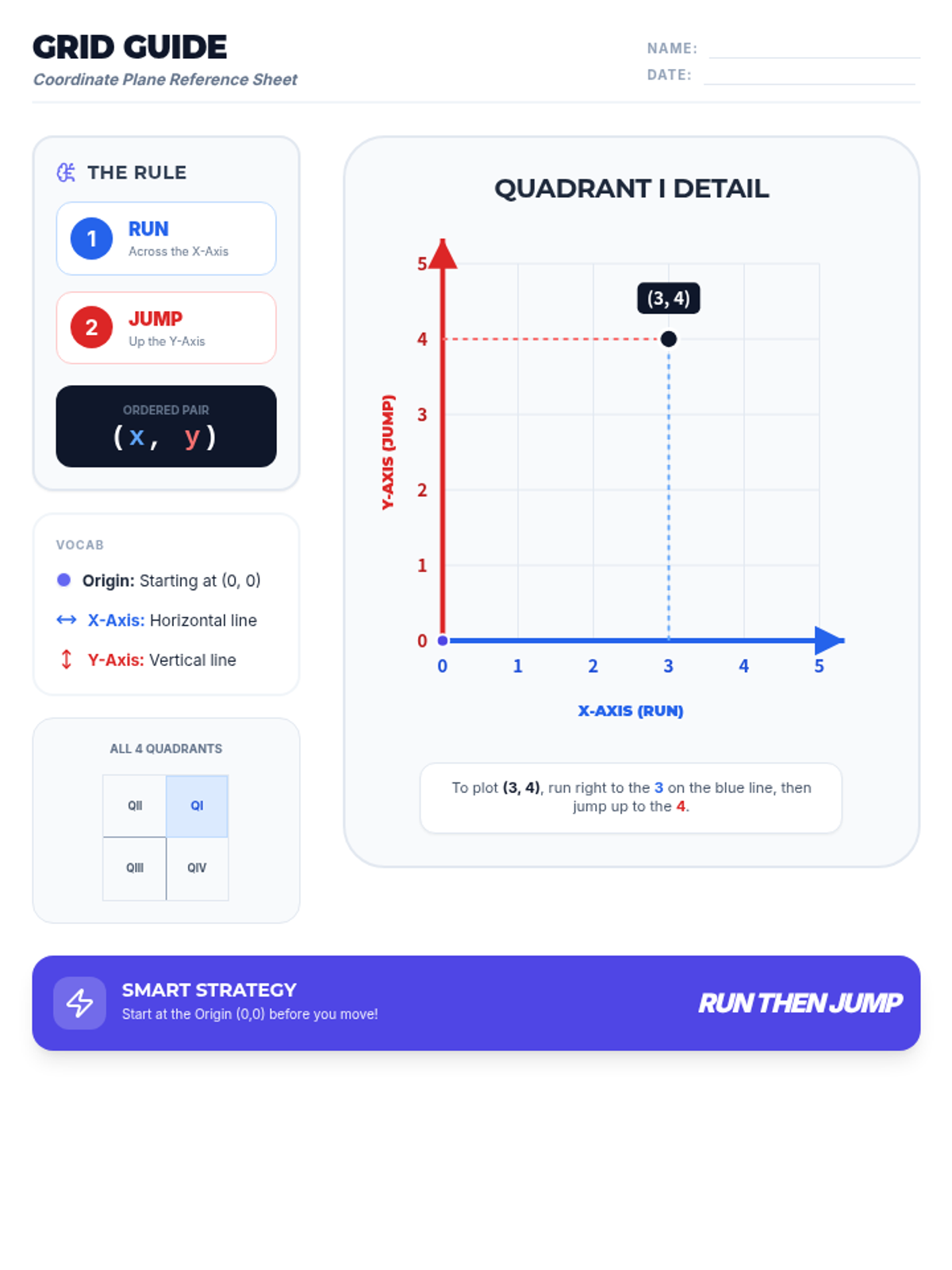
A minimalist, color-coded anchor chart for graphing on a coordinate plane, focusing on the first quadrant with a "Run then Jump" mnemonic. Includes clear labels for axes, the origin, and an example point, plus a visual for all four quadrants.
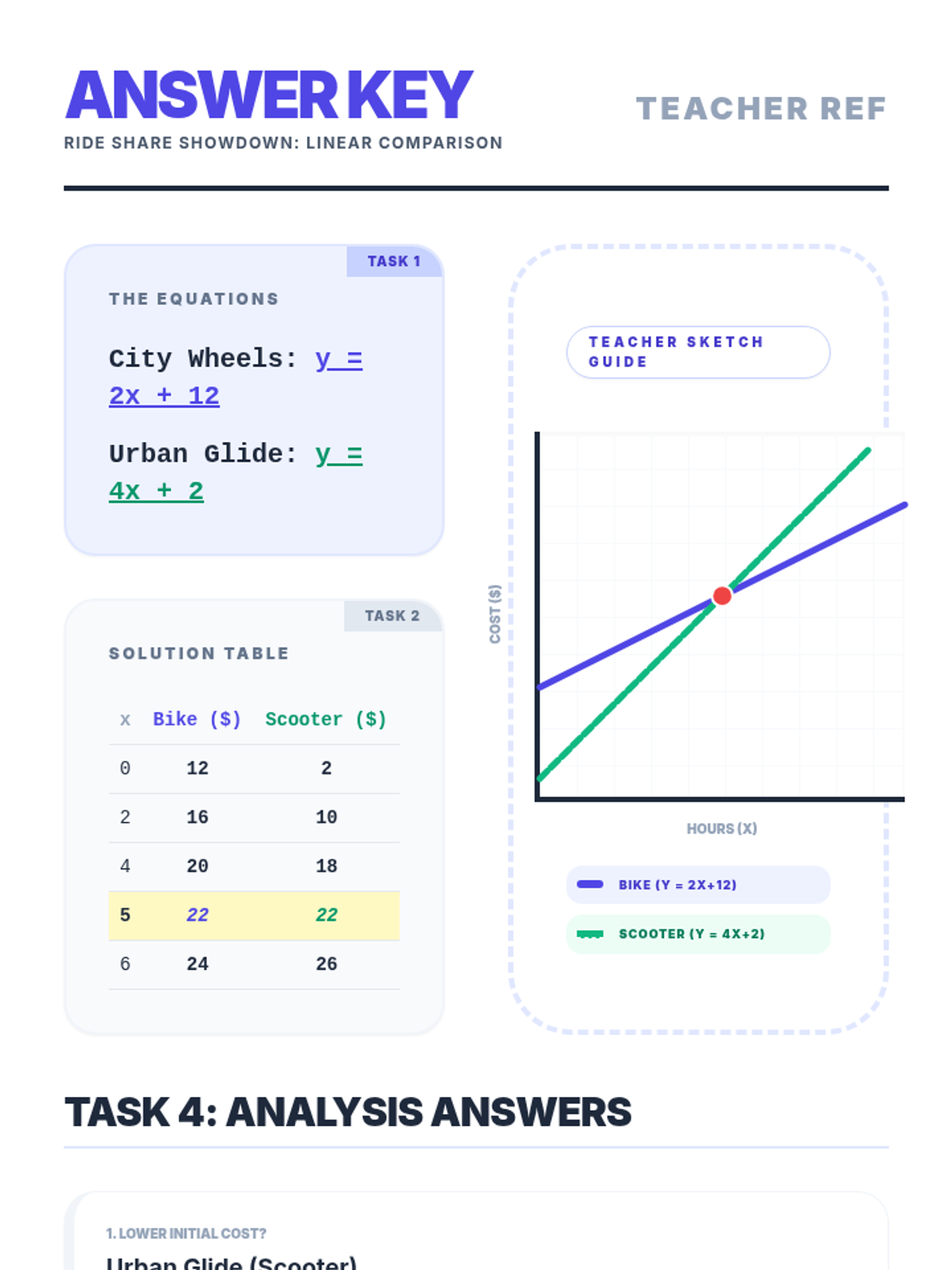
Complete answer key for the Ride Share Showdown independent practice, providing equations, table solutions, a visual sketch guide, and detailed trend analysis recommendations. Corrected page breaks and contrast.
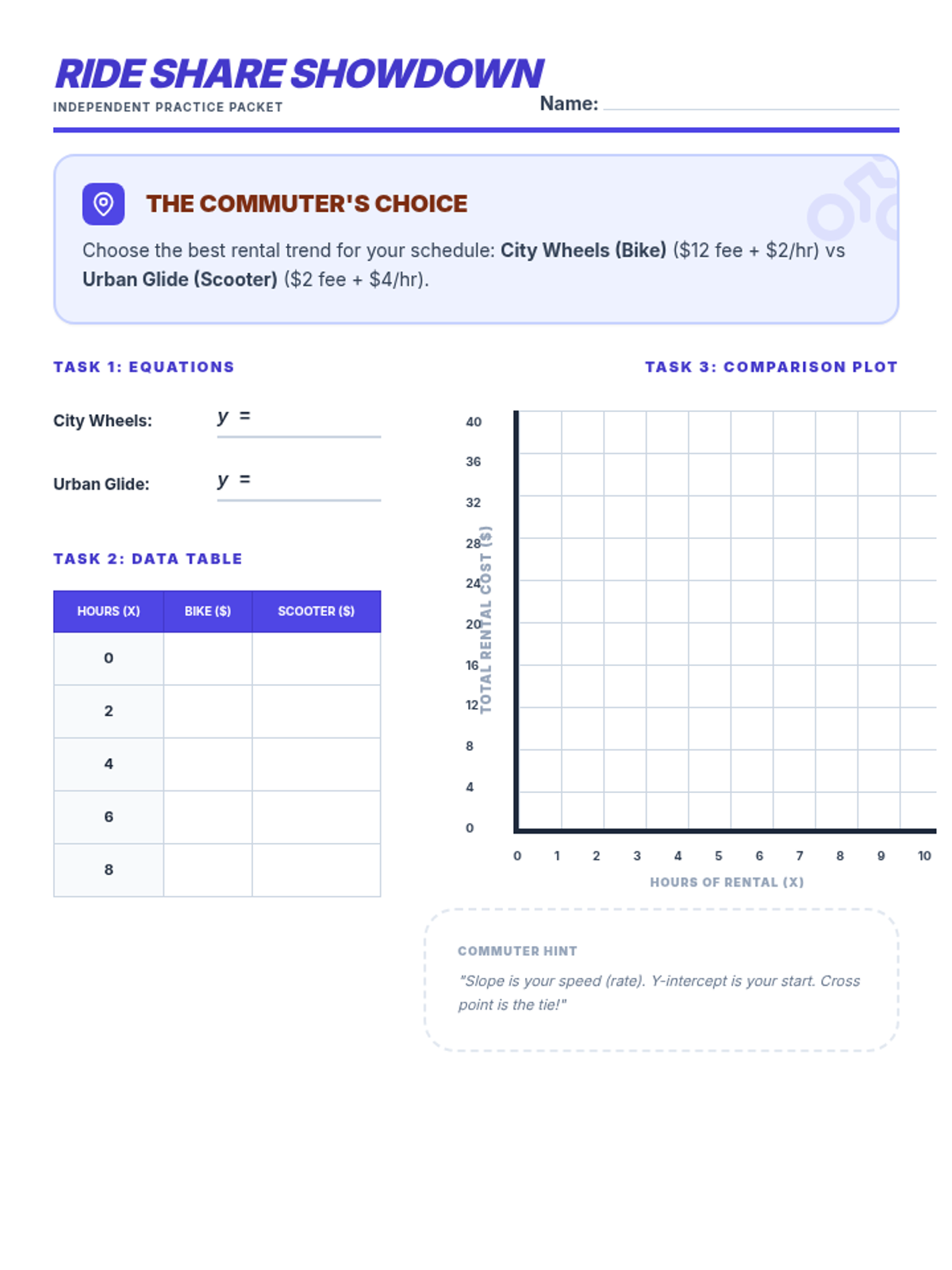
A two-page independent practice worksheet featuring a ride-share rental scenario. Students translate word problems into linear equations, complete data tables, graph results, and perform a comparative analysis to determine the most cost-effective travel option. Corrected layout and graph alignment.
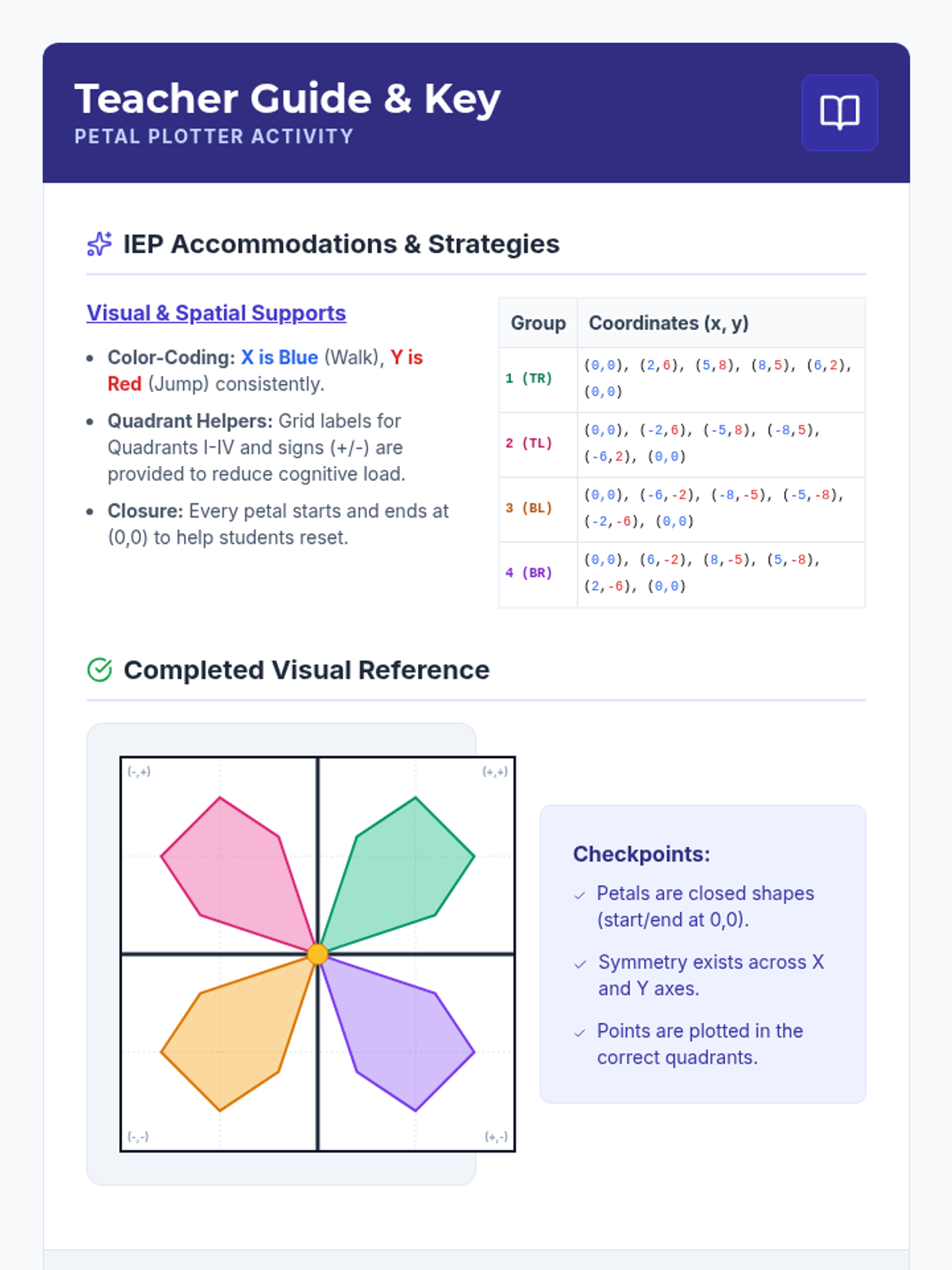
Teacher guide and answer key for the Petal Plotter activity. Includes IEP accommodation strategies, instructional tips, and a visual answer key for checking student work. Corrected coordinates and page layout.
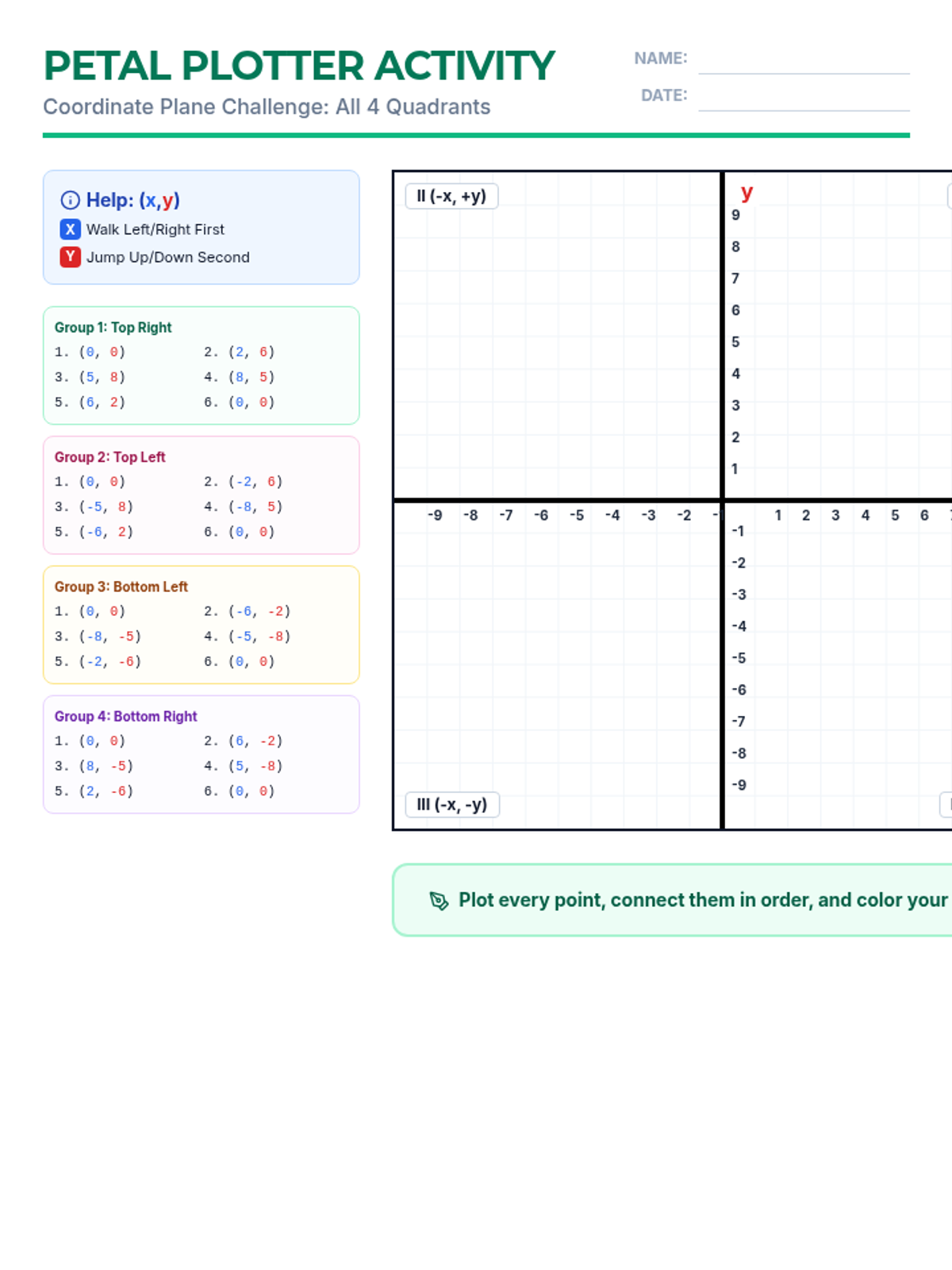
A modified 4-quadrant coordinate plane worksheet for IEP students. Features color-coded point values (x is blue, y is red), large grid space, and structured grouping of points to build a seasonal flower. Now includes full axis numbering and high-contrast quadrant labels.
Visual introduction to the 4-quadrant coordinate plane, modified for IEP students with high-contrast visuals, mnemonic devices, and step-by-step plotting guides. Now includes the actual coordinates for plotting.
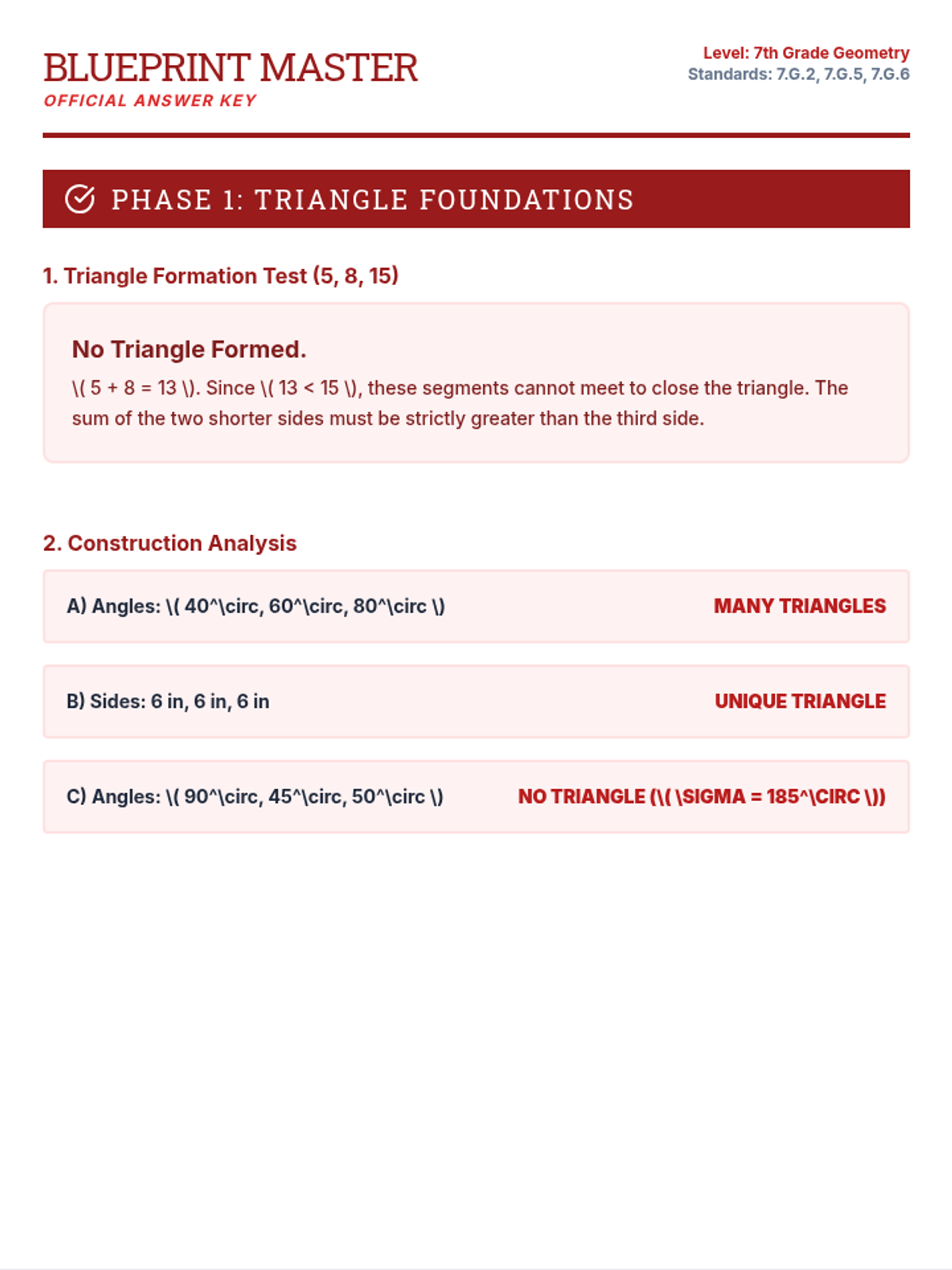
A complete teacher answer key for the Blueprint Master Study Guide, providing step-by-step solutions, equations, and mathematical explanations for all geometry problems.
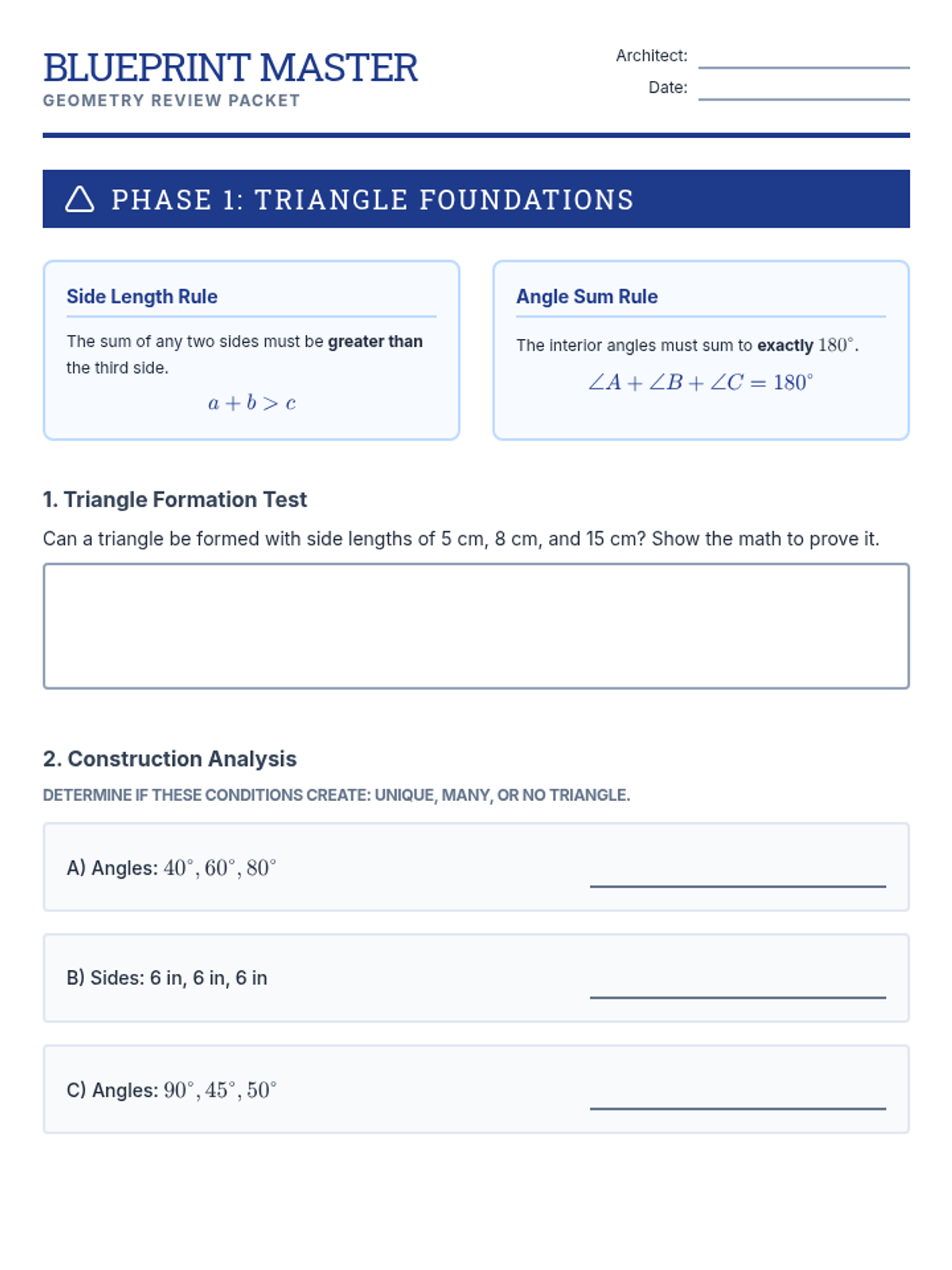
A comprehensive 4-page geometry study guide designed as an 'Architect's Blueprint'. It covers triangle construction rules, angle relationship equations, and real-world area, volume, and surface area problems aligned with 7.G.2, 7.G.5, and 7.G.6.
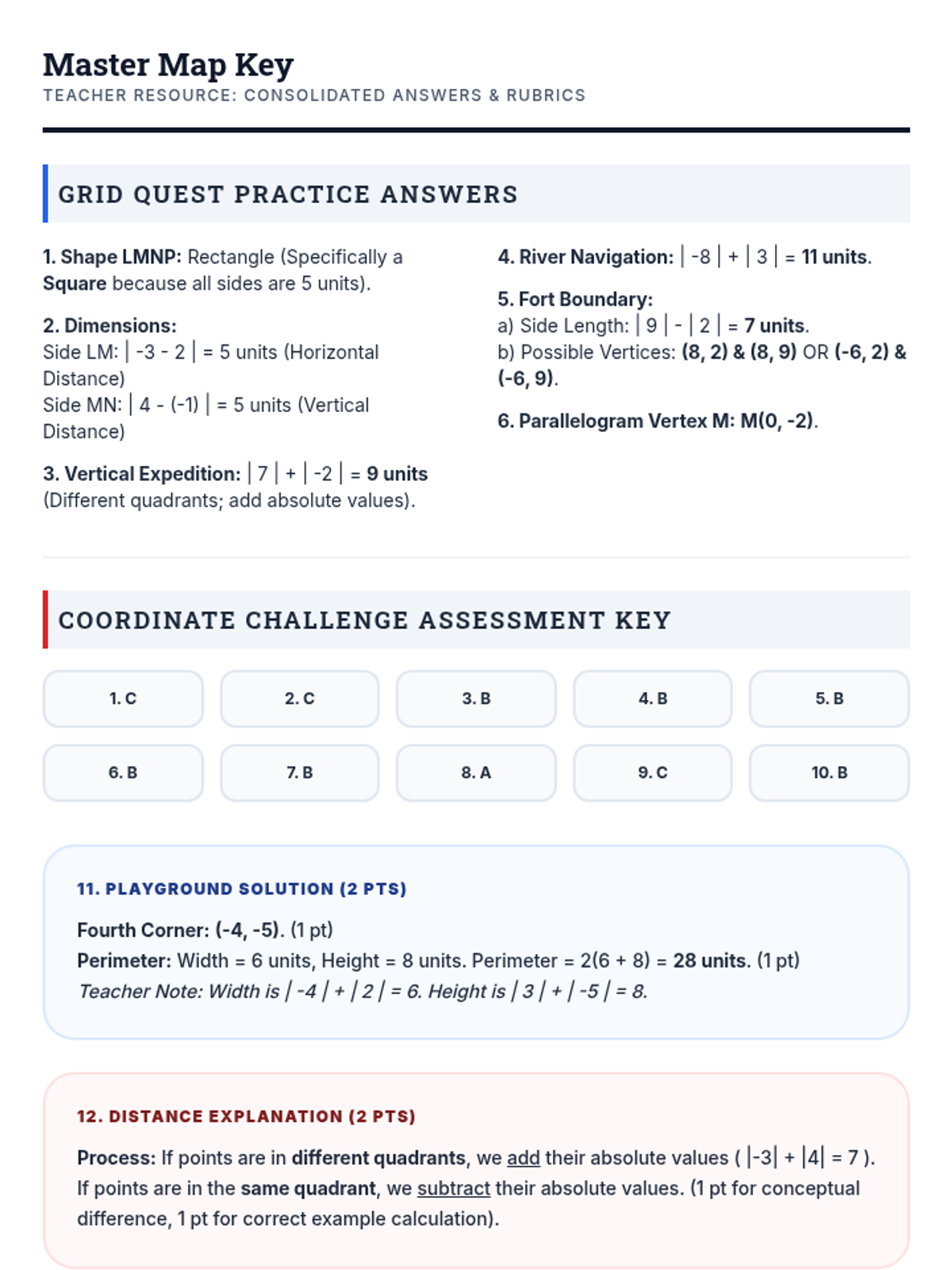
A teacher answer key for the Grid Quest Practice and Coordinate Challenge Assessment. Features consolidated single-page layout, formal pedagogical notes, and clear rubrics for open-response grading.
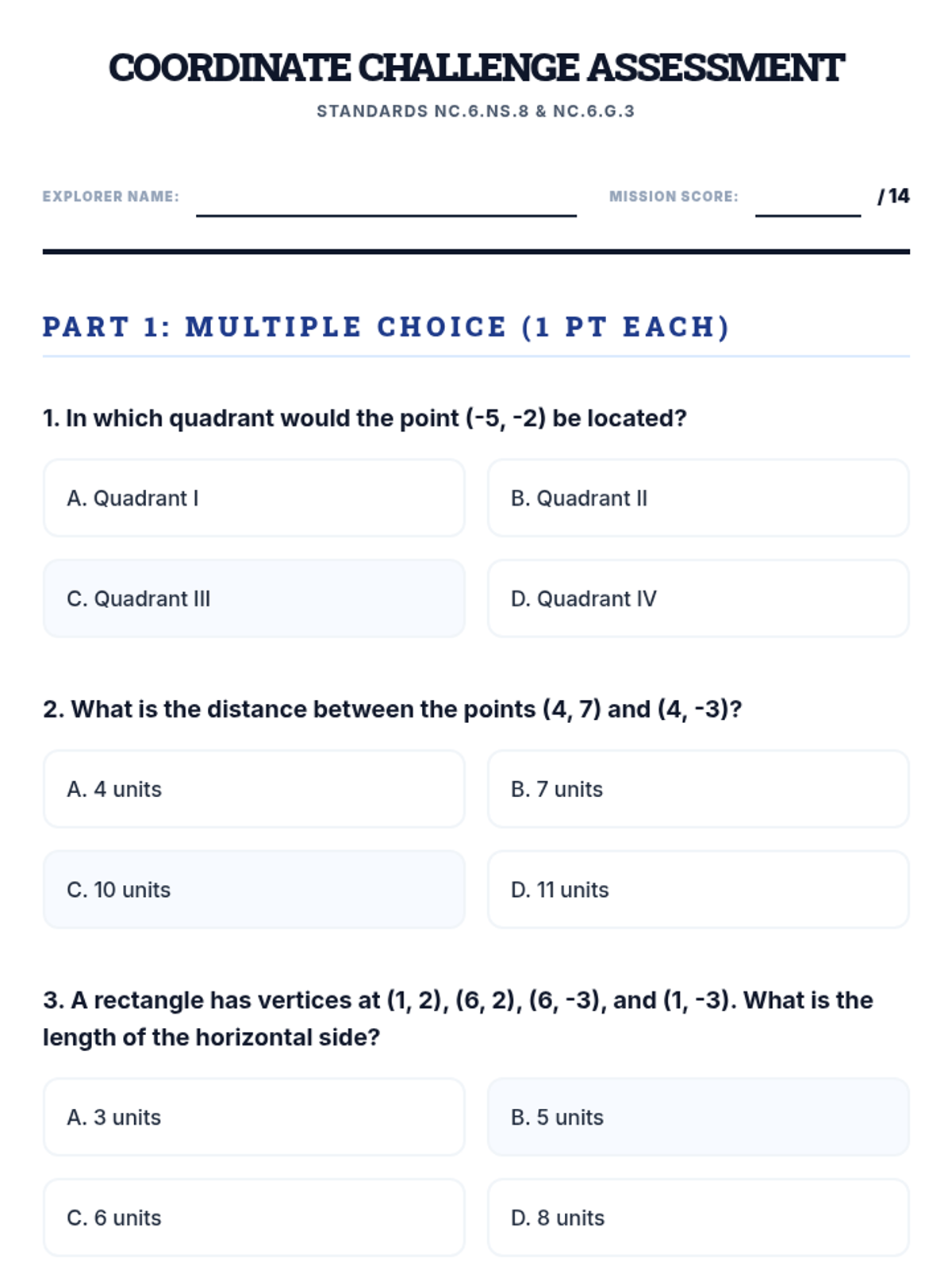
A 10-question multiple-choice assessment with 2 open-response questions focused on coordinate geometry, plotting quadrilaterals, and distance calculation. Features improved page breaks, functional grids for sketching, and a 14-point scoring system.
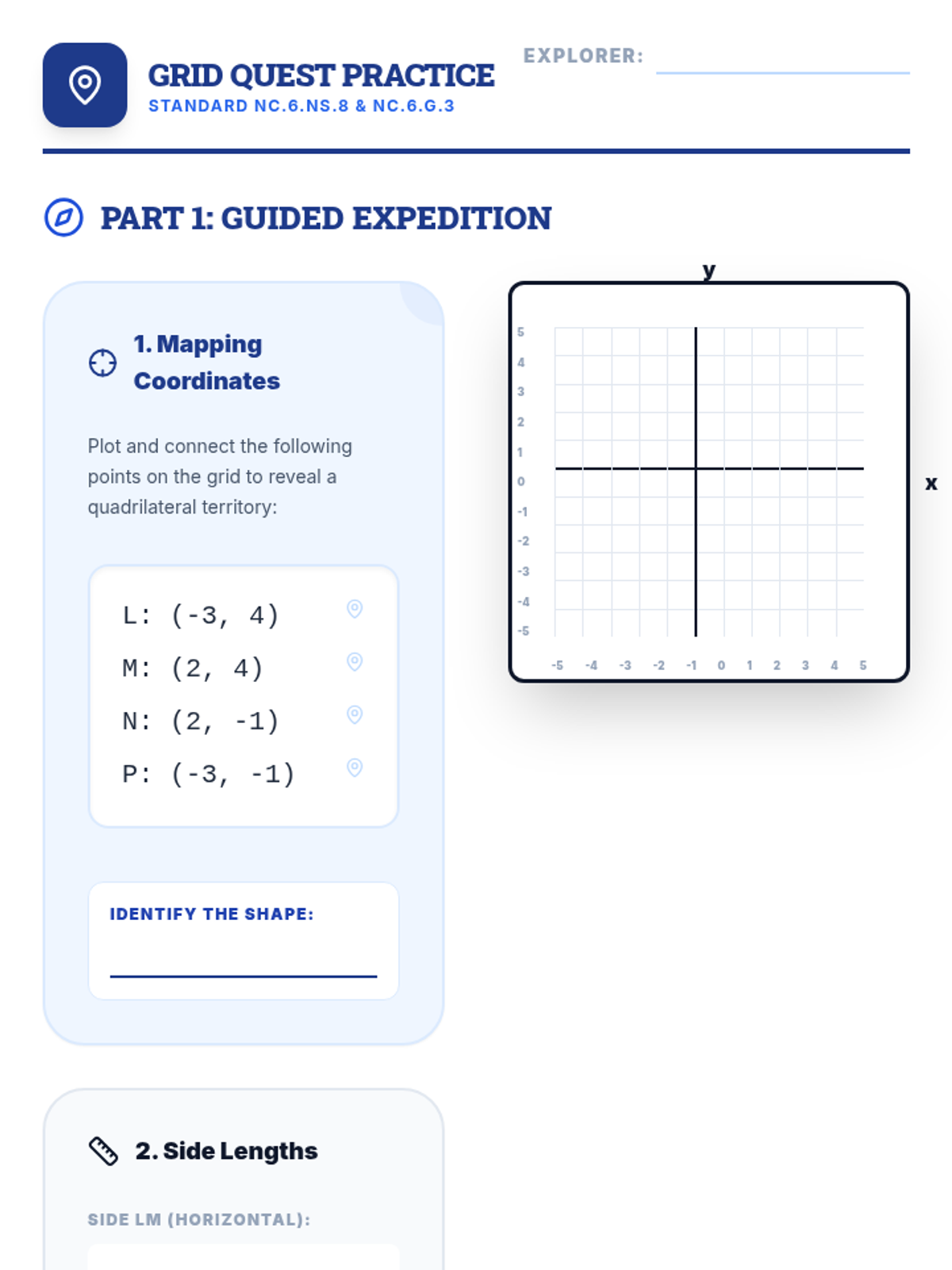
A dual-part practice worksheet featuring teacher-led guided problems and independent student practice. Focuses on plotting vertices of quadrilaterals and calculating distances with absolute values. Includes a functional -5 to 5 coordinate grid.
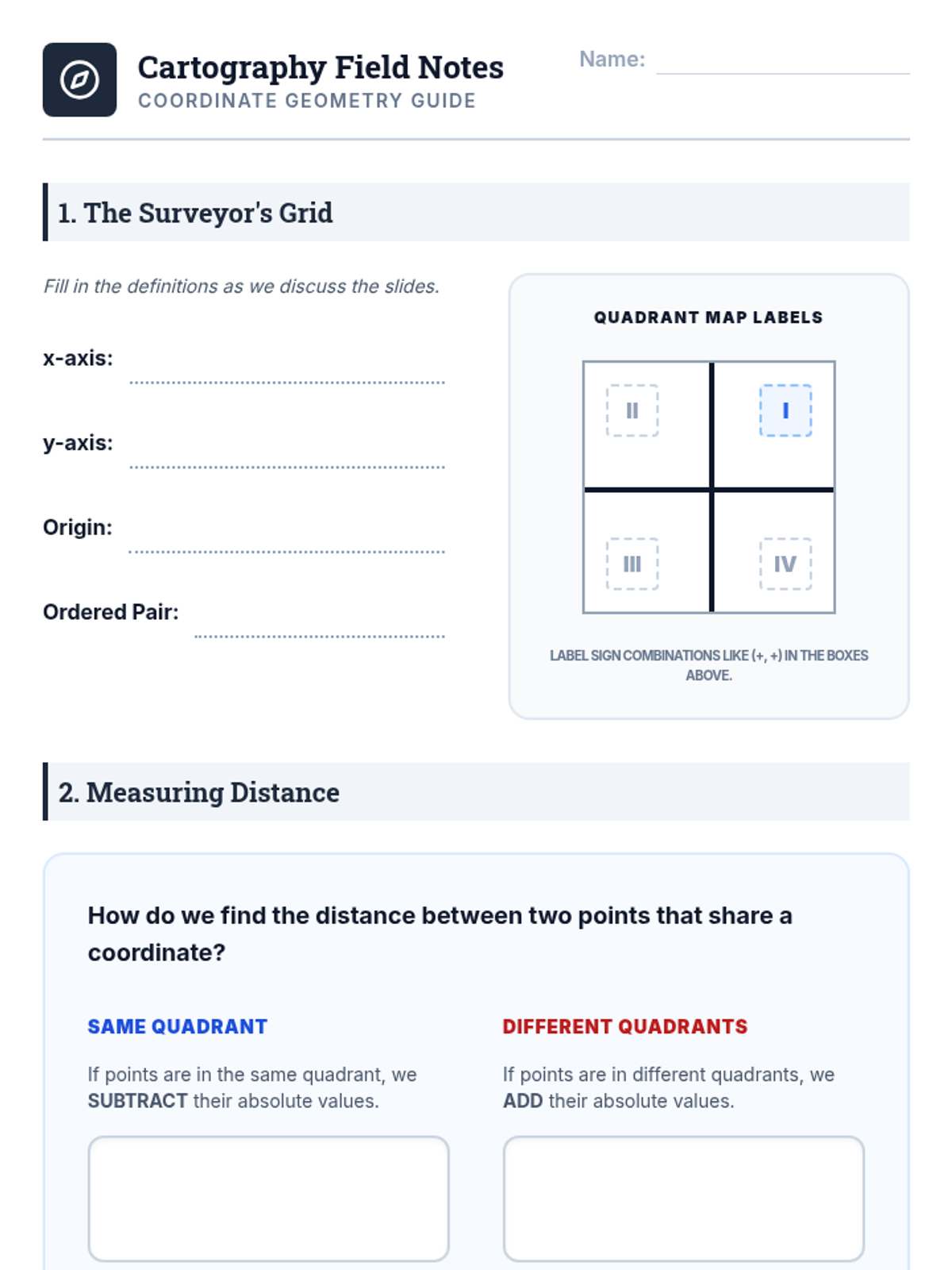
A guided notes document designed for students to follow along with the Cartography Slides. Includes fill-in-the-blank vocabulary, corrected quadrant labeling, distance formulas, and expanded work areas for calculations.
An 8-slide instructional presentation on the coordinate plane, plotting ordered pairs, finding distances, and mapping mixed quadrilaterals. Features a cartography-inspired theme with high-contrast visuals and functional grid layouts.
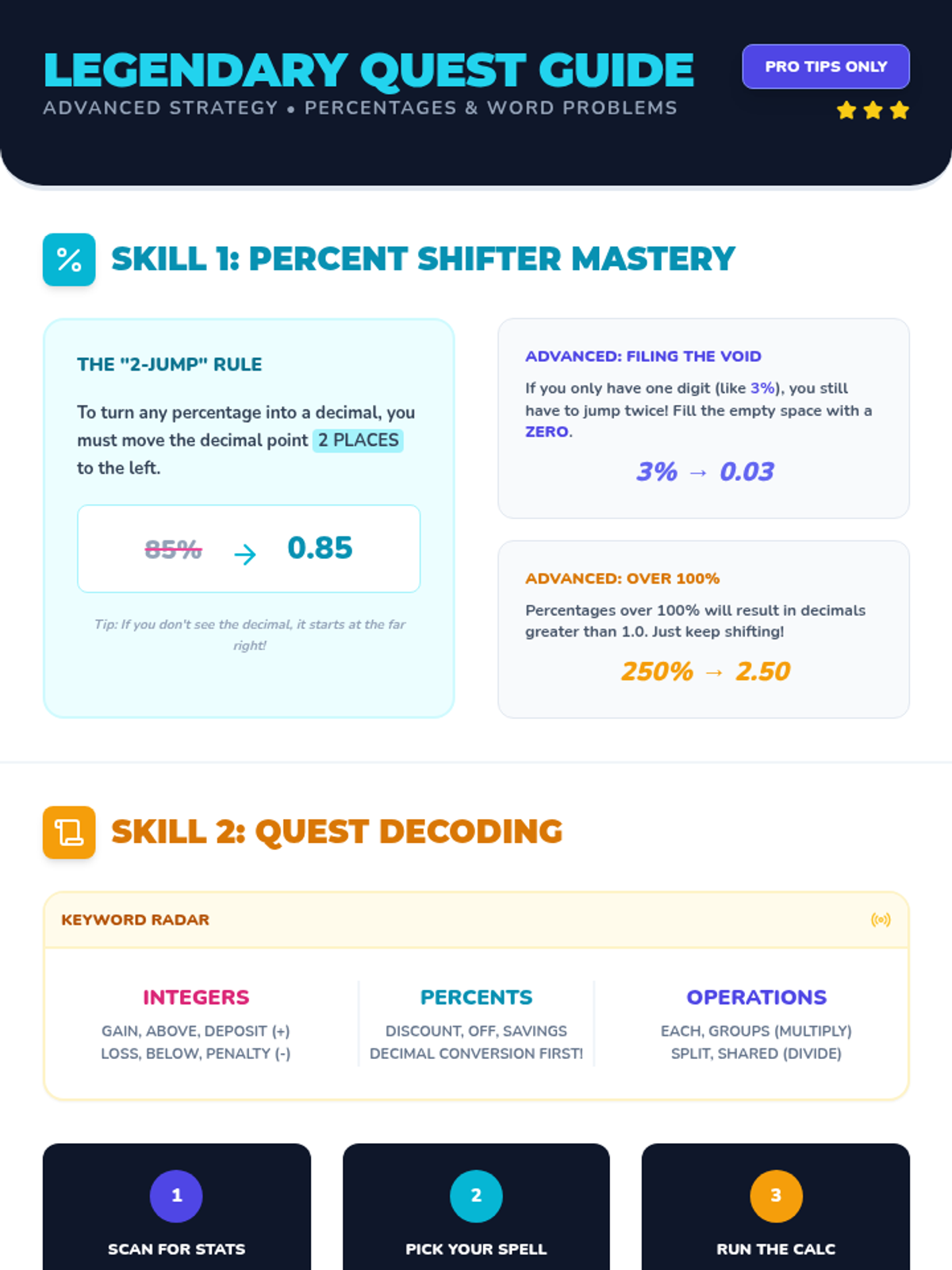
An advanced arcade-themed study guide specifically focusing on percentage-to-decimal mastery and strategies for decoding word problems. Features clear rules, keyword radars, and a step-by-step "Hero's Path" for application.
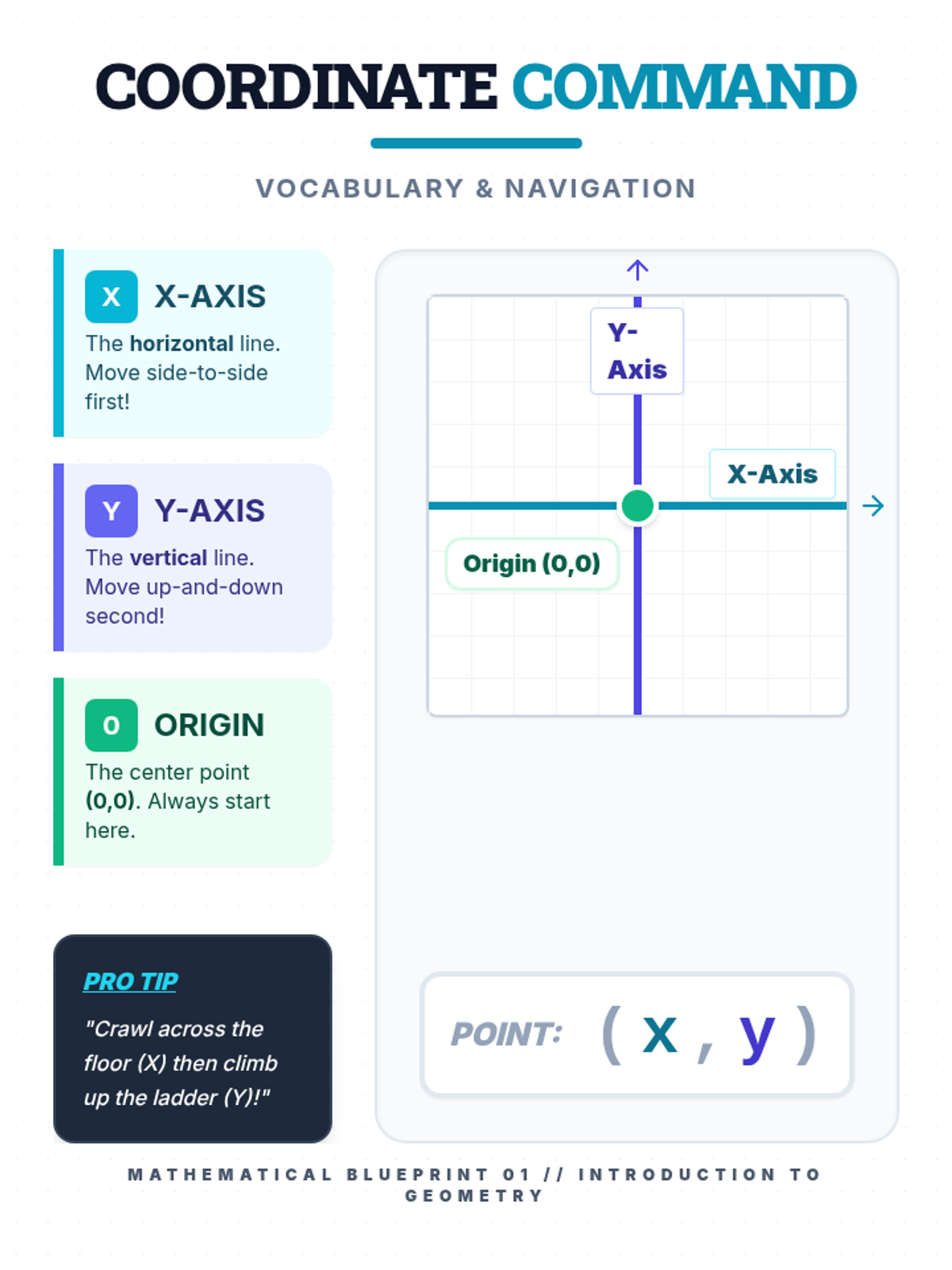
A single-page anchor chart for classroom display. Features high-contrast visuals for the x-axis, y-axis, and origin, with a clear coordinate formula and a helpful mnemonic. Designed to fit perfectly on one page.
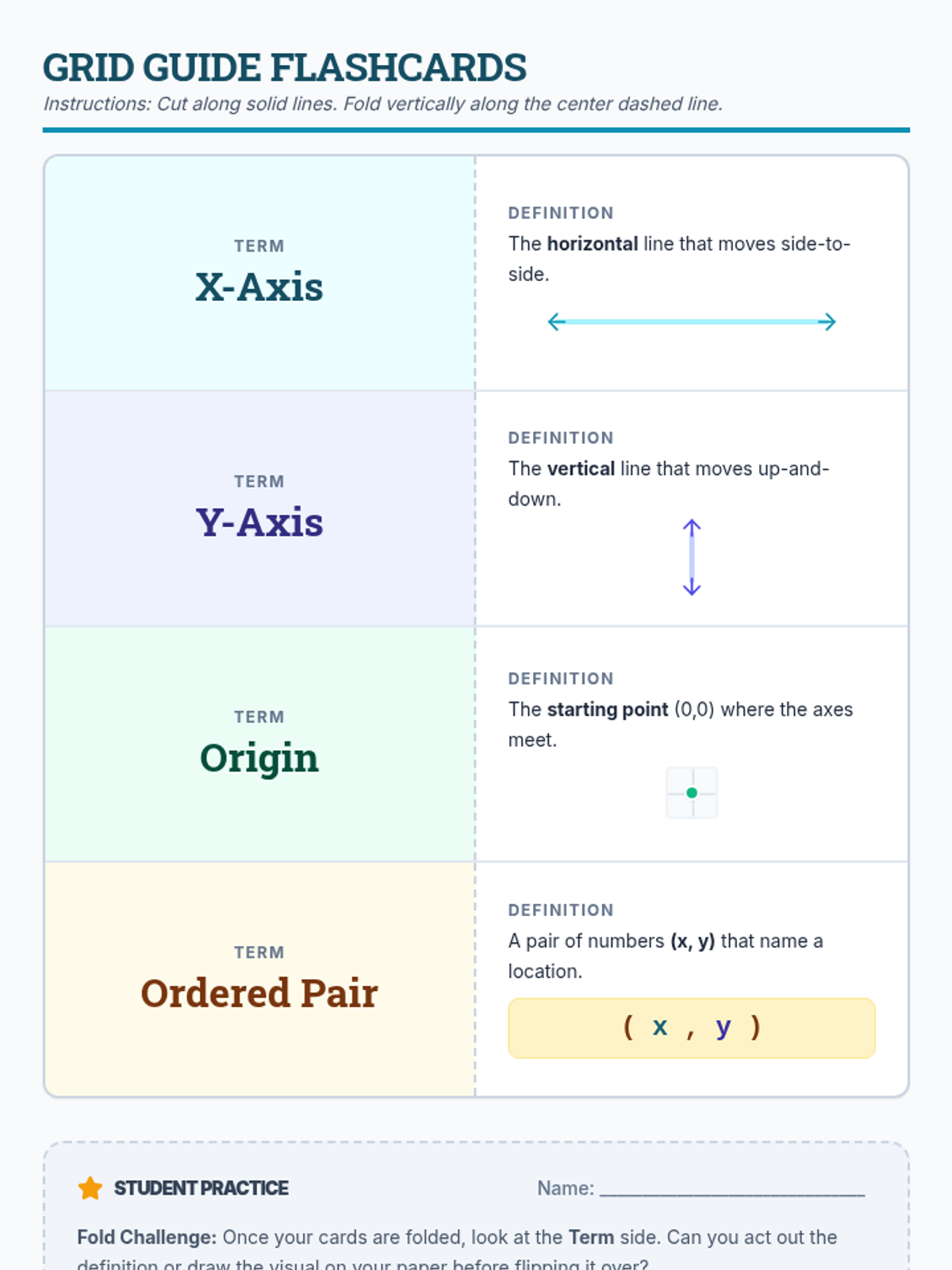
Set of vocabulary flashcards for coordinate plane basics (x-axis, y-axis, origin, and ordered pairs) with clear visual diagrams and easy-to-read definitions. Layout optimized for vertical folding and single-page printing.
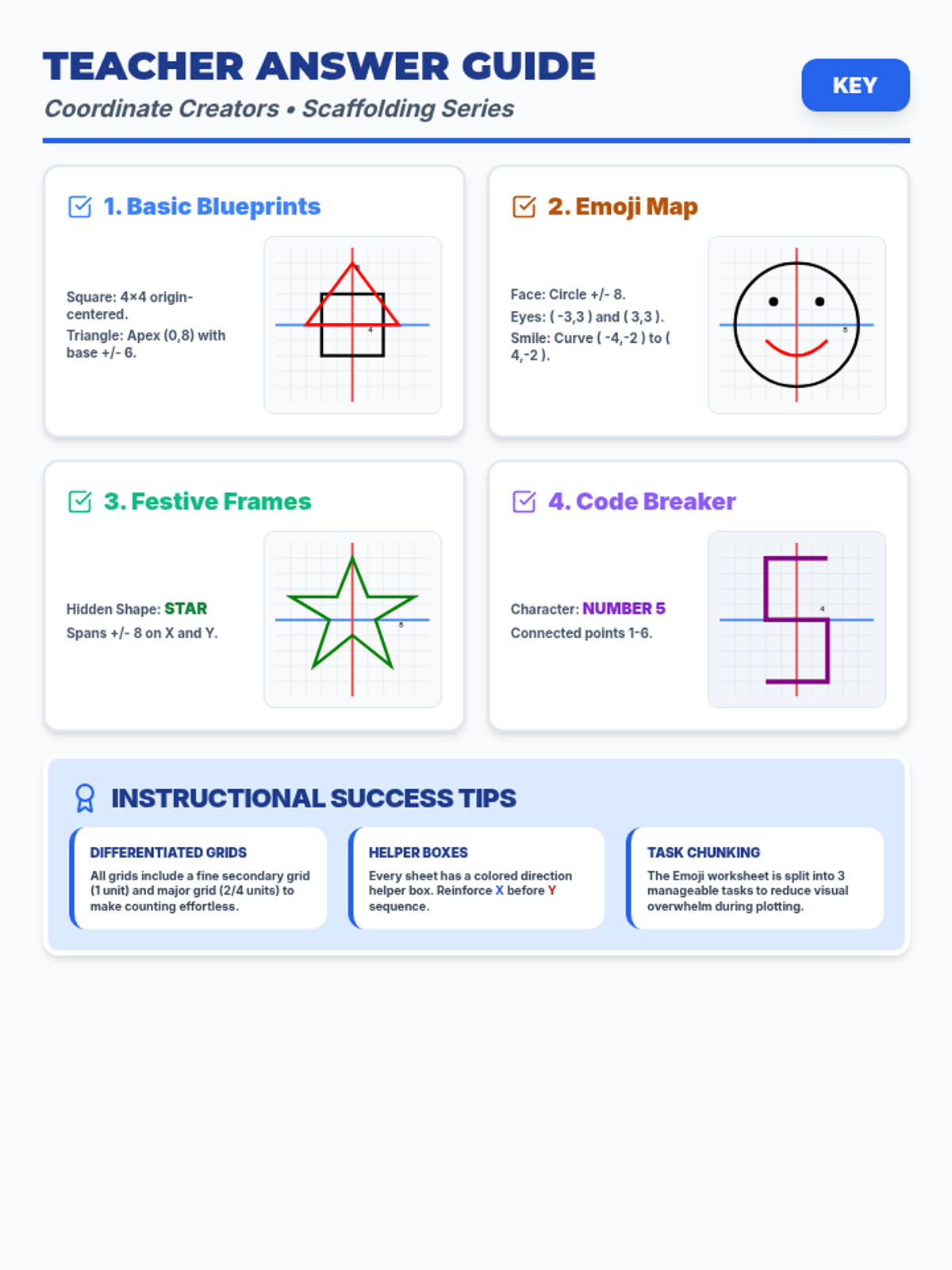
A comprehensive answer key and teacher guide for the 'Coordinate Creators' lesson. Includes visual solutions for all worksheets and specific instructional strategies for supporting IEP students.
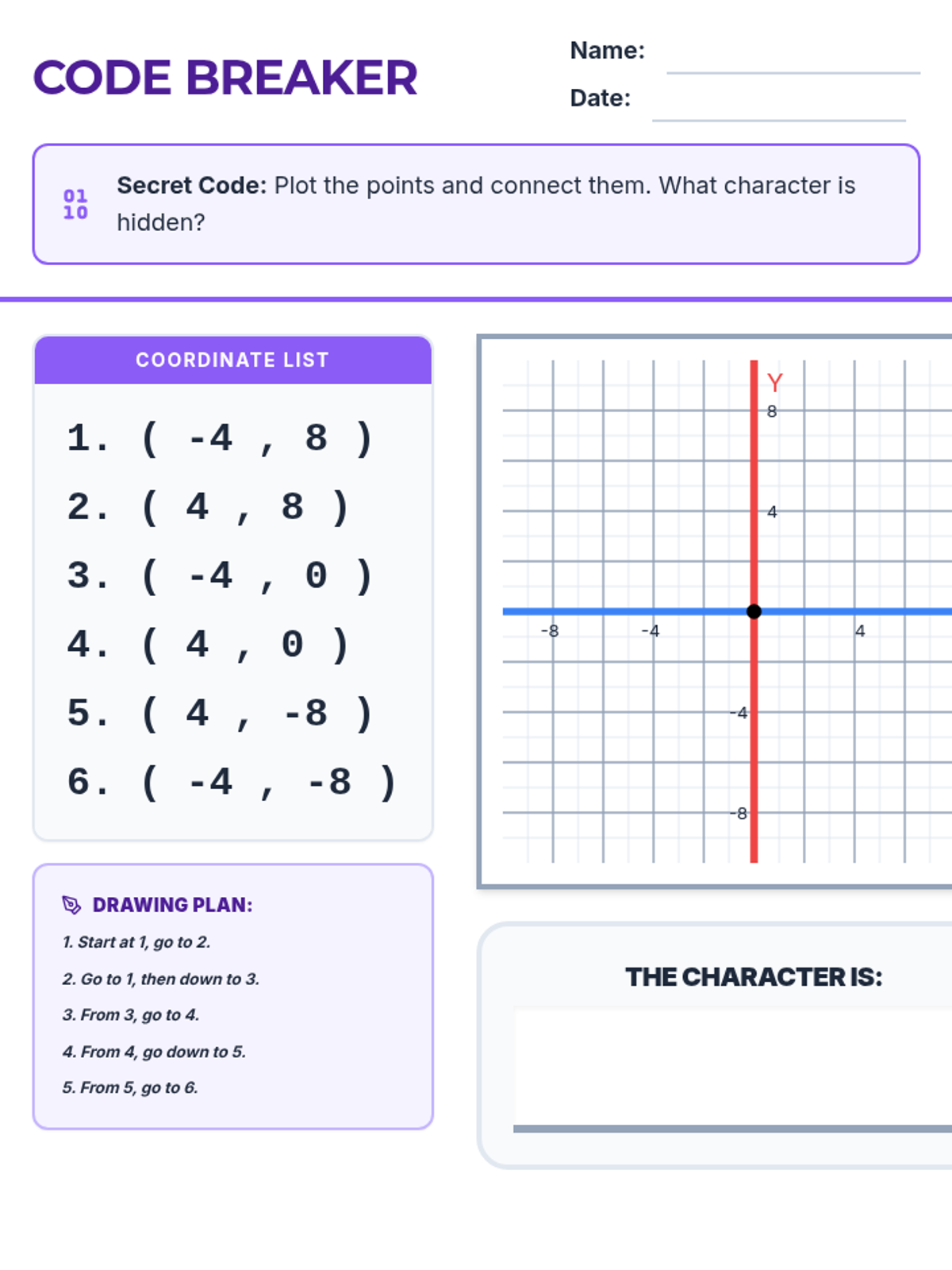
A coordinate plotting worksheet that reveals the number '5' or letter 'S' (depending on interpretation). Includes explicit pencil-lifting instructions to help students navigate complex paths.
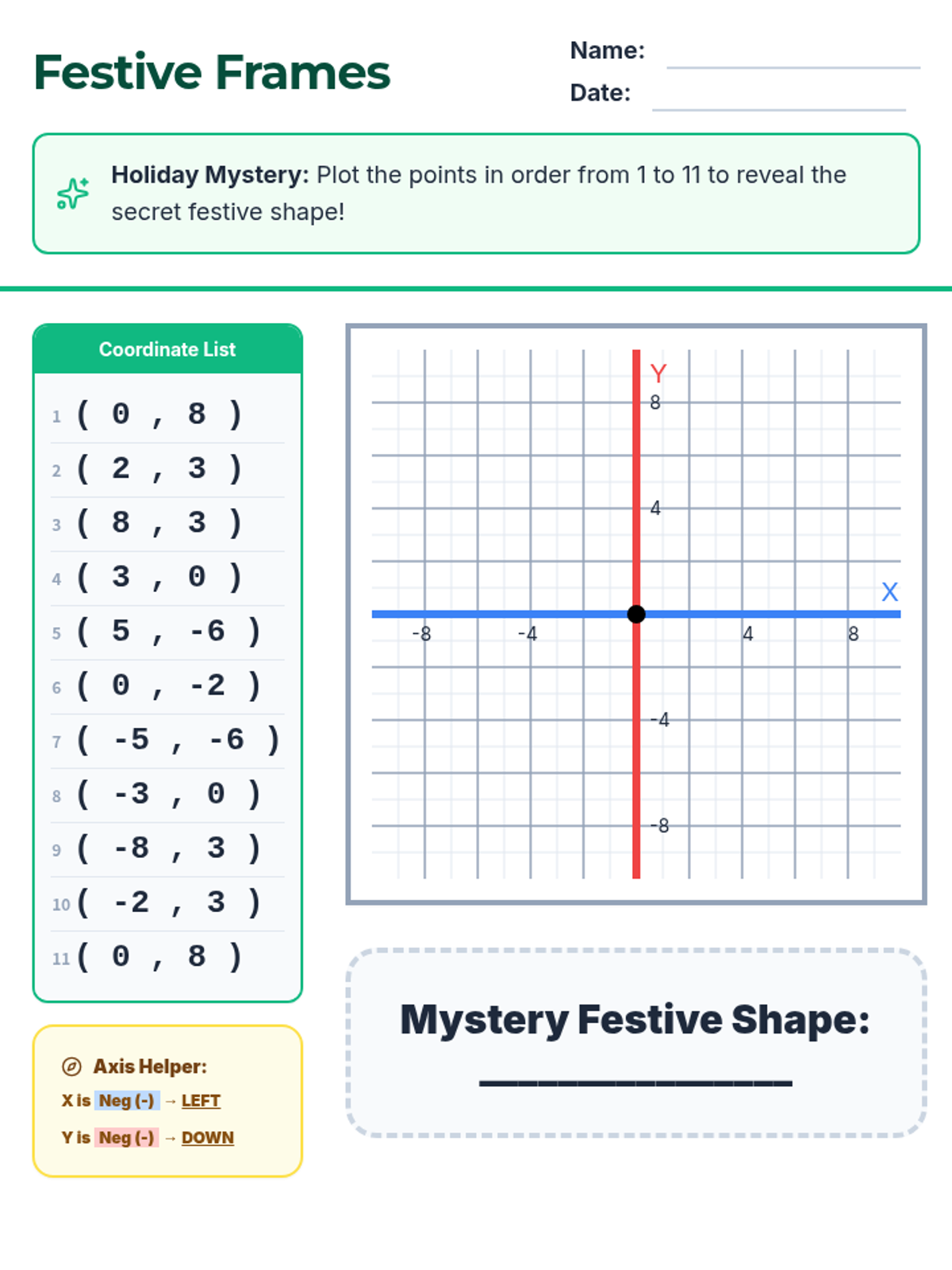
A mystery plotting activity revealing a holiday star. Designed with a clear, numbered list of coordinates and enlarged grid markers to support students with processing or visual-spatial challenges.
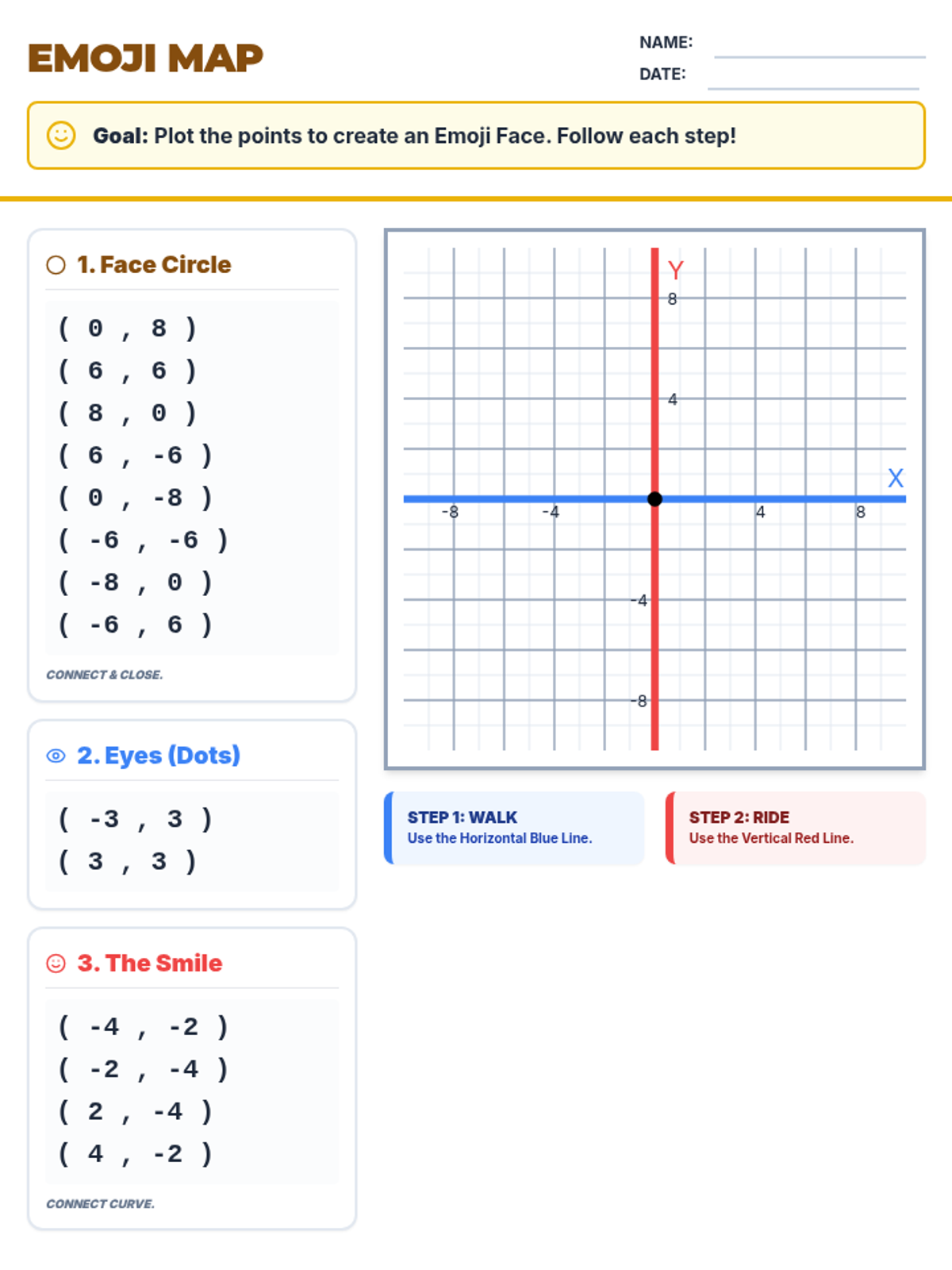
A creative coordinate plotting activity where students draw a happy face emoji. The activity is broken into three distinct parts (outline, eyes, smile) to help IEP students manage the task in smaller steps.
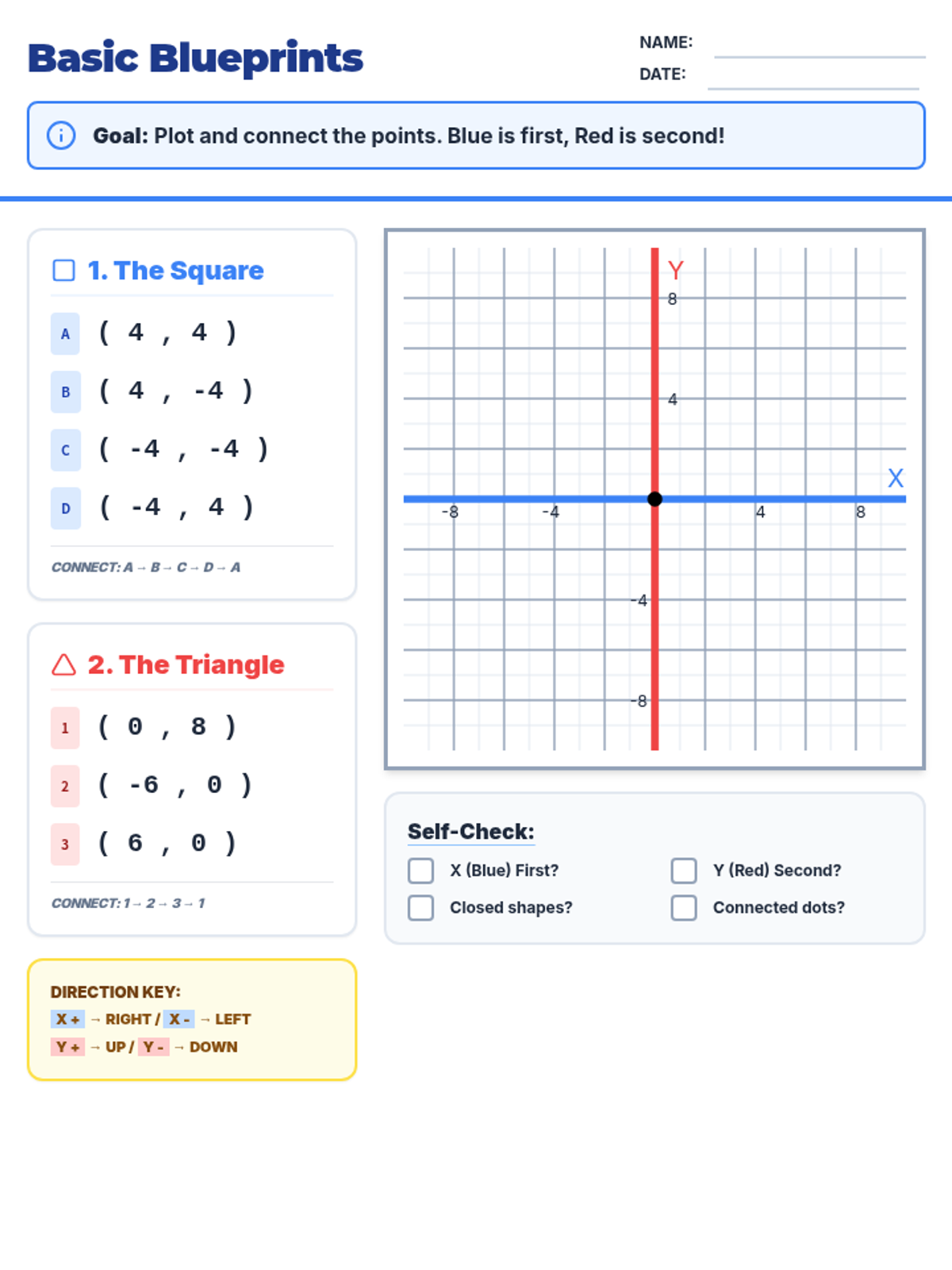
A scaffolded worksheet for plotting a square and a triangle. Features color-coded axes (blue X, red Y) and simplified instructions for IEP support.
Interactive slides introducing the 4-quadrant coordinate plane using the 'Elevator Rule' (x first, then y). Designed for IEP students with clear visual aids, color-coded axes, and large text.
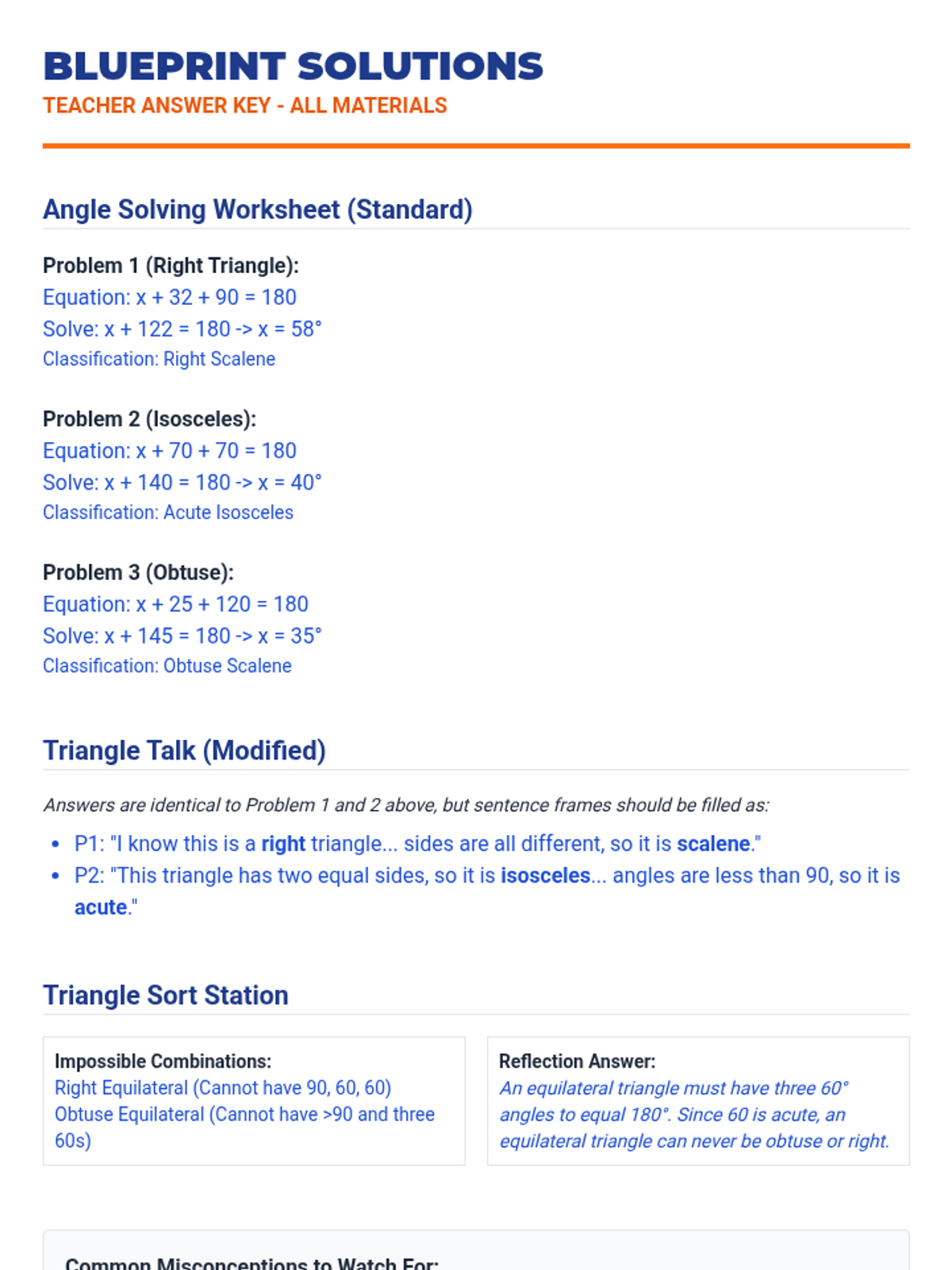
A comprehensive answer key for the teacher, covering the standard and modified worksheets as well as the center activities. Includes fully solved algebraic equations, correct classifications, and notes on common student misconceptions.
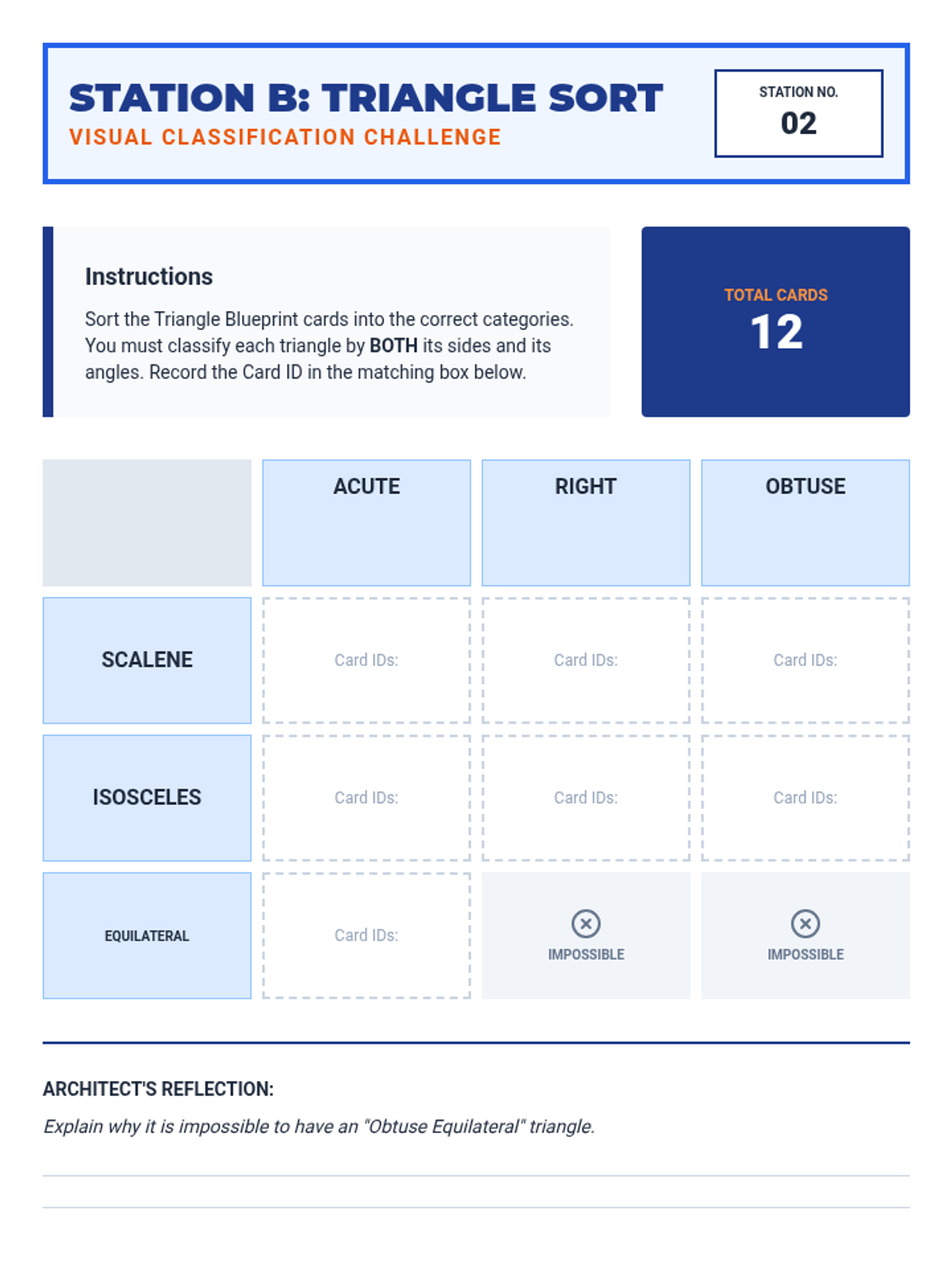
A sorting center activity where students classify triangle cards based on both their side lengths and angle measures. Includes a matrix for recording IDs and a reflection question on the geometric impossibility of certain triangle types.
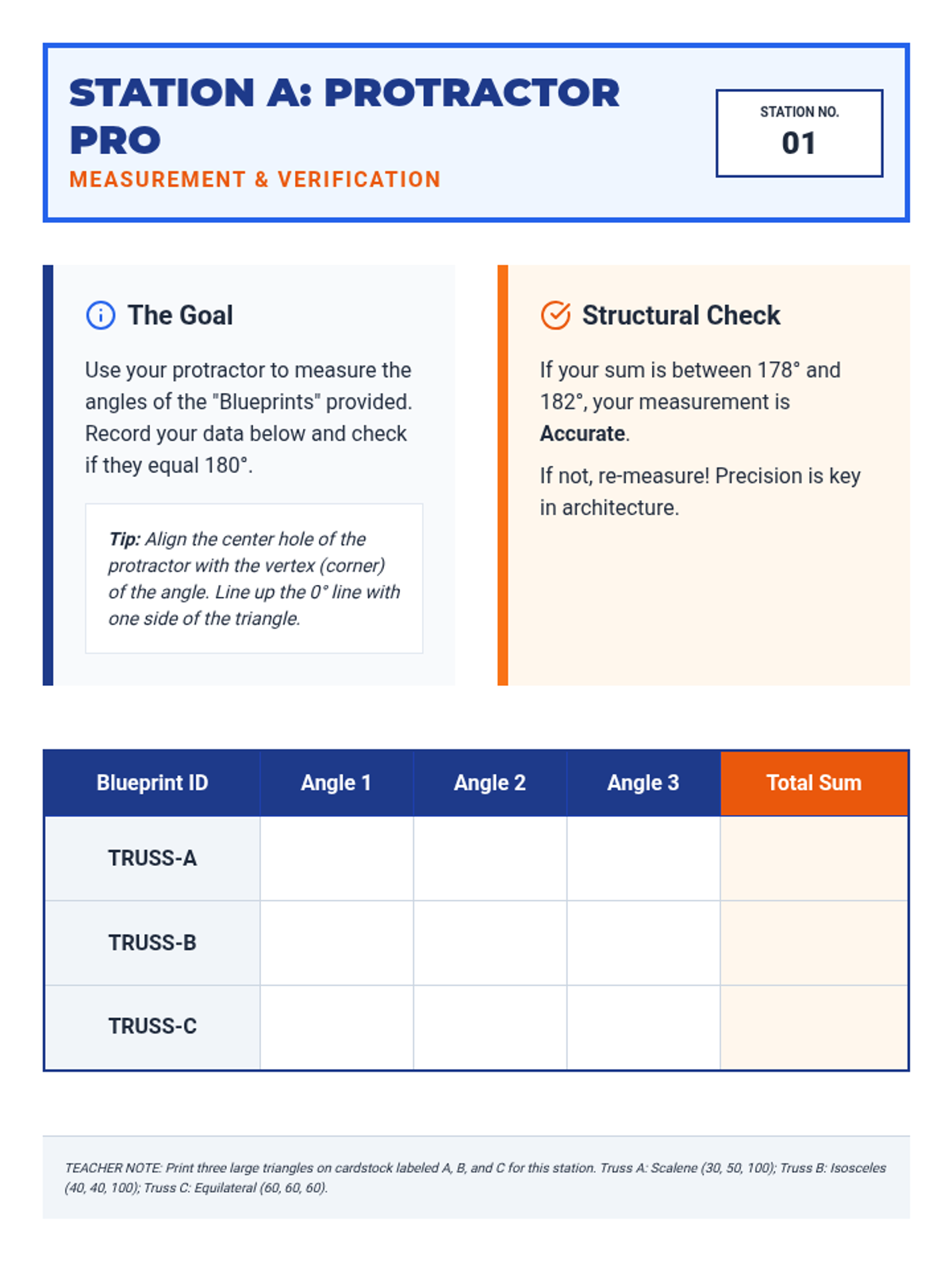
A hands-on center activity focusing on using protractors to measure angles in physical triangle models. Students record their measurements in a structural log and verify that the sum of the angles equals approximately 180 degrees.
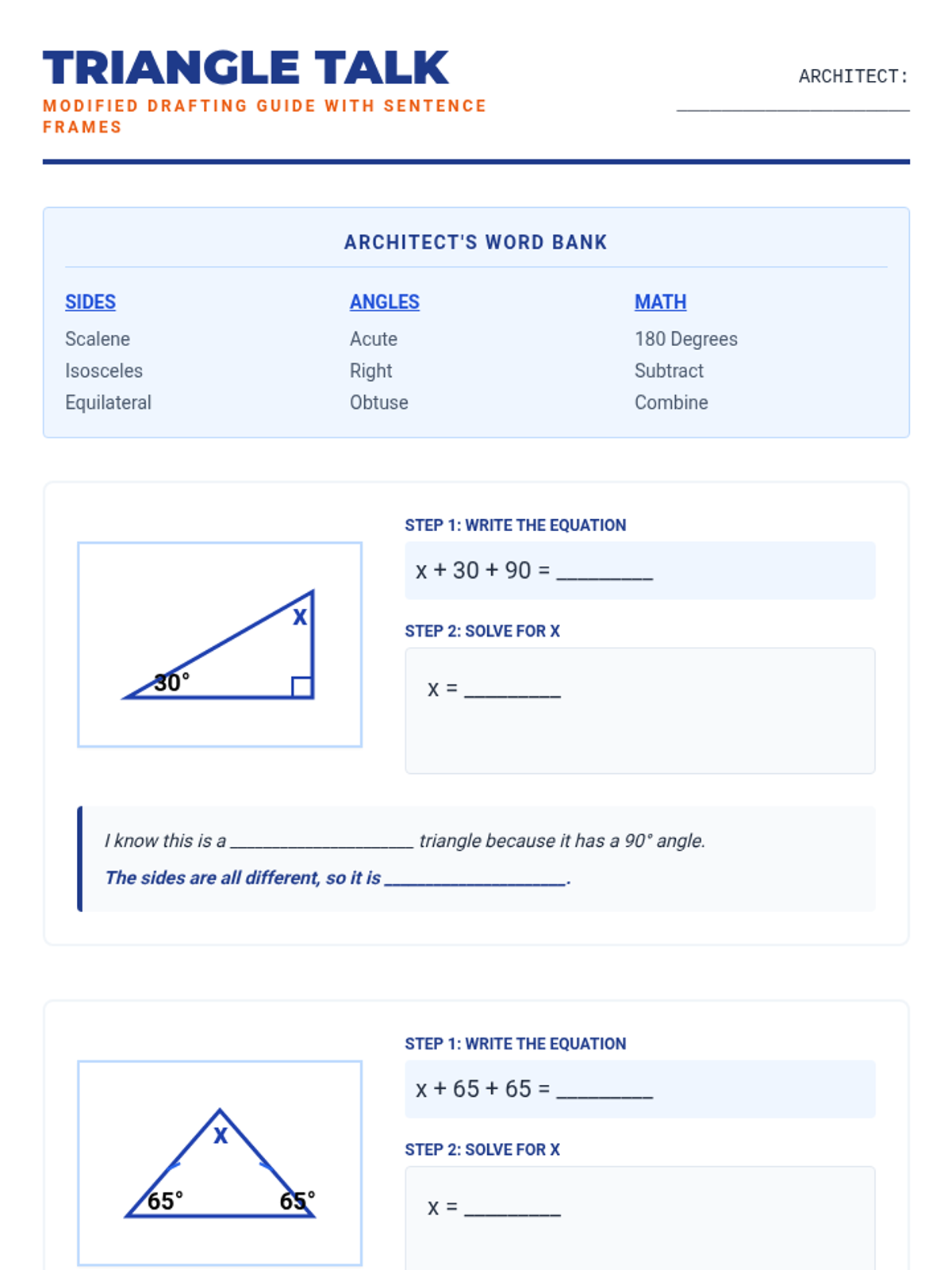
A modified version of the triangle worksheet designed for students requiring additional support. Includes a word bank, partially completed equations, and sentence frames to guide students in explaining their classification and solving process.
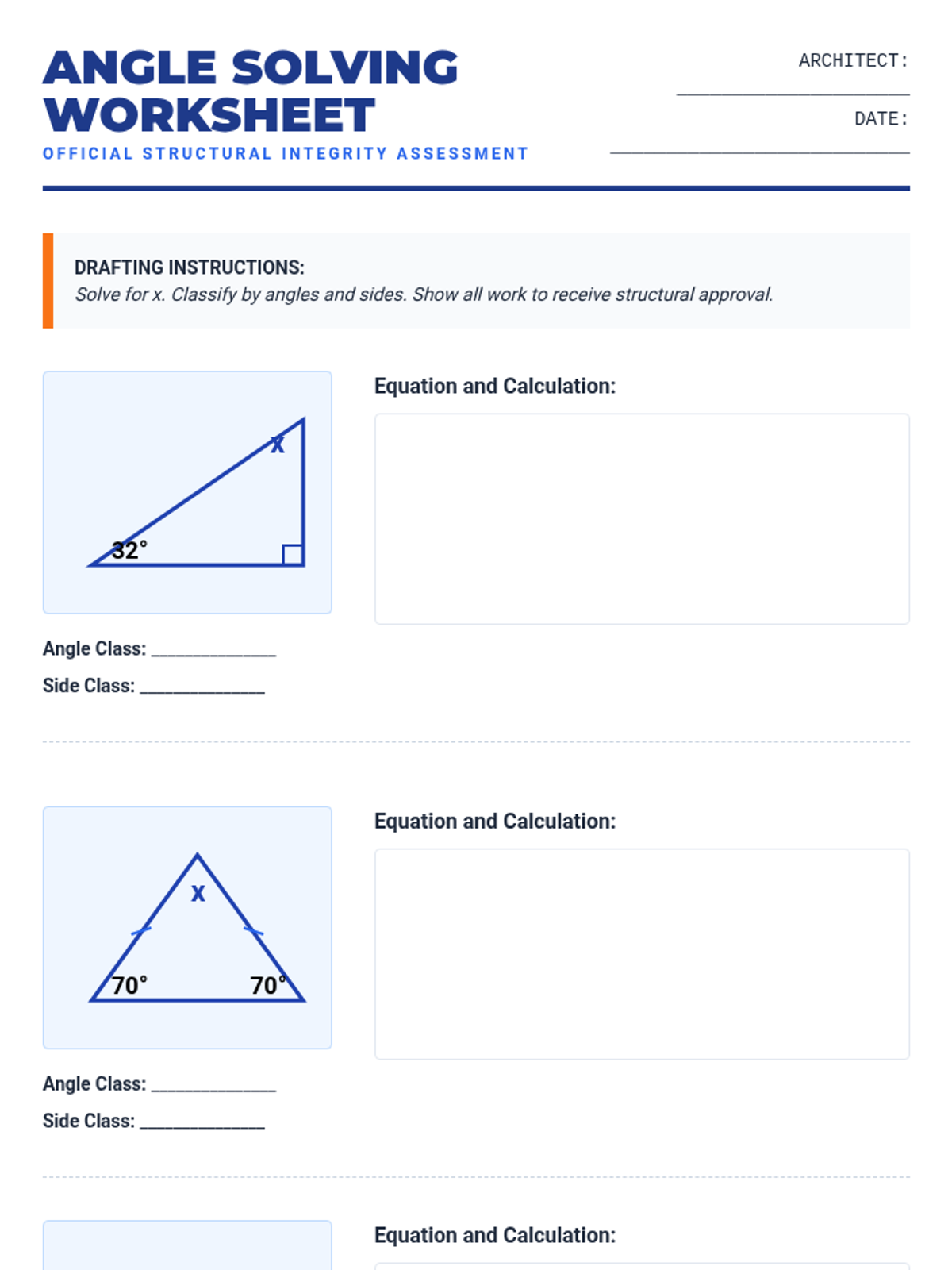
A standard 7th-grade math worksheet focused on solving for missing angles in triangles using algebraic equations. Students are required to write the equation, show their solving steps, and classify each triangle by both sides and angles.
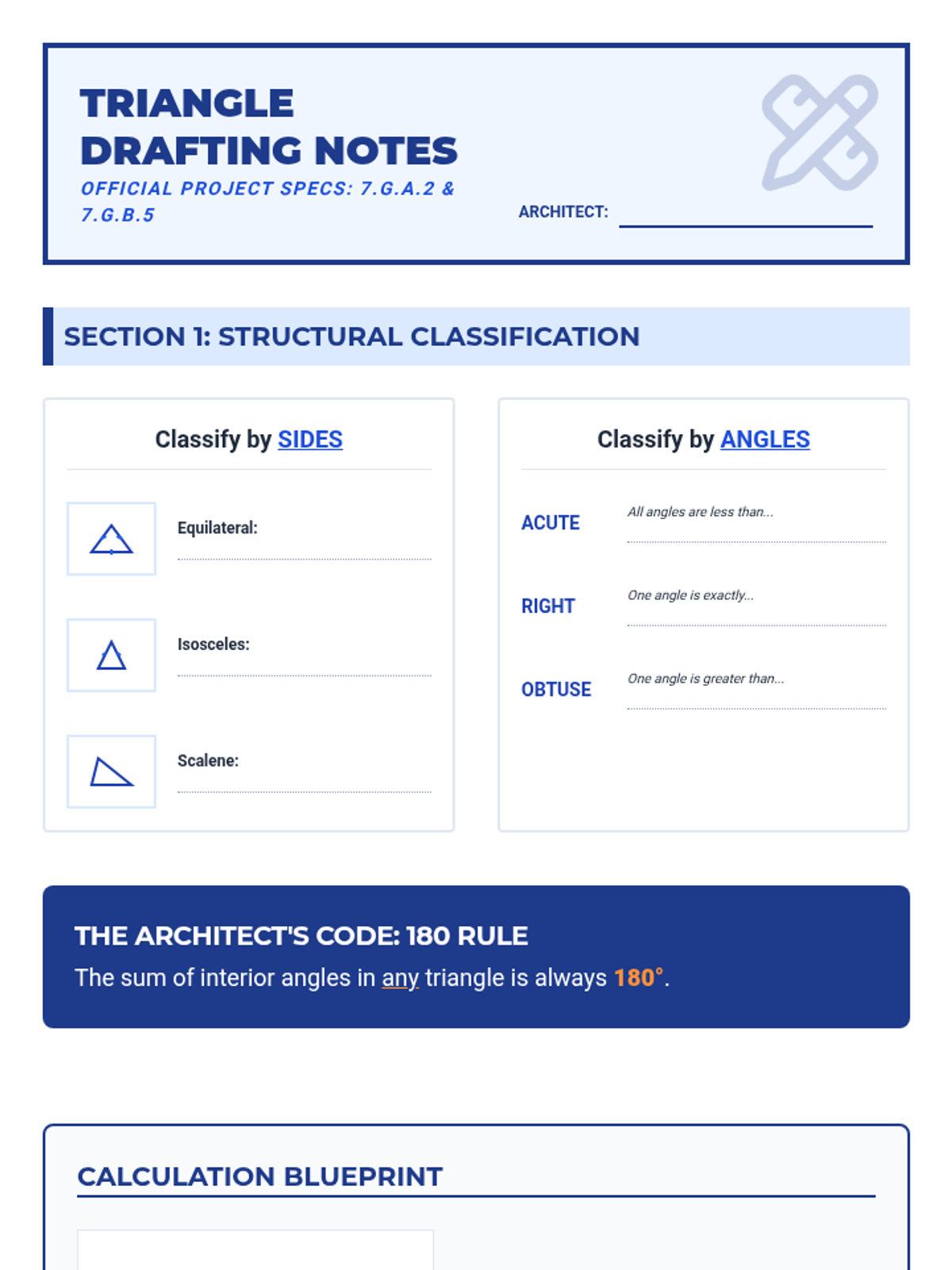
A blueprint-themed guided notes document for 7th-grade students to follow during instruction on triangle classification and the Triangle Sum Theorem. Includes fill-in-the-blank definitions, visual diagrams, and a dedicated workspace for solving algebraic equations.
An interactive slide deck for a 7th-grade geometry lesson using an architectural blueprint theme. Features visual classification aids, a step-by-step breakdown of the Triangle Sum Theorem, and clear instructions for classroom center rotations.
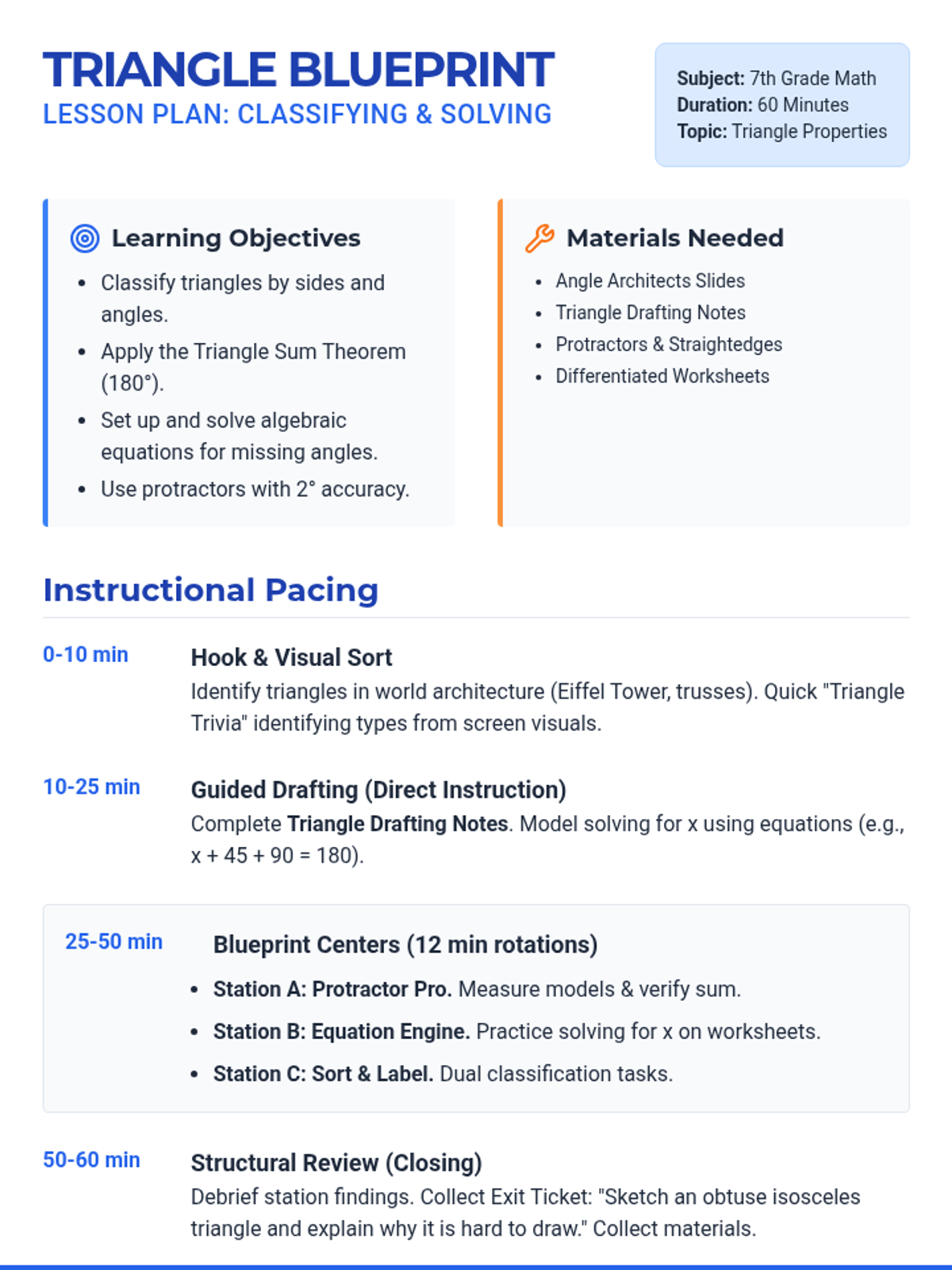
A detailed 60-minute lesson plan for teaching triangle classification and angle measures to 7th graders. Includes pacing, differentiation strategies for Tier 3 and ELL students, and key discussion prompts centered around a blueprint-inspired architectural theme.
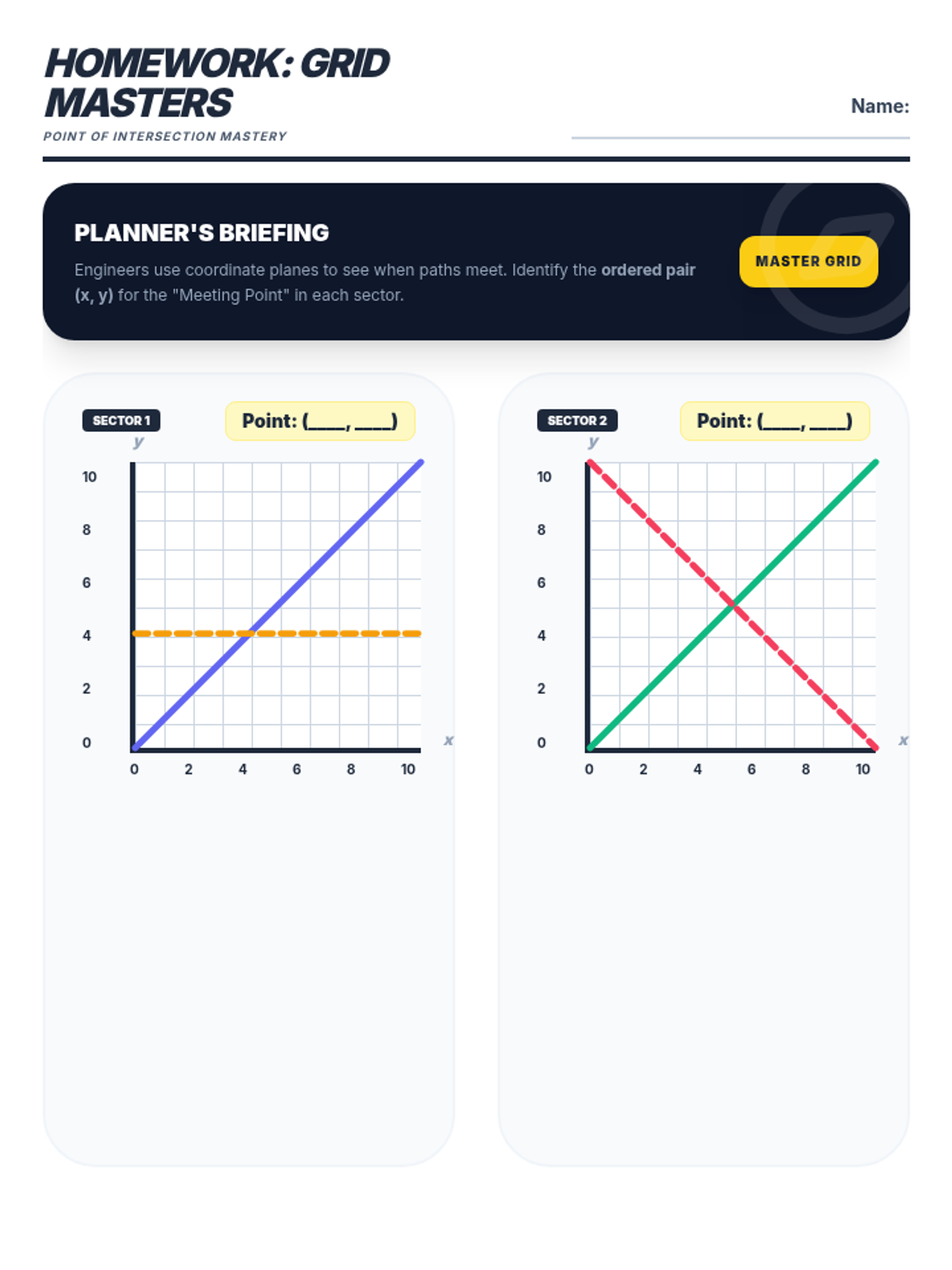
A comprehensive two-page homework assignment focused on identifying intersection points across four different sectors (graphs) and interpreting their real-world significance. Fixes page breaks, axis labels, and text wrapping. Balanced across two pages. No empty third page.
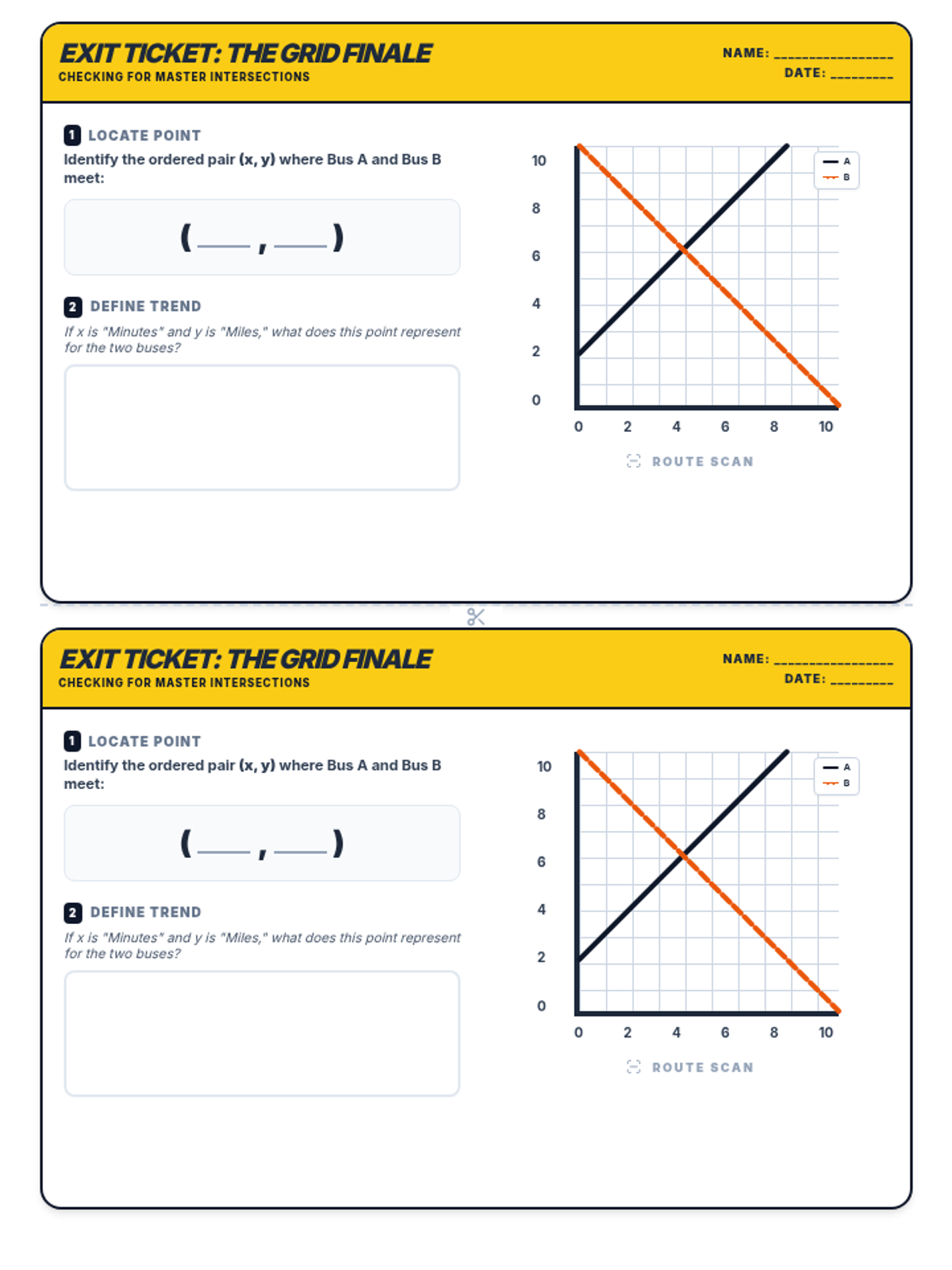
A grid-themed exit ticket with a large graph where students must identify a specific (x, y) intersection and interpret its meaning in a real-world context. This version is 2-up for printing and fixes alignment issues. Darkened lines for better contrast.
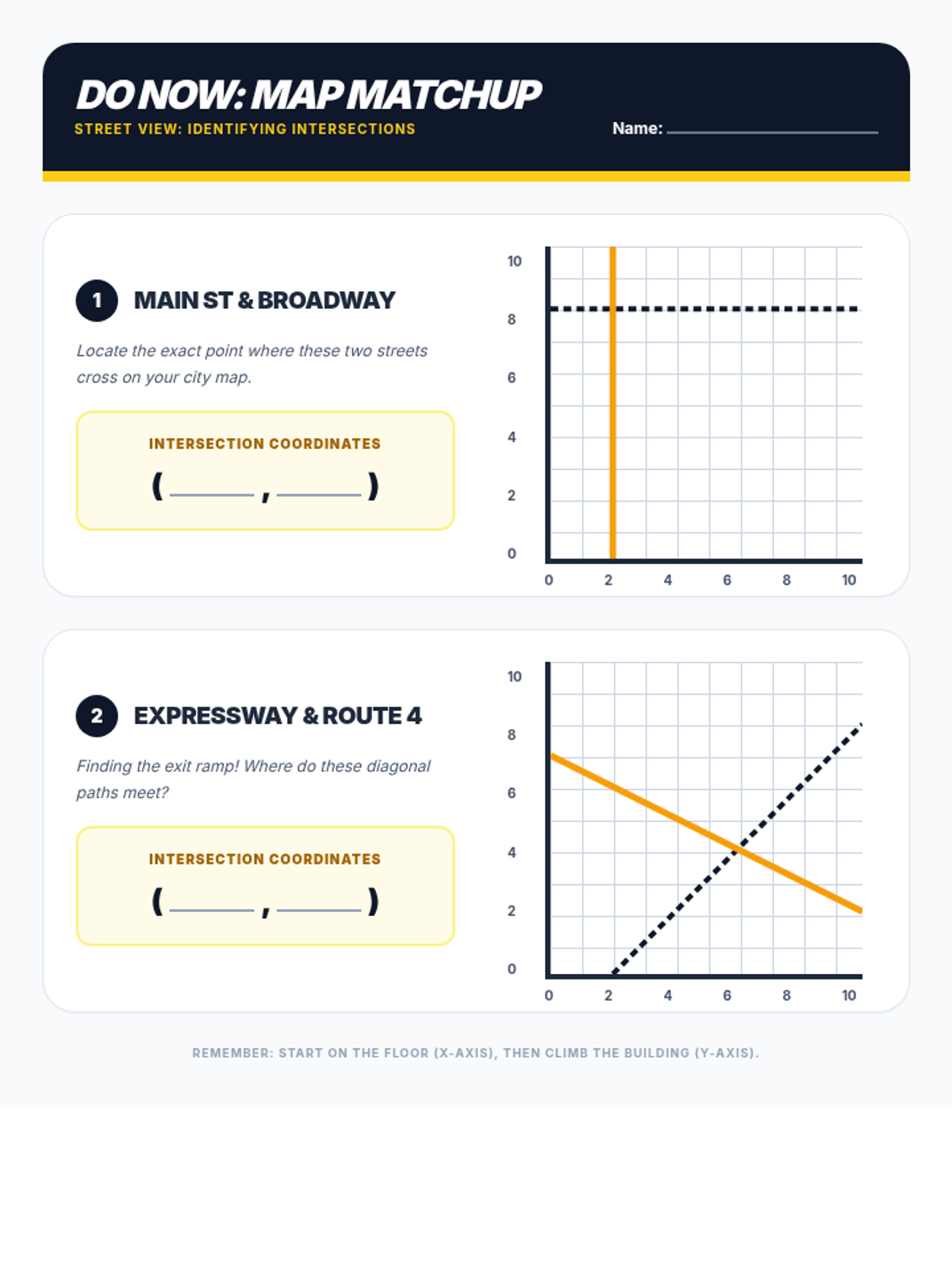
A map-themed Do Now warmup where students identify intersection coordinates for city streets on two different coordinate planes. This version fixes page breaks, SVG alignment, and contrast.
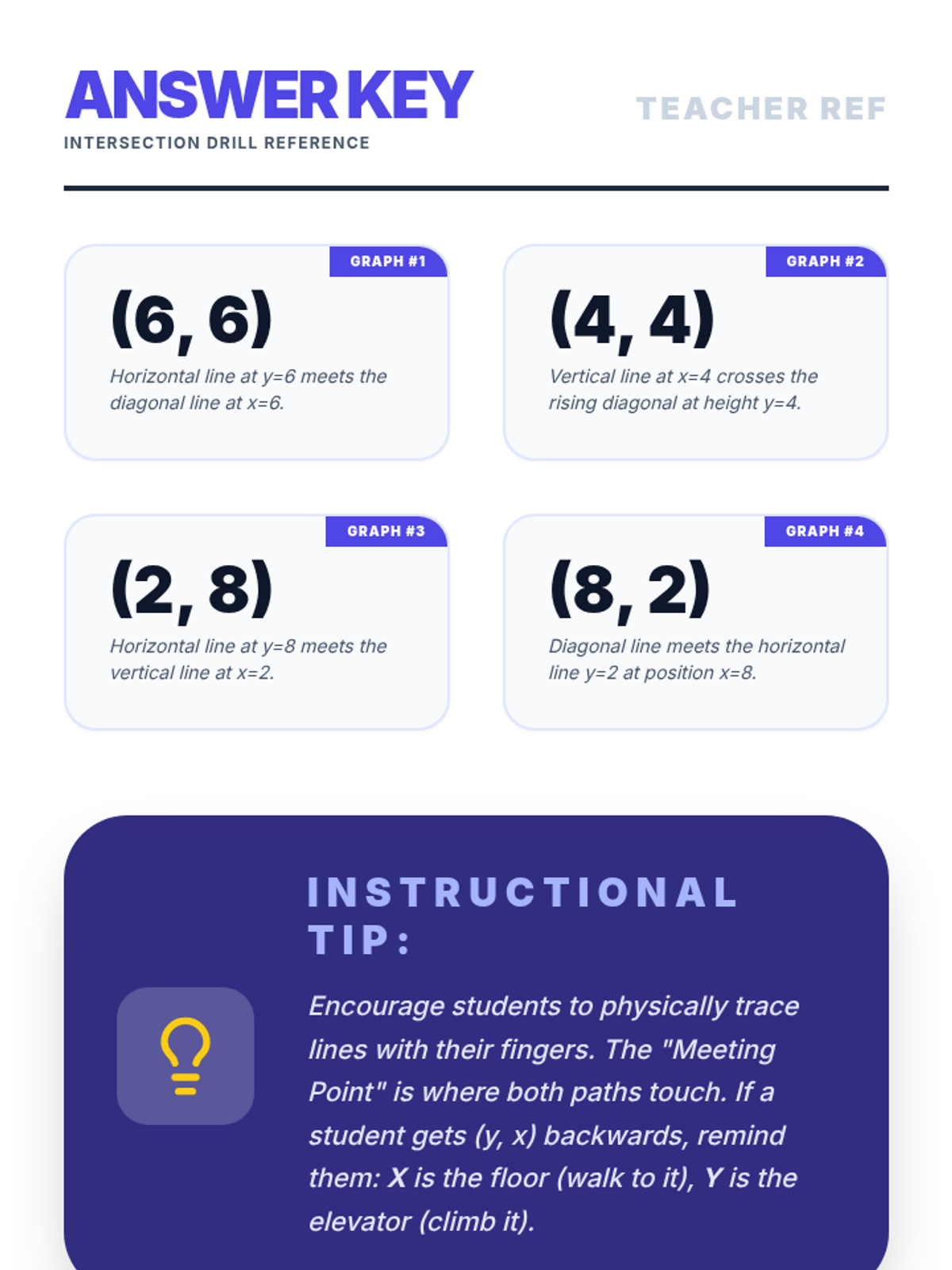
The answer key for the Intersection Drill worksheet, providing the correct (x, y) coordinates for all four practice problems. Fixed page breaks and updated icons.
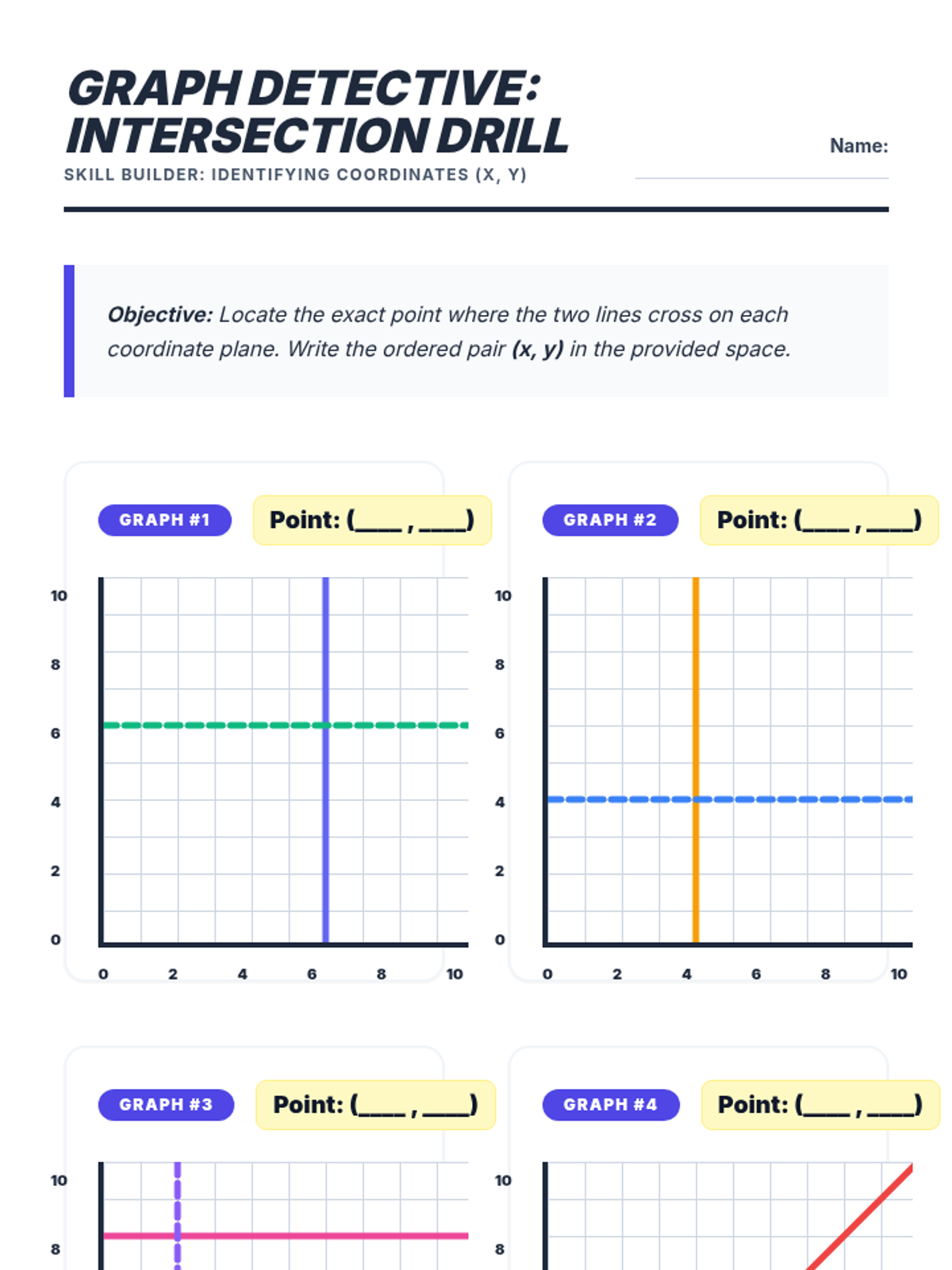
A focused practice worksheet featuring four coordinate planes with intersecting lines. Students must practice the specific skill of identifying and writing the exact (x, y) coordinates for each point of intersection. Improved layout to avoid bisection and cleaned up Graph #1. Fixed label alignment and wrapping issues.
A visually engaging slide deck teaching students how to identify the point of intersection between two linear graphs, explaining both the mathematical procedure and the real-world contextual meaning (break-even, tie, or overtaking point). Fixed content overflow and label clipping.
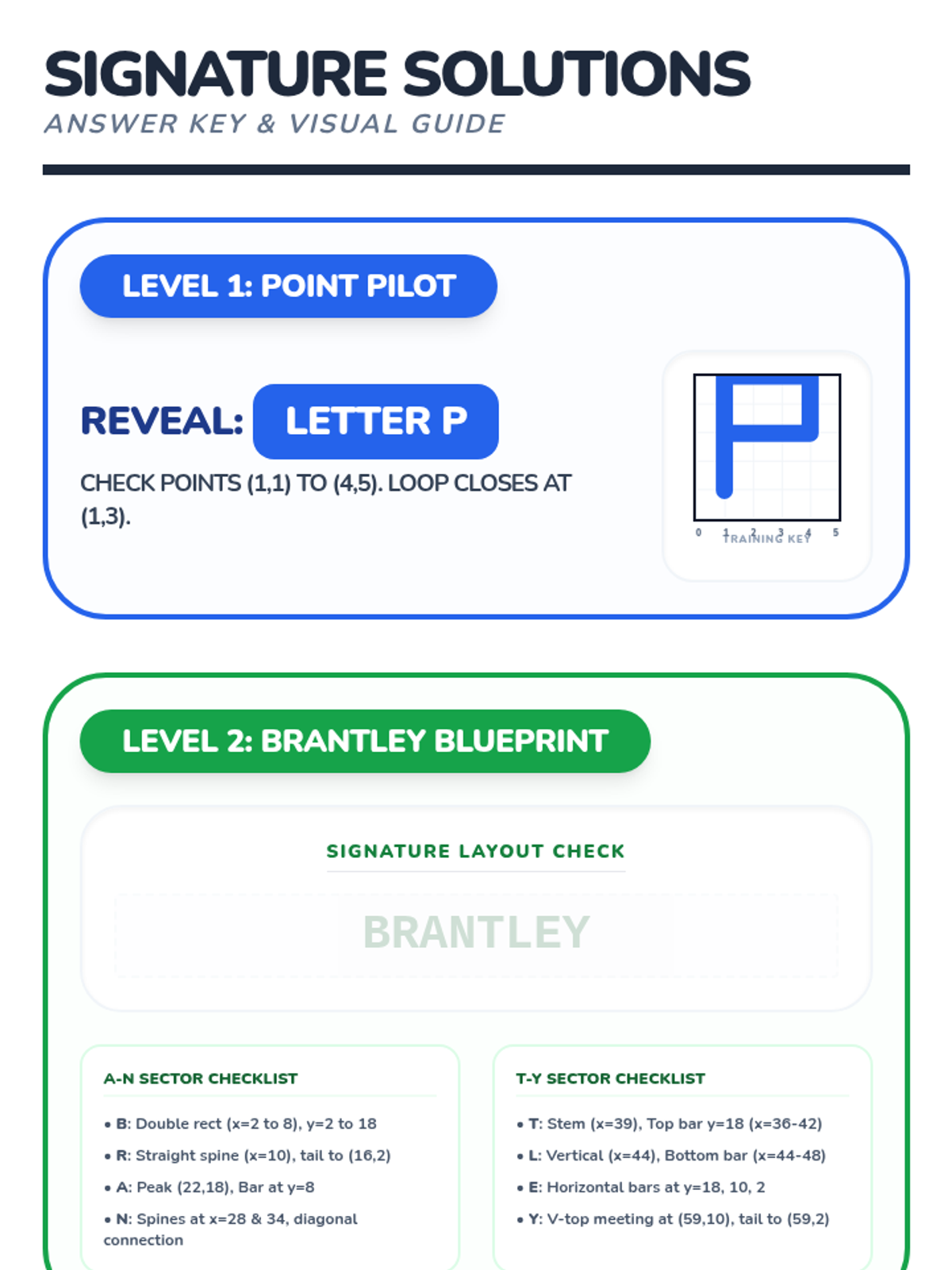
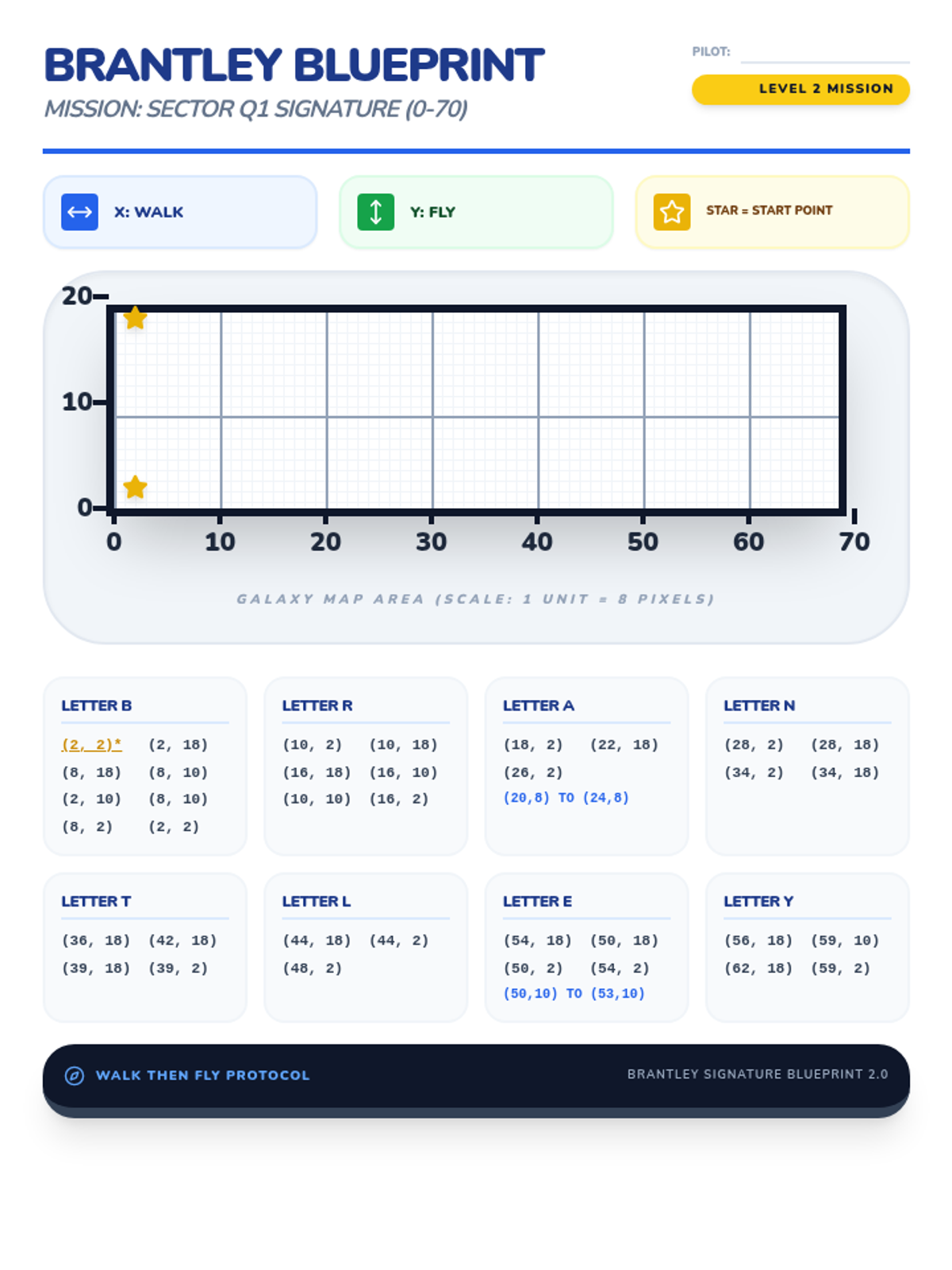
Teacher answer key for the simplified Brantley signature activity. Includes a visual diagram with grid overlay and full coordinate data for teacher verification. Consolidated to ensure single-page printing. Letter paths and start stars perfectly aligned.
A simplified one-page worksheet for IEP students to plot the full name 'BRANTLEY'. Features a large 0-40 grid, color-coded coordinates, and clear instructions. Consolidated to ensure single-page printing. High-precision scale (1 unit = 1 square).
A simplified slide deck introducing the 'Walk then Fly' rule and the Brantley signature mission. Optimized for IEP students with high-contrast visuals, a model grid, and clear instructions. All units labeled 0-10 for maximum support.
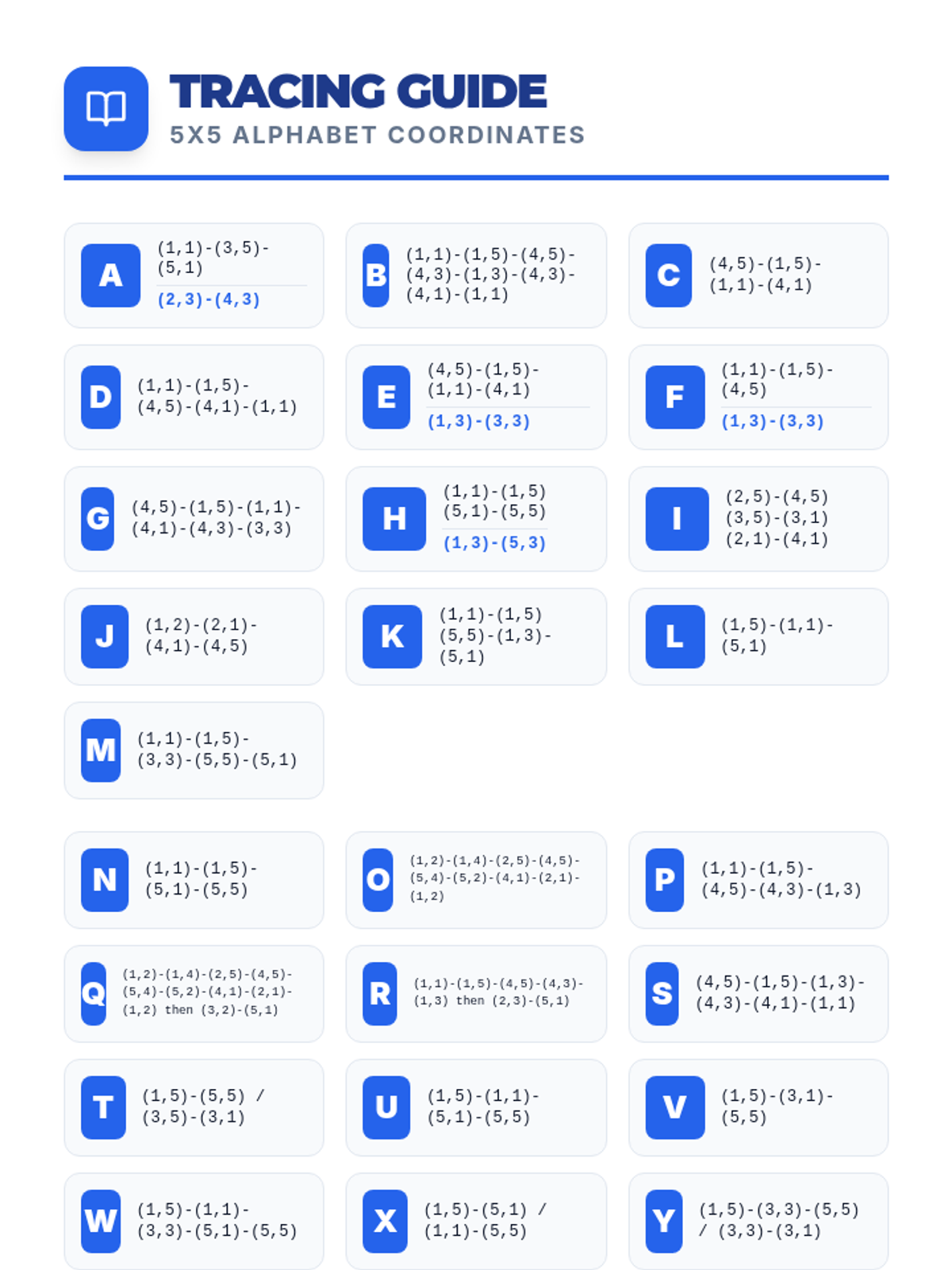
A complete reference tracing guide showing coordinates for the full alphabet A-Z on a 5x5 grid. Includes specific coordinate sequences for each letter and teacher tips for IEP implementation.
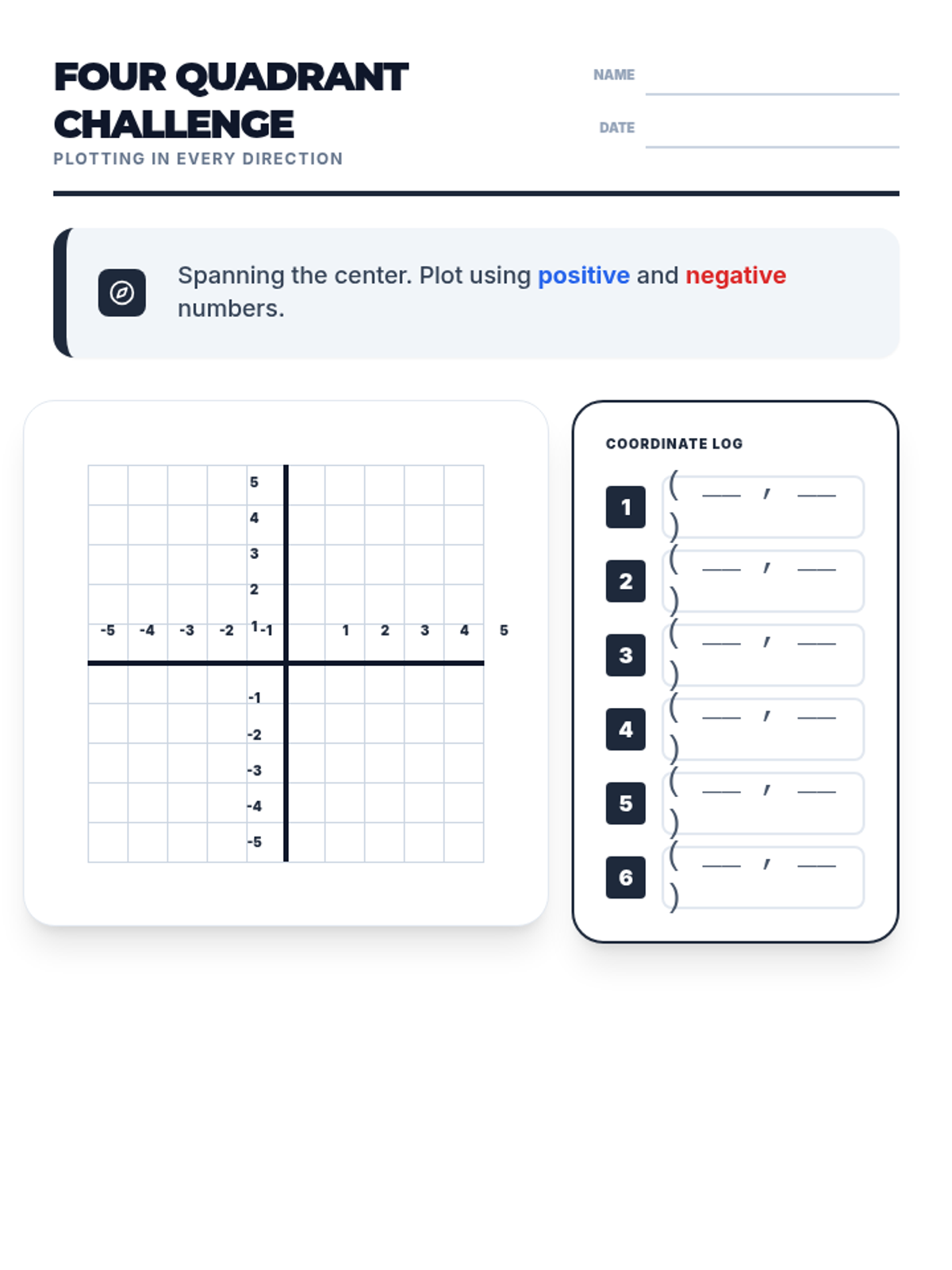
A revised Four Quadrant worksheet with centered, reliably rendered table-based grids, static point tracking rows, and high-contrast labels. Axis labels are exactly aligned with grid lines.
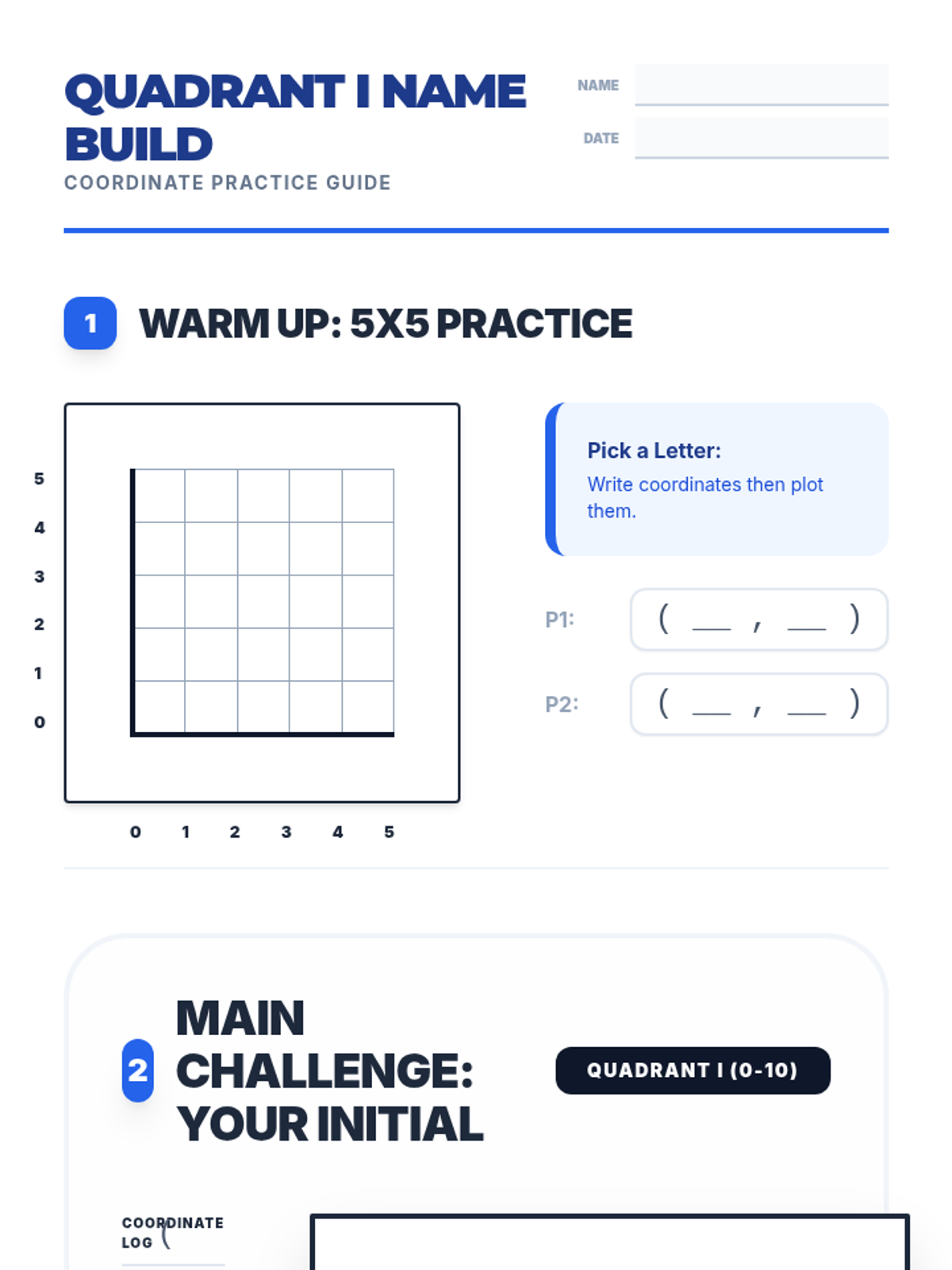
A revised Quadrant I worksheet with standard static HTML point trackers, reliably rendered table-based grids, and enlarged student work areas. Part 2 is forced to Page 2 for usable space.

A revised visual slide deck introducing coordinate planes with fixed Letter T/H logic, centered 4-quadrant grids, and improved visual contrast for coordinates.
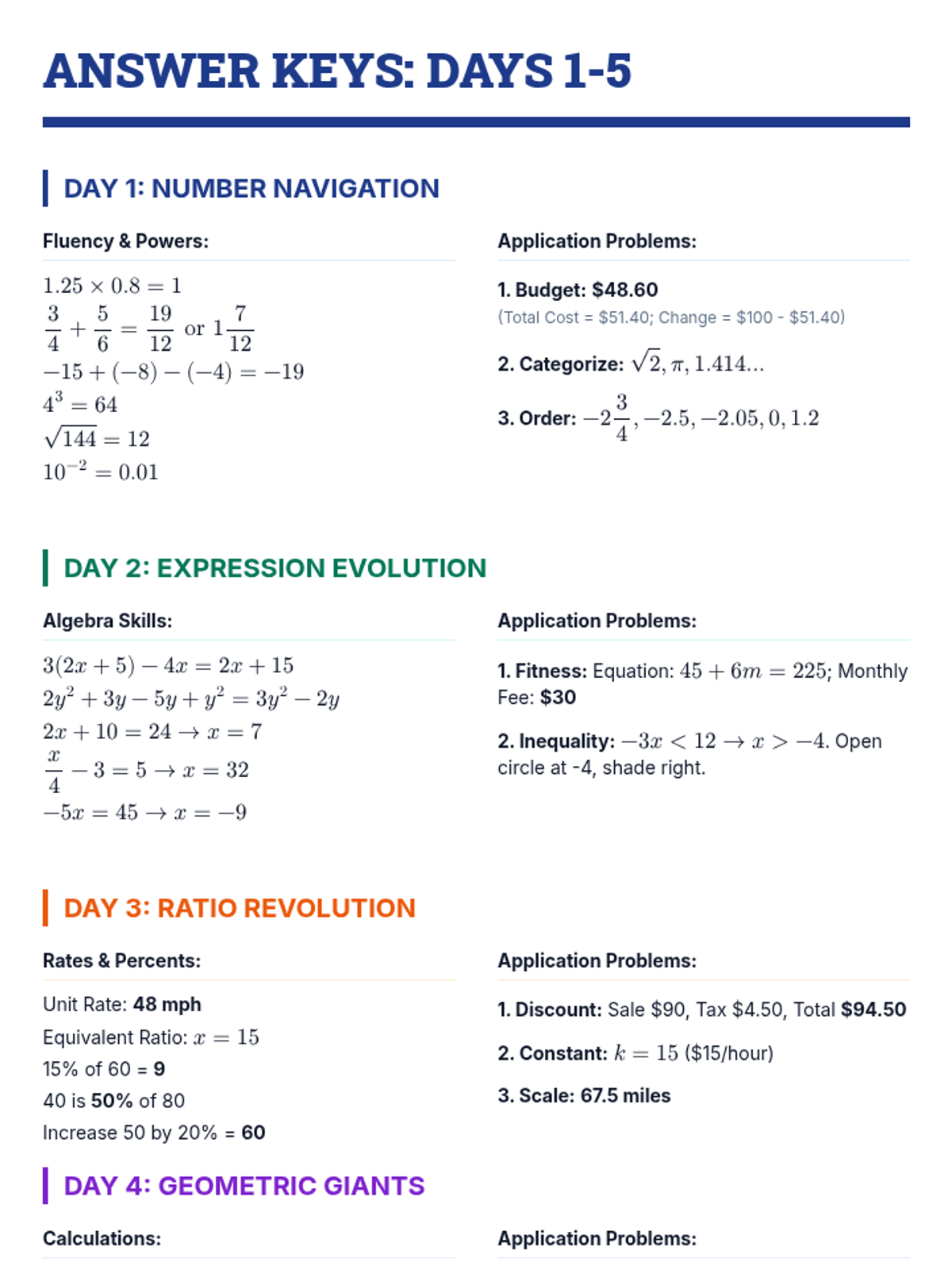
Full answer keys for the 5-day math morning work packet. Revised to fix math rendering, missing answers, and page flow.
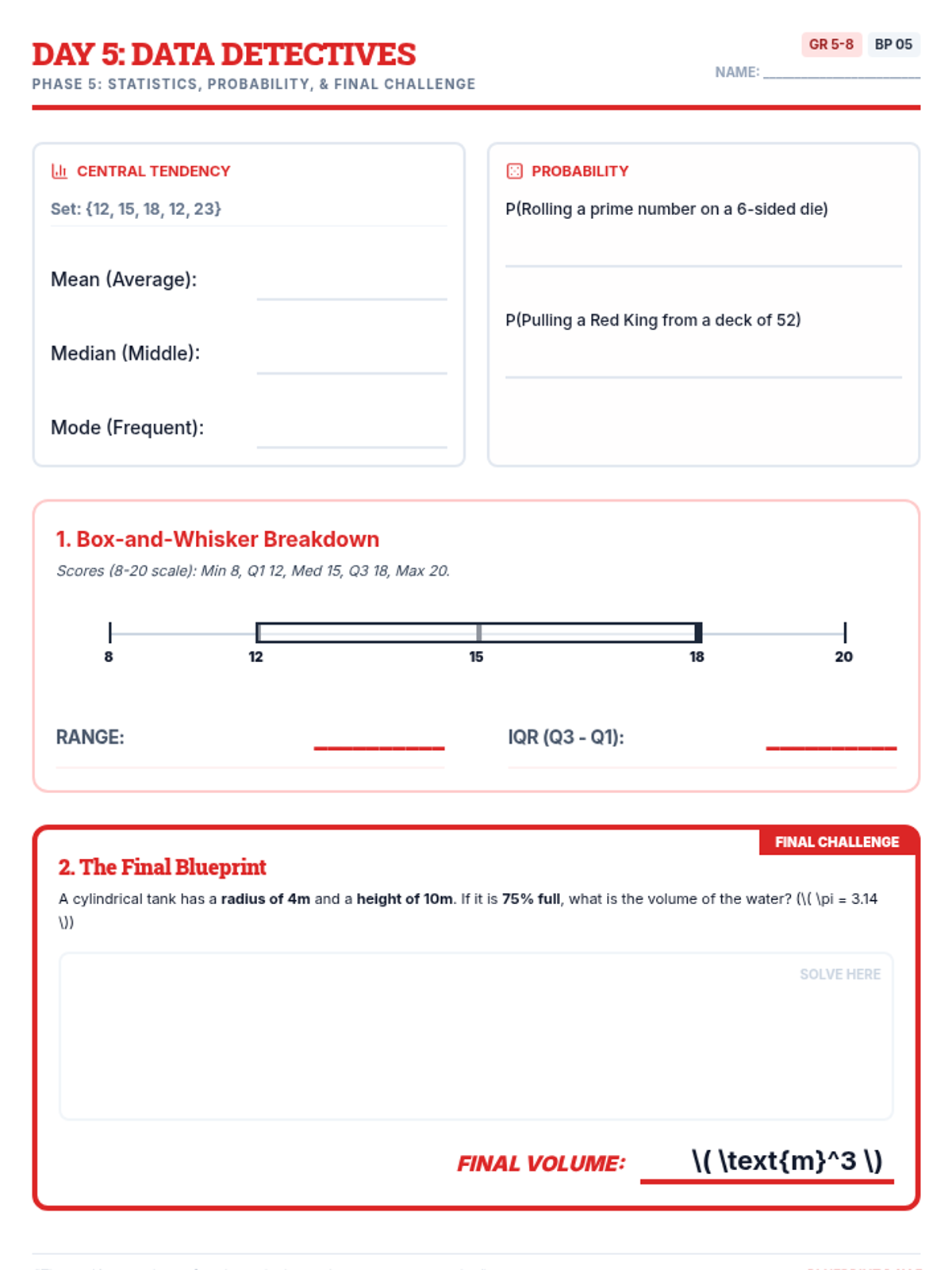
Day 5 Morning Work worksheet focusing on statistics and probability. Revised to fix math rendering, improve page breaks, and enlarge student work areas.
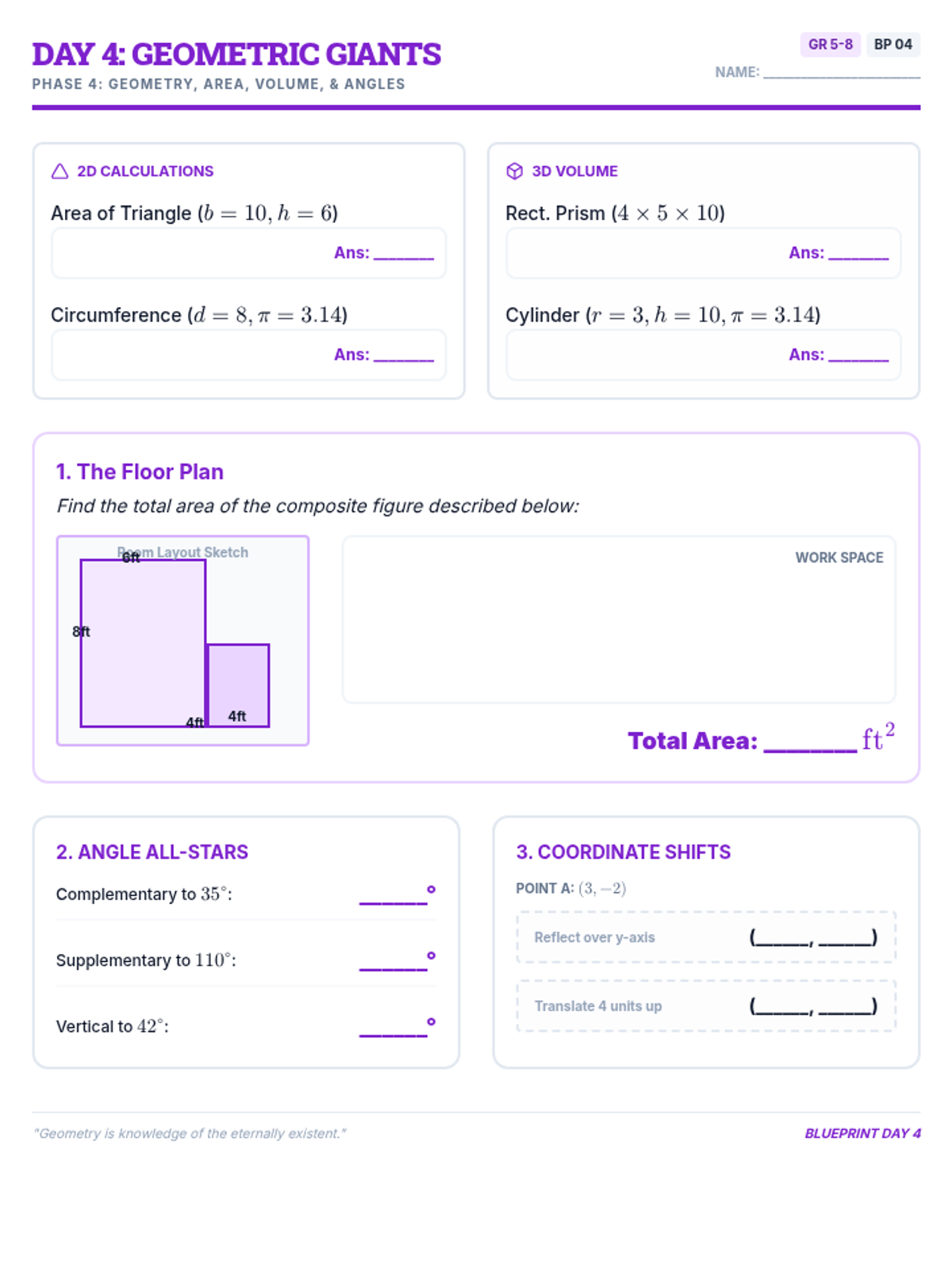
Day 4 Morning Work worksheet focusing on geometry. Revised to fix math symbol rendering, improve work space, and add a specific L-shaped room sketch.