An answer key for the Fraction Faceoff worksheet, featuring completed visual models and comparison reasoning. Revised to match worksheet layout and formatting.
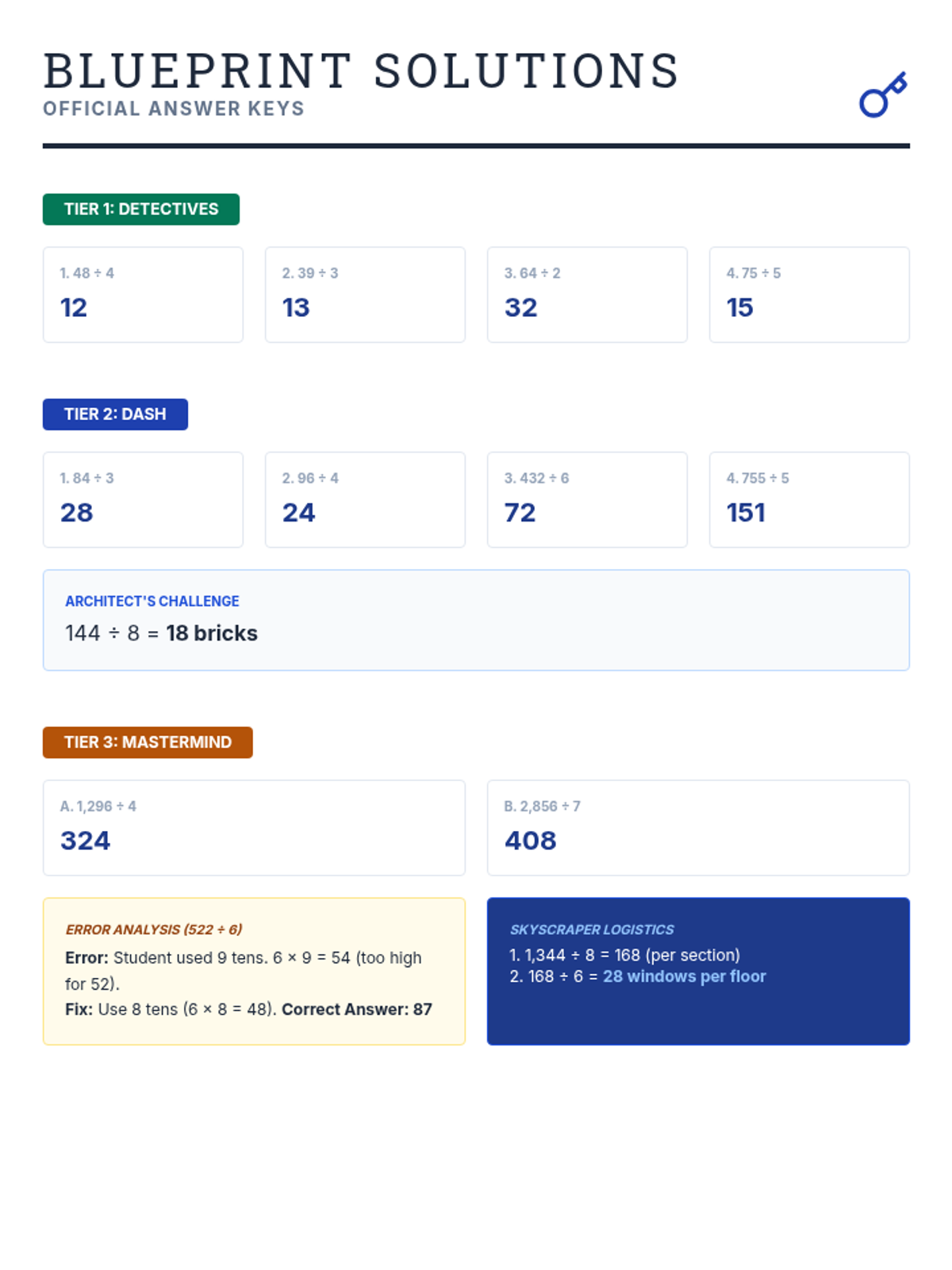
A comprehensive answer key for all three tiers of division worksheets. Includes final answers, error analysis explanations, and step-by-step solutions for multi-step word problems.
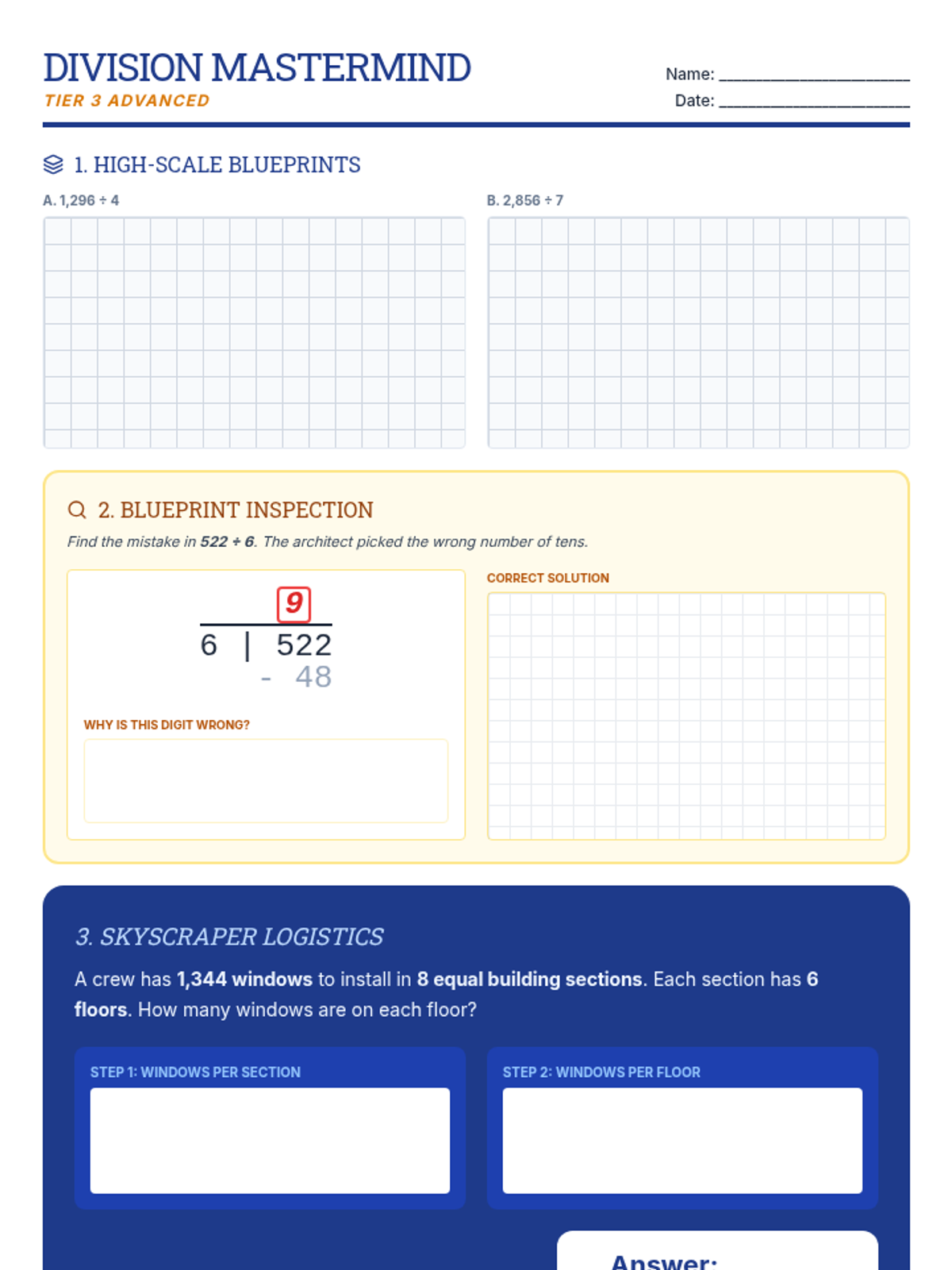
An advanced extension worksheet (Tier 3) for long division. Features 4-digit dividends, error analysis tasks where students must identify and correct structural mistakes, and multi-step word problems requiring logical reasoning and sequential division.
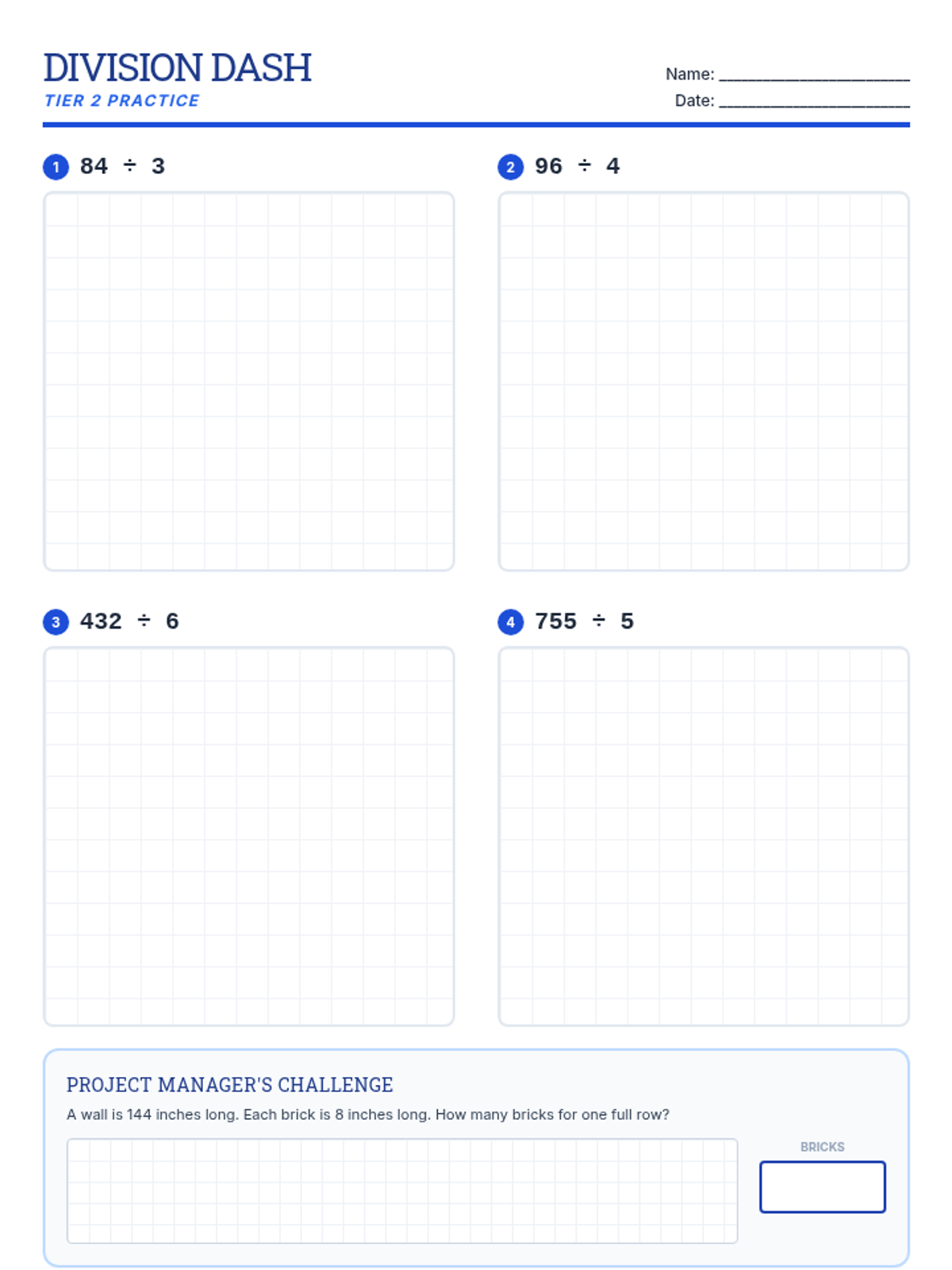
A standard practice worksheet (Tier 2) for long division. Includes problems ranging from 2-digit to 3-digit dividends with 1-digit divisors, utilizing grid-lined work areas for alignment and a real-world word problem application.
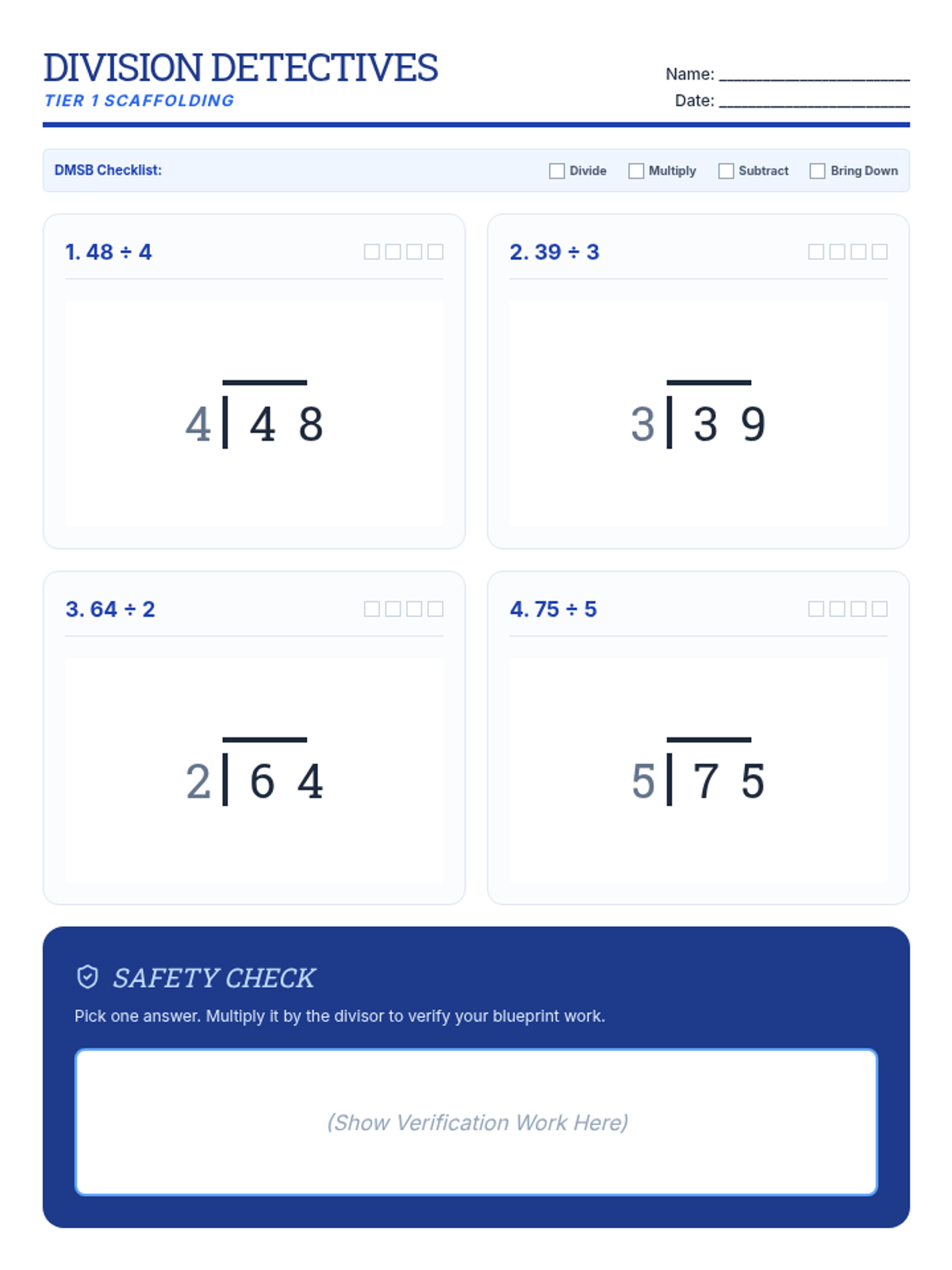
A scaffolded worksheet (Tier 1) for students emerging in their understanding of long division. Includes pre-drawn steps, tracking checklists for the DMSB algorithm, and visual guides to support 2-digit by 1-digit division.
A visual slide deck for teaching the long division algorithm (DMSB). Features high-contrast blueprint-themed visuals, a step-by-step walkthrough of 72÷3, and vocabulary definitions for dividend, divisor, and quotient.
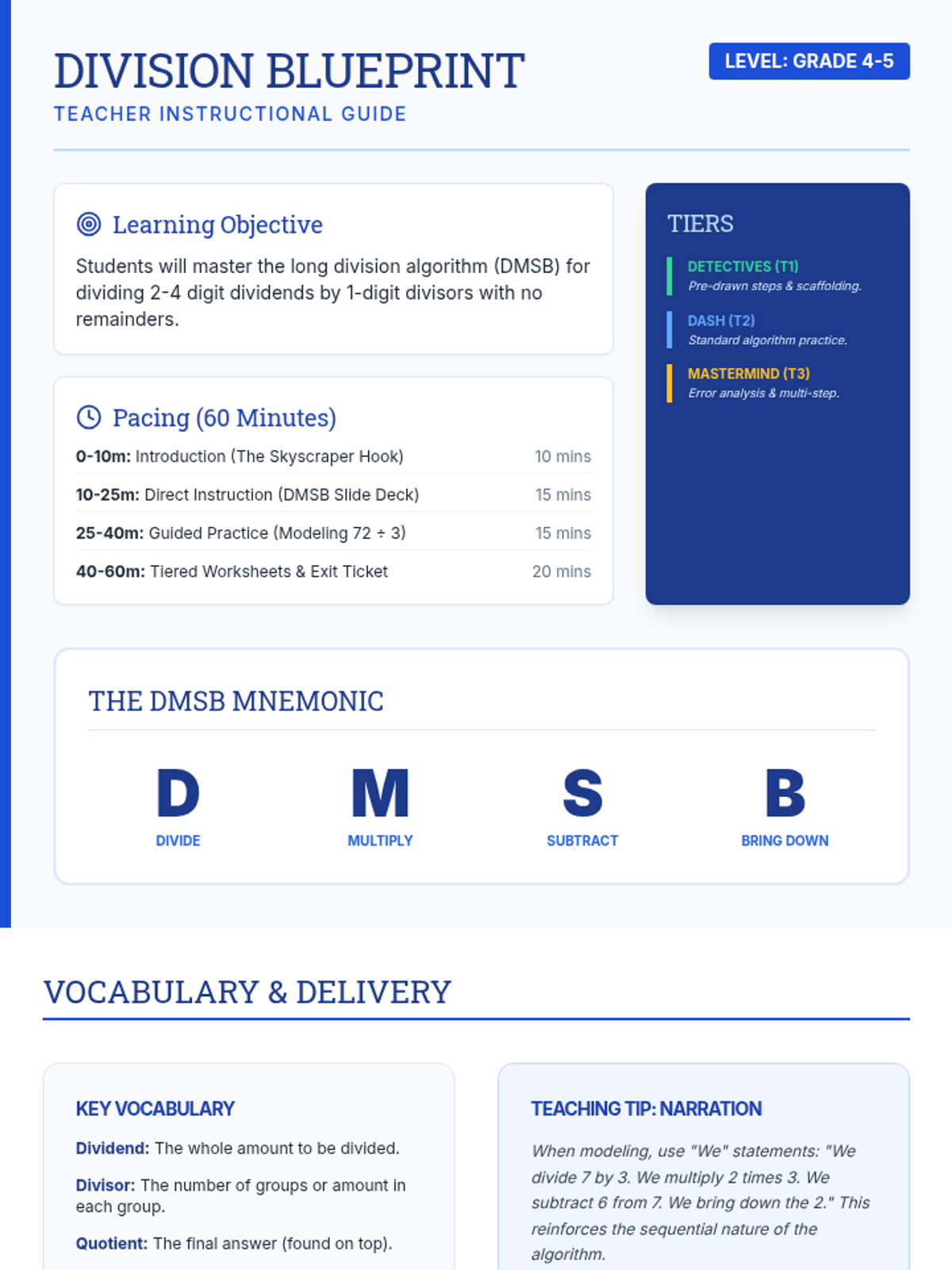
A comprehensive instructional guide for teachers, featuring a blueprint-themed lesson plan for long division. Includes pacing, differentiation strategies, key vocabulary, and a scripted walkthrough of the DMSB method.
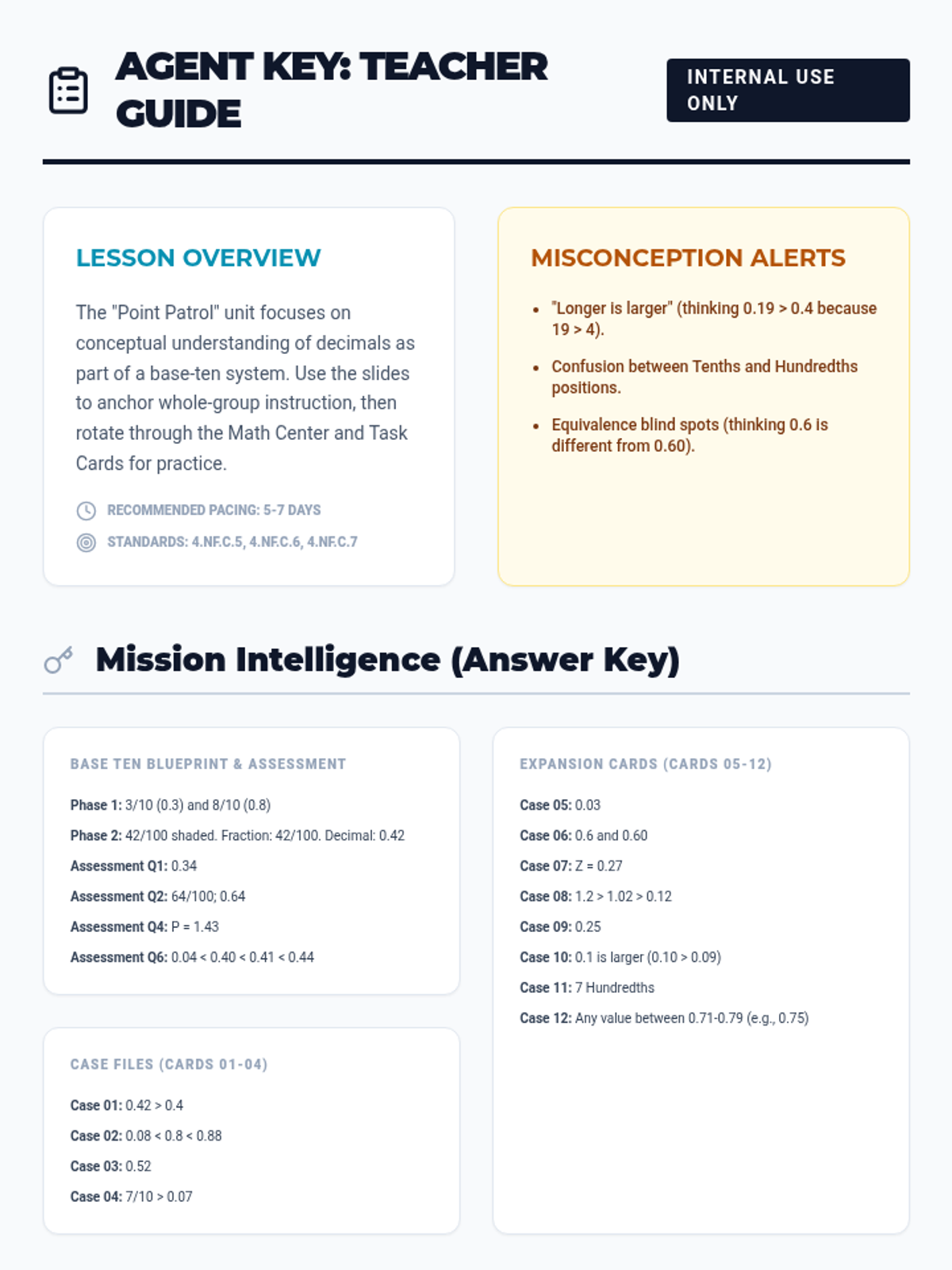
A comprehensive teacher guide containing answer keys, teaching tips, common misconceptions, and differentiation strategies. Revised for better layout and sectioning.
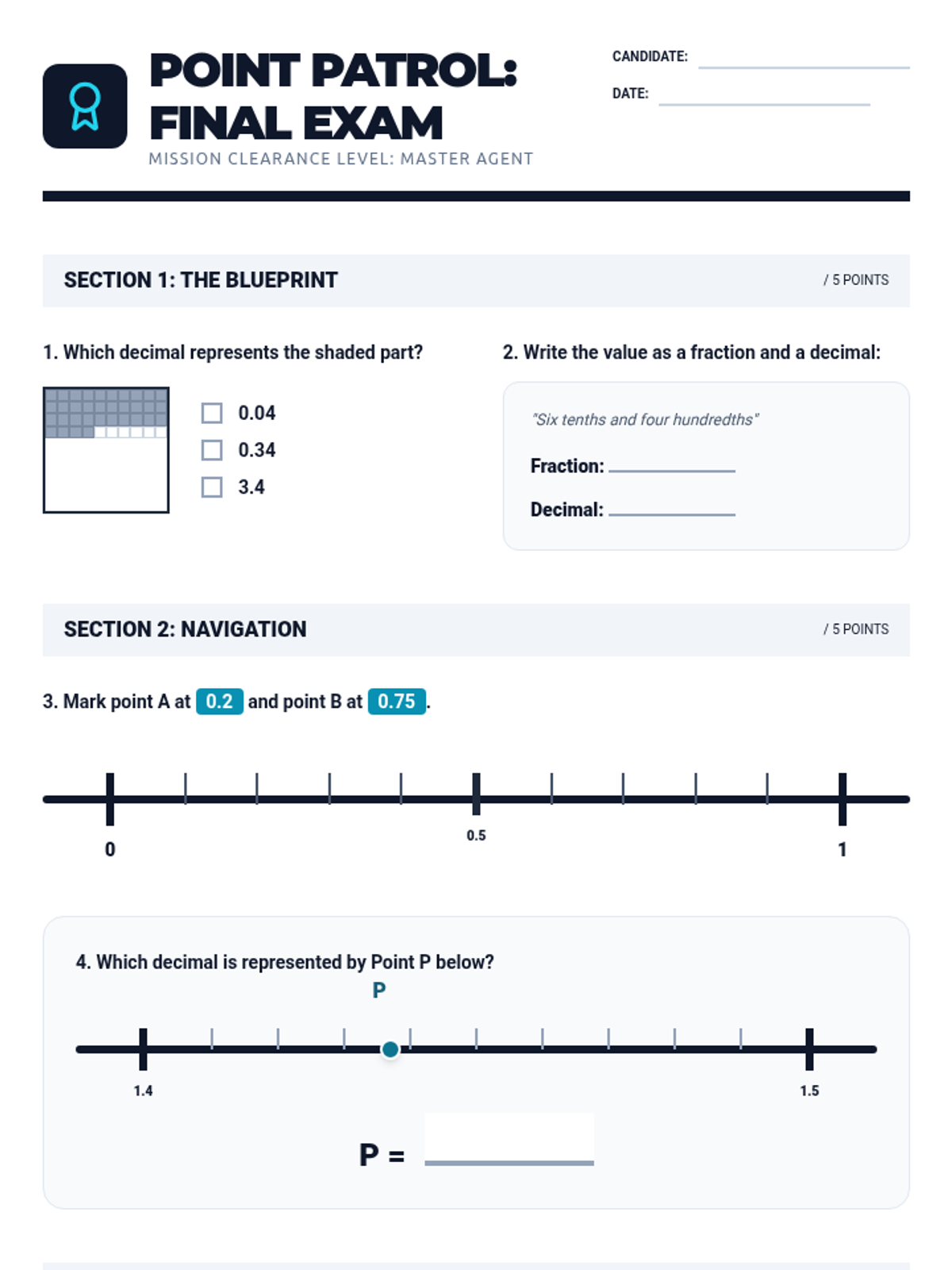
A comprehensive 2-page assessment for 4th-grade decimals. Revised with high-contrast text, optimized spacing to prevent orphaned elements, and clear student work areas.
A set of 4 quick assessment exit tickets covering each key decimal concept. Revised with better writing spaces and visibility.
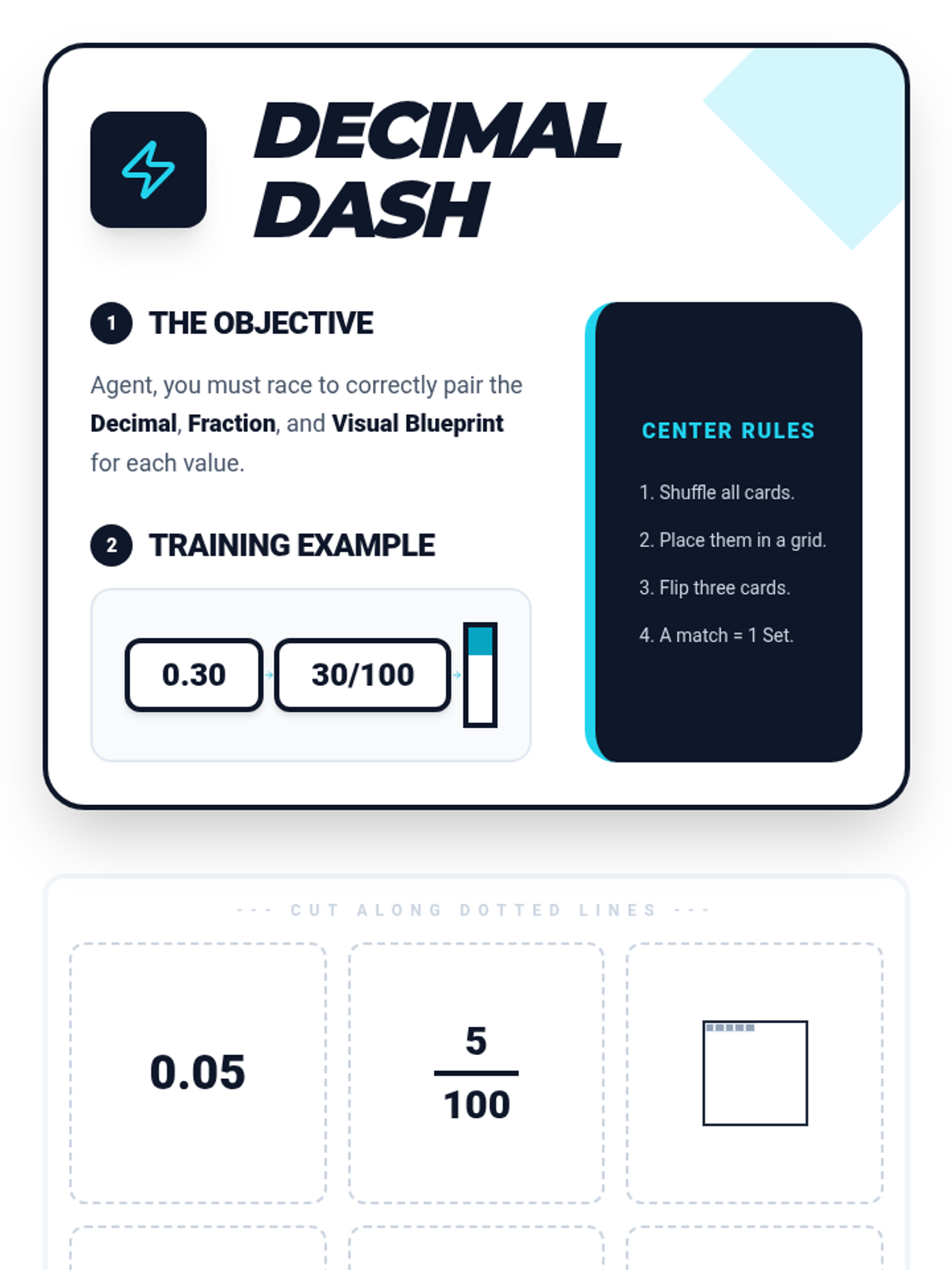
A hands-on matching center activity where students pair decimals, fractions, and word/model representations. Revised with ink-saving design and accurate models.
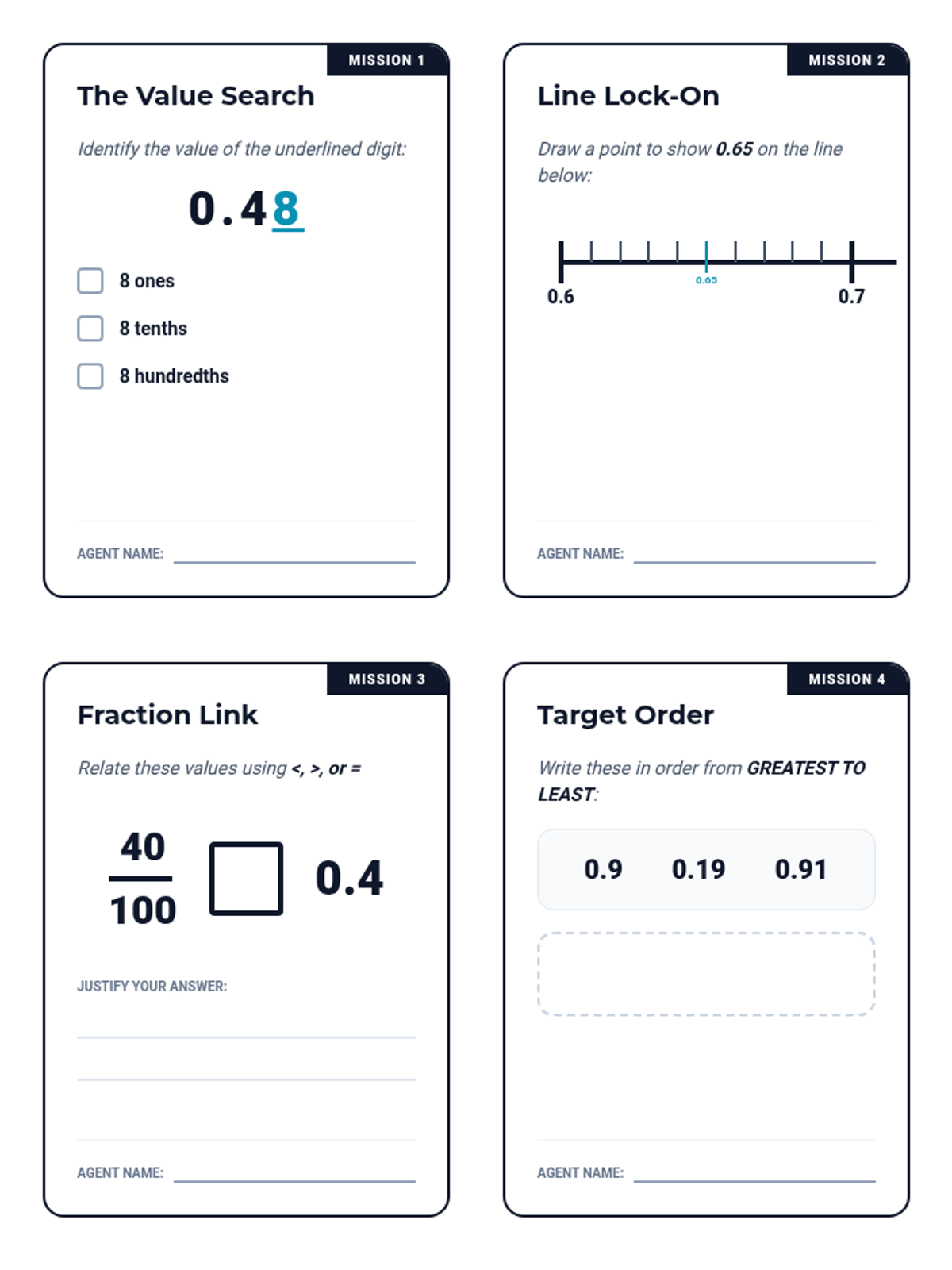
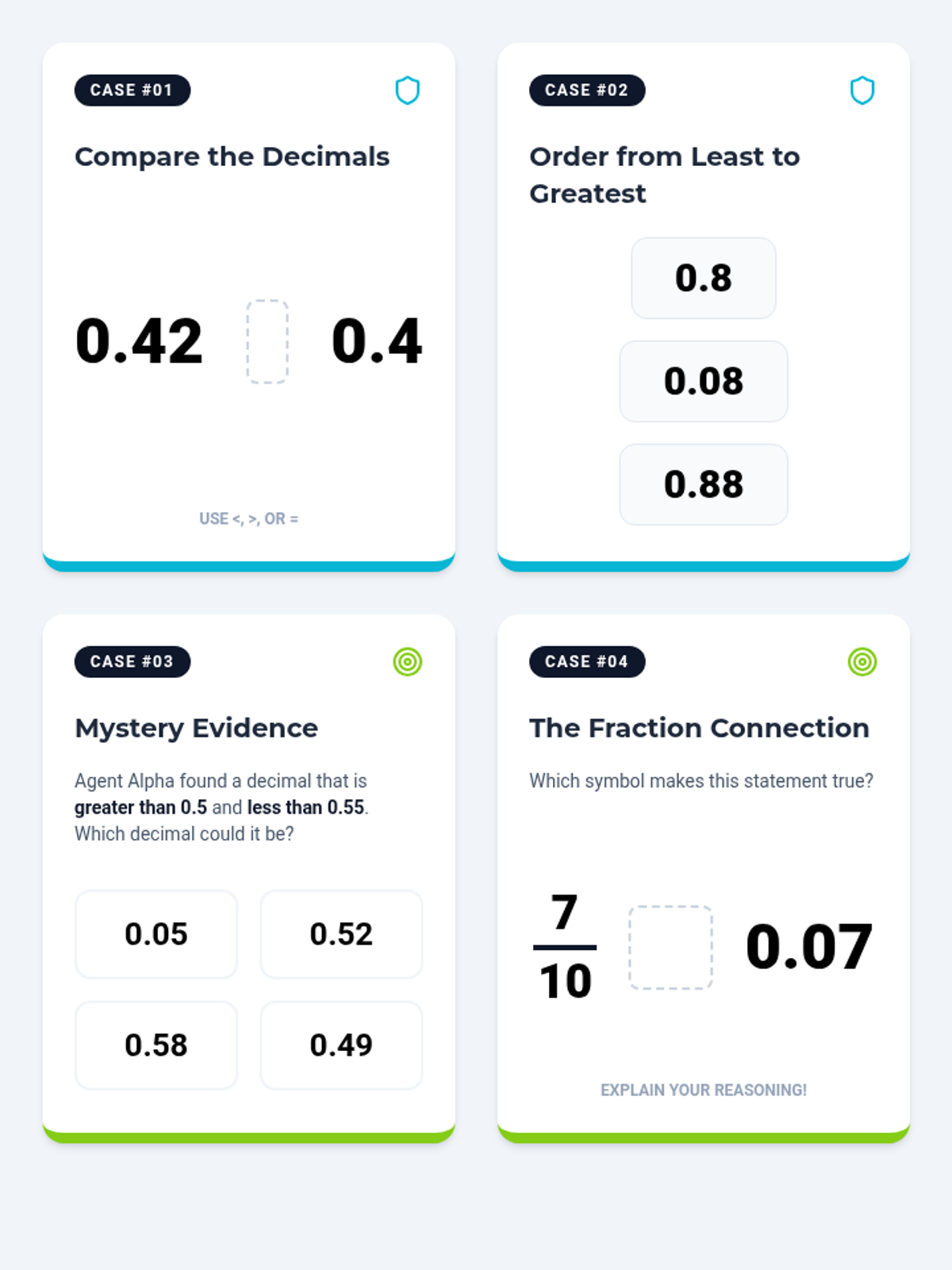
A set of 4 task cards for comparing and ordering decimals, plus connecting fractions to decimals, featuring high-contrast agent-themed designs.
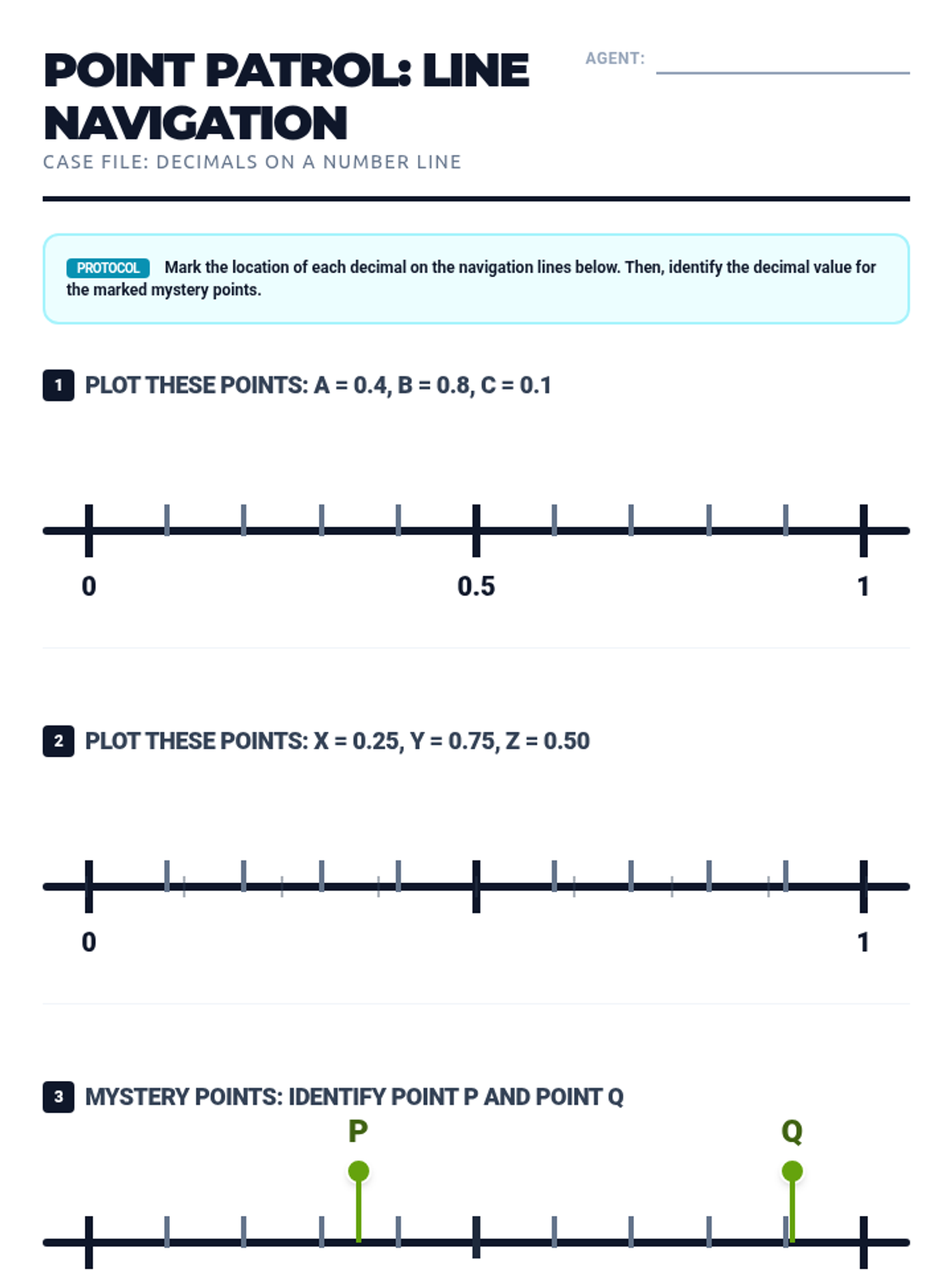
A practice worksheet for locating and identifying decimals on a number line, including tenths, hundredths, and mixed numbers. Revised with precise alignment, high-contrast ticks, and a consolidated one-page layout.
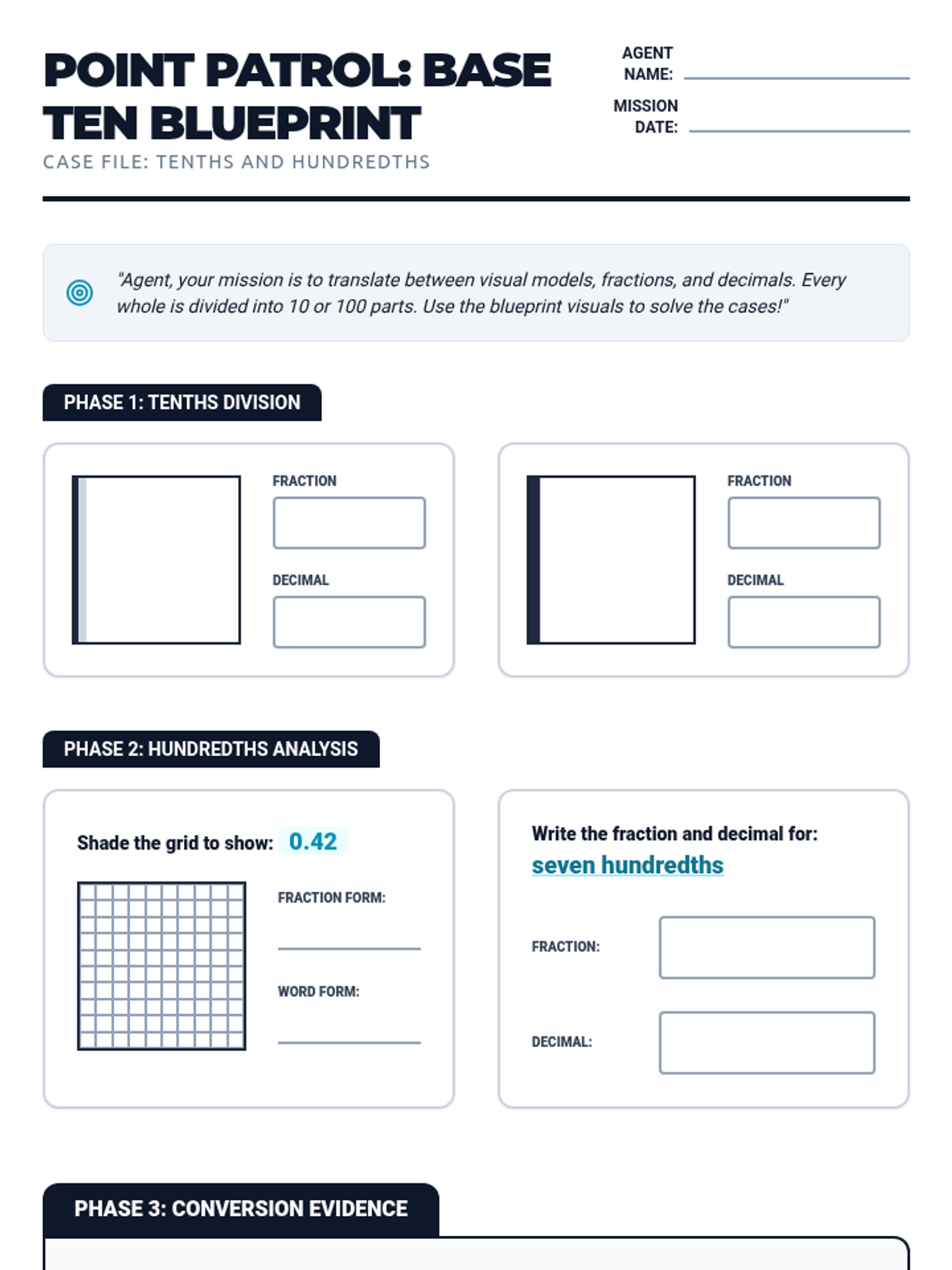
An independent practice worksheet focused on place value to hundredths and the relationship between fractions and decimals, designed with a detective blueprint theme. Revised with high-contrast models and improved layout.
A comprehensive 10-slide presentation introducing 4th graders to decimals, place value, number lines, fraction connections, and ordering strategies using a 'Point Patrol' agent theme. Extended with new content for deeper understanding. Revised for visual model accuracy and improved layout.
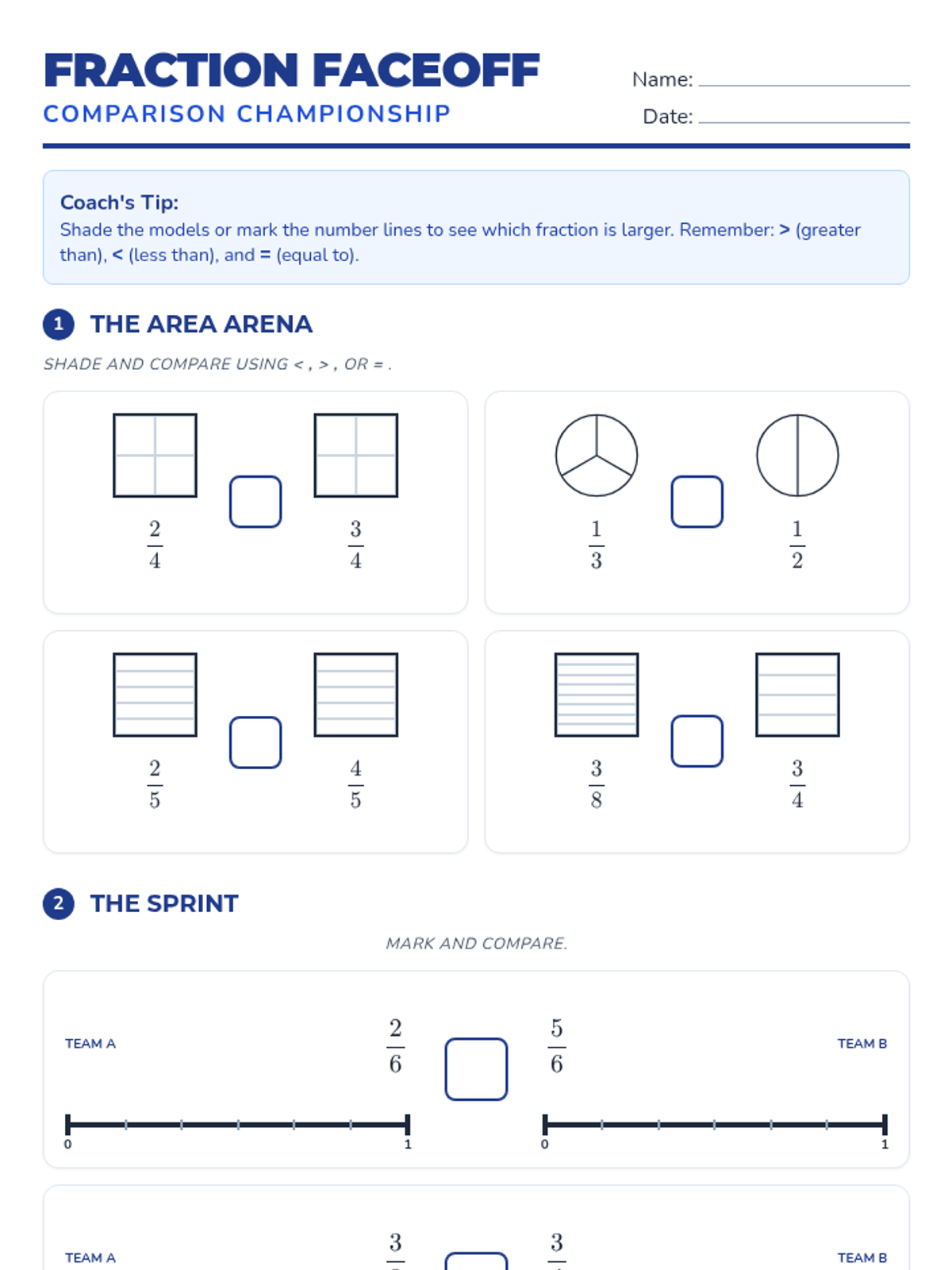
A student worksheet for comparing fractions using area models and number lines with a sports championship theme. Expanded with 4 additional problems and improved layout. Reduced padding and consolidated to minimize page count.
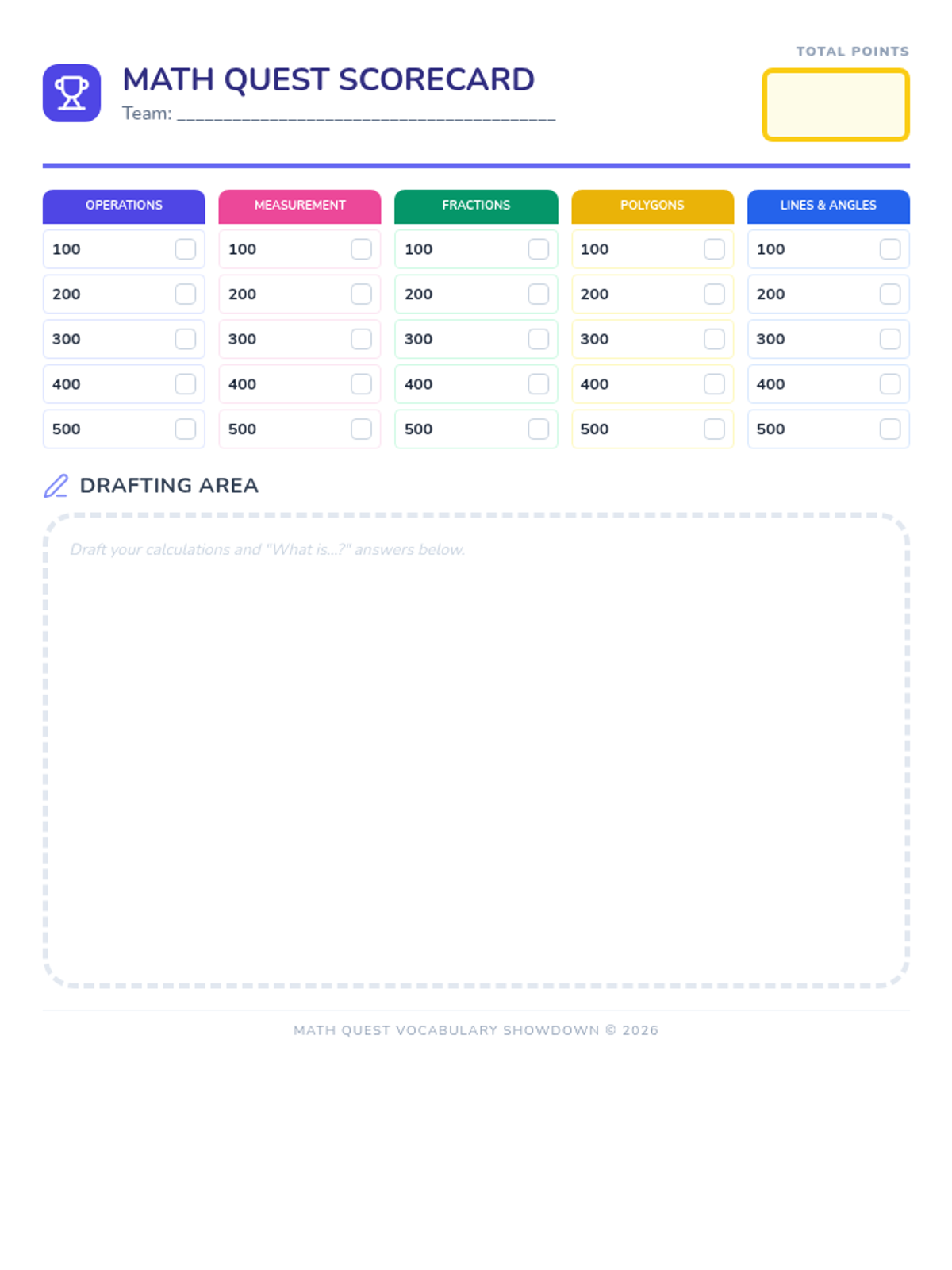
A student recording sheet for the Math Quest game, updated with new 'Operations', 'Polygons', and 'Lines & Angles' categories. Includes a large drafting area for student work.
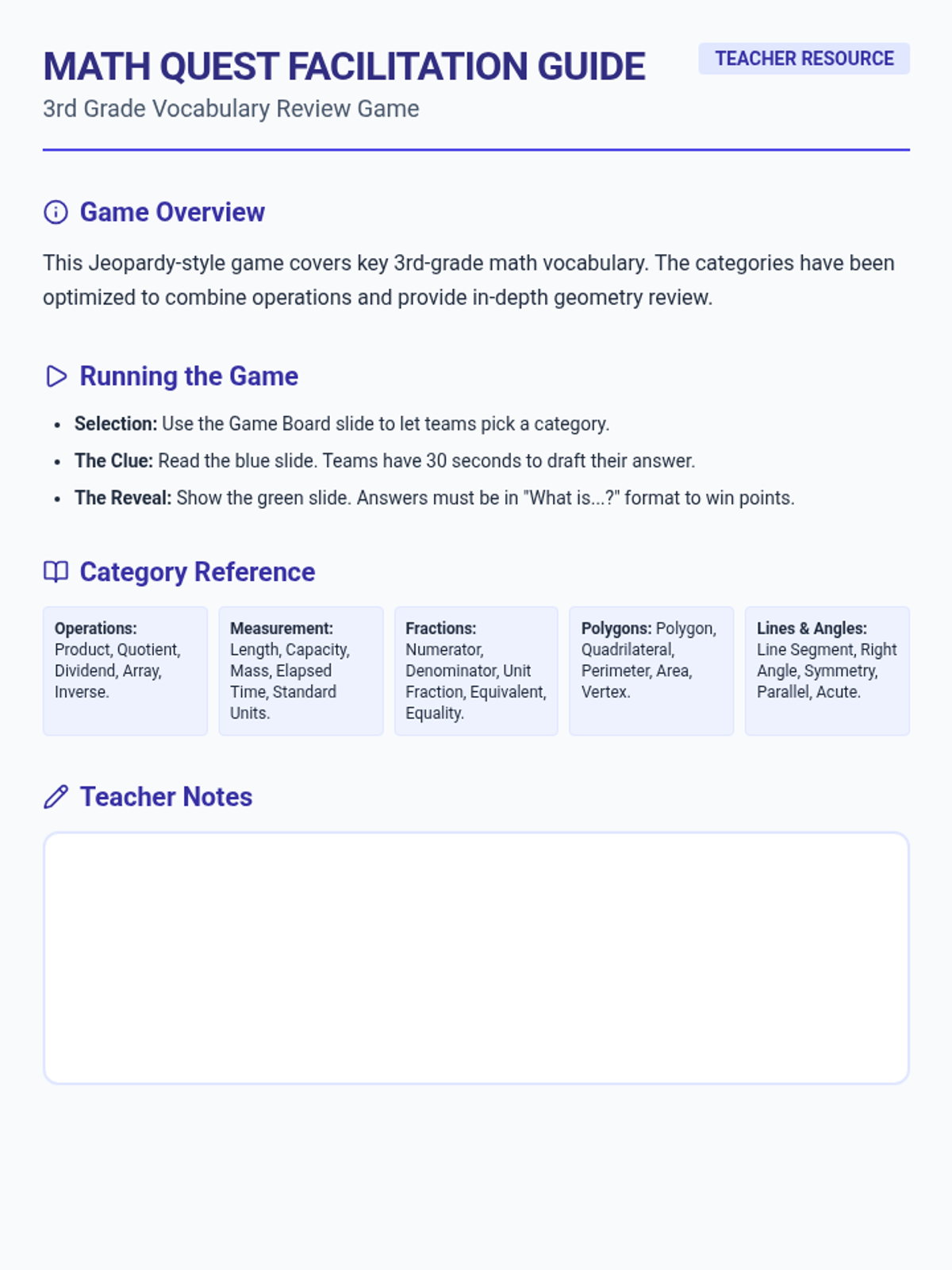
A teacher's facilitation guide for running the Math Quest vocabulary game, updated with new category descriptions and a streamlined question reference.
A colorful and engaging 59-slide Jeopardy-style presentation for 3rd-grade math vocabulary. Now features a collapsed 'Operations' category and expanded 'Geometry' categories for Polygons and Lines/Angles.
A comprehensive bilingual slide deck (English and Hiragana) covering Units 6, 7, and 8 from the source material. It guides students through understanding weight, liquid volume, standard units, and estimation techniques.
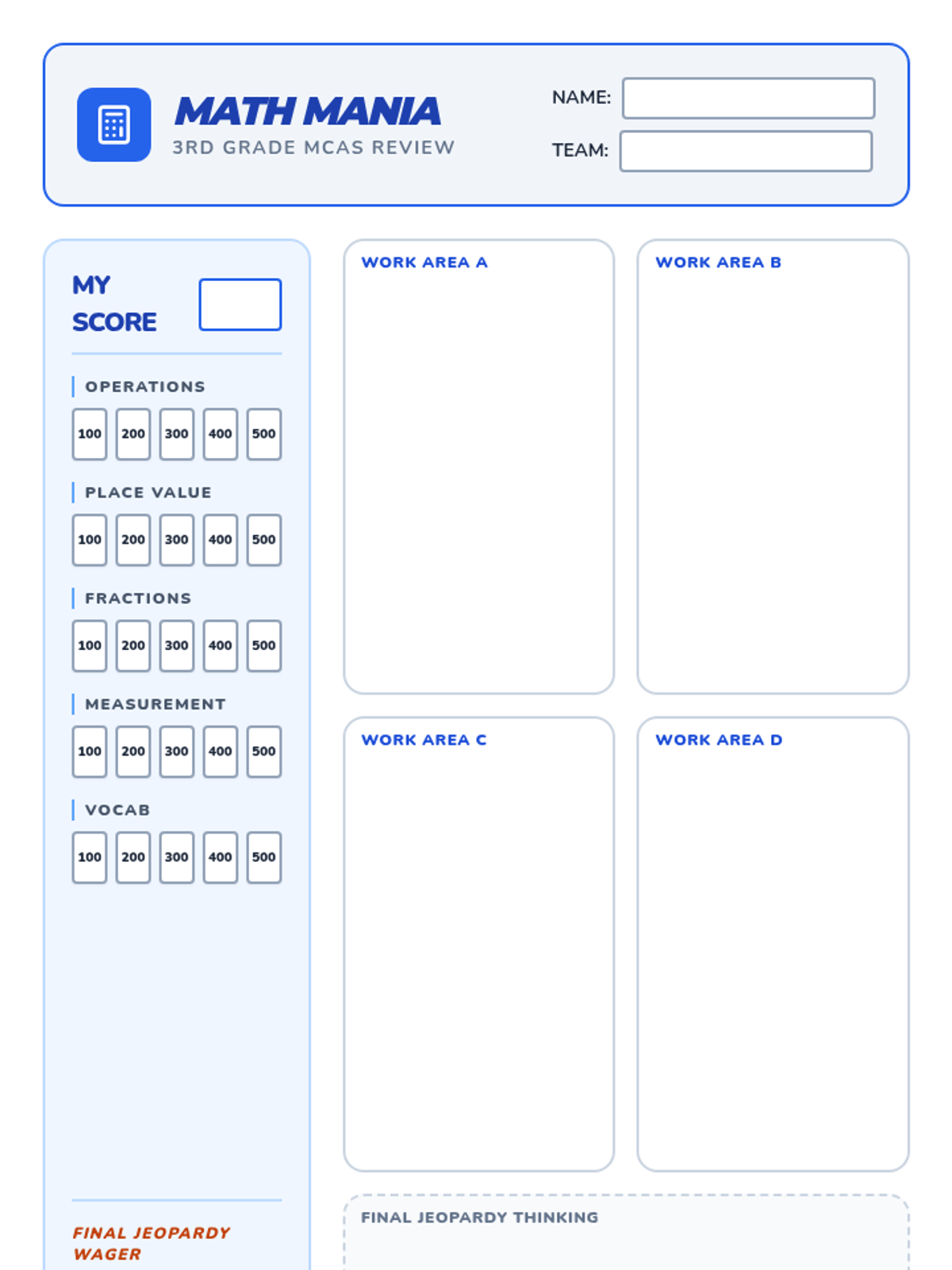
A printable scorecard for students to track their points and show their work during the Math Mania game. Features high-contrast fields and ample workspace for multi-step problems.