An informational slide presentation introducing various types of fossils, including body fossils, trace fossils, molds, casts, amber, and carbon films with clear visual analogies.
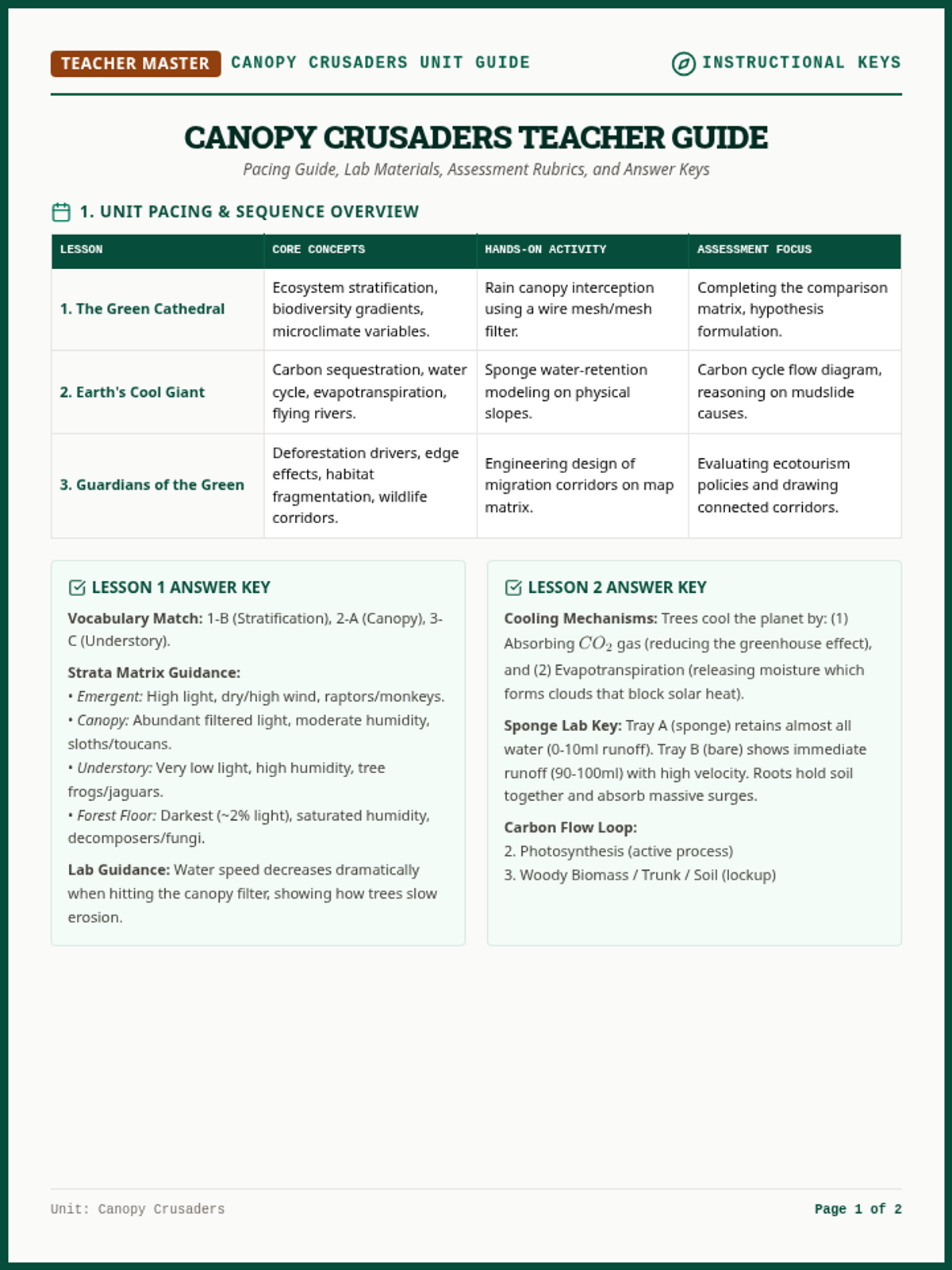
A comprehensive teacher-facing unit guide, providing unit-wide planning advice, hands-on lab setup instructions, grading rubrics, and detailed answer keys for all student worksheets.
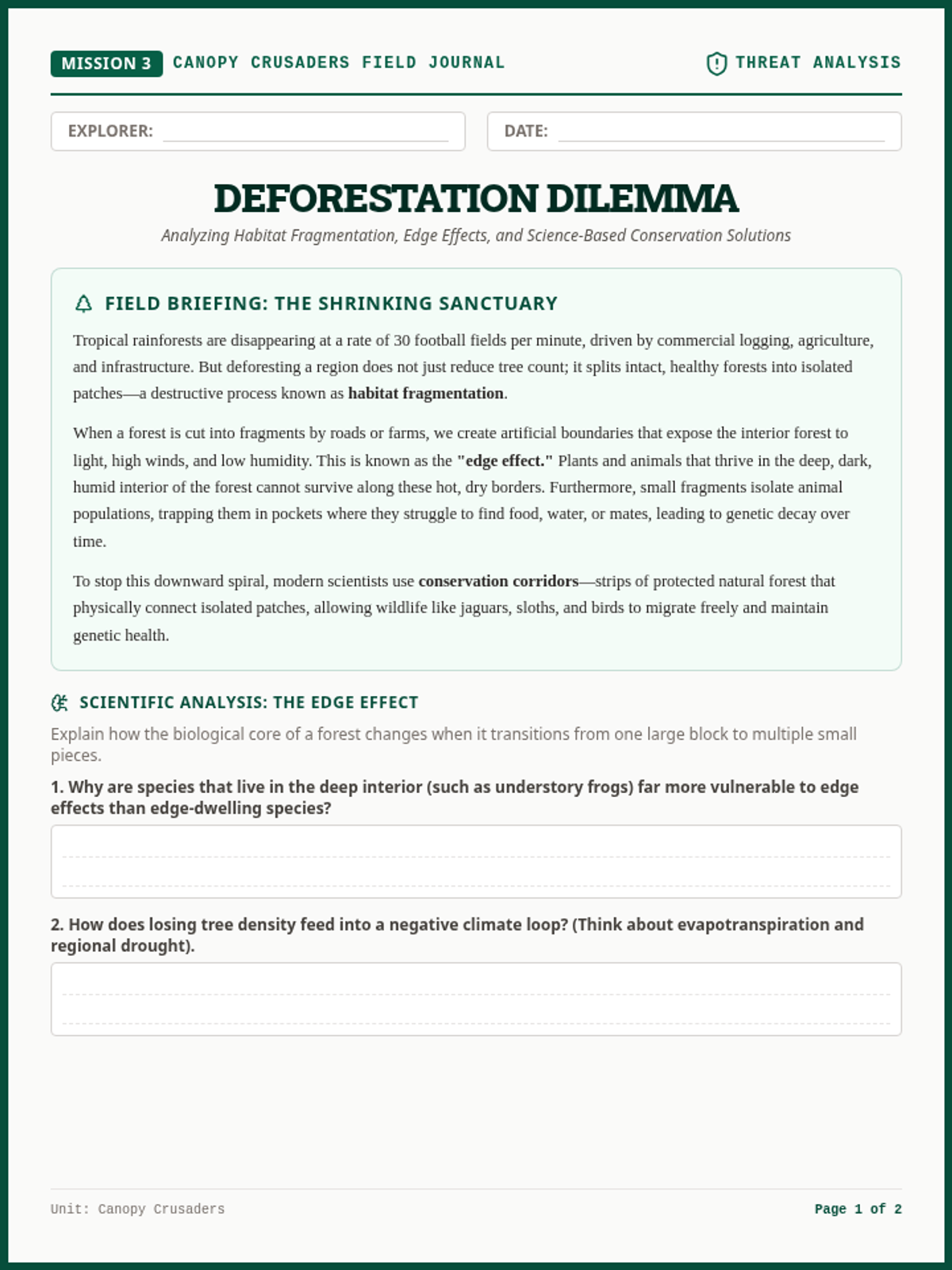
A two-page student activity packet for Lesson 3, focusing on the impacts of deforestation, habitat fragmentation, and edge effects. Includes a case study on ecosystem breakdown, a creative corridor-design science challenge, and a conservation policy evaluation matrix.
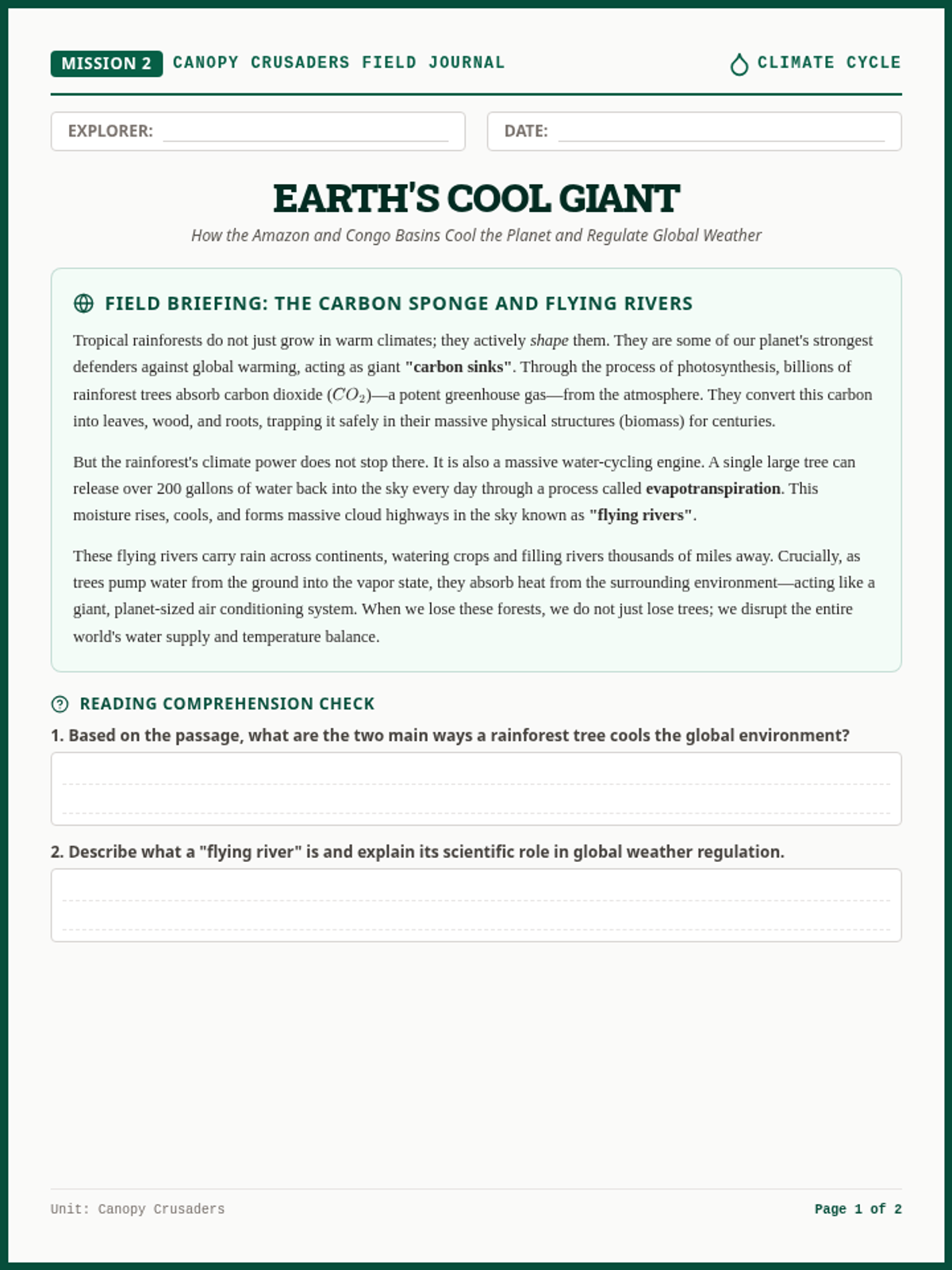
A two-page student activity packet for Lesson 2, focusing on the rainforest's role in global climate. Features a reading passage on carbon sequestration and evapotranspiration, a carbon cycle flow chart, and a hands-on lab simulating water retention using kitchen sponges.
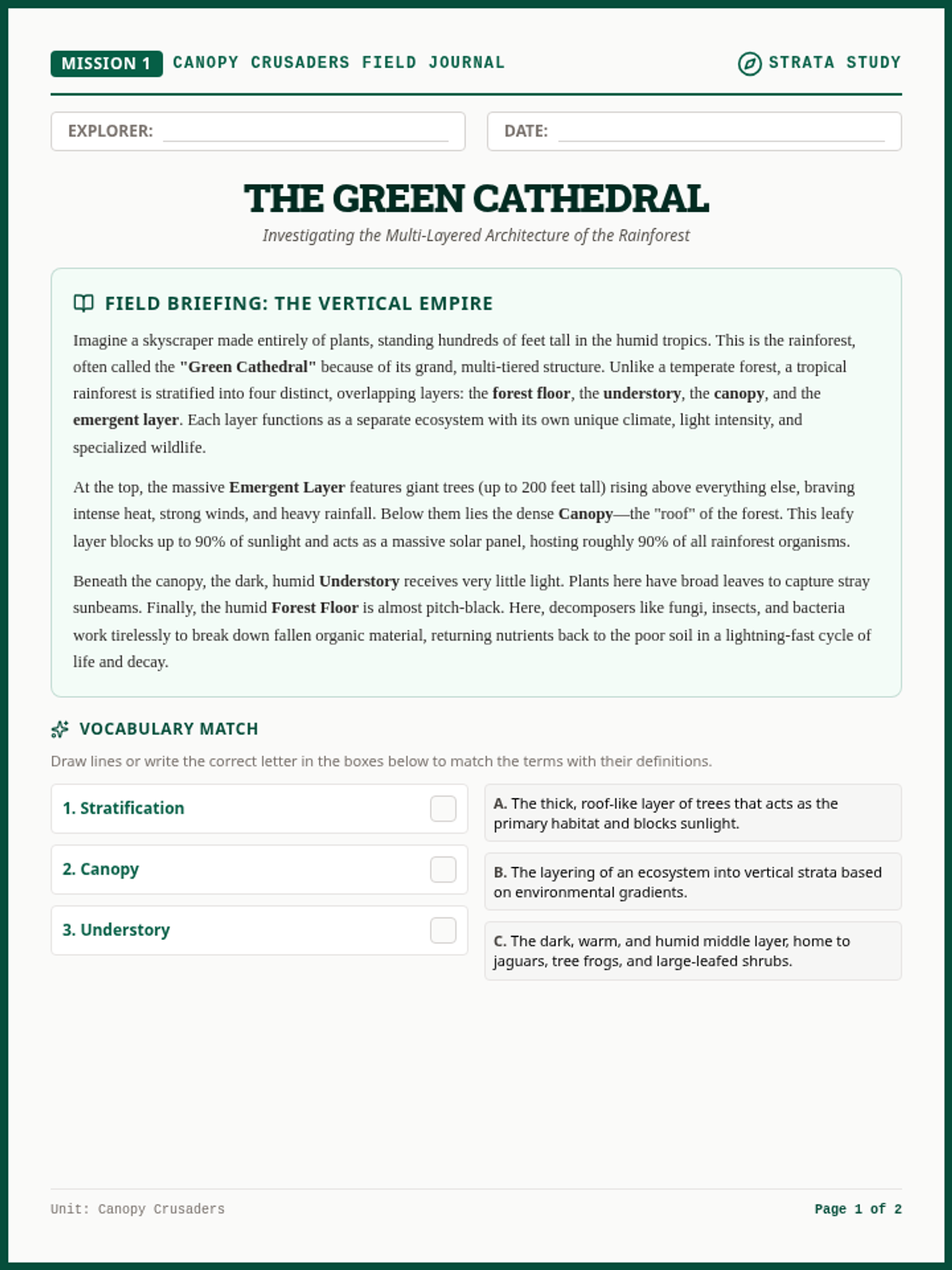
A two-page student activity packet for Lesson 1, featuring a detailed reading passage on the four structural layers of the rainforest, key vocabulary matching, a graphic organizer comparing strata, and a hands-on modeling lab on moisture gradients.
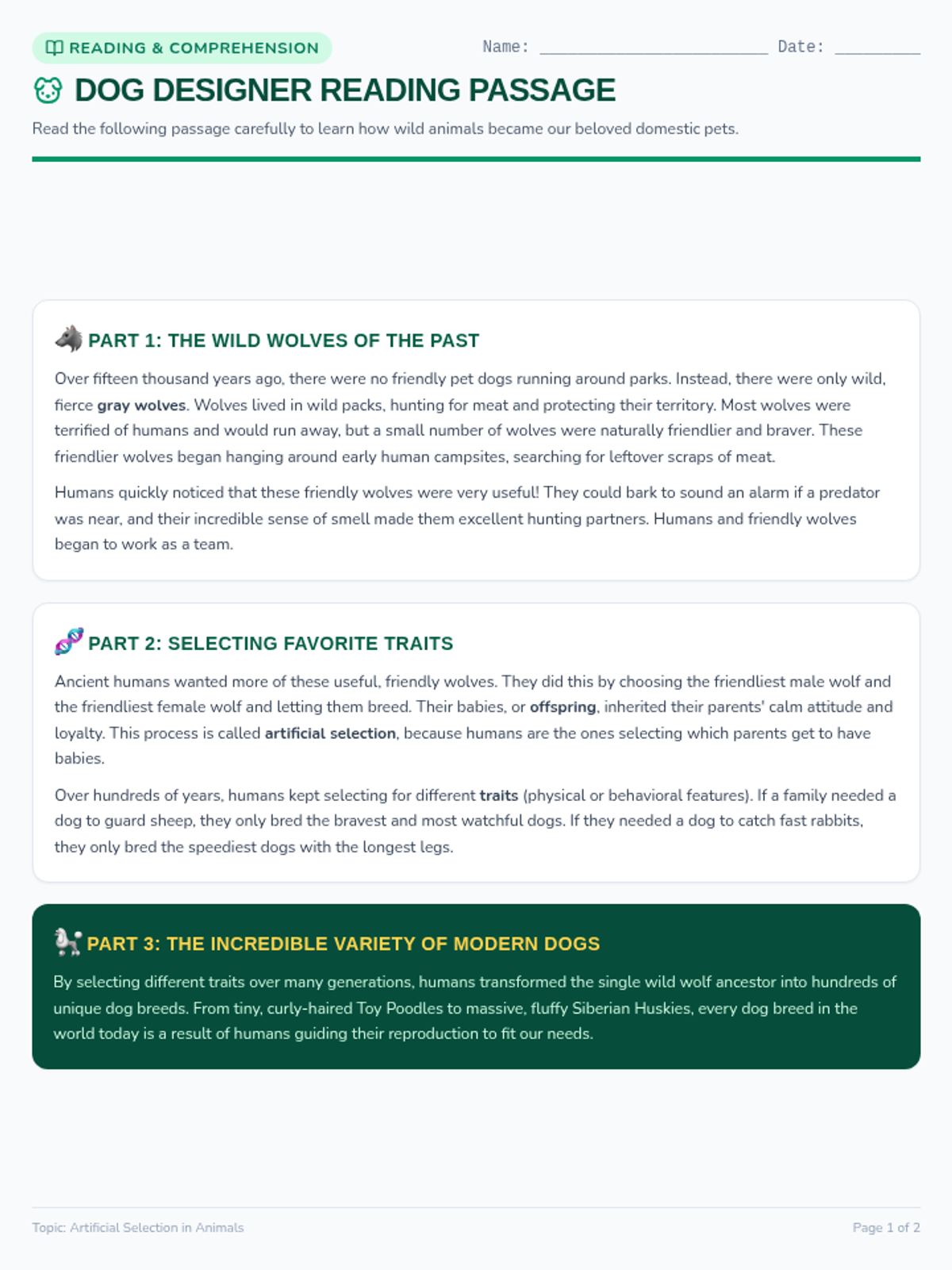
An expanded 2-page reading comprehension document. Page 1 contains a detailed, student-friendly reading passage comparing wild wolves to domesticated dogs, and Page 2 contains 5 structured, multiple-choice questions with identical answer styling.
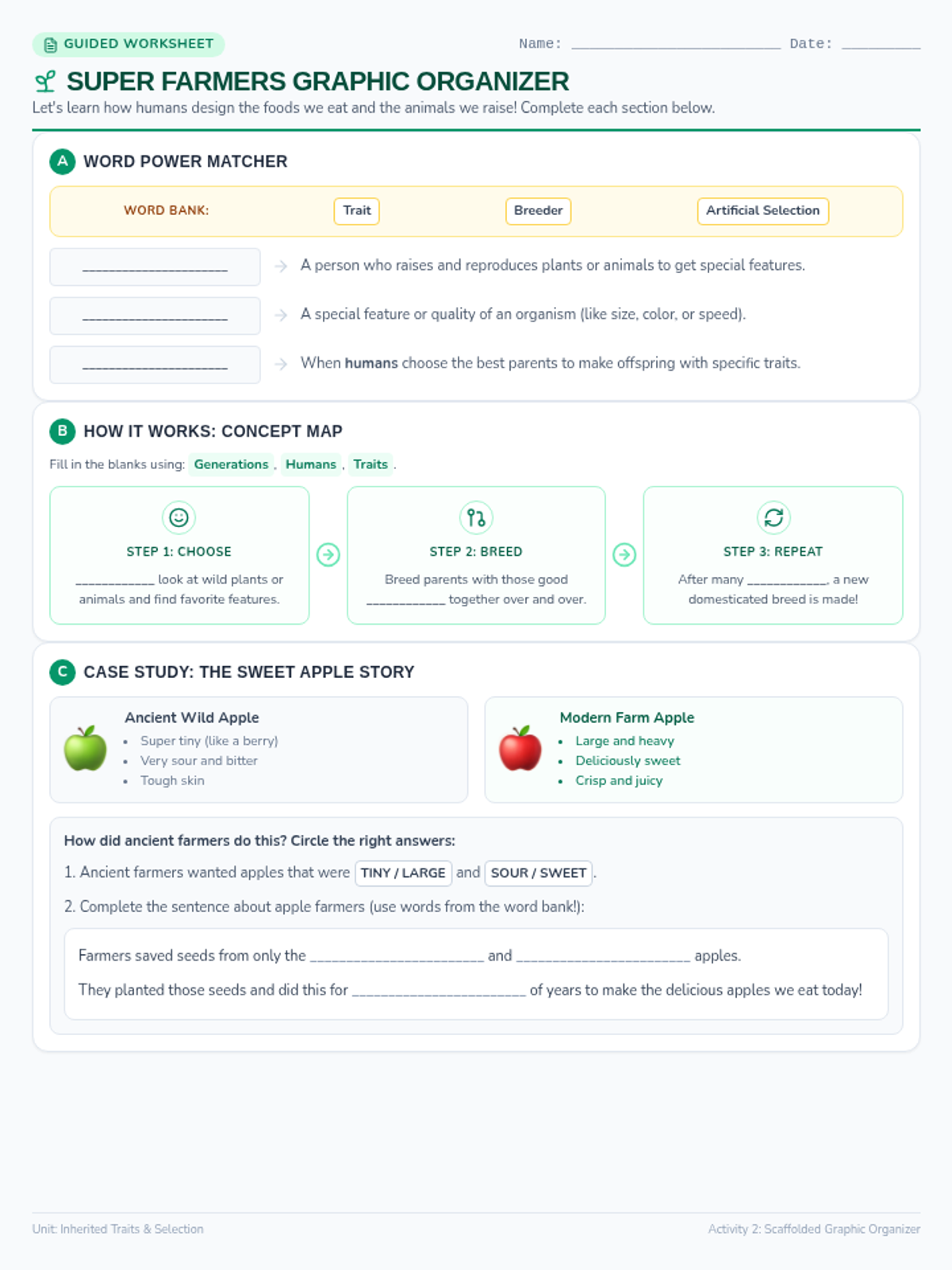
A highly visual, scaffolded graphic organizer worksheet. It features a simplified definition matcher, an illustrated flowchart of artificial selection, and a guided 'Sweet Apple' case study with trace-and-match elements and sentence starters.
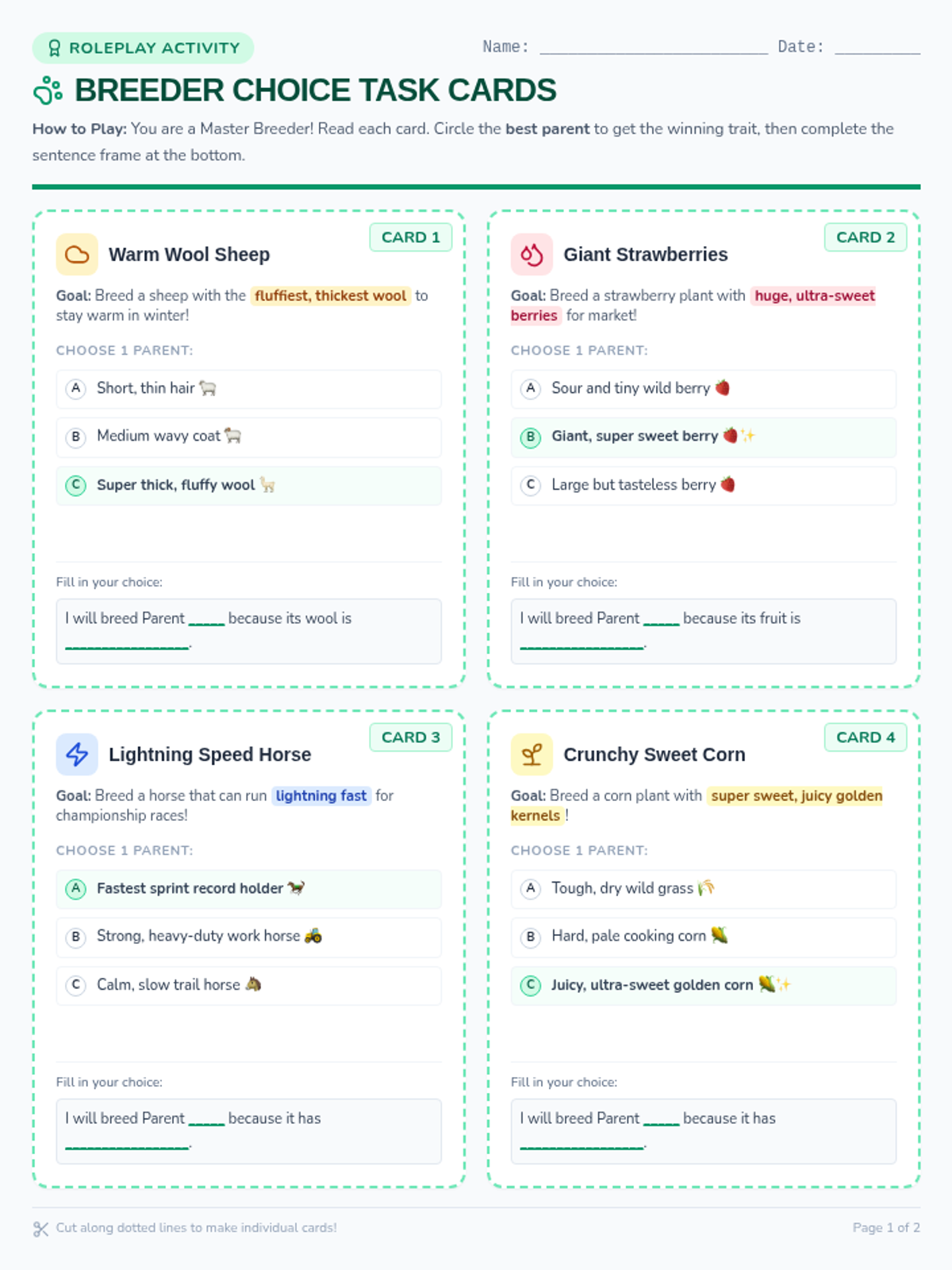
A 2-page printable set of 8 visual task cards where students roleplay as breeders. Students must select parent organisms with specific traits to produce offspring with desired characteristics, featuring structured sentence frames and simple text.
A 5-slide interactive presentation designed for teachers to guide classroom instruction and discussion on forces, contact push-back, balanced forces, and movement triggers.
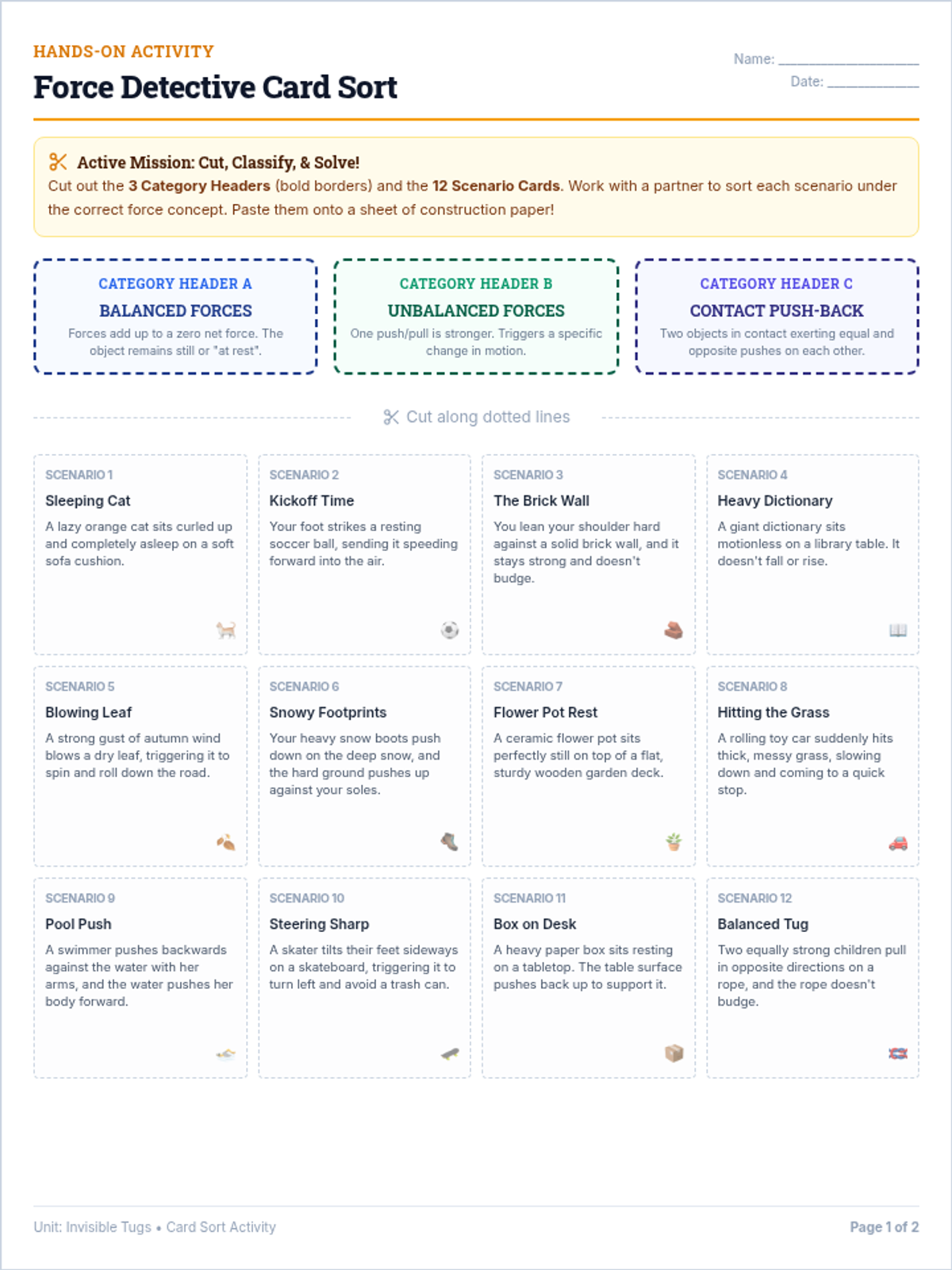
A 2-page printable card sort activity. Page 1 contains 3 bold category header cards and 12 realistic physical scenario cards with dotted cutting guides. Page 2 provides the teacher answer key and quick-check layout showing exactly how cards should be categorized.
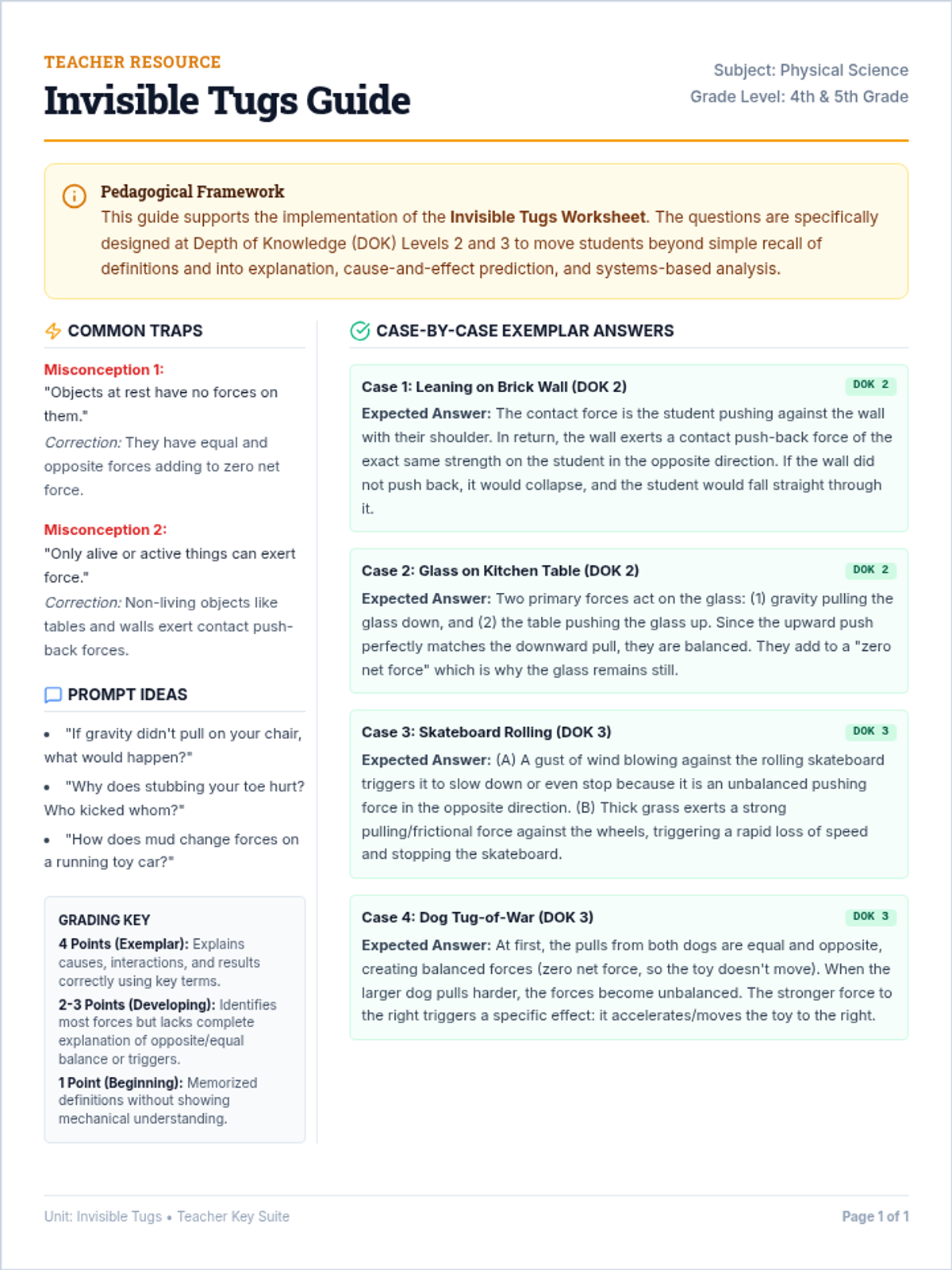
A 1-page printable teacher guide and answer key for the Invisible Tugs worksheet. Features structured guidance on pacing, common misconceptions, and detailed exemplar answers with grading rubrics for all four DOK 2-3 case questions.
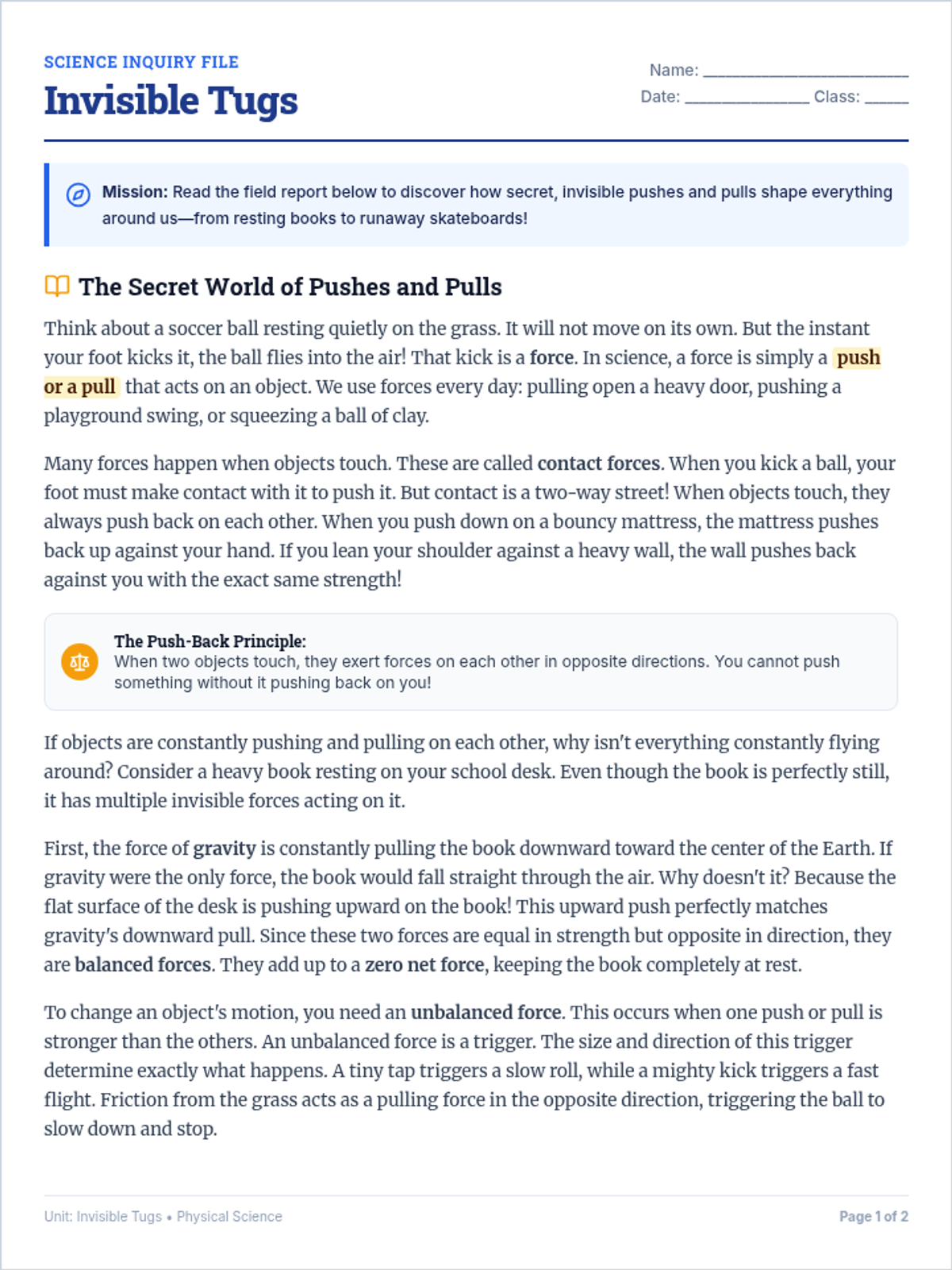
A 2-page printable reading and analysis worksheet for upper elementary students. Page 1 features an engaging, high-interest reading passage on forces, contact forces, balanced forces, and motion triggers. Page 2 provides four deep, DOK 2-3 open-ended analysis questions with lined, clean writing spaces for student work.
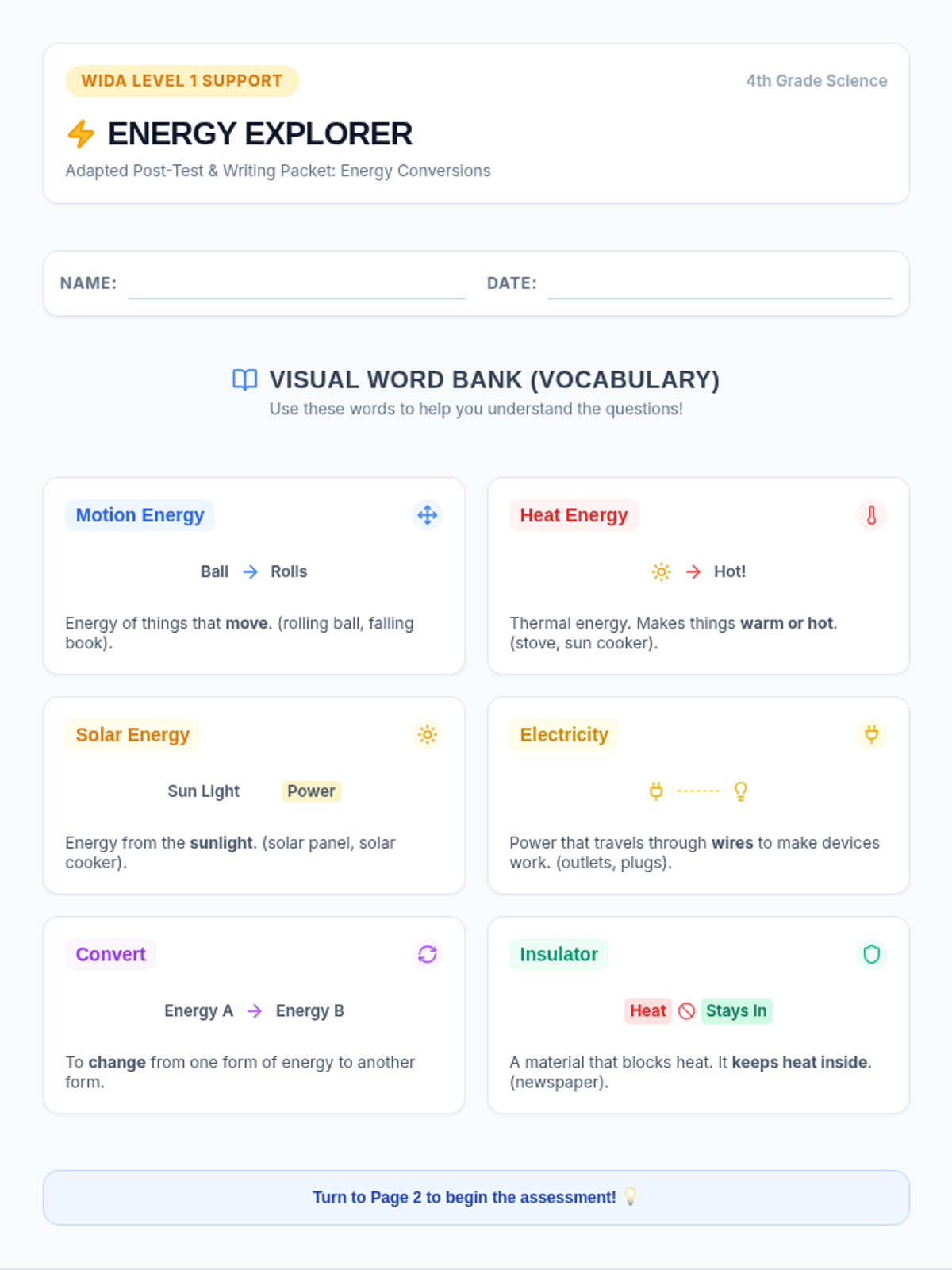
An adapted multi-page science assessment for WIDA Level 1 English Language Learners, containing a pictorial visual word bank, highly simplified question structures, clear tables, and structured sentence frame writing aids.
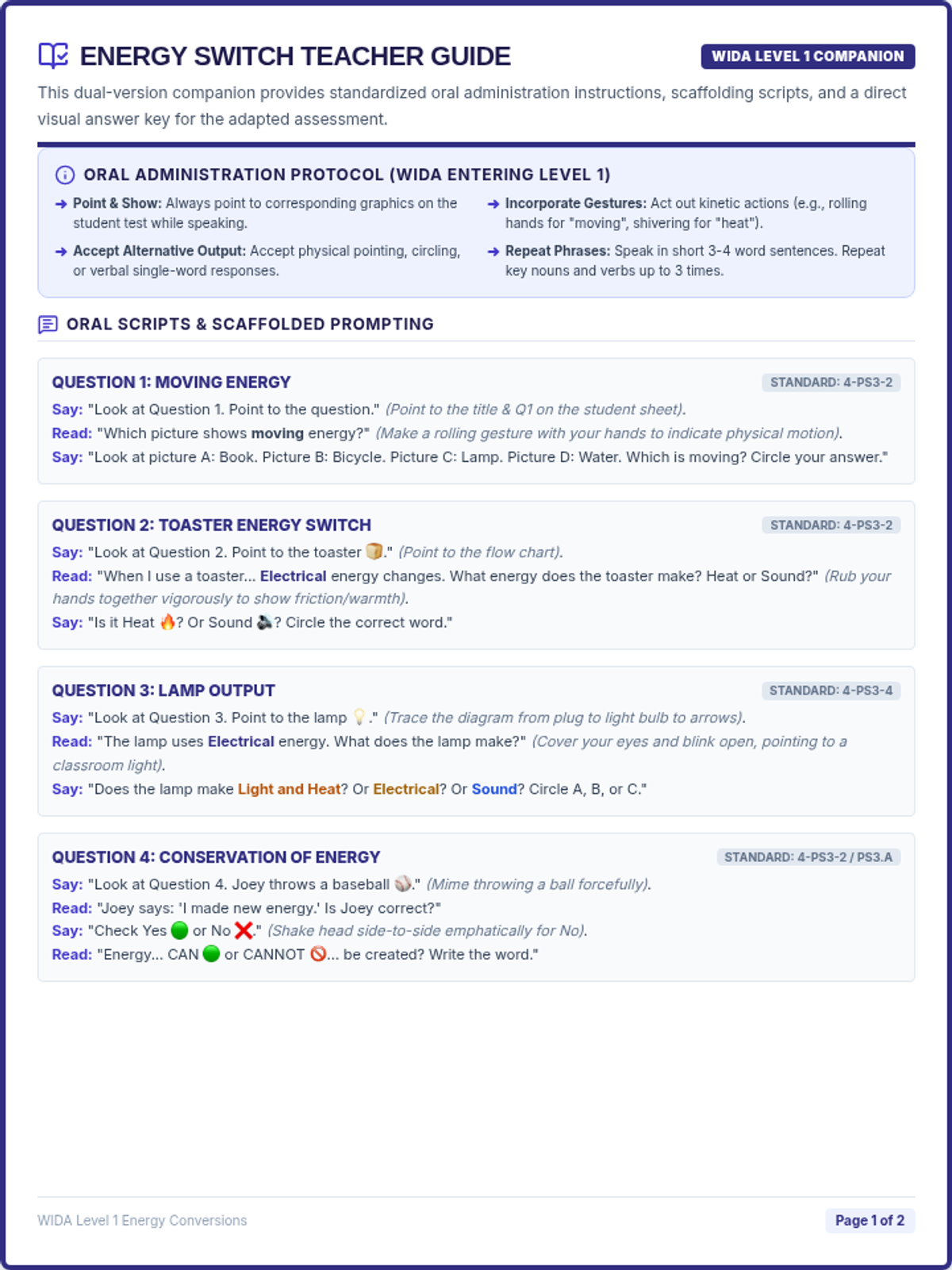
A professional, highly scaffolded teacher guide containing oral read-aloud scripts, pointing instructions, gesture prompts, and a complete answer key for the Energy Switch Test.
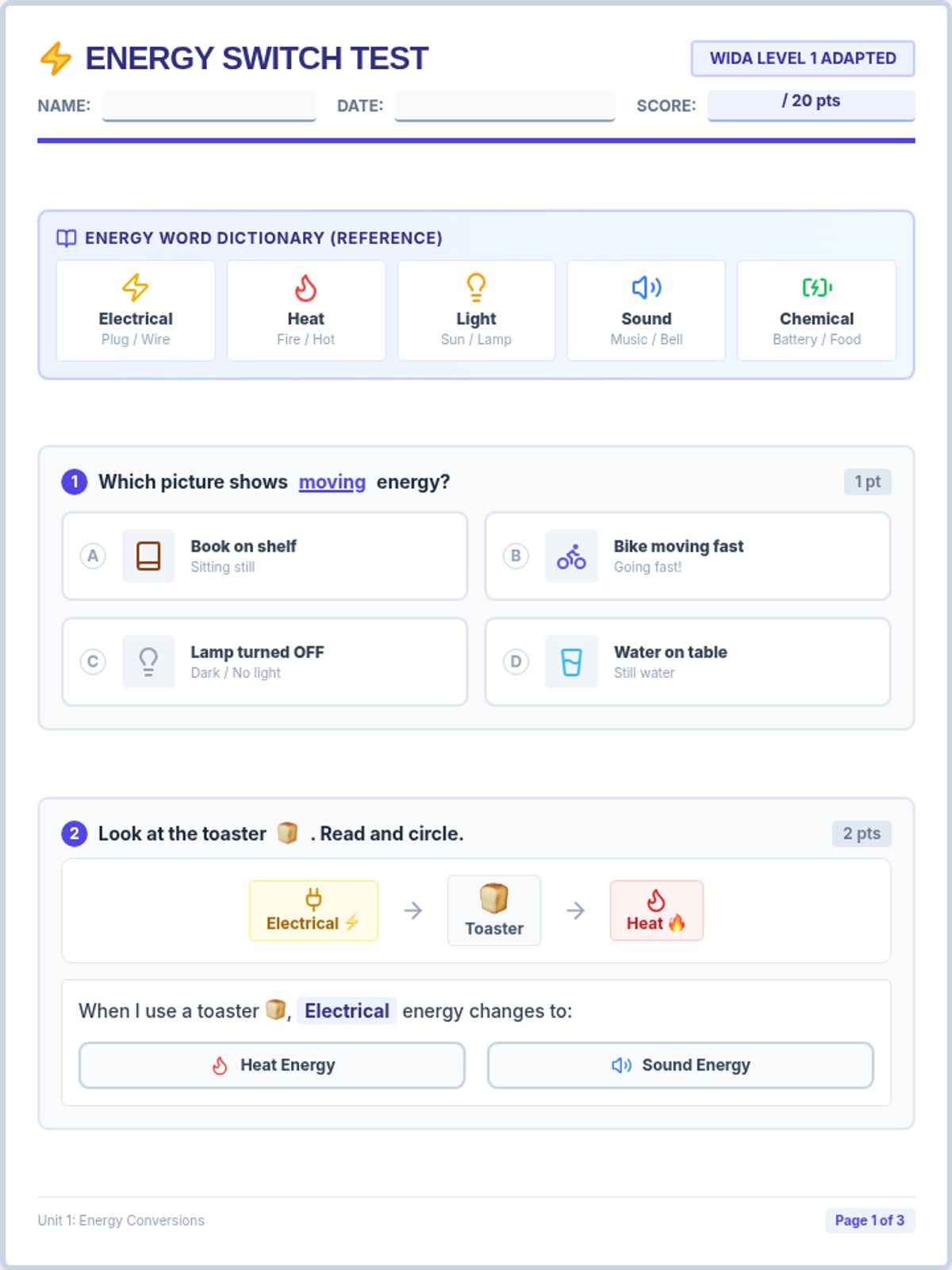
An adapted 4th-grade science assessment on Energy Conversions designed for WIDA Level 1 English Language Learners. Uses simplified syntax, visual dictionaries, graphic organizers, and color-coded arrows.
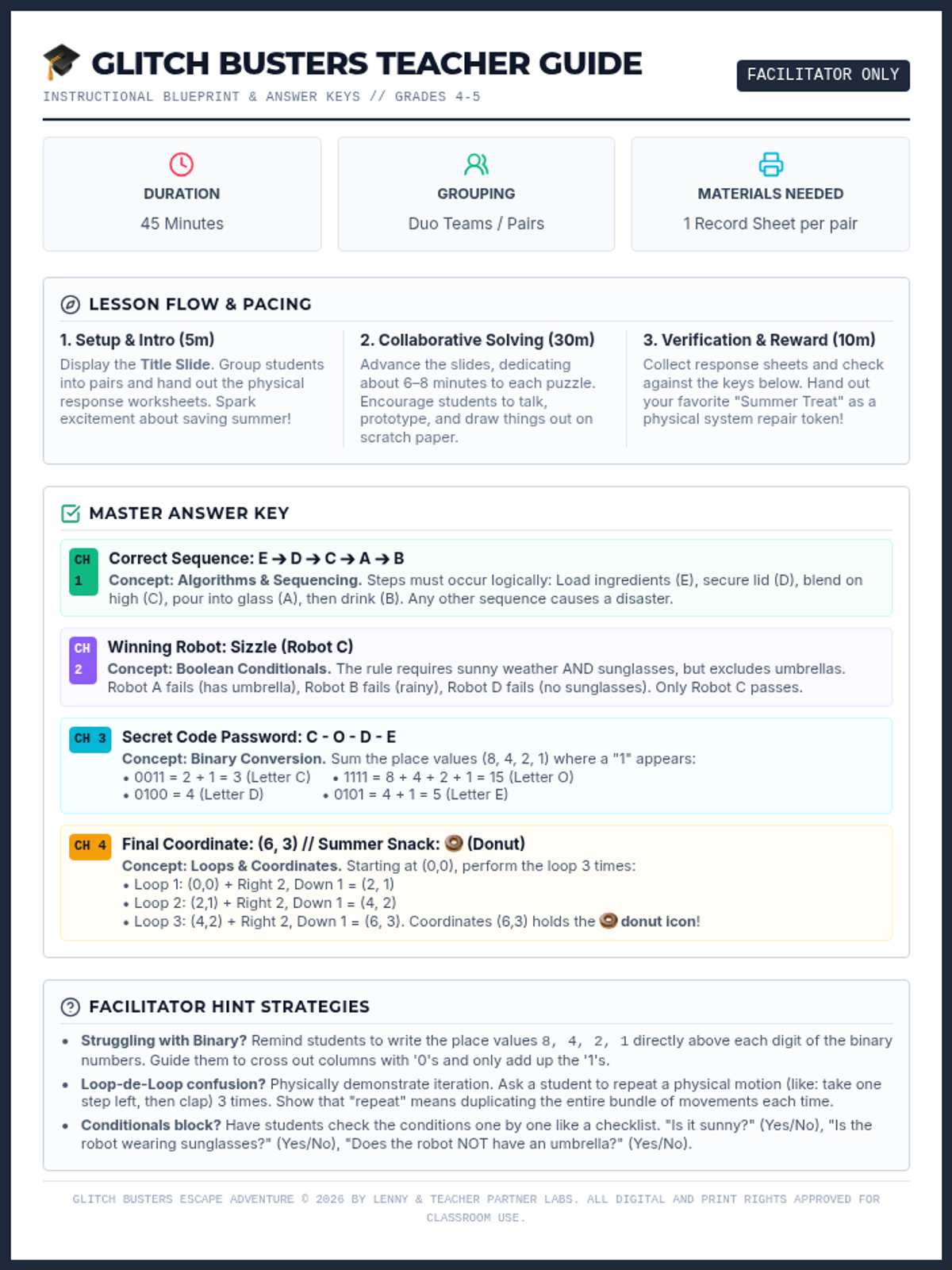
A comprehensive, one-page printable teacher guide containing setup instructions, a recommended pacing guide, helpful hint frameworks, and a detailed answer key with complete solution explanations.
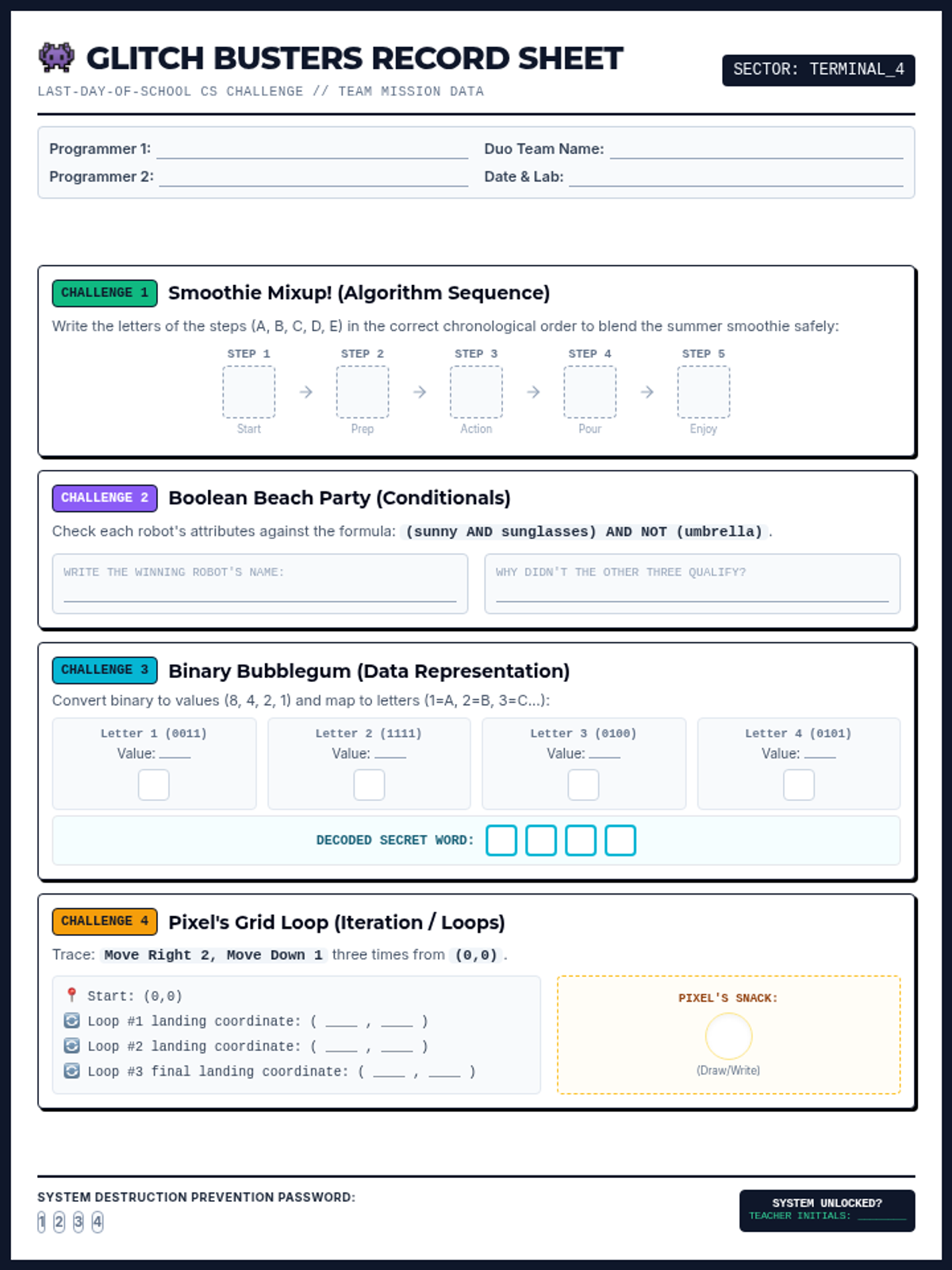
A printable, single-page student response sheet where pairs of 4th and 5th graders record their answers, code trace paths, and passwords for the four Glitch Busters puzzles. Designed with a clean retro-arcade aesthetic and generous white spaces for easy handwriting.
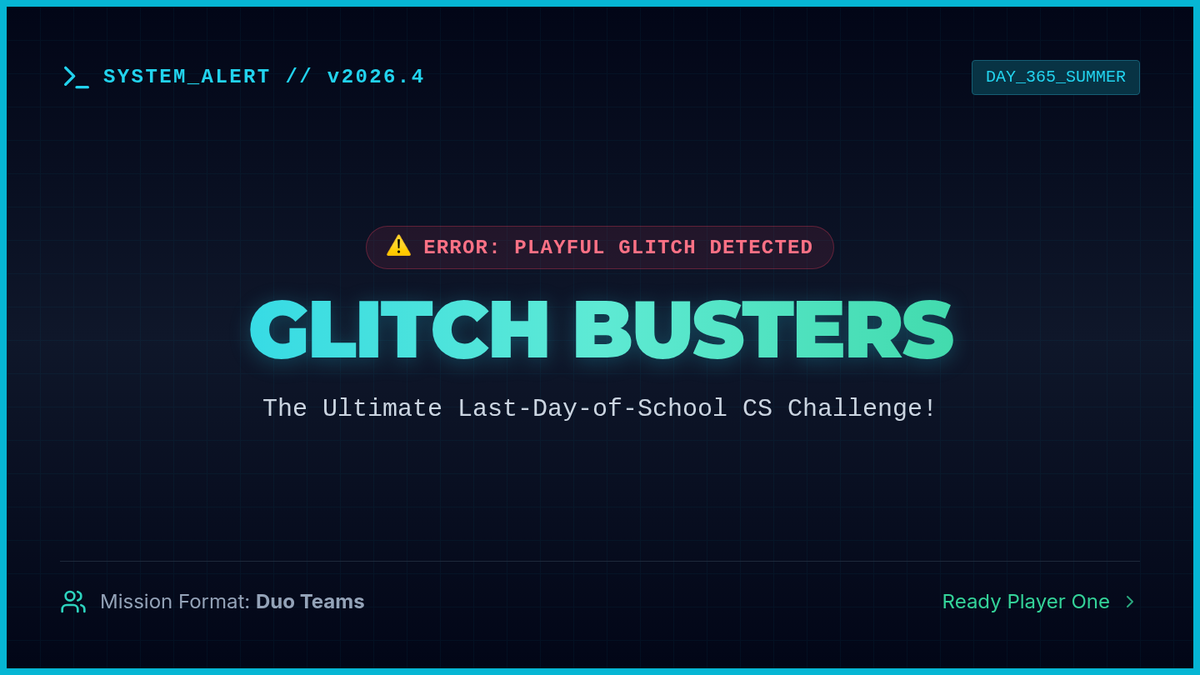
An engaging, retro-style presentation that displays four funny CS-themed puzzles for students to solve in pairs. Features minimum 24px font size, high-contrast layouts, and a cyber-arcade aesthetic suitable for 4th and 5th graders.
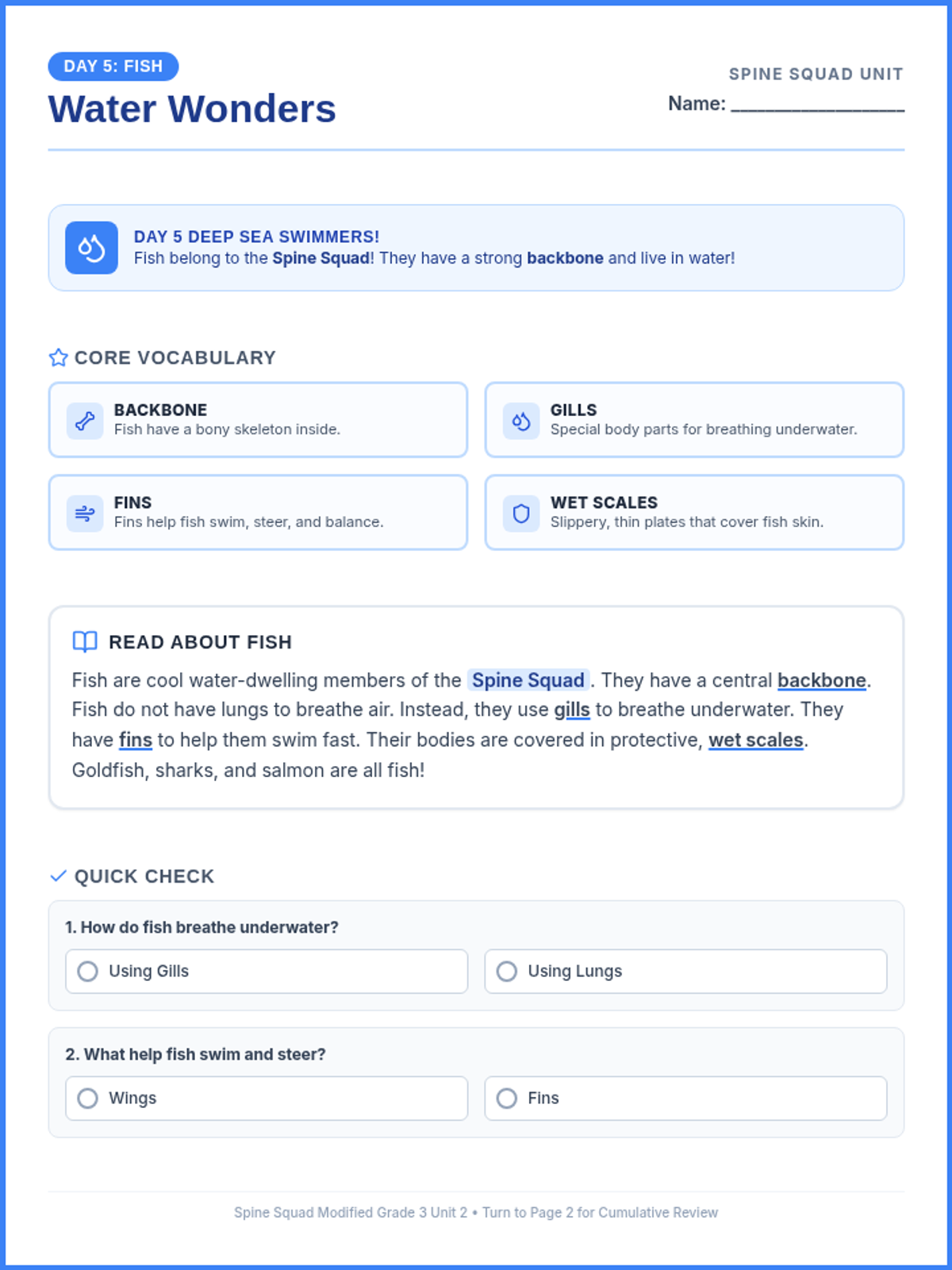
Student workbook for Day 5 of the Spine Squad unit. Features a highly visual reading passage about fish, core vocabulary with icon cards (gills, fins, wet scales, backbone), word-tracing exercises, and a five-group cumulative graduation review.
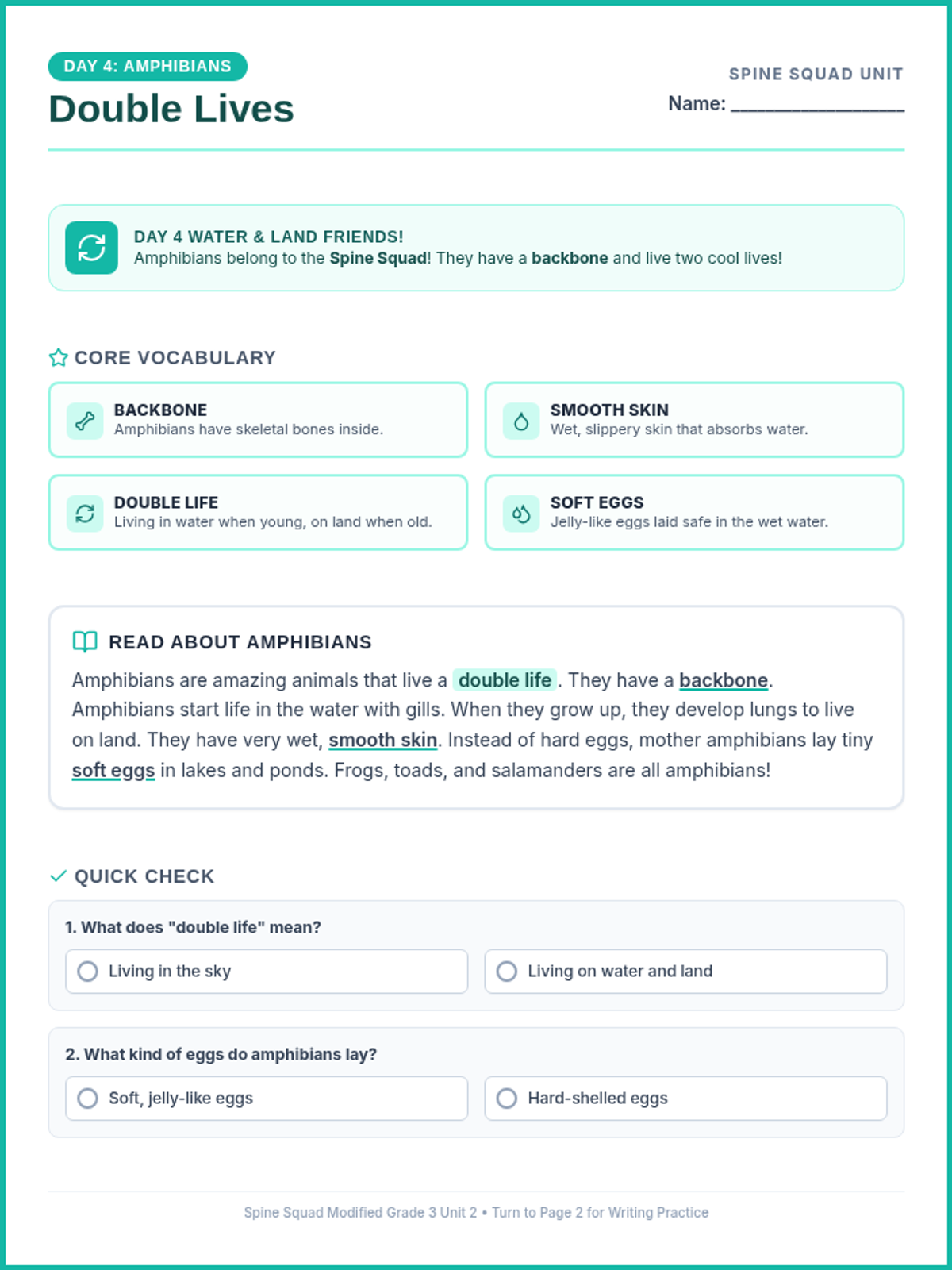
Student workbook for Day 4 of the Spine Squad unit. Features a highly visual reading passage about amphibians, core vocabulary with icon cards (double life, smooth skin, soft eggs, backbone), word-tracing exercises, and sentence-building frames.
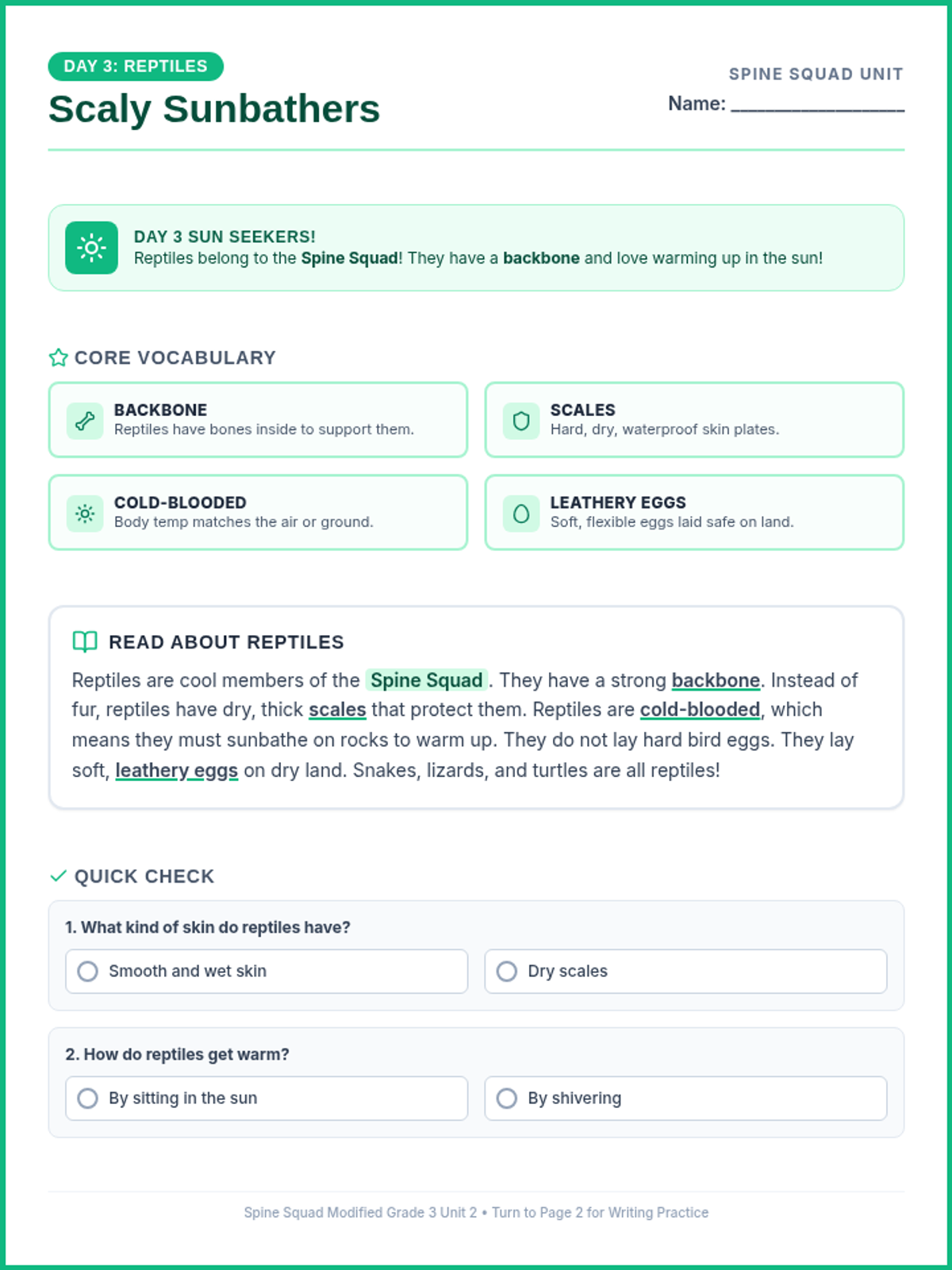
Student workbook for Day 3 of the Spine Squad unit. Features a highly visual reading passage about reptiles, core vocabulary with icon cards (scales, cold-blooded, leathery eggs, backbone), word-tracing exercises, and sentence-building frames.
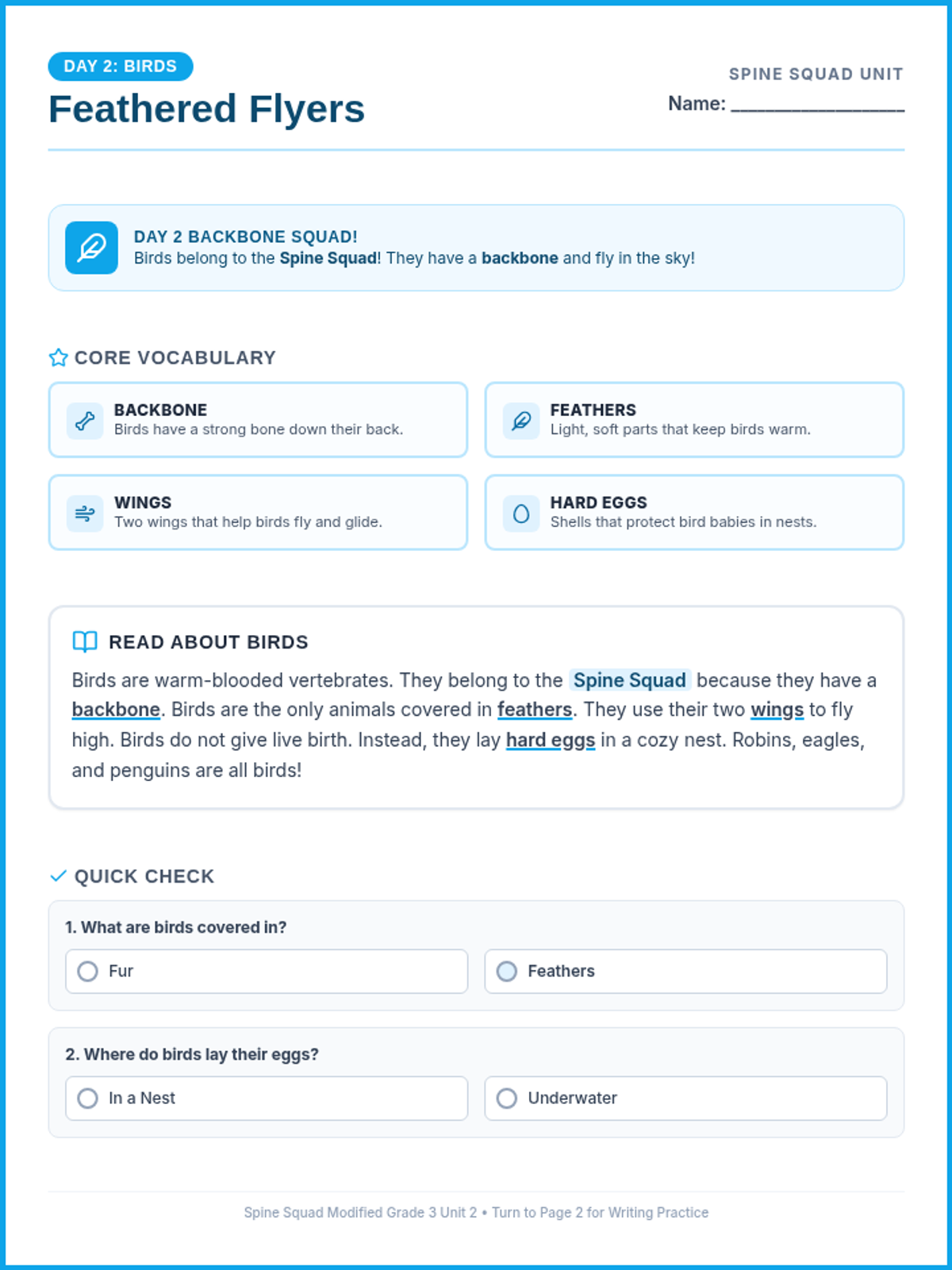
Student workbook for Day 2 of the Spine Squad unit. Features a highly visual reading passage about birds, core vocabulary with icon cards (feathers, wings, hard eggs, backbone), word-tracing exercises, and sentence-building frames.
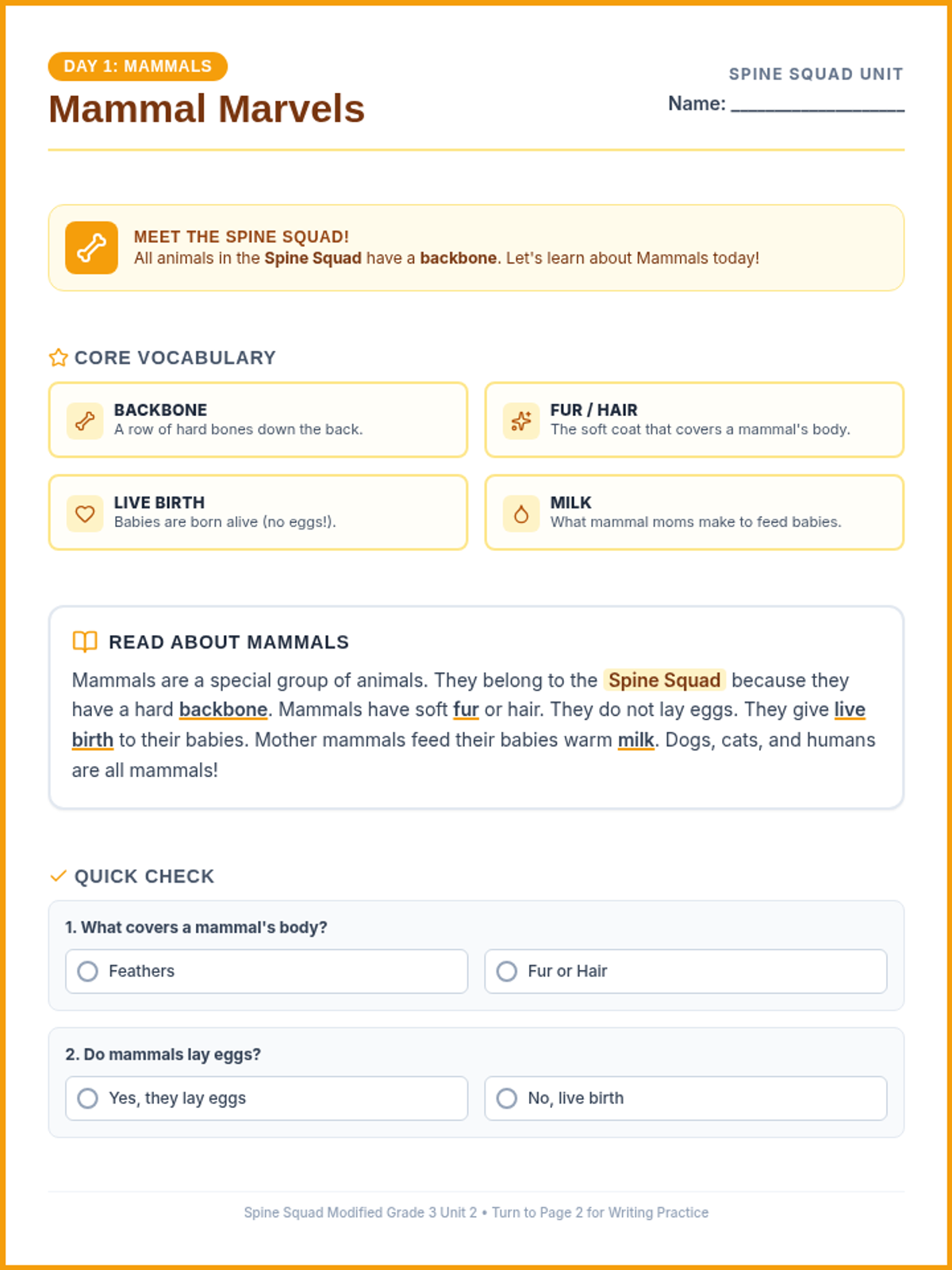
Student workbook for Day 1 of the Spine Squad unit. Features a highly visual reading passage about mammals, core vocabulary with icon cards, word-tracing exercises, and sentence frames with light-grey tracing guides.
An interactive 7-slide presentation deck designed for OpenSciEd Grade 3 Lesson 5. Features high-visibility text (minimum 24px), clear diagrams, data walkthroughs, and teacher discussion prompts for inheritance.
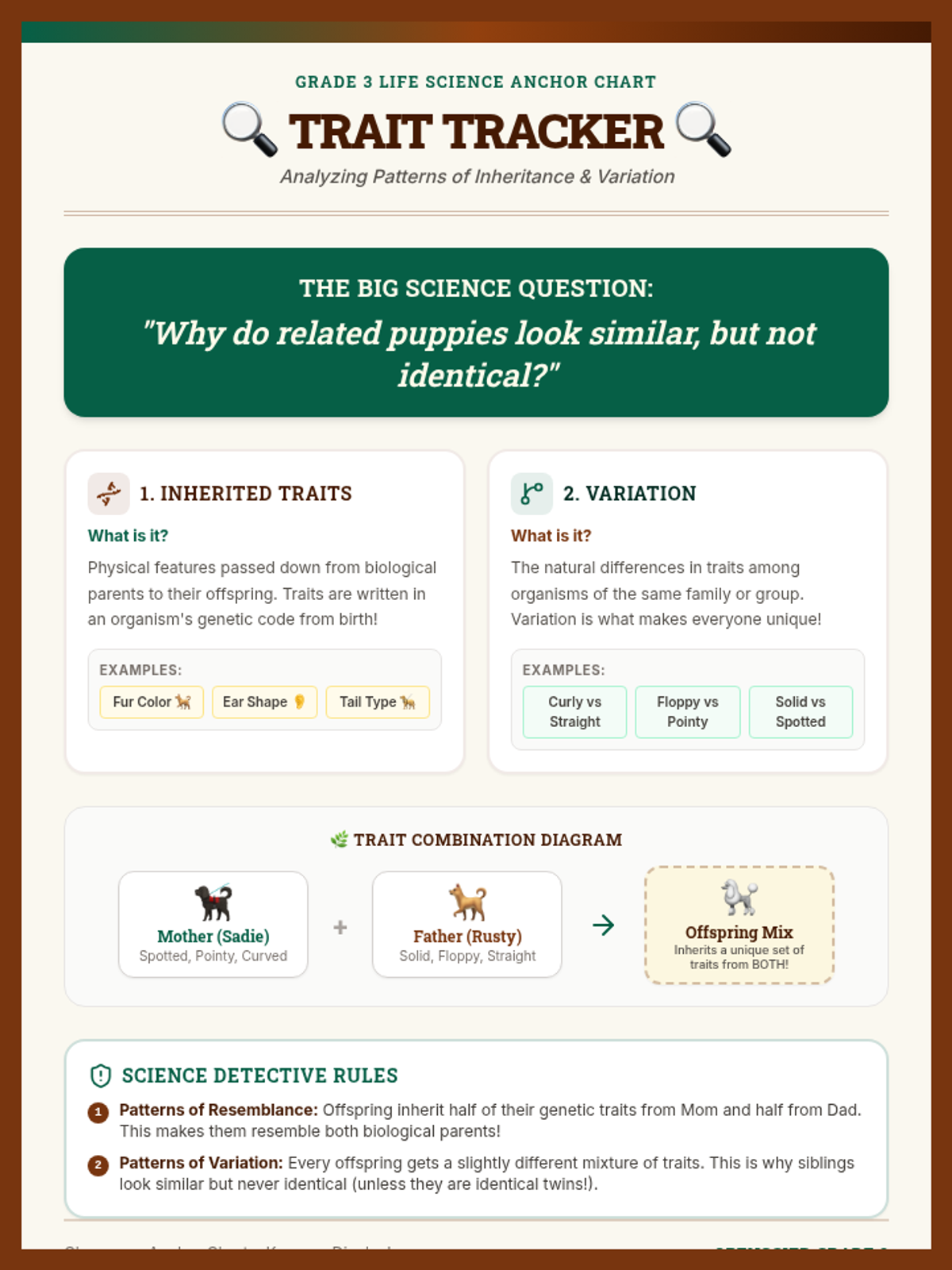
A print-ready science anchor chart summarizing trait inheritance patterns, resemblance, and variation. Designed with clear diagrams, simple child-friendly definitions, and "Science Detective Rules" for classroom display.
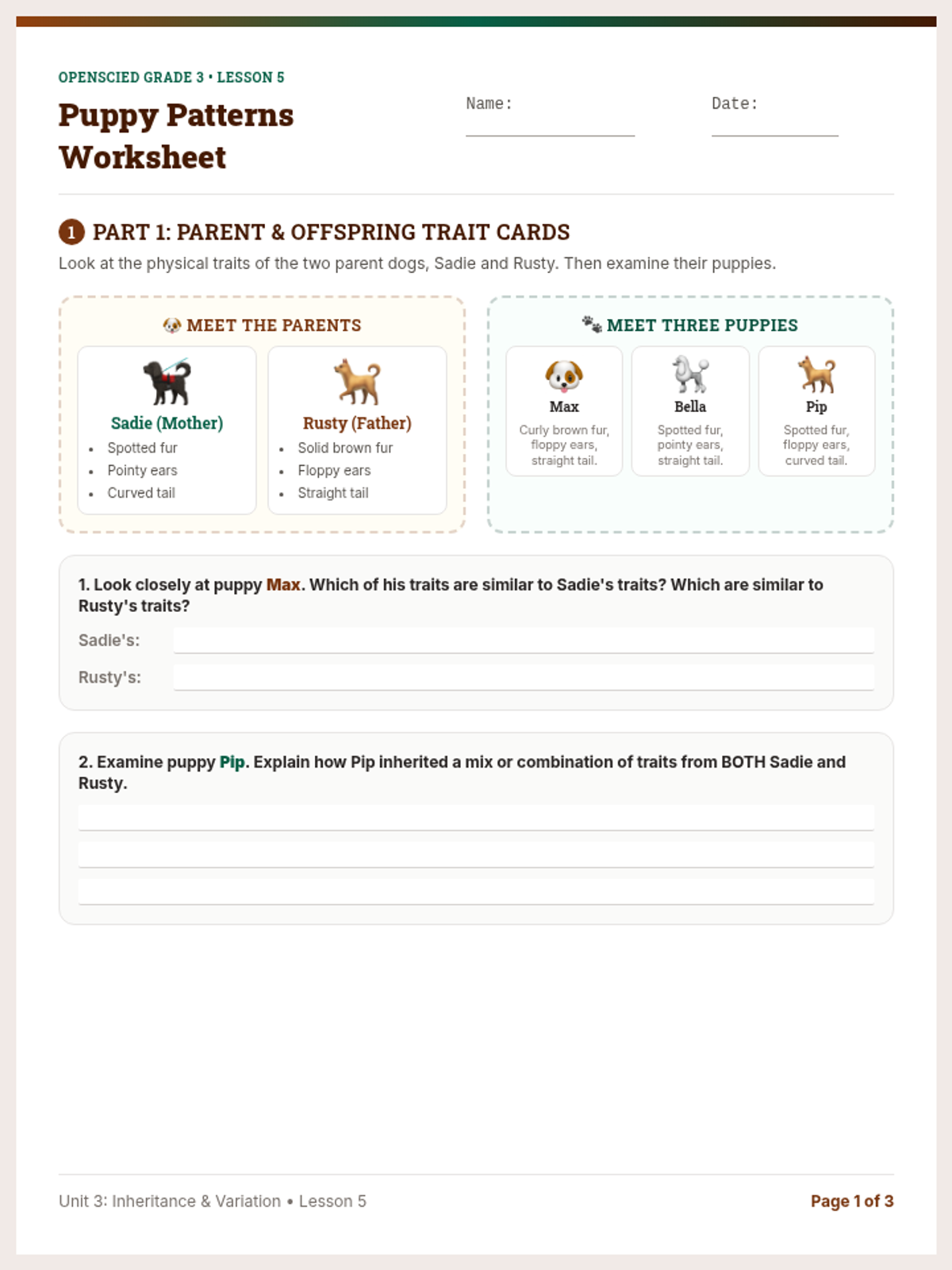
A 3-page, print-ready student data worksheet for OpenSciEd Grade 3 Lesson 5. Includes side-by-side parent and puppy trait cards, a visual trait checklist matrix, a tally chart, and a bar graphing activity.
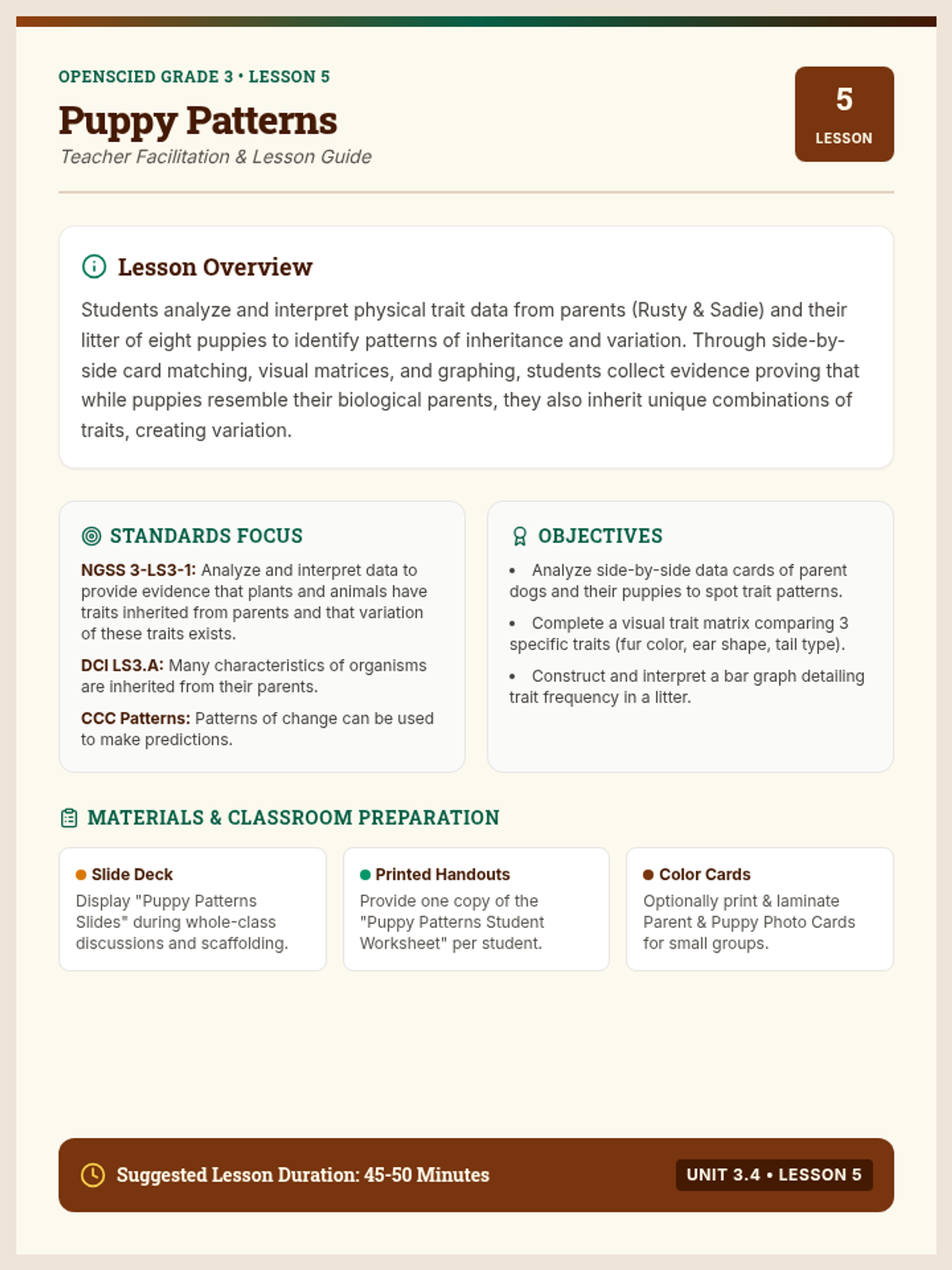
A comprehensive 2-page teacher facilitation guide for OpenSciEd Grade 3 Lesson 5. Includes lesson objectives, NGSS alignment, step-by-step facilitation instructions, discussion questions, common misconceptions, and an answer key.
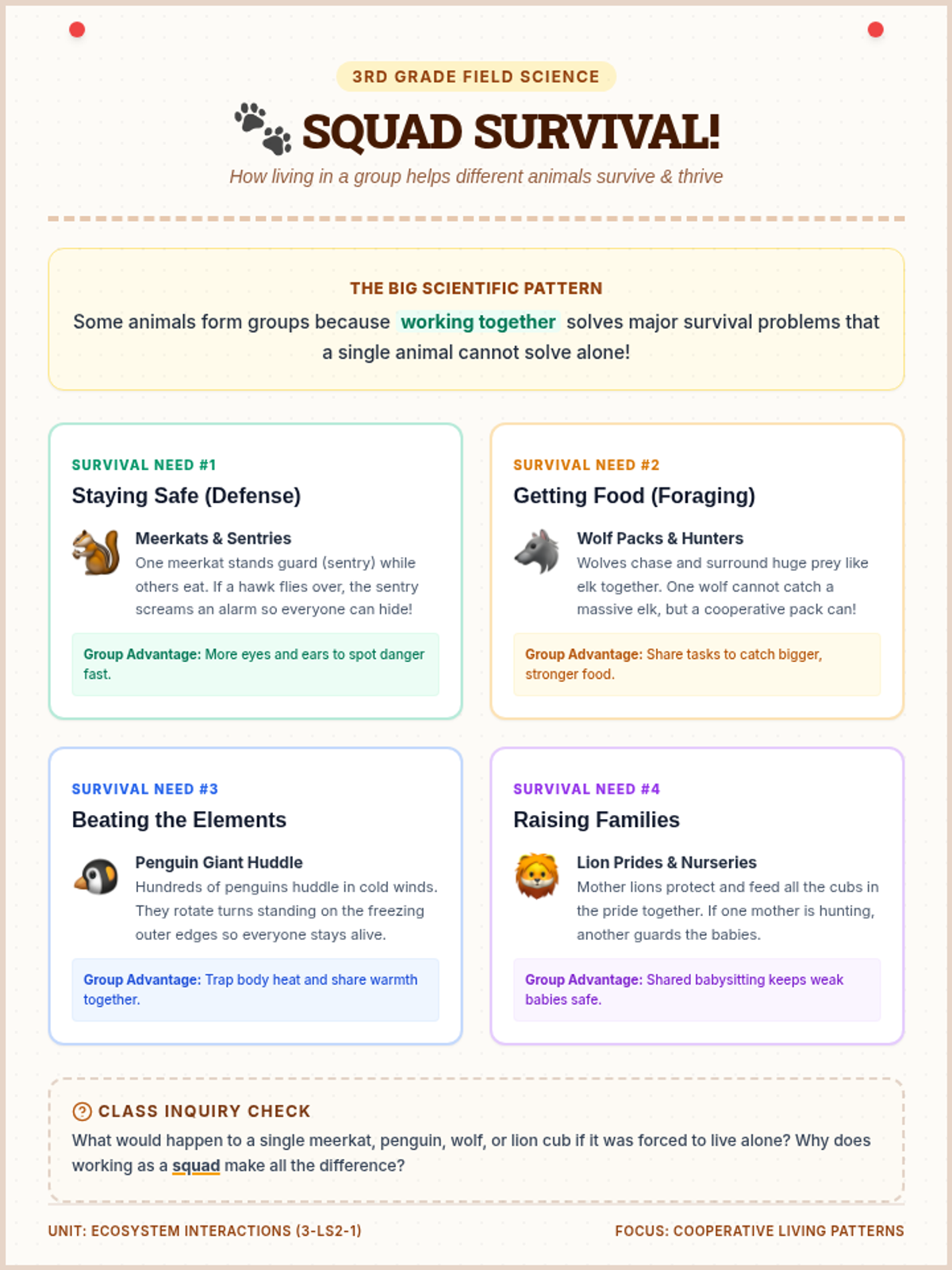
A high-impact 1-page visual classroom anchor chart summarizing the four major survival advantages of group living with memorable animal patterns.
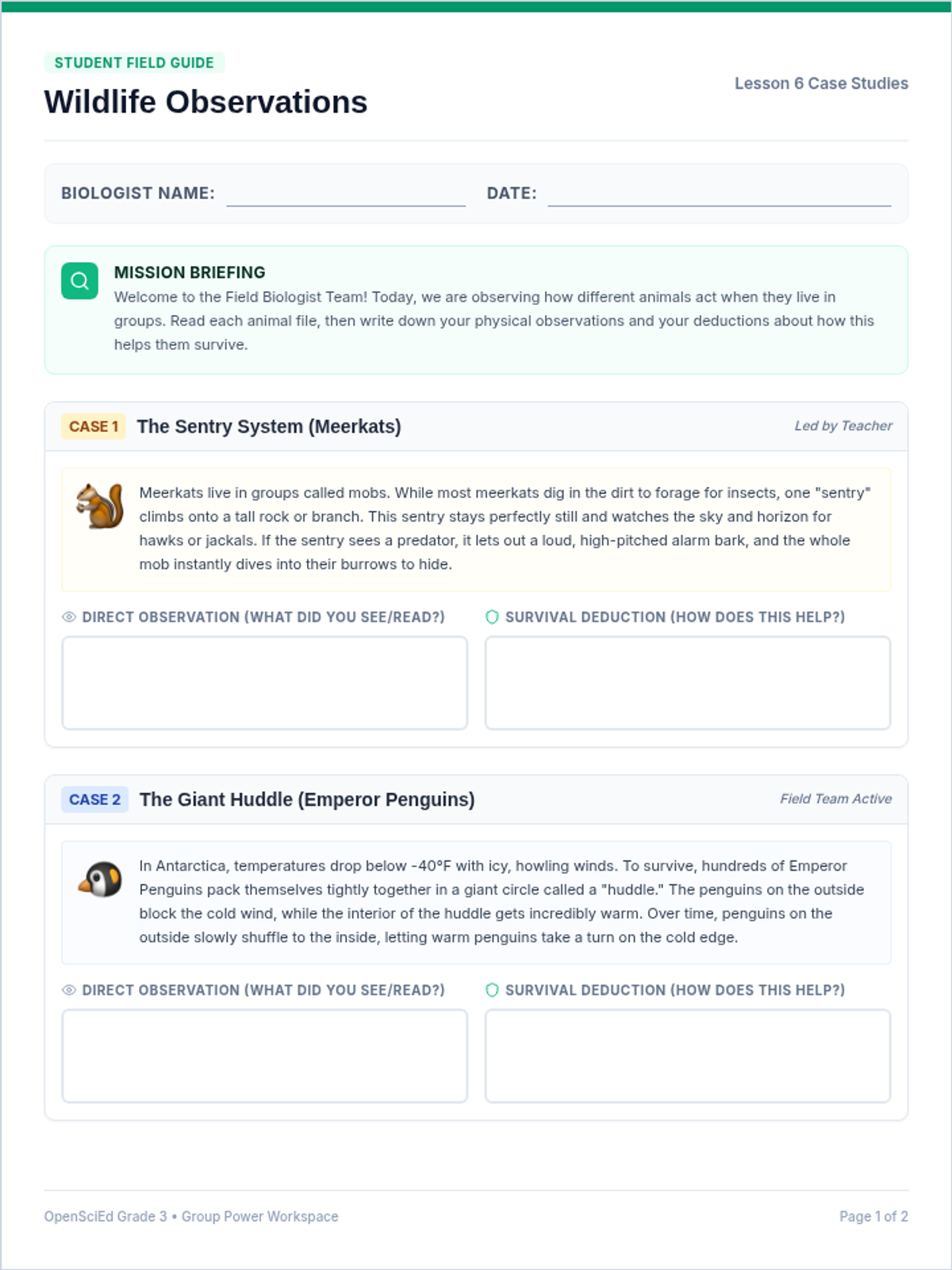
An interactive 2-page student observation worksheet where 3rd-grade field biologists record and synthesize observations of cooperative group behaviors across three animal case studies.
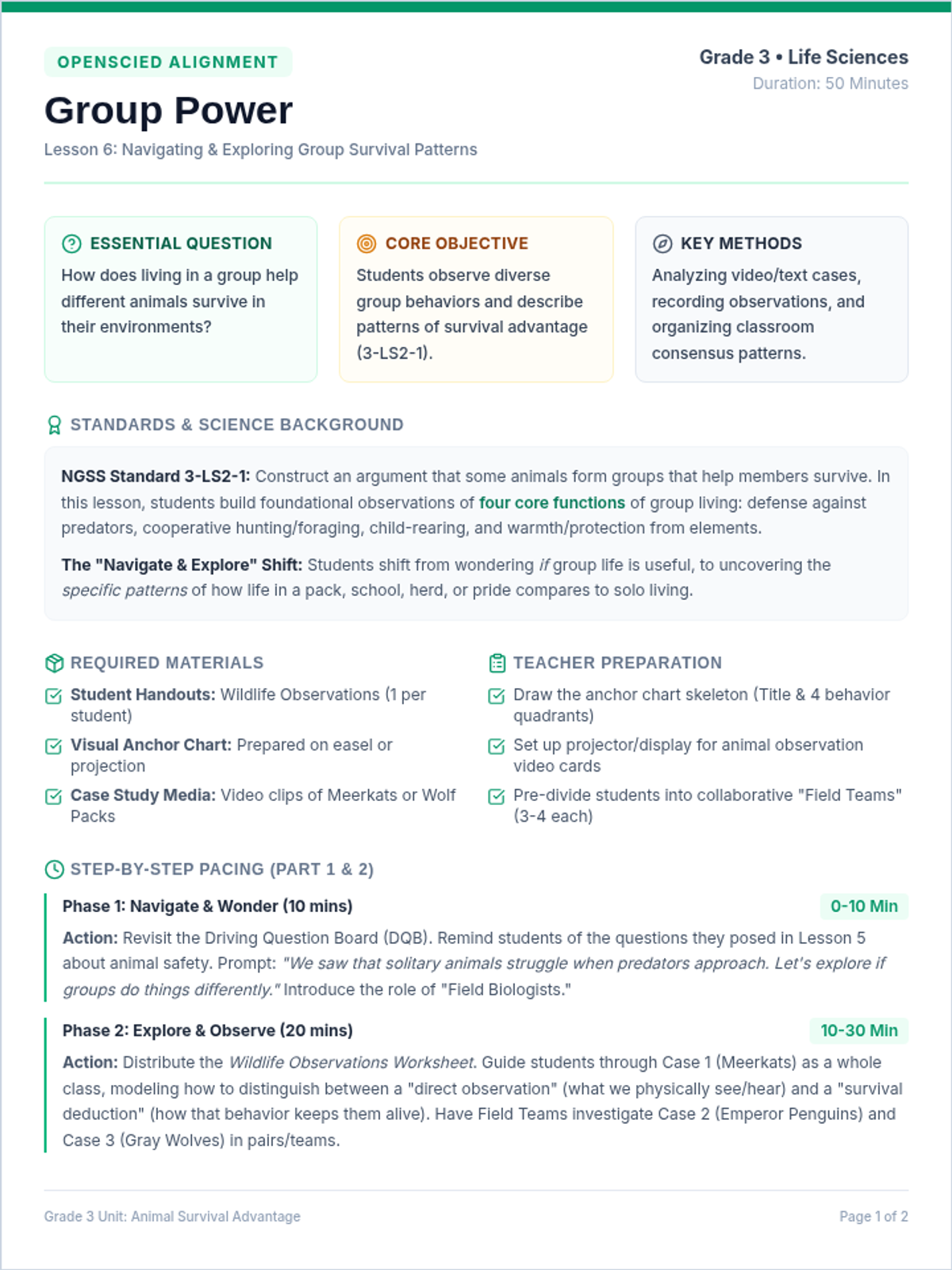
An OpenSciEd-aligned teacher guide for Lesson 6, containing detailed lesson plans, standards, facilitation prompts, and pedagogical strategies for teaching group animal behaviors.
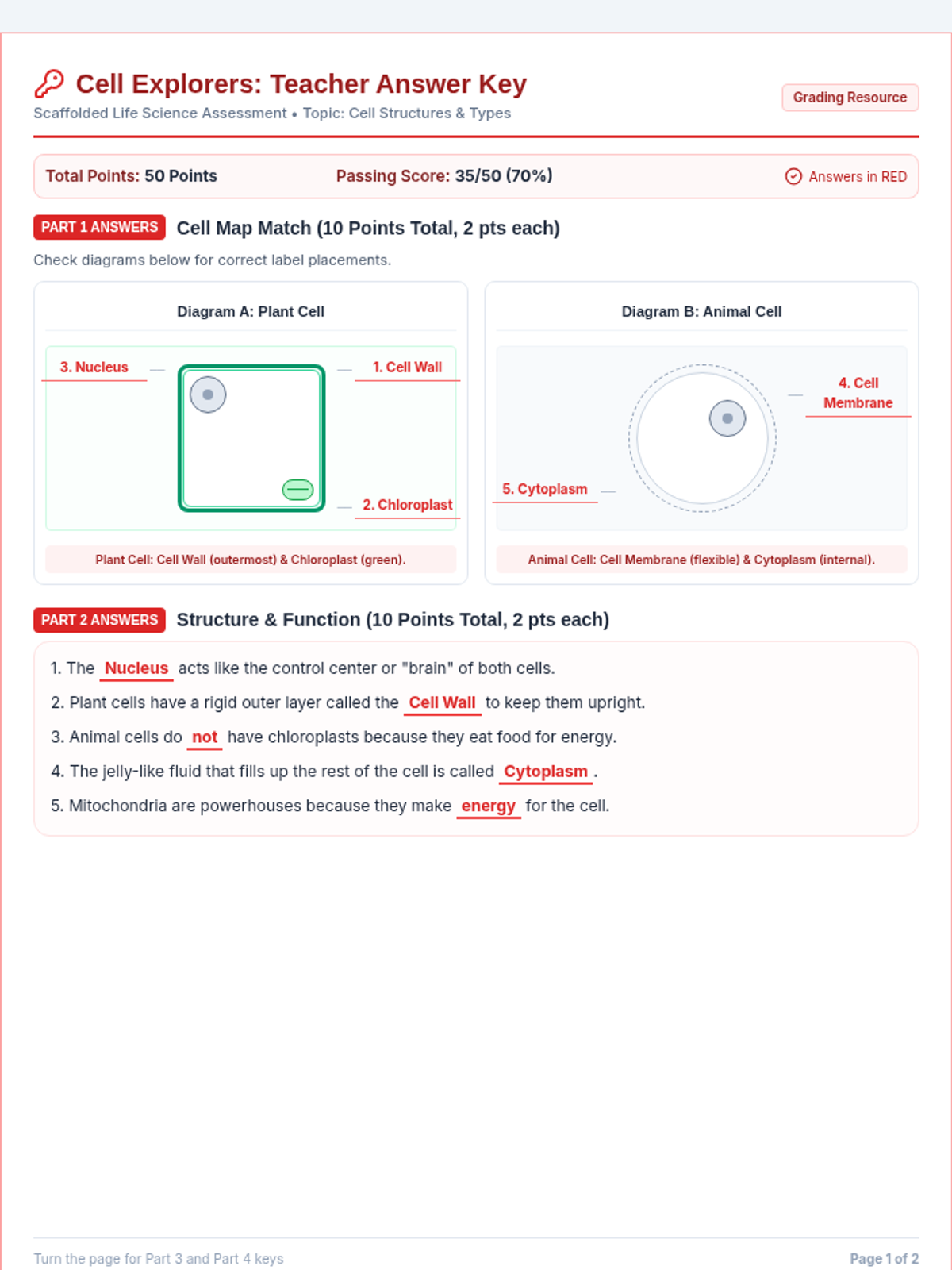
A 2-page teacher answer key companion for the scaffolded cell unit assessment, featuring highlighted correct diagrams, finished sentence frames, and student model short answers, now updated to a 50-point scale.
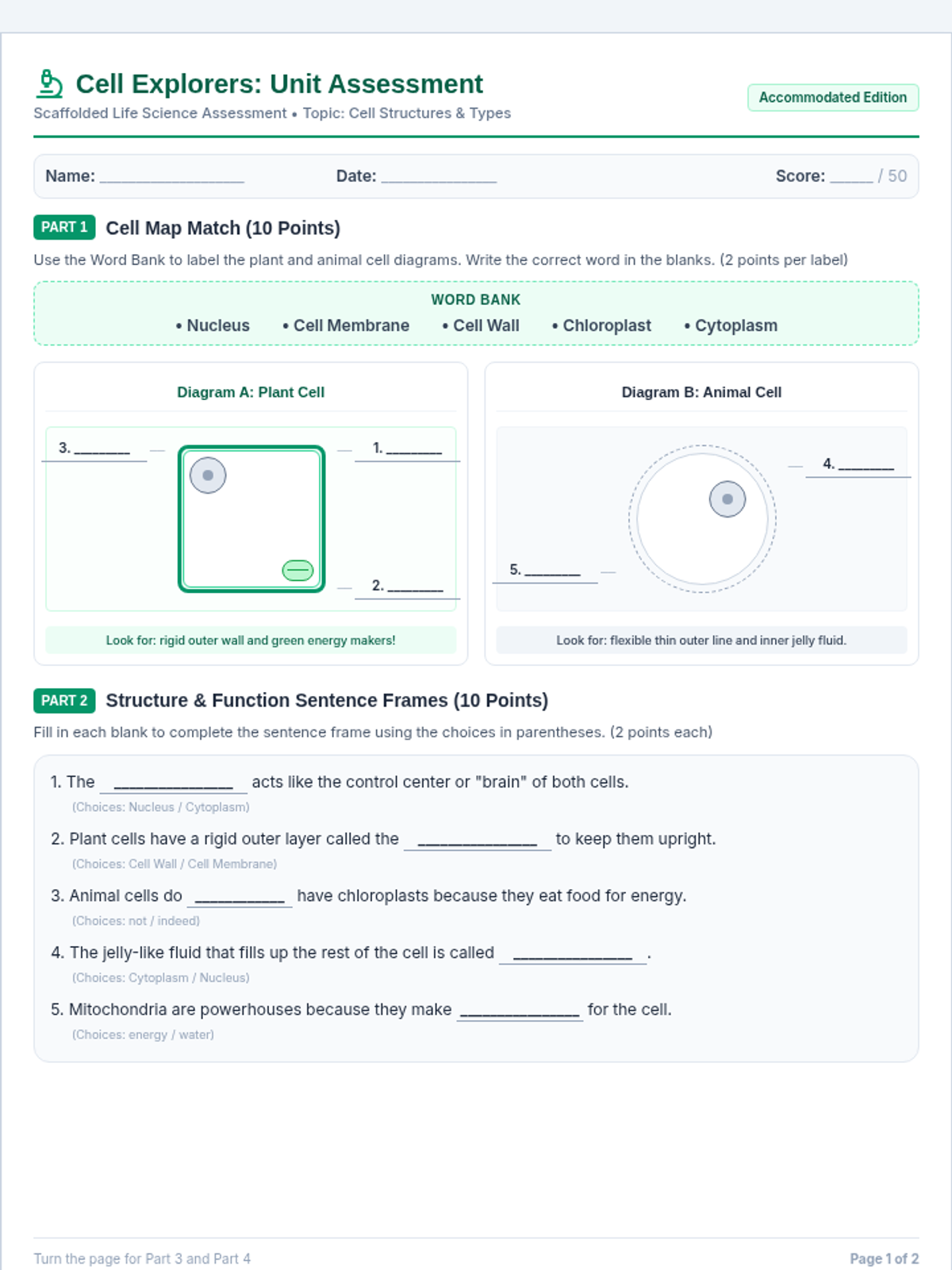
A 2-page scaffolded student cell assessment covering cell organelles, prokaryotic and eukaryotic structures, plant vs. animal cells, and bacterial anatomy. Features word banks, sentence frames, and guided sentence starters, now adjusted to a 50-point scale.
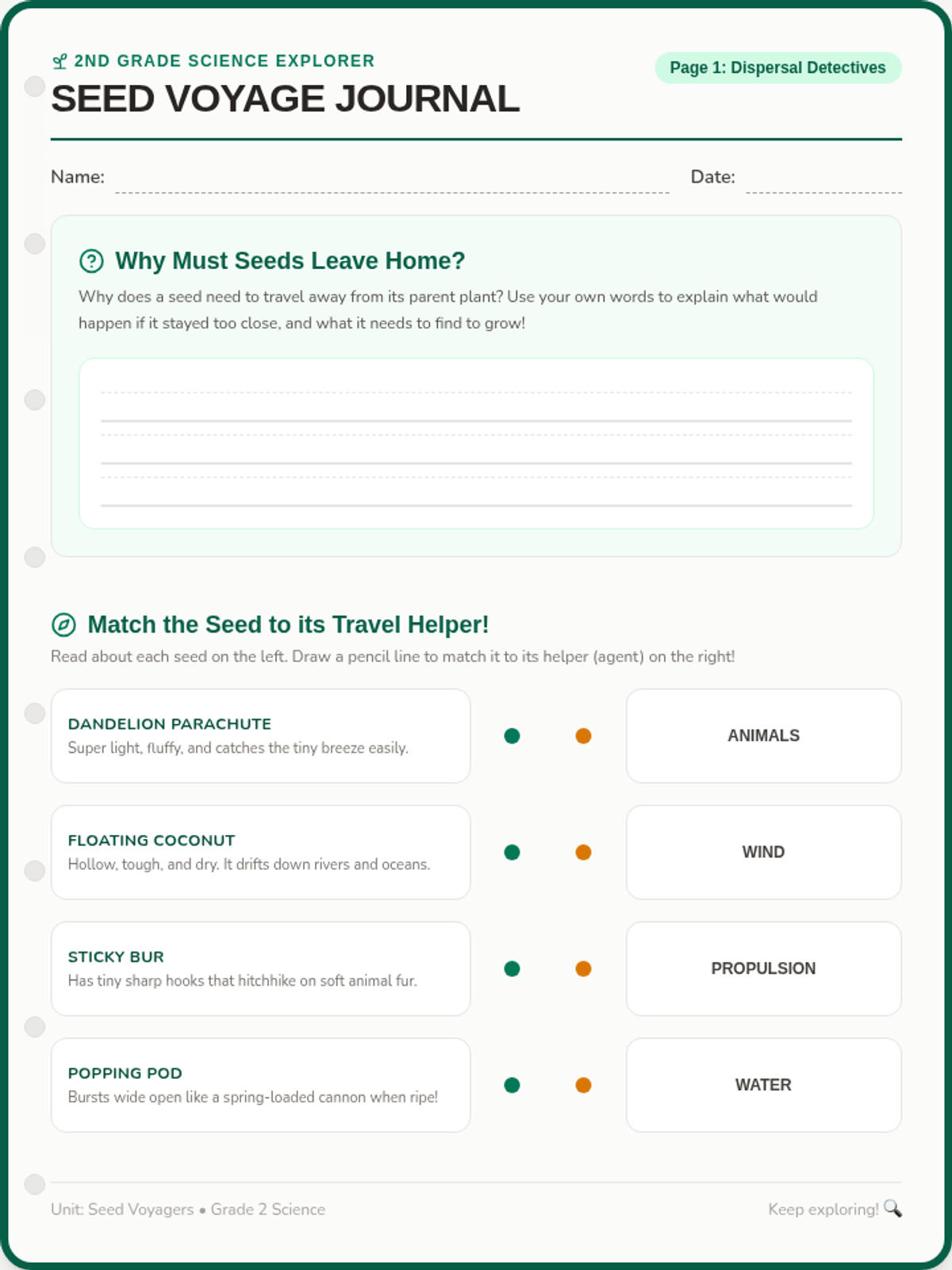
A two-page printable field journal for second-grade students to investigate and record seed dispersal. Features a conceptual writing prompt about parent plant competition, a text-based matching activity for four dispersal methods (wind, water, animals, and propulsion), a seed design drawing canvas, and dashed handwriting lines for a creative travel story.
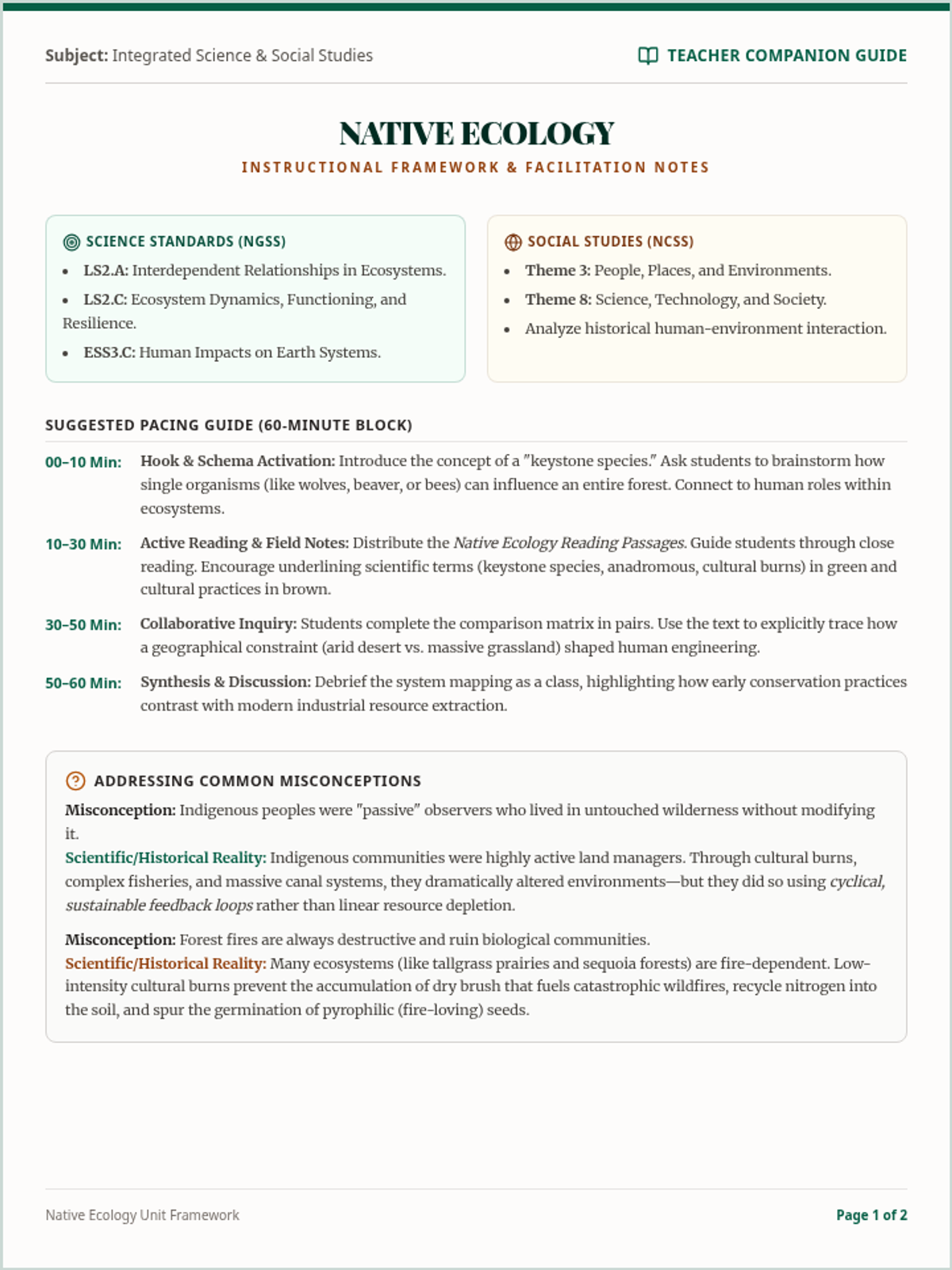
A premium, 2-page teacher companion and lesson guide for the Native Ecology material. Includes background knowledge notes, discussion prompts, student misconception guides, and a detailed answer key.
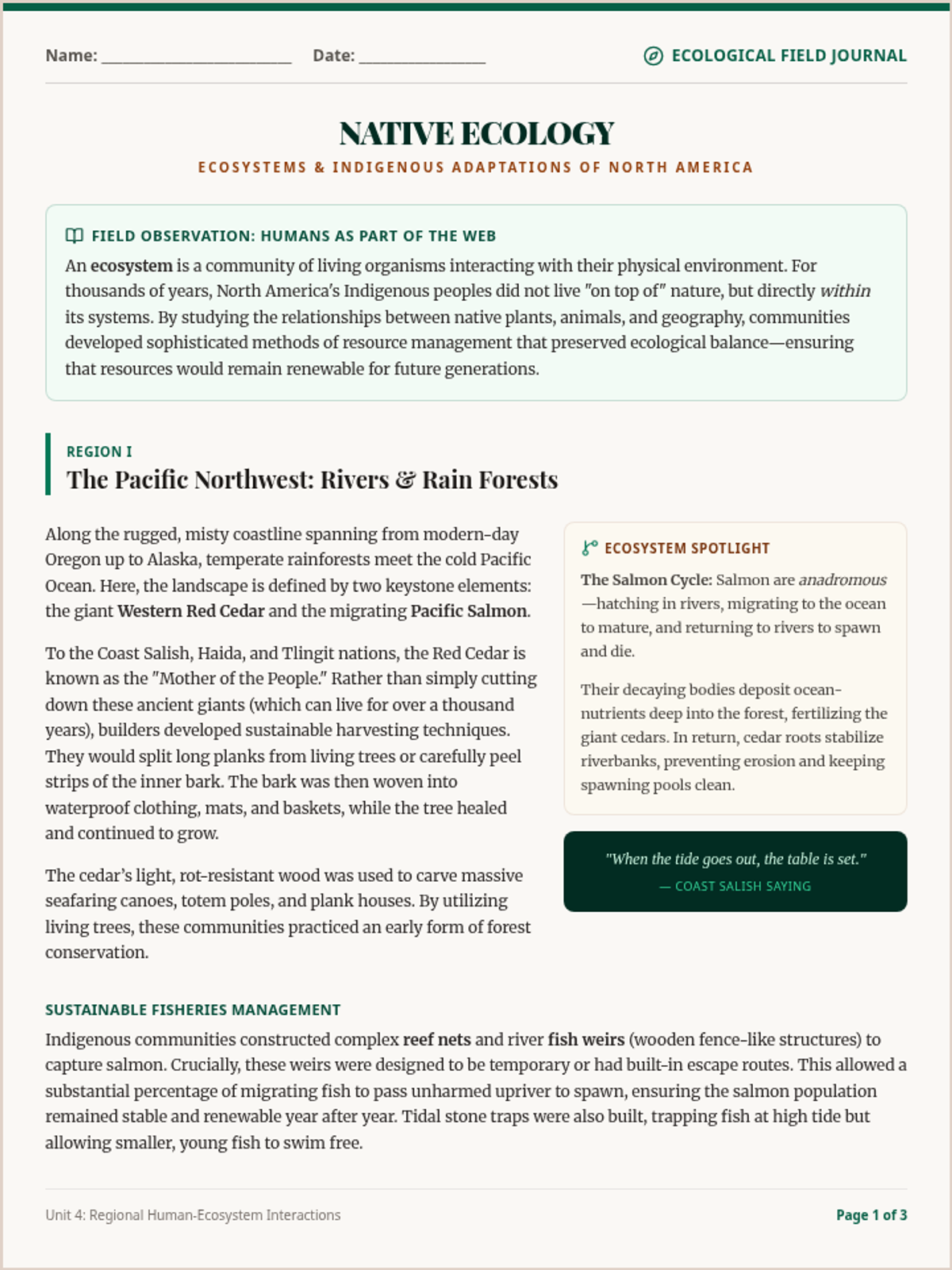
A highly-engaging, 3-page printable field journal and reading comprehension guide. It features immersive historical-ecological passages on three North American regions (Pacific Northwest, Great Plains, and Southwest Desert) and integrating science questions.
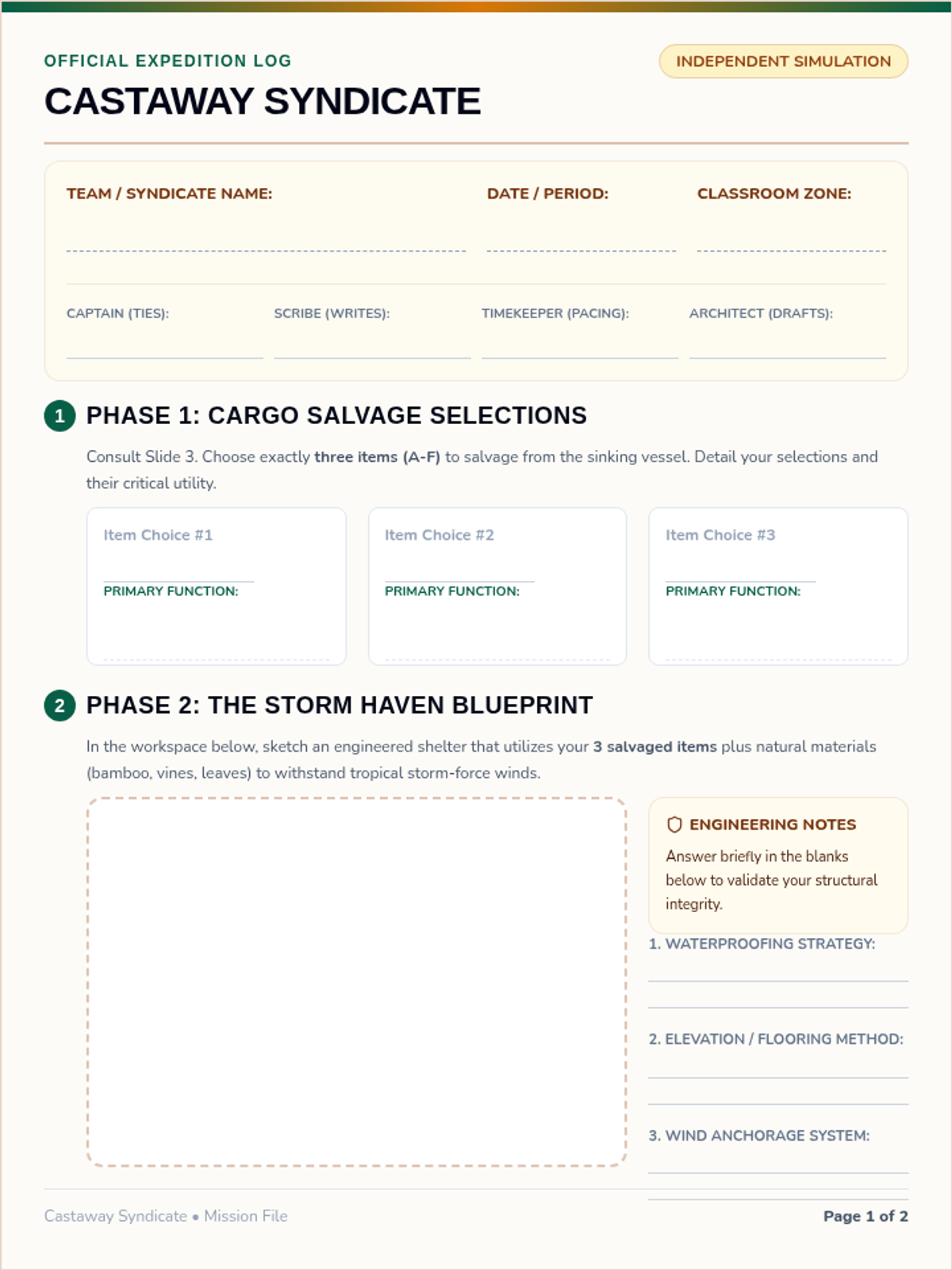
A high-utility, print-ready companion journal where student teams assign roles, record salvage decisions, sketch their architectural shelter blueprints, design their signaling formula, and tally their final score.
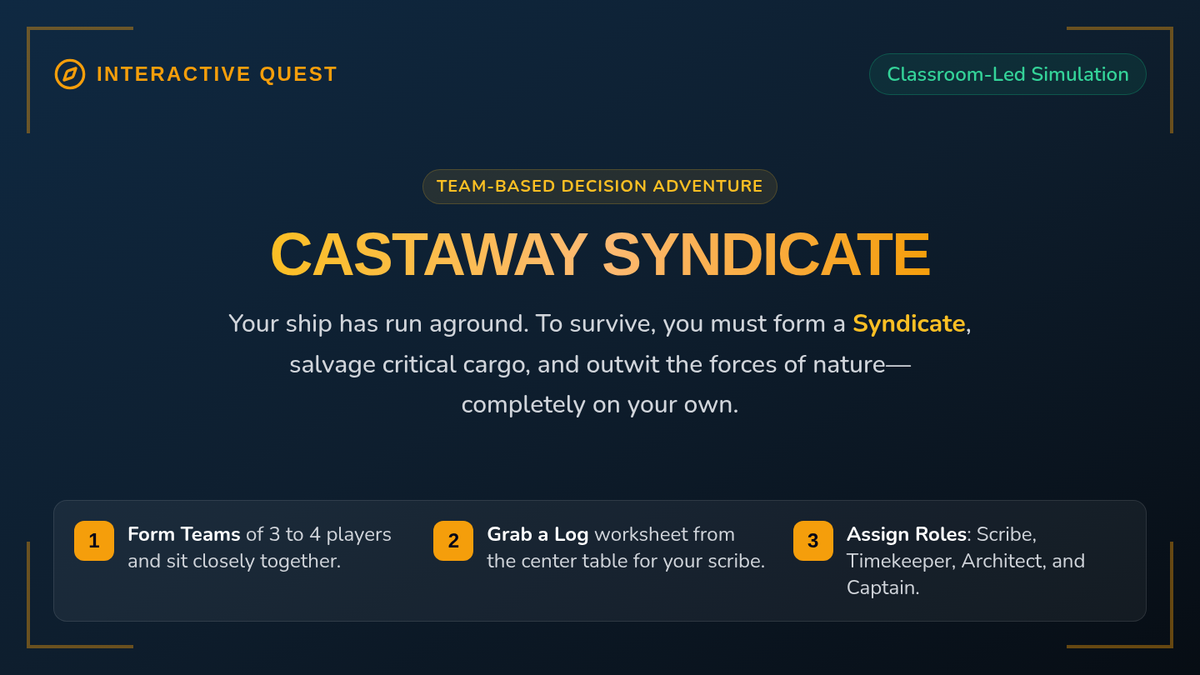
An immersive, self-paced, and highly collaborative survival simulation slide deck designed to run independently. It guides student teams through critical survival decisions, creative shelter engineering, and smoke signal challenges while maintaining a quiet, focused classroom.
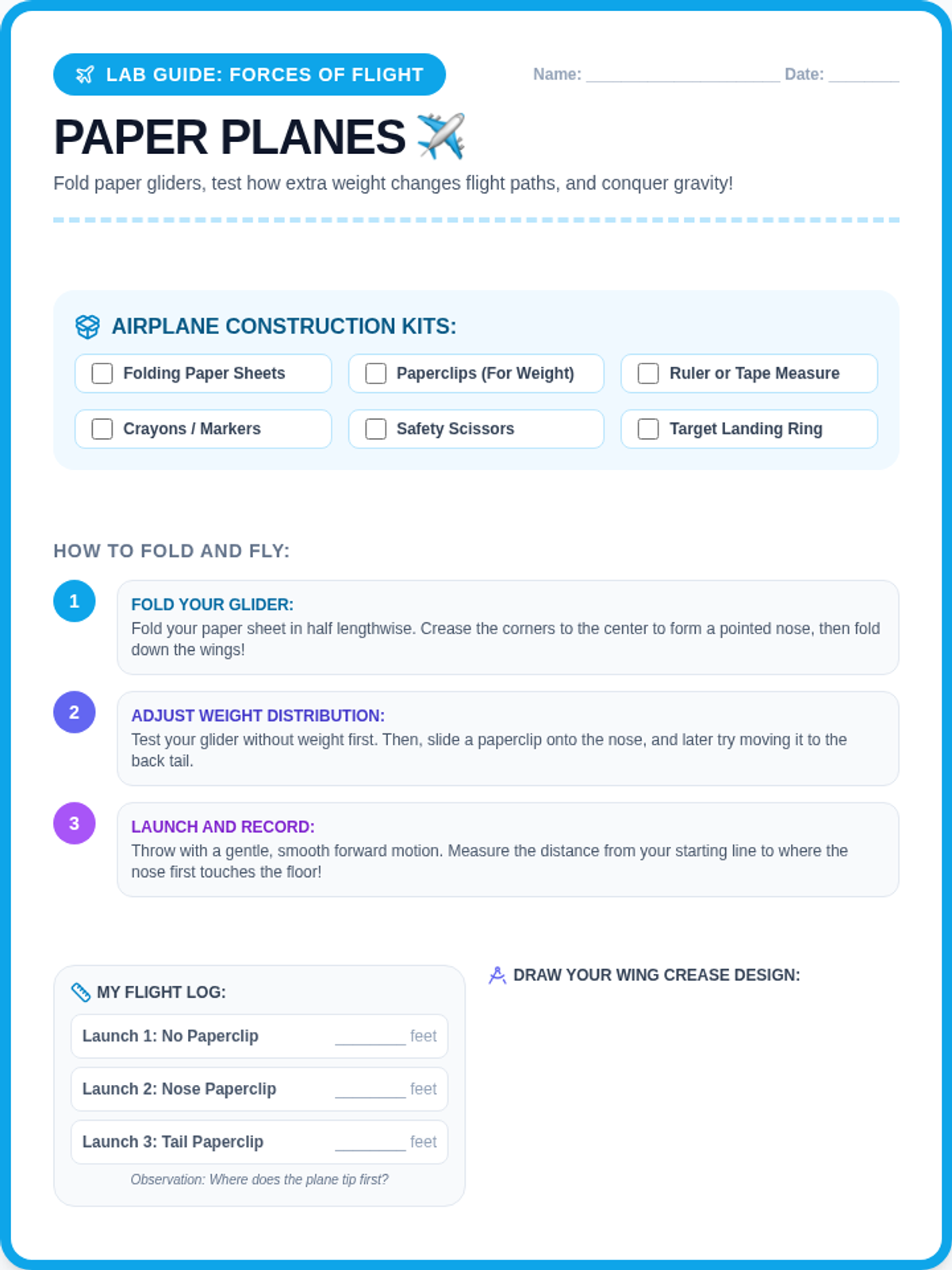
A 2-page student guide for a paper airplane aerodynamics lab. Page 1 tracks plane folding, weight distribution tests, and flight distances. Page 2 features an expanded 3rd-grade readability passage explaining the forces of flight (lift, gravity, thrust, drag), followed by a 6-question comprehension check.
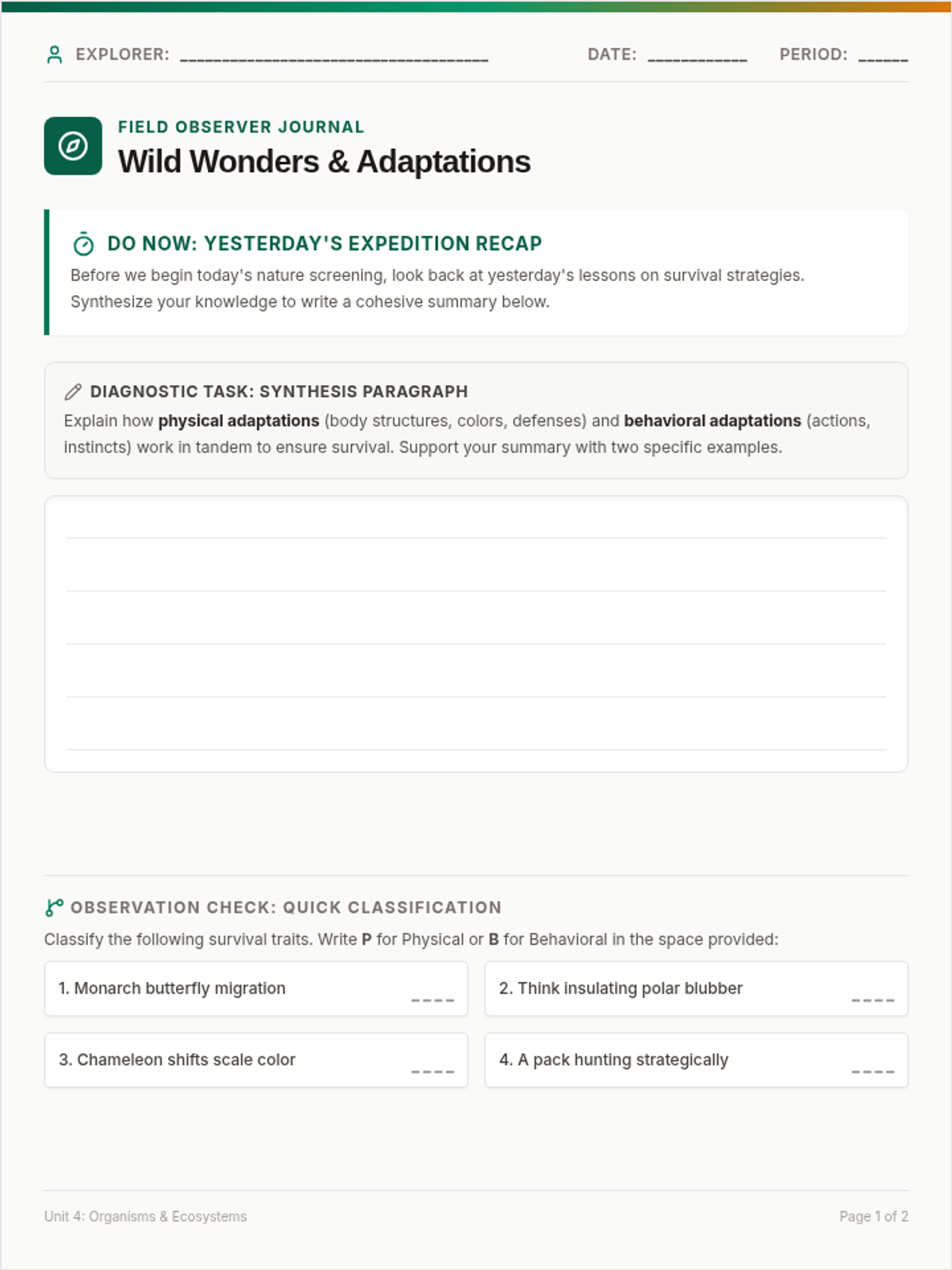
A 2-page student worksheet featuring a Do Now summary on physical and behavioral animal adaptations, followed by a generic nature documentary video review guide.
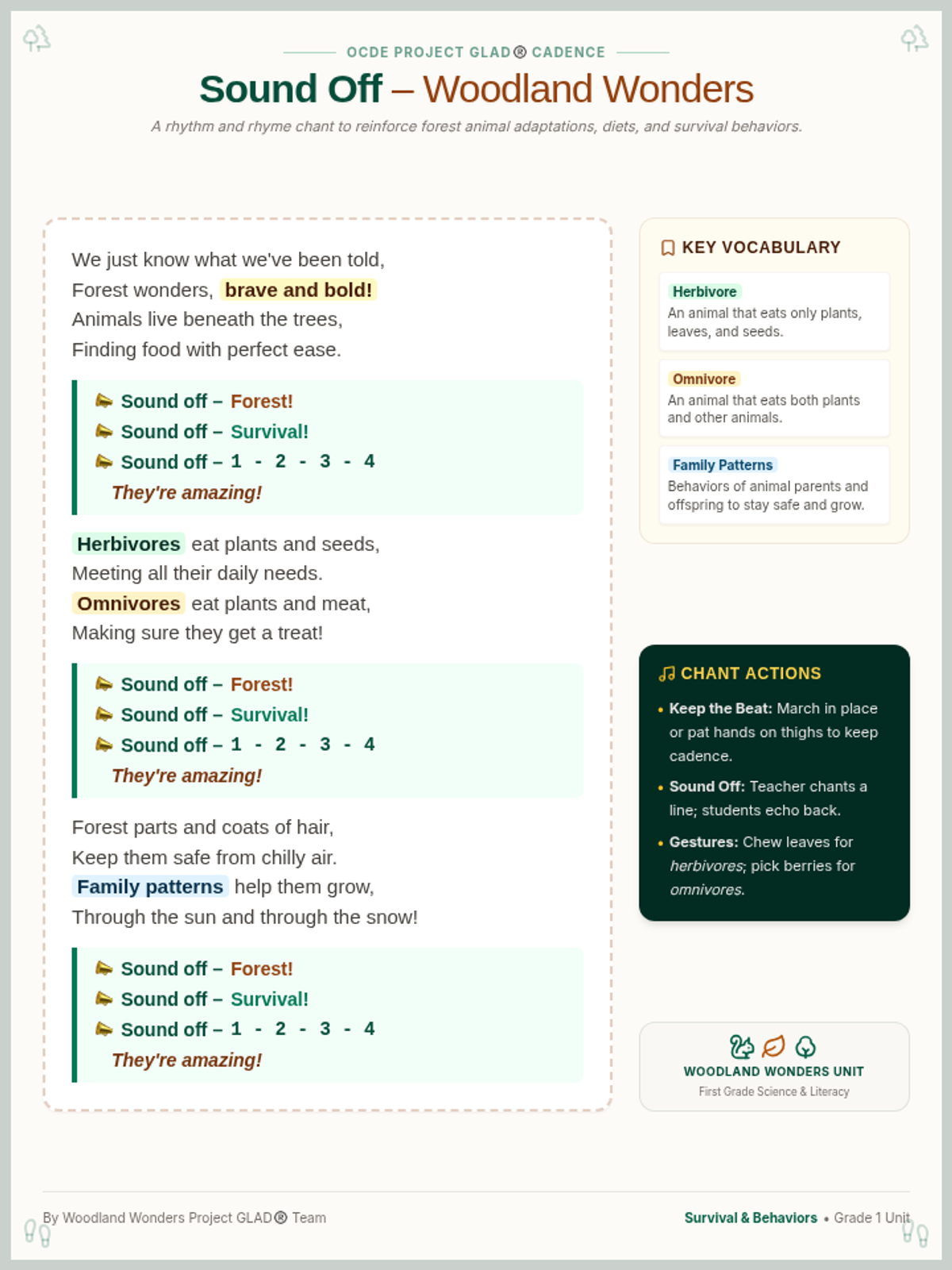
A GLAD-style "Sound Off" cadence chant poster for the Woodland Wonders unit. Styled like a classic classroom chart with highlighted vocabulary, woodsy accents, and rhythmic verses about survival, external parts, diets, and family patterns.
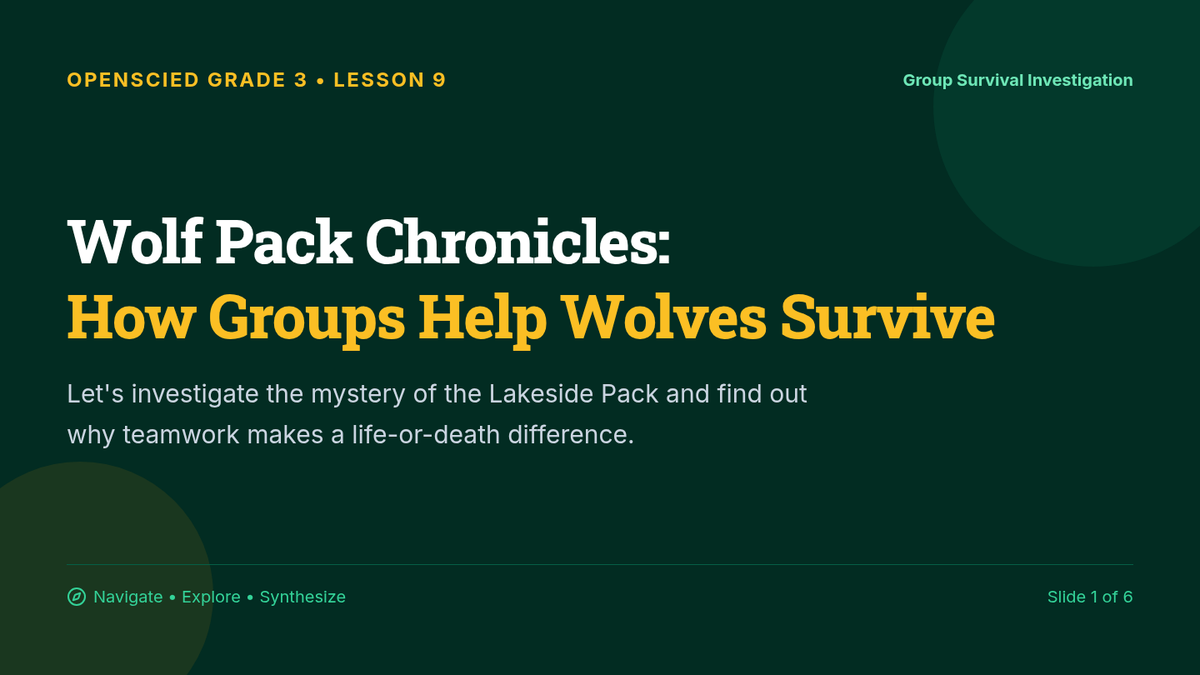
A highly visual 6-slide deck designed to guide students through Lesson 9. Includes large text (minimum 24px), clear visual cues, structured data slides, and visual model revision prompts for interactive classroom instruction.
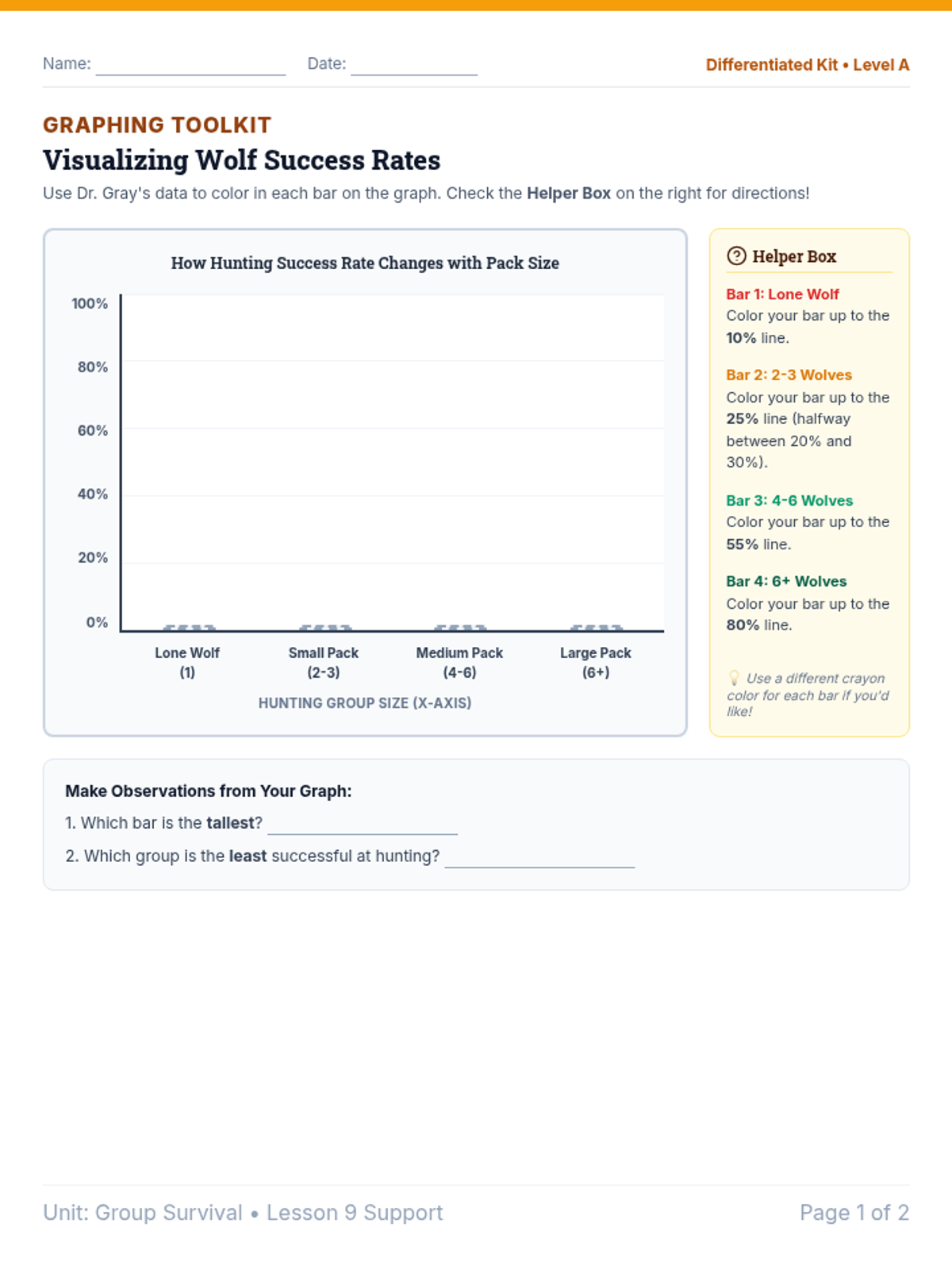
A 2-page scaffolded toolkit containing a pre-labeled bar graph workspace for plotting wolf pack success rates, followed by a model revision workspace with word banks and sentence frames for scientific explanation.
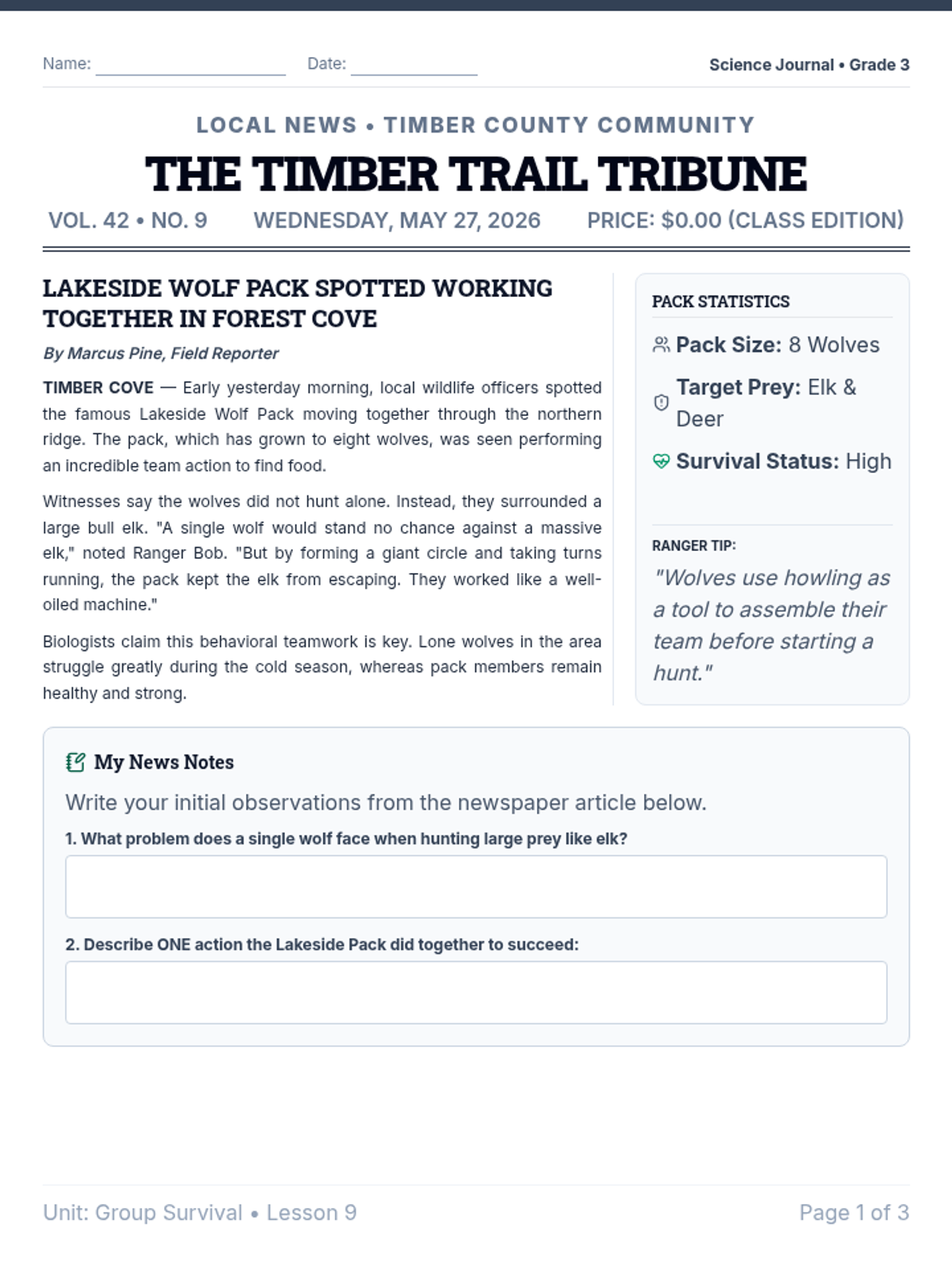
A 3-page student-facing investigation booklet. Includes a stylized local newspaper article ('The Timber Trail Tribune') for the initial launch, an observational trait identification log, and an expert researcher's raw dataset on pack hunting success.
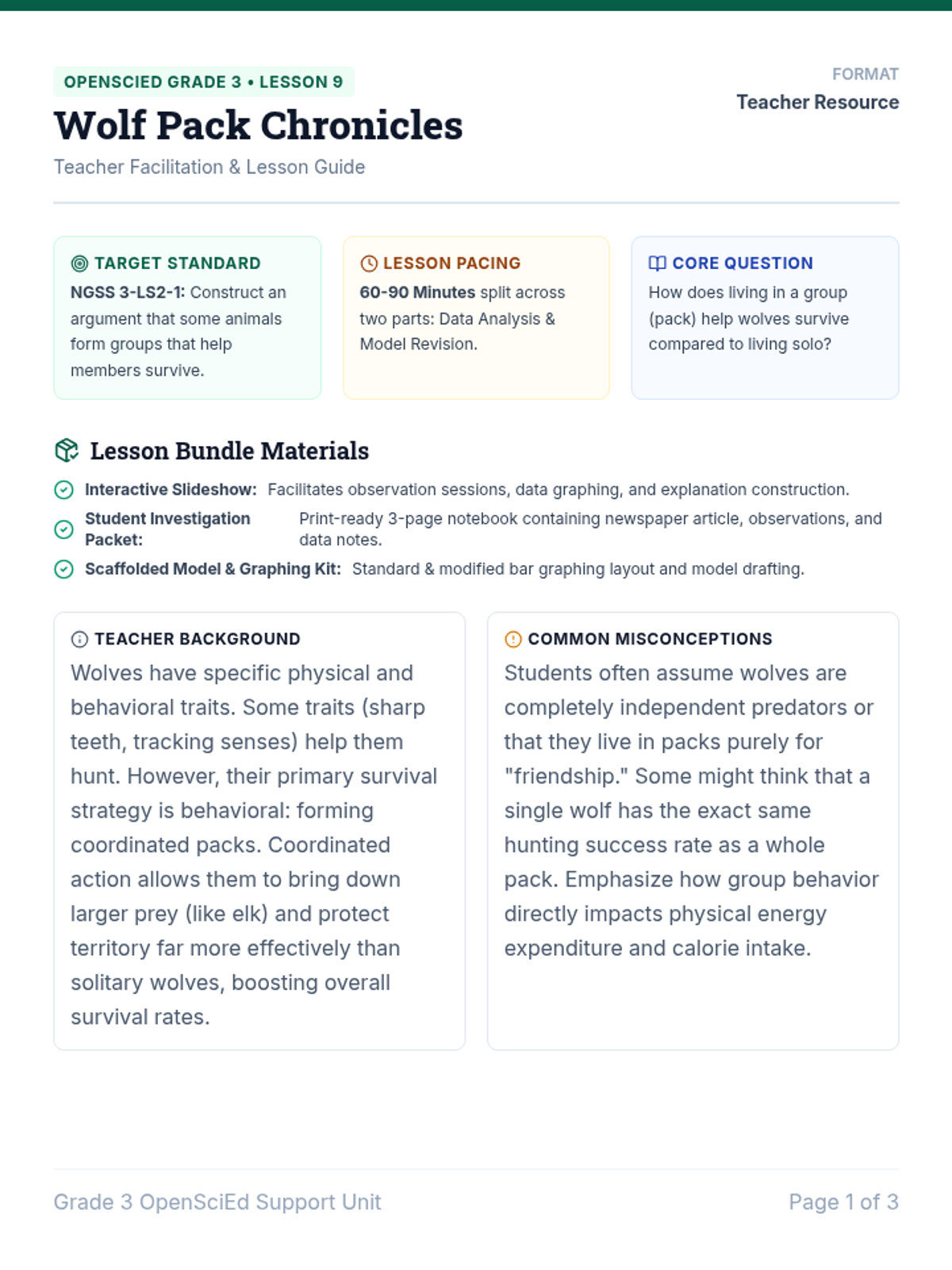
A comprehensive 3-page teacher guide for OpenSciEd Lesson 9. It outlines standards alignment, pacing, step-by-step facilitation prompts, expected student responses, and differentiation strategies for teaching group survival and wolf traits.
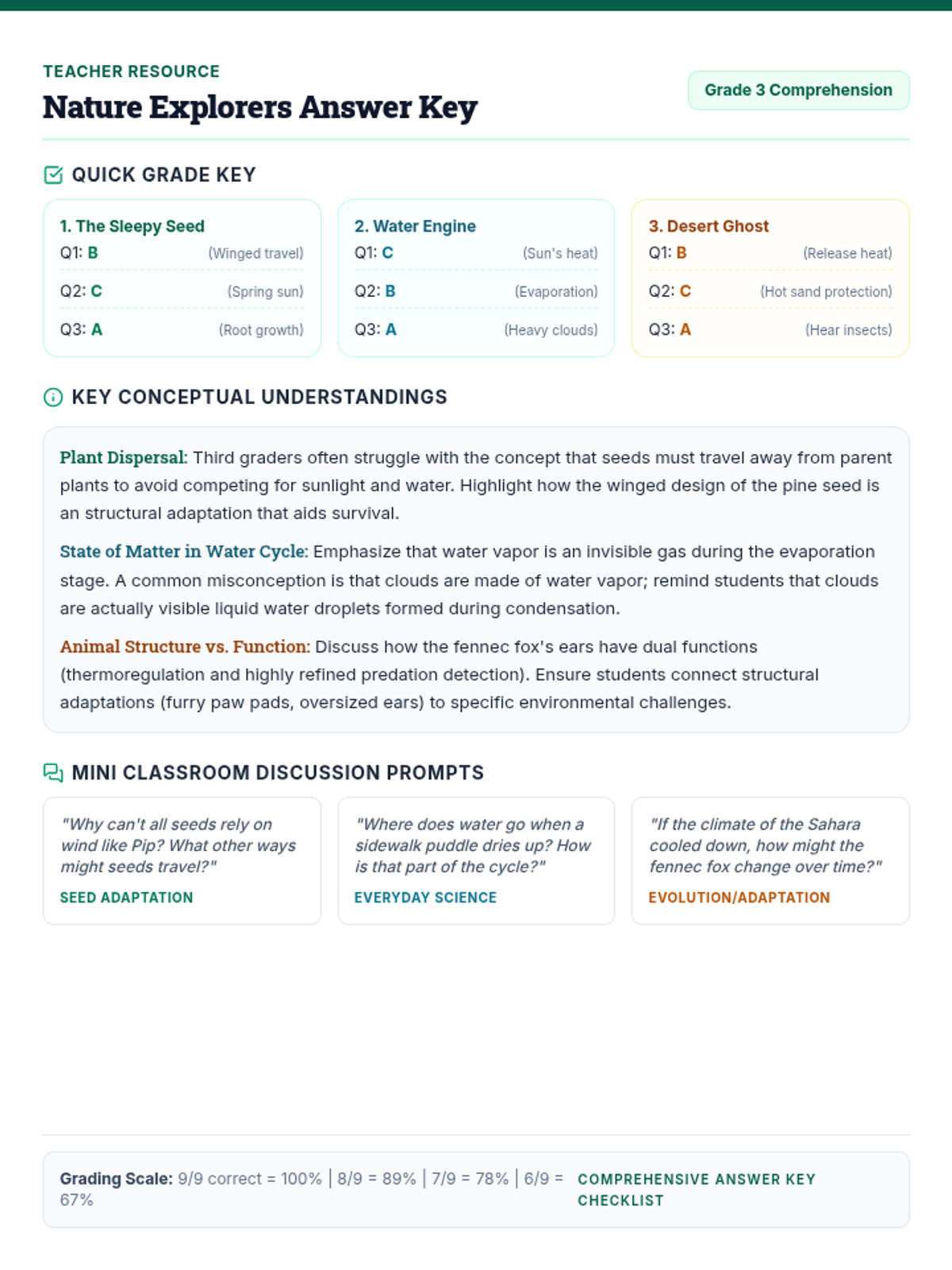
A 1-page teacher answer key and classroom discussion guide for the Nature Explorers reading packet, featuring correct answers, scientific explanations, and extension questions.