Introductory slides for Forsaken, focusing on game mechanics, UI elements (HUD), and day-one survival strategies for new players. Revised to include movement controls and improved readability.
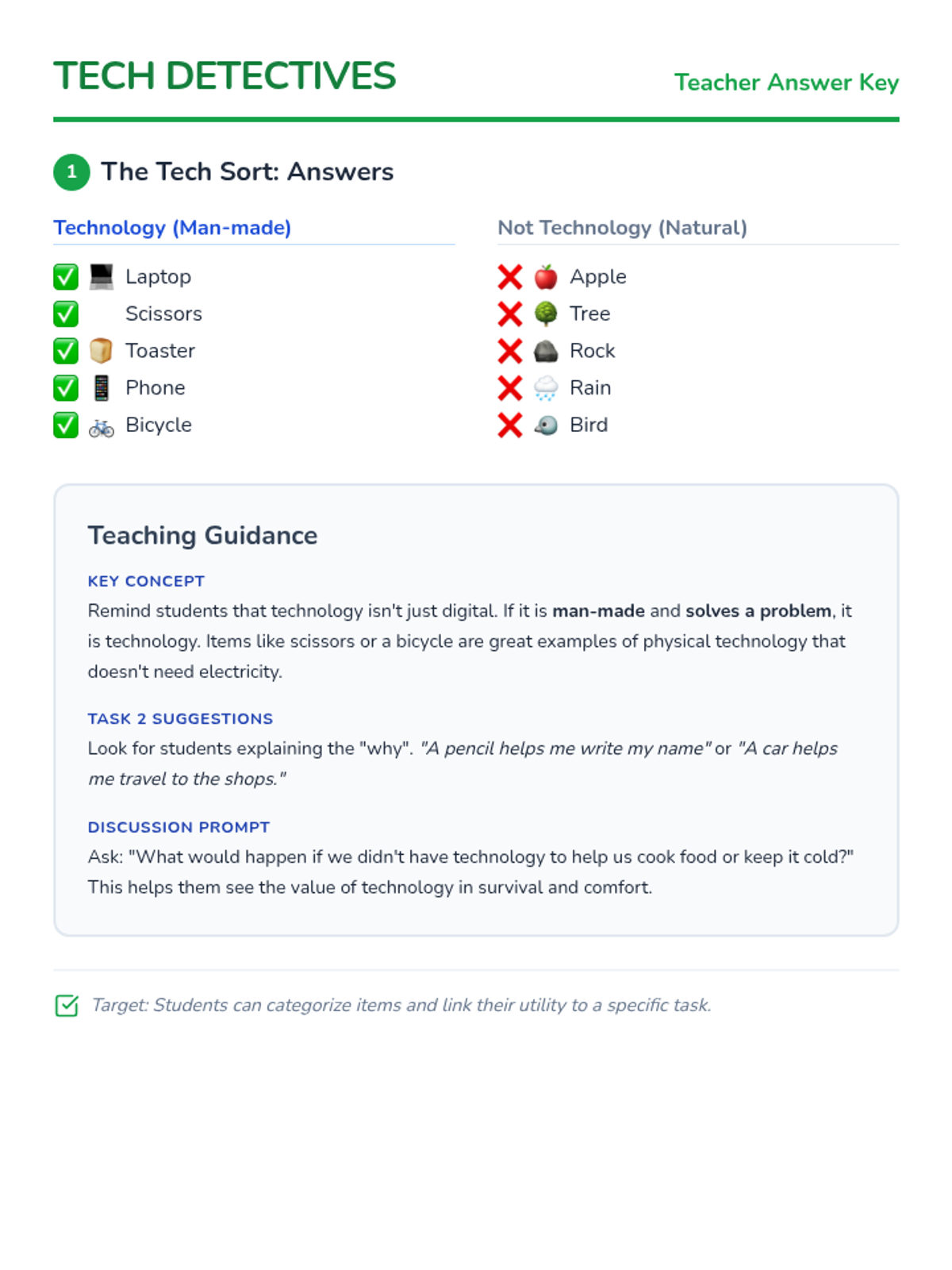
A teacher answer key and instructional guide for the Tech Detectives worksheet. Revised to ensure all content fits on a single page.
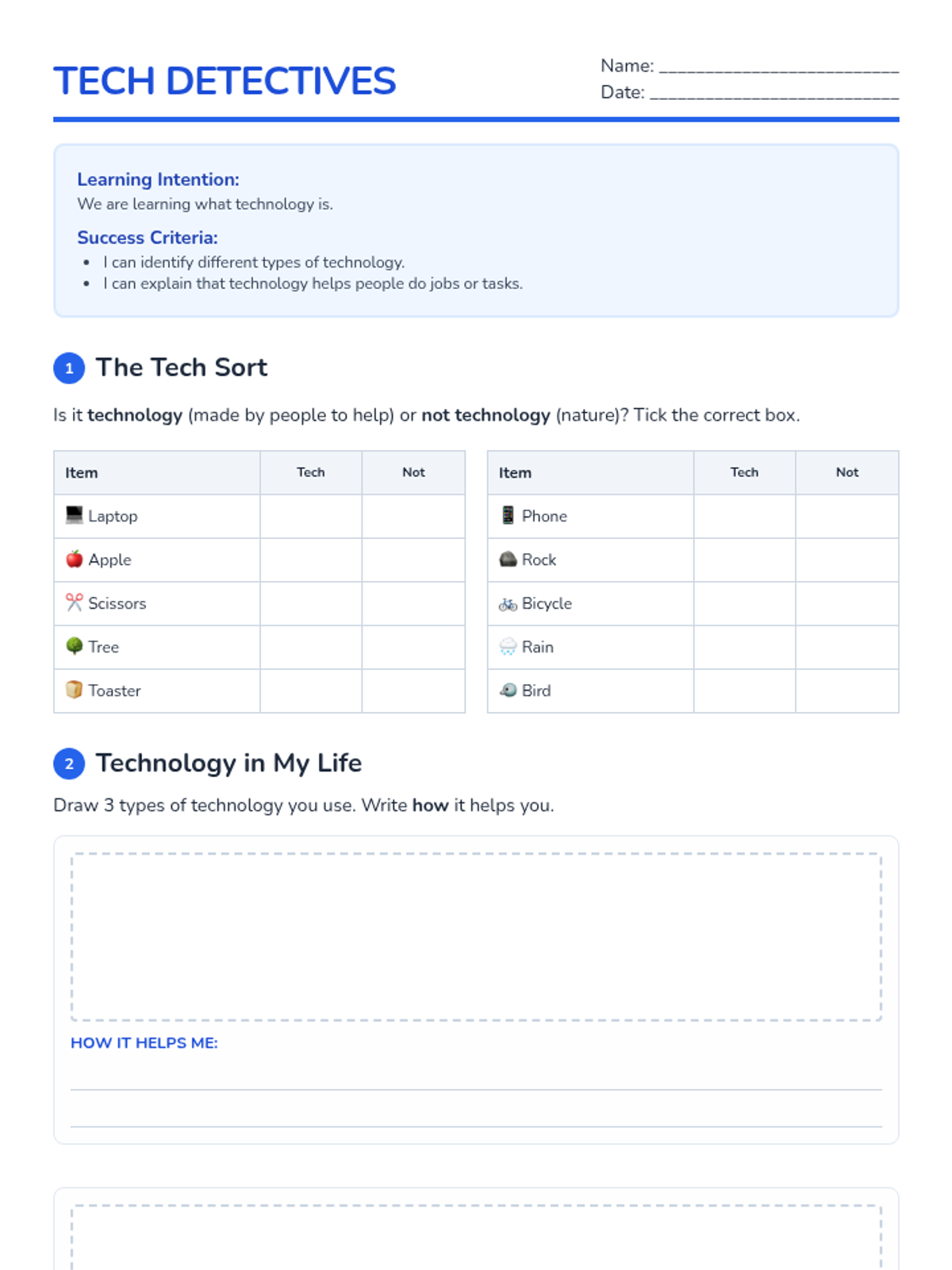
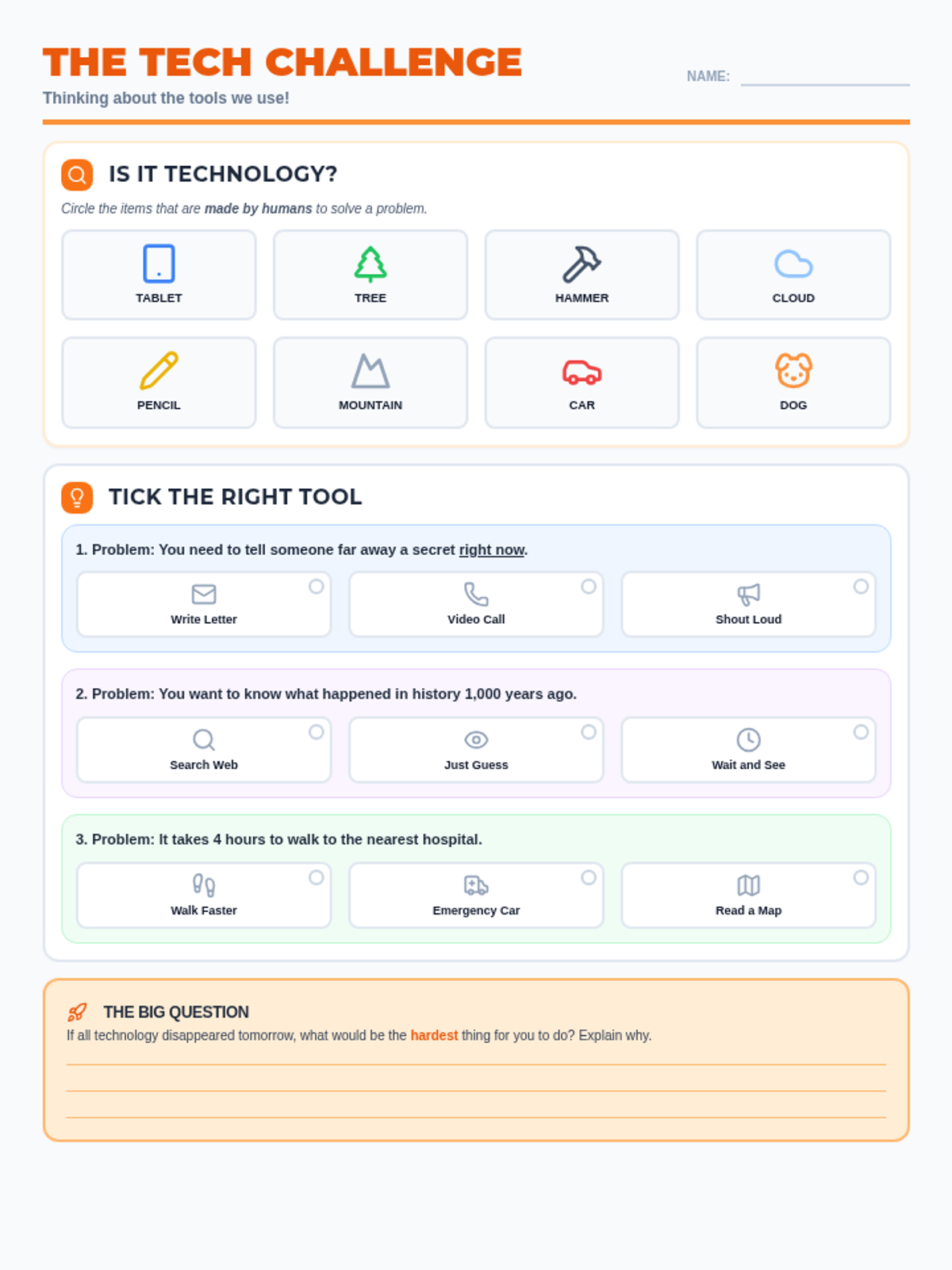
A 2-page worksheet for Primary 3 students to identify technology through a sorting task and illustrate how various technologies assist in daily tasks. Revised to fix page breaks, layout spacing, and drawing area sizing.
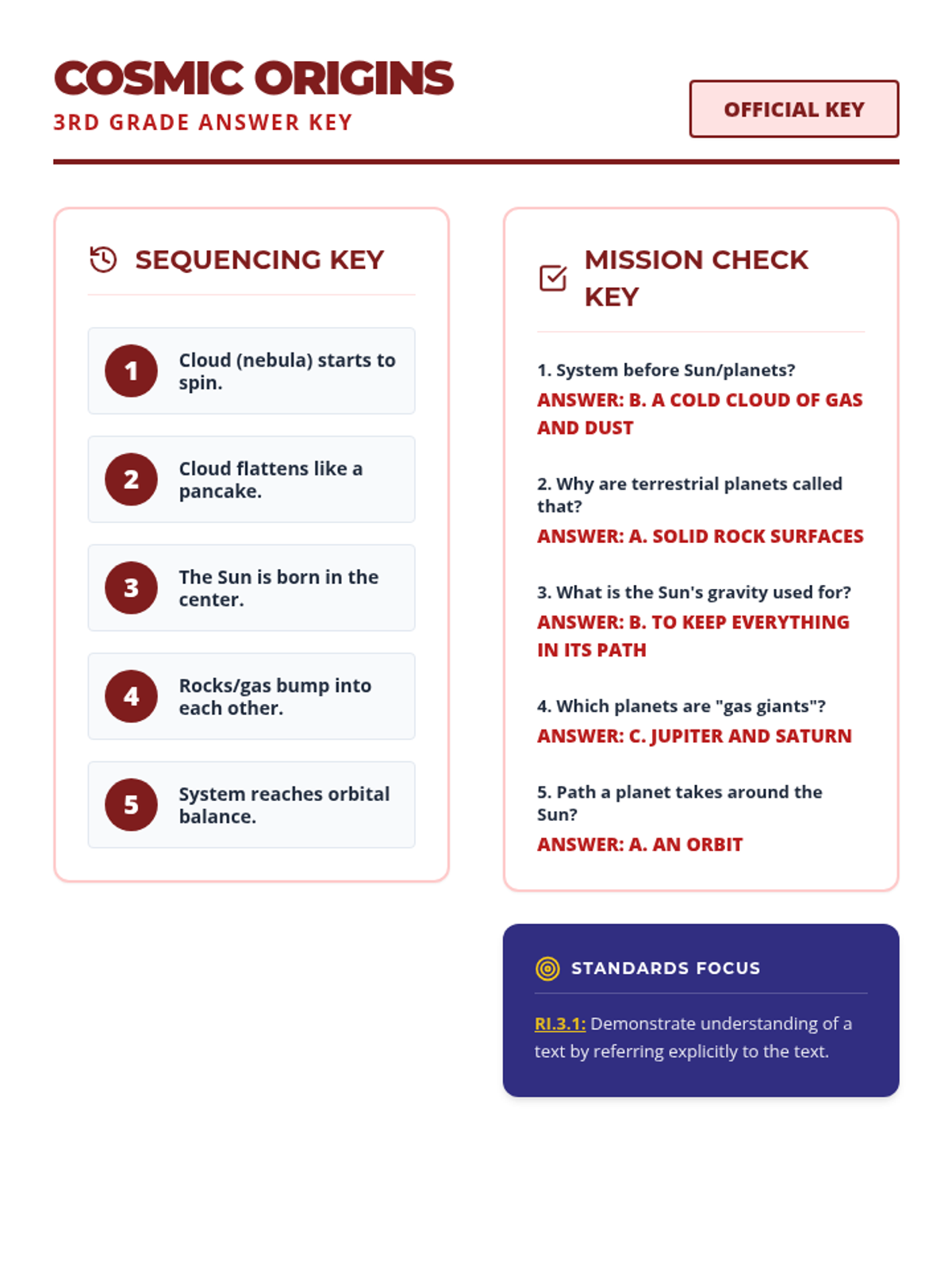
A single-page 3rd-grade level teacher answer key for the Cosmic Guide worksheet. Corrects the layout issues by removing height constraints and improving spacing. Includes a simplified 5-step sequencing key and MC answers.
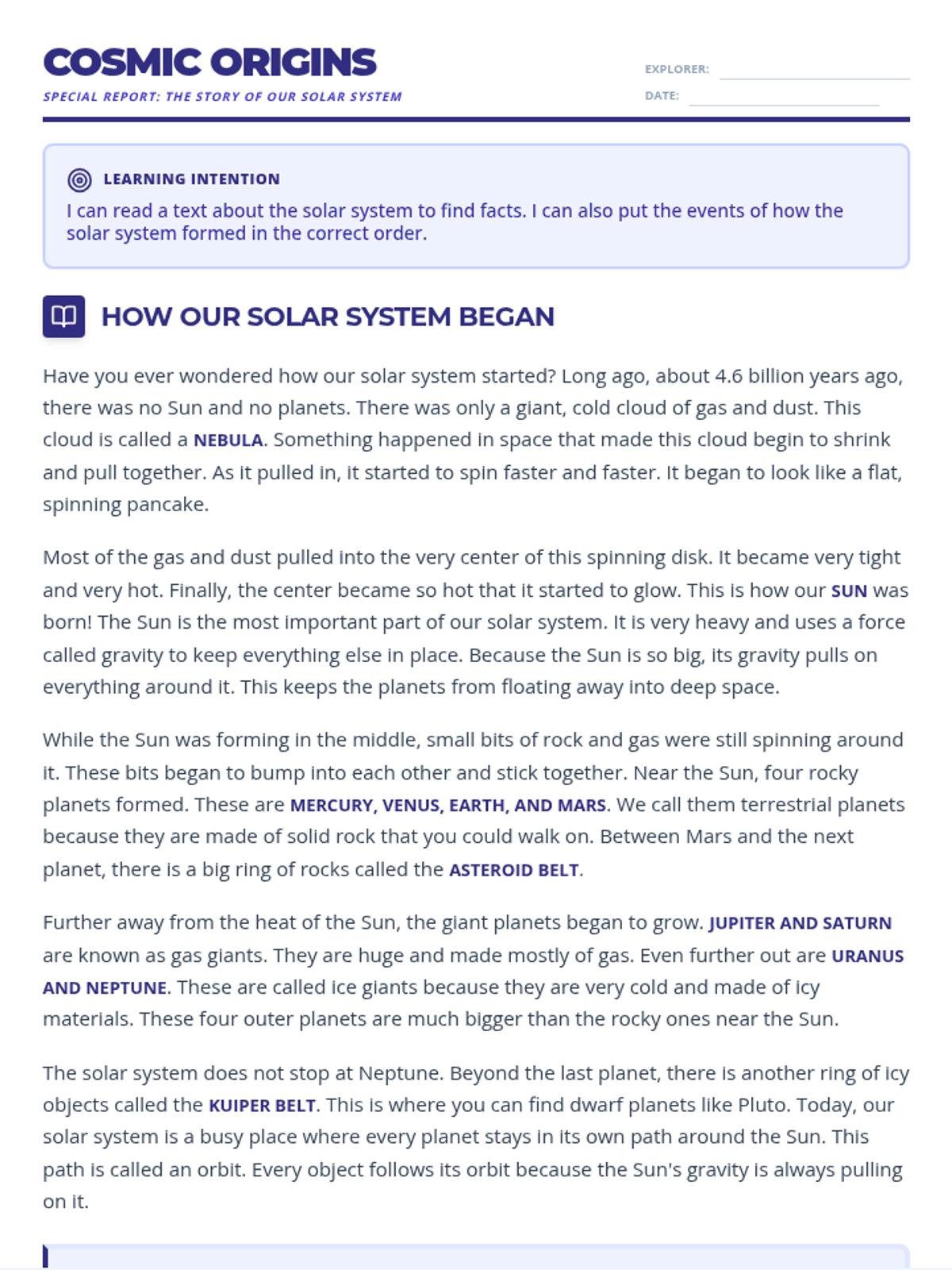
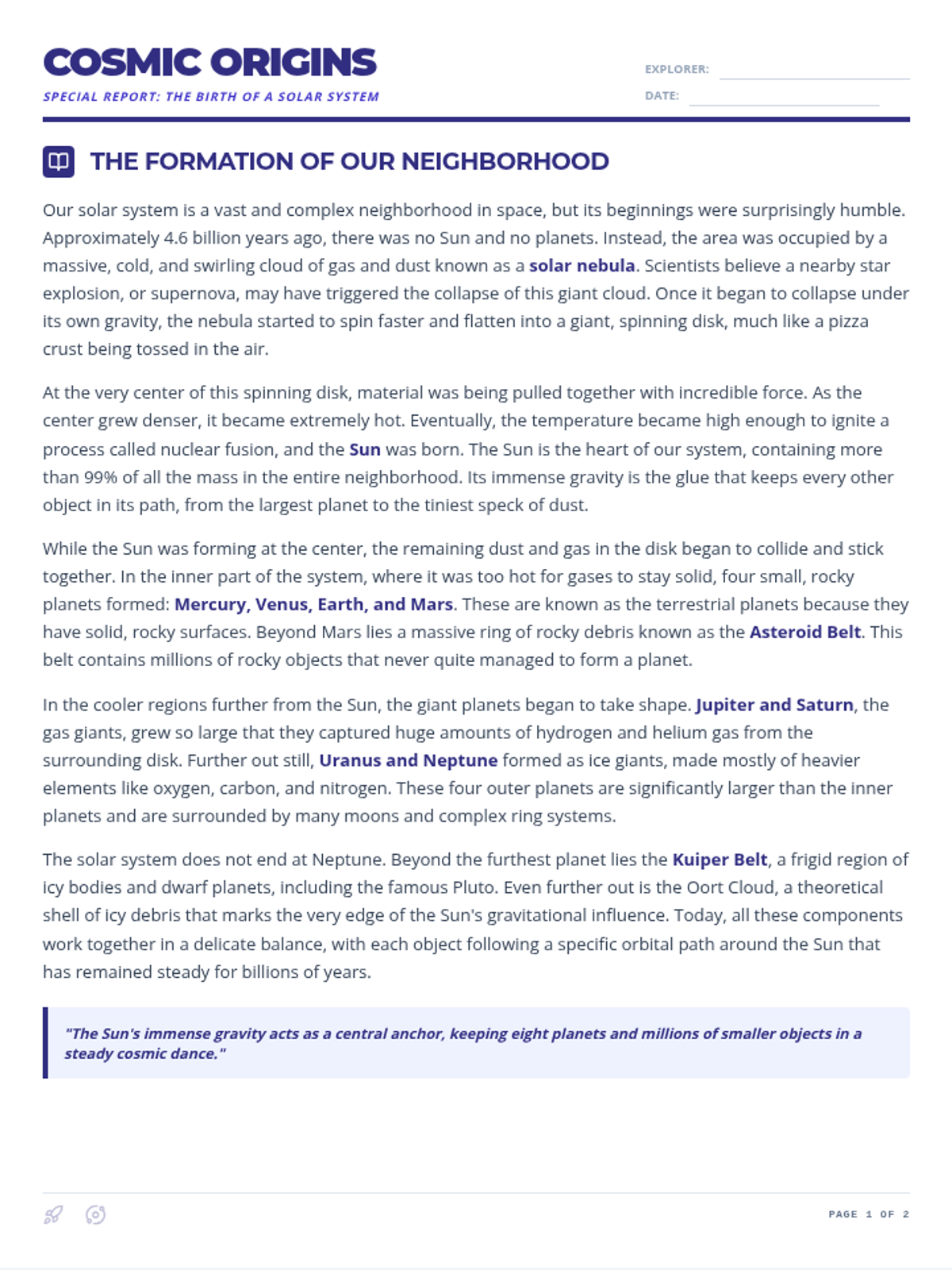
A highly polished 2-page 3rd-grade level student worksheet. Features simplified informational text on solar system formation, a clear learning intention, a 5-step sequencing activity, and 5 MC questions aligned with RI.3.1. Optimized font sizes and visual contrast for young readers.
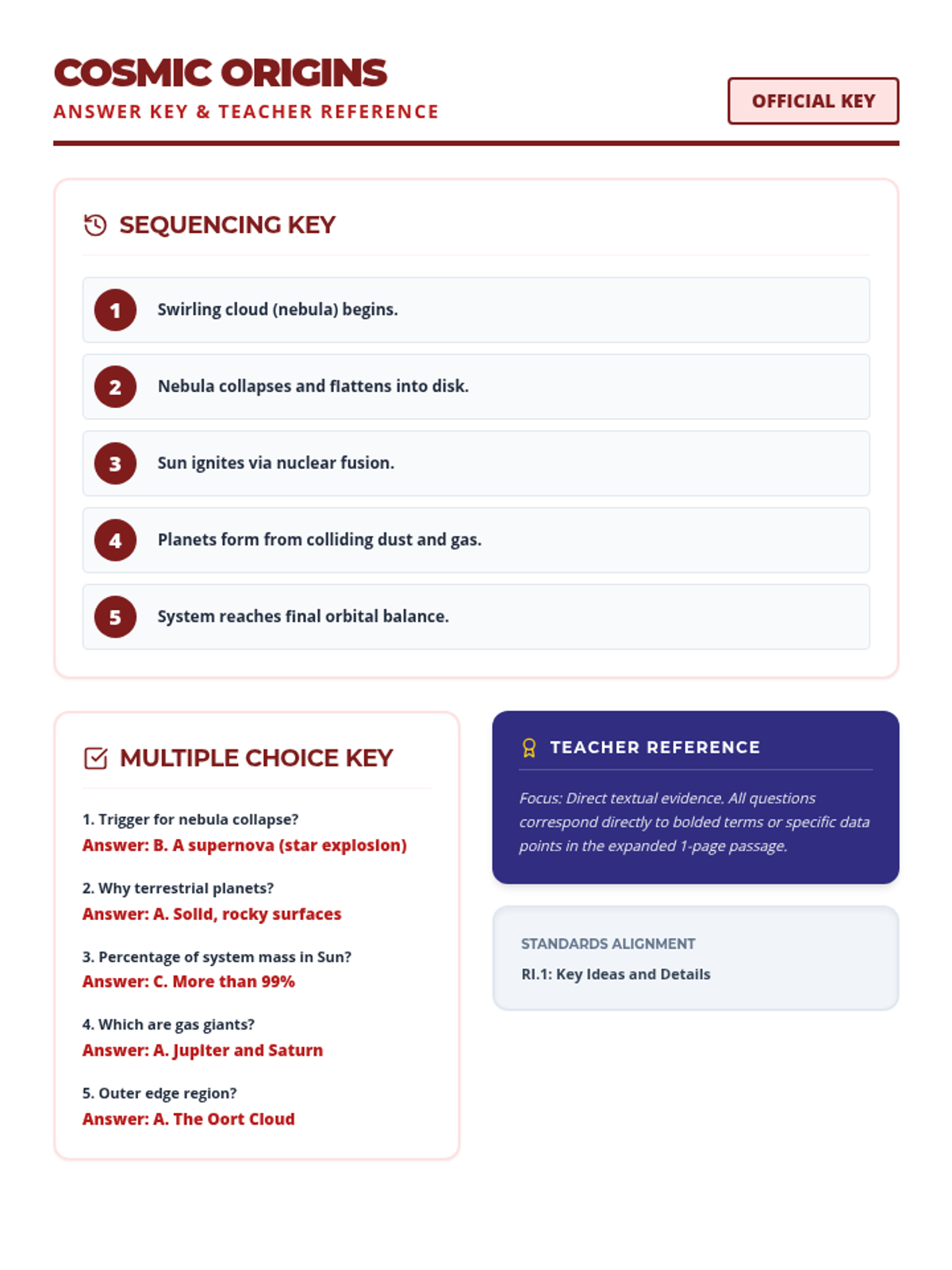
A single-page teacher answer key for the 2-page Cosmic Origins worksheet. Includes a sorted 1-5 sequencing key and full correct multiple-choice answers with standards alignment. Compact layout ensures it fits on one page.
A complete 2-page student worksheet. Page 1 contains a full-page informational text on the formation and structure of the solar system. Page 2 contains a 5-step sequencing activity and 5 multiple-choice questions aligned with RI.1 standards. Layout optimized for clean printing without cutoffs.
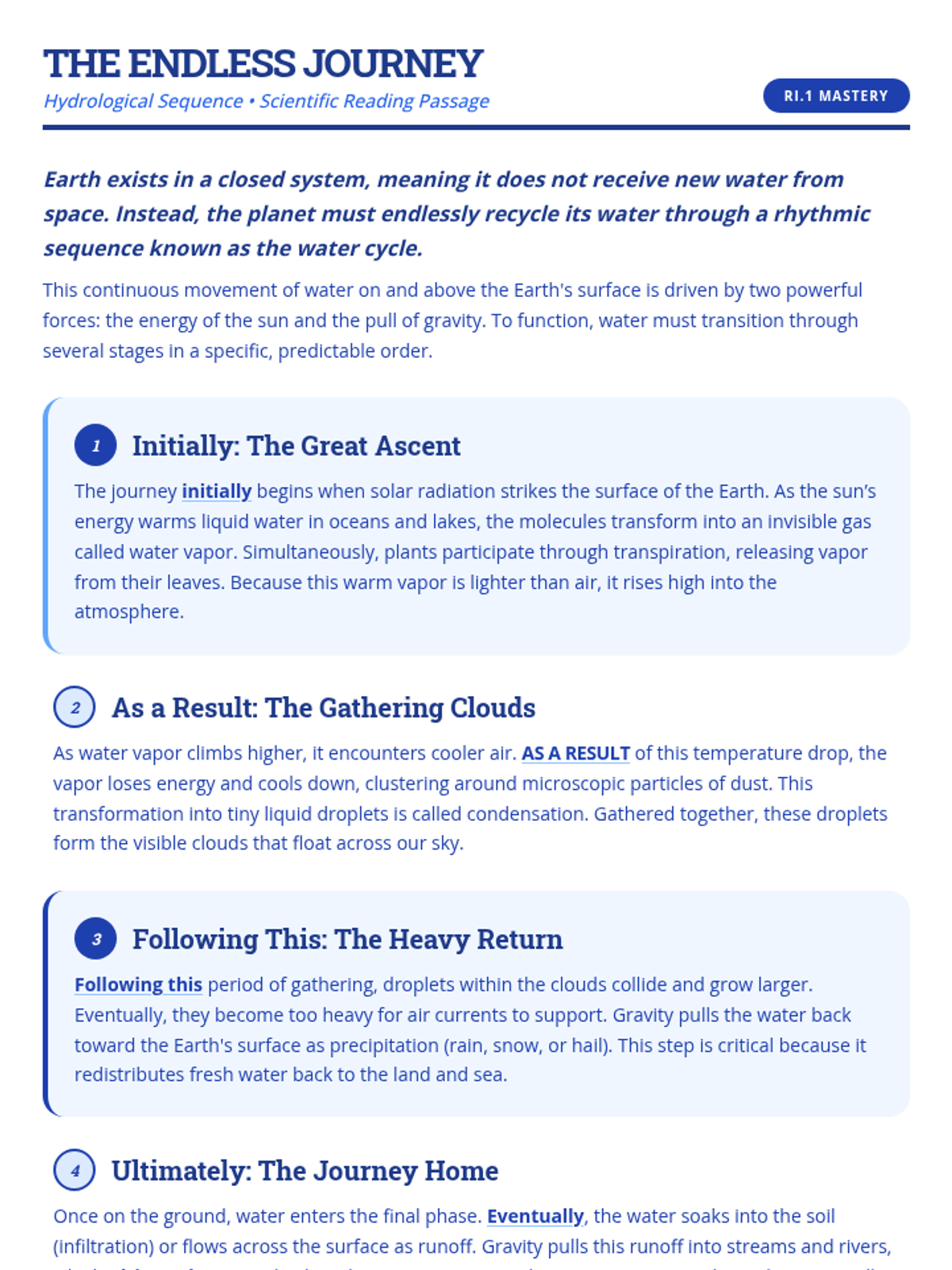
A full-page informational text detailing the sequence of the water cycle. Features clear temporal signal words and scientific details for each stage of the process. Revised for one-page layout and improved readability.
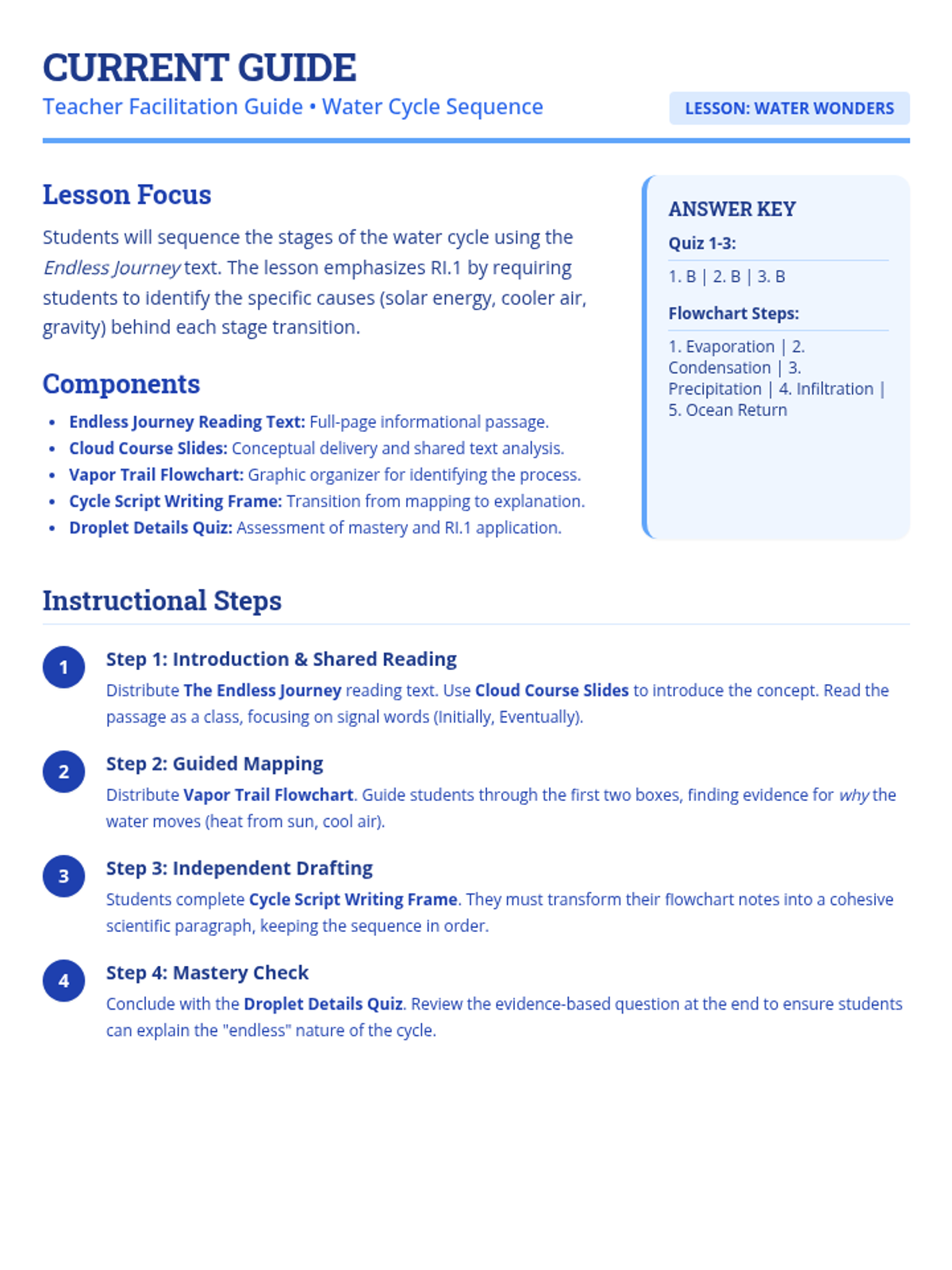
Facilitation guide for the Water Wonders lesson. Updated to include the new full-page reading text and updated instructional steps. fits on a single page.
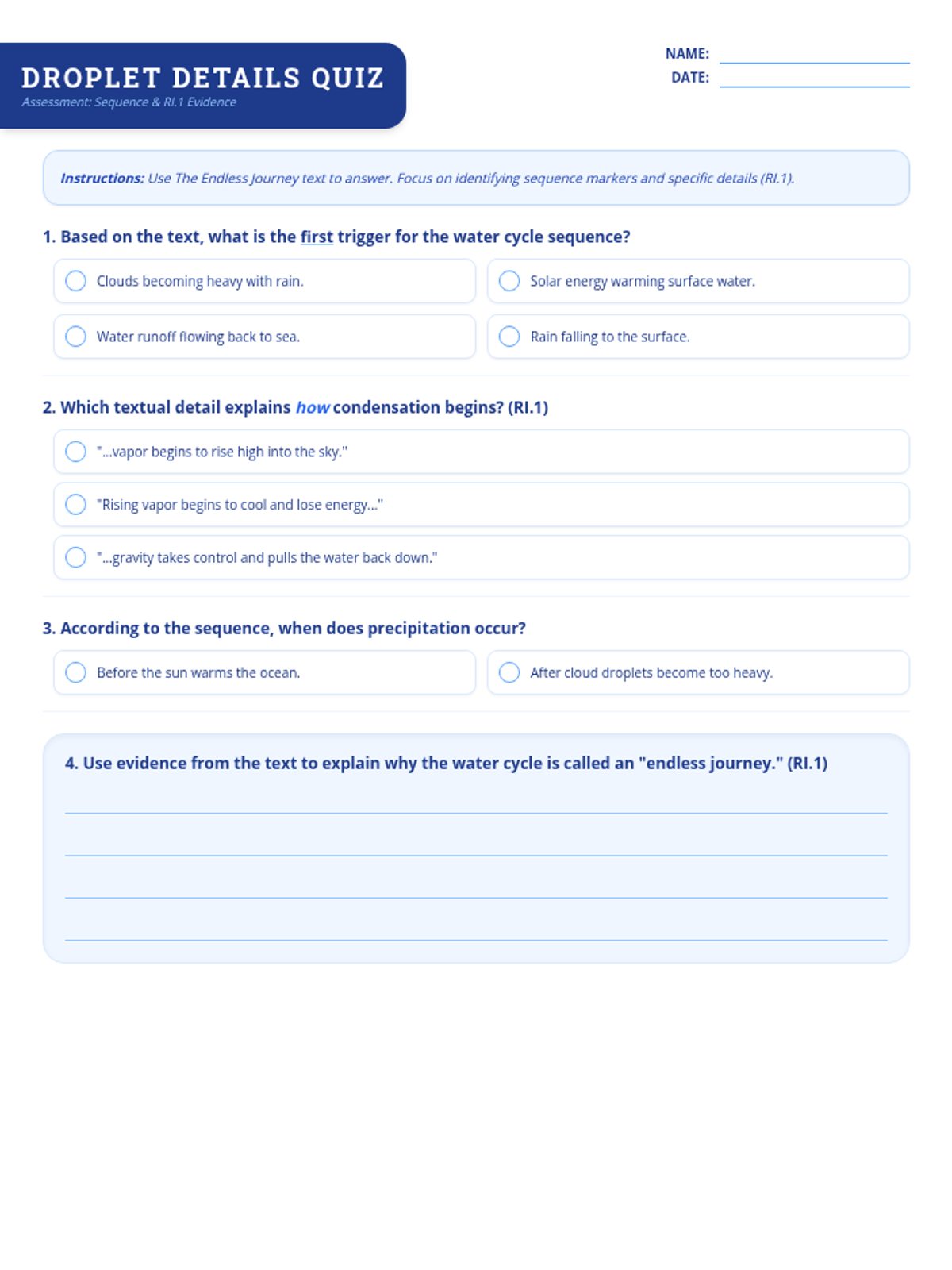
Sequence and RI.1 comprehension quiz for the water cycle. Features multiple choice and short response questions based on evidence from the 'Endless Journey' text. Revised for content consistency and layout.
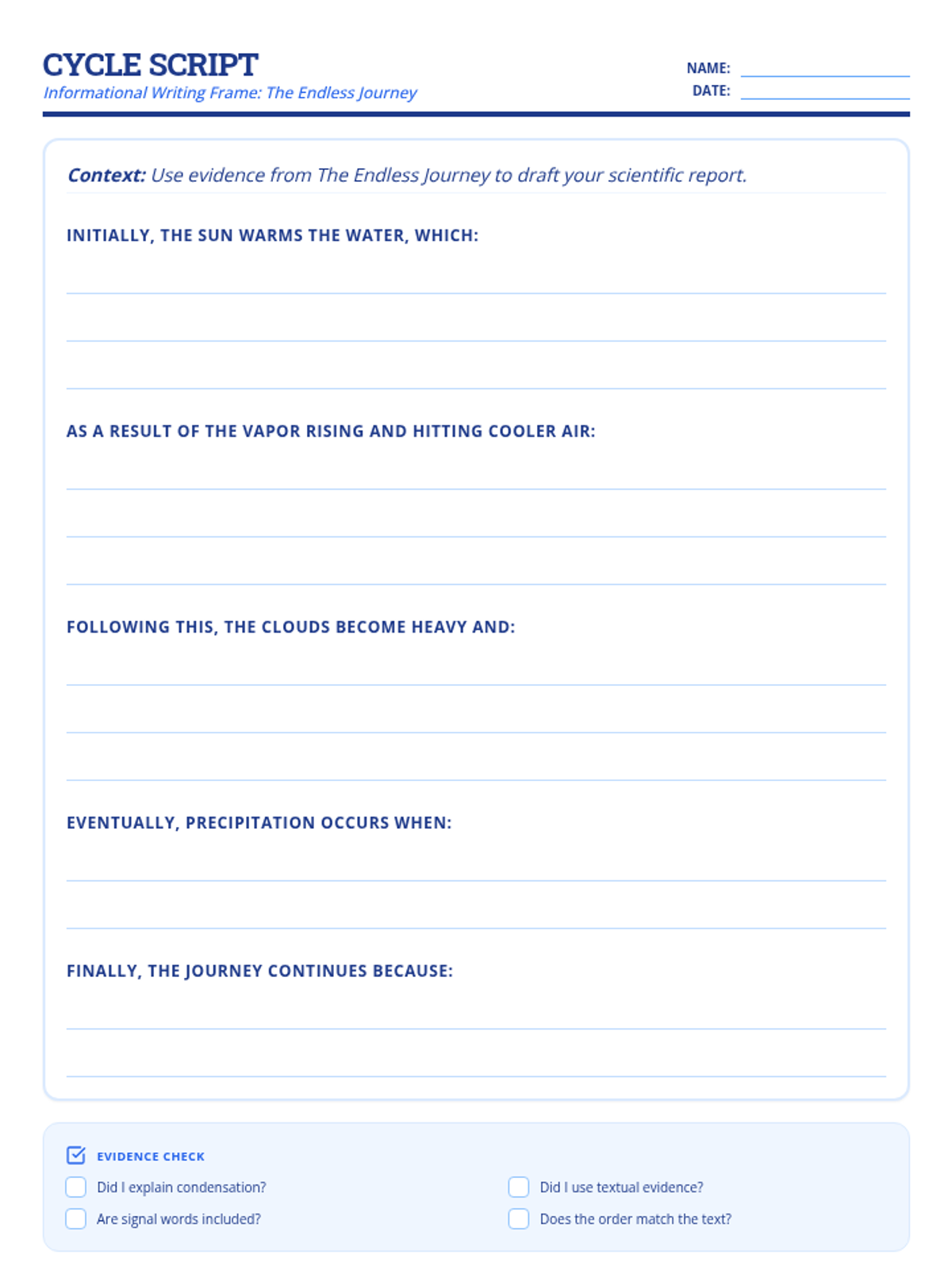
Scaffolded writing frame for the water cycle. Includes sentence starters and a self-check checklist. Revised for better layout, punctuation, and handwriting space. fits on one page.
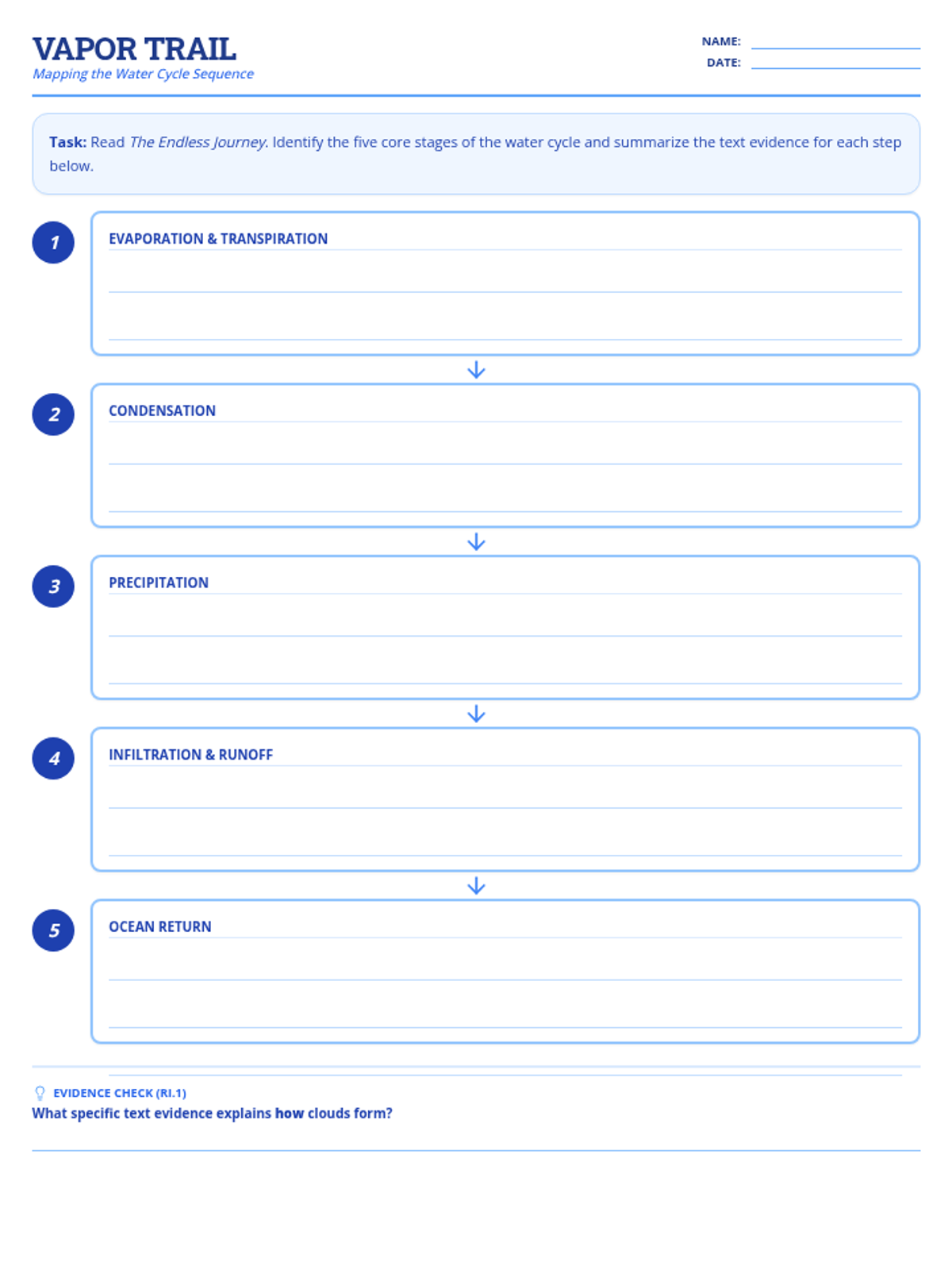
Graphic organizer for students to map the sequence of the water cycle. Instructs students to use the full-page reading text for evidence. Revised with centered arrows and more writing lines.
Instructional slide deck for teaching sequencing using the water cycle. Features an intro to the full-page reading text, visual mapping, and a check for understanding slide focused on RI.1. Revised for better flow.
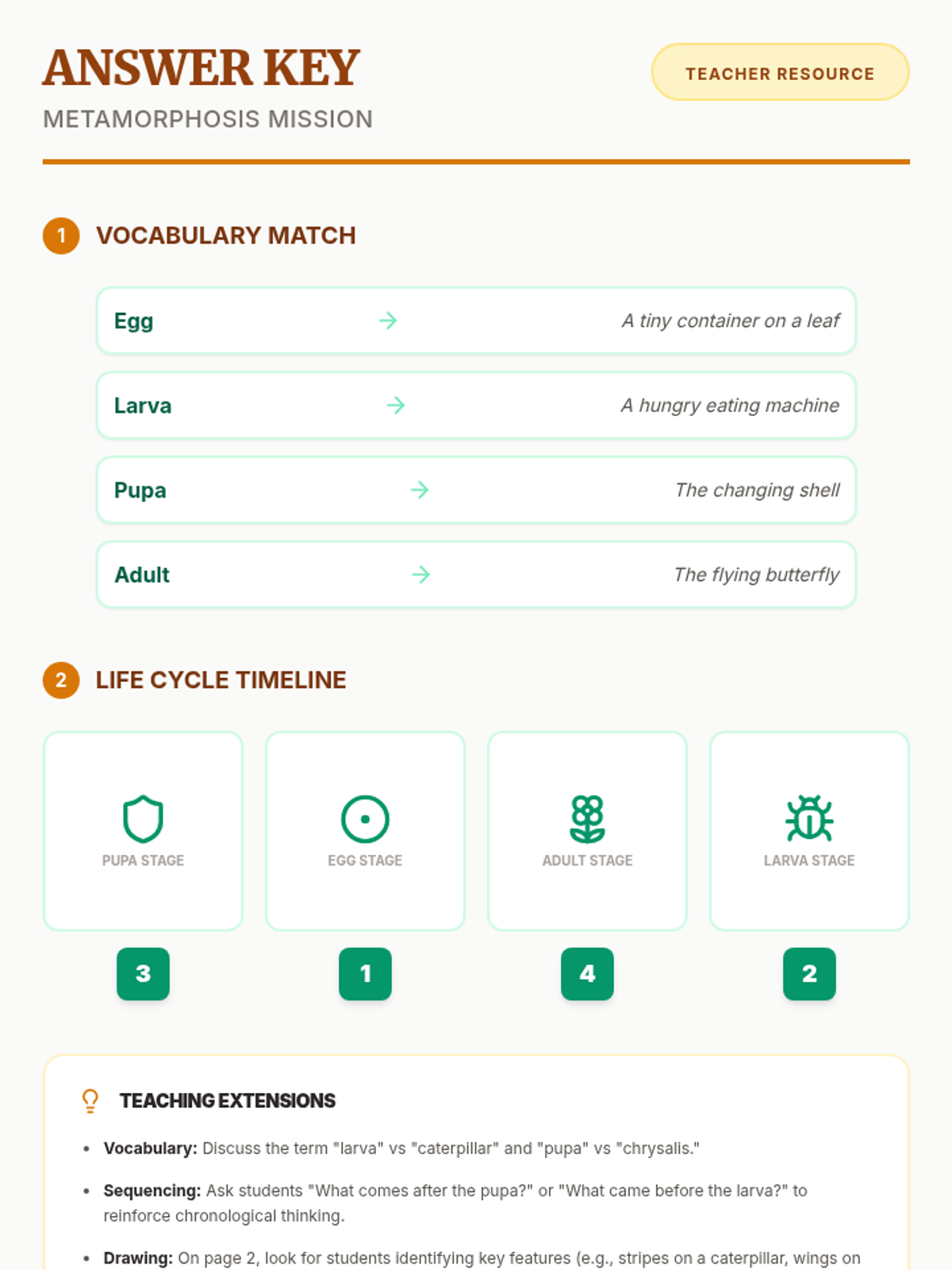
A teacher-facing answer key for the Butterfly Timeline Worksheet, featuring the correct matching pairs and chronological order of stages.
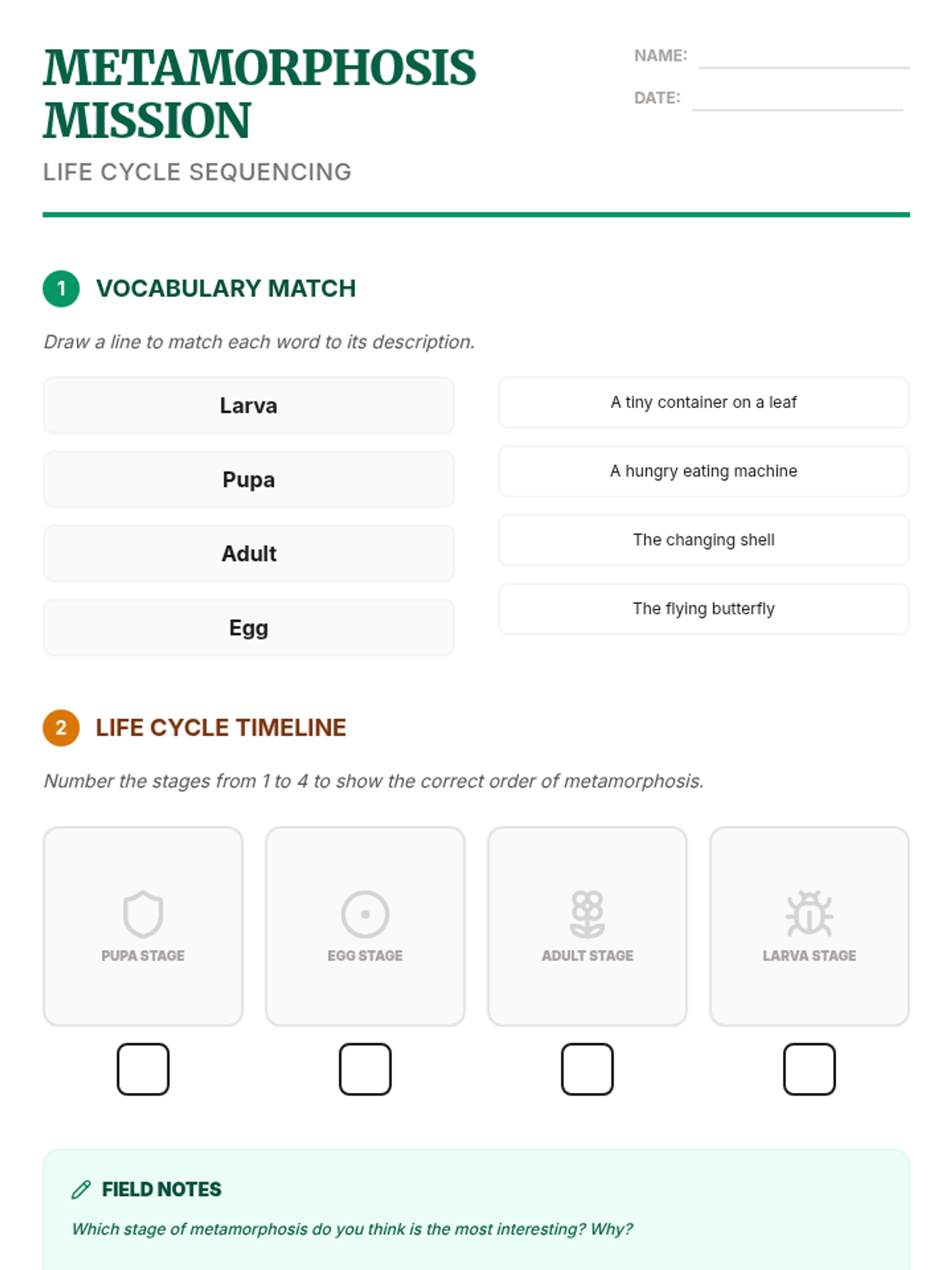
A 2-page student worksheet featuring a vocabulary matching activity, a chronological sequencing task for the four stages of metamorphosis, and a short reflection prompt.
A 7-slide presentation deck introducing the four stages of a butterfly's life cycle (Egg, Larva, Pupa, Adult) with high-contrast visuals and simple explanations.
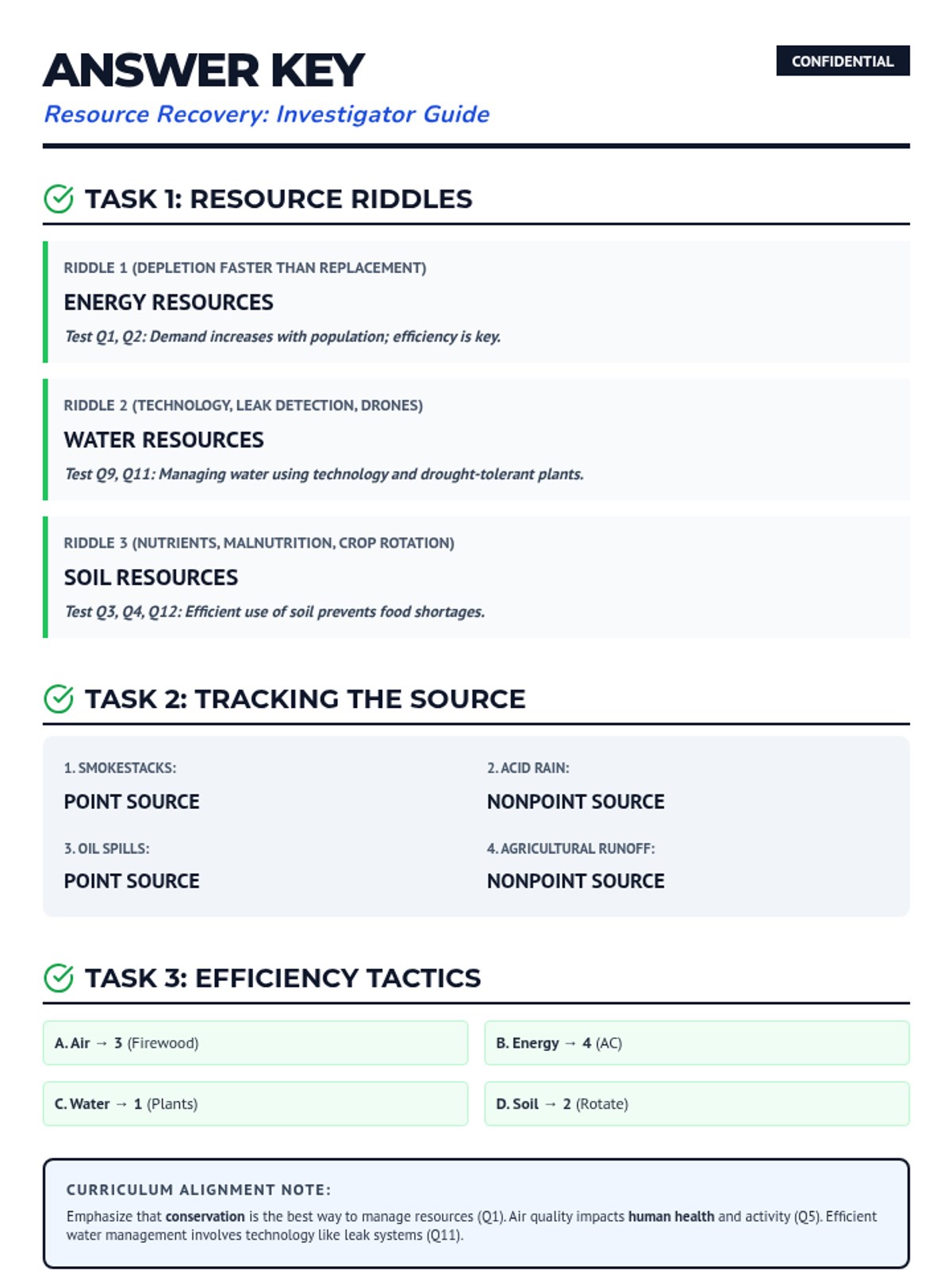
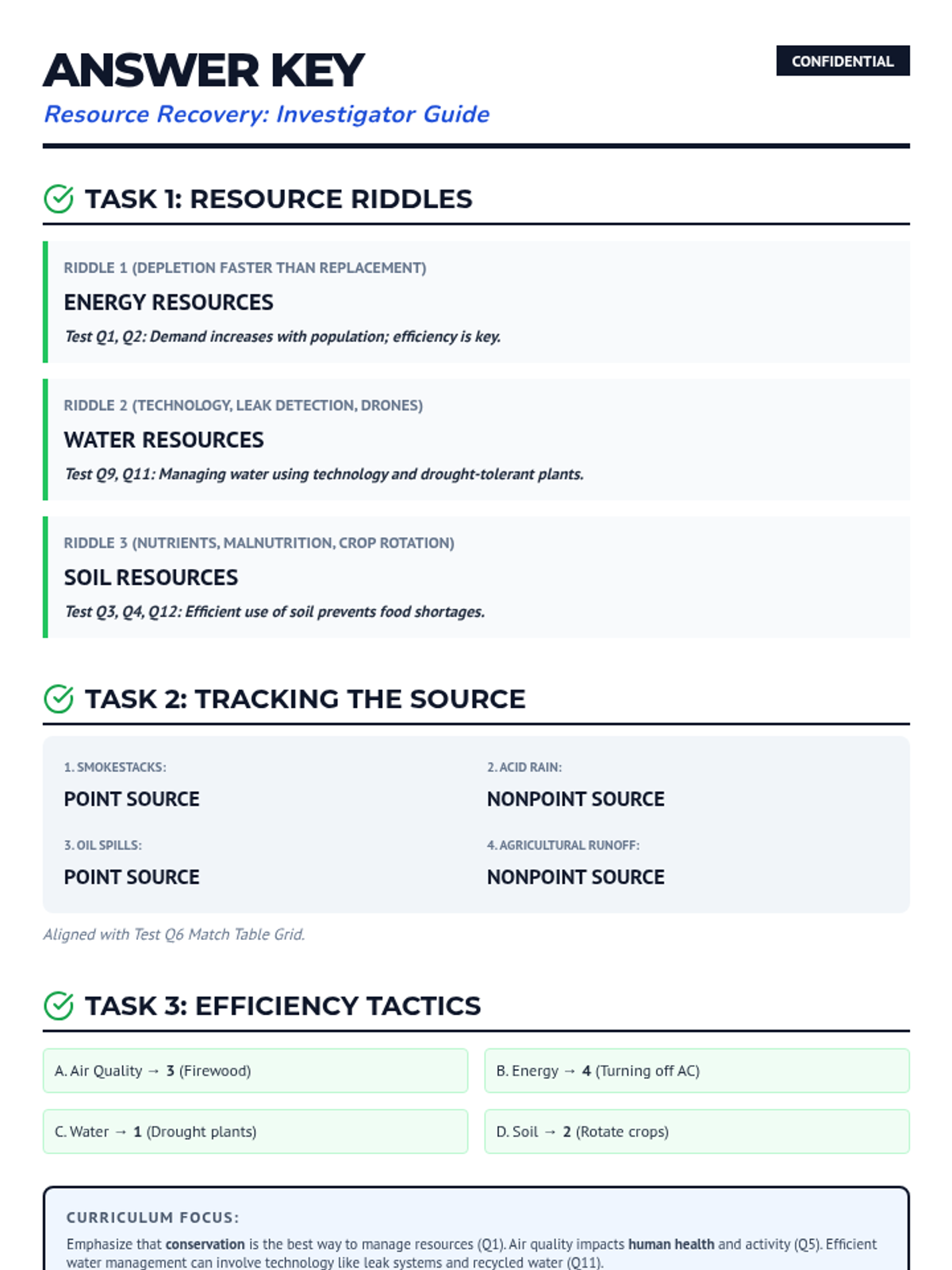
The answer key for the Resource Recovery Worksheet, providing correct resource identifications, pollution source types, and matched conservation strategies. Includes specific alignment notes to the curriculum test on Managing Earth's Resources. Revised for single-page layout.
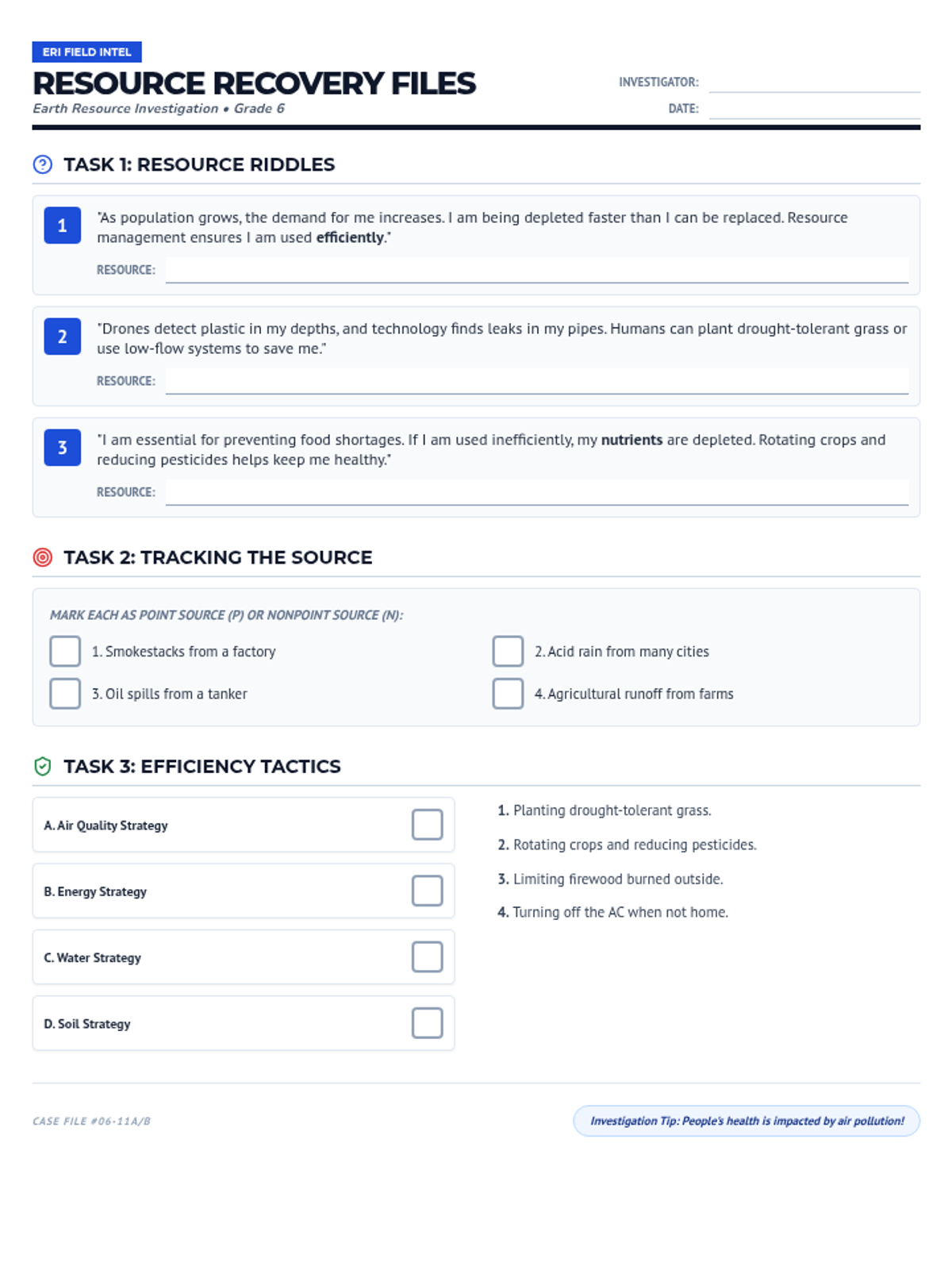
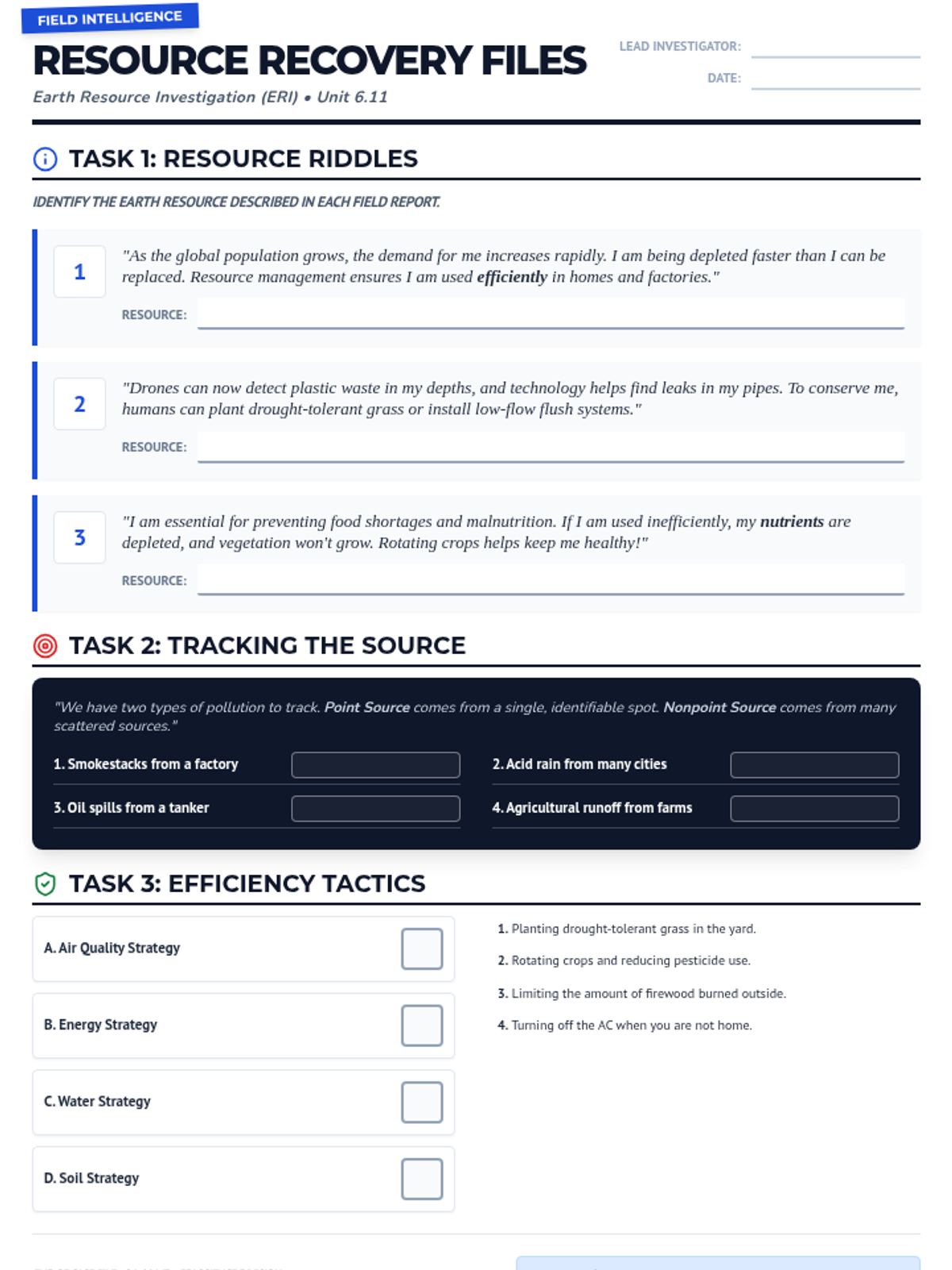
A detective-themed worksheet for 6th-grade students on Earth's resources. It covers energy, water, air, and soil management, point vs. nonpoint source pollution, and conservation strategies, mirroring the concepts and DOK levels found in the provided curriculum test. Revised for legibility and layout.
The answer key for the Resource Recovery Worksheet, providing correct resource identifications, pollution source types, and matched conservation strategies. Includes specific alignment notes to the curriculum test on Managing Earth's Resources.
A detective-themed worksheet for 6th-grade students on Earth's resources. It covers energy, water, air, and soil management, point vs. nonpoint source pollution, and conservation strategies, mirroring the concepts and DOK levels found in the provided curriculum test.
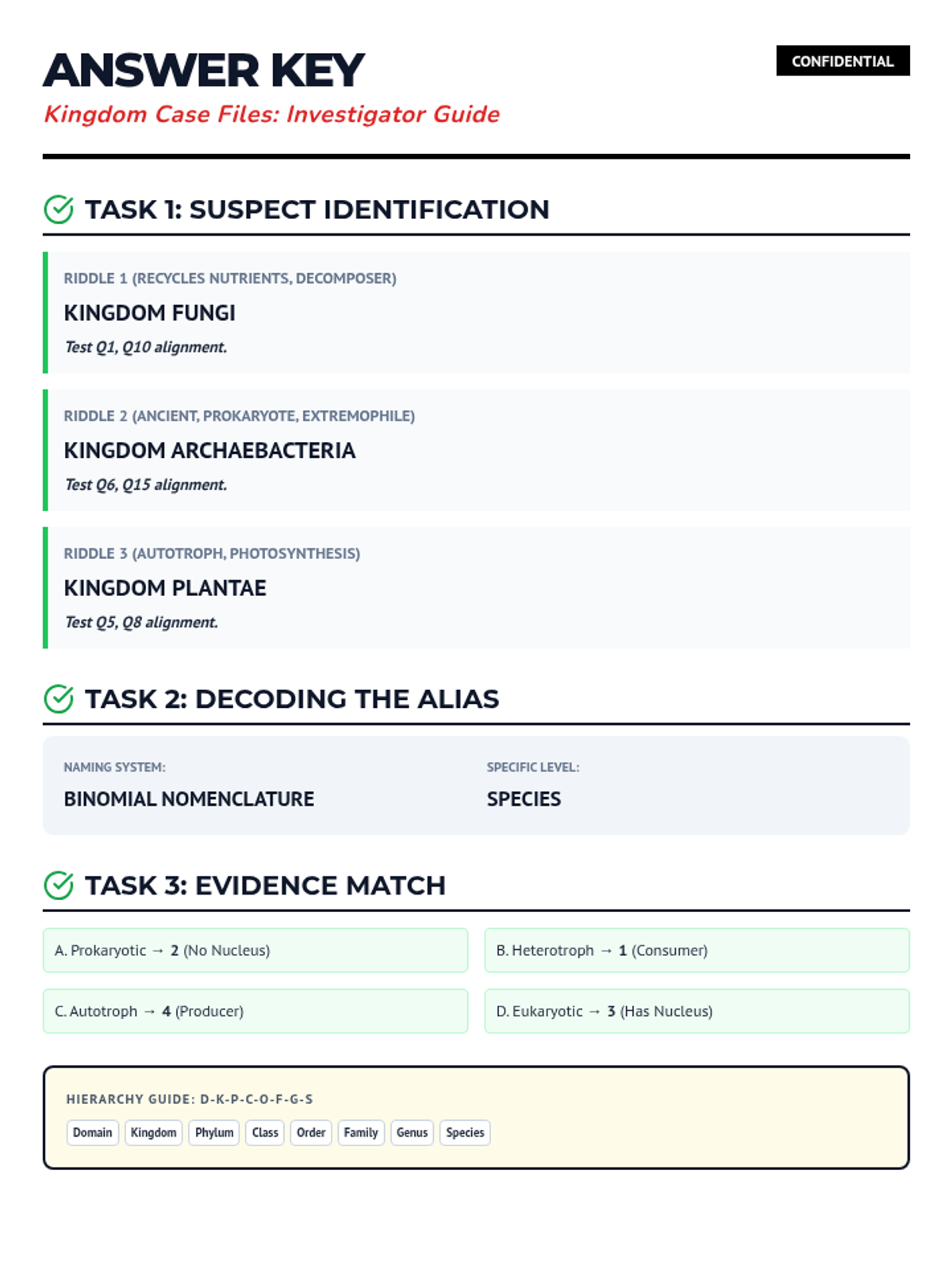
The answer key for the Kingdom Riddle Worksheet, providing correct kingdom identifications, the definition of binomial nomenclature, and the matching for cell characteristics. Revised for single-page layout with improved text contrast.
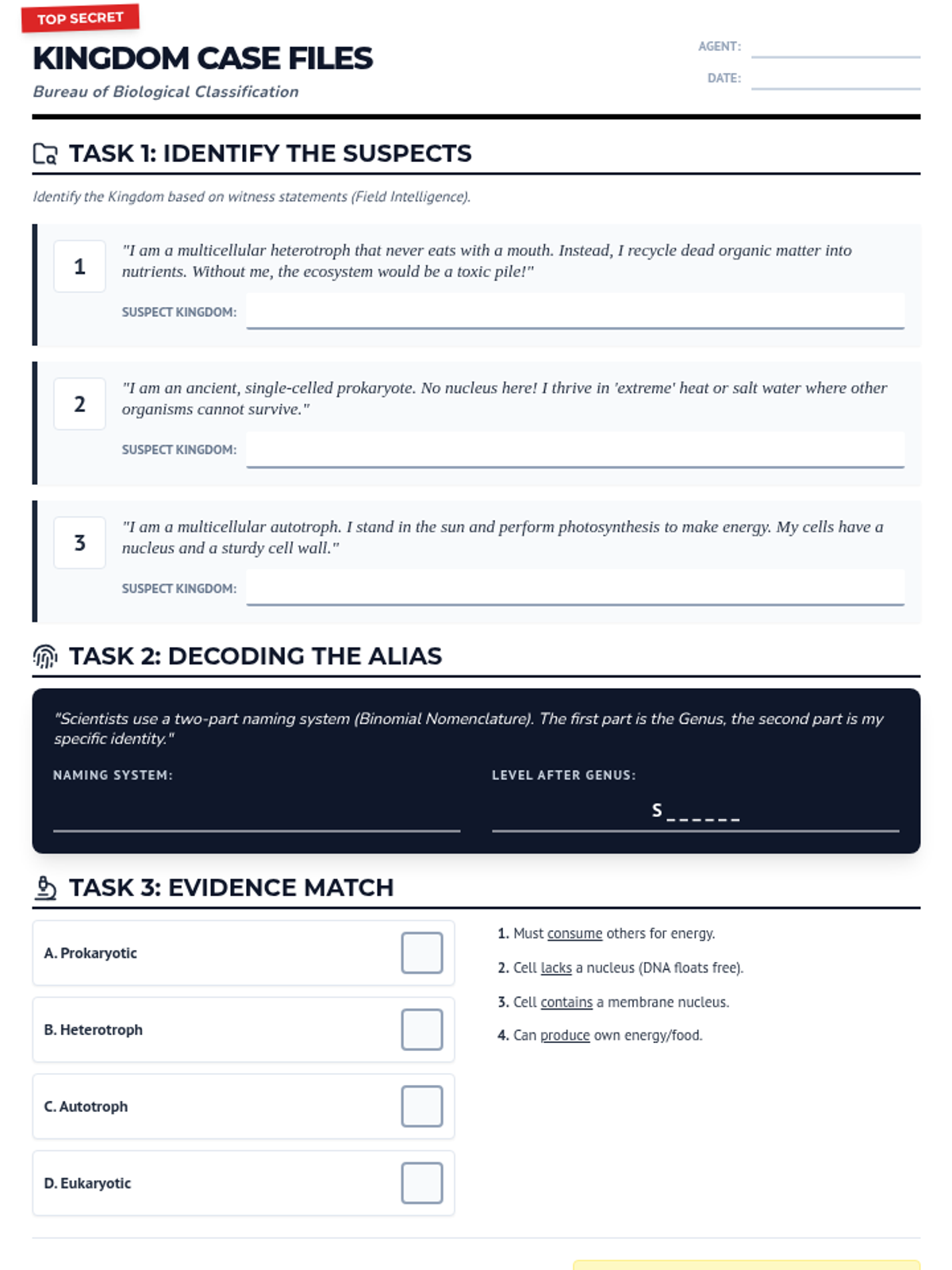
A detective-themed taxonomy riddle worksheet for 7th graders. Students identify kingdoms through witness statements, decode binomial nomenclature, and match cell characteristics to their biological definitions, all aligned with standard 7th-grade classification tests. Revised for single-page layout.
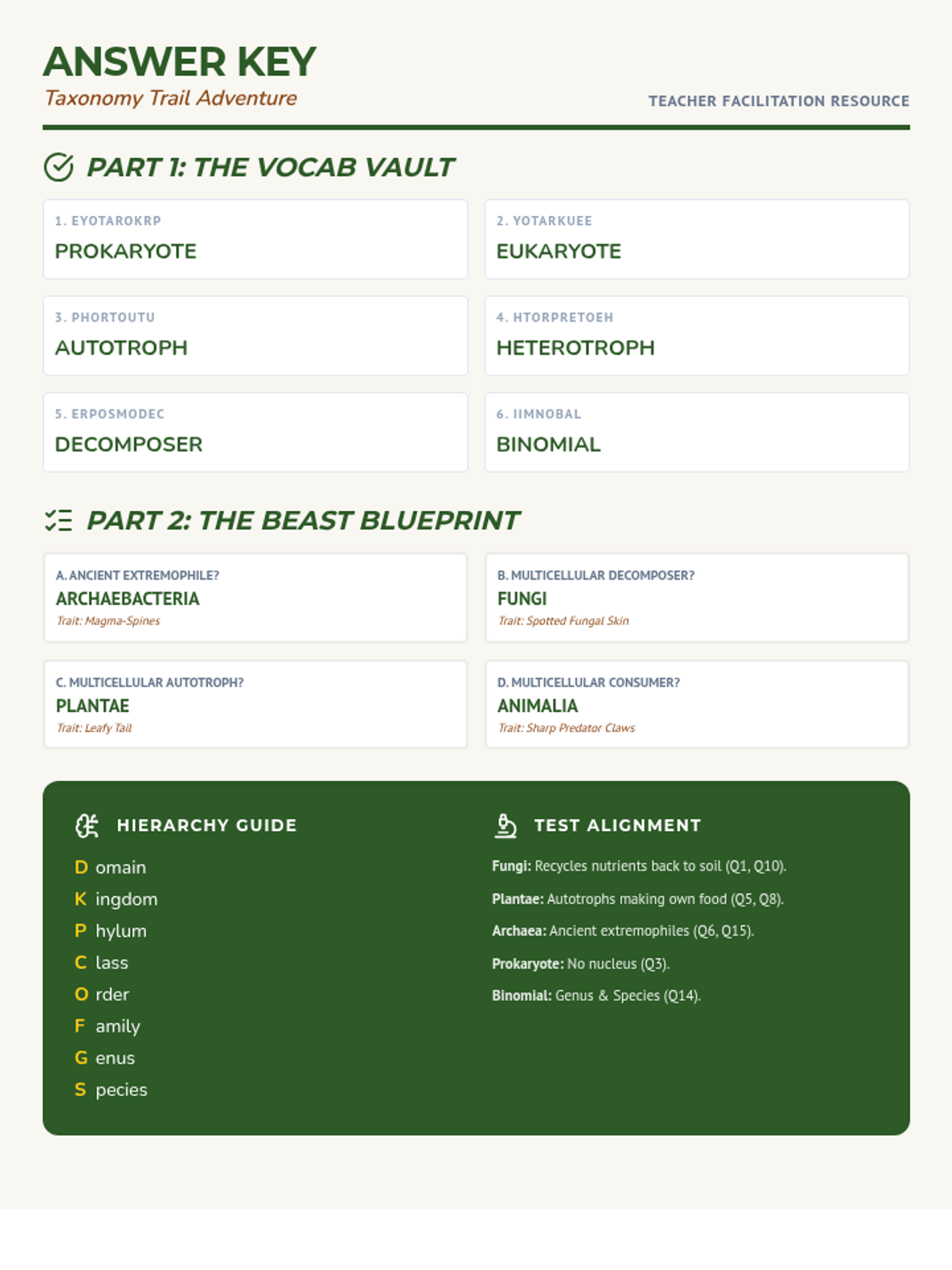
The answer key for the revised Taxonomy Trail Worksheet, aligned with the provided test content. It provides the correct unscrambles and kingdom answers, along with additional teaching notes based on specific test questions.
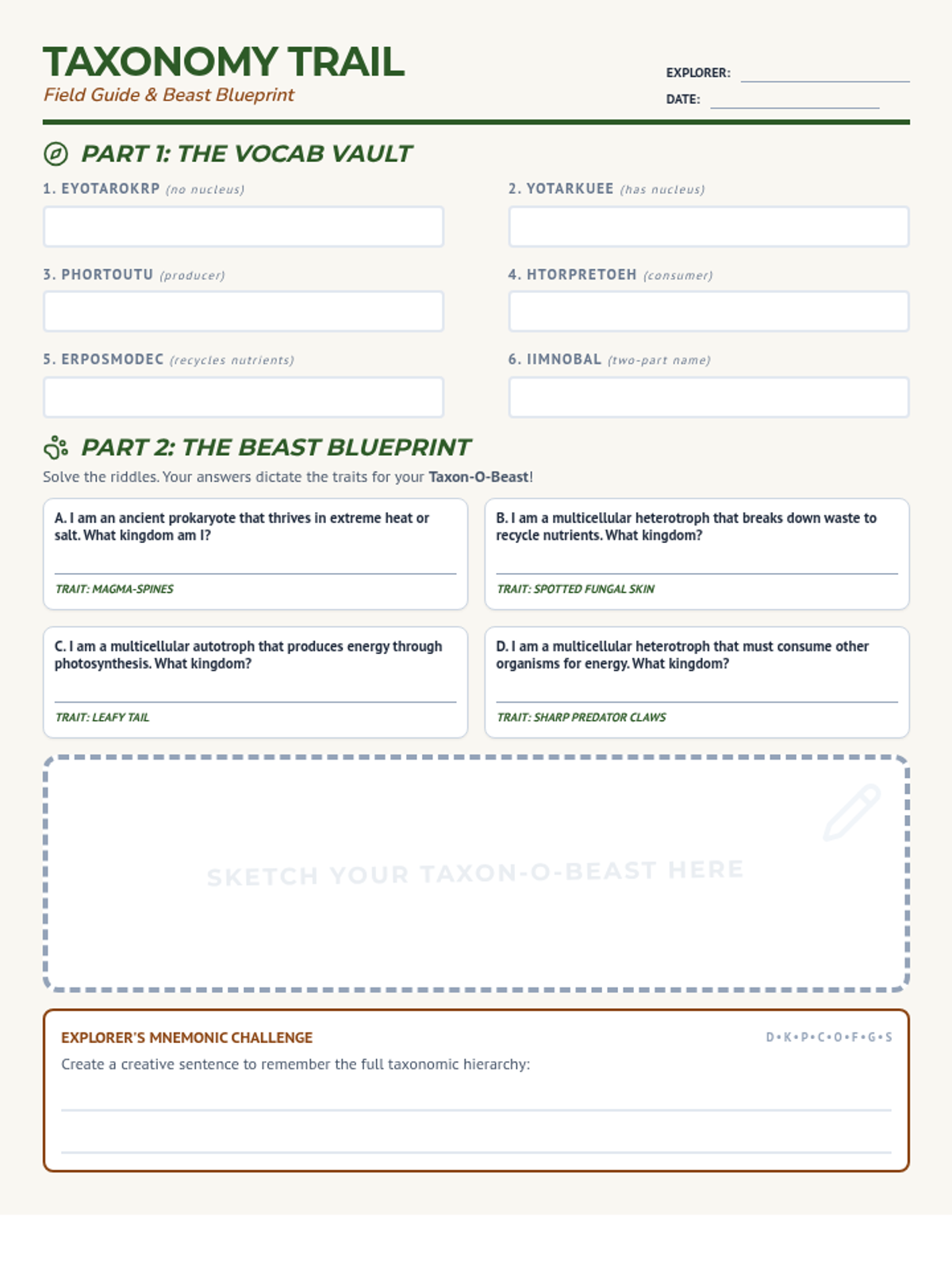
A creative taxonomy vocabulary worksheet for 7th graders featuring word scrambles and a 'Beast Blueprint' drawing activity aligned with the provided test content. Students solve riddles about Kingdoms (Archaebacteria, Fungi, Plantae, Animalia) to determine their creature's physical traits.
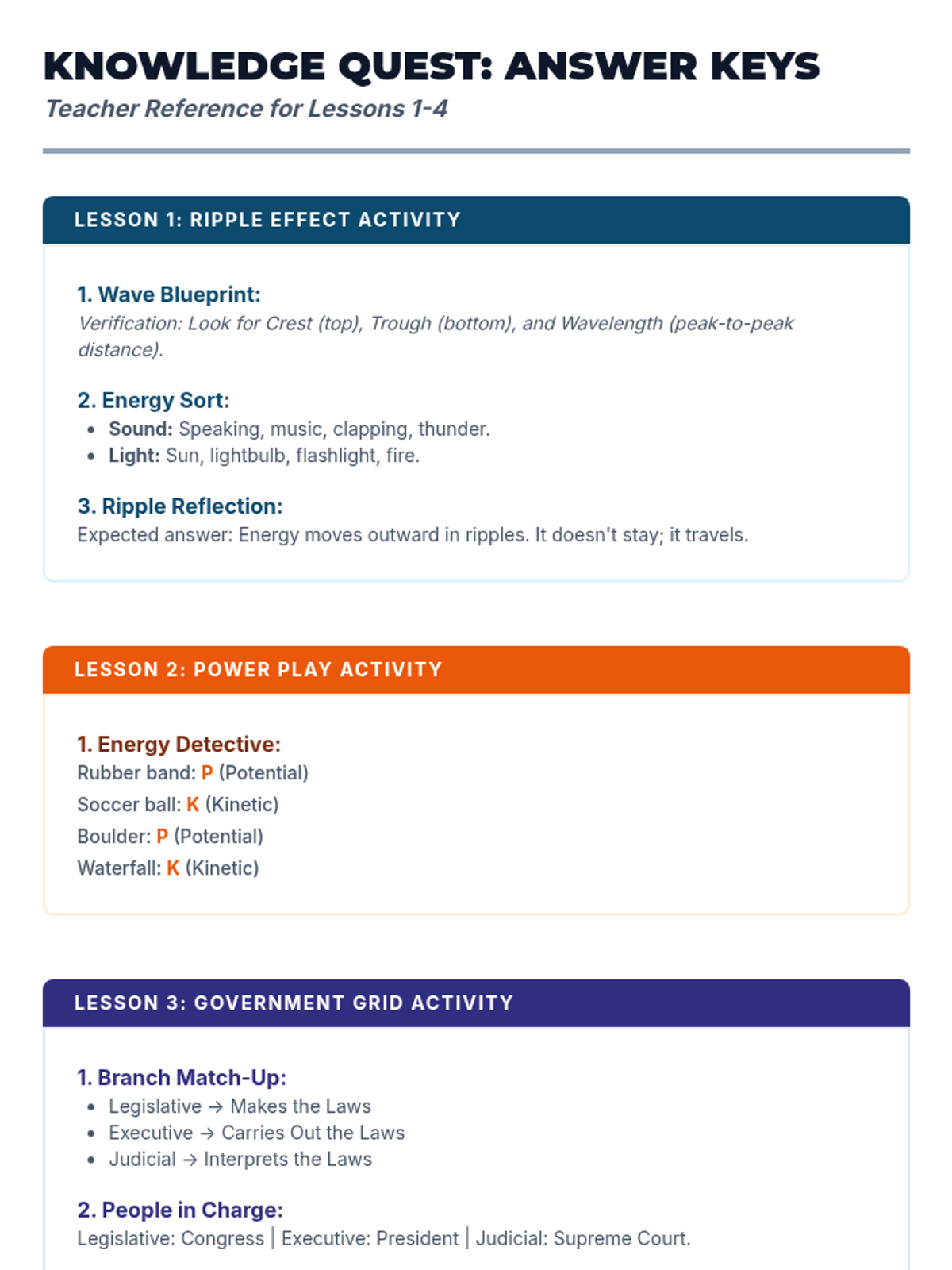
A comprehensive teacher's answer key for all four lessons in the Knowledge Quest sequence, providing correct answers and guidance for student activities.
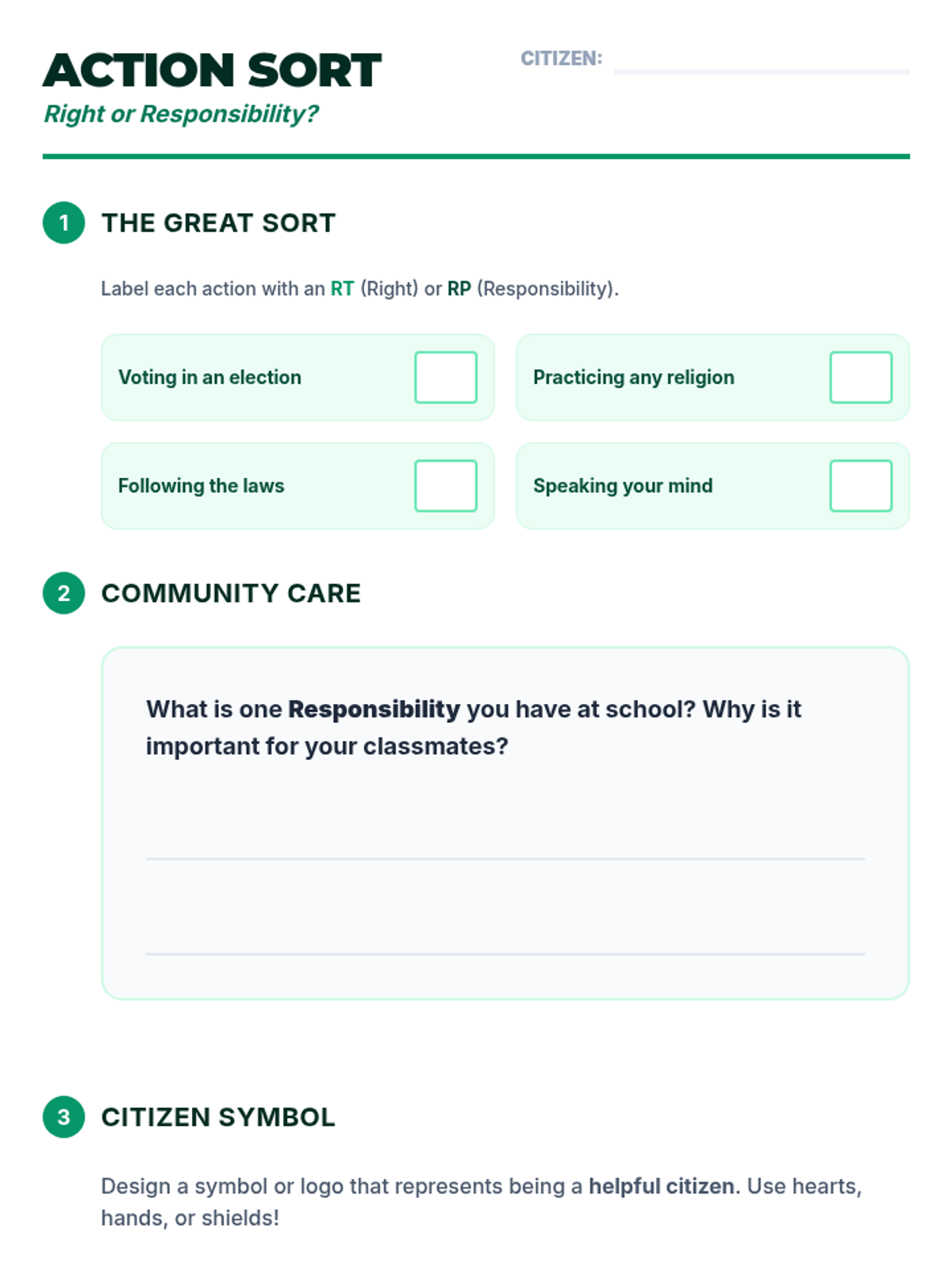
A student worksheet for sorting various actions into rights and responsibilities, reflecting on school-based duties, and creating a visual symbol for helpful citizenship.
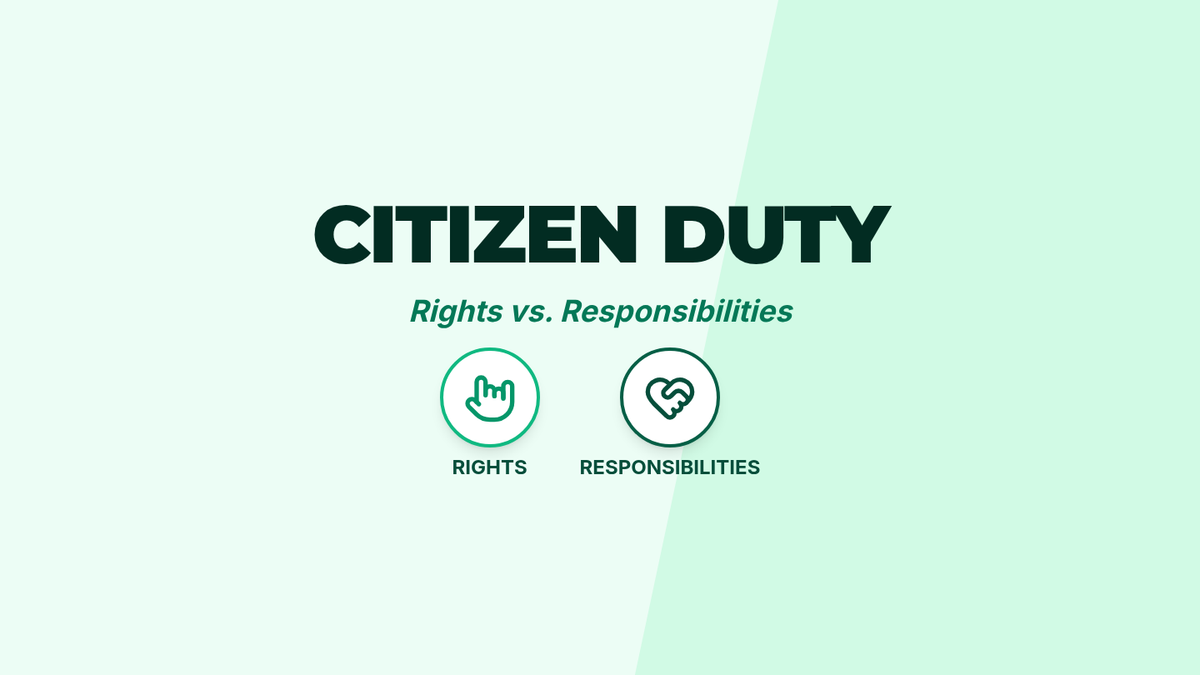
A visual presentation defining the concepts of rights and responsibilities for citizens, providing examples of each and explaining how they work together in a community.
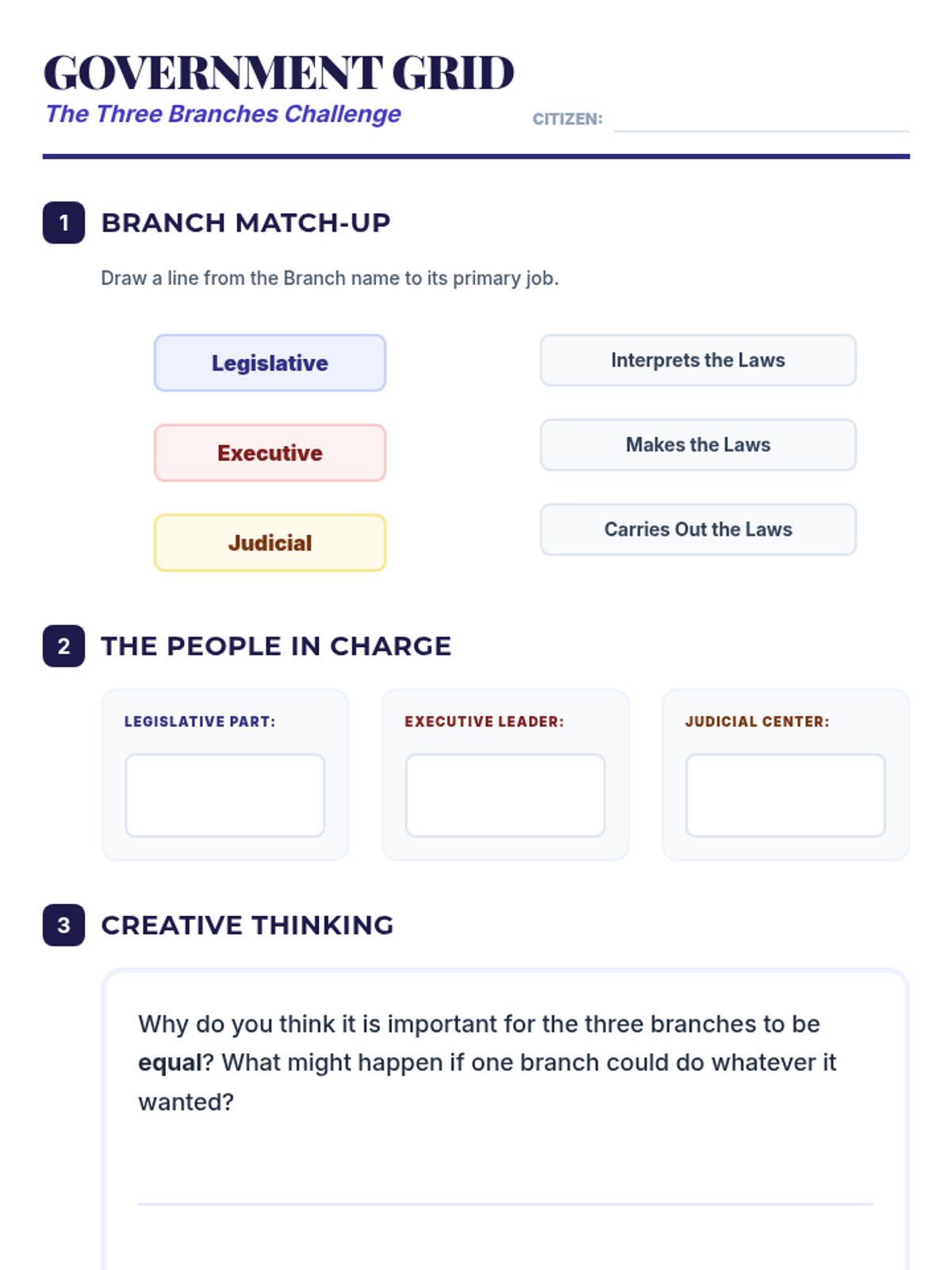
A student activity sheet for matching government branches to their roles, identifying key leaders, and reflecting on the importance of balanced power.
An educational slide deck on the three branches of the U.S. government, explaining the roles of the Legislative, Executive, and Judicial branches and the concept of checks and balances.
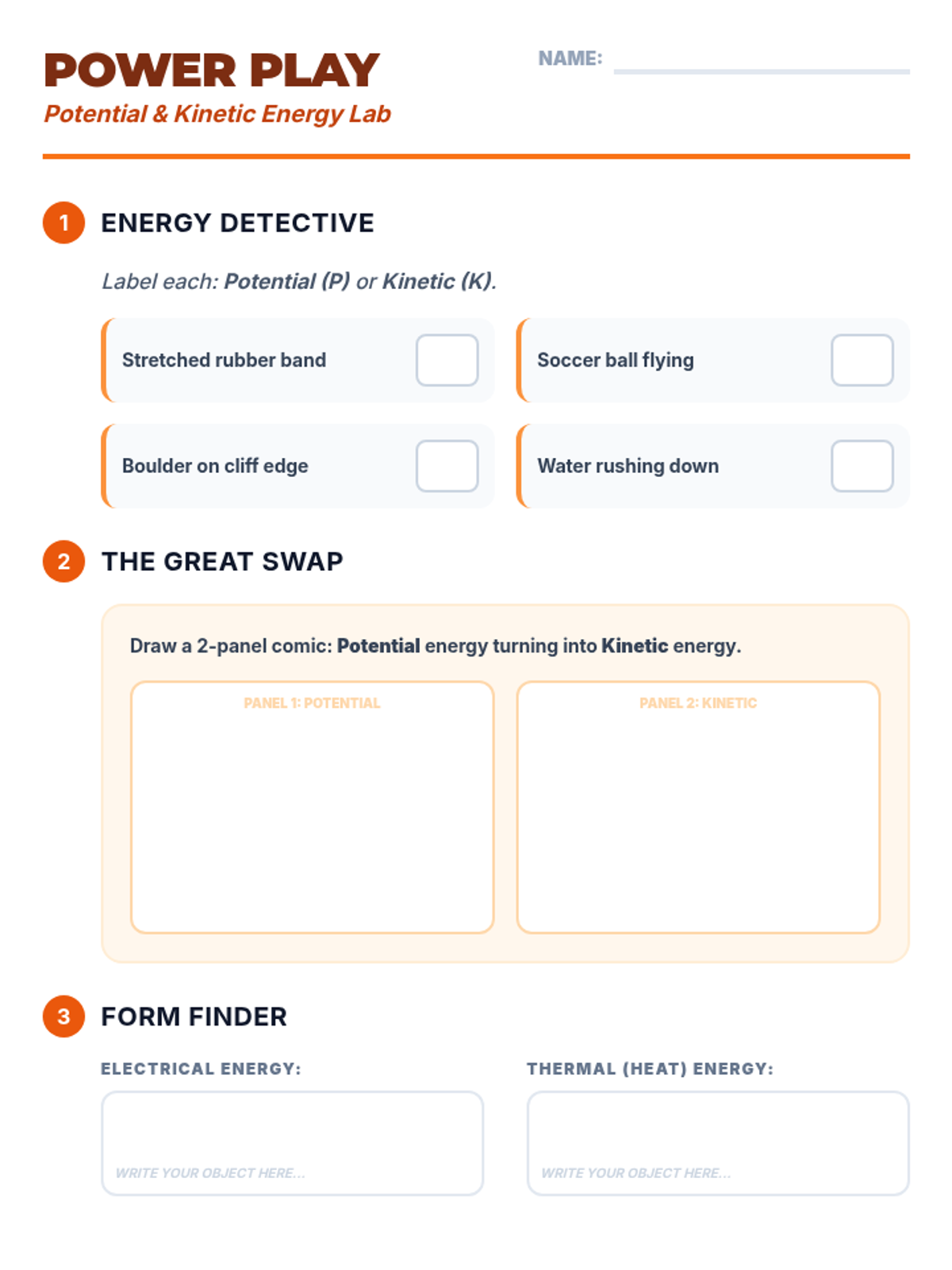
An interactive energy worksheet featuring a potential vs. kinetic scenario sort, a comic-style energy transformation drawing task, and a real-world energy hunter activity.
A visual presentation exploring energy, focusing on potential versus kinetic energy and various forms like thermal, electrical, and chemical.
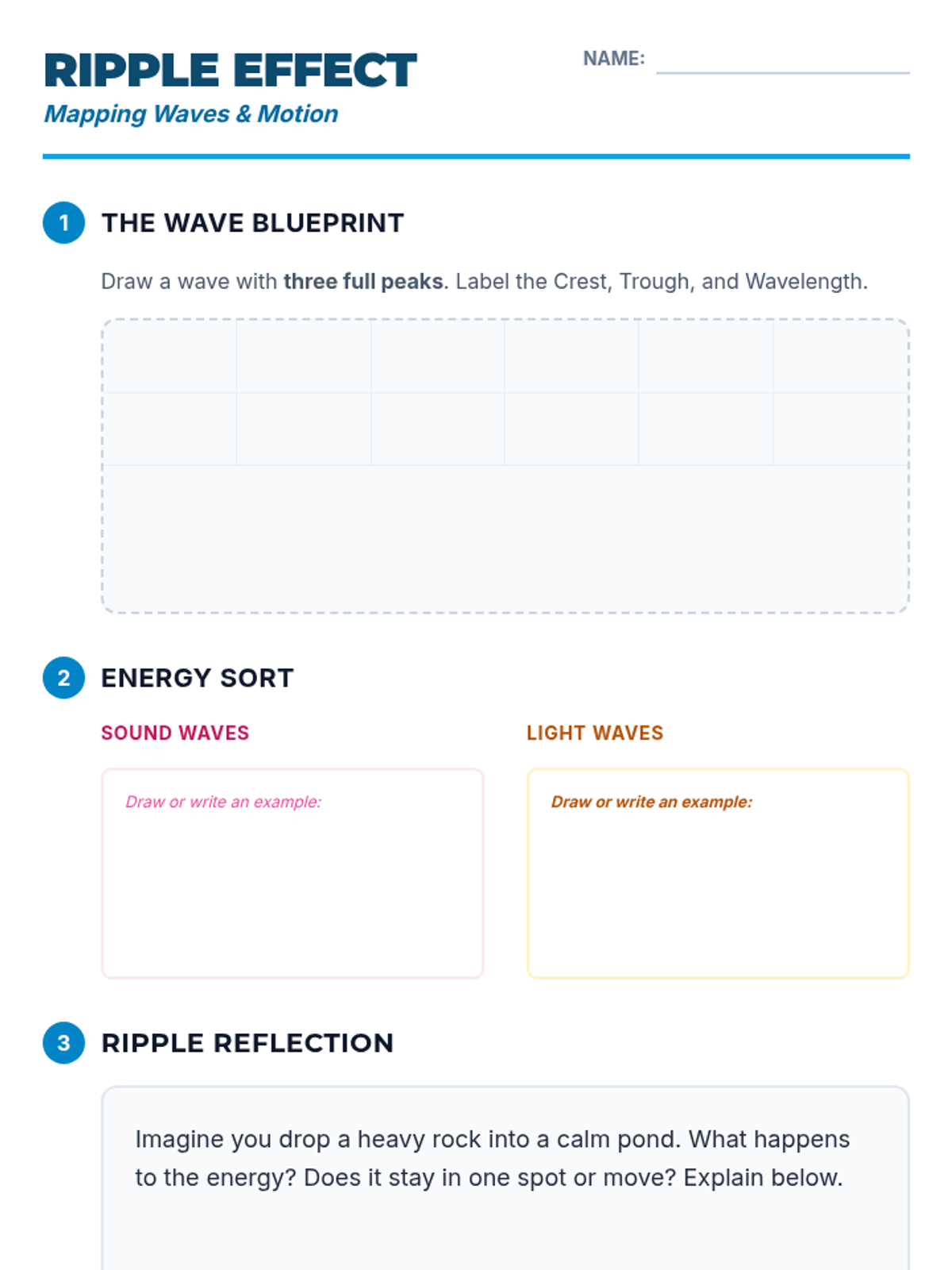
A student worksheet for identifying wave parts, drawing examples of sound and light waves, and explaining energy transfer through ripples.
An introductory presentation on waves, covering definitions, types (sound, light, water), and basic anatomy like crests and troughs.
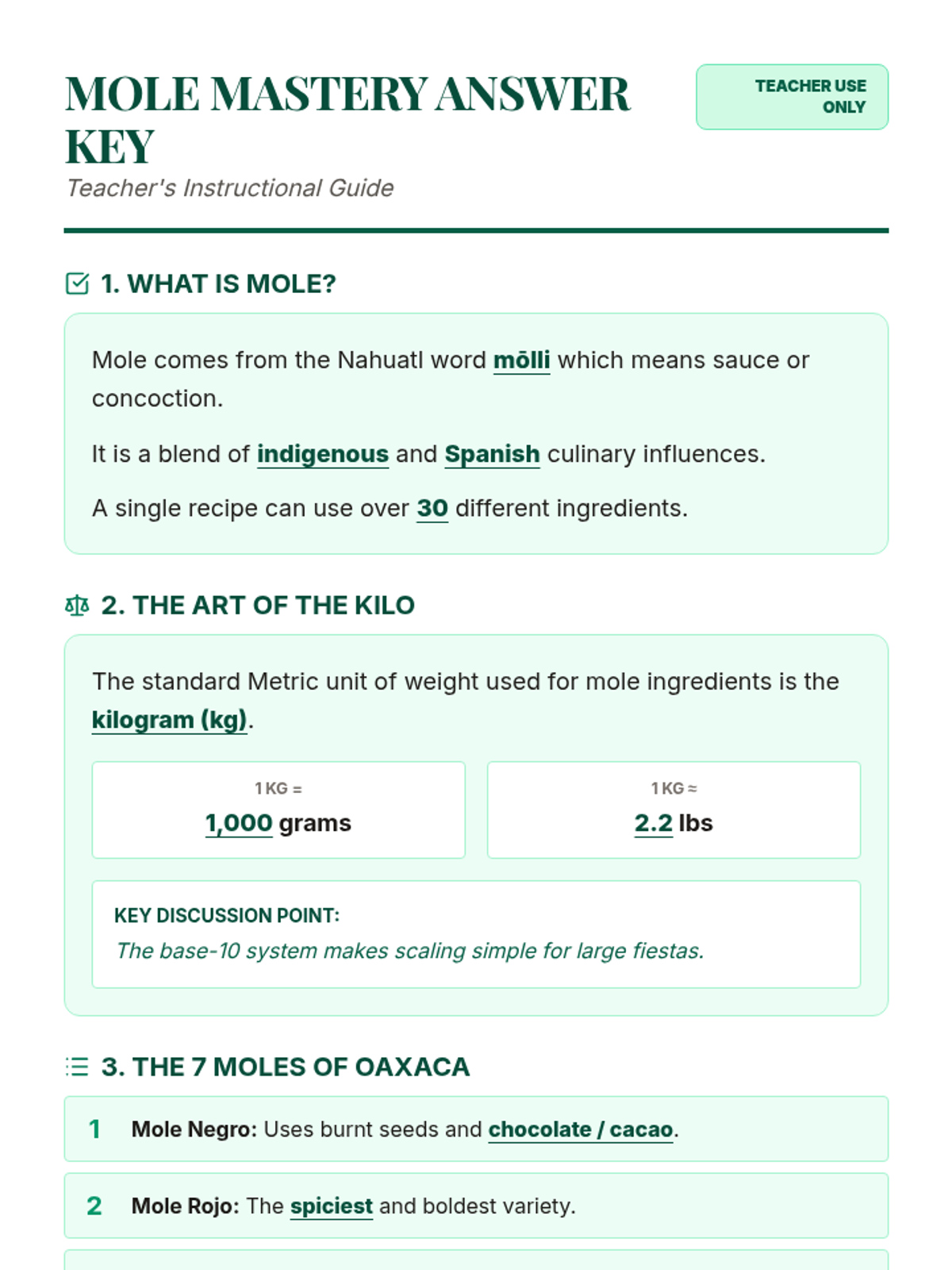
A comprehensive answer key for teachers to accompany the Mole Mastery guided notes handout.
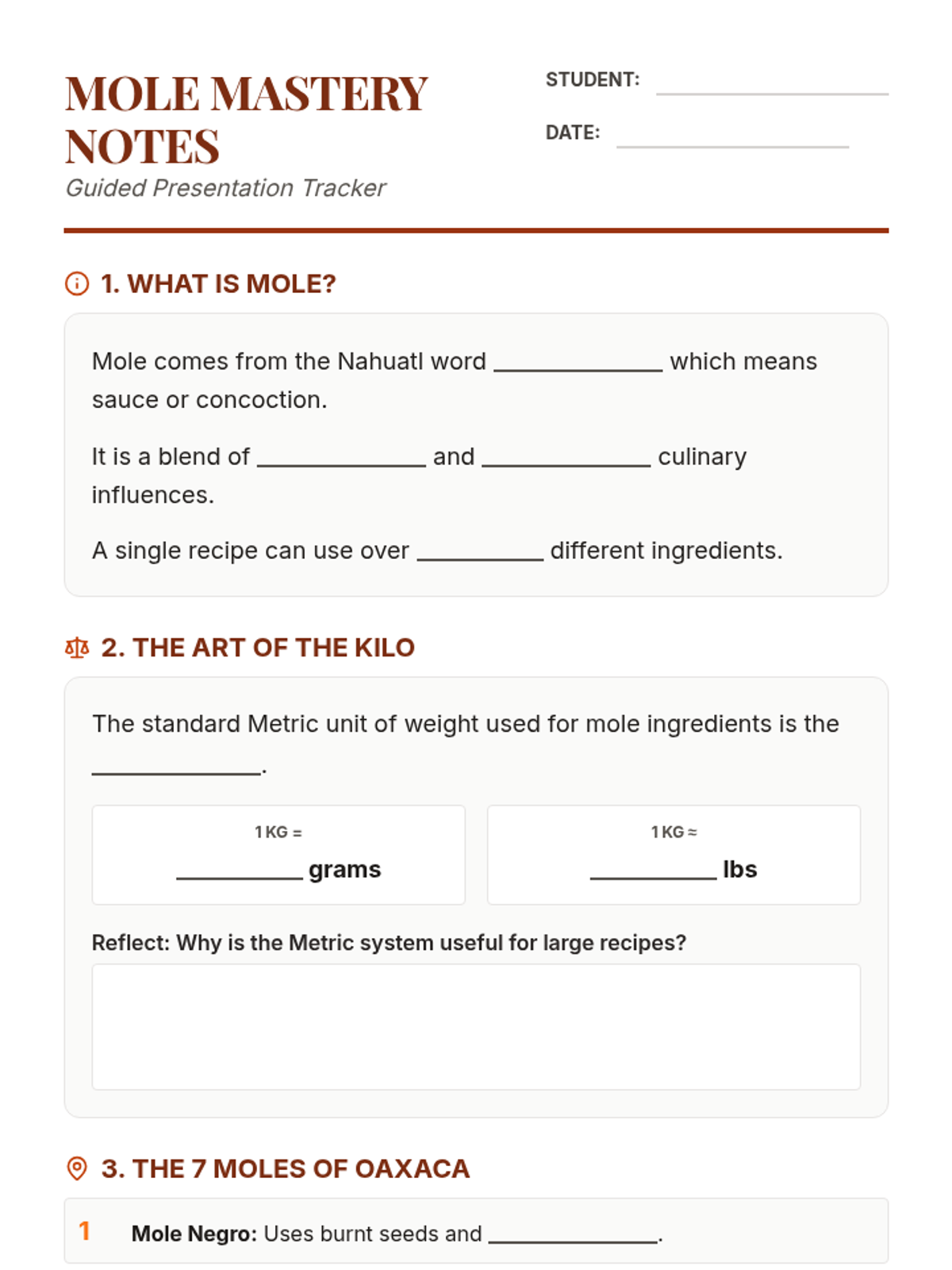
A set of guided notes designed for students to fill out during the Mole Mastery presentation, focusing on vocabulary, metric conversions, and regional varieties.
A revised 10-slide presentation exploring the cultural significance of kilograms in Mexican mole preparation, with updated labels and layouts for improved readability.
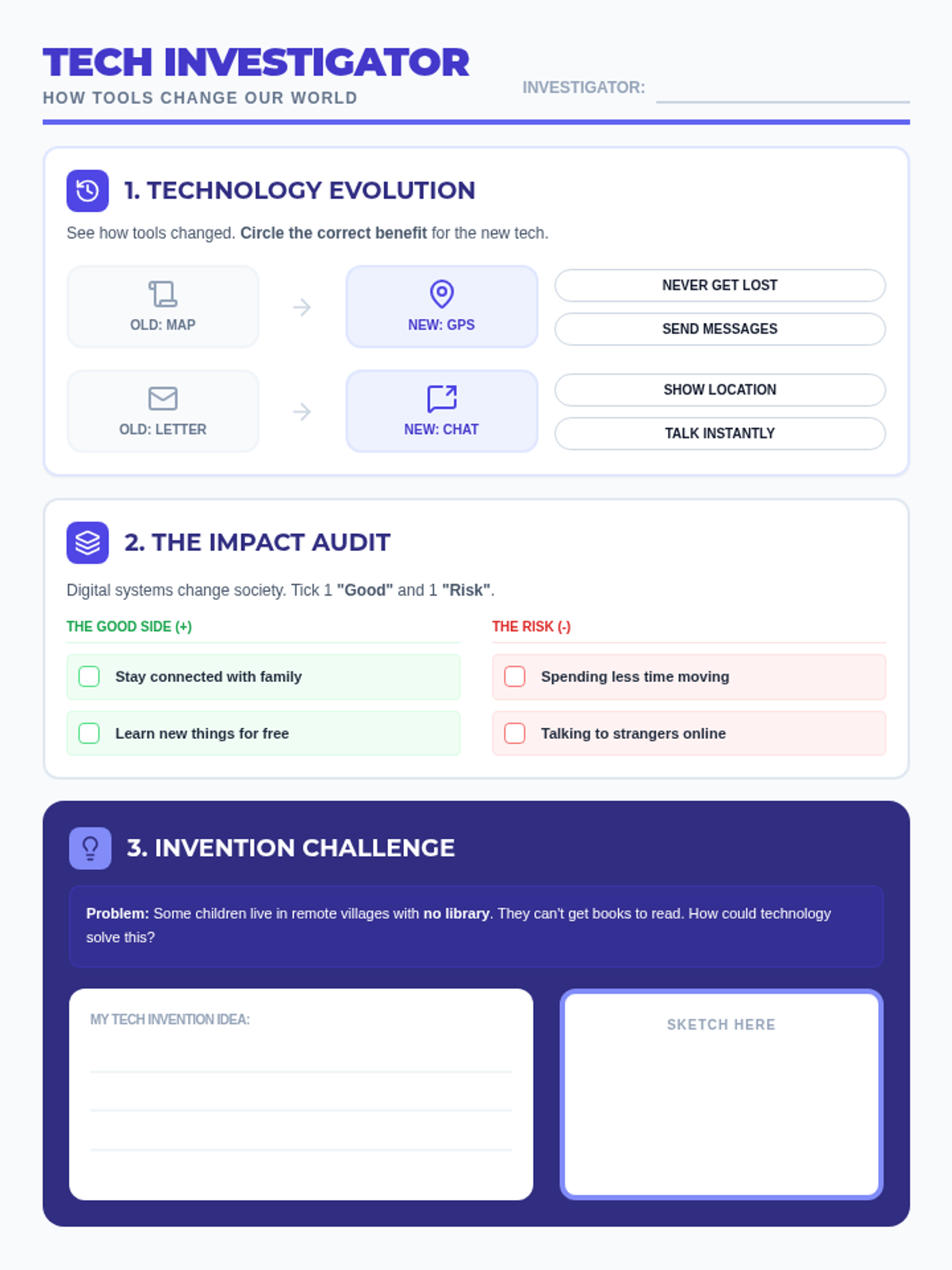
A more cognitively challenging differentiated worksheet for Primary 6 students with low literacy. Focuses on technology evolution, identifying pros and cons of digital systems, and proposing a creative technological solution to a social problem. Revised for better layout and fit.
A more challenging differentiated worksheet for Primary 6 students with low literacy levels. Features a broader identification task and scenario-based multiple-choice questions that require deeper thinking about technological solutions. Revised for better layout and fit.
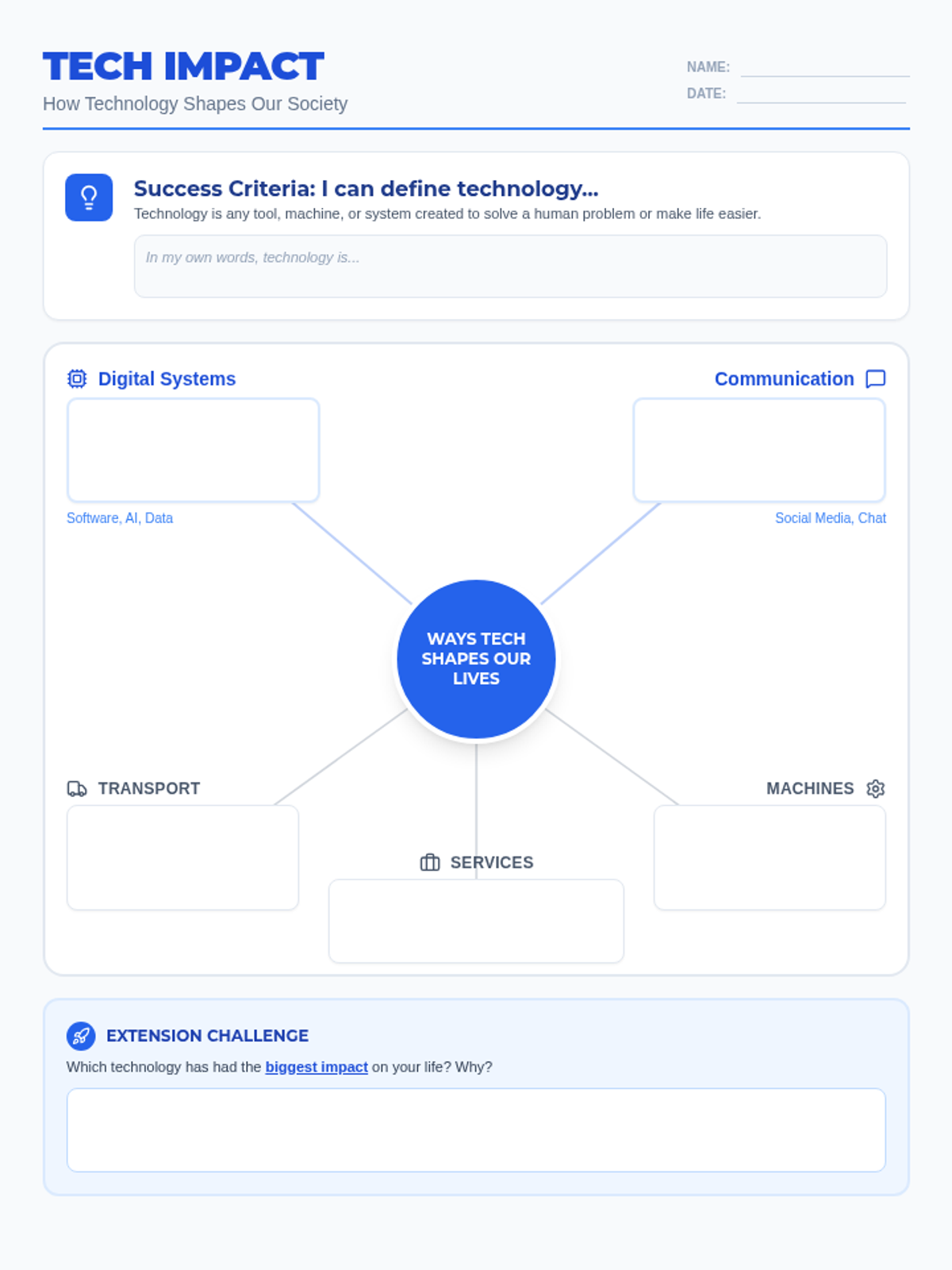
A structured mind map worksheet for Primary 6 students to explore how various forms of technology, with a focus on digital systems and communication, shape modern society. Revised for better layout and fit.
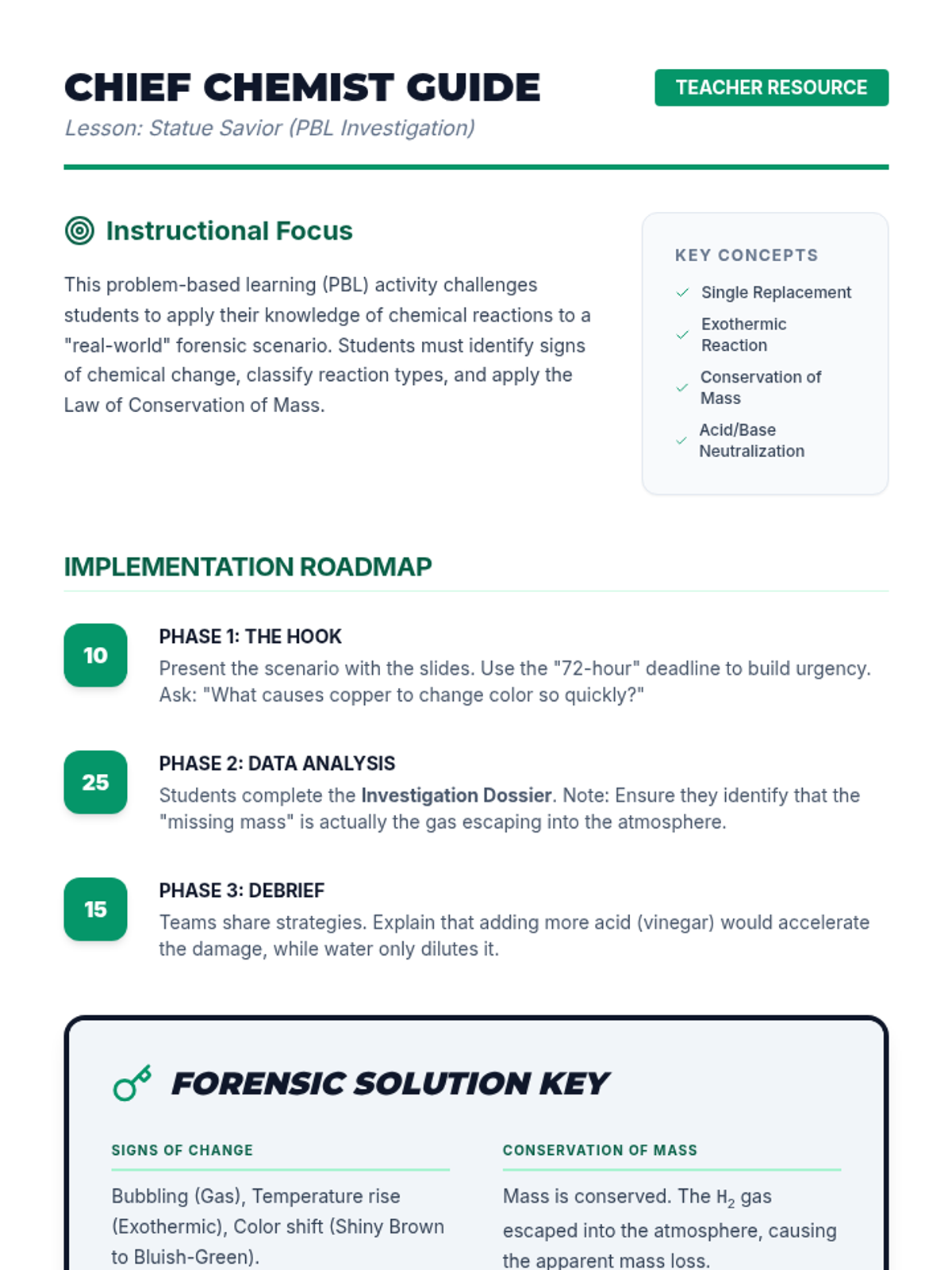
A teacher guide for the 'Statue Savior' PBL, including pacing, facilitation tips, a solution key for the student dossier, and deep-dive discussion prompts.
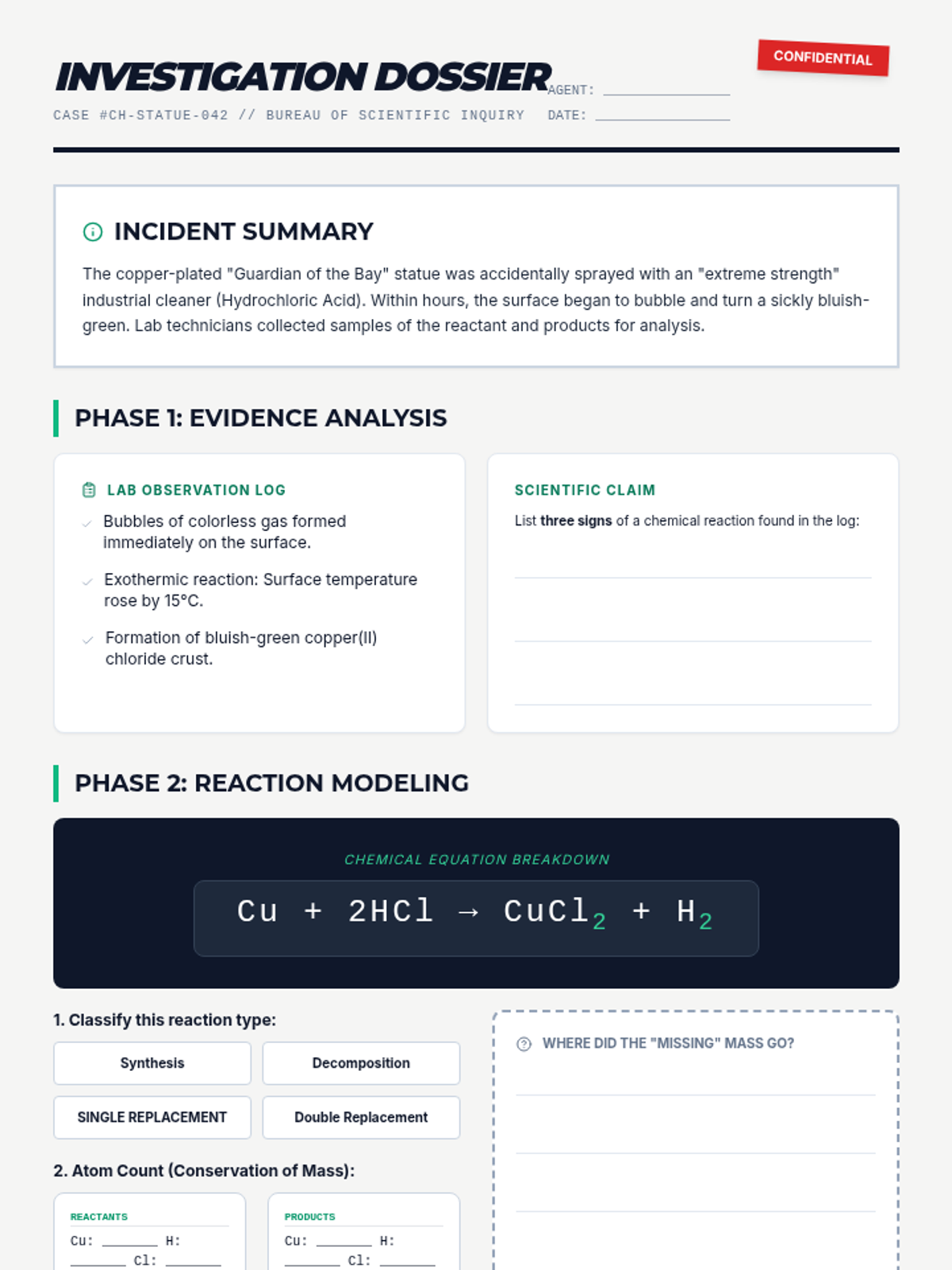
A student-facing dossier for the PBL investigation. It includes evidence analysis sections, chemical equation modeling, and a space for proposing a neutralization strategy to save the statue.