Visual presentation for CSS Lesson 4, introducing flexbox containers, items, and key alignment properties.
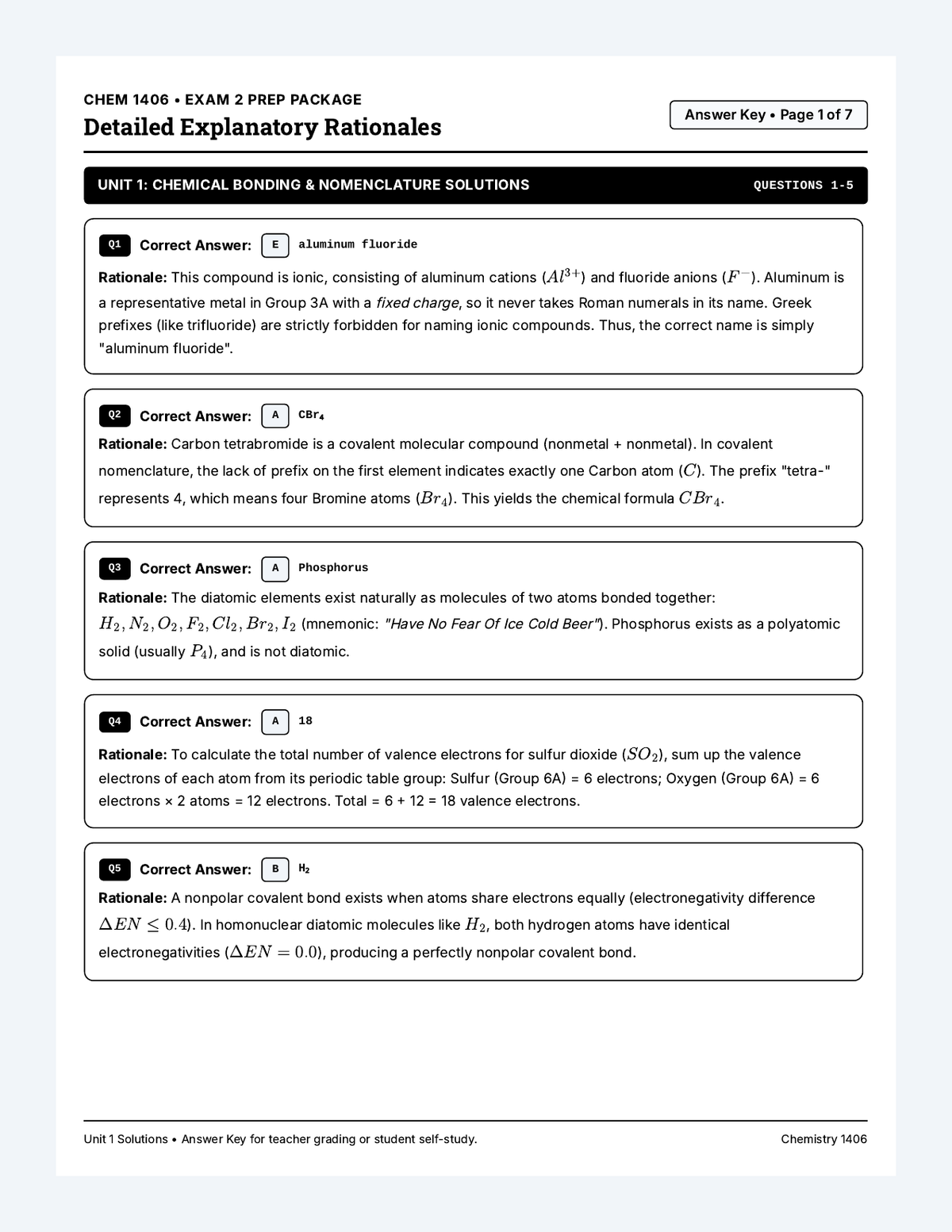
A matching 7-page detailed answer key with step-by-step explanatory rationales for all 30 practice exam questions. Highlights correct option letters and breaks down calculations, stoichiometry mole-ratios, balanced chemical equations, and solubility rules for easy self-study or teacher facilitation with enlarged, highly readable black typography.
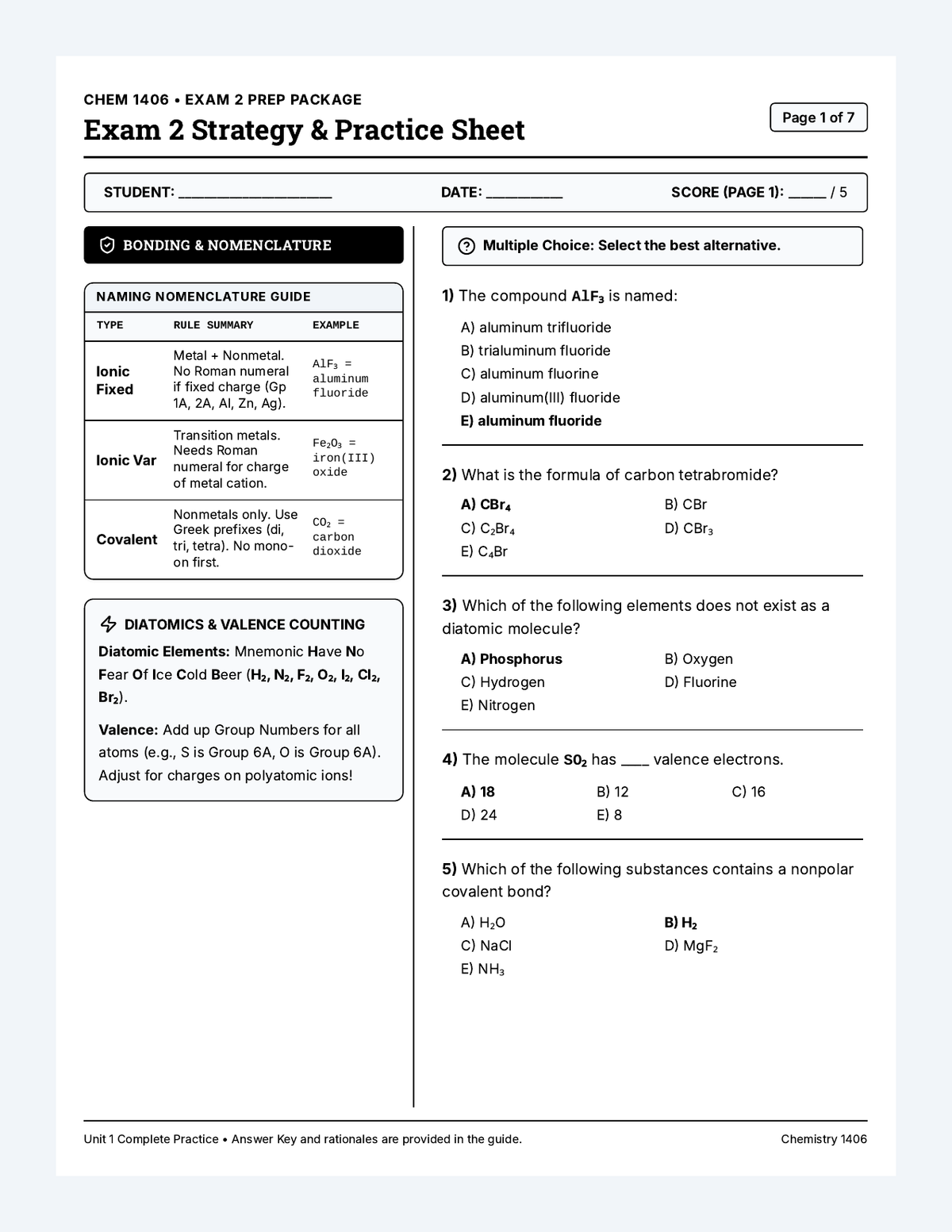
A highly structured side-by-side study companion and practice exam with enlarged, highly readable black typography. Pairs condensed high-yield summary tables, formula maps, and rules in the left column directly with a 30-question practice exam in the right column across 7 beautifully spaced pages.
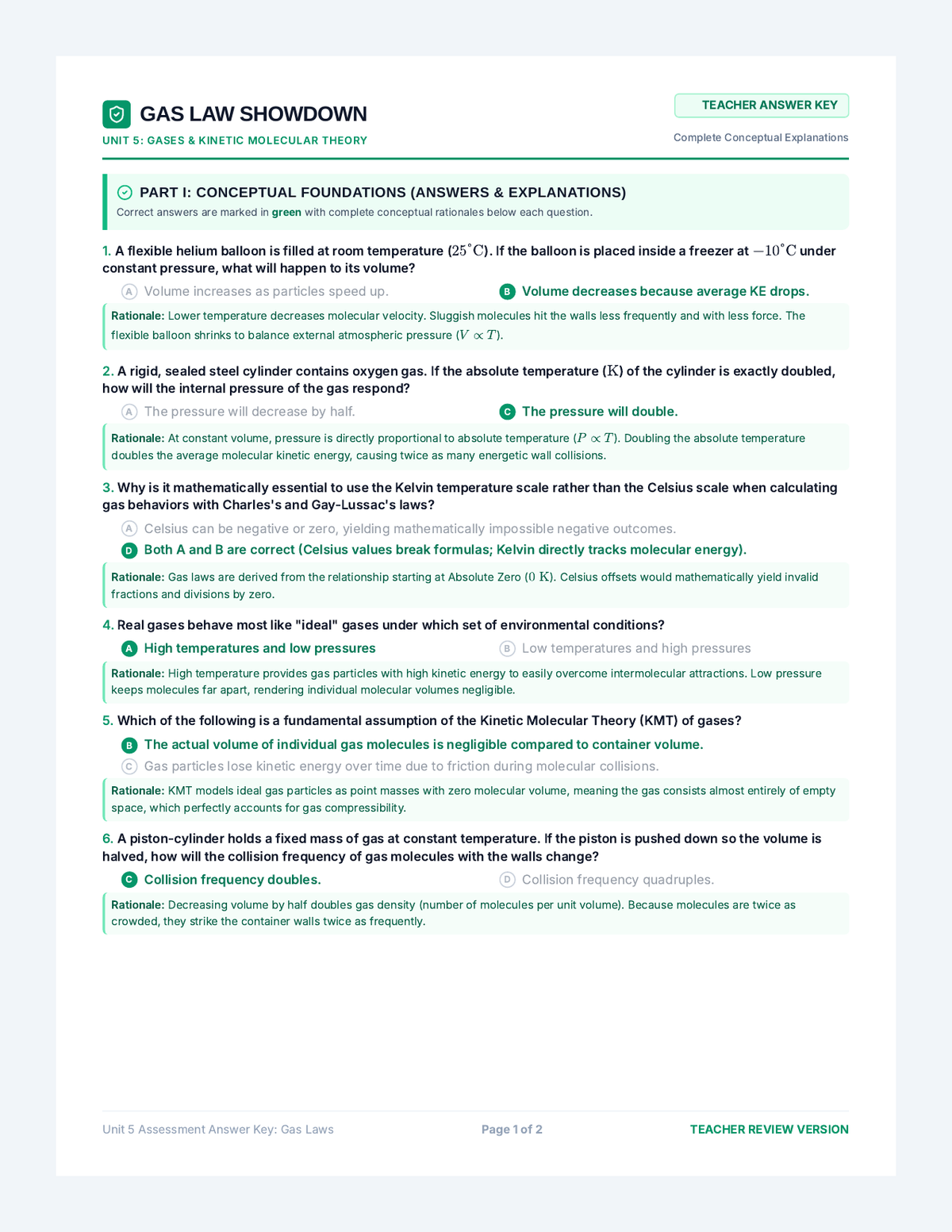
A comprehensive teacher answer key for the Gas Law Quiz. It provides complete, step-by-step algebraic solutions for all calculation problems, including unit conversions to Kelvin, formula rearrangement, and final answers with correct significant figures and units.
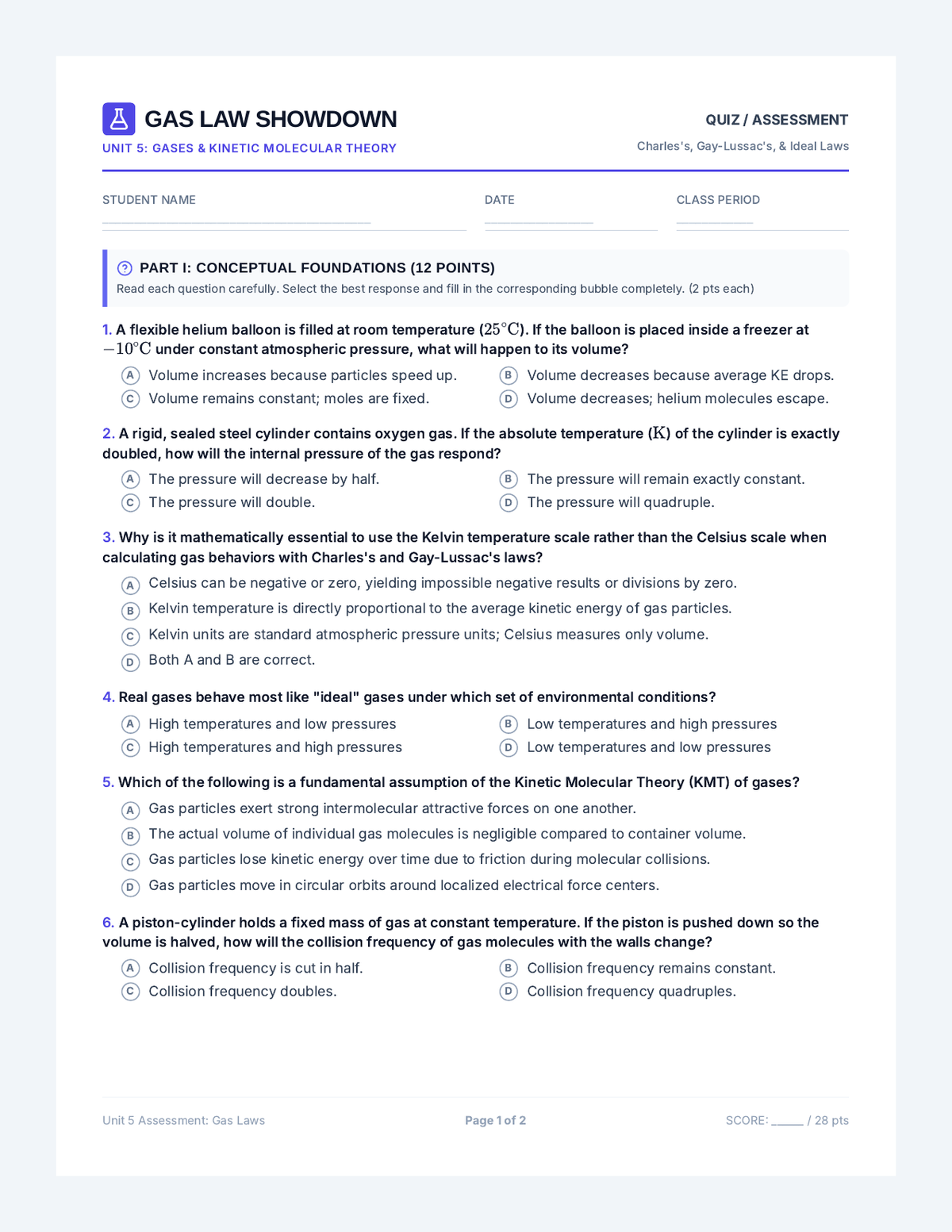
A two-page printable quiz assessing students on Charles's, Gay-Lussac's, and the Ideal Gas Laws. Includes six conceptual multiple-choice questions and four multi-step calculation problems with dedicated space for students to show their algebraic work.
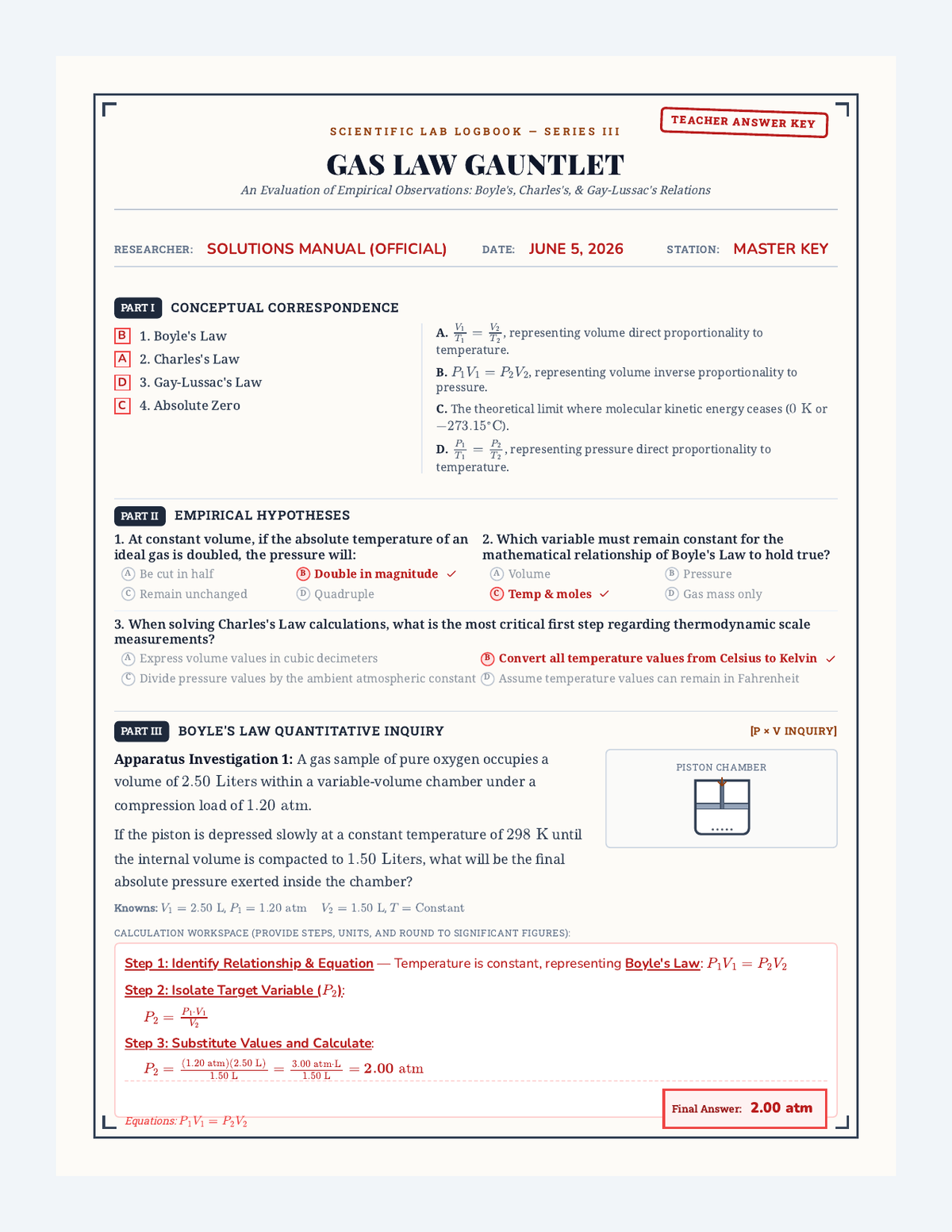
A comprehensive teacher answer key matching the Gas Law Quiz Worksheet. It features the same elegant vintage aesthetic with prominent, clear red ink step-by-step mathematical work, formula derivations, temperature unit conversions, and full exemplary prose for the synthesis challenge.
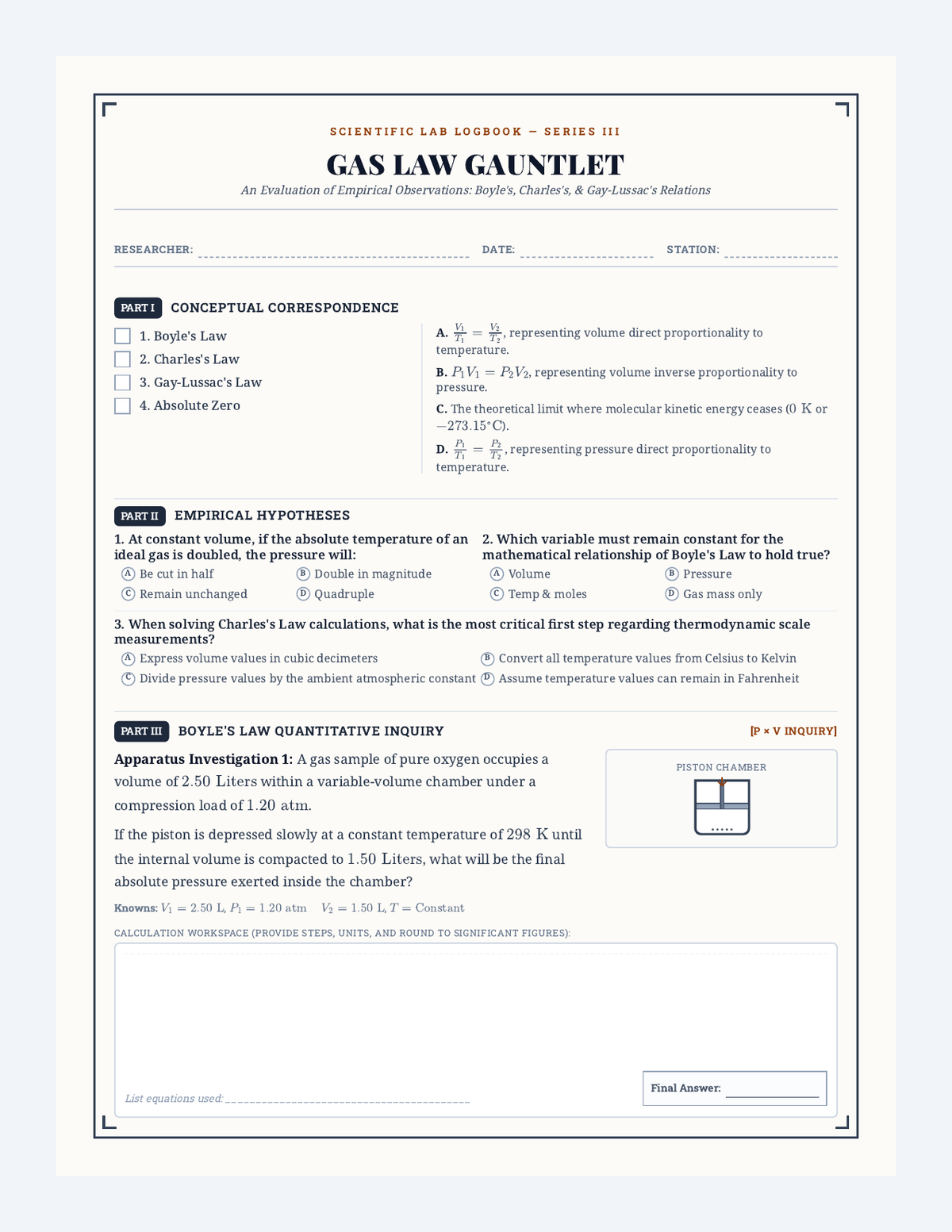
A beautifully structured 2-page student assessment on Boyle's, Charles's, and Gay-Lussac's laws. It is styled with a vintage 19th-century scientific logbook aesthetic, featuring double borders, elegant serif typography, name/date fields, and precise technical CSS diagrams of laboratory apparatuses alongside clean, spacious white workspaces for hand-written calculations.
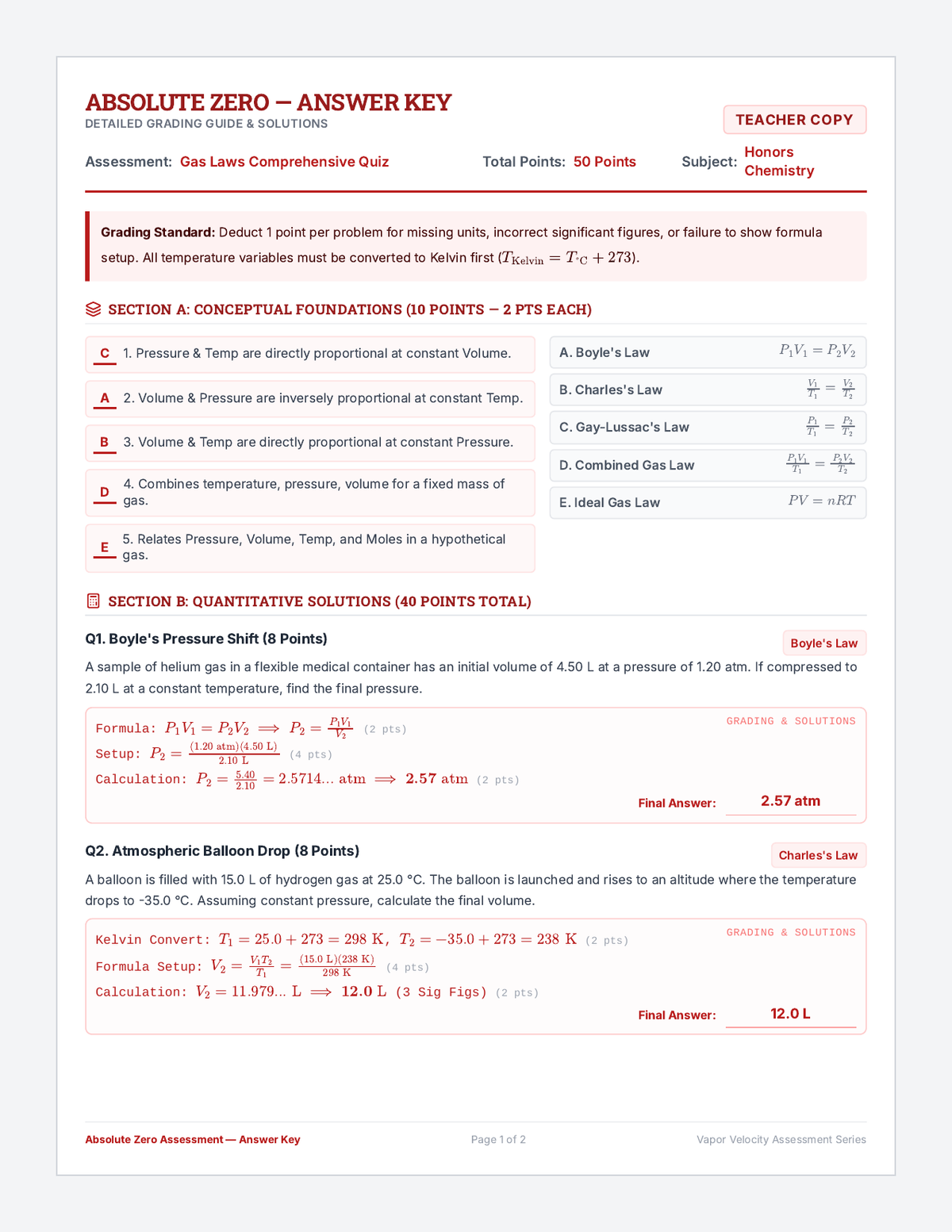
The detailed teacher answer key and grading guide for the Absolute Zero Quiz. It features step-by-step math solutions, rubric breakdowns, and highlighted answers in a clear scientific layout.
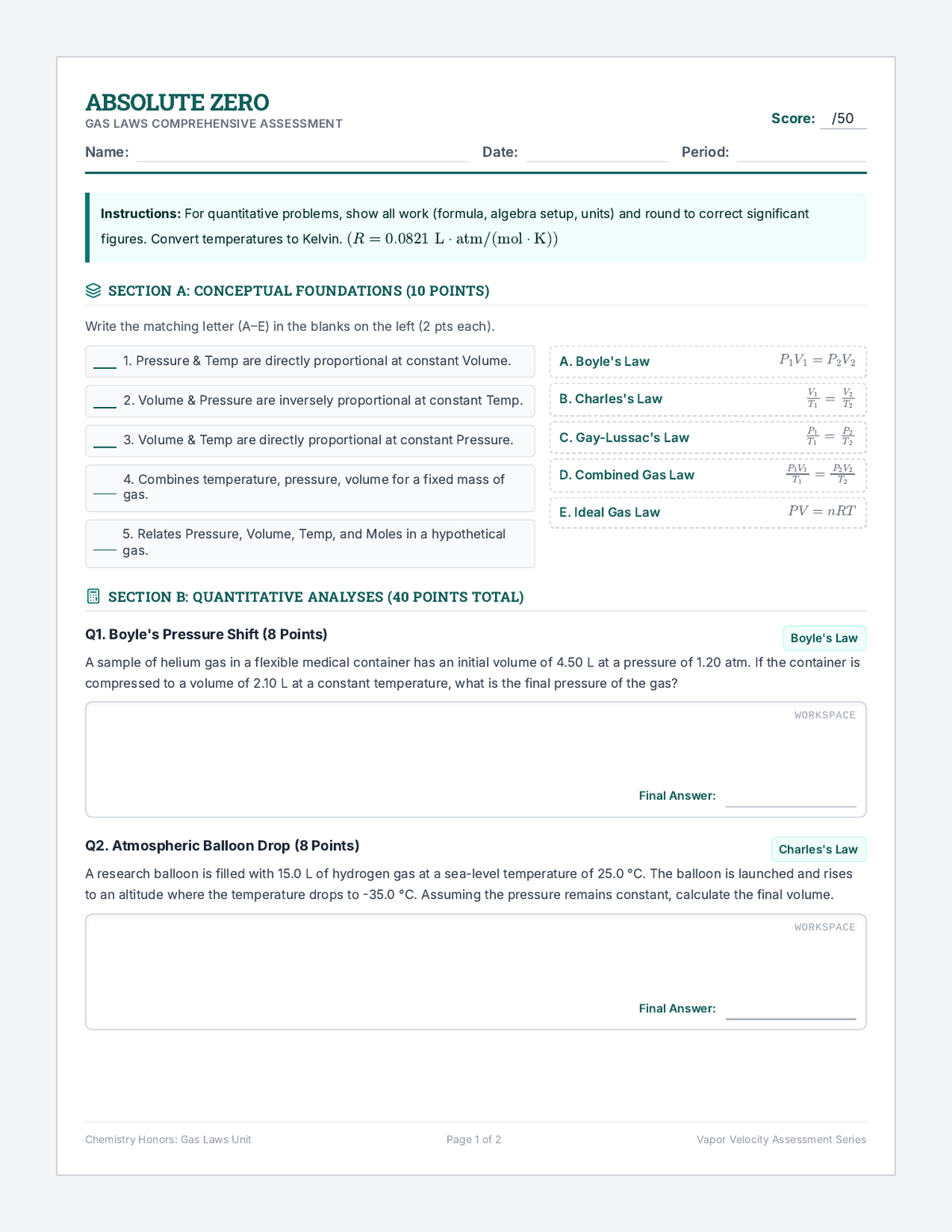
A print-ready 2-page gas laws chemistry assessment for high school students. It covers Boyle's, Charles's, Gay-Lussac's, Combined, and Ideal gas laws with a clean scientific layout, clear student work boxes, and a matching conceptual section.
A premium four-slide presentation for Day 1 of the Nature Hacks unit. Built with high-visibility layouts (minimum font size 24px) and featuring stunning, interactive-style CSS vector illustrations of the Kingfisher's hydrodynamic bill wedge profile and the Lotus Leaf's microscopic hydrophobic papillae.
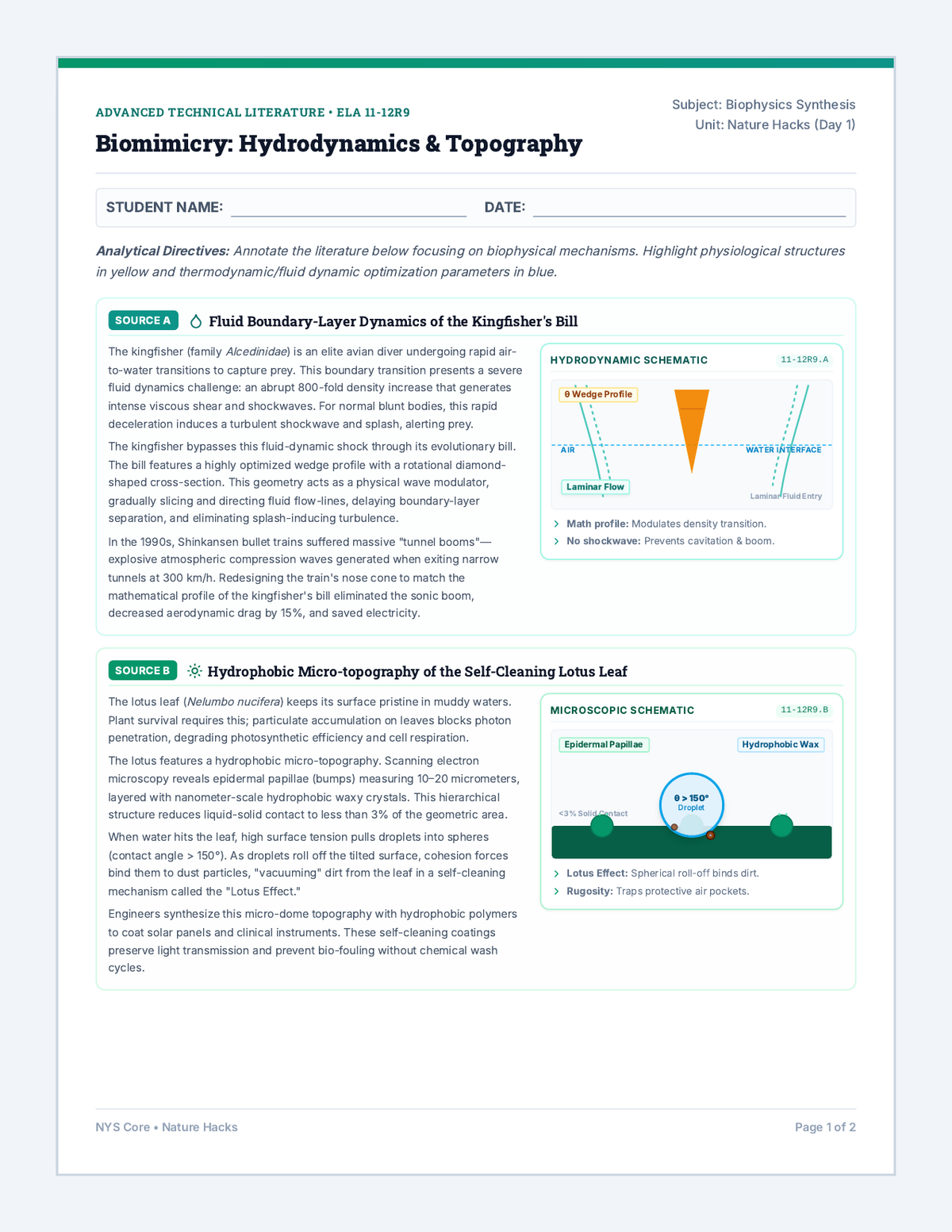
A rigorous, two-page 11th/12th grade source pack updated to feature sophisticated, custom-crafted CSS vector illustrations of the Kingfisher's hydrodynamic bill wedge profile and the Lotus Leaf's hydrophobic micro-scale papillae structure.
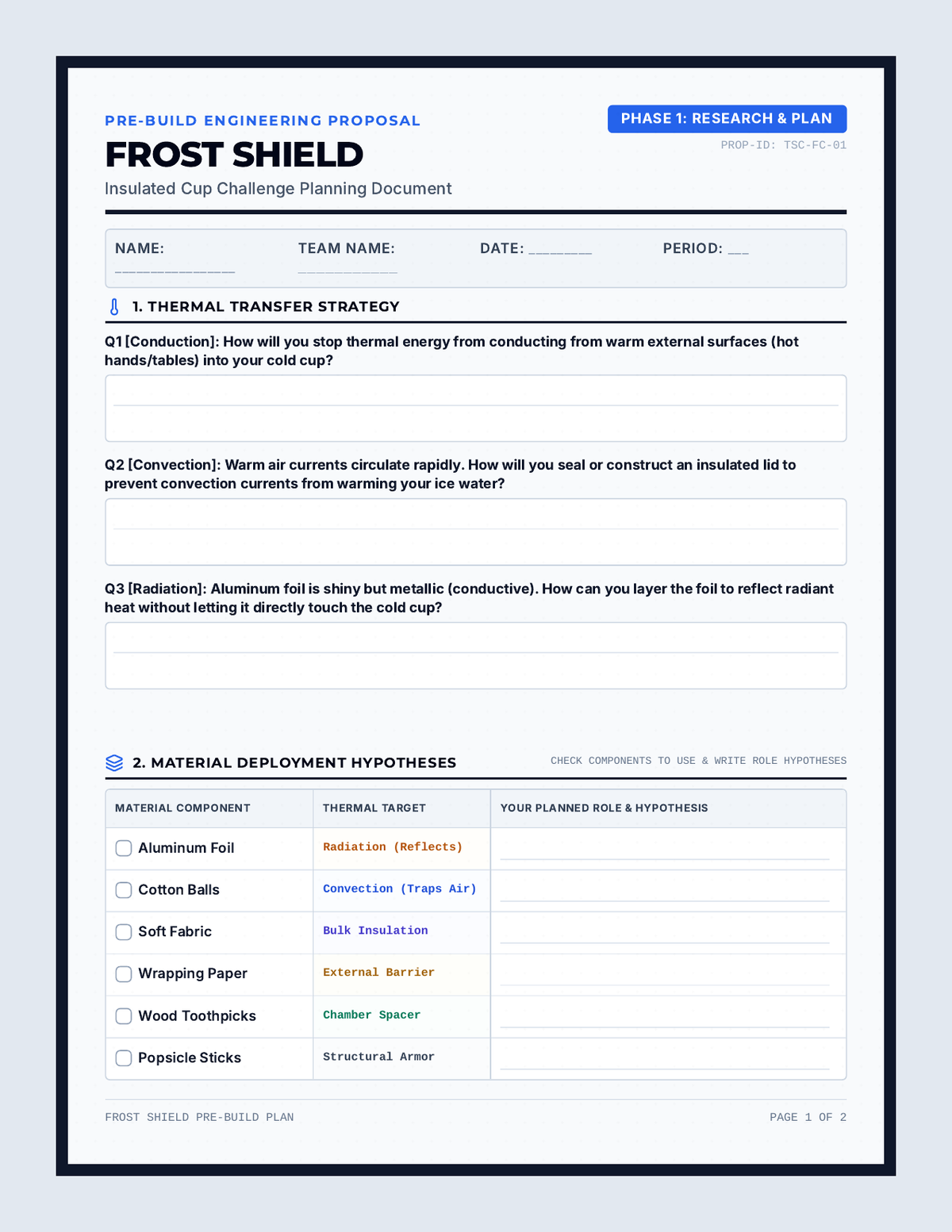
A highly structured 2-page student-facing pre-build proposal worksheet. It converts the thermal inquiries into specific, active questions students must answer, sketch, and justify before constructing their insulated cup.
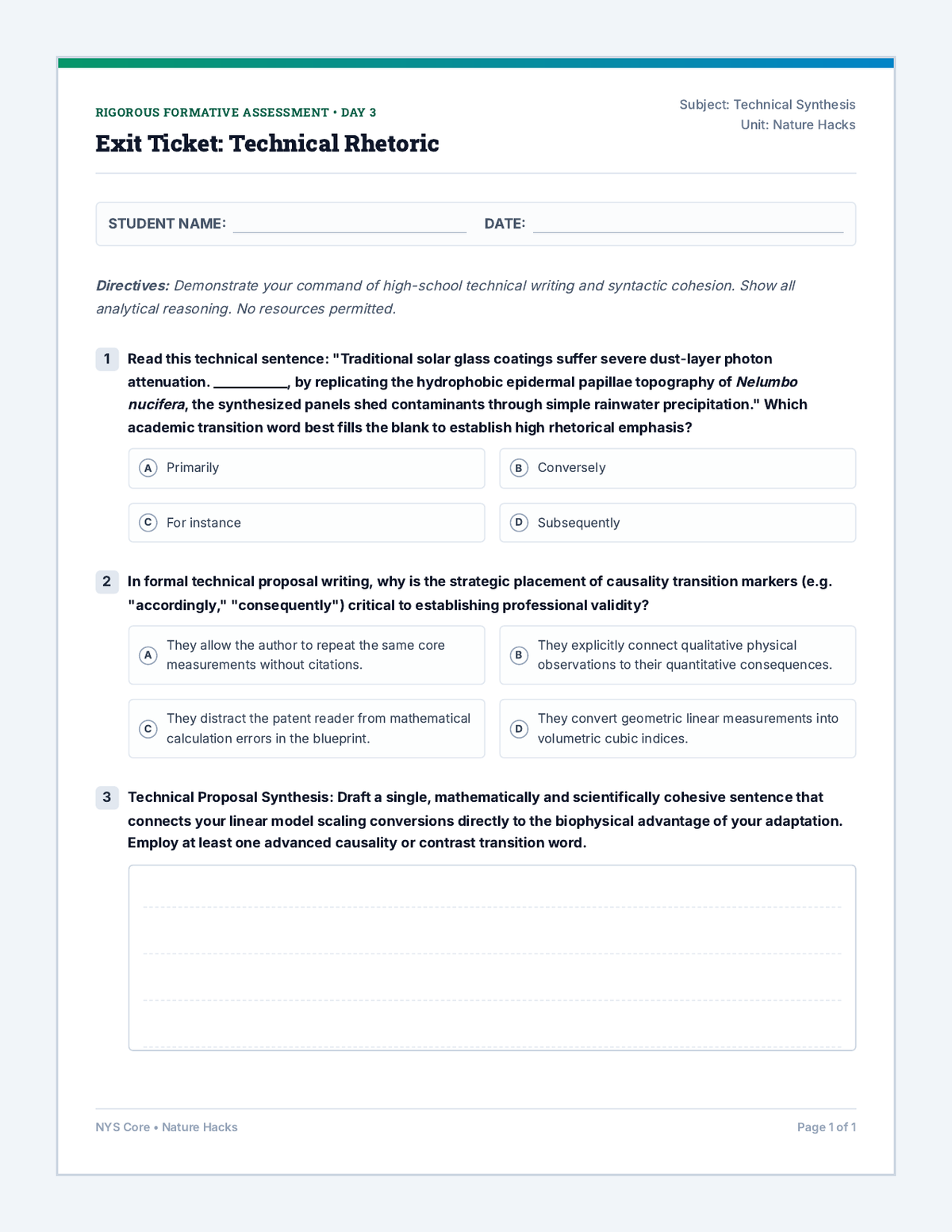
A single-page formative assessment exit ticket for Day 3 of the Nature Hacks unit, featuring academic transition application and synthesis connection questions.
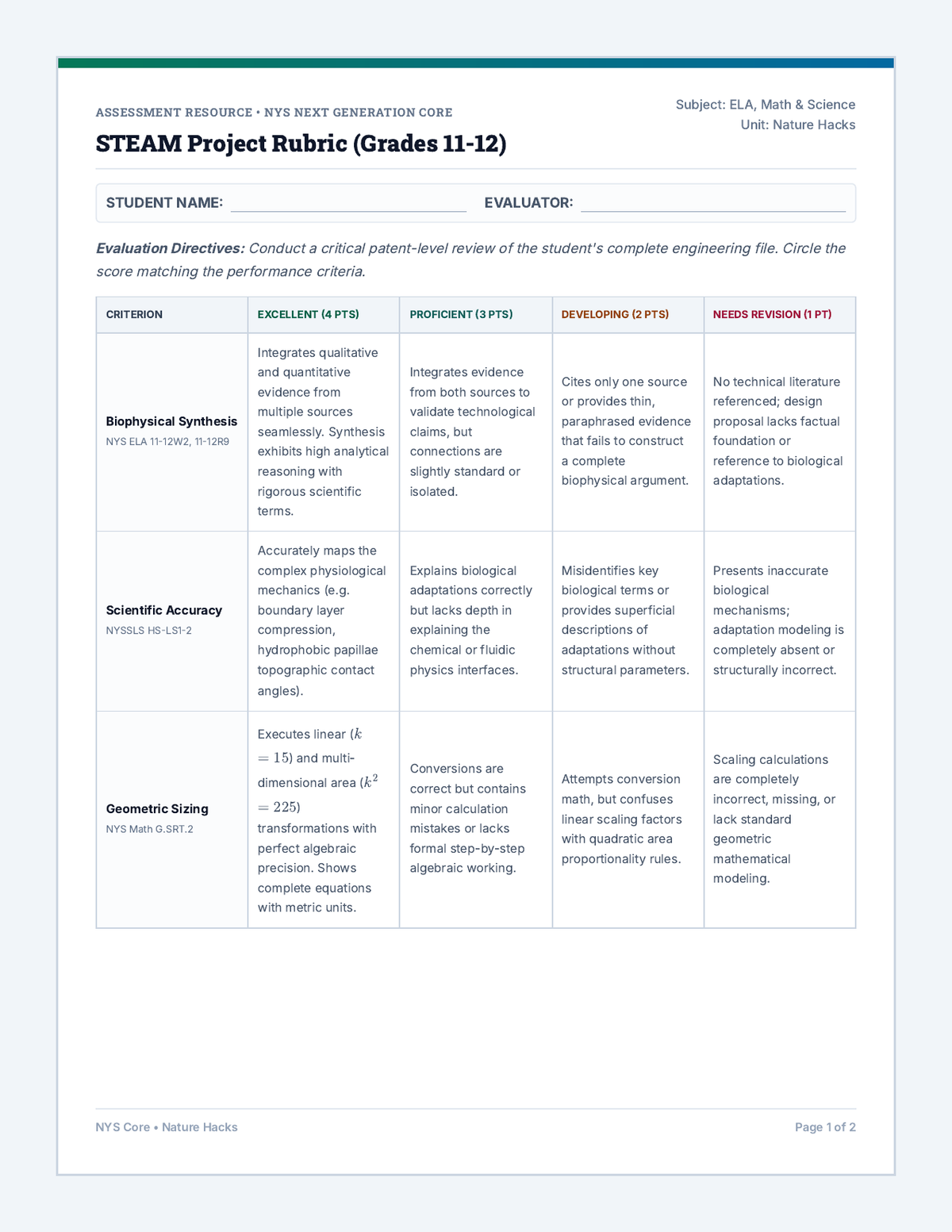
A cohesive, two-page multi-disciplinary assessment rubric evaluating ELA synthesis, scientific accuracy, technical drafting, applied scale mathematics, and academic transitions.
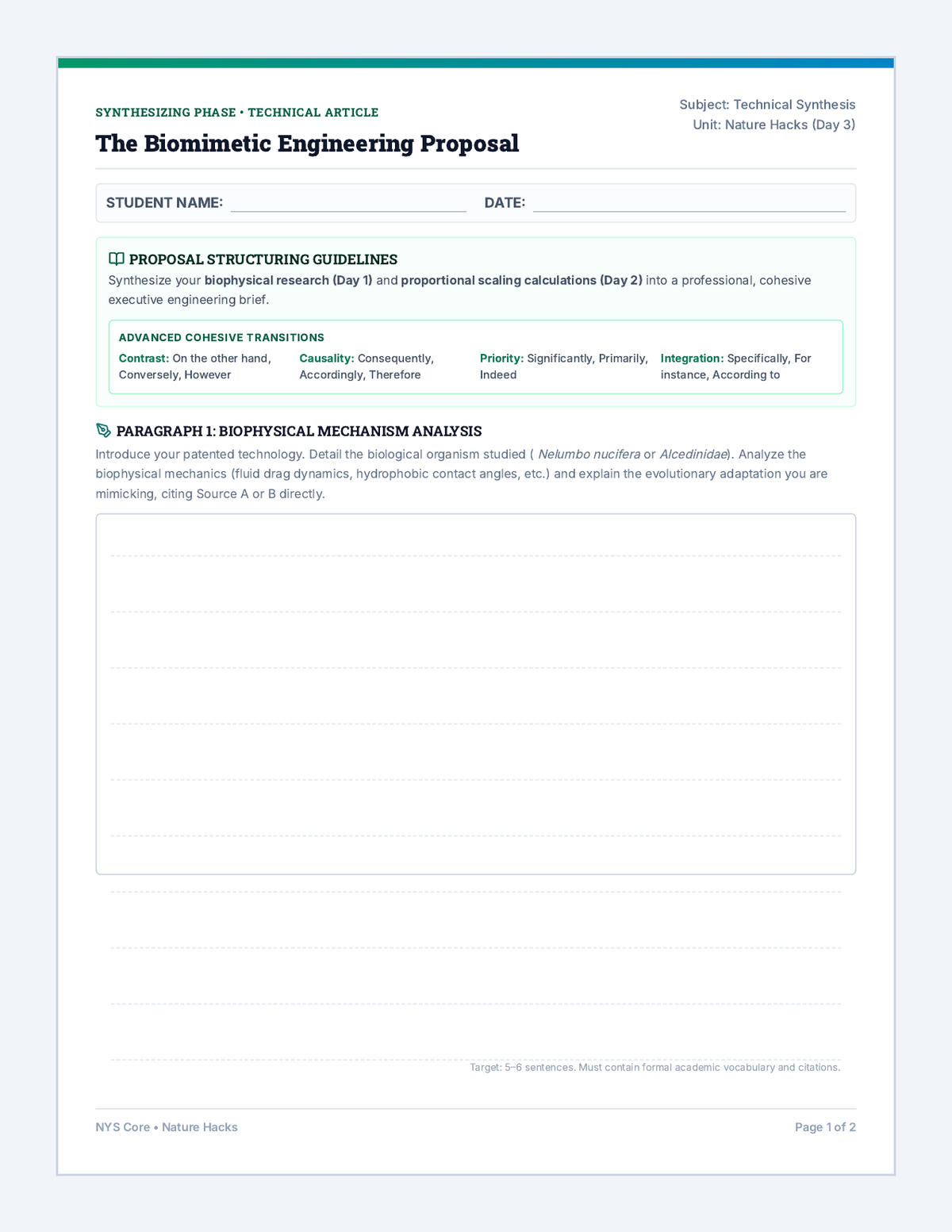
A two-page student document with writing prompts, structural scaffolding, academic transition guides, and handwriting space for the final informational synthesis article.
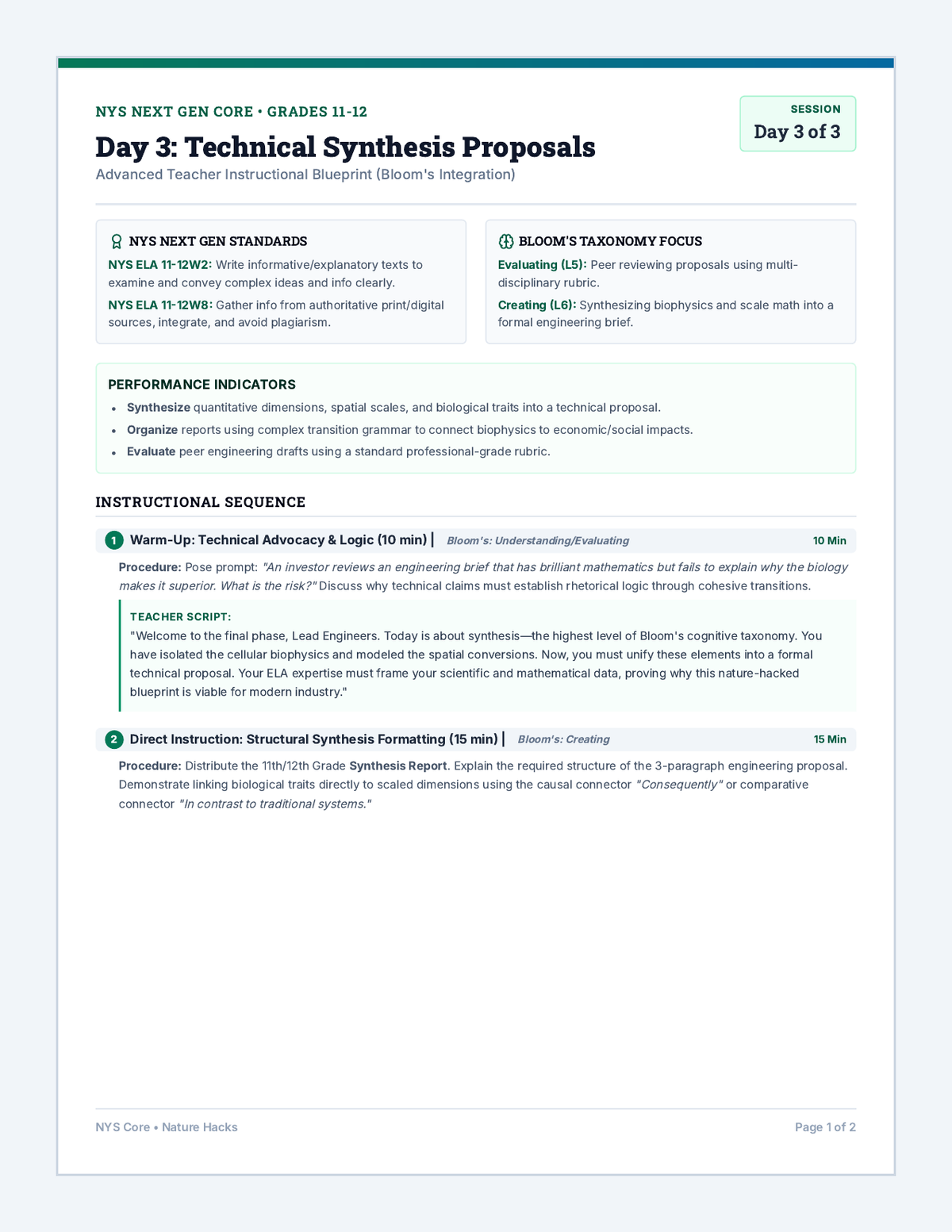
A detailed, two-page teacher instructional guide for Day 3 of the Nature Hacks unit. Explains synthesis report structure, academic transition words, and peer evaluation protocols.
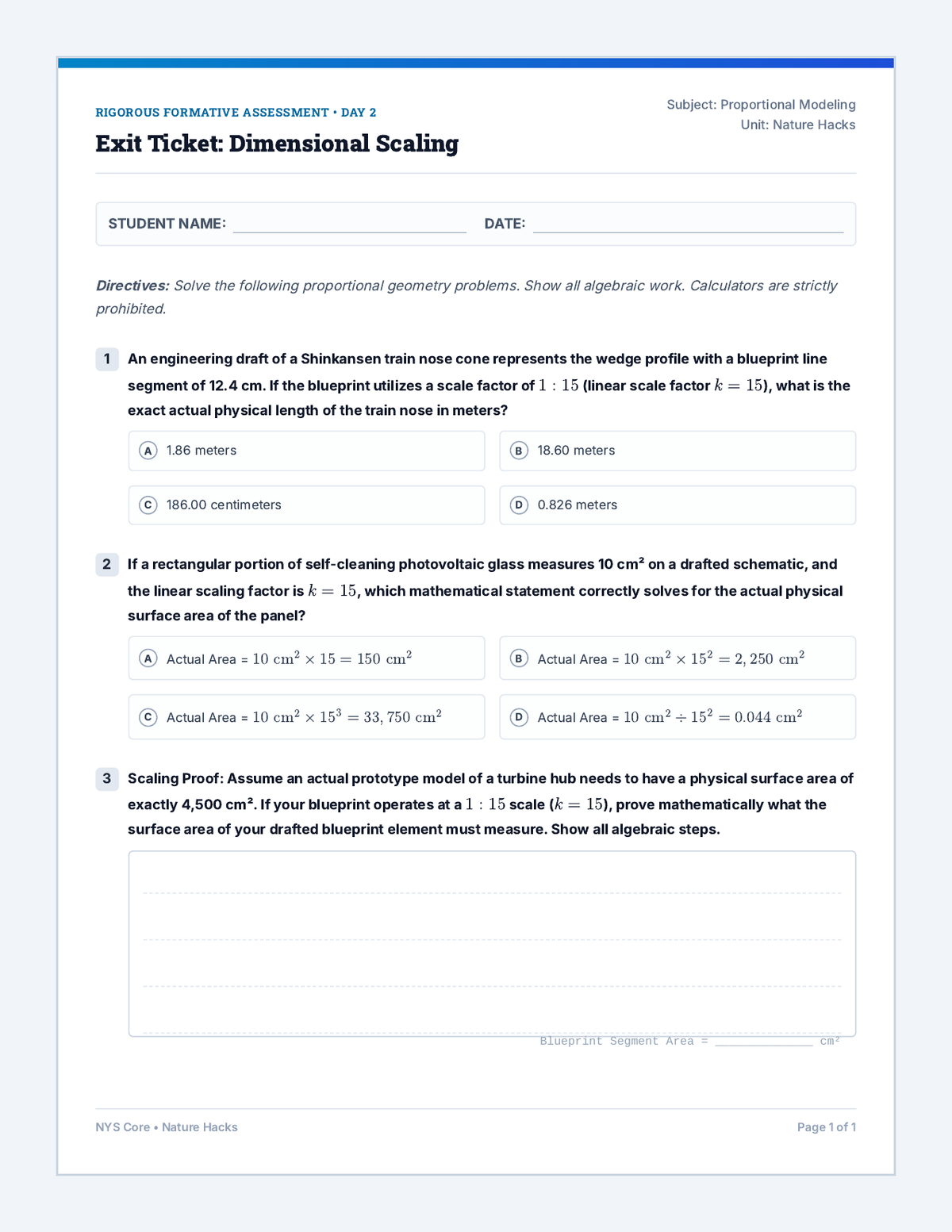
A single-page formative assessment exit ticket for Day 2 of the Nature Hacks unit, featuring scale mathematics and technical drawing application questions.
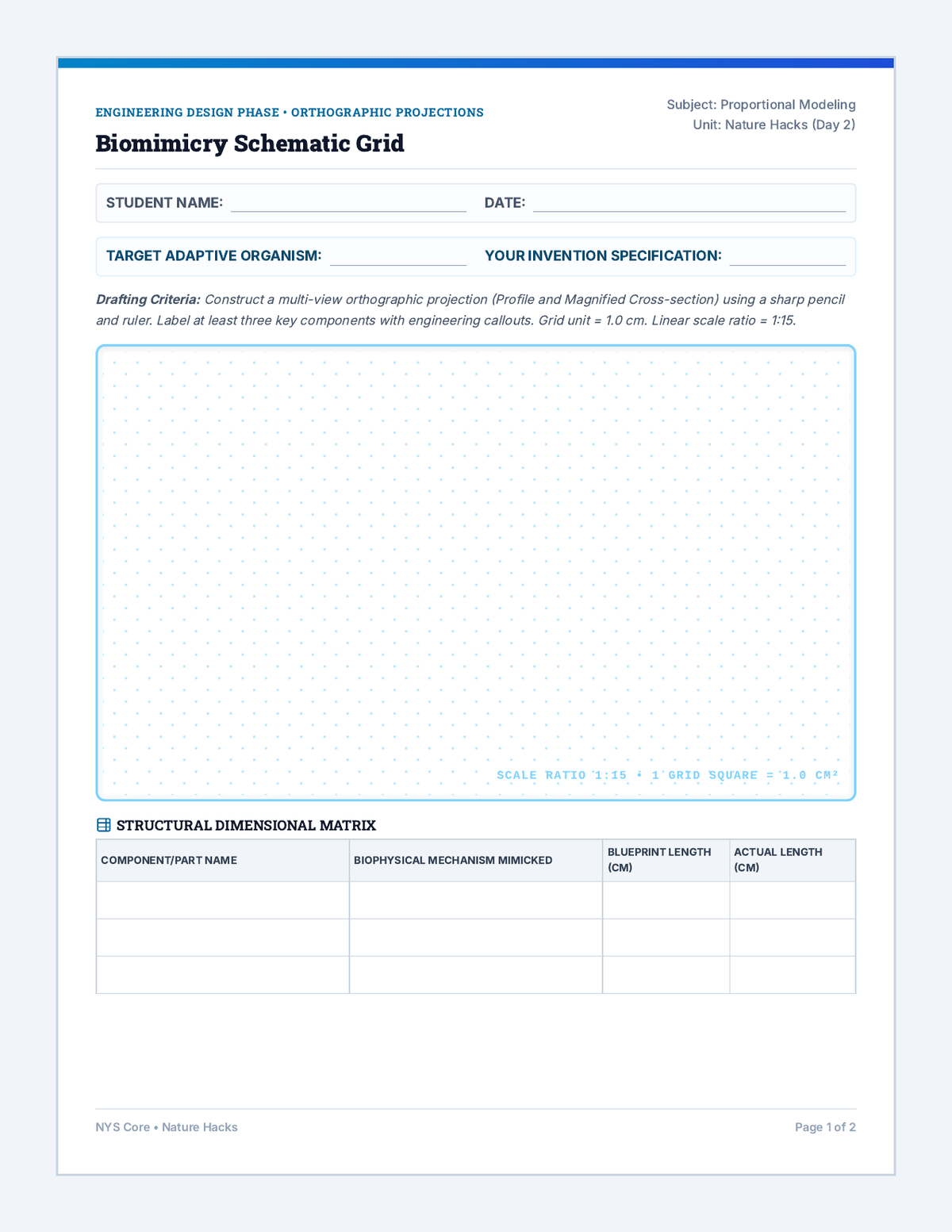
A two-page 11th/12th grade student document featuring a coordinate-based schematic blueprint grid and advanced dimensional scaling mathematics workspaces (linear, quadratic, and cubic).
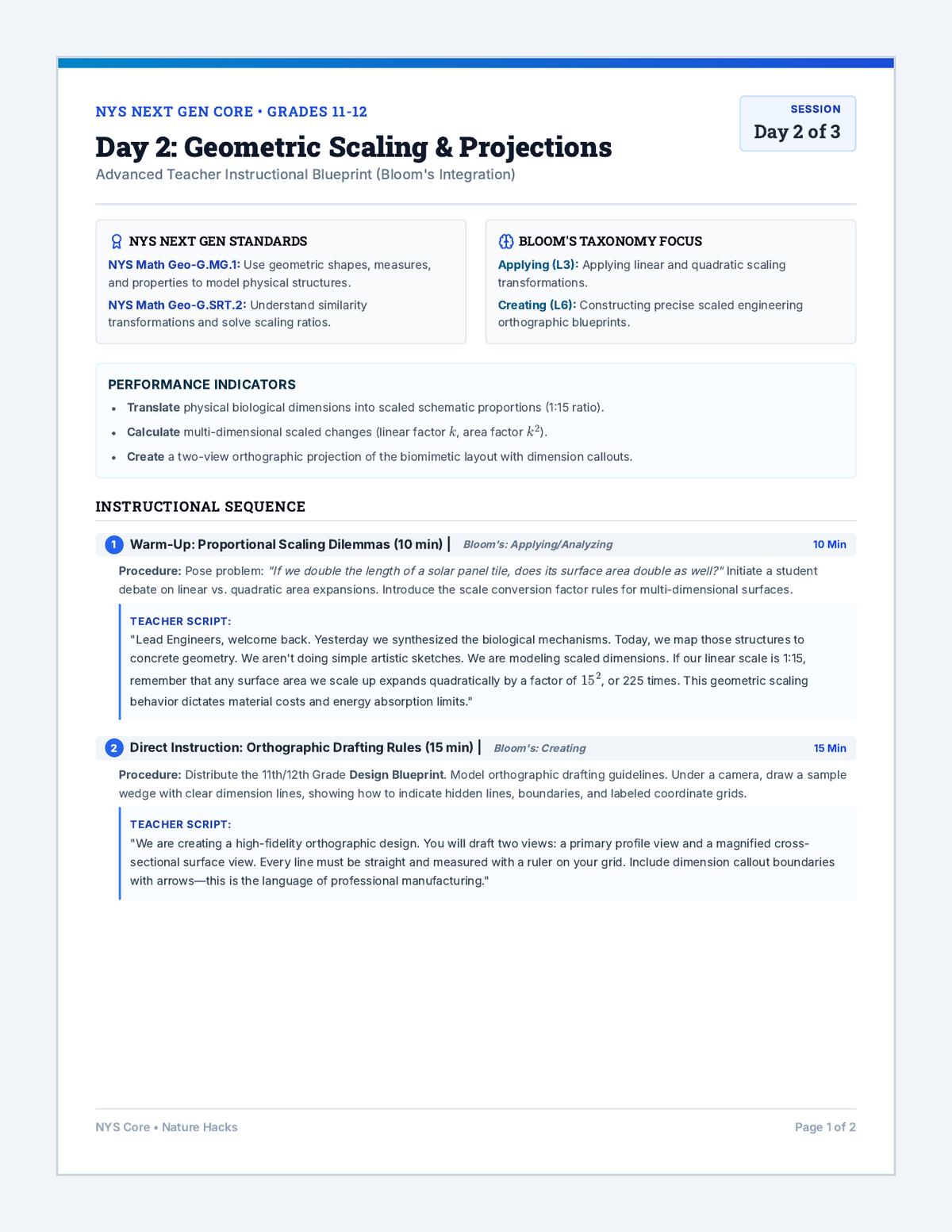
A detailed, two-page teacher instructional guide for Day 2 of the Nature Hacks unit. Outlines orthographic sketching techniques, scale factor calculations, and physical blueprinting procedures.
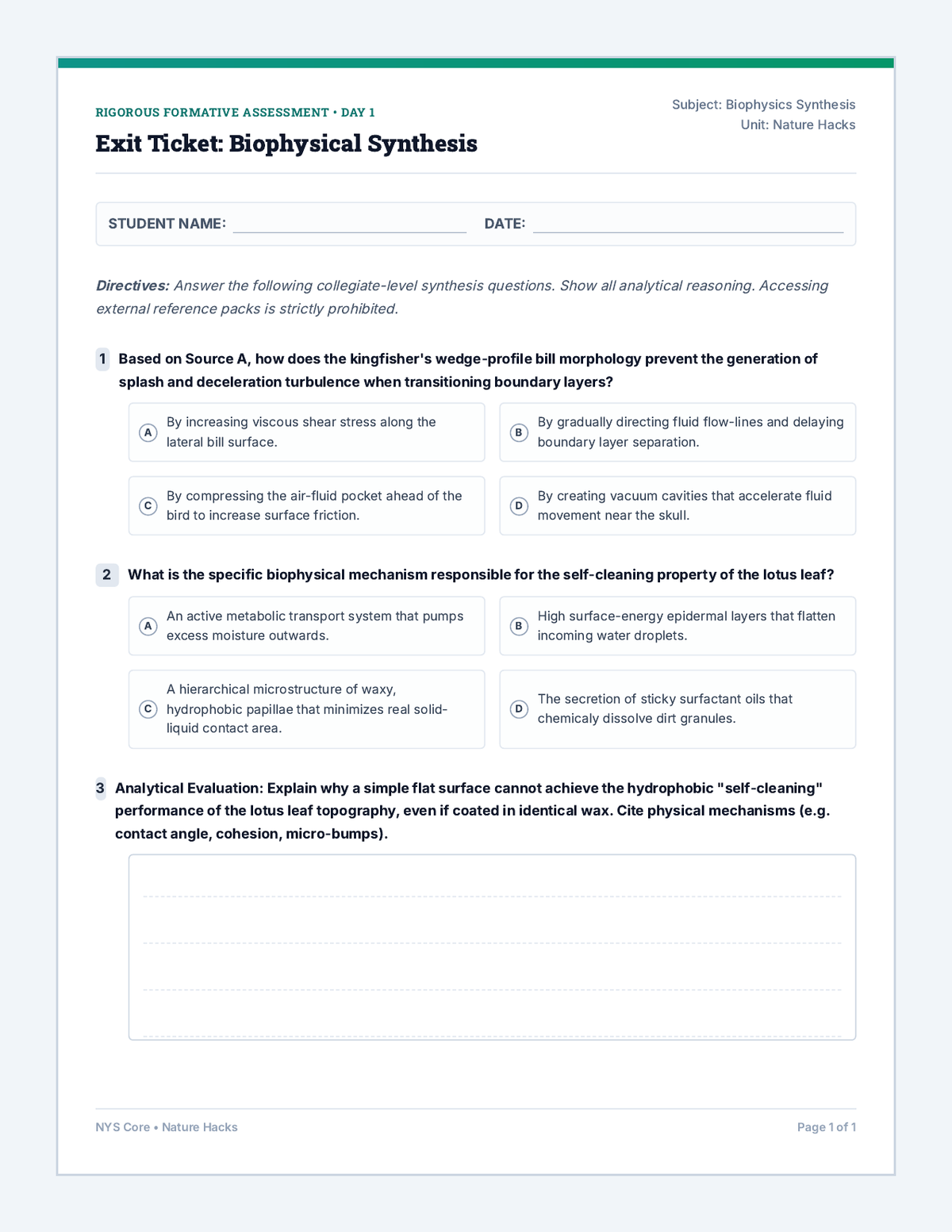
A single-page formative assessment exit ticket for Day 1 of the Nature Hacks unit, featuring text-dependent multiple choice and synthesis questions.
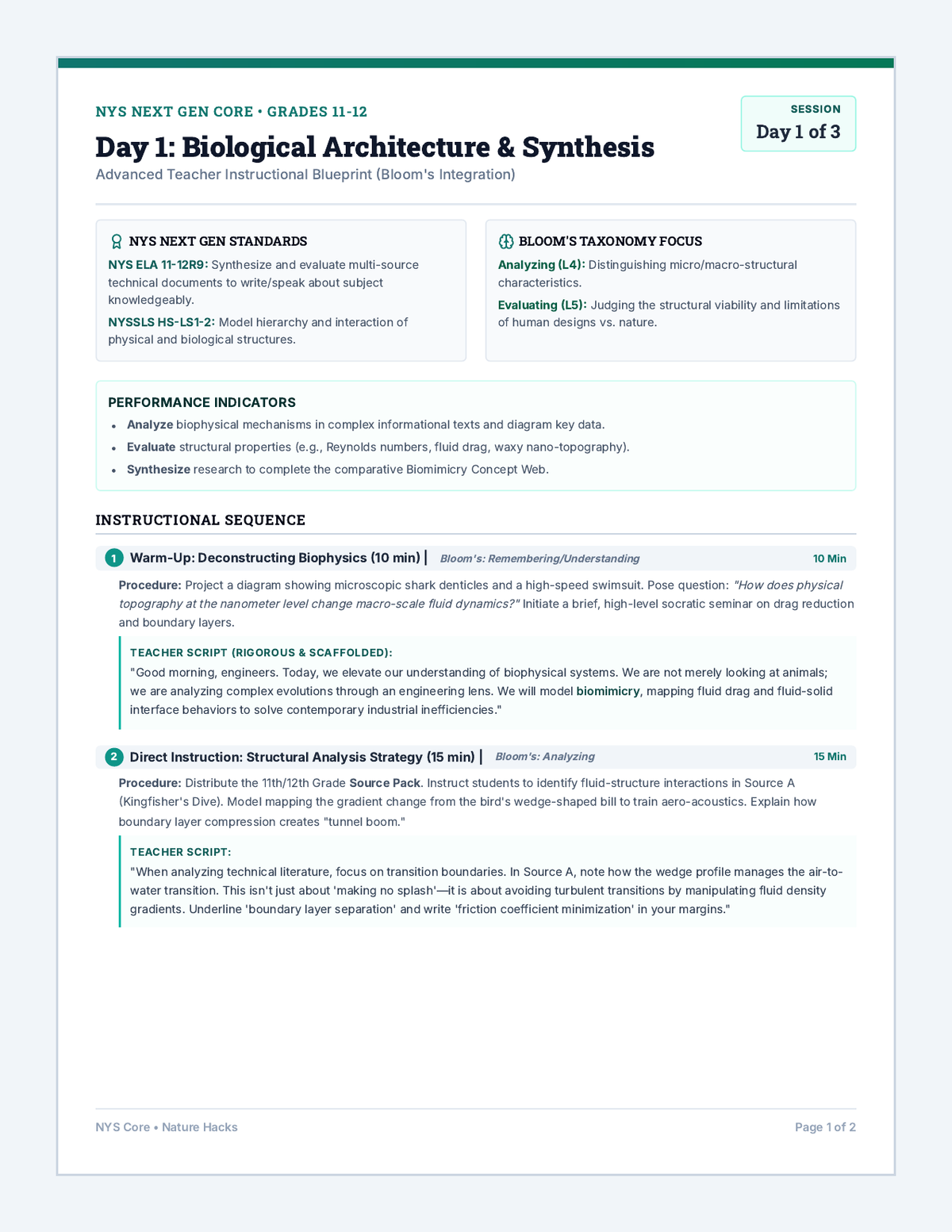
A highly rigorous, two-page 11th/12th grade teacher guide for Day 1 of the Nature Hacks unit. Integrates NYS Next Gen Standards, Bloom's Taxonomy indicators, and advanced biomimetic concepts.
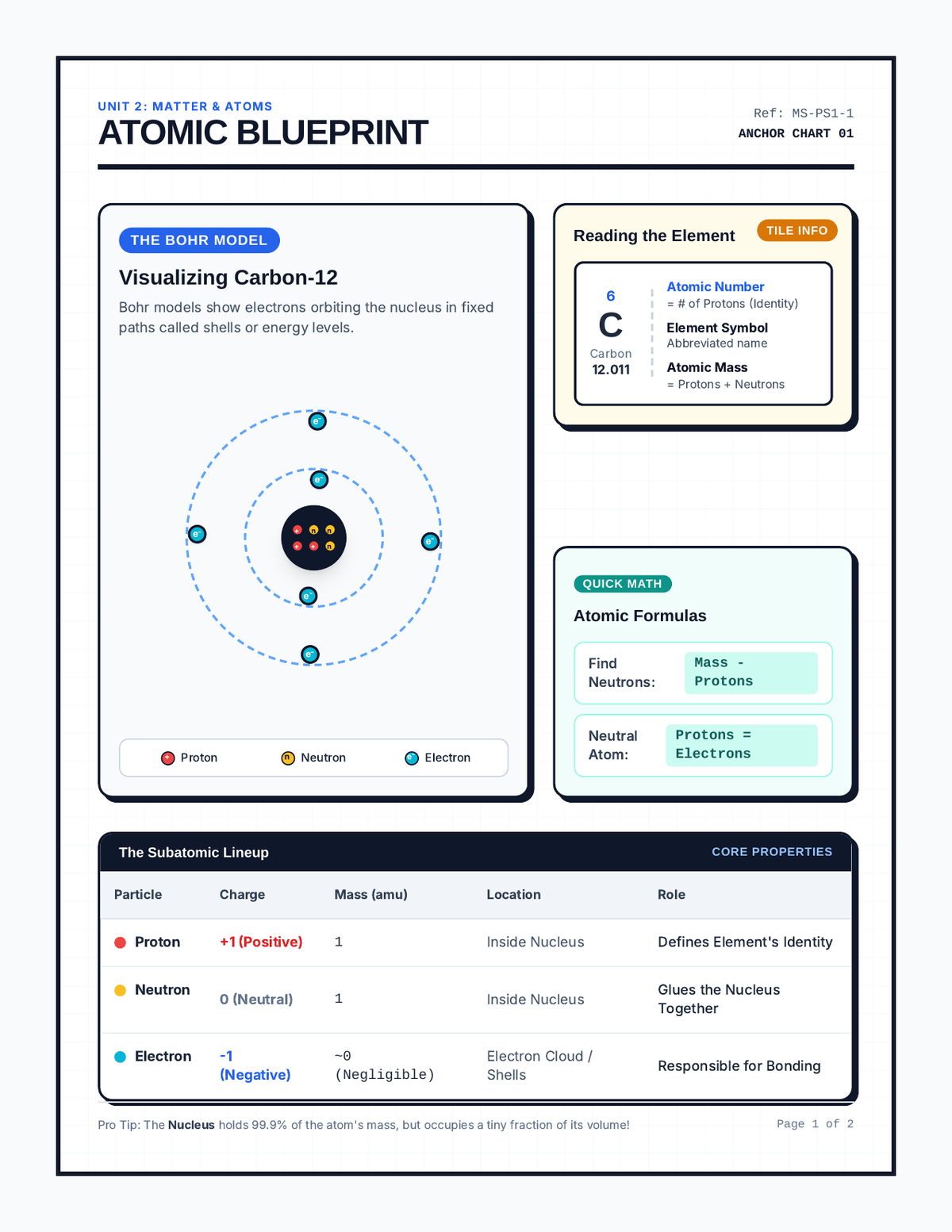
A visually stunning, high-contrast 2-page anchor chart designed as a classroom poster and student reference sheet. Page 1 breaks down the atomic structure and subatomic particles using an interactive-style Bohr model of Carbon. Page 2 illustrates the differences between elements, diatomic molecules, and compounds, complete with a visual anatomy of a chemical formula.
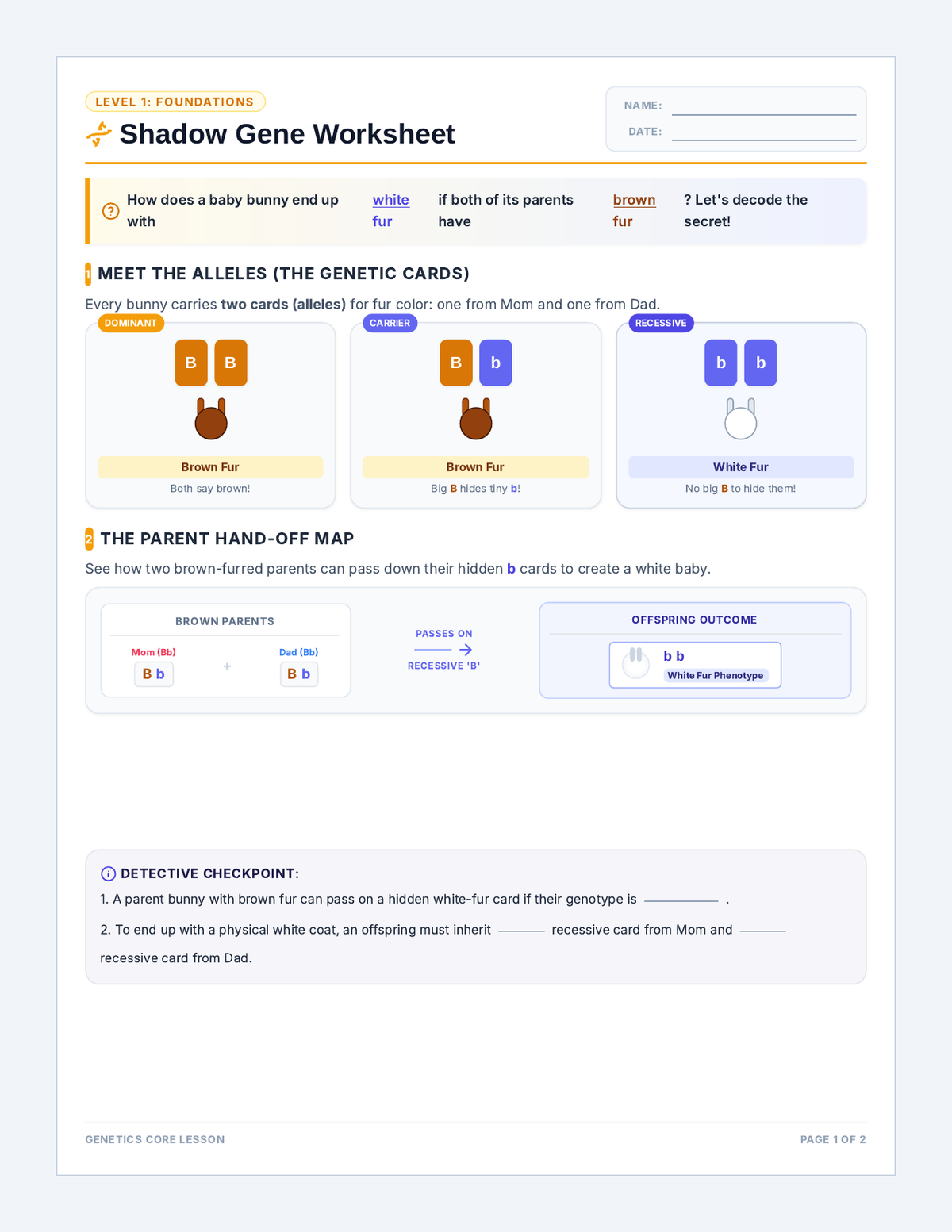
A highly visual, 2-page scaffolded worksheet that uses cute bunny fur traits to explain how recessive genes become physical phenotypes. Features guided visual paths, Punnett squares, and sentence frames.
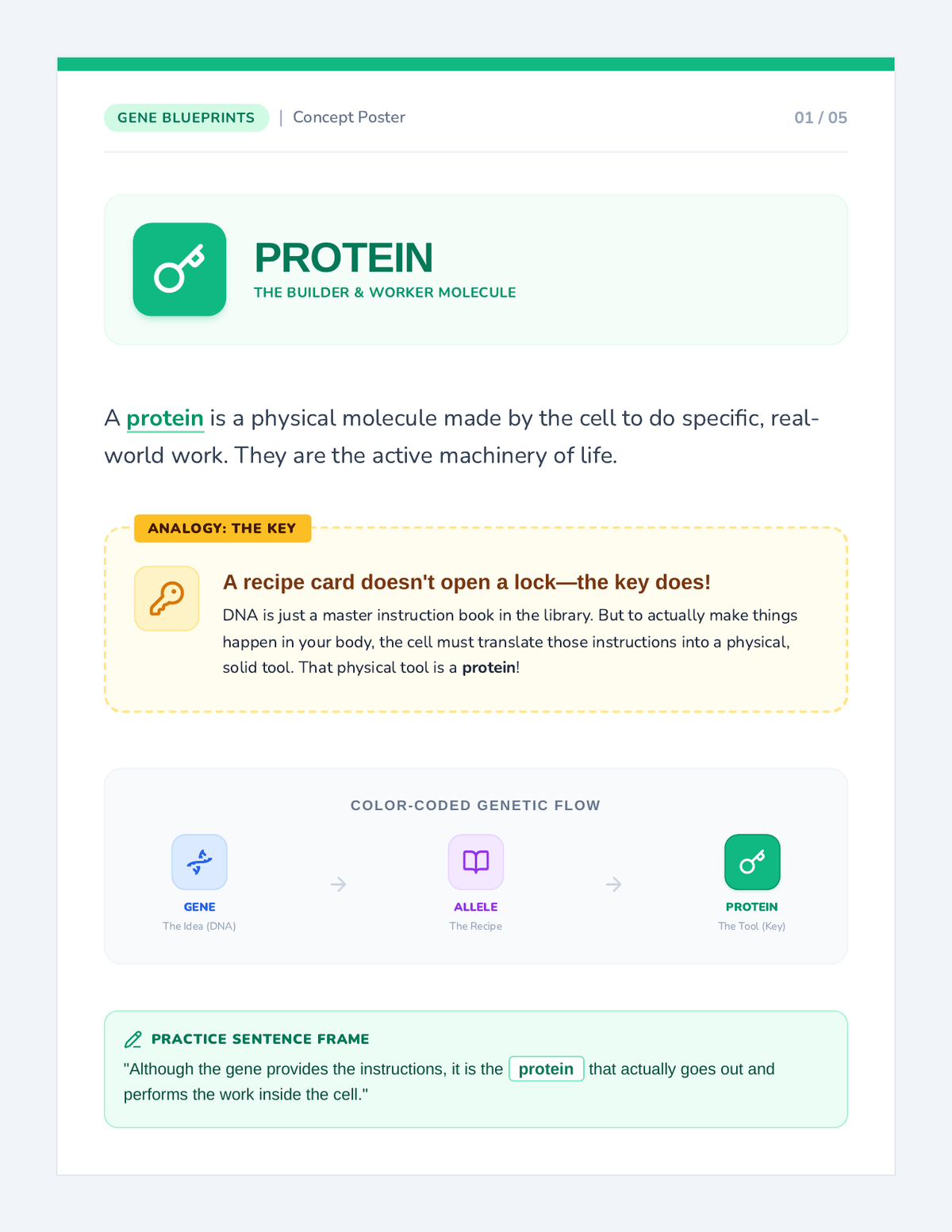
A set of four colorful biology anchor charts and one application worksheet designed to help students master the concepts of proteins, active enzymes, inactive alleles, and heterozygous states through clear, real-world analogies.
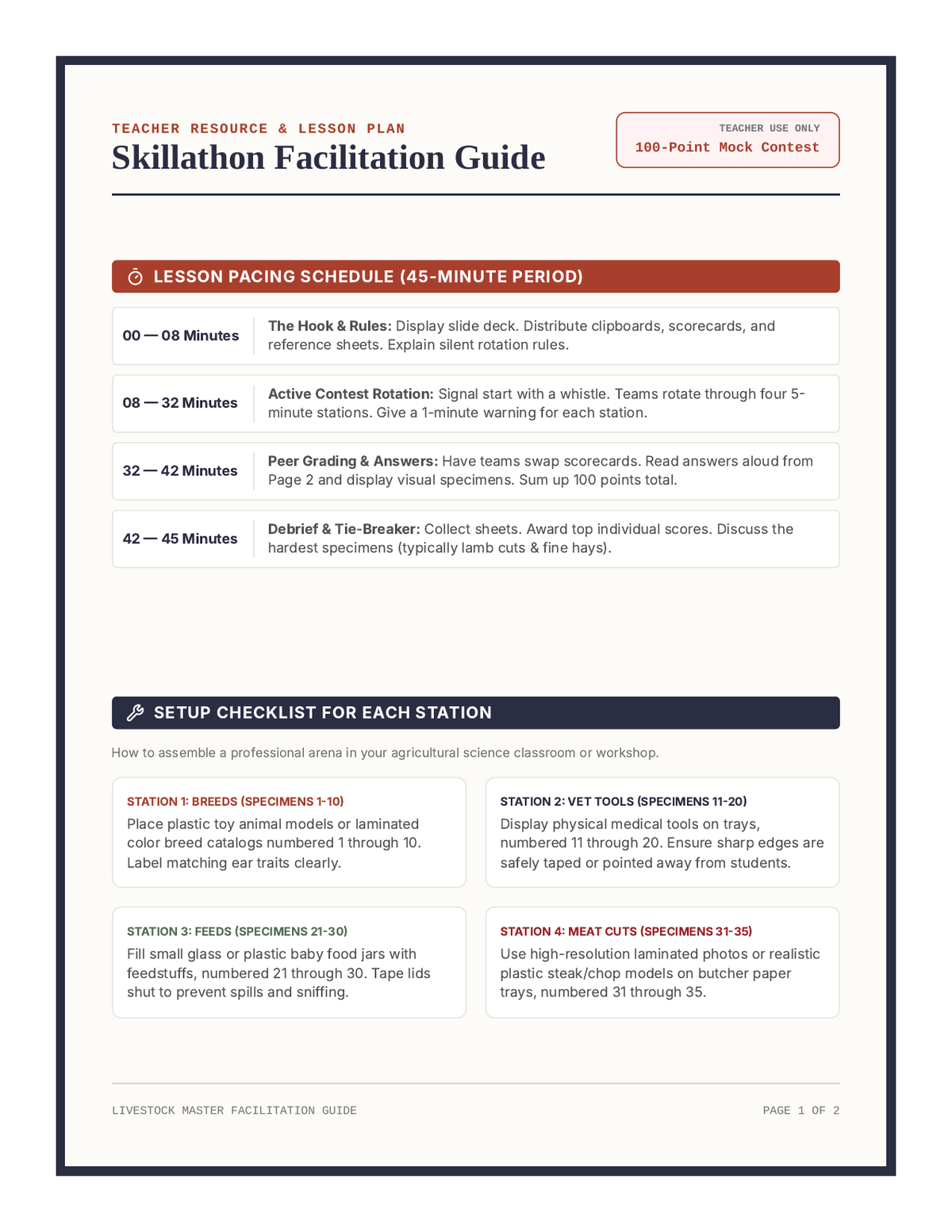
A comprehensive teacher lesson plan, station setup guide, and master answer key for facilitating a 100-point mock Livestock Skillathon contest.
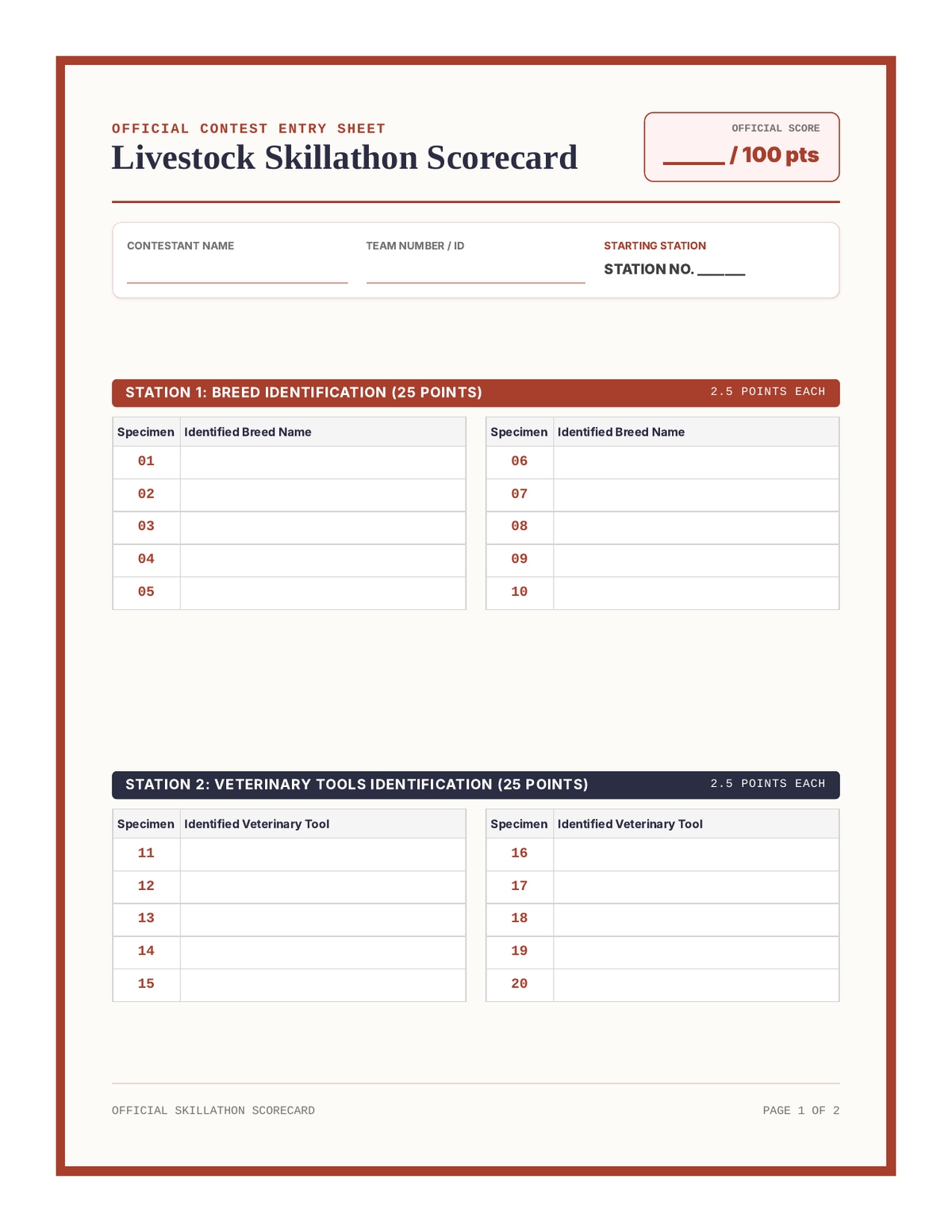
The official student competition scorecard for the 4-station mock Livestock Skillathon contest, featuring structured tables for recording answers.
An instructional slide deck detailing the setup, pacing rules, and hands-on rotation instructions for the mock Livestock Skillathon contest.
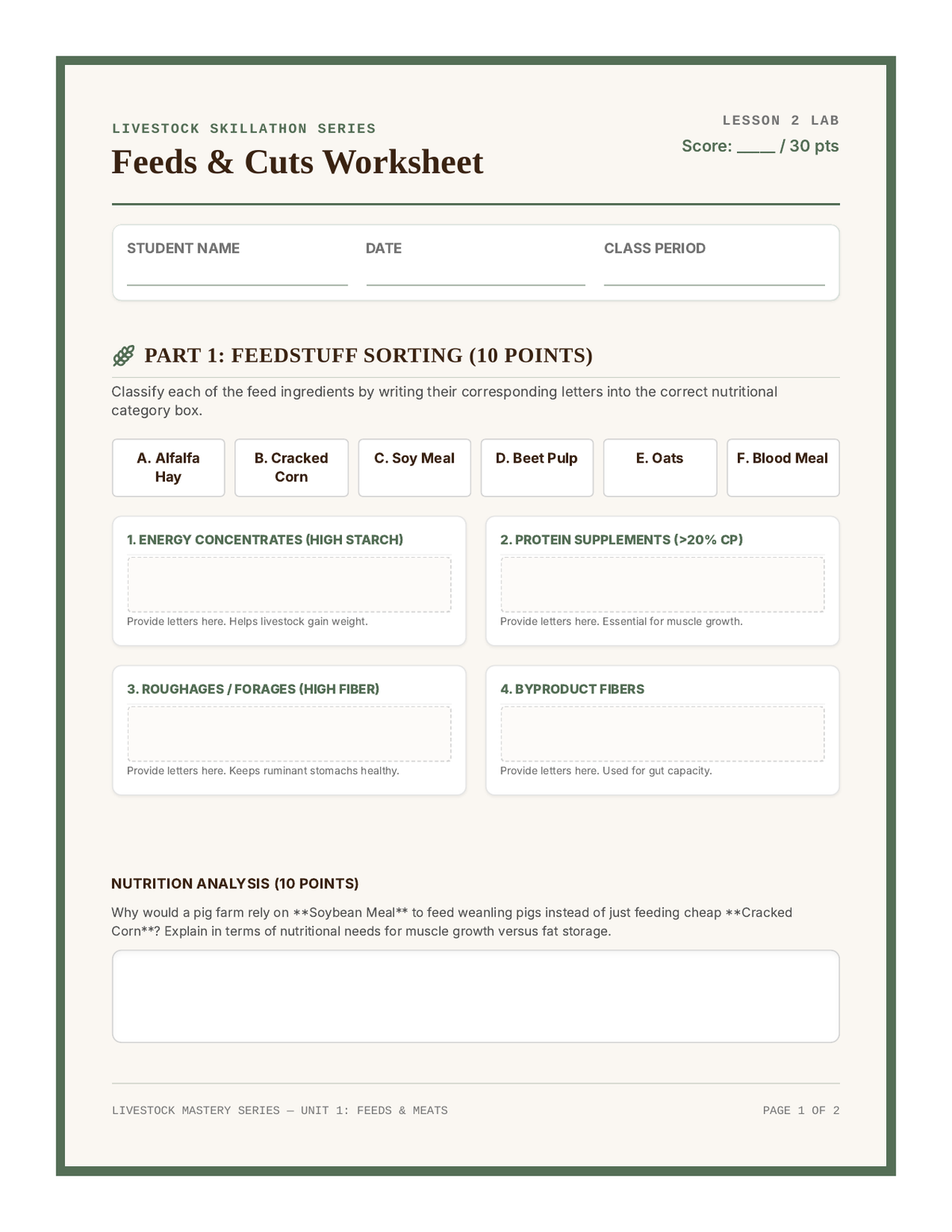
A student identification worksheet focusing on feedstuffs nutritional classifications and retail meat cut primal identification.
An instructional slide deck highlighting the identification of common livestock feedstuffs and the classification of retail meat cuts.
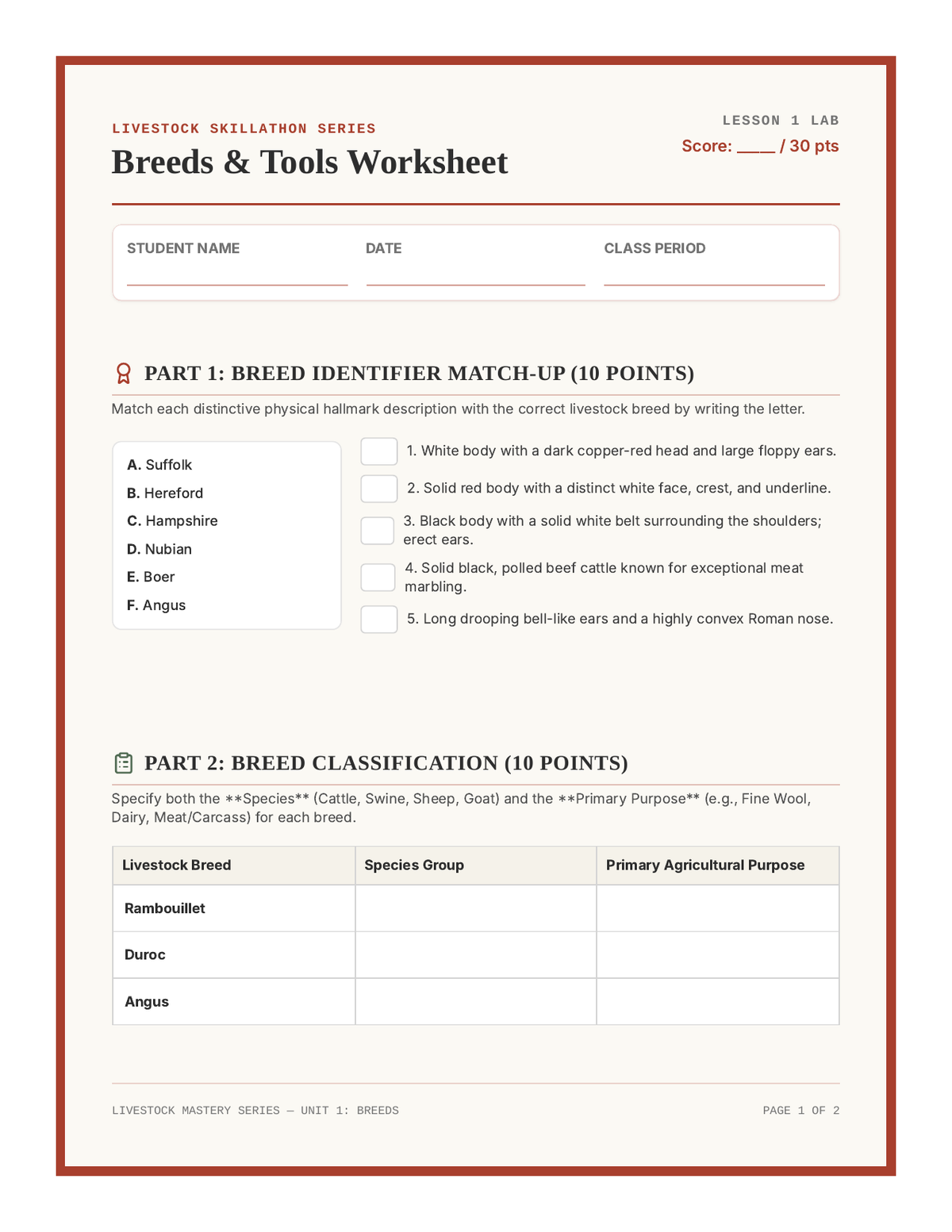
A student identification and analysis worksheet focusing on major livestock breeds, species classification, and veterinary tools used in sheep, swine, and cattle care.
An instructional slide deck focusing on visual hallmarks of major beef, swine, sheep, and goat breeds, and introducing veterinary tools for the contest.
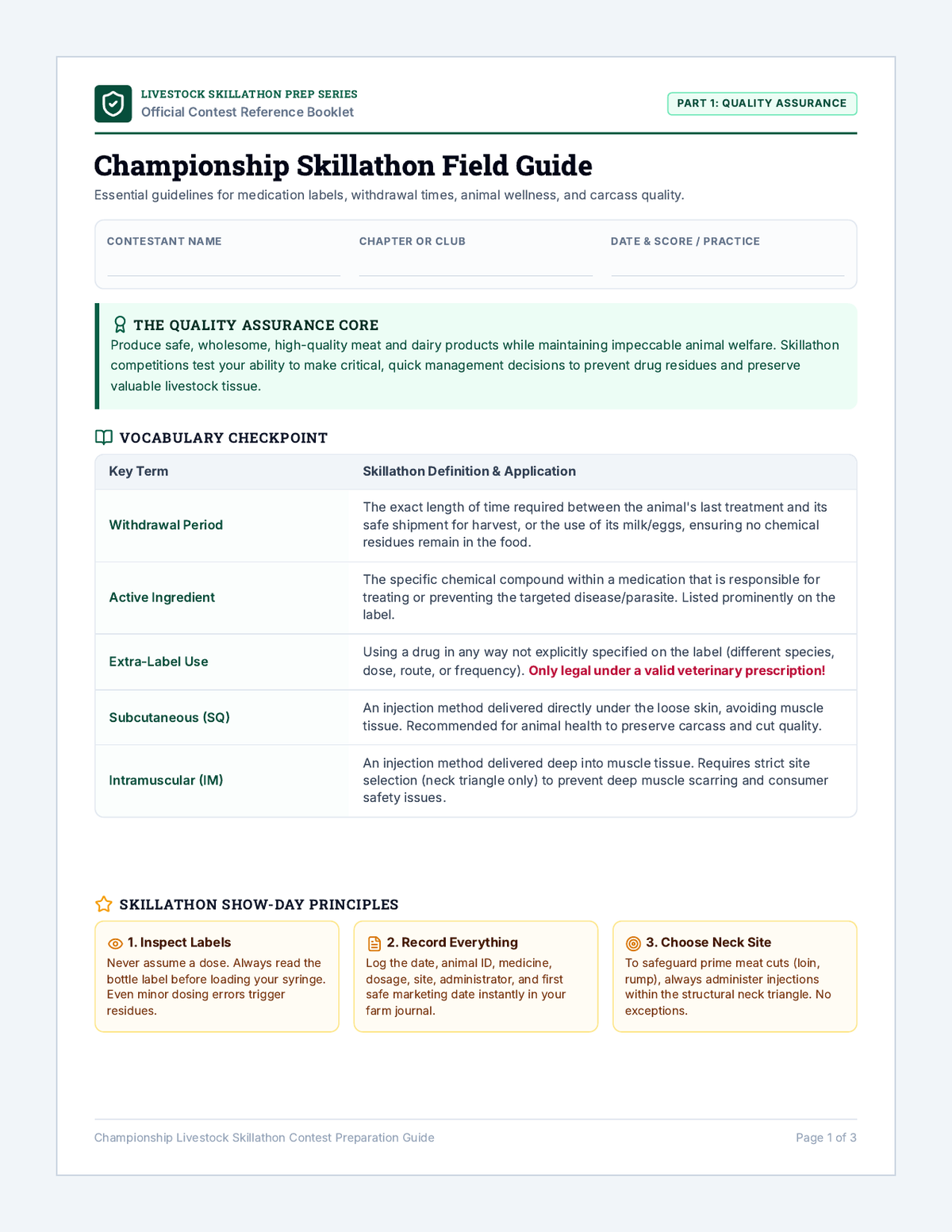
A 3-page printable study guide and reference booklet for livestock skillathon contestants. It includes key terminology, a detailed breakdown of medication labels, guidelines on injection routes and needle sizes, and calculation practice worksheets with realistic scenarios.
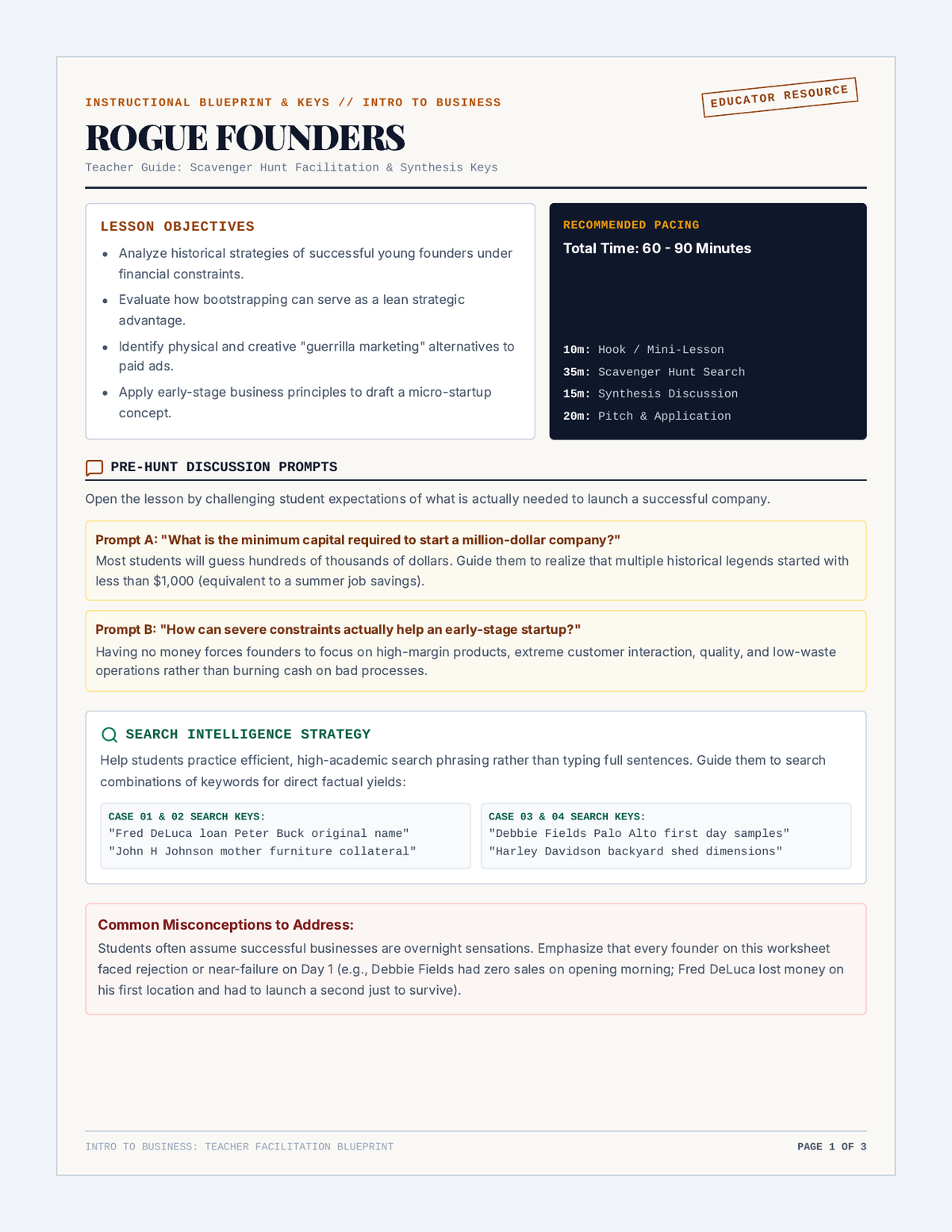
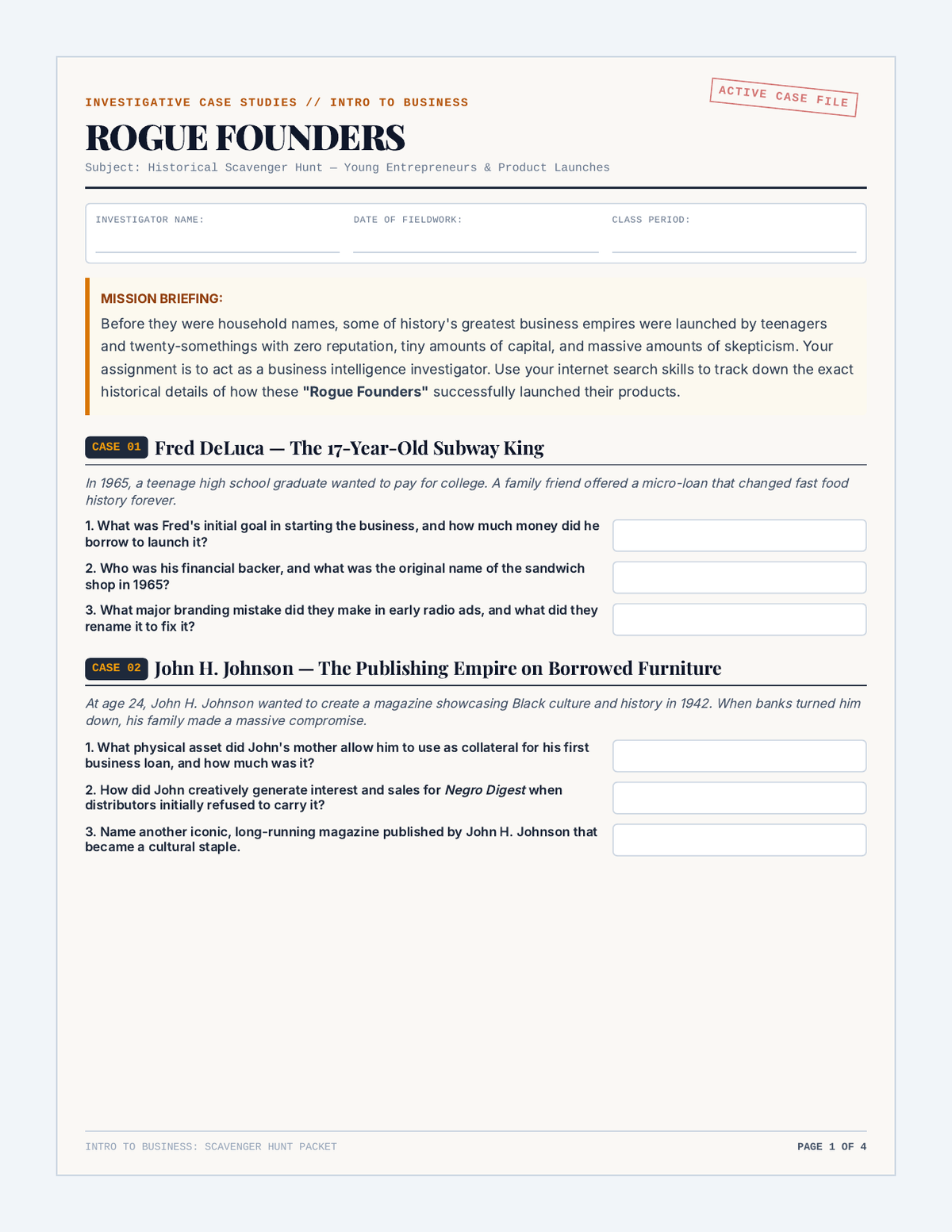
A highly comprehensive, 3-page teacher resource guide and key. It includes an instructional pacing guide, suggested search strategies, pre-lesson classroom discussion questions, a complete factual historical answer key for all five case files, and a classroom grading rubric for the student business pitch.
A beautifully designed, 4-page student scavenger hunt packet in an investigative dossier style. High school introduction to business students conduct online research to uncover the launch secrets, marketing triumphs, and bootstrapping strategies of five iconic historical young entrepreneurs.
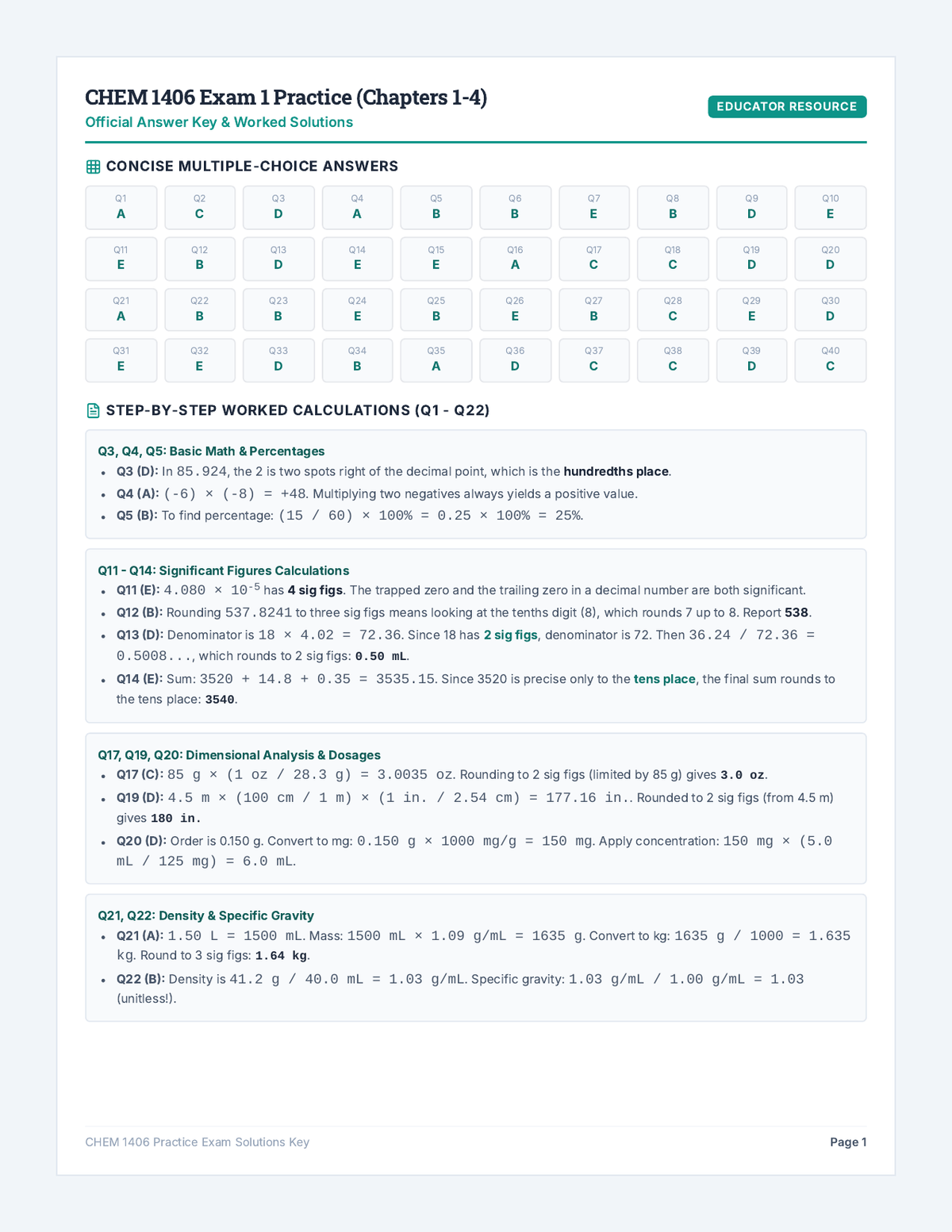
A comprehensive answer key and step-by-step worked solutions document for the Foundations Practice Exam (Version B), providing detailed explanations for all calculation-based questions to support educator grading and student self-correction.
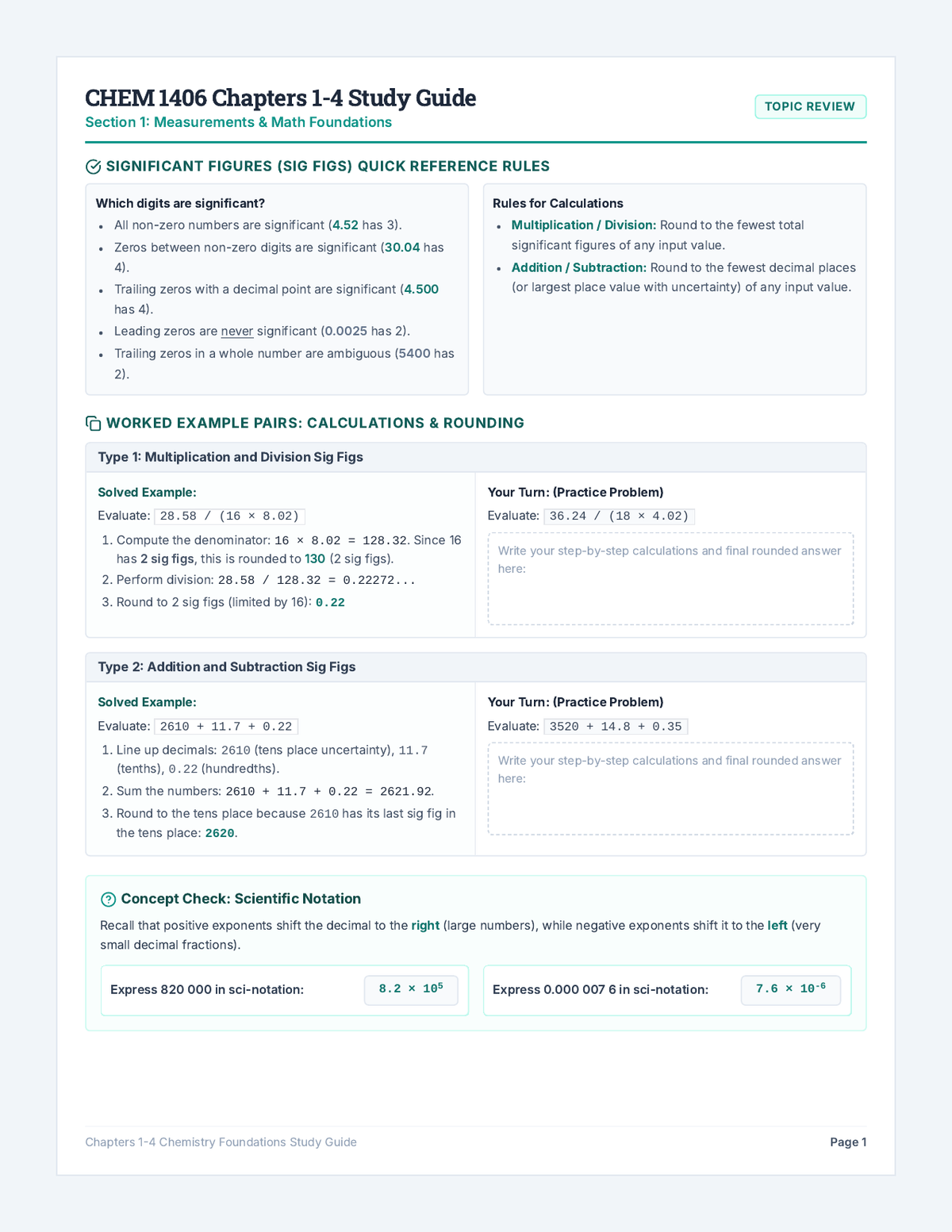
A highly structured student study guide featuring a metric organizer, rule summaries for sig figs and naming, and interactive worked example pairs mapping directly to Chapter 1-4 chemistry calculation types.
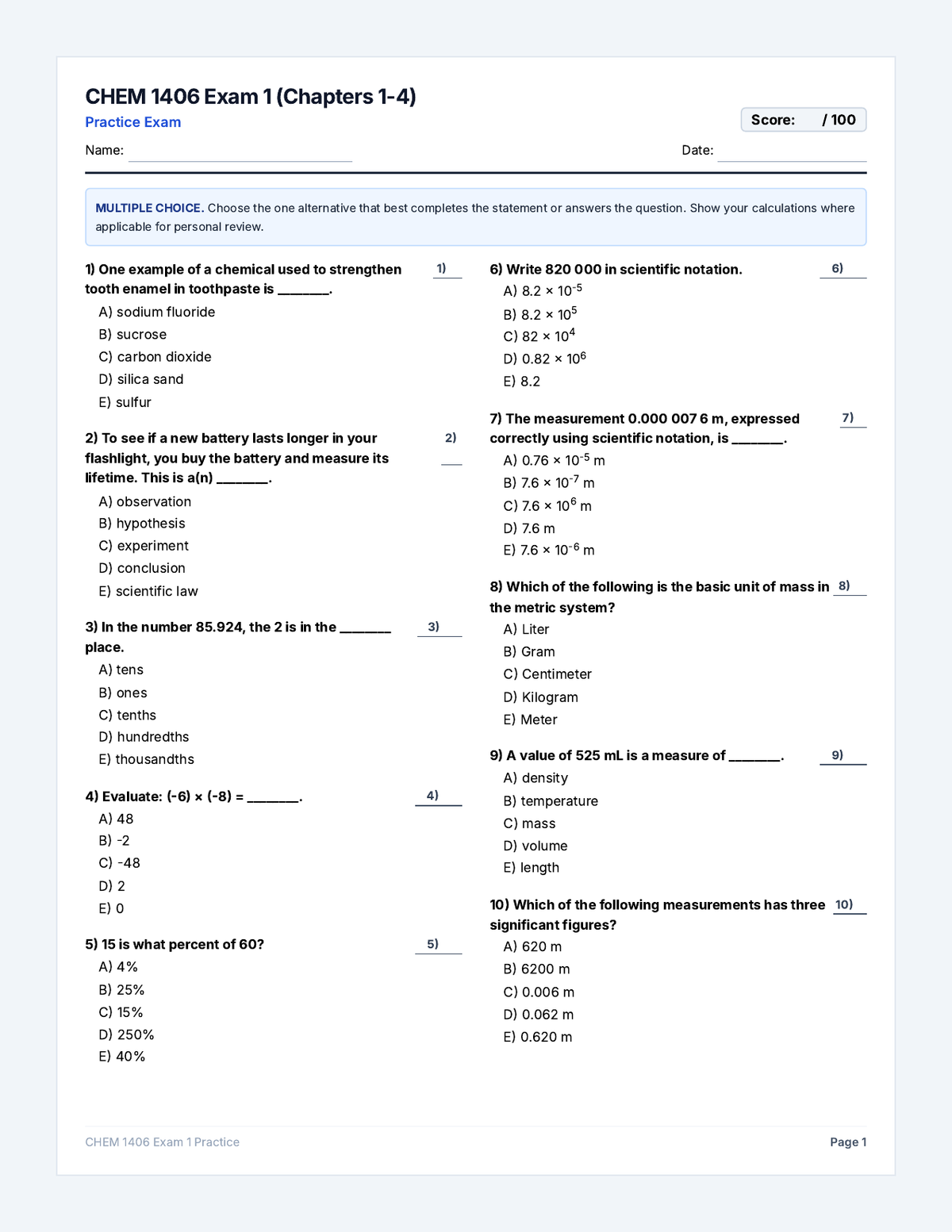
A parallel 40-question multiple-choice practice exam covering Chapters 1-4 of introductory chemistry (measurements, matter, energy, and atomic structure) with new numerical values and contexts that map perfectly to the original exam's answer key.
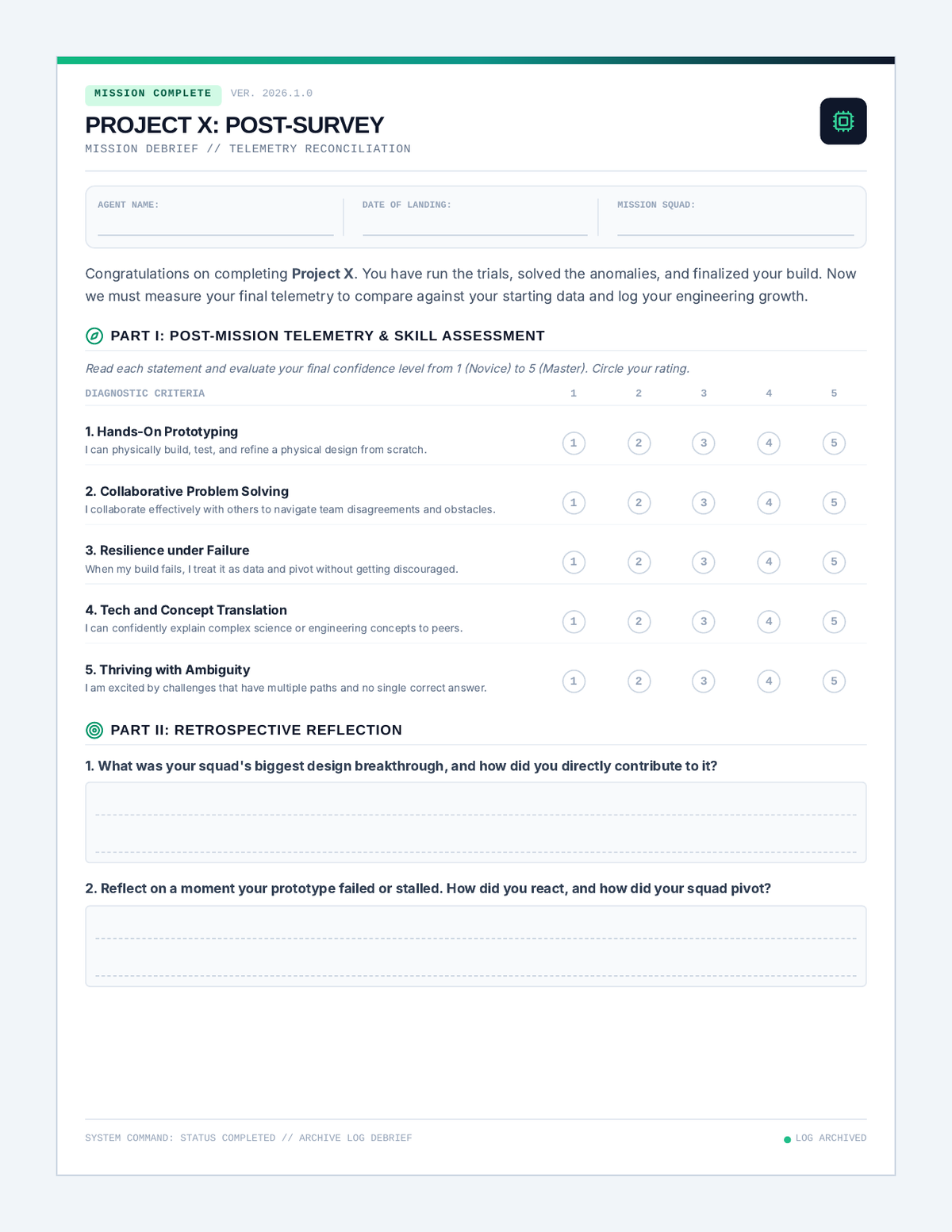
A high-tech post-mission debrief survey for students to evaluate their skill acquisition, teamwork dynamics, and problem-solving resilience after completing Project X 2026. Designed for direct pre/post comparison.
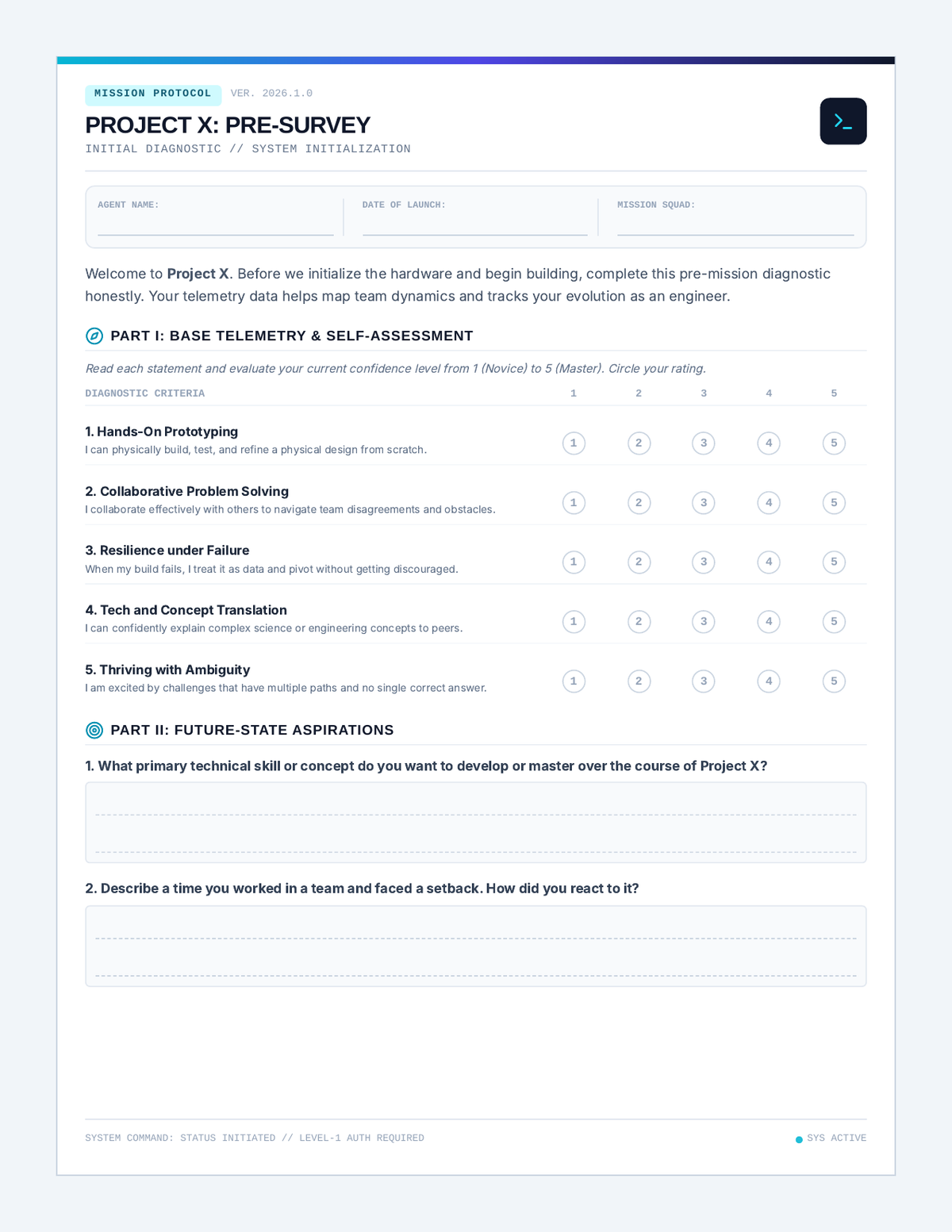
A high-tech pre-mission diagnostic survey for students to evaluate their starting confidence, technical skills, and collaboration readiness prior to beginning Project X 2026. Includes quantitative self-assessment scales and structured qualitative prompts.
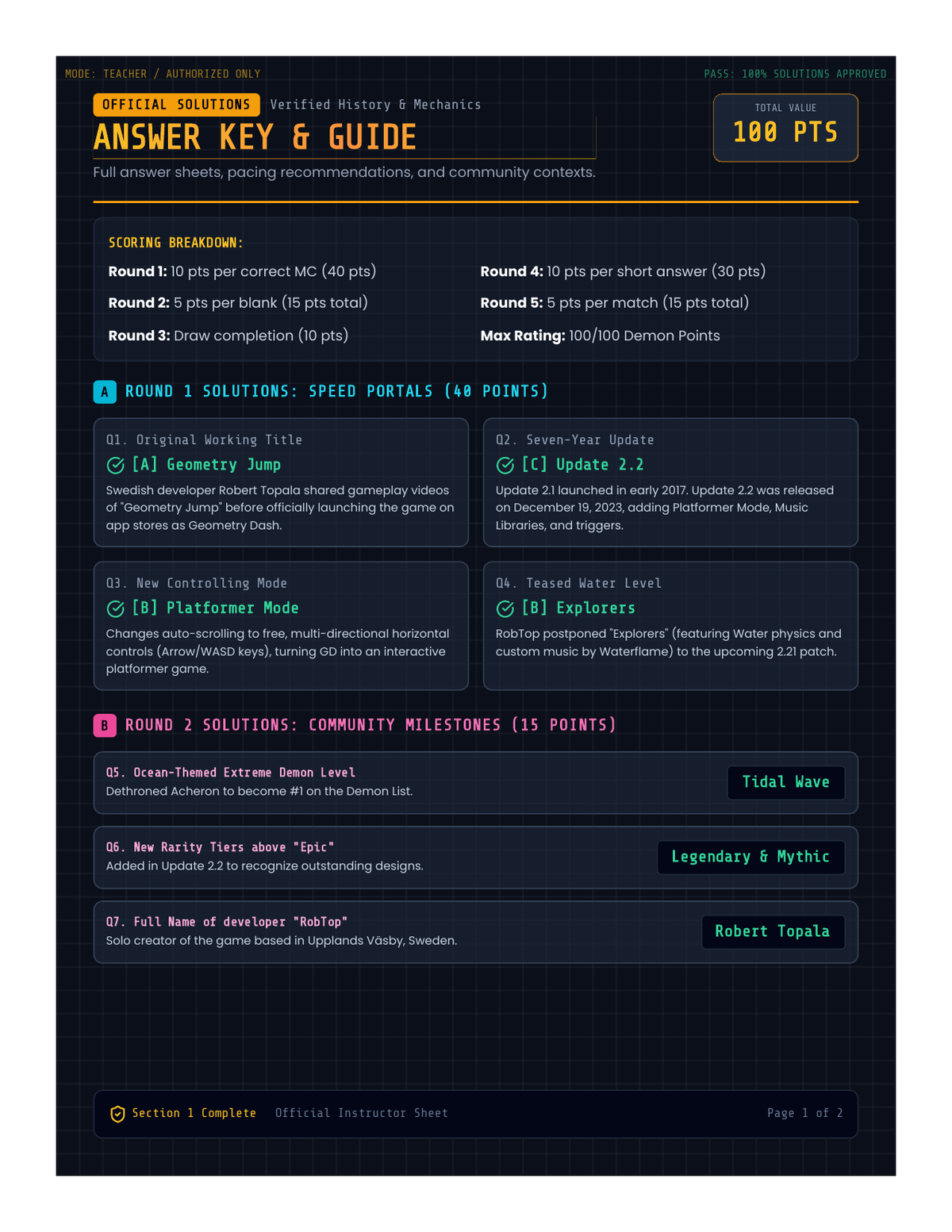
A detailed 2-page teacher answer key and grading guide for the Dash Masters Quiz. Provides clear solutions, historical background for each trivia point, and rubrics for the icon creator section.
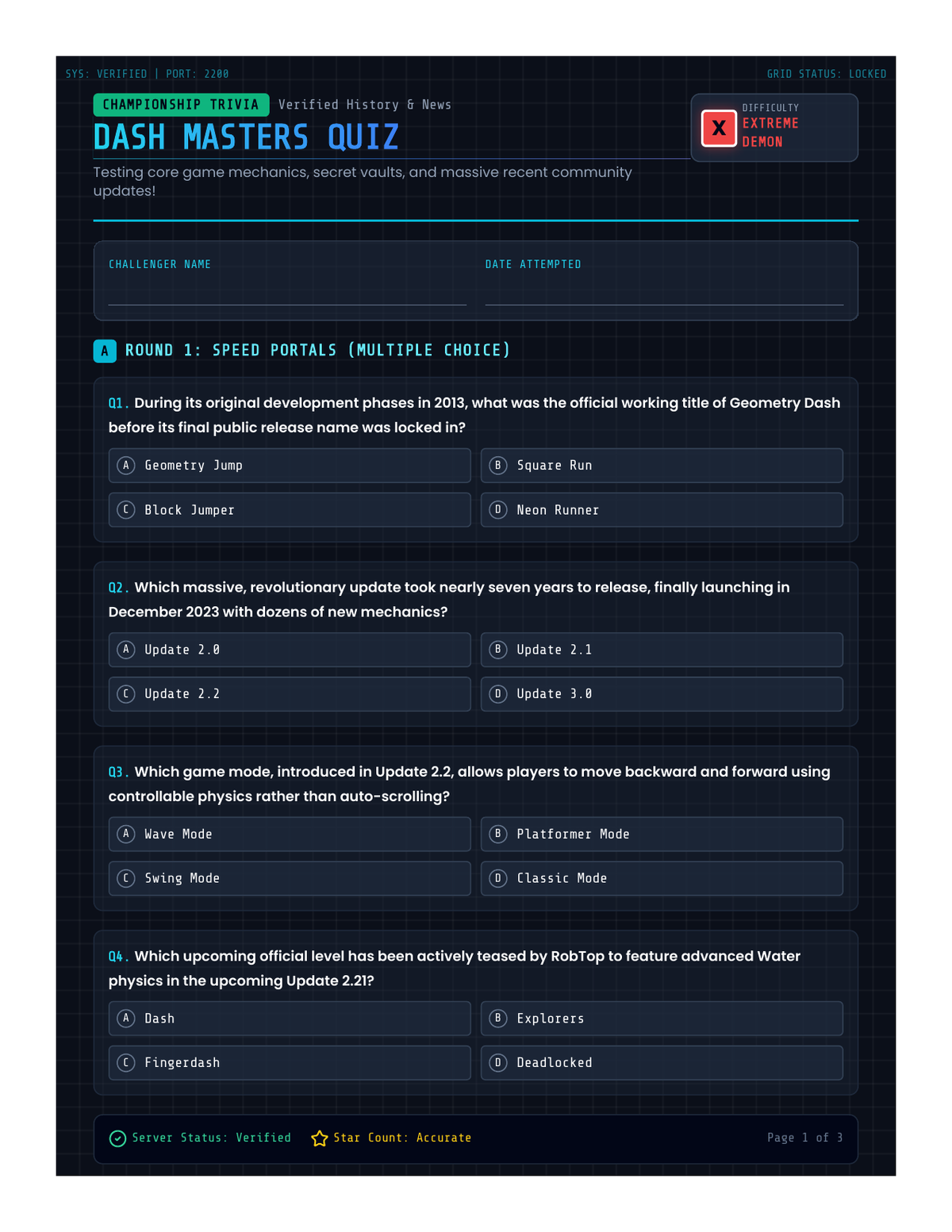
A revised 3-page printable Geometry Dash quiz highlighting highly accurate, well-known recent community news (Update 2.2, Tidal Wave, Legendary/Mythic ratings, Explorers teasers) and classic game trivia.
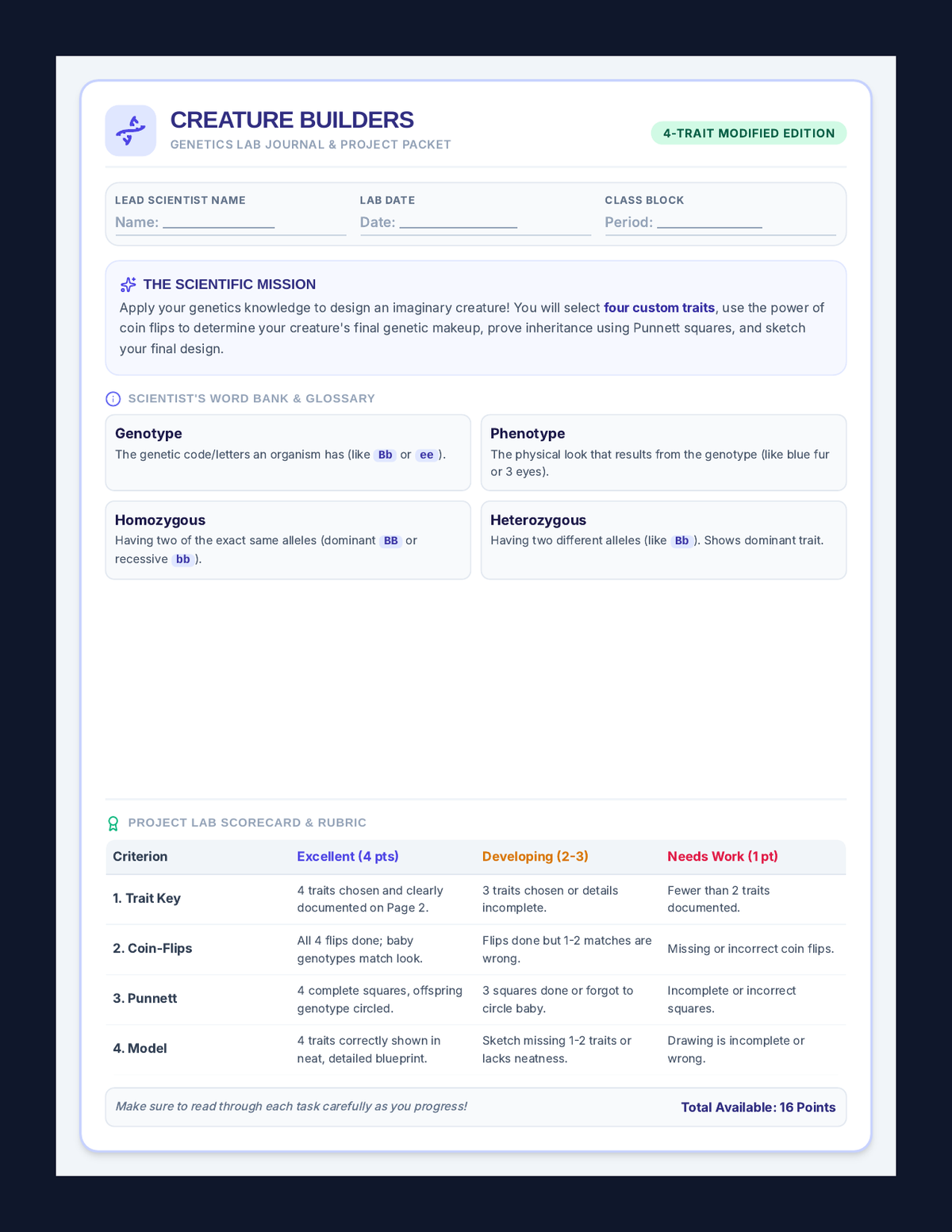
A highly scaffolded, 5-page genetics project packet where students choose exactly 4 traits to design an imaginary creature. It features a kid-friendly glossary, a visual trait catalog, a step-by-step coin-flip table, four Punnett squares, and a creative blueprint page.
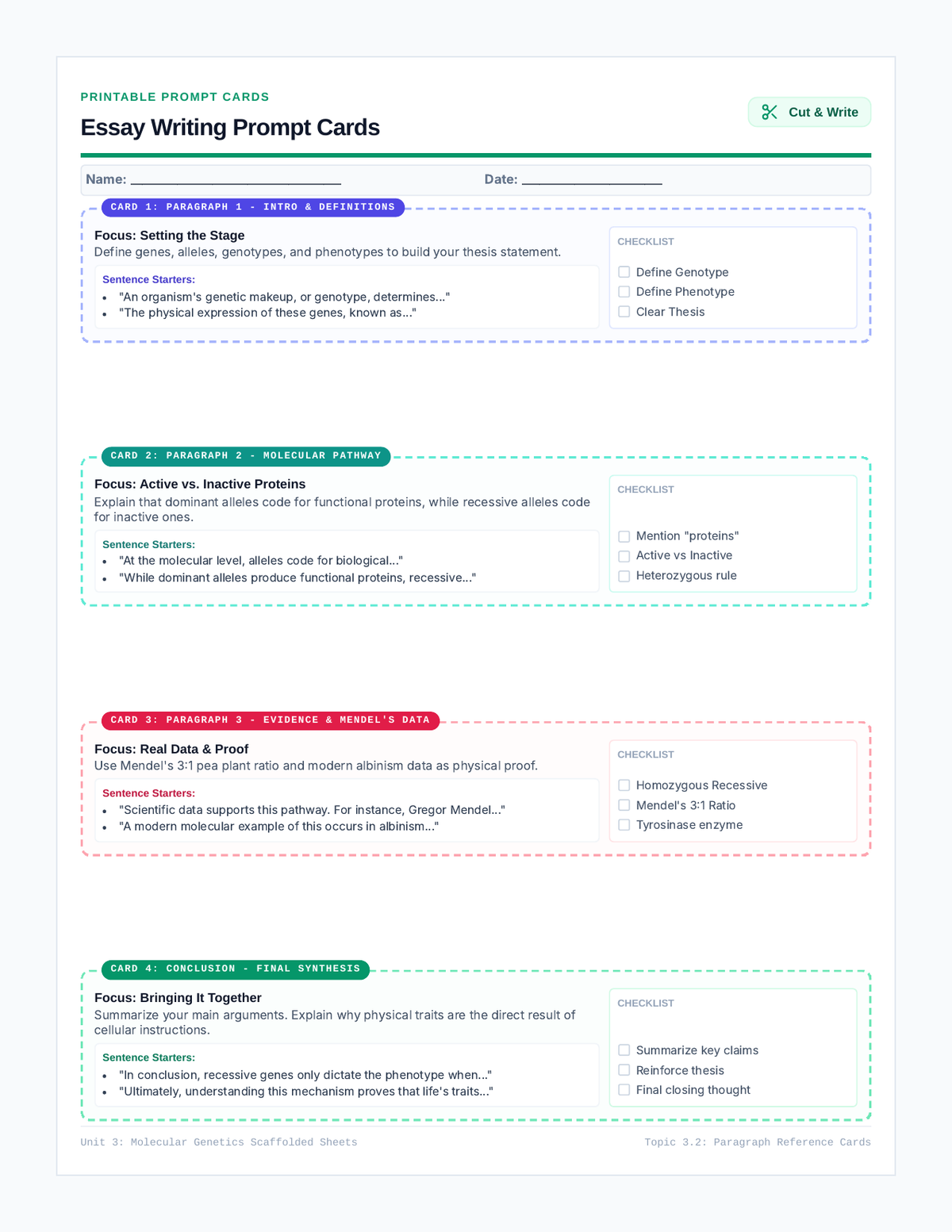
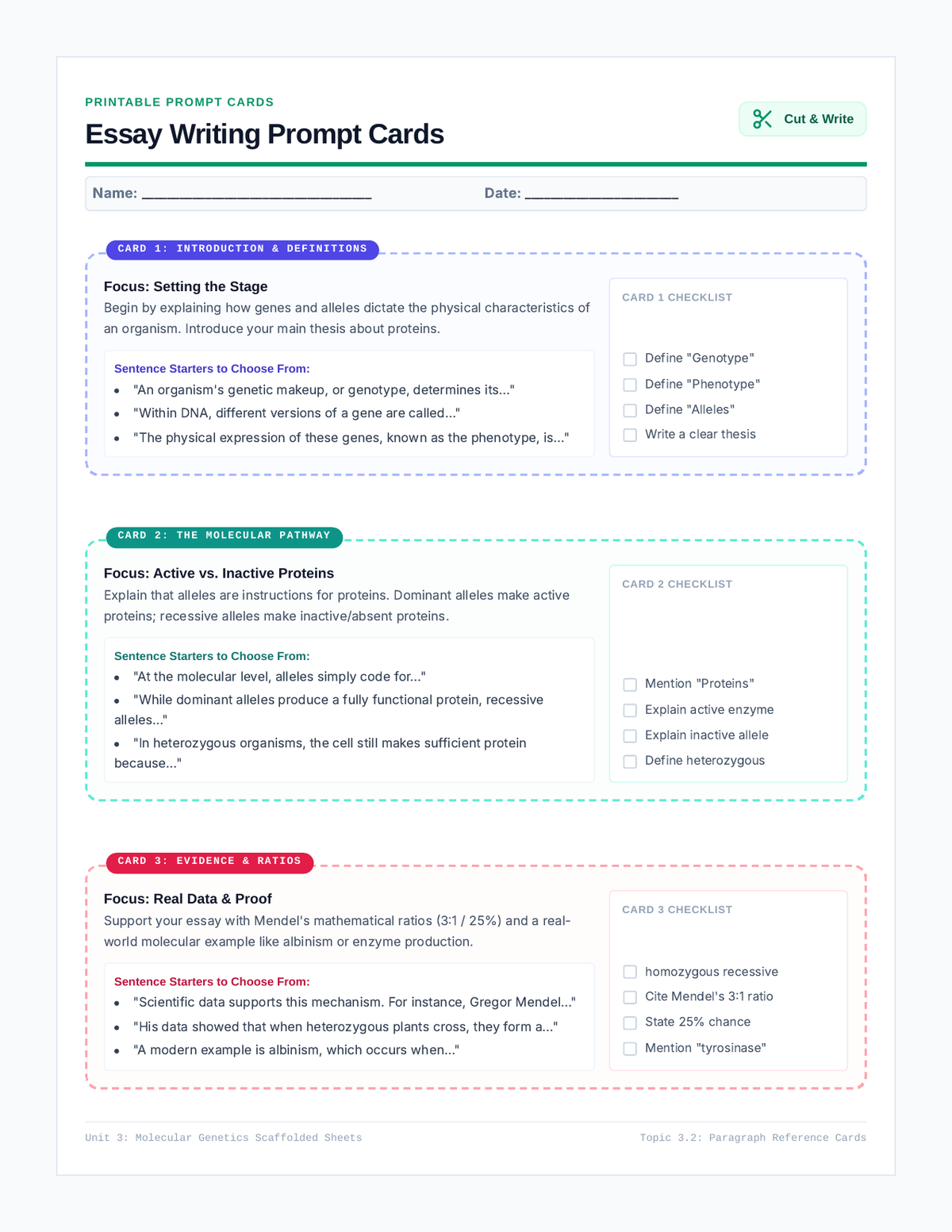
A step-by-step drafting guide with printable prompt cards, offering structured sentence starters and checkers for each paragraph of the genetic essay.
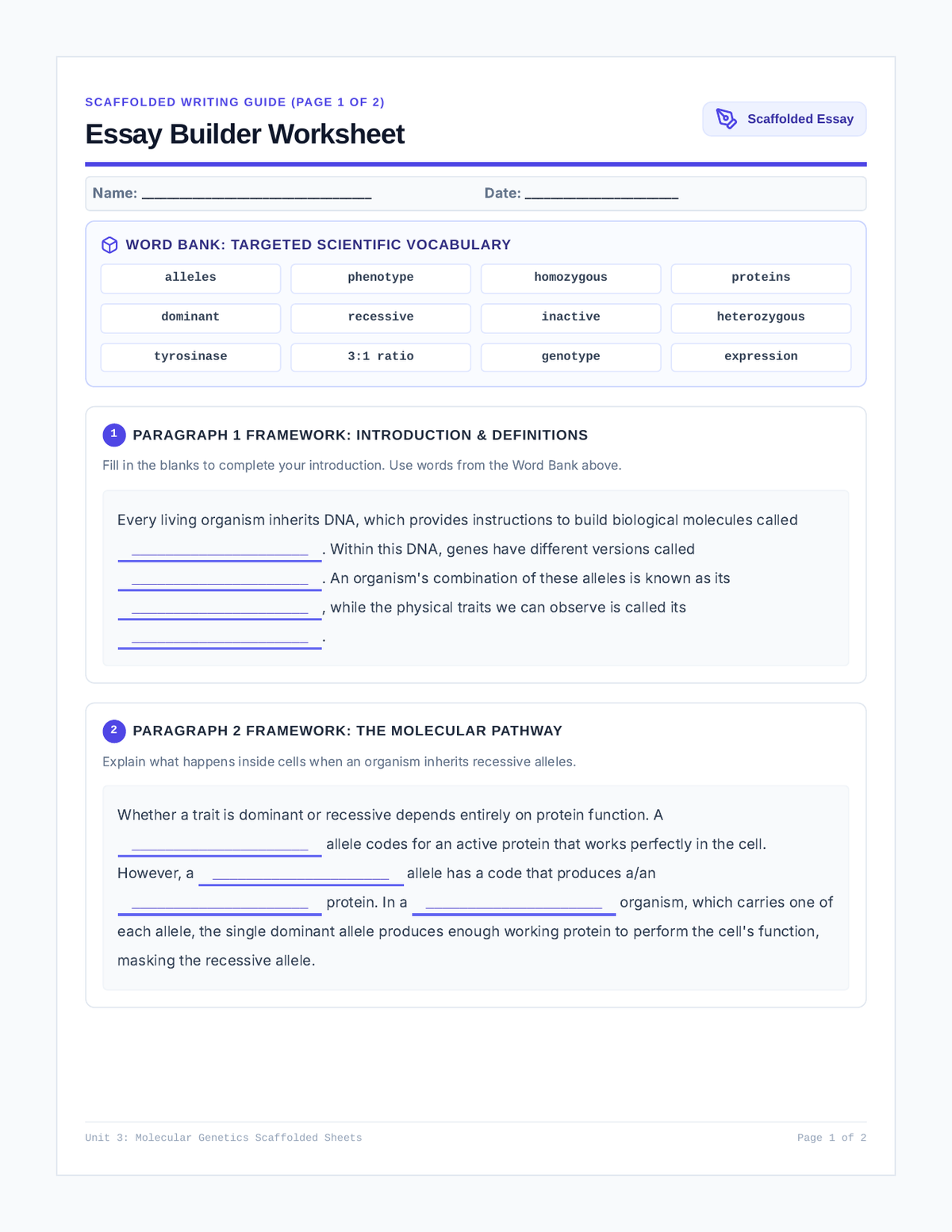
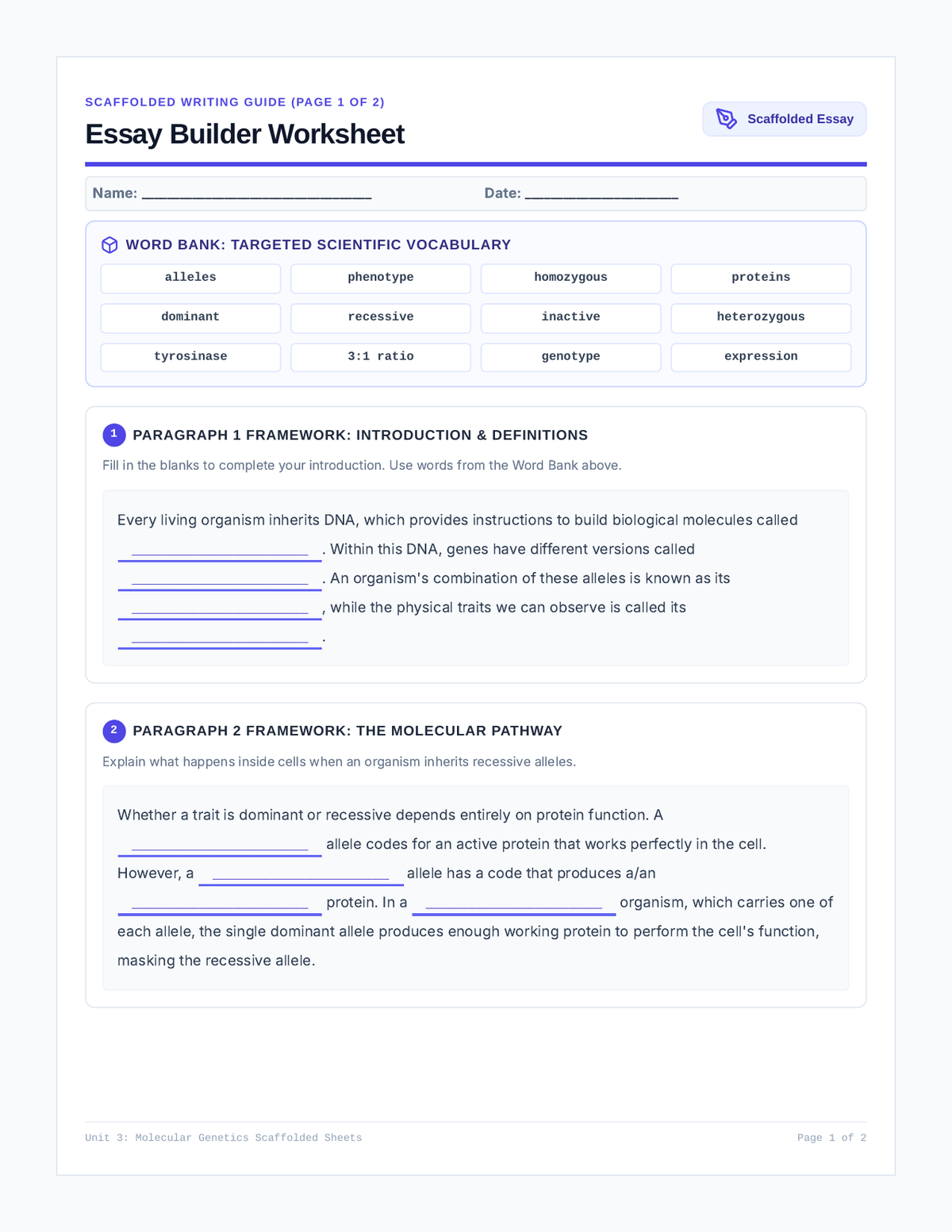
A highly structured scaffolded essay writing worksheet containing a targeted genetics word bank, sentence frames, and clear fill-in-the-blank organizers for Paragraph 1, Paragraph 2, Paragraph 3, and the final Conclusion.
A scaffolded essay writing worksheet containing a targeted genetics word bank, sentence frames, and fill-in-the-blank organizers for all three paragraphs.
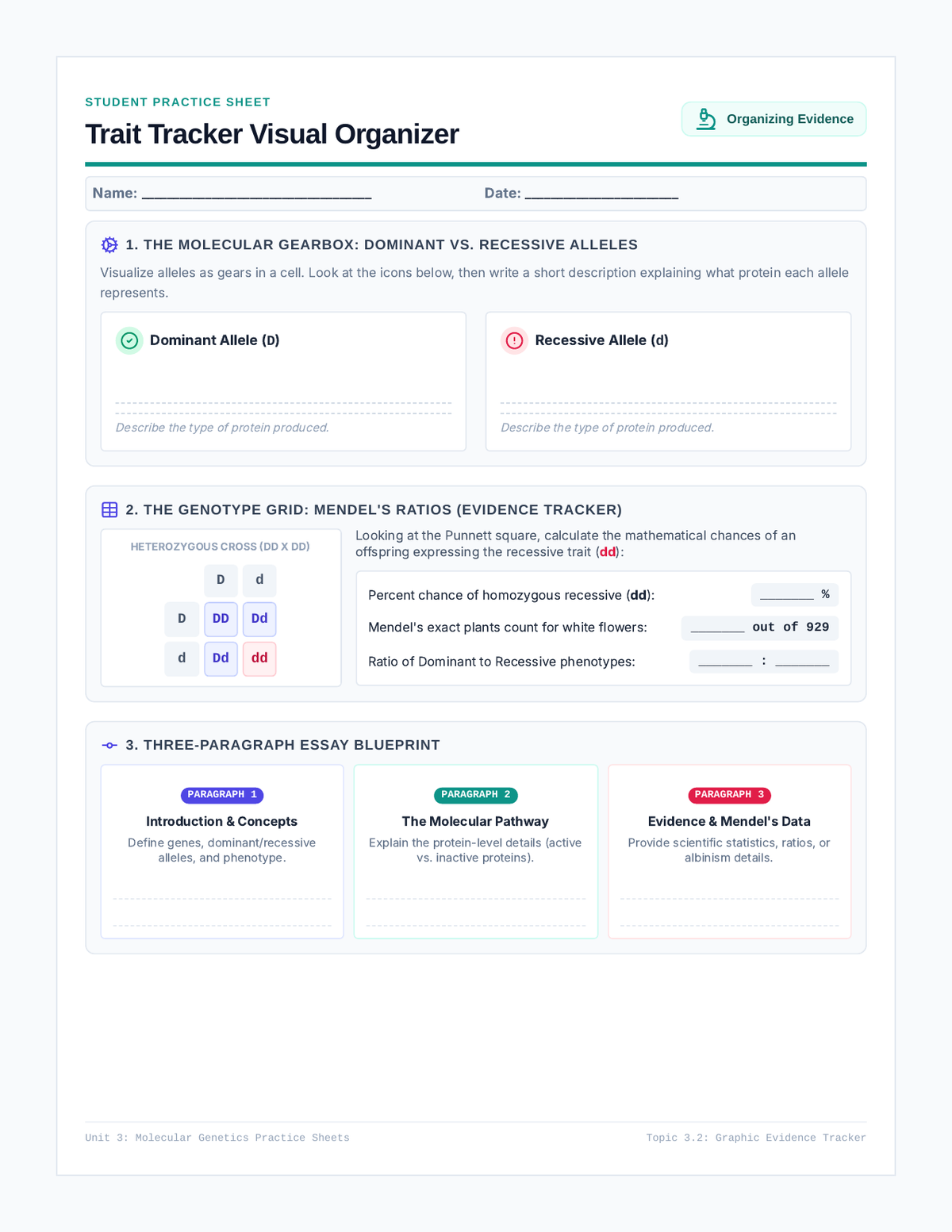
A student graphic organizer featuring visual prompts, icons, and diagrams to help students trace and organize genetic concepts before writing their essay.
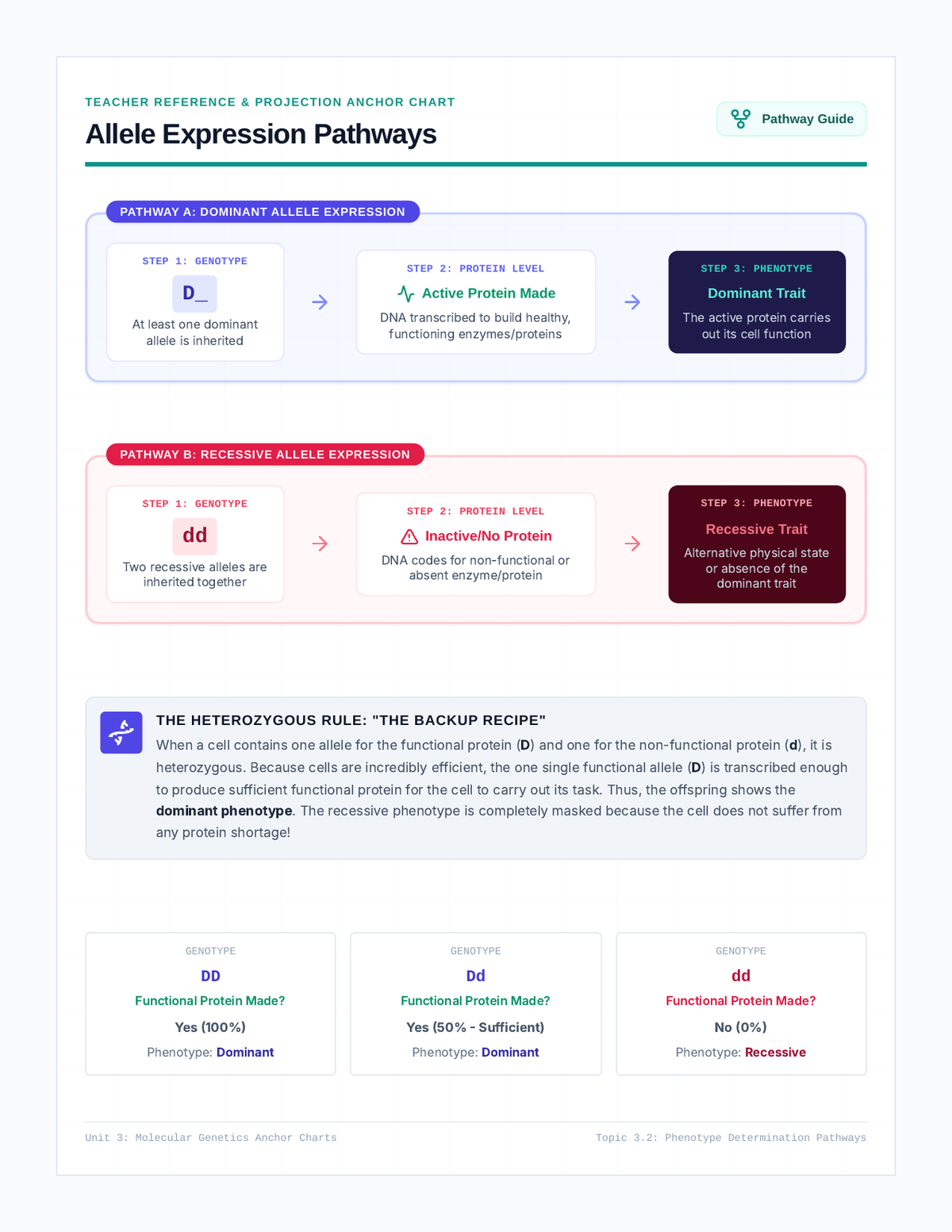
A teacher anchor chart or visual poster depicting the biological pathways of dominant versus recessive alleles, from DNA transcription to active or inactive protein synthesis and the resulting phenotypes.
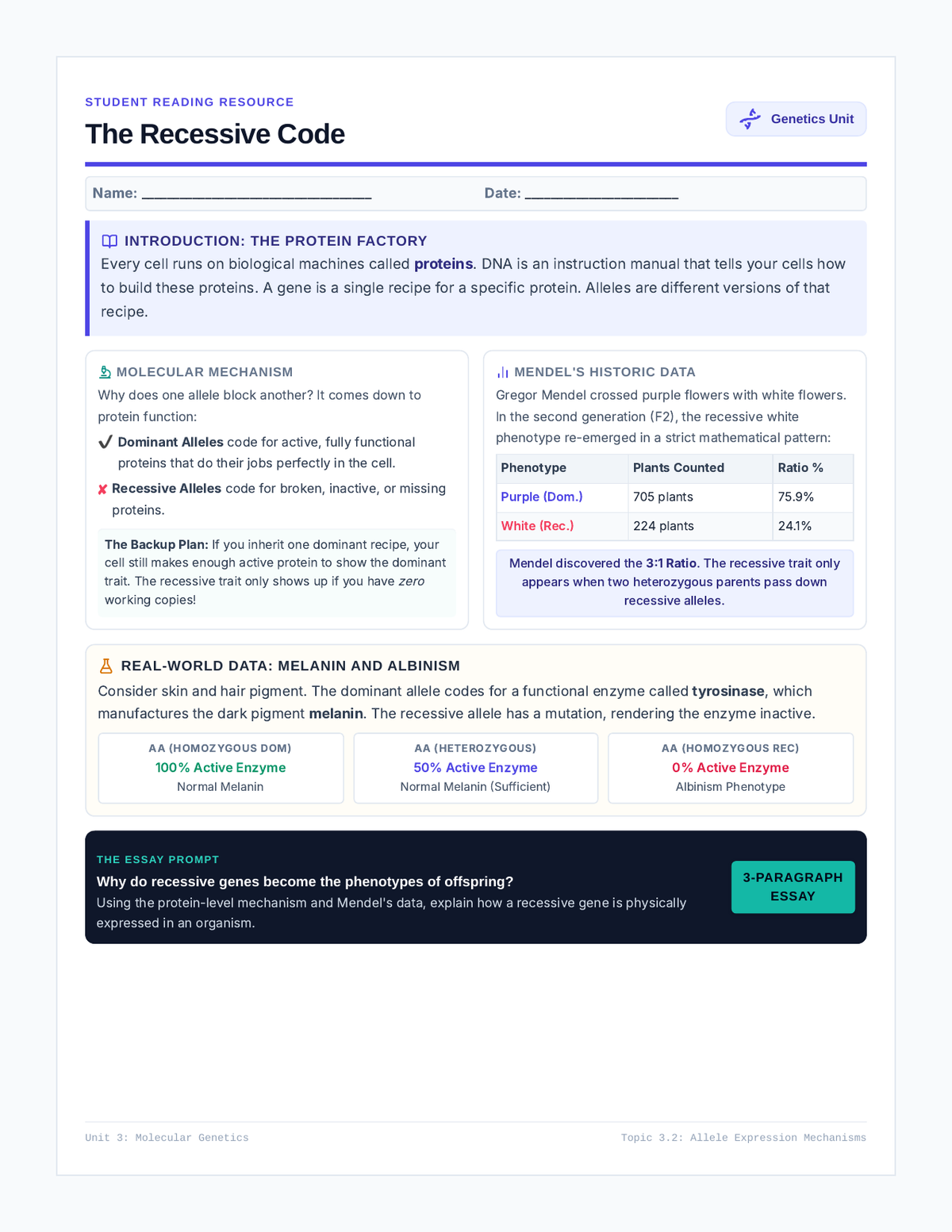
A simplified science reading passage that explains the molecular and protein-level mechanisms of dominant and recessive alleles, featuring Mendel's experimental data and high-interest modern examples.
A supportive, highly visual five-slide presentation deck to introduce, guide, and review the Matter Blueprint lesson. Features clean 16:9 slide layouts, high-contrast chemistry graphics, and big, legible typography (minimum 24px).
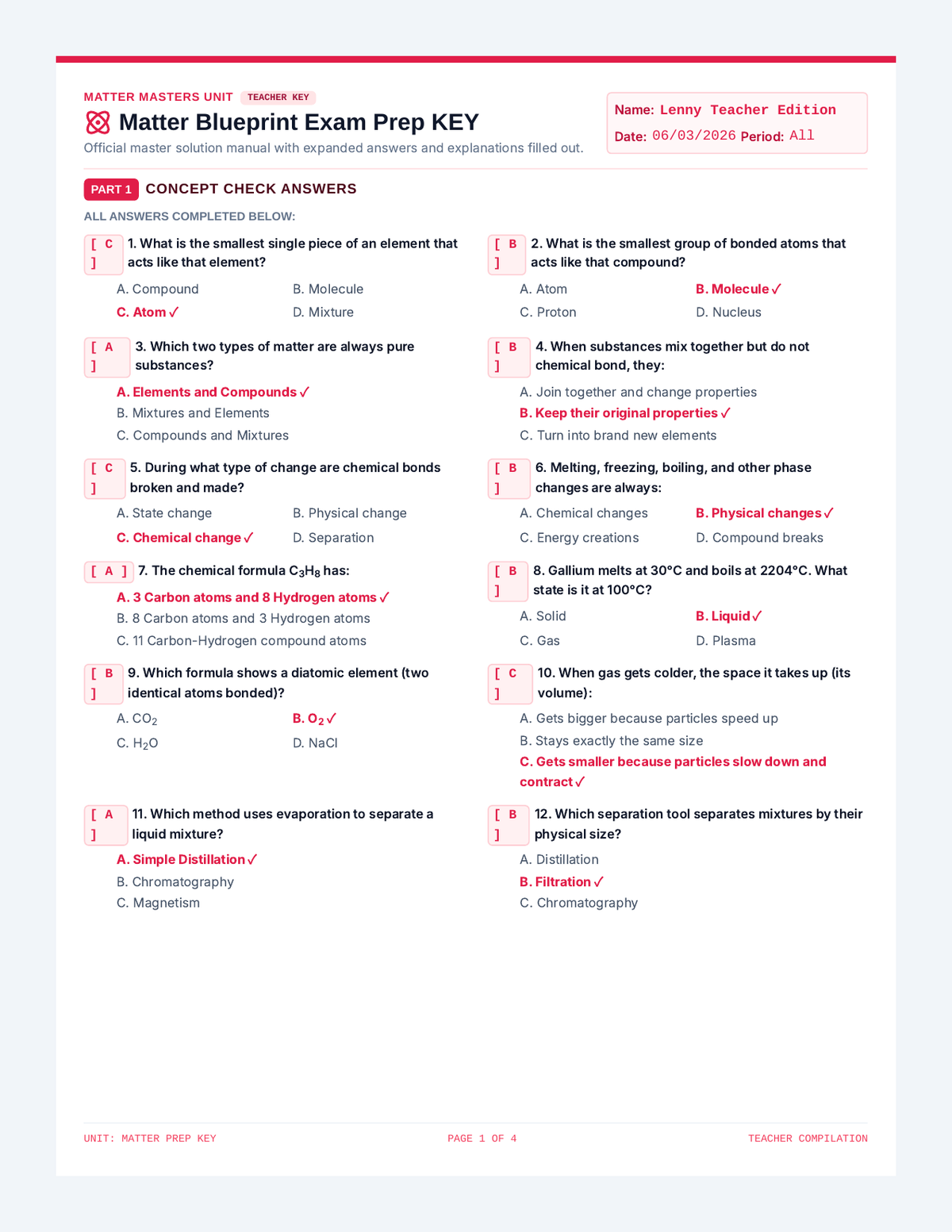
A complete, four-page teacher-facing answer key matching the expanded Matter Blueprint Worksheet. All solutions, diagrams, and justifications are filled out in high-visibility rose annotations.