A formative assessment quiz to evaluate students' understanding of the eight types of figurative language introduced in the 'Figurative Flint' lesson.
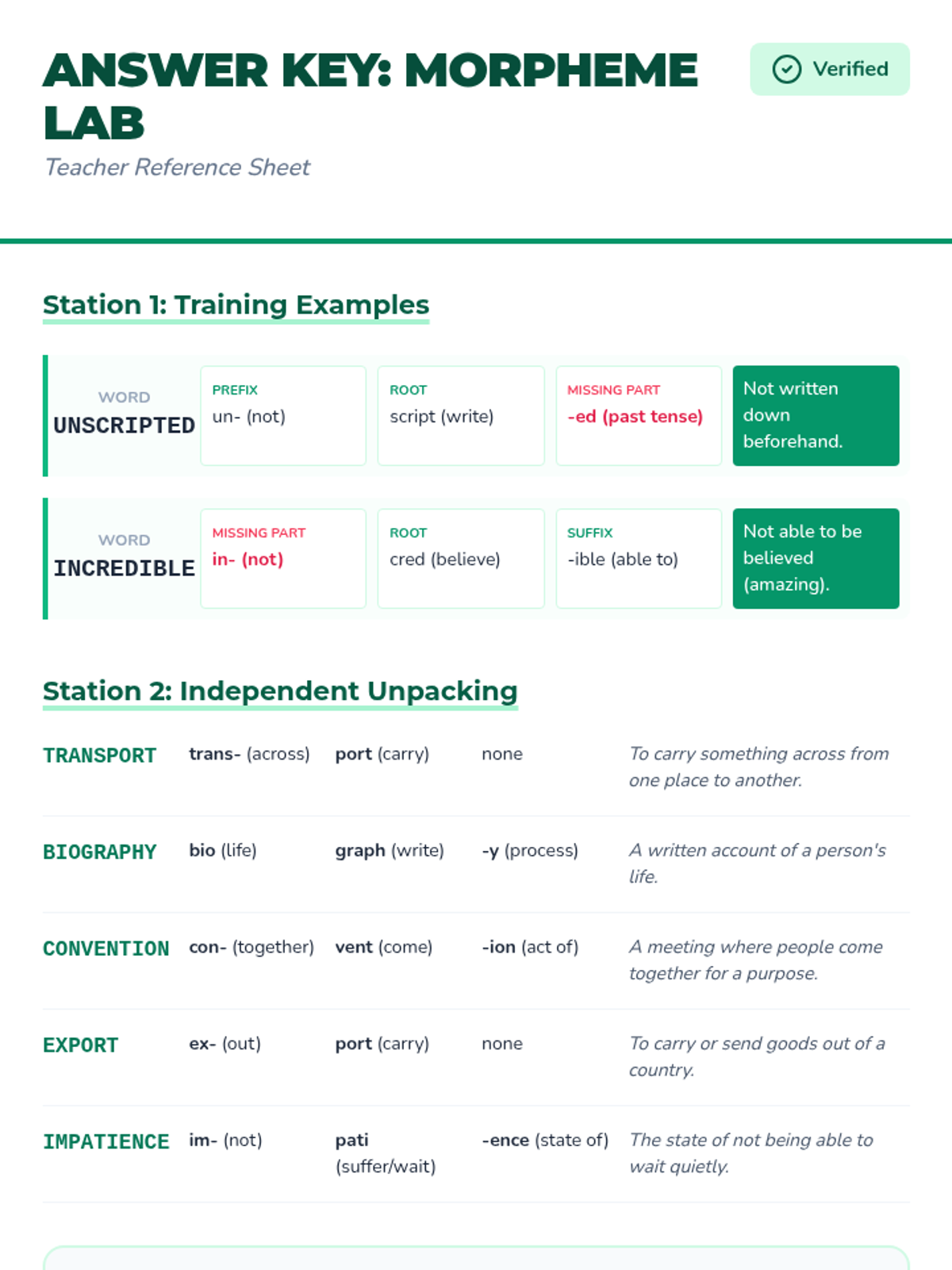
An answer key for the Morpheme Lab activities, providing teachers with the correct morphological breakdowns and definitions for all practice problems and training examples.
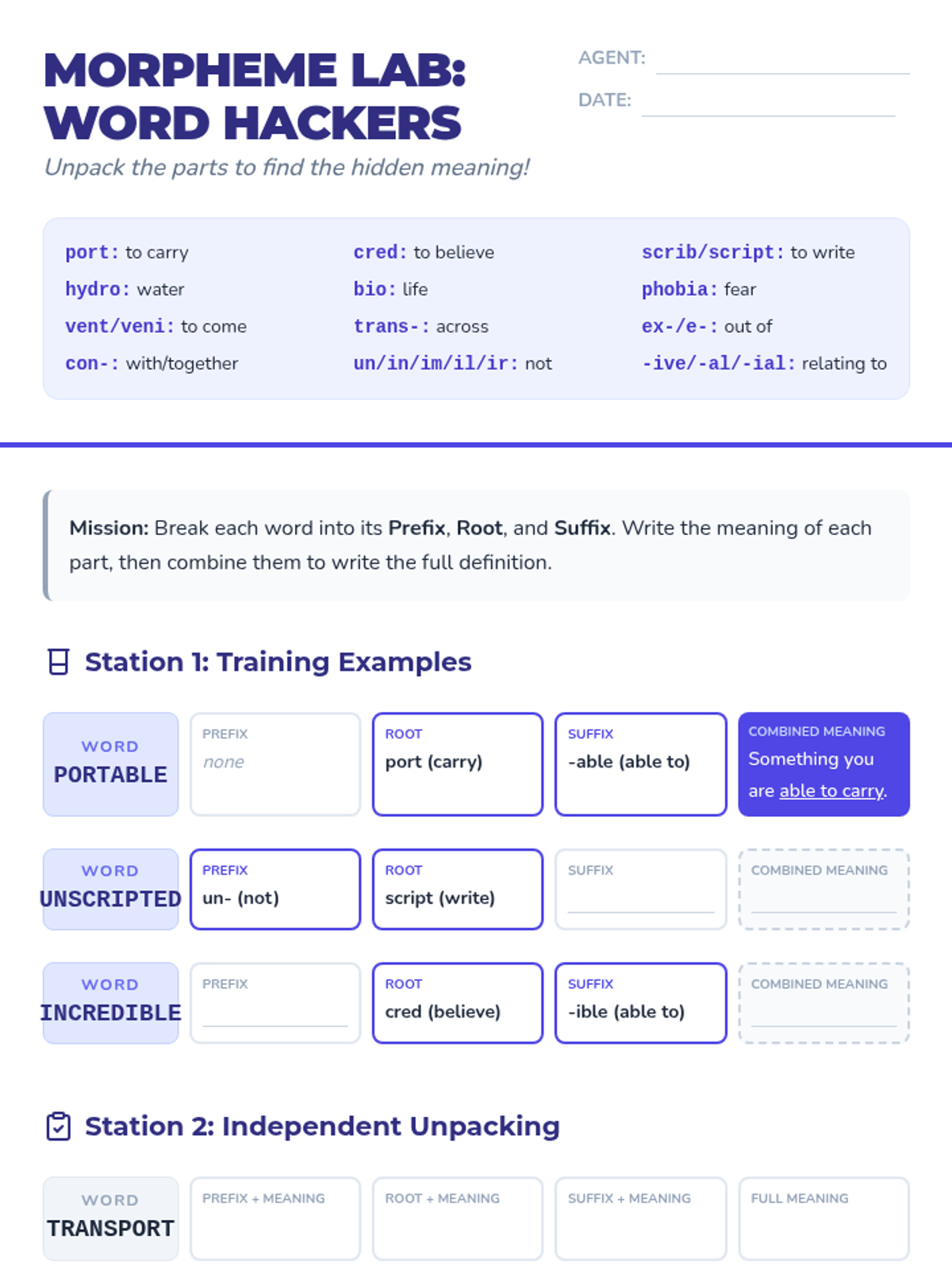
A structured worksheet where students practice 'unpacking' words into prefixes, roots, and suffixes. It features three training examples (partially completed) and five independent practice problems, with a final creative challenge to build a new word.
A vibrant slide deck designed for a 4th-grade audience to introduce the concept of 'unpacking' words into their morphological components (prefixes, roots, and suffixes). It includes clear visual examples of the process and a review of key root words.
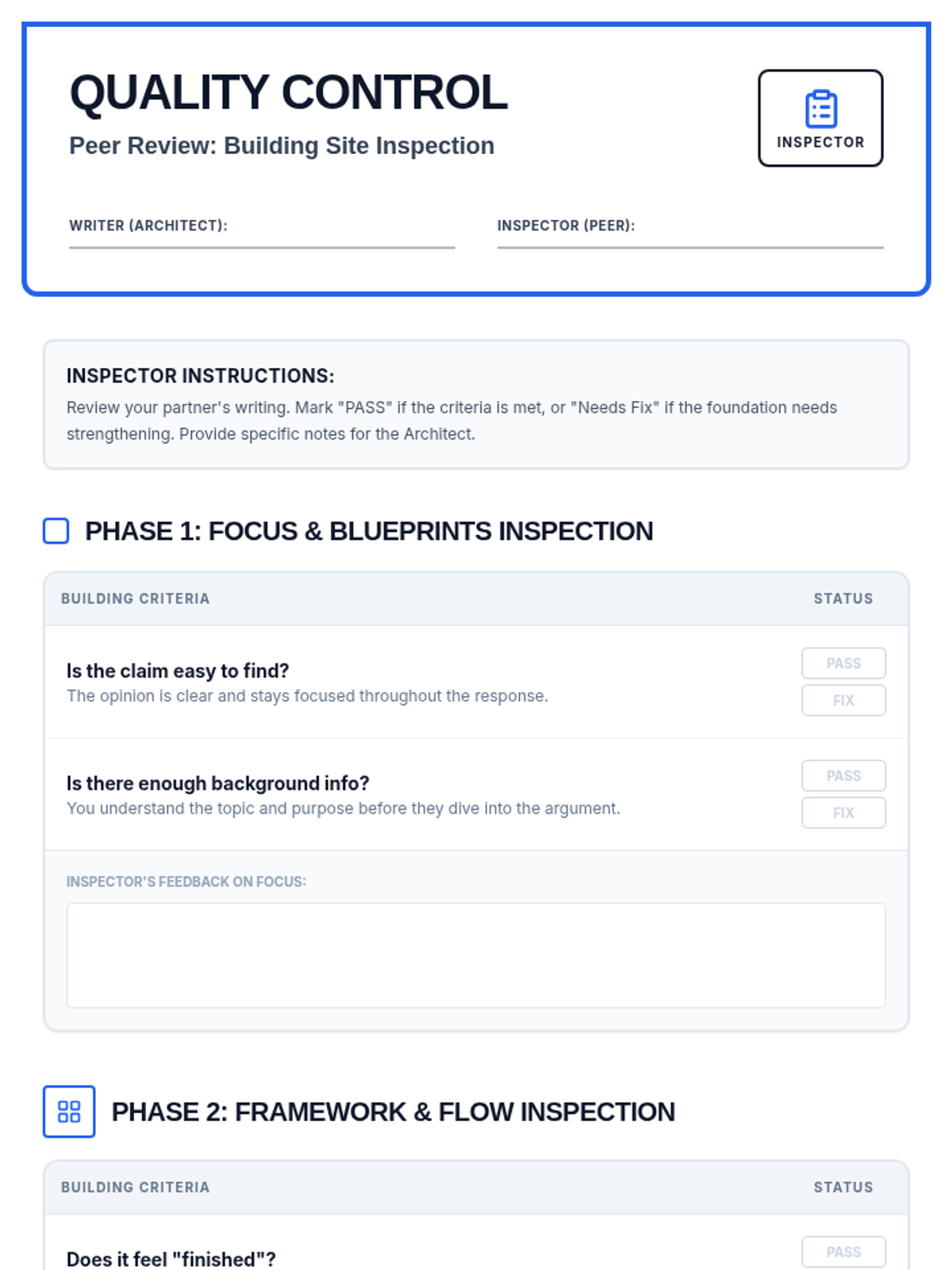
Condensed 1-page peer review version of the Argument Architect checklist. Printer-friendly 'Inspector' theme with a single inspection table and combined feedback area for efficiency. Squashed ruling section for efficiency.
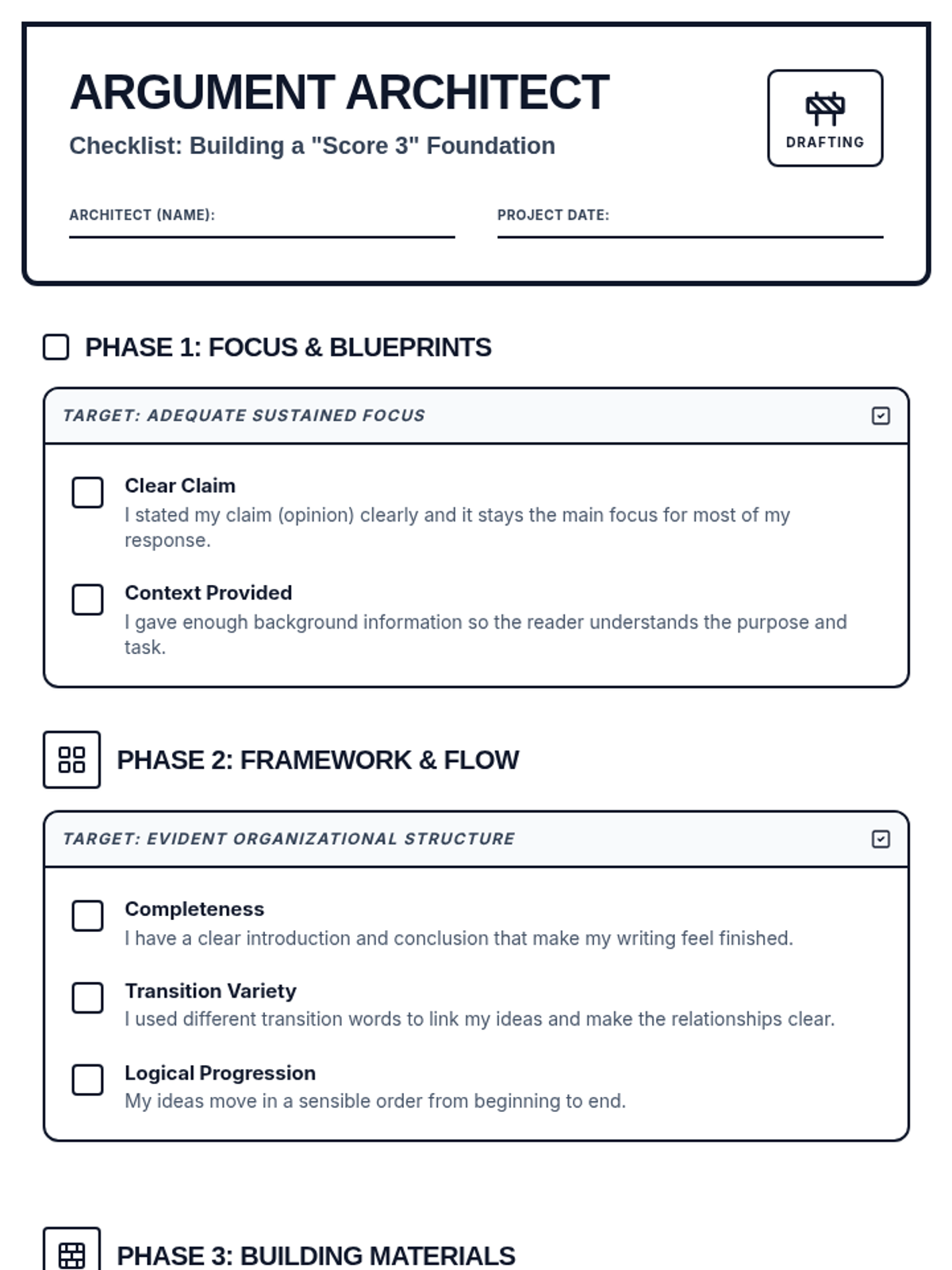
Condensed 1-page student-friendly checklist using the 'Score 3' criteria and 'Architect' theme. Efficient grid layout provides all essential checks and reflection space on a single sheet. Squashed report section for efficiency.
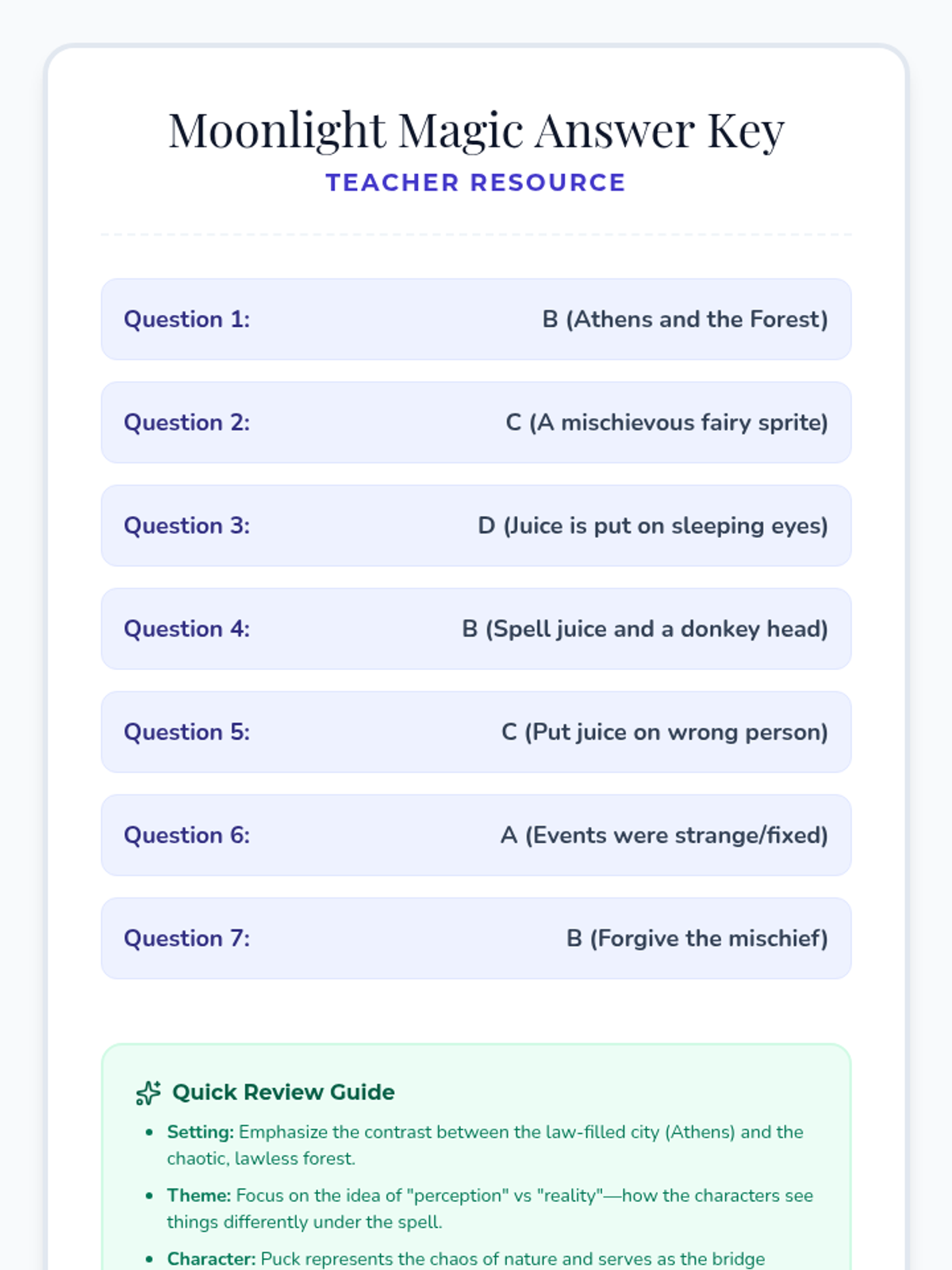
An answer key and teaching guide for the 'Moonlight Magic' multiple-choice questions.
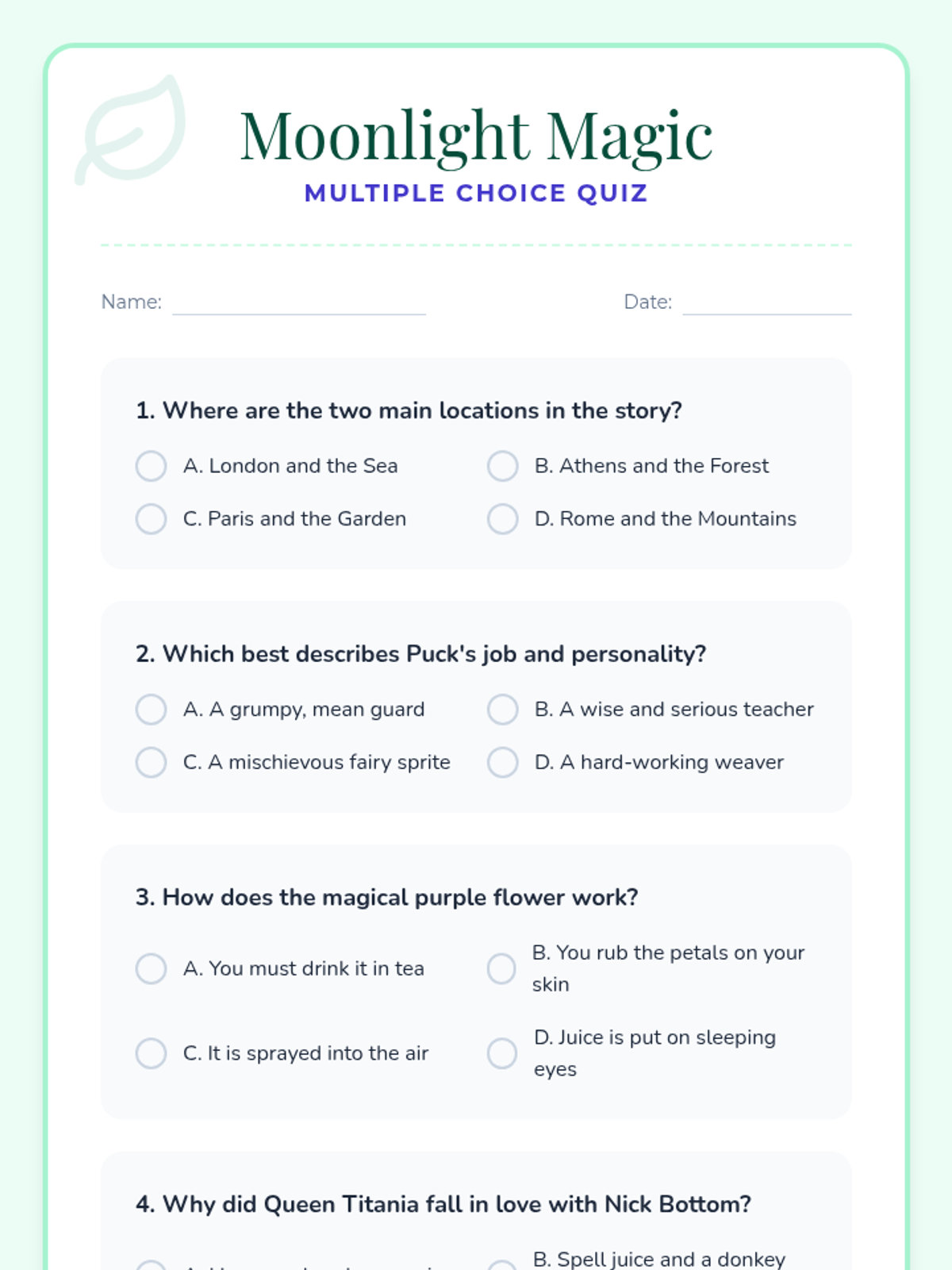
A multiple-choice version of the 'Moonlight Magic' comprehension questions, featuring 7 questions about the plot, characters, and setting.
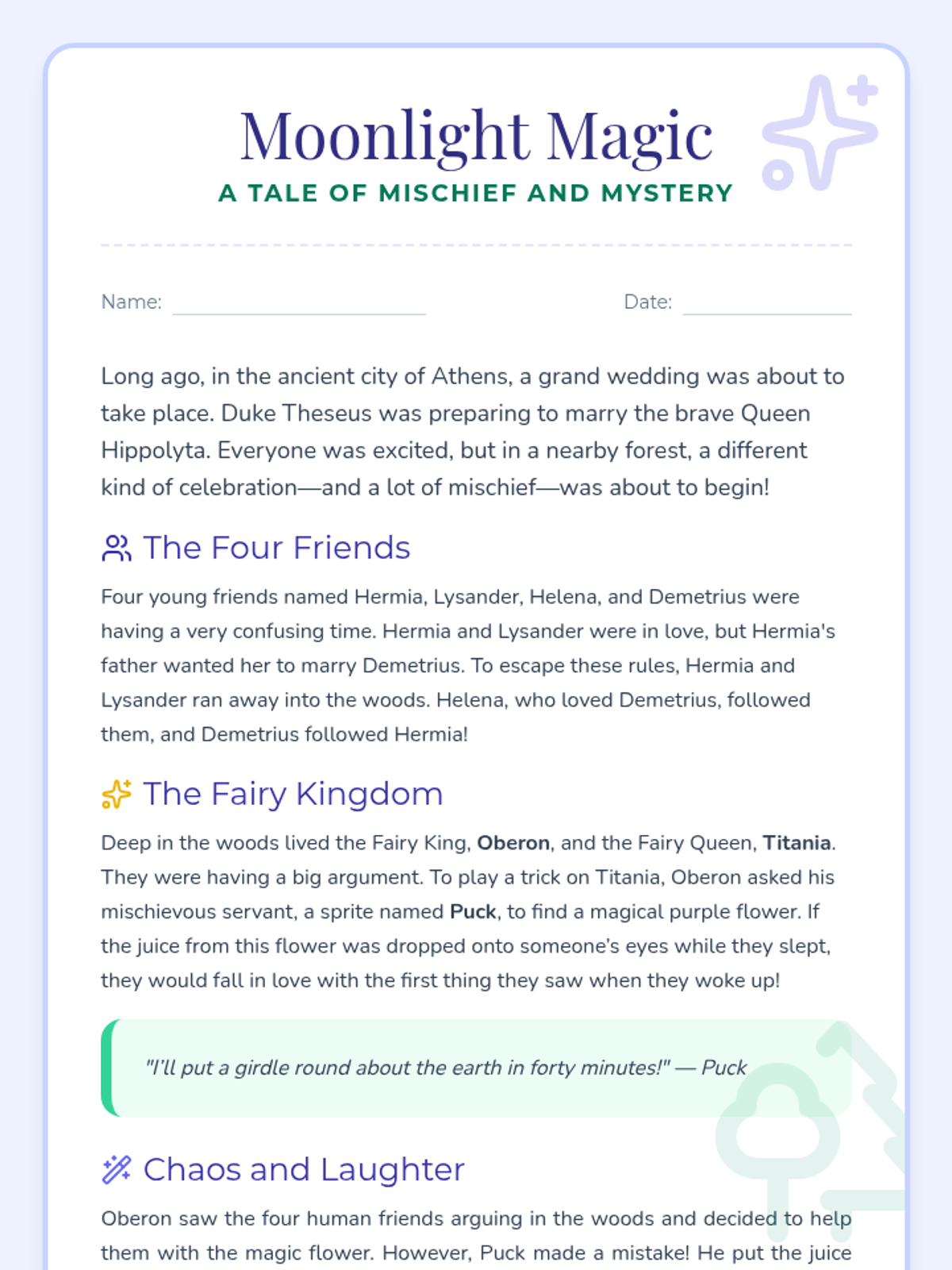
A whimsical and accessible summary of William Shakespeare's 'A Midsummer Night's Dream' tailored for 4th-grade readers, featuring key characters like Puck, Oberon, and Nick Bottom.
An engaging 10-slide presentation deck following a 'Sentence Repair Shop' theme. It introduces sentence fragments, teaches the 'Three Question Test', explores subordinating conjunctions as 'Sentence Glue', and provides interactive workshop practice. Optimized for 16:9 displays.
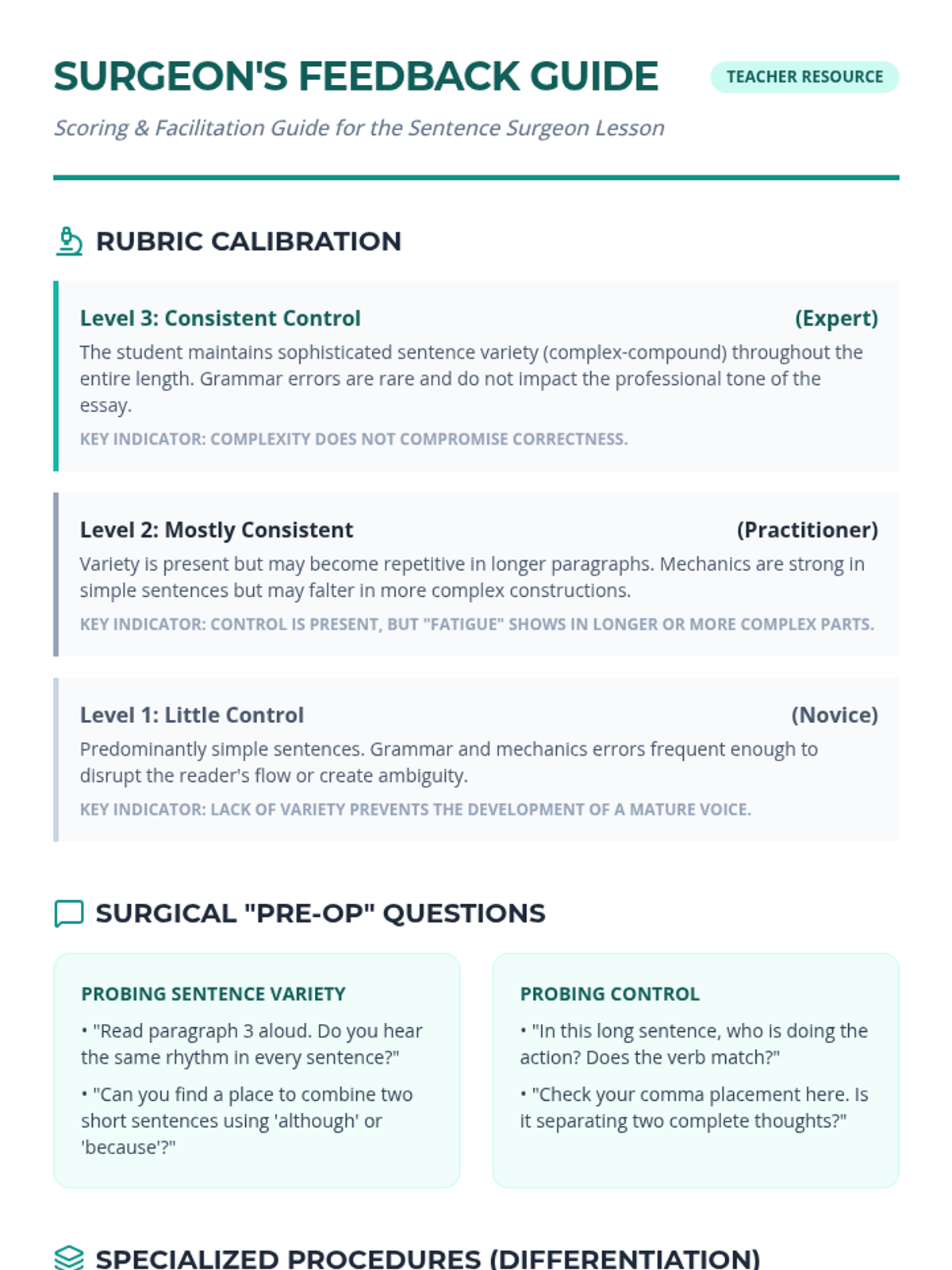
A professional teacher-facing guide for using the Sentence Surgeon checklist, featuring rubric calibration notes, discussion prompts, and differentiation strategies.
A medical-themed presentation to introduce students to the editing rubric and the concept of "surgical" revision for sentence variety and mechanics.
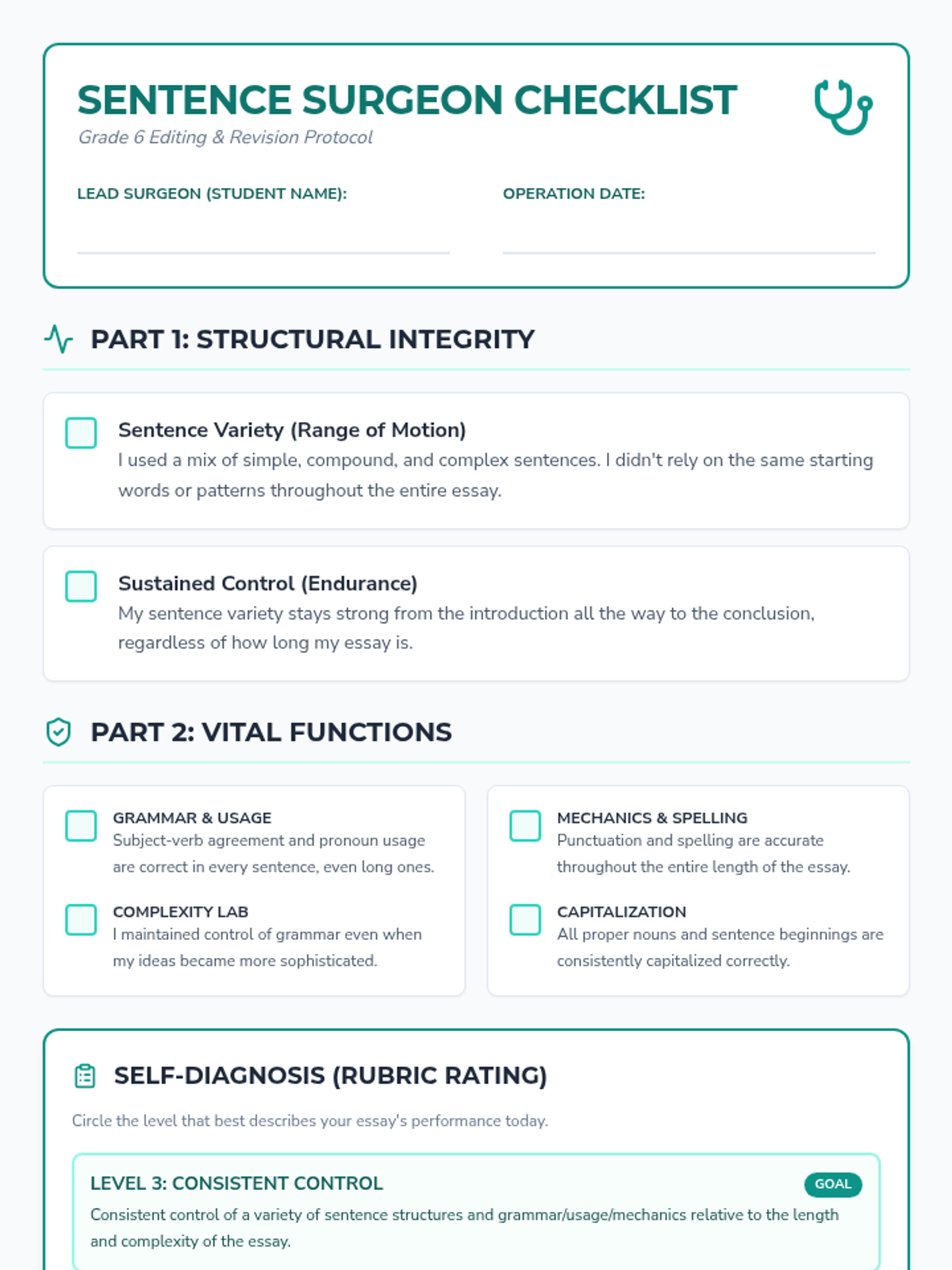
A medical-themed editing checklist for 6th-grade students, featuring specific check-points for sentence variety and mechanics aligned with standardized rubric levels.
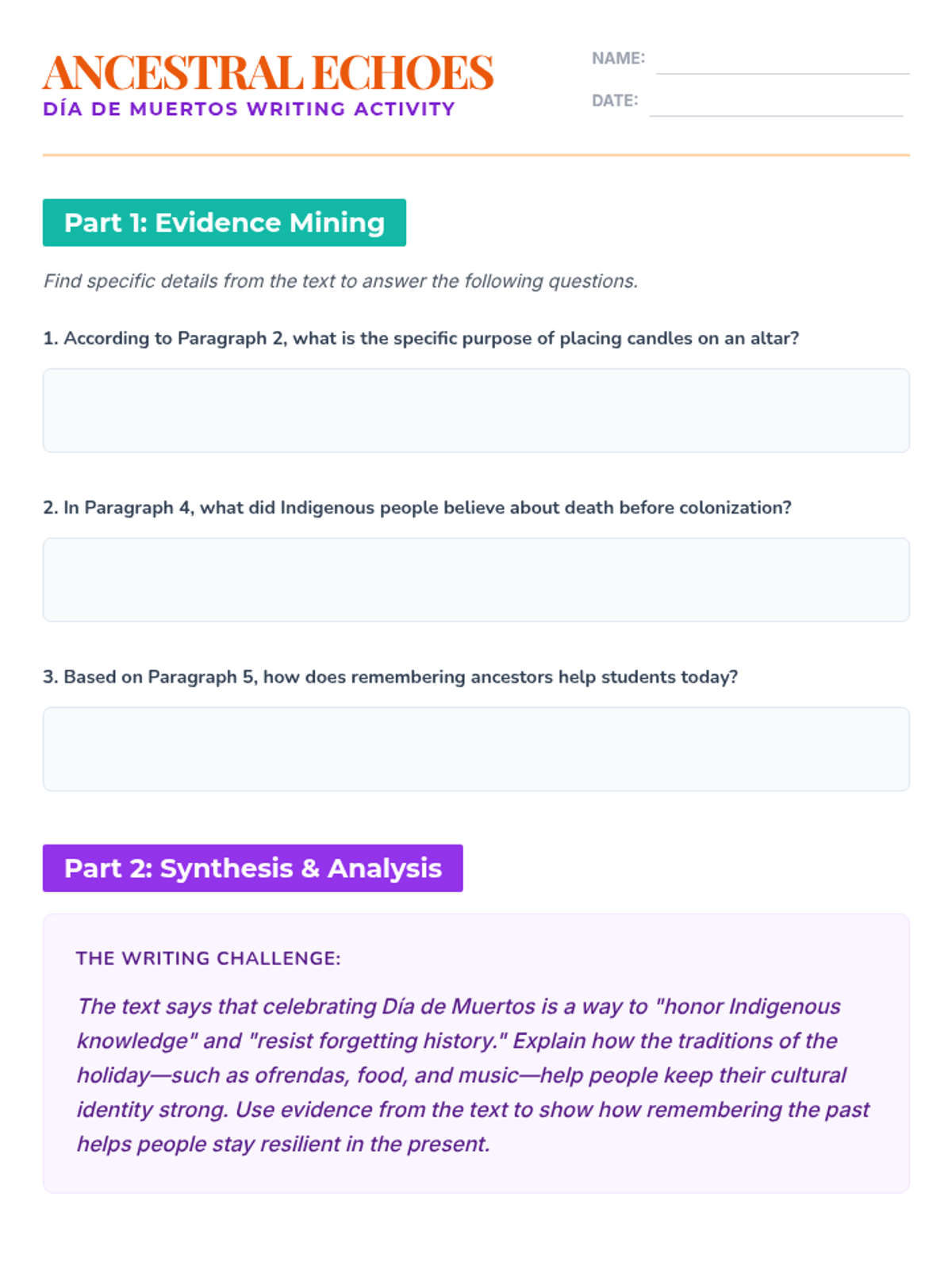
An updated analytical writing activity for Día de Muertos with simplified language for the level 10 prompt, maintaining depth without using scaffolded sentence stems.
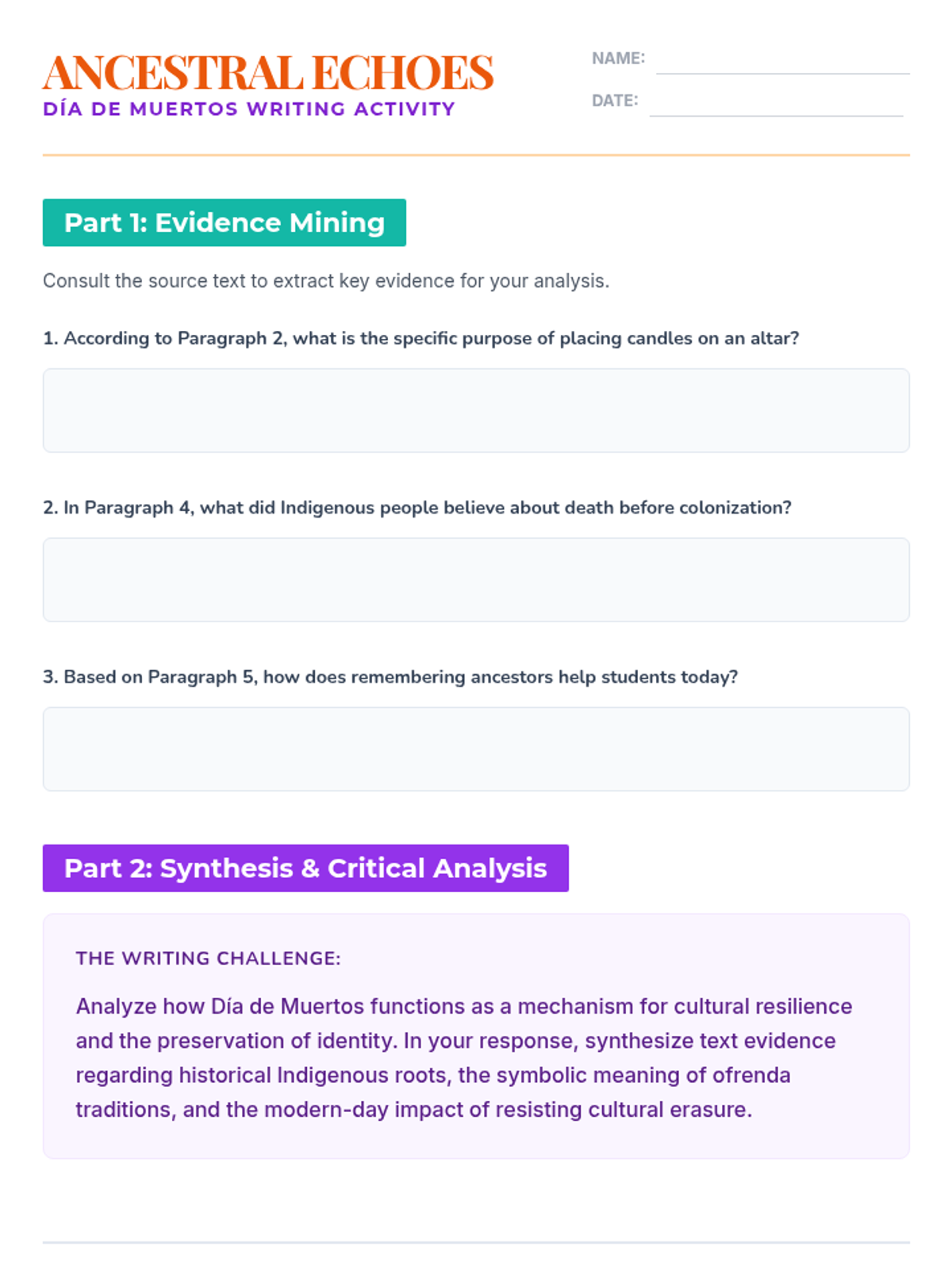
An advanced (Level 10) writing activity requiring students to analyze Día de Muertos as a mechanism for cultural resilience, utilizing direct text evidence and historical context without scaffolded support.
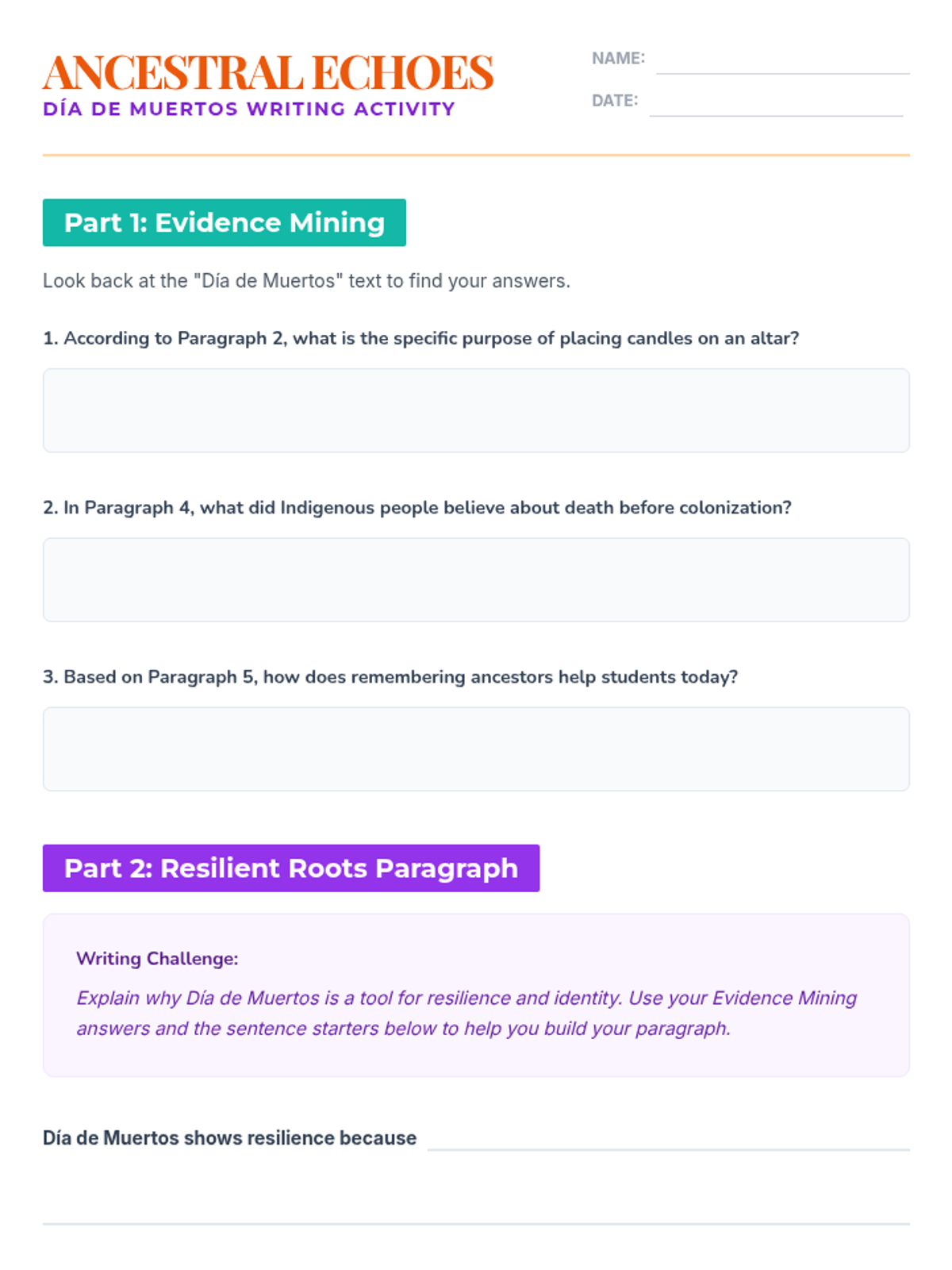
A simplified writing activity focusing exclusively on evidence mining and a scaffolded "Resilient Roots" paragraph about identity and tradition.
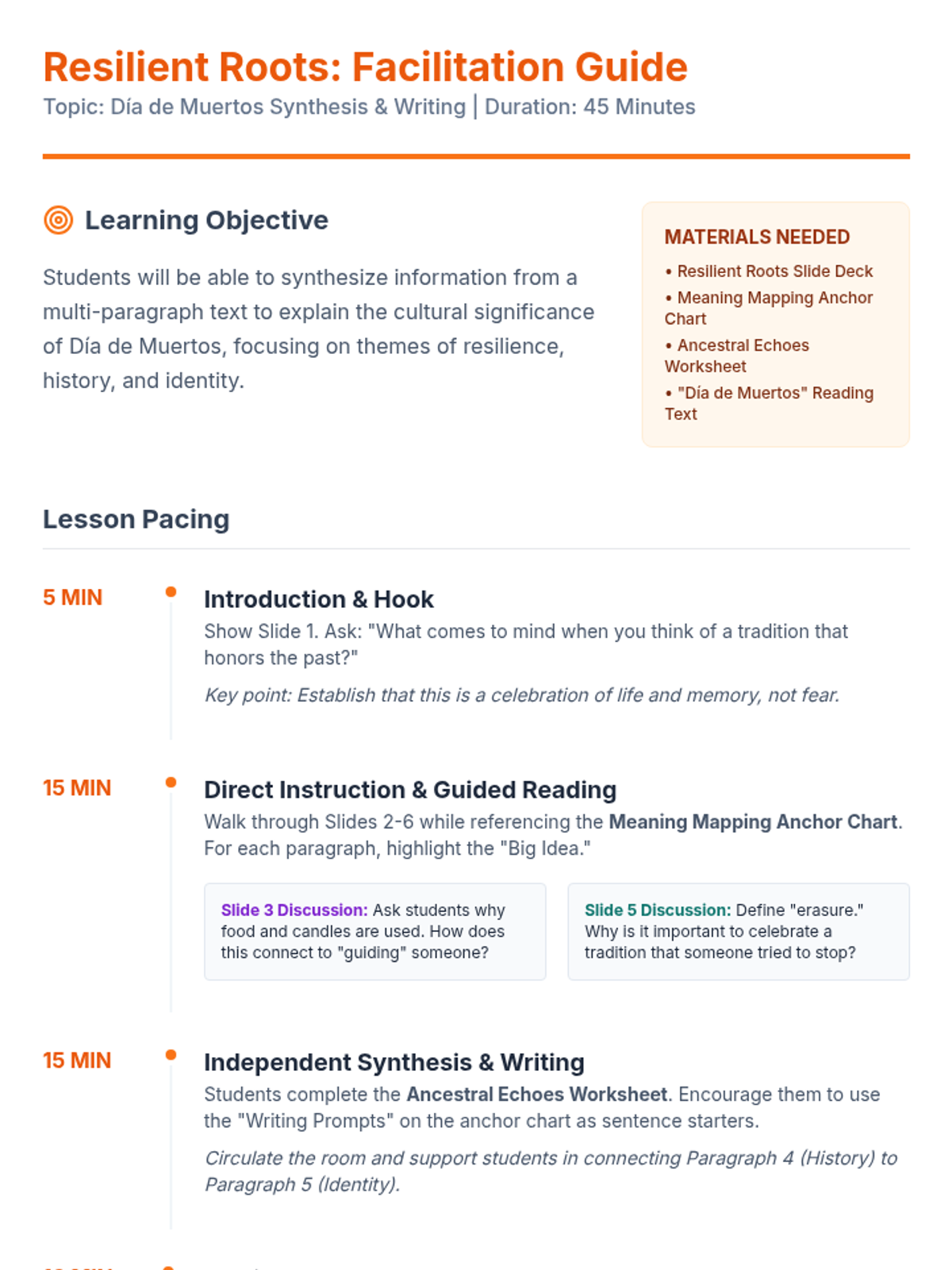
A teacher facilitation guide for the Resilient Roots lesson, providing a 45-minute pacing guide, discussion prompts, and differentiation strategies.
Instructional slides for a 45-minute lesson on Día de Muertos, covering cultural significance, traditions, history, and the final writing prompt.
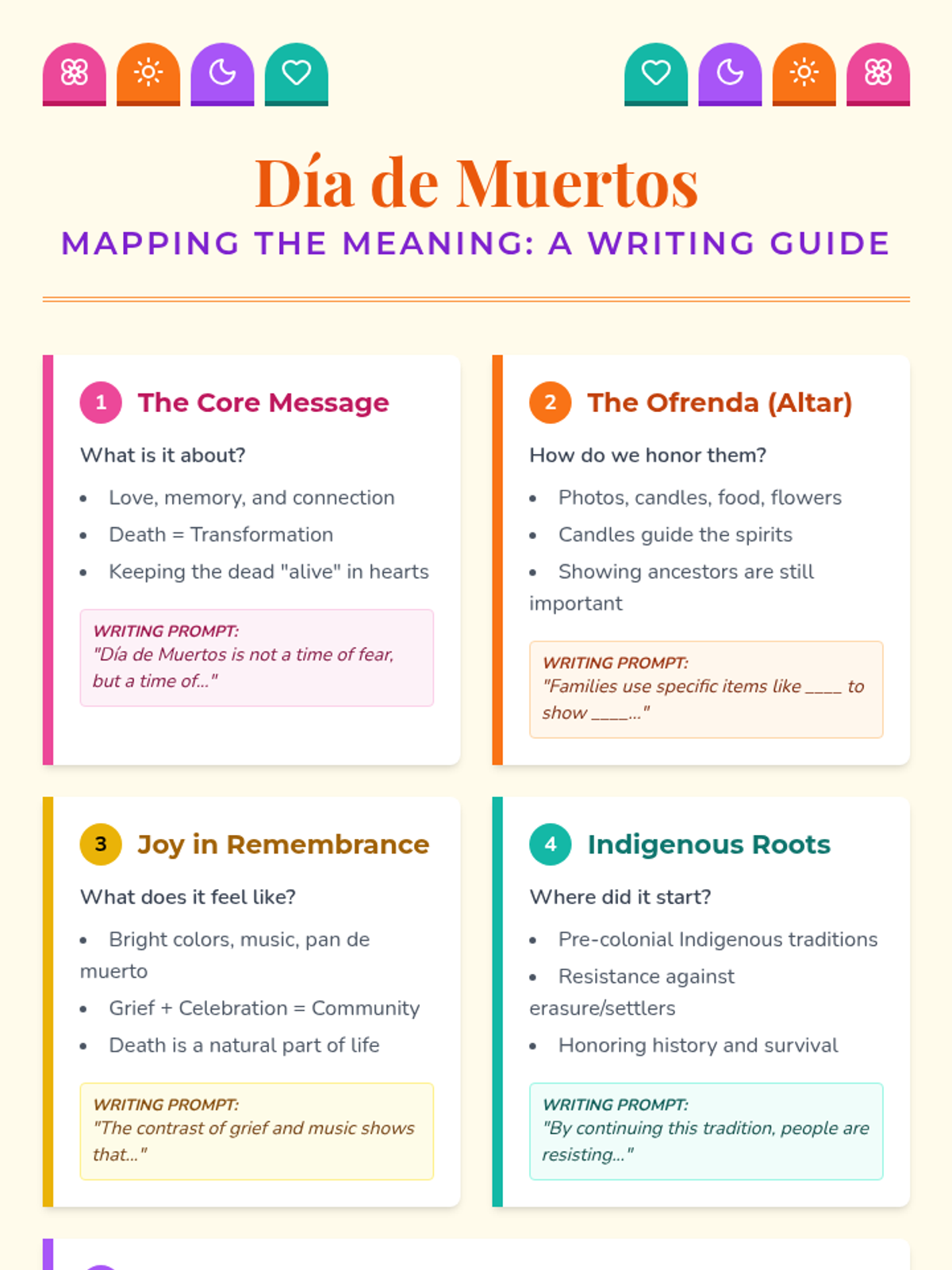
An anchor chart that breaks down the five key paragraphs of the Día de Muertos text, providing summaries and writing prompts for each to support students in synthesizing the material during direct instruction.
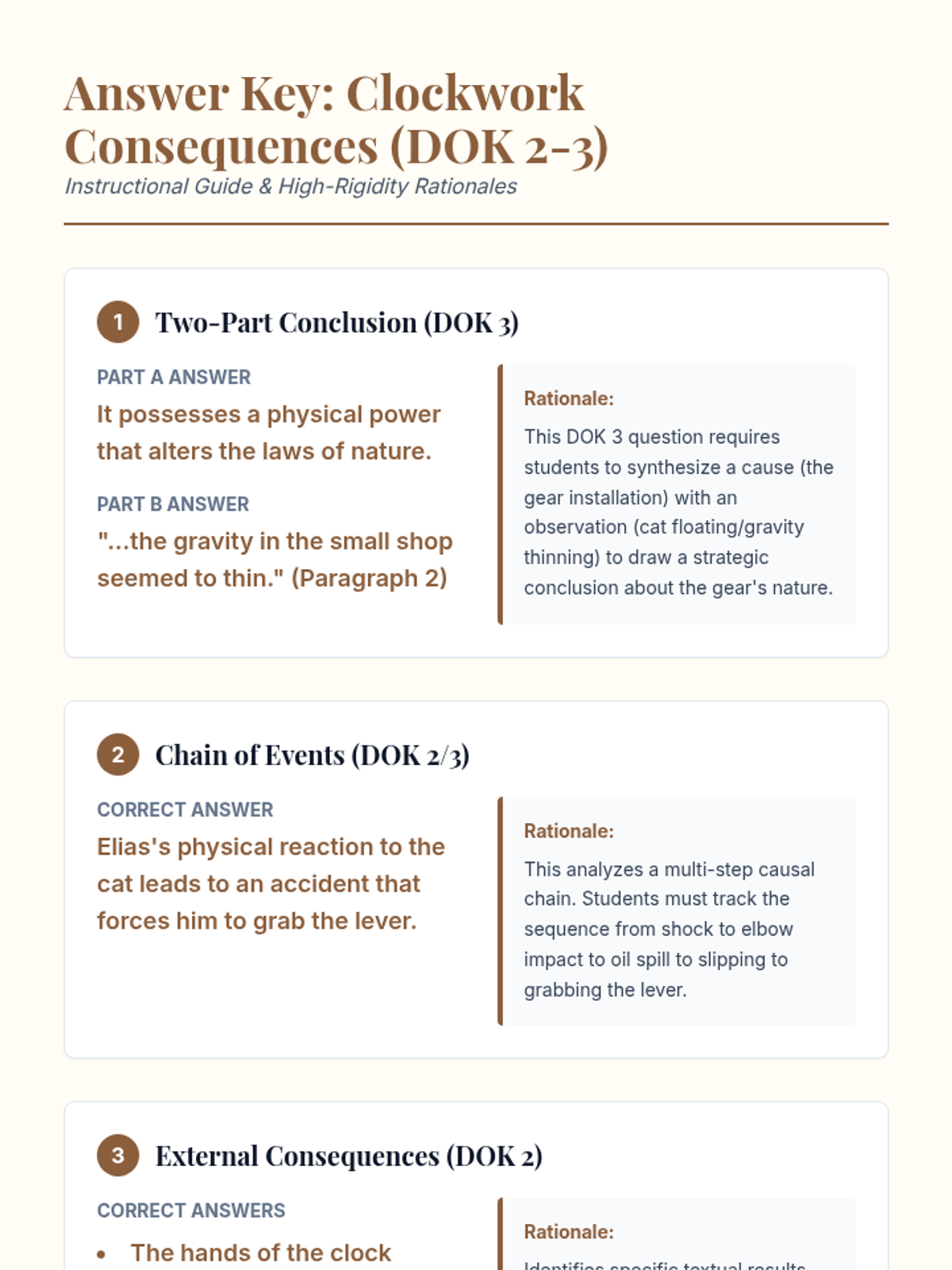
A teacher's answer key for the high-rigidity (DOK 2-3) Clockwork Consequences worksheet, providing correct answers, rationales for higher-level thinking, and instructional strategies.
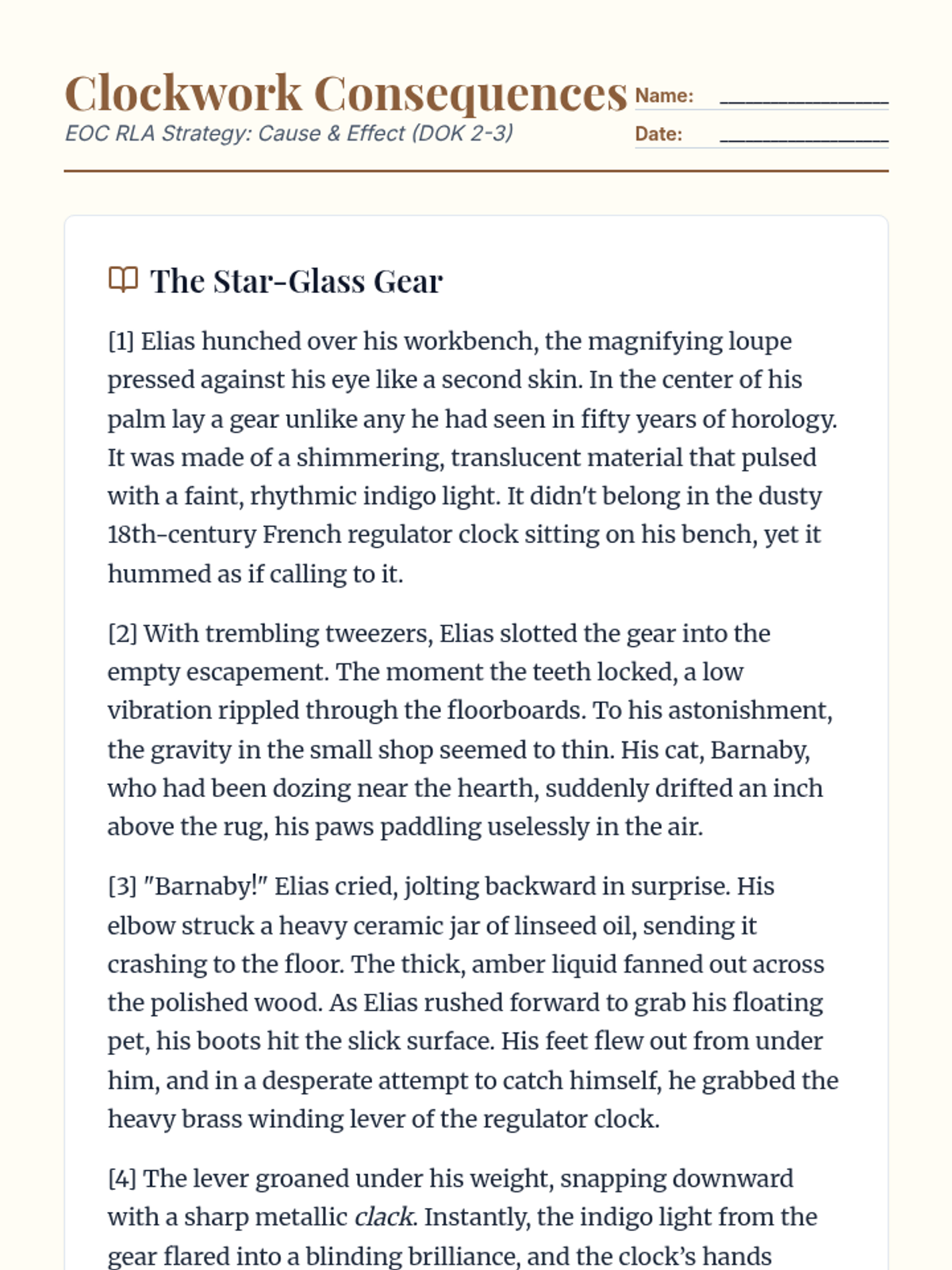
A student worksheet featuring a short fiction excerpt and four high-rigidity (DOK 2-3) cause-and-effect questions modeled after the EOC RLA assessment.
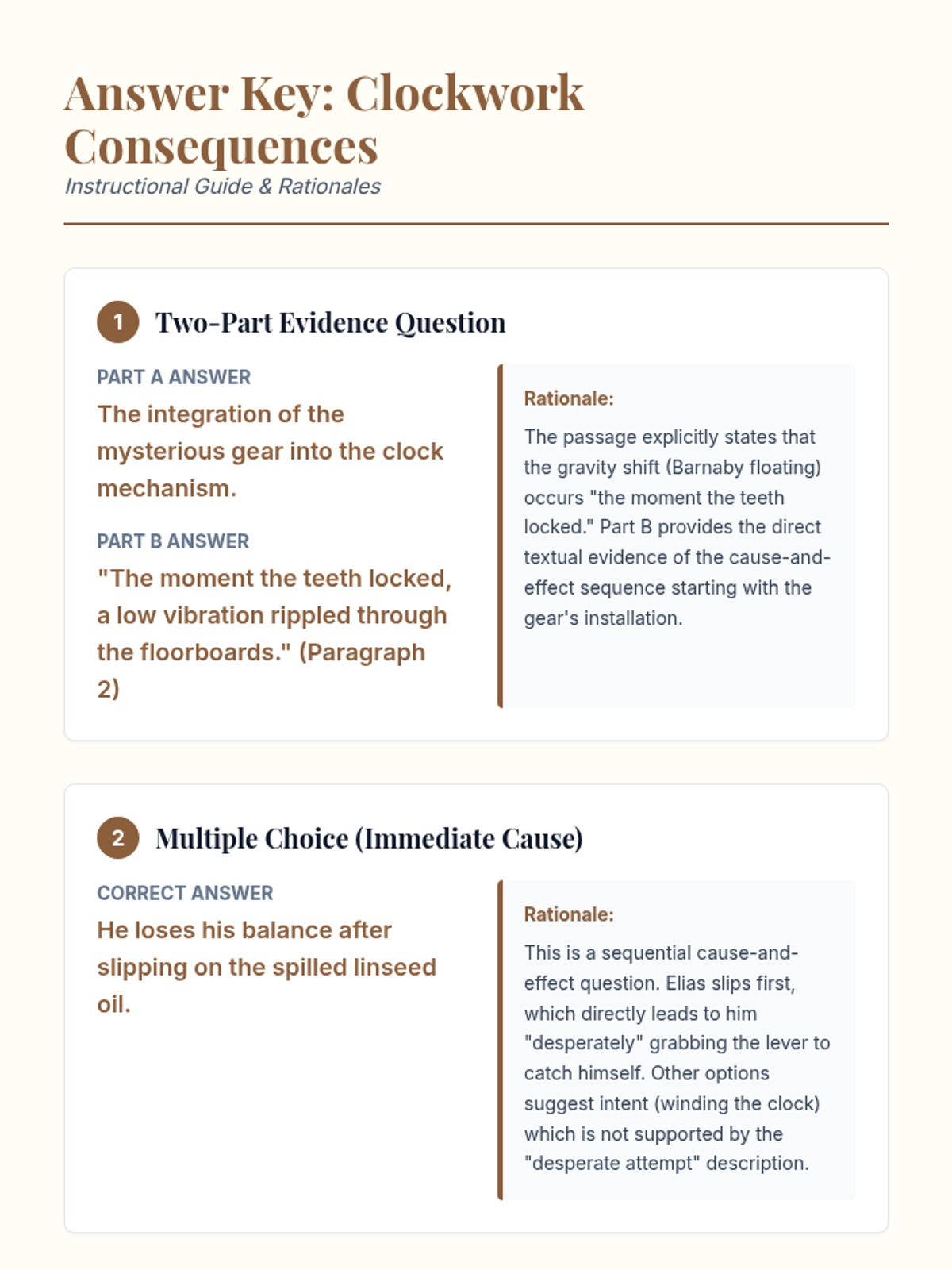
A teacher's answer key for the Clockwork Consequences worksheet, providing correct answers, evidence-based rationales, and teaching tips for EOC RLA cause-and-effect questions.