Presentation slides for Lesson 3: Feedback Loop Logic. Defines negative and positive feedback loops and uses blood sugar as an example.
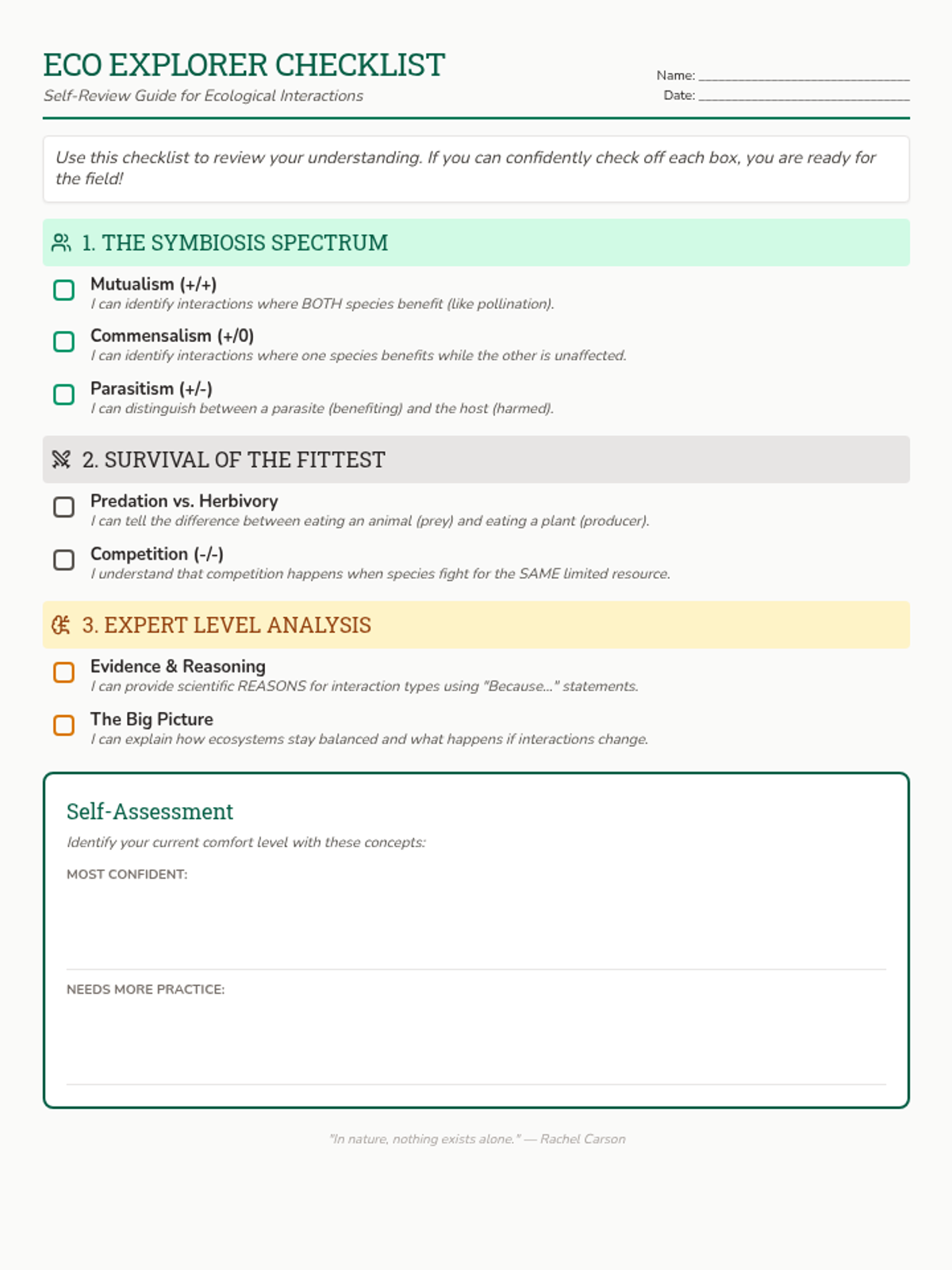
A self-assessment checklist for students to review ecological interaction concepts. Revised to fit on a single page with expanded student work areas for reflection.
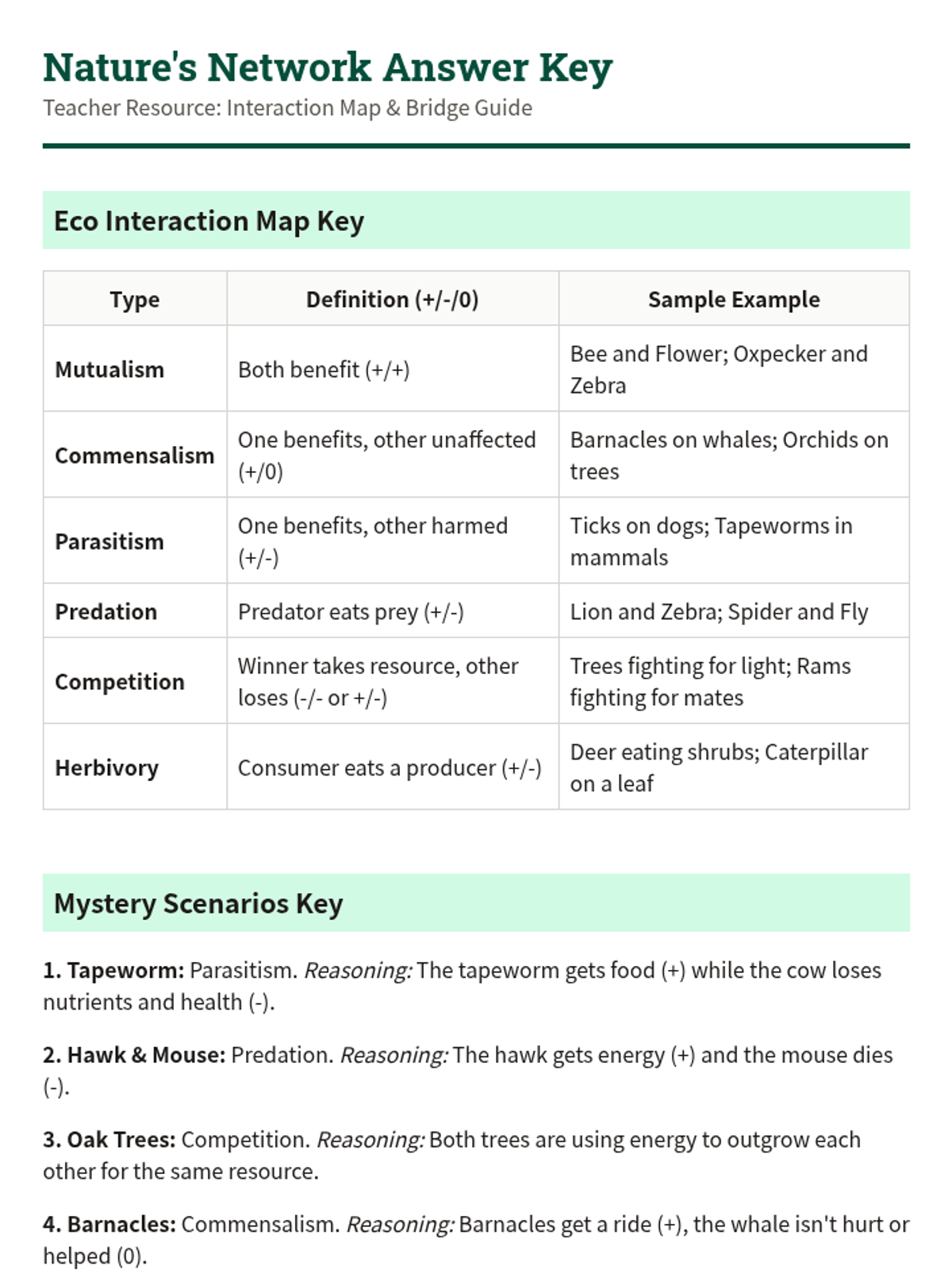
An answer key for the Nature's Network lesson materials, providing definitions, examples, and expected reasoning for the graphic organizer, matching scenarios, and exit ticket.
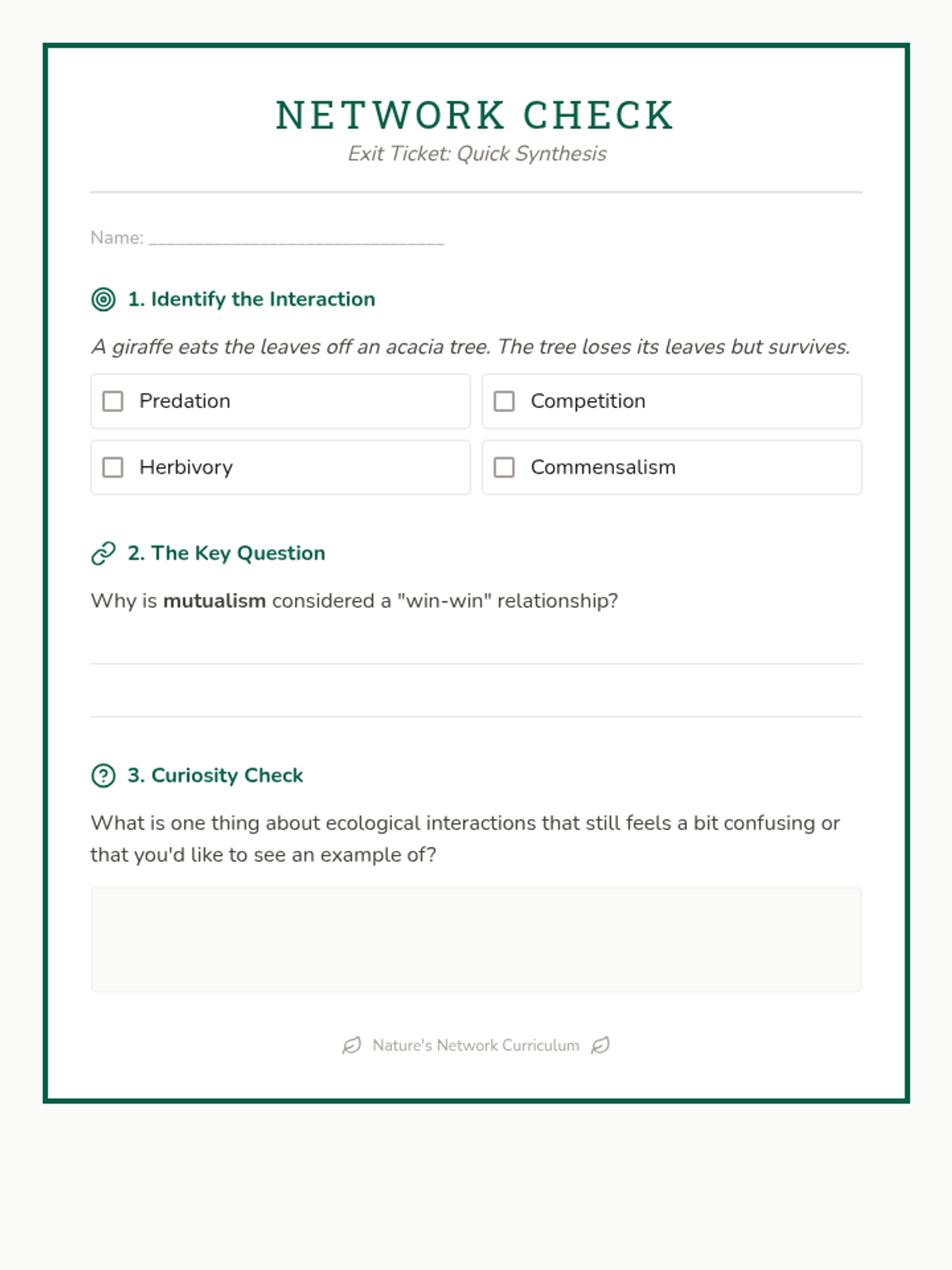
A concise exit ticket for checking student understanding of ecological interactions. Features a multiple-choice scenario, a short explanation prompt, and a "muddiest point" question for teacher feedback.
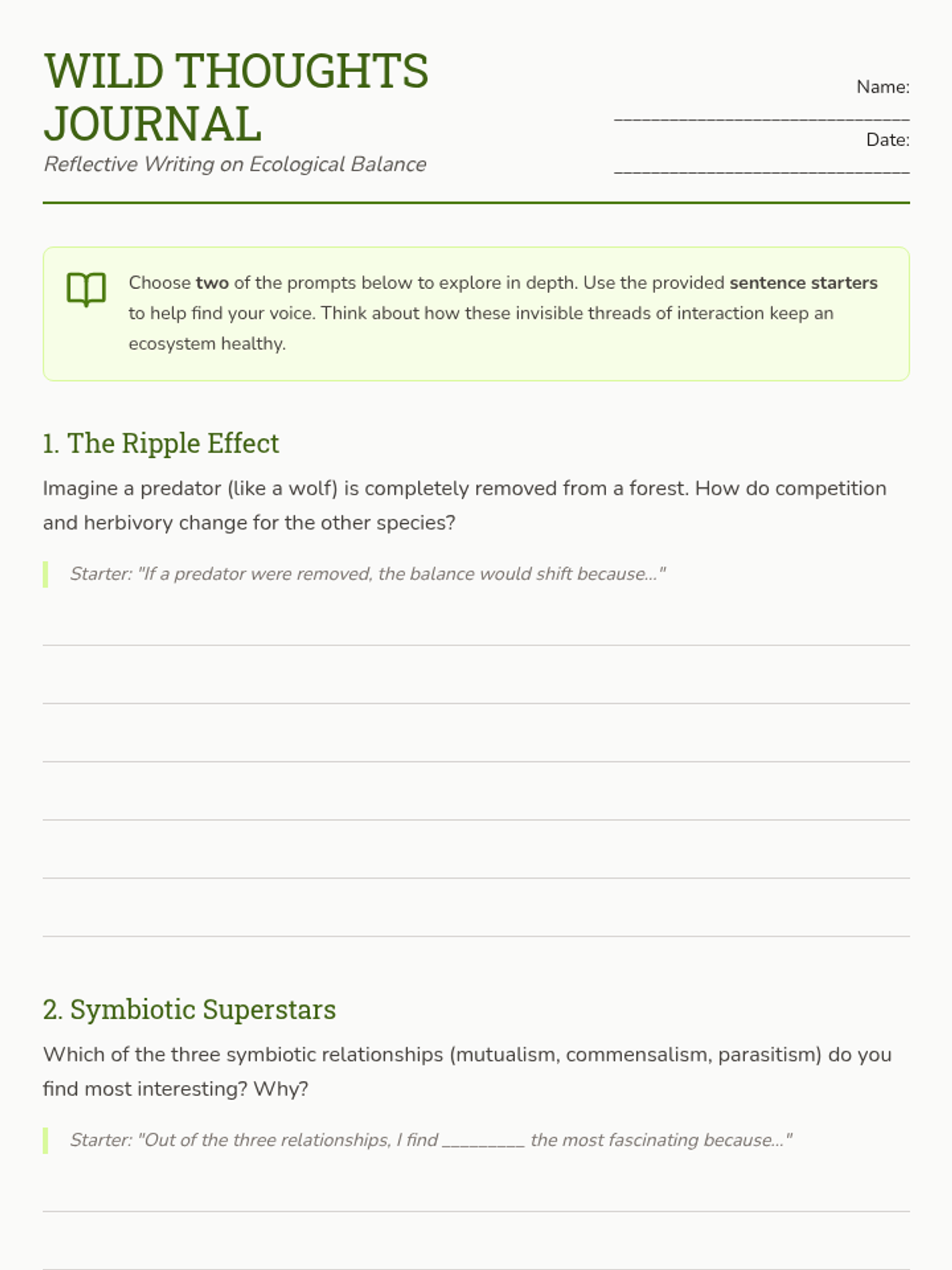
A reflective journaling worksheet for ecology students featuring expanded student writing areas and improved layout to keep prompts and their work areas together. Revised to pull decorative footer back onto the final content page.
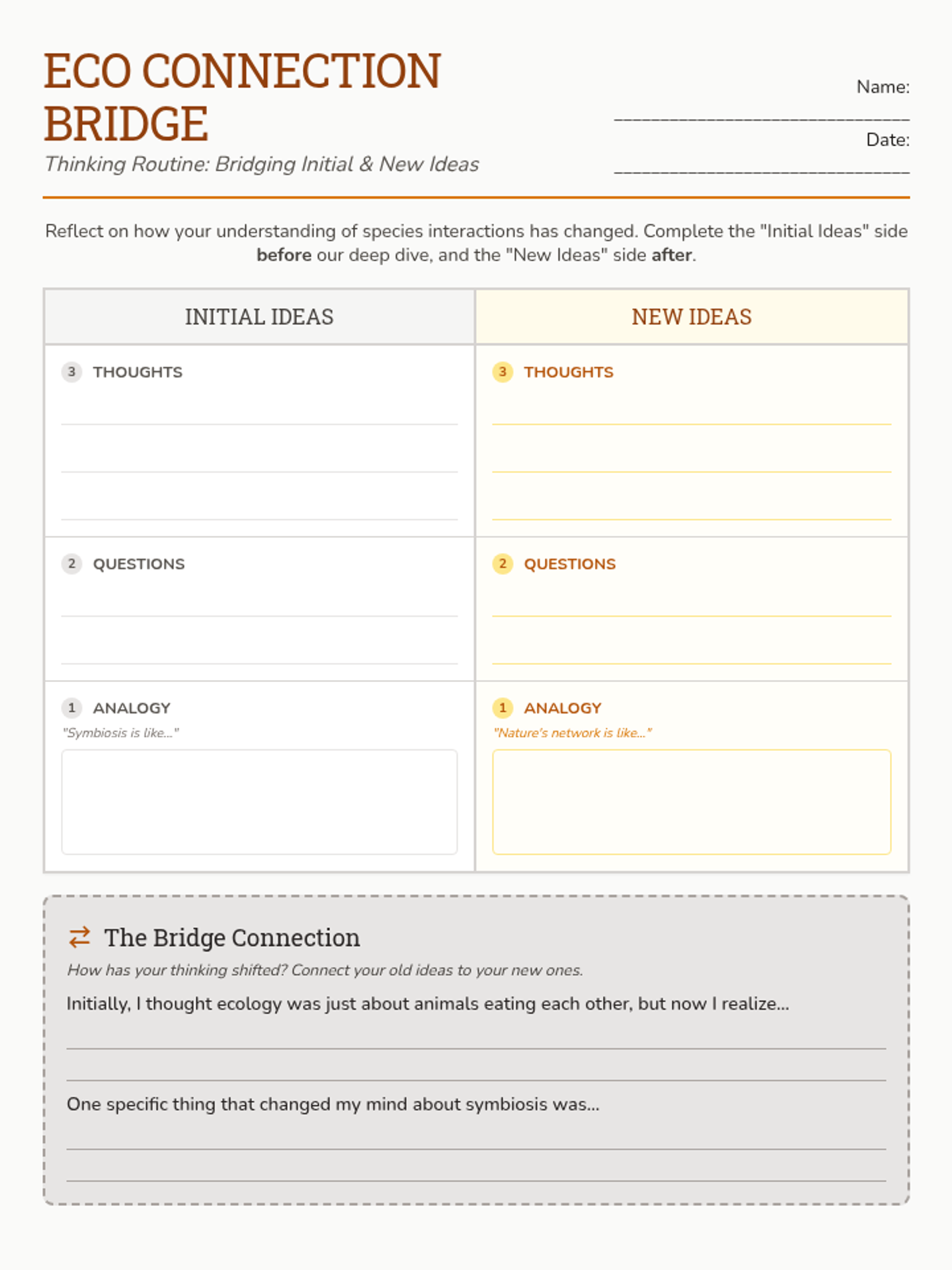
A 3-2-1 Bridge thinking routine worksheet focused on ecological interactions. Revised for optimized layout to ensure the entire routine fits on a single page, with larger analogy boxes and clearer student response lines.
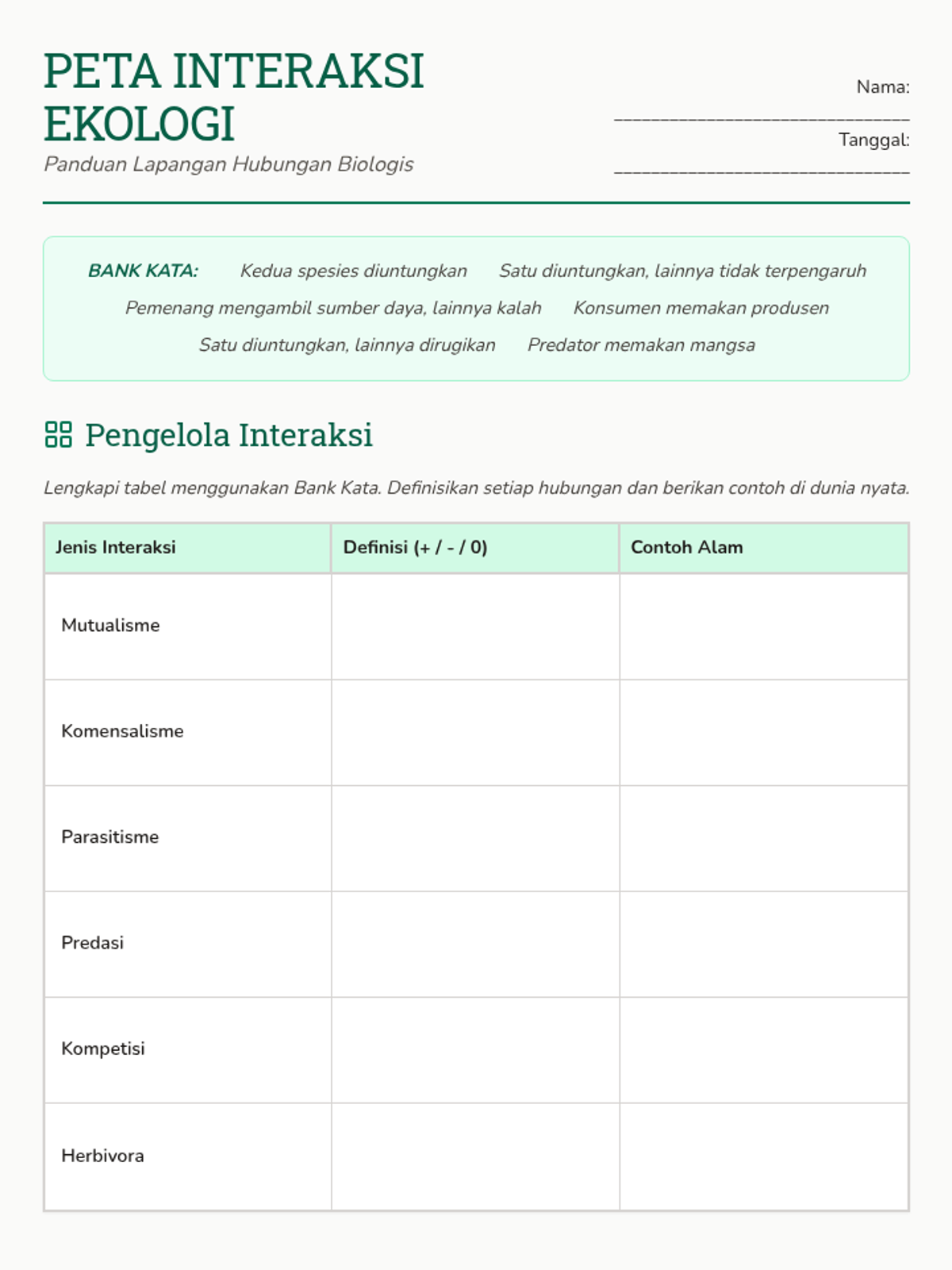
A graphic organizer worksheet designed for 7th-grade students to categorize and define ecological interactions. Revised for better flow: Word Bank is now placed before the table, and scenarios have expanded reasoning space on a clean second page.
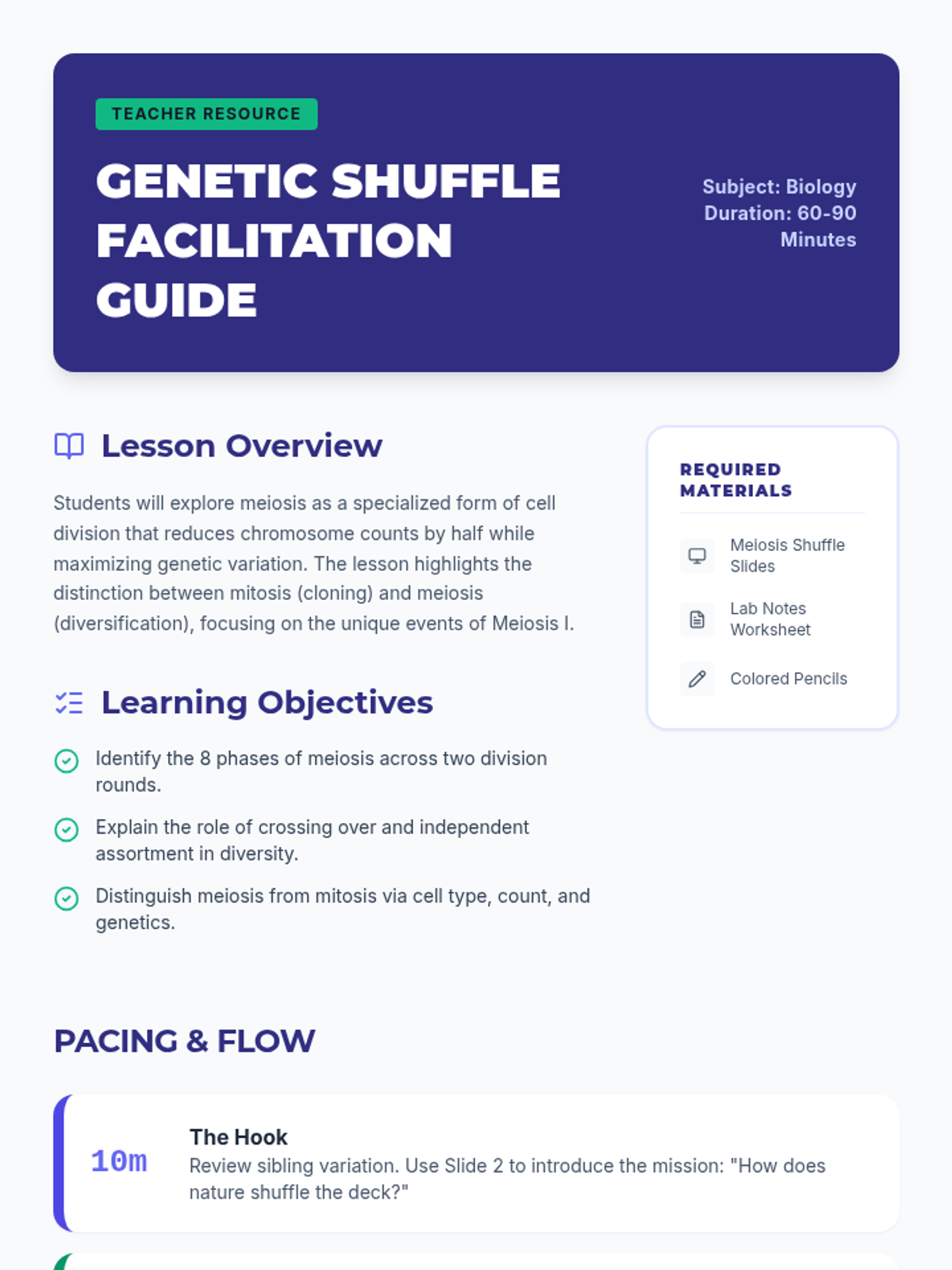
A comprehensive teacher's facilitator guide for the meiosis lesson. Includes learning objectives, a detailed pacing guide, key concept explanations, tips for addressing common misconceptions, and a full answer key for student materials.
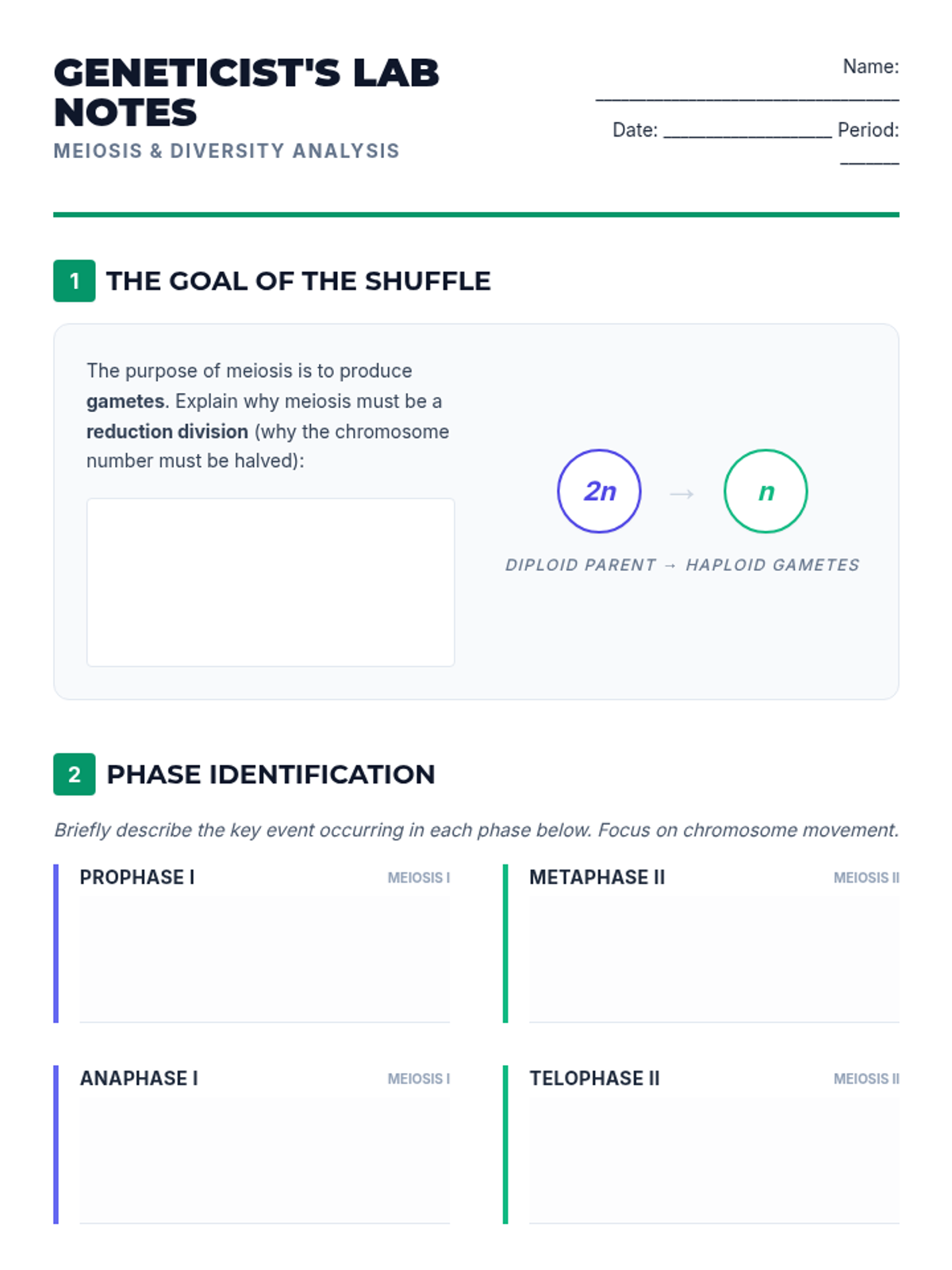
A structured lab notes worksheet for students to record phase identifications, analyze the impact of crossing over, and complete a comparative analysis between mitosis and meiosis. Includes a synthesis question on chromosome counts.
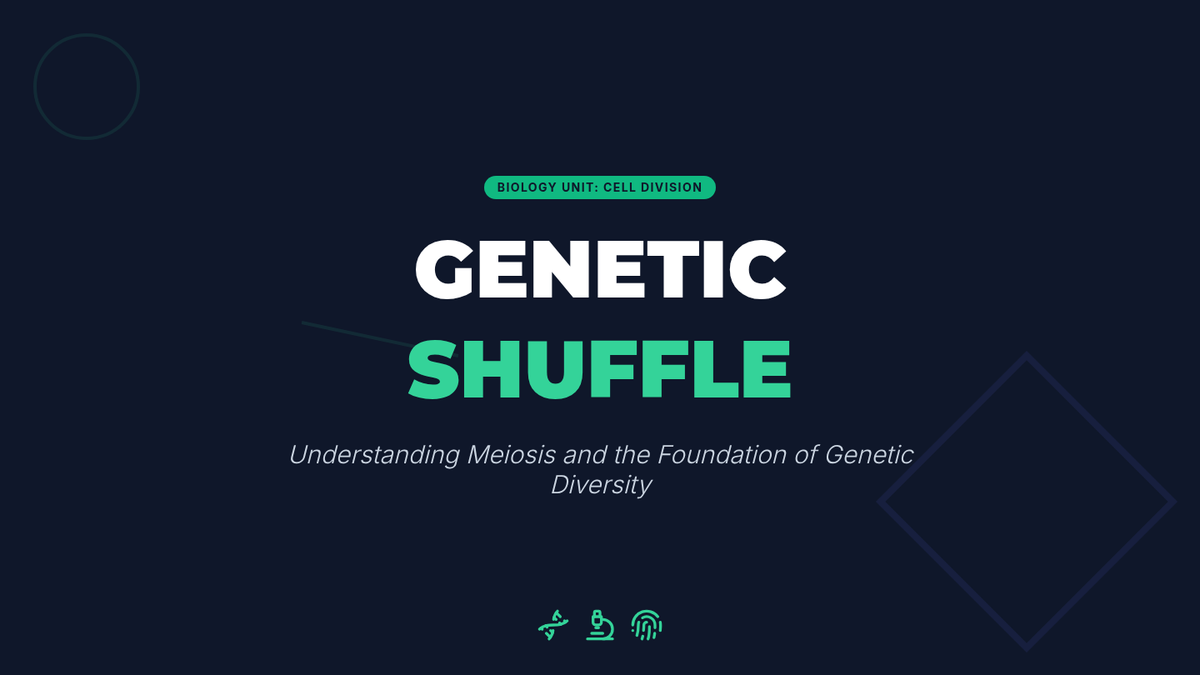
A dynamic and visually engaging slide deck covering the process of meiosis, including its two-stage division, key phases like Prophase I (crossing over), the resulting haploid daughter cells, and a comparison with mitosis.
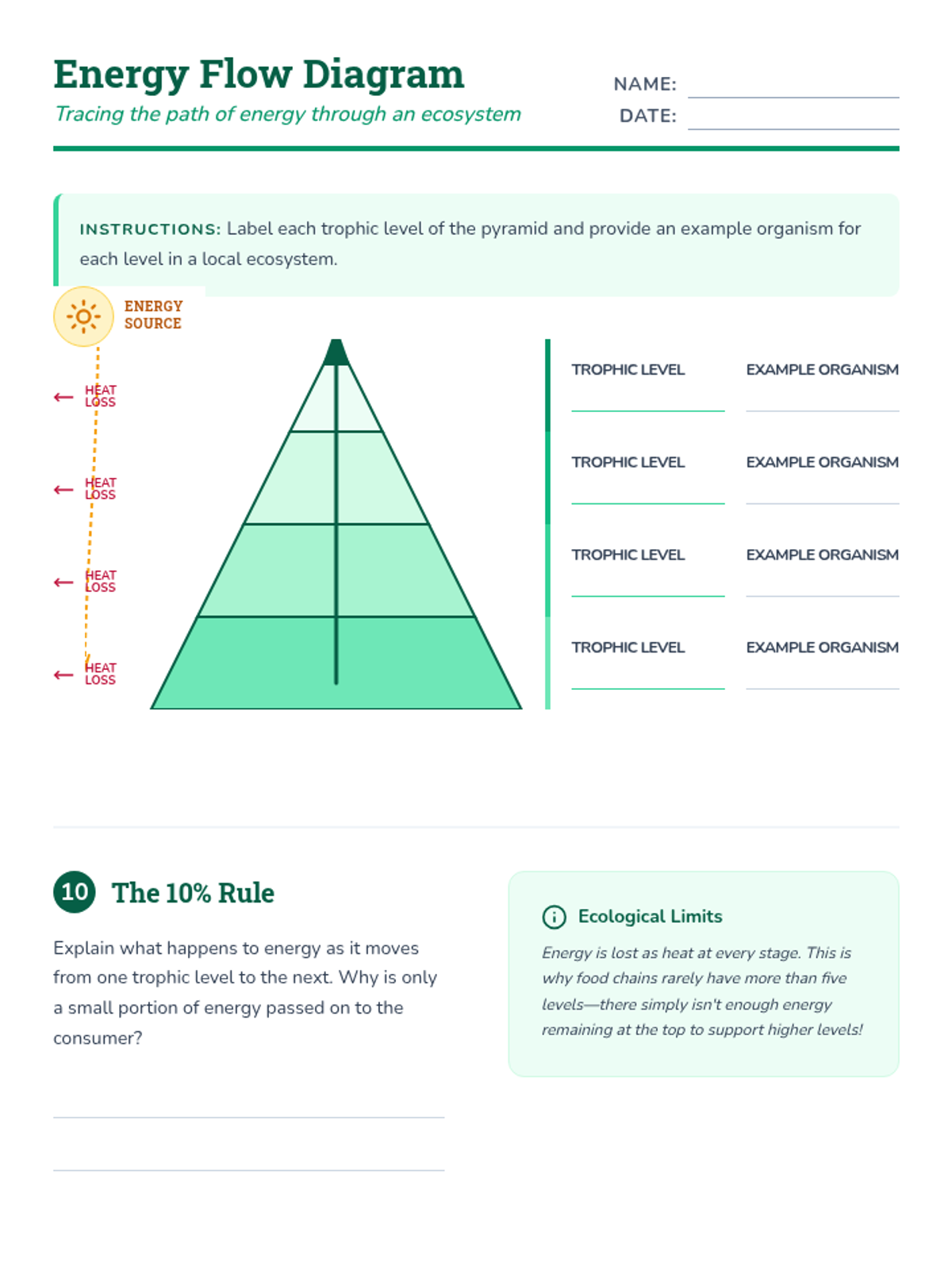
A refined energy pyramid diagram for students to label trophic levels and provide examples of organisms. It includes visual representations of the sun as the energy source and heat loss at each level.
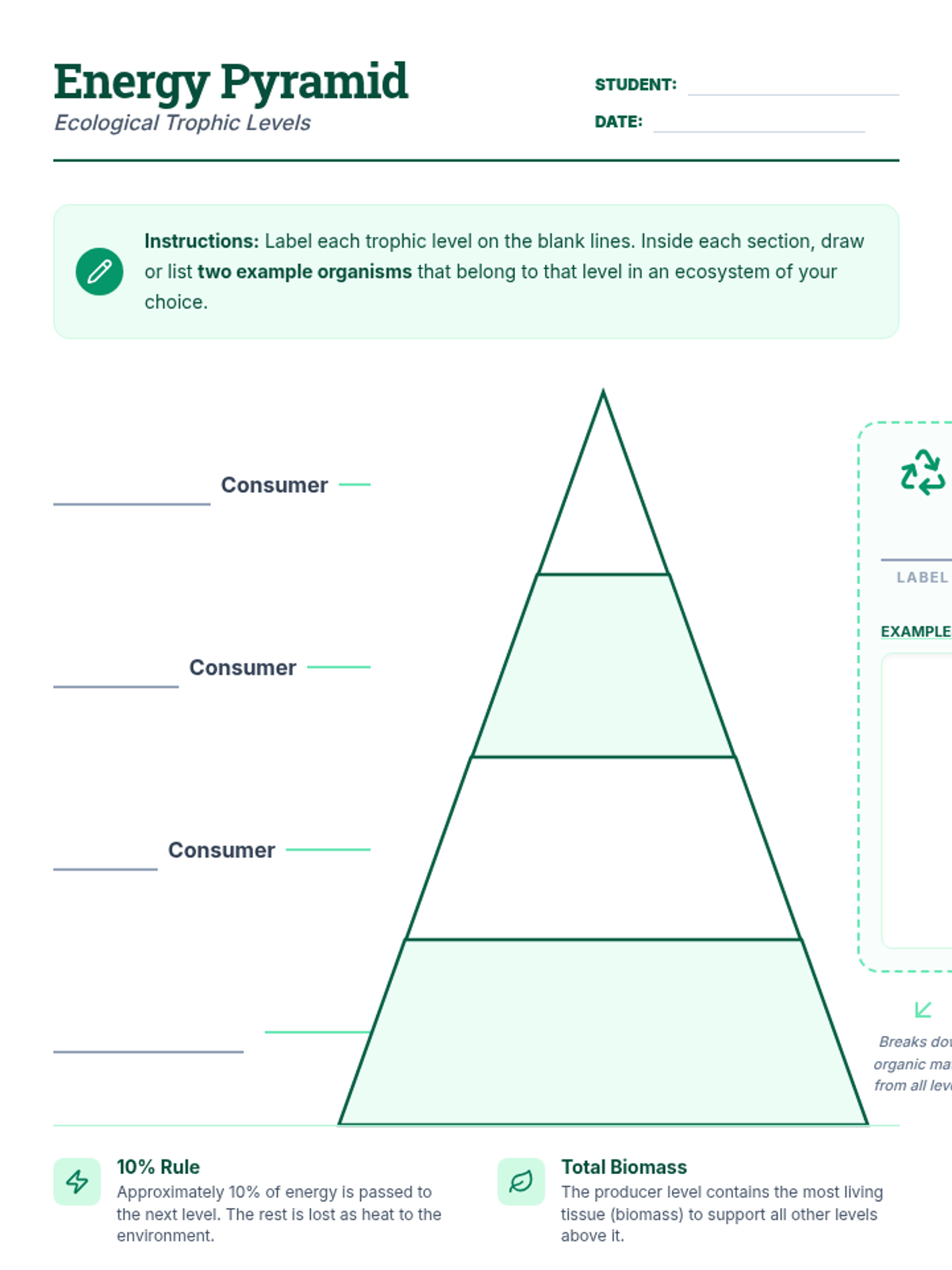
A blank energy pyramid diagram for students to label trophic levels (Producer, Primary Consumer, Secondary Consumer, Tertiary Consumer) and identify corresponding organisms within an ecosystem. Features a section for Decomposers and key ecological concepts at the bottom.
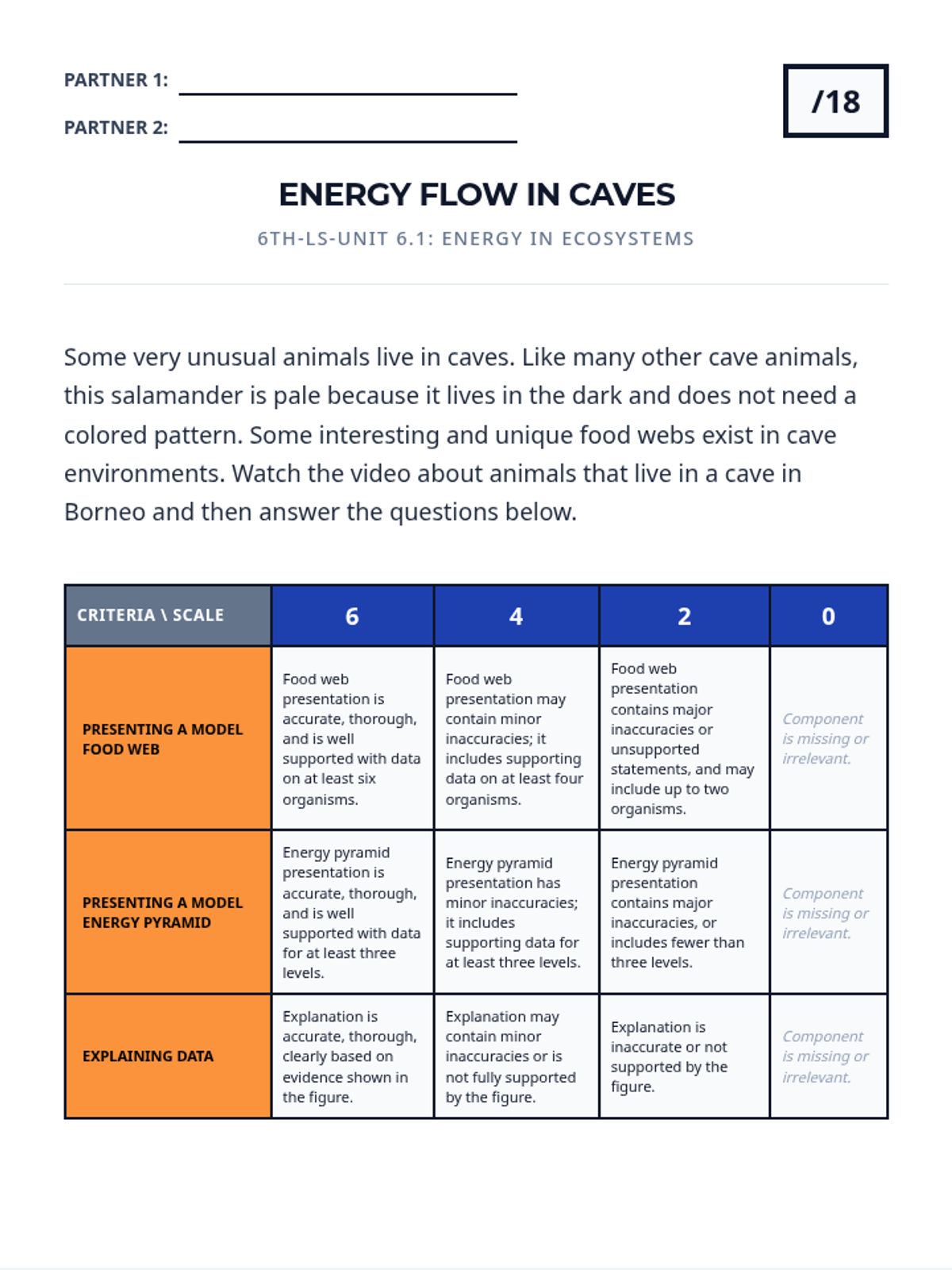
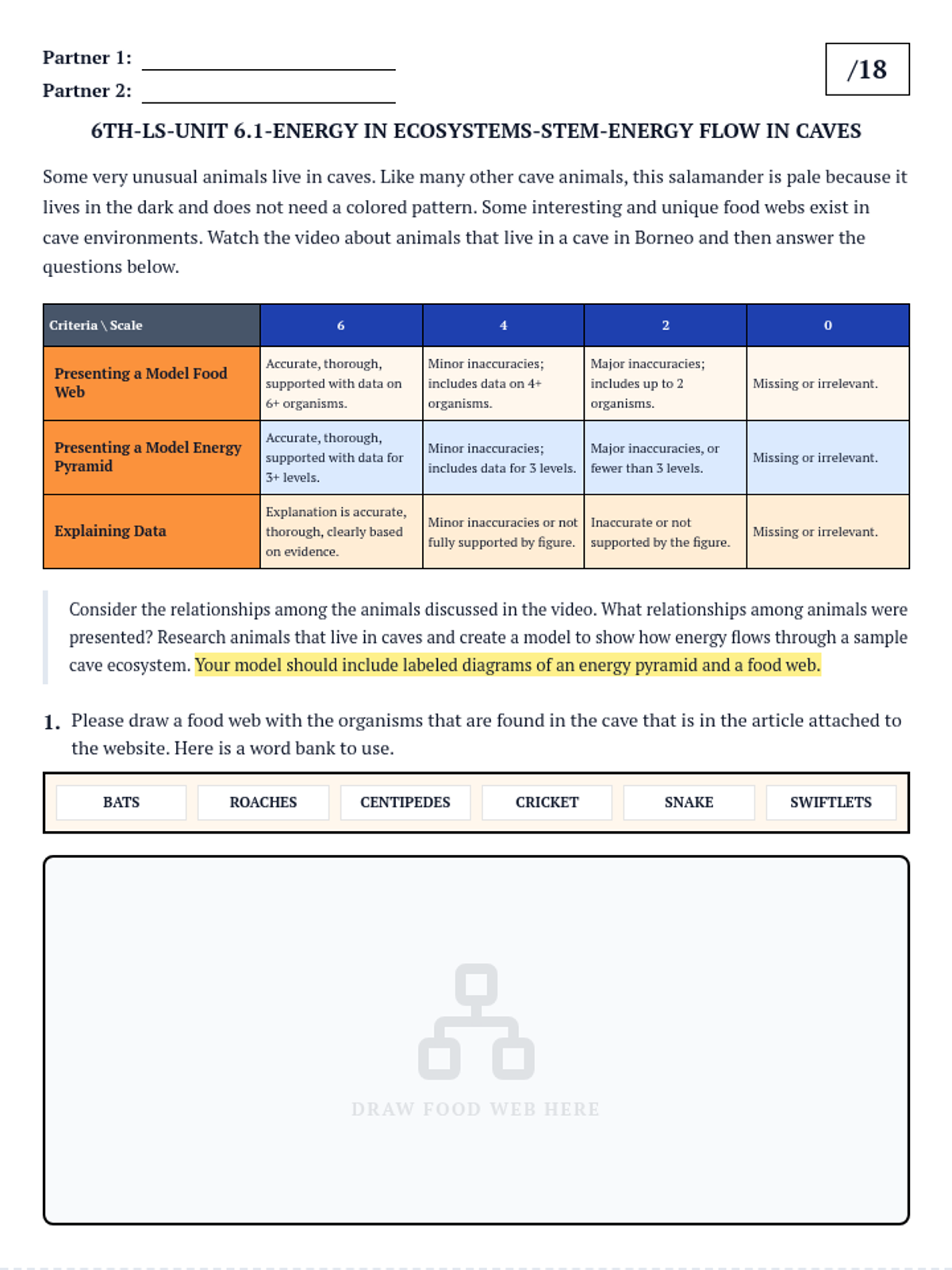
A high-fidelity, 4-page student handout (designed for multi-page printing) exploring energy flow in cave ecosystems. It restores the exact wording from the original source while providing professionally redesigned SVG graphics for the energy pyramid and a detailed, labeled bar chart for data analysis. Each page is meticulously structured to prevent content overlap and awkward breaks.
A high-fidelity, 2-page student handout (front and back) exploring energy flow in cave ecosystems. It restores the exact wording from the original source while providing professionally redesigned SVG graphics for the energy pyramid and a detailed, labeled bar chart for data analysis.