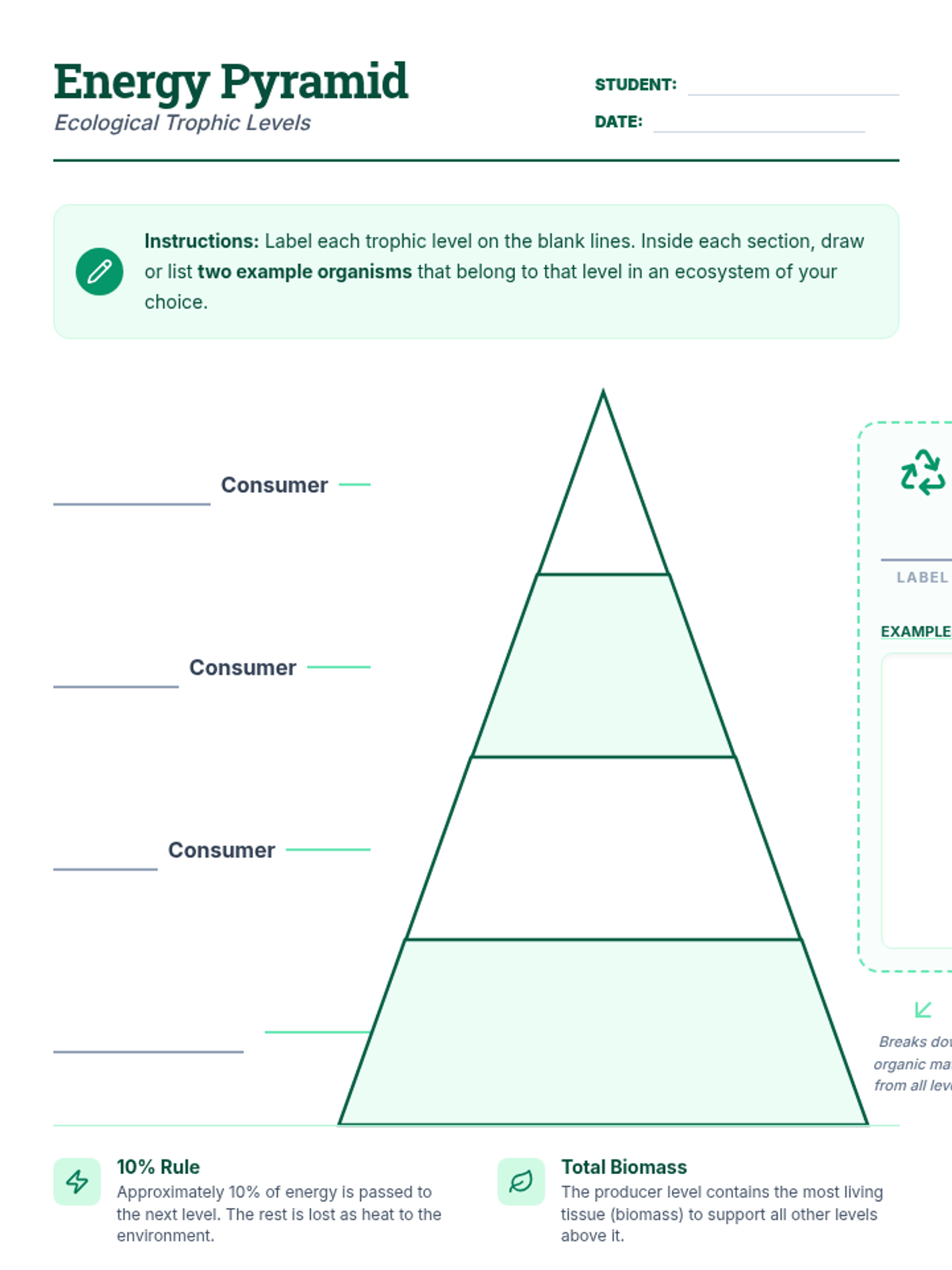
A refined energy pyramid diagram for students to label trophic levels and provide examples of organisms. It includes visual representations of the sun as the energy source and heat loss at each level.
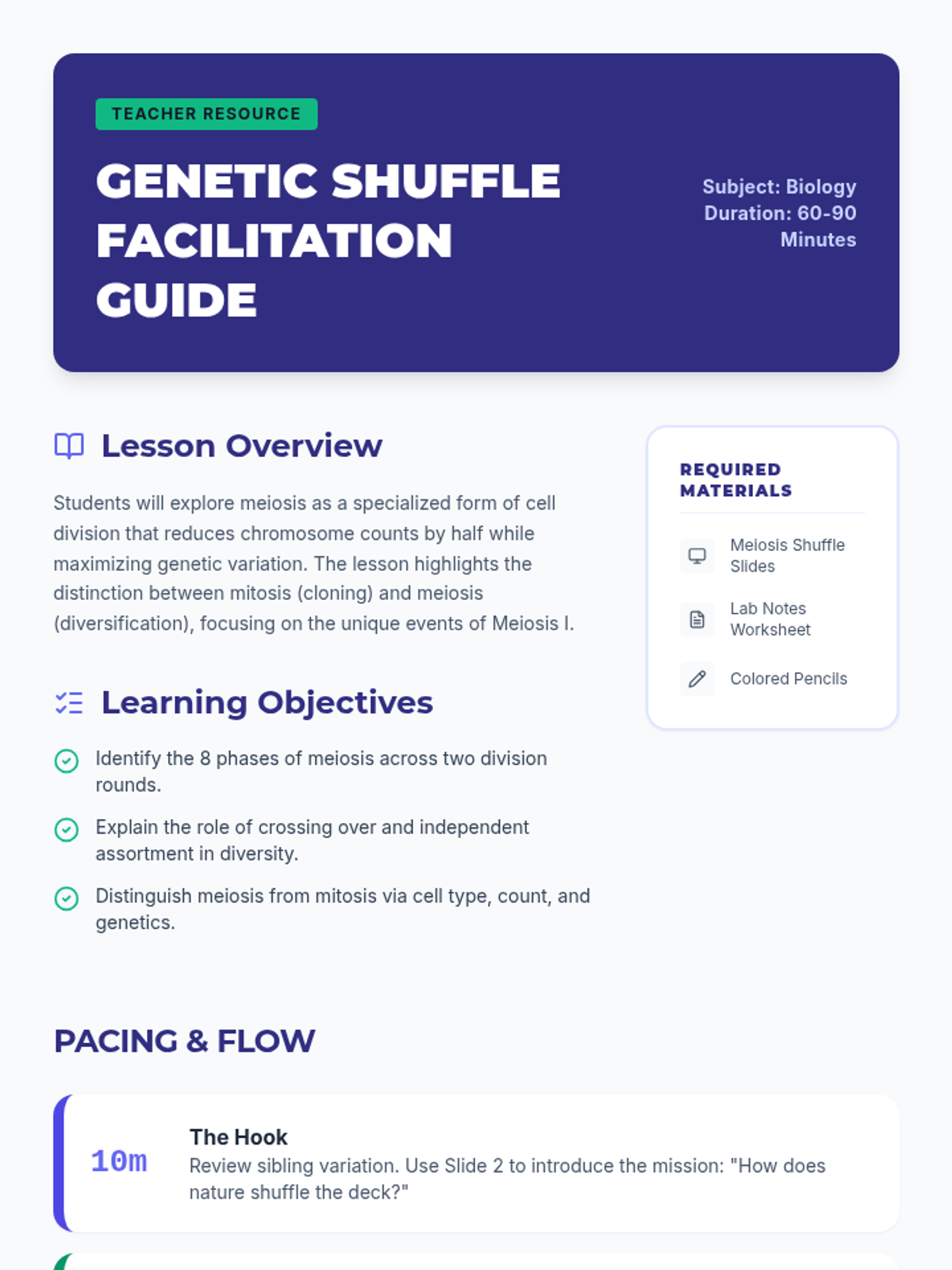
A comprehensive teacher's facilitator guide for the meiosis lesson. Includes learning objectives, a detailed pacing guide, key concept explanations, tips for addressing common misconceptions, and a full answer key for student materials.
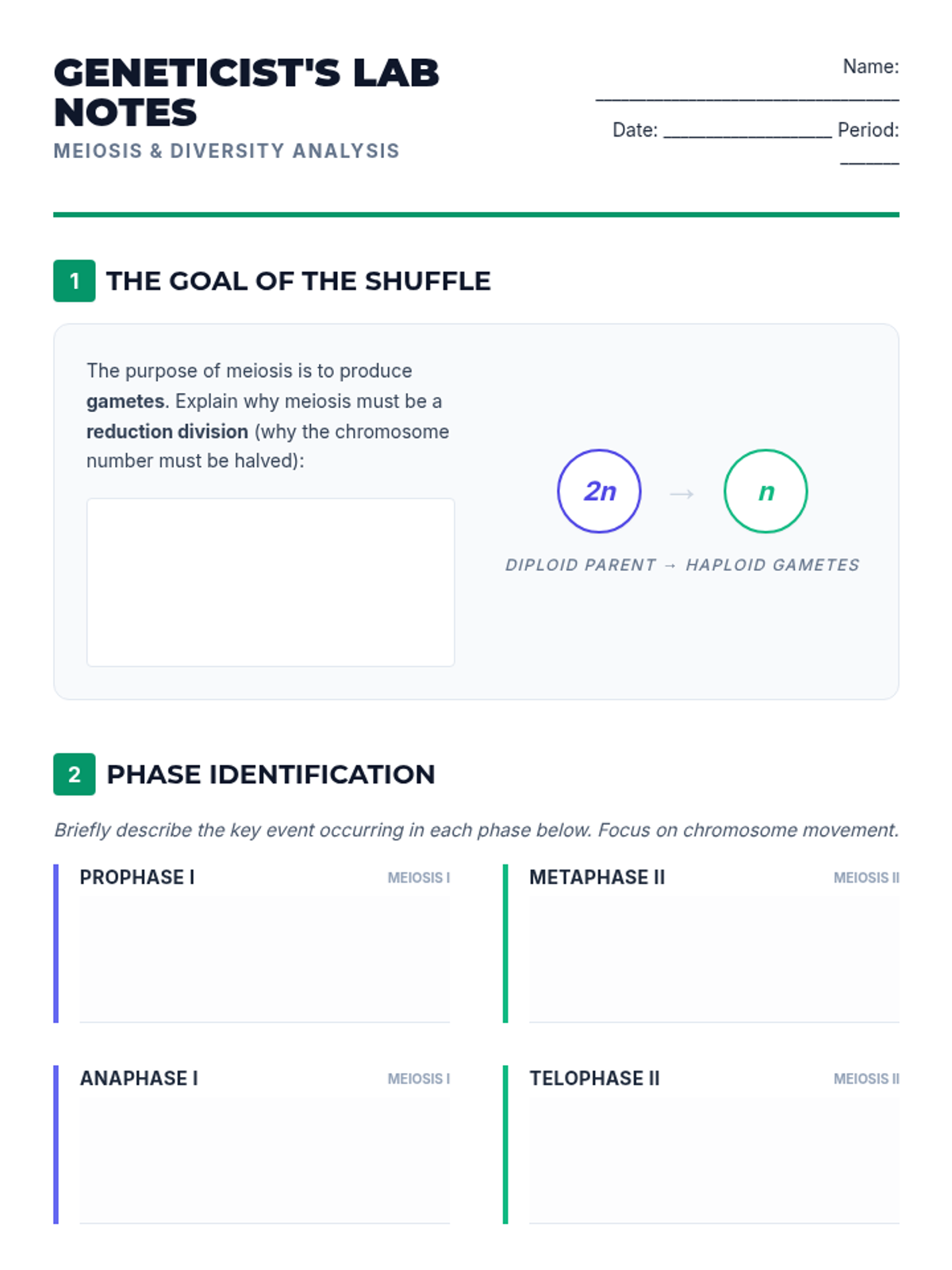
A structured lab notes worksheet for students to record phase identifications, analyze the impact of crossing over, and complete a comparative analysis between mitosis and meiosis. Includes a synthesis question on chromosome counts.
A dynamic and visually engaging slide deck covering the process of meiosis, including its two-stage division, key phases like Prophase I (crossing over), the resulting haploid daughter cells, and a comparison with mitosis.
A blank energy pyramid diagram for students to label trophic levels (Producer, Primary Consumer, Secondary Consumer, Tertiary Consumer) and identify corresponding organisms within an ecosystem. Features a section for Decomposers and key ecological concepts at the bottom.
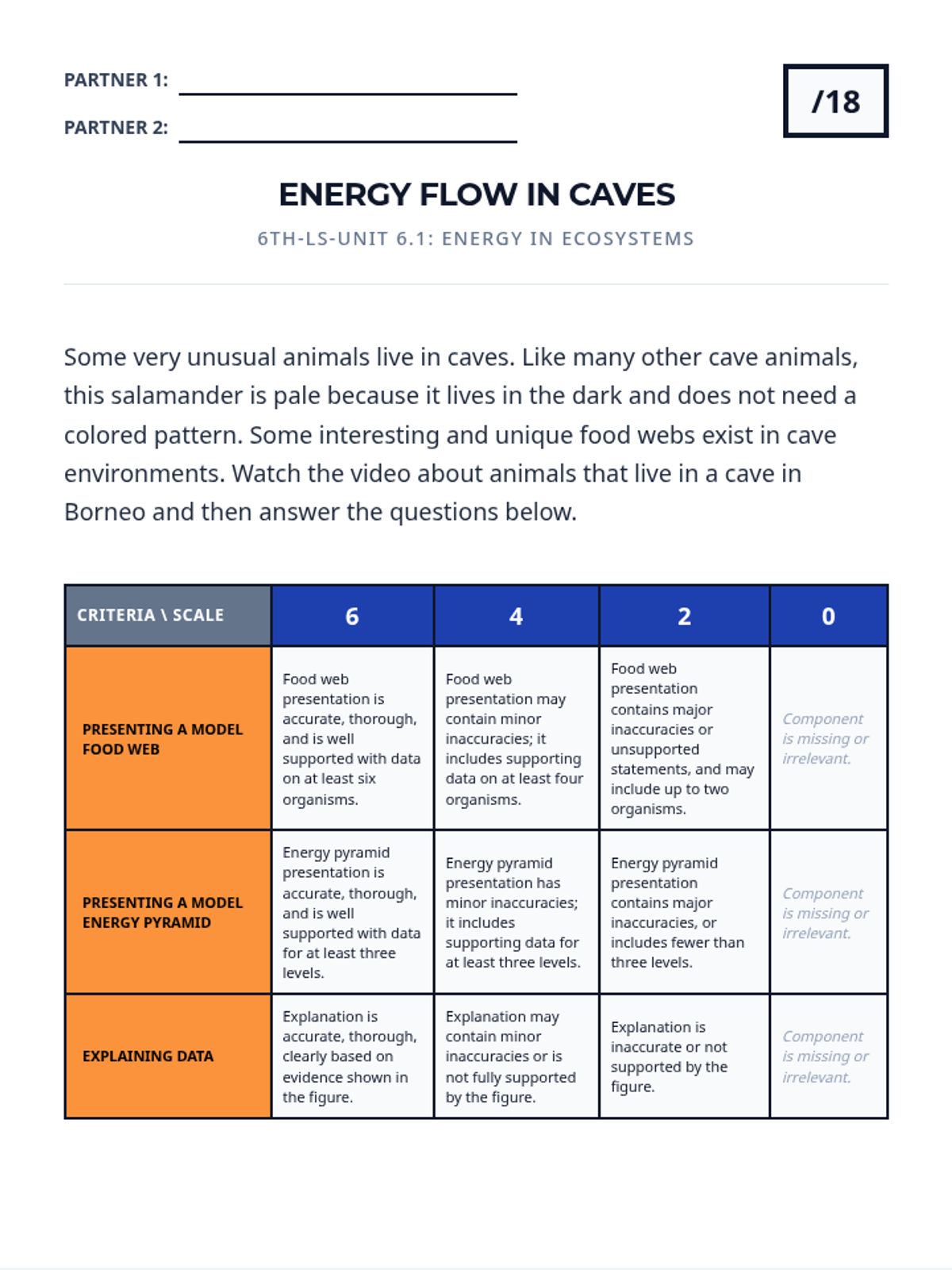
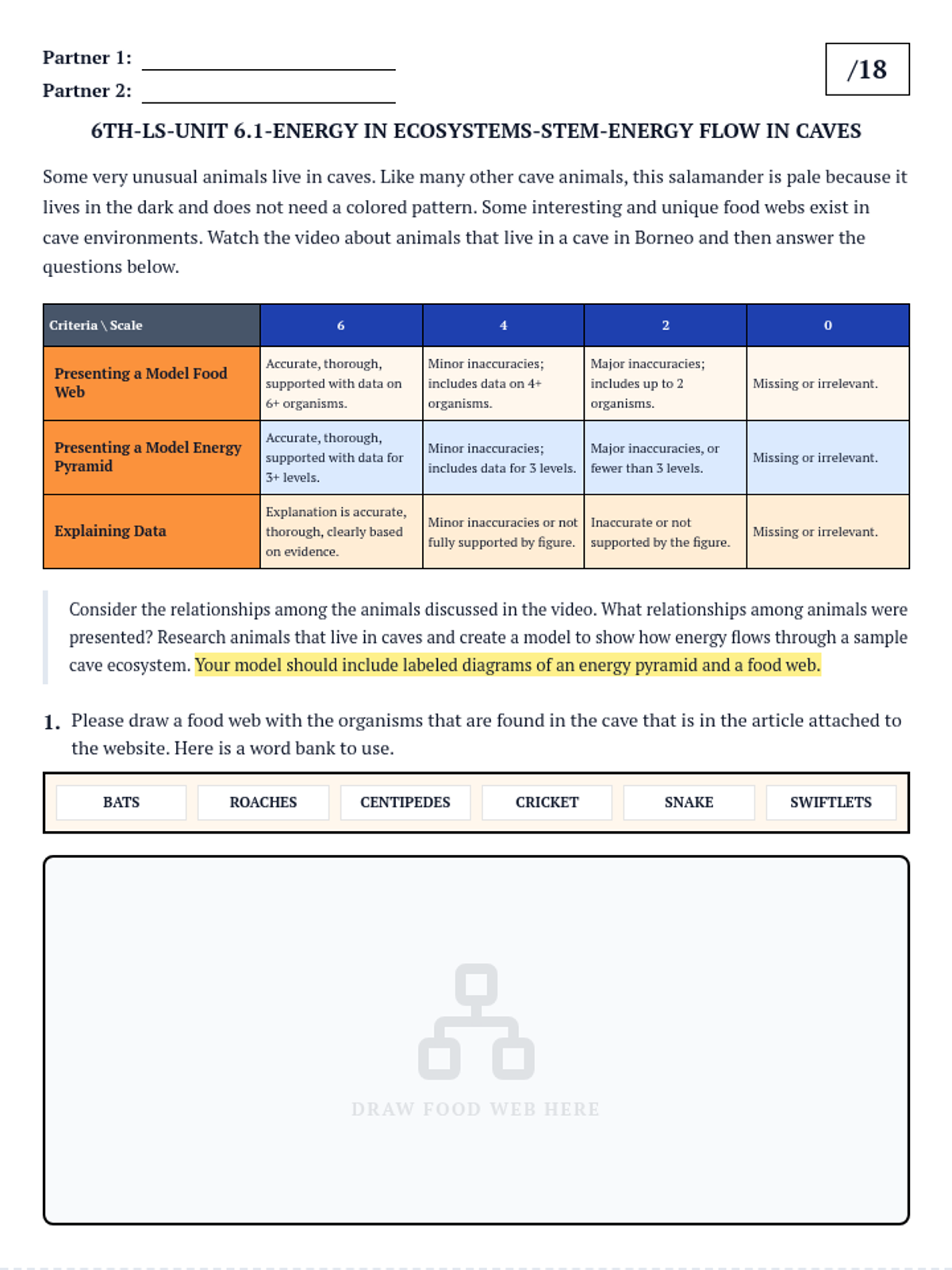
A high-fidelity, 4-page student handout (designed for multi-page printing) exploring energy flow in cave ecosystems. It restores the exact wording from the original source while providing professionally redesigned SVG graphics for the energy pyramid and a detailed, labeled bar chart for data analysis. Each page is meticulously structured to prevent content overlap and awkward breaks.
A high-fidelity, 2-page student handout (front and back) exploring energy flow in cave ecosystems. It restores the exact wording from the original source while providing professionally redesigned SVG graphics for the energy pyramid and a detailed, labeled bar chart for data analysis.
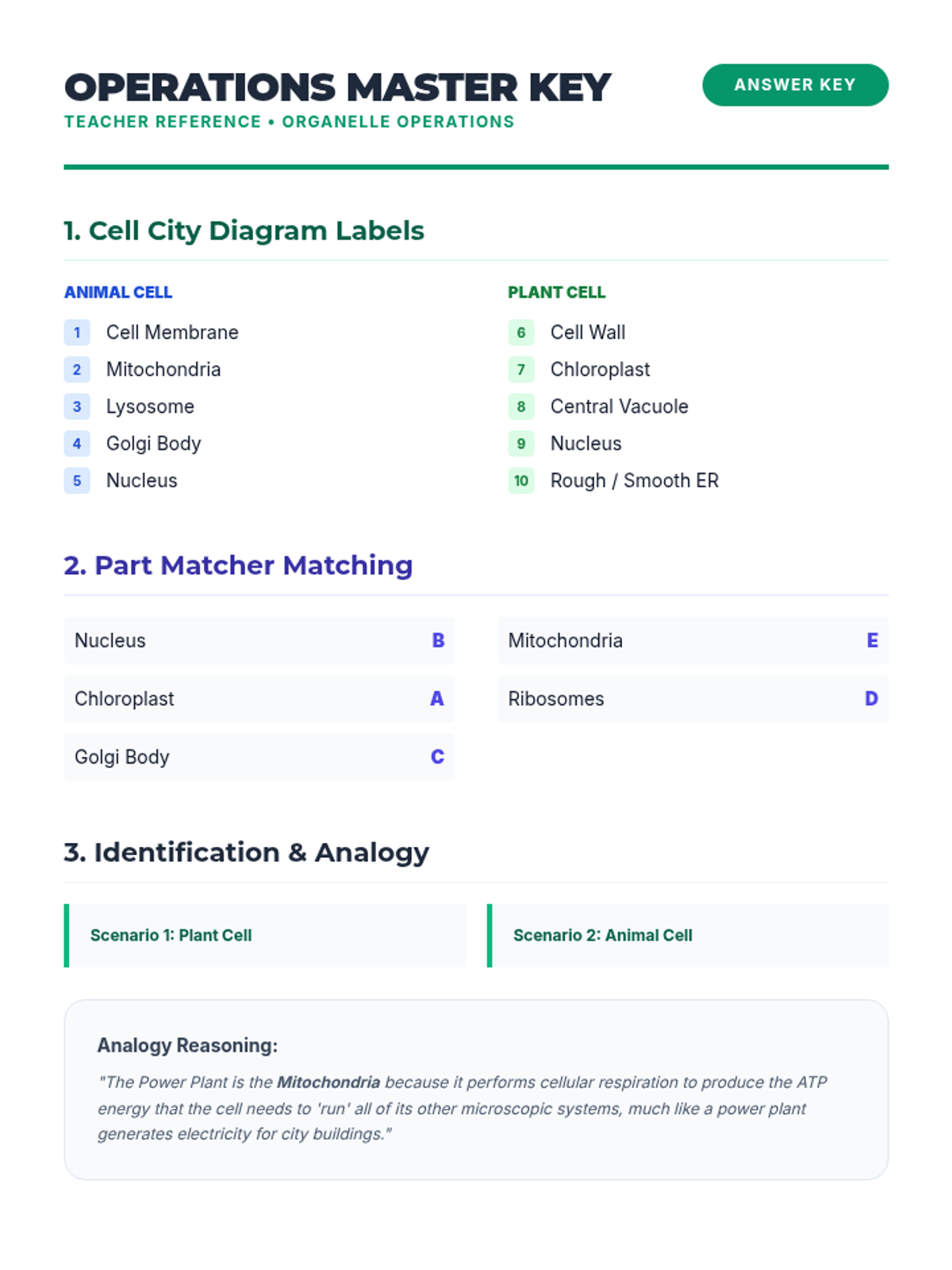
A teacher's answer key for the Cell City Diagram and Part Matcher worksheets. Provides clear answers and supporting evidence for identification scenarios.
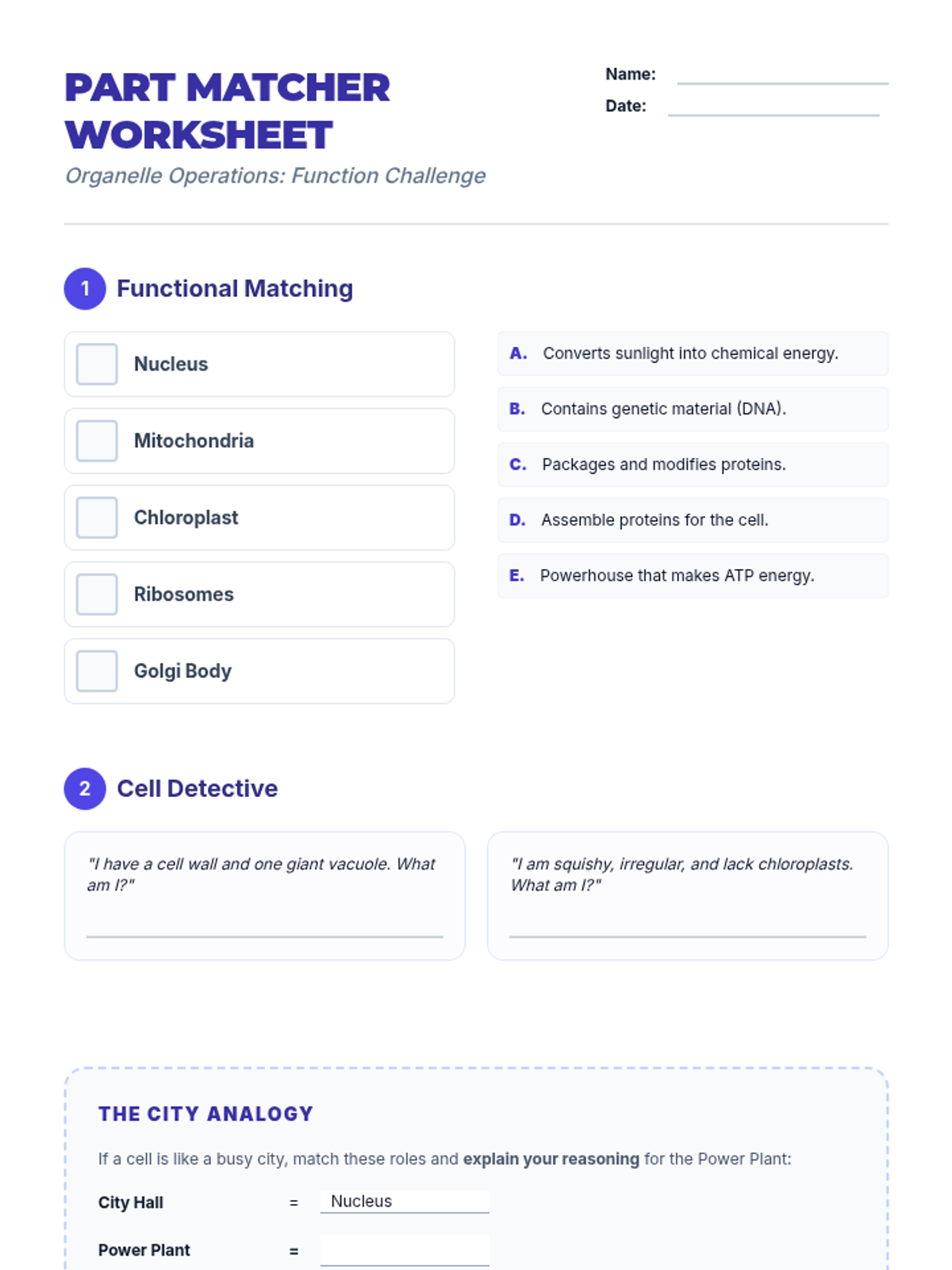
A matching activity for organelle functions and cell type identification scenarios. Designed to test student understanding of biological roles.
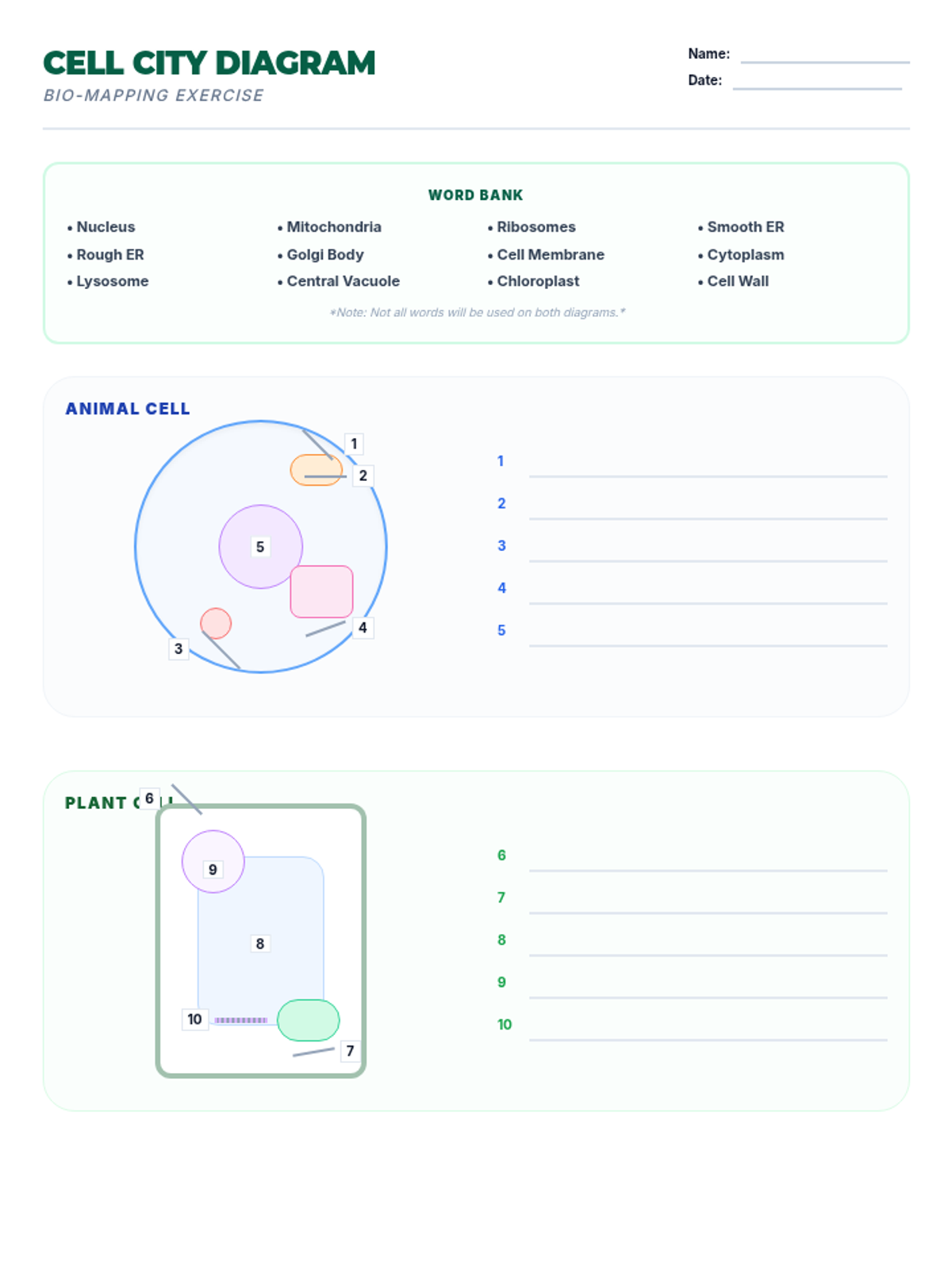
A labeling worksheet for identifying organelles in both animal and plant cells. Includes a word bank and structured writing areas for labeling diagrams.
A comprehensive visual guide to animal and plant cell organelles, highlighting key structures, energy production, manufacturing, and structural differences. Includes high-visibility text and modern icons.
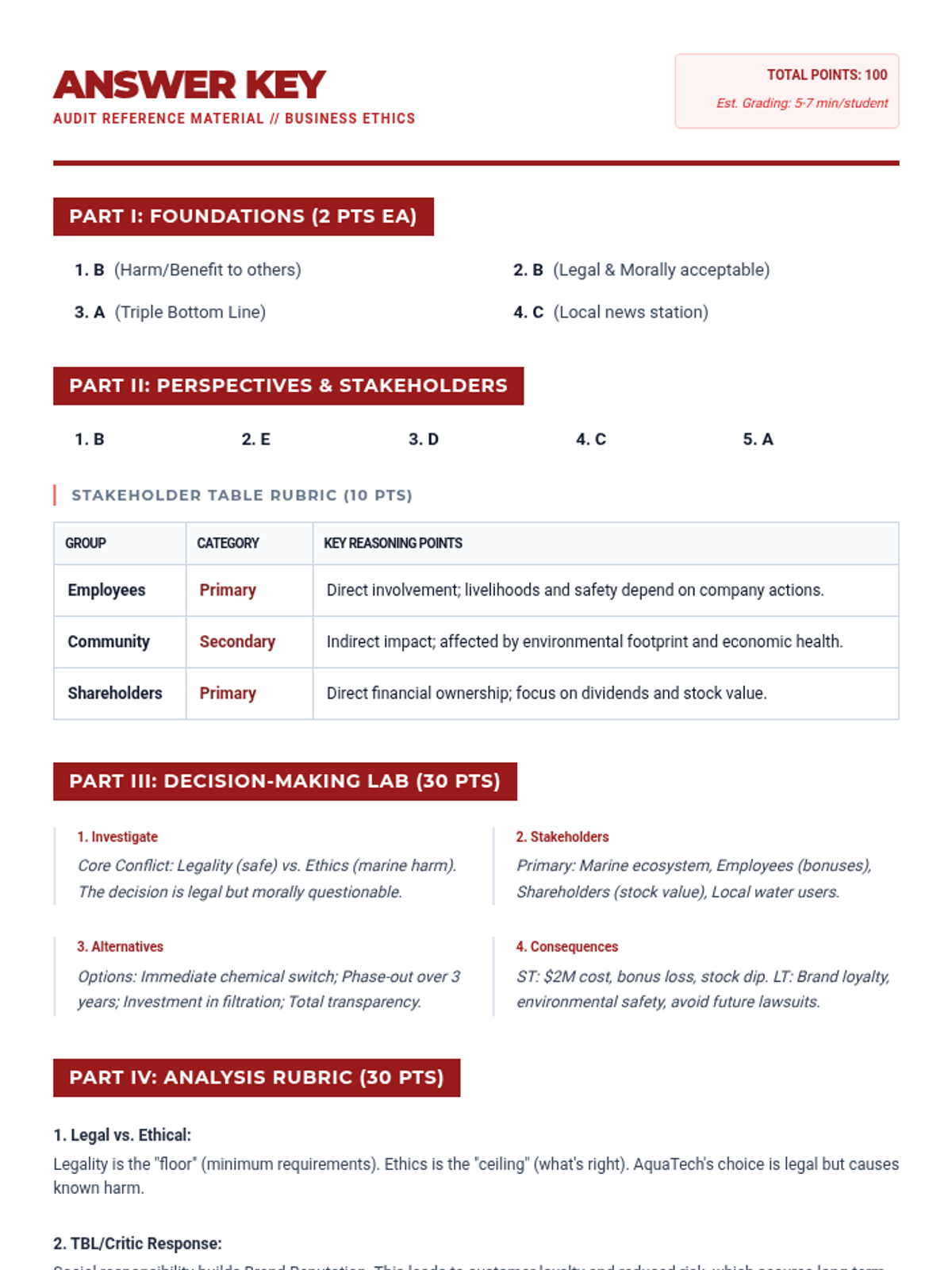
A detailed answer key for the Ethics Audit Exam, providing correct answers for multiple-choice and matching sections, along with grading rubrics and sample responses for stakeholder analysis and scenario-based questions. Each section starts on a new page to match the worksheet layout.
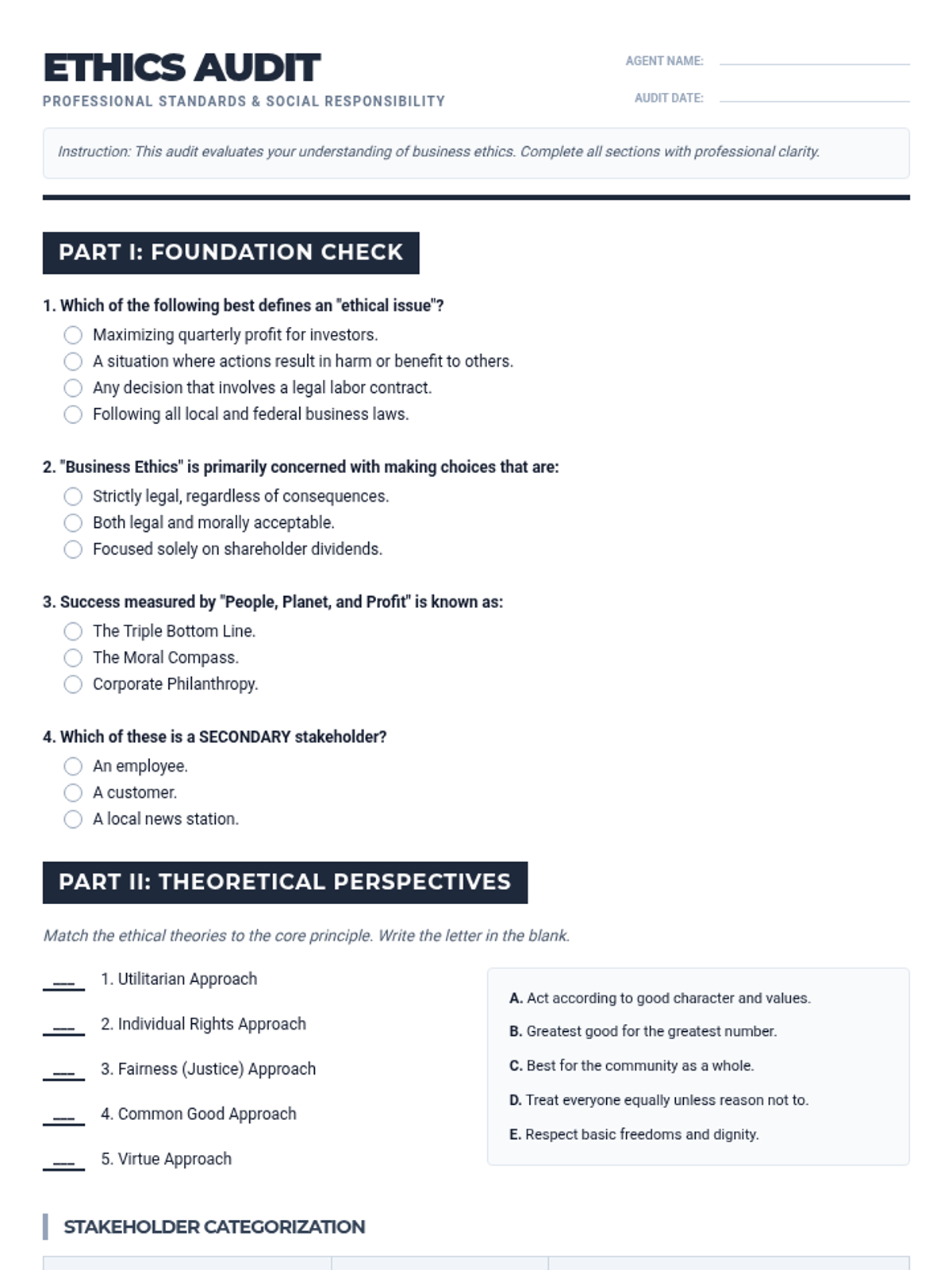
A comprehensive final exam for high school students on Business Ethics and Social Responsibility. Each section is set to start on a new page to ensure content is never split across pages.
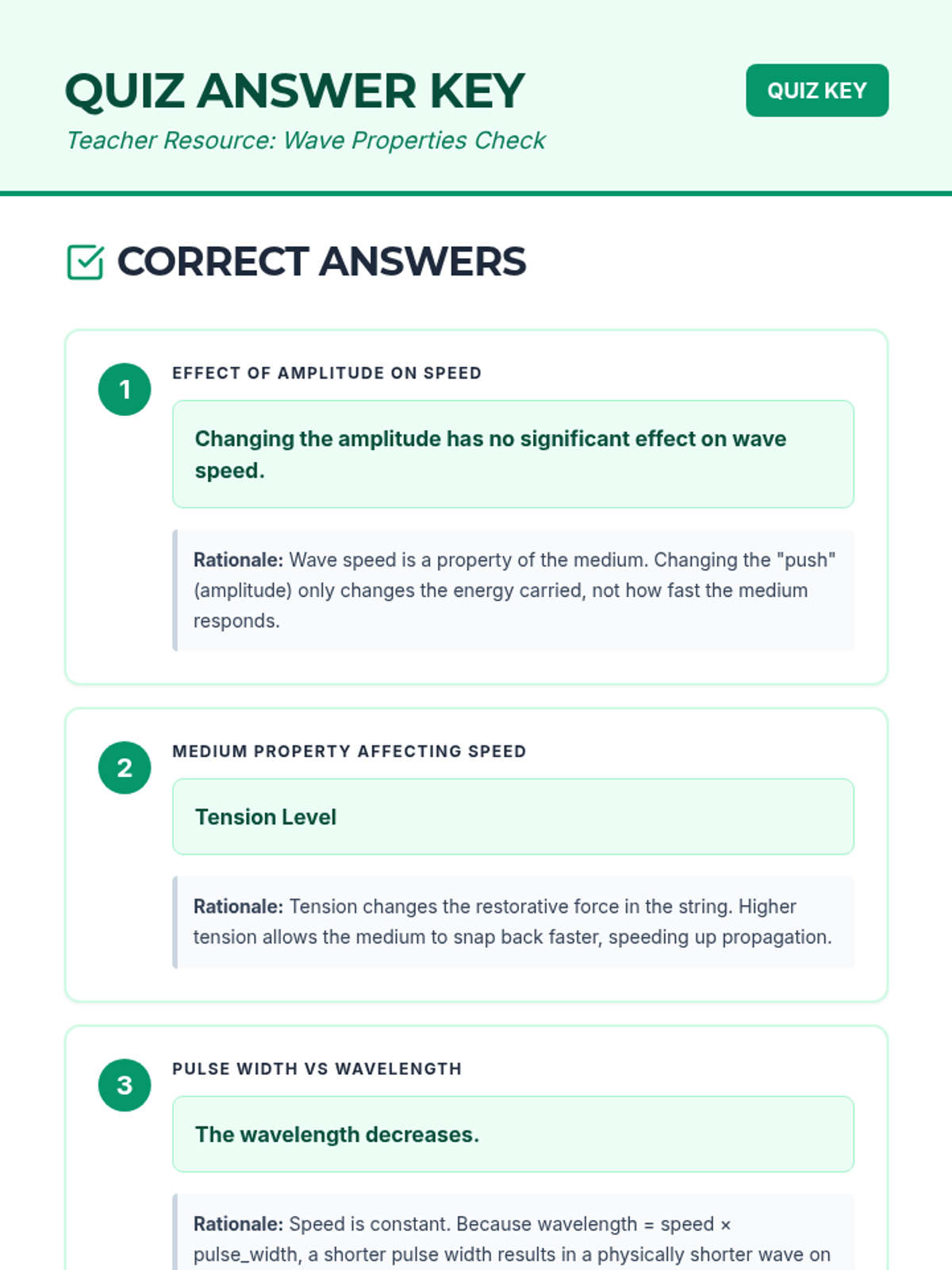
A teacher answer key for the Wave Properties Quiz. Includes correct choices and brief scientific rationales for each question based on the PhET String Wave simulation. Revised for better page flow and contrast.
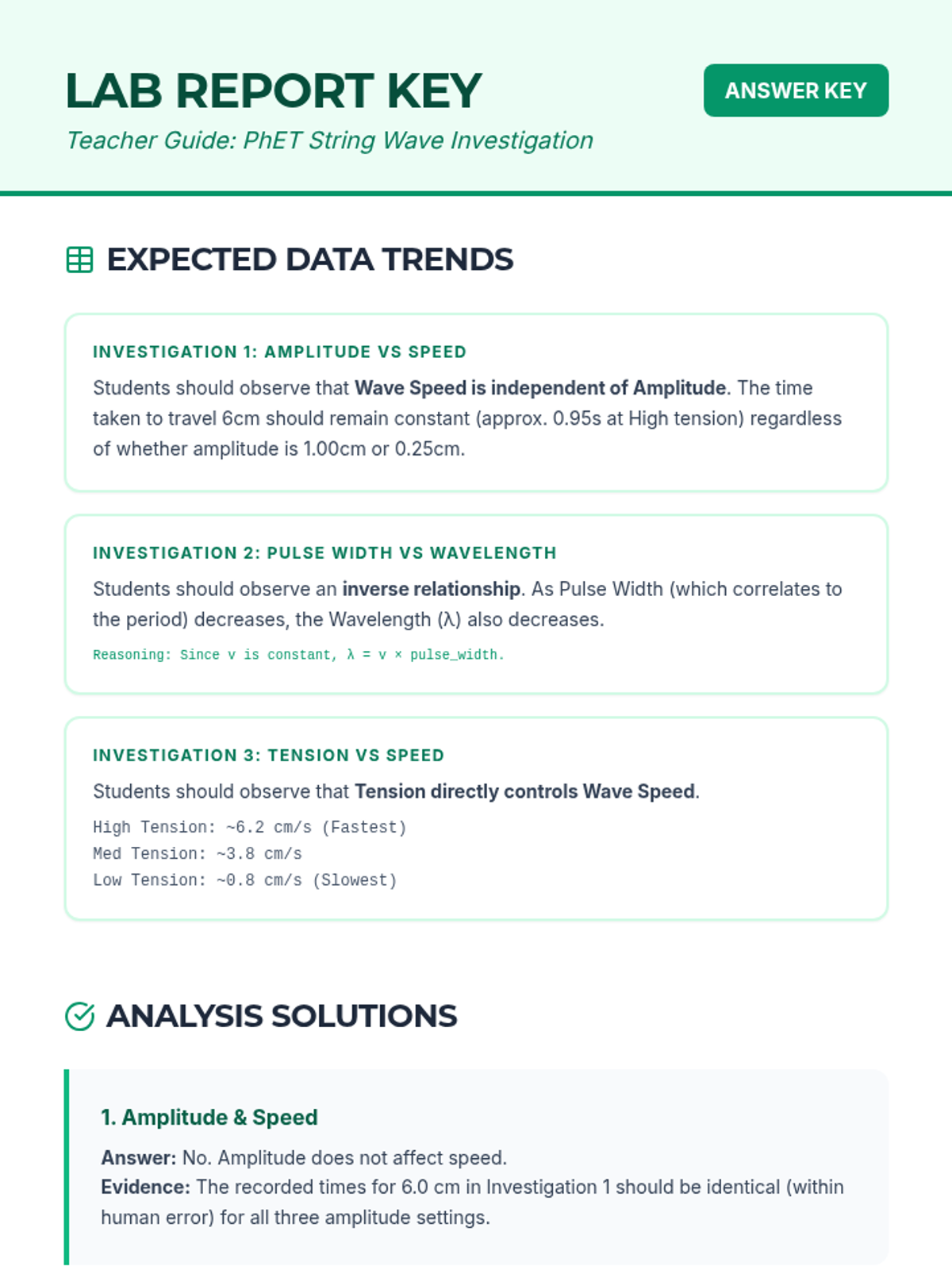
A comprehensive teacher answer key for the PhET String Wave Lab. Provides expected data trends for amplitude, wavelength, and tension investigations, as well as model answers for the analysis questions. Revised for better page flow and contrast.
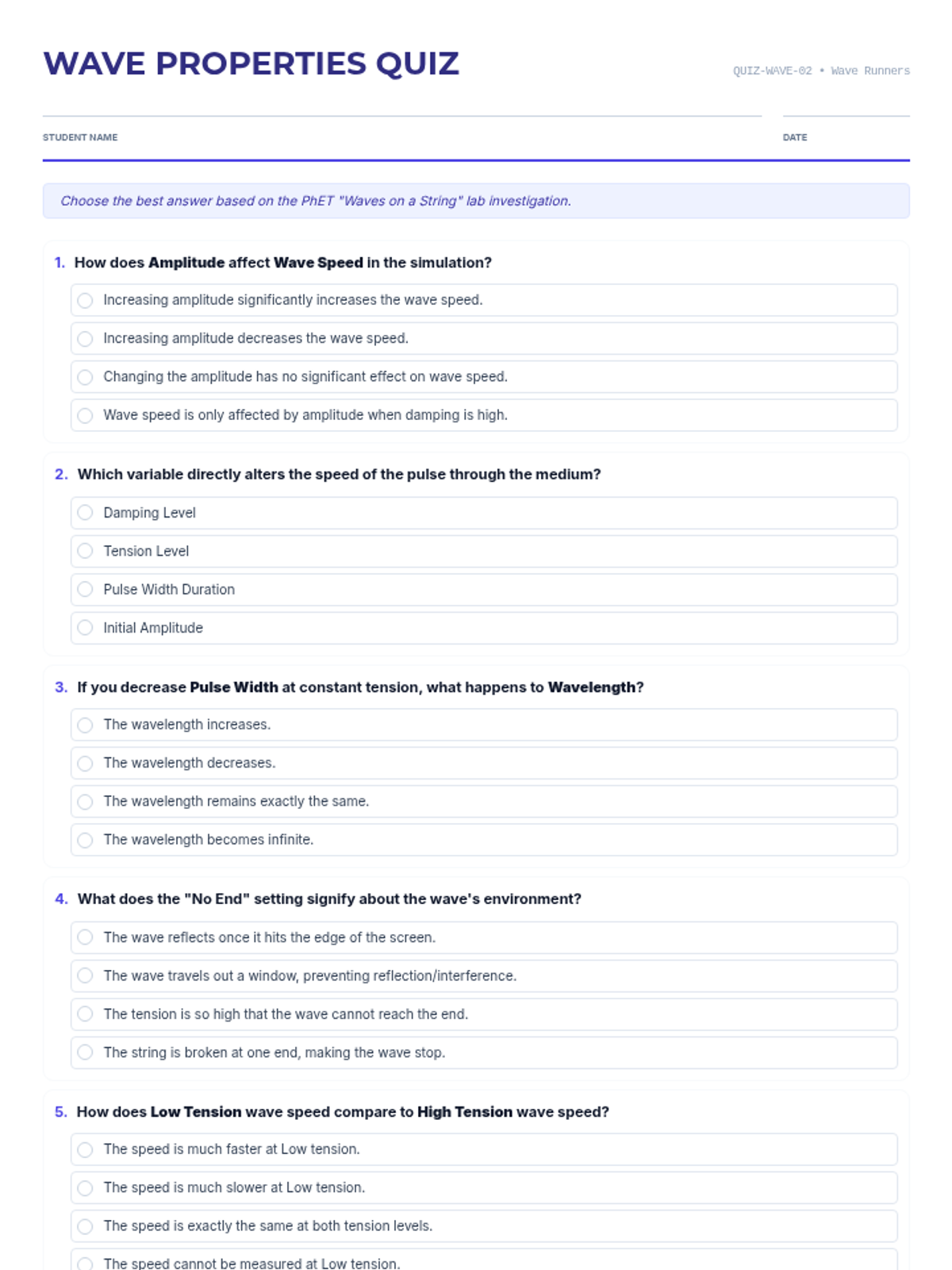
A compact one-page multiple-choice quiz assessment designed to accompany the PhET String Wave Lab. Questions focus on the physical relationships between wave properties like speed, tension, amplitude, and wavelength. Uniform styling applied to all answer choices.
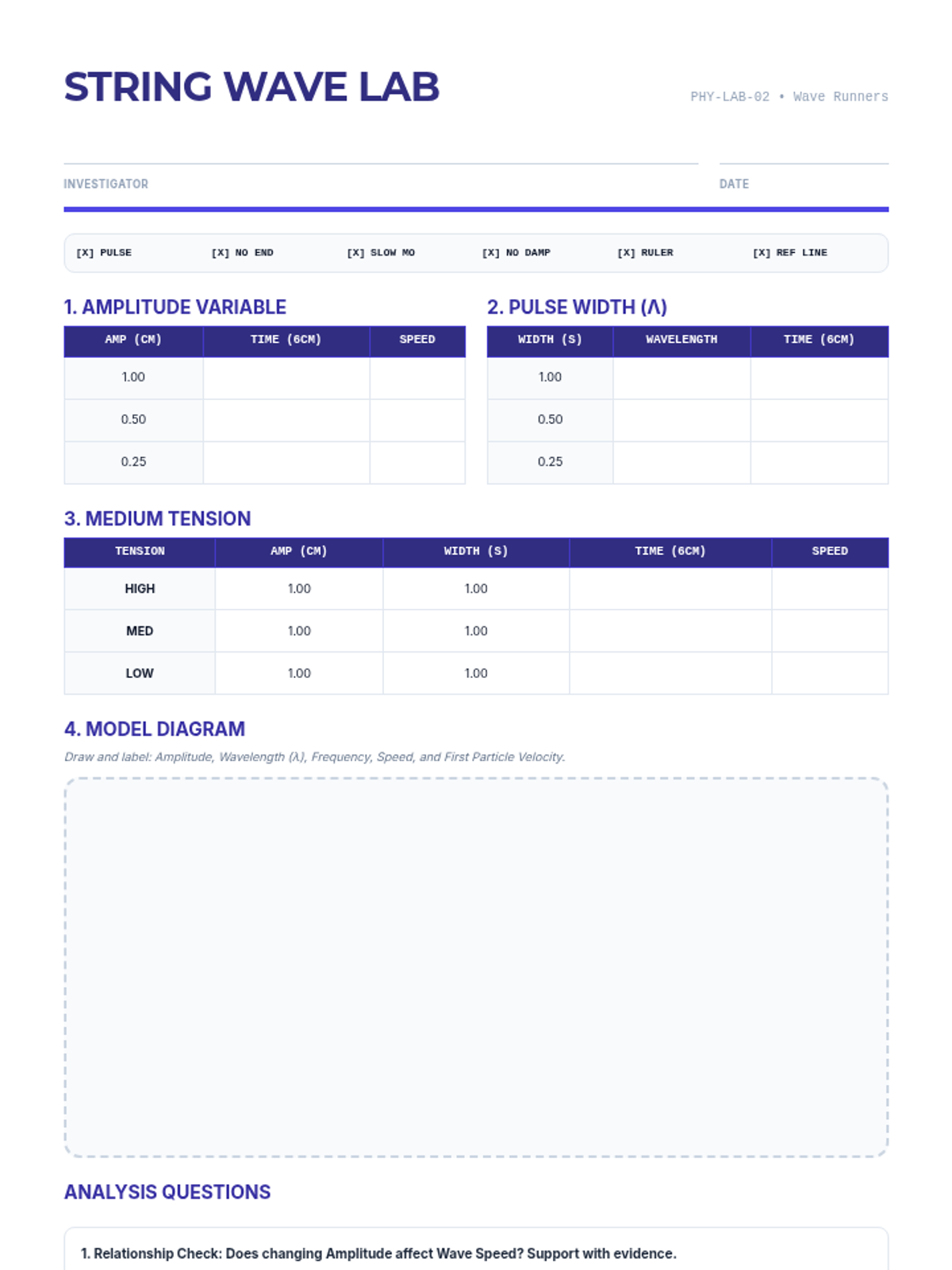
A student-facing lab report worksheet for the PhET 'Waves on a String' simulation. Includes data tables for investigating amplitude, pulse width, and tension, along with space for modeling and conceptual analysis. Revised for better page density and layout. Improved handwriting space for diagrams.
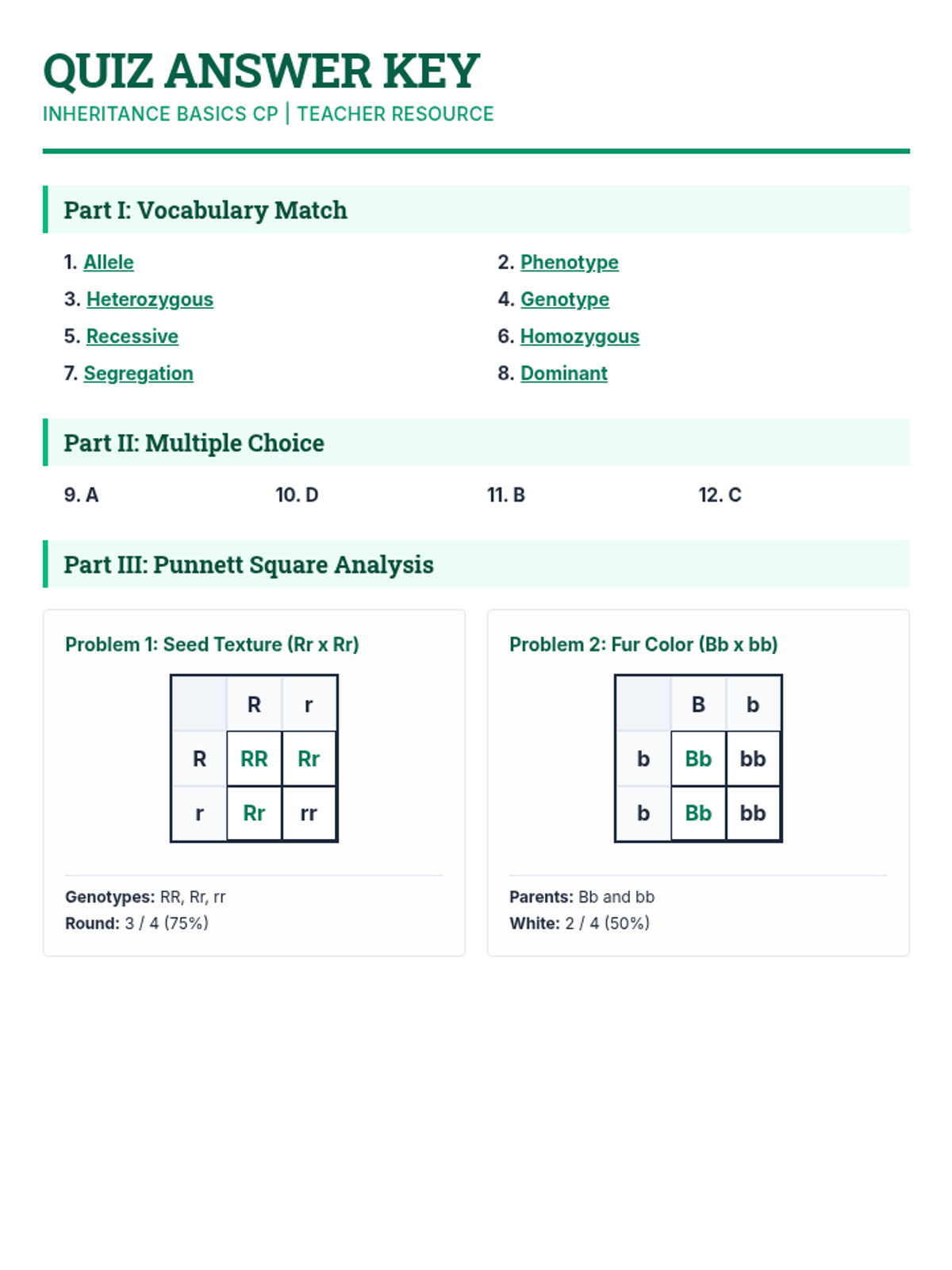
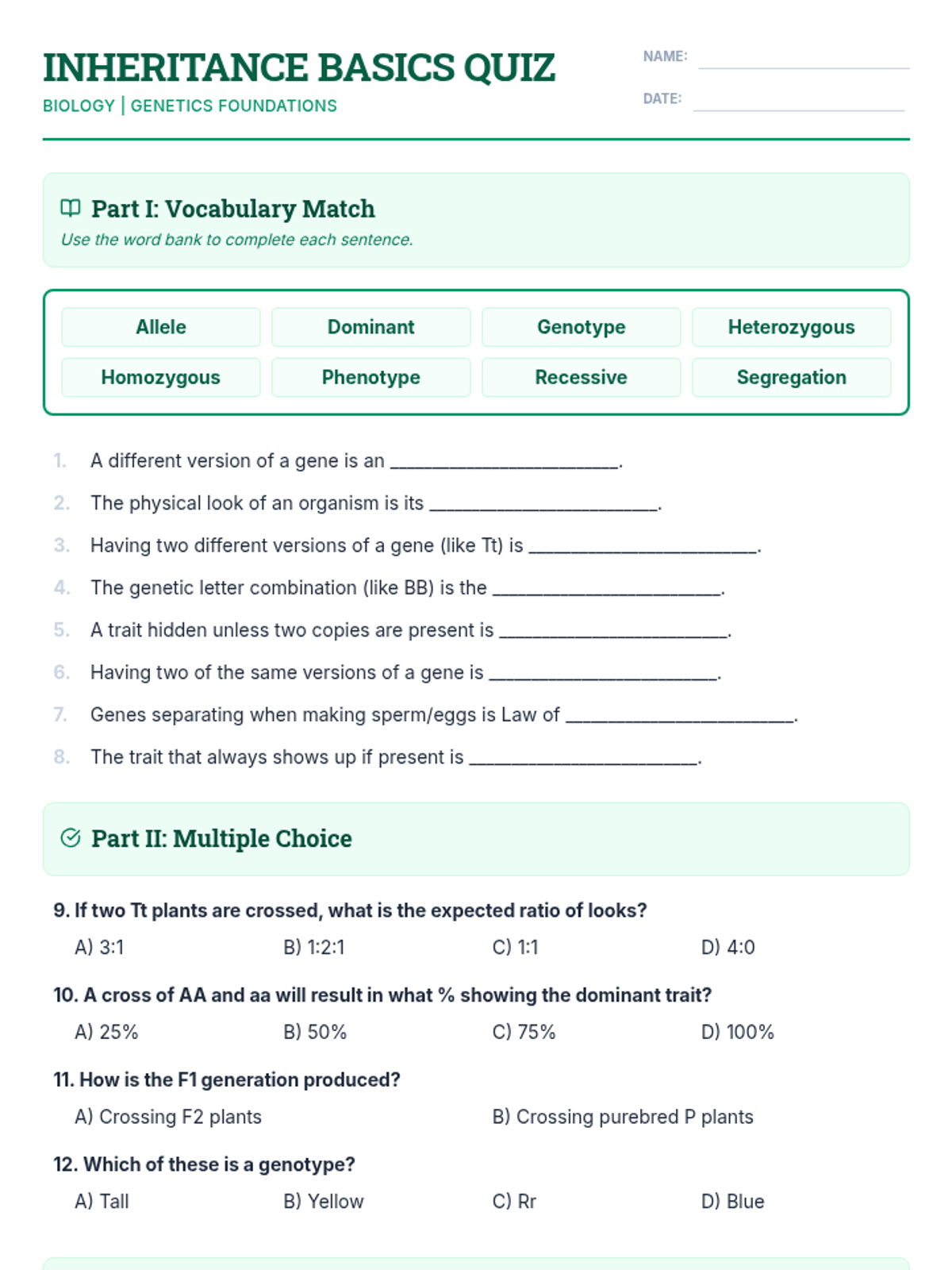
A comprehensive teacher answer key for the Inheritance Basics CP Quiz, providing clear answers for vocabulary matching, multiple choice, and completed Punnett squares with expected results. Optimized to fit on a single page.
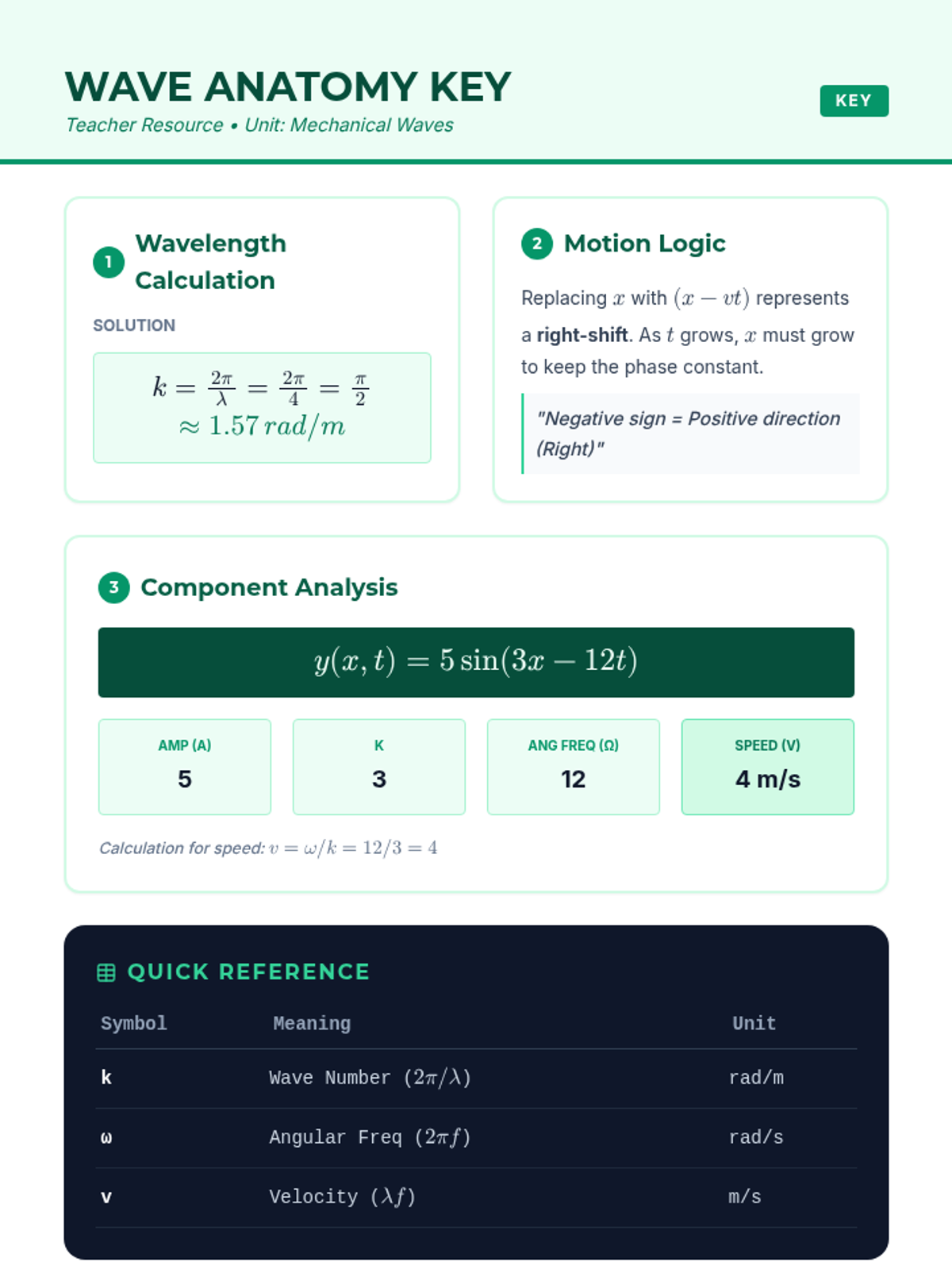
A comprehensive teacher answer key for the Wave Anatomy Reading. Provides clear, step-by-step solutions for calculation and conceptual questions, along with pedagogical tips. Revised to address rendering issues, page breaks, and contrast.
A simplified genetics quiz for CP biology students, featuring a word bank for vocabulary and clearer, less complex phrasing in the questions. It includes guided Punnett square problems with direct prompts for genotypic and phenotypic outcomes. Re-designed to ensure optimal page layout and readability.
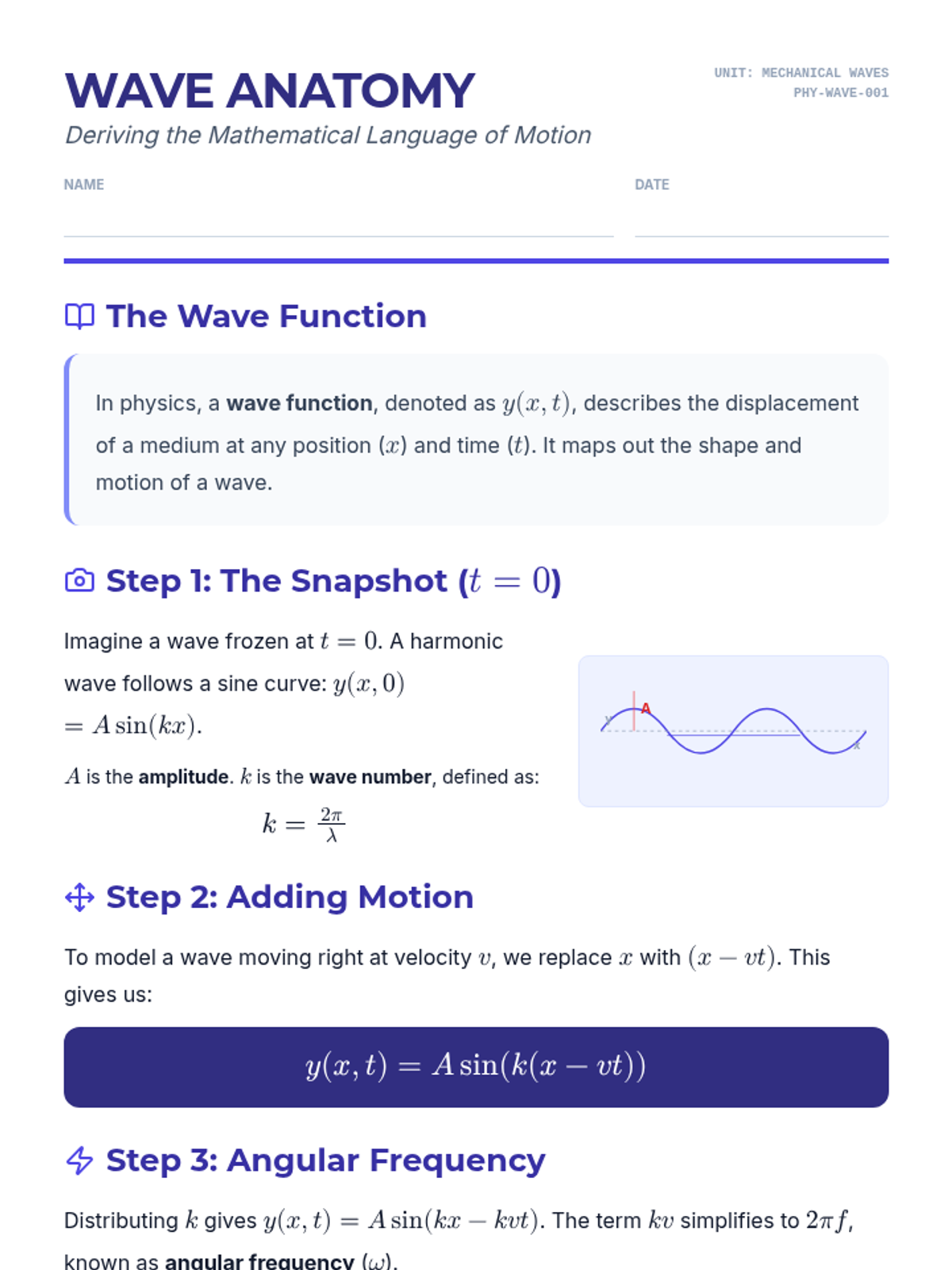
A comprehensive reading passage that explains the conceptual and mathematical derivation of the standard wave function. It covers the transition from a spatial snapshot to a dynamic moving wave, introducing key variables like wave number and angular frequency, and includes comprehension questions. Revised to improve page flow and icon consistency.