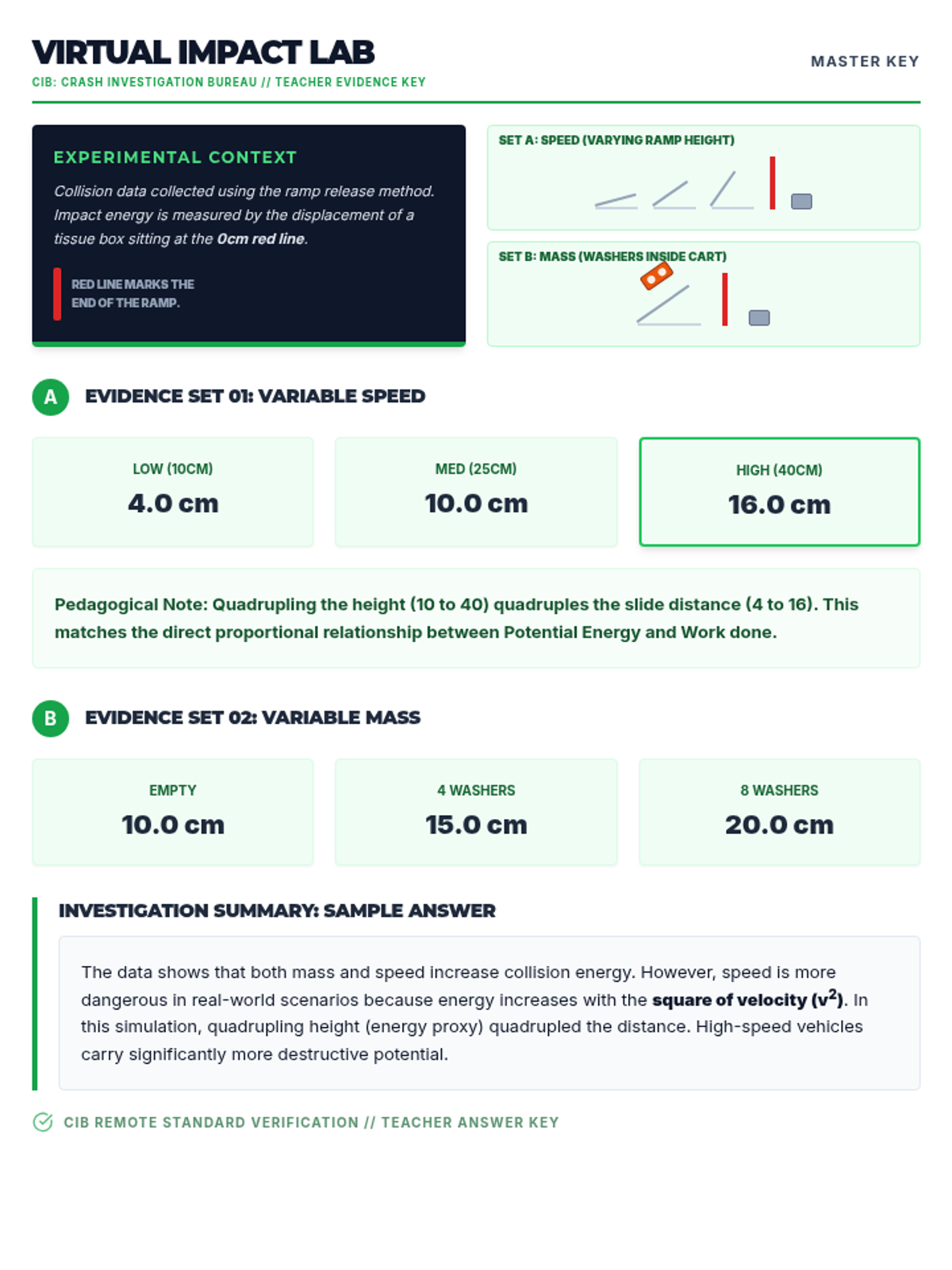
A comprehensive teacher answer key for the PhET String Wave Lab. Provides expected data trends for amplitude, wavelength, and tension investigations, as well as model answers for the analysis questions. Revised for better page flow and contrast.
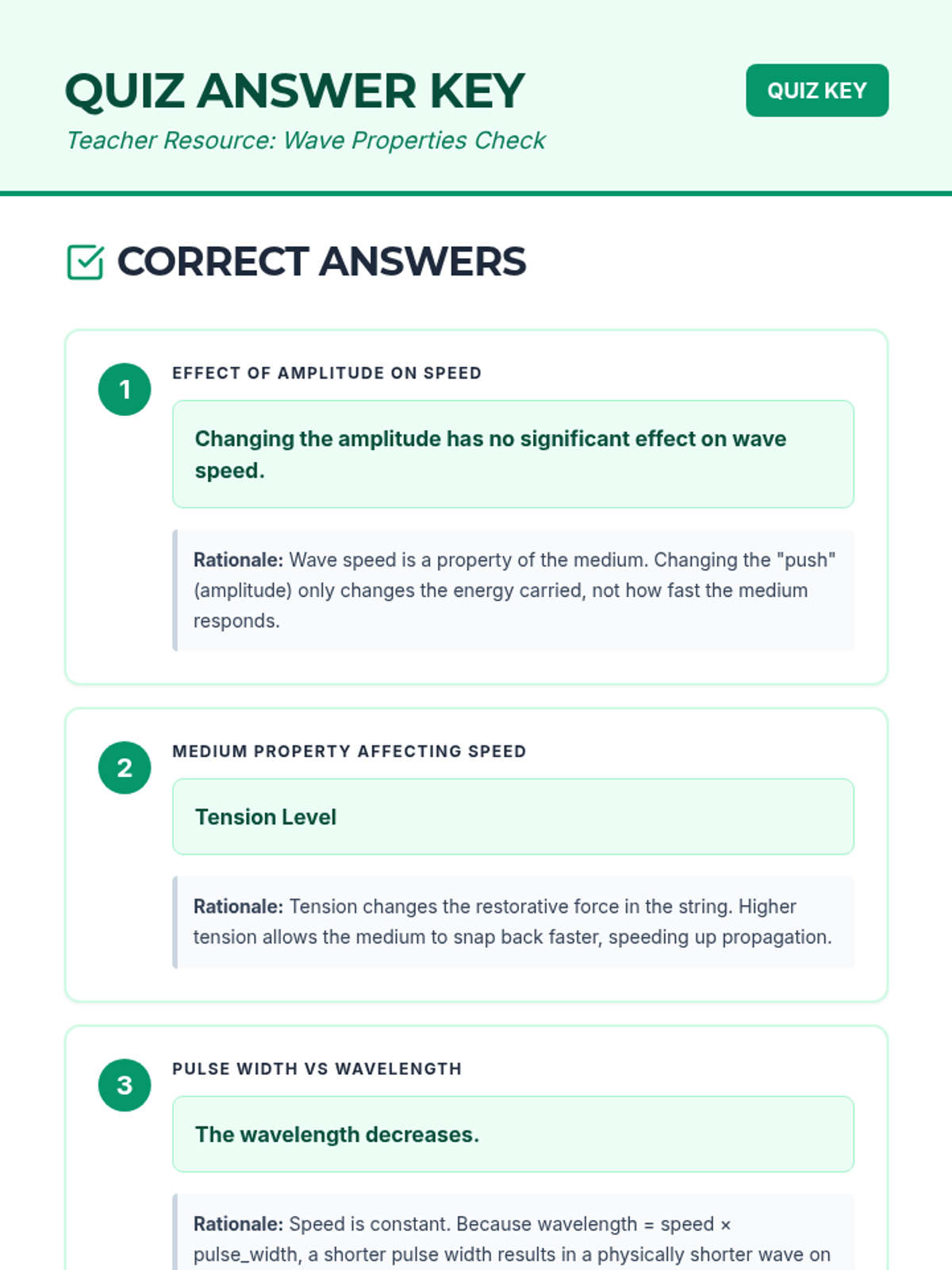
A teacher answer key for the Wave Properties Quiz. Includes correct choices and brief scientific rationales for each question based on the PhET String Wave simulation. Revised for better page flow and contrast.
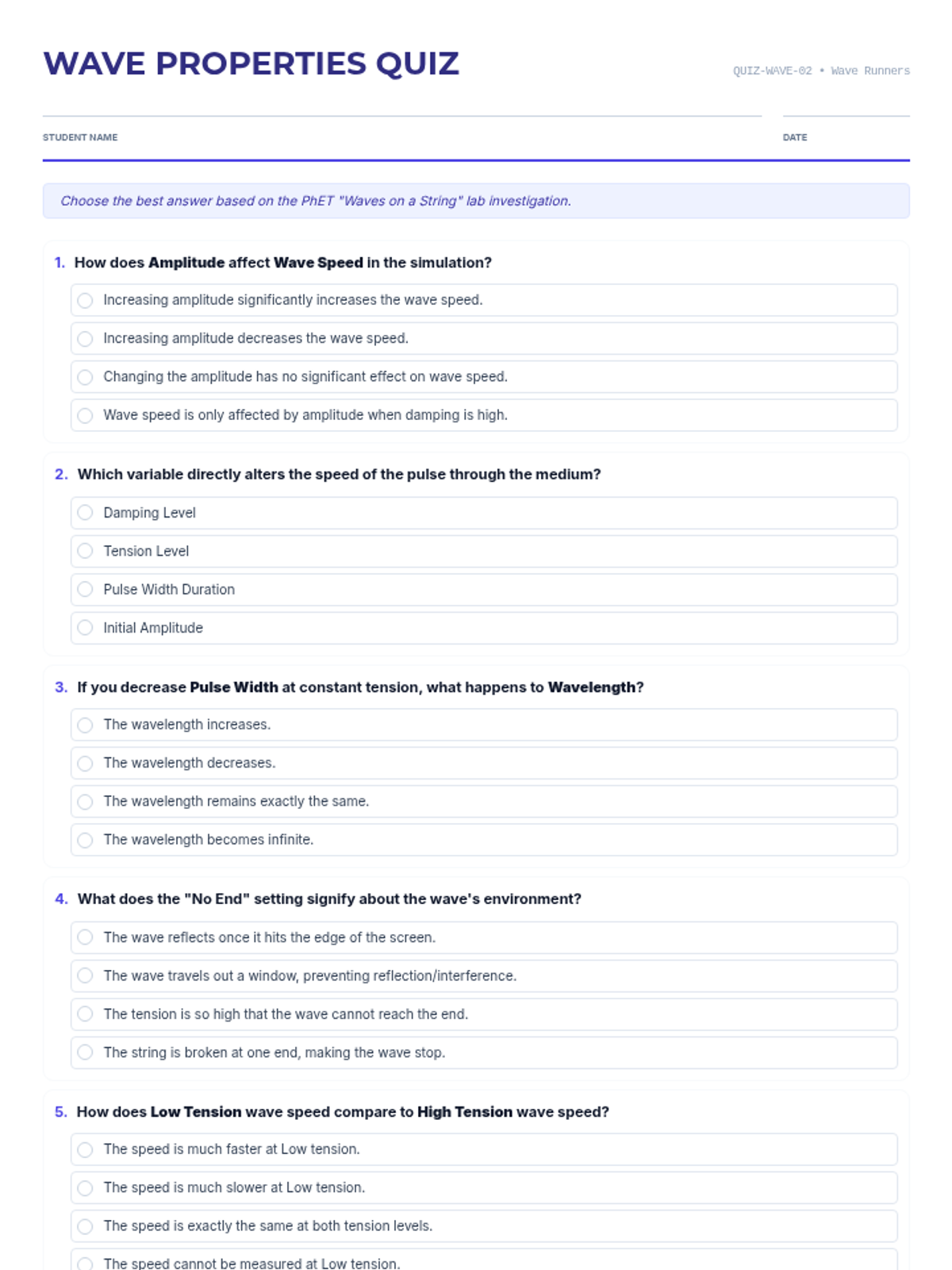
A compact one-page multiple-choice quiz assessment designed to accompany the PhET String Wave Lab. Questions focus on the physical relationships between wave properties like speed, tension, amplitude, and wavelength. Uniform styling applied to all answer choices.
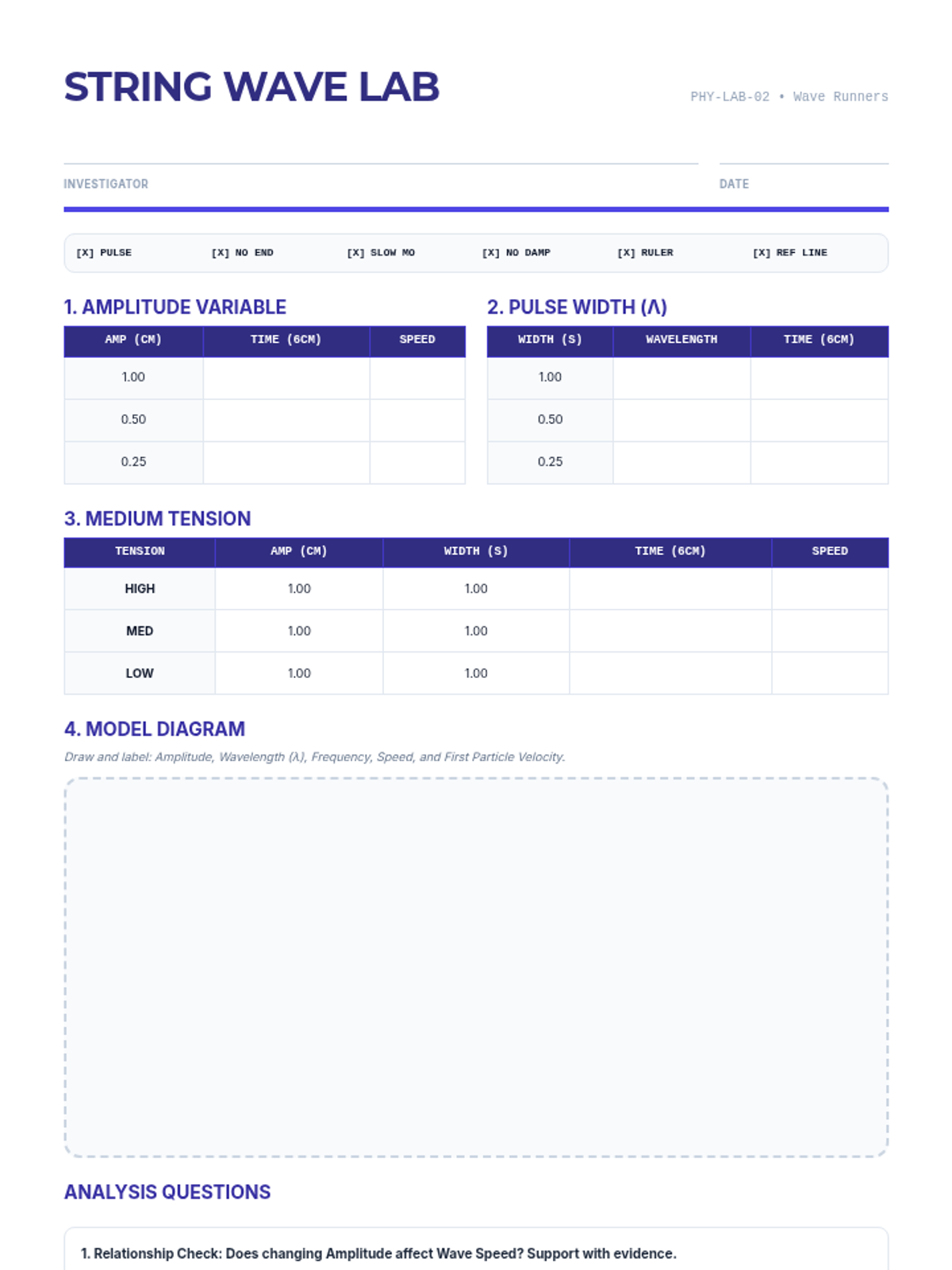
A student-facing lab report worksheet for the PhET 'Waves on a String' simulation. Includes data tables for investigating amplitude, pulse width, and tension, along with space for modeling and conceptual analysis. Revised for better page density and layout. Improved handwriting space for diagrams.
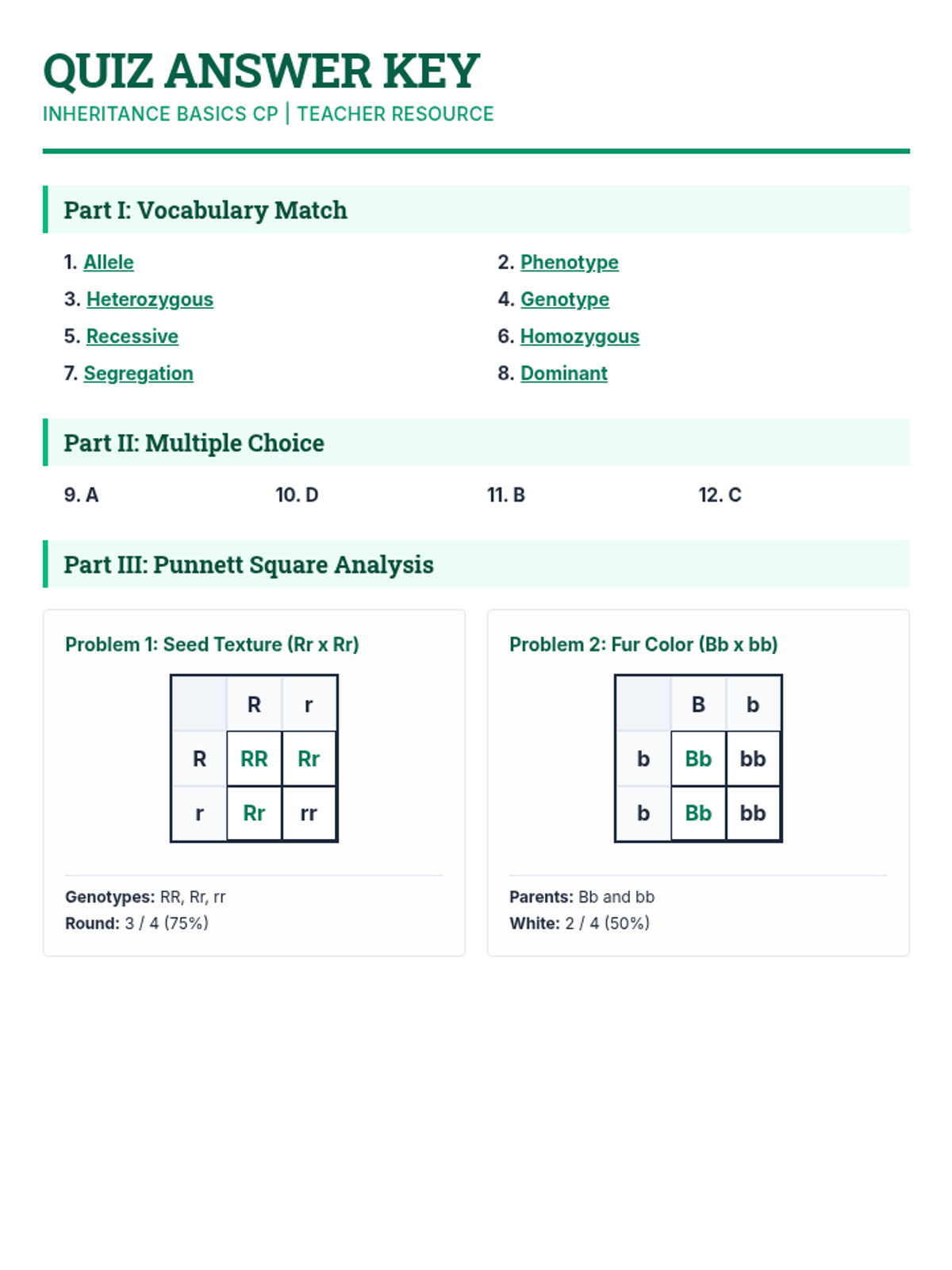
A comprehensive teacher answer key for the Inheritance Basics CP Quiz, providing clear answers for vocabulary matching, multiple choice, and completed Punnett squares with expected results. Optimized to fit on a single page.
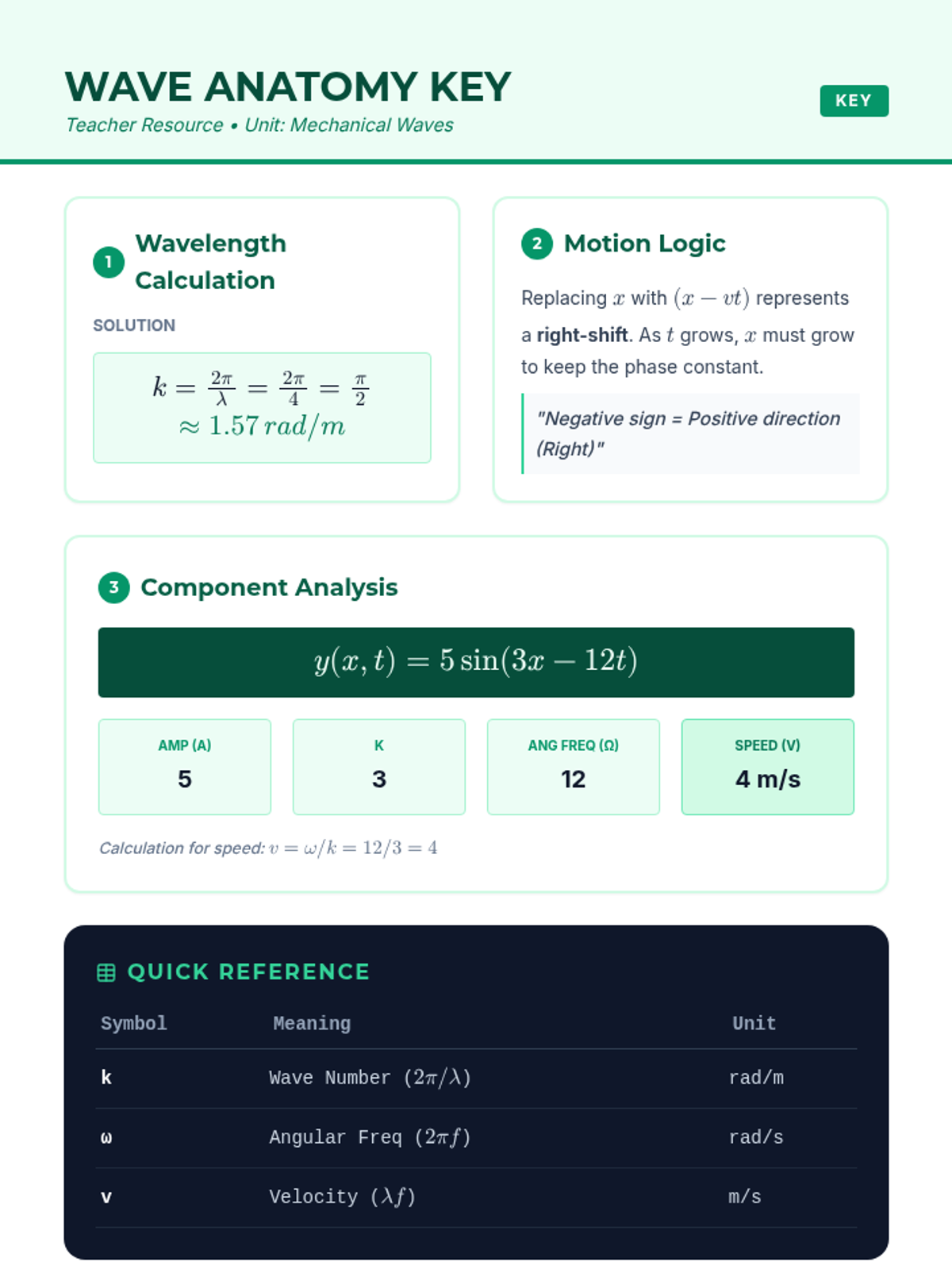
A comprehensive teacher answer key for the Wave Anatomy Reading. Provides clear, step-by-step solutions for calculation and conceptual questions, along with pedagogical tips. Revised to address rendering issues, page breaks, and contrast.
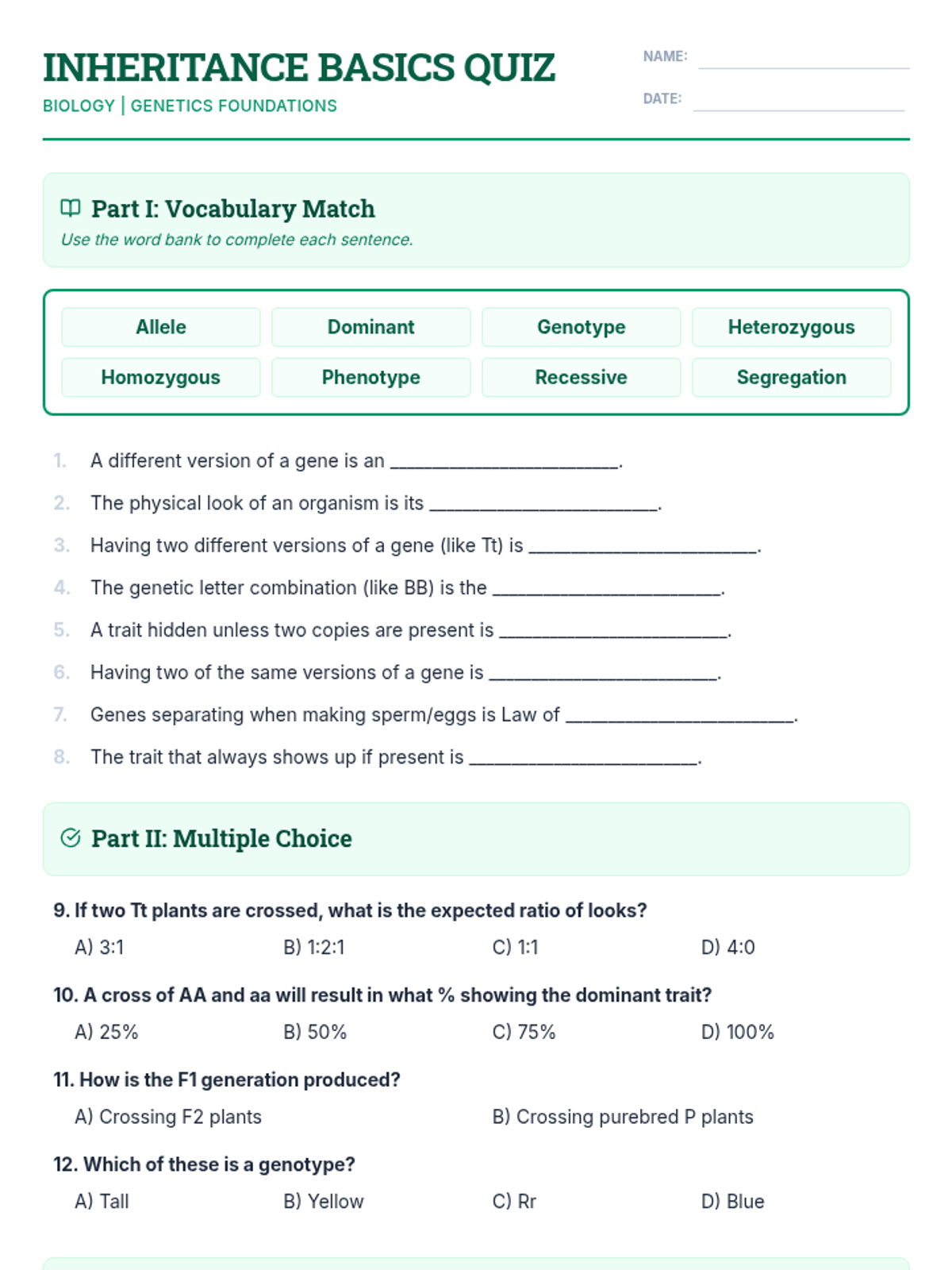
A simplified genetics quiz for CP biology students, featuring a word bank for vocabulary and clearer, less complex phrasing in the questions. It includes guided Punnett square problems with direct prompts for genotypic and phenotypic outcomes. Re-designed to ensure optimal page layout and readability.
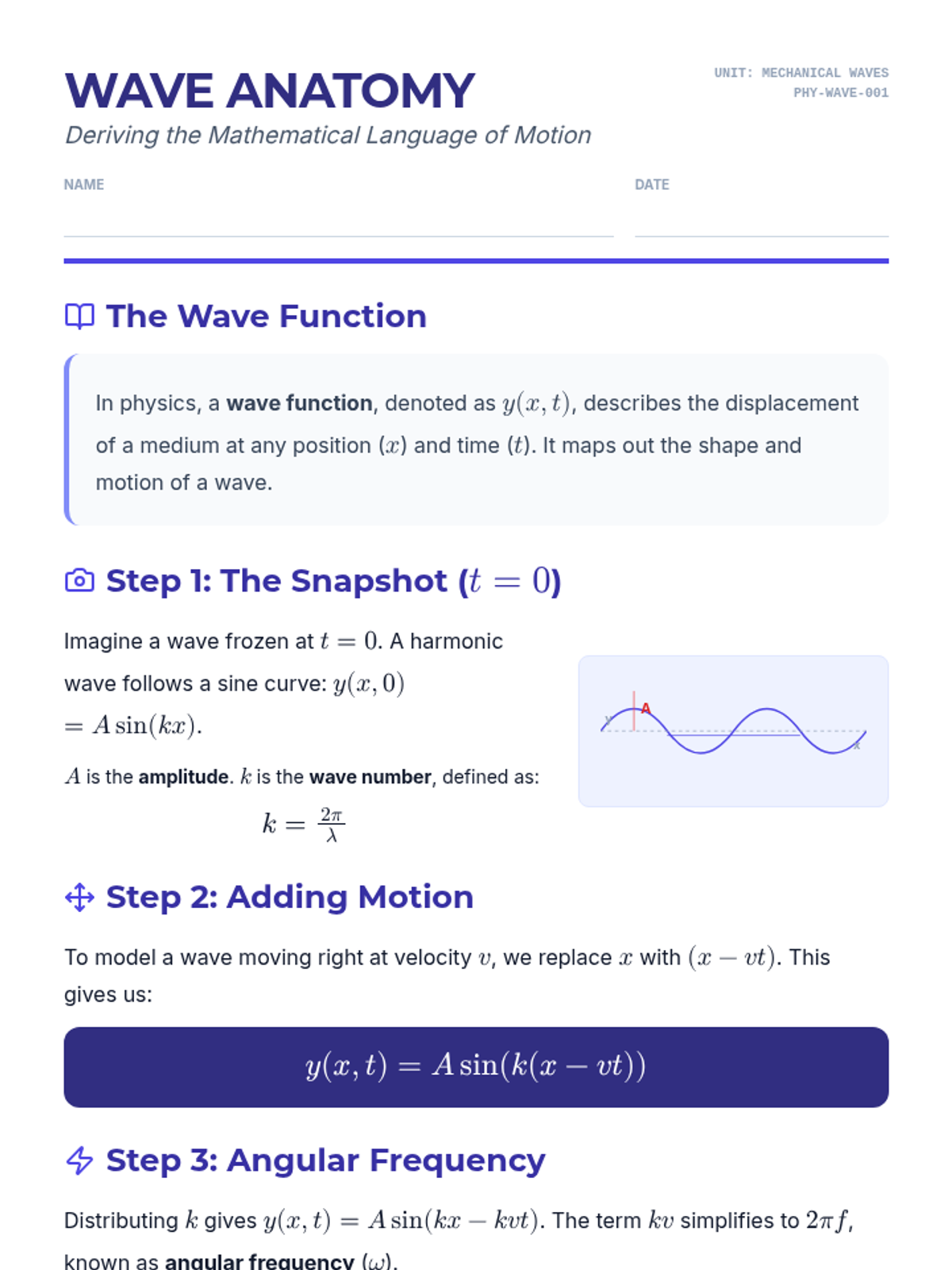
A comprehensive reading passage that explains the conceptual and mathematical derivation of the standard wave function. It covers the transition from a spatial snapshot to a dynamic moving wave, introducing key variables like wave number and angular frequency, and includes comprehension questions. Revised to improve page flow and icon consistency.
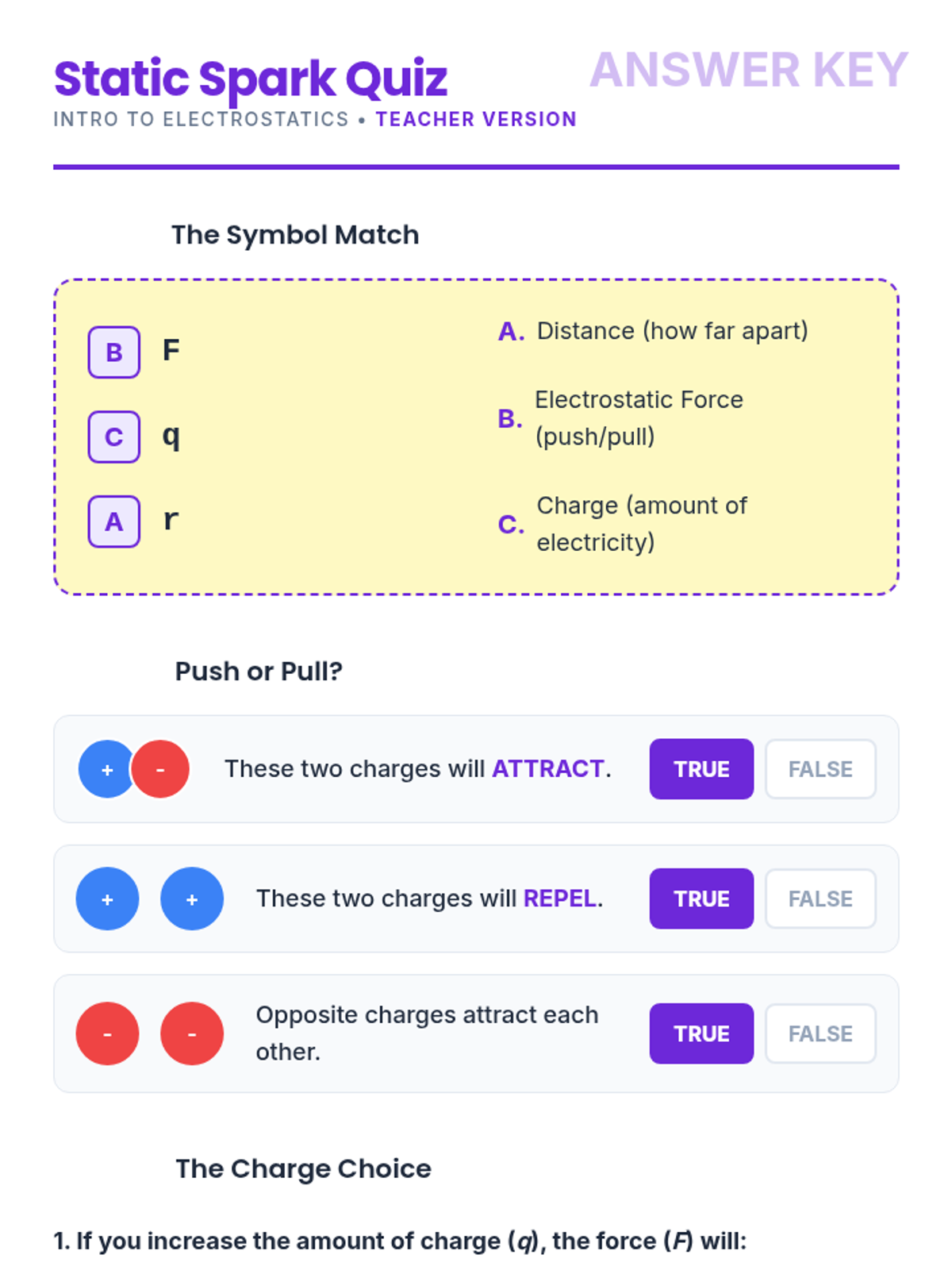
An answer key for the Static Spark Quiz, providing clear solutions for matching variables, conceptual T/F questions, and simple charge multiplication problems.
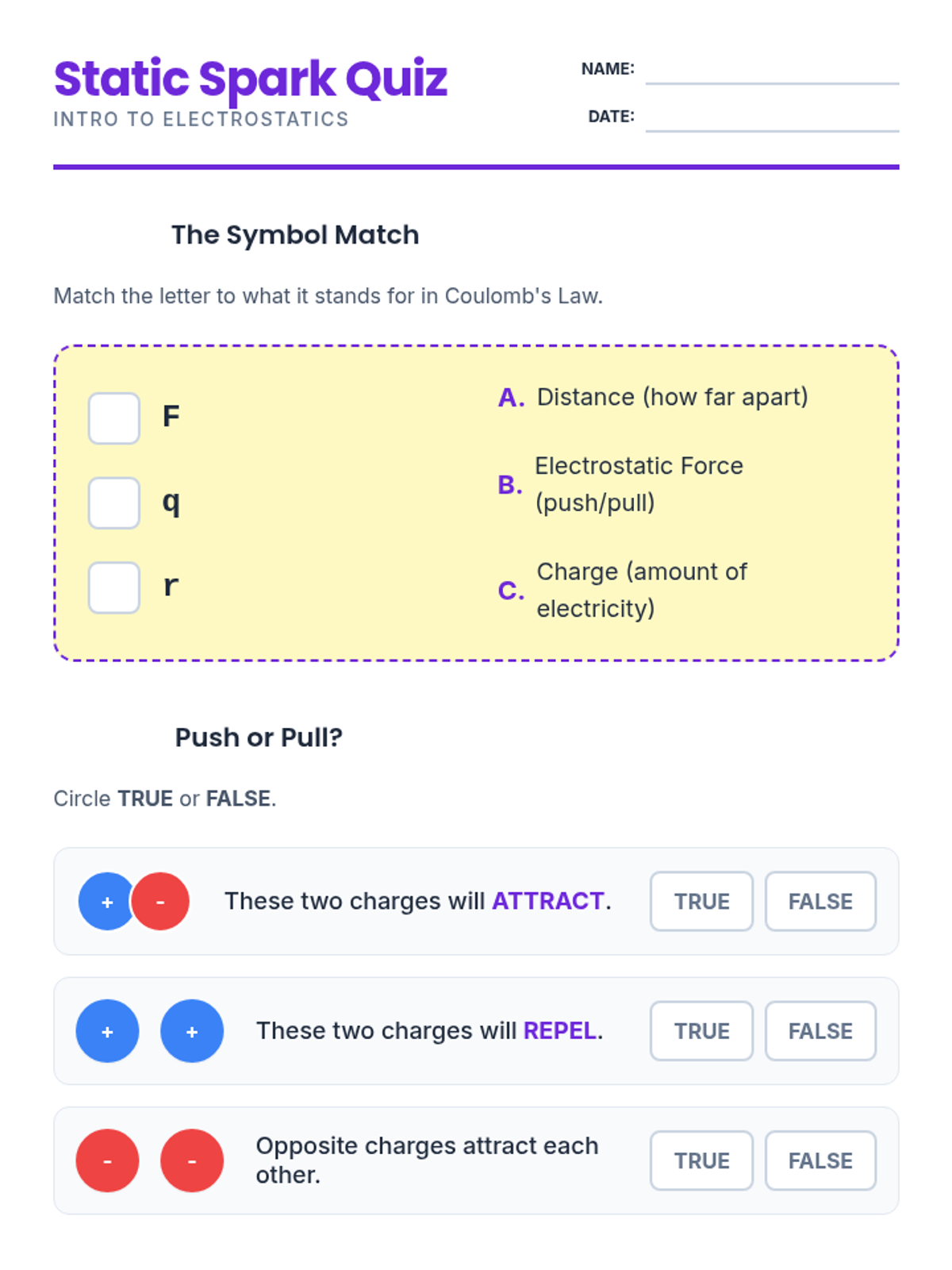
An introductory electrostatics quiz focusing on variable identification, conceptual attraction/repulsion, and simple multiplication of charges. Features a bright, energetic "Static Spark" theme with clear visual diagrams for easy comprehension.
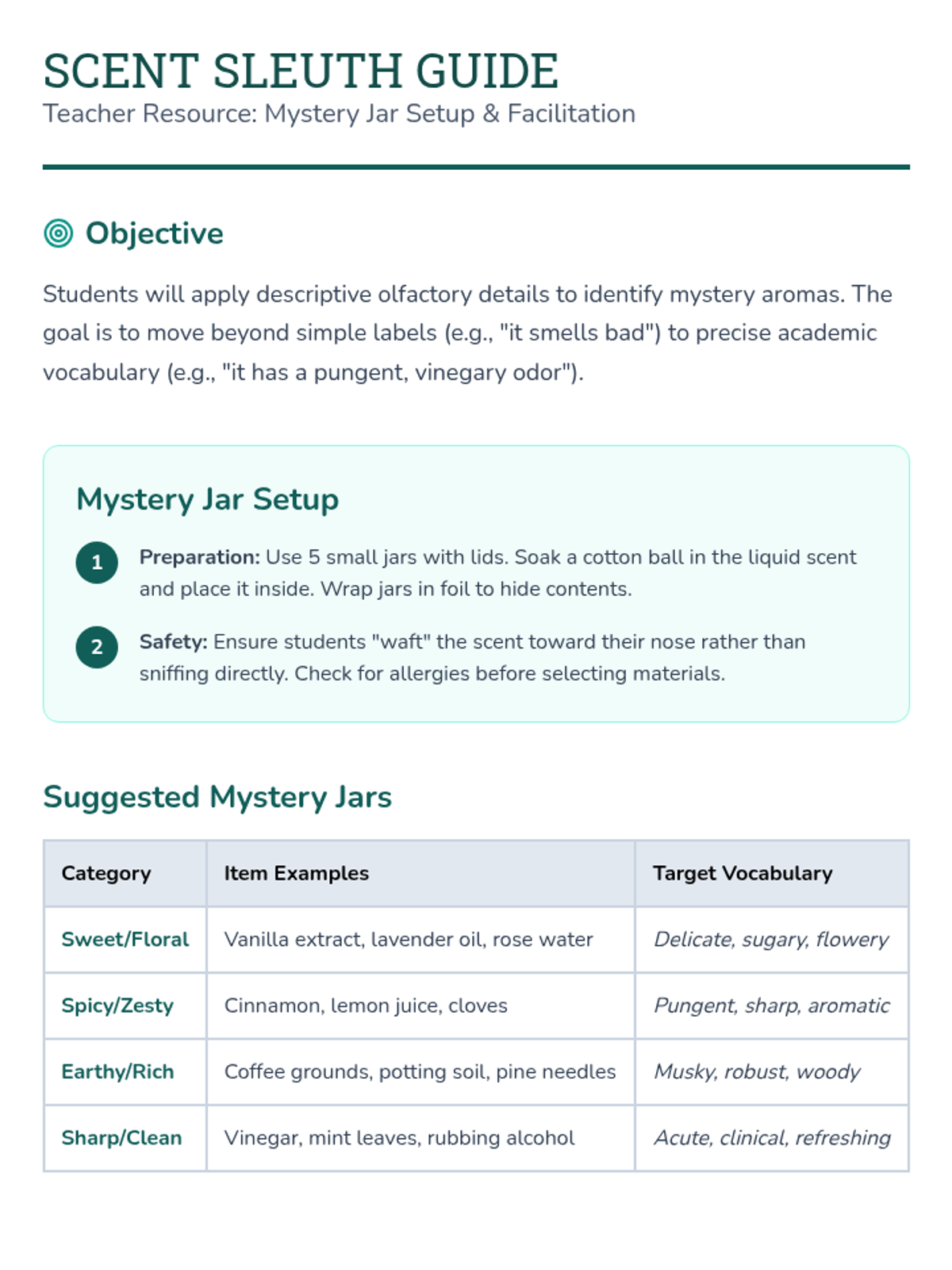
A teacher guide for the Scent and Search lesson, including jar setup instructions, suggested scents, and safety wafting techniques. Revised for better page layout and content density. Adjusted table contrast and added a facilitator notes section. Increased line-height for teacher handwriting.
A presentation to introduce the mystery scent activity, focusing on olfactory vocabulary and the difference between simple and descriptive language. Structured into 4 high-contrast slides.
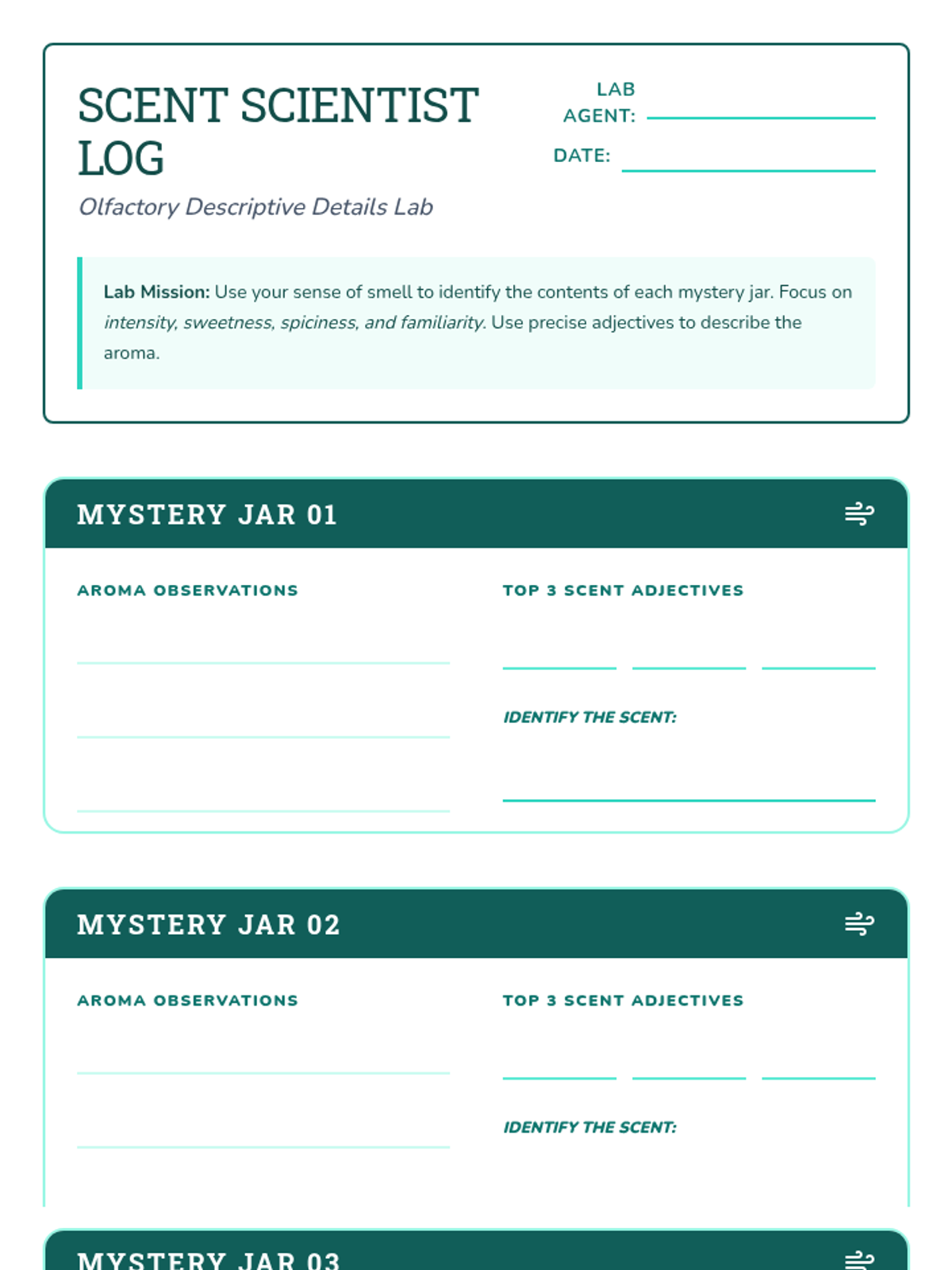
A two-page graphic organizer for a scent exploration activity. Features large recording areas for 5 mystery scent jars, detailed observation sections, and standardized layouts. Designed for double-sided printing to maximize student work space. Every box includes 3 observation lines and 3 adjective slots. Revised for optimal page utilization and line spacing.
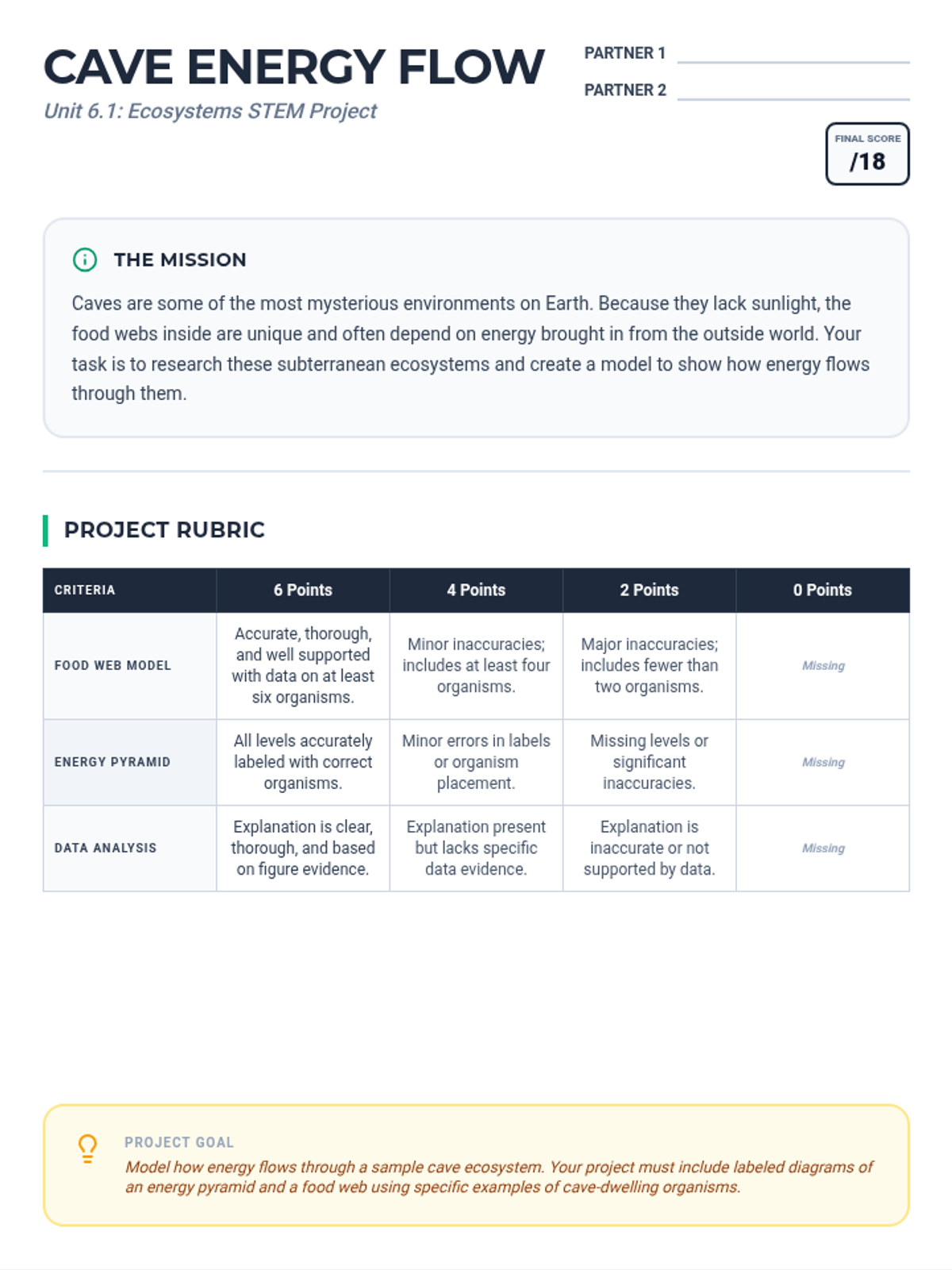
A 4-page STEM project worksheet for middle school students to model cave ecosystem energy flow. It includes a project rubric, a blank food web canvas with an organism word bank, a robust SVG energy pyramid with blanks for trophic levels and specific organisms (using the full word bank from the source material), and a data analysis section focusing on bat-salamander population relationships.
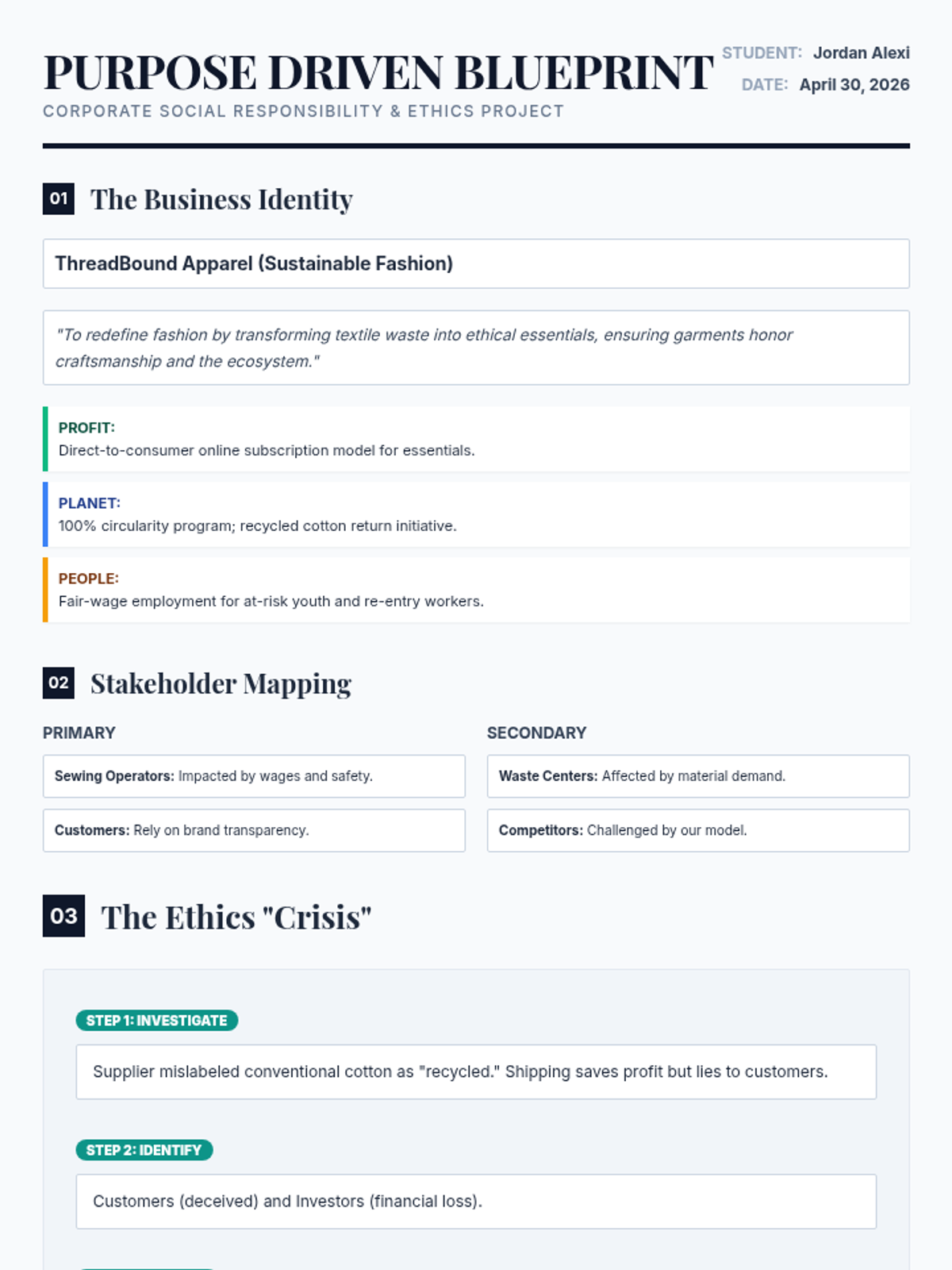
A high-quality student exemplar for the Purpose-Driven Blueprint project, featuring a sustainable fashion business called ThreadBound with detailed responses for all project sections, now with optimized page breaks.
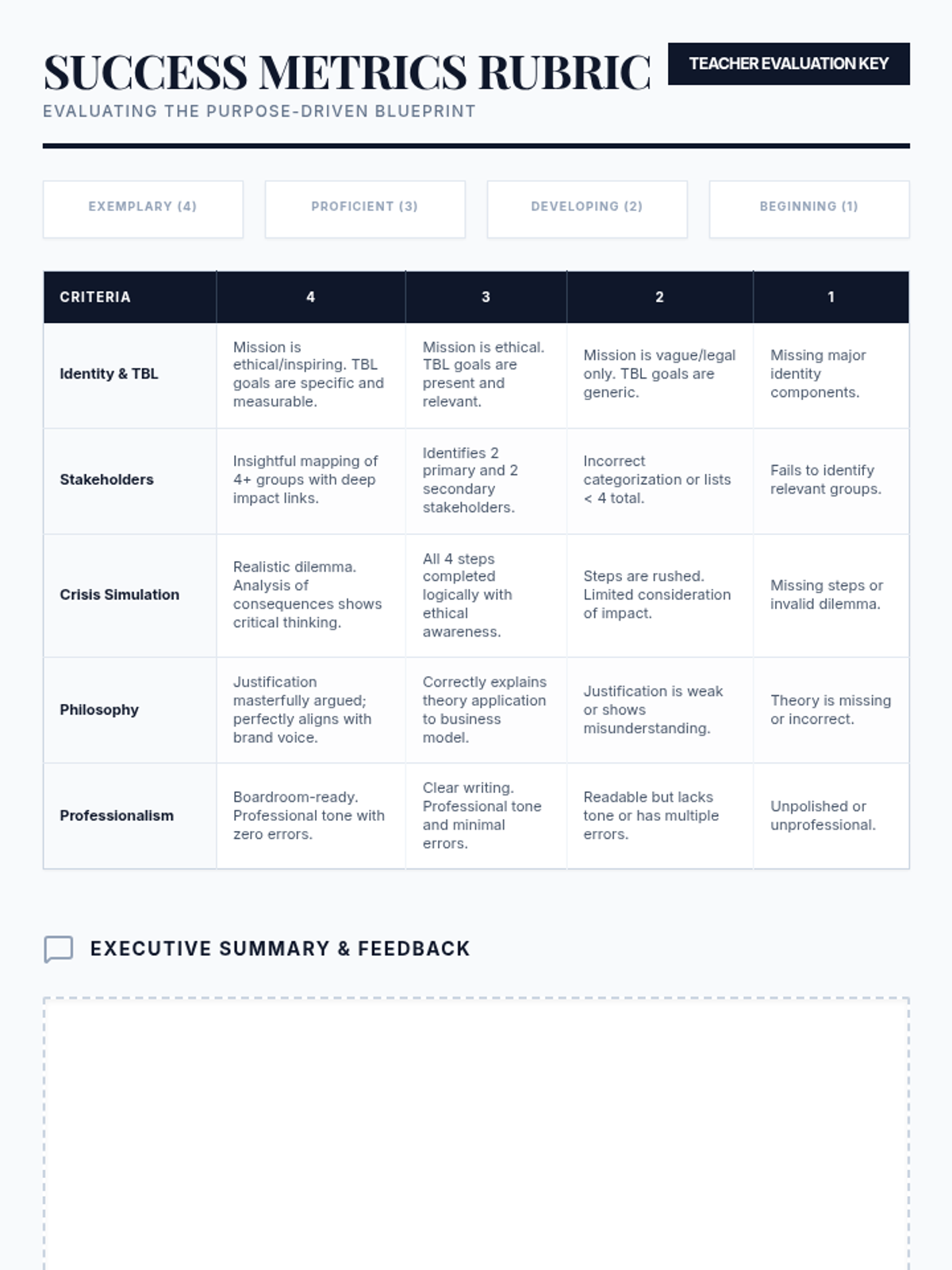
A comprehensive grading rubric for the Purpose-Driven Blueprint project, evaluating business identity, stakeholder mapping, ethical decision-making, and theoretical philosophy, now updated to a 50-point scale.
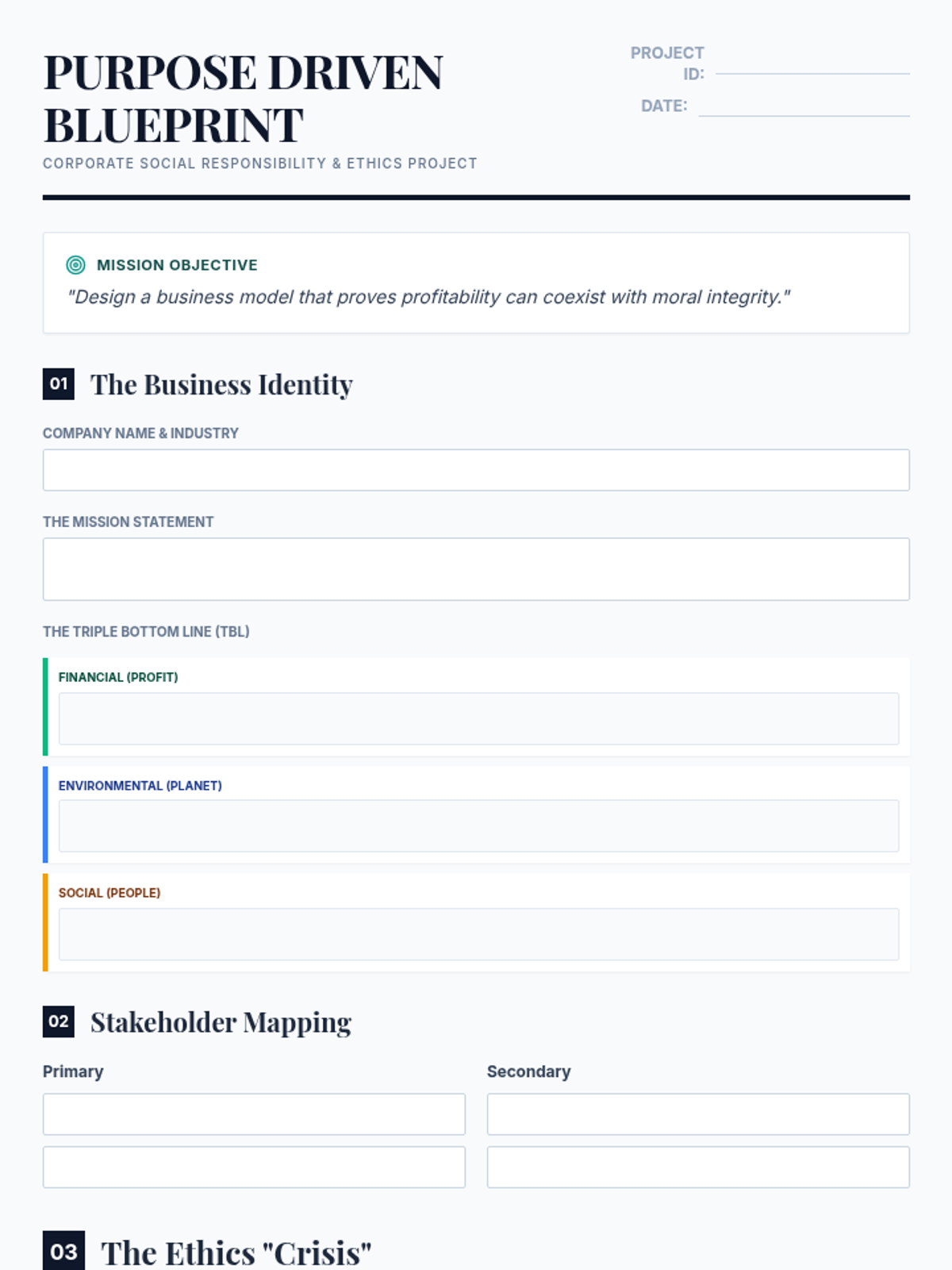
A professional, blueprint-themed student project document for designing a purpose-driven business, featuring sections for mission statements, TBL goals, stakeholder mapping, and crisis simulation, now optimized with clear page breaks between sections and increased writing space.
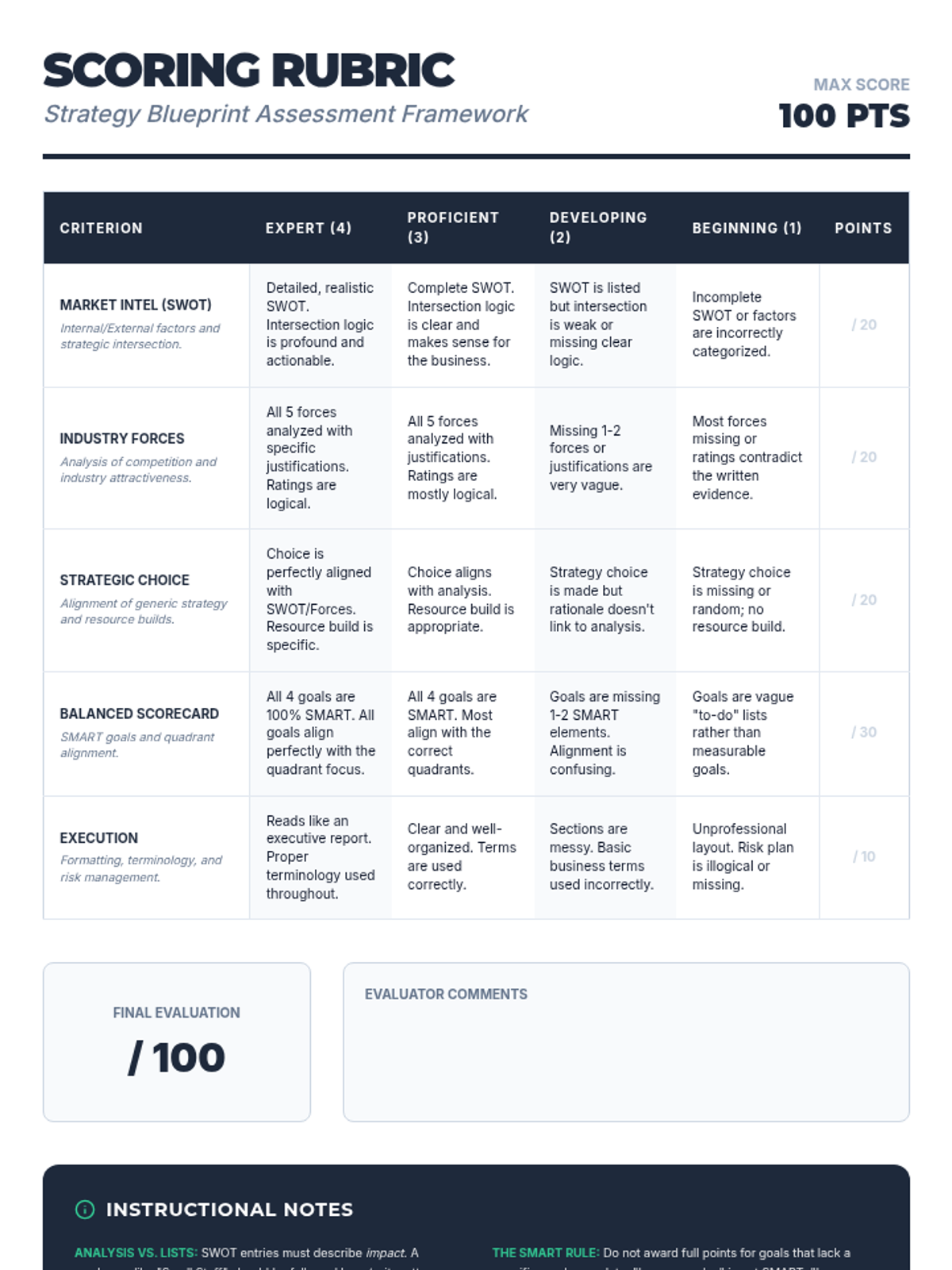
A comprehensive assessment rubric and teacher guide for the Strategy Blueprint project. Evaluates students on market intelligence, industrial analysis, strategic logic, and the accuracy of their Balanced Scorecard metrics. Optimized with improved page breaks to keep the grading key and notes together.
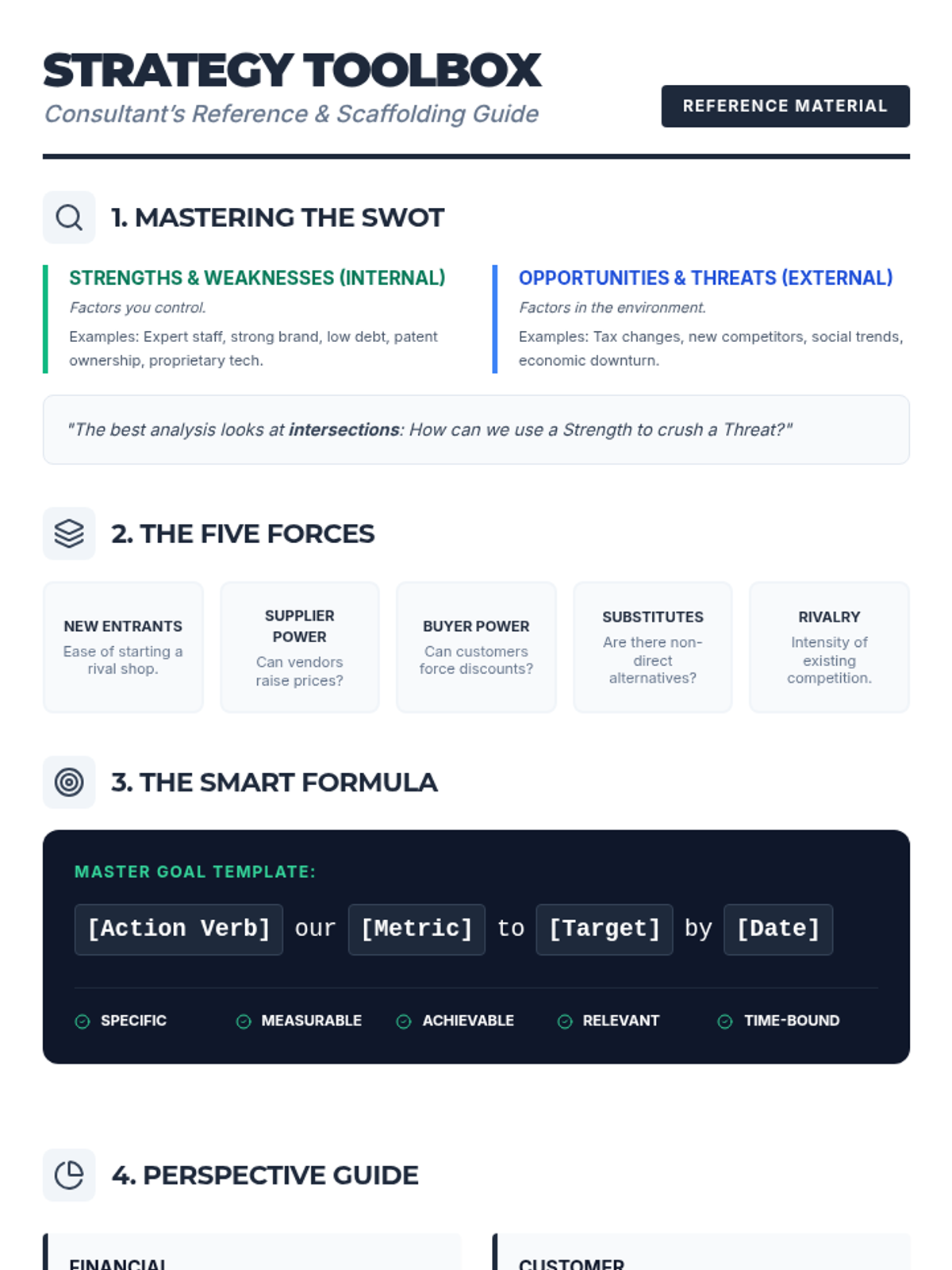
A comprehensive reference sheet providing definitions and frameworks for SWOT analysis, Porter's Five Forces, SMART goals, and the Balanced Scorecard perspectives. Designed to scaffold student work during the Strategy Blueprint project. Now with optimized page breaks.
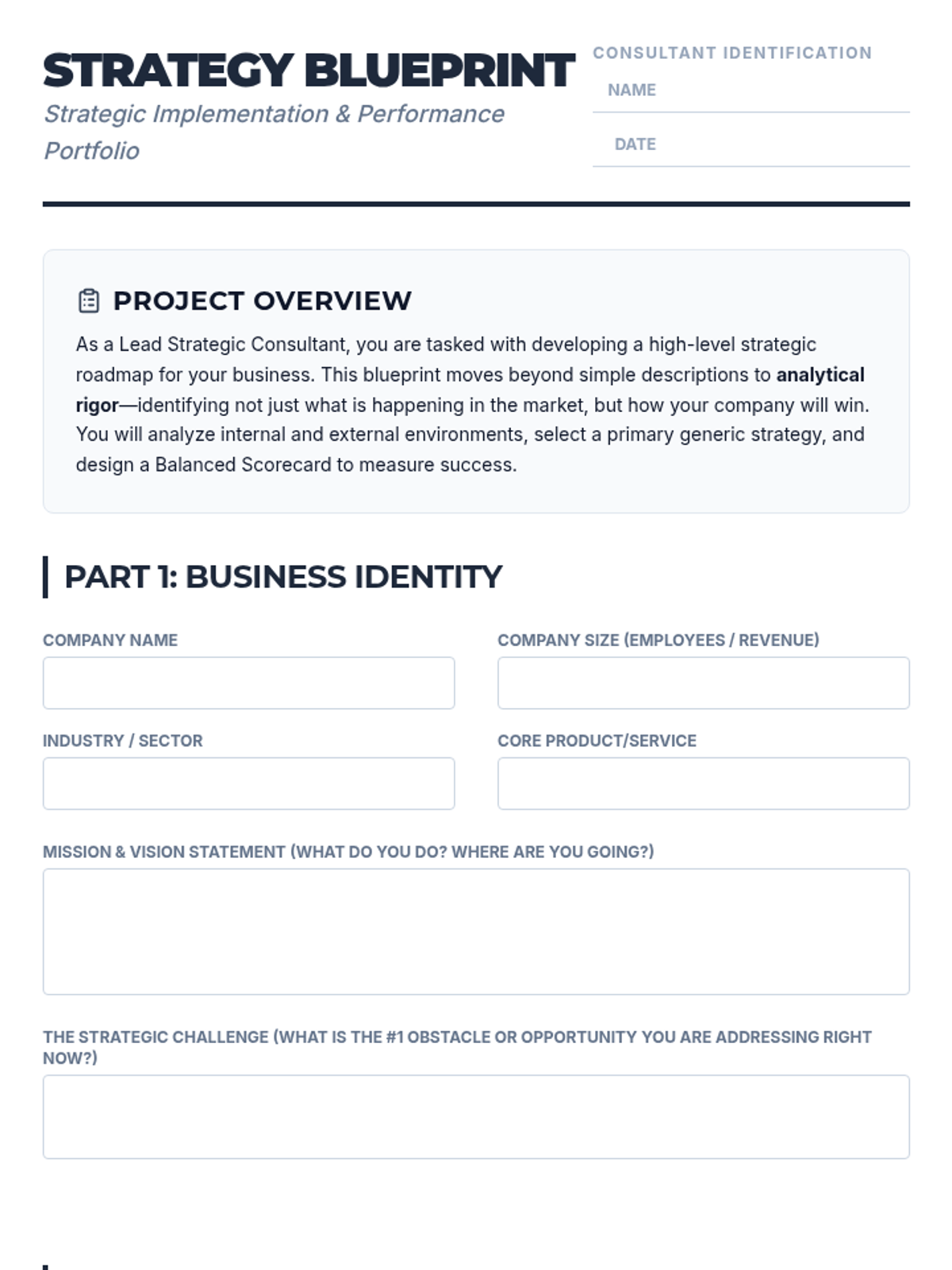
A structured and rigorous project packet for students to develop a comprehensive business strategy. It includes templates for mission statements, SWOT analysis with strategic implications, Porter's Five Forces with impact justification, and a detailed Balanced Scorecard framework. Now with explicit page breaks to prevent section splitting.
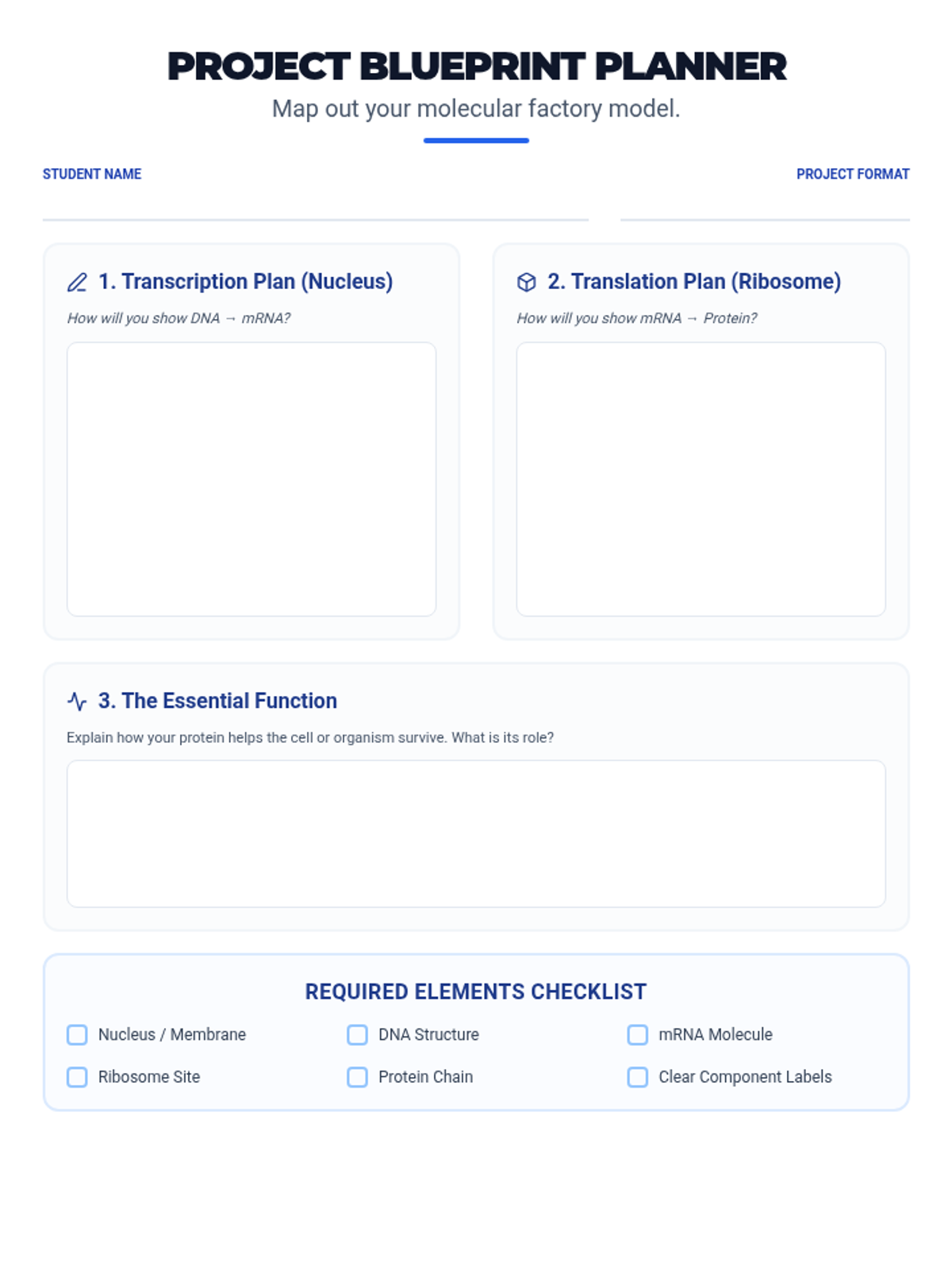
A planning worksheet for students to map out their molecular factory models, ensuring all required components of HS-LS1-1 are included before construction.
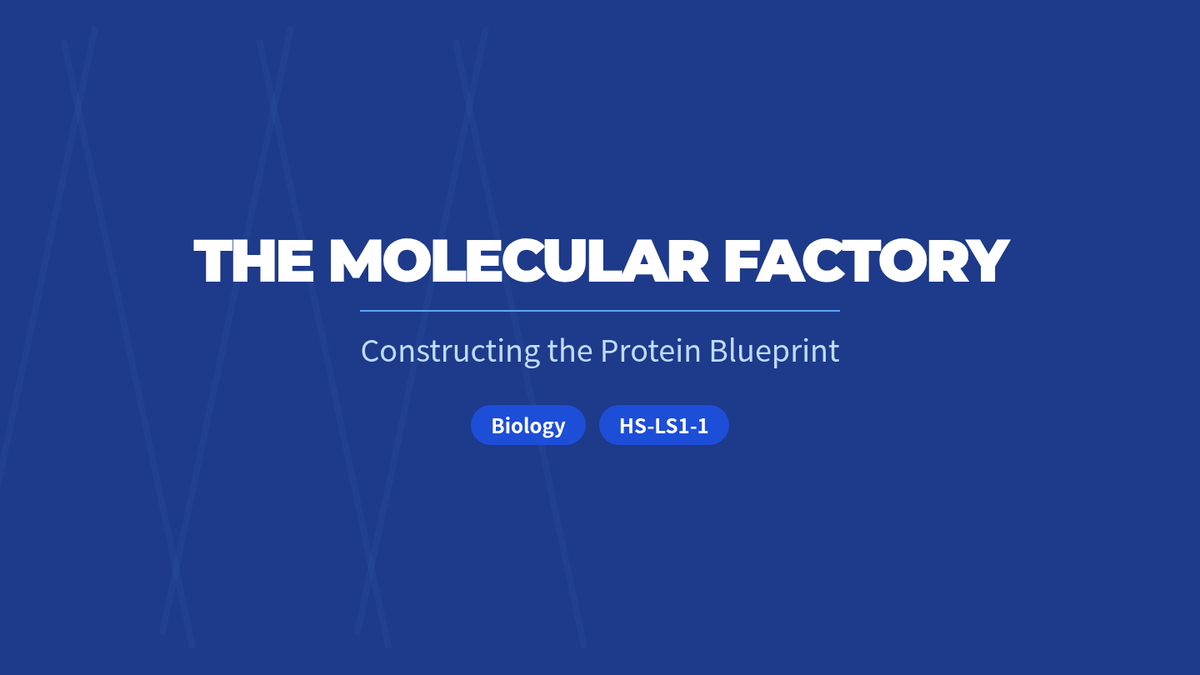
A project launch slide deck for "The Molecular Factory" project, introducing students to the requirements and objectives of modeling transcription and translation.
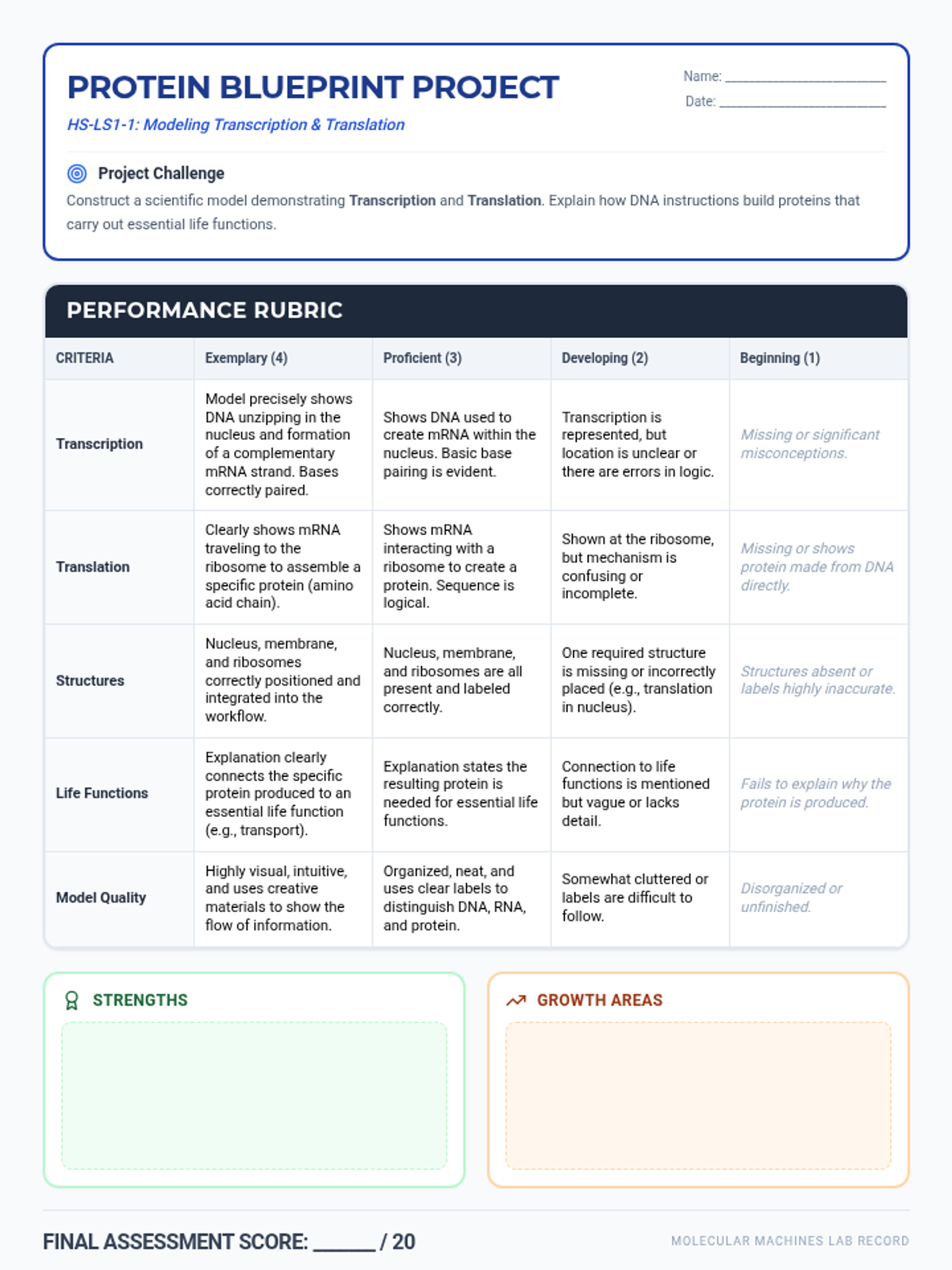
A comprehensive project rubric for HS-LS1-1, assessing students' ability to model transcription and translation with focus on DNA, RNA, and protein roles within cellular structures.
Updated teacher answer key for the Virtual Impact Lab with corrected experimental diagrams matching the horizontal layout requested: Tissue Box on the left, Red 0cm line in the middle, and Ramp examples on the right. Updated data tables with common student findings (e.g. 10cm height results in approx 80cm displacement).