A visual presentation for 'The Exception Rule' lesson, including a video embed, breakdown of Elizabeth Key's legal arguments, and discussion prompts for the Socratic Seminar.
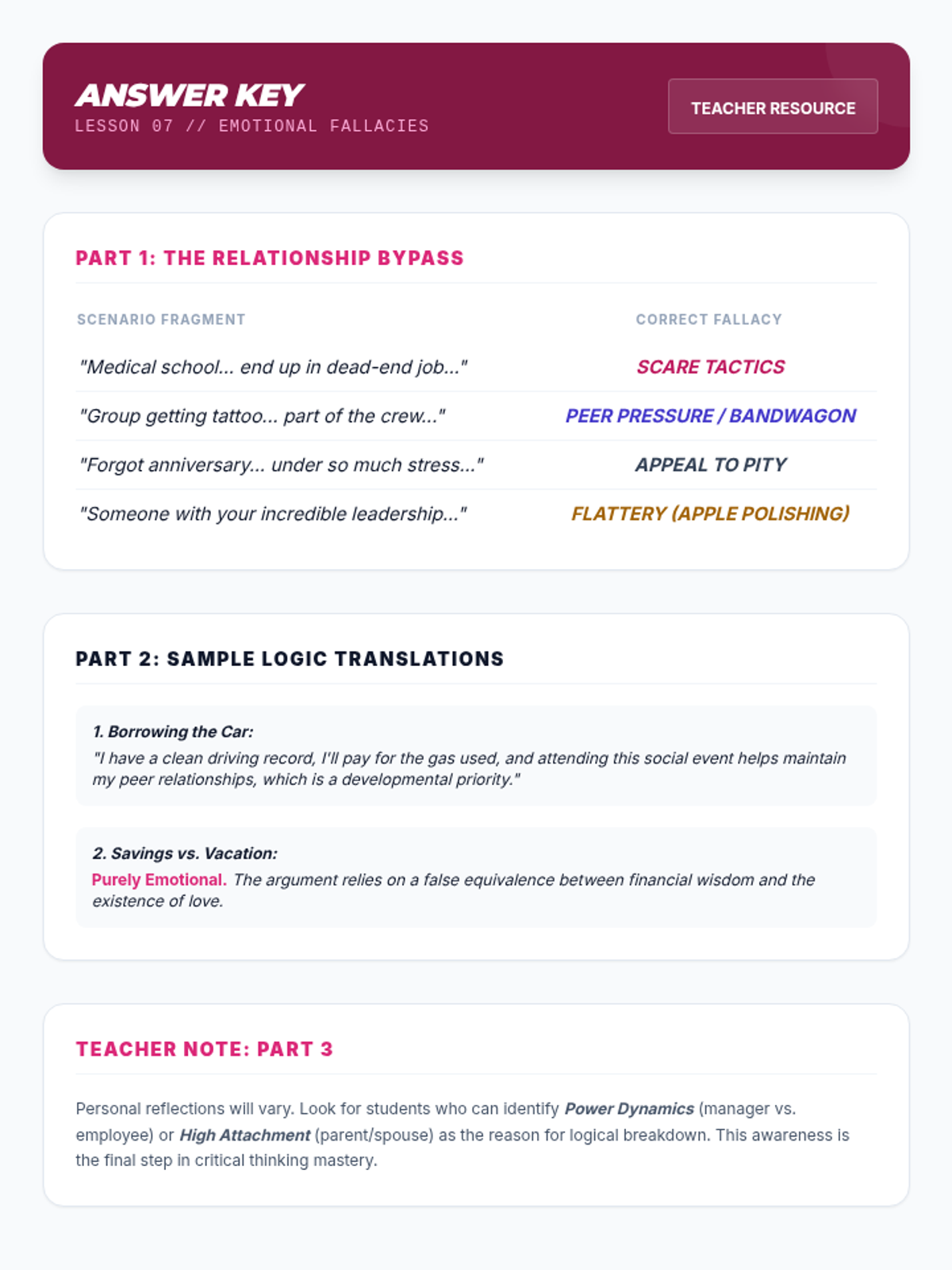
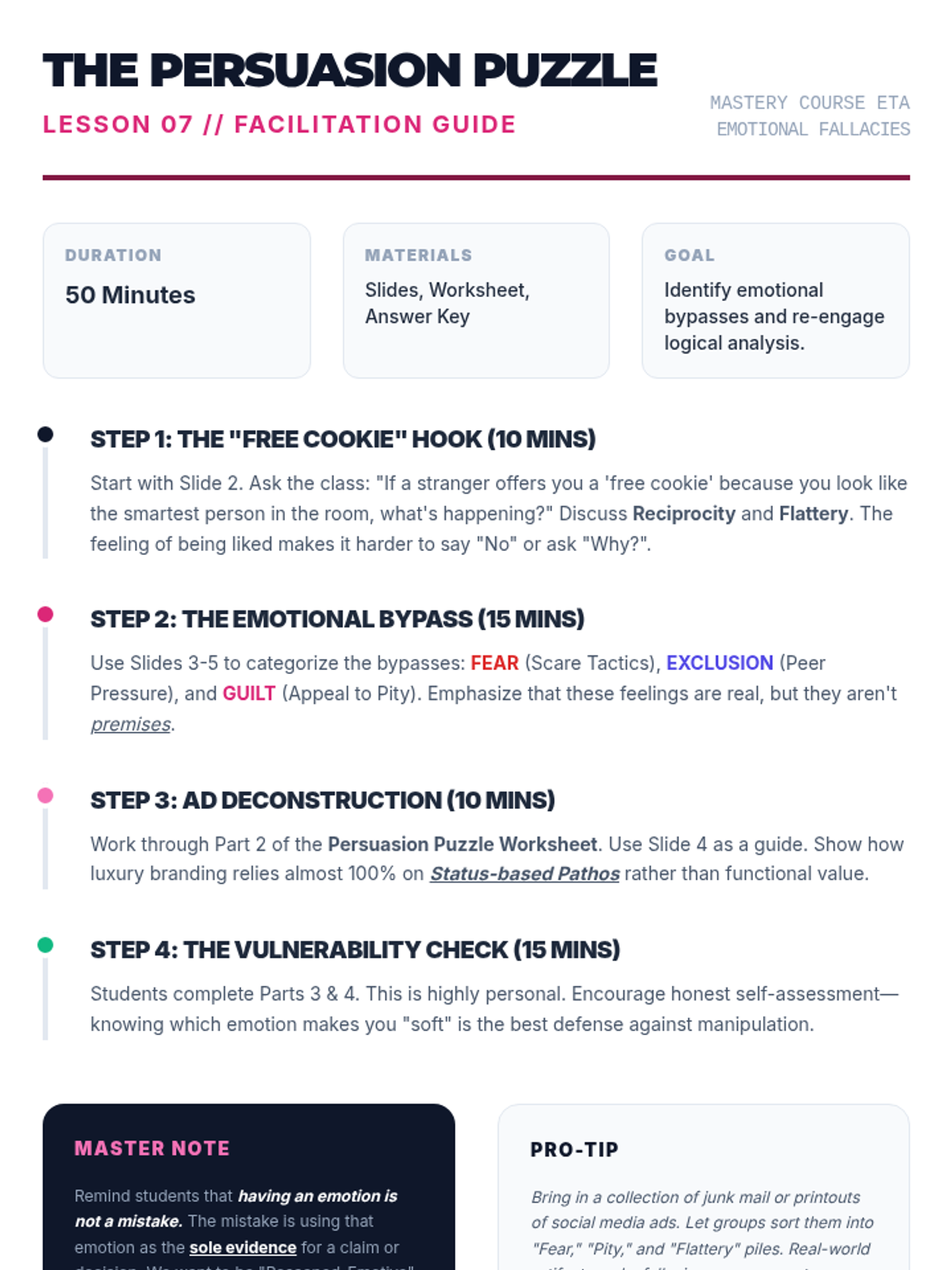
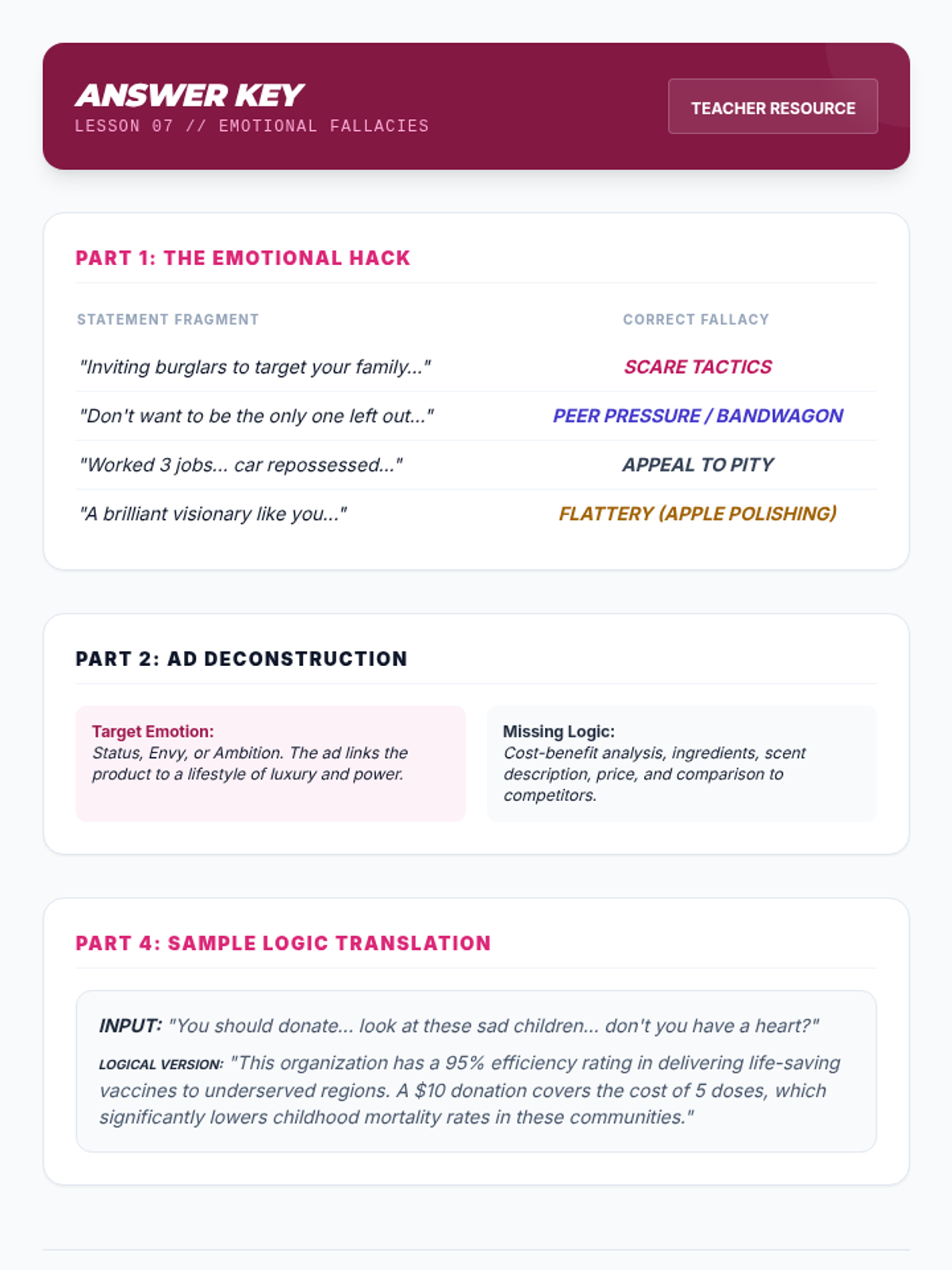
Complete answer key for the updated Lesson 7 worksheet, providing correct fallacy identifications and sample logic translations for emotional appeals in interpersonal contexts.
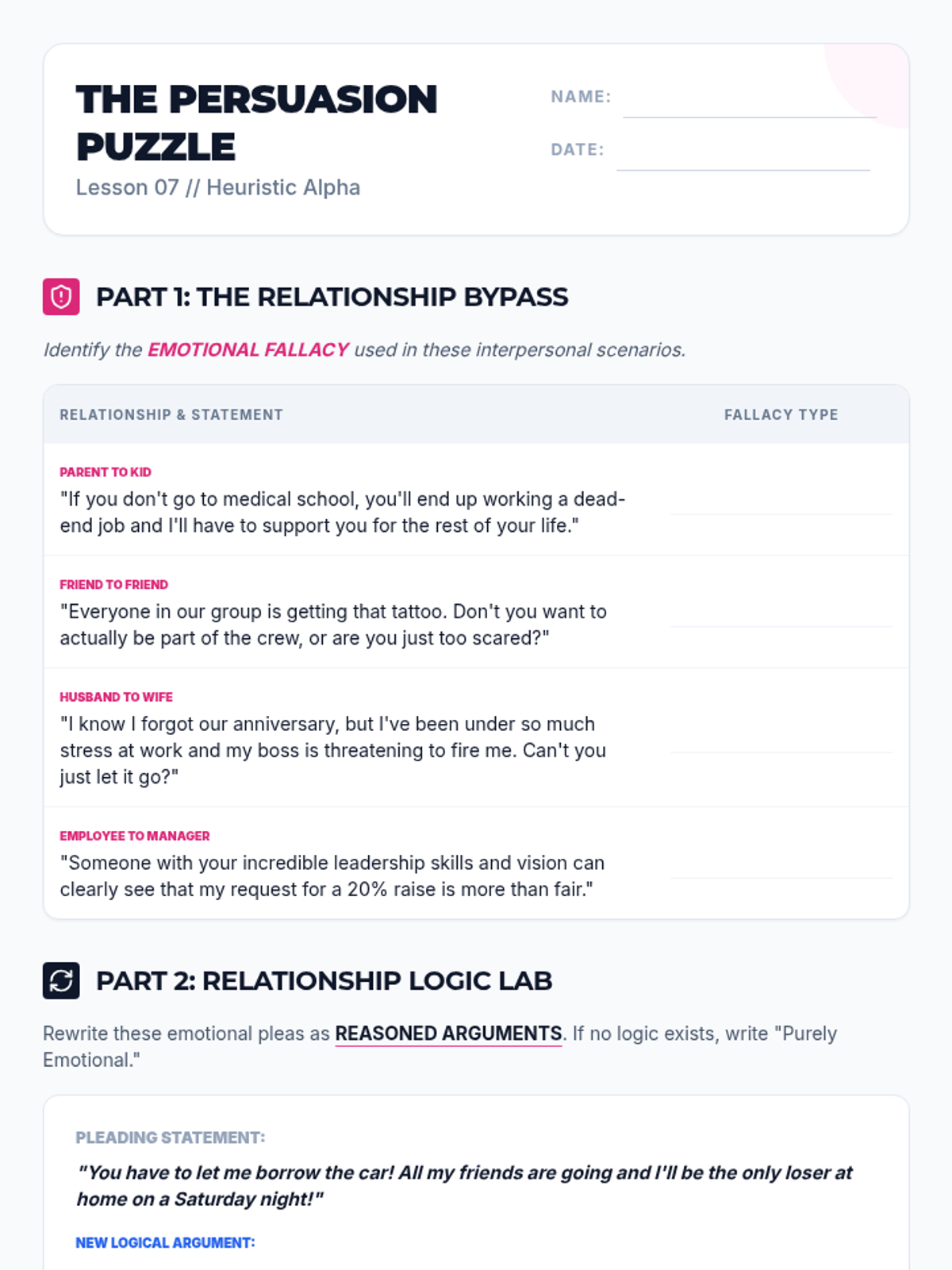
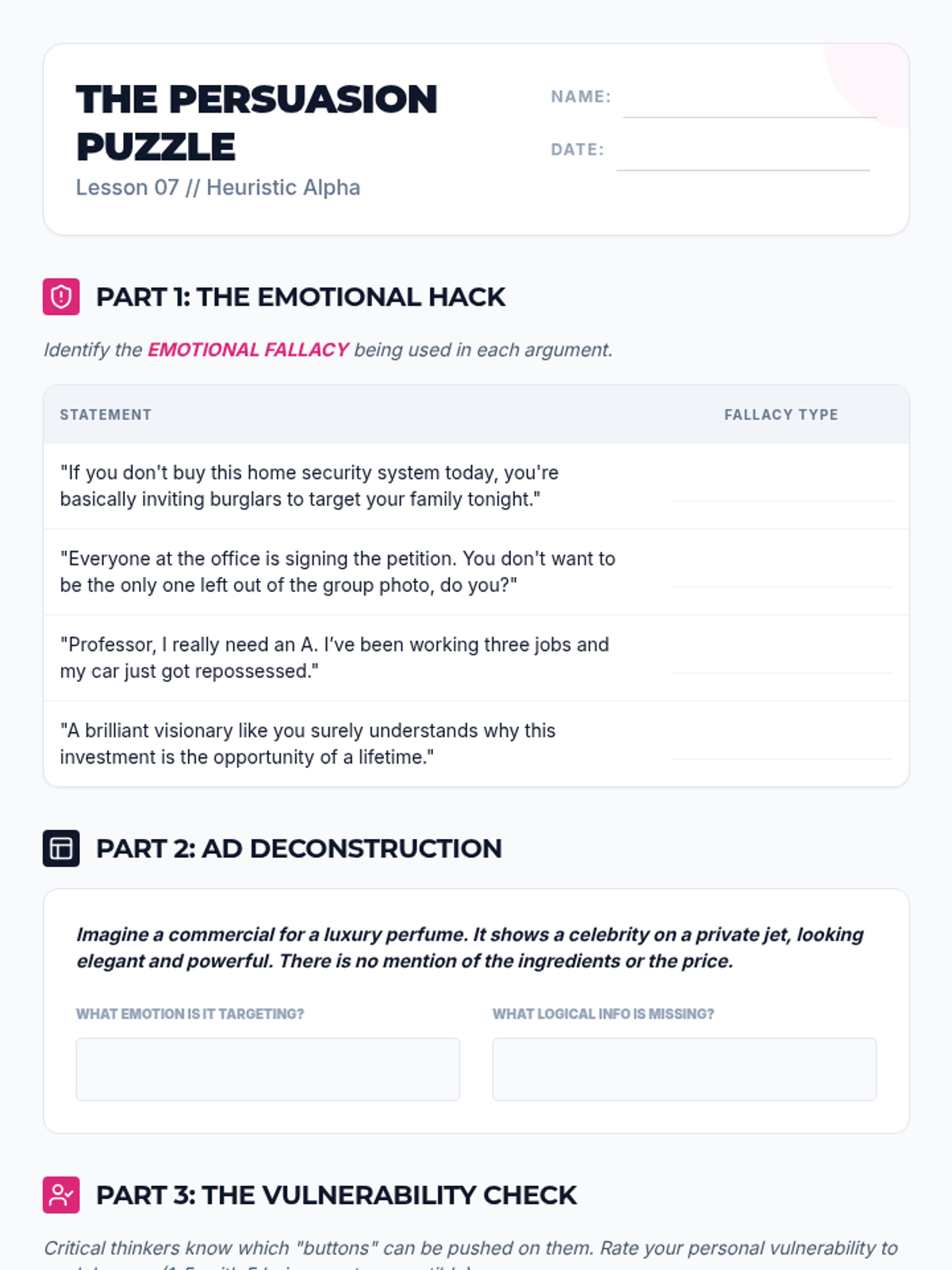
Student worksheet for Lesson 7 focusing on emotional fallacies within family, friendship, and work relationships. Includes logic translation exercises and personal reflection.
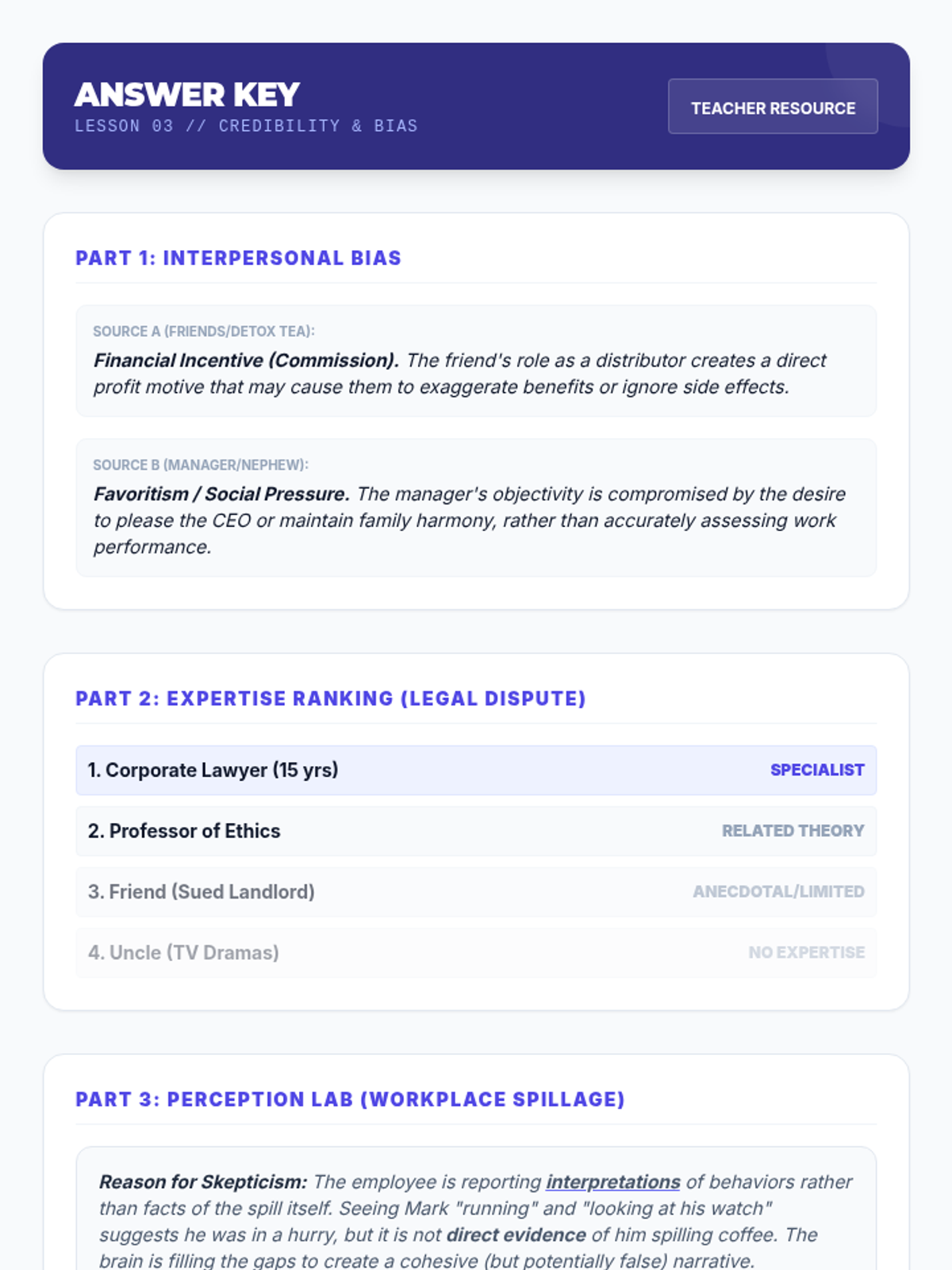
Complete answer key for the Lesson 3 worksheet, covering bias identification, expertise ranking, and analysis of eyewitness reliability factors in relationship and work contexts.
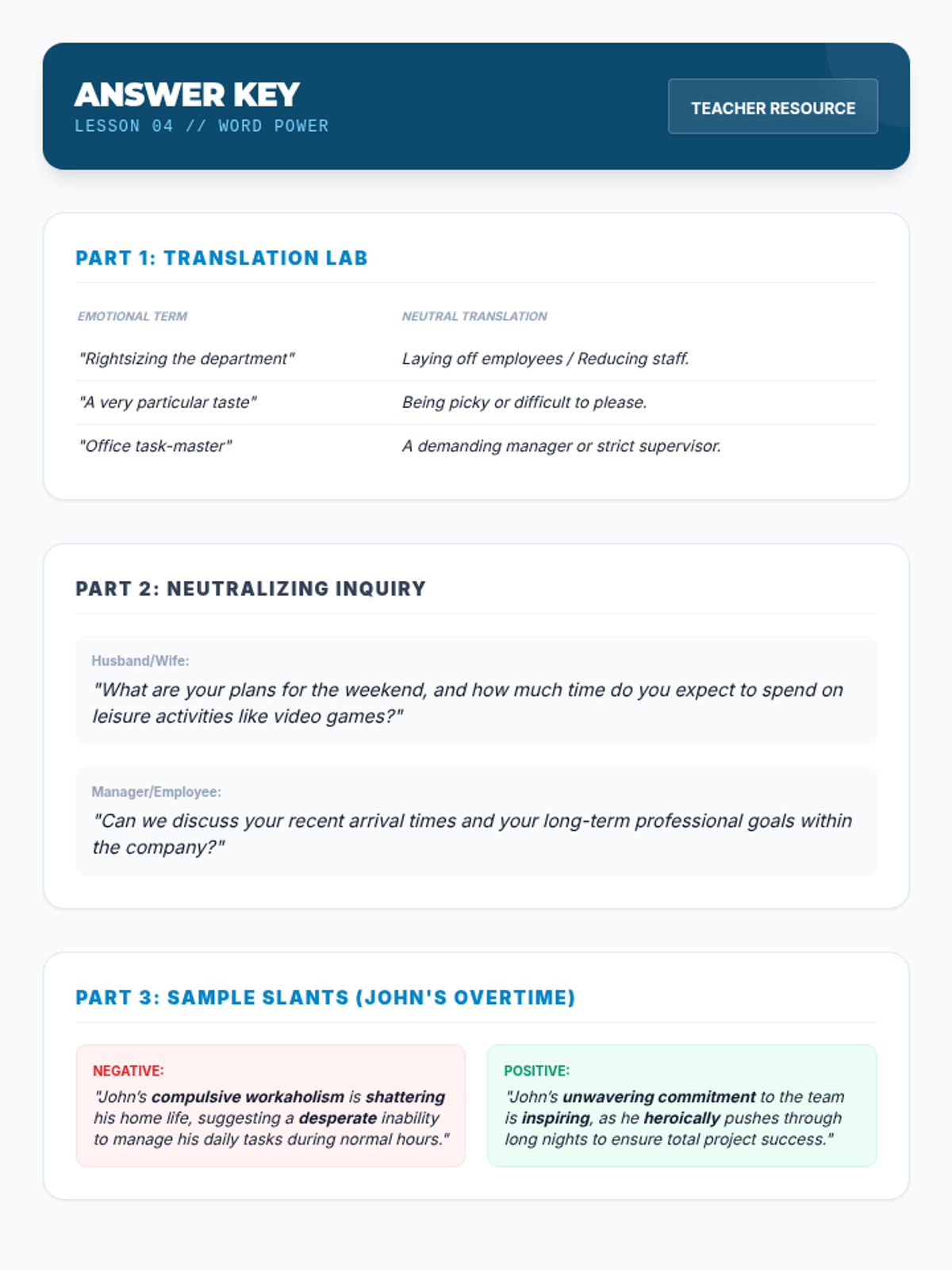
Complete answer key for the updated Lesson 4 worksheet, providing neutral translations and neutral inquiry rewrites for interpersonal scenarios.
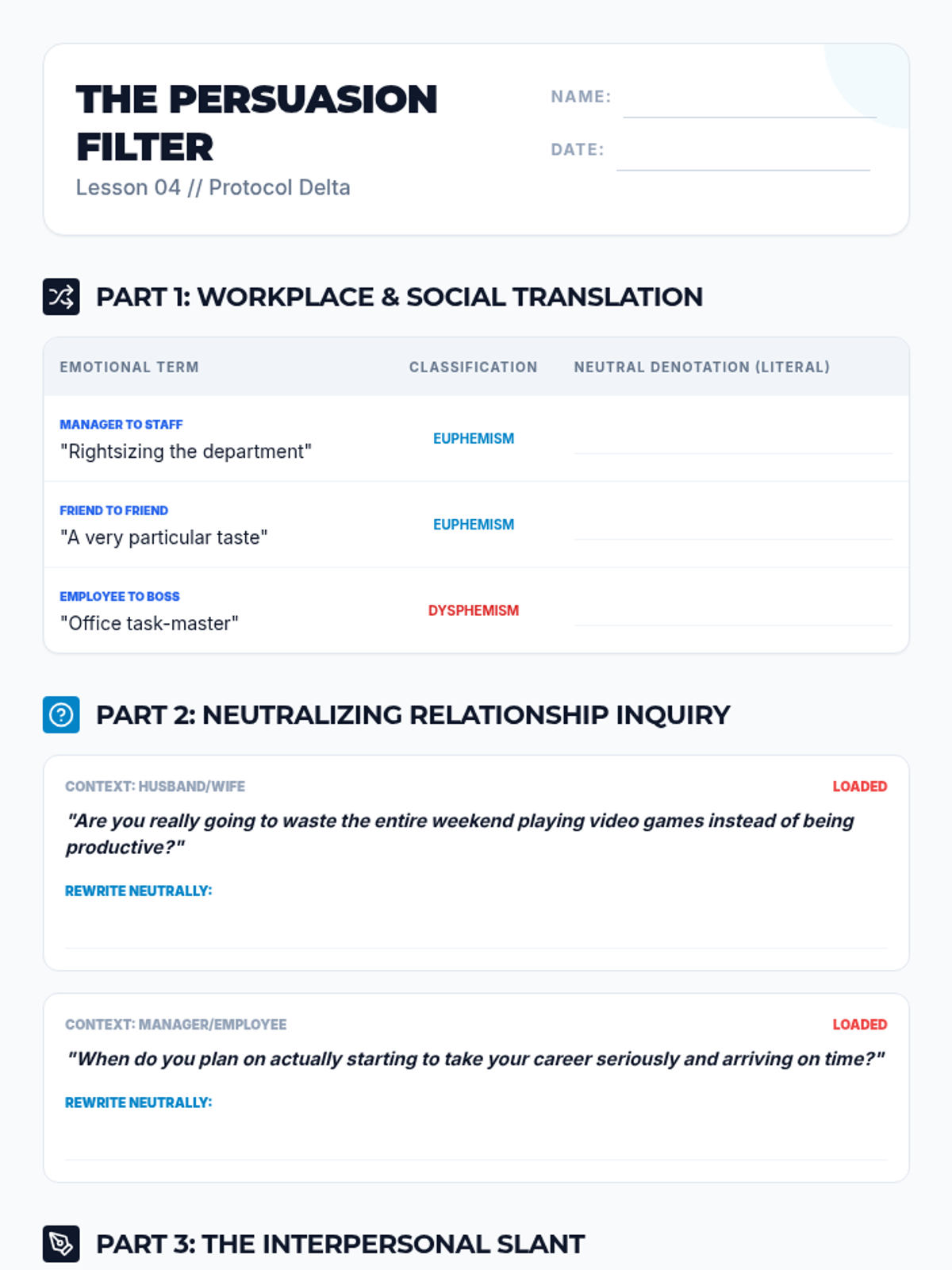
Student worksheet for Lesson 4 focusing on euphemisms and biased questioning within workplace, marriage, and friendship contexts.
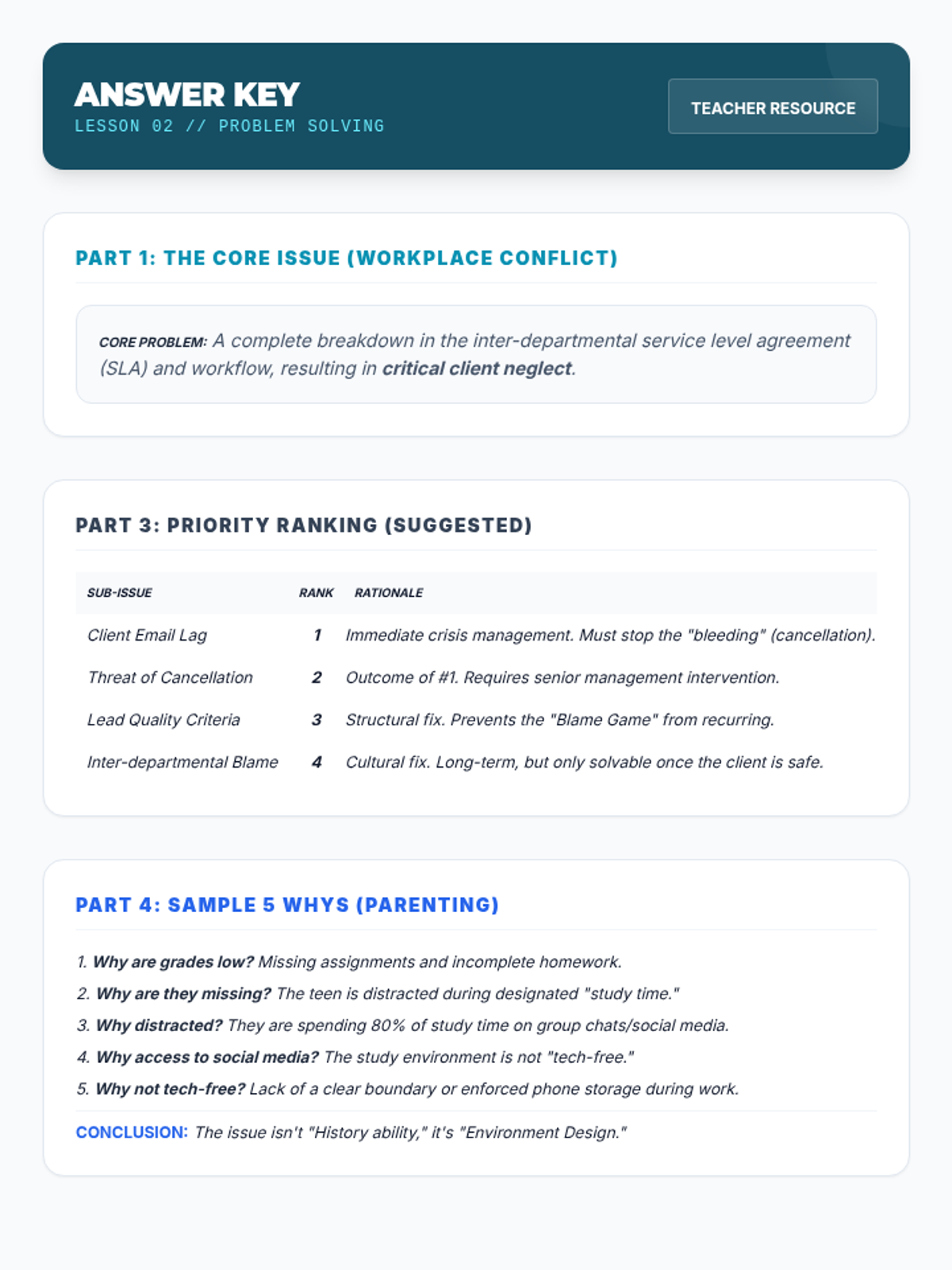
Complete answer key for the updated Lesson 2 worksheet, featuring problem decomposition and root cause analysis for workplace and parenting scenarios.
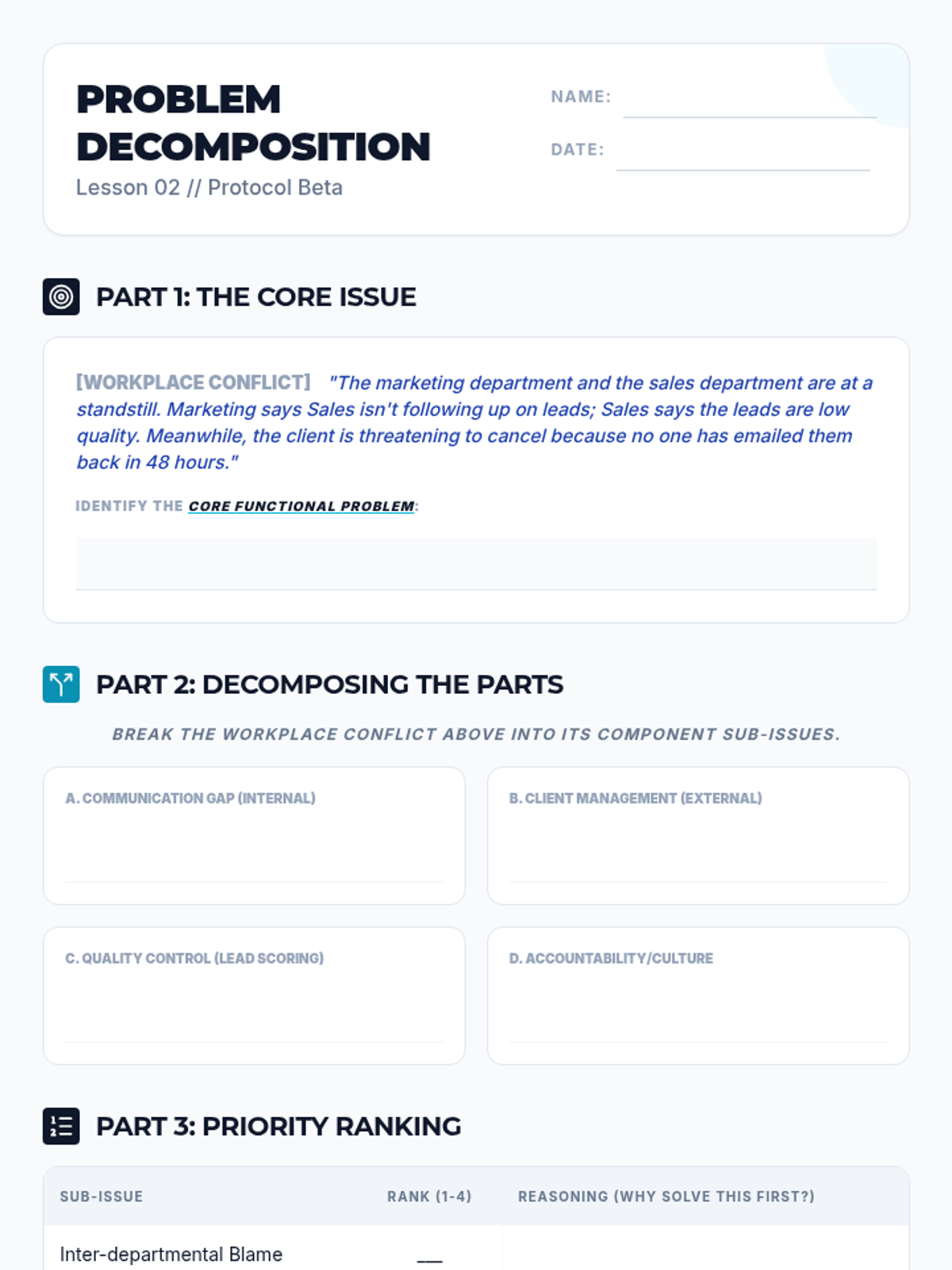
Student worksheet for Lesson 2 focusing on reframing problem statements and performing a '5 Whys' root cause analysis within workplace and parenting contexts.
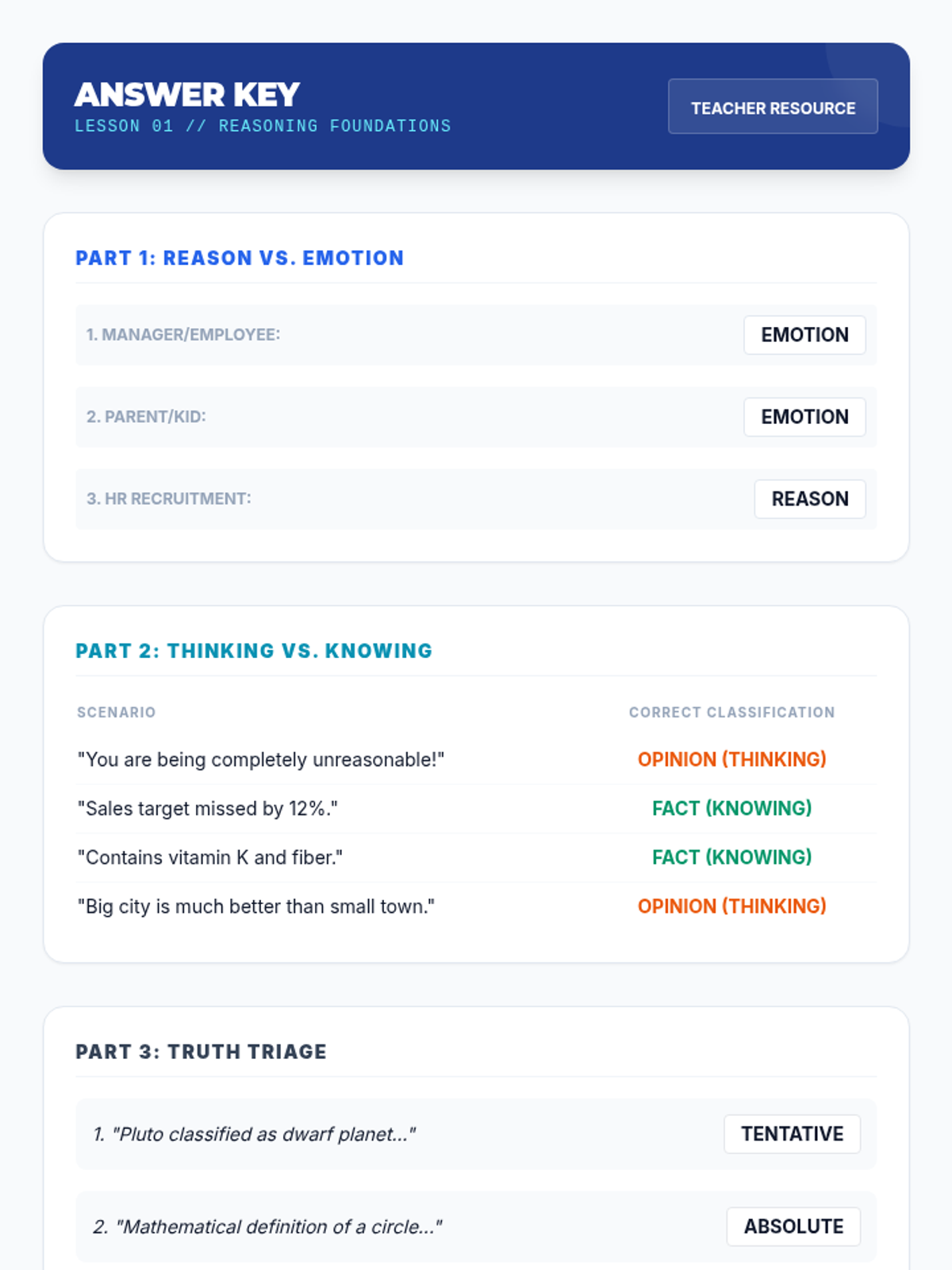
Complete answer key for the updated Lesson 1 worksheet, featuring classifications for relationship-based reason/emotion and fact/opinion scenarios.
Facilitation guide for Lesson 10 on persuasion and rhetoric. Covers Aristotle's pillars, Cialdini's shortcuts, and the "Free Cookie" hook.
Complete answer key for the Lesson 7 worksheet, providing correct fallacy identifications and sample logic translations for emotional appeals.
Student worksheet for Lesson 10. Features identification of Ethos/Pathos/Logos, a deconstruction lab for analyzing real-world advertisements, and a reflection on personal psychological vulnerabilities to influence.
Slide deck for Lesson 10 on persuasion and rhetoric. Covers Aristotle's pillars (Ethos, Pathos, Logos), emotional appeals, propaganda techniques, and Cialdini's principles of influence.
Facilitation guide for Lesson 9 on source credibility. Features the Anecdote Challenge and guidance for applying the CRAAP test to health claims.
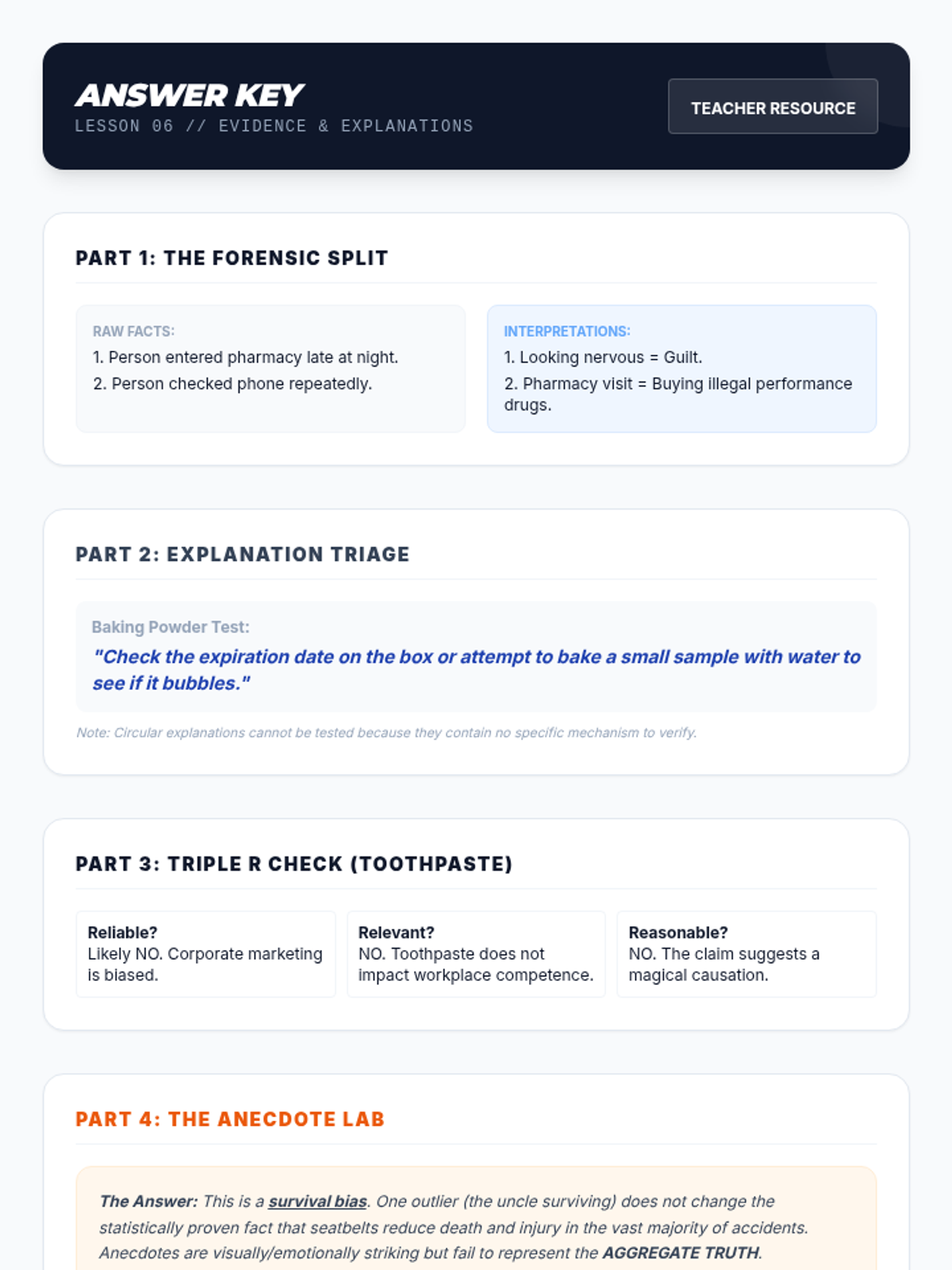
Complete answer key for the Lesson 6 worksheet, providing premises/conclusions for syllogisms and explanations for logical validity/invalidity.
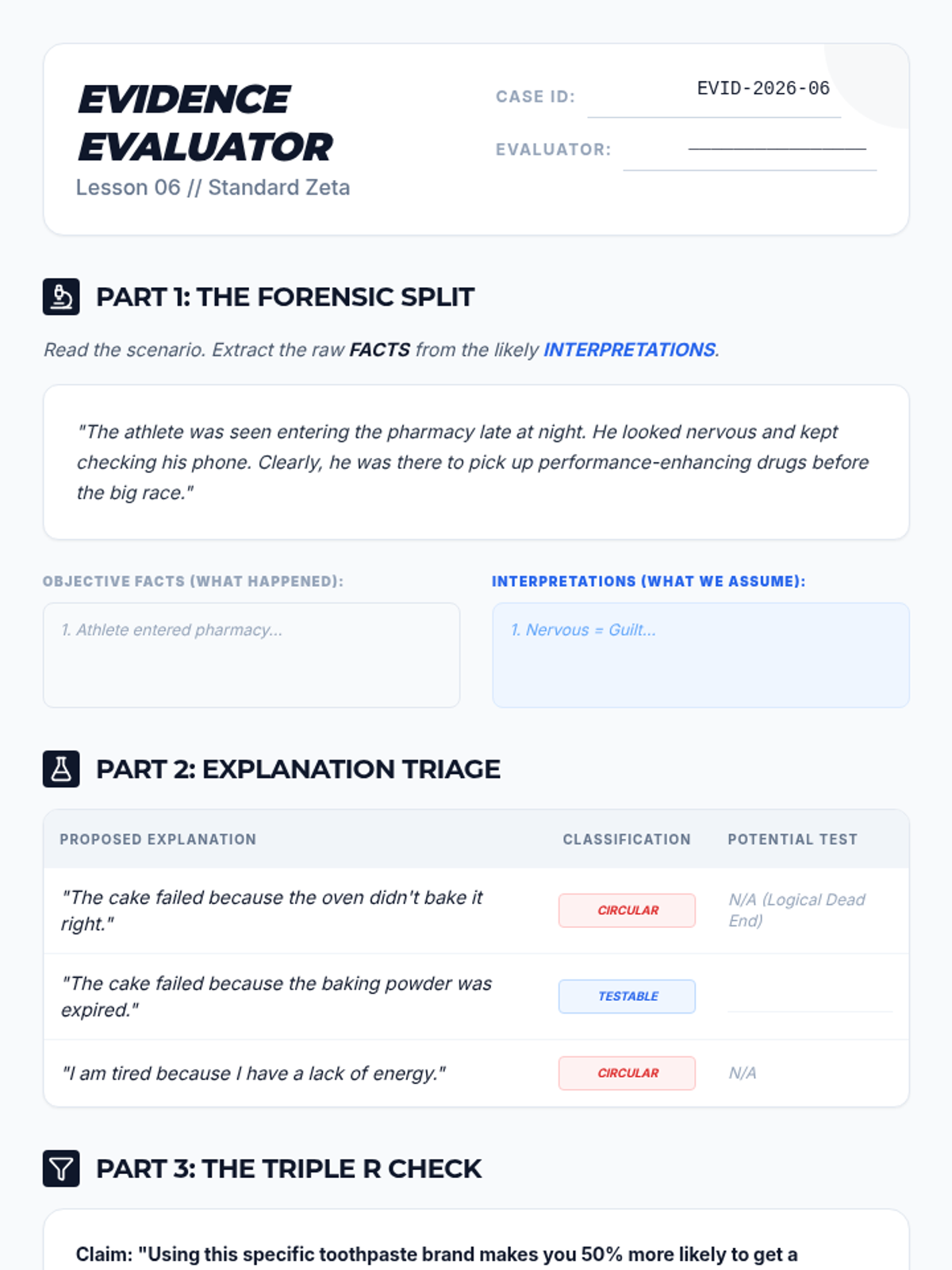
Student worksheet for Lesson 9 on evidence and credibility. Includes exercises for sorting facts from interpretations, applying the CRAAP test, and reflecting on domain-specific expertise.
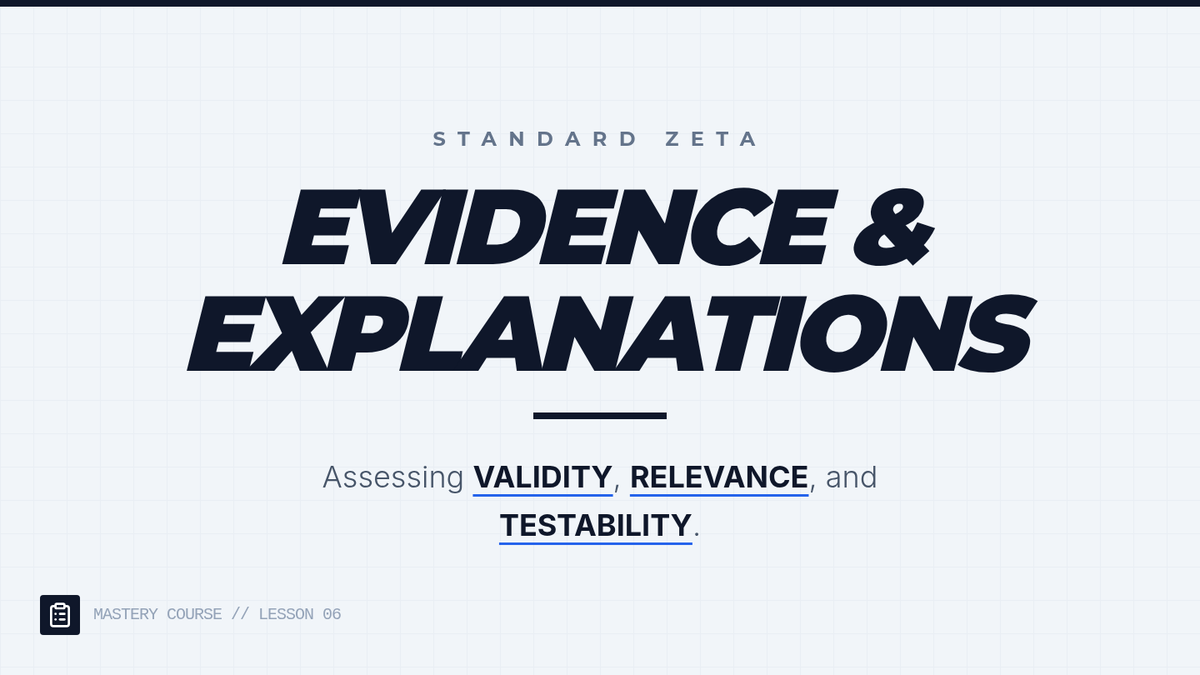
Slide deck for Lesson 9 on evaluating evidence and source credibility. Covers the hierarchy of evidence, expert domain-specific credibility, the CRAAP test, and distinguishing fact from interpretation.
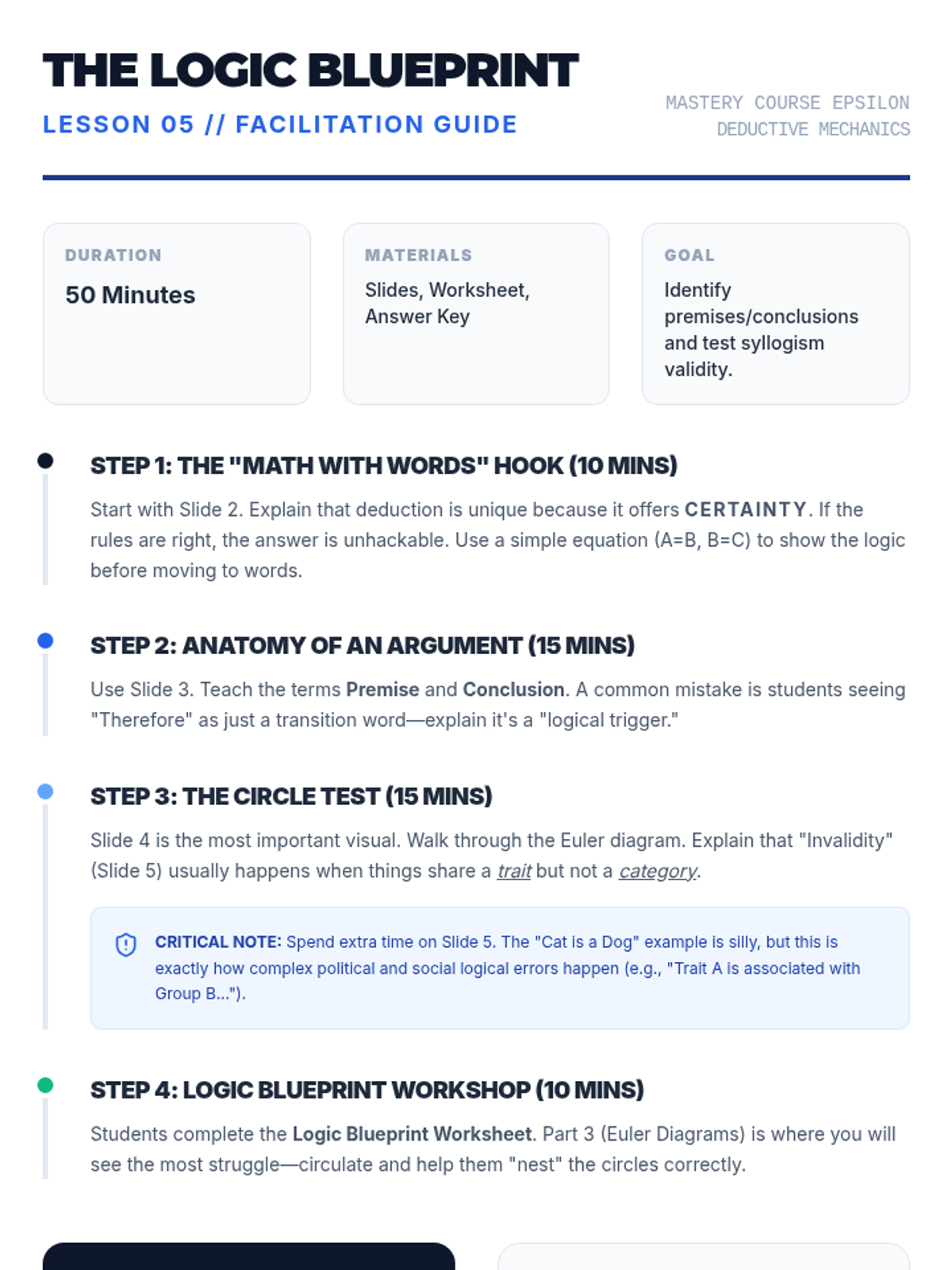
Facilitation guide for Lesson 3. Optimized layout to ensure all content fits on a single page with high-contrast elements.