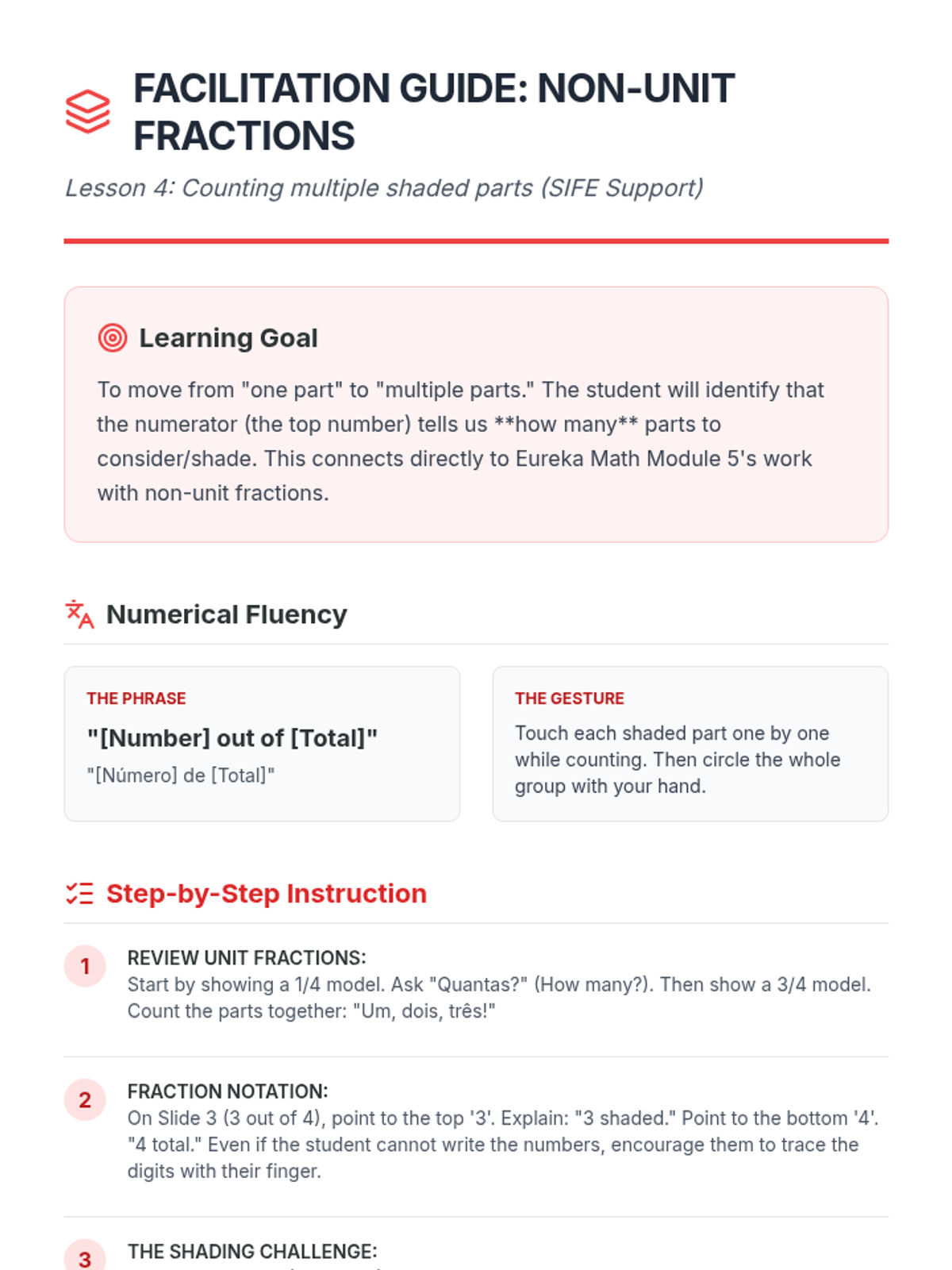
An 8-day homework series (one page per day) focused on one-to-one correspondence, comparing quantities, and number identification through daily household scavenger hunts with parent-directed choices.
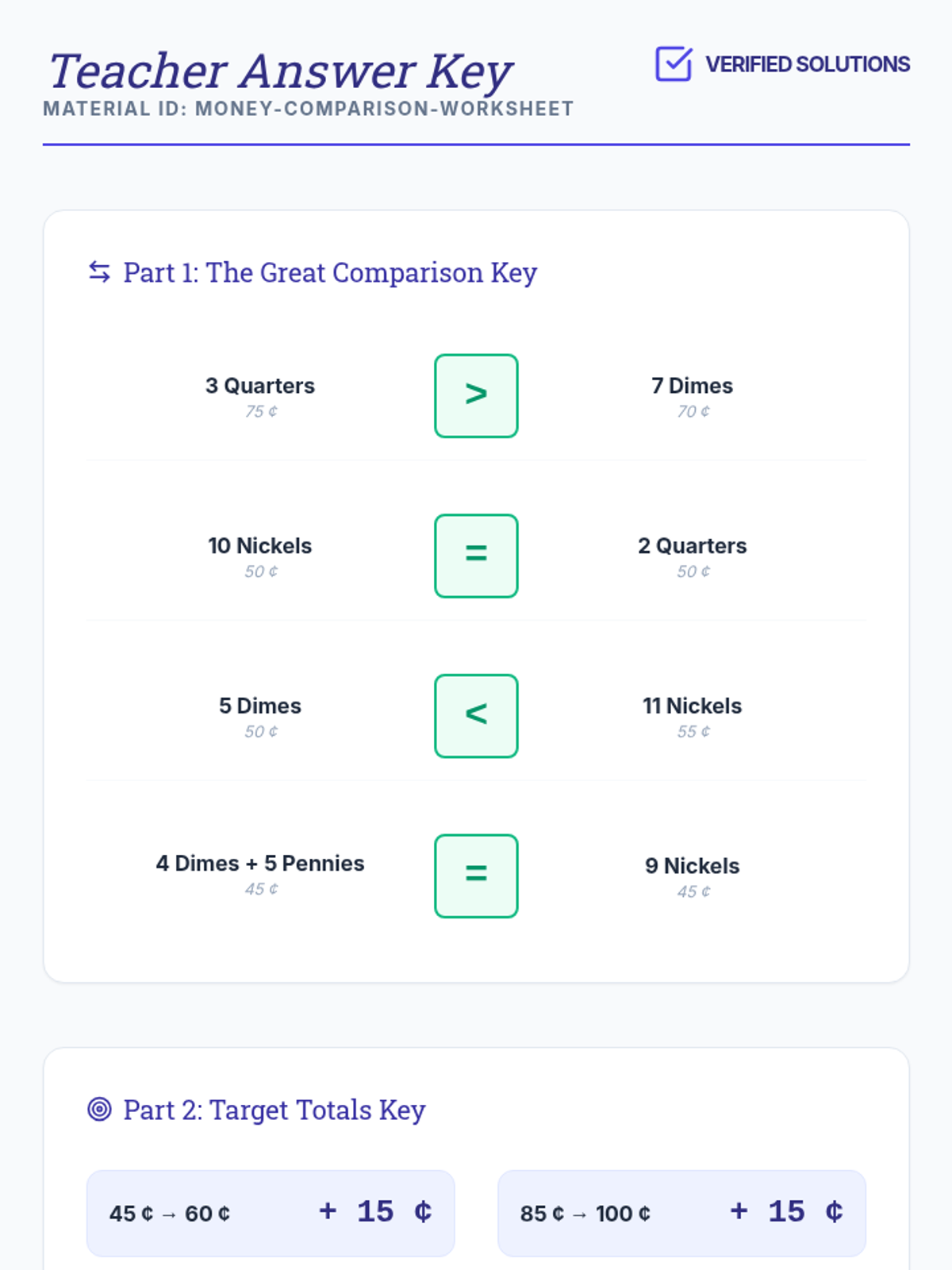
Teacher answer key for the Money Comparison Worksheet, showing correct symbols for coin group comparisons and the exact differences needed to reach target values.
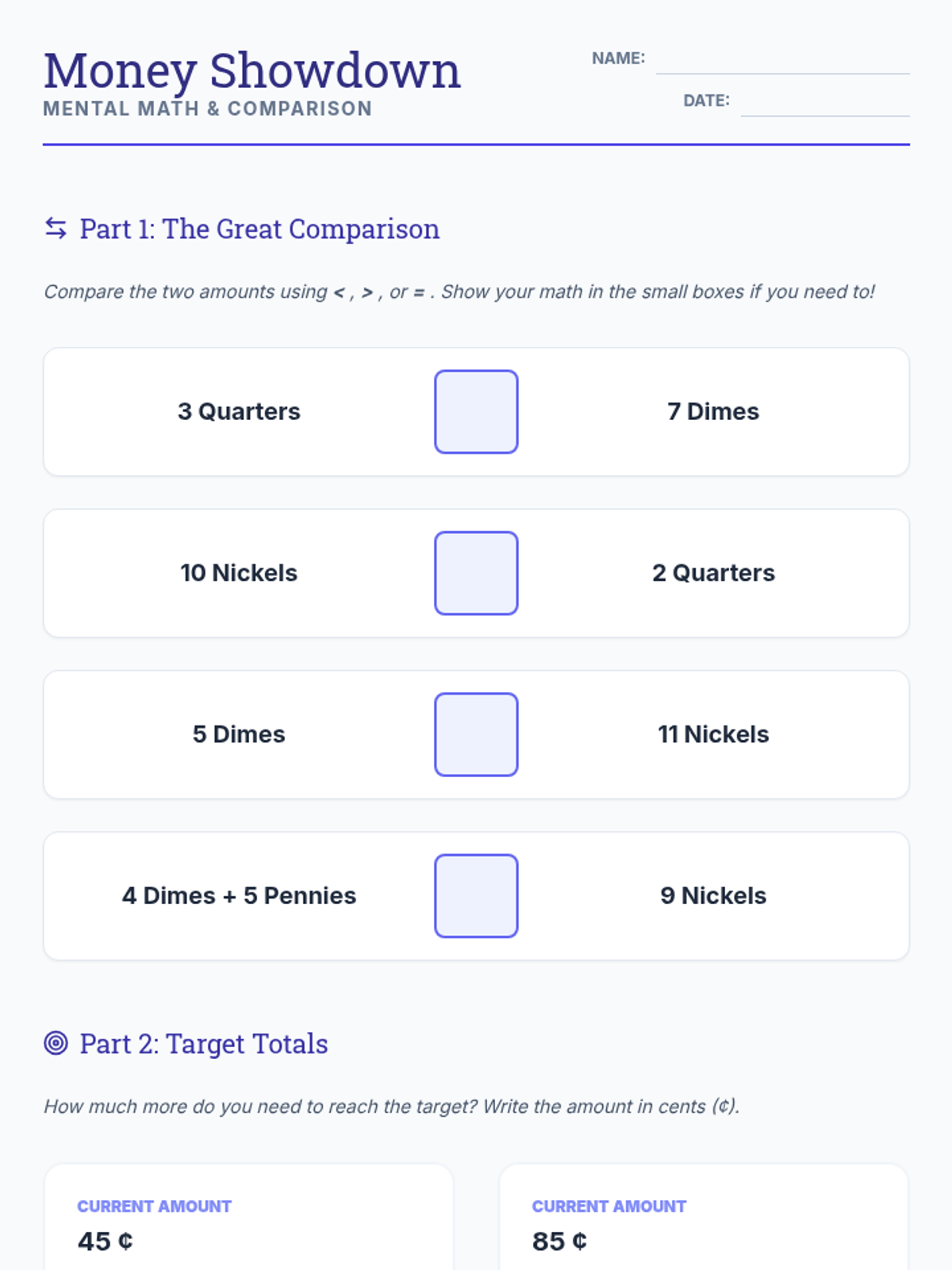
A money comparison and target total worksheet without visual supports. Students use mental math to compare coin groups and find the difference to reach a target value.
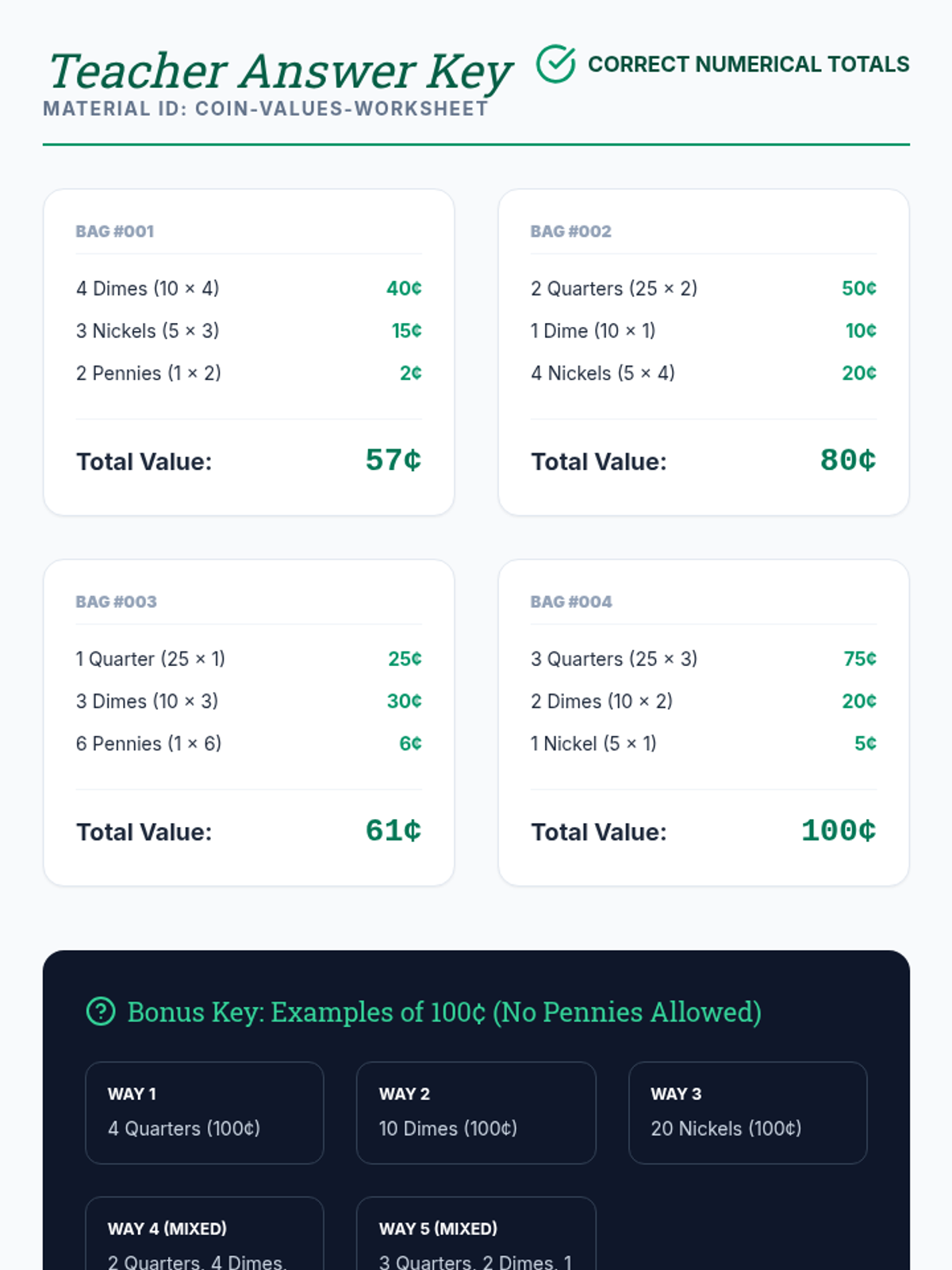
Teacher answer key for the Coin Values Worksheet, showing calculations and various ways to reach 100¢ using only numerical references.
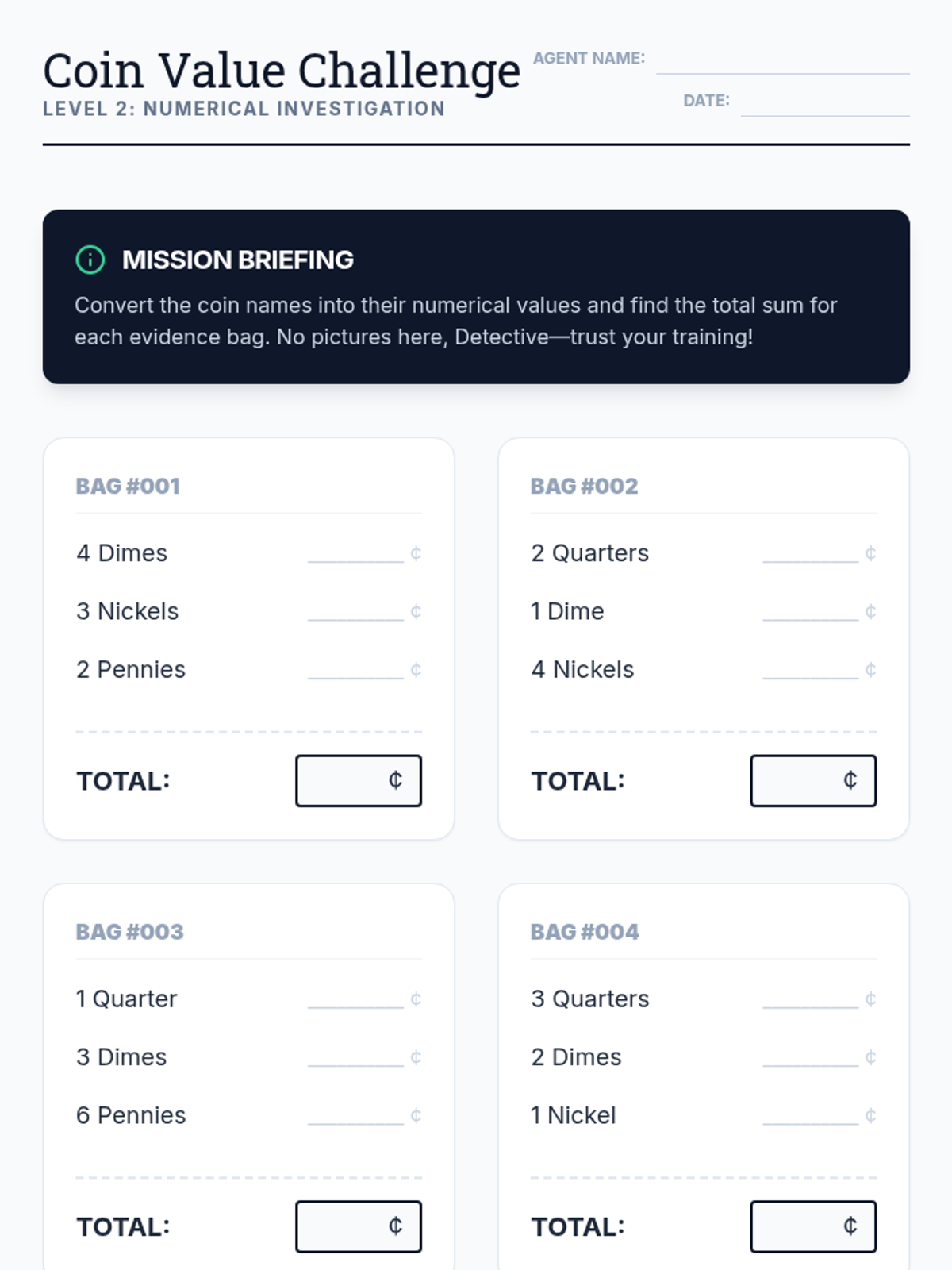
A coin value worksheet without visual supports. Students convert coin names and quantities (e.g., "4 Dimes") into numerical values and calculate the total for each "bag."
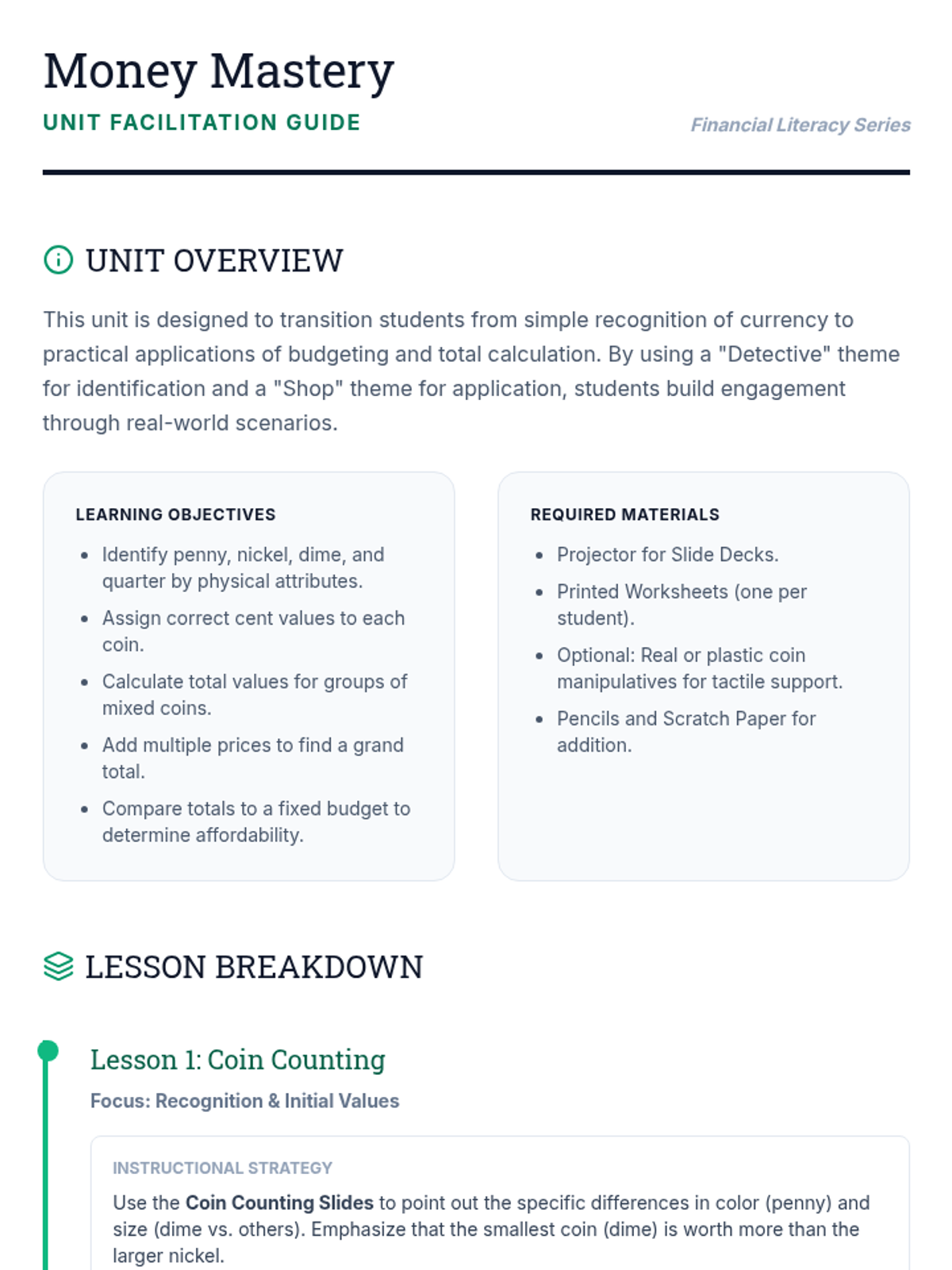
A comprehensive teacher's guide for the Money Mastery unit, including learning objectives, lesson breakdowns, and differentiation strategies for coin counting and budgeting.
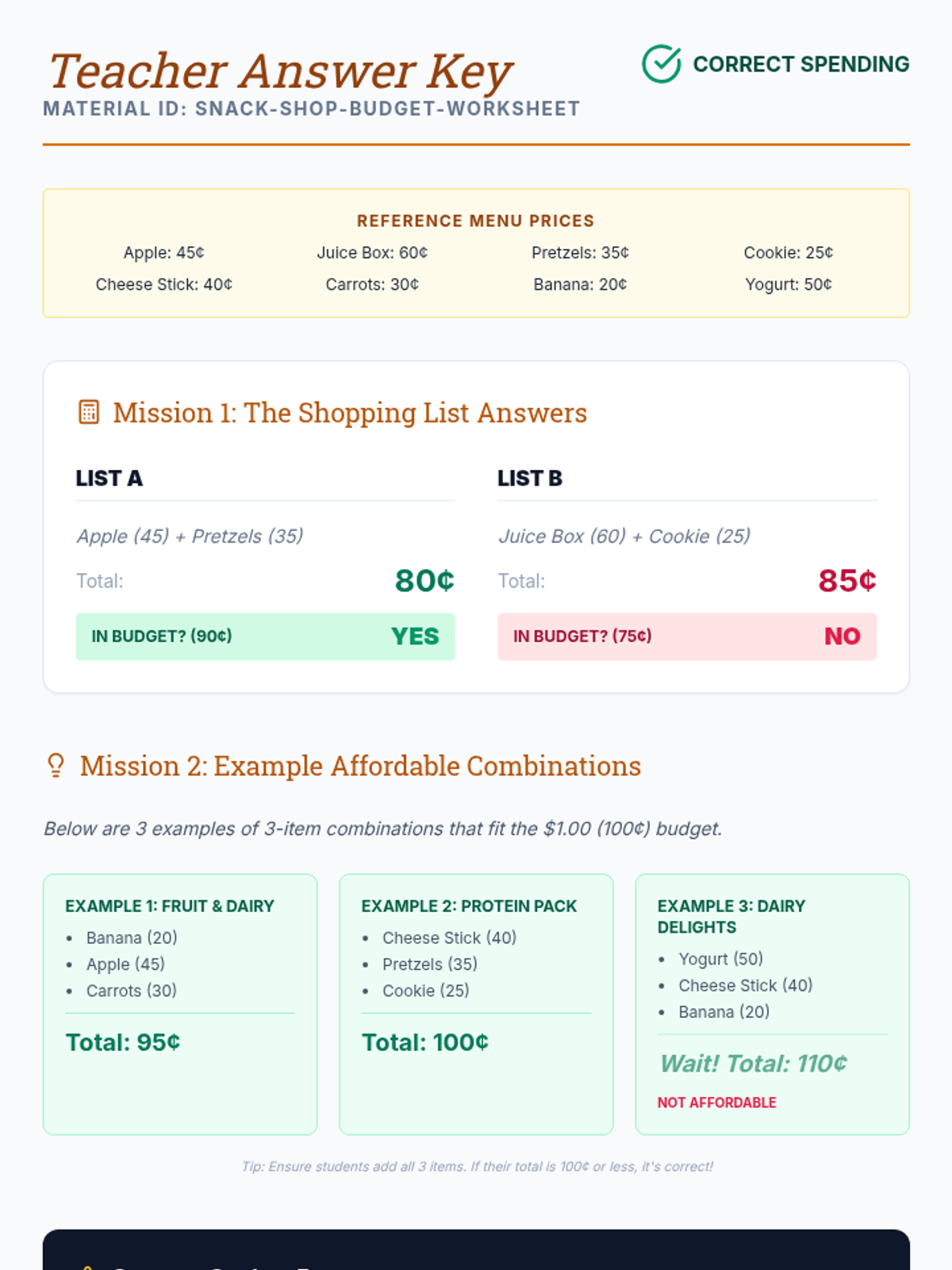
Teacher answer key for the Snack Shop Budget Worksheet, including sample affordable combinations and common student pitfalls.
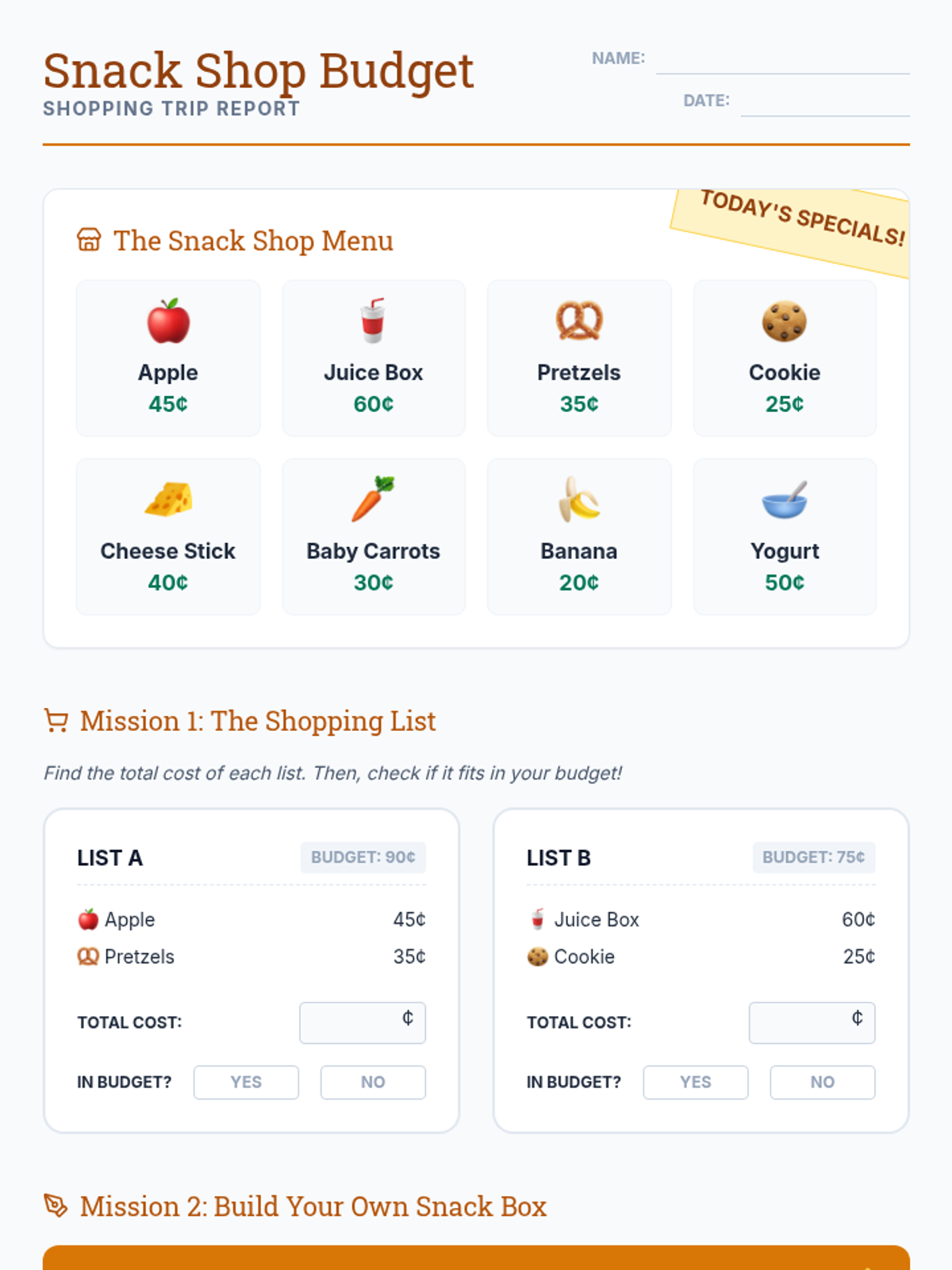
A student worksheet for identifying snack prices, calculating totals for pre-set lists, and making spending choices within a $1.00 budget.
Instructional slides for calculating total costs and making budgeting decisions, featuring "The Golden Rule of Spending" and clear comparison examples.
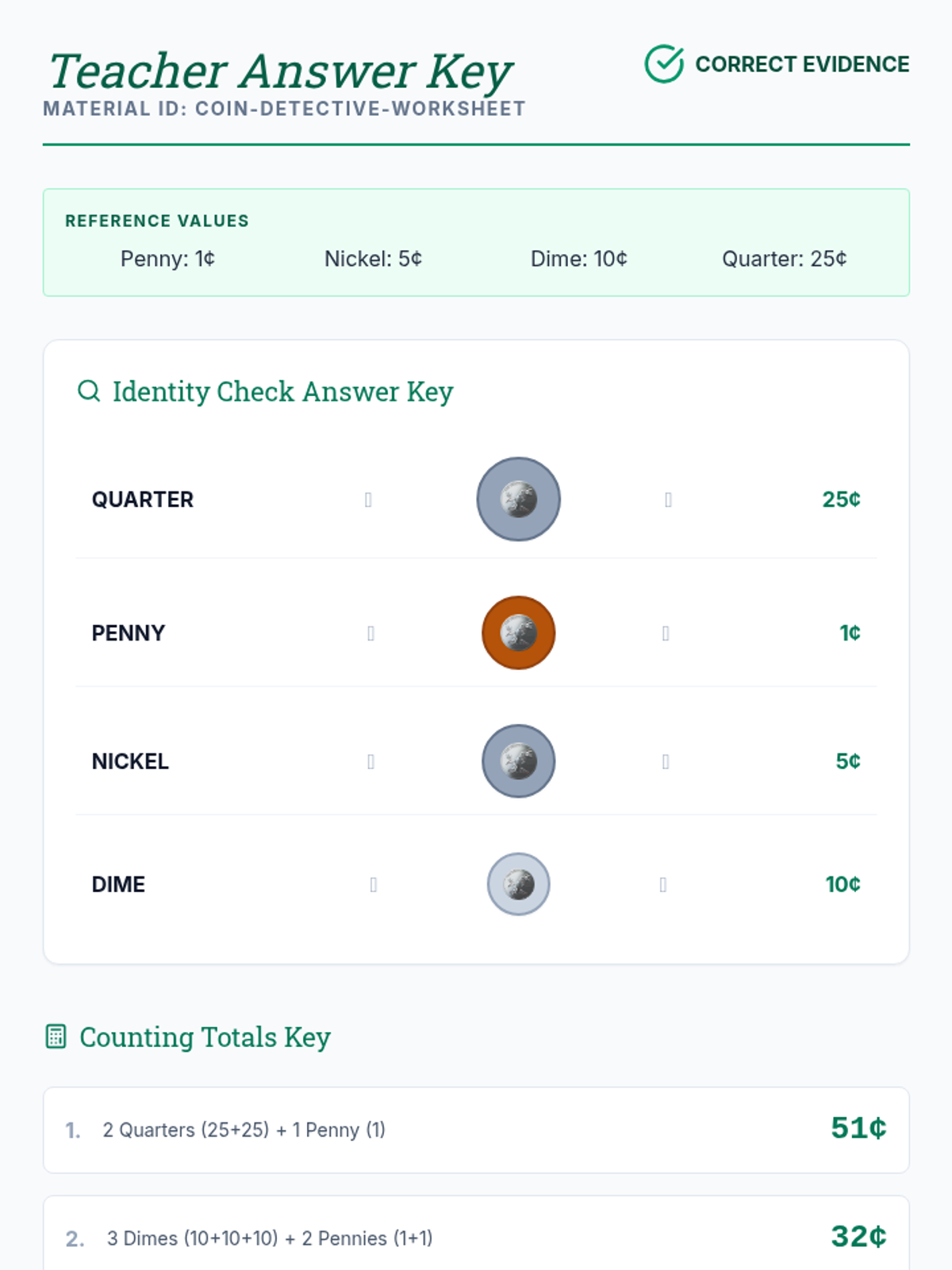
Teacher answer key for the Coin Detective Worksheet, including visual matching solutions and total value calculations.
A visual slide deck introducing the four main US coins (penny, nickel, dime, quarter) with their identification features and values. features a "Coin Detective" theme.
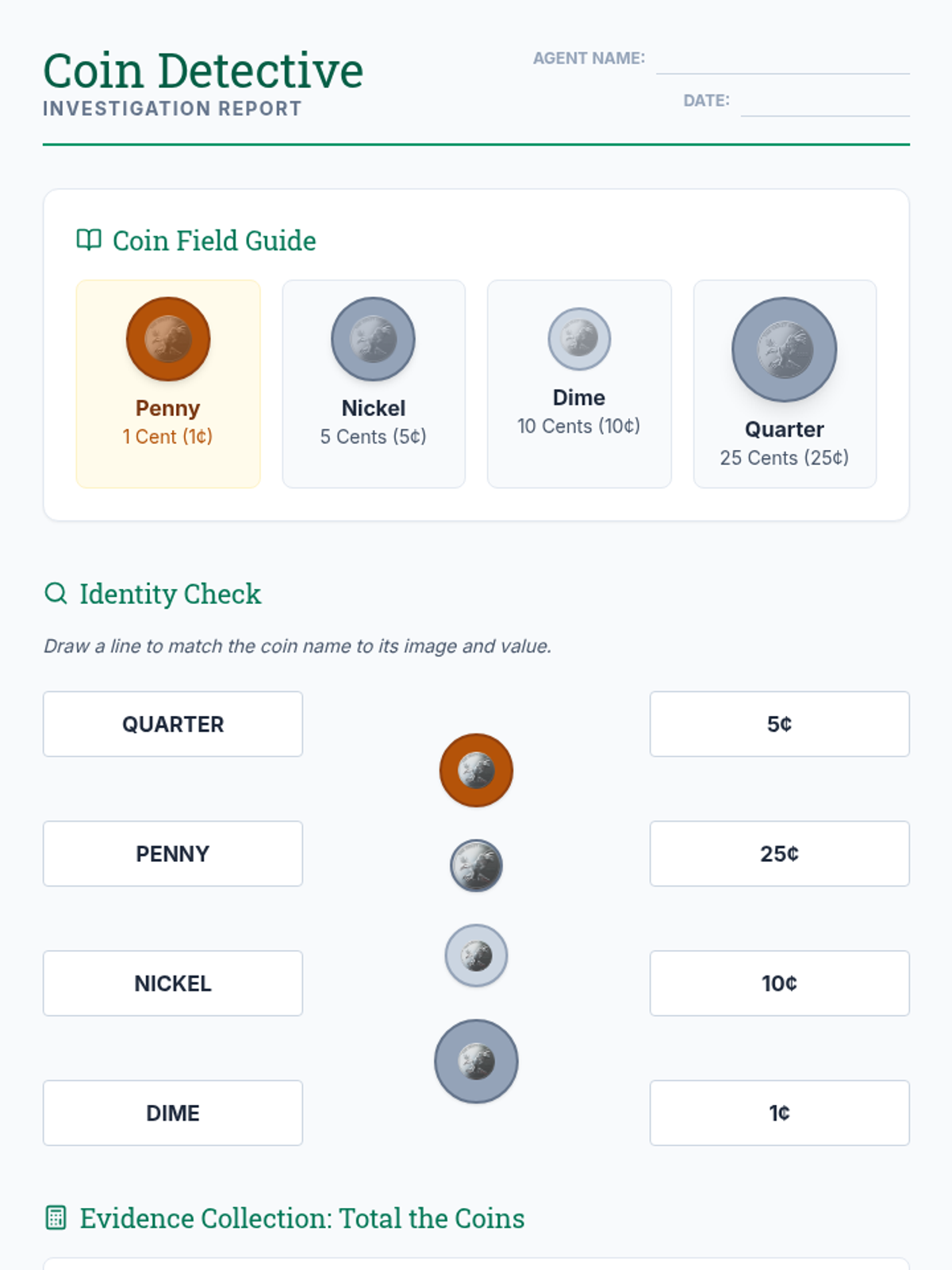
A coin identification and value worksheet using a "Coin Detective" theme. Includes a field guide, matching activity, and basic counting problems.
A teacher facilitation guide for Lesson 4, focusing on the transition to non-unit fractions and counting multiple shaded parts for SIFE students.
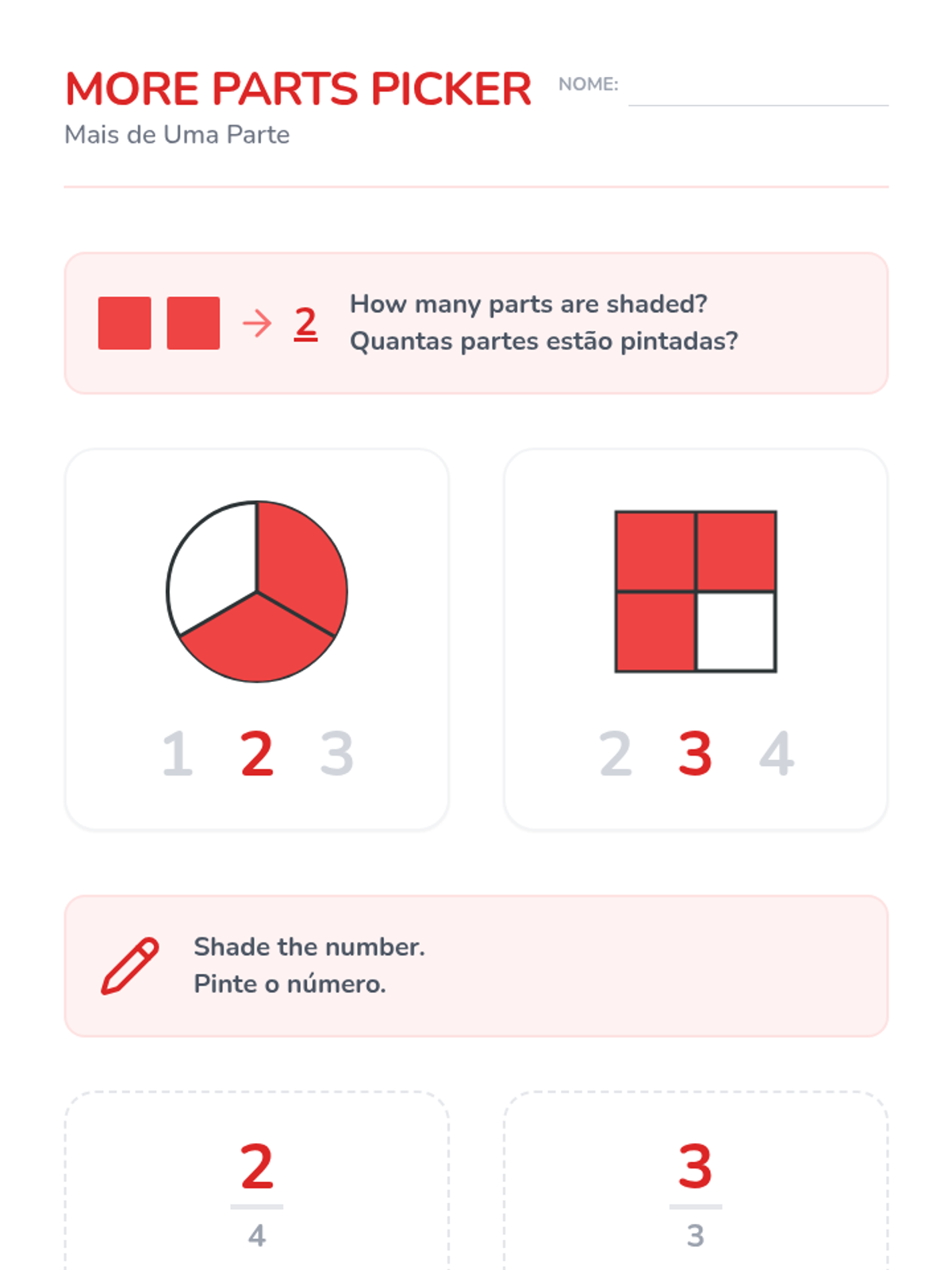
A visual worksheet for non-unit fractions where students count shaded parts and shade a specific number of parts in various shapes.