The capstone decision form for the final simulation, where student teams log their verification evidence and make a final "Print" or "Kill" decision on a breaking news story.
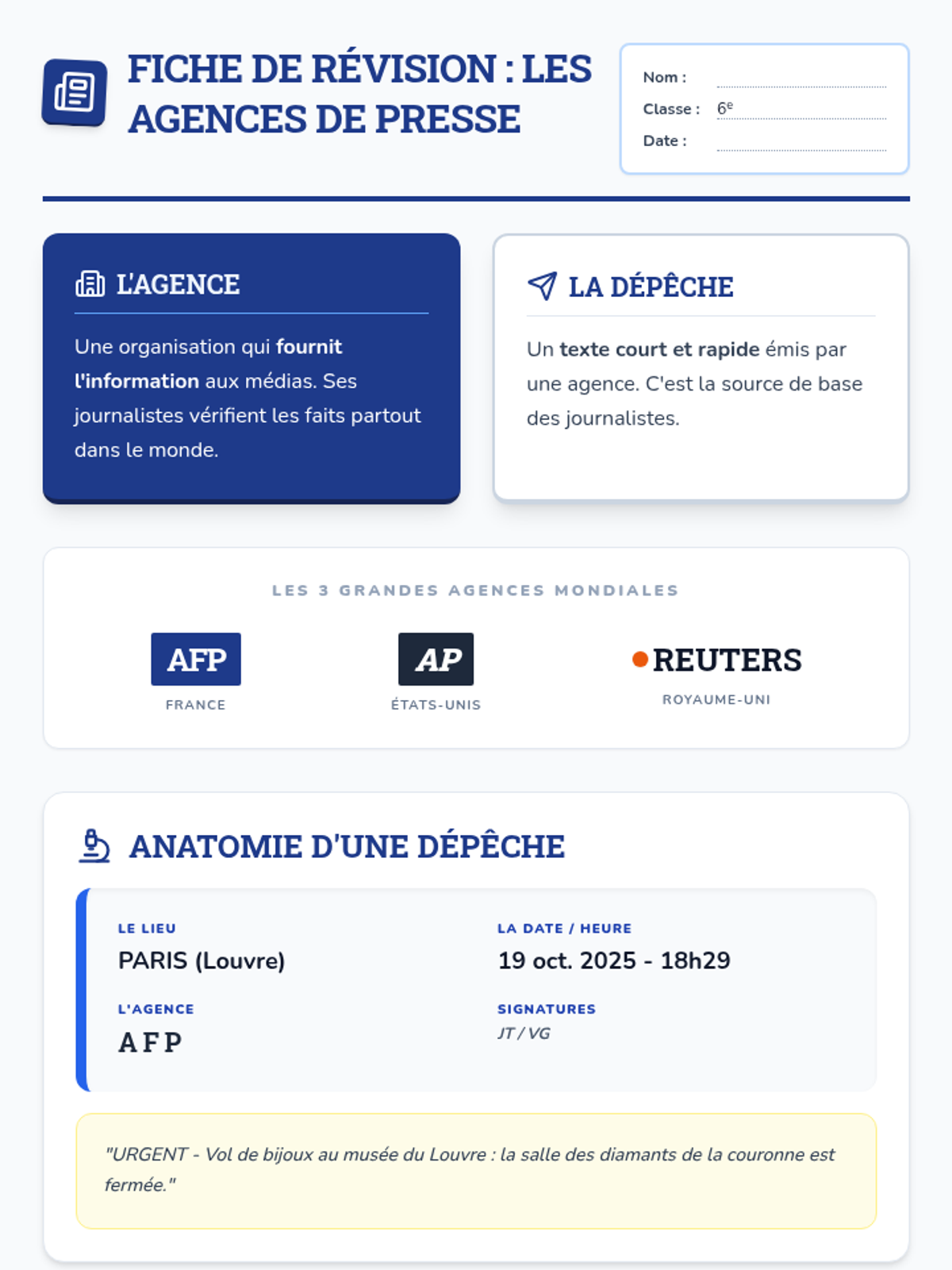
Une fiche de révision sur le rôle des agences de presse, incluant les logos stylisés des grandes agences mondiales, les termes clés, l'anatomie d'une dépêche et le circuit de l'information.
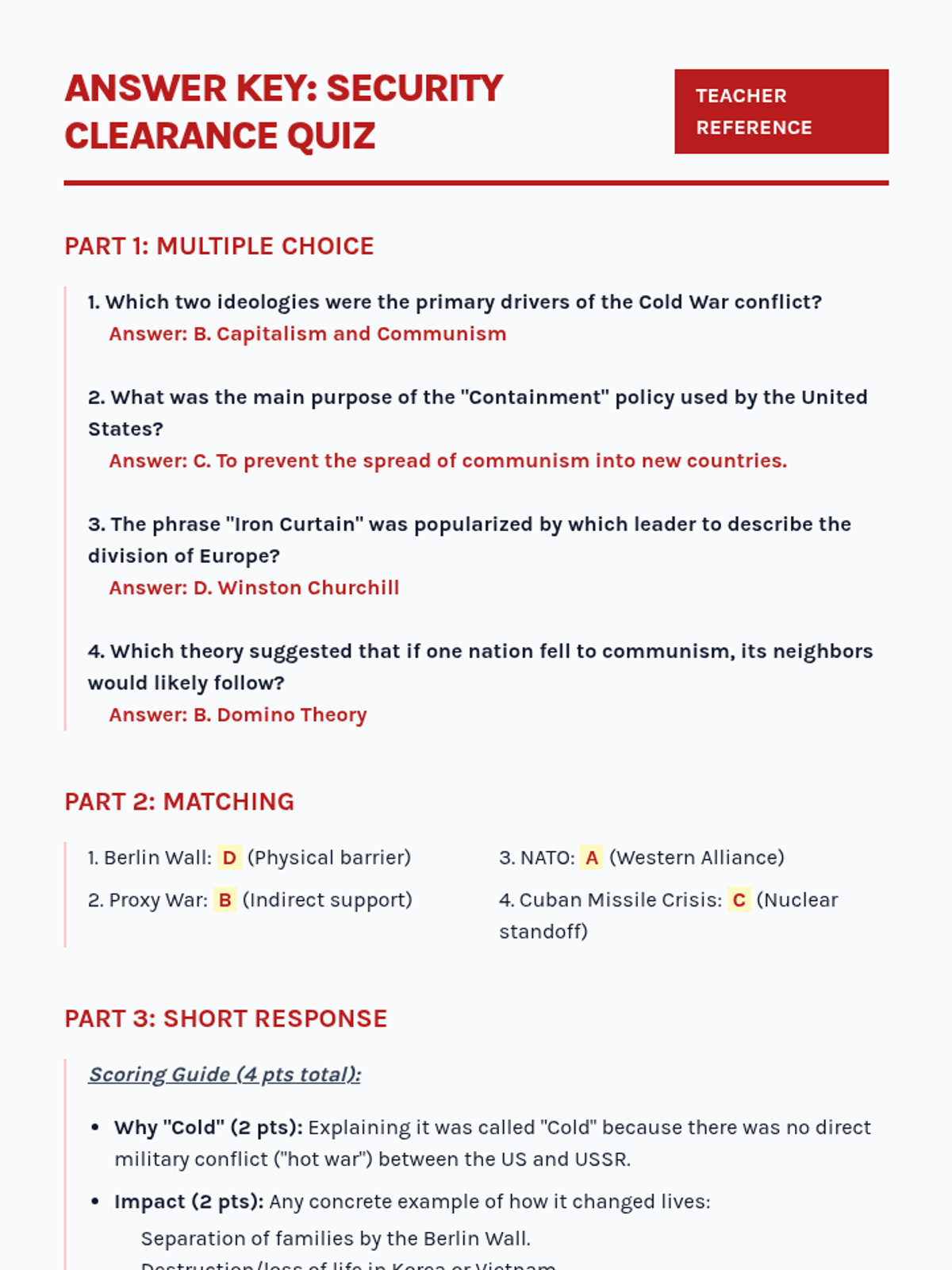
An answer key for the Security Clearance Quiz, providing correct answers for multiple choice and matching questions, plus a grading guide for the short response section. Revised to include full question stems and corrected question 4.
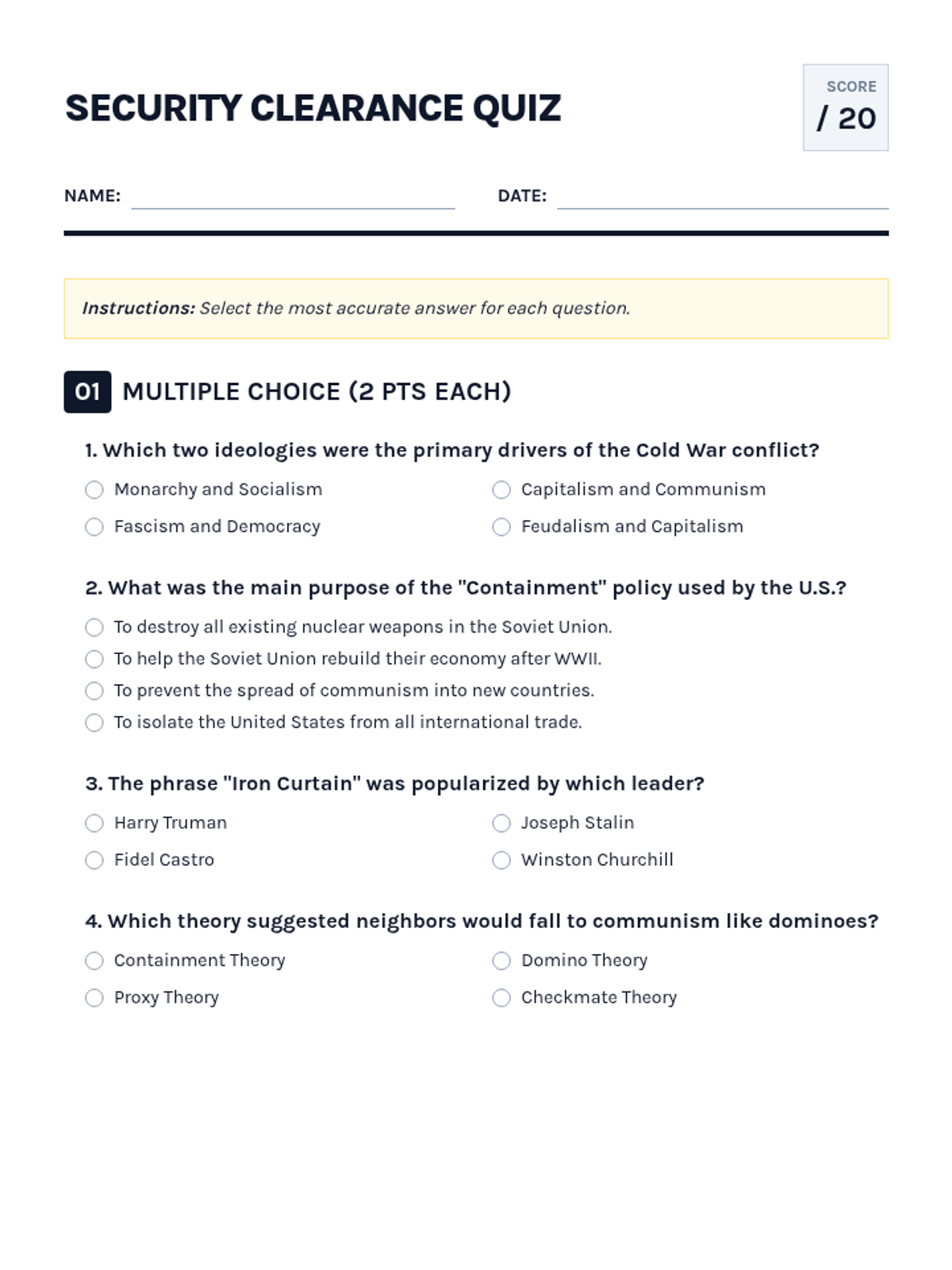
A summative assessment for the Cold War lesson. Includes multiple choice questions on ideologies and policies, matching for key events, and a short response section. Revised to improve question layout and provide more handwriting space. Condensed to fit on two pages.
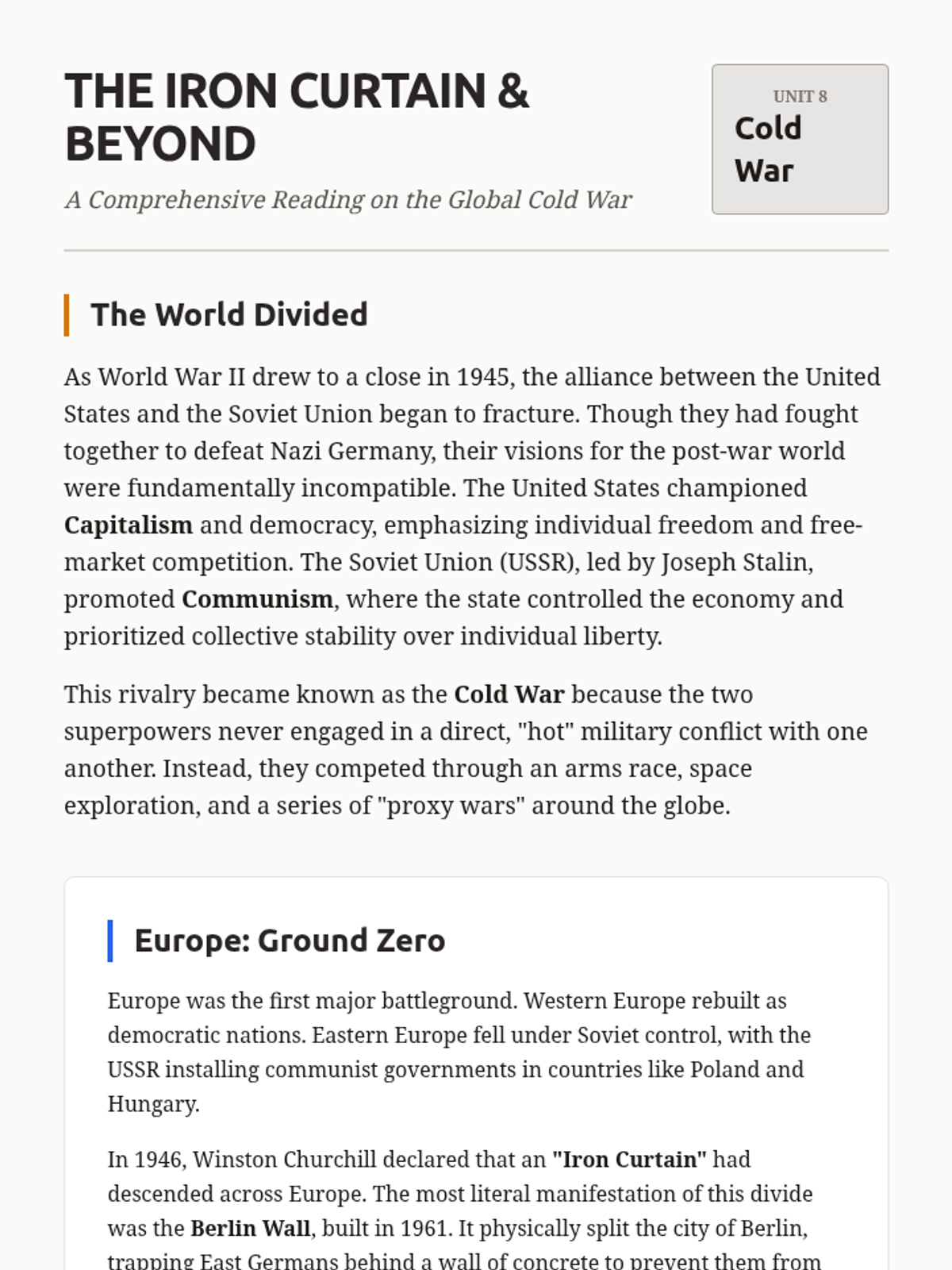
A detailed unit reading covering the origins of the Cold War, the Iron Curtain, the Berlin Wall, and major proxy wars in Korea, Vietnam, and Cuba. Revised to improve page breaks and provide student reflection space. Condensed for efficient printing.
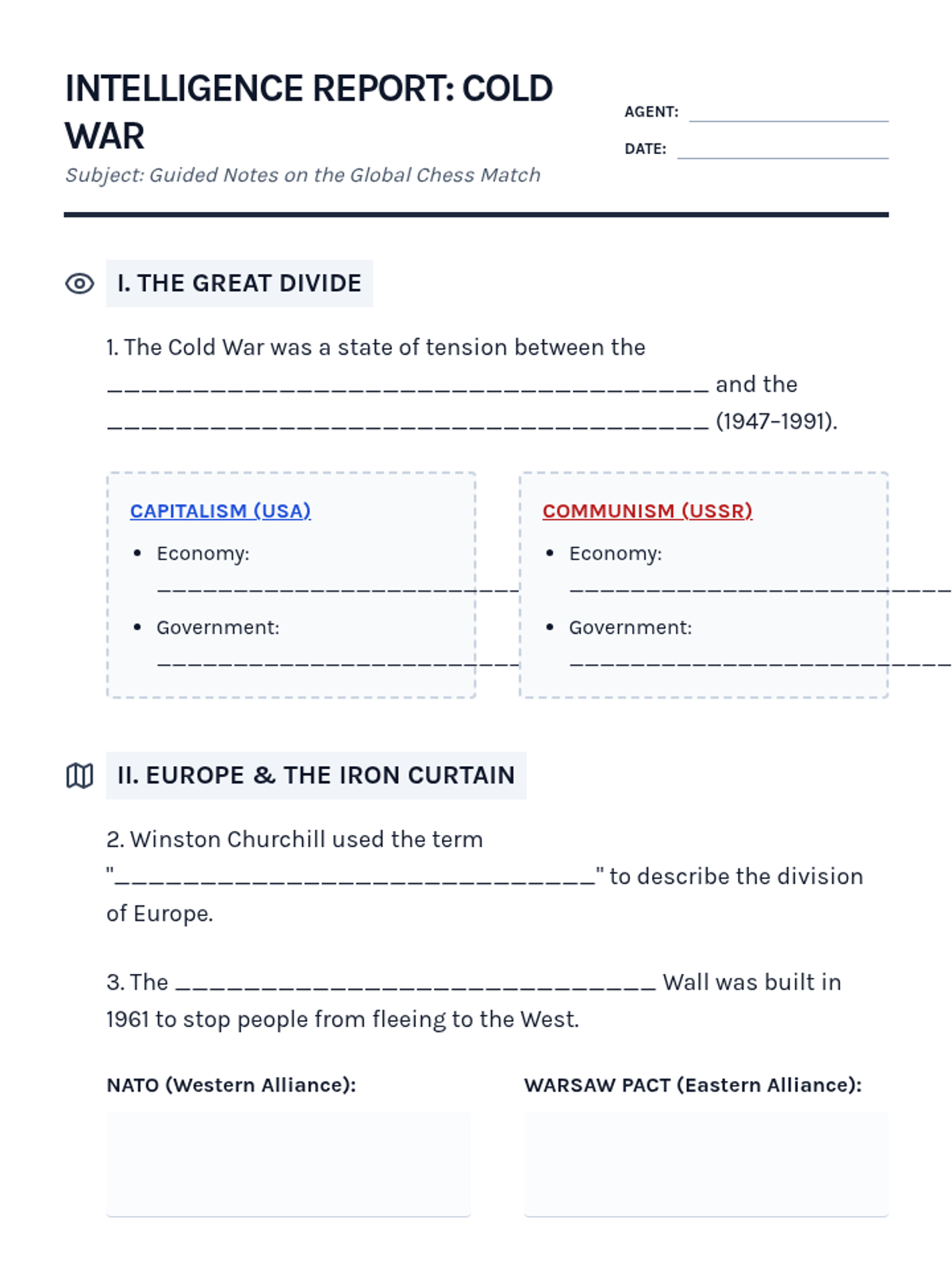
A guided notes worksheet for students to complete while following the presentation. Uses an "intelligence report" theme with fill-in-the-blanks and graphic organizers for key Cold War concepts. Revised to provide more handwriting space and cleaner page breaks.
A visually striking slide presentation on the Cold War's global impact. Features key concepts like proxy wars, the Iron Curtain, the Berlin Wall, and the Cuban Missile Crisis with a sleek "intelligence dossier" aesthetic. Replaced placeholder text with a visual schematic of divided Europe. Revised contrast for better legibility.
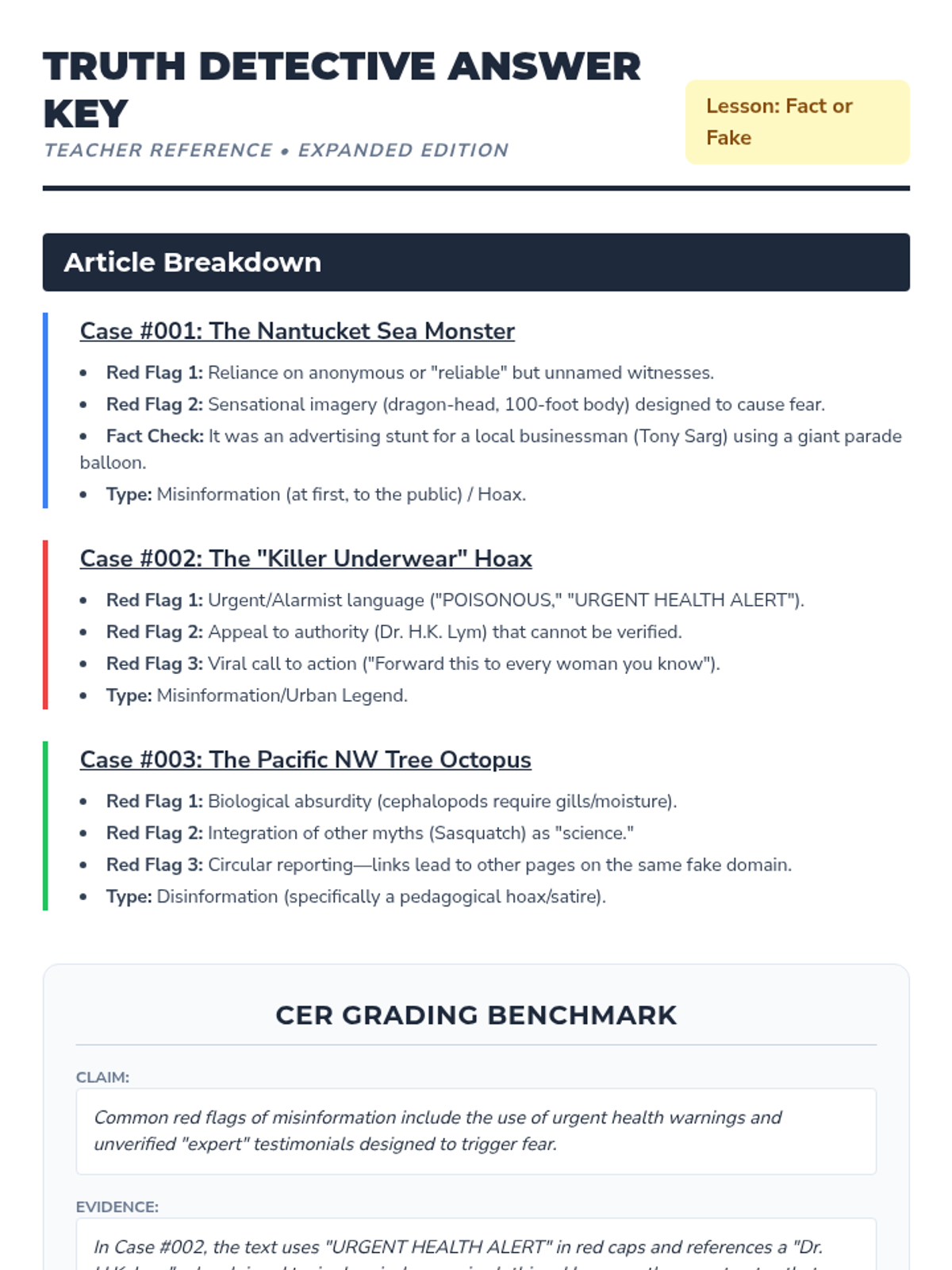
A teacher's answer key for the Truth Detective lesson, providing breakdown of the case studies and a sample CER response for grading and discussion.
Visual presentation to accompany the Truth Detective lesson, explaining the difference between misinformation and disinformation and highlighting digital red flags.
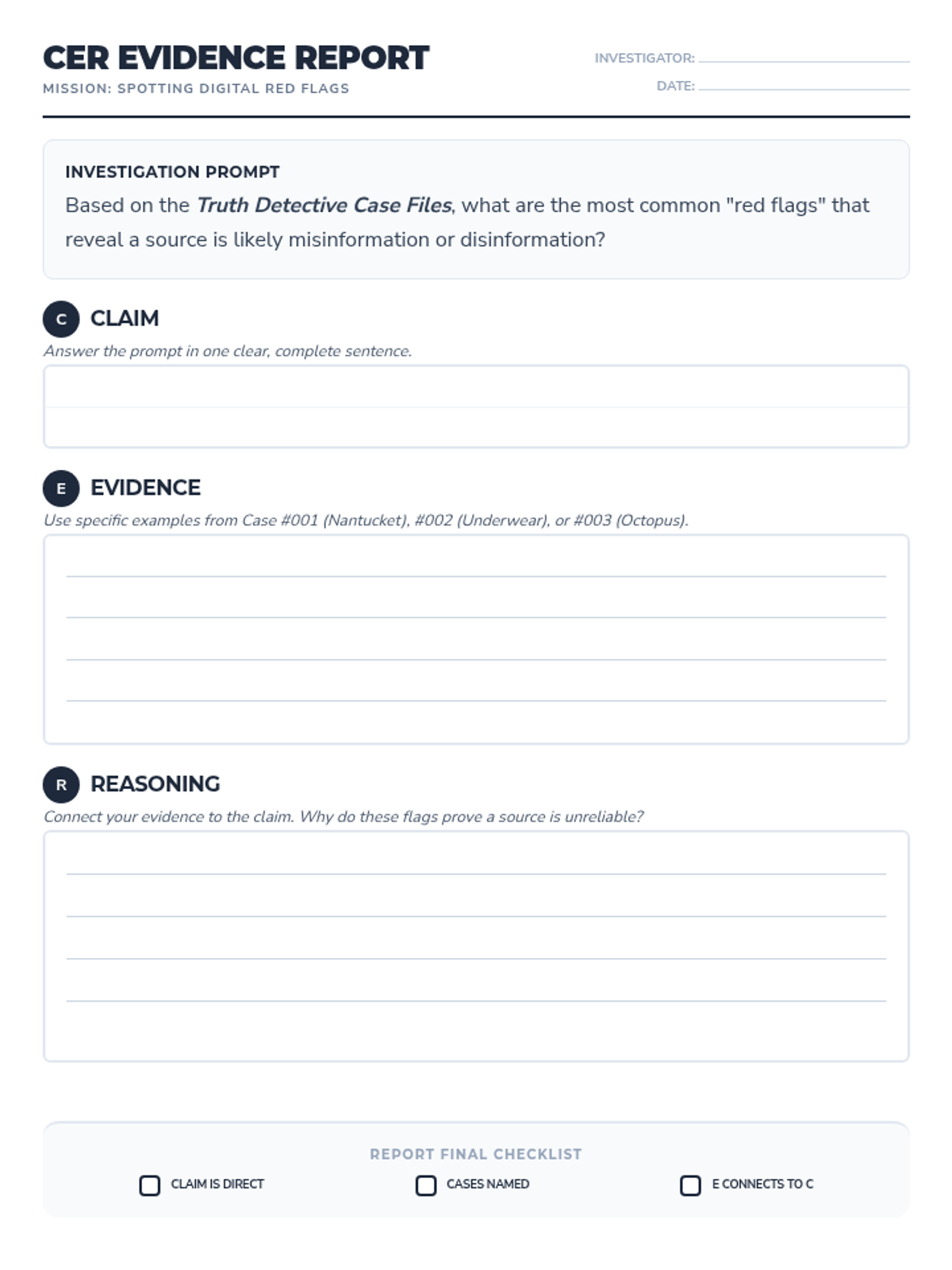
A graphic organizer for students to write a CER (Claim, Evidence, Reasoning) paragraph based on the Truth Detective Case Files, focusing on identifying red flags of fake information.
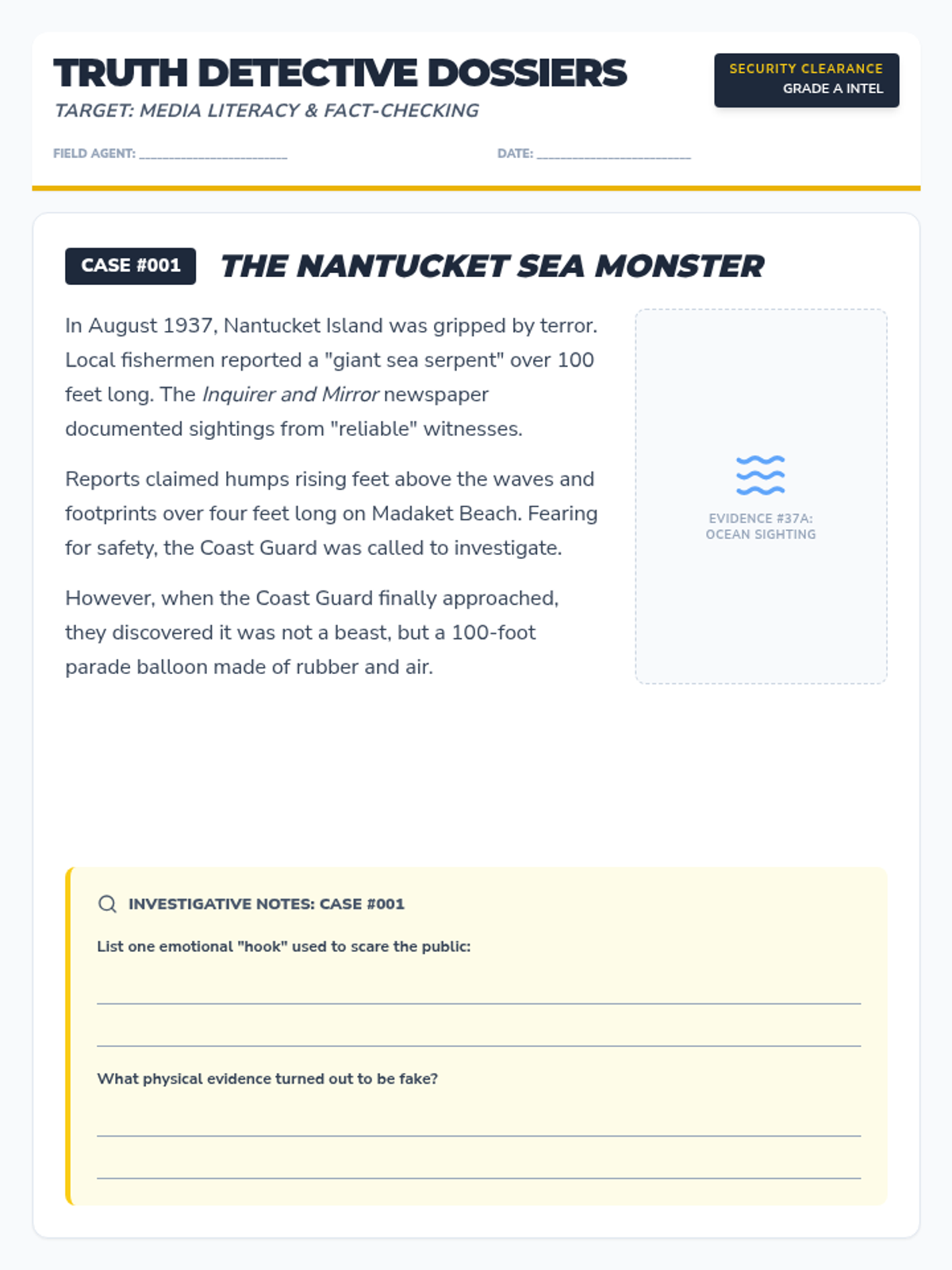
A collection of three short case studies—The Banana Shortage, The Tree Octopus, and Miracle Glow-Water—designed for students to practice identifying red flags of misinformation and disinformation.
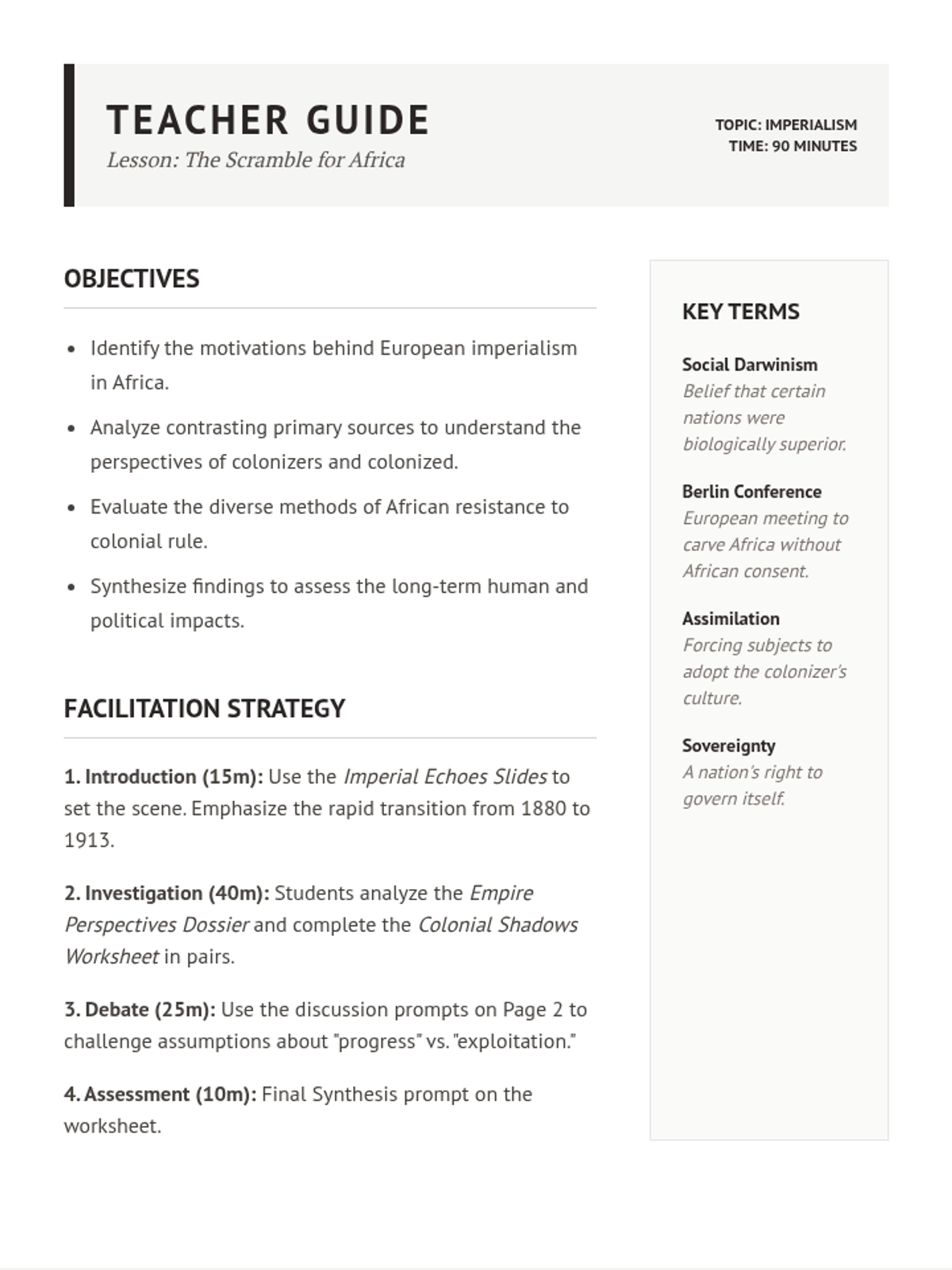
A 3-page instructional guide for teachers, providing background context for each primary source, discussion prompts, a complete answer key for the analysis worksheet, and differentiation strategies.
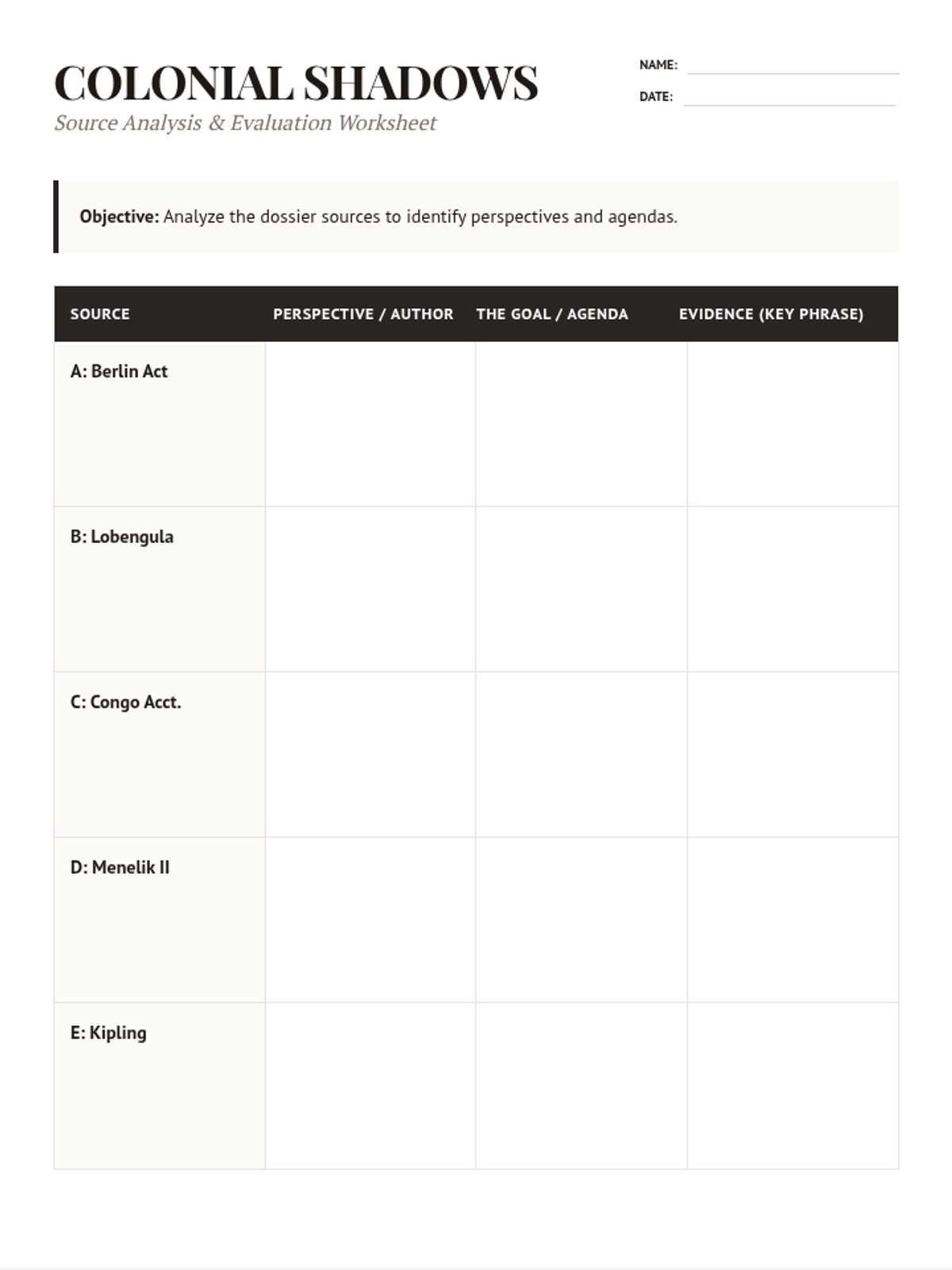
A 2-page analysis worksheet for students to record findings from the primary source set. Includes a source-comparison grid, critical thinking questions on colonial deception and resistance, and a synthesis writing prompt.
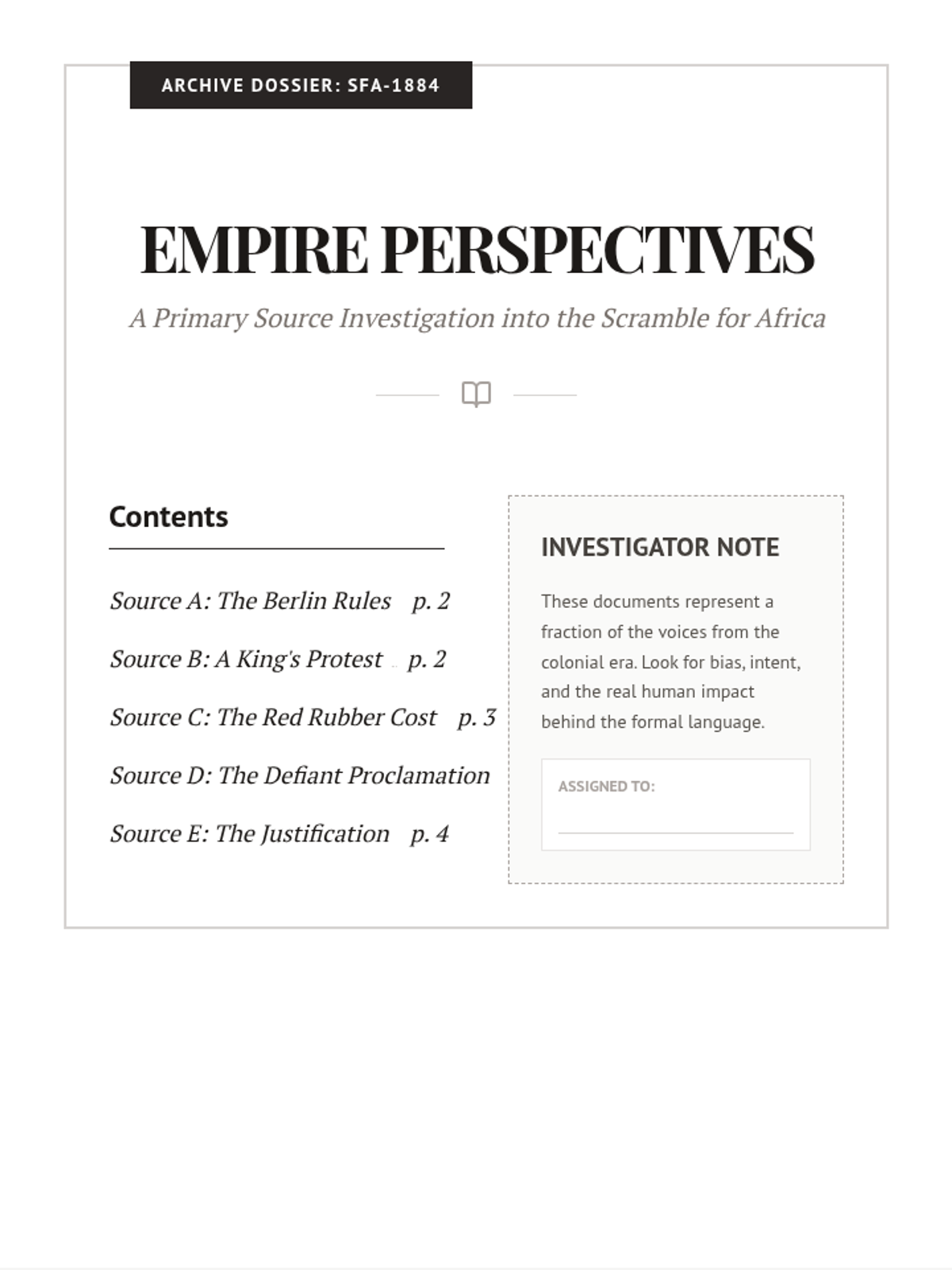
A curated 4-page collection of primary sources including excerpts from the Berlin Conference, King Lobengula's letters, accounts of the Congo Free State, Emperor Menelik II's proclamations, and Rudyard Kipling's 'White Man's Burden'. Designed as an archival dossier.
An 8-slide presentation introducing the 'Scramble for Africa', covering the Berlin Conference, colonial motivations, and the complex legacy of European imperialism on the continent. Includes visual comparisons, key definitions, and case study transitions.
An introductory slide defining family as a core social unit, updated with a professional navy blue theme.
A comprehensive slide deck covering Manifest Destiny, the Transcontinental Railroad, and the Exoduster movement, designed with a vintage historical aesthetic. Includes 12 slides with visual breakdowns and key historical analysis. Revised to fix layout and overflow issues.
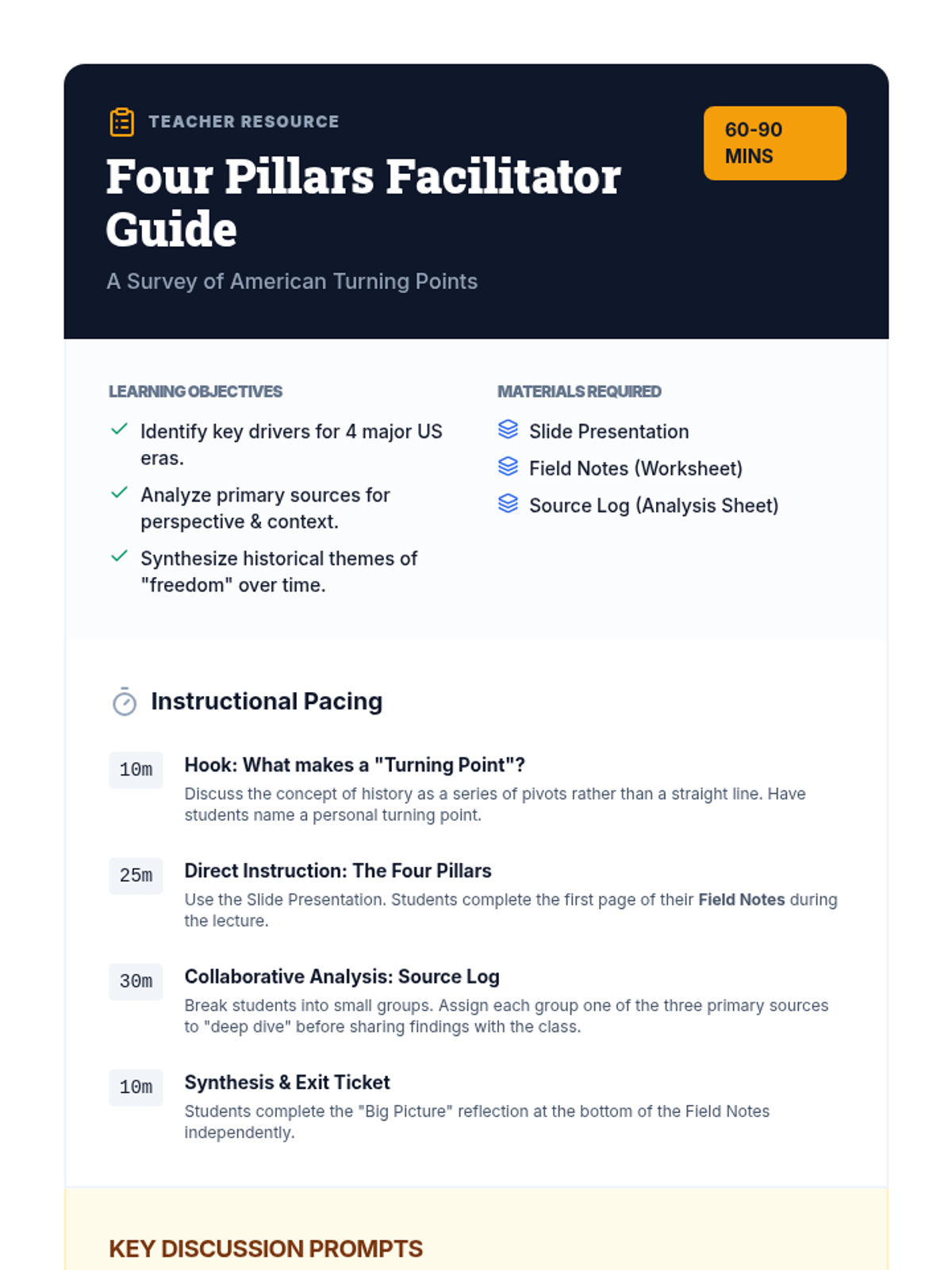
A detailed facilitation guide for teachers to deliver the 'Four Pillars' US History survey lesson. Includes learning objectives, pacing suggestions, discussion prompts, and strategies to address common student misconceptions.
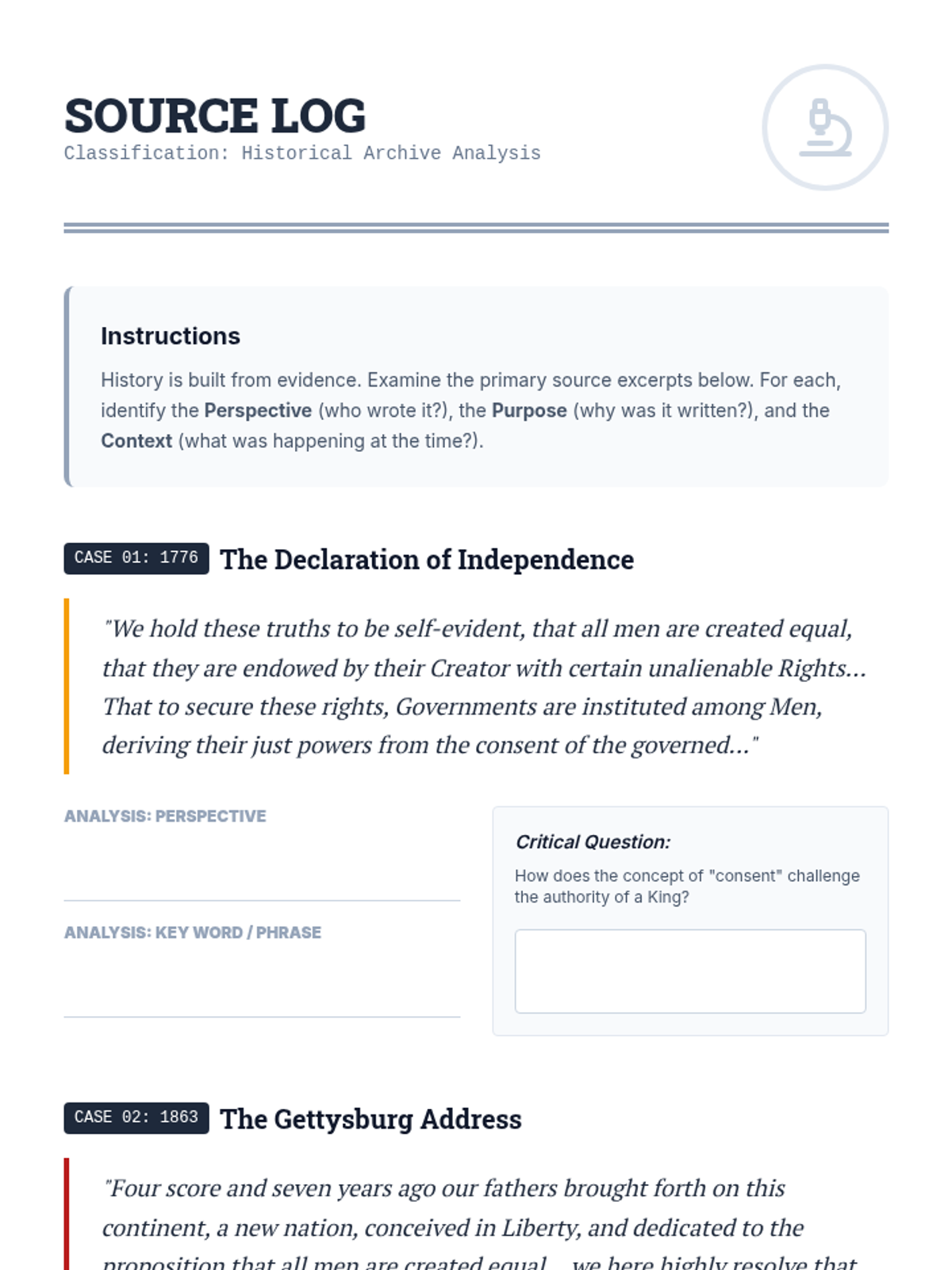
A primary source analysis activity featuring excerpts from the Declaration of Independence, the Gettysburg Address, and the Four Freedoms Speech. Students are guided to analyze perspective, purpose, and historical continuity across eras.