A student reflection journal for the Eco-Clash lesson, featuring sections for the Lab Patty warm-up poll, video evidence collection for traditional vs. technological methods, and final debate reflections.
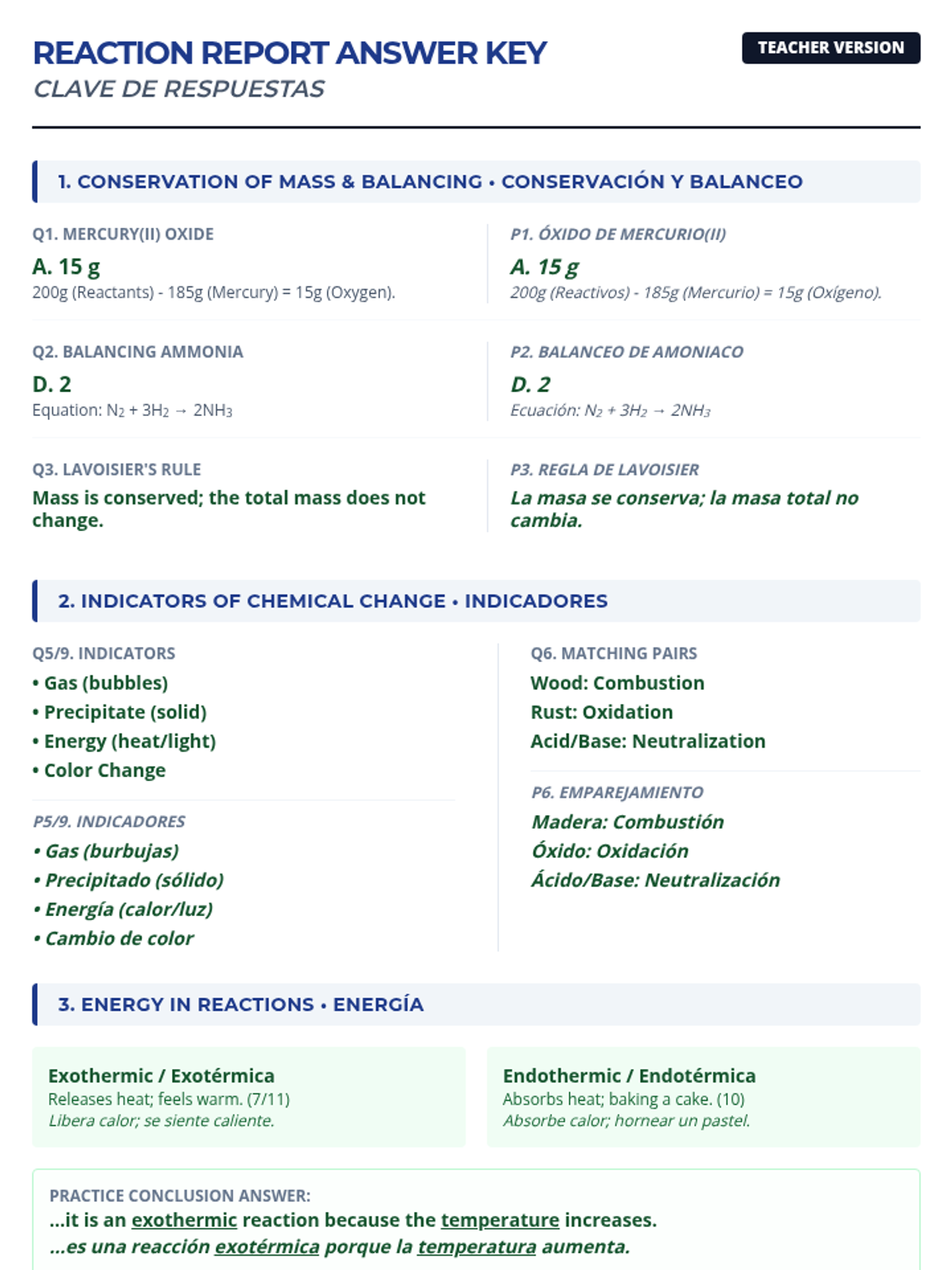
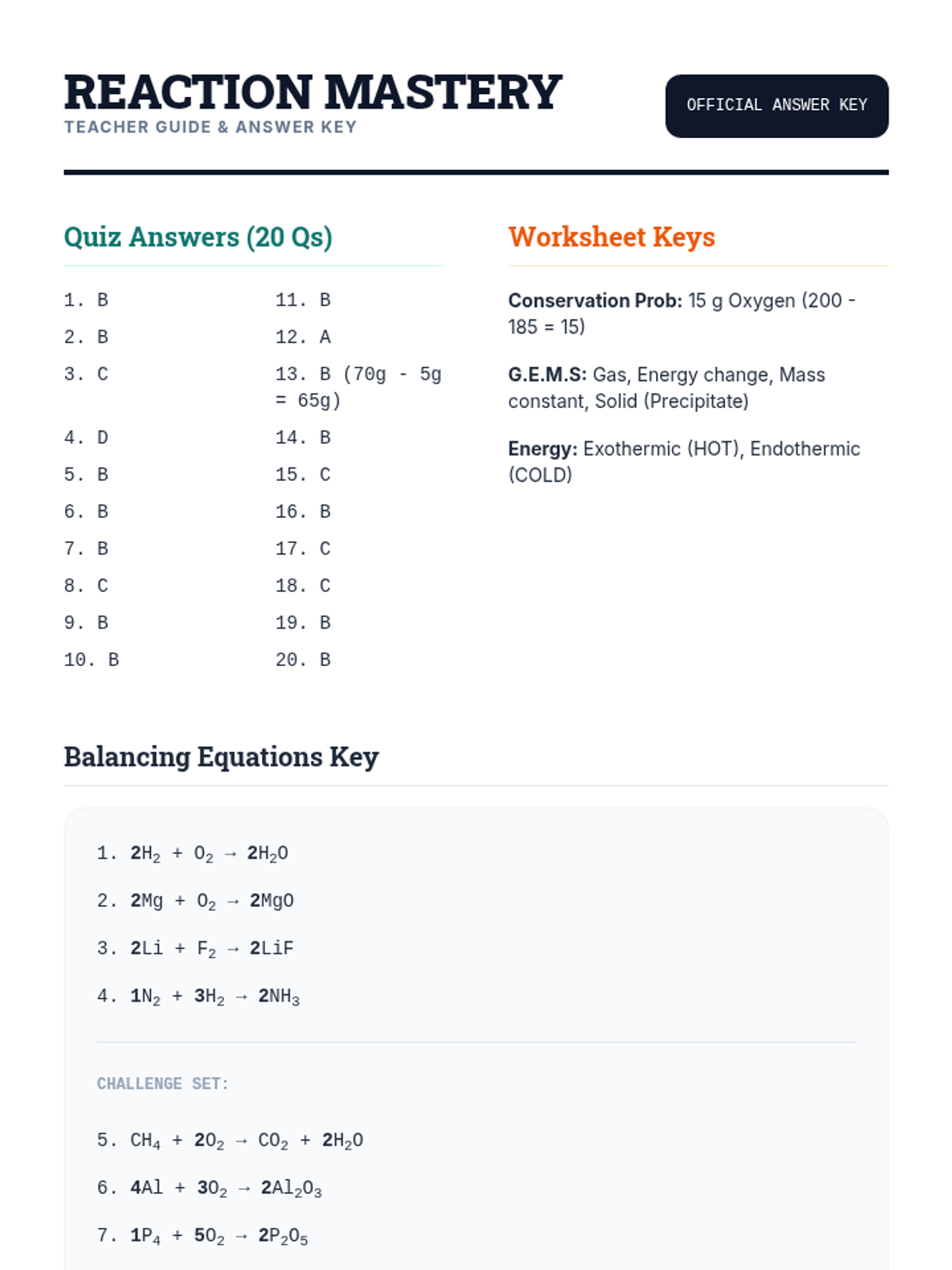
A teacher-facing answer key for the bilingual Chemical Reactions Study Guide. Includes CSS-enhanced <sub> tags for chemical formula rendering and high-contrast bilingual explanations for teacher reference.
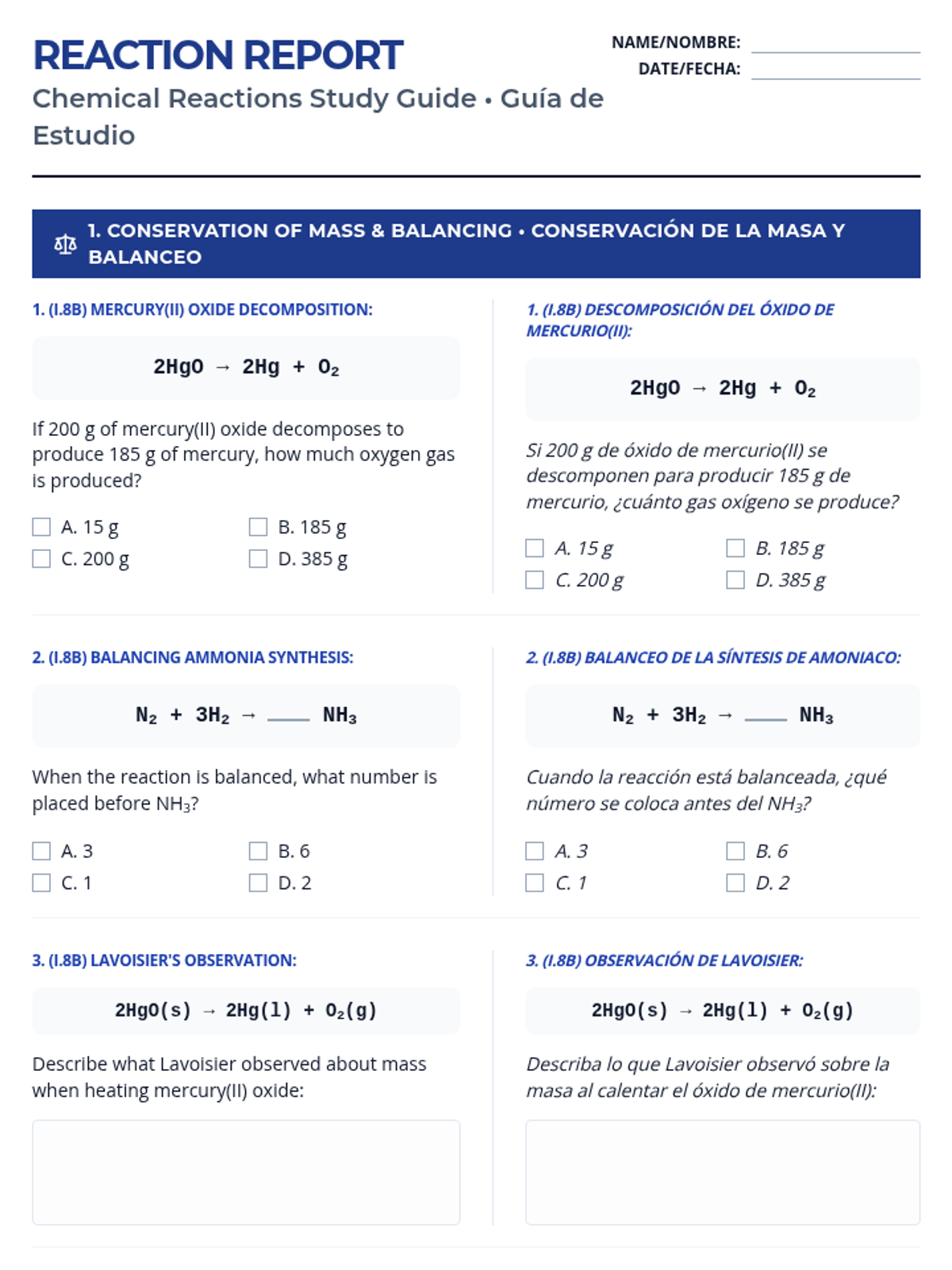
A bilingual (English/Spanish) study guide for chemical reactions, featuring conservation of mass calculations and energy changes. Includes CSS-enhanced <sub> tags for precise chemical formula rendering and improved layout to prevent orphaned headers and ensure adequate work space.
A comprehensive teacher resource including answer keys for the Reaction Knowledge Check, Balancing Practice, and Lab Notes worksheet, plus pacing suggestions.
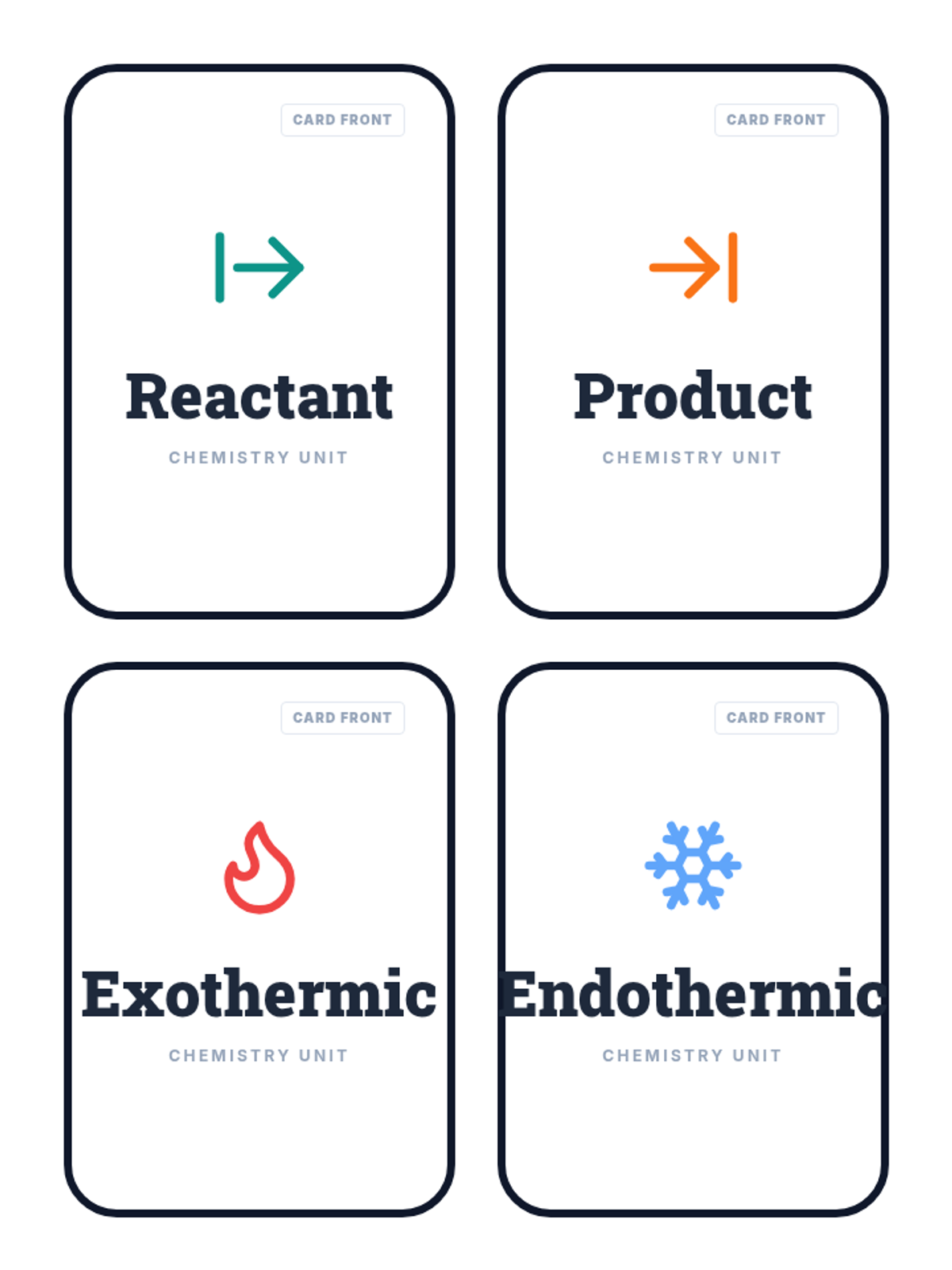
A set of printable chemistry vocabulary flashcards featuring key terms like Reactant, Product, Exothermic, Endothermic, and Precipitate with definitions and visual icons.
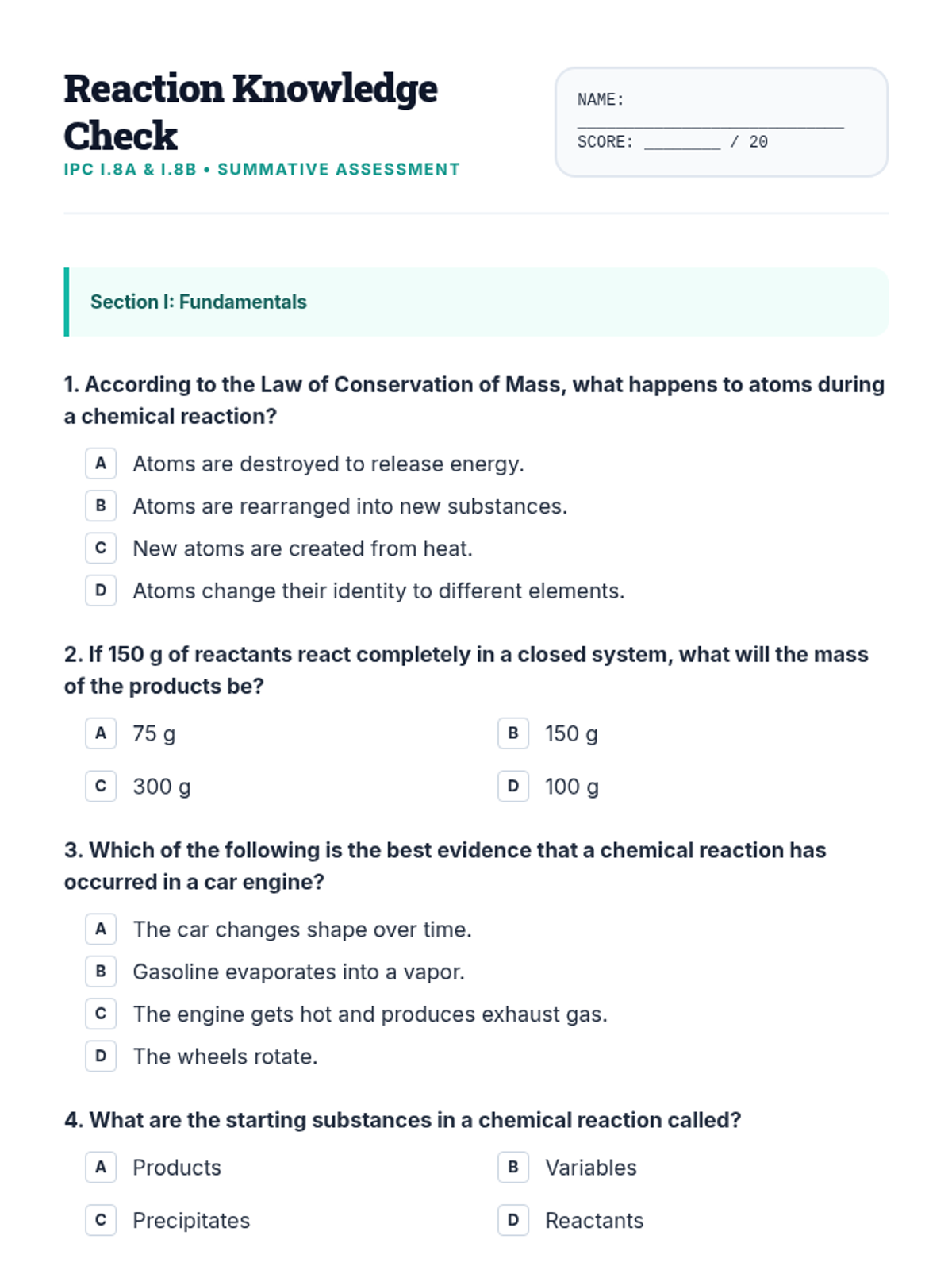
A comprehensive 20-question multiple-choice practice quiz covering conservation of mass, balancing equations, evidence of reactions, reaction types, and energy changes.
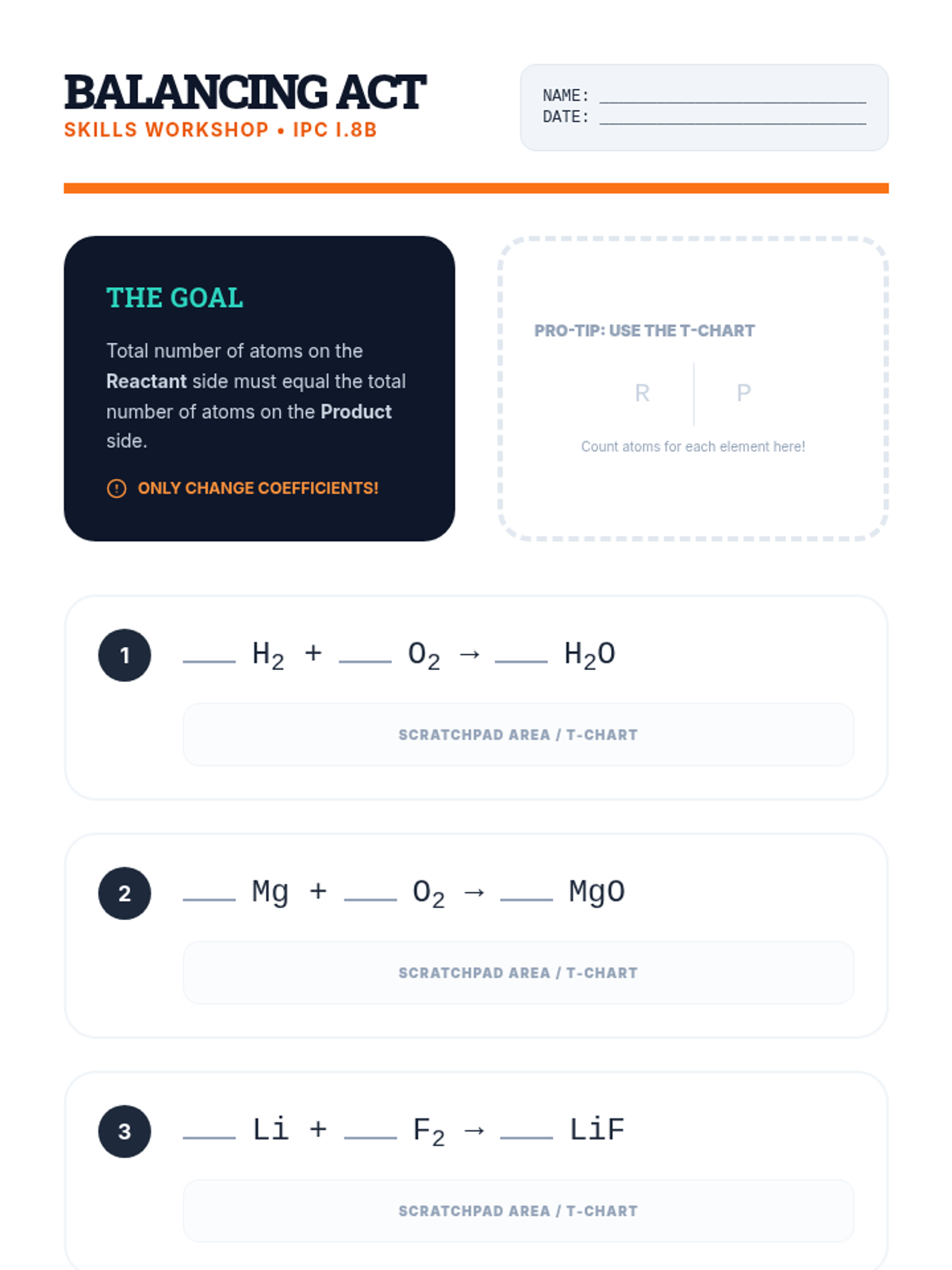
A two-page balancing equations practice worksheet with 10 problems ranging from basic to advanced challenge levels, including a "How-To" guide for students.
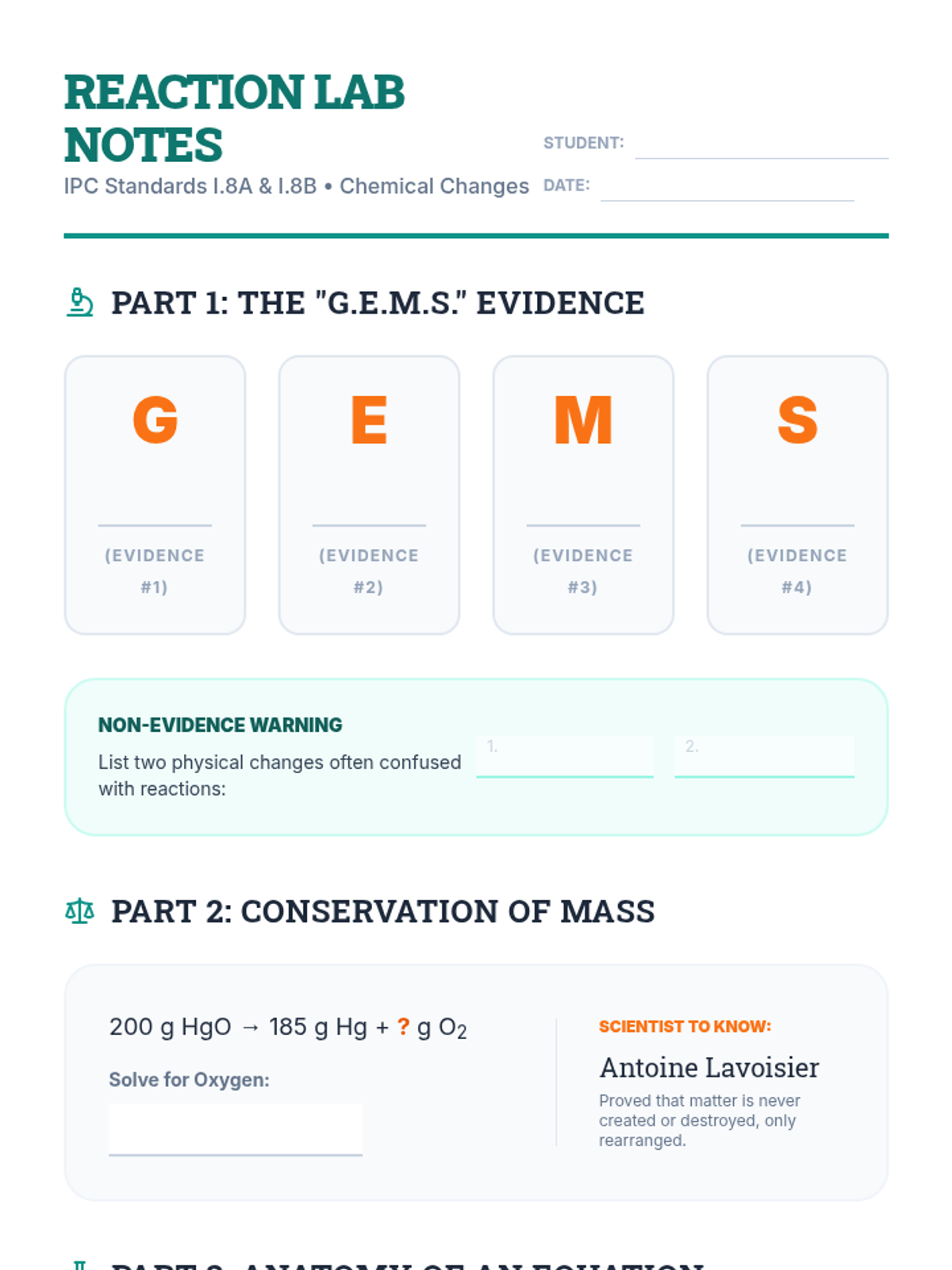
A two-page guided notes worksheet covering IPC standards I.8A and I.8B, including sections for GEMS evidence, conservation of mass calculations, and reaction energy.
Visual presentation for Chemical Reactions (IPC I.8A & I.8B). Covers GEMS evidence, conservation of mass, balancing basics, reaction types, and energy changes with high-contrast, accessible designs.
Revised 4-page microscope investigation worksheet with centered drawing circles and field observation boxes removed. Rubric updated to a 25-point scale and drawing labels changed from 'Scale' to 'M.O.D.' to align with unit terminology.
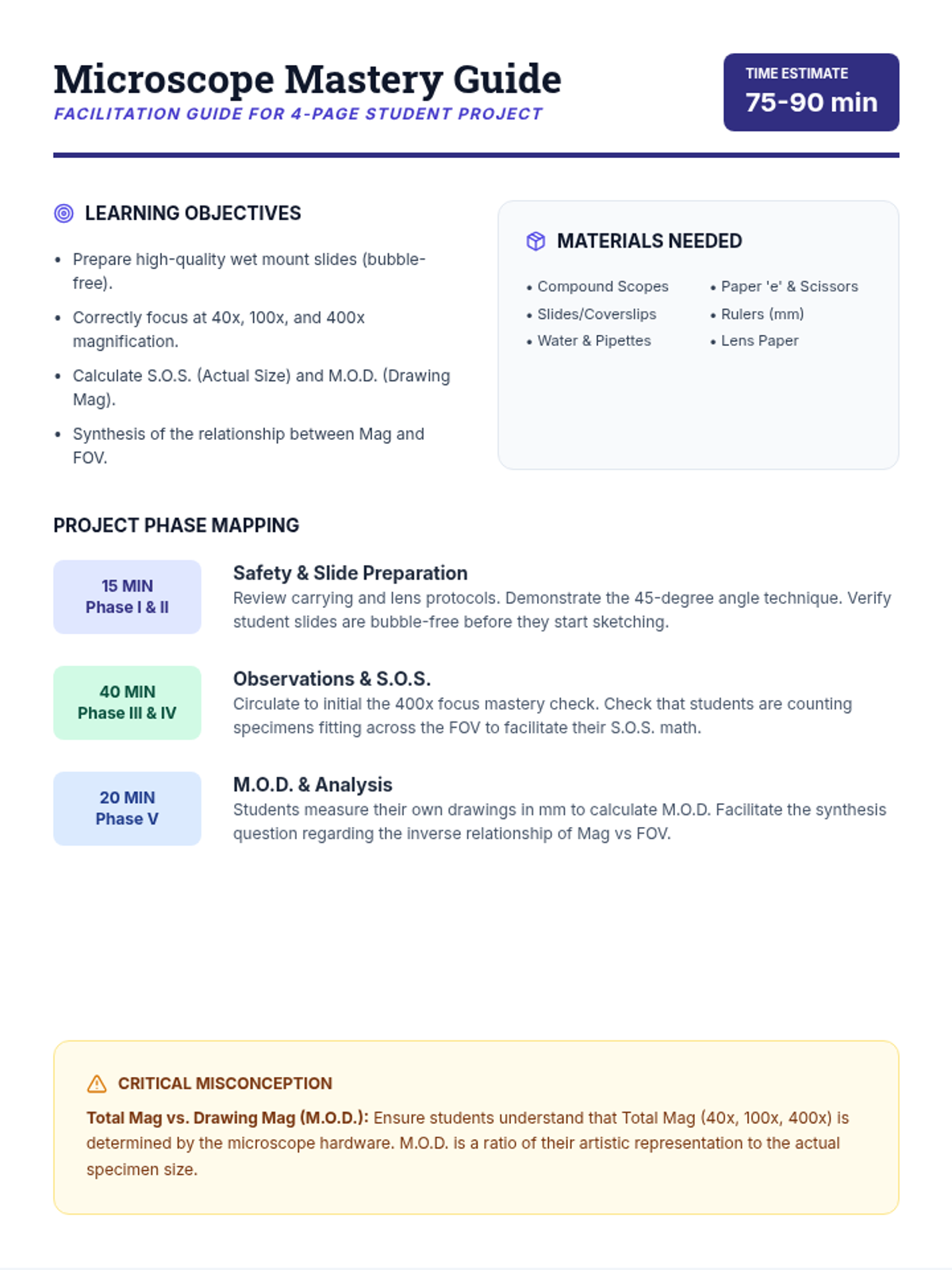
Updated Teacher Guide with light backgrounds and high-contrast borders for better printability. Aligned instructional mapping with the new student layout and ensured consistent aesthetic across the microscopy unit. Fixed Page 2 overflow issues by adjusting component spacing and font sizes.
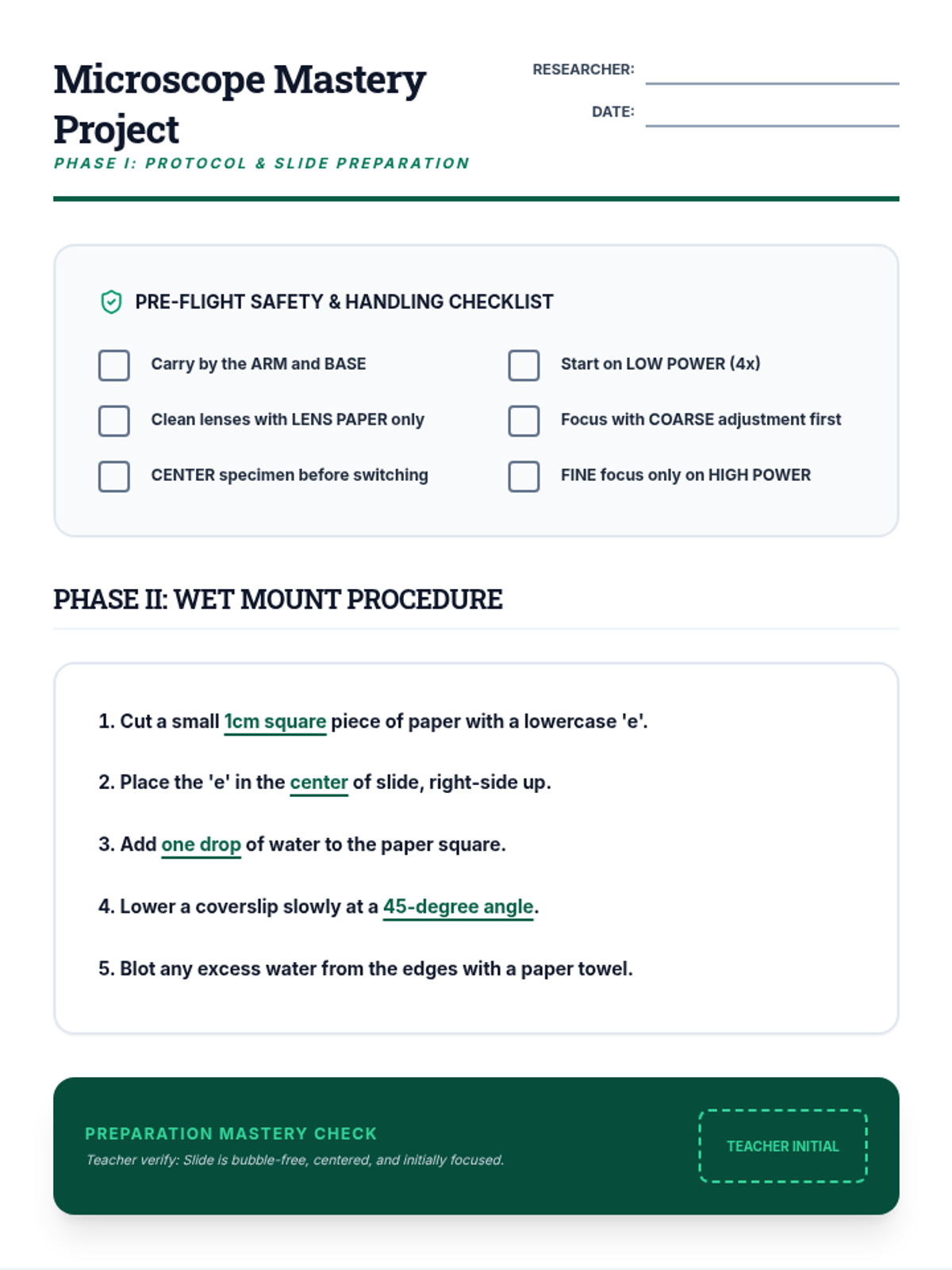
A comprehensive slide deck for the microscope lab, including step-by-step instructions for preparing a wet mount slide, pro-tips for avoiding air bubbles, and focusing techniques. features a clean scientific field guide aesthetic.
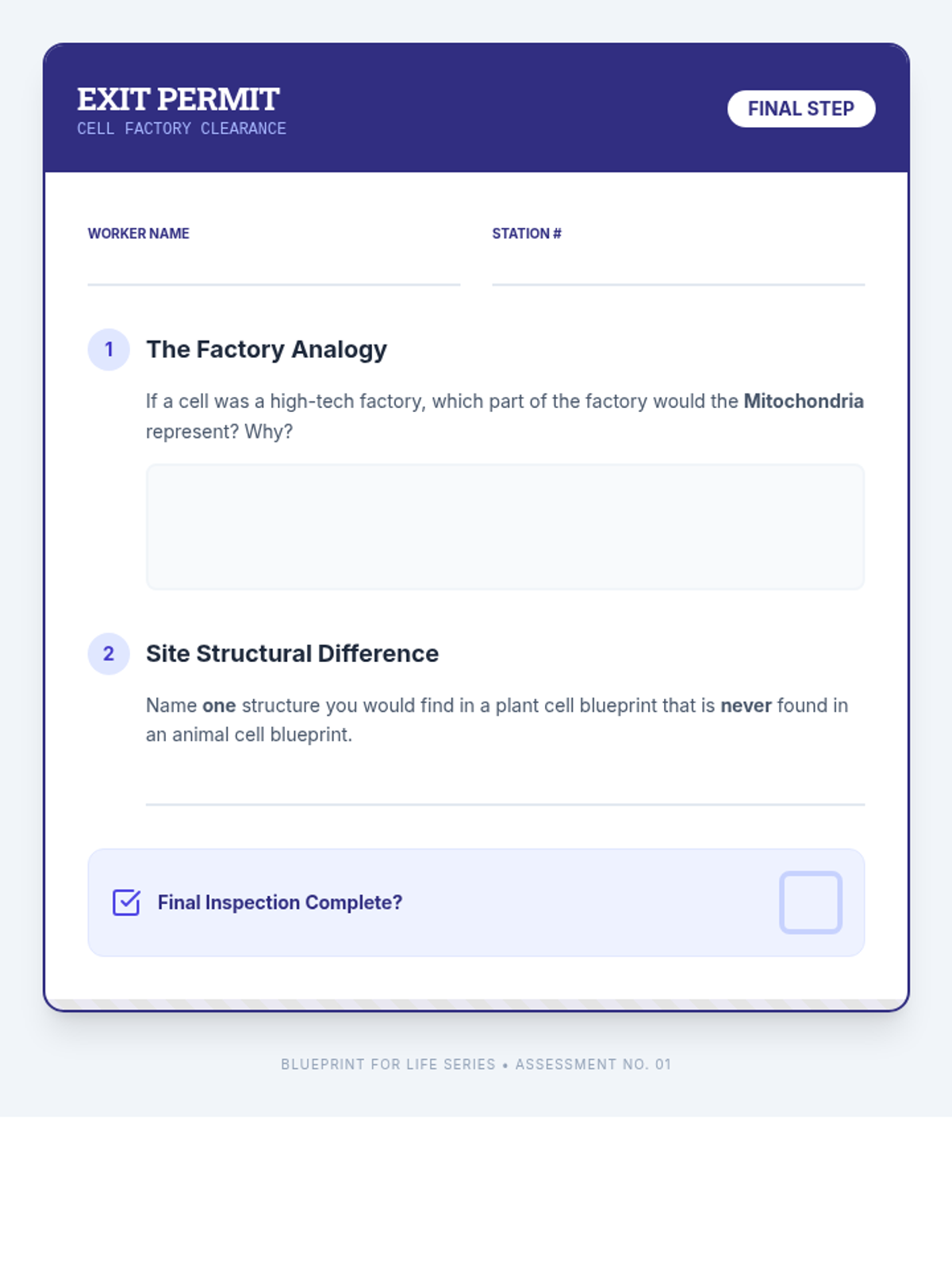
A concise exit ticket for students to complete at the end of the lesson. It uses a "Factory Floor" analogy to assess understanding of the mitochondria's function and asks students to identify a key difference between plant and animal cells.
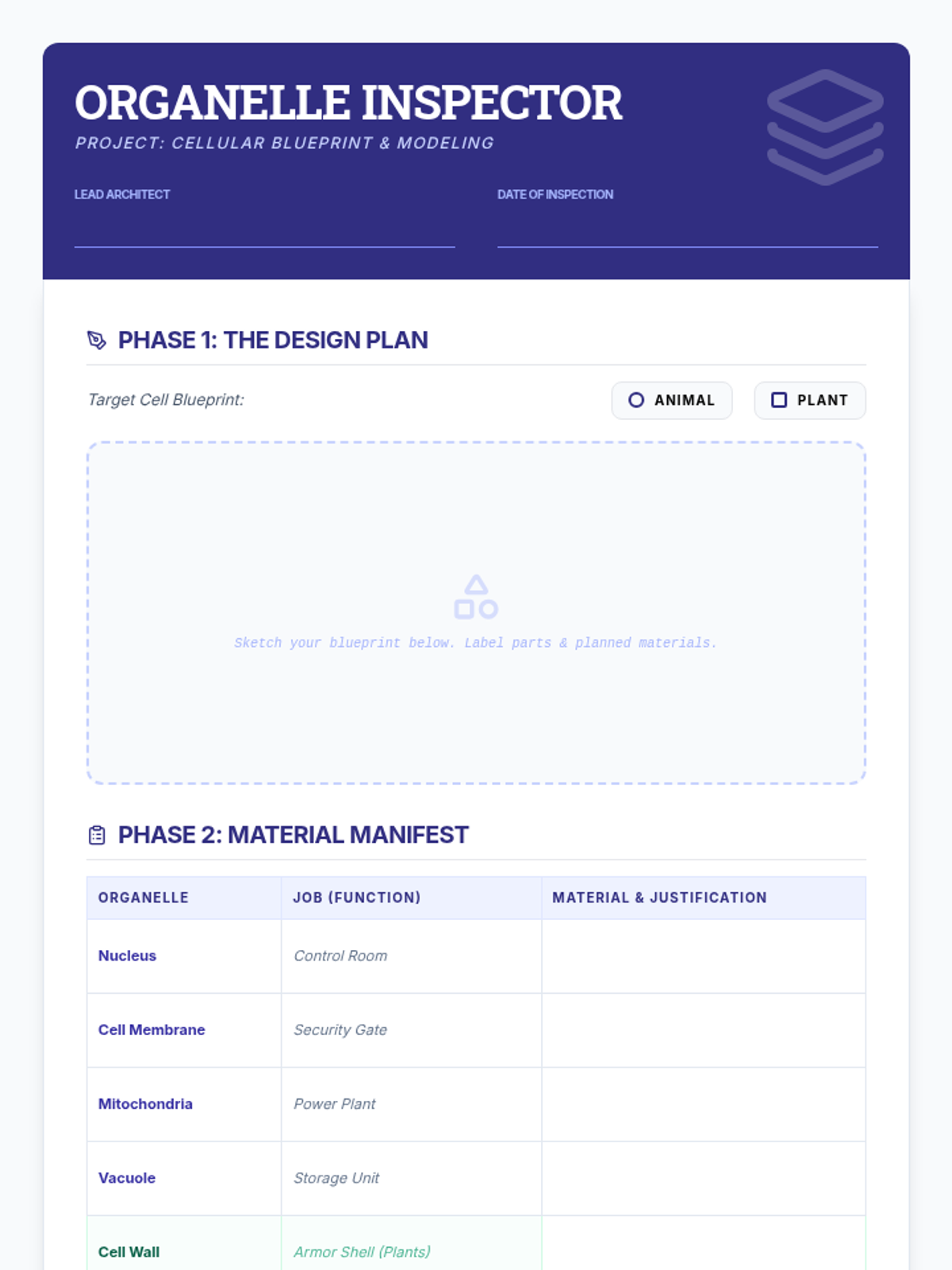
A student handout for the cell modeling activity. It includes space for a design sketch, a material manifest table to link organelles to their functions, and a field inspection section for the gallery walk phase.
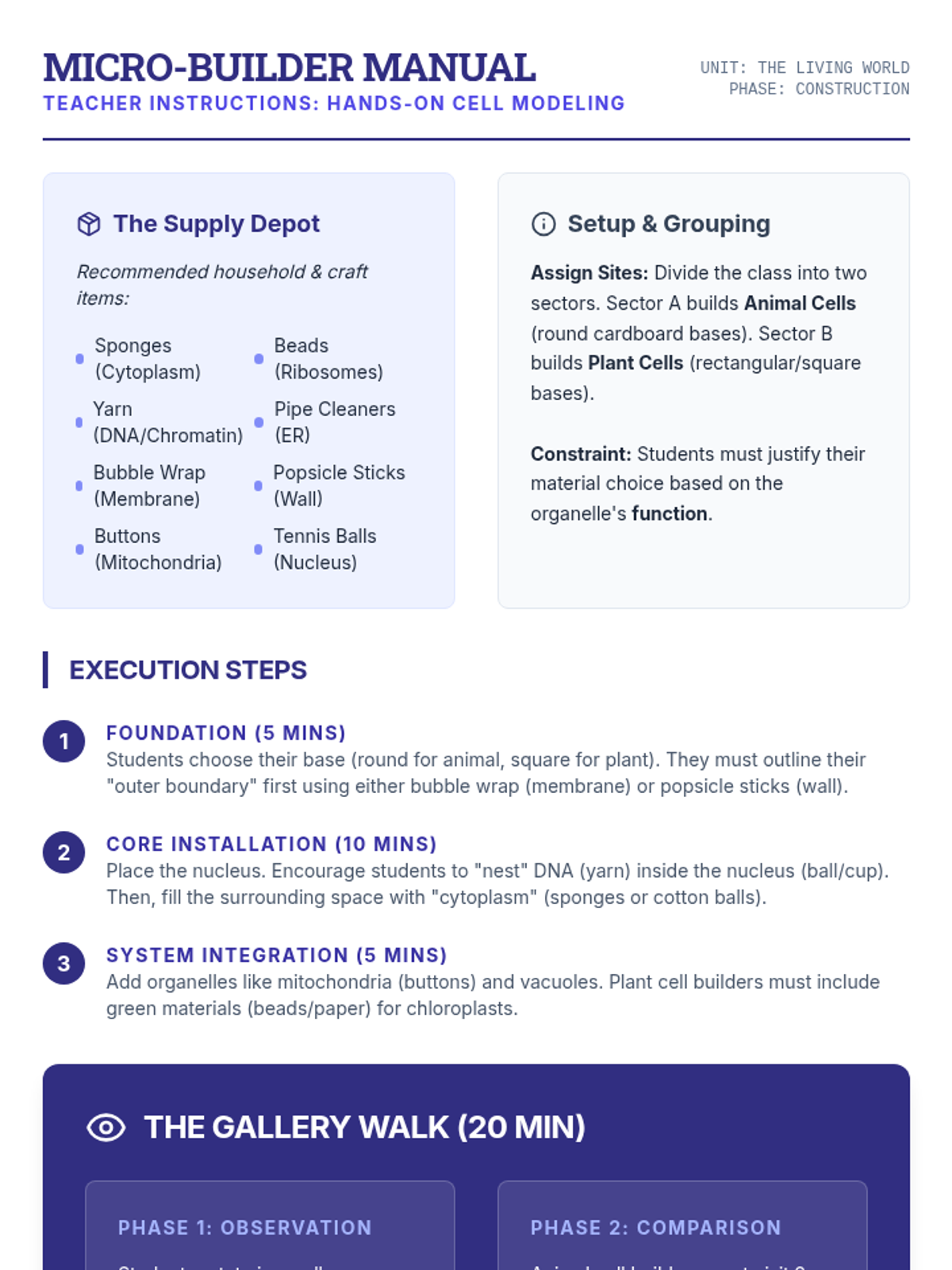
A detailed teacher guide for the "Micro-Builder" hands-on modeling activity. It provides a list of household supply suggestions, a step-by-step construction guide, and instructions for facilitating the gallery walk assessment phase.
A visually engaging slide deck titled "Blueprint for Life" that introduces the cell theory, identifies key organelles, and compares plant vs. animal cells. Uses a modern blueprint aesthetic to align with the lesson's central theme.
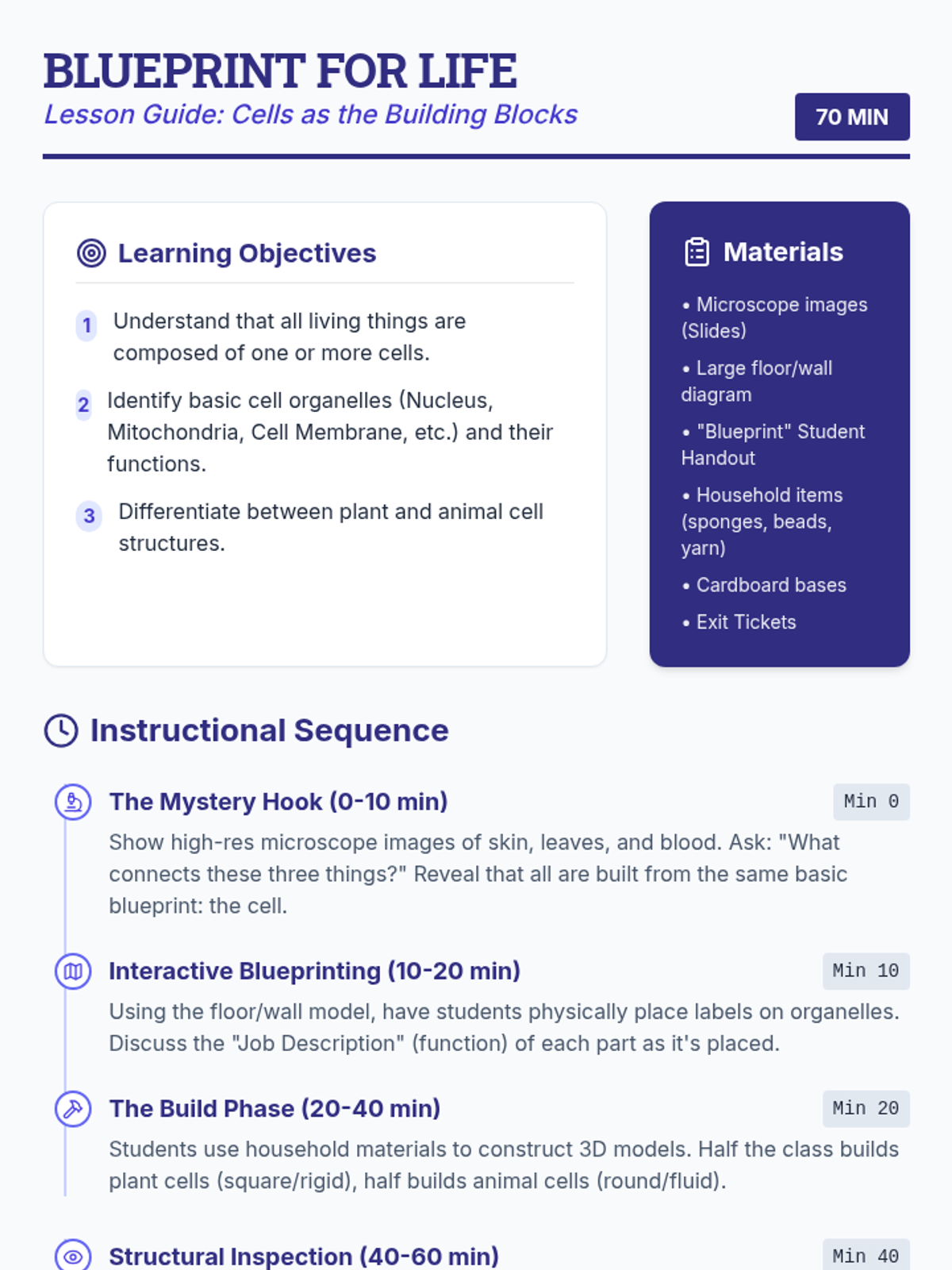
A comprehensive lesson guide for teachers, outlining the 70-minute "Blueprint for Life" lesson. Includes learning objectives, a detailed pacing timeline, and facilitation tips for exploring cell structure and function.
A visually engaging slide deck that reviews the core concepts of protein synthesis: the central dogma, transcription, translation, and how to interpret a codon chart. Great for pre-quiz review.
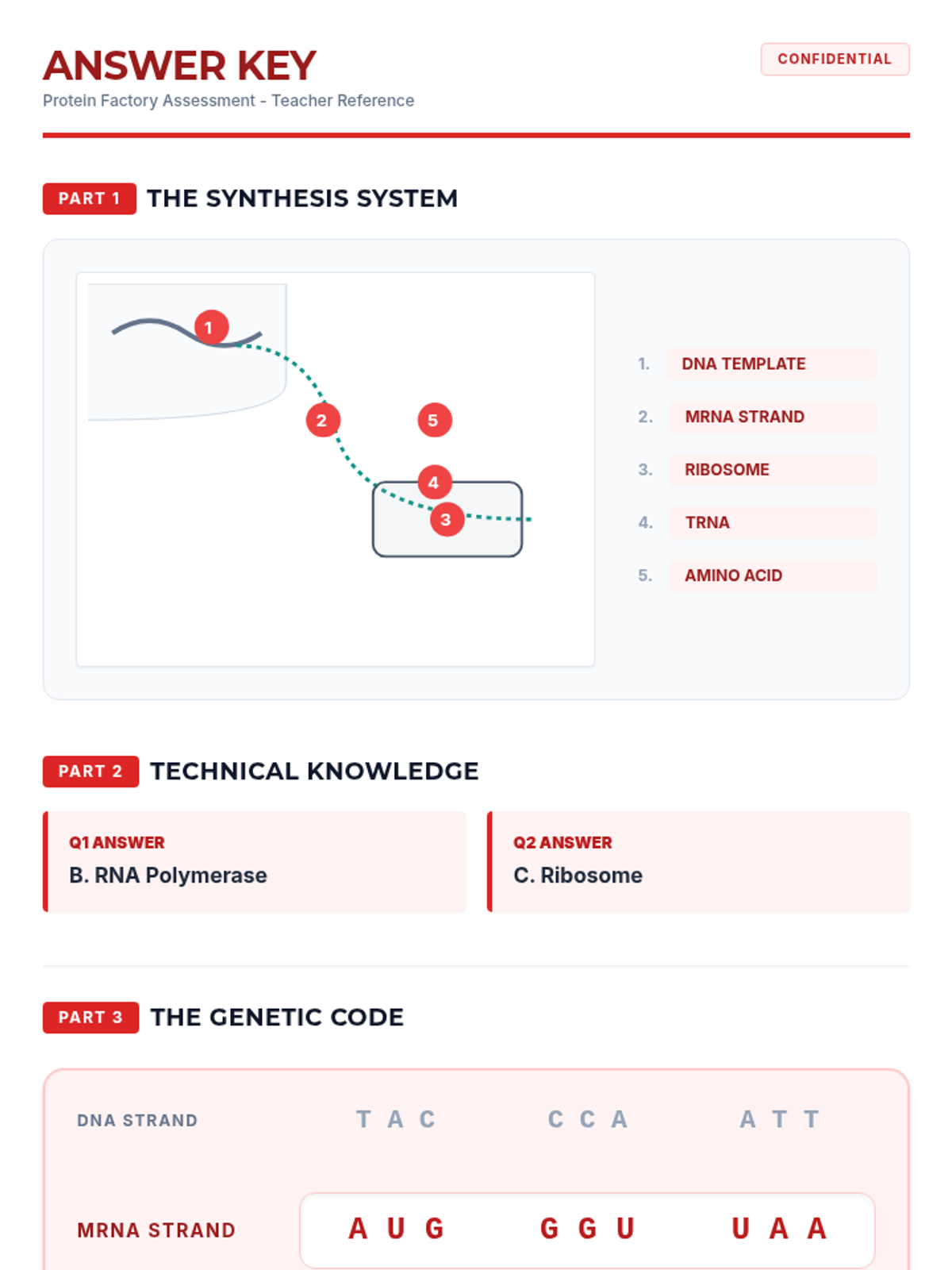
The complete answer key for the Protein Factory Quiz, featuring labeled diagrams, multiple-choice answers with brief rationales, and the full codon analysis solution.
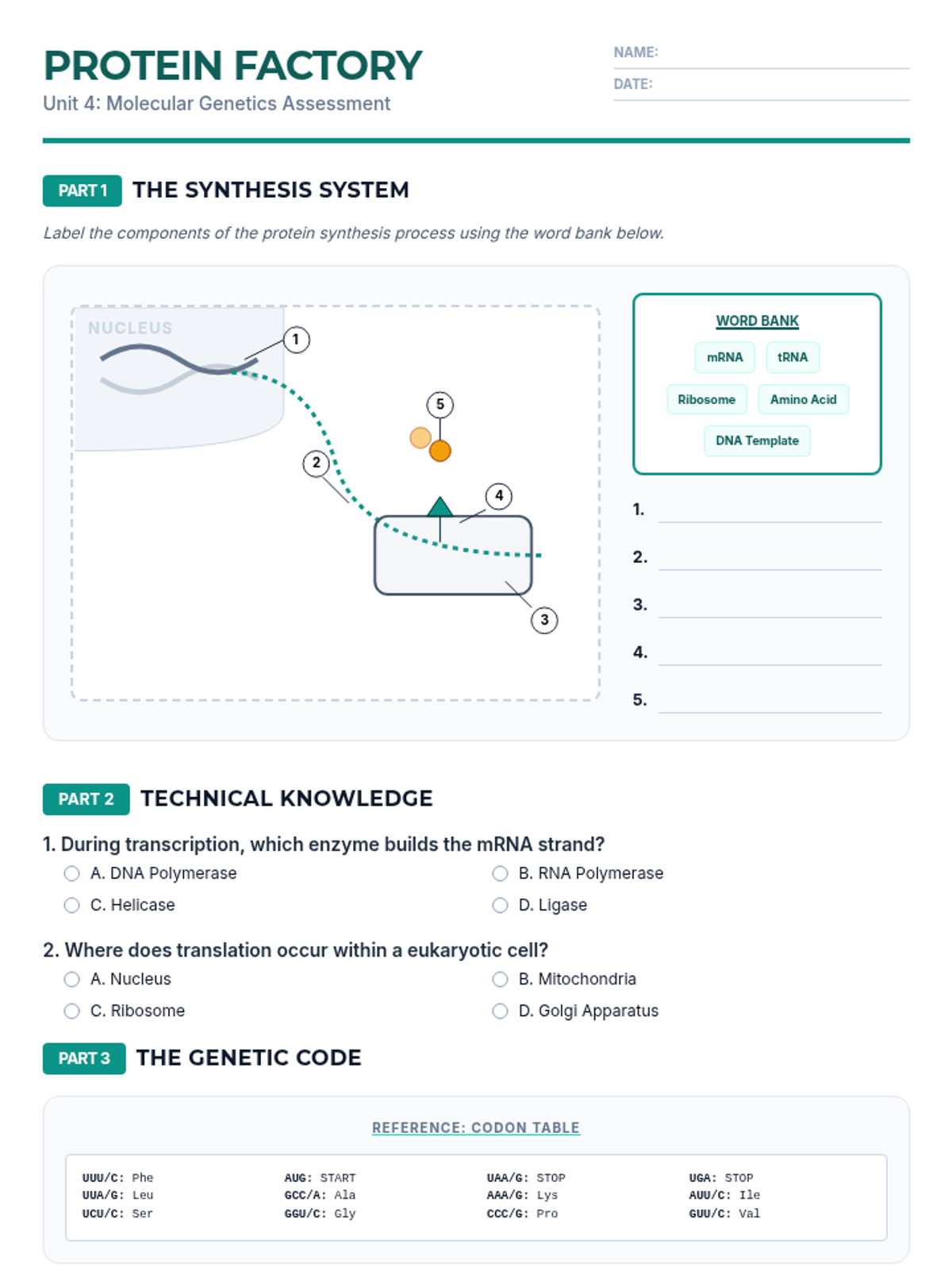
A clean, professional quiz covering transcription, translation, and genetic code interpretation. Includes a diagram labeling section, multiple-choice questions, and a codon chart analysis task.