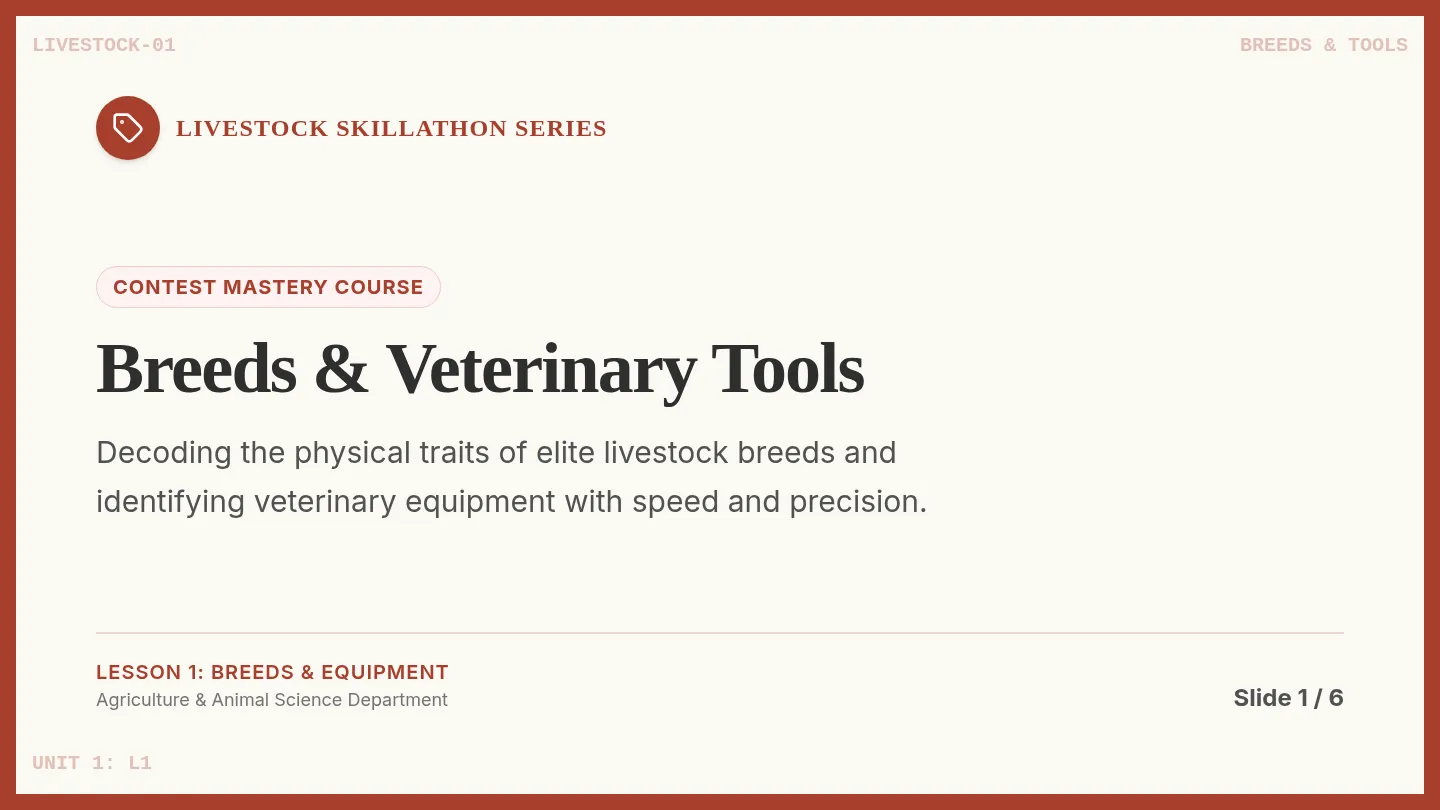
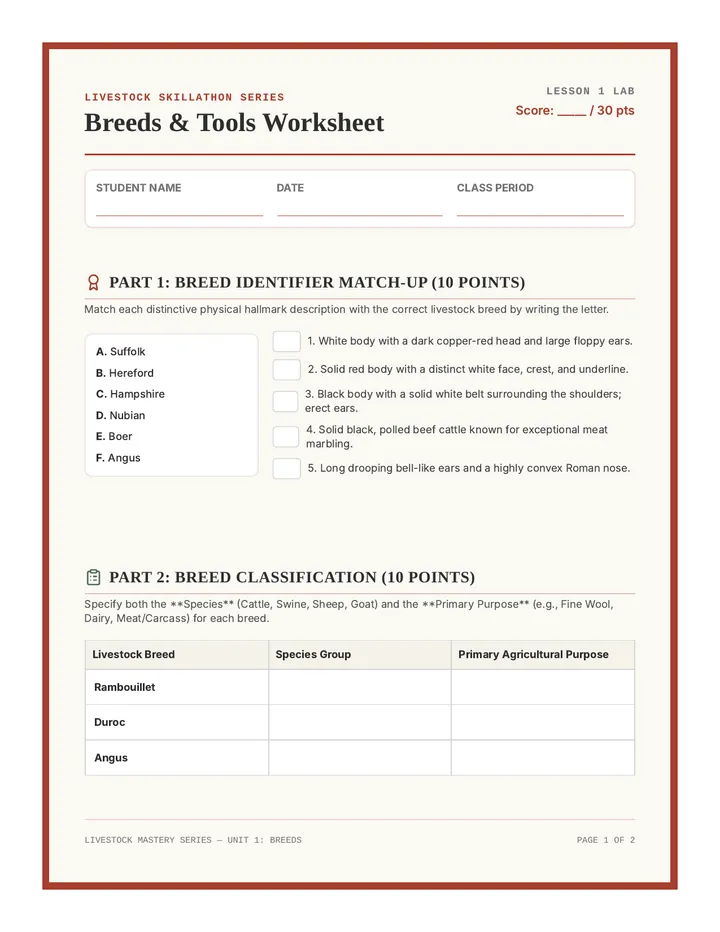
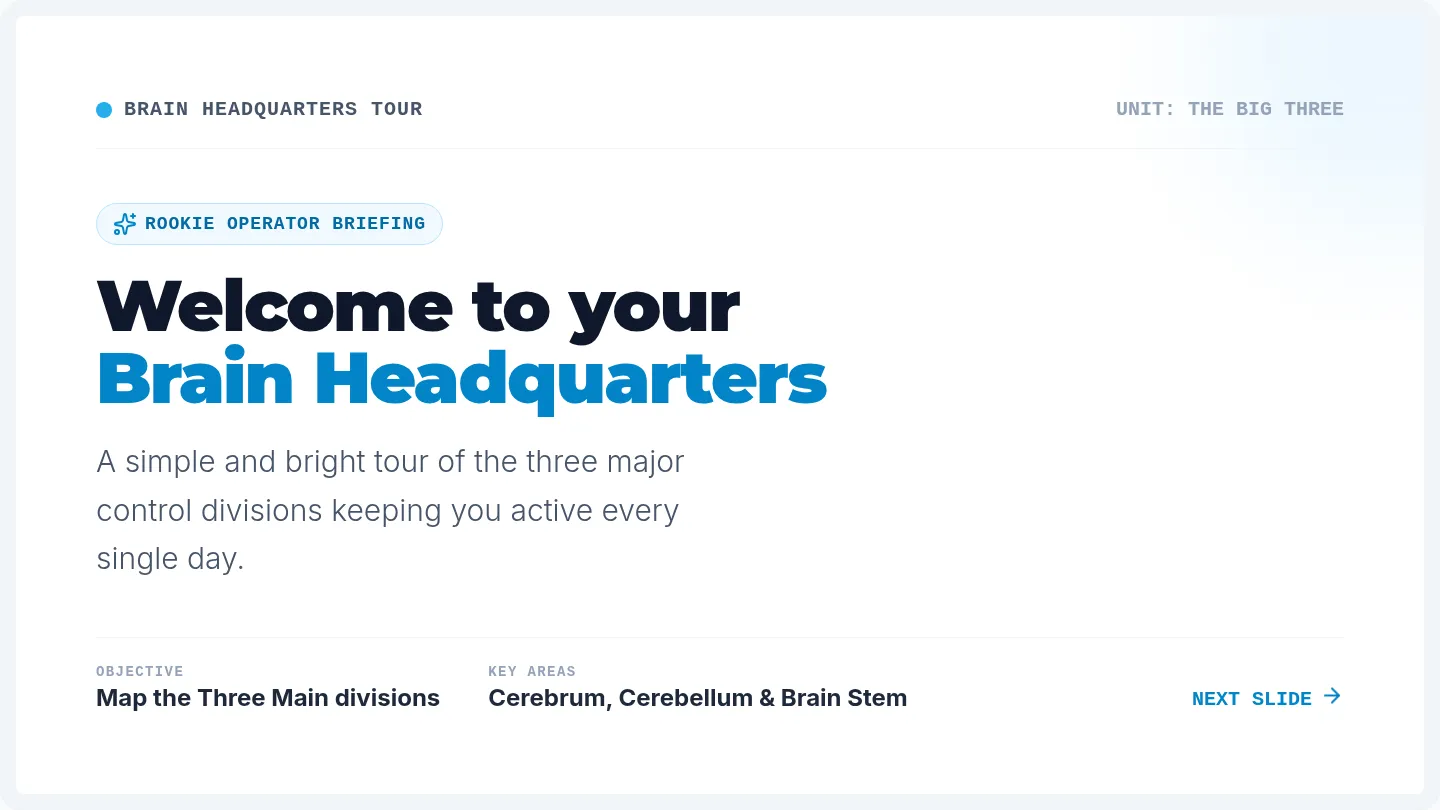
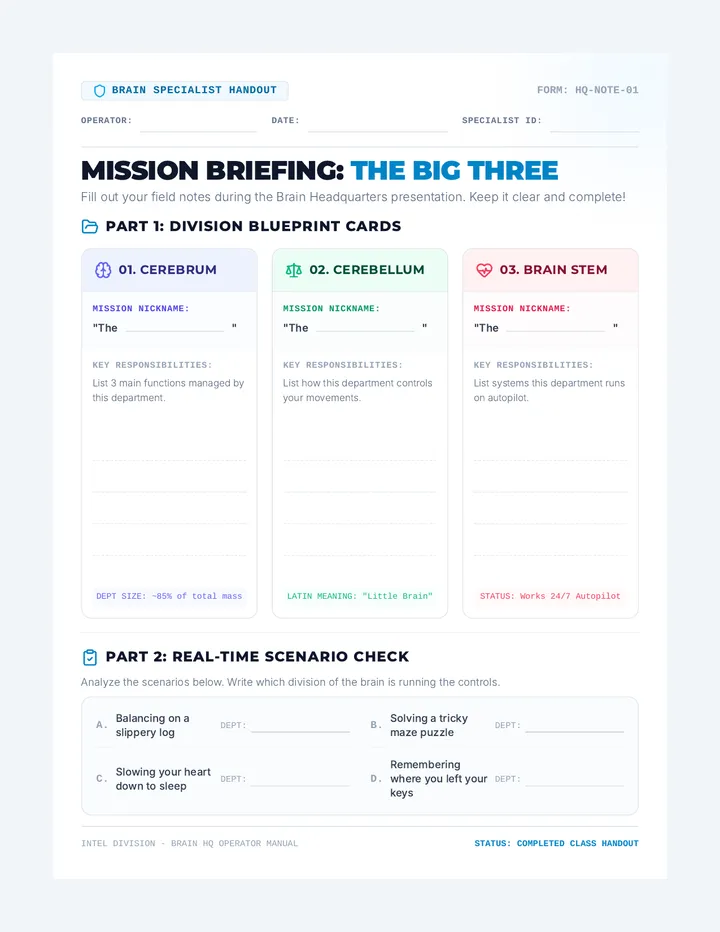
A comprehensive teacher facilitation guide for the Earth Sculptors lesson, including learning objectives, materials lists, step-by-step procedures, and discussion prompts.
An anchor chart explaining the interactions between plant transport, reproduction, and response systems, specifically focusing on how hormones and vascular structures facilitate these processes.
An anchor chart detailing the reproductive structures of a flower, including male and female parts and the stages of the plant life cycle.
An anchor chart focused on transpiration and the function of stomata and guard cells in plant systems.
An anchor chart for photosynthesis, explaining the inputs and outputs of the process, the role of chloroplasts, and the chemical equation.
An anchor chart detailing the differences between xylem and phloem, highlighting their roles in transporting water and nutrients throughout a plant.
A structured field log for 6th grade students to record their findings during the Earth Structures Scavenger Hunt. Includes a reflection section on sphere interactions.
A set of 12 scavenger hunt task cards focused on Earth's structures, spheres, and the rock cycle. Each card creates a self-correcting path for 6th grade students to follow around the room.
A comprehensive teacher facilitation guide for the Earth Structures Scavenger Hunt, featuring setup instructions, a master answer key for the self-correcting loop, and pedagogical tips.
A structured recording sheet for students to use during the Body Systems Scavenger Hunt. It includes space for tracking 12 stations and a final reflection question on system interactions.
A set of 12 scavenger hunt task cards formatted as 'Medical Case Files'. Each card contains a question and an answer to a different card, creating a self-correcting loop for students to follow around the classroom.
A comprehensive teacher facilitation guide for the Body Systems Scavenger Hunt, featuring setup instructions, a master answer key for the self-correcting loop, and tips for classroom engagement.
A student reflection journal for the Neuron Game lesson, updated with pure white writing areas for maximum handwriting legibility.
A group activity guide for the 'Yarn Web' simulation, featuring step-by-step instructions for building, strengthening, and dissolving neural pathways with yarn. Updated for better handwriting legibility.
A visual presentation for the Neuron Game lesson, featuring the embedded video, timed discussion prompts, and a transition to the physical yarn activity.
A comprehensive teacher facilitation guide for the Neuron Game lesson, featuring a 45-minute pacing guide, learning objectives, prep checklists, and specific discussion anchors for the accompanying video.
A visual presentation for teaching the history, technology, economics, and ethics of hunting, including key concepts like the North American Model and the Pittman-Robertson Act.
A comprehensive student worksheet accompanying the reading passage, featuring reading comprehension, vocabulary matching, a technological comparison activity, and an ethical scenario analysis on biodiversity and land management.
An informational reading passage covering the history of hunting from ancient times to the modern era, including the North American Model of Wildlife Conservation, economic impacts, and ethical considerations.
Final ultra-compact version of the Trait Tracker Homework, featuring a minimized header to maximize page space for student answers while retaining the engaging detective theme and core objectives. Question 4 has been moved to a separate page for easier printing.
An educator's guide for the Sabertooth Secrets lesson, including a full answer key and instructional notes on Smilodon fatalis.
A student worksheet designed to be used alongside the Sabertooth Secrets presentation, updated to include Smilodon genus and extinction questions.
A visual slide deck about Sabertooth cats, featuring instructional text on biological classification, prehistoric facts, and Smilodon genus specifics with comprehension questions.
A 2-page homework article about periodical cicadas, adapted for a kindergarten reading level. This version removes the dashed borders and page numbers while maintaining the original layout and 6th-grade vocabulary, designed to be printed front and back on standard paper.
A simplified reading passage about periodical cicadas adapted for 3rd-grade readers, maintaining key science vocabulary and homework formatting while removing the original questions.
A 3rd-grade adapted homework worksheet about periodical cicadas, reformatted to match the visual style of the original 6th-grade PDF. Includes all specific vocabulary words and two pages of content with adapted reading level. No "3rd grade" label included as requested.
A 3rd-grade adapted homework worksheet about periodical cicadas, reformatted to match the visual style of the original 6th-grade PDF. Includes all specific vocabulary words and two pages of content with adapted reading level.
An answer key for the Cicada Invasion Homework, providing correct responses and exemplar explanations for teachers based on the 3rd-grade adapted content.
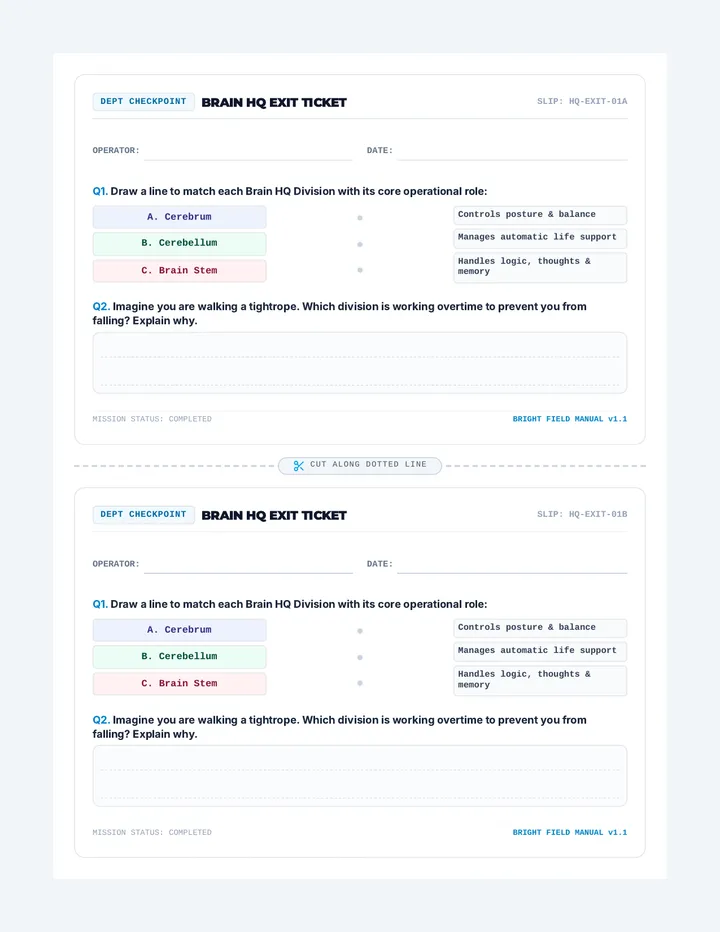
A quick exit ticket for the Grumble Guts lab to assess student understanding of mechanical vs chemical digestion and organ roles.
A digestive system mapping activity where students label and color the organs, including a simplified version for students who need more visual support.
A comprehensive teacher guide for the Grumble Guts lab, featuring a detailed 60-minute pacing guide, materials list, answer keys, and sensory-focused teaching tips for diverse learners.
A pictorial lab observation sheet for students with significant intellectual disabilities, focusing on visual steps and simple 'small vs big' recognition.
A guided lab worksheet for the Grumble Guts experiment, featuring organ matching (including intestines, liver, and gallbladder), a step-by-step procedure, and observation areas for modified learners.
A visual presentation for the Grumble Guts lab, introducing the concepts of mechanical and chemical digestion, helper organs (liver/gallbladder), and guiding students through the cracker-and-bag simulation.
A teacher resource for the Ecosystem Explorers lesson, including instructional pacing, differentiation strategies, and a full answer key for the Detective Worksheet. Designed with a clean, professional layout for easy reference.