A set of 8 fantasy-themed task cards for practicing context clues, featuring words like bellowed, fragile, halt, and ancient with multiple-choice questions. Formatted as a 2x2 grid (4 per page) for standard task card use.
Teacher answer key for Day 4 Feature Find materials, focusing on graphic feature synthesis (maps, diagrams, captions). Provides exemplar responses for analytical tasks.
Teacher answer key for Day 3 Feature Find materials, focusing on print feature function (subheadings, italics, bullets, boldface). Provides exemplar responses for written tasks.
Teacher answer key for Day 2 Claim Clues materials, including the recess passage analysis and the bicycle safety exit ticket. Provides exemplar written responses for higher-rigor student tasks.
Teacher answer key for Day 1 Claim Clues worksheet and exit ticket. Provides correct underlining targets, multiple-choice answers, and exemplar reasoning for student tasks.
A 3rd-grade narrative writing rubric with a sculptor theme, assessing introduction, sequence, narrative techniques, conclusion, and mechanics with student-friendly language.
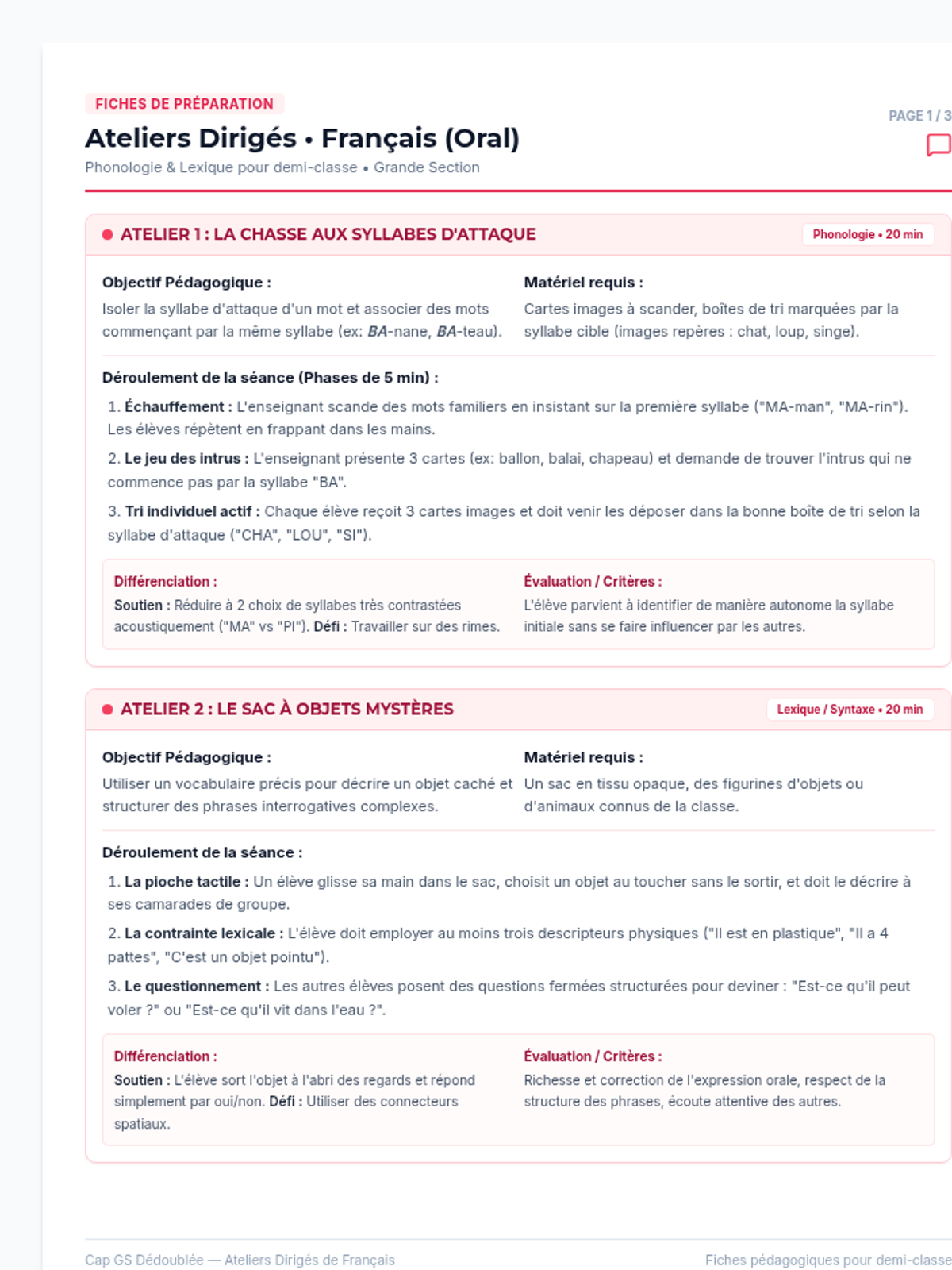
A magical themed sight word practice worksheet for kindergarteners, featuring tracing, writing, and a word search activity for high-frequency words.
A professional 4-slide presentation deck covering essential laboratory safety protocols, PPE requirements, and emergency equipment for high school chemistry.
A comprehensive rubric for a 6th-grade research project on Ancient Egypt, featuring categories for historical accuracy, research quality, and presentation design within a thematic ancient Egyptian aesthetic.
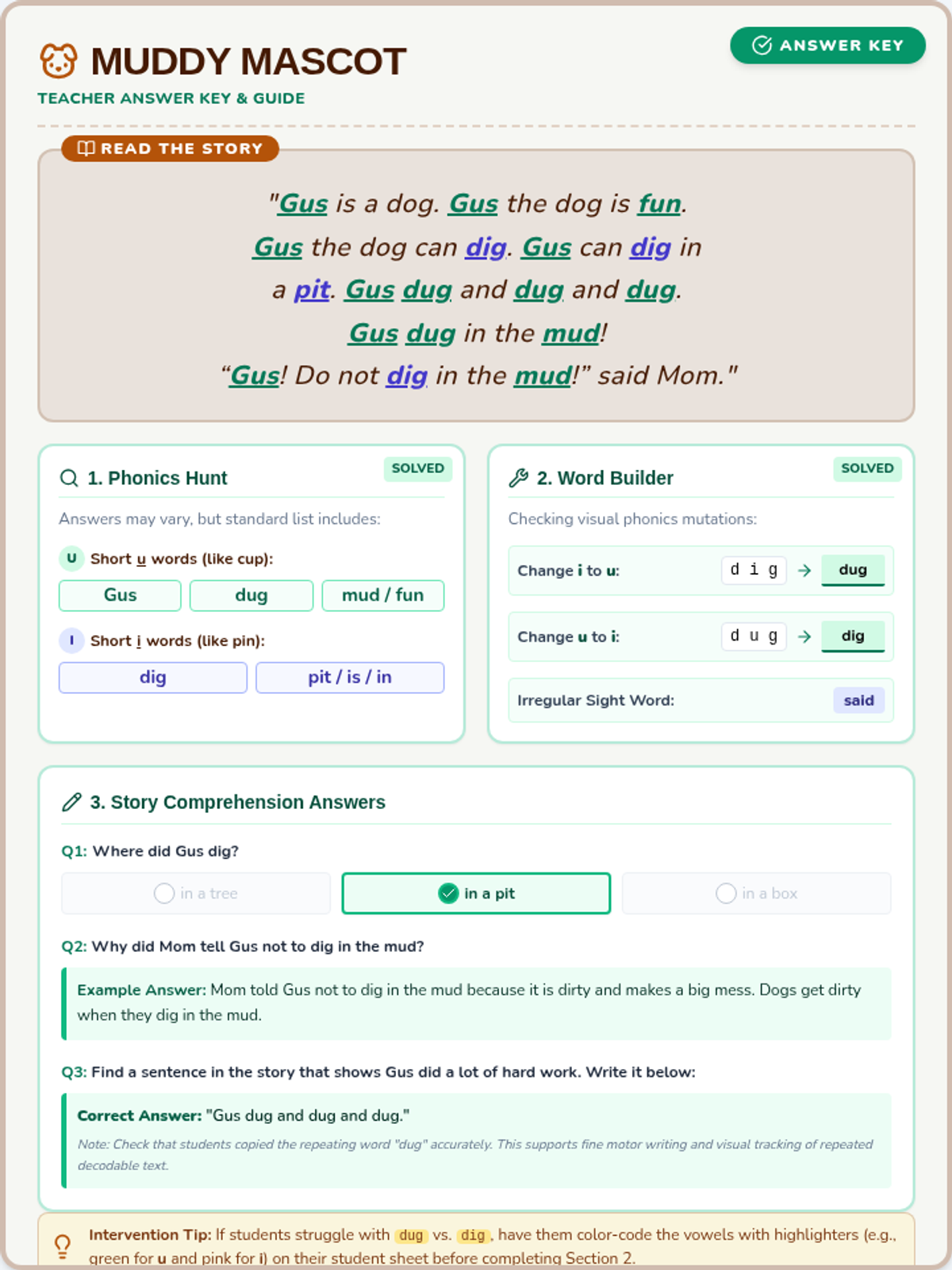
Updated 30-page phonics packet that now integrates writing tasks into every page. Each 15-minute practice session includes word-level decoding, reading fluency, and 'Explorer's Log' writing prompts where students use target sounds in original sentences. Vocabulary remains accessible but dense for effective mastering.
A teacher-facing answer key for the Frontline Final Exit Ticket. Provides the correct answers, rationales for each choice, and a simple scoring guide for assessing student mastery of TEKS 11.6B.
A STAAR-formatted exit ticket for analyzing how literary elements (situational irony, ambiguity, setting) shape the author's portrayal of the plot in Siegfried Sassoon's poem "The Hero." Updated for alignment.
Updated intelligence key and facilitation guide for the plot analysis worksheet. Provides detailed explanations for how setting, imagery, and irony shape plot portrayal.
Updated student analysis worksheet focusing on how literary elements (setting, imagery, irony) shape the portrayal of the plot in WWI texts. Features fragments and poetry snippets for analysis.
Updated slide deck for the "Frontline Irony" lesson, focusing on how literary elements (setting, imagery, irony) shape the portrayal of the plot in WWI literature. Minimum font size of 24px maintained.
Updated teacher guide for a 45-minute remediation focused on how literary elements (setting, imagery, irony) shape the portrayal of the plot in WWI texts. Provides a strategic objective, standard alignment, and timeline.
A comprehensive teacher scoring and debrief guide for the cumulative assessment, including guiding questions for small group discussion and exemplar analysis for synthesis tasks. Updated to include "(claim)" after "assertion" for vocabulary reinforcement.
Cumulative assessment slide deck covering both claim identification (3.9Ei) and print/graphic feature analysis (3.10C). Optimized for digital use on Google Classroom with large, legible text and synthesis-focused work areas. Features removed visual scaffolding for claims to maintain high rigor. Updated to include "(claim)" after "assertion" for vocabulary reinforcement.