A comprehensive teacher's guide for the Economic Carnival lesson, including learning objectives, a step-by-step instructional sequence, and discussion prompts to facilitate deep learning about budgeting and saving.
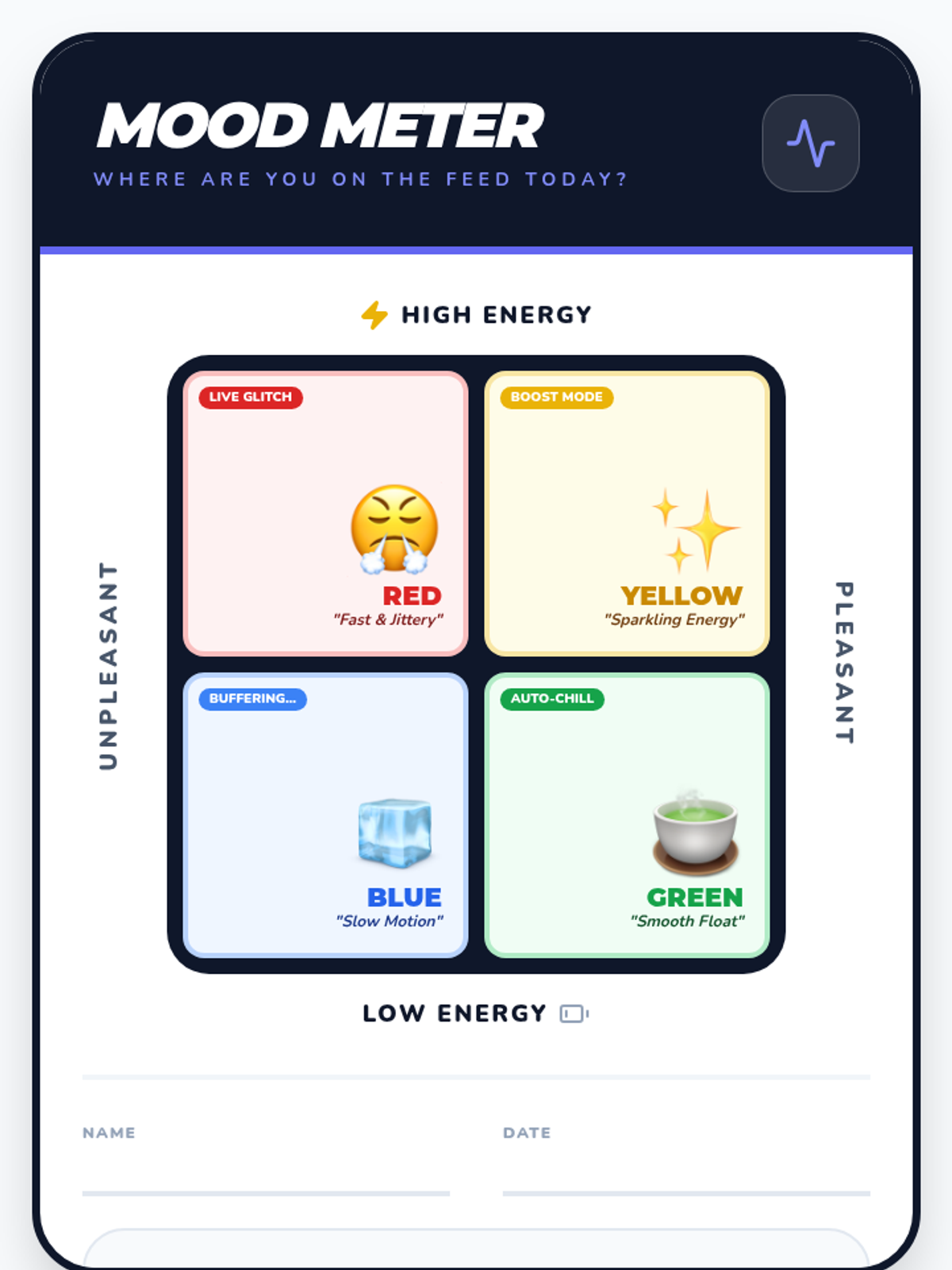
A vibrant four-quadrant mood meter poster designed for middle schoolers, featuring modern emoji visuals, relatable mood descriptions, and a student check-in section.
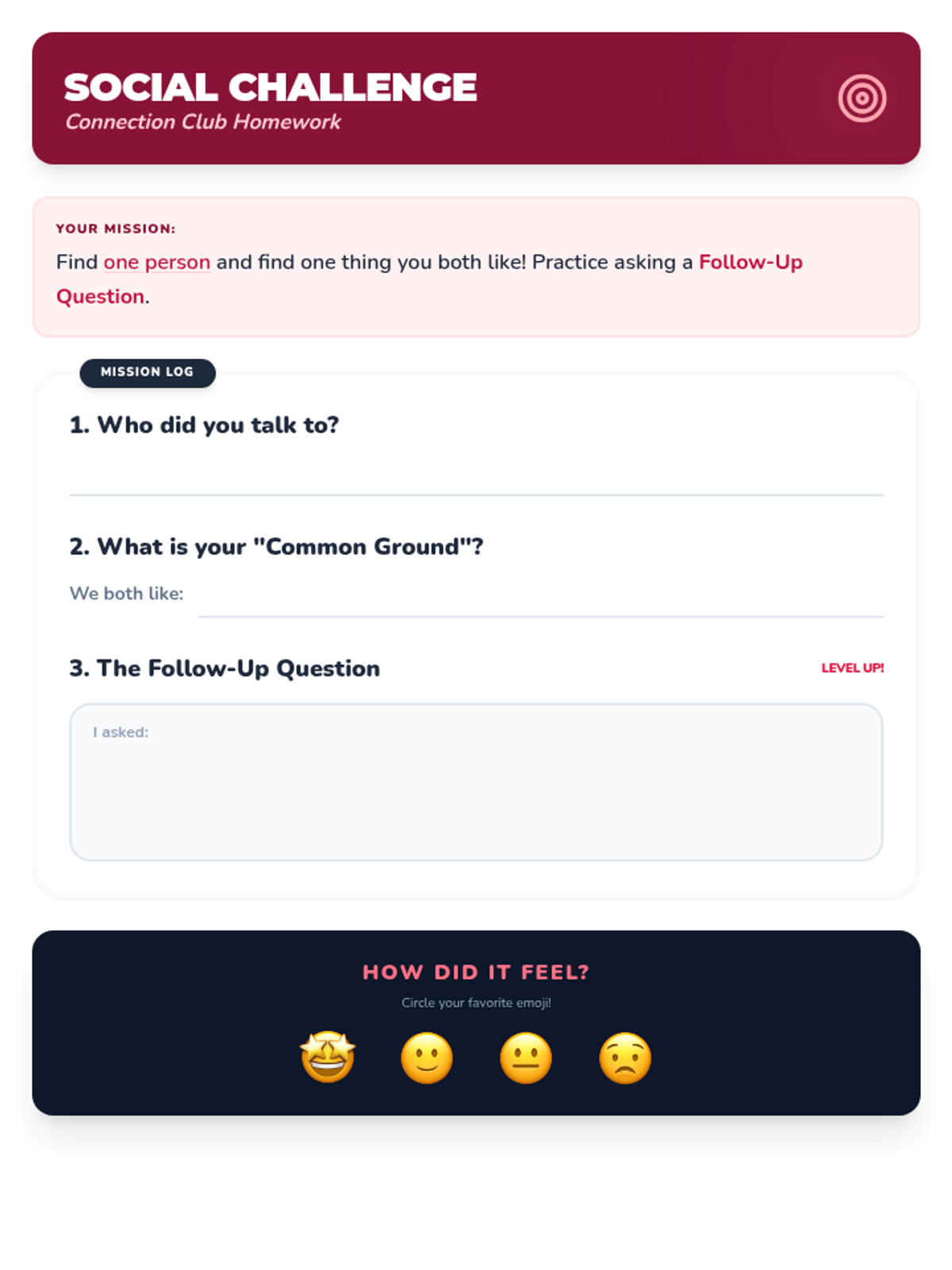
A homework assignment for 4th-grade students in the Connection Club. It challenges students to find common ground with someone outside the club and practice asking a follow-up question to build connection.
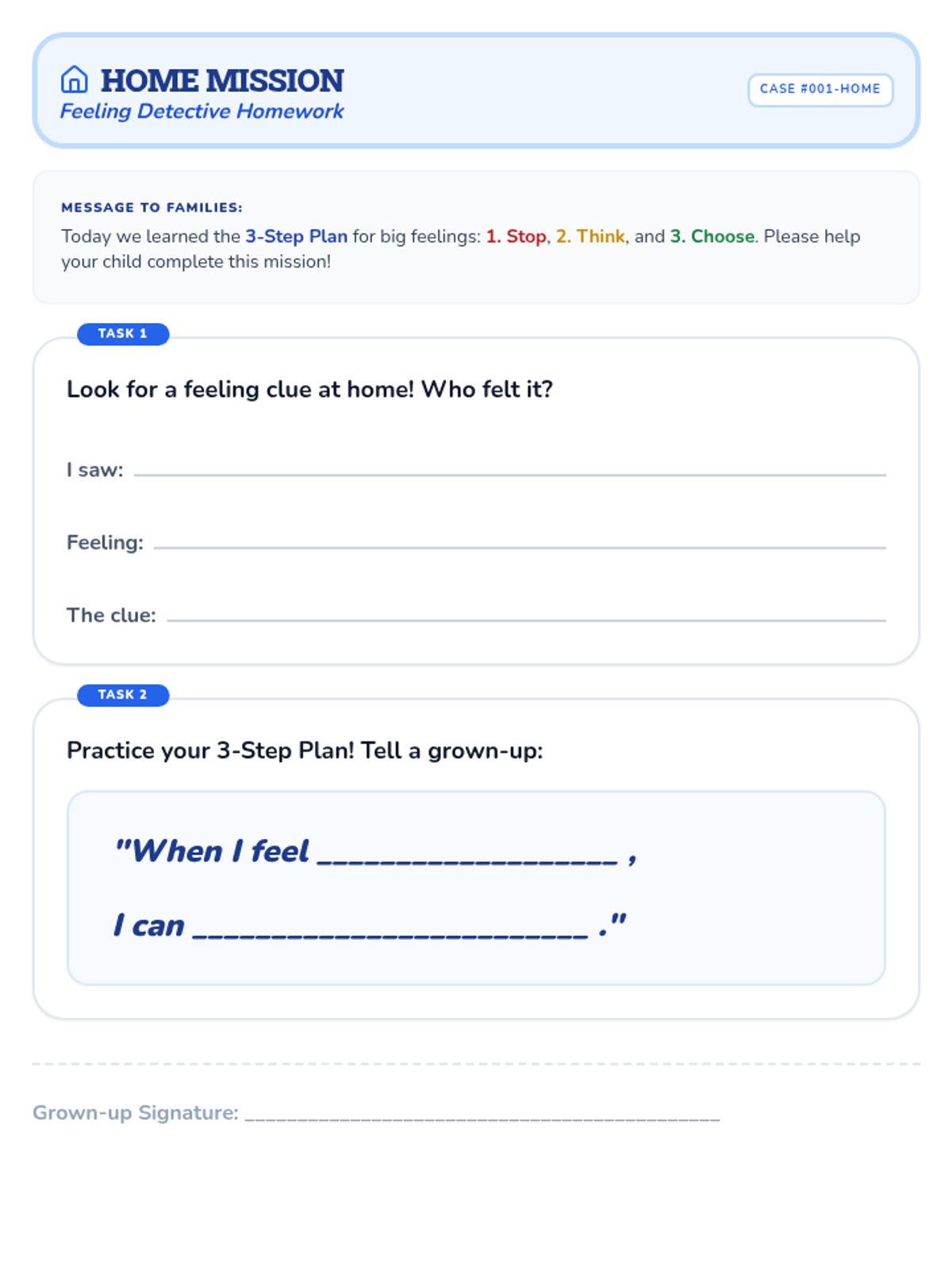
A 1st-grade homework assignment styled as a "Home Mission" for the Feeling Detectives lesson. Students identify emotional clues at home and practice their 3-step self-regulation plan with a family member.
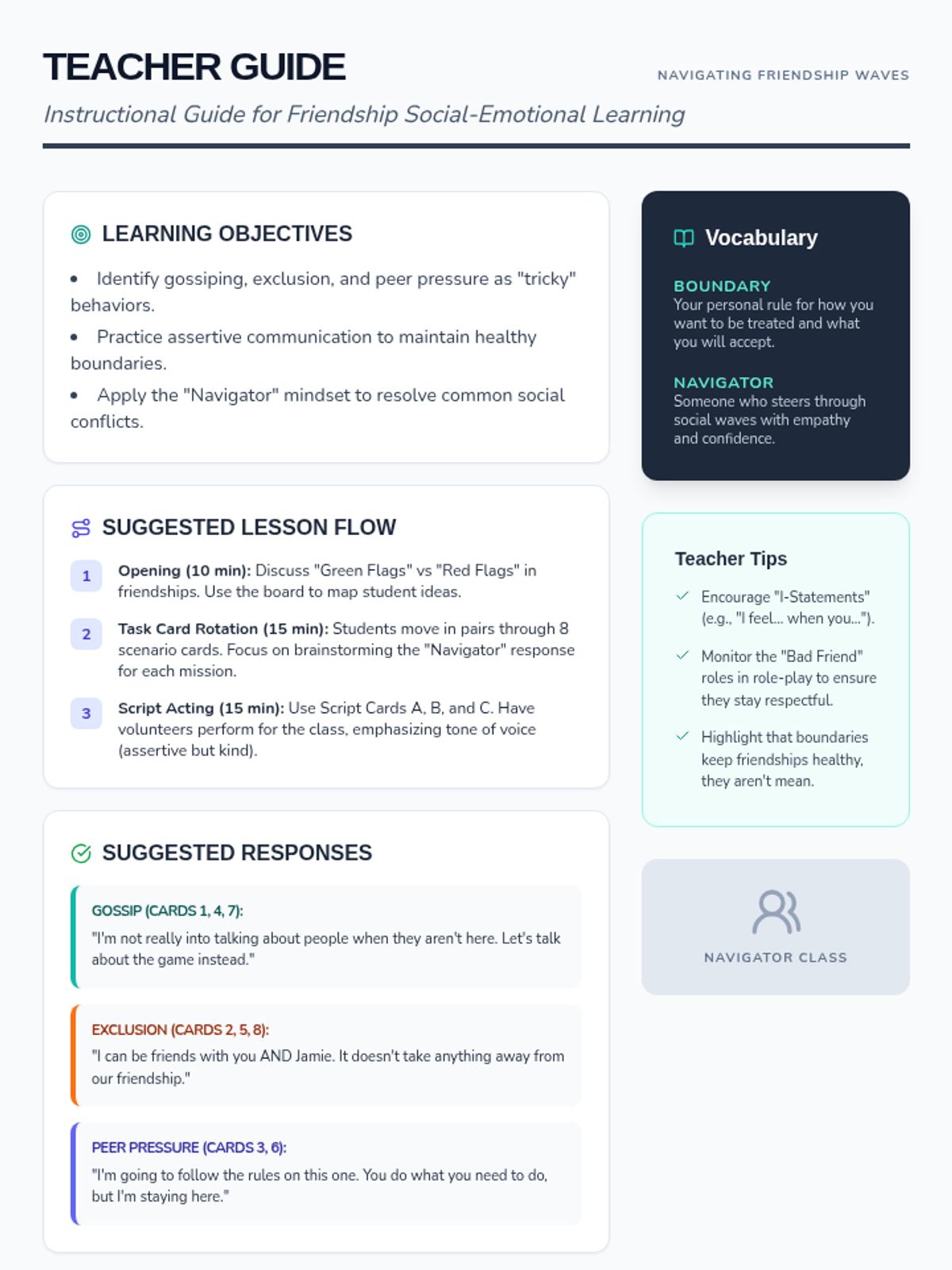
A teacher guide providing learning objectives, a lesson flow, key terminology, and suggested responses for the friendship scenarios.
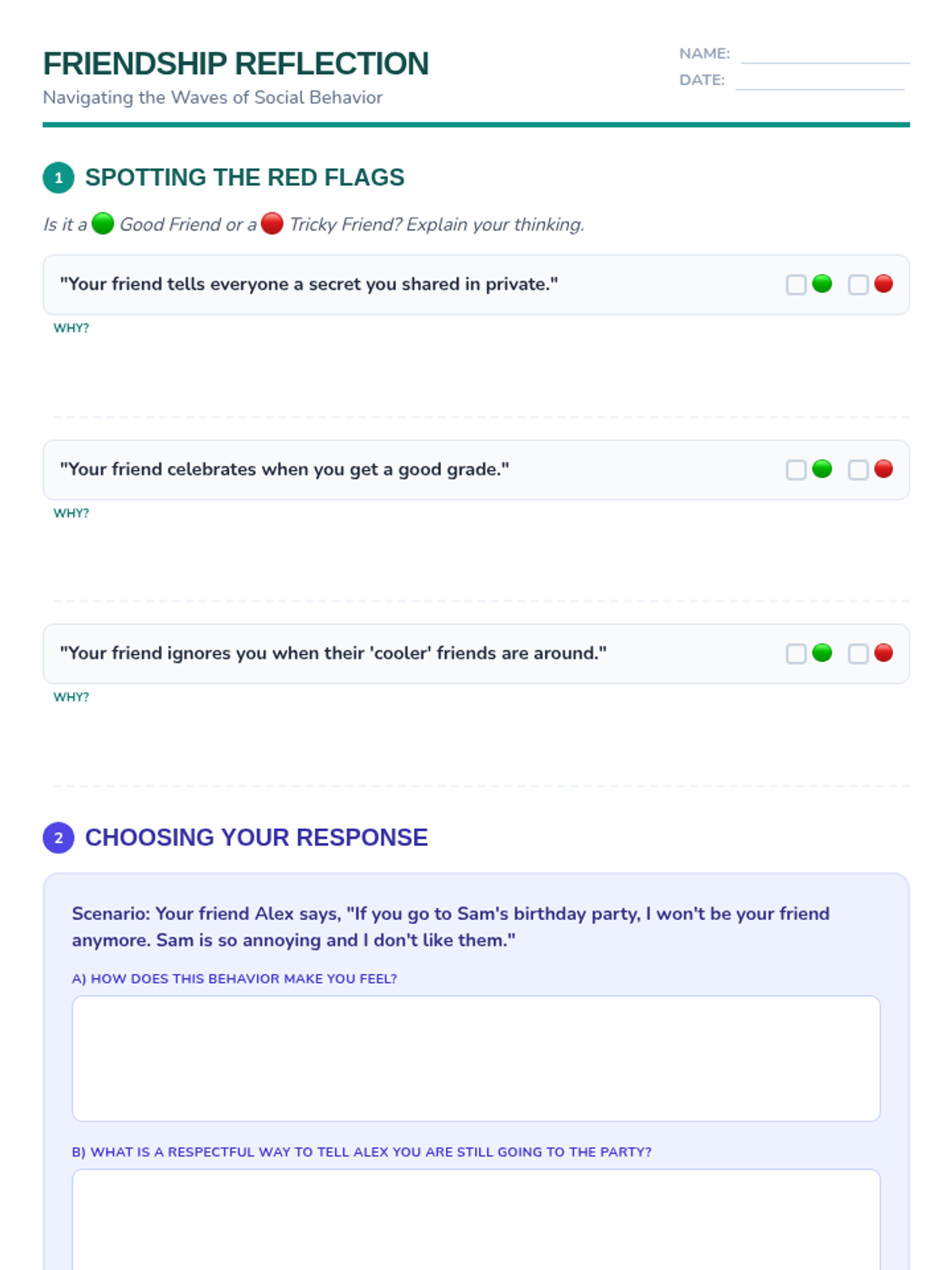
A reflection worksheet that helps students identify red flags in friendships and practice formulating healthy responses to social pressure.
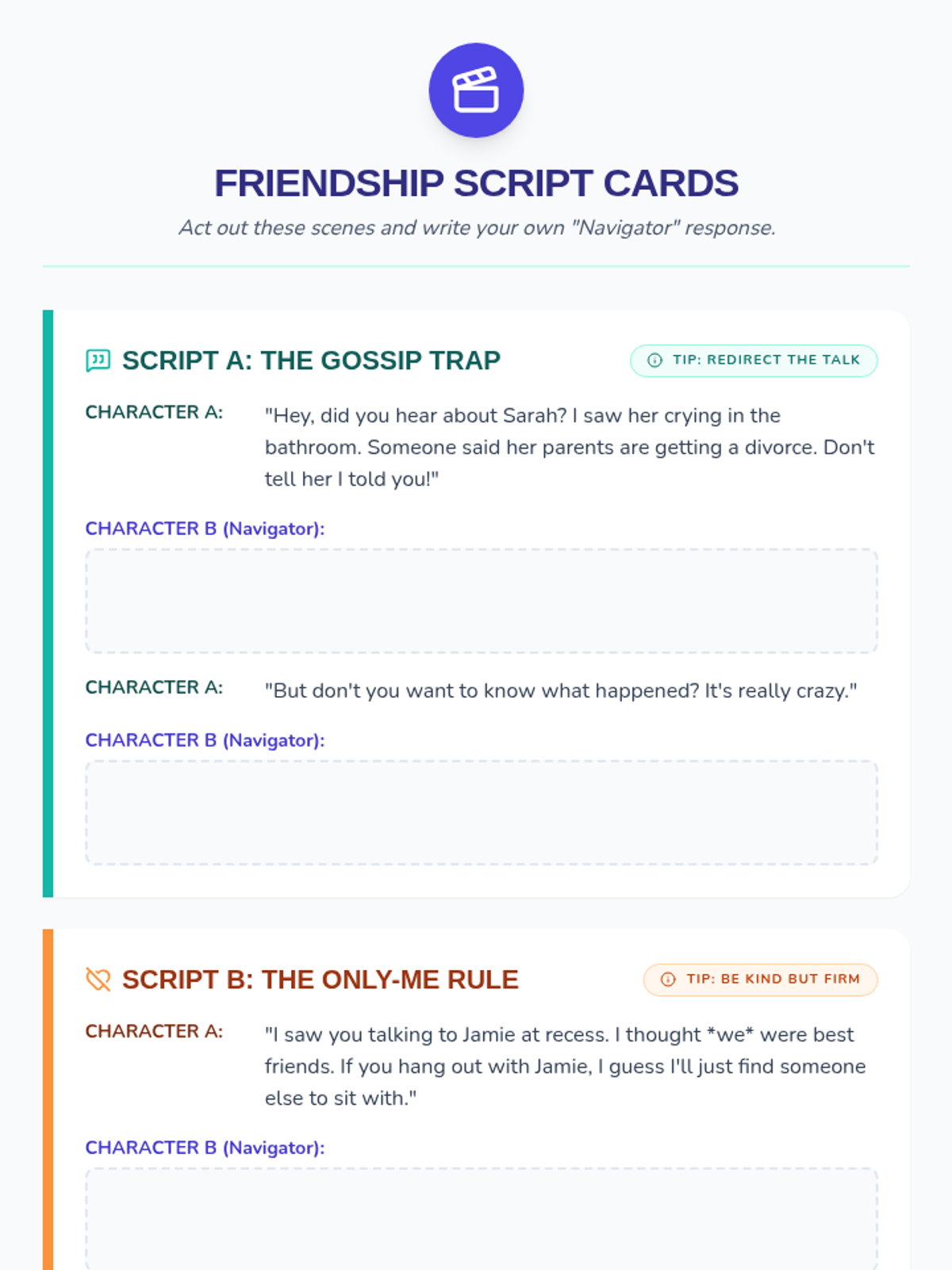
Three role-play script cards designed for pairs to practice navigating difficult social interactions like gossiping, jealousy, and peer pressure.
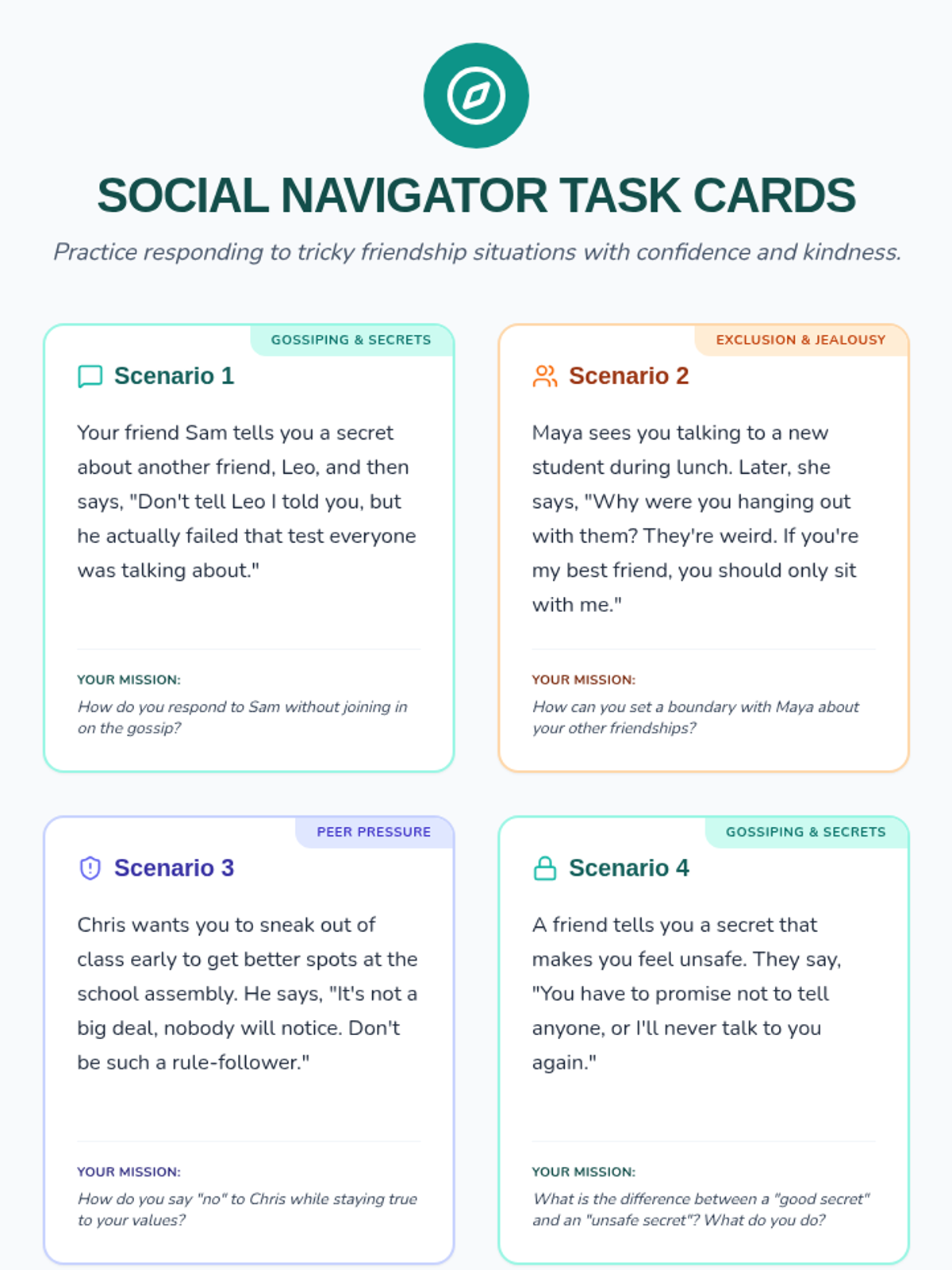
Eight scenario task cards covering topics like gossiping, exclusion, and peer pressure, designed to help students practice positive social responses.
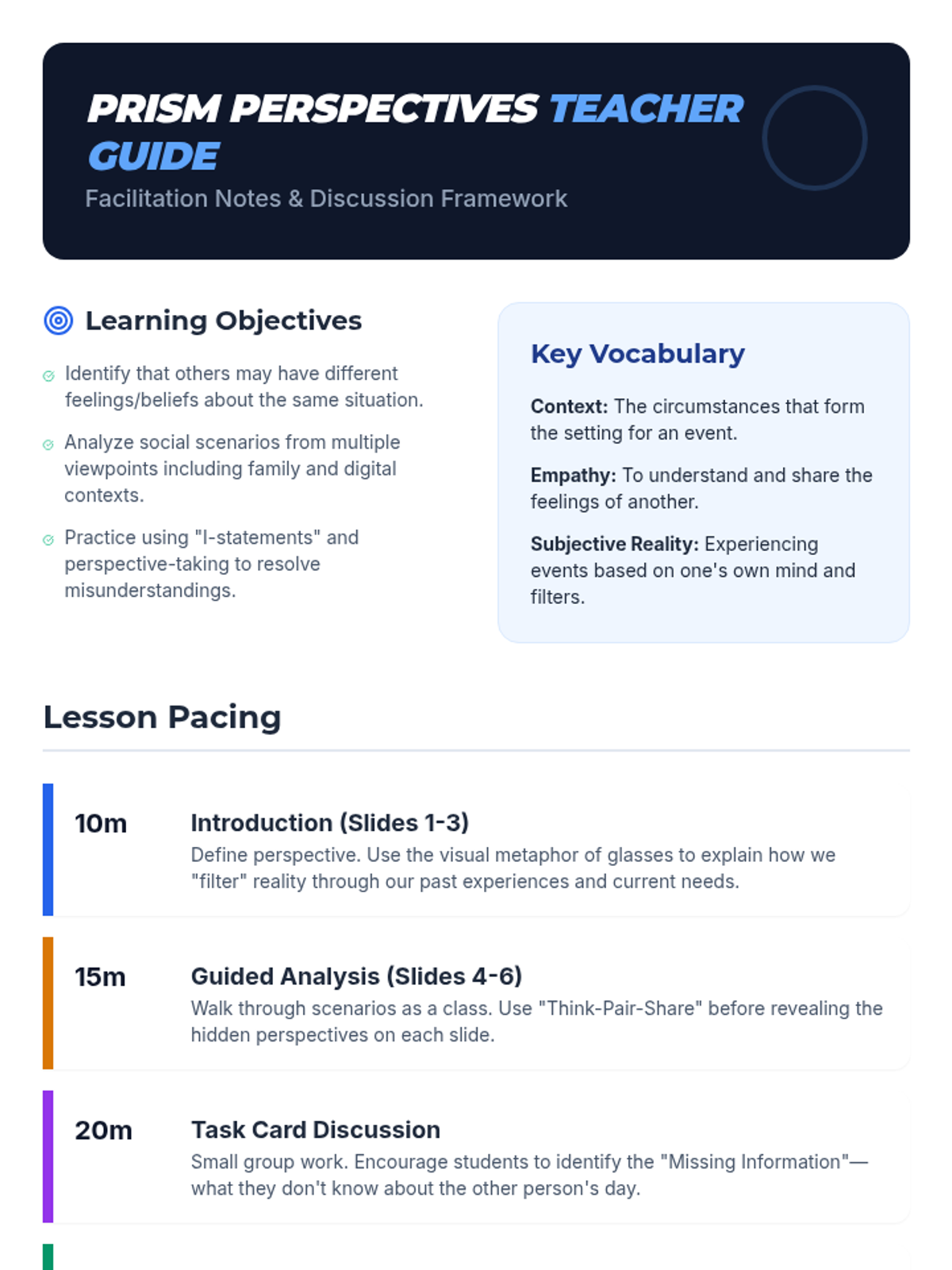
A comprehensive guide for teachers to facilitate the Prism Perspectives lesson, including pacing, vocabulary, and questioning frameworks.
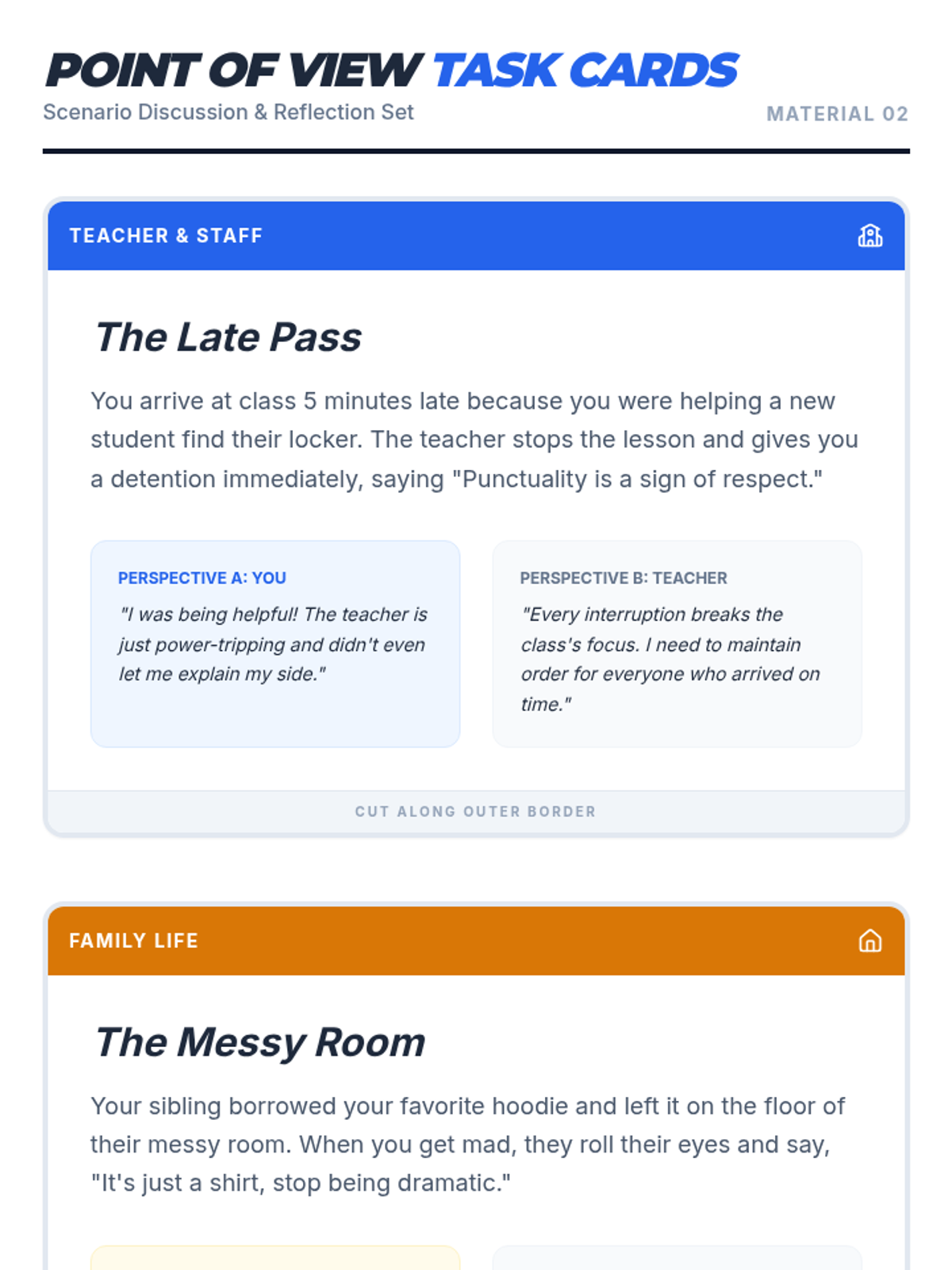
A set of printable task cards featuring diverse scenarios (family, school, social media) with contrasting perspectives and a group reflection guide.
A slide presentation introducing perspective-taking concepts with real-world scenarios covering family, school, and social media contexts.
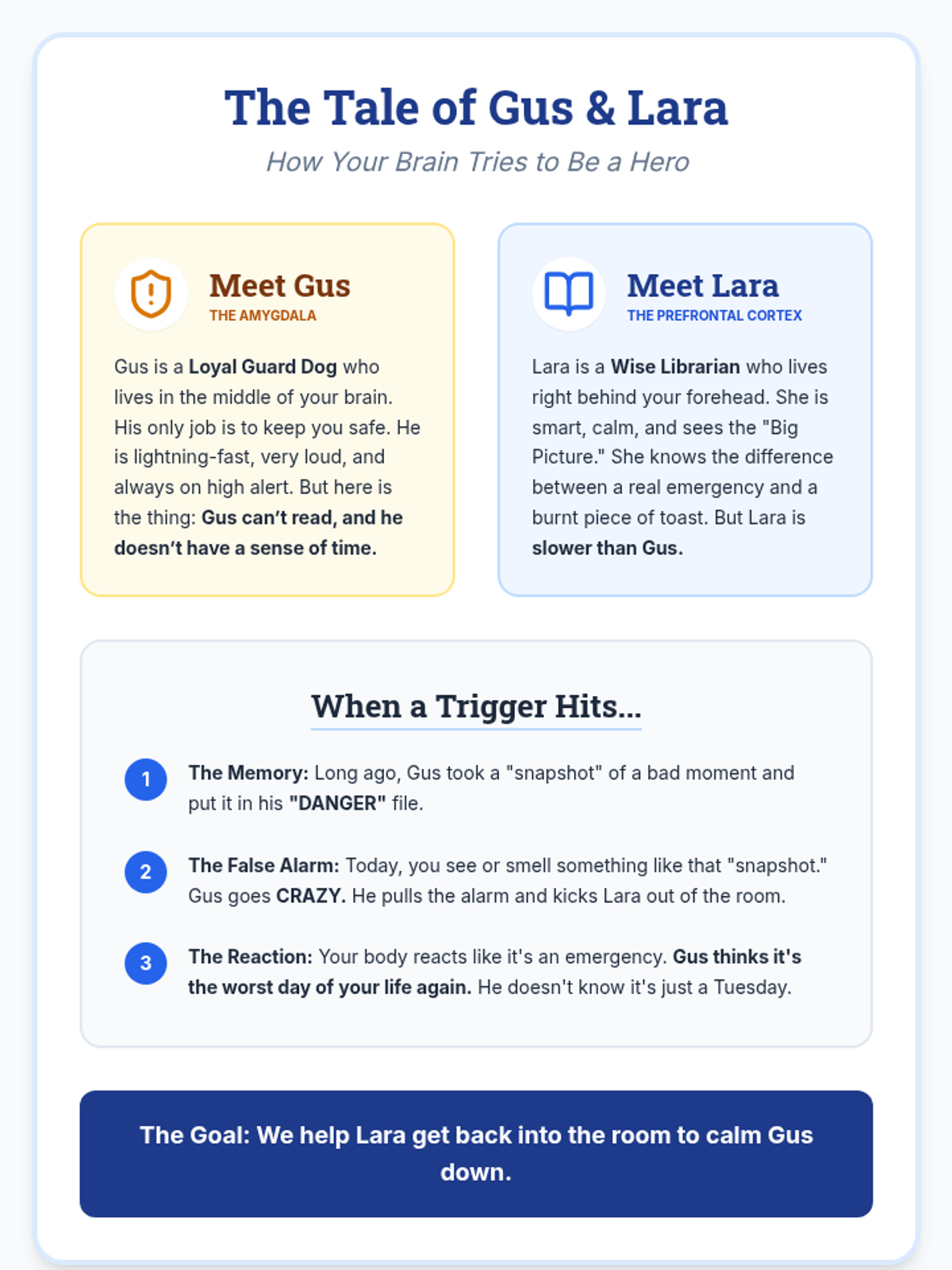
A simple, metaphor-based story handout explaining the roles of the amygdala (Gus the Guard Dog) and the prefrontal cortex (Lara the Librarian) in trigger reactions, suitable for middle school reading levels and clinical groups. Includes a second page with group discussion prompts and the 'Freeze Frame' exercise.
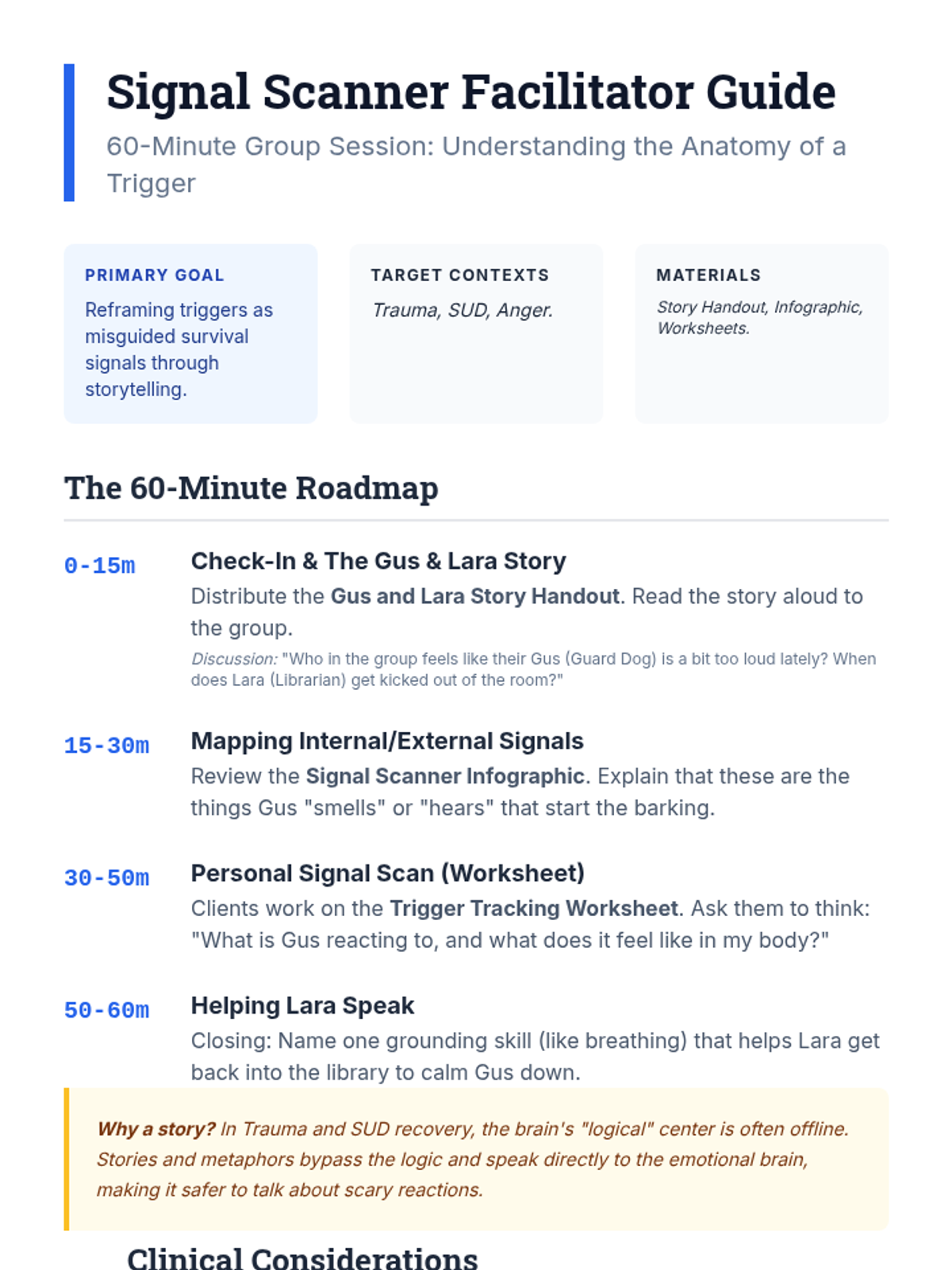
A comprehensive 60-minute facilitation guide for social workers and group leaders, detailing pacing, discussion prompts, and clinical considerations for teaching trigger identification.
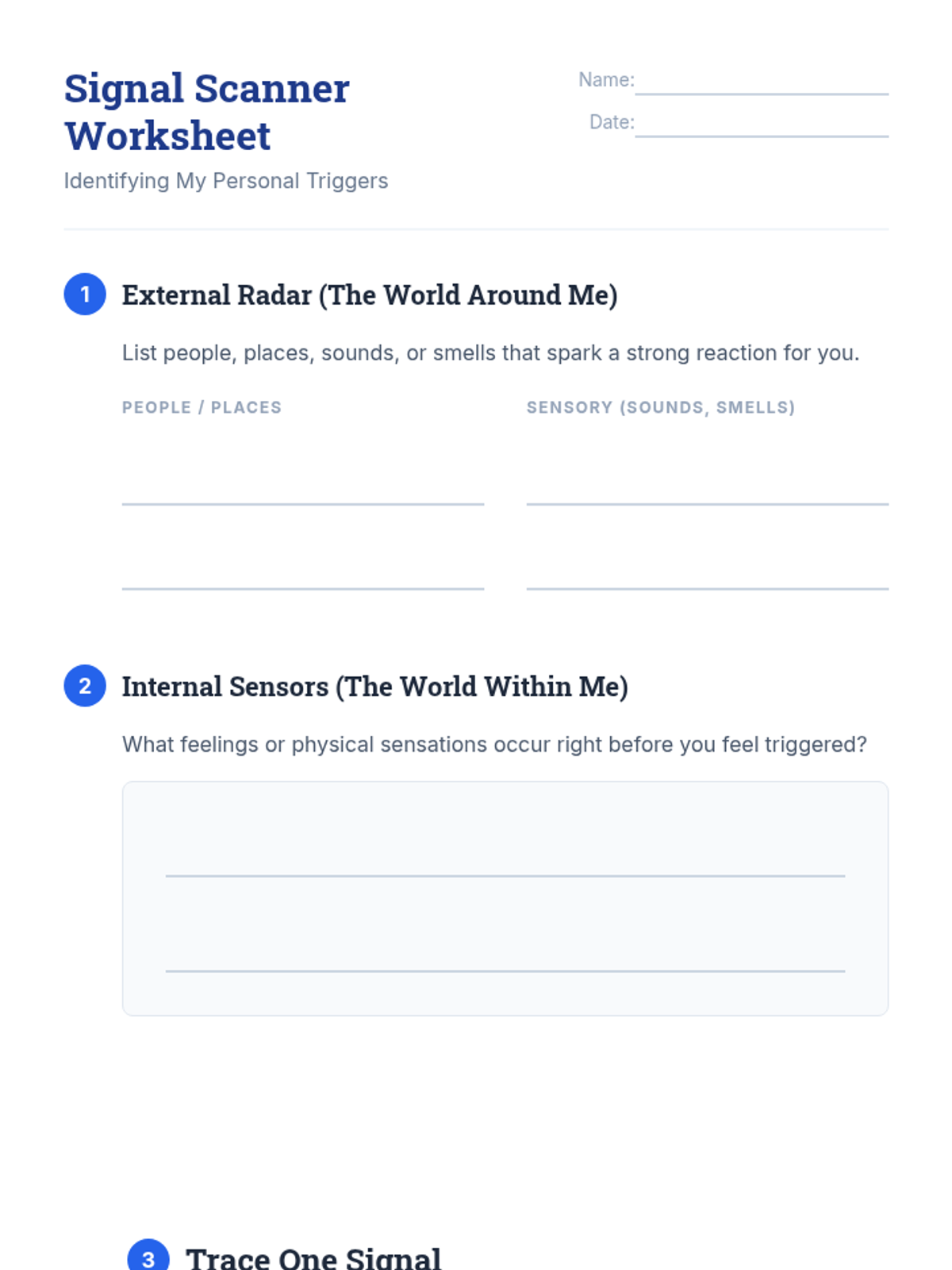
A student-facing worksheet for personal trigger mapping, including sections for external/internal signals and a 'Trace One Signal' deep dive exercise.
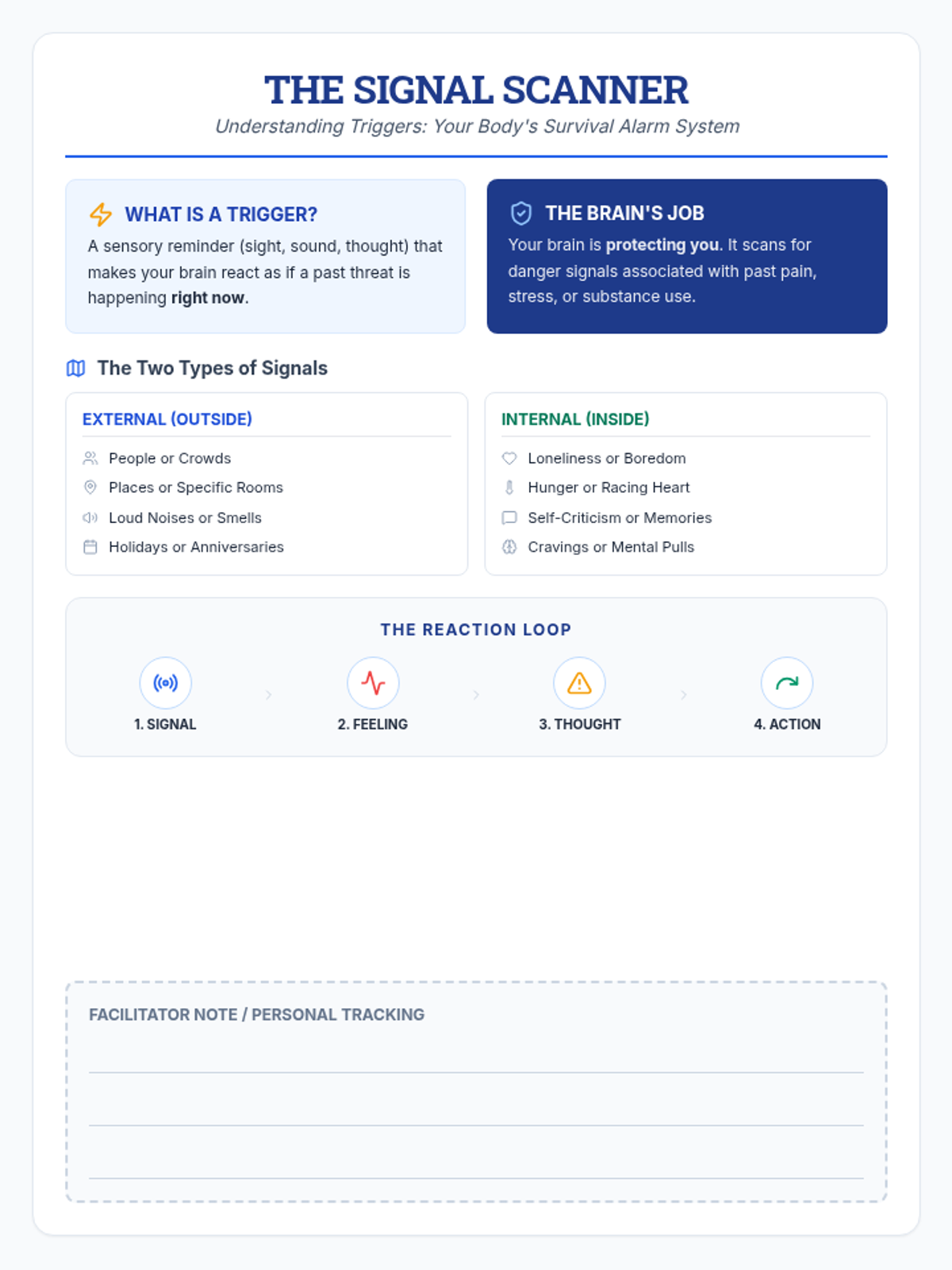
A high-contrast visual anchor chart defining triggers and categorizing them into internal and external types, designed for clinical and group settings.
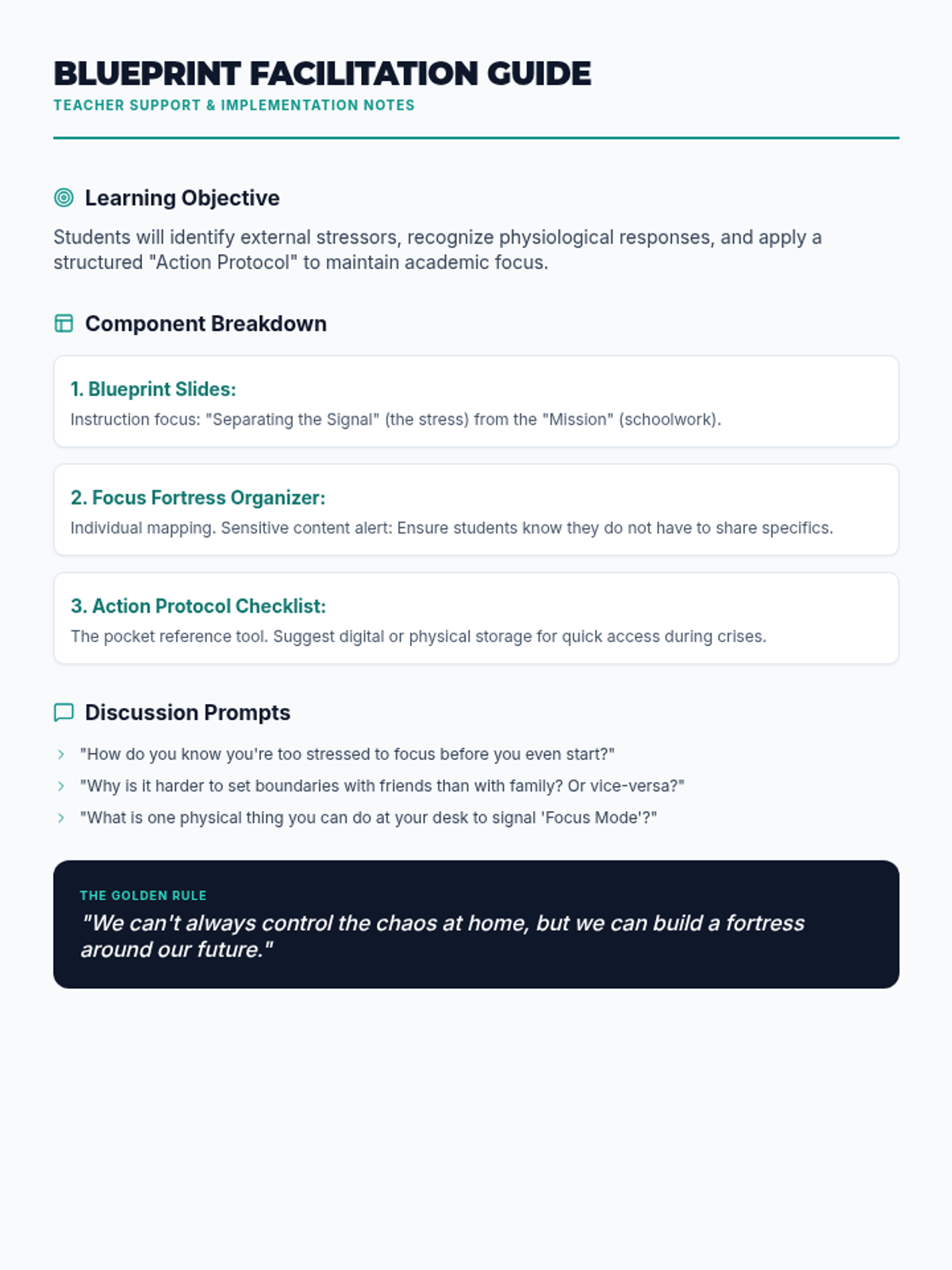
A teacher-facing facilitation guide providing instructional tips, discussion prompts, and implementation strategies for the Clarity Blueprint lesson.
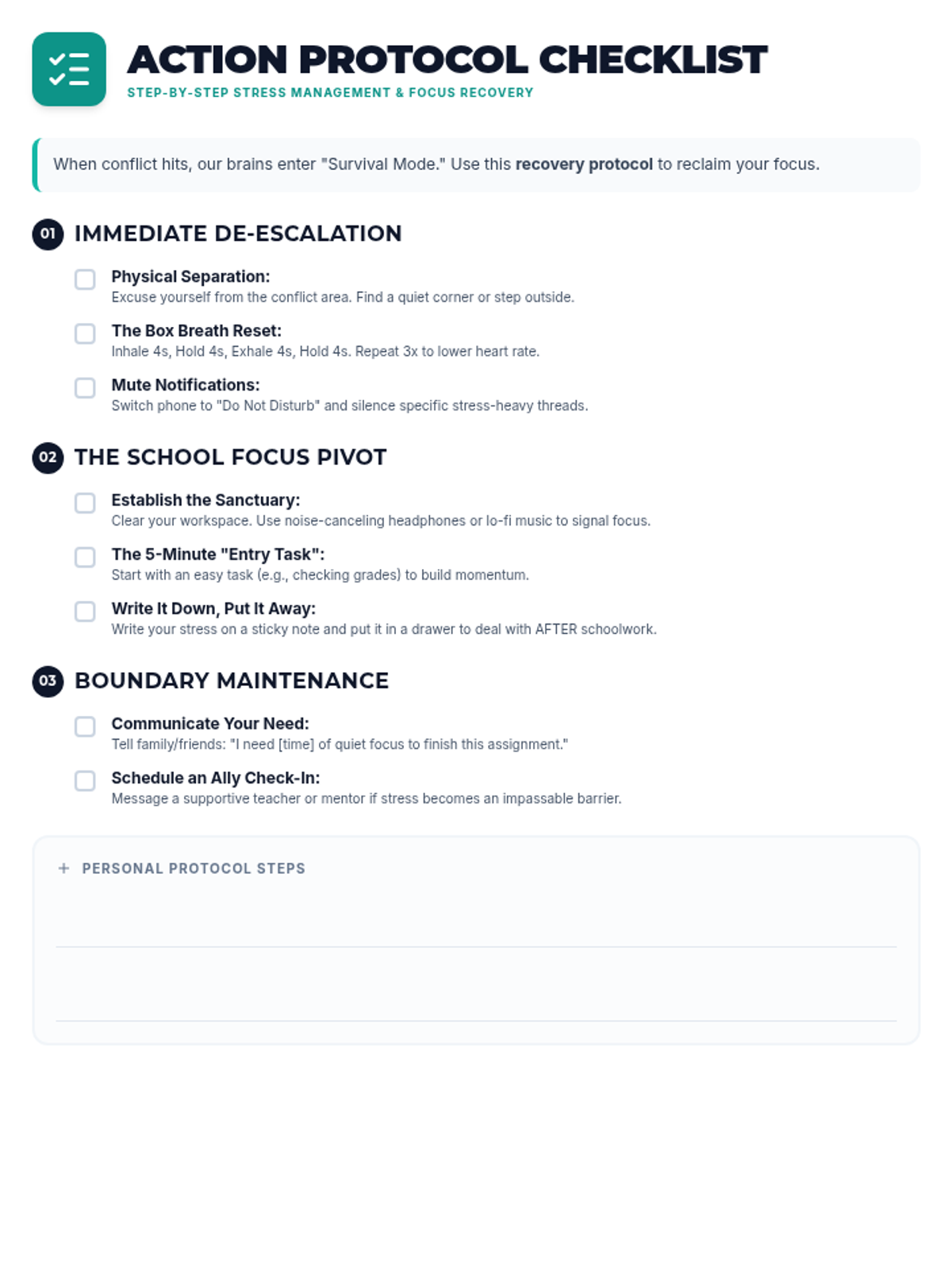
A step-by-step checklist guide for students to follow when stress levels rise, focusing on immediate de-escalation, shifting to a school focus, and long-term boundary maintenance.
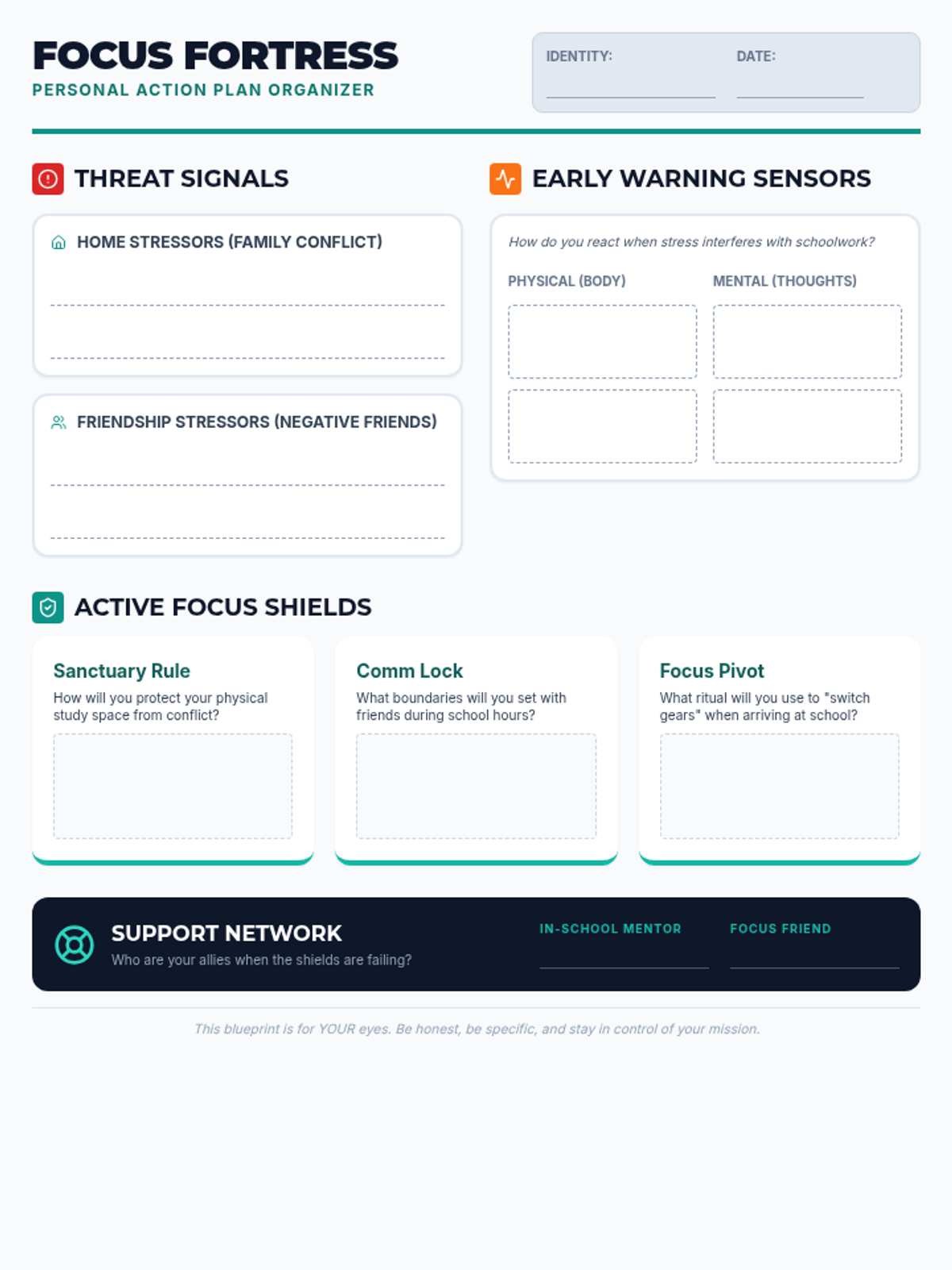
A visual graphic organizer designed for students to map out stress triggers from home and social circles, identify physiological signals, and design specific focus strategies.
A visual presentation defining personal action plans and providing strategies for managing family conflict and negative friendship influences to maintain school focus.
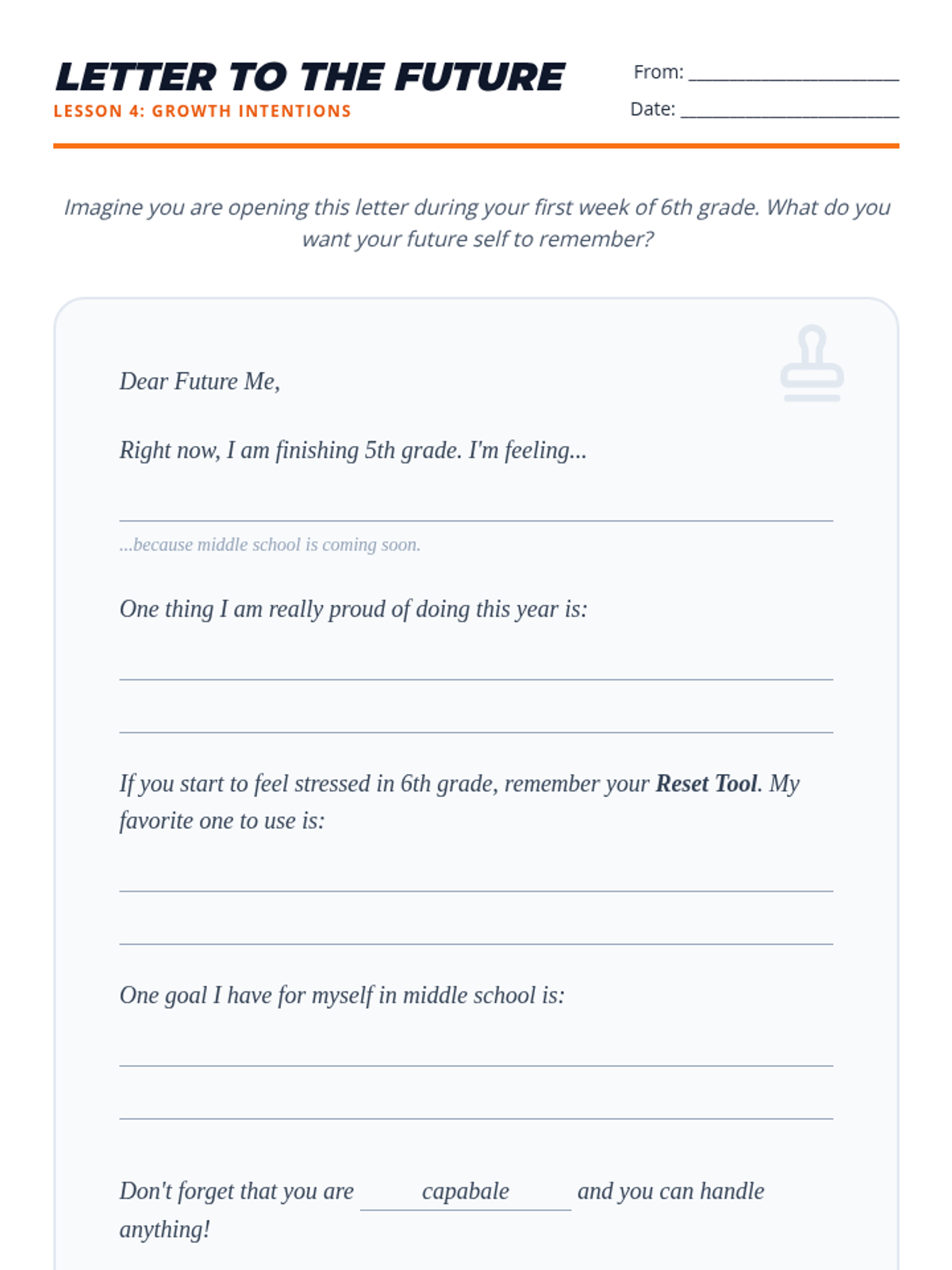
A "Letter to the Future" activity where students write to their future 6th-grade selves, incorporating stress management tools and personal goals.
A summary presentation for the final lesson, reviewing all unit concepts and setting a positive tone for the transition to 6th grade.
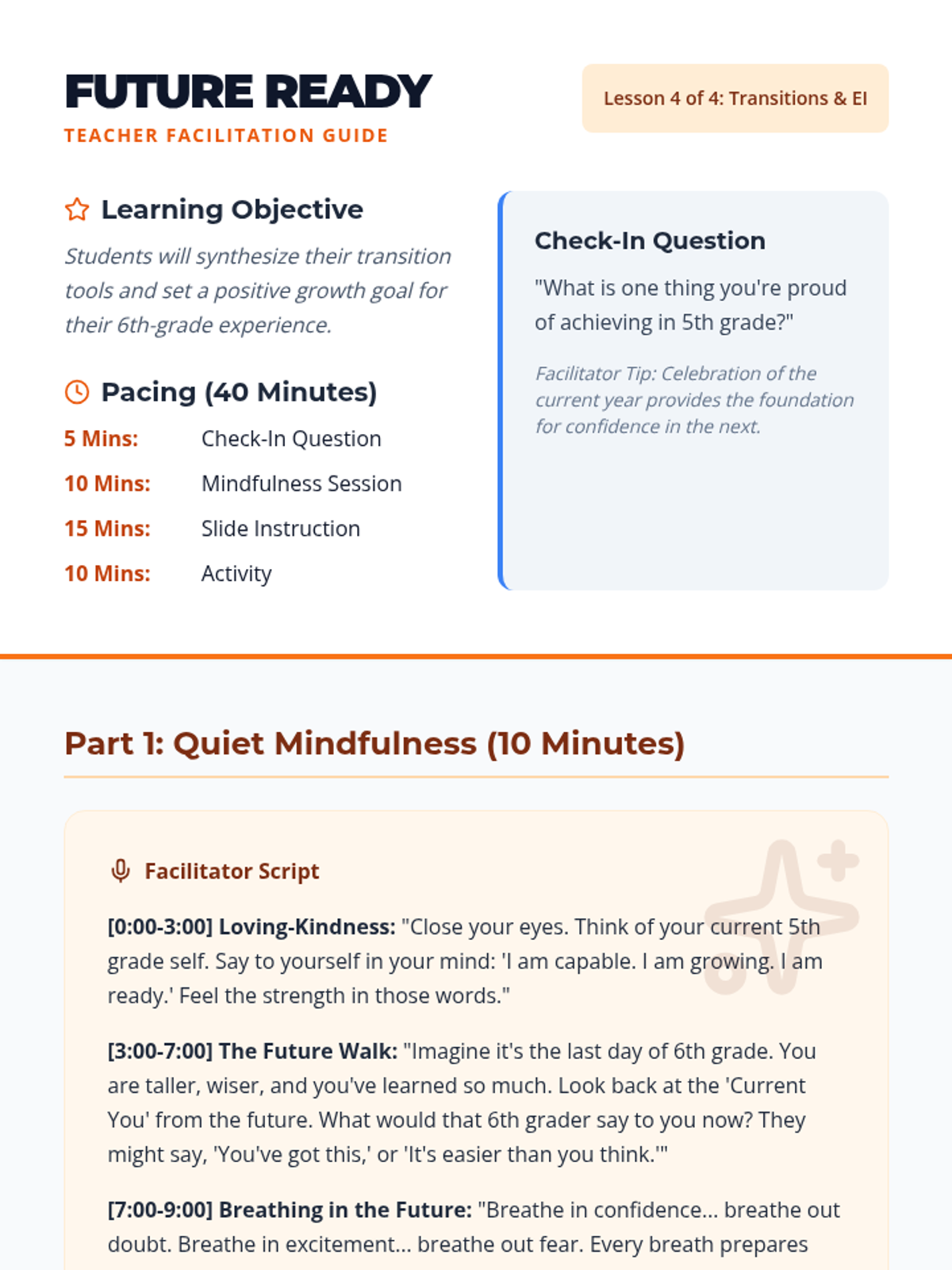
A teacher guide for the final lesson in the series, synthesizing all previous skills and leading a future-oriented mindfulness session.
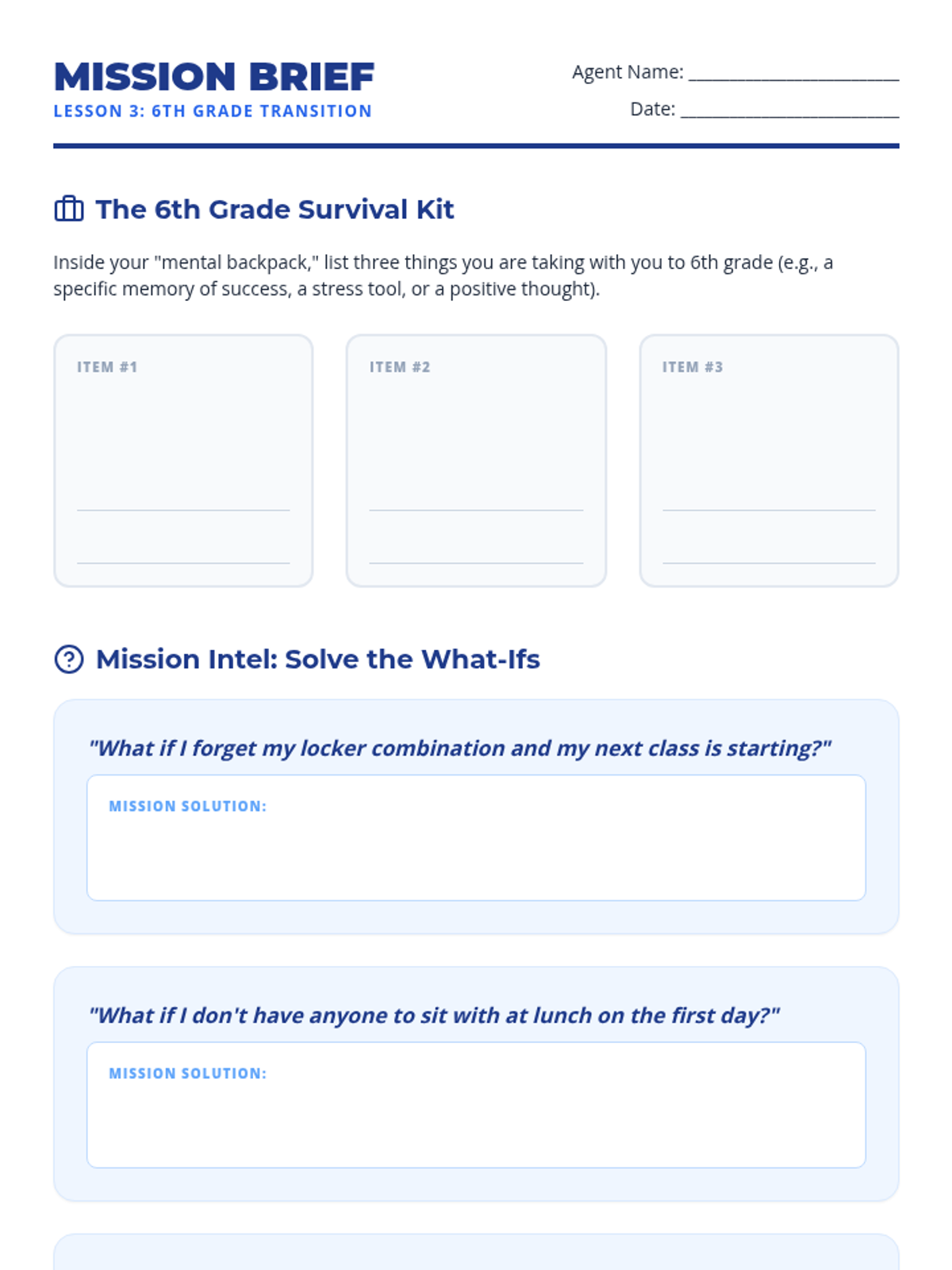
A "Mission Brief" worksheet where students pack a mental survival kit for 6th grade and problem-solve common transition-related "What-If" scenarios.
A slide deck for the Middle School Mission lesson, introducing the logistics of 6th grade and the "What-If Cloud" mindfulness technique.
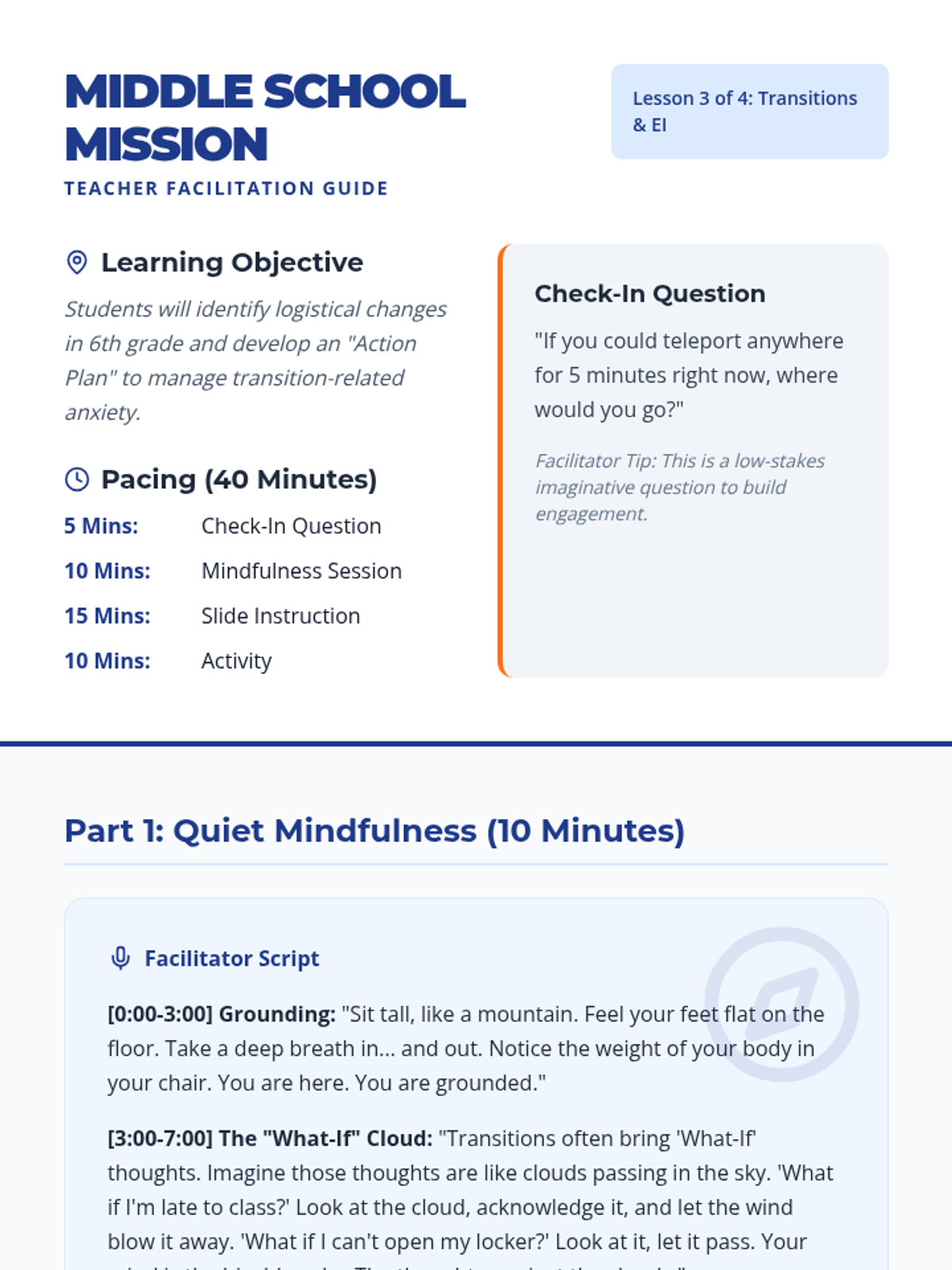
A teacher guide for the Middle School Mission lesson, focusing on logistical transition fears and using mindfulness to observe and release anxious thoughts.