A comprehensive teacher's guide for the Dialogue Dynamics lesson, featuring a pacing guide, instructional strategies, and a detailed answer key for the Dialogue Rehab worksheet. Revised for better visual alignment and clarity.
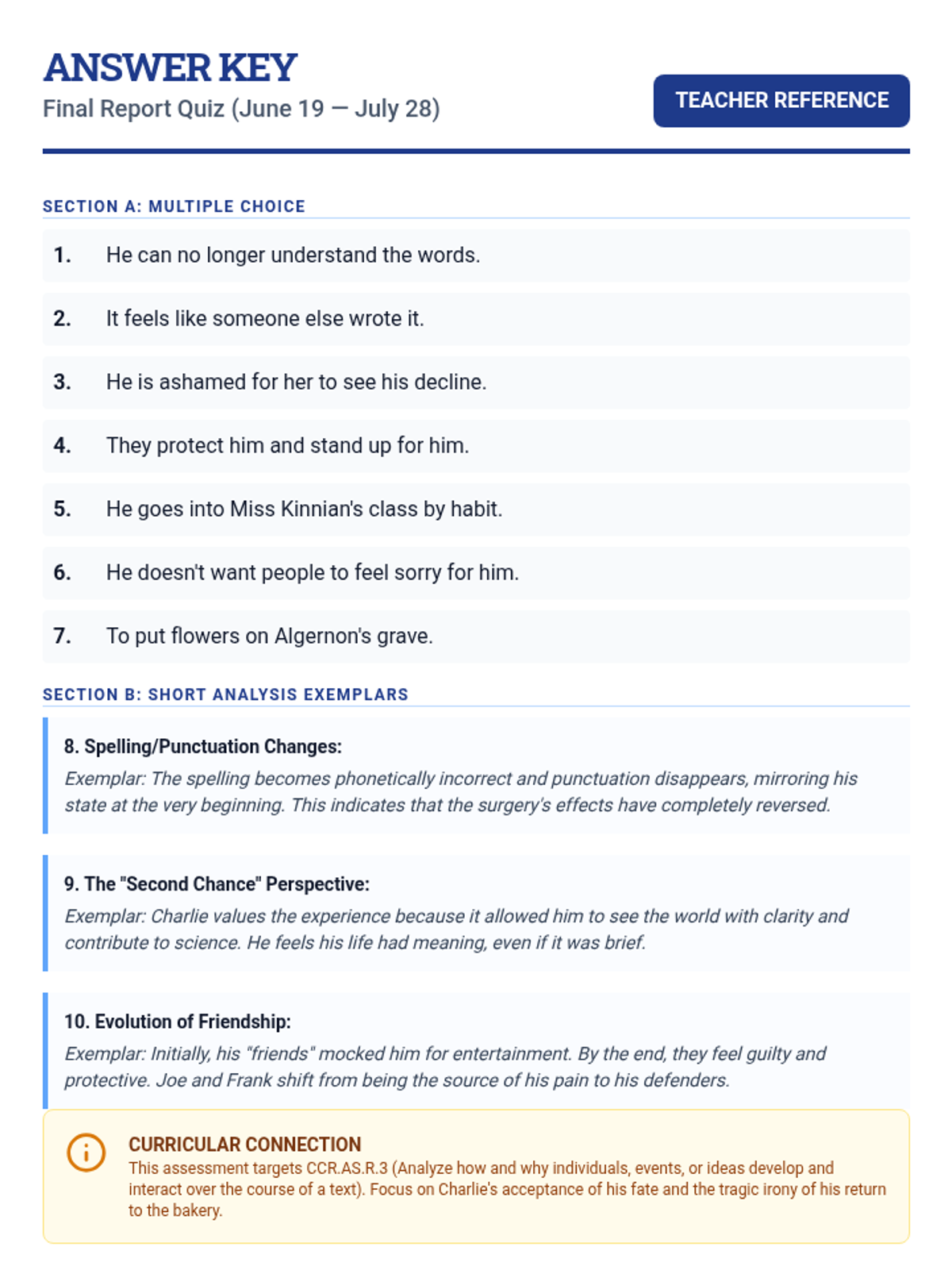
A teacher's answer key for the Final Report Quiz Check, providing correct responses for the 10 questions covering Charlie's regression and the end of 'Flowers for Algernon'.
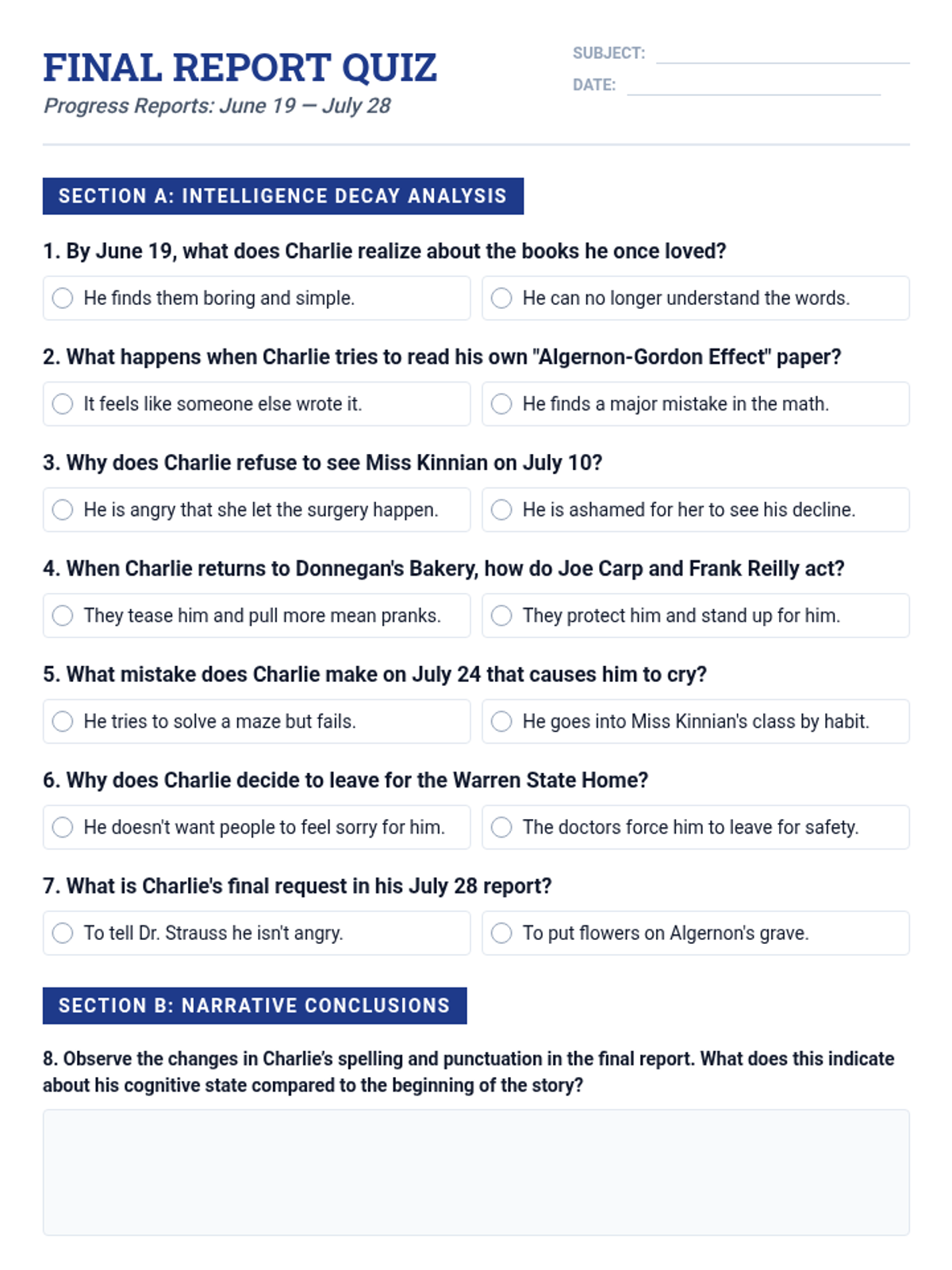
A 10-question formative quiz for 'Flowers for Algernon' covering the final progress reports from June 19 to July 28, featuring multiple-choice and short-answer questions. Corrected for page breaks and work area spacing.
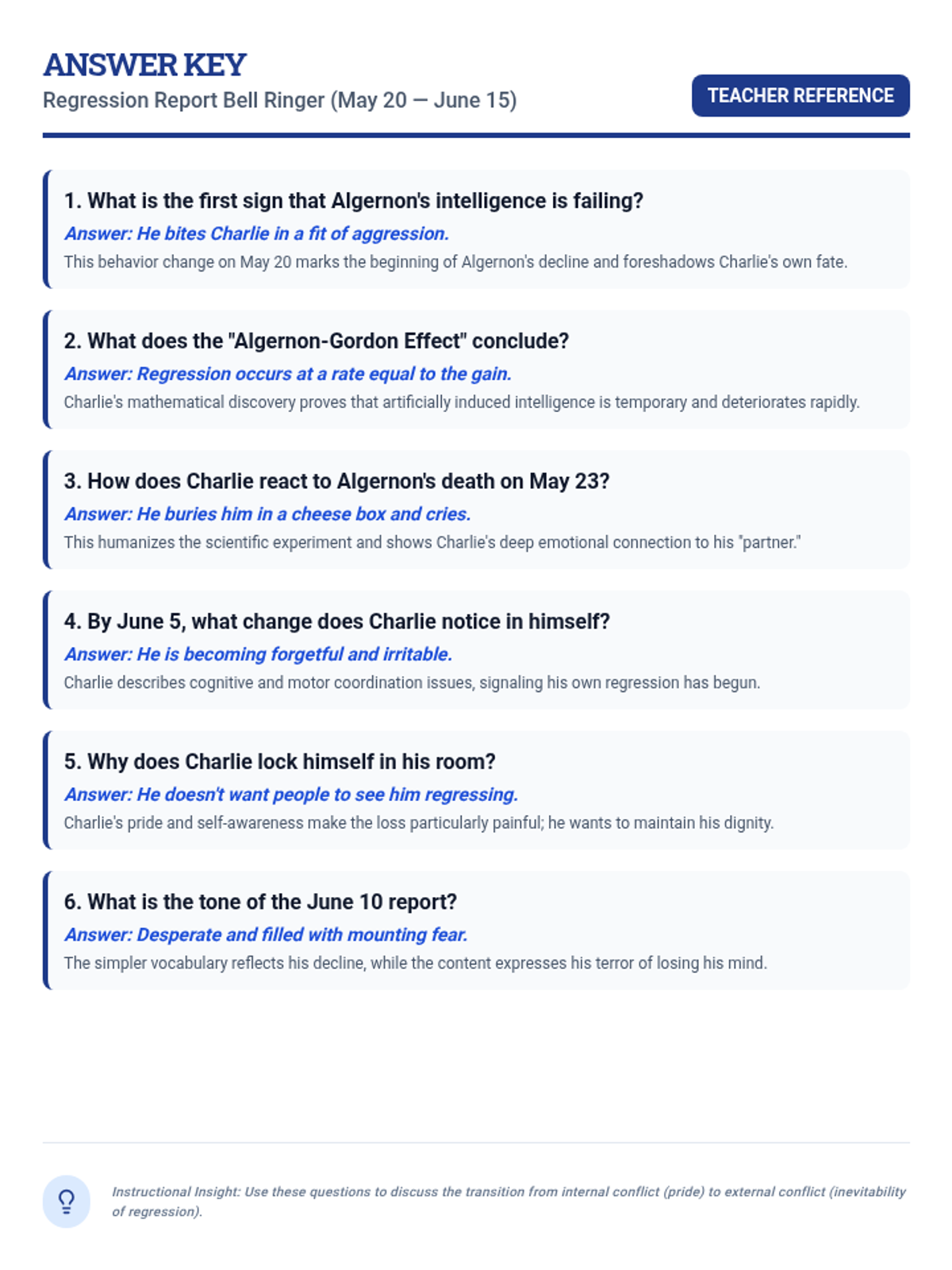
A teacher's answer key for the Regression Report Bell Ringer, providing correct responses and instructional notes for 6 multiple-choice questions covering progress reports from May 20 to June 15. Corrected to fit on a single page.
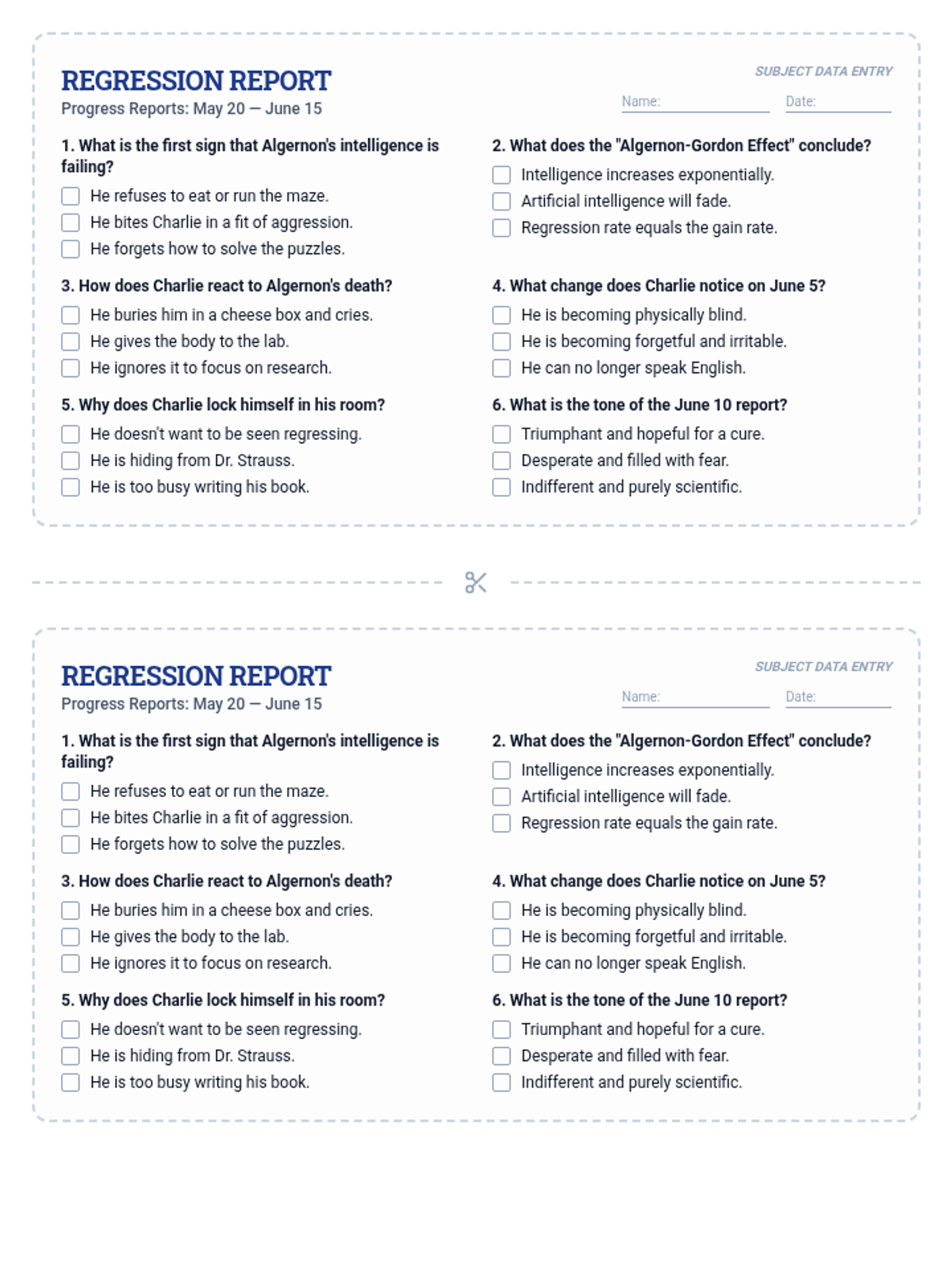
A 2-up printable bell ringer for 'Flowers for Algernon' covering progress reports from May 20 to June 15, featuring 6 multiple-choice questions about Algernon's death and Charlie's initial regression. Corrected for page break fit and visual consistency.
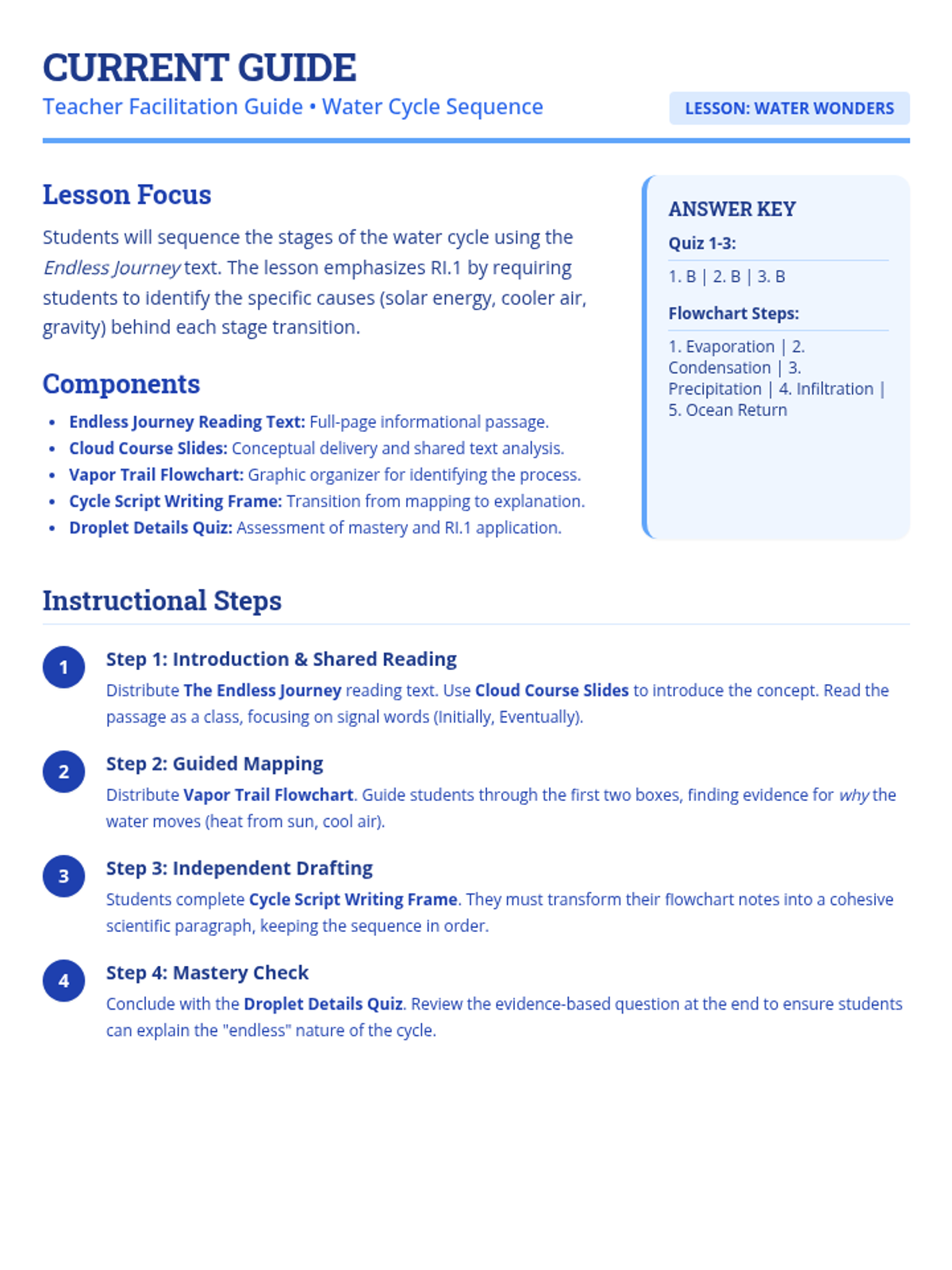
Facilitation guide for the Water Wonders lesson. Updated to include the new full-page reading text and updated instructional steps. fits on a single page.
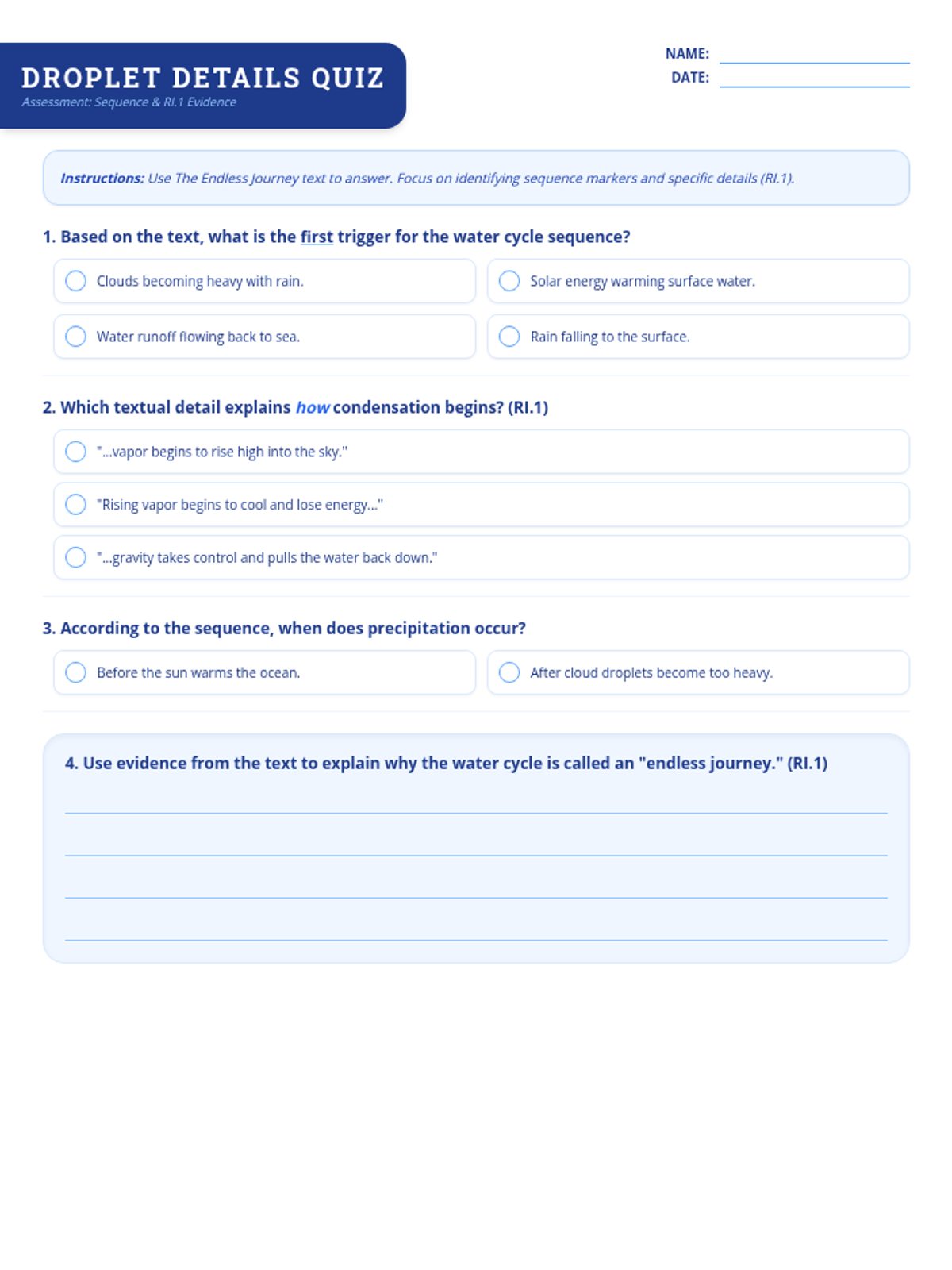
Sequence and RI.1 comprehension quiz for the water cycle. Features multiple choice and short response questions based on evidence from the 'Endless Journey' text. Revised for content consistency and layout.
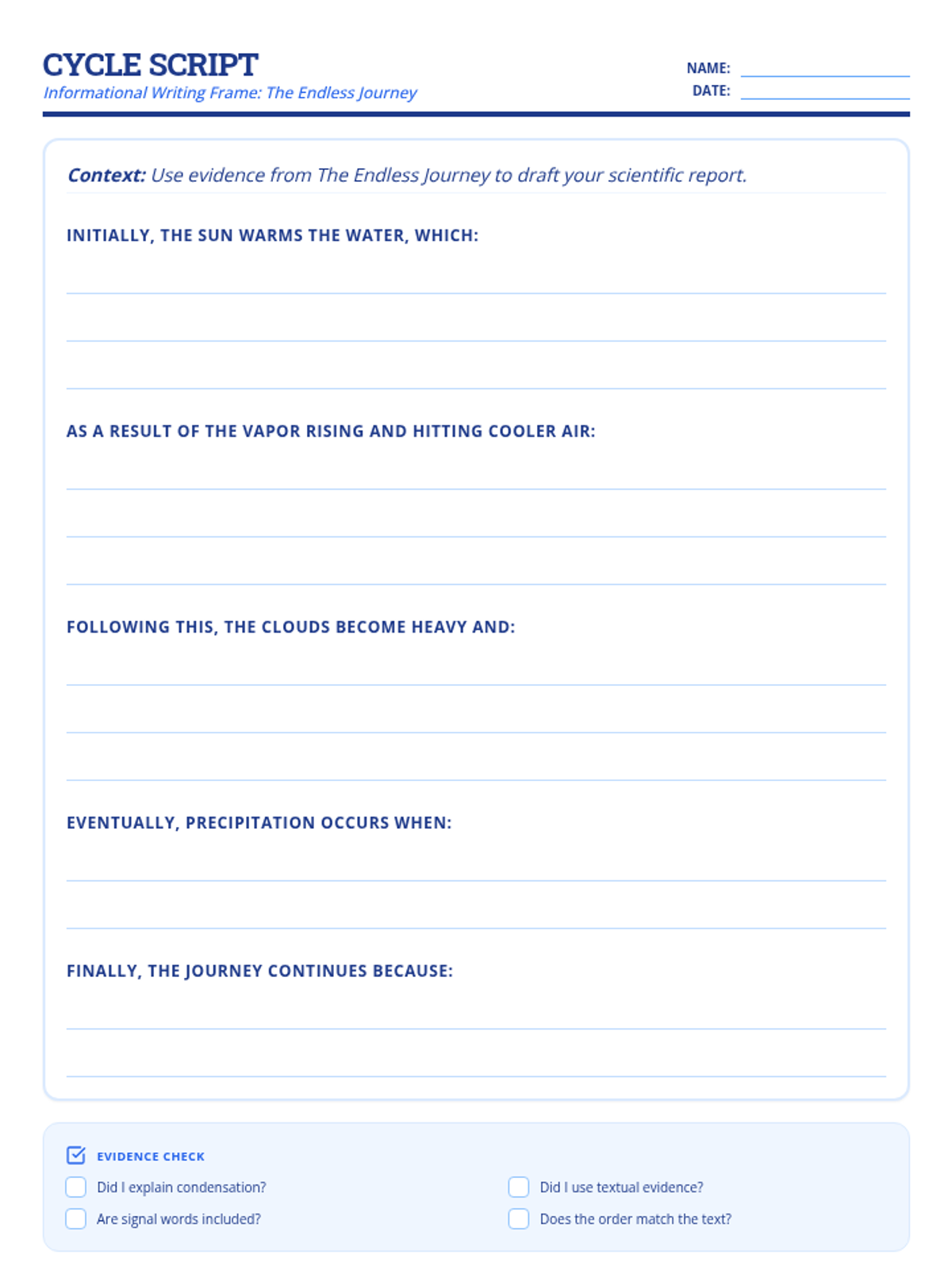
Scaffolded writing frame for the water cycle. Includes sentence starters and a self-check checklist. Revised for better layout, punctuation, and handwriting space. fits on one page.
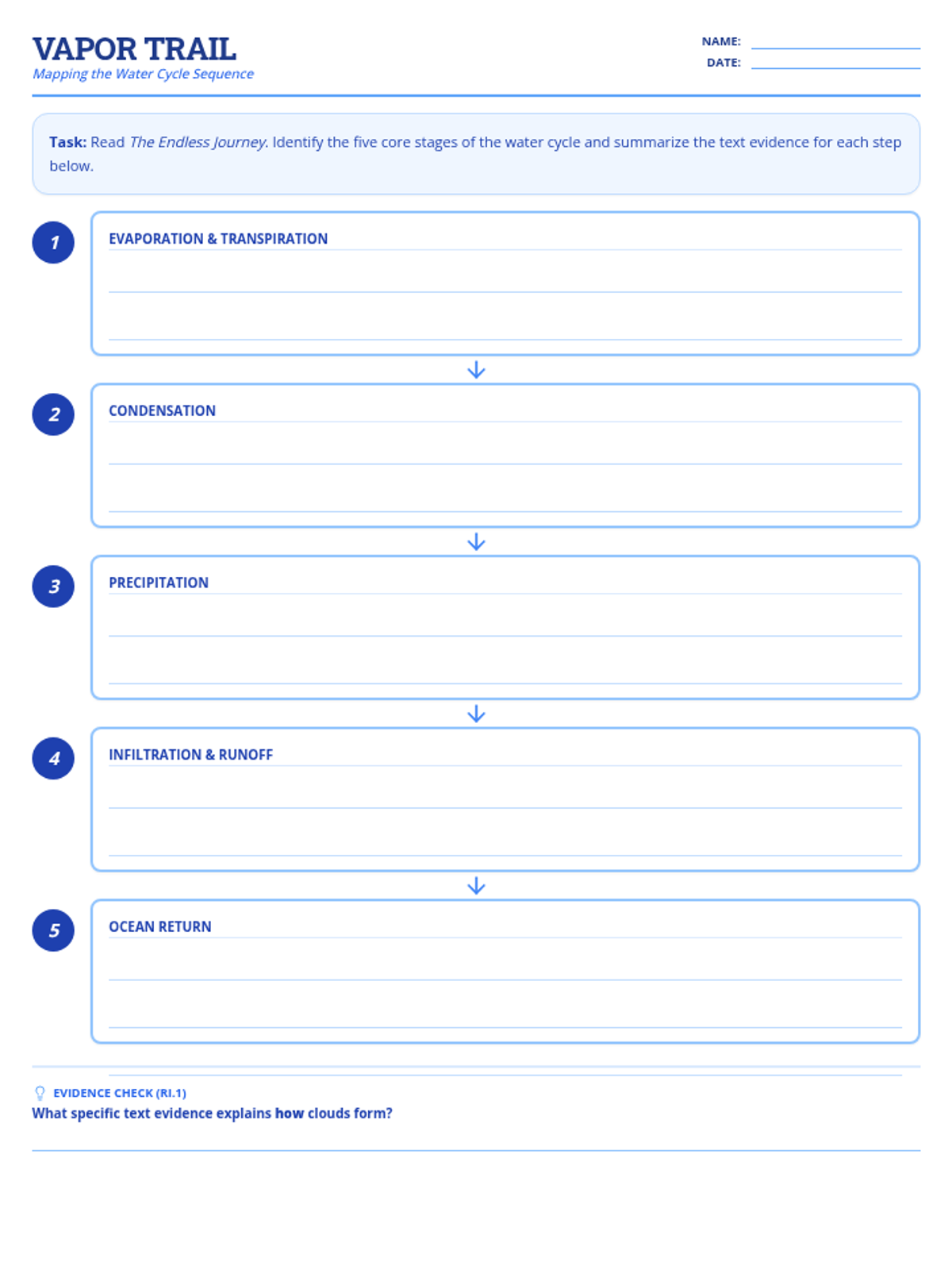
Graphic organizer for students to map the sequence of the water cycle. Instructs students to use the full-page reading text for evidence. Revised with centered arrows and more writing lines.
Instructional slide deck for teaching sequencing using the water cycle. Features an intro to the full-page reading text, visual mapping, and a check for understanding slide focused on RI.1. Revised for better flow.
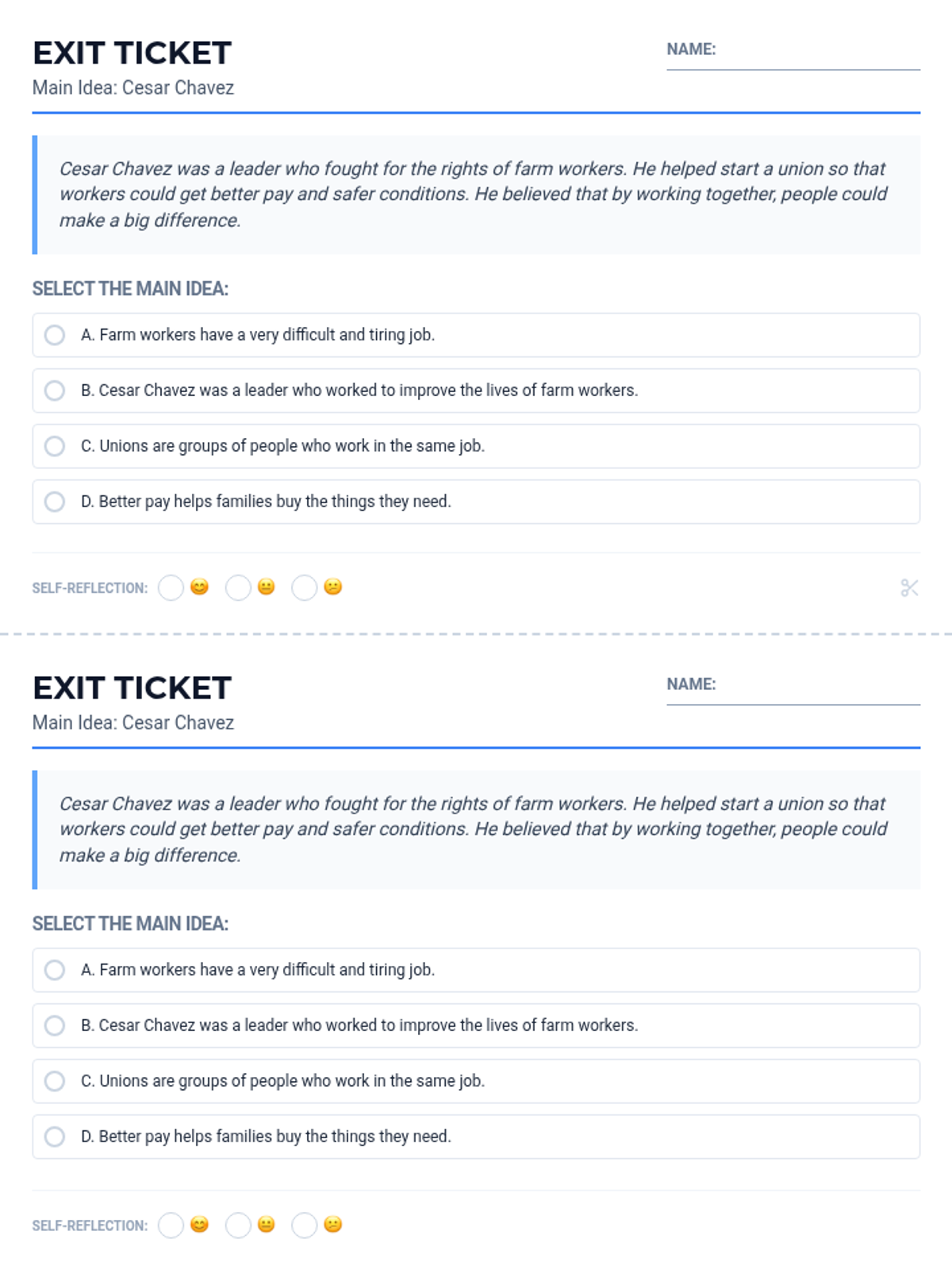
A quick assessment for students to complete at the end of the lesson, featuring one biography-based main idea question and a self-reflection scale. Printed as two slips per page.
A visual slide presentation designed for 3rd-grade instruction on identifying the main idea and supporting details. It uses biographies of historical figures to model the concepts with clear examples and definitions. Updated with improved examples and practice slides.
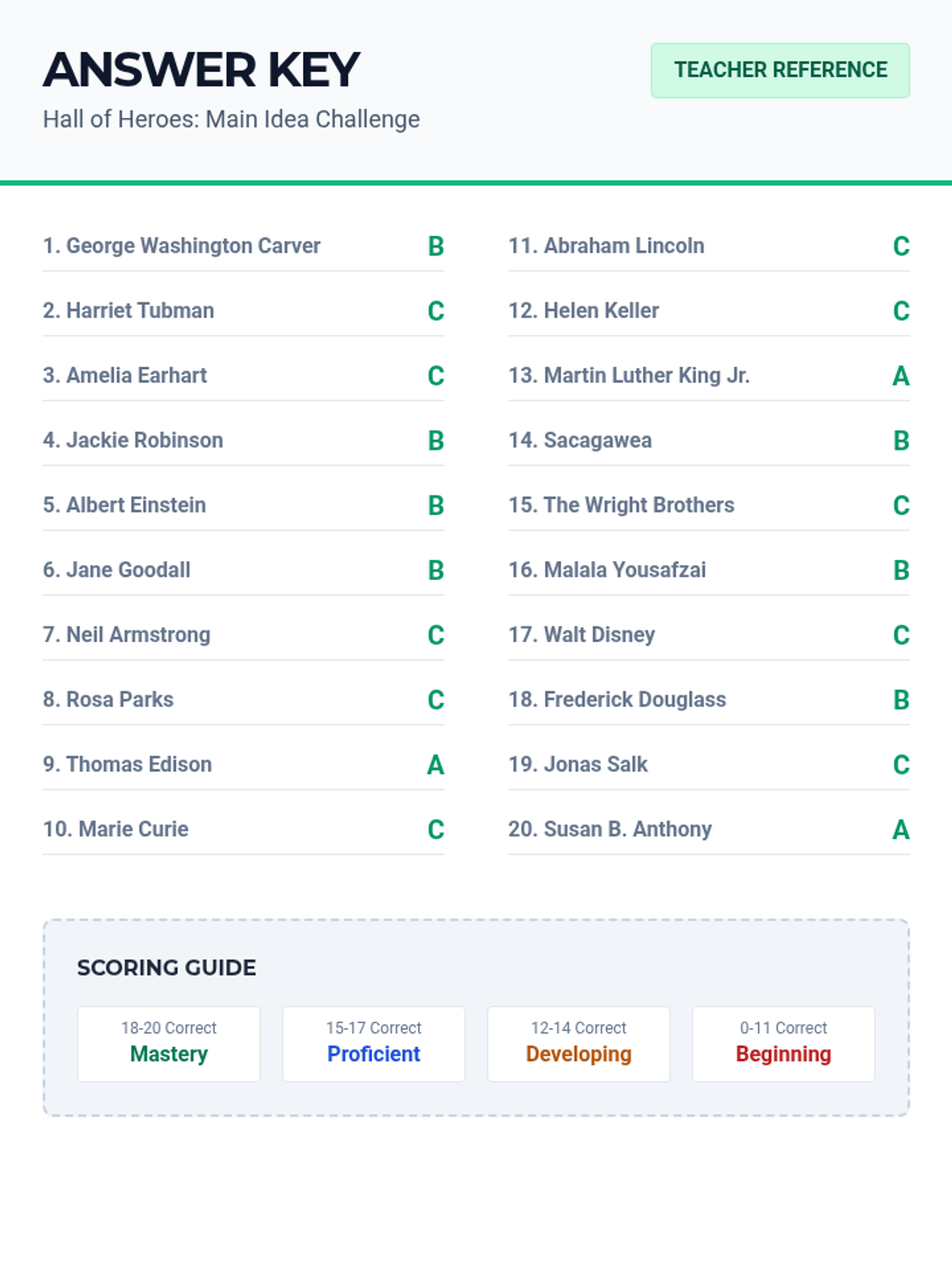
The answer key for the 'Hall of Heroes Worksheet', providing correct multiple-choice selections and a simple scoring guide for teachers.
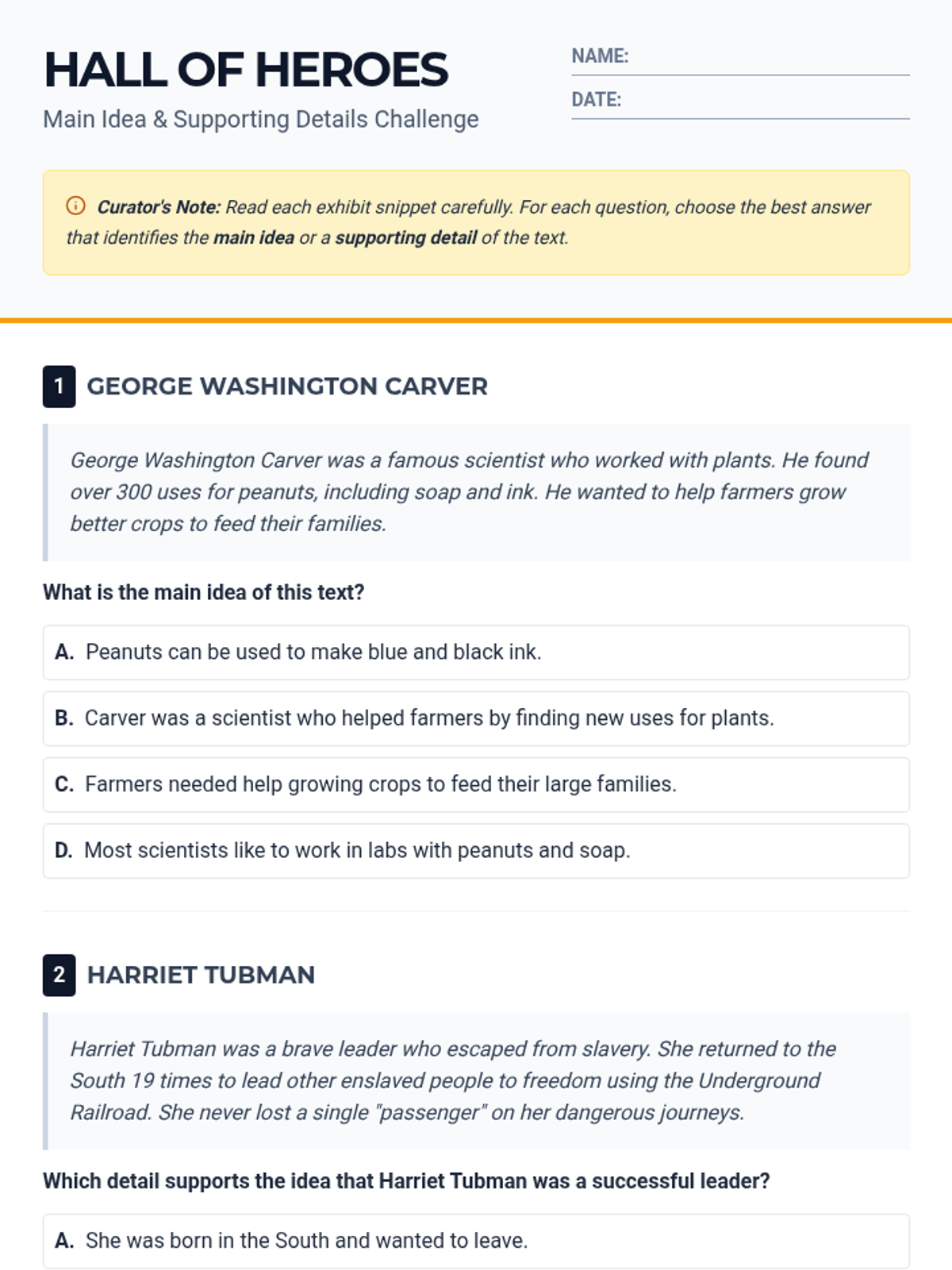
A 20-question multiple-choice worksheet focused on determining the main idea and supporting details from biographical snippets of famous historical figures. The material includes a mix of grade-level and simple texts for differentiated learning. Updated with improved page flow and standard alignment.
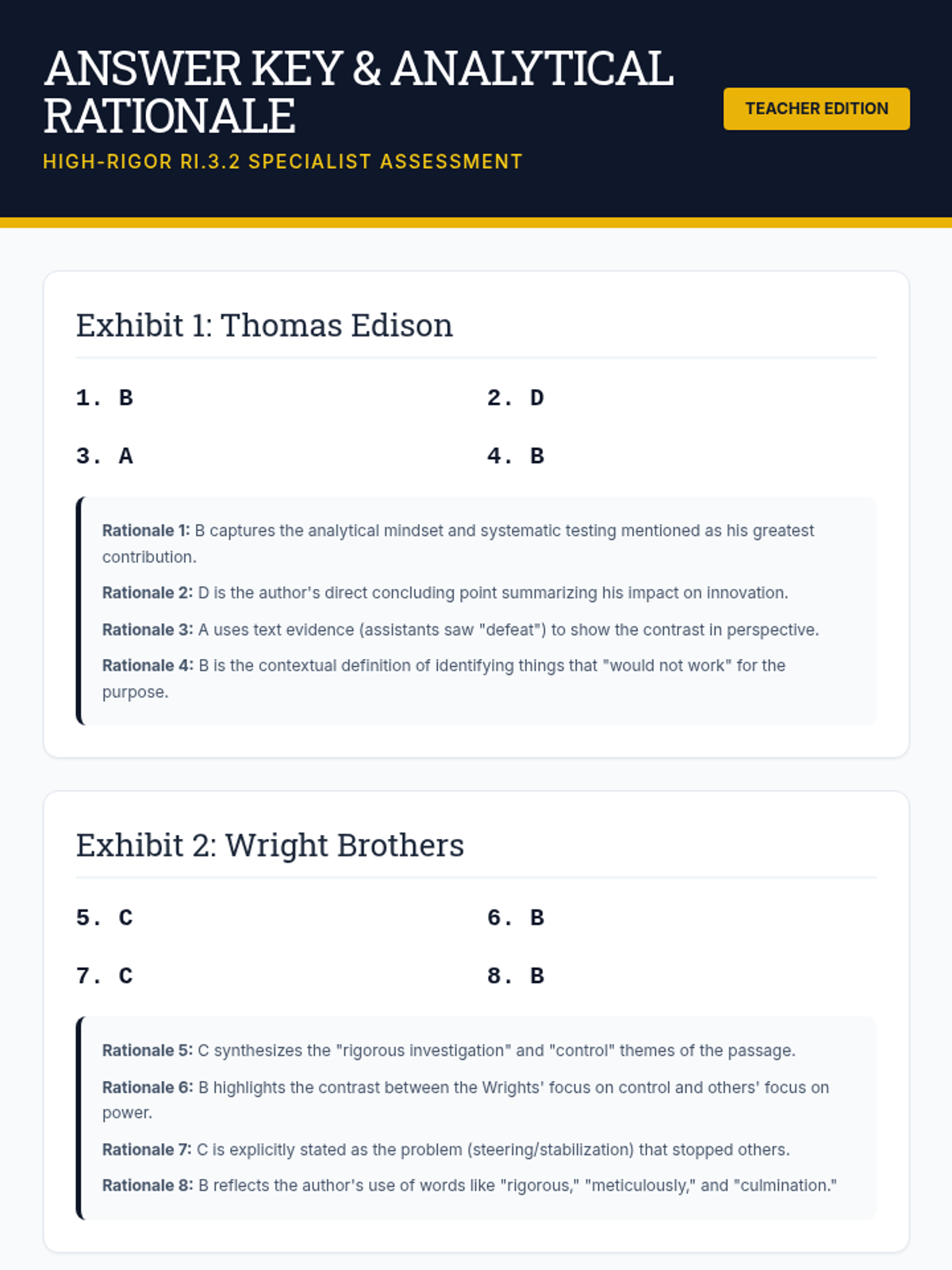
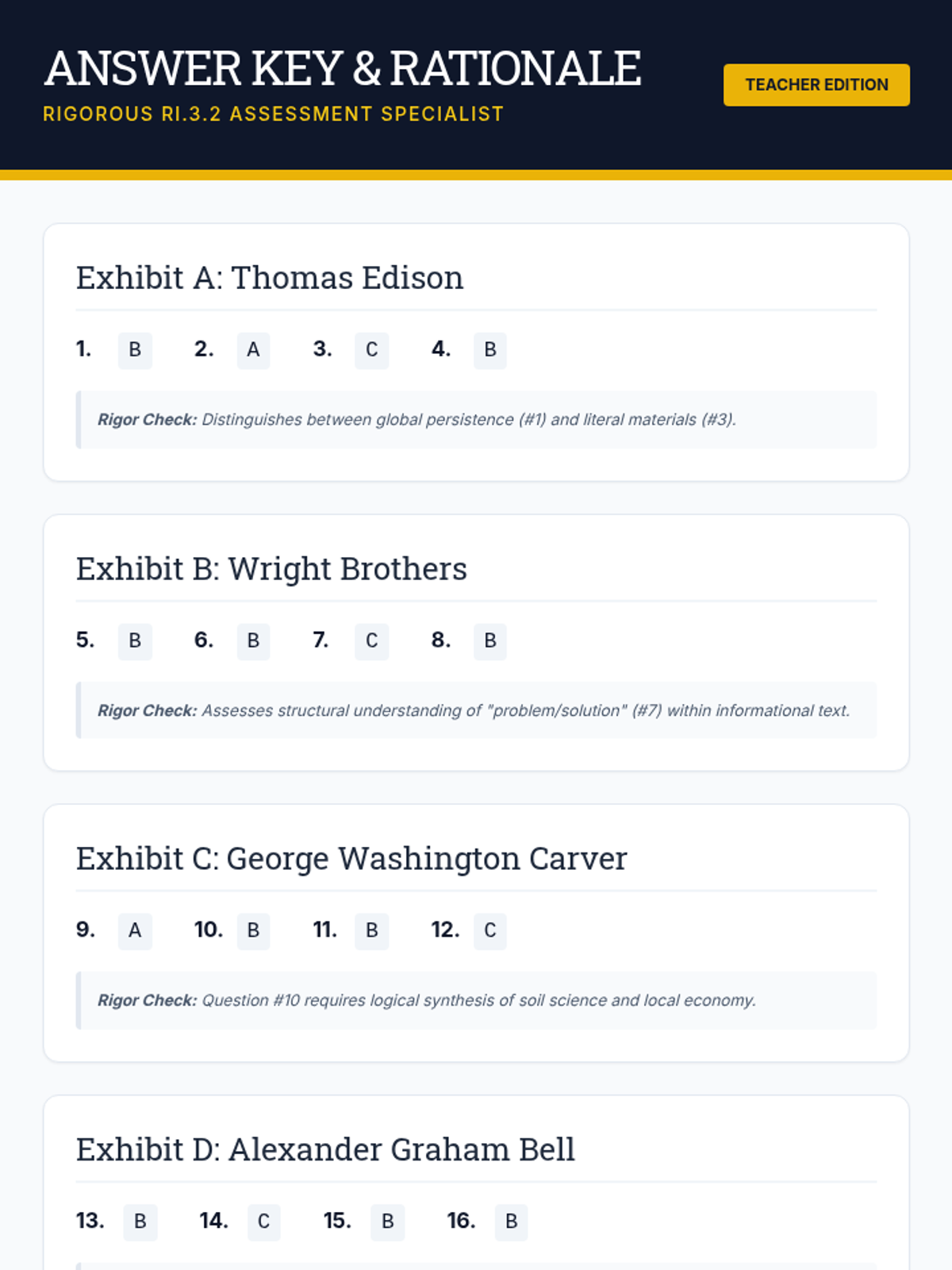
A rigorous, rationale-focused answer key for the redesigned Patent Heroes Rigorous Worksheet. Provides correct answers, advanced pedagogical rationales for each exhibit, and detailed guidance on tracking student mastery of RI.3.2.
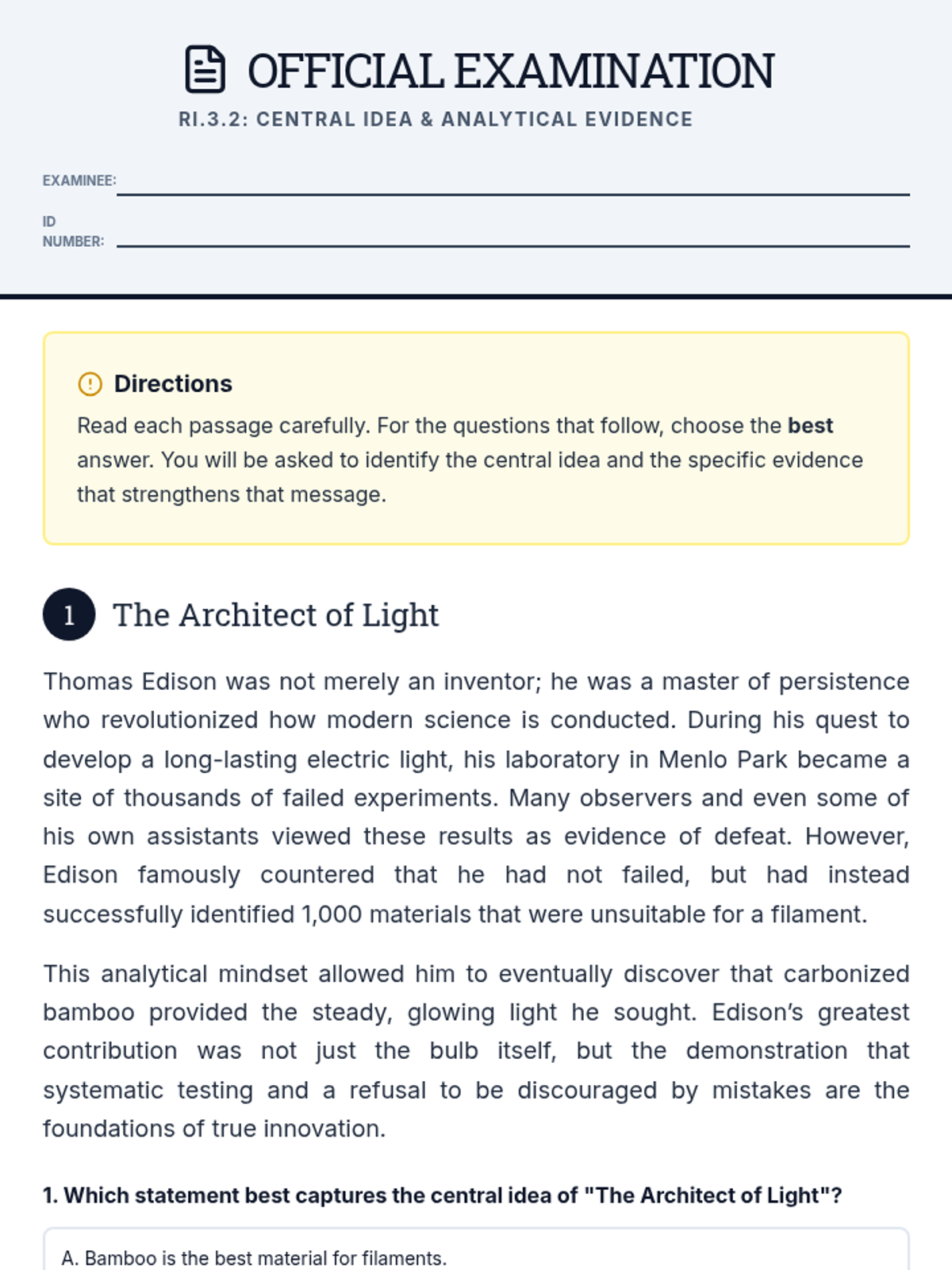
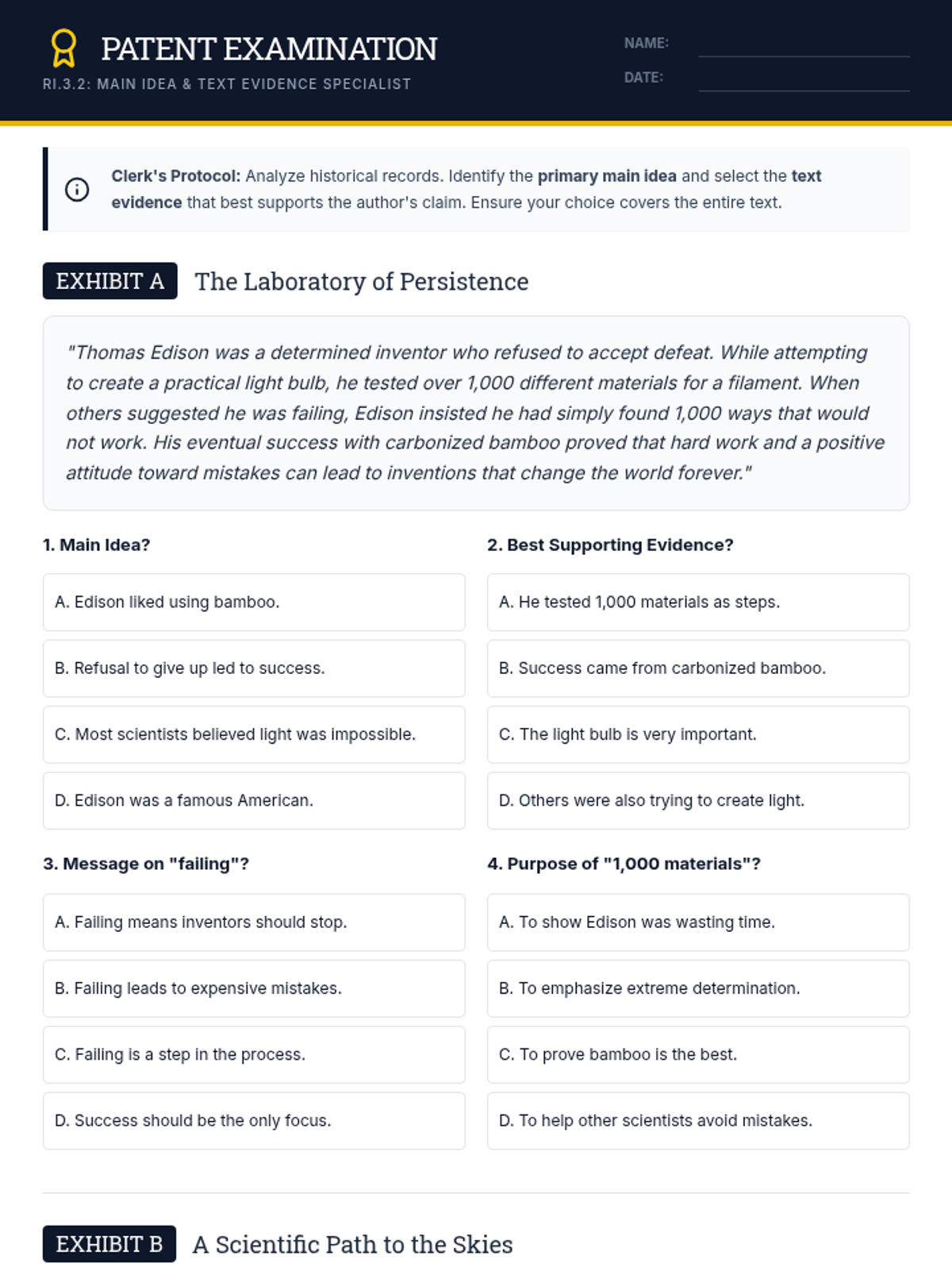
A highly rigorous 20-question multiple-choice worksheet focused on RI.3.2 (Central Idea and Analytical Evidence). Features five sophisticated informational passages with complex distractors designed to reflect high-level testing standards. All answer choices have identical styling for uniformity.
A rigorous, rationale-focused answer key for the Patent Heroes Rigorous Worksheet. Provides teachers with correct answers, detailed pedagogical rationales, and an overview of why specific questions meet EOG testing standards.
A rigorous 20-question multiple-choice worksheet focused on RI.3.2 (Main Idea and Supporting Details). Features five high-interest informational passages about inventors with complex questions and distractors designed to reflect End-of-Grade (EOG) testing standards. Large, readable font for student use.
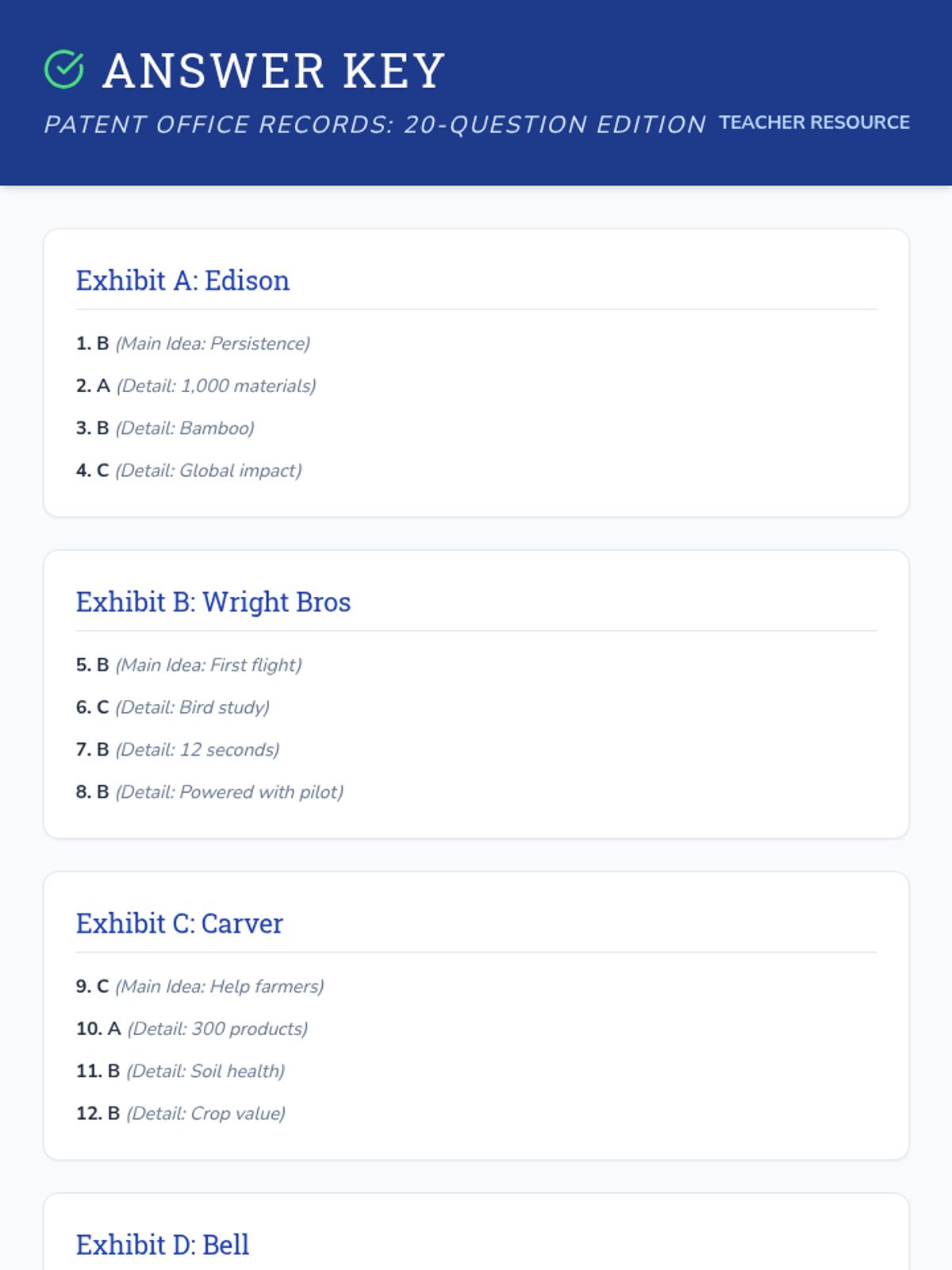
Comprehensive answer key for the 20-question Patent Heroes Worksheet, featuring 5 exhibits and clear rationales for each answer.
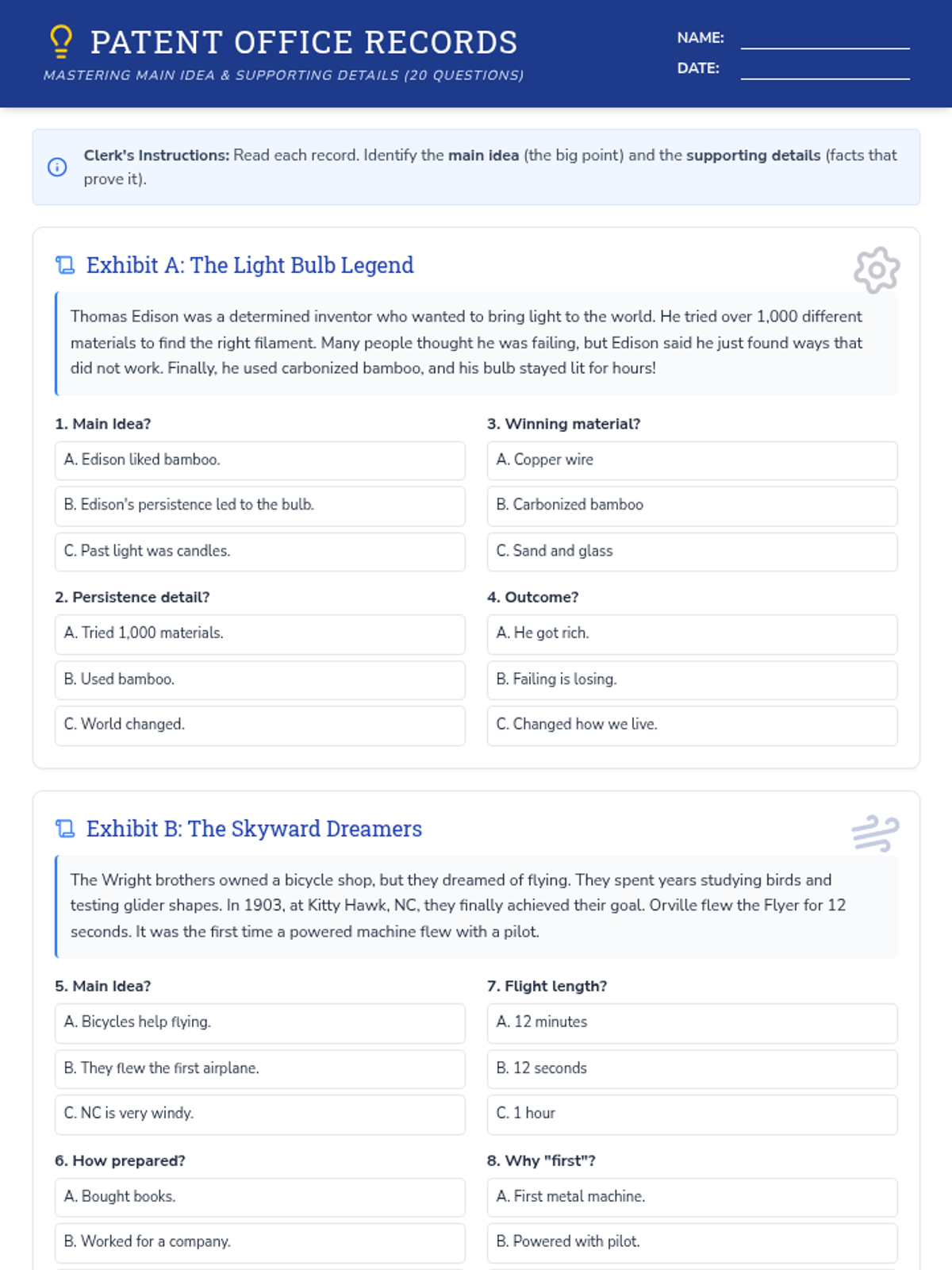
An extensive multiple-choice worksheet featuring five informational passages about Thomas Edison, the Wright Brothers, George Washington Carver, Alexander Graham Bell, and Madam C.J. Walker. Includes 20 questions total.
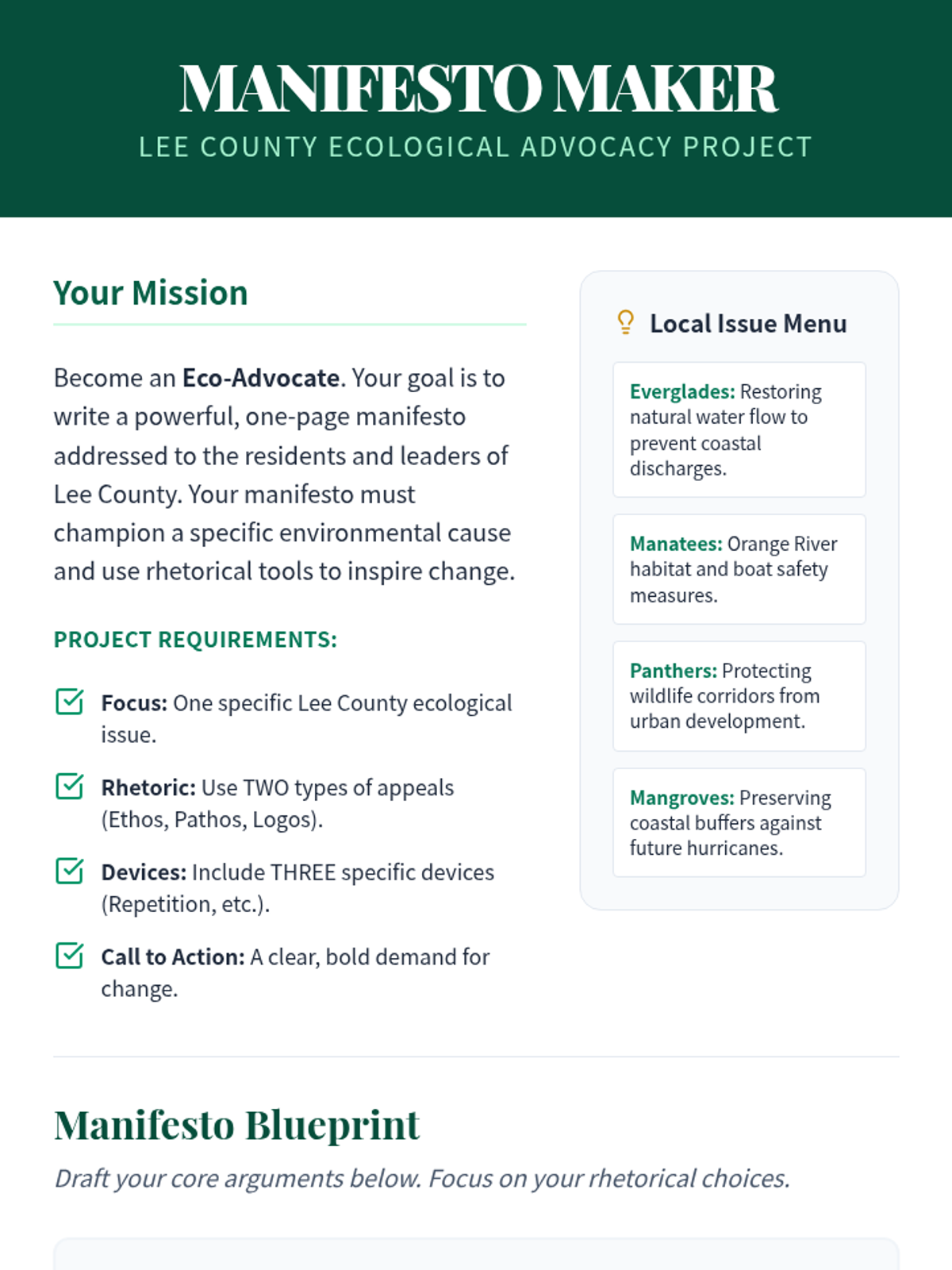
A project guide and rubric for students to create their own environmental manifesto, providing structure for brainstorming and drafting.
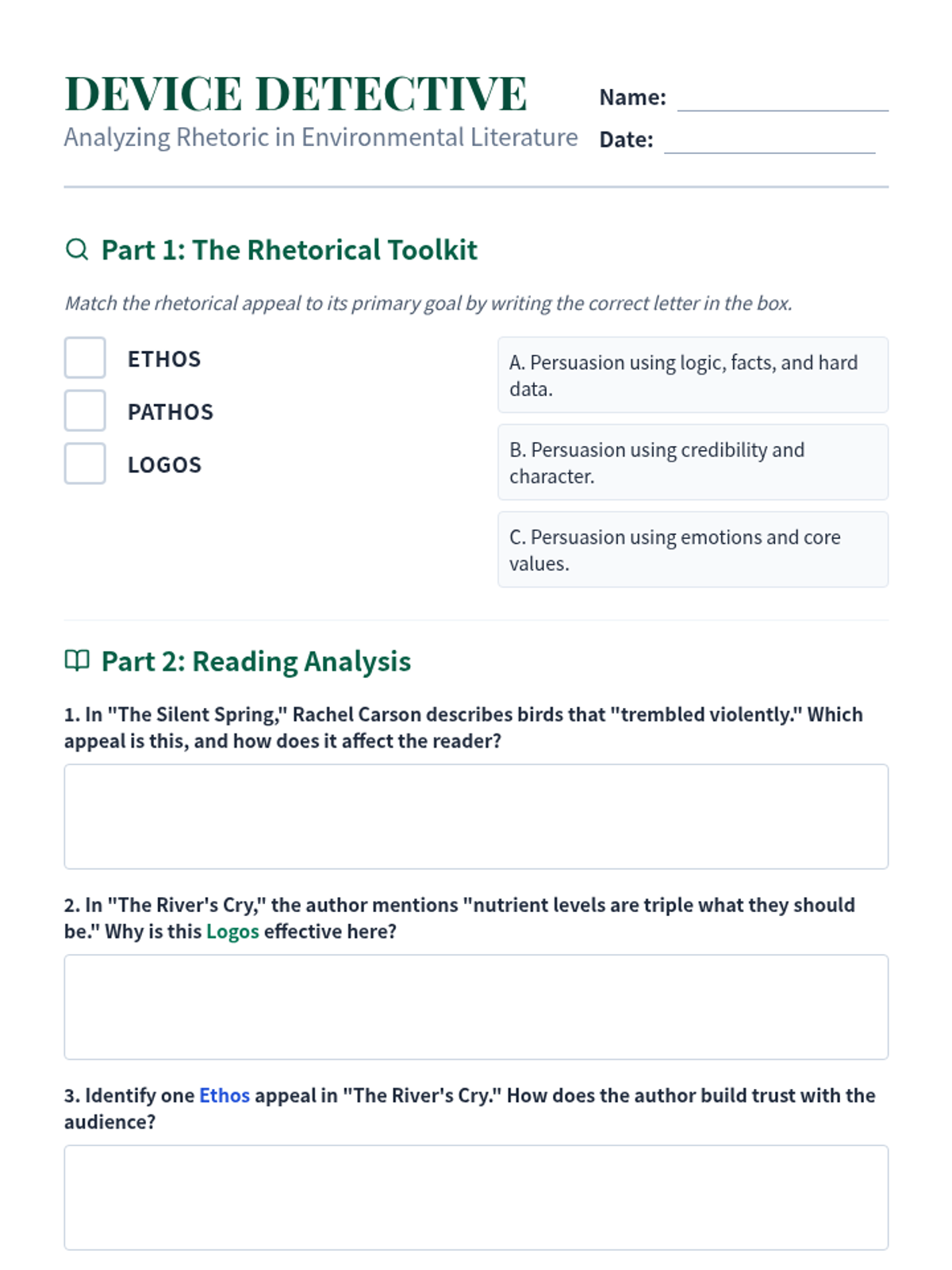
A student worksheet for identifying and analyzing rhetorical appeals and devices within the provided reading selection.
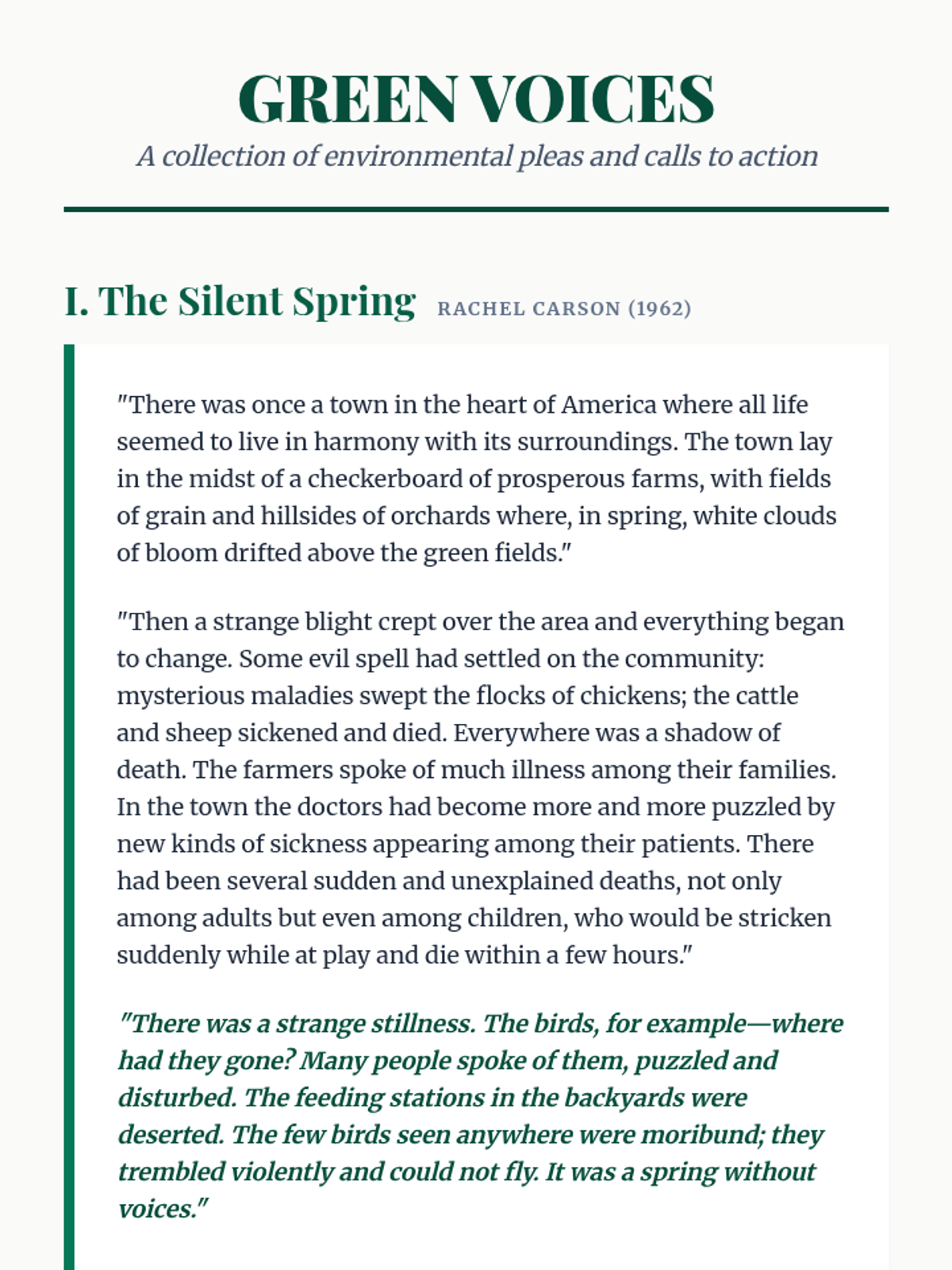
A reading selection featuring excerpts from environmental literature, including Rachel Carson's Silent Spring and a modern local advocacy piece, designed for rhetorical analysis.
A visually engaging slide deck that introduces the rhetorical triangle (ethos, pathos, logos) with specific examples related to environmental advocacy in Lee County.
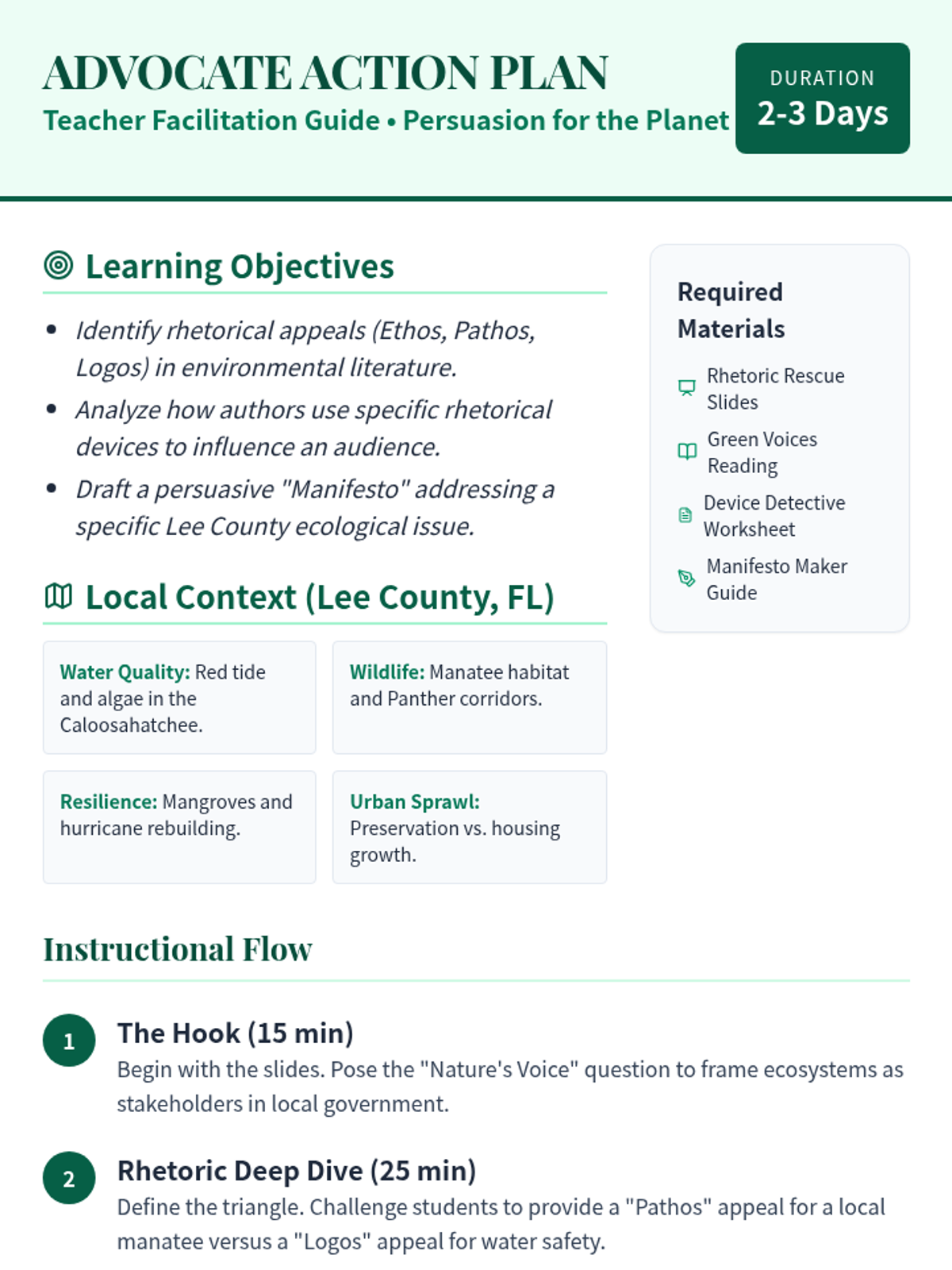
A comprehensive teacher's guide outlining the lesson objectives, pacing, and local context for teaching rhetorical analysis through environmental advocacy.
A presentation slide deck for Romeo and Juliet Act 1, guiding students through the plot summaries from the Prologue to the first meeting of the lovers. Features bold visuals, key quotes, and clear plot points to support the comprehension check.
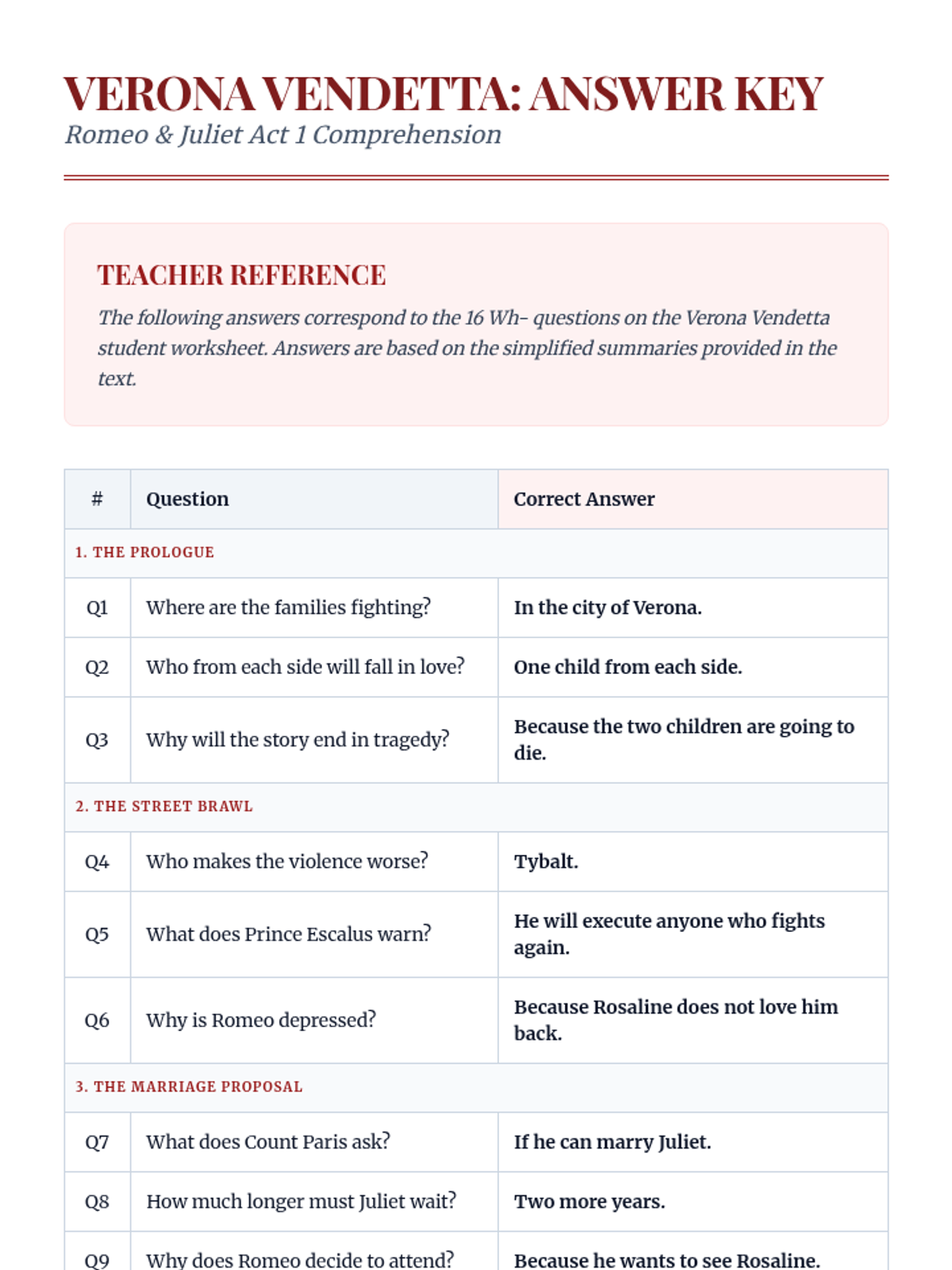
A teacher-facing answer key for the Verona Vendetta comprehension worksheet. Provides concise, accurate answers to the 16 Wh- questions based on the summary provided.
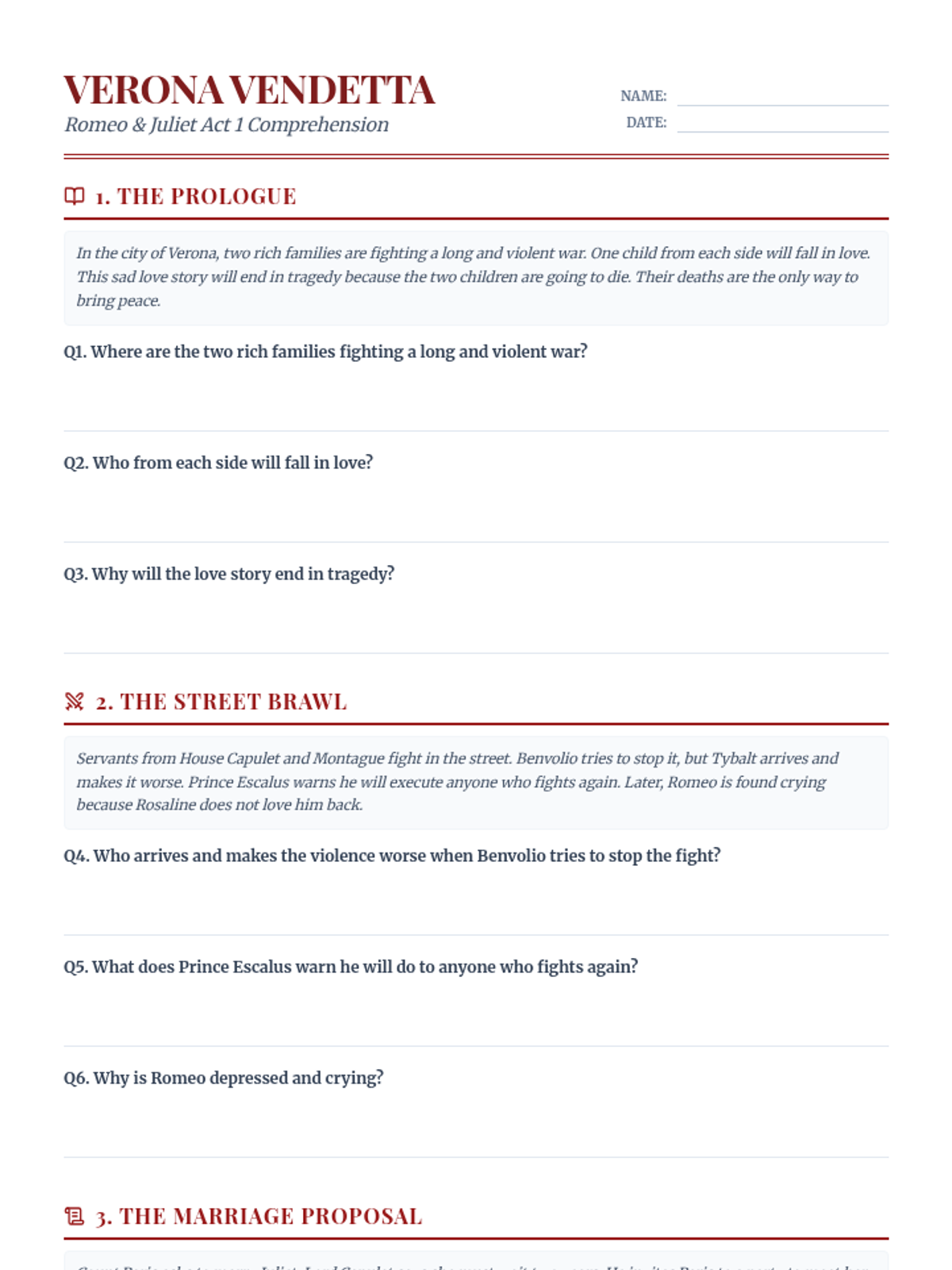
A student-facing reading comprehension worksheet for Romeo and Juliet Act 1, featuring Wh- questions based on a simplified summary. Includes clear sections for the Prologue, the Street Brawl, the Proposal, and the Feast.
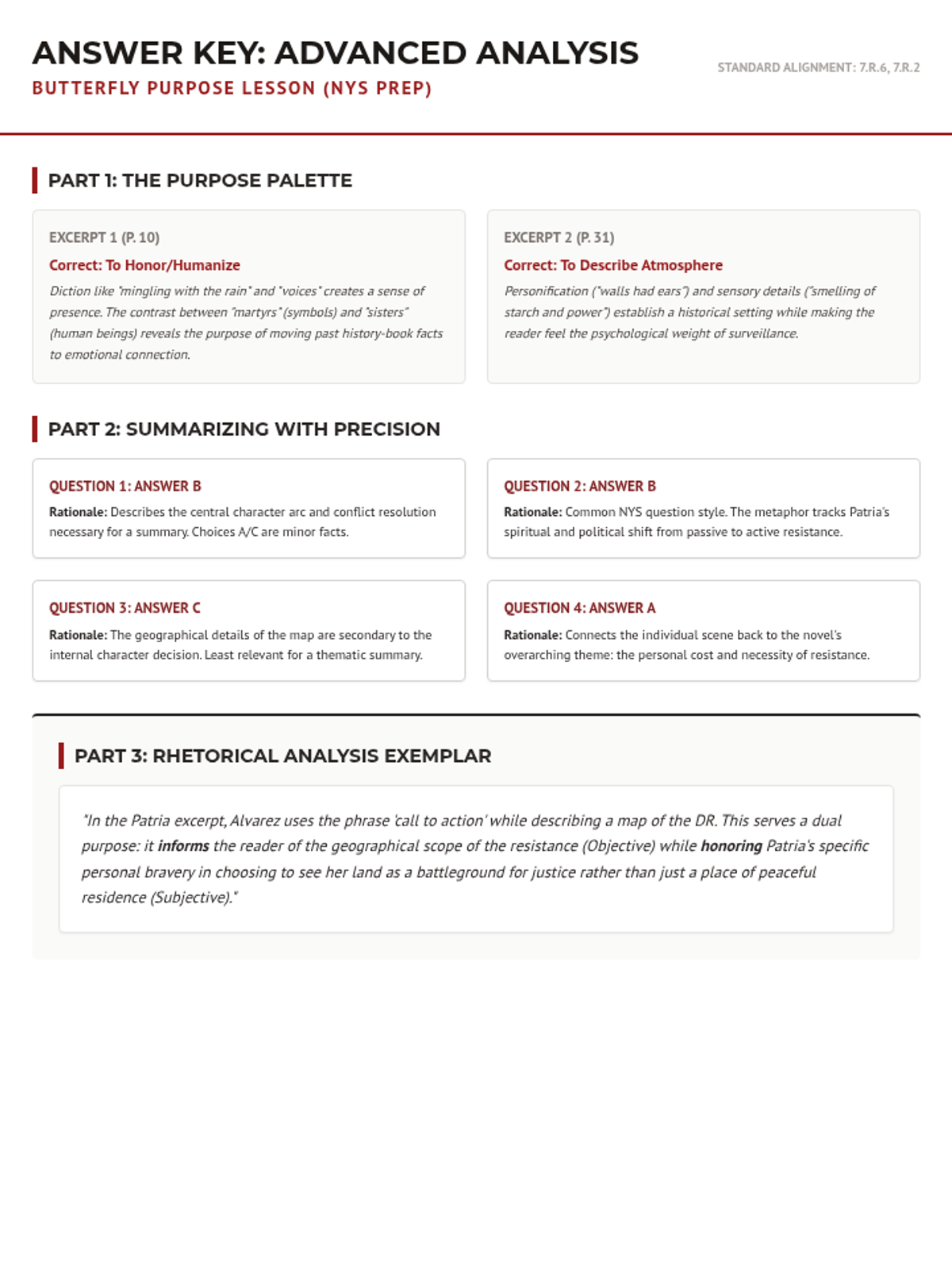
Detailed answer key for the Advanced Butterfly Purpose worksheet. Includes rationales for NYS ELA style multiple-choice questions and exemplars for rhetorical analysis. Updated to ensure single-page layout or clean breaks.
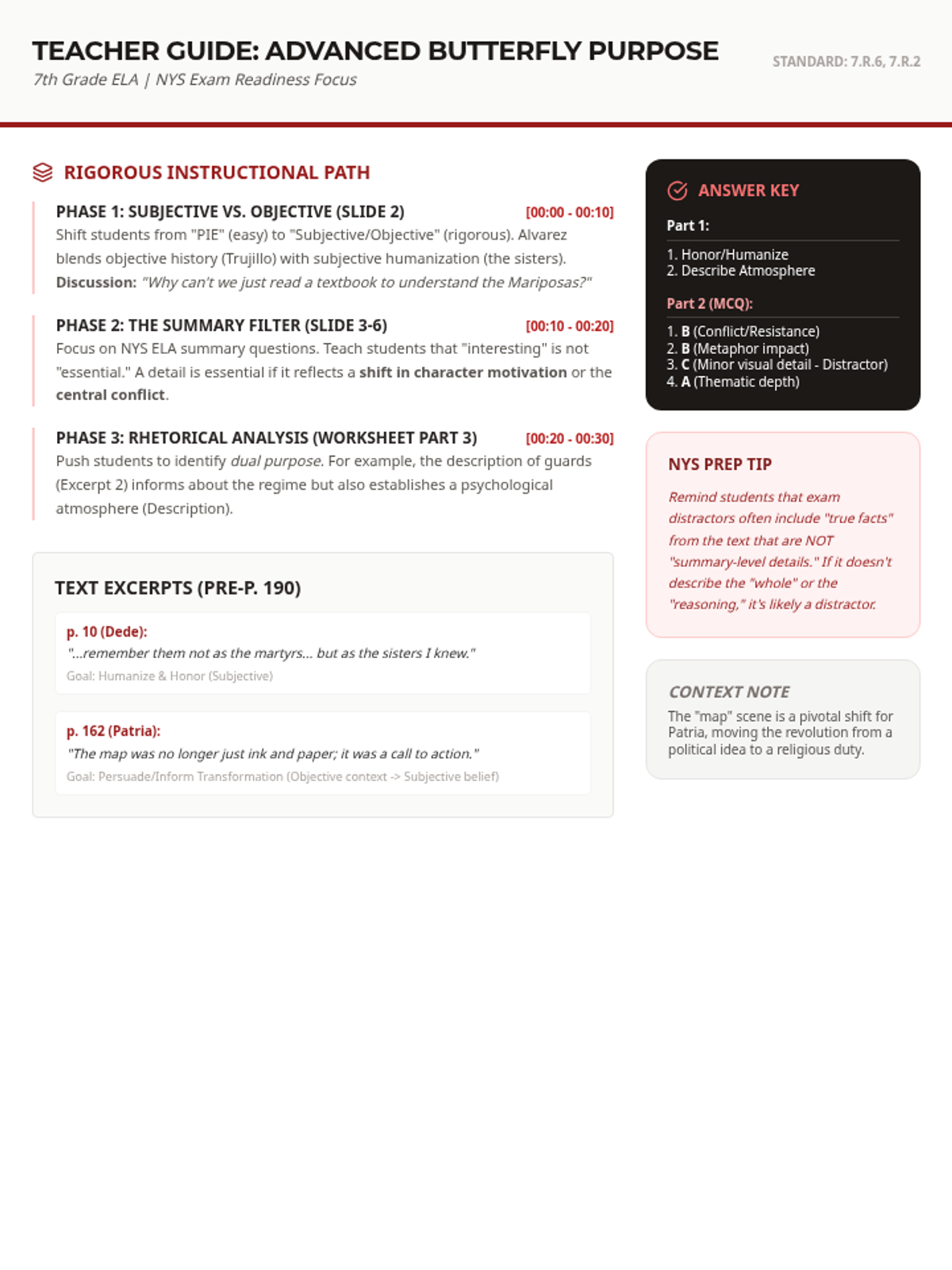
An advanced teacher facilitation guide for the Butterfly Purpose lesson. Focused on NYS ELA exam readiness, it covers objective vs. subjective purpose and precise summary detail selection. Includes key, pedagogical tips, and timestamped lesson phases.