A facilitation guide for teachers leading the Word Detective Agency activity, including a lesson hook, step-by-step instructions, an answer key, and differentiation tips.
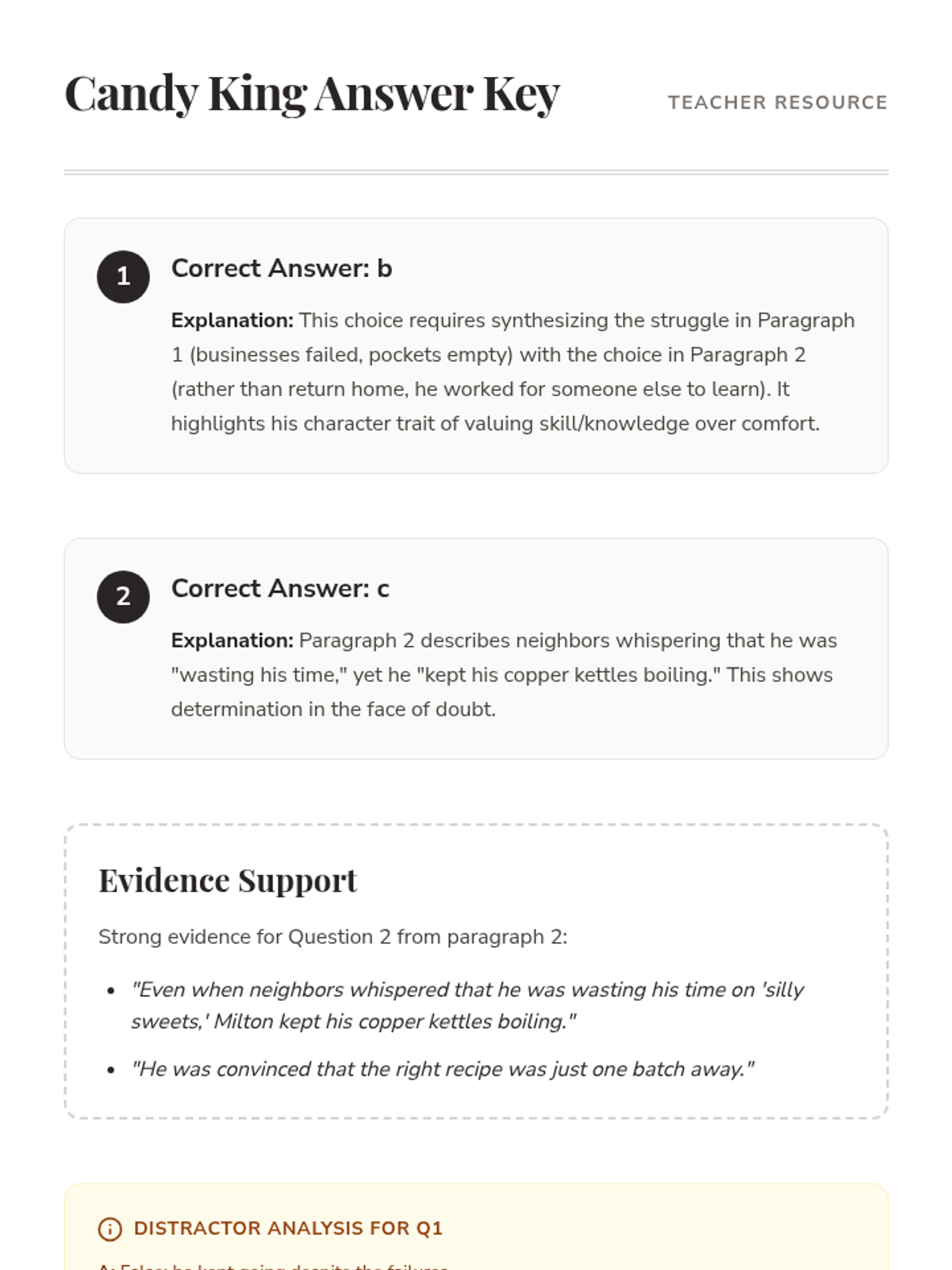
The updated answer key for the Candy King Worksheet, featuring the revised, more challenging version of Question 1 with a new distractor analysis section for teachers.
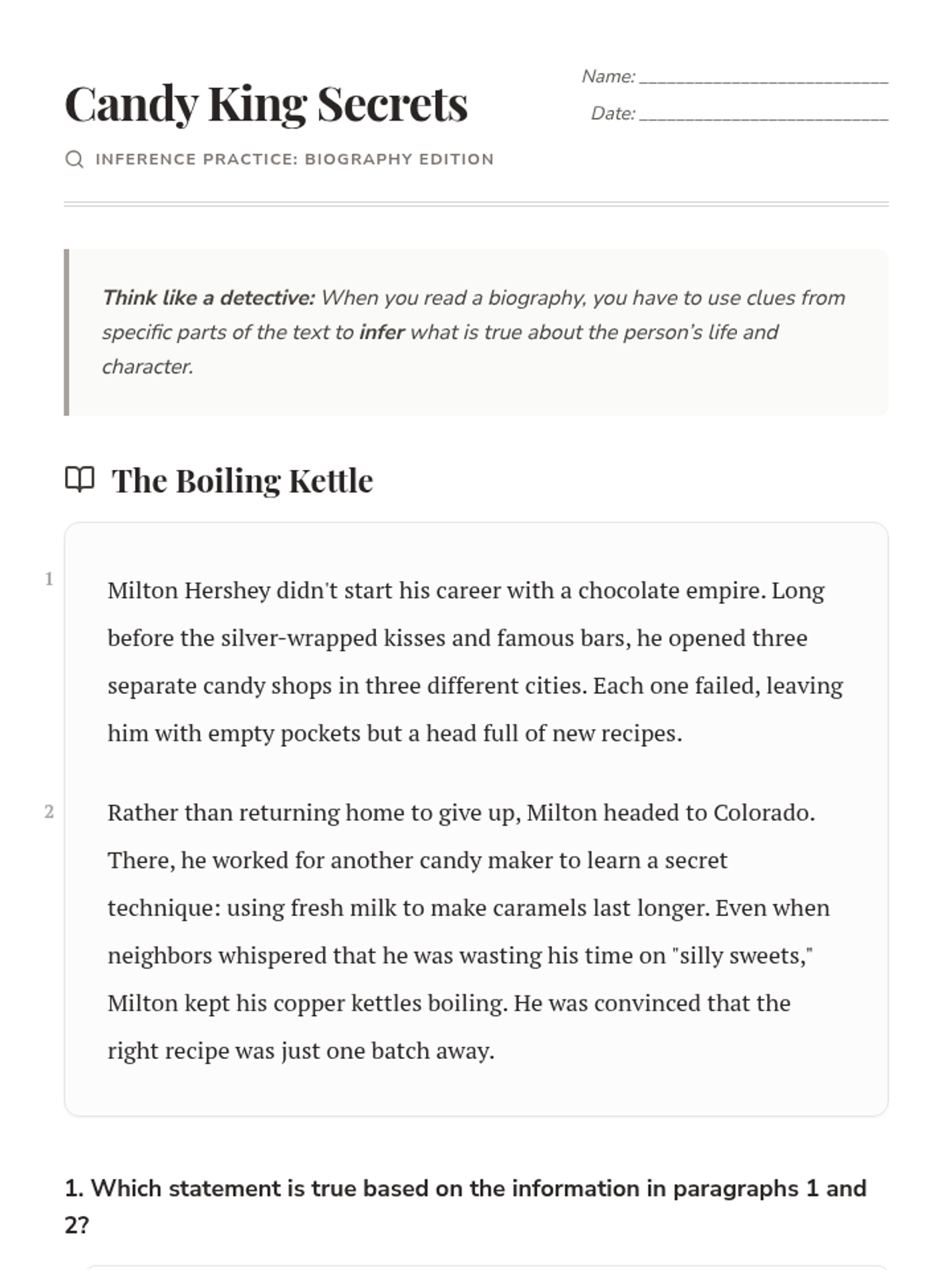
A reading practice for 5th graders with a Hershey biography passage and two inference multiple-choice questions. Question 1 has been updated with more challenging distractors to better match the Snowflake Bentley style.
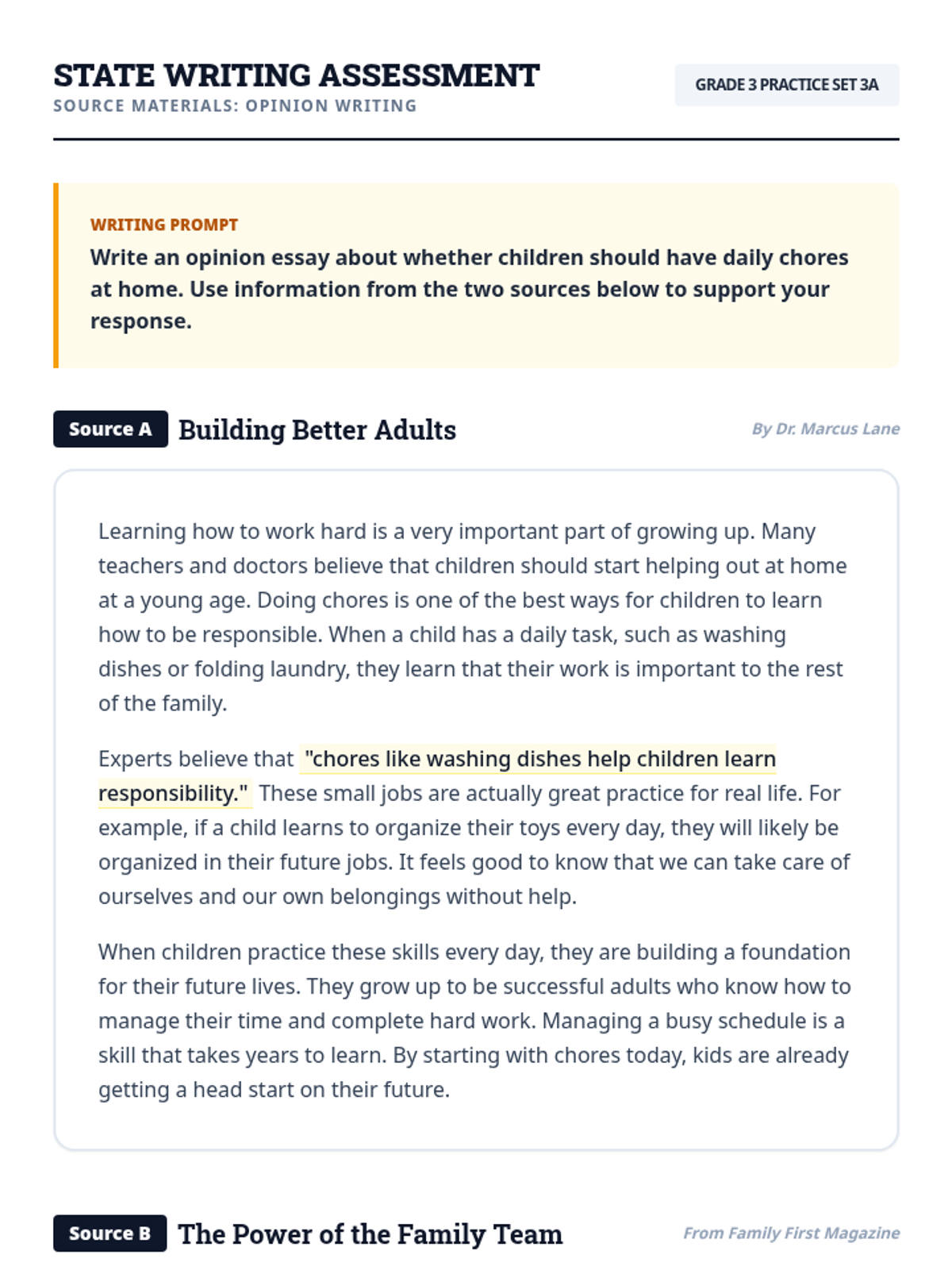
A simulated state testing source document containing two expanded texts (Source A and Source B) about the benefits of chores. These sources provide the evidence used in the Chore Sorter Activity.
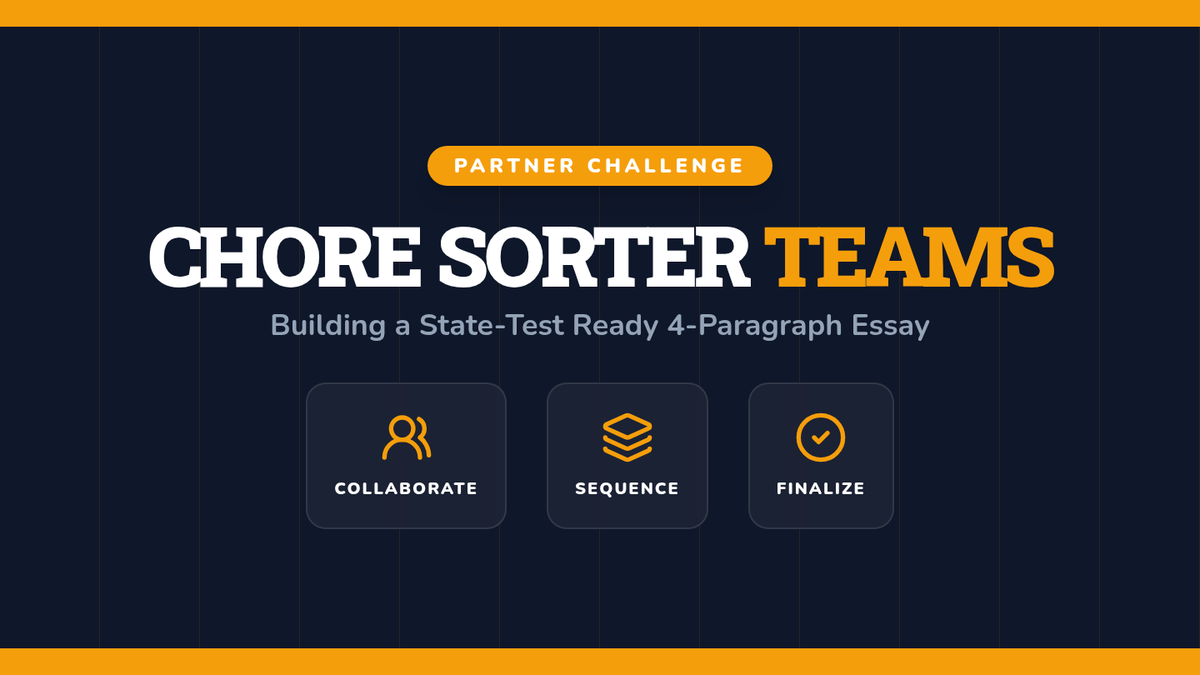
A step-by-step instructional slide deck for the Chore Sorter activity, focusing on sorting and arranging the pre-cut essay strips using the T.E.X.T. strategy. All "cutting" instructions for students have been removed, and a summary slide of all steps has been added for reference. Instructions now emphasize partner collaboration. Fixed layout on slide 3 to prevent overflow.
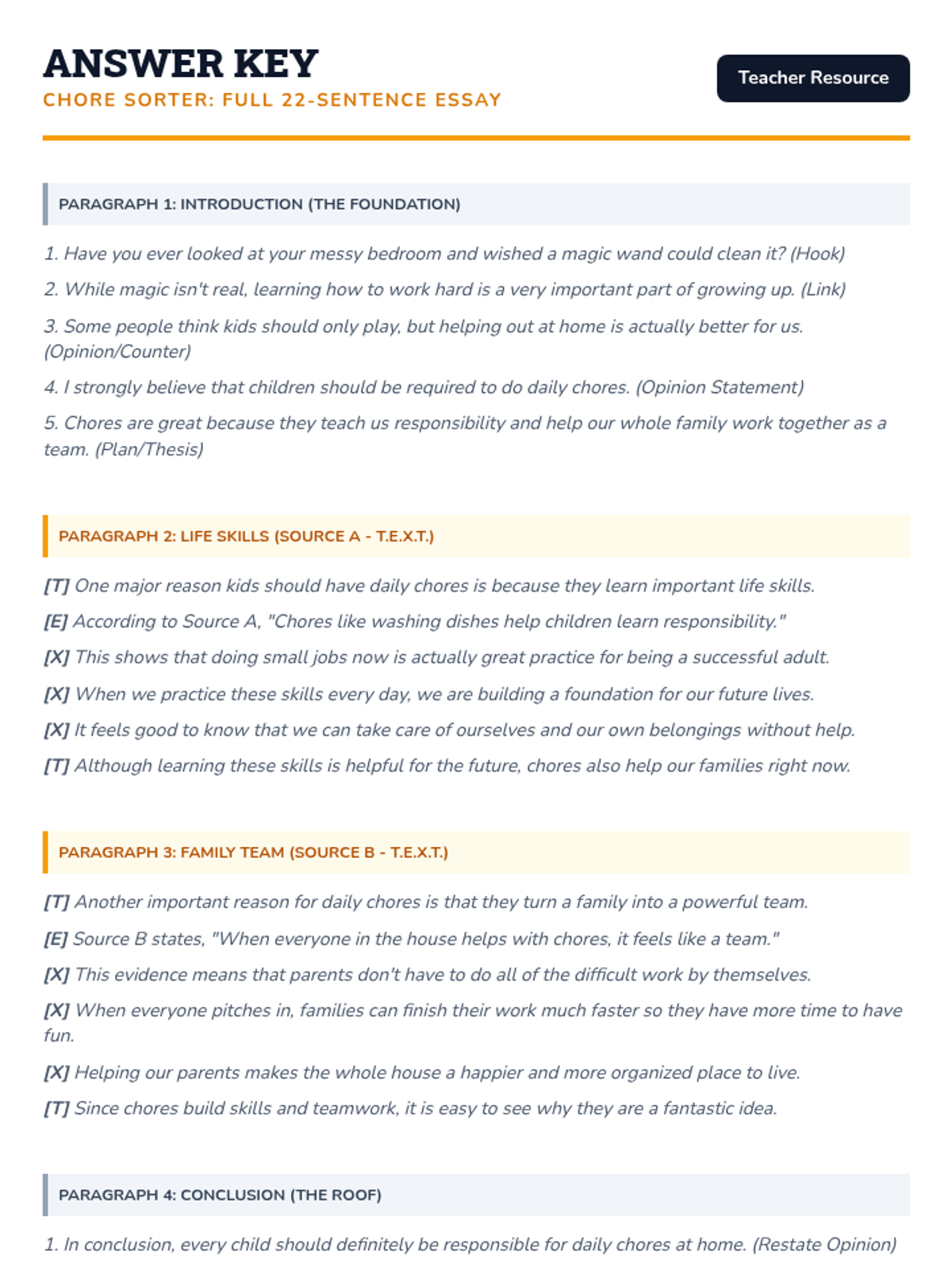
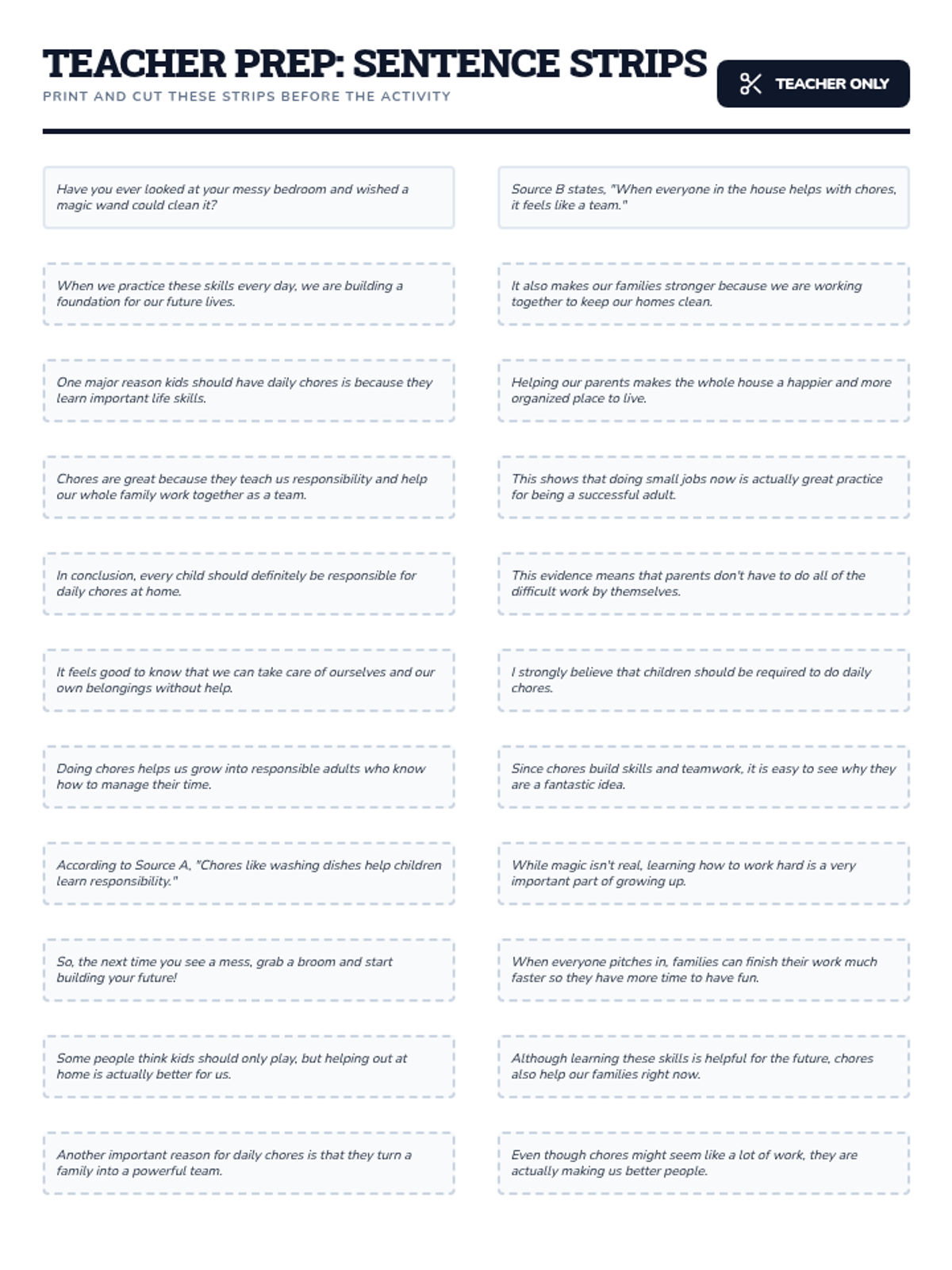
The teacher answer key for the Chore Sorter Activity, showing the correct 22-sentence sequence and T.E.X.T. components.
A hands-on activity where partners sort pre-cut sentence strips from a 22-sentence essay about chores and glue them in the correct T.E.X.T. order on a multi-page graphic organizer. The cutting step is removed from the student-facing instructions.
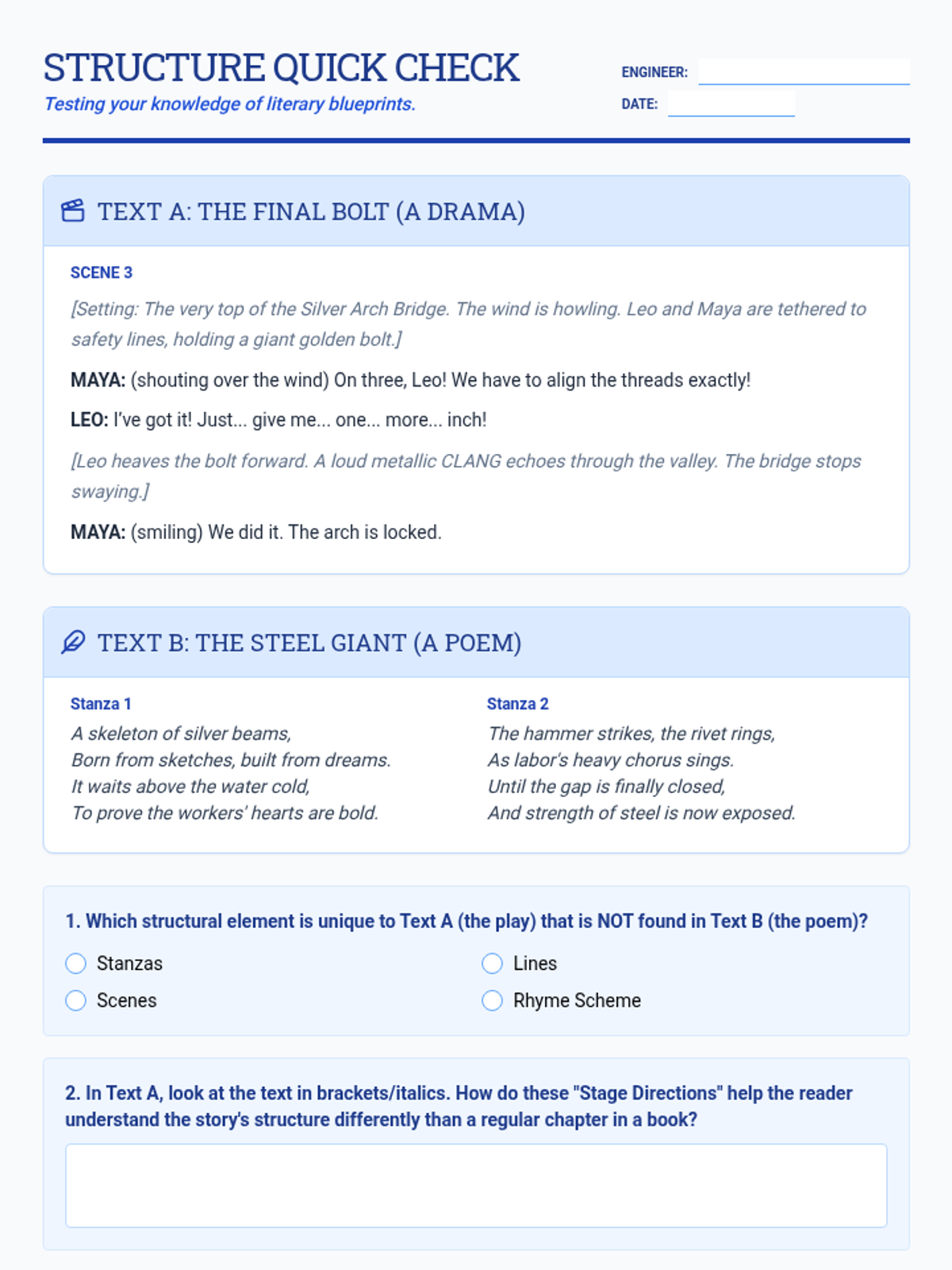
A check for understanding worksheet featuring a short play scene and a poem. Students identify and compare structural elements like scenes, stanzas, and stage directions.
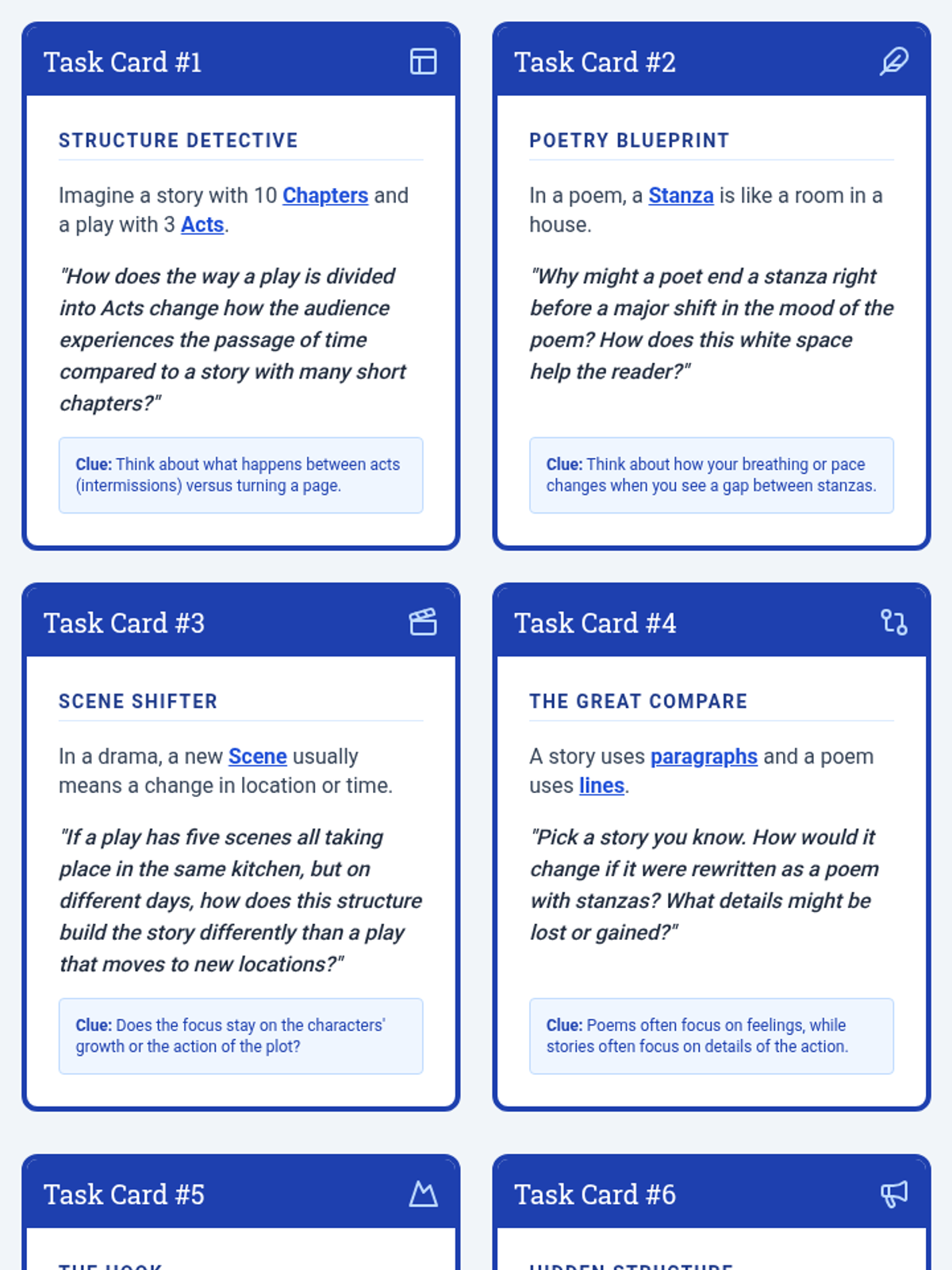
A set of 8 task cards designed for small group discussion, focusing on comparing structural elements across stories, plays, and poems (chapters, scenes, and stanzas).
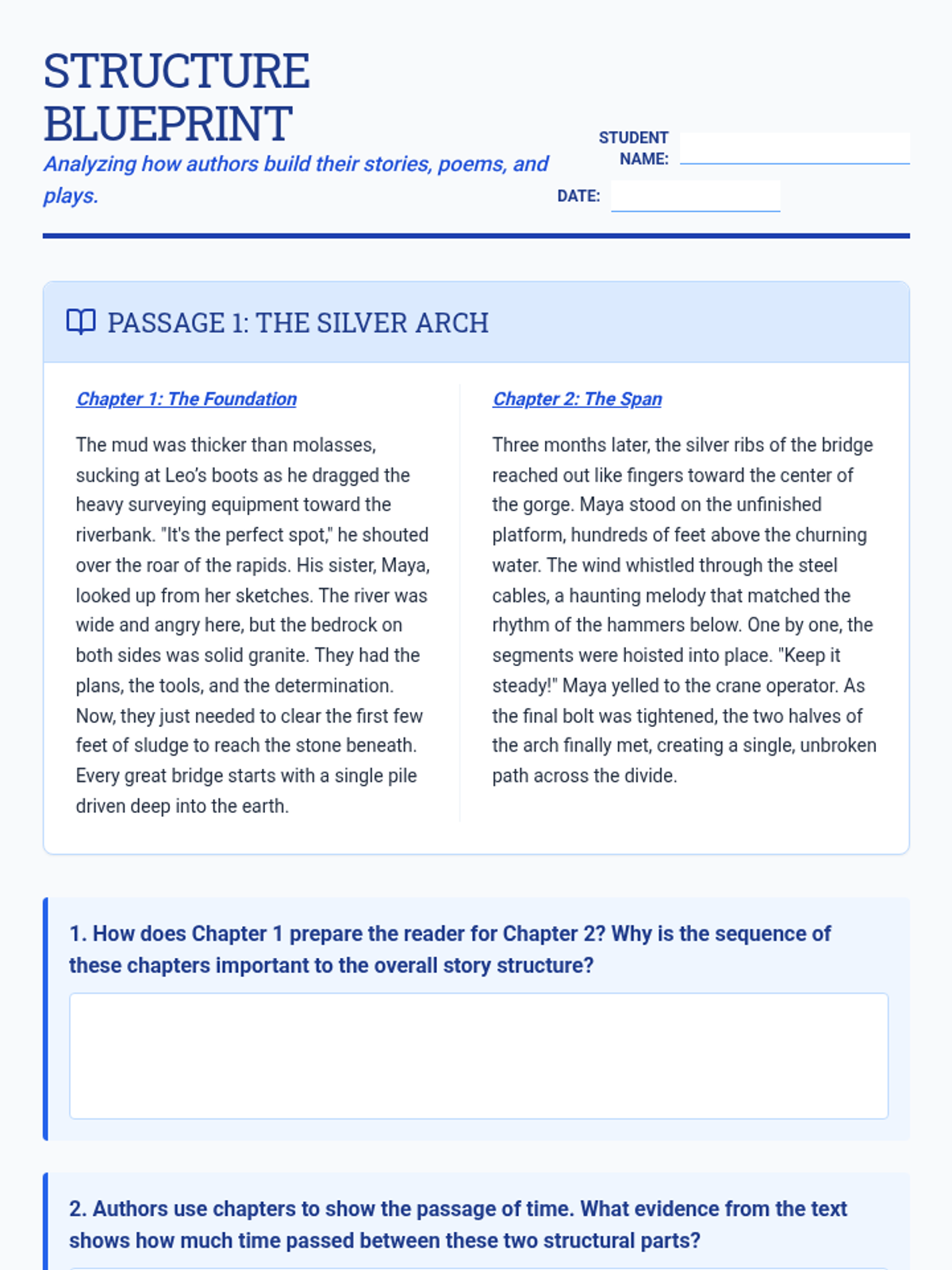
A worksheet with short text passages (a story with chapters and a poem with stanzas) focused on analyzing structural elements and how they contribute to the overall text. Includes comparative questions and a graphic organizer.
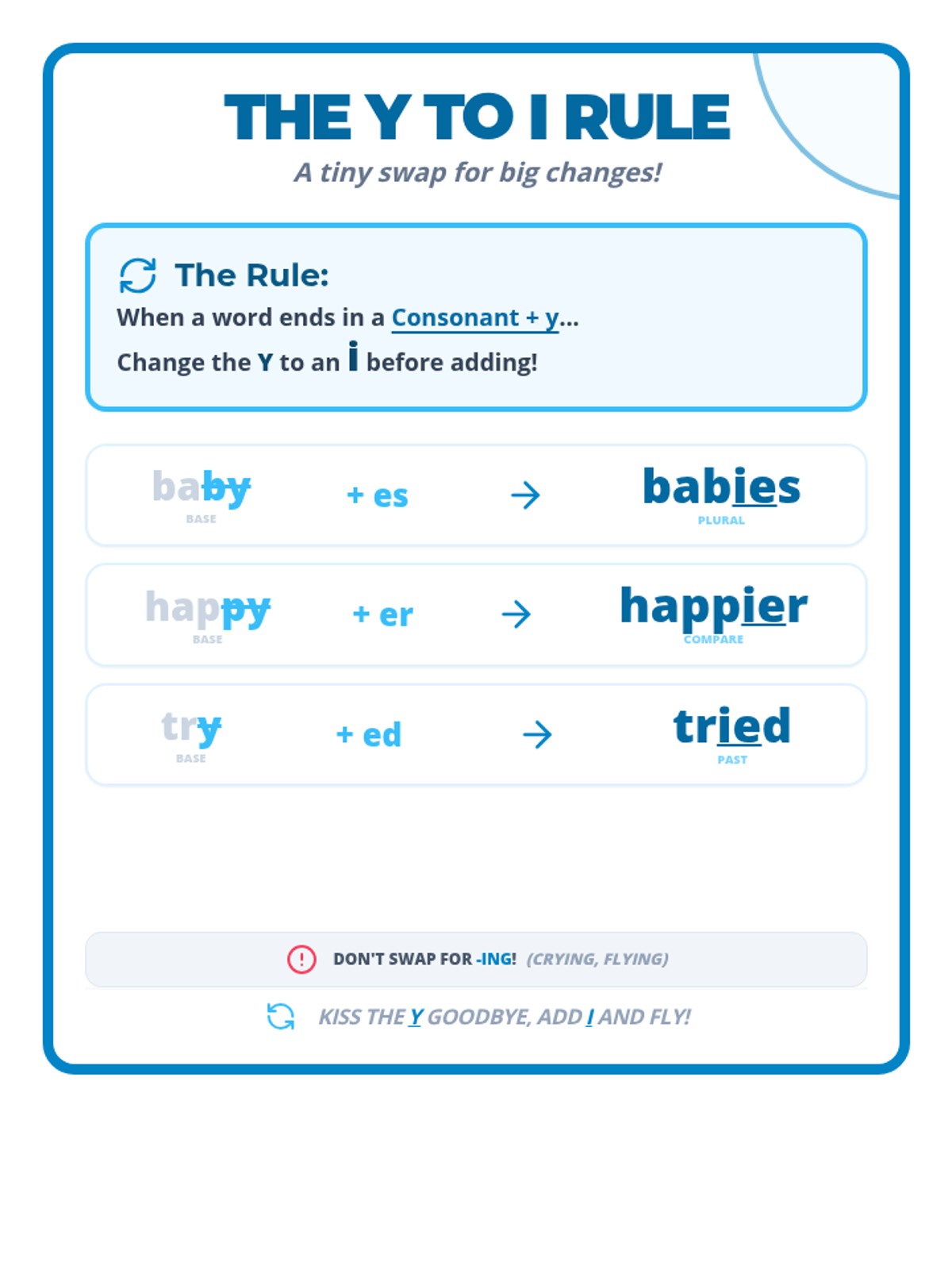
A full-page anchor chart for the Y to i Rule, illustrating how to change final y to i before adding various suffixes, with a reminder about the -ing exception. Adjusted layout for better fit.
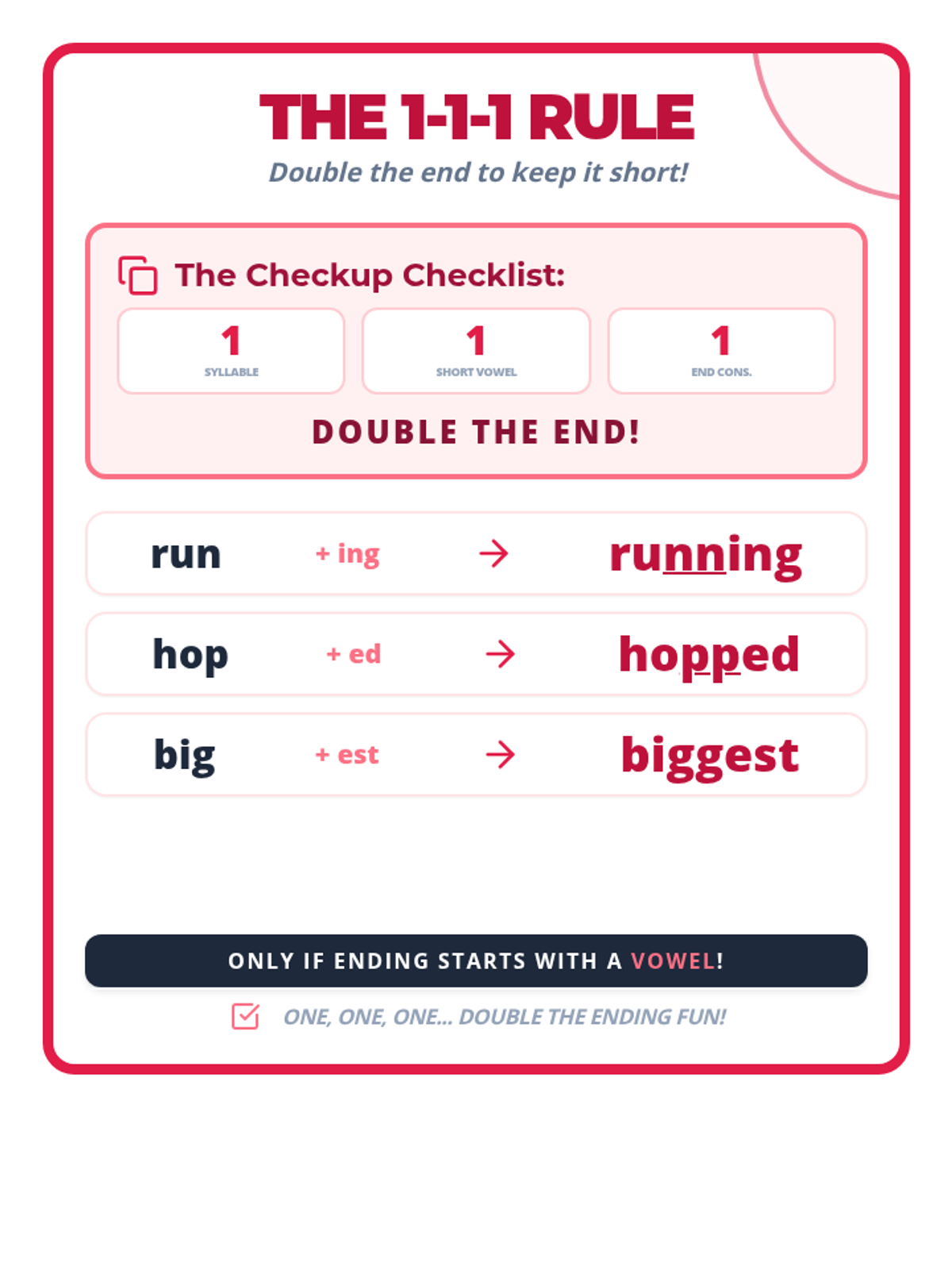
A full-page anchor chart for the 1-1-1 Doubling Rule, showing the three-step checklist for doubling final consonants before adding vowel suffixes. Adjusted layout for better fit.
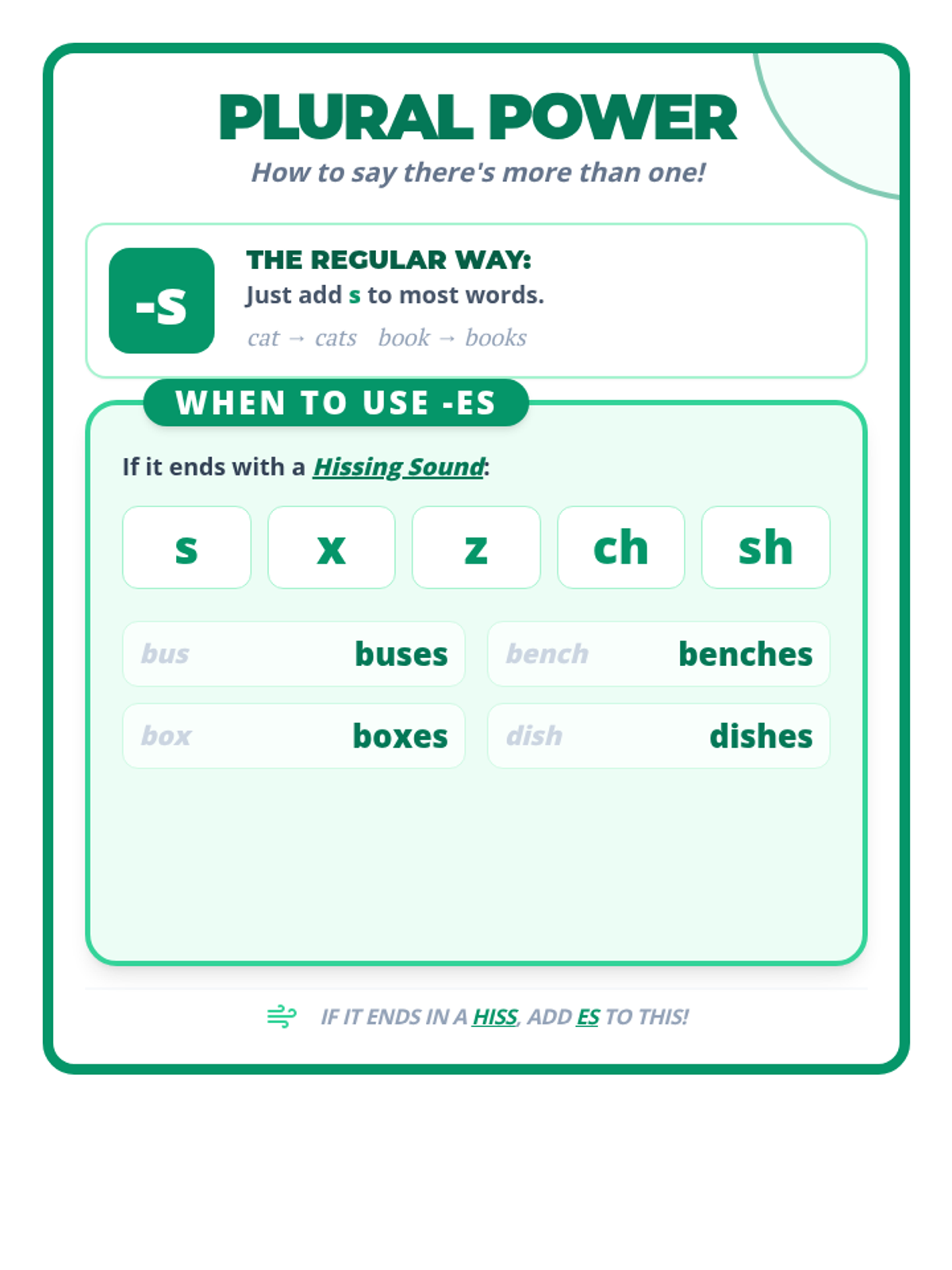
A full-page anchor chart for the Plural Power rule, explaining the standard -s ending and the -es ending for words with "hissing" sounds. Adjusted layout for better fit.
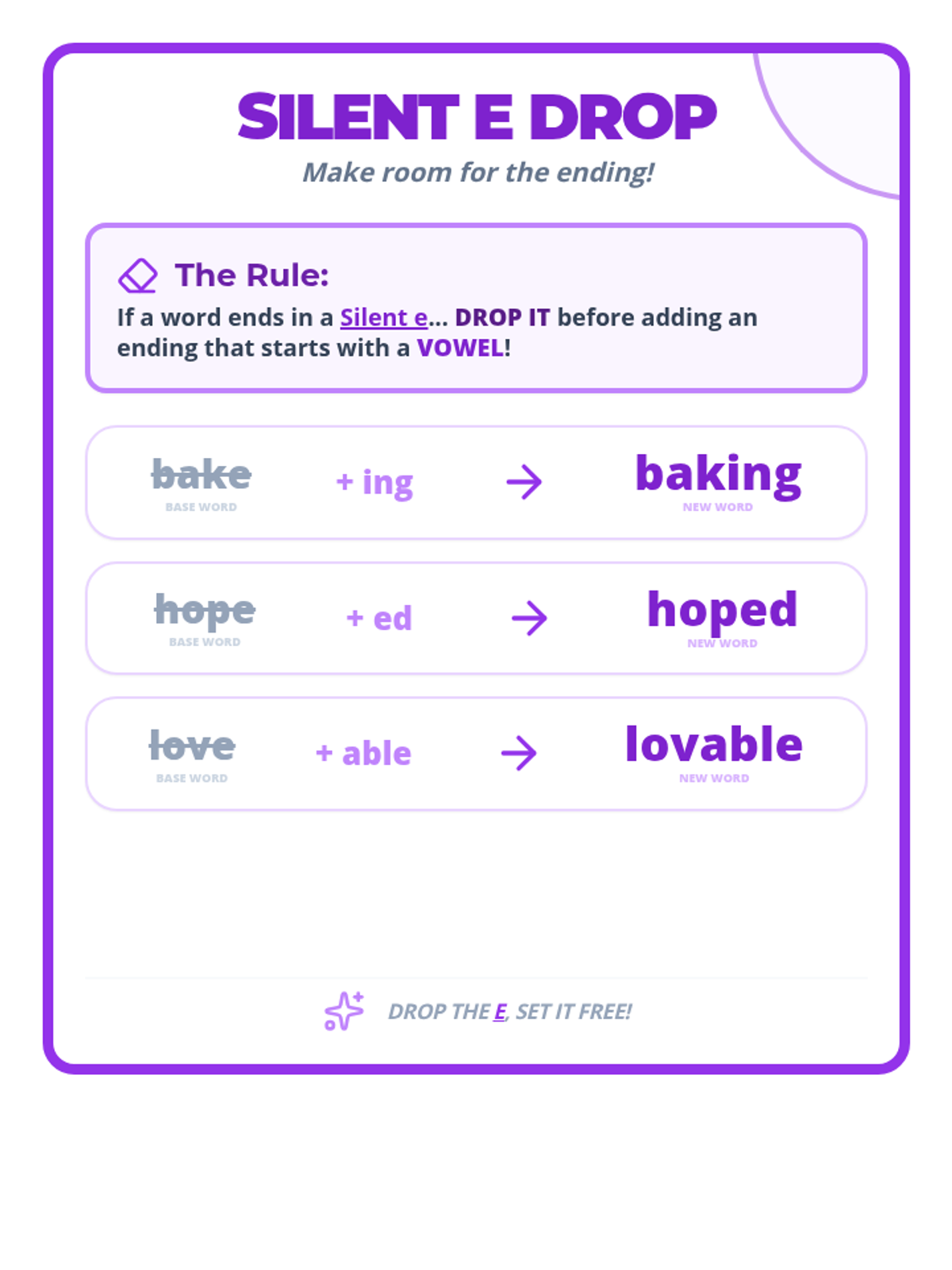
A full-page anchor chart for the Silent e Drop rule, showing the step-by-step process of removing the silent e before adding vowel suffixes. Adjusted layout for better fit.
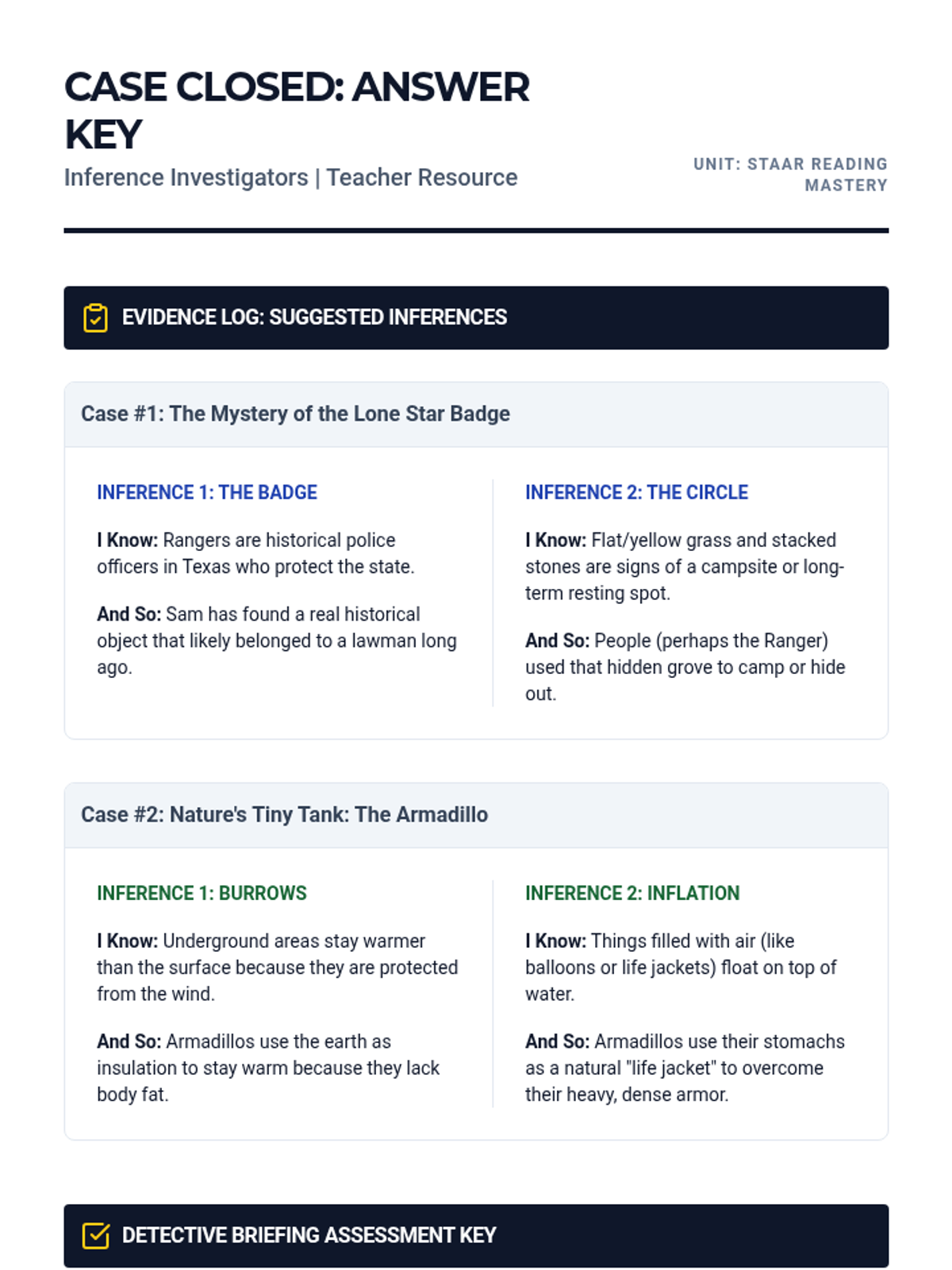
An answer key for the Inference Investigators lesson, providing suggested responses for the graphic organizers and correct options with rationales for the STAAR-style assessment.
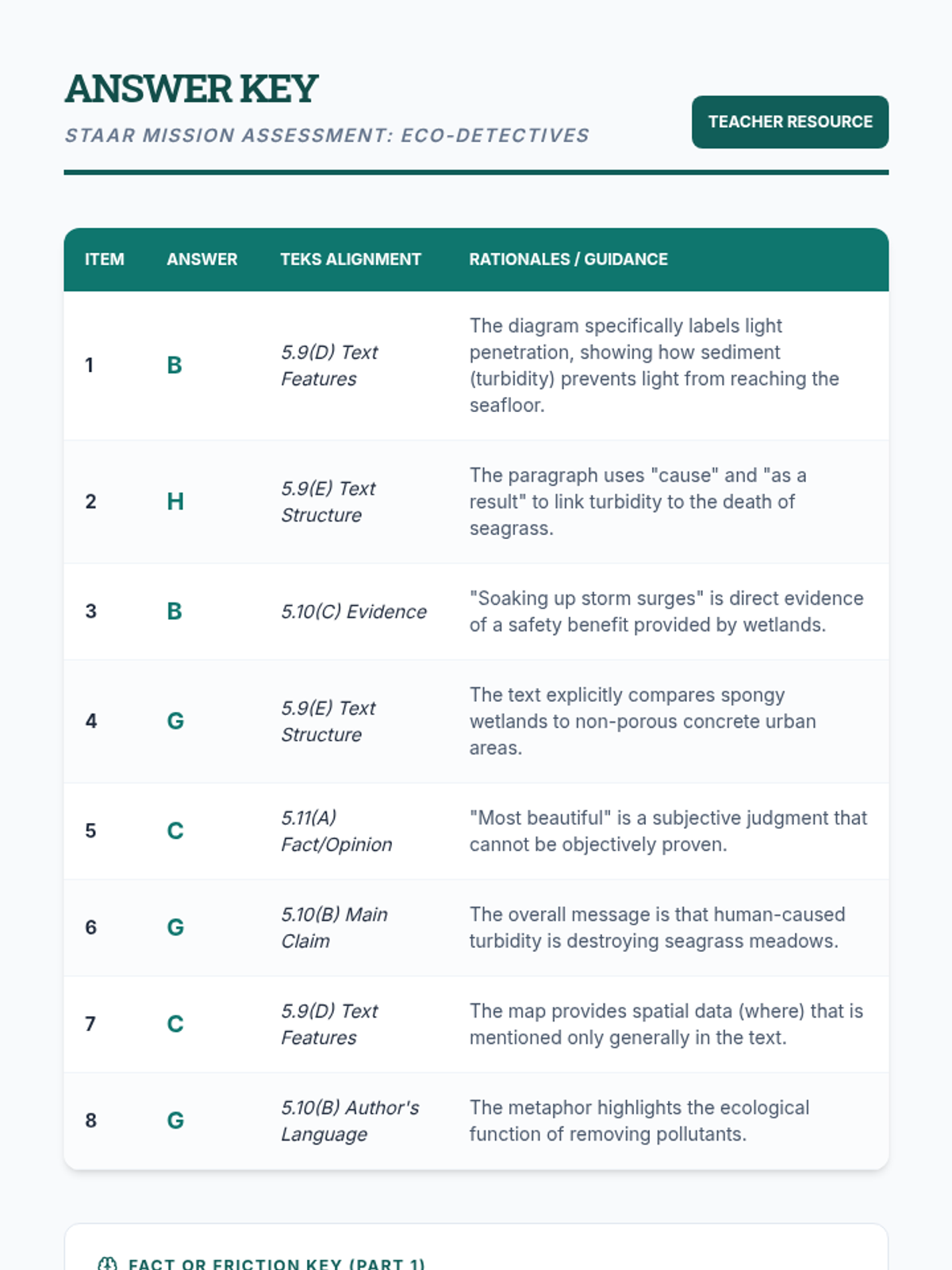
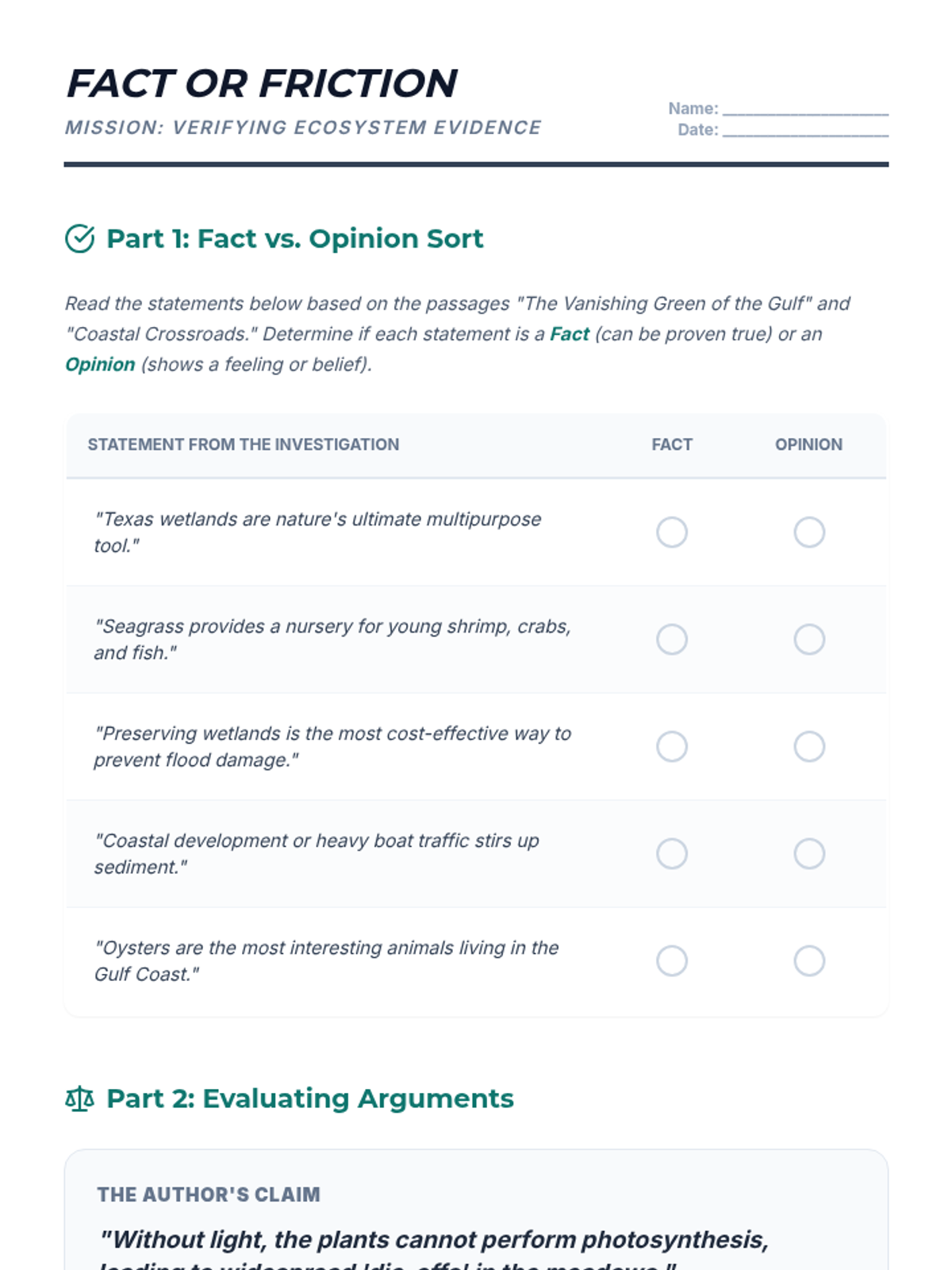
An answer key for the STAAR Mission Assessment and Fact or Friction activity, including TEKS alignment and rationales for correct answers.
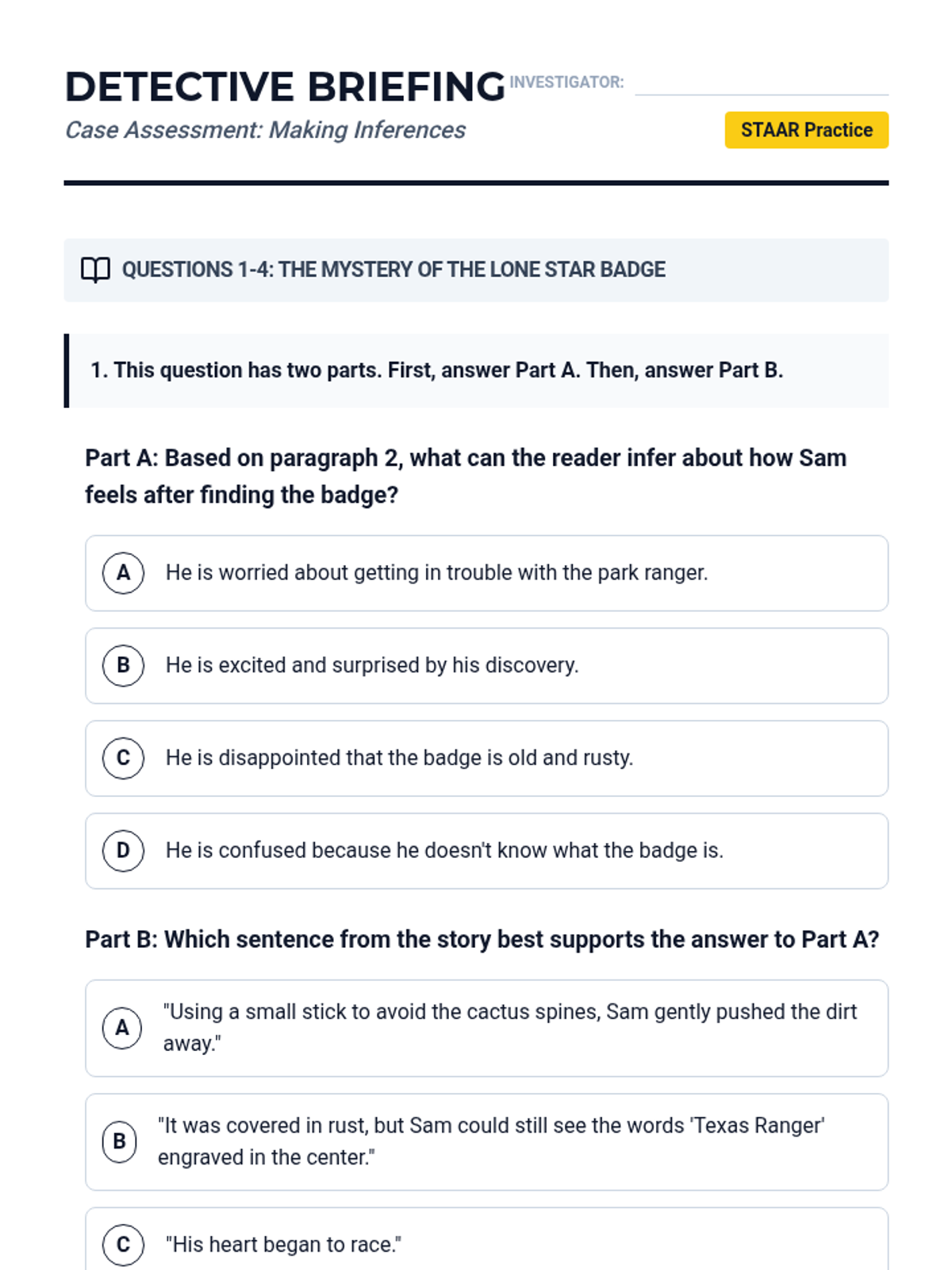
A STAAR-formatted assessment featuring 8 selected-response questions, including two-part evidence-based items. The questions require students to make inferences and identify supporting text evidence from both literary and informational passages.
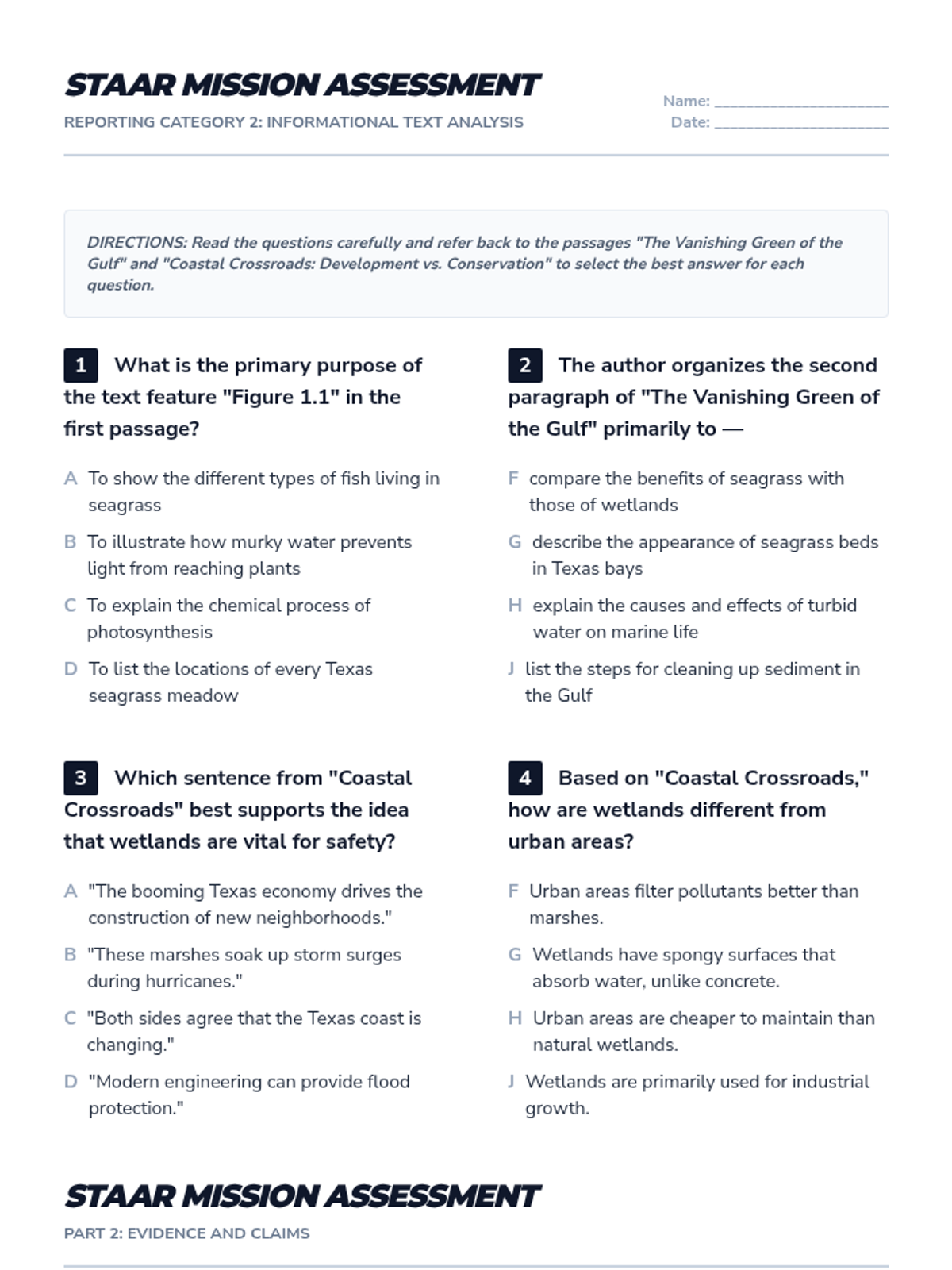
An 8-question STAAR-aligned practice test focusing on informational text analysis, featuring questions on text features, organizational patterns, and author's claims.
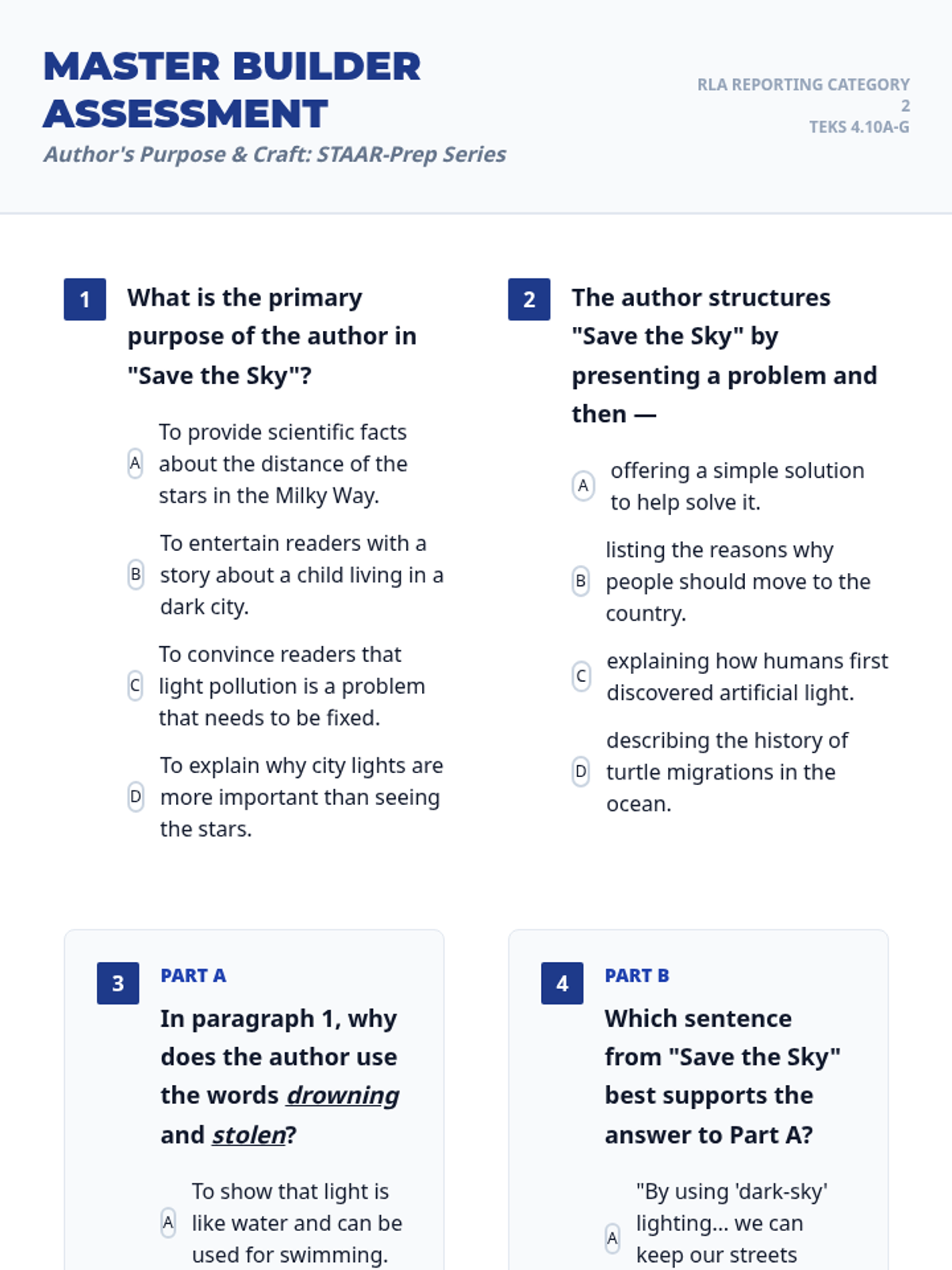
A STAAR-formatted assessment featuring 8 multiple-choice and two-part questions to evaluate students' mastery of author's purpose and craft across informational and literary texts.
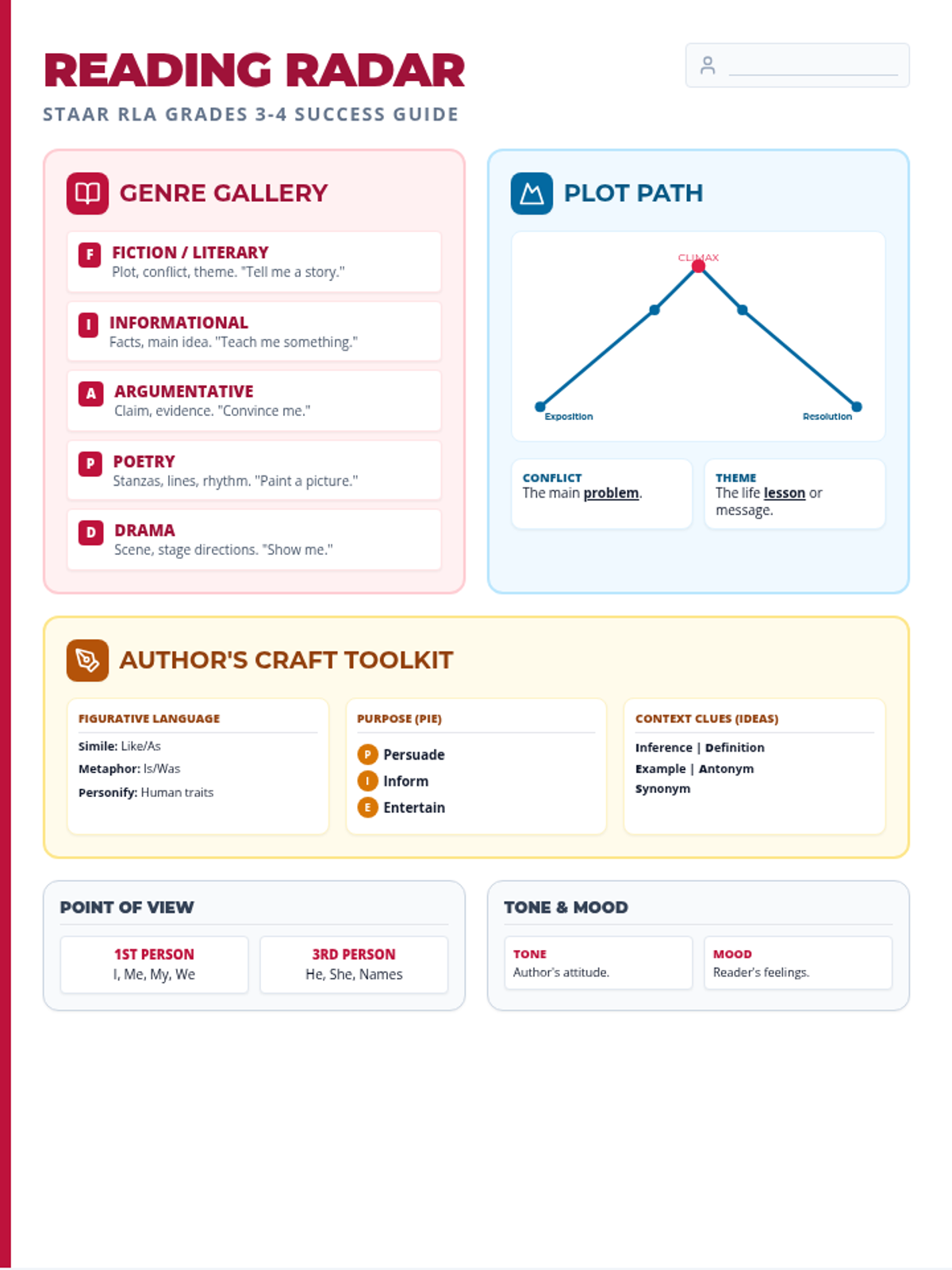
A comprehensive 2-page STAAR Reading Language Arts (RLA) cheat sheet for Grades 3-4, featuring visually organized sections for genres, plot elements, author's craft, text features, and test-taking strategies like RACE and two-part questions.
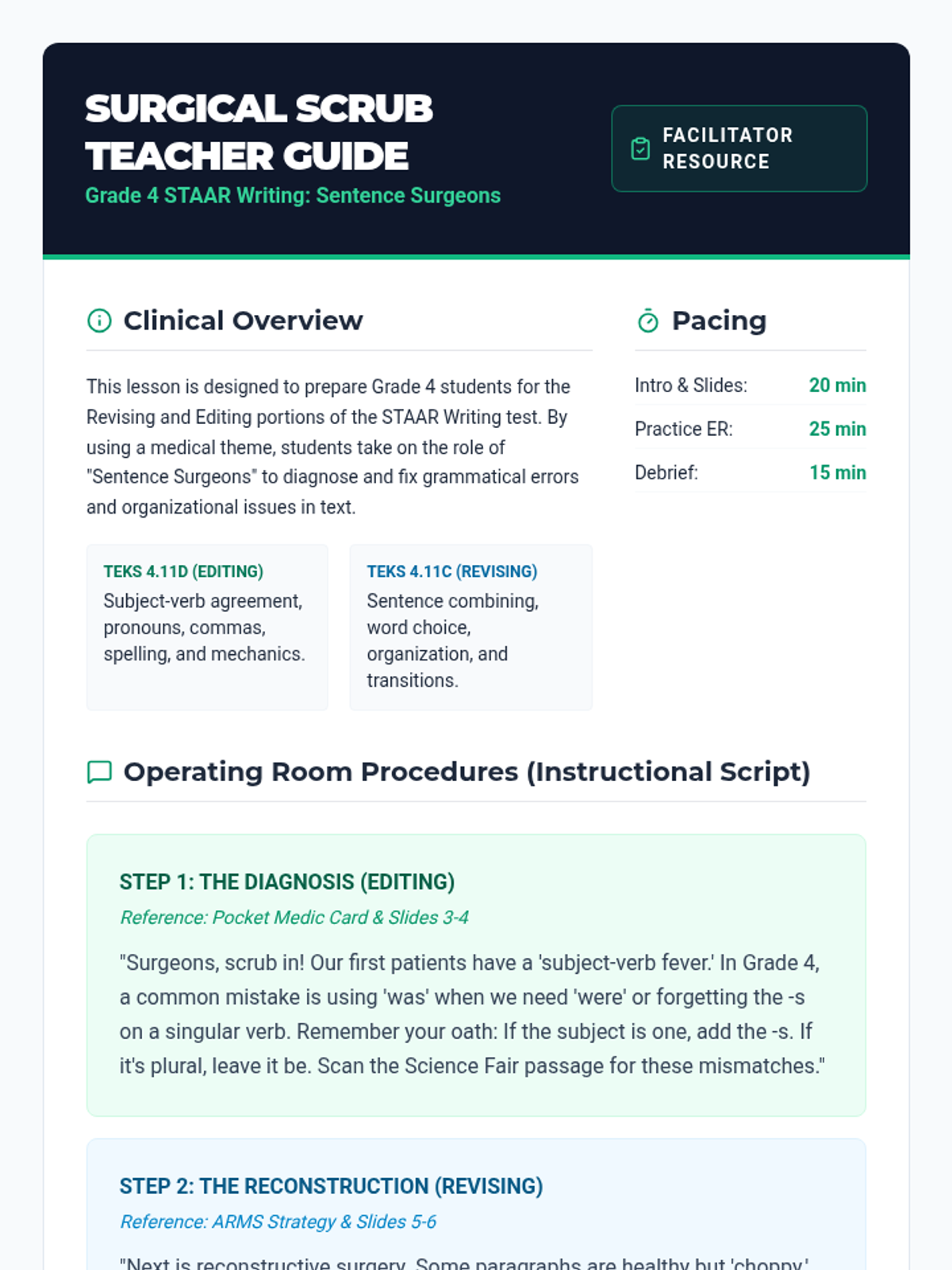
A comprehensive facilitator guide for the 'Sentence Surgeons' lesson, including instructional scripts, pacing, and detailed answer explanations for the practice questions.
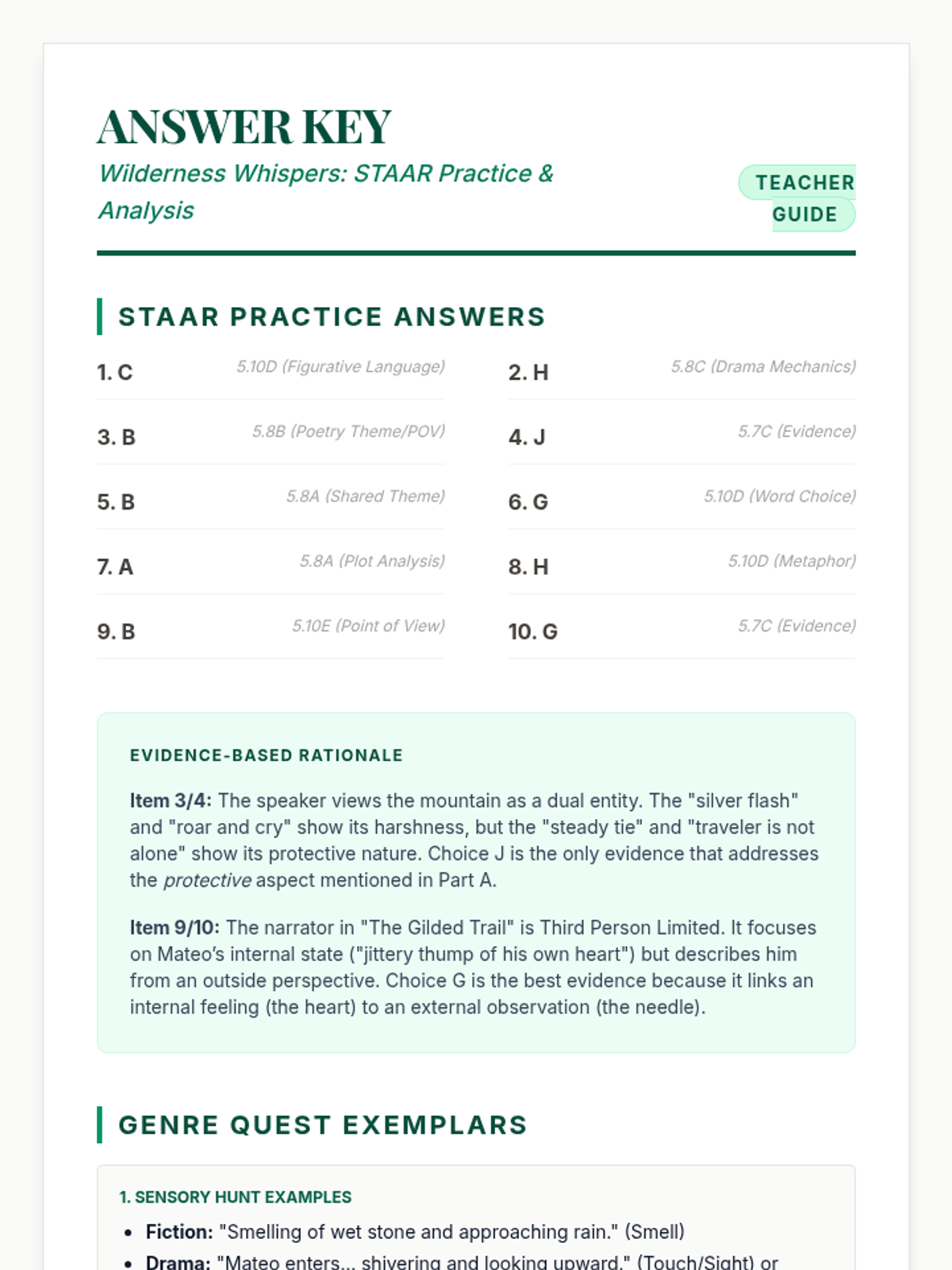
A comprehensive answer key for the Wilderness Whispers lesson, including STAAR practice answers with TEKS alignment, rationales for evidence-based items, and exemplar responses for analysis activities.
Activity worksheet for Grade 5 students to practice distinguishing between facts and opinions and evaluating scientific arguments using textual evidence.
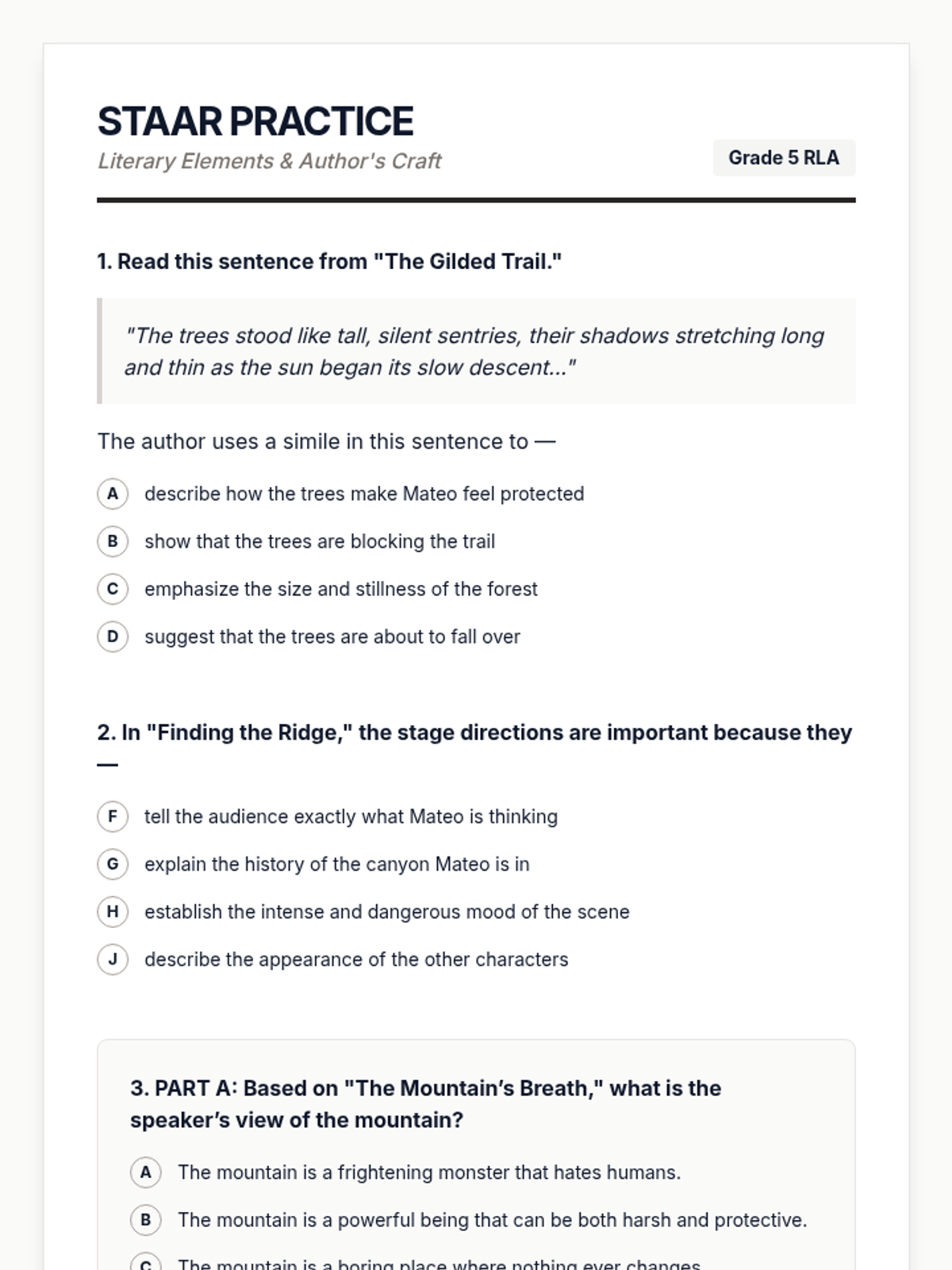
A STAAR-format practice test for Grade 5 RLA with 10 questions covering multiple genres, including two-part evidence-based items, focusing on literary elements and author's craft.
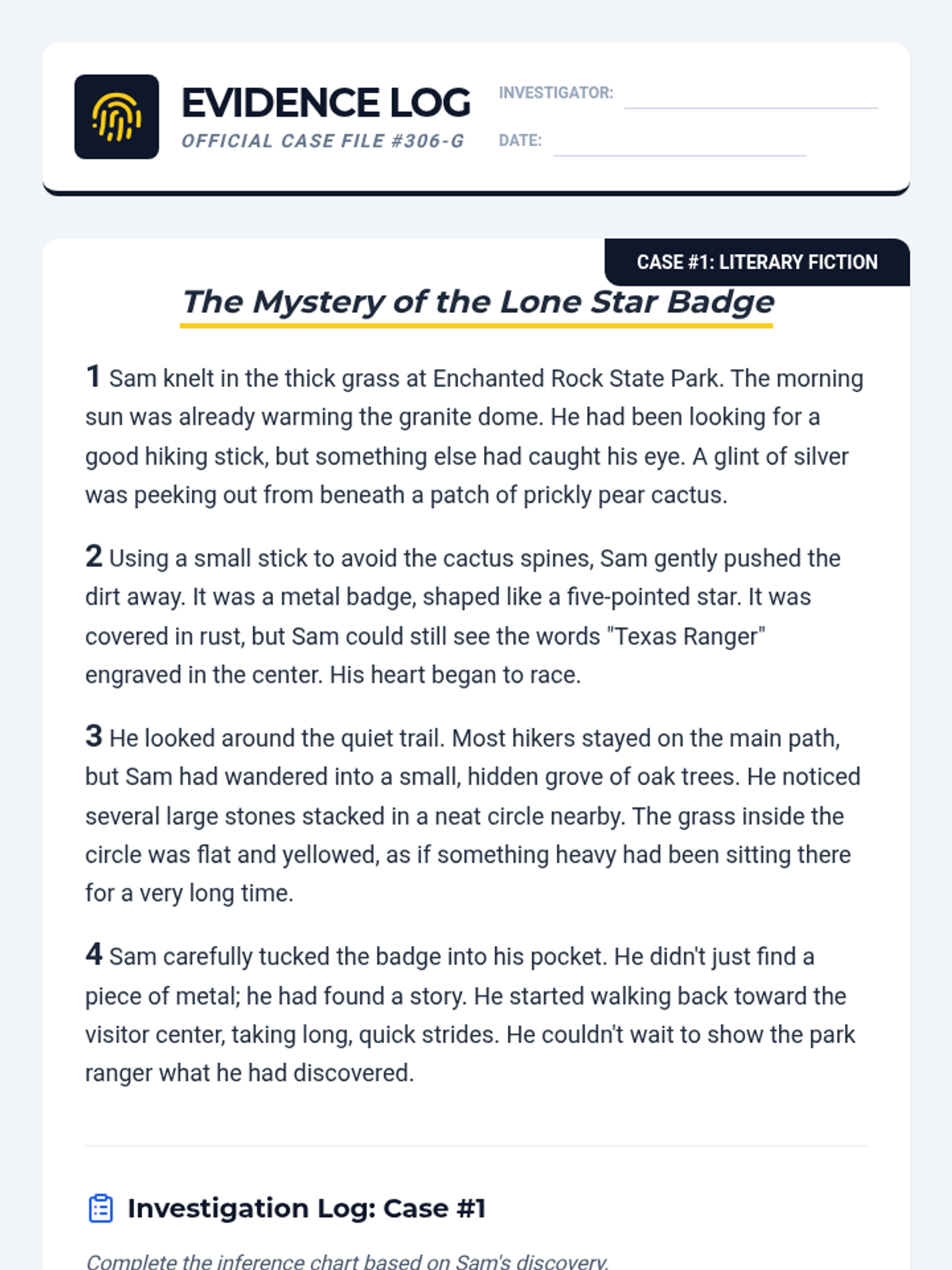
An Evidence Log student worksheet featuring two reading passages (literary fiction and informational) and "It Says, I Know, And So" graphic organizers for each to guide students through making text-based inferences.
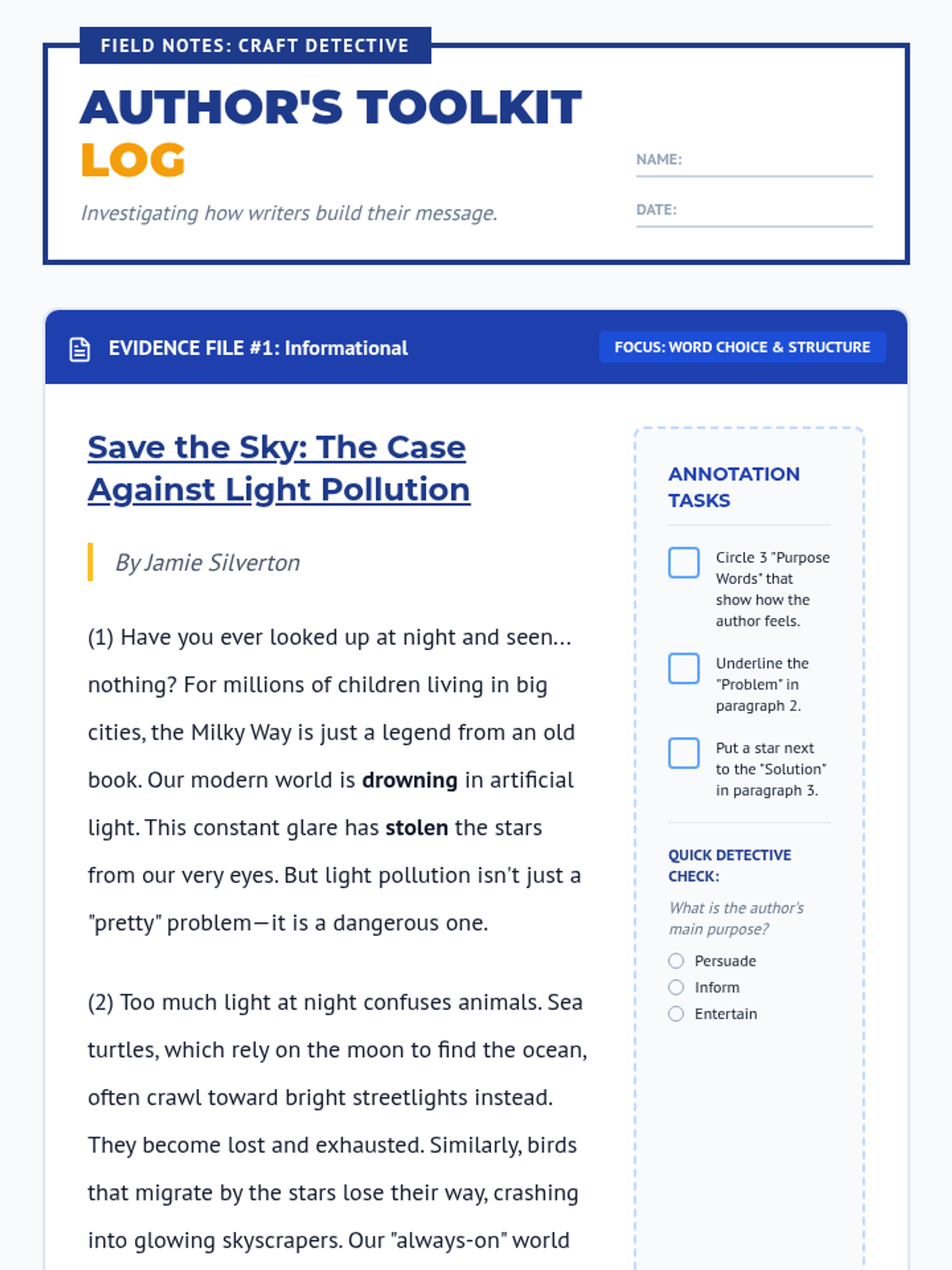
A student-facing activity sheet featuring two mentor texts, annotation checklists, and analysis questions to practice identifying author's purpose and craft.
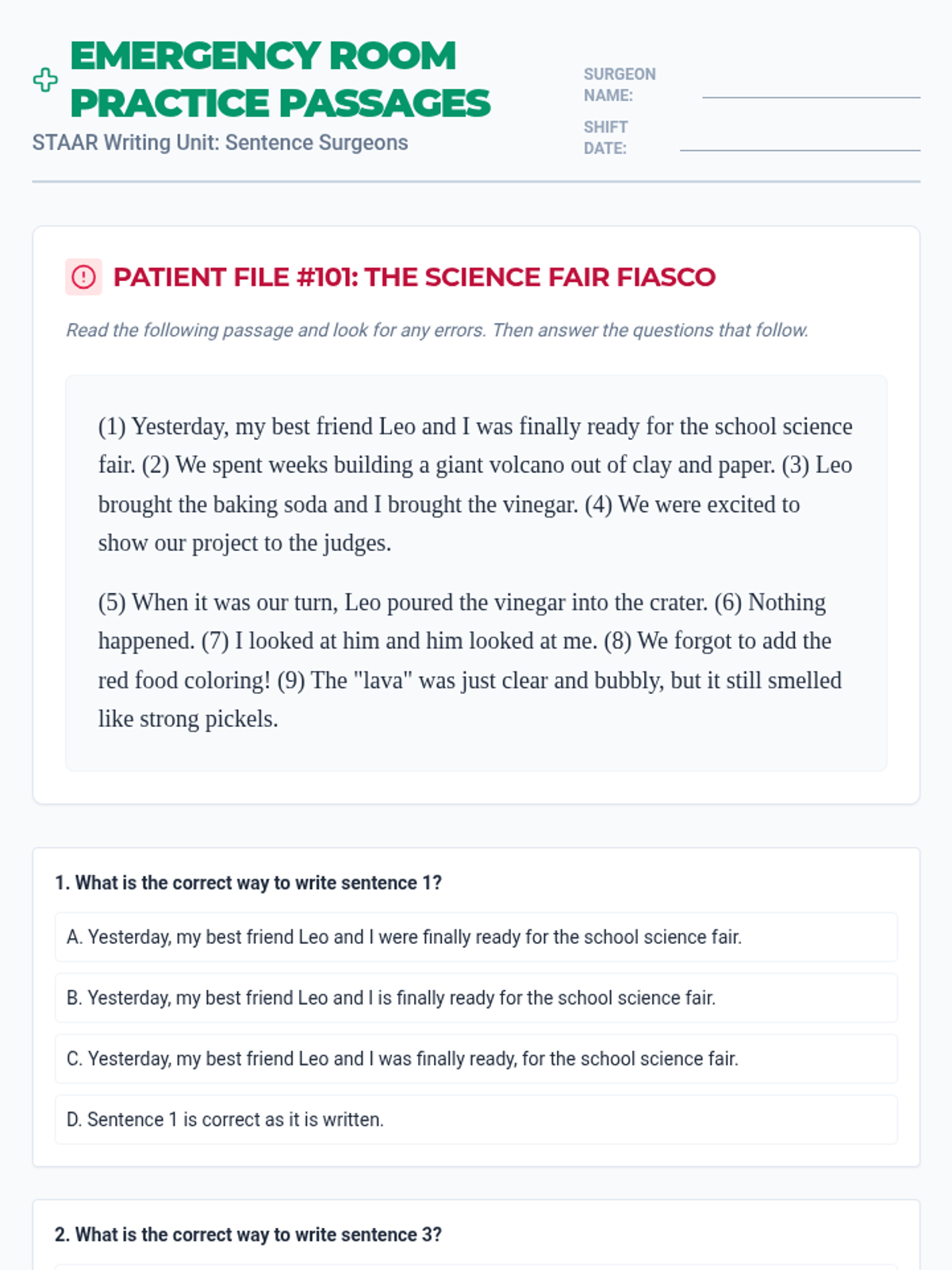
A student practice worksheet featuring two themed passages (editing and revising) with 10 STAAR-format multiple-choice questions focusing on grammar, mechanics, and text organization.
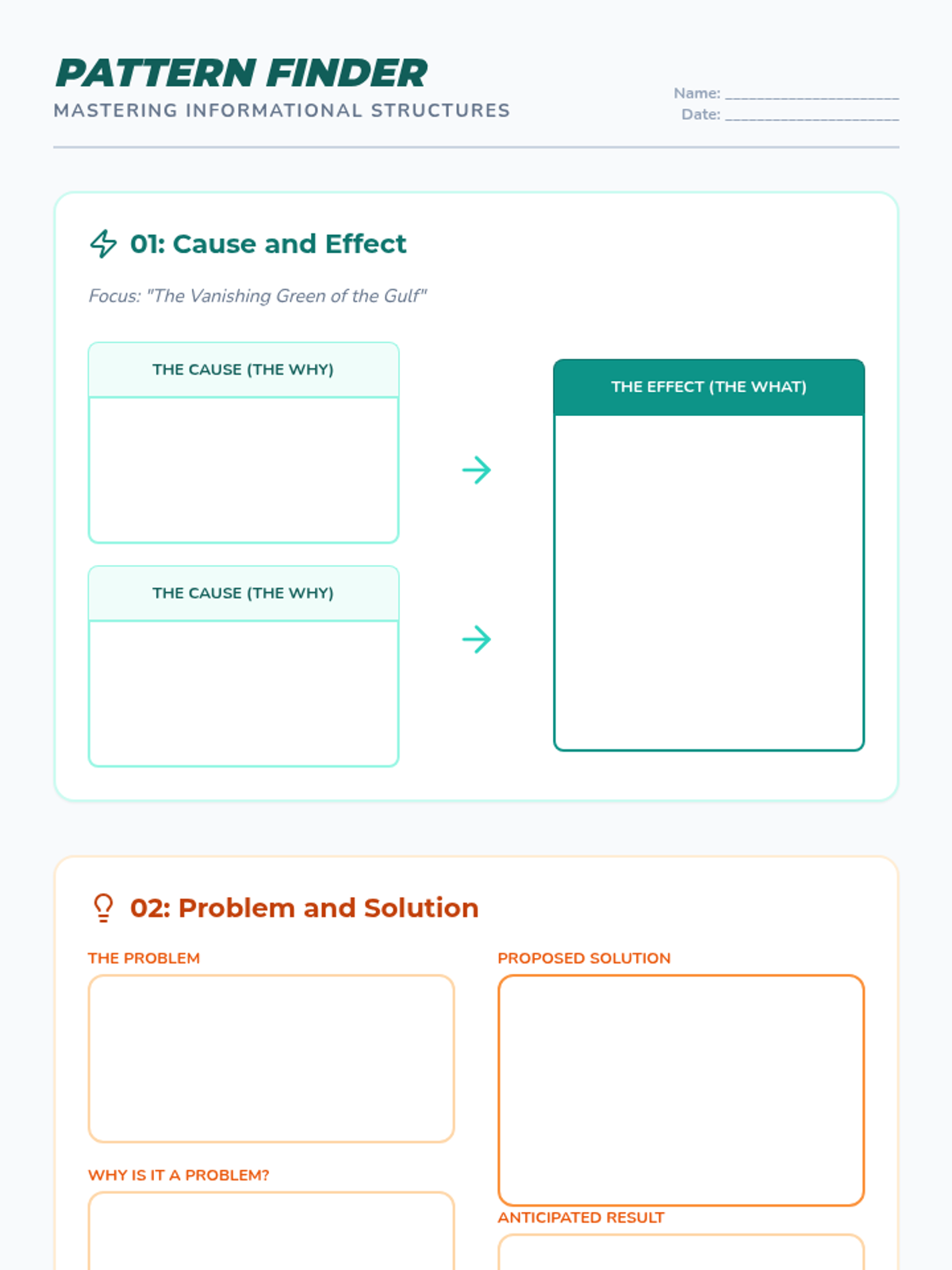
A set of four graphic organizers designed for students to map cause/effect, compare/contrast, problem/solution, and chronological text structures in informational texts.
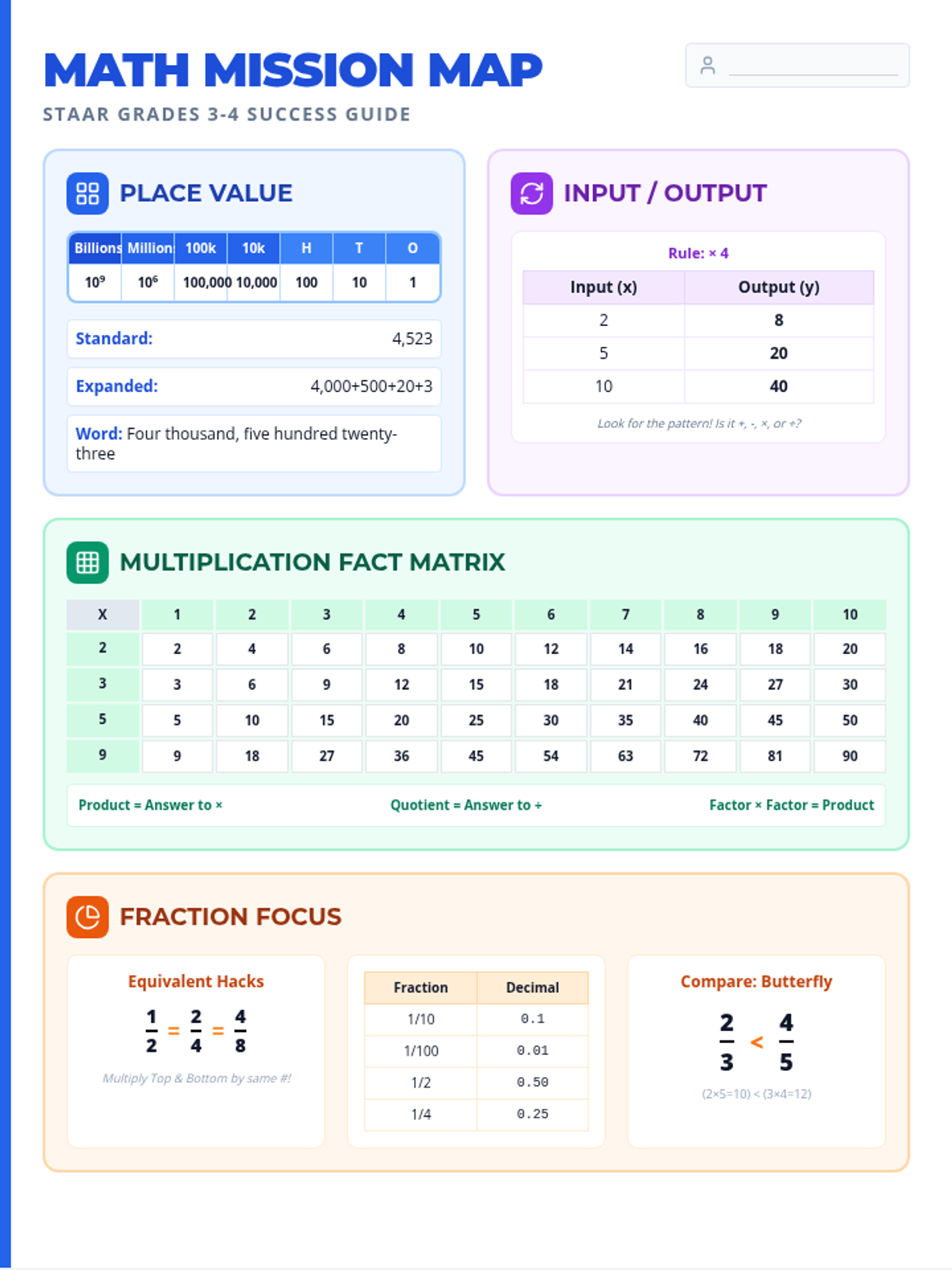
A refined 2-page STAAR Math cheat sheet for Grades 3-4, featuring color-coded sections for place value, algebraic relationships, operations, fractions, geometry, measurement, and data analysis, with improved diagrams and higher-contrast text.
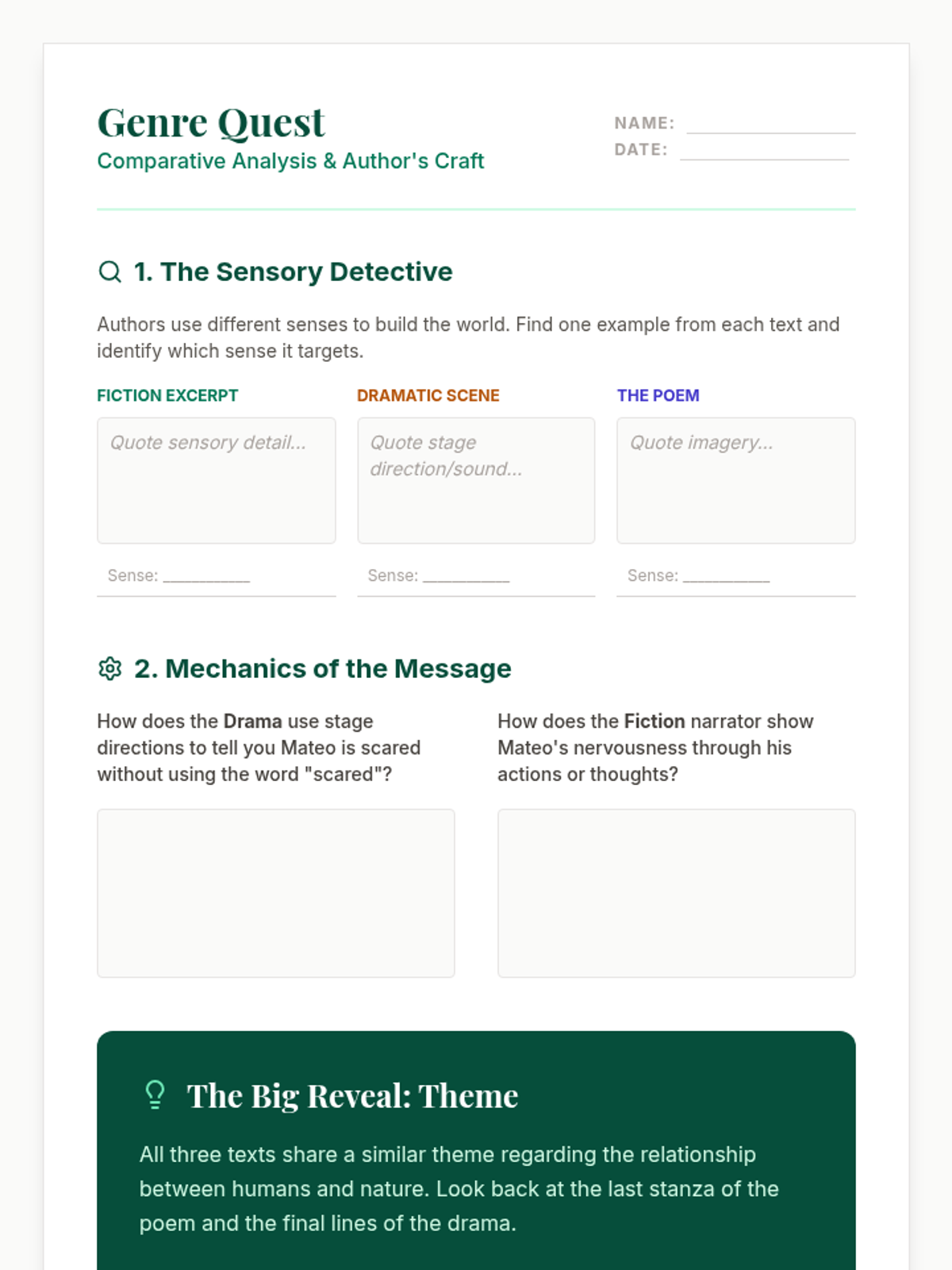
A comparative analysis worksheet for Grade 5 RLA where students investigate sensory details, genre mechanics, and thematic synthesis across fiction, drama, and poetry. Includes designated work areas for student responses.
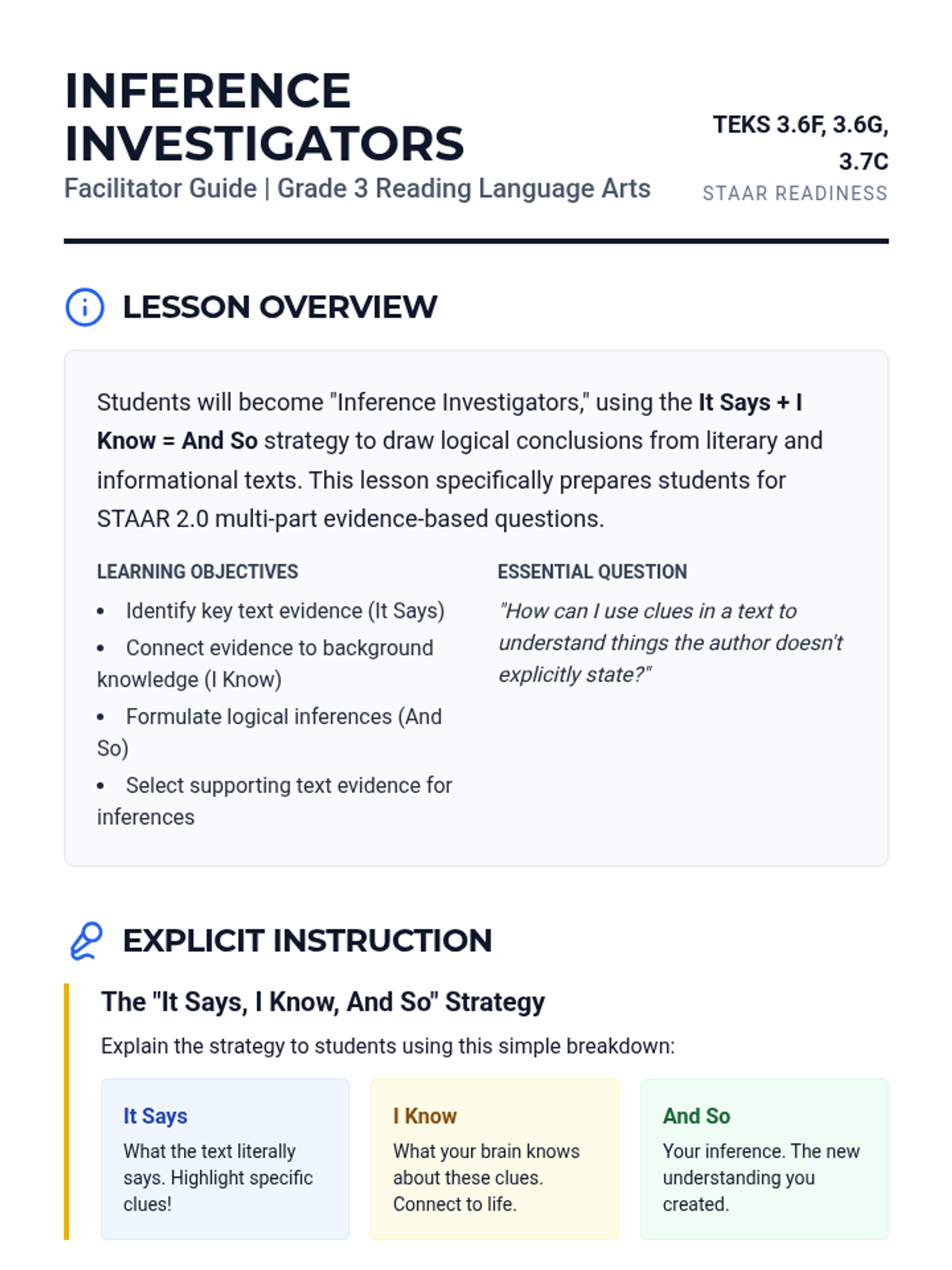
A teacher-facing facilitator guide for the Inference Investigators lesson. Includes a thinking script for modeling the 'It Says, I Know, And So' strategy, a pacing guide, and tips for addressing common student misconceptions during STAAR prep.
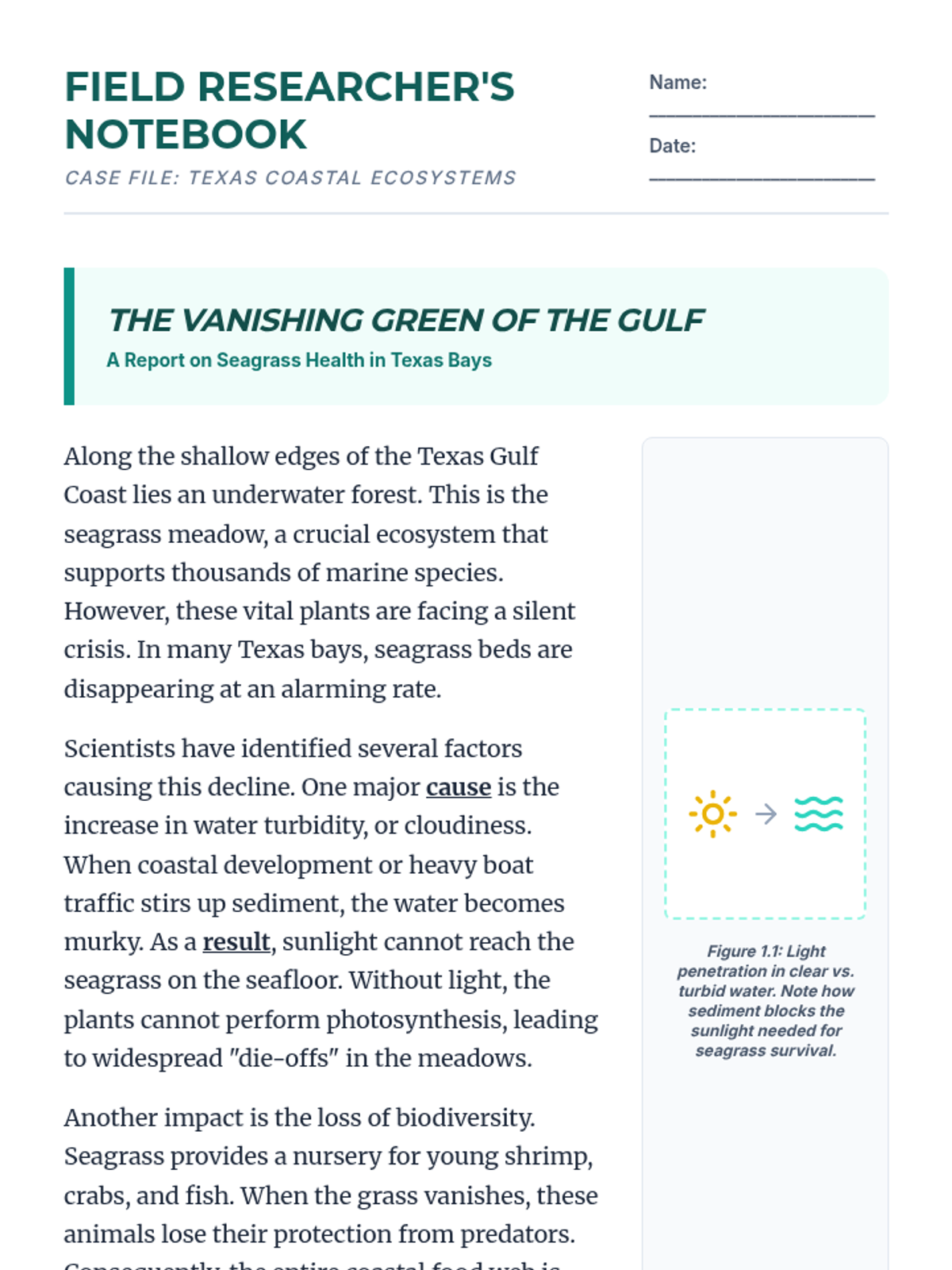
Two informational passages focusing on Texas coastal environmental science, featuring distinct text structures (cause/effect and compare/contrast) and informational text features.
Instructional slide deck for teaching author's purpose and craft, featuring the PIE strategy, craft move definitions, an annotation key, and modeling with the 'Save the Sky' text.
An instructional slide deck for the 'Sentence Surgeons' lesson, featuring mini-lessons on subject-verb agreement, comma rules, sentence combining, and the ARMS revision strategy with a clean medical theme.
An instructional slide deck for Grade 5 RLA focusing on literary elements and author's craft across fiction, drama, and poetry. Features explicit instruction on theme, plot, sensory details, and genre-specific tools.
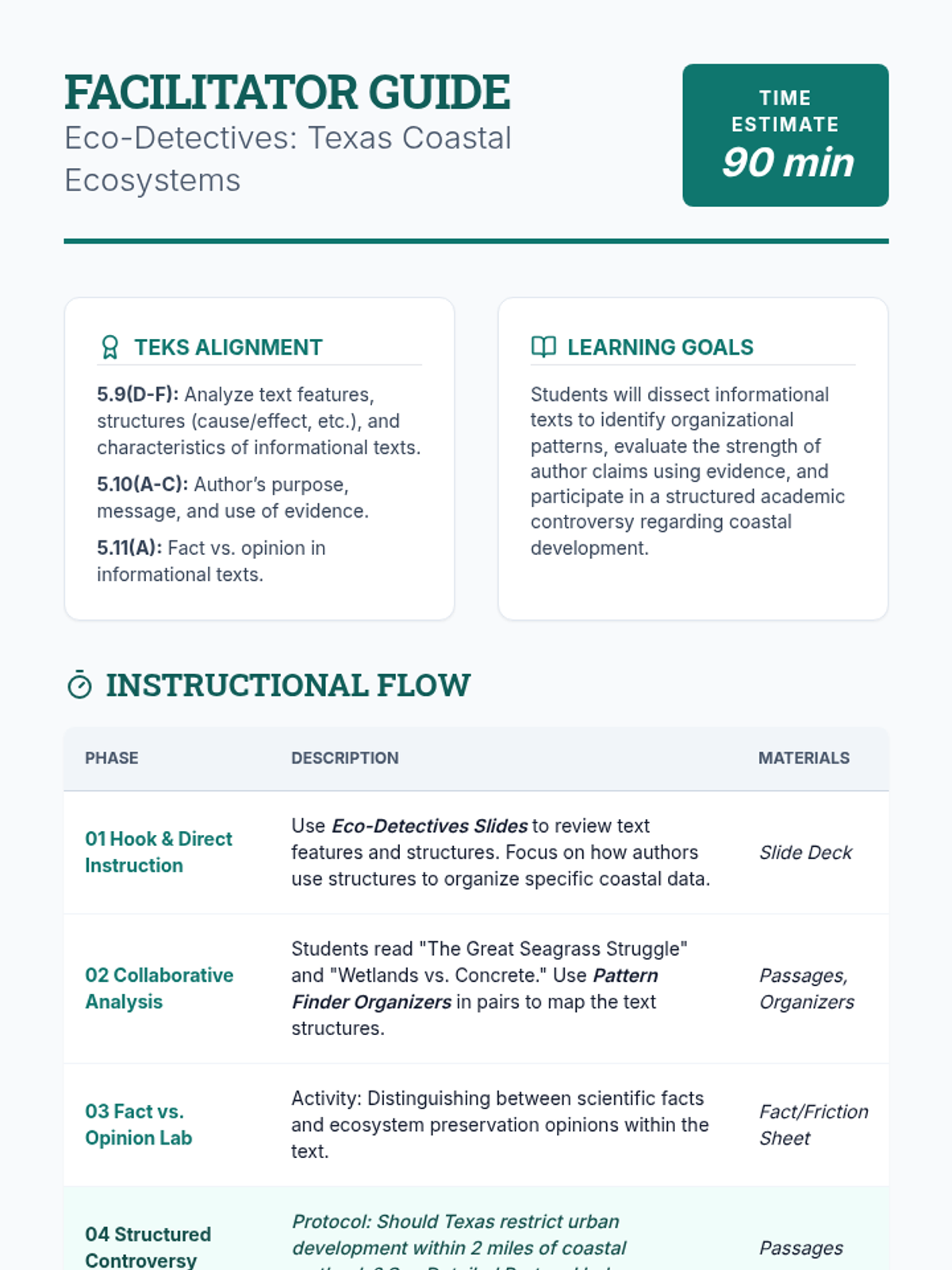
A detailed instructional guide for teachers featuring a lesson plan, pacing guide, and a Structured Academic Controversy (SAC) protocol for discussing environmental issues in Texas.
A high-energy, detective-themed slide deck for Grade 3 RLA. It introduces the 'It Says, I Know, And So' strategy for making inferences and provides guided practice with both literary and informational Texas-themed content.
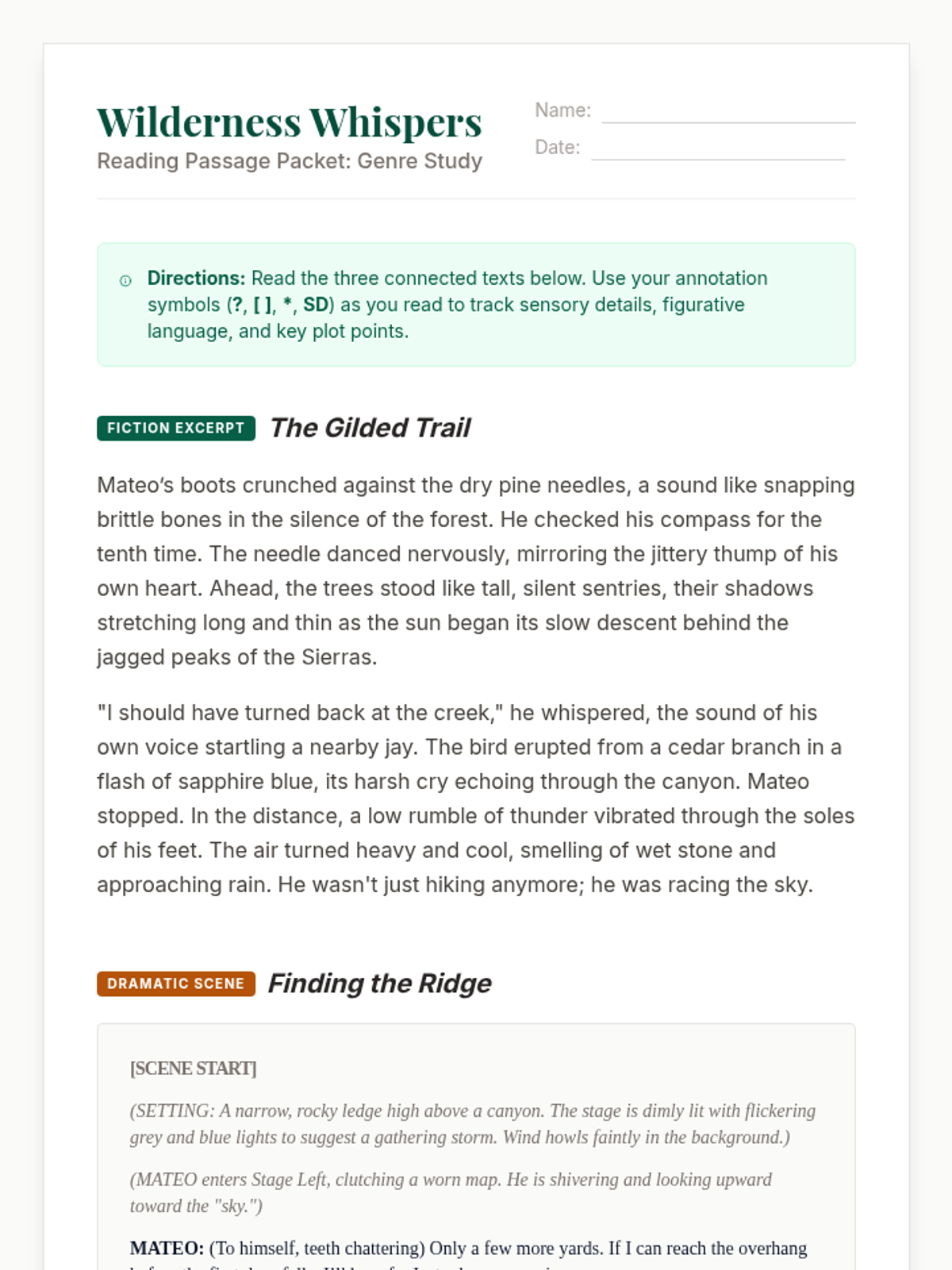
A reading packet for Grade 5 RLA containing three thematically connected texts—a fiction excerpt, a dramatic scene, and a poem—about a character's encounter with a storm in the wilderness. Includes space for student name and date.
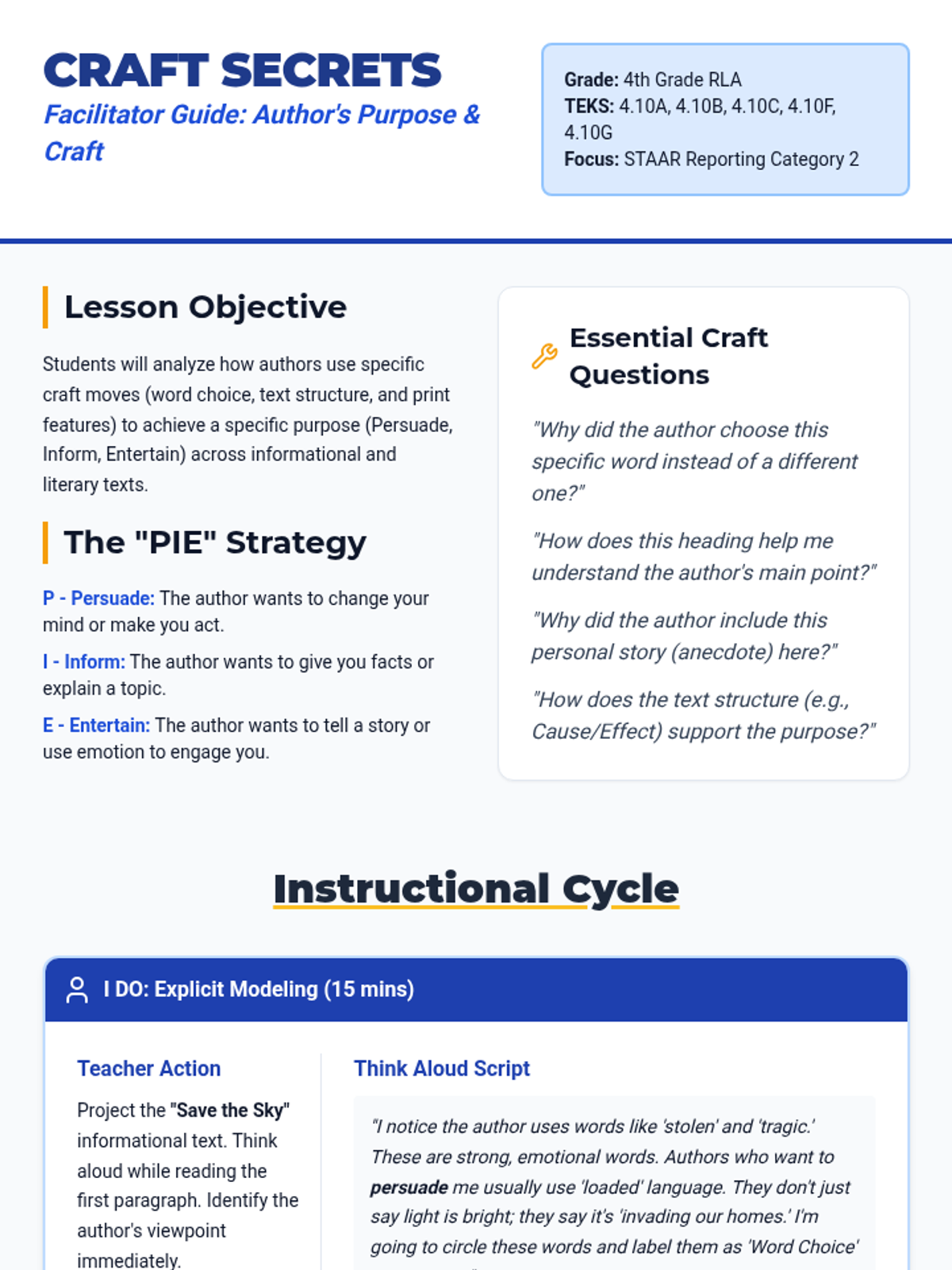
A comprehensive facilitator guide for teachers, featuring a gradual release model, explicit PIE strategy instruction, and a complete answer key for the assessment.
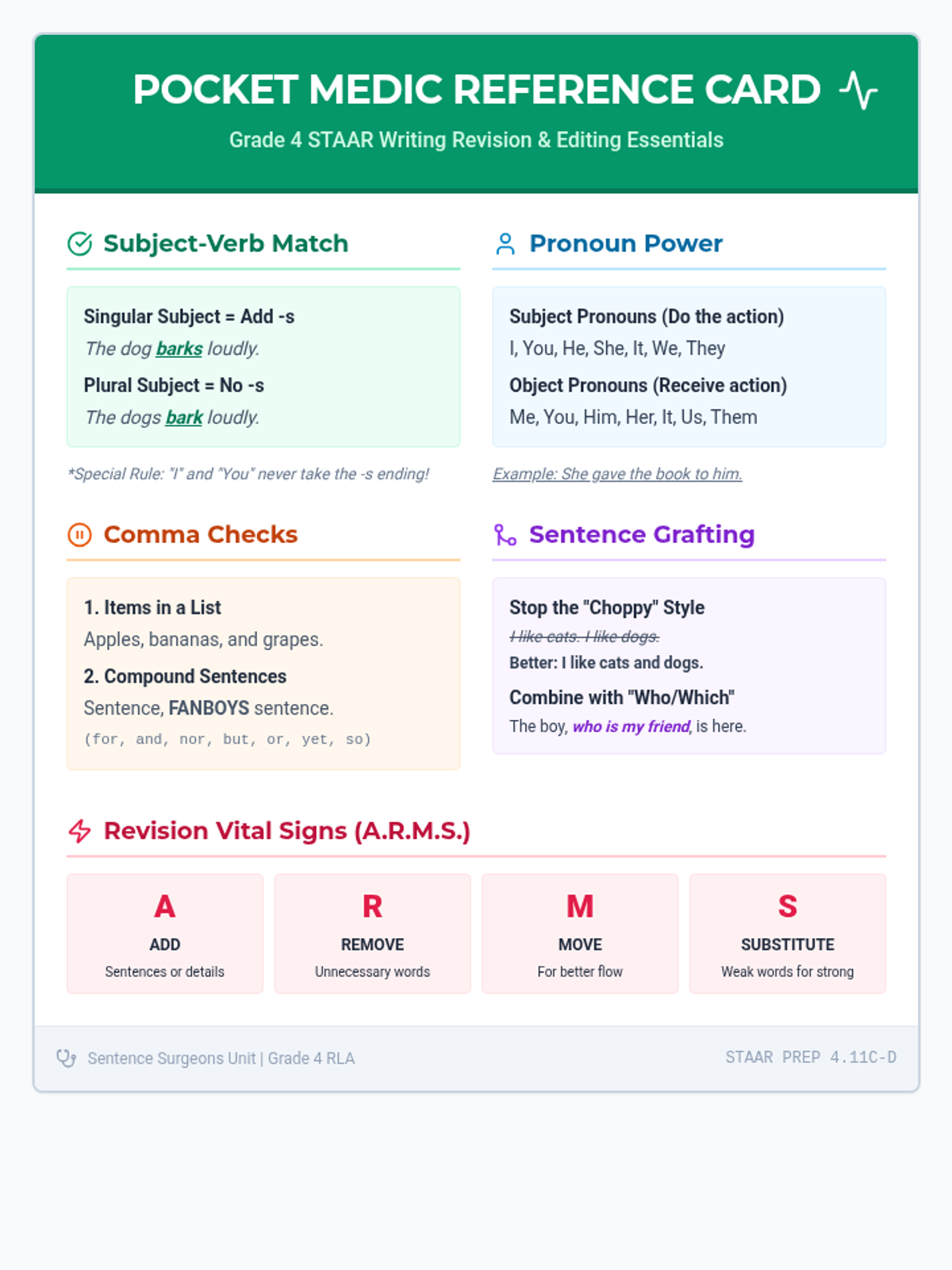
A compact student reference card featuring key grammar rules for STAAR writing, including subject-verb agreement, pronoun usage, comma rules, sentence combining, and the ARMS revision strategy.
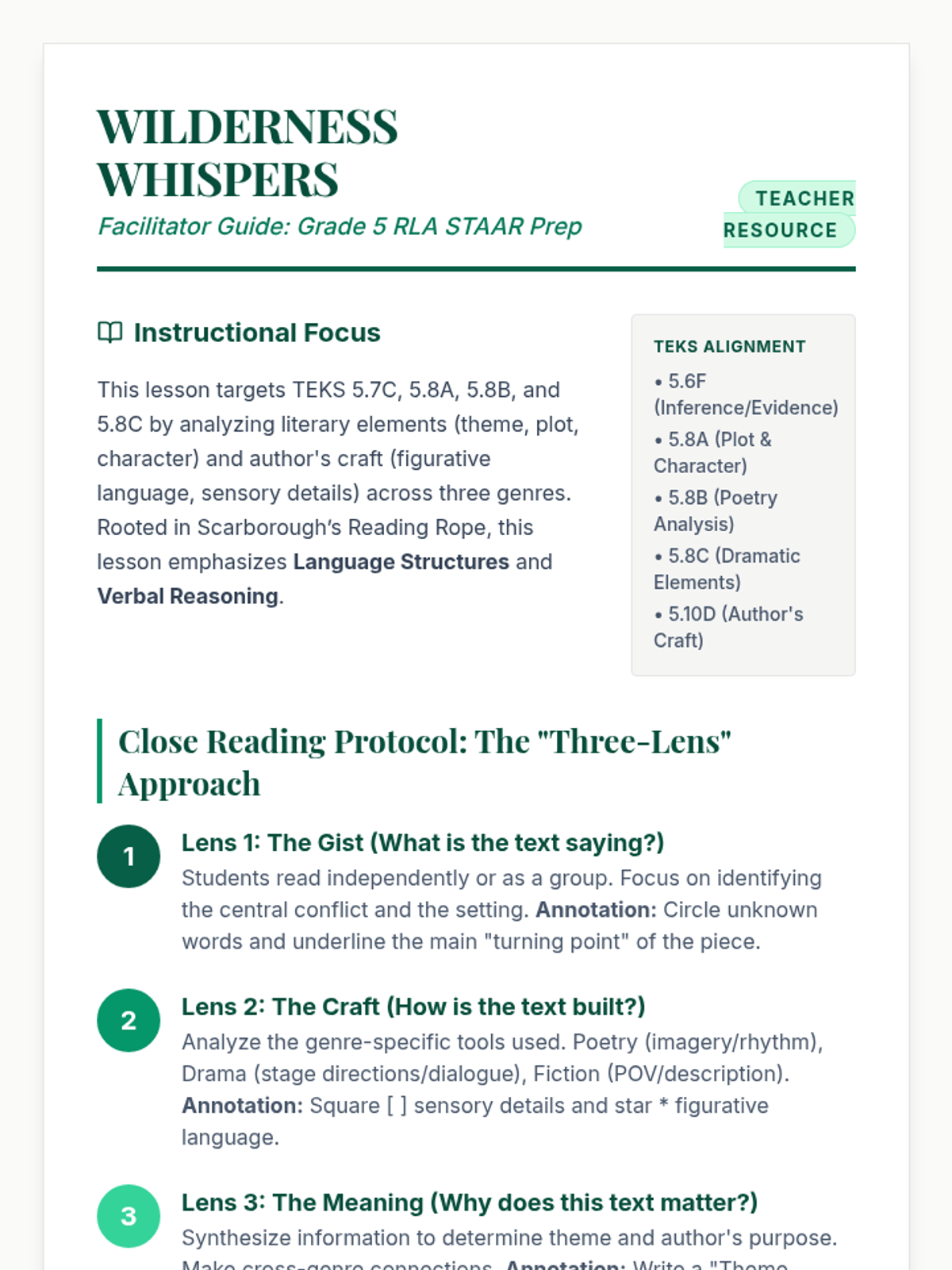
A facilitator guide for Grade 5 RLA STAAR preparation, featuring a close reading protocol, annotation strategies, and TEKS alignment for analyzing literary elements across multiple genres.
Instructional slide deck for analyzing informational text features, organizational patterns, and evidence in the context of Texas Gulf Coast ecosystems.
A presentation designed for a 3-day literacy lesson. It covers what makes a poem unique (stanzas, rhythm, imagery), guided analysis for 'The Meadow's Secret' and 'The Forest's Song', and a final day comparison activity.
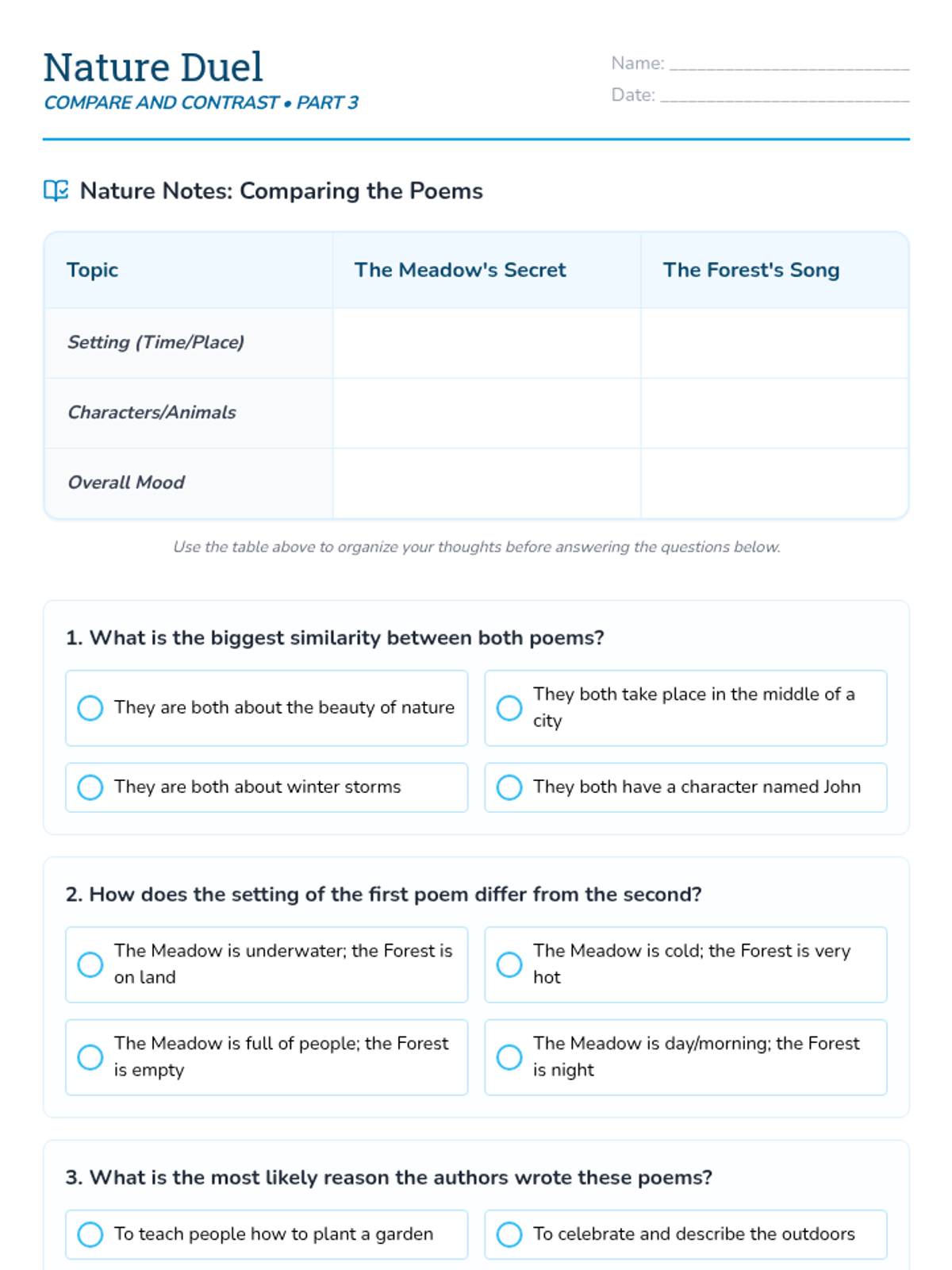
A comparison worksheet for the third day of the poetry unit. It includes an observation table for brainstorming and five multiple-choice questions comparing 'The Meadow's Secret' and 'The Forest's Song'.