A quick assessment for students to demonstrate their mastery of simple present verbs. Features two identical tickets per page for efficient printing, including multiple-choice, fill-in-the-blank, and sentence correction tasks.
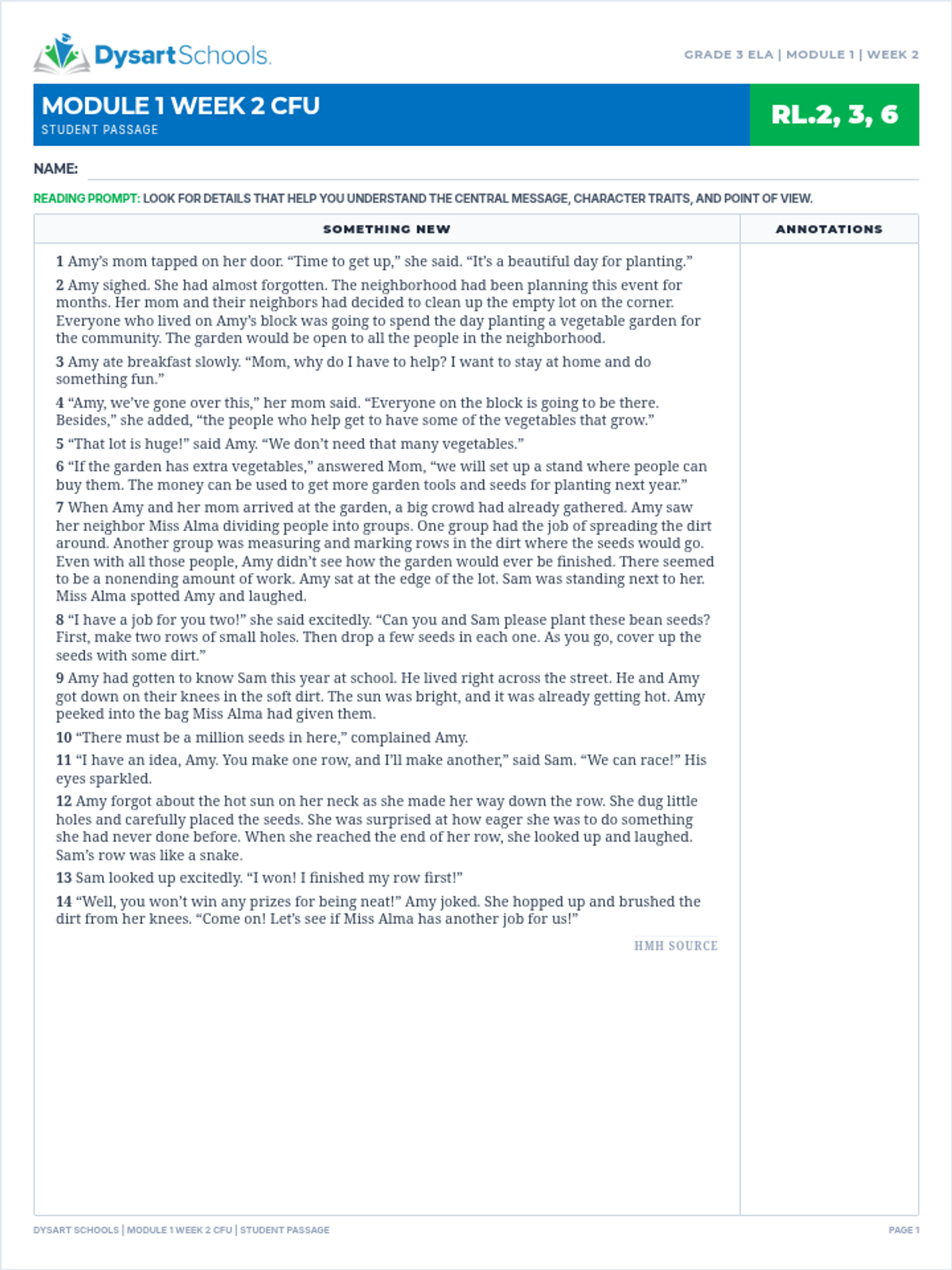
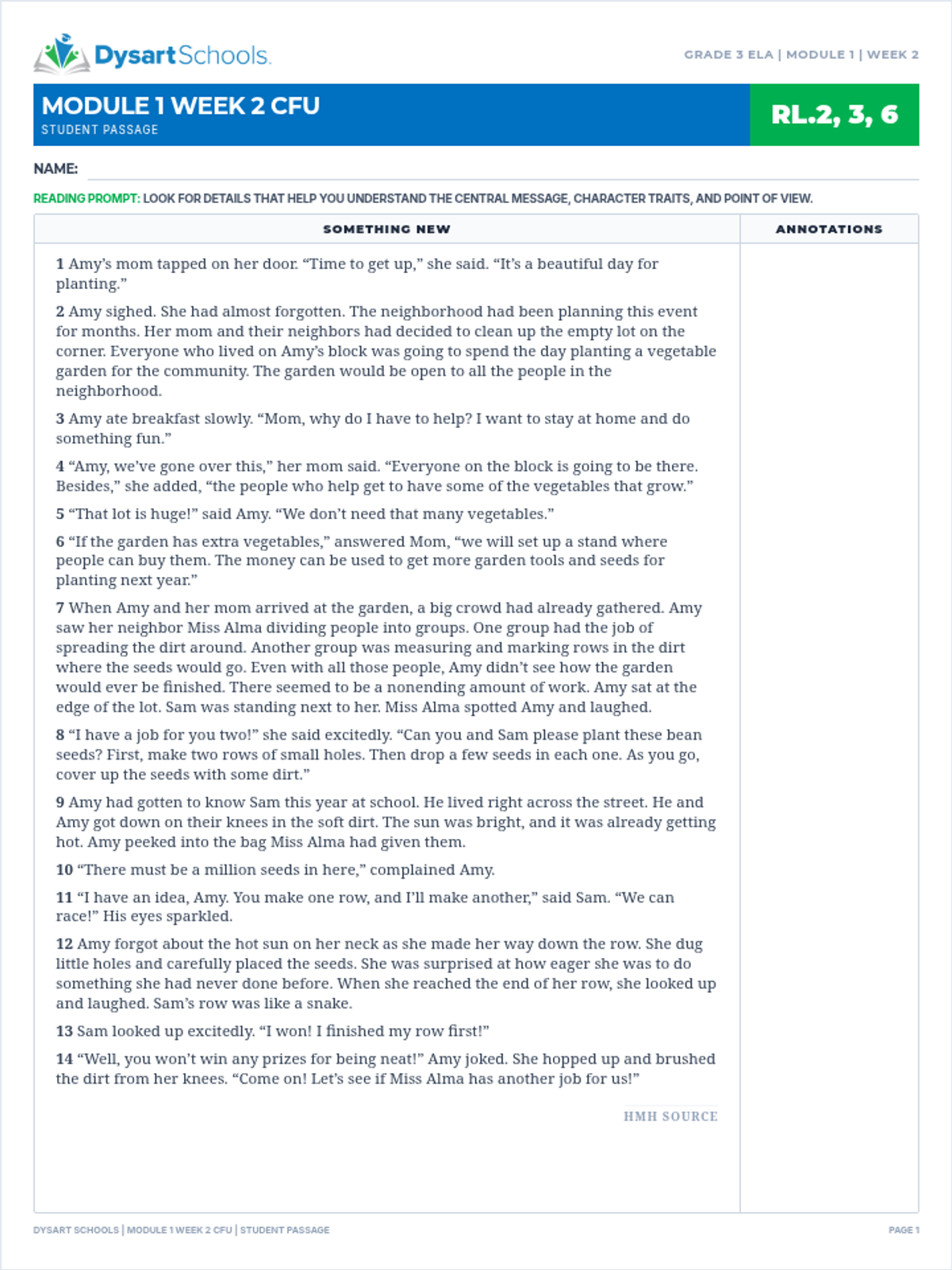
A three-page student assessment for Module 1 Week 2. Page 1 features the reading passage 'Something New' with a blank annotation column. Page 2 includes six MCQs in a single-column layout without standard labels, matching the provided screenshot exactly. Page 3 provides a justified teacher answer key. All content is sized to fit perfectly on each page. Revised to fix content cutoff and poor text flow.
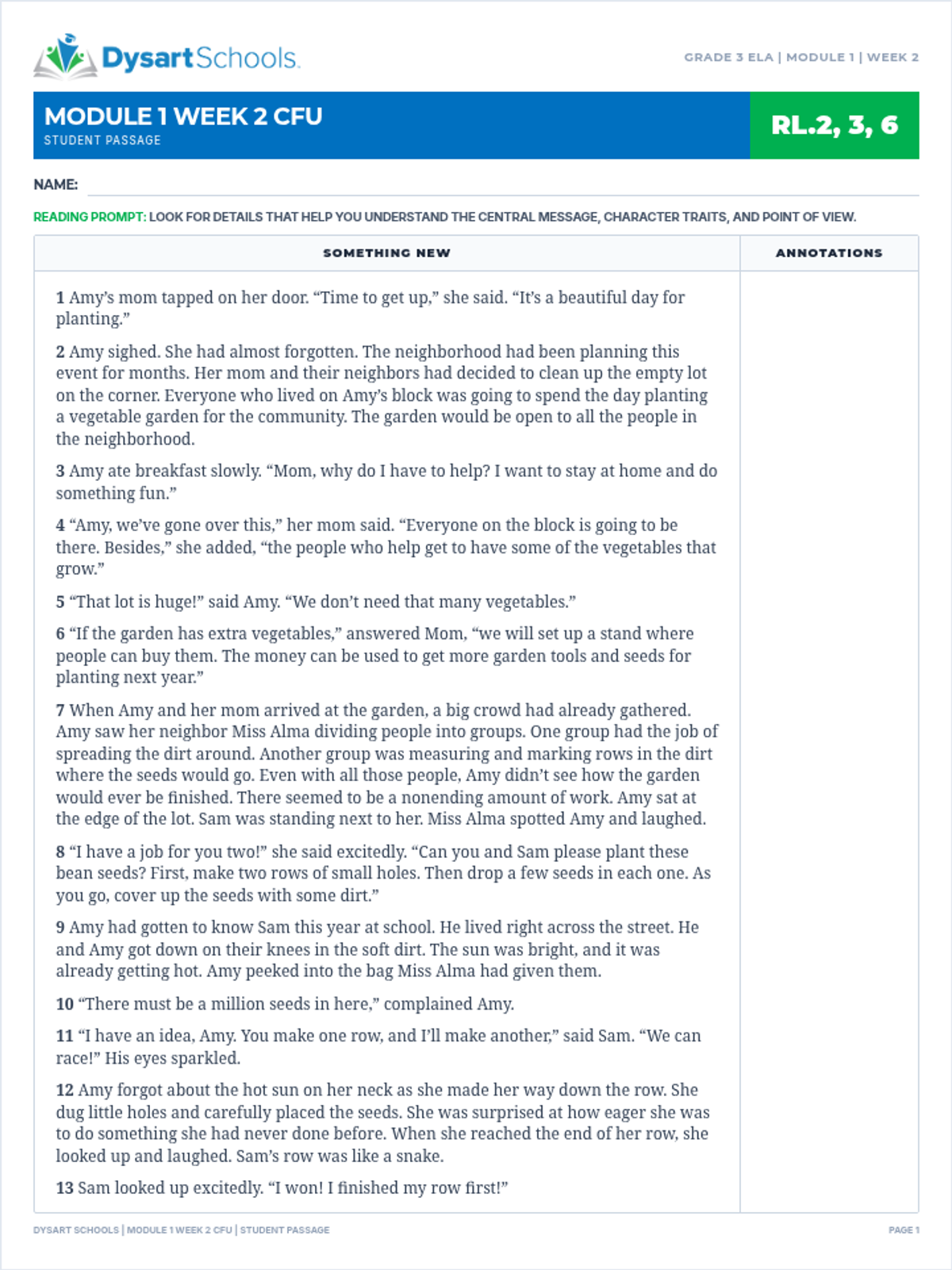
A three-page student assessment for Module 1 Week 2 using the provided Dysart Schools template format. Page 1 features the reading passage 'Something New' with a blank annotation column. Page 2 includes six MCQs. Page 3 provides a justified teacher answer key with evidence-based rationales. Revised again to ensure all 14 paragraphs fit on Page 1 and all MCQ options fit on Page 2.
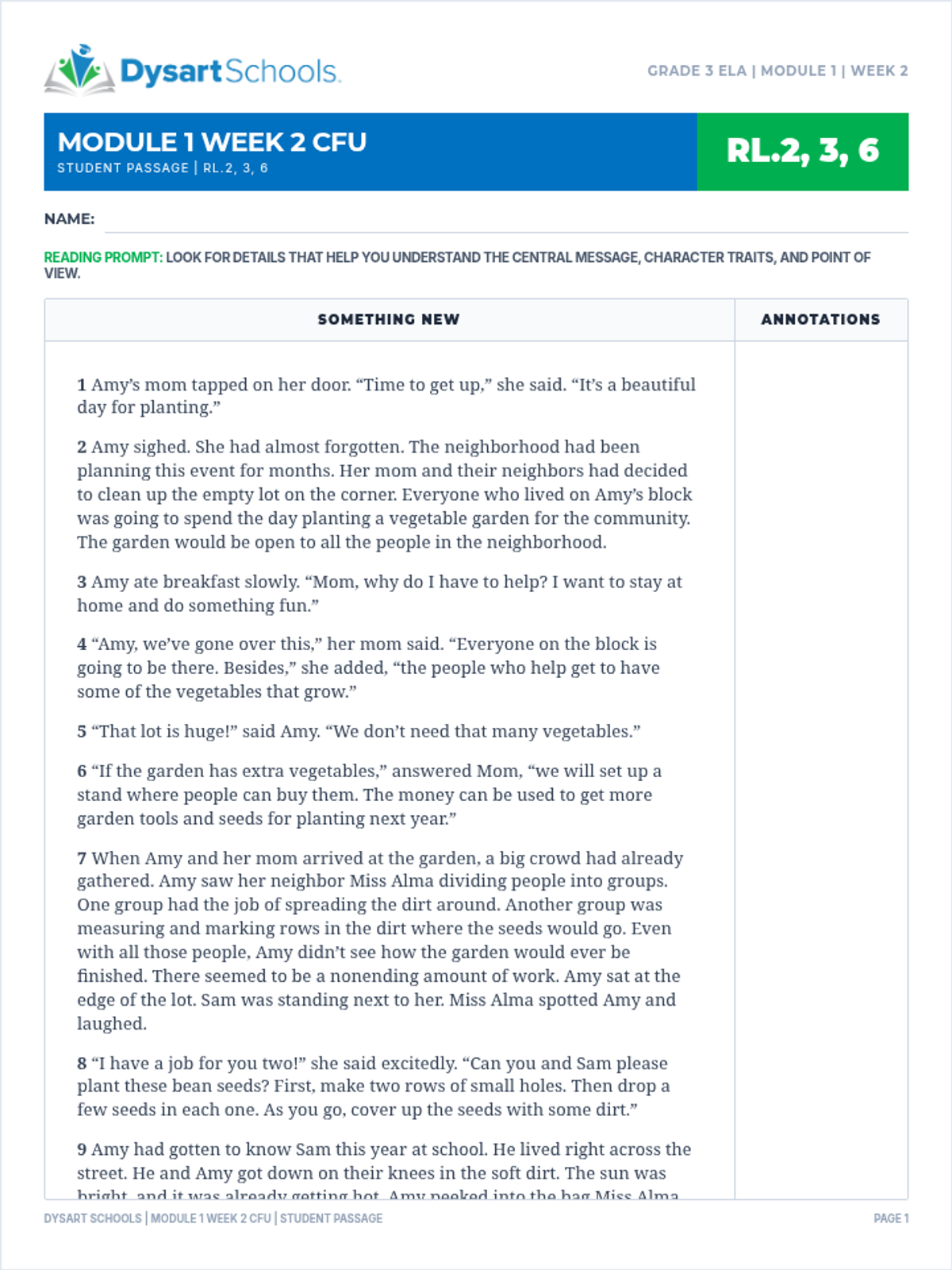
A three-page student assessment for Module 1 Week 2 using the provided Dysart Schools template format. Page 1 features the reading passage 'Something New' with a blank annotation column. Page 2 includes six MCQs. Page 3 provides a justified teacher answer key with evidence-based rationales. Revised to ensure all content fits on the pages without cutoff.
A three-page student assessment for Module 1 Week 2 using the provided Dysart Schools template format. Page 1 features the reading passage 'Something New' with a blank annotation column. Page 2 includes six MCQs. Page 3 provides a justified teacher answer key with evidence-based rationales.
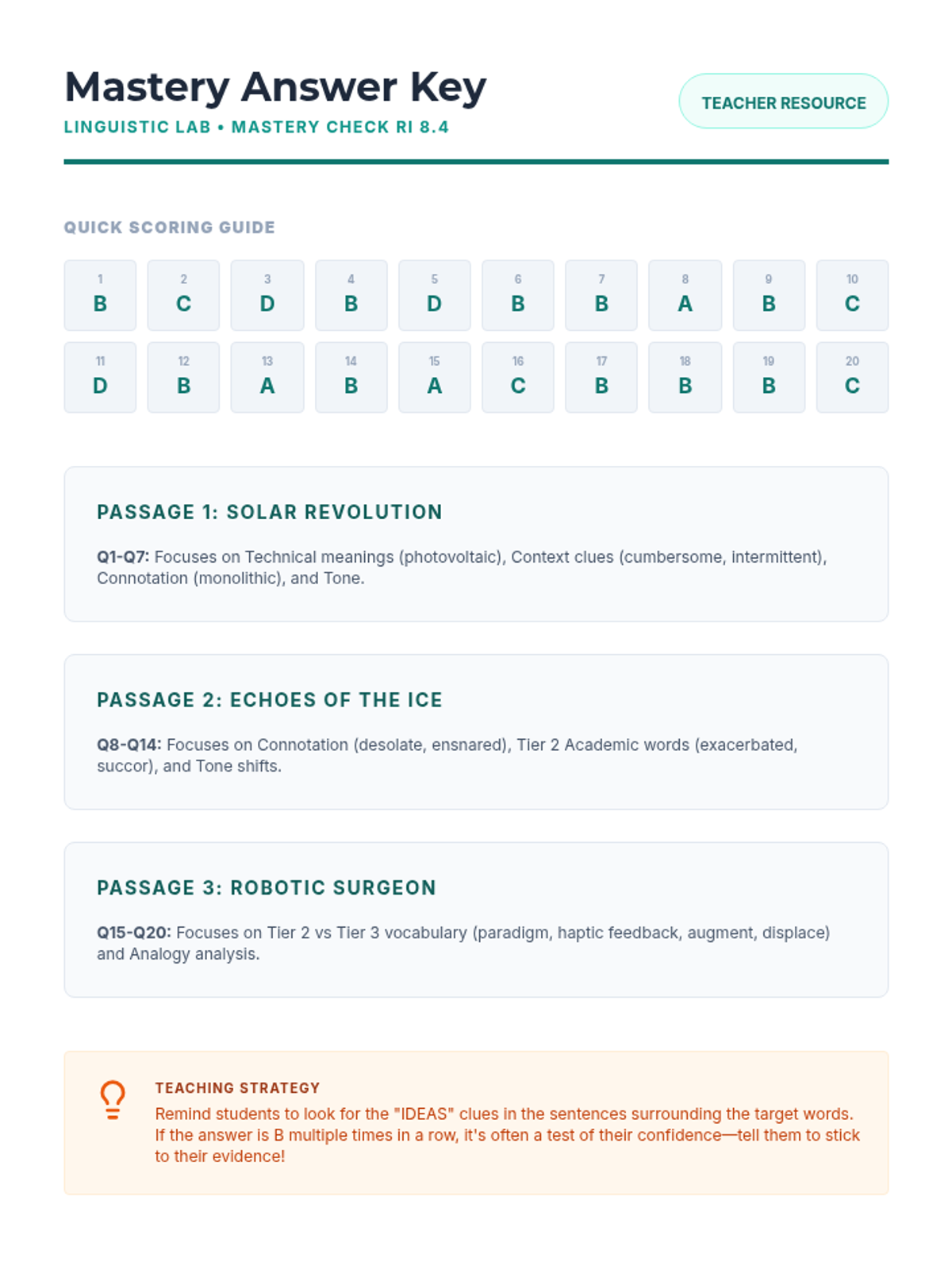
Teacher answer key and standards breakdown for the 20-question Linguistic Lab Mastery Check.
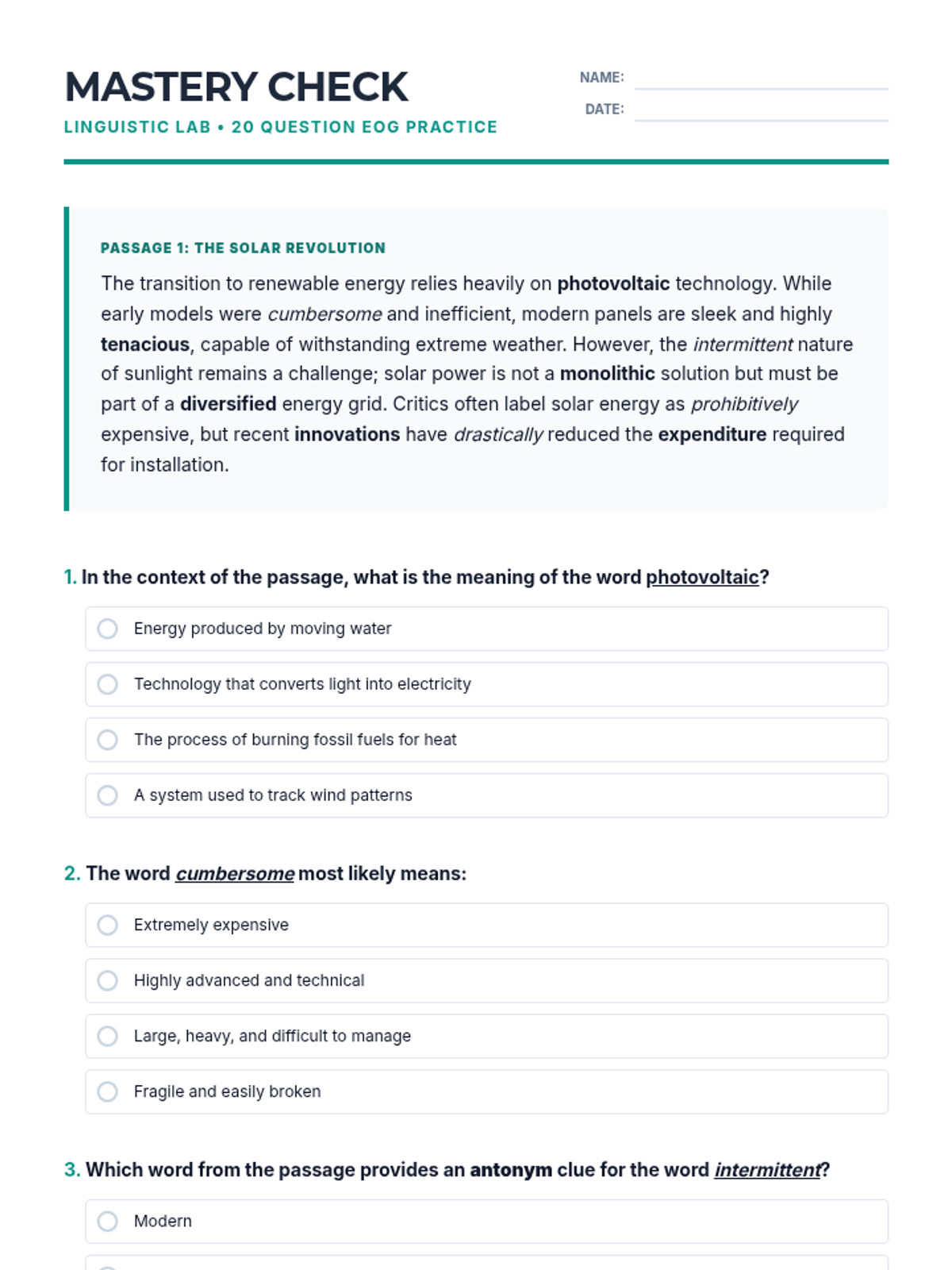
A 20-question mastery assessment for RI 8.4 featuring three informational passages and EOG-style questions on context clues, connotation, tone, and vocabulary tiers.
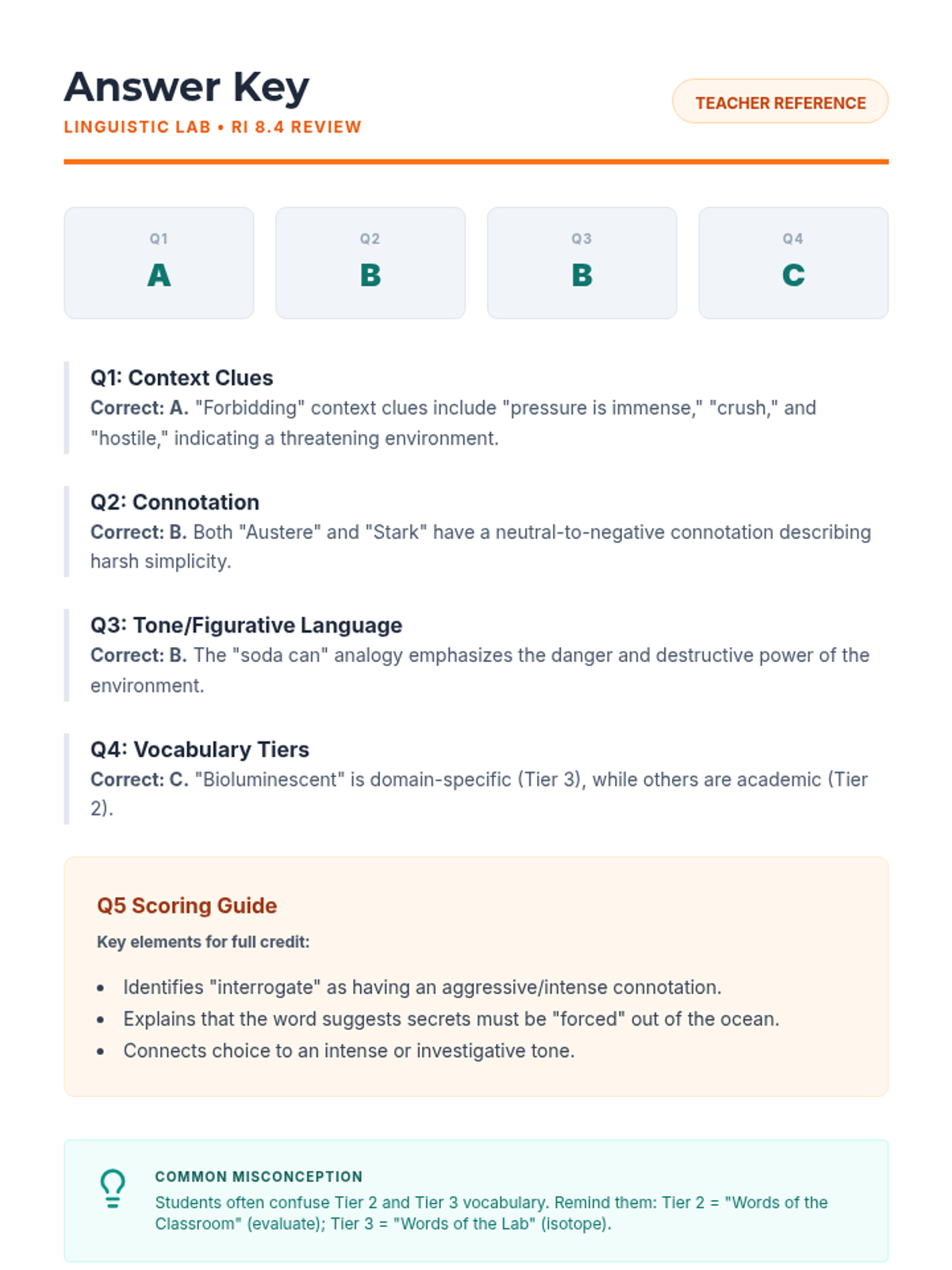
A detailed teacher answer key and scoring guide for the Linguistic Lab Practice Quiz, featuring rationales for each answer and common misconceptions.
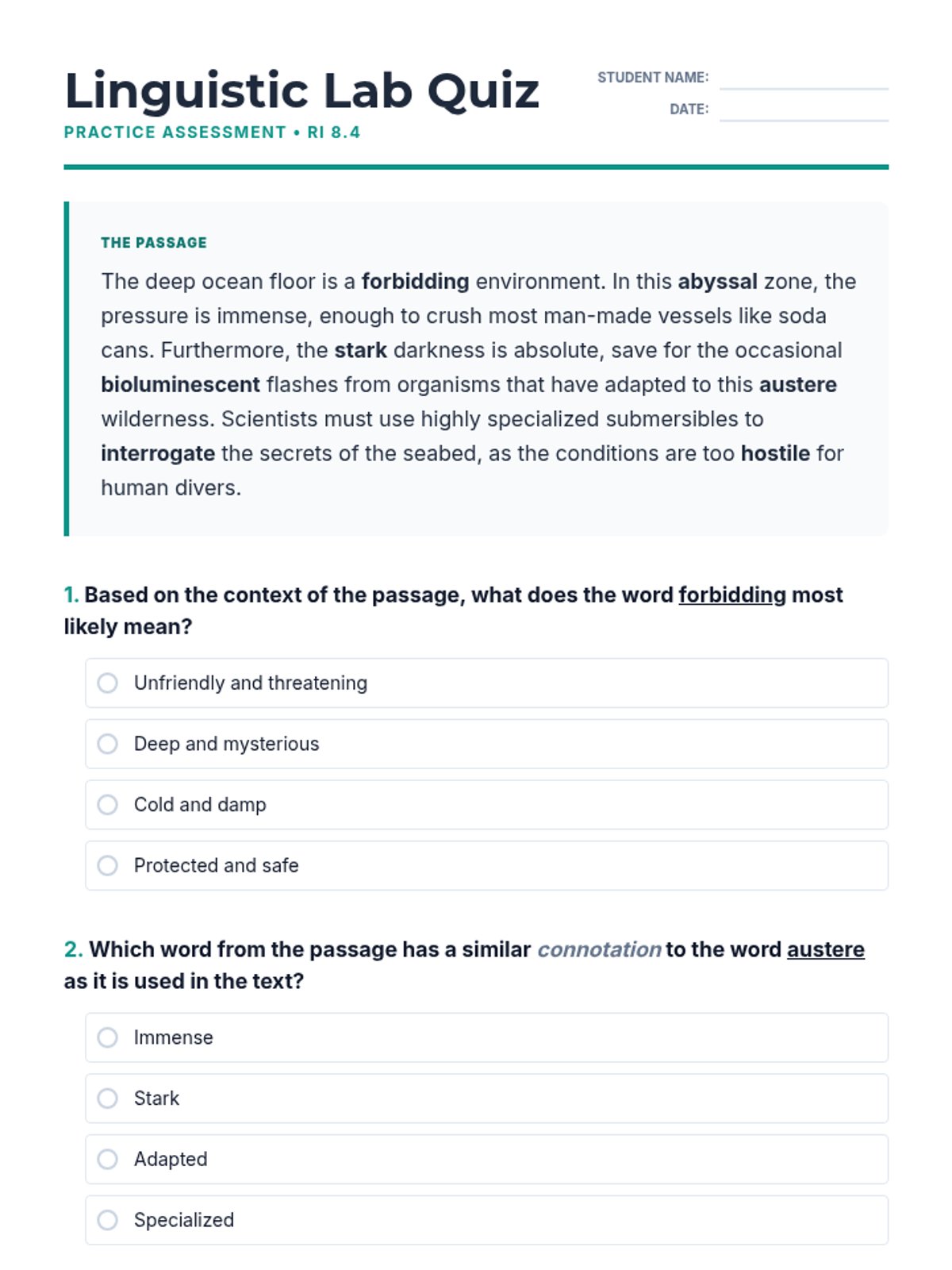
A practice quiz for RI 8.4 featuring a short informational passage and multiple-choice/short-answer questions focusing on context clues, connotation, tone, and technical vocabulary.
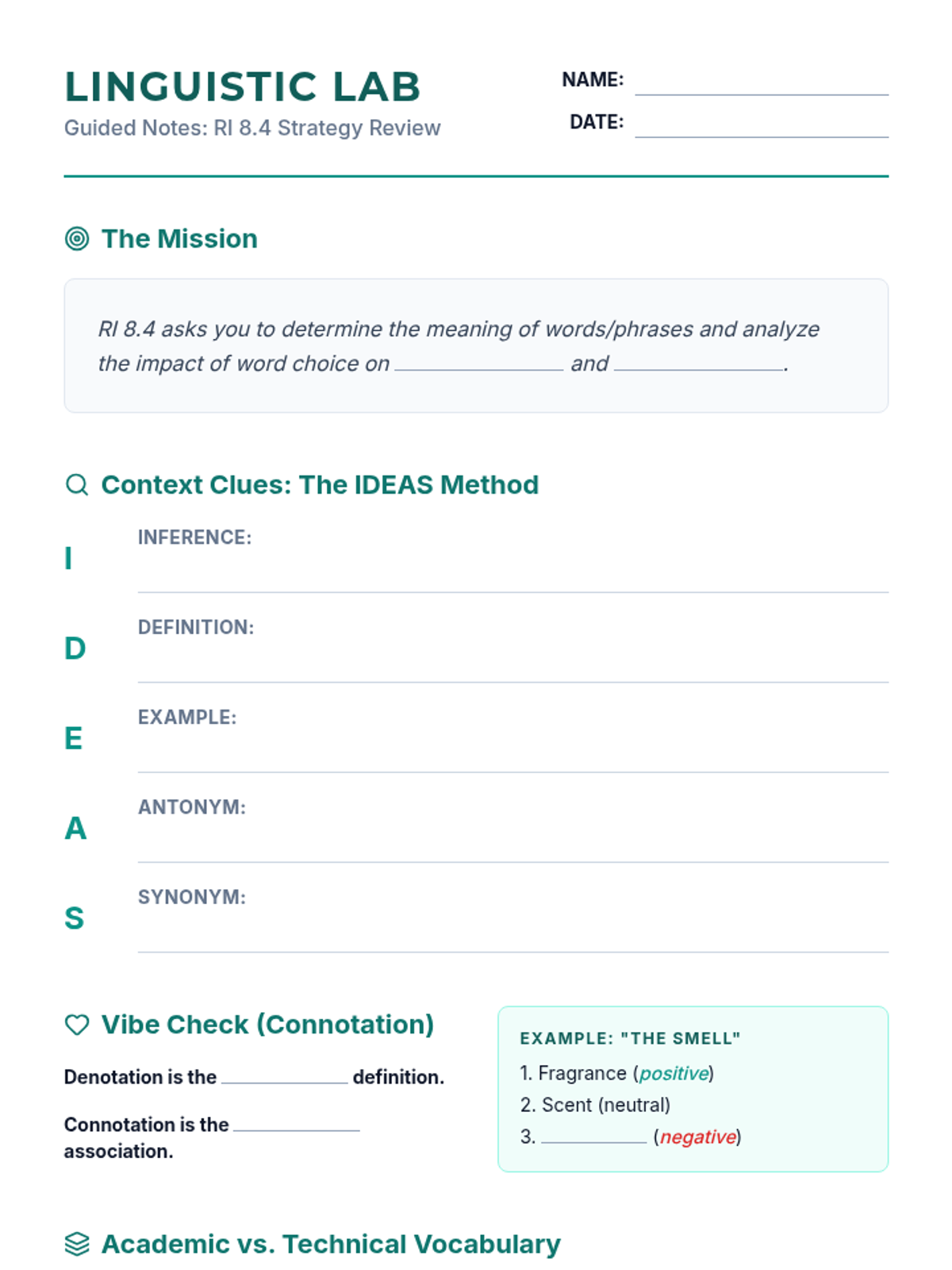
Guided notes for students to use during the Linguistic Lab slide presentation, featuring sections for context clues, connotation, and EOG strategies.
A visually engaging slide deck covering RI 8.4 EOG strategies, including context clues (IDEAS), connotation, tone, and vocabulary tiers.
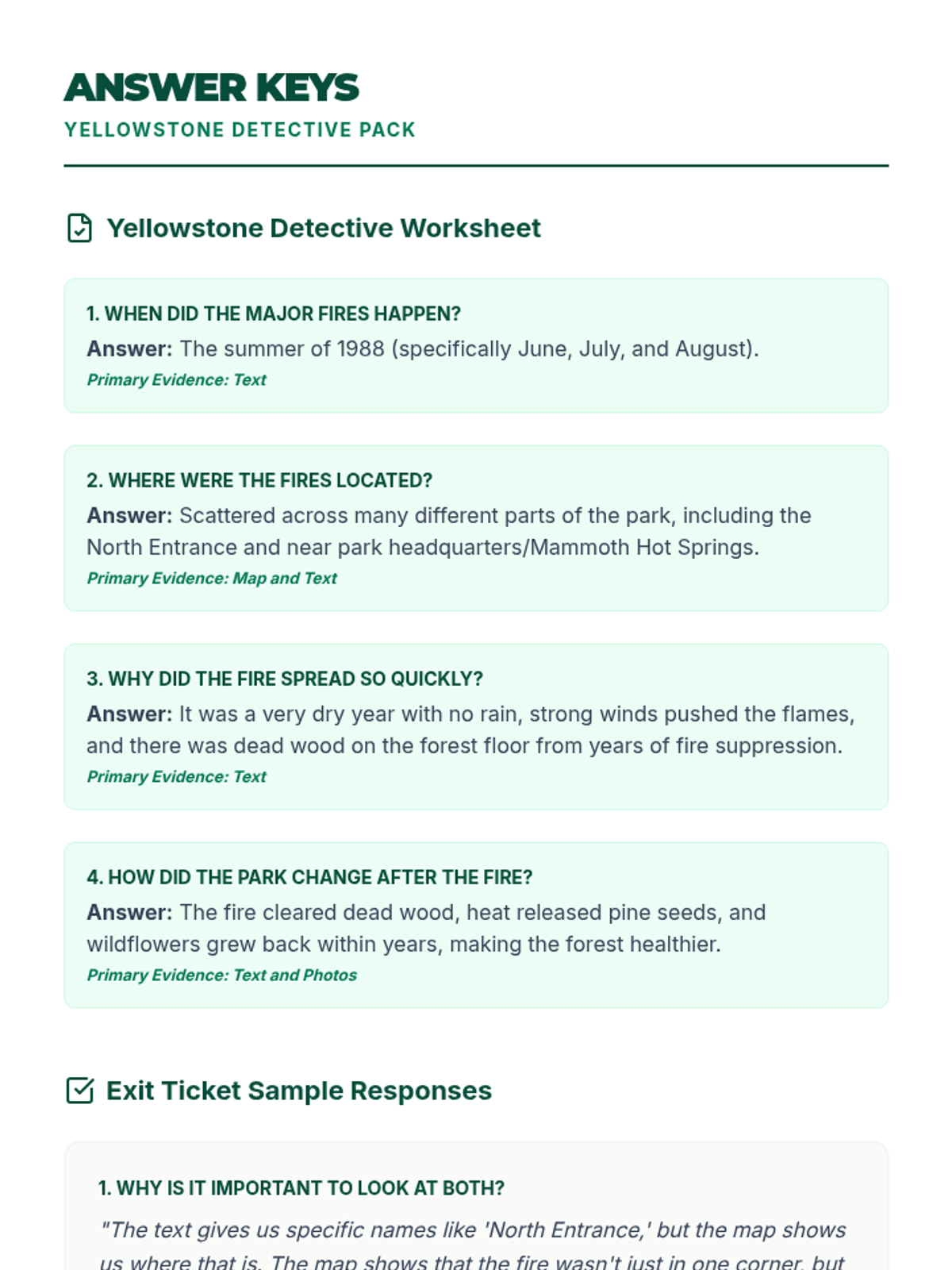
Answer keys for the 'Yellowstone Detective' worksheet and sample responses for the exit ticket. Includes specific evidence-source tagging for each question to support teacher evaluation.
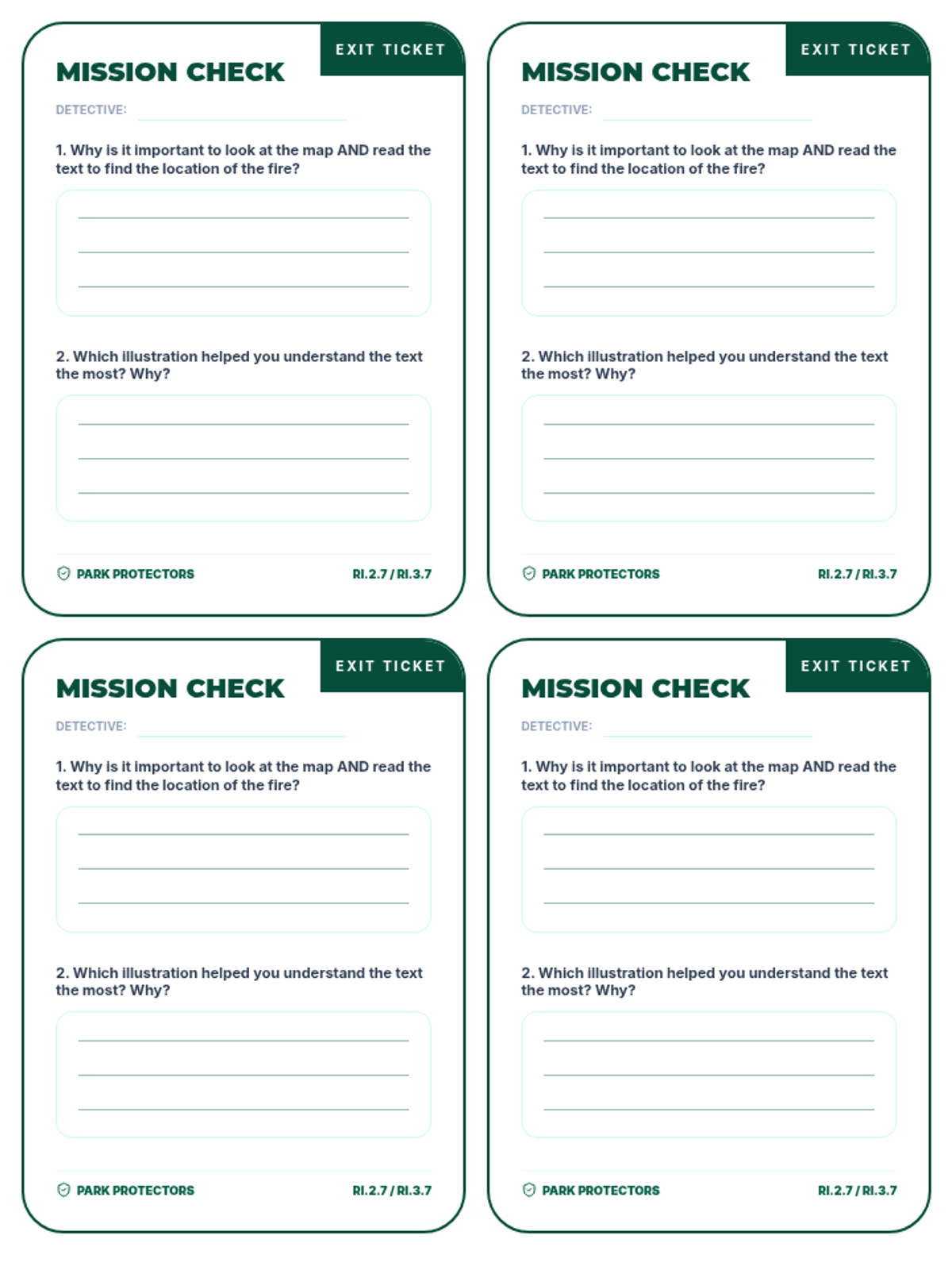
A set of four identical exit tickets on a single page, designed to efficiently assess student understanding of the lesson objective. Questions focus on the metacognitive process of combining text and illustrations.
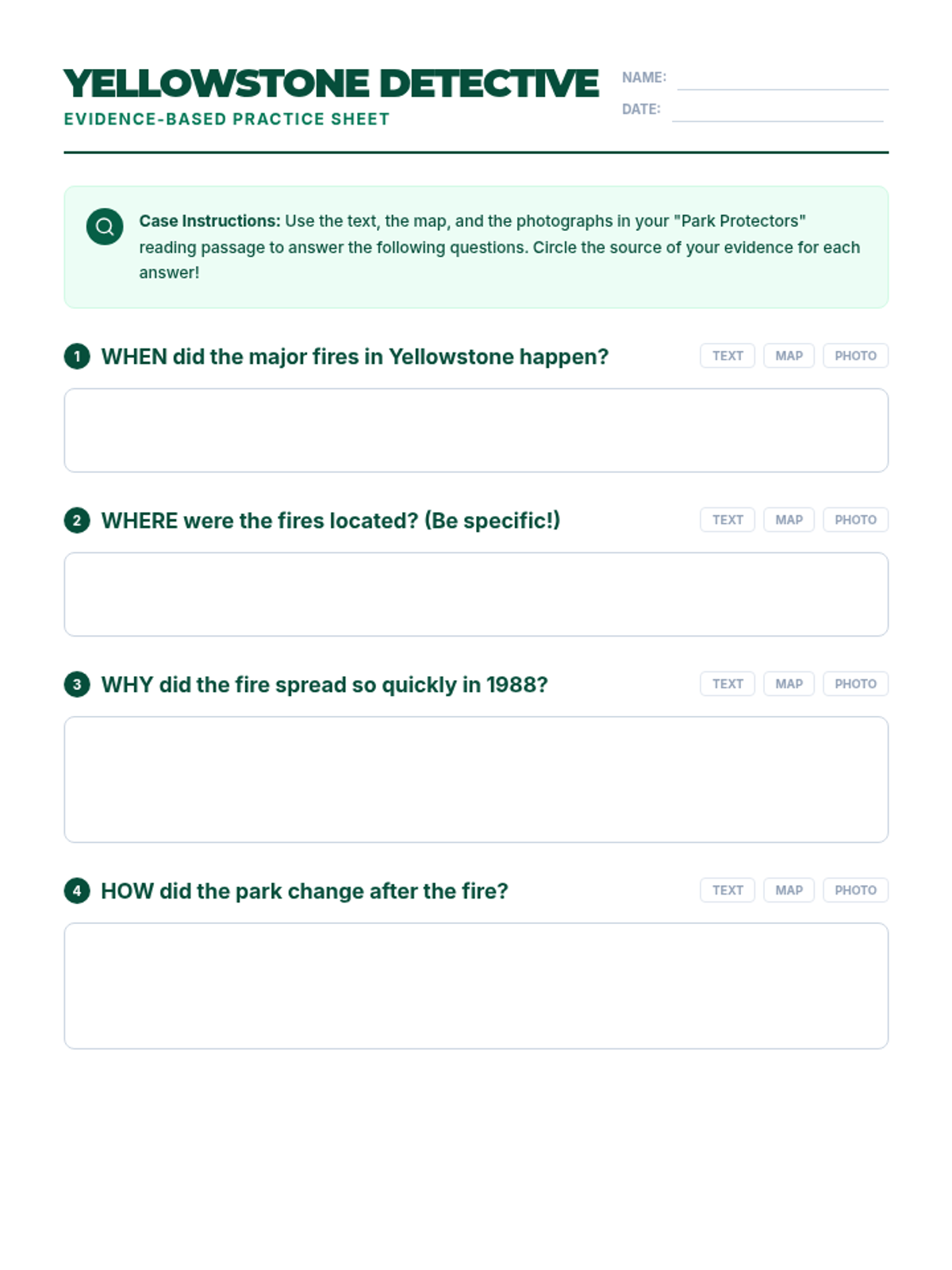
A structured practice worksheet that requires students to identify evidence from text, maps, and photographs to answer 'where, when, why, and how' questions about the Yellowstone fires. Includes a specific 'Evidence Source' tracker for each question.
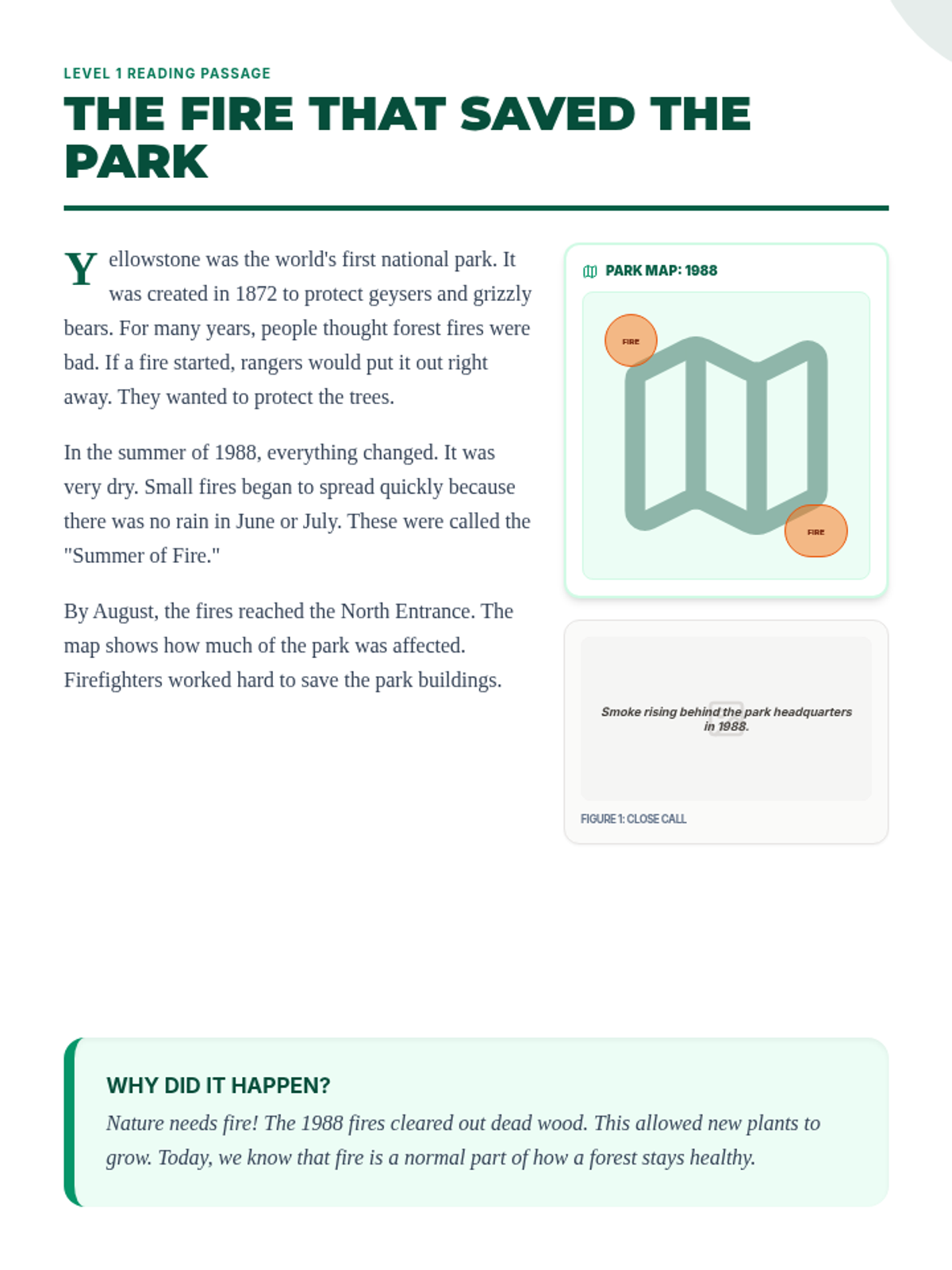
Two levels of a reading passage about the 1988 Yellowstone fires, designed to help students integrate text with maps and photographs. Level 1 uses simpler language, while Level 2 adds technical vocabulary and ecological details.
A high-impact slide deck for teaching students how to combine information from text and illustrations. Features visual placeholders for maps and photos, think-aloud prompts, and clear 'Detective Mission' instructions.
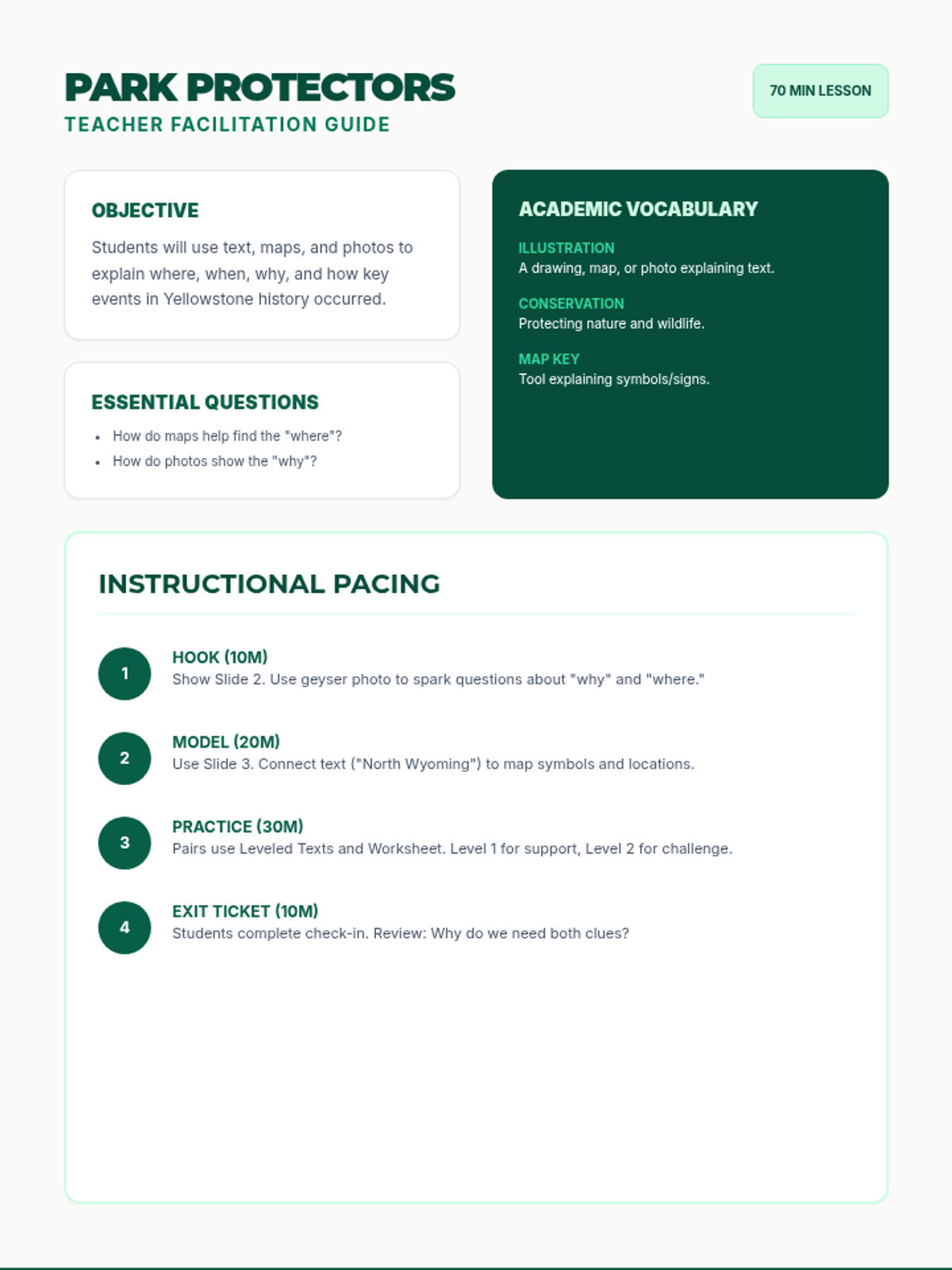
A comprehensive teacher facilitation guide for the 'Park Protectors' lesson, including learning objectives, standards alignment, academic vocabulary, and a detailed 60-minute instructional pacing guide.
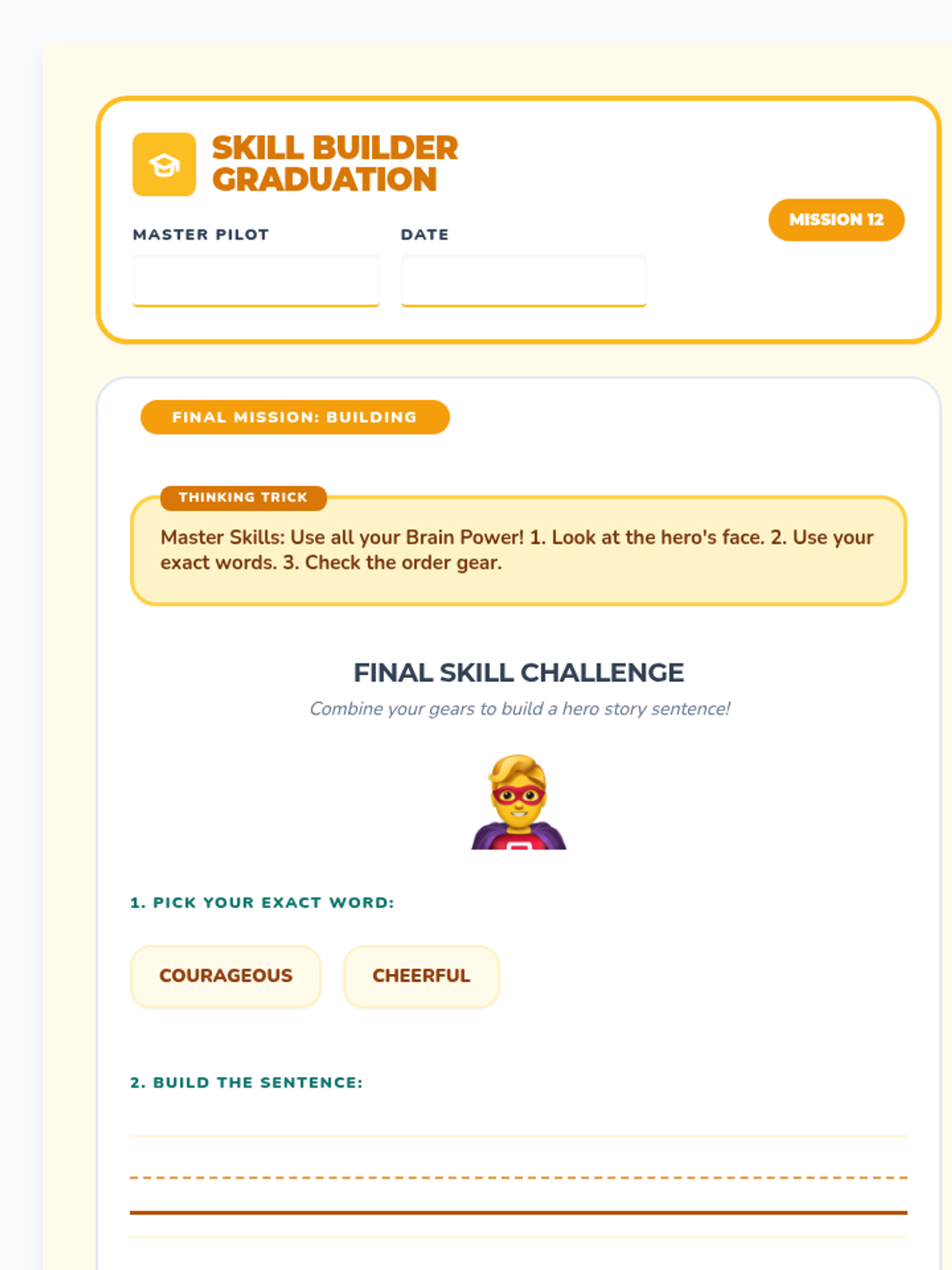
The final graduation workbook for Lesson 12: Master Pathfinder Graduation, simplified for 6-8 year olds and including "Thinking Trick" clues for strategy. Revised for improved line spacing, layout, and icon rendering. Revised to include hero-based context clues, specific decoding strategies for when no picture is present, and improved primary handwriting lines.
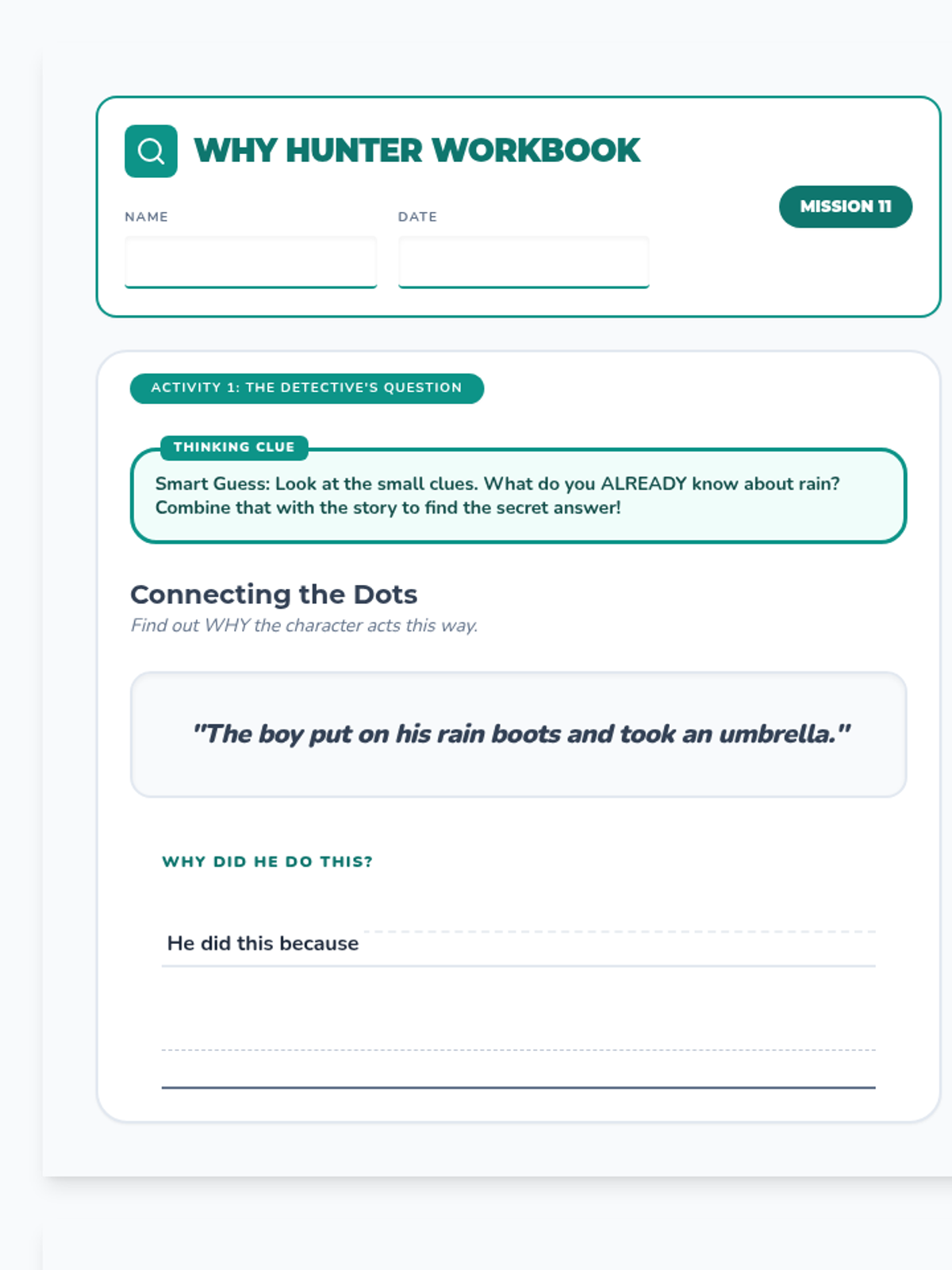
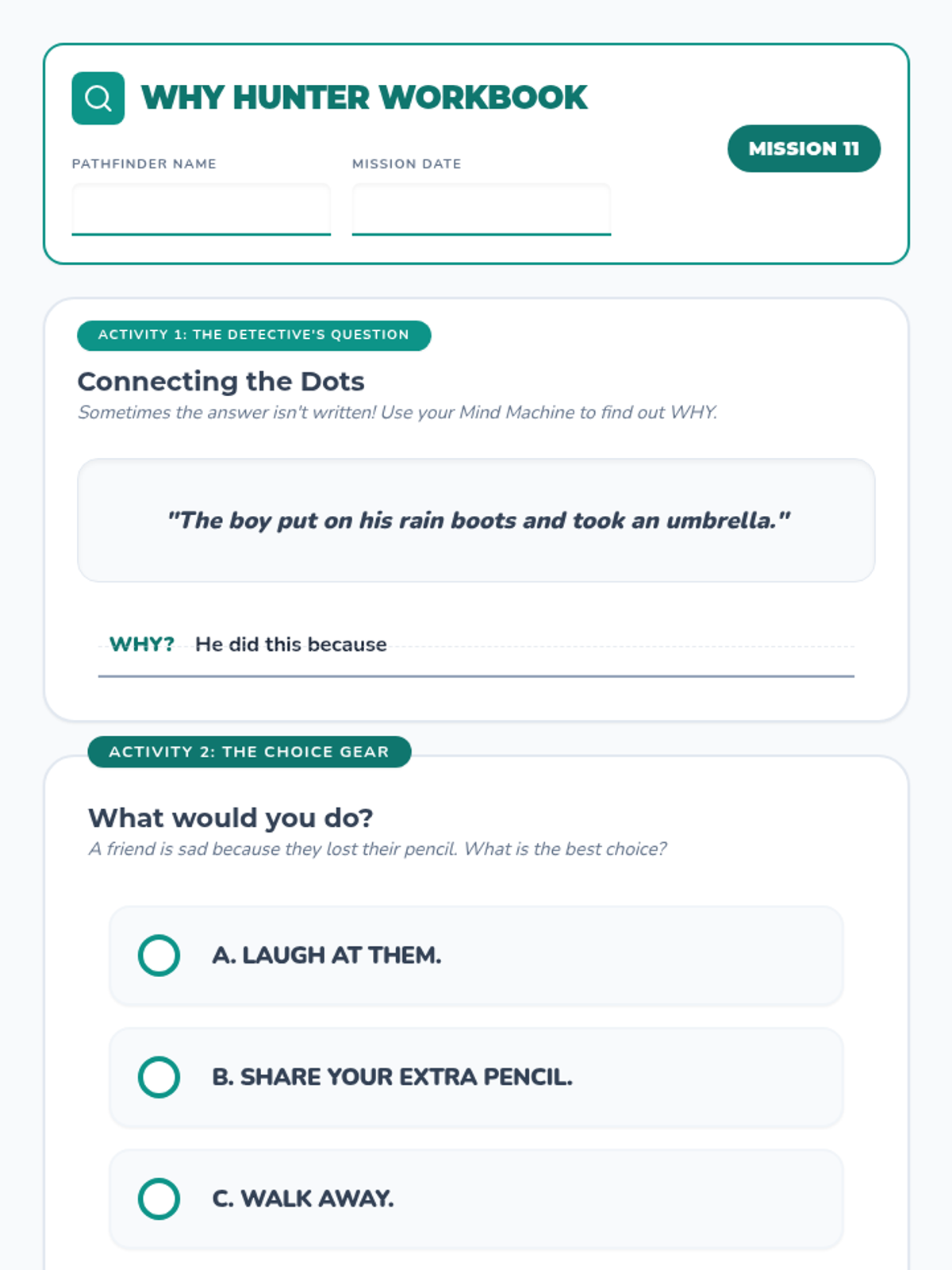
A student workbook for Lesson 11 focusing on inference and decision-making. Revised with simplified title, corrected page breaks, and improved handwriting guides for young learners.
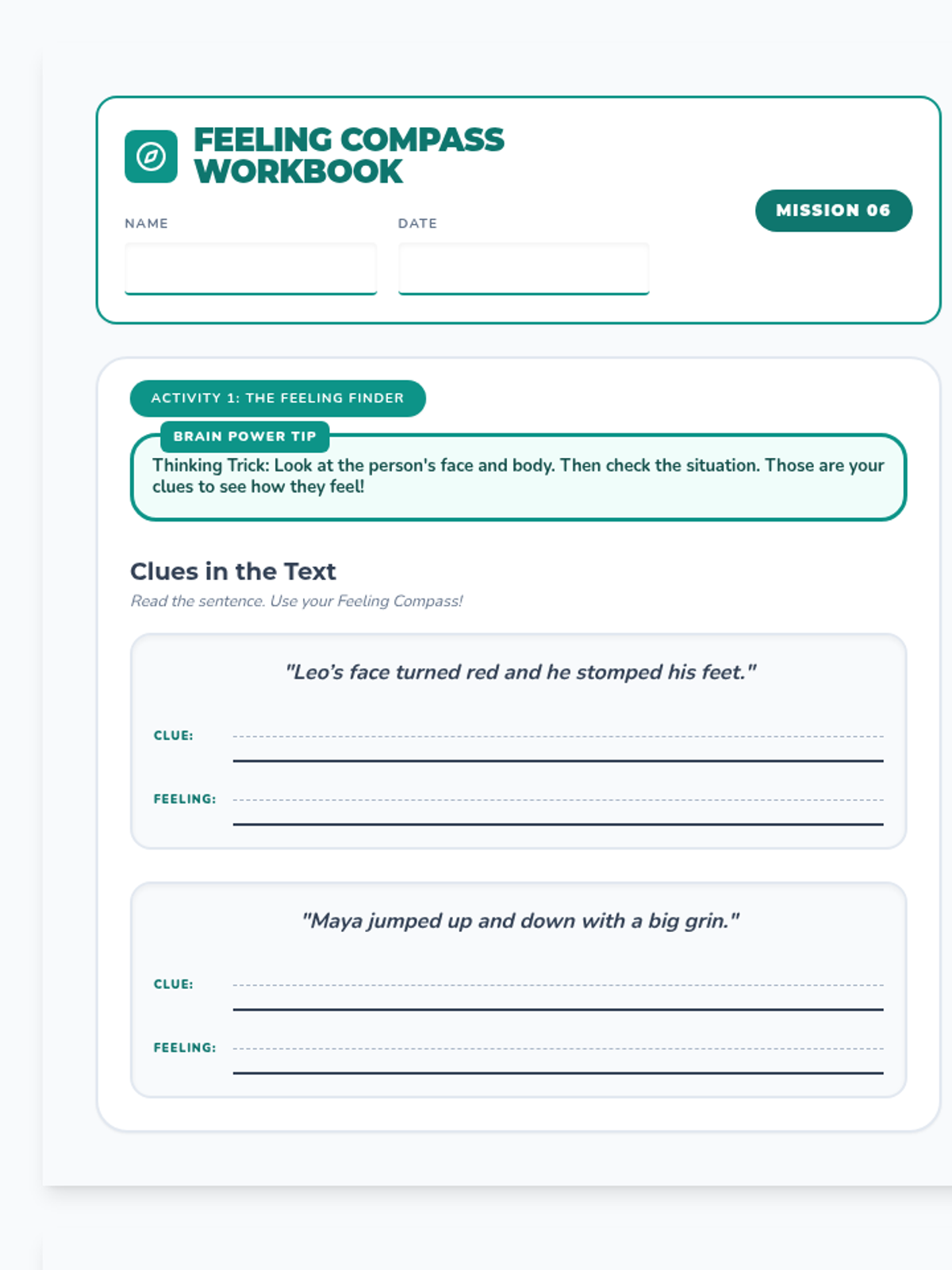
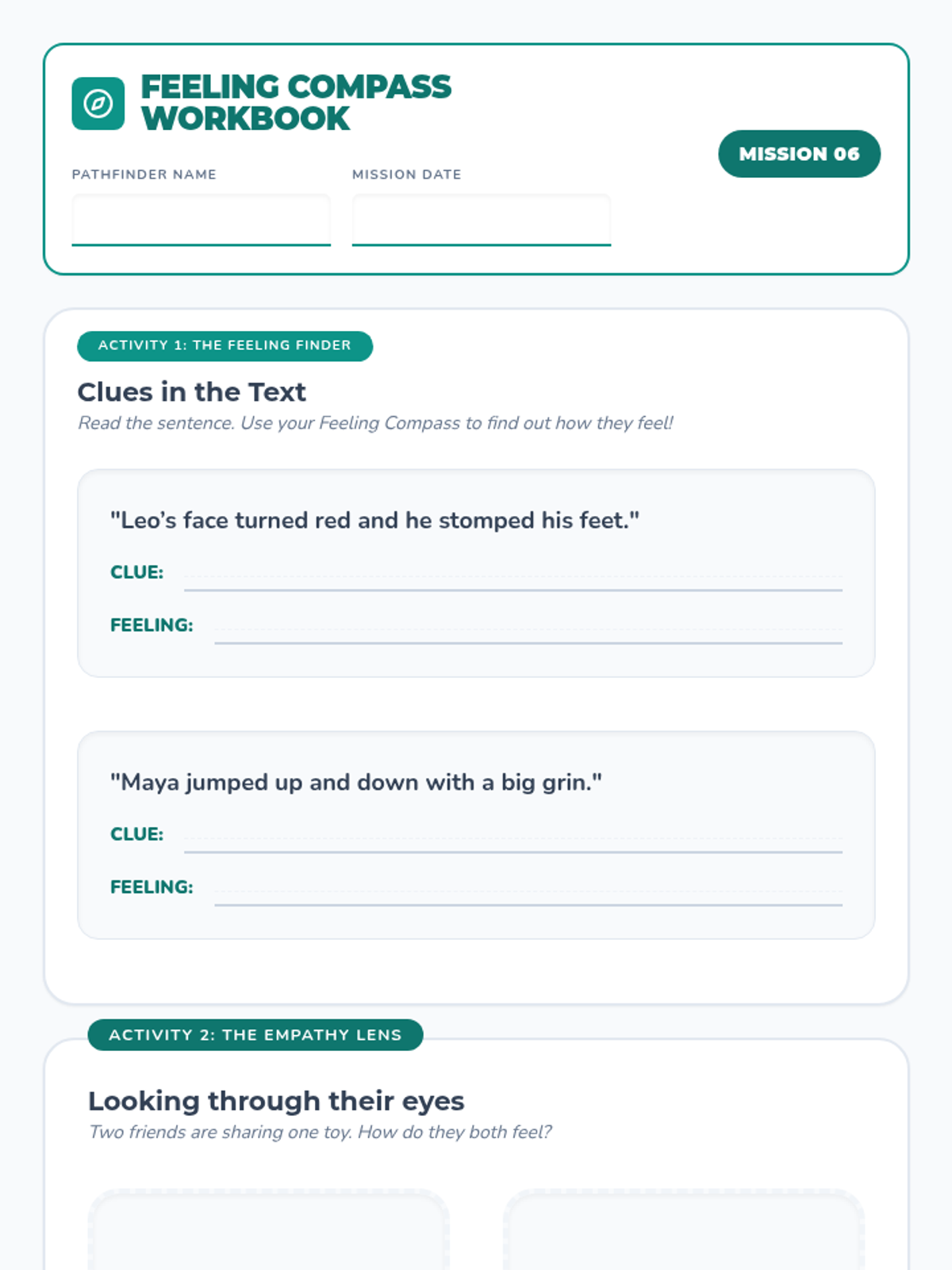
A student workbook for Lesson 6 focusing on context clues and social perspective. Revised with simplified title, better page breaks, and improved handwriting areas for young learners.
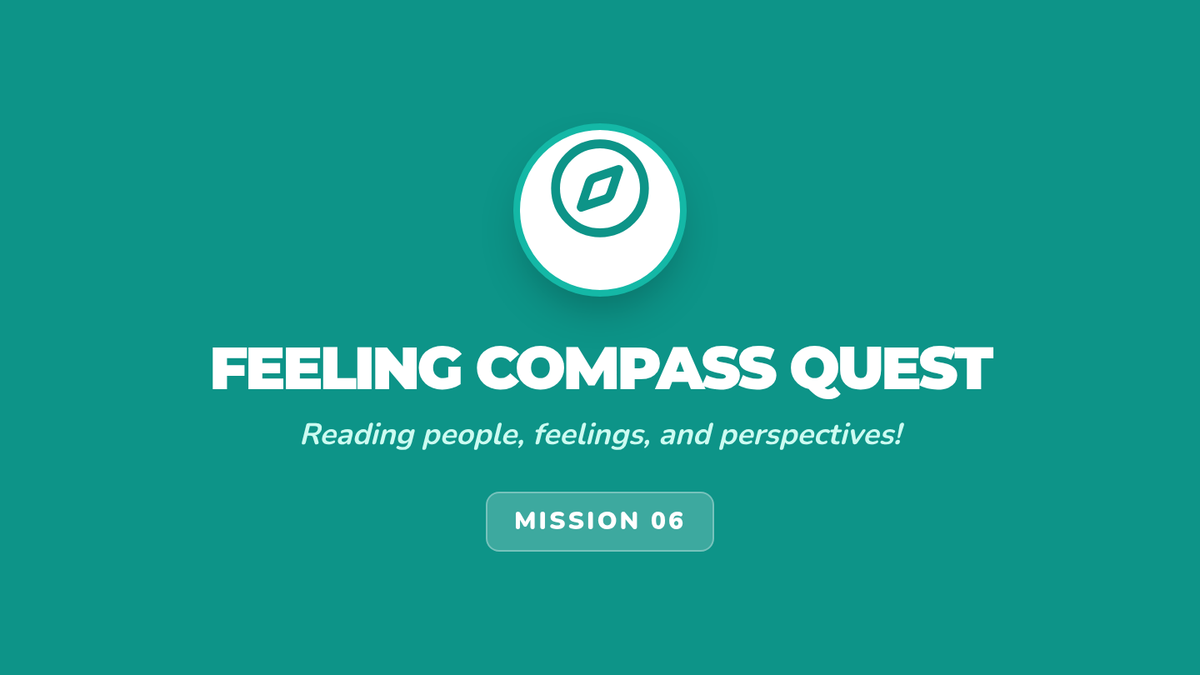
A student-facing presentation for Mission 6: Feeling Compass Quest (formerly Character Compass), explaining social understanding, empathy, and perspective using simple language and visual detective challenges. Revised for better consistency and contrast.
A student workbook for Lesson 11 focusing on inference and decision-making. Revised with simplified title and improved handwriting guides.
A student workbook for Lesson 6 focusing on context clues and social perspective. Revised with simplified title and improved handwriting areas.
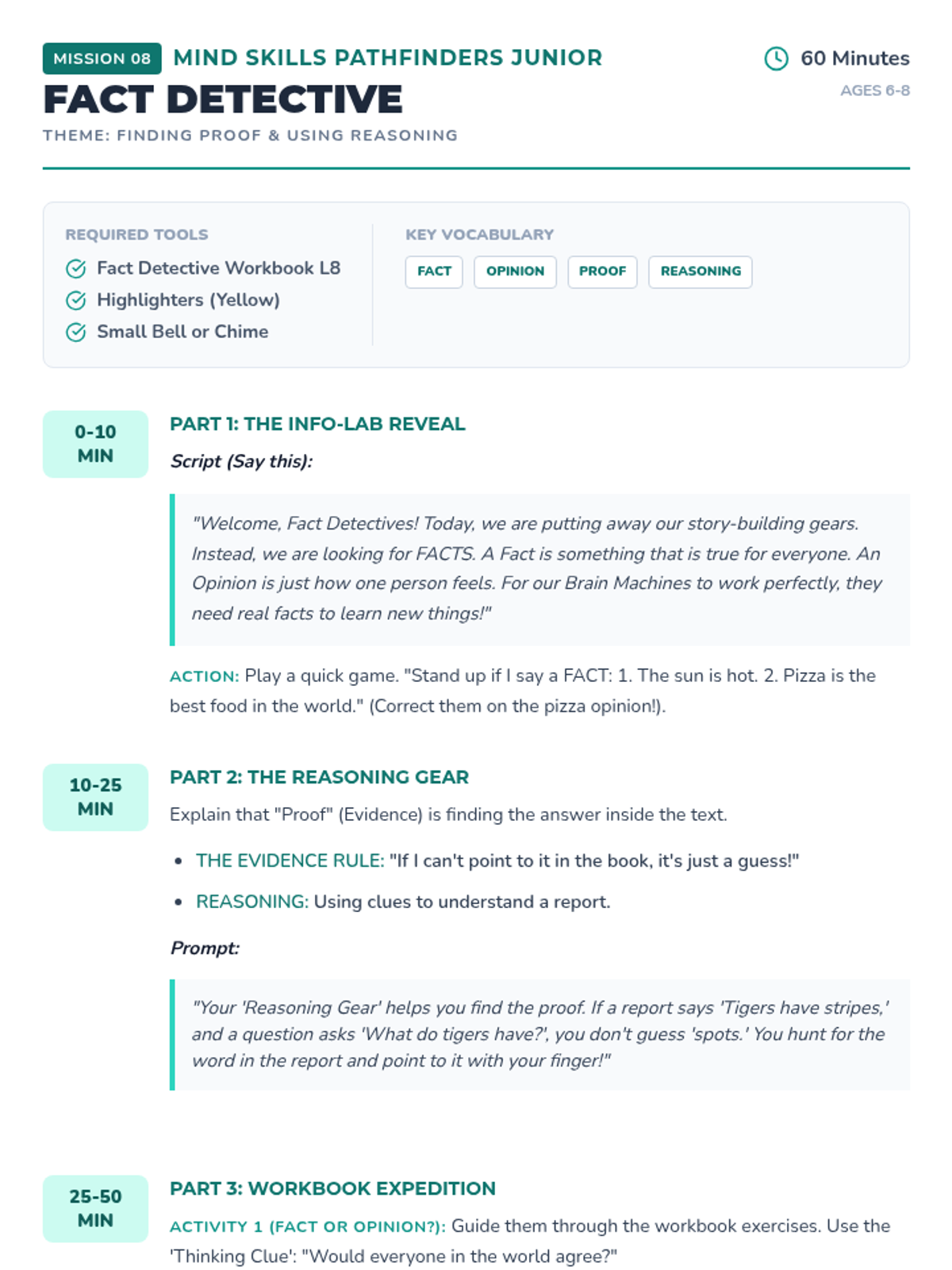
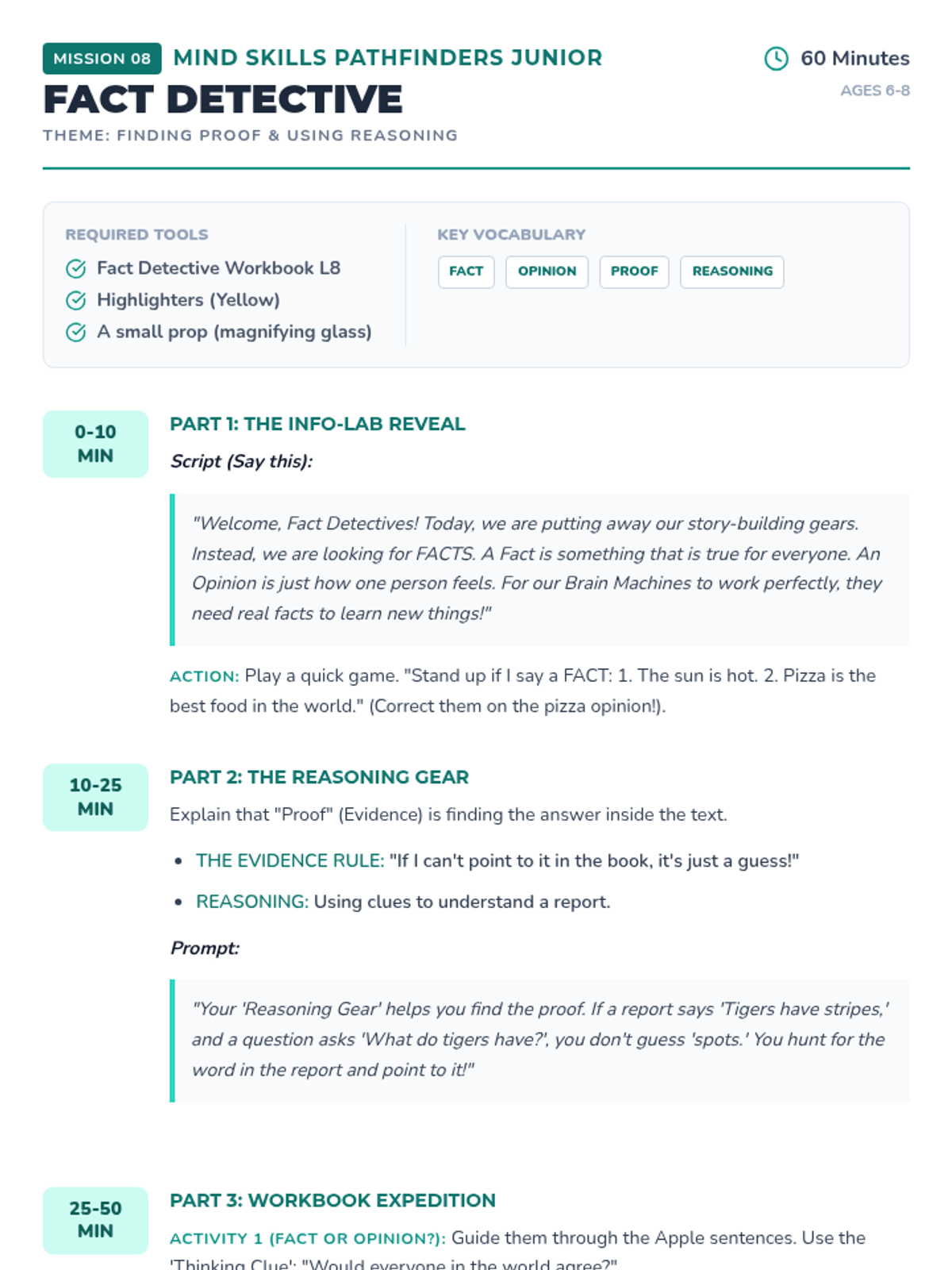
A detailed facilitator script for Lesson 8: Fact Detective, focusing on reading informational texts and finding proof (evidence) for children aged 6-8. Simple language used as requested. Revised to fix page breaks and alignment.
A detailed facilitator script for Lesson 8: Fact Detective, focusing on reading informational texts and finding proof (evidence) for children aged 6-8. Simple language used as requested.
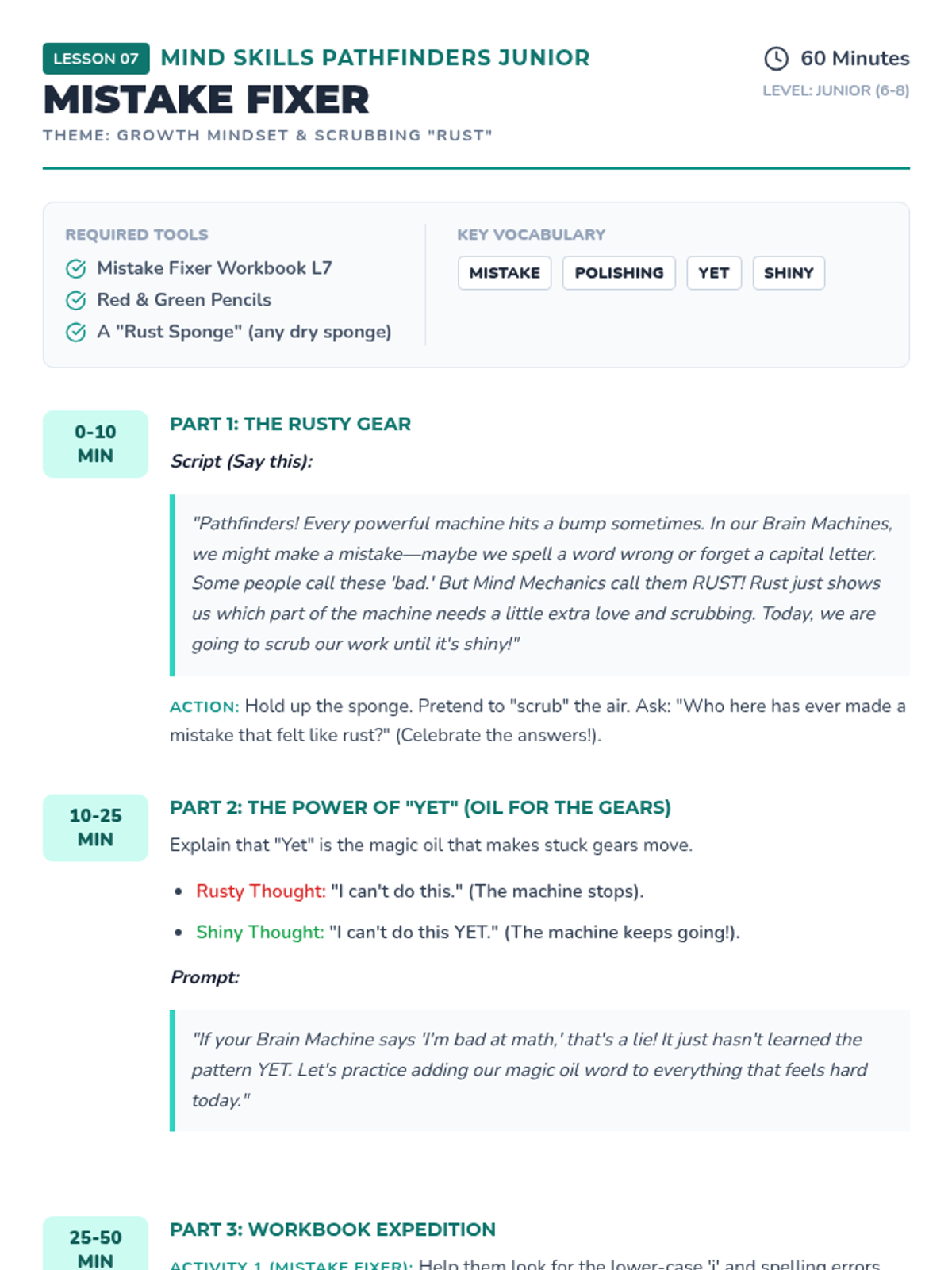
A detailed facilitator script for Lesson 7: Resilience Gear Grind (Mistake Fixer), focusing on growth mindset, editing skills, and the 'Power of Yet' for children aged 6-8.
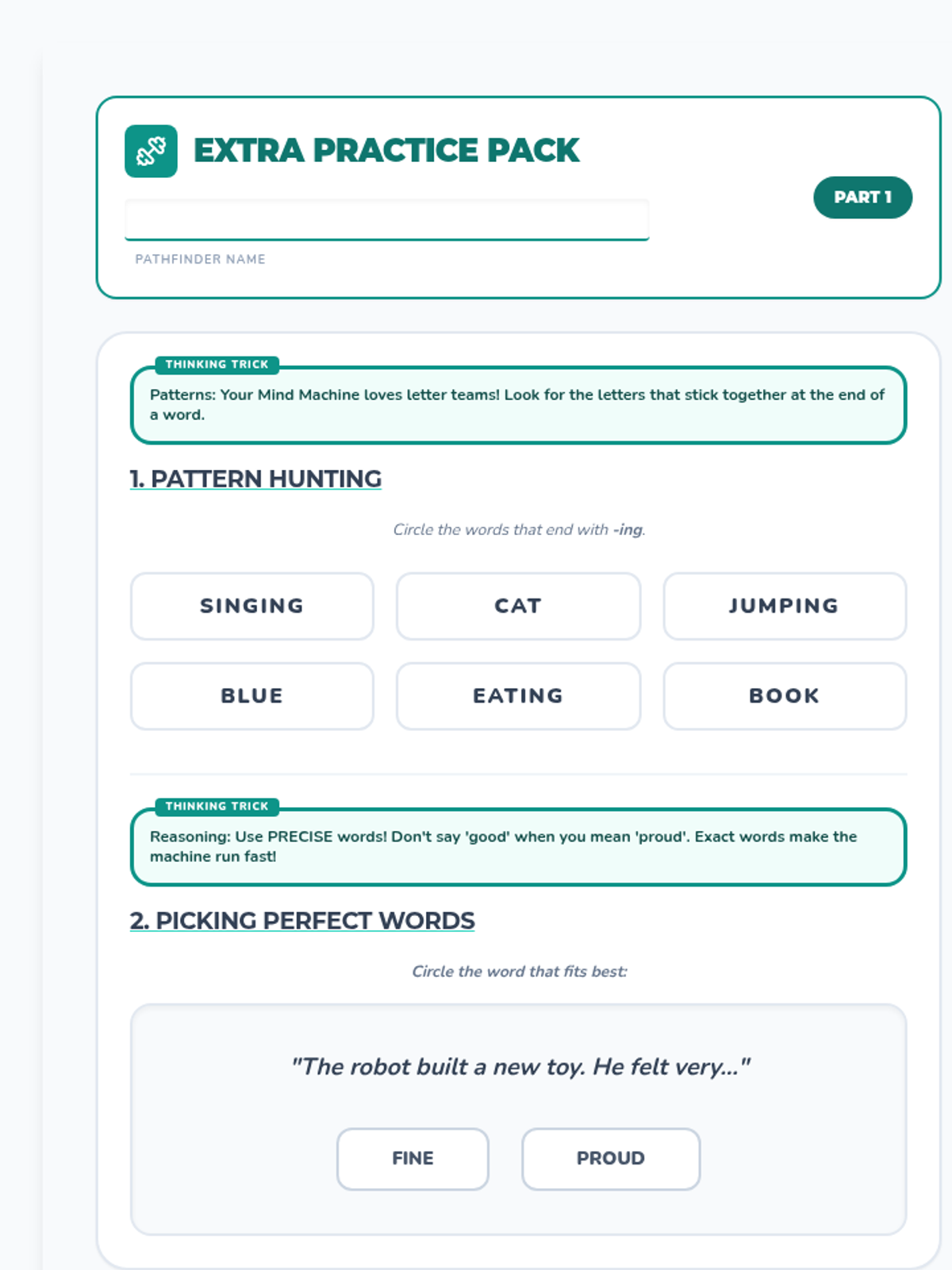
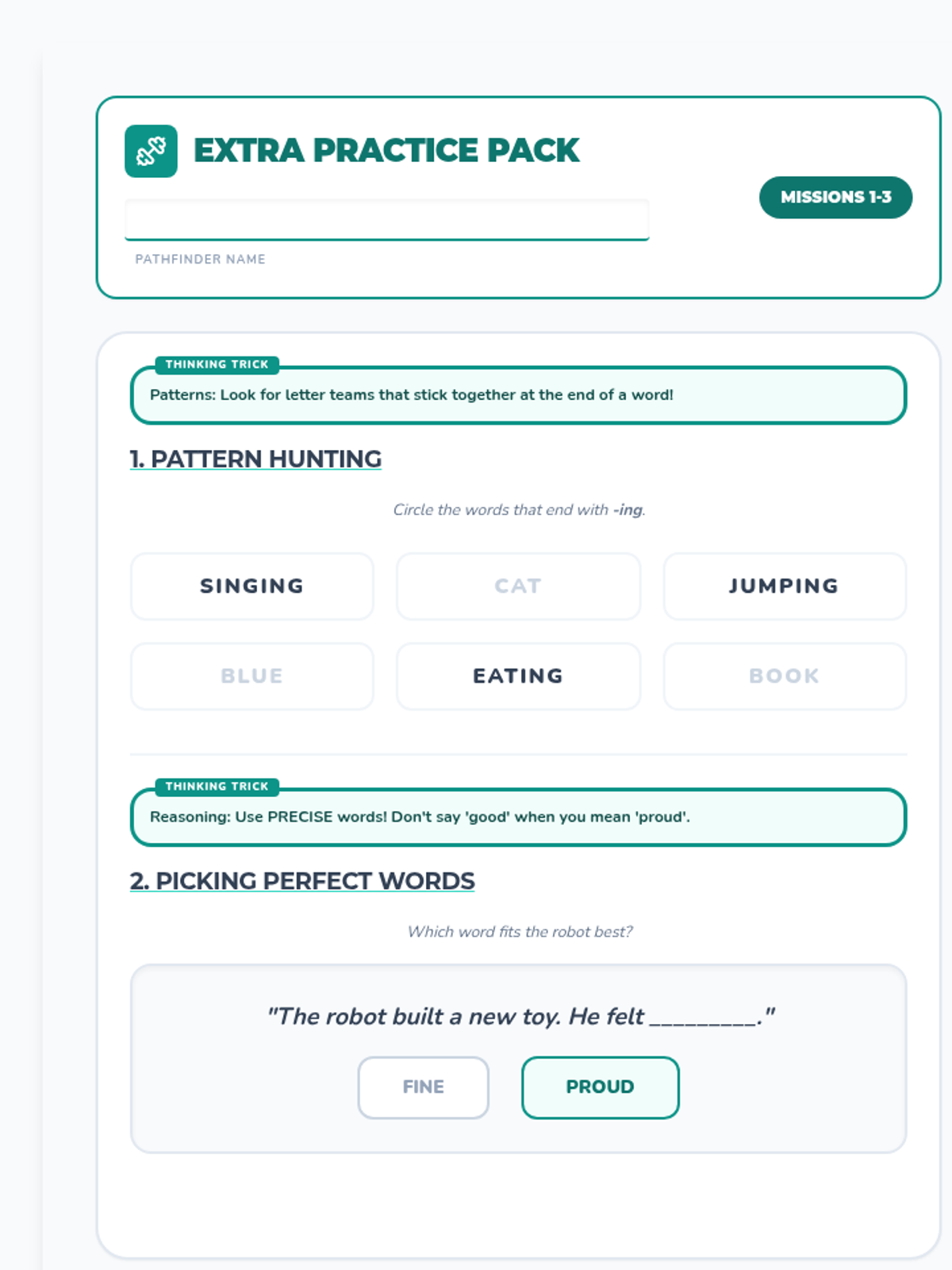
A 3-page extra practice workbook for students aged 6-8. Features pattern spotting, precise vocabulary, logical sentence building, character empathy, and growth mindset exercises with simplified strategy clues. Revised to ensure answer choice uniformity and improved readability.
A 3-page extra practice workbook for students aged 6-8. Features pattern spotting, precise vocabulary, logical sentence building, character empathy, and growth mindset exercises with simplified strategy clues.