A student preparation sheet for the capstone defense simulation, focusing on mapping pillars, auditing structural integrity, and planning tactical pivots. Updated with light backgrounds for handwriting legibility.
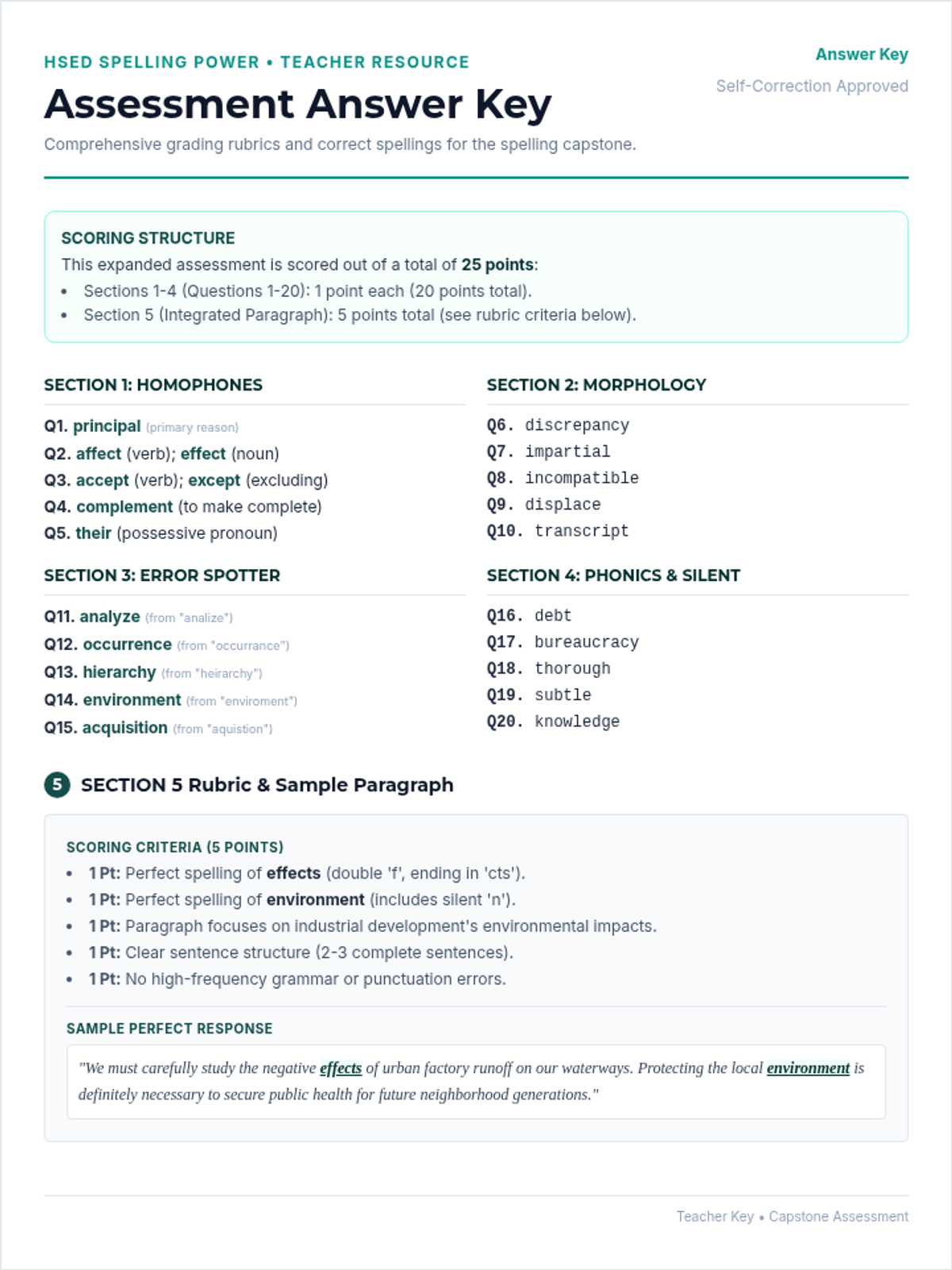
The comprehensive answer key and grading guide for the Spelling Power Assessment, including rubric metrics and perfect response benchmarks.
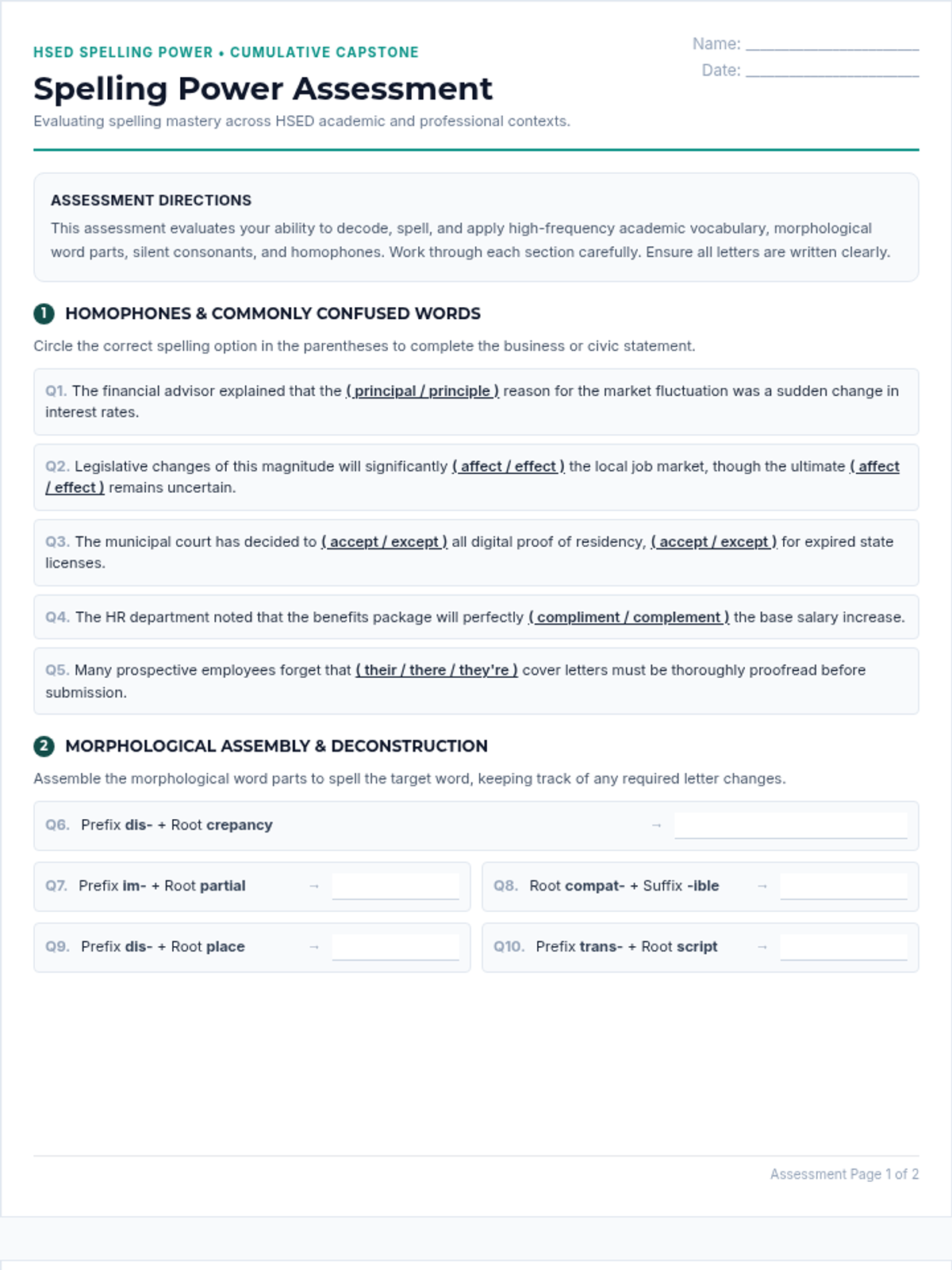
A print-ready, high-contrast final spelling assessment evaluating spelling proficiency across homophones, morphology, irregular academic vocabulary, and complex phonics.
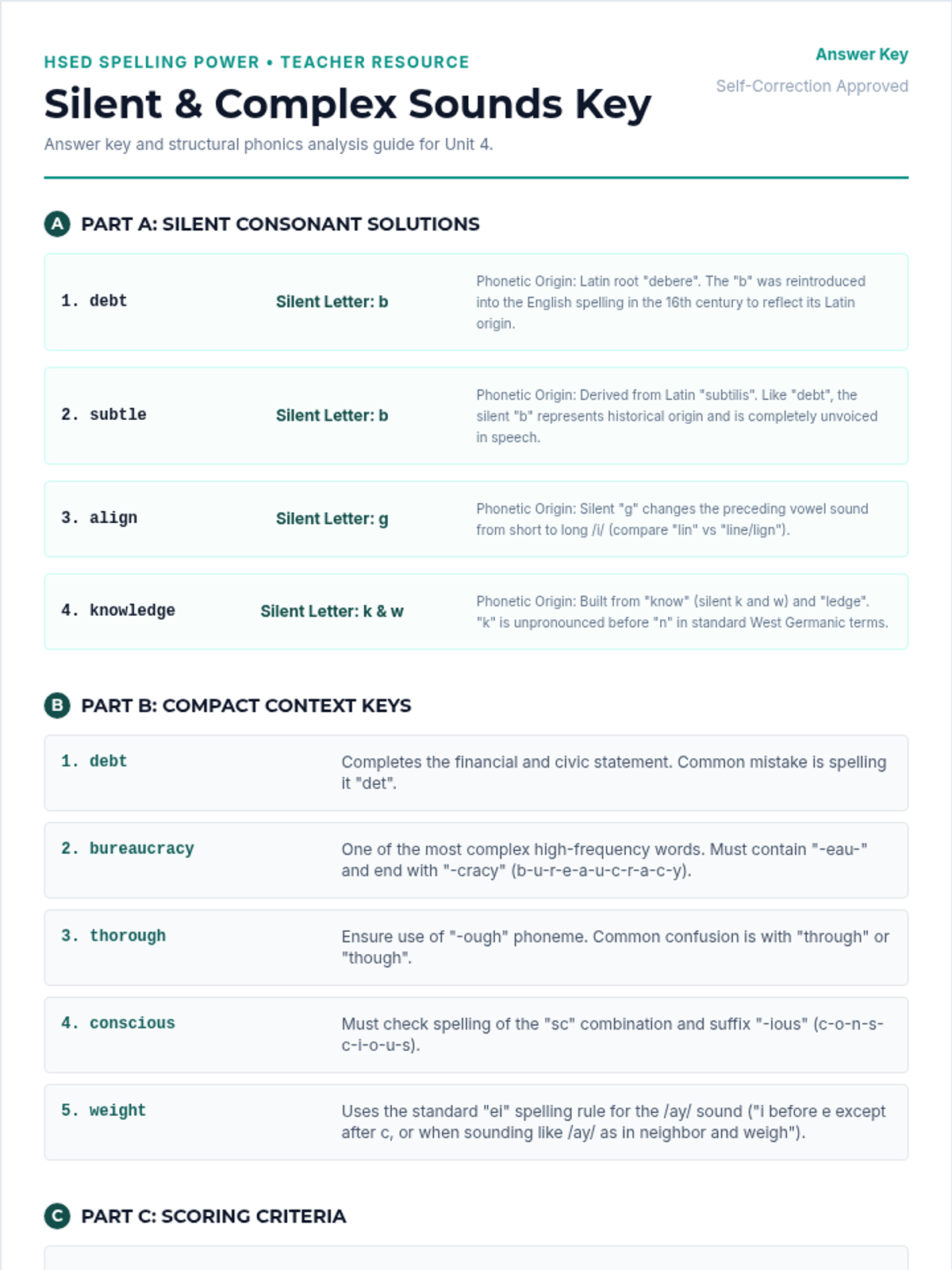
The comprehensive answer key and self-correction guide for the Unit 4 Silent and Complex Sounds Workbook.
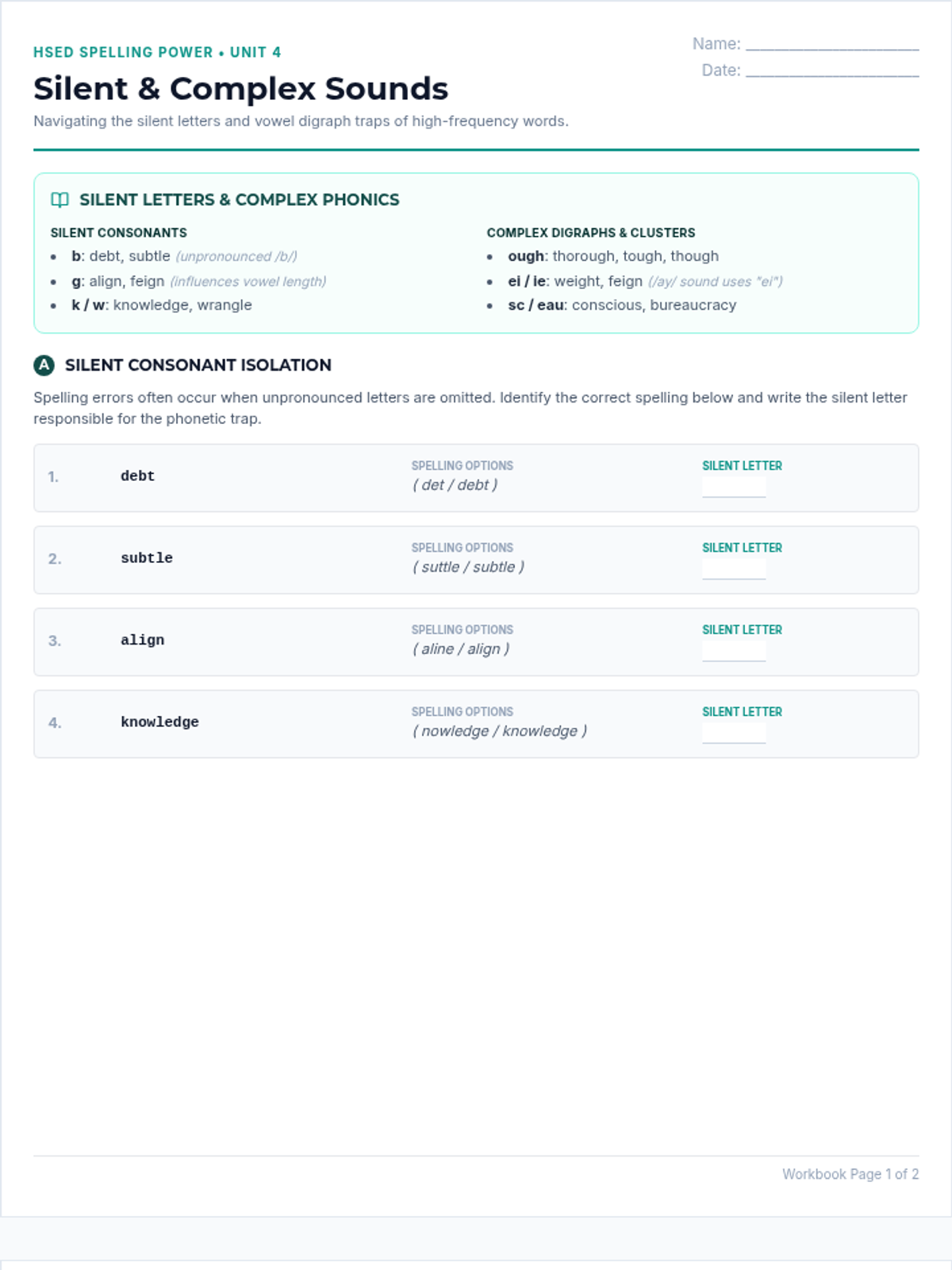
A spelling practice workbook chapter for adult learners focusing on silent letters like g, b, k, and complex vowel digraphs like ough, ei, ie within financial, civic, and biological contexts.
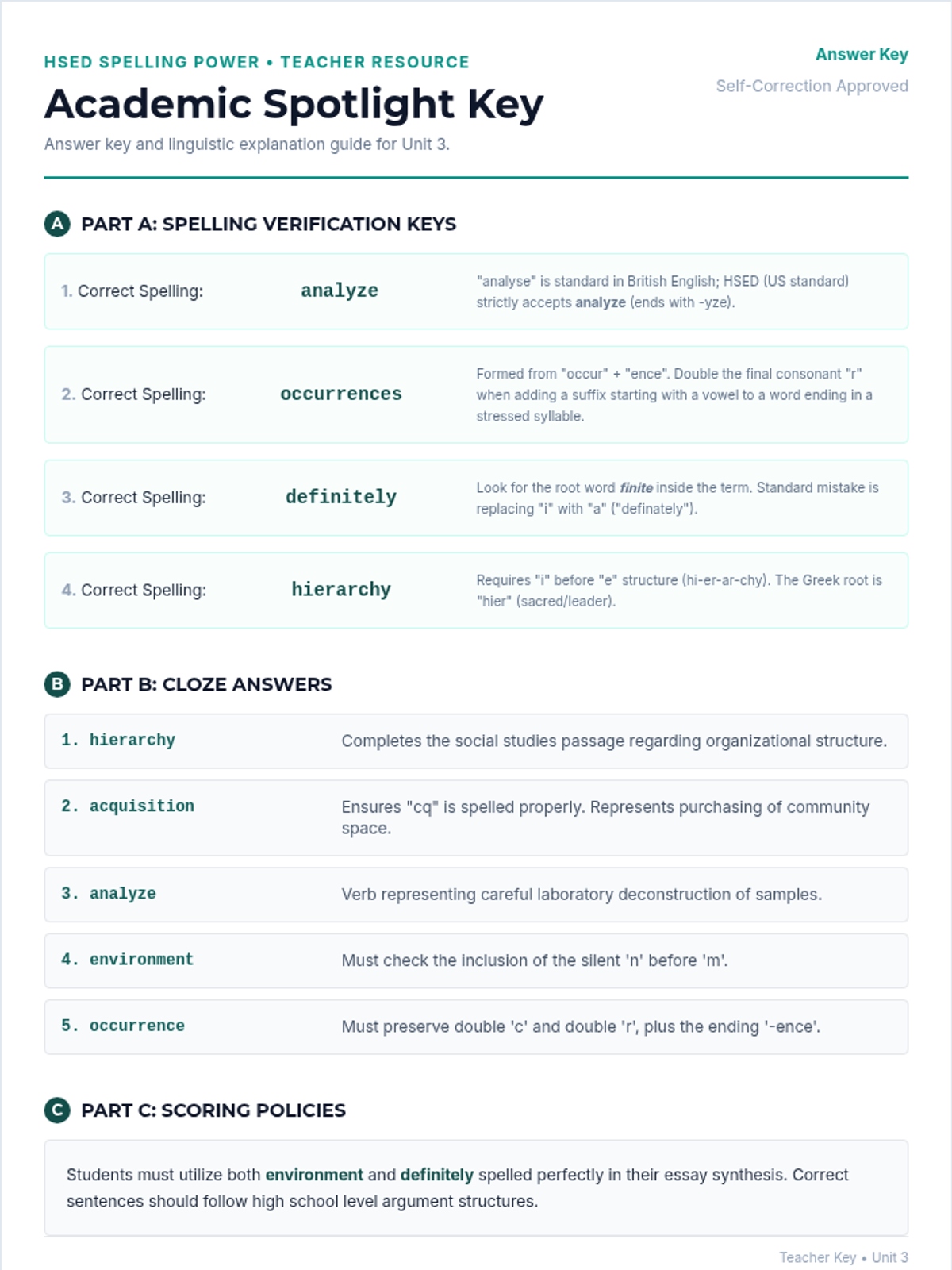
The comprehensive answer key and self-correction guide for the Unit 3 Academic Spotlight Workbook.
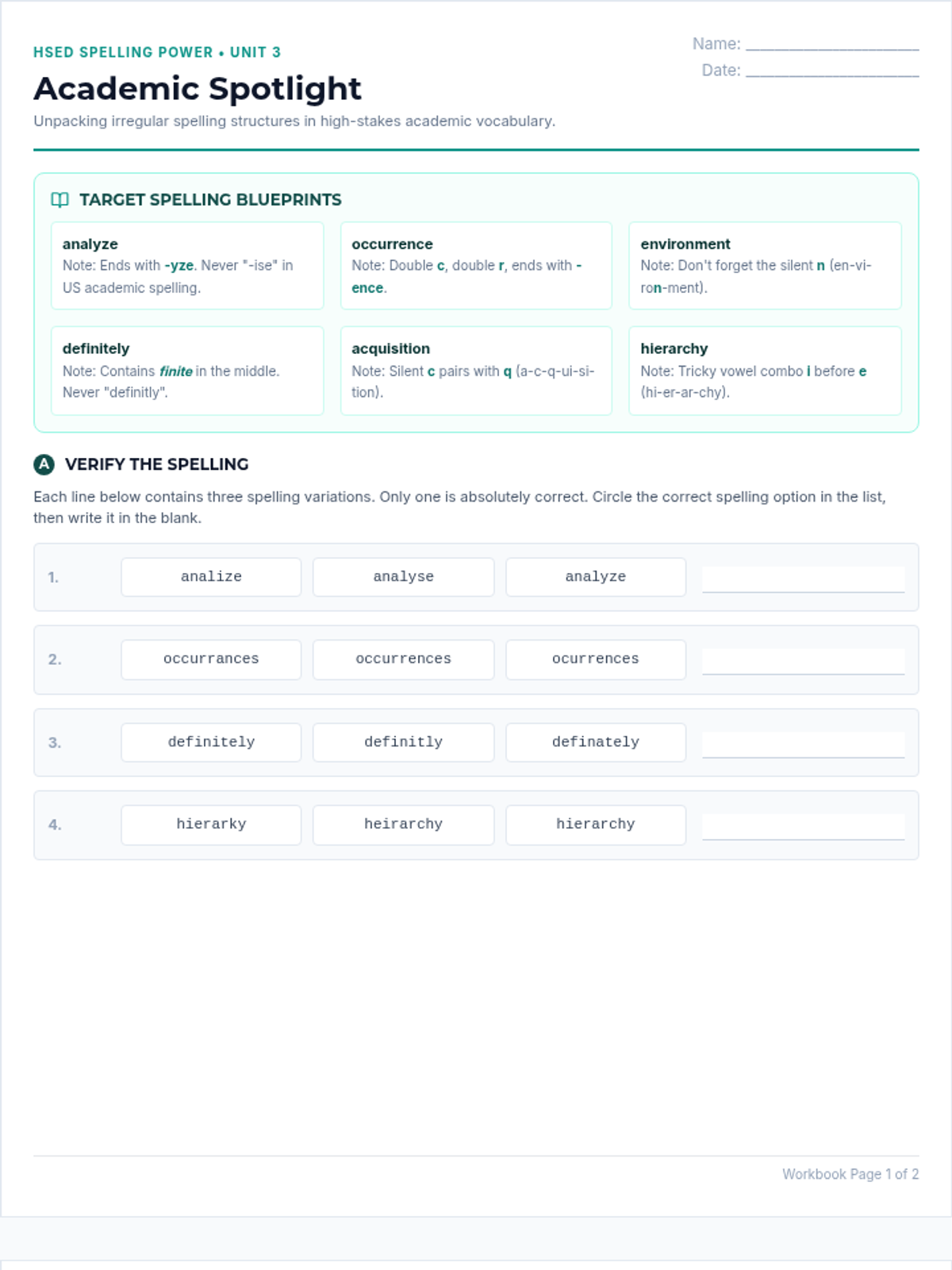
A spelling practice workbook chapter for adult learners focused on high-frequency academic vocabulary words like hierarchy, environment, analyze, and occurrence with contextualized science/social studies passages.
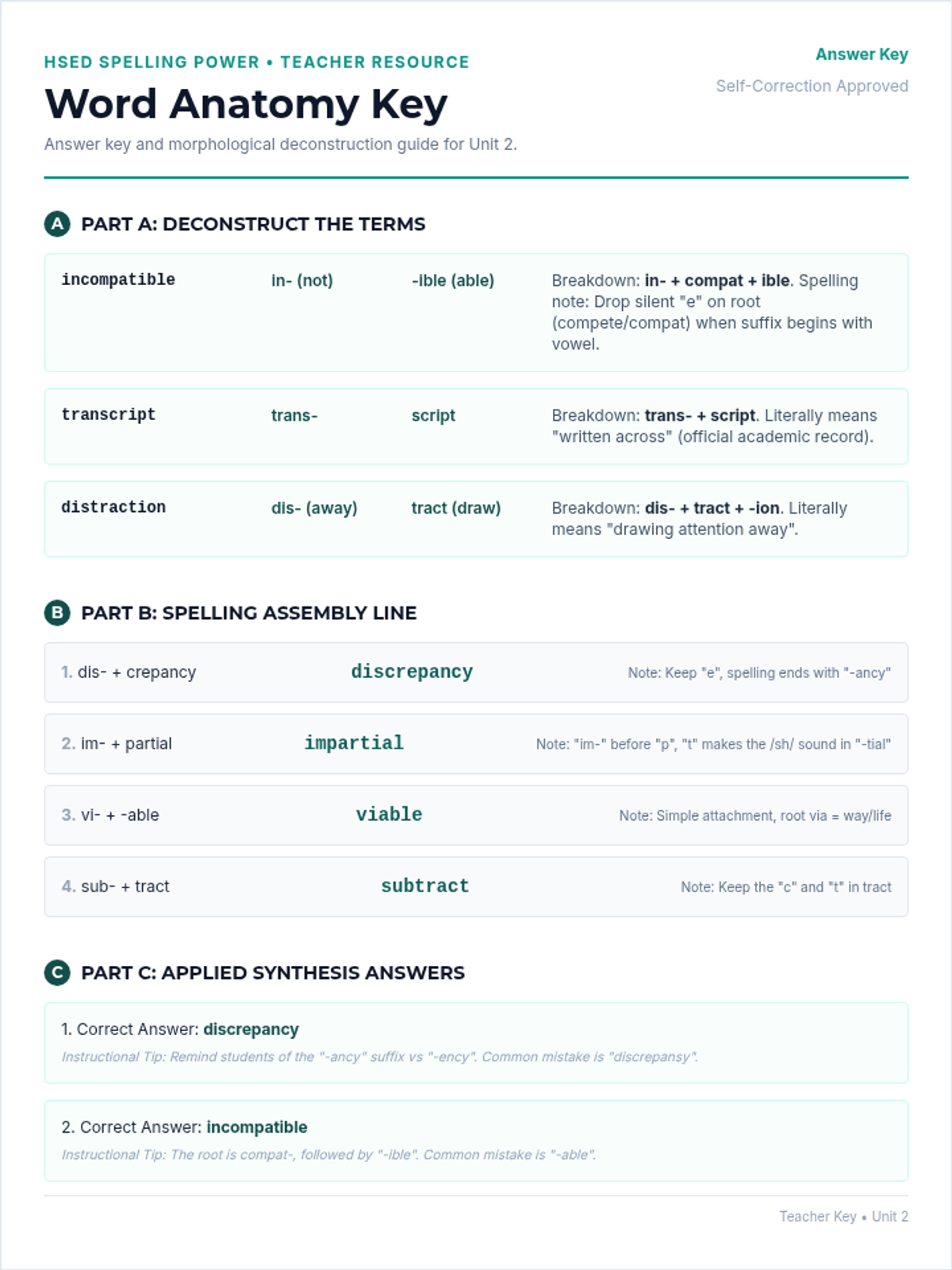
The comprehensive answer key and self-correction guide for the Unit 2 Word Anatomy Workbook.
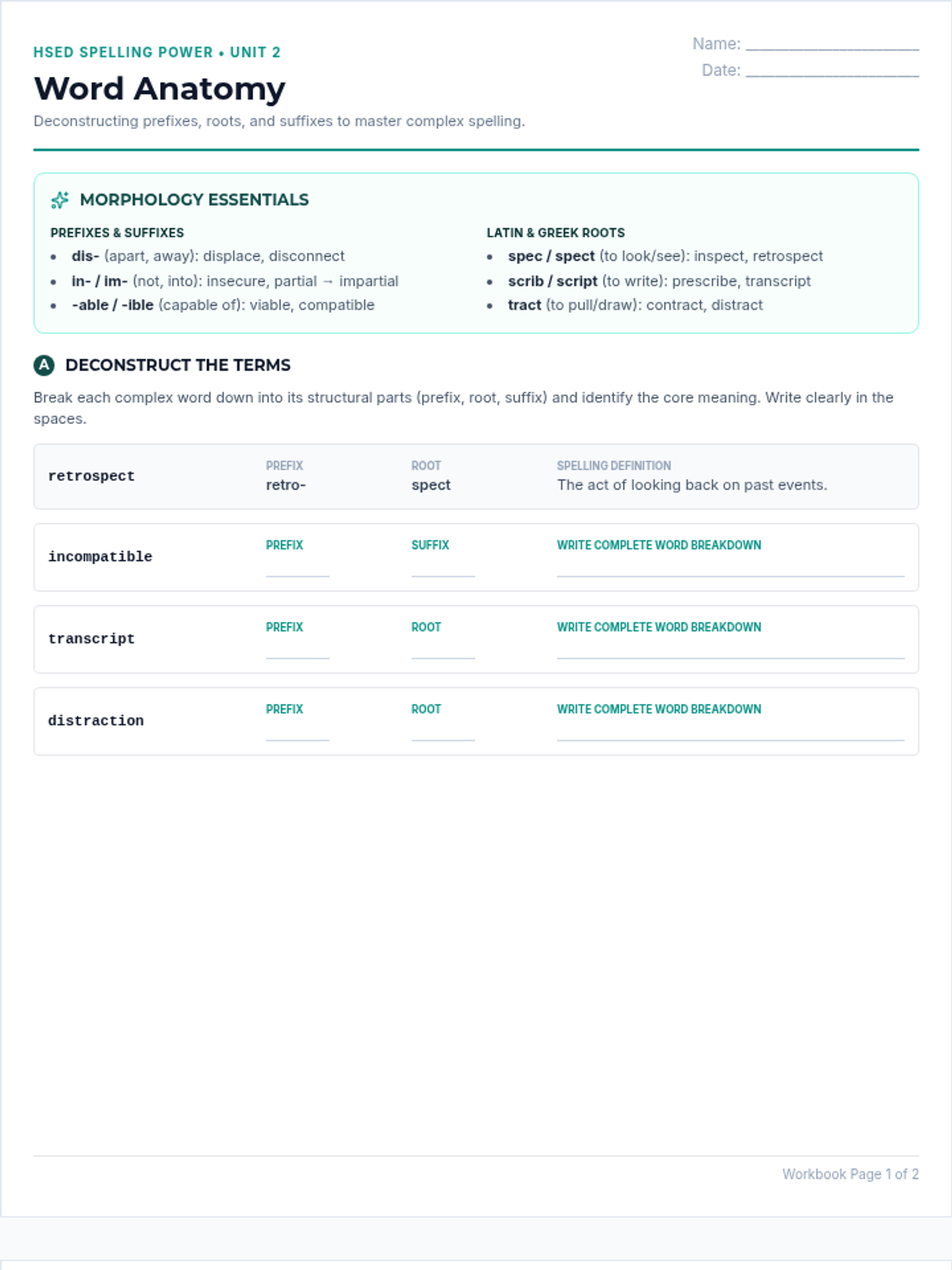
A workbook chapter targeting morphological spelling rules (prefixes, suffixes, and Latin roots) using career and civic contexts, featuring structural breakdowns and word-building grids.
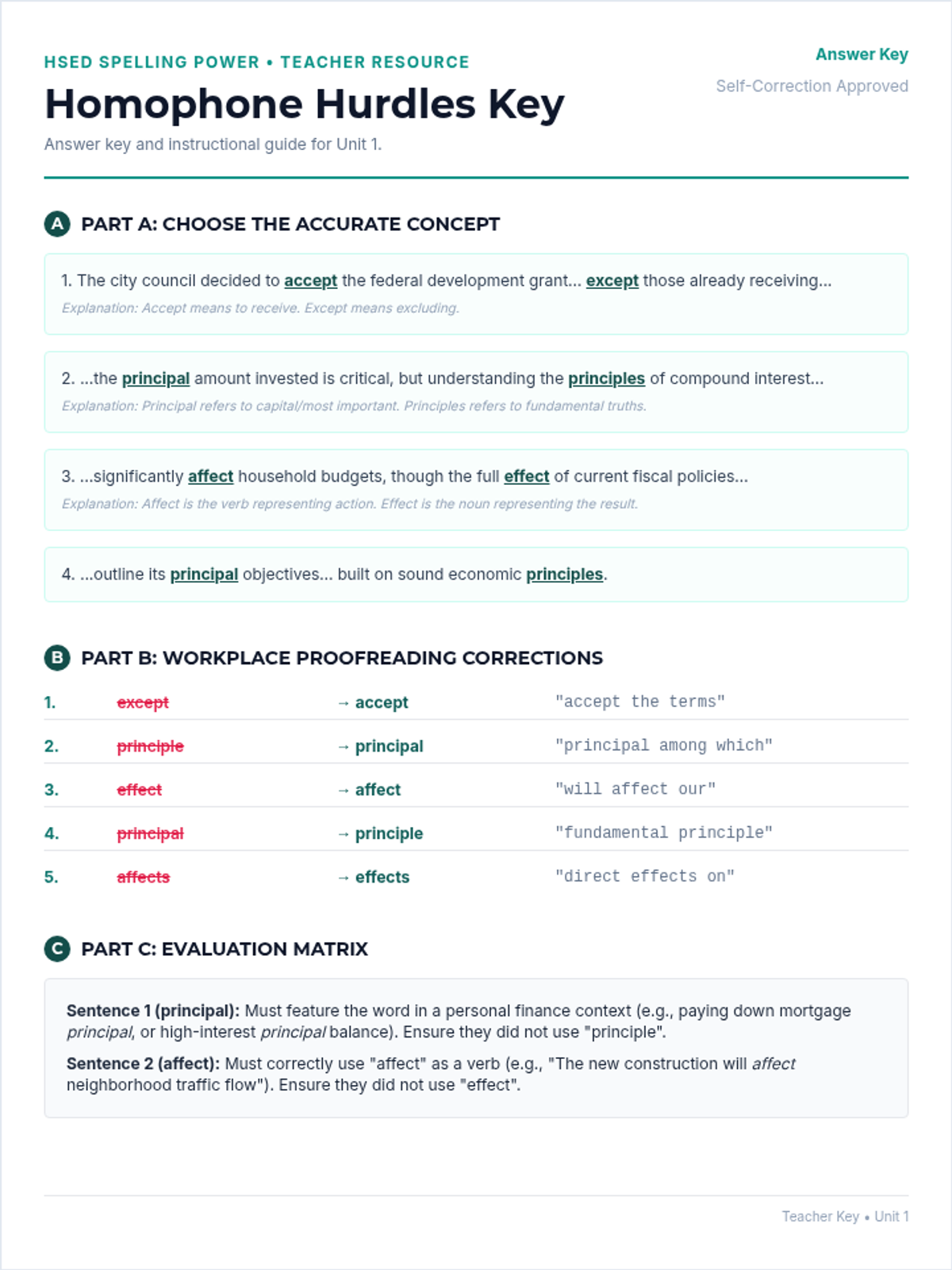
The comprehensive answer key and self-correction guide for the Unit 1 Homophone Hurdles Workbook, designed with detailed conceptual explanations.
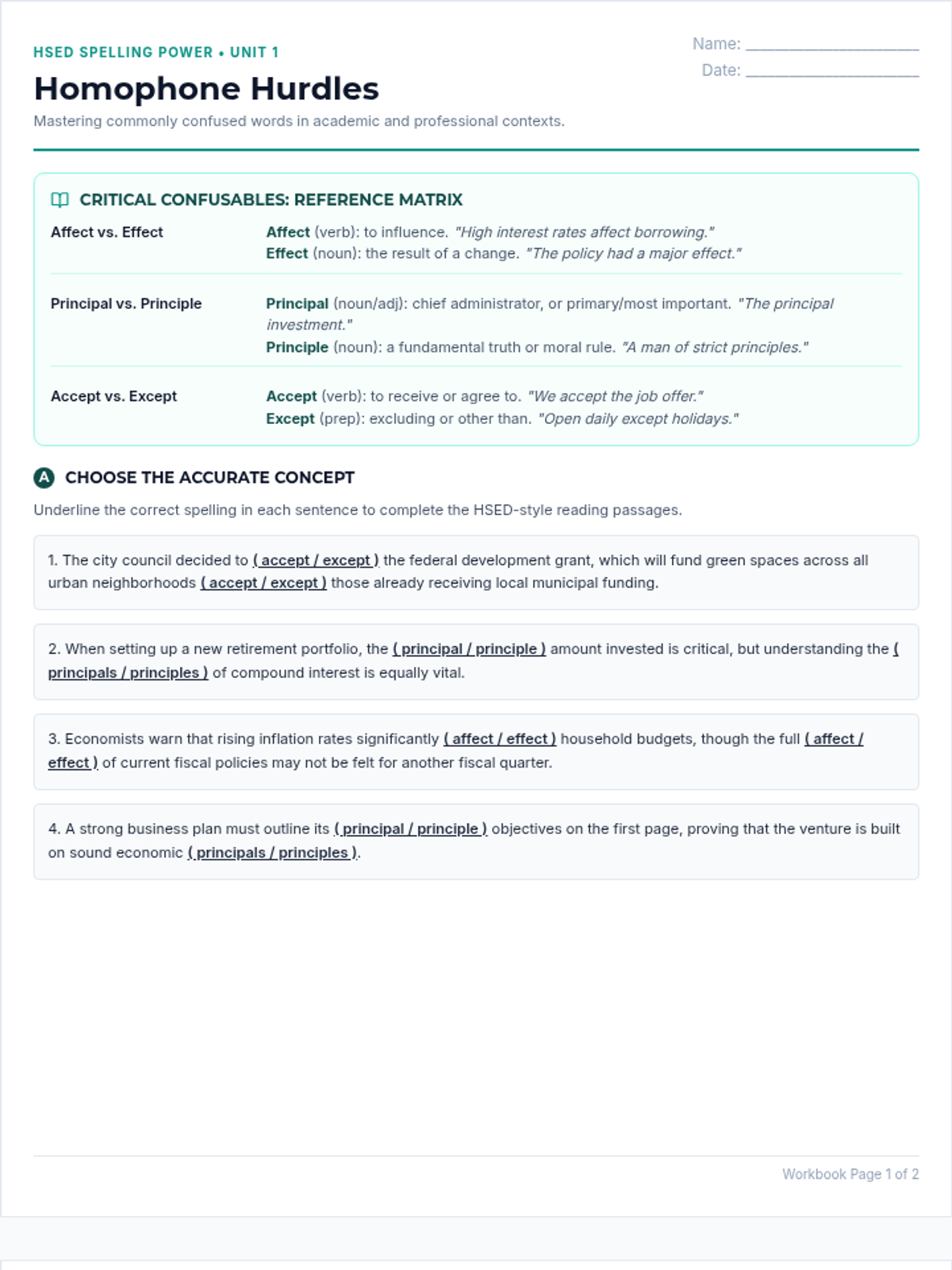
A print-optimized spelling practice chapter for adult HSED learners targeting high-frequency homophones like affect/effect and principal/principle through context exercises, proofreading memos, and synthetic sentence writing.
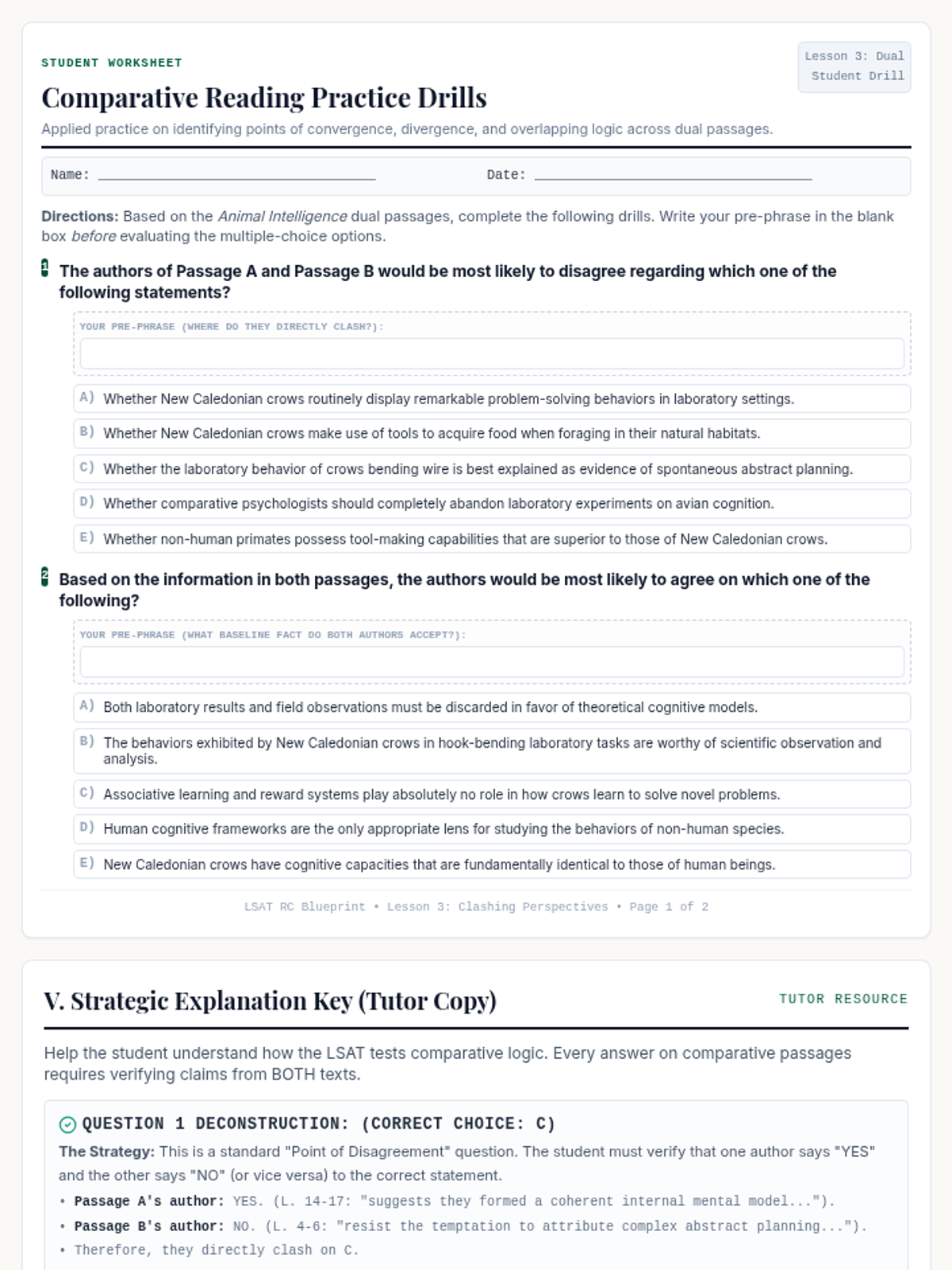
Practice drills focusing on dual passages with highly realistic question prompts (e.g., points of agreement, points of disagreement, analogous arguments) and comprehensive explanations.
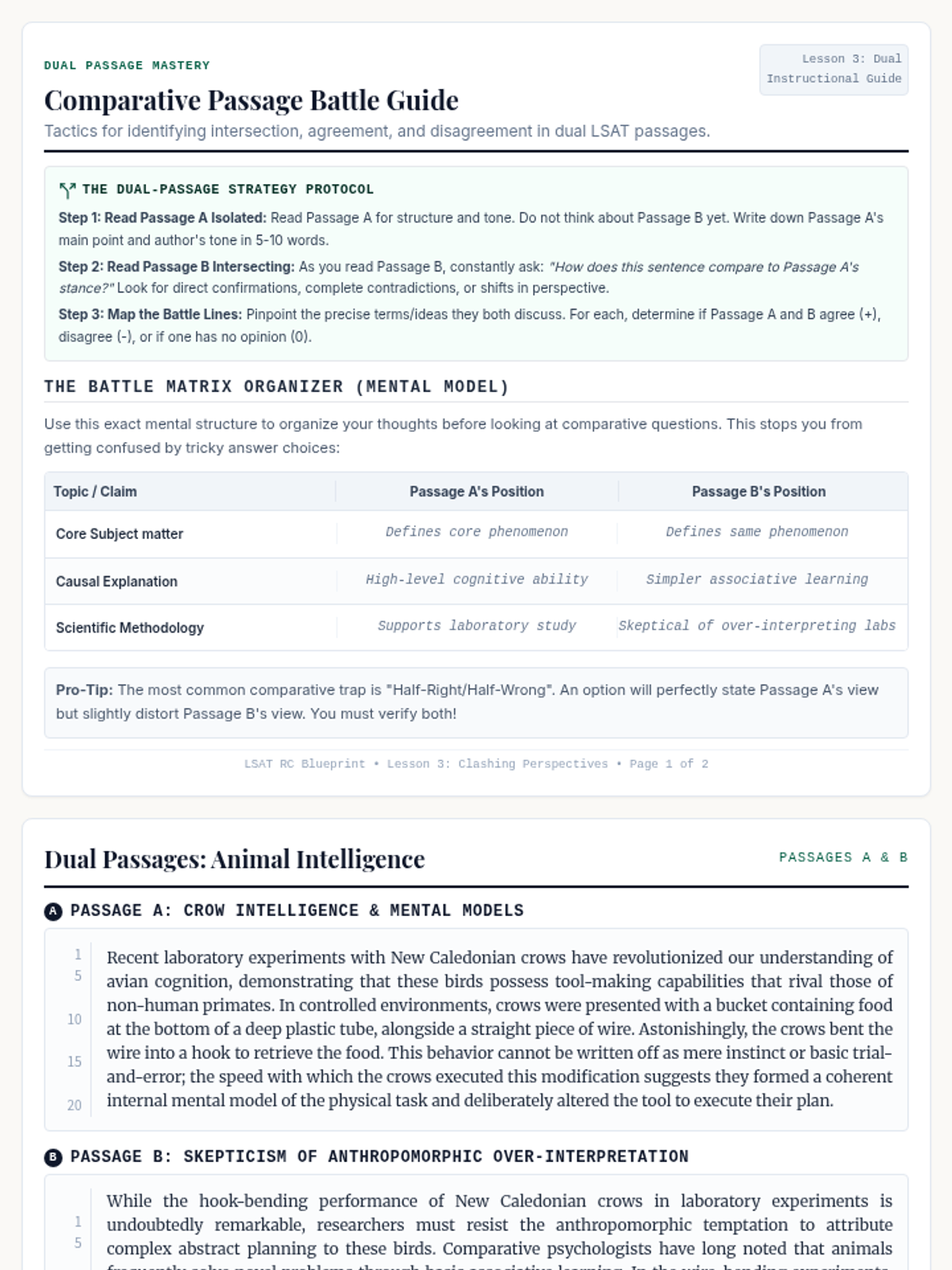
A step-by-step passage analysis guide focusing on LSAT Comparative Reading (dual passages), systemizing how to map points of overlap, consensus, and conflict.
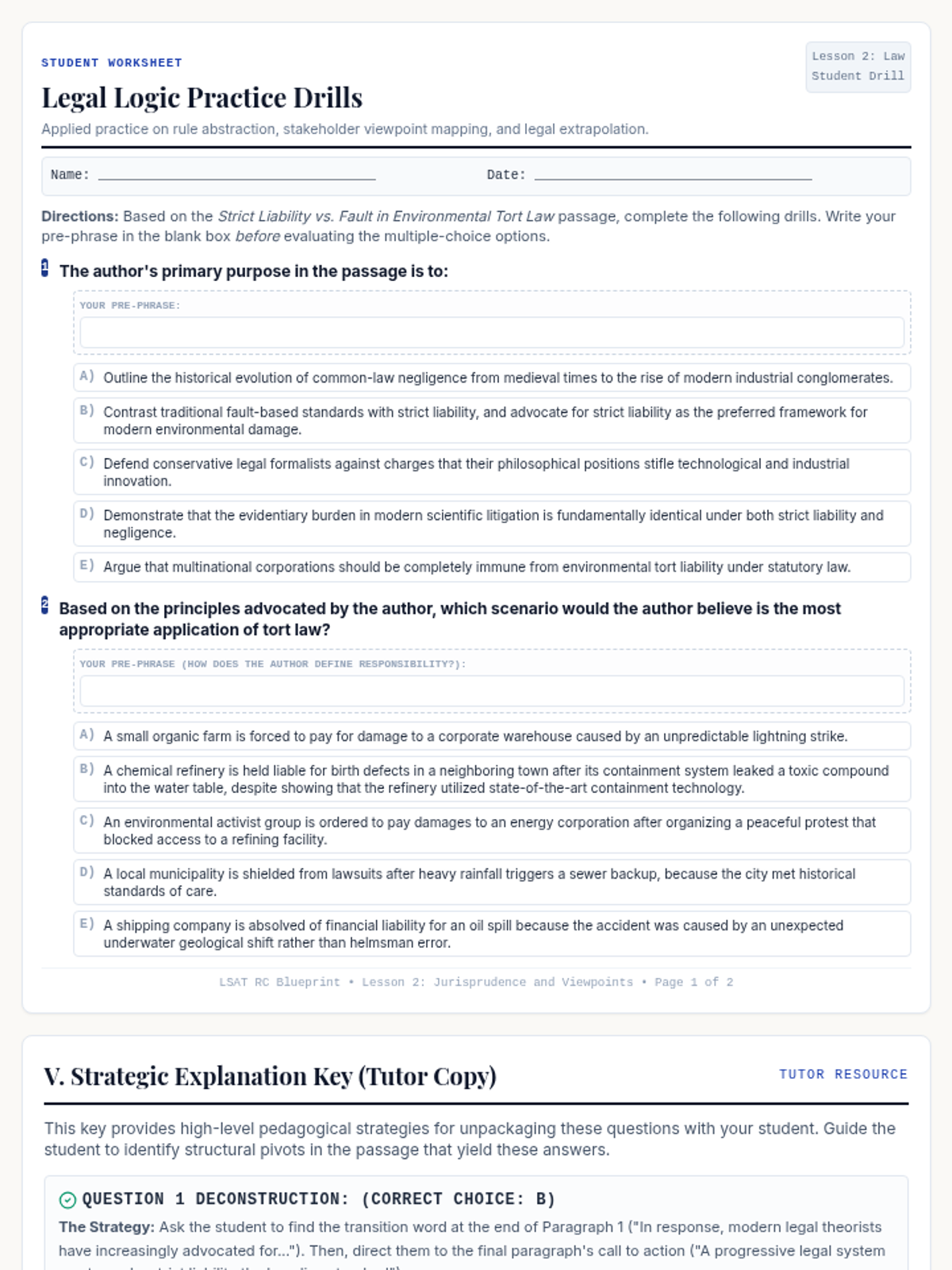
Practice drills based on law-related topics with detailed, strategic explanations. Features two highly realistic, multi-layered LSAT Reading Comprehension questions with pre-phrase writing spaces.
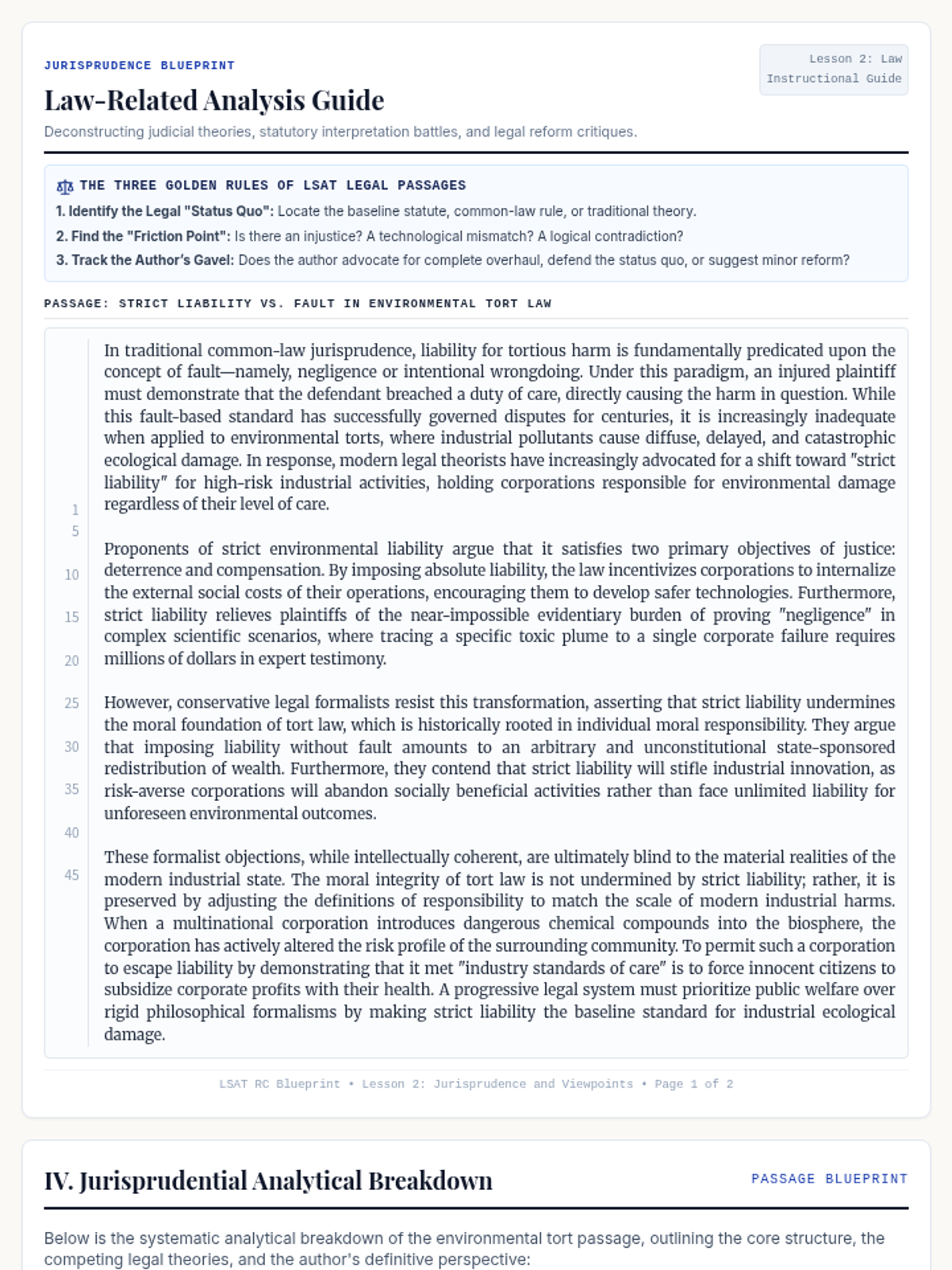
A step-by-step passage analysis guide focusing on LSAT law-related topics, containing a mock passage on strict environmental liability with simulated line numbers and detailed conceptual mapping.
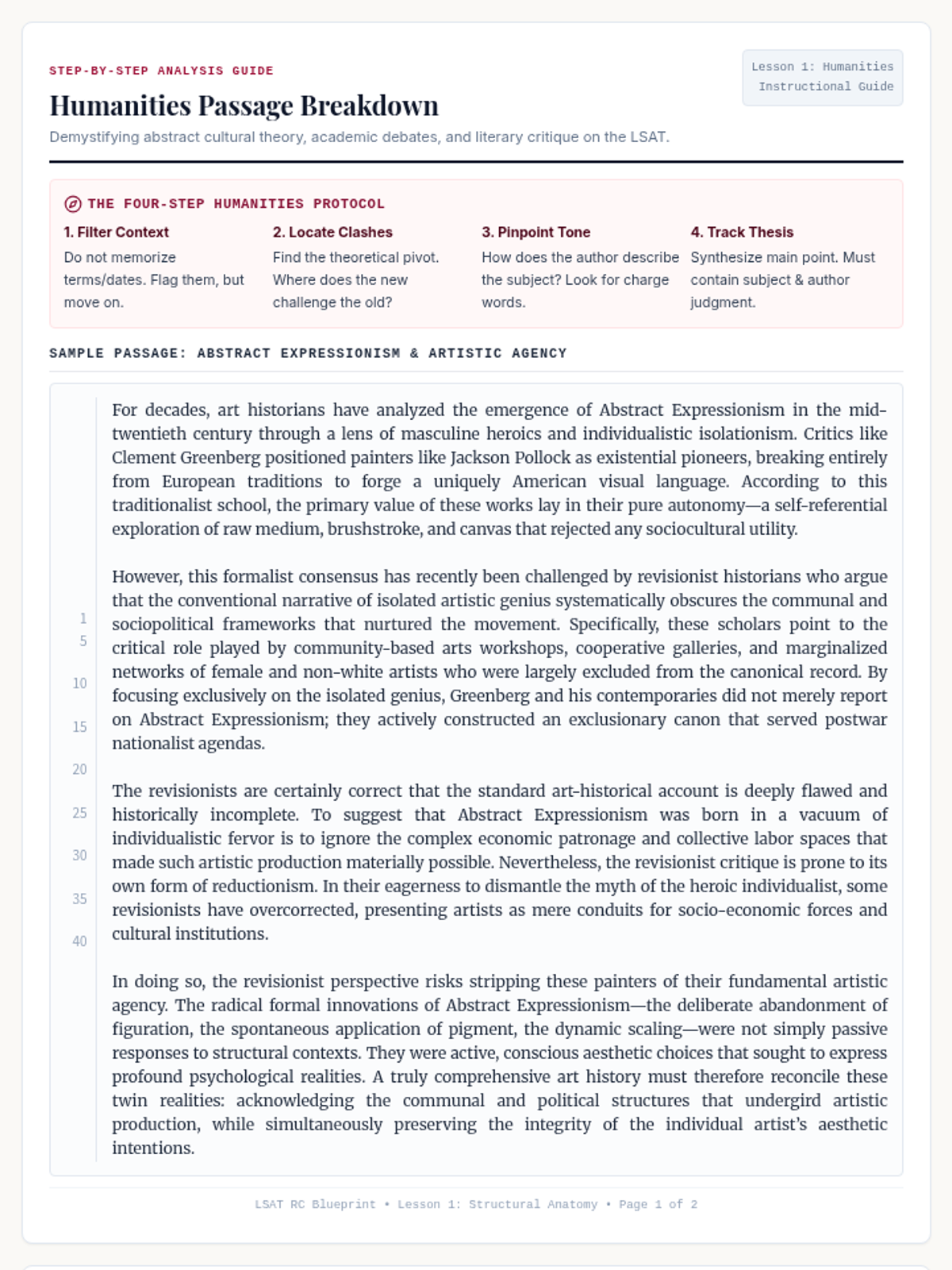
A step-by-step passage analysis guide focusing on LSAT humanities topics, containing a mock passage on Abstract Expressionism with simulated line numbers and detailed questions with explanation keys.
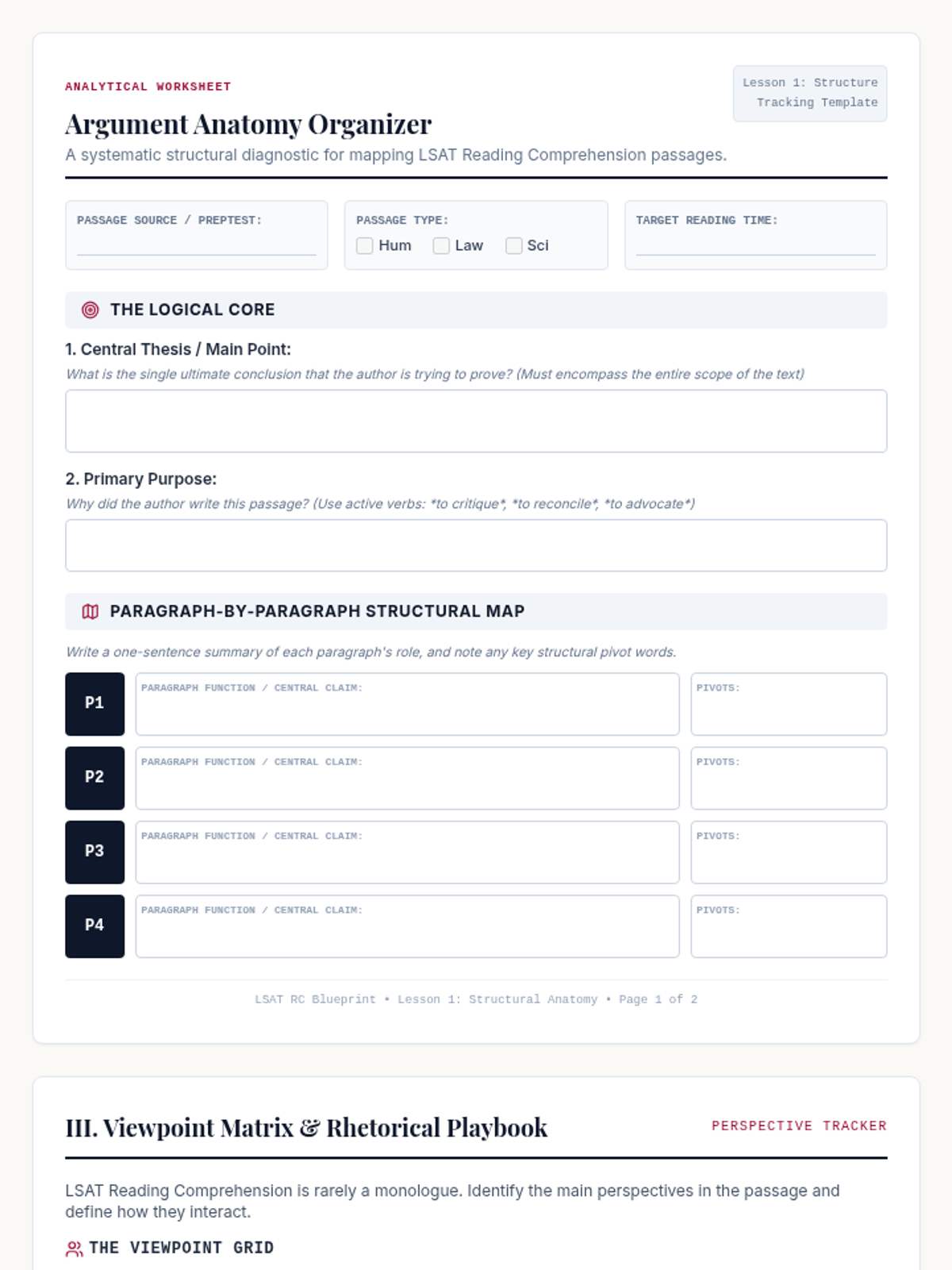
This argument anatomy graphic organizer provides structural matrices and visual frameworks to track premises, conclusions, paragraph-by-paragraph arguments, and viewpoints in LSAT Reading Comprehension passages.
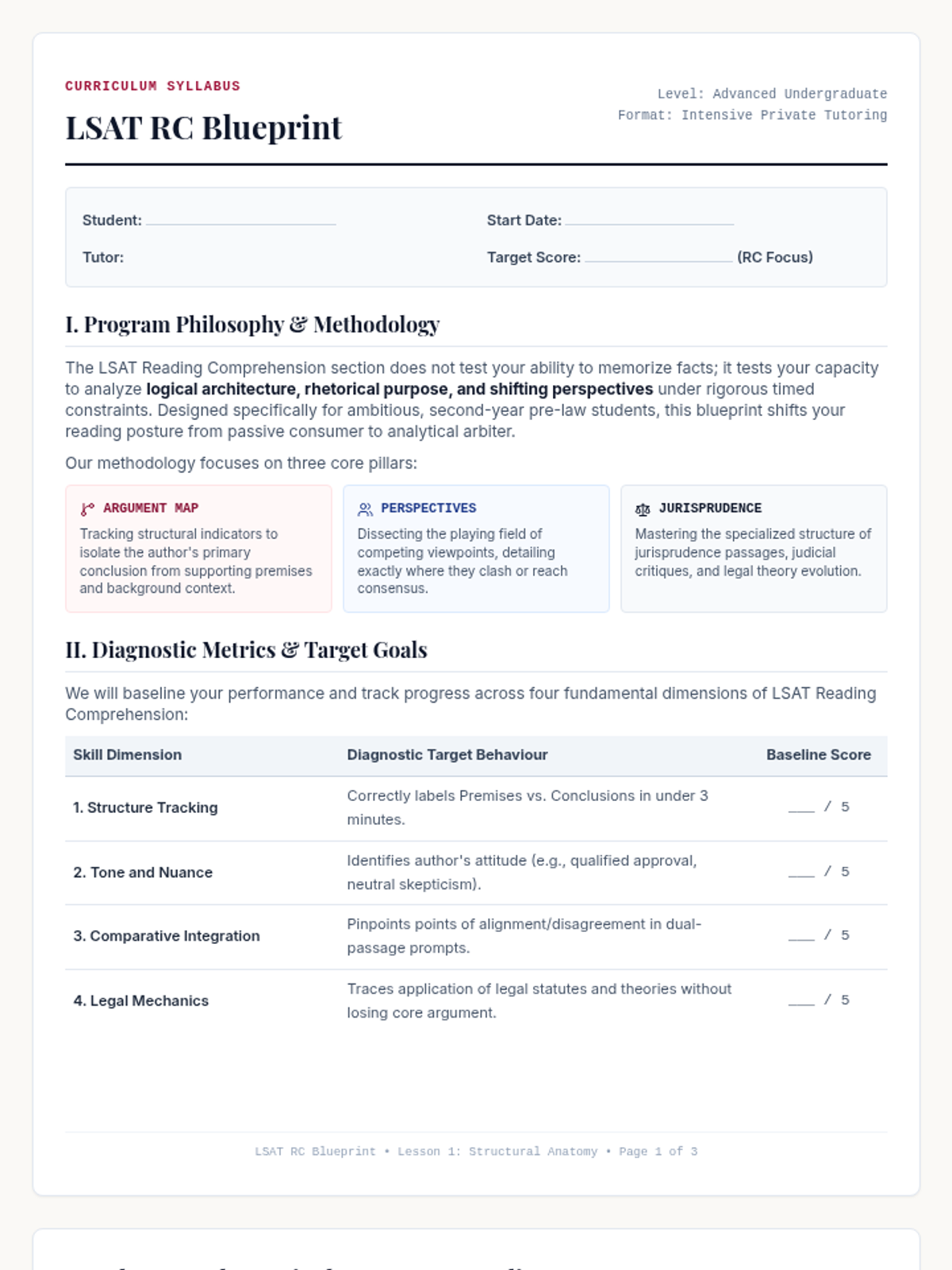
This syllabus and study blueprint details the structured curriculum, philosophy, weekly plans, and blind review diagnostics for the LSAT Reading Comprehension tutoring program.
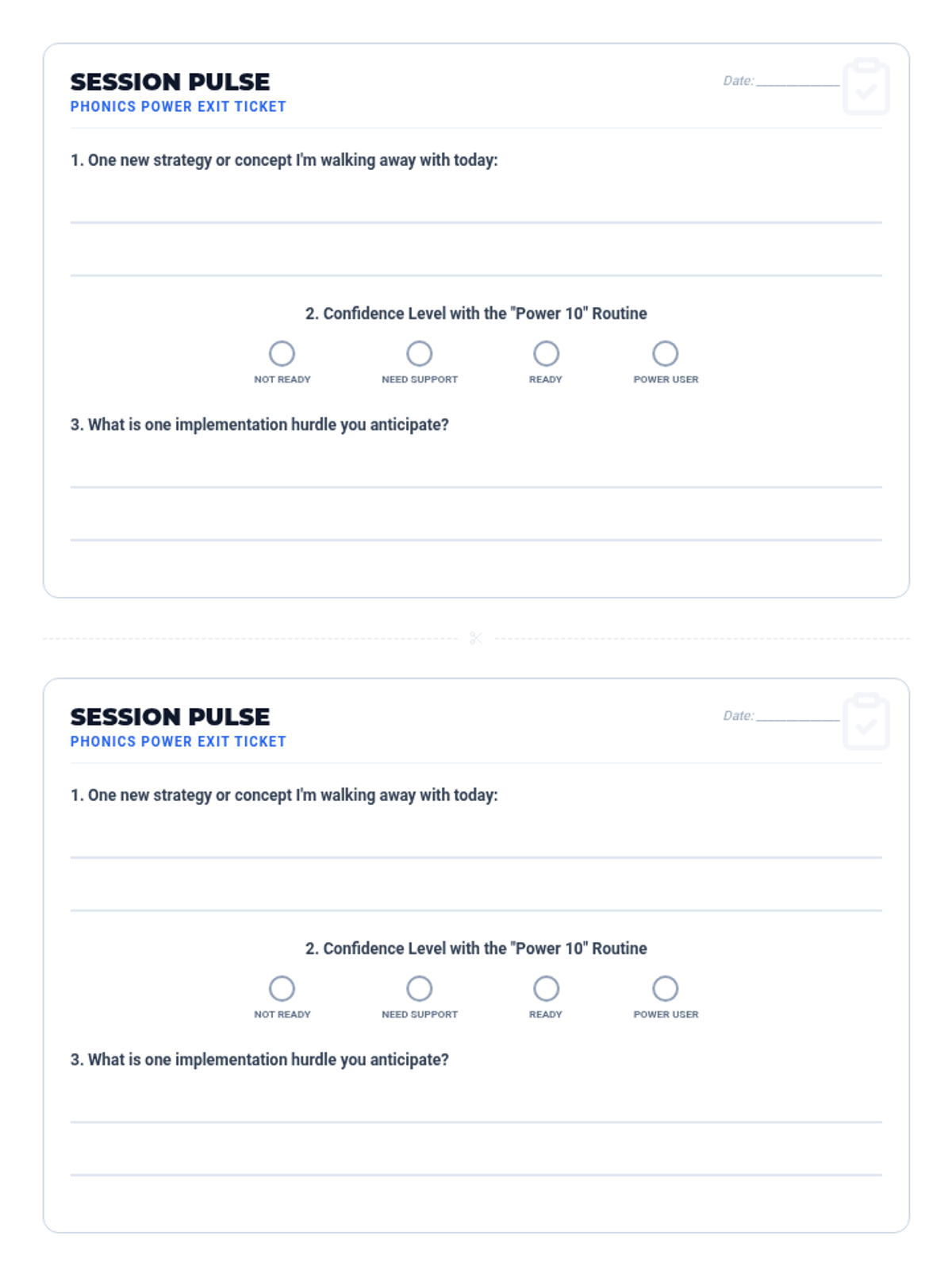
A double-sided exit ticket for PD participants to reflect on their learning and confidence levels regarding new phonics strategies. Efficiently designed with two forms per page.
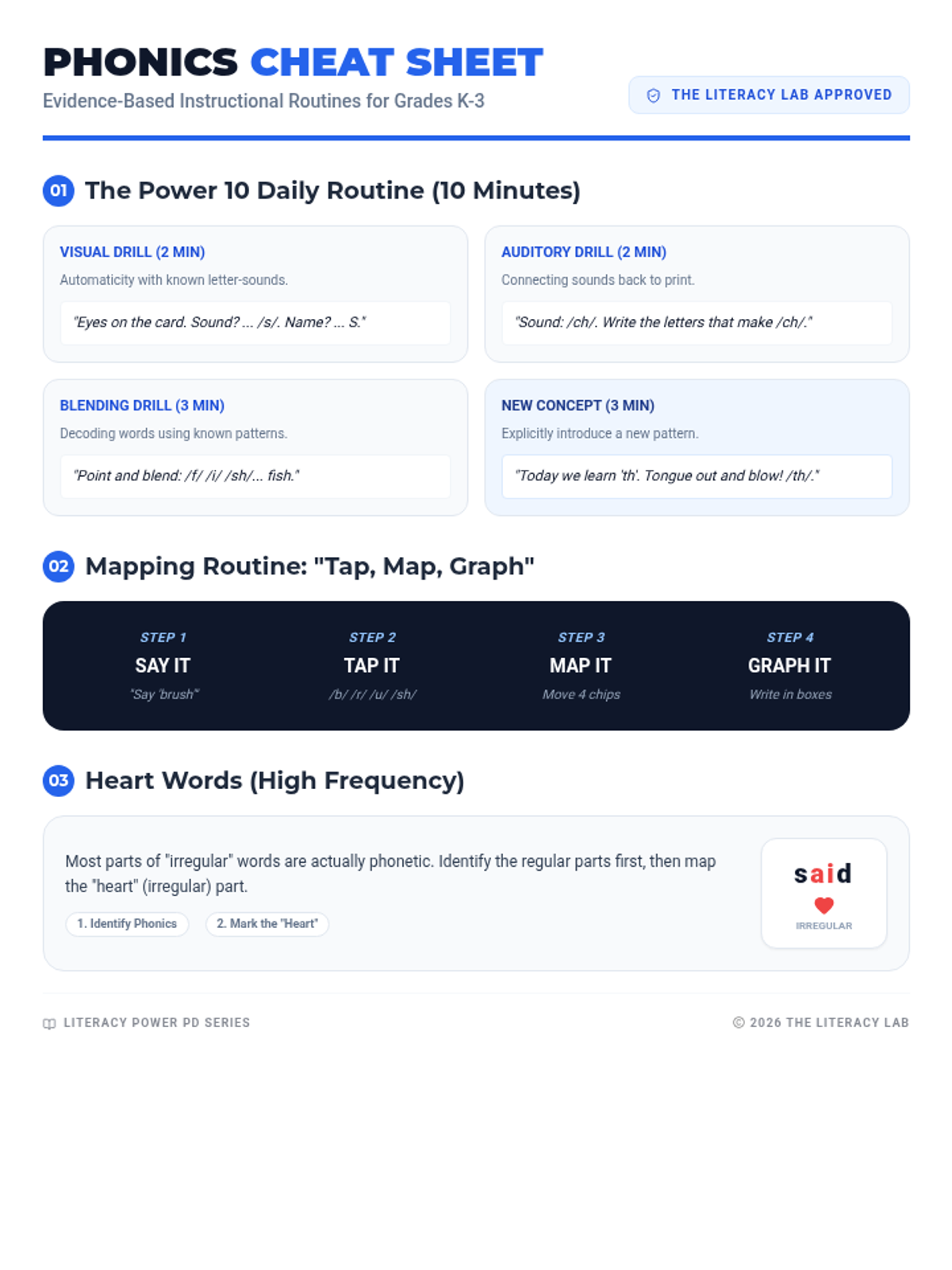
A high-value reference sheet for teachers to keep at their small-group table. It includes explicit prompts for the Power 10 routine, a step-by-step mapping guide, and the "Heart Word" strategy for high-frequency words.
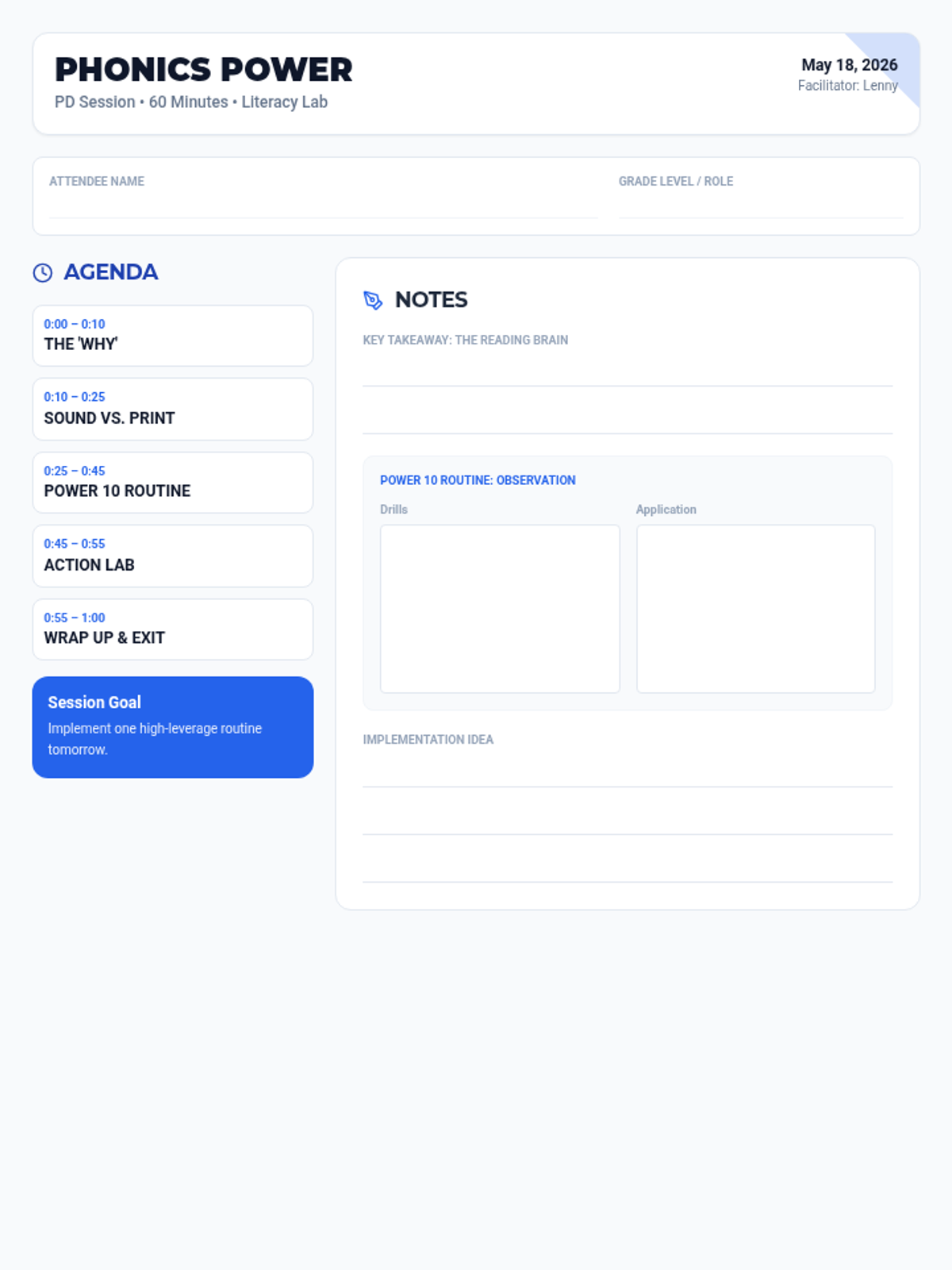
A professional agenda and note-taker document for PD attendees. It features a timed session breakdown and dedicated space for reflections on the Reading Brain and the Power 10 routine.
A professional slide deck for a 60-minute PD session on phonics. It covers the science of reading, explicit instructional routines (Power 10), and orthographic mapping strategies using Elkonin boxes.
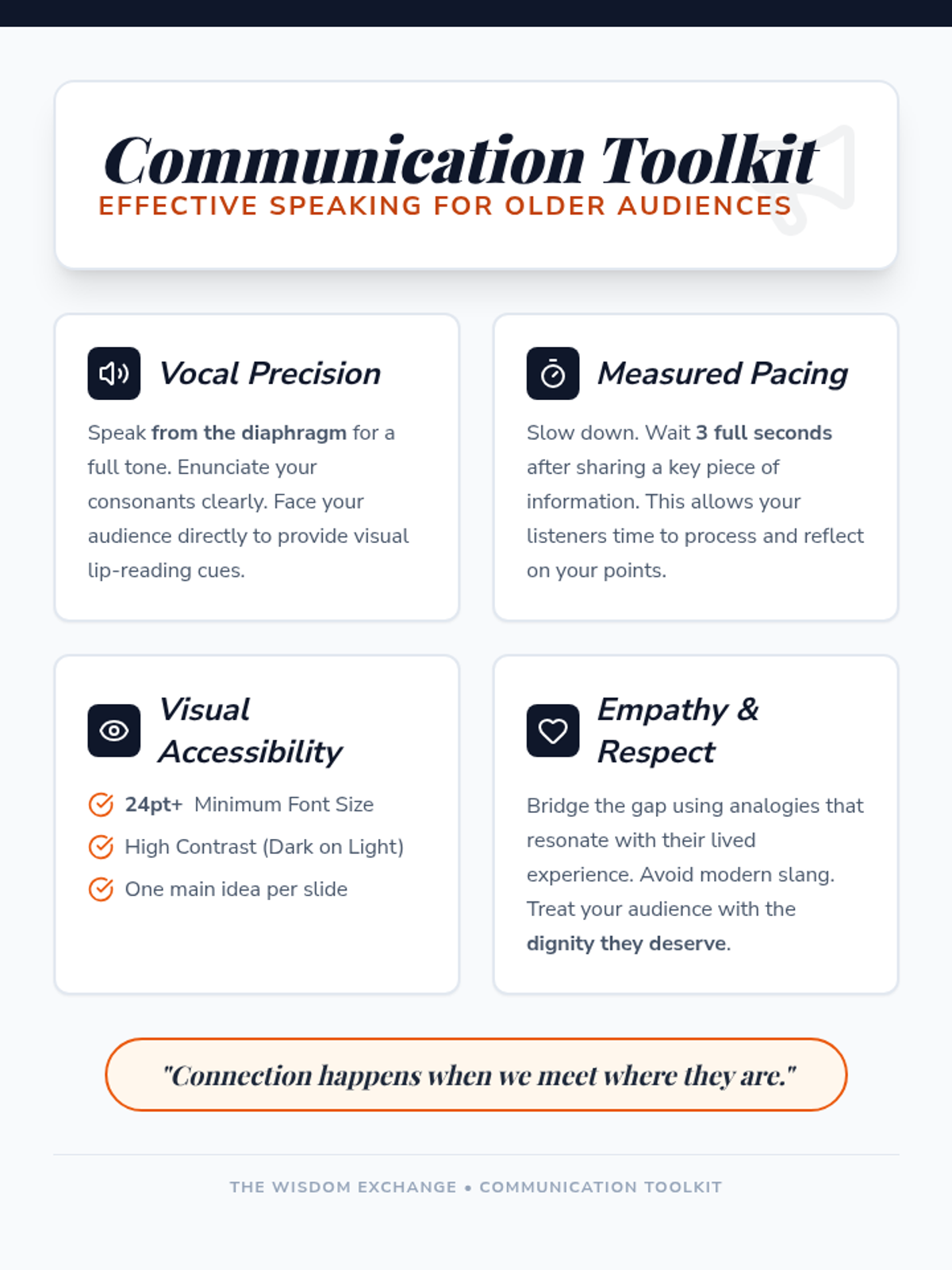
A student-facing reference card or anchor chart summarizing the key communication strategies for presenting to older adults.
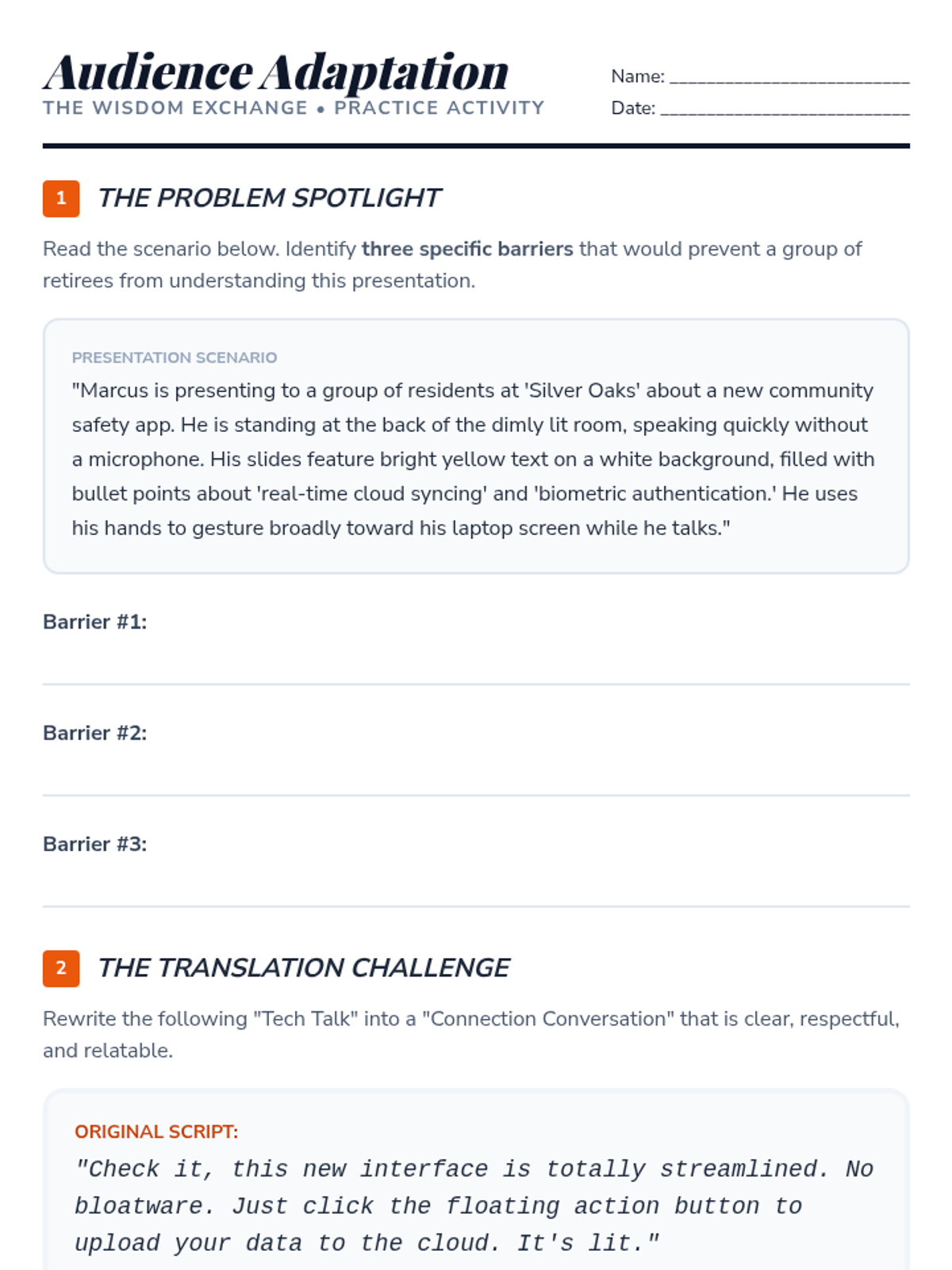
A practice worksheet for students to analyze communication barriers and rewrite technical scripts for an older audience.
A visually engaging 7-slide presentation teaching students how to adapt their speaking style for older audiences through clarity, visuals, pacing, and relational context.
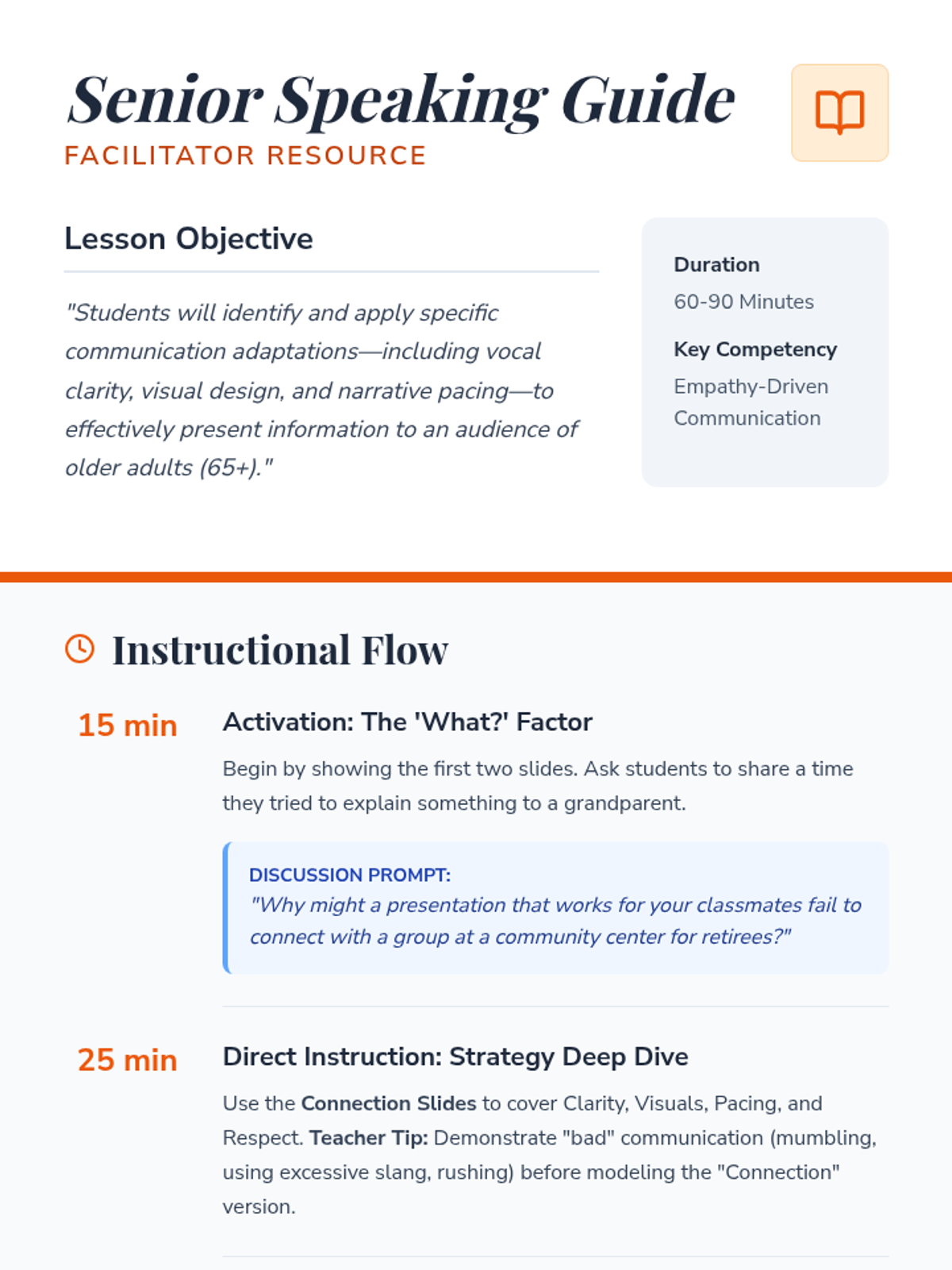
A detailed teacher guide for the Intergenerational Impact lesson, including pacing, discussion prompts, and an answer key for the student worksheet.