A high-value reference sheet for teachers to keep at their small-group table. It includes explicit prompts for the Power 10 routine, a step-by-step mapping guide, and the "Heart Word" strategy for high-frequency words.
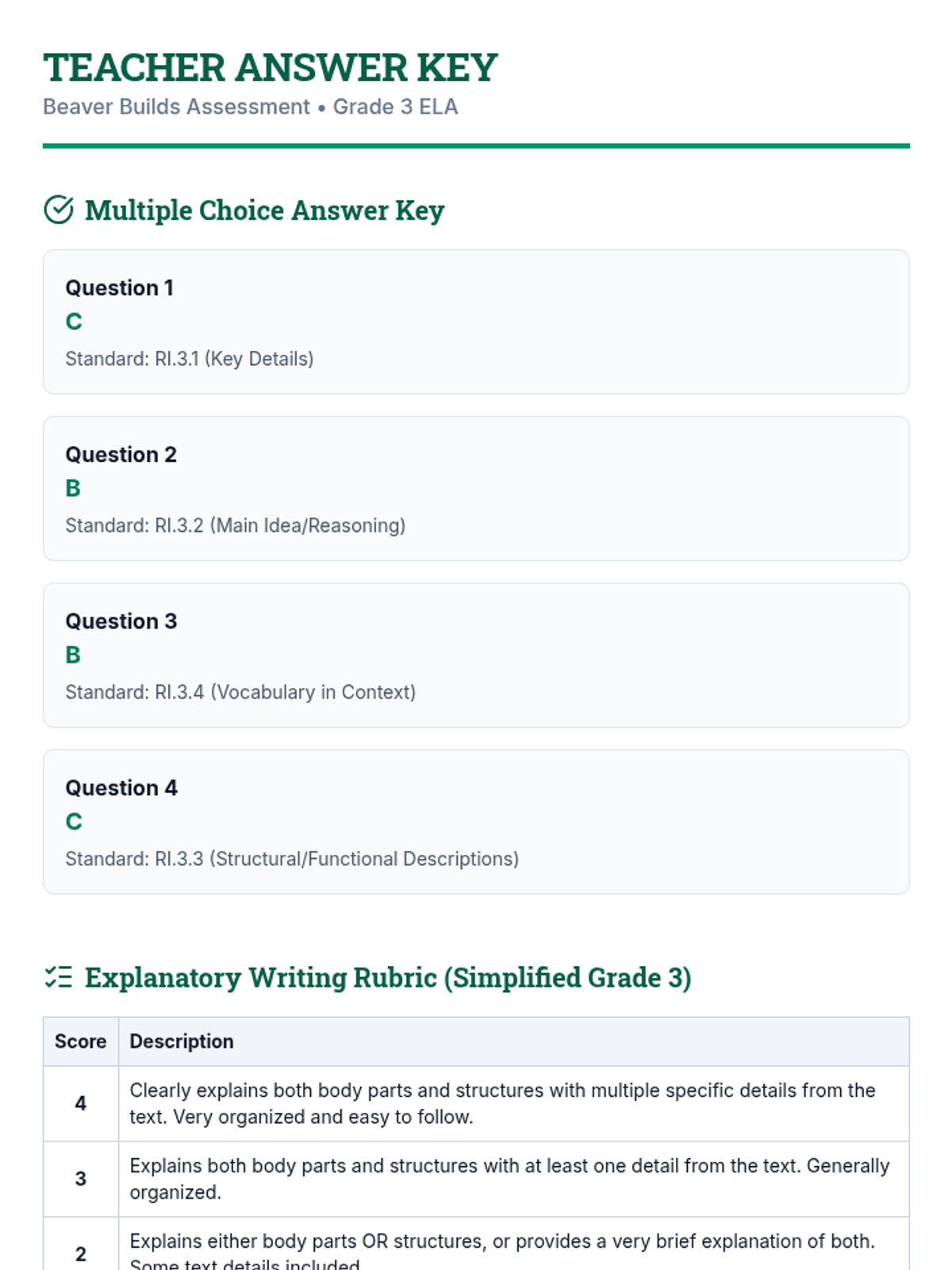
A teacher-facing resource providing the answer key for multiple-choice questions, a simplified 4-point explanatory writing rubric, and a sample proficient student response for the beaver assessment. Revised to fix rubric table layout.
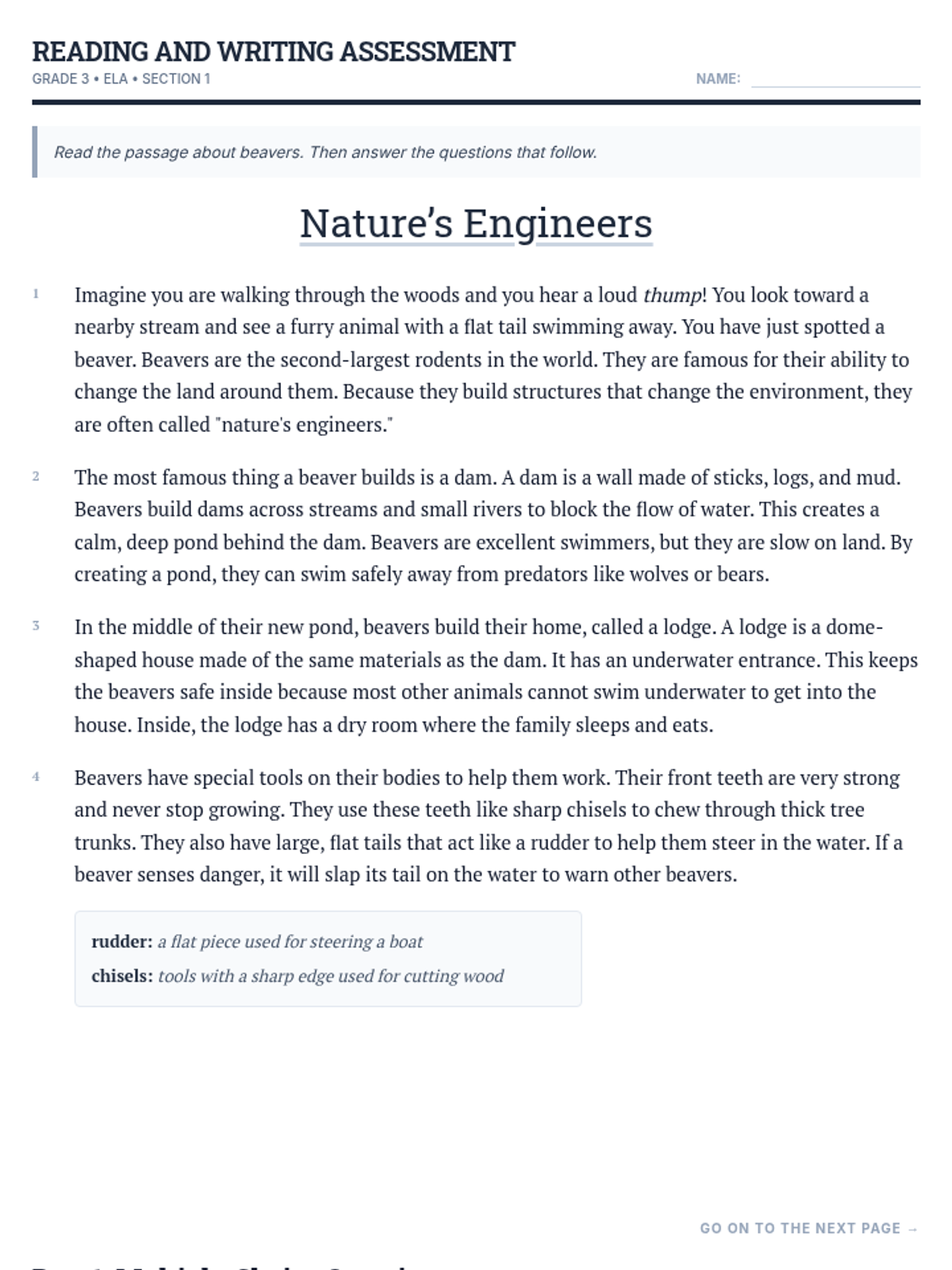
A comprehensive 3rd-grade MCAS-style reading and writing assessment about beavers. Includes a detailed informational passage, four multiple-choice questions, and an explanatory writing prompt with student work area. Revised for perfect page flow and glossary placement.
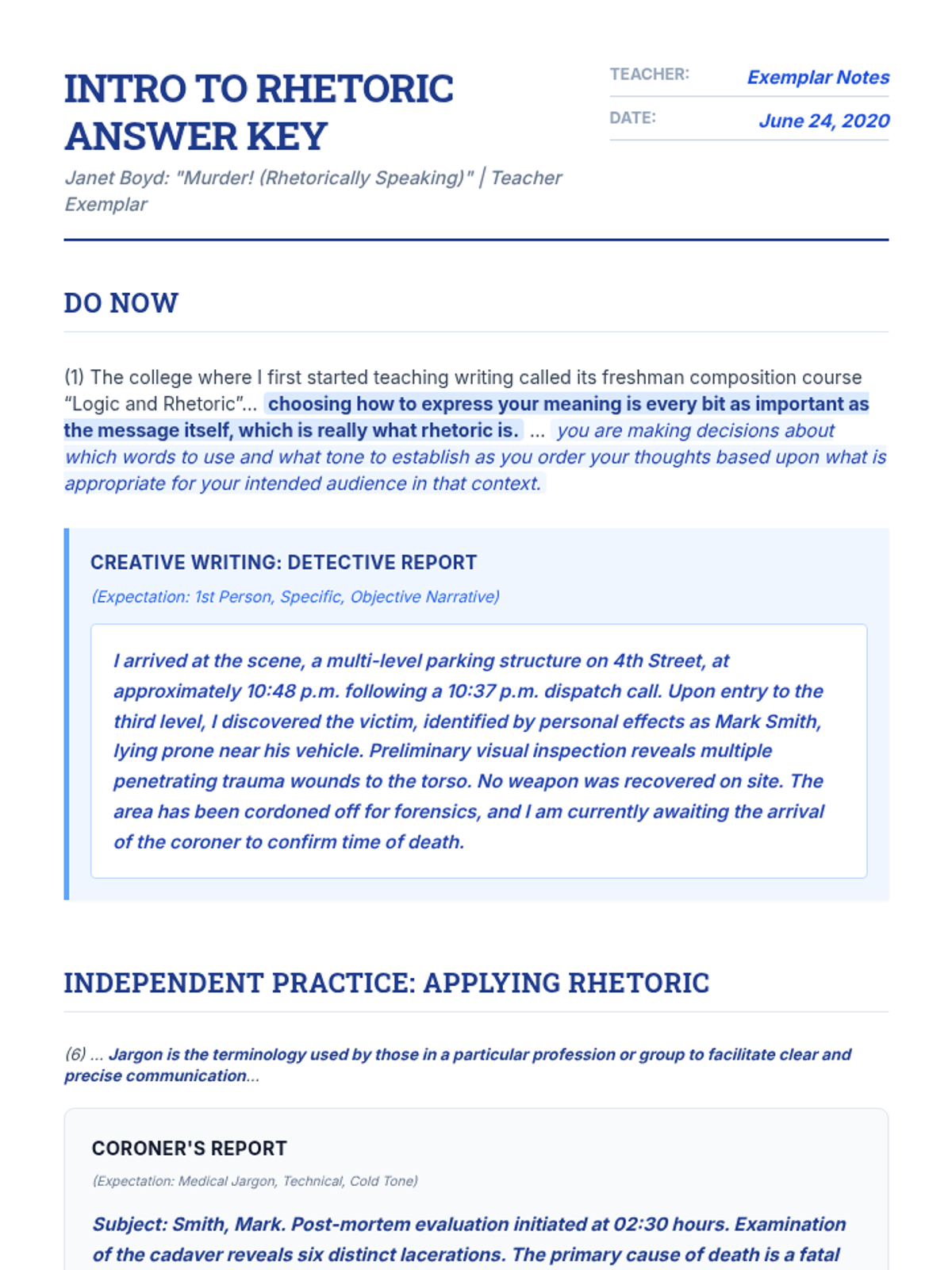
A complete teacher answer key for the 'Intro to Rhetoric' student handout based on Janet Boyd's "Murder! (Rhetorically Speaking)". It features annotated text segments, exemplar creative writing responses for the detective, coroner, and eulogy tasks, and comprehensive answers for the Entry Prompt and Exit Ticket.
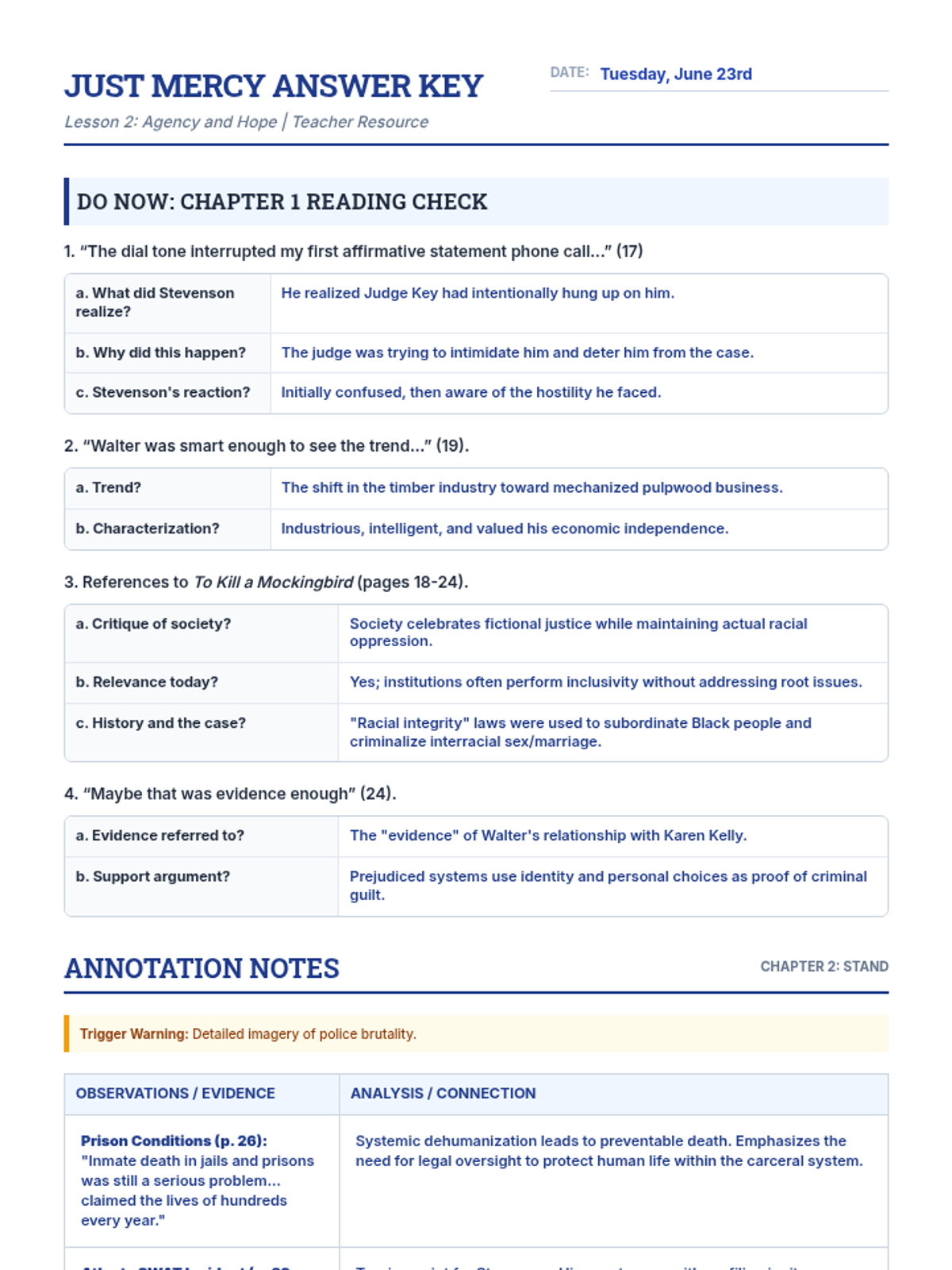
A complete teacher answer key for the Just Mercy Lesson 2 student packet. It includes exemplar responses for the Chapter 1 Reading Check, detailed annotation notes for Chapter 2 ('Stand'), and a full exemplar paragraph for the Exit Ticket prompt focused on individual agency and hope.
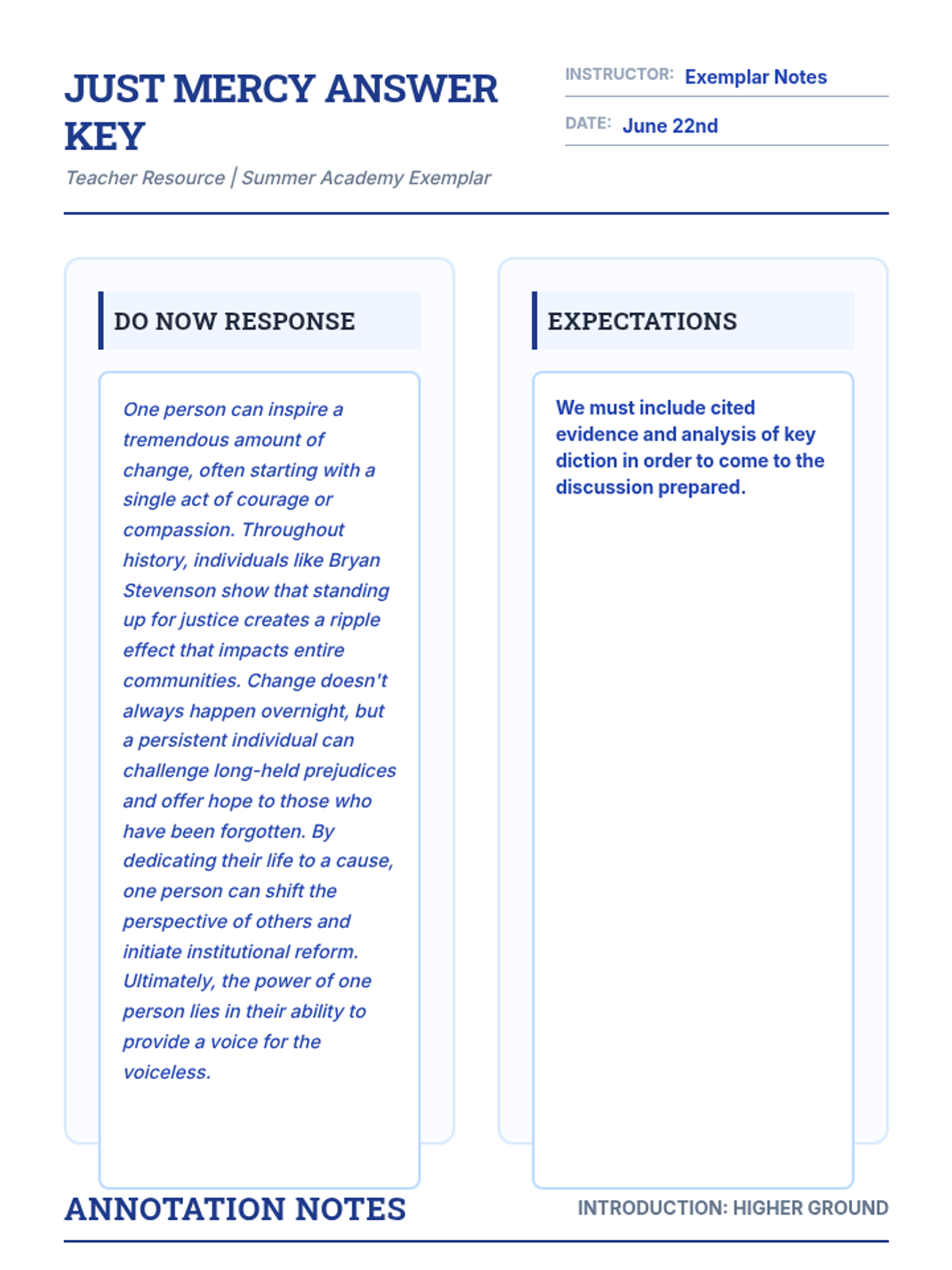
A comprehensive answer key for the Just Mercy student packet, containing exemplar responses for the Do Now, annotation notes (Introduction and Chapter 1), reflection stamps, and exit ticket. Responses are highlighted in blue to differentiate from the student prompt text.
A simplified, emoji-based participation rubric for Kindergarten, focusing on 'I Helped Out', 'Stamp & Name', and 'My Message' to assess foundational skills and effort.
Large-scale, visual station signs and simplified role descriptions for a Kindergarten classroom post office simulation. Includes 'Stamper' and 'Courier' roles with icon-based guidance.
A Kindergarten-friendly letter template featuring a large drawing space for the 'Body', simplified labels, and primary-style writing spaces for the Greeting and Signature.
A highly visual slide deck for Kindergarten students, using large icons and simple concepts to explain what mail is, the parts of a letter, and the role of the postage stamp.
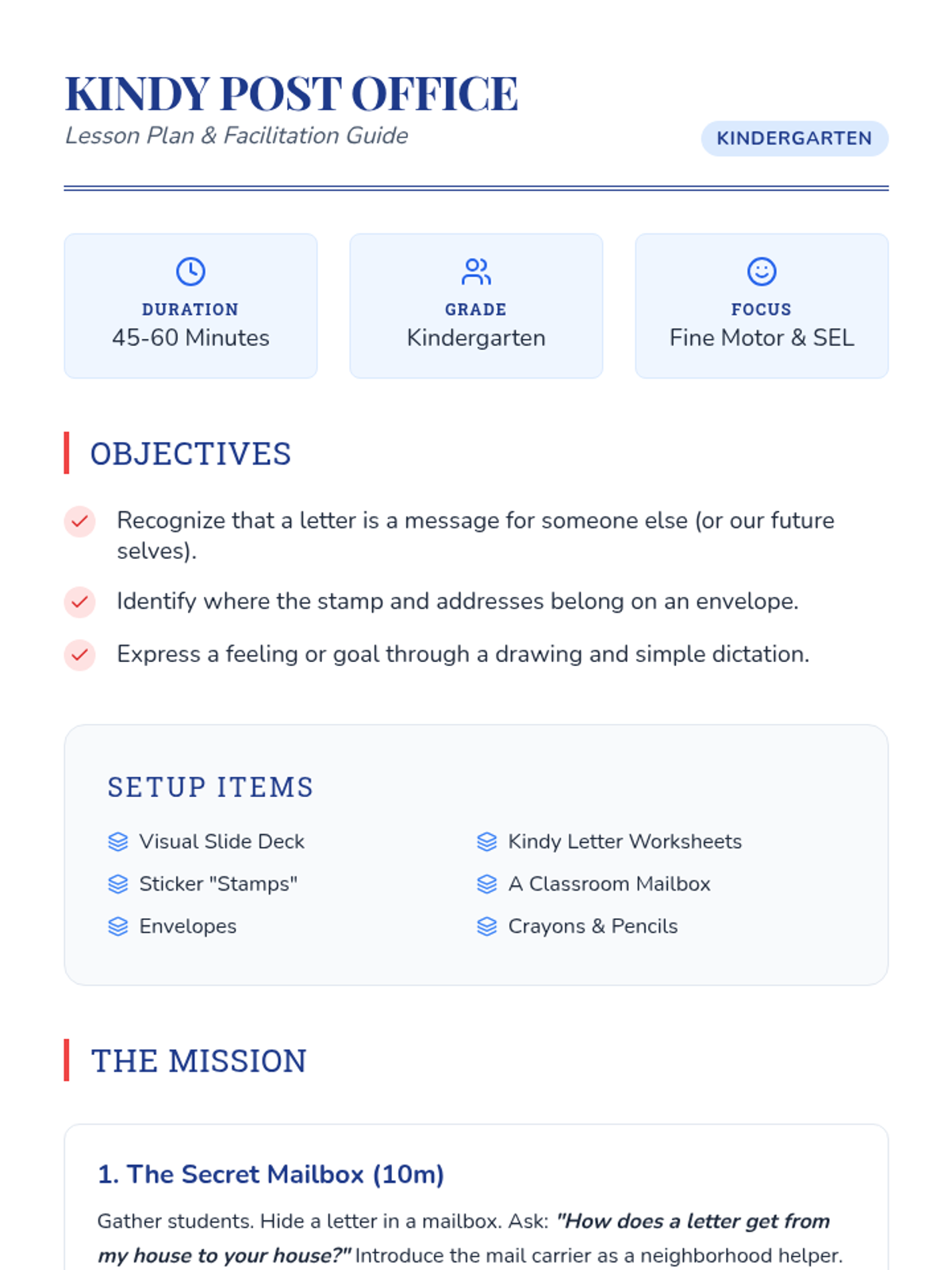
A comprehensive teacher's guide for the Neighborhood Post Office lesson adapted for Kindergarten, featuring simplified learning objectives, a drawing-focused procedure, and developmental differentiation strategies.
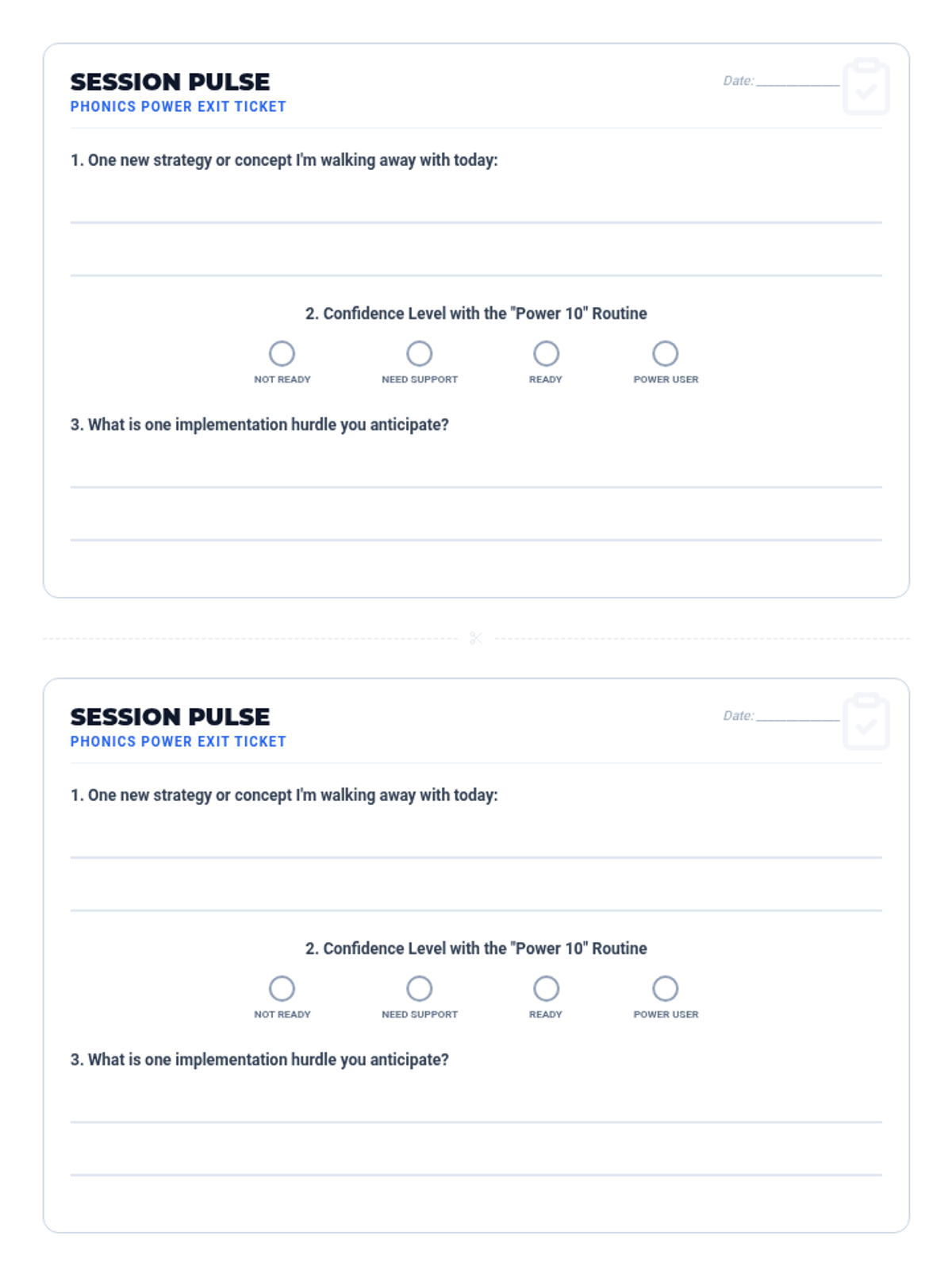
A double-sided exit ticket for PD participants to reflect on their learning and confidence levels regarding new phonics strategies. Efficiently designed with two forms per page.
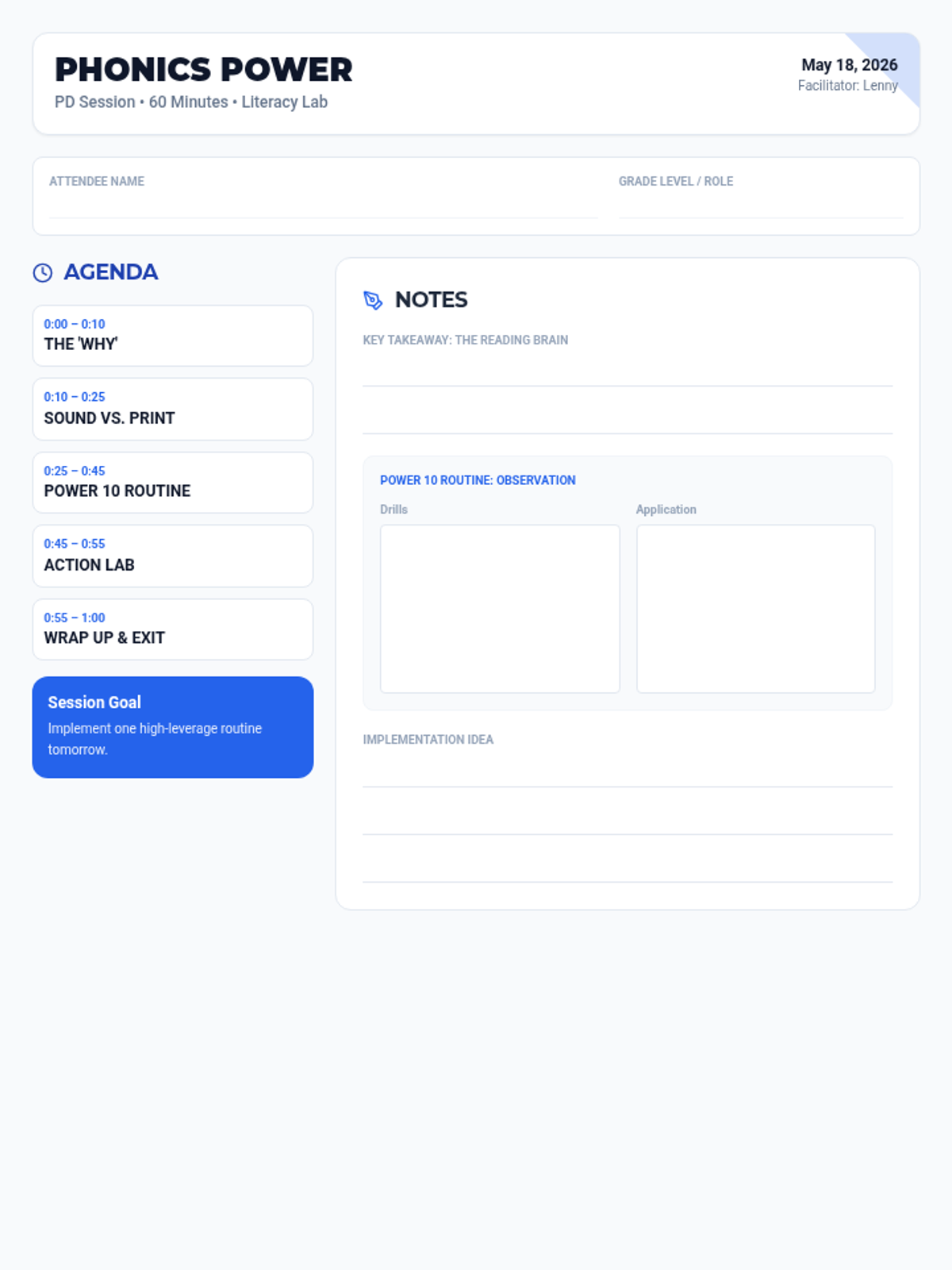
A professional agenda and note-taker document for PD attendees. It features a timed session breakdown and dedicated space for reflections on the Reading Brain and the Power 10 routine.
A professional slide deck for a 60-minute PD session on phonics. It covers the science of reading, explicit instructional routines (Power 10), and orthographic mapping strategies using Elkonin boxes.
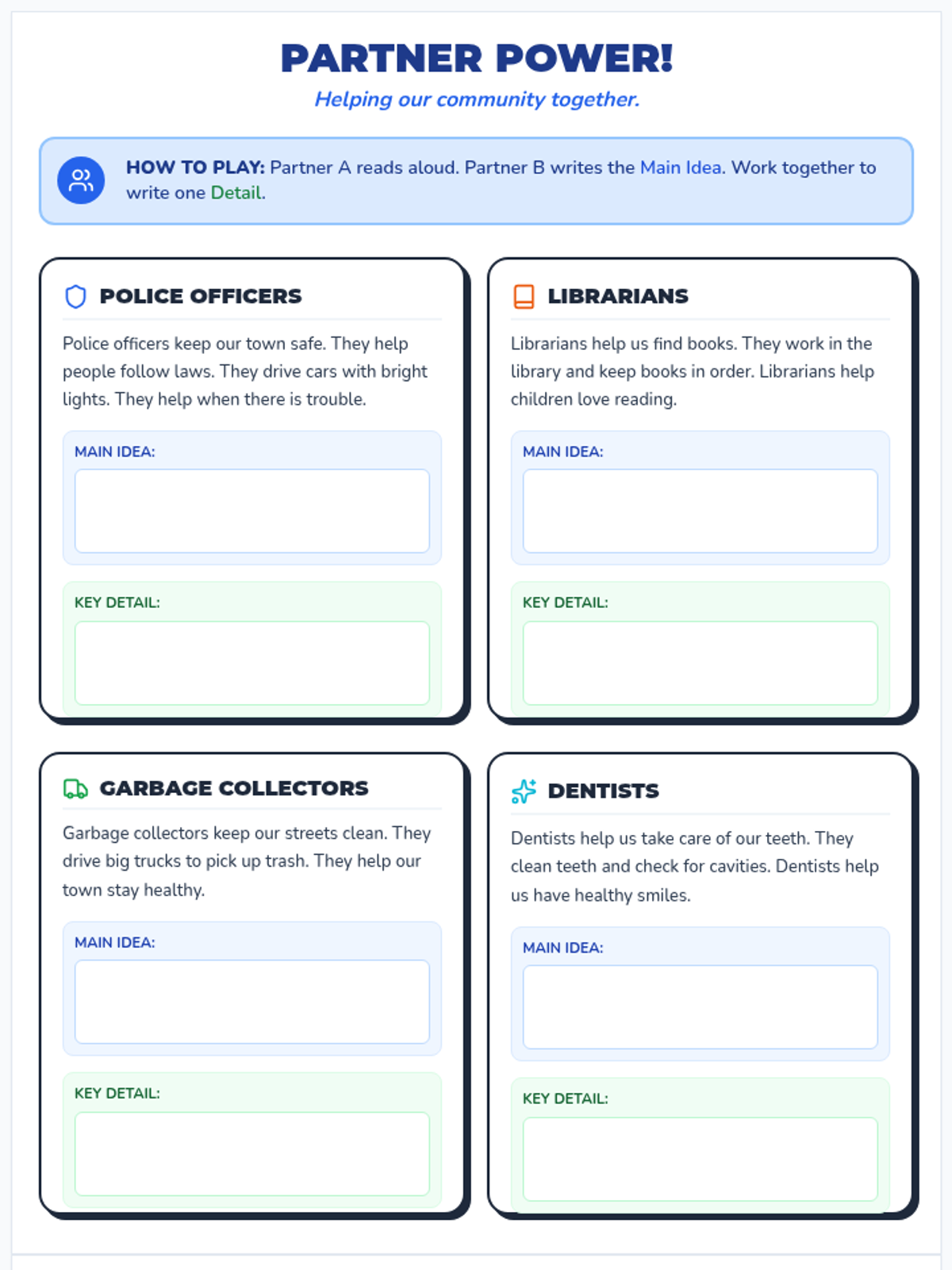
An expanded collaborative worksheet featuring 12 task cards about community helpers, designed for partners to practice identifying the main idea and supporting details across three pages.
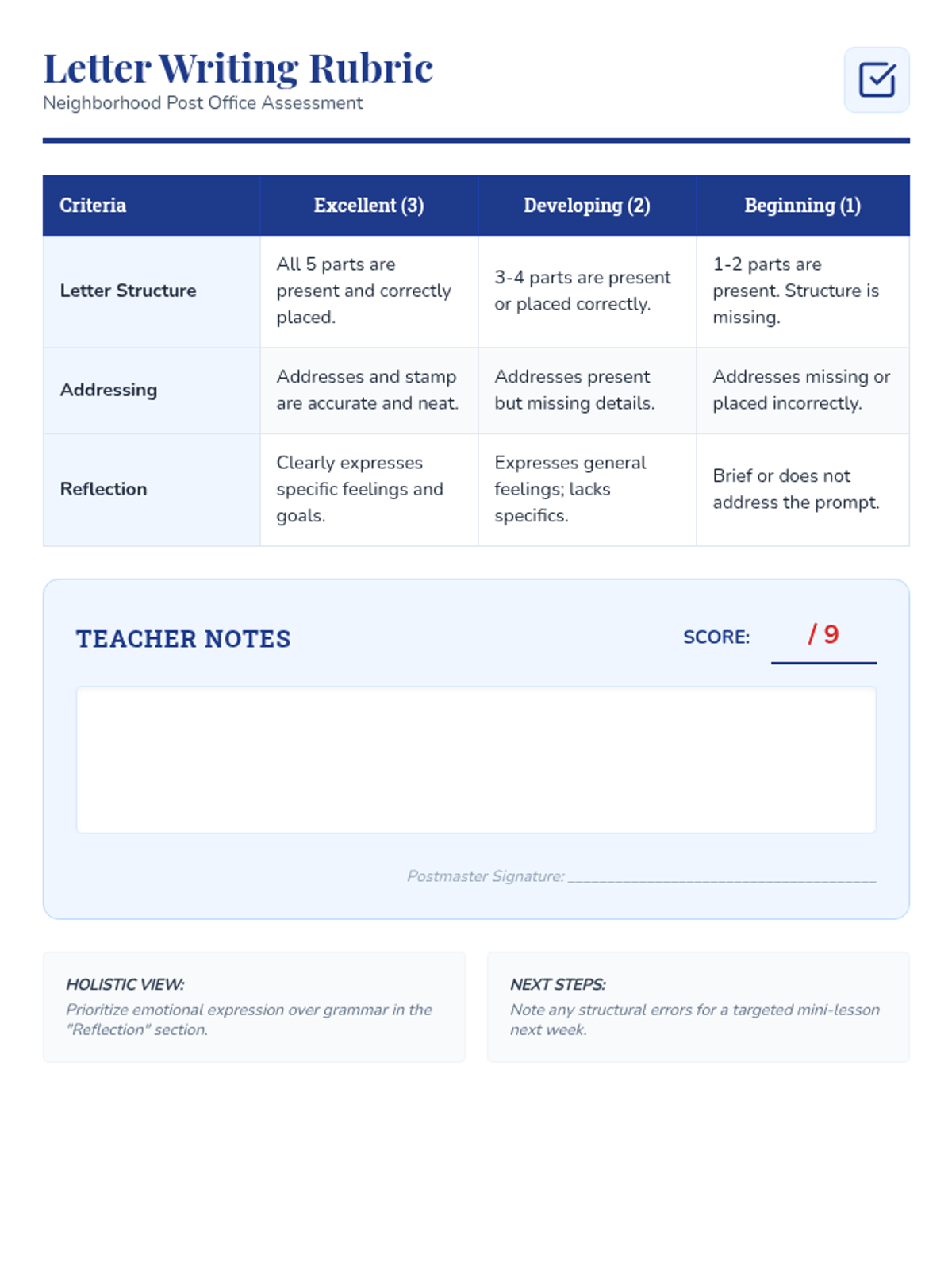
A teacher-facing rubric for assessing students' letter-writing skills, envelope addressing, and the quality of their reflections for the Neighborhood Post Office lesson.
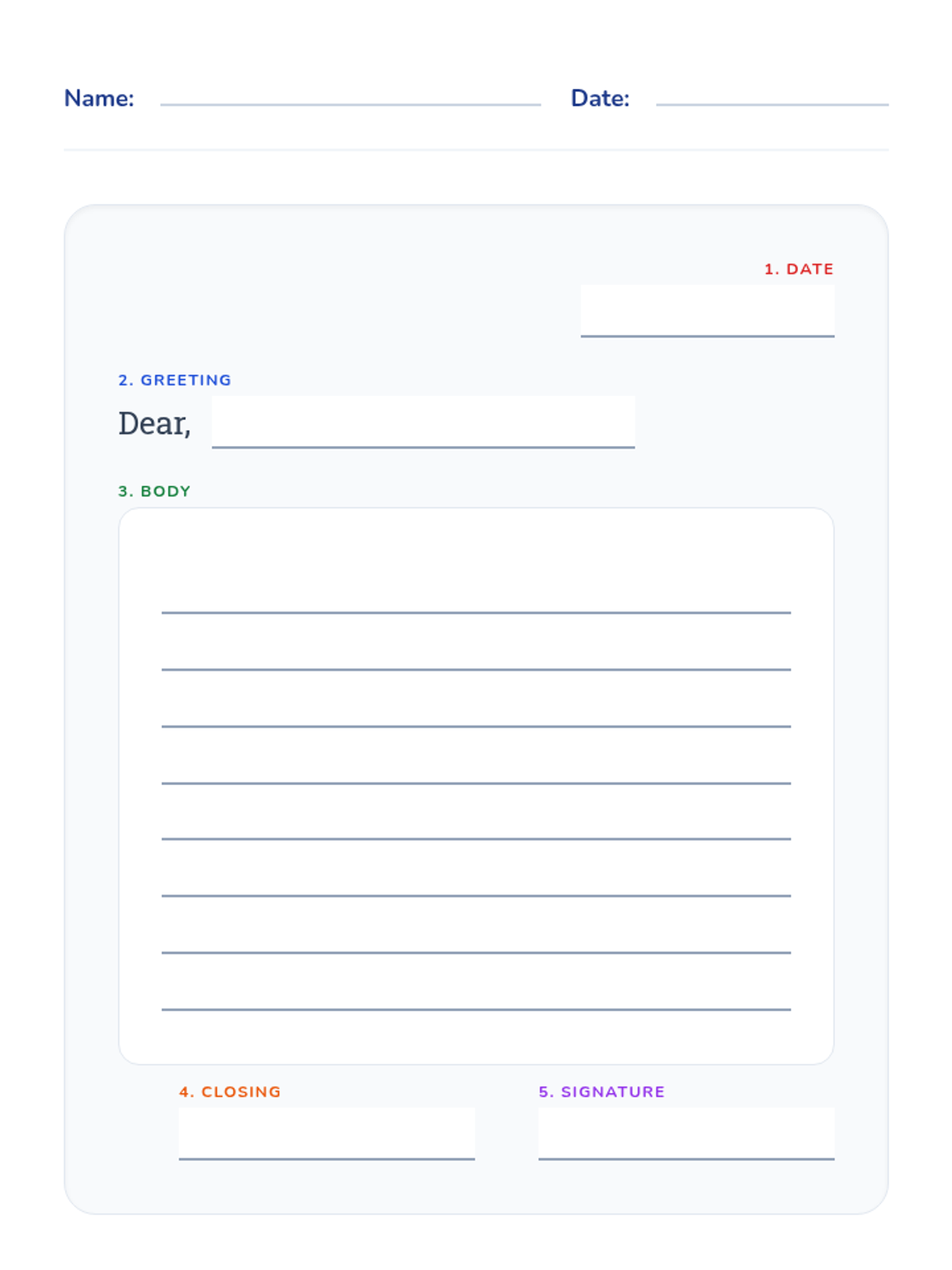
A structured letter-writing template for students to write to their future selves. Includes clearly labeled sections for the five parts of a letter and a dedicated envelope addressing practice area.
A classroom activity kit including station signs for a 'Mail Drop' and 'Sorting Center', role descriptions for student helpers, and instructions for a classroom post office simulation.
An engaging slide deck for teaching students the five parts of a letter, envelope addressing basics, and the emotional value of correspondence as they prepare for summer vacation.
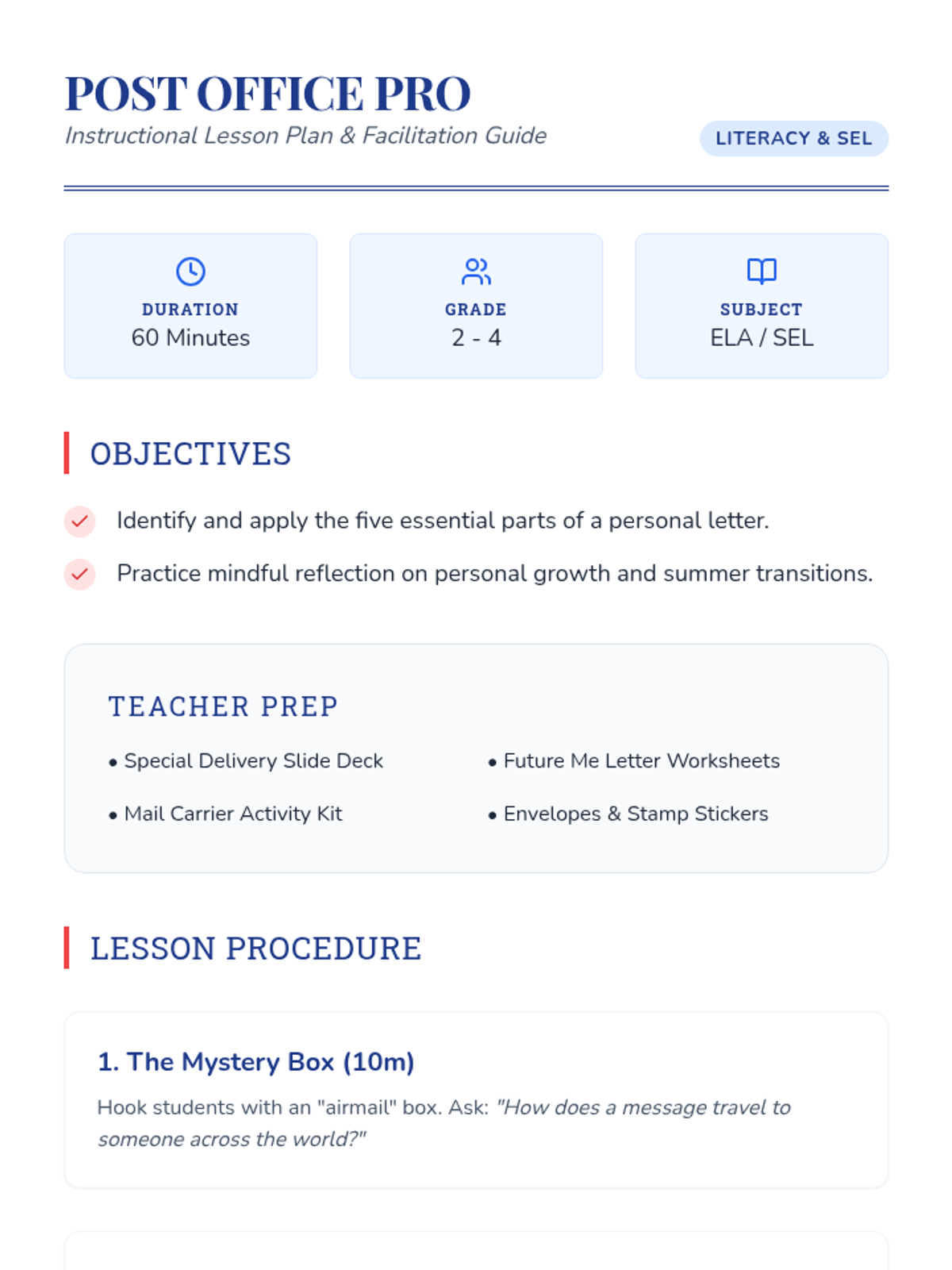
A comprehensive teacher's guide for the Neighborhood Post Office lesson, featuring learning objectives, a detailed lesson flow, and differentiation strategies for teaching letter-writing and social-emotional skills.
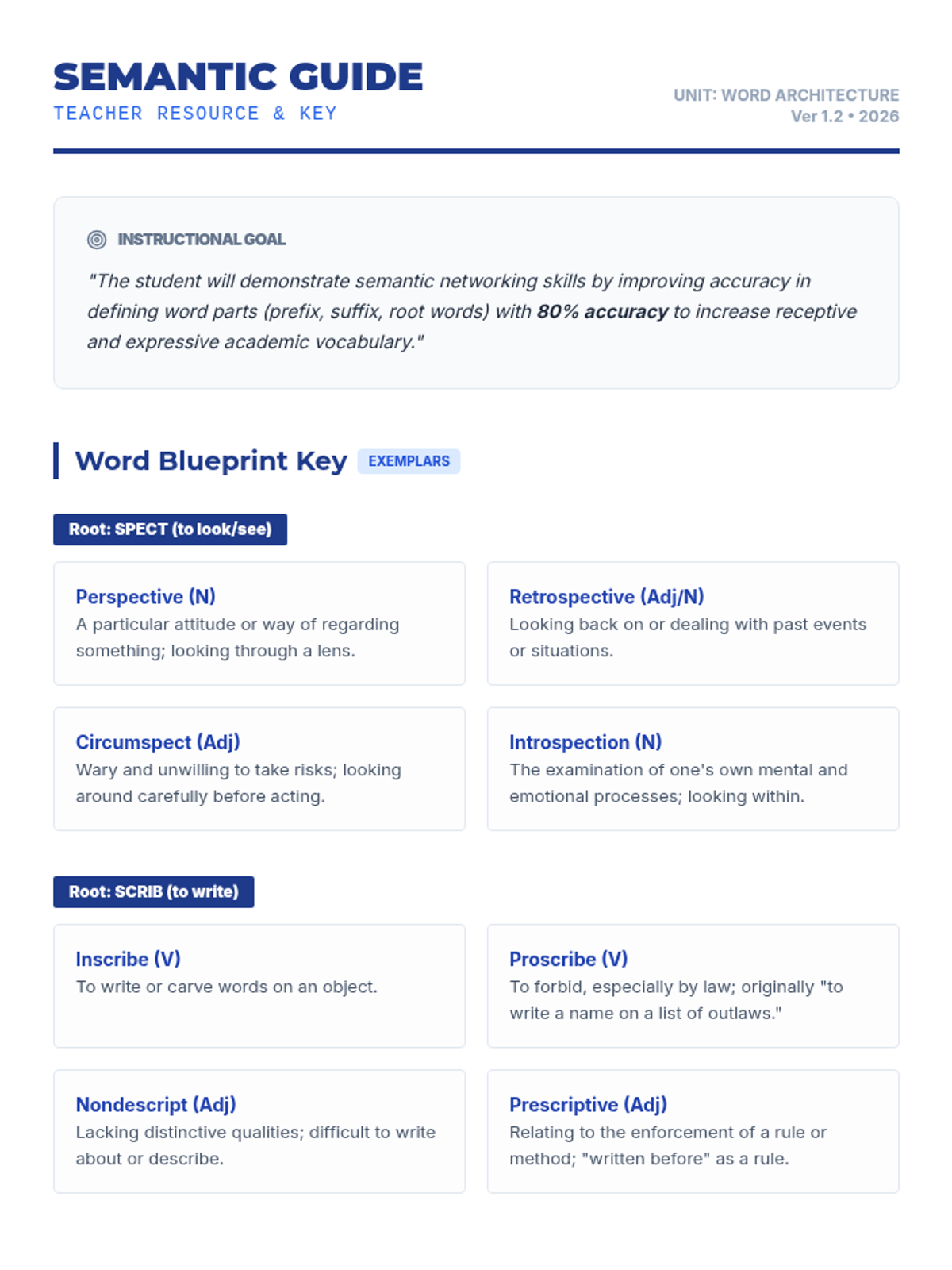
A teacher resource containing answer keys for the Word Blueprint worksheet, instructional pacing suggestions, and a tracking table to monitor student progress toward the 80% accuracy goal.
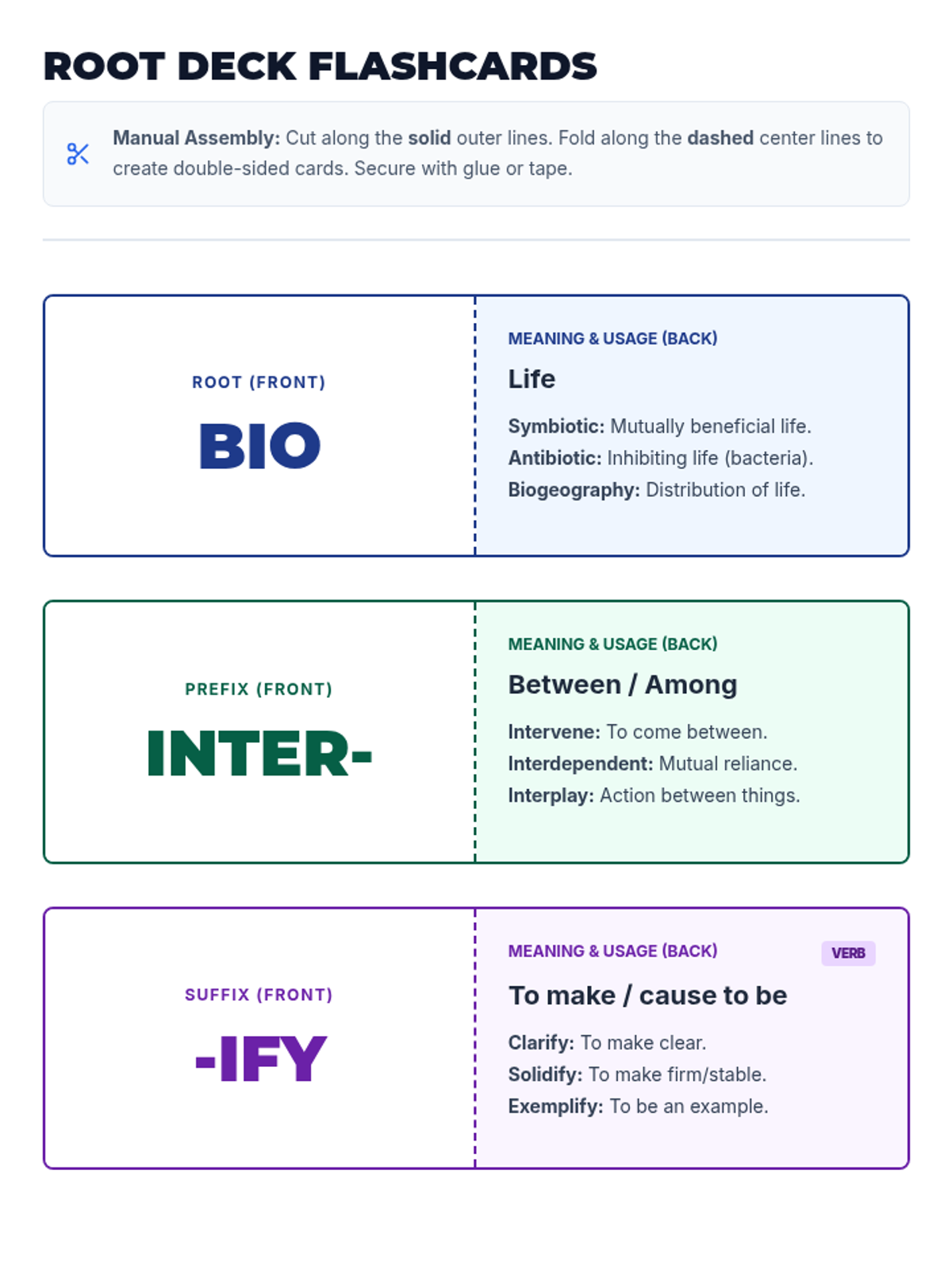
A set of printable vocabulary flashcards designed for ninth-grade academic language building. Includes color-coded cards for Greek/Latin roots, academic prefixes, and part-of-speech suffixes with meanings and examples.
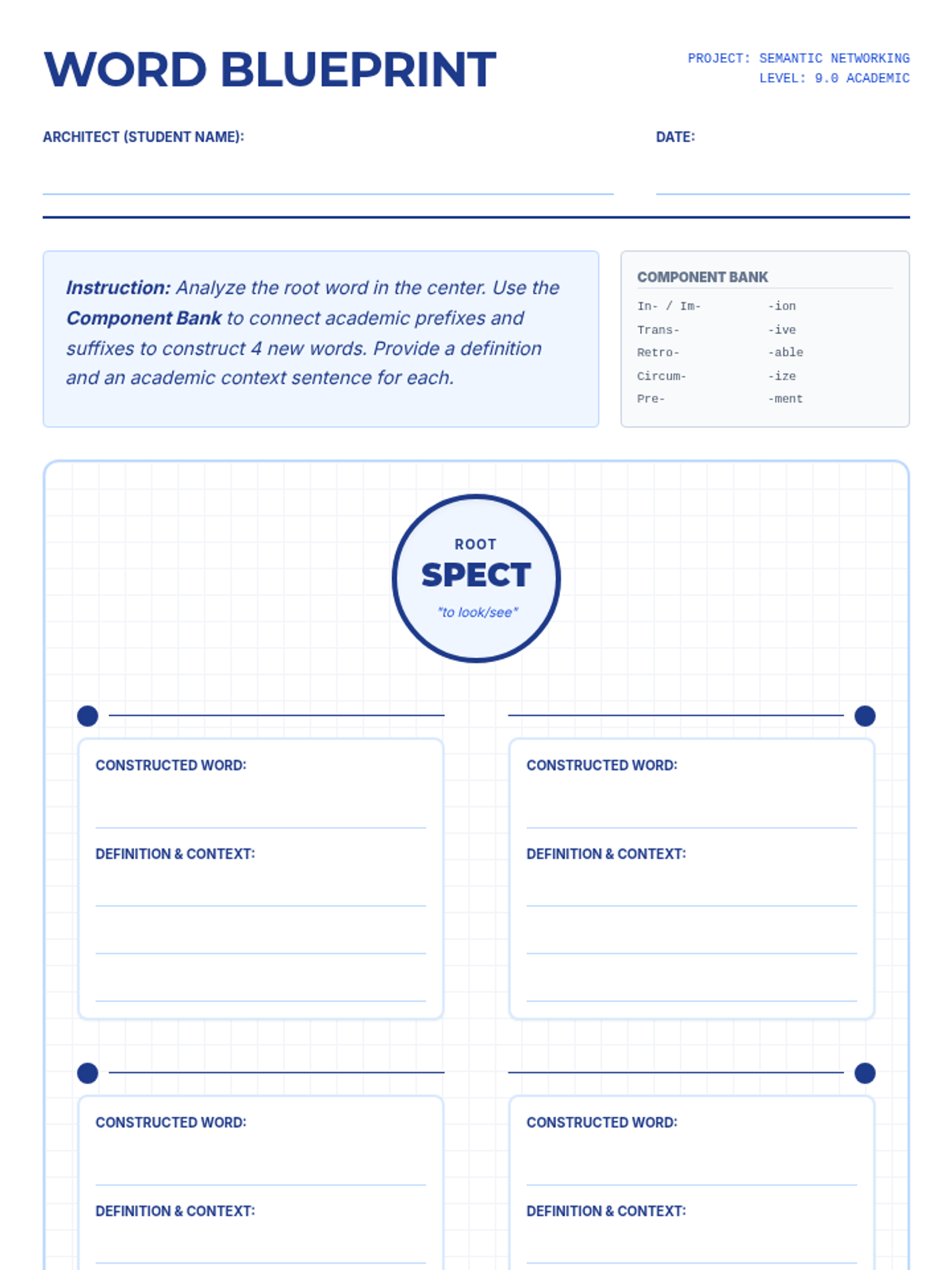
A visually engaging worksheet utilizing a blueprint aesthetic to help students map out words derived from Greek and Latin roots using academic prefixes and suffixes. Students practice constructing new words and defining them in context.
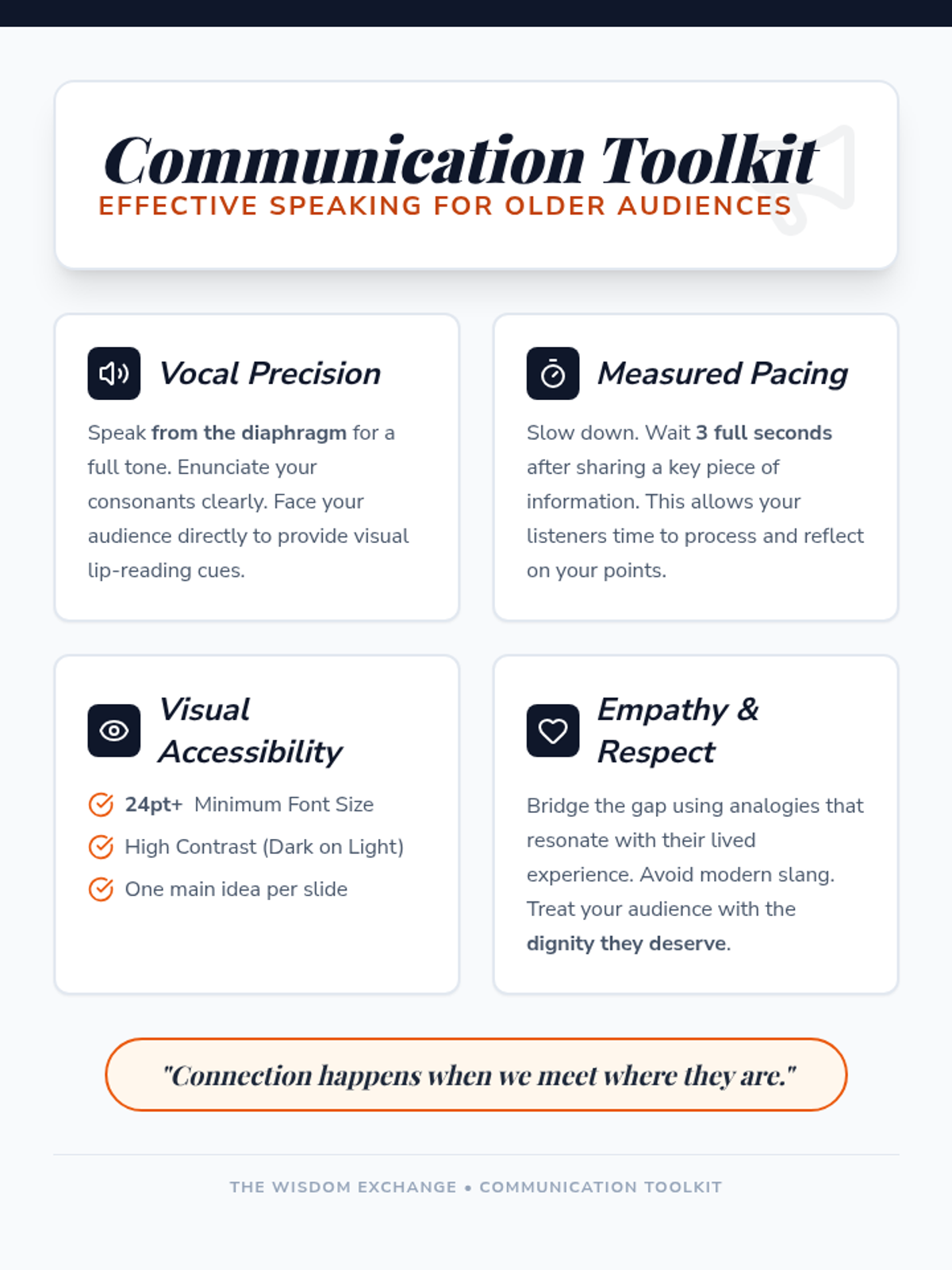
A student-facing reference card or anchor chart summarizing the key communication strategies for presenting to older adults.
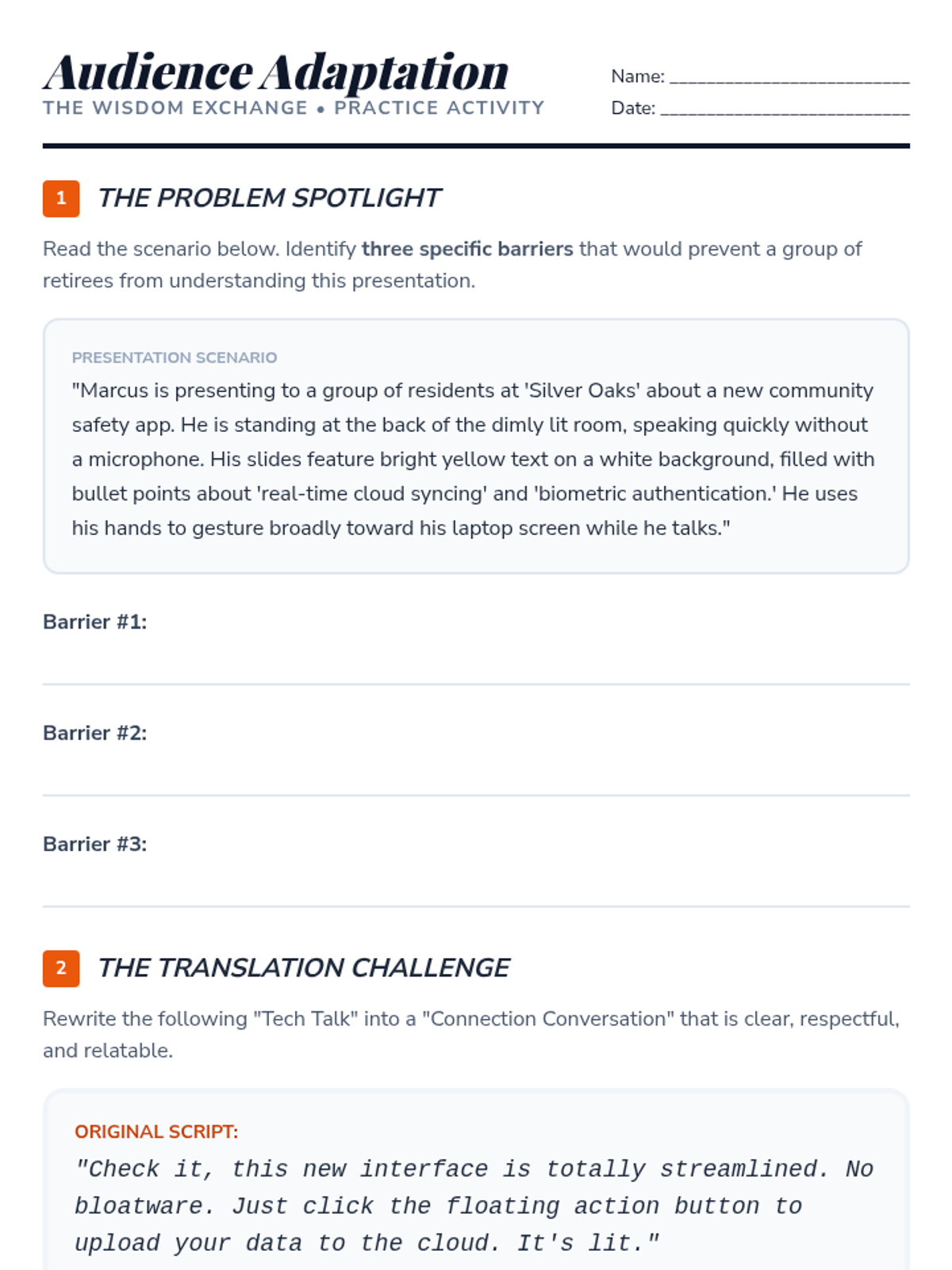
A practice worksheet for students to analyze communication barriers and rewrite technical scripts for an older audience.
A visually engaging 7-slide presentation teaching students how to adapt their speaking style for older audiences through clarity, visuals, pacing, and relational context.
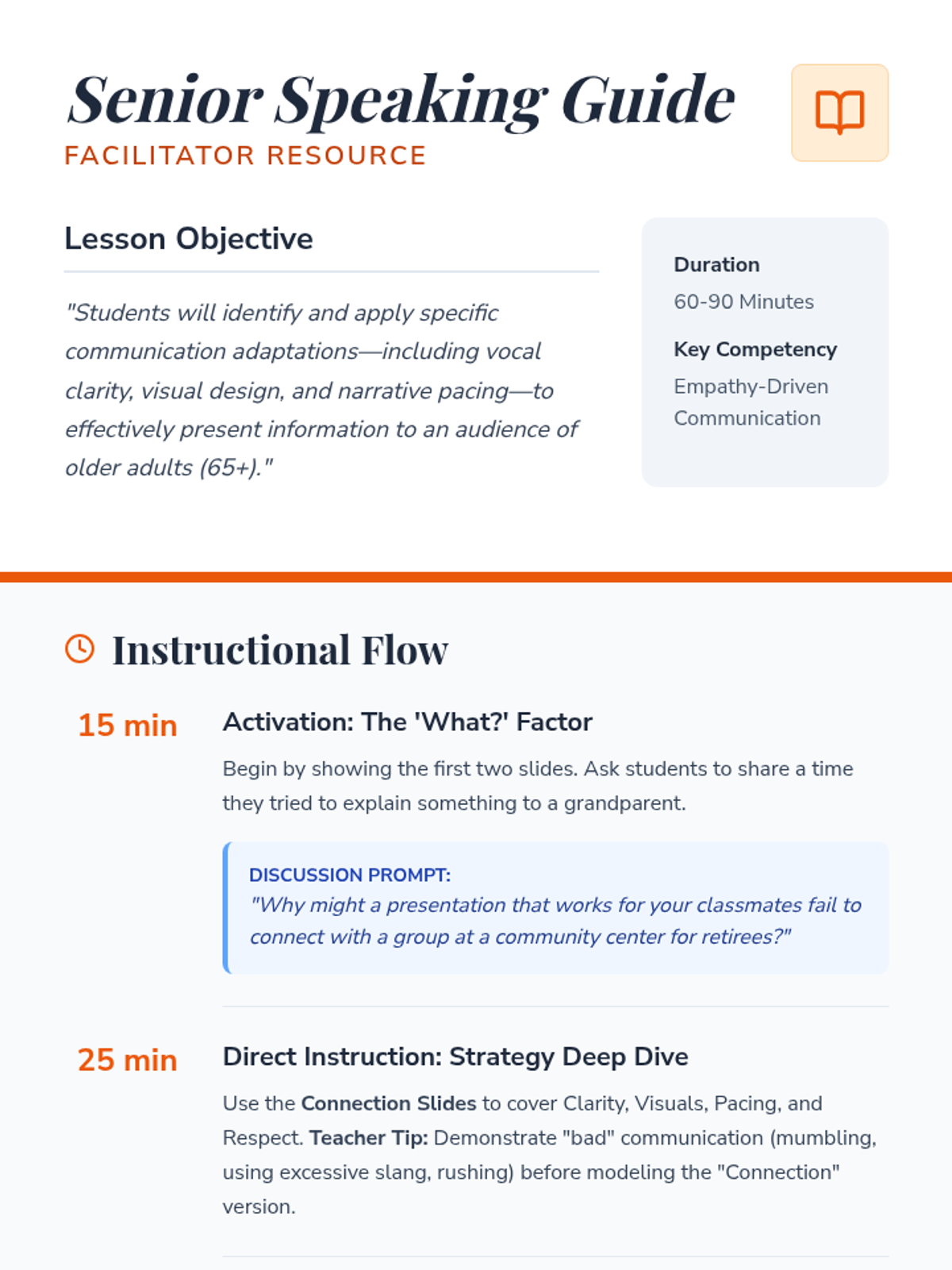
A detailed teacher guide for the Intergenerational Impact lesson, including pacing, discussion prompts, and an answer key for the student worksheet.
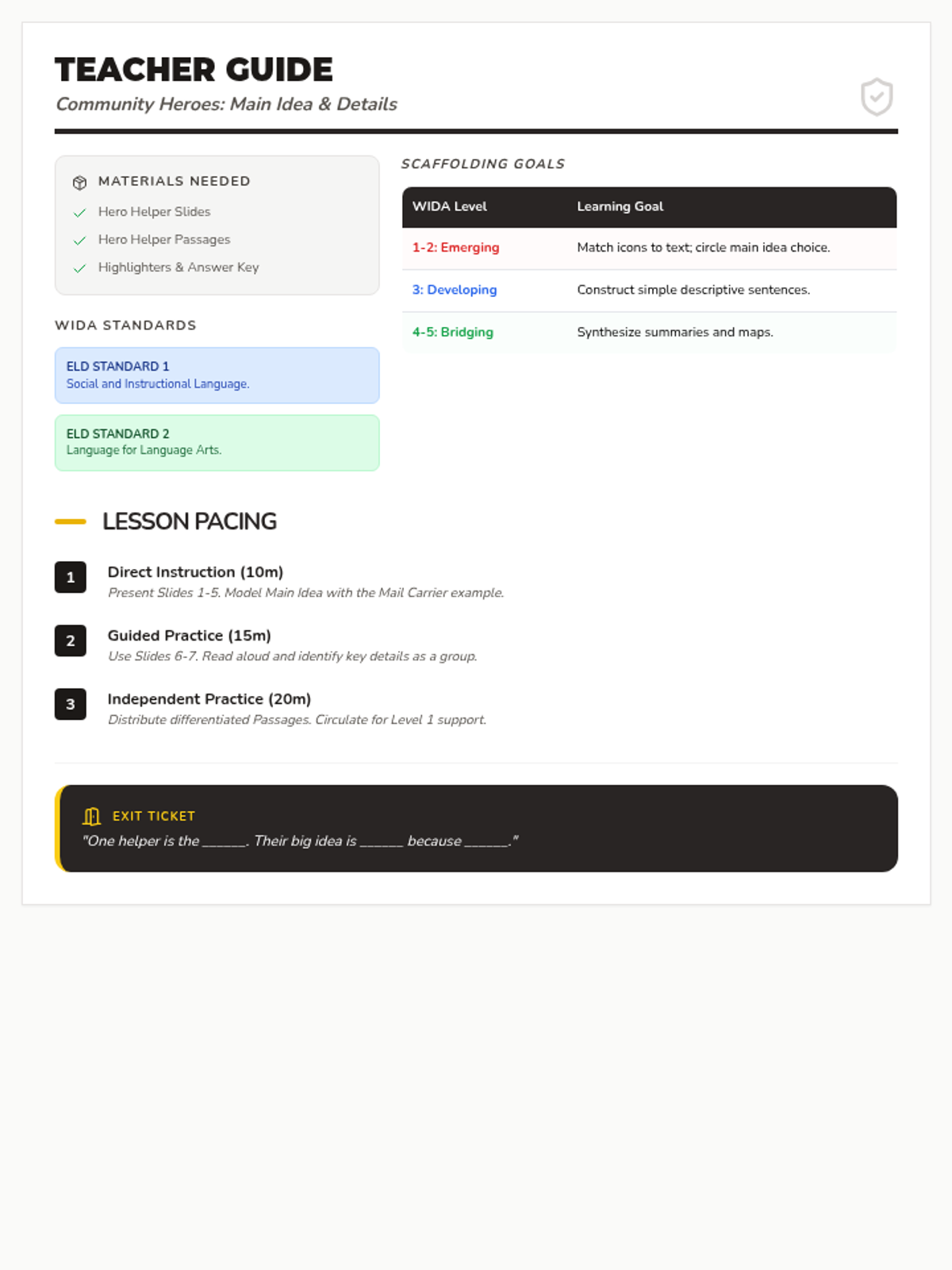
A teacher's instructional guide for the Community Heroes lesson, featuring WIDA standards alignment, differentiation strategies, and a step-by-step lesson plan.
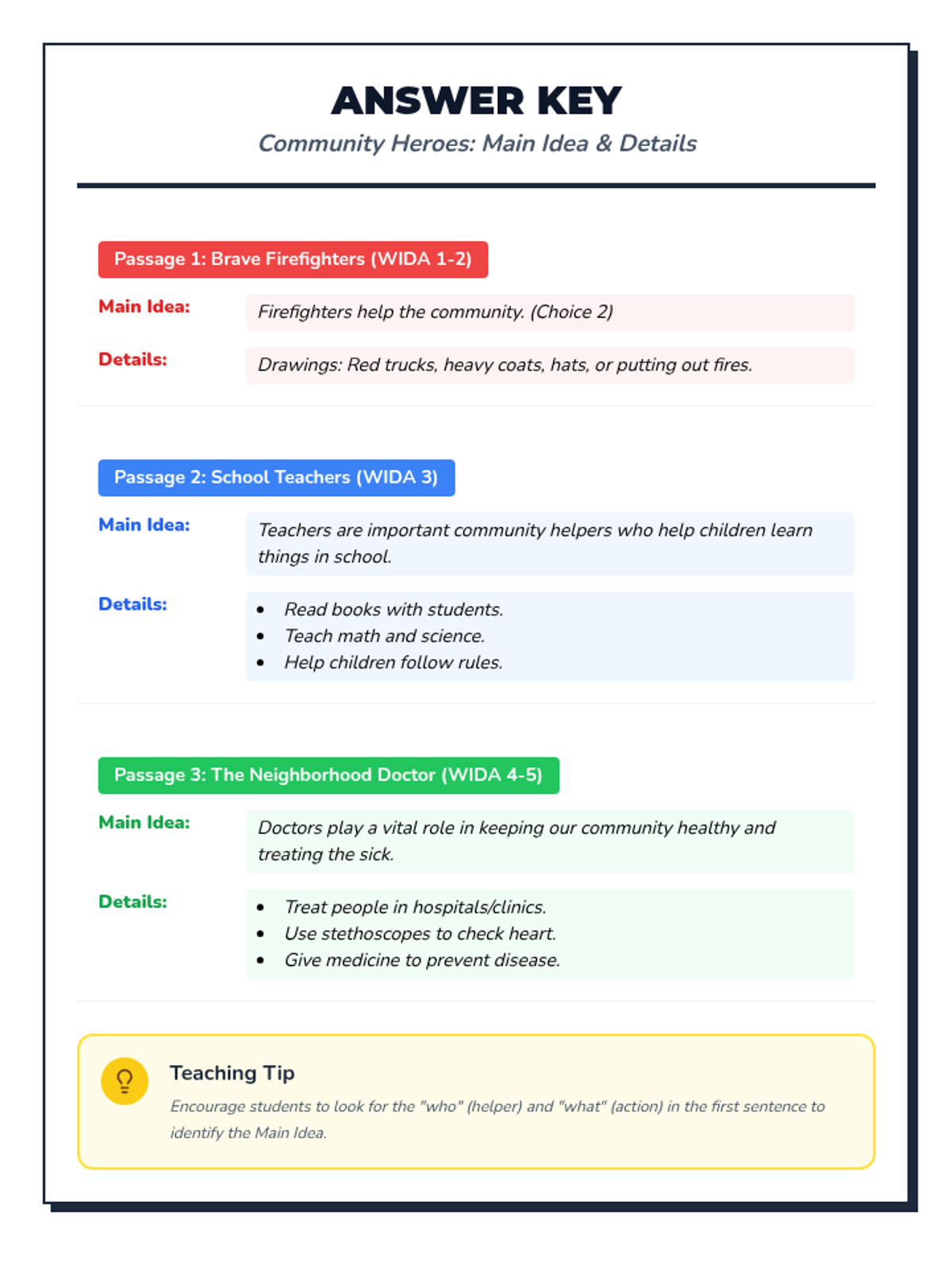
An updated comprehensive answer key for the individual passages and the expanded 12-card partner power activity, featuring improved legibility.
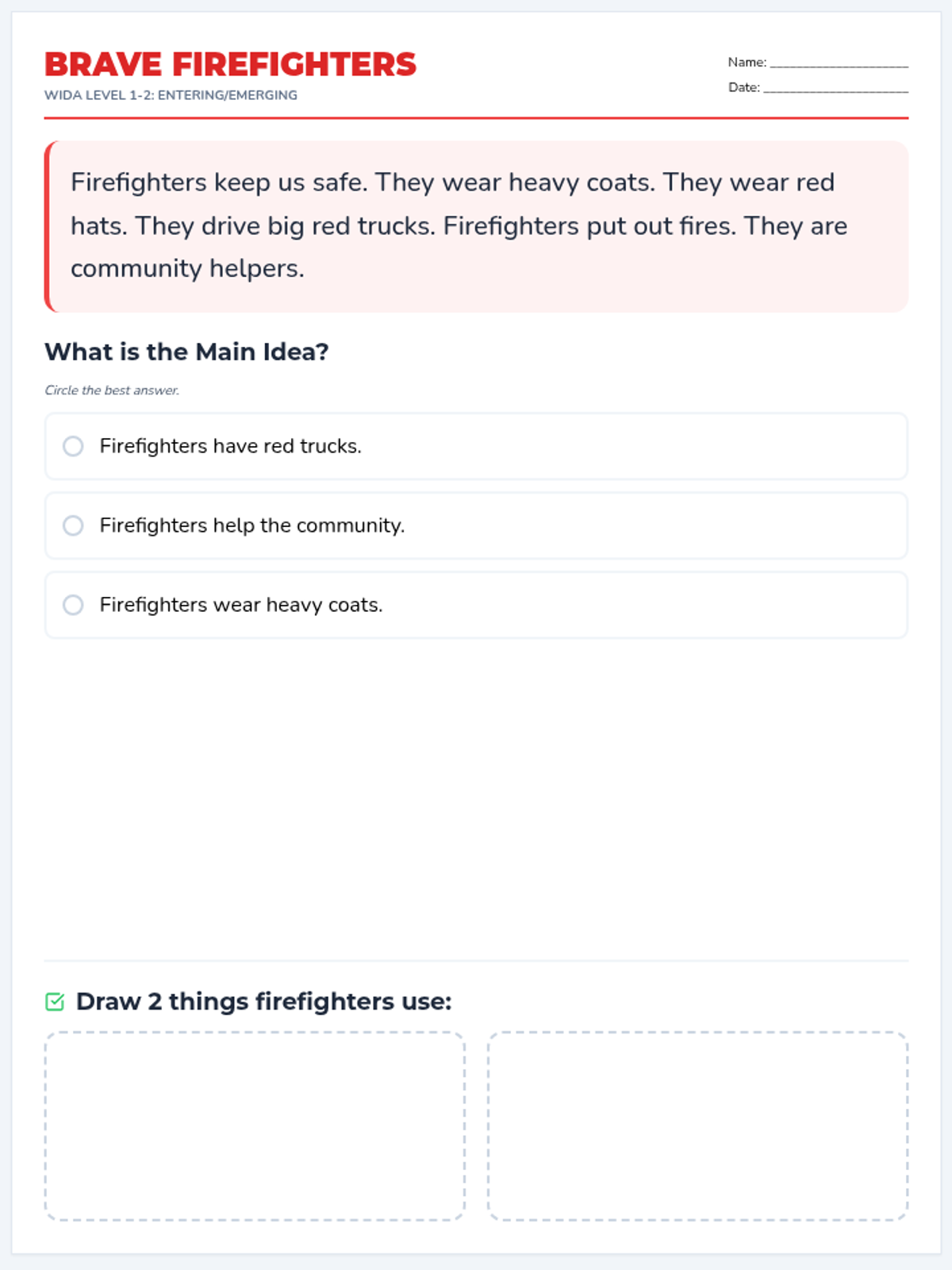
A set of three differentiated reading passages about community helpers (firefighters, teachers, and doctors) designed for grade 2 ESL students at varying WIDA proficiency levels, focusing on identifying the main idea and key details.
A visually engaging slide deck introducing the concepts of main idea and key details through the theme of community helpers, using clear metaphors and modeled examples for grade 2 ESL students.
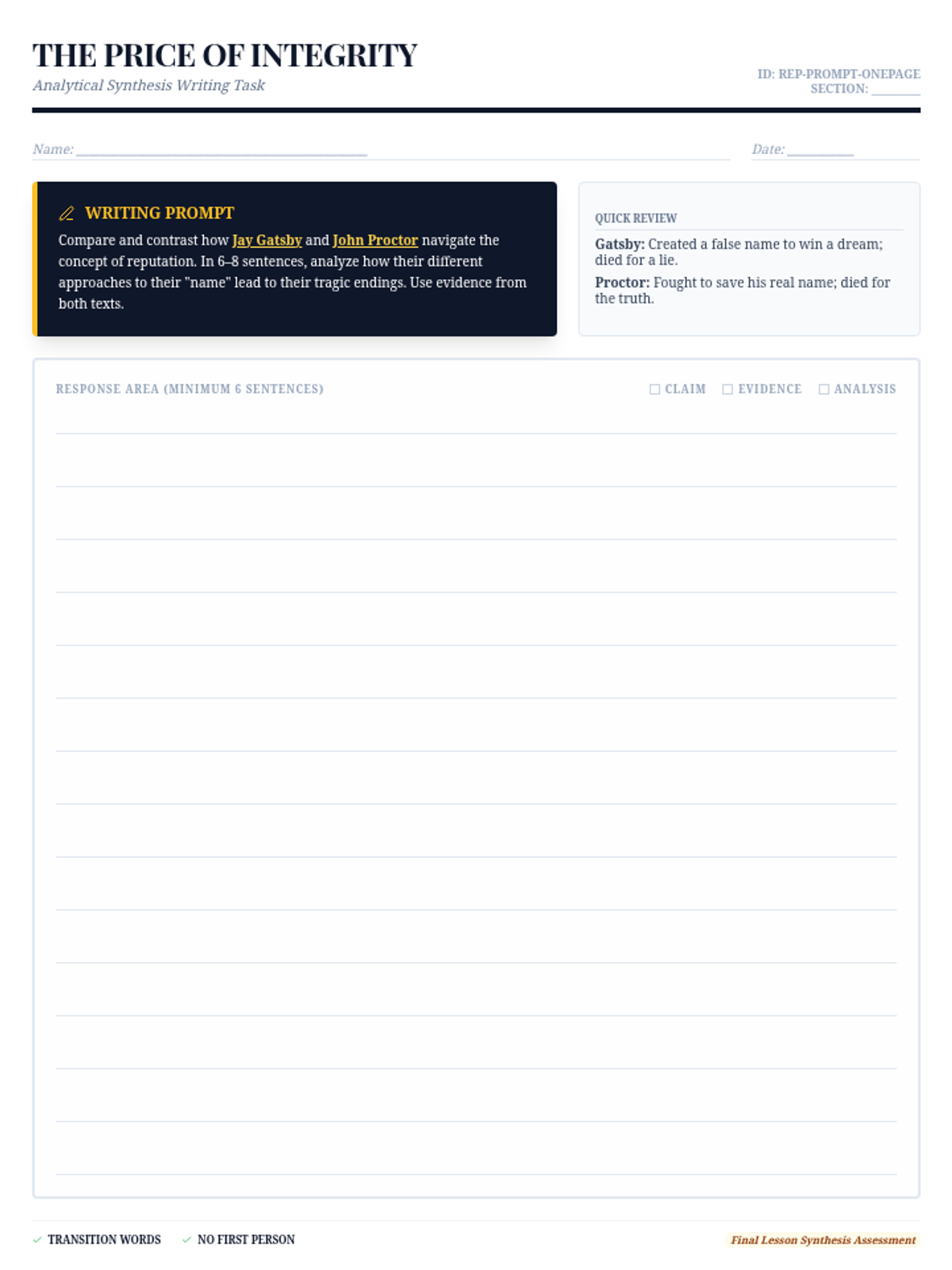
A one-paragraph writing prompt and assessment sheet focusing on the comparison of reputation in The Great Gatsby and The Crucible.
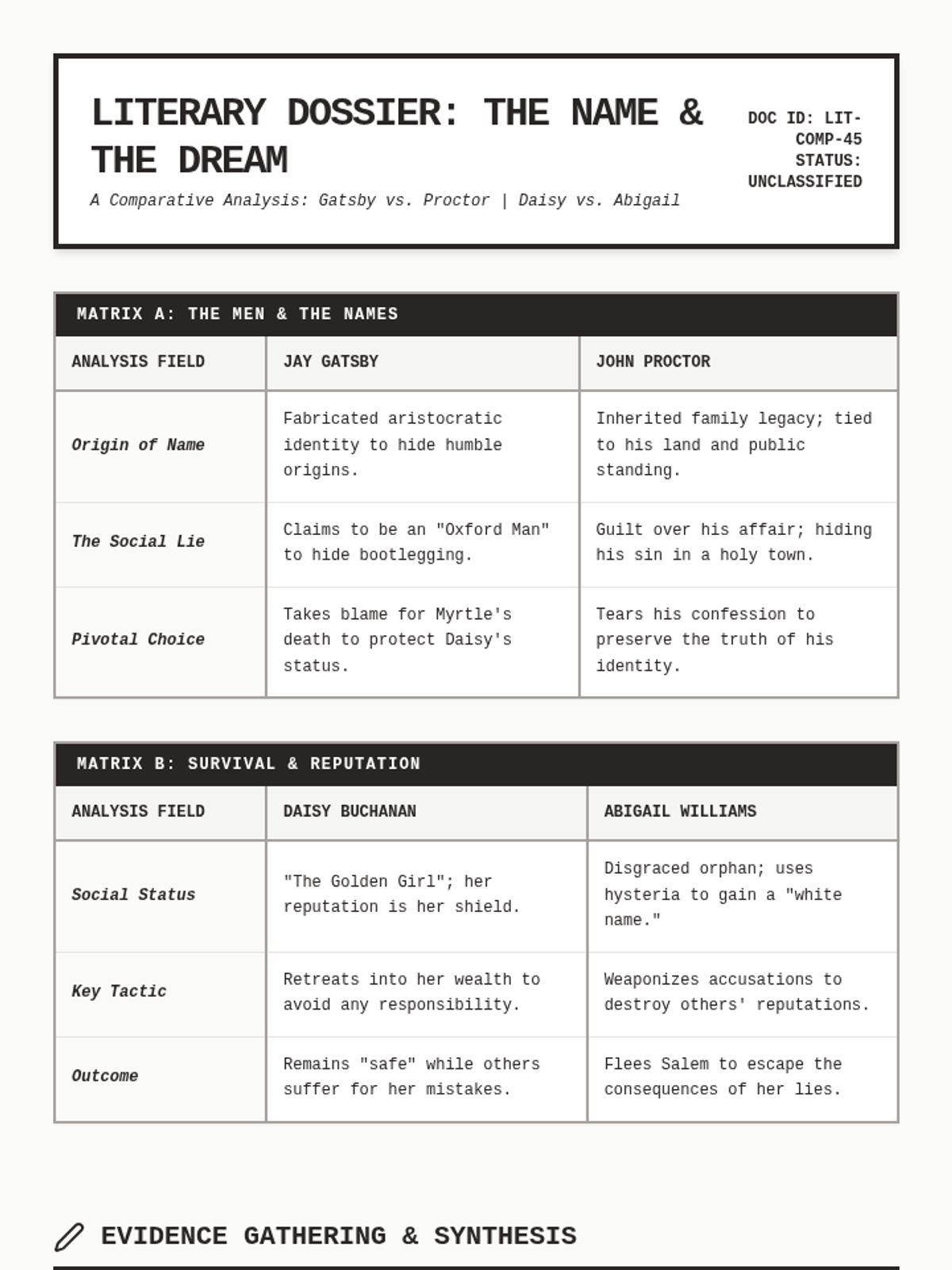
A student character and event guide designed as a "dossier" comparing Jay Gatsby and John Proctor, as well as Daisy Buchanan and Abigail Williams.