A highly compact worksheet featuring seven data analysis and graphing questions. Optimized for high readability with anchored labels and axis titles using grid layouts. Questions are organized for efficient 4/3 distribution across two pages.
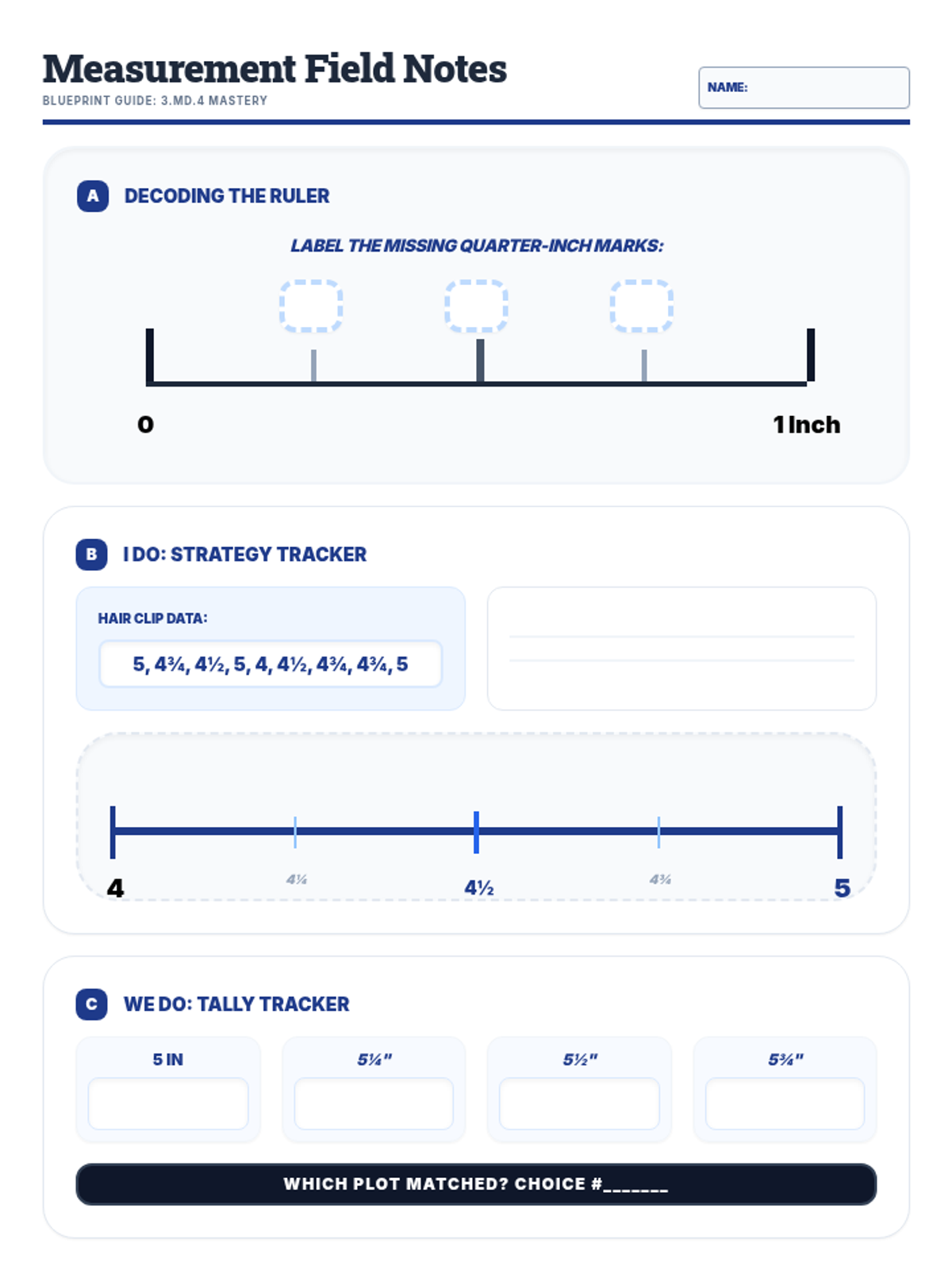
Guided field notes for students to accompany the Measurement Blueprint lesson, featuring sections for the I Do, We Do, and You Do instructional phases. Optimized for handwriting with a light theme for high-quality printing. Fixed page breaks and visual aid alignment. Section D has been consolidated and Section B includes an accurate modeling plot. Section A alignment issue with input boxes has been resolved. Optimized to fit on exactly two pages.
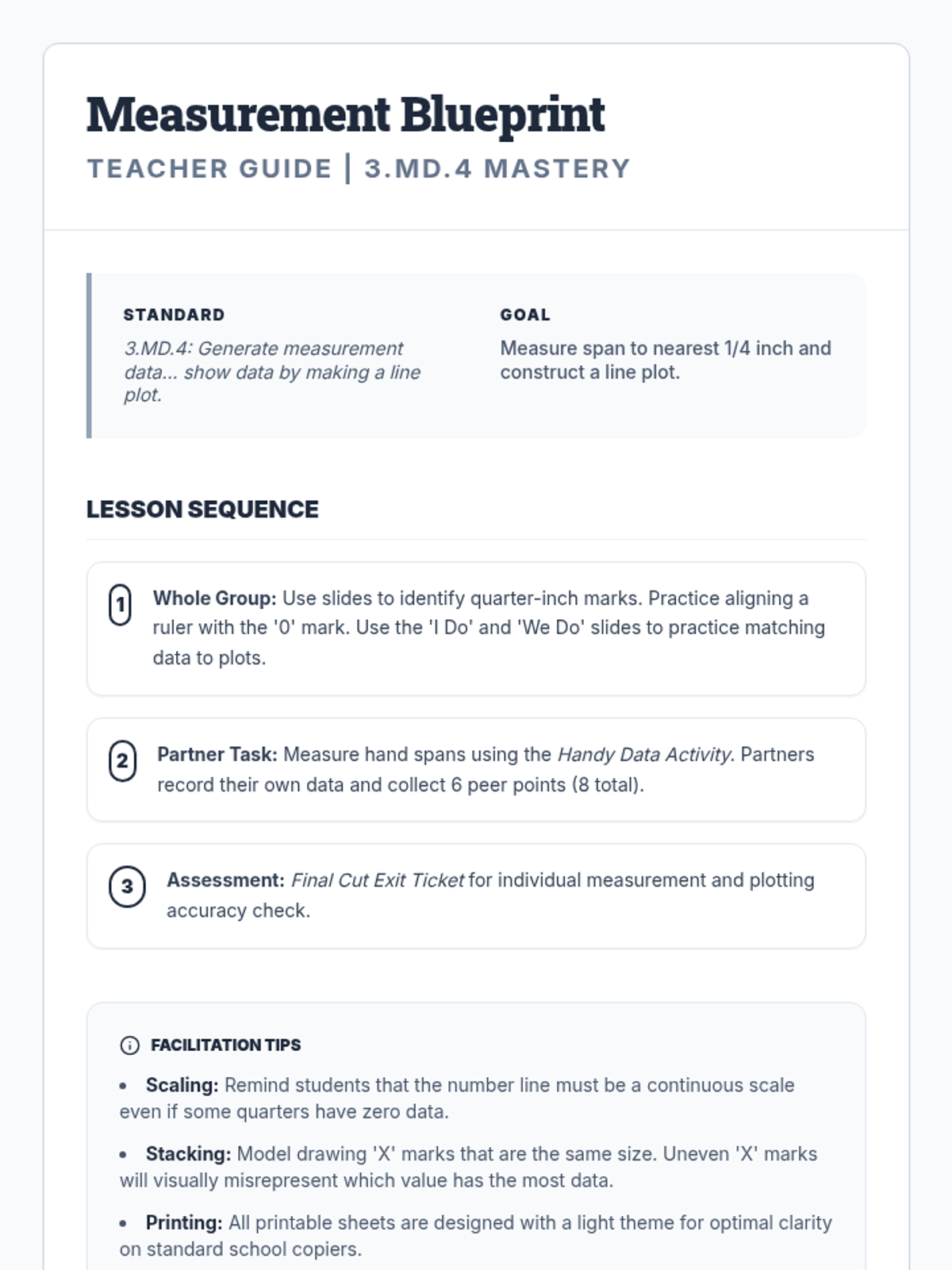
A comprehensive teacher guide for 3.MD.4 lesson implementation, optimized with a light colored printer-friendly theme. Includes sequence, misconceptions, and facilitation strategies.
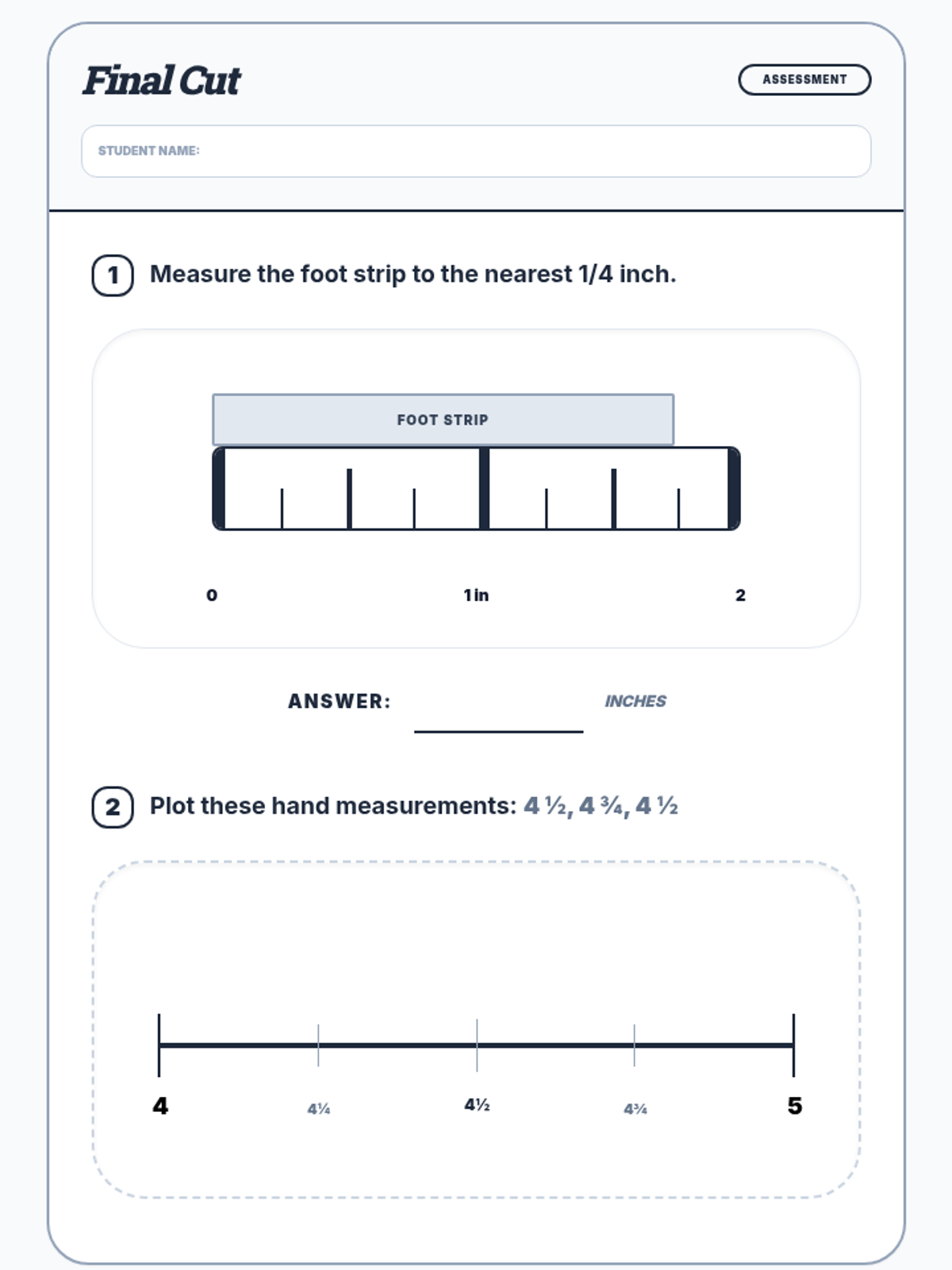
A concise exit ticket to assess student understanding of measuring to the nearest quarter inch and accurately representing data points on a pre-labeled line plot, now consolidated onto a single page. Optimized for high-quality light-colored printing. Question 3 has been removed and visuals have been aligned for precision.
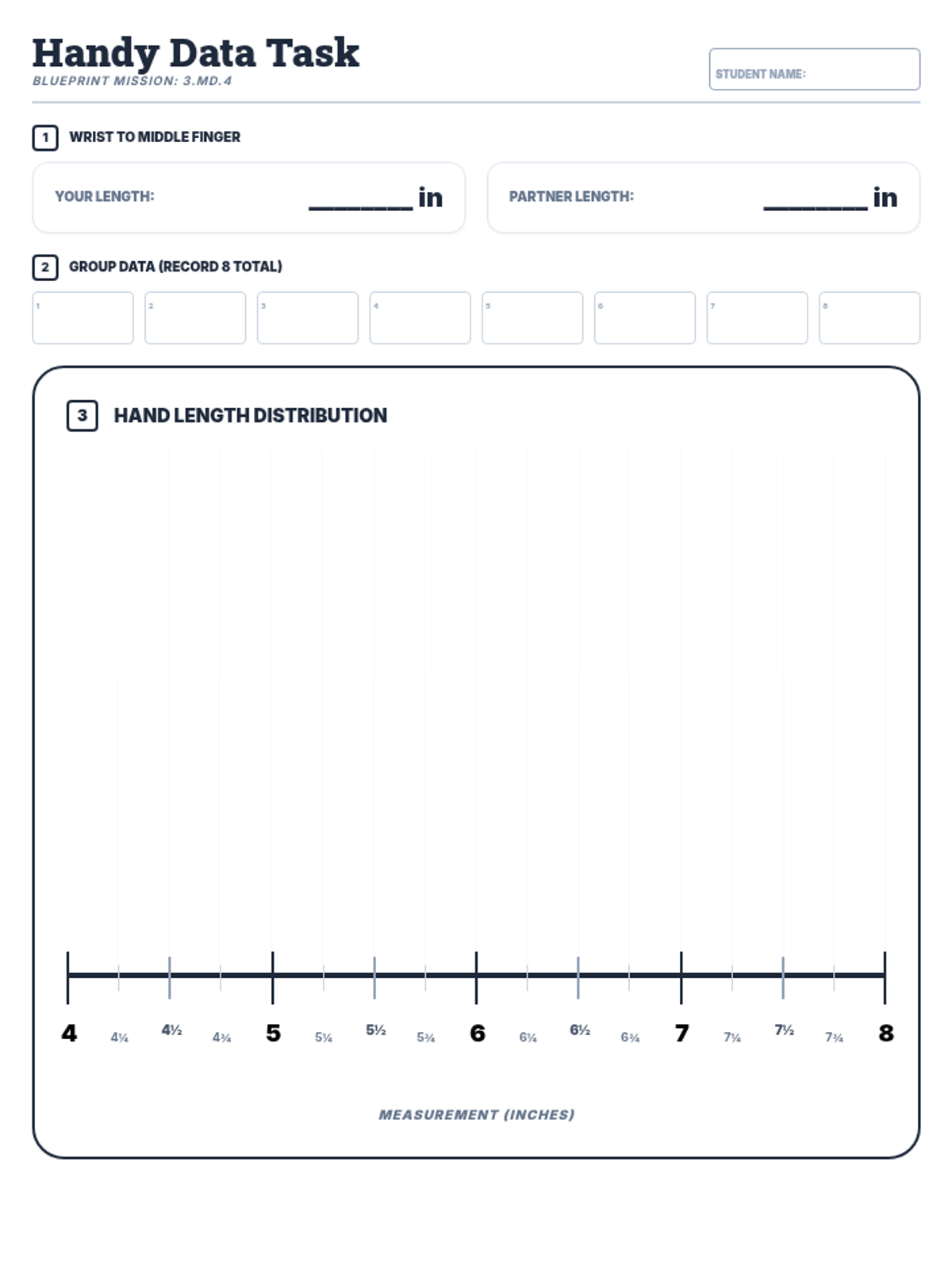
A partner-based measurement activity where students measure hand spans to the nearest quarter inch, collect peer data, and create a line plot to analyze their findings, now consolidated onto a single page. Group data boxes and grid line visibility have been optimized for light-colored printing.
Updated slide deck for 3.MD.4 including instructional foundations, and a structured 'I Do, We Do, You Do' sequence for matching data sets to line plots with a blueprint theme. Line plot containers have been fixed with a vertical flex layout to prevent marker/label overlap. Choice styling has been unified for consistent guided practice. ALL font sizes for fractions increased to 18px+ for visibility. Vertical padding added to choice containers to prevent text cut-off. Choice 2 distractor updated with 7 data points for a less obvious pick.
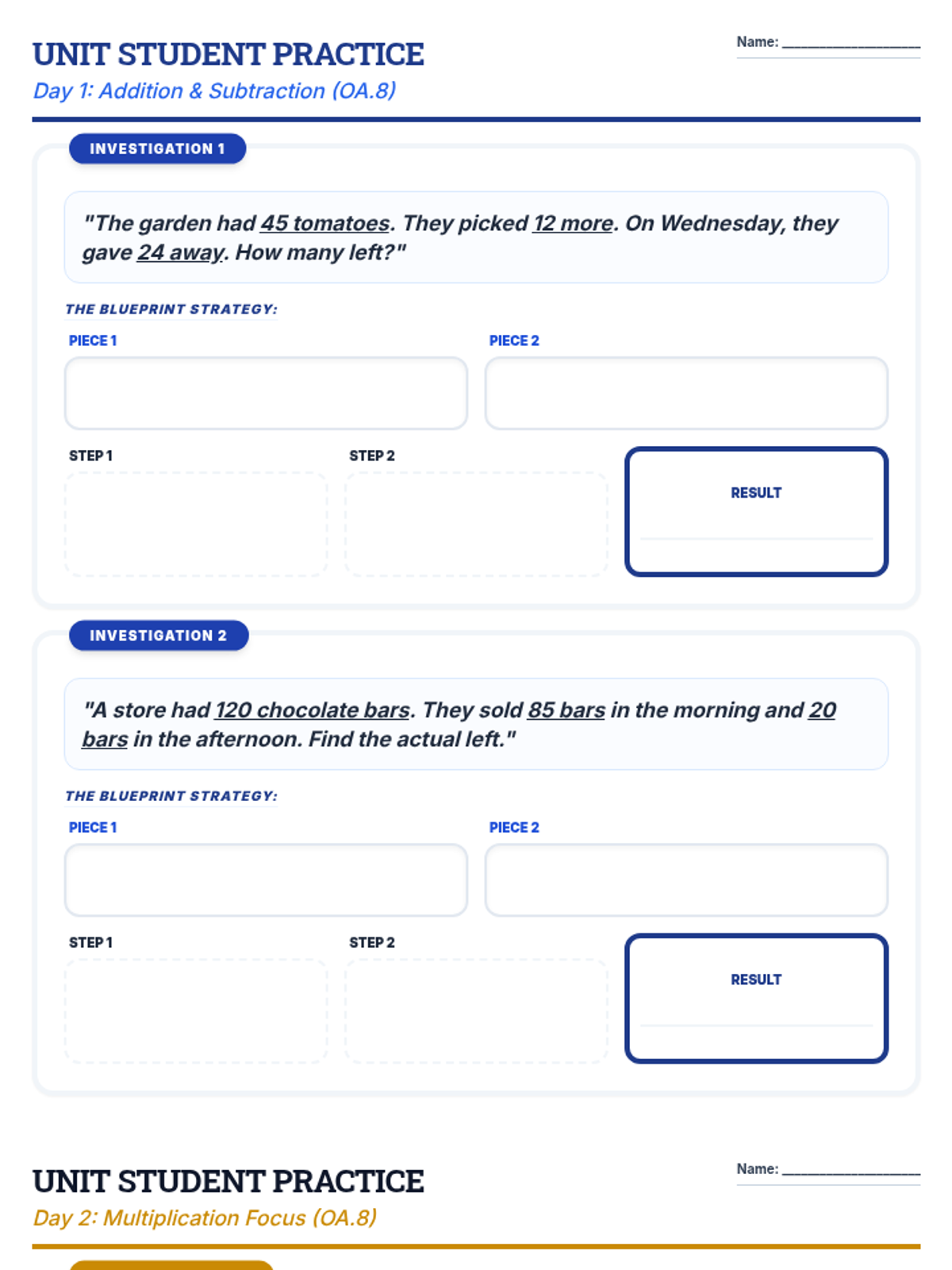
Consolidated student practice packet containing all unit independent tasks for Days 1-4. Features multi-step operations problems with the 5-box strategy and attribute-based geometry investigations. Includes high-contrast workspace for handwriting and visual aids for geometric reasoning. Fixed layout and label contrast.
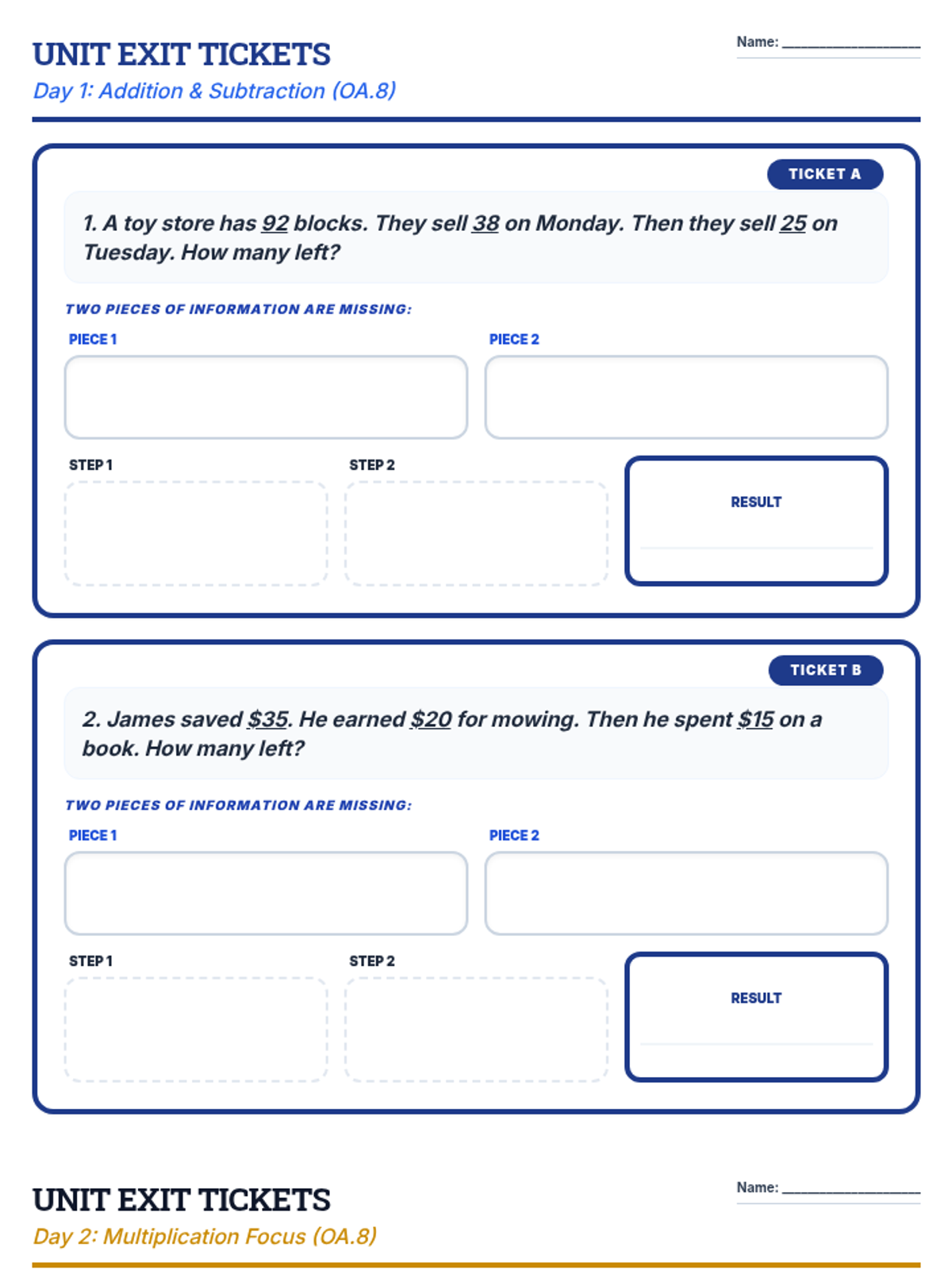
Consolidated master packet containing all unit exit tickets for Days 1-4. Each day's tasks are organized on a single page with high-contrast student response areas and standardized terminology. Includes multi-step modeling and attribute-based reasoning questions. Fixed page breaks and label contrast.
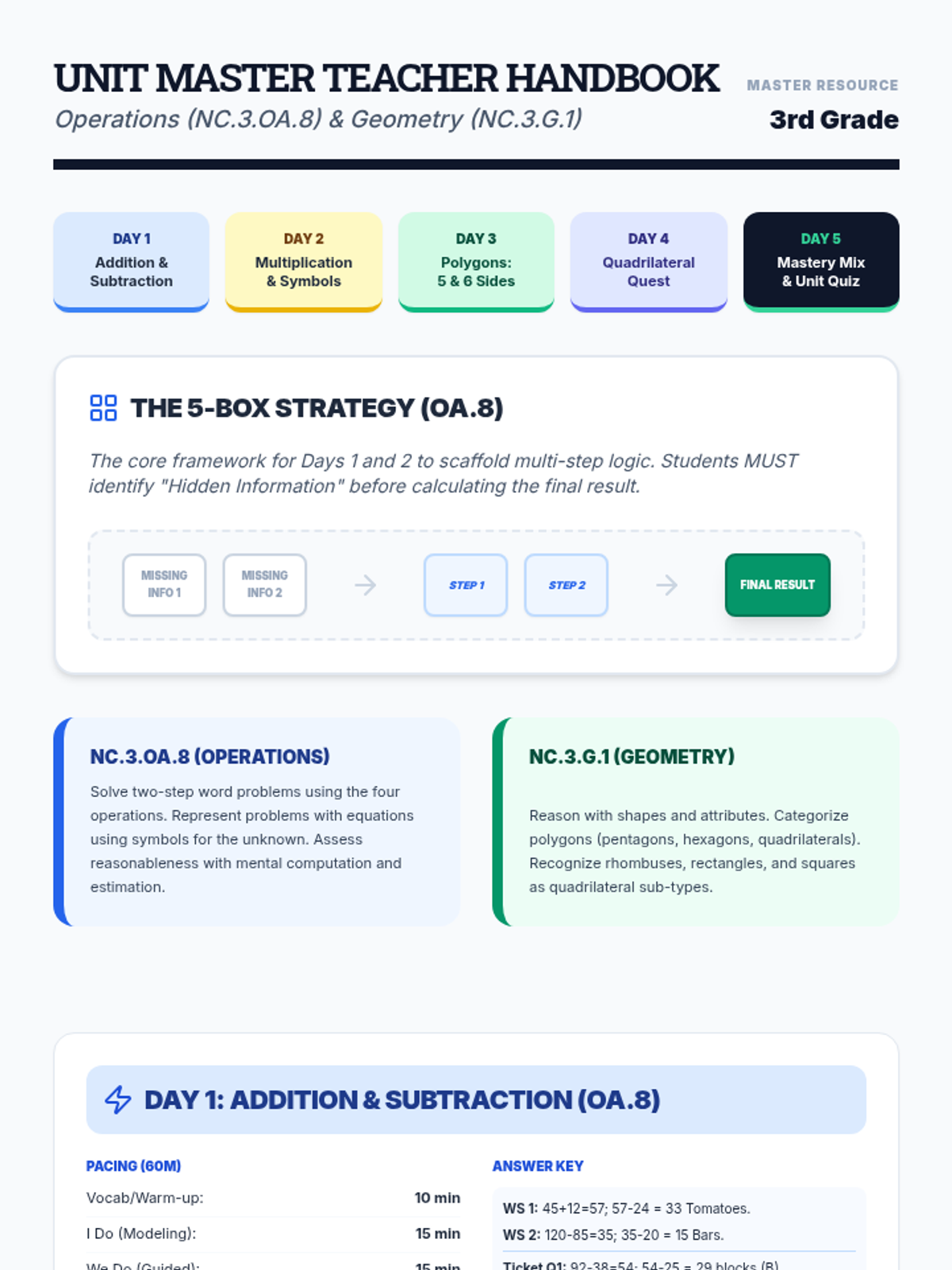
Comprehensive unit master pacing guide and answer key handbook. Contains detailed phase-by-phase pacing for all 5 days, consolidated answer keys for every student worksheet, exit ticket, and the final unit quiz, along with targeted instructional feedback for NC.3.OA.8 and NC.3.G.1. Fixed layout and overflow.
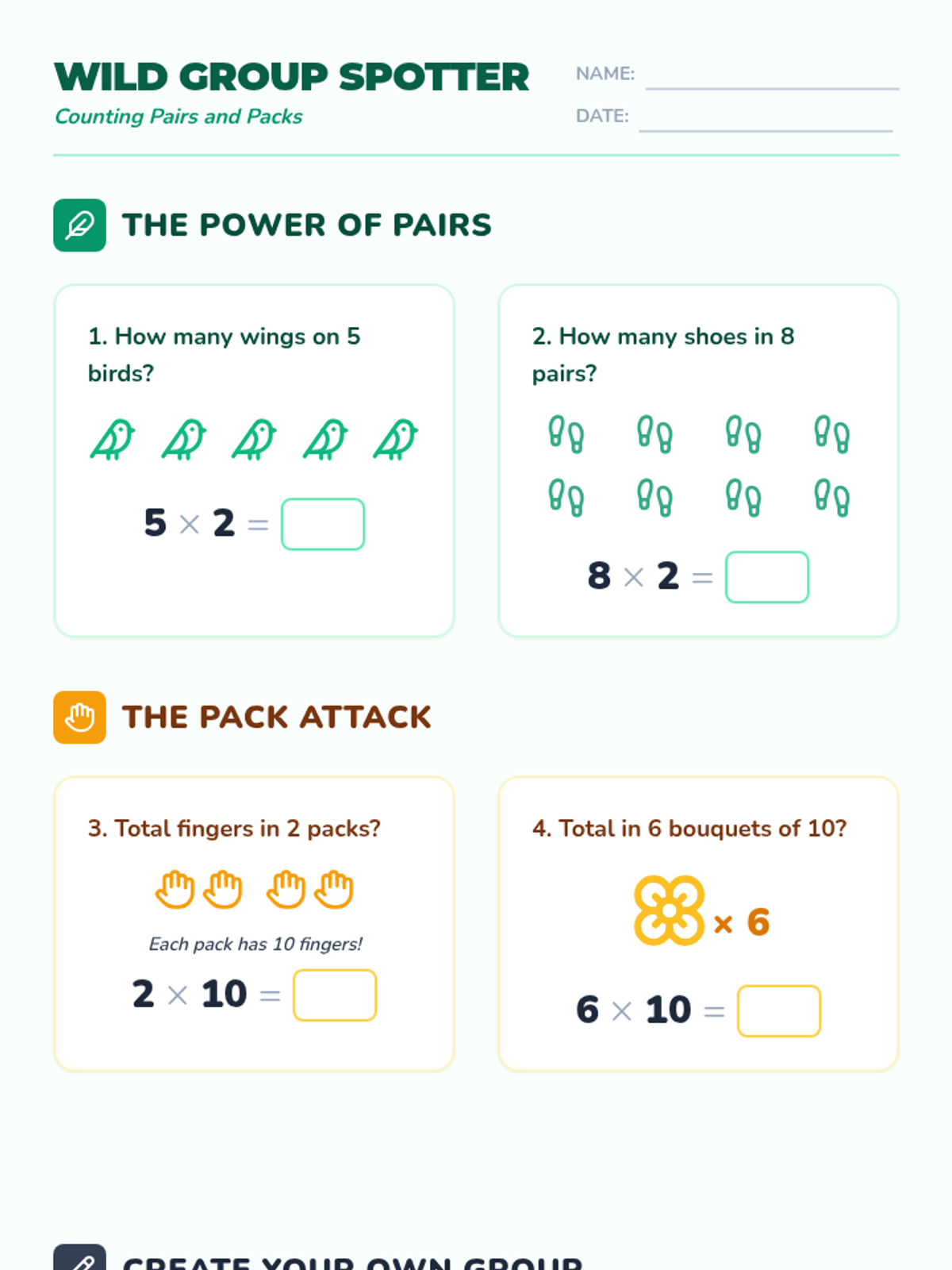
A student practice worksheet featuring visual multiplication problems for facts of 2 and 10, designed to reinforce equal group concepts.
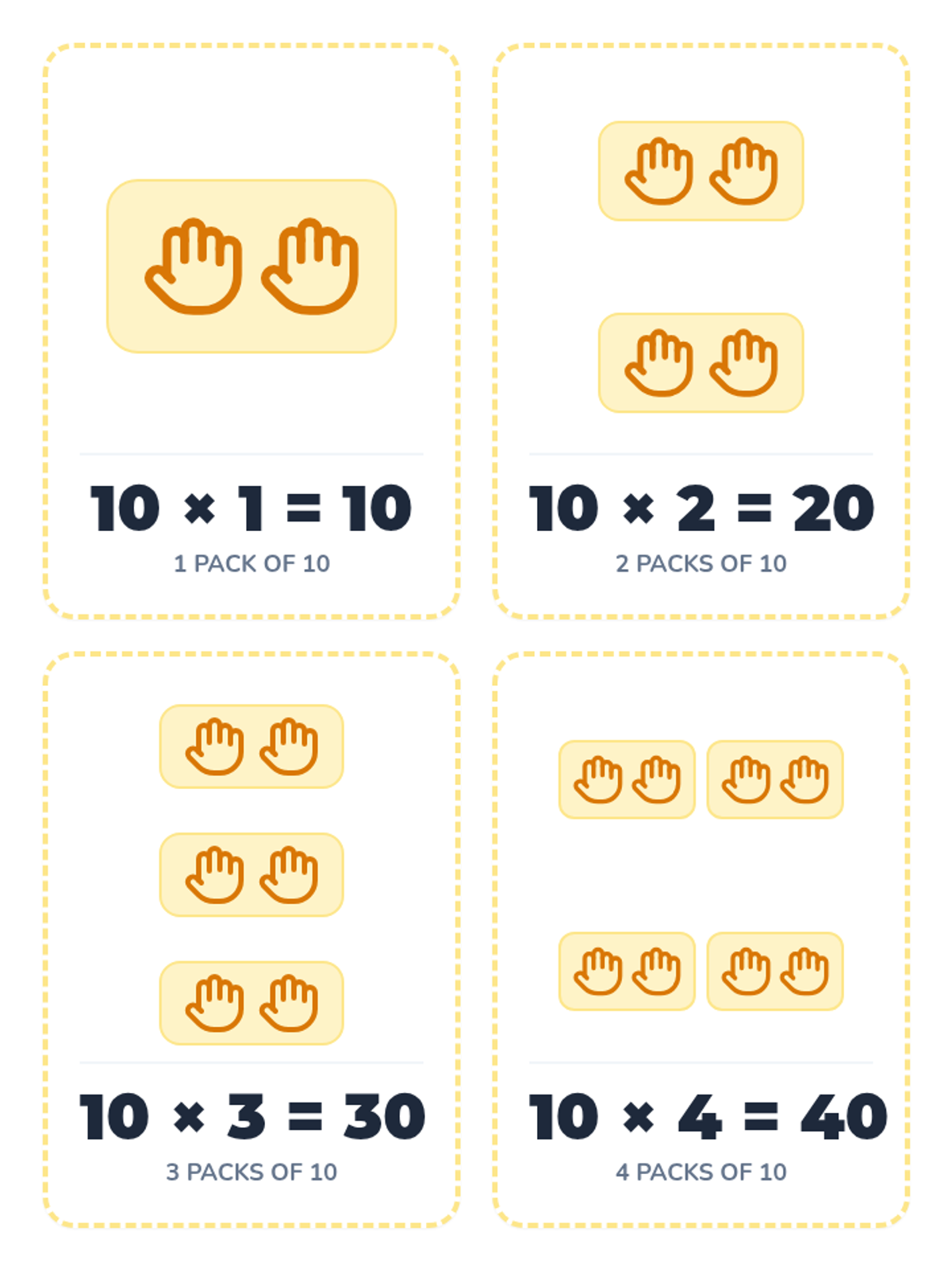
Large print flashcards for multiplication facts of 10, utilizing fingers as a visual anchor to teach skip-counting and equal groups.
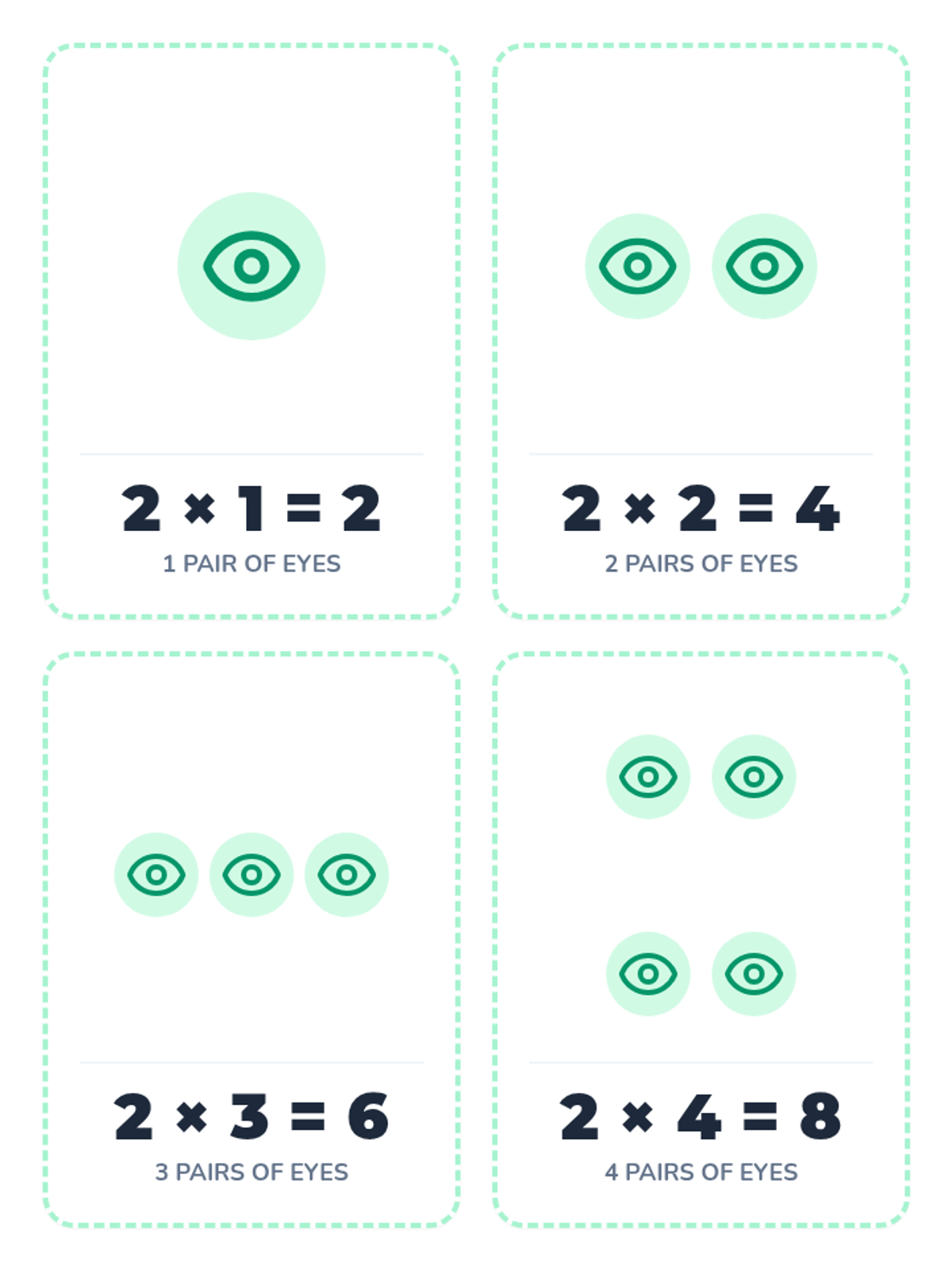
Large print flashcards for multiplication facts of 2, featuring visual representations of pairs (eyes) to build conceptual understanding.
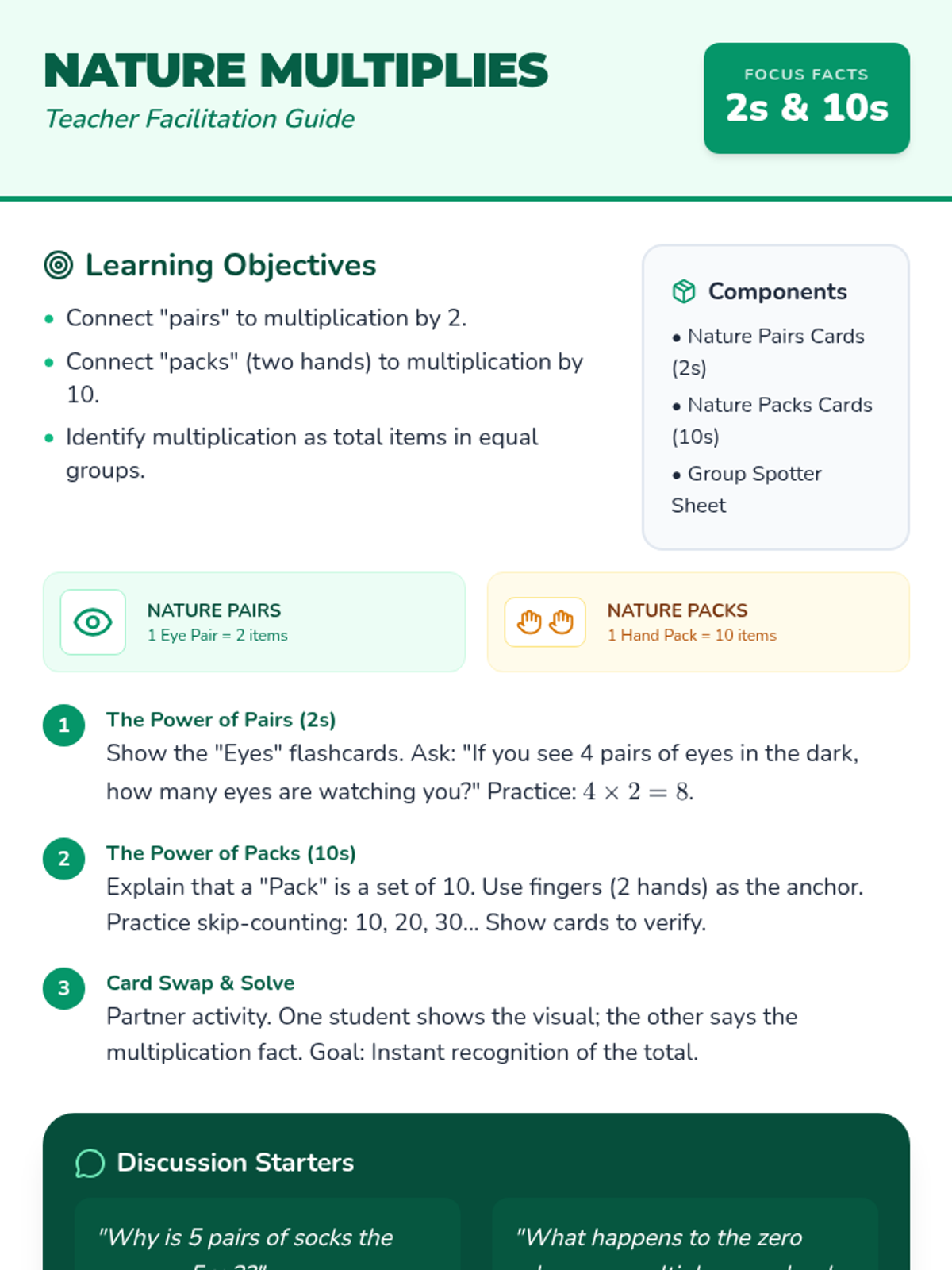
A comprehensive teacher facilitation guide for teaching multiplication facts of 2 and 10, featuring instructional sequences, discussion prompts, and learning objectives.
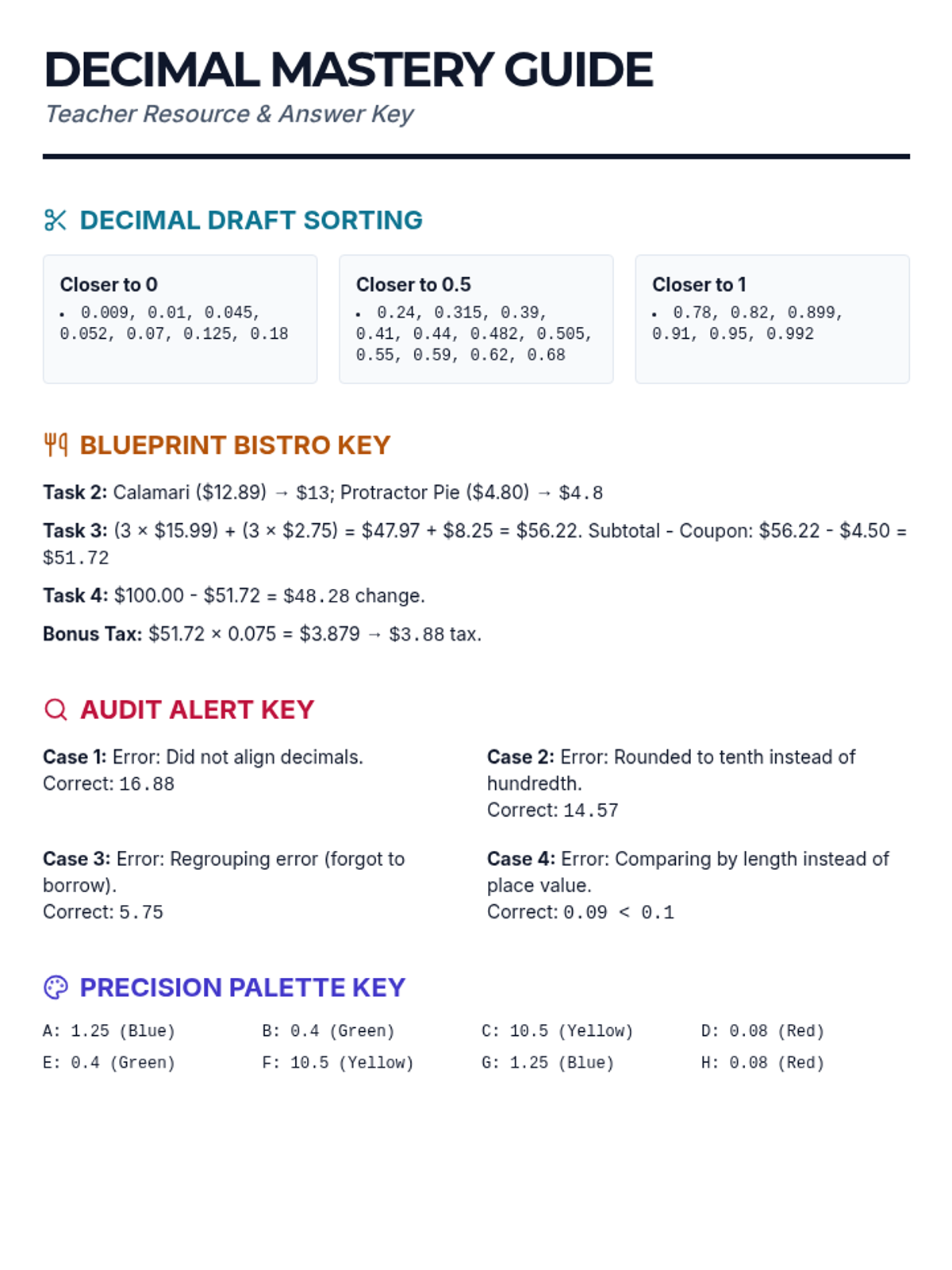
A teacher's answer key and instruction guide for the Decimal Mastery Pack. Updated to include bonus task solutions and expanded keys for clarity.
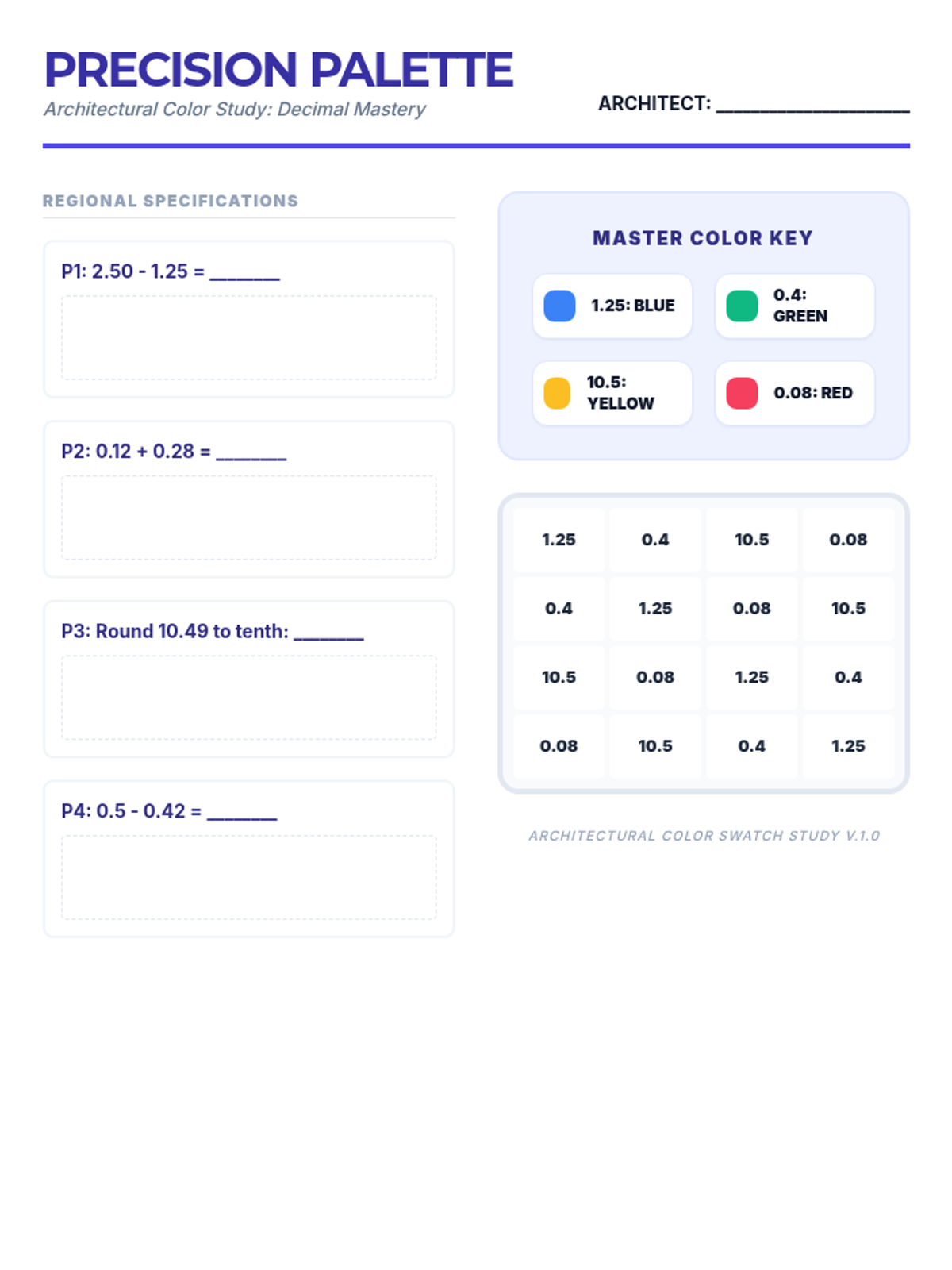
A color-by-number worksheet where students solve decimal problems to color a grid. Features darkened labels, dedicated work spaces, and a clarified color key.
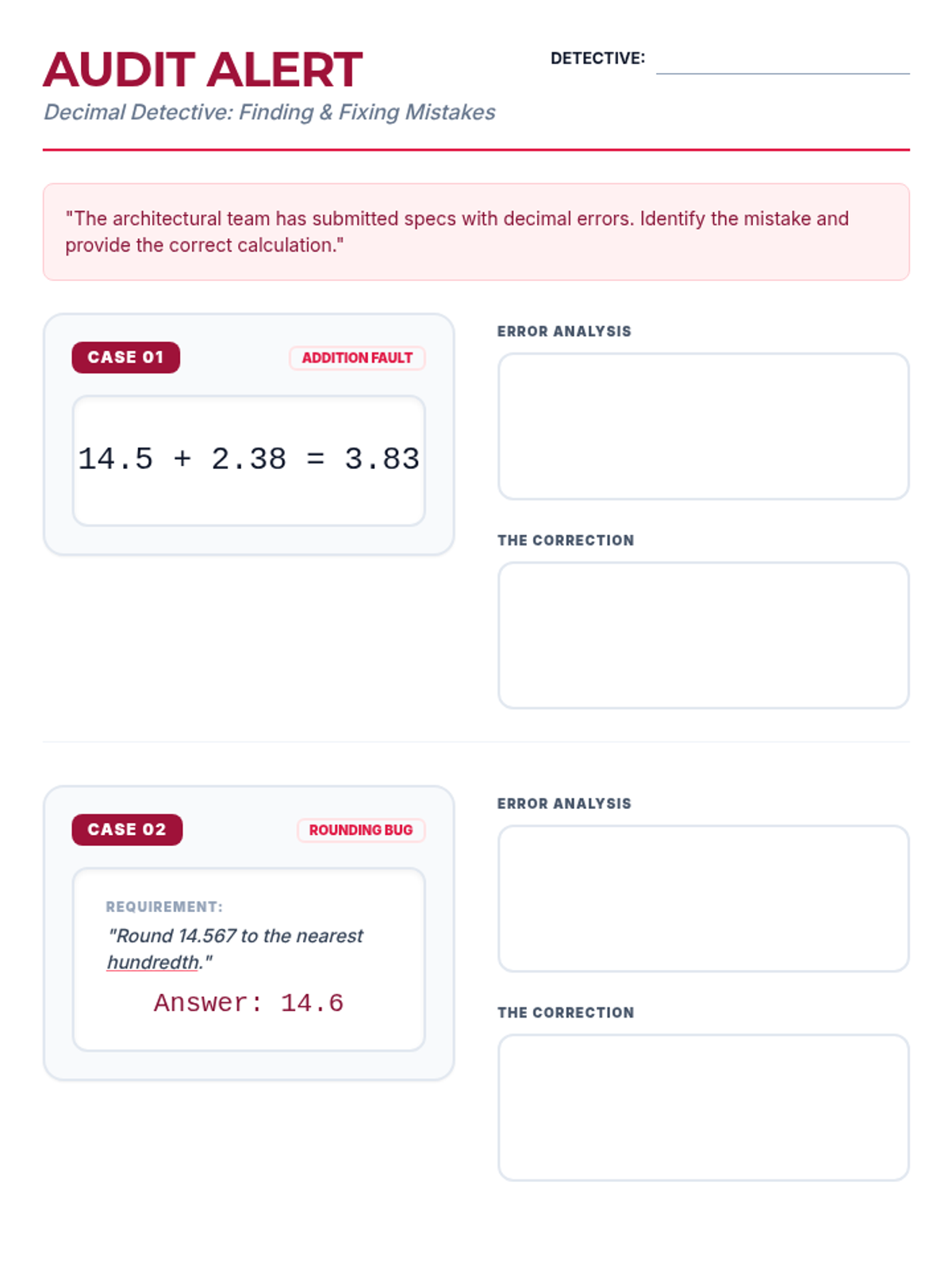
An error analysis worksheet where students act as "auditors" to identify and fix common decimal mistakes. Features larger student work areas and proper page layout for readability.
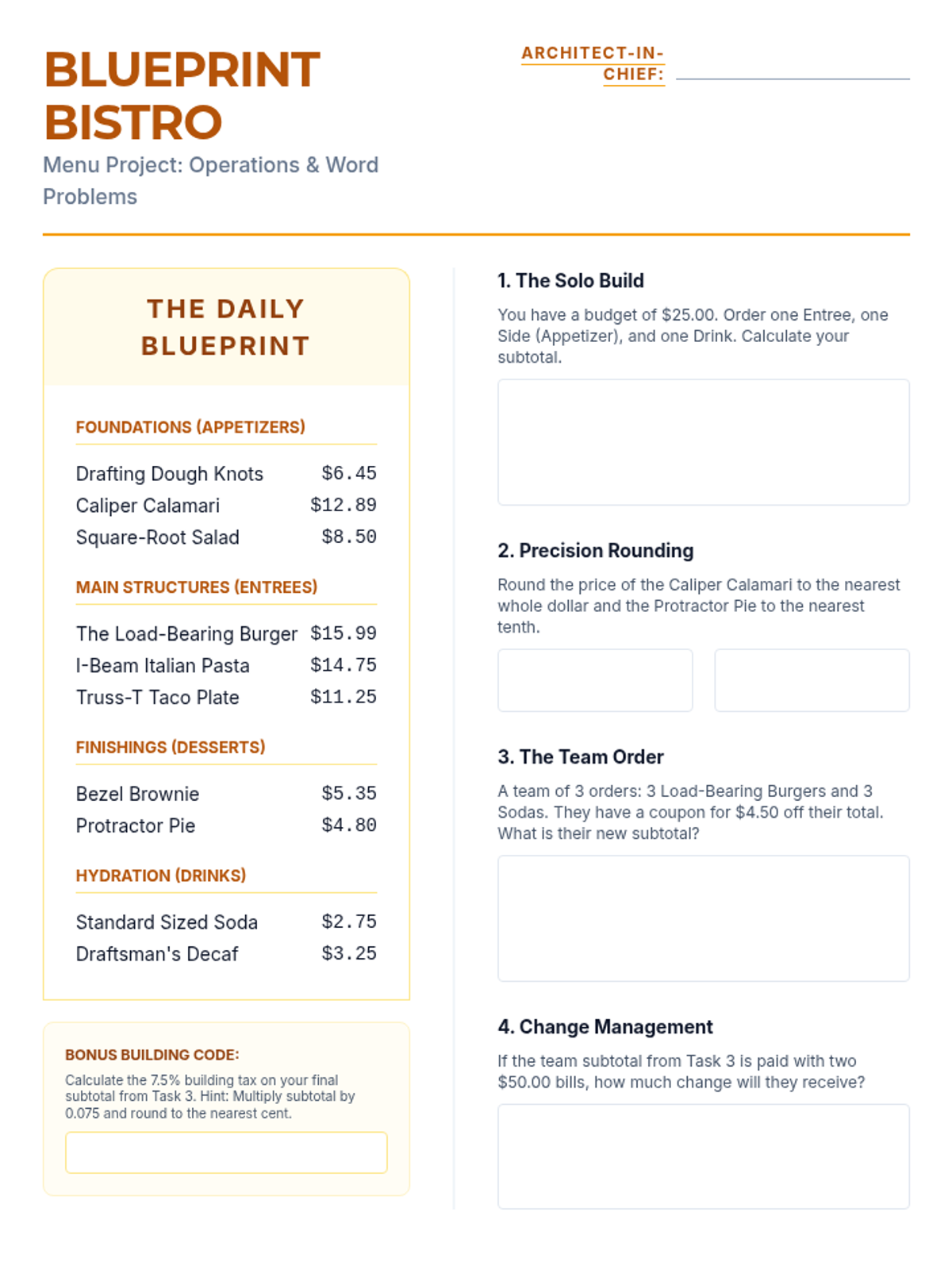
A menu-based project where students apply decimal operations in a restaurant context, calculating subtotals, rounding prices, and determining change for a fictional blueprint-themed bistro. Includes tax calculation bonus.
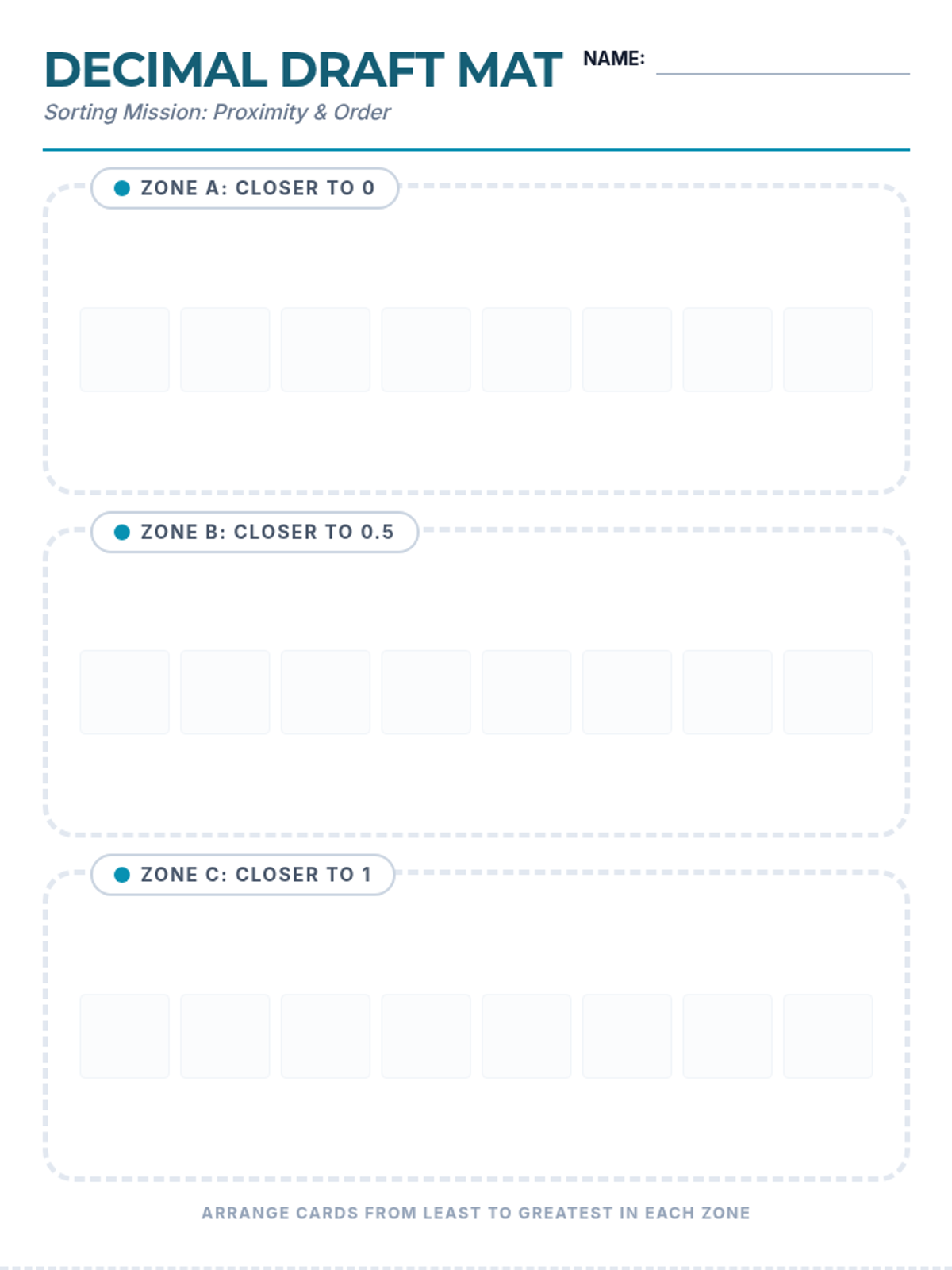
A hands-on sorting game material where students cut out 24 decimal cards and categorize them based on their proximity to 0, 0.5, or 1, practicing comparison and ordering skills. Includes a dedicated sorting mat page.
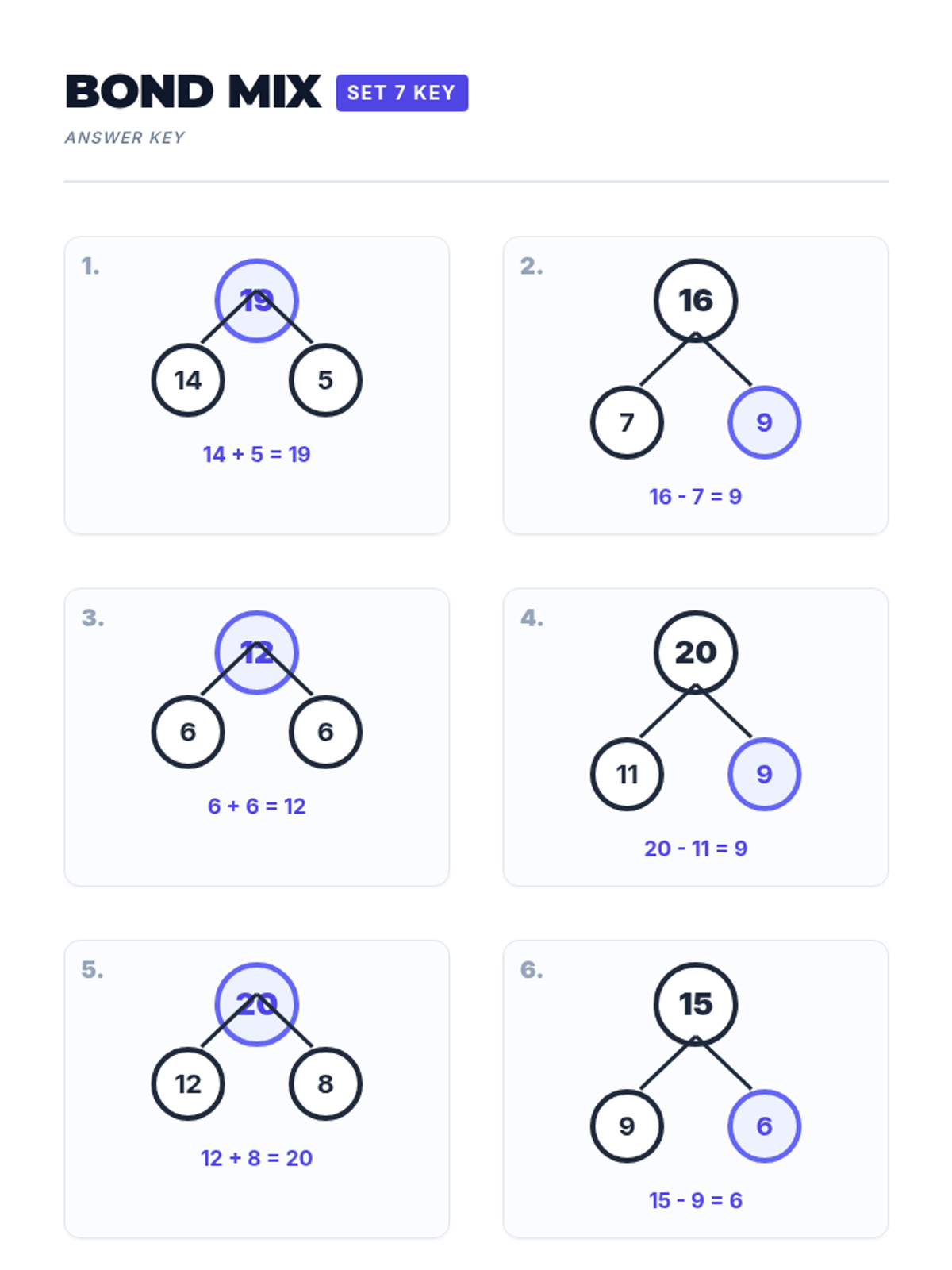
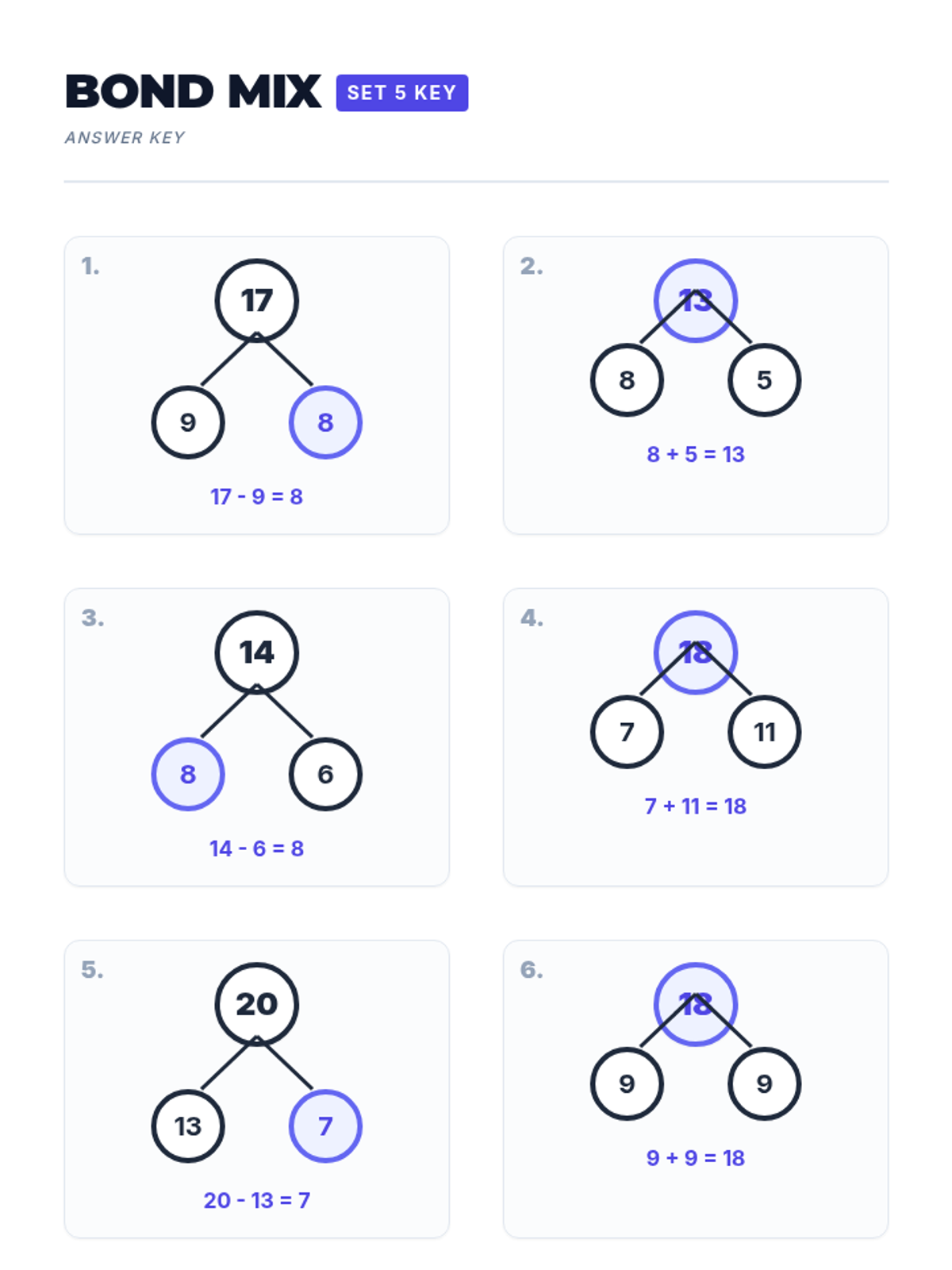
Answer key for Bond Mix Worksheet 3, showing the missing parts or wholes and corresponding equations.
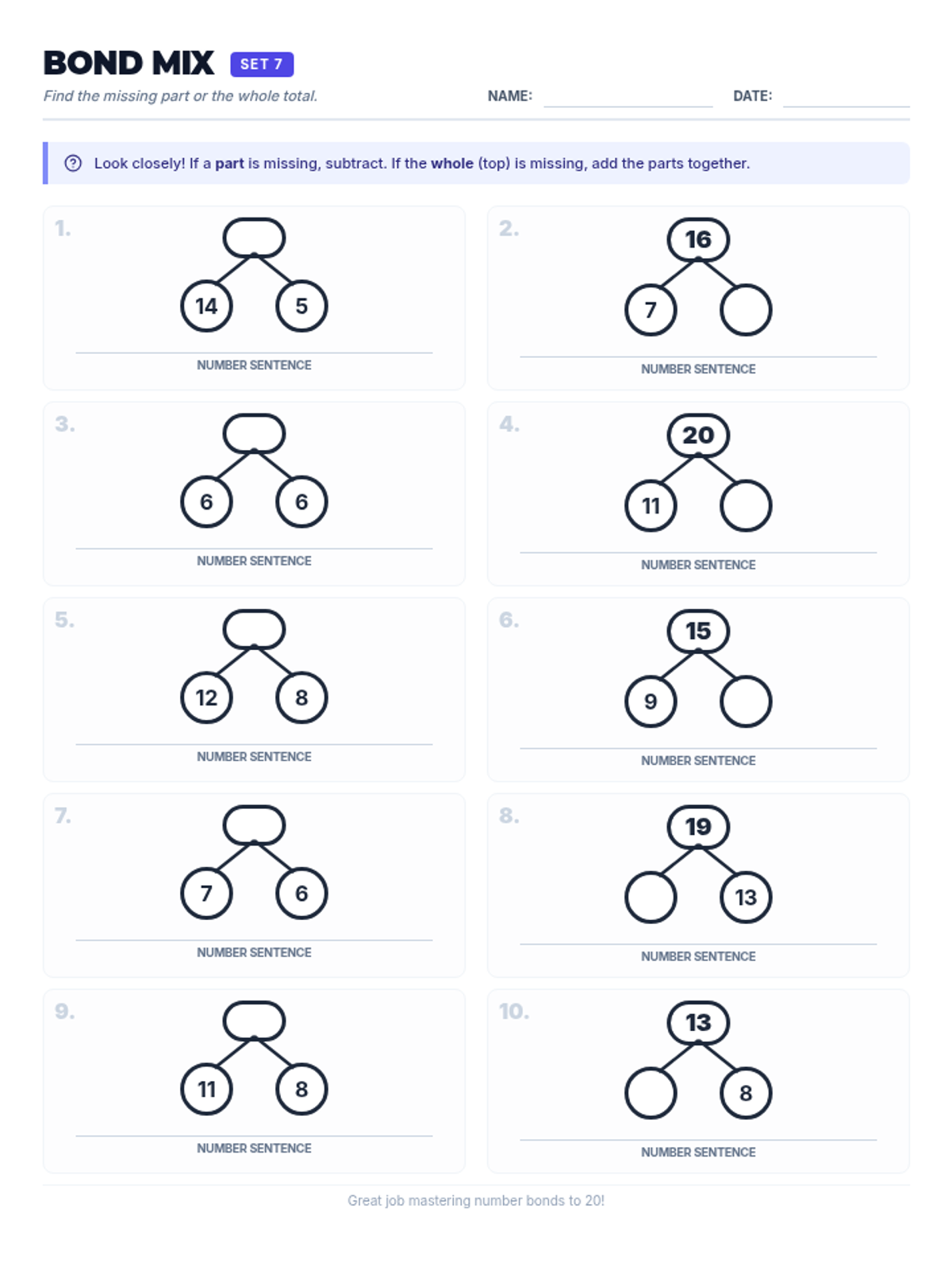
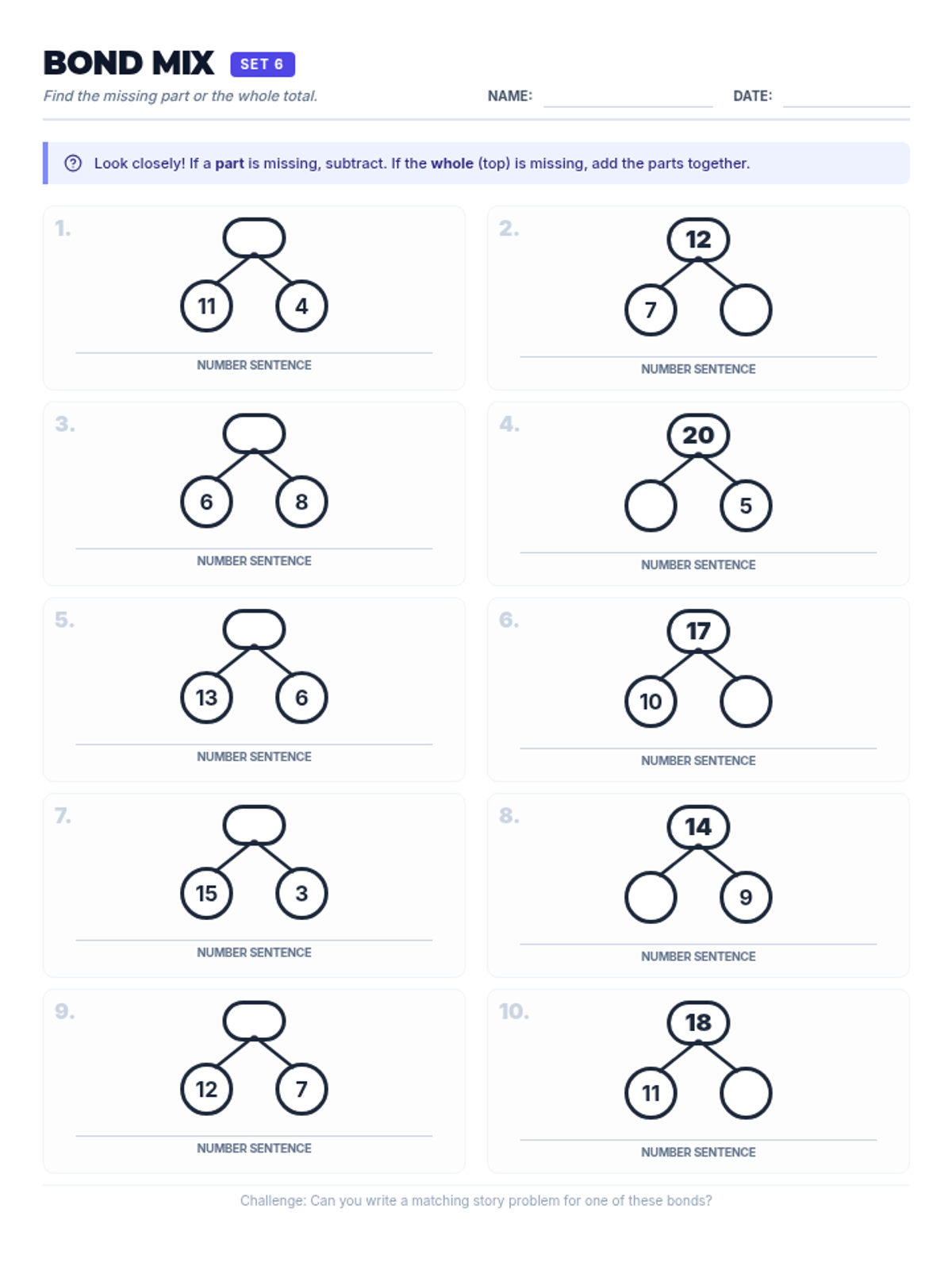
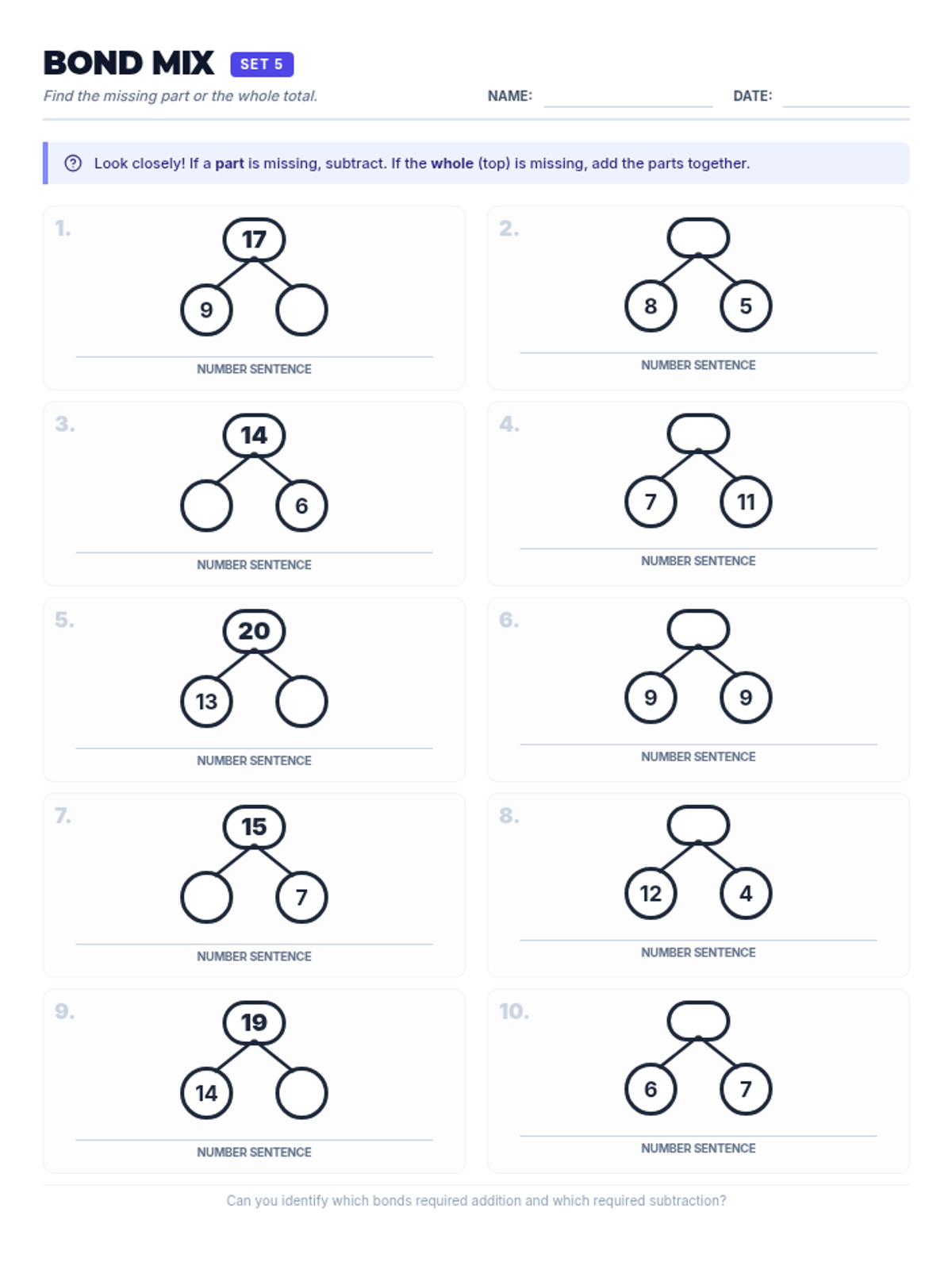
A math worksheet featuring 10 mixed number bond problems where students must find either the missing part or the missing whole for sums up to 20.
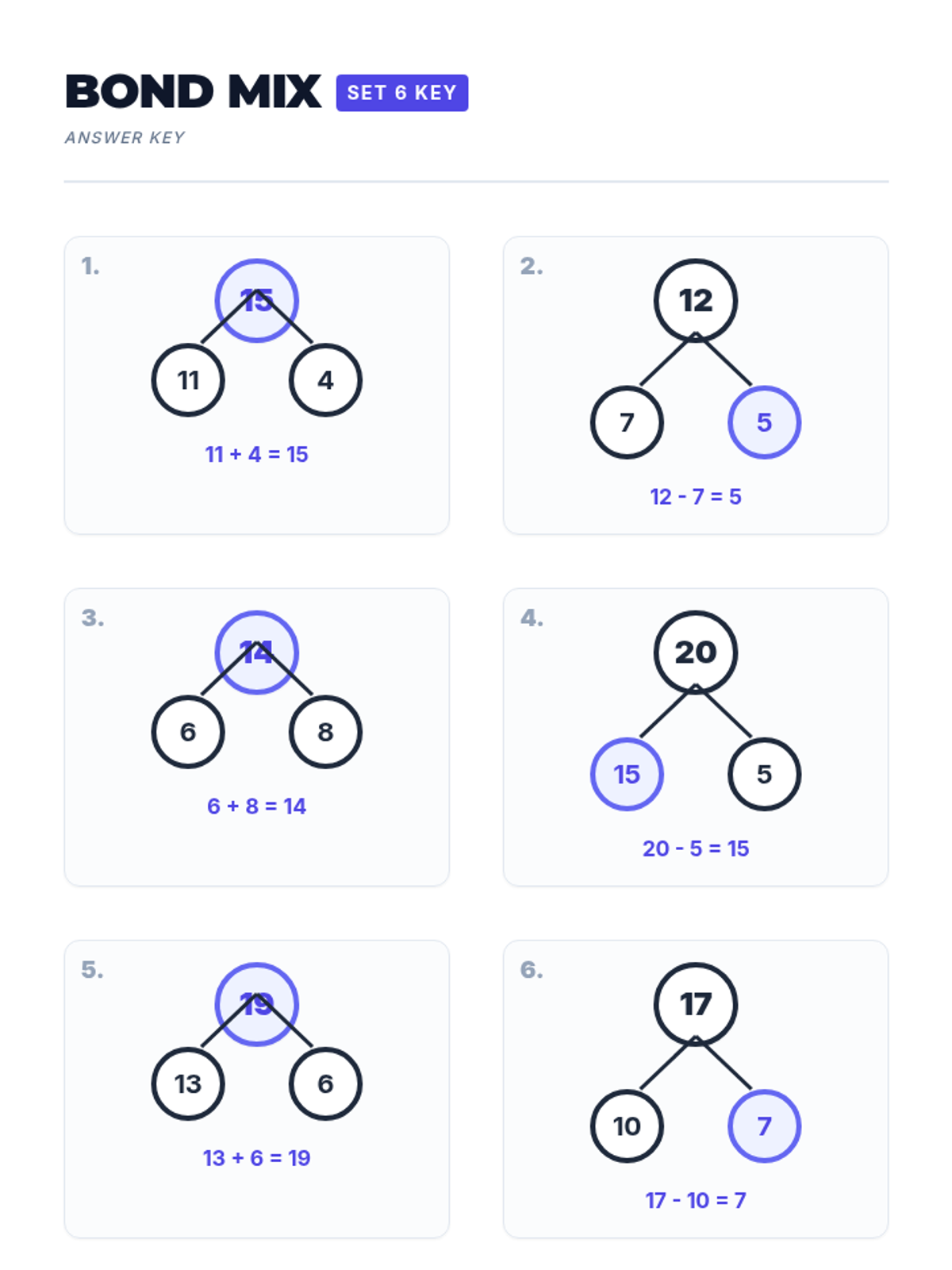
Answer key for Bond Mix Worksheet 2, showing the missing parts or wholes and corresponding equations.
Answer key for the Bond Mix Worksheet 1, clearly showing the missing parts or wholes in indigo blue.
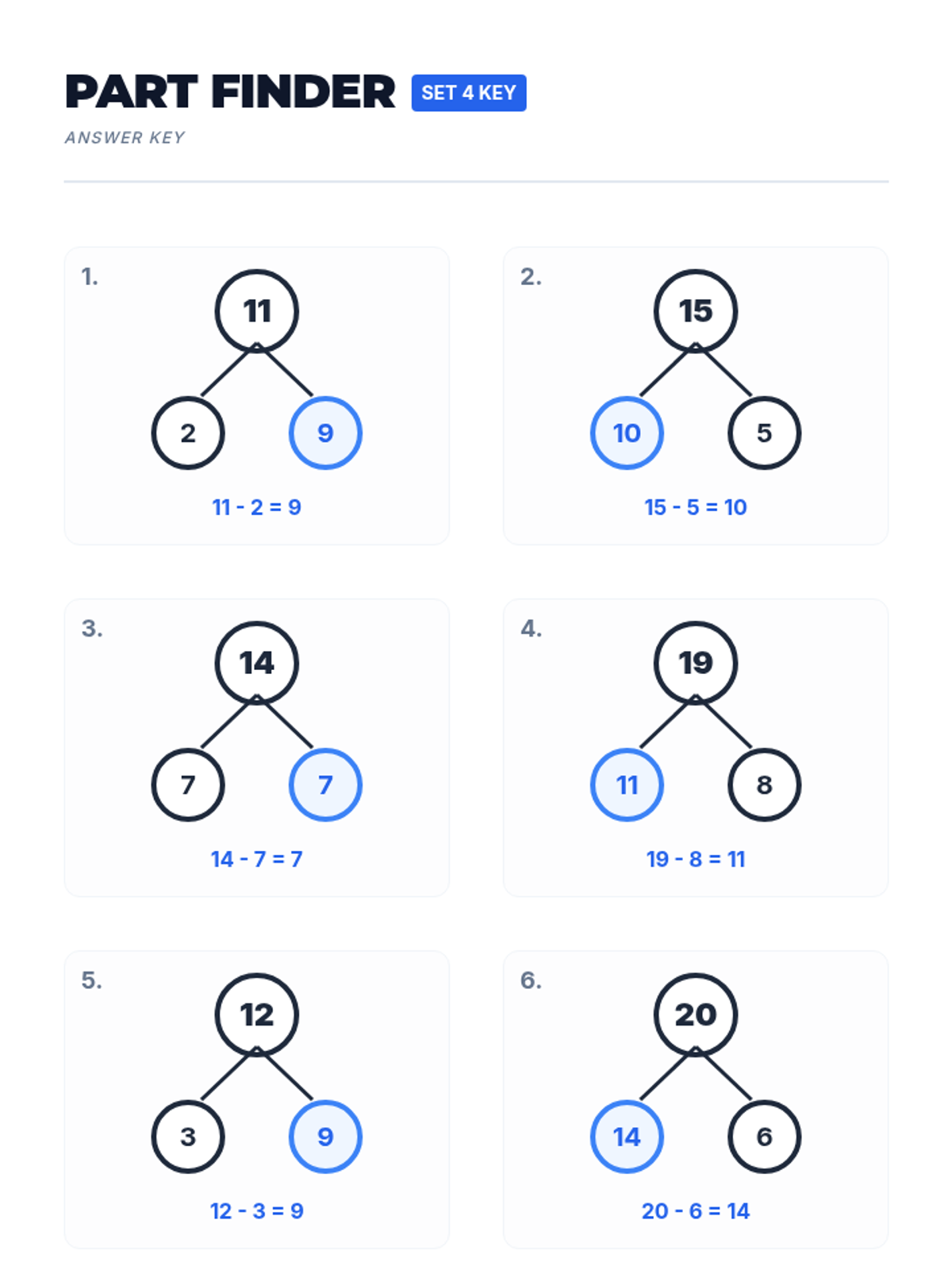
Answer key for the fourth Part Finder worksheet, clearly showing the missing parts and subtraction sentences.
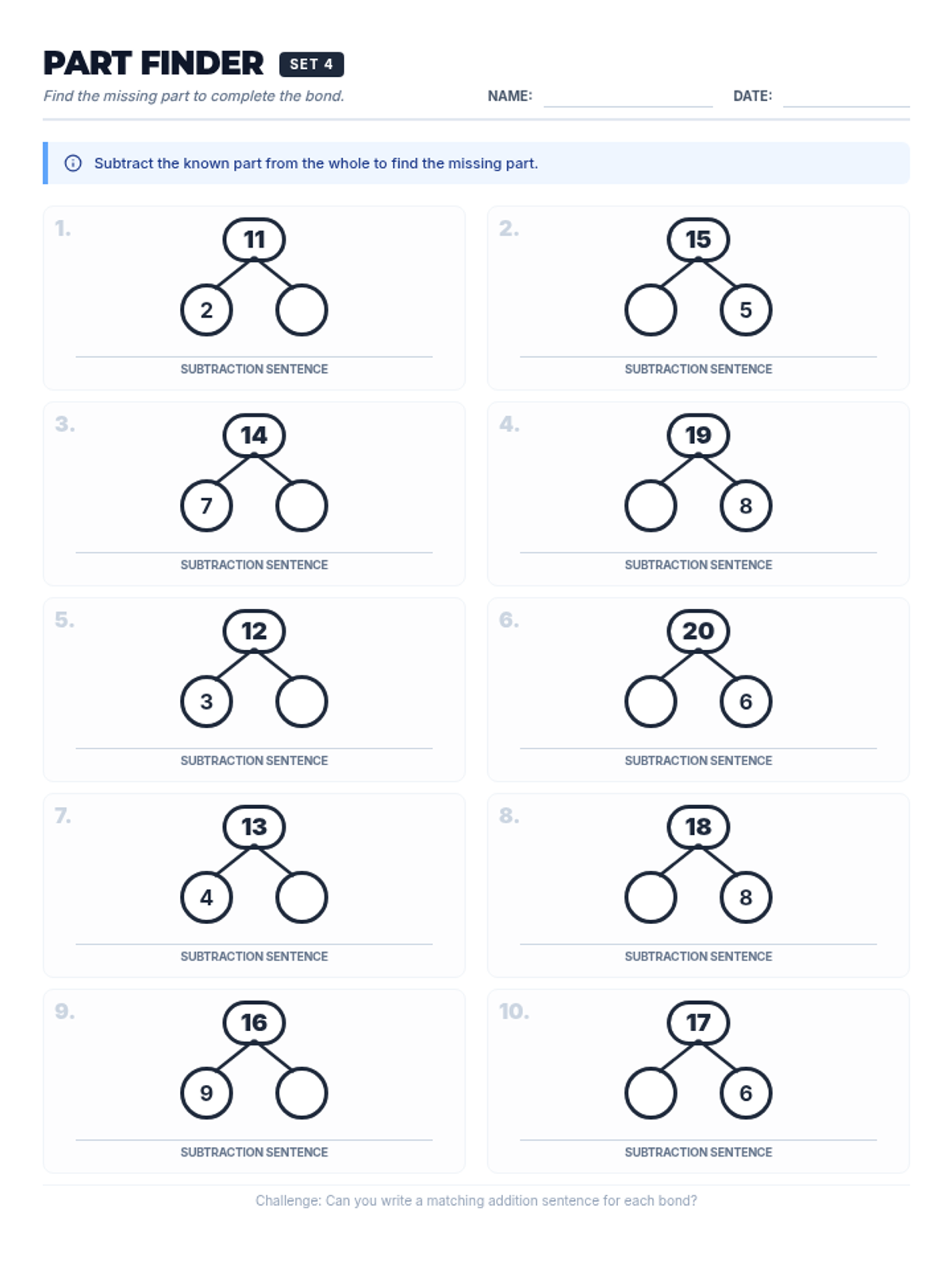
A fourth math worksheet for practicing missing addends in number bonds to 20, featuring 10 new problems with visual circle representations.
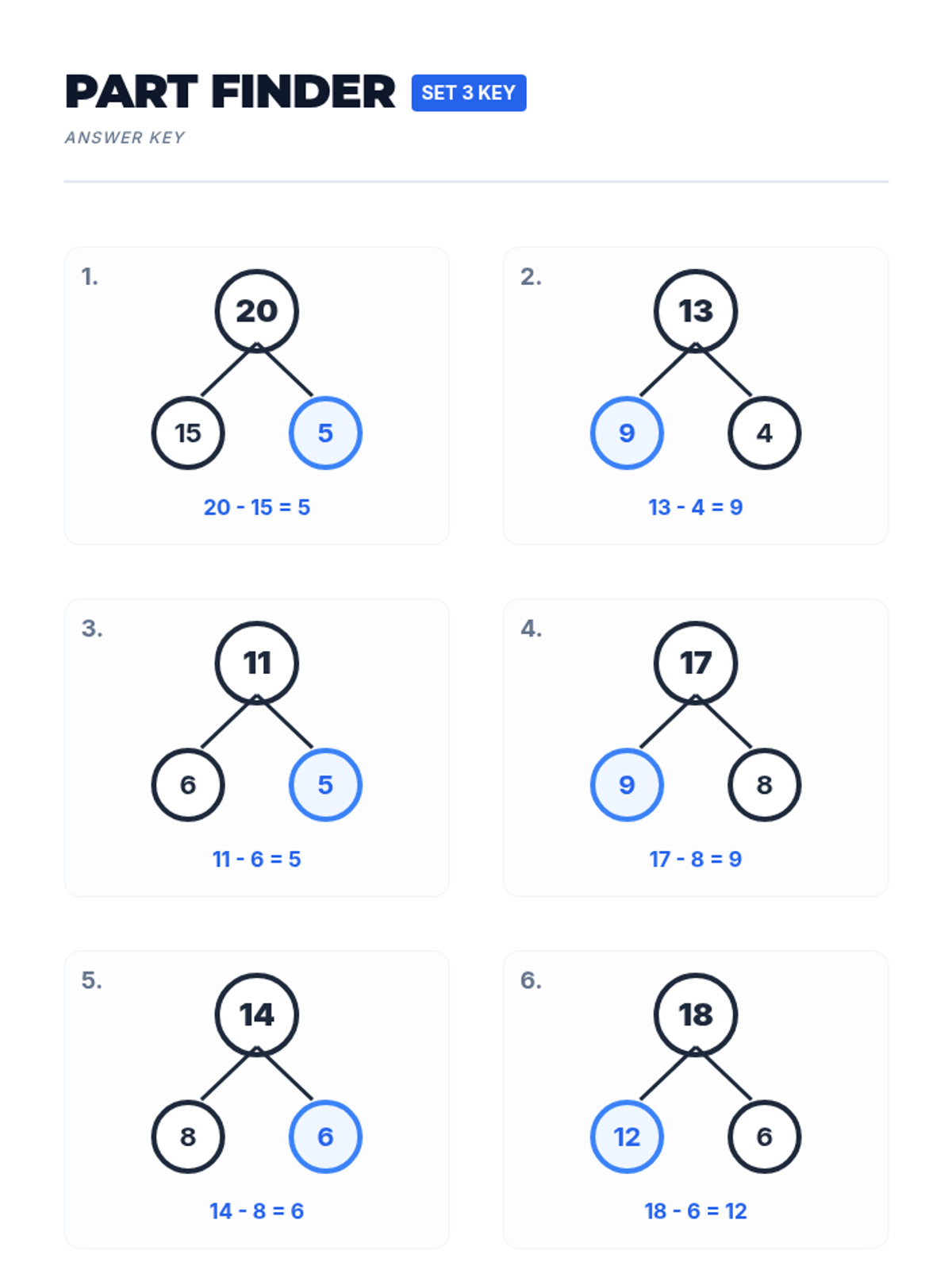
Answer key for the third Part Finder worksheet, clearly showing the missing parts and subtraction sentences.
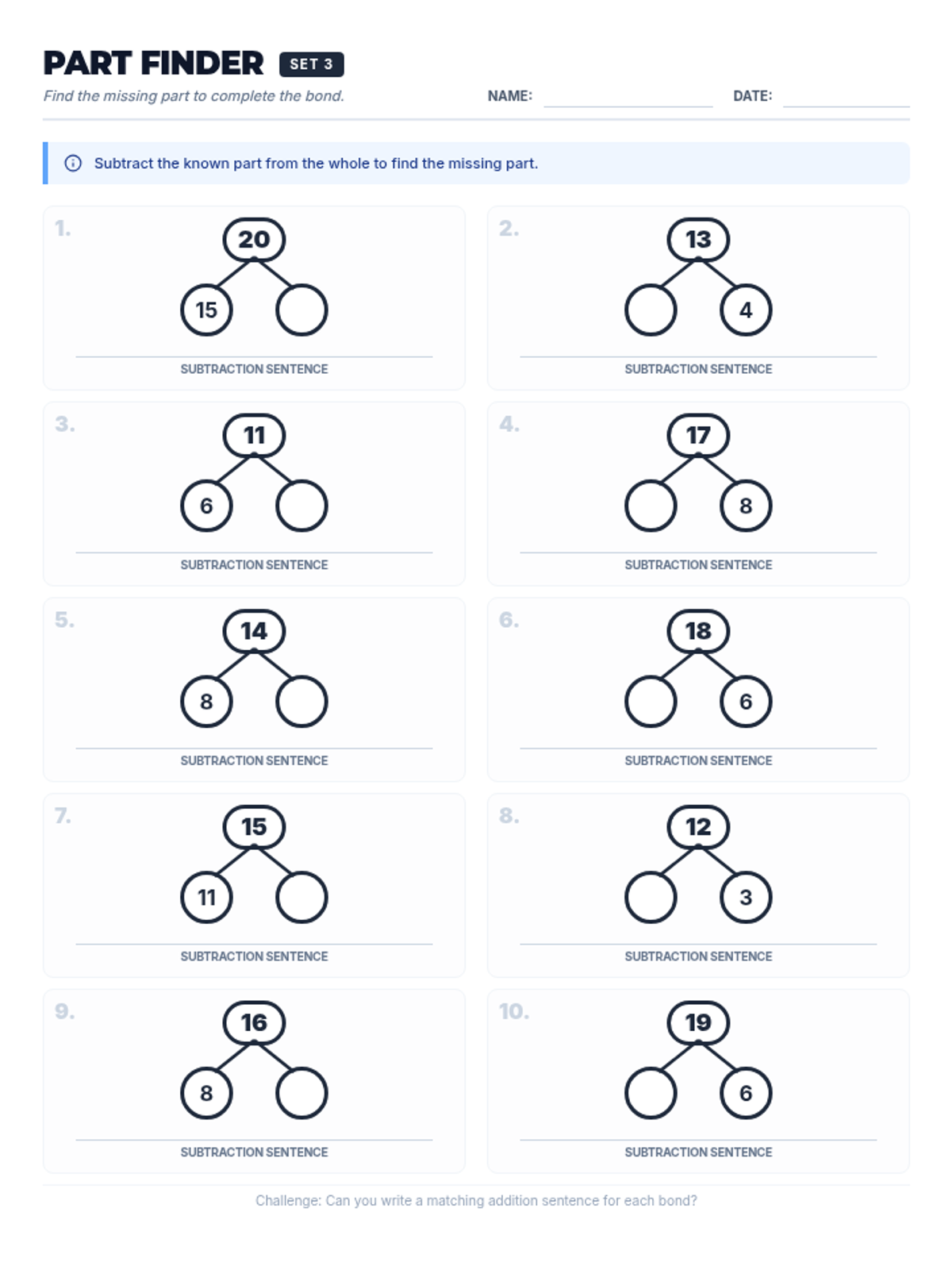
A third math worksheet for practicing missing addends in number bonds to 20, featuring 10 new problems with visual circle representations.
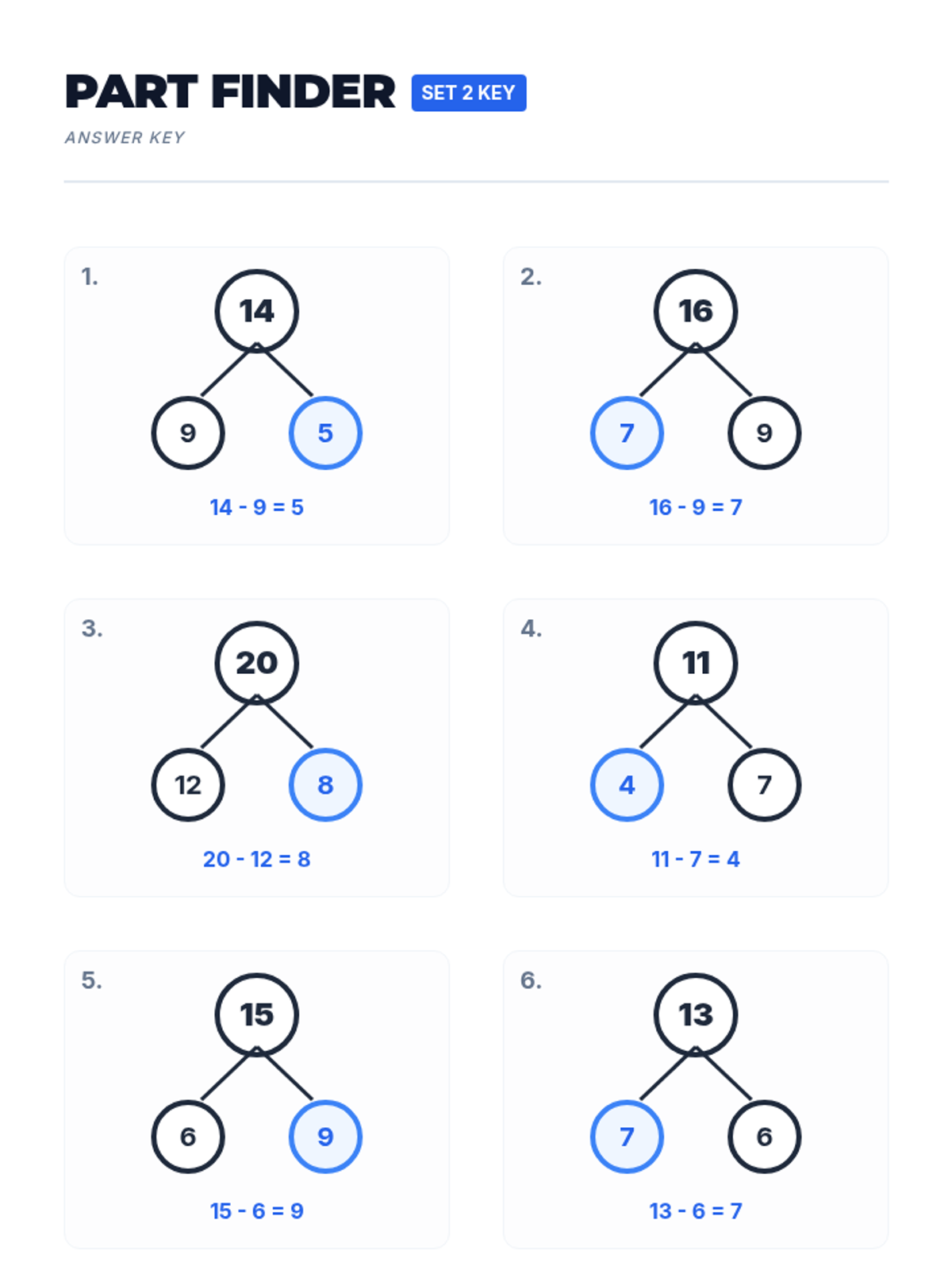
Answer key for the second Part Finder worksheet, clearly showing the missing parts and subtraction sentences.
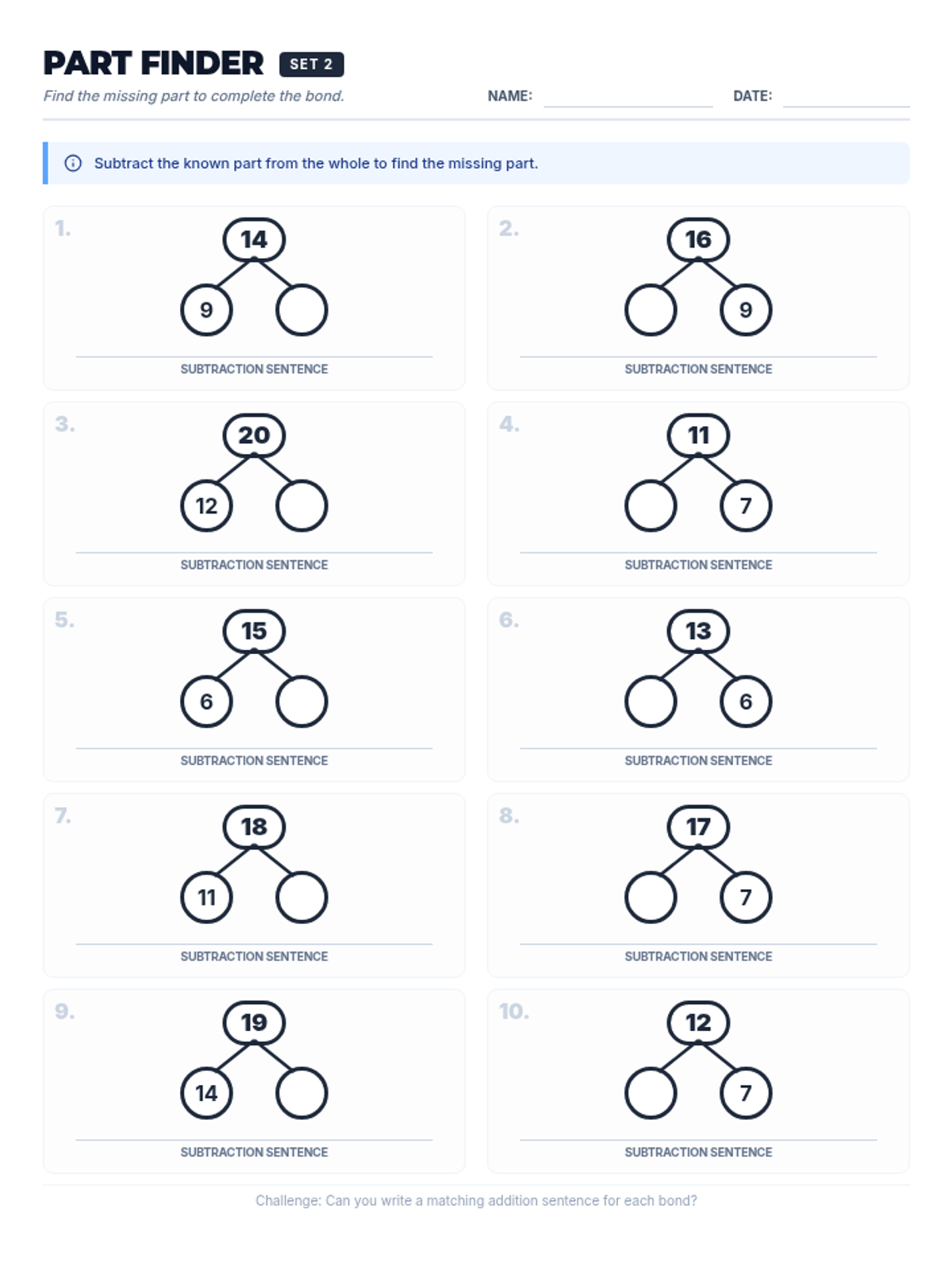
A second math worksheet for practicing missing addends in number bonds to 20, featuring 10 new problems with visual circle representations.
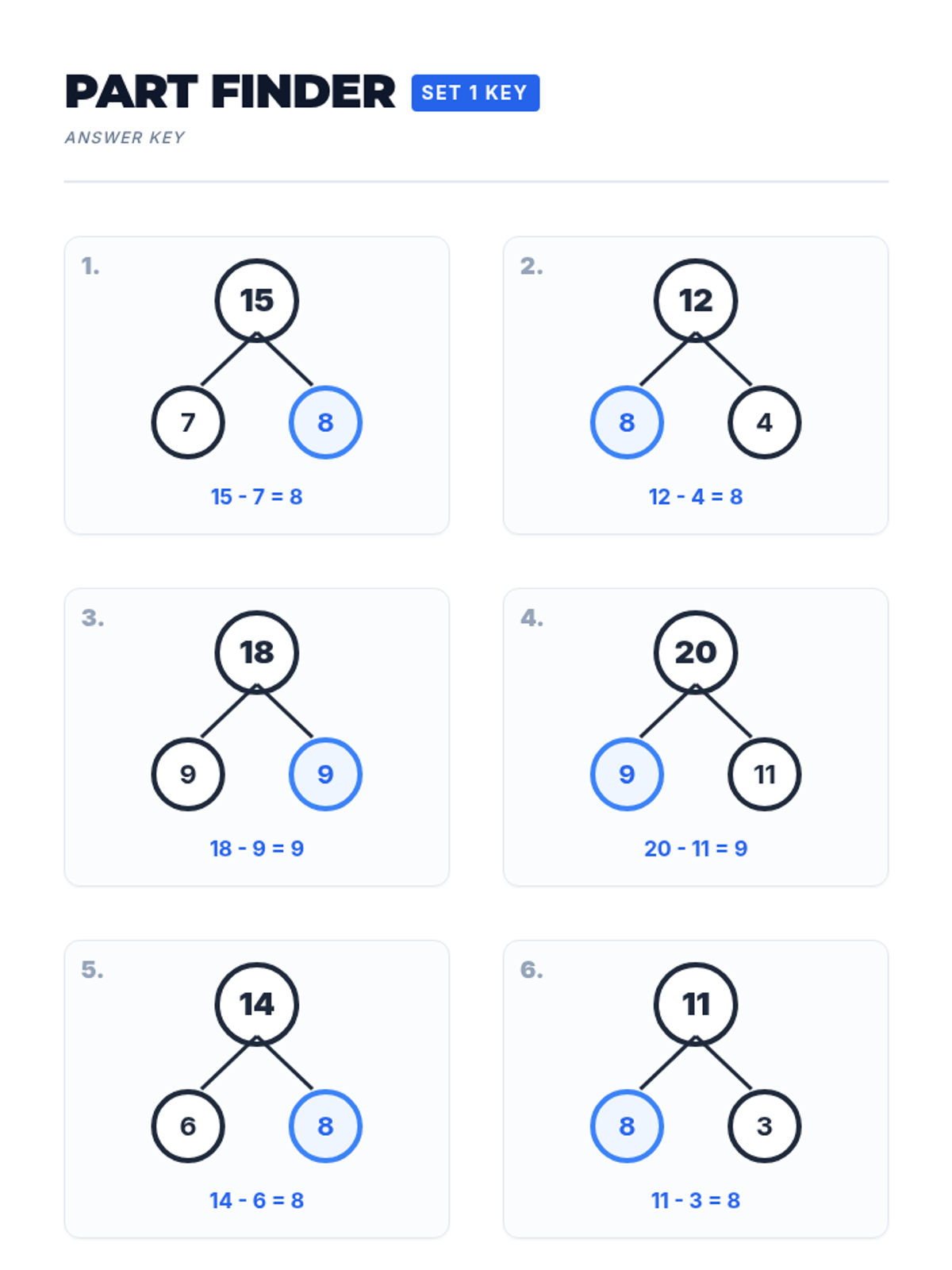
Answer key for the Part Finder worksheet, clearly showing the missing addends and matching subtraction sentences.
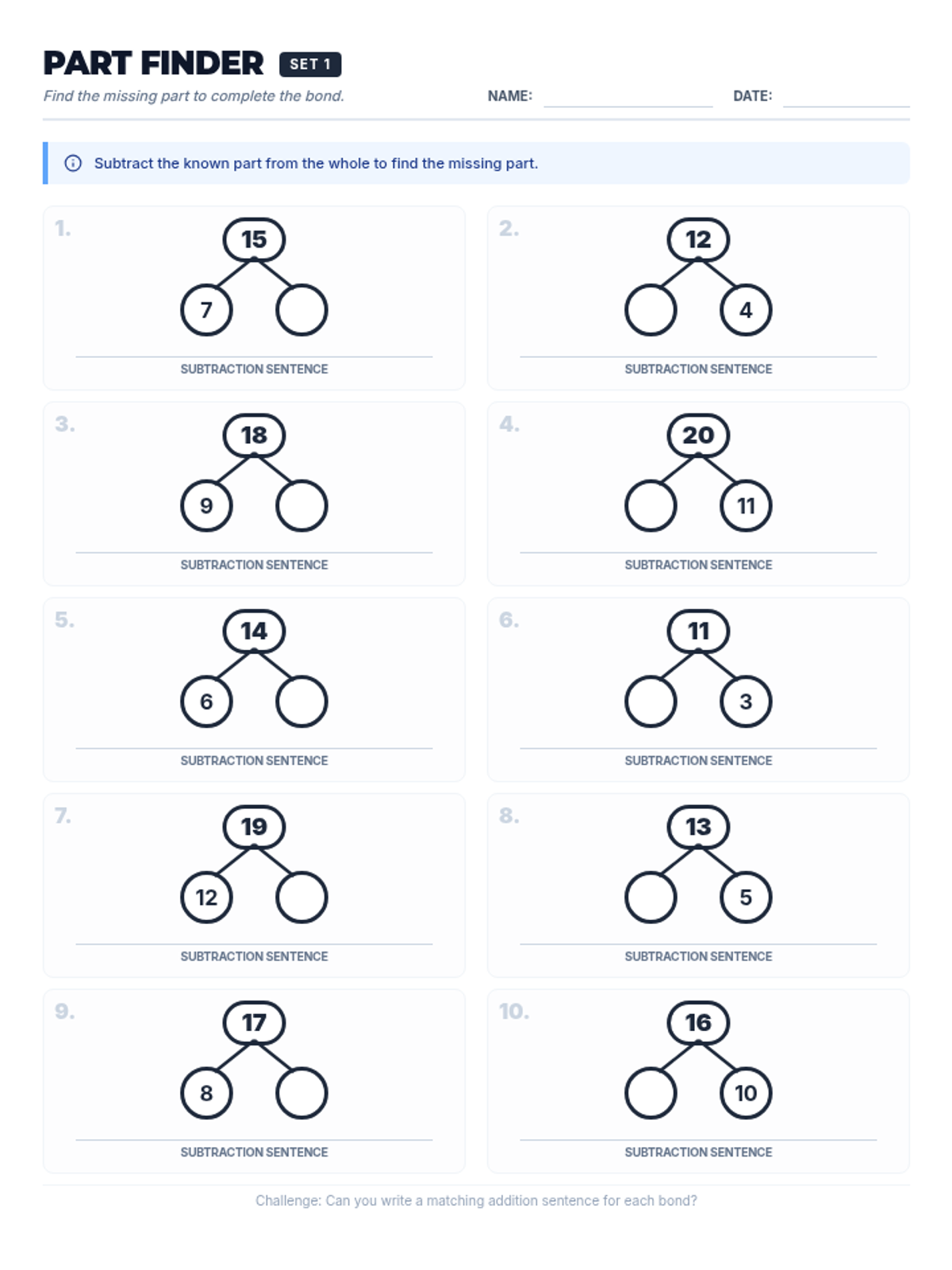
A math worksheet featuring 10 number bond problems where students must find the missing part for sums up to 20. The layout is clean and simple, focusing on clear visual representations.
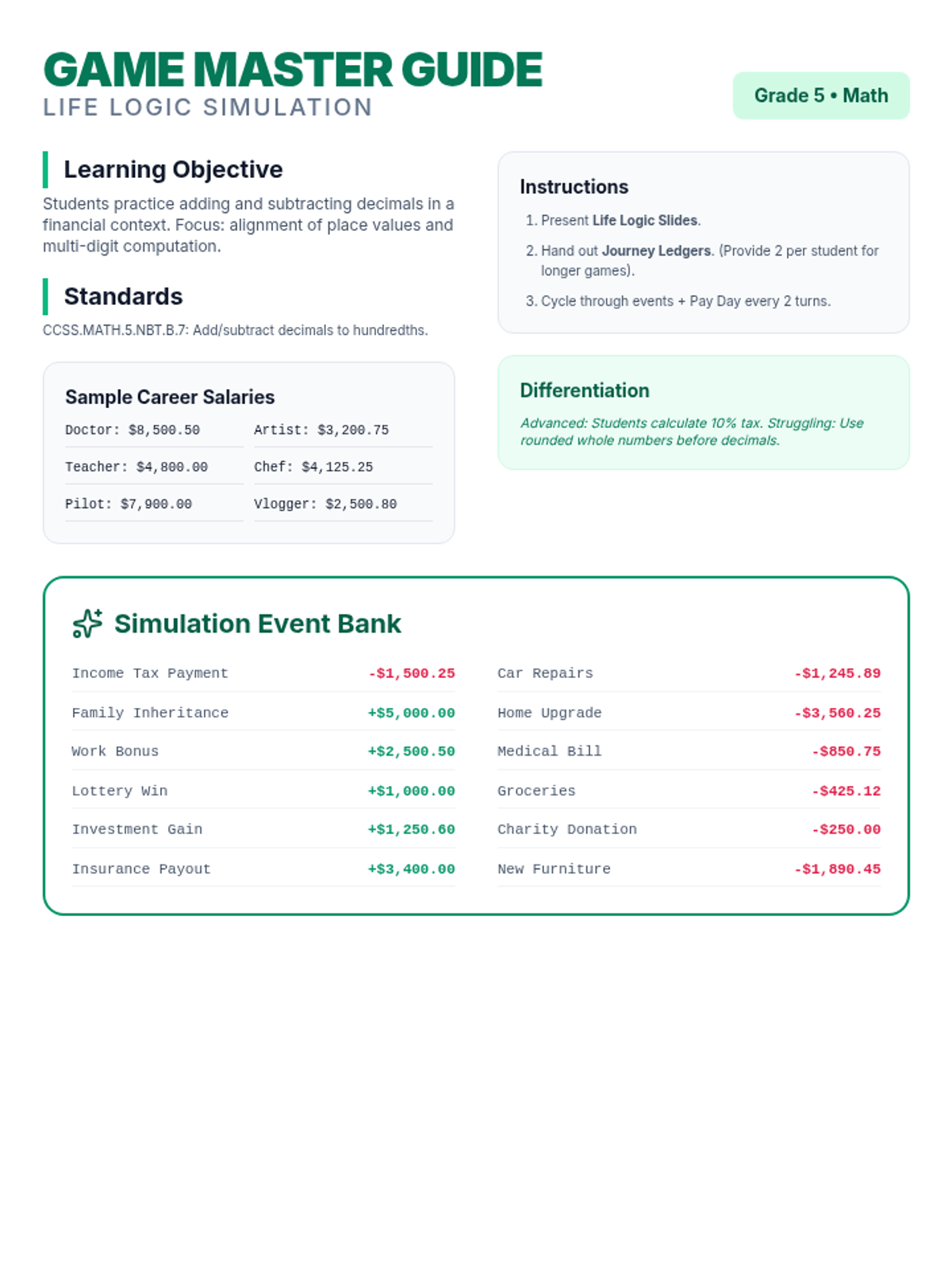
A teacher guide for facilitating the Life Logic simulation, containing standards alignment, pacing, and a bank of life events for the project.
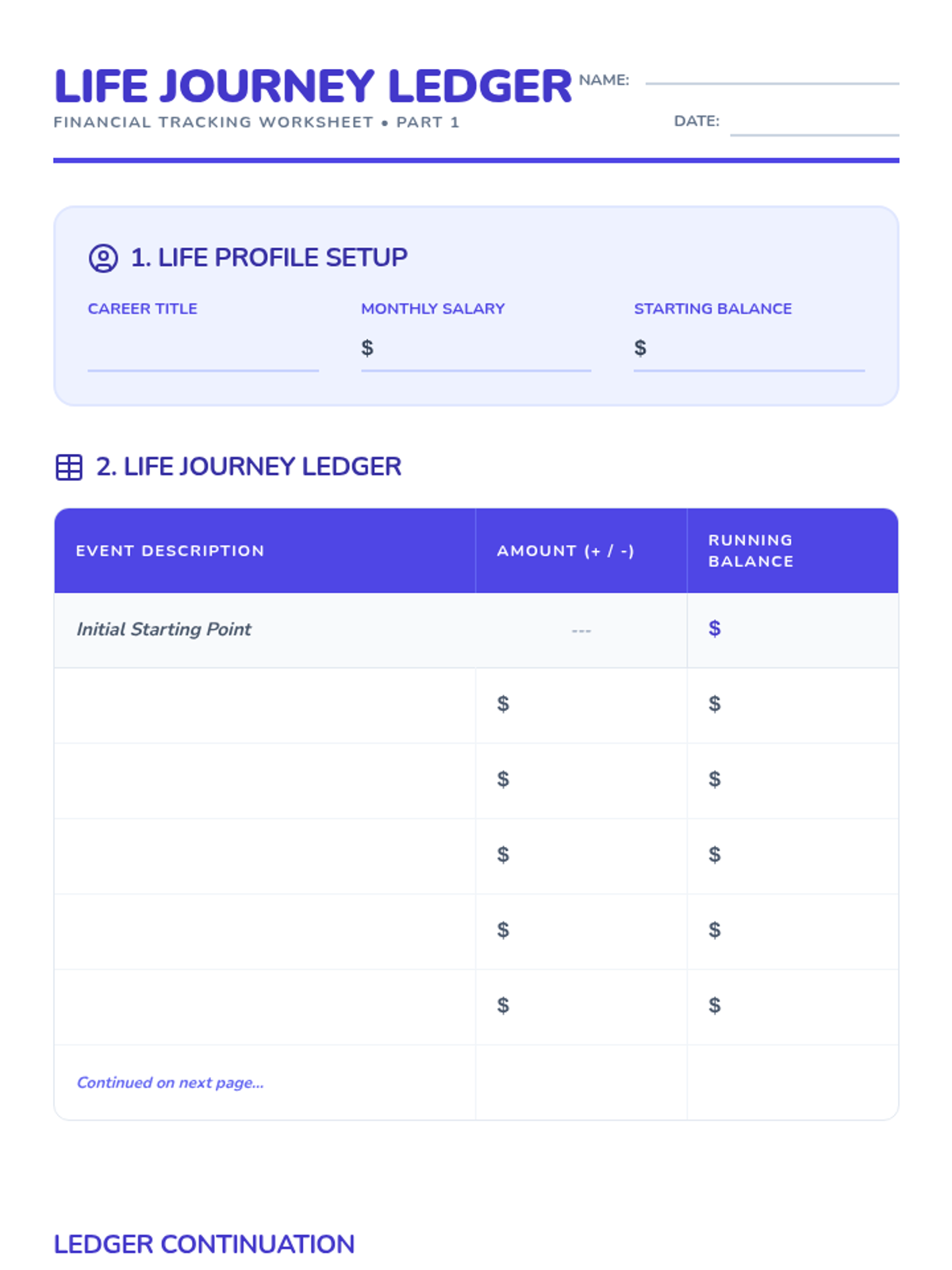
A student ledger for tracking financial milestones during a Life simulation, including space for recording income, expenses, and calculating a running balance with decimals.
An engaging slide presentation introducing the mechanics of the Game of Life, focusing on career decisions, financial math (adding/subtracting decimals), and project expectations.
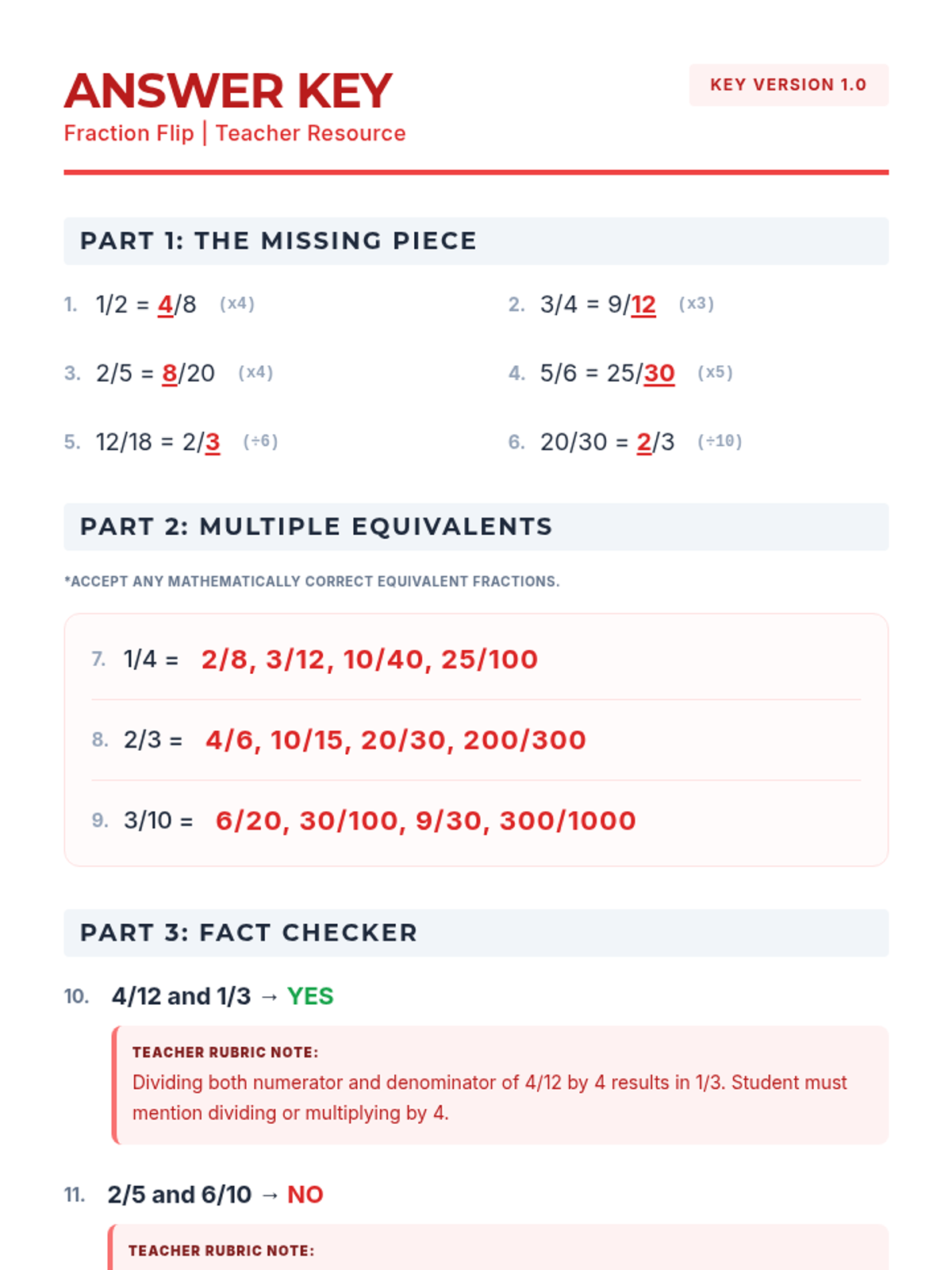
Teacher answer key for the Fraction Flip Worksheet with example explanations and step-by-step solutions.