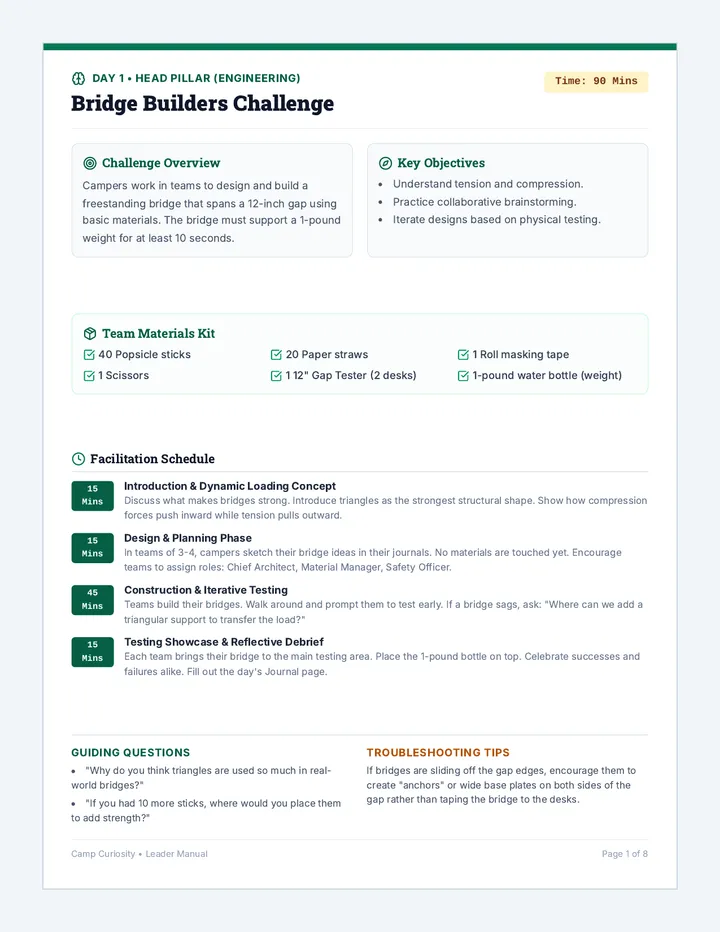
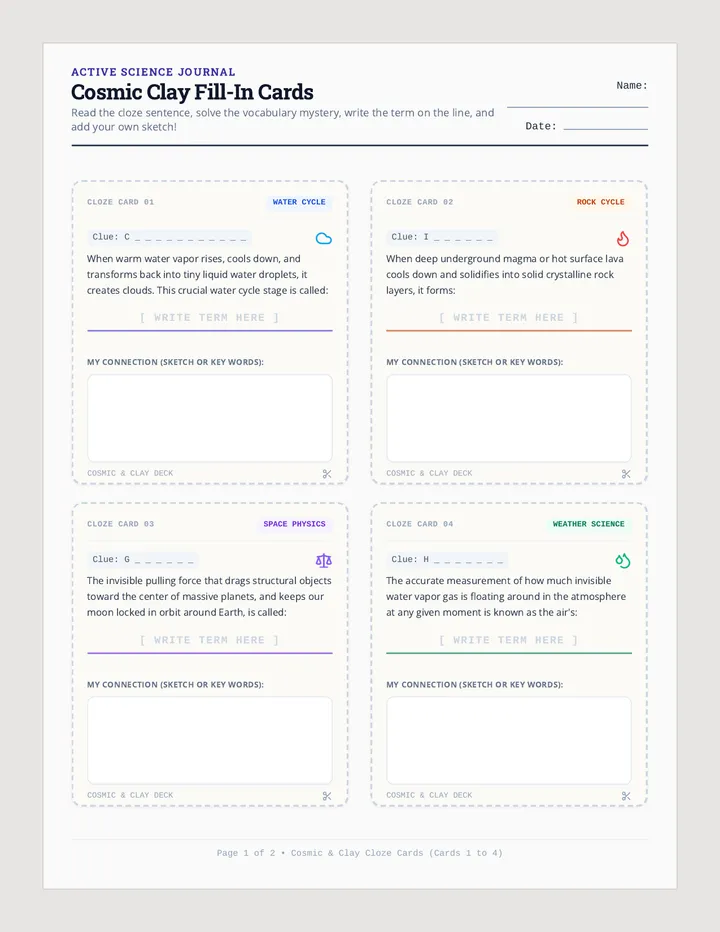
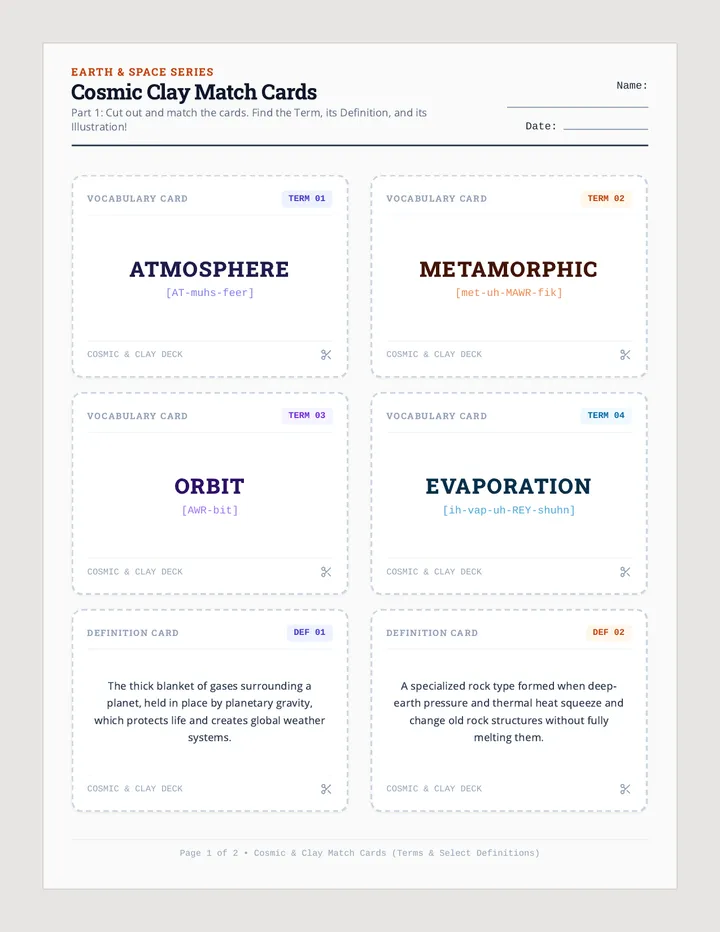
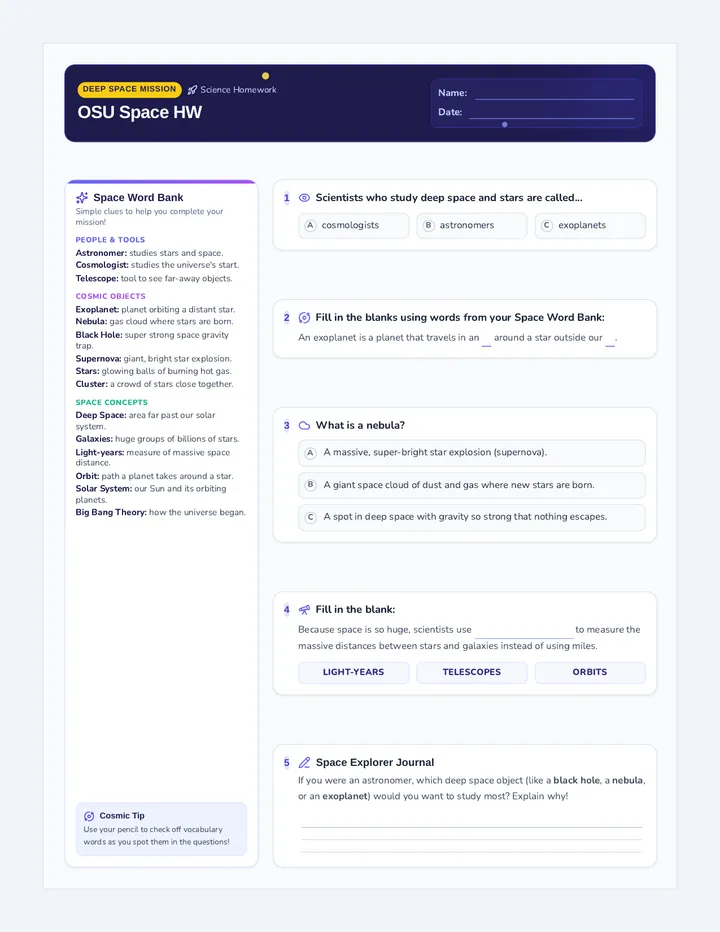
Updated TIDE-integrated CER worksheet for Grade 5 ESL students. Features explicit mapping of T=Claim, I=Evidence/Data, D=Reasoning, and E=Conclusion with improved writing space and layout to fit on one page.
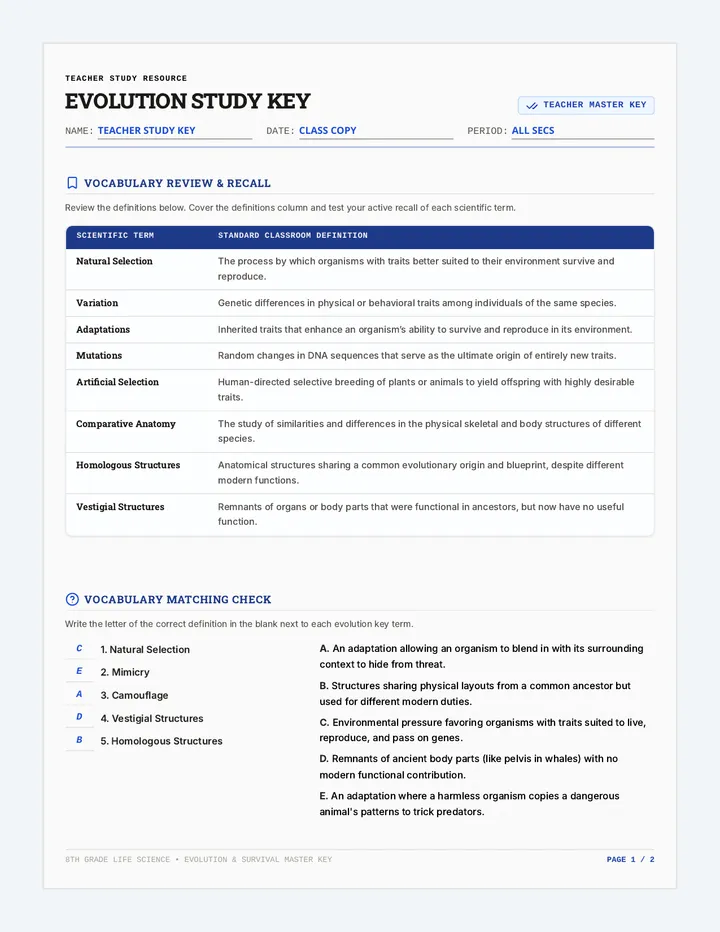
Advanced investigator worksheet for high-achieving students. Features DOK 3 level strategic thinking questions, including probability justification, evolutionary persistence of alleles, and a complex CER on meiosis errors. Fixes page breaks and increases response space with a more compact layout. Added a mini-pedigree for Task 1.
Scaffolded investigator worksheet for students needing support. Fixes missing pedigree diagram, alignment in the matching section, and keeps stations on single pages.
Standard student investigator worksheet for the Human Genome lesson. Fixes page-break issues and increases writing space for students.
Four detailed station cards for the Human Genome investigation. Fixes pedigree diagrams, page overflow, and improves contrast for accessibility.
A high-impact 8-slide presentation deck for the Human Genome lesson. Fixes visual clarity on diagrams and text contrast issues. Added a Bell Ringer, simplified language, and improved chunking for better student engagement. Now includes X and Y chromosome labels on the karyotype example.
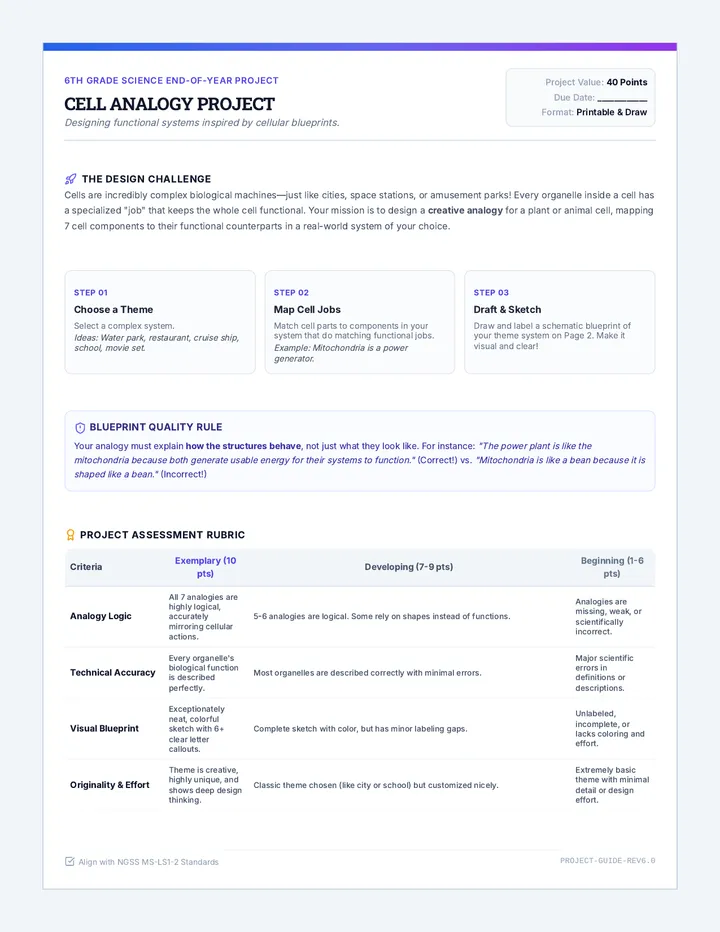
A detailed 2-day teacher facilitation guide for the Human Genome lesson, including pacing, teacher scripts, and aggressive monitoring checklists. Fixes formatting and content gaps.
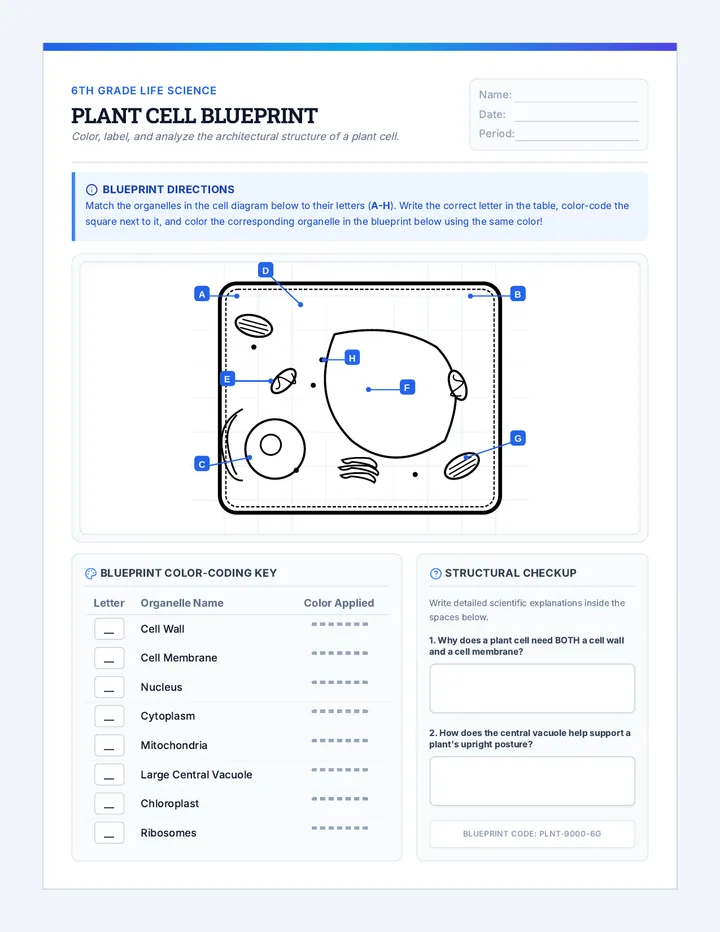
A comprehensive teacher facilitation guide for Operation Earth. Includes a mission timeline for document deployment, specific support strategies for bilingual/ELL students, inquiry prompts, and presentation ideas. Simplified language is used for easy educator reference.
A simplified tactical worksheet to help students narrow their research focus. Uses simple language like 'Where?', 'Who?', and 'Why?' to guide bilingual students through picking a specific research target. Light backgrounds are used in all work areas for handwriting legibility.
A mission-themed brainstorming worksheet for Operation Earth with simplified language for bilingual students. Scaffolds inquiry from basic facts to 'hard' questions using a question ladder and a central mind map.
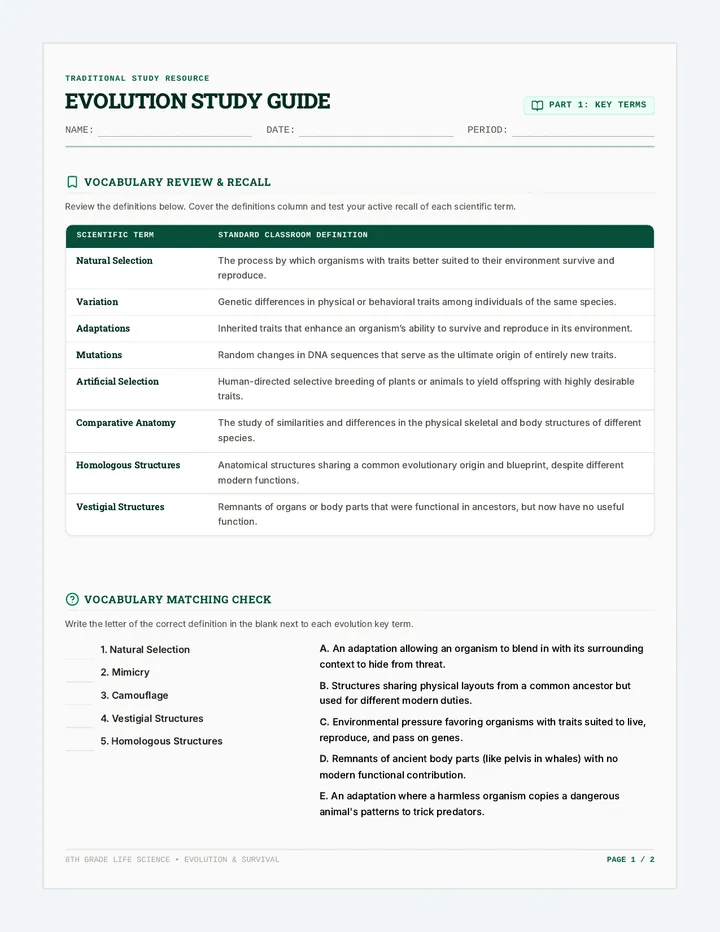
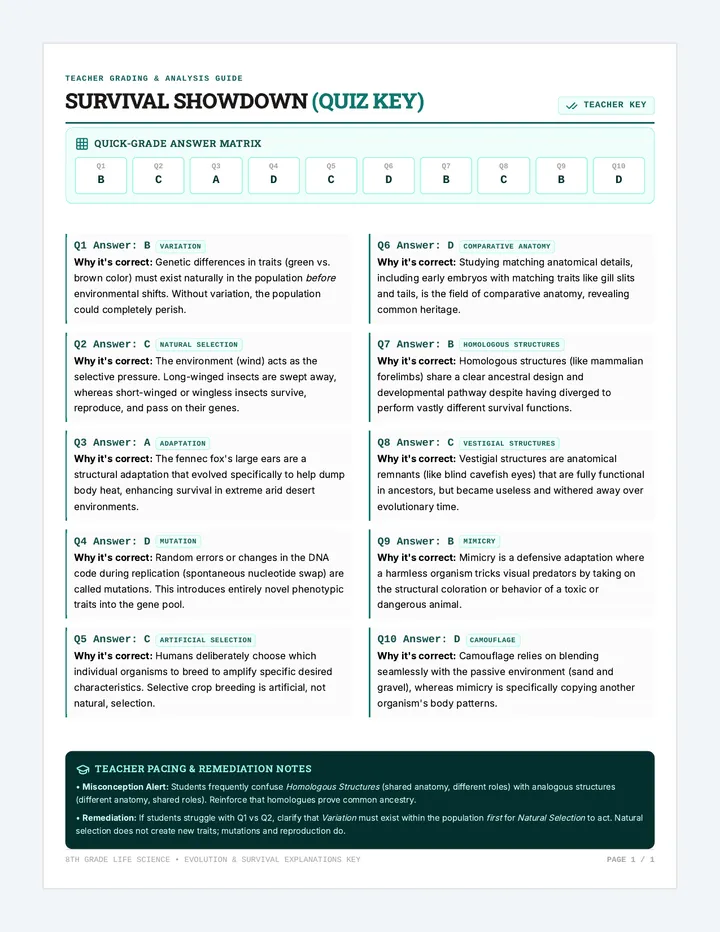
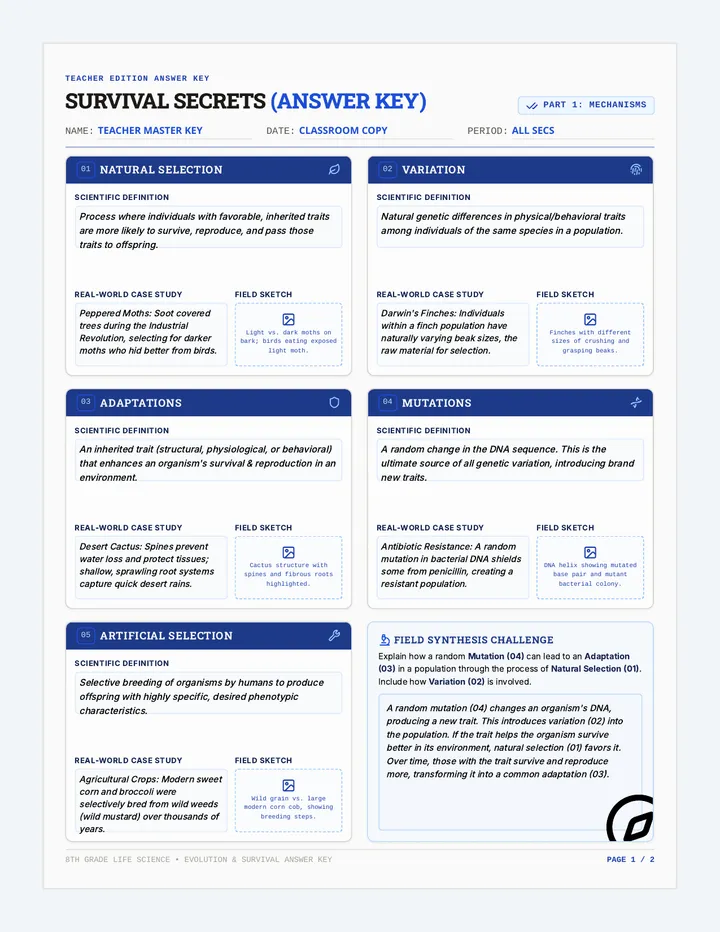
A teacher's resource containing answer keys for the sorting activity and assessment, along with instructional tips and common misconceptions.
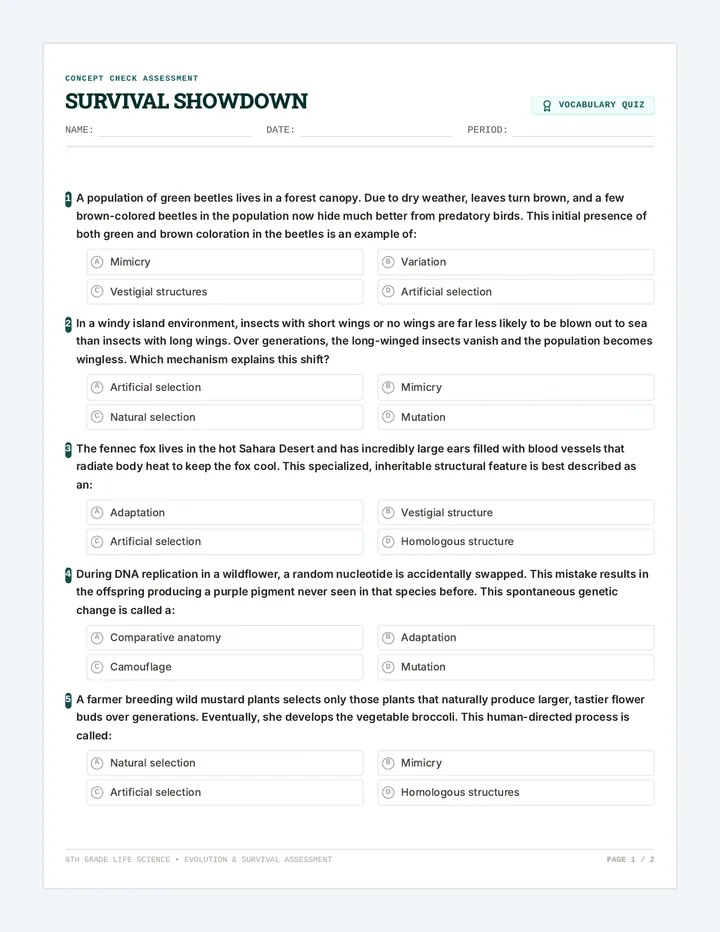
A two-page summative assessment featuring visual identification questions, multiple-choice scenarios, and short-answer comparisons.
A two-page cut-and-paste activity where students sort examples into structural and behavioral adaptation categories.
A set of two visual anchor charts defining structural and behavioral adaptations, with specific focus on camouflage, mimicry, and habitat-specific examples.
An expanded two-page student worksheet featuring detailed descriptions of the ocean, rainforest, and grassland biomes, with a dedicated second page for selection and written explanation.
An instructional guide for teachers providing learning objectives, discussion prompts, and a rubric to support the Biome Discovery lesson.
A two-page sorting activity where students match organisms from the Arctic, Desert, and Coral Reef to their correct ecosystems and identify producers.
A visual slide deck exploring energy flow in extreme ecosystems (Arctic, Desert, Reef) and introducing the concept of wildlife crossings.
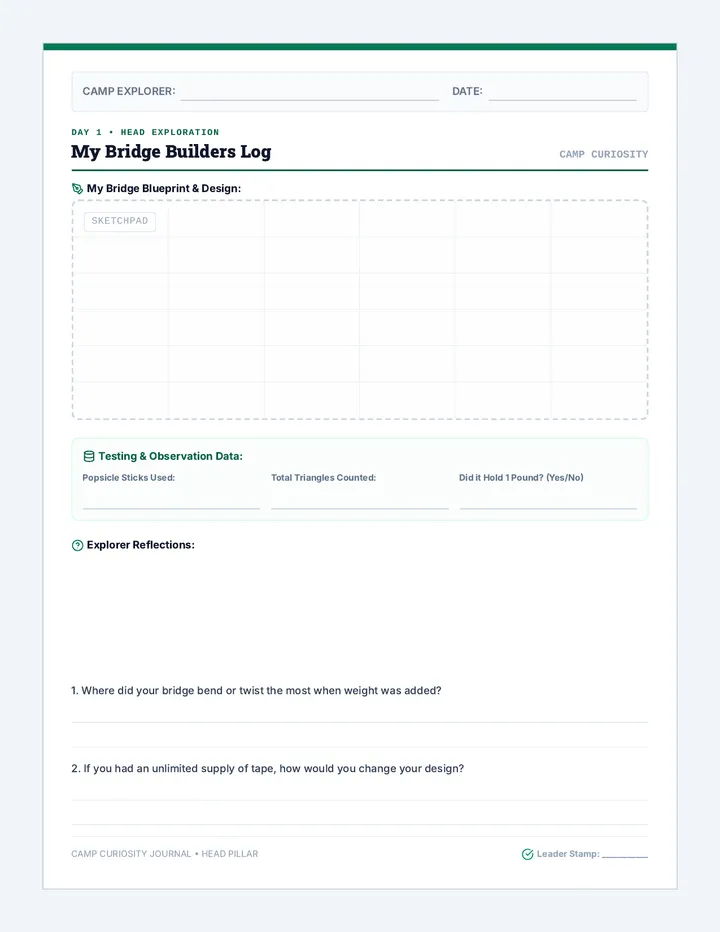
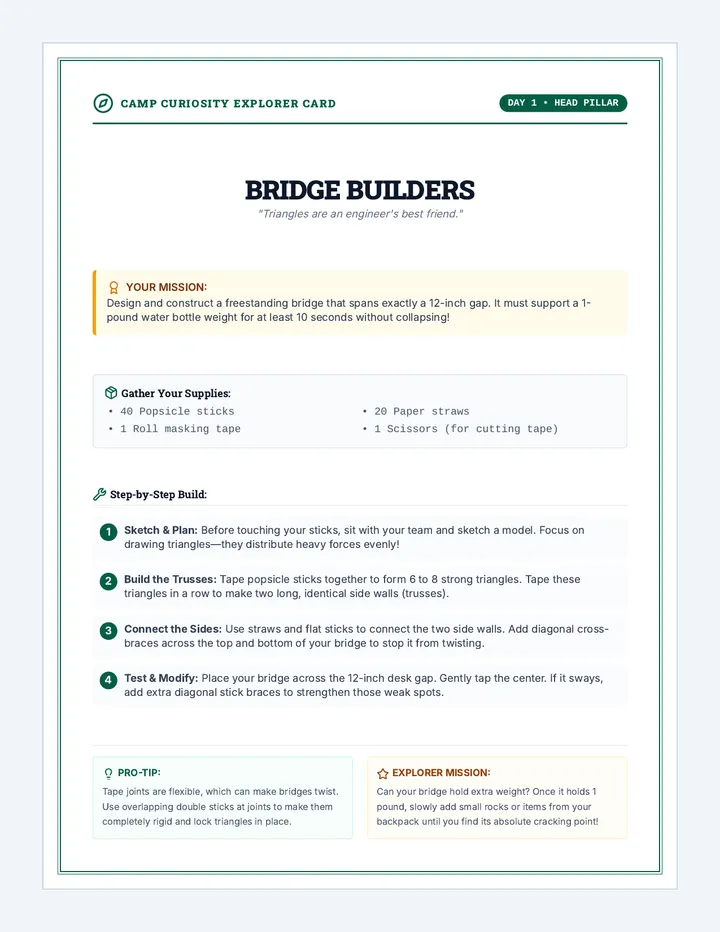
A creative two-page design activity where students draft a wildlife bridge to solve habitat fragmentation and analyze its impact on energy flow.
An aquatic food web worksheet where students identify producers/consumers and draw energy flow arrows for a pond ecosystem.
A two-page cut-and-paste activity where students build a terrestrial food web for a forest ecosystem and draw energy flow arrows.
A visual slide deck introducing food webs, the difference between food chains and webs, and contrasting terrestrial and aquatic energy foundations.
A one-page reading passage about energy flow and trophic levels, followed by four multiple-choice comprehension questions.
A comprehensive single-page teacher-facing resource providing the answer key for all student activities, including the new wildlife bridge design project and the habitat hike.
A comprehensive matching and identification worksheet focusing on trophic level vocabulary, including a fixed 4-level diagram lab for color-coding.
A colorful two-page cut-and-paste activity where students assemble an energy pyramid using trophic labels and specific prairie organisms.
A visual slide deck introducing energy pyramids, trophic levels (producers to tertiary consumers), and the 10% energy transfer rule.
A participant handout for Lesson 2 (Decomposition) with a Rally Coach section for low-lift tasks, a Professional Blueprint for classroom application, and a reflective Coach's Corner connecting early exposure to long-term CS success.
A 5-slide presentation for Lesson 2 (Decomposition) featuring the Allison Cuttler quote, the video intro, Rally Coach instructions, and professional application examples across storytelling, standards, and math.
Updated facilitation guide for Lesson 2 (Decomposition), featuring quotes from Krauss & Prottsman and Allison Cuttler, a Rally Coach instructional strategy, and cross-curricular connections from literacy to industrial tech.
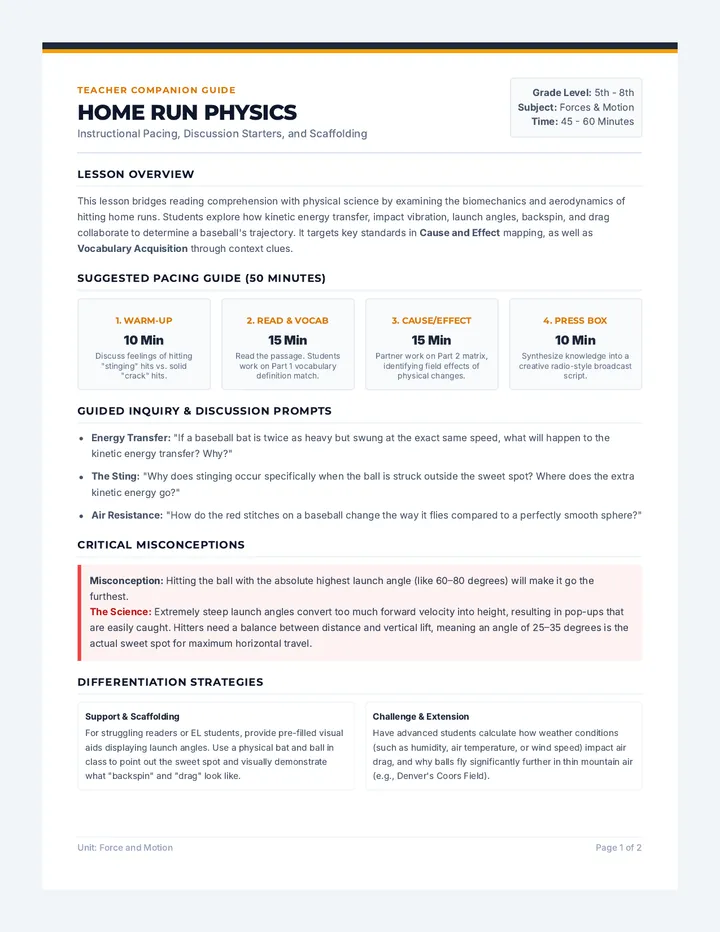
A teacher guide with standards, pacing, and pedagogical tips. Optimized for single-page use with improved contrast and layout.
A structured planning document for advocacy projects. Optimized for 2-page printing with an expanded sketch area and clear checklist.
A research and analysis worksheet where students investigate environmental inequality. Optimized for 2-page printing with generous work areas and built-in visual aids.
A 6-slide presentation covering environmental justice concepts, the Flint water crisis, urban air pollution data, and potential community solutions.
A teacher-facing facilitation guide for the Waste Wise project, including learning objectives, pacing, safety notes, and discussion prompts.
A detailed grading rubric for the Trash to Treasure video project, focusing on scientific accuracy, creative execution, and technical quality.
A comprehensive project guide and rubric for high school students to create a video documentary or performance art piece focused on waste management and upcycling, inspired by Shoji Yamasaki.
A student brainstorming and curation guide for Lesson 19, helping them define their brand's visual voice through keywords and consistent image filtering.
A joint teacher facilitator guide for Lessons 18 and 19, providing instructional strategies for teaching brand documentation, style guides, and visual tone through Canva.
A visually rich slide deck for Lesson 19, exploring brand personality and visual tone. It features personality comparisons (Disney vs. Tesla), photography style analysis, and technical instruction on Canva image filters.
A student planning worksheet for Lesson 18, helping students document their brand's color palette, typography pairing, and alignment rules before building their formal Style Guide in Canva.
A comprehensive, visually compelling slide deck for teaching the components of a Brand Style Guide, including rules for logo usage, color palettes, and typography pairing with technical Canva skills.