The finalized quarterly assessment with scrambled matching sections and optimized page breaks for printing. It ensures no cutoffs of questions or work areas while maintaining a clear flow across the nine-page assessment.
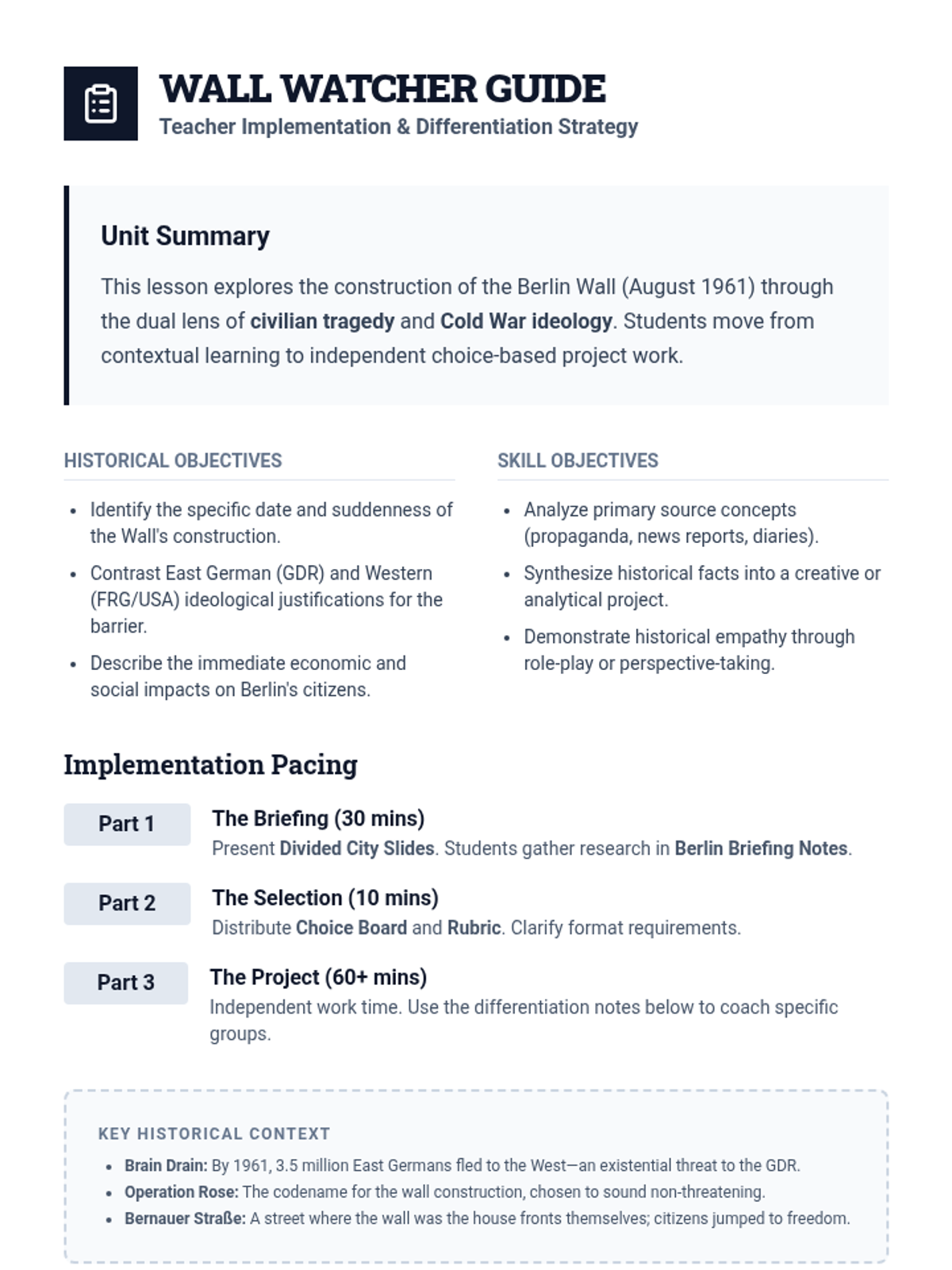
A detailed teacher guide for implementing the Berlin Wall project, including learning objectives, pacing suggestions, and a breakdown of the differentiation strategy used in the choice board.
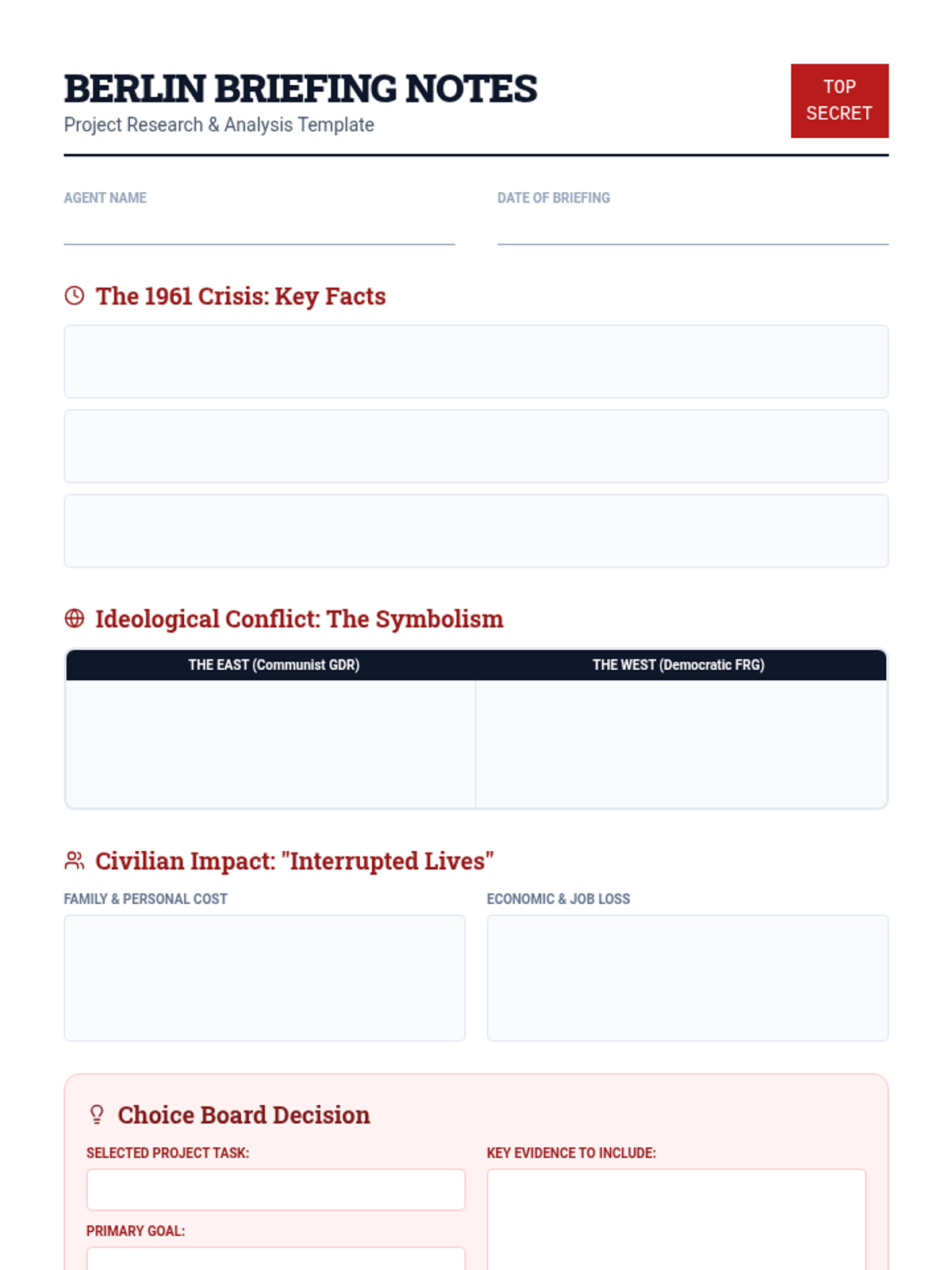
A guided note-taking and brainstorming template for students to use while viewing the slides and planning their Choice Board project.
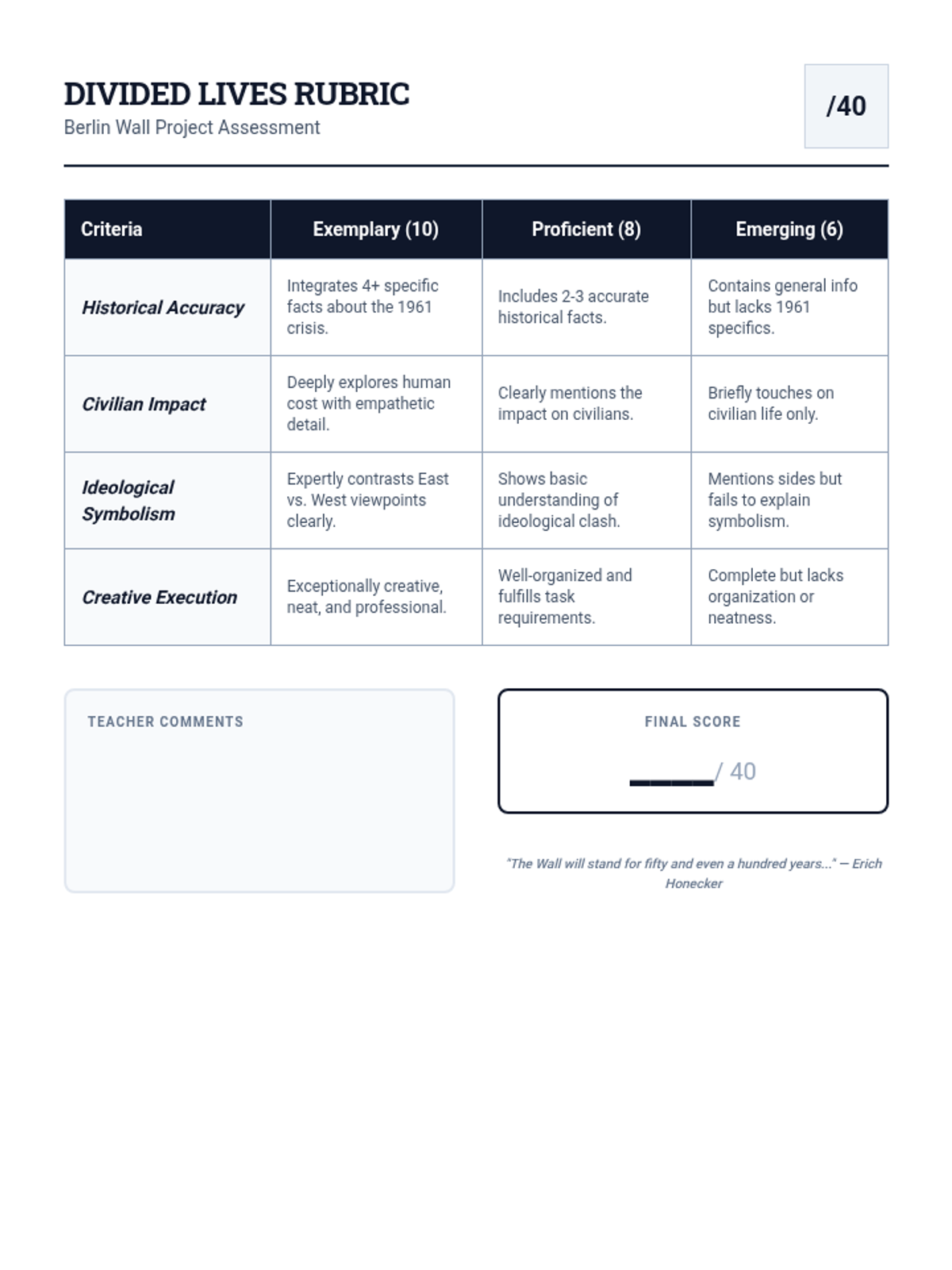
A comprehensive rubric for assessing the Berlin Wall project, evaluating historical accuracy, civilian impact, ideological symbolism, and creative execution.
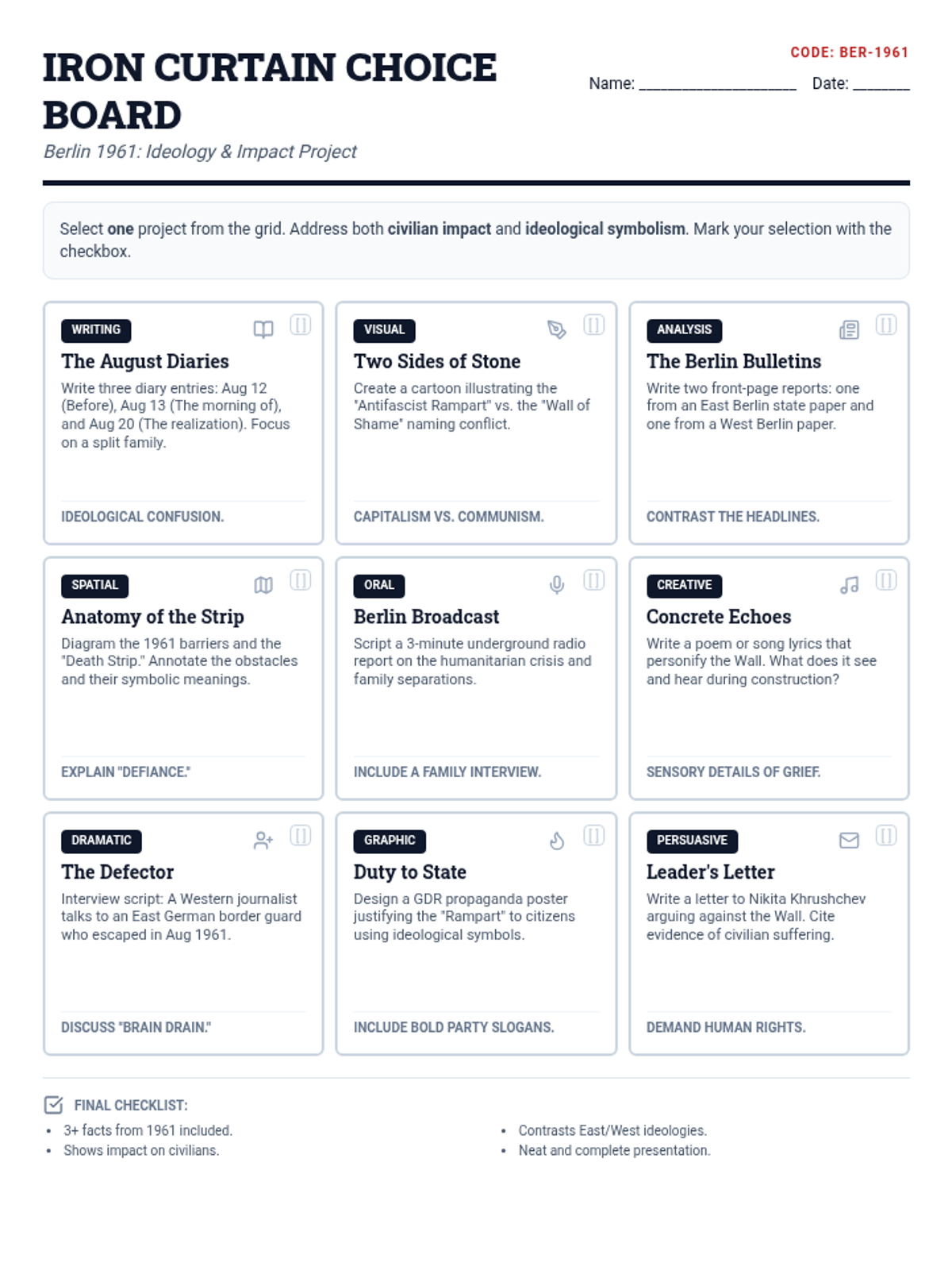
A differentiated choice board for a Berlin Wall project, offering nine diverse tasks categorized by skill set (writing, visual, oral, etc.) focused on the 1961 construction.
A presentation slide deck introducing the Berlin Wall's construction in 1961, emphasizing the sudden impact on civilians and the ideological clash between the East and West.
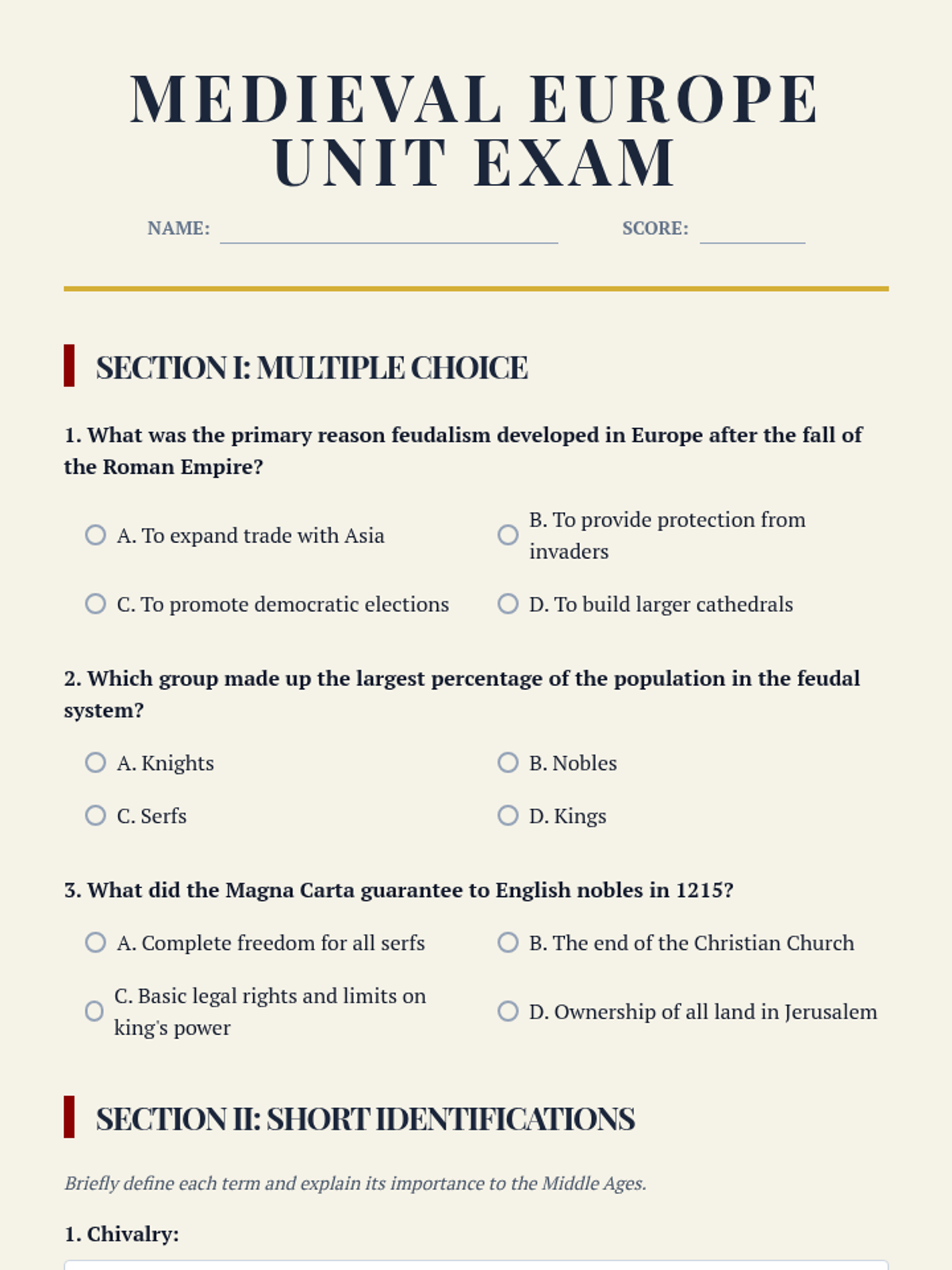
A comprehensive summative assessment for the Medieval Europe unit, including multiple-choice questions, key term identification, and a short essay on the impact of the Black Death.
Final set of instructional slides for Lesson 5, focusing on King John and the Magna Carta, the rise of the middle class and town life, and the eventual decline of the Middle Ages.
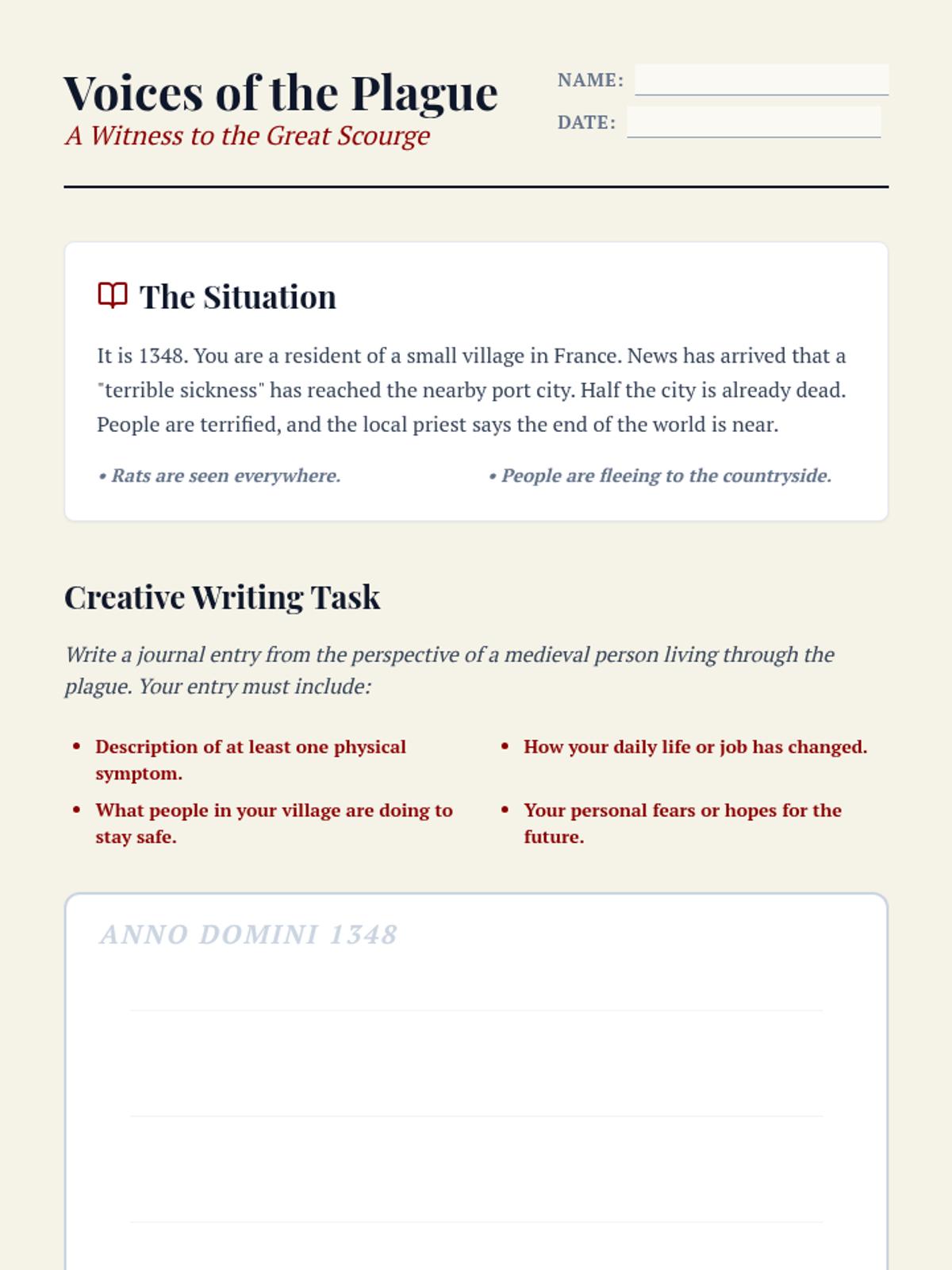
A creative writing and perspective-taking activity for Lesson 4 where students write a fictional journal entry from the viewpoint of a plague survivor to analyze the social and economic shifts of the era.
Educational slides for Lesson 4 covering the arrival of the Bubonic Plague, its physical symptoms, the devastating population loss, and its role in ending the feudal economic system.
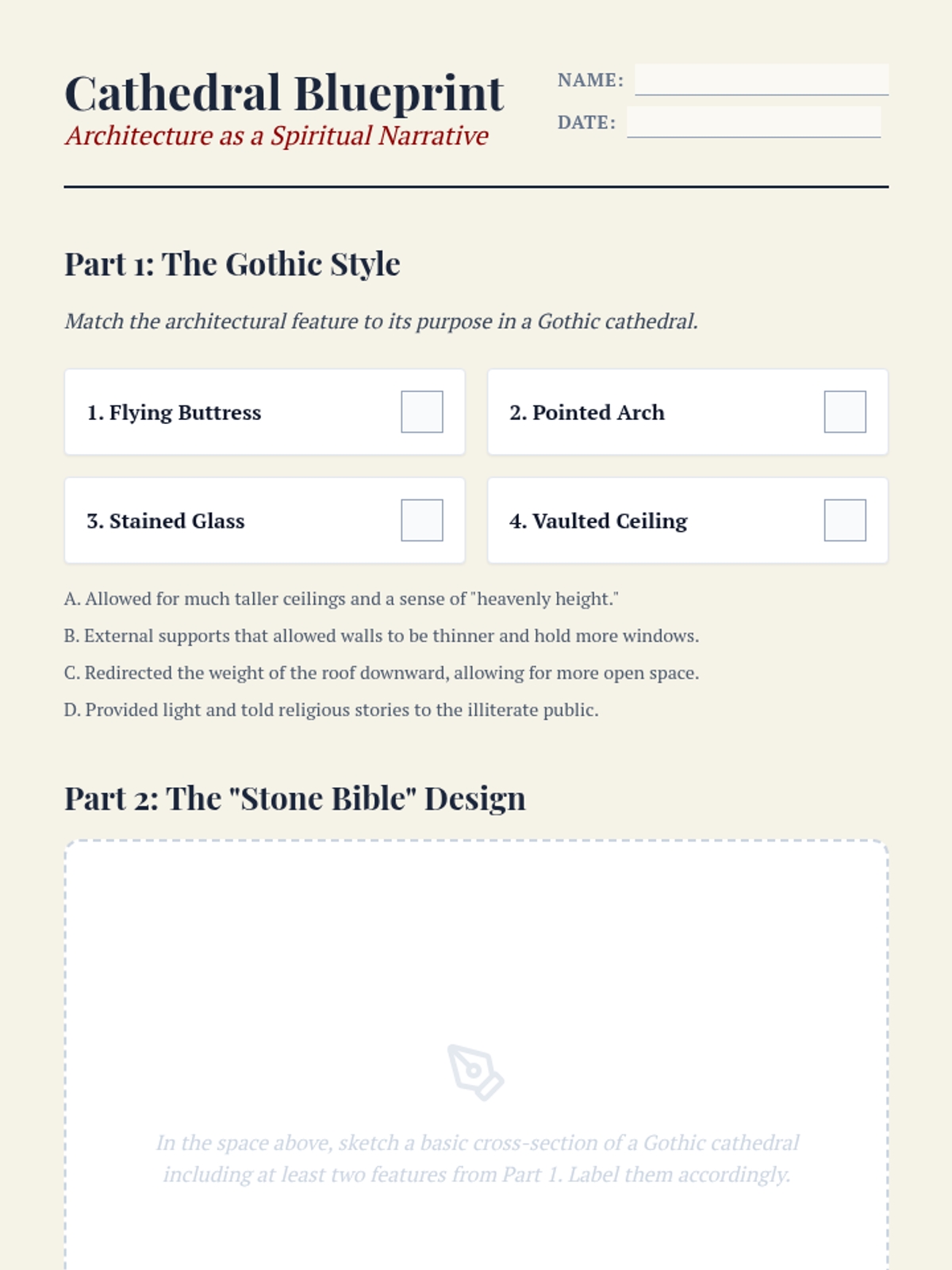
An activity for Lesson 3 where students identify Gothic architectural features and analyze how the design of cathedrals reinforced the power and teachings of the Church.
Presentation slides for Lesson 3 exploring the spiritual and political power of the Catholic Church, the conflict between kings and popes, and the architectural significance of Gothic cathedrals.
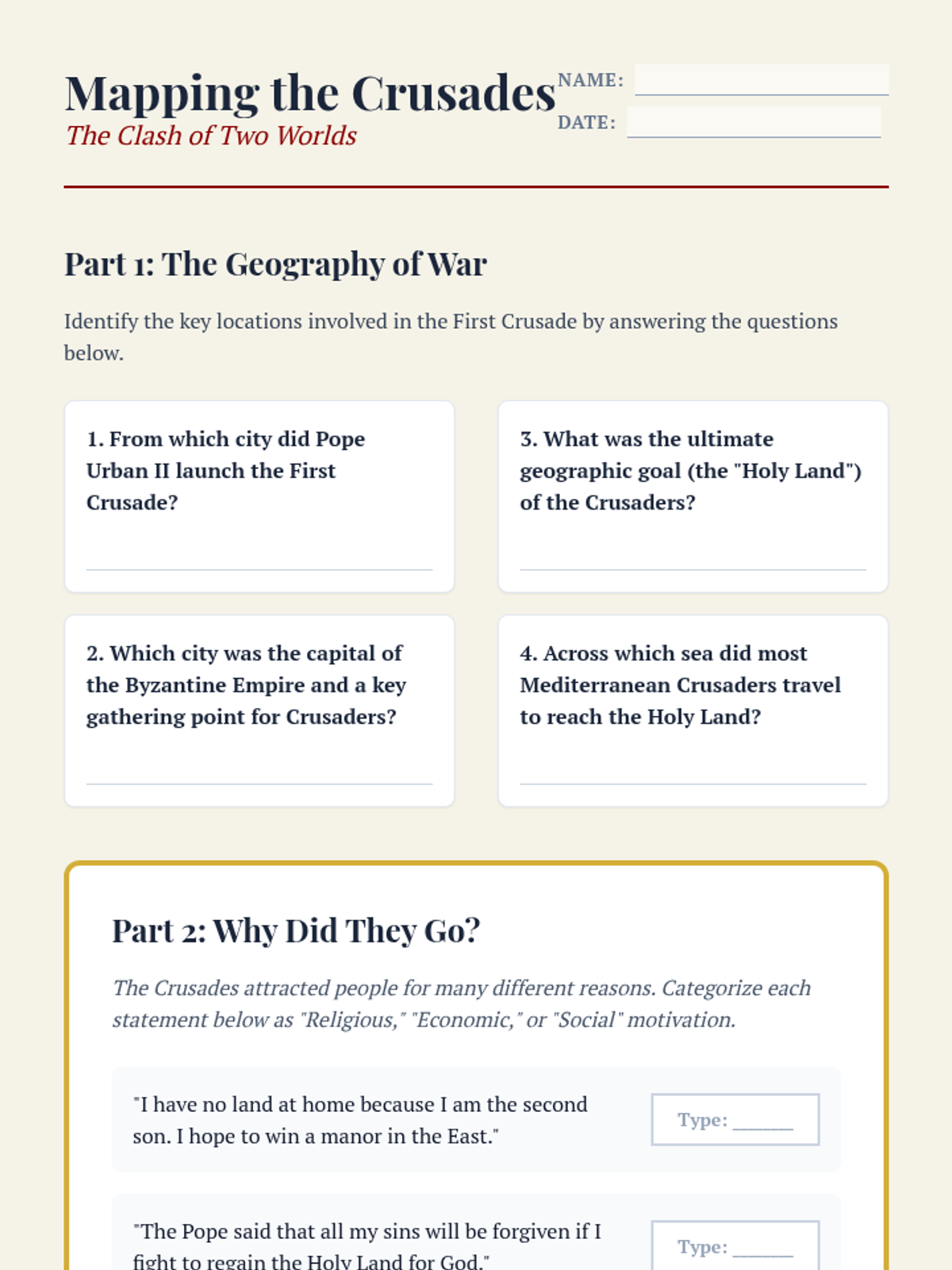
A mapping and analysis worksheet for Lesson 2 focusing on the geography of the Crusades, the diverse motivations of crusaders, and the long-term cultural impacts.
Instructional slides for Lesson 2, detailing the path to knighthood, the code of chivalry, and the historical causes and consequences of the Crusades.