A visual slide deck introducing present, past, and future simple tenses with a time-travel theme. Includes definitions, examples, and interactive shifting practice.
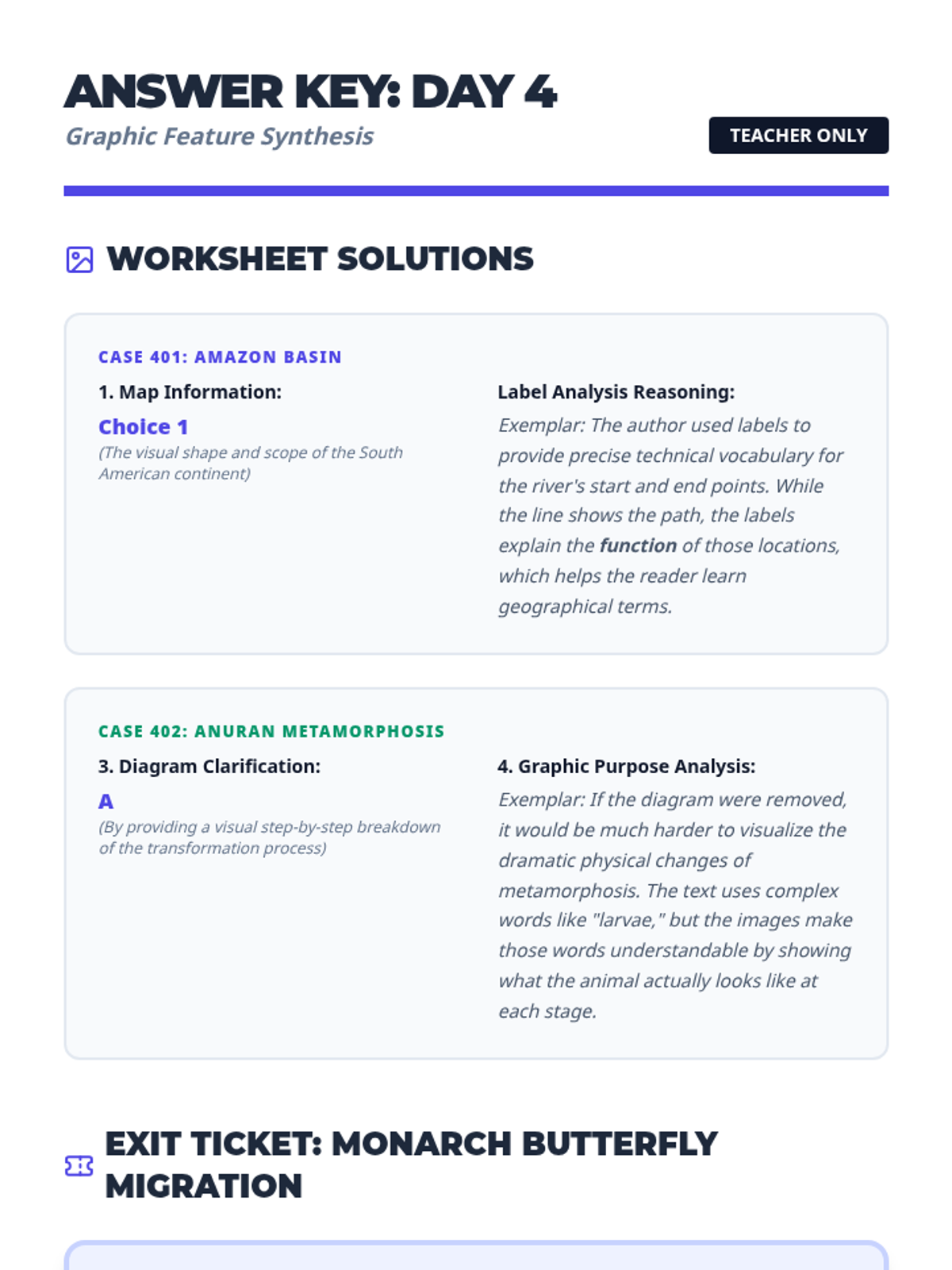
Teacher answer key for Day 4 Feature Find materials, focusing on graphic feature synthesis (maps, diagrams, captions). Provides exemplar responses for analytical tasks.
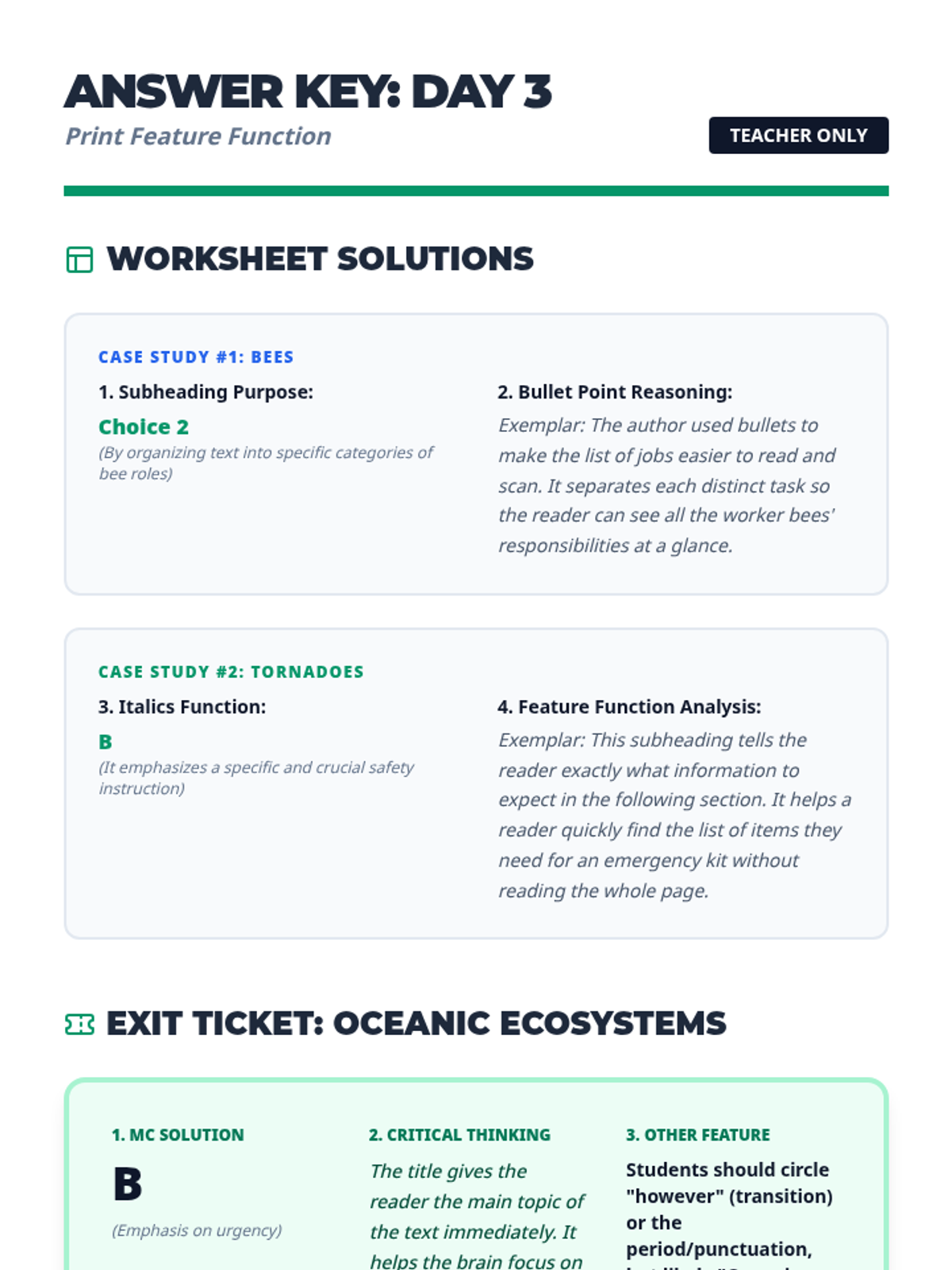
Teacher answer key for Day 3 Feature Find materials, focusing on print feature function (subheadings, italics, bullets, boldface). Provides exemplar responses for written tasks.
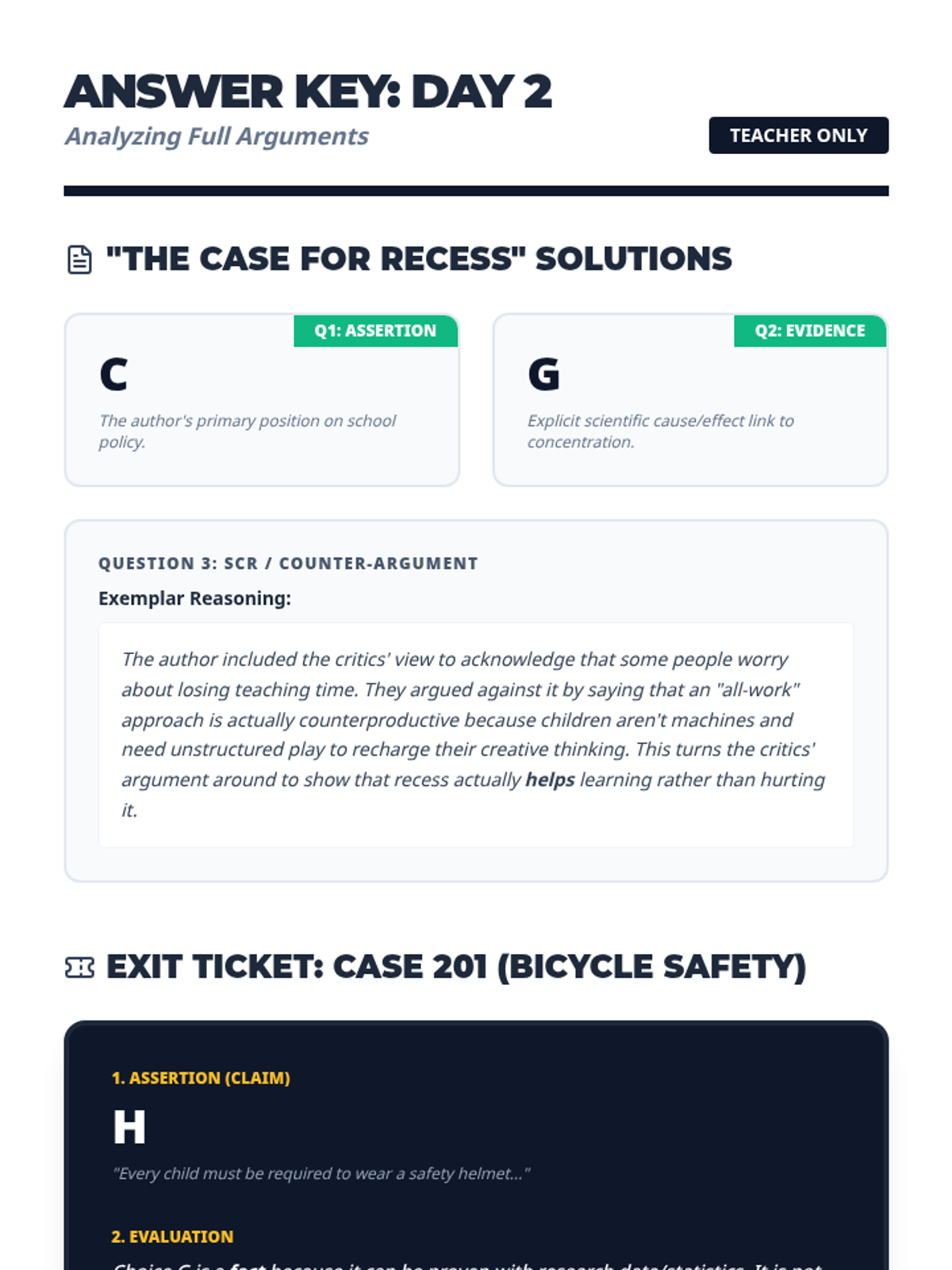
Teacher answer key for Day 2 Claim Clues materials, including the recess passage analysis and the bicycle safety exit ticket. Provides exemplar written responses for higher-rigor student tasks.
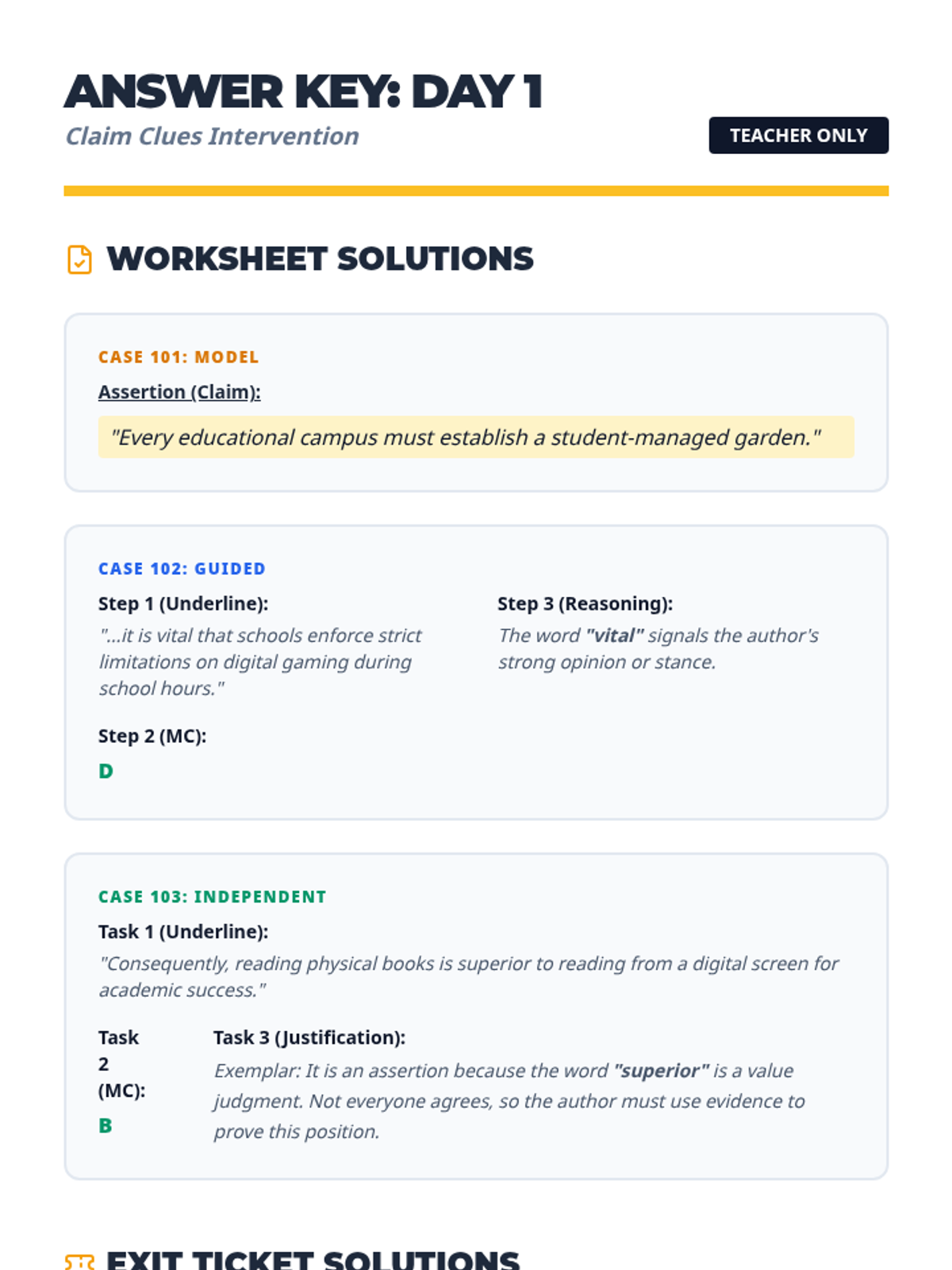
Teacher answer key for Day 1 Claim Clues worksheet and exit ticket. Provides correct underlining targets, multiple-choice answers, and exemplar reasoning for student tasks.
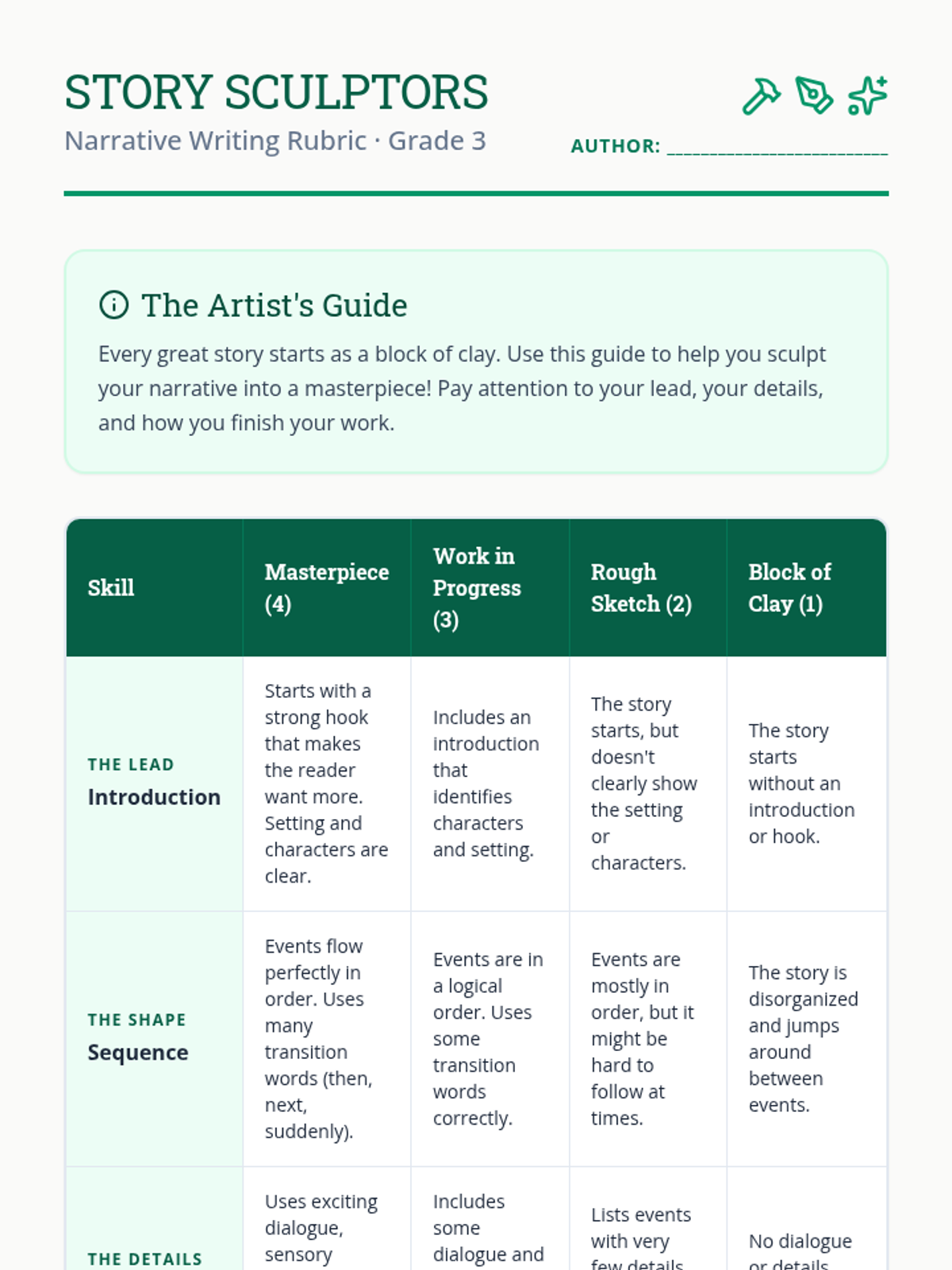
A 3rd-grade narrative writing rubric with a sculptor theme, assessing introduction, sequence, narrative techniques, conclusion, and mechanics with student-friendly language.
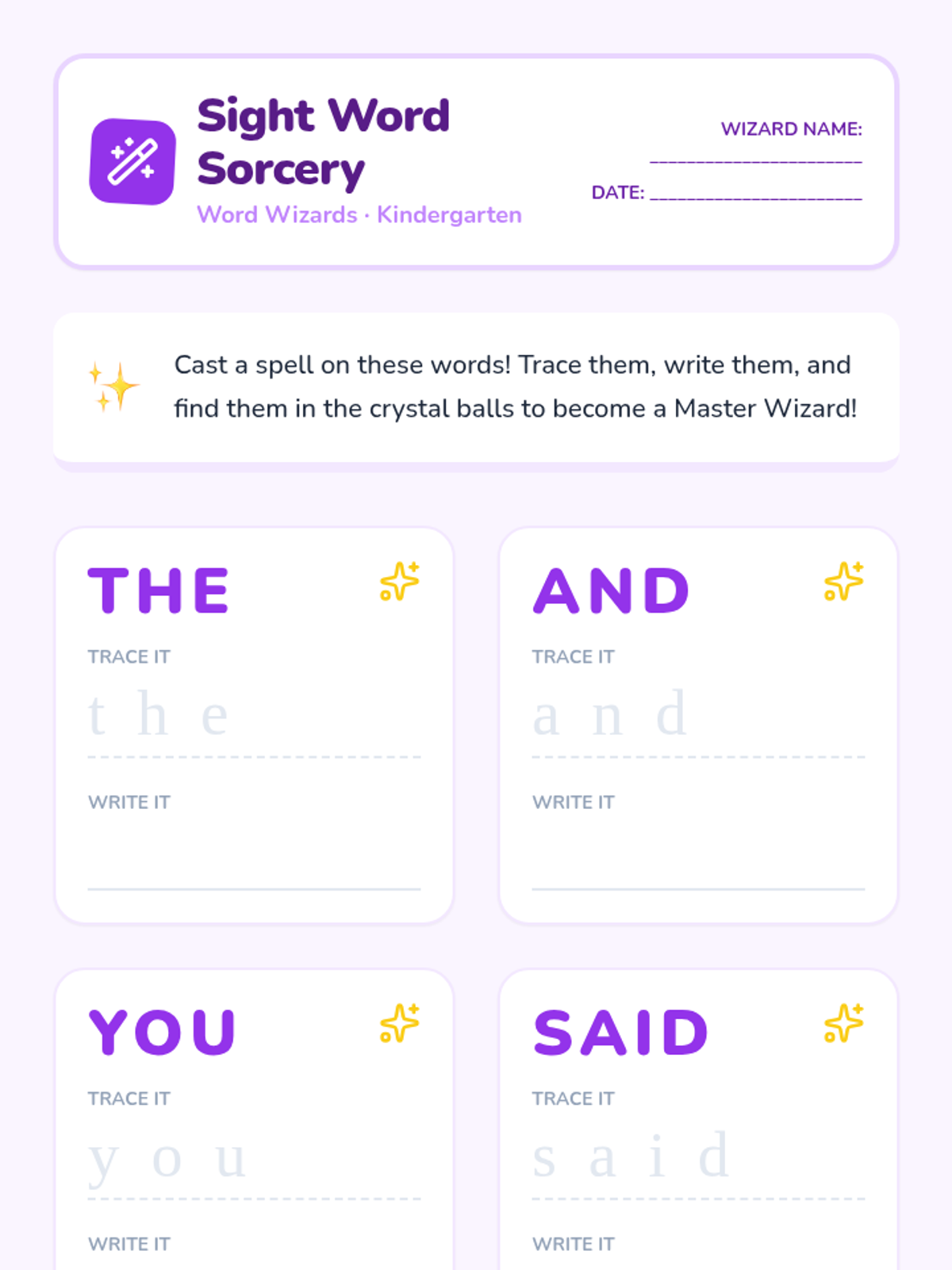
A magical themed sight word practice worksheet for kindergarteners, featuring tracing, writing, and a word search activity for high-frequency words.
A professional 4-slide presentation deck covering essential laboratory safety protocols, PPE requirements, and emergency equipment for high school chemistry.
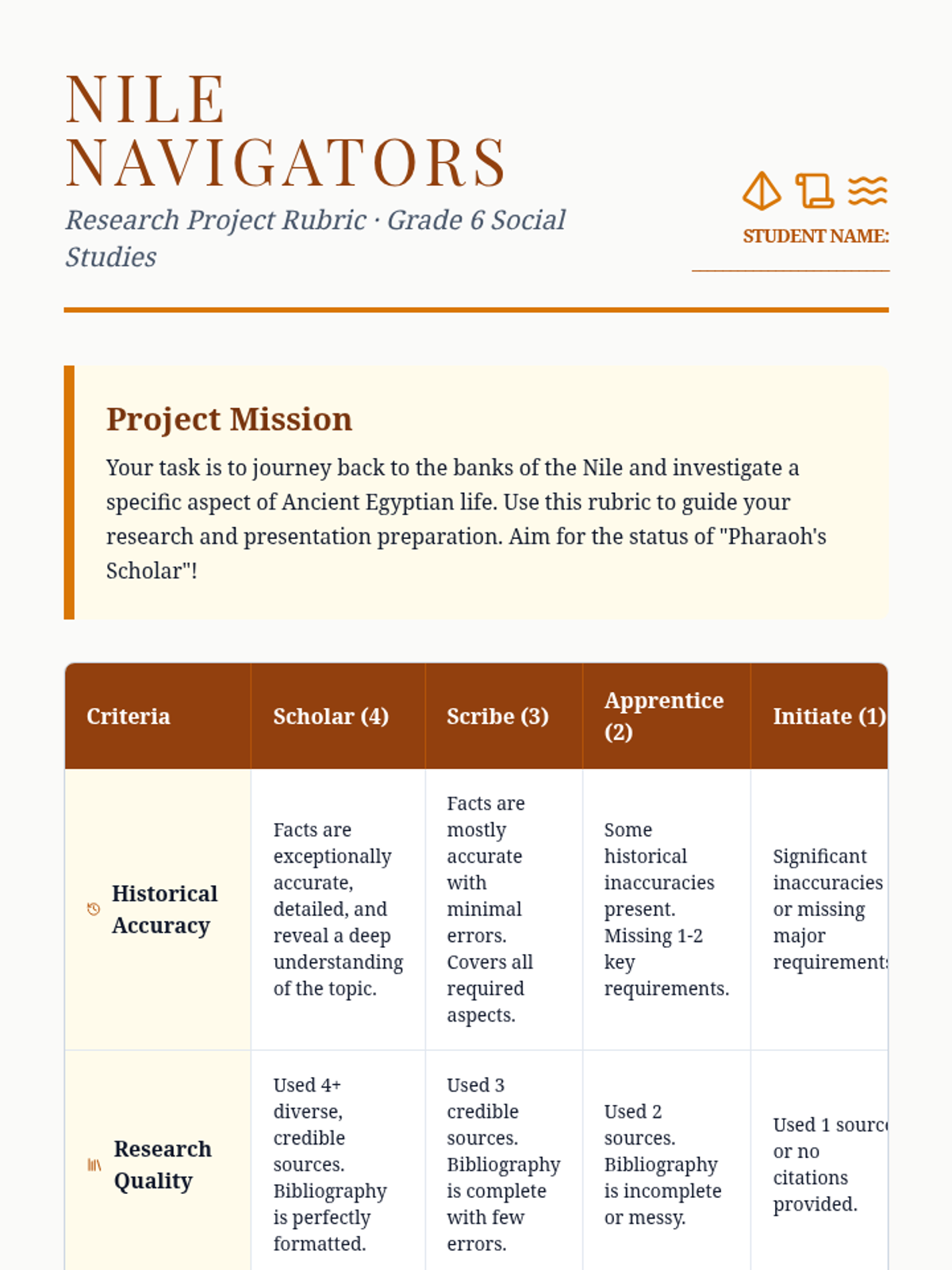
A comprehensive rubric for a 6th-grade research project on Ancient Egypt, featuring categories for historical accuracy, research quality, and presentation design within a thematic ancient Egyptian aesthetic.
Updated 30-page 'Elite' phonics packet featuring Tier 2 academic vocabulary and complex multisyllabic words. Includes rigorous word work and four high-level reading passages (Pages 8, 14, 21, 28) to build fluency with advanced English structures. Calibrated for 15-minute high-intensity practice sessions.
A visual presentation for instruction on the 'a-e' pattern, introducing the 'Bossy E' rule and galactic vocabulary with practice reading sentences.
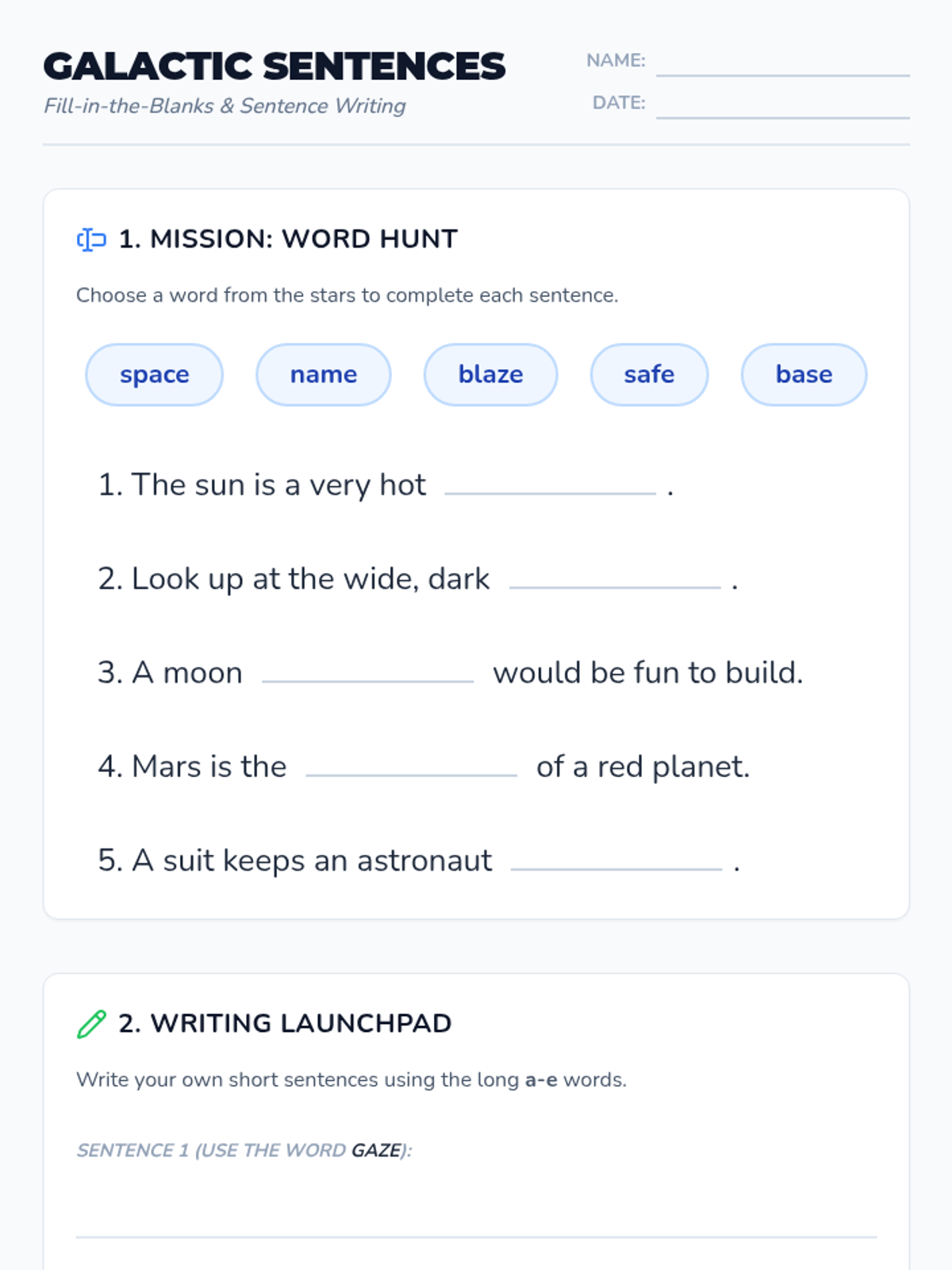
A student worksheet for second graders focused on 'a-e' long a pattern, featuring fill-in-the-blank sentences and space for original sentence construction.
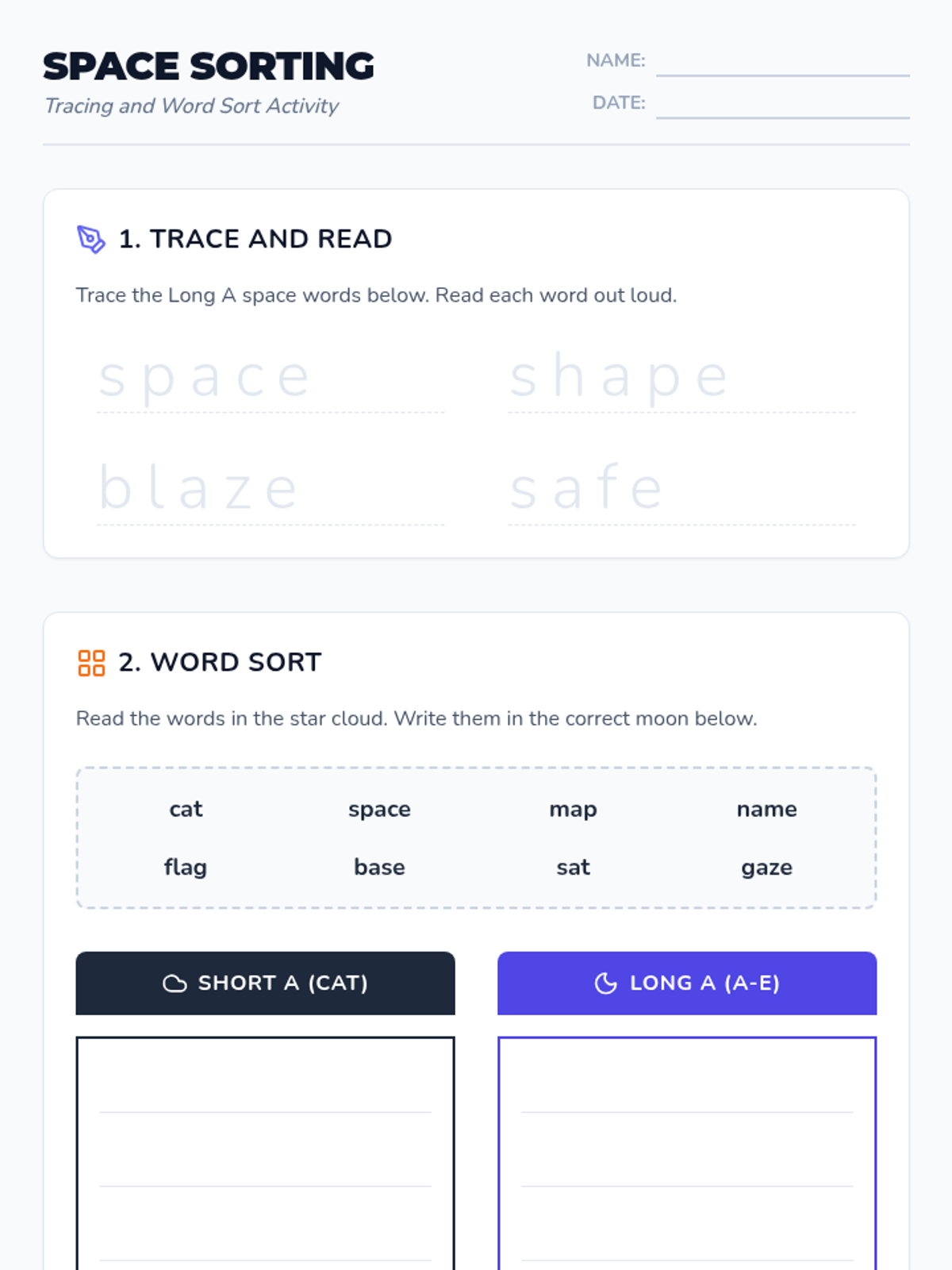
A student worksheet featuring a word tracing section for 'a-e' space vocabulary and a sorting activity to differentiate between short 'a' and long 'a-e' patterns.
A 9-page decodable reader focused on the 'a-e' long a pattern, featuring a non-fiction story about space exploration with large text and high-contrast illustrations.
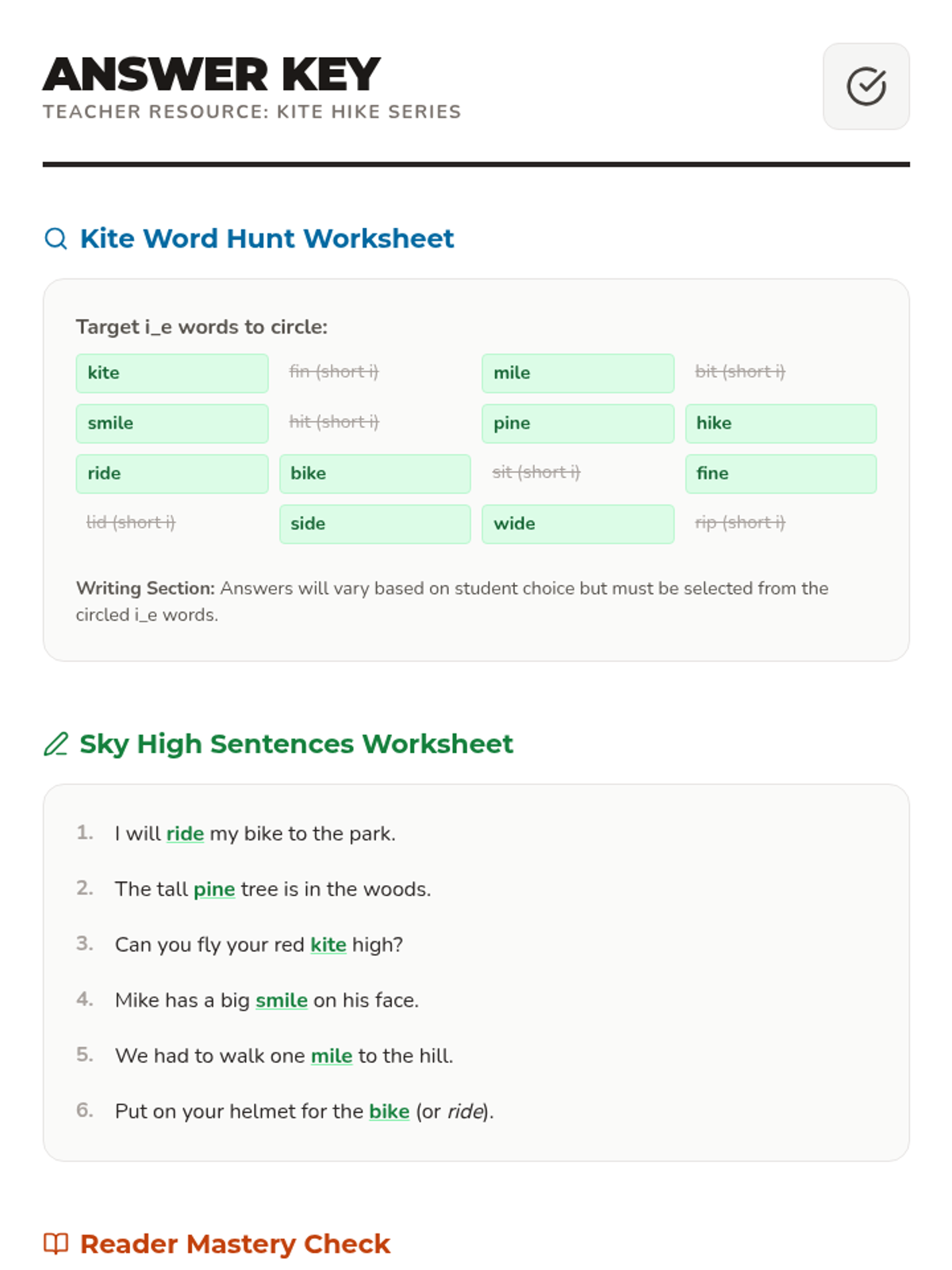
An answer key for the Kite Hike phonics worksheets, providing correct answers for the word hunt and sentence completion activities. Includes a teacher checklist for reader mastery.
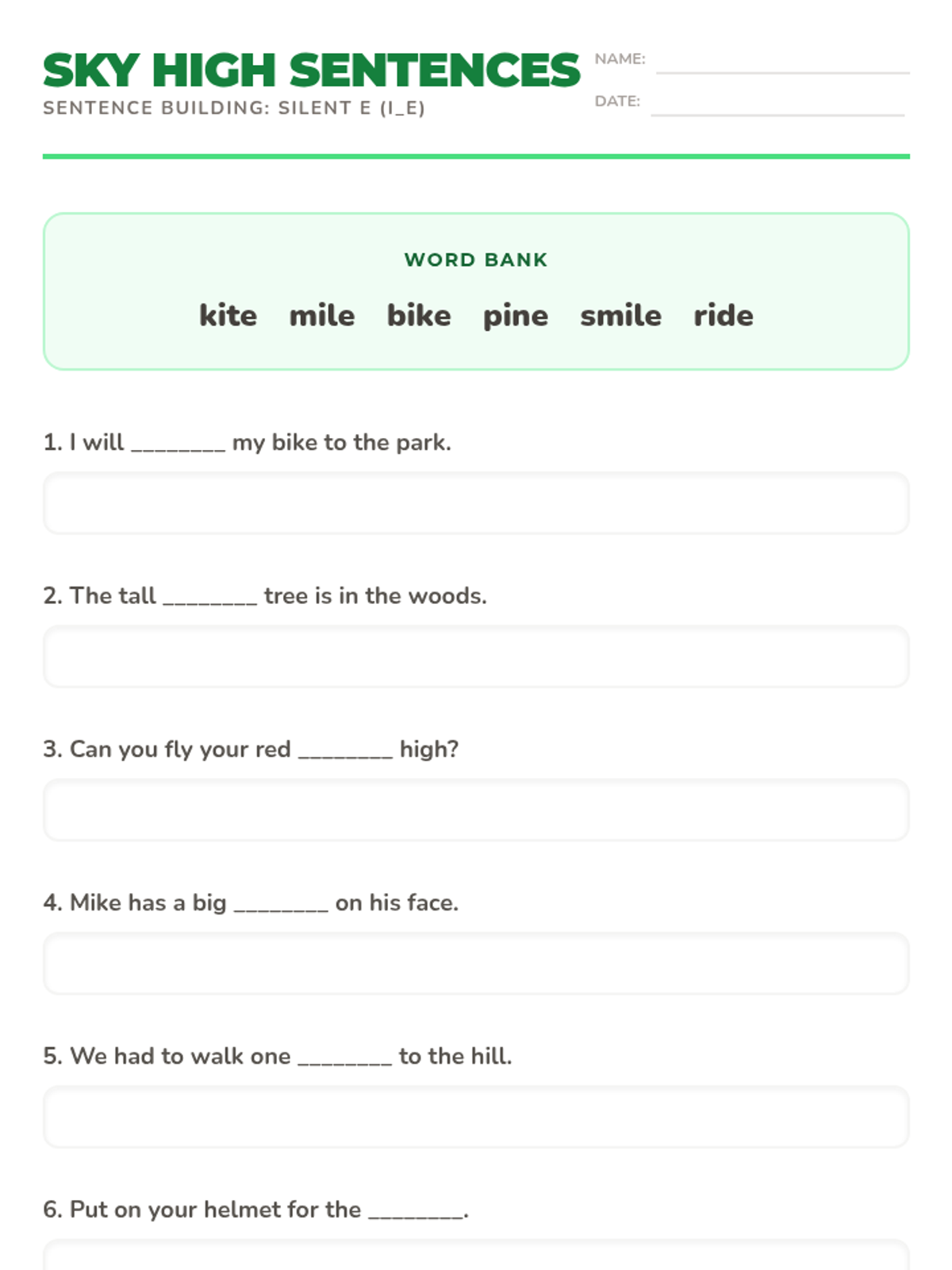
A sentence completion worksheet where students use i_e words from a word bank to fill in the blanks. Features a drawing area for creative engagement.
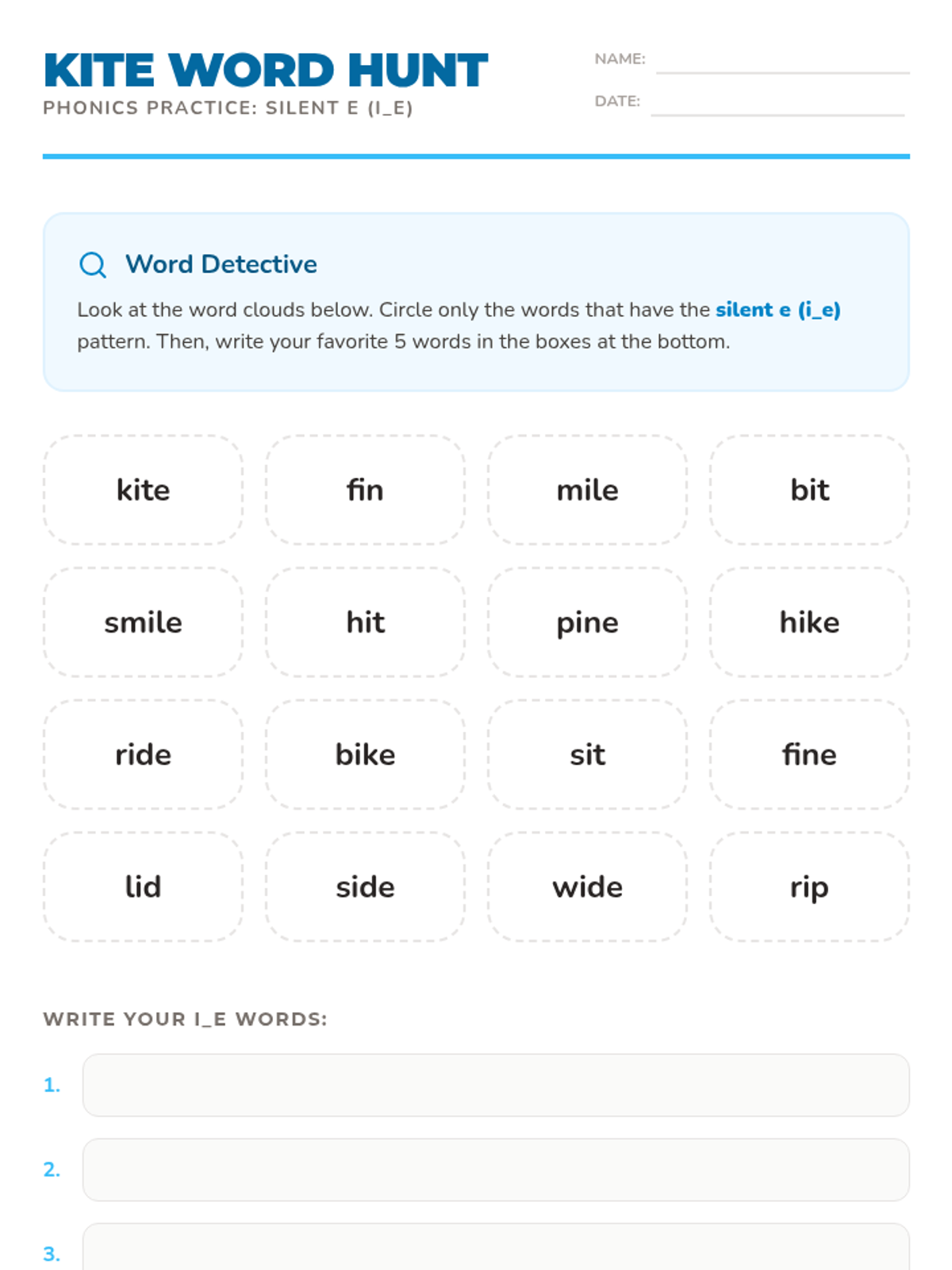
A word hunt worksheet where students identify i_e words from a list and practice writing them. Designed with an outdoor cloud theme to match the Kite Hike series.
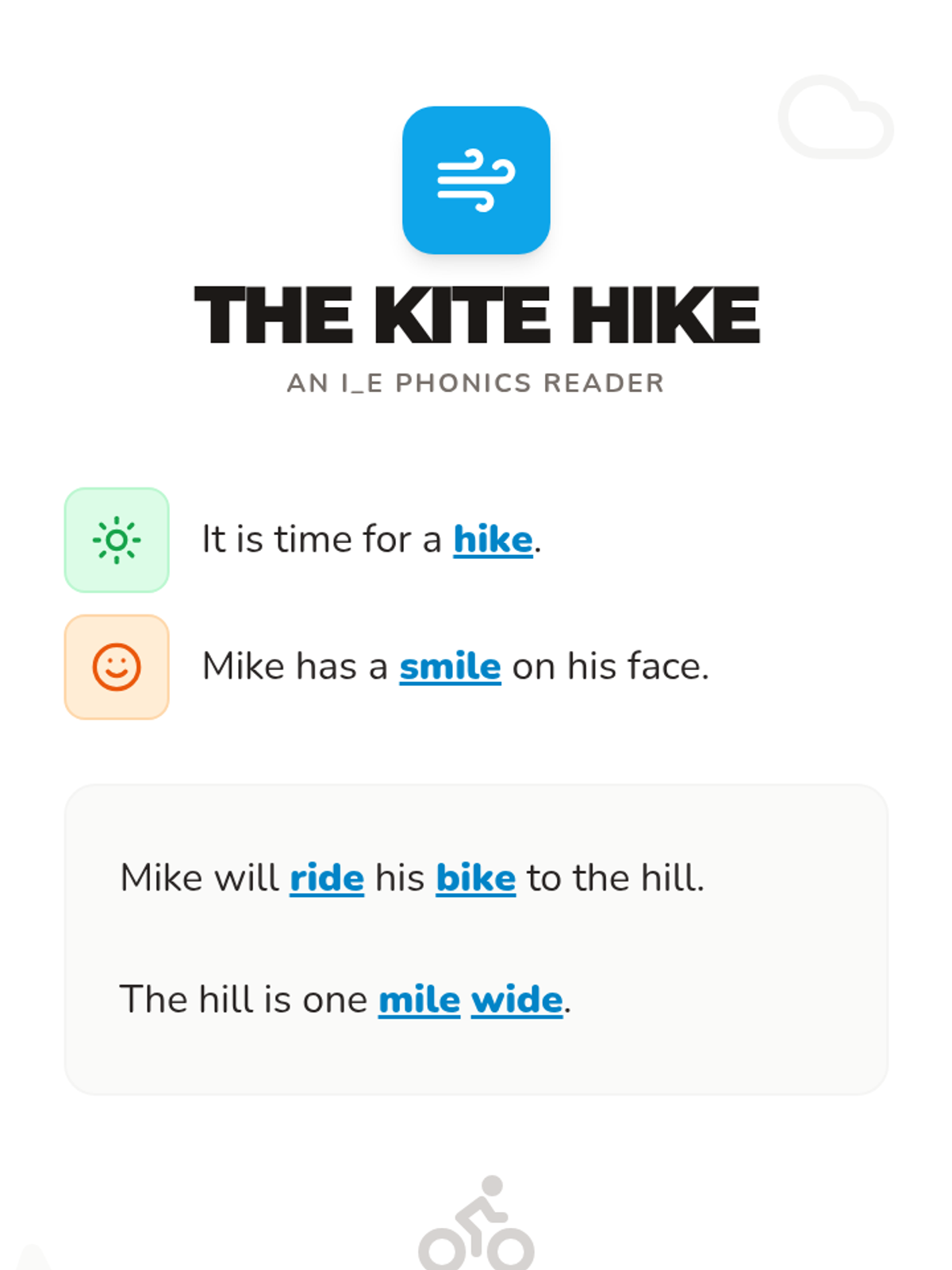
A 2-page decodable reader focusing on the i_e silent e pattern, telling the story of Mike's adventure to fly a kite. Contains high-frequency i_e words and clear, engaging layout for early readers.
Visual presentation slides for teaching the i_e silent e pattern, featuring blending practice, real vs. silly word activities, and an adventure-themed visual guide.
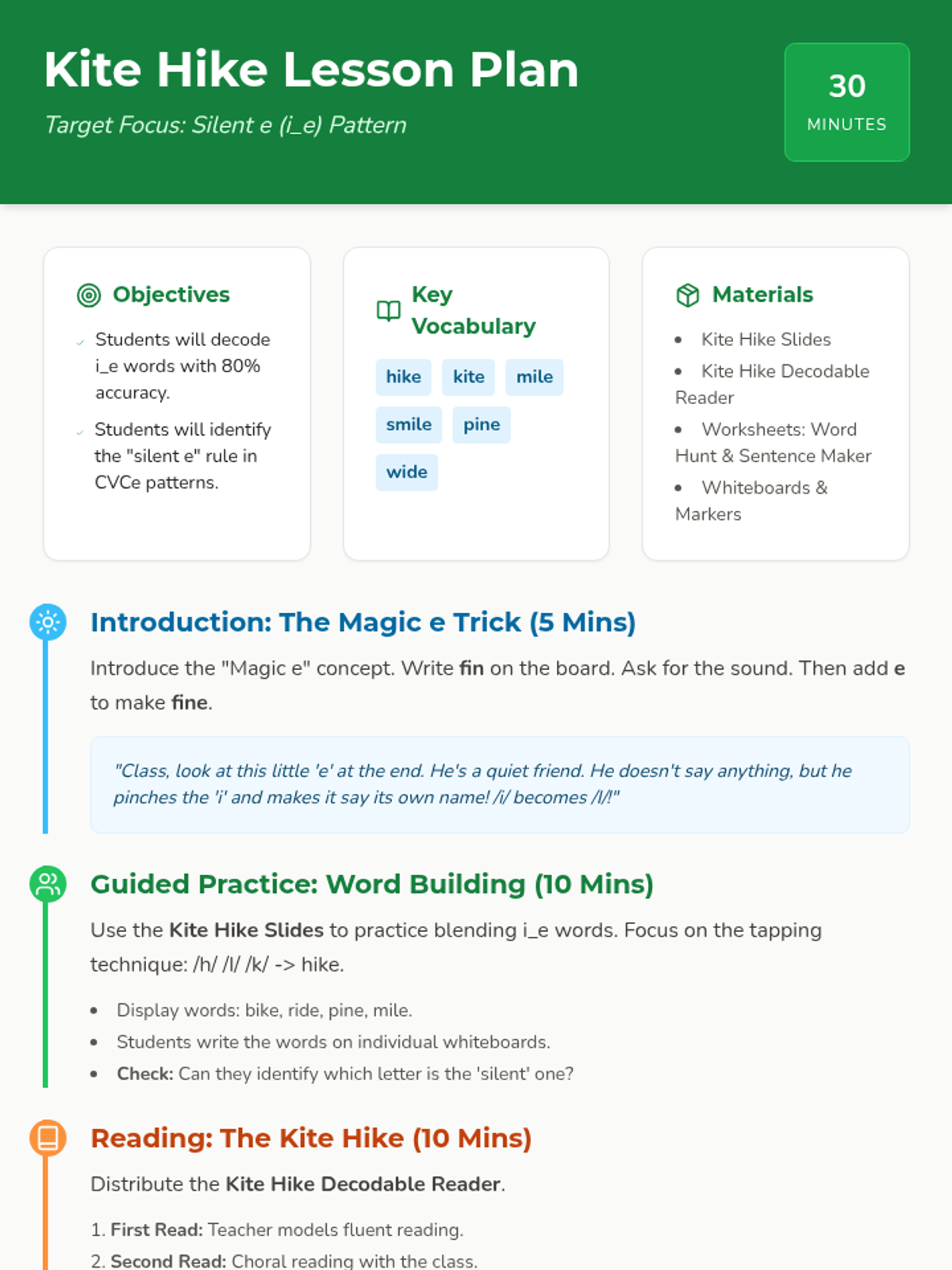
A comprehensive 30-minute lesson plan for teaching the i_e silent e pattern, featuring an outdoor adventure theme with structured stages for introduction, guided practice, and independent reading.
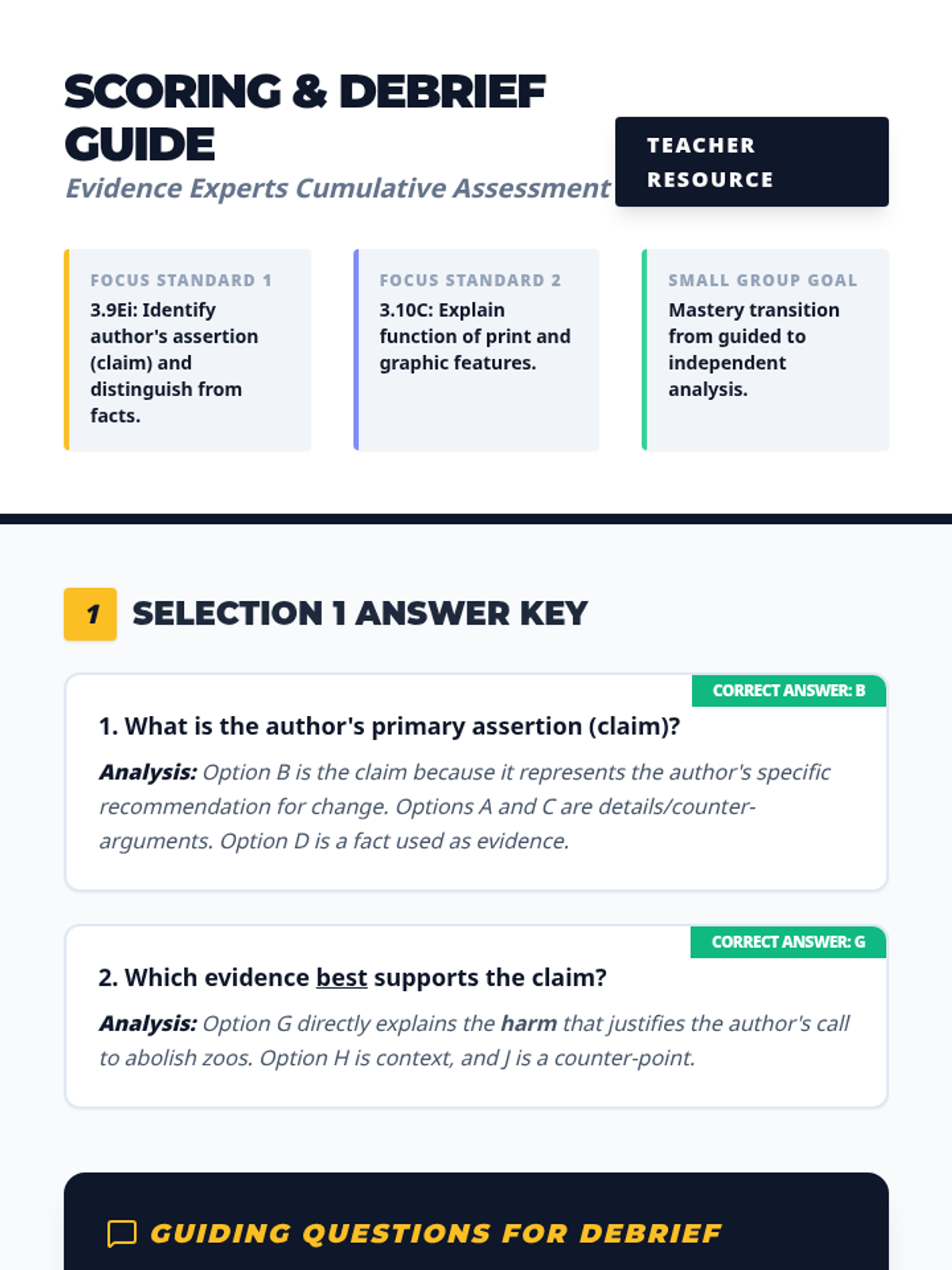
A comprehensive teacher scoring and debrief guide for the cumulative assessment, including guiding questions for small group discussion and exemplar analysis for synthesis tasks. Updated to include "(claim)" after "assertion" for vocabulary reinforcement.
Cumulative assessment slide deck covering both claim identification (3.9Ei) and print/graphic feature analysis (3.10C). Optimized for digital use on Google Classroom with large, legible text and synthesis-focused work areas. Features removed visual scaffolding for claims to maintain high rigor. Updated to include "(claim)" after "assertion" for vocabulary reinforcement.
Student slide deck for Day 4 intervention on graphic features. Optimized for digital use on Google Classroom with large, legible text and interactive-ready work areas. Features a passage about the Amazon River with a map and a diagram about the frog life cycle with STAAR-aligned questions. Upgraded with increased vocabulary and critical thinking tasks.
Student slide deck for Day 3 intervention on print features. Optimized for digital use on Google Classroom with screen-appropriate font sizes and layouts. Focuses on the function and organization provided by subheadings, boldface, and italics.
Student slide deck for Day 2 intervention on analyzing full-length argumentative texts. Optimized for Google Classroom with large, legible text and interactive-ready work areas. Features a multi-paragraph passage and STAAR-aligned assessment questions, including an integrated final mastery check.
Student slide deck for Day 1 intervention on identifying author claims. Optimized for digital use on Google Classroom with screen-appropriate font sizes and layouts. Features removed visual scaffolding for claims to maintain high rigor and includes a final exit ticket challenge.
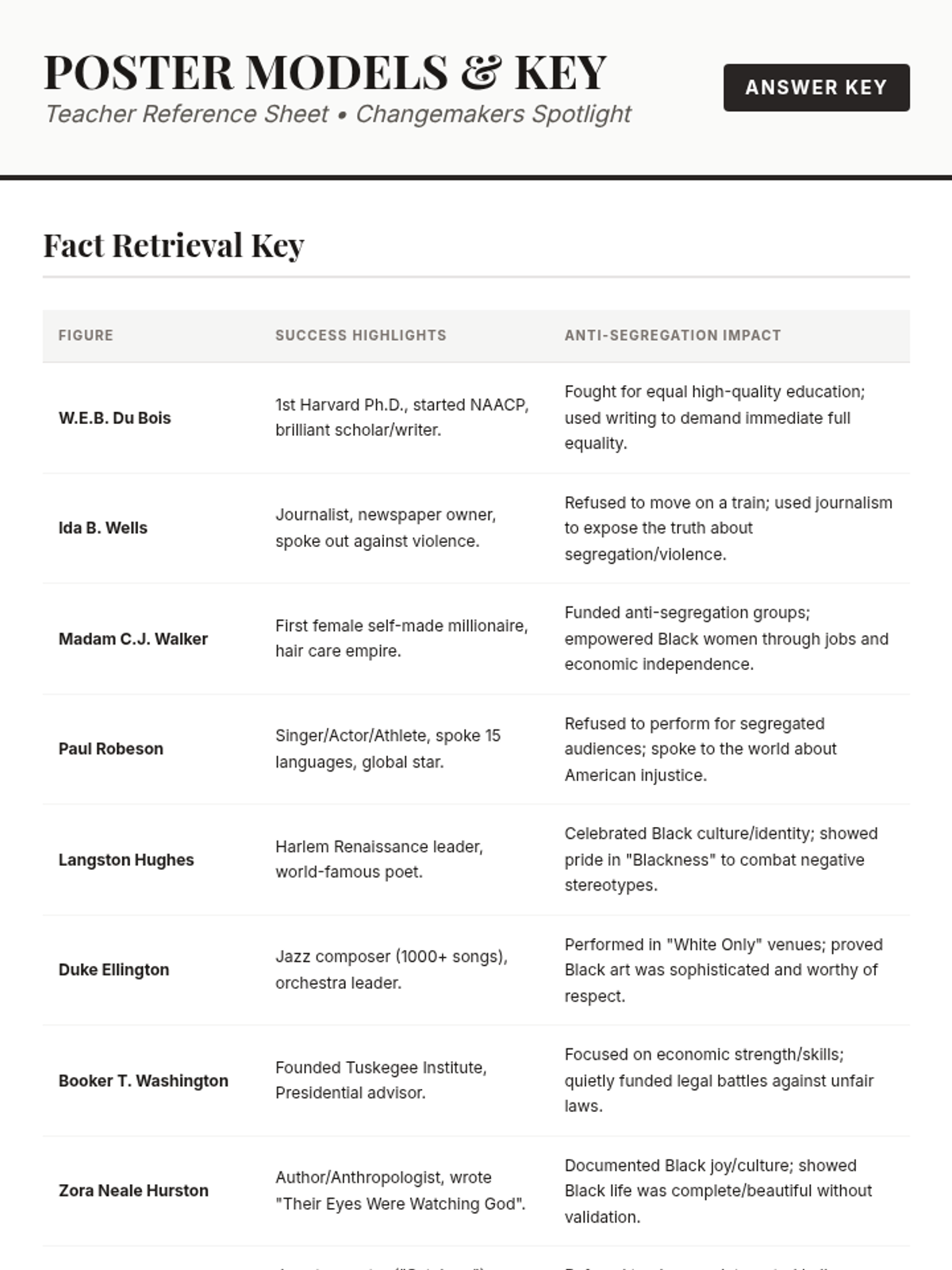
A comprehensive teacher's answer key and student models for the poster project. It includes specific retrieval facts for all twelve figures and two visual models (Langston Hughes and Madam C.J. Walker) showing different types of impact.
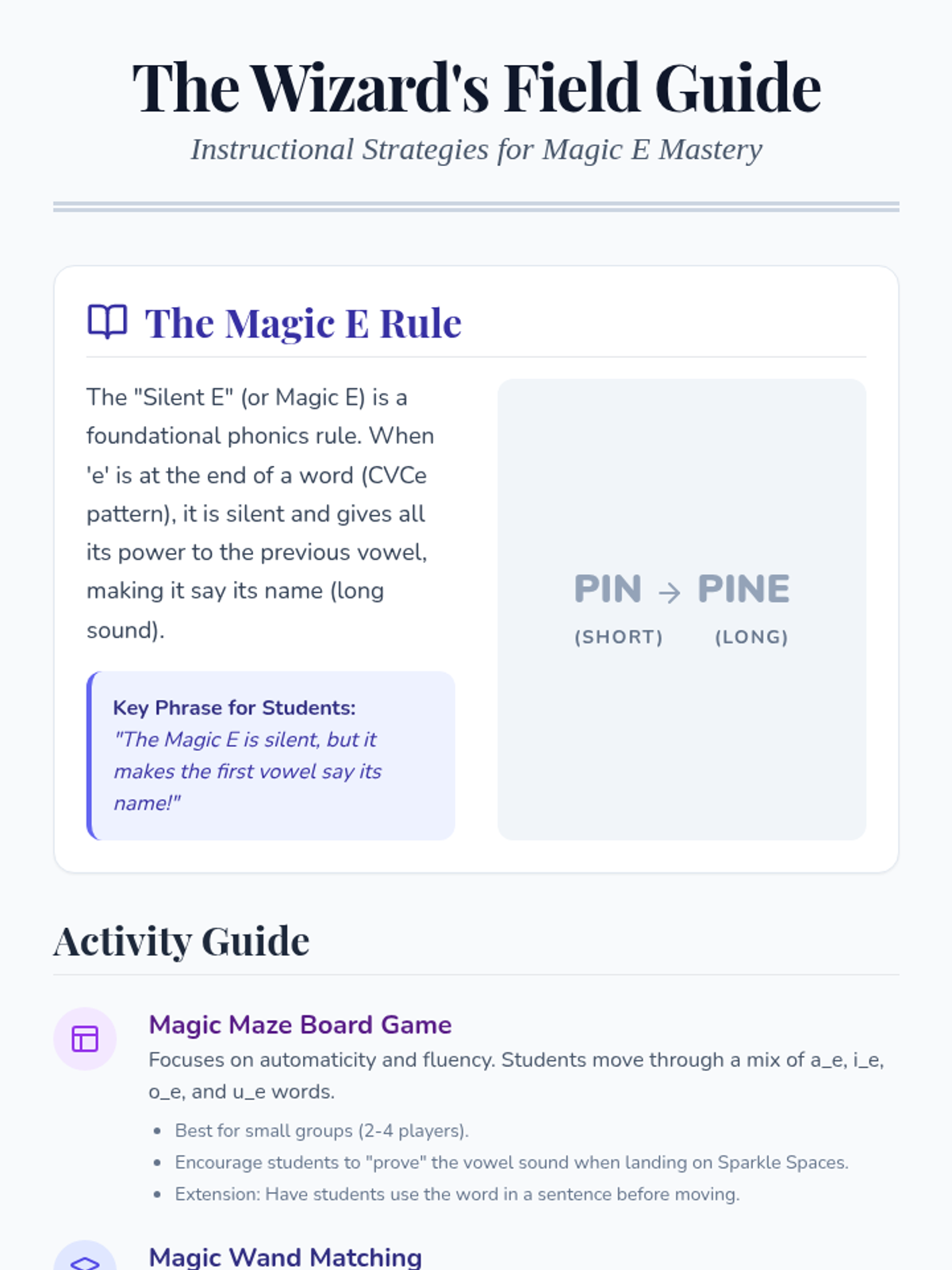
A teacher guide for the Magic E Mastery lesson. Includes an explanation of the silent e rule, instructions for all three activities, instructional tips, and a master word list for a_e, i_e, o_e, and u_e patterns.
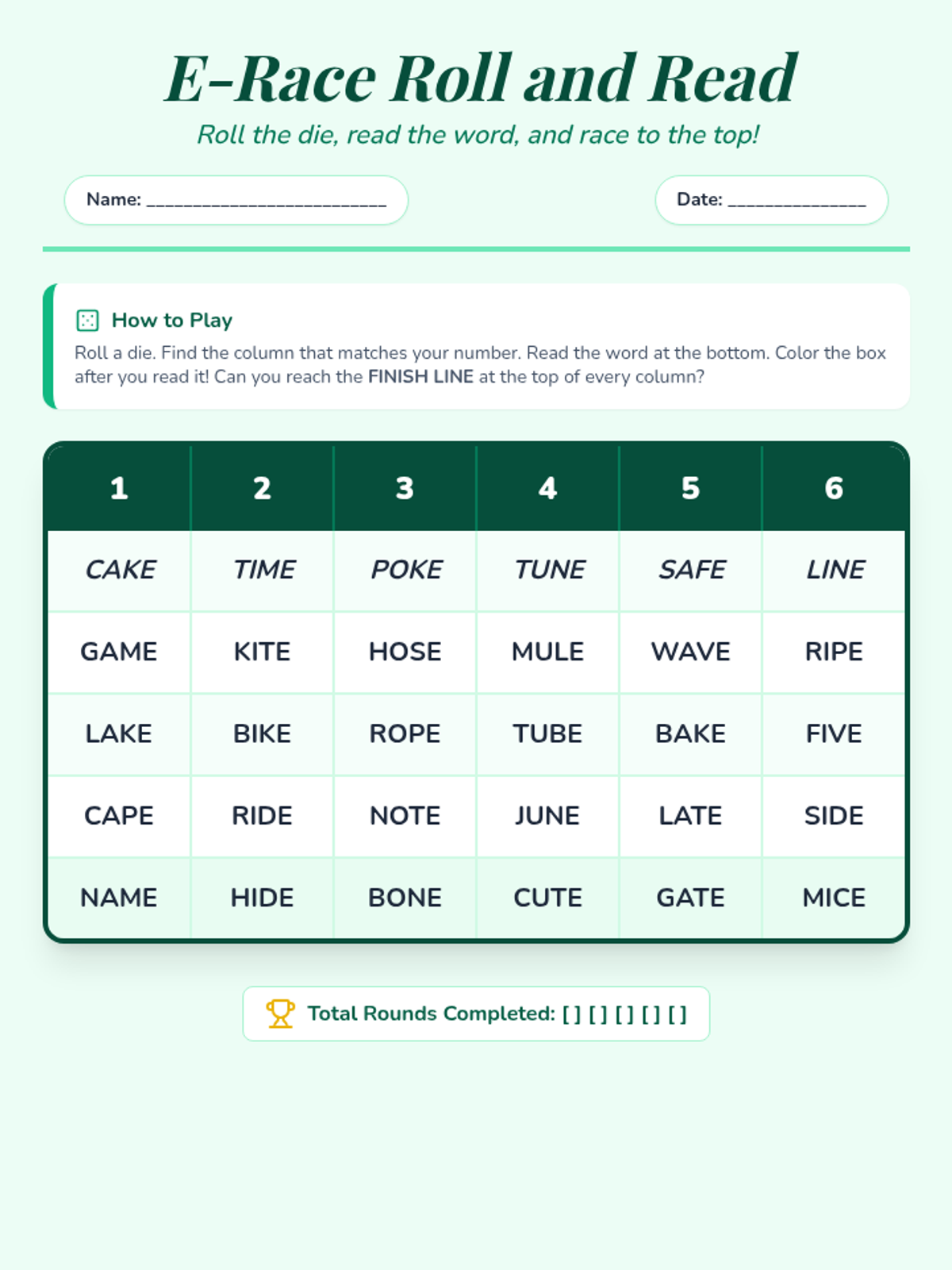
A roll-and-read activity for silent e words. Students roll a die and read a word from the corresponding column, racing to reach the top of each list. Focuses on mixed long vowel sounds.
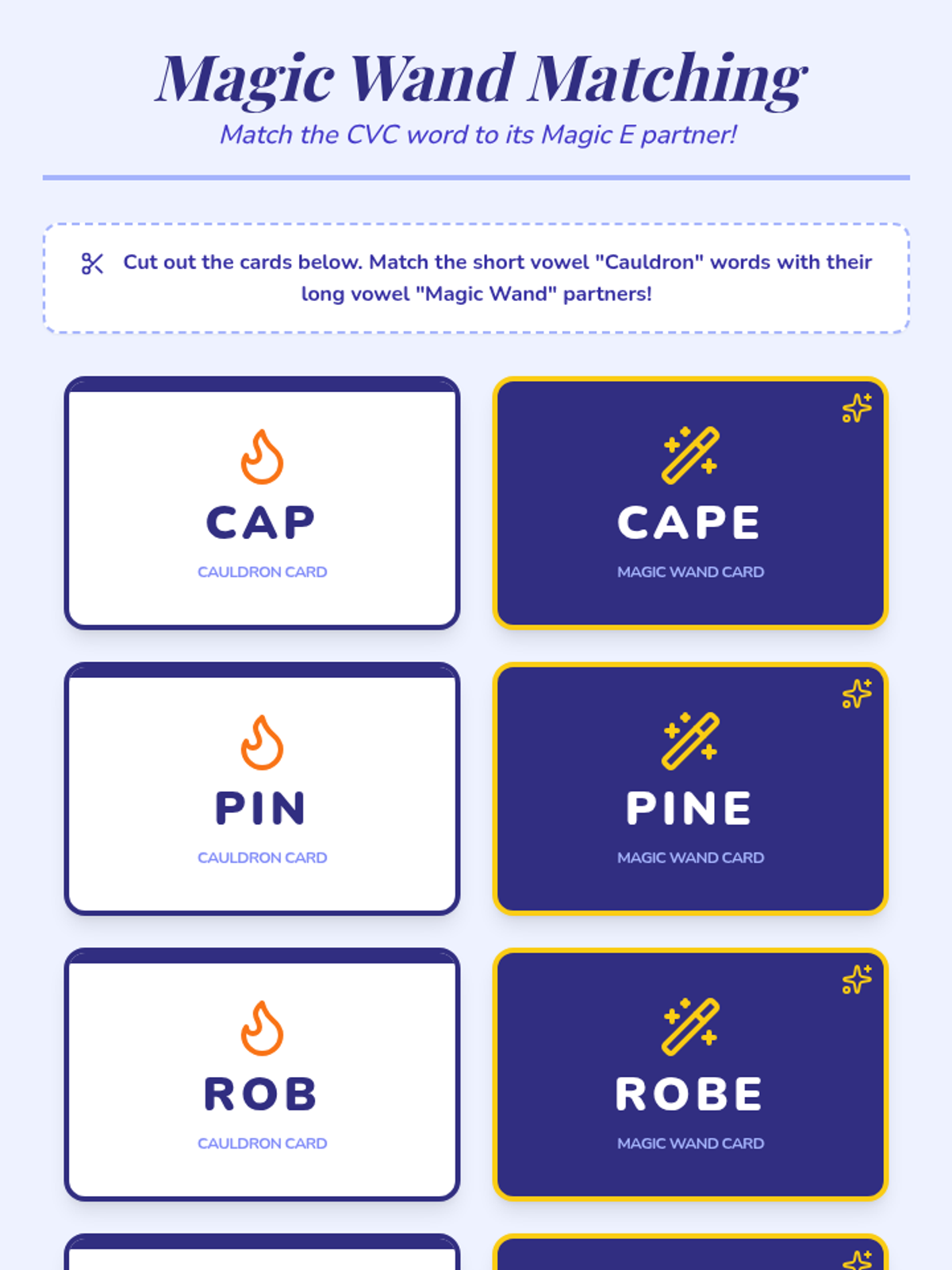
A set of cut-out matching cards featuring CVC words and their CVCe counterparts. Students match 'Cauldron' (short vowel) cards with 'Magic Wand' (long vowel) cards to visualize the silent e rule.
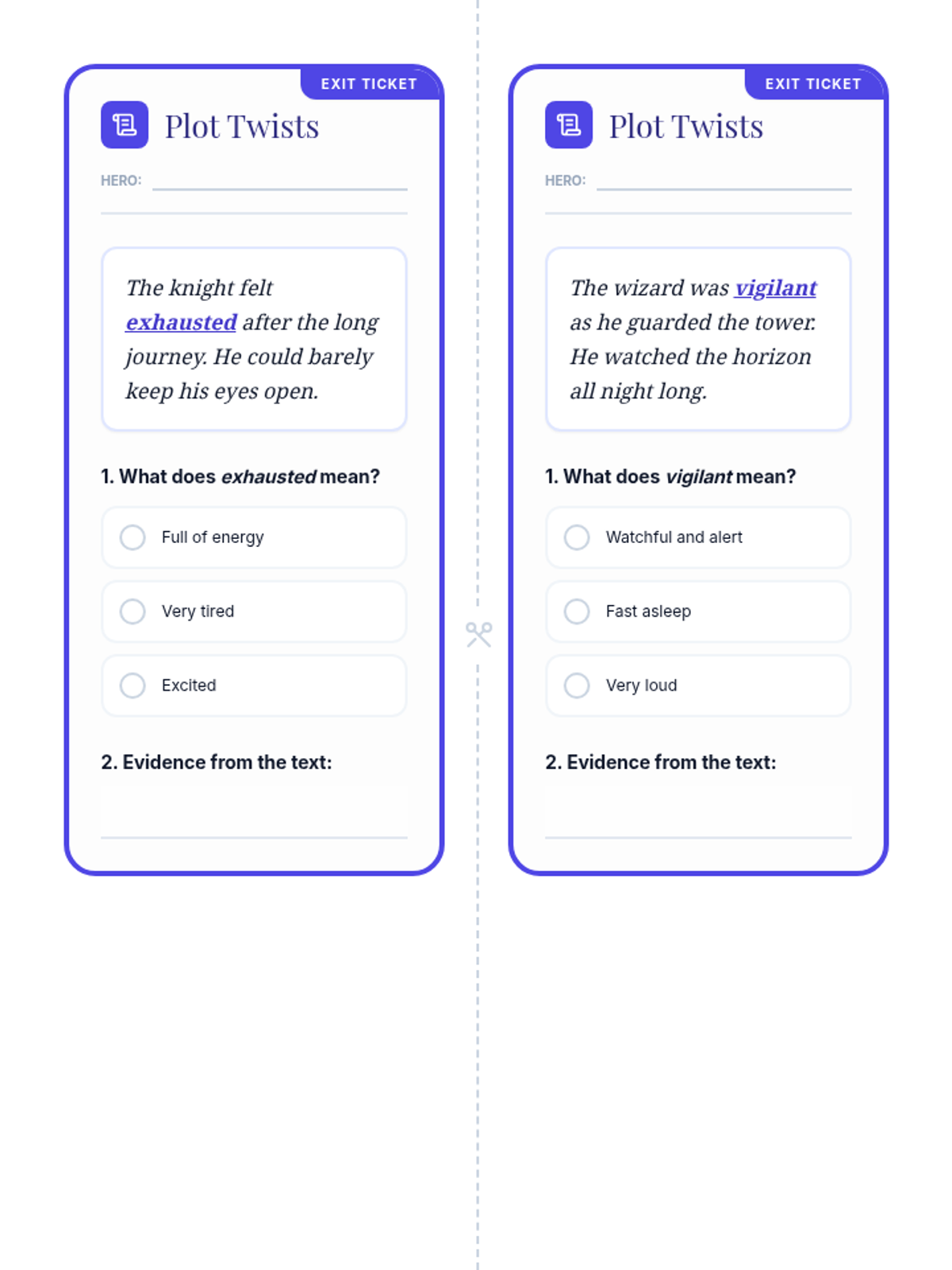
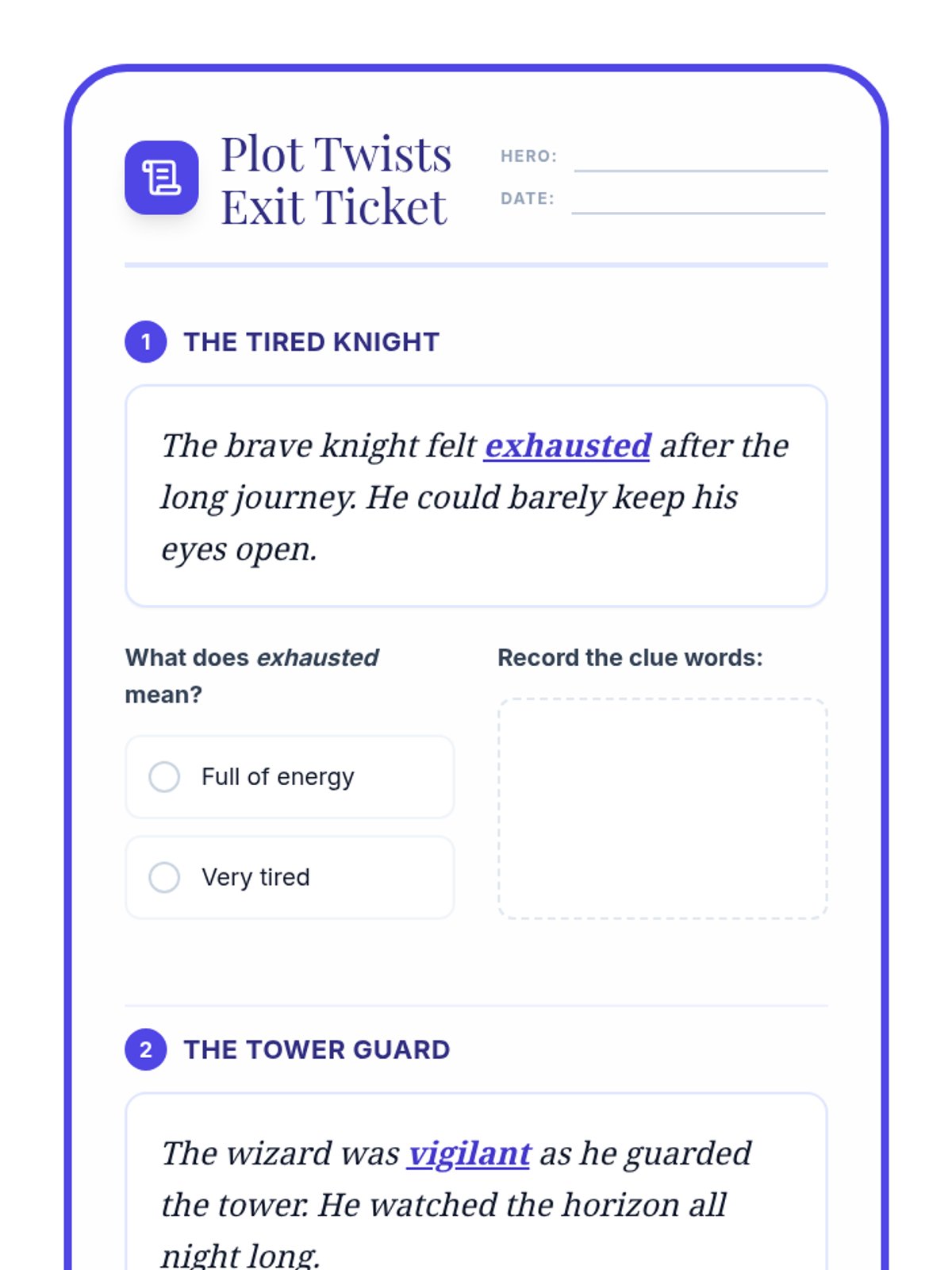
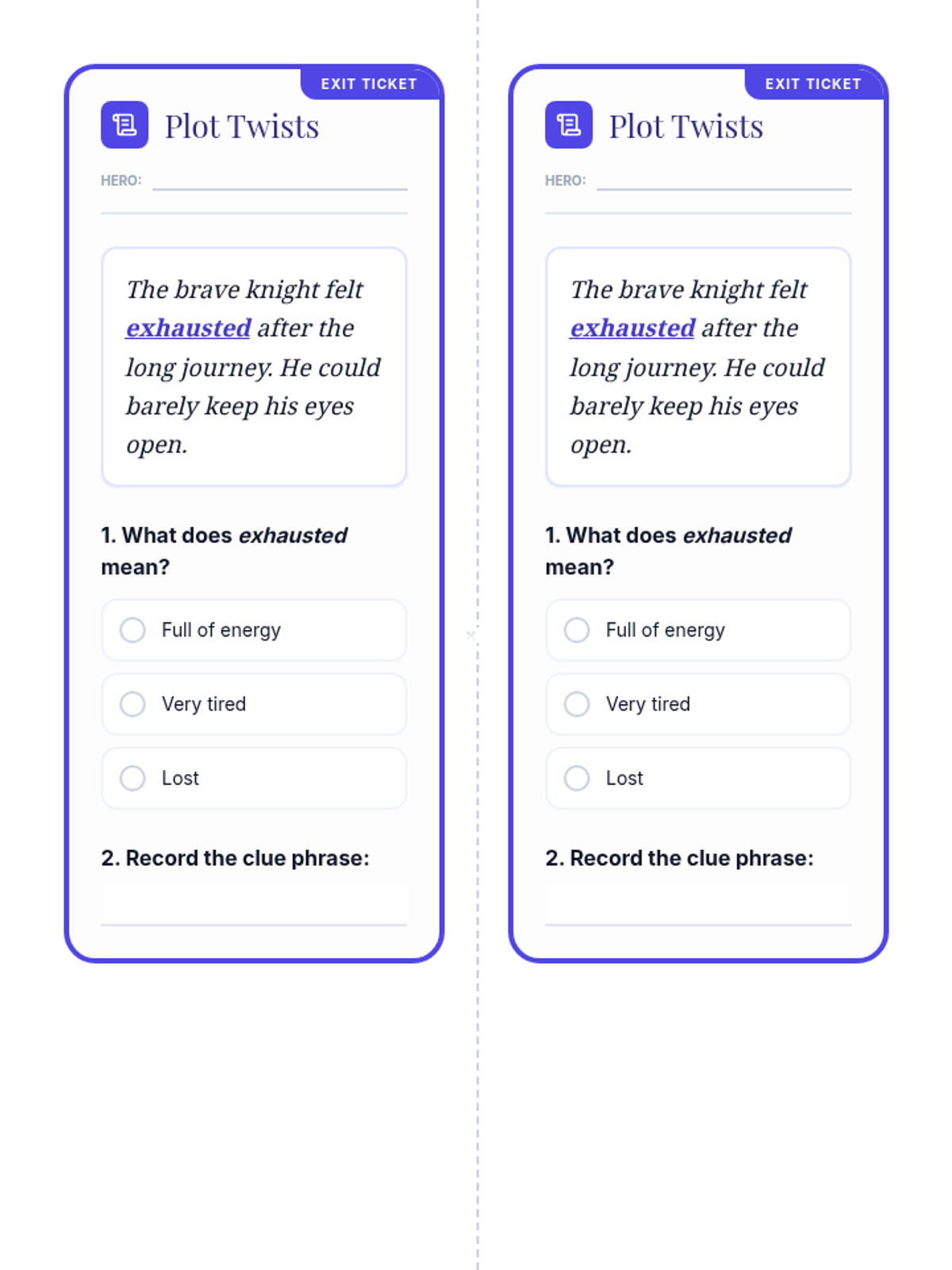
A 2-per-page exit ticket for a quick assessment of context clues skills, updated to a side-by-side (left/right) layout for better spacing. Features two unique problems (Exhausted and Vigilant).
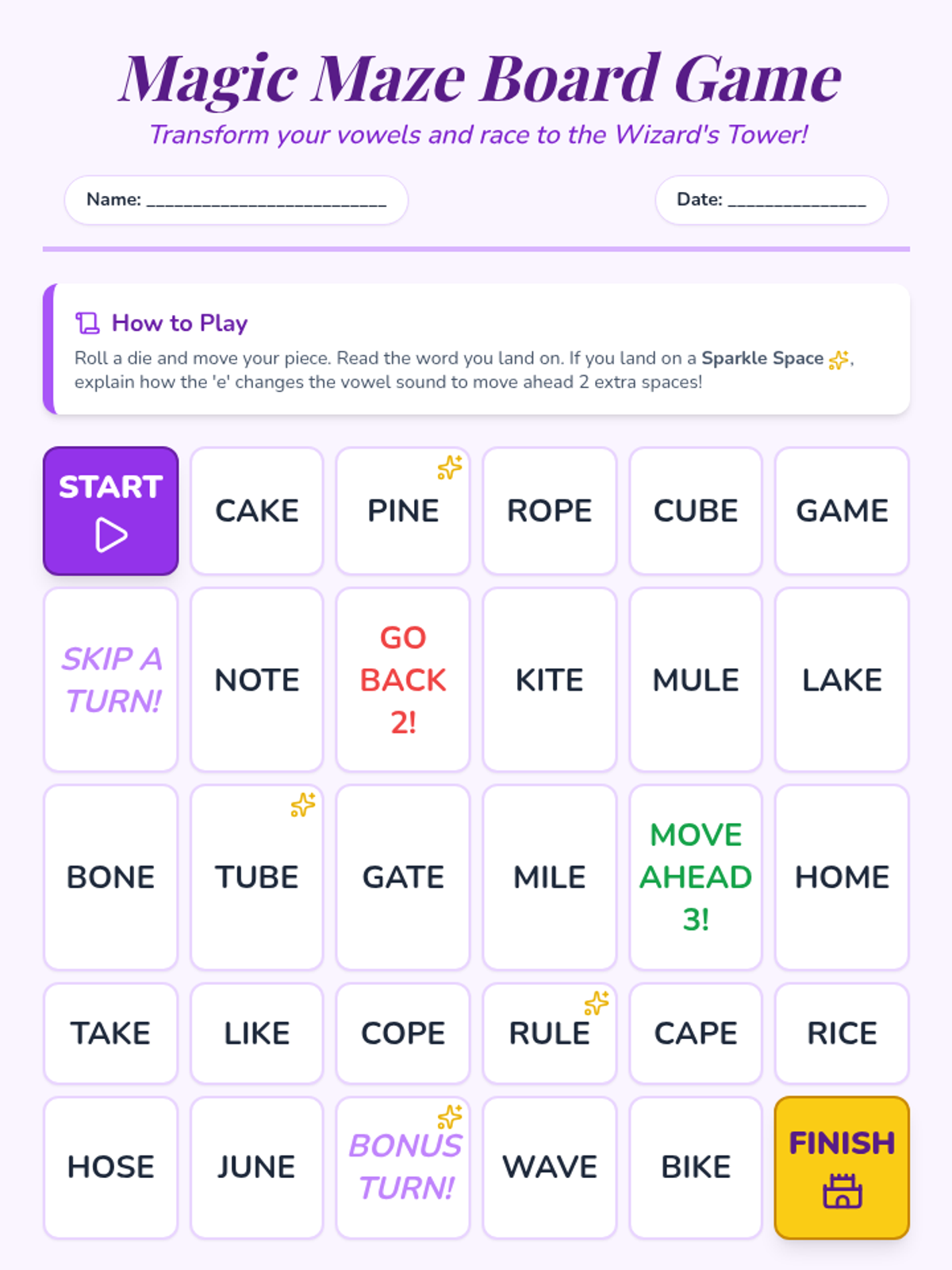
A wizard-themed printable board game focusing on long vowel sounds with silent e. Students race through a maze of words, reading each one and using 'sparkle spaces' to practice explaining the magic e rule.
Updated 3-page answer key for the 'Elite' version of the Phonics Field Guide. Organized by skill and page number, it covers the advanced Tier 2 and Tier 3 multisyllabic academic vocabulary found in the revised packet.
A single-page exit ticket featuring two unique vocabulary scenarios (Exhausted and Vigilant) with multiple-choice questions and evidence-gathering areas.
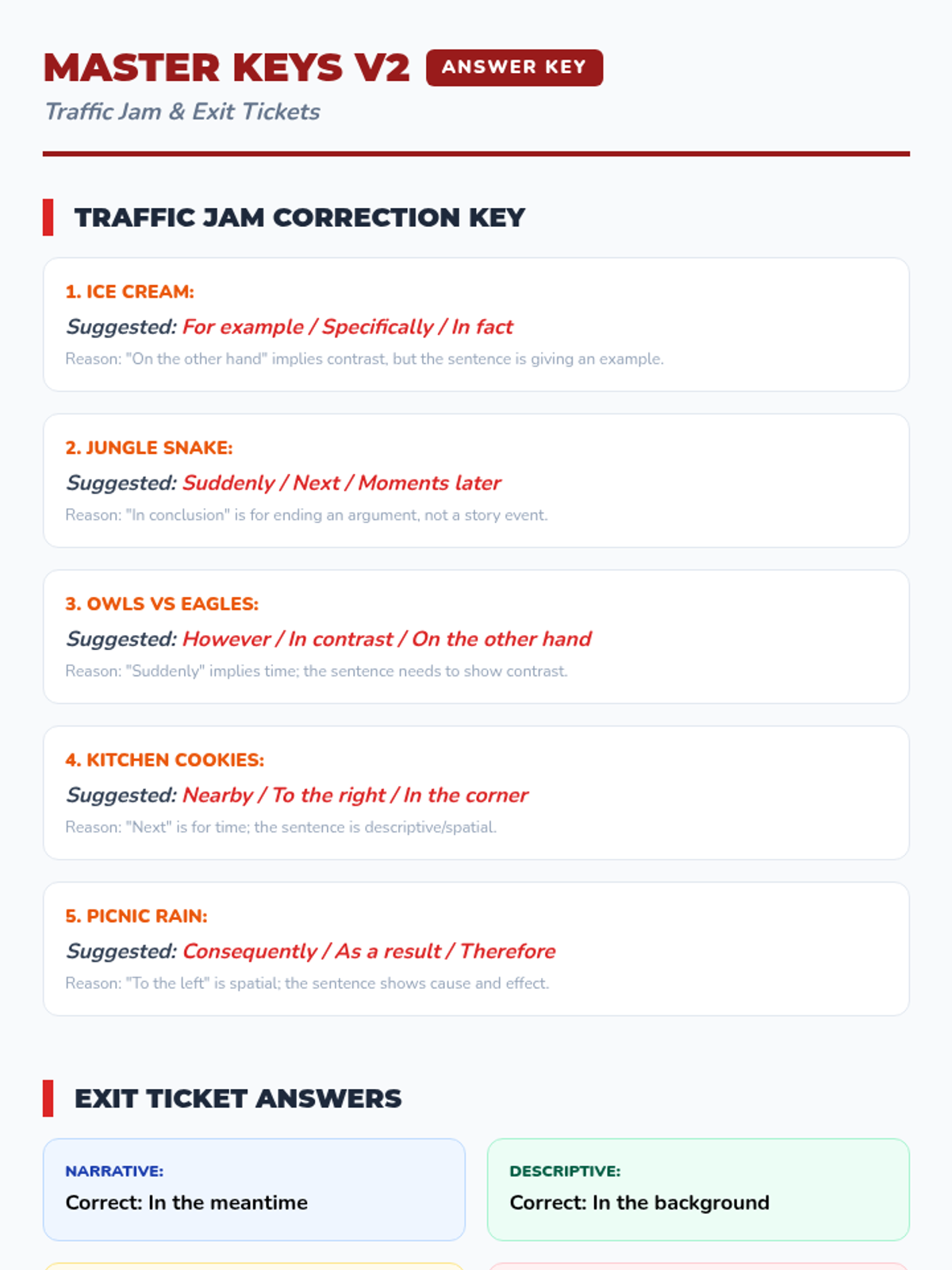
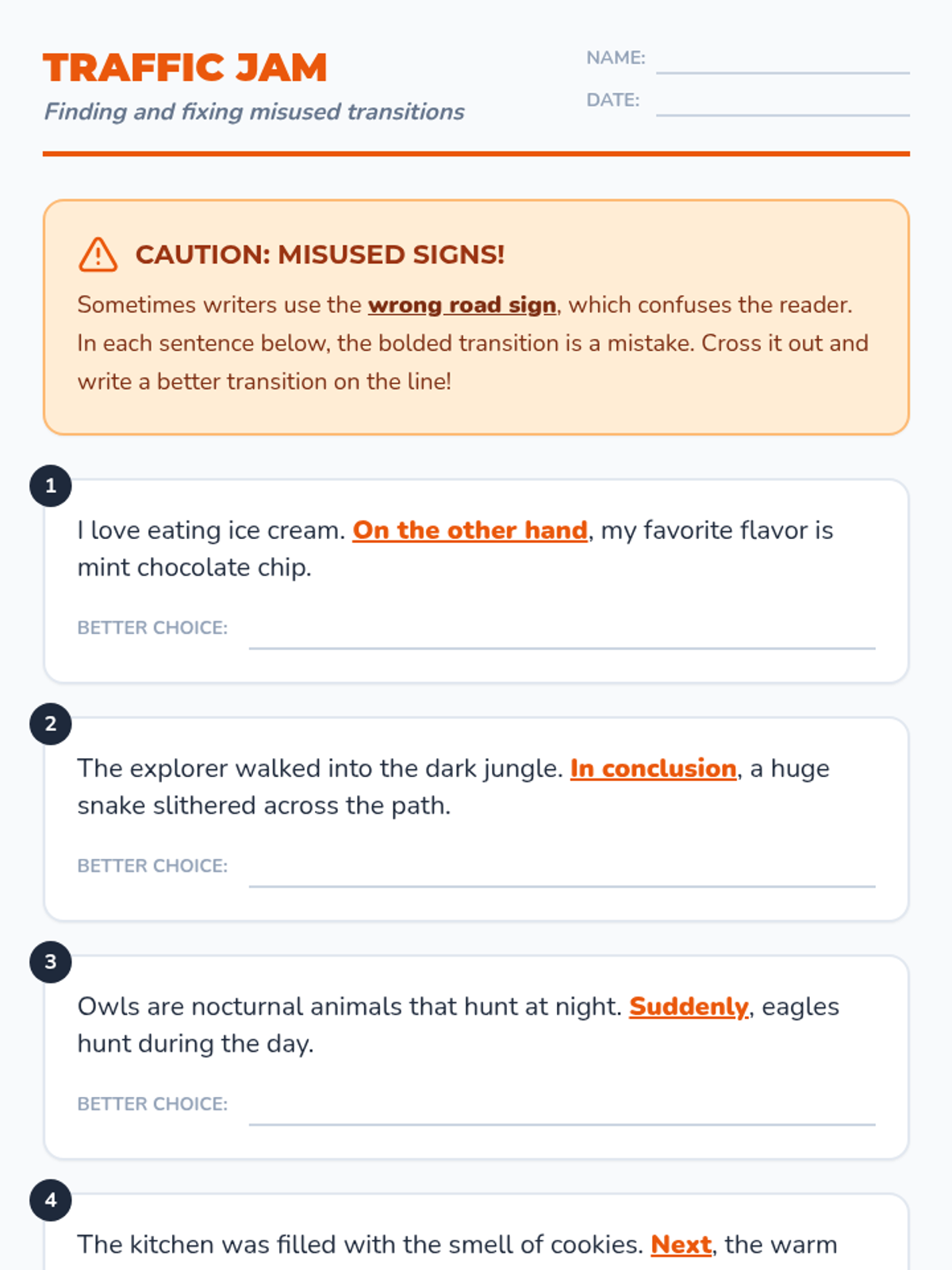
An answer key for the Traffic Jam and Exit Ticket worksheets, providing correct responses and logical explanations for misused transitions.
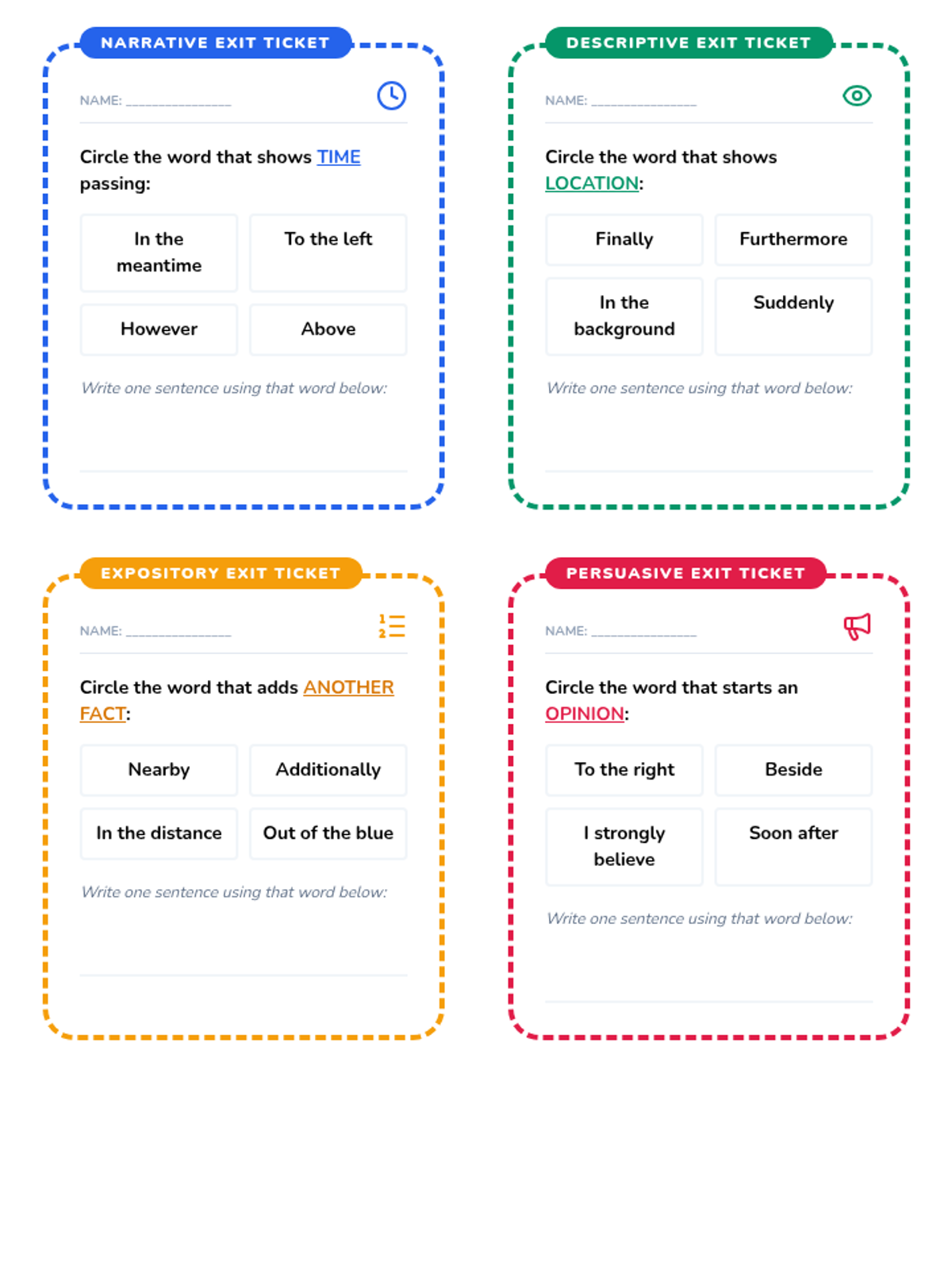
A set of four quick-check exit tickets for assessing student understanding of transitions in narrative, descriptive, expository, and persuasive writing.
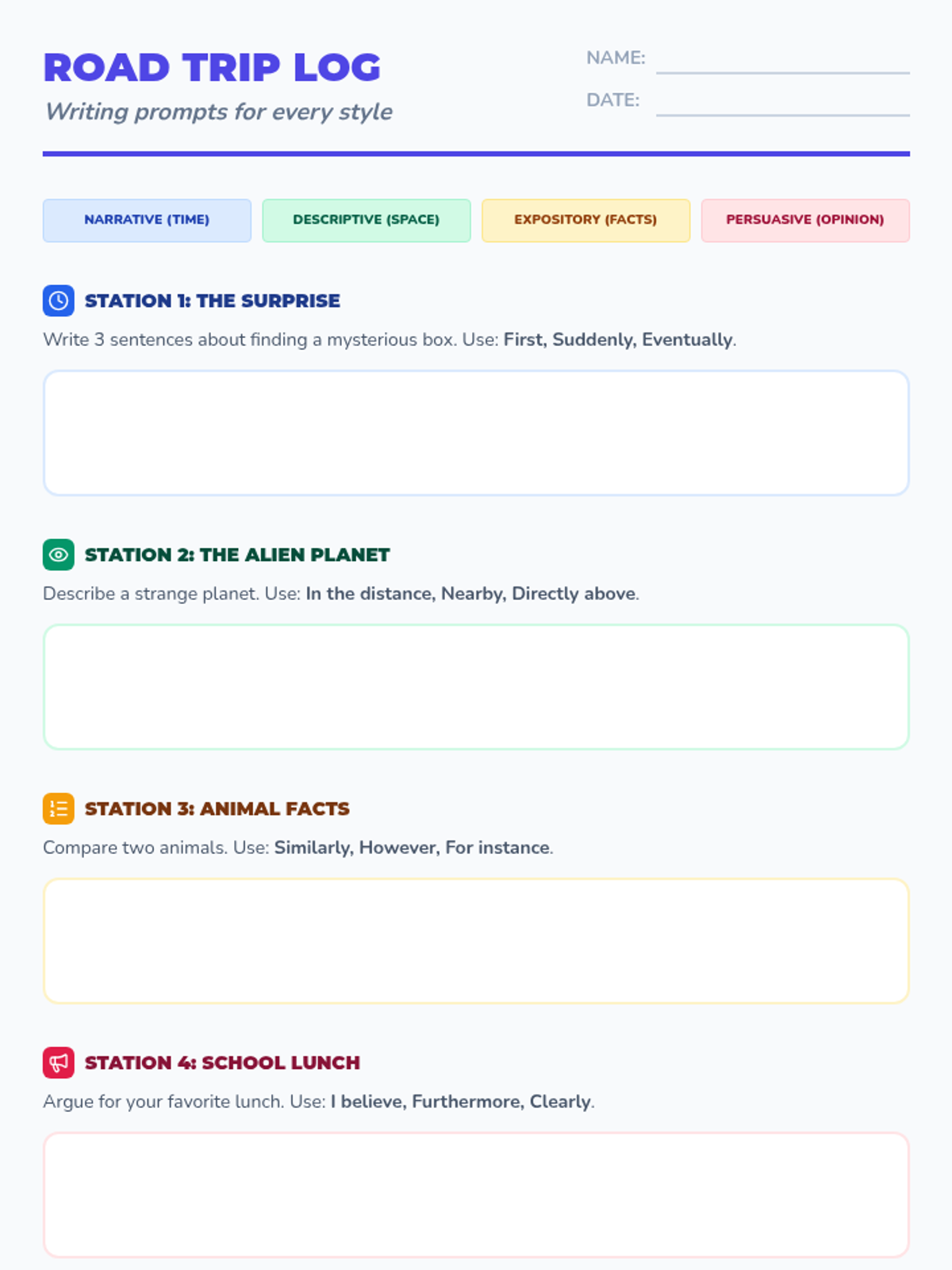
A writing prompt worksheet that provides specific transition words for students to use across four different writing styles.
A worksheet where students identify and correct misused transition words in sentences, focusing on logic and context.
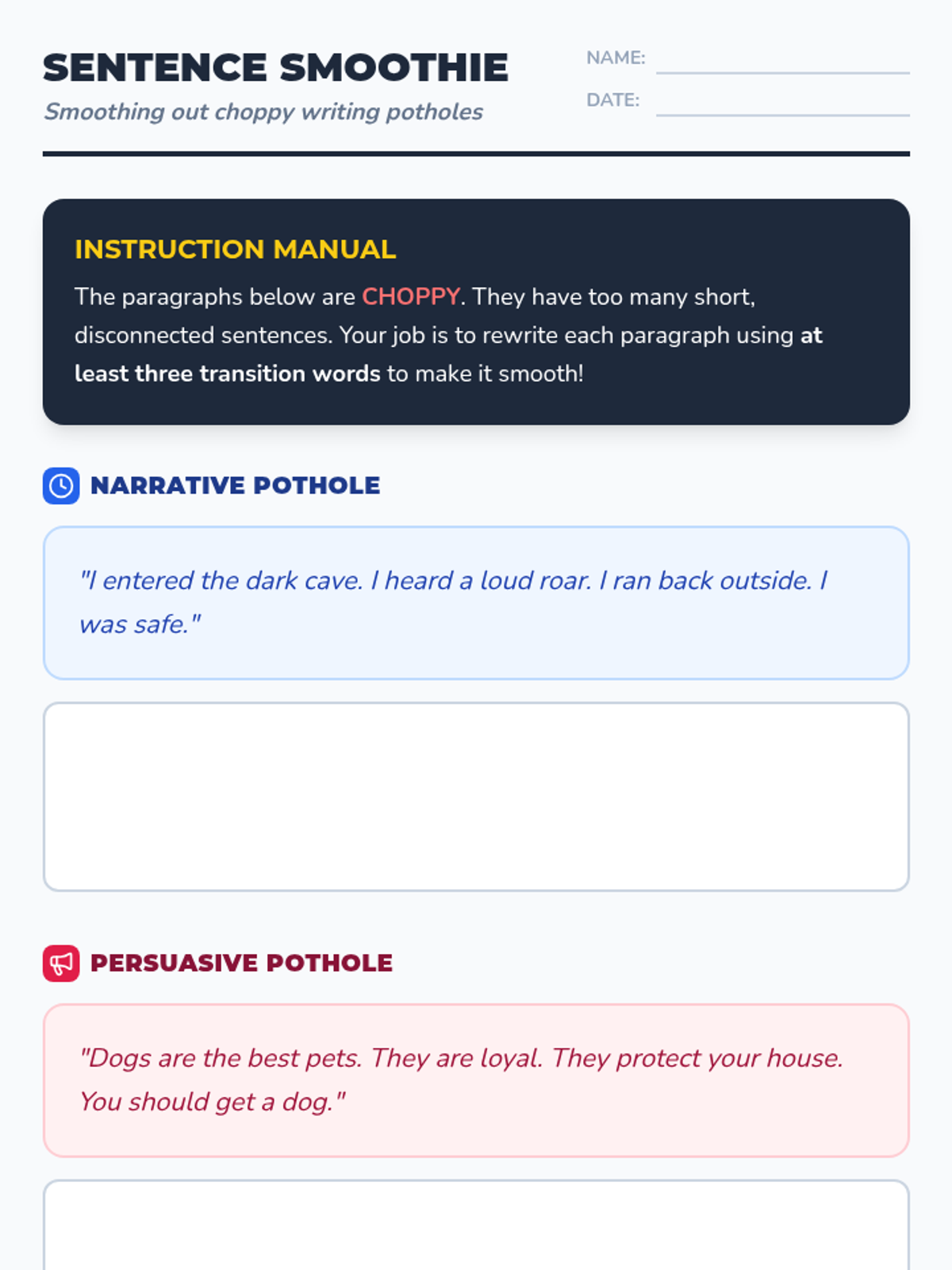
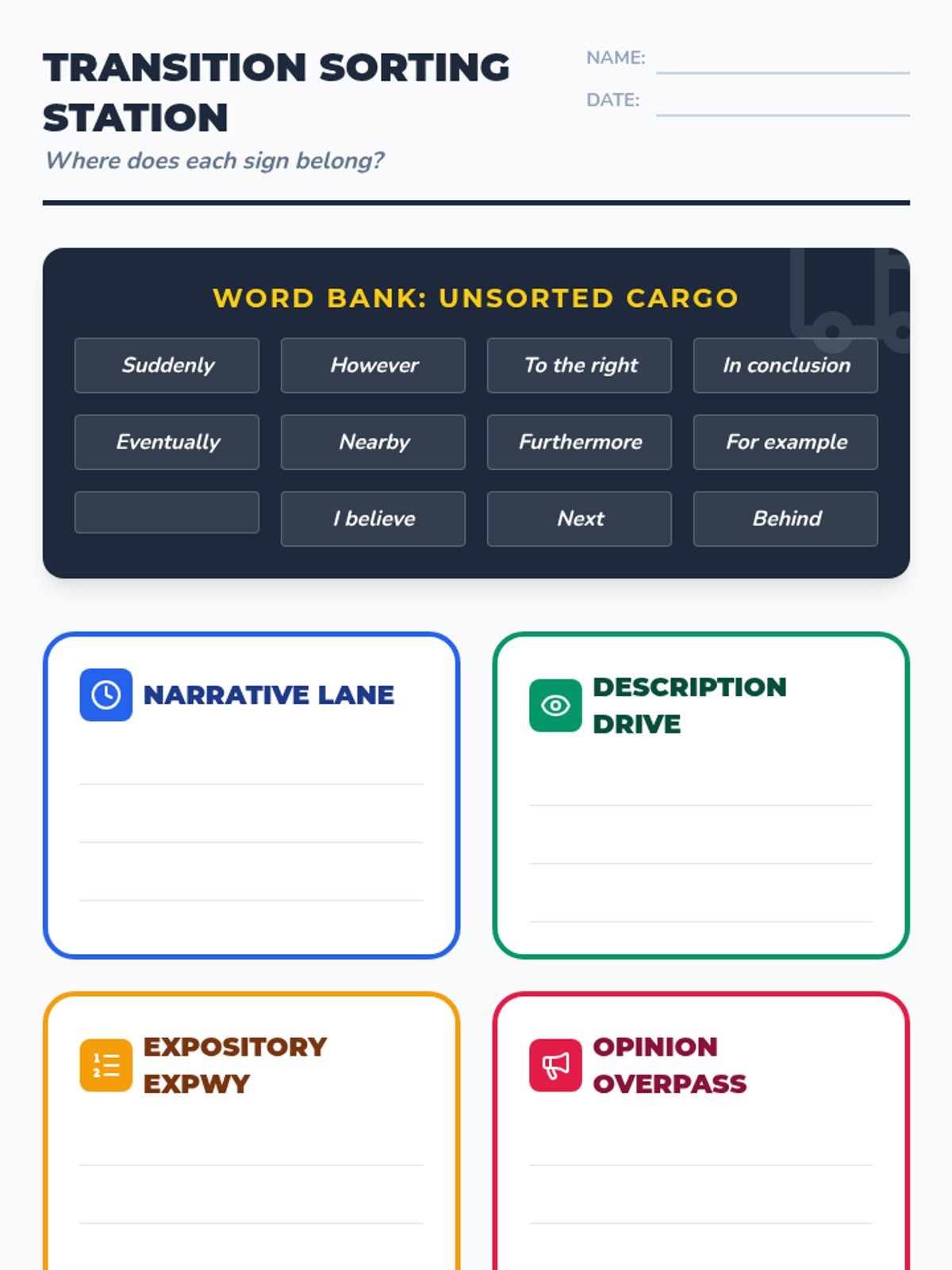
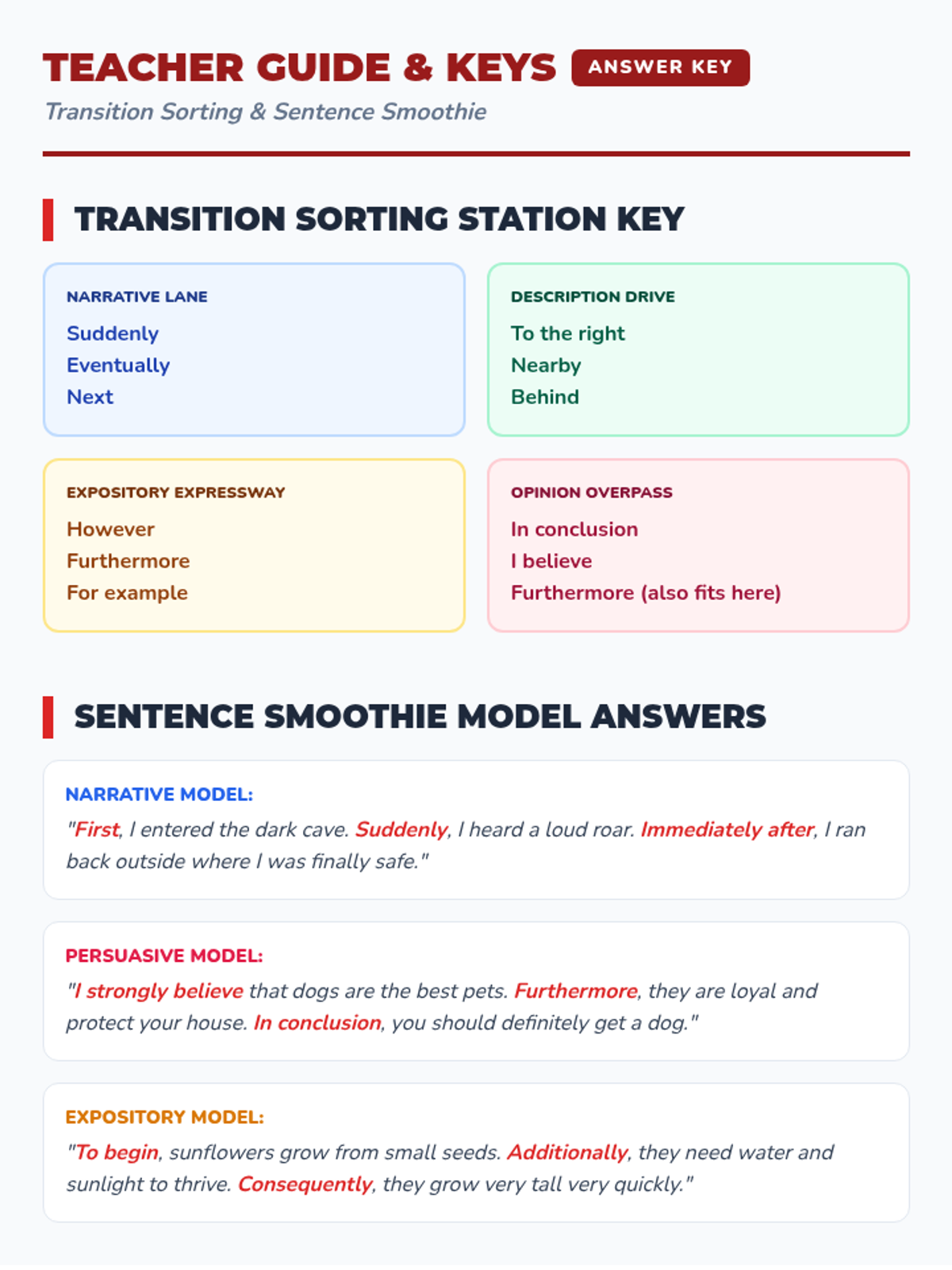
A comprehensive teacher's answer key for the Transition Sorting Station and Sentence Smoothie worksheets, including model paragraph responses.
A 2-per-page exit ticket for a quick assessment of context clues skills, updated to a side-by-side (left/right) layout for better spacing.
An advanced worksheet where students must rewrite choppy, disjointed paragraphs into smooth, cohesive writing using transitions from their anchor charts.
A transition word sorting activity where students categorize words from a word bank into Narrative, Descriptive, Expository, and Persuasive categories.
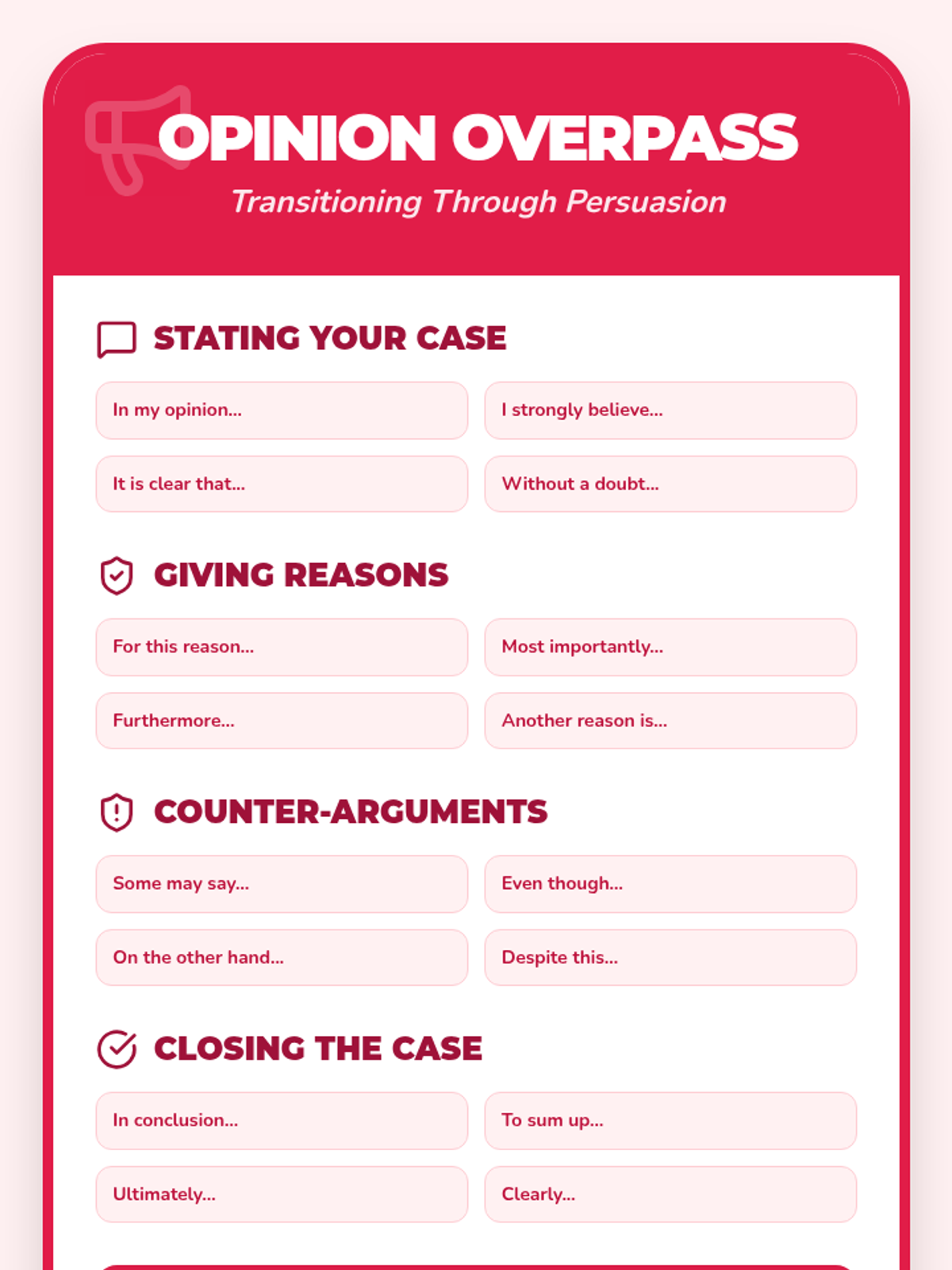
A detailed, rose-themed anchor chart for persuasive writing transitions, including opinion stems, supporting reason connectors, counter-argument transitions, and concluding phrases.