Visual presentation exploring the relationship between surface area, volume, and diffusion rates to explain why cells must divide. Includes hooks, mathematical concepts, and the "Diffusion Dilemma."
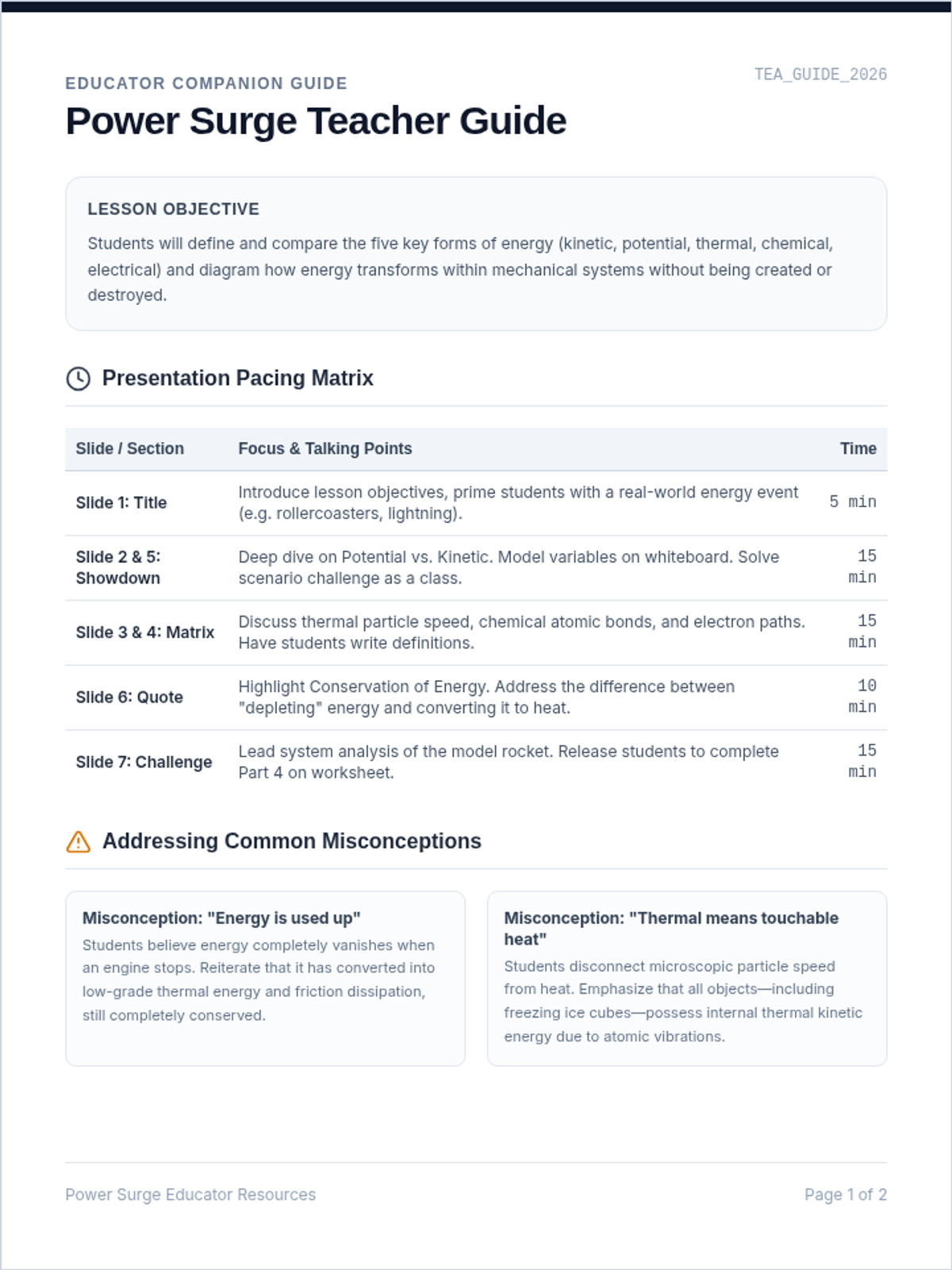
An educator-facing guide containing a structured slide-by-slide pacing layout, key discussion questions, direct strategies for addressing physical science misconceptions, and a comprehensive Answer Key for the Power Surge student worksheet.
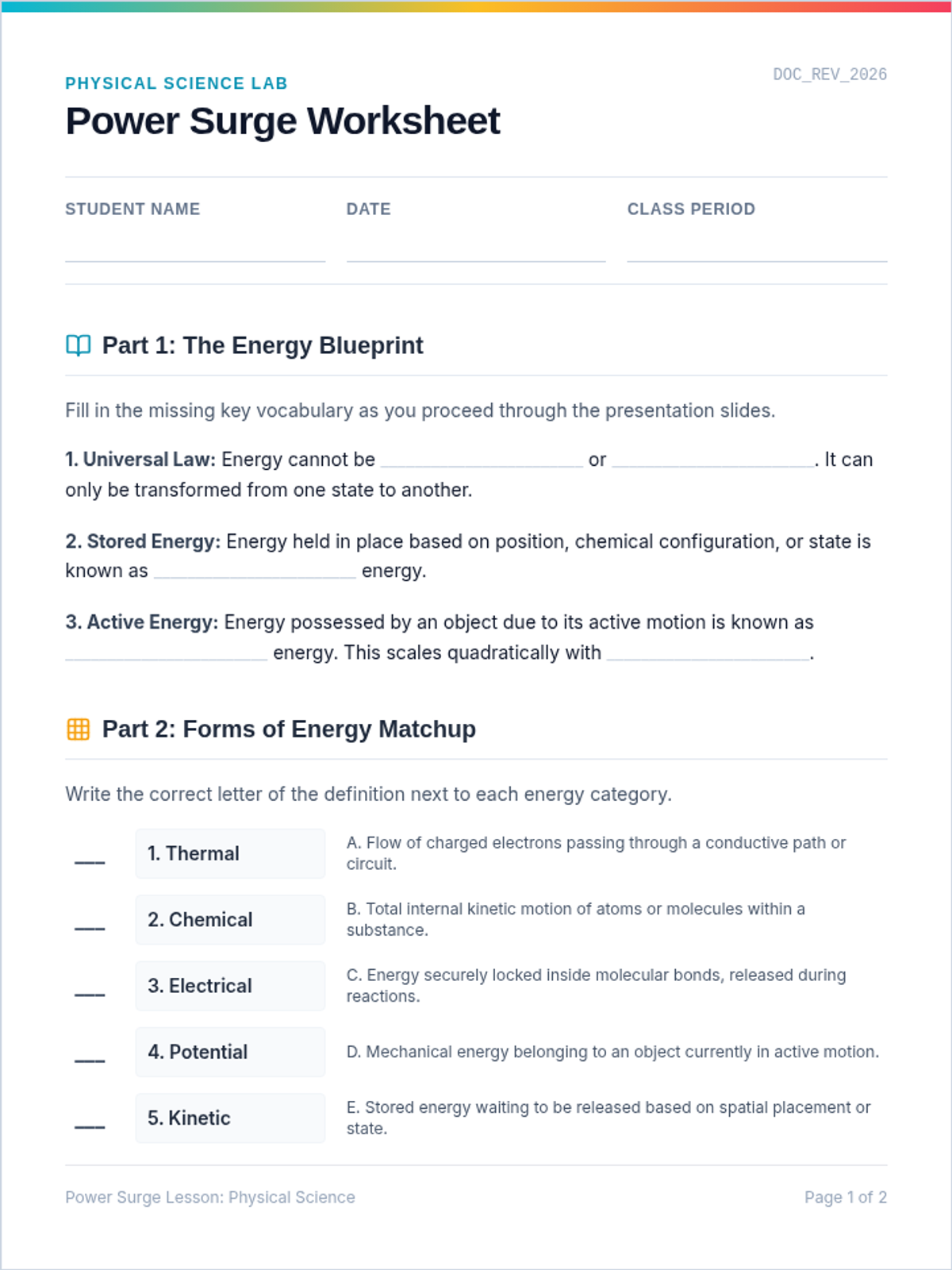
A high-impact student-facing activity sheet designed to accompany the Power Surge slides. Includes guided lecture notes, a vocabulary matching matrix for the five forms of energy, and a structured system analysis section for diagramming energy transformations during a model rocket launch.
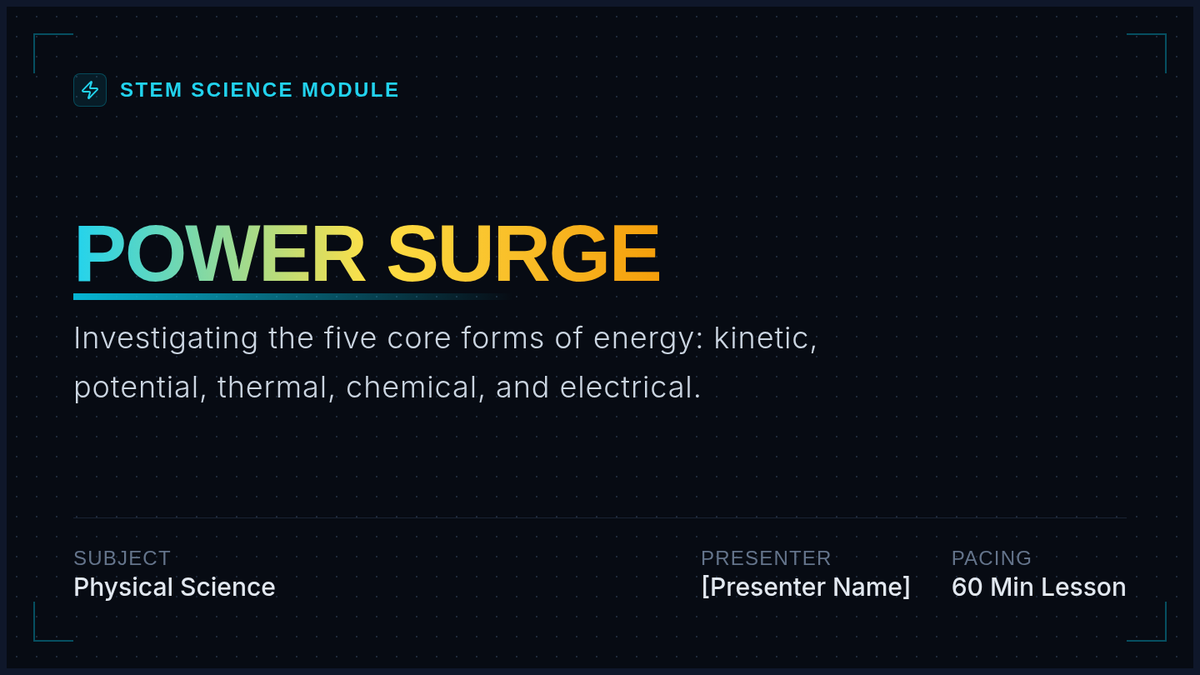
A highly customizable science slide deck template featuring 7 professional layouts themed around the Forms of Energy. Incorporates rich visual styling, strict readability metrics, tech-inspired blueprint grids, and structured content sections for kinetic, potential, thermal, chemical, and electrical energy.
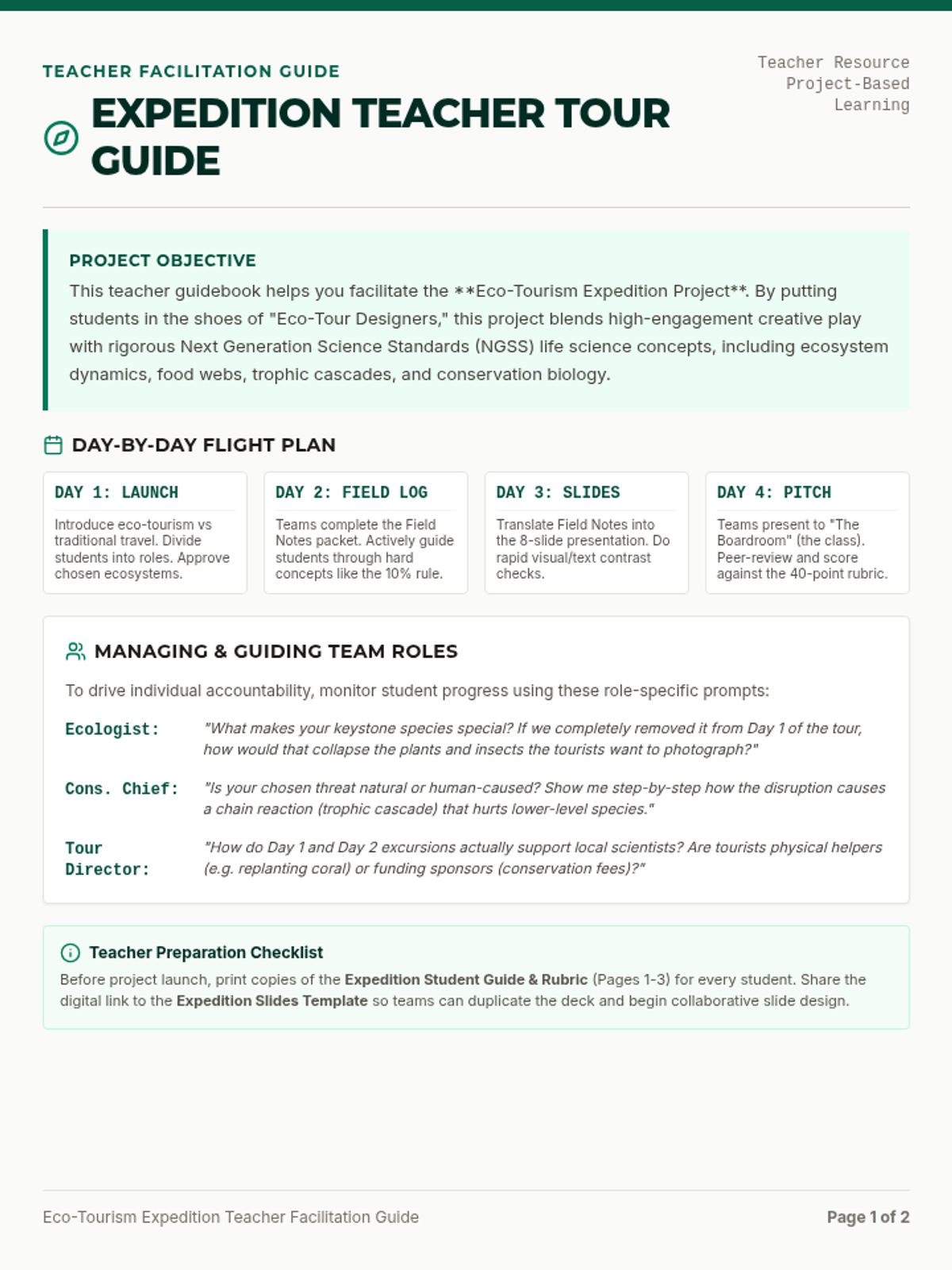
An in-depth teacher facilitation guide containing a 4-day pacing timeline, specialized role prompts, keys to managing ecological misconceptions, and hosting strategies for presentation day.
A beautifully designed, 8-slide digital presentation template for students to present their Eco-Tourism Expedition. Adheres to the 16:9 widescreen format, features a retro field guide aesthetic, and maintains a 24px minimum font size for high visibility.
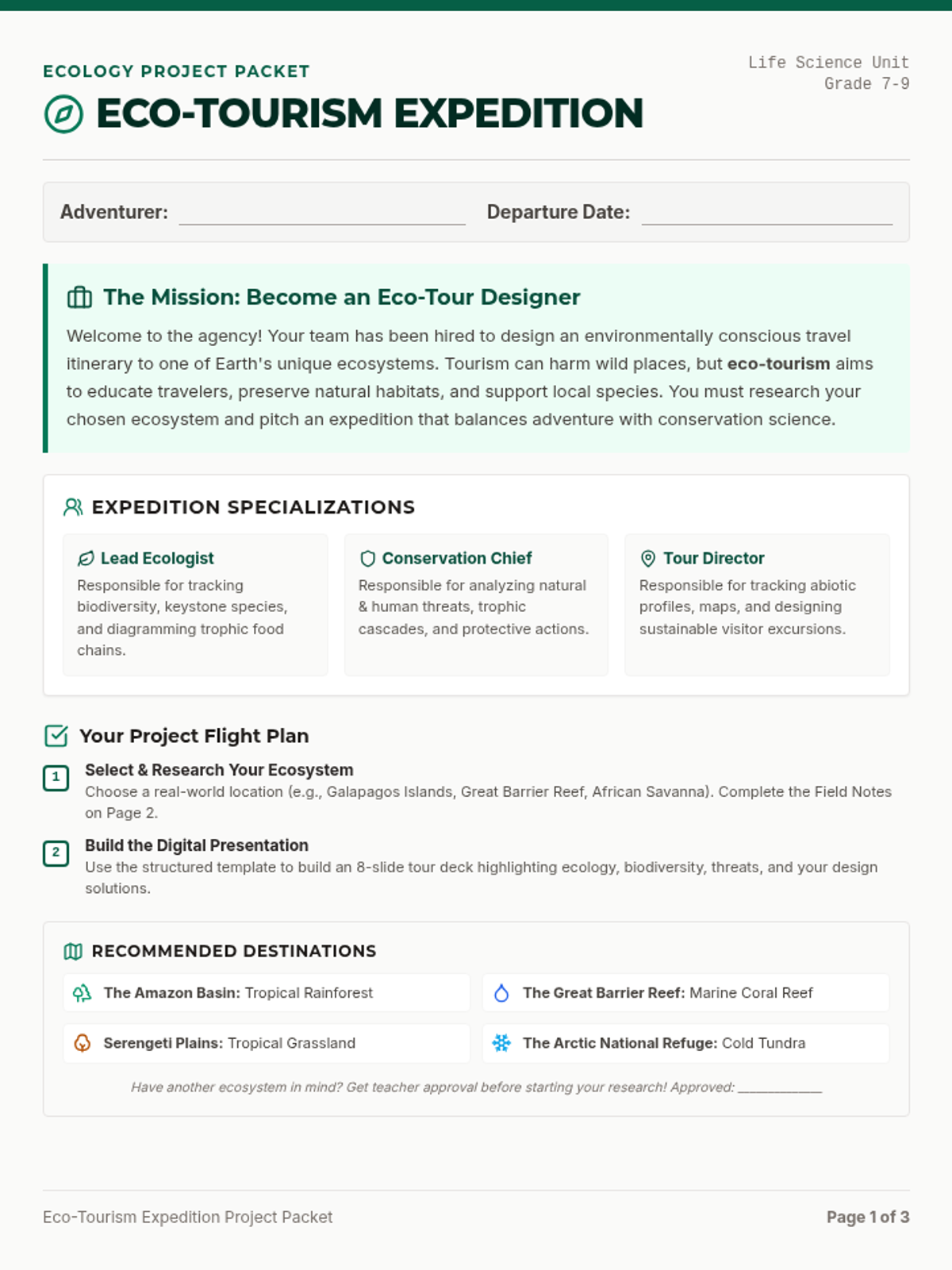
An enhanced student-facing project guide and rubric for the Eco-Tourism Expedition. Includes detailed scientific criteria, specialized team roles (Ecologist, Conservationist, Planner), and deep ecology concepts like keystone species, the 10% energy rule, anthropogenic disruptions, and trophic cascades.
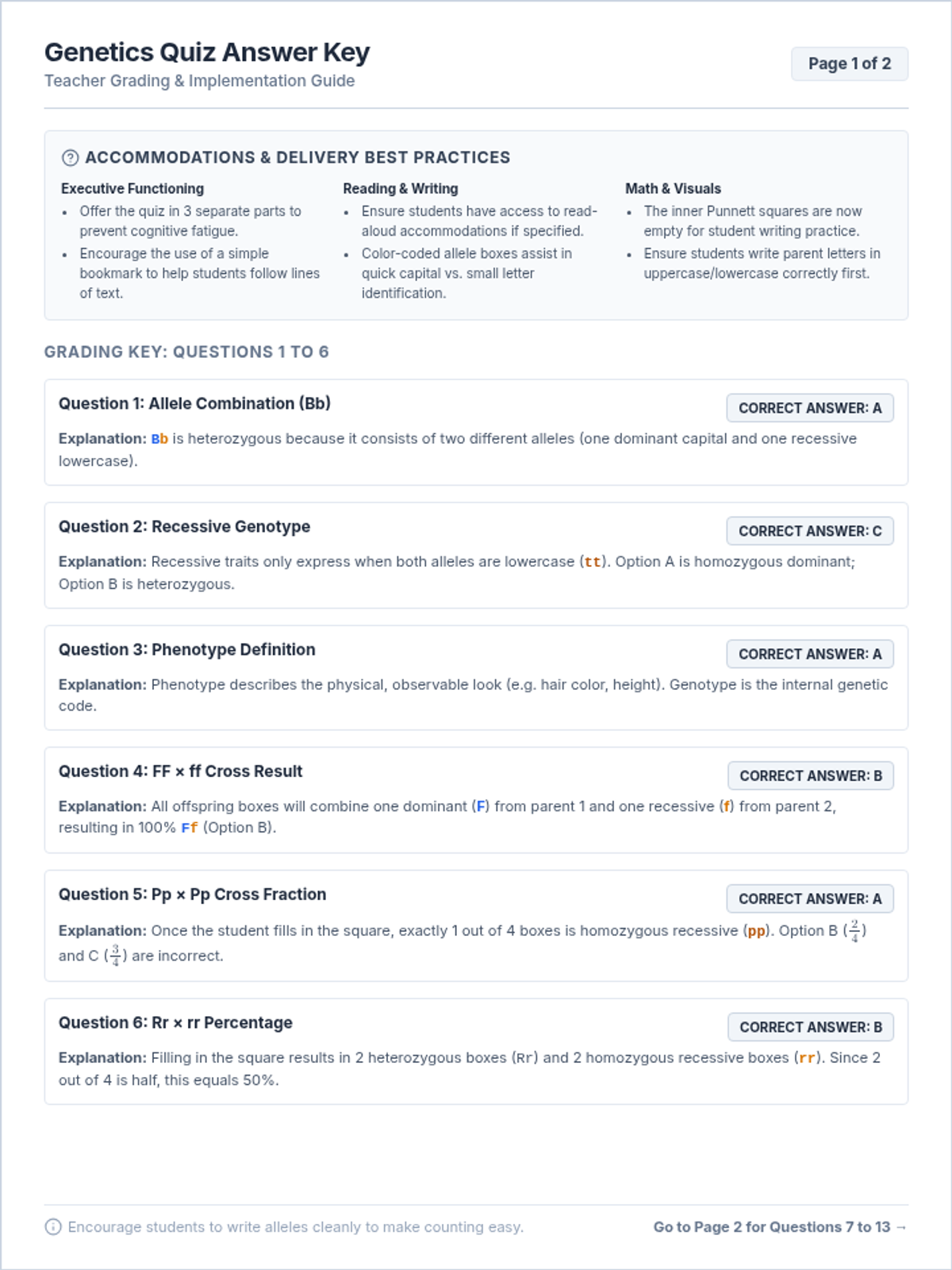
A comprehensive teacher guide and answer key for the Genetics Quiz. Includes clear answers and detailed explanations for all 13 scaffolded questions. All hints and accommodation tips have been removed.
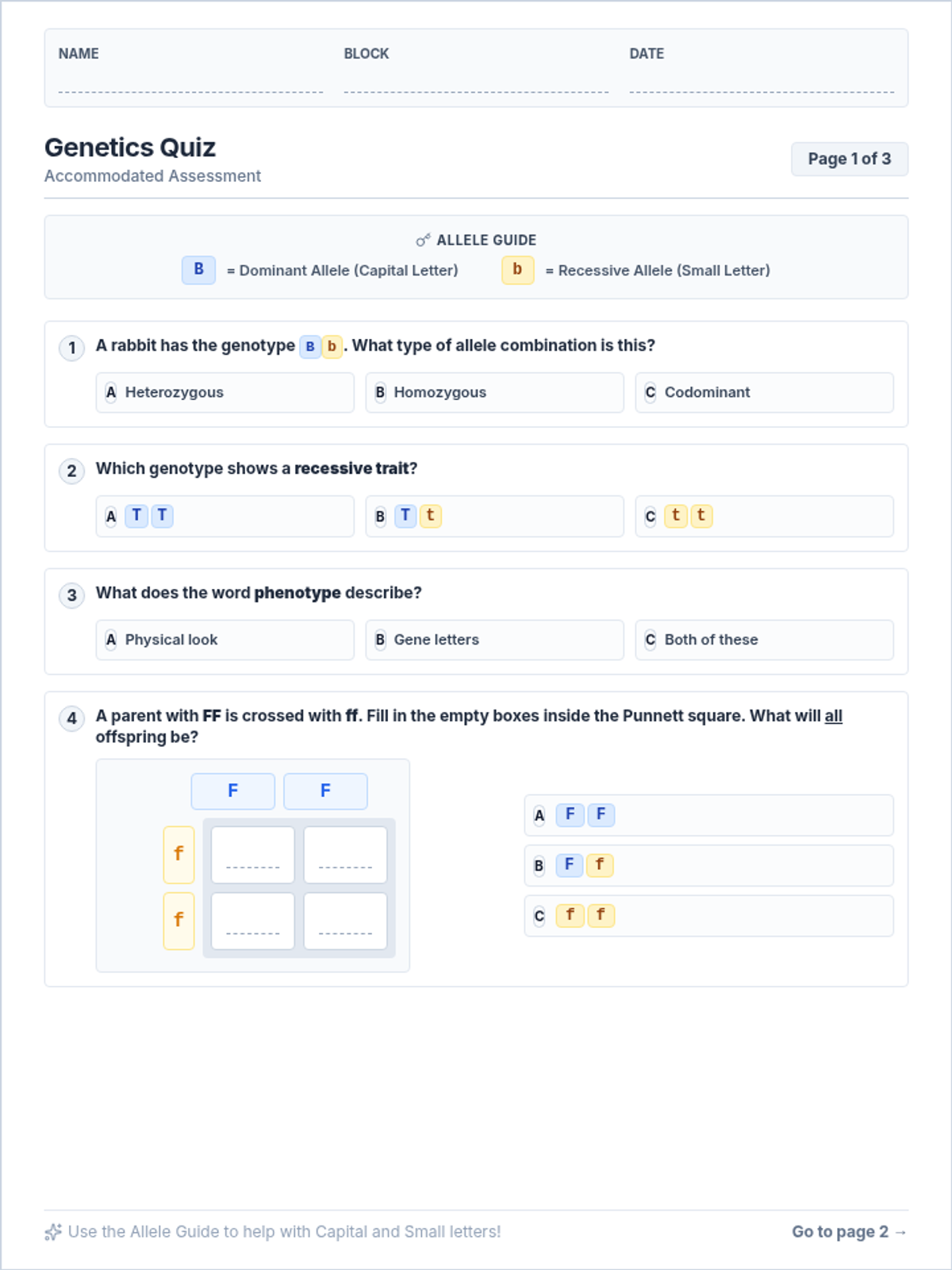
A 13-question genetics quiz with a neutral design, featuring empty Punnett squares with parent labels on the outside, three answer choices for Page 1 & Page 2 questions, a hint on Question 12, simple blood type allele notation (A/B/O instead of superscripts), an AO option on Question 12, clean fraction formatting on Question 5, and a 3-sentence open response question with ample writing space on Page 3.
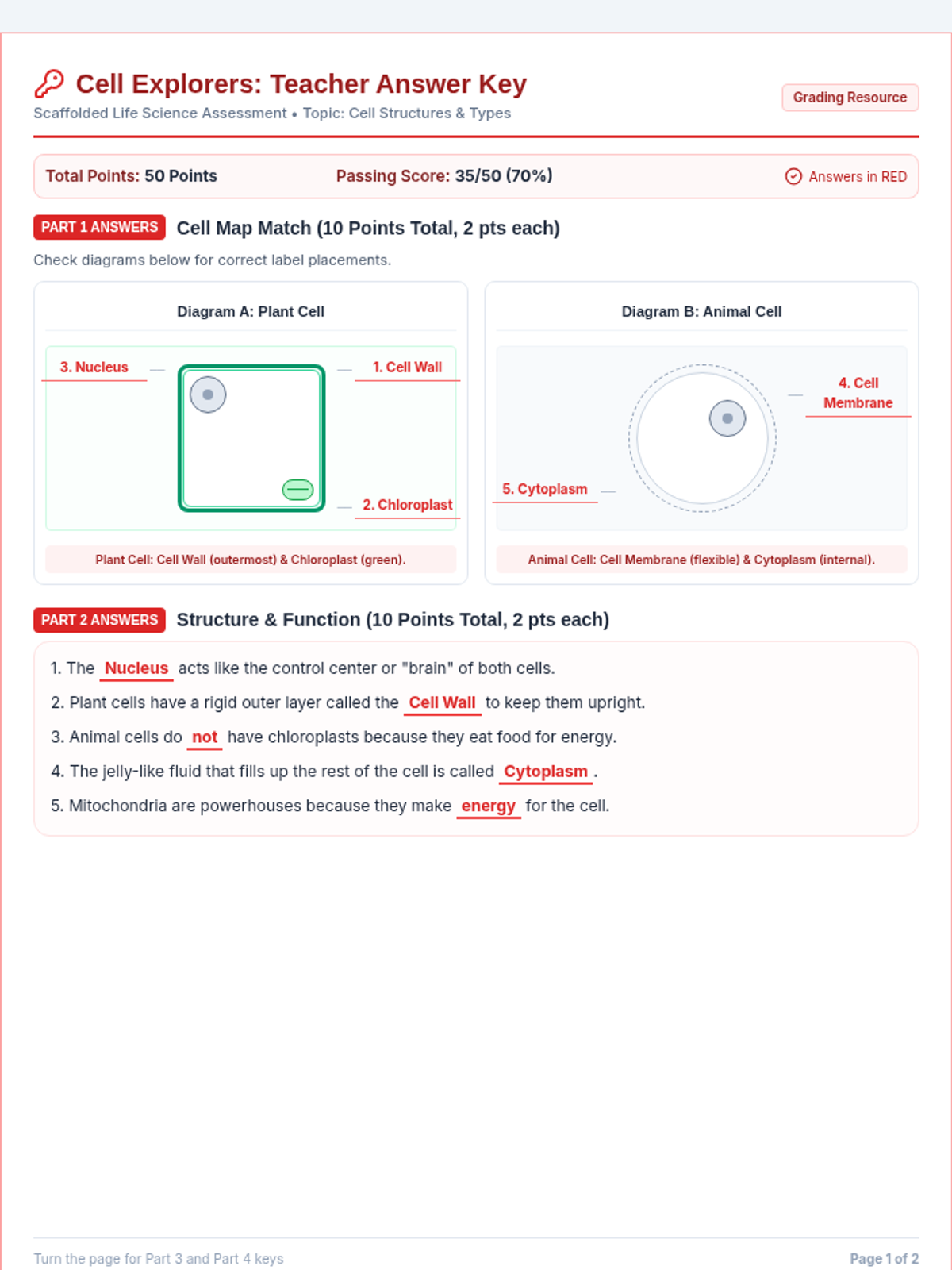
A 2-page teacher answer key companion for the scaffolded cell unit assessment, featuring highlighted correct diagrams, finished sentence frames, and student model short answers, now updated to a 50-point scale.
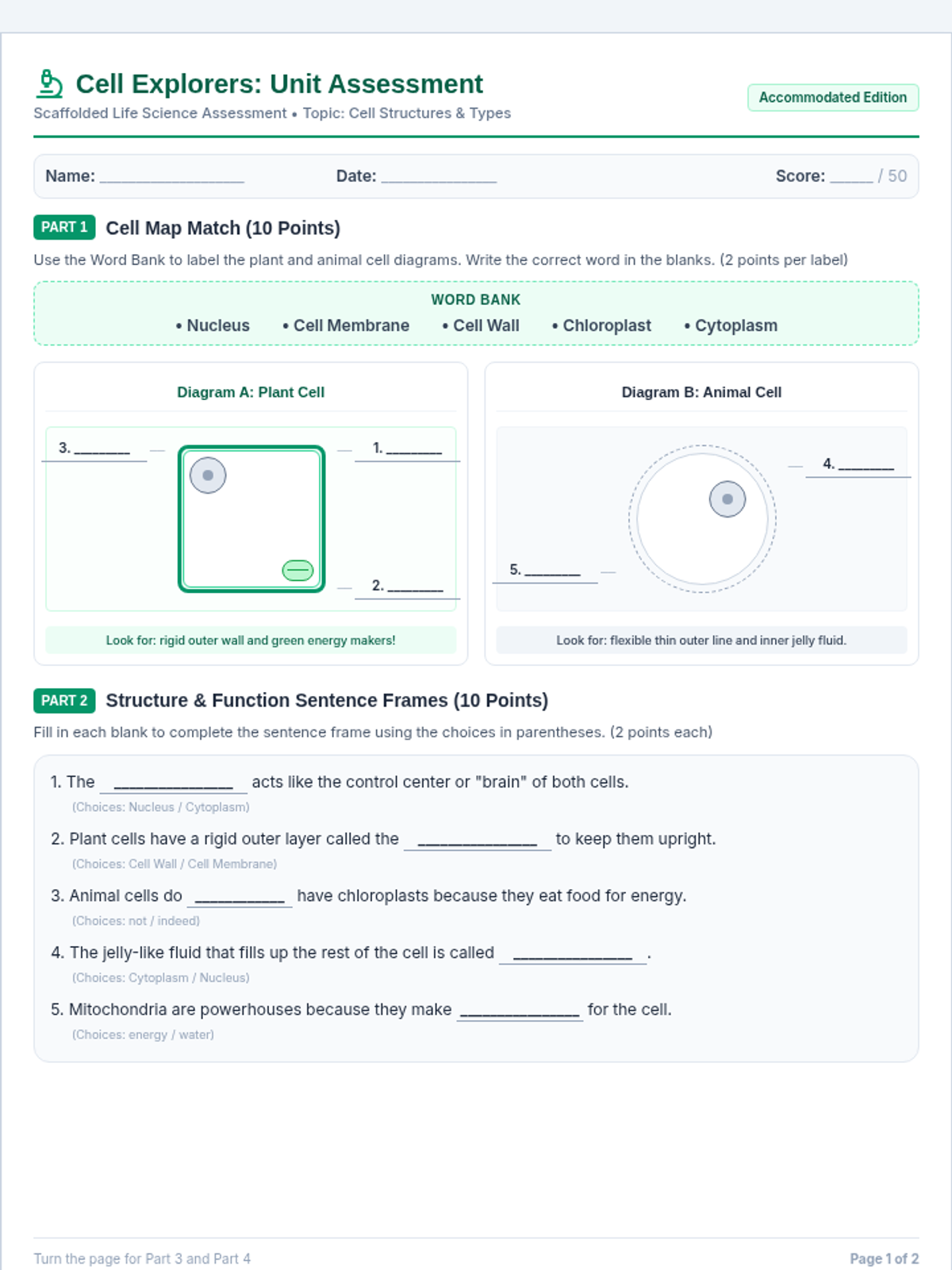
A 2-page scaffolded student cell assessment covering cell organelles, prokaryotic and eukaryotic structures, plant vs. animal cells, and bacterial anatomy. Features word banks, sentence frames, and guided sentence starters, now adjusted to a 50-point scale.
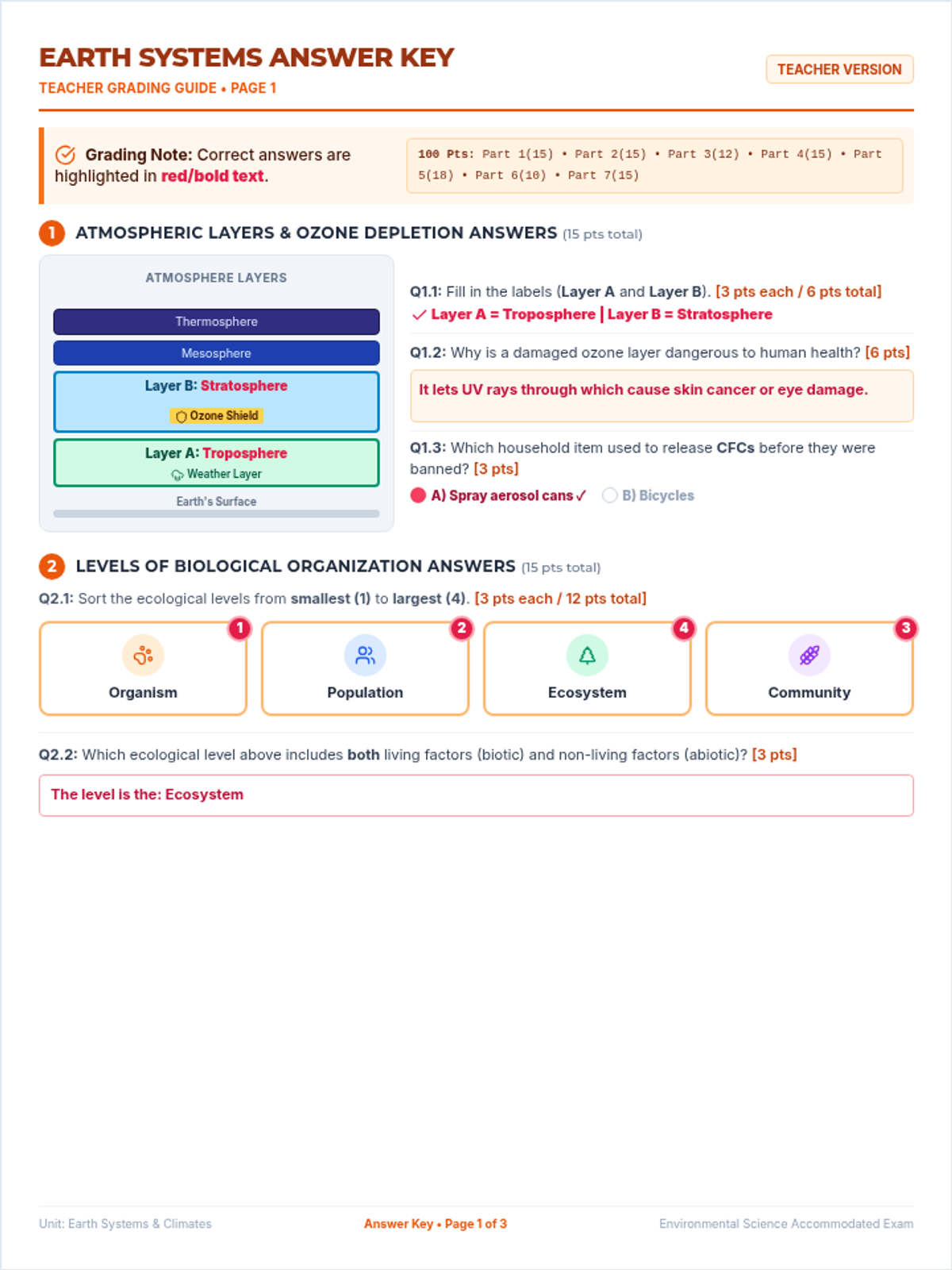
A complete teacher answer key and grading guide matching the 3-page student assessment, with all correct answers filled in in bold contrast.
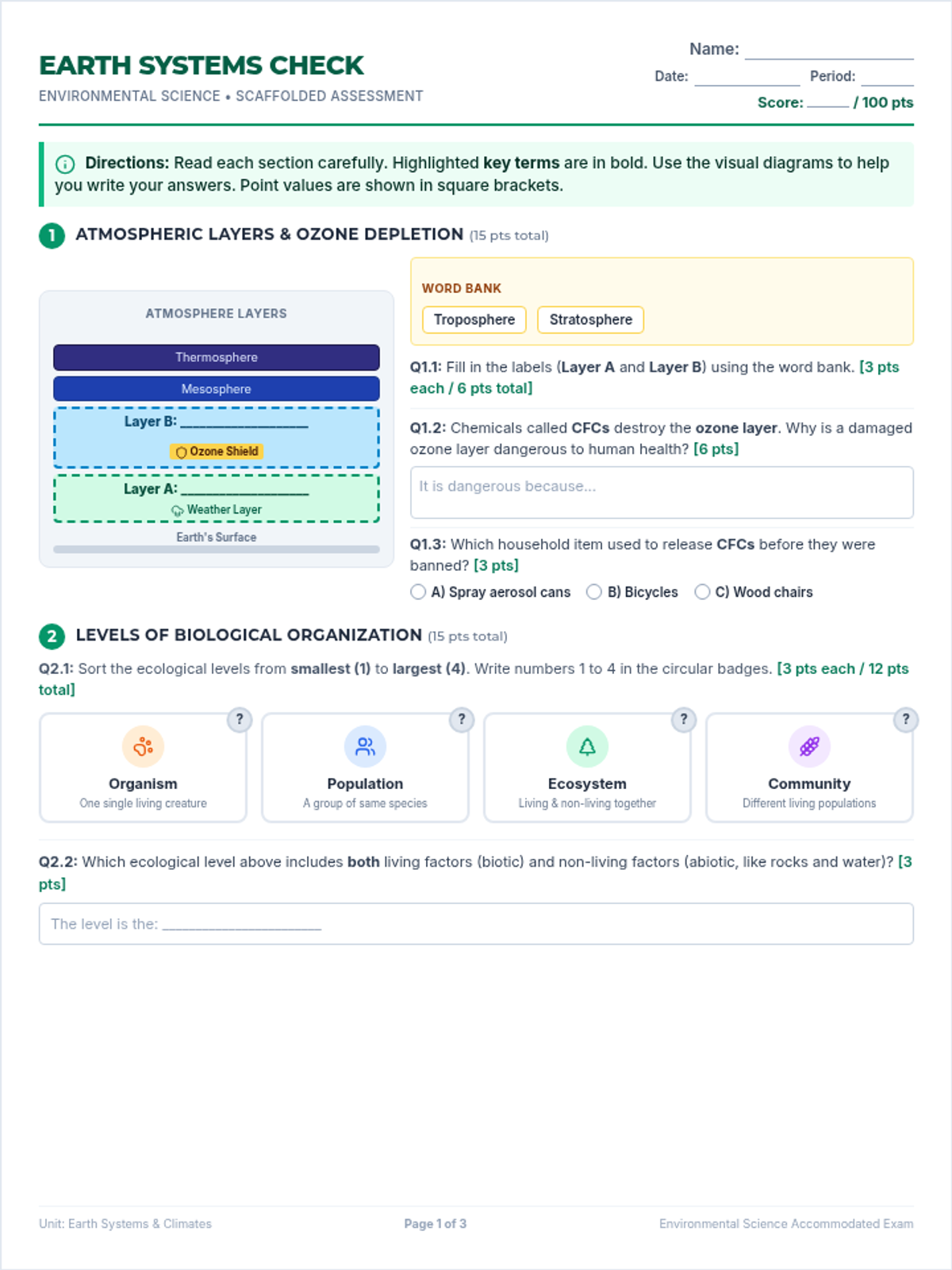
A 3-page scaffolded student assessment covering key Earth Systems topics, updated with point values for each question totaling 100 points for clear and objective grading.
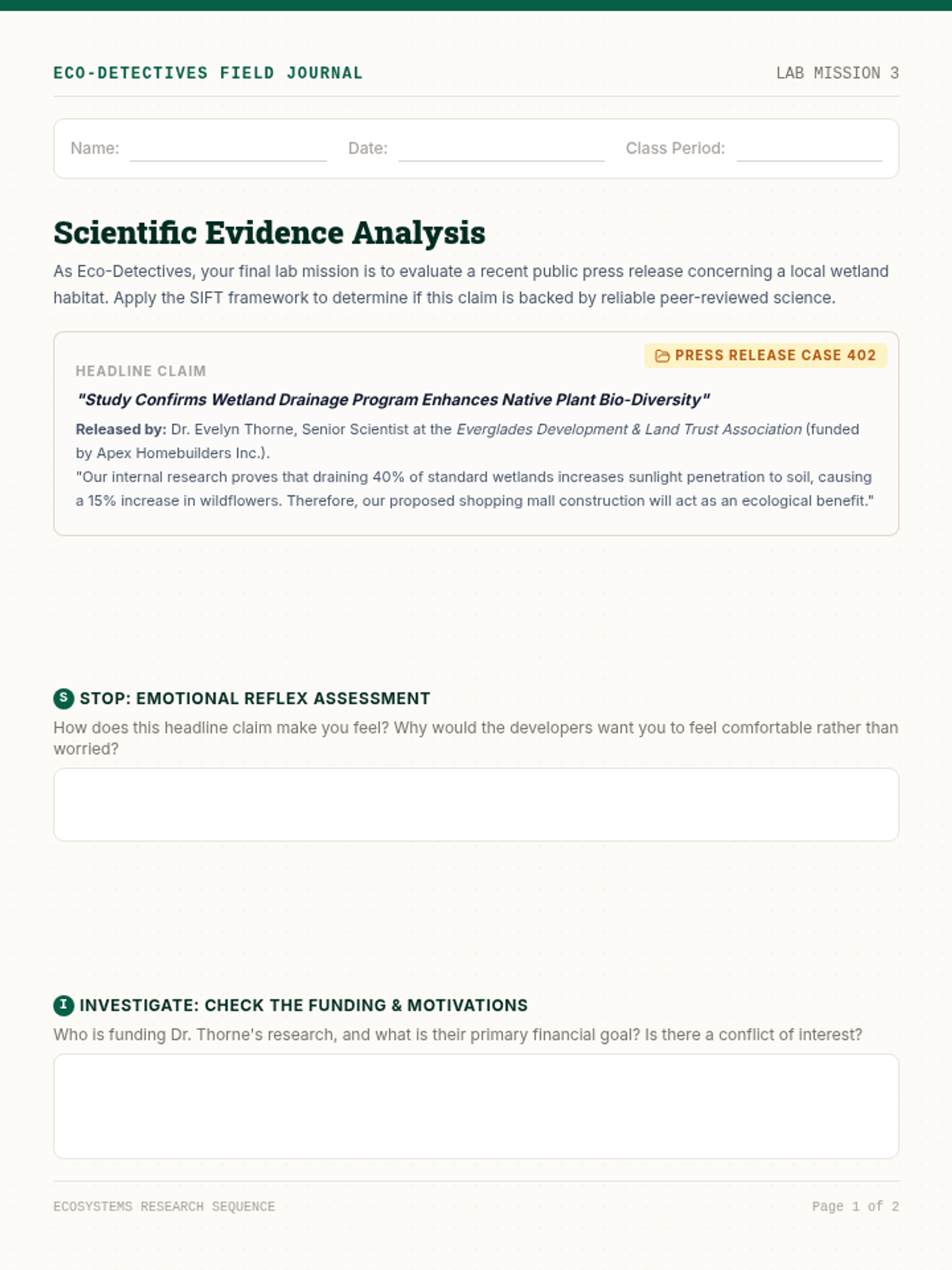
A student worksheet for the Source Investigators lesson, providing a simulated ecosystem research report for students to analyze and evaluate using the SIFT framework.
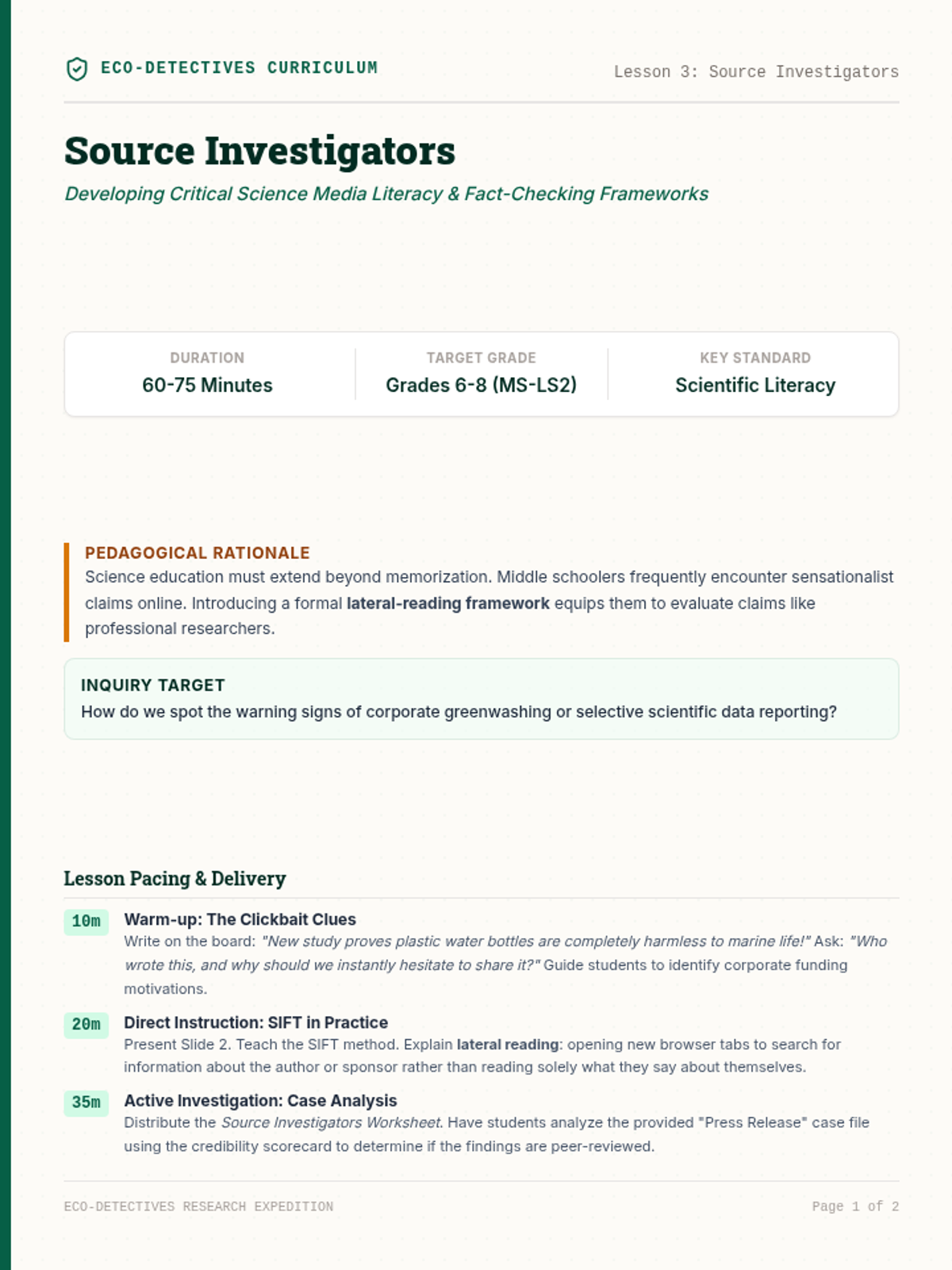
An instructional guide for Lesson 3, focusing on teaching the SIFT evaluation framework, facilitating debates on corporate bias in science, and scoring student analysis.
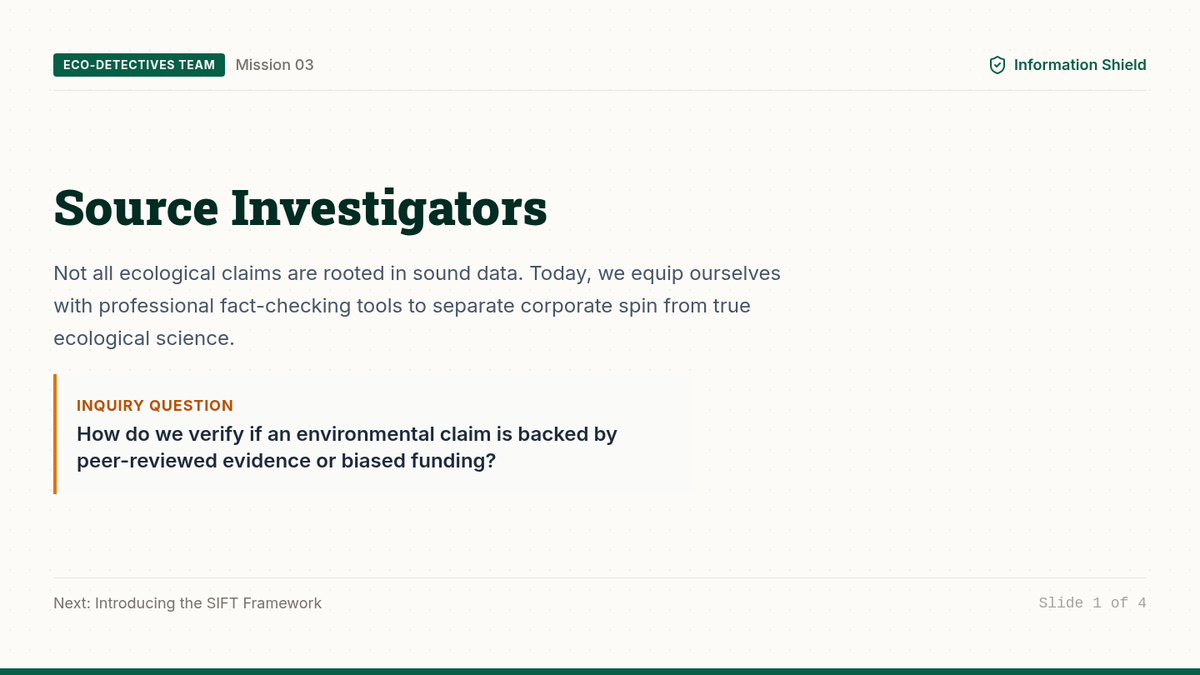
Visual presentation for the Source Investigators lesson, showing students how to critique claims, evaluate online media credibility, and identify scientific evidence bias.
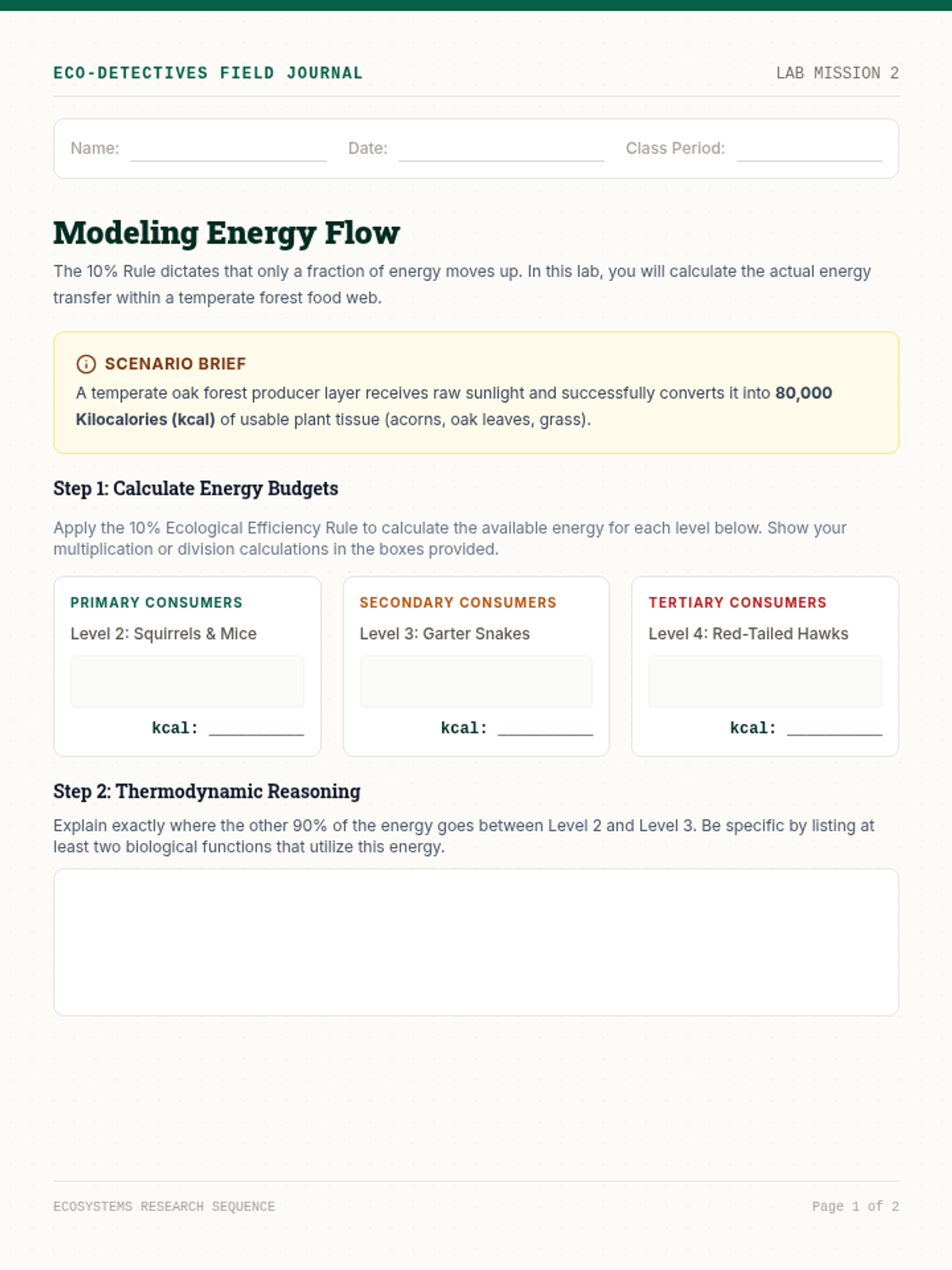
A student worksheet for the Energy Pyramids lesson, requiring students to calculate energy transfer using the 10% rule and evaluate a real-world trophic cascade.
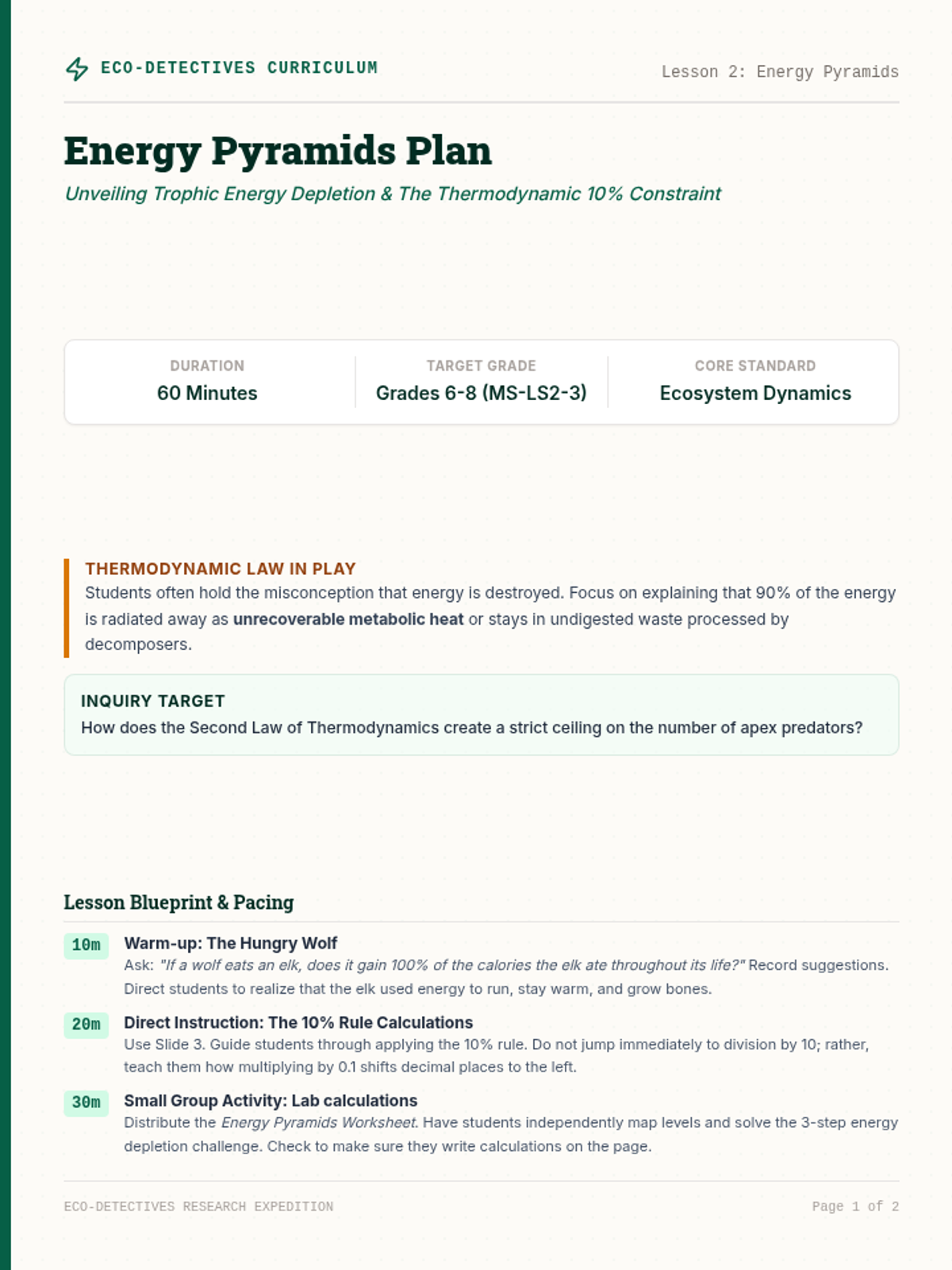
An instructional guide for Lesson 2, covering trophic energy transfer, direct instruction pacing for the 10% math rule, and discussion prompts for trophic cascades.
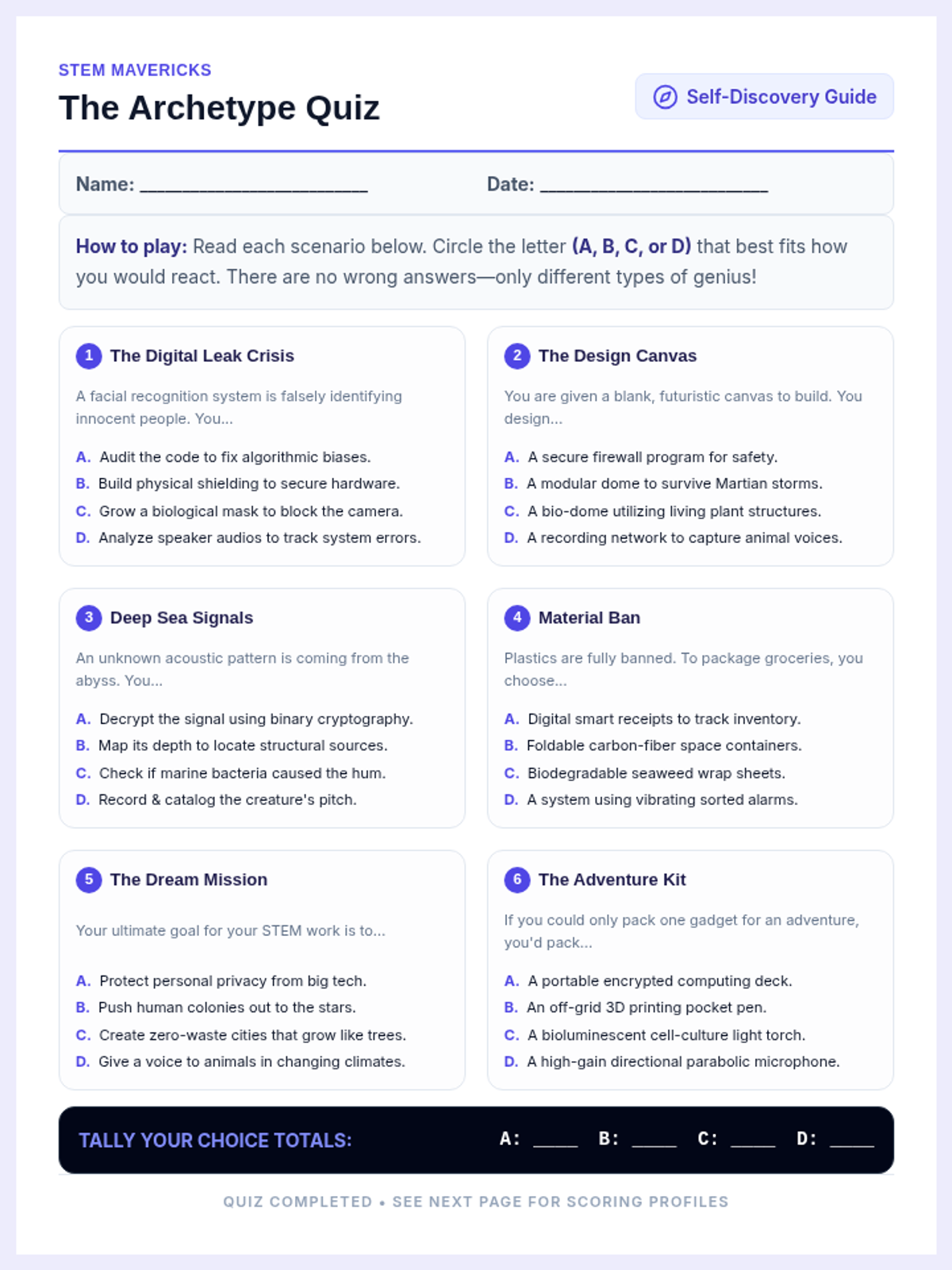
A self-discovery questionnaire and guidance packet featuring a 6-question situational quiz, archetype breakdown keys (Digital Guardian, Cosmic Pioneer, Biosphere Builder, Eco-Acoustician), and an actionable career reflection roadmap.
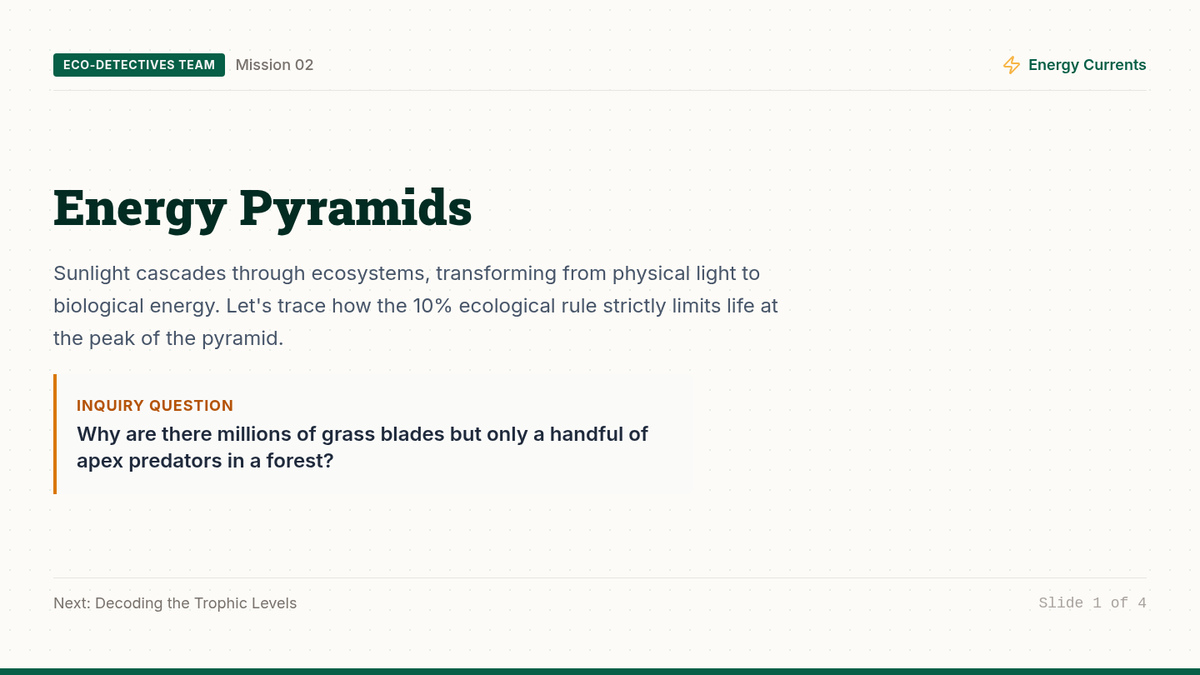
Visual presentation for the Energy Pyramids lesson, demonstrating trophic levels, producers vs consumers, and the 10% ecological efficiency math rule.
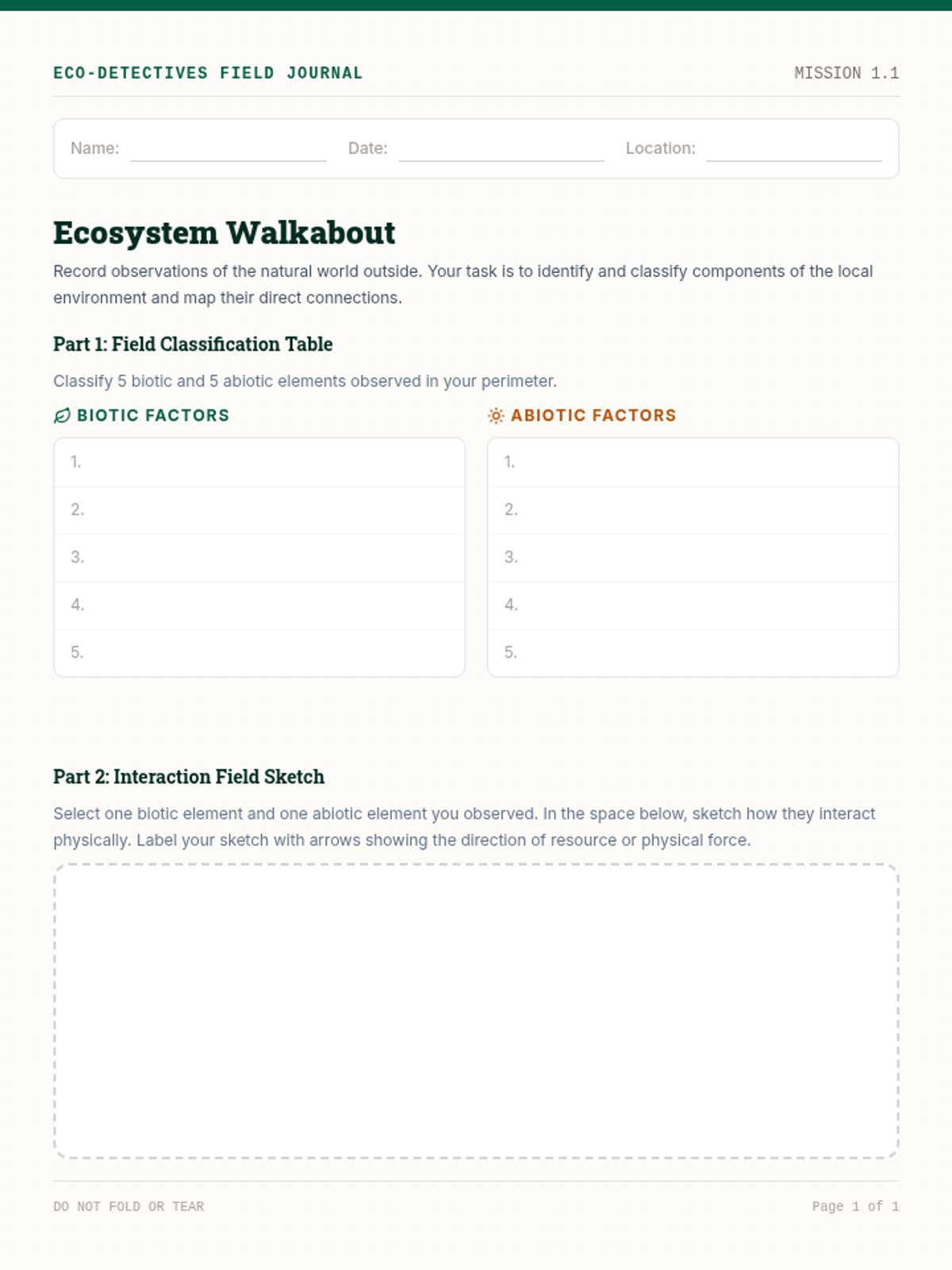
A student worksheet for the Biosphere Boundaries field mission, including blank fields for identifying biotic/abiotic factors and charting local ecological connections.