Slide deck for Lesson 2 comparing the US capitalist model with the Nordic social safety net model. Focuses on metrics like happiness index, GDP, and the "Flexicurity" concept.

A 5-slide visual slide template designed to launch a social studies class. Includes slides for daily routines, map skills, historical quote analysis, and current events discussions.
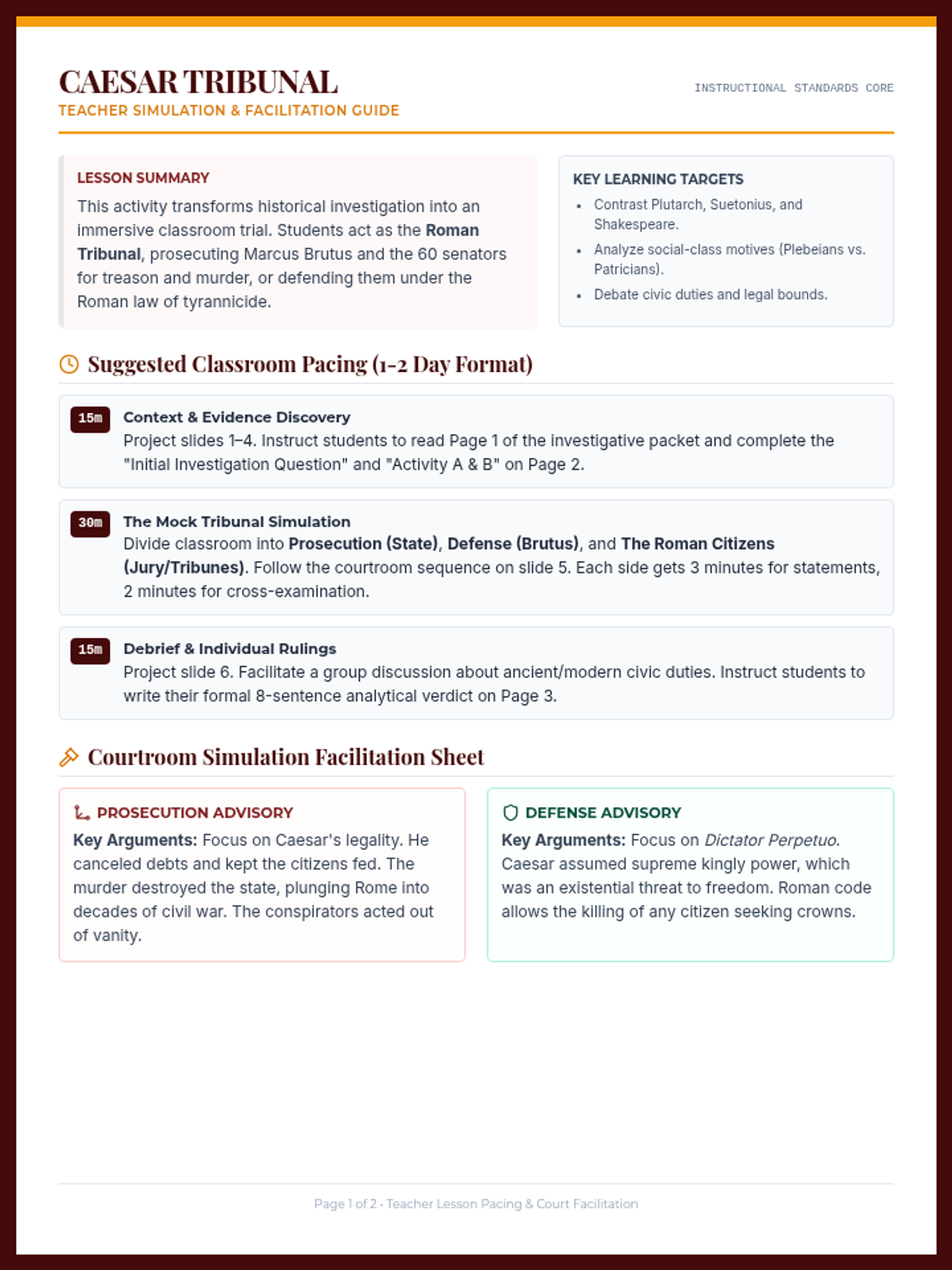
A two-page printable teacher guide and lesson key. Contains complete instructional scaffolding, pacing, step-by-step mock trial simulation guidelines, and a comprehensive answer key for the Caesar Conspiracy student workbook.
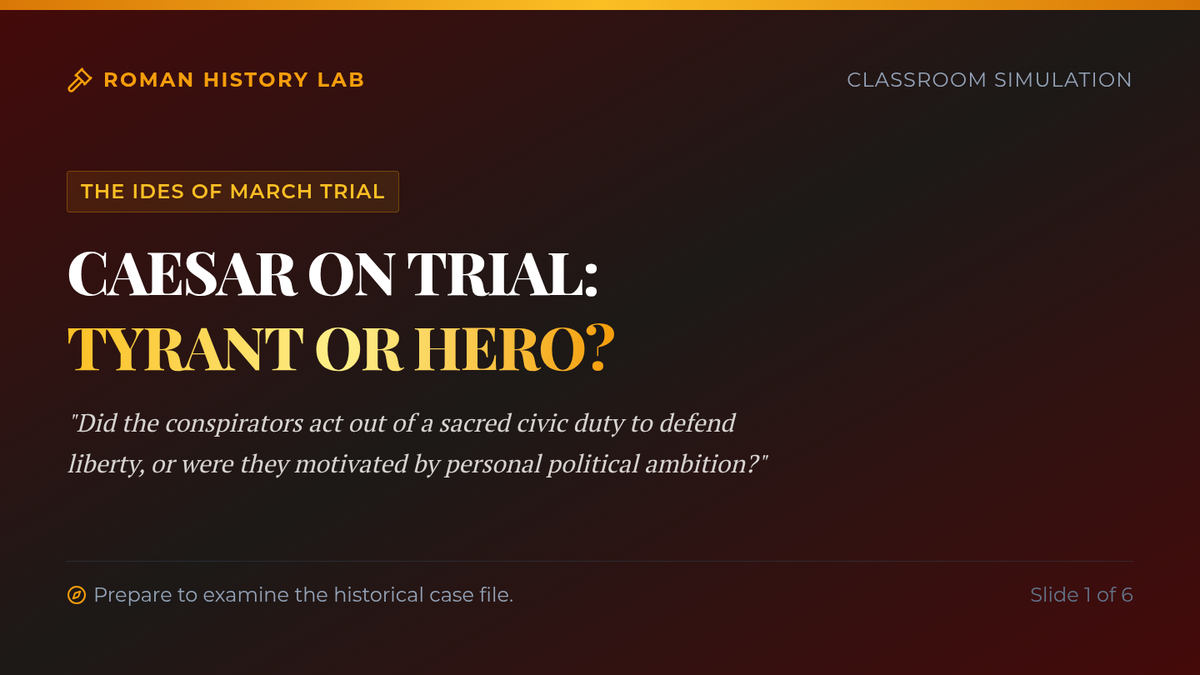
A six-slide instructional presentation for the Caesar Tribunal lesson. Featuring high-impact visuals, a deep Roman crimson theme, analysis of the historical sources (Plutarch, Suetonius, Shakespeare), and guidelines for the classroom mock trial.
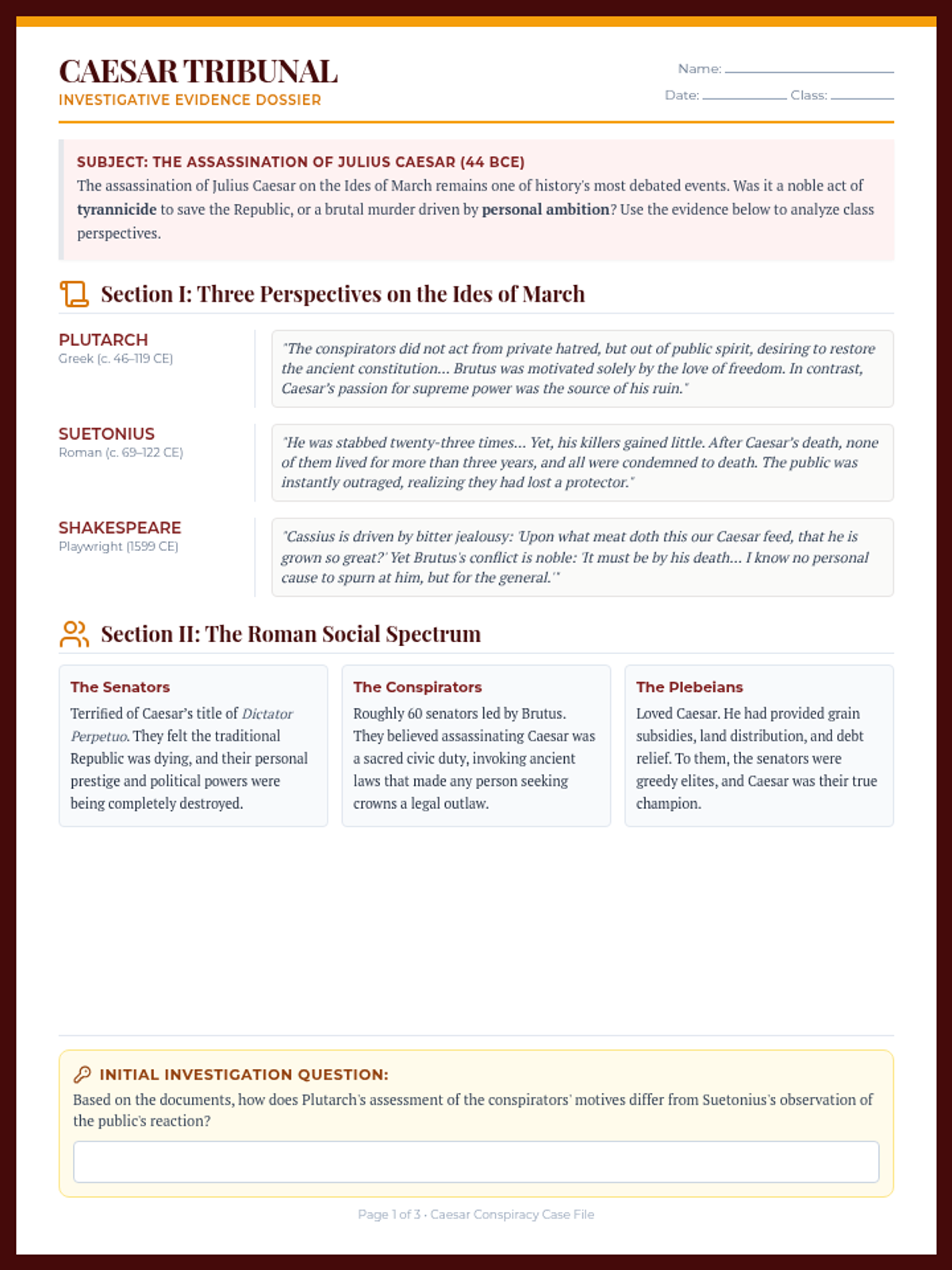
A three-page student investigative packet for the Caesar Tribunal lesson. It includes a primary source-based reading passage, a vocabulary matching activity, a custom Roman word search, short-answer questions, and a scaffolded 8-sentence analytical essay.
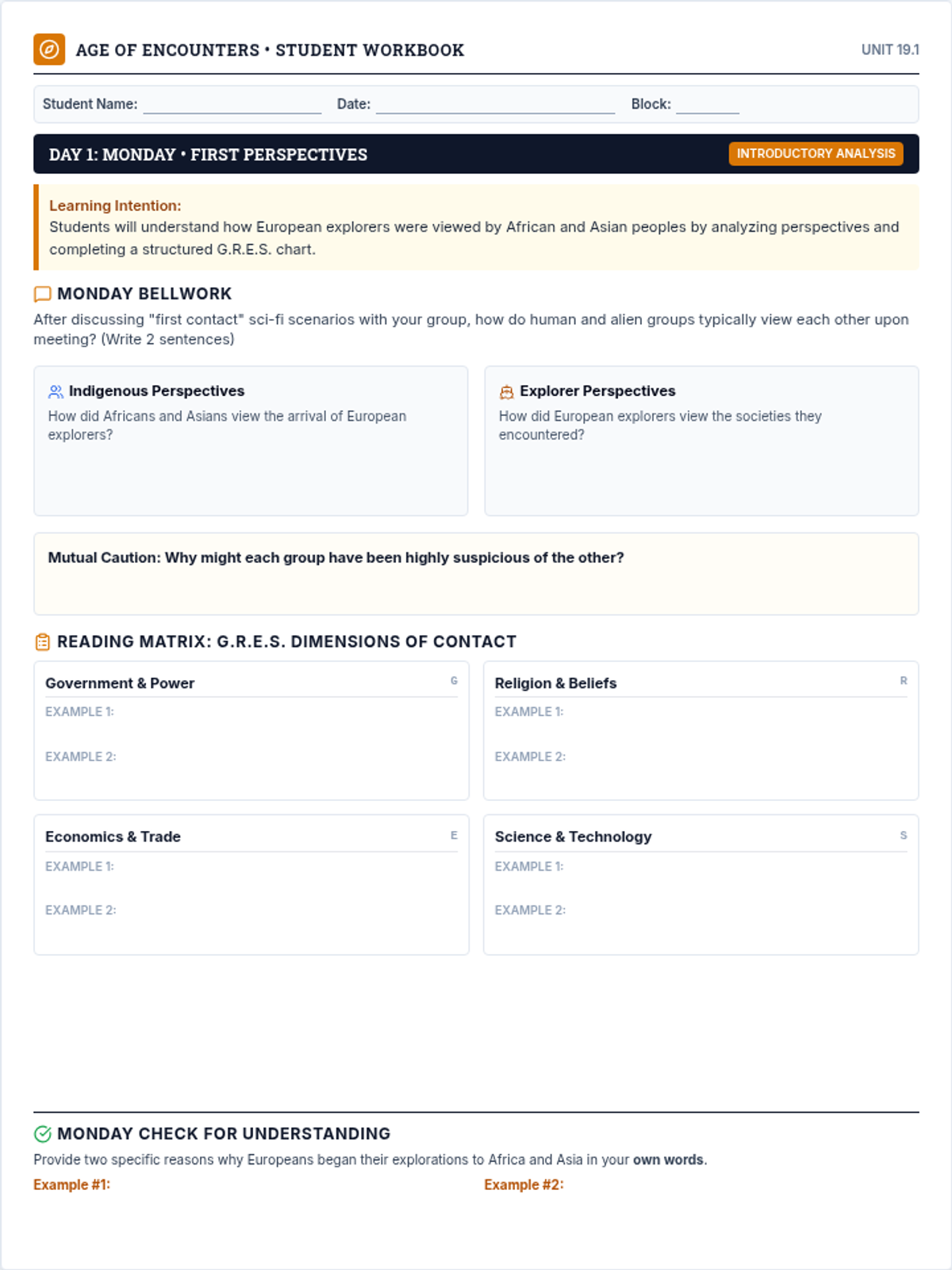
A highly structured, 5-day printable student workbook featuring daily bellworks, readings, graphic organizers (including a GREASES matrix, Say-Mean-Matter navigation table, a Transatlantic Slave Trade main idea web, and an interactive trade timeline), and checks for understanding.
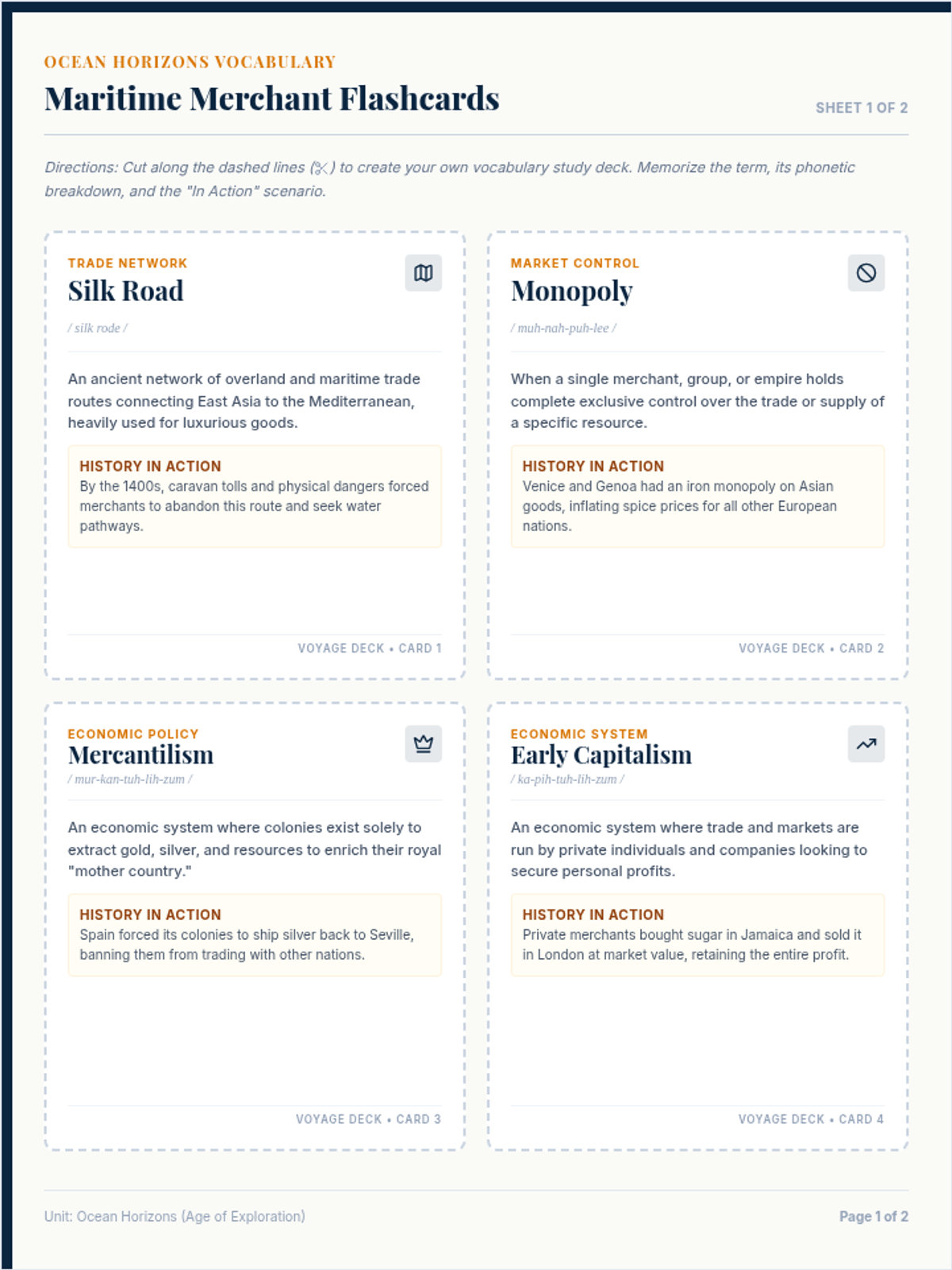
An elegant, print-ready, two-page vocabulary card deck featuring 8 key maritime and economic terms. Each card includes phonetic pronunciations, clear definitions, visual icons, and "History in Action" real-world context prompts, styled with dashed scissor cut lines.
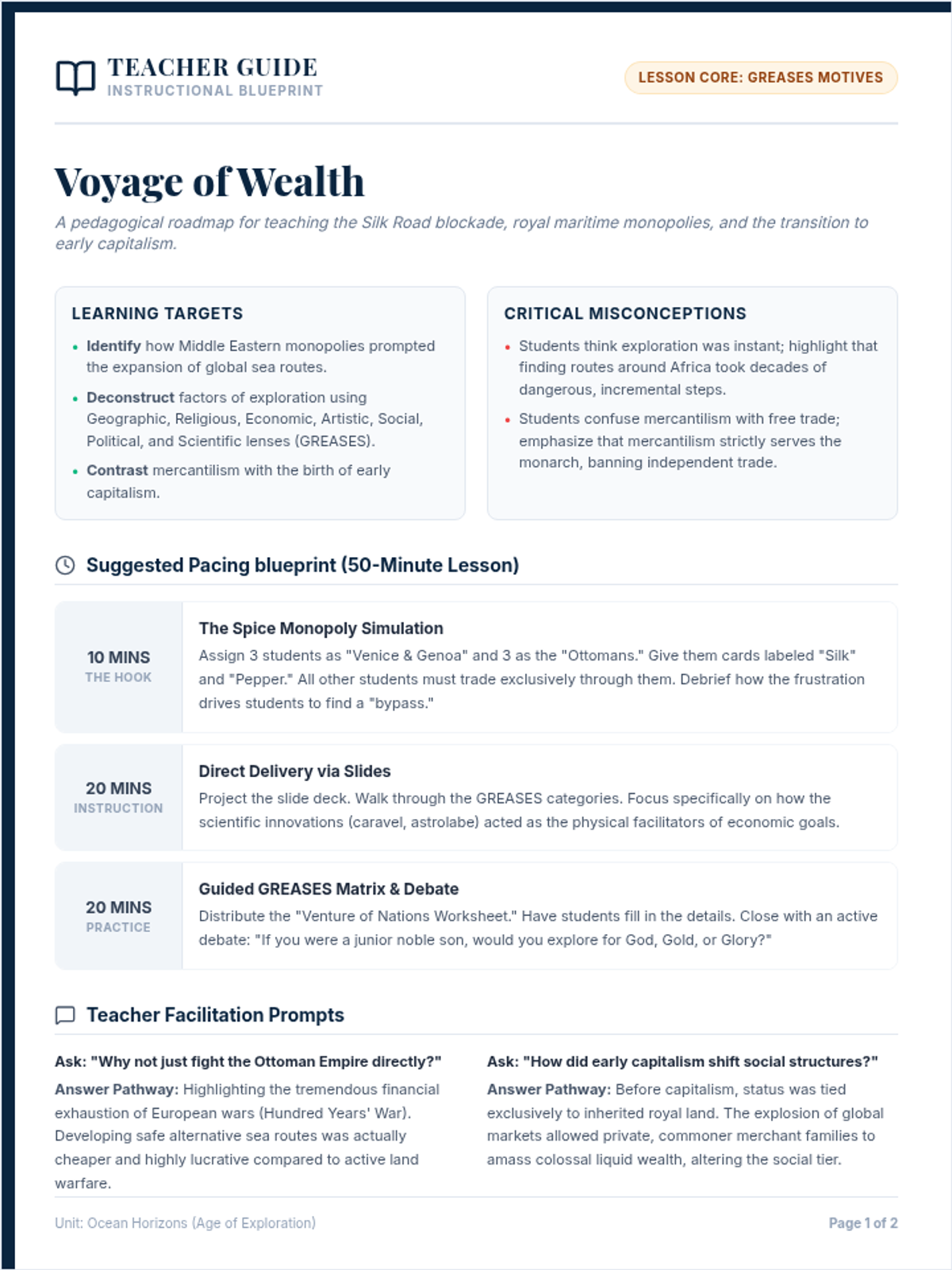
A professional, two-page teacher's guide and facilitation blueprint. Page 1 details instructional objectives, a minute-by-minute pacing guide, discussion hooks, and student prompts. Page 2 provides the complete GREASES answer key and exemplar answers for critical thinking assessments.
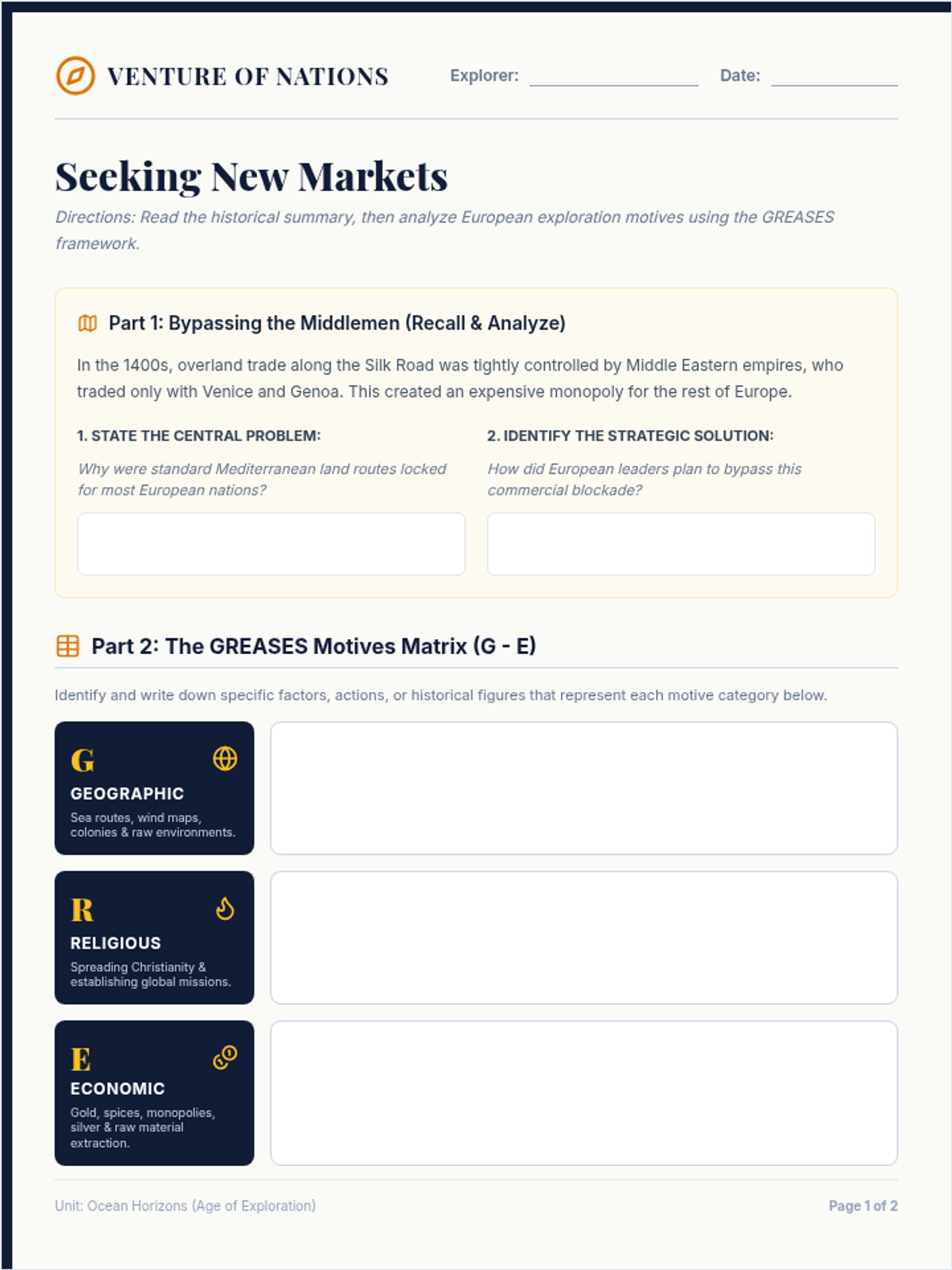
A comprehensive student worksheet with name and date fields, featuring a guided reading activity, a two-page GREASES graphic organizer, and critical thinking questions comparing mercantilism and early capitalism.
Interactive slide deck introducing the European motives for exploration, featuring the GREASES analytical framework and the transition from mercantilism to early capitalism.
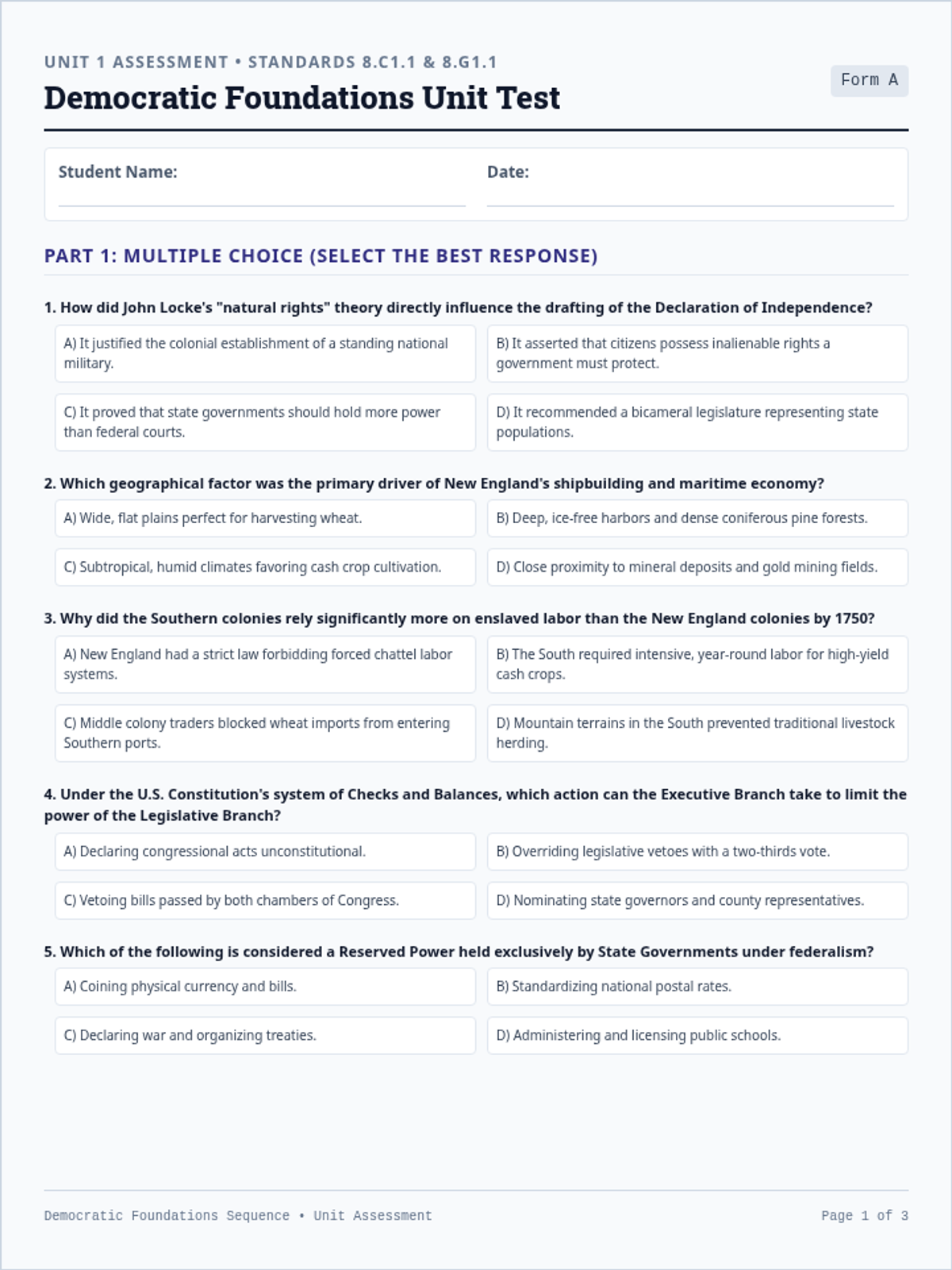
A standards-aligned, printable unit assessment featuring multiple choice questions, a document-based writing prompt (DBQ), and an analytical grading rubric.
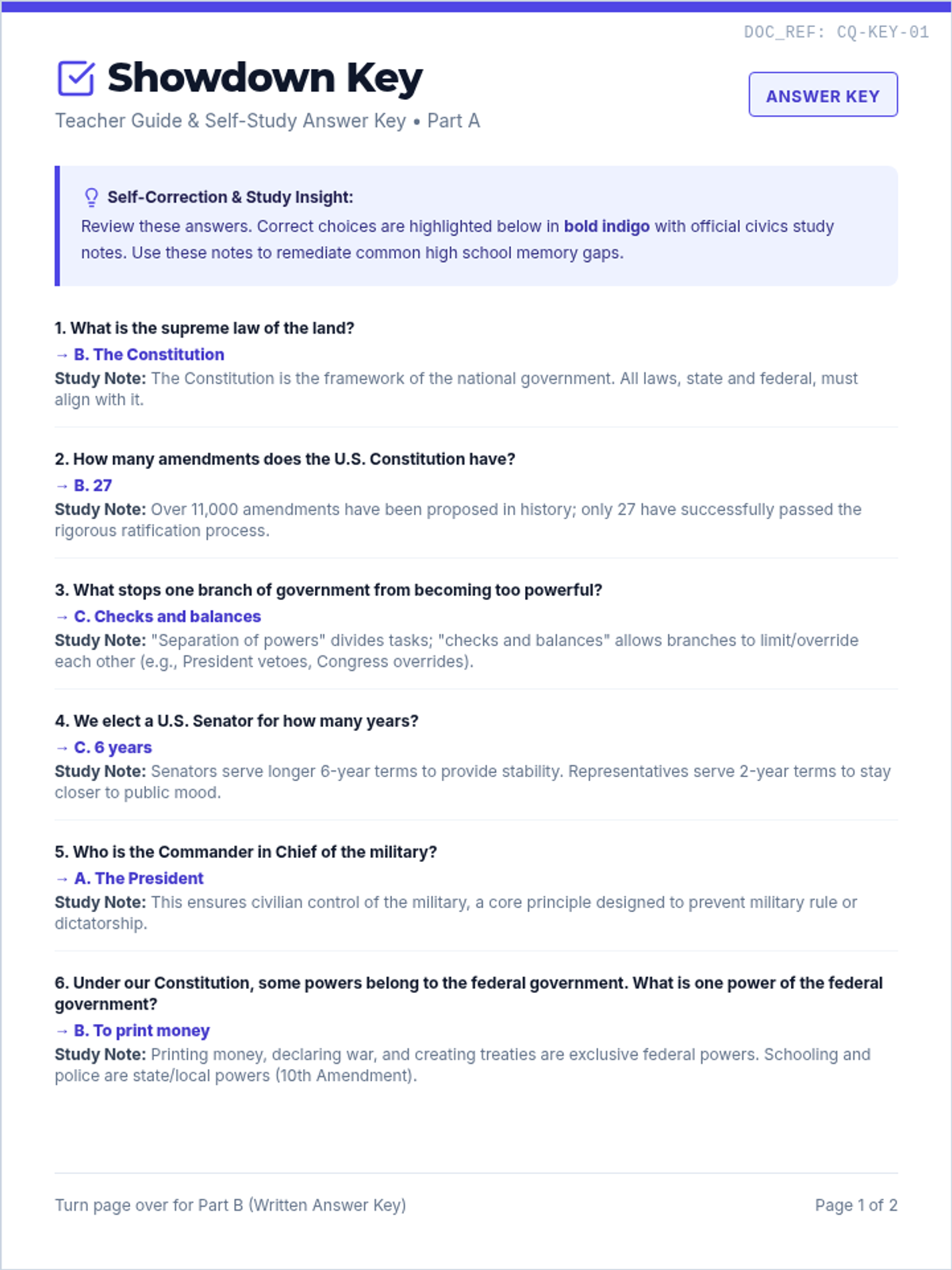
Educator and self-paced study answer key with clear explanations, rubrics, and diagnostic tips for the Civics Showdown Quiz.
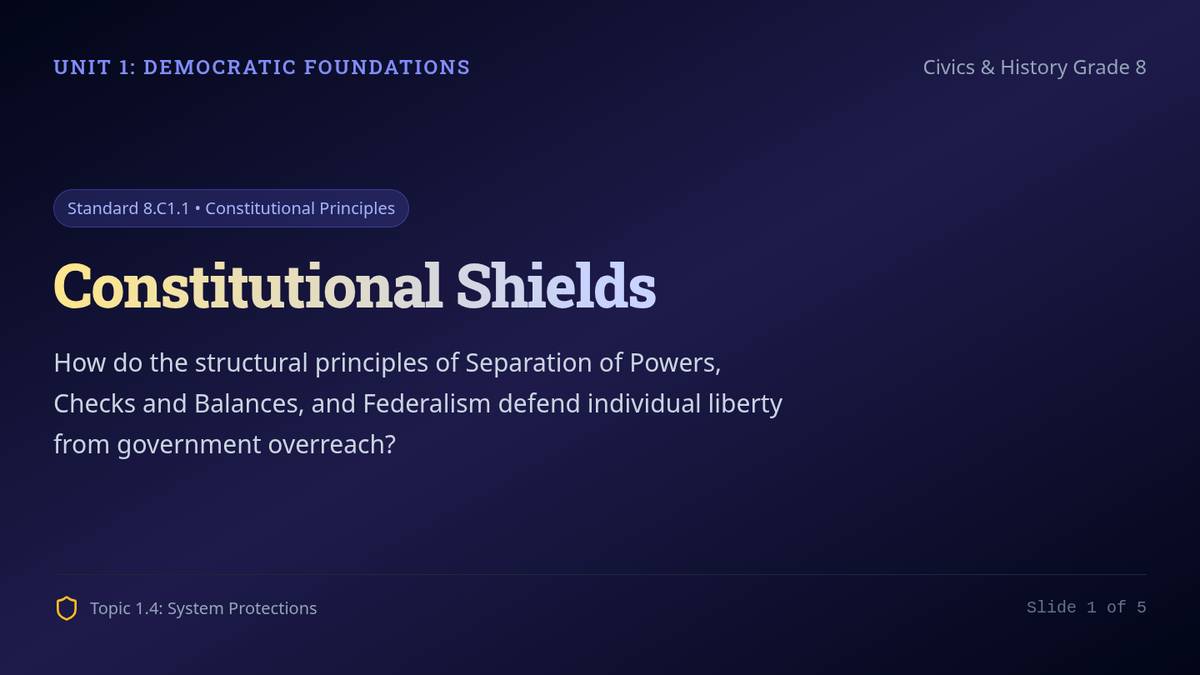
An instructional slide deck focusing on separation of powers, checks and balances, and federalism as the protective structural elements of the U.S. Constitution.
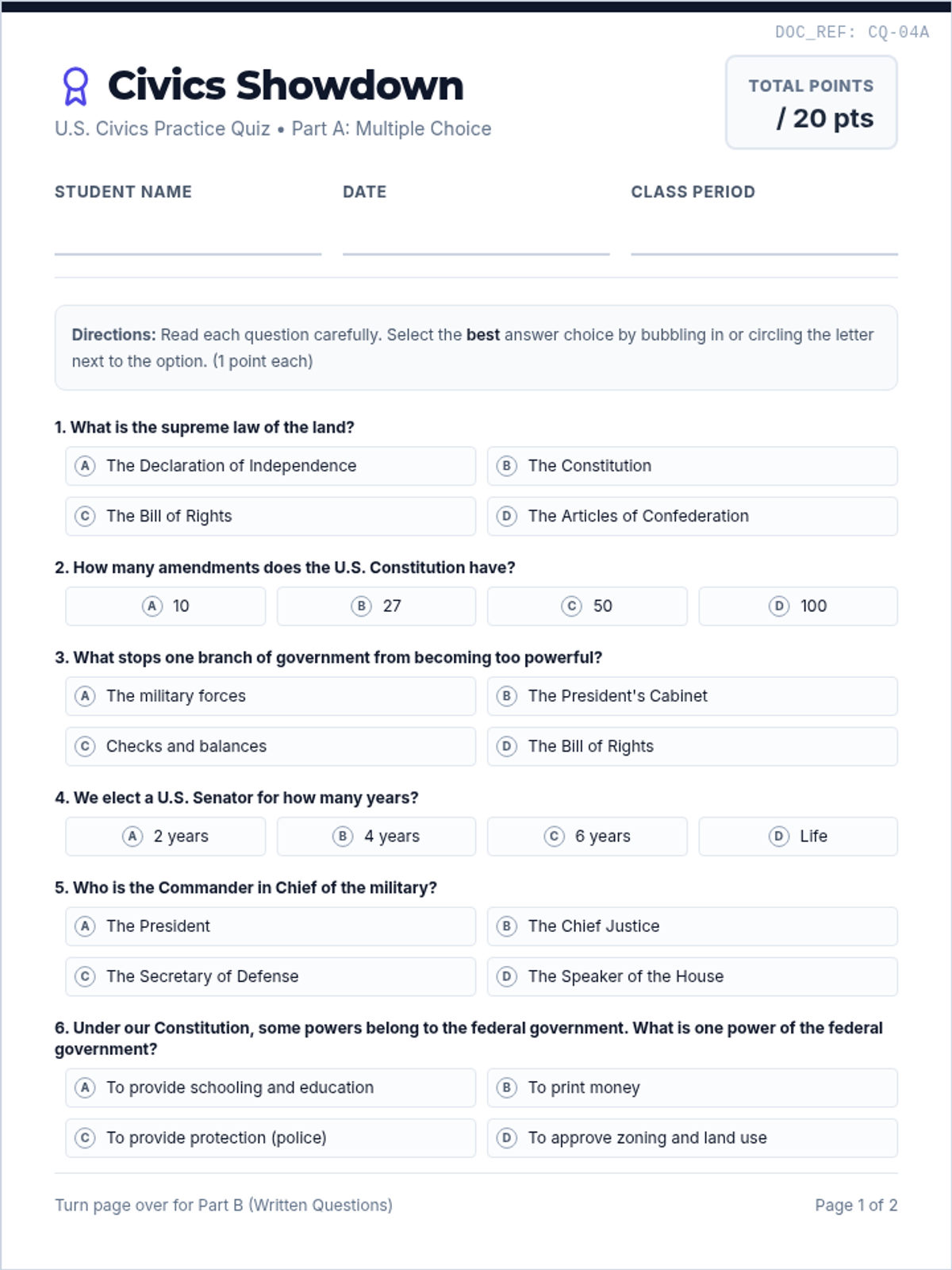
Practice quiz containing multiple-choice and short-answer questions modeled after the actual civics exam, designed to evaluate students' mastery of core topics.
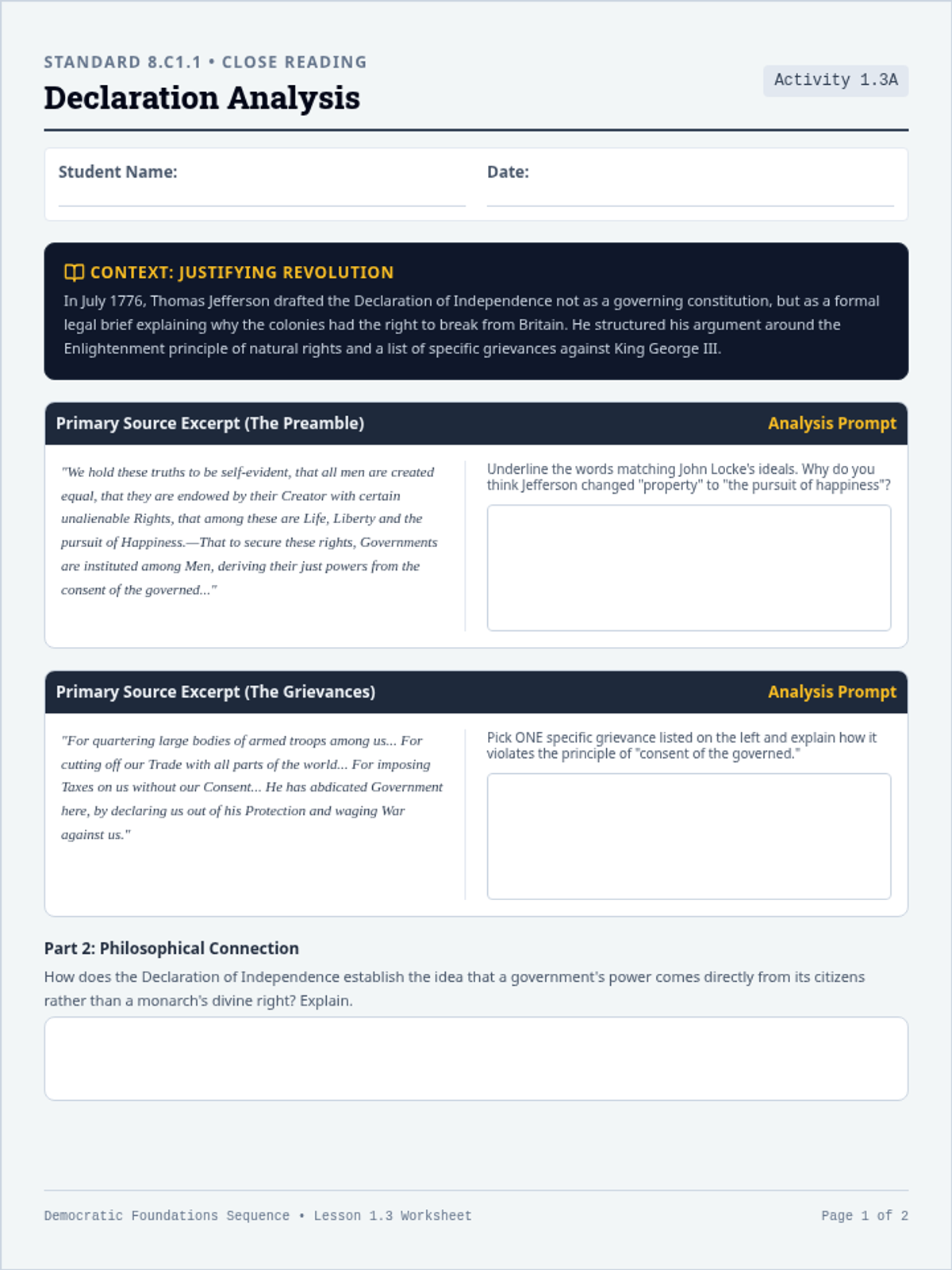
A student-facing primary source analysis worksheet and structured guided notes packet focusing on the Declaration of Independence and the original U.S. Constitution.
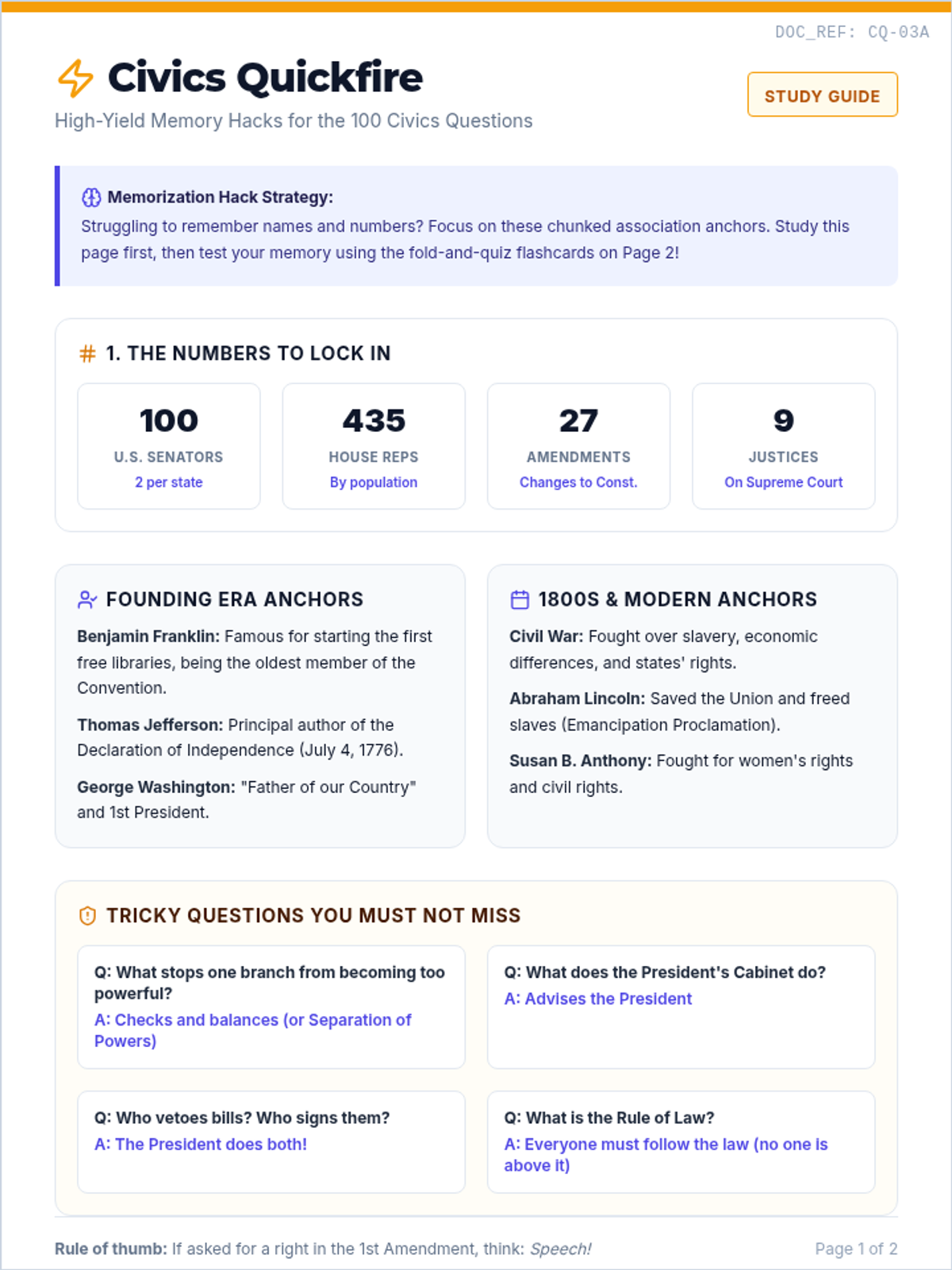
Consolidated memory aids focusing on the official 100 civics questions. Features a high-yield study sheet on page 1 and a set of folding pocket flashcards on page 2.
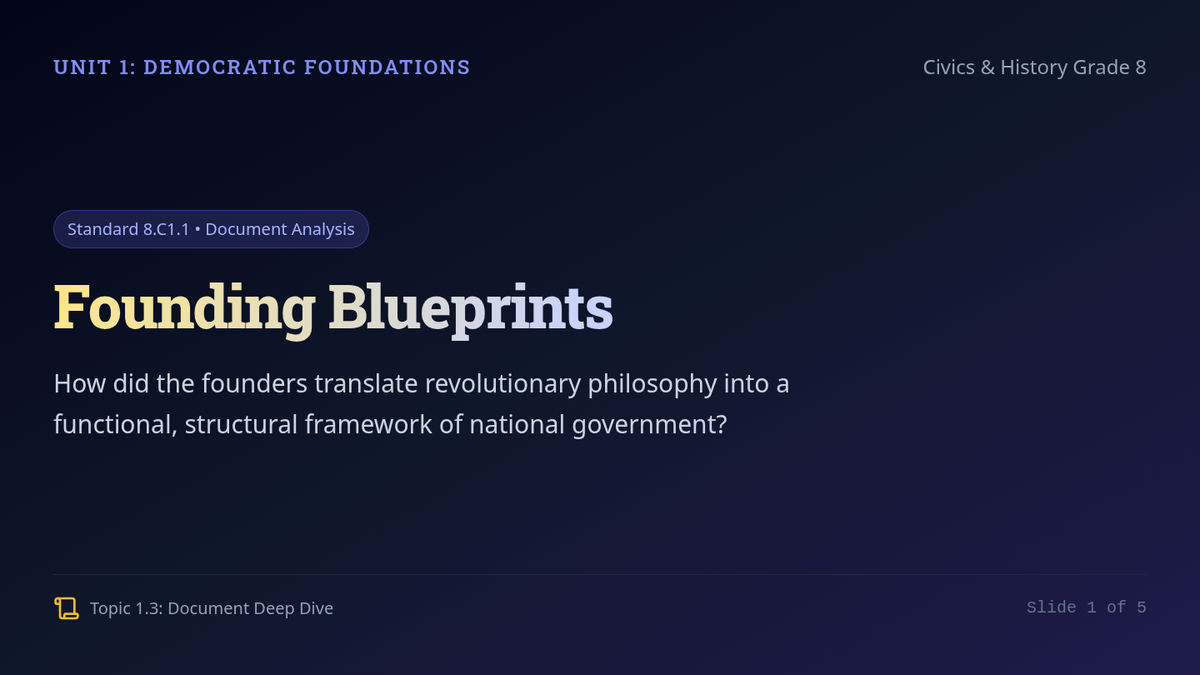
An instructional slide deck focusing on key themes, structural arguments, and critical compromises within the Declaration of Independence and the original U.S. Constitution.
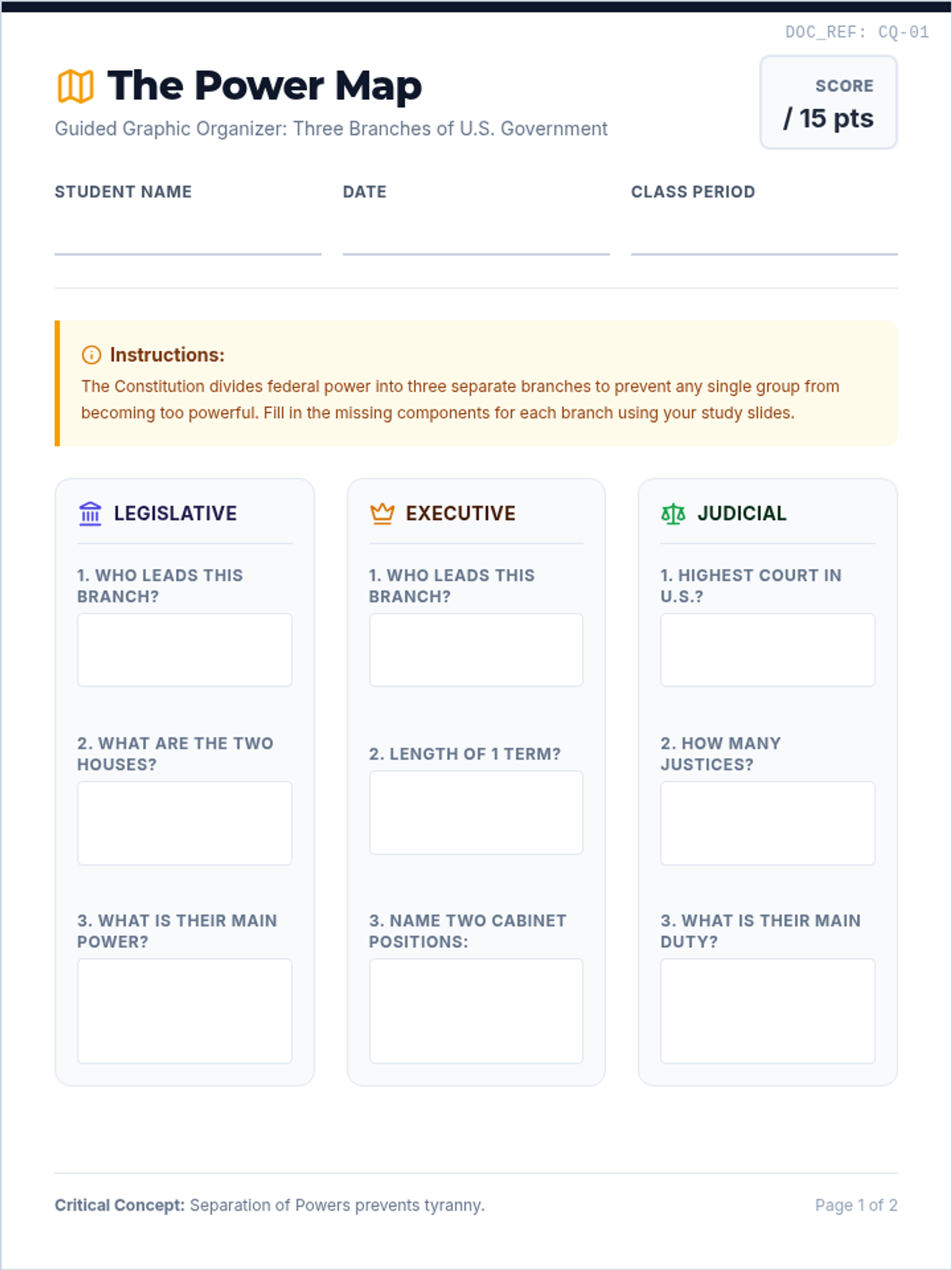
Guided graphic organizer worksheet designed to help students map out the three branches of government, constitutional amendments, and citizen rights. Features scaffolded boxes and spacious writing sections.
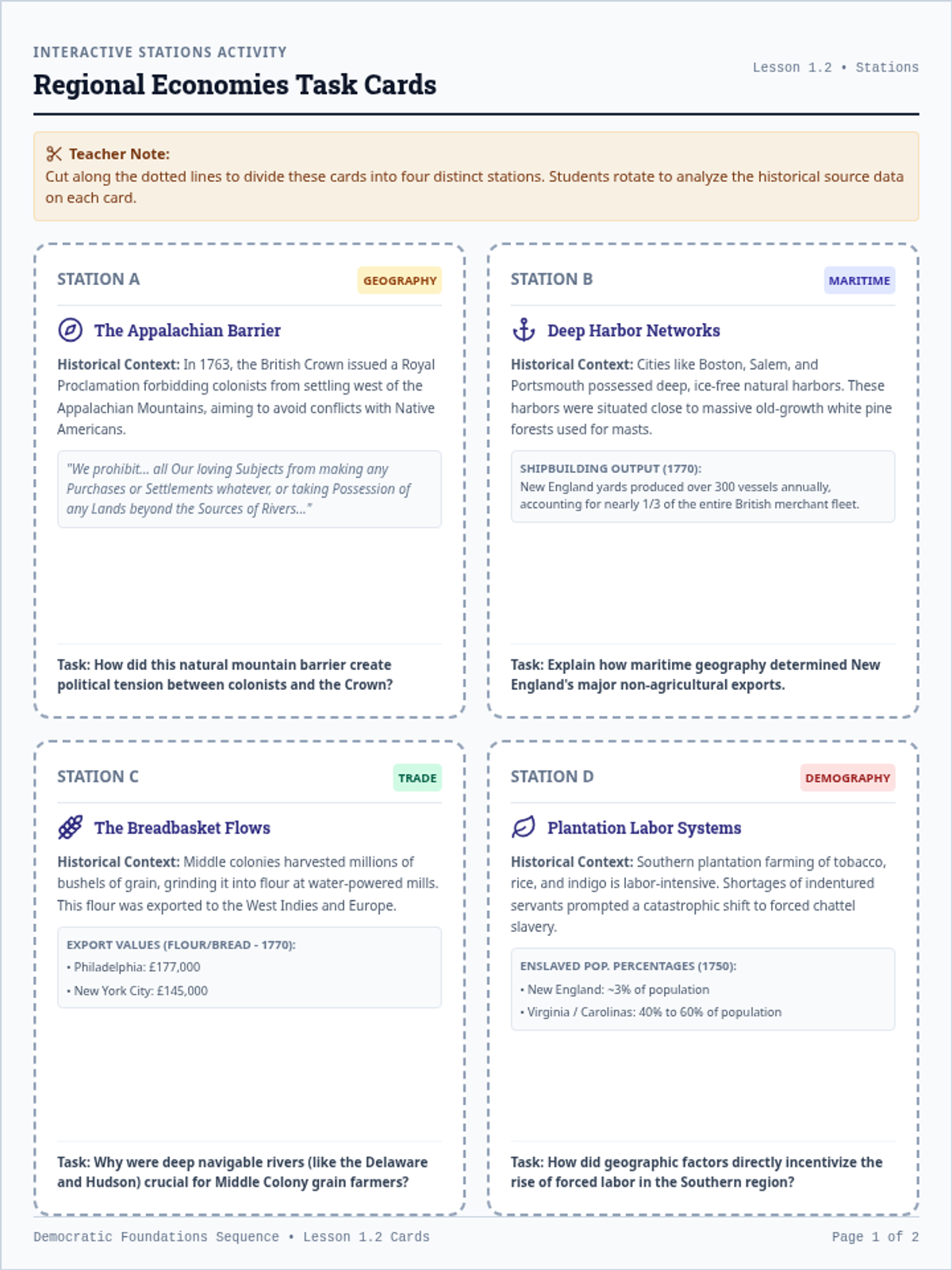
A collection of printable, source-based station task cards and a matching student recording sheet for analyzing geographic variables and early regional economies.
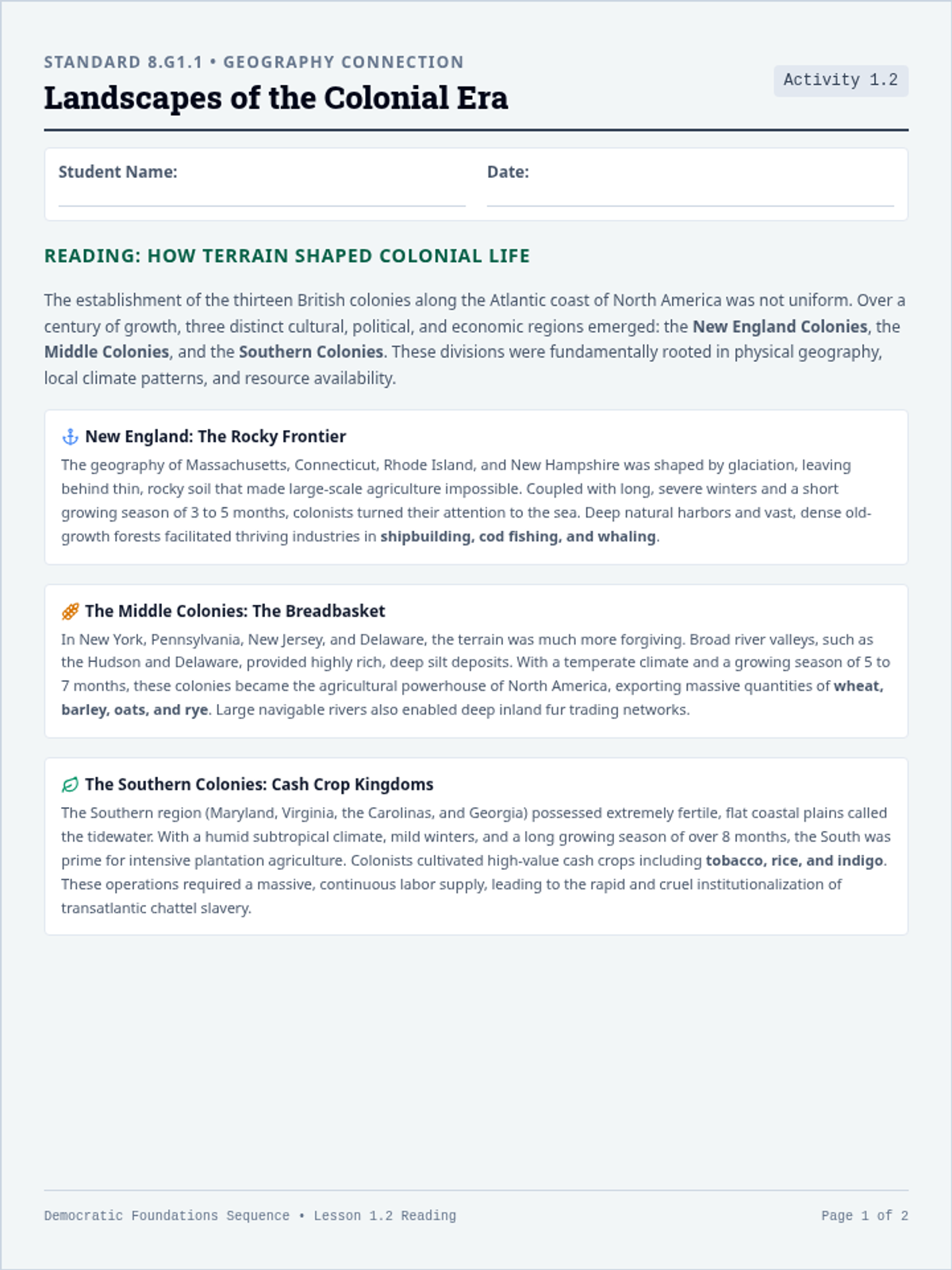
A comprehensive, student-facing reading passage and analysis worksheet focusing on geographic factors, regional economies, and resource structures across the original thirteen colonies.
Interactive, high-impact instructional slides designed to break down the key historical events, the three branches of government, and fundamental rights of citizens. The visual deck uses chunked text, dual-tone diagrams, and direct memory aids to maximize retention.
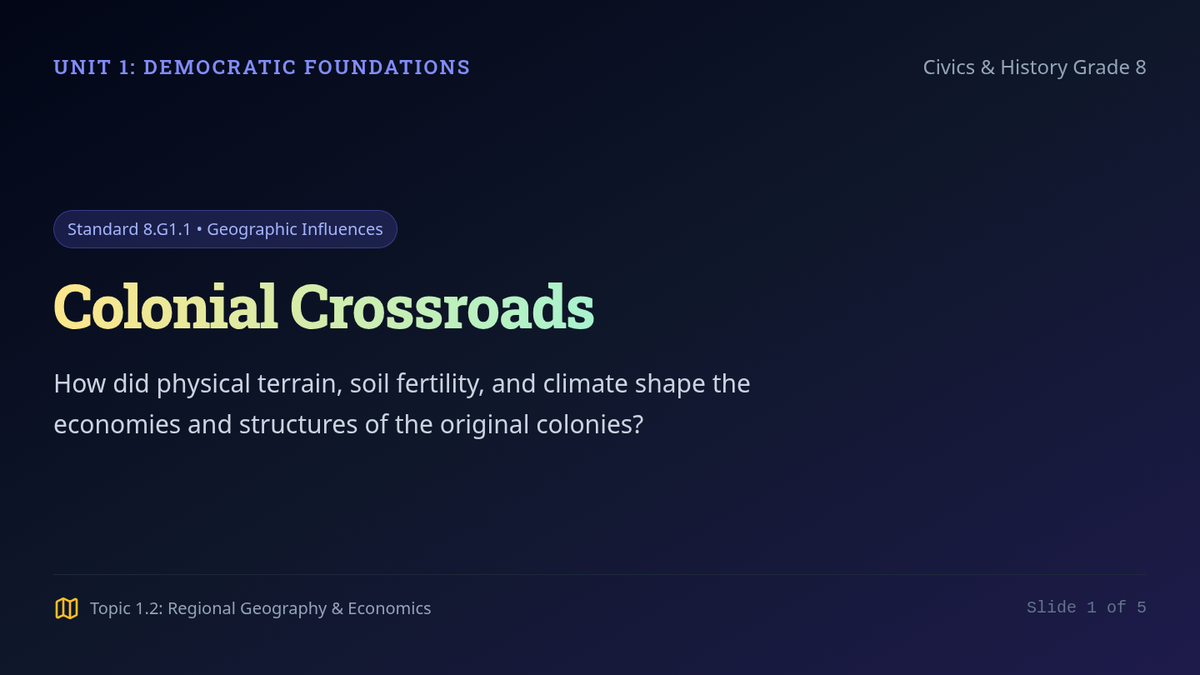
An instructional slide deck highlighting the direct connection between regional geography, climate, and economic specializations in the New England, Middle, and Southern colonies.
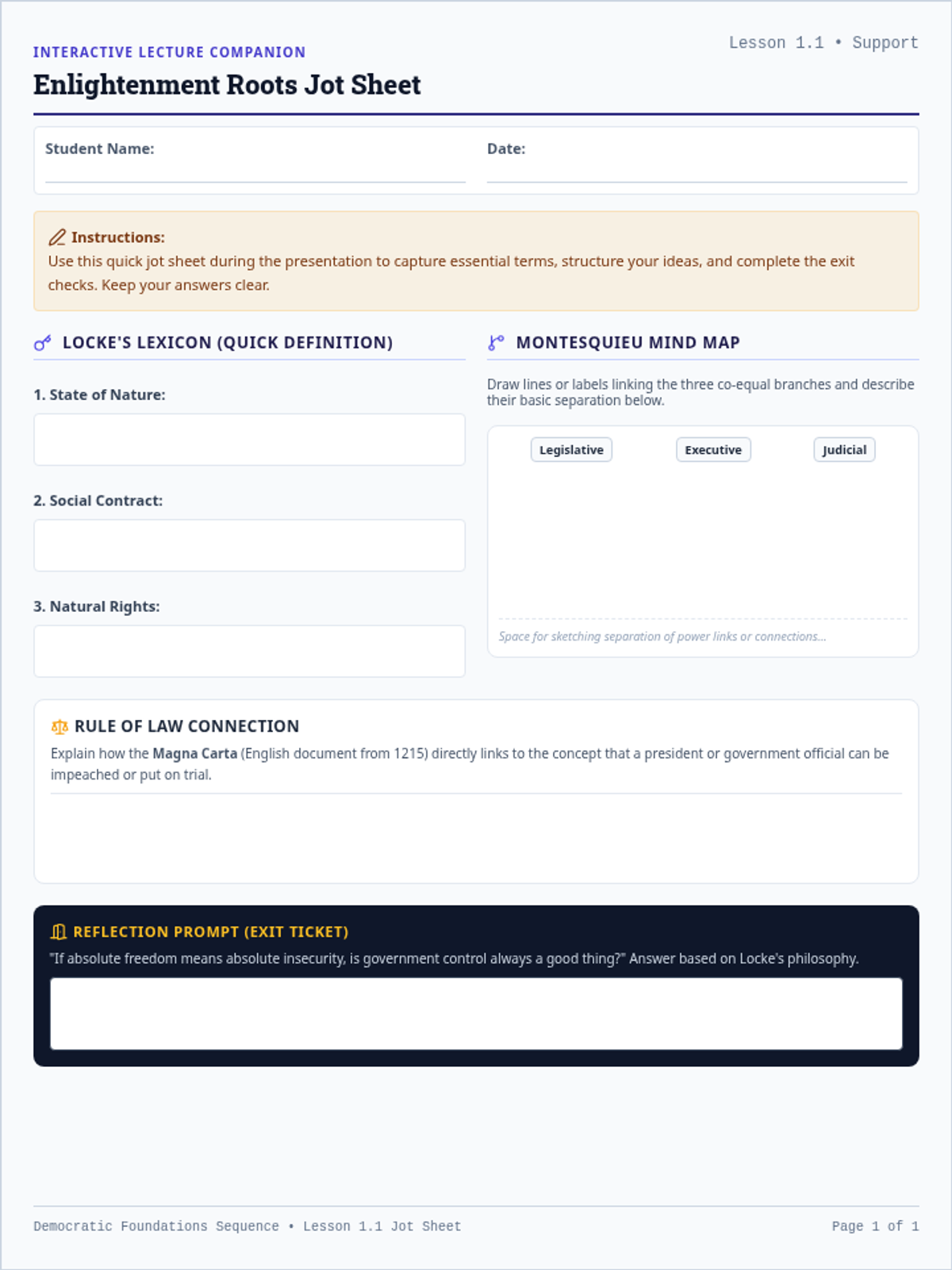
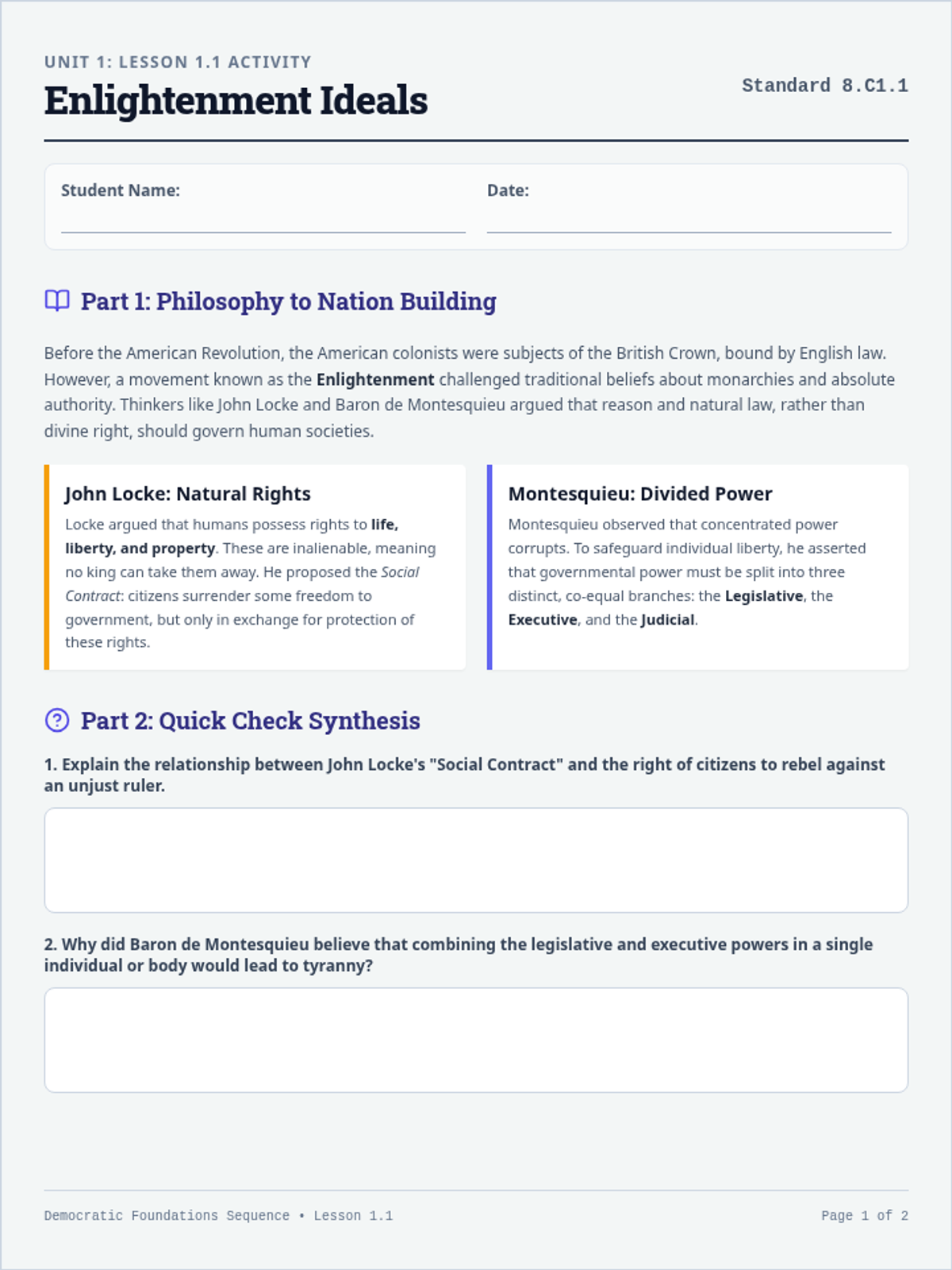
A compact, structured student jot sheet designed for quick note-taking, vocabulary mapping, and brief synthesis prompts during the Enlightenment lecture.
A student-facing graphic organizer analyzing the direct connections between European Enlightenment philosophies (John Locke, Montesquieu) and founding U.S. documents.
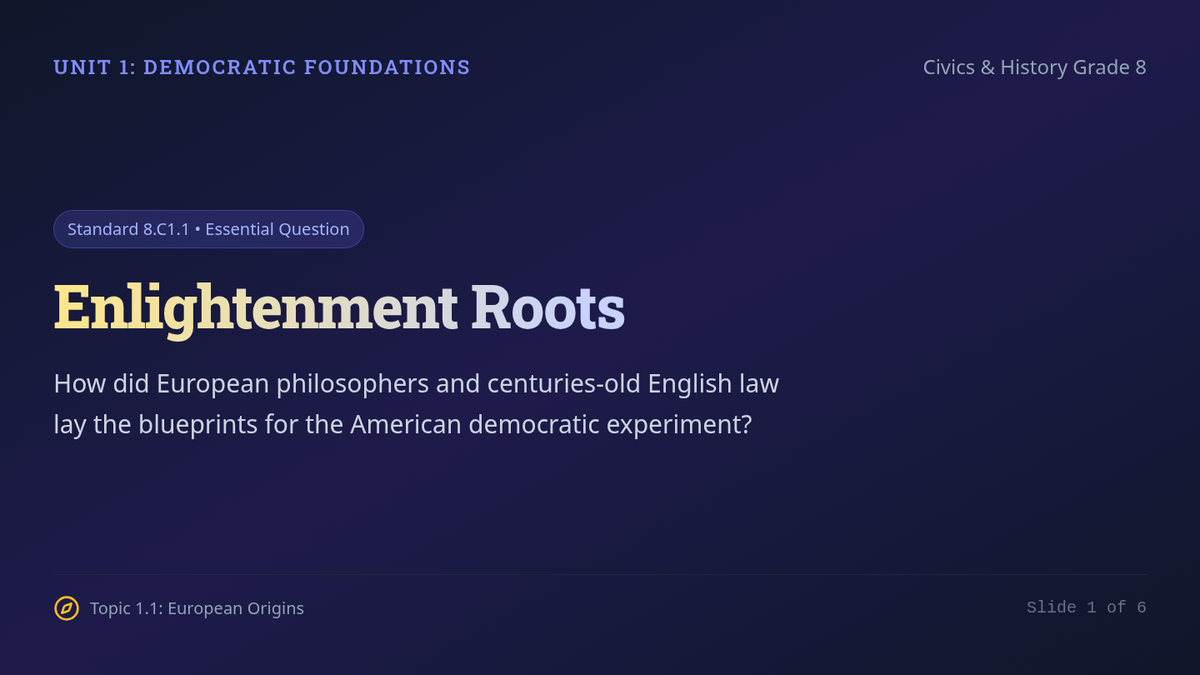
An interactive-ready slide presentation introducing the Magna Carta, John Locke's natural rights theory, and Montesquieu's separation of powers as the intellectual origins of American democracy.
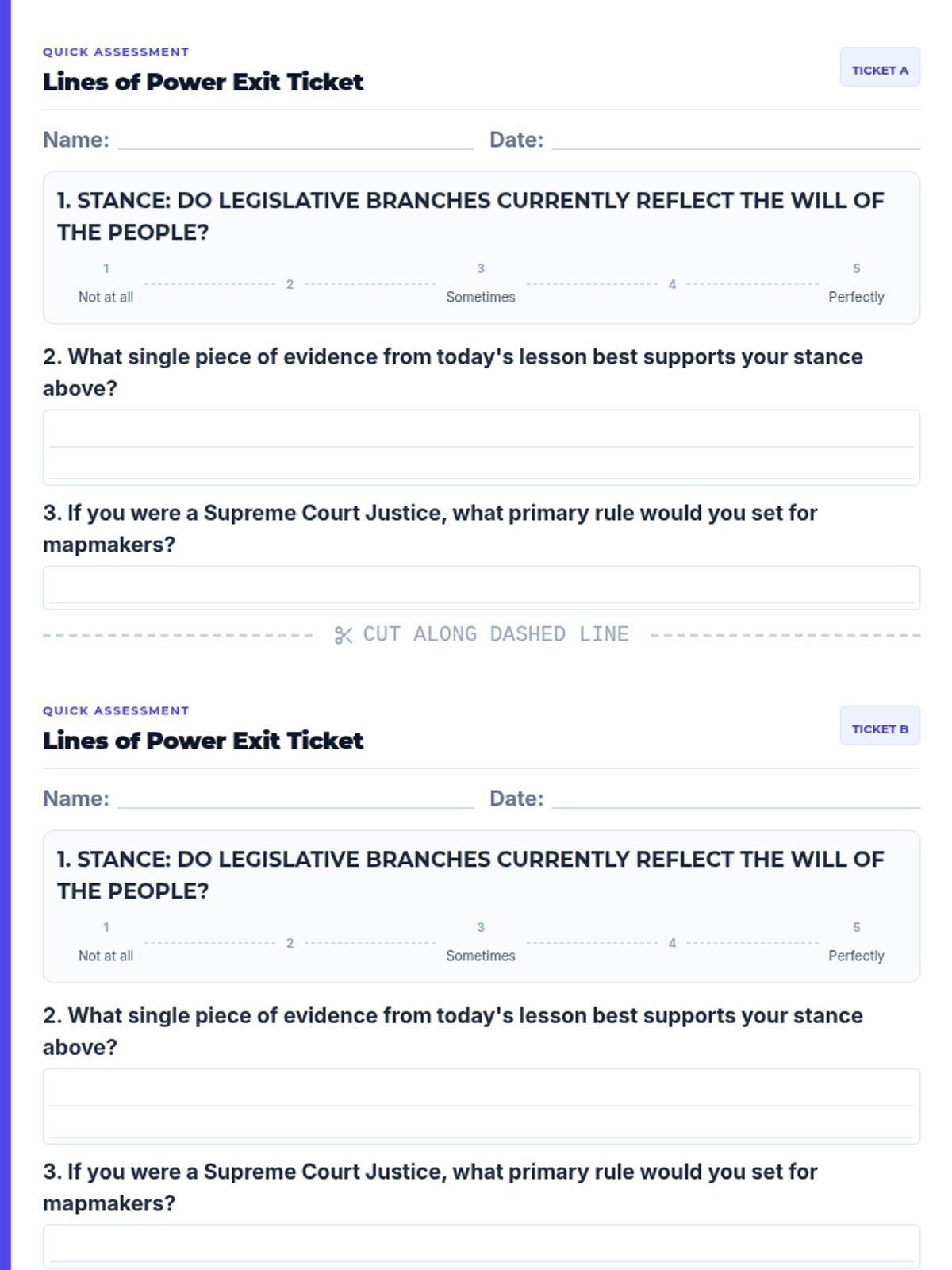
An elegant, print-ready, double-sided styled exit ticket containing name and date fields, a visual representation scale, and text-based reasoning prompts for student closure.
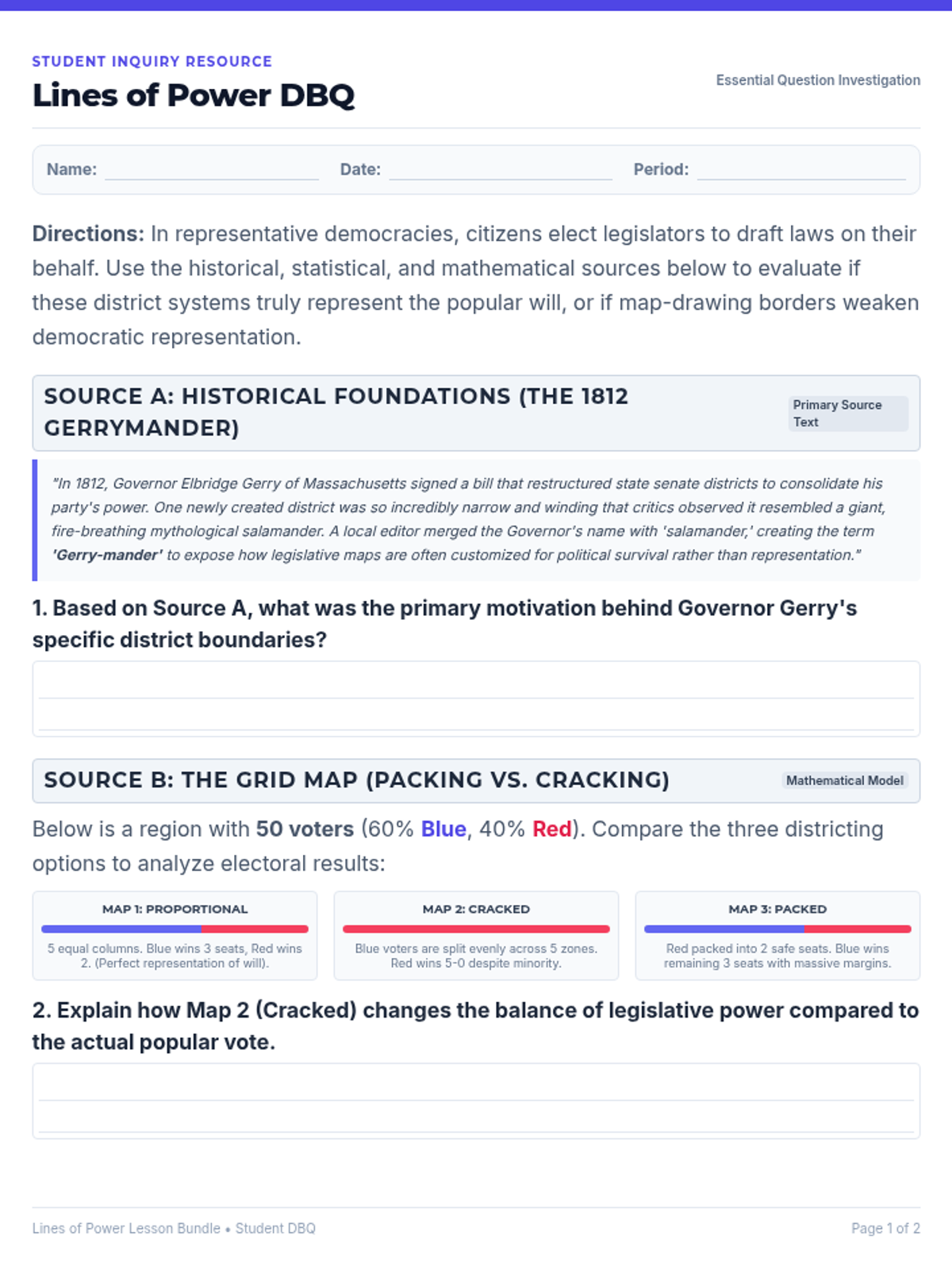
A structured, two-page DBQ worksheet for students containing a historical gerrymandering source, a mathematical grid map scenario, public opinion data, and a lined synthesis writing section.
A highly visual, six-slide presentation introducing the mechanics of redistricting, visual diagrams of packing and cracking, and discussion prompts exploring the core essential question.
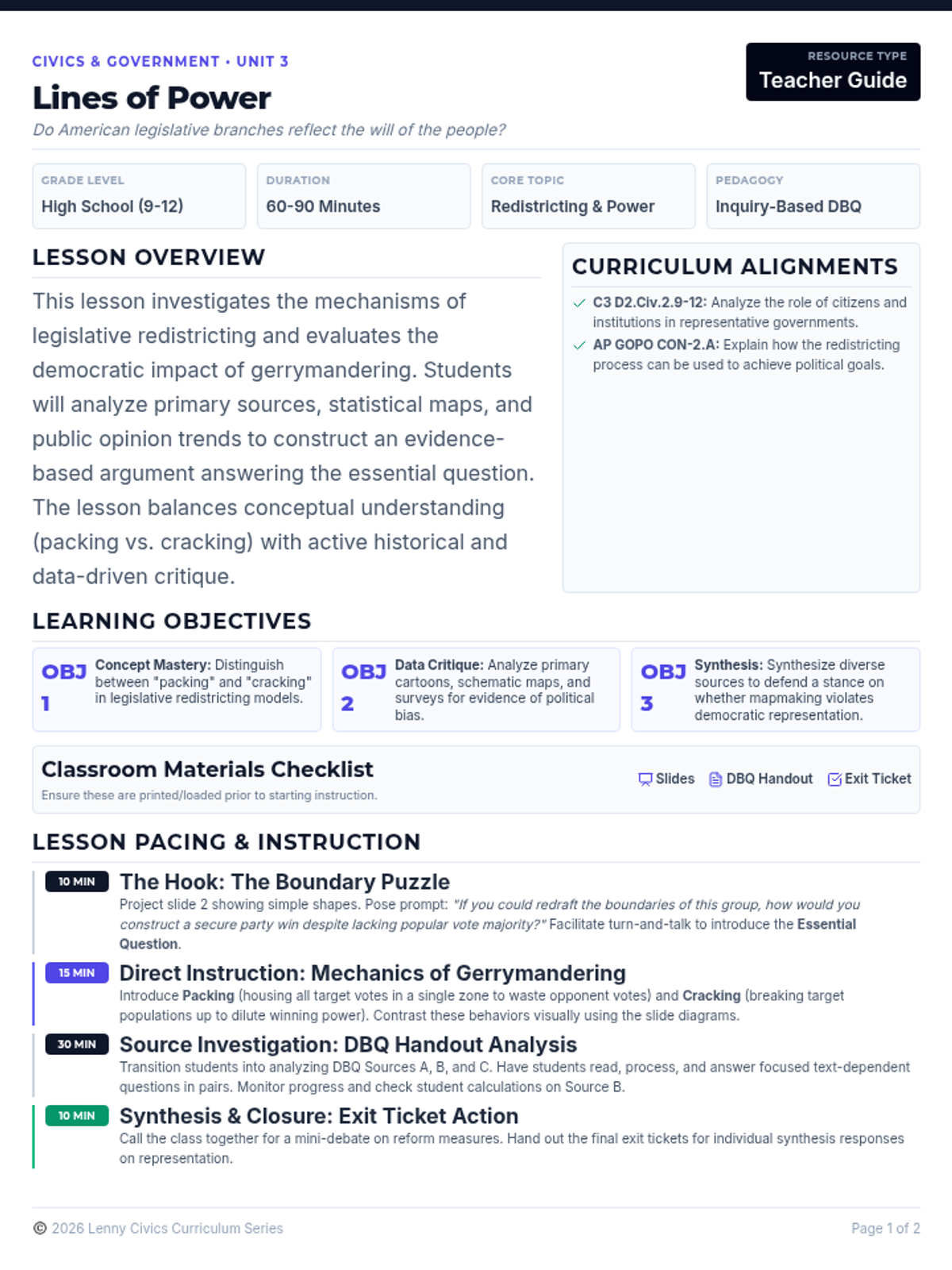
A professional, two-page editorial teacher guide providing instructional pacing, discussion scaffolding, standard alignments, and detailed answer keys/rubrics for the Lines of Power lesson.