An engaging slide deck for the Calendar Chronicles lesson, featuring warm-up prompts, an embedded educational video, visual comparisons of weekdays and weekends, and activity instructions.
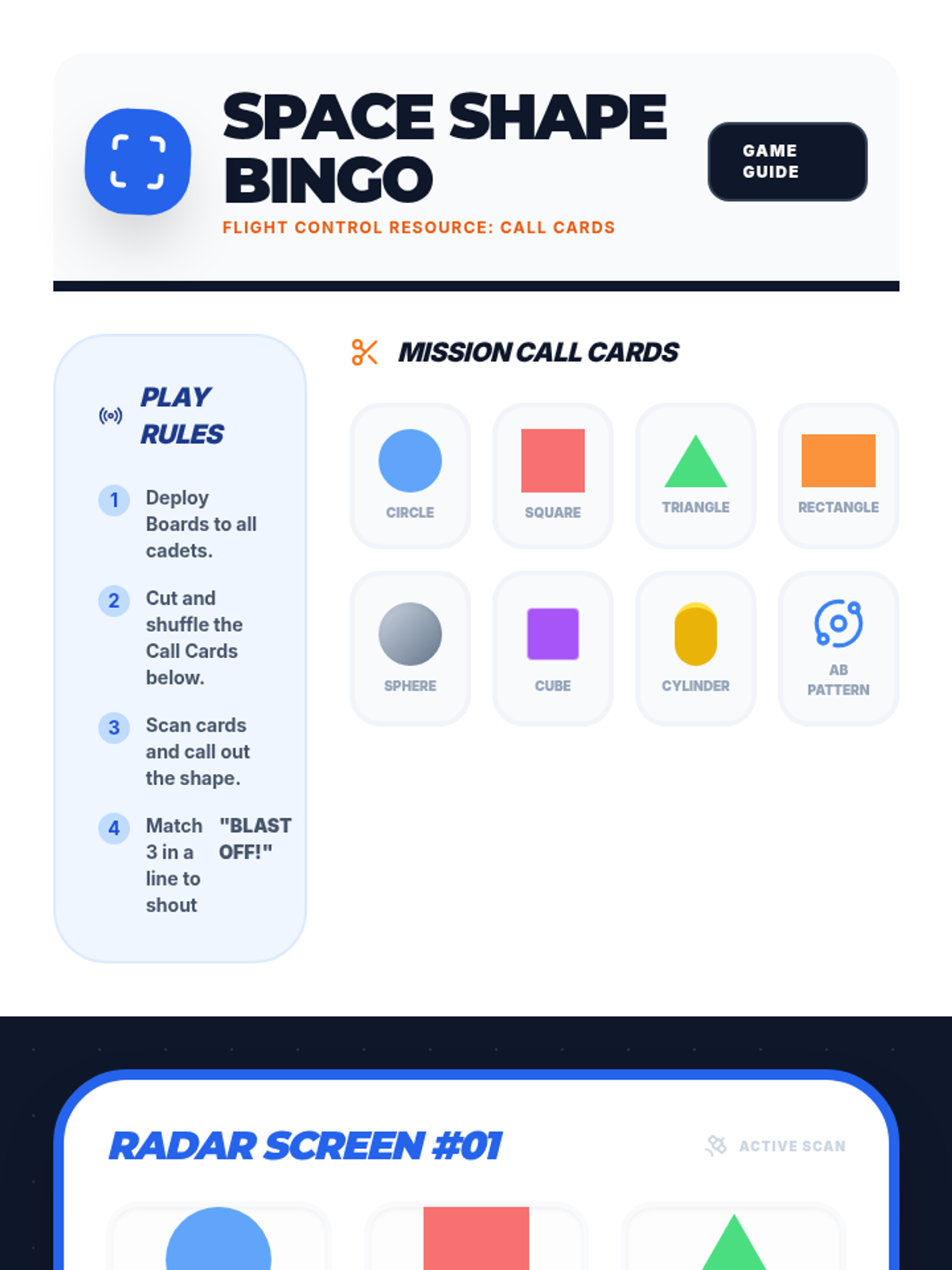
A classroom-wide Bingo game where students identify 2D and 3D shapes. Features a magical 'Shape Sorcerer' theme with unique boards and teacher call cards for engaging geometric recognition.
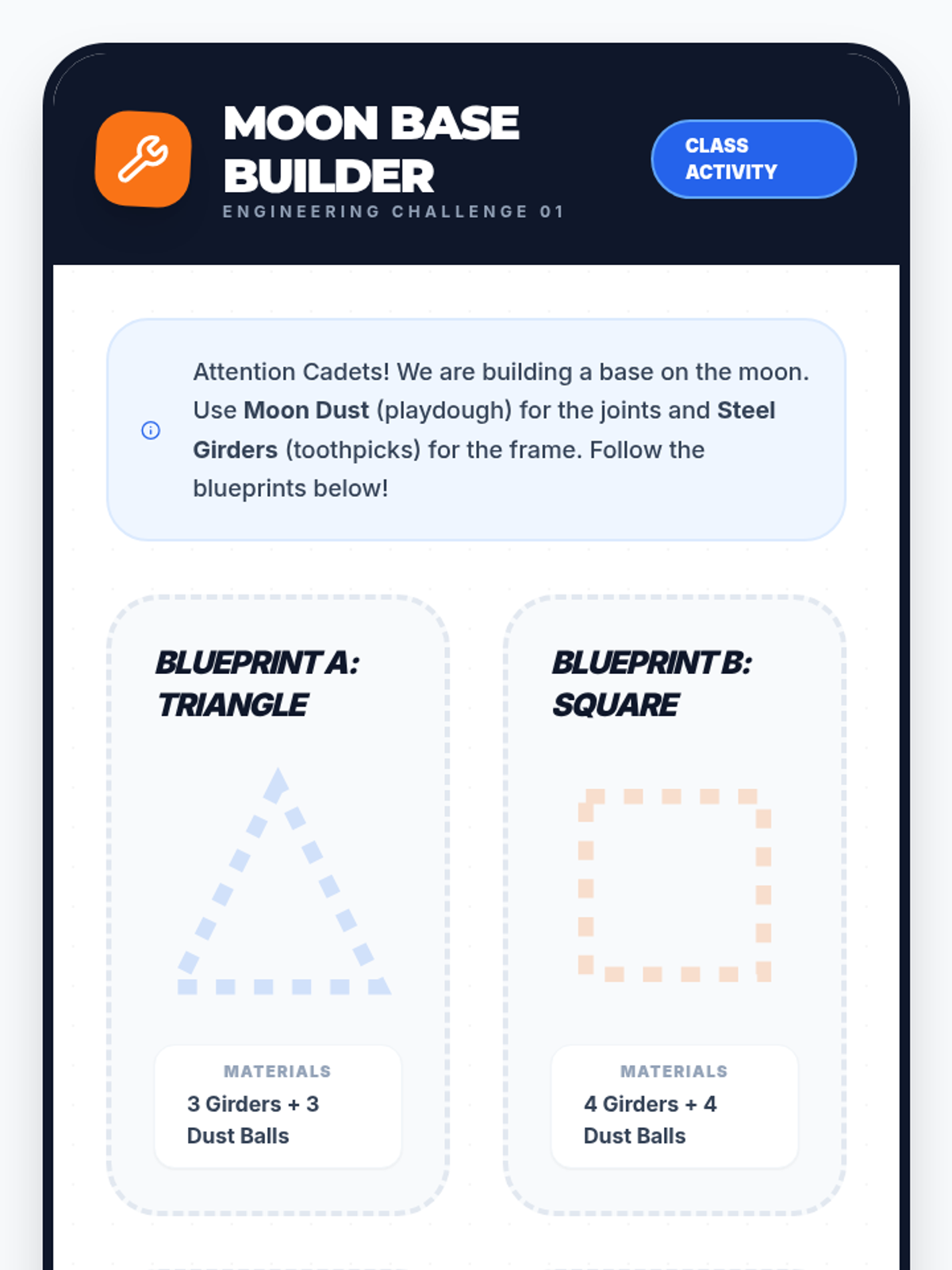
A hands-on construction activity where students build 2D and 3D shape 'skeletons' using playdough and toothpicks. Includes visual mats for triangles, squares, cubes, and pyramids.
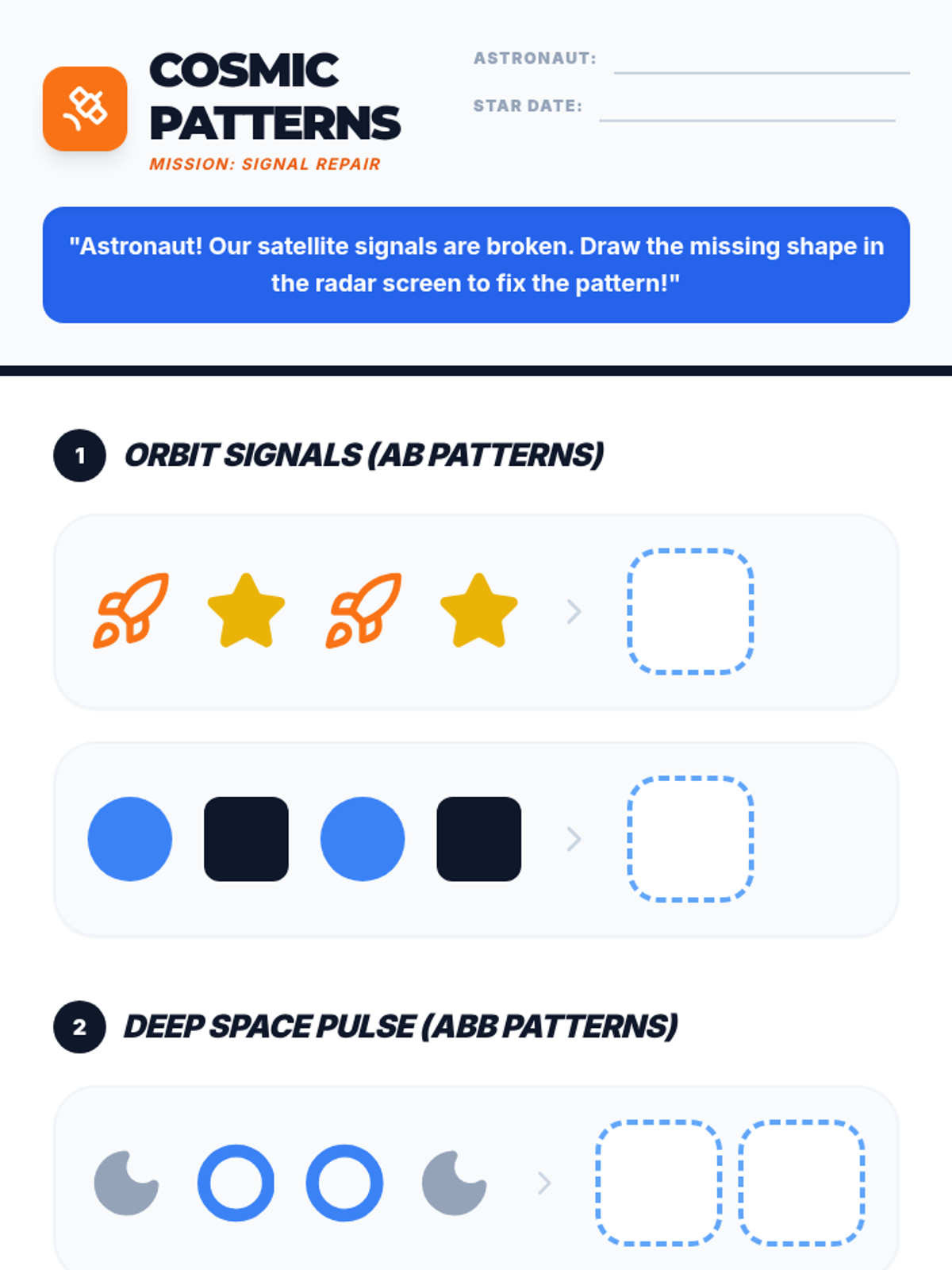
A fun, pattern-focused worksheet where students complete AB and ABB shape sequences in an interstellar theme. Includes 2D and 3D shape identification and a creative 'build your own signal' section.
A visual presentation for teaching Kindergarten students about 2D vs 3D shapes and simple repeating patterns. Features 'The Astronaut's Anthem' and interactive pattern examples with a futuristic space theme.
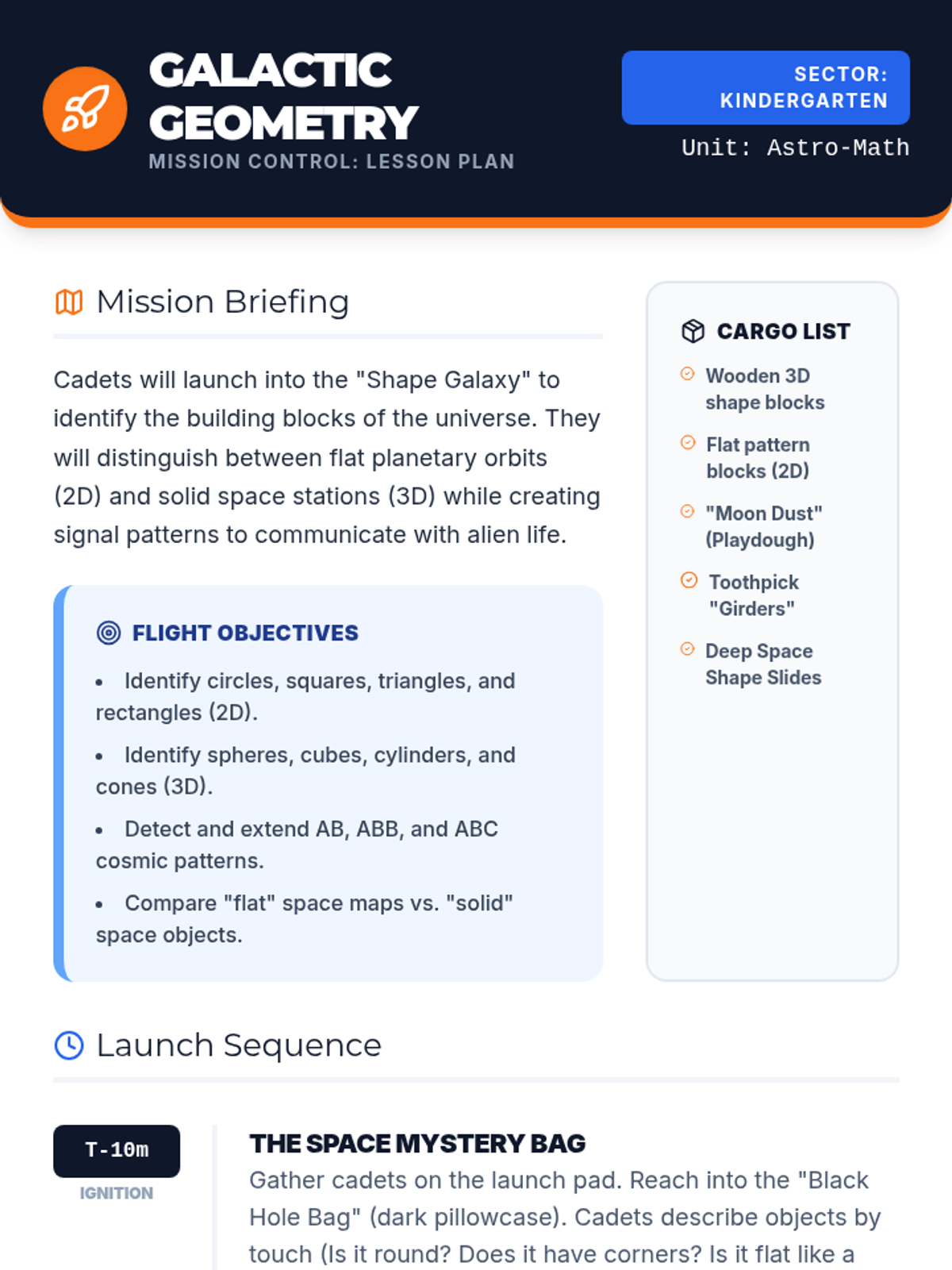
A comprehensive lesson plan for teachers, detailing the 'Galactic Geometry' curriculum. Includes learning objectives, materials list, a timed lesson flow, and specific differentiation strategies for Kindergarten 'Space Explorers'.
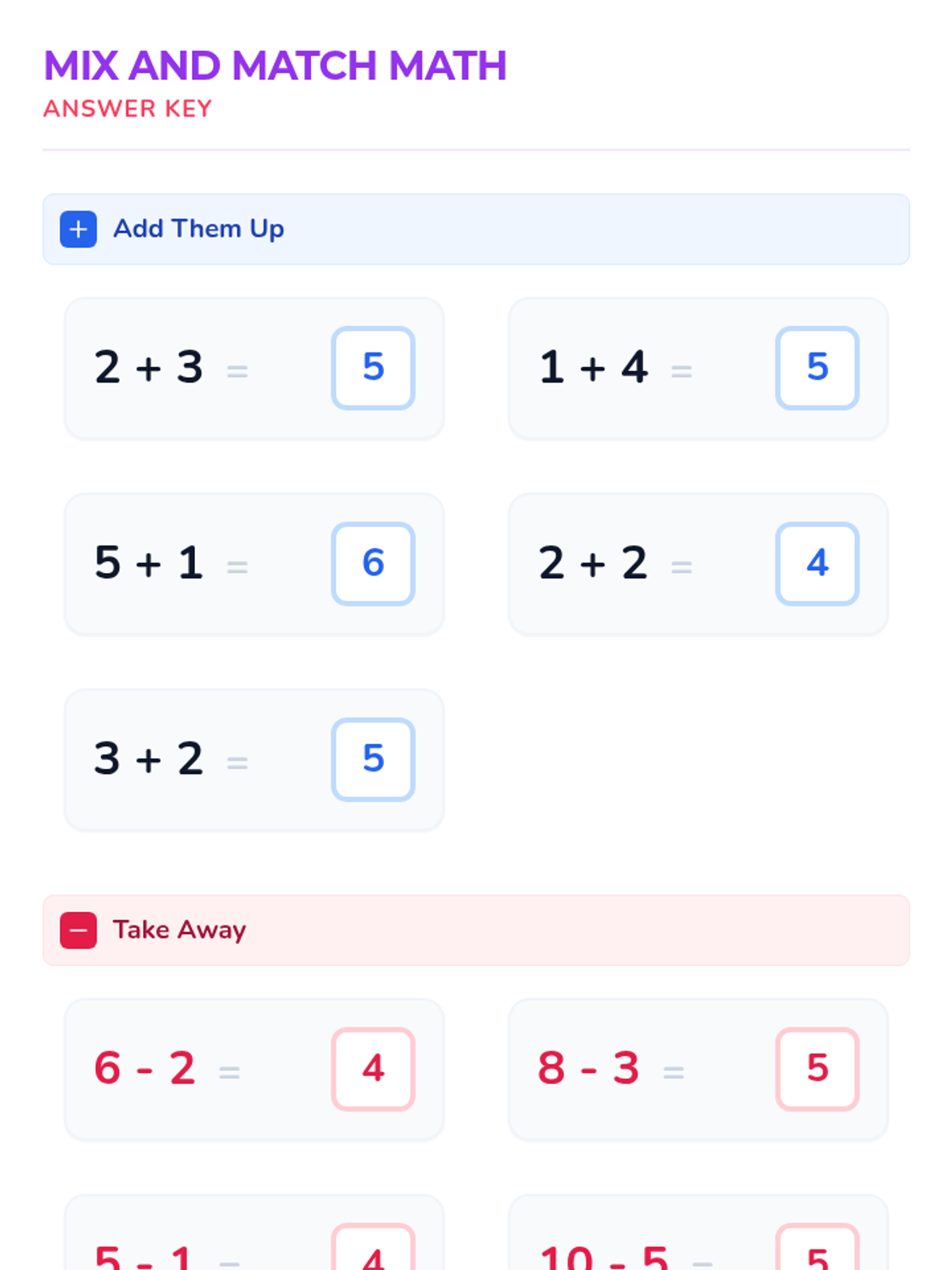
The answer key for the Mixed Math Steps Worksheet, providing teacher-ready solutions.
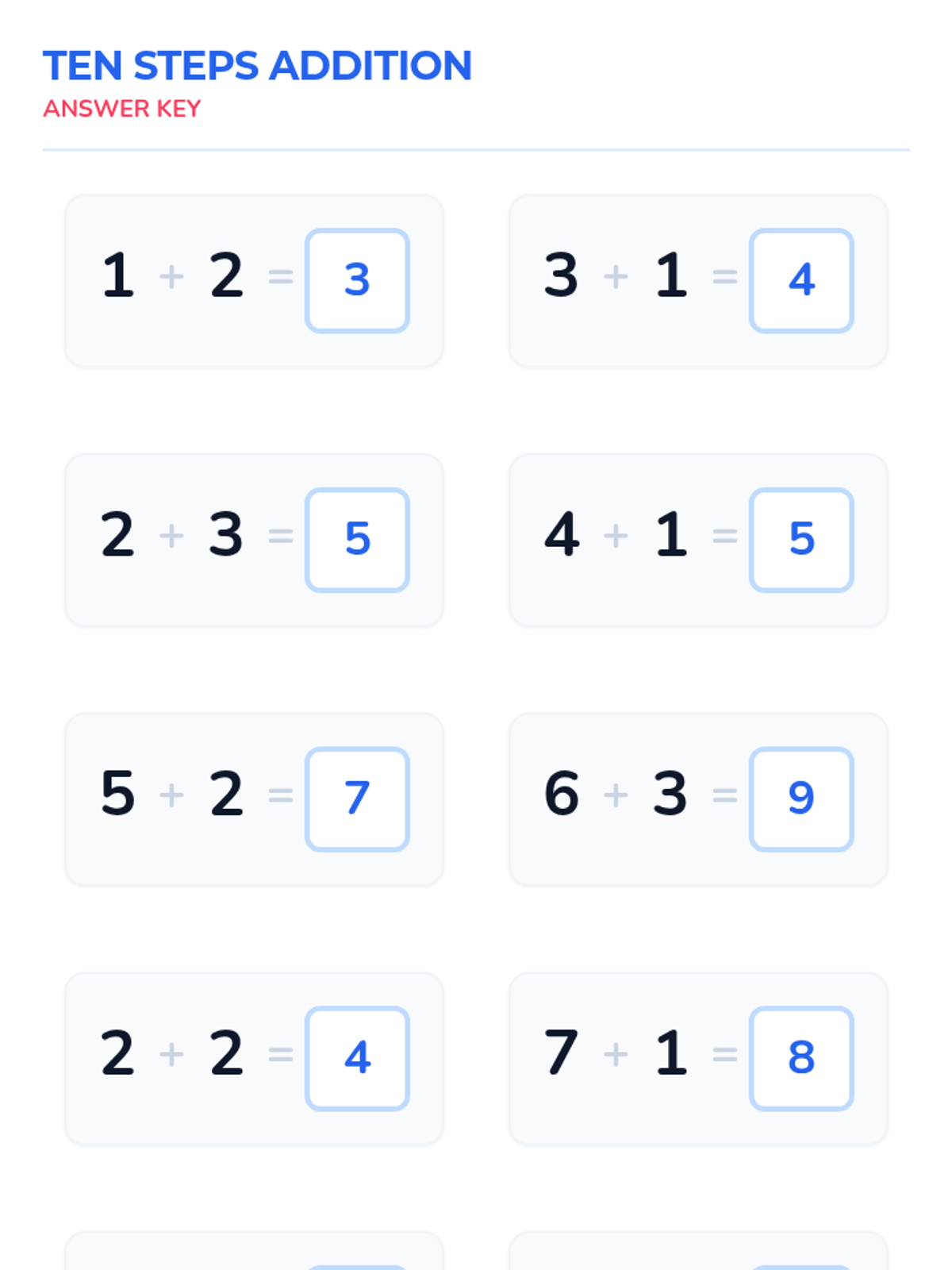
The answer key for the Ten Steps Addition Worksheet, providing teacher-ready solutions.
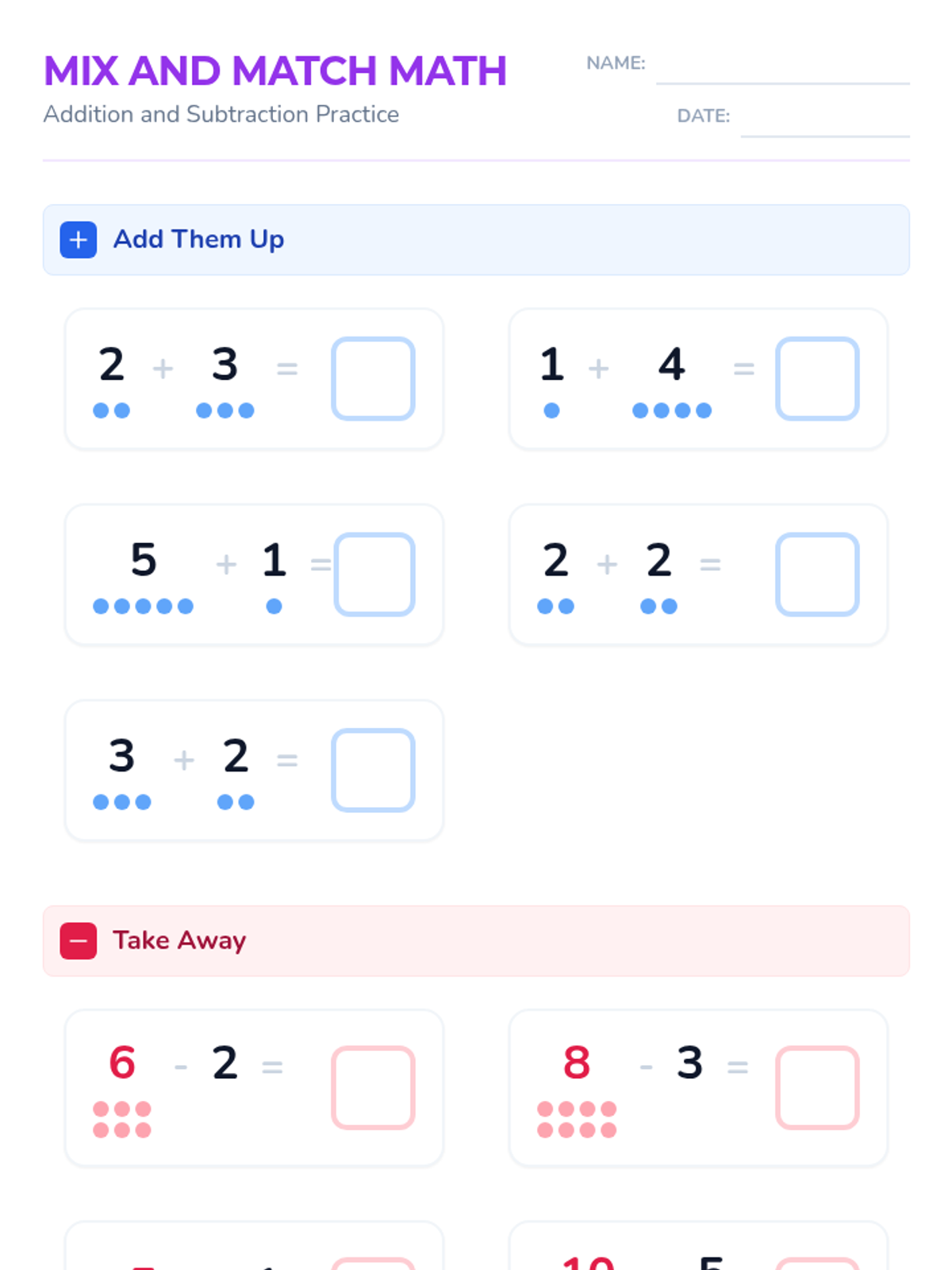
A mixed addition and subtraction worksheet with 5 addition problems (sums up to 10) and 5 subtraction problems (starting numbers up to 10), featuring visual counting dots.
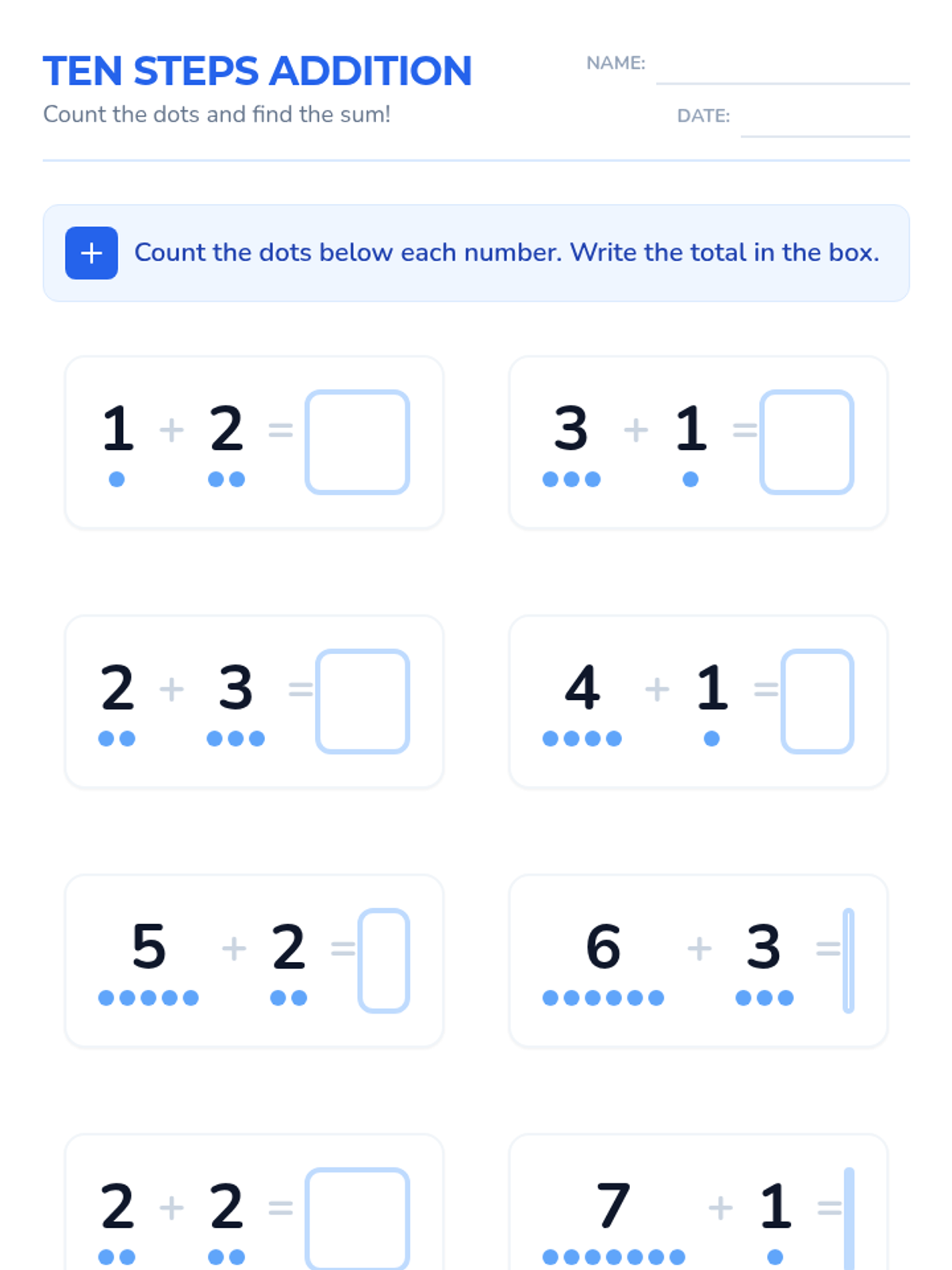
A super simple addition worksheet with 10 problems (sums up to 10), featuring visual counting dots under each number to support early elementary and autistic learners.
An introductory presentation that trains students as 'Operation Investigators,' teaching them how to identify addition and subtraction clues and how to use ten frames and number lines.
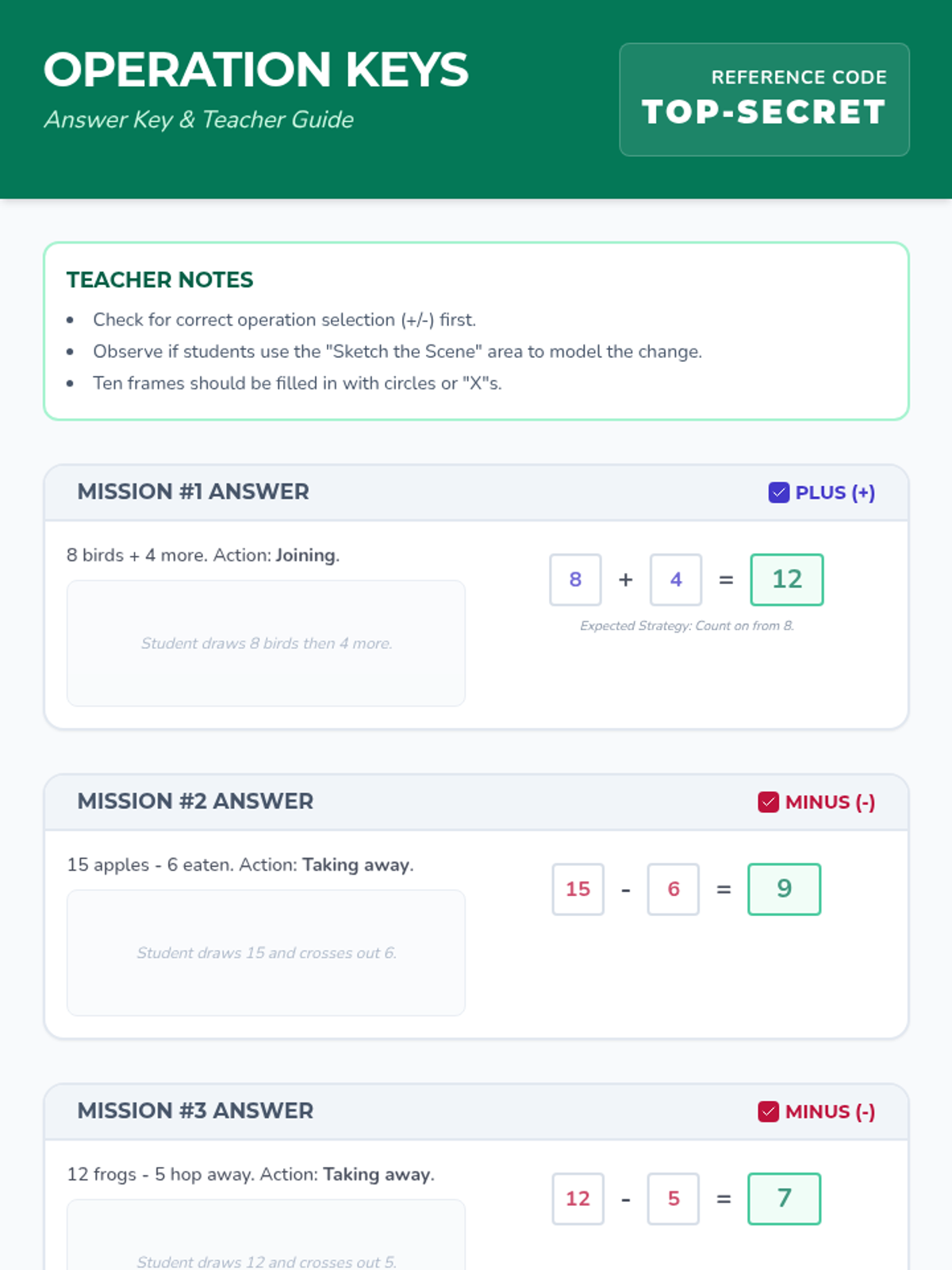
Teacher guide and answer key for the Mission Math worksheet, providing correct operations, equations, and expected student strategies.
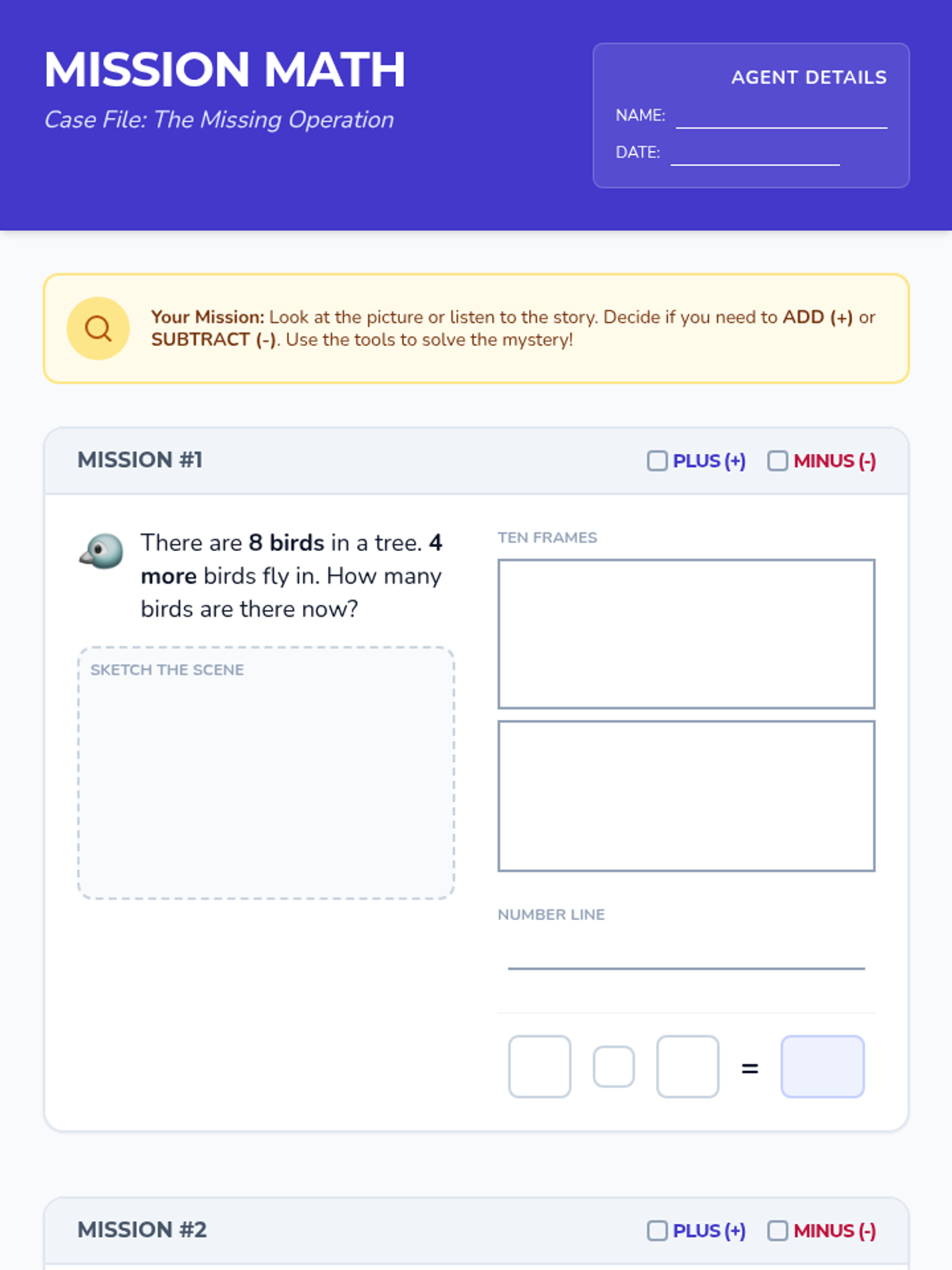
A two-page math worksheet where students investigate whether to add or subtract based on pictorial word problems within 20. It includes sketching areas, ten frames, and number lines for support.
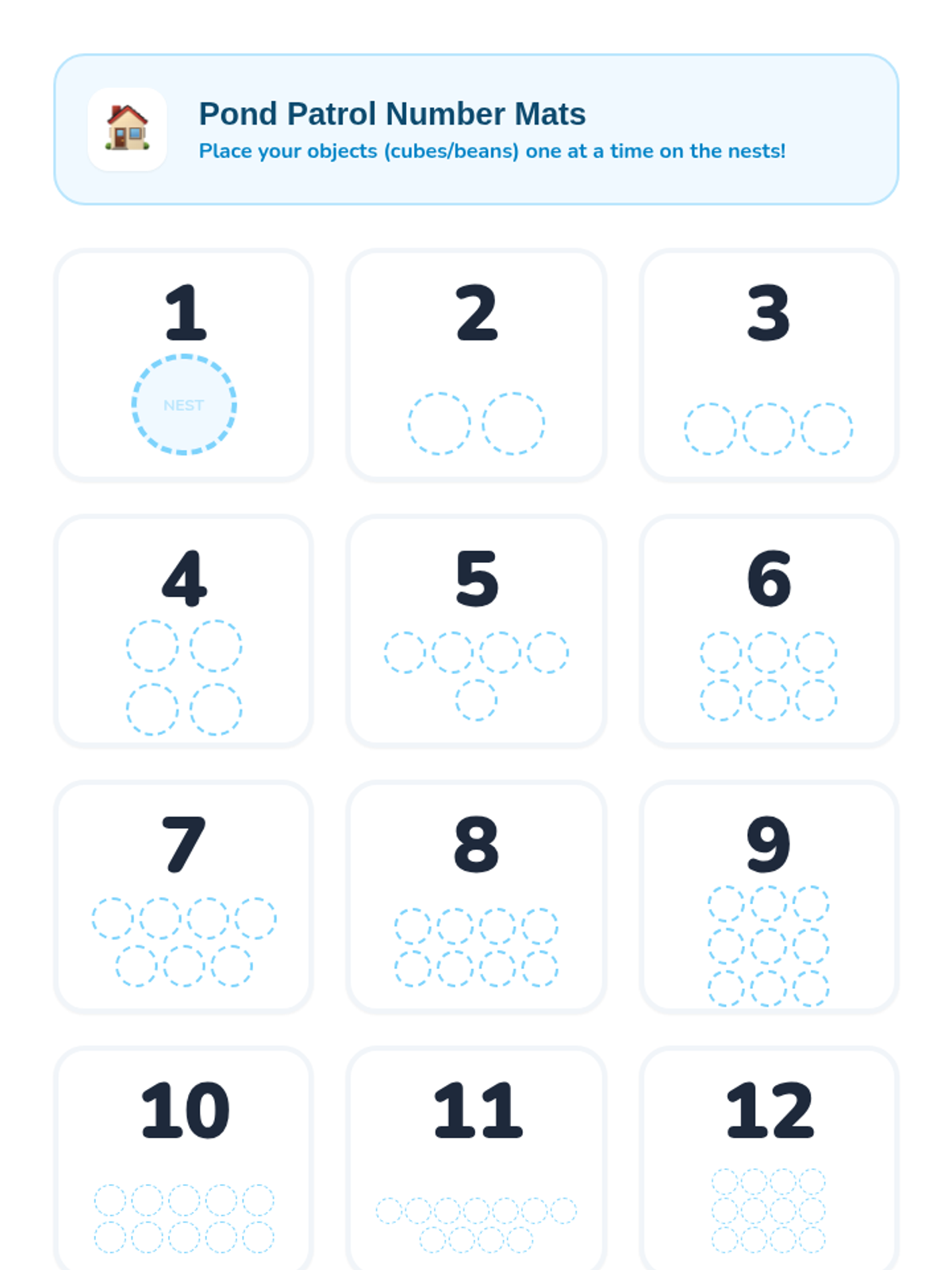
Printable number mats designed for tactile practice. Each mat features a large numeral and corresponding 'nests' (dotted circles) for students to place objects one at a time, reinforcing one-to-one correspondence and quantity representation.
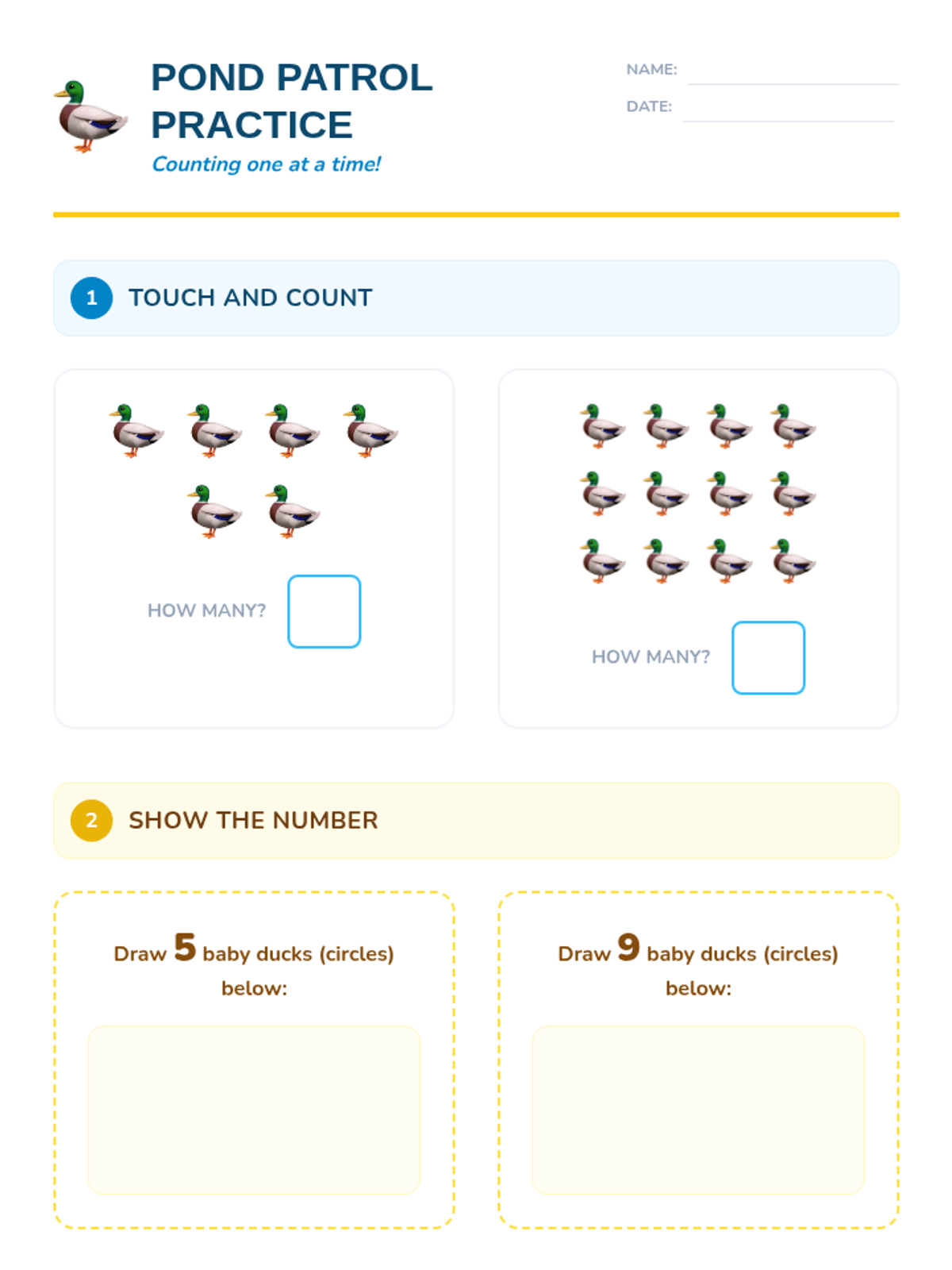
A refined worksheet that focuses on the two core skills: counting existing objects with one-to-one correspondence and 'representing' numbers by drawing or circling a specific quantity. Includes clear sections for numbers up to 20.
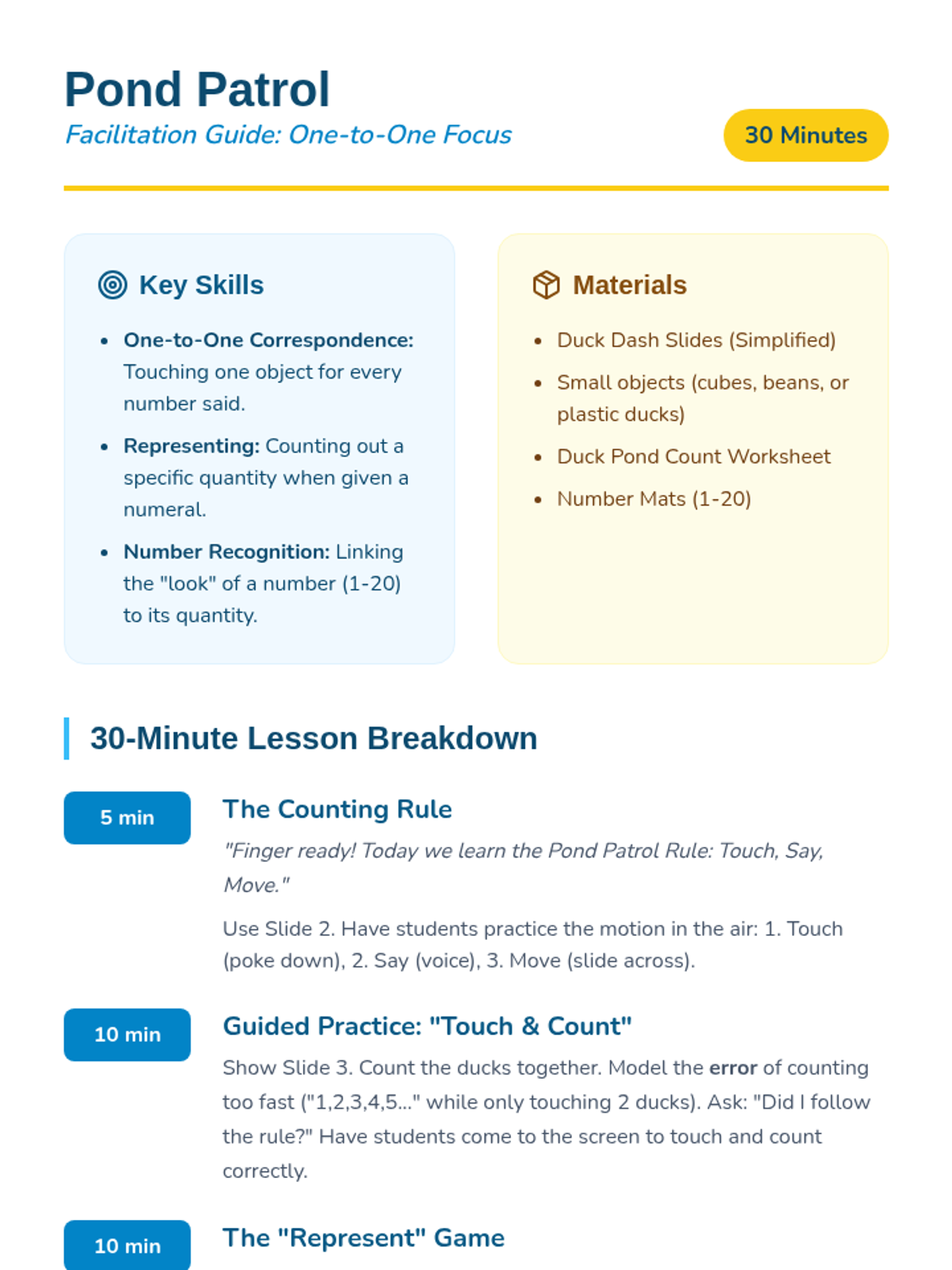
An updated teacher guide focusing on the 'Touch, Say, Move' rule for one-to-one correspondence. Includes a structured 30-minute lesson plan featuring a 'Represent' game where students count out specific quantities.
A simplified 6-slide presentation focusing on 'The Counting Rule' (Touch, Say, Move) for one-to-one correspondence. Includes interactive 'Show Me' challenges for numbers up to 20 to practice representing numerals with objects.
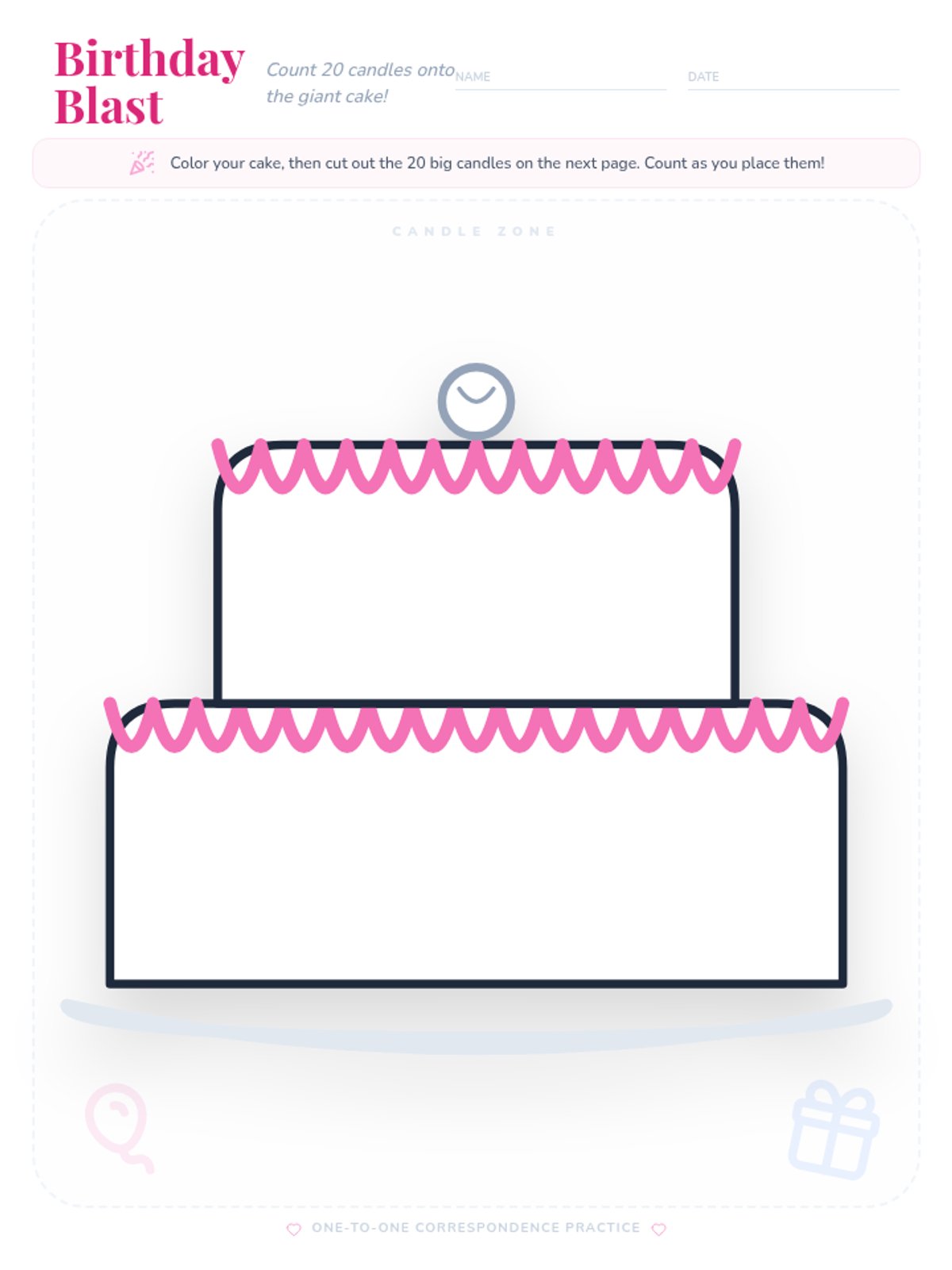
A revised version of the math warm-up with significantly enlarged candles for easier cutting and coloring, and a massive birthday cake to accommodate all 20 candles.
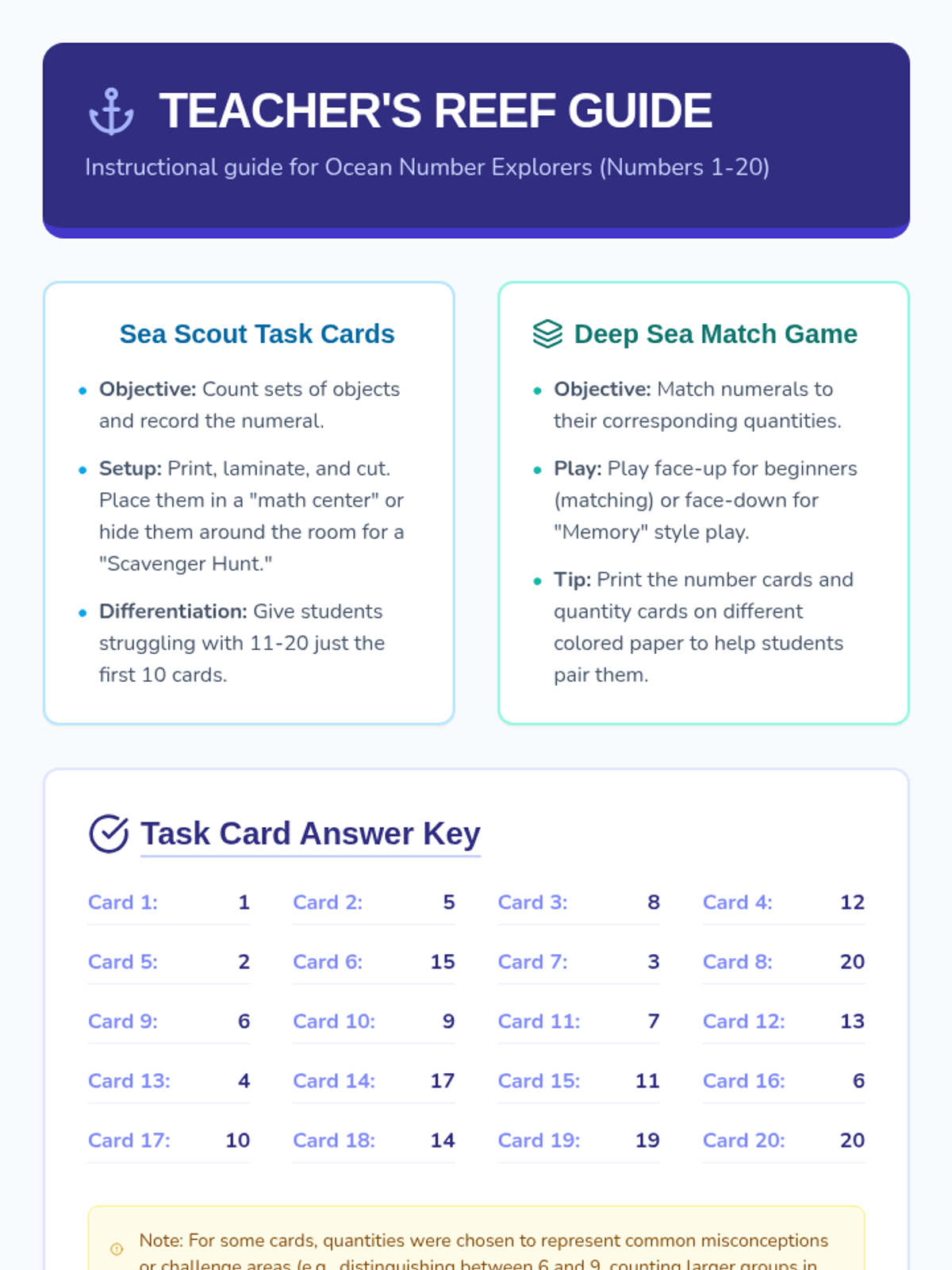
A teacher's guide for the Ocean Number Explorers activities. Includes instructions for use, differentiation strategies, scaffolding prompts, and a full answer key for the Sea Scout Task Cards.
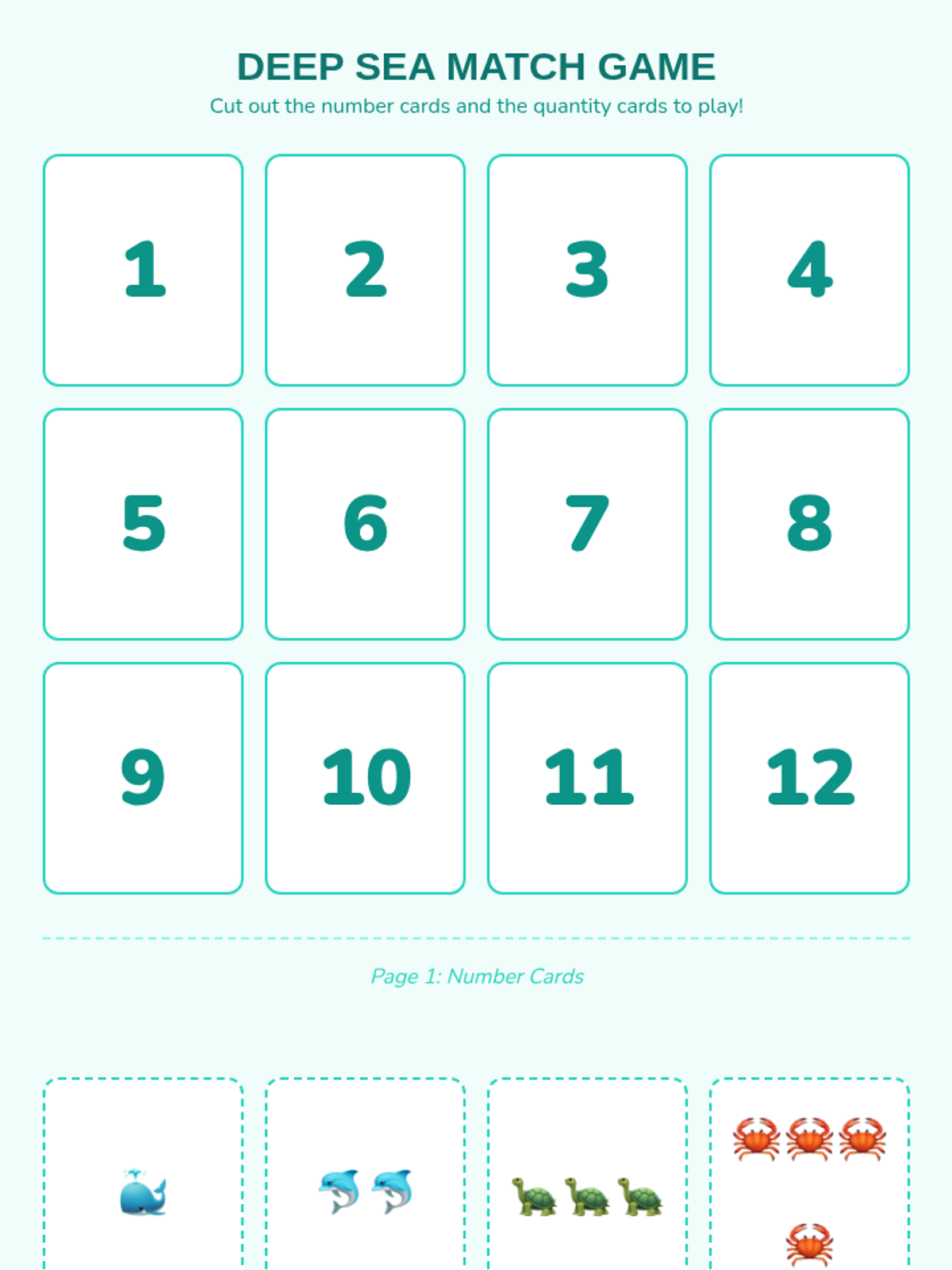
A matching game featuring ocean creatures and numbers 1-20. Includes two sets of cards: one with clear numerals and another with corresponding sets of ocean emojis for students to count and pair.
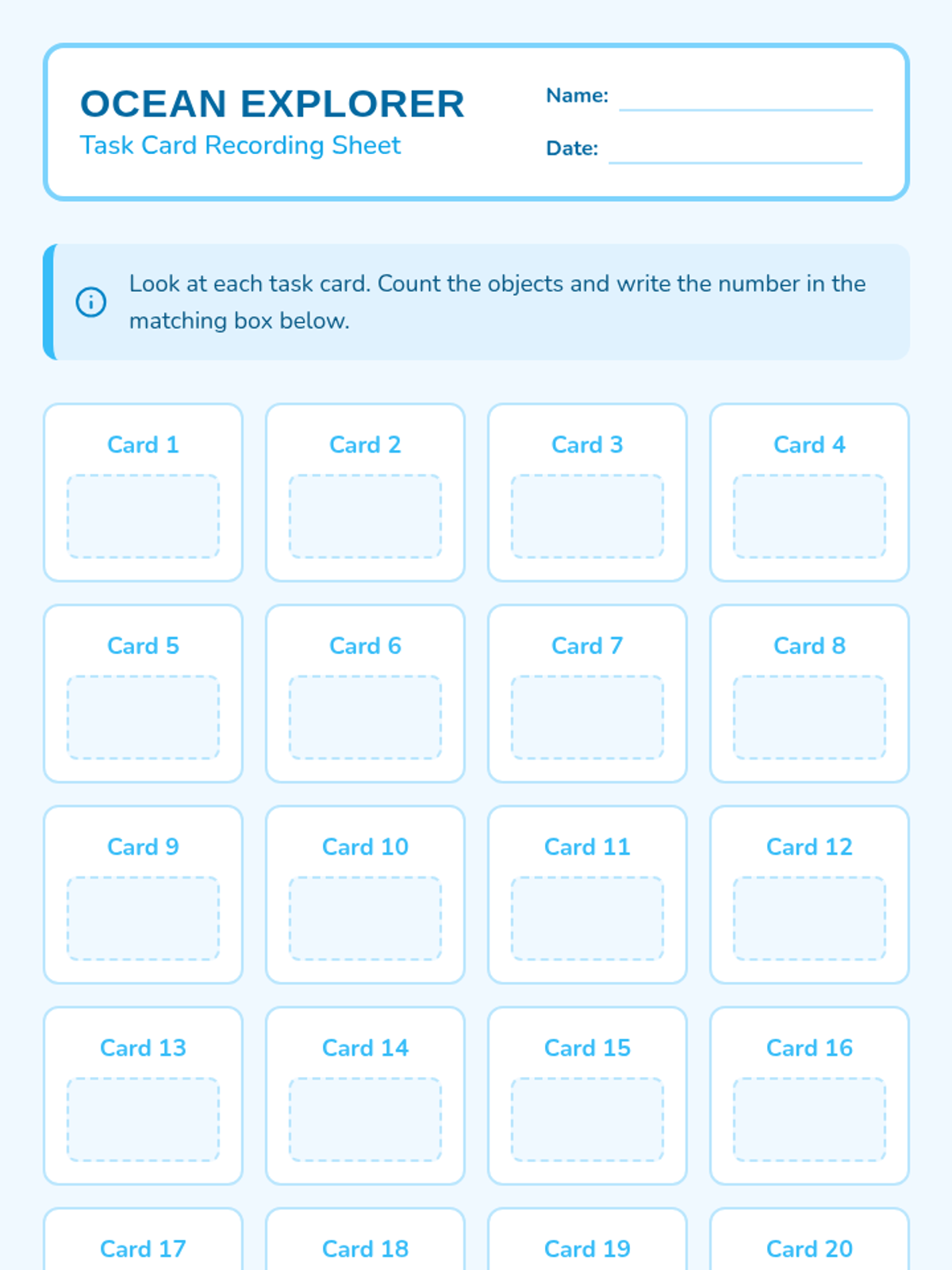
A structured recording sheet for students to use with the Sea Scout Task Cards. It features numbered boxes for numbers 1-20 and space for name and date, keeping work organized and legible.
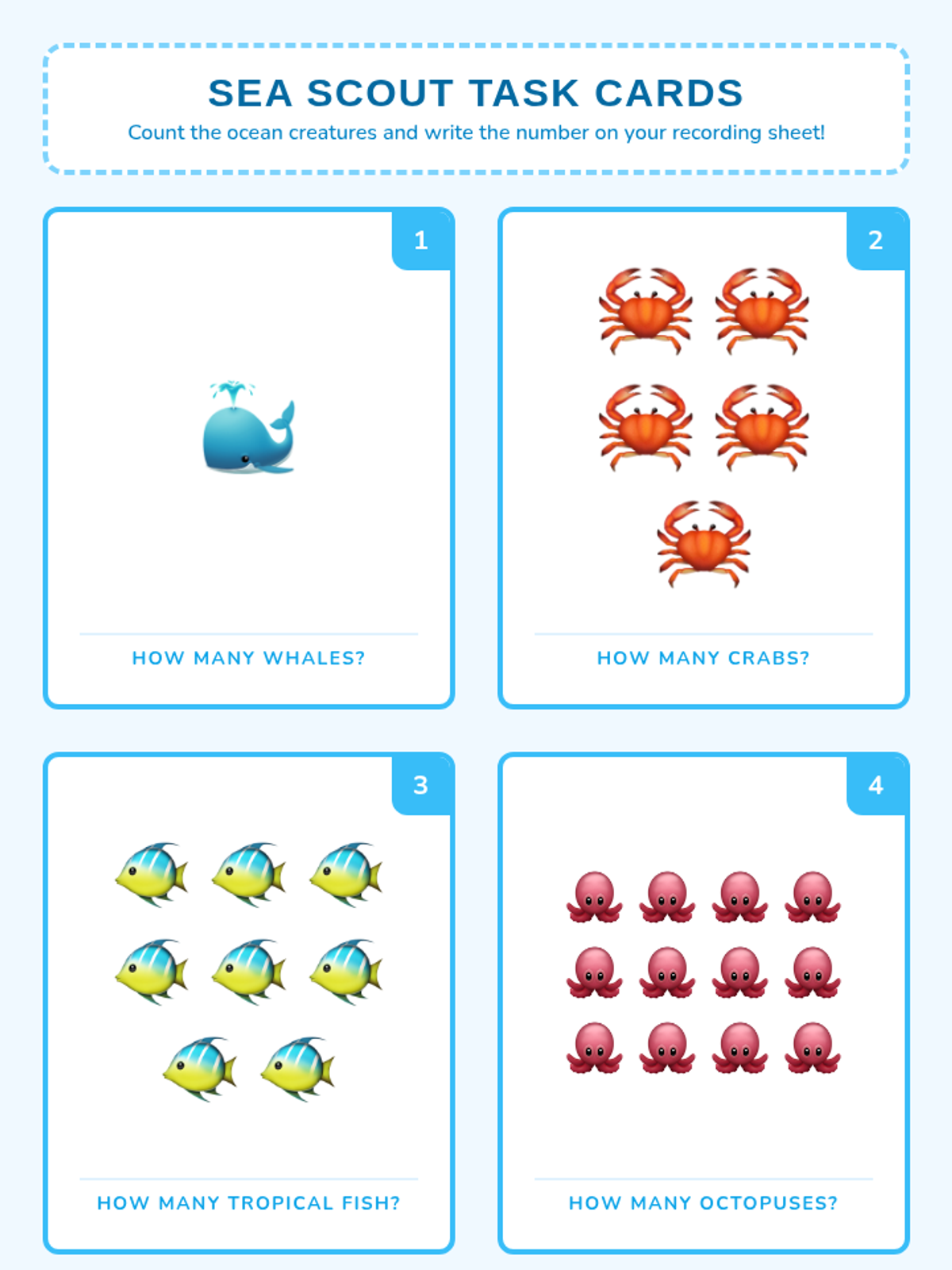
A set of 20 ocean-themed task cards for students to practice counting objects up to 20. Each card features cute ocean emojis and a clear question to guide one-to-one correspondence practice.
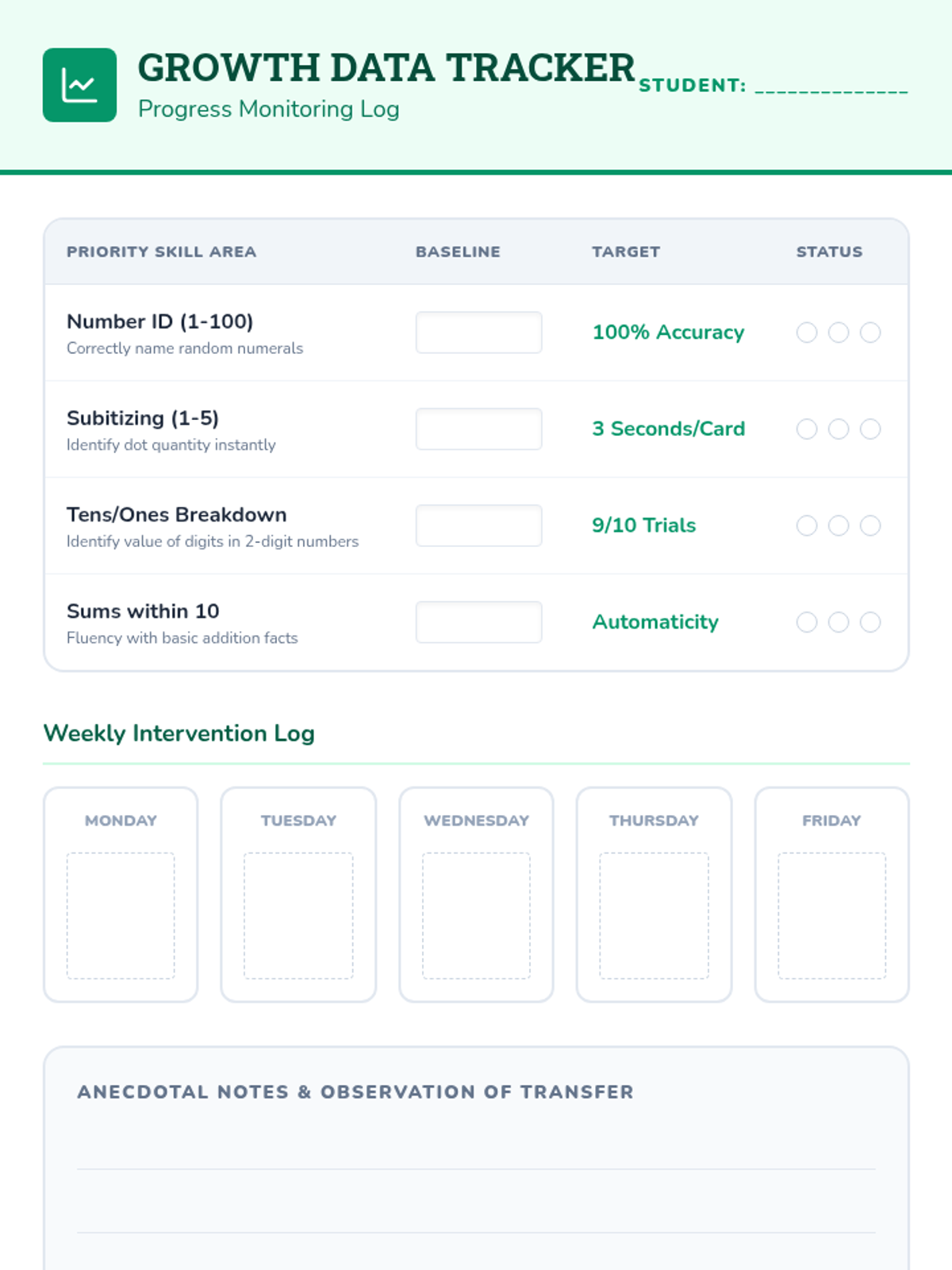
A teacher-facing data tracking tool for monitoring student progress across core number sense domains. Features a skills matrix, weekly intervention log, and space for anecdotal transfer notes.
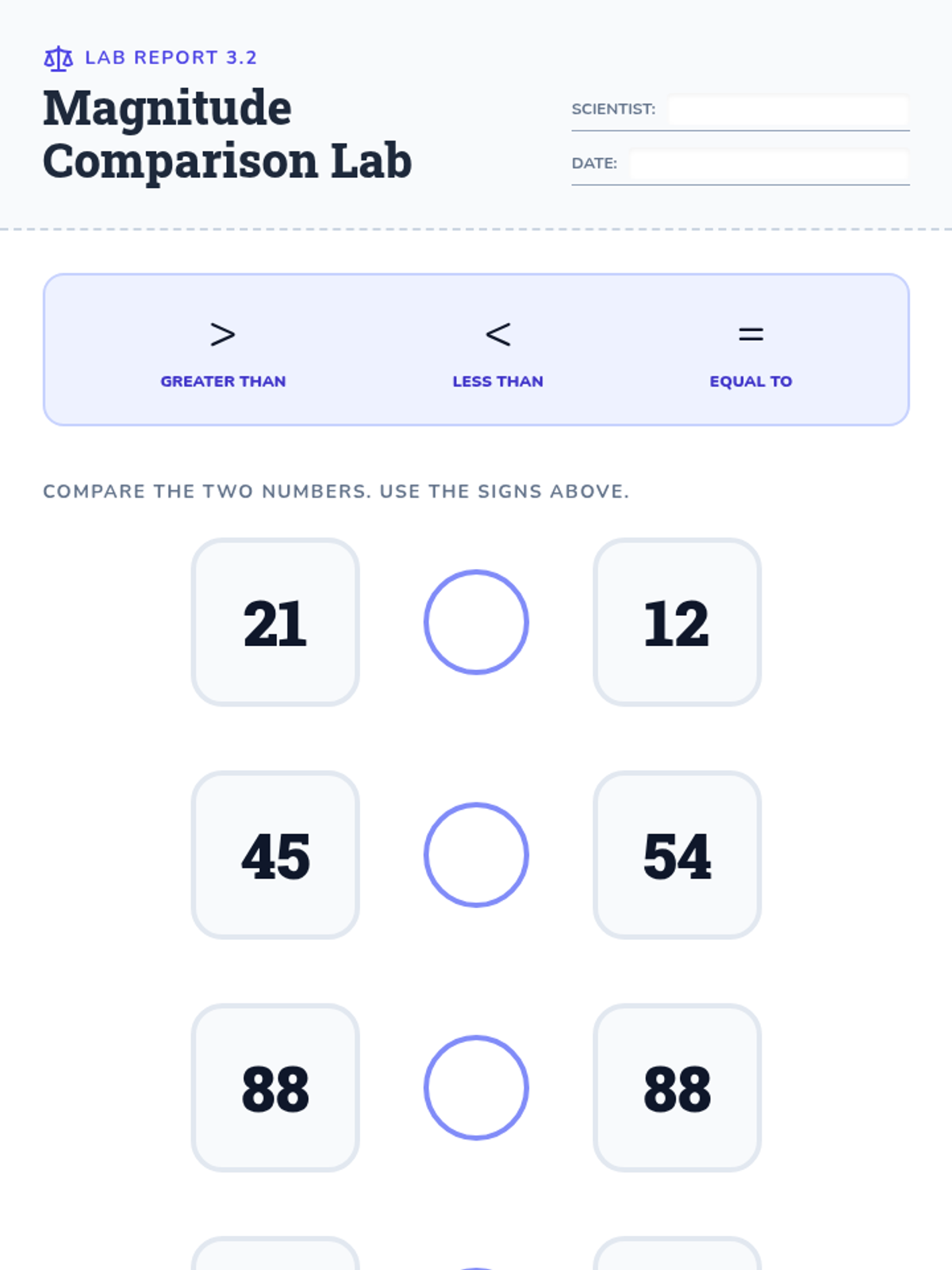
A magnitude comparison worksheet for practicing "greater than," "less than," and "equal to" with numbers up to 100. Includes large visual aids and clear instructions for students with significant number sense deficits.
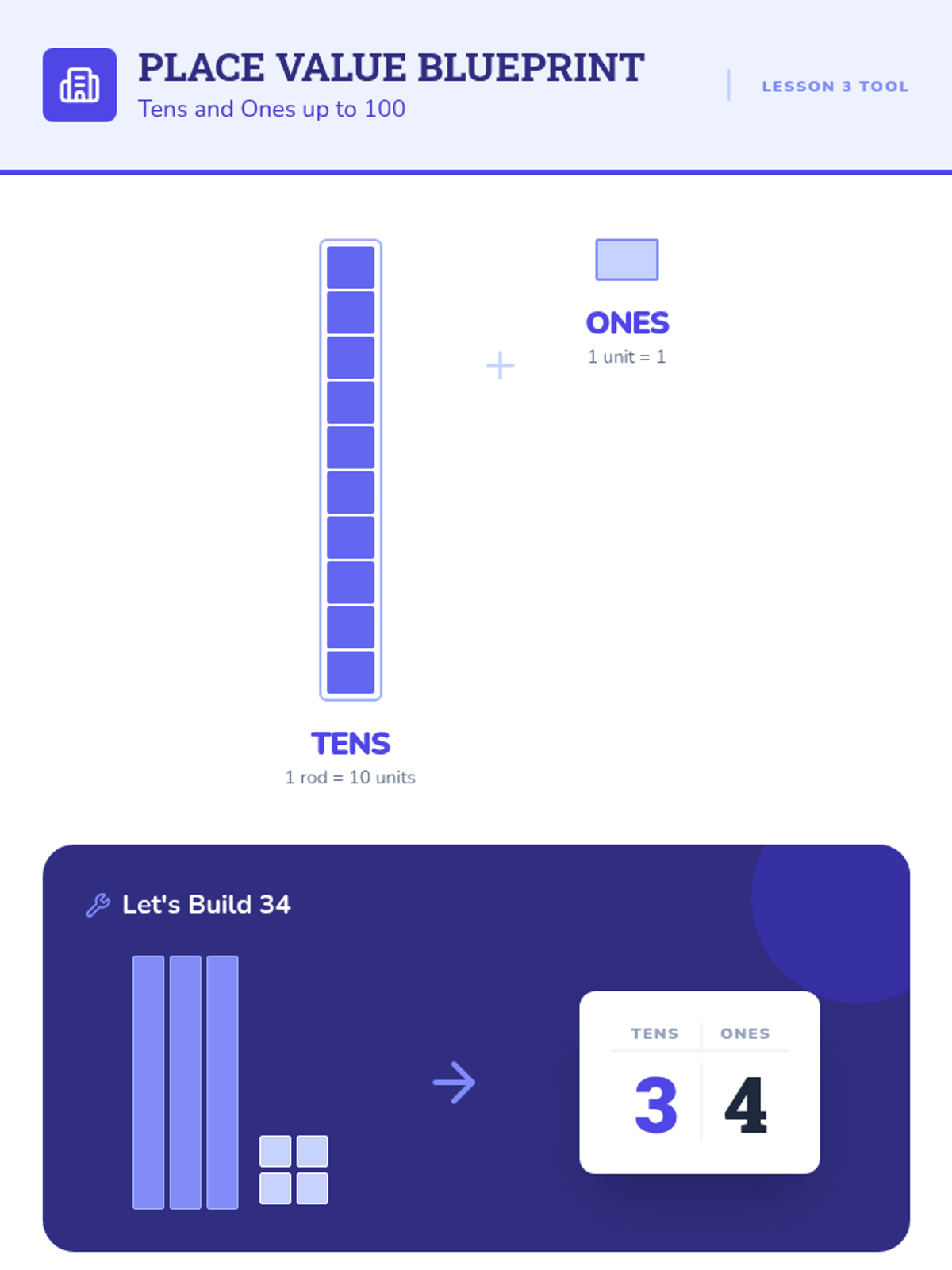
An anchor chart for place value up to 100, visually demonstrating how tens and ones are built using base-ten block representations and a place value chart.
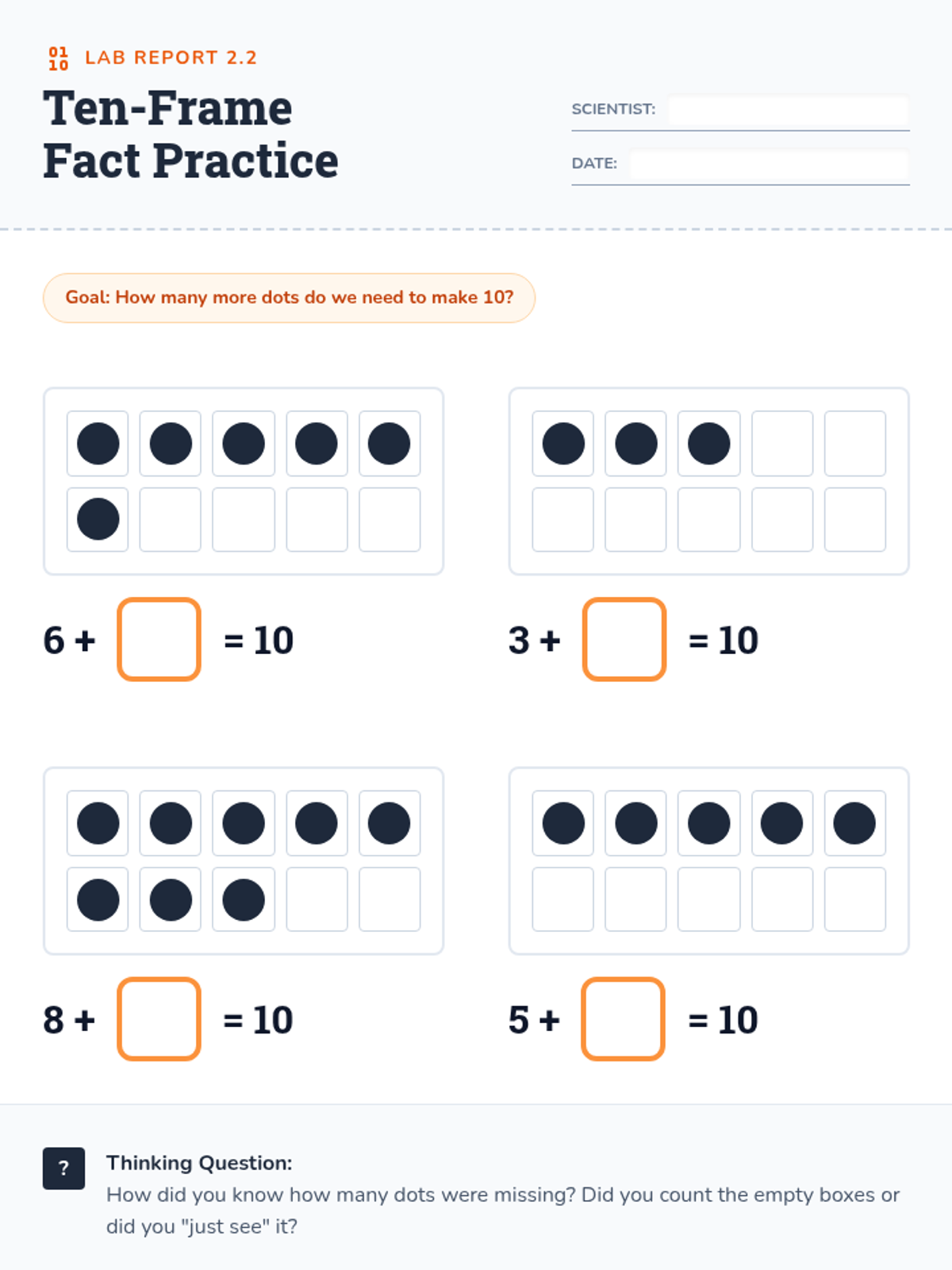
A practice worksheet focusing on "making ten" using visual ten-frames. This supports basic fact fluency and number composition within 20 for students with significant gaps.
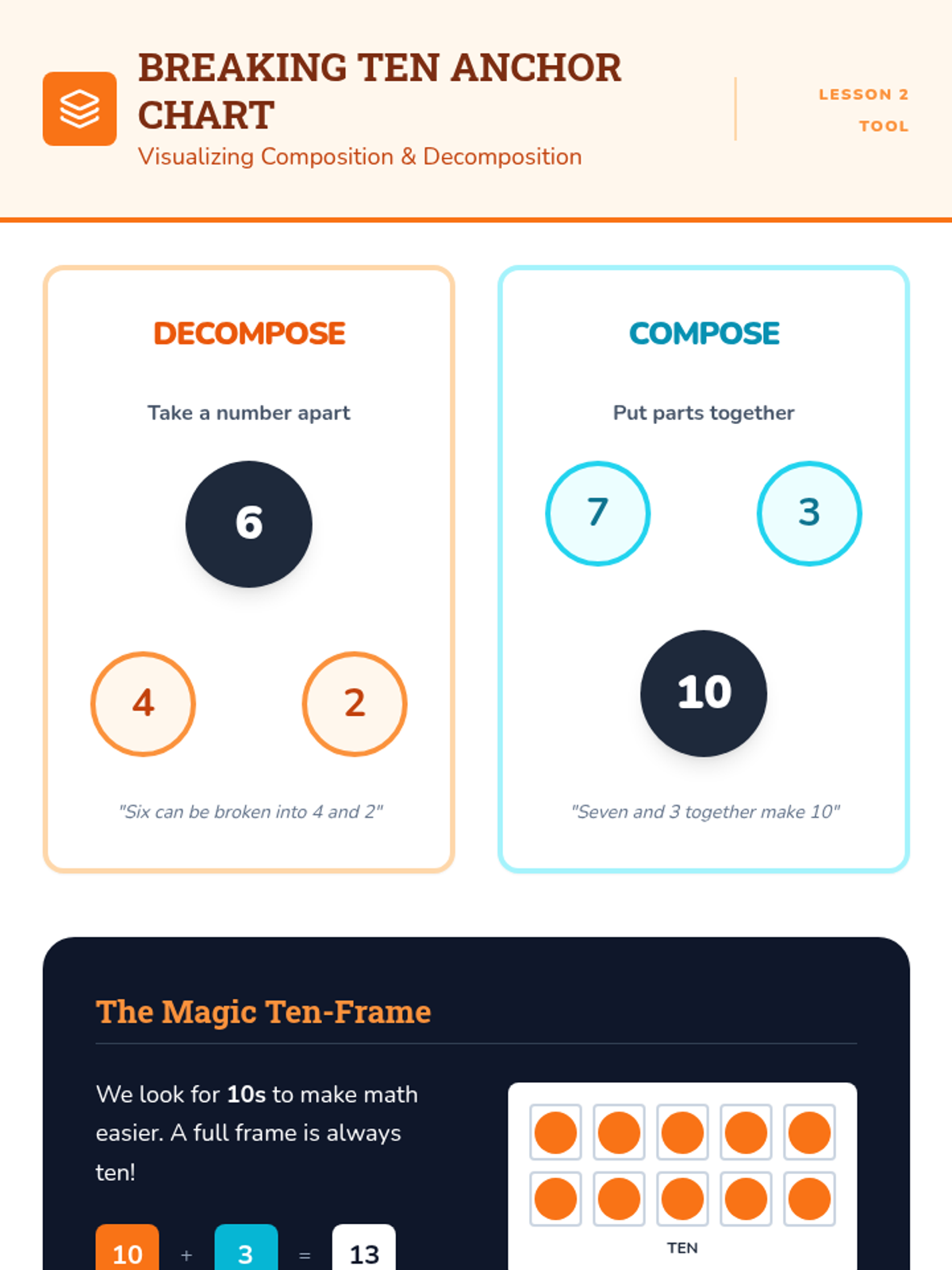
A high-contrast visual anchor chart explaining the concepts of composing and decomposing numbers, with a specific focus on making tens and the part-part-whole relationship.
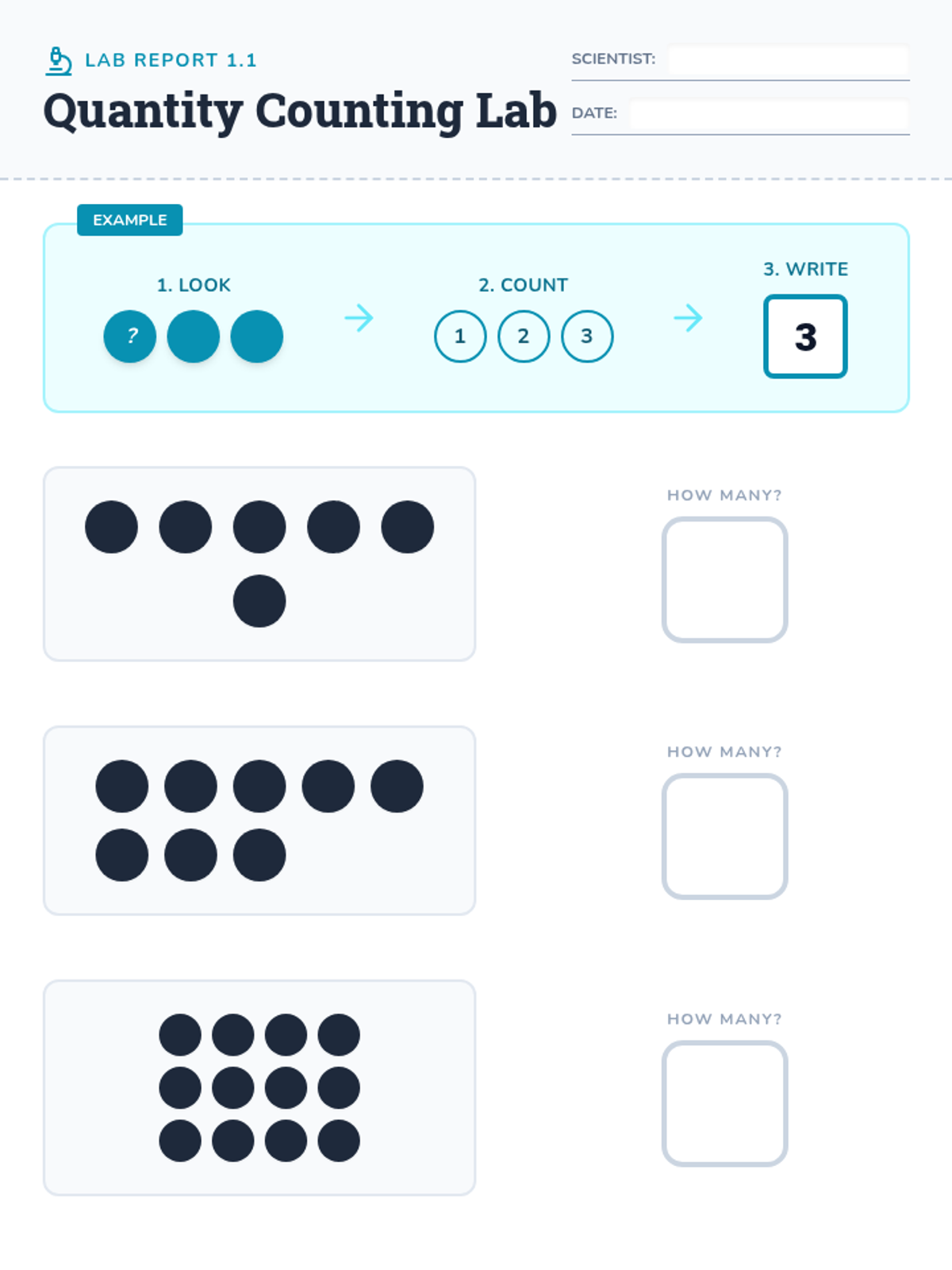
A student-facing worksheet for practicing 1:1 correspondence and number identification. Features a clear "Look-Count-Write" example and large, uncluttered workspaces for students with significant number sense gaps.
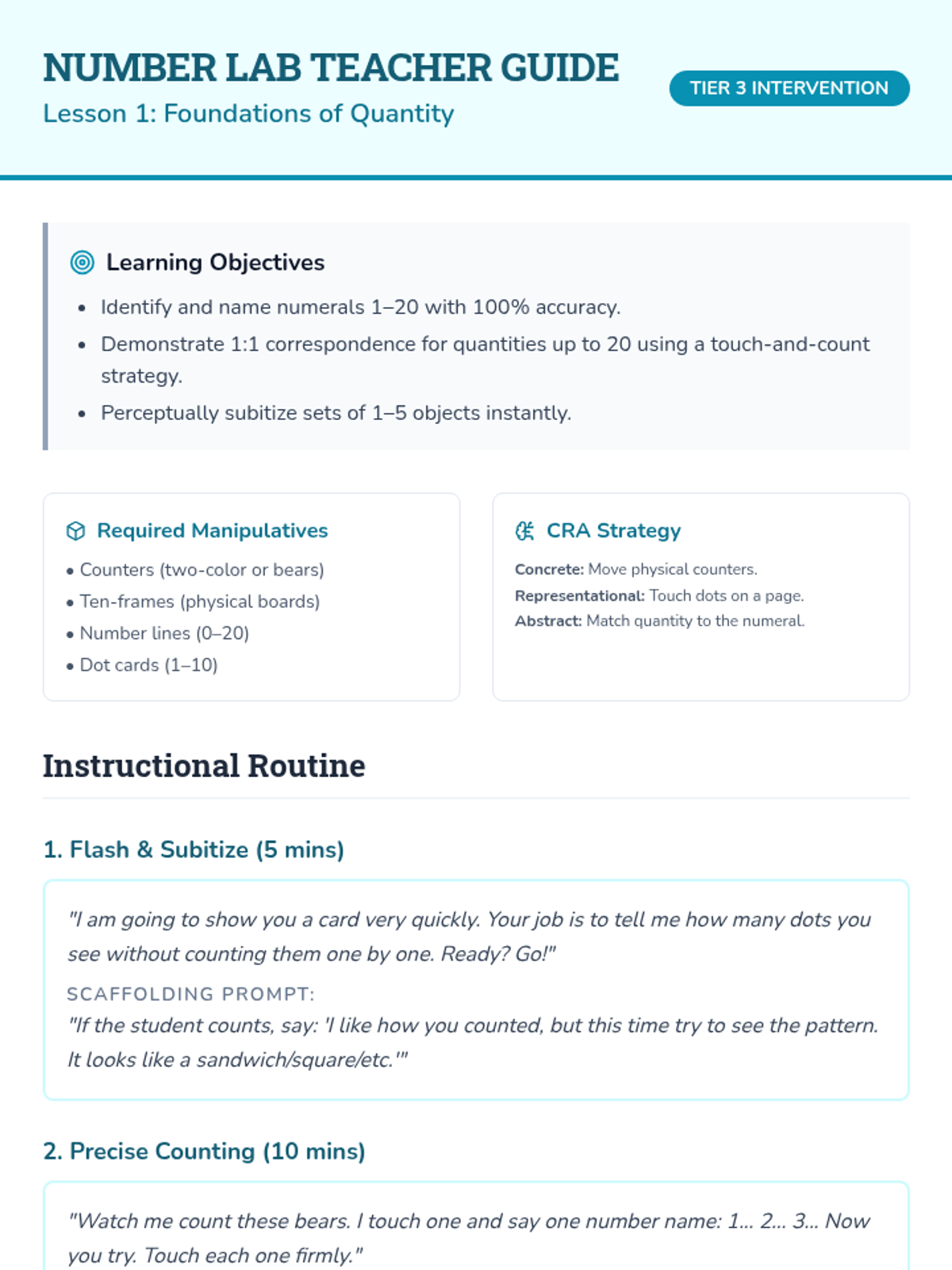
A detailed teacher guide for Lesson 1, featuring explicit instructional scripts, CRA strategies, and scaffolding prompts for students struggling with number sense foundations.
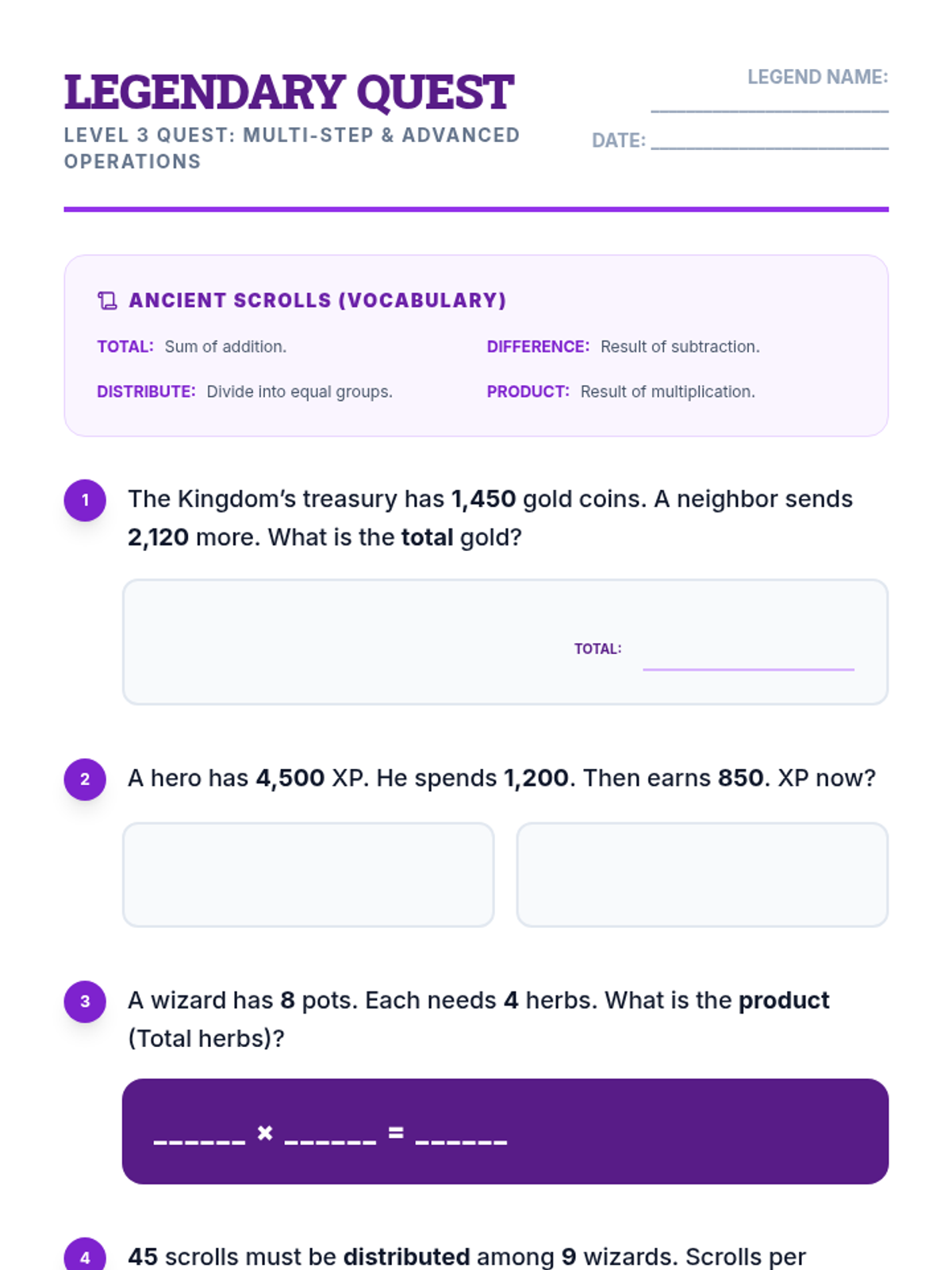
Extended Level 3 student worksheet featuring multi-step problems, 3-4 digit addition and subtraction, and basic multiplication and division for advanced students. Now includes 12 complex challenges and a reflection section. All problems and workspaces are kept on the same page.
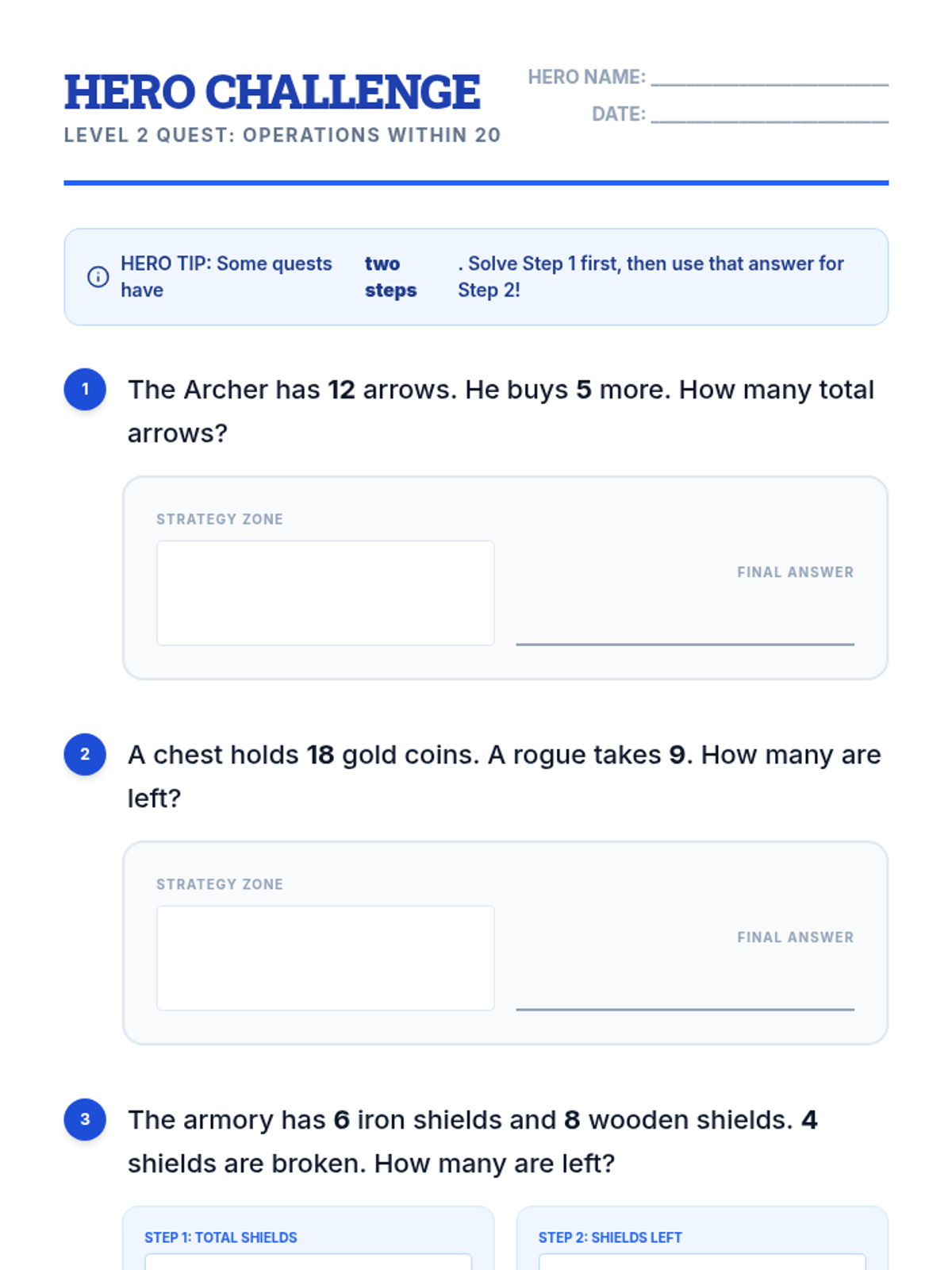
Extended Level 2 student packet featuring addition and subtraction within 20, now including 12 problems with chunked workspaces for multi-step challenges and a reflection page. All problems and workspaces are kept on the same page.
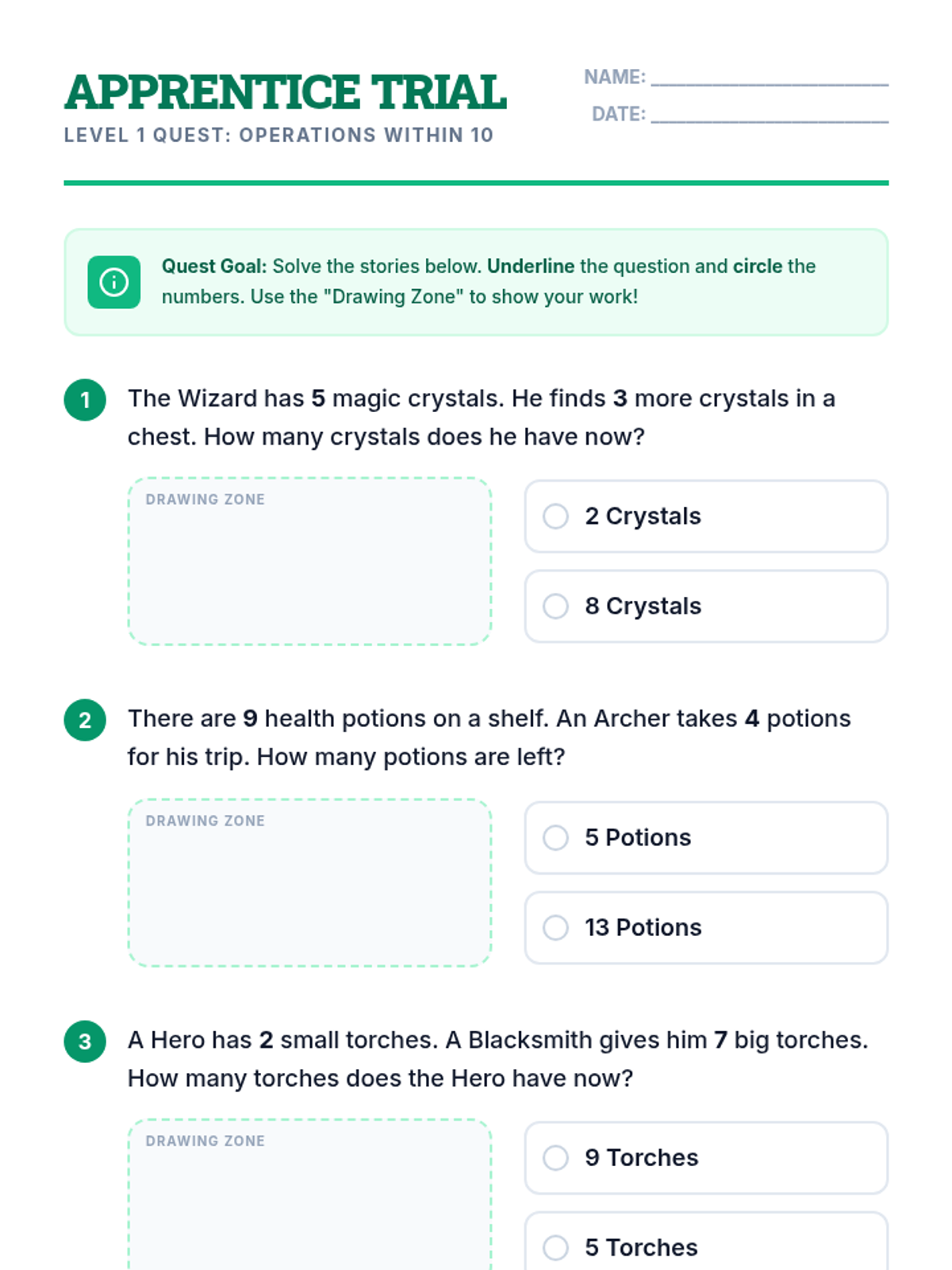
Extended Level 1 student packet for addition and subtraction within 10, now featuring 14 word problems, a creative story writing task, and a reflection section. All problems and workspaces are kept on the same page.
A visually engaging slide deck to introduce the "Quest for Numbers" word problem theme, teaching decoding strategies and modeling a guided practice problem.
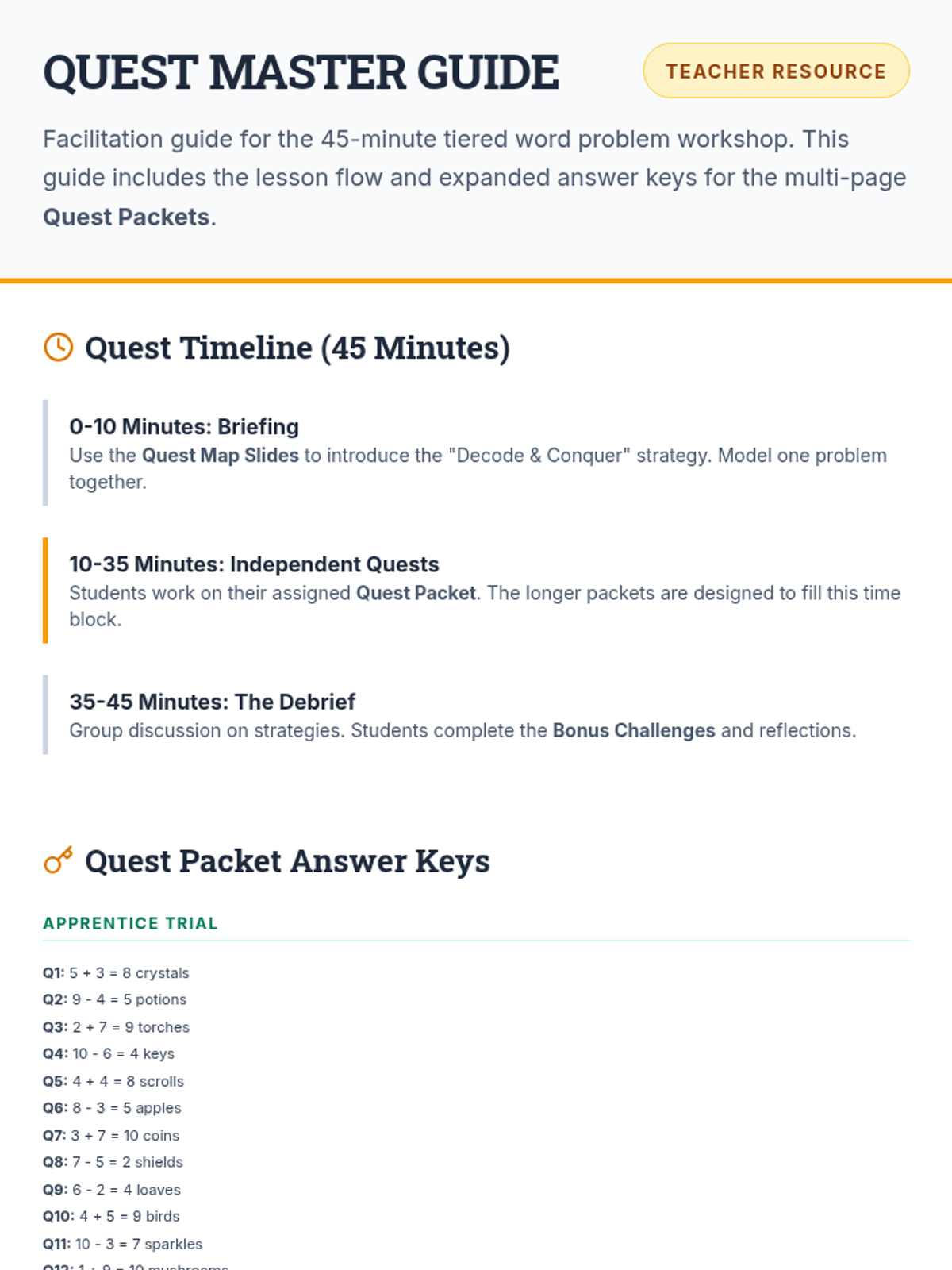
Updated teacher's guide with expanded answer keys for the multi-page Quest Packets.
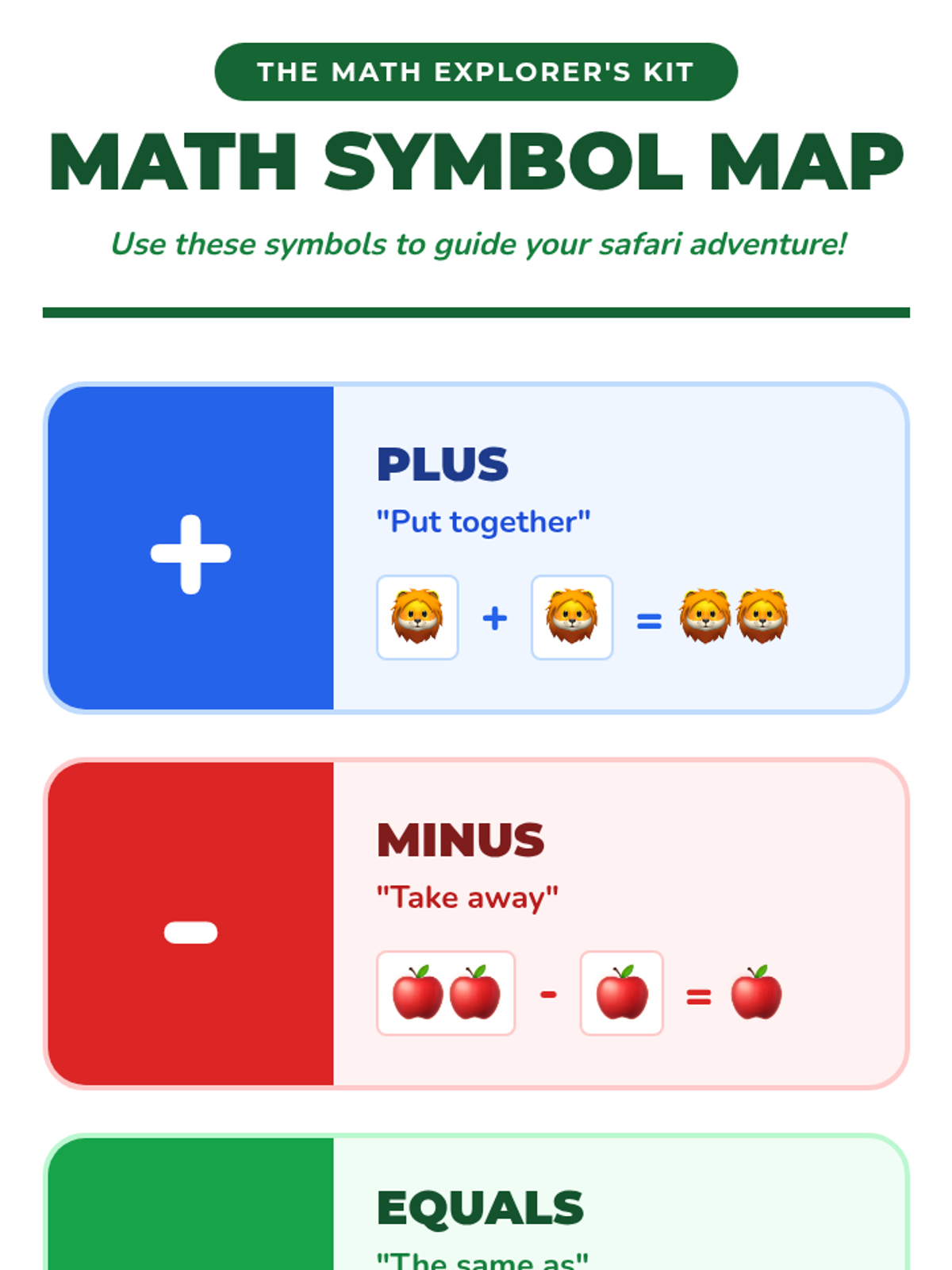
A reference chart for the foundational math symbols (plus, minus, and equals) with clear visual definitions and examples for early learners.
A set of vibrant, high-impact classroom posters featuring numbers 1-10 (examples) and primary shapes with bold visuals for early learners.
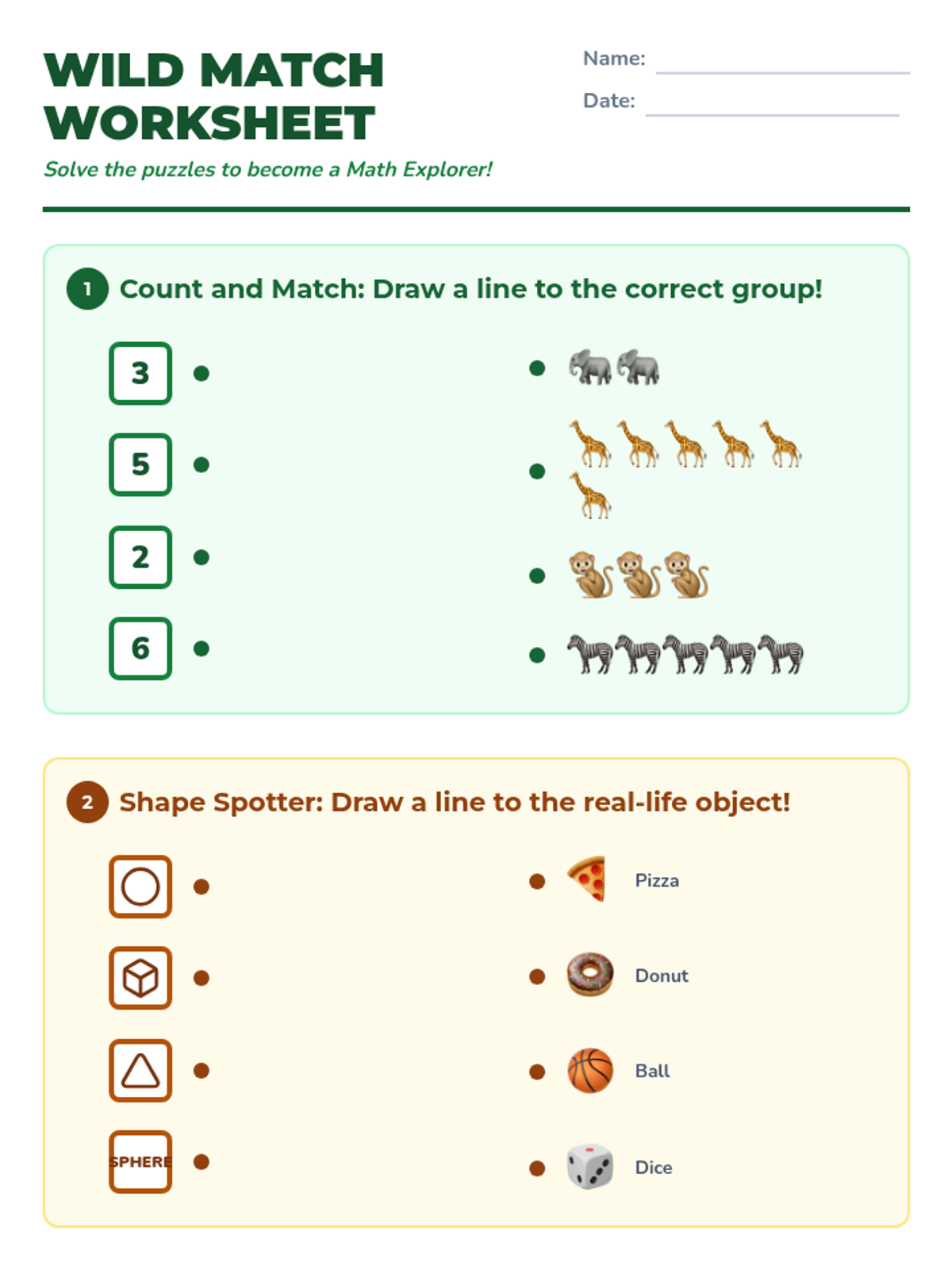
A student worksheet featuring matching activities for numbers and shapes, along with simple pictorial addition and subtraction problems.
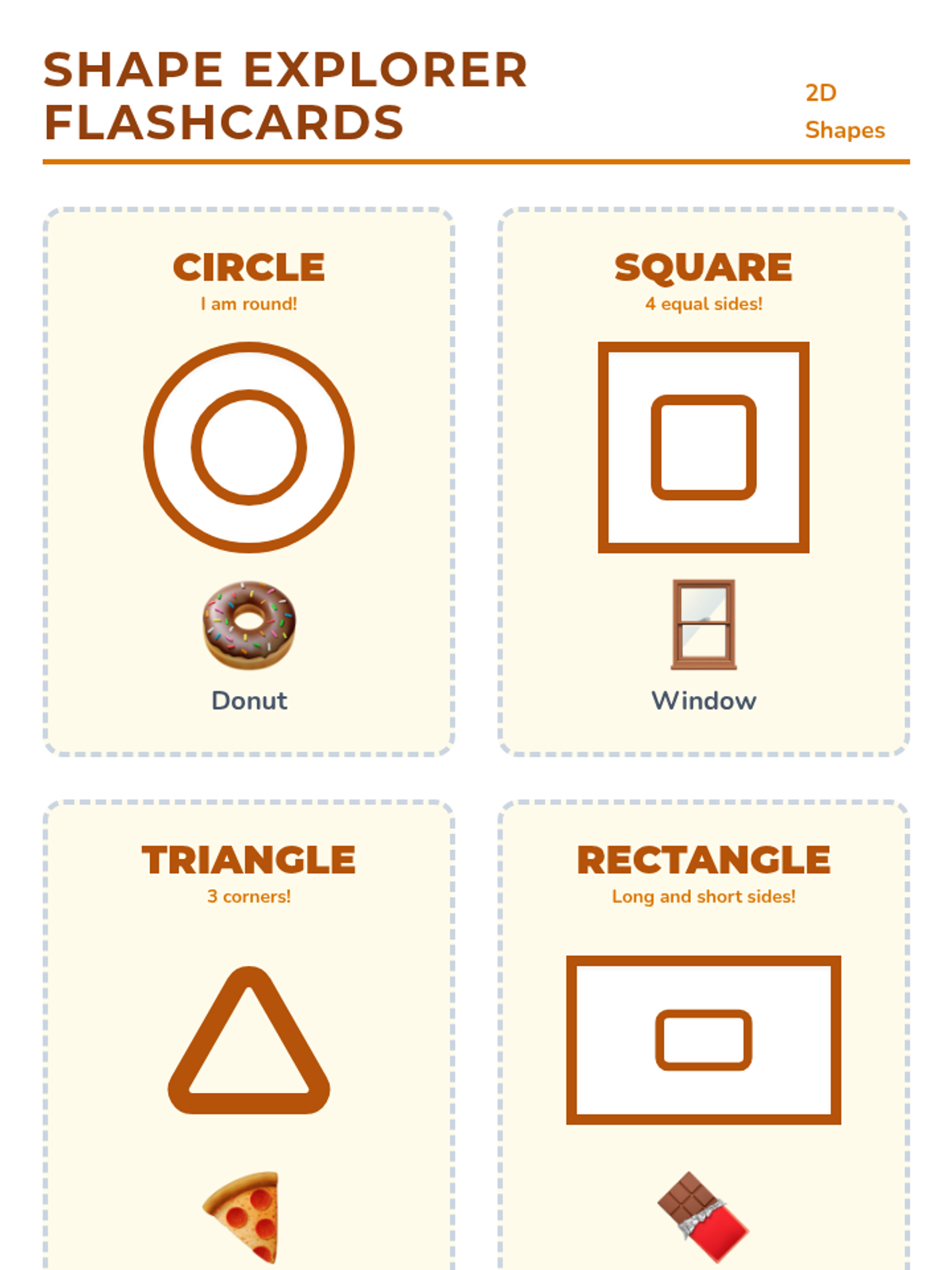
A collection of 2D and 3D shape flashcards featuring geometric definitions, clear visual icons, and real-world examples to help students identify shapes in their environment.
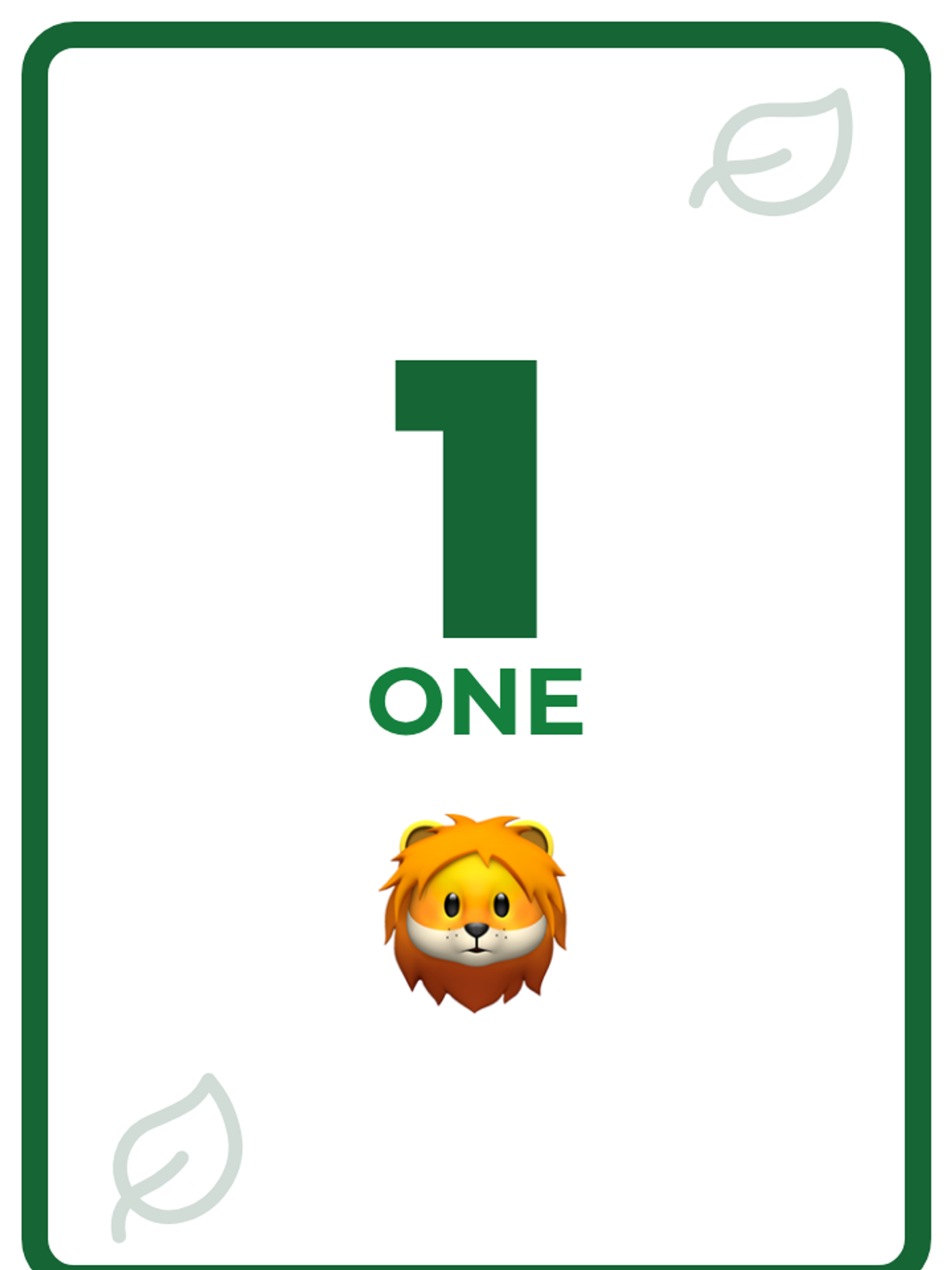
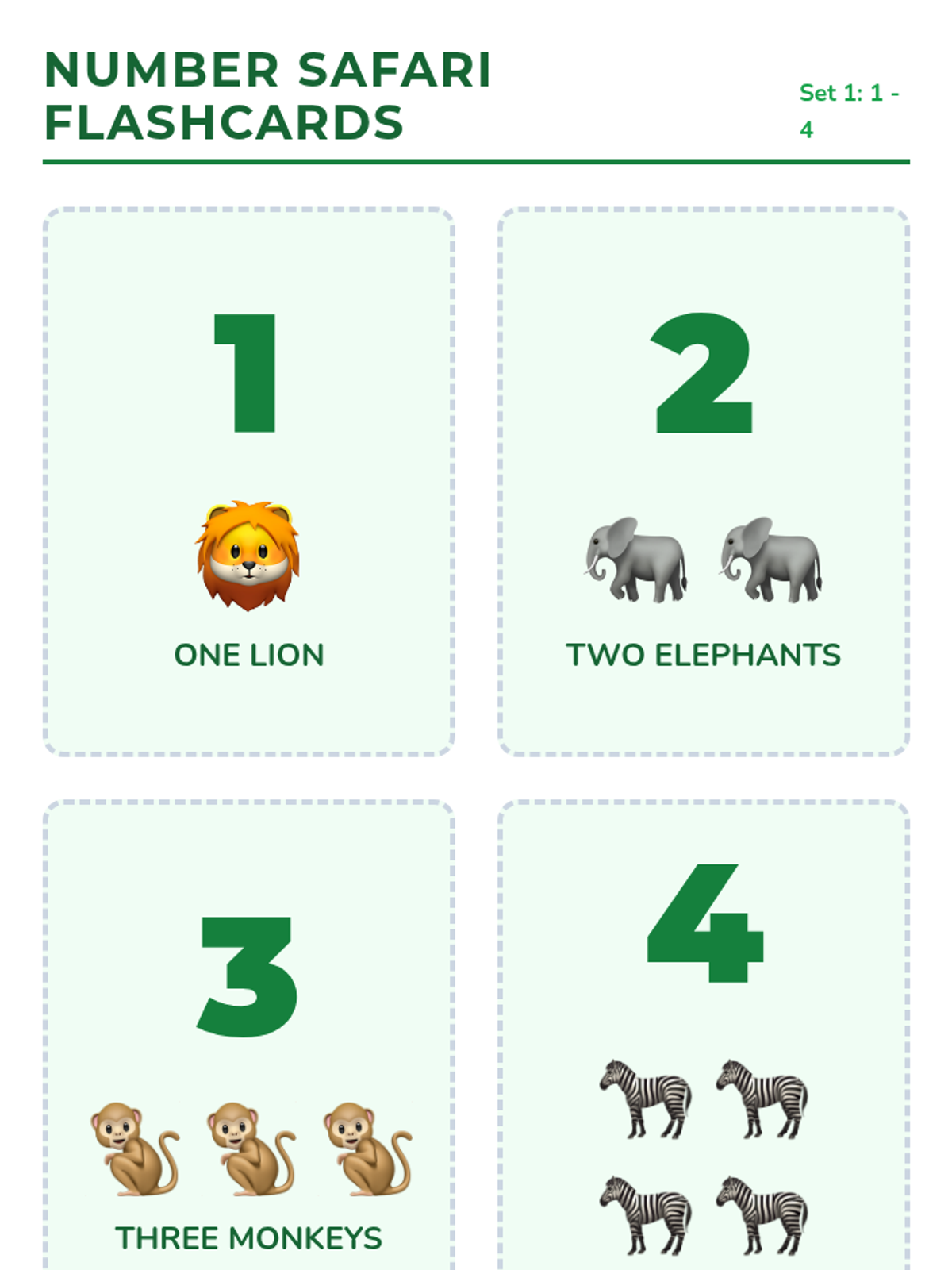
A set of jungle-themed flashcards for numbers 1-10, featuring clear digits, adorable animal icons for counting, and the written number word.
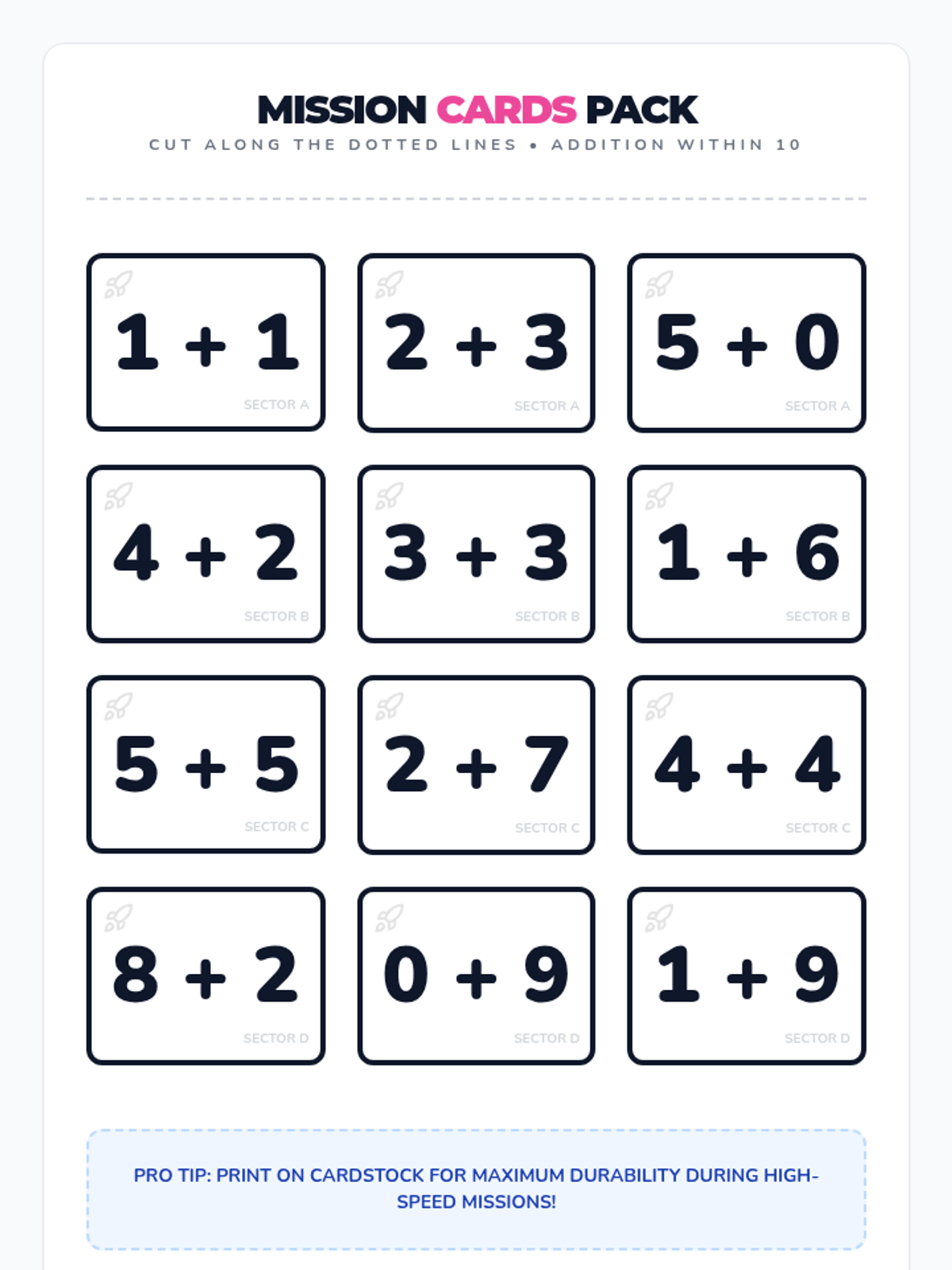
Printable flashcards for the Moon Mission addition game, featuring a variety of addition problems within 10 organized by 'mission sectors'.
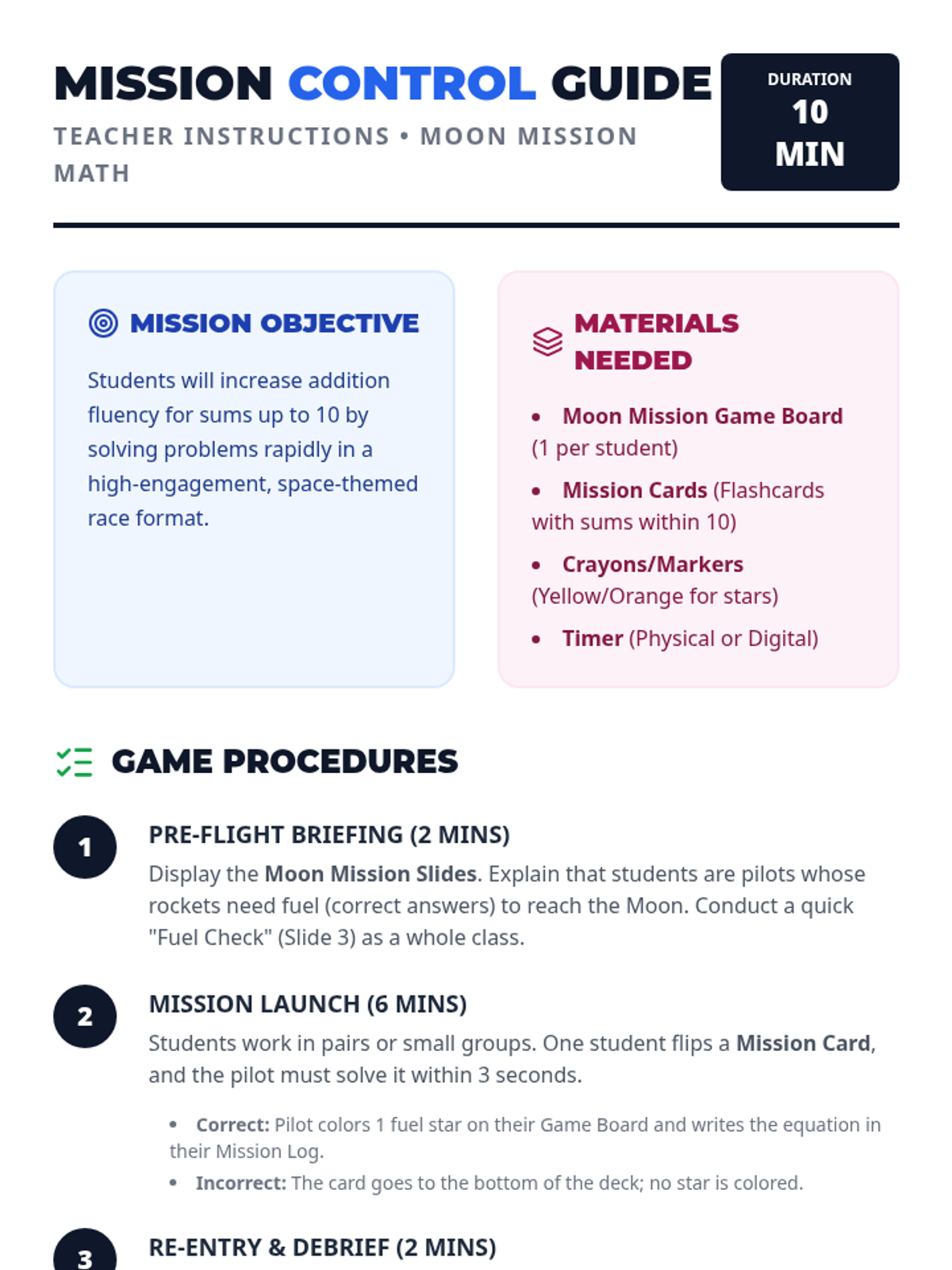
Detailed teacher guide for implementing the Moon Mission addition game, including materials, step-by-step procedures, and differentiation strategies.
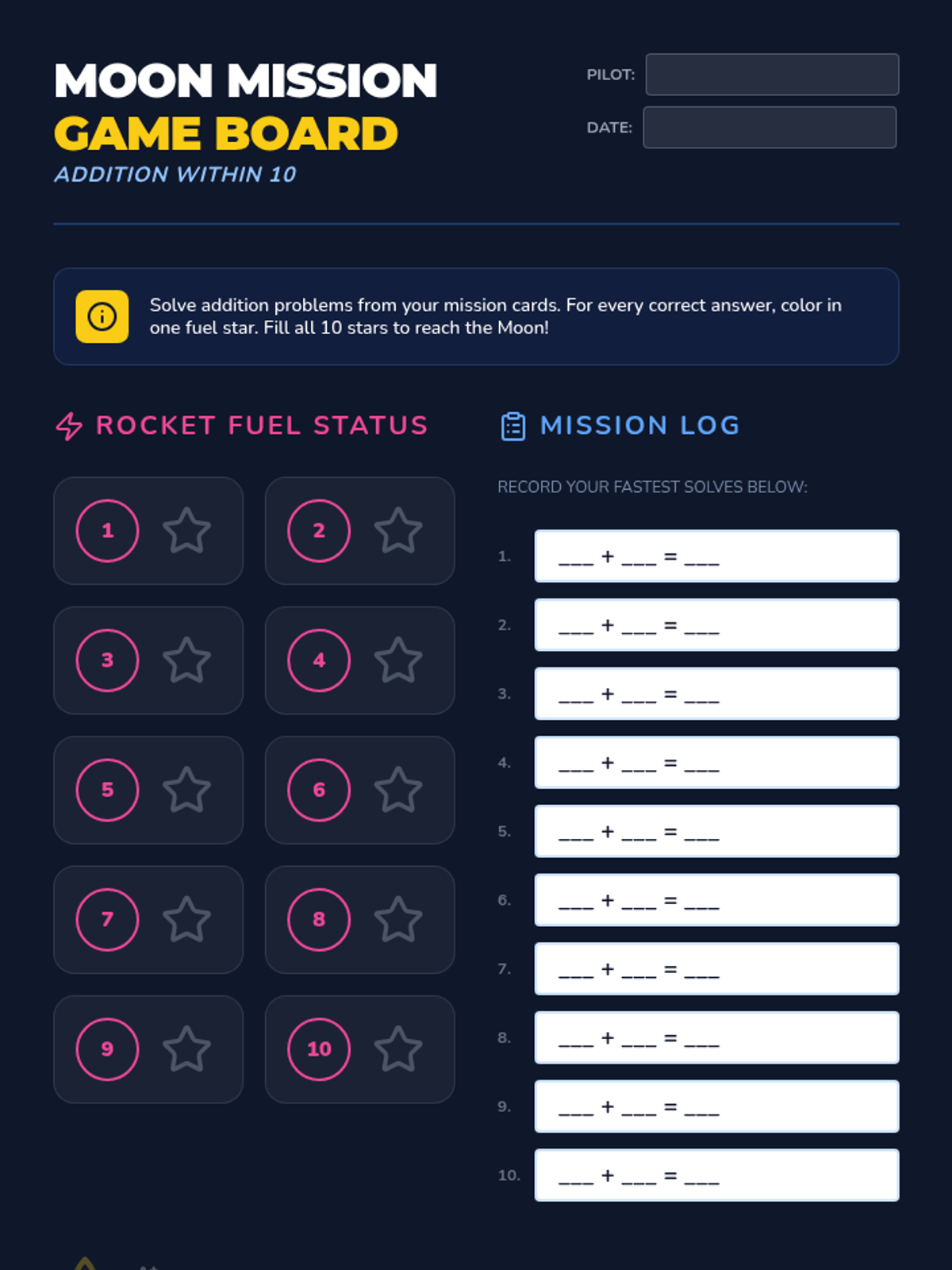
A printable game board for students to track their progress during the Moon Mission addition game, including a 'Fuel Tracker' and 'Mission Log'.
Visual presentation to introduce the 'Moon Mission' addition game, including mission objectives, warm-up problems, and clear gameplay instructions.
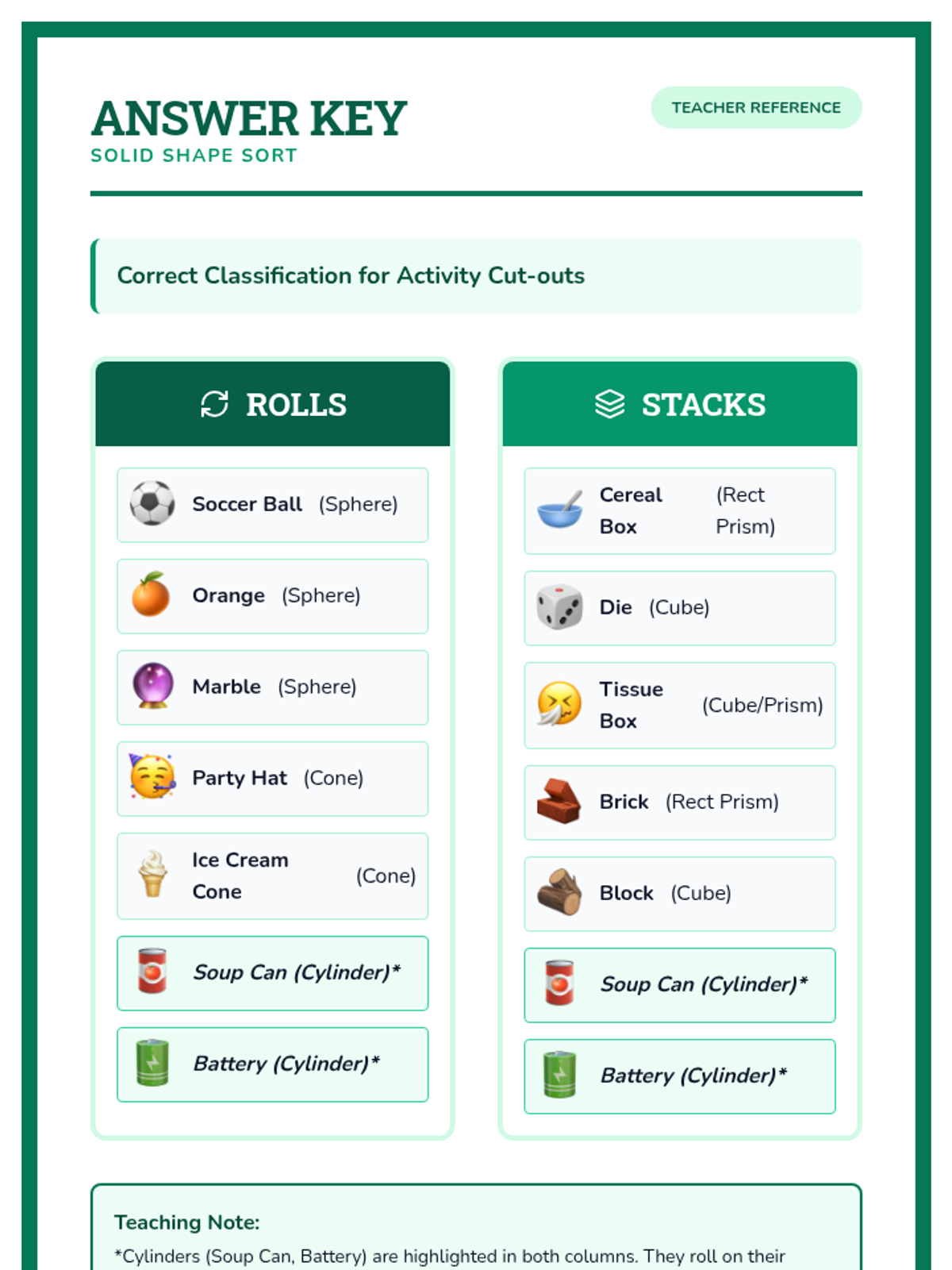
An answer key for the Solid Shape Sort Worksheet, highlighting objects that fit into both "Rolls" and "Stacks" categories, such as cylinders.
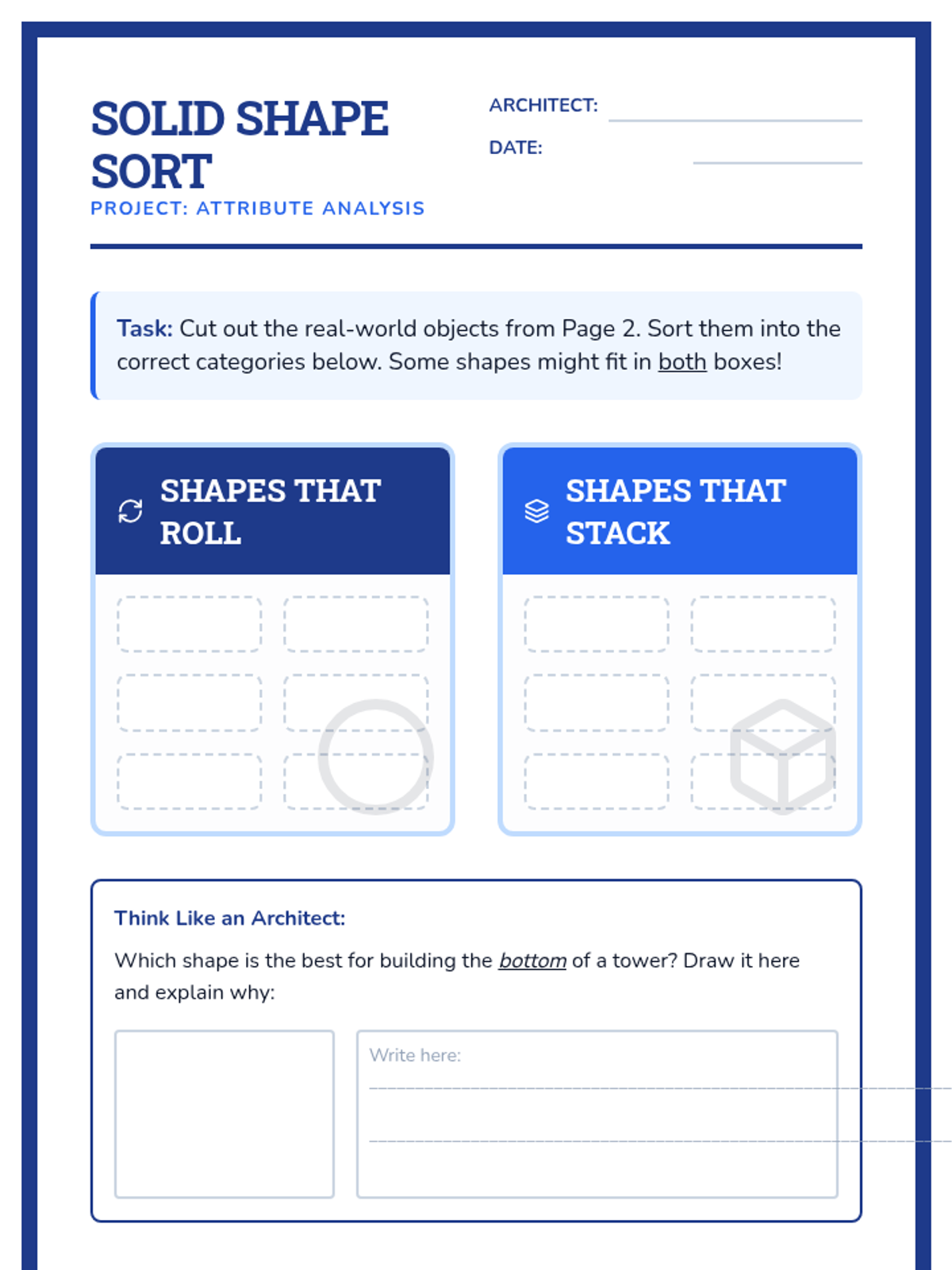
A cut-and-paste sorting activity where students categorize real-world 3D objects (spheres, cubes, cylinders, cones, and prisms) into "Rolls" and "Stacks" based on their physical attributes.
A visual presentation introducing 3D shapes (sphere, cube, cylinder, cone, rectangular prism, pyramid) and their attributes, including stacking, rolling, and sliding.
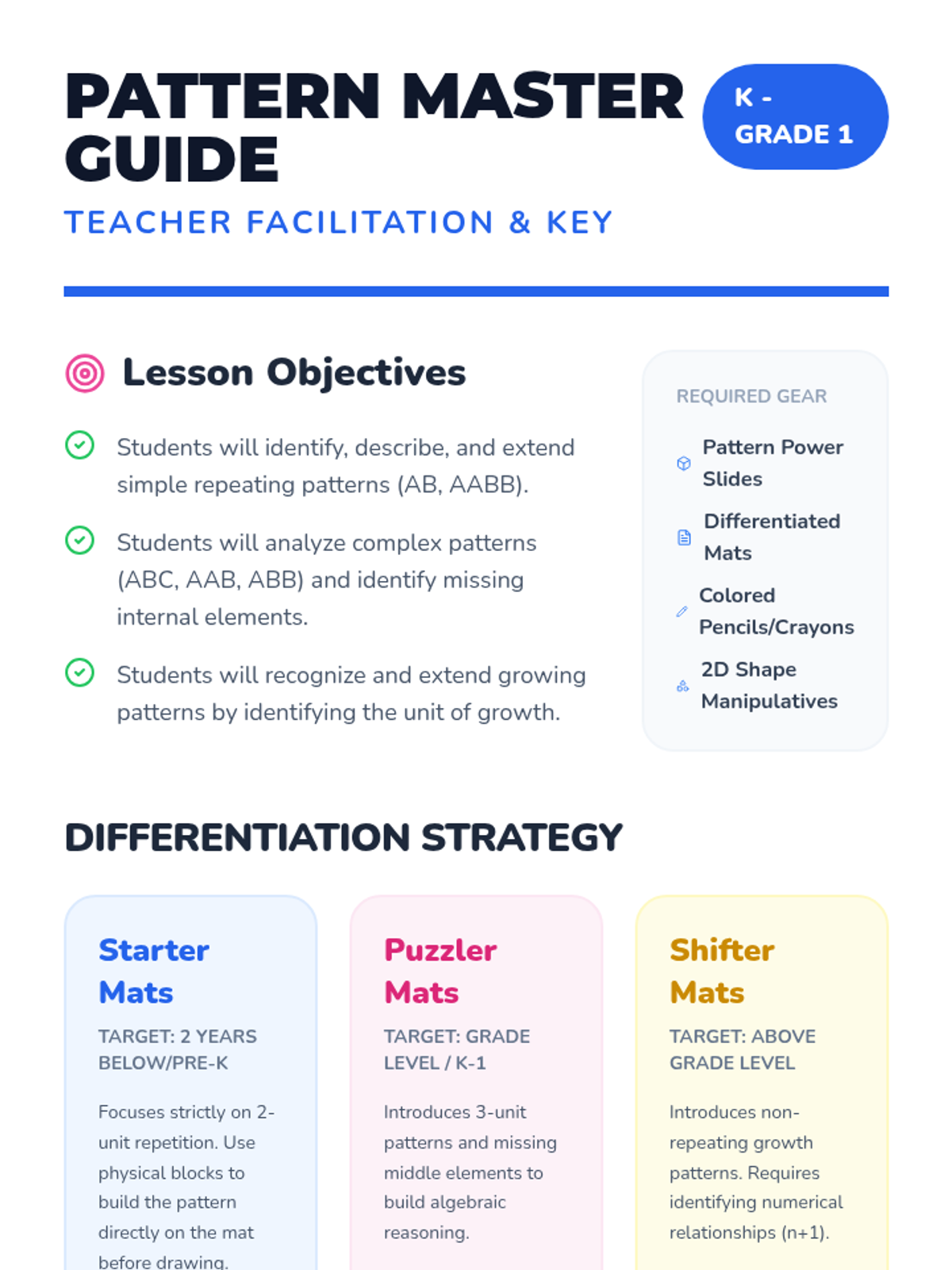
Teacher guidance and answer keys for the Pattern Detectives lesson, including differentiation strategies for various learning levels.
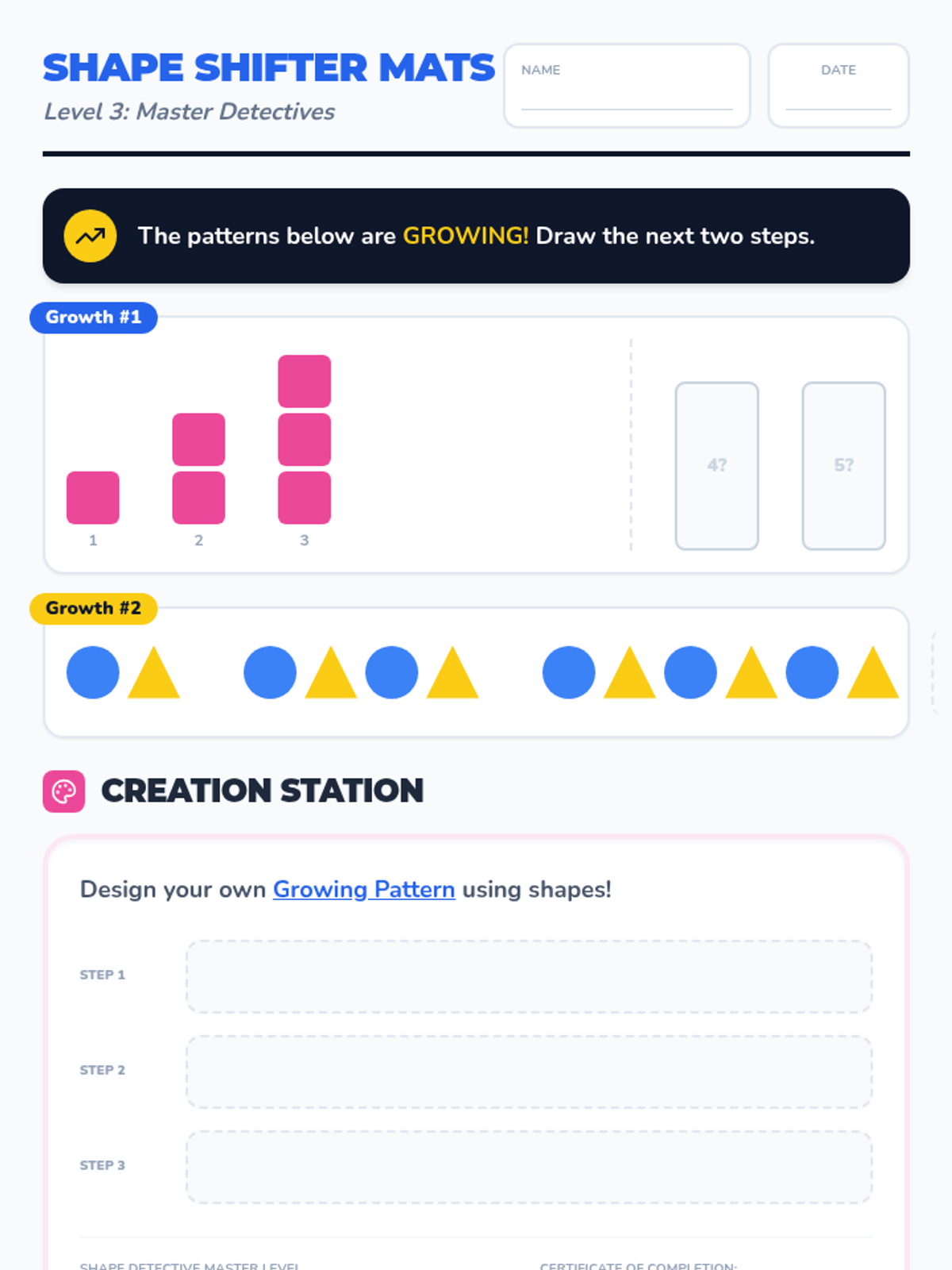
Level 3 mats for advanced learners, featuring growing patterns and a 'Creation Station' for students to design their own complex sequences, now optimized for a single page layout.
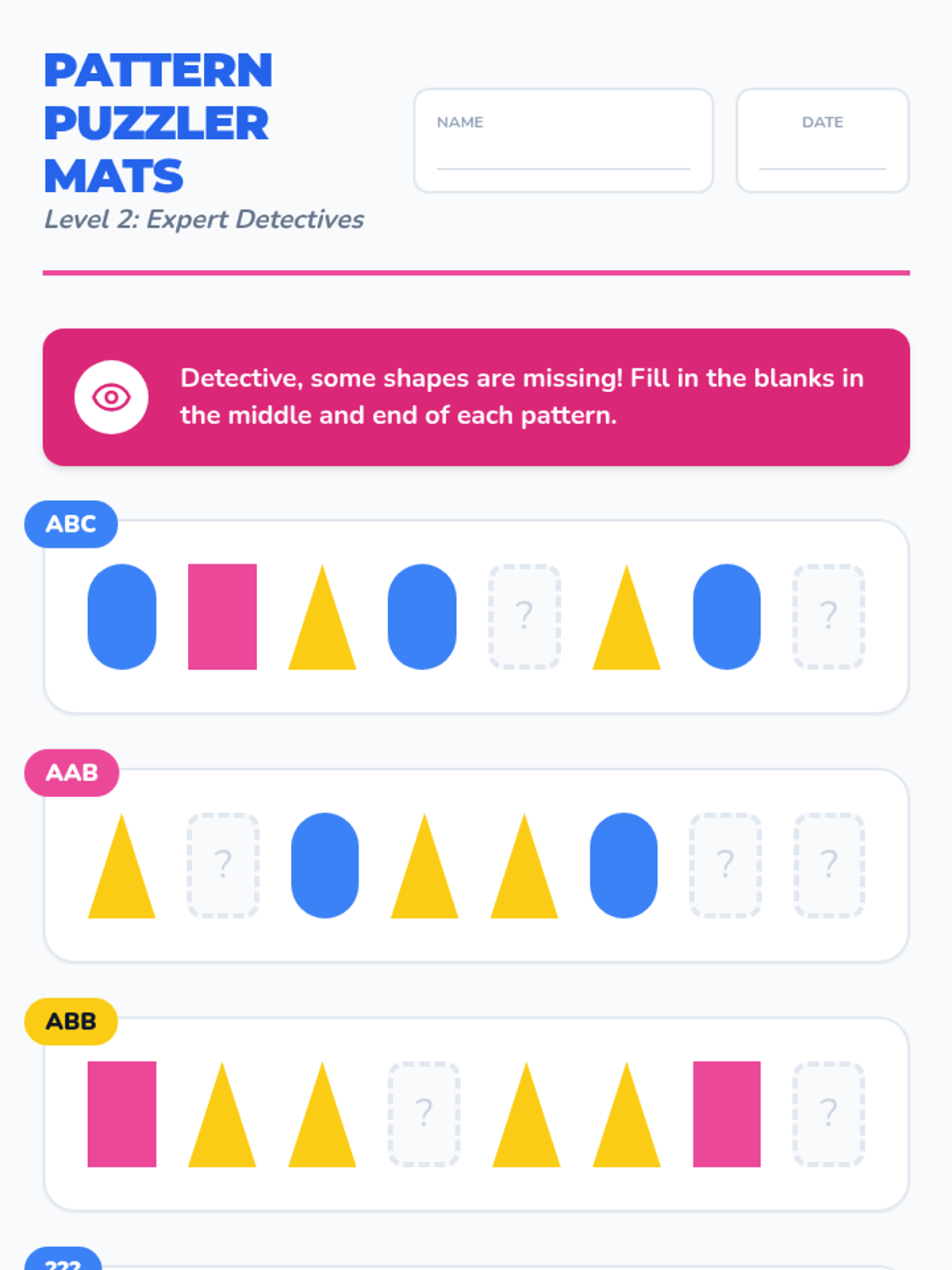
Level 2 mats for advanced learners, featuring ABC, AAB, and ABB patterns with internal missing elements to challenge pattern recognition.
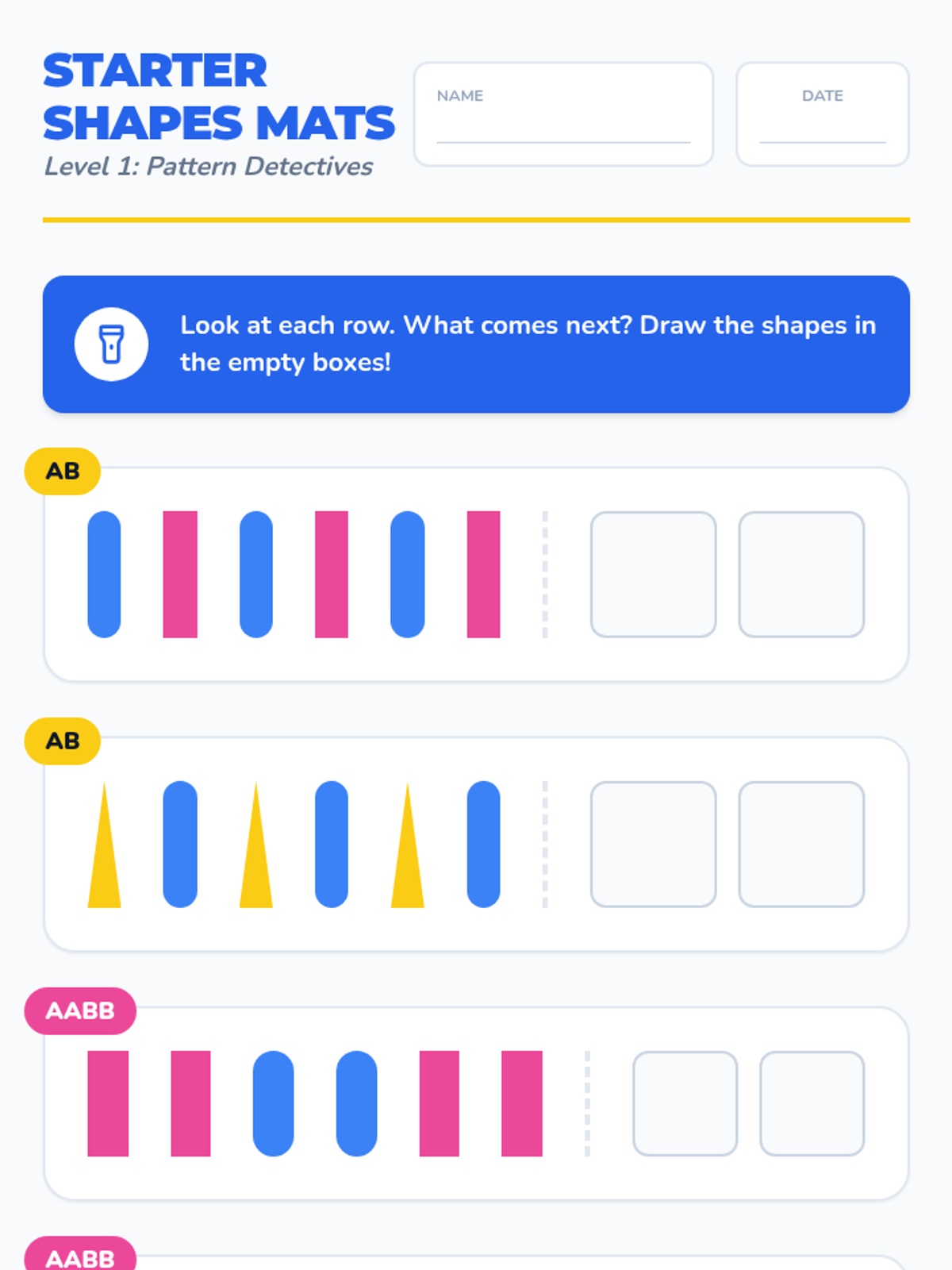
Level 1 mats for beginning learners, focusing on simple AB and AABB repeating patterns with clear extension areas.
An engaging slide deck introducing shape patterns (AB, AABB, ABC, ABB) and growing patterns with a detective theme.