The answer key for the Botany Battle worksheet, providing completed data tables, solution explanations for the analysis questions, and key features of the comparison graph.
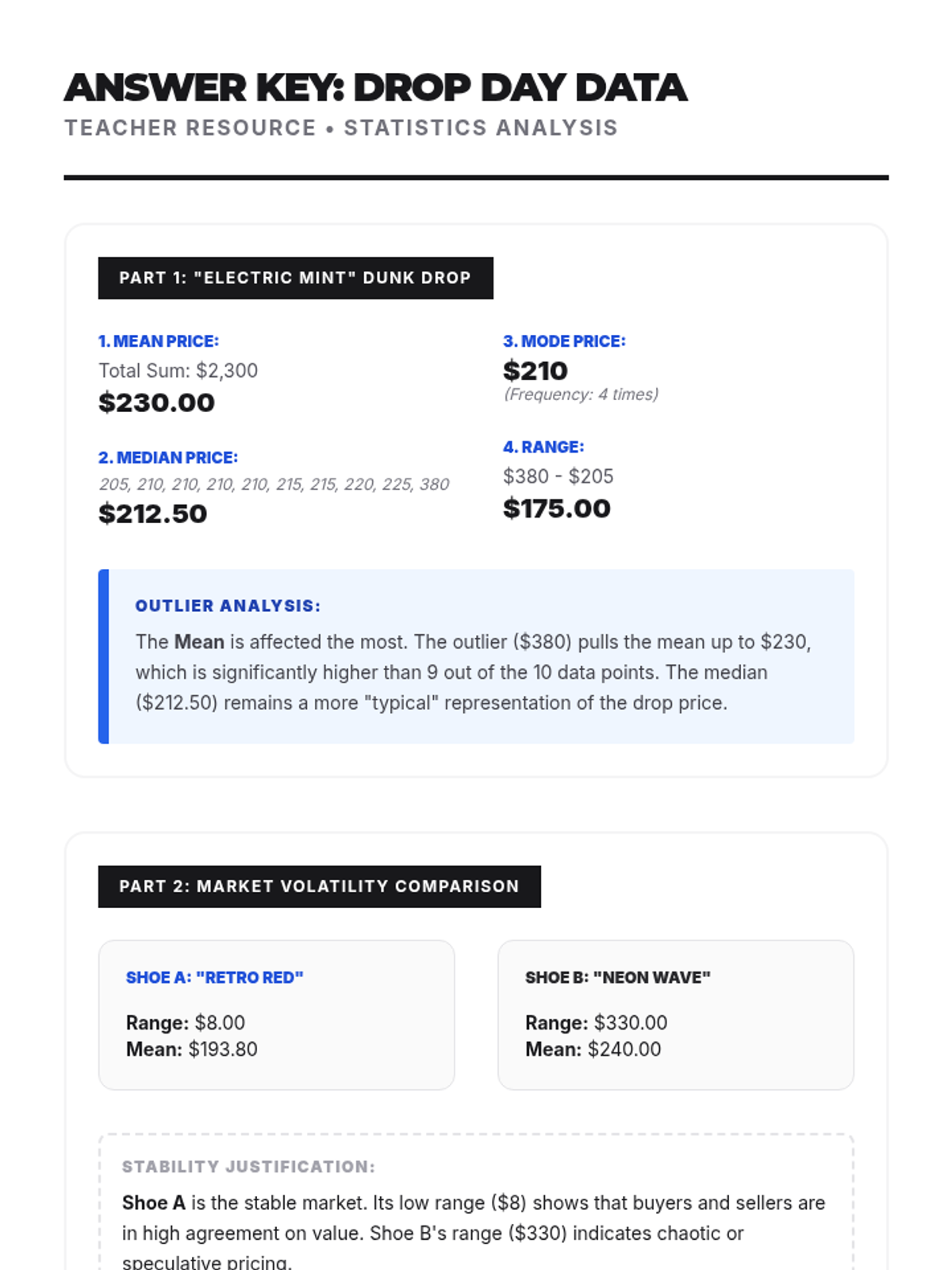
An answer key for the Drop Day Data Worksheet, providing detailed calculations for mean, median, mode, and range, as well as model justifications for the outlier and market volatility analysis sections.
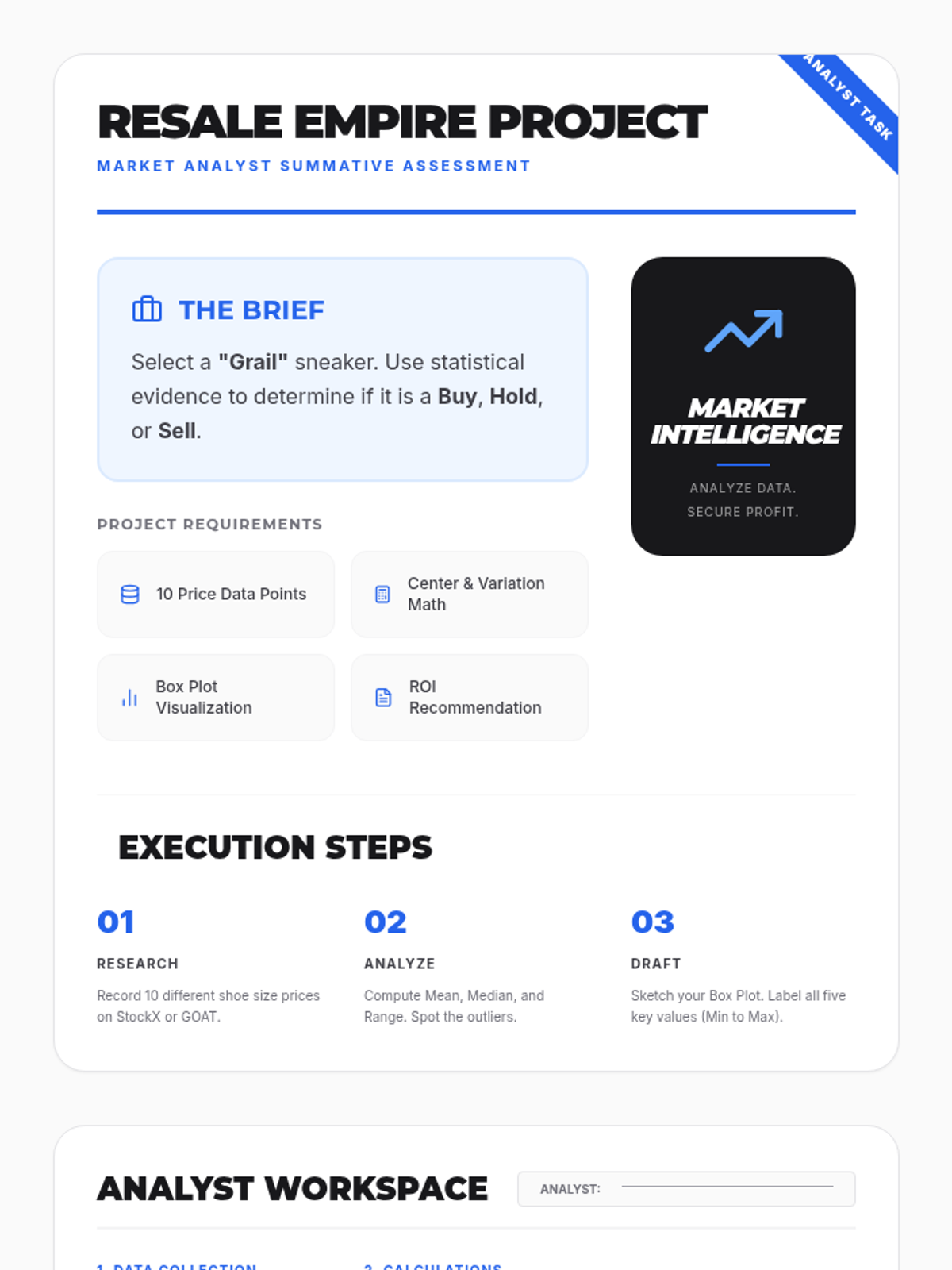
An engaging summative project where students act as sneaker market analysts. They must collect real-world data, perform statistical calculations, create a box plot, and justify an investment decision based on their findings.
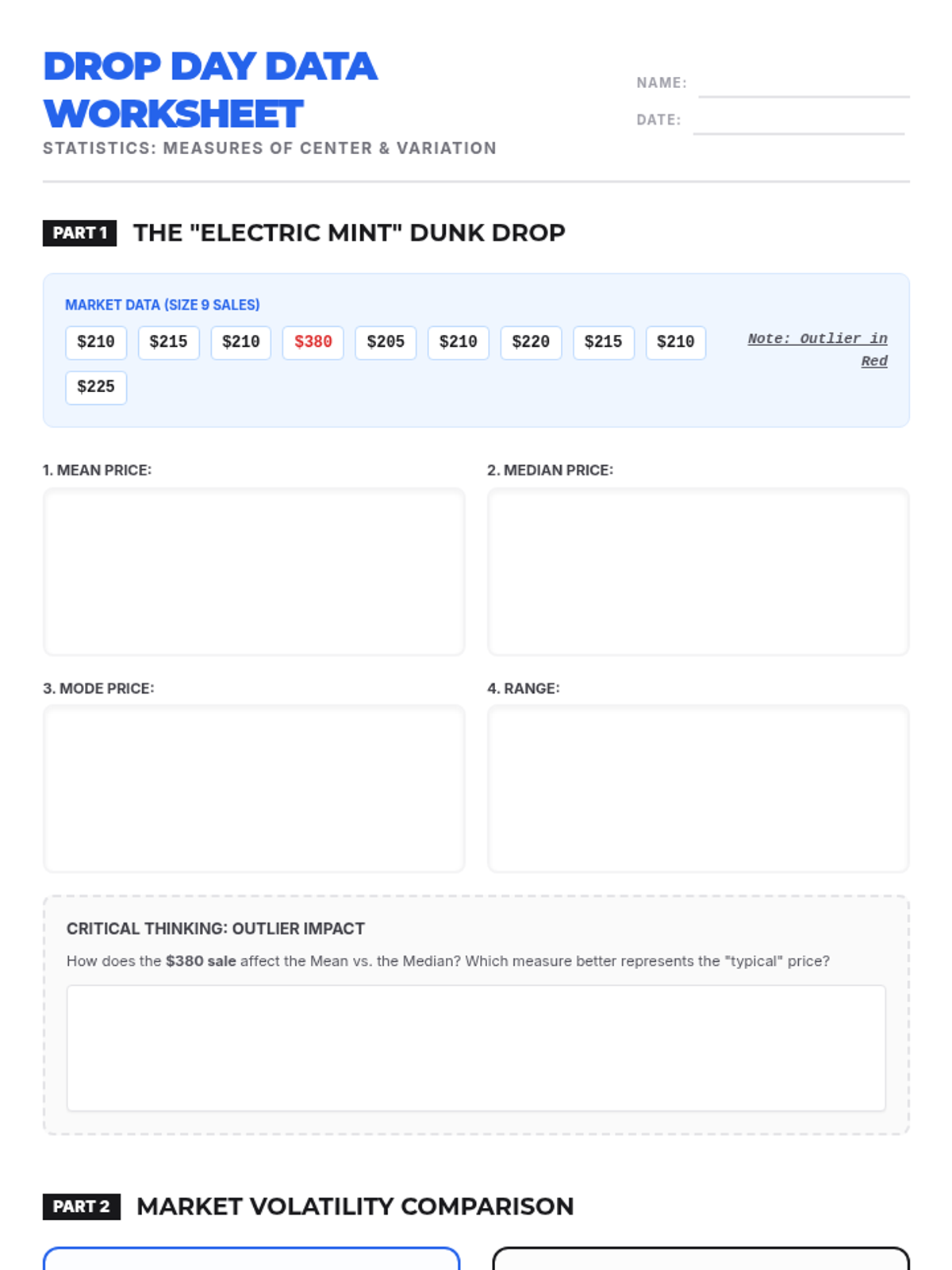
A statistics worksheet where students calculate mean, median, mode, and range for fictional sneaker pricing datasets. It includes a section on identifying outliers and comparing market volatility between two different products.
A high-energy, visually striking slide deck for teaching statistics. It introduces mean, median, mode, and range using real-world sneaker pricing examples, highlighting the impact of outliers and market volatility.
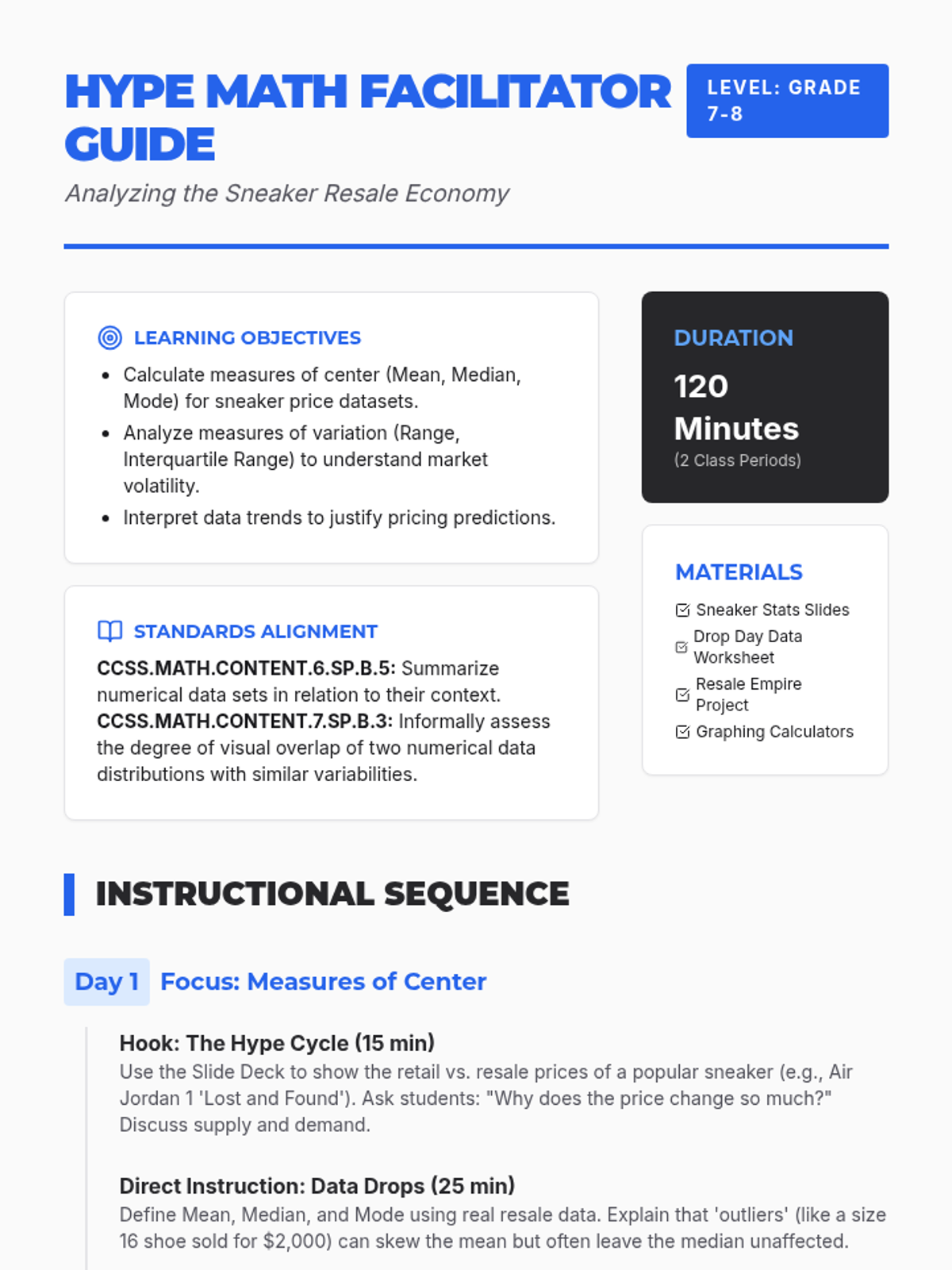
A comprehensive teacher's guide for the Sneaker Resale Economy lesson, featuring learning objectives, a two-day instructional sequence, and professional facilitation tips for teaching statistics through real-world hype culture.
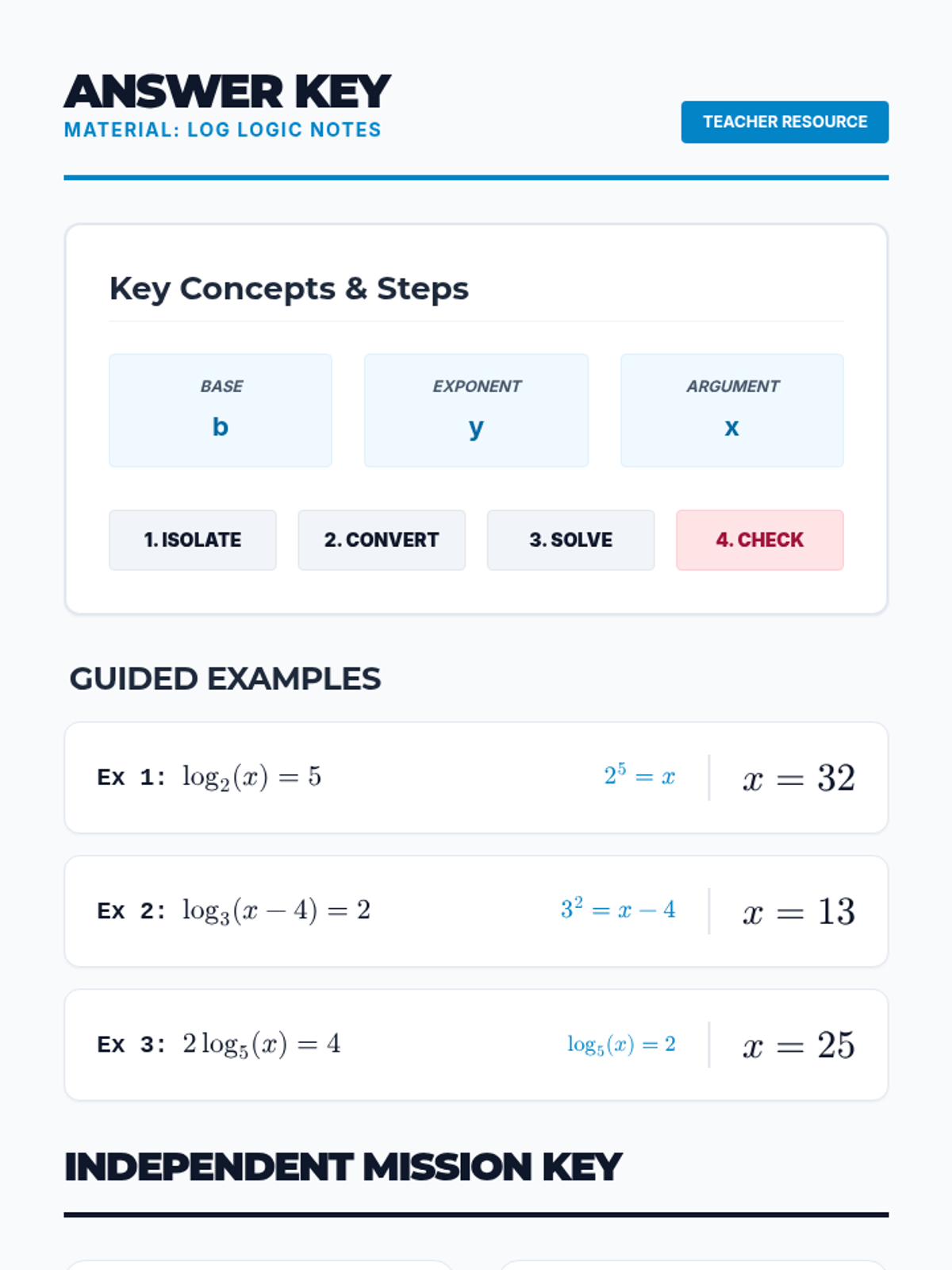
A complete answer key for the Log Logic notes and practice worksheet. Provides step-by-step solutions for all guided and independent problems.
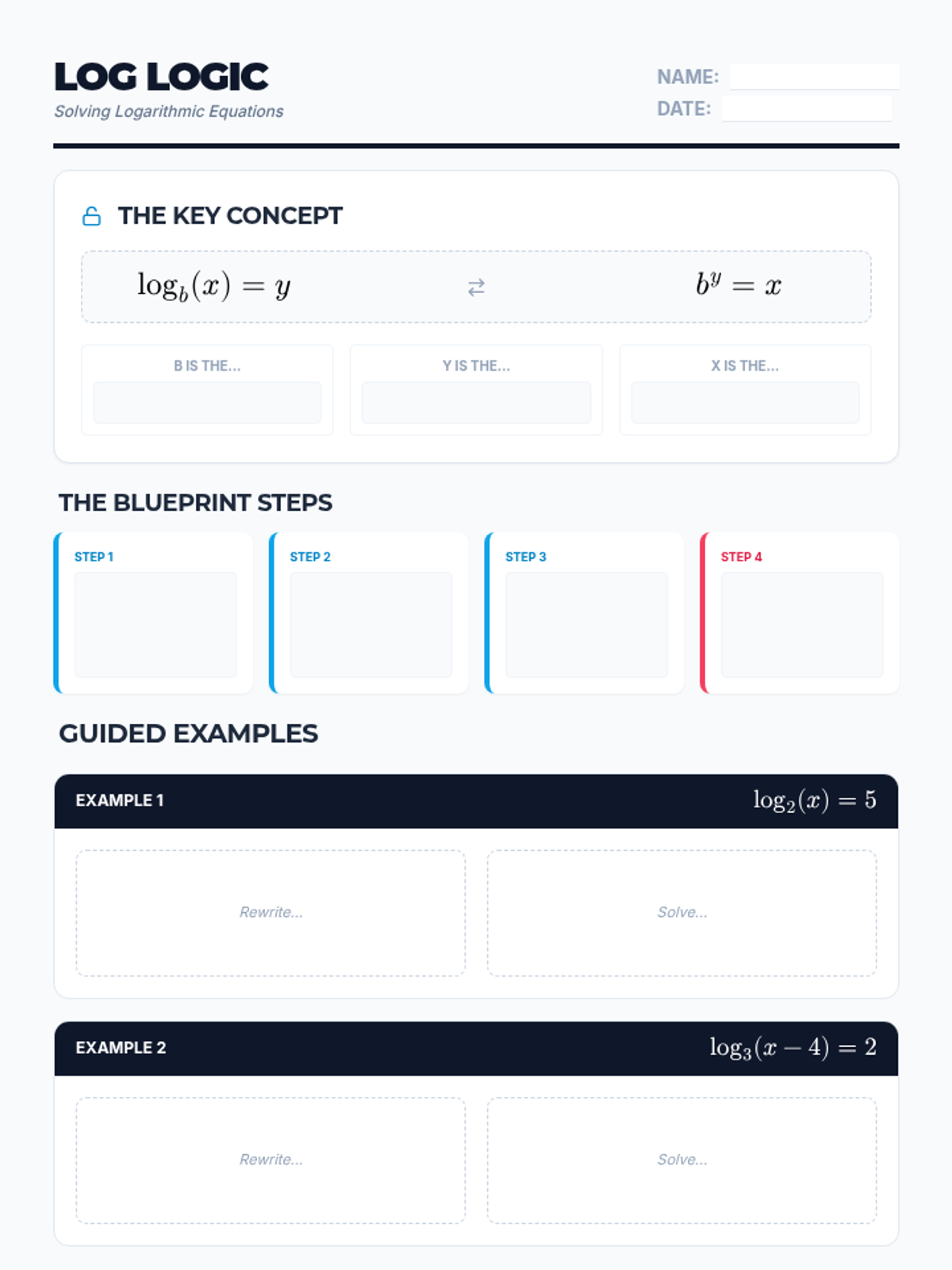
A guided notes document designed for students to fill out while following the presentation. It covers the core conversion formula, isolation steps, and includes three guided examples plus independent practice problems.
A visual slide deck teaching the core concept of solving logarithmic equations by converting them to exponential form. Includes the 'loop' method visualization and step-by-step examples.
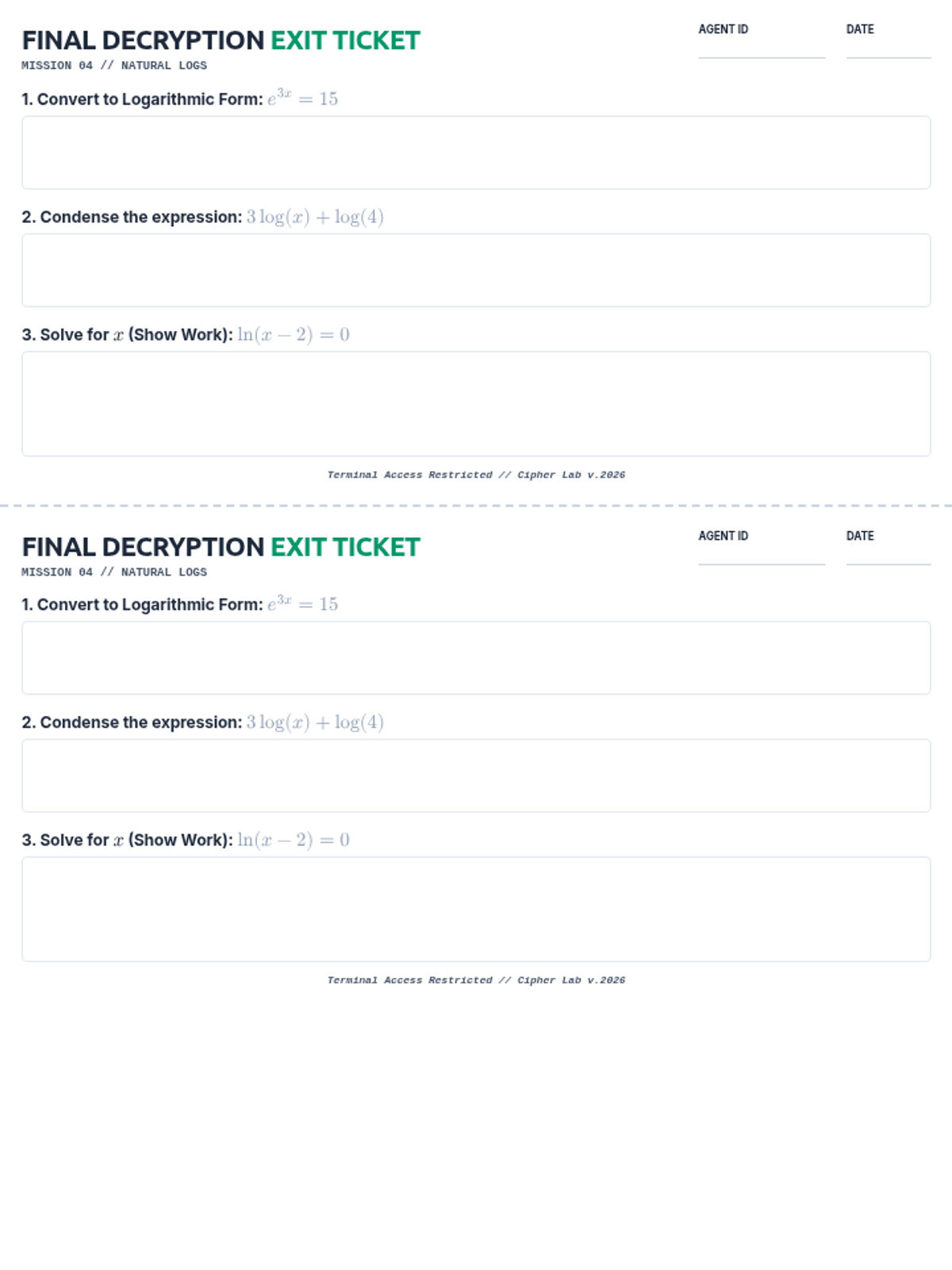
A half-page exit ticket designed to quickly assess student understanding of form conversion, logarithmic properties, and natural log equations.
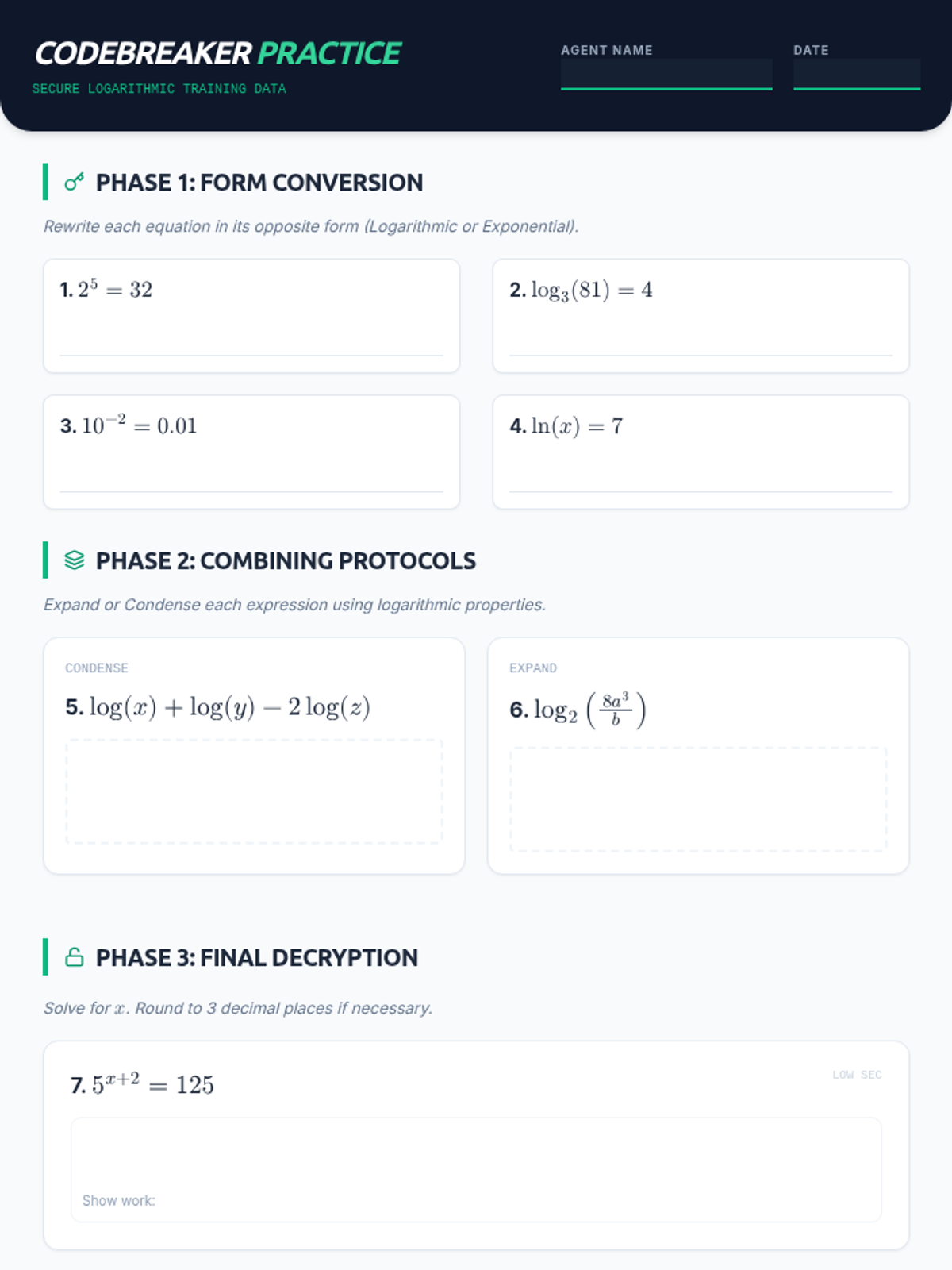
A themed student worksheet for practicing logarithmic and exponential conversions, property application, and equation solving.
An engaging visual slide deck for the Cipher Lab lesson, featuring the decoder ring for form conversion, logarithmic properties, and solving natural log equations.
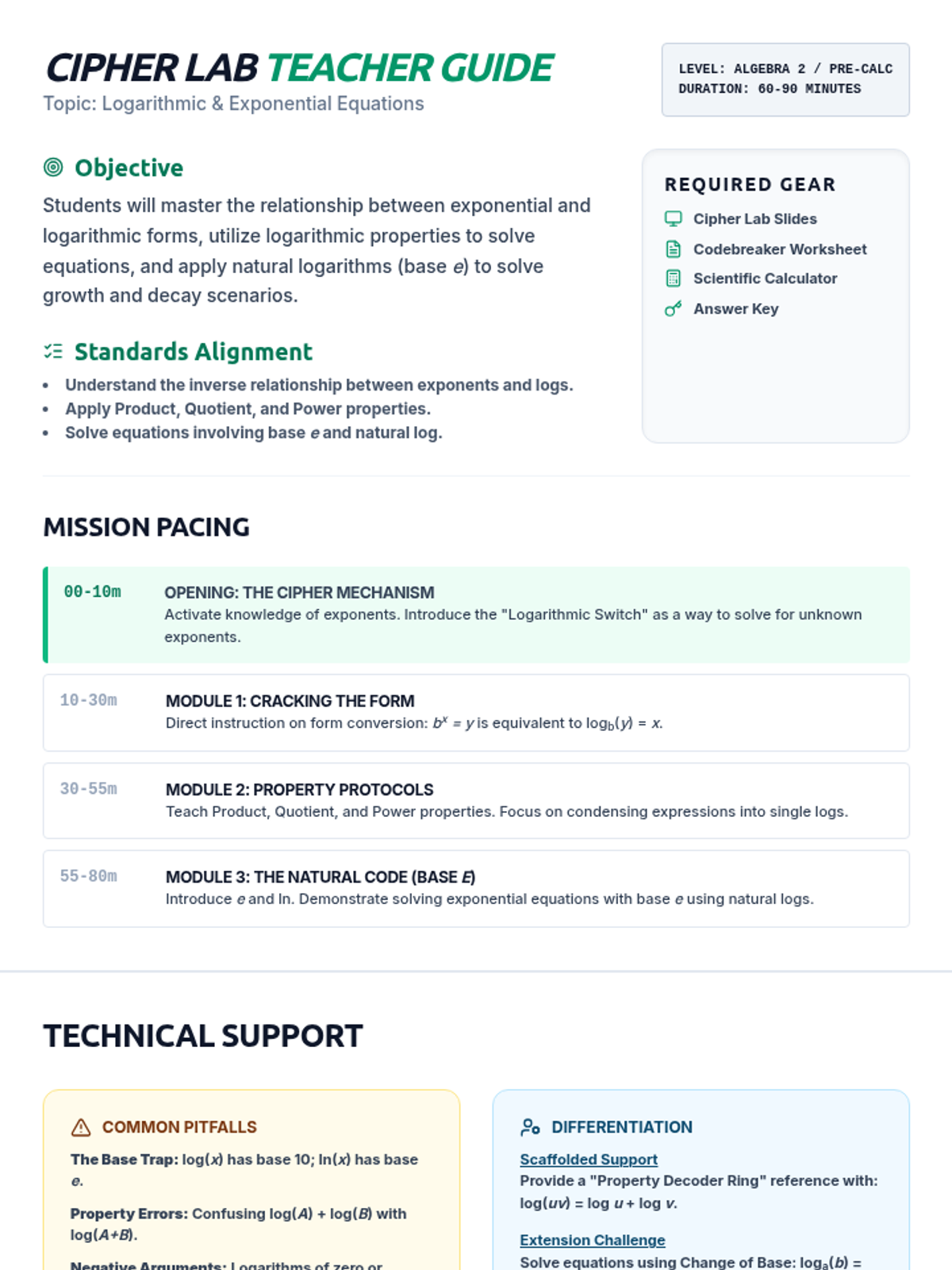
A comprehensive teacher guide for a lesson on logarithmic and exponential equations, including mission pacing, common pitfalls, differentiation strategies, and an answer key reference.
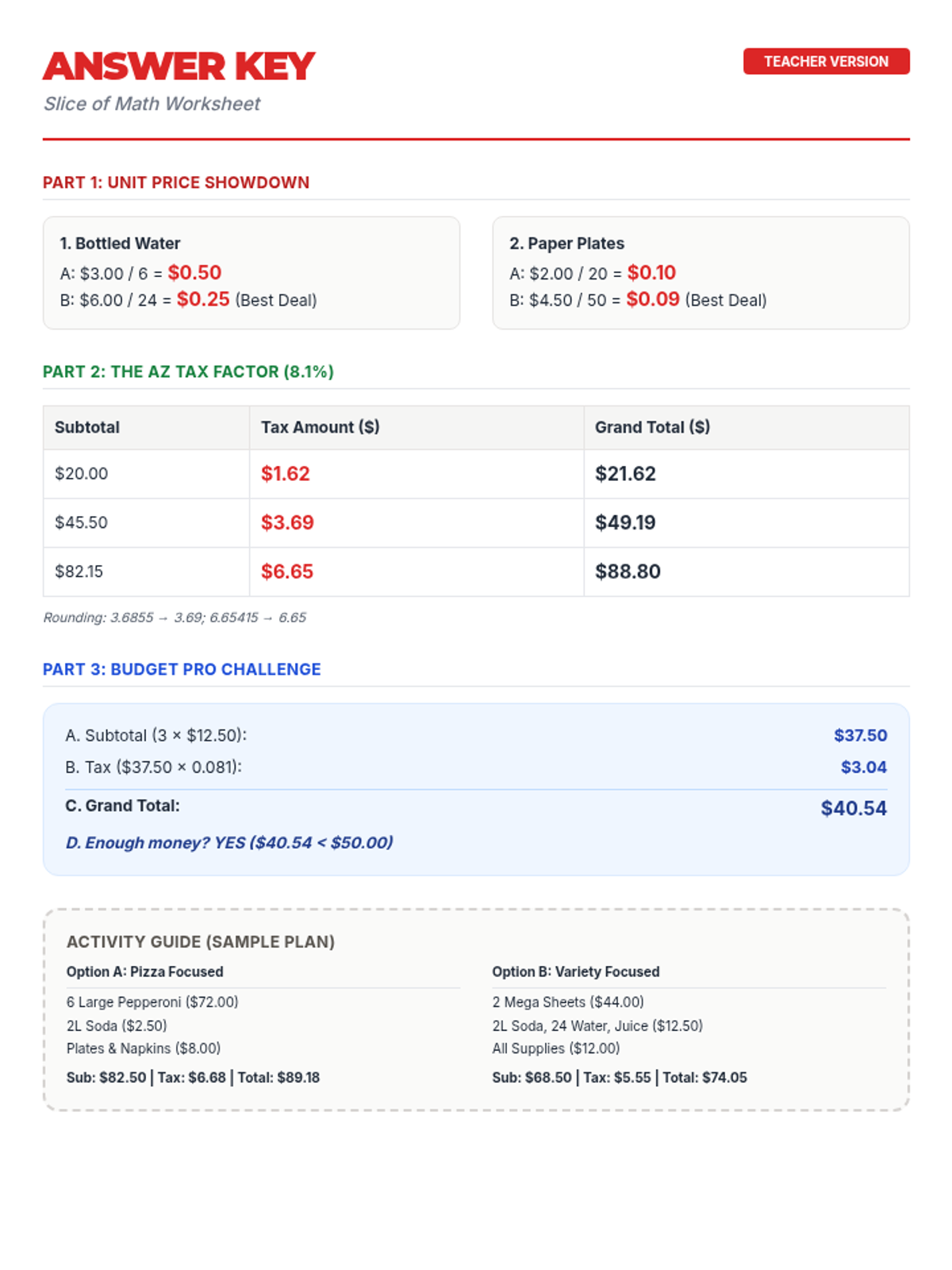
Teacher answer key for the Slice of Math Worksheet and a sample planning guide for the Party Planner Activity. Includes step-by-step calculations for unit prices and sales tax.
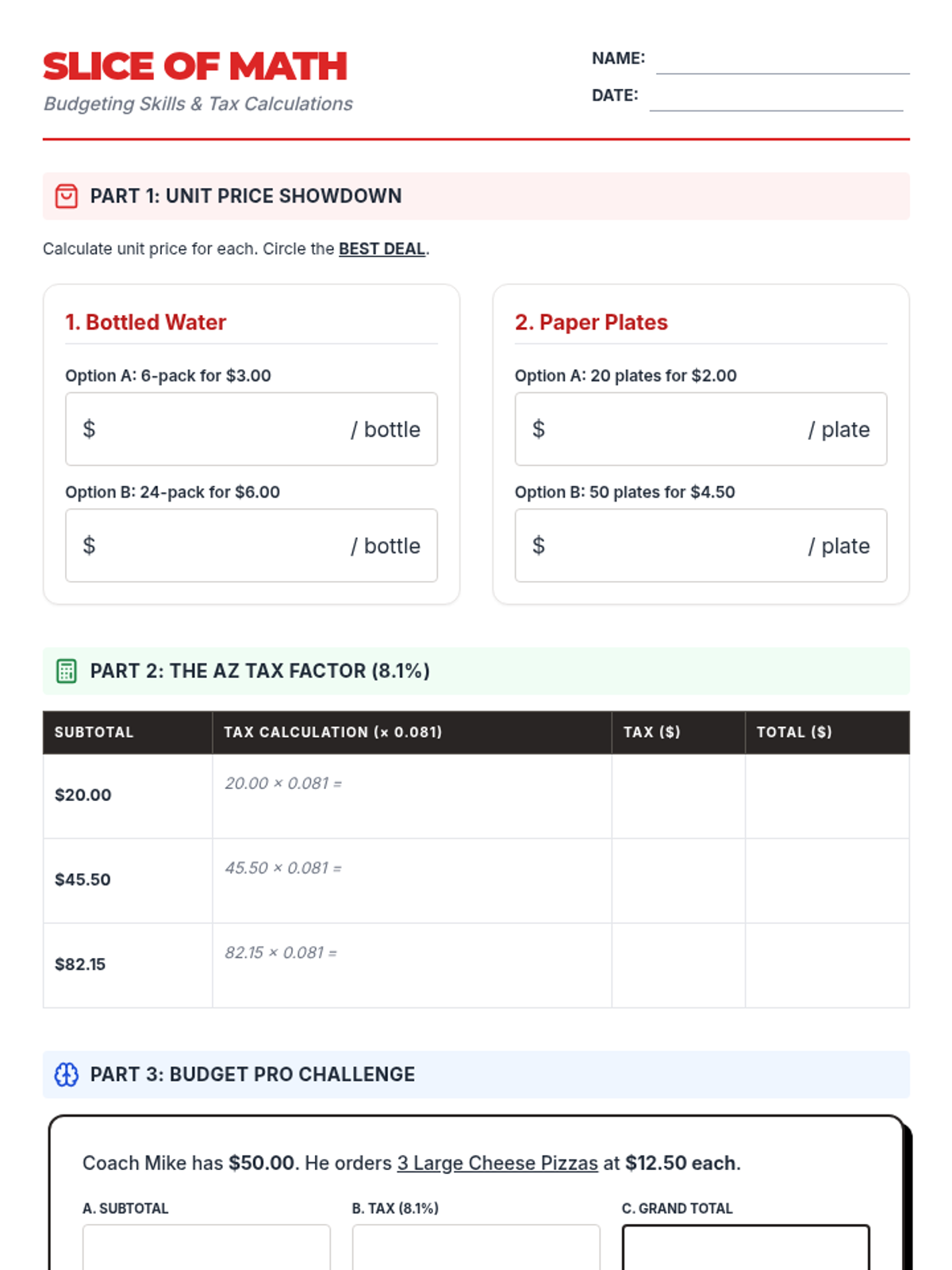
Worksheet for practicing individual math skills related to the Pizza Party Planner lesson. Includes unit price comparisons, Arizona sales tax (8.1%) calculations for various subtotals, and a multi-step budgeting word problem.
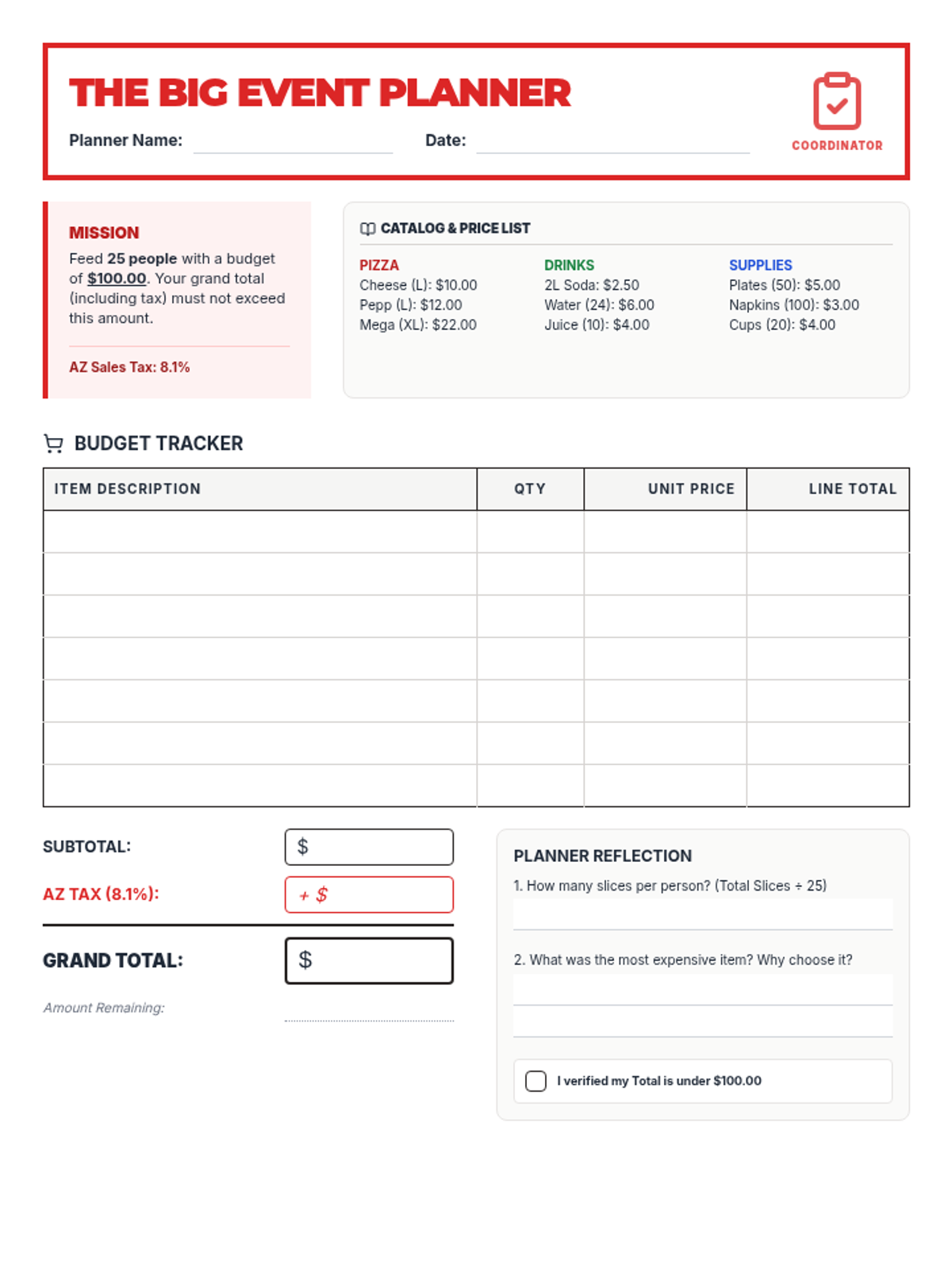
Student activity sheet for the Pizza Party Planner. Features a guided budgeting table for tracking items, quantities, and line totals, with dedicated sections for subtotal, Arizona sales tax (8.1%), and final grand total calculation.
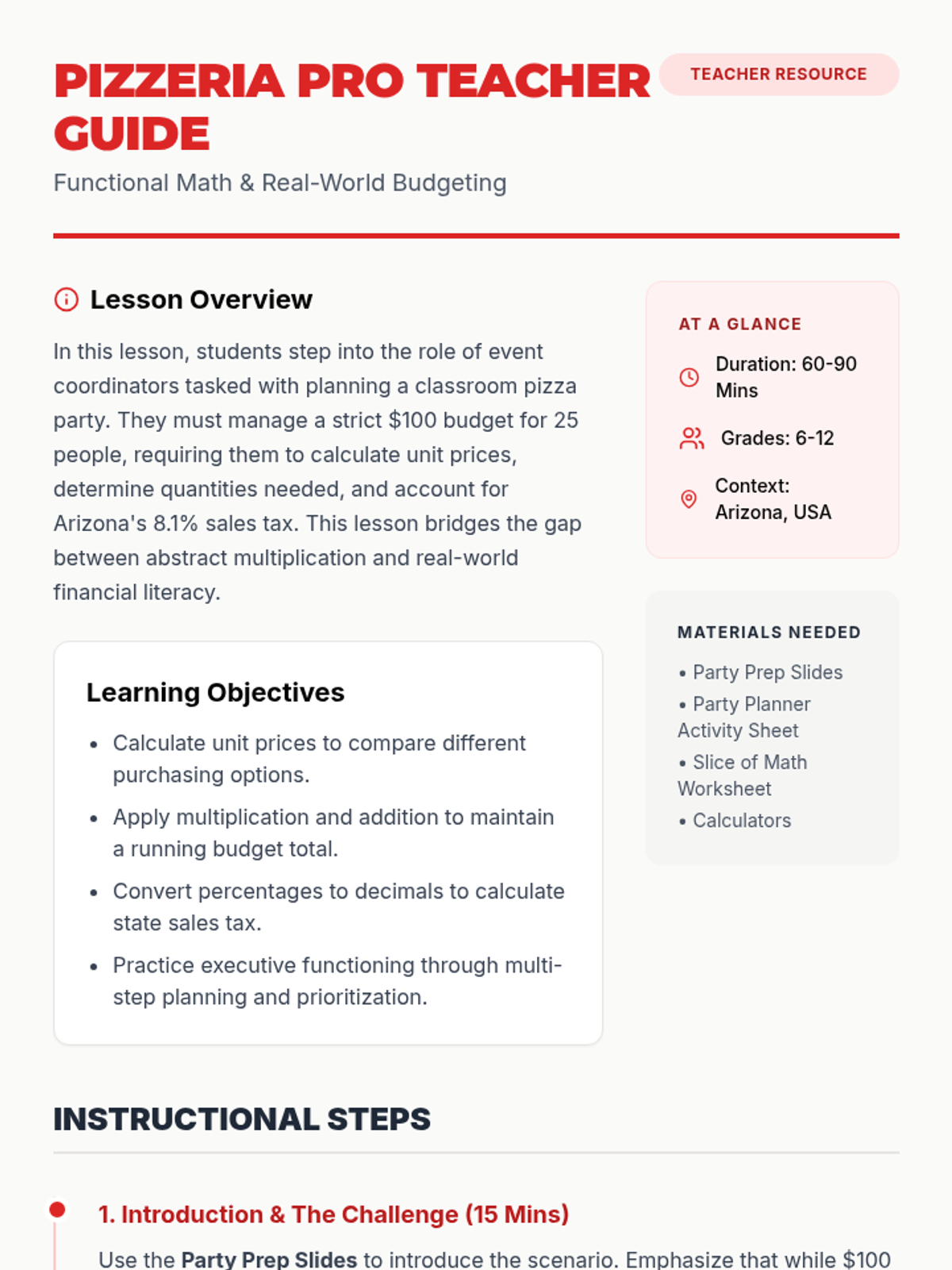
Teacher-facing lesson plan for the Pizza Party Planner. Includes instructional steps, learning objectives, differentiation strategies, common student misconceptions, and discussion prompts.
Instructional slide deck for the Pizza Party Planner lesson. Includes budget constraints, vocabulary (unit price, subtotal, tax), Arizona-specific sales tax calculation examples, and a price list for planning.
An engaging presentation slide deck for introducing logarithms. It covers the inverse relationship with exponentials, form conversion techniques, the constant 'e' and natural logarithms, and the three main logarithmic properties (Product, Quotient, and Power) with visual cues and practice problems.
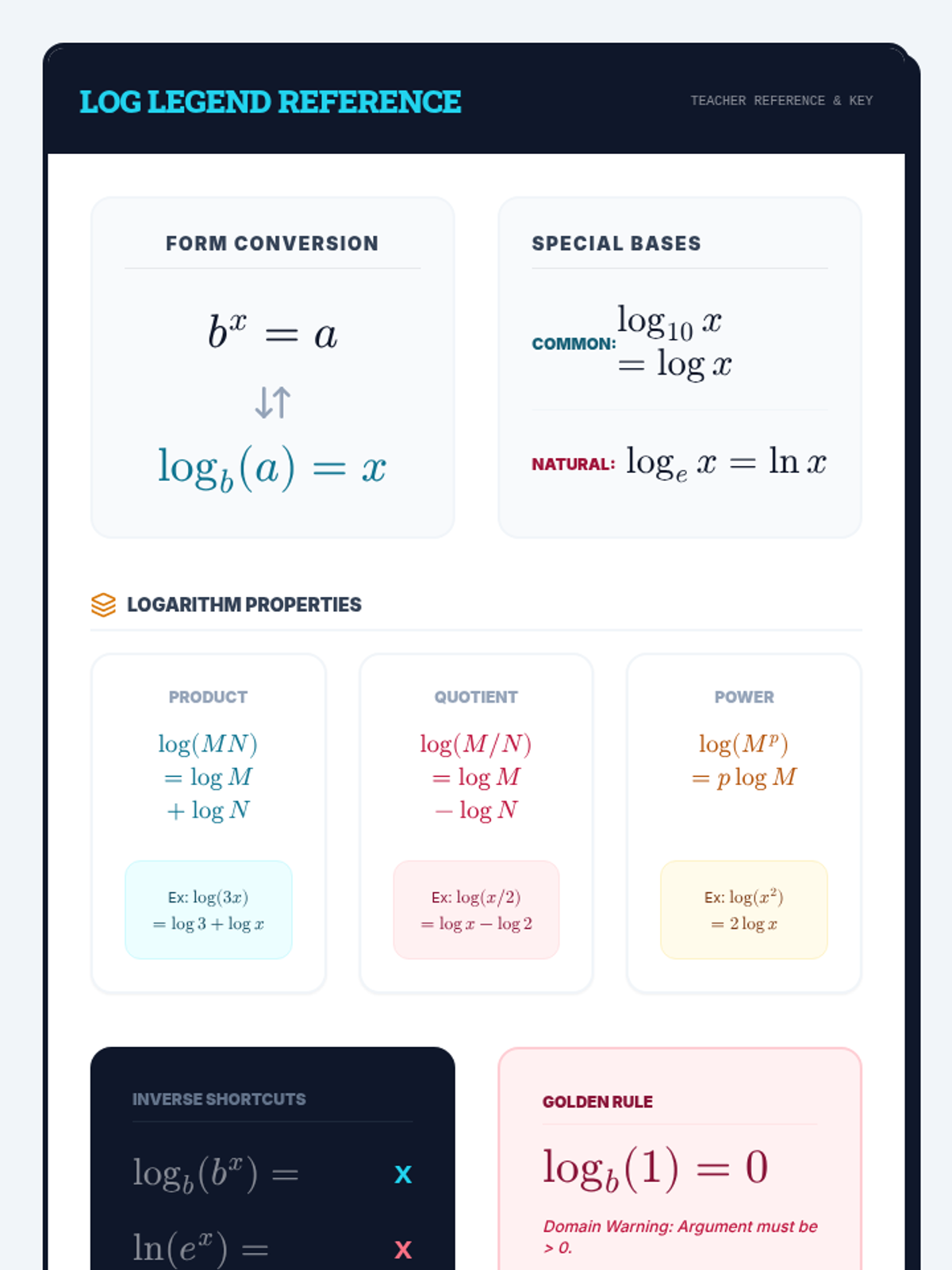
A high-density reference sheet summarizing the core rules of logarithms. It includes the exponential-to-logarithmic conversion formula, properties of logarithms (Product, Quotient, Power), special bases (common and natural), inverse identity shortcuts, and common pitfalls to avoid.
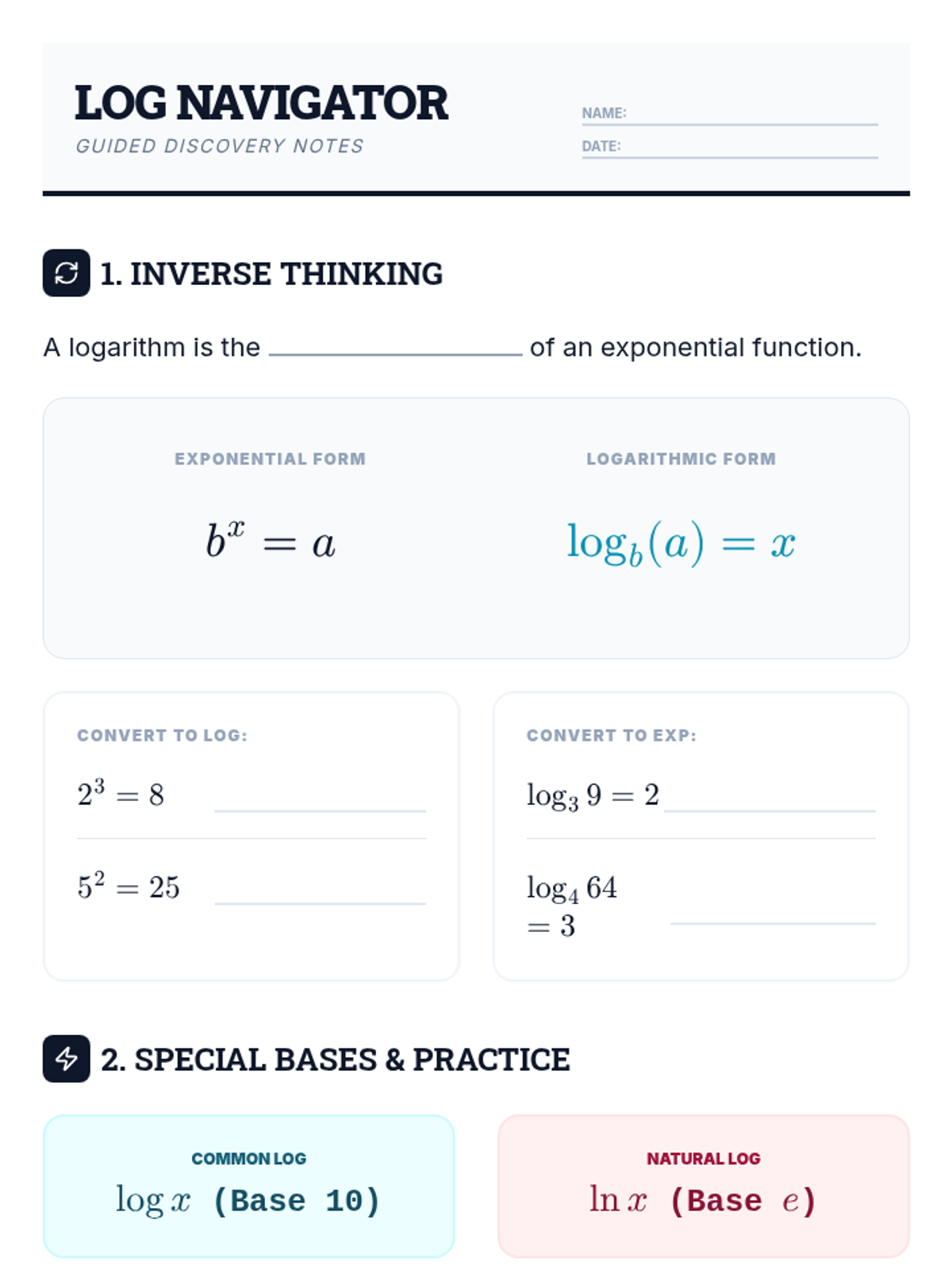
A comprehensive guided notes sheet for introducing logarithmic concepts. It features structured sections for converting between exponential and logarithmic forms, evaluating logs with various bases (including common and natural logs), and exploring fundamental logarithmic properties.