A visual presentation for the Bending Beams lesson, covering the refraction hook, video analysis with embedded YouTube link, and laboratory instructions.
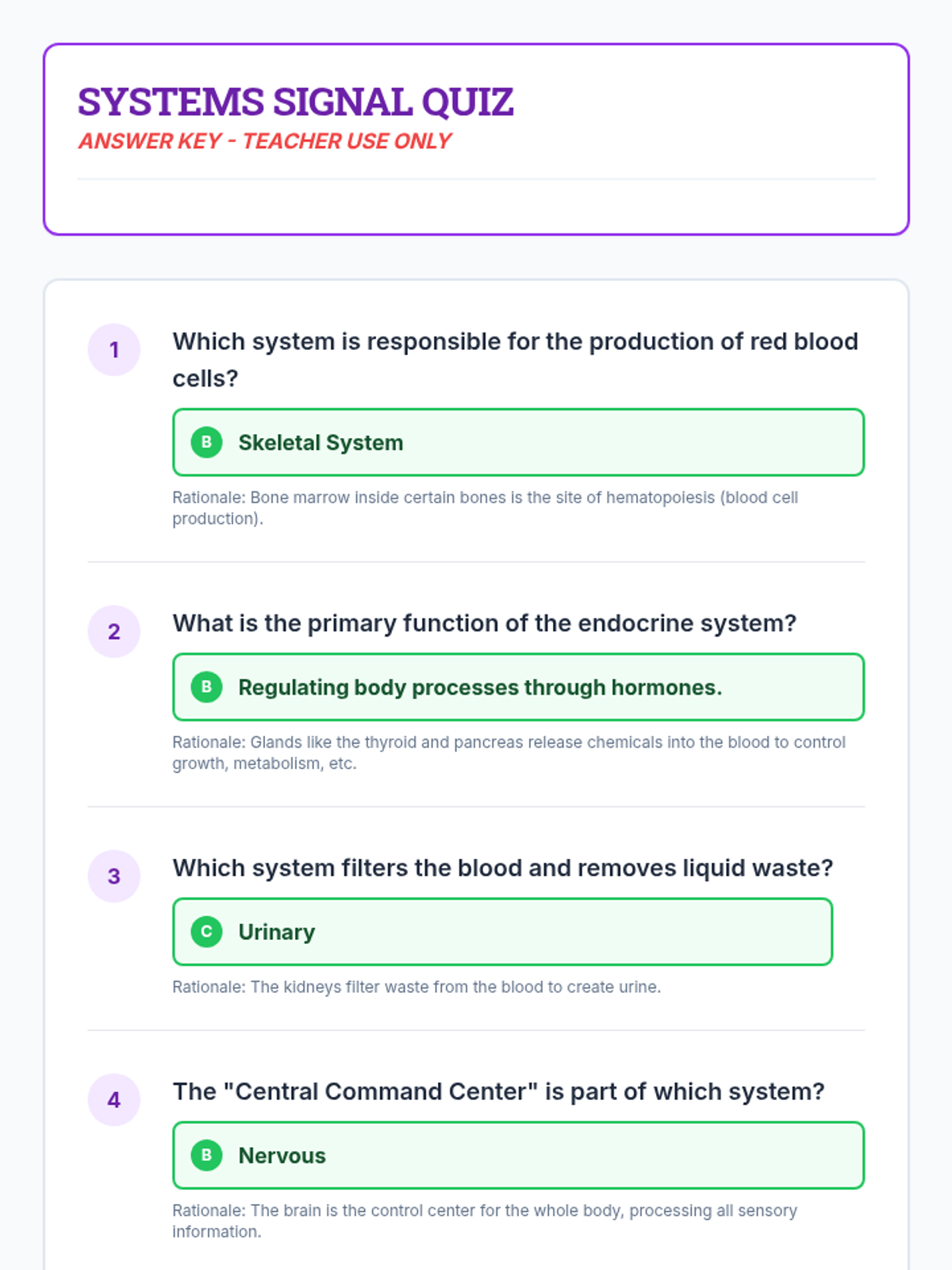
The answer key for the Systems Signal quiz, providing correct answers and rationales for all questions. Revised for consistent teacher guidance and better page flow.
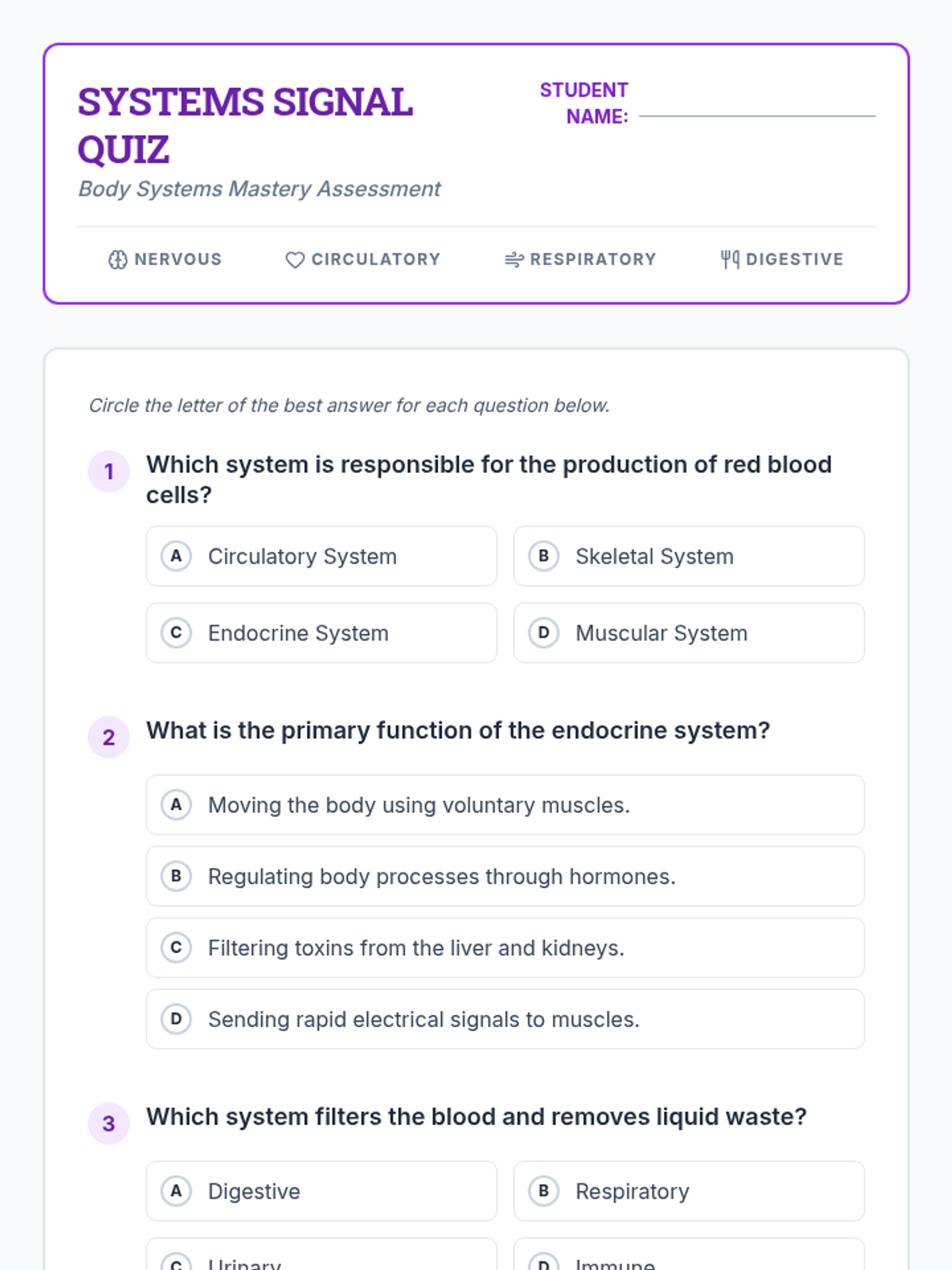
A multiple-choice quiz covering key concepts, organs, and system interactions within the human body. Revised for better page flow and work areas.
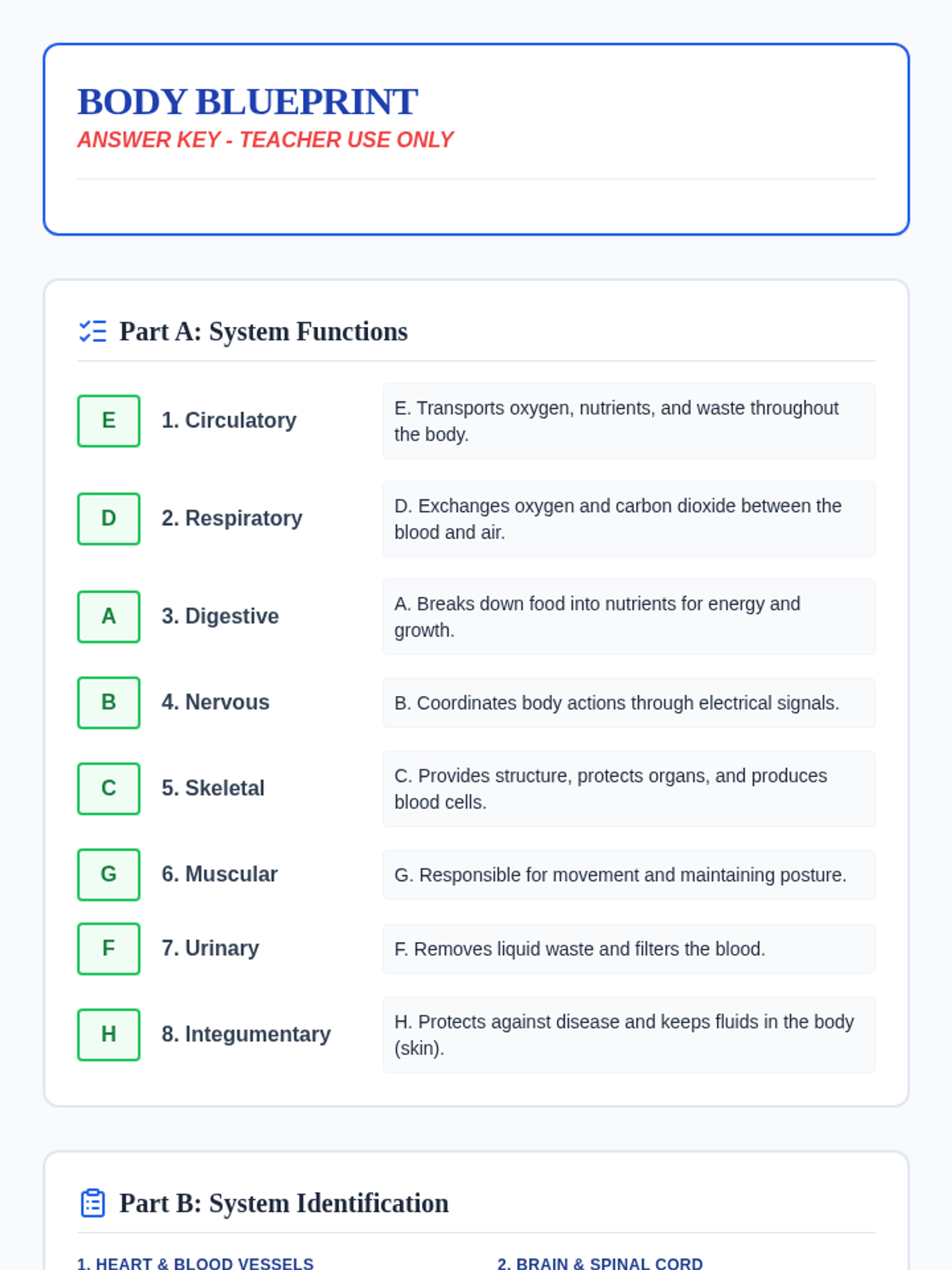
The answer key for the Body Blueprint worksheet, providing correct matches and identification for teacher use.
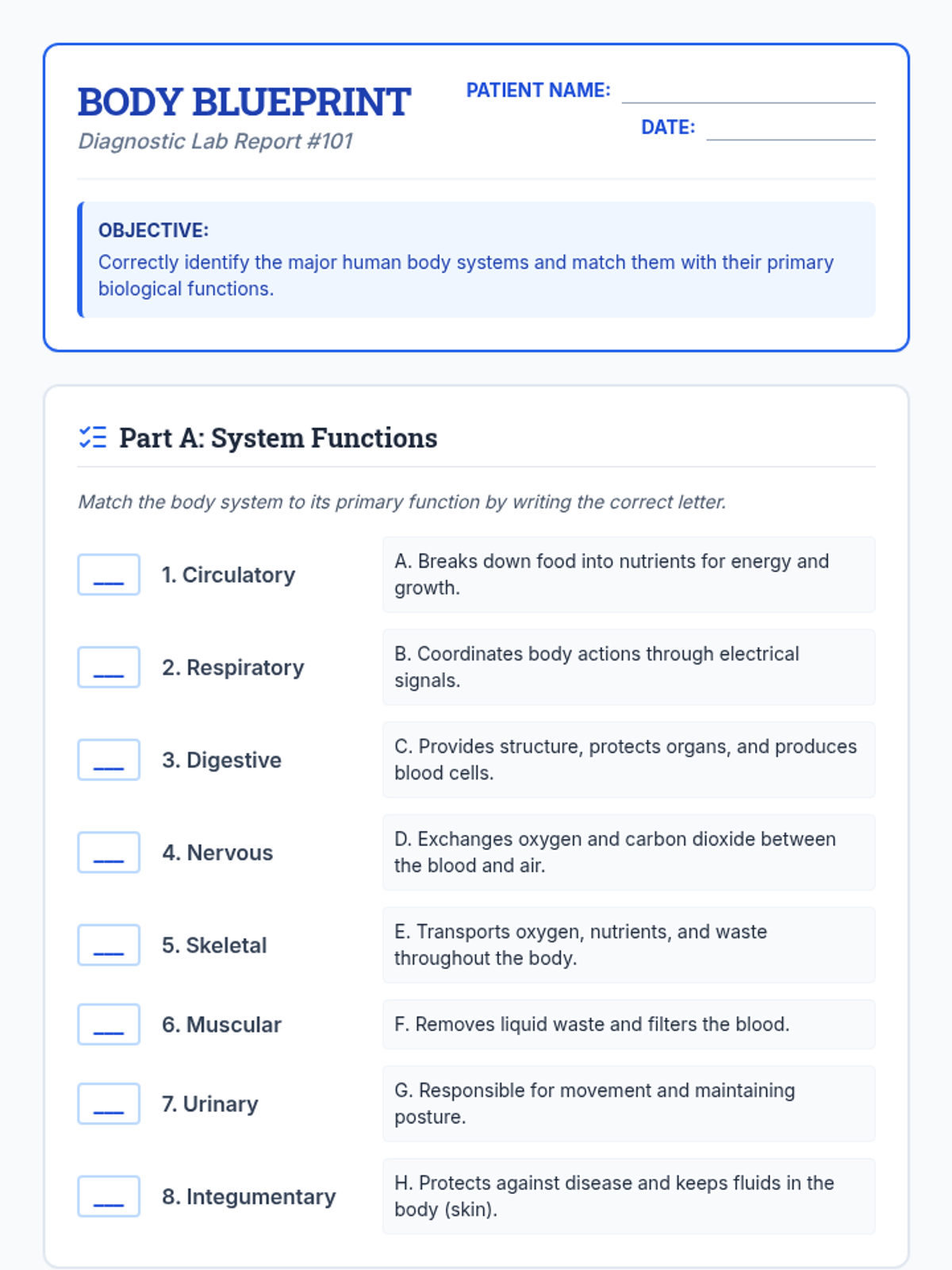
A labeling and matching worksheet for students to identify the functions and organs of major body systems. Revised for better page breaks and legible student work areas.
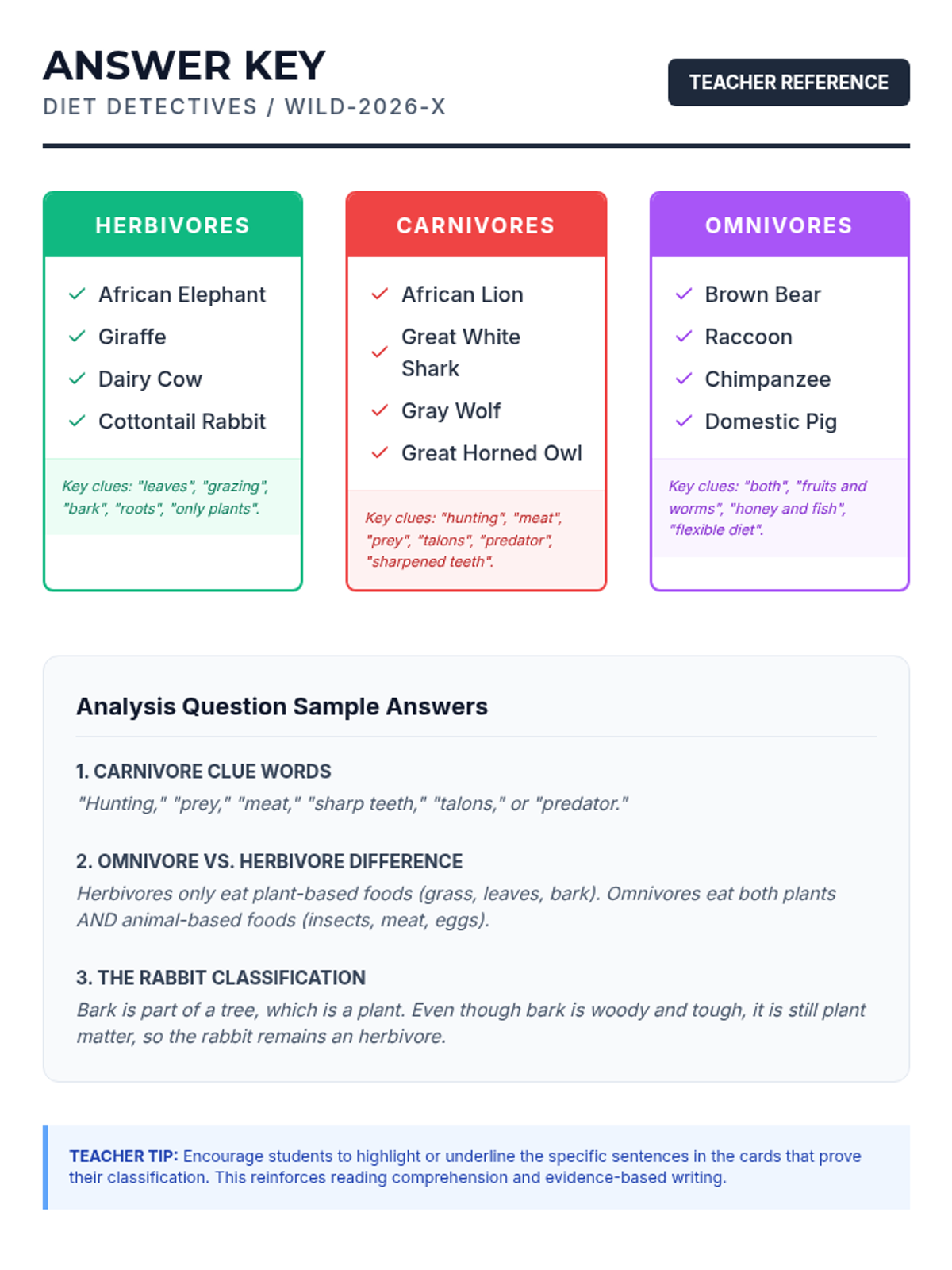
A teacher's answer key providing the correct classification for all 12 animals and sample responses for the analysis questions.
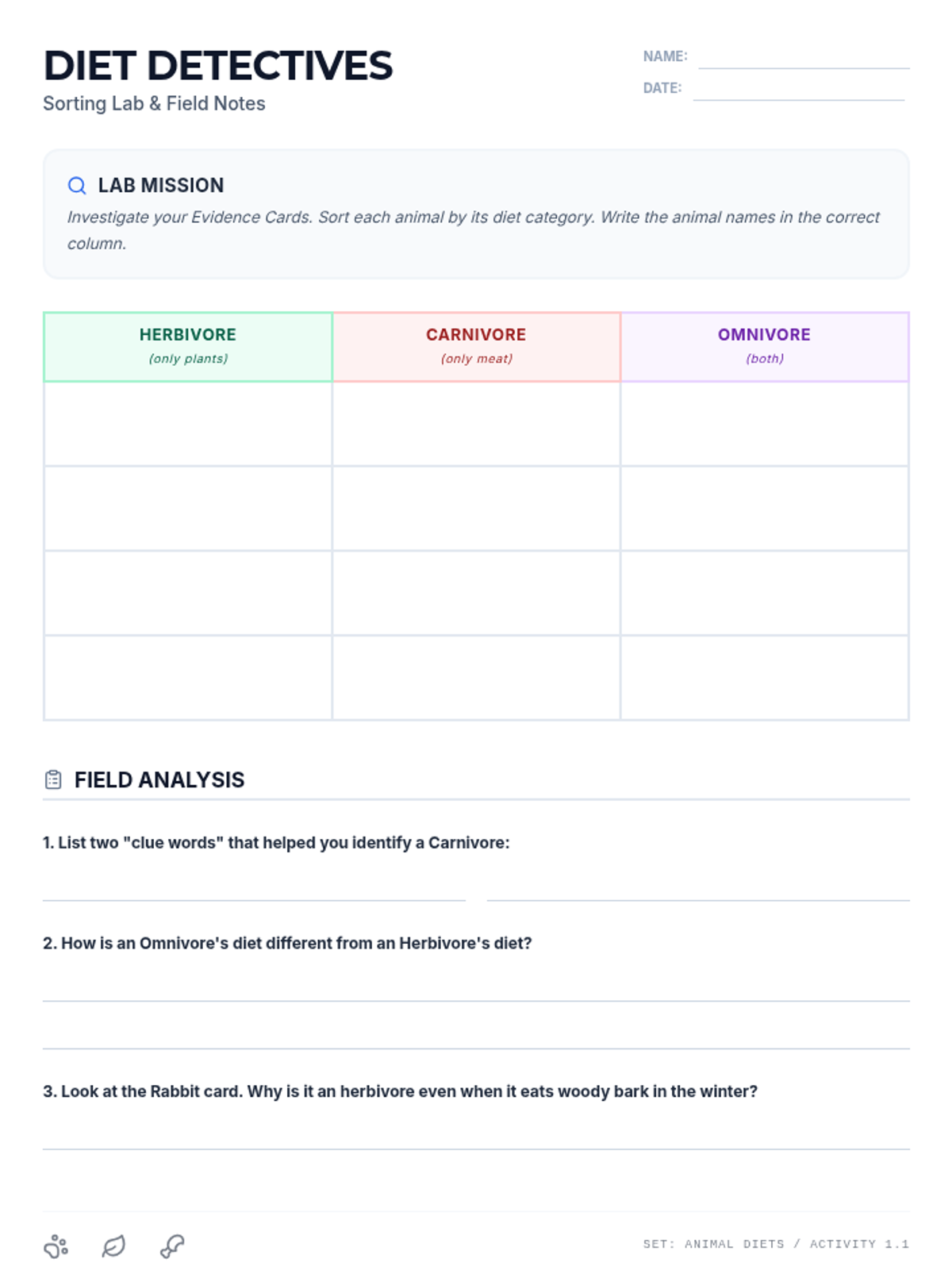
A sorting mat and recording sheet for students to document their animal diet classifications and provide textual evidence for their findings.
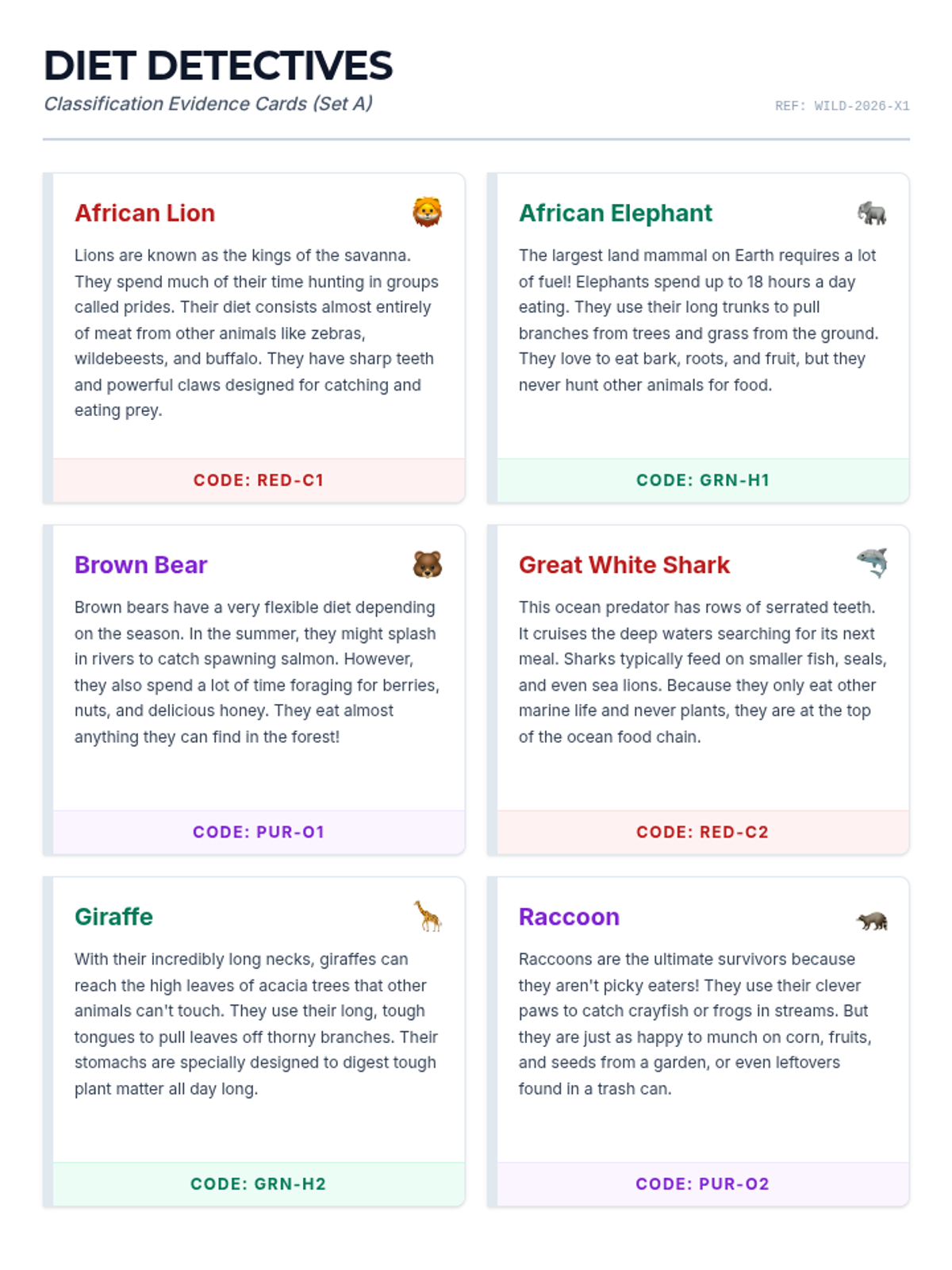
A set of 12 color-coded classification cards featuring various animals and short descriptions of their diets to help students identify herbivores, carnivores, and omnivores.
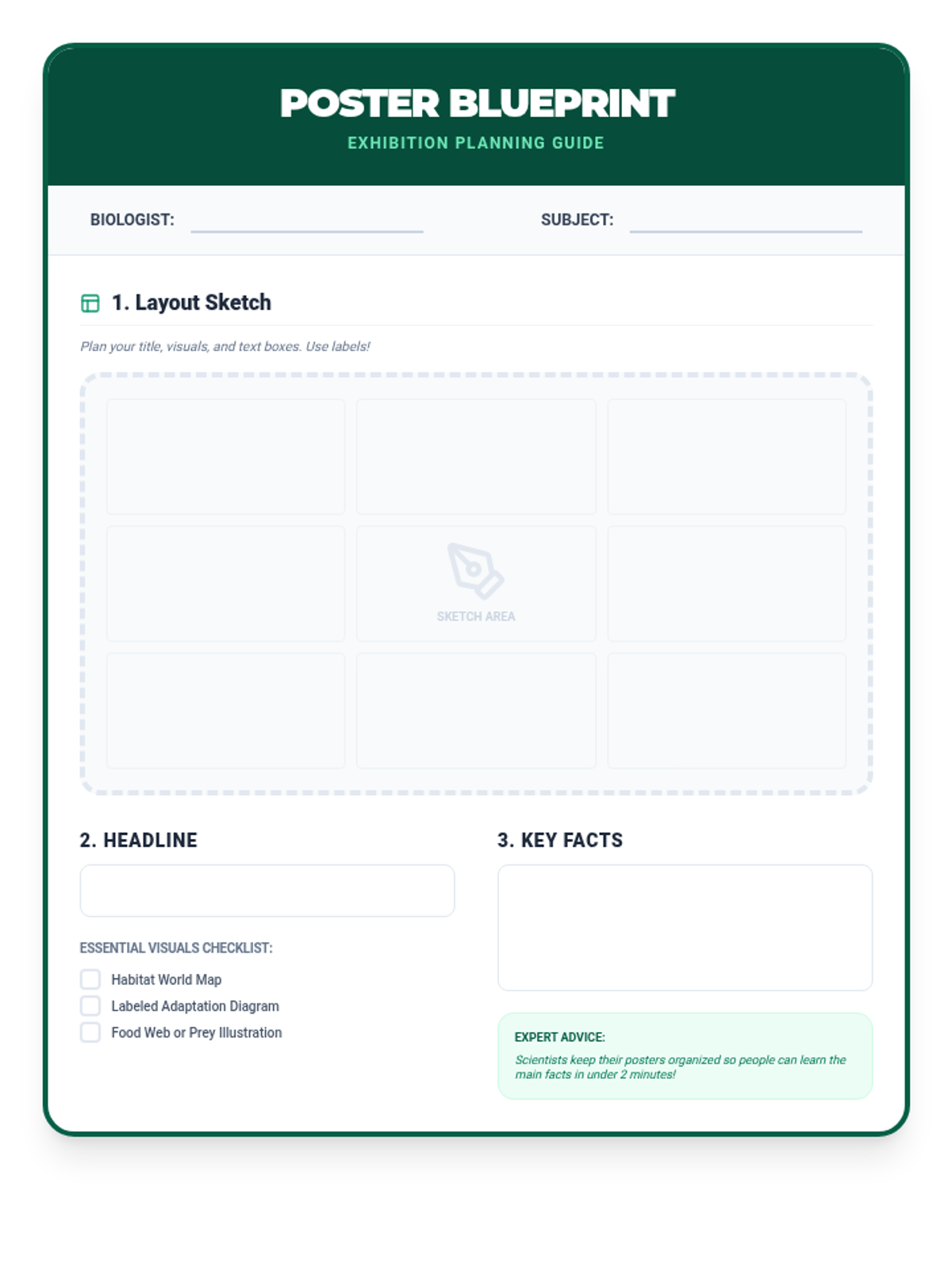
A planning document for students to design their final scientific exhibition poster, including layout sketching space and content reminders.
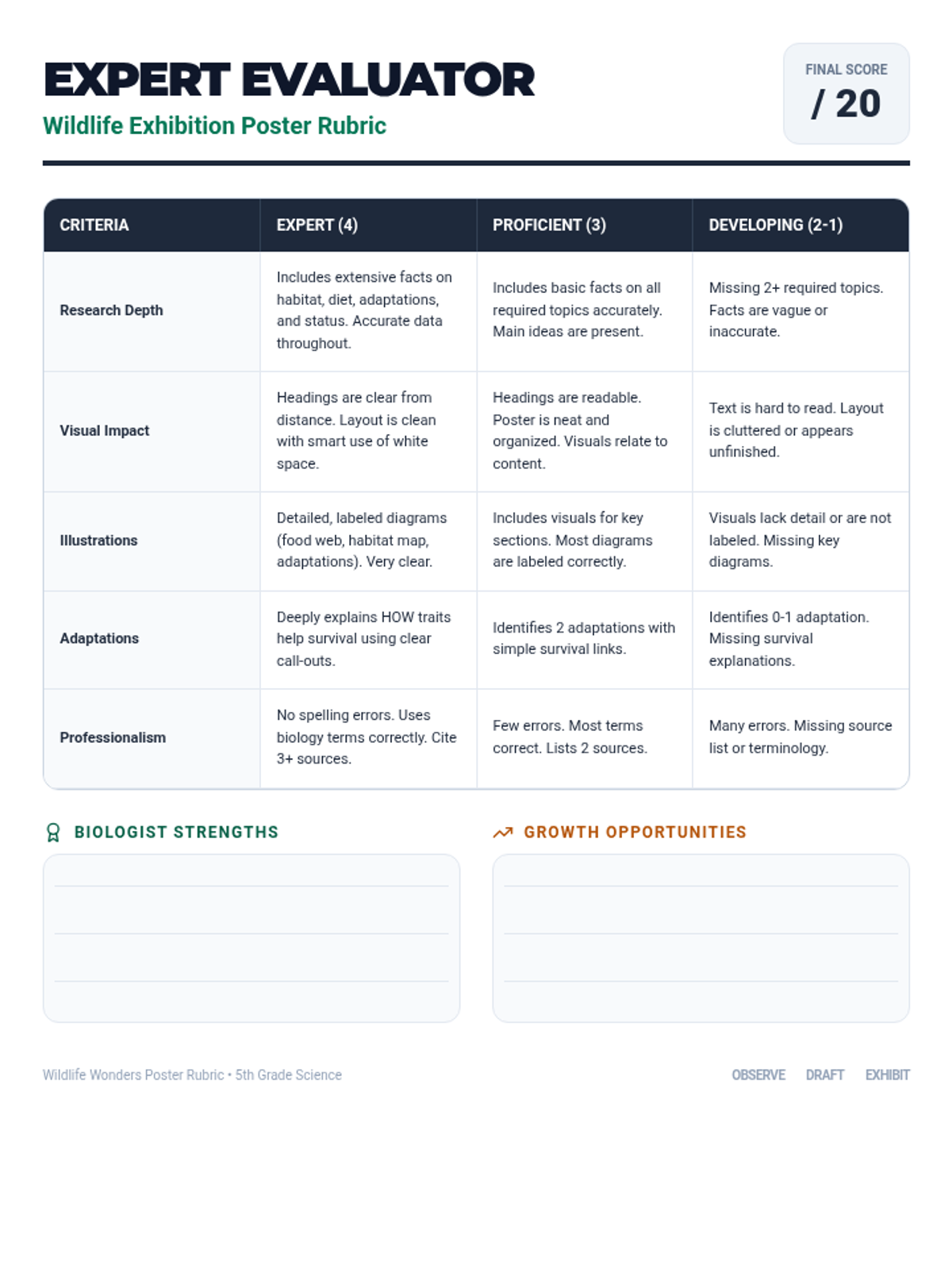
A clear and objective assessment rubric for the Wildlife Wonders poster project, evaluating students on research depth, visual impact, scientific illustrations, and professionalism.
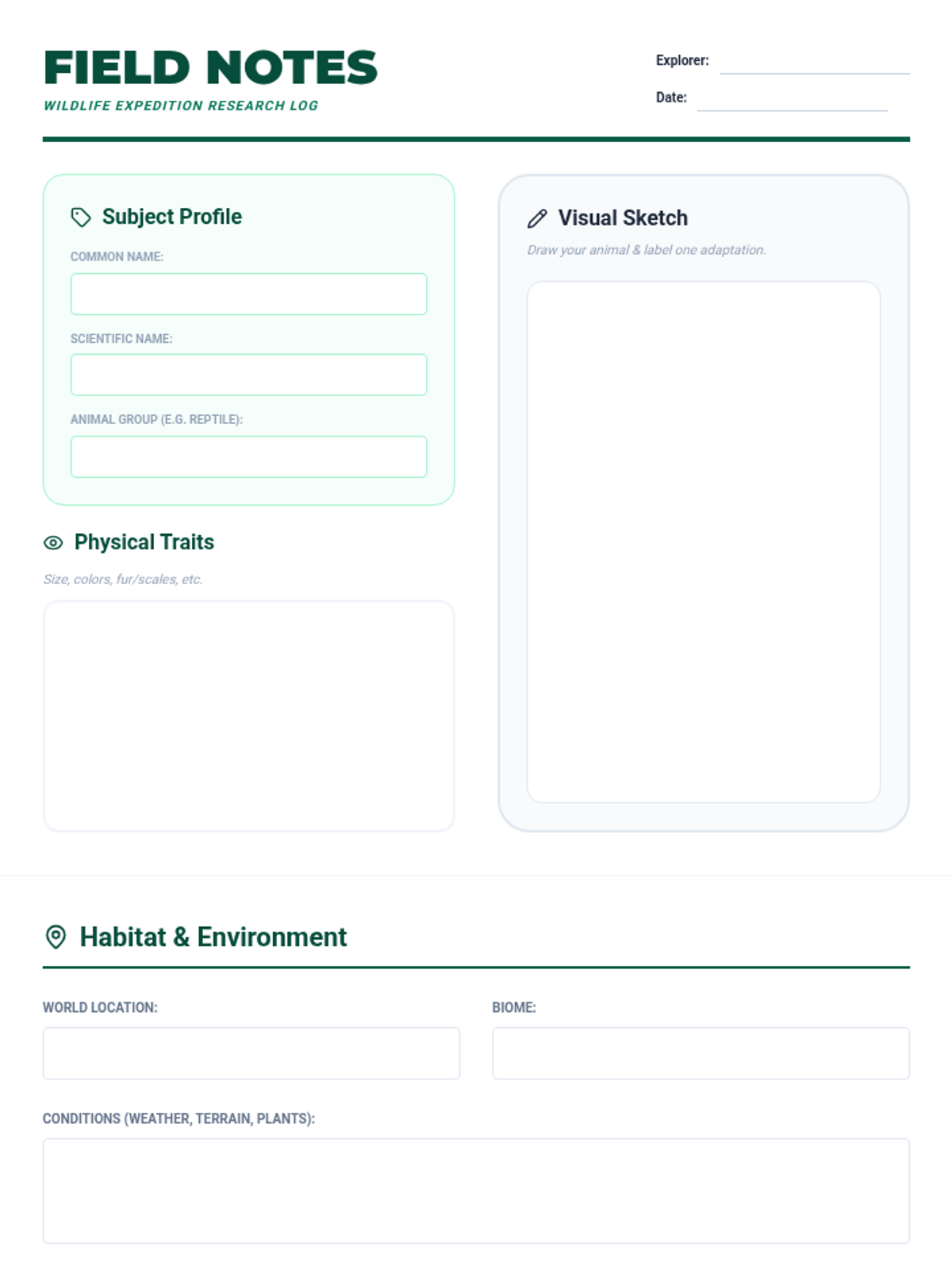
A structured research packet for students to gather and organize information about their chosen animal, including sections for habitat, adaptations, food web roles, and conservation status.
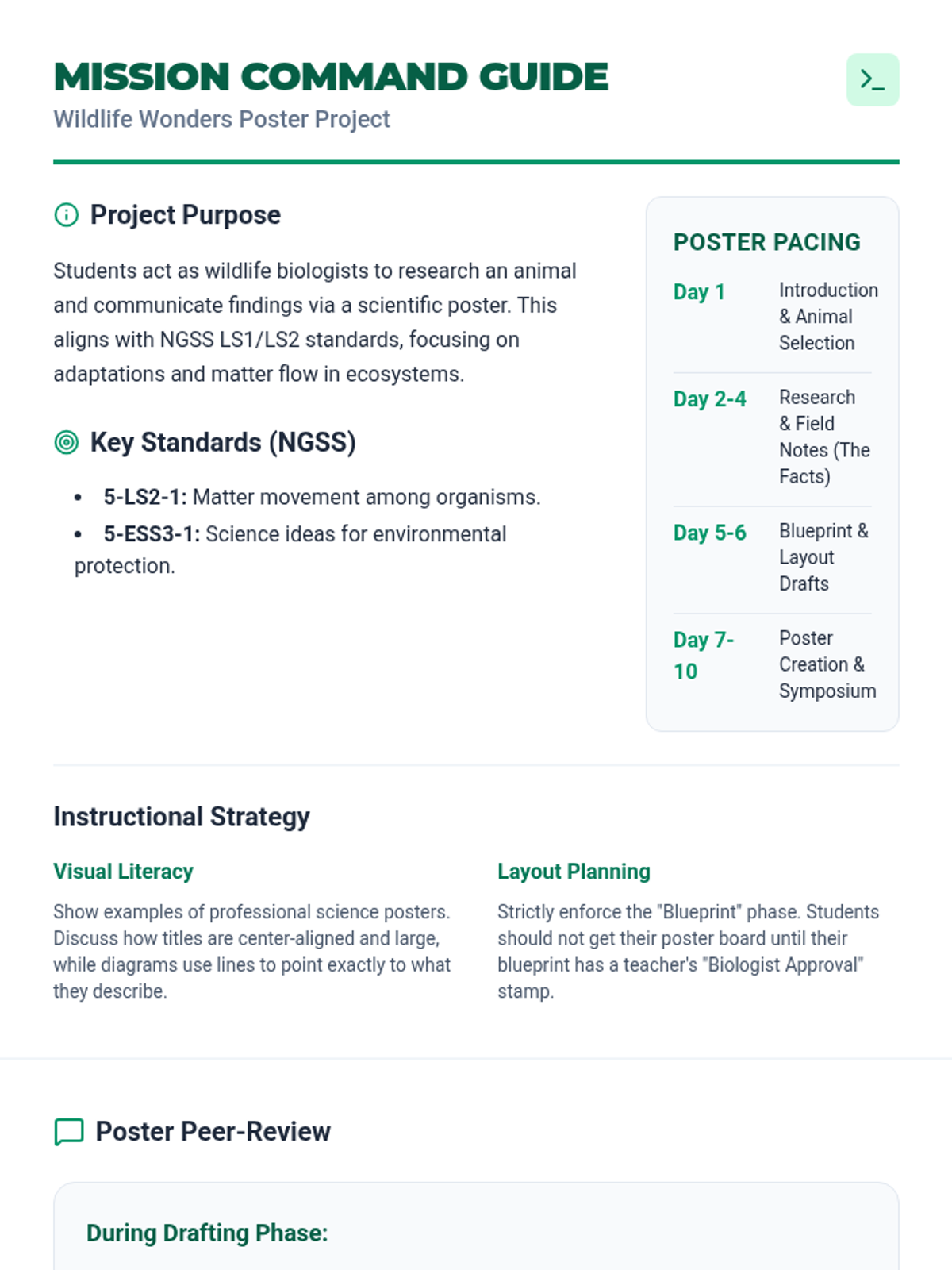
A comprehensive teacher guide for the Wildlife Wonders poster project, featuring pacing guides, layout planning strategies, and symposium facilitation tips.
Engaging visual slides to introduce the Wildlife Wonders research project, focusing on the creation of a scientific exhibition poster.
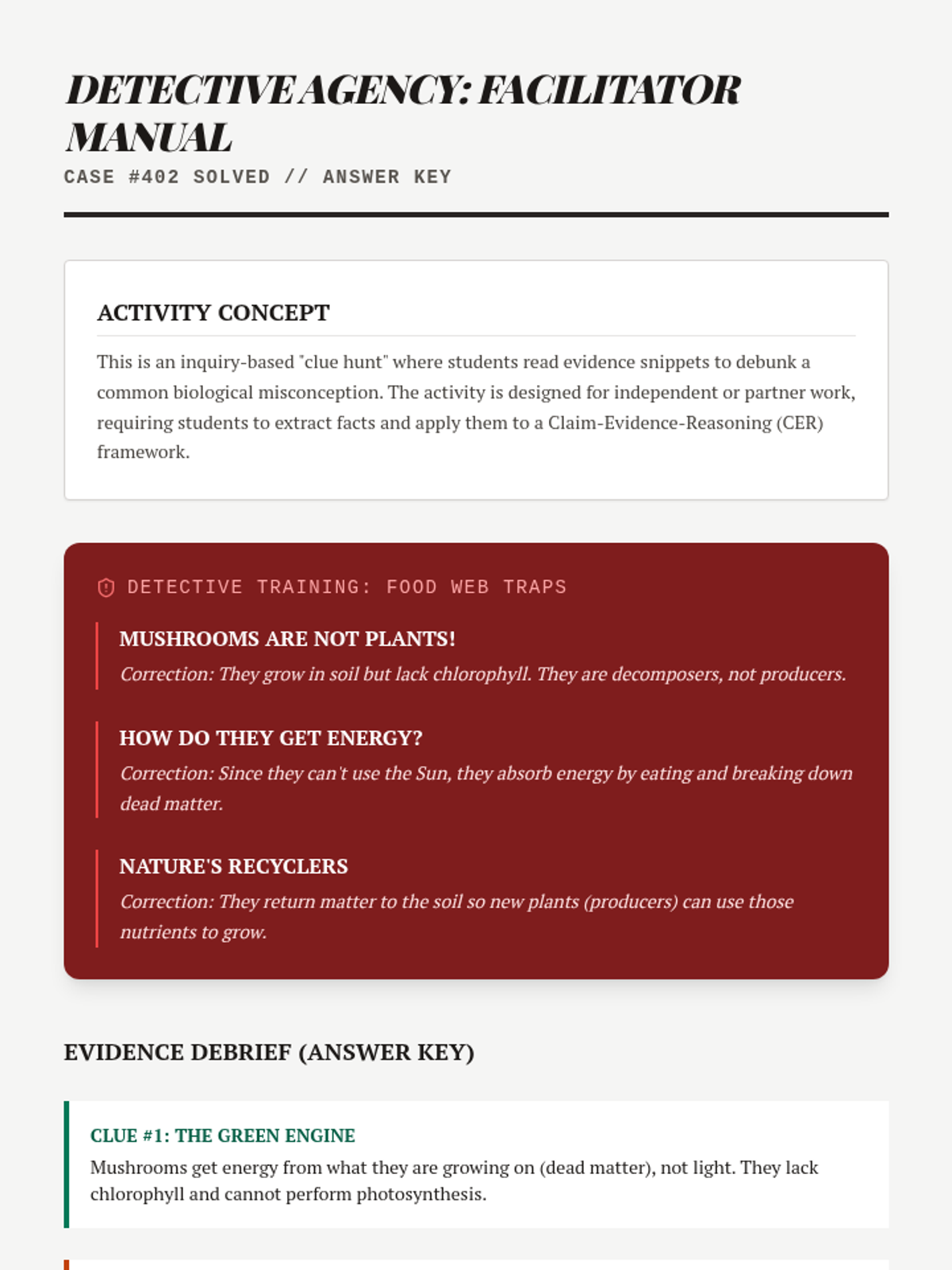
Updated teacher guide for the "Hidden Kingdom Mystery." Now includes specific facilitation notes on "Nature's Recyclers" and common food web traps. Revised for better page flow and legibility.
Updated intro slides for the Kingdom Detective investigation. Now includes explicit slides addressing "Nature's Recyclers" and common food web traps. Revised for better text contrast and layout polish.
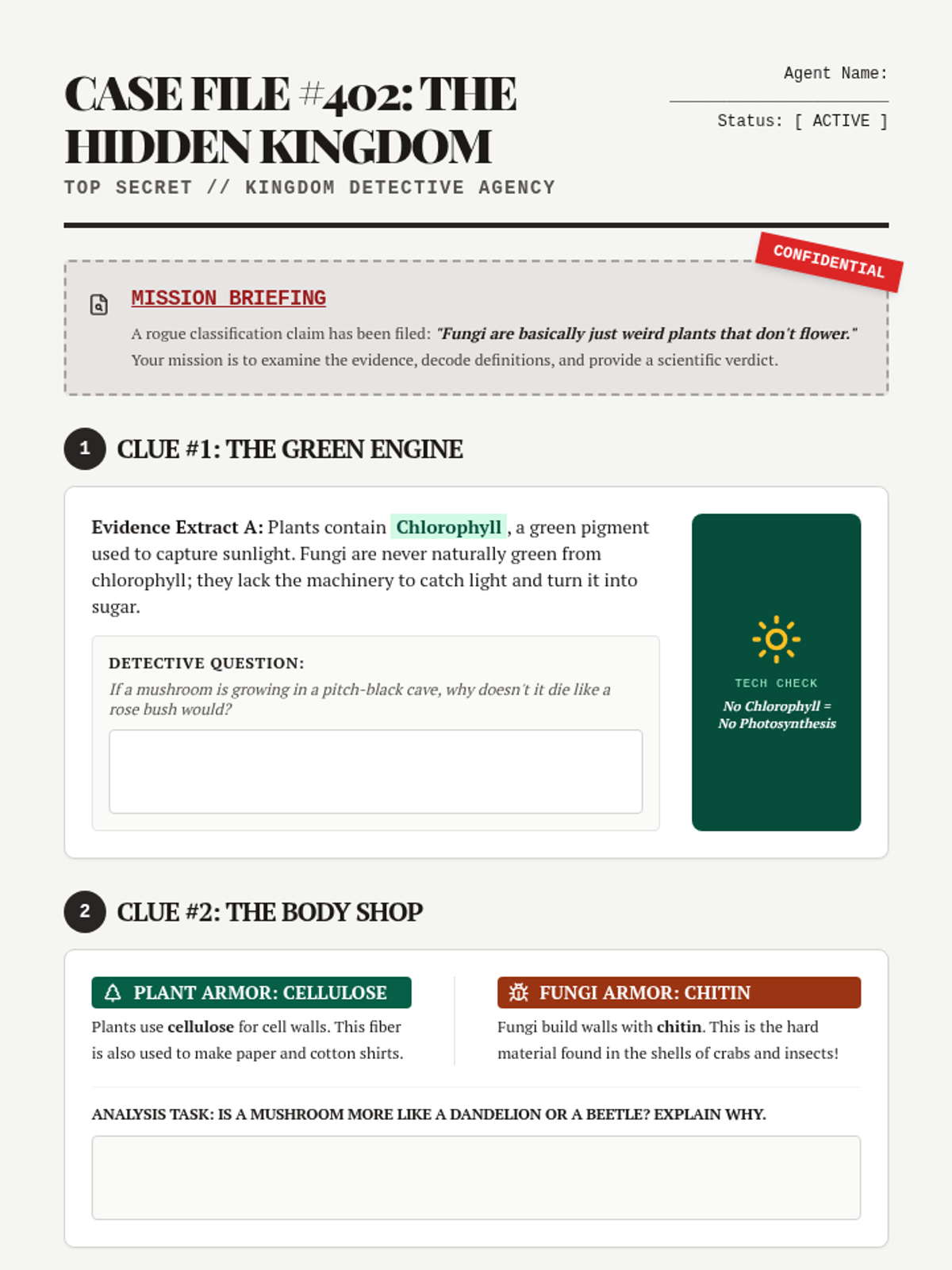
A mystery-themed clue hunt where students act as "Kingdom Detectives." Updated with explicit sections on "Nature's Recyclers" and "Common Food Web Traps" to address key misconceptions about fungi and energy roles. Revised for better terminology consistency and page flow.
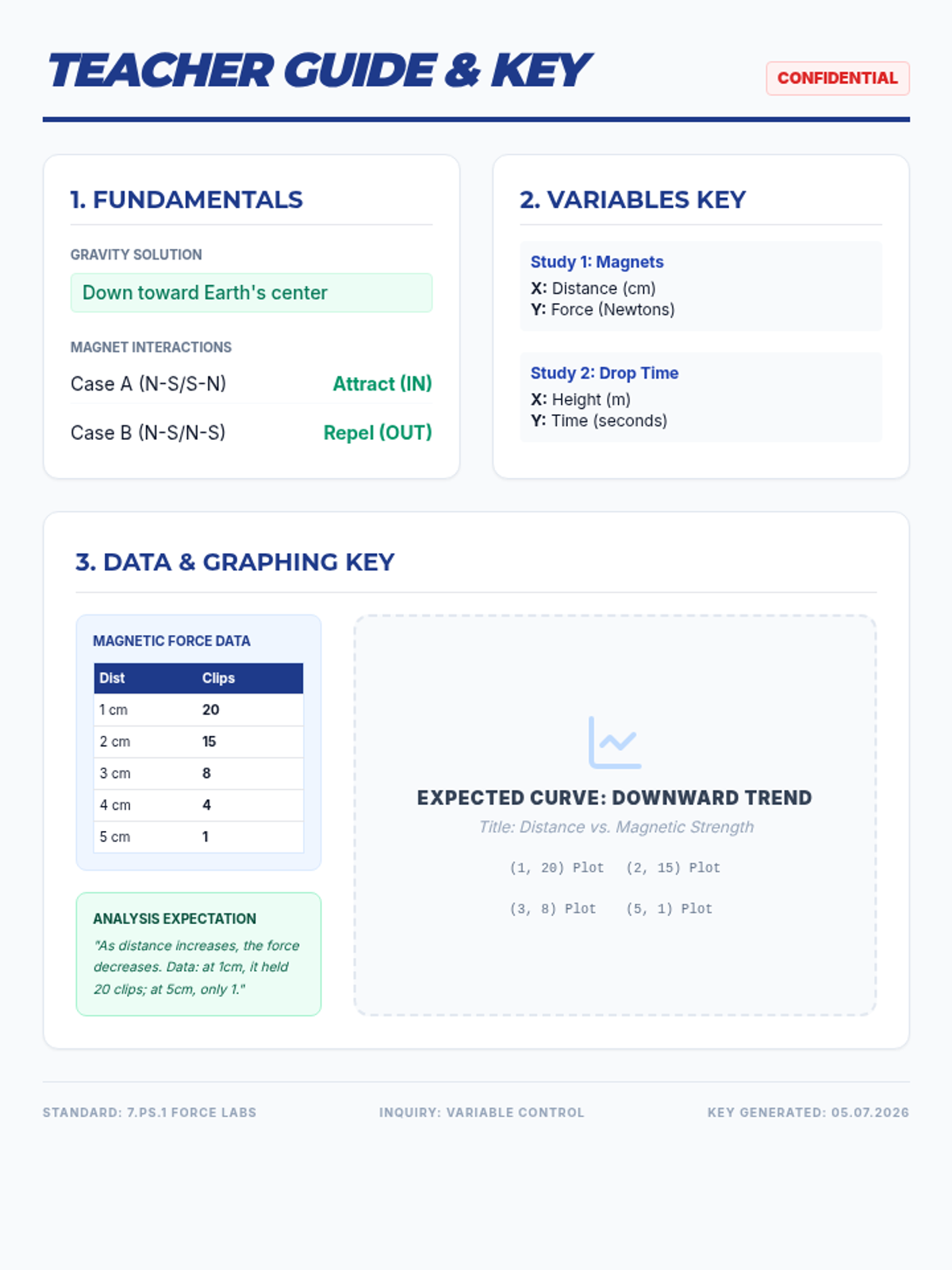
Teacher reference guide and answer key for the Force & Data Lab. Revised for better alignment, page break management, and explicit data sets for the experiments.
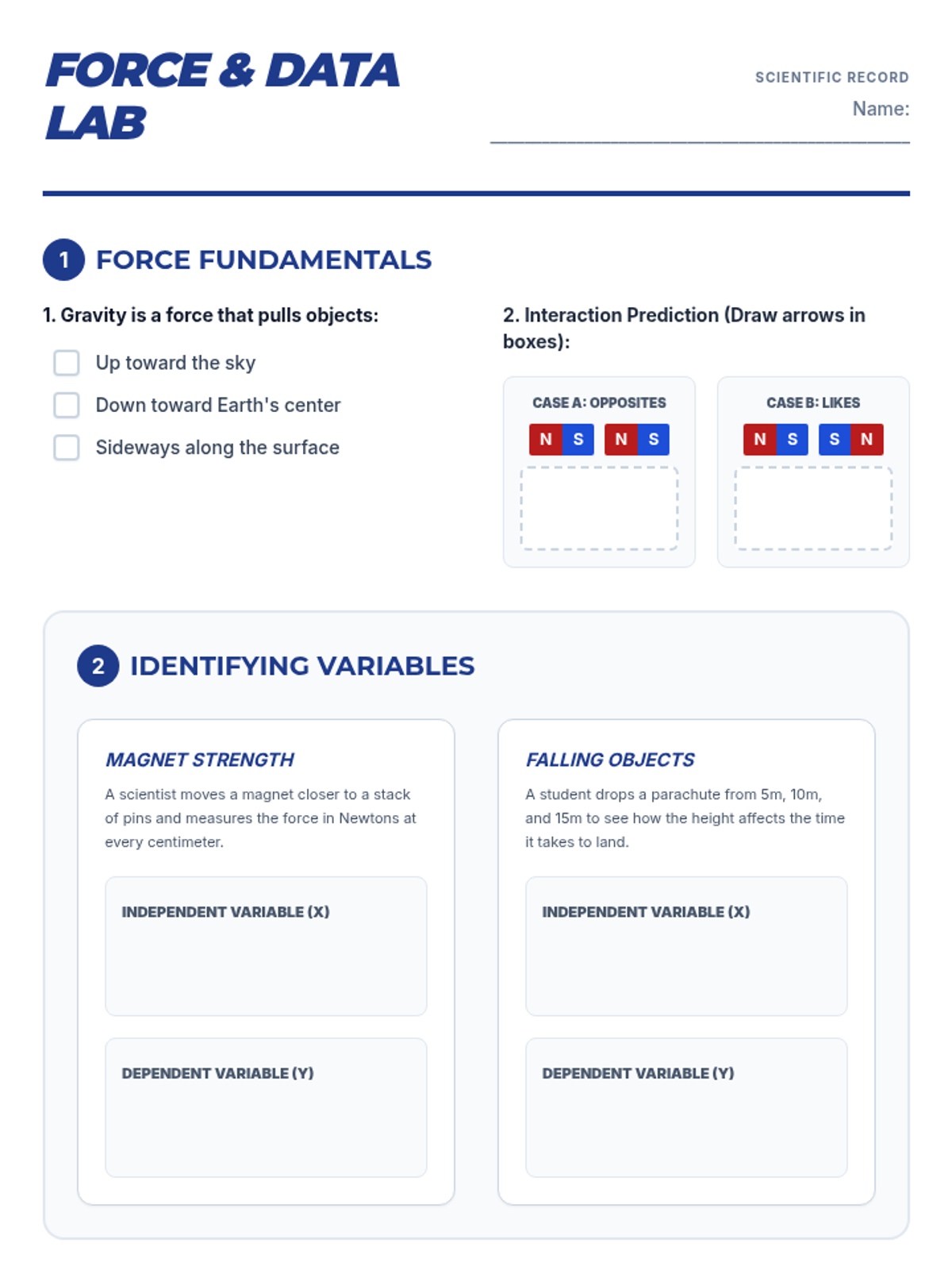
A student worksheet featuring multiple-choice questions on forces, variable identification exercises, and a graphing challenge using a provided data set on magnetism. Revised for better layout and alignment. Now includes improved spacing for work and forces graphing to start on a new page.
A visual presentation introducing gravity, magnetism, and the fundamentals of graphing data including variables and axis placement. Now includes a practice data set slide. Revised to ensure all content fits and labels are visible.
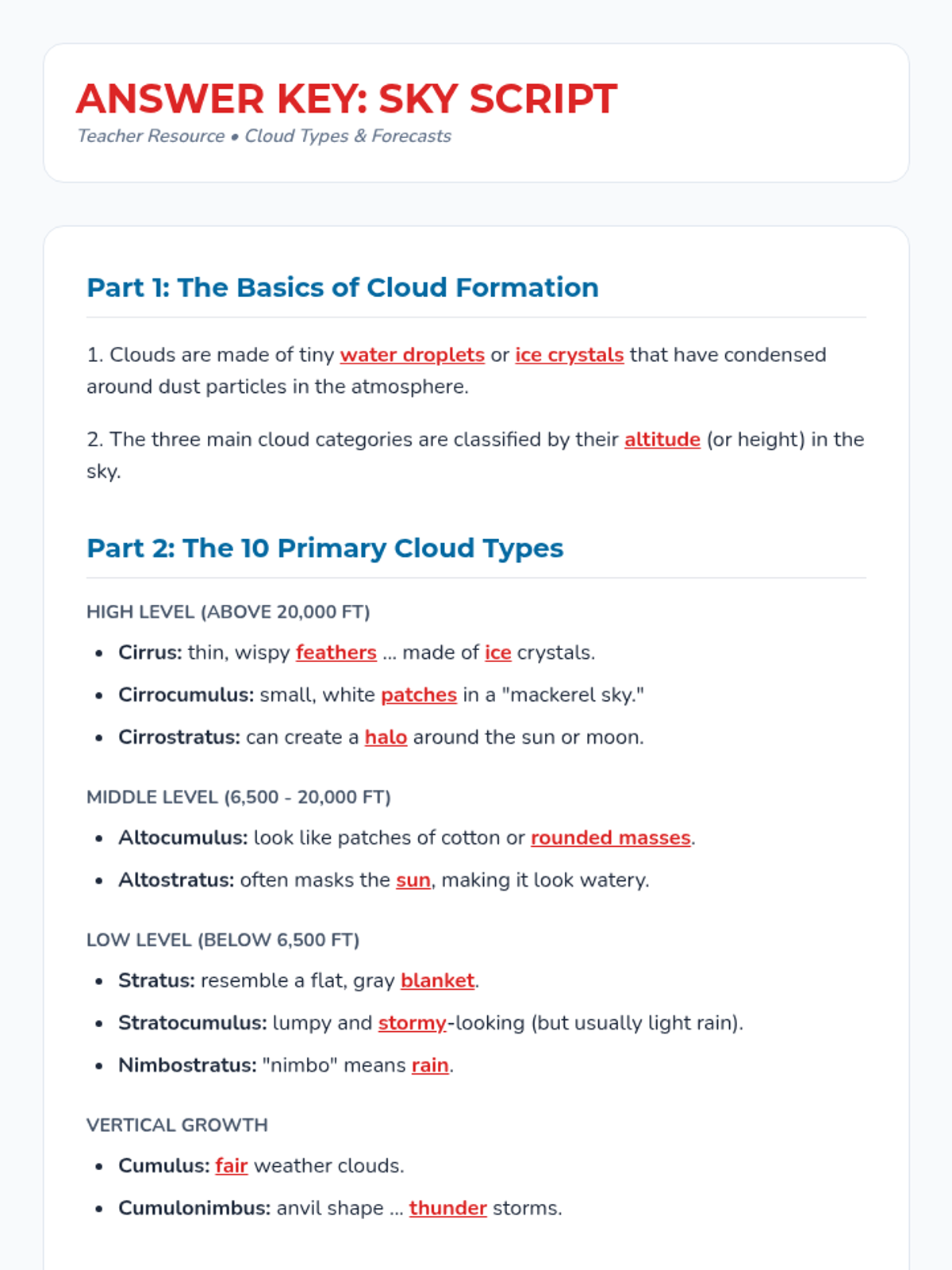
A teacher's answer key for the Sky Script Guided Notes, including suggested answers for fill-in-the-blank sections and the reflection question.
A visual presentation introducing the ten primary cloud types with a focus on their classification by altitude and weather effects. Includes a National Geographic video embed and improved slide contrast.
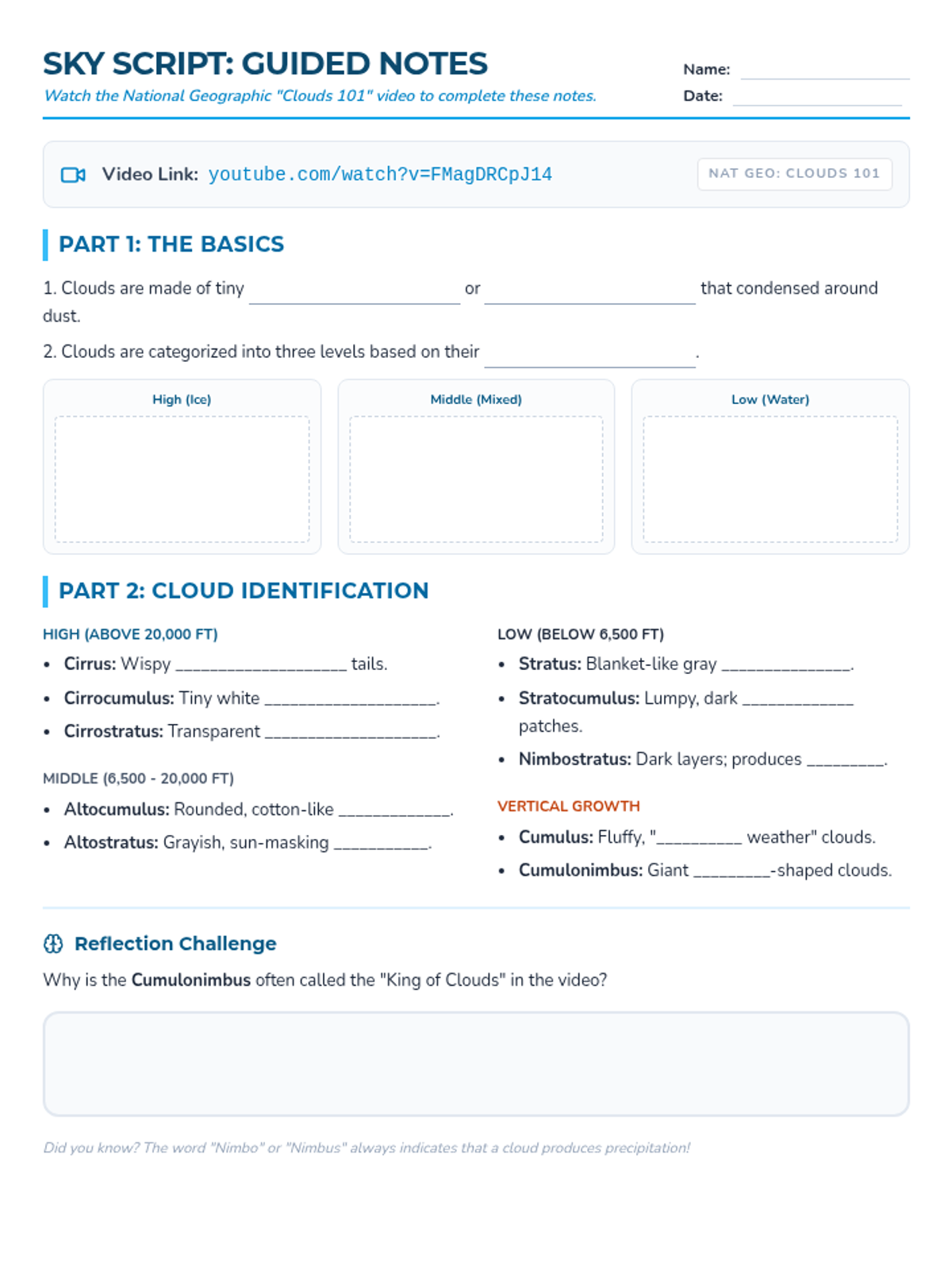
A student worksheet with fill-in-the-blank notes designed to be completed while watching the National Geographic "Clouds 101" video. Includes larger drawing areas and clear video references. Condensed to fit on a single page.
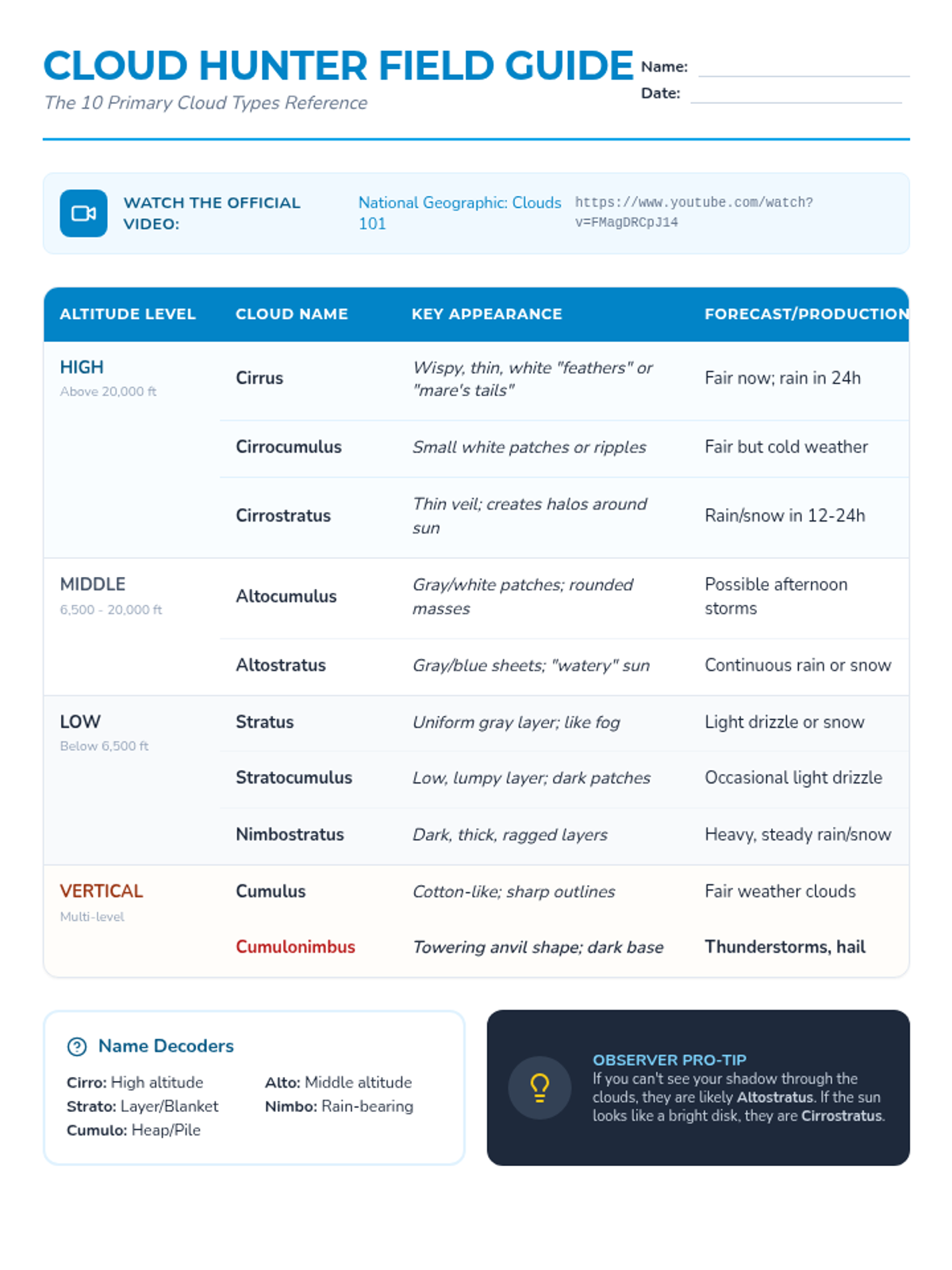
A visually organized reference sheet for students detailing the 10 primary cloud types, their appearances, altitudes, and weather predictions. Condened to fit on a single page for quick reference.
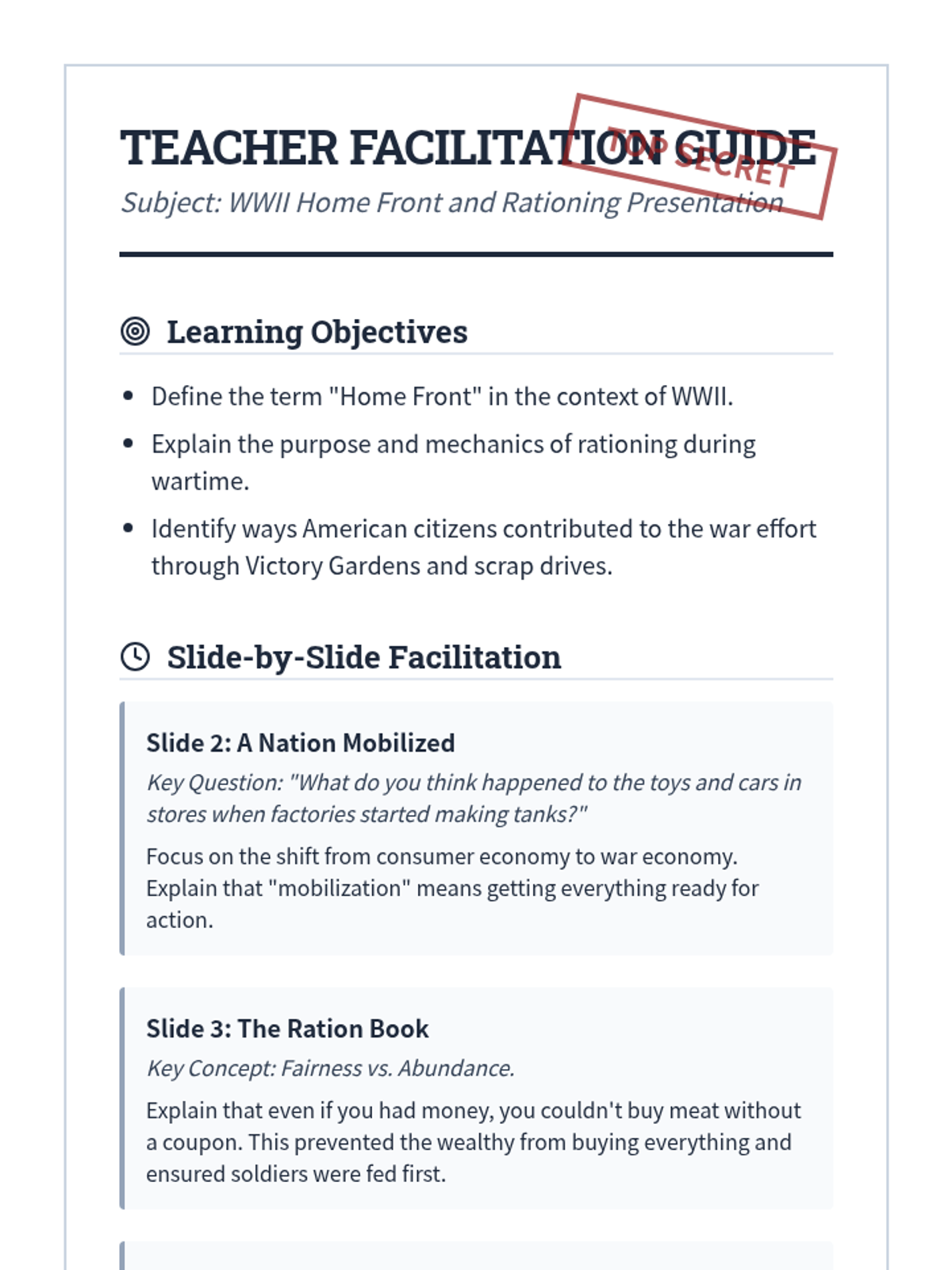
A teacher facilitation guide for the WWII Home Front slides, providing pacing notes, discussion prompts, and historical background information on rationing and mobilization.
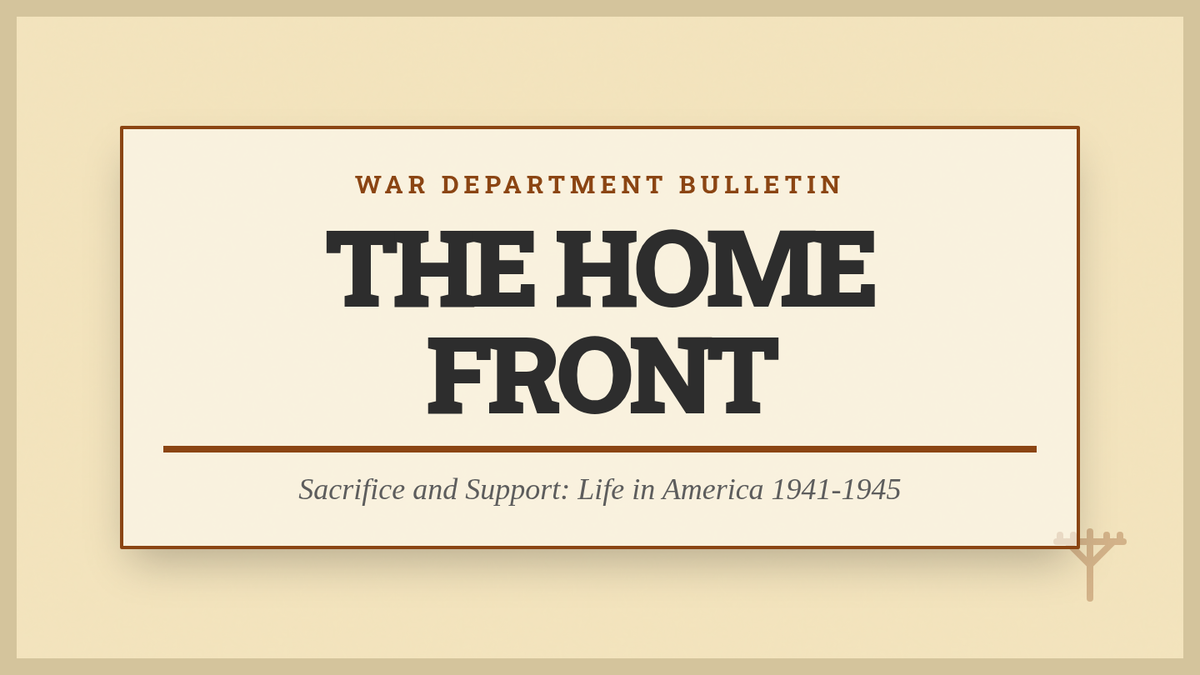
A slide presentation layout for WWII Home Front and Rationing, featuring a vintage newspaper aesthetic, key concepts of mobilization, rationing mechanics, and community efforts like Victory Gardens.
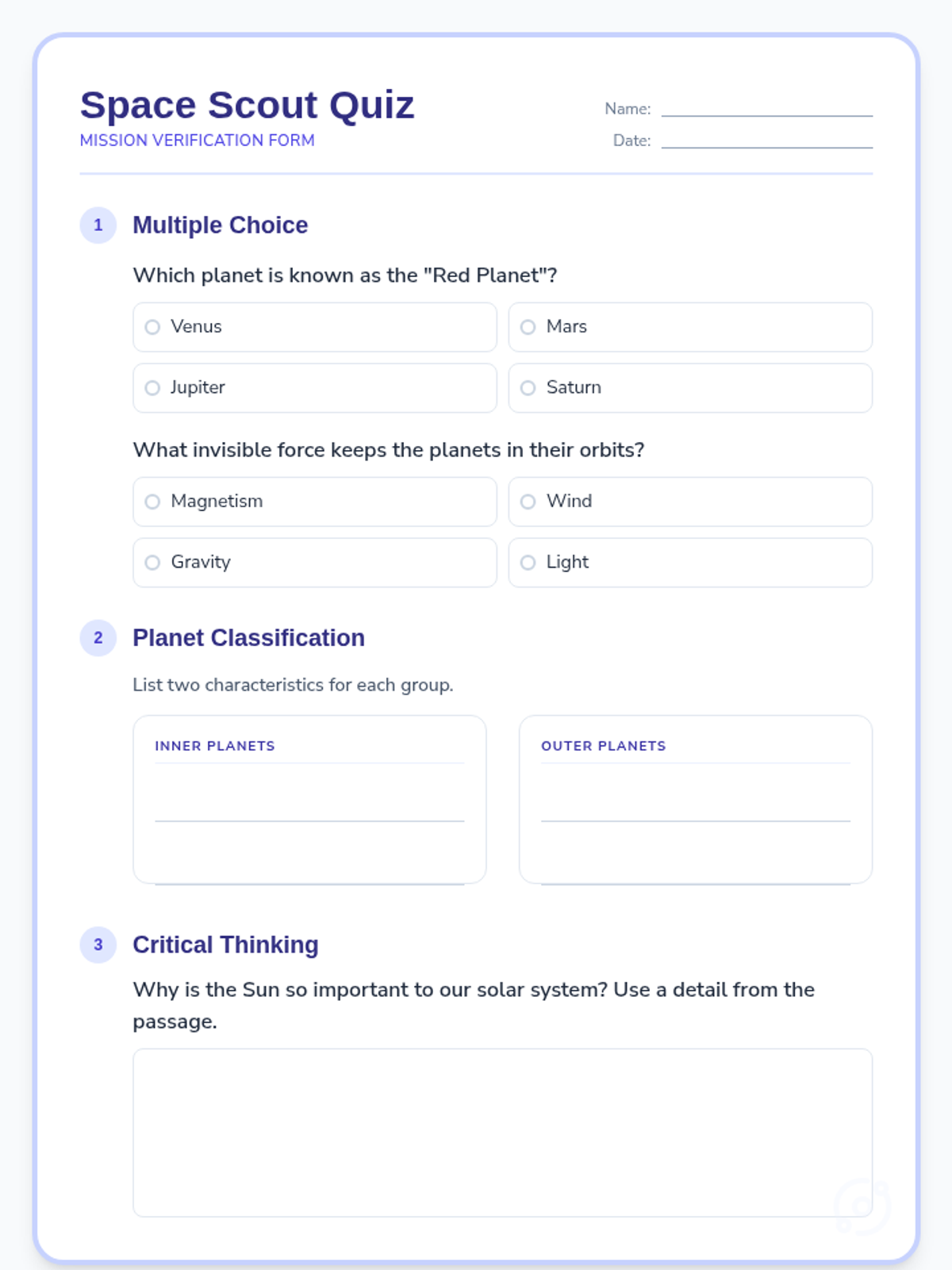
A comprehension worksheet for the Planet Scout passage, including multiple-choice questions, a comparison grid for inner and outer planets, and a short-answer reflection.
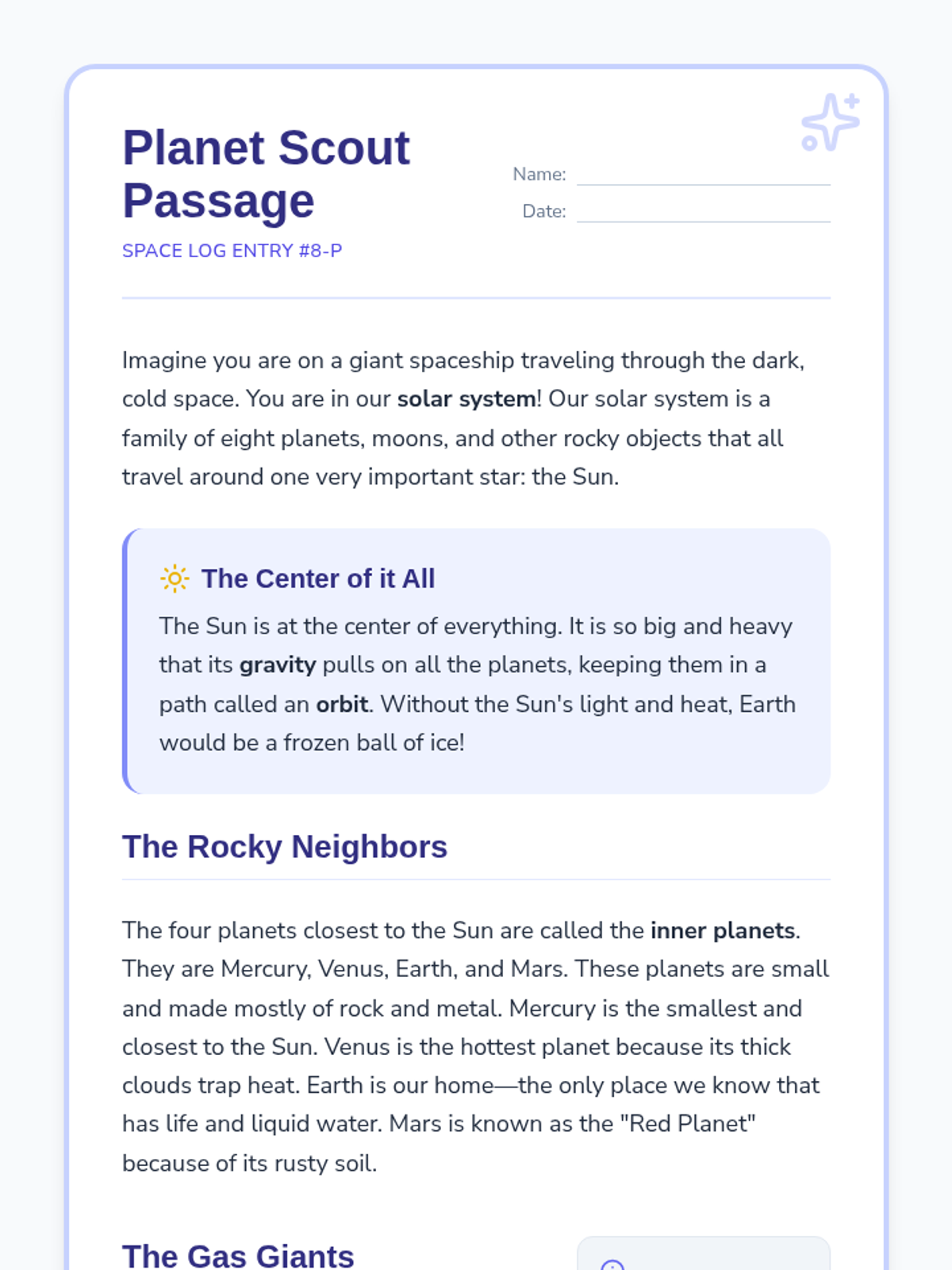
A 3rd-grade reading passage introducing the solar system, featuring descriptions of the Sun, inner rocky planets, and outer gas giants with a clean, space-themed design.
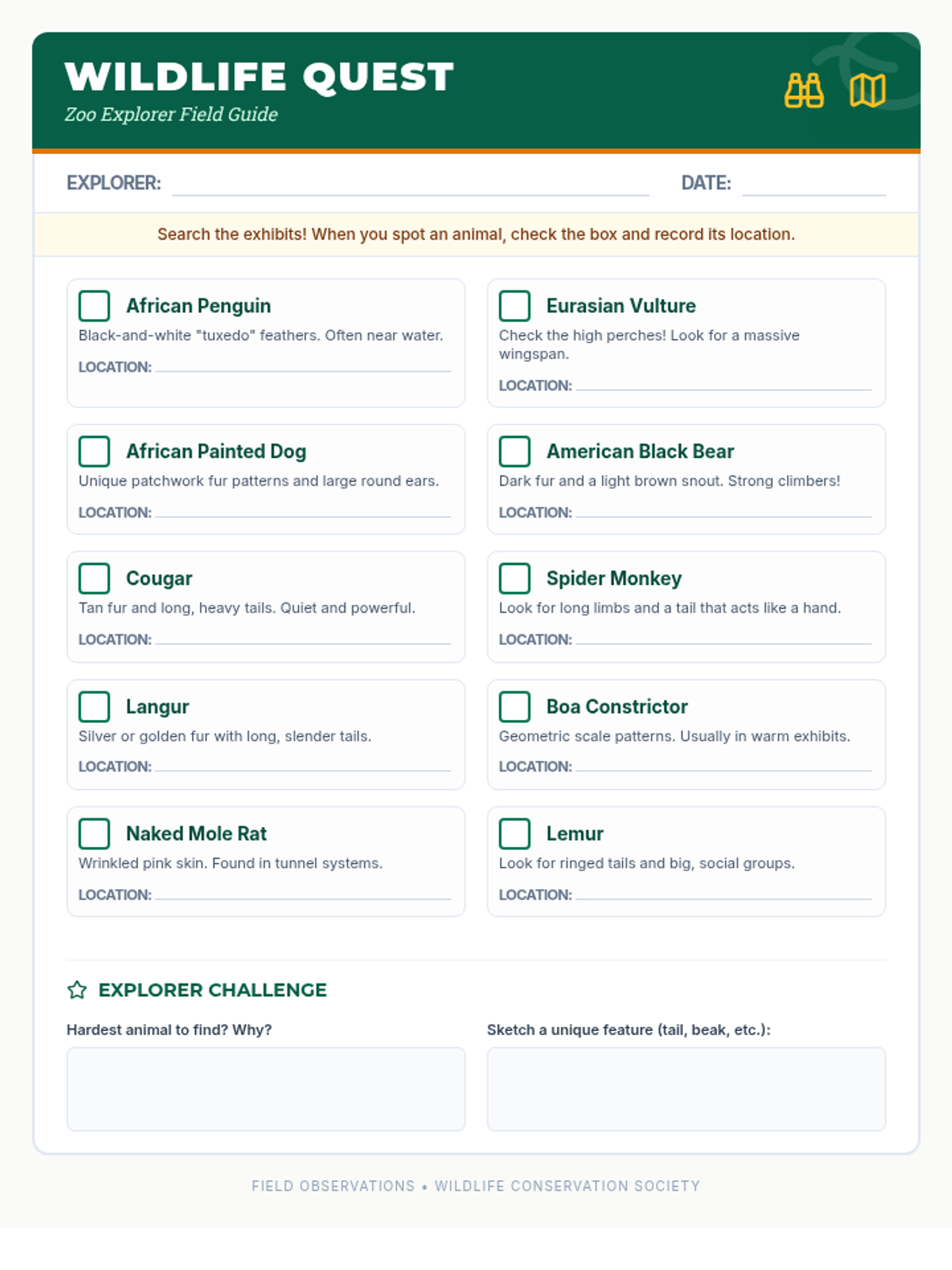
A compact, single-page wildlife scavenger hunt checklist featuring 10 specific animals. Each entry includes a checkbox, a short identification clue, and a dedicated location line. The bottom includes an 'Explorer Challenge' for reflection and sketching.
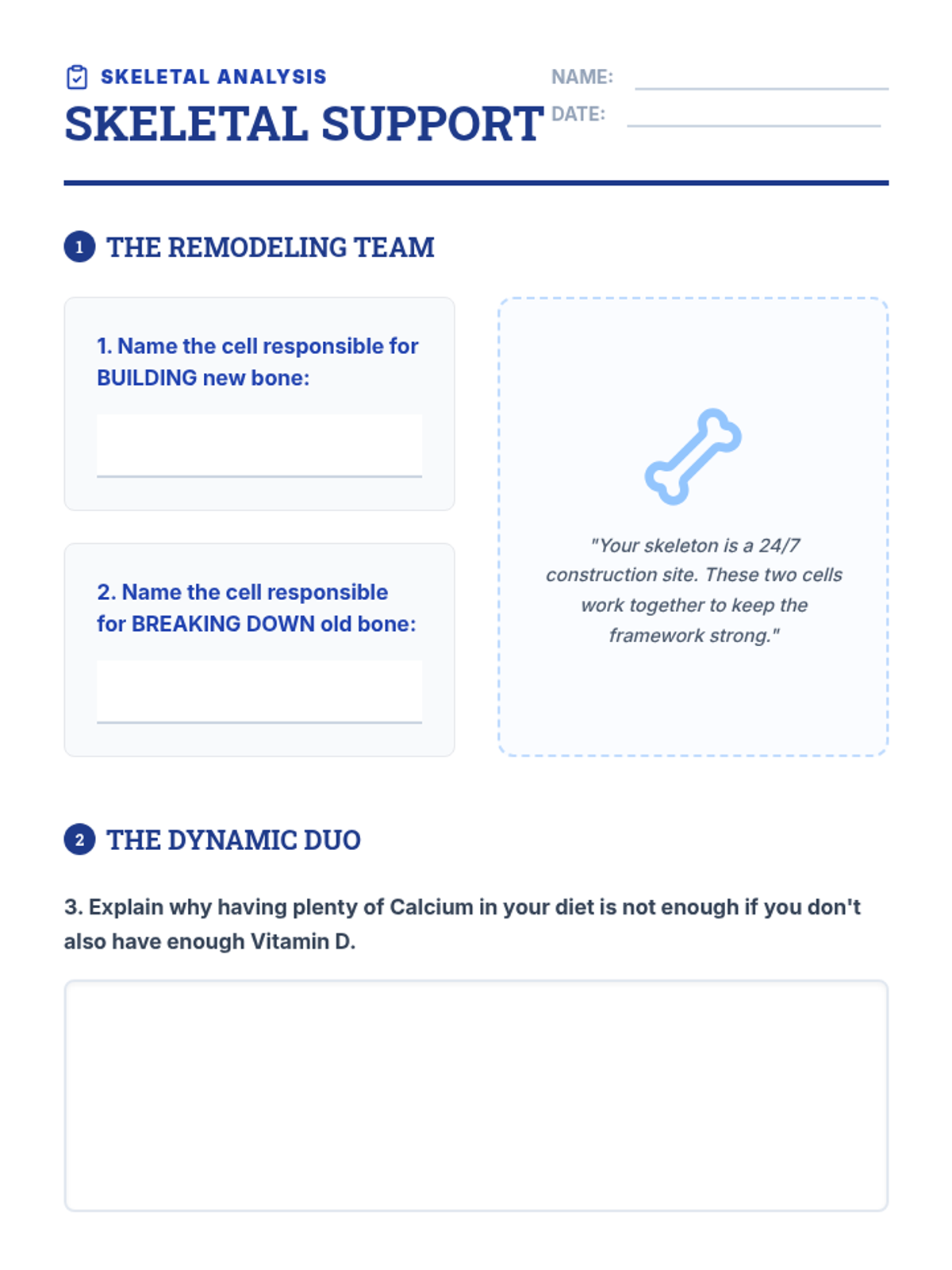
A assessment worksheet for students to demonstrate their understanding of bone remodeling cells, the importance of minerals, and the benefits of weight-bearing exercise.
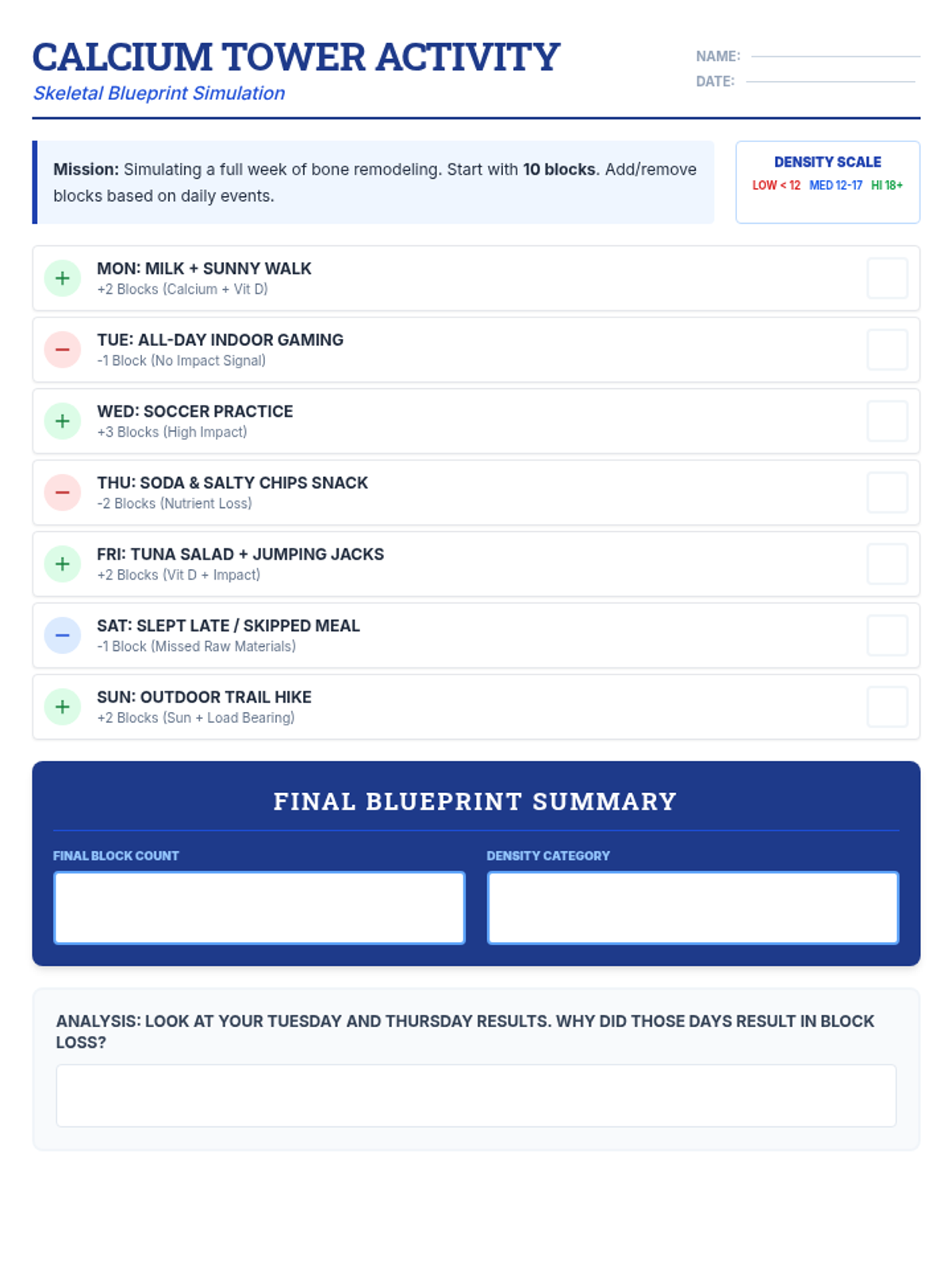
A hands-on activity where students use blocks to model bone growth and mineral loss based on lifestyle choices, simulating the building of peak bone mass.
Visual presentation for the Bone Base Blueprint lesson, covering the biological construction crew (osteoblasts and osteoclasts), the role of minerals, and the concept of peak bone mass.
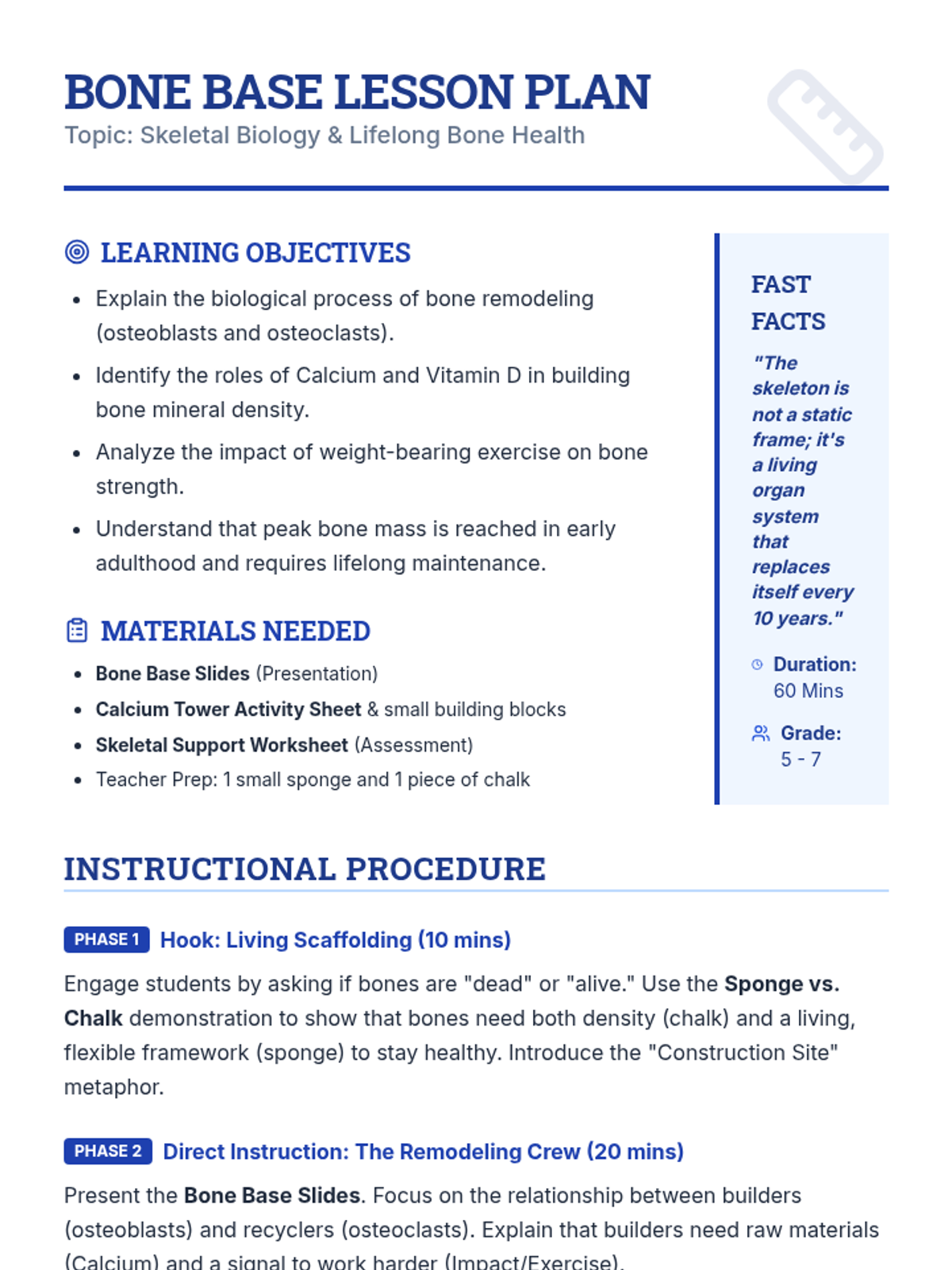
A comprehensive teacher's guide for the Bone Base Blueprint lesson, including learning objectives, a step-by-step instructional sequence, and differentiation strategies.
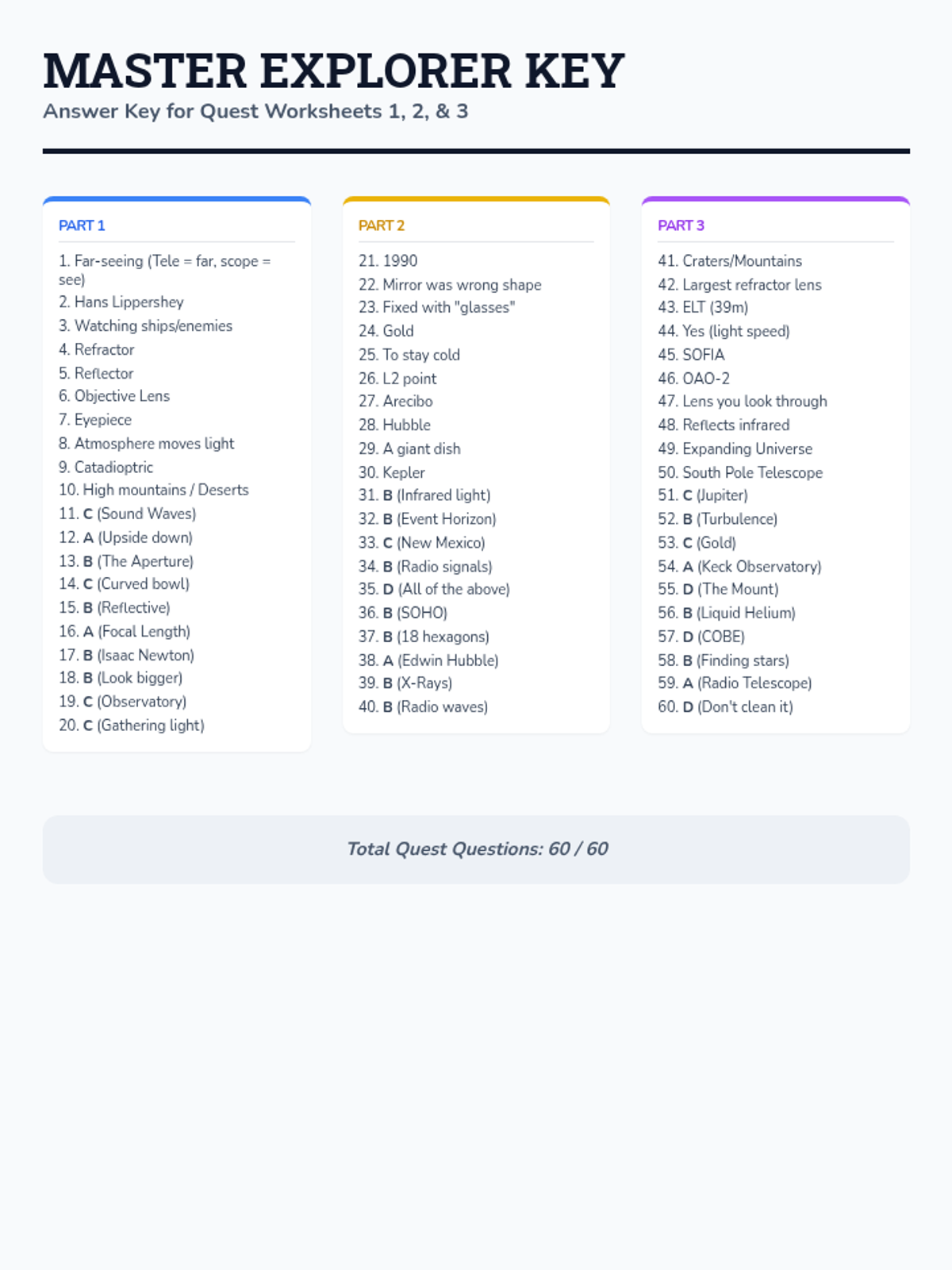
Full answer key for all 60 quest questions across all three worksheets. Revised to fit onto a single page and improve layout for better organization.
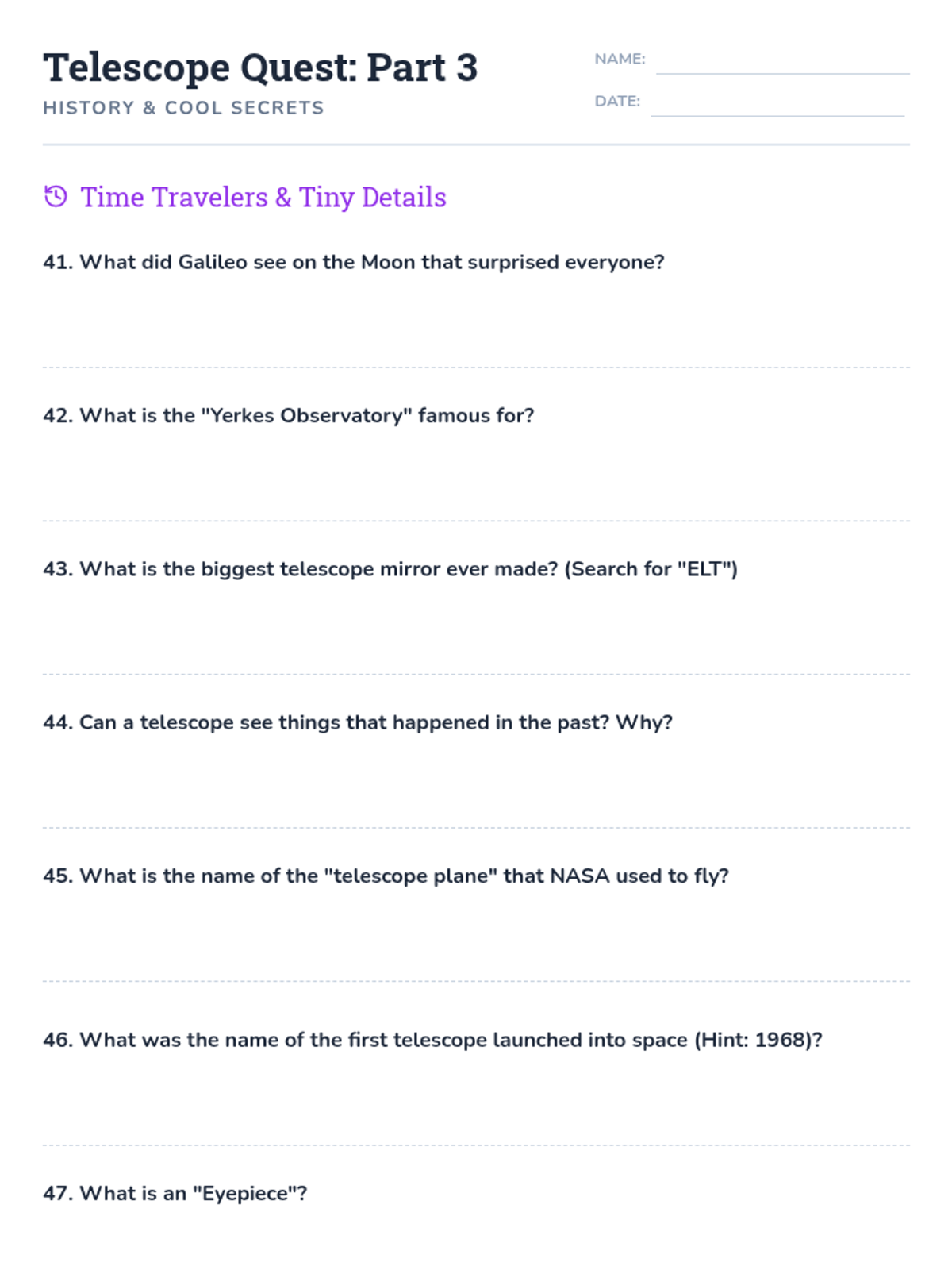
The final part of the telescope quest. Revised with expanded writing areas and fixed page breaks to ensure student questions are not split.
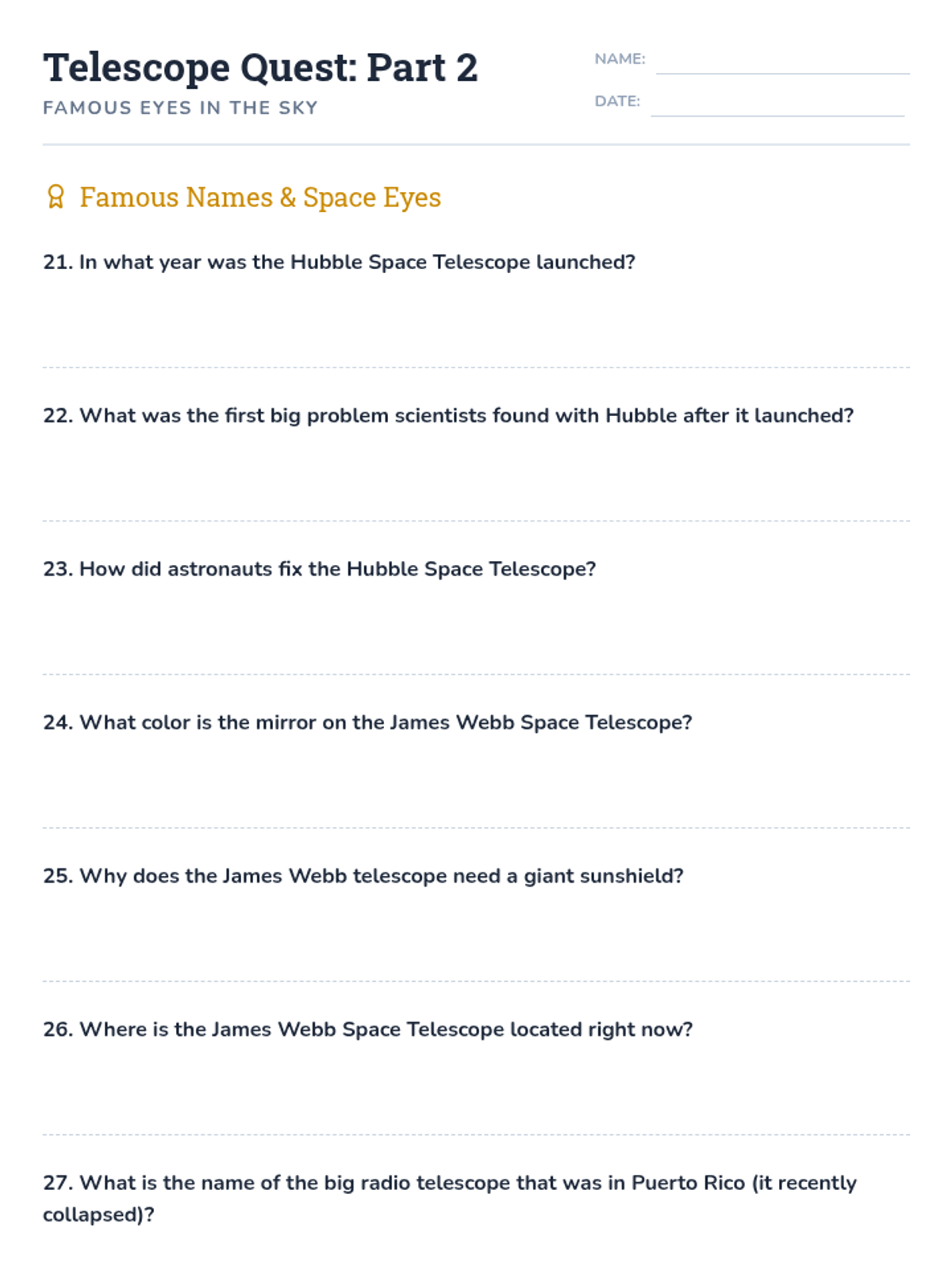
Second part of the telescope quest. Revised to fix spacing, re-balance the layout, and ensure the writing line for Q27 is properly placed.