A comprehensive teacher facilitation guide for Lesson 4, detailing the concepts of Bayesian updating, priors, and evidence weighting in argumentation.
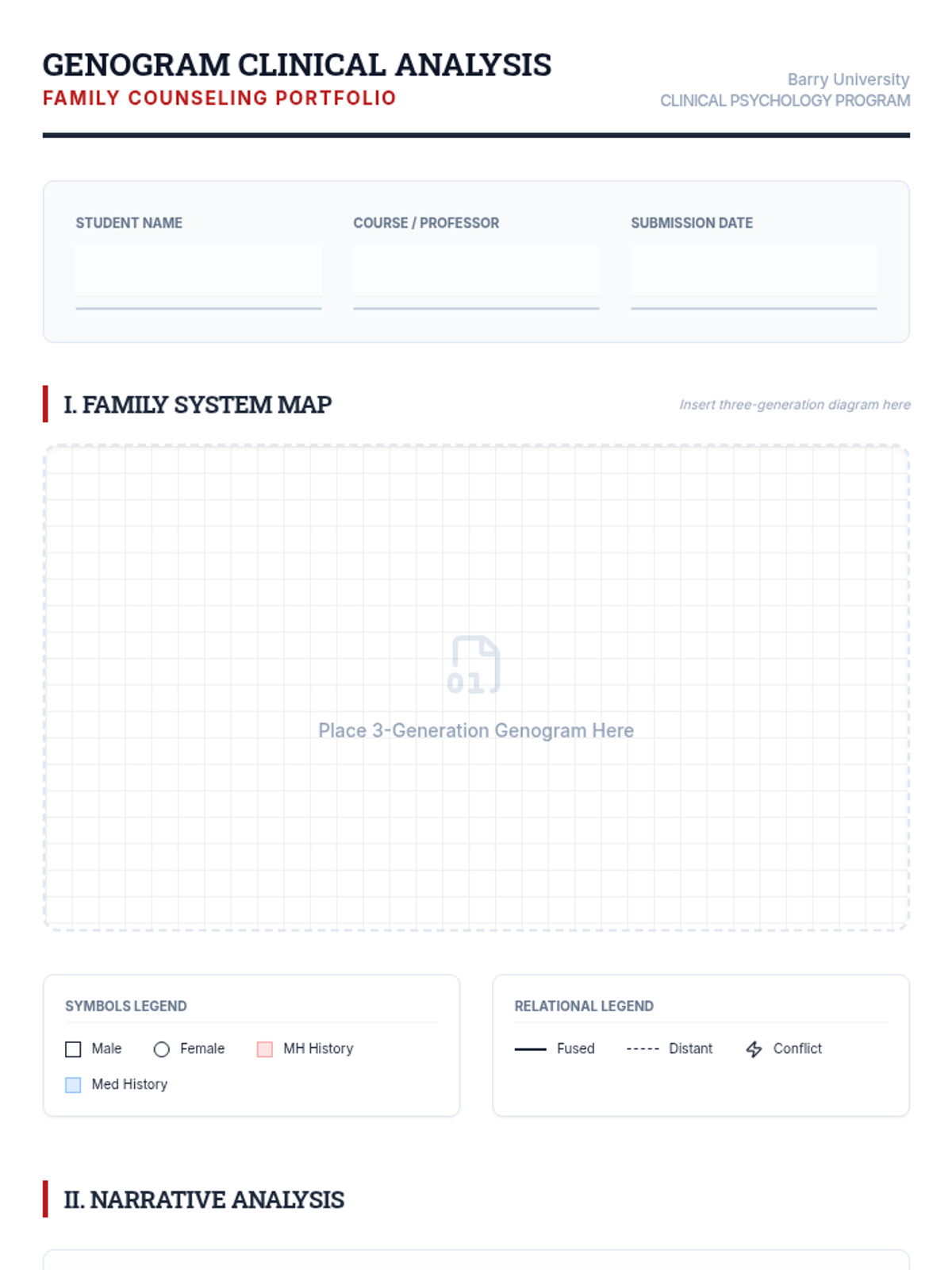
A formal clinical report template for Master's psychology students. Revised with expanded analysis areas, ruled handwriting lines, and cleaned-up identification blocks. FIXED: Page break issues in narrative section.
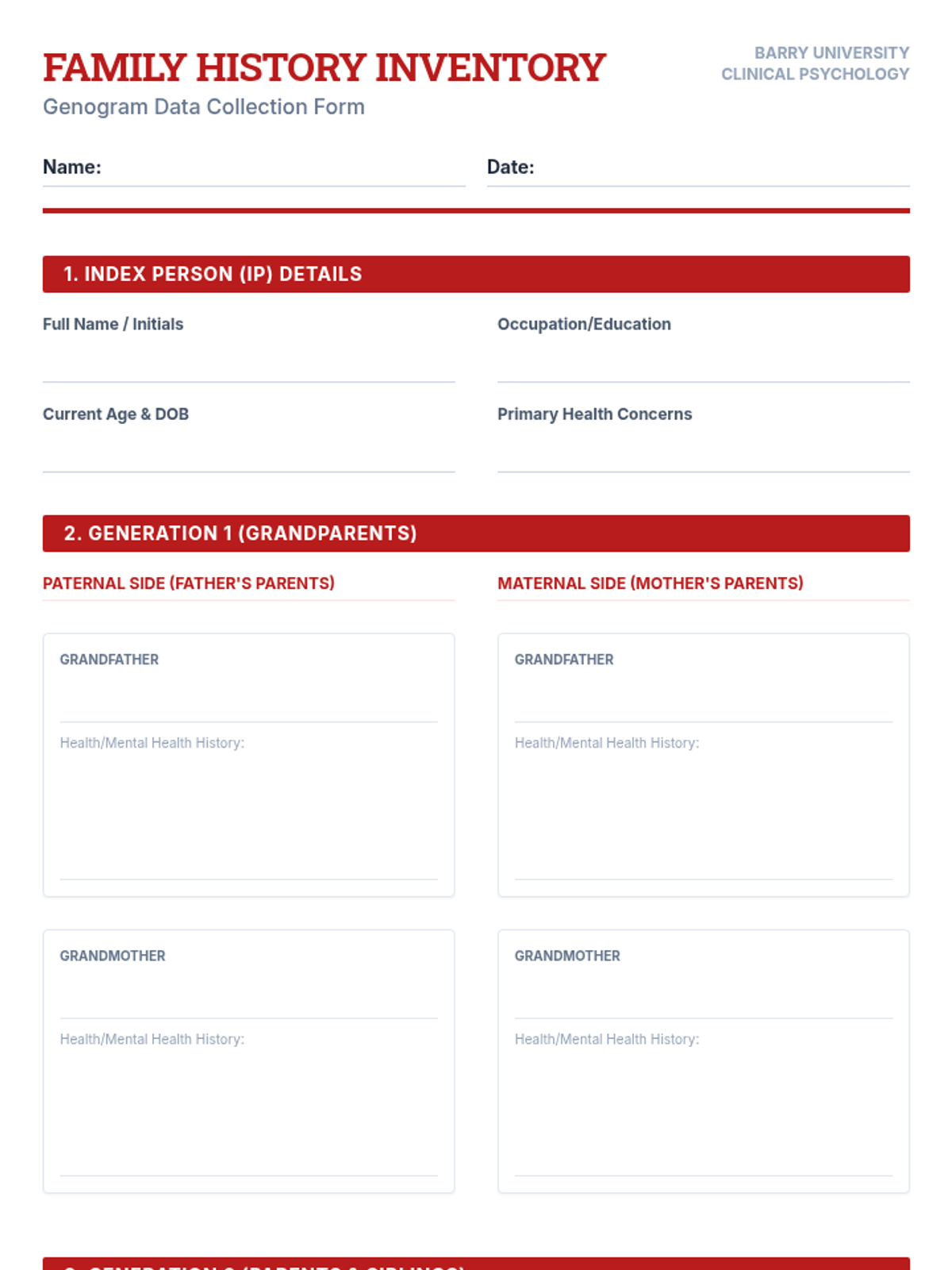
A structured family history intake form for psychology students. Revised with expanded work areas and improved page flow for professional clinical data collection.
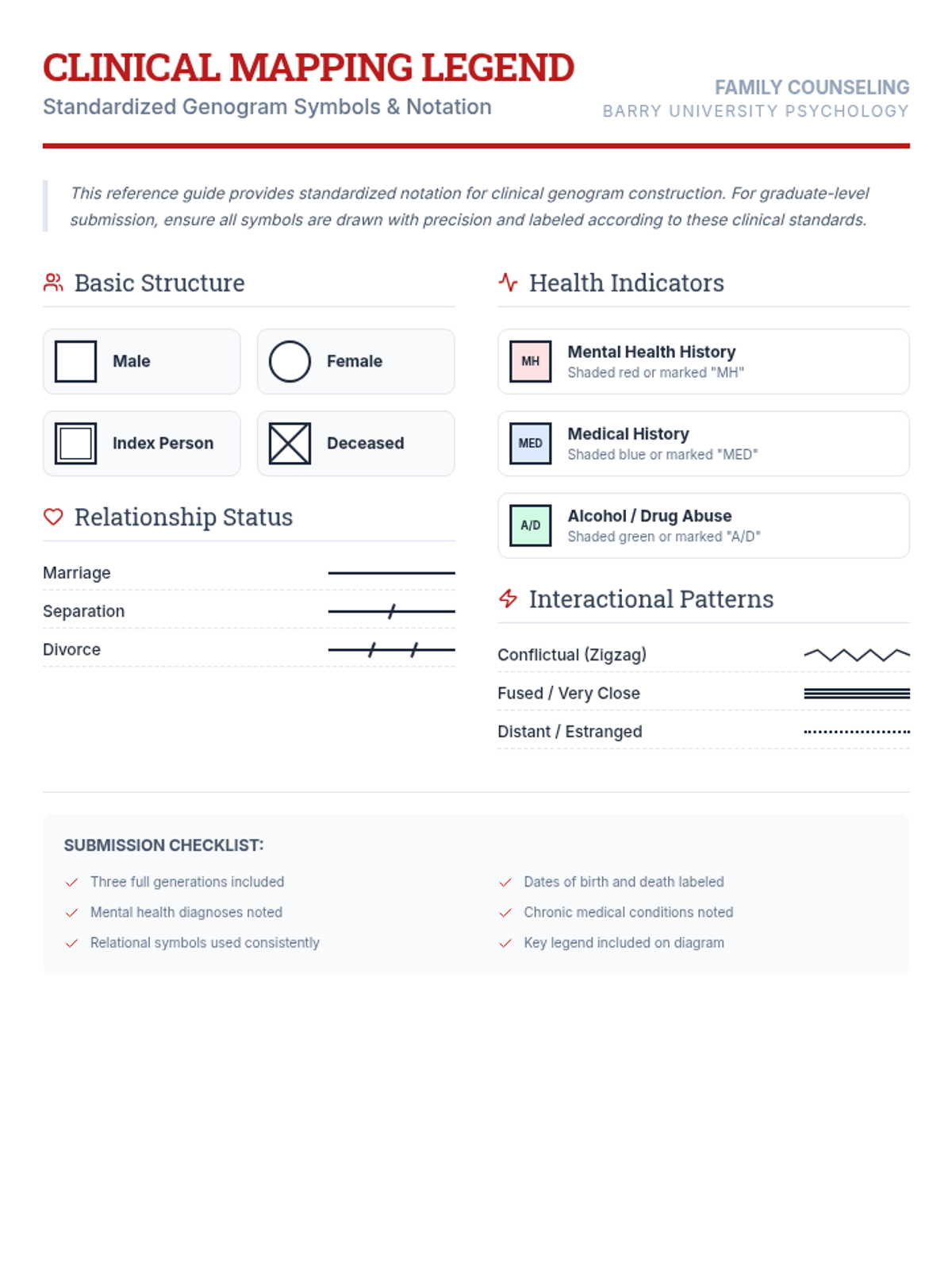
A professional reference sheet for Barry University psychology students, detailing standardized genogram symbols for basic structure, relationship status, health indicators, and interactional patterns. Revised for zigzag accuracy and layout.
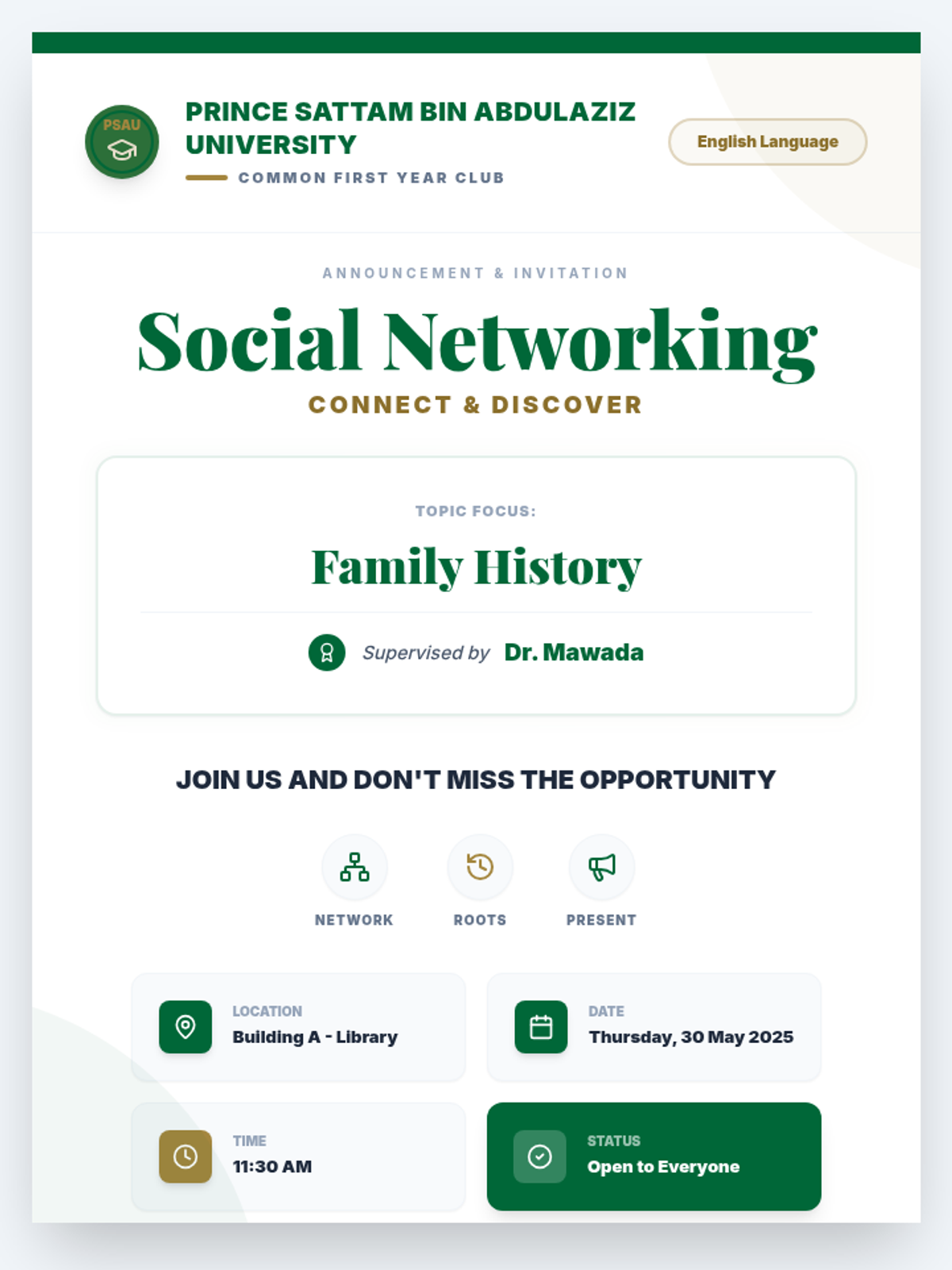
A professional invitation poster for a presentation at Prince Sattam bin Abdulaziz University (PSAU). It features the university colors (green and gold), club details, and specific event information for a session on Social Networking and Family History.
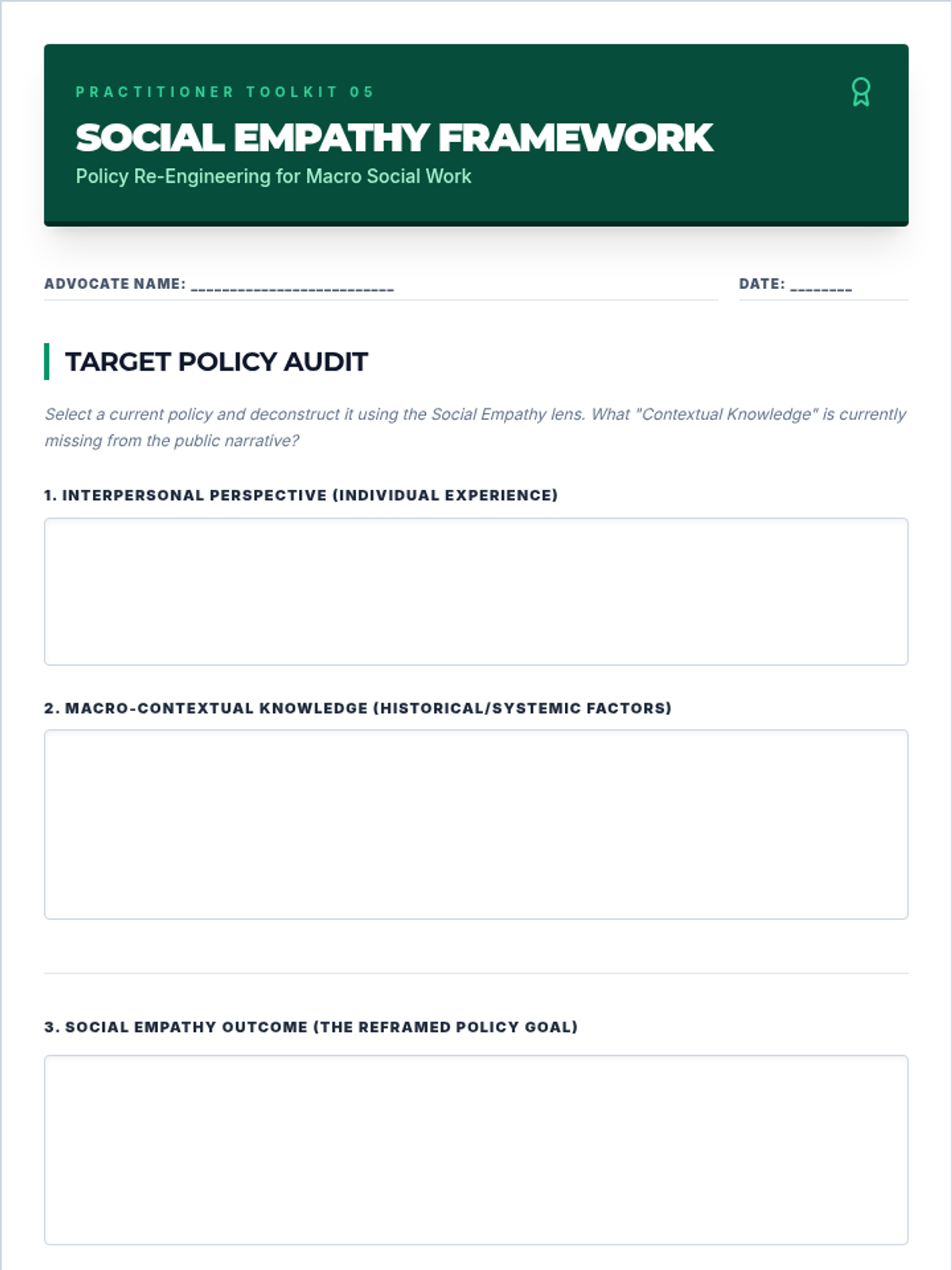
A capstone framework for practitioners to apply social empathy to policy analysis and summarize their learning from the series.
Final presentation slides for the series, focusing on social empathy as a tool for policy analysis and macro-level social work advocacy.
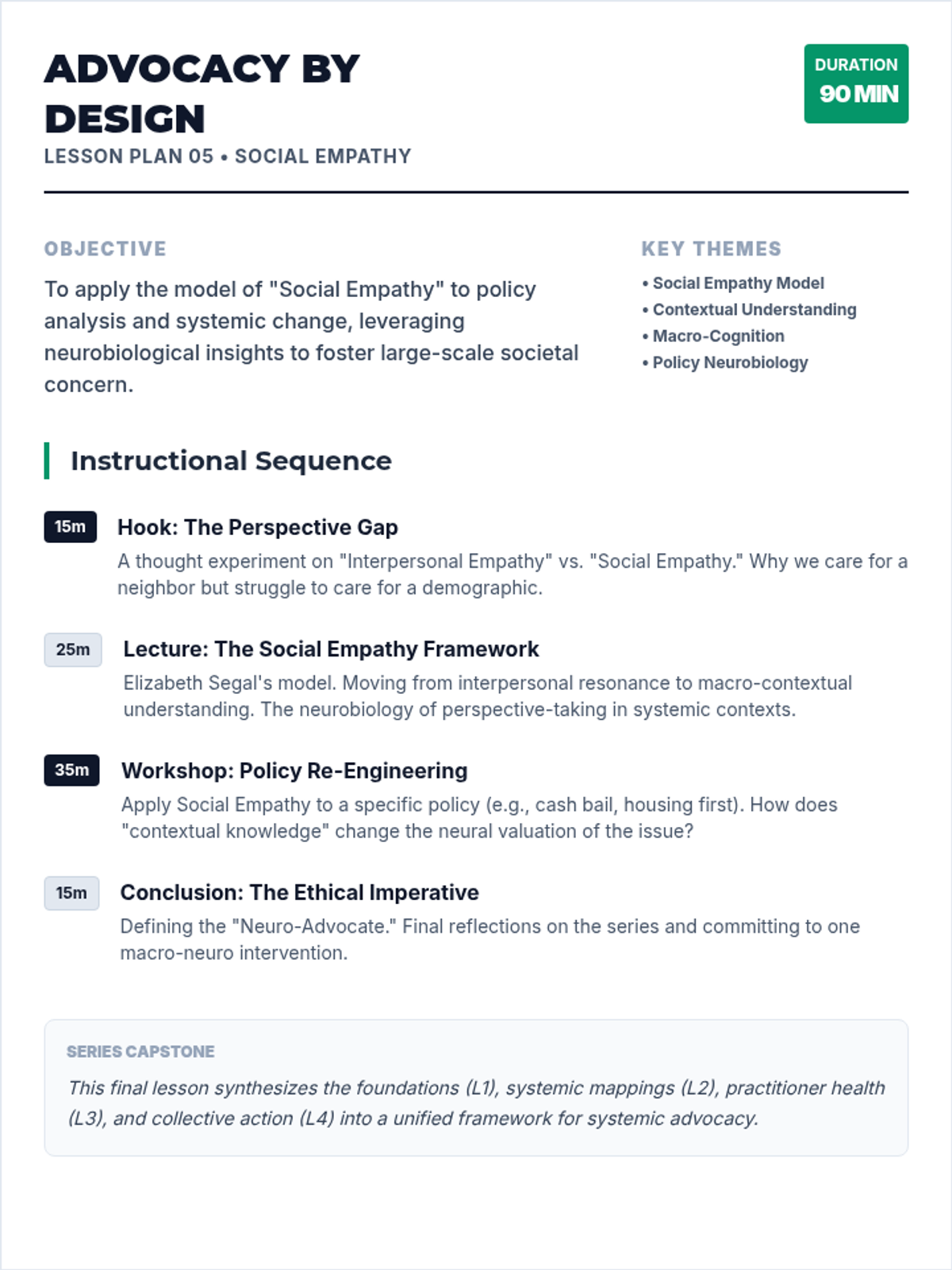
Lesson plan for the final module on social empathy and policy change, applying neurobiological insights to macro-level advocacy and systemic design.
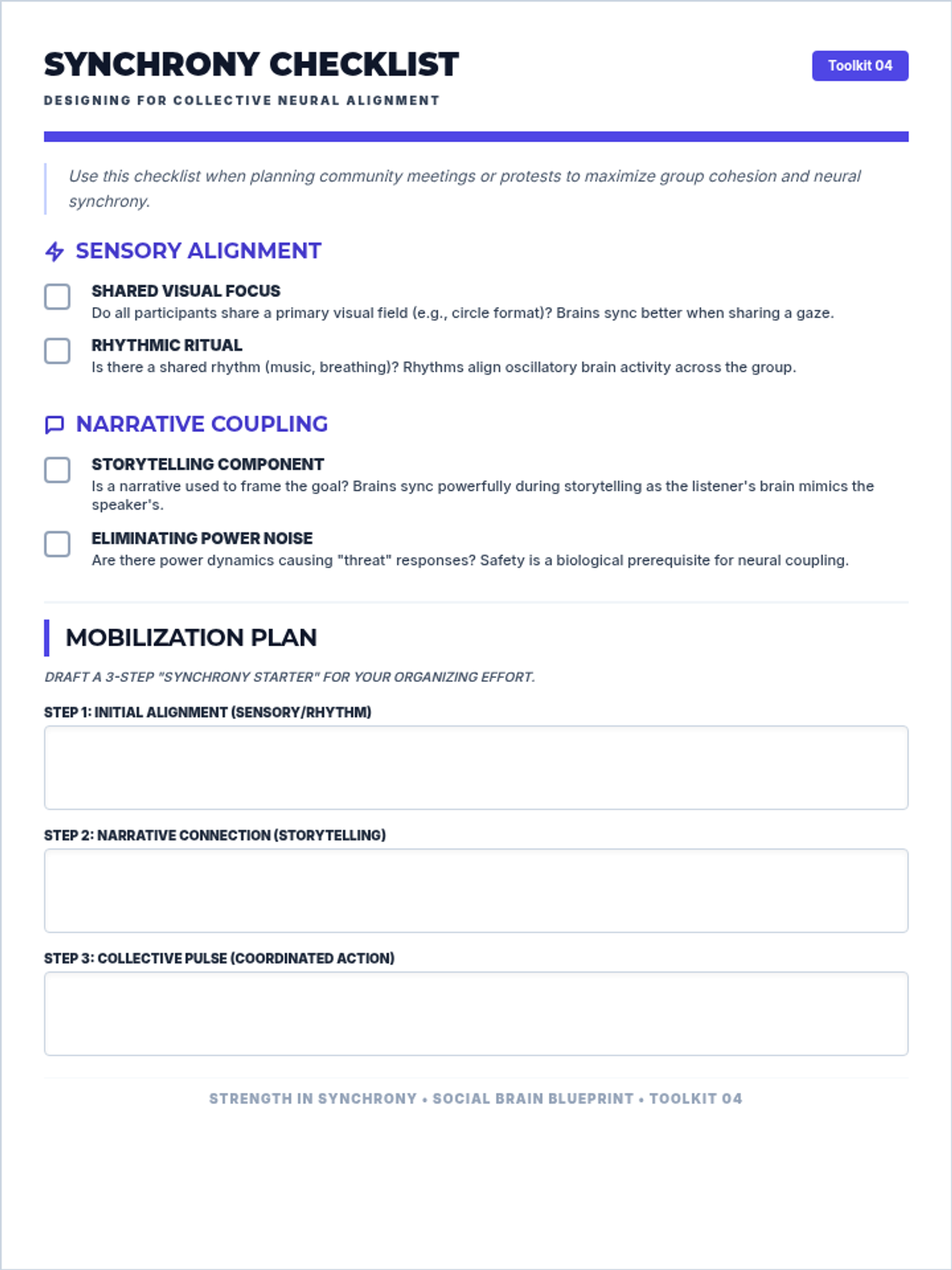
A practical checklist for community organizers to foster interbrain synchrony and group cohesion through sensory alignment and narrative coupling.
Presentation slides explaining interbrain synchrony, the neural mechanics of collective action, and the role of ritual in movement building.
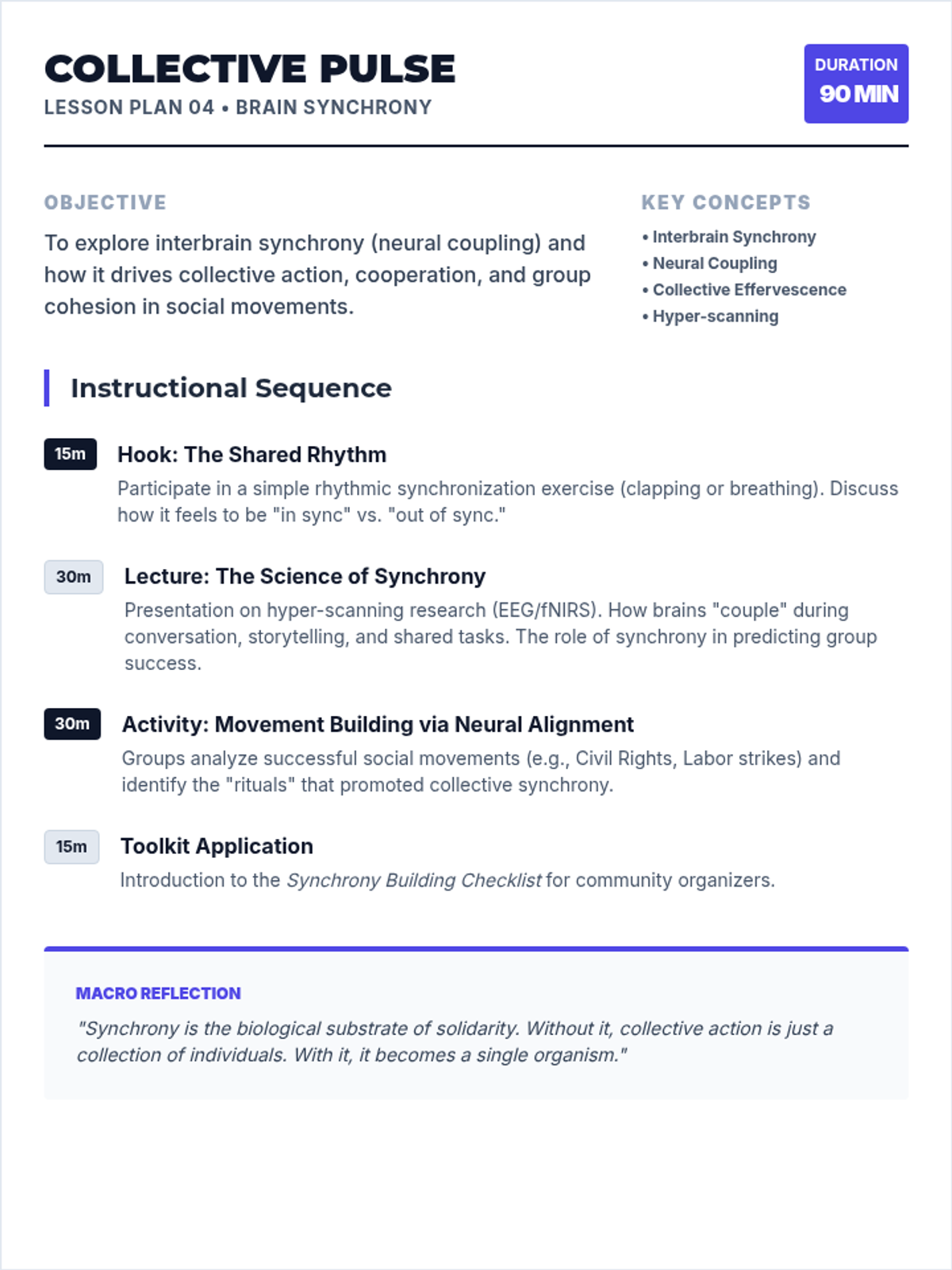
Lesson plan for the fourth module on interbrain synchrony, exploring how collective rhythms and neural coupling drive social movements and community cooperation.
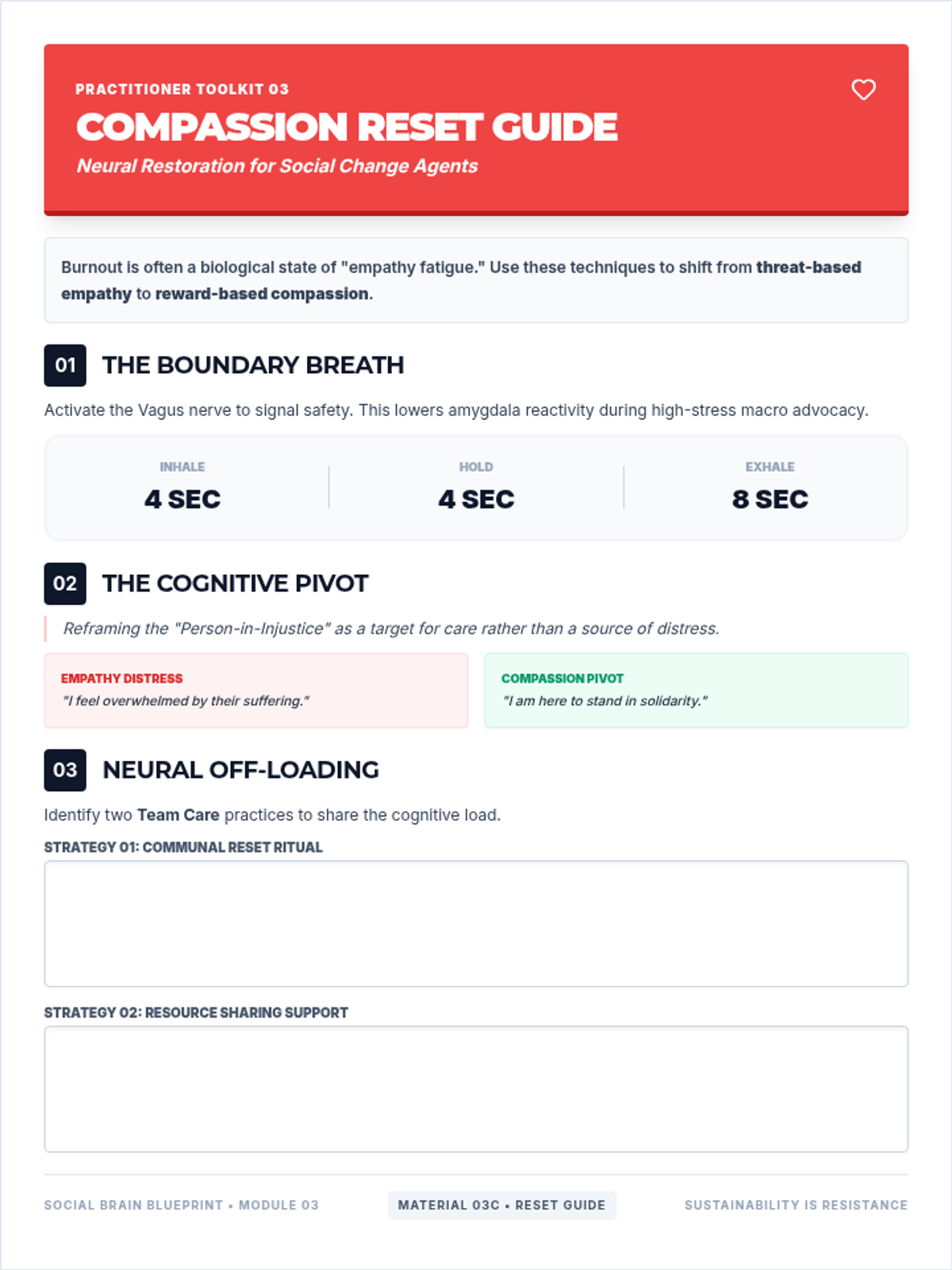
A recovery guide for practitioners focusing on neural restoration, vagal toning, and shifting from empathy distress to compassion-based advocacy.