A detailed lesson plan for teaching the 'reading backwards' editing technique, featuring a hook, video discussion, and a guided activity based on the CUPS strategy.
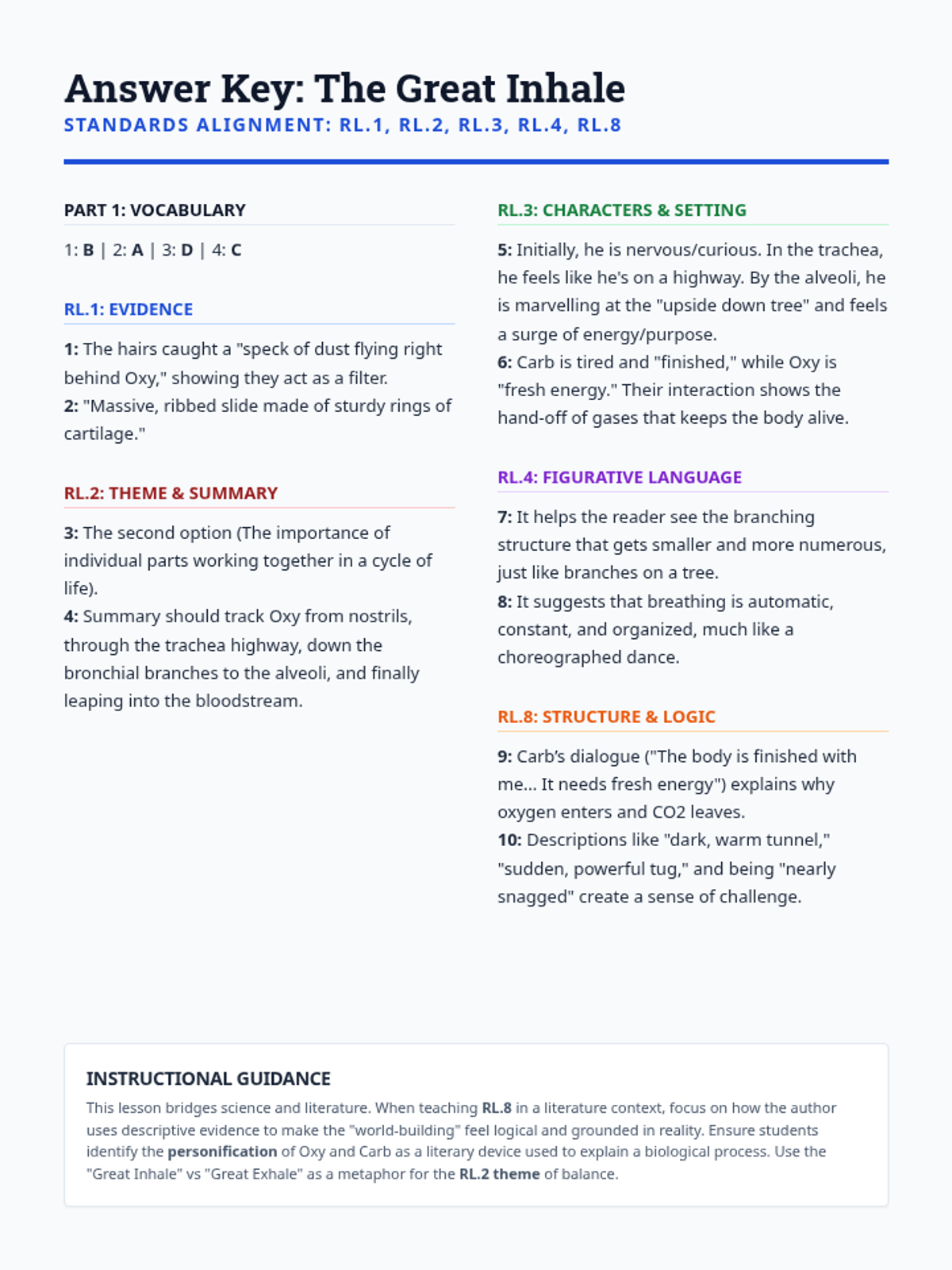
Updated answer key for "The Great Inhale" review unit, including re-indexed responses for all 15 assessment questions and the expanded vocabulary section.
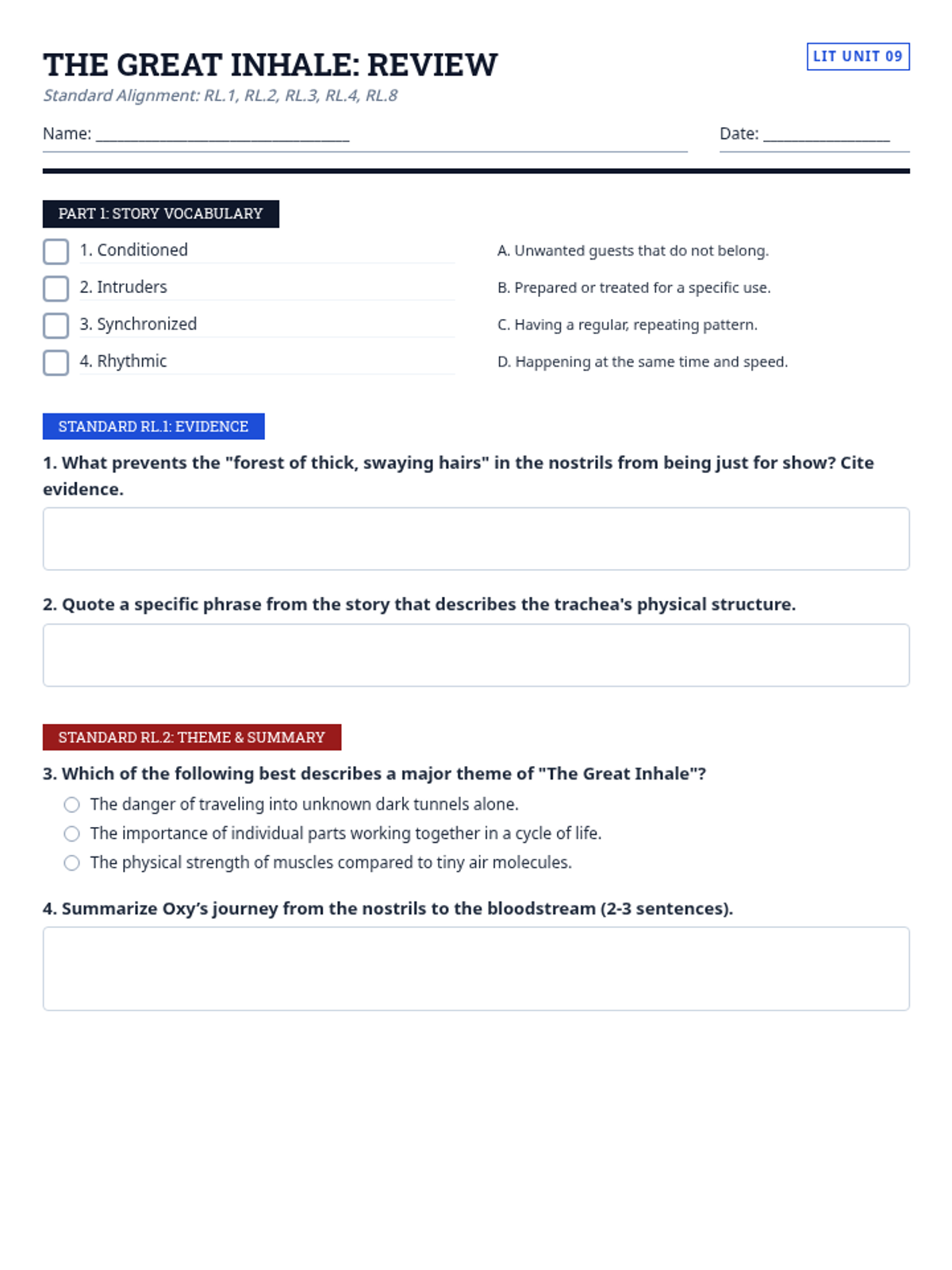
A re-indexed and polished two-page assessment worksheet for "The Great Inhale," featuring 15 sequential standards-aligned questions, a refined vocabulary section, and balanced layout.
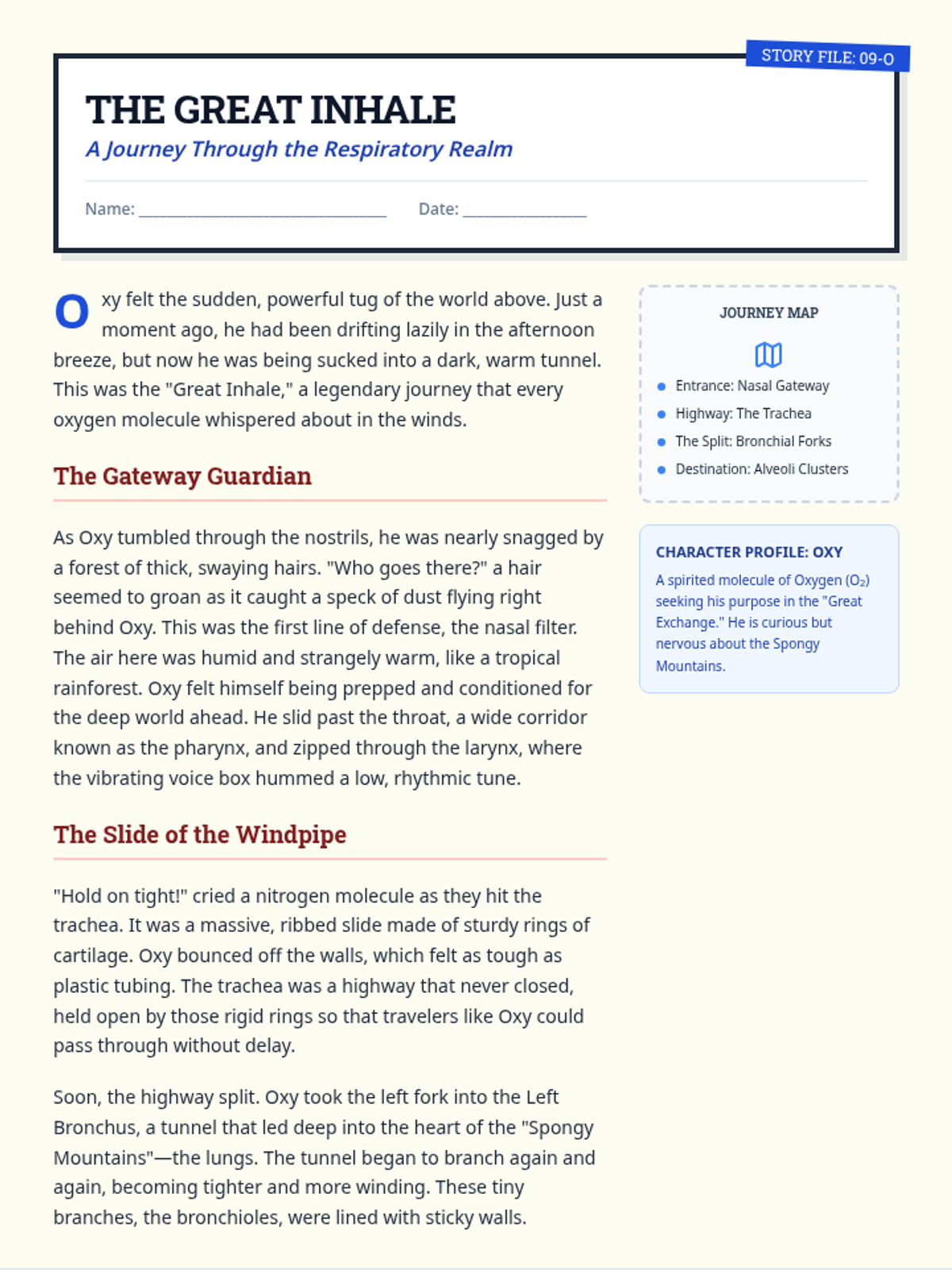
A two-page narrative reading passage titled "The Great Inhale," with an expanded vocabulary list (10 terms) covering both scientific and literary terminology.
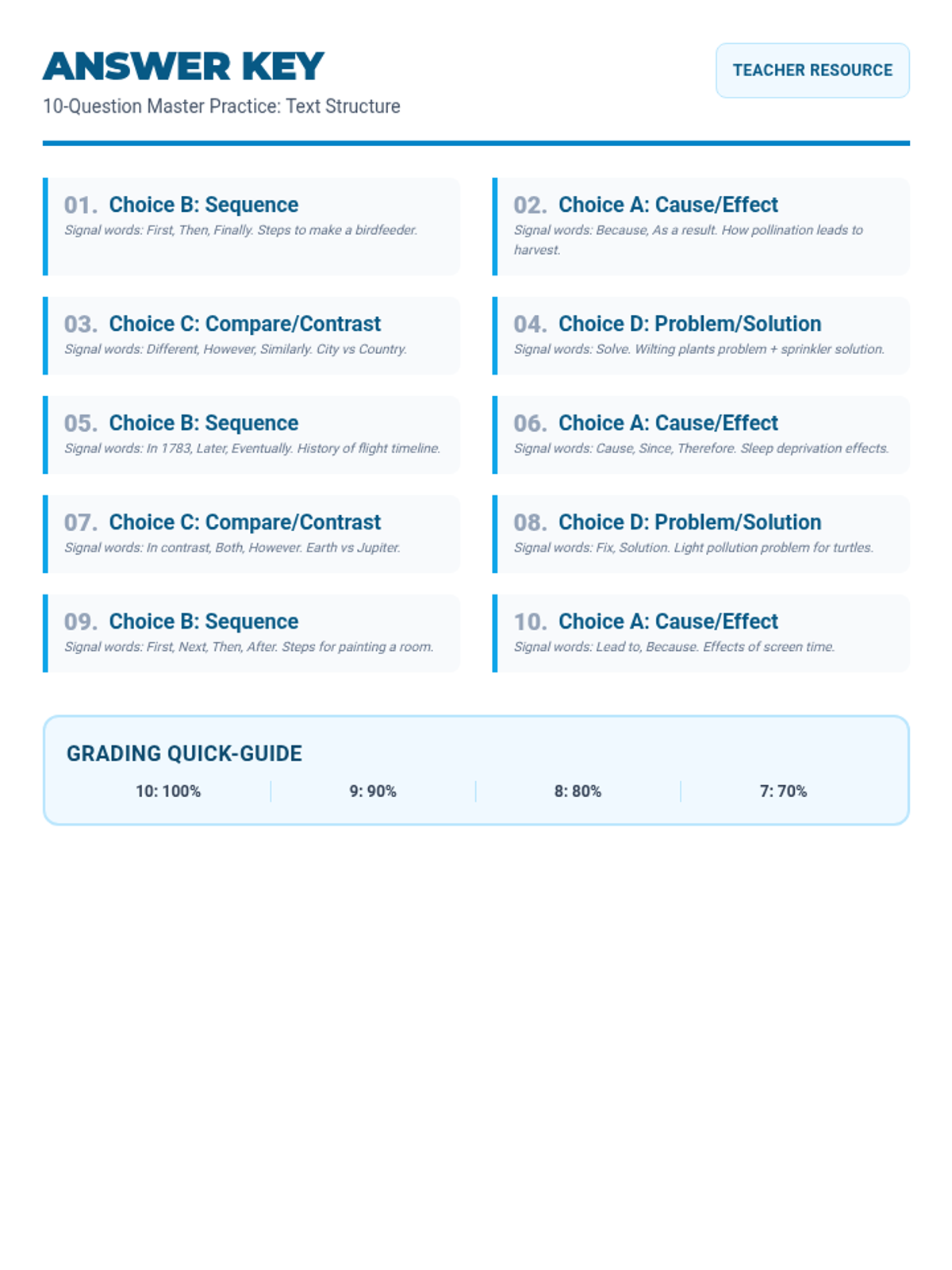
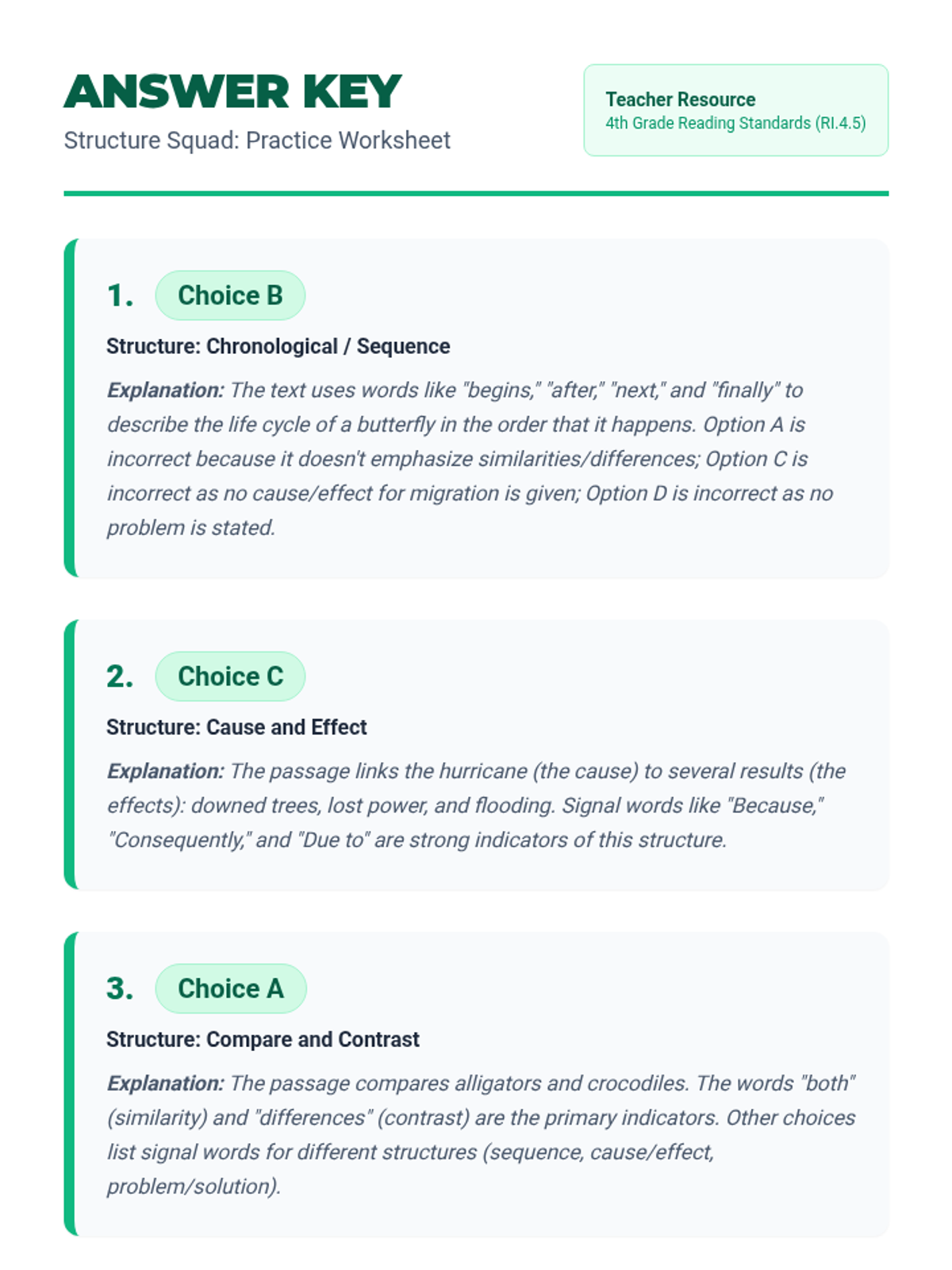
An answer key for the 10-question master practice worksheet, featuring correct answers and brief explanations of the signal words and structures used. Compact layout to fit on a single page.
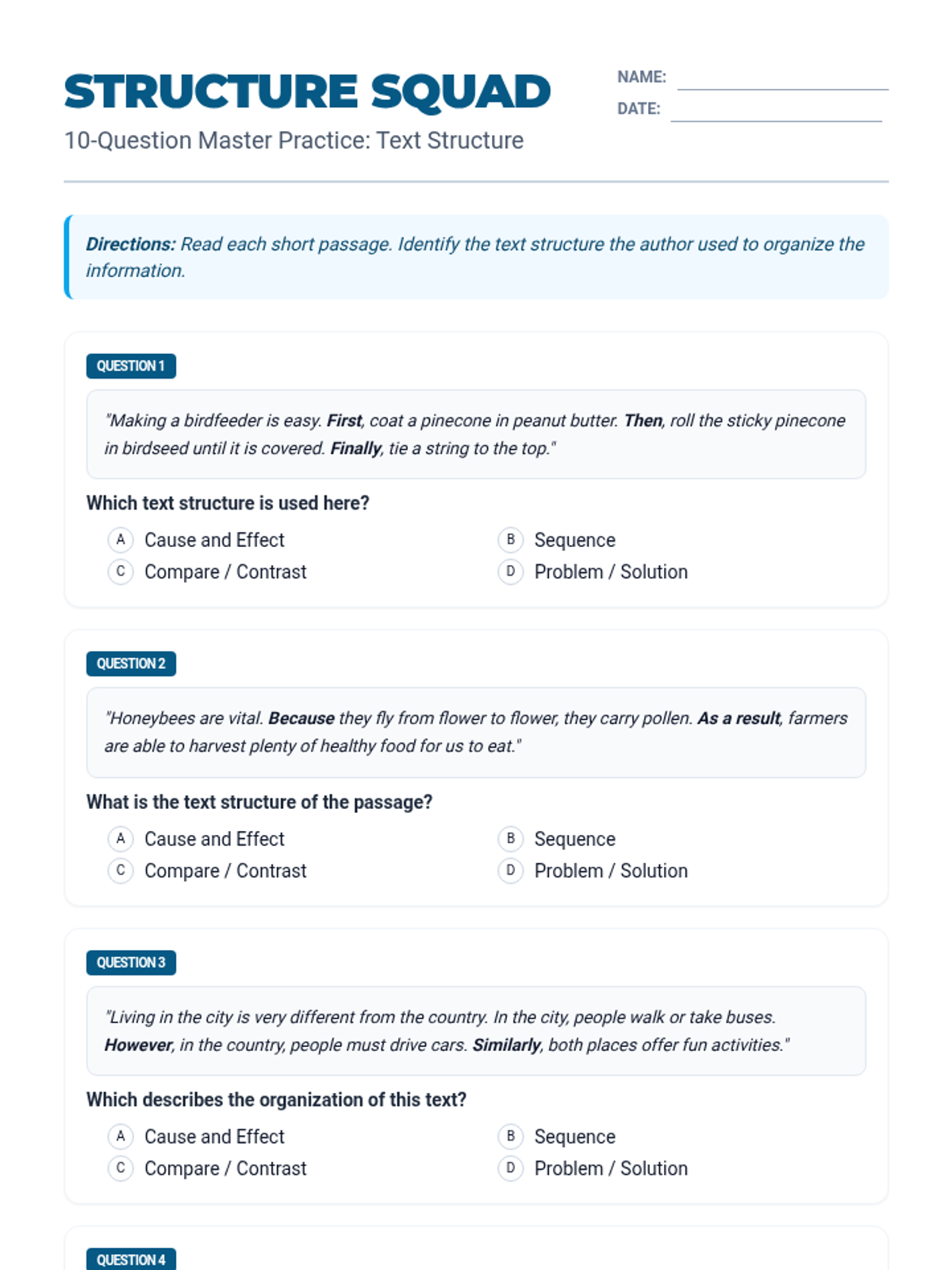
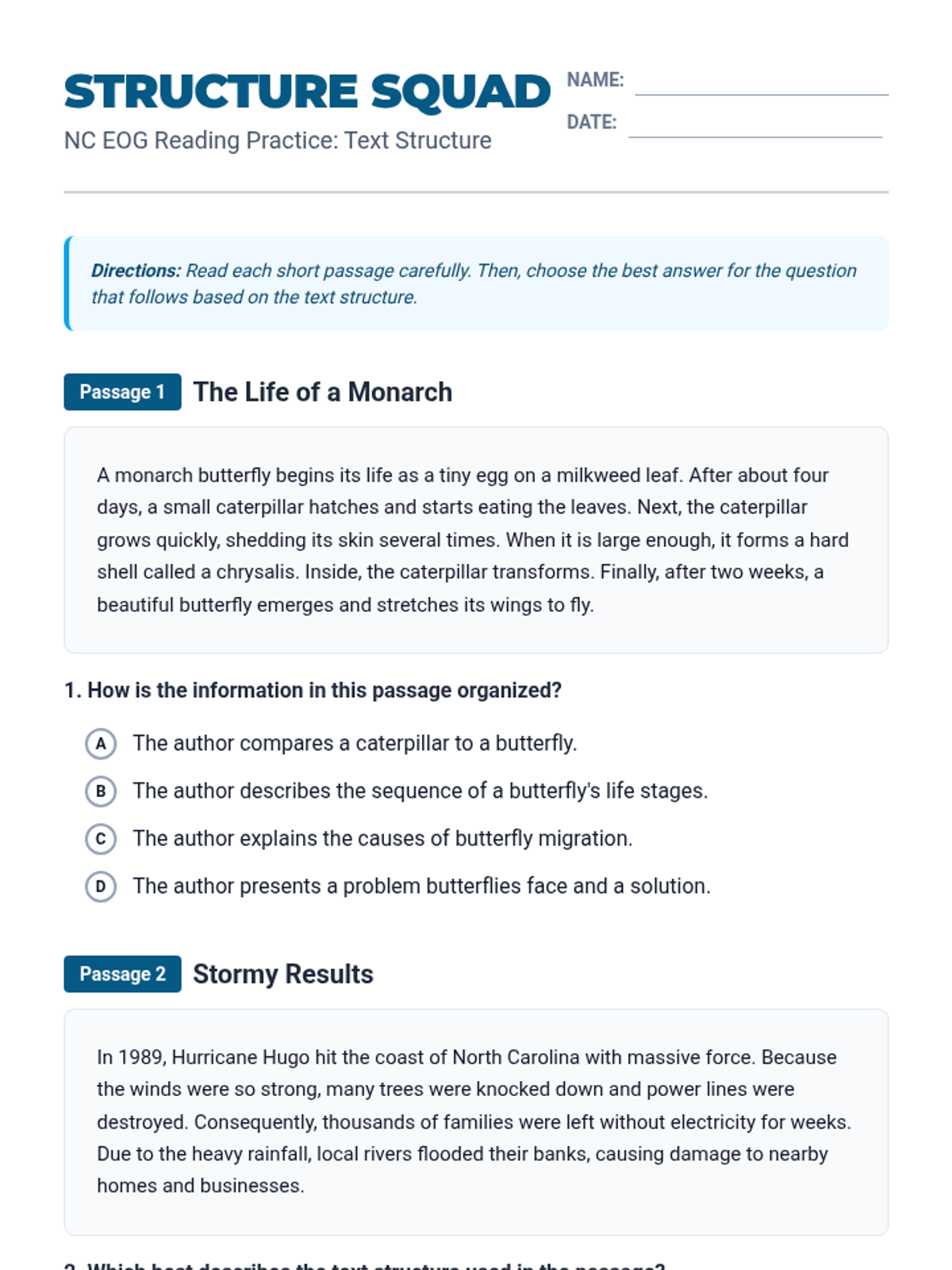
A 10-question practice worksheet featuring short reading passages for identifying the four main text structures, modeled after 4th Grade NC EOG reading assessments. Improved with better page break management.
An answer key for the Structure Practice Worksheet, providing correct answers along with detailed explanations and signal word analysis for each passage.
A student-facing worksheet containing four short reading passages with NC EOG-style multiple-choice questions focusing on different text structures. Includes a summary matching activity at the end.
A presentation reviewing the four key text structures: Chronological, Cause and Effect, Compare and Contrast, and Problem and Solution. Includes definitions, signal words, visual representations, and 4 practice questions with short passages.
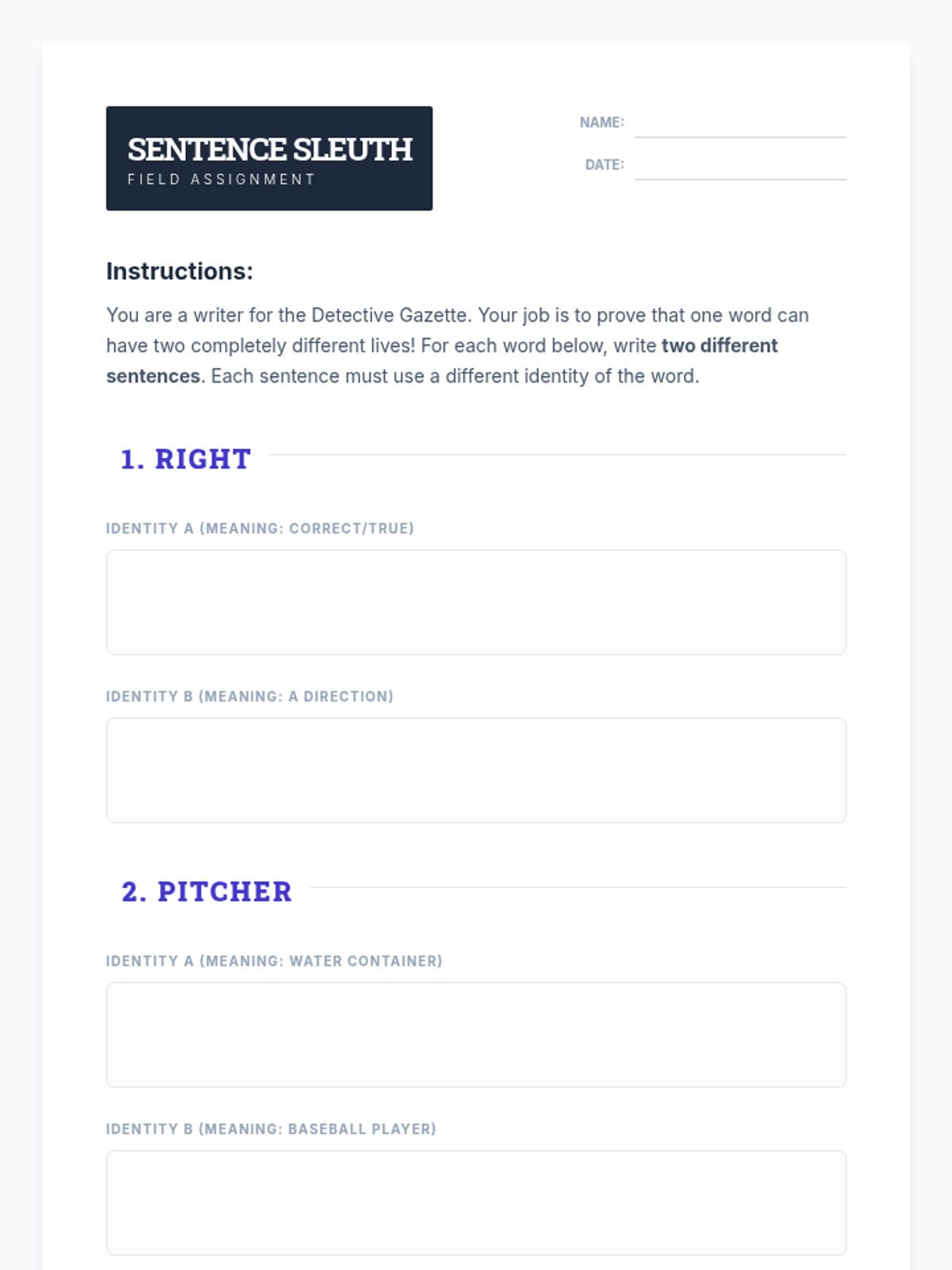
An activity sheet where students write original sentences for homonyms to demonstrate their understanding of different meanings.
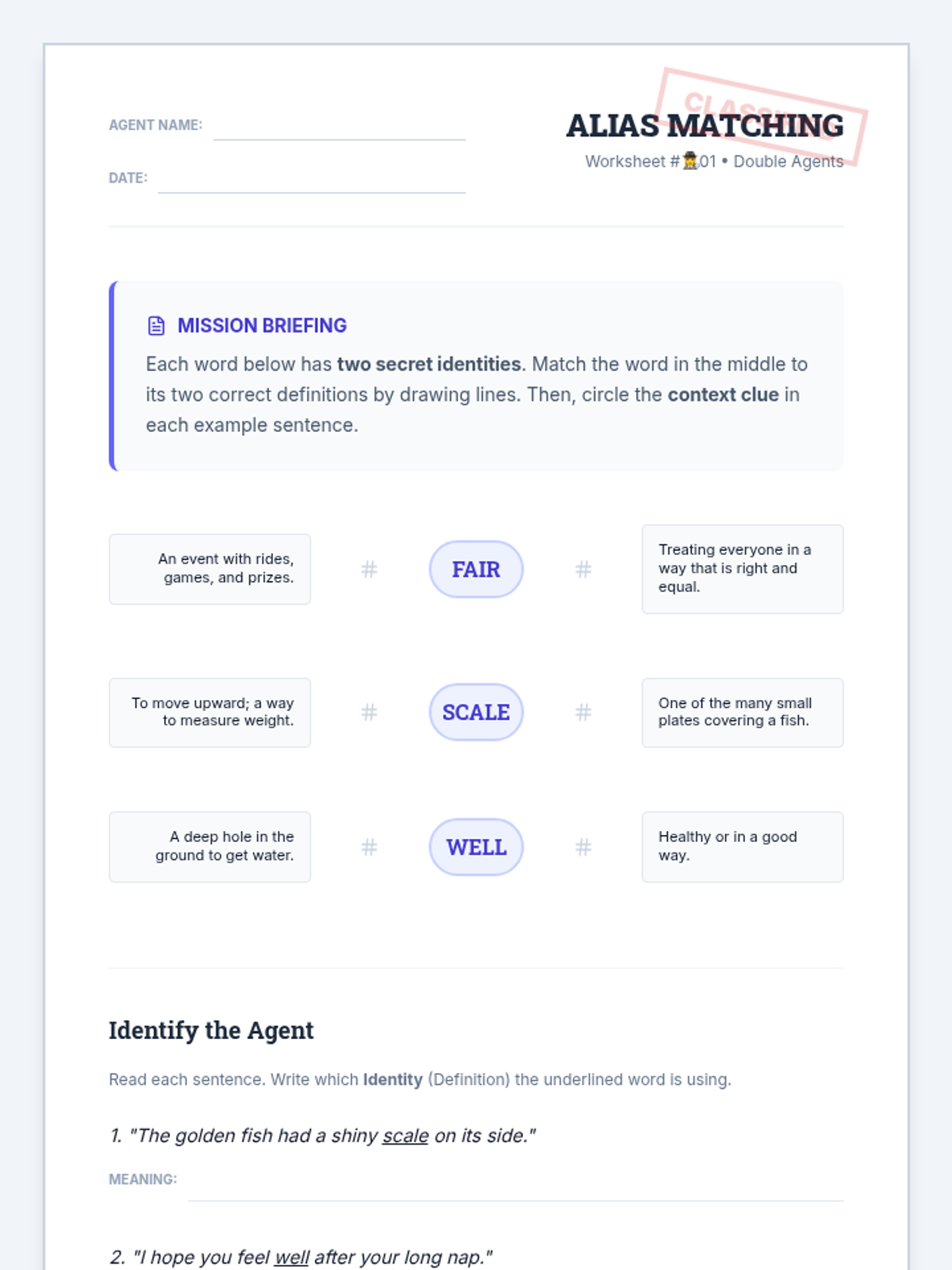
A matching worksheet where students connect homonyms to their two different definitions and identify them in context.
An engaging slide presentation introducing students to the concept of homonyms using a 'Double Agent' detective theme.
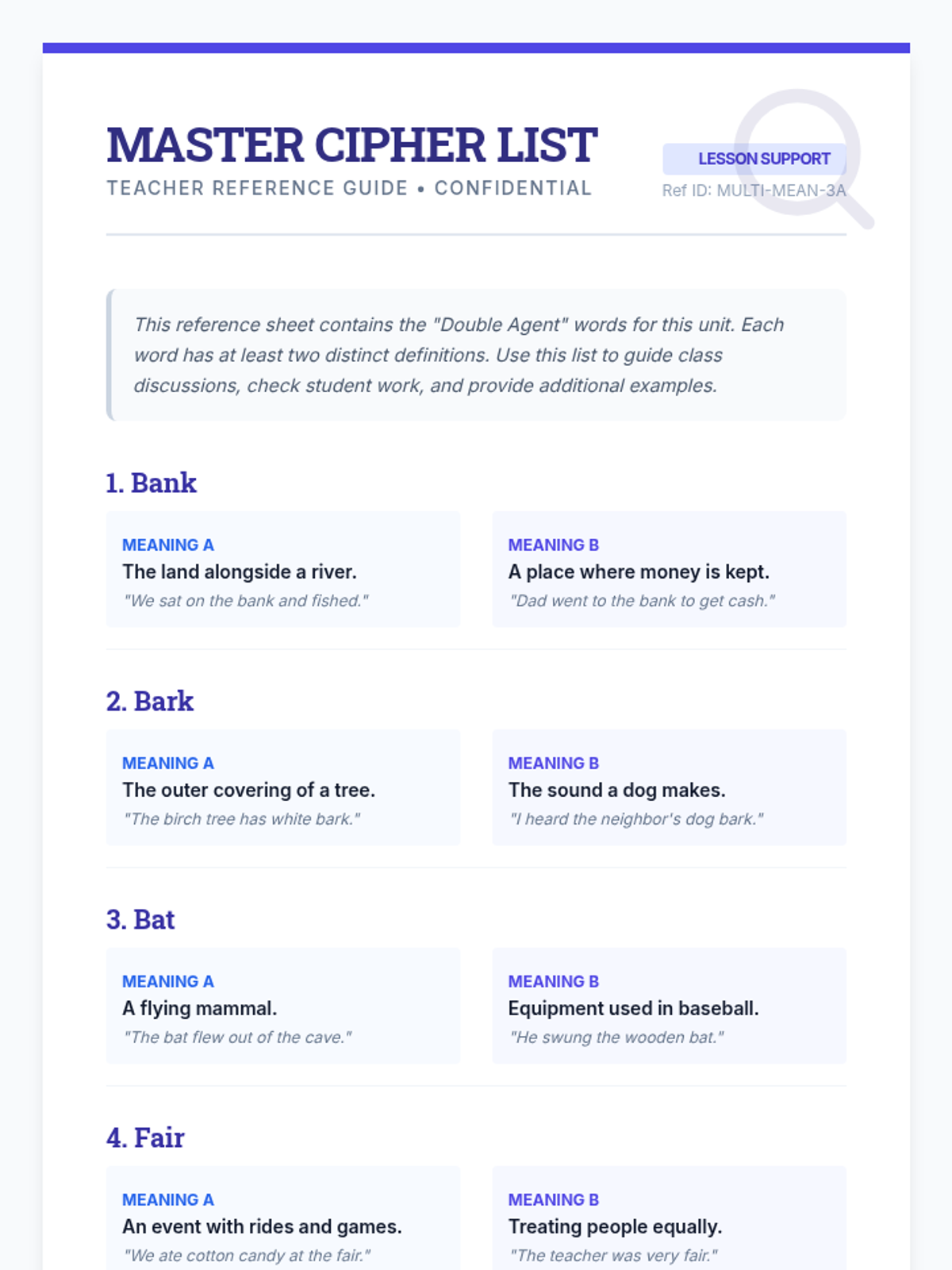
A master reference sheet for teachers listing homonyms with dual definitions and example sentences to support instruction.
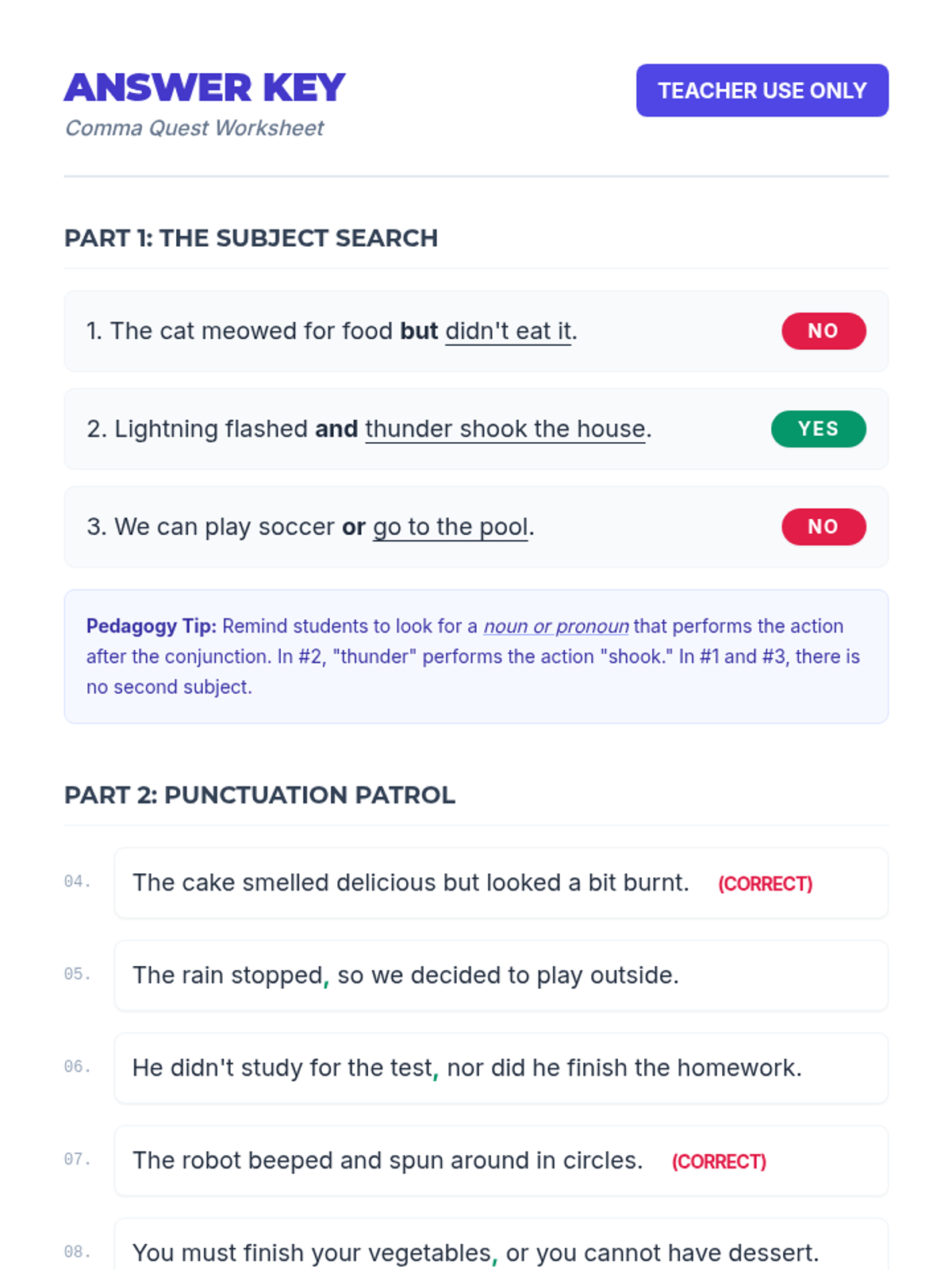
Teacher answer key for the Comma Quest Worksheet, providing solutions and brief explanations for correct comma usage.
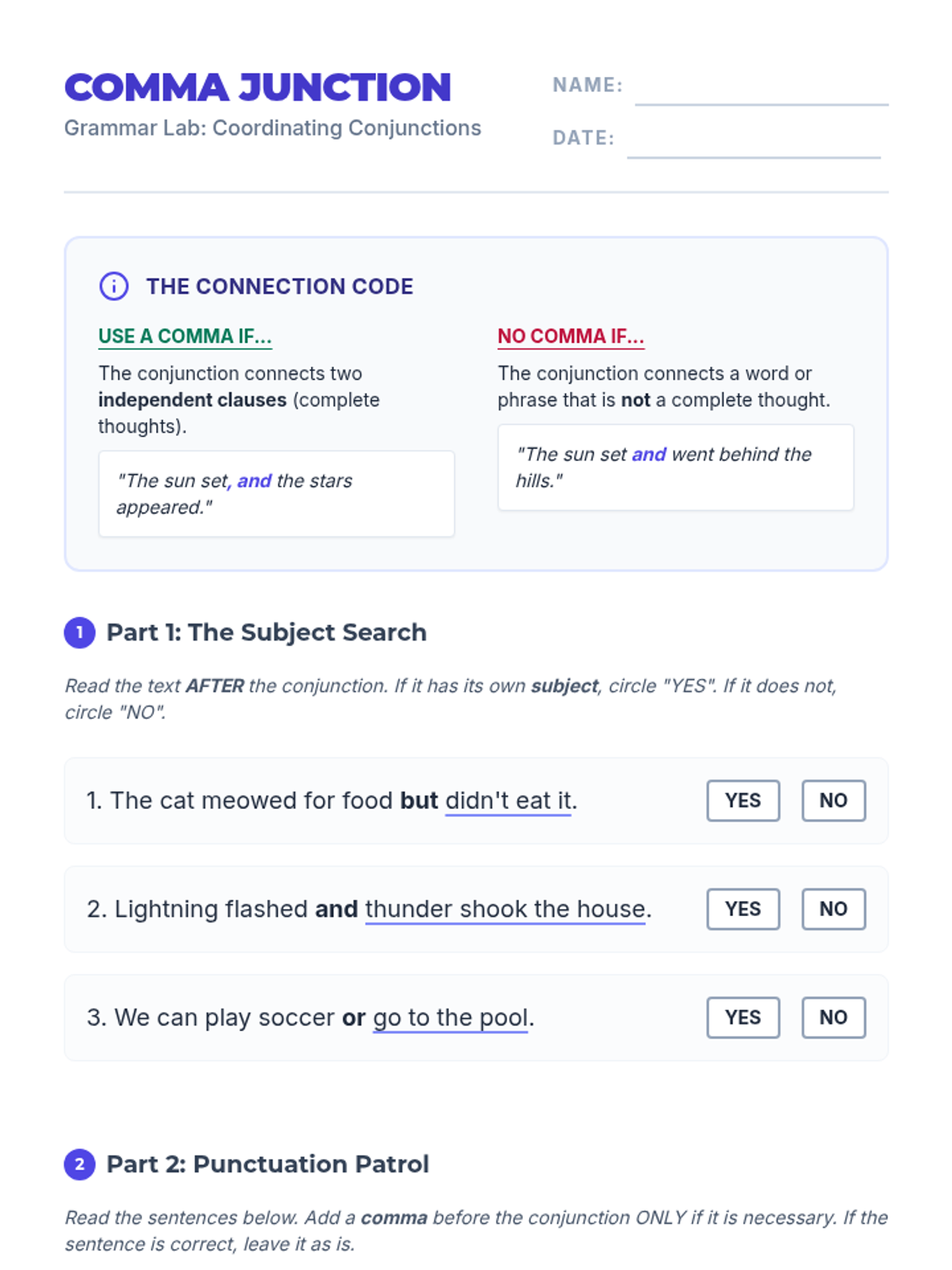
A practice worksheet for students to identify and apply comma rules with coordinating conjunctions. Includes identifying subjects in clauses and puncturing sentences correctly.
A visual presentation teaching students the rules for comma usage with coordinating conjunctions (FANBOYS) in compound sentences versus compound predicates.
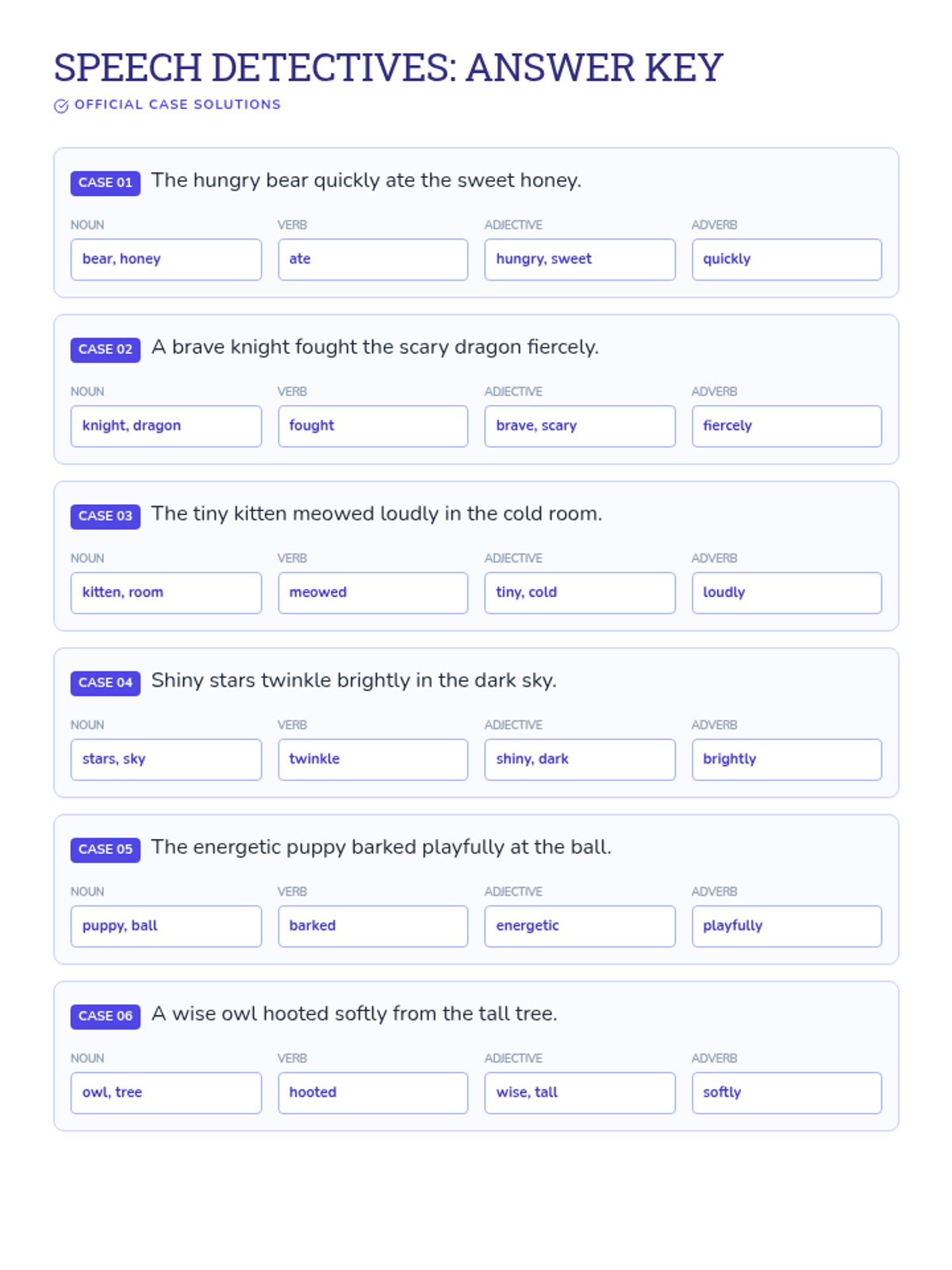
A two-page answer key for the Speech Detectives worksheet, providing correct answers for nouns, verbs, adjectives, and adverbs in 12 sentences, formatted to strictly match the student worksheet layout.
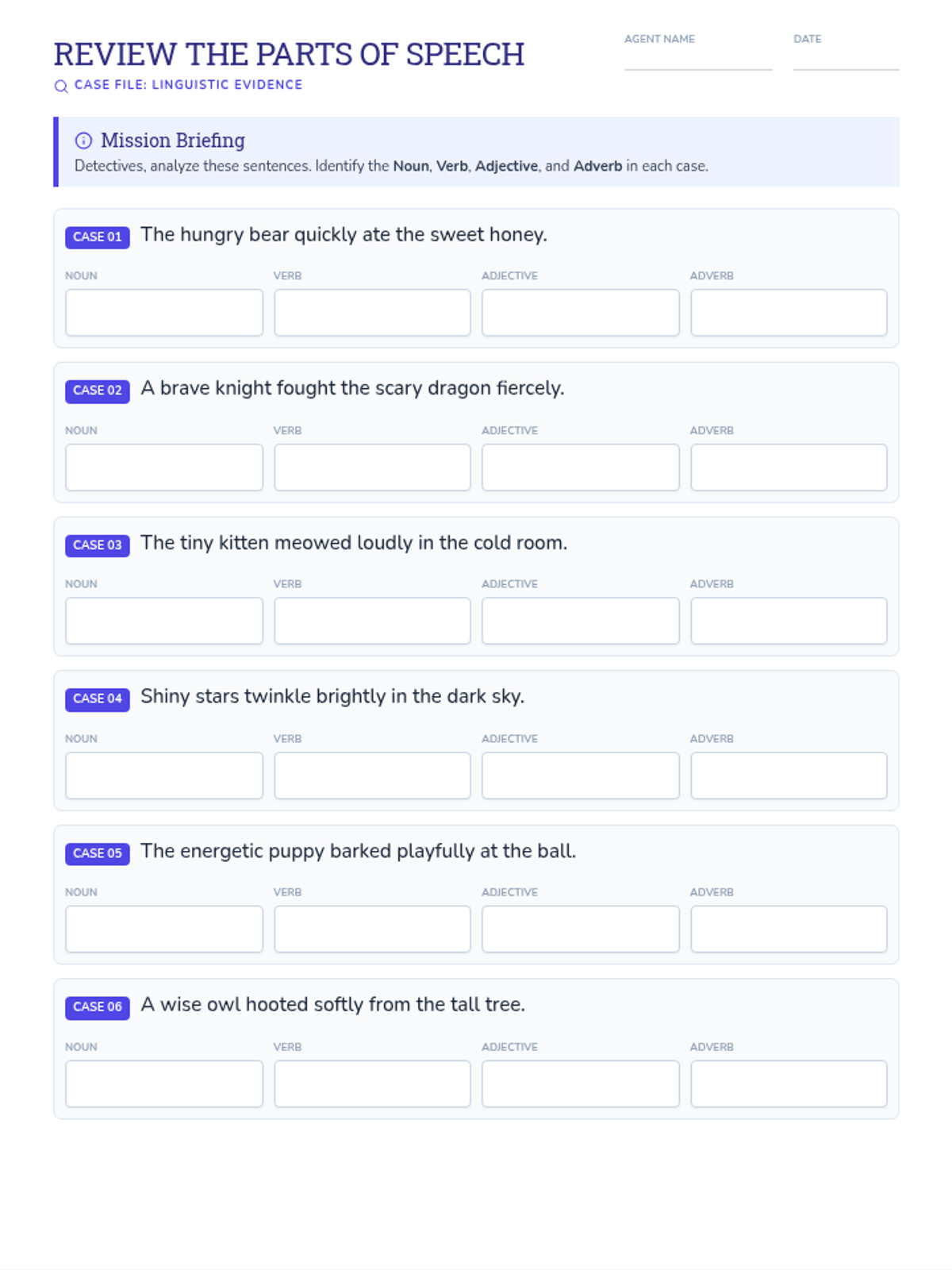
A refined two-page 'Speech Detectives' worksheet with strictly 6 sentences per page, featuring a compact detective theme with clear student work areas and consistent formatting.
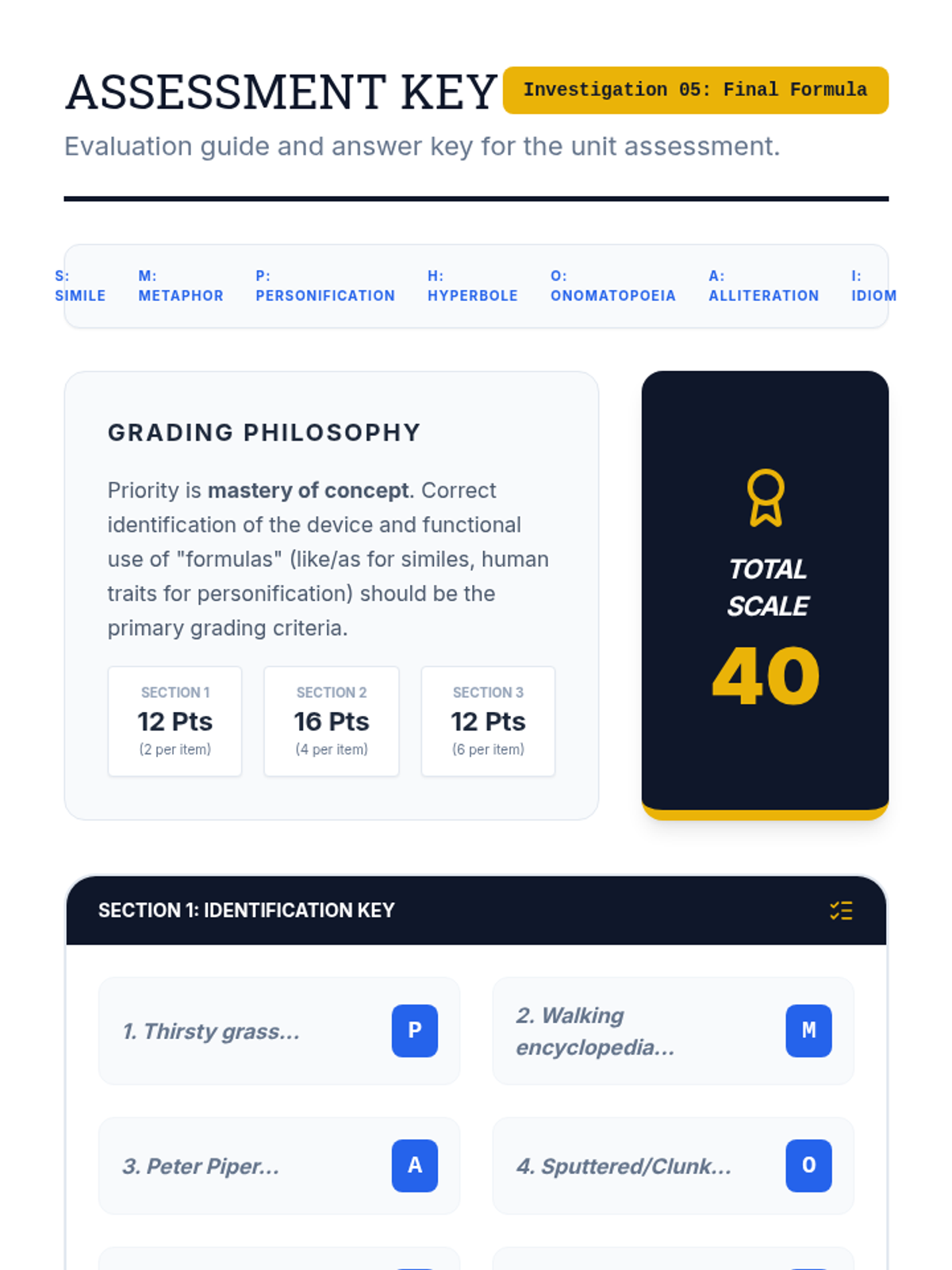
An answer key for the unit assessment. Includes specific point values, grading criteria for creative synthesis, and model responses for the analysis section.
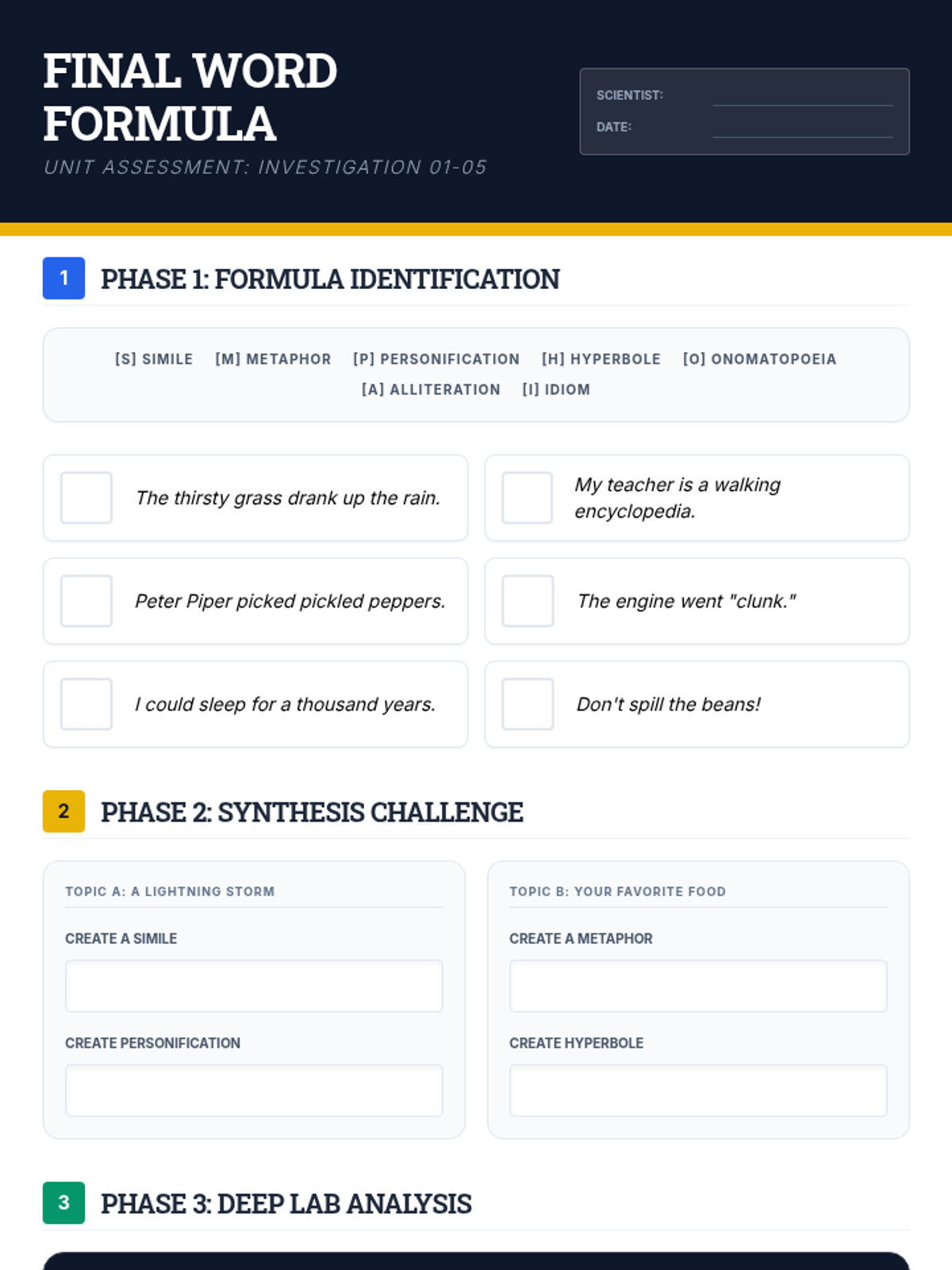
A cumulative unit assessment covering all types of figurative language introduced in the sequence. Designed as a final 'Research Log' to verify student mastery through identification, synthesis, and analysis.
A visual presentation for Lesson 5, providing a cumulative review of all figurative language types covered during the week. Uses a graduation/certification theme to motivate students.
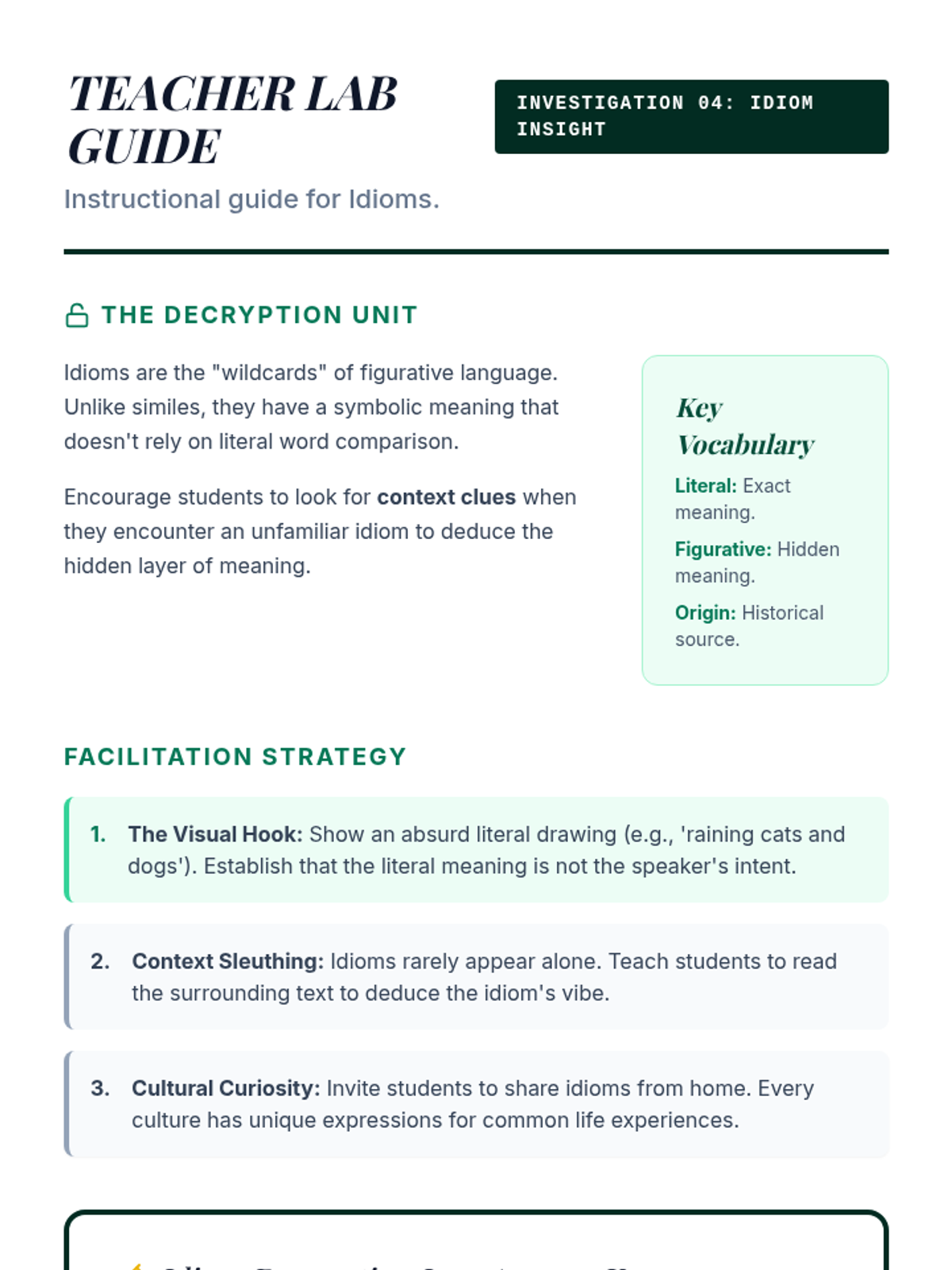
A teacher resource for Lesson 4, providing instructional strategies and an answer key for the 'Idiom Insight' activities. Focuses on literal vs. figurative distinctions and context-clue strategies.
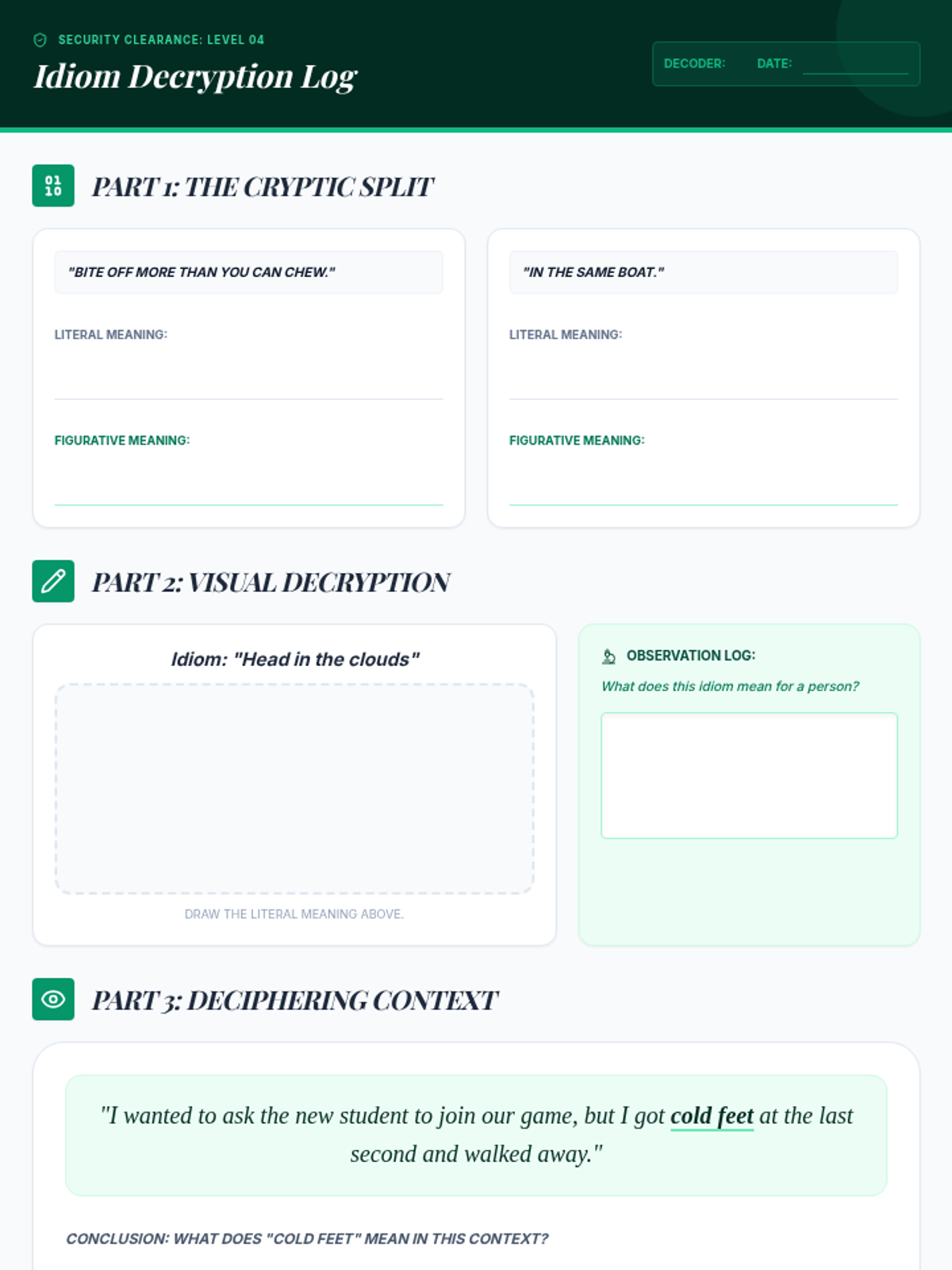
A student activity sheet for Lesson 4, designed as a 'Decryption Log.' Includes literal vs. figurative analysis, a visual interpretation task, and a context-clue decoding exercise for idioms.
A visual presentation for Lesson 4, introducing idioms through a 'cryptology lab' theme. Focuses on the difference between literal and figurative meanings and explores common idioms and their origins.
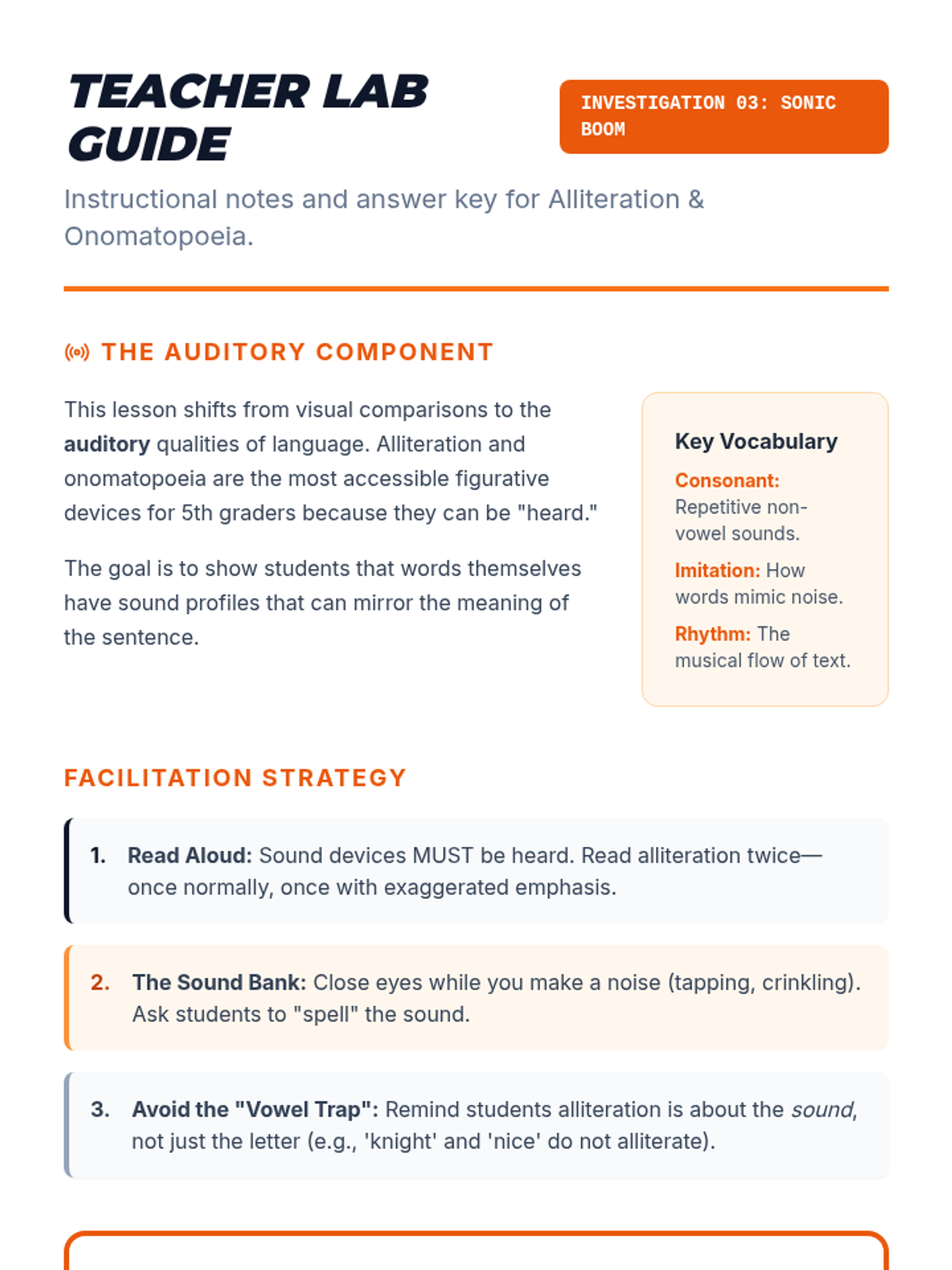
A teacher resource for Lesson 3, providing instructional strategies and an answer key for the 'Sonic Boom' activities. Focuses on the auditory impact of language.
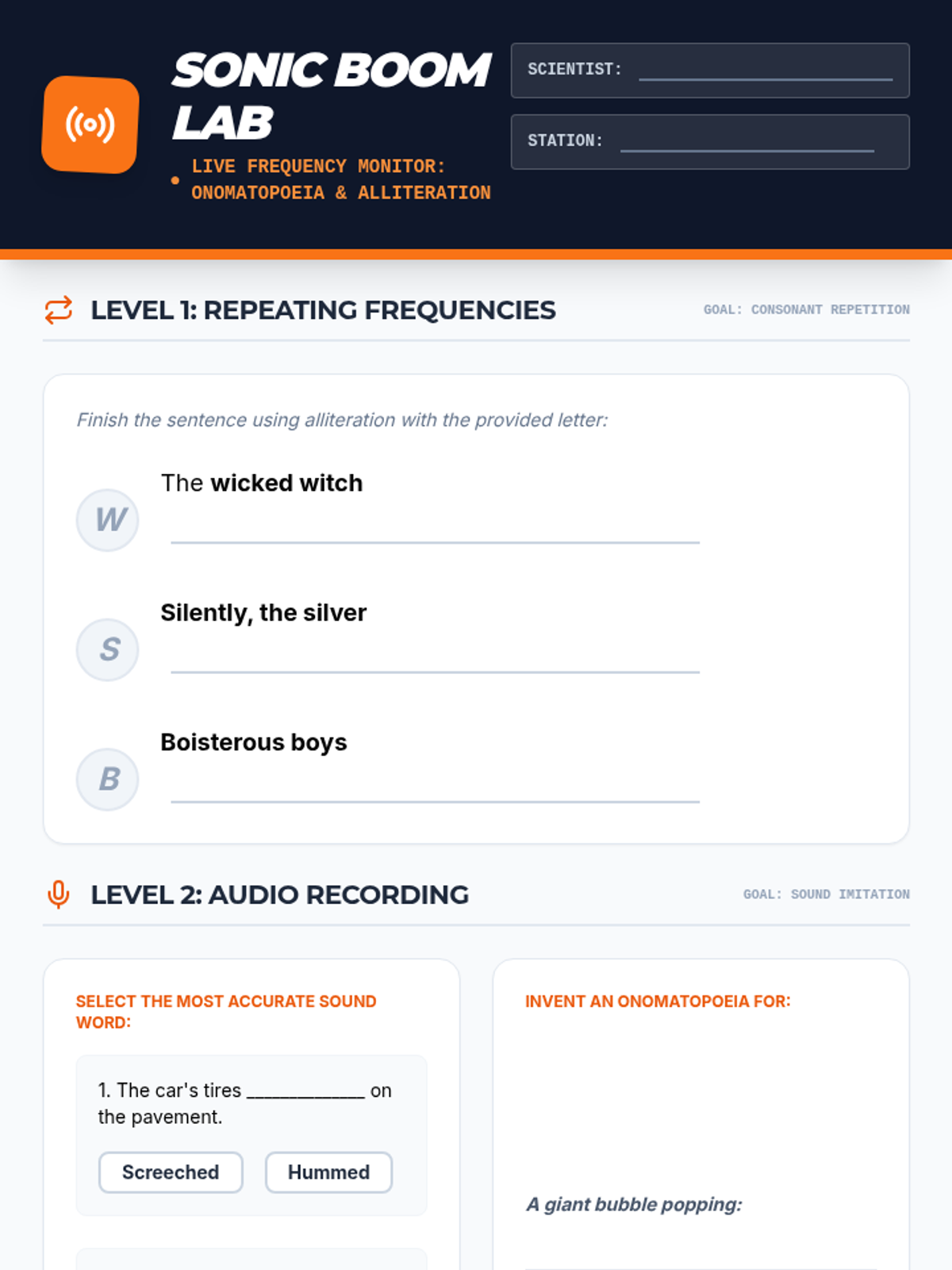
A student activity sheet for Lesson 3, focused on alliteration and onomatopoeia. Includes sentence completion, sound word matching, and a creative synthesis challenge.